




GPAT syllabus has 4 main subjects: pharmaceutical chemistry, pharmaceutics, pharmacology, and pharmacognosy. There are 125 questions in the GPAT exam syllabus, accounting for 500 marks.
- GPAT Pharmaceutical Chemistry syllabus comprises Physical, Inorganic, Organic, Medicinal Chemistry and Pharmaceutical Analysis.
- GPAT Pharmaceutics syllabus covers Pharmaceutical Technology, Physical Pharmacy, Pharmaceutical Engineering and Hospital Pharmacy.
- GPAT Pharmacology syllabus consists of General Pharmacology, Human Anatomy and Pathophysiology.
- GPAT Pharmacognosy syllabus includes core pharmacognosy and herbal drug technology.
- GPAT syllabus for other BPharm subjects includes Biochemistry, Microbiology, Biotechnology and Pharmaceutical Jurisprudence.
- Pharmaceutical Chemistry (38 questions) and Pharmaceutics (38 questions) subjects carry the highest weightage, contributing approximately 60.8% of the paper.
- Pharmacology (28 questions) subjects such as ANS, CNS, Chemotherapy, and General Pharmacology contribute nearly 22.4% weightage in the GPAT paper pattern.
- Pharmacognosy (10 questions) and the remaining B.Pharm subjects account for 84 marks.
Related Article: GPAT Exam Pattern 2027: Marking Scheme, Exam Duration, Total Marks and Important Topics
GPAT Syllabus 2027 Subject-wise Weightage
As per the latest update, the GPAT Exam pattern asks questions from 5 Pharma subjects.
- Pharmaceutical Chemistry and Pharmaceutics contribute 60.8% weightage in the GPAT 2027 exam pattern.
- As per the GPAT exam pattern, Pharmacology contributes around 22.4% weightage.
- Pharmacognosy and the remaining B.Pharm subjects account for 84 marks, so you shouldn't ignore them.
Tips: A preparation strategy focused only on high-weightage subjects can be risky. So, start with high-weightage to low-weightage topics to score maximum marks in GPAT 2027.
| Type of Questions | Number of Questions | Maximum Marks | Important Topics | Approx. Weightage (%) |
|---|---|---|---|---|
| Pharmaceutical Chemistry & Allied Subjects | 38 | 152 | Medicinal Chemistry, Organic Chemistry, Pharmaceutical Analysis, Inorganic Pharmaceutical Chemistry | 30.4 |
| Pharmaceutics & Allied Subjects | 38 | 152 | Core Pharma, Biopharmaceutics, Drug Delivery System | 30.4 |
| Pharmacognosy & Allied Subjects | 10 | 40 | Pharmacognosy, Phytochemistry and Herbal Tech | 8.0 |
| Pharmacology & Allied Subjects | 28 | 112 | Pharmacology, Anatomy and Pathophysiology | 22.4 |
| Other Subjects of BPharm course | 11 | 44 | Jurisprudence, Biotech, Management, Quality Assurance, Biostatistics | 8.8 |
| Total | 125 | 500 | - | 100 |
Also Check:
- GPAT Application Form, Check Dates, Direct Link, Steps to Edit
- GPAT Exam Dates: Check Registration Dates, Admit Card, and Result Schedule
Ques. Is GPAT tough or easy?
Ans. The Graduate Pharmacy Aptitude Test (GPAT) is generally considered a moderate exam rather than very difficult. It requires solid knowledge of your core Bachelor of Pharmacy (BPharm) subjects with conceptual clarity.
GPAT Syllabus 2027 for Pharmaceutical Chemistry & Allied Subjects
GPAT Pharmaceutical Chemistry syllabus comprises Physical Chemistry, Inorganic Chemistry, Organic Chemistry, Medicinal Chemistry and Pharmaceutical Analysis. The key topics are discussed below.
| GPAT Topics | GPAT Subtopics |
|---|---|
| Physical Chemistry | Physical States of Matter, Solutions and Colligative Properties, Thermodynamics, Ionic Equilibrium, Electrochemistry, Kinetics |
| Inorganic Chemistry | Pharmaceutical Impurities, Acids, Bases and Buffers, Dental Products, Gastrointestinal Agents, Radiopharmaceuticals and Intracellular Electrolytes |
| Organic Chemistry | General Principles, Nomenclature, Aromaticity and Aroma Chemistry, Polycyclic Aromatic Hydrocarbons, Bridged Rings, Stereochemistry, Kinetic and Thermodynamic Control |
| Medicinal Chemistry | Drug Design, Drugs on Autonomic Nervous System, Antihistaminic Agents, Drugs Acting on Respiratory System, Cardiovascular Agents, Diuretics and Antidiuretics, Drugs on Endocrine System, Antidiabetic Agents, PNS and drugs on gastrointestinal tract |
| Pharmaceutical Analysis | Sources of Error, Titration, Electroanalytical Method, Chromatography, Spectroscopy, Miscellaneous Methods |
GPAT Pharmaceutical Chemistry Syllabus 2027: Important Topics Based on Trends
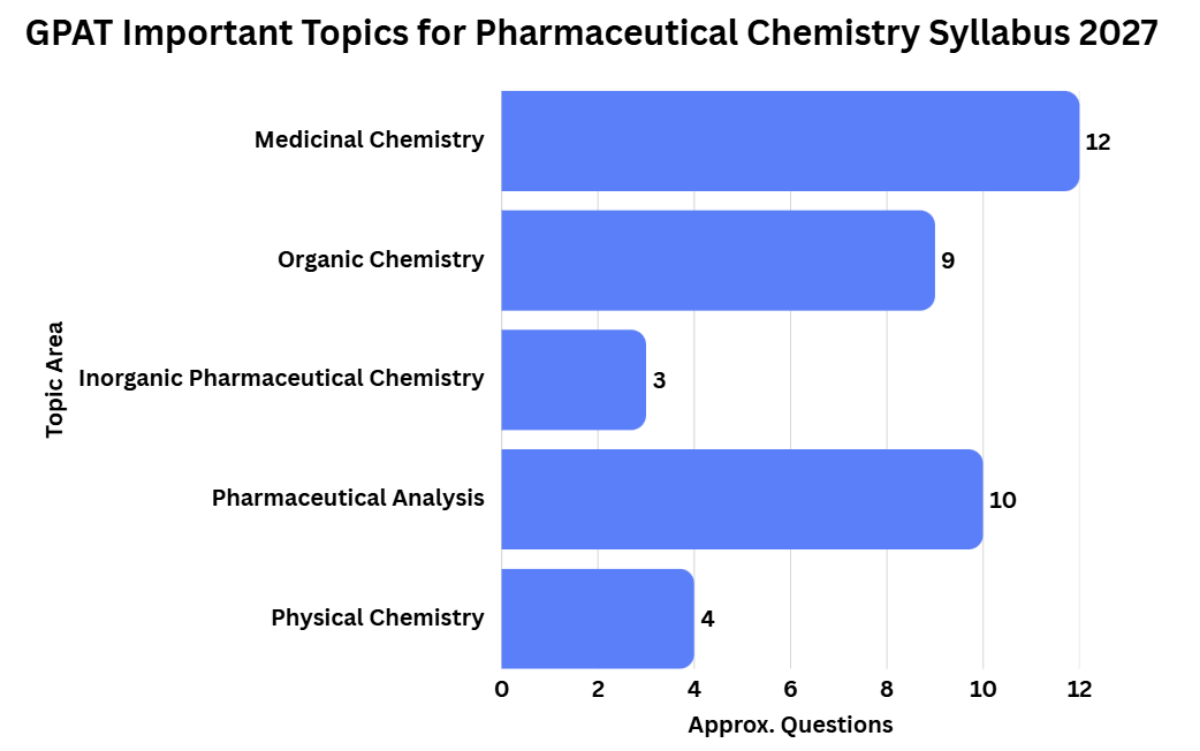
GPAT Pharmaceutical Chemistry syllabus is one of the highest-weighted topics, contributing 30.4% of the paper.
| Topic Area | Key Sub-topics | Approx. Questions |
|---|---|---|
| Medicinal Chemistry | Structure-Activity Relationships (SAR), Drug design, Stereochemistry | 8- 12 |
| Organic Chemistry | Reaction mechanisms, Functional groups, Organic synthesis | 7- 9 |
| Inorganic Pharmaceutical Chemistry | Metals, Inorganic compounds, Monographs, Preparation and uses | 2- 3 |
| Pharmaceutical Analysis | Chromatography, Spectroscopy, Titrations, Quality control methods | 6- 10 |
| Physical Chemistry | Solutions, Colloids, Surface tension, Thermodynamic principles | 2- 4 |
Also Check: GPAT Pharmaceutical Chemistry Sample Paper- Download PDF
Ques. Which exam is tougher, NEET or GPAT?
Ans. GPAT is generally considered less competitive than NEET, based on candidates' preparation. NEET covers a broader range of PCB subjects and has a huge number of applicants, making competition significantly tougher. GPAT focuses specifically on B.Pharm-level subjects, so for a B.Pharm graduate, GPAT may feel easier than NEET.
GPAT Syllabus 2027 for Pharmaceutics & Allied Subjects
GPAT Pharmaceutics syllabus comprises Pharmaceutical technology, physical pharmacy, pharmaceutical engineering, Biopharmaceutics and hospital pharmacy. The key topics are discussed below.
| GPAT Topics | GPAT Subtopics |
|---|---|
| Pharmaceutical Technology | Monophasic and Biphasic liquid dosage forms, semisolid dosage forms, powders, tablets, capsules, pharmaceutical aerosols, sterilisation, novel drug delivery systems, packaging material and drug regulatory affairs |
| Physical Pharmacy, | States of matter, micromeritics, surface and interfacial phenomena, viscosity, dispersion, complexation, pH, buffer, isotonic solution, solubility |
| Pharmaceutical Engineering | Flow of fluids, heat transfer, evaporation, distillation, drying, extraction, crystallisation, dehumidification and humidity control |
| Biopharmaceutics and Pharmacokinetics | Introduction to biopharm, protein binding of drugs, Compartmental drugs, nonlinear Pharmacokinetics, Bioavailability, Drug response and pharmacological response |
| Dispensing Pharmacy | Prescription, posology, pharmaceutical calculations and incompatibilities |
| Hospital and Clinical Pharmacy | Hospital Pharmacy and its organisation, adverse drug reaction, medication adherence, drug information service, clinical pharmacy, OTC sales, drugstore management, interpretation of clinical lab tests |
GPAT Pharmaceutics Syllabus 2027: Important Topics Based on Trends
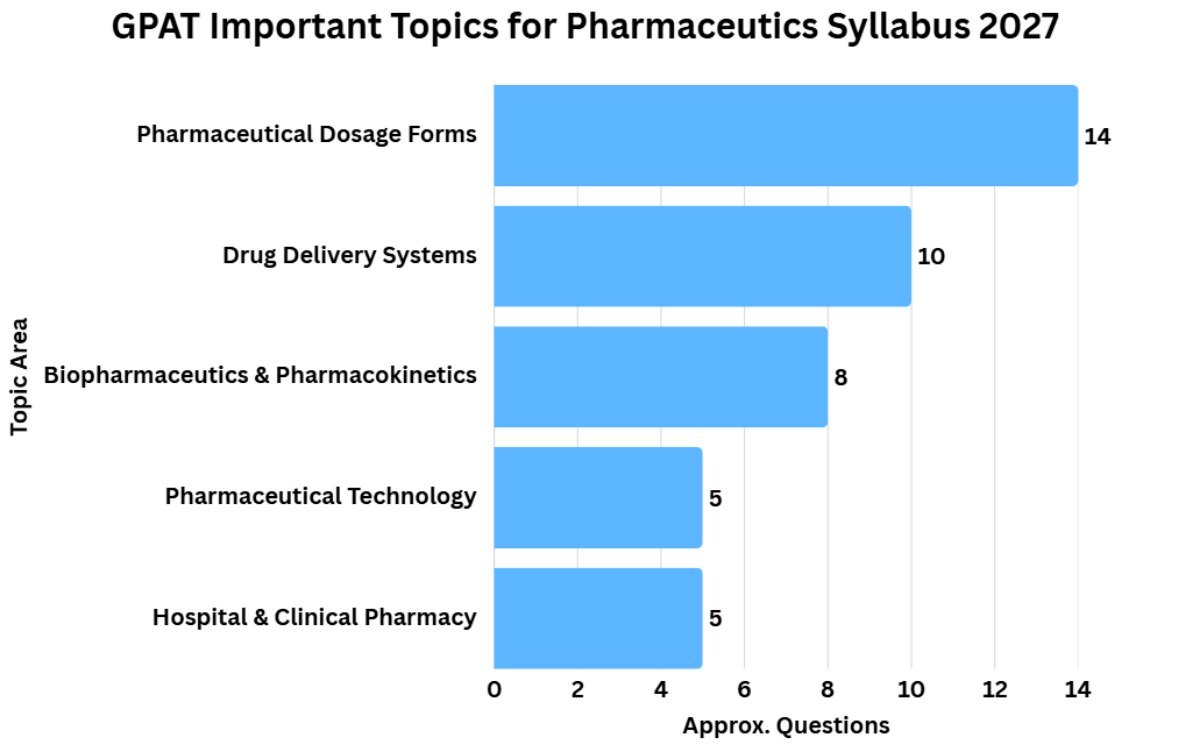
GPAT Pharmaceutics syllabus asks 38 questions for 152 marks. It shares the same weightage as Pharmaceutical Chemistry, and together they account for approximately 60.8% of the total.
| Topic Area | Key Sub-topics | Approx. Questions |
|---|---|---|
| Pharmaceutical Dosage Forms | Tablets, Capsules, Suspensions, Emulsions, Aerosols | 10- 14 |
| Drug Delivery Systems | Controlled release, Transdermal patches, Nanoparticles, Liposomes | 7- 10 |
| Biopharmaceutics & Pharmacokinetics | Absorption, Distribution, Metabolism, Excretion (ADME) | 5- 8 |
| Pharmaceutical Technology | Mixing, Filtration, Drying, Sterilisation, Good Manufacturing Practice (GMP) | 4- 5 |
| Hospital & Clinical Pharmacy | Drug information services, Patient counselling, Medication management | 3- 5 |
Also Check: GPAT Pharmaceutics Sample Paper- Download PDF
Ques. How many marks are in the GPAT paper?
Ans. The GPAT total marks are 500. Each of the 125 questions carries 4 marks for a correct answer, giving a maximum possible score of 500.
GPAT Syllabus 2027 for Pharmacology & Allied Subjects
GPAT Pharmacology syllabus comprises general pharmacology, human anatomy and physiology and pathophysiology. The key topics are discussed below.
| GPAT Topics | GPAT Subtopics |
|---|---|
| General Pharmacology | Drugs on peripheral nervous system, autonomic nervous system, central nervous system, cardiovascular system, urinary system, respiratory system, endocrine system, gastrointestinal tract, chemotherapy, chronopharmacology, immunopharmacology, anaesthesia and pharmacology screening methods |
| Human Anatomy and Physiology | Cell physiology, tissues, blood, sense organs, skeletal system, cardiovascular system, nervous system, digestive system, respiratory system, urinary system, endocrine system, reproductive and lymphatic system |
| Pathophysiology | Cell injury and adaptation, inflammation and repair, hypersensitivity, autoimmunity and disease of immunity, neoplastic disease, sexually transmitted disease, infectious disease, pathophysiology of common disease (CVS, Respiratory, Renal, Endocrine, Bones and Joints) |
GPAT Pharmacology Syllabus 2027: Important Topics Based on Trends
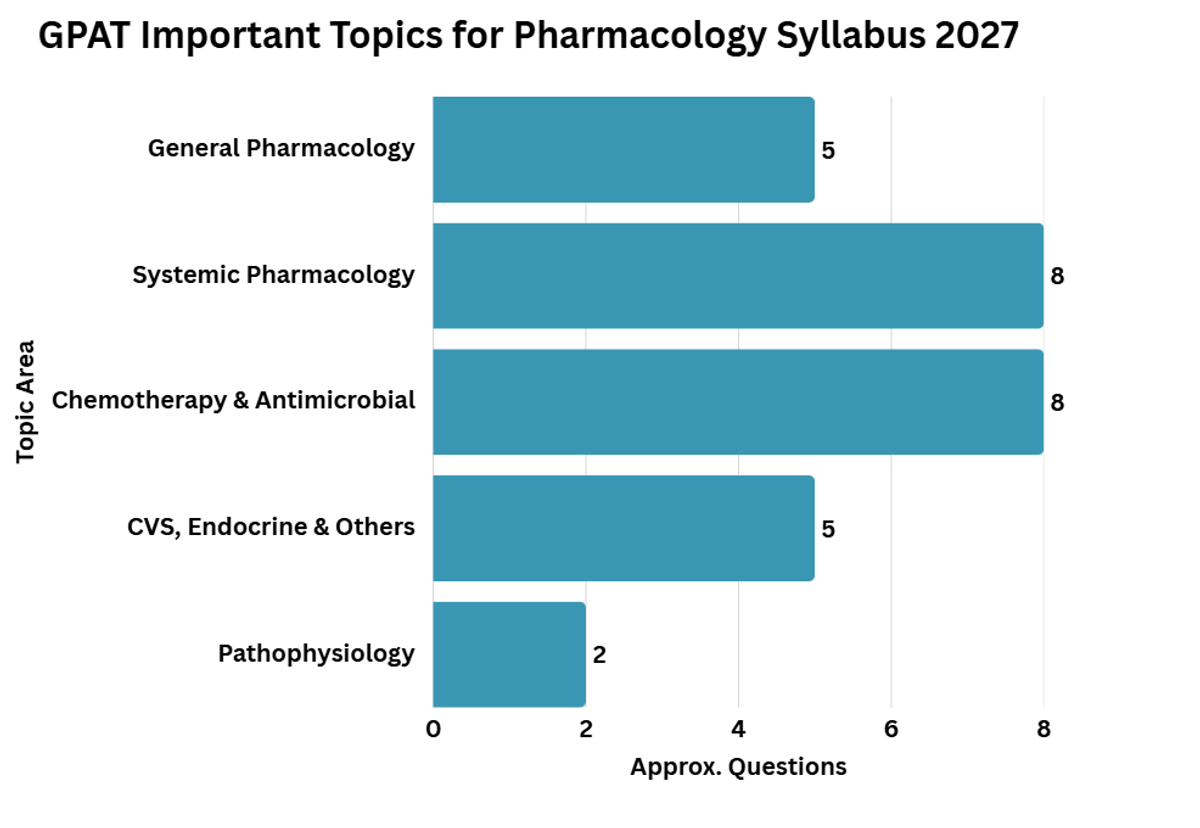
GPAT Pharmacology syllabus is the third-largest section in the GPAT paper pattern, having a weightage of around 22.4%. Systematic Pharmacology, Chemotherapy, Antimicrobial, and CVS are important Pharmacology topics.
| Topic Area | Key Sub-topics | Approx. Questions |
|---|---|---|
| General Pharmacology | Pharmacokinetics, Pharmacodynamics, Receptors, ADRs | 4- 5 |
| Systemic Pharmacology | CNS, CVS, Respiratory, GIT, and Endocrine | 6- 8 |
| Chemotherapy & Antimicrobial | Antibiotics, Anticancer, Antitubercular, Antiviral | 5- 8 |
| CVS, Endocrine & Others | Cardiovascular drugs, Hormones, Autacoids, Toxicology | 4- 5 |
| Pathophysiology | Disease mechanisms, Human Anatomy & Physiology related | 2 |
Also Check: GPAT Eligibility Criteria: Check Age Limit, and Educational Qualification
Ques. What is the minimum passing score for GPAT?
Ans. The minimum passing score for GPAT varies by category. The general category cutoff score is 213 marks out of 500. A 50th percentile is considered the minimum passing percentile.
GPAT Syllabus 2027 for Pharmacognosy & Allied Subjects
GPAT Pharmacognosy syllabus comprises core pharmacognosy and herbal drug technology. The key topics are discussed below.
| GPAT Topics | GPAT Subtopics |
|---|---|
| Pharmacognosy | Introductory Pharmacognosy, classification and sources of crude drugs, biogenetic pathway, plant hormones, plant tissue culture, enzymes, phytochemistry, alkaloids, glycosides, resins, carbohydrates, lipids and plant fibres and structure |
| Herbal Drug Technology | Indian System of Medicine, Herbal formulations and cosmetics, Traditional herbal drugs, nutraceuticals |
GPAT Pharmacognosy Syllabus 2027: Important Topics Based on Trends
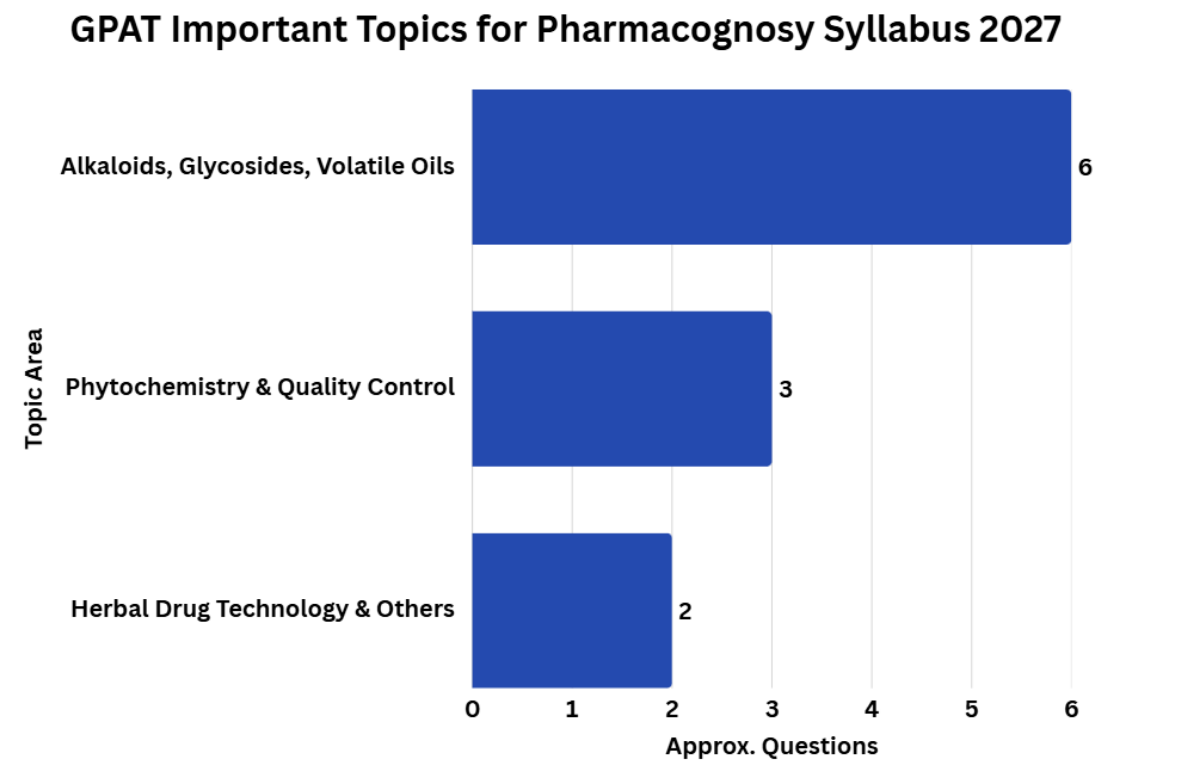
GPAT Pharmacognosy syllabus is a small but scoring topic, contributing nearly 8% weightage. So you should not avoid it.
| Topic Area | Key Sub-topics | Approx. Questions |
|---|---|---|
| Alkaloids, Glycosides, Volatile Oils | Classification, Sources, Chemical tests, Isolation | 4- 6 |
| Phytochemistry & Quality Control | Extraction, TLC/HPTLC, Standardisation of herbal drugs | 2- 3 |
| Herbal Drug Technology & Others | Traditional systems, Plant constituents, Adulteration | 1- 2 |
Also Check: GPAT Pharmacognosy Sample Paper- Download PDF
Ques. Can I crack GPAT in 2 months?
Ans. Yes, you can crack GPAT in two months, but it requires intense dedication, a focused strategy, and clear basic concepts from your B.Pharm course. Focus heavily on high-weightage major subjects: Pharmaceutics, Pharmacology, and Pharmaceutical Chemistry. Solve 50 to 100 MCQs daily, maintain a separate notebook for mistakes, and analyze every wrong answer. Dedicate 8 to 10 hours daily to studying theory and making short, concise notes.
GPAT Syllabus 2027 for Other BPharm subjects
GPAT syllabus for other BPharm subjects includes Biochemistry, Microbiology, Biotechnology and Pharmaceutical Jurisprudence.
| GPAT Topics | GPAT Subtopics |
|---|---|
| Biochemistry | Carbohydrates, amino acids, lipids, vitamins, biological oxidation, enzymes, nucleic acids and hereditary disease |
| Microbiology | Microbiology and staining technique, biology of microorganisms, fungi, viruses, sterilisation, aseptic technique, microbial spoilage, immunology |
| Biotechnology | Plant cell and tissue culture, animal cell culture, fermentation technology, recombinant DNA technology, biotechnology- derived products |
| Pharmaceutical Jurisprudence | Pharmacy Act, Drugs and Cosmetics Act, drug order, consumer protection act, prevention of food adulteration act, IPR and Indian Patent act |
GPAT Syllabus for Other BPharm Course 2027: Important Topics Based on Trends
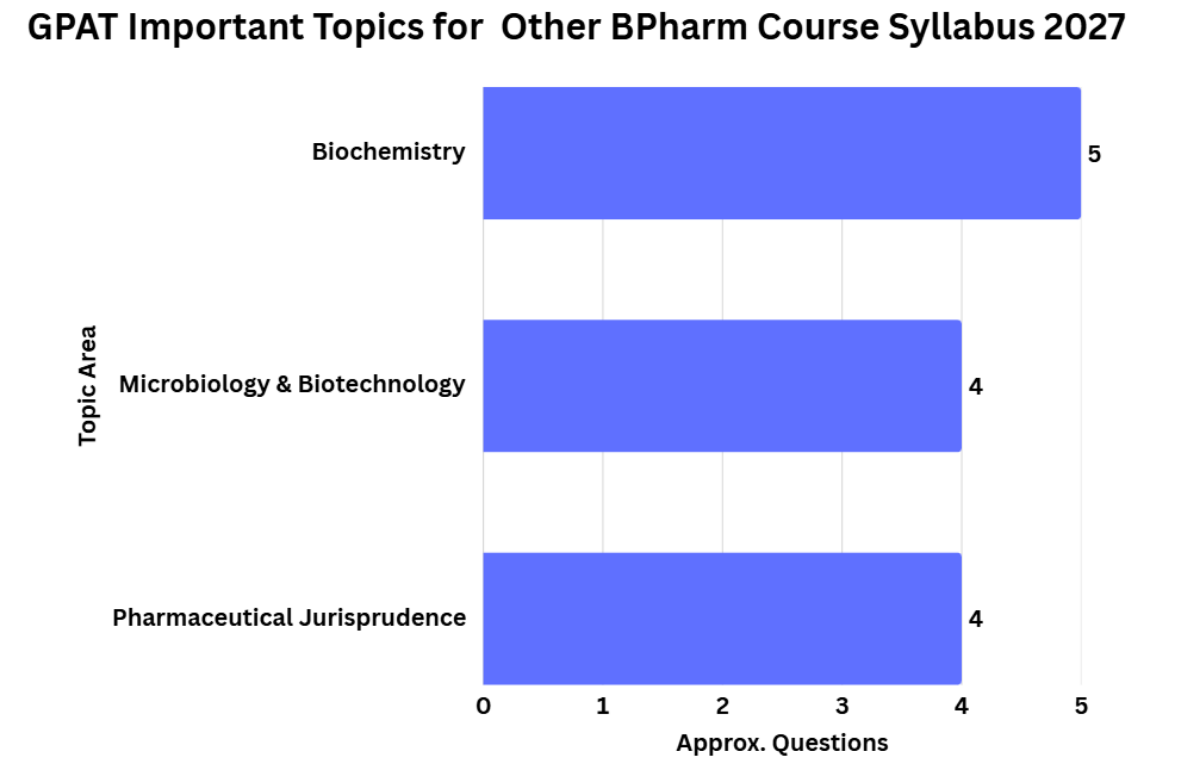
It contributes nearly 8.8% weightage, and the questions asked are easy to solve.
| Topic Area | Key Sub-topics | Approx. Questions |
|---|---|---|
| Biochemistry | Biomolecules, Enzymes, Metabolism, Vitamins | 3- 5 |
| Microbiology & Biotechnology | Sterilisation, Immunology, Fermentation, DNA | 2- 4 |
| Pharmaceutical Jurisprudence / Pharmaceutical Management | Acts, Schedules, Quality Assurance, Biostatistics | 2- 4 |
You can watch a YouTube video by “PW Pharma” to learn about the GPAT 2027 exam pattern, syllabus, and Important topics to help you score well.
Ques. What are the most important topics for GPAT 2027?
Ans. Candidates should prioritise areas such as medicinal chemistry, SAR, dosage forms, biopharmaceutics, pharmacokinetics, NDDS, general pharmacology, CNS/ANS drugs, natural products and pharmaceutical analysis for GPAT 2027.
GPAT Exam Syllabus 2027 Most Frequently Asked Topics: Last 5- 10 Years Analysis
Based on the GPAT exam syllabus, some topics are asked repeatedly, including the major high-weightage topics. The important topics, along with the average number of questions asked in last 5-10 years, are tabulated below.
| Subjects | Questions/ Year |
|---|---|
| Physical Pharmaceutics | 8- 9 |
| Dispensing Pharmacy | 2- 3 |
| Pharmaceutical Technology | 11- 13 |
| Pharmaceutical Engineering | 3- 4 |
| Biopharmaceutics | 3- 5 |
| Pharmaceutical Jurisprudence | 3- 5 |
| Pharmaceutical Analysis | 11- 14 |
| Organic Chemistry | 10- 12 |
| Medicinal Chemistry | 4- 7 |
| Biochemistry | 6- 8 |
| Inorganic and Physical Chemistry | 3- 5 |
| Human Anatomy and Physiology | 5- 7 |
| Pharmacology and Pathophysiology | 25- 30 |
| Pharmacognosy and Phytochemistry | 7- 9 |
| Pharmaceutical Quality Assurance, Pharmacy Practice and Pharmaceutical Biotechnology | 4- 9 |
Also Check: GPAT Question Paper: Download GPAT Question Paper with Solutions PDF (2025-1988)
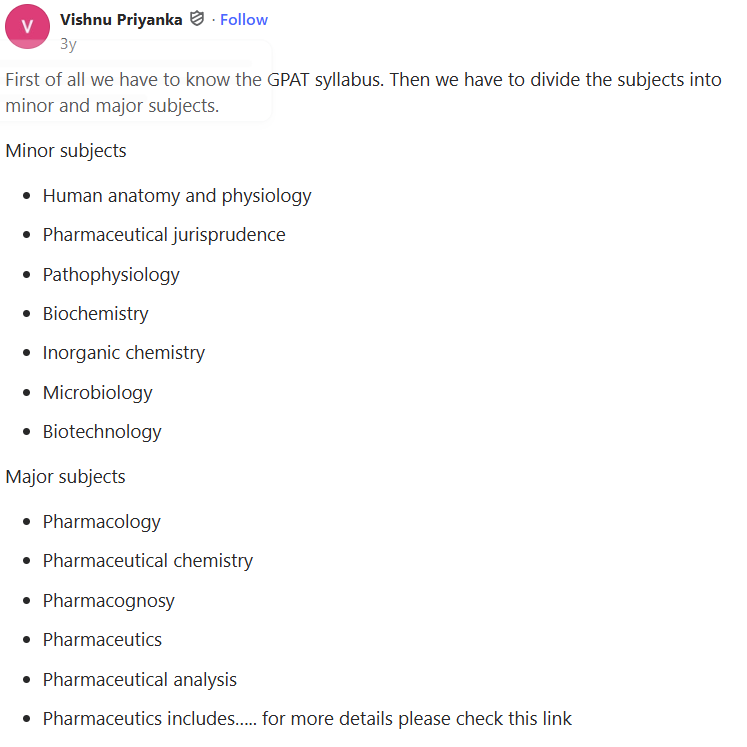
On discussion forums such as Quora, a user shared the major and minor topics based on GPAT exam syllabus. The major topics of GPAT exam syllabus include Pharmacology, Pharmaceutical Chemistry, Pharmacognosy, Pharmaceutics and Pharmaceutical Analysis. The minor topics according to GPAT exam syllabus are as follows: Human anatomy and physiology, Pharmaceutical jurisprudence, Pathophysiology, Biochemistry, Inorganic chemistry, Microbiology and Biotechnology.
Source: Quora
Ques. How much time is required to prepare for GPAT?
Ans. Generally, 4- 6 months of consistent preparation is sufficient for most candidates. Students with strong fundamentals may prepare effectively in 3- 4 months, but beginners may need 6- 8 months. A good strategy is to divide the preparation into syllabus coverage, revision, PYQs, mock tests, analysis and final revision rather than studying all subjects at the same pace.
Best Books for GPAT 2027 Preparation
The books that align well with GPAT syllabus 2027, which help you prepare well, are tabulated below.
| Subjects | Author/Book |
|---|---|
| Pharmacology |
|
| Organic Chemistry |
|
| Pharmaceutical Analysis |
|
| Medicinal Chemistry |
|
| Biochemistry |
|
| Physical Pharmacy |
|
| Biopharmaceutics | Brahmankar |
| Pharmacognosy | CK Kokate |
| Microbiology and Pharma Jurisprudence | NK Jain |
Also Check: GPAT Recommended Books for Preparation
Ques. Is there negative marking in GPAT 2027?
Ans. Yes, as per the GPAT marking scheme, there is negative marking of 1 mark for every incorrect answer. Unattempted questions score zero and carry no penalty.
How to Prepare Based on GPAT Syllabus 2027
GPAT 2027 will commence around March 2027 according to trends. So you have more than 5 months for preparation. Based on the timeline, a phase-wise preparation strategy is discussed below. Follow it to crack GAPT 2027.
- Phase 1: Foundation Phase
Pharmacology takes time to complete, so start with the classification and core concepts.
| Days | Goal | Study Hours (per day) |
|---|---|---|
| 1- 21 | Build strong basics in Pharmacology and Organic Chemistry | Devote 2- 3 hours daily |
- Phase 2: Concept Booster (Day 22- 66)
In Phase 2, prepare a weekly timetable and divide the seven days among the subjects as per your preference. A sample weekly schedule is prepared for your convenience.
| Day | Subjects | Study Hours |
|---|---|---|
| Monday | Human Anatomy and Physiology (HAP) + Pharmacology | 3 hours |
| Tuesday | Pharmaceutics (Pharmaceutical Technology) | 3 hours |
| Wednesday | Pharmaceutical Analysis | 3 hours |
| Thursday | Organic Chemistry | 3 hours |
| Friday | Pharmacology | 3 hours |
| Saturday | Revision + MCQs (Monday to Wednesday Topics) | 4- 5 hours |
| Sunday | Revision + MCQs (Thursday- Friday Topics) | 4- 5 hours |
- Phase 3: Concept Booster (Day 67- 126)
In Phase 3, combine your GPAT section-wise subjects altogether in a seven-day plan. Steady revision is required for each section to score well.
| Day | Subjects | Study Hours |
|---|---|---|
| Monday | Pharmacology and Medicinal Chemistry | 4 hours |
| Tuesday | Pharmaceutics | 4 hours |
| Wednesday | Pharmaceutical Analysis + Organic Chemistry | 4 hours |
| Thursday | Pharmacognosy + Biochemistry | 4 hours |
| Friday | Pharmacology + Pharmaceutics | 4 hours |
| Saturday | Revision + MCQs (Monday to Wednesday Topics) | 4- 6 hours |
| Sunday | Revision + MCQs (Thursday- Friday Topics) | 4- 6 hours |
By following a fixed study plan, you should also practice mocks and solve PYQs.
- Solve timed practice sets: Practise questions under timed conditions to improve your speed and accuracy.
- Analyse PYQs and Mocks: After every test, analyse them to understand your strengths and weaknesses.
- Revise regularly: Keep short notes for classifications, formulas, mechanisms, important facts and frequently asked concepts. Revise your common mistakes daily to master them.
Also Check:
GPAT Syllabus 2027 FAQs
Ques. What is the syllabus of GPAT 2027?
Ans. The GPAT 2027 syllabus covers major BPharm subjects, including Pharmaceutics, Pharmaceutical Chemistry, Pharmacology, Pharmacognosy, Pharmaceutical Analysis, Biochemistry, Microbiology and other pharmacy-related subjects.
Ques. Is GPAT syllabus based on BPharm syllabus?
Ans. Yes, GPAT primarily tests concepts covered during the Bachelor of Pharmacy (BPharm) curriculum. Therefore, BPharm syllabus is useful for building conceptual understanding.
Ques. Which subjects are most important for GPAT 2027?
Ans. Pharmaceutics, Pharmacology, Pharmaceutical Chemistry, Pharmacognosy and Pharmaceutical Analysis are important for GPAT exam syllabus. However, candidates should not completely skip allied subjects because GPAT preparation requires broad coverage.
Ques. Is GPAT syllabus difficult?
Ans. The GPAT exam syllabus can be considered moderate to extensive because it covers several pharmacy subjects and their individual topics. The difficulty largely depends on a candidate's BPharm fundamentals, revision level and ability to solve application-based MCQs.
Ques. Does GPAT syllabus change every year?
Ans. The GPAT exam syllabus does not necessarily undergo a major change every year. However, candidates should always check the latest NBEMS GPAT information bulletin before beginning preparation.
Ques. Is GPAT syllabus enough for GPAT preparation?
Ans. The GPAT syllabus tells you what to study, but preparation should also include previous year questions, mock tests, revision and time-management practice. Using the syllabus alone without question practice is unlikely to provide sufficient exam readiness.
Ques. How many questions are asked in GPAT 2027?
Ans. GPAT 2027 has 125 multiple-choice questions. These questions are distributed across five subject areas: 38 each in Pharmaceutical Chemistry and Pharmaceutics, 28 in Pharmacology, 10 in Pharmacognosy, and 11 in Other BPharm Subjects.
Ques. Which subject carries the highest weightage in GPAT 2027?
Ans. Pharmaceutical Chemistry and Pharmaceutics have the highest weightage, with 38 questions each and 152 marks each. Together, these two sections account for over 60.8% of the total GPAT paper.



Comments