



Exams Prep Master
Green chemistry (also known as sustainable chemistry) is a branch of chemistry that focuses on the development and improvement of processes and products to reduce or eliminate the production and use of harmful substances. Green chemistry is not the same as environmental chemistry. Here, we will study the concept, its key principles along some important questions.
| Table of Content |
Continuous environmental degradation and pollution are the primary causes of green chemistry. Green chemistry (also known as sustainable chemistry) is a discipline of chemistry concerned with the development of goods and methods that eliminate or limit the use and manufacture of harmful compounds. It provides a one-of-a-kind platform for the development of environmentally friendly and long-term solutions.
What is Green Chemistry?
Green chemistry is the process of thinking and applying advanced knowledge and skills to lessen pollution's adverse impacts on the environment. Any manufacturing process generates by-products, the majority of which are toxic and, if not properly utilized, pollute the environment. Green chemistry plays an important part in keeping the environment clean and pure. Green chemistry, also known as sustainable chemistry, is based on the use of knowledge to reduce chemical dangers associated with development operations.

As discussed earlier, green chemistry is not similar to environmental chemistry. The former is concerned with the environmental impact of chemistry and the development of ecologically beneficial, long-term solutions (such as a reduction in the consumption of non-renewable resources and strategies to control environmental pollution). The latter is concerned with the consequences of some harmful or dangerous chemicals on the environment.
It is becoming more difficult to become self-sufficient in terms of food production as the use of fertilizers and pesticides has increased. As a result of the over-exploitation of soil and the application of excessive pesticides and fertilizers, the soil, air, and water quality have all deteriorated. We can explore solutions to help with pollution reduction. We can't halt the methods of development that are necessary for our survival. As a result, the term "green chemistry" is used for the first time.
Green Chemistry's 12 Key Principles
Green chemistry is, indeed, an alternate method or an alternative tool for reducing pollution. The following are the twelve principles proposed by American chemists Paul Anastas and John Warner in 1998 to build the groundwork for green chemistry.

Waste prevention: avoiding the development of garbage products is always preferable to cleaning up waste that has already been formed.
Atom economy: green chemistry-based synthetic processes and technologies must always strive to maximize the consumption and incorporation of all raw materials into the final product. This must be closely adhered to to reduce the amount of trash generated by any procedure.
Avoiding the production of hazardous chemicals: reactions and processes that entail the synthesis of certain toxic substances that are harmful to human health must be optimized to avoid their production.
The design of safe chemicals: when designing chemical products that perform a specific purpose, care must be given to ensure that the chemical is as non-toxic to humans and the environment as feasible.
Design of safe auxiliaries and solvents: auxiliaries should be avoided in processes to the greatest extent practicable. Even in situations where they are necessary, they must be tuned to be as risk-free as feasible.
Energy efficiency: To the greatest extent possible, the amount of energy utilized by the process must be minimized.
Incorporation of renewable feedstock: Renewable feedstock and renewable raw materials must be favored over non-renewable alternatives.
Reduction in the generation of derivatives: Derivatives should be used only when they are required, as they tend to necessitate the use of extra reagents and chemicals, resulting in waste formation.
Incorporation of Catalysis: Chemical catalysts and catalytic reagents must be encouraged to lower the energy requirements of the chemical processes in the process.
Designing chemicals for degradation: When creating a chemical product to perform a specific purpose, special care must be given to ensure that the chemical is not an environmental pollutant. This can be accomplished by ensuring that the chemical degrades into non-toxic compounds.
Incorporation of Real-time analysis: procedures and analytical methodologies should be improved to the point where they can provide real-time data for monitoring. This allows the parties involved to halt or regulate the process before harmful or dangerous compounds are produced.
Incorporation of safe chemistry for accident prevention: When building chemical processes, it is critical to ensure that the compounds employed in the processes are safe to use. This can aid in the prevention of workplace disasters such as explosions and fires. Furthermore, this can aid in the creation of a safer environment in which the process can take place.
Examples of Green Chemistry's Impact
Use of Green Solvents
On an industrial scale, many chemical synthesis reactions necessitate huge volumes of chemical solvents. These solvents are frequently utilized in the industrial sector for degreasing and cleaning. However, many traditional solvents used for such purposes in the past have been proven to be harmful to humans. Chlorination is known to occur in some of these solvents.
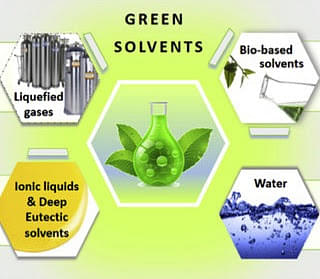
Many alternatives to these harmful solvents have been developed thanks to the advent of green chemistry. Green solvents that are being developed as alternatives are known to be biodegradable and sourced from renewable sources. As a result, green chemistry offers a lot of promise in terms of reducing the toxicity of some industrial environments by discovering safer alternatives.
Specialized Synthetic Techniques Development
The development of specialized synthetic methodologies can help to improve processes and make them more environmentally friendly by adhering to green chemistry principles. In the field of organic chemistry, the creation of the olefin metathesis reaction is a good example of such an improved synthetic approach. In 2005, the inventors of this reaction- Robert Grubbs, Richard Schrock, and Yves Chauvin, were awarded the Nobel Prize in Chemistry.

Green chemistry has also ushered in several important developments, including:
- As a green solvent, supercritical carbon dioxide is used (as an alternative to other toxic solvents).
- Enantioselective synthesis processes with hydrogen incorporation (also known as asymmetric synthesis).
- Using hydrogen peroxide (a chemical molecule with the formula H2O2) aqueous solutions to conduct relatively clean oxidation processes.
Green chemistry also has uses in supercritical water oxidation (SCWO), dry media reactions (also known as solid-state reactions and solvent-less reactions), and water reactions.
Production of Hydrazine
Primarily, one of the most popular methods for the production of hydrazine, an inorganic chemical compound, was the Olin Raschig process, and this involved the use of ammonia and sodium hypochlorite. However, a more environment-friendly alternative to this process was discovered with the development of green chemistry.

In the peroxide process for the production of hydrazine, ammonia is reacted with hydrogen peroxide. While in this alternate method, water is produced as the only side-product. At the same time, it also must be noted that the peroxide process does not require any auxiliary extracting solvents.
Recommended video:
Things to Remember
- Green chemistry is the design of the chemical products as well as the processes which lessen or eliminate the use of hazardous substances.
- Green chemistry is applied across the life cycle of a chemical product, which includes its design, manufacture, use, and final disposal.
- It prevents pollution at the molecular level.
- It applies innovative scientific solutions to real-world environmental problems.
- Moreover, it reduces the negative impact of chemical products as well as processes on human health and the environment.
Sample Questions on Green Chemistry
Ques: Give three instances of applications of green chemistry. (2 marks)
Ans: The three instances where green chemistry can be applied are:
- In dry cleaning, replace tetrachloroethene with liquid CO2 (Cl2C=CCl2).
- Using H2O2 instead of chlorine to bleach paper.
- Using environmentally friendly chemicals and conditions in the production of compounds such as ethanol.
Ques: Green chemistry is the development of chemical products and processes that limit or eliminate the usage of hazardous compounds and their creation. Identify the technique that was employed in this case. (2 marks)
Ans: Microwave-assisted reaction and use of sunlight When light energy is absorbed by a substance's molecule, a photochemical reaction occurs. There will be no byproduct, thus it is a green option. A photochemical process aid in vitamin D3 production.
Ques: Name the traditional solvent that was once used for dry cleaning and was later discovered to be a possible carcinogen. (2 marks)
Ans: For dry cleaning, tetrachloroethene was employed as a solvent. It is a suspected carcinogen and contaminant of groundwater. It is replaced by a more environmentally friendly solvent, such as supercritical CO2.
Ques: In the past, what gas was used to bleach paper? (2 marks)
Ans: Paper was bleached with chlorine gas. It has a high oxidizing capacity. Because it does not affect groundwater, H2O2 with an appropriate catalyst is now utilized for bleaching.
Ques: When bleaching garments, what green solvent is used? (2 marks)
Ans: Water and oxygen are easily broken down from hydrogen peroxide. It's a strong bleaching agent and a good oxidizer. The use of H2O2 produces better results while consuming less water.
Ques: Which solvent is non-toxic and environmentally friendly? (2 marks)
Ans: When compared to traditional solvents, liquified CO2 produces less residue. For temperature-sensitive materials, it's also a non-toxic and appealing solvent.
Ques: Explain the statement, "Green Chemistry is Sustainable Chemistry." (4 marks)
Ans: Green chemistry is long-term chemistry. Green chemistry is sustainable in numerous significant ways:
- Economic: At a high degree of sophistication, green chemistry is usually less expensive in terms of pure economics (not to mention environmental costs) than traditional chemistry.
- Resources: Green chemistry is material-sustainable because it makes efficient use of materials, recycles as much as possible, and uses as little virgin raw materials as possible.
- Waste: Green chemistry is sustainable in terms of wastes since it reduces, if not eliminates, waste creation.
Ques: Compare and contrast green chemistry and synthetic chemistry in a statement. (5 marks)
Ans: Synthetic chemistry is a discipline of chemistry concerned with the development of new chemical syntheses as well as improved methods of synthesizing existing compounds. Toxic, explosive, and non-biodegradable chemicals or feedstocks may be used, as well as products.
The engagement of synthetic chemists in environmental chemistry is an important aspect of green chemistry. Synthetic chemists, whose main goal has always been to create new compounds that are cheaper and better, have only recently entered the field of environmental chemistry. Other branches of chemistry have been involved in pollution control and environmental protection for far longer.
The economic aspects of chemical manufacture and distribution were very simple and uncomplicated before environmental, and health and safety considerations gained importance. Feedstock costs, energy requirements, and product marketability were among the economic considerations. However, costs for regulatory compliance, liability, end-of-pipe waste treatment, and waste disposal must now be factored in. Green chemistry eliminates or greatly reduces the additional costs associated with meeting environmental and safety requirements in conventional chemical manufacturing by eliminating or greatly reducing the use of toxic feedstocks.
Ques: What is the difference between green chemistry and environmental cleanup? (5 marks)
Ans: By minimizing or eliminating the dangers of chemical feedstocks, reagents, solvents, and products, green chemistry decreases pollution at its source.
Cleaning up pollution (also known as remediation) entails treating waste streams (end-of-pipe treatment) or cleaning up spills and other discharges in the environment. Separating hazardous chemicals from other materials, then treating them to make them non-hazardous or concentrating them for safe disposal, are examples of remediation. Green chemistry isn't used in most cleanup projects. Green chemistry, on the other hand, keeps hazardous pollutants out of the environment in the first place, whereas remediation removes them from the ecosystem.
A technique qualifies as a green chemistry technology if it lowers or eliminates the usage of harmful chemicals to clean up the environmental pollution. Replacing a hazardous sorbent [chemical] used to capture mercury from the air for safe disposal with an effective but nonhazardous sorbent is one example. Because the hazardous sorbent is never created when the nonhazardous sorbent is used, the remediation approach fits the criterion of green chemistry
Ques: What is Photochemical Smog? (3 marks)
Ans: When contaminants from the combustion of fossil fuels combine with sunlight, photochemical smog is created. The contaminants are converted into other hazardous compounds by the energy in the sunlight. Other pollutants, such as nitrous oxides and other volatile organic compounds, must be present in the air for photochemical smog to occur (VOCs).



Comments