



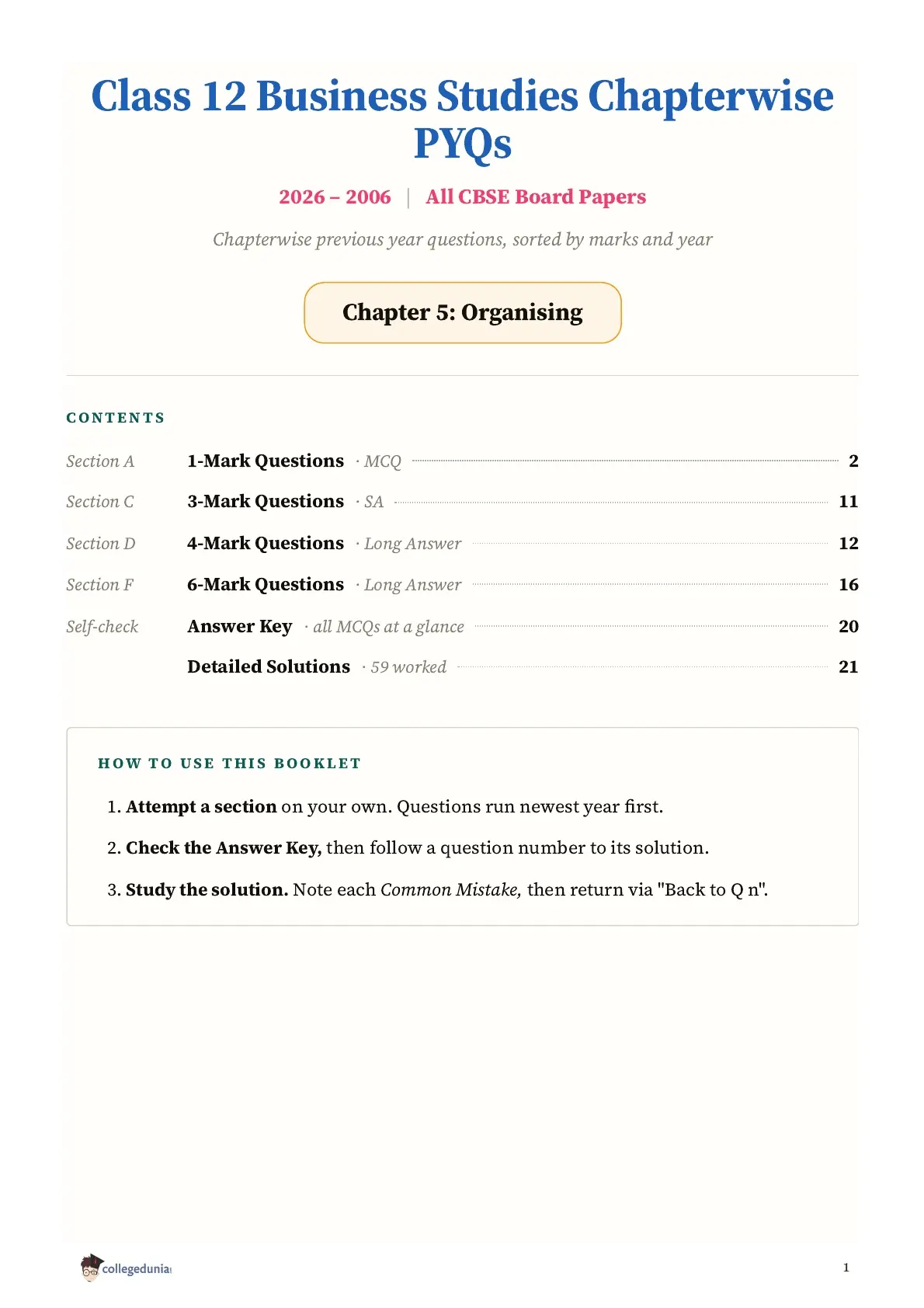
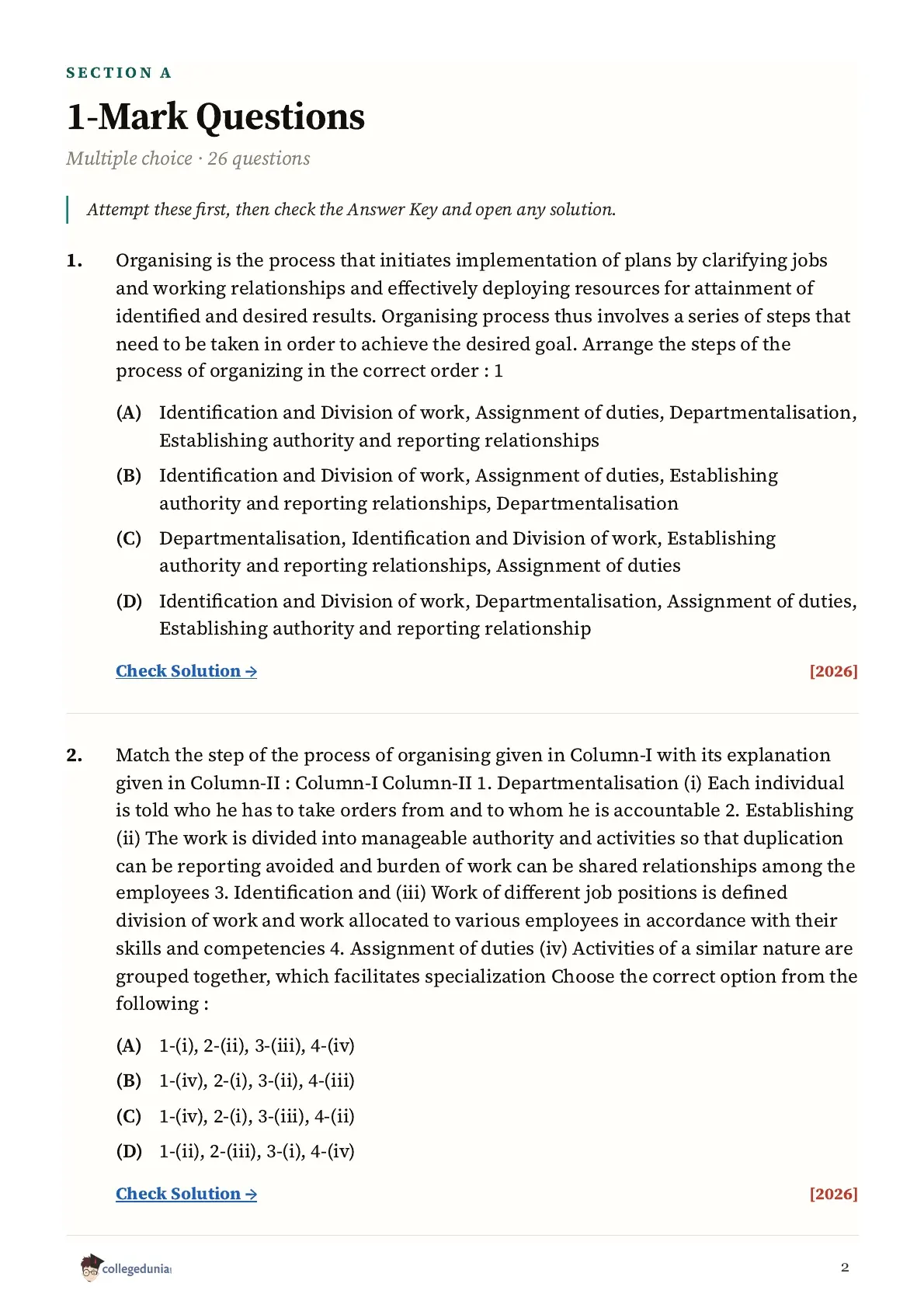
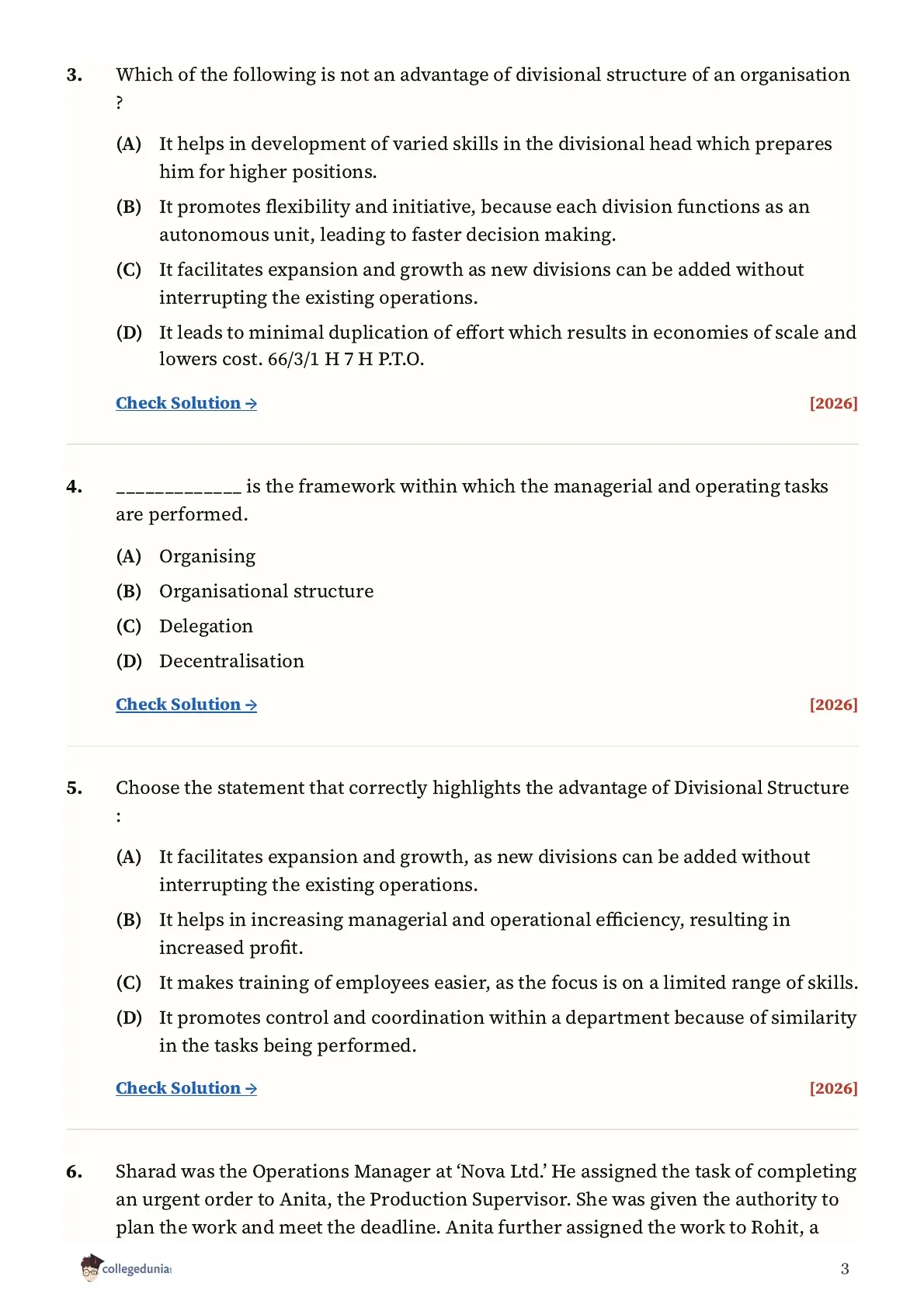
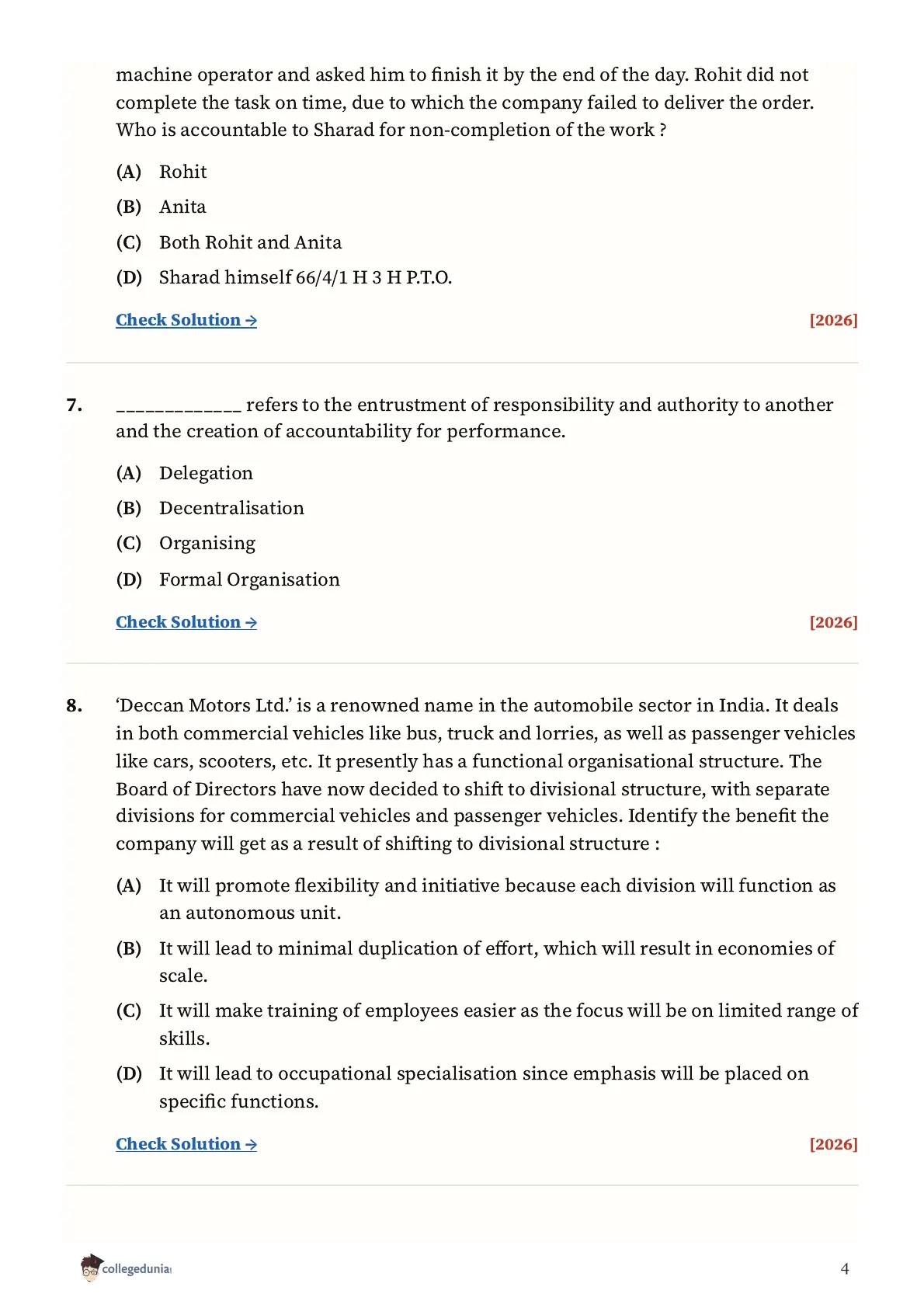
Class 12 Business Studies Organising PYQ, free to download as a 67-page PDF. The chapter carries about 8 of the 80 marks in the board paper, and the set holds 59 solved questions from the 2006 to 2026 papers on the steps in the organising process, importance of organising, delegation, decentralisation, formal and informal organisation, and functional and divisional structure, and takes roughly three hours to work through, so do it right after you finish the chapter in NCERT.



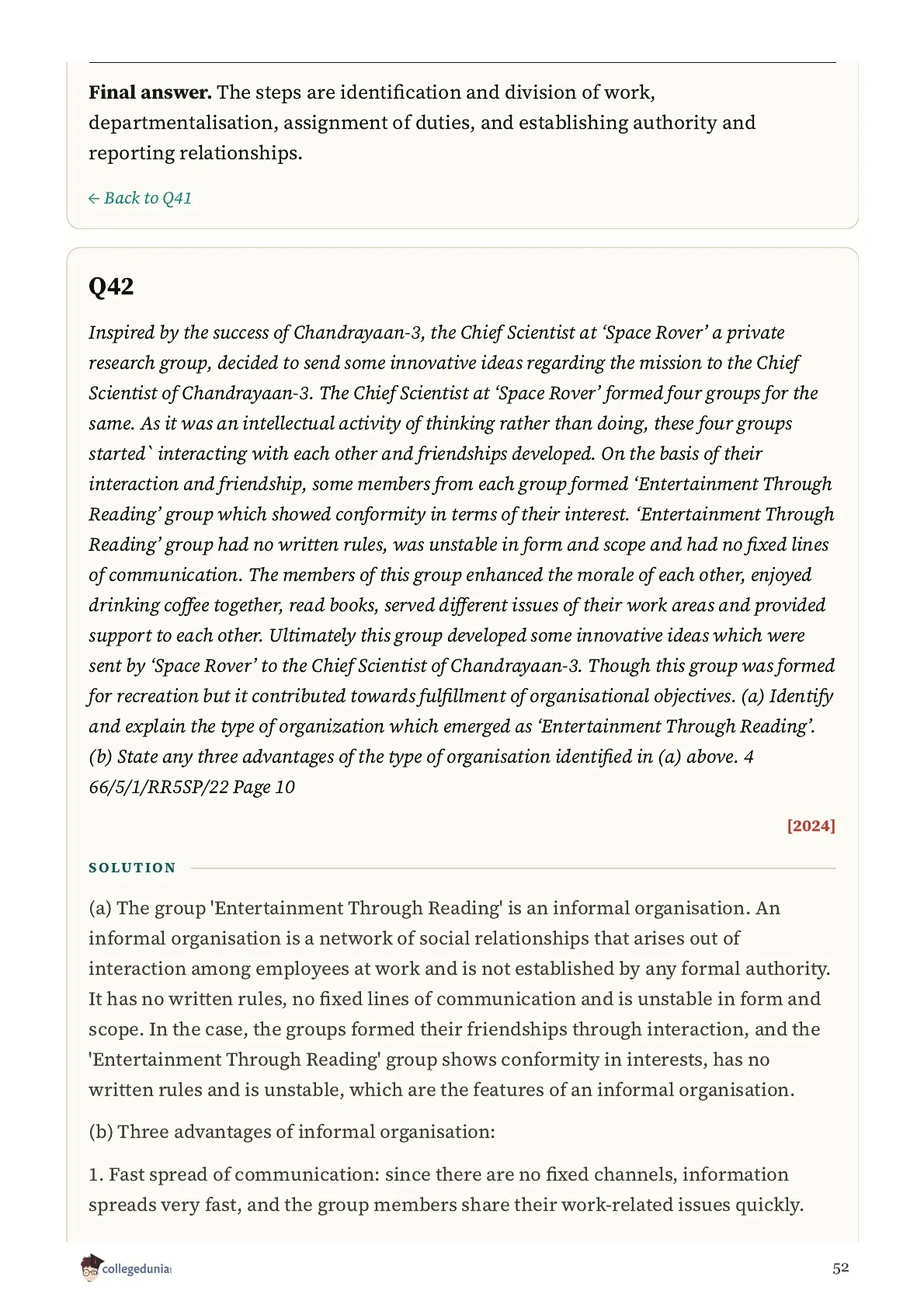
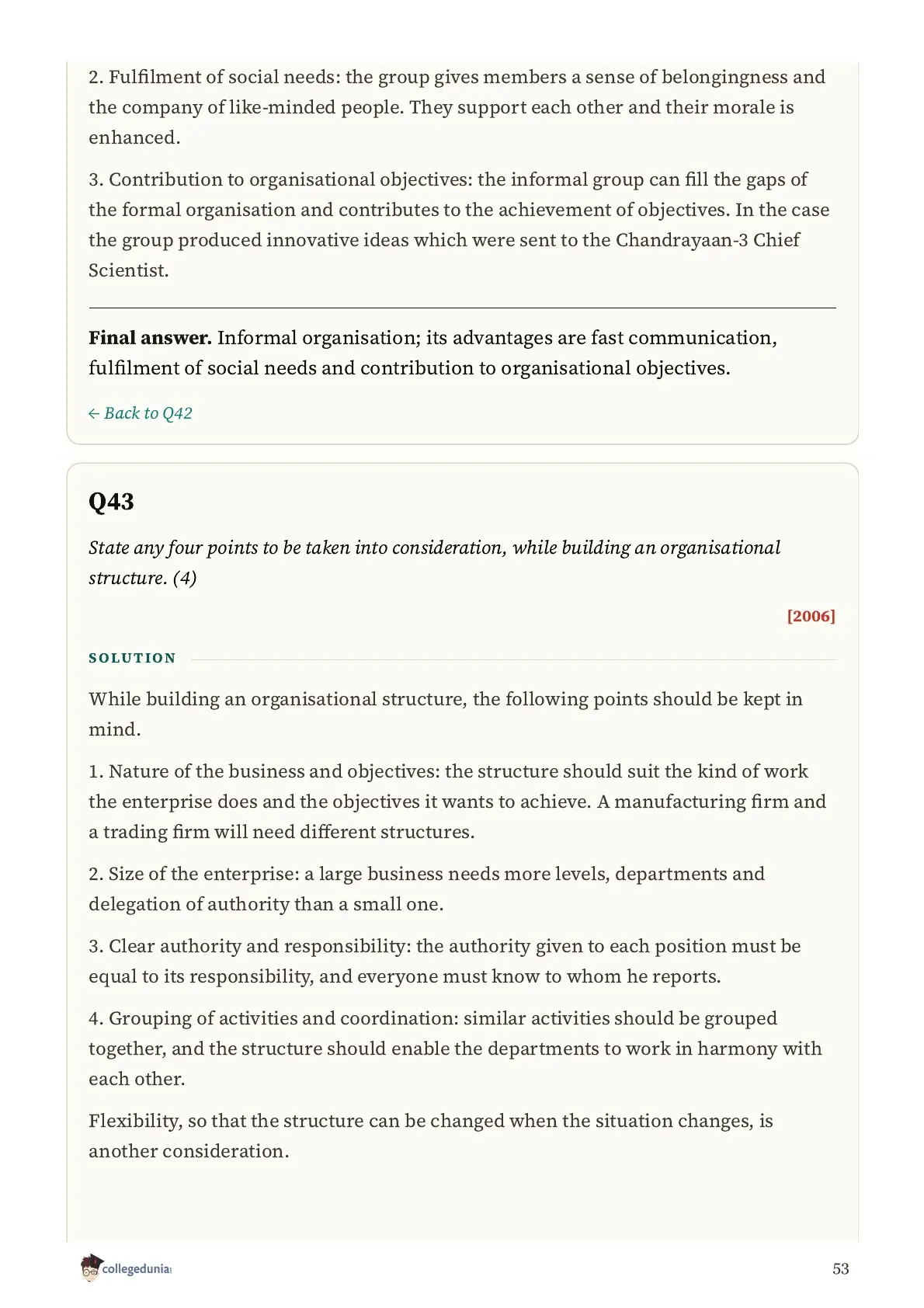
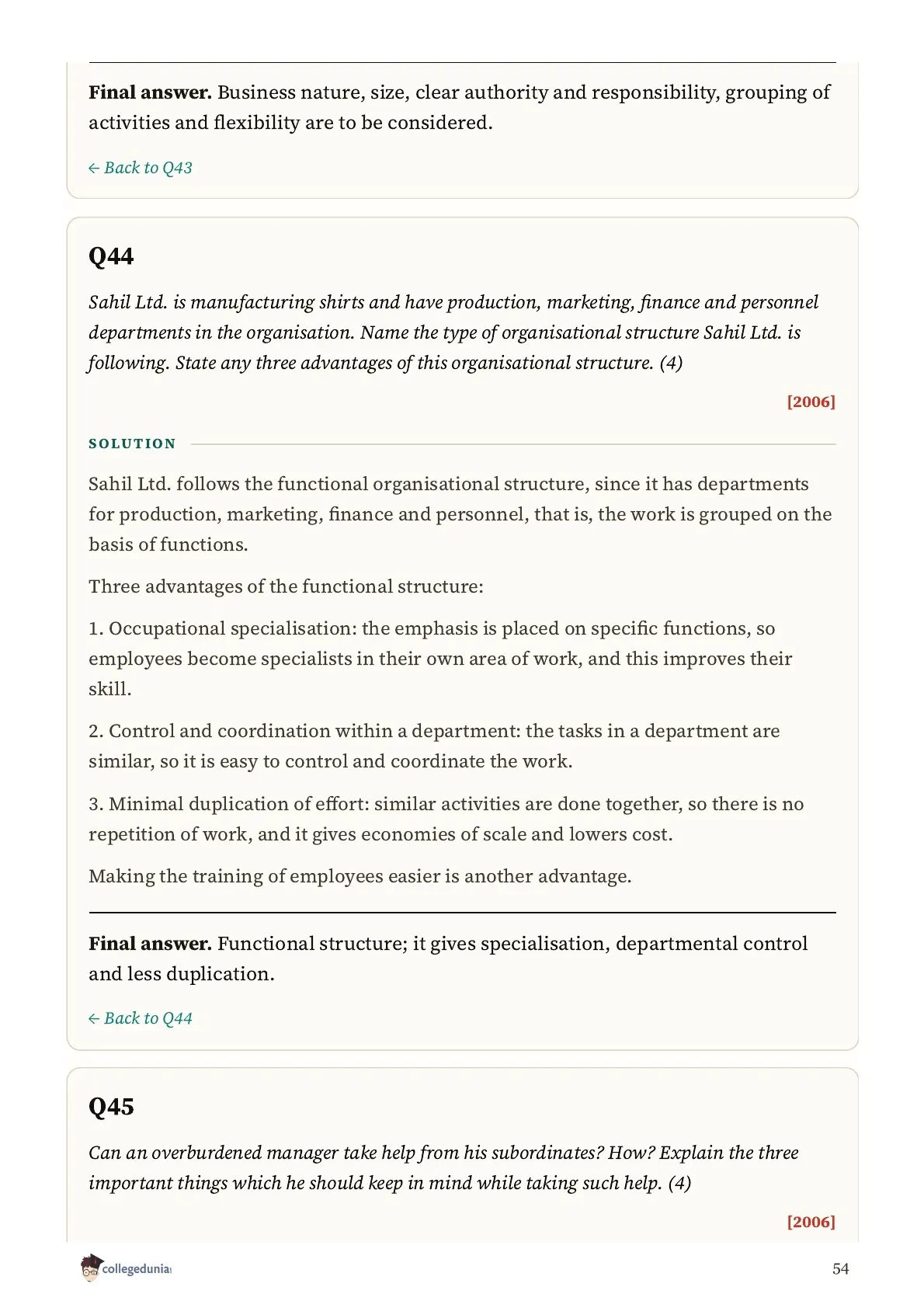
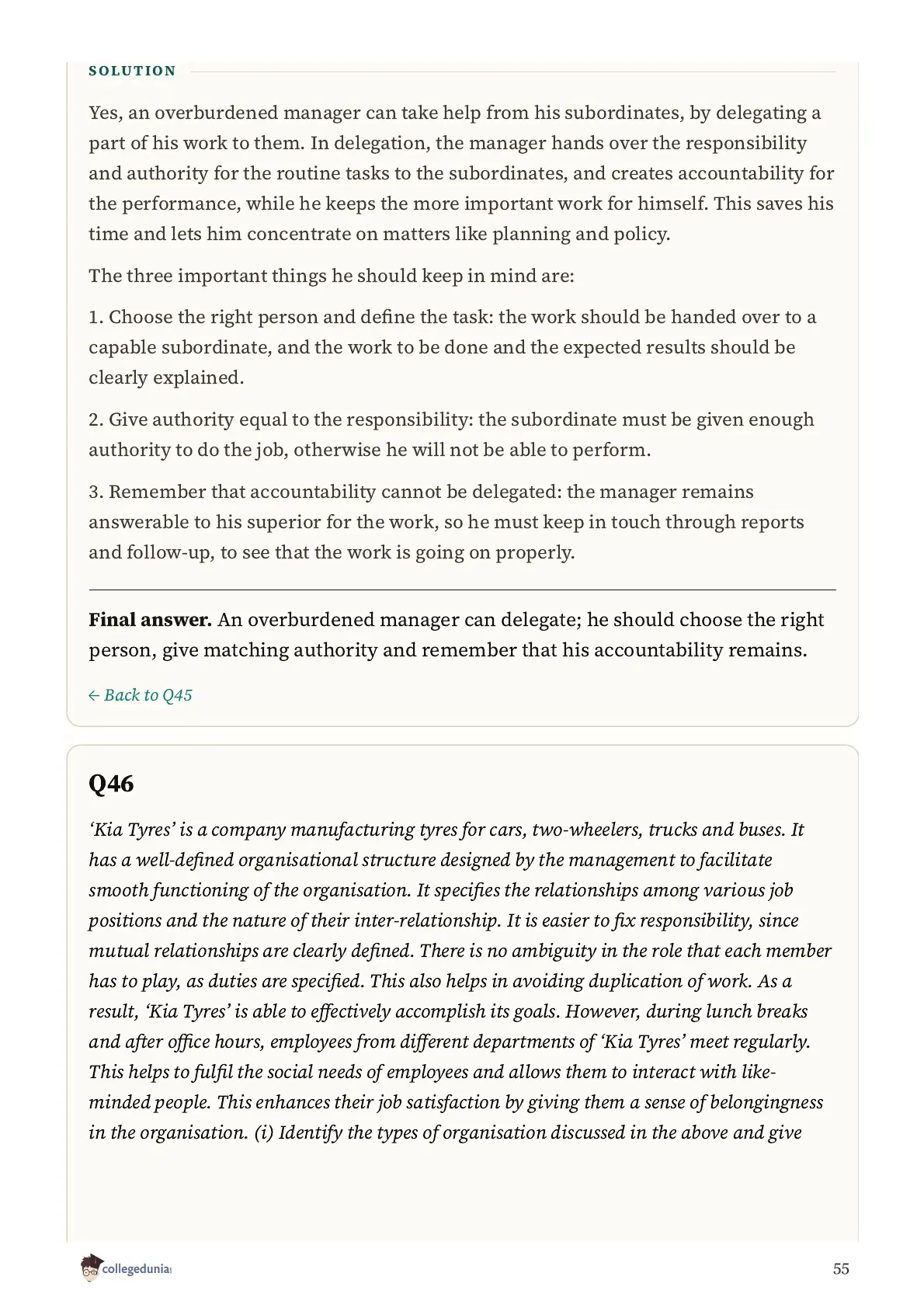
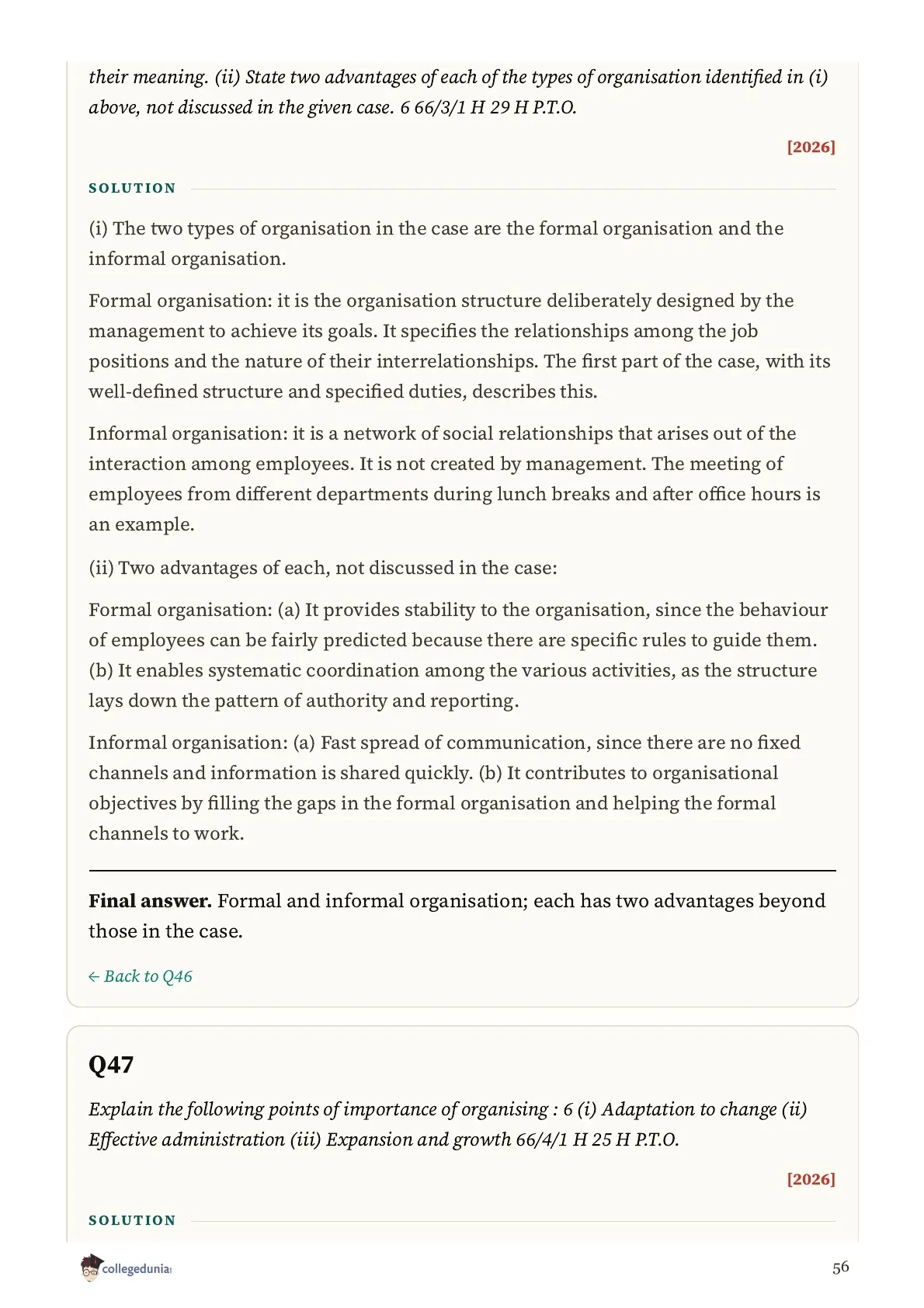
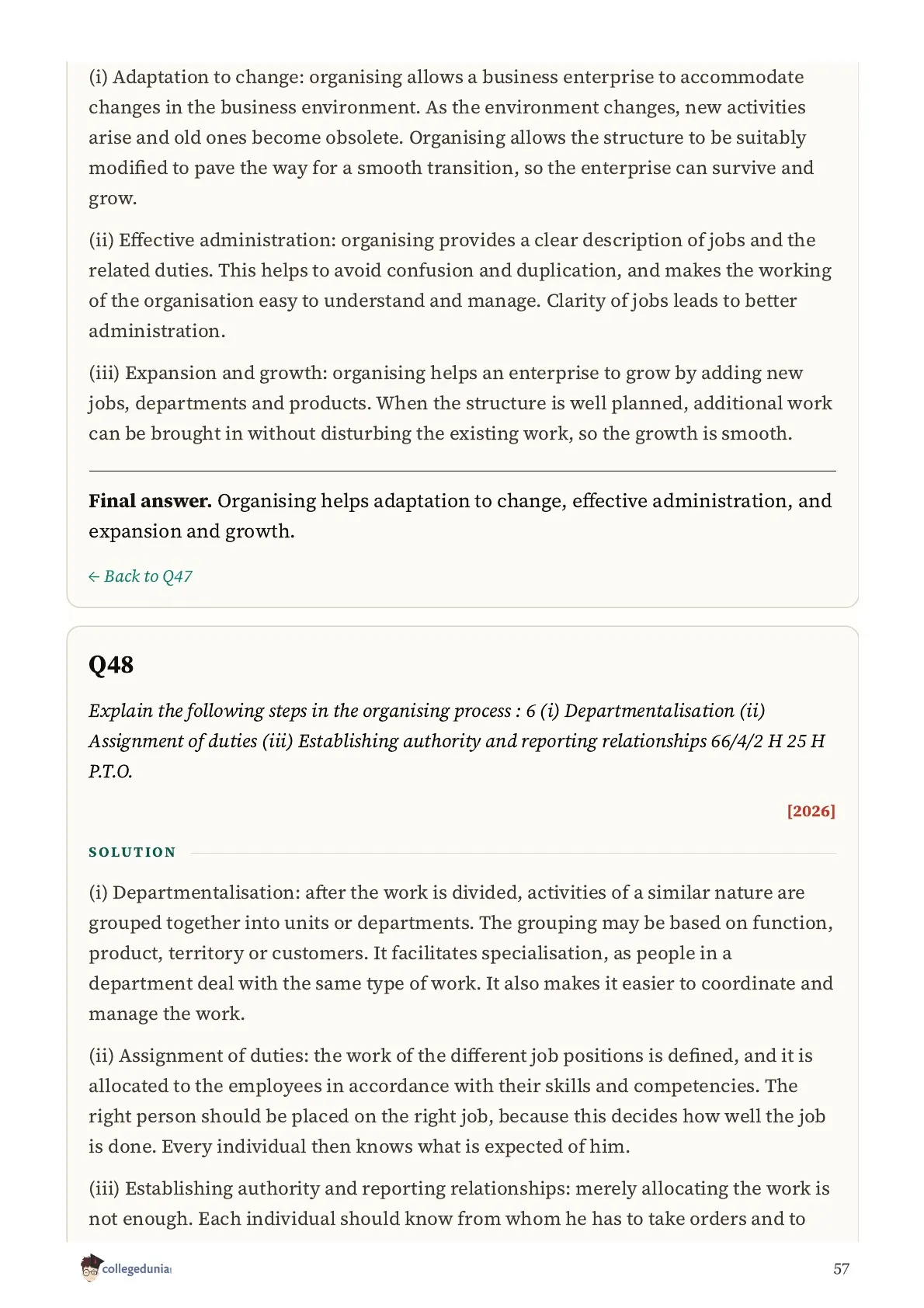
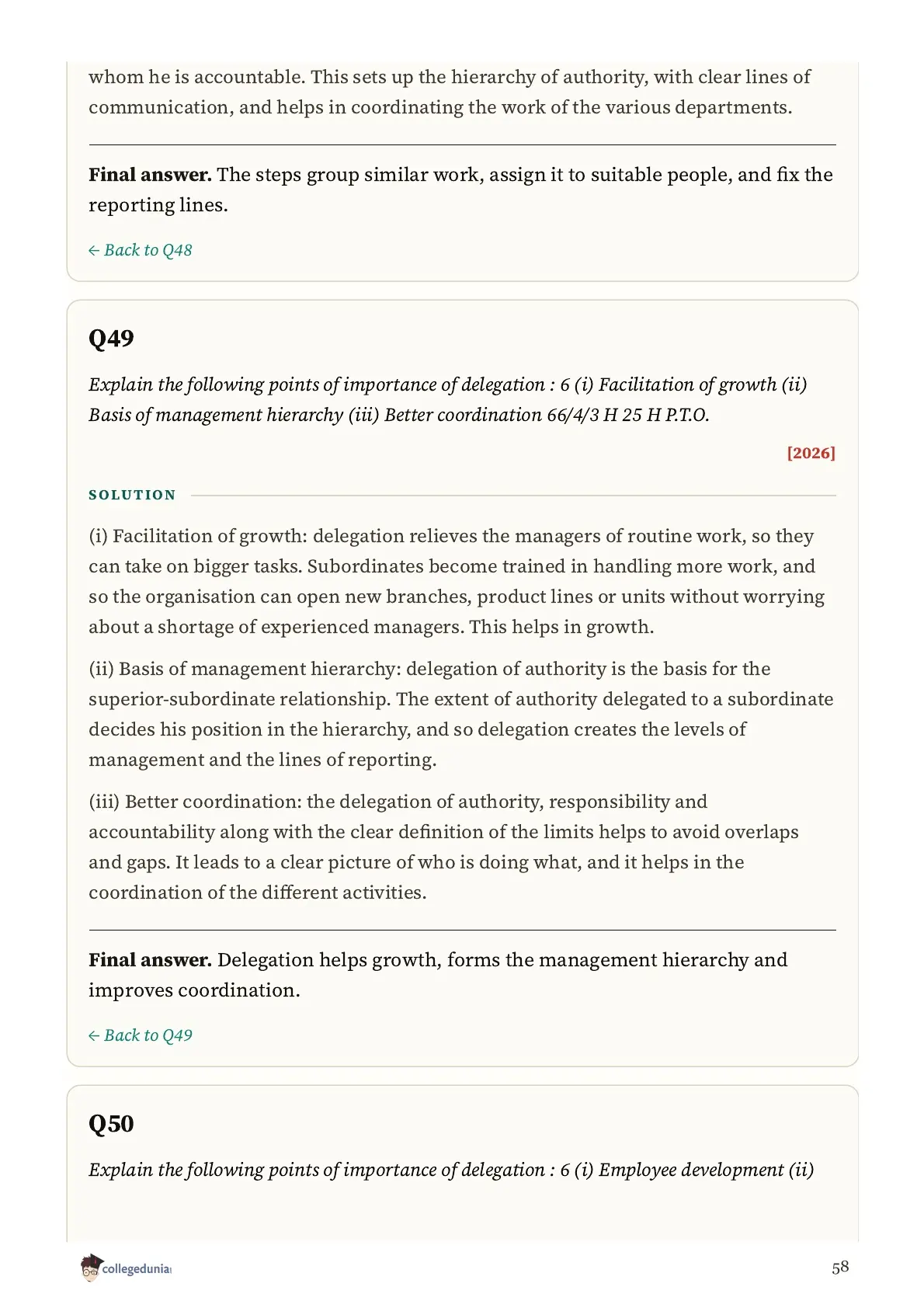
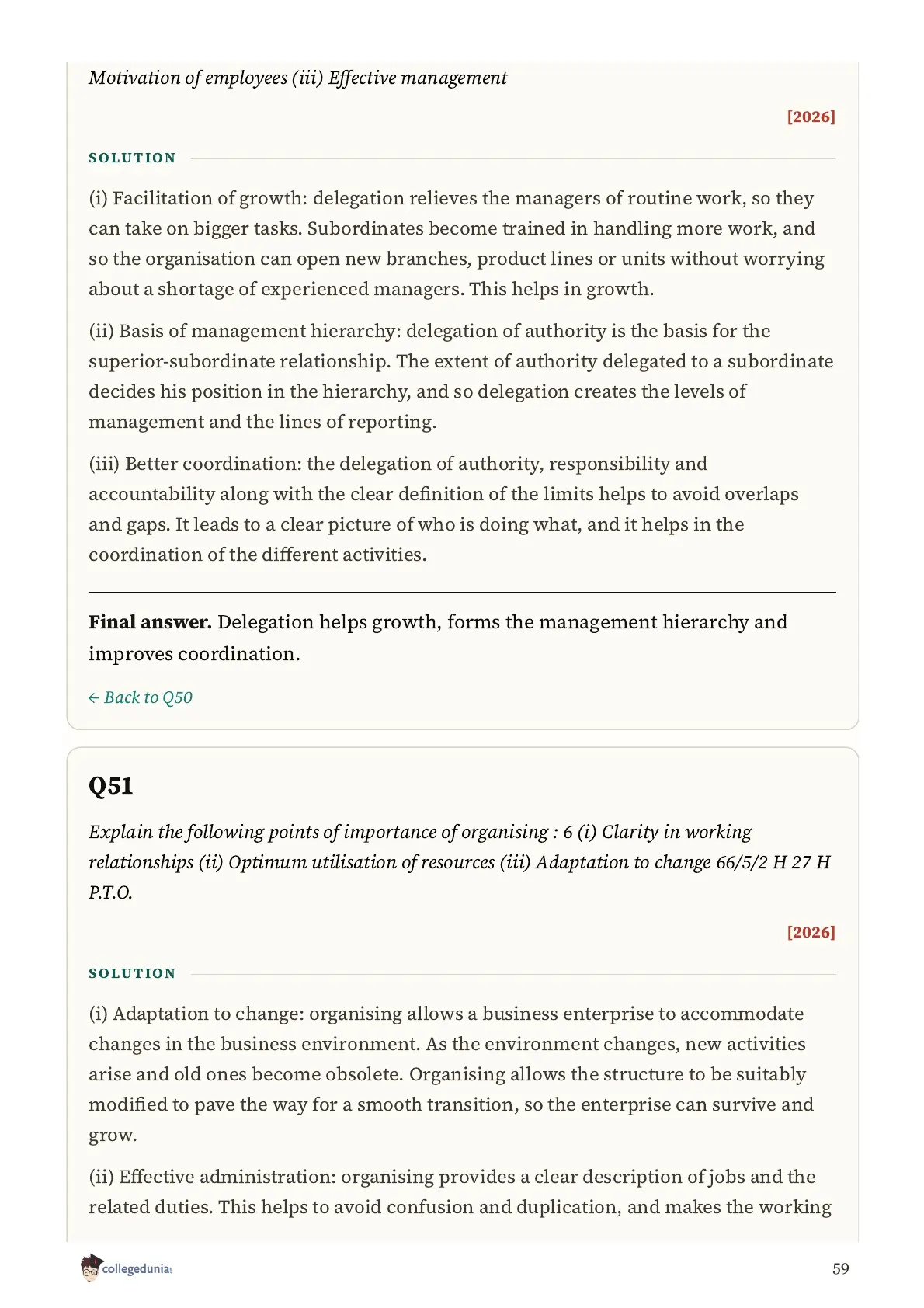
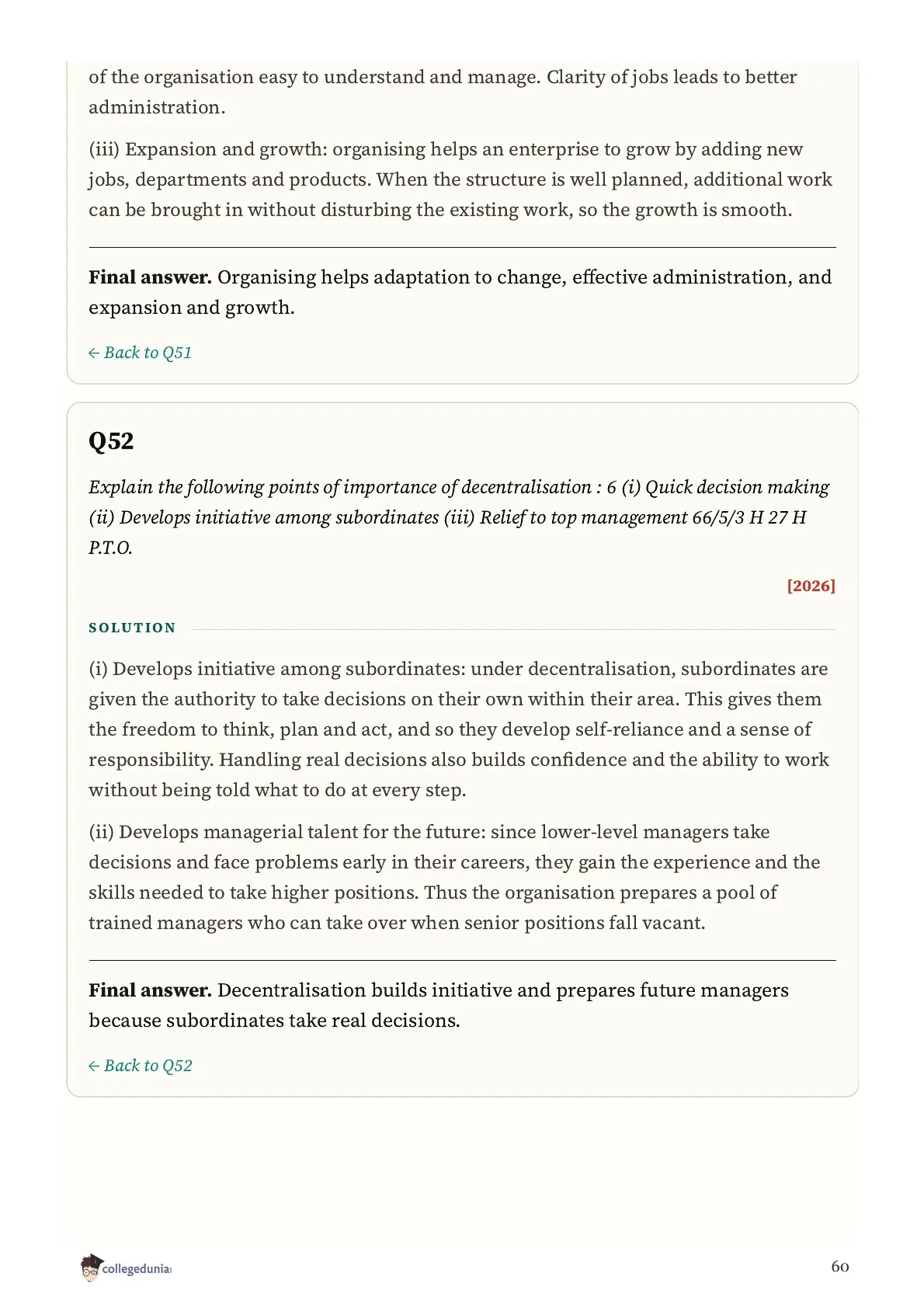
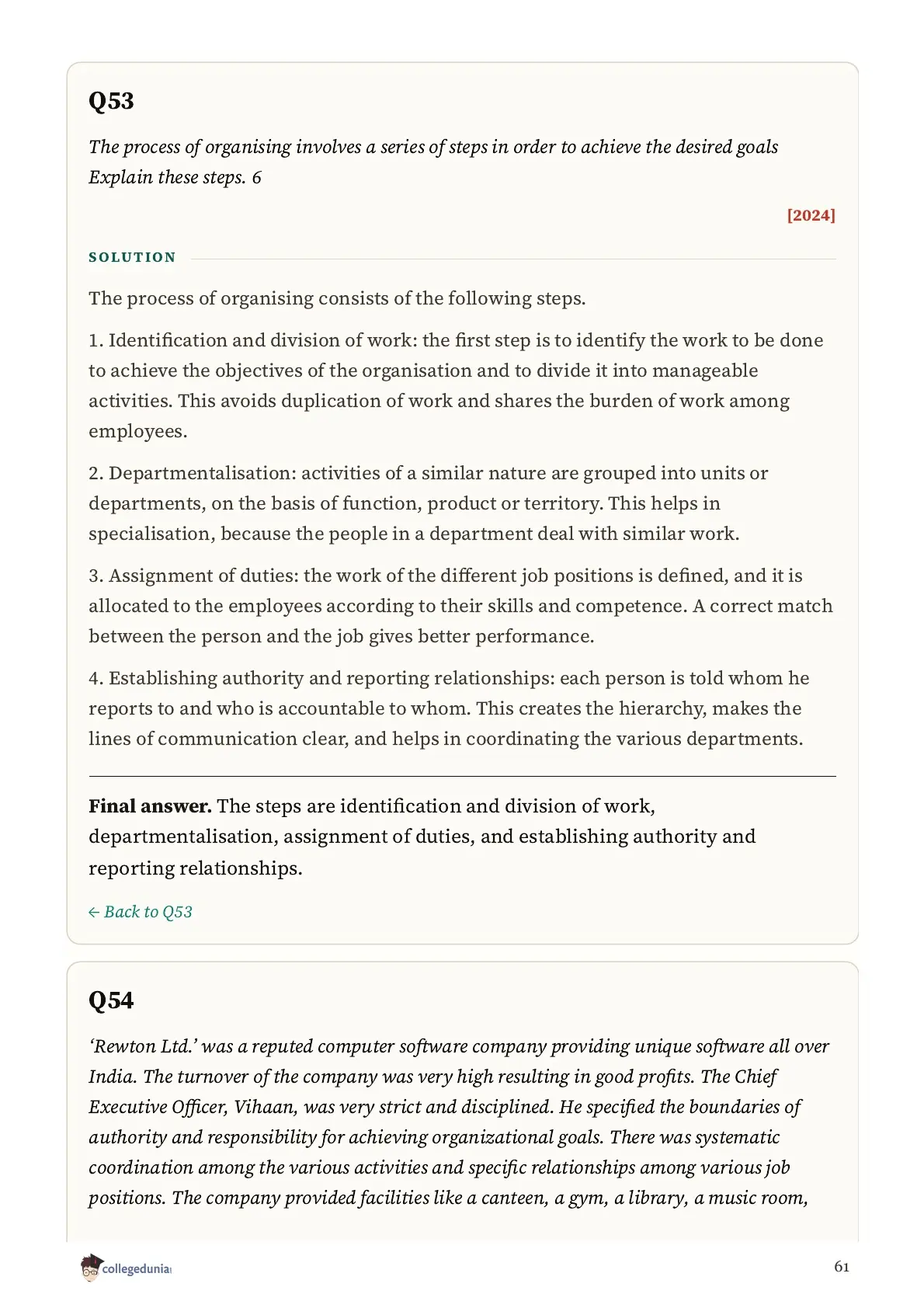

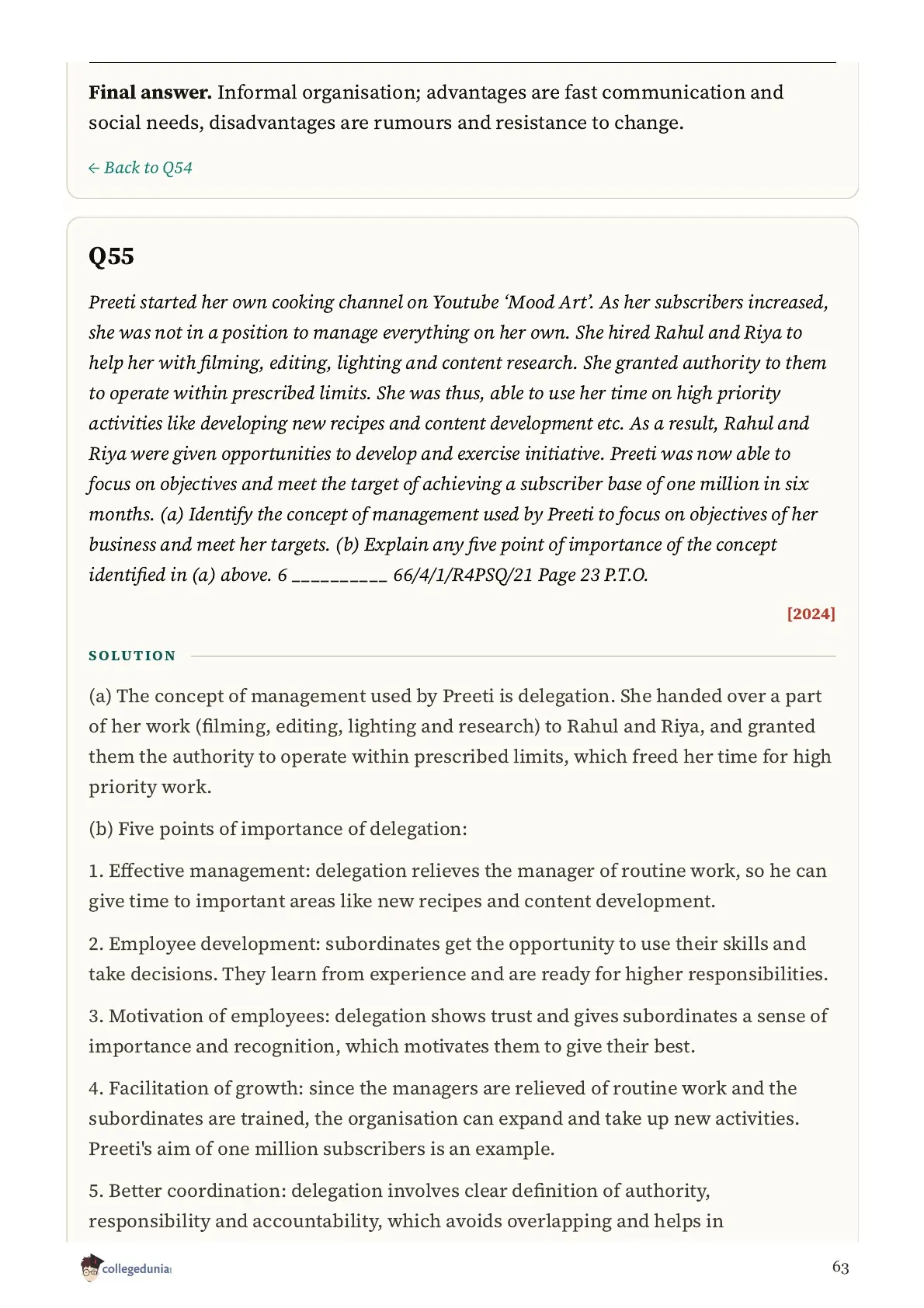
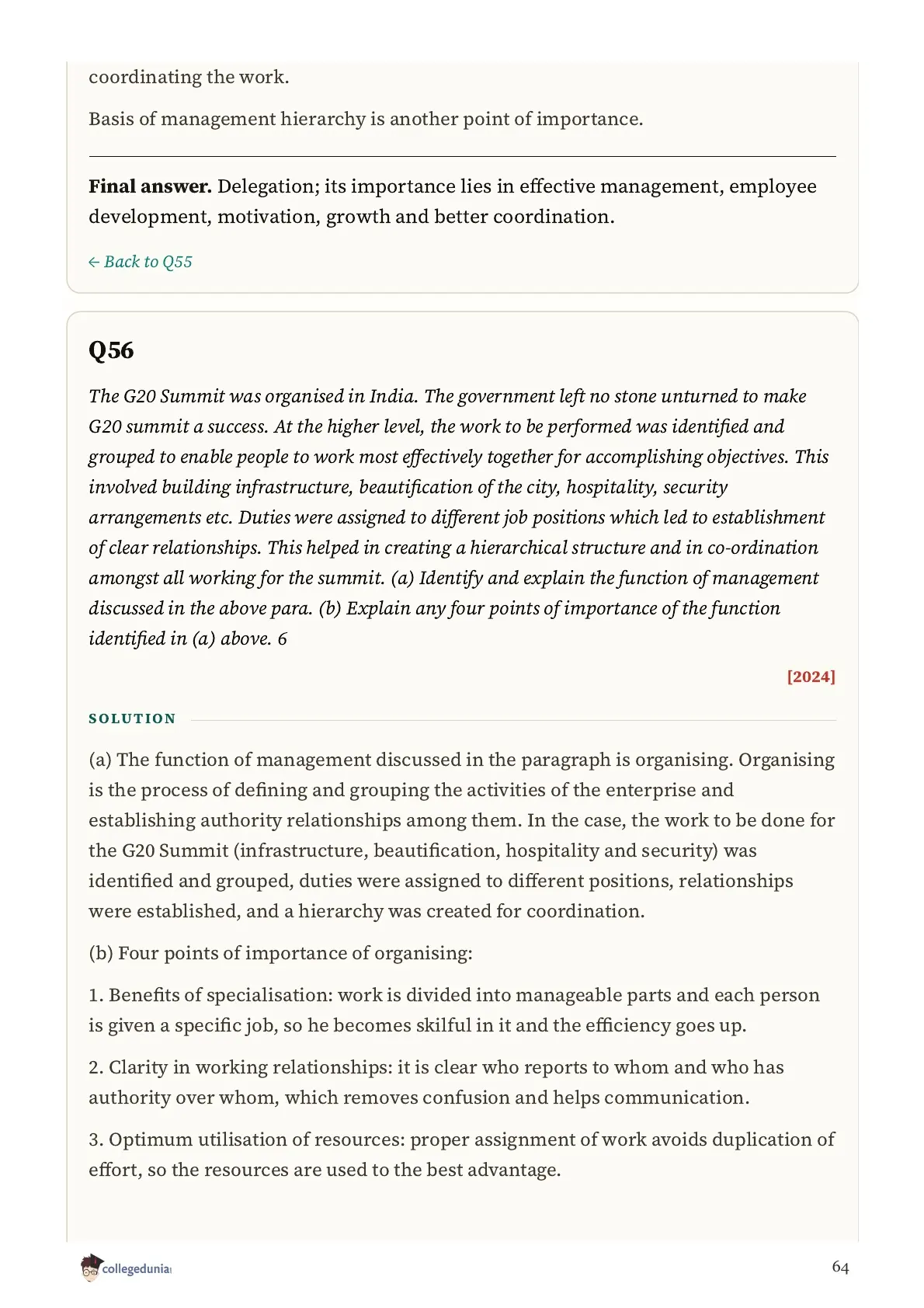
Organising Weightage in the Class 12 Board Paper
As per Business Studies Organising weightage from past years, students can expect about 8 marks from this chapter in the 80-mark board paper. Treat the figure as a guide, since marks per chapter change from one paper to the next, and check the CBSE curriculum for the official unit marks.
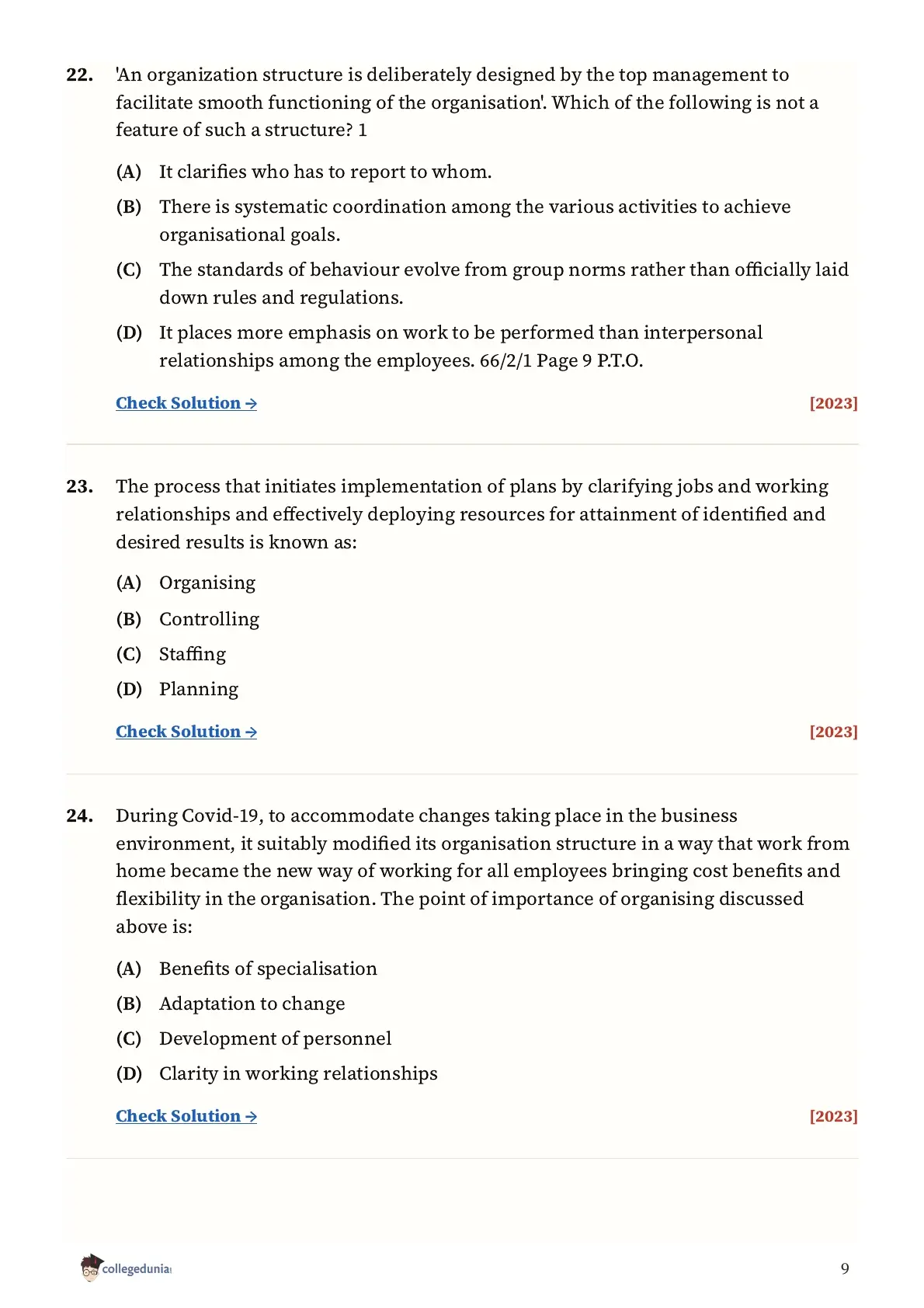
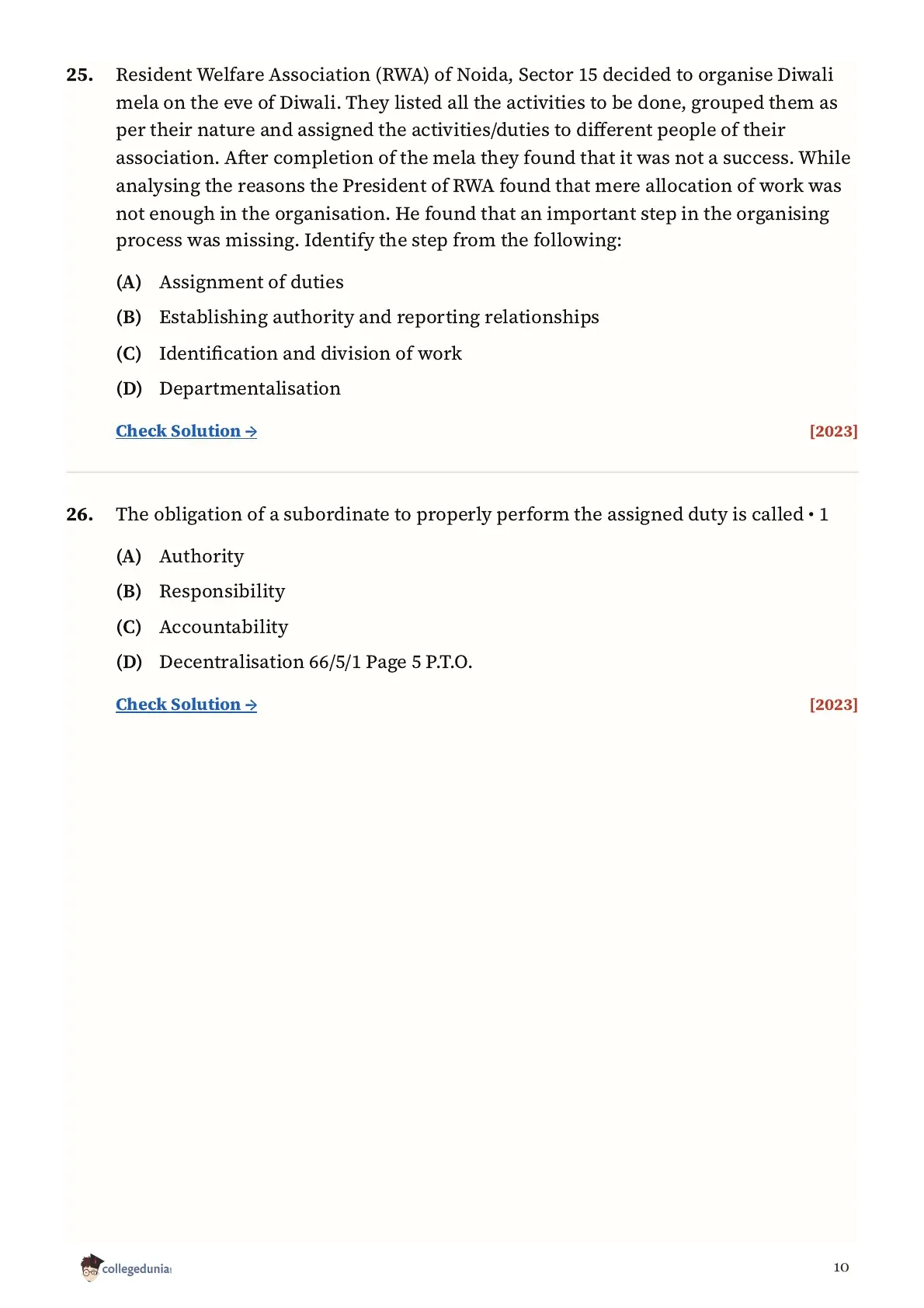
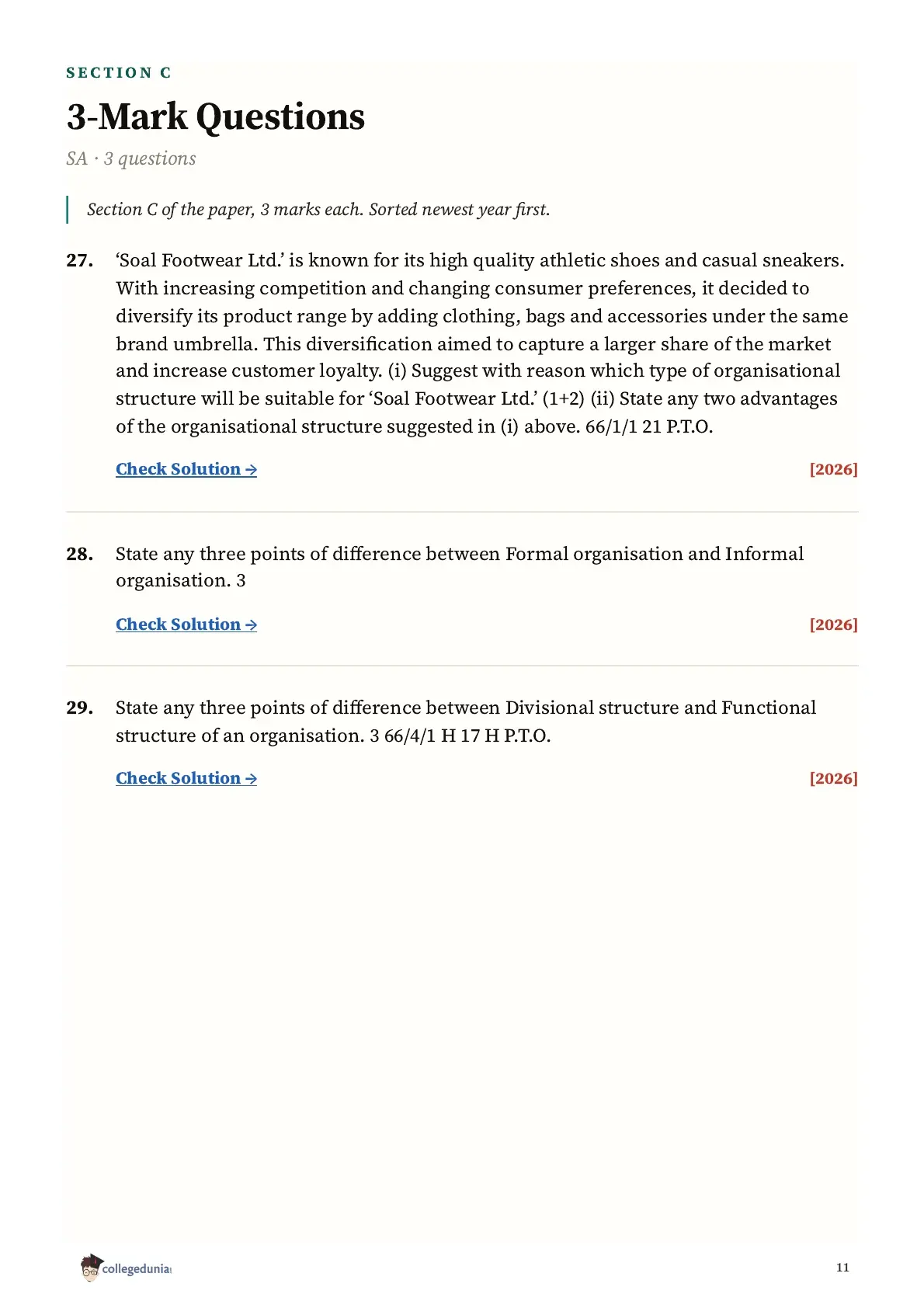
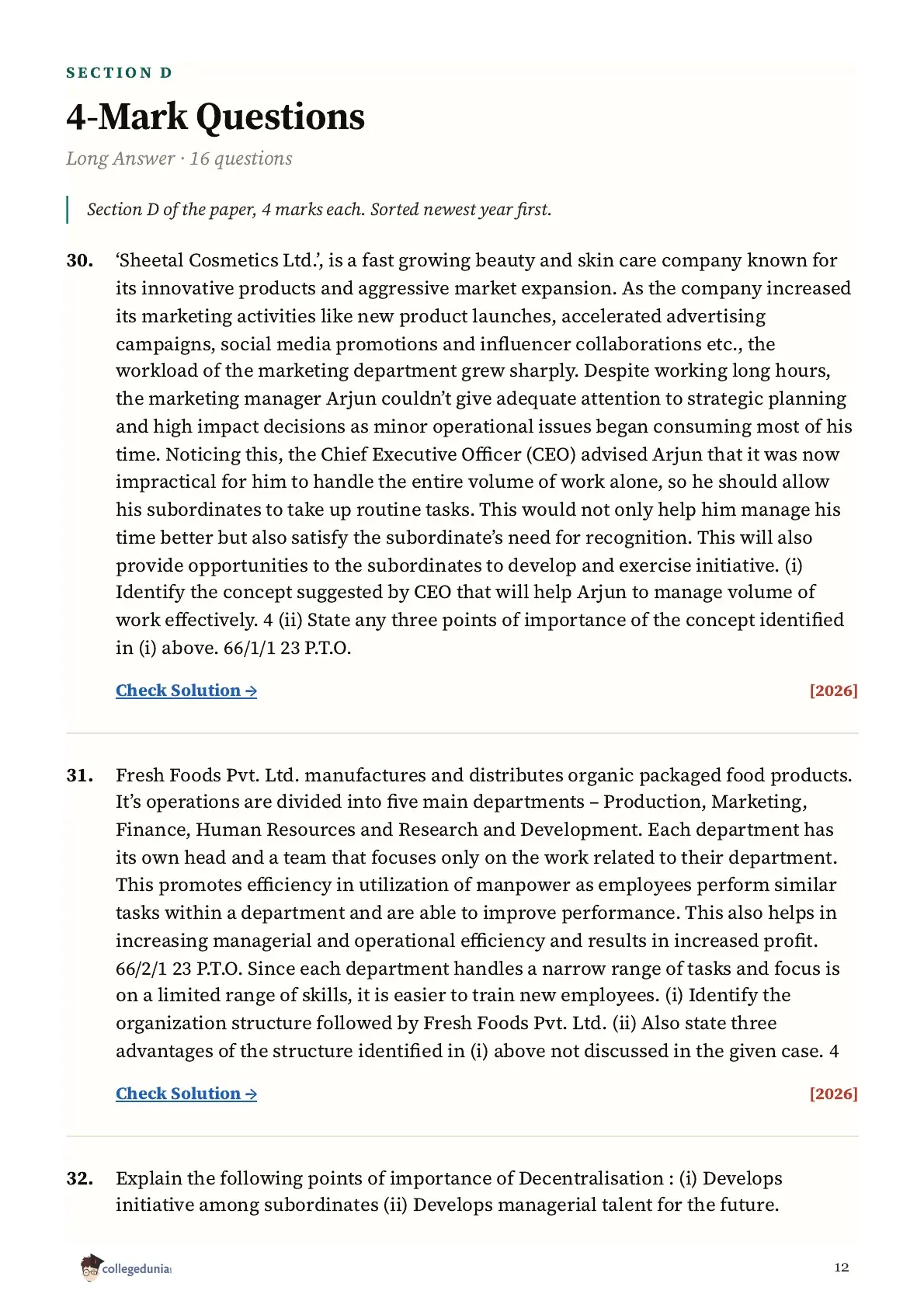
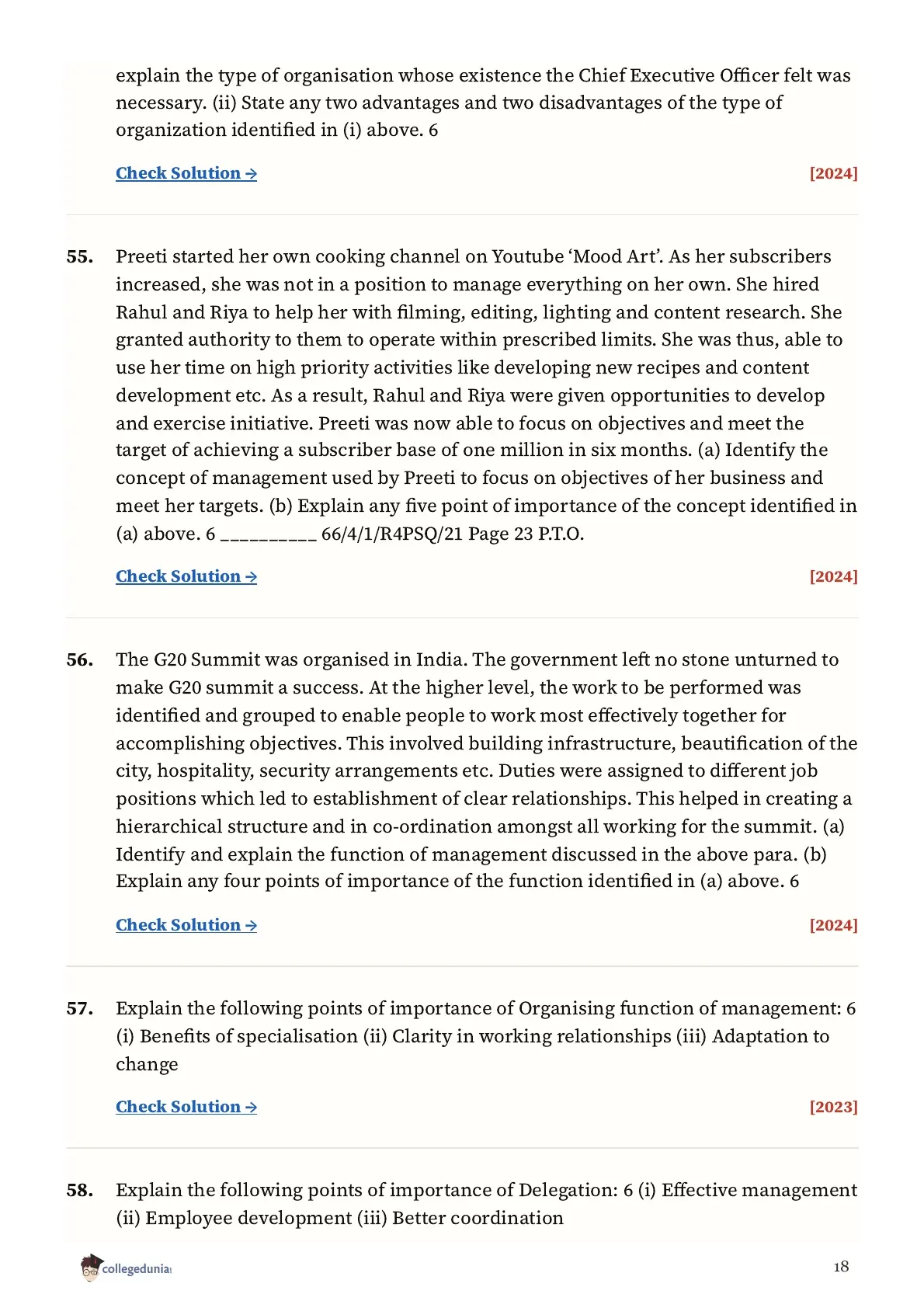
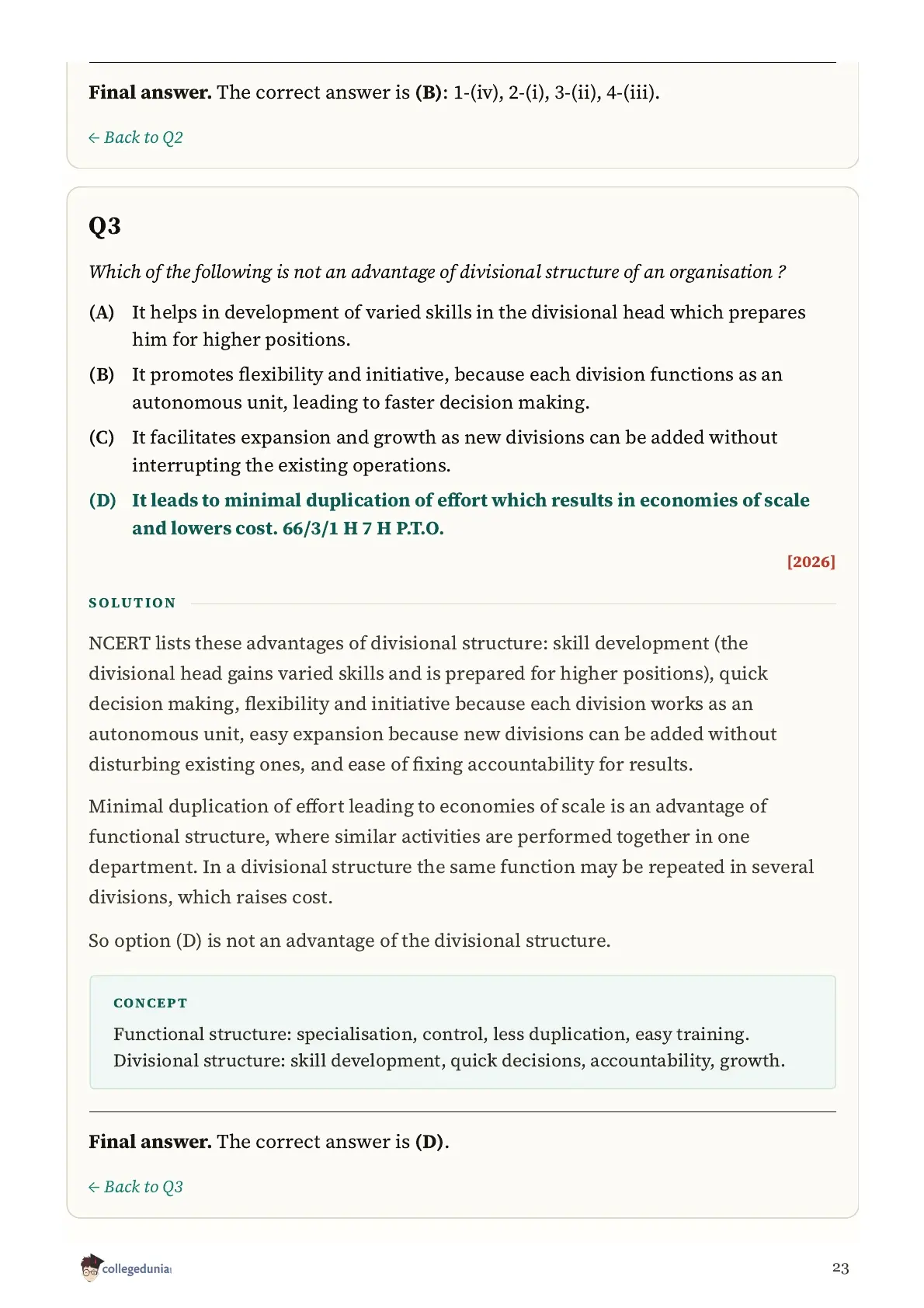
The 59 questions in this set fall in four mark bands. The 1-mark MCQs are the largest group with 26 questions, followed by 16 questions of 4 marks and 14 of 6 marks. There are only 3 questions of 3 marks.
| Marks Each | Question Type | Questions in the Set |
|---|---|---|
| 1 mark | MCQ | 26 |
| 3 marks | Short Answer (SA) | 3 |
| 4 marks | Long Answer | 16 |
| 6 marks | Long Answer | 14 |
Organising Questions by Topic
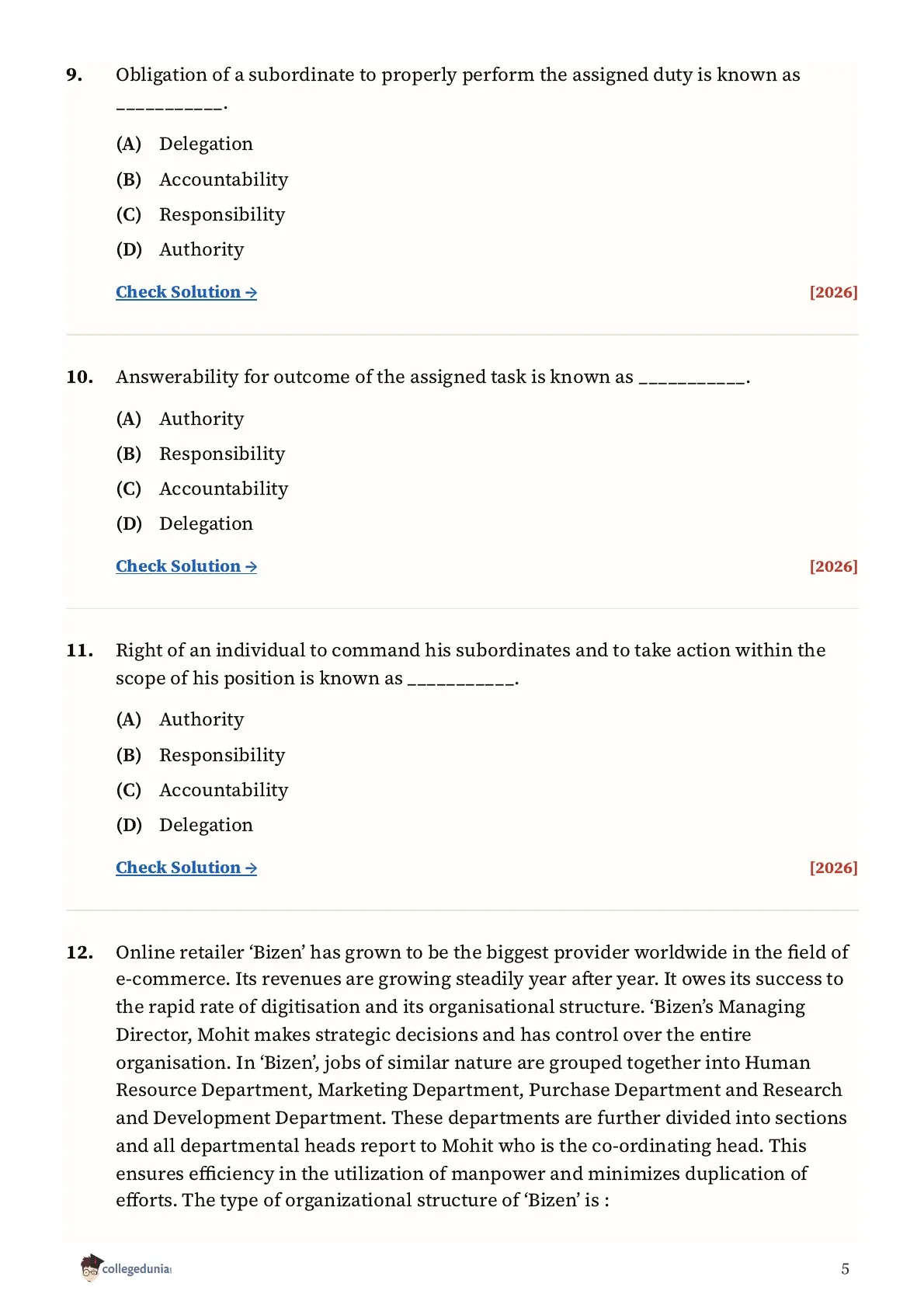
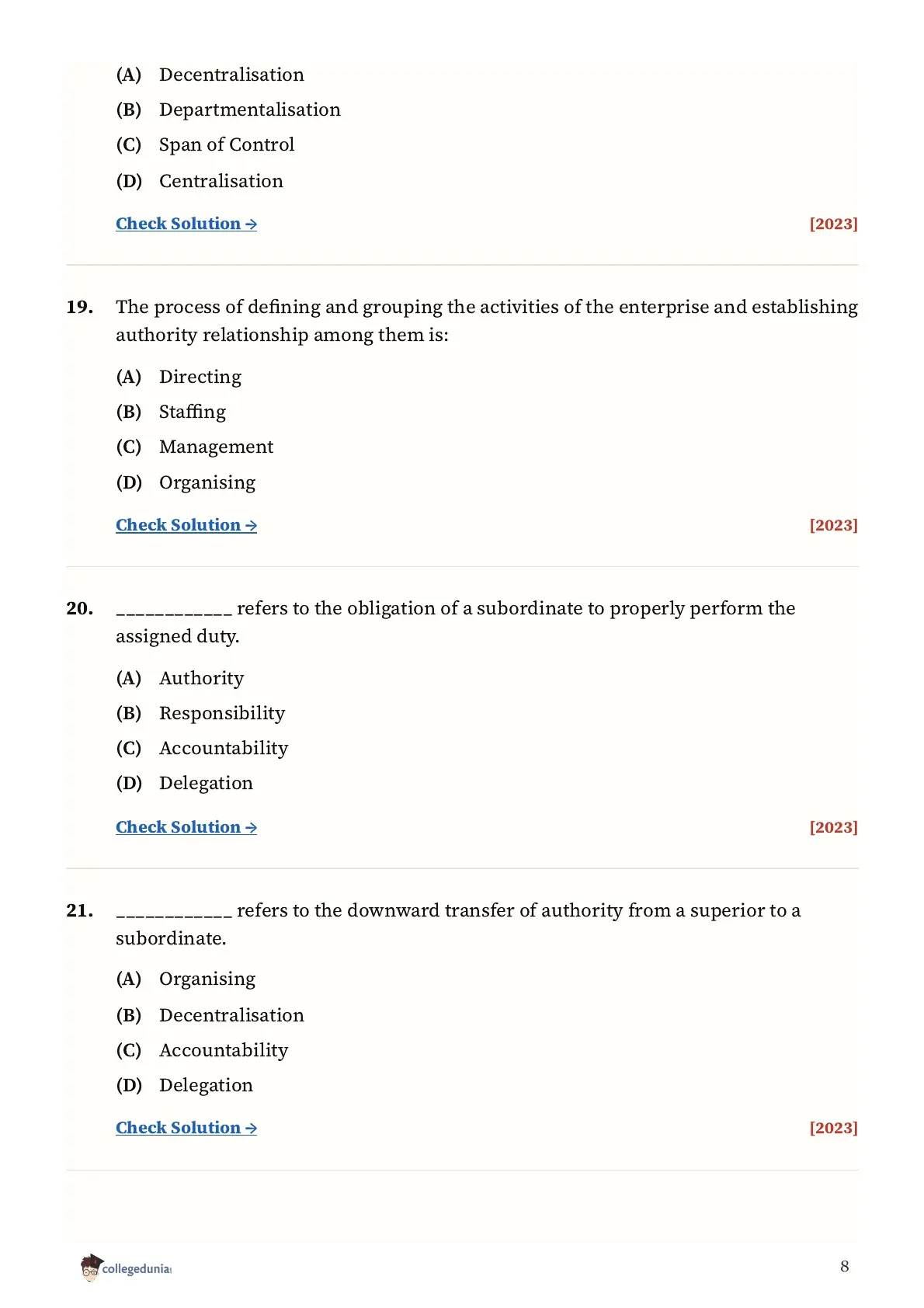
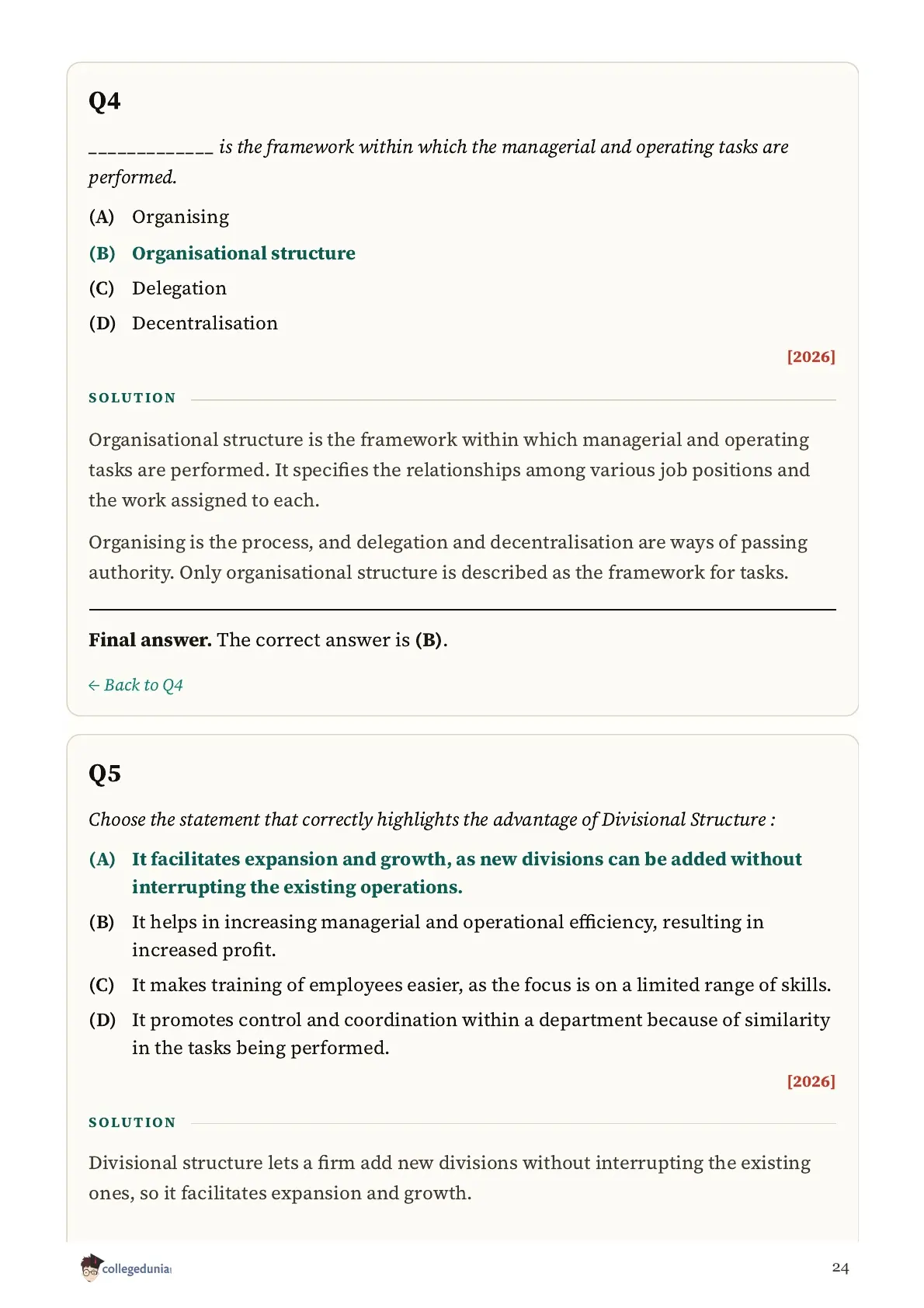
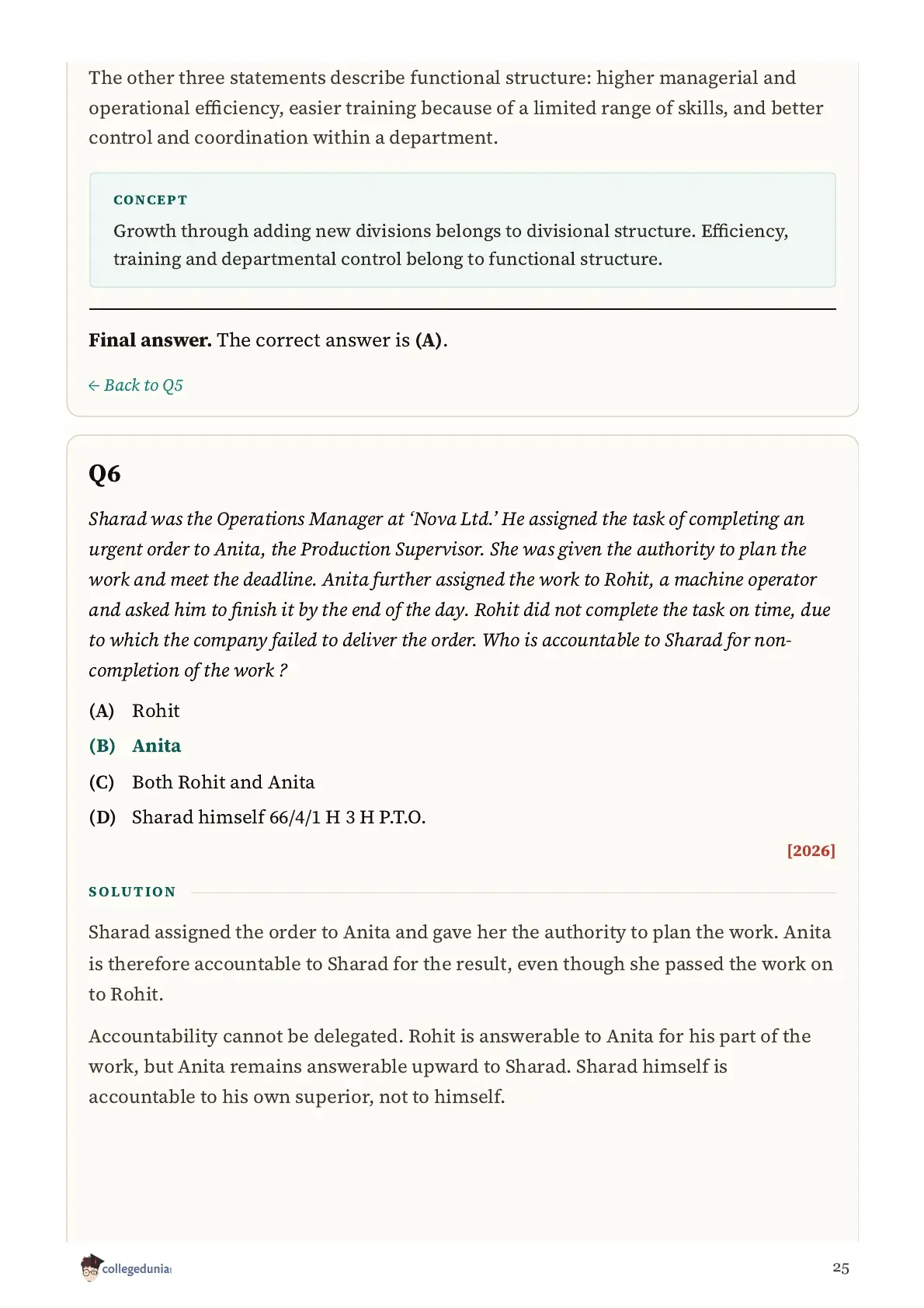
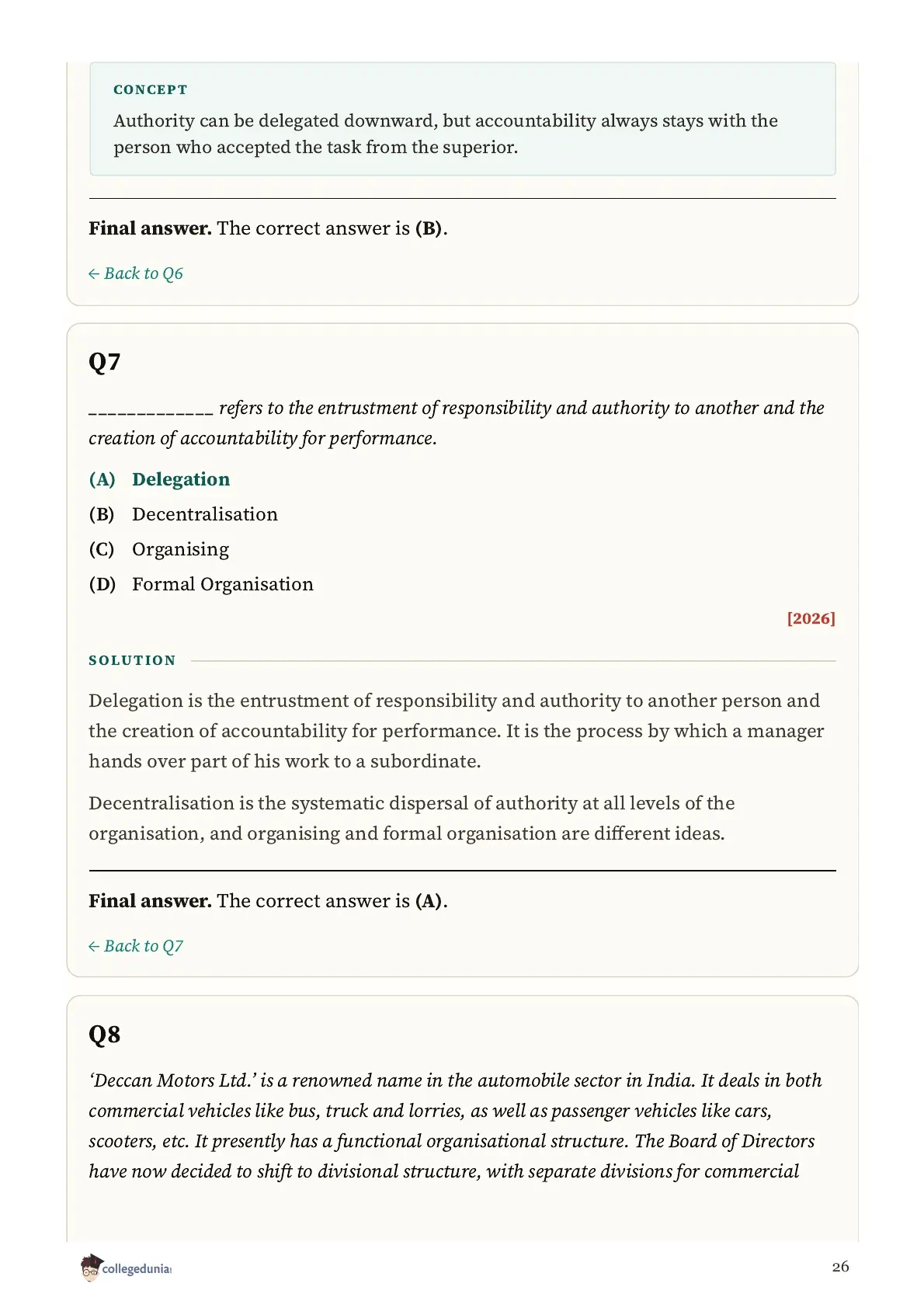
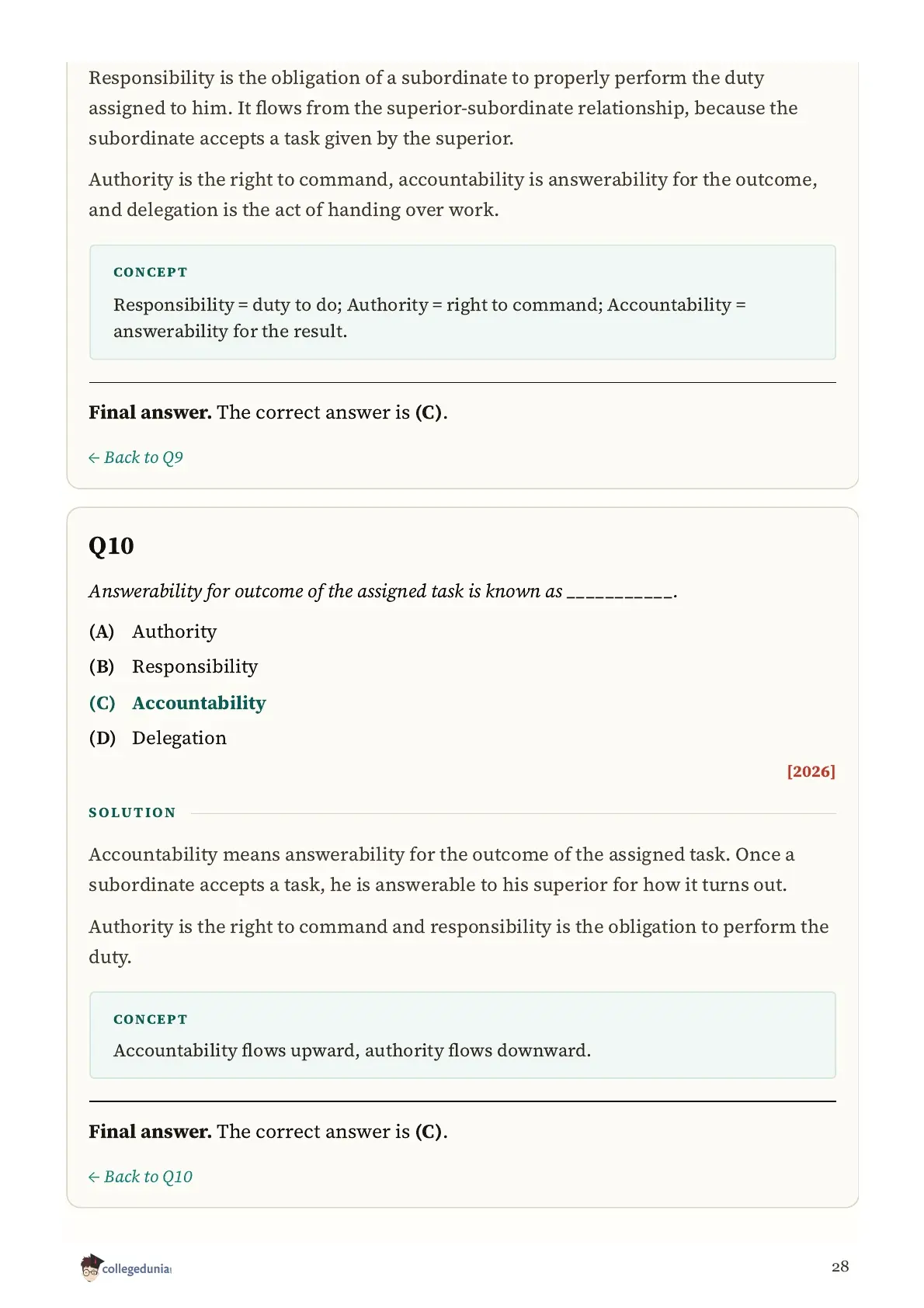
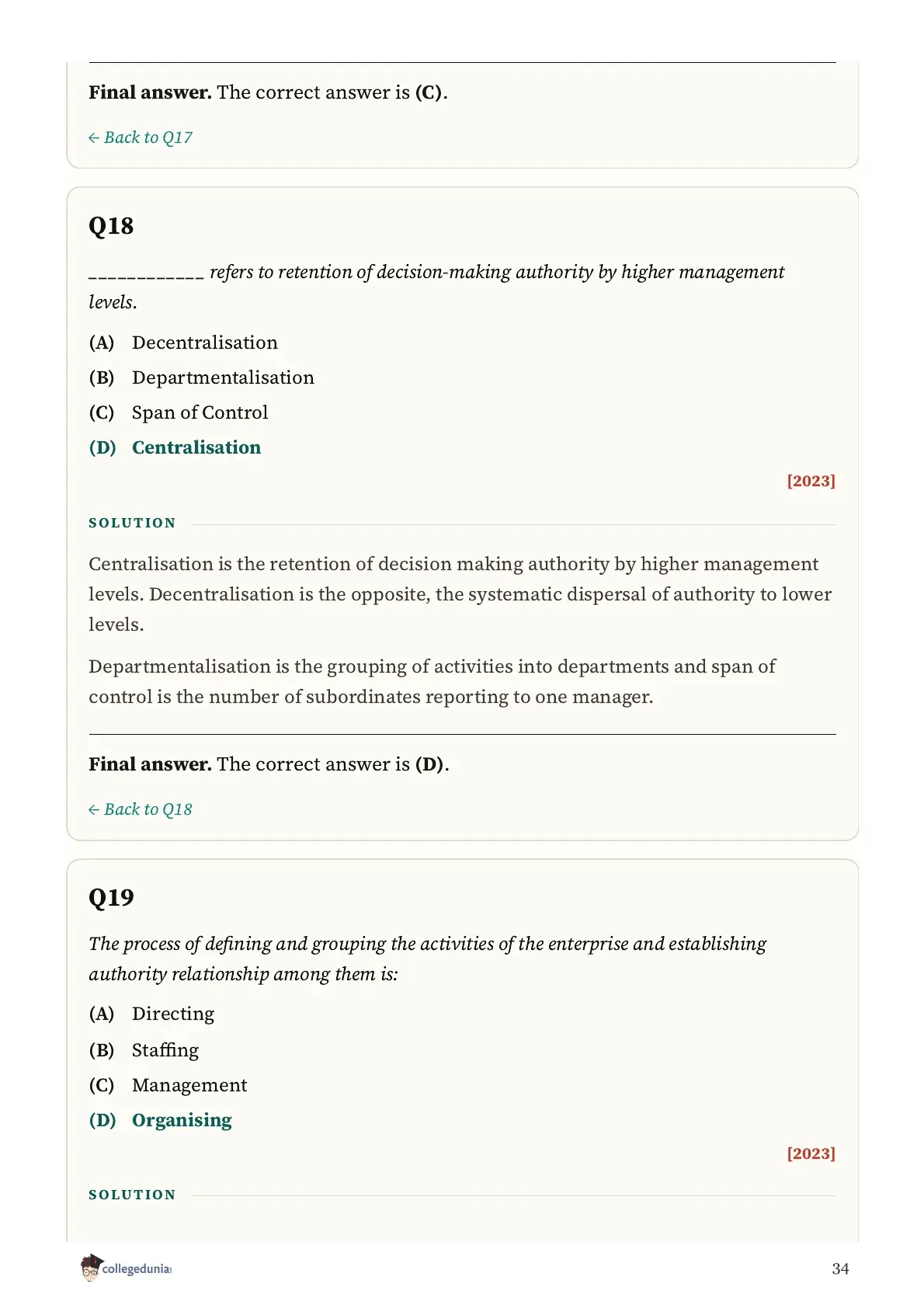
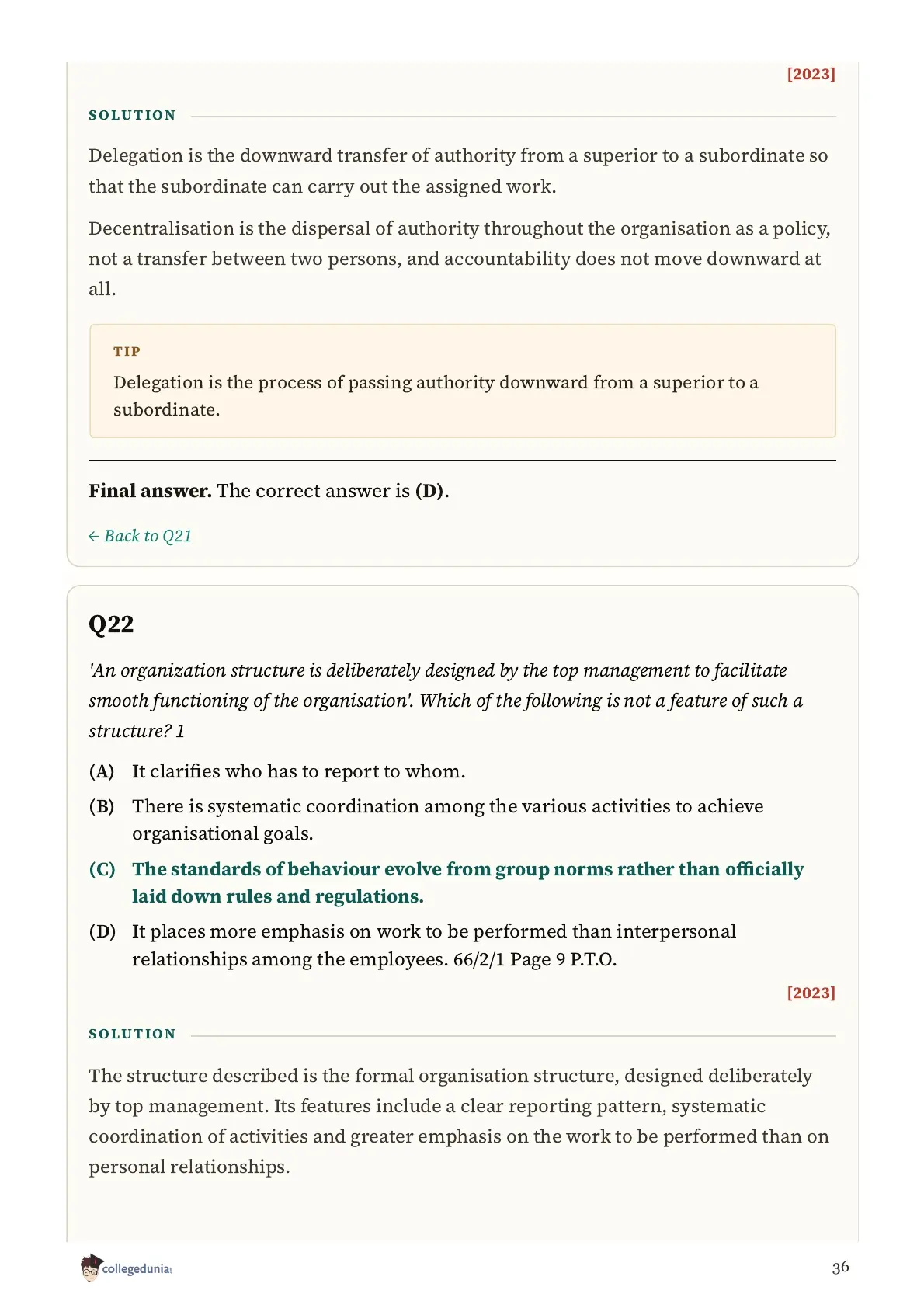
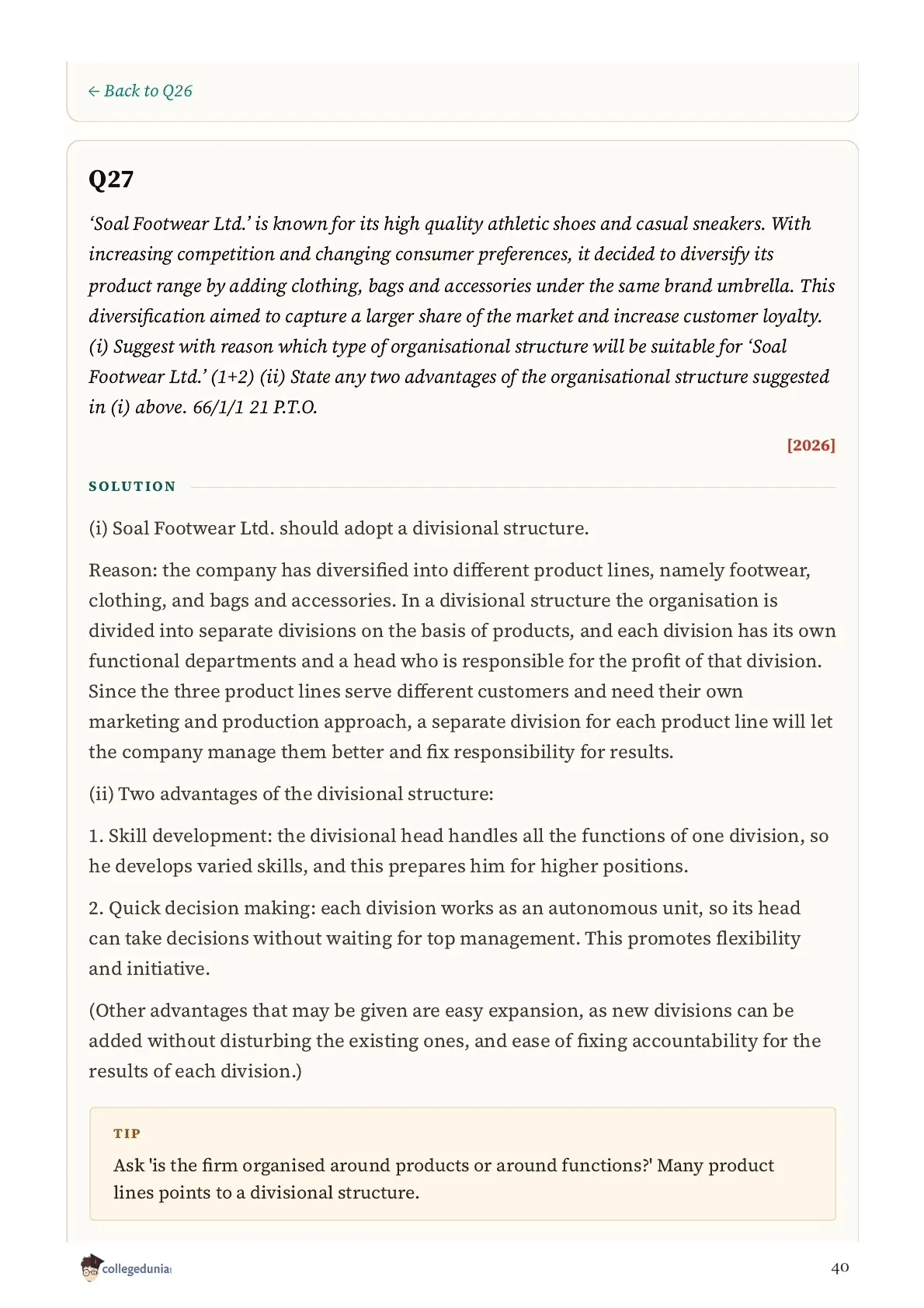
Delegation and decentralisation dominate. 13 questions use the word delegation and 13 use decentralisation or centralisation, while authority appears in 19 questions and accountability in 12. Most of the 1-mark MCQs test the three terms against each other: authority is the right to command, responsibility is the obligation to do the assigned duty, and accountability is answerability for the outcome.
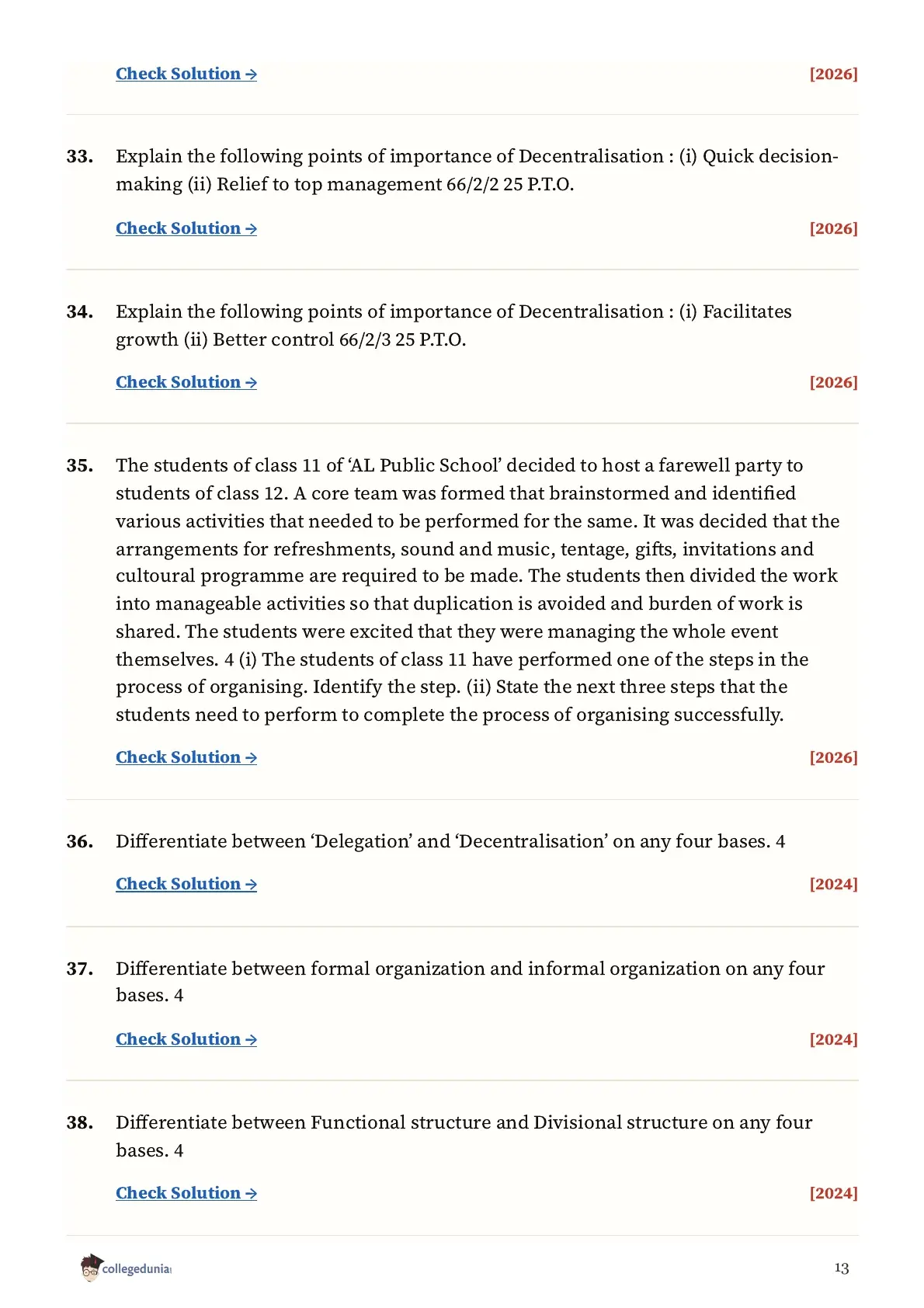
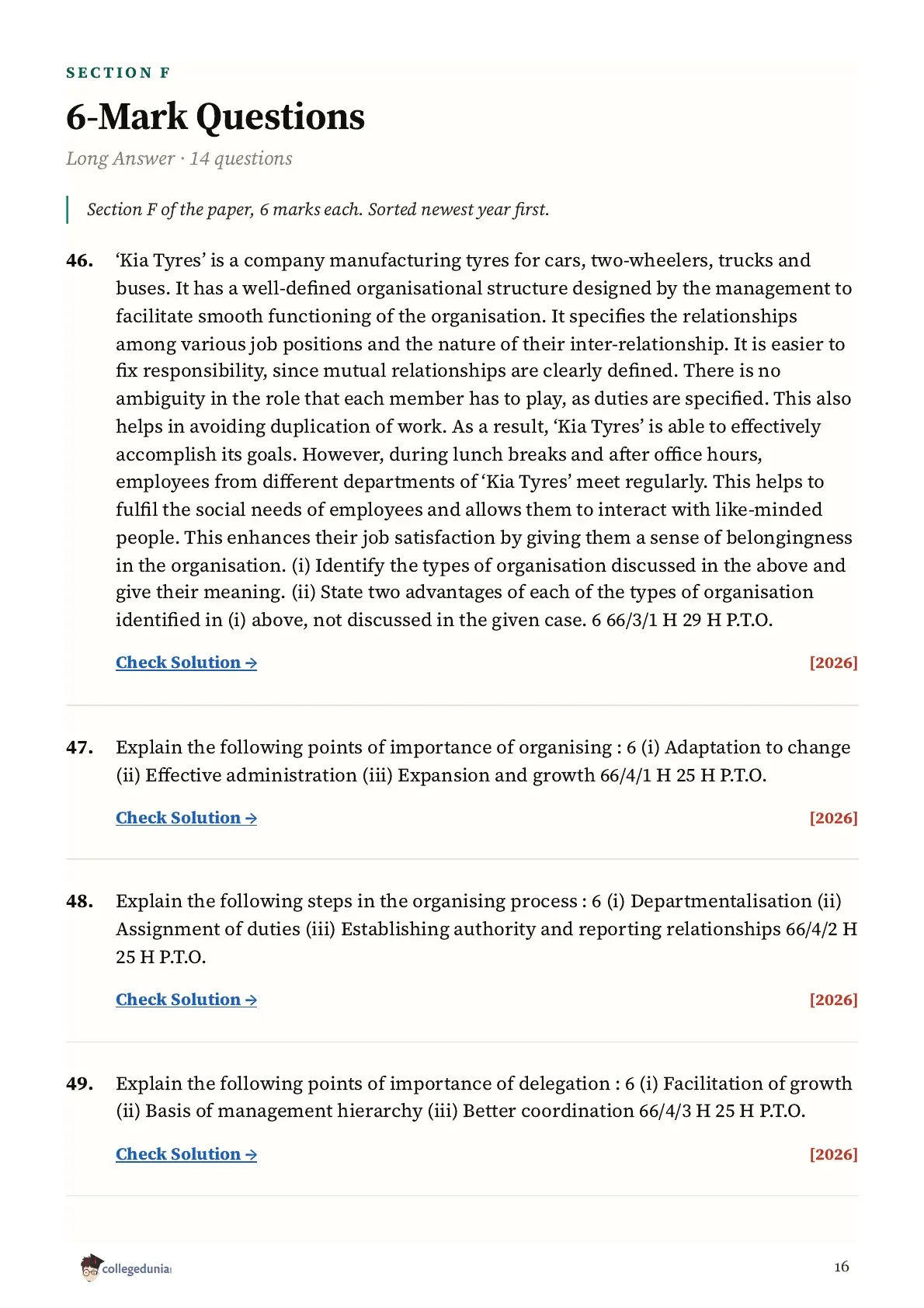
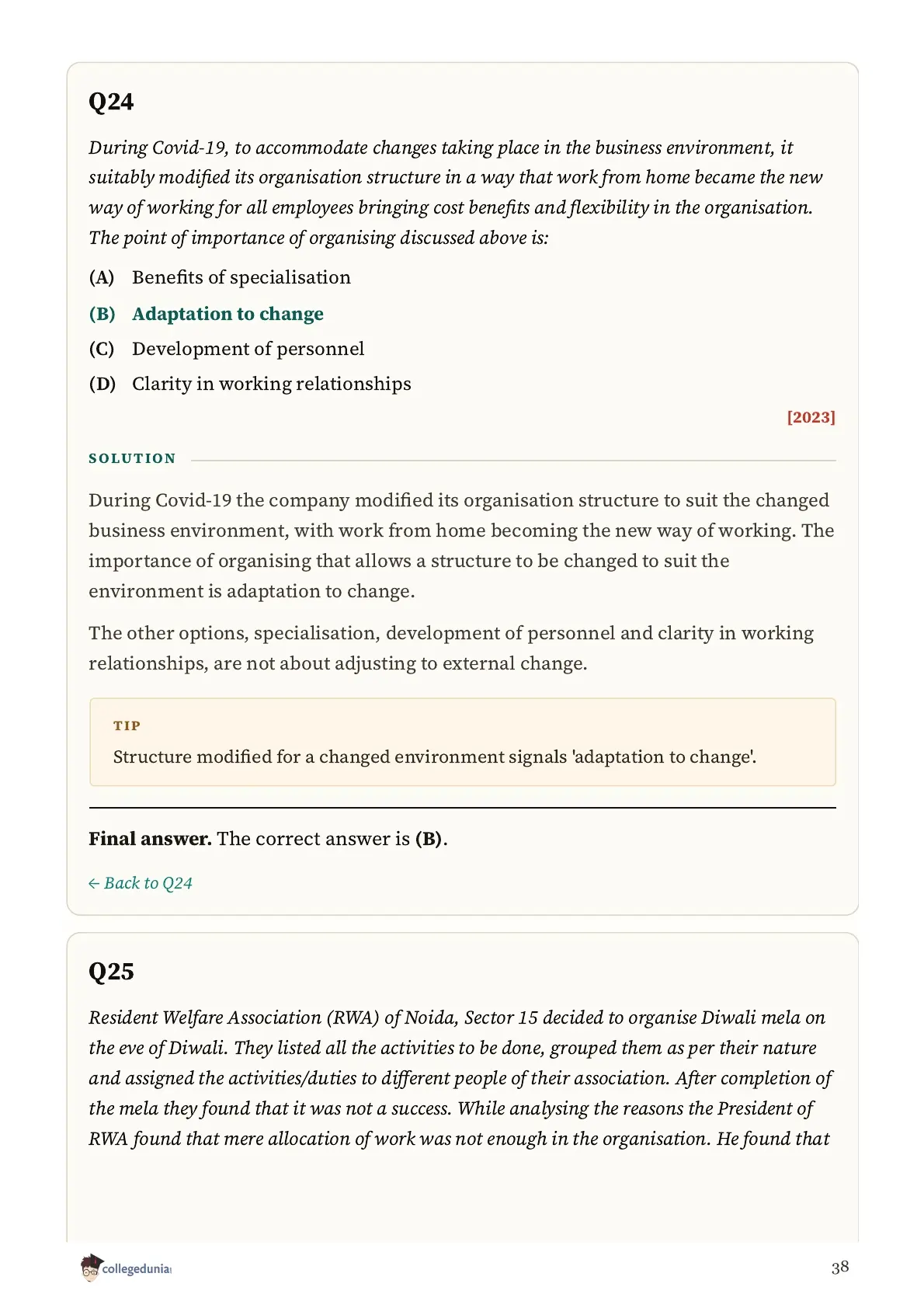
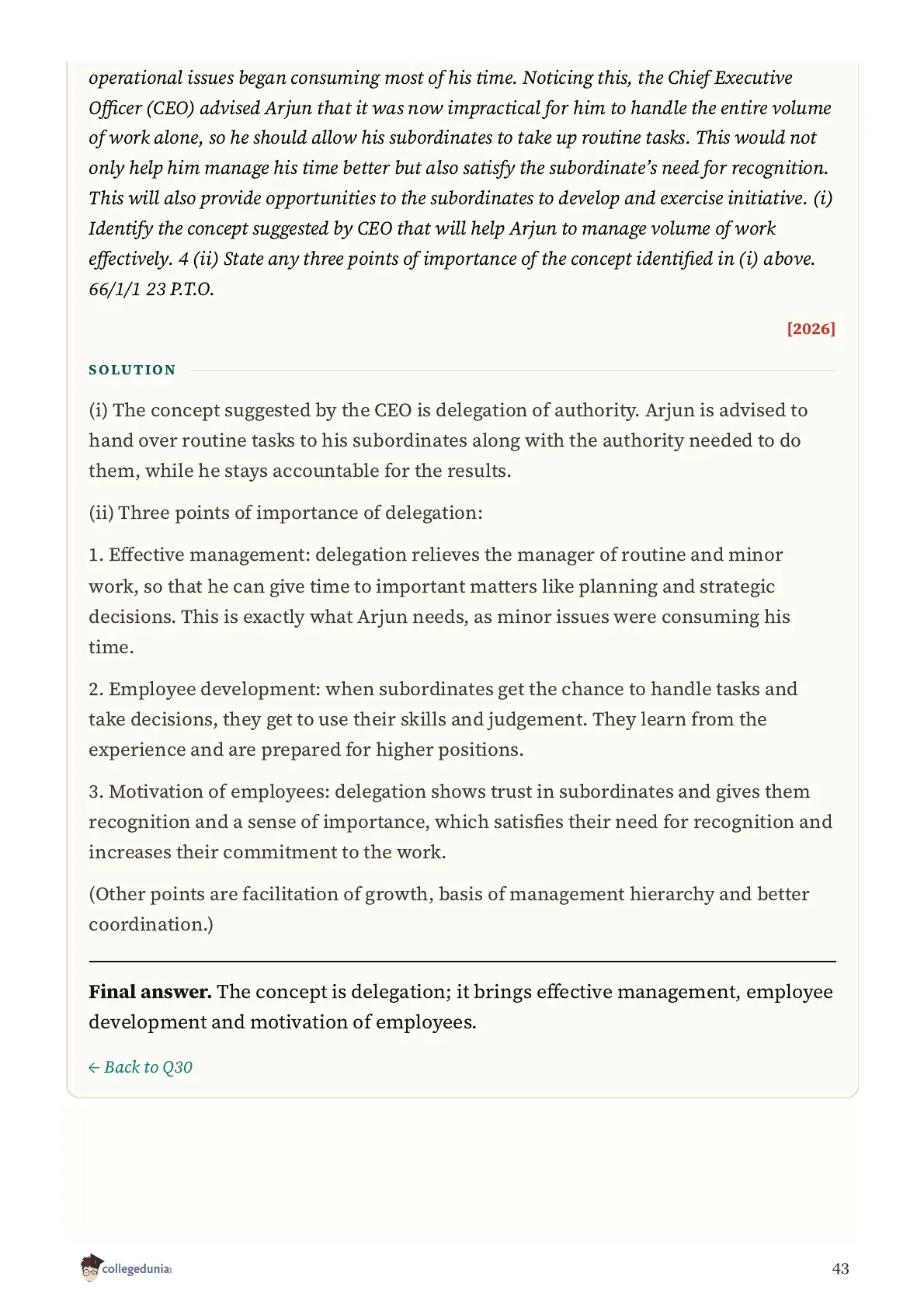
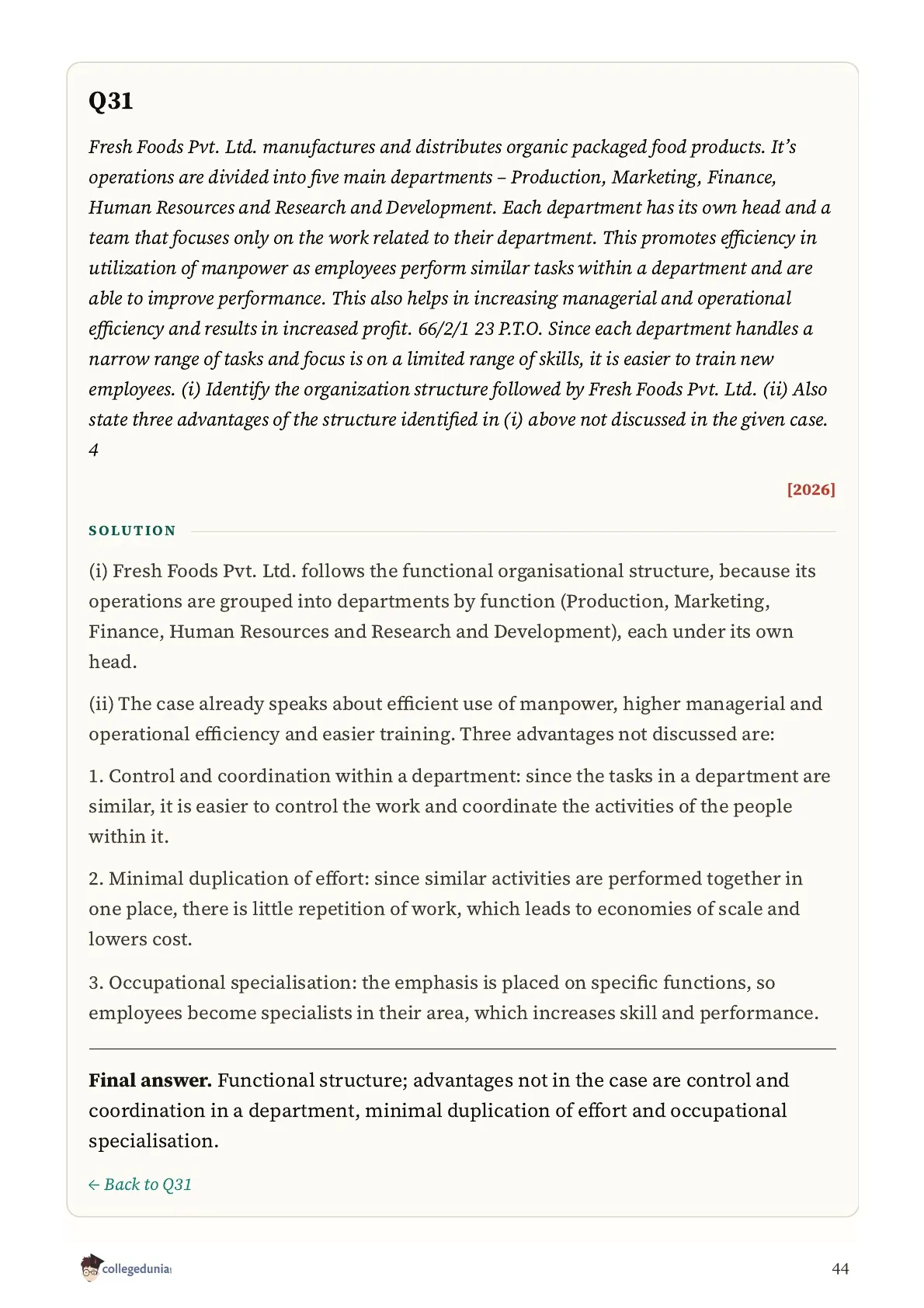
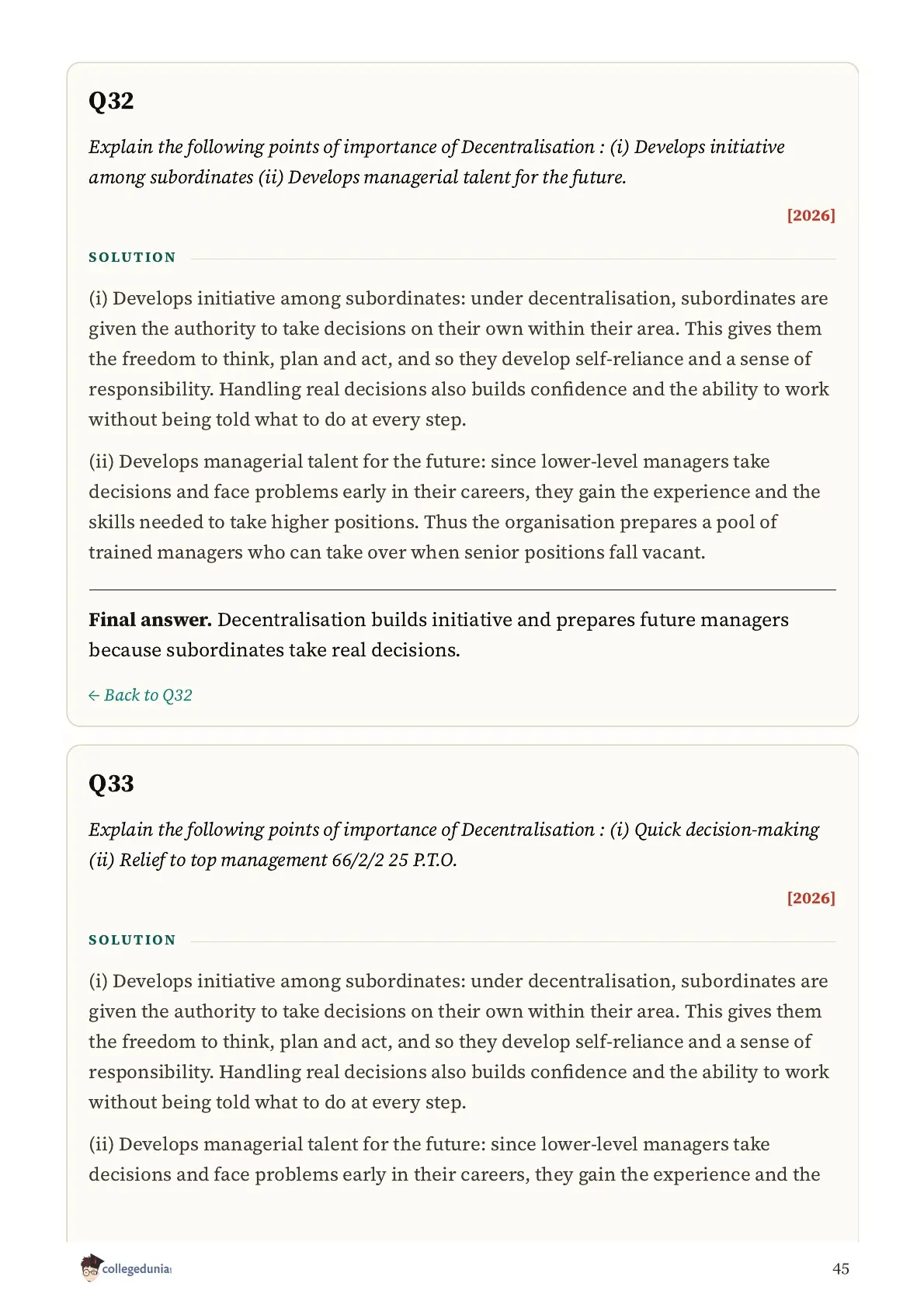
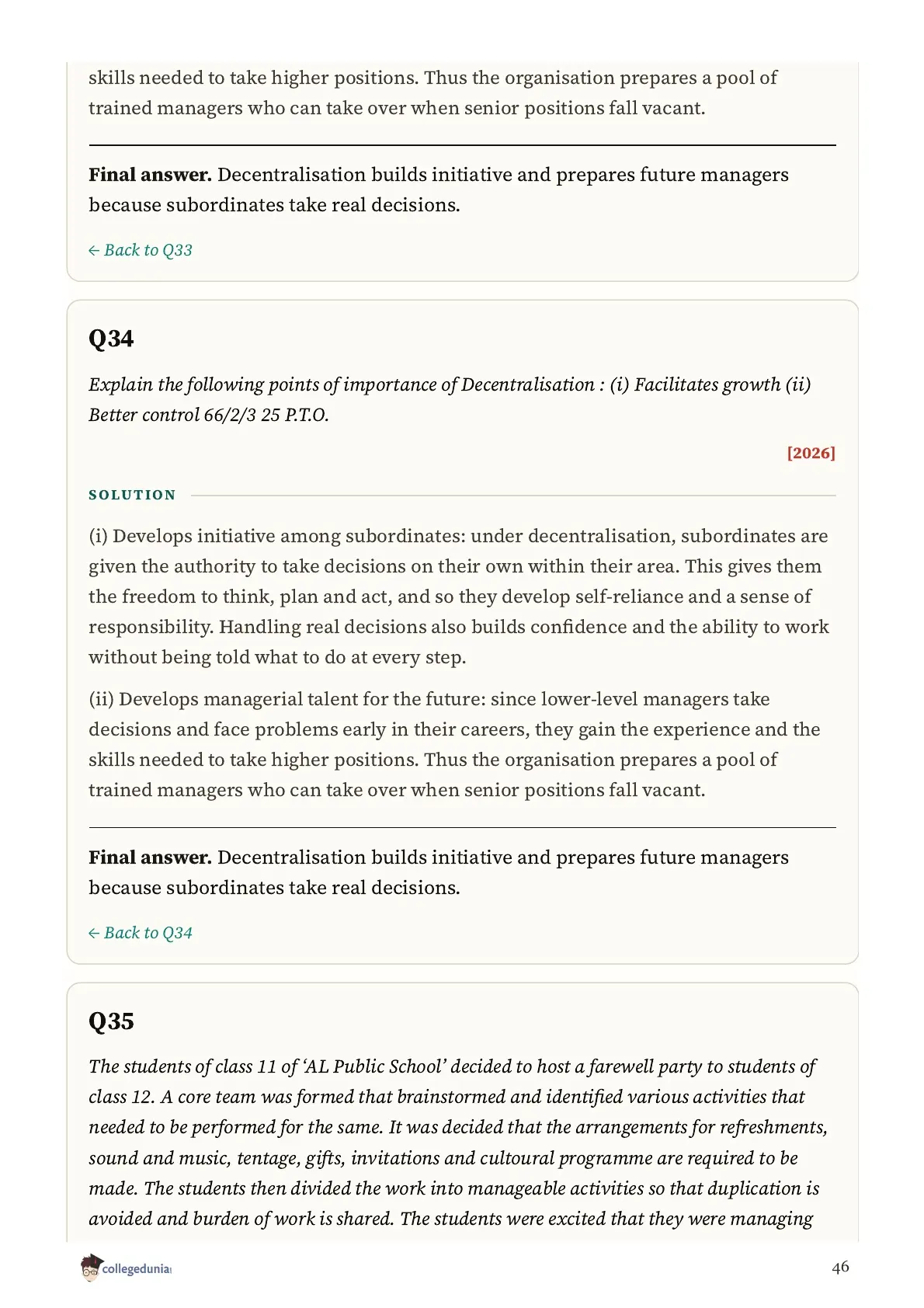
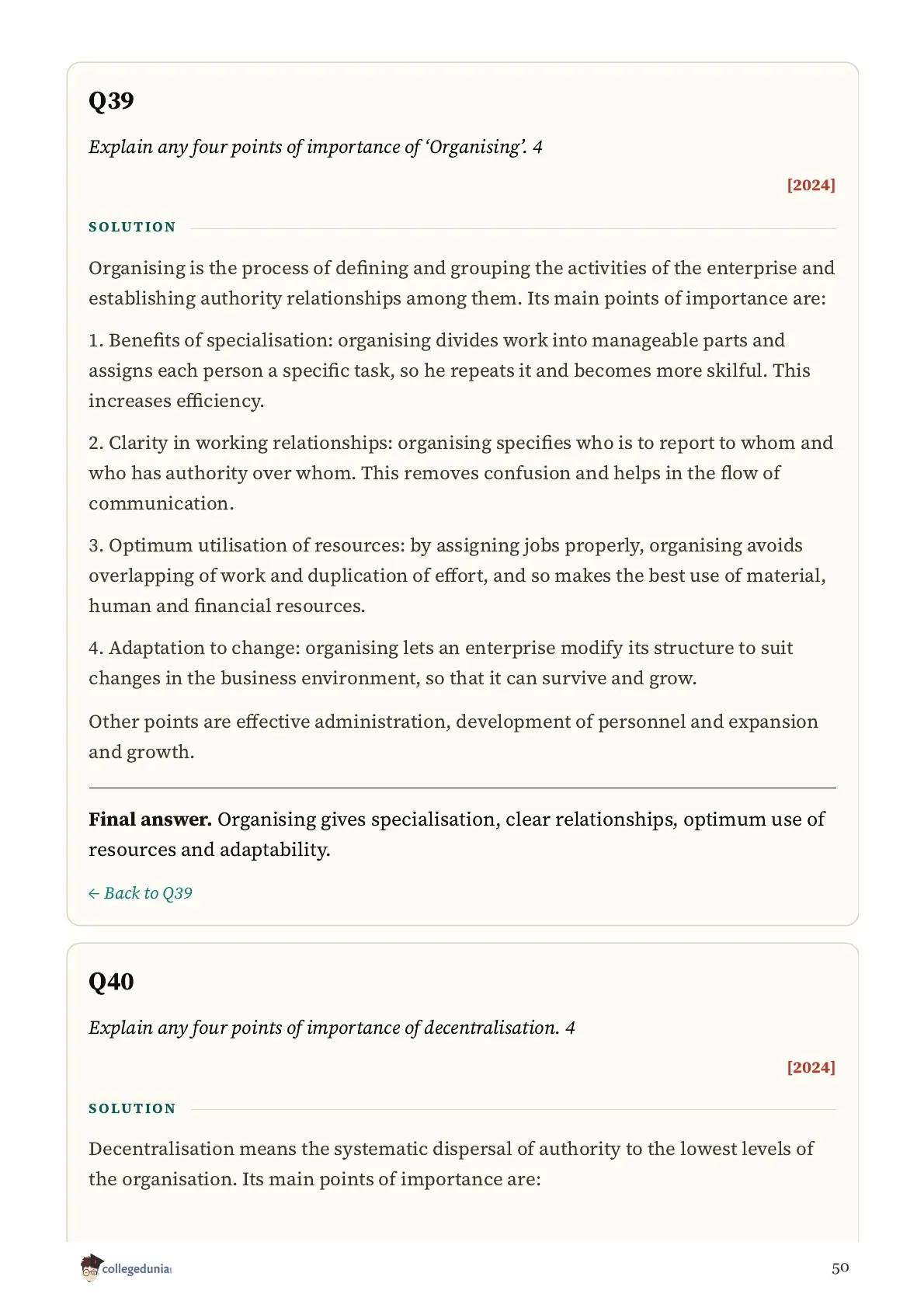
The written questions lean on "importance of" answers. 12 of them ask for points of importance: 5 on decentralisation, 4 on organising and 3 on delegation, usually two or three named points such as quick decision making, relief to top management or adaptation to change.
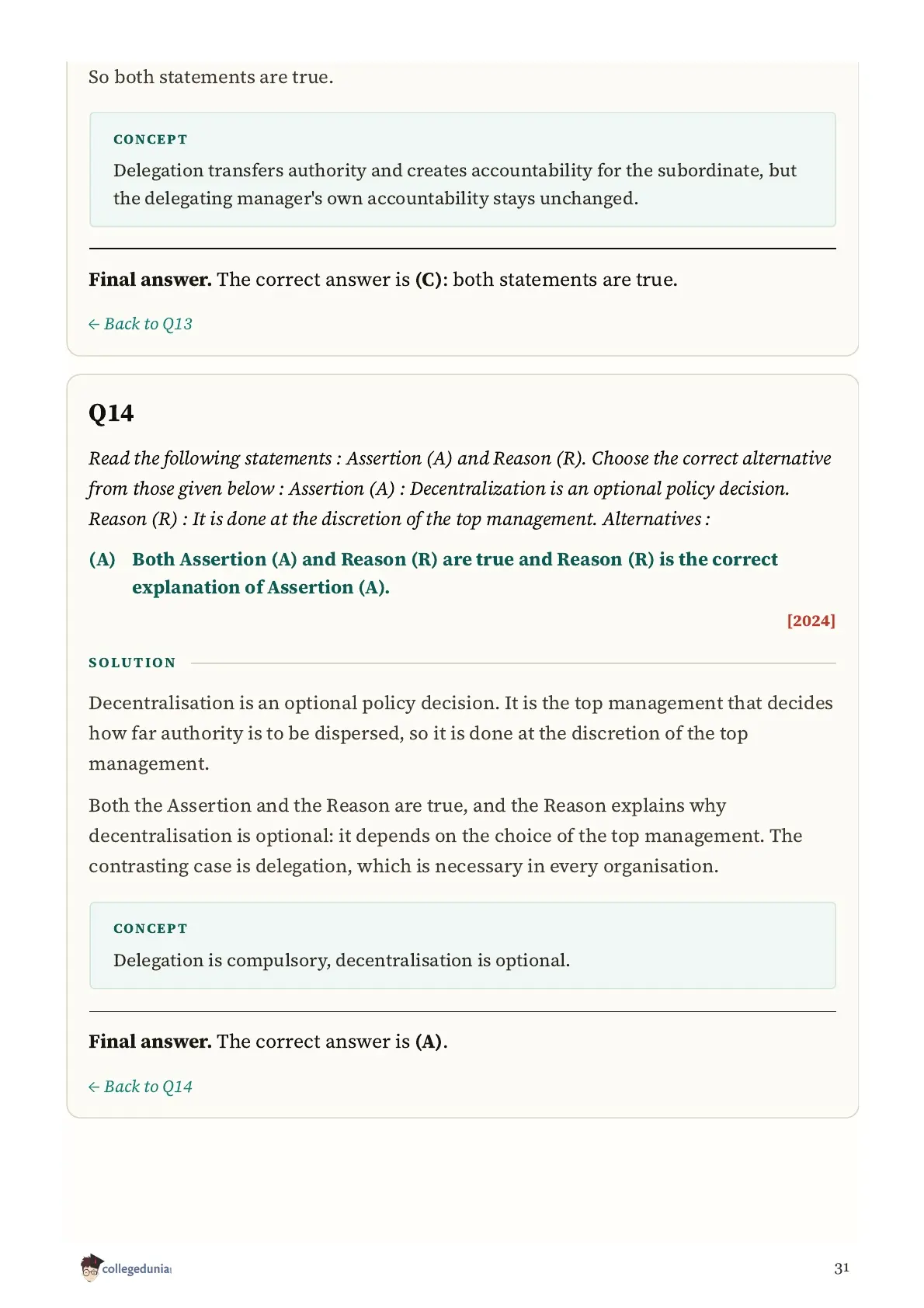
| Topic | Questions Naming It |
|---|---|
| Authority | 19 |
| Delegation | 13 |
| Decentralisation or centralisation | 13 |
| Accountability | 12 |
| Organisational structure | 10 |
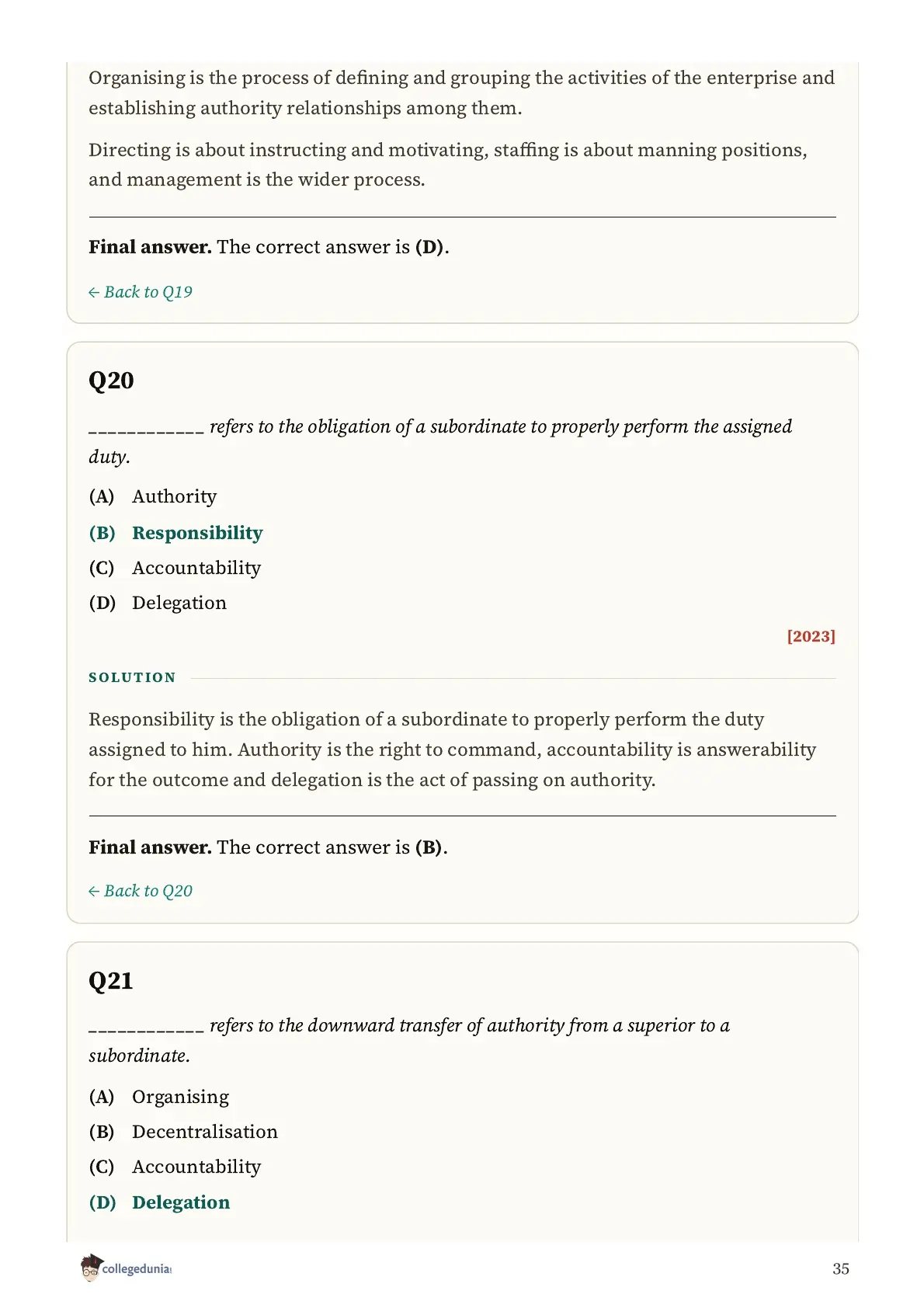
| Steps in the organising process | 8 |
| Divisional structure | 6 |
| Departmentalisation | 6 |
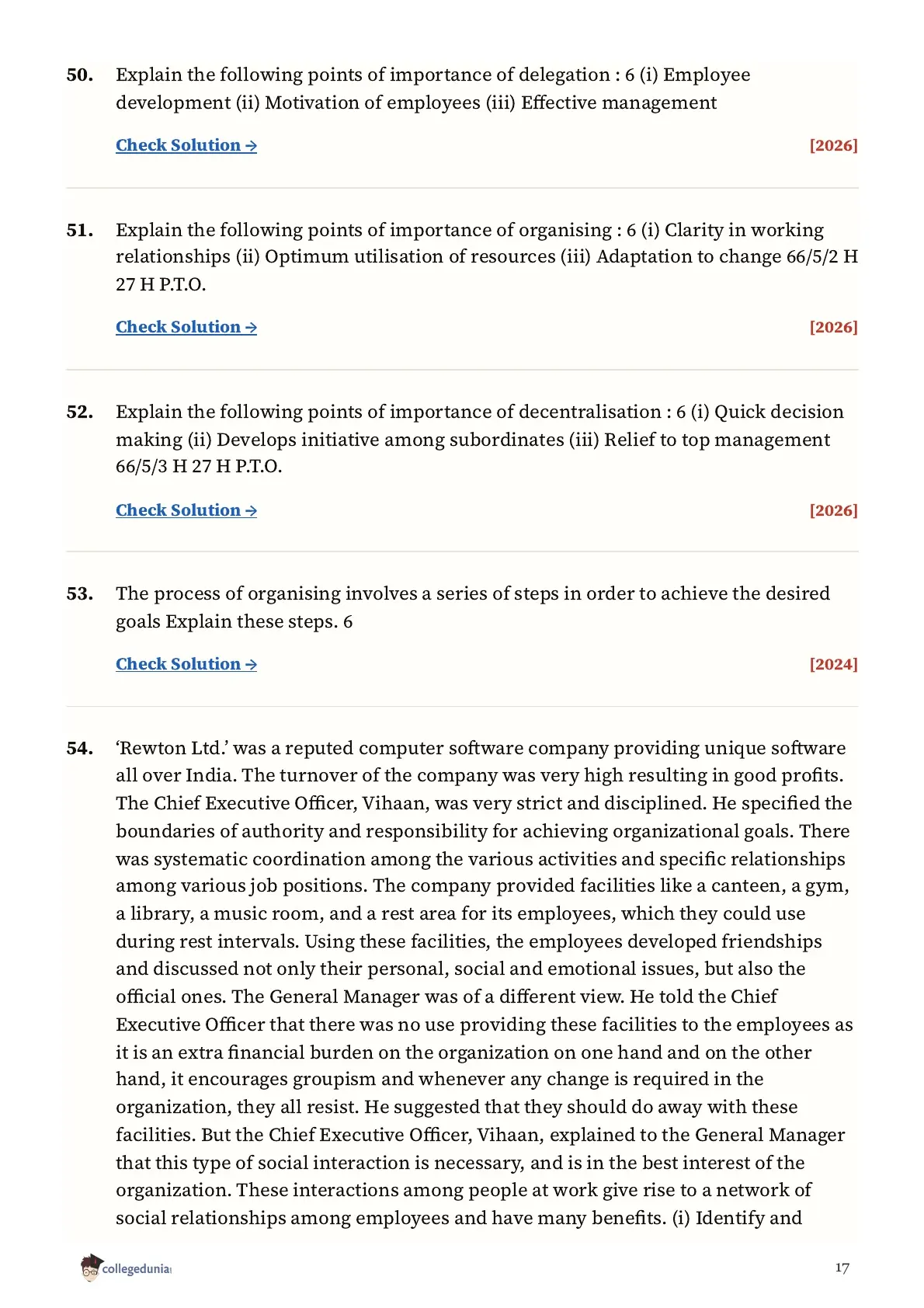
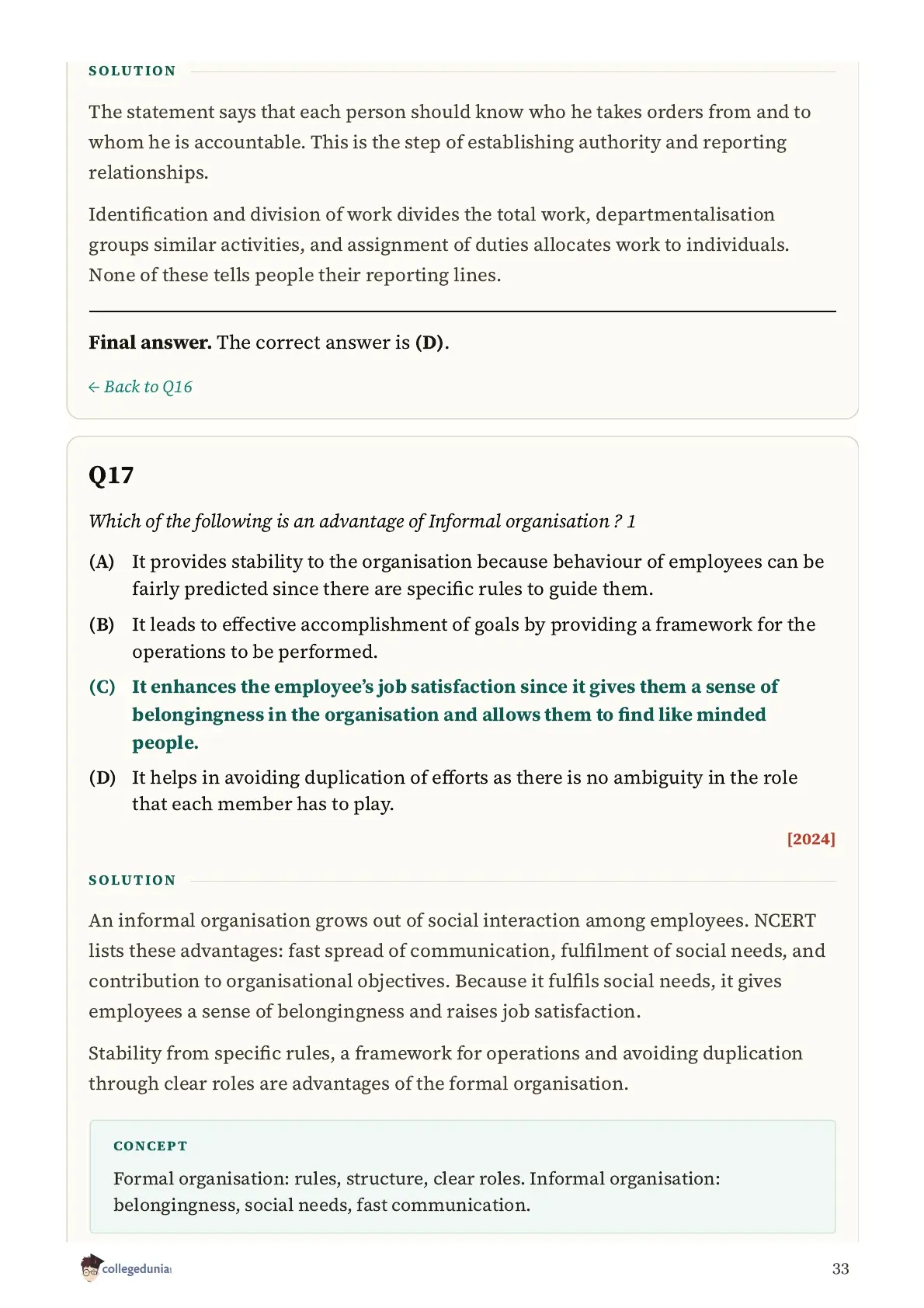
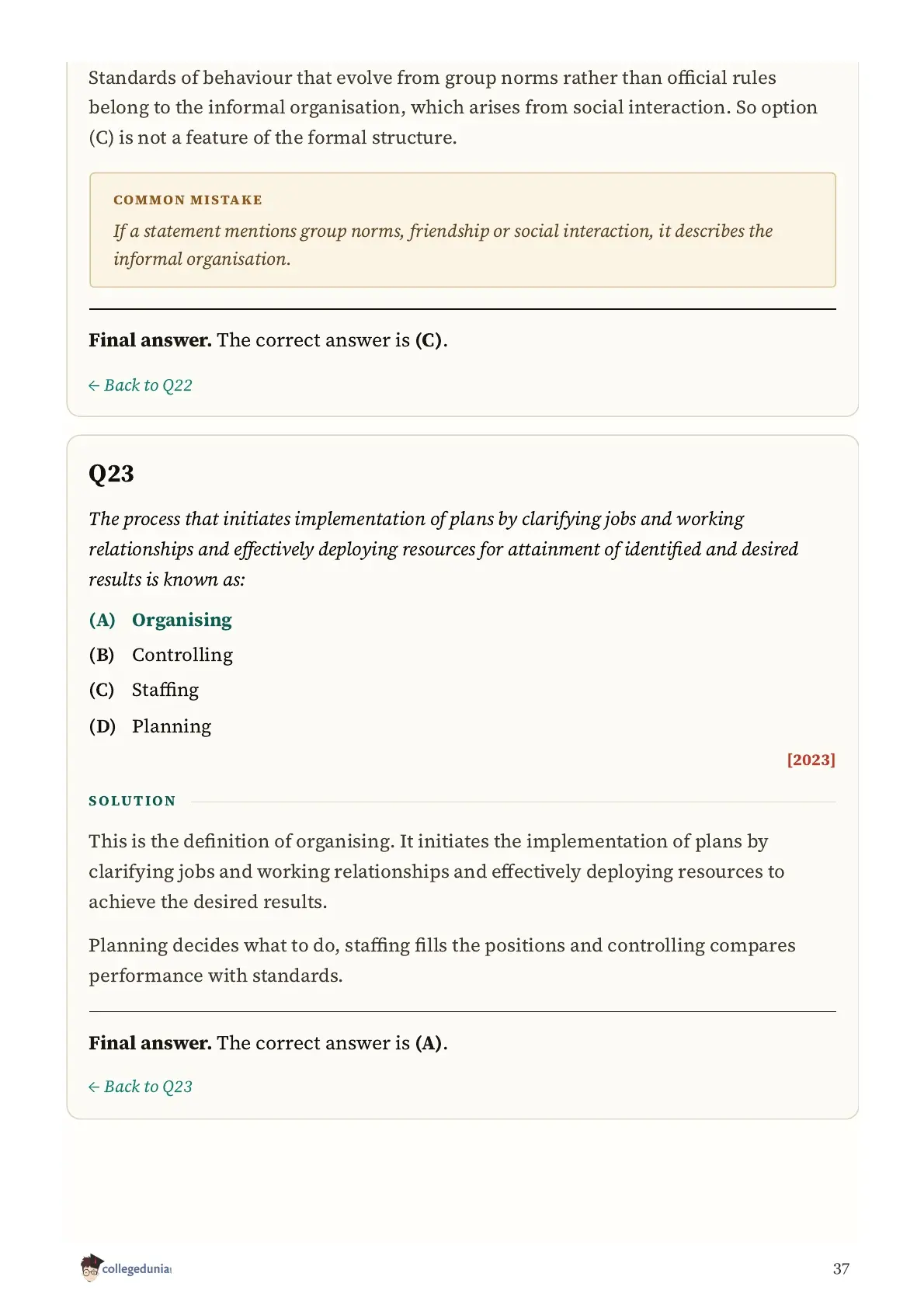
| Formal and informal organisation | 5 |
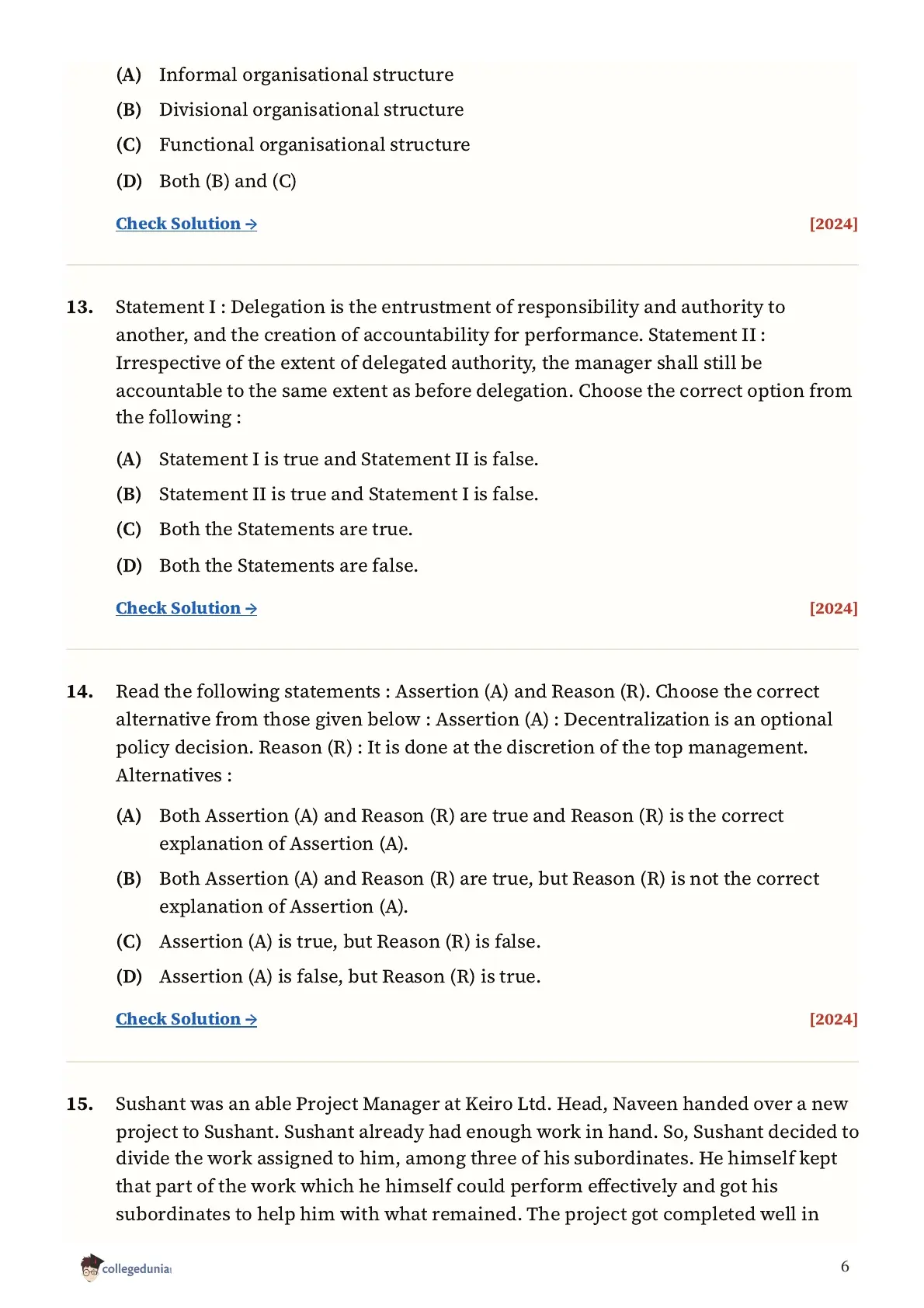
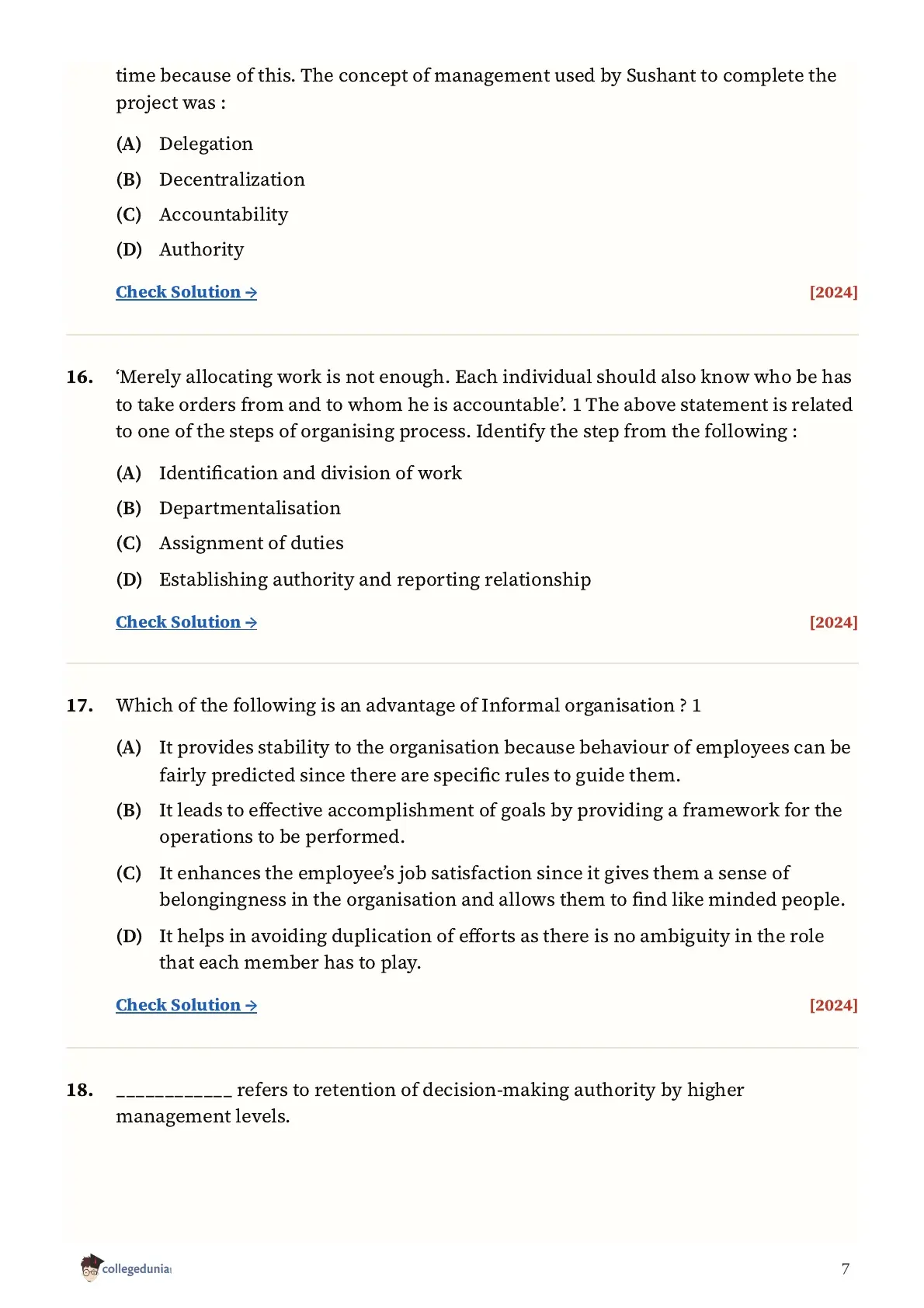
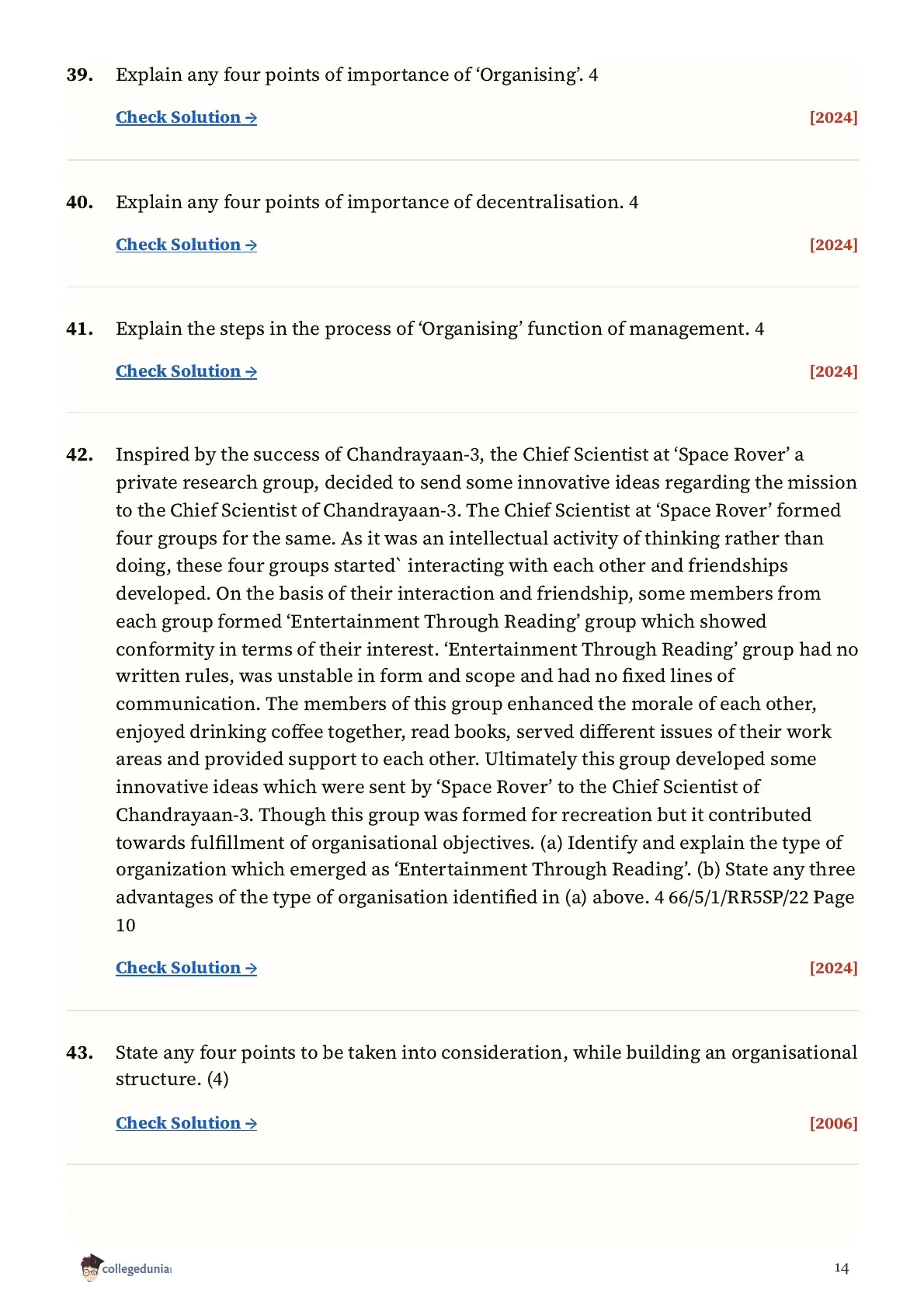
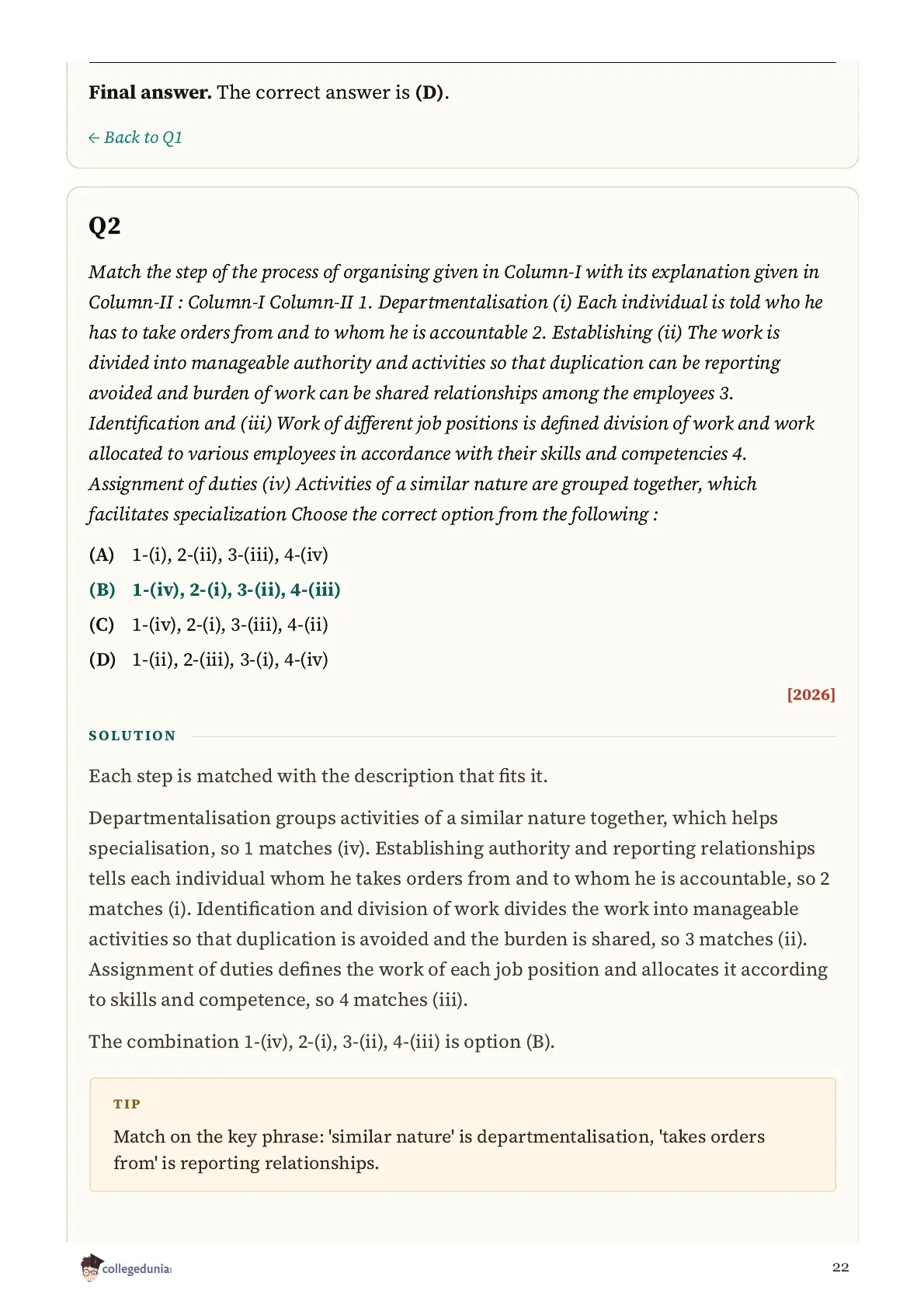
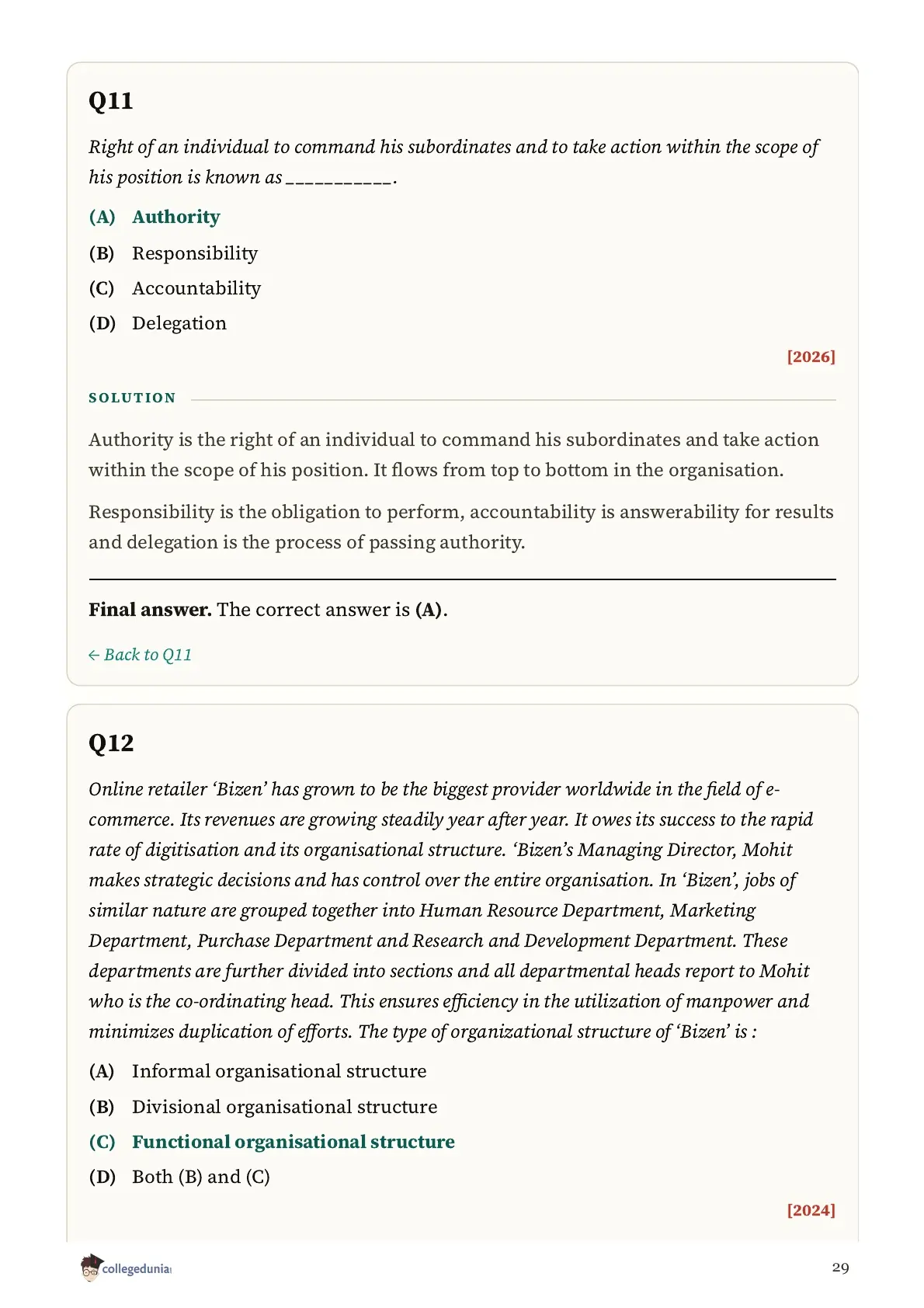
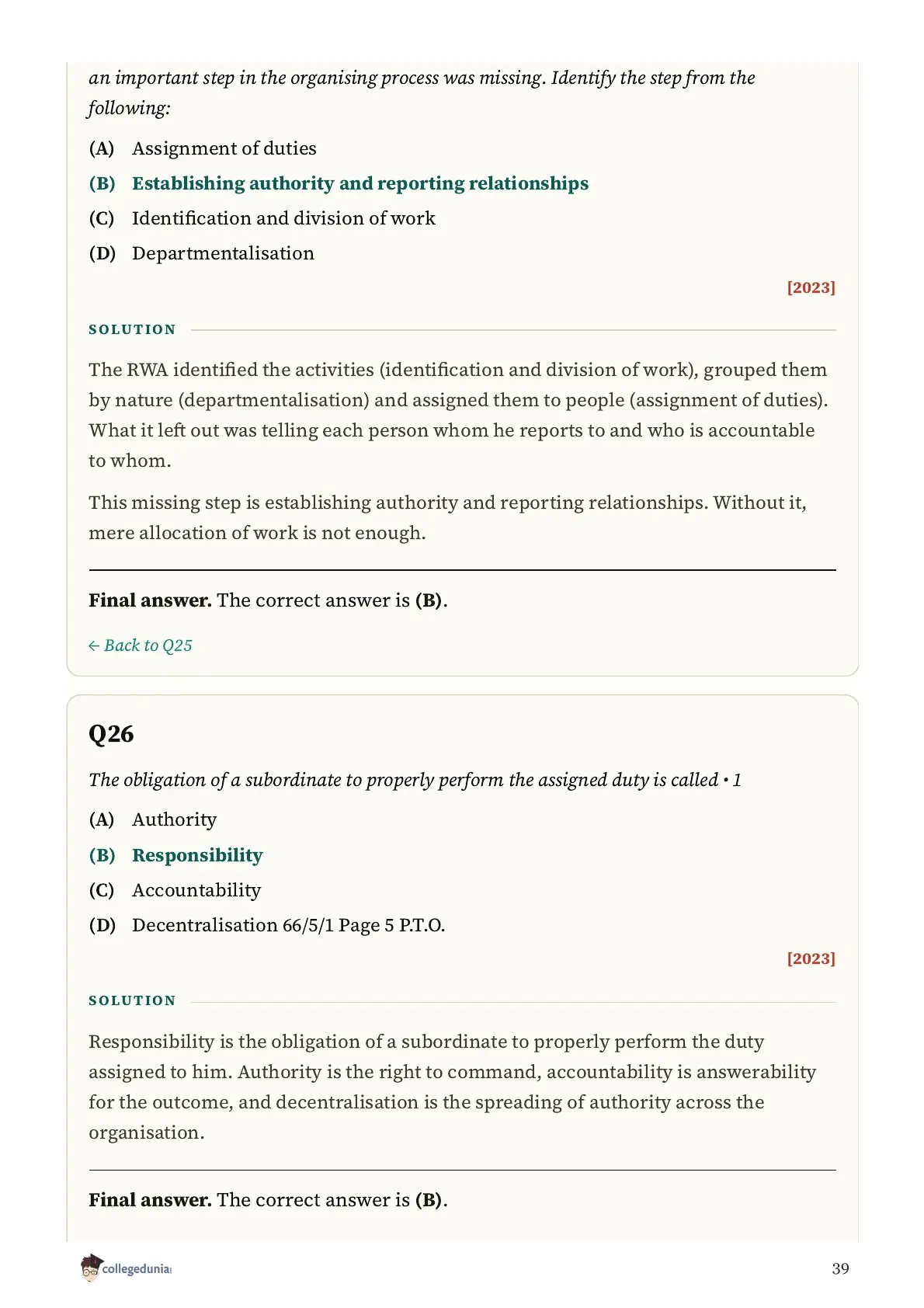
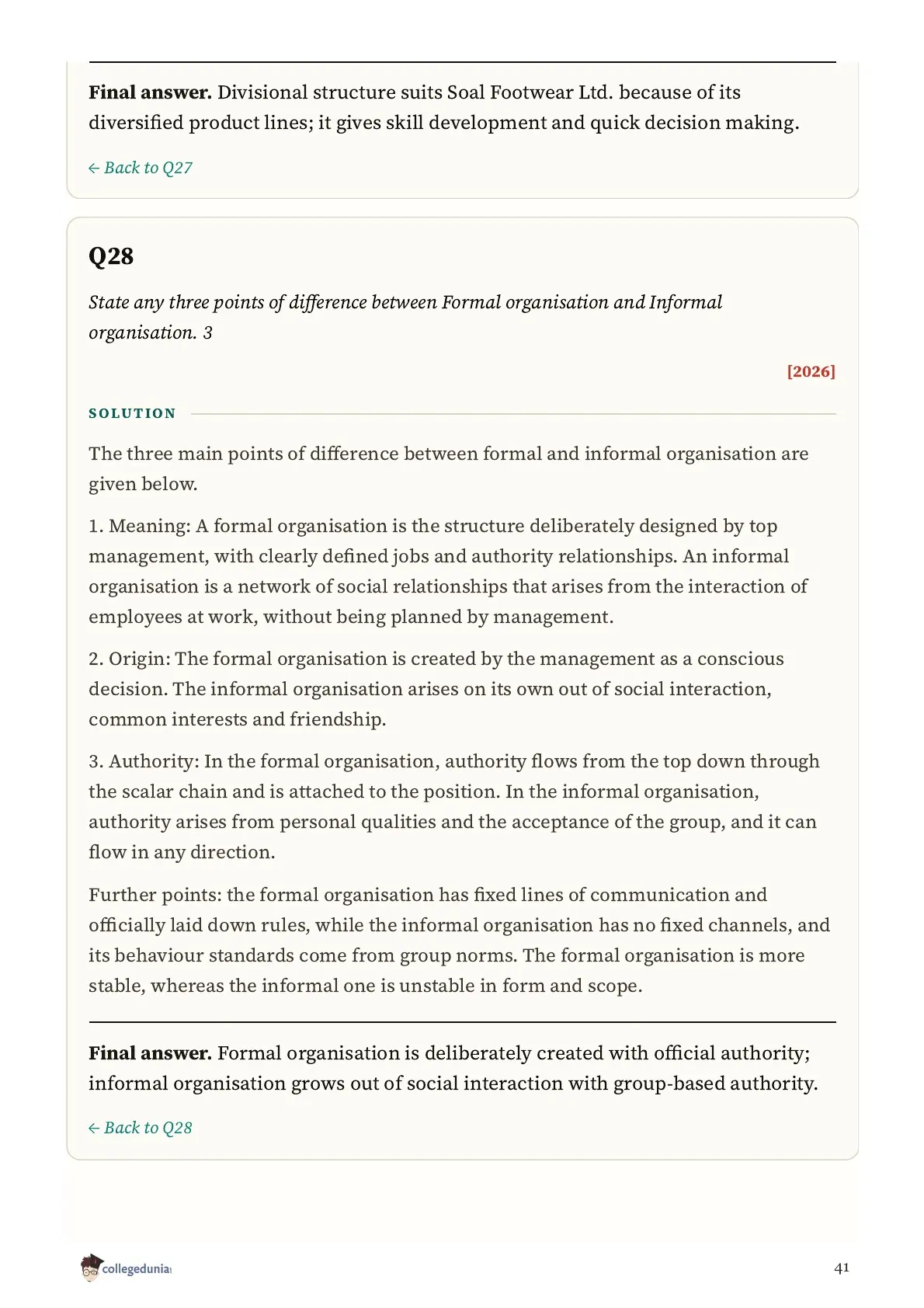
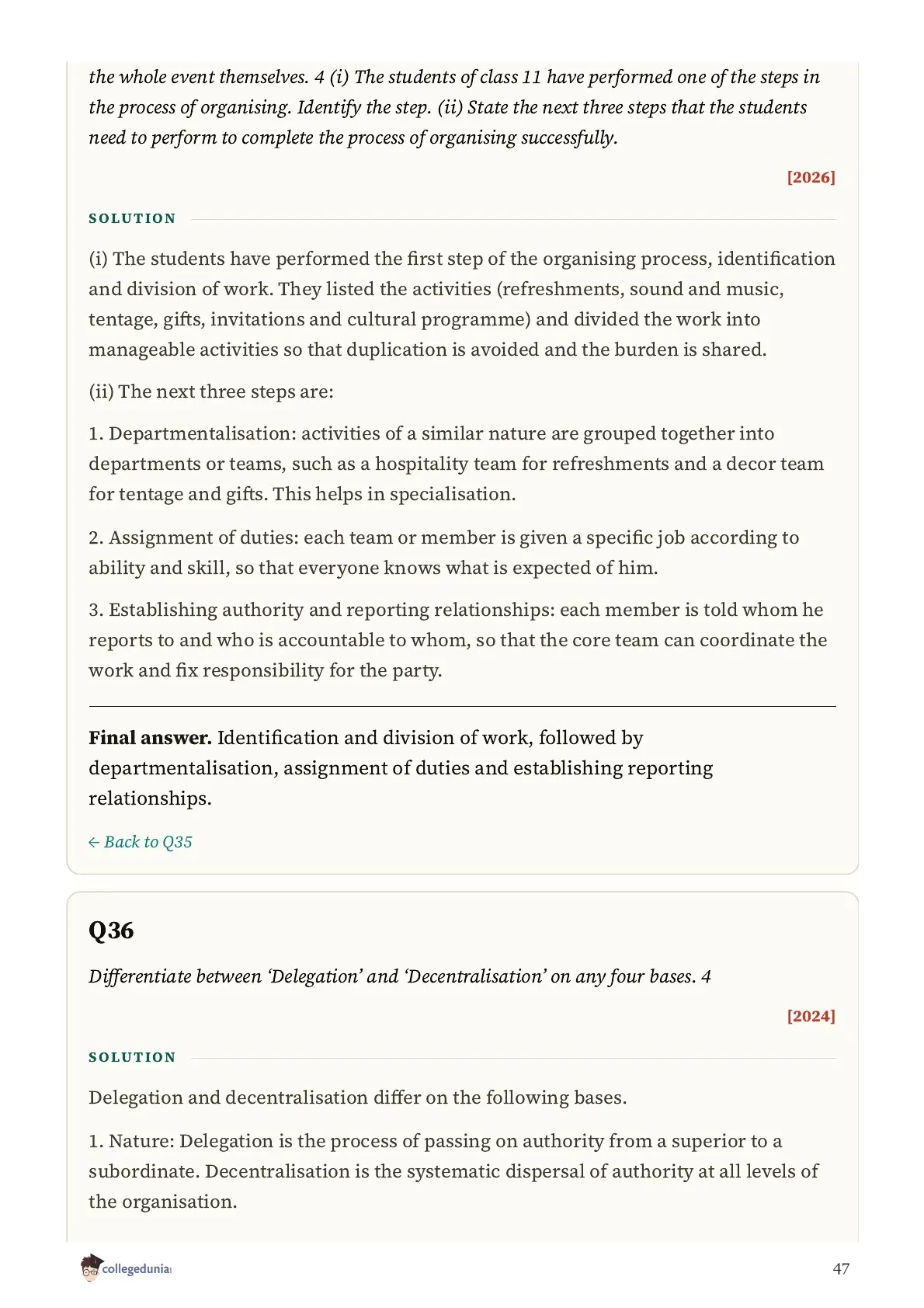
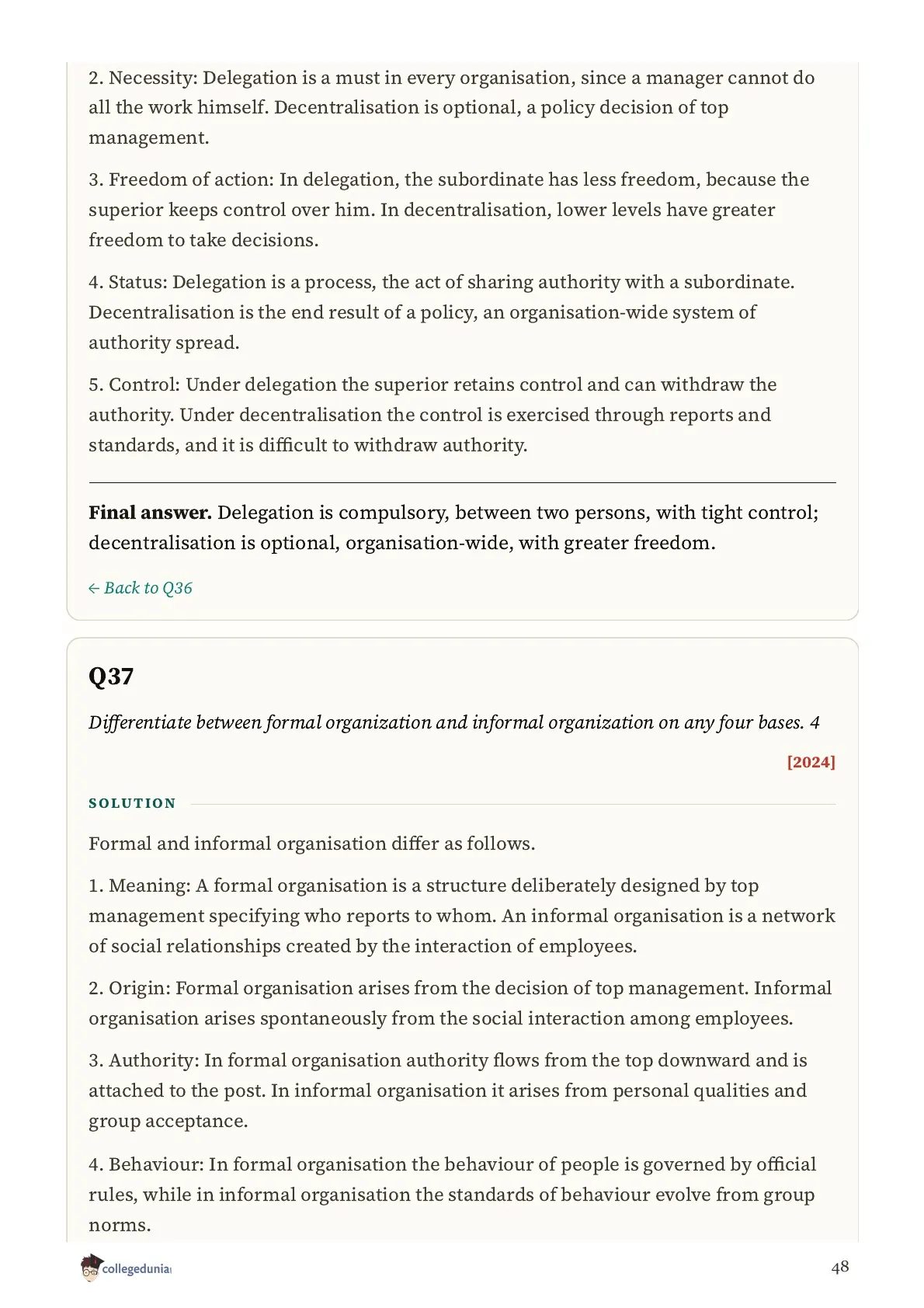
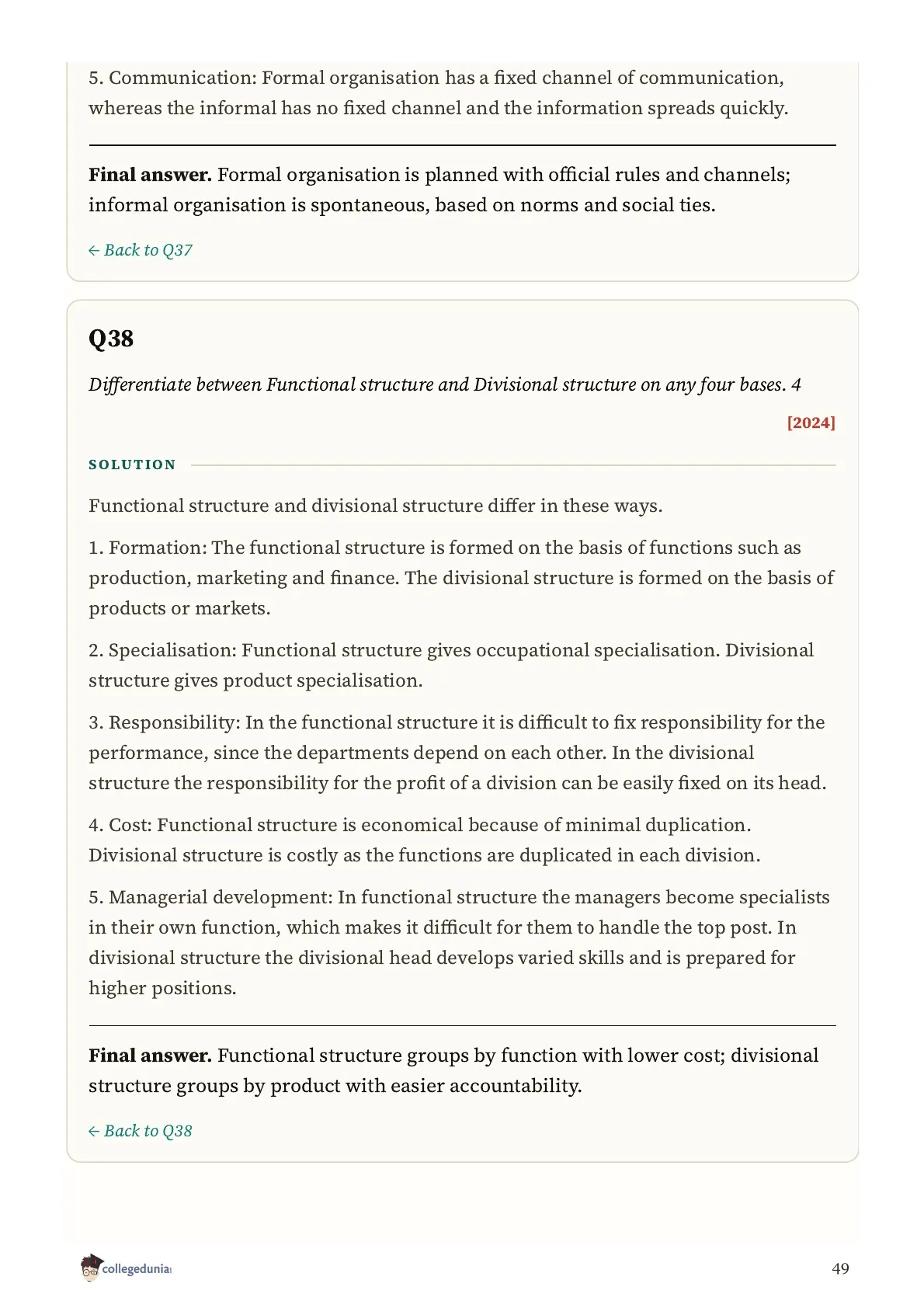
Five questions ask you to differentiate: formal against informal organisation twice (3 marks and 4 marks), functional against divisional structure twice (3 marks and 4 marks), and delegation against decentralisation once (4 marks). The steps of the organising process come up as a 4-mark and a 6-mark explain question, and again as MCQs on the correct order of the steps.
Organising Video Lesson
Source: Next Toppers - 12th Commerce on YouTube
How to Approach the Organising Set
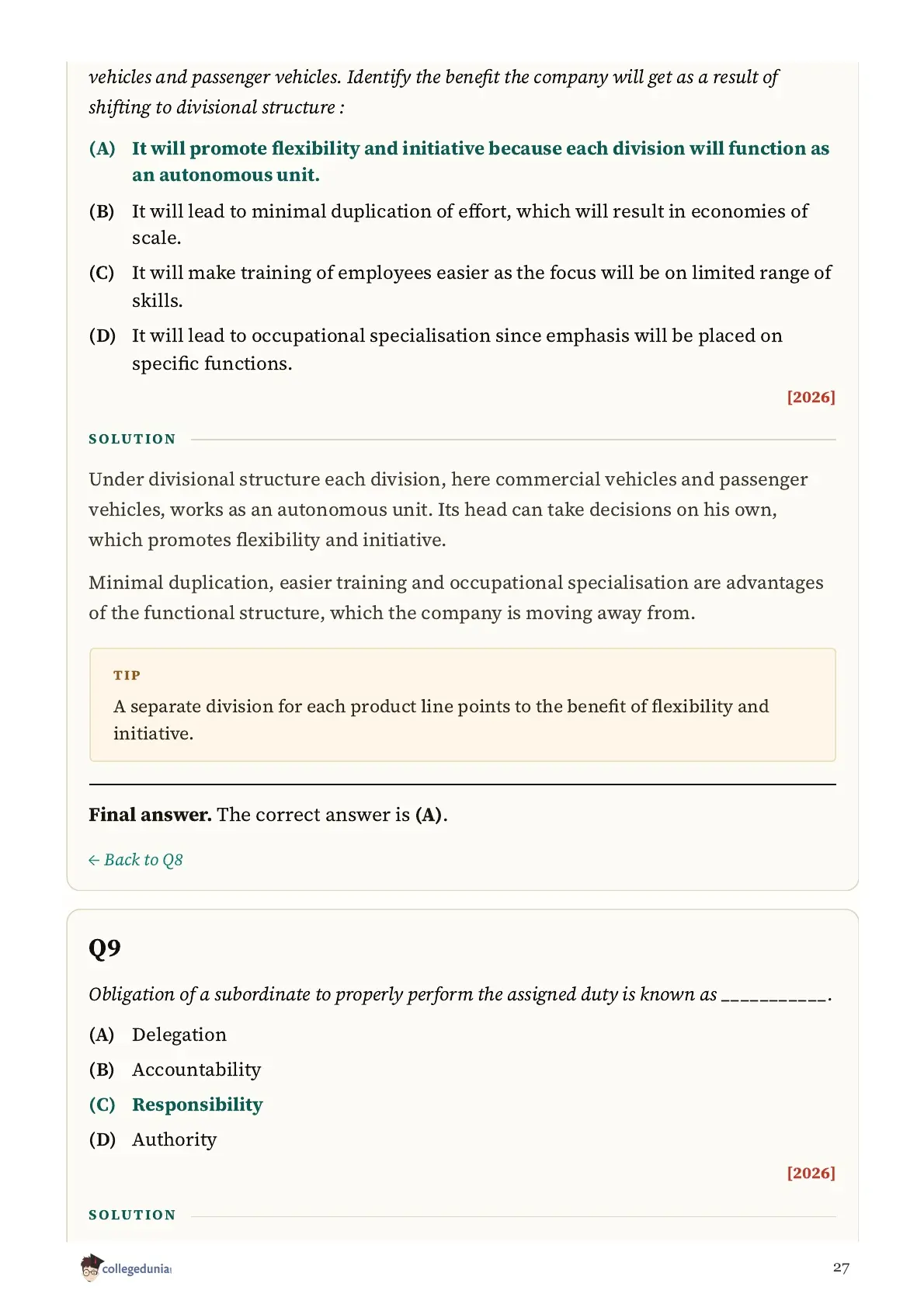
Start with the 26 MCQs in one sitting of about 25 minutes. Many are matching or case-based, so decide first whether the passage describes delegation, decentralisation or a type of structure, and only then read the options.
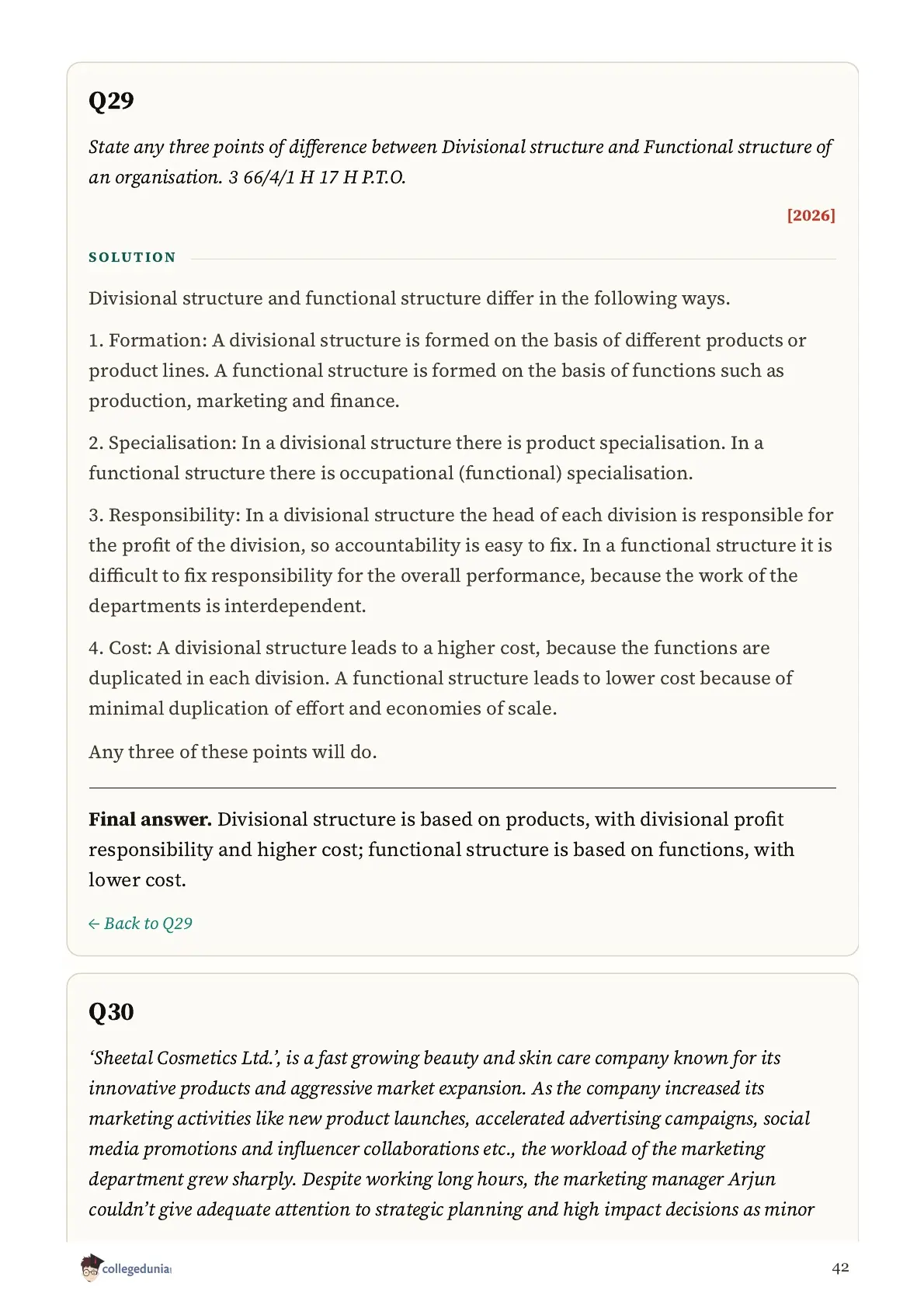
For the 4-mark and 6-mark questions, give each named point its own heading, two lines of explanation and a one-line example. When a question says "any four bases" for a difference, write a four-row table and keep the two columns parallel. Case questions on structure reward you for quoting the line from the passage, such as separate divisions for commercial and passenger vehicles, before you name the structure.
Common Mistakes in Organising Questions
- Writing authority when the question asks for responsibility. The three words are tested against each other in the MCQs.
- Saying a manager who delegates is free of accountability. Accountability cannot be passed down.
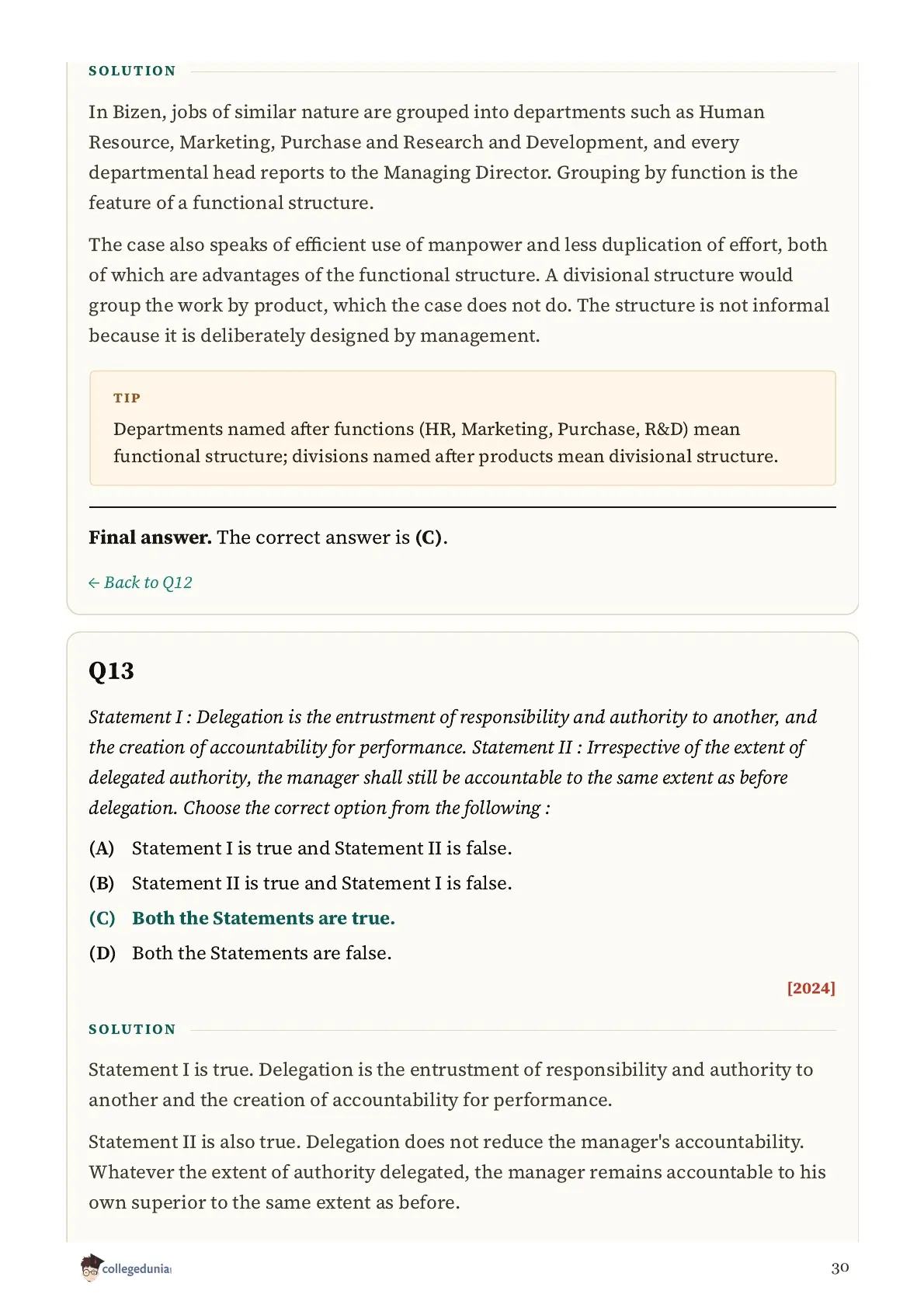
- Treating delegation and decentralisation as the same thing: delegation is between two people, decentralisation is a policy across the whole organisation.
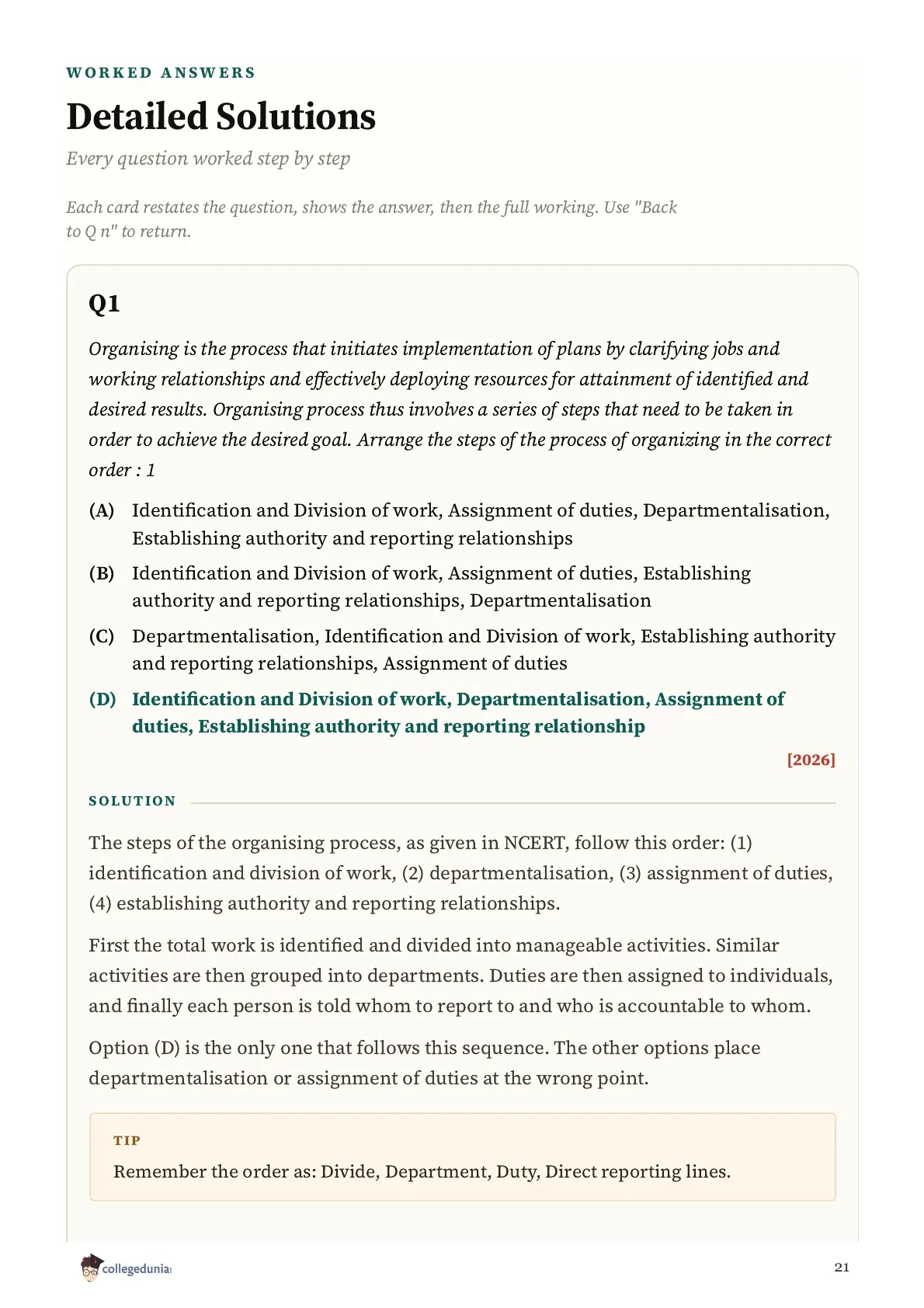
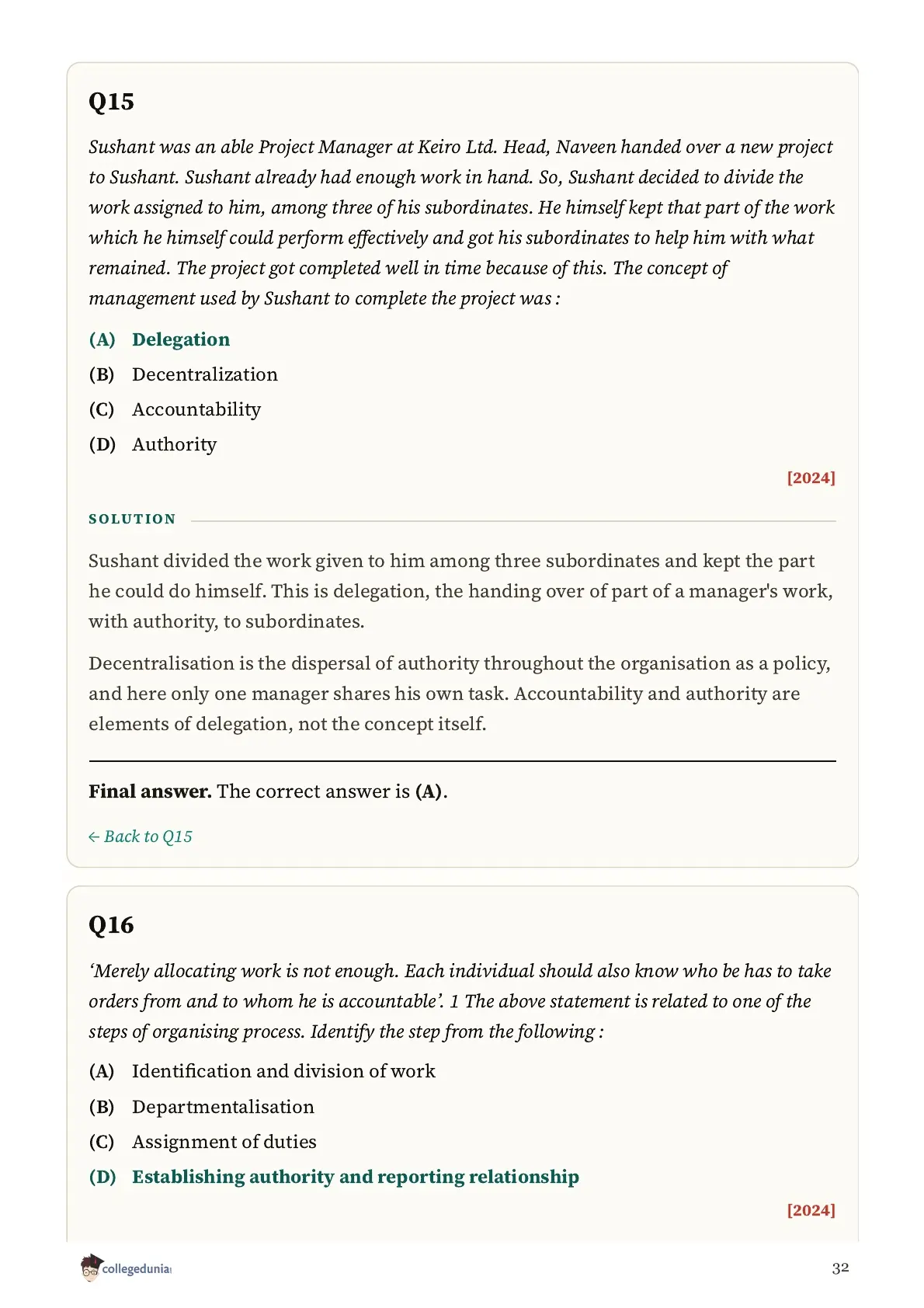
- Listing the steps of organising out of order. Identification and division of work comes first, then departmentalisation, assignment of duties, and establishing authority and reporting relationships.
- Giving only one line per point in a 6-mark answer.
Using the Answer Key and Solutions
The PDF is 67 pages and free to download. Each section is sorted newest year first, the Answer Key lists every MCQ at a glance, and each question links to its worked solution and back. Attempt a section first, check the key, then read the solution and note the common mistake given with it. The solutions are written by Collegedunia's Business Studies experts and are not official CBSE marking schemes.
Class 12 Business Studies PYQs by Chapter
| Chapter | PYQ Page |
|---|---|
| Chapter 1 | Chapter 1: Nature and Significance of Management Class 12 PYQ |
| Chapter 2 | Chapter 2: Principles of Management Class 12 PYQ |
| Chapter 3 | Chapter 3: Business Environment Class 12 PYQ |
| Chapter 4 | Chapter 4: Planning Class 12 PYQ |
| Chapter 5 | Chapter 5: Organising Class 12 PYQ |
| Chapter 6 | Chapter 6: Staffing Class 12 PYQ |
| Chapter 7 | Chapter 7: Directing Class 12 PYQ |
| Chapter 8 | Chapter 8: Controlling Class 12 PYQ |
| Chapter 9 | Chapter 9: Financial Management Class 12 PYQ |
| Chapter 10 | Chapter 10: Marketing Class 12 PYQ |
| Chapter 11 | Chapter 11: Consumer Protection Class 12 PYQ |
Organising Class 12 Business Studies PYQ FAQs
Ques. How many questions are in the Organising Class 12 PYQ PDF?
Ans. The PDF has 59 questions from CBSE board papers between 2006 and 2026: 26 one-mark MCQs, 3 three-mark, 16 four-mark and 14 six-mark questions.
Ques. Does this PYQ PDF include solutions, or only the questions?
Ans. Yes. All 59 questions have a worked solution in the PDF, and the MCQs also have an Answer Key.
Ques. Are the solutions official?
Ans. No. They are written by Collegedunia's Business Studies experts and are not an official CBSE marking scheme.
Ques. How many marks does Organising carry in the Class 12 board paper?
Ans. About 8 of the 80 marks, going by past papers. It is an estimate and changes from year to year, so check the CBSE curriculum for the official unit marks.
Ques. What are the steps in the process of organising?
Ans. Identification and division of work, departmentalisation, assignment of duties, and establishing authority and reporting relationships. 8 questions in this set deal with these steps.
Ques. What is the difference between delegation and decentralisation?
Ans. Delegation is the downward transfer of authority from a superior to a subordinate and is needed in every organisation. Decentralisation is a policy decision to push decision-making authority down to all levels and is optional.
Ques. What is the difference between functional and divisional structure?
Ans. A functional structure groups jobs by function such as production, marketing and finance. A divisional structure groups them by product or market, with each division working as an autonomous unit. Both are compared in the set at 3 marks and 4 marks.



Comments