



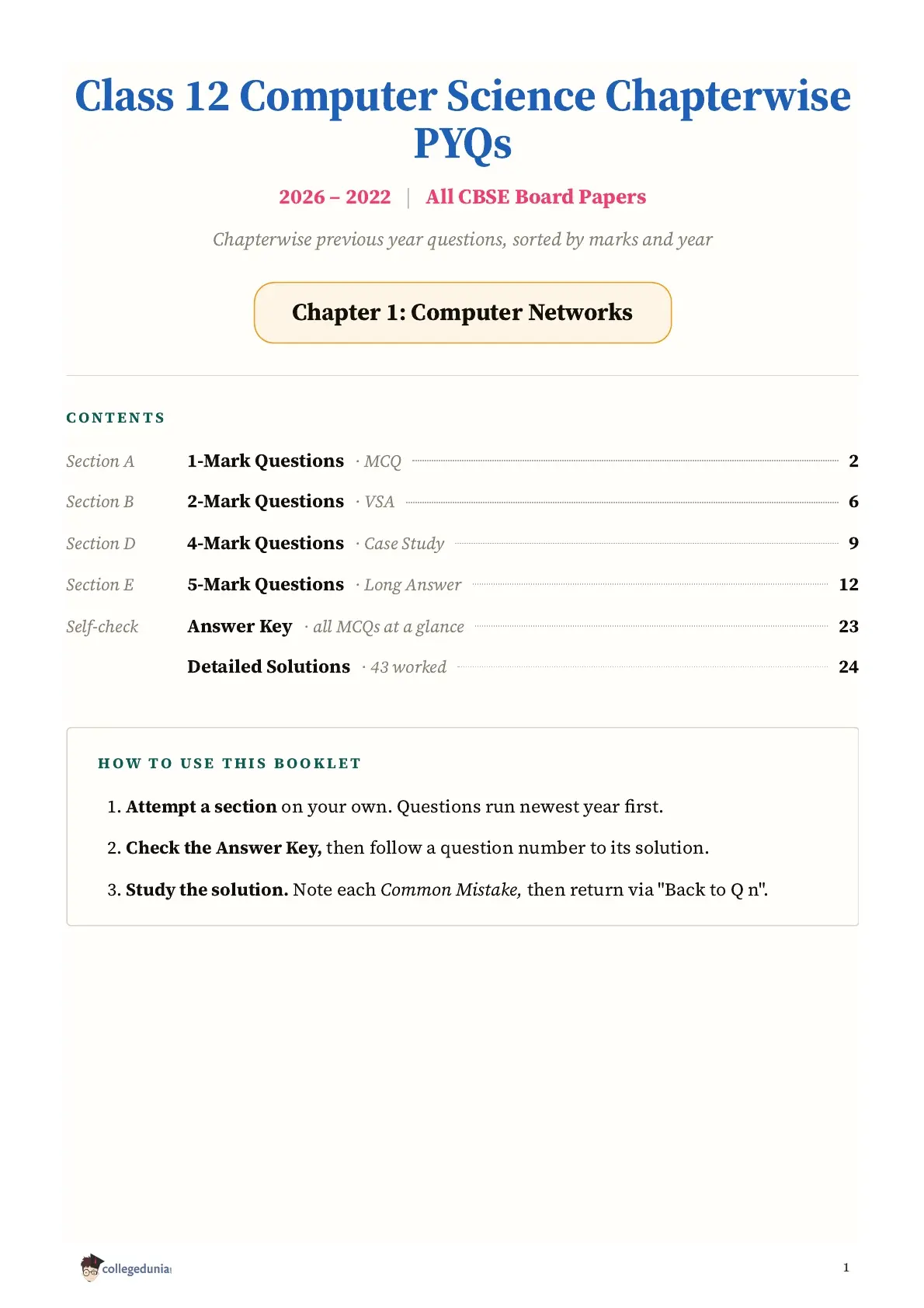
Class 12 Computer Science Computer Networks PYQ, free to download as a 58-page PDF with 43 solved questions: 22 from the 2022 to 2026 board papers and 21 from CBSE's official sample papers. Computer Networks is the Networks unit of the CBSE Class 12 Computer Science (083) paper, which carries 10 of the 70 theory marks.
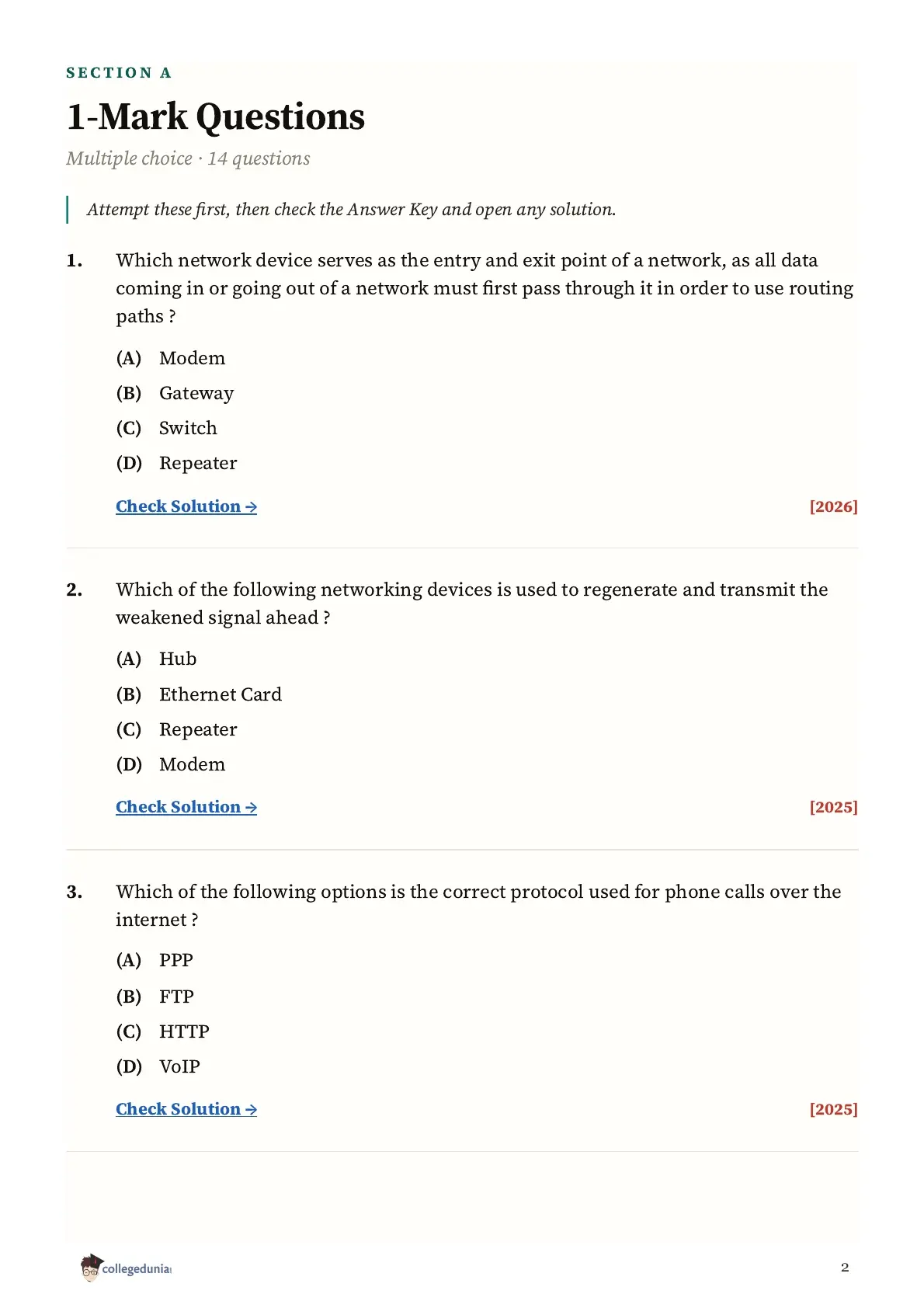
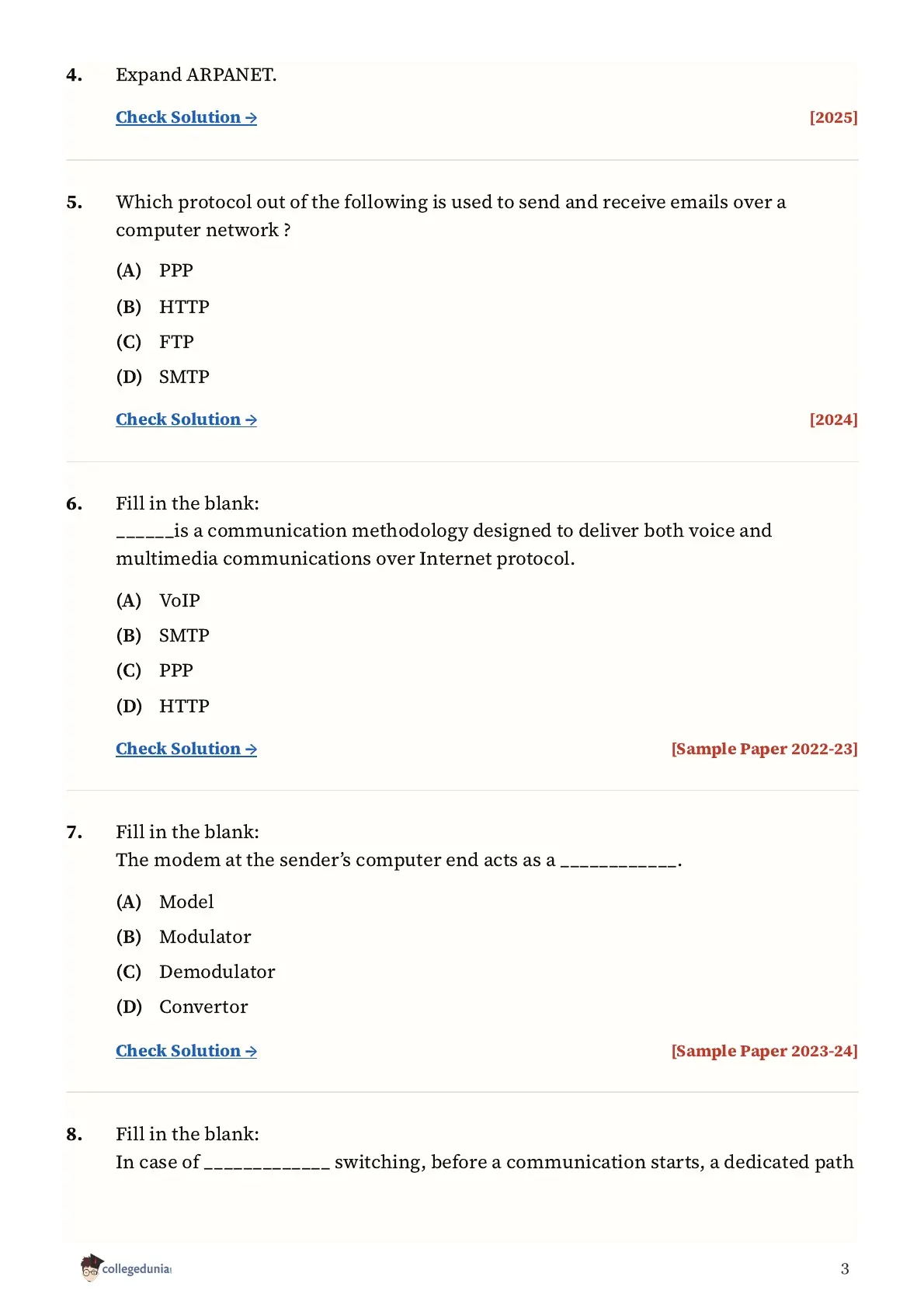
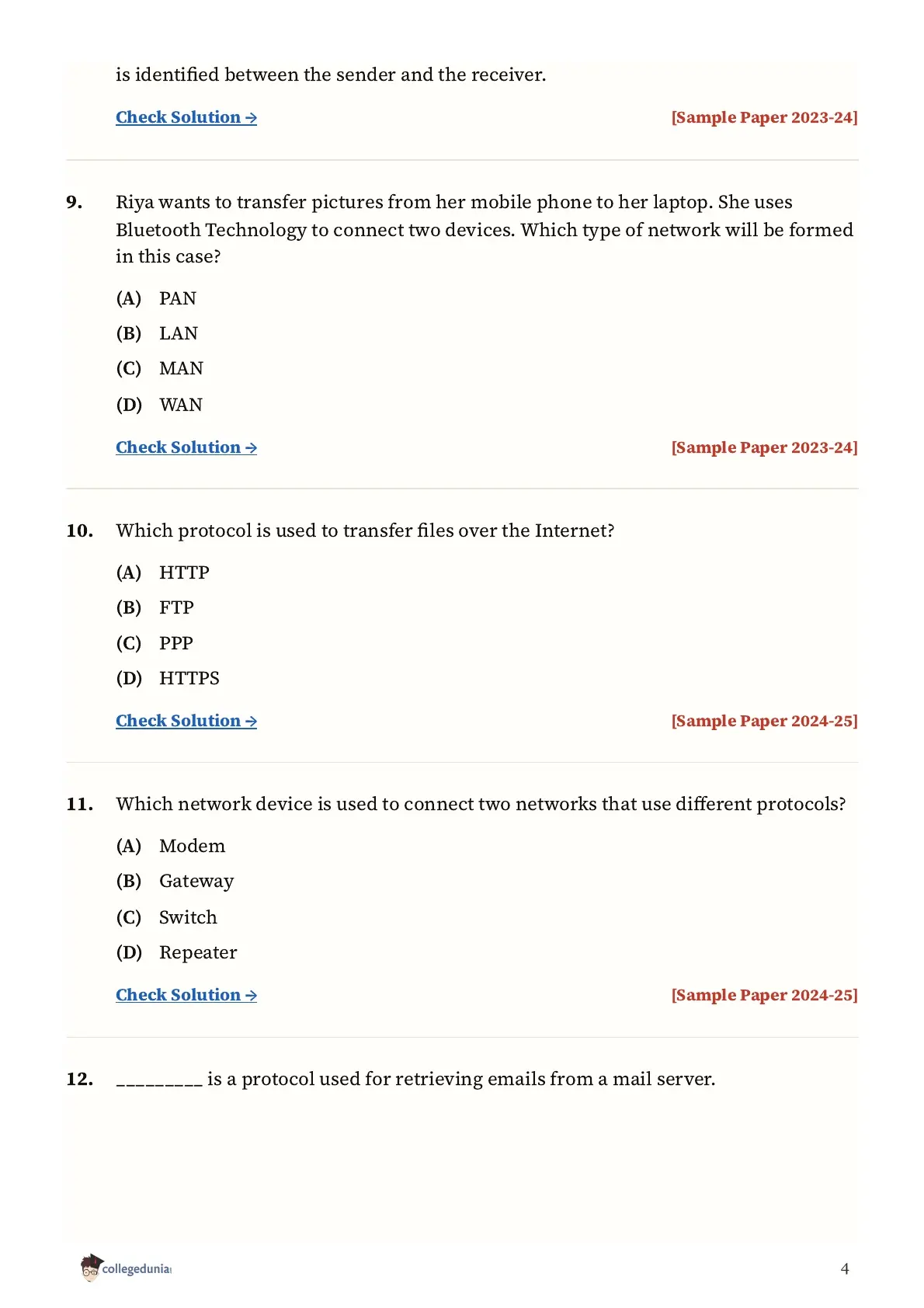
The questions keep returning to network case studies (12 questions), protocols such as HTTP, FTP, PPP and SMTP (16), repeaters and where to place them (11), switches and hubs (10 and 5), topologies (6) and VoIP (6).
On this page you get:
- 43 questions with a worked solution each: 14 MCQs and fill-in items, 17 short answers and 12 case studies
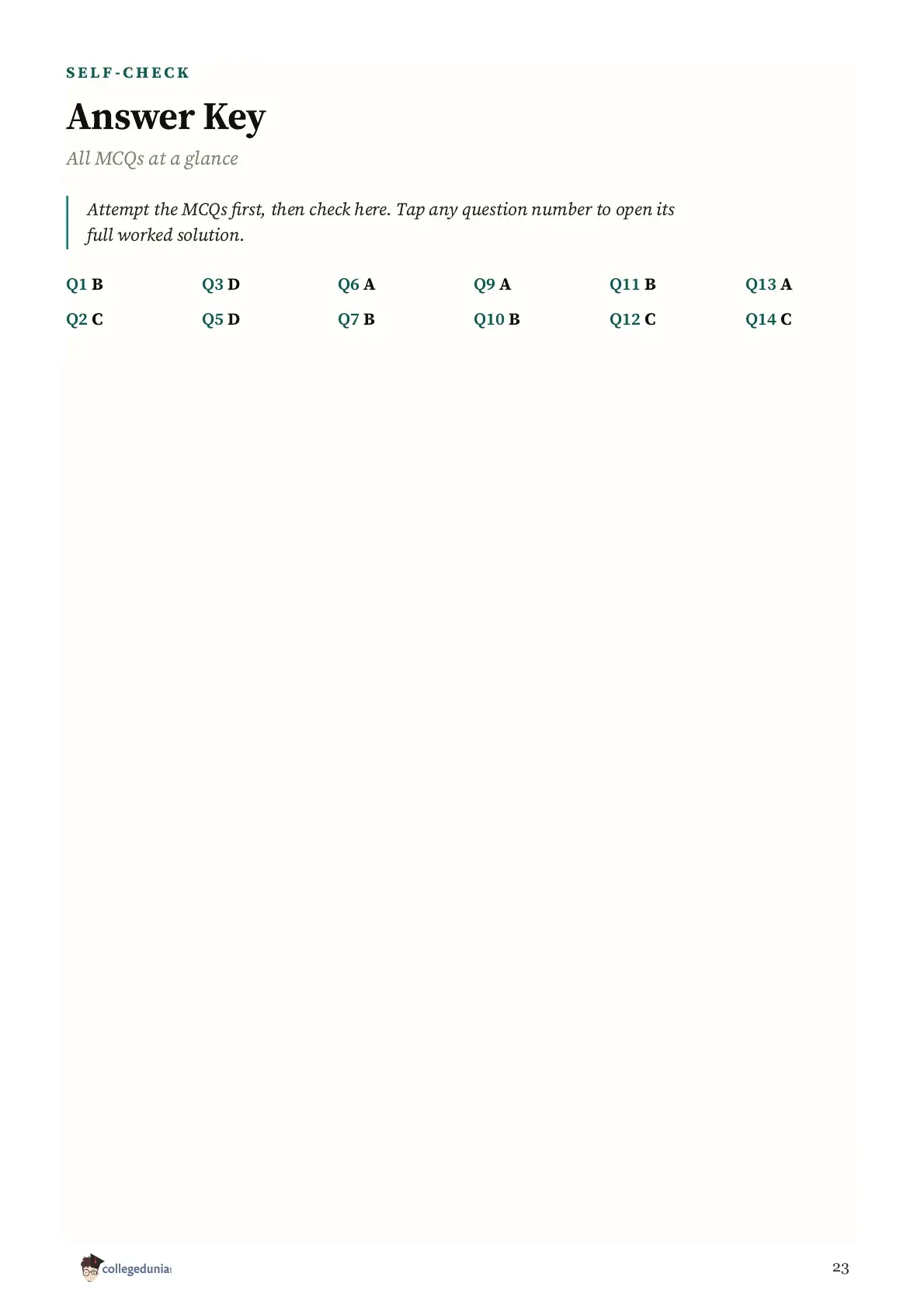
- An Answer Key that lists all 12 MCQs at a glance
- Question counts by topic, so you know whether to start with protocols, devices or the case-study layouts
- A marks-wise table of questions (1, 2, 4 and 5 mark)
- The common mistakes students make, such as calling SMTP the protocol that retrieves mail, and a short FAQ
Computer Networks Weightage in the Class 12 Computer Science Paper
CBSE does not print a mark figure for Computer Networks alone. The Class 12 Computer Science (083) syllabus gives the Networks unit 10 of the 70 theory marks, against 40 for Computational Thinking and Programming and 20 for Database Management. That is the unit-level figure from the 2025-26 syllabus, so check cbseacademic.nic.in for the current year. Within this set, the 4-mark and 5-mark groups are all network case studies, while the 1-mark and 2-mark groups hold the theory. The unit marks are as reported by prep sites and the published syllabus summaries, and we could not confirm them on a CBSE document, so treat them as unofficial.
| Marks per Question | Questions in the Set |
|---|---|
| 1 mark | 14 |
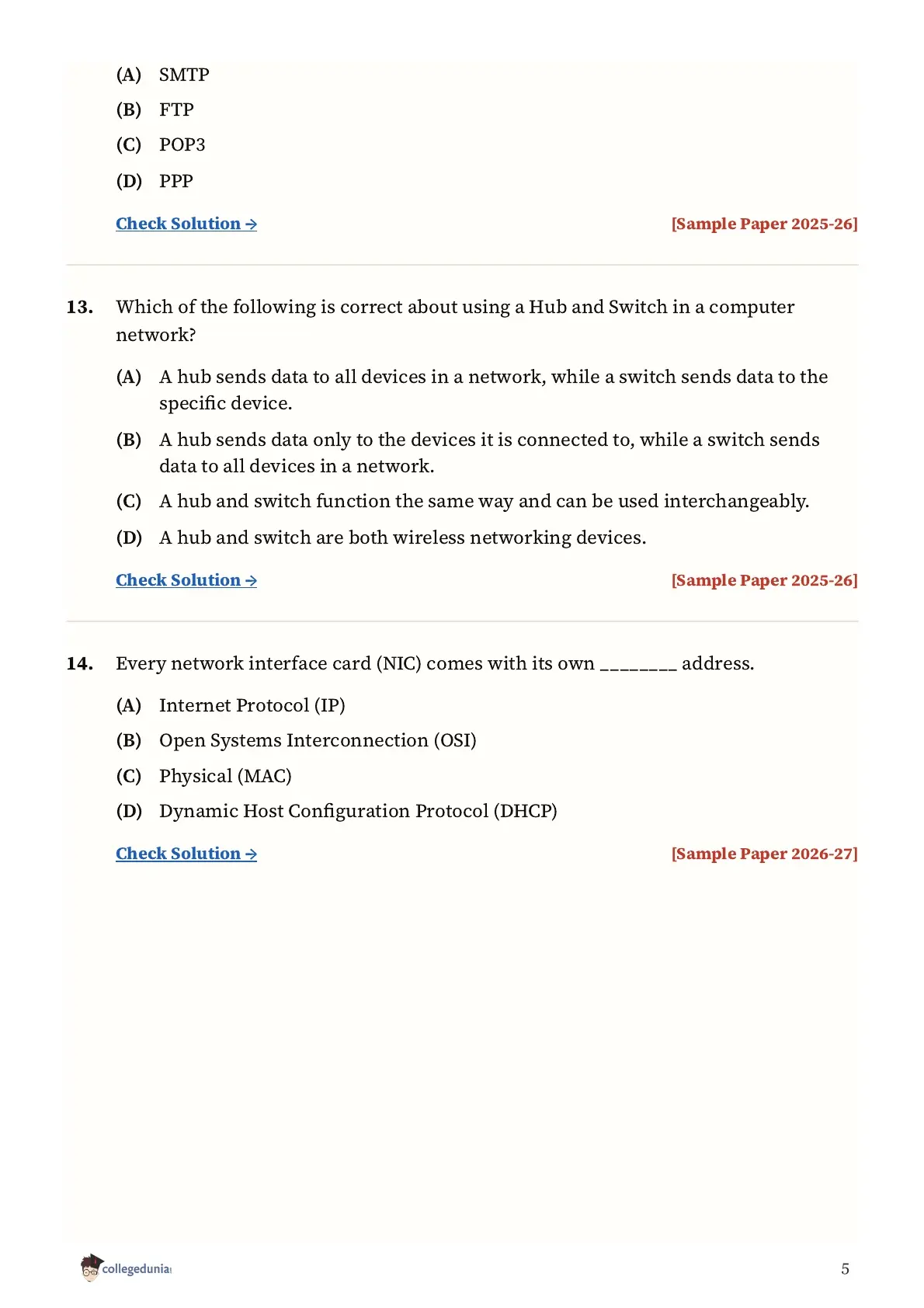
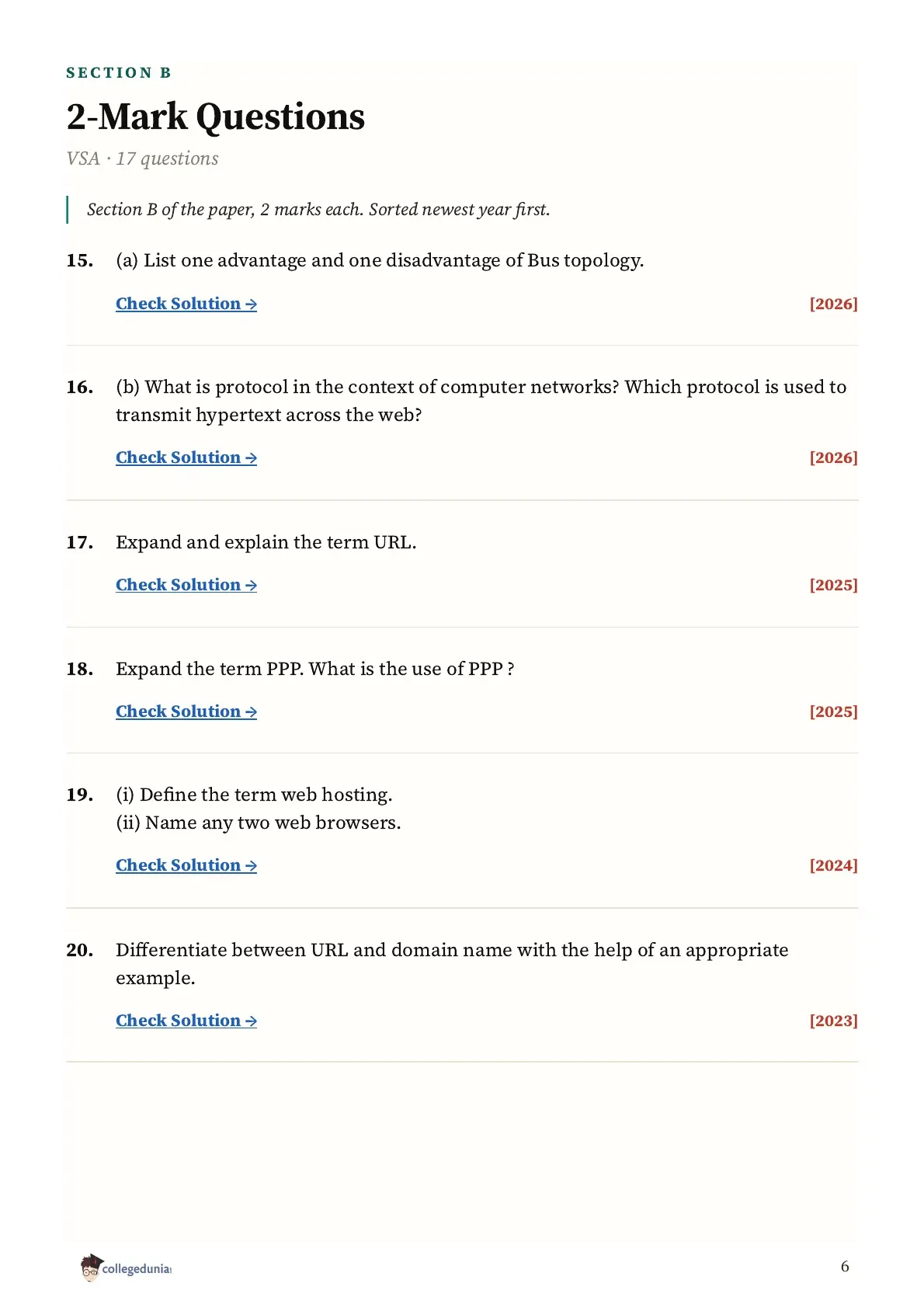
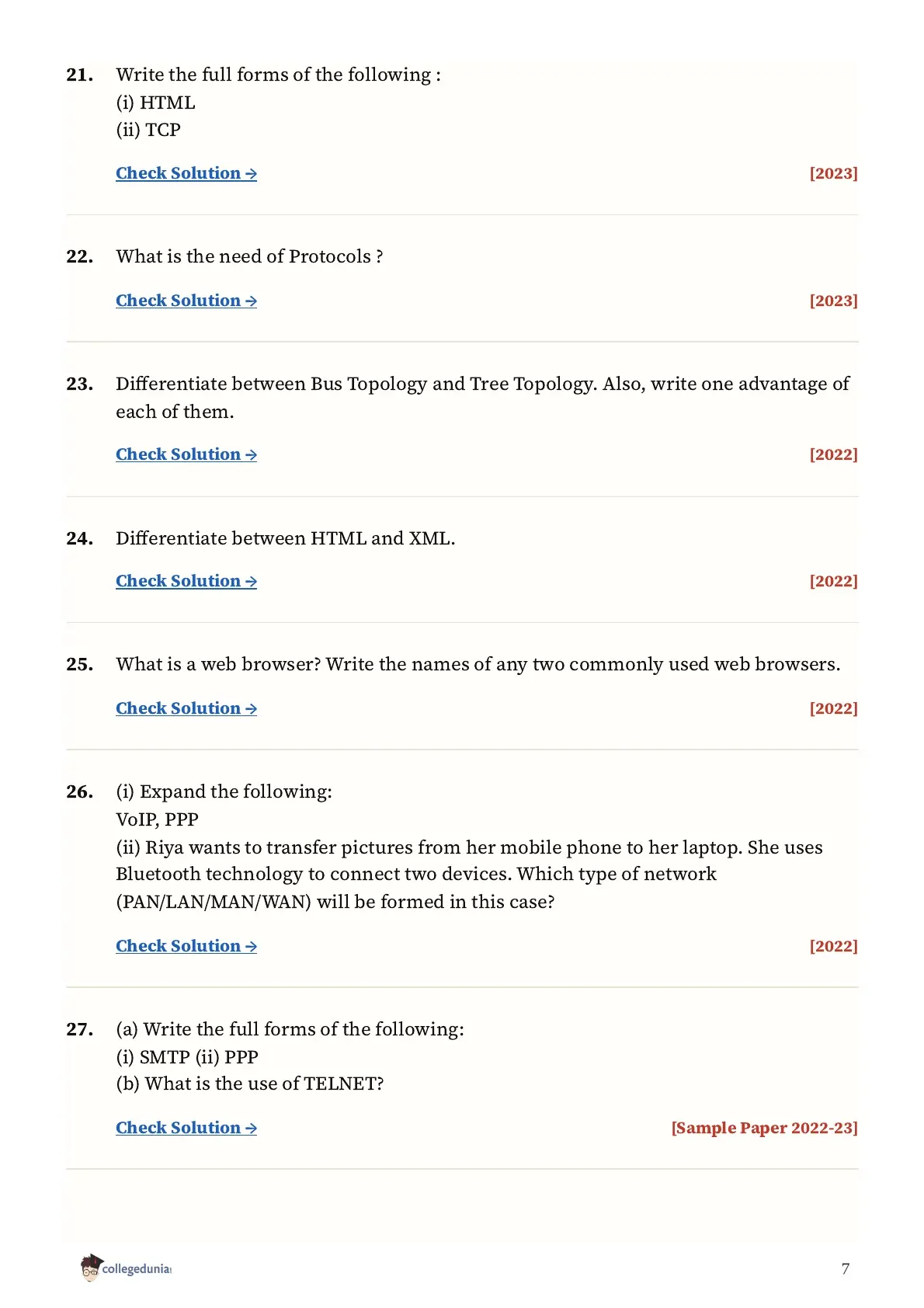
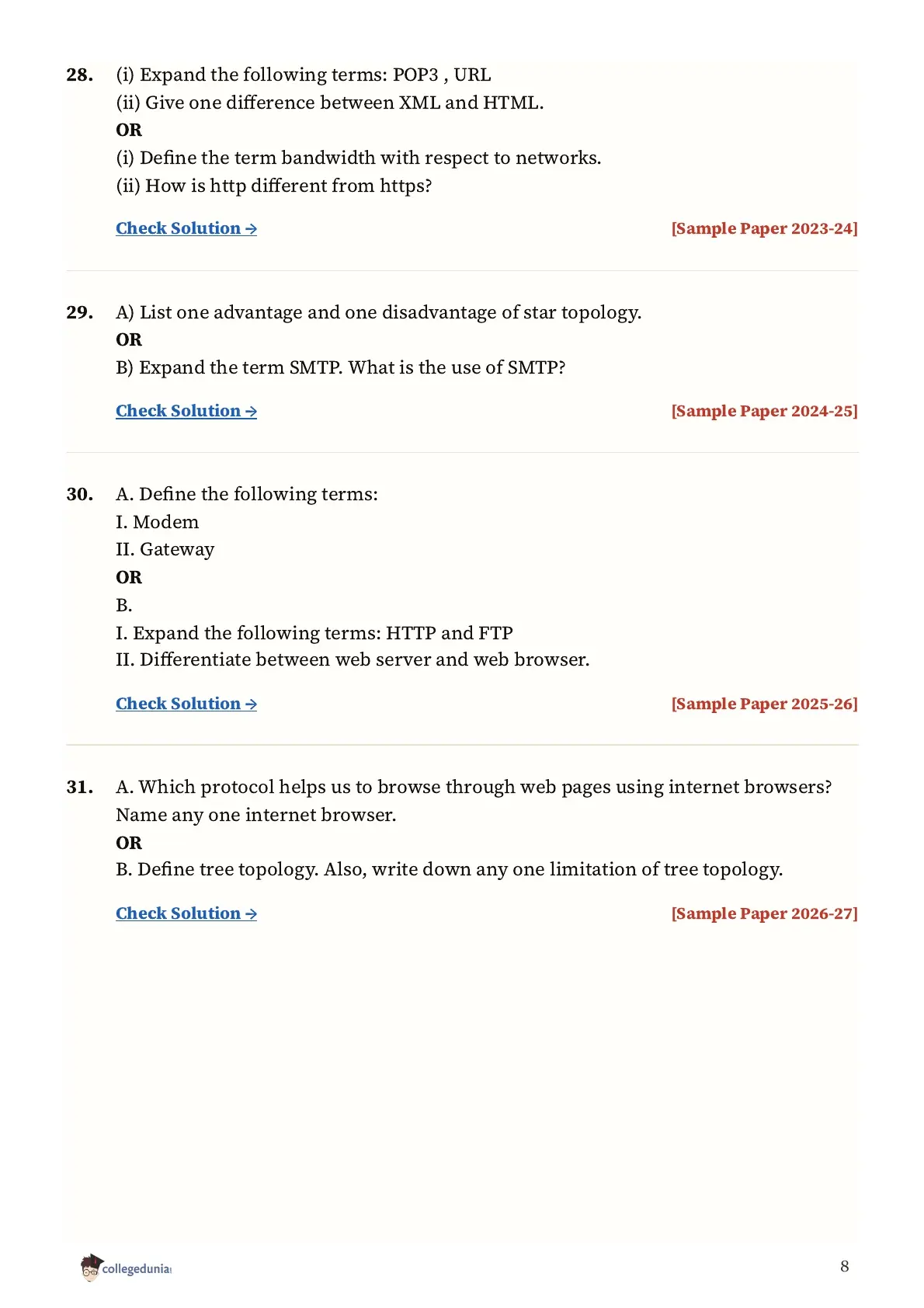
| 2 marks | 17 |
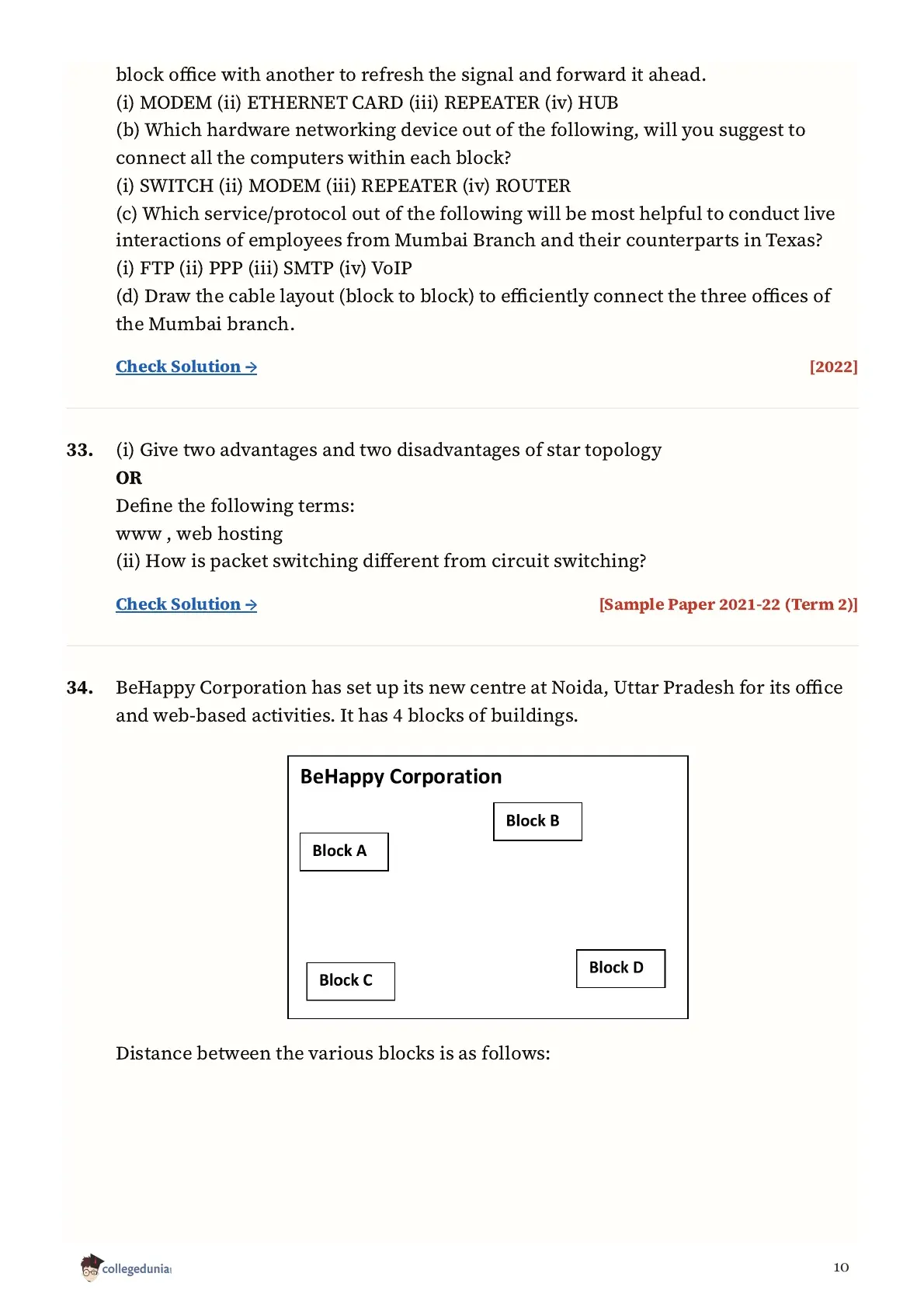
| 4 marks | 3 |
| 5 marks | 9 |
Computer Networks Questions by Topic
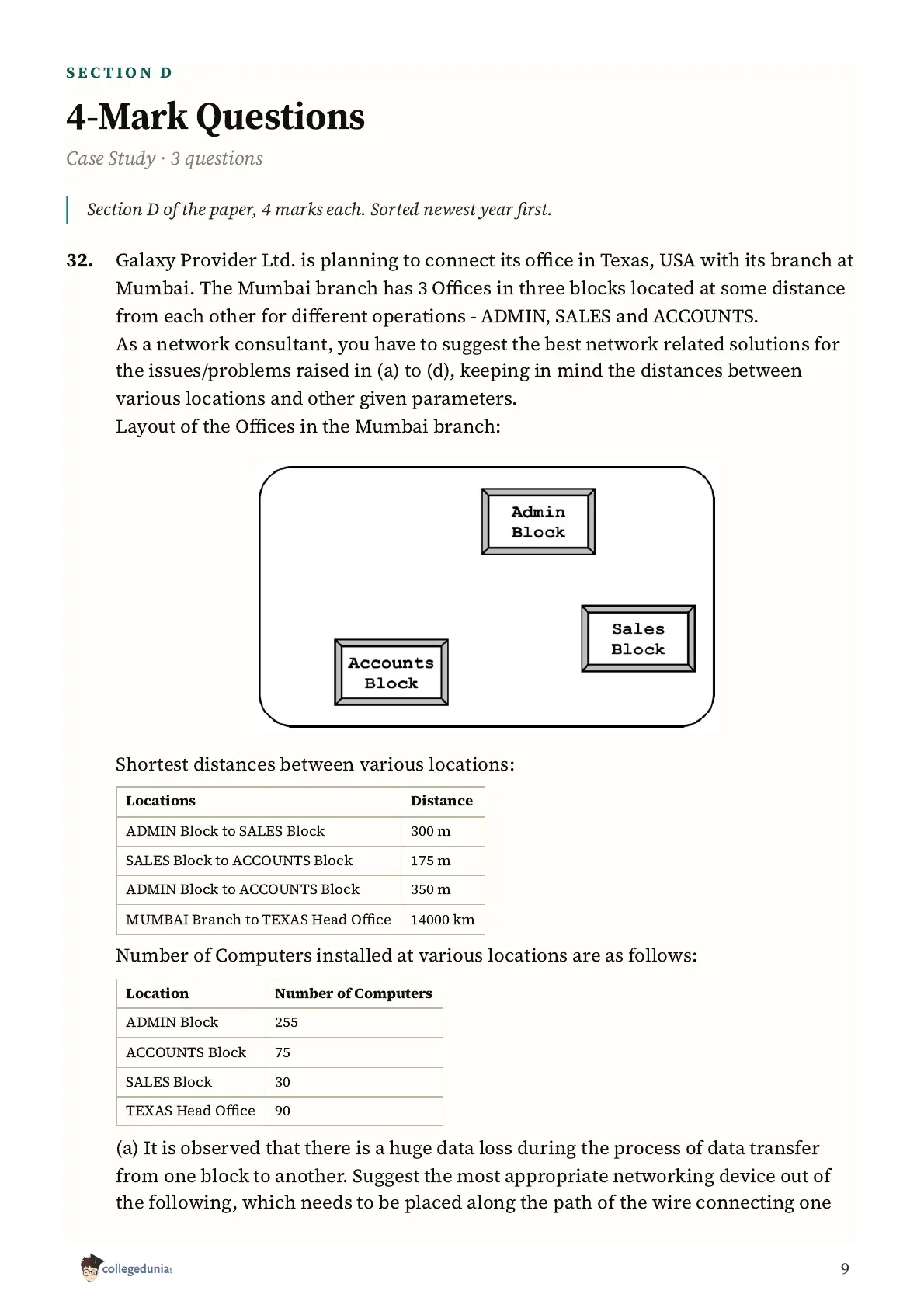
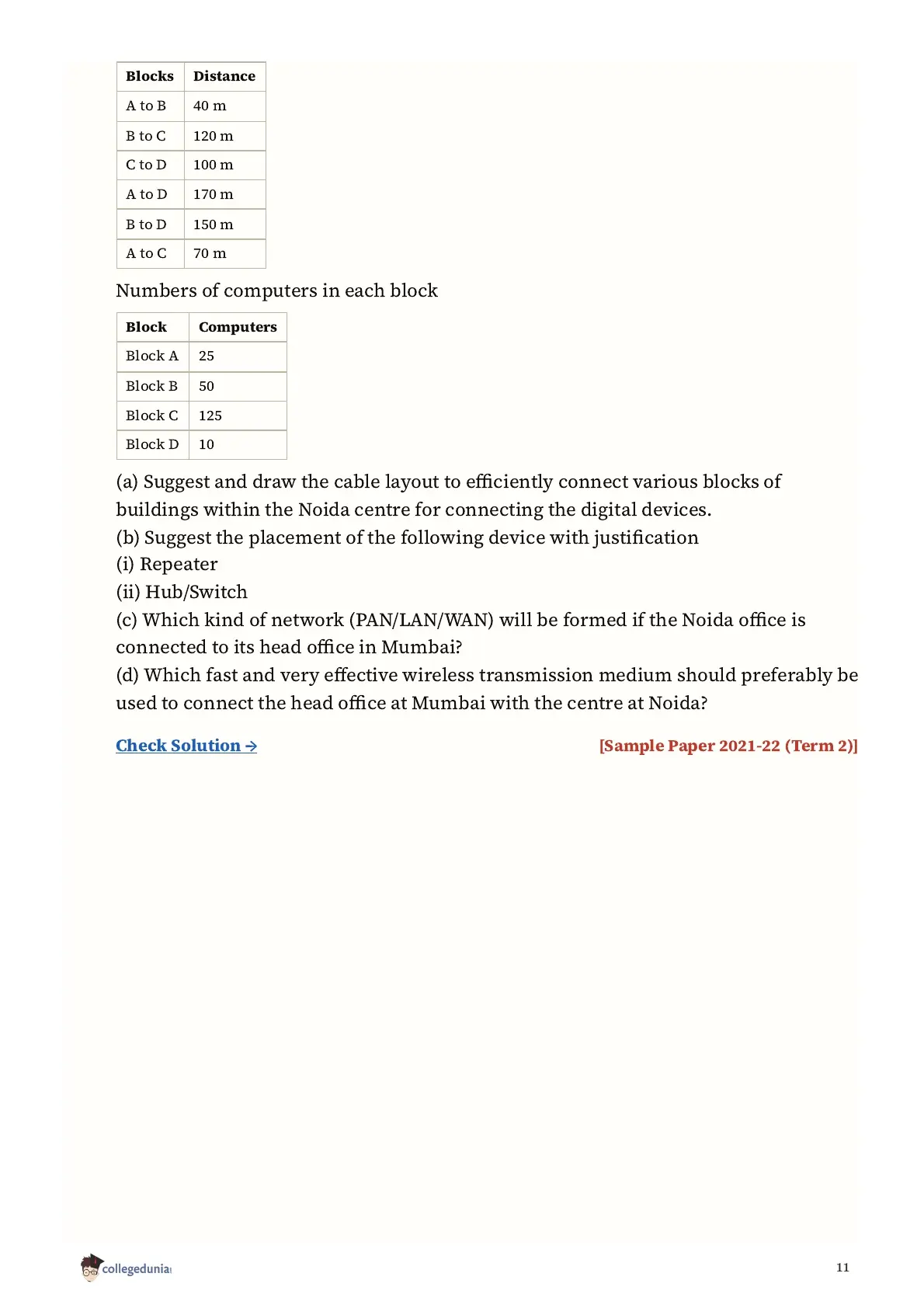
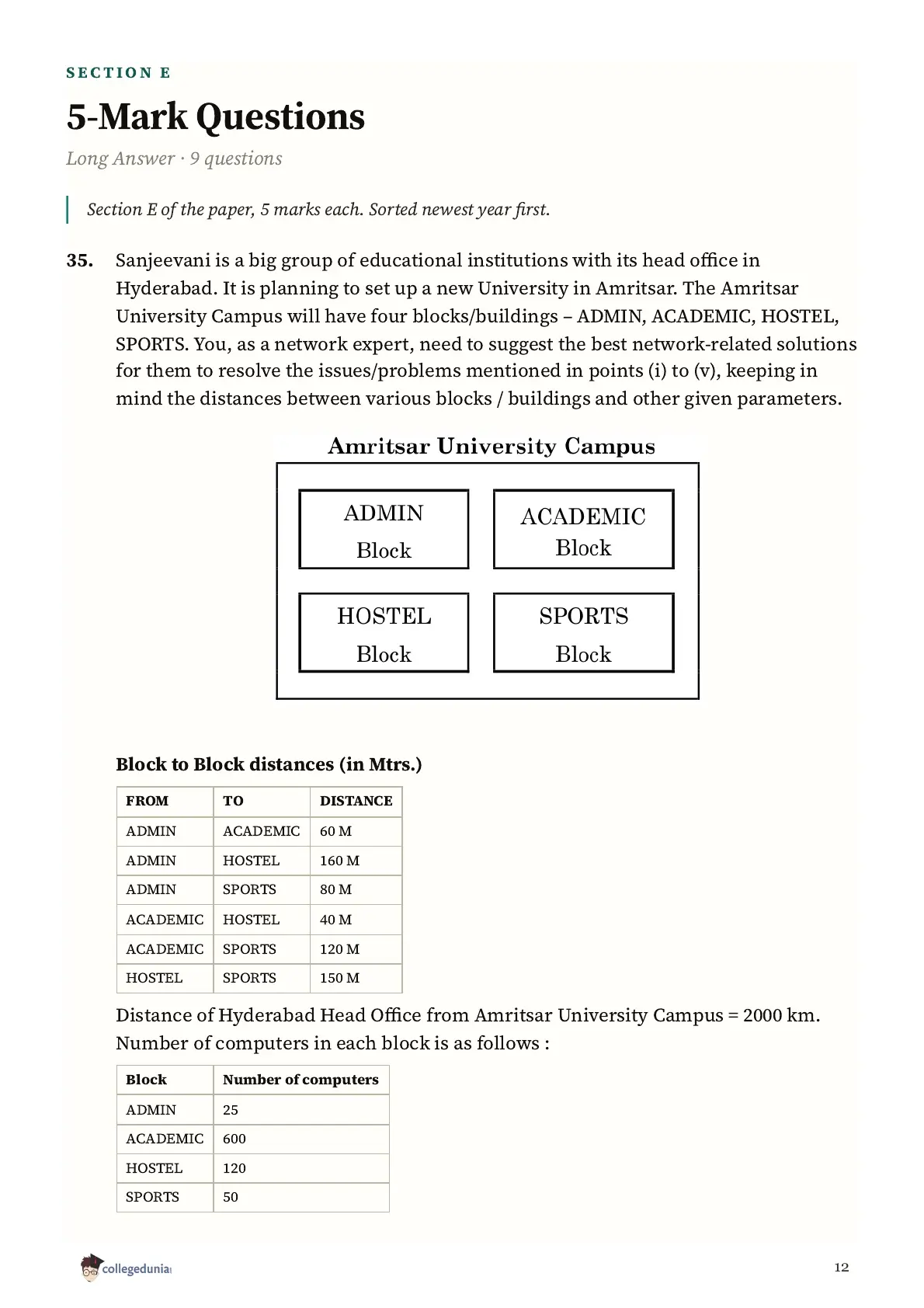
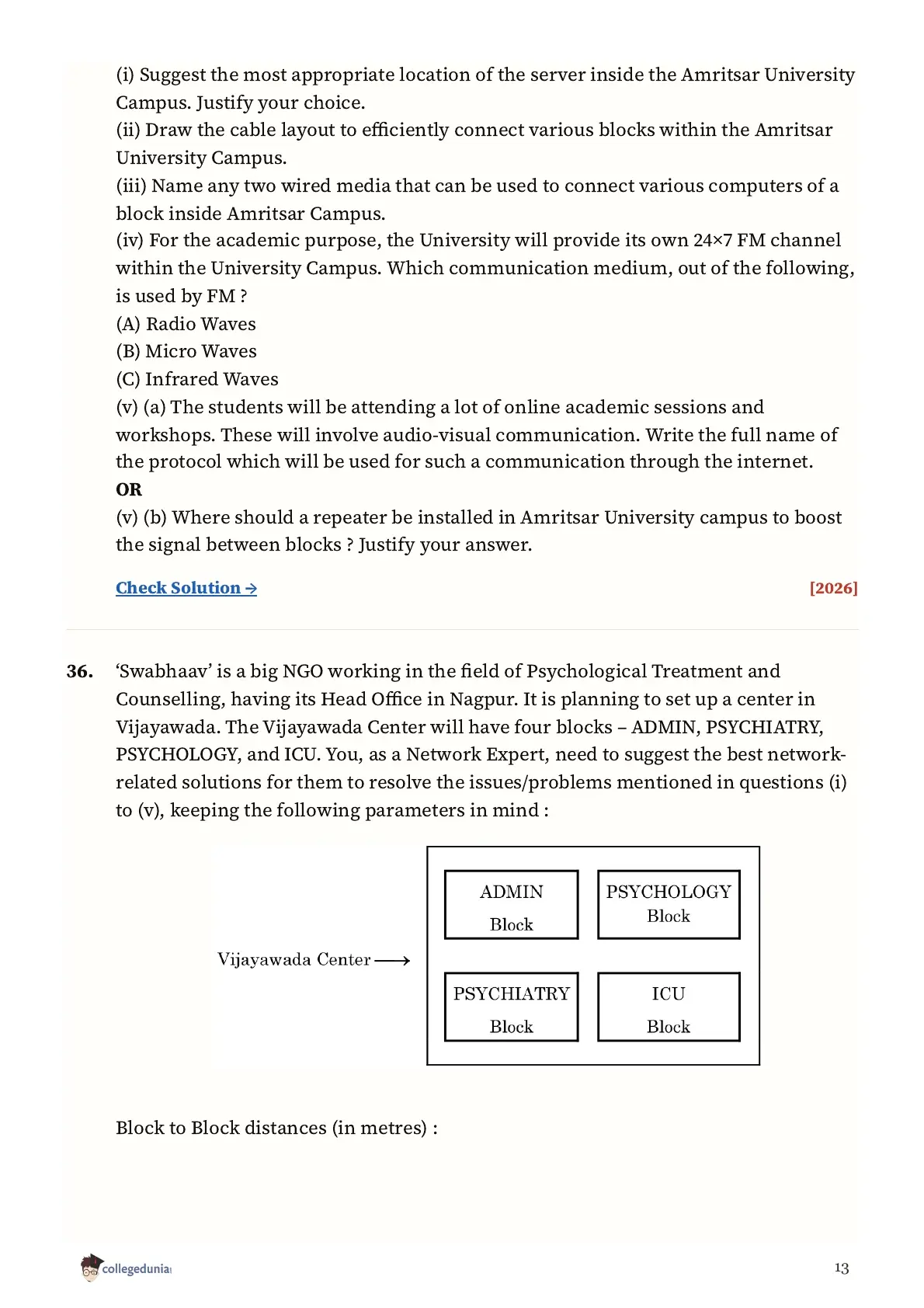
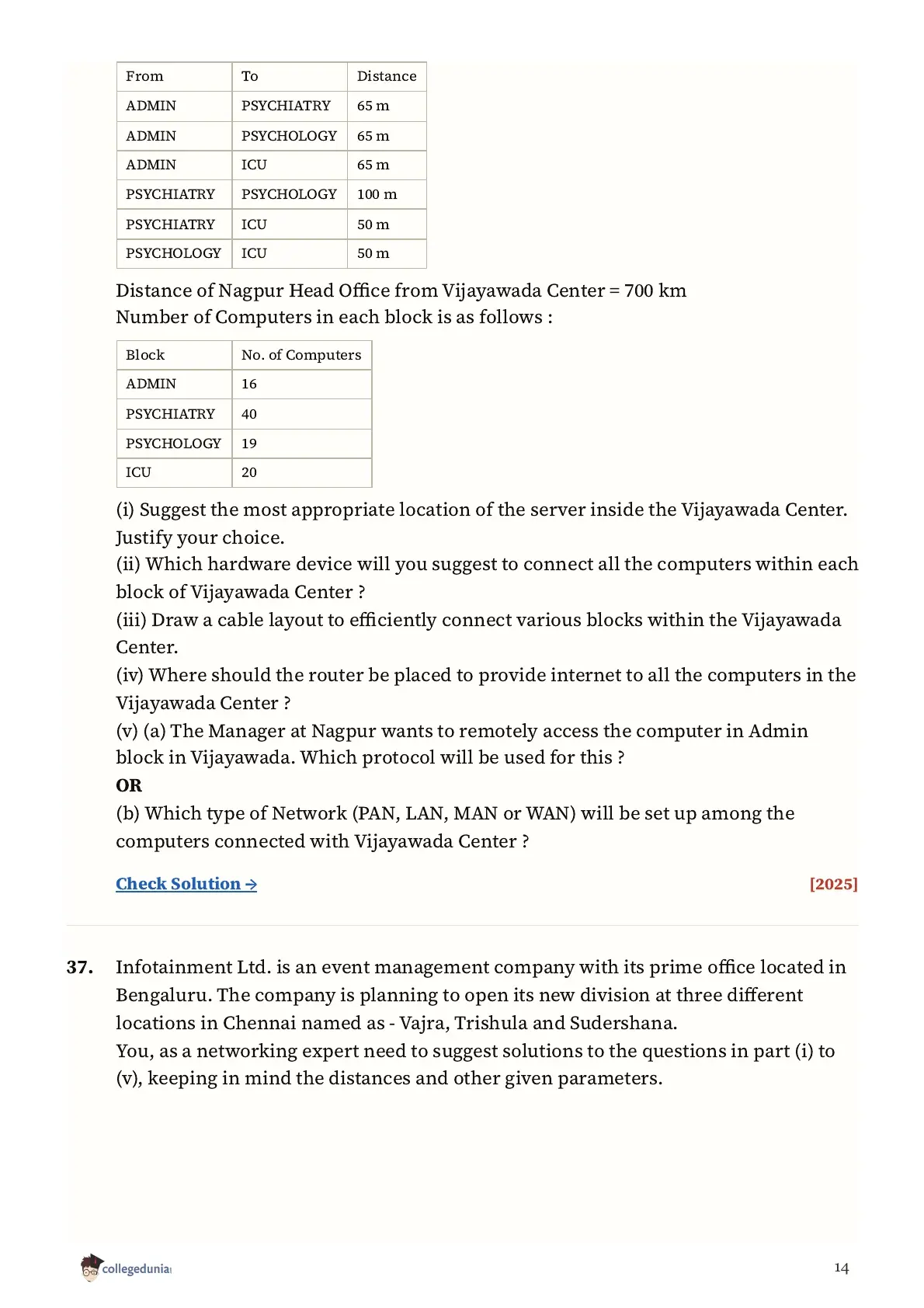
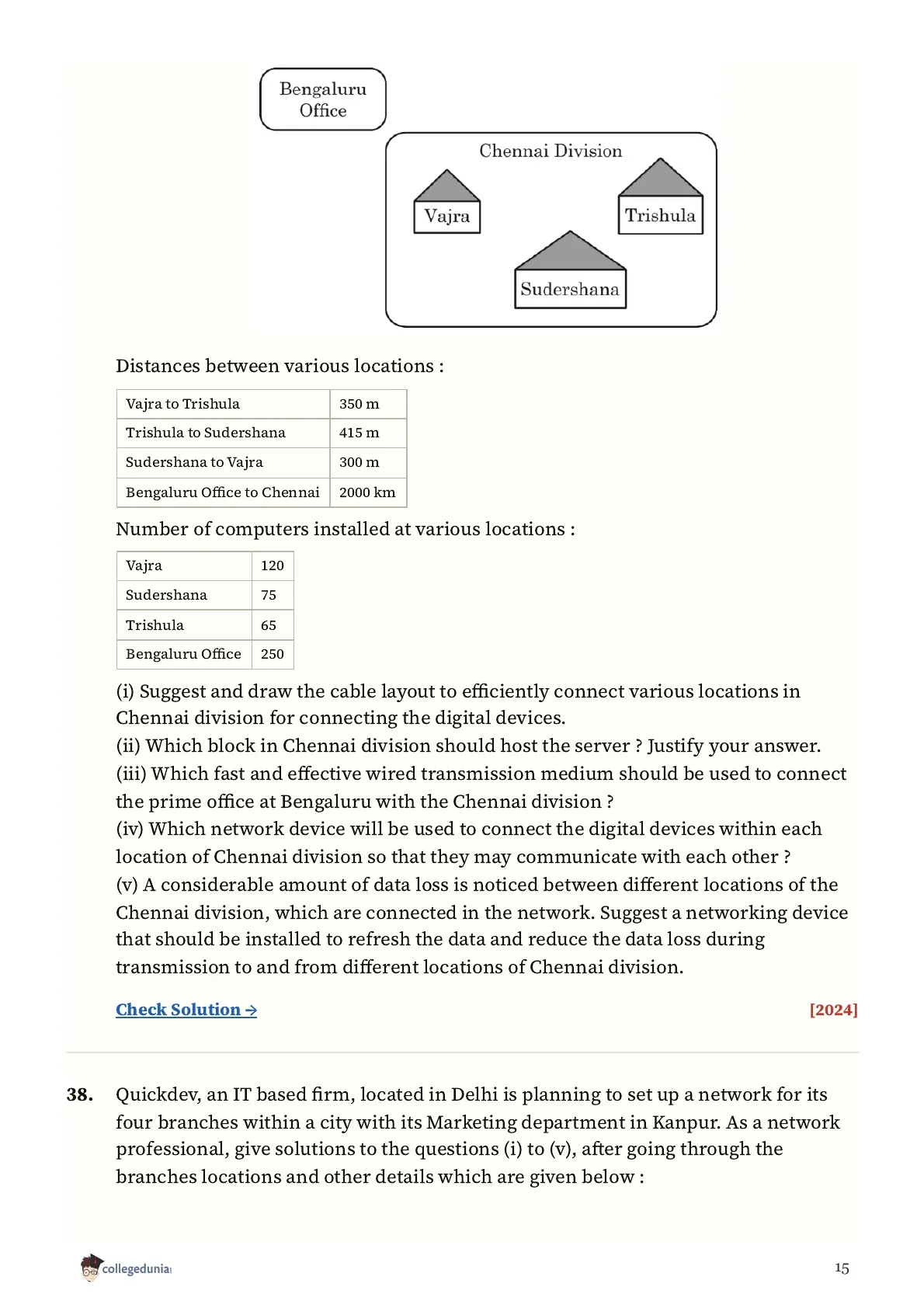
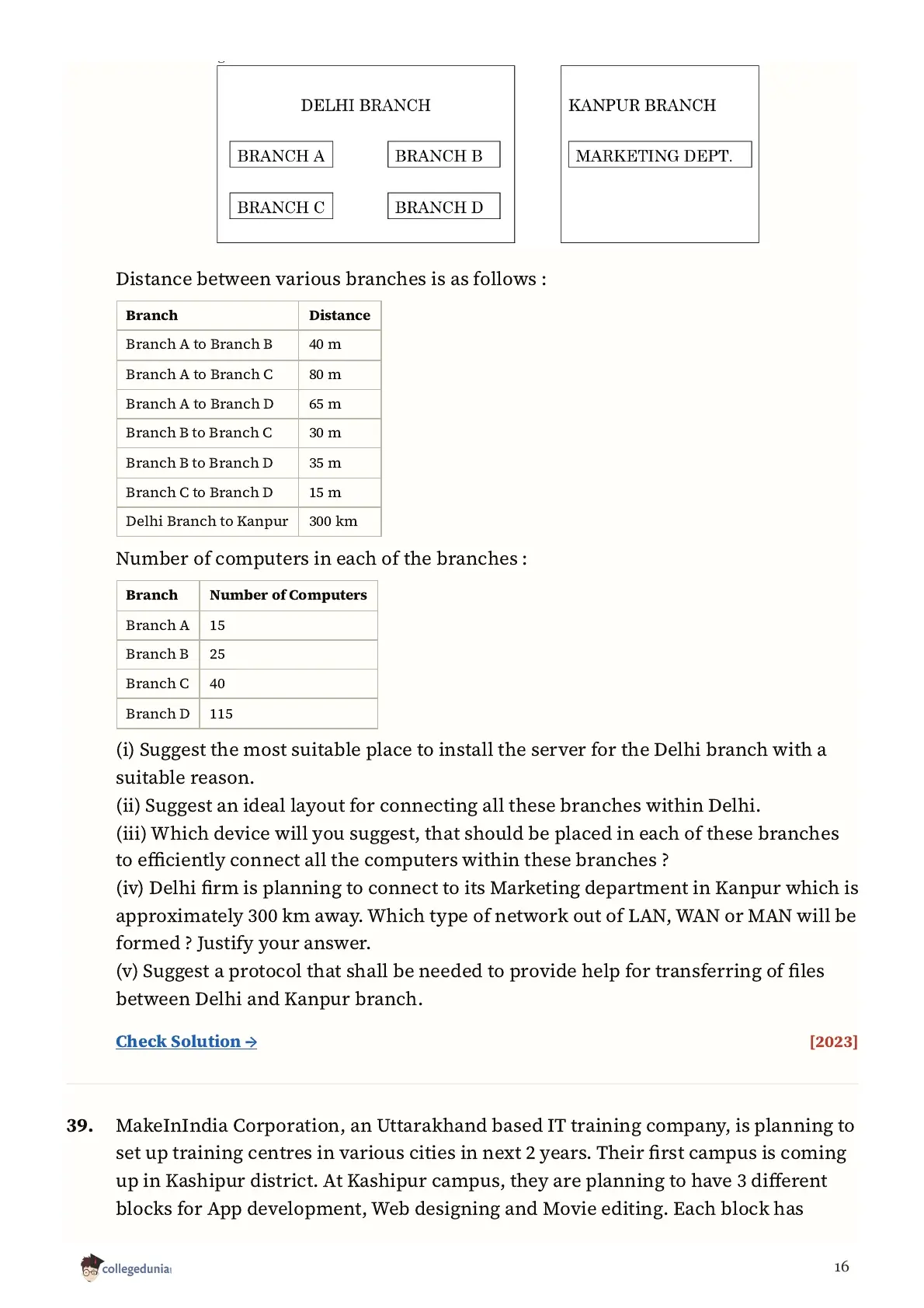
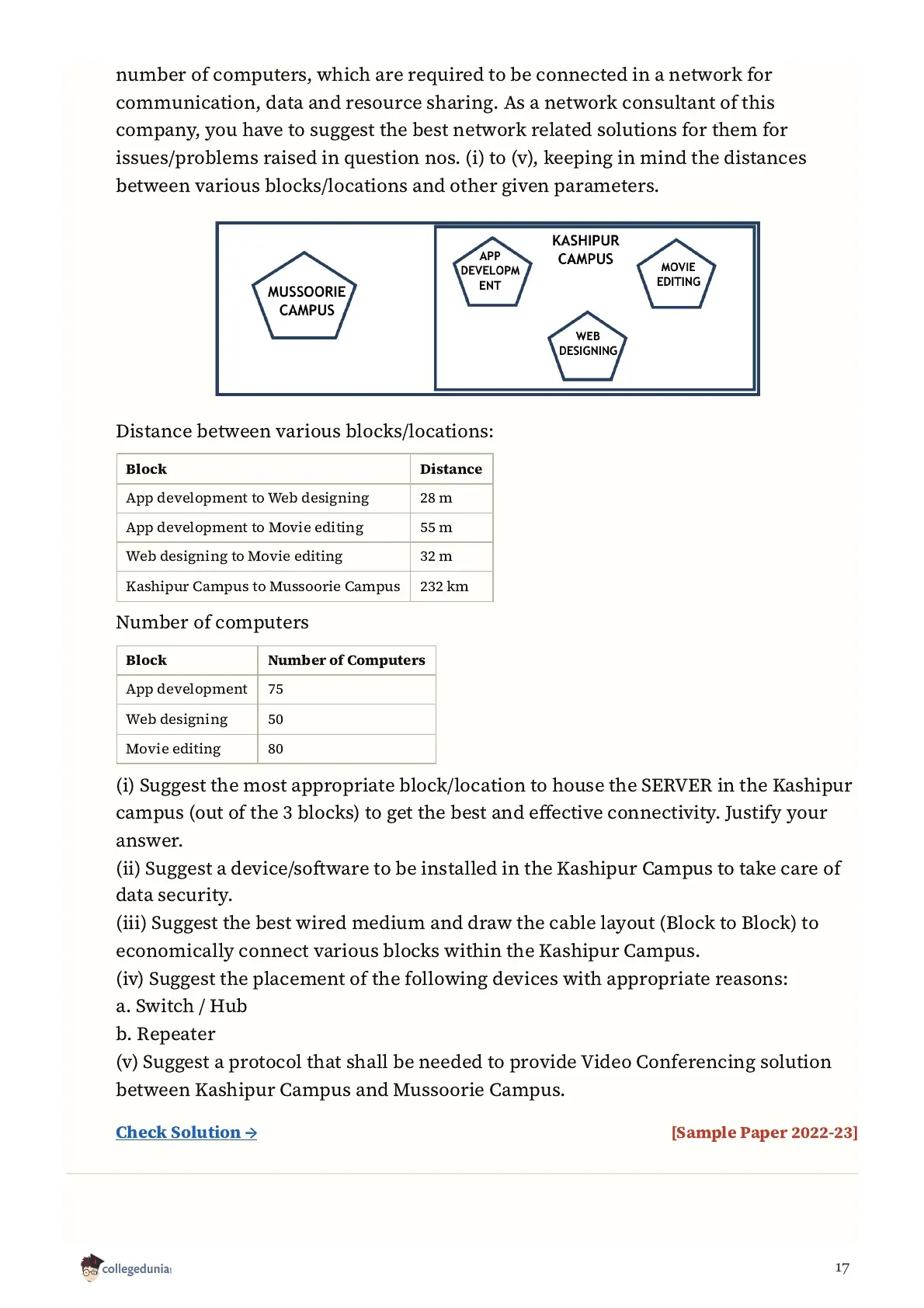
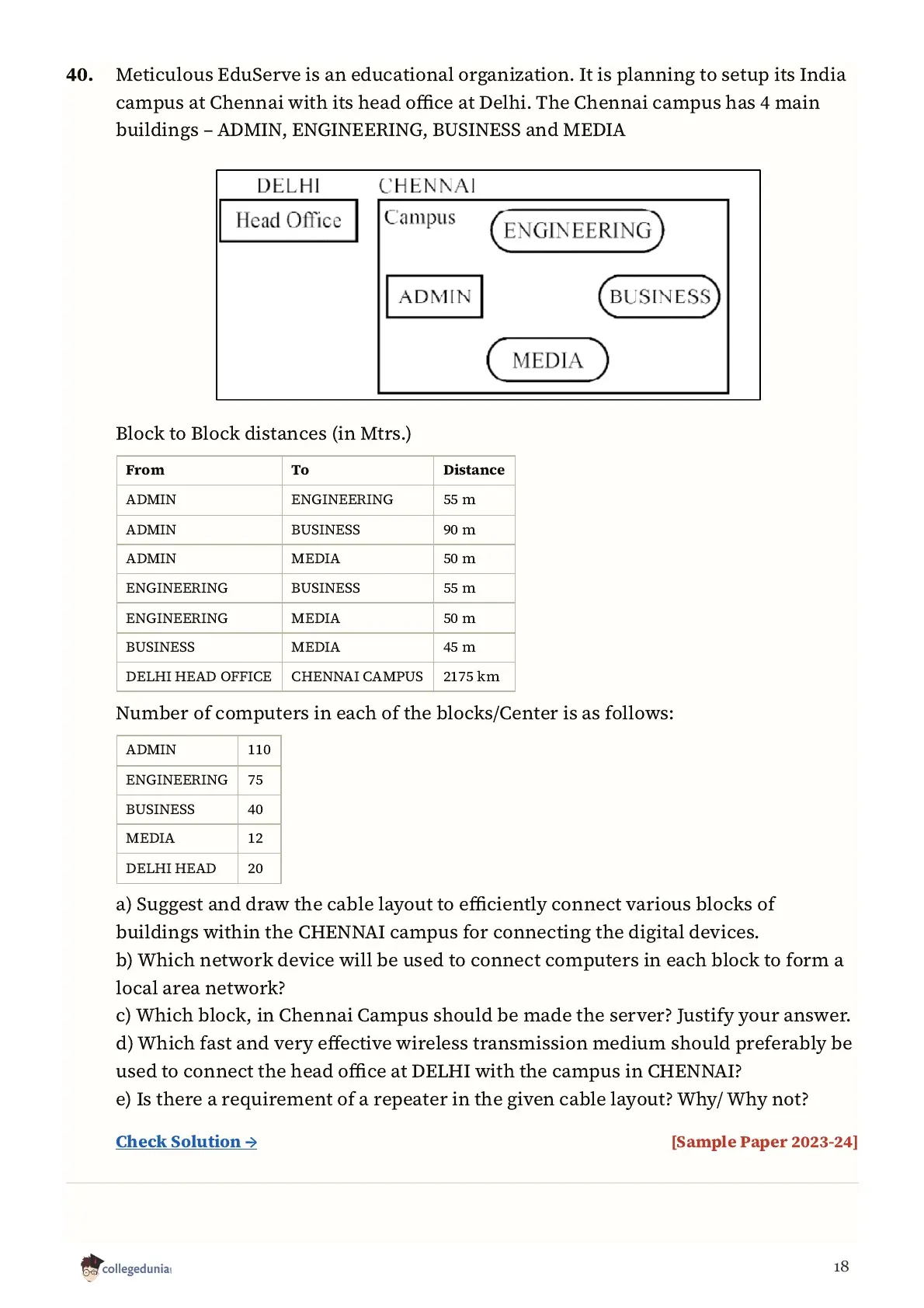
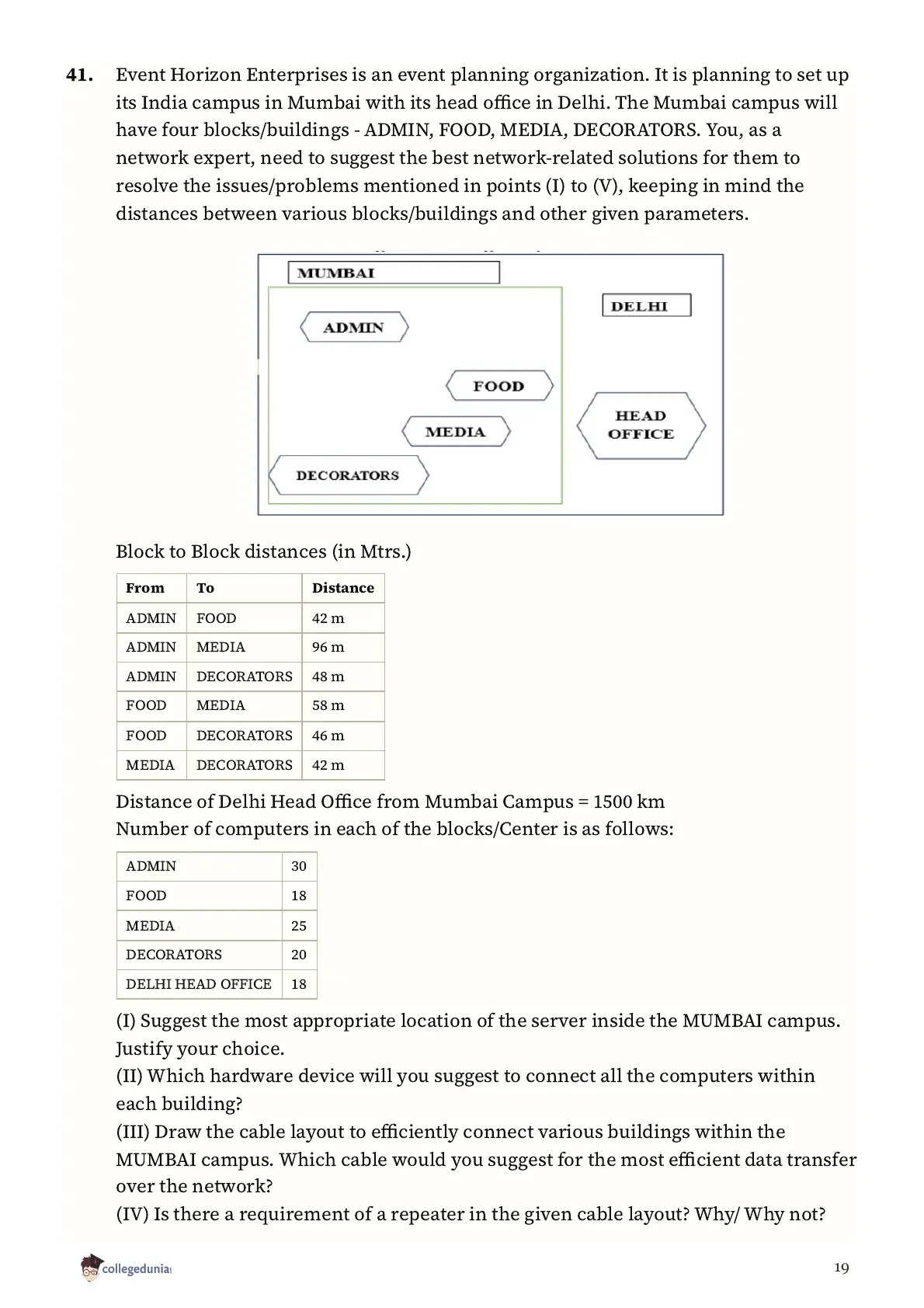
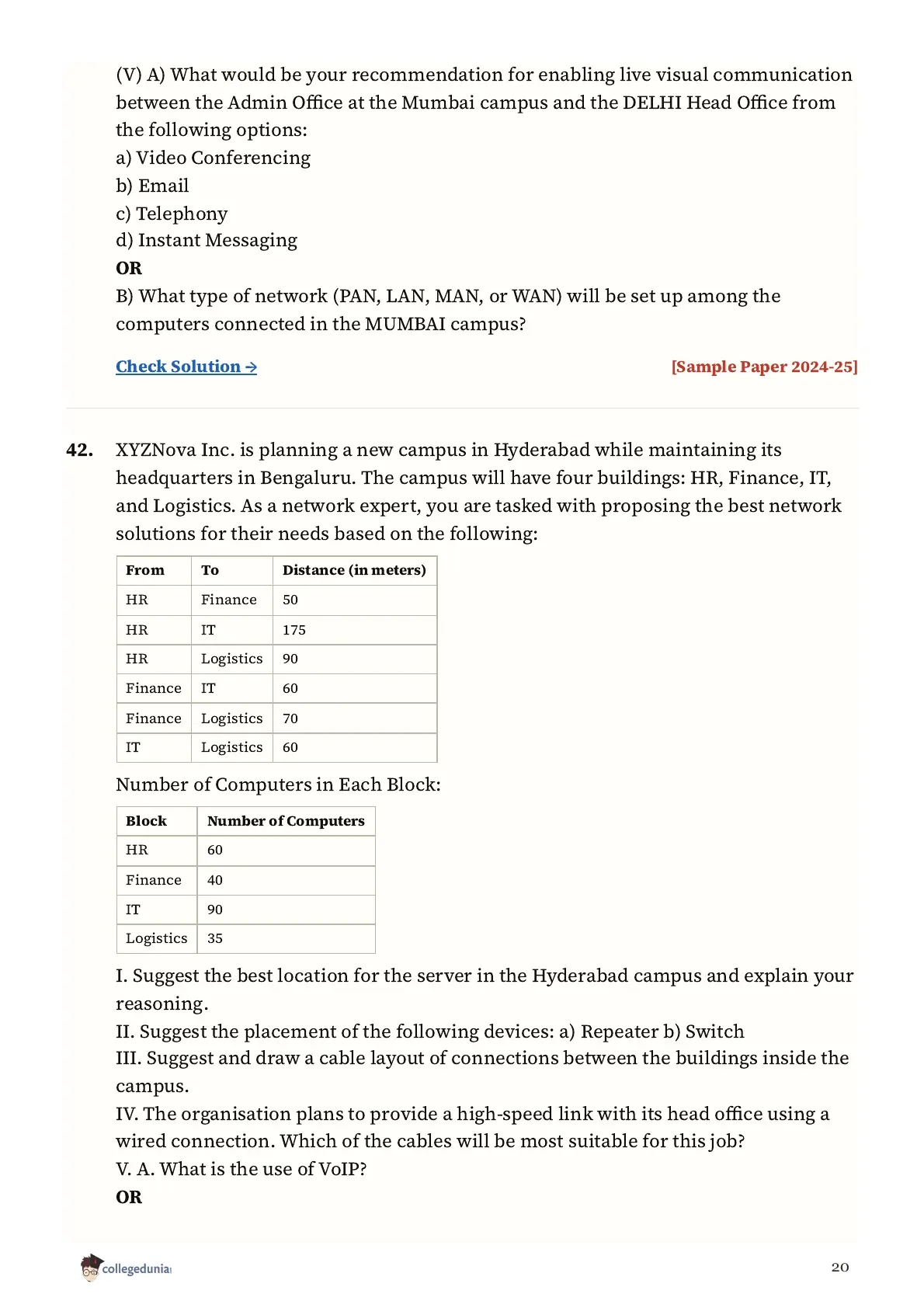
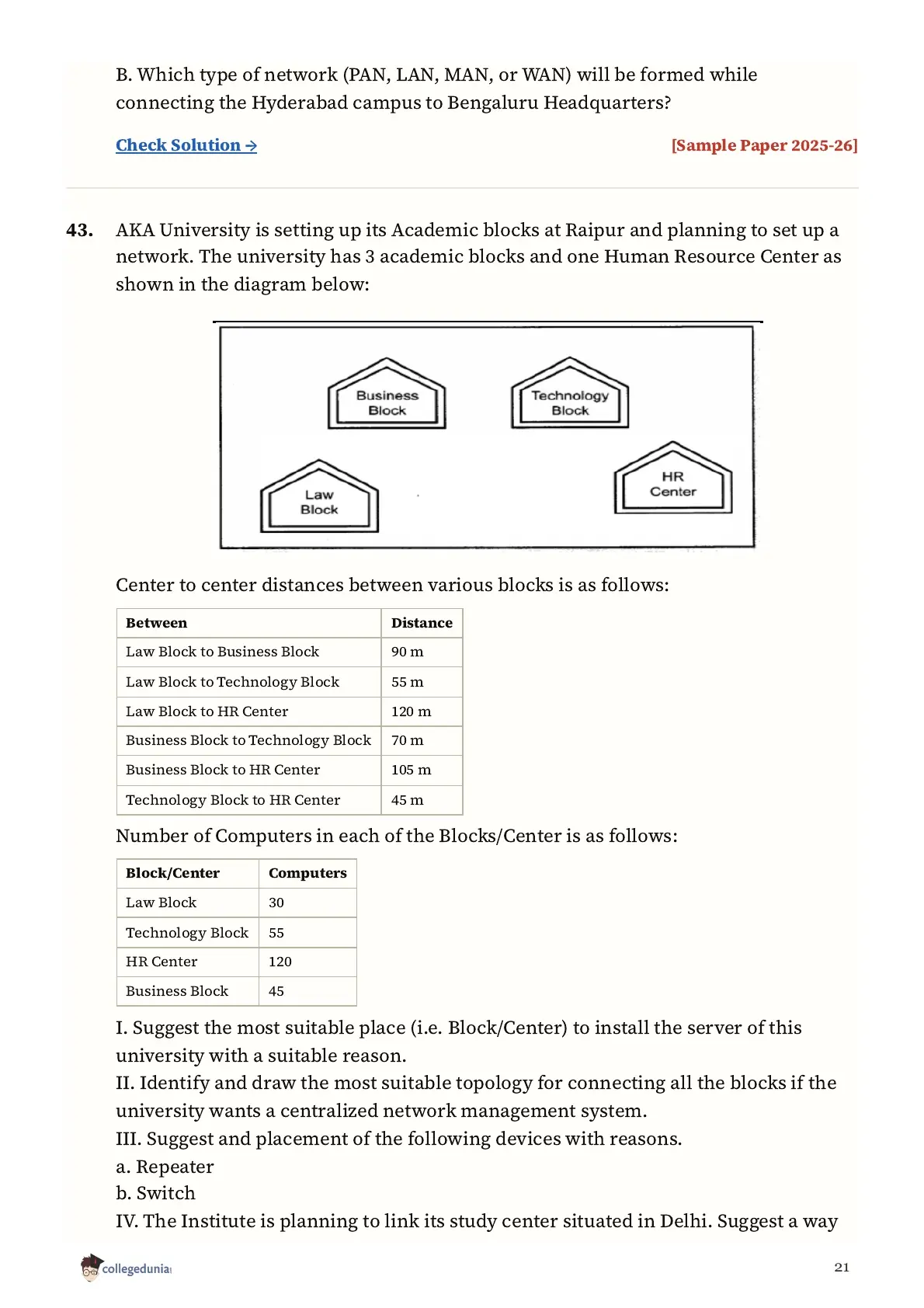
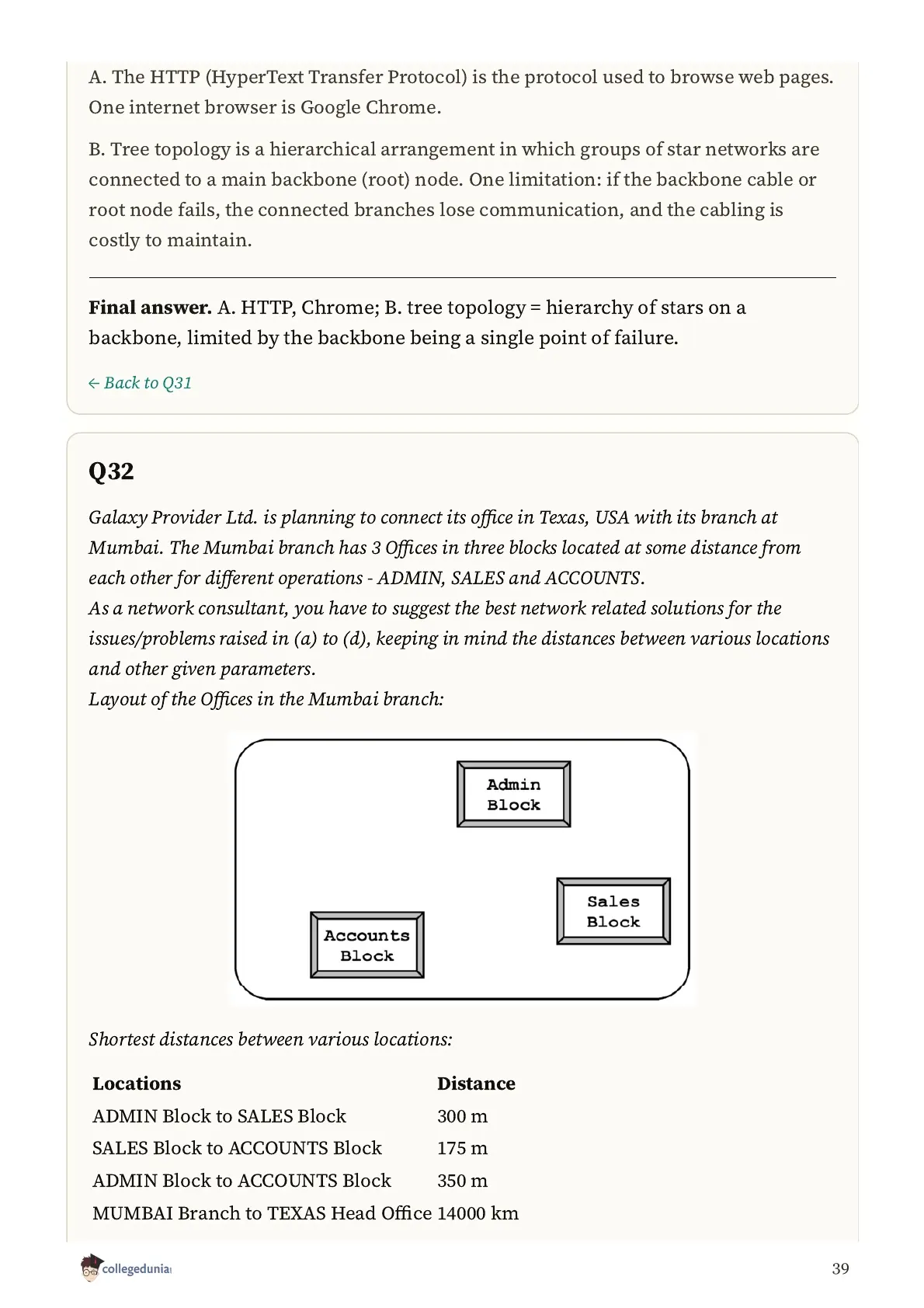
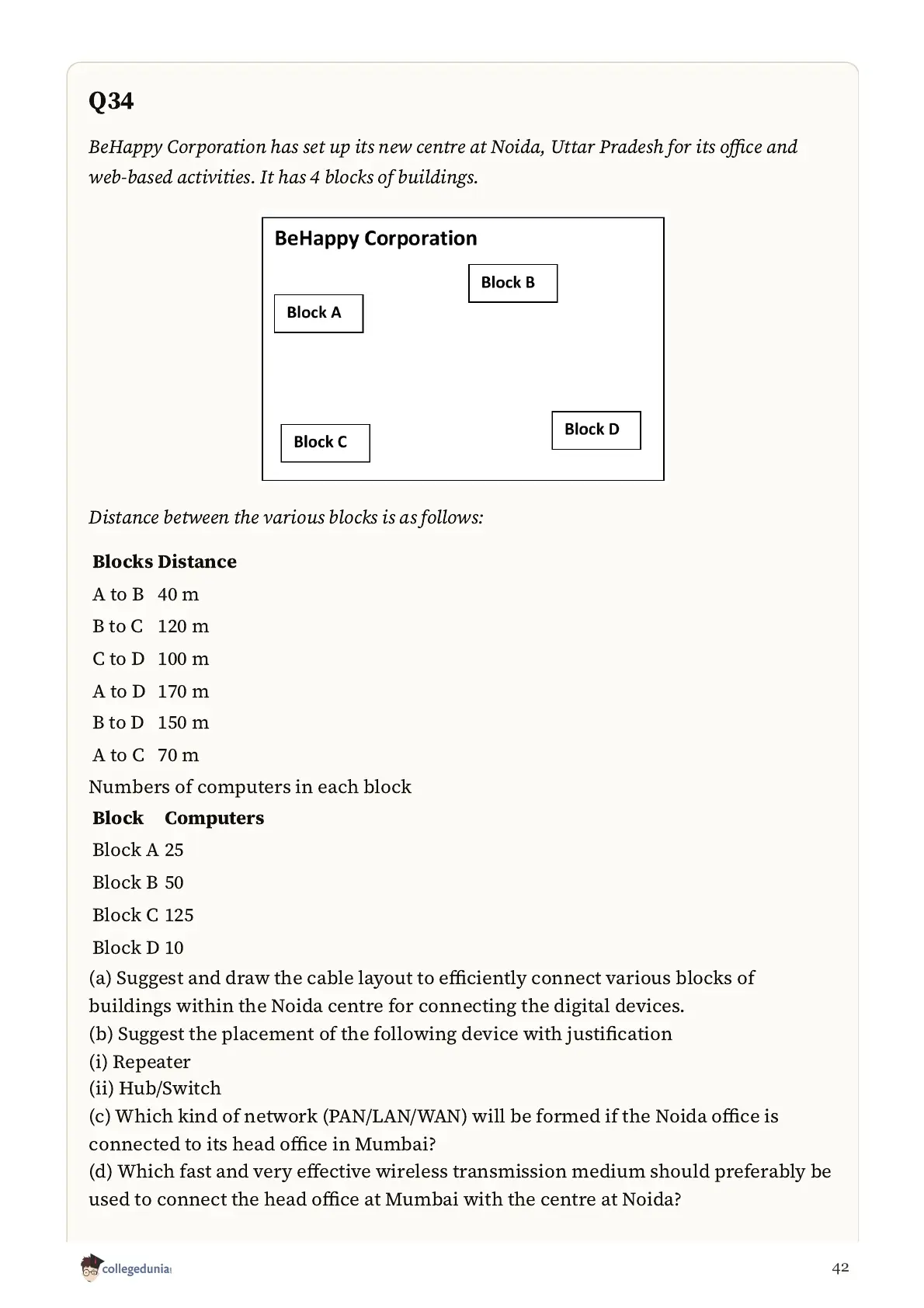
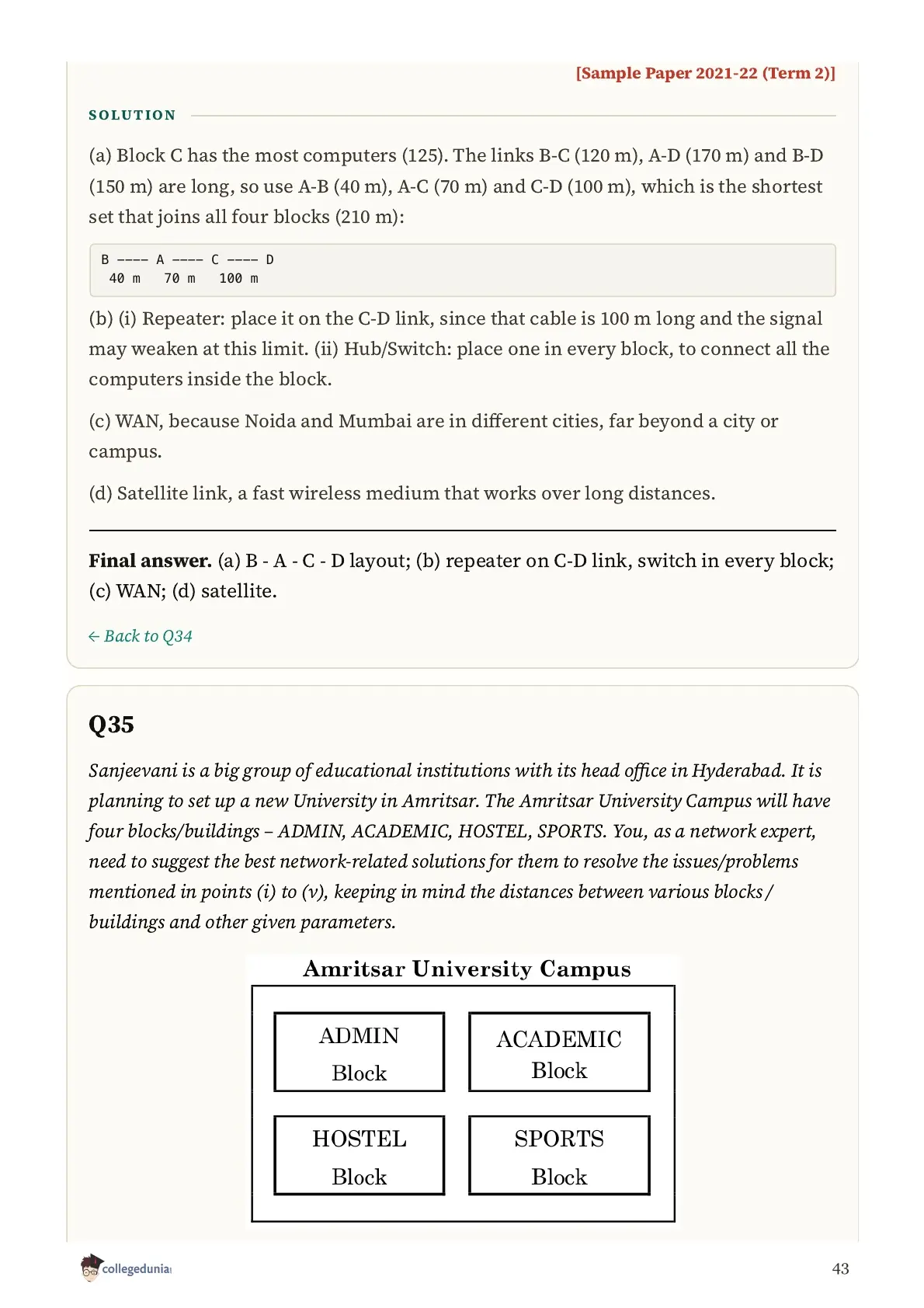
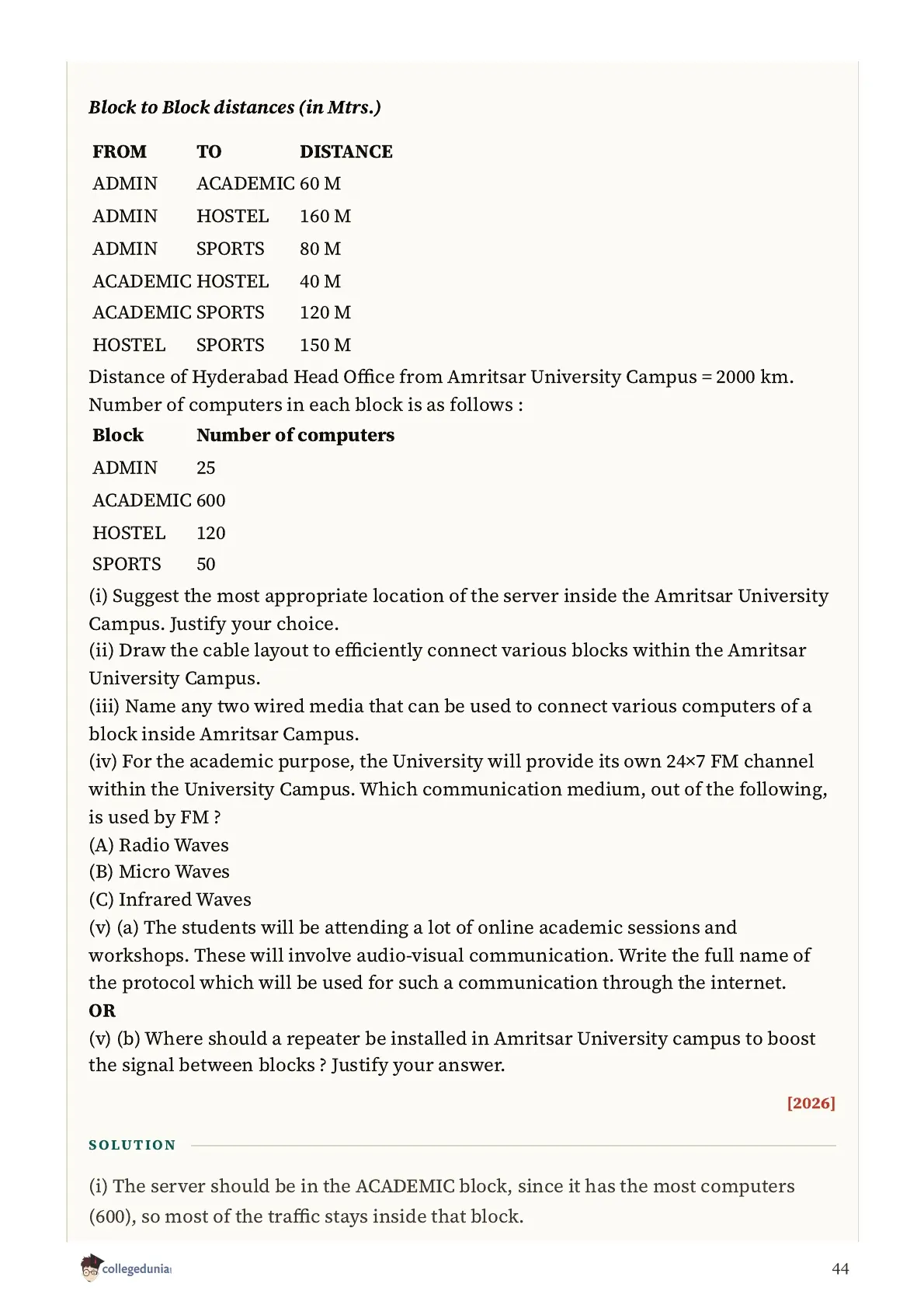
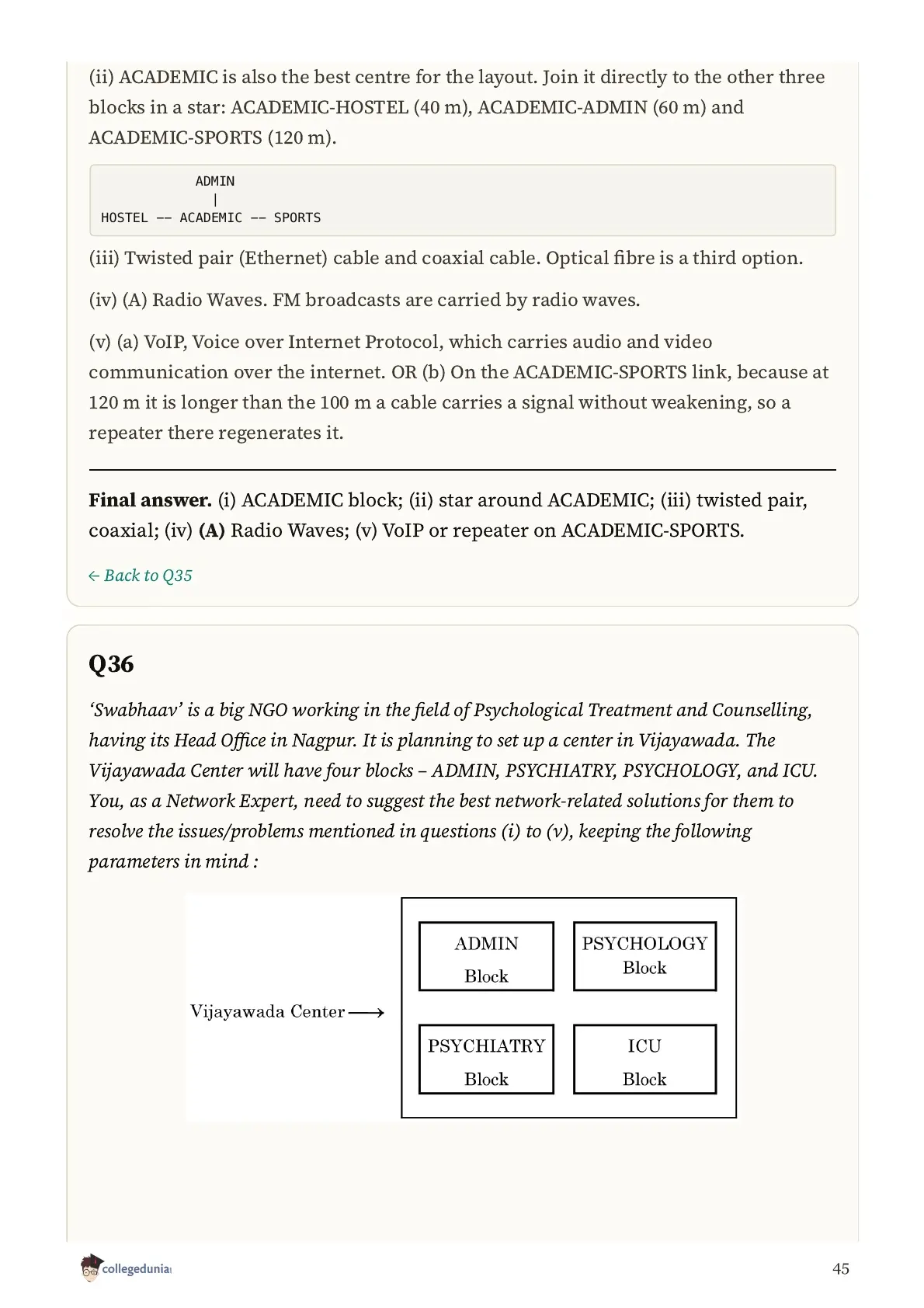
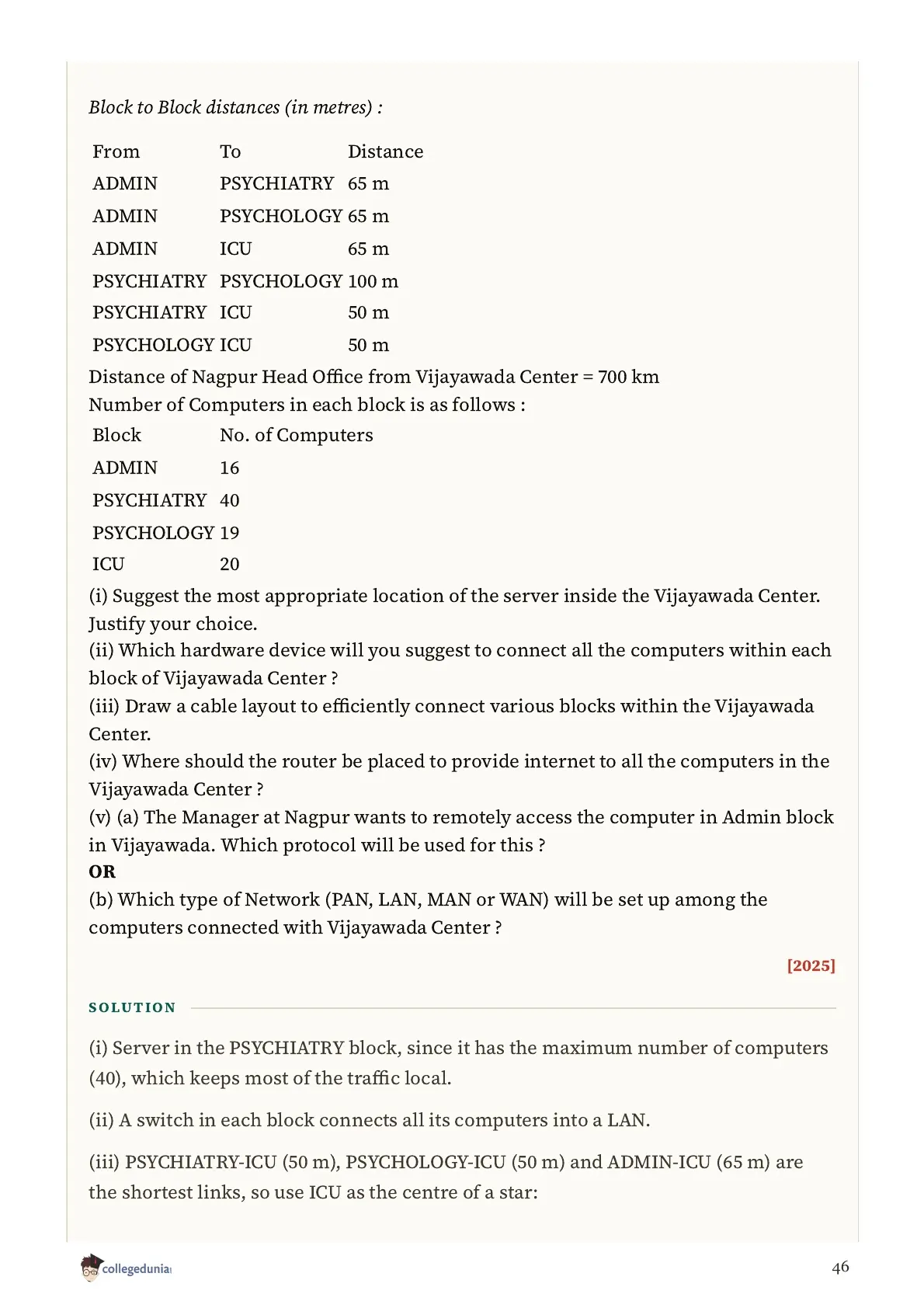
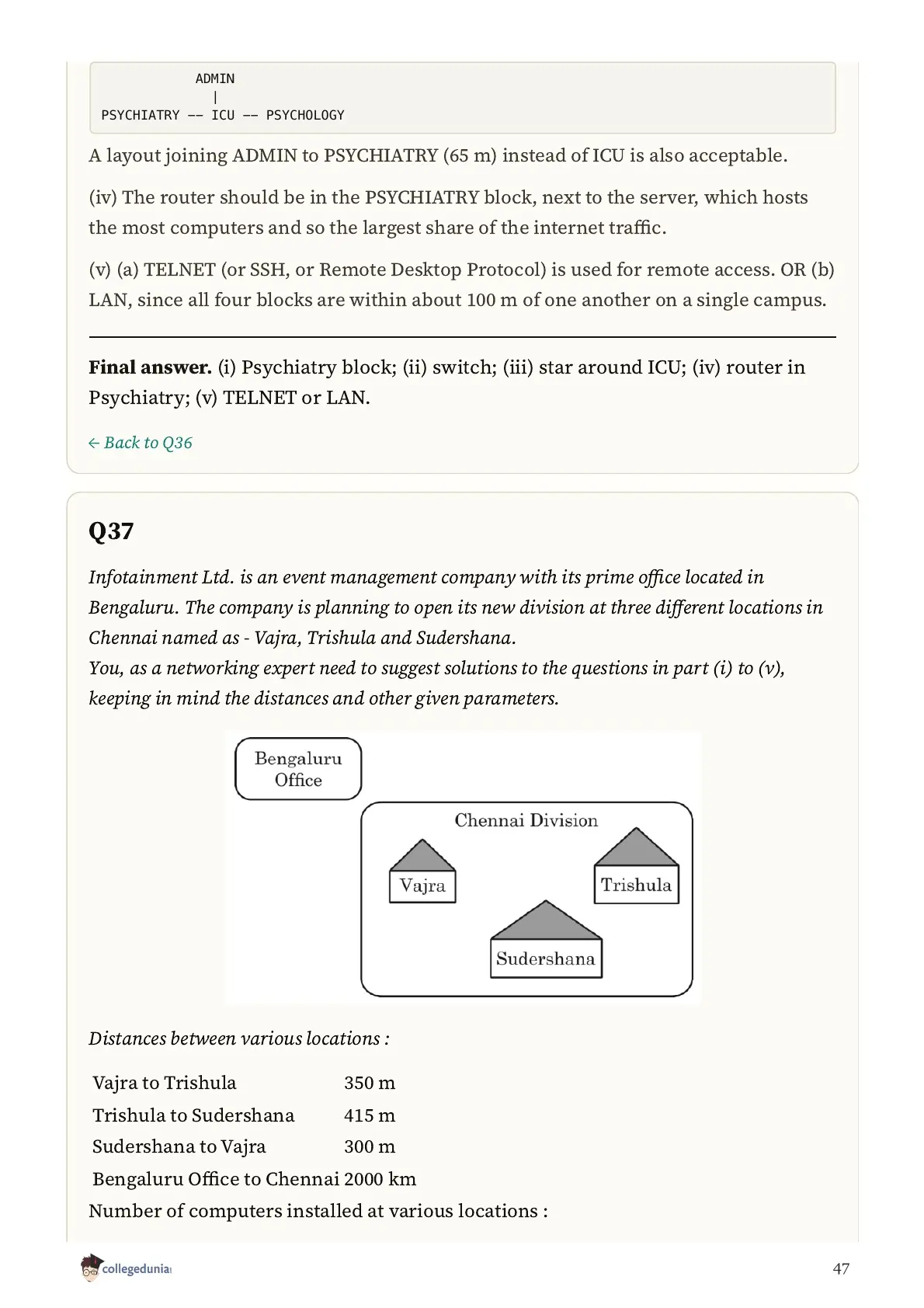
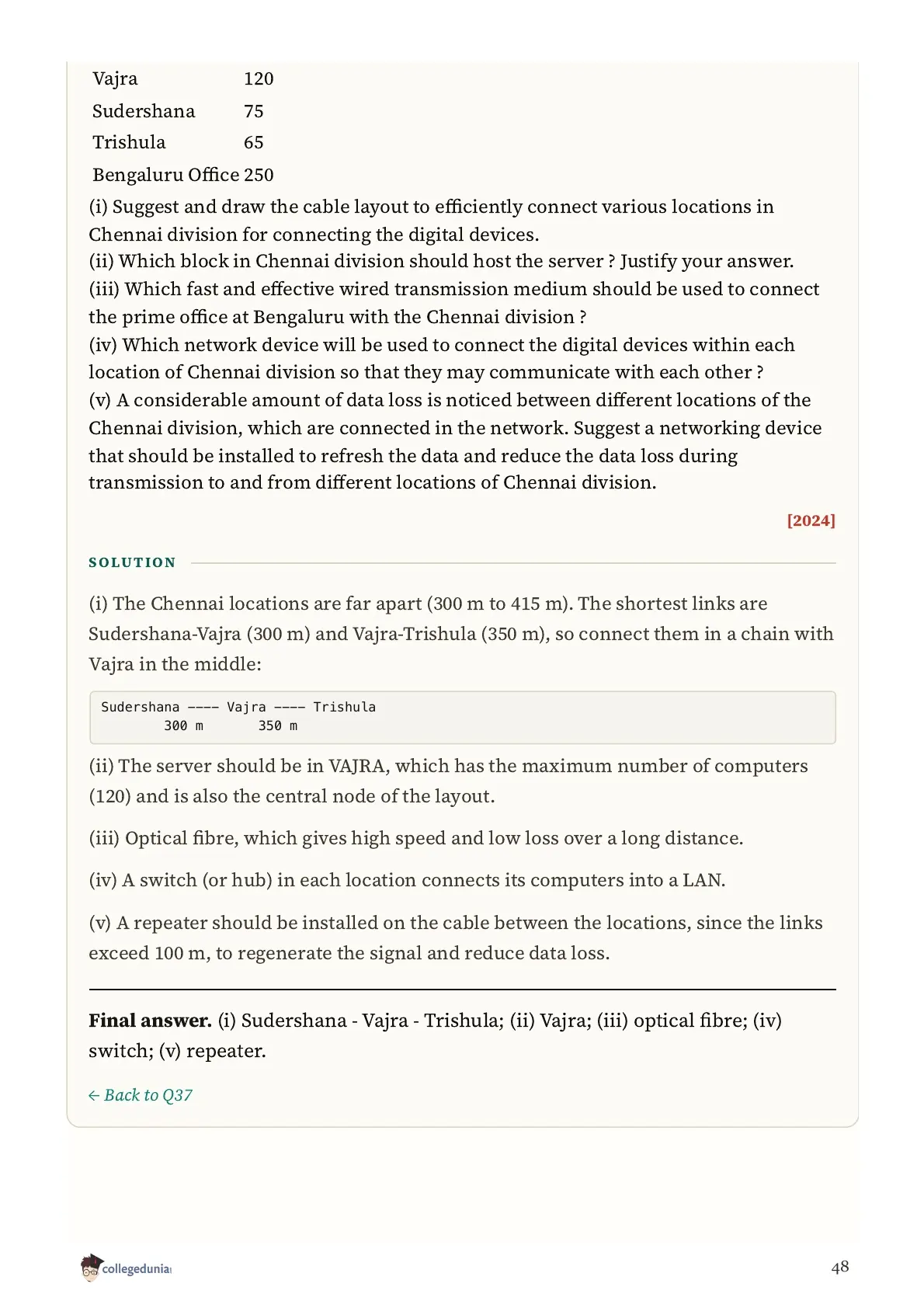
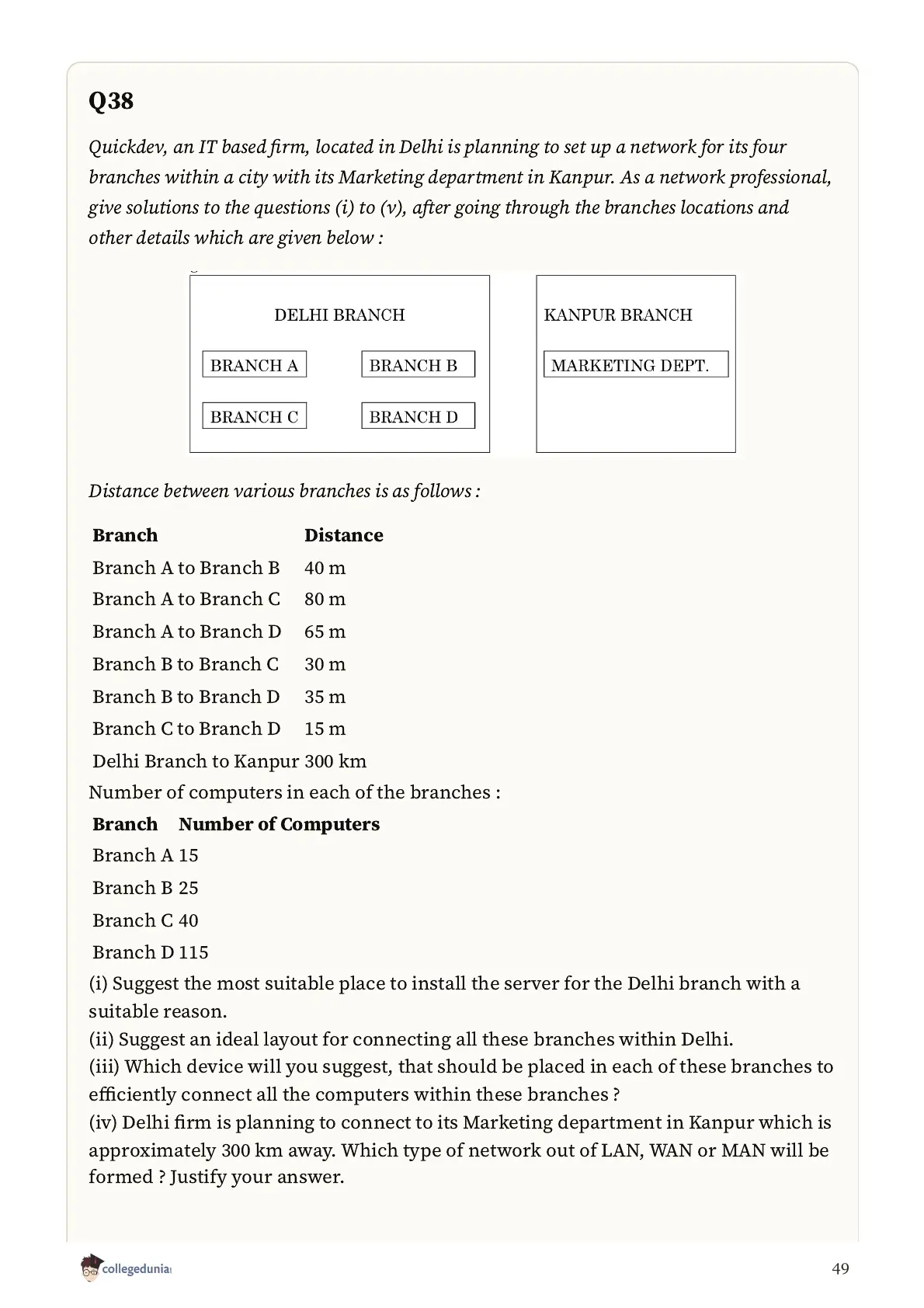
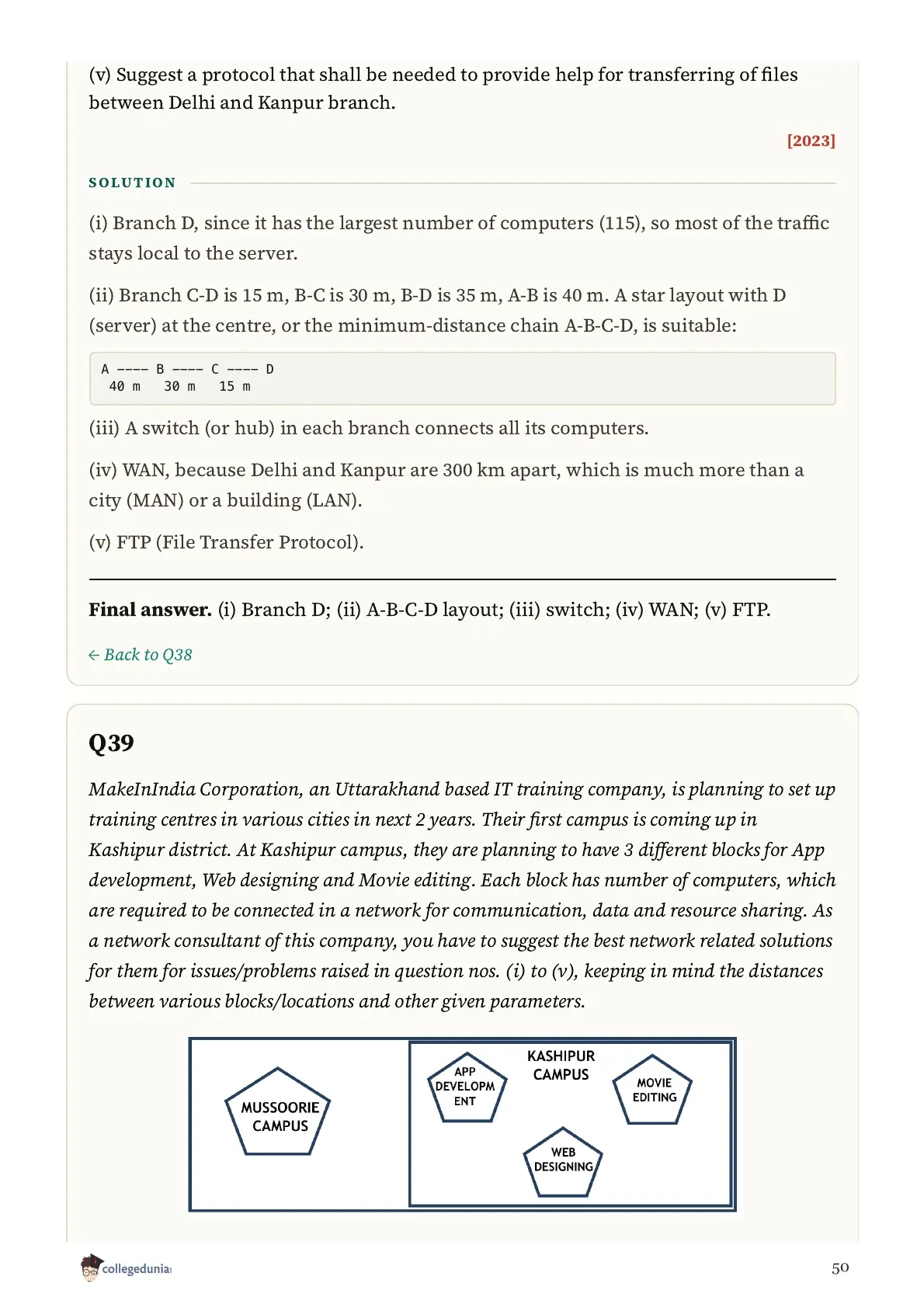
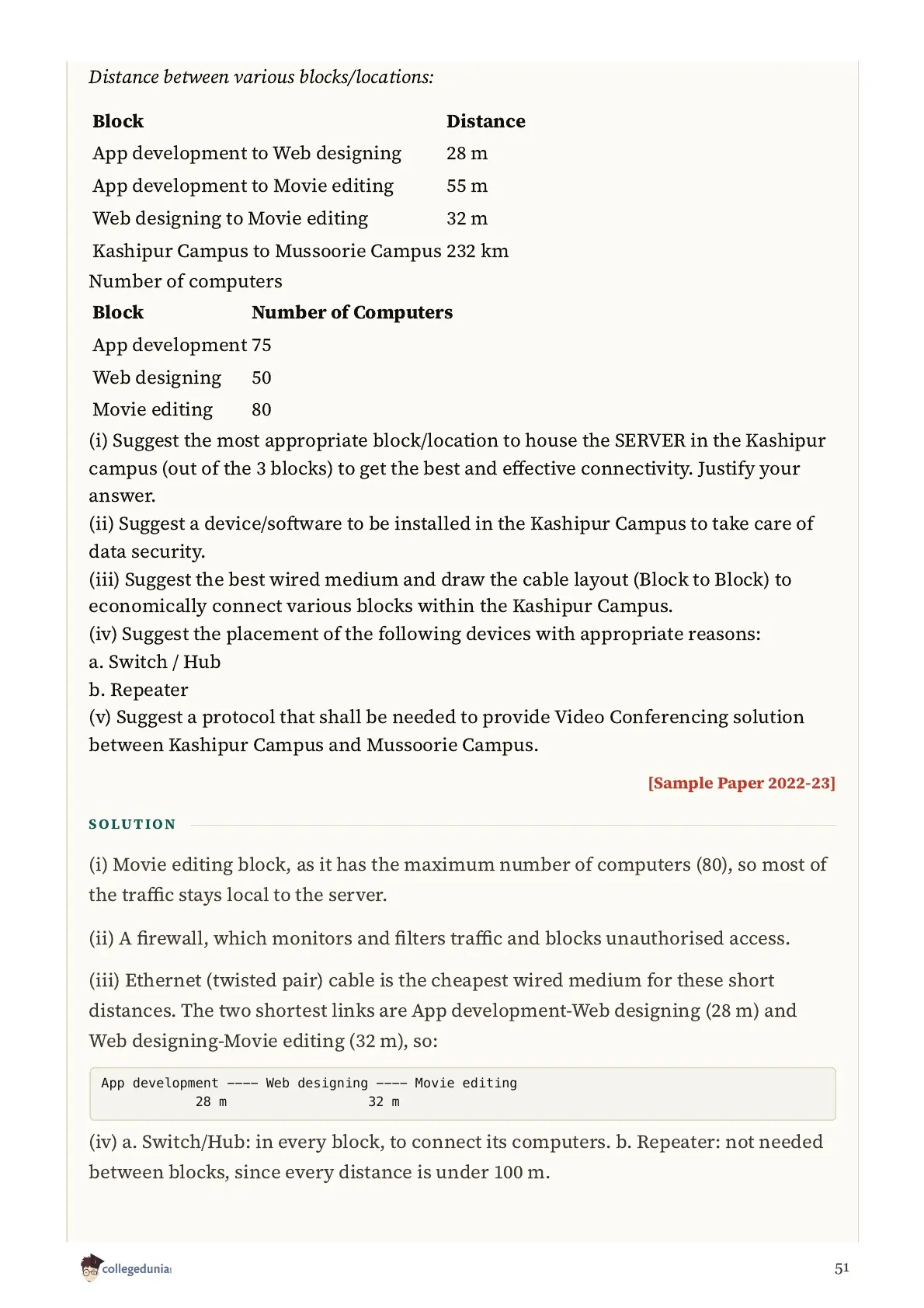
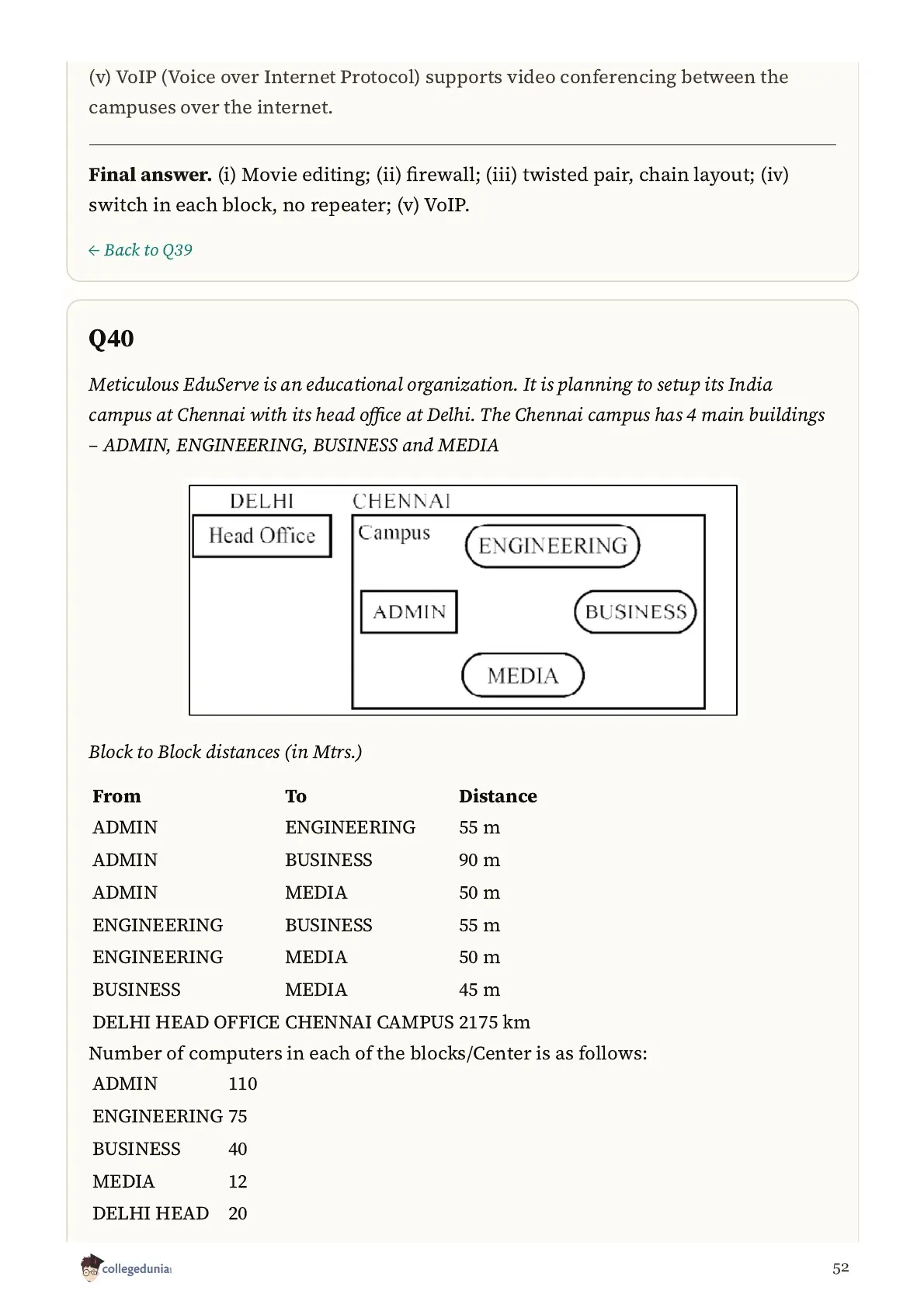
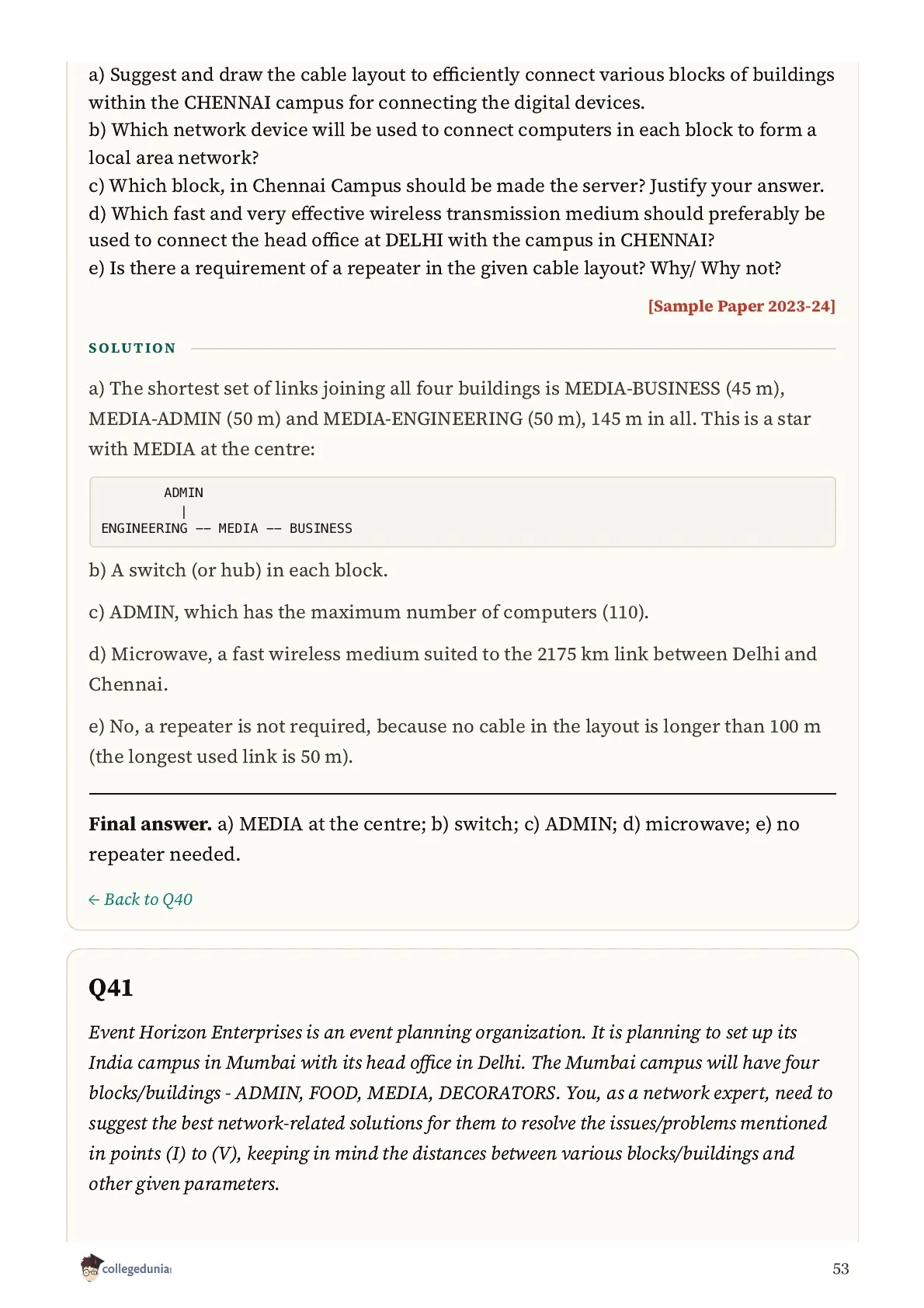
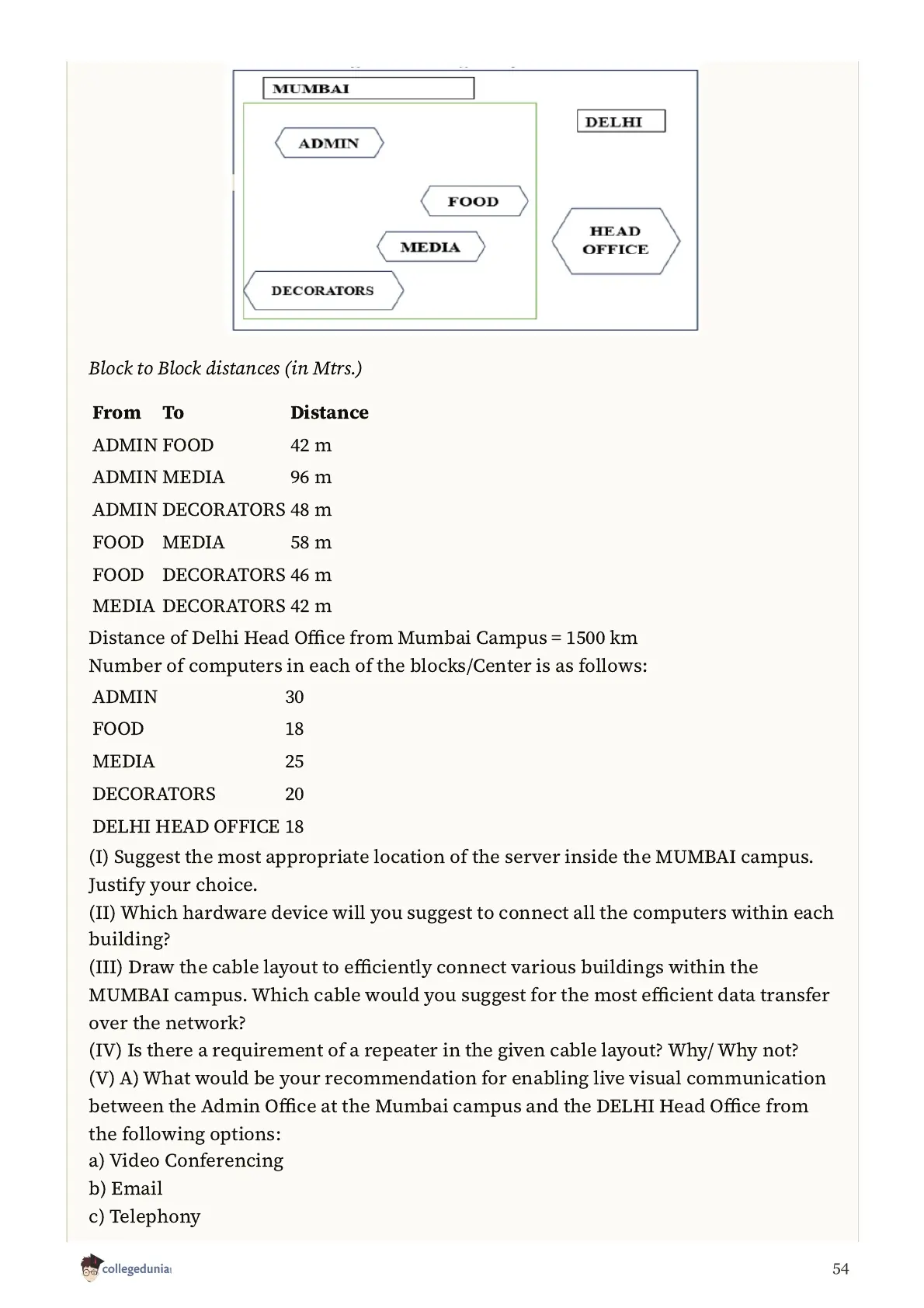
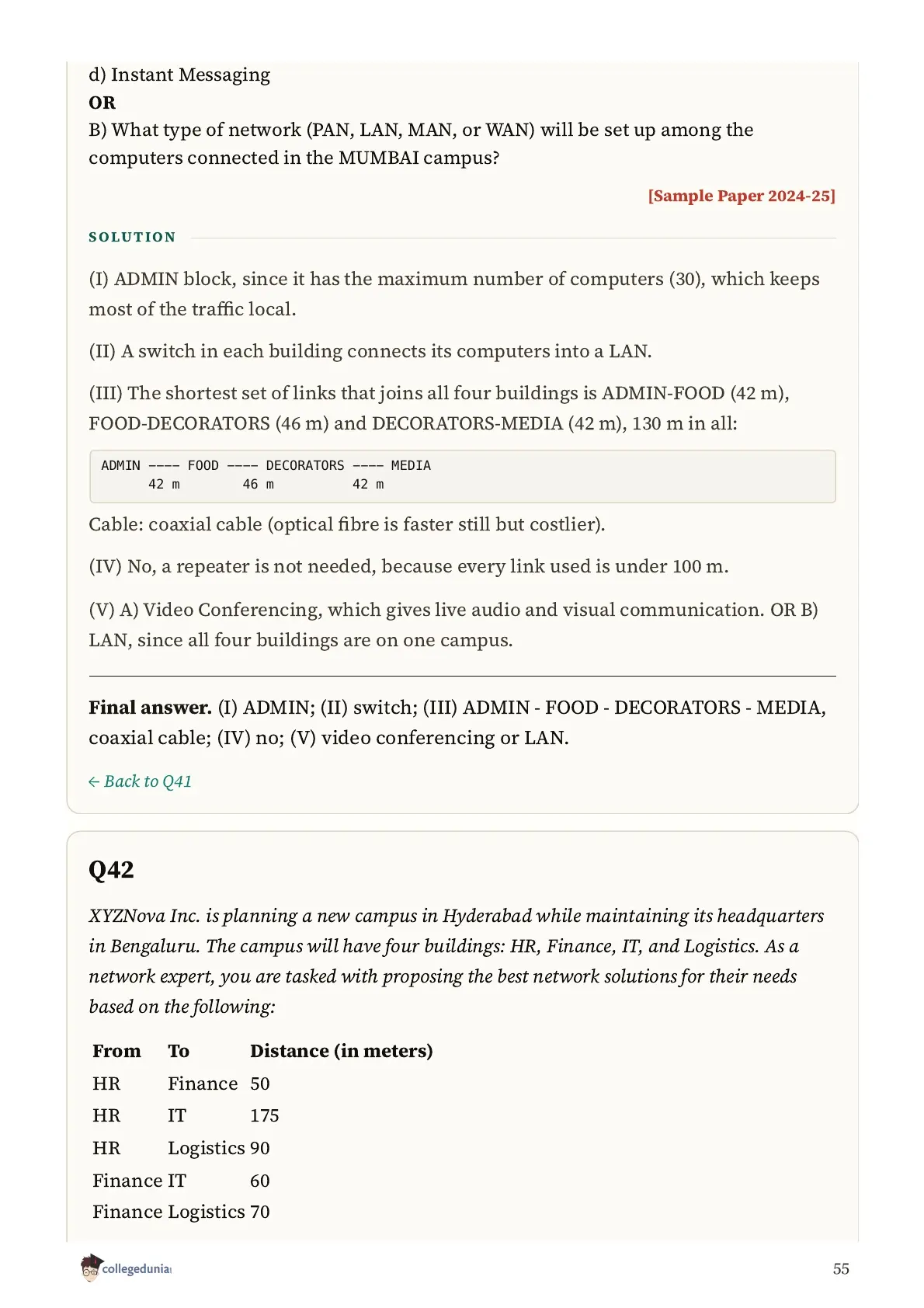
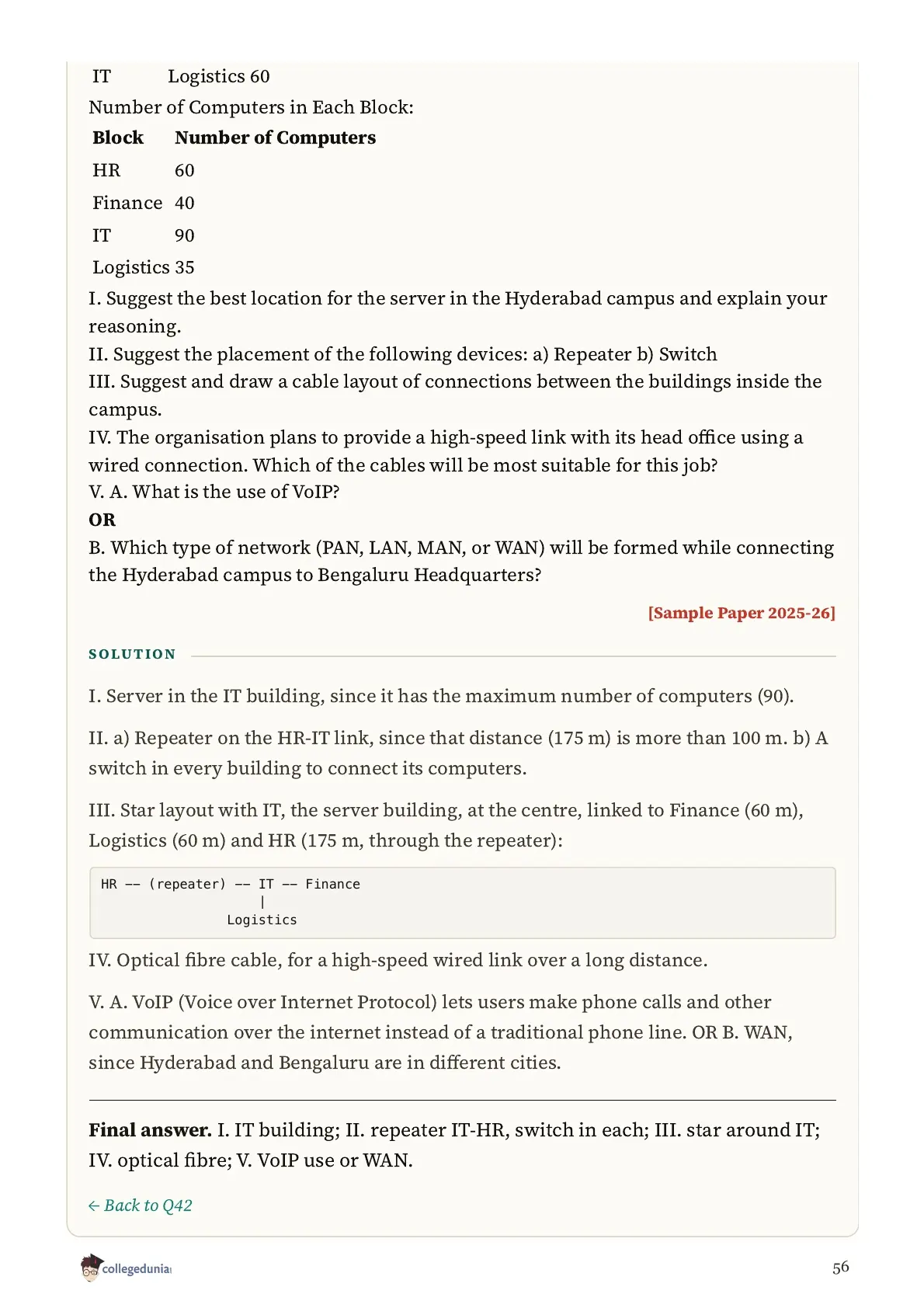
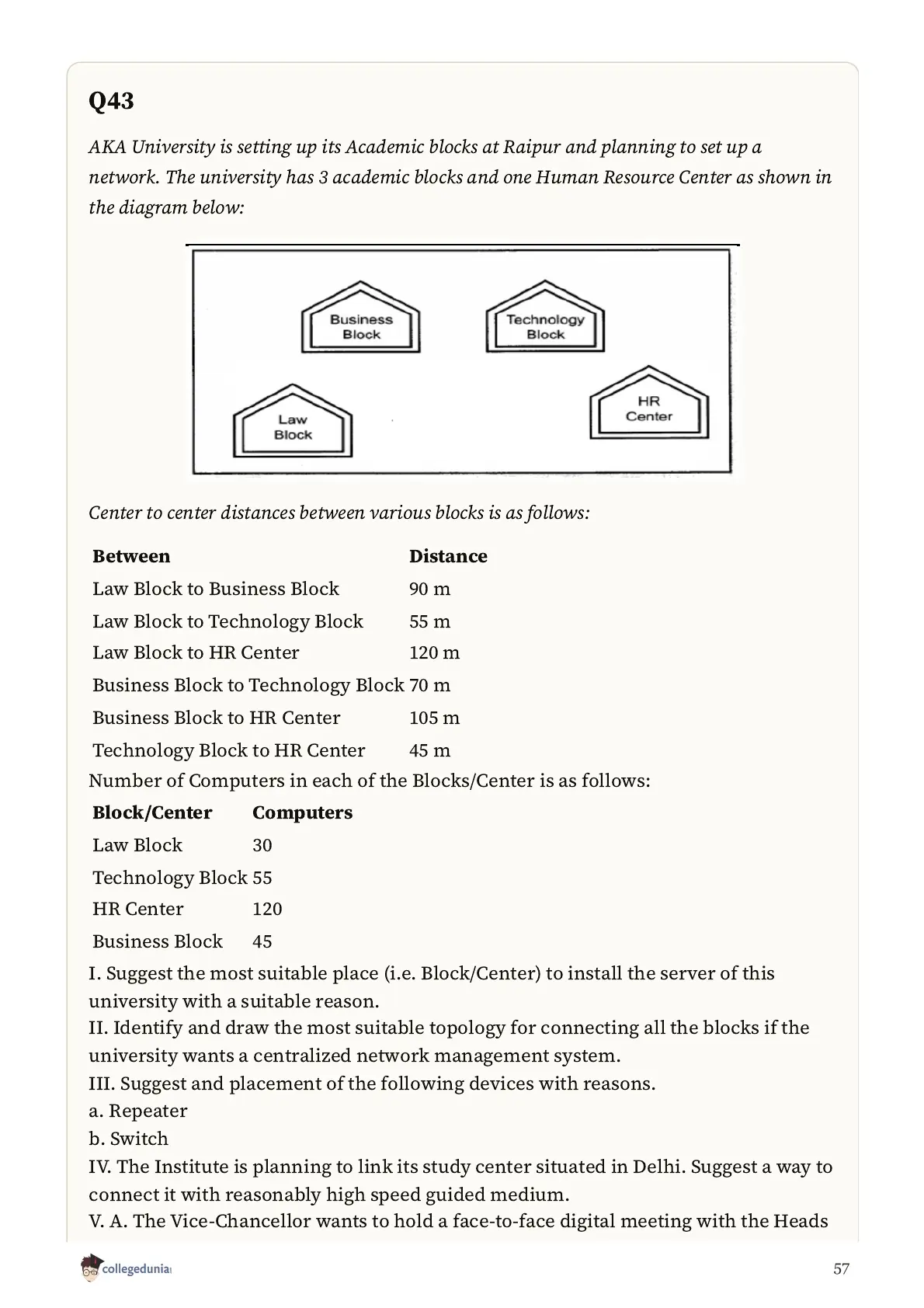
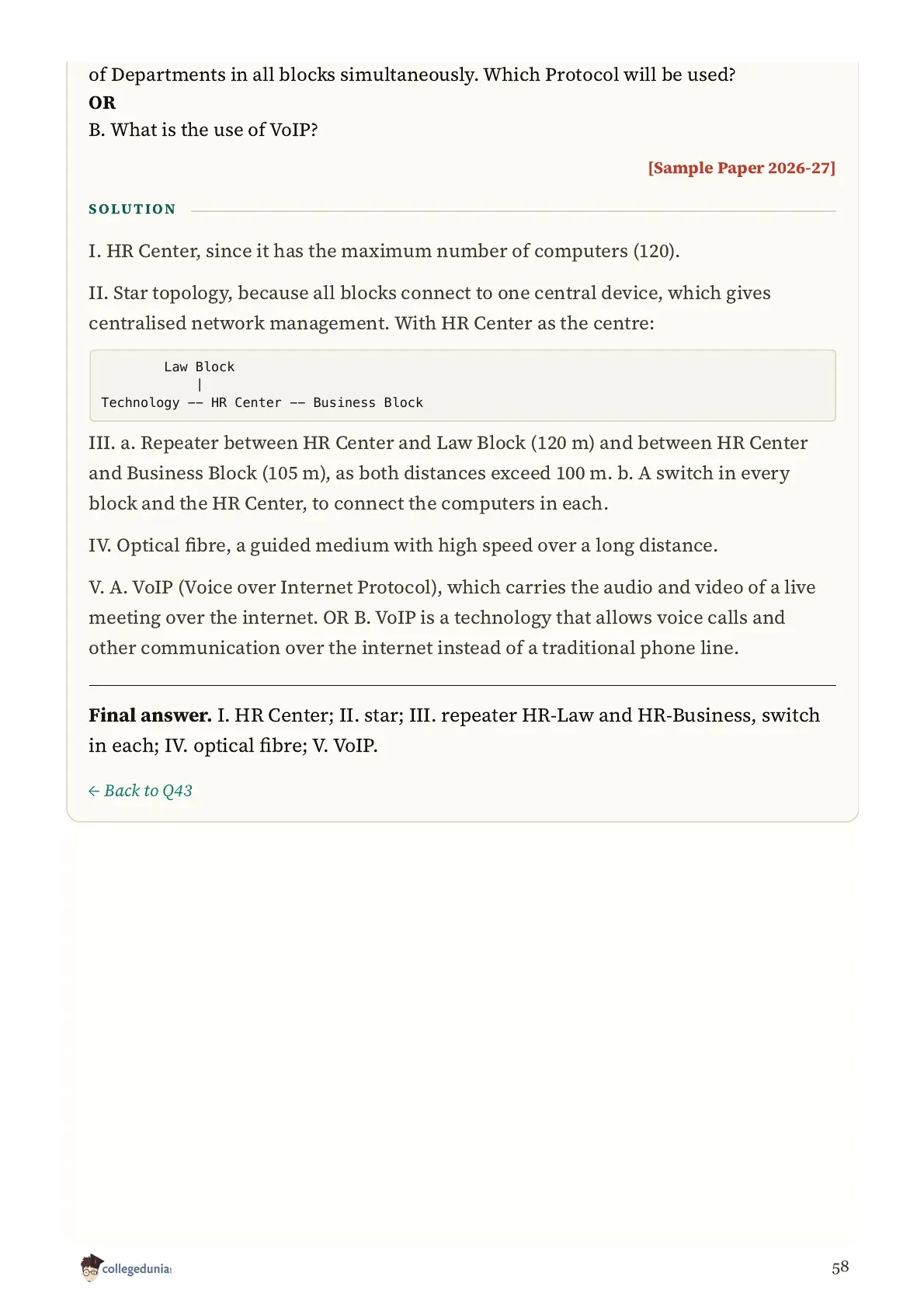
The set splits into short theory and long case studies. The 12 case studies each describe an organisation, such as Galaxy Provider Ltd, Sanjeevani or AKA University, with a table of distances between blocks and a count of computers in each. Most ask you to place the server (9 questions), draw a cable layout (10) and place a repeater (8) or a switch. A few close with a one-line question, such as the use of VoIP or which type of network links the campus to its head office.
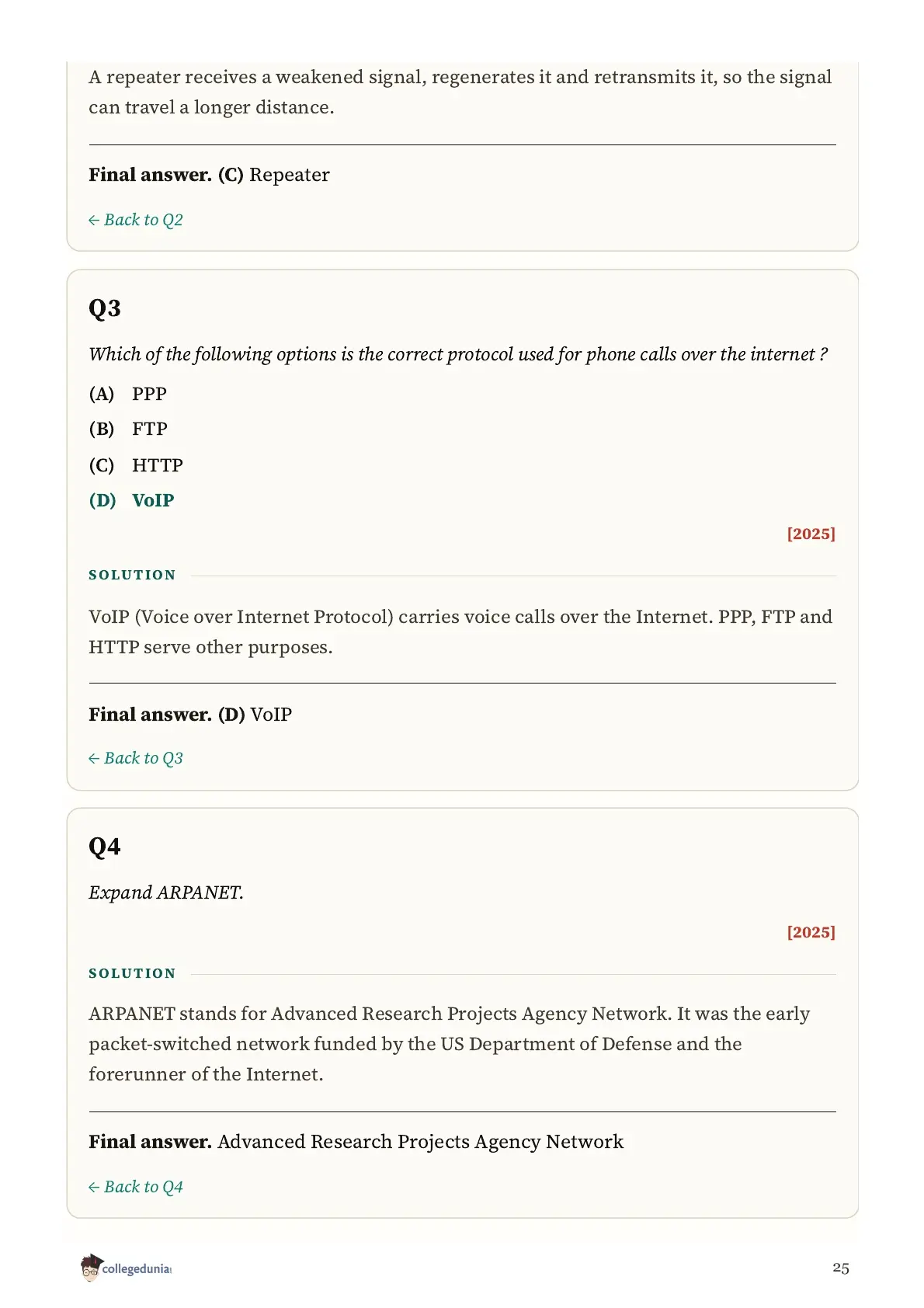
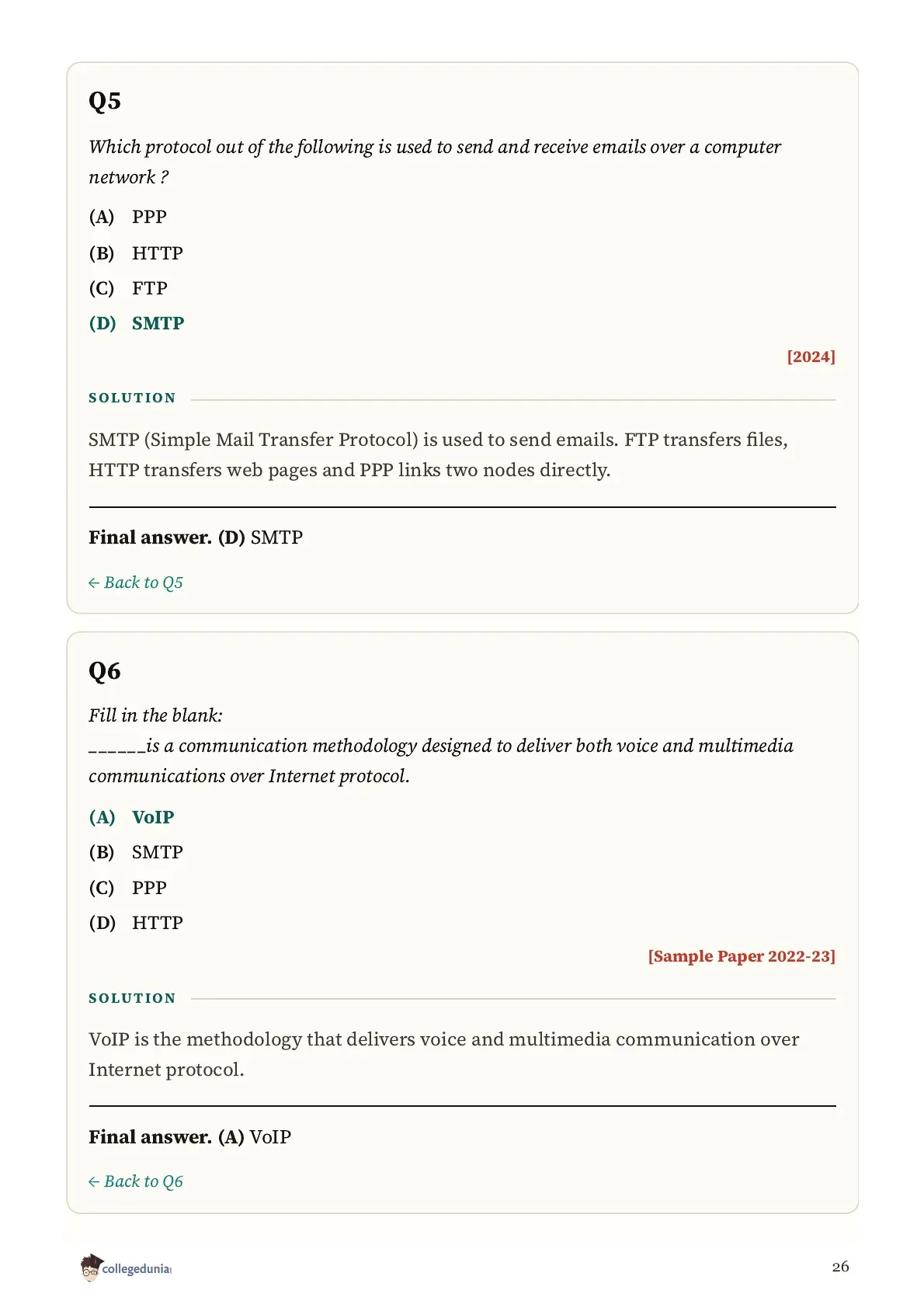
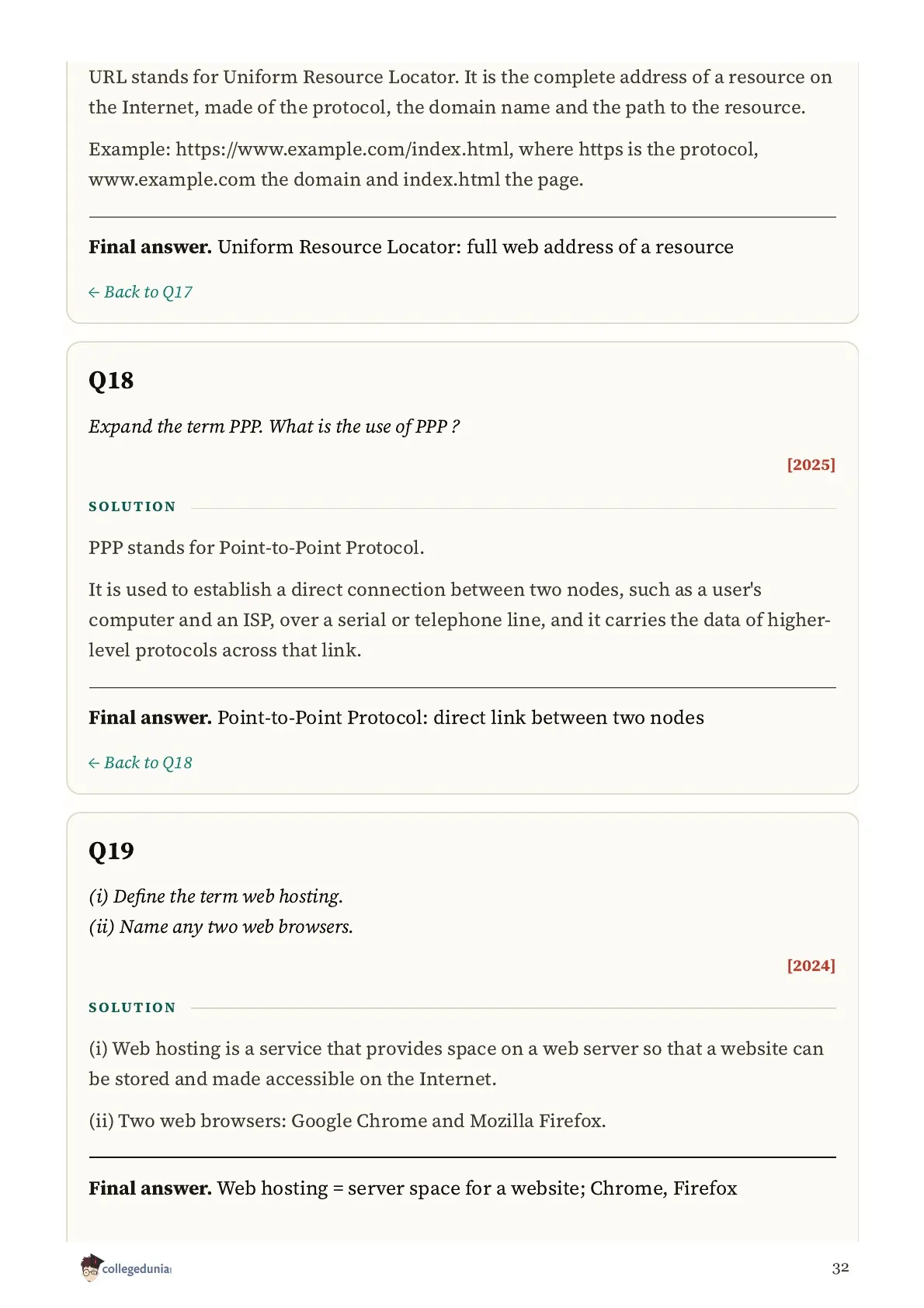
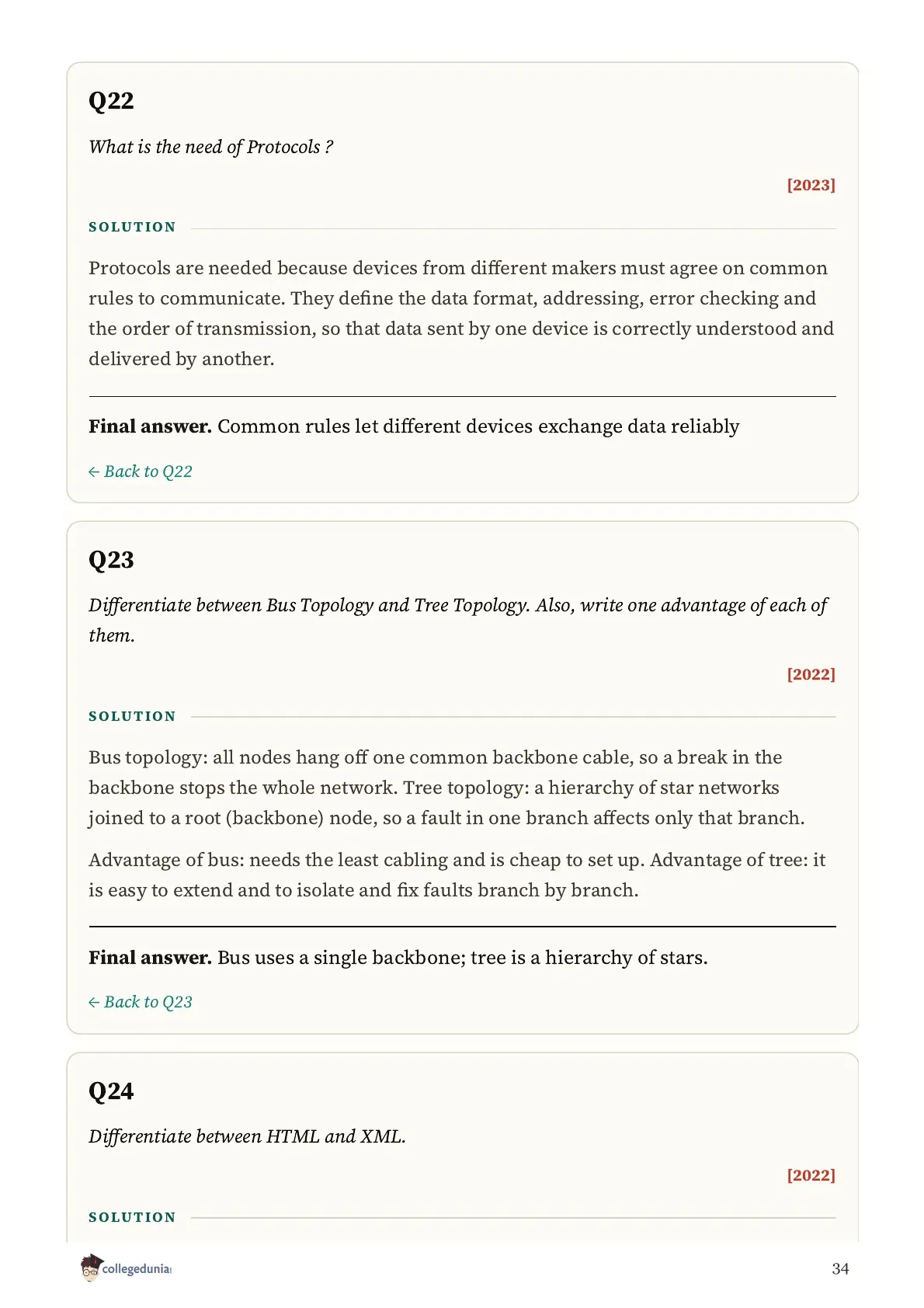
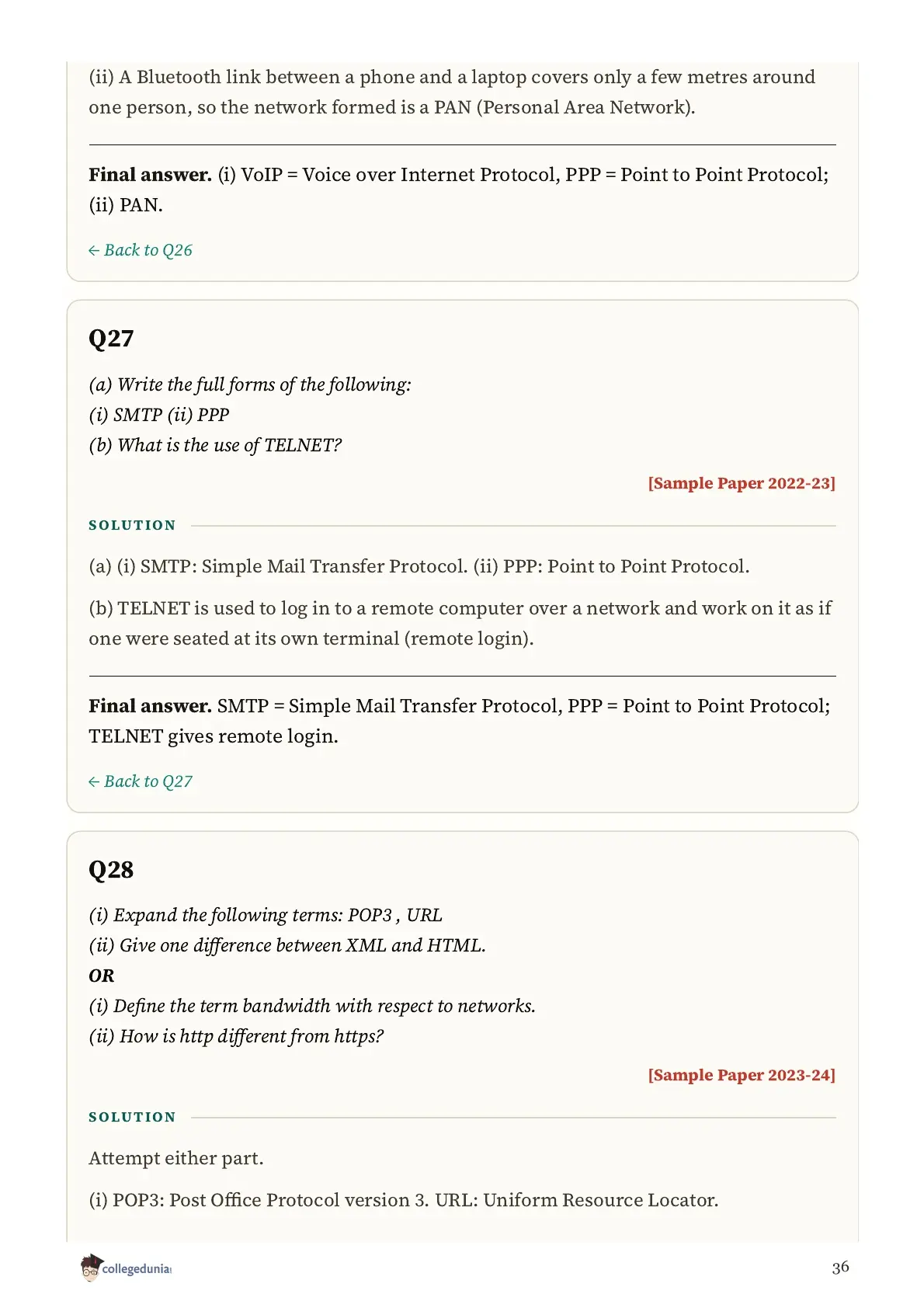
Protocols appear in 16 questions. PPP is asked in 9, VoIP in 6, SMTP in 6, HTTP in 6 and FTP in 6, usually as an expansion plus the use of the protocol. POP3 and TELNET appear in 2 and 1. Device questions follow: repeater in 11, switch in 10, modem in 6, hub in 5 and gateway in 3.
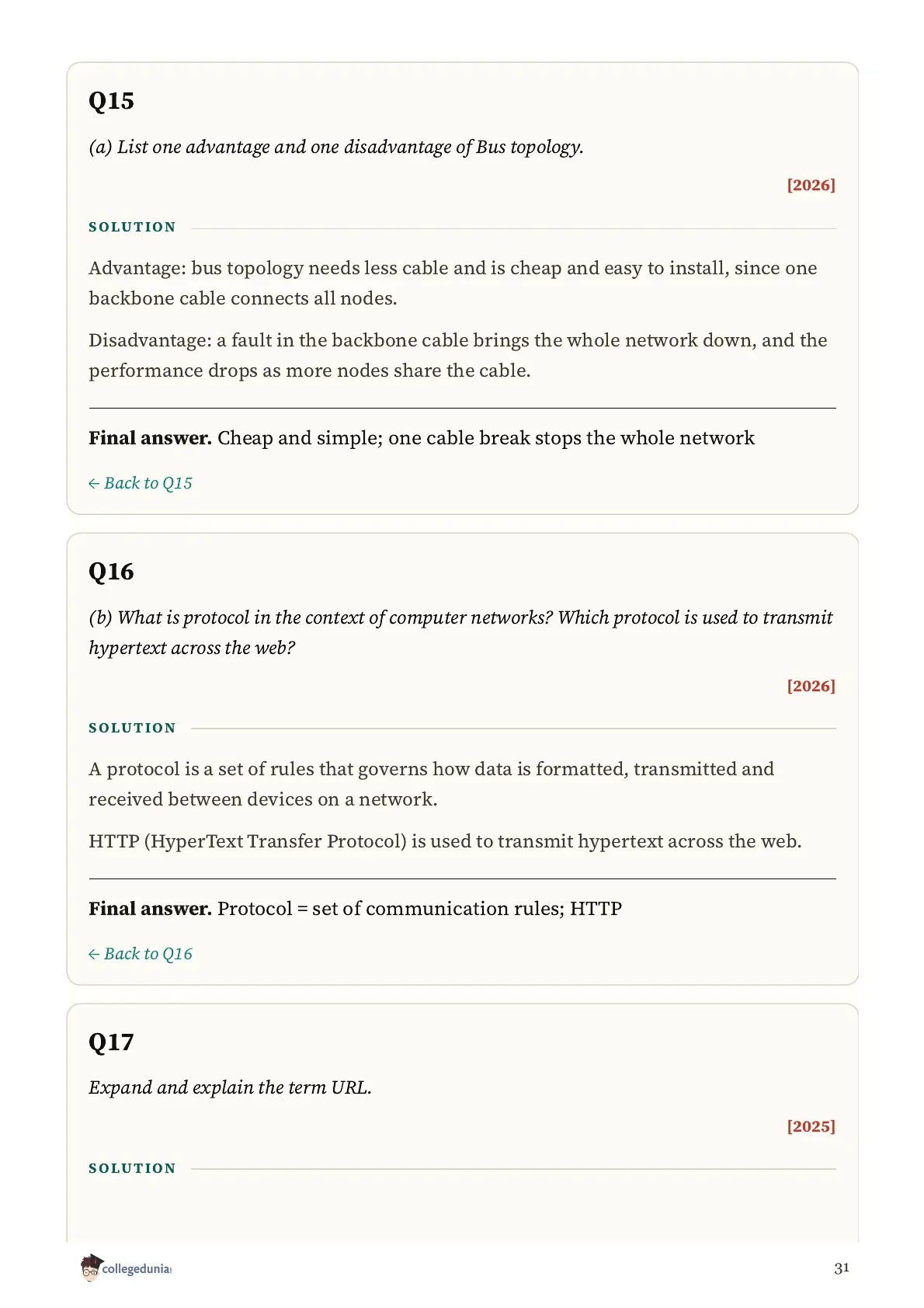
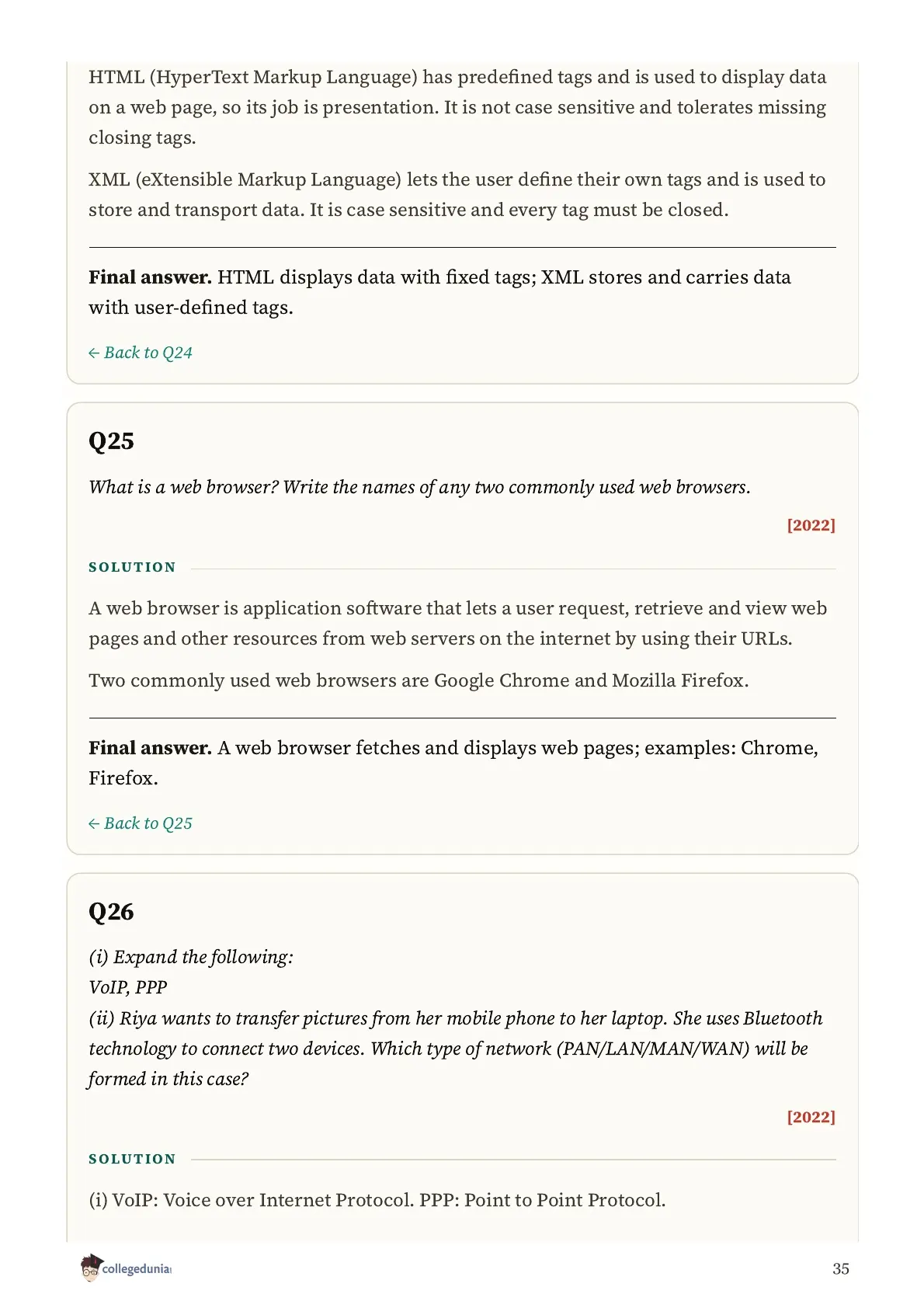
Topology questions number 6, covering the advantage and disadvantage of star and bus topology, and the definition and limitation of tree topology. Two questions ask HTML against XML, and 3 touch URL and domain name. The counts come from keyword matches over the question text, so a question that names two things is counted under both.
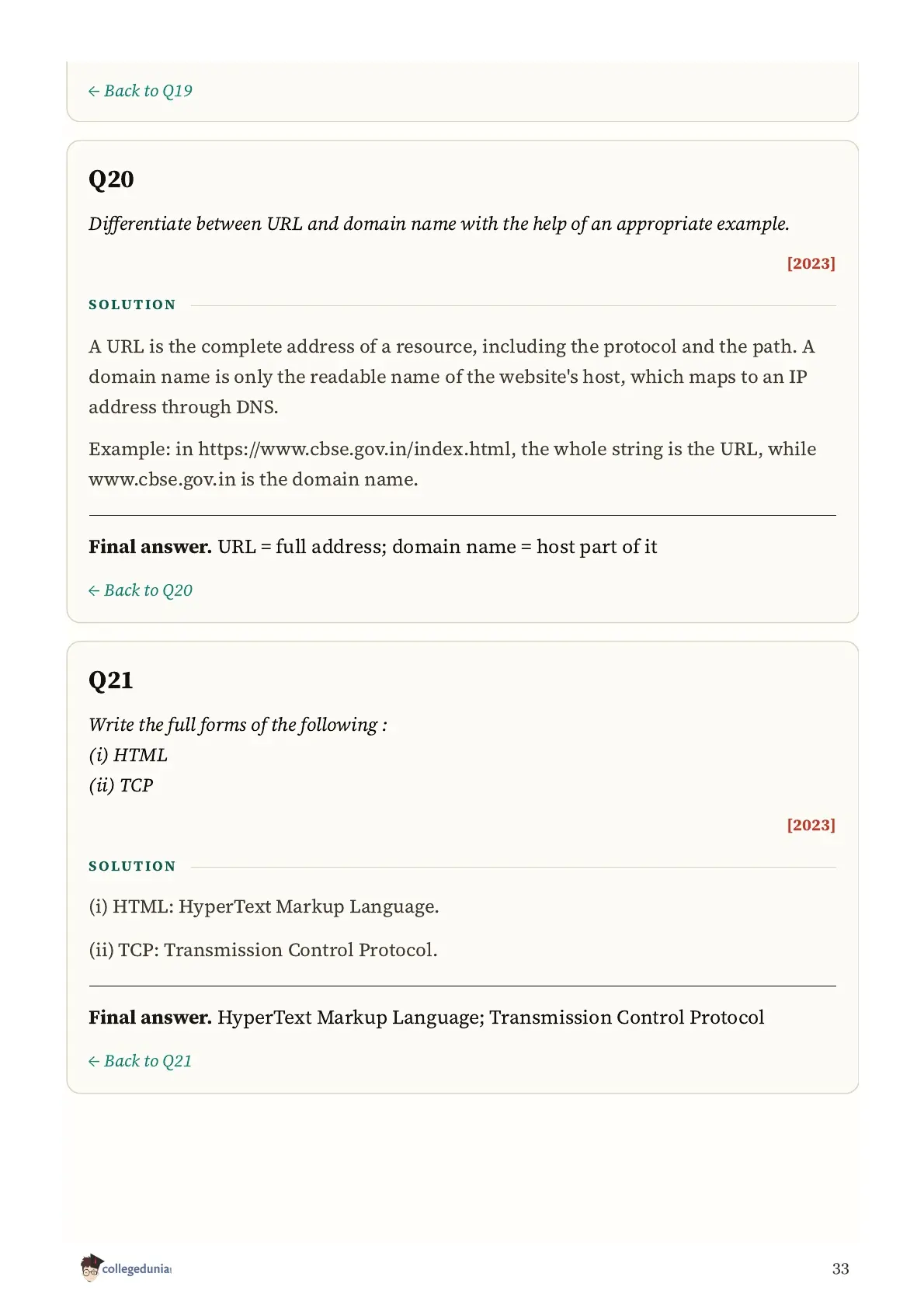
Source: Swati Chawla
How to Approach the Set
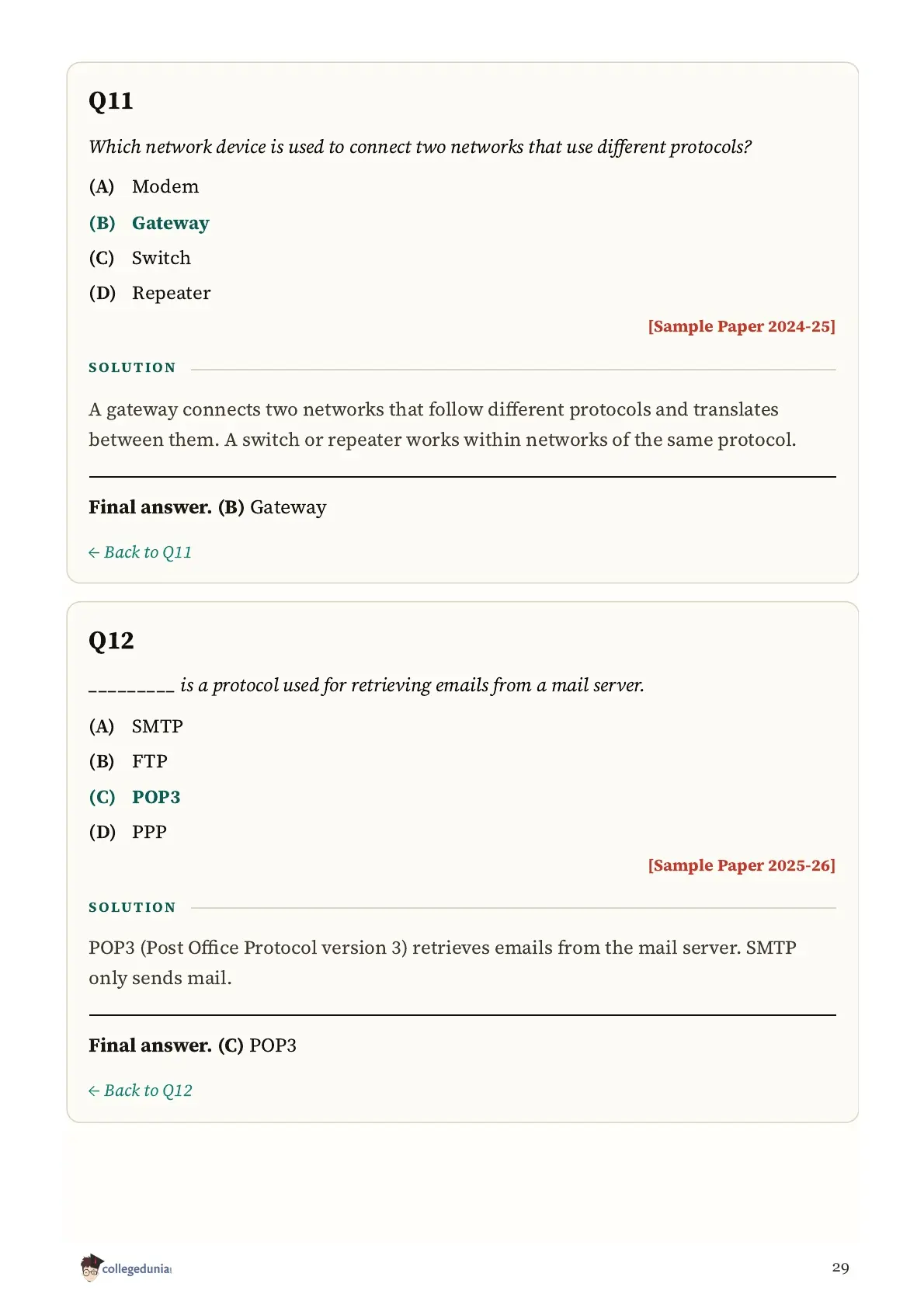
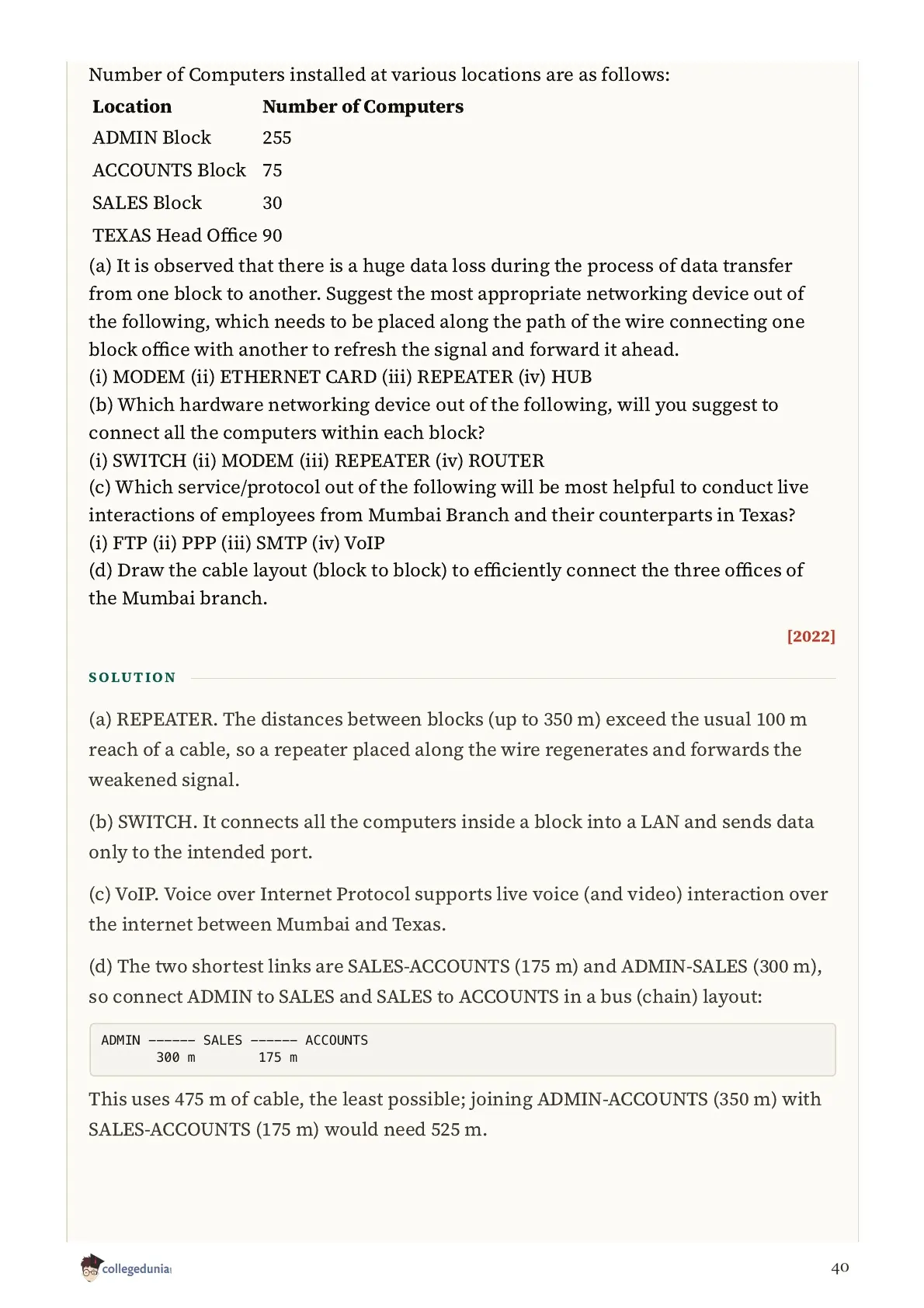
Start with the 14 one-mark items. Most are a device or protocol name, so learn the pairs: gateway joins networks with different protocols, repeater regenerates a weak signal, SMTP sends mail, POP3 retrieves it. Then move to the 2-mark answers, where the same expansions keep returning (PPP, SMTP, URL, HTML, TCP). Write the full form and one use in a single line each. For the case studies, practise one fixed routine: put the server in the block with the most computers, run a cable layout that joins the closest blocks, put a repeater on any run beyond 100 m and a switch in each block.
Common Mistakes in Computer Networks Questions
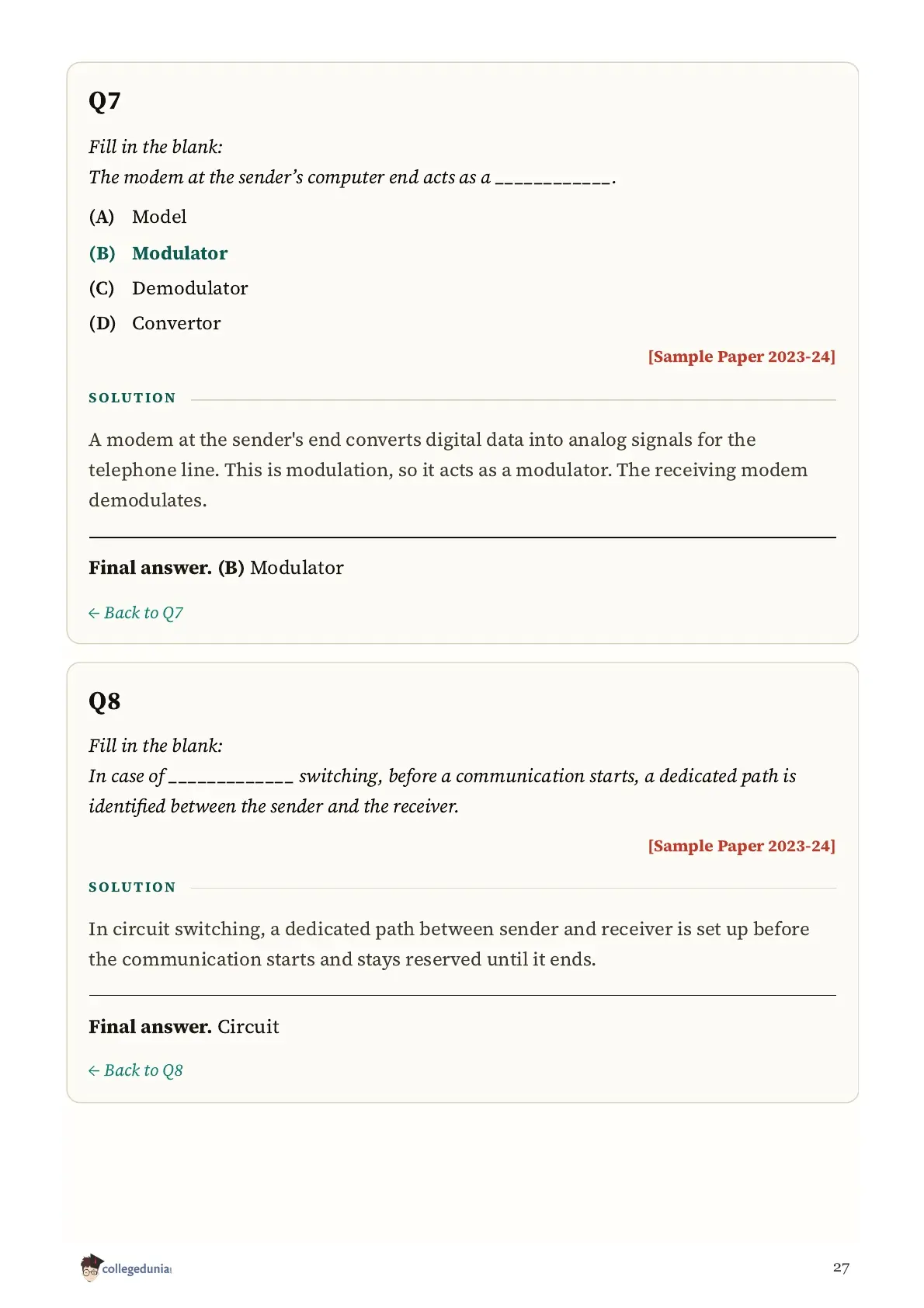
- Saying the sender's modem acts as a demodulator. At the sender's end it modulates digital data into analog signals.
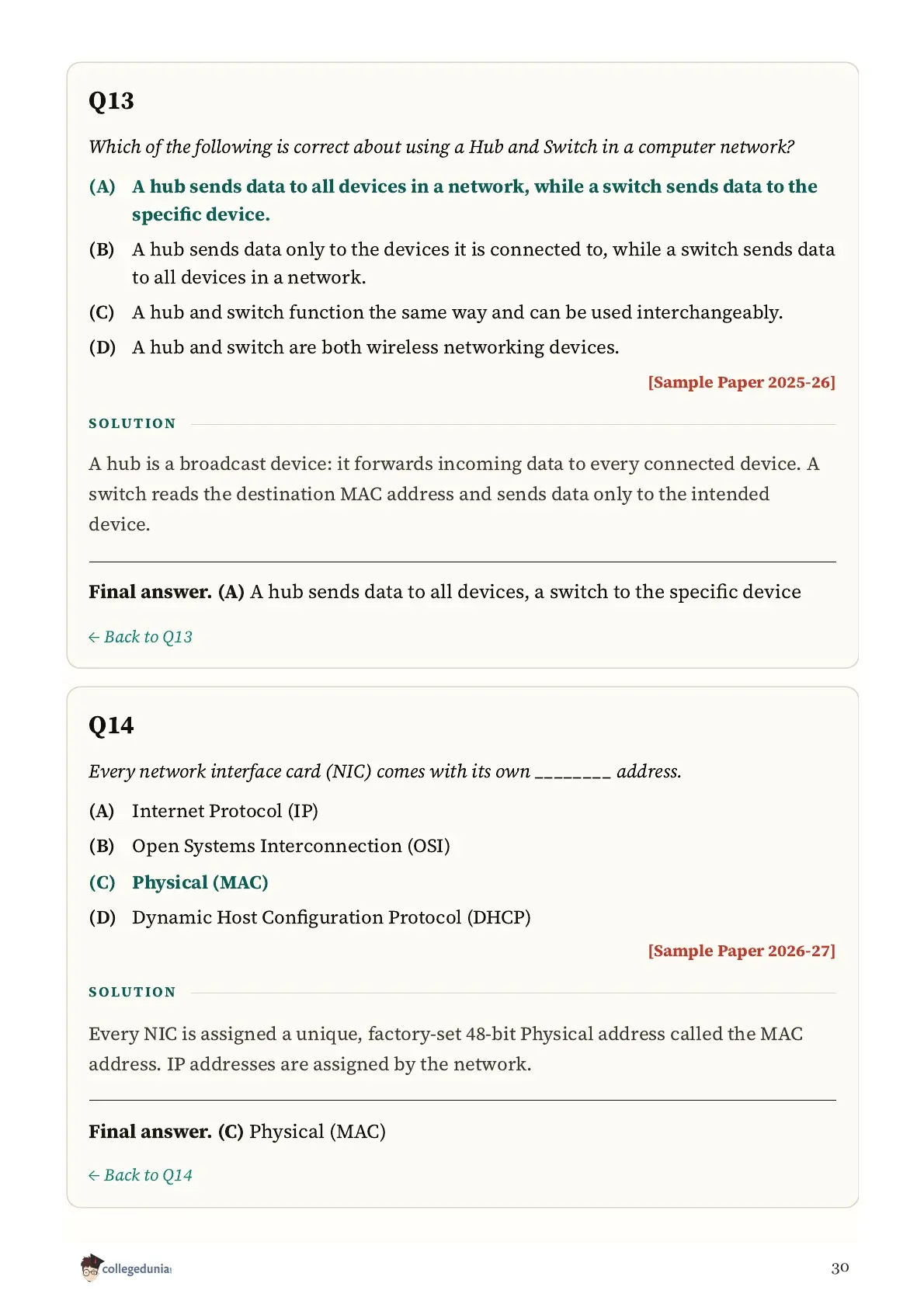
- Writing that a hub and a switch behave alike. A hub sends data to every device, a switch only to the intended one.
- Calling SMTP the protocol for retrieving mail. SMTP sends it, POP3 retrieves it.
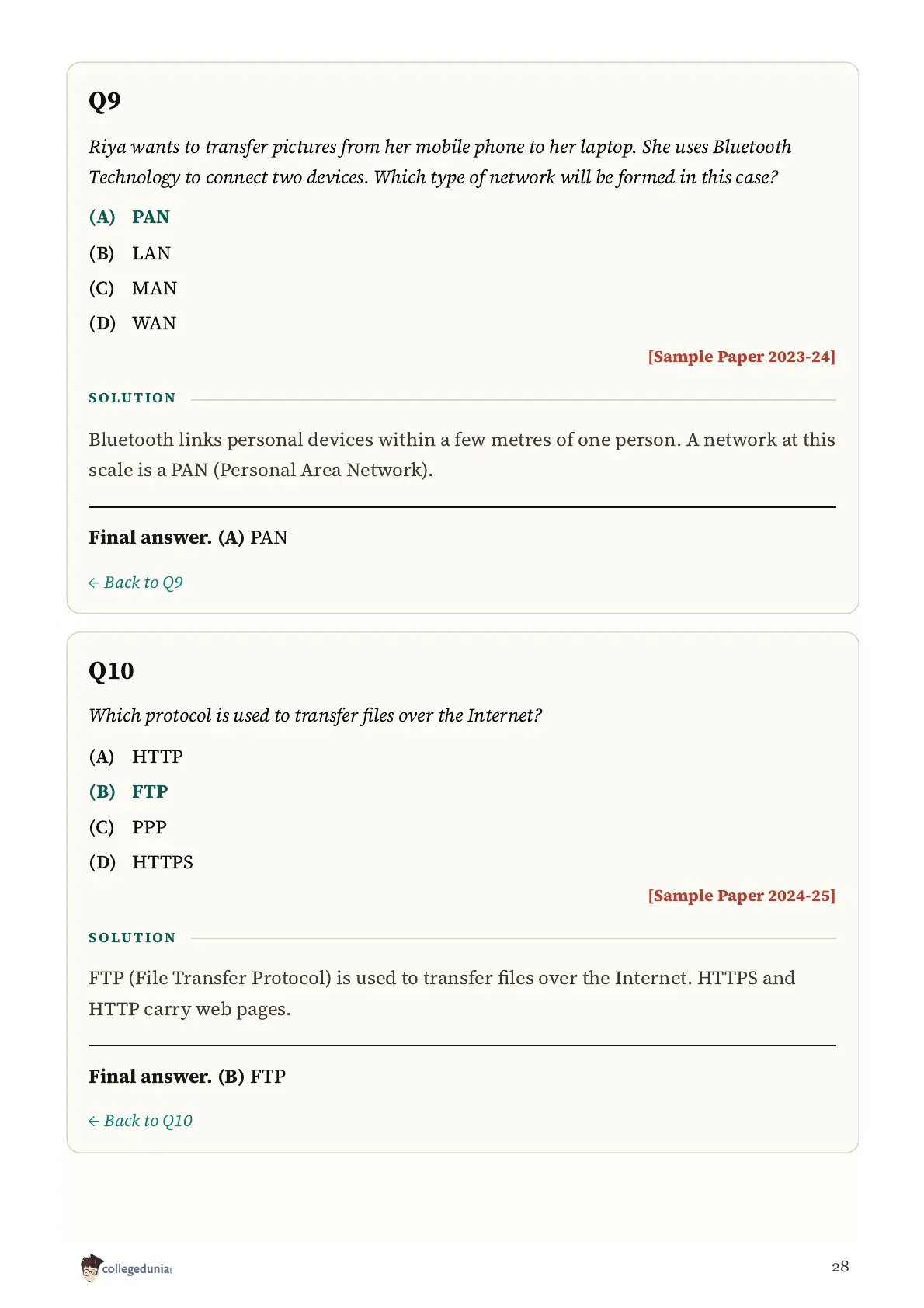
- Answering LAN for the Bluetooth question about moving pictures from a phone to a laptop. It is a PAN.
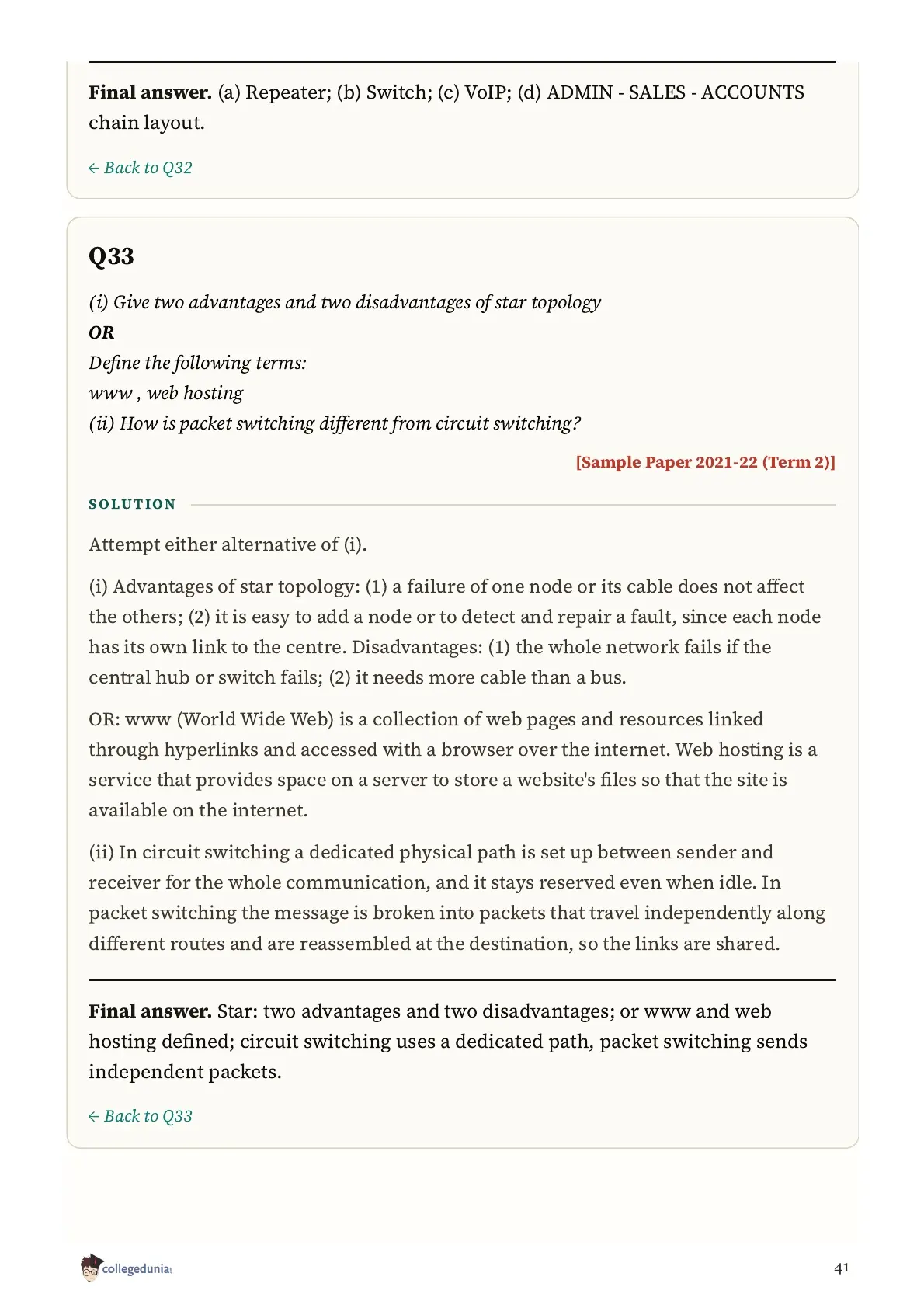
- Putting the server in the block with the fewest computers, or drawing a cable layout that skips the shortest distance between blocks.
- Mixing up PPP and FTP: PPP links two nodes directly, FTP transfers files.
Using the Answer Key and Solutions
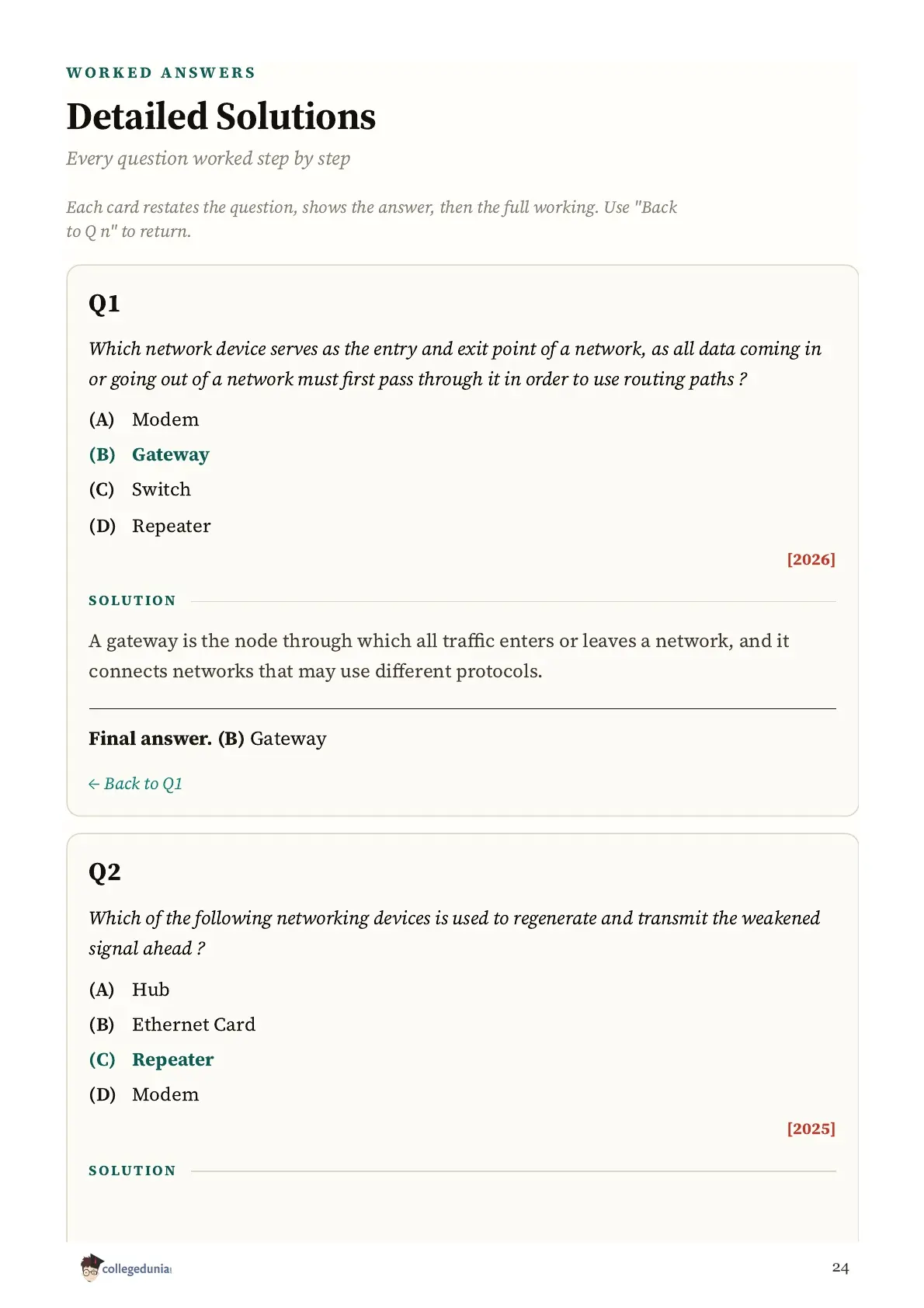
The PDF is 58 pages and free to download. Each section is sorted newest year first, the Answer Key lists every MCQ at a glance, and each question links to its worked solution and back. Attempt a section first, check the key, then read the solution. The solutions are written by Collegedunia's Computer Science experts and are not official CBSE marking schemes.
Class 12 Computer Science PYQs by Chapter
Computer Networks Class 12 Computer Science PYQ FAQs
Ques. How many questions are in the Computer Networks Class 12 PYQ PDF?
Ans. The PDF has 43 questions: 22 from the 2022 to 2026 board papers and 21 from CBSE's official sample papers. 14 are MCQs and fill-in-the-blank items, 17 are short answers and 12 are network case studies.
Ques. Does this PYQ PDF include solutions, or only the questions?
Ans. All 43 questions have a worked solution in the PDF, and the 12 MCQs with options also have an Answer Key before the solutions.
Ques. Are the solutions official?
Ans. No. They are written by Collegedunia's Computer Science experts, run and checked against CBSE's marking schemes where CBSE has published them (the 2023, 2024 and 2025 board papers and the sample papers). The 2022 and 2026 board papers have no published scheme, so those answers were worked out and run by hand. They are not an official CBSE marking scheme.
Ques. How many marks does Computer Networks carry in the Class 12 Computer Science paper?
Ans. CBSE publishes marks per unit, not per chapter. The Computer Networks unit carries 10 of the 70 theory marks in the 2025-26 syllabus. Check cbseacademic.nic.in for the current figure.
Ques. Which topics are asked most in Computer Networks?
Ans. Network case studies come up in 12 questions, with the server placed in 9, a cable layout in 10 and a repeater in 8. Questions on protocols appear in 16, and VoIP in 6.
Ques. Which network type does the Bluetooth question ask for?
Ans. The question appears twice in this set, once as an MCQ and once inside a 2-mark item. The answer is PAN, because the devices sit within a few metres of one person.
Ques. Are sample-paper questions the same as board questions?
Ans. No. 21 of the 43 questions come from CBSE's sample papers, and each question carries its own tag, either a board year such as [2024] or a sample-paper session such as [Sample Paper 2025-26].



Comments