



Class 12 Economics Chapter 2 National Income Accounting PYQs help you practise aggregate conversions, income measurement and inclusion rules. Use this questions-only PDF for your 2026-27 revision after reading NCERT. Work through the questions on paper, showing each adjustment clearly, then check your method with your textbook or teacher.
- 280 questions from 2005-2026: practise national income concepts and numerical questions.
- Check depreciation, net indirect taxes and net factor income from abroad separately.
- This PDF contains questions only, without an answer key or worked solutions.
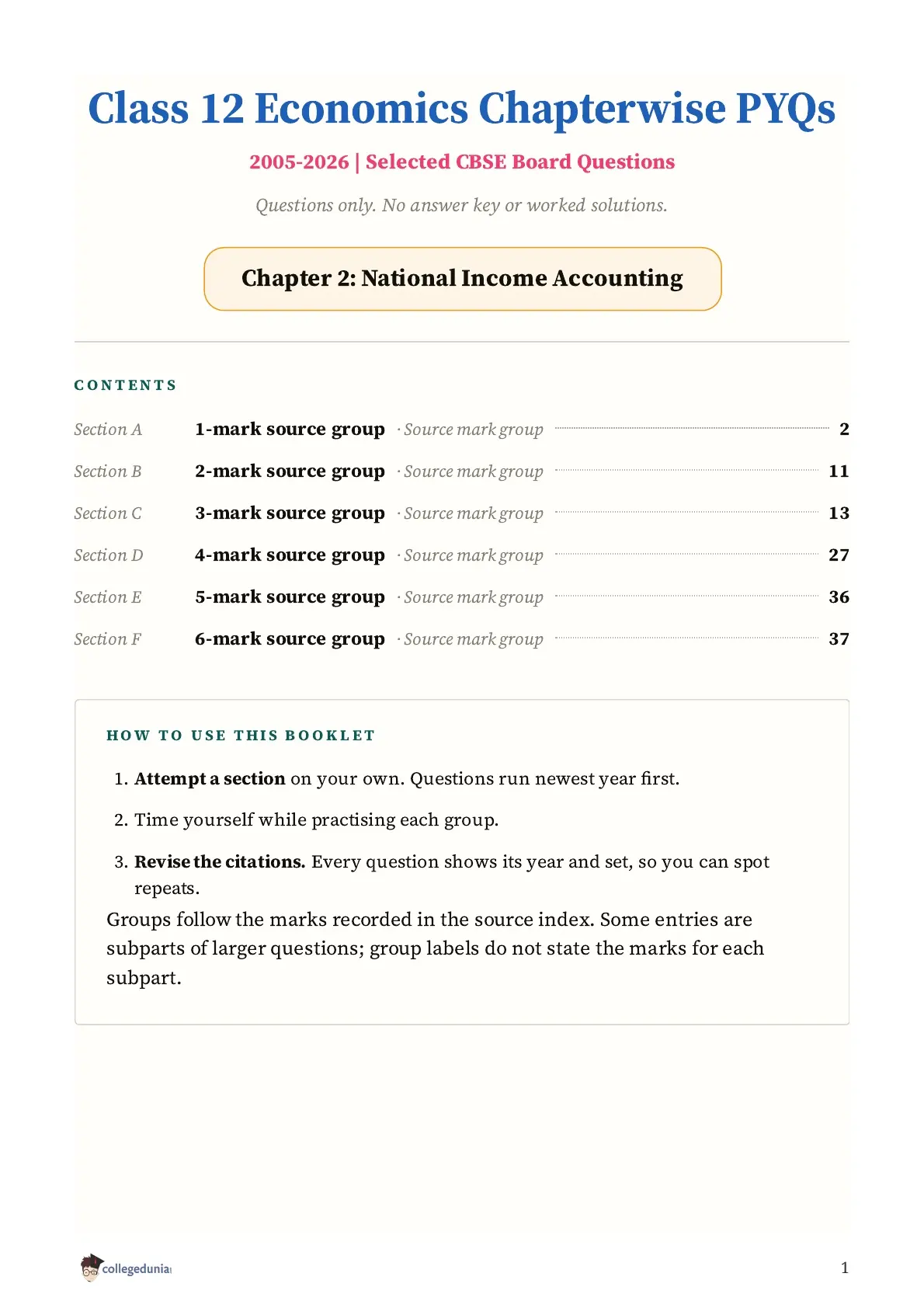
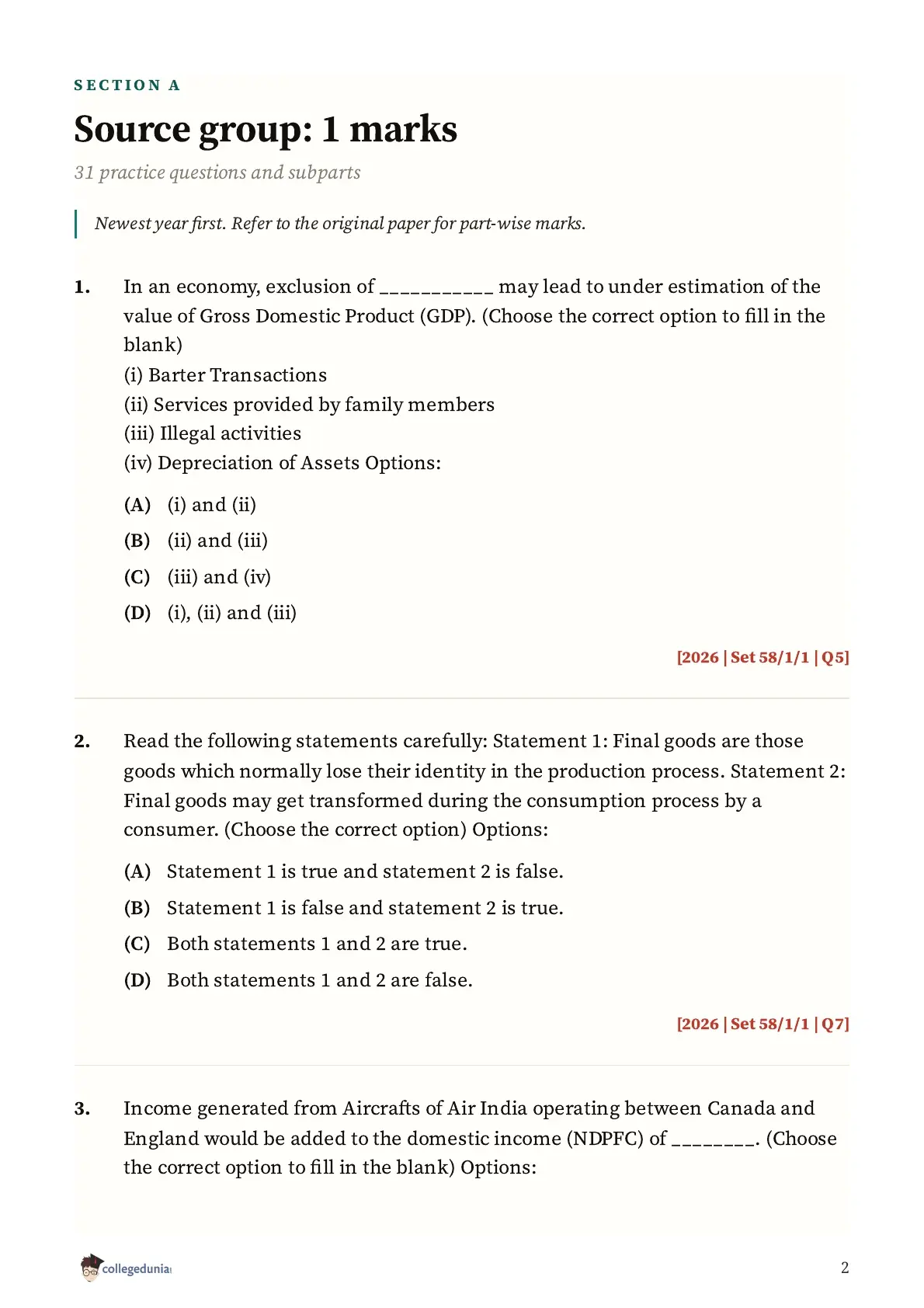
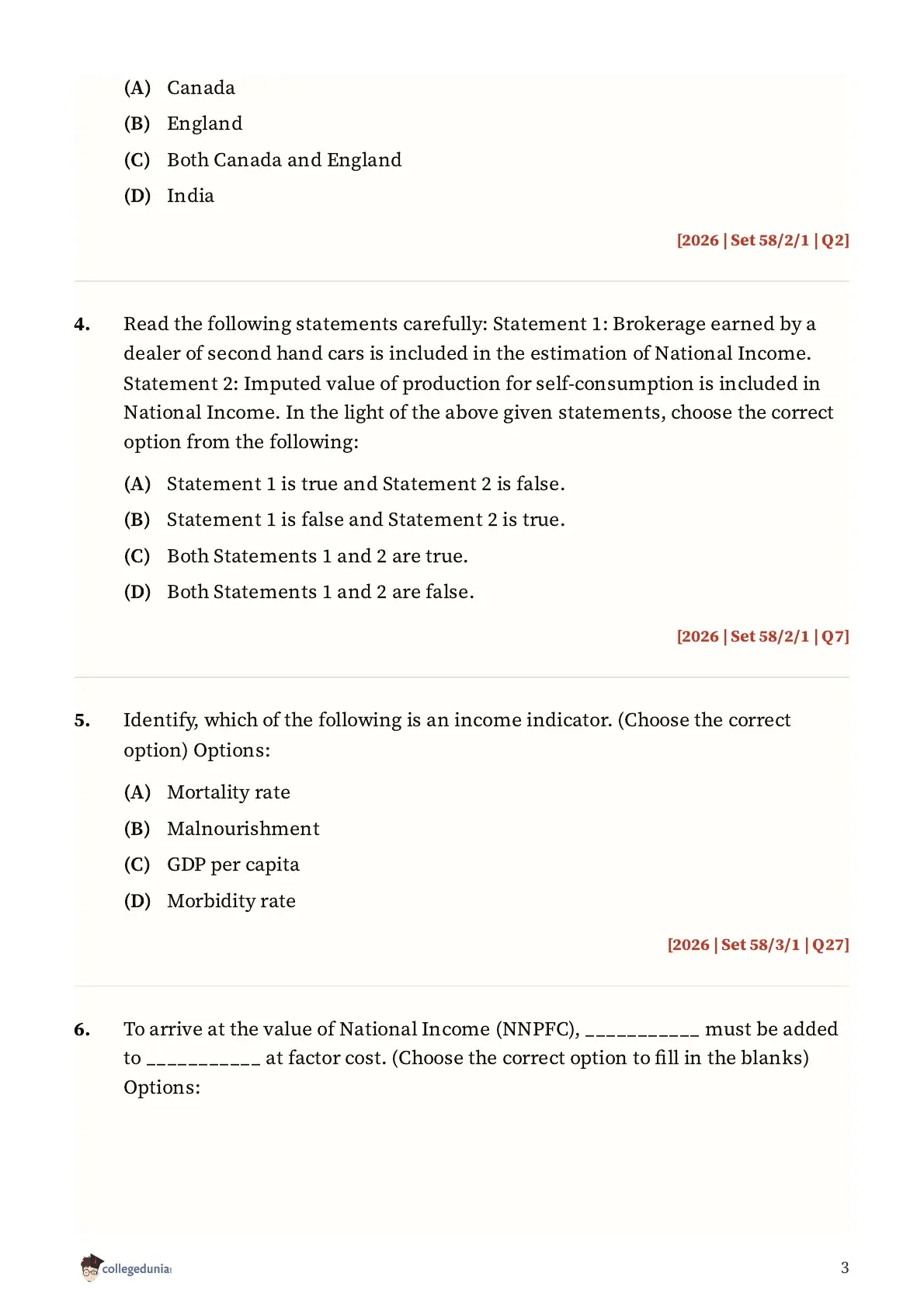
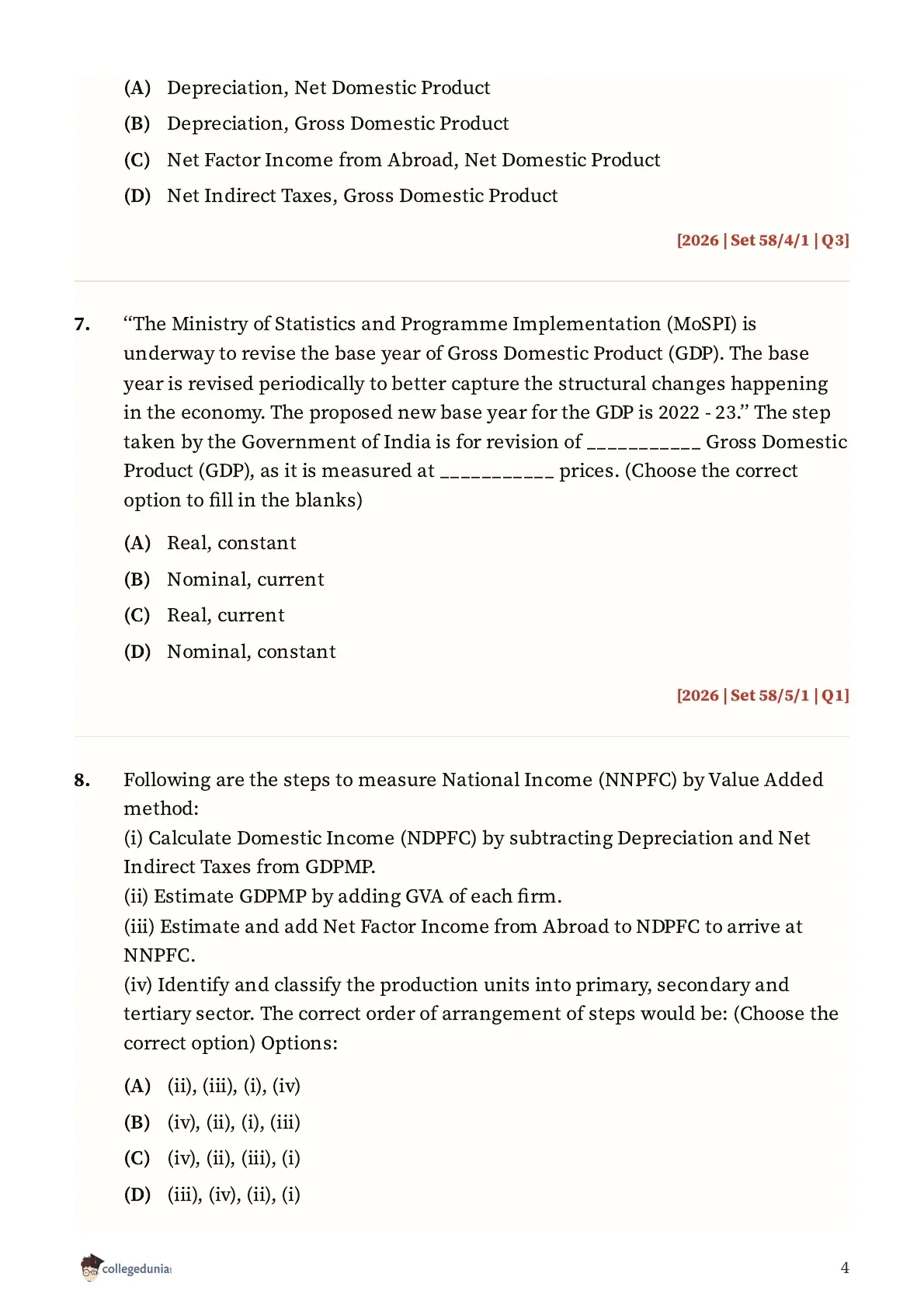
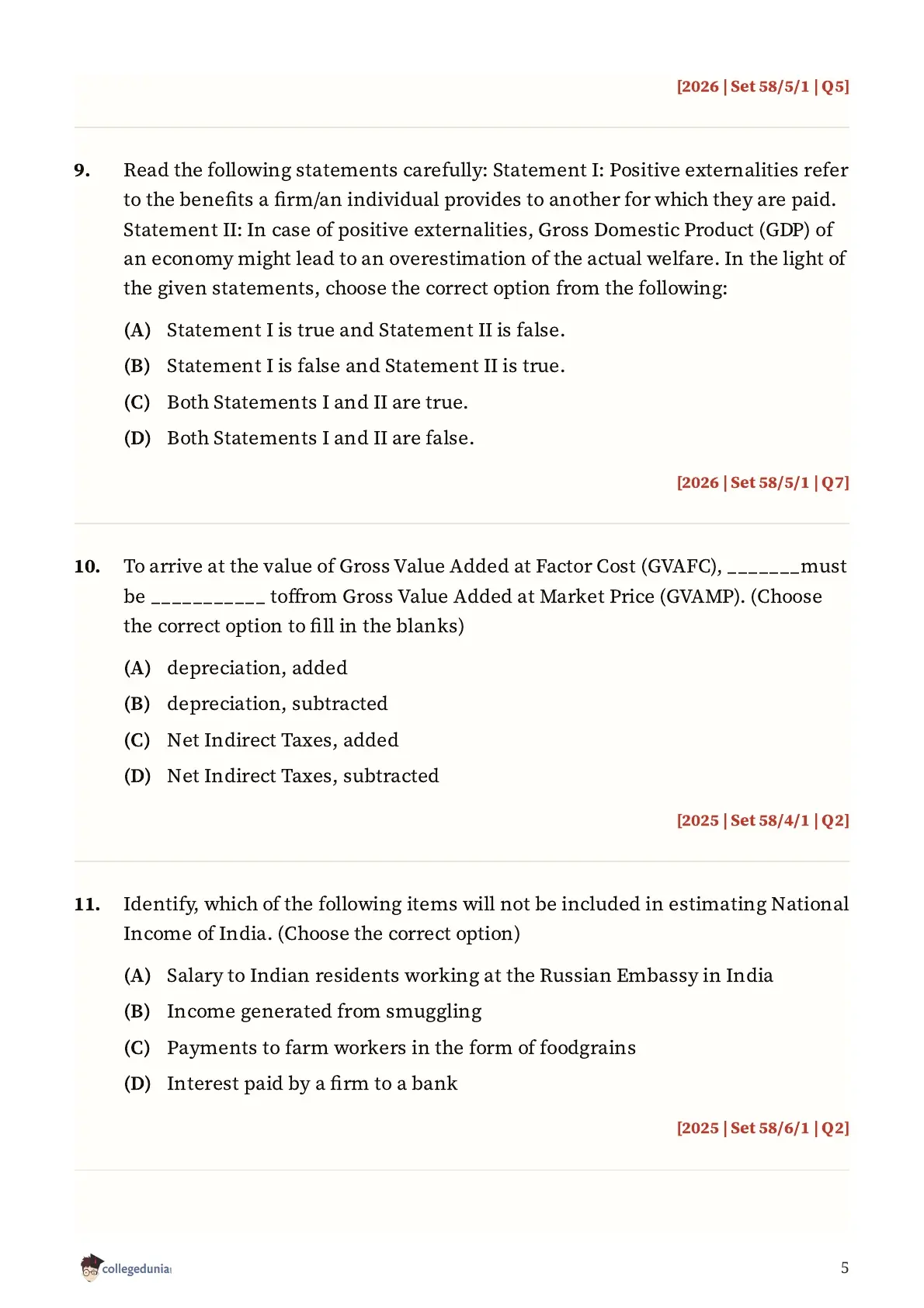
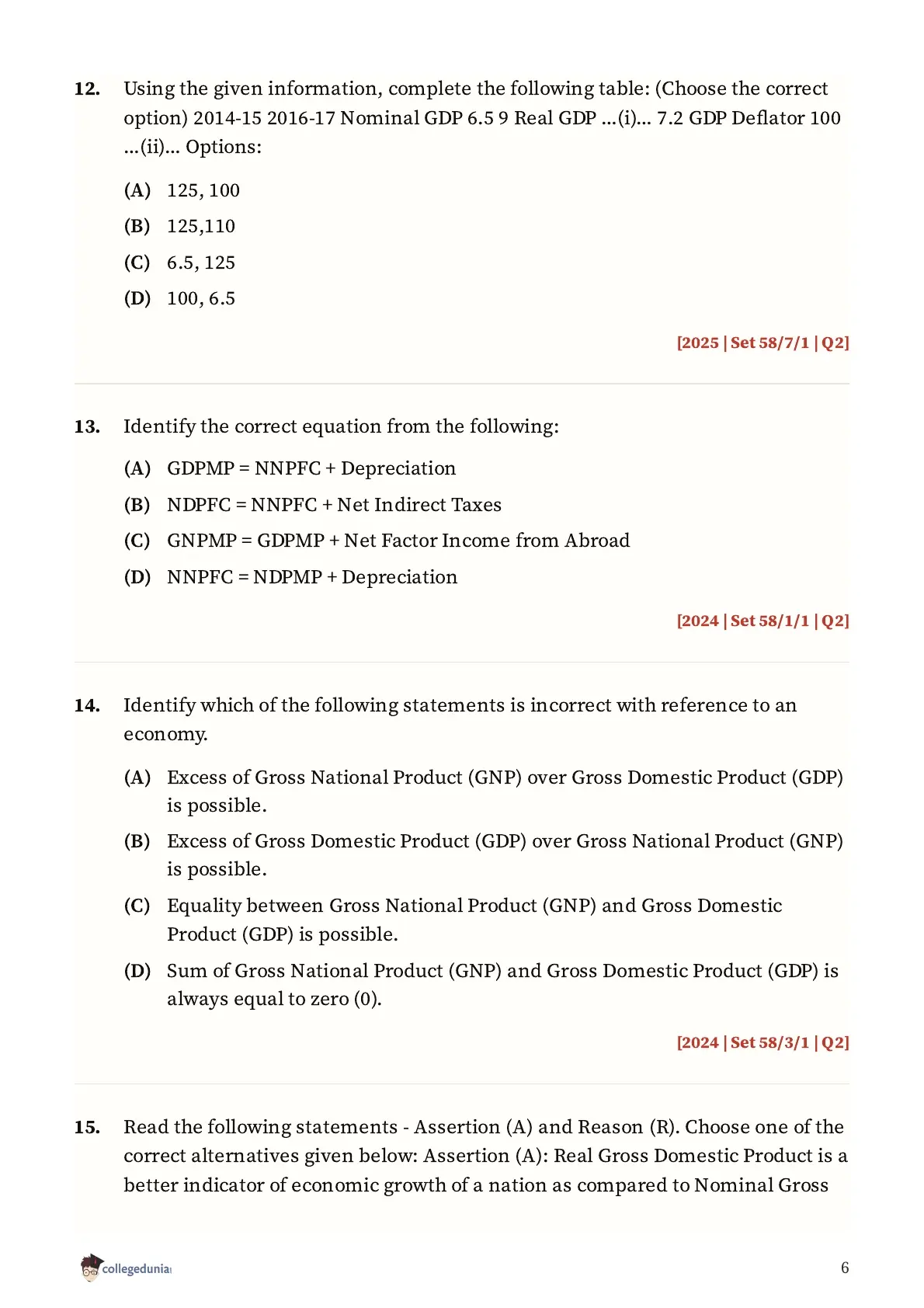
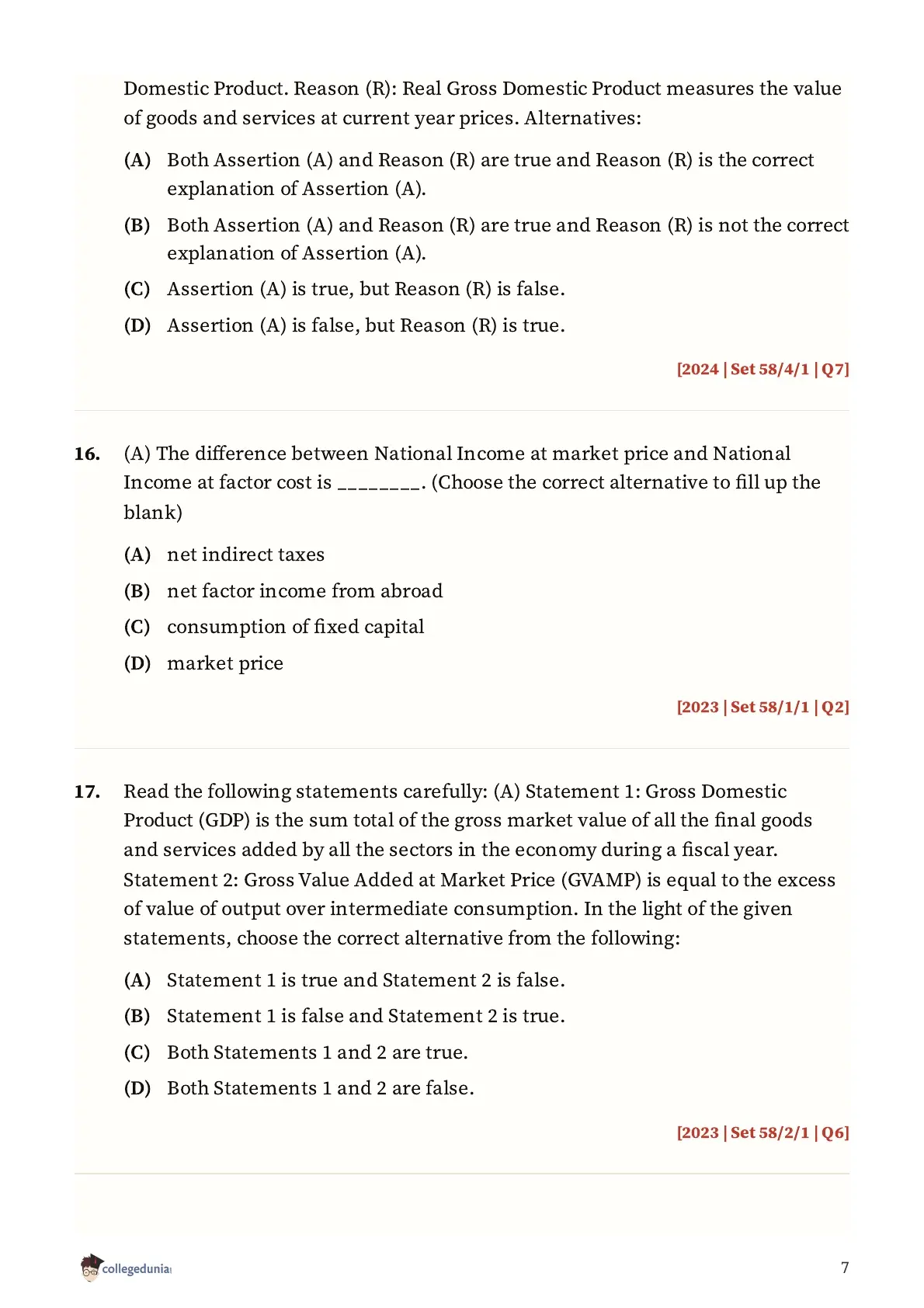
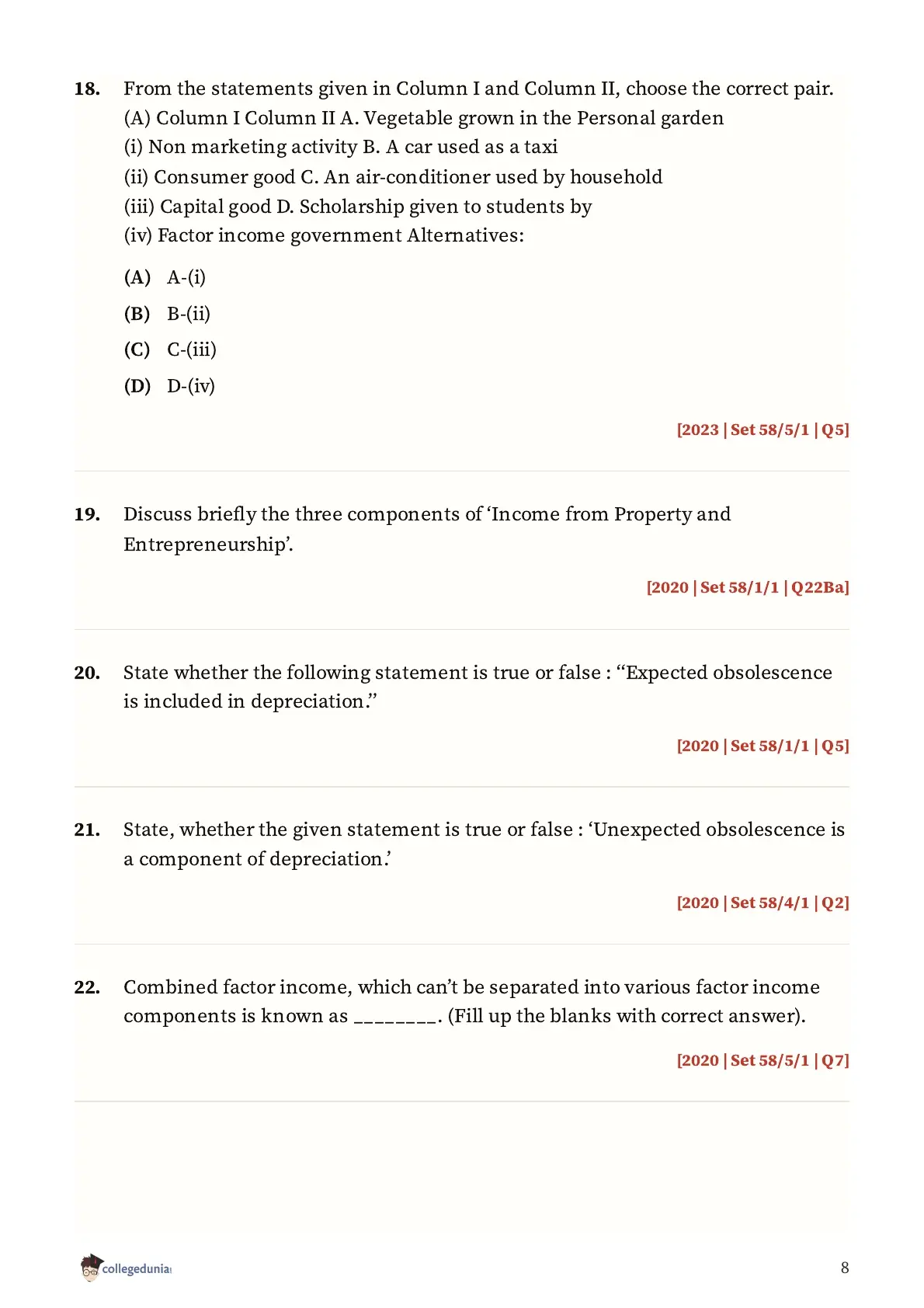
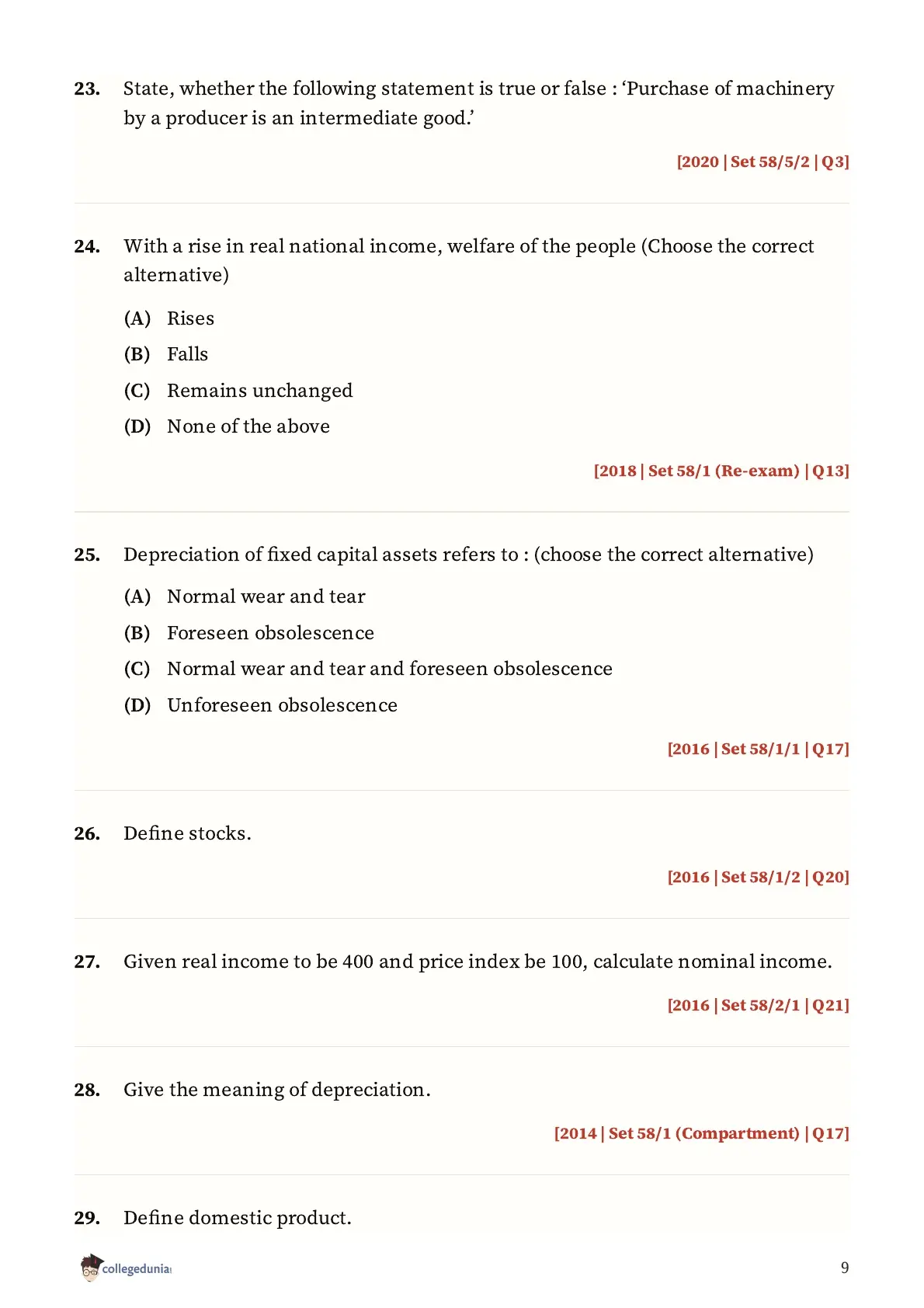

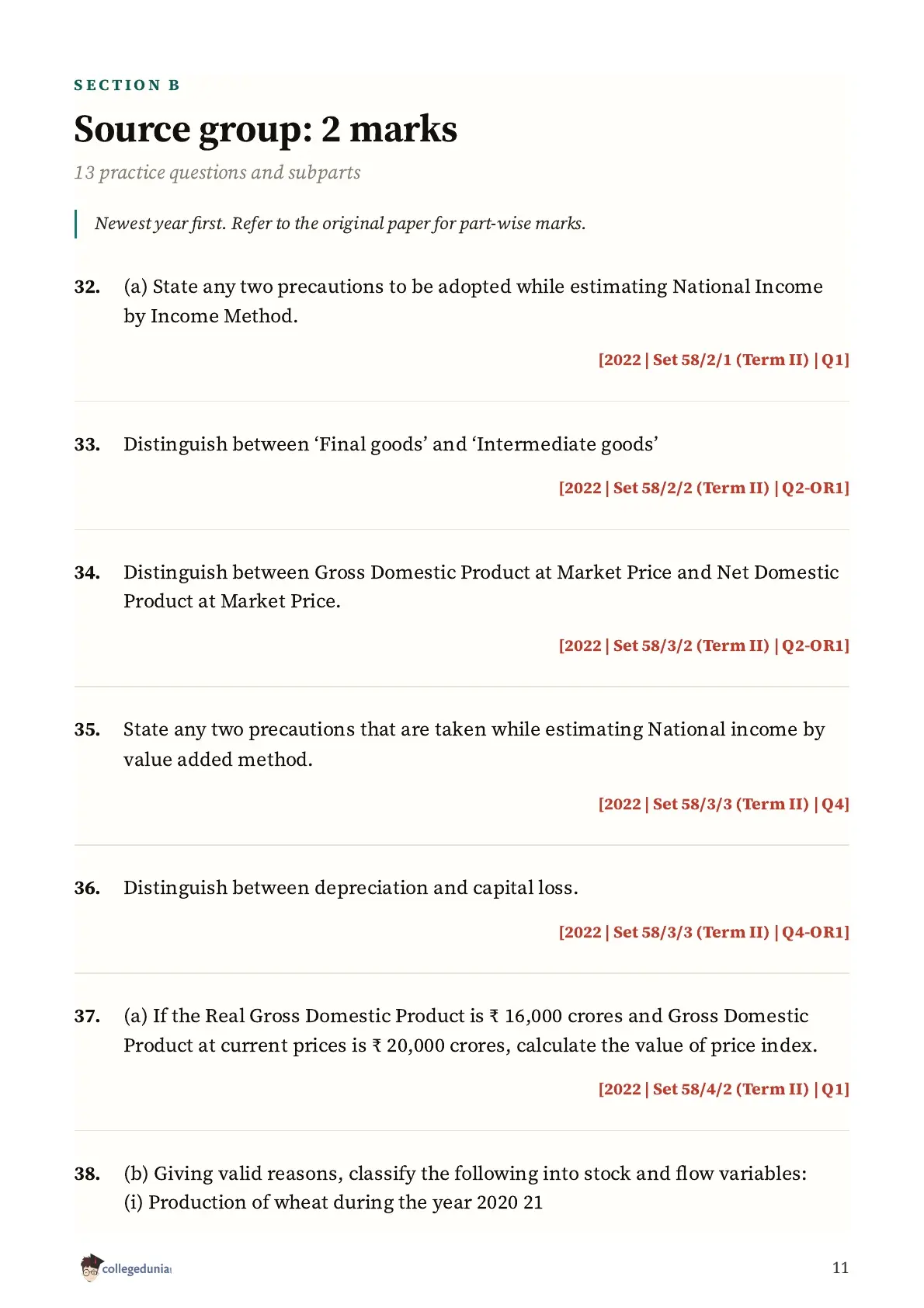
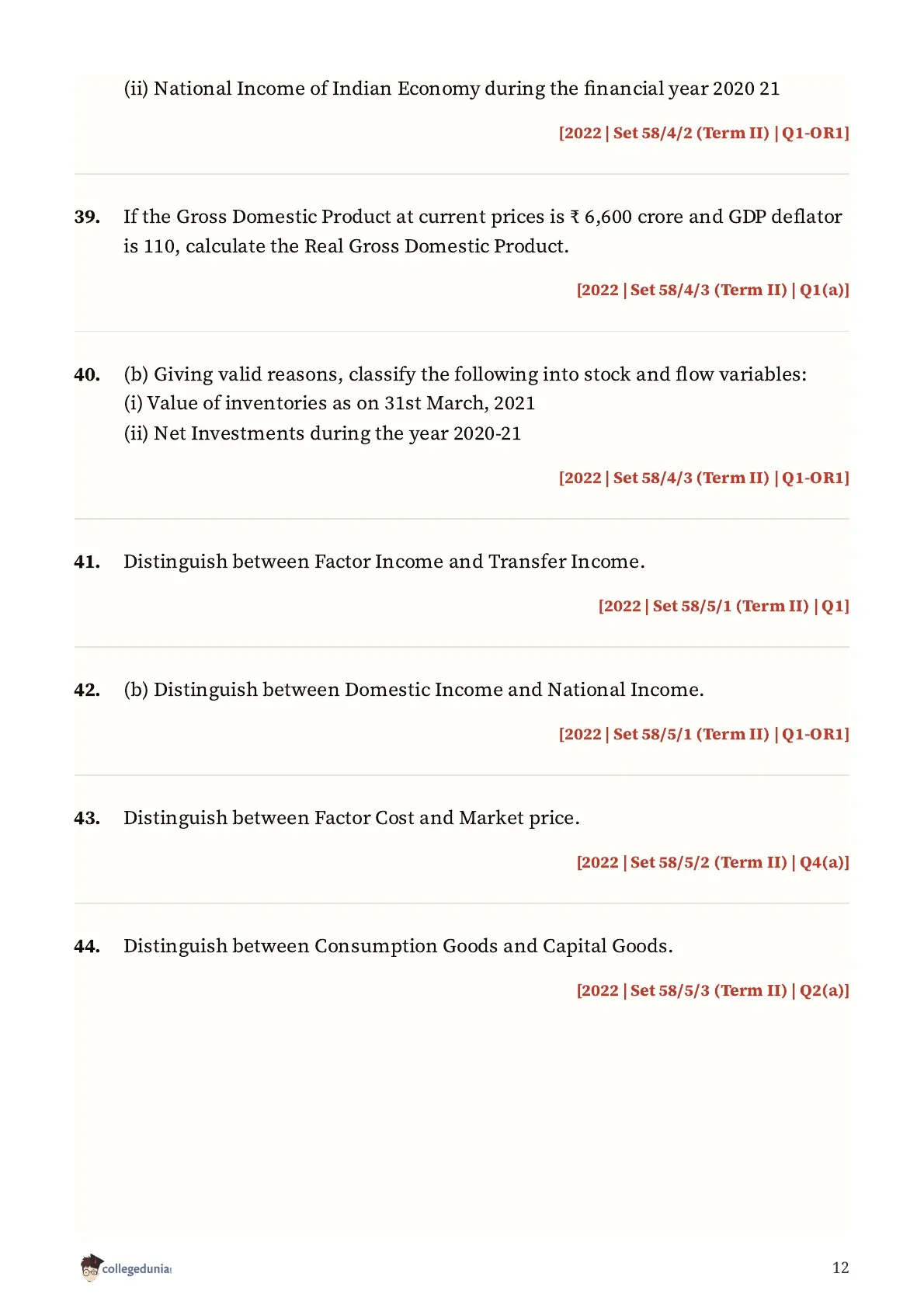
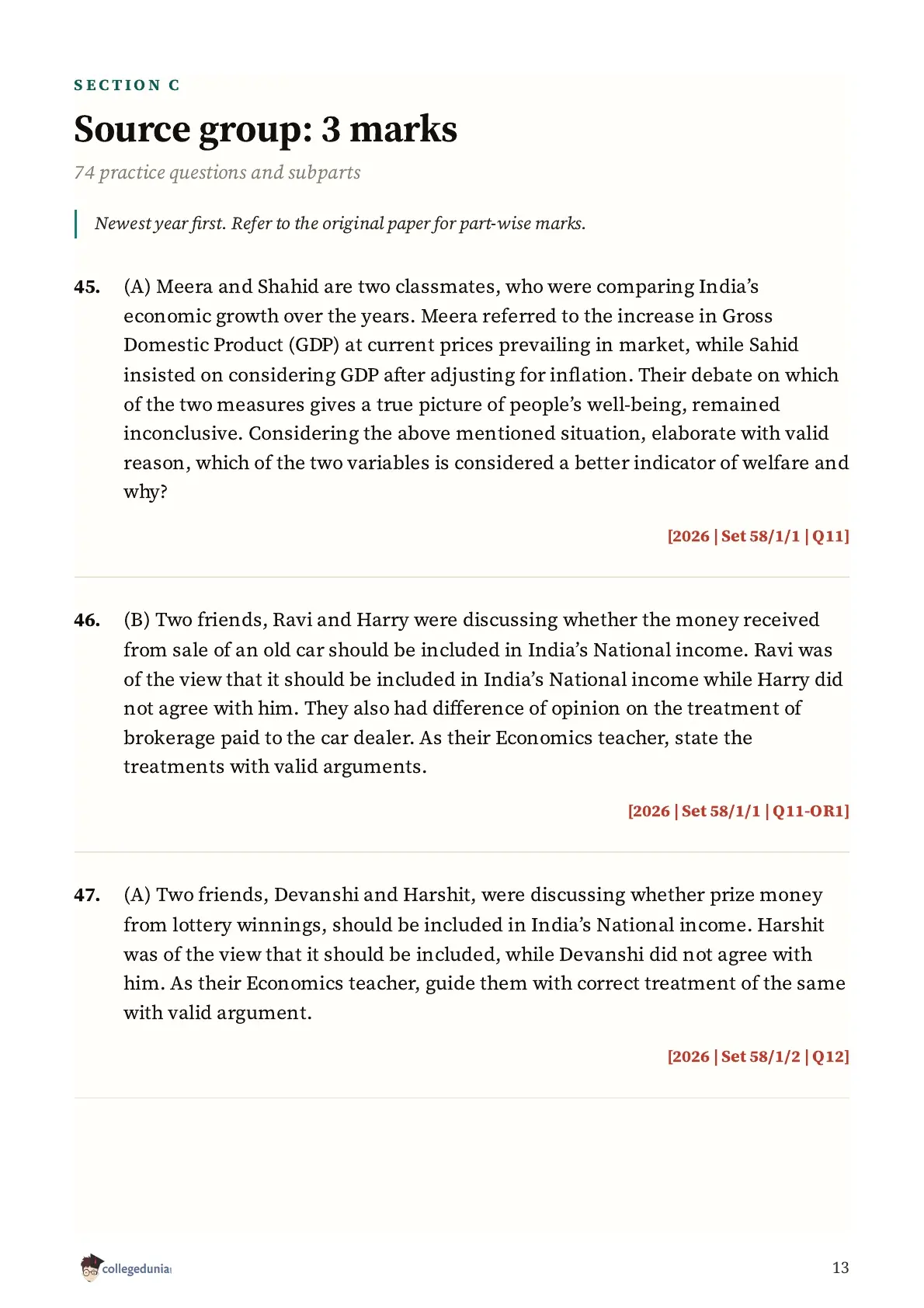
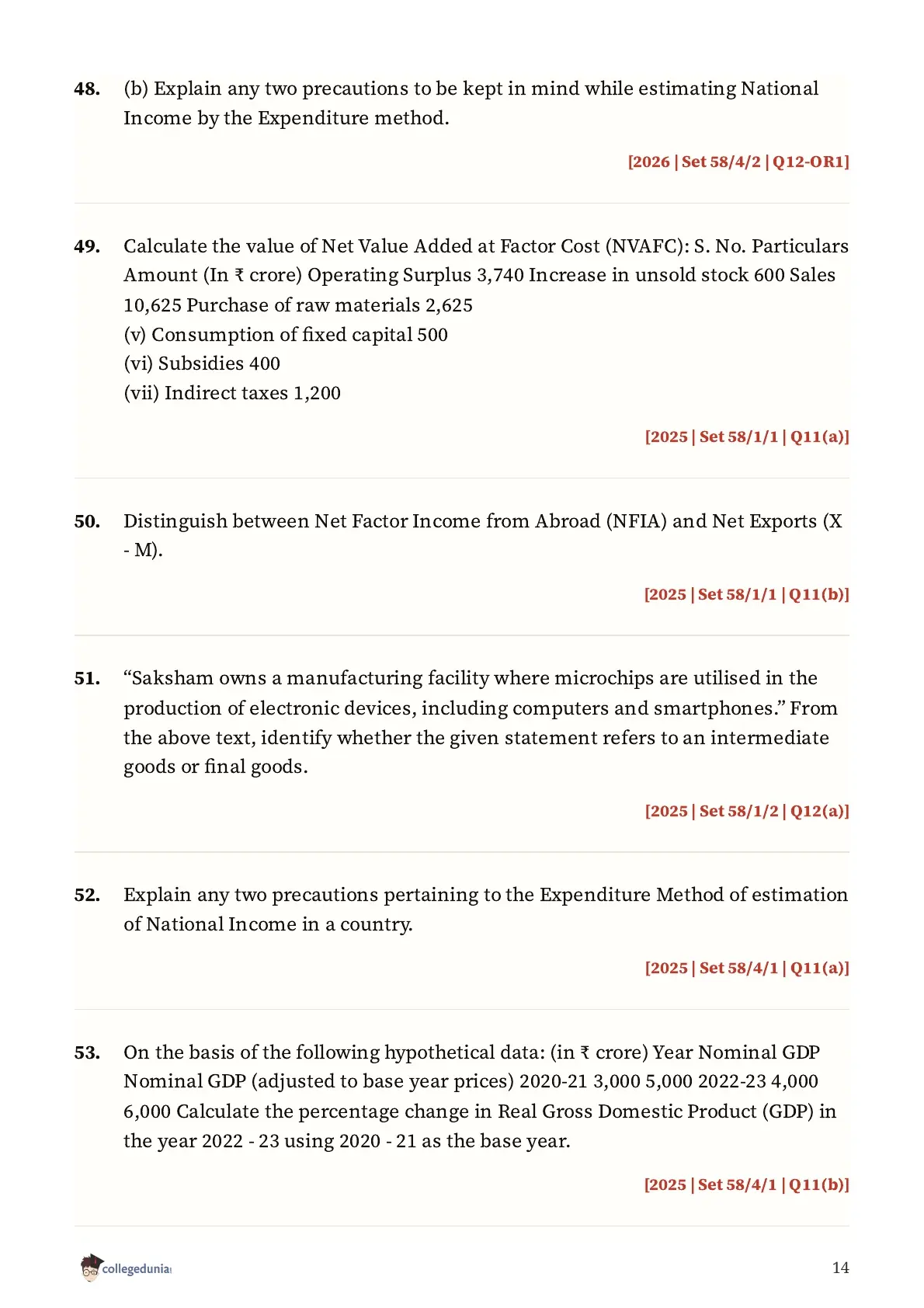
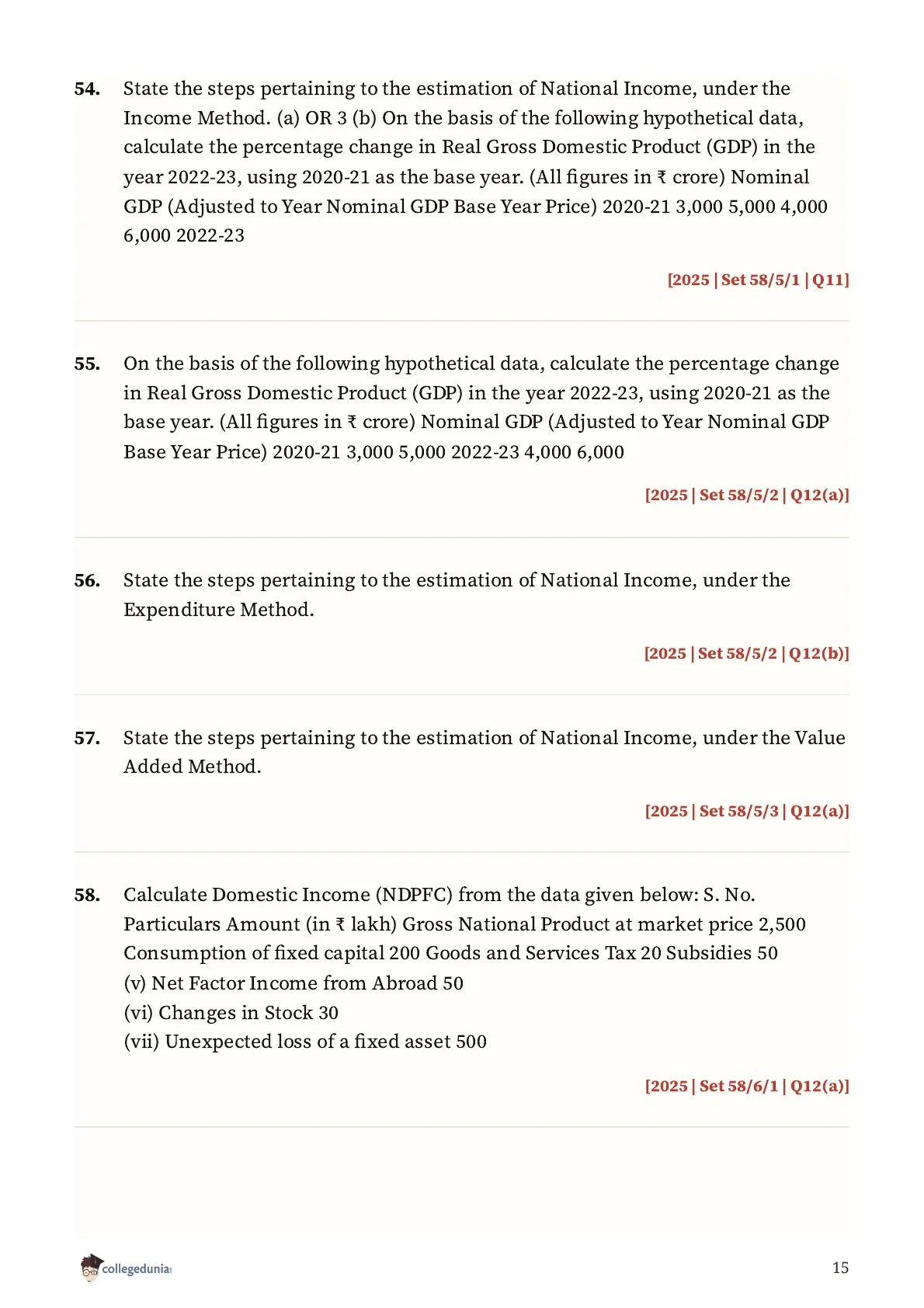
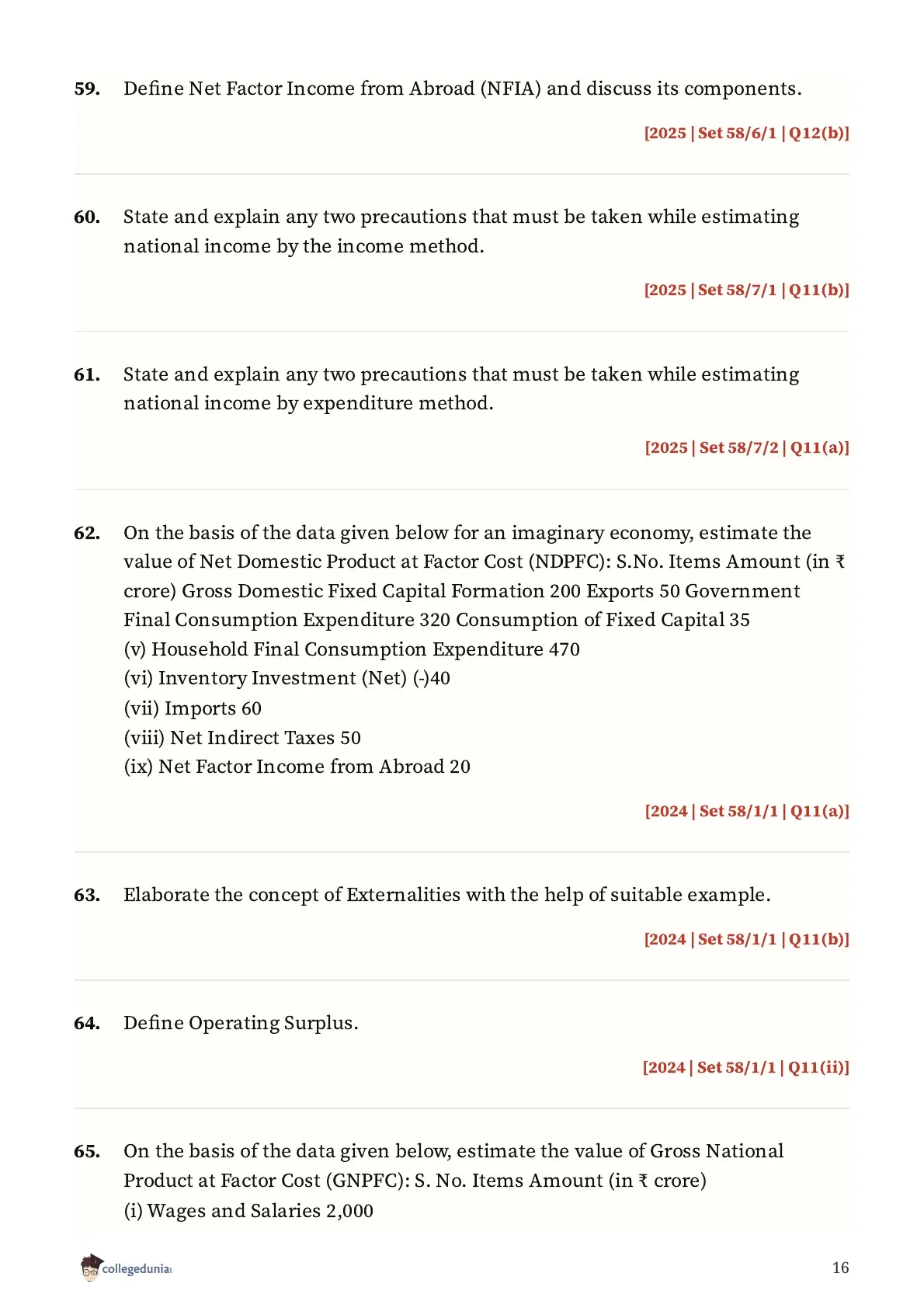
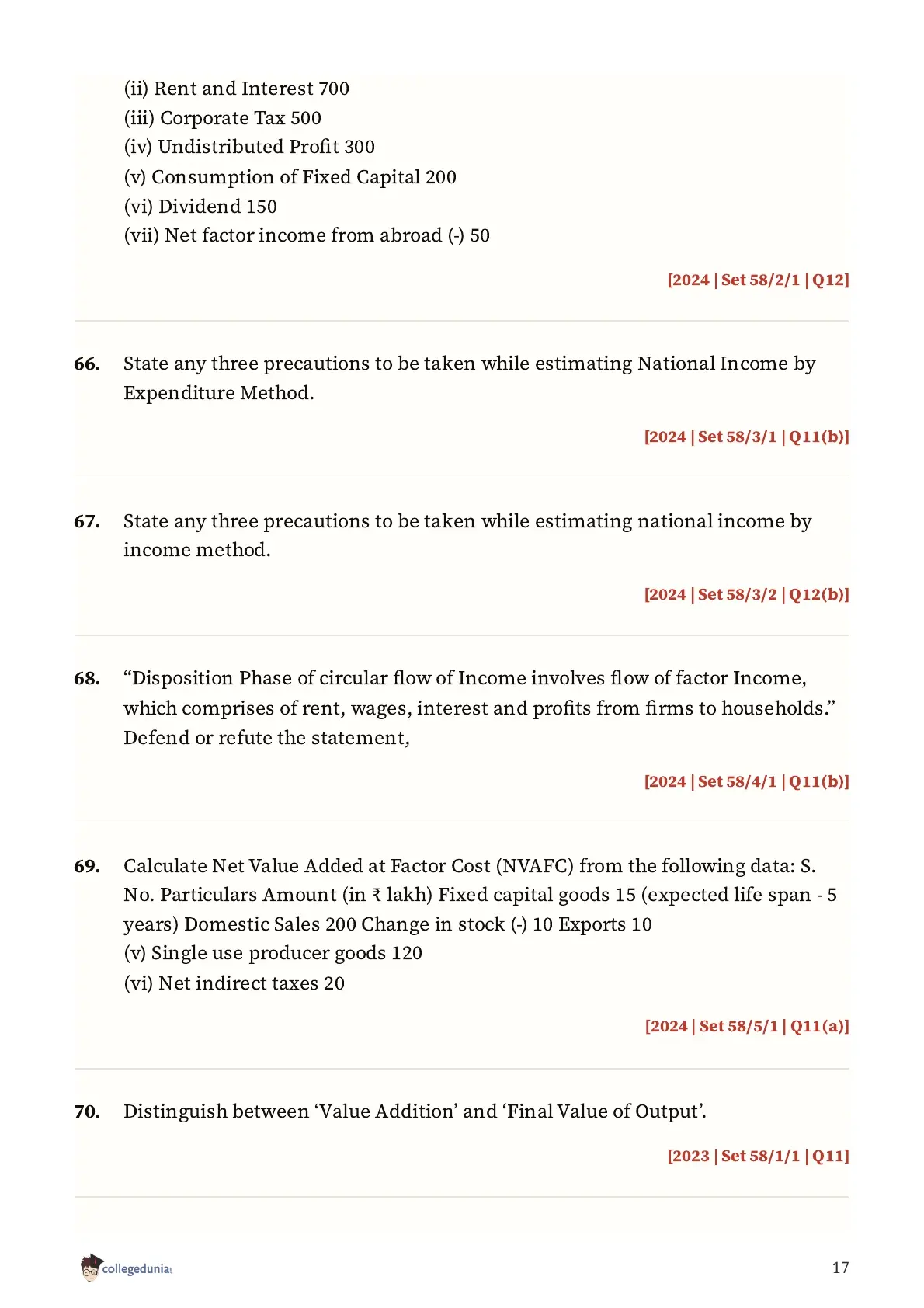
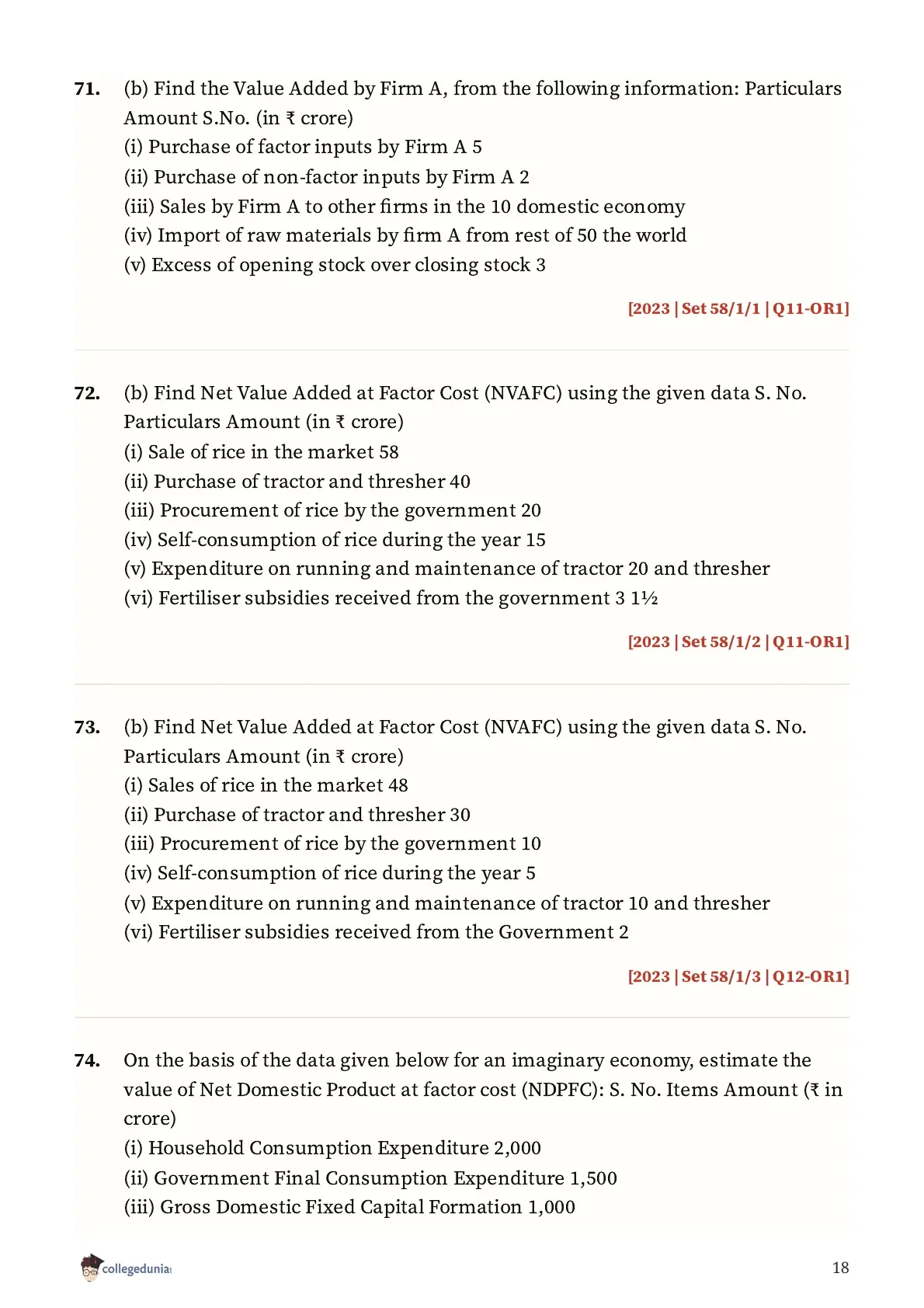
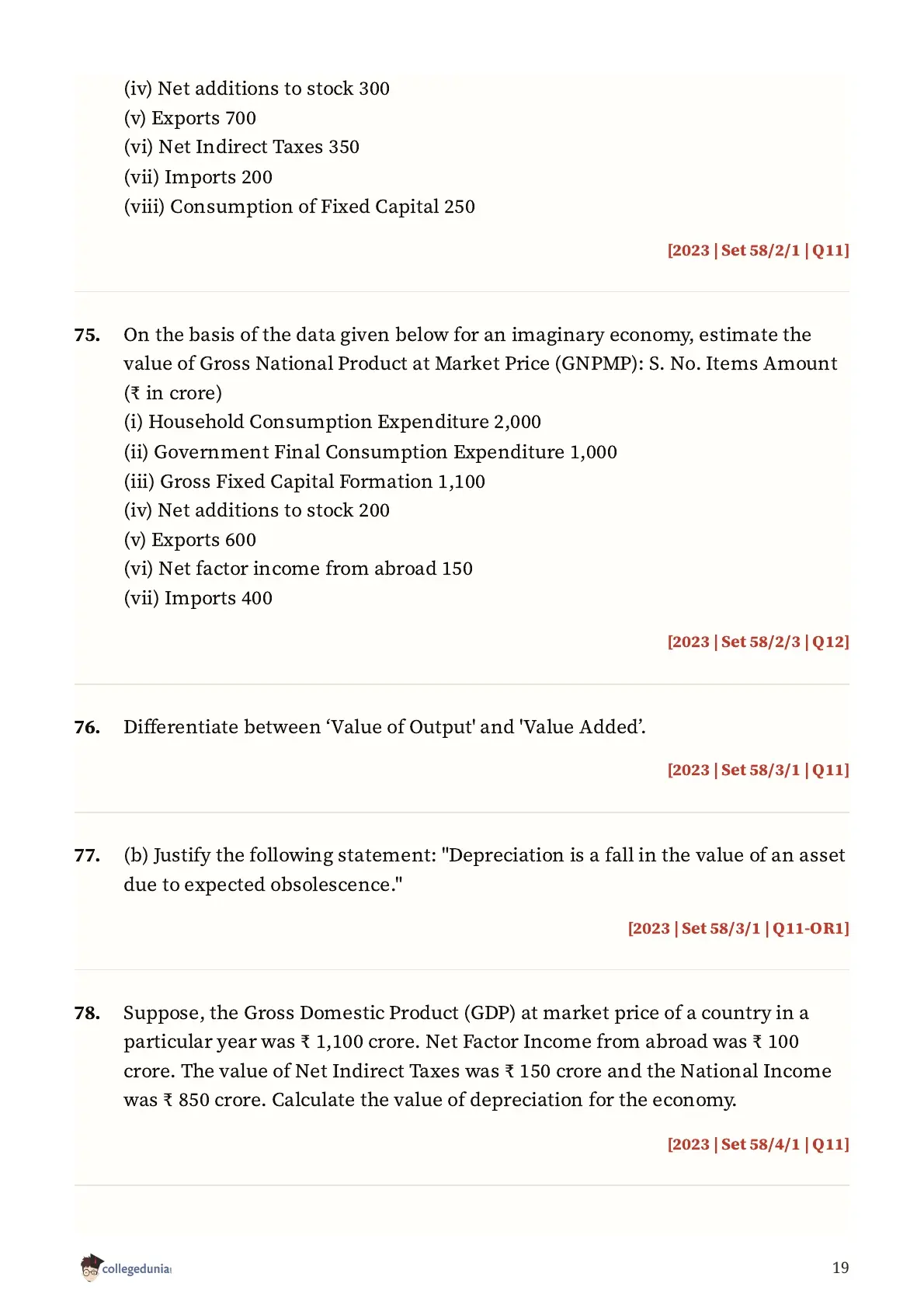
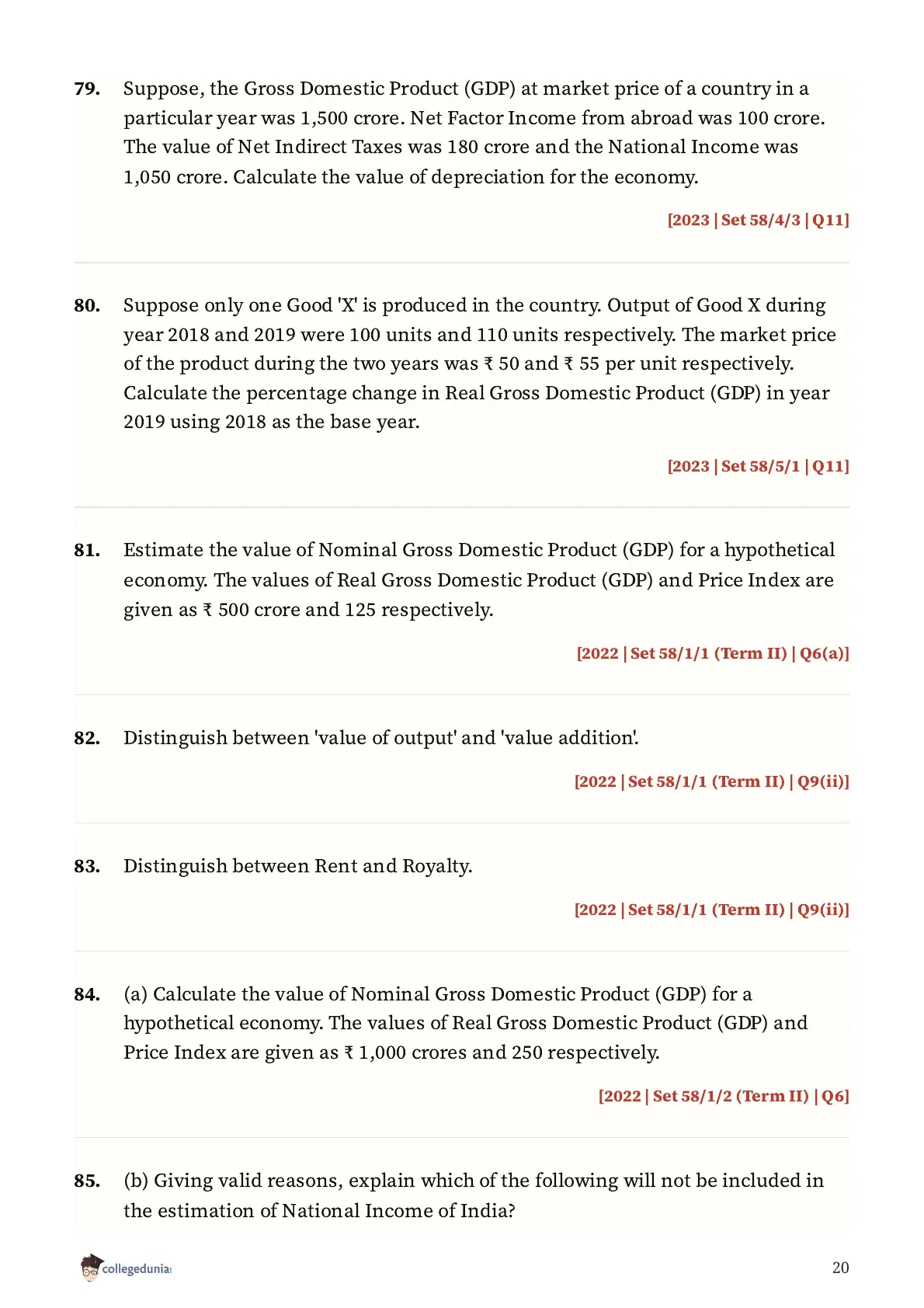
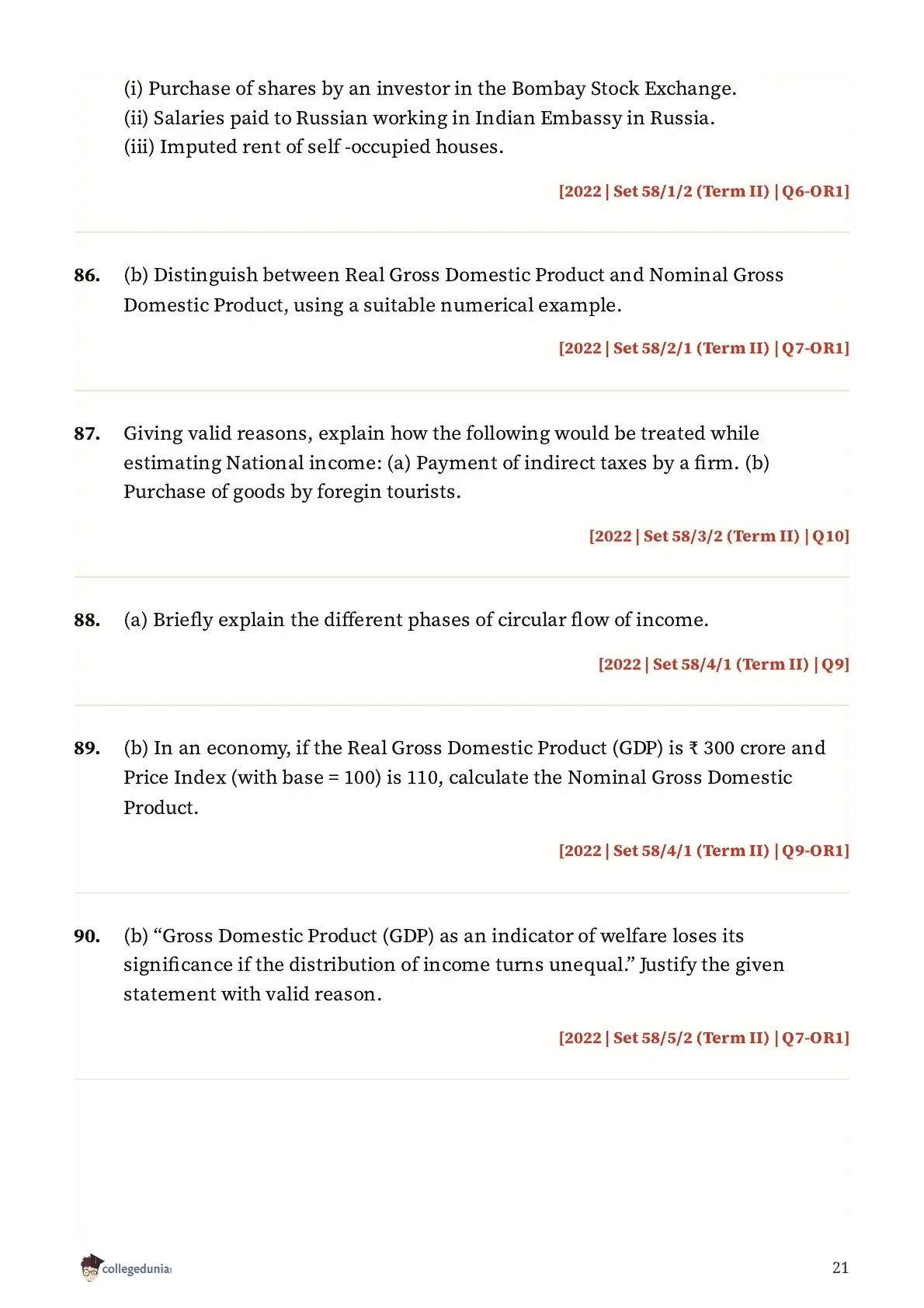
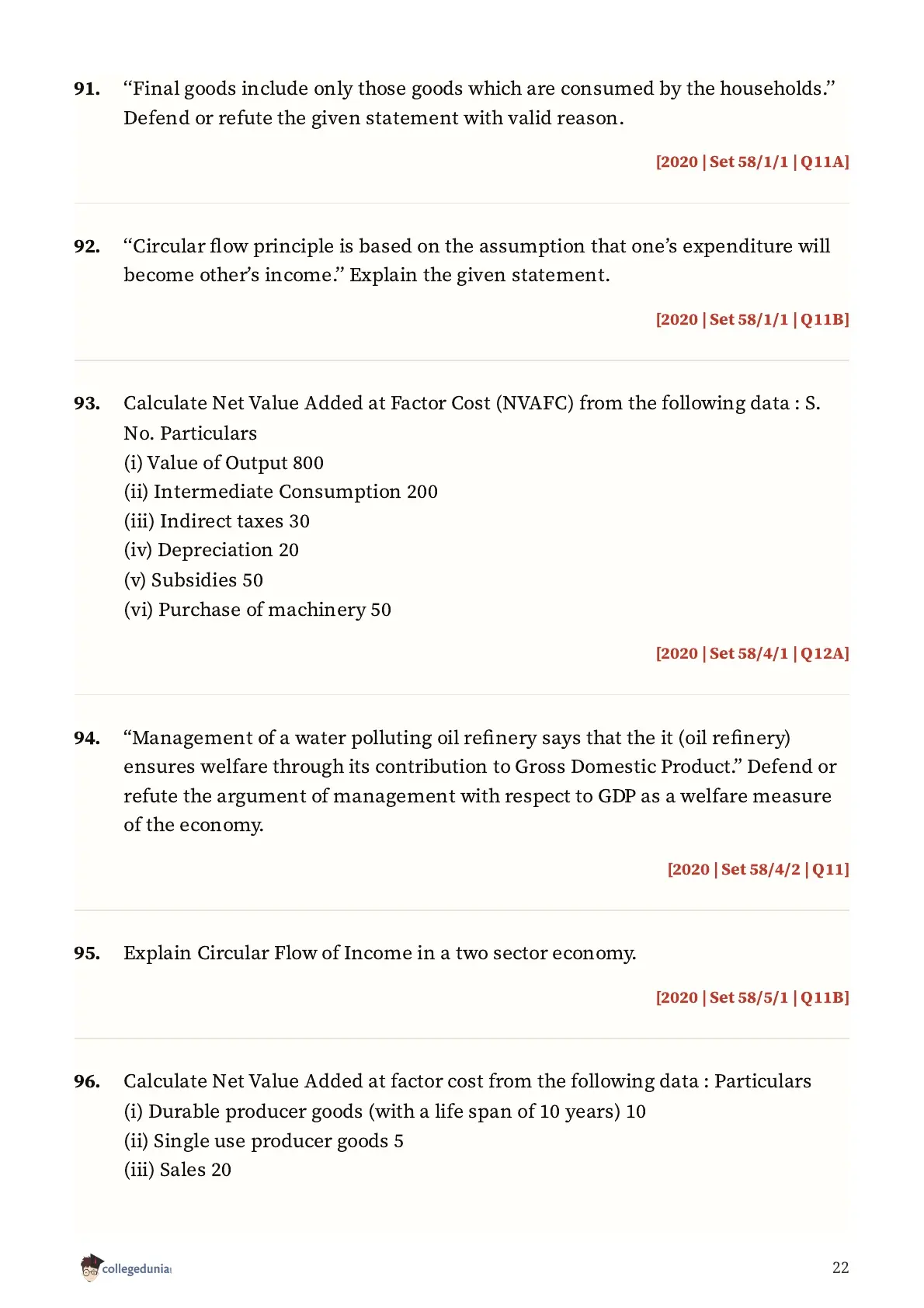
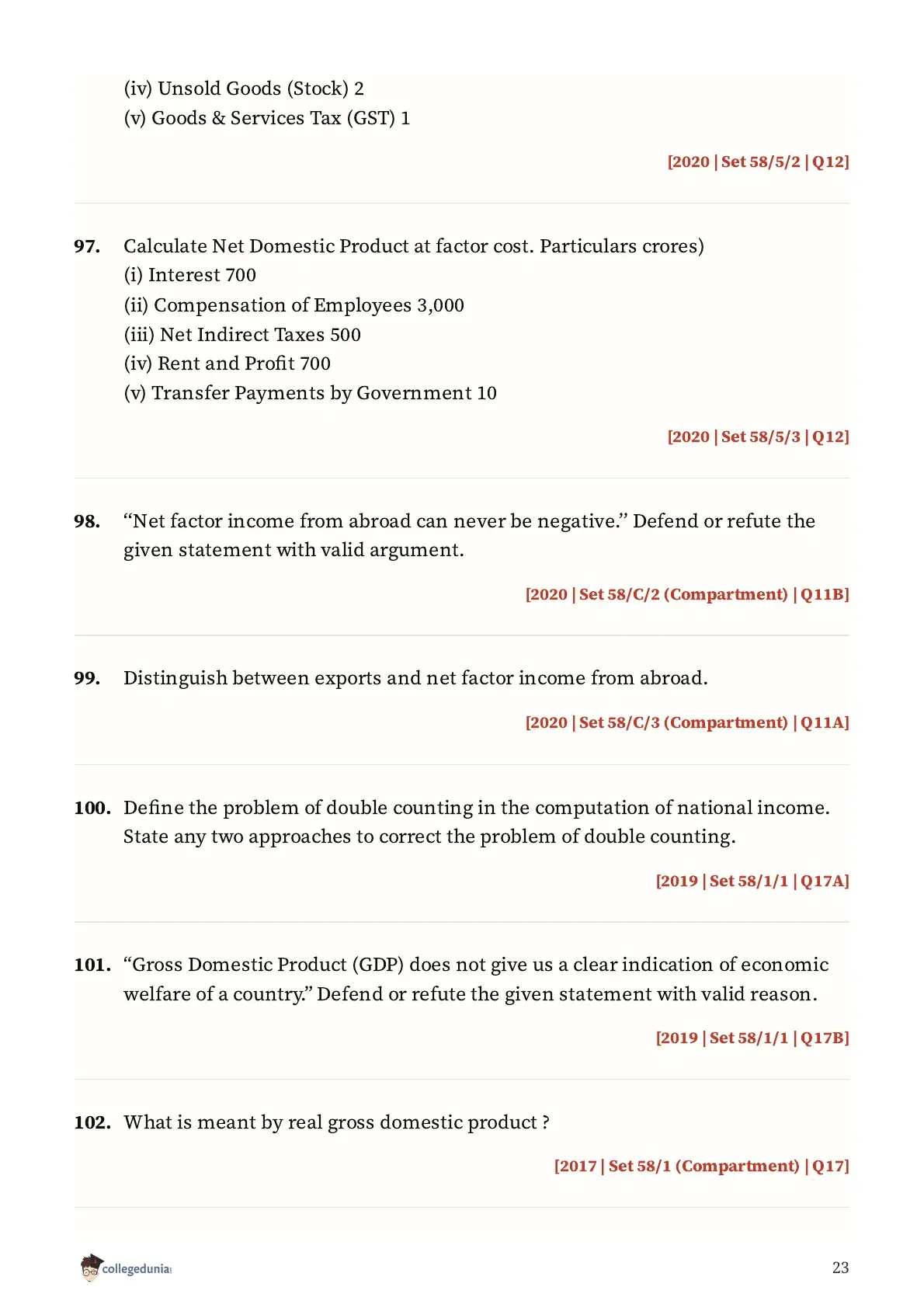
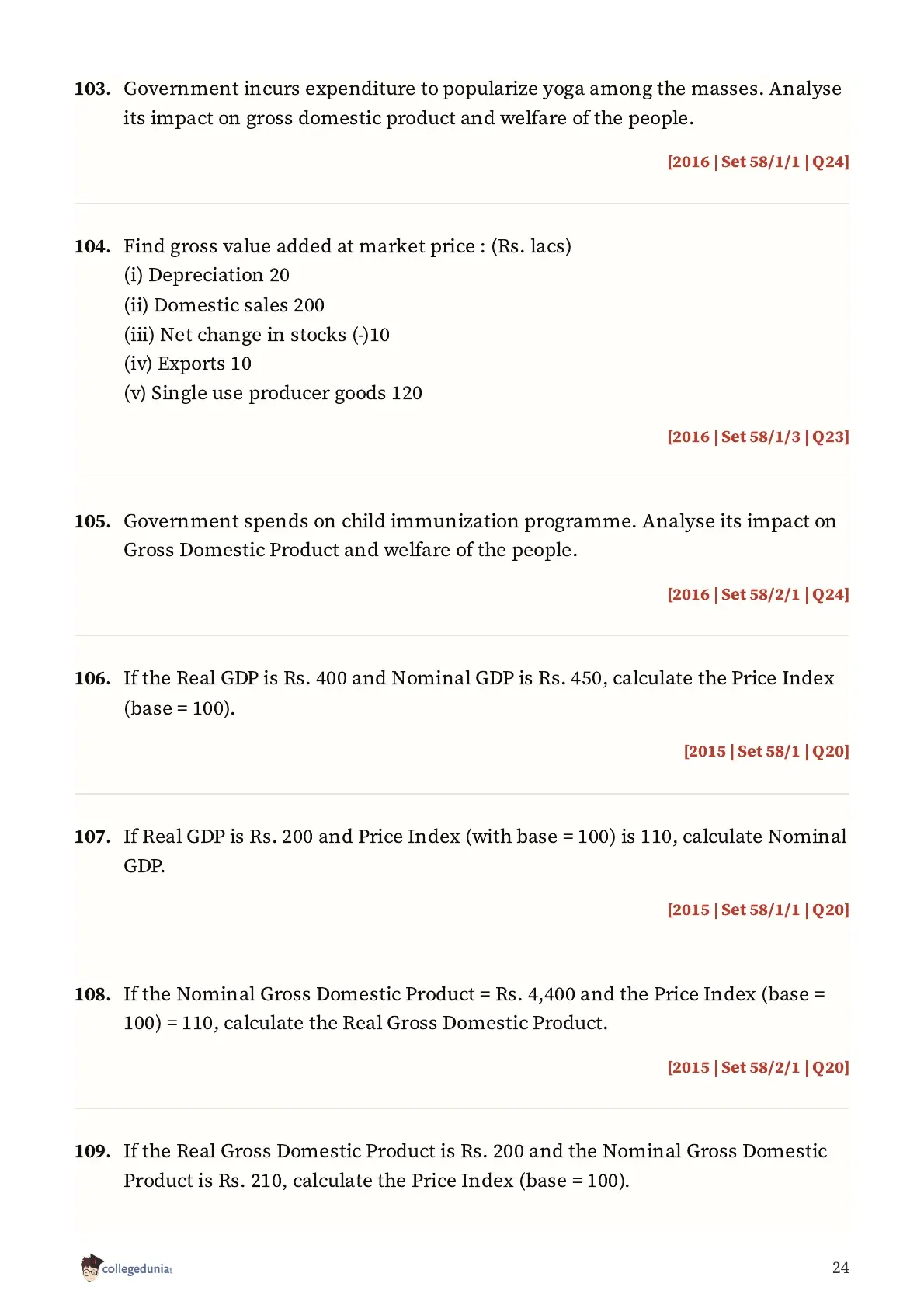
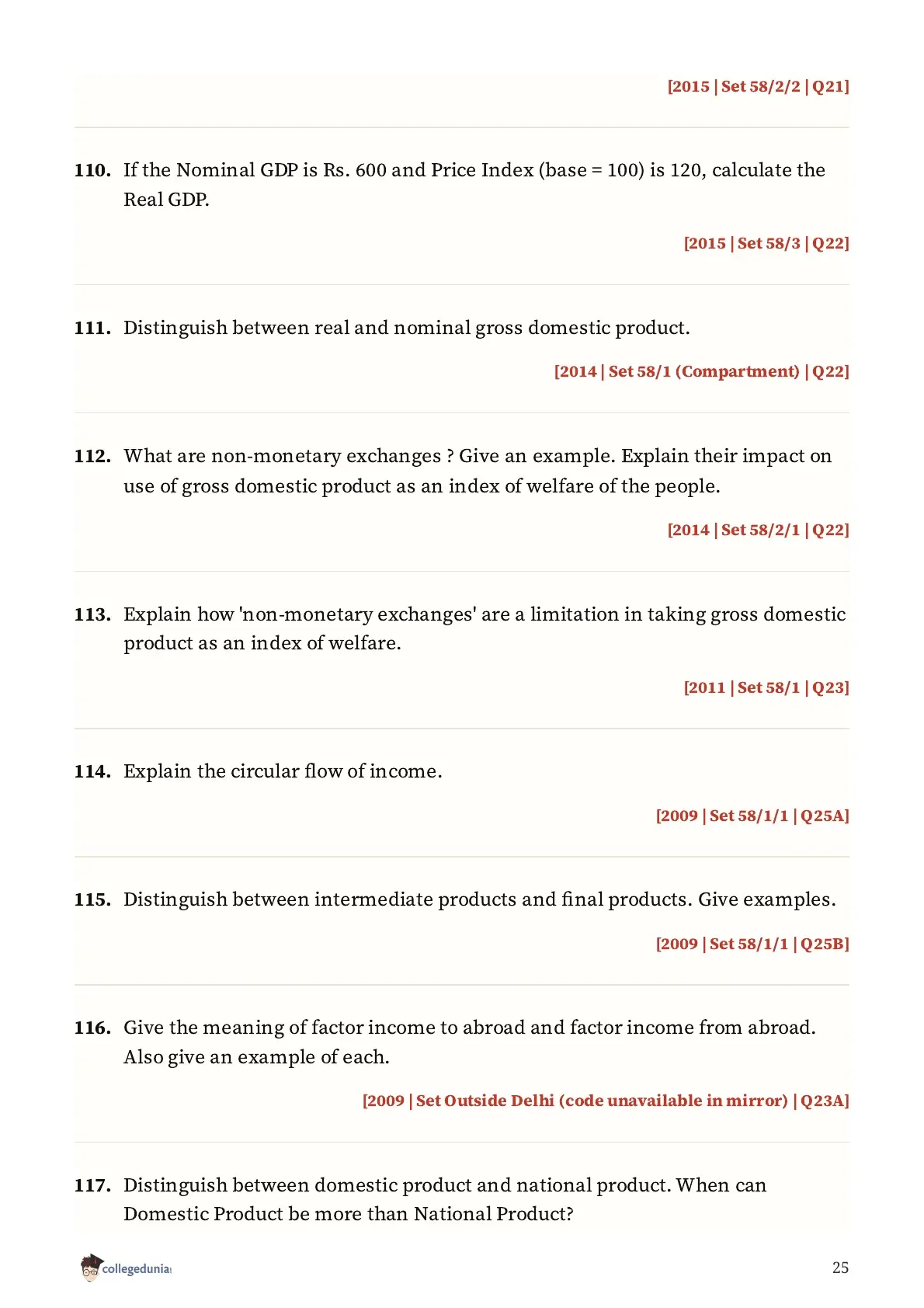
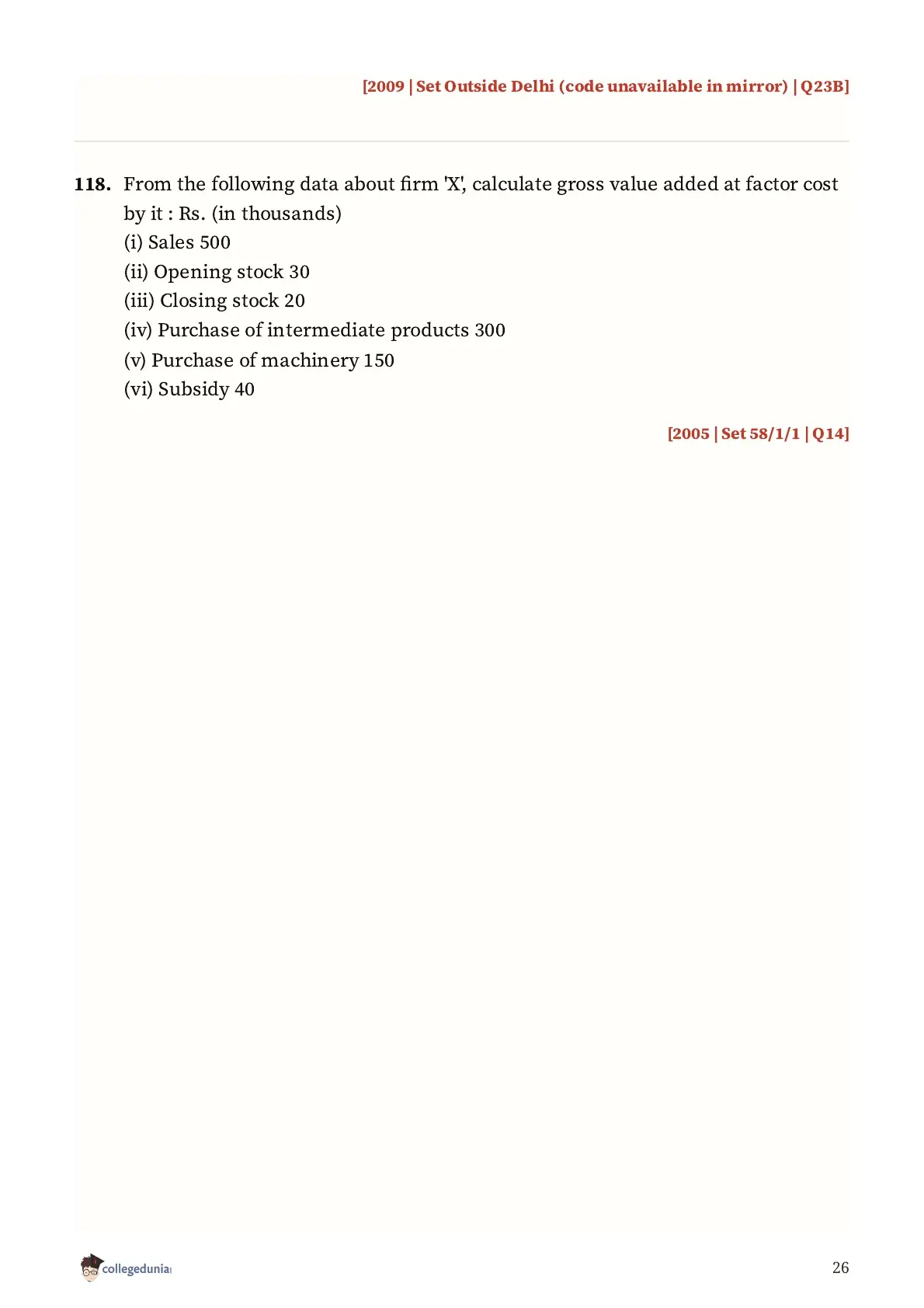
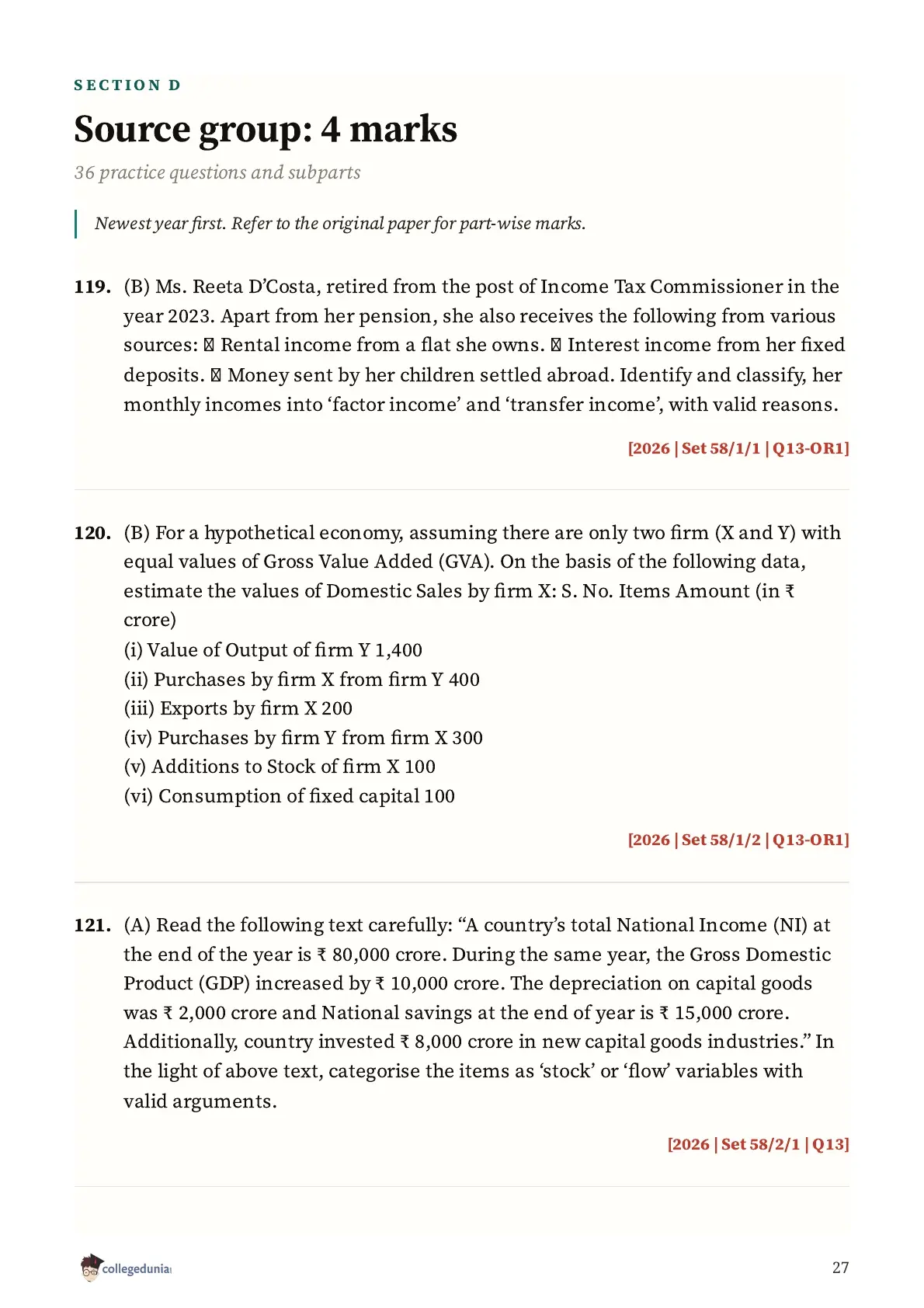
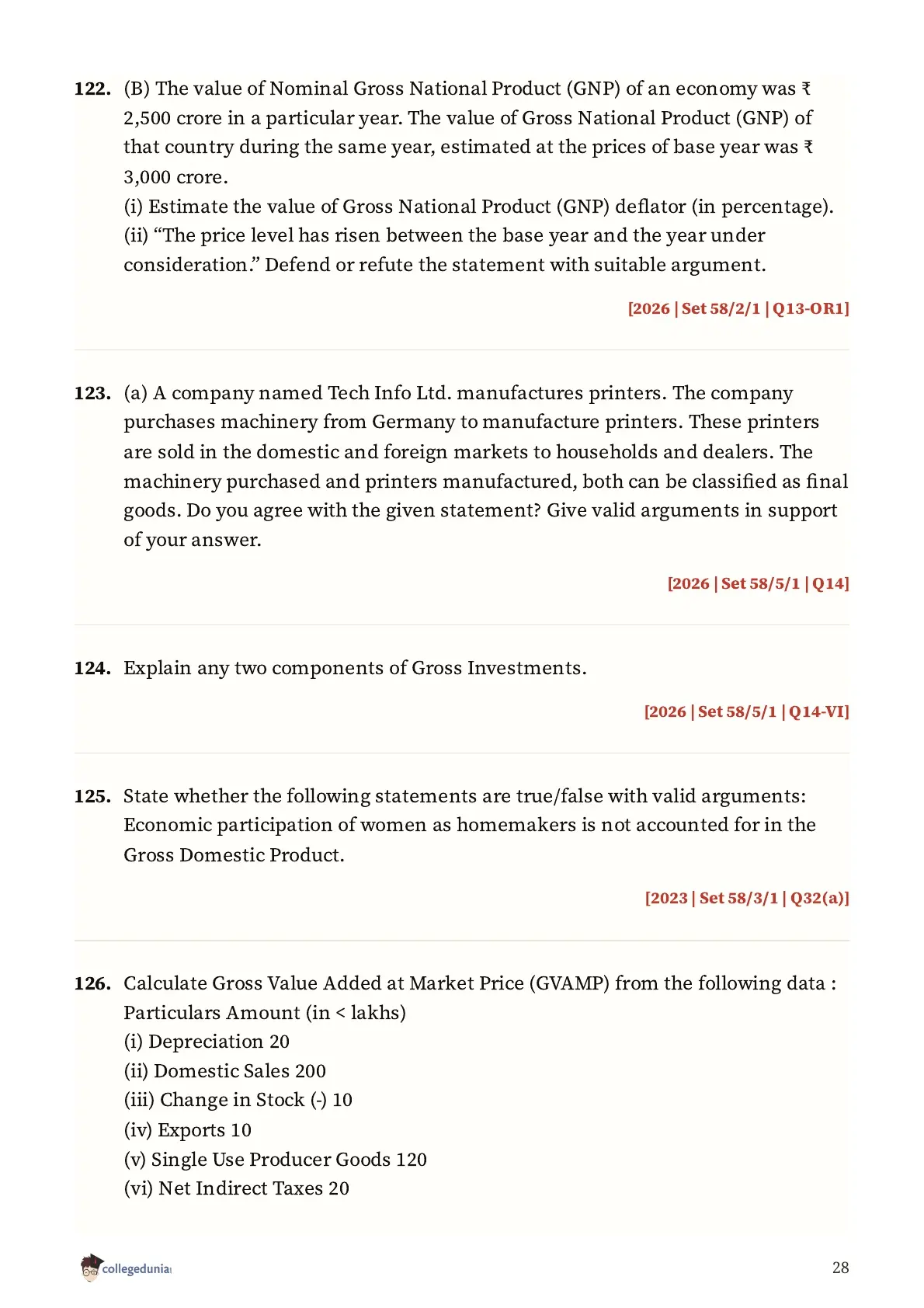
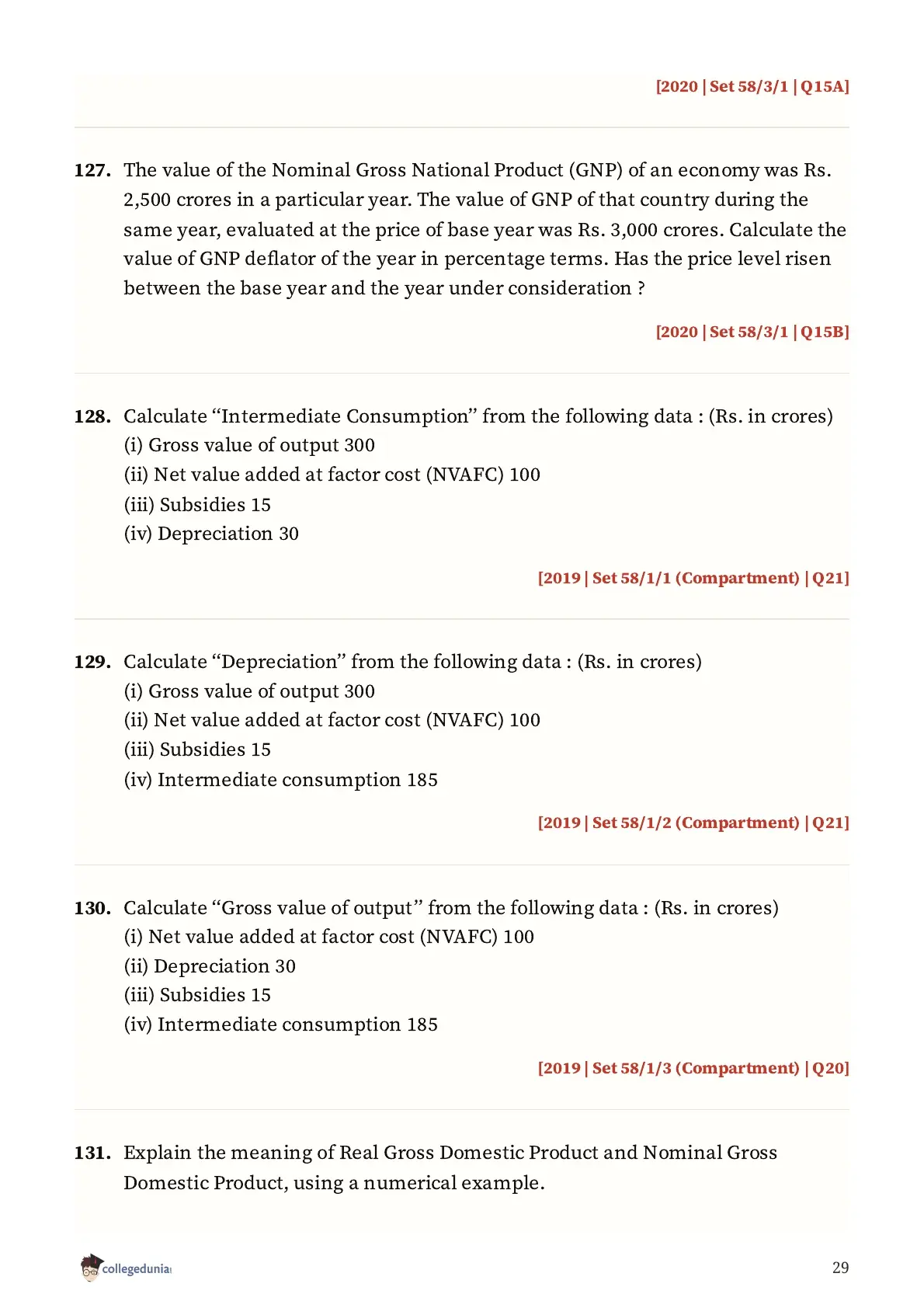
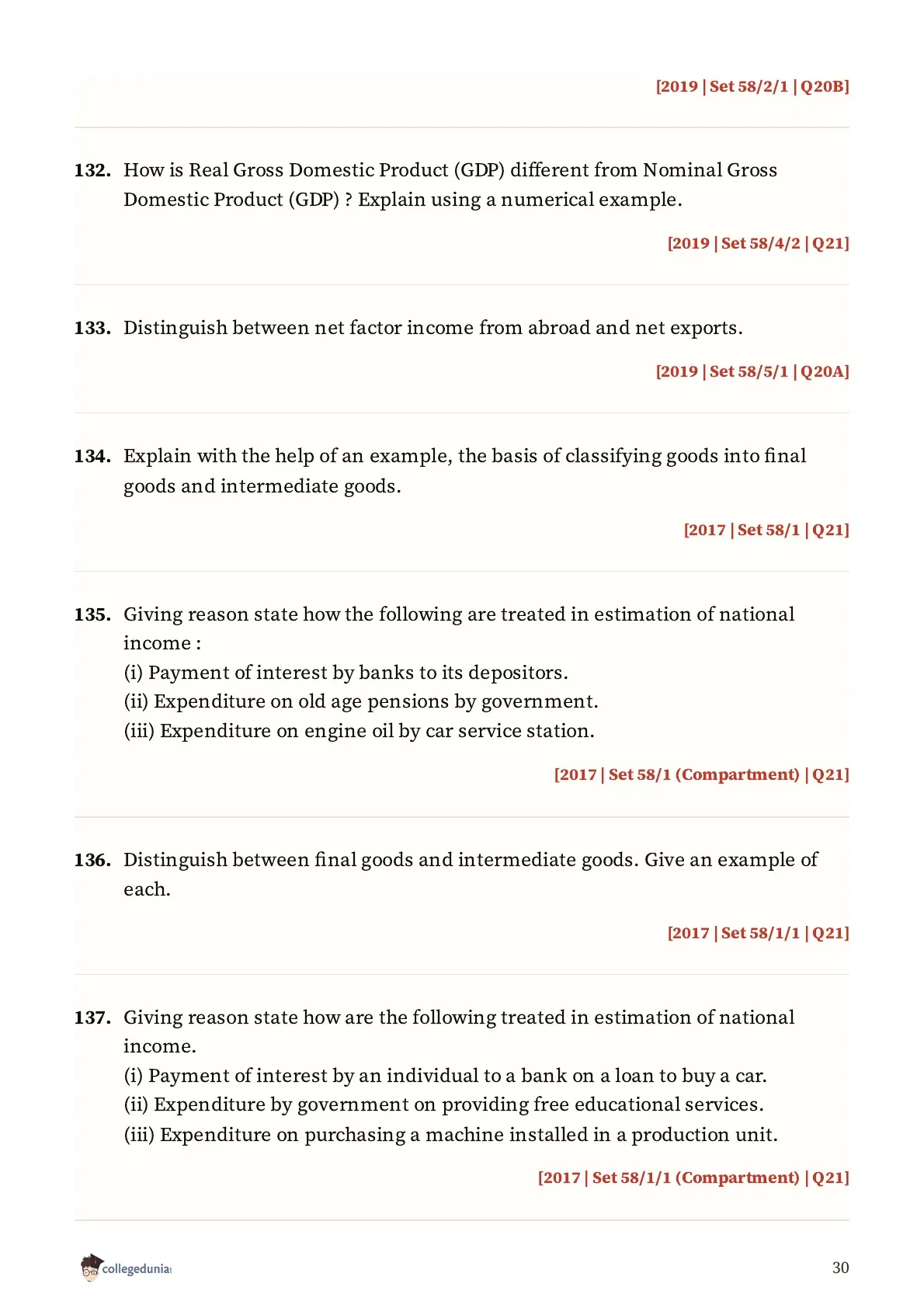
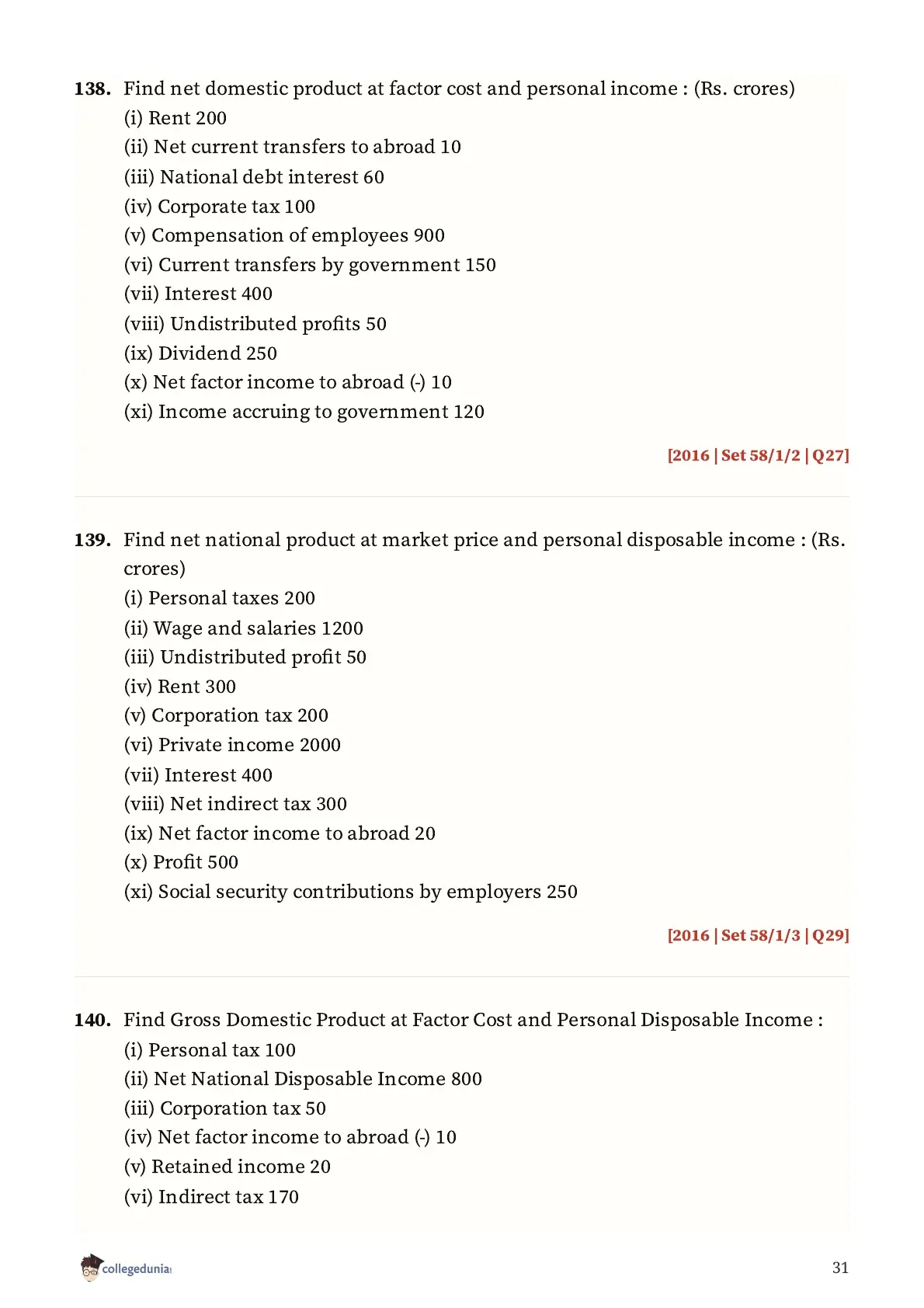
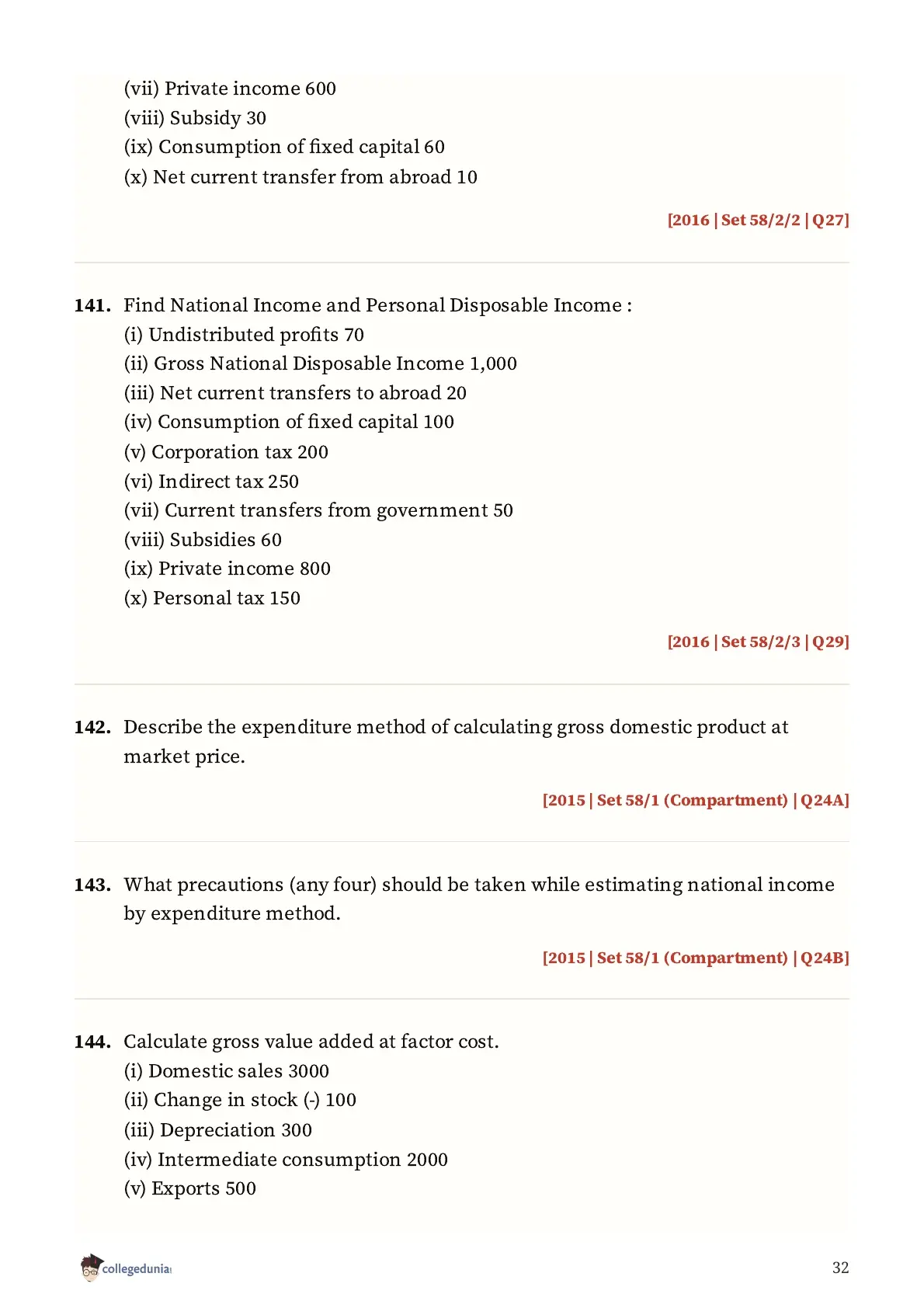
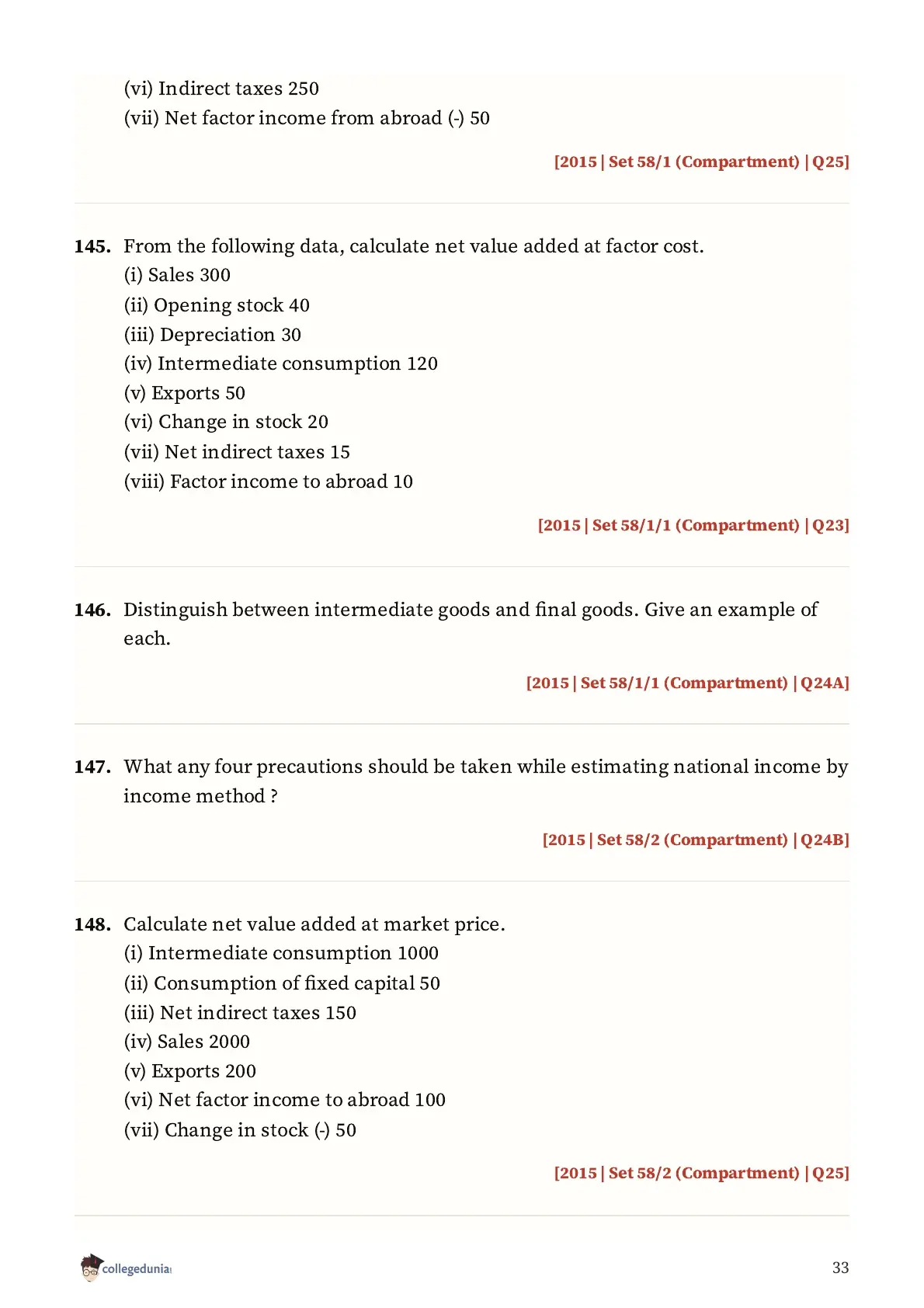
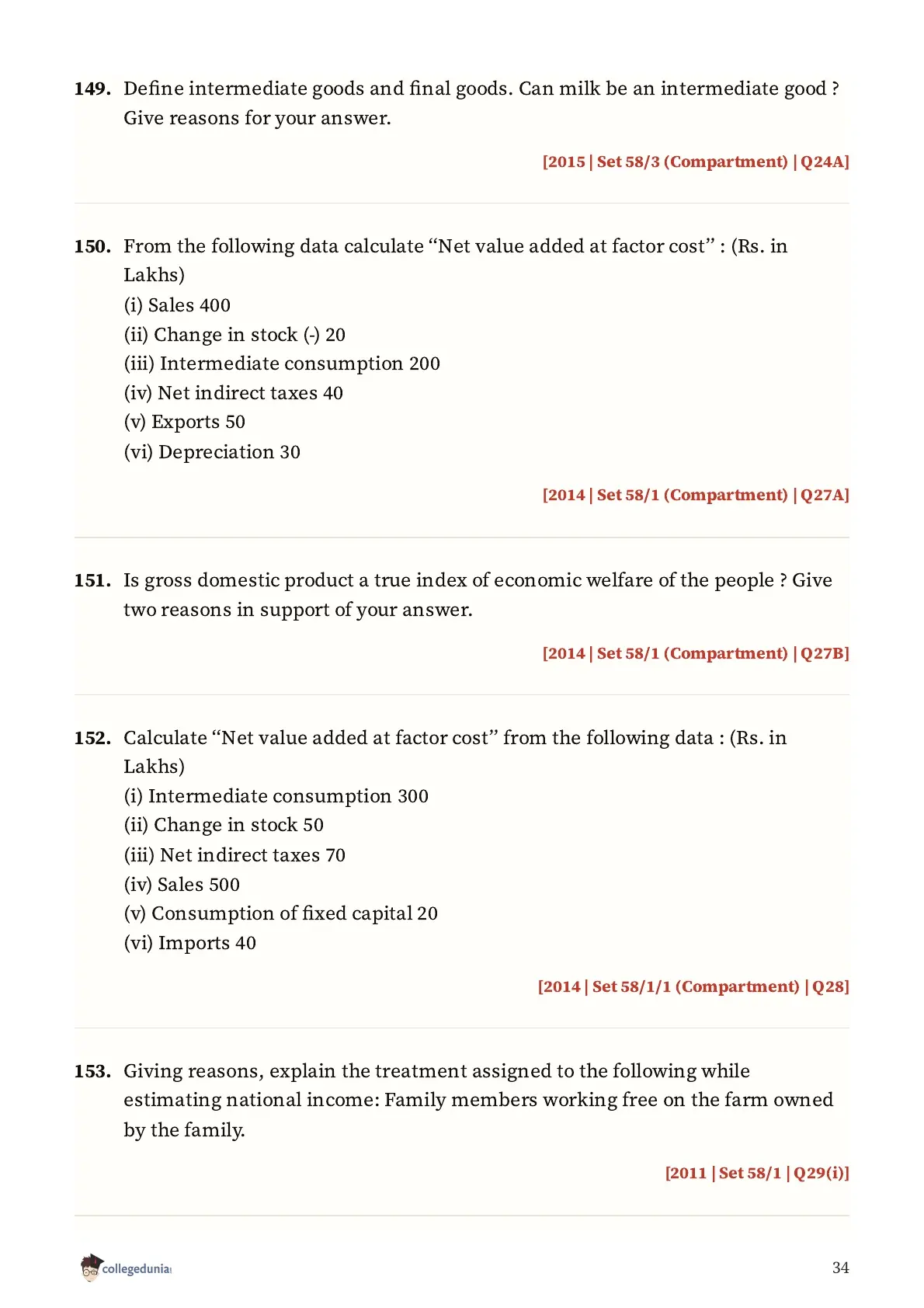

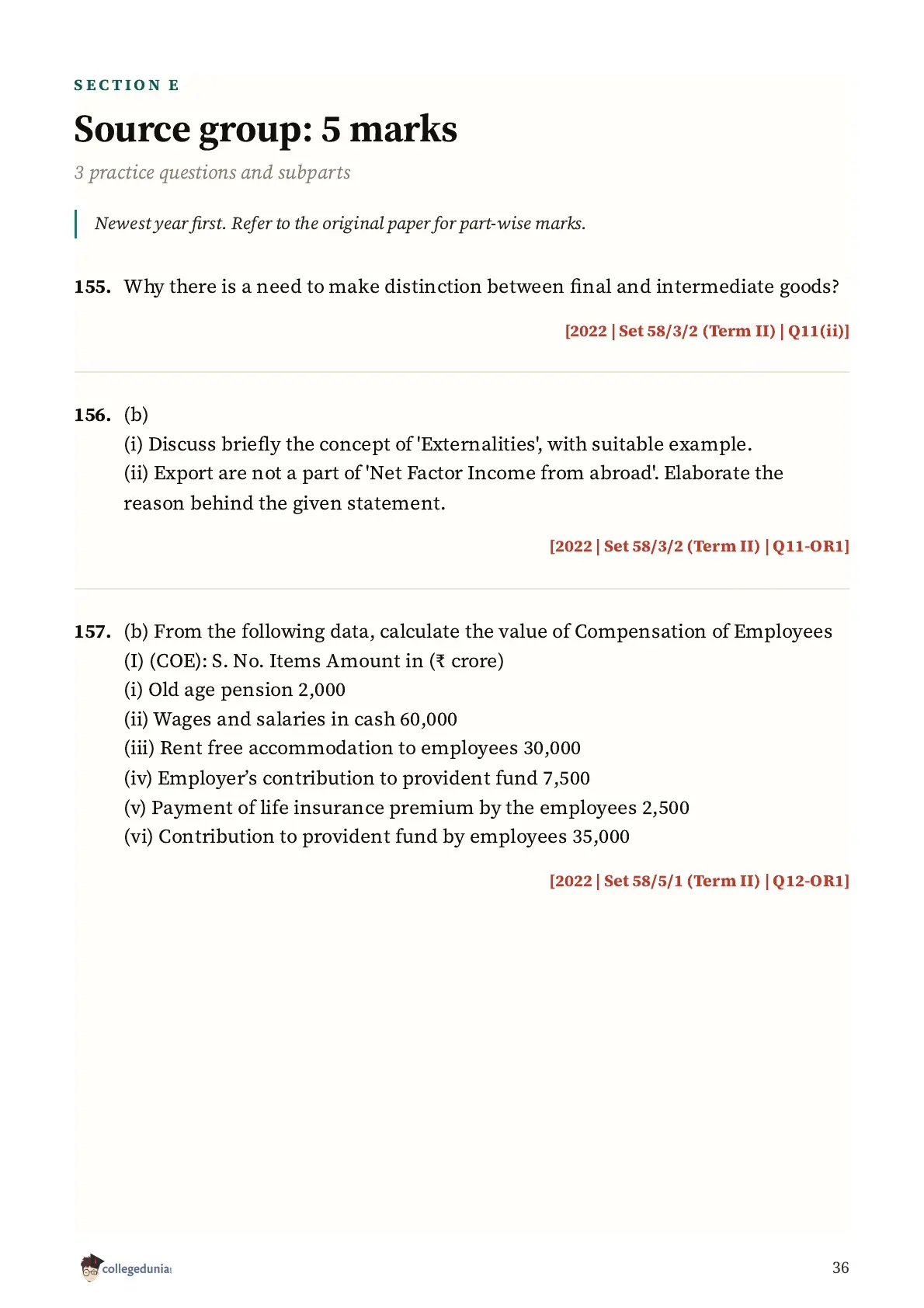
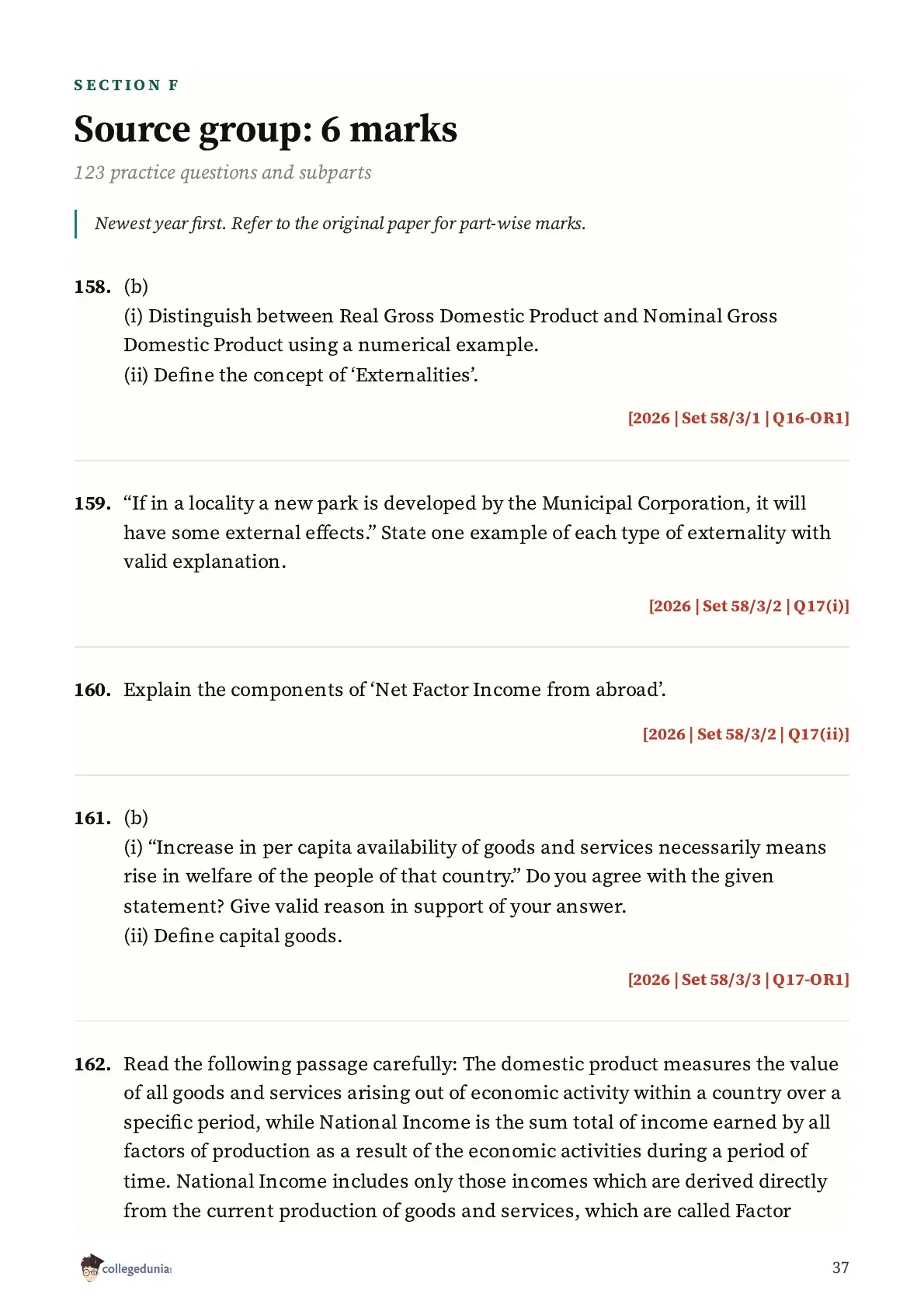
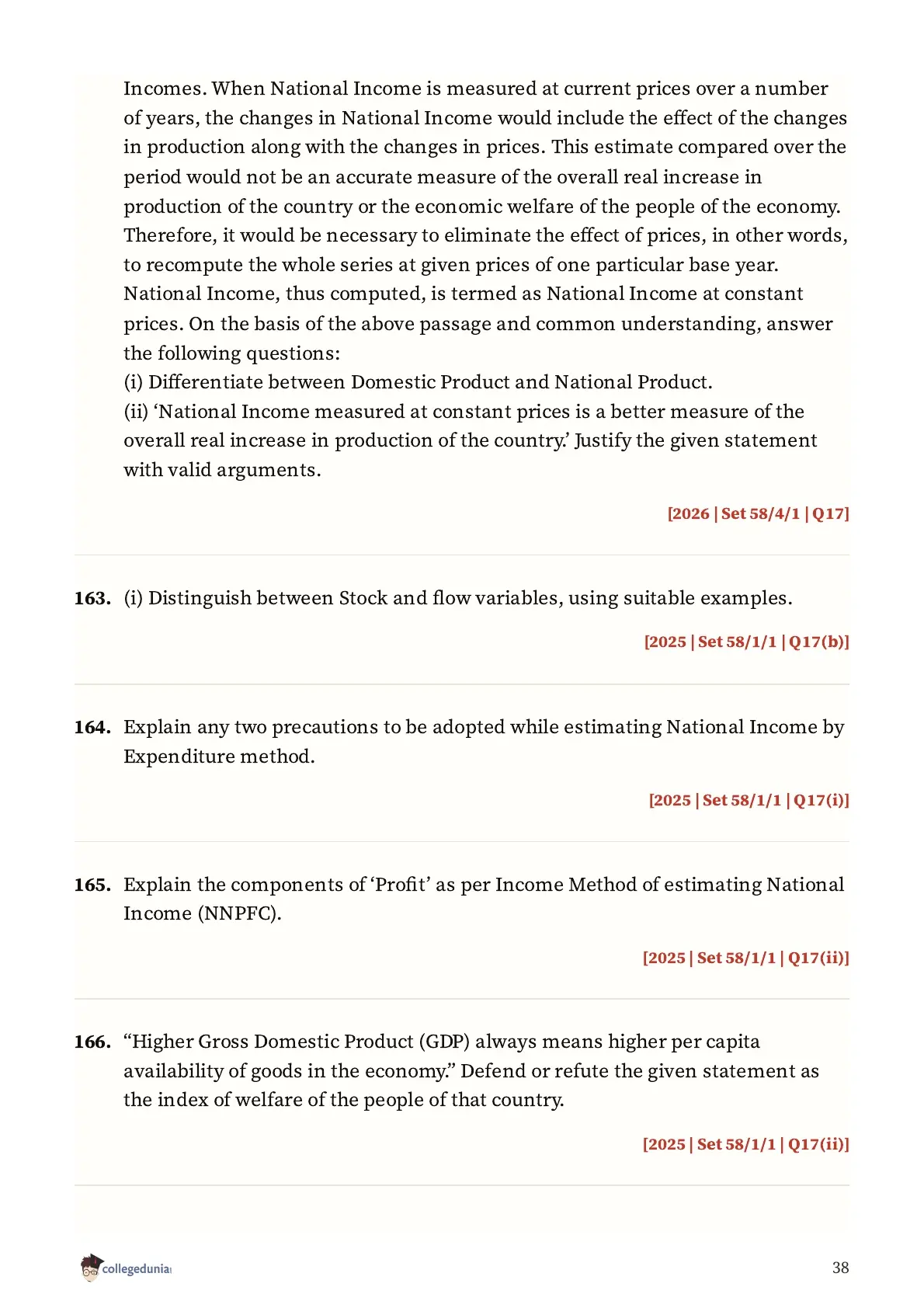
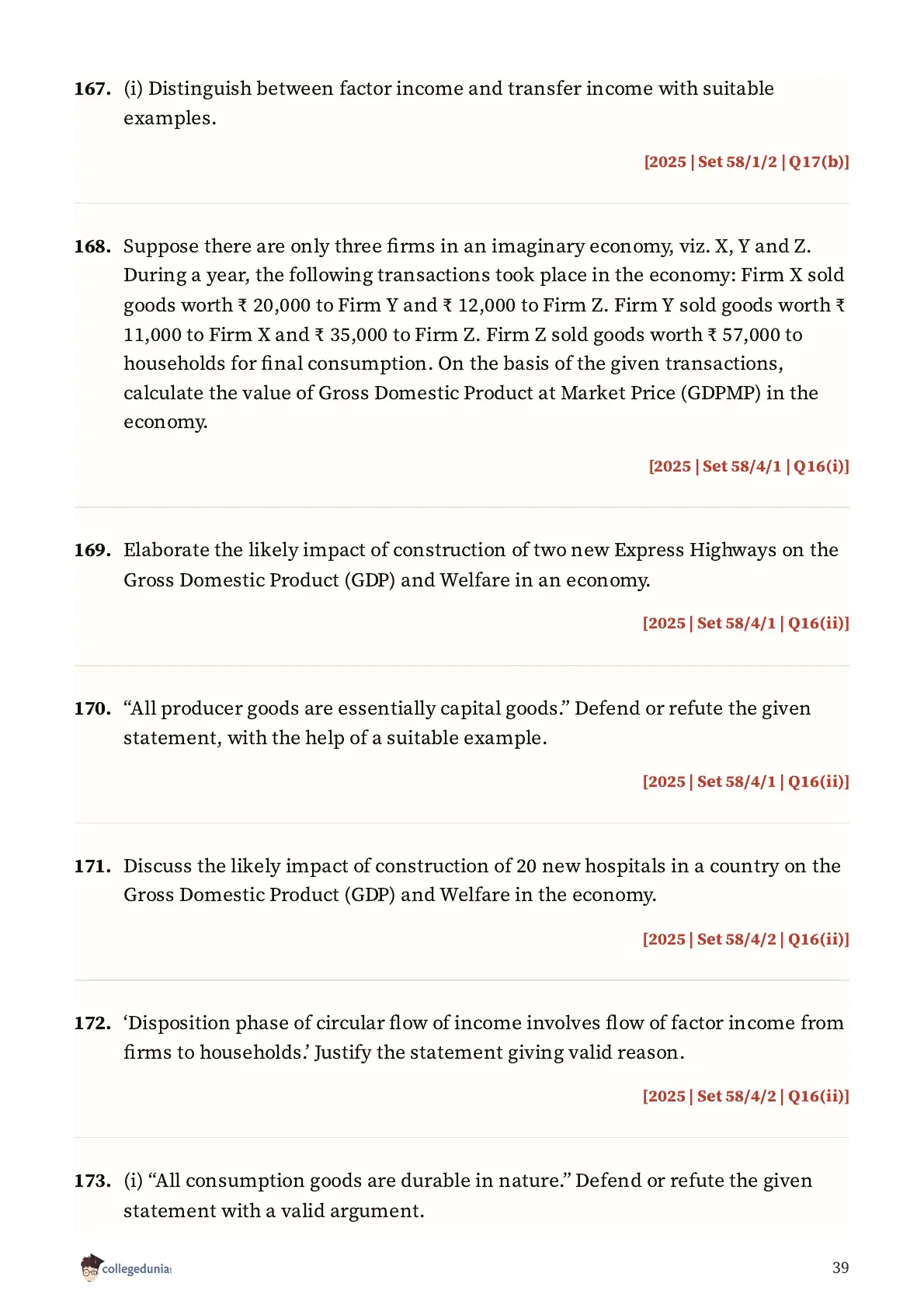
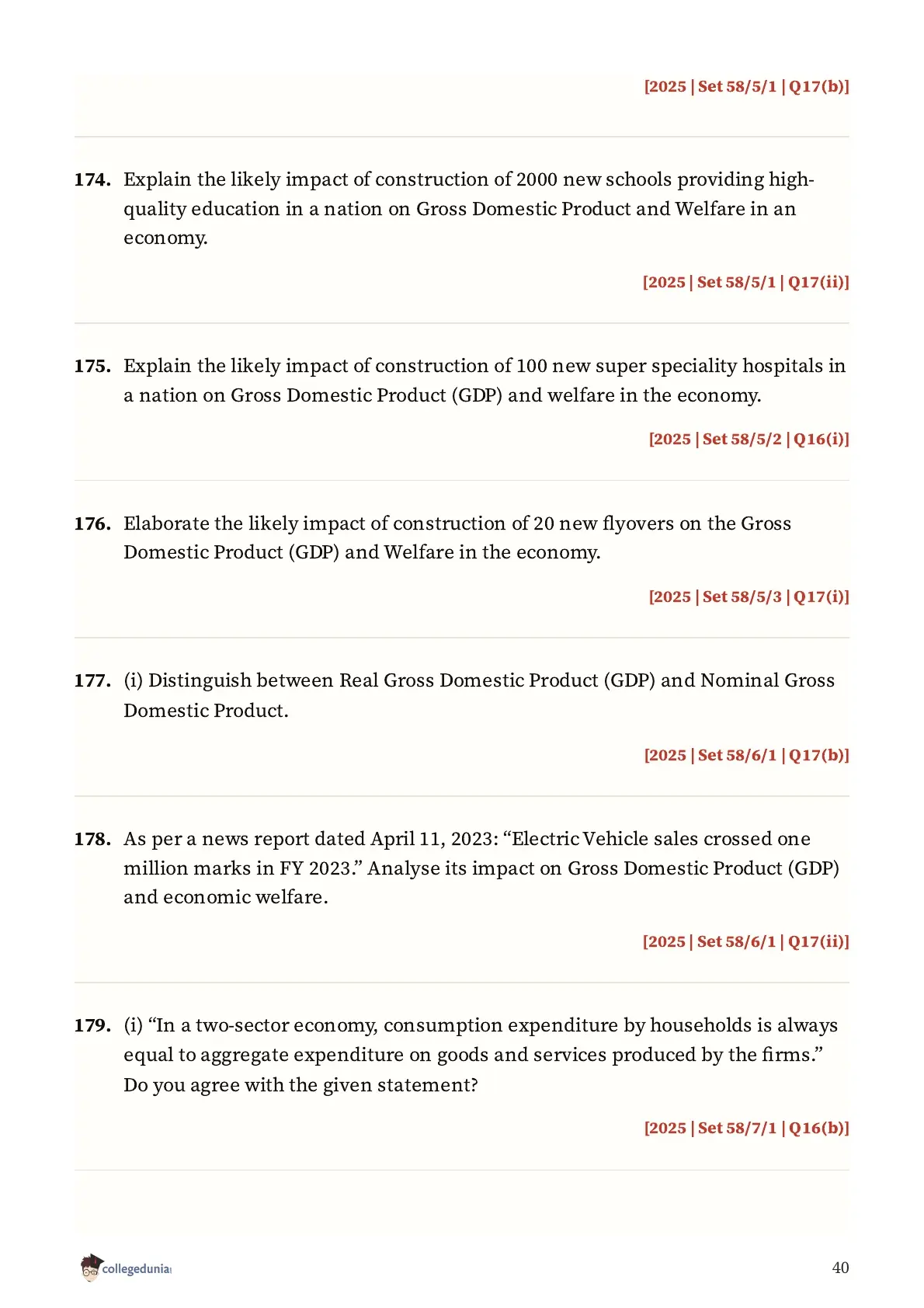
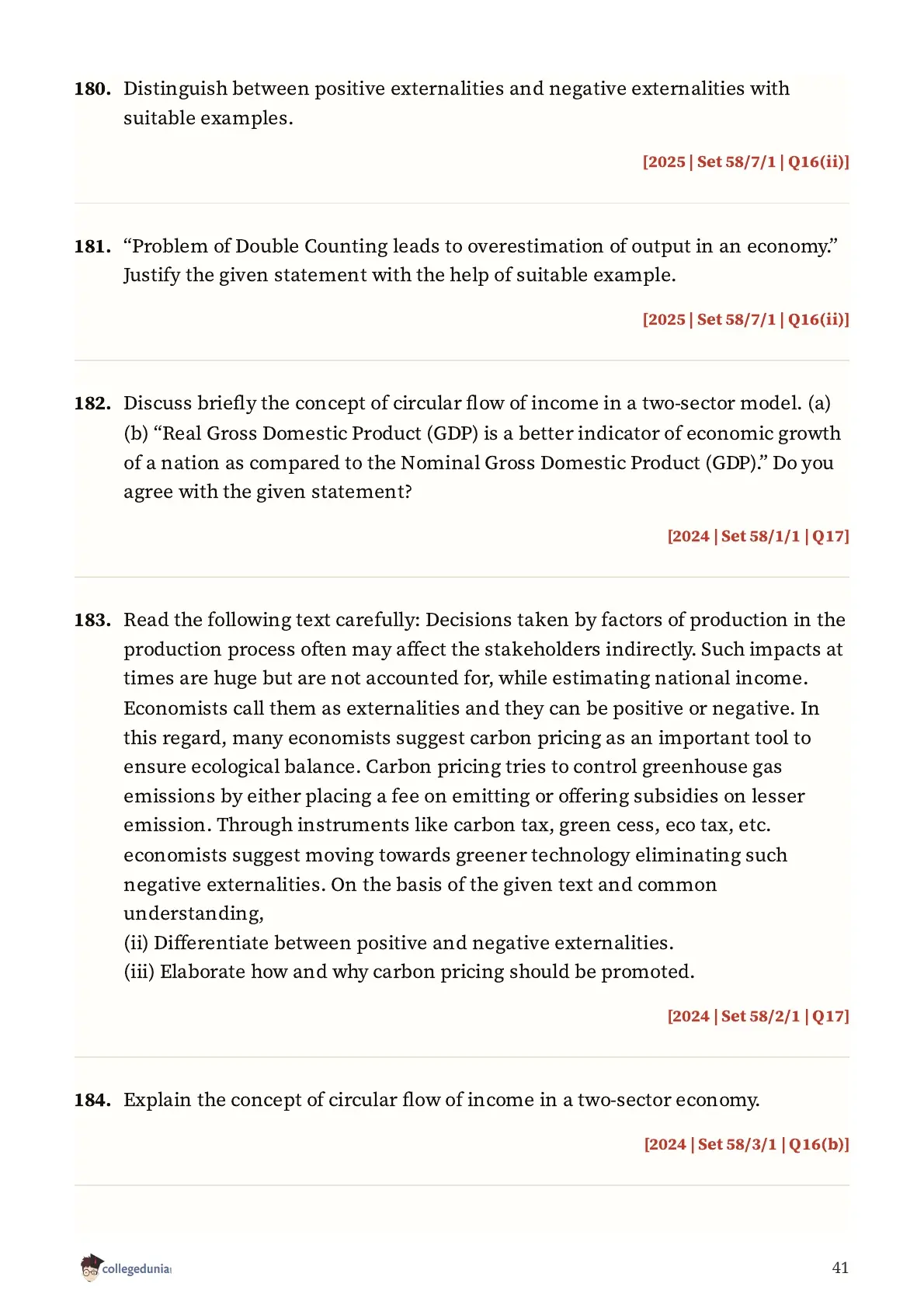
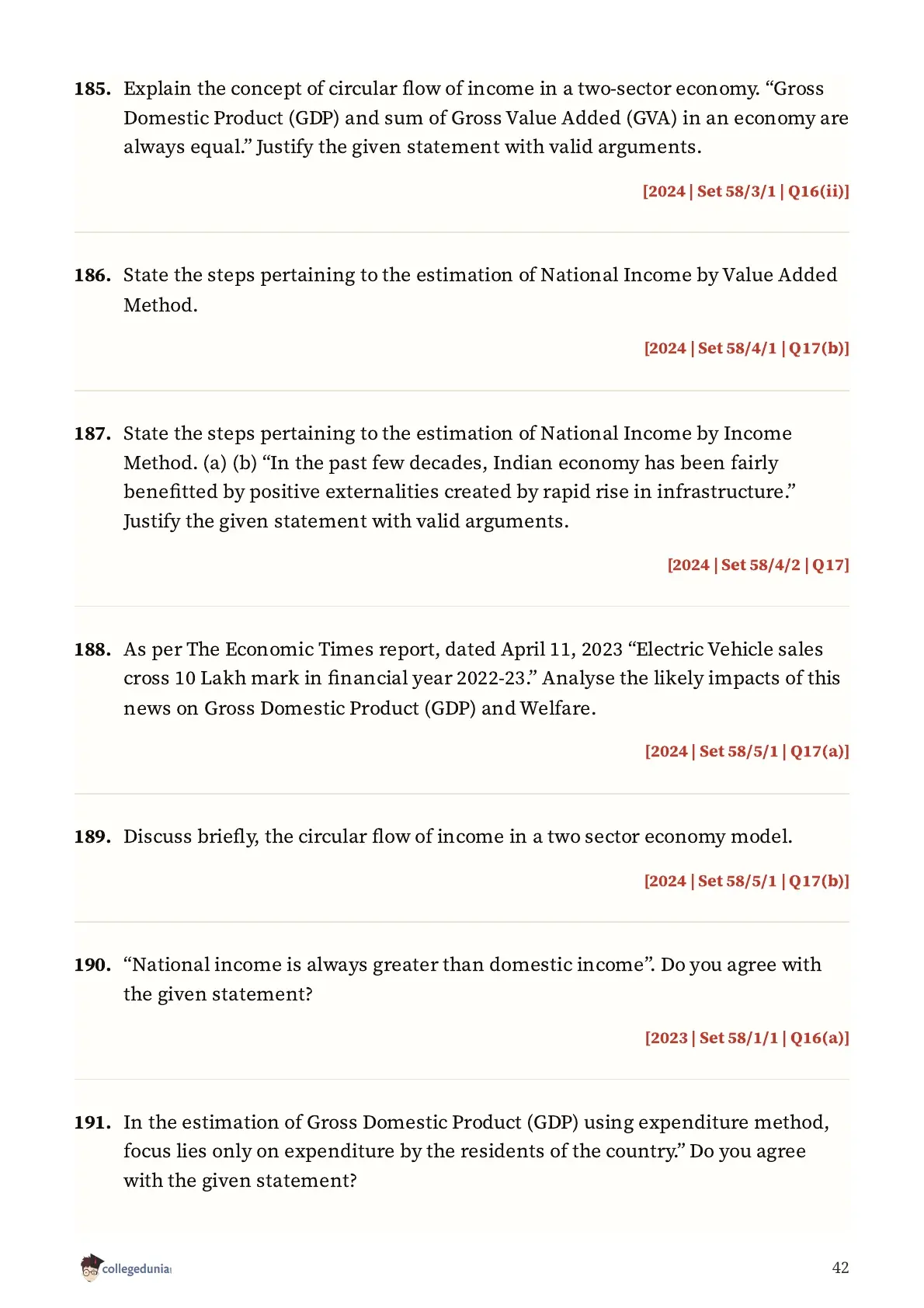
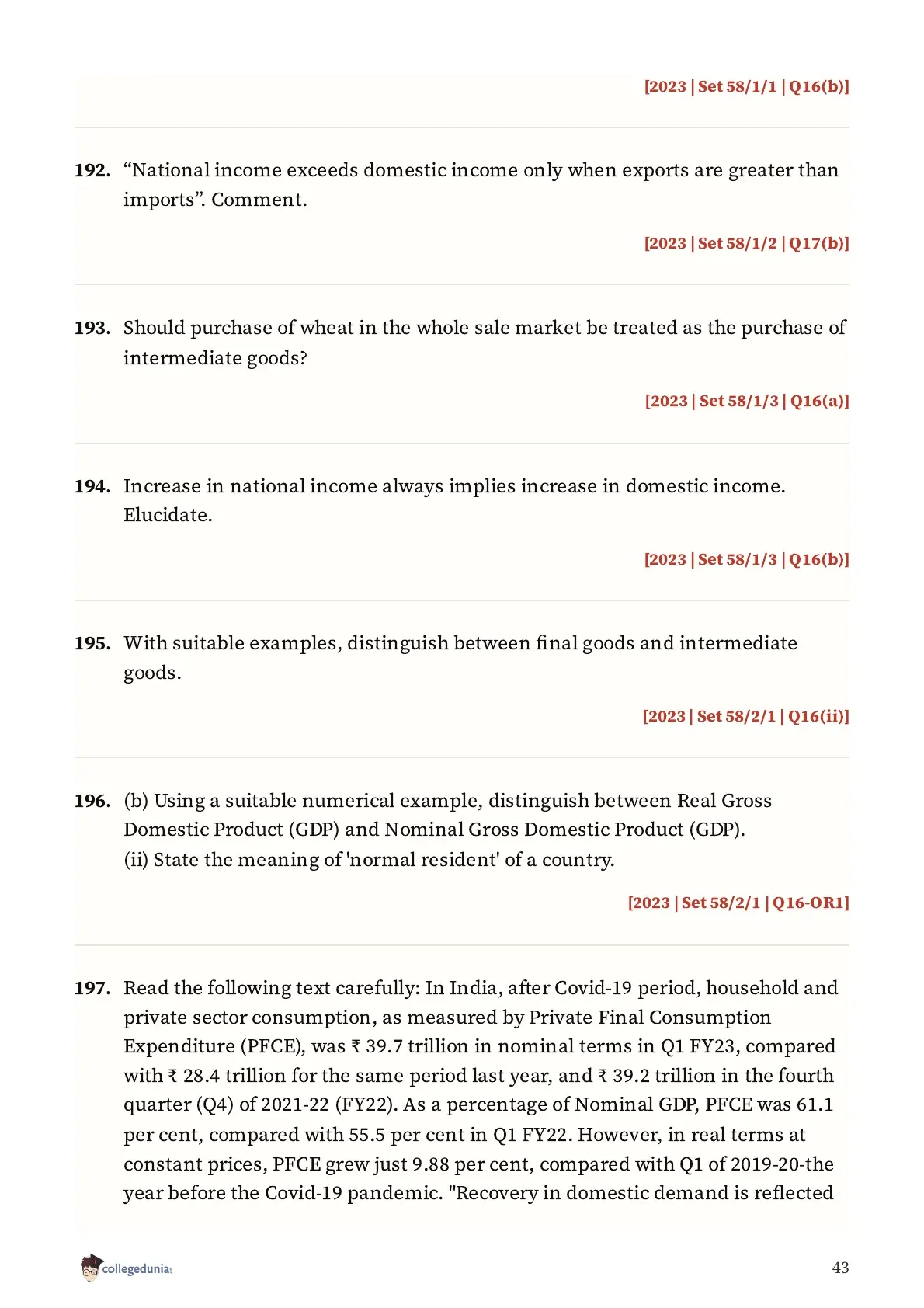
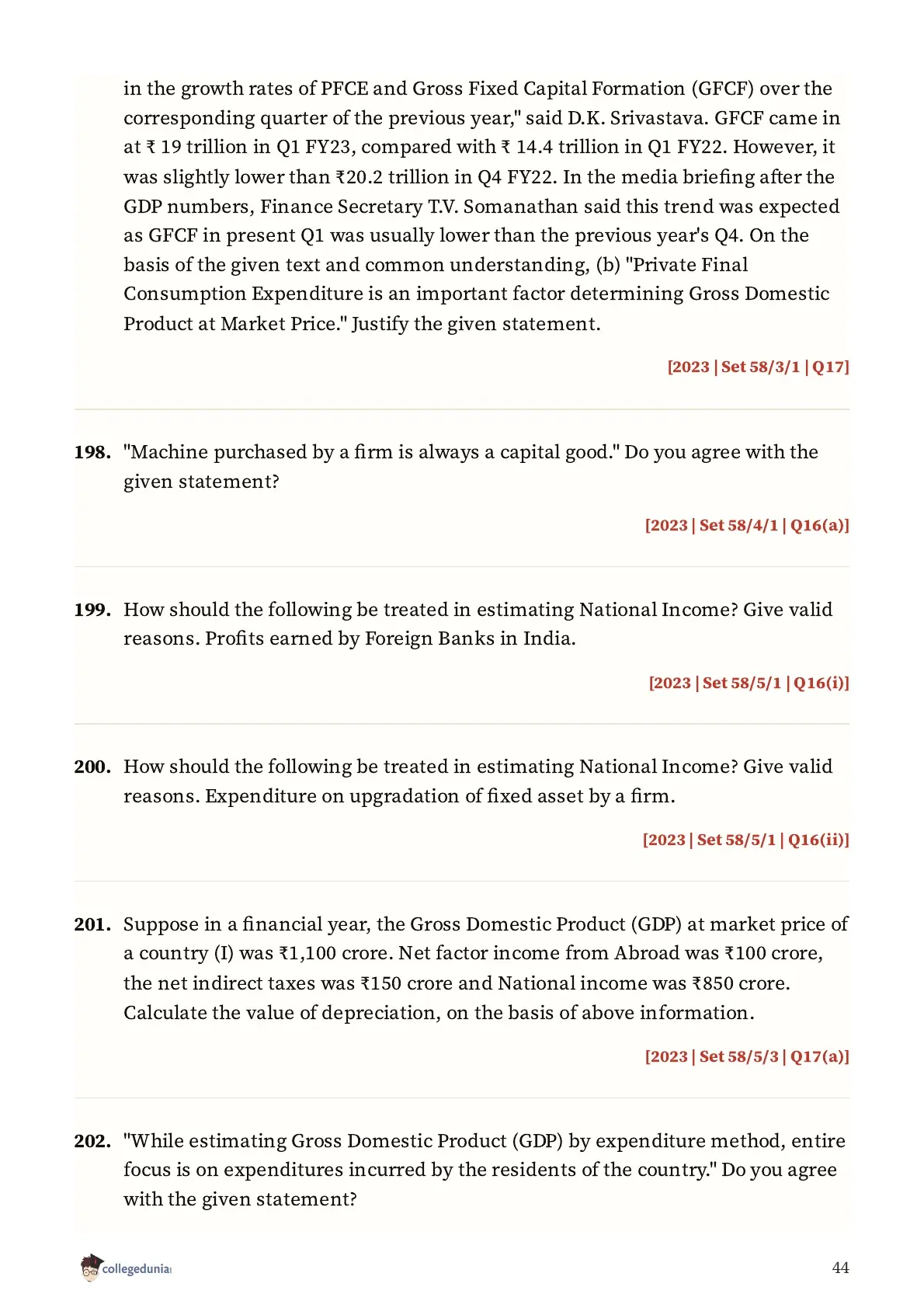
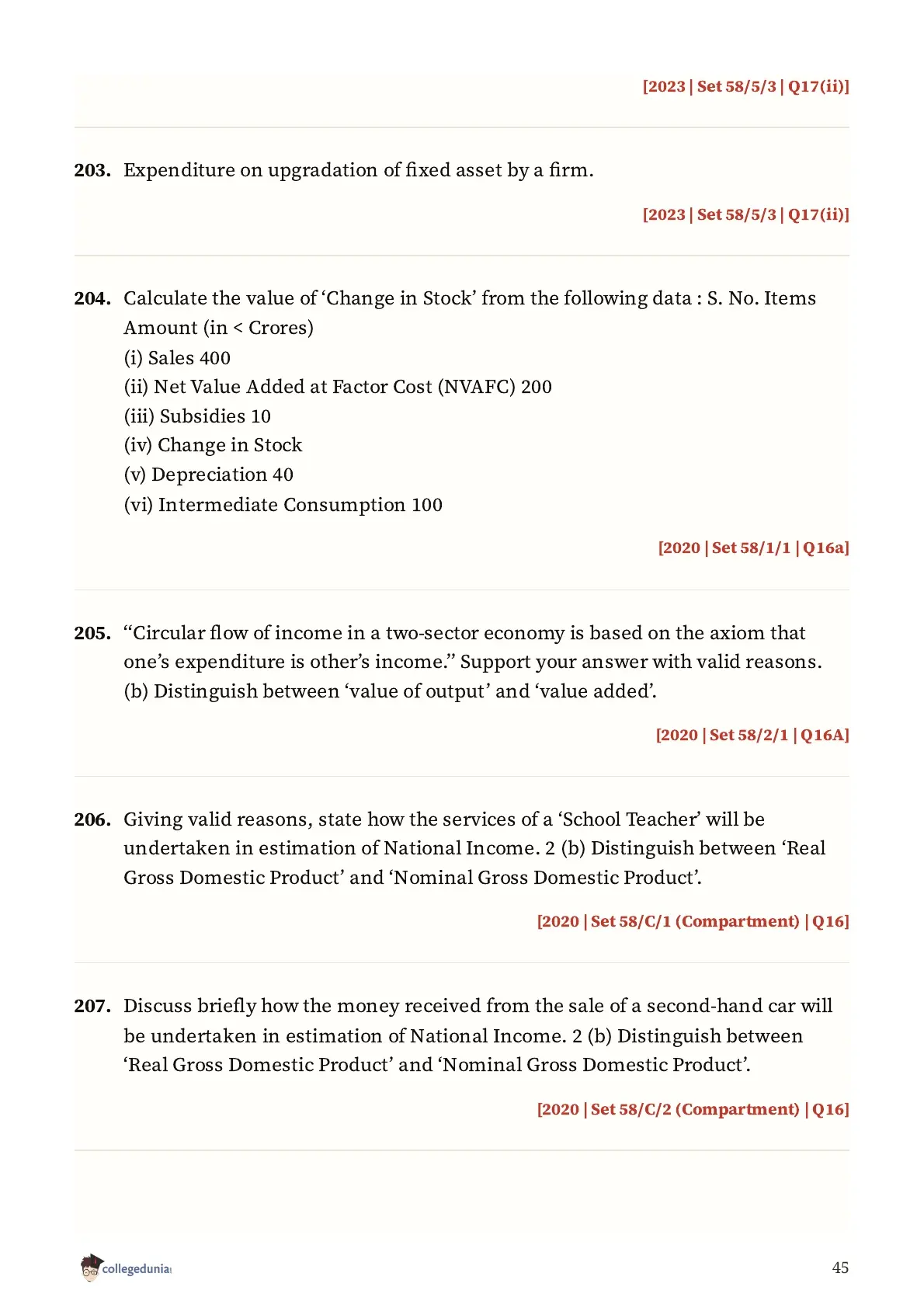
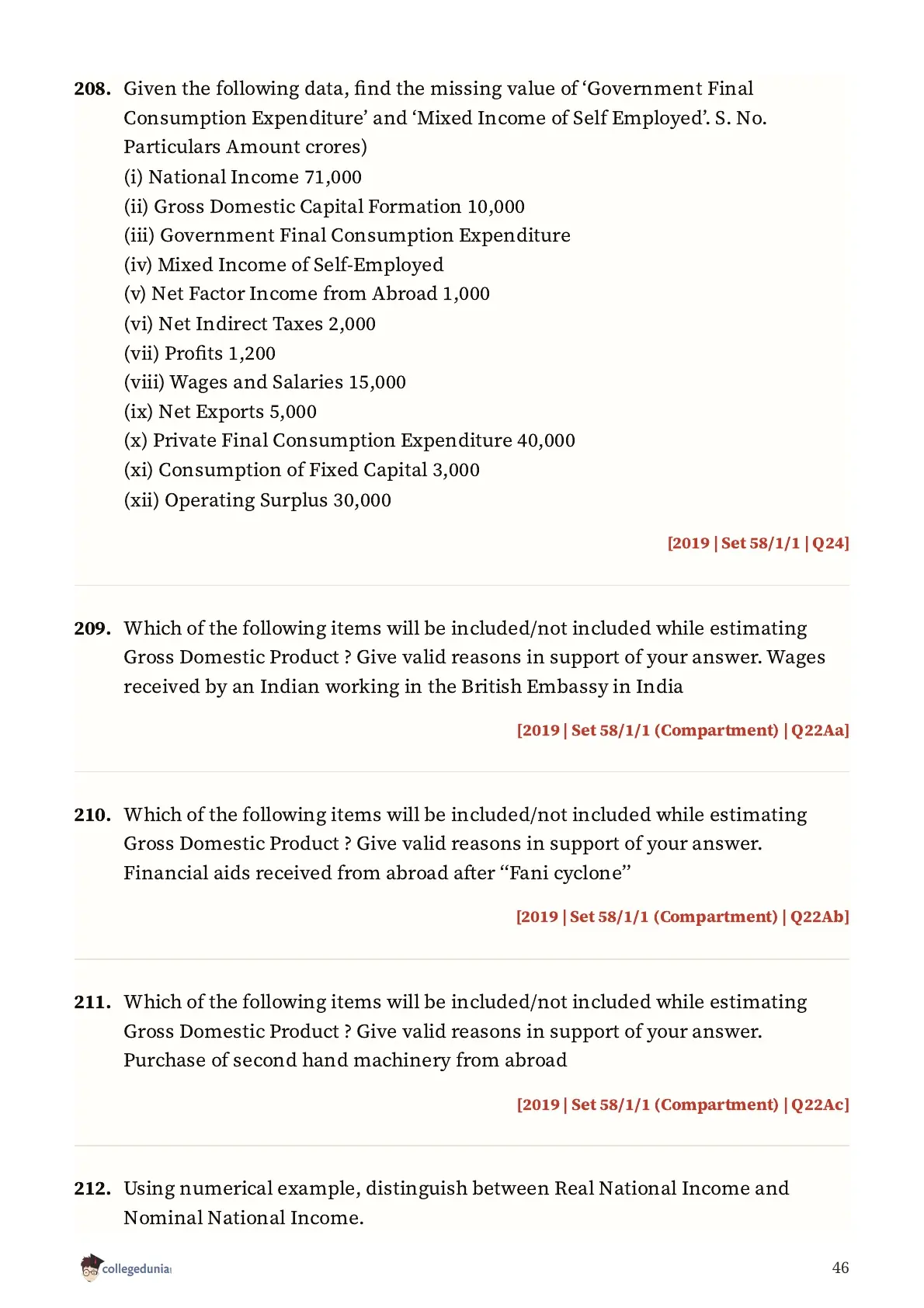
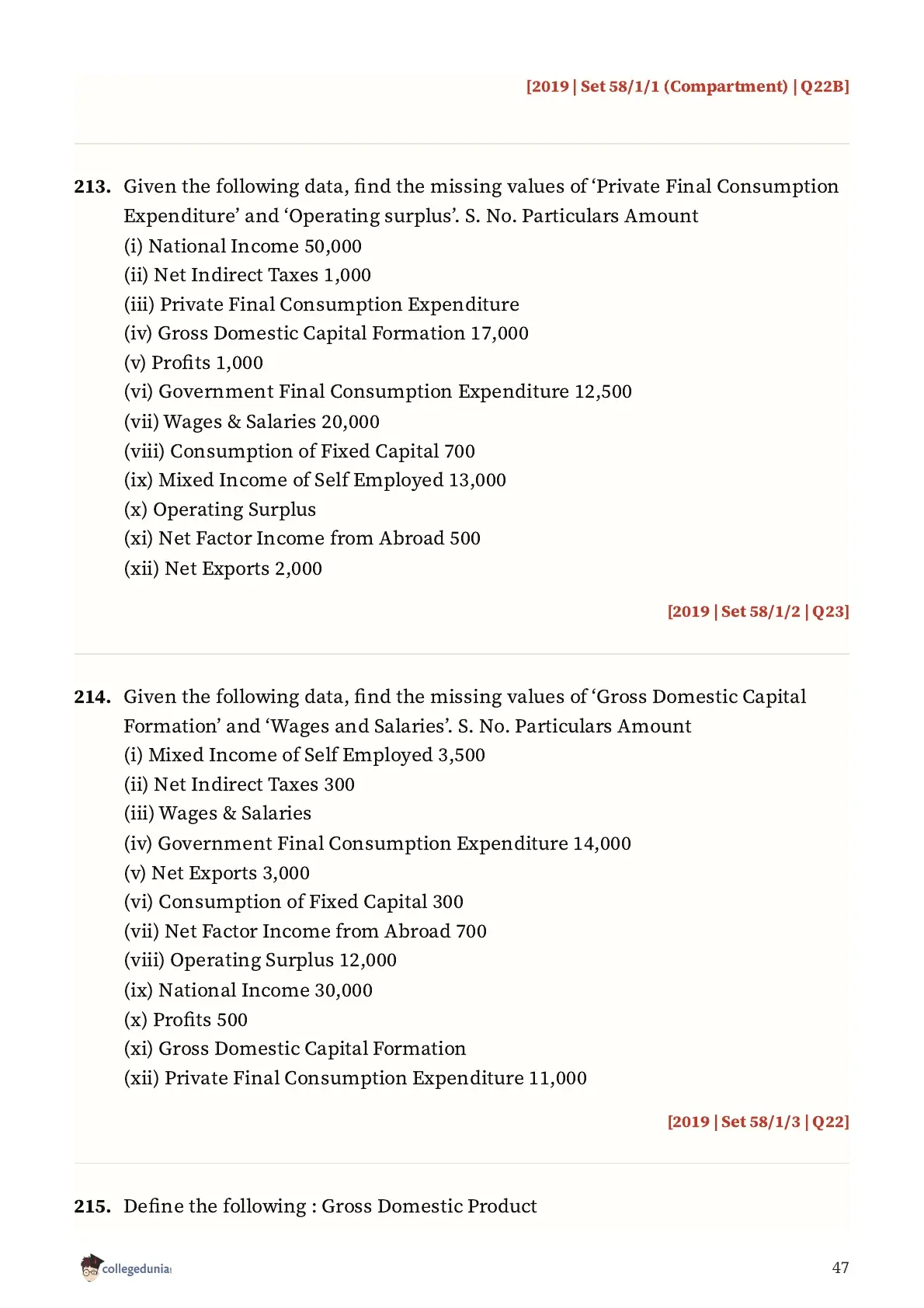
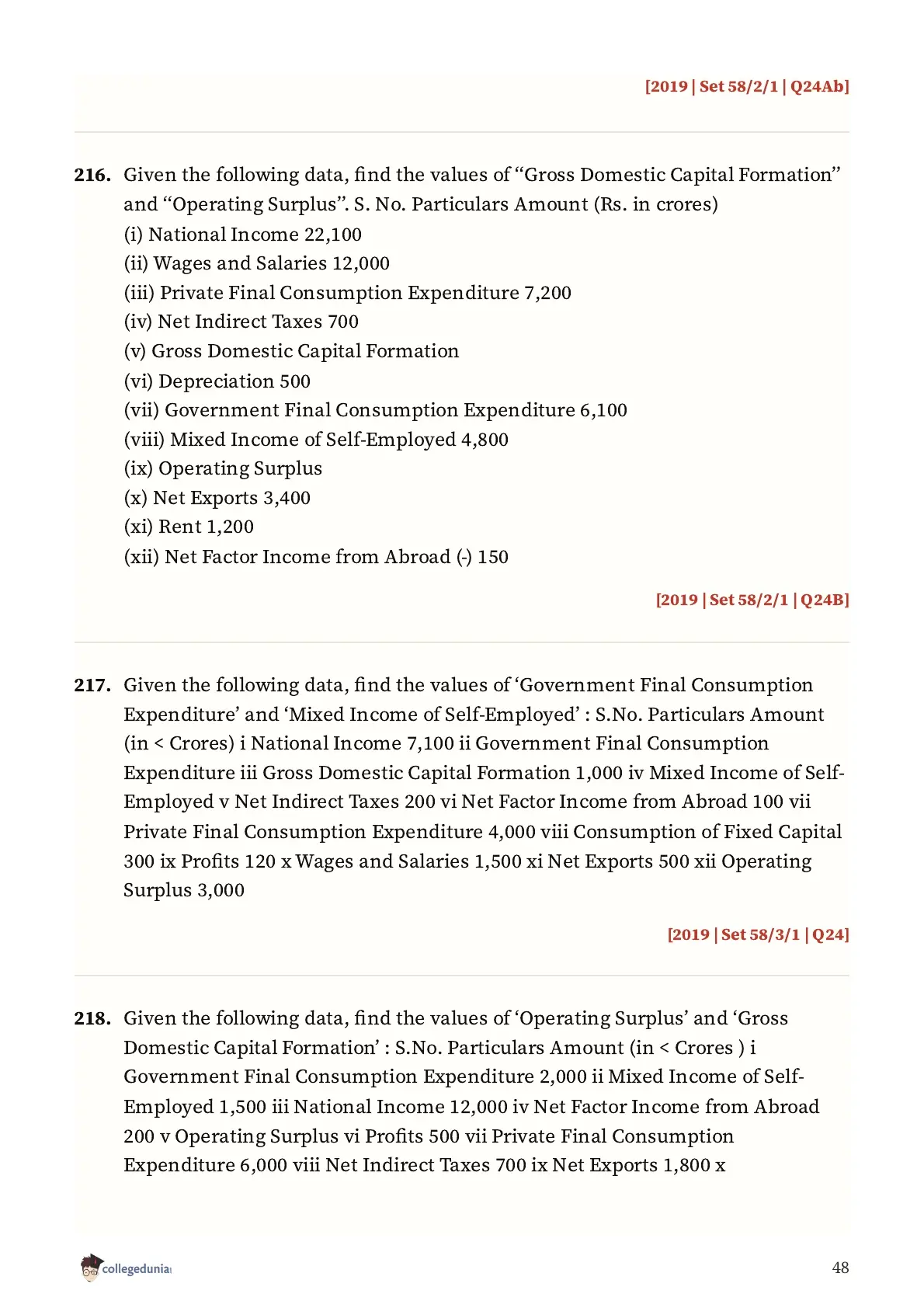
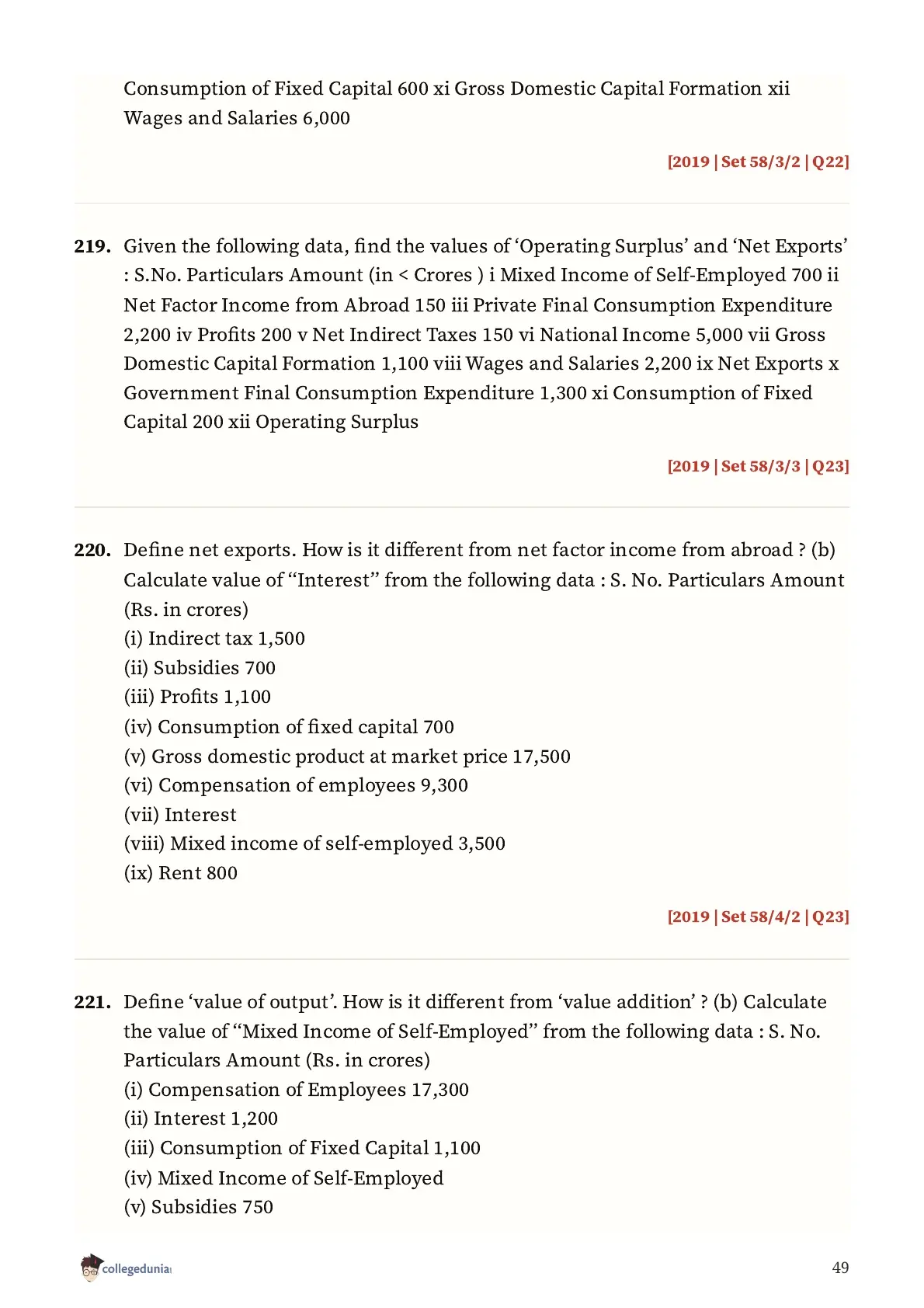
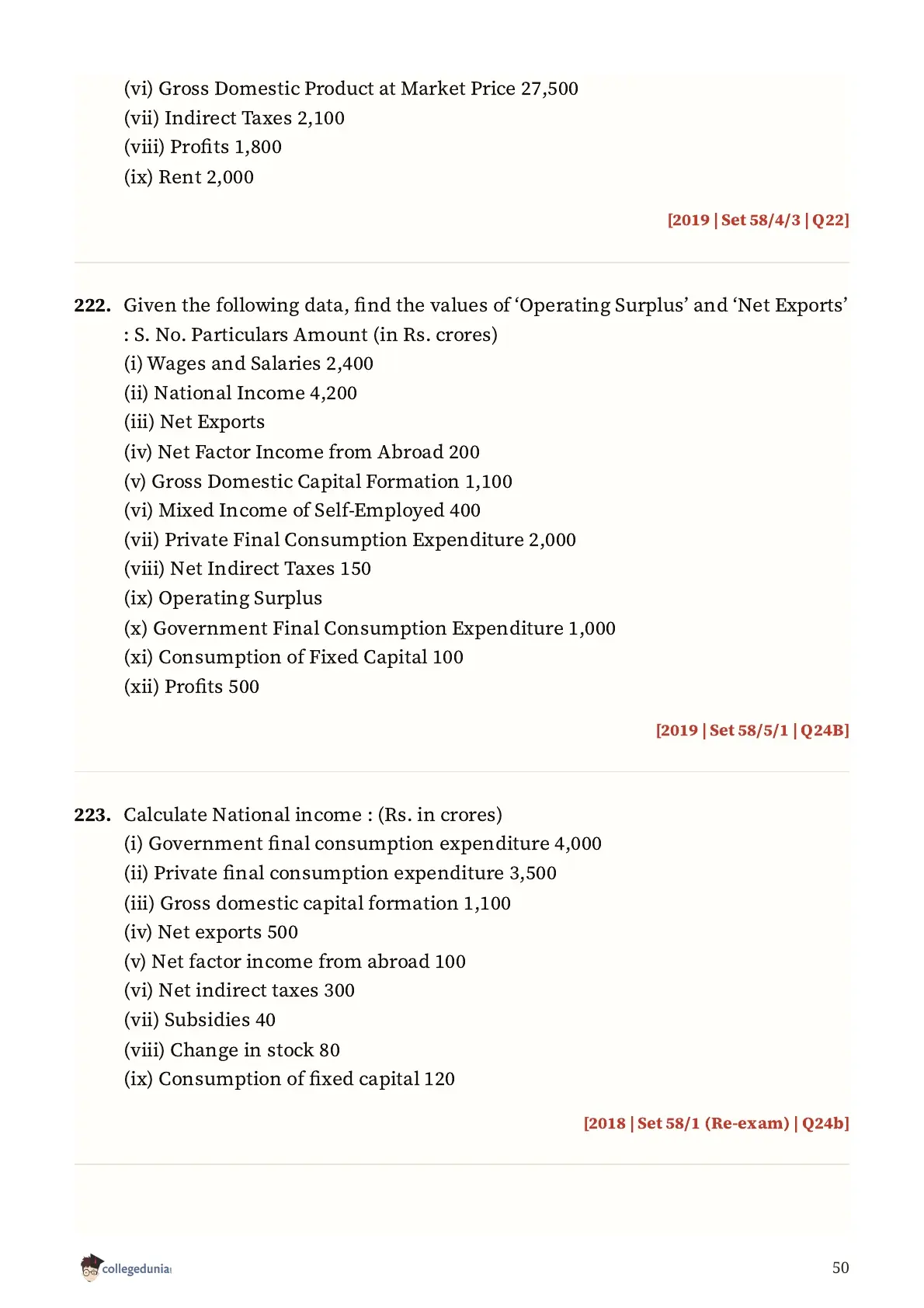
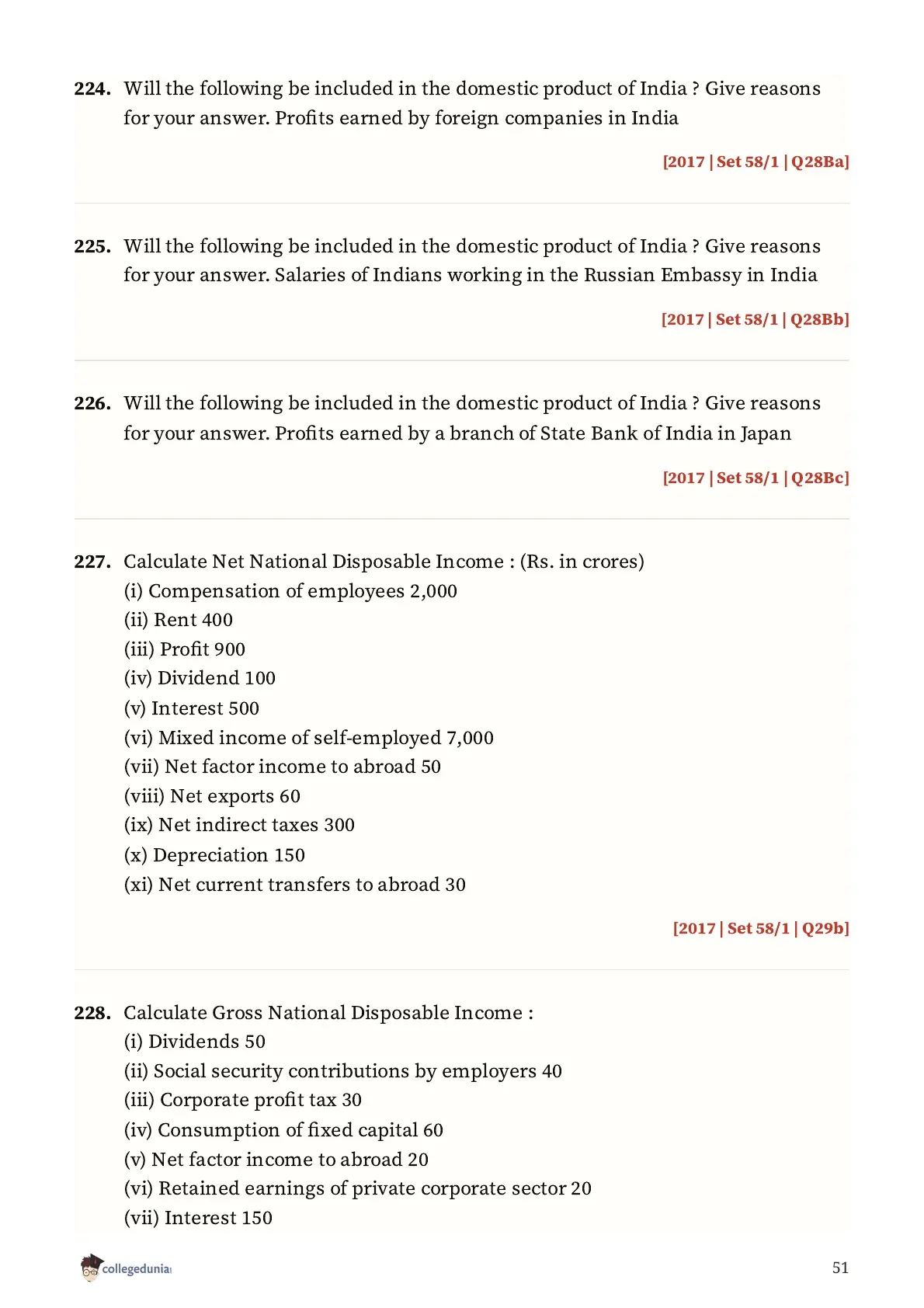
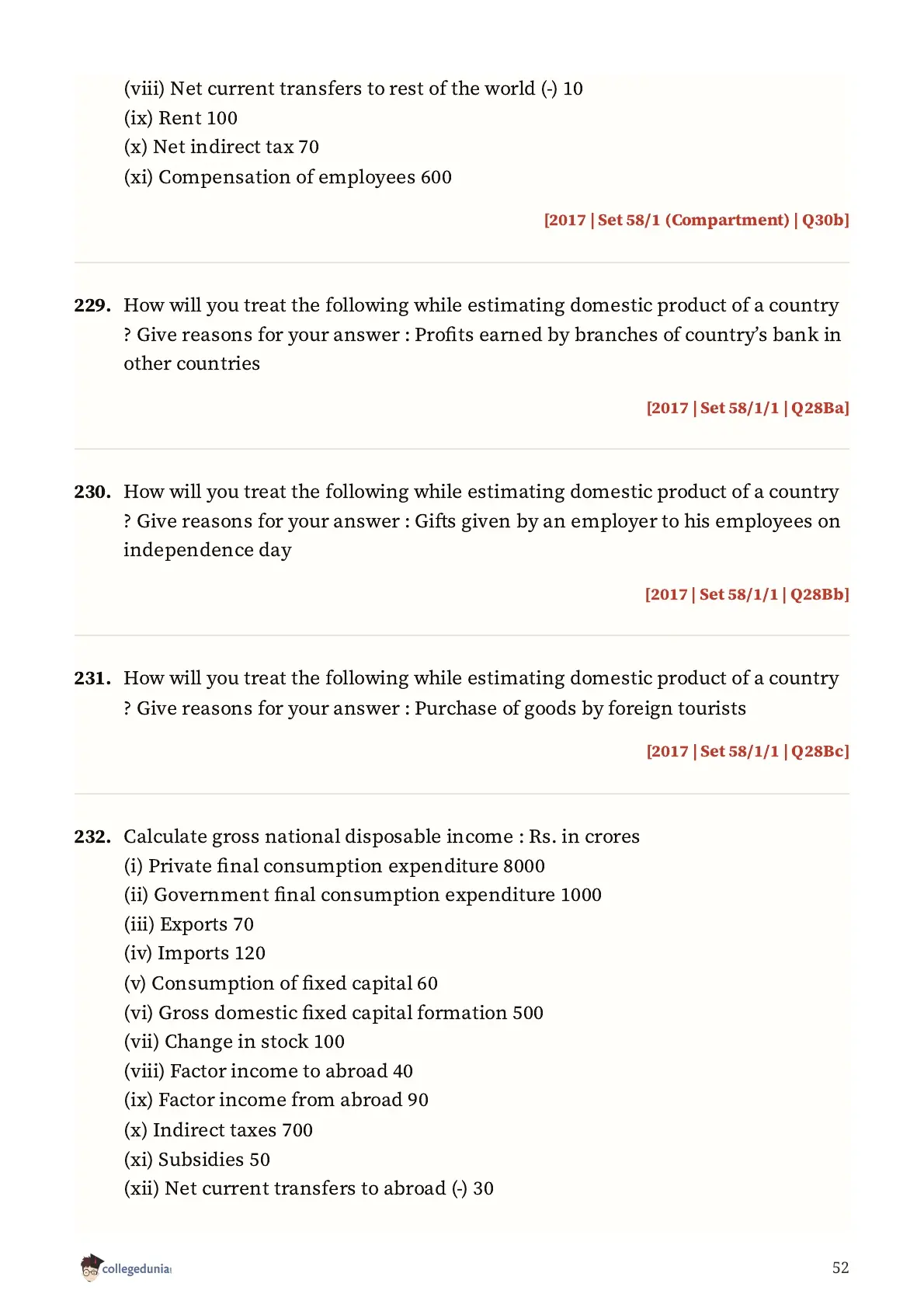
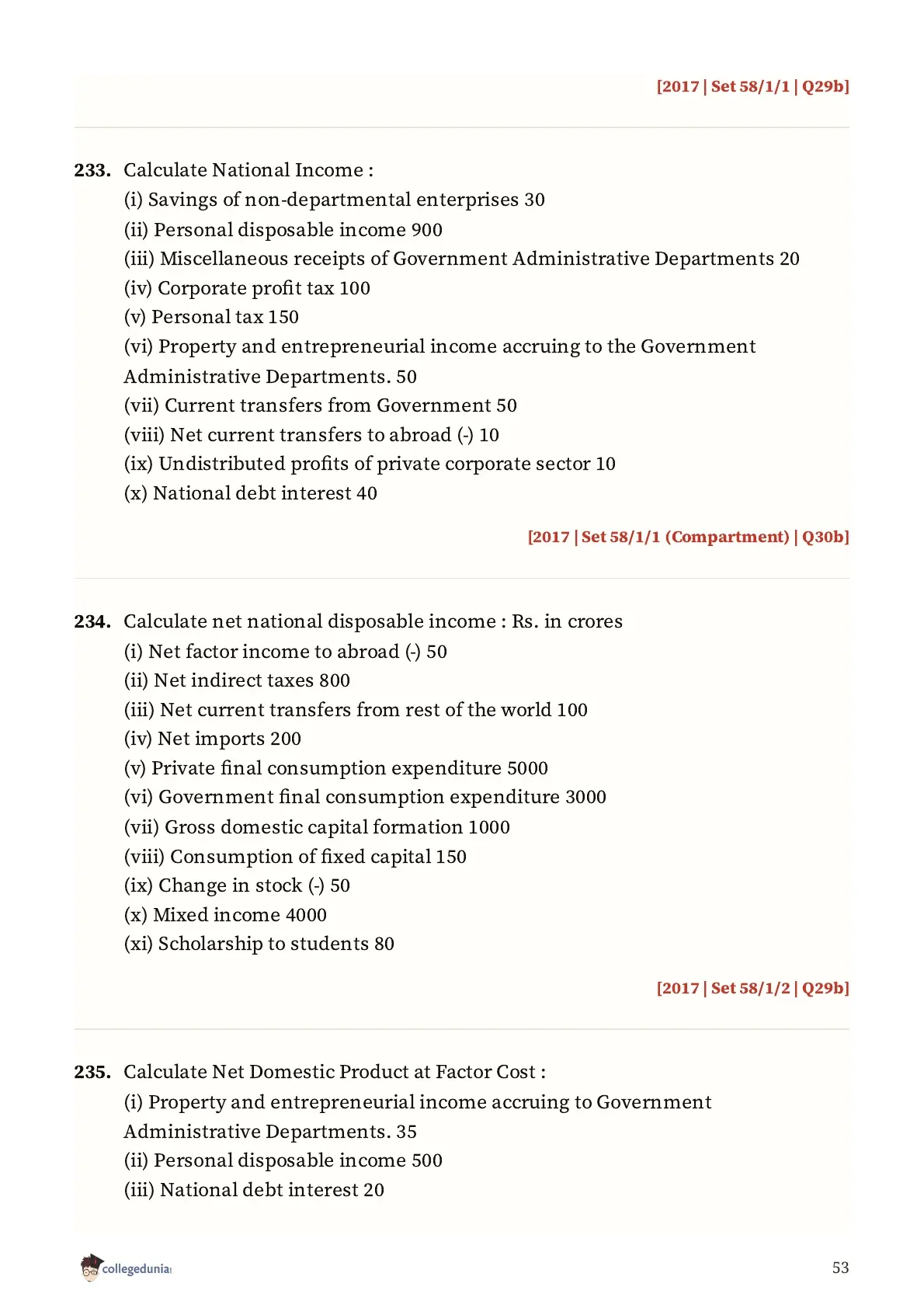
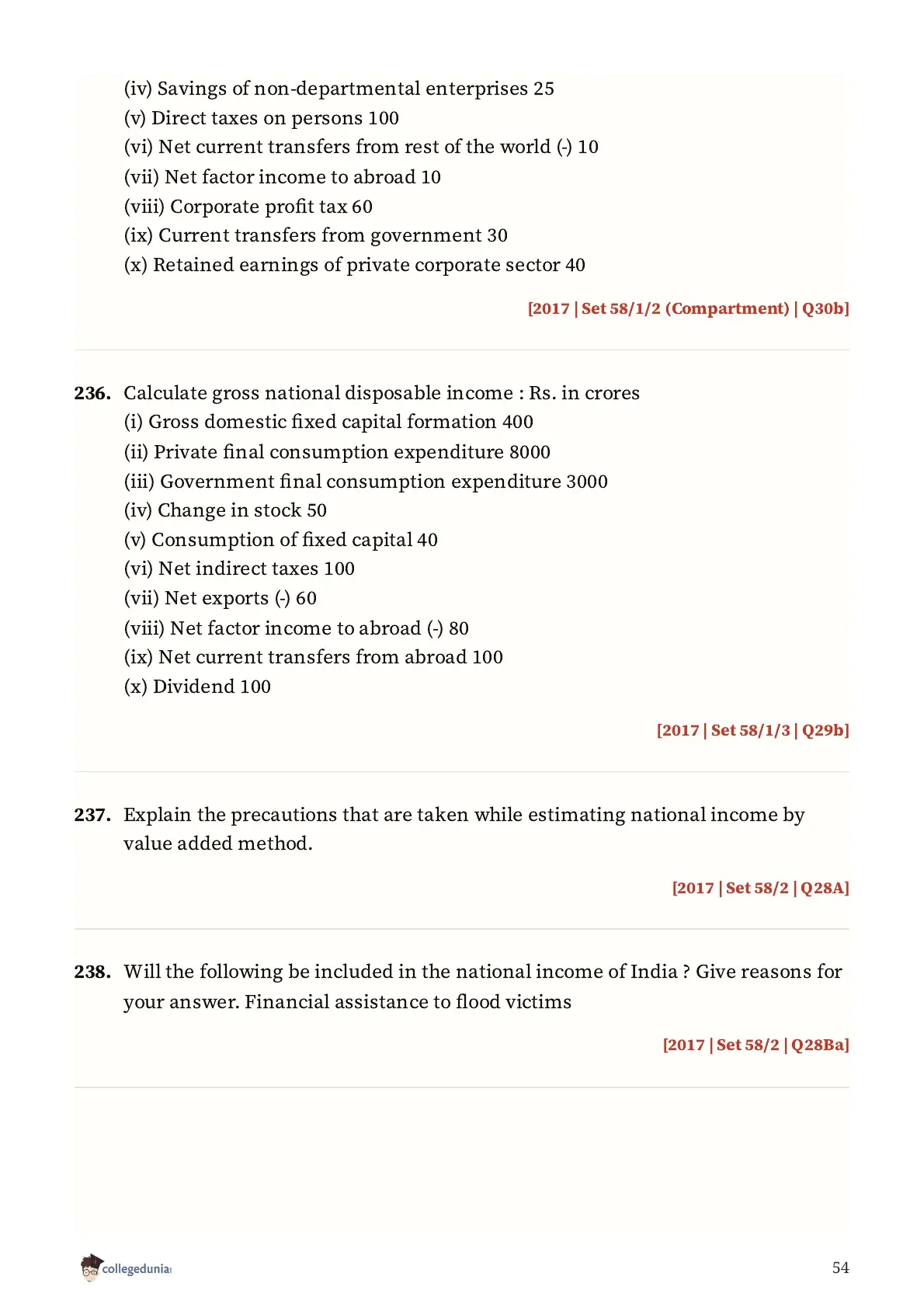
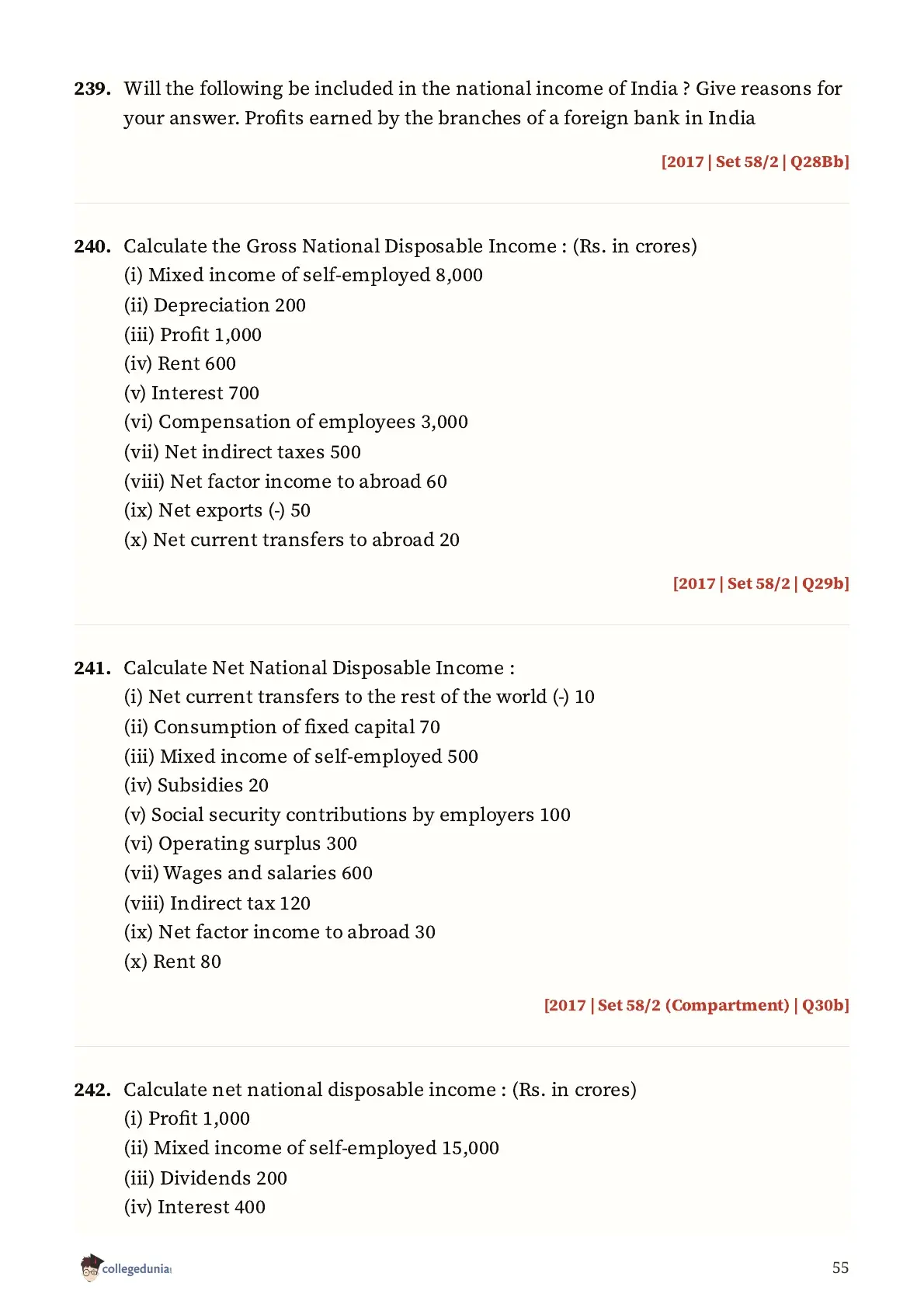
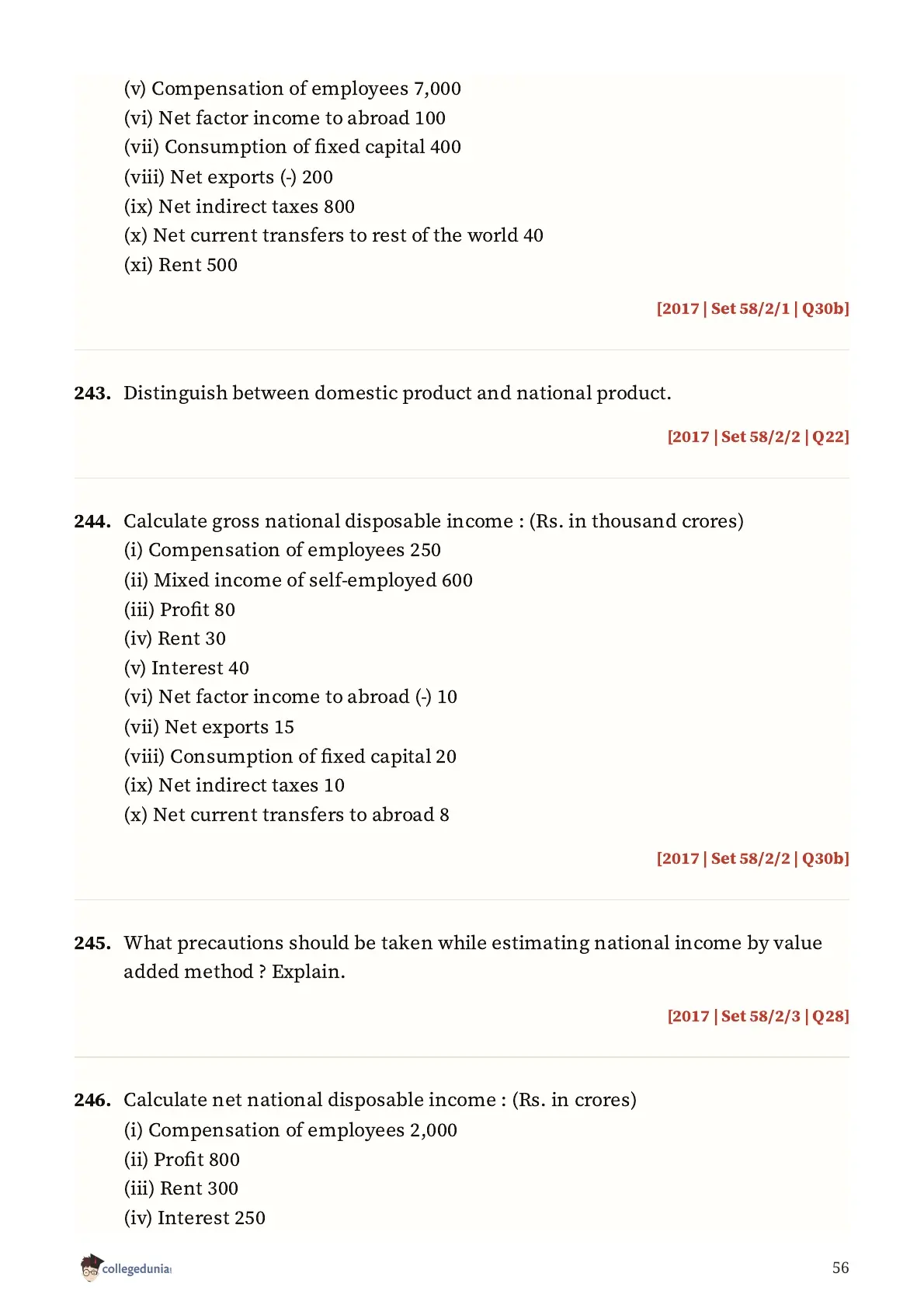
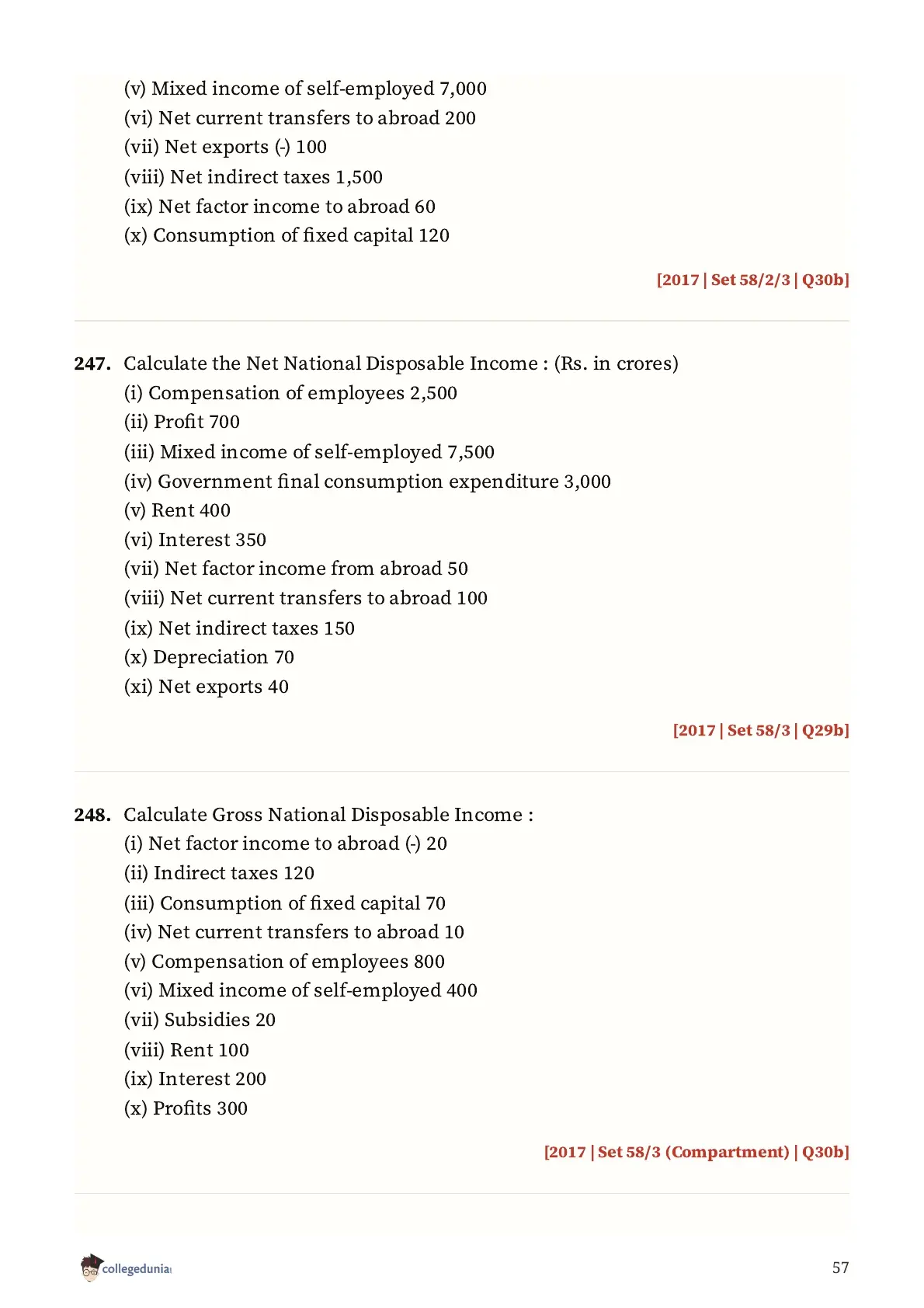
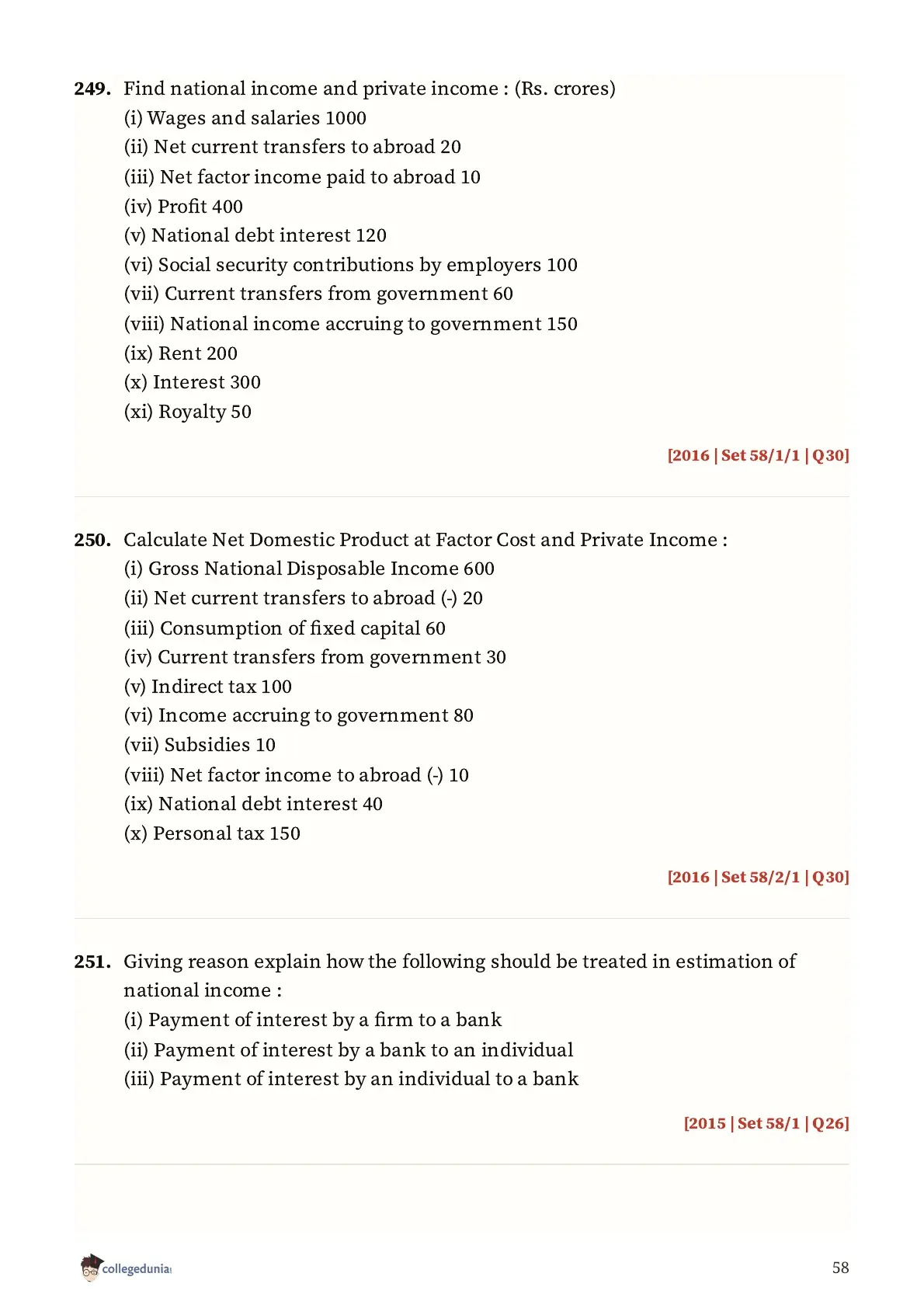
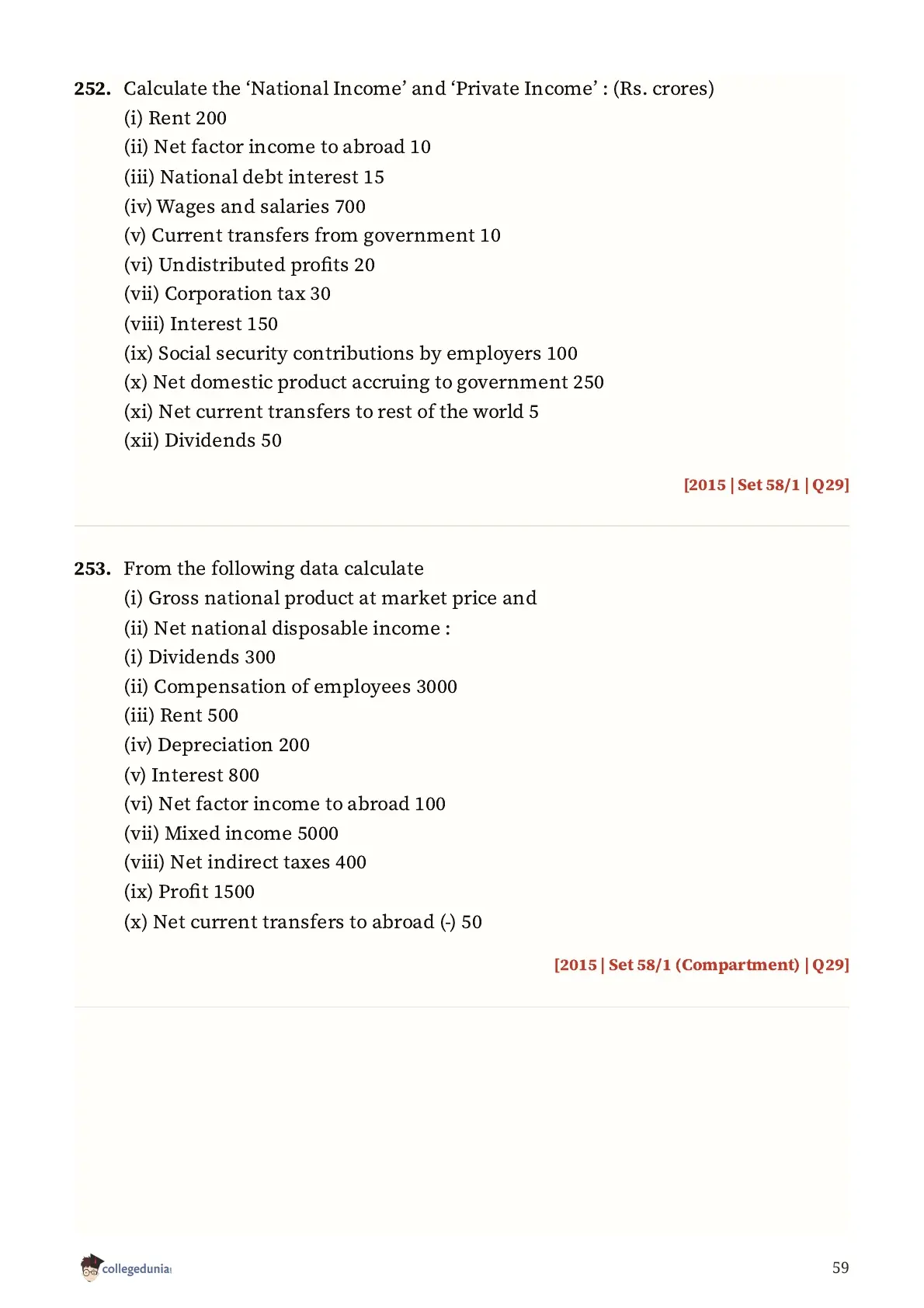
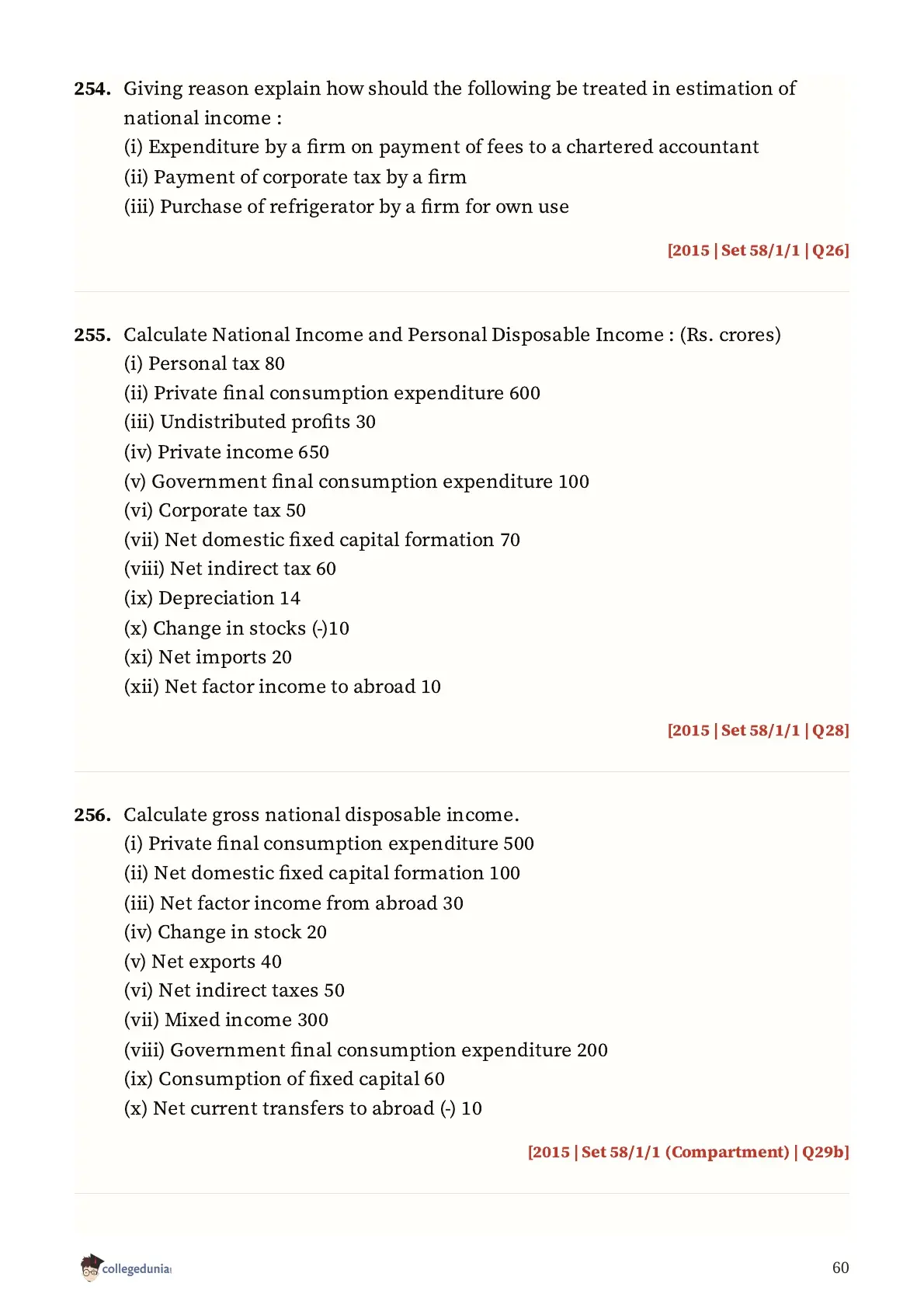
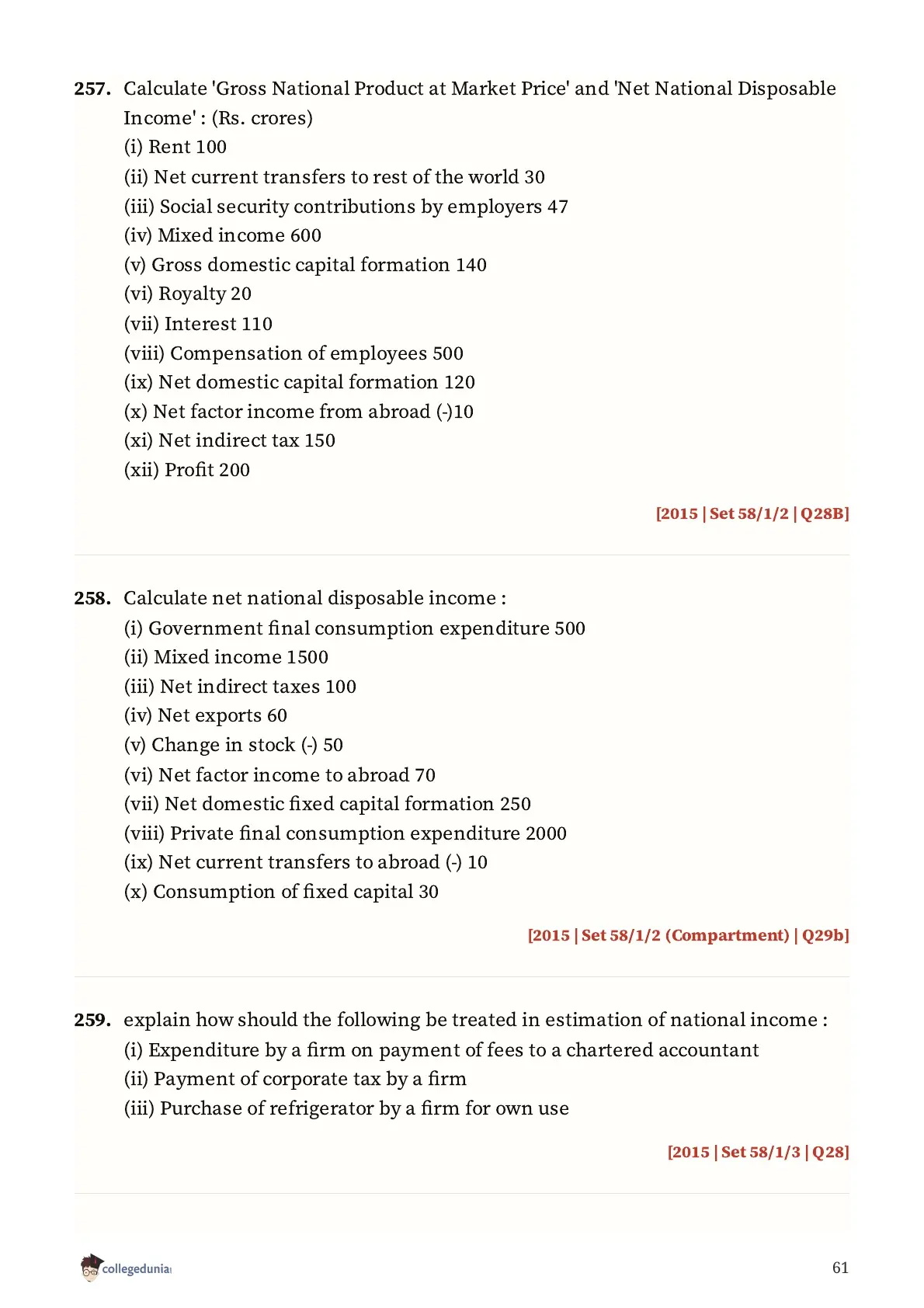
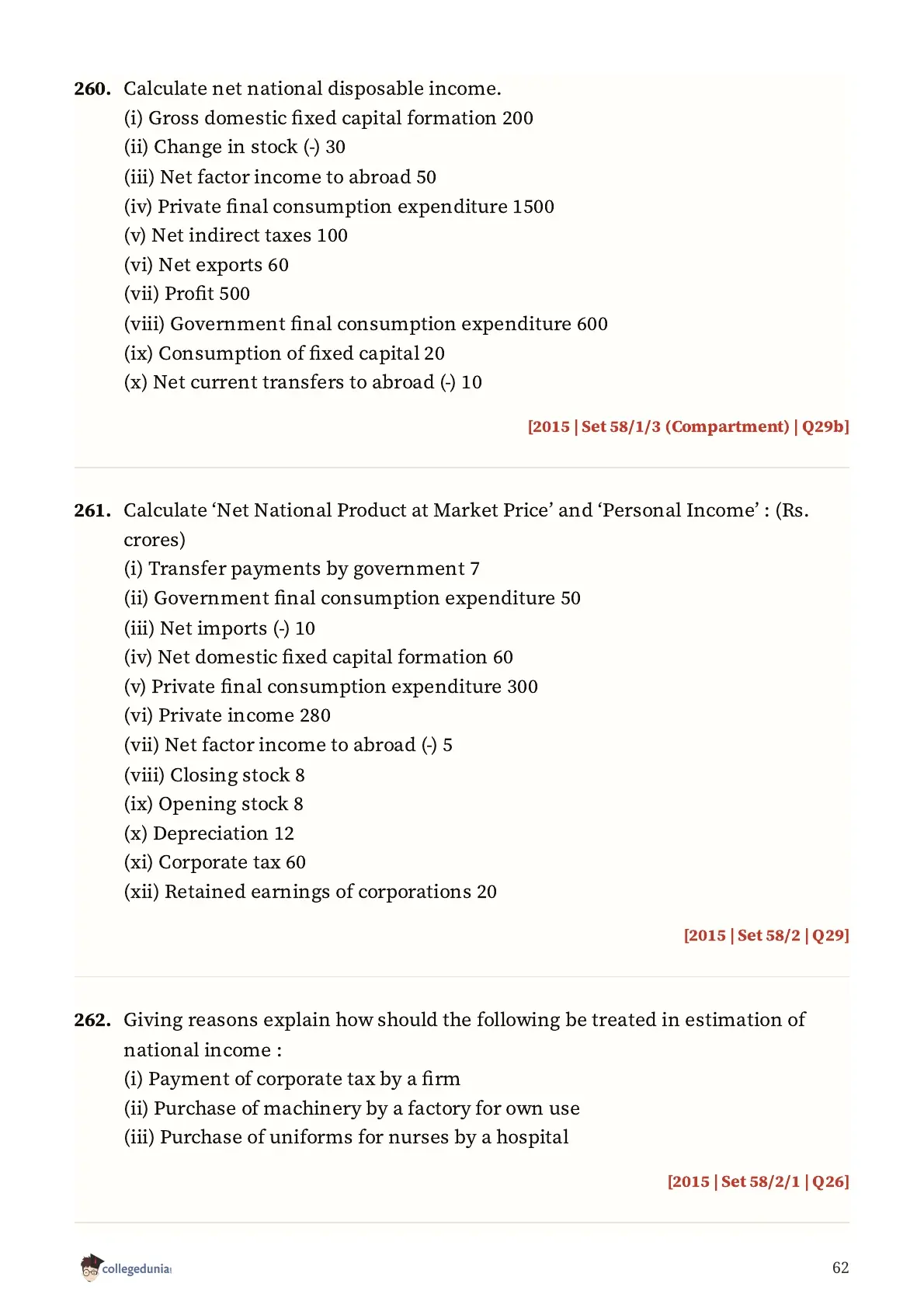
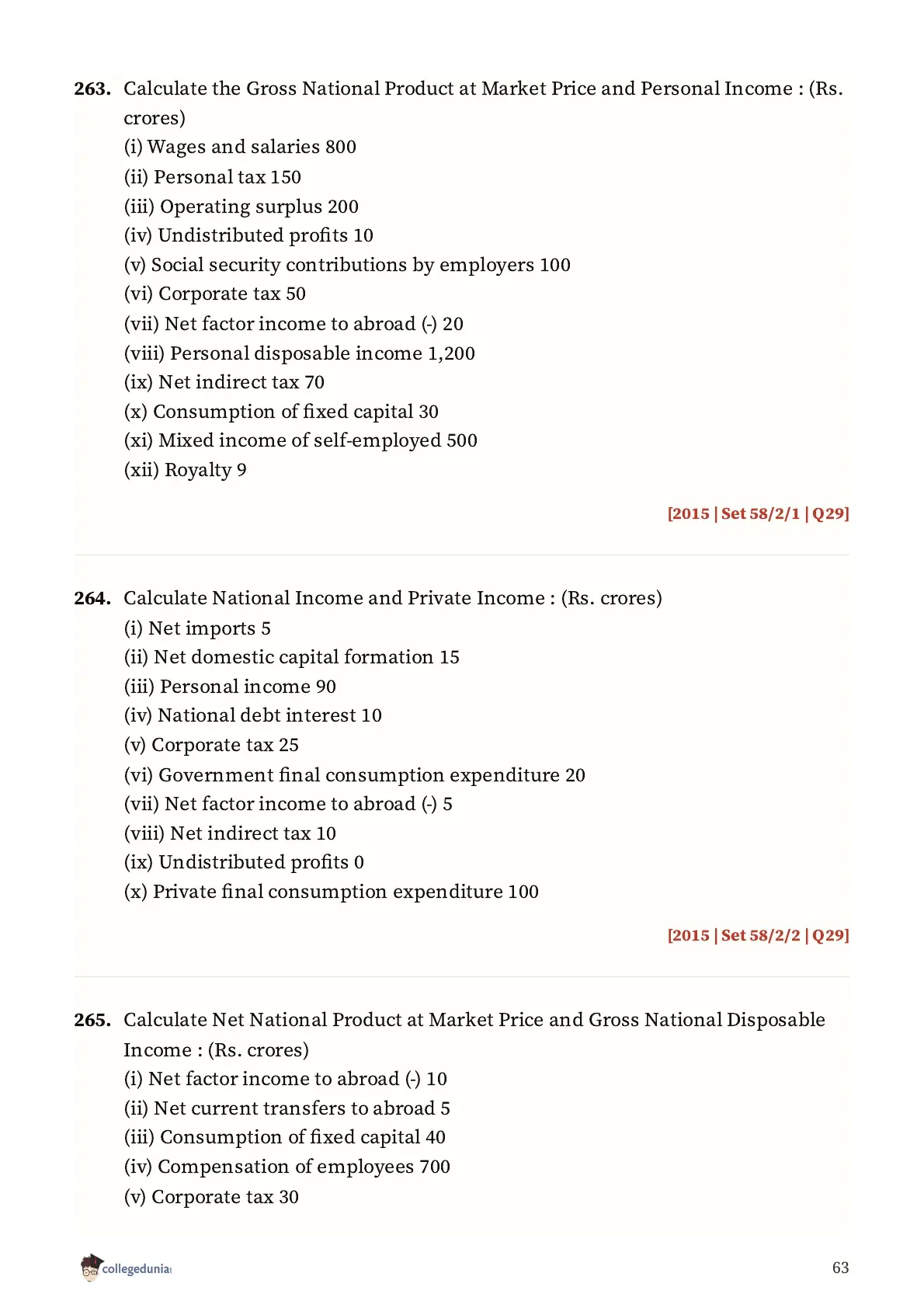
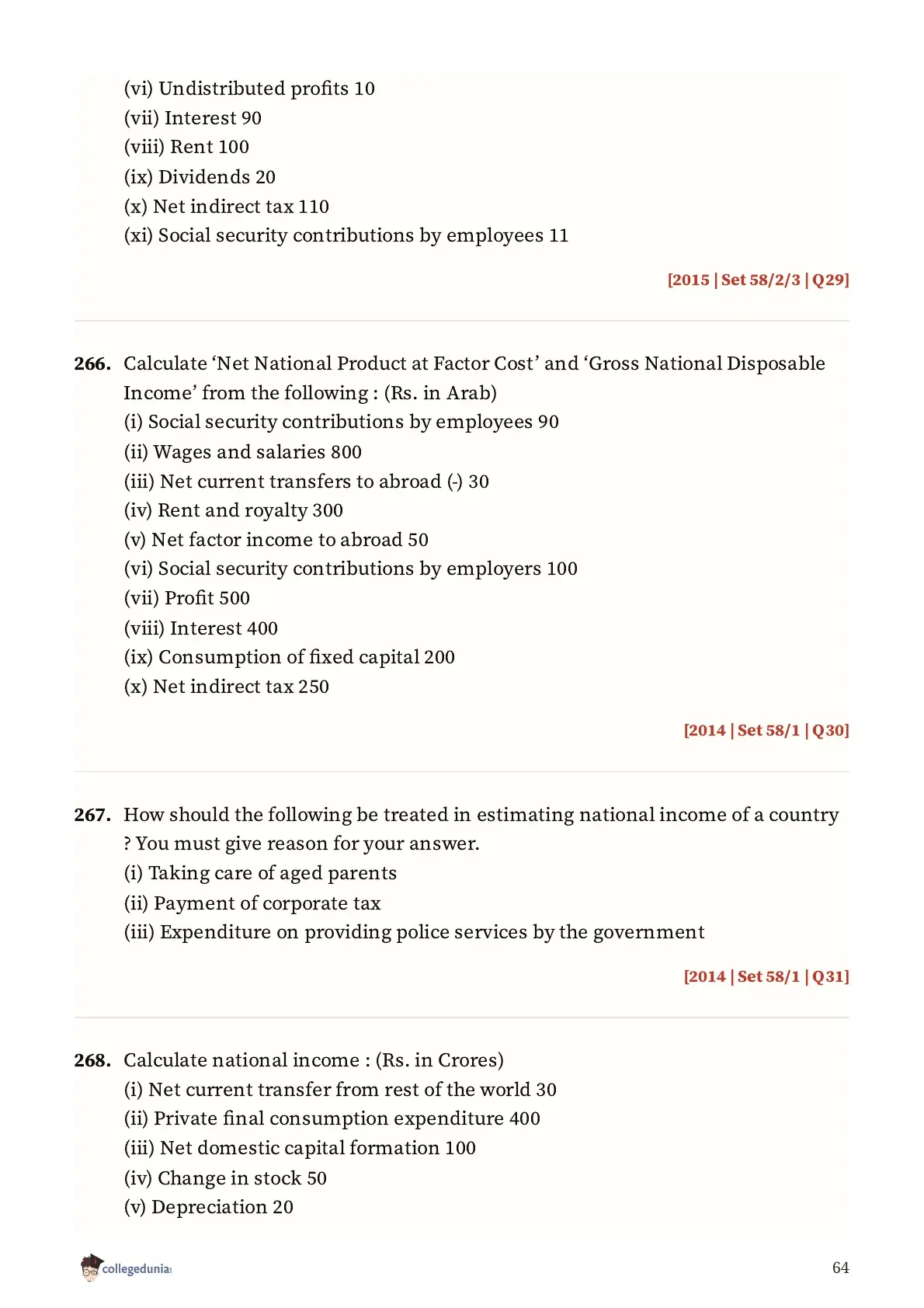
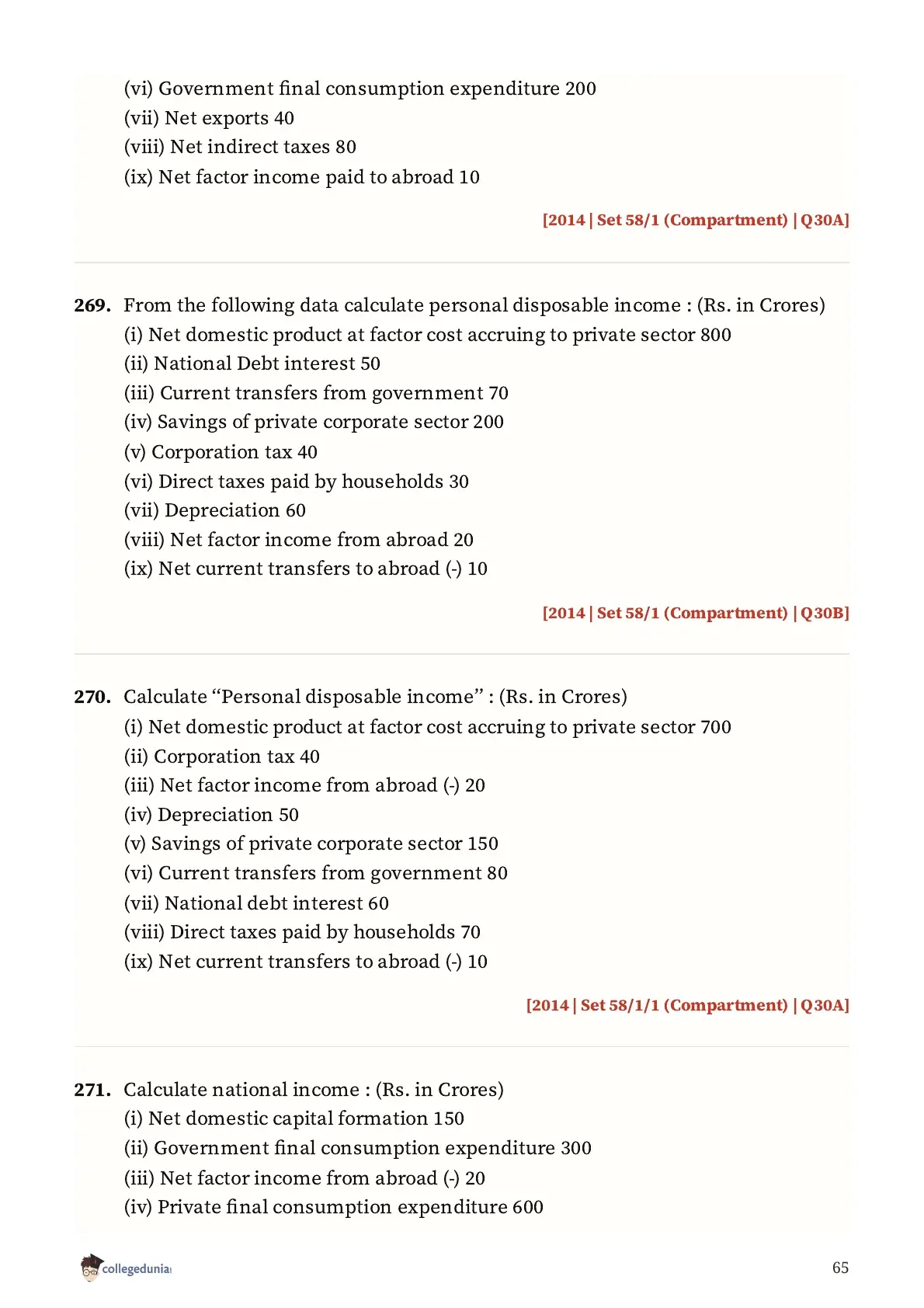
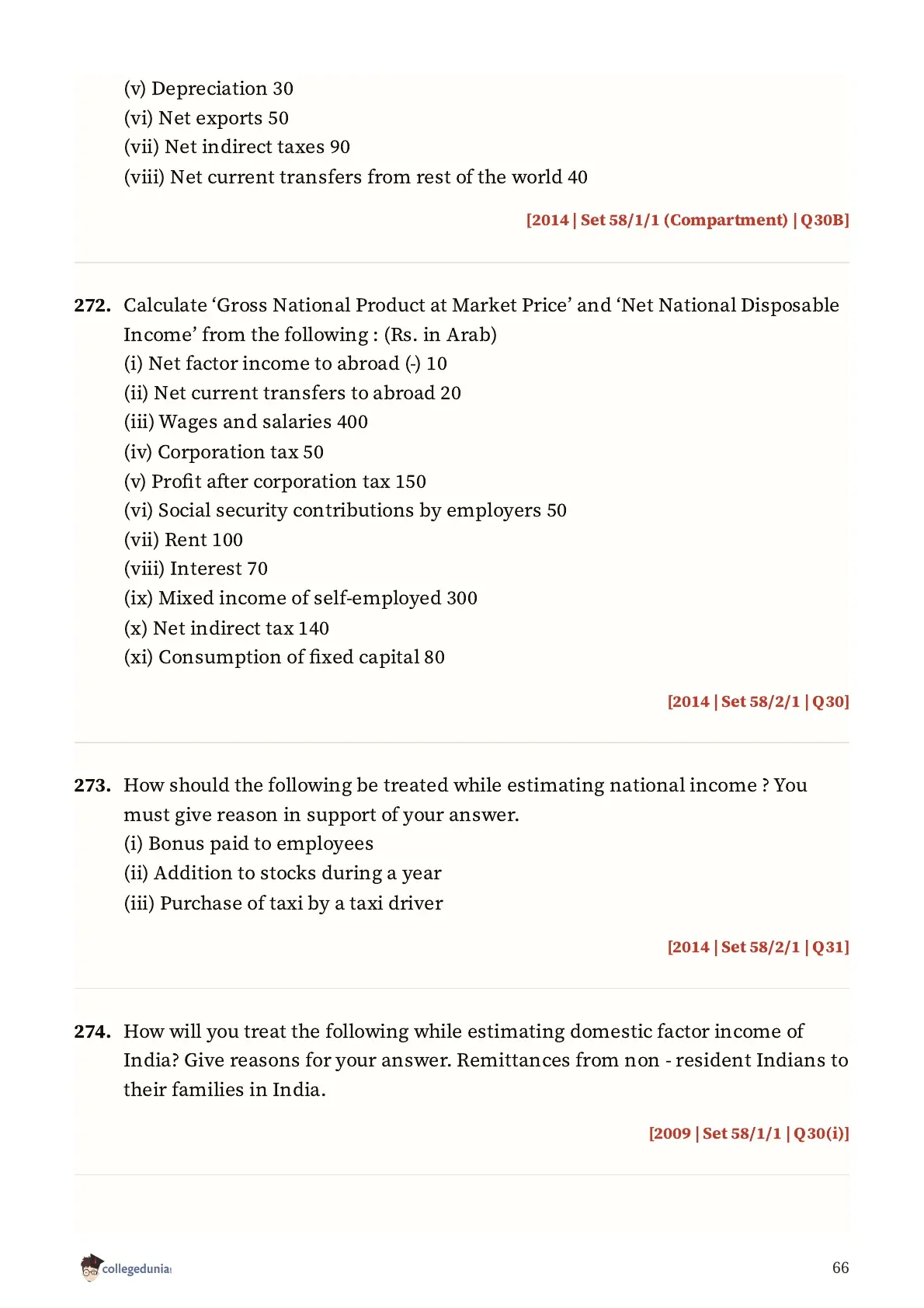
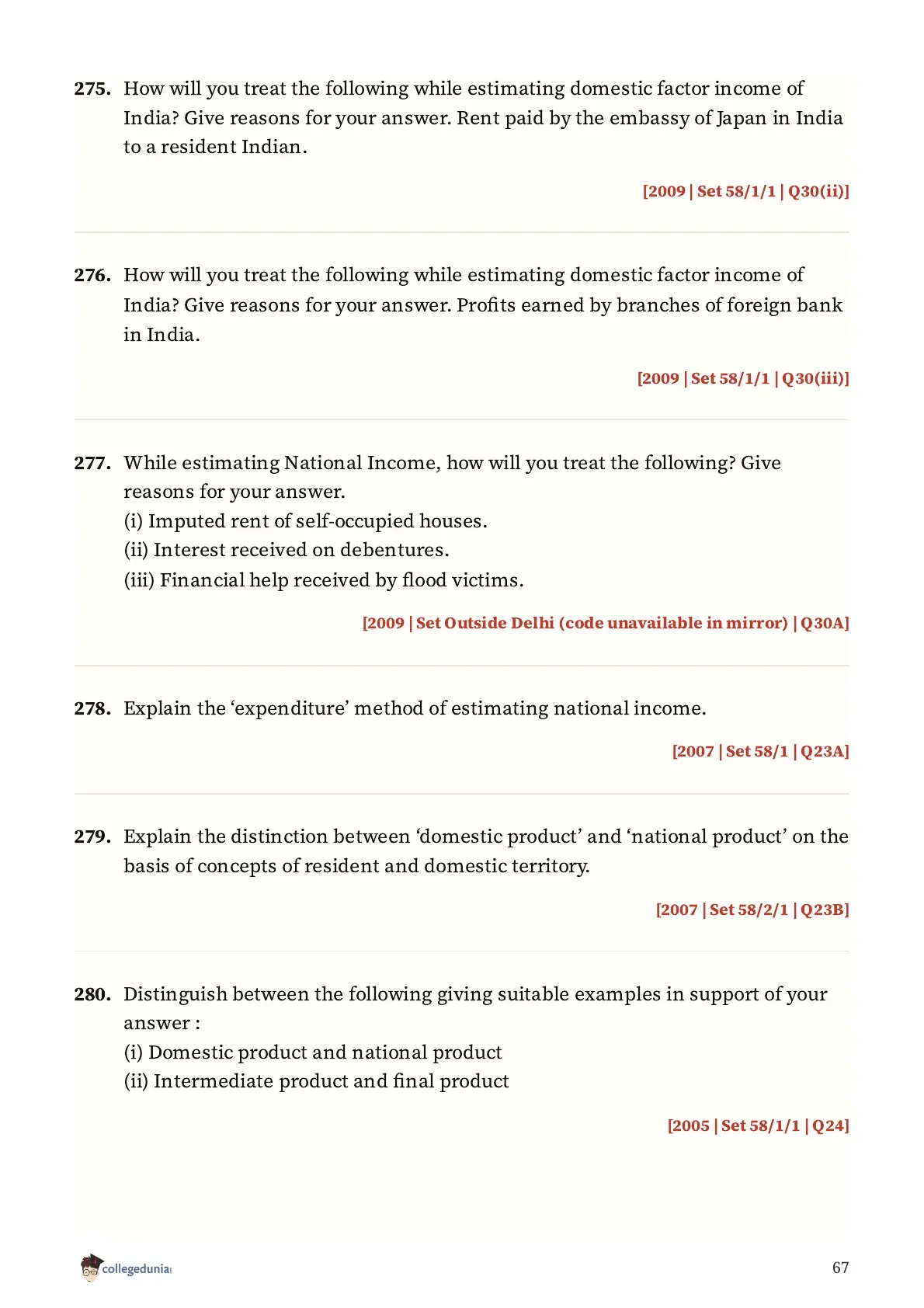

This Collegedunia booklet brings together chapter-tagged past-paper questions. Check the year and marks printed beside each question before starting.
Student Feedback: check your own progress
After practice, mark each error as a concept mistake, wrong adjustment or arithmetic slip. Redo those questions without notes.
National Income Accounting PYQ Practice and Coverage
The booklet contains 280 retained questions from 2005-2026. Groups follow marks recorded in the source; some entries are subparts. Start with definitions and inclusion rules before moving to numerical questions. The same aggregate may appear in several forms. Read every word in its name before choosing a formula. Source marks describe the original question group; they may not apply to each extracted subpart. They do not guarantee future weightage.
| Practice area | What to write in your answer |
|---|---|
| National income aggregates | Domestic or national, gross or net, market price or factor cost |
| Income measurement | Method, included items and any required adjustments |
| Inclusion and exclusion | Decision with a reason based on current production |
| Real and nominal GDP | Price basis, calculation and interpretation |
National Income Accounting Numerical Practice Lesson
Source: Magnet Brains on YouTube
National Income Accounting Aggregate Conversion Rules
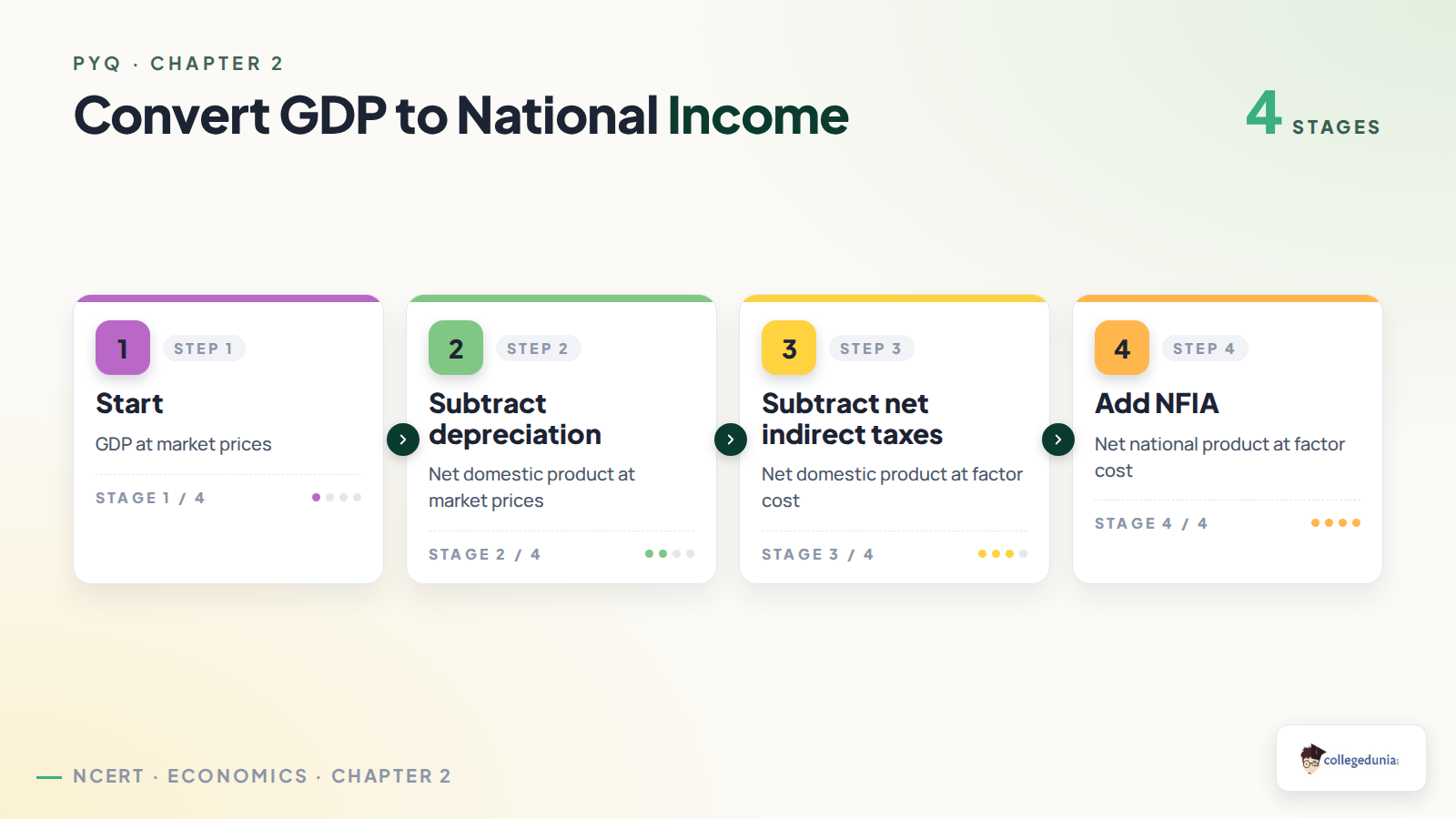
National income is net national product at factor cost. Gross domestic product is abbreviated as GDP. Net factor income from abroad is abbreviated as NFIA. It equals factor income received from abroad minus factor income paid abroad.
| Change needed | Adjustment |
|---|---|
| Gross to net | Subtract depreciation |
| Domestic to national | Add NFIA, keeping its sign |
| Market price to factor cost | Subtract net indirect taxes |
| Find net indirect taxes | Indirect taxes minus subsidies |
Write the starting aggregate and target aggregate before substituting figures. If NFIA is negative, adding it lowers national income. Reversing a conversion also reverses the adjustment.
National Income Accounting Inclusion and Exclusion Checks
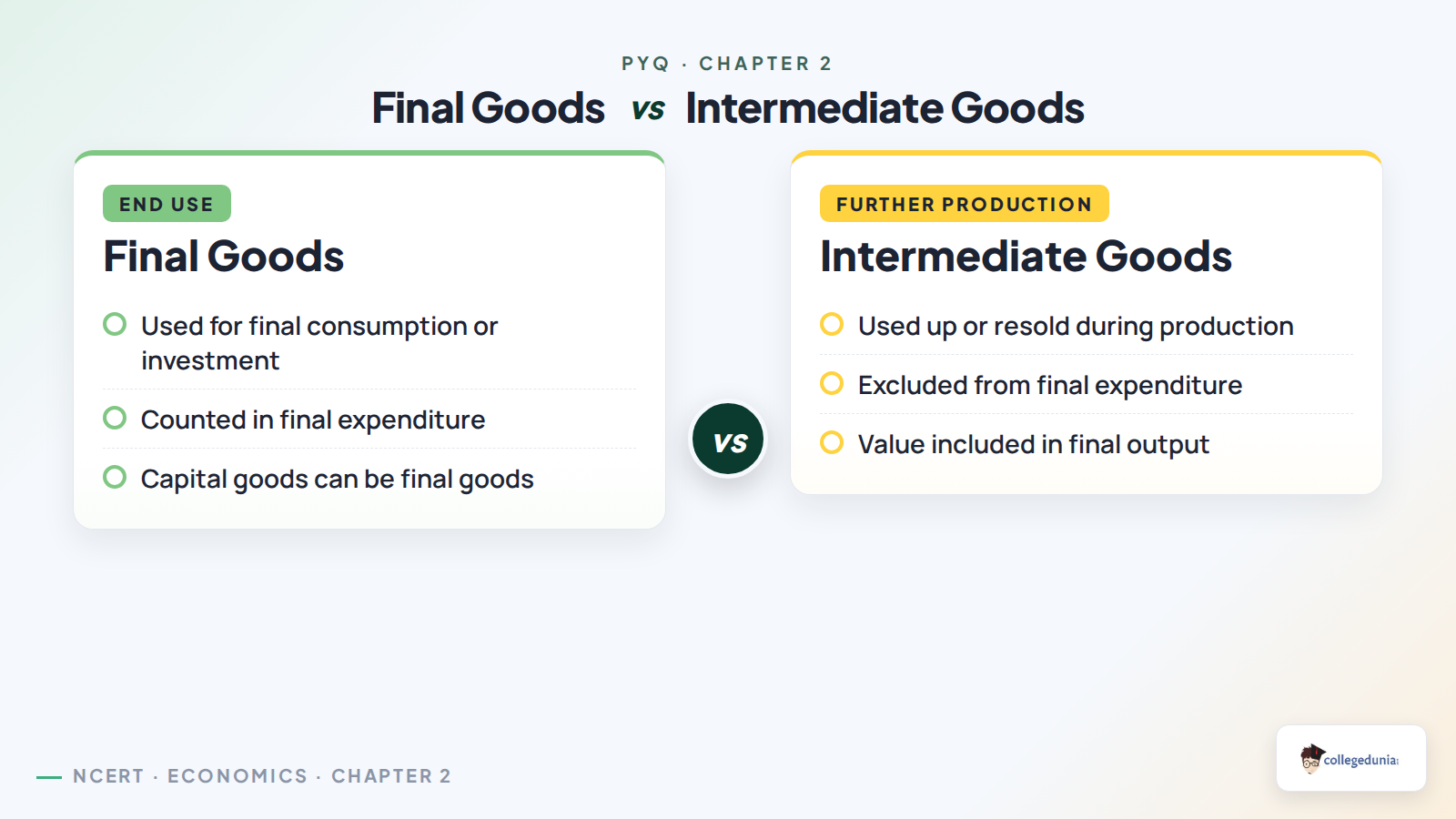
A good's use decides whether it is final or intermediate. Flour bought by a household for cooking is final consumption. Flour bought by a bakery for bread production is intermediate consumption. Count final output once to avoid double counting.
- Count current production, rather than the resale value of an existing good.
- Include a broker's current service charge on a second-hand sale.
- Exclude transfer receipts from factor income because they are not payment for productive services.
- Include changes in stocks when the question asks for investment or output.
How to Check National Income Accounting Numerical Answers
Write the formula before the calculation. Keep the units used in the question, such as crore rupees. A correct number needs a clear method when a question asks you to calculate an aggregate.
- Underline the aggregate asked for and its price basis.
- Separate depreciation, subsidies, indirect taxes and NFIA.
- Show the sign of each adjustment on a separate line.
- Check that you have not counted an item twice.
Nominal GDP uses current-year prices; real GDP uses base-year prices. The GDP deflator equals nominal GDP divided by real GDP, multiplied by 100. Use matching output coverage for both values.
Related Resources for National Income Accounting
Use the textbook for definitions and the notes for revision. Keep this question booklet for checking what you can answer unaided.
| Resource | Study use |
|---|---|
| National Income Accounting Class 12 NCERT Solutions | Revise concepts before PYQ practice |
| National Income Accounting Class 12 Notes | Revise concepts before PYQ practice |
| National Income Accounting Class 12 Handwritten Notes | Revise concepts before PYQ practice |
| National Income Accounting Class 12 NCERT Book | Revise concepts before PYQ practice |
All Chapters of Class 12 Macroeconomics PYQs
| Chapter | PYQ practice |
|---|---|
| Introduction to Macroeconomics | PYQ coming soon |
| National Income Accounting | Current question booklet |
| Money and Banking | Money and Banking PYQ PDF |
| Income Determination | PYQ coming soon |
| Government Budget and the Economy | PYQ coming soon |
| Open Economy Macroeconomics | Open Economy Macroeconomics PYQ PDF |
National Income Accounting Economics PYQ FAQs
Ques. Does the National Income Accounting PYQ PDF include solutions?
Ans. No. This is a questions-only booklet. Use your textbook and teacher guidance to check your answers.
Ques. How should I start practising National Income Accounting PYQs?
Ans. Revise the aggregate names first. Then practise inclusion rules and numerical conversions, showing each adjustment separately.
Ques. Are past-paper marks a fixed chapter weightage?
Ans. No. The marks printed beside a past question describe that question. Follow the current syllabus and examination instructions.
Ques. Why must I avoid double counting?
Ans. Counting both intermediate goods and the final product repeats the same value. Count final output or sum value added.
Ques. What is national income?
Ans. National income is net national product at factor cost. It measures factor income earned by normal residents during an accounting year.
Ques. How is GDP defined?
Ans. Gross domestic product is the market value of final goods and services produced within domestic territory during an accounting year.
Ques. What are transfer payments?
Ans. Transfer payments are receipts without a corresponding productive service, such as pensions paid as social assistance. They are excluded from factor income.



Comments