



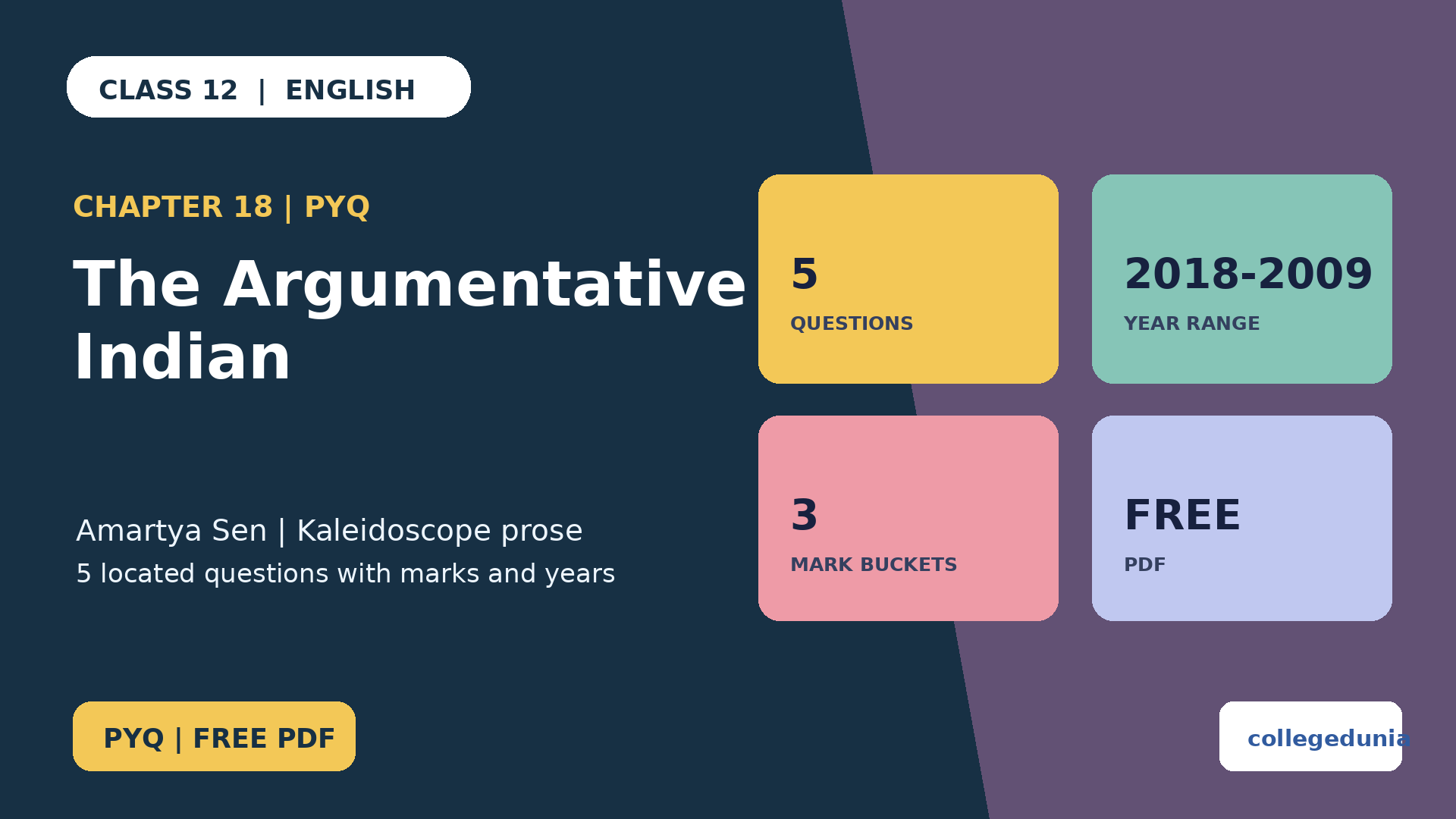
The Class 12 English Supplementary The Argumentative Indian PYQ PDF is available for free download. This chapter-wise file gives students 5 located previous year questions from Amartya Sen's Kaleidoscope essay, sorted by marks and year for 2026-27 English Elective revision.
- Includes 3-mark, 4-mark, 5-mark and 6-mark questions from the available source sheet.
- Covers argumentation, democracy, dialogic tradition and Sen's reading of Krishna and Arjuna.
- Useful for quick board-paper practice before writing analytical prose answers.
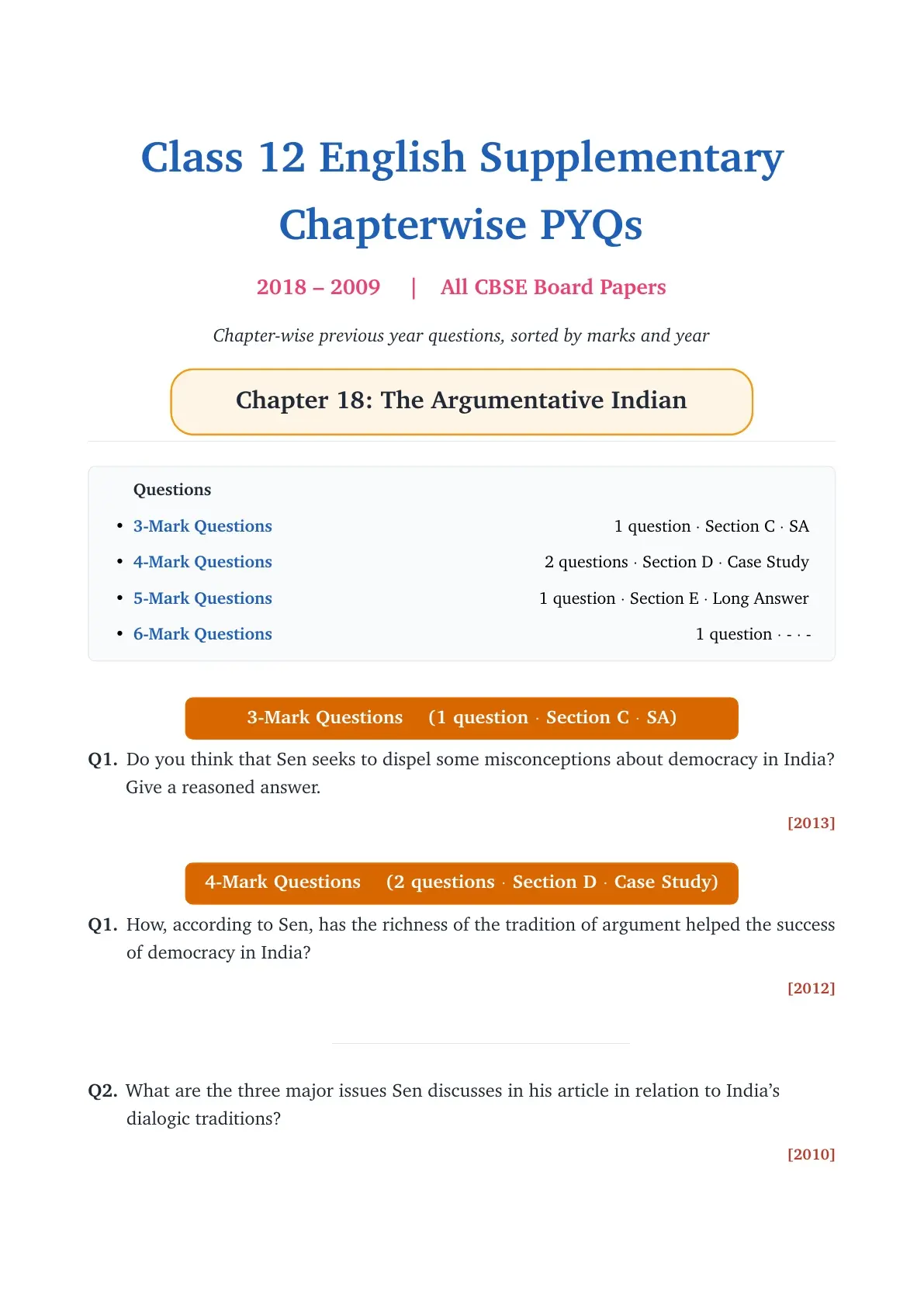
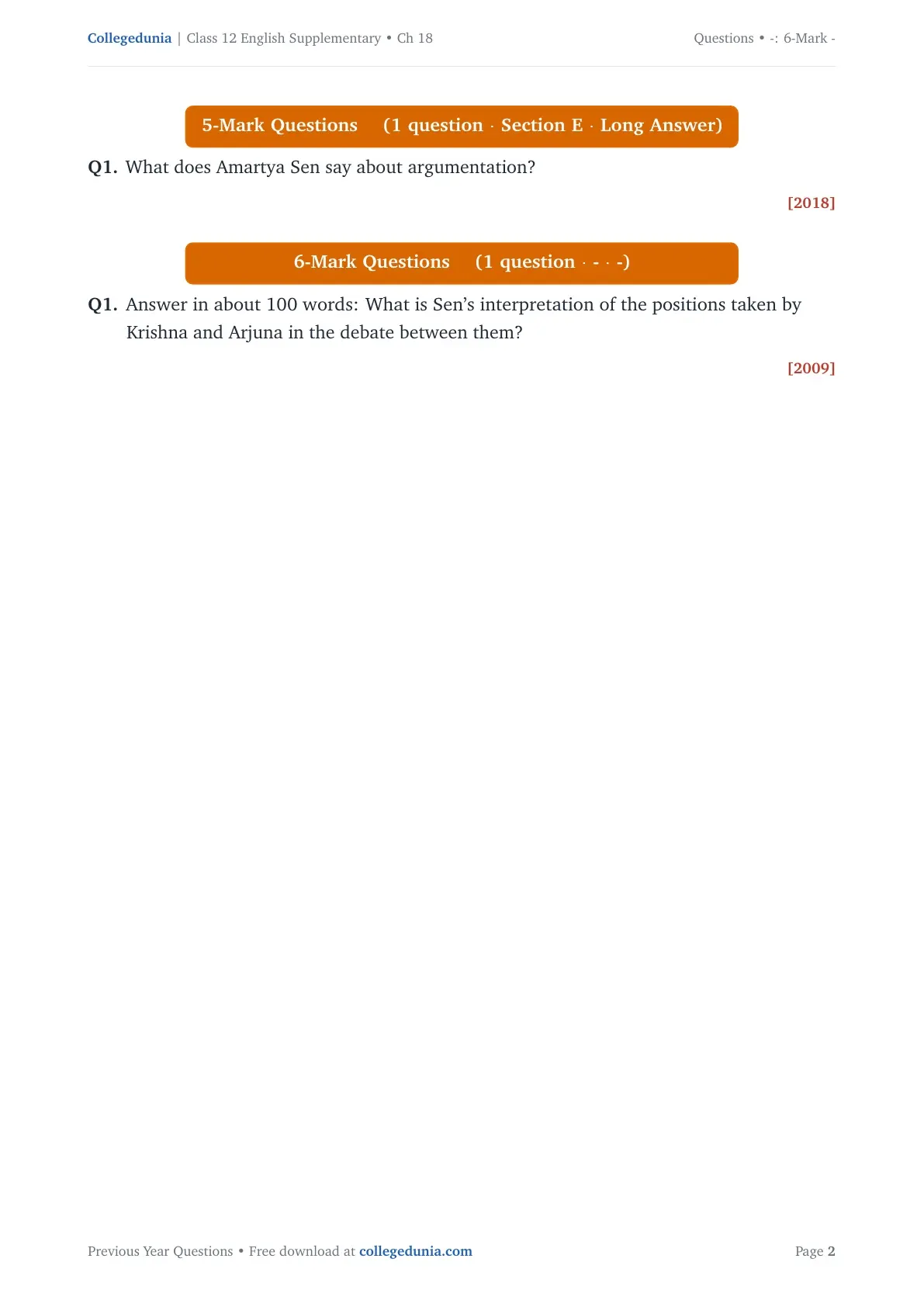
Student Feedback: Students can use this PYQ PDF to practise Sen's central argument about debate, public reasoning and democratic culture without turning the answer into only a chapter summary.
Class 12 English The Argumentative Indian PYQ PDF
The PDF contains 5 filtered questions for The Argumentative Indian. The questions were pulled from the chapter-wise PYQ source sheet and then grouped by marks, so students can move from short reasoning answers to longer interpretive responses in one place.
- Chapter: Chapter 18 Kaleidoscope: The Argumentative Indian
- Author: Amartya Sen
- Year range: 2018 to 2009 from the available source sheet
- Best use: revise public reasoning, dialogic tradition and the democracy argument before solving papers
Questions Covered in The Argumentative Indian PYQ PDF
The located questions repeatedly test Sen's explanation of India's argumentative tradition. Longer prompts ask students to connect debate with democracy and explain how Indian texts preserve alternative viewpoints instead of only one fixed opinion.
| Section | Question Type | Count |
|---|---|---|
| Section C | 3-mark short answer | 1 question |
| Section D | 4-mark short answer | 2 questions |
| Section E | 5-mark answer | 1 question |
| Long answer | 6-mark answer | 1 question |
Revision Focus for The Argumentative Indian PYQs
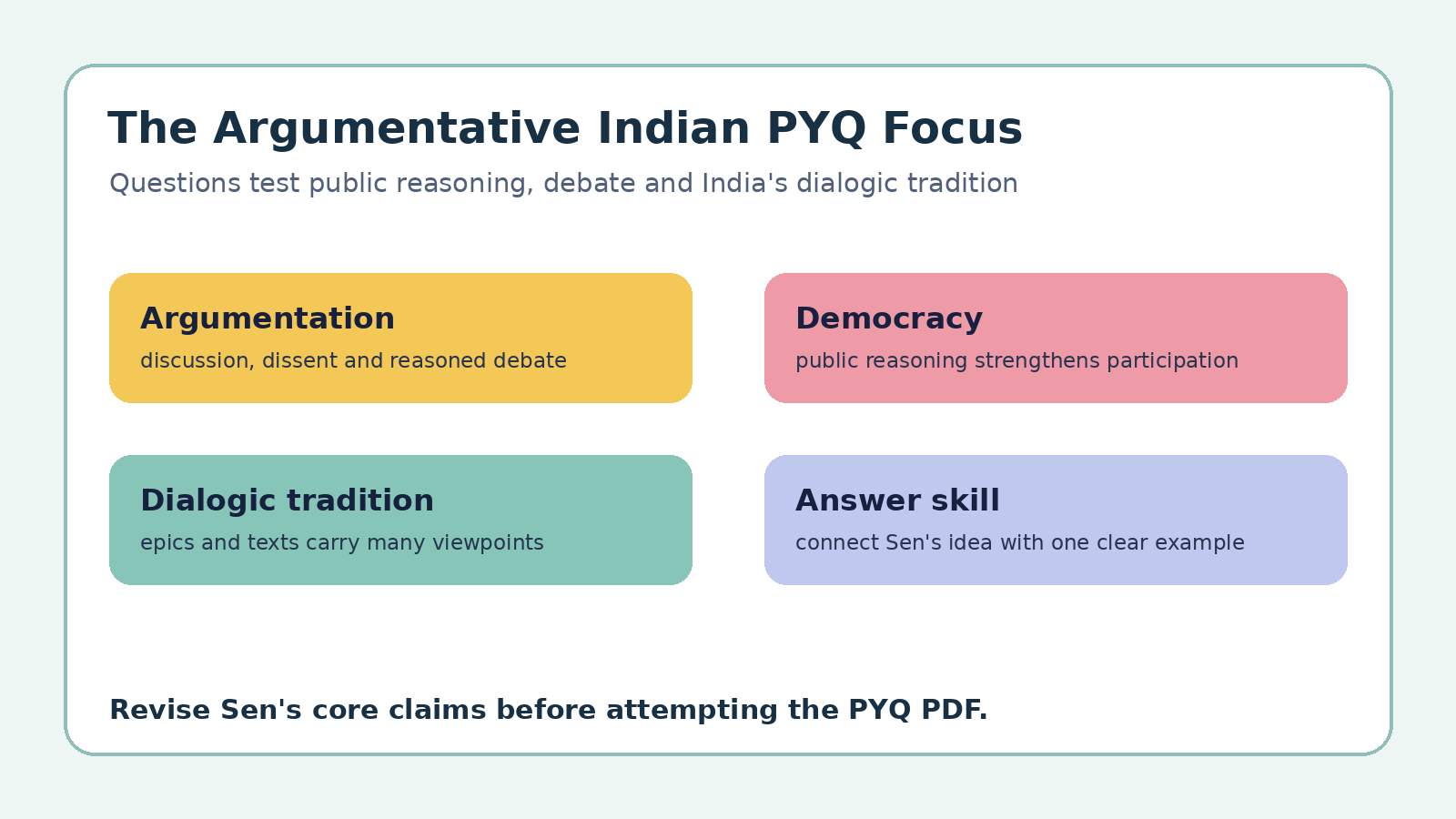
Before solving the PDF, revise how Sen treats argument as a public habit rather than a personal quarrel. A strong answer should show that disagreement, dialogue and critical reasoning can support democracy when they are used responsibly.
- Argumentation: debate, questioning and reasoned disagreement
- Democracy: open discussion helps participation and accountability
- Texts: the Mahabharata and other traditions include dialogue and dilemma
- Misconception: democracy in India is not only a modern borrowed idea in Sen's account
Answer Writing Map for The Argumentative Indian PYQs
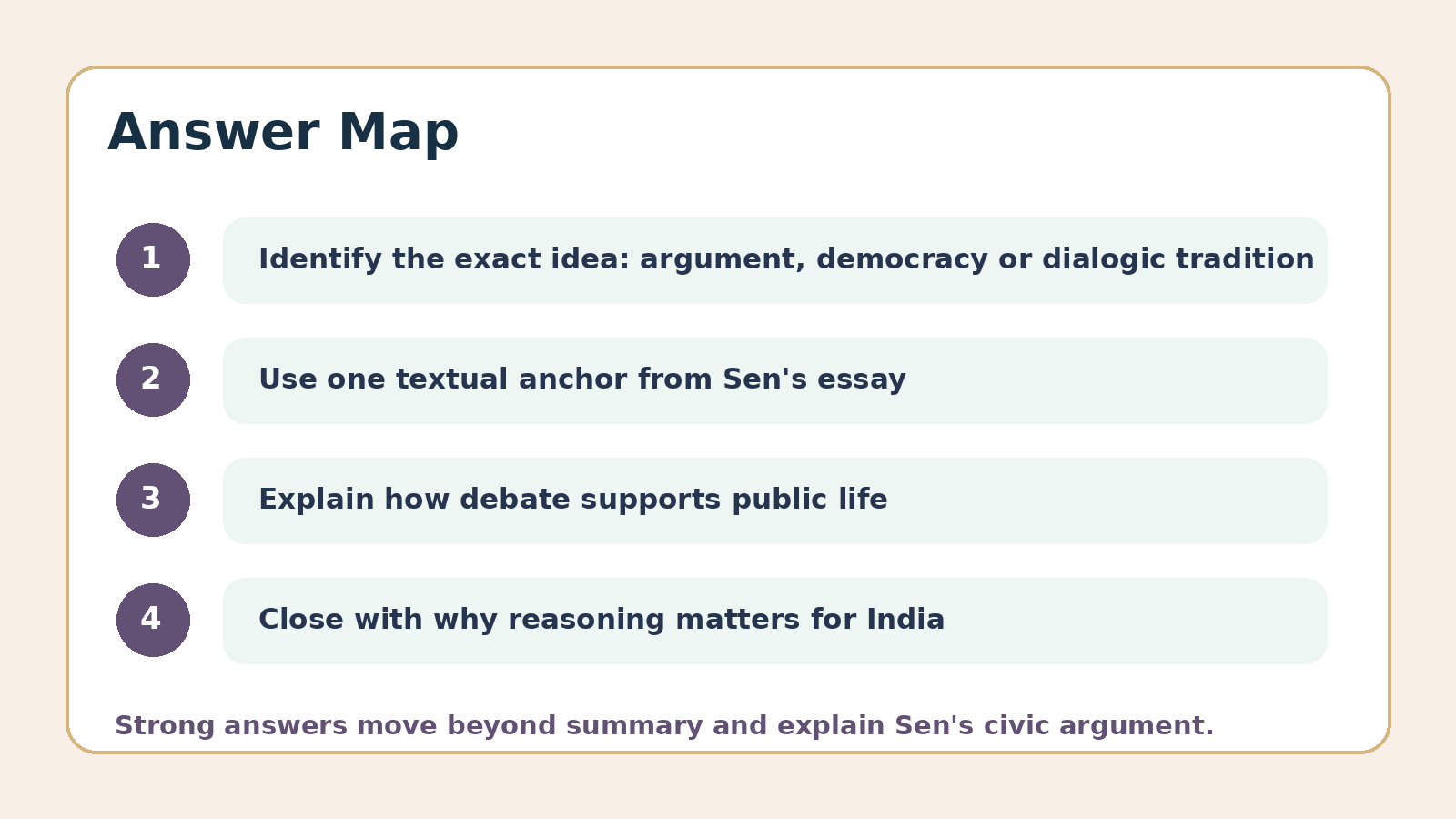
Write answers in four compact moves: identify the exact Sen idea, add a textual anchor, explain the civic meaning and close with the importance of reasoning. Useful phrases include public reasoning, dialogic tradition, critical debate, democratic participation and alternative viewpoints.
Class 12 English The Argumentative Indian Related Resources
| Resource | Link |
|---|---|
| The Argumentative Indian Notes | Chapter 18 Notes |
| The Argumentative Indian NCERT Solutions | Chapter 18 NCERT Solutions |
All Class 12 English Supplementary PYQ Chapters
| Resource | Link |
|---|---|
| The Wild Swans at Coole PYQ | Chapter 11 PYQ PDF |
| Time and Time Again PYQ | Chapter 12 PYQ PDF |
| Film-Making PYQ | Chapter 16 PYQ PDF |
| Why the Novel Matters PYQ | Chapter 17 PYQ PDF |
| The Argumentative Indian PYQ | Chapter 18 PYQ PDF |
Class 12 English The Argumentative Indian PYQ FAQs
Ques. Where can I download Class 12 English The Argumentative Indian PYQ PDF?
Ans. You can download the chapter-wise PYQ PDF from the PDF viewer and resource table above. The file includes 5 located questions for this chapter.
Ques. How many questions are in The Argumentative Indian PYQ PDF?
Ans. The PDF includes 5 filtered questions across 3-mark, 4-mark, 5-mark and 6-mark sections from the available source sheet.
Ques. Which topics are important for The Argumentative Indian PYQs?
Ans. Focus on public reasoning, India's dialogic tradition, democracy, misconceptions about Indian democracy and Sen's reading of Krishna and Arjuna.
Ques. How should students answer the long-answer PYQ?
Ans. Build the answer around Sen's claim that argument and reasoning are part of Indian intellectual life. Add one textual example and connect it to democracy or public discussion.



Comments