




The Class 12 Fine Arts The Bengal School and Cultural Nationalism PYQ PDF is available for free download. This chapter-wise PDF helps students practise official CBSE Painting questions from the Bengal School unit for the 2026-27 board exam.
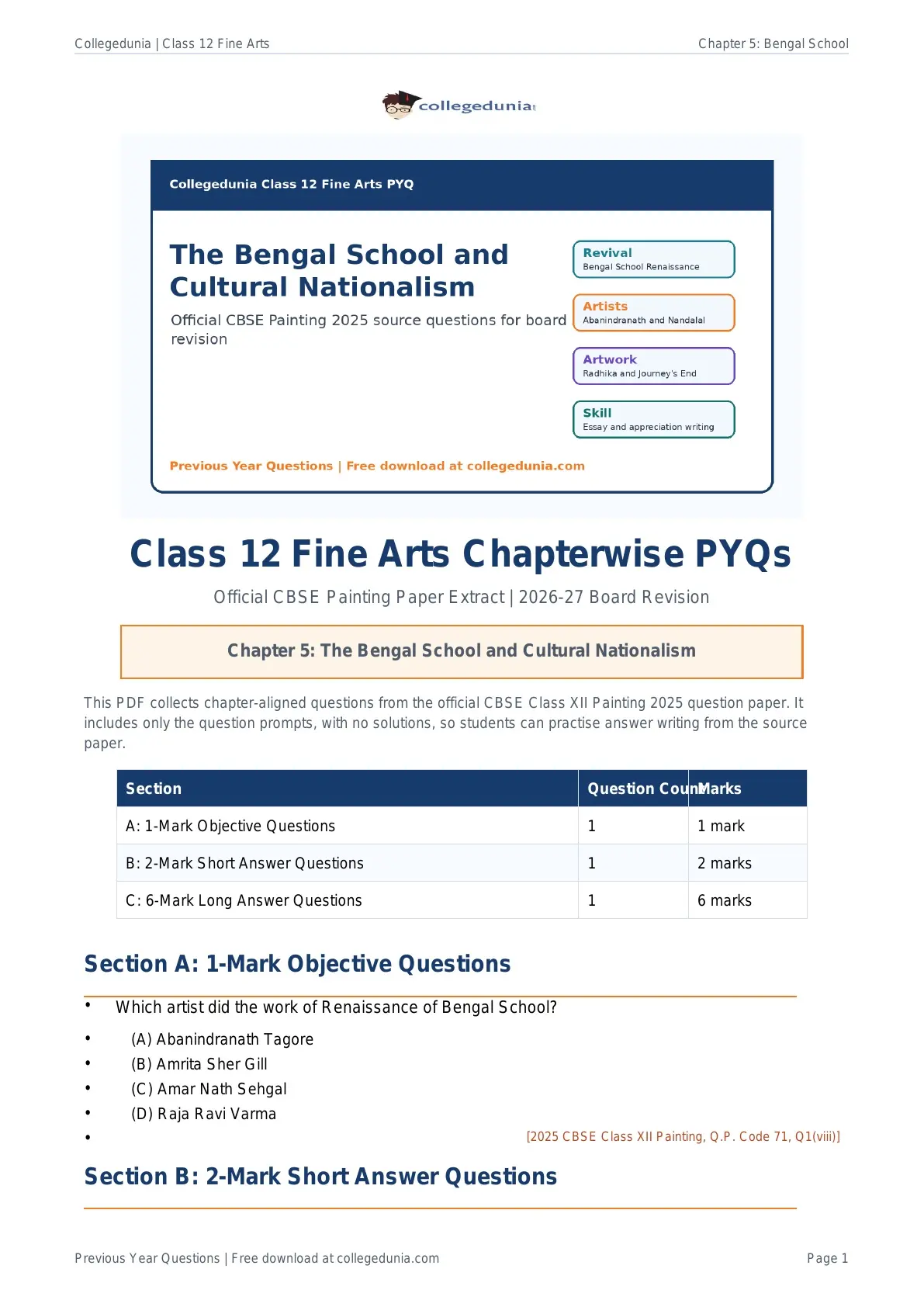
- Includes chapter-aligned questions from the official CBSE Class XII Painting 2025 question paper.
- Covers Abanindranath Tagore, Bengal School revival, Journey's End, Shiv and Sati and Radhika.
- Useful for quick answer-writing practice before solving the full Fine Arts board paper.
Student Feedback: Students can use this PYQ PDF to revise the exact identification, essay and appreciation style expected in Fine Arts Painting theory.
In This Article
Class 12 Fine Arts Bengal School PYQ PDF
The PDF focuses on Chapter 5, The Bengal School and Cultural Nationalism. The questions are arranged by marks so students can practise MCQ identification, artwork appreciation and essay answers.
- Chapter: Chapter 5 The Bengal School and Cultural Nationalism
- Main theme: Bengal School revival, cultural nationalism, artist names and artwork appreciation
- Source: Official CBSE Class XII Painting 2025 question paper, Q.P. Code 71
- Best use: revise artist names and artwork features before writing full essay answers
Questions Covered in Bengal School PYQ PDF
The question clusters test whether students can connect Bengal School history with named syllabus artworks and painters.
| PYQ Cluster | Question Focus | Answer Skill |
|---|---|---|
| Artist identification | Renaissance of Bengal School | Recall Abanindranath Tagore and his role |
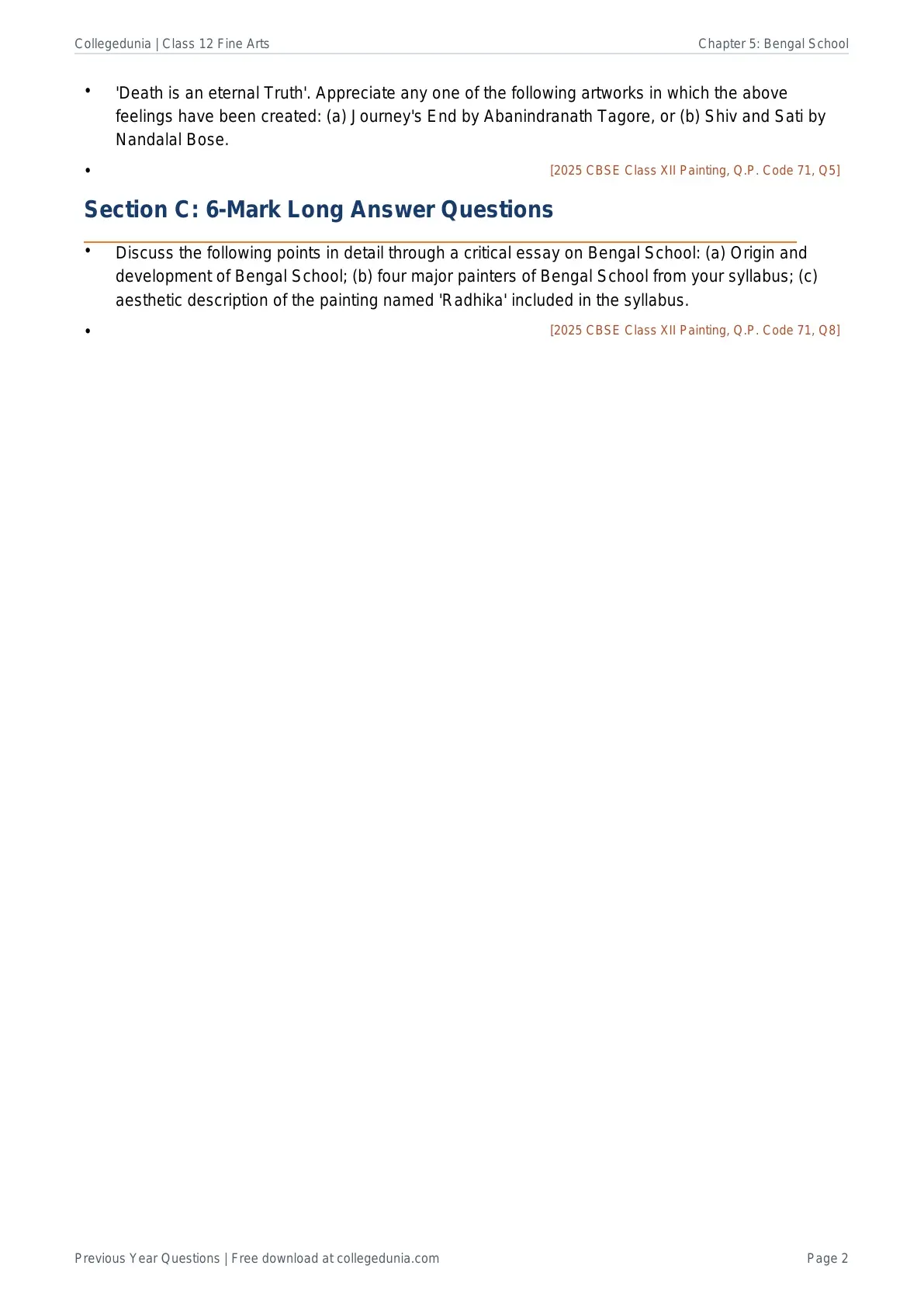
| Artwork appreciation | Journey's End or Shiv and Sati | Connect death, mood, expression and technique |
| Critical essay | Origin, development, four painters and Radhika | Write structured history plus visual analysis |
Bengal School Video Revision
Source: Fine Arts Study on YouTube
Revision Focus for Bengal School PYQs
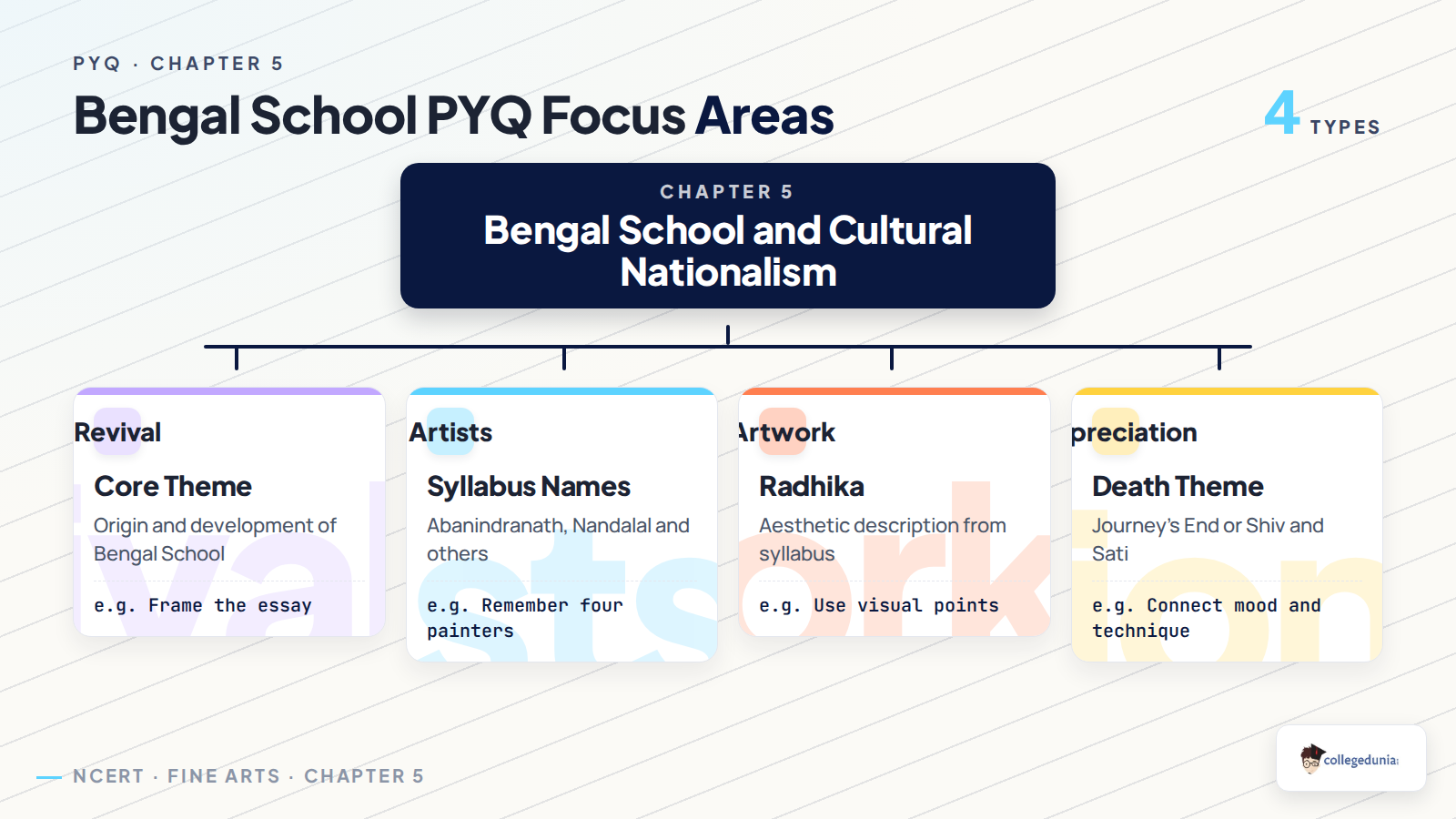
Start by memorising Abanindranath Tagore as the key Renaissance figure. Then revise how Bengal School linked Indian visual tradition, national identity and a softer wash technique.
- For MCQs: separate Bengal School artists from Rajasthani, Mughal and Deccan painters.
- For short answers: choose one artwork and describe mood, figure, colour and medium.
- For essays: divide the answer into origin, development, painters and Radhika.
- For artwork analysis: use concrete visual words instead of a generic history paragraph.
Answer Writing Map for Bengal School PYQs
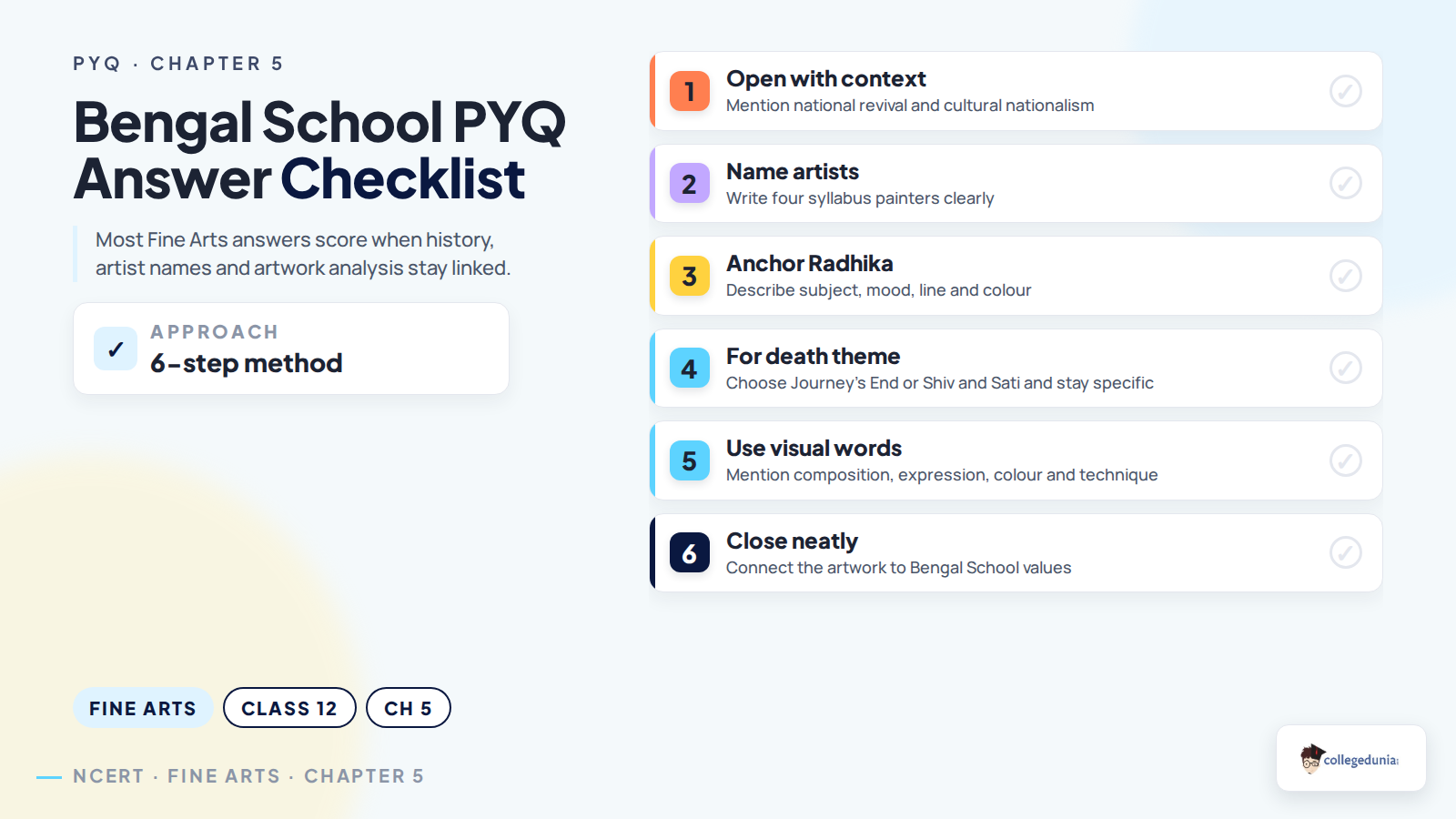
For appreciation answers, avoid only naming the artist. The answer should explain how the artwork creates feeling through subject, composition, line, colour and technique.
Related Fine Arts Resources
| Resource | Link |
|---|---|
| Bengal School NCERT Book PDF | Chapter 5 Book PDF |
| Bengal School Notes | Chapter 5 Notes |
| Bengal School Handwritten Notes | Chapter 5 Handwritten Notes |
All Class 12 Fine Arts PYQ Chapters
| Resource | Link |
|---|---|
| The Mughal School of Miniature Painting PYQ | Chapter 1 PYQ PDF |
| The Deccan Schools of Painting PYQ | Chapter 2 PYQ PDF |
| The Rajasthani Schools of Painting PYQ | Chapter 3 PYQ PDF |
| The Pahari Schools of Painting PYQ | Chapter 4 PYQ PDF |
| The Bengal School and Cultural Nationalism PYQ | Chapter 5 PYQ PDF |
| Modern Indian Art PYQ | Chapter 6 PYQ PDF |
| The Company School PYQ | Chapter 7 PYQ PDF |
| Living Art Traditions of India PYQ | Chapter 8 PYQ PDF |
Class 12 Fine Arts Bengal School PYQ FAQs
Ques. Where can I download Class 12 Fine Arts The Bengal School and Cultural Nationalism PYQ PDF?
Ans. You can download the chapter-wise PYQ PDF from the PDF viewer and download button above.
Ques. Which official paper is used for this Bengal School PYQ PDF?
Ans. The questions are taken from the official CBSE Class XII Painting 2025 question paper, Q.P. Code 71, where they match the Bengal School chapter.
Ques. Which Bengal School topics should students revise first?
Ans. Revise Abanindranath Tagore, origin and development of Bengal School, Nandalal Bose, Journey's End, Shiv and Sati, and Radhika.
Ques. Does this PYQ PDF include solutions?
Ans. No. It includes official question prompts only, so students can practise writing their own Fine Arts theory answers.



Comments