




Class 12 KTPI Chapter 10 Indian Philosophical Systems PYQ PDF brings together official CBSE previous year questions found for this chapter from the available KTPI board papers, with answers and focused revision anchors for 2026-27 preparation.
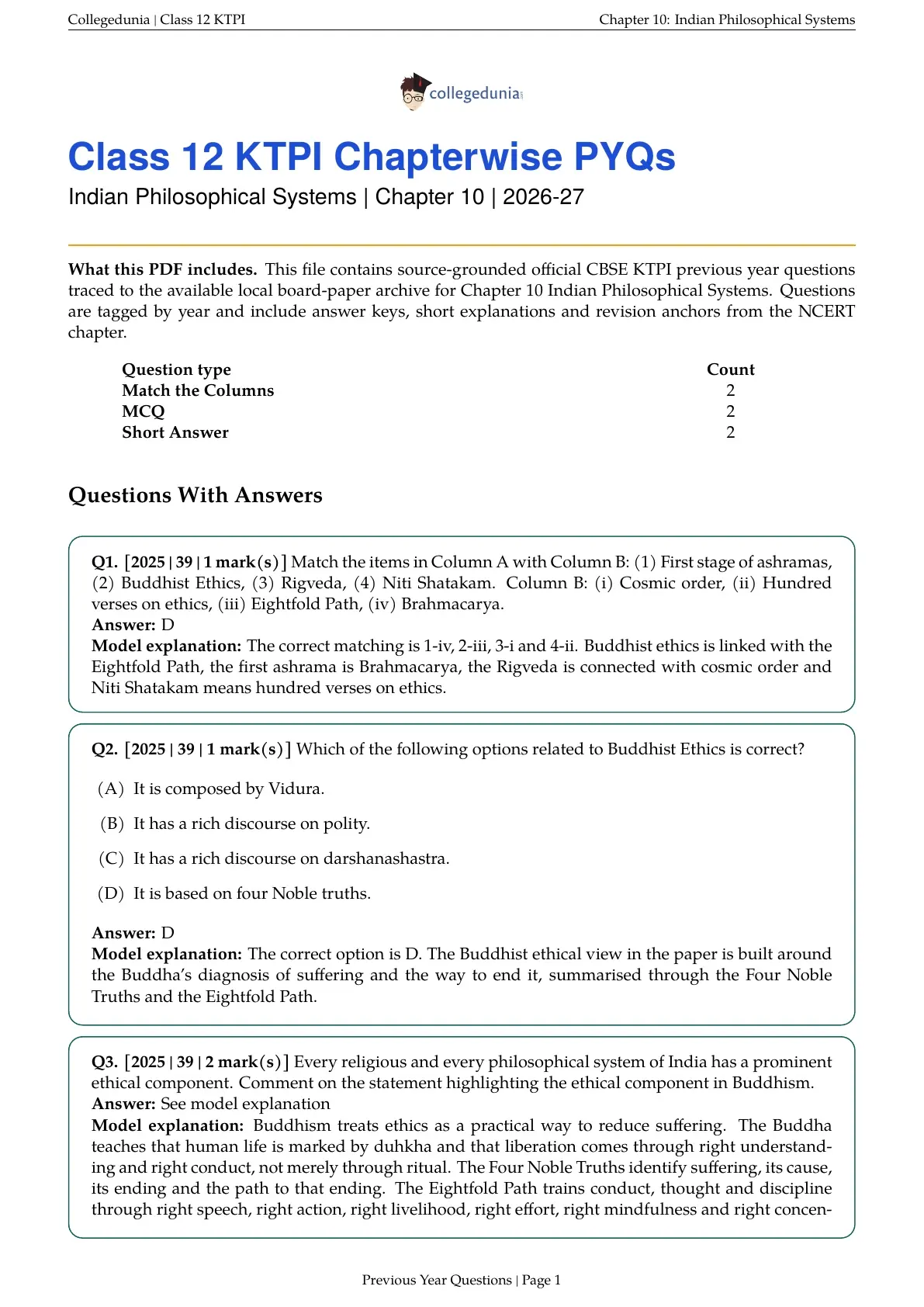
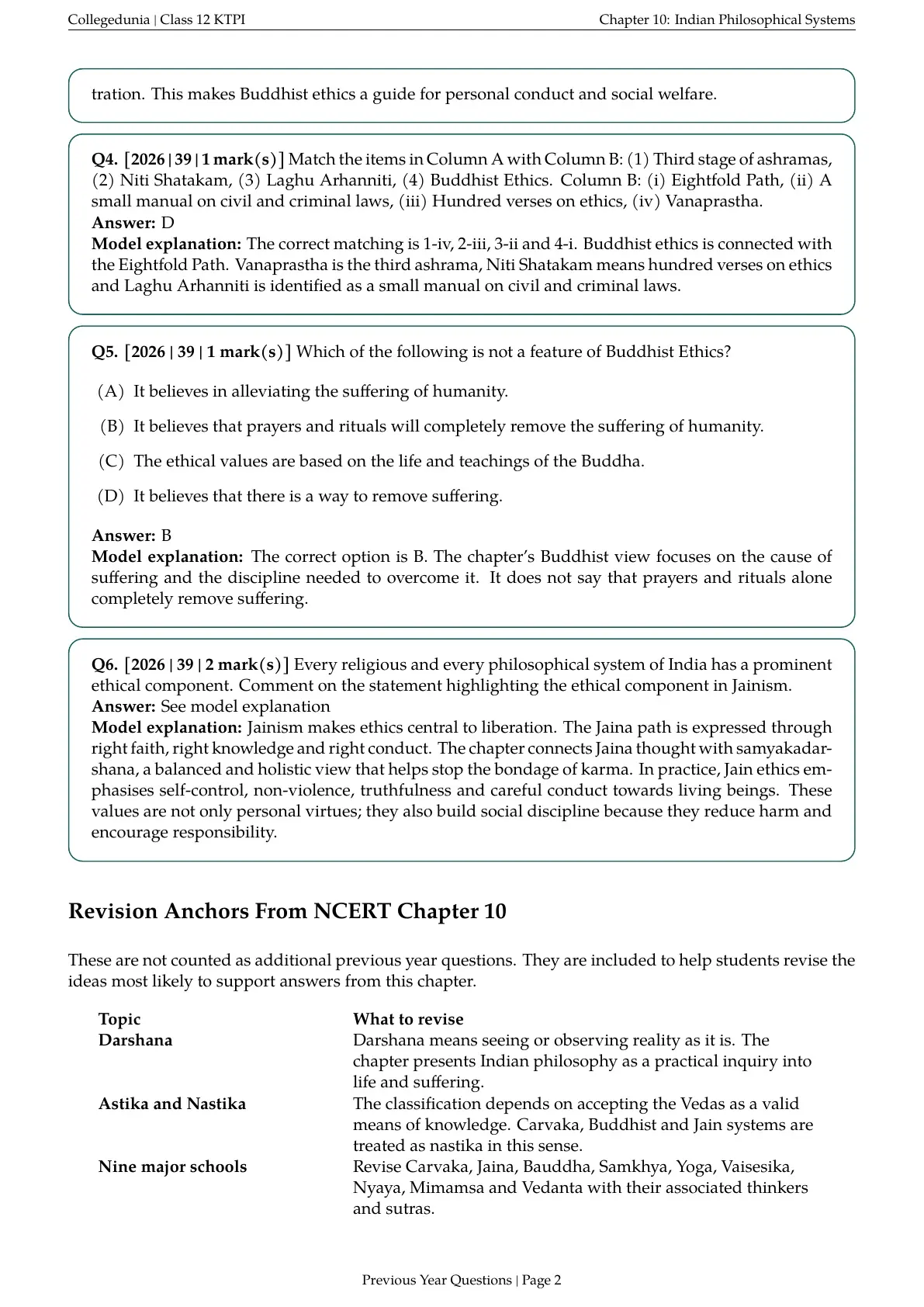
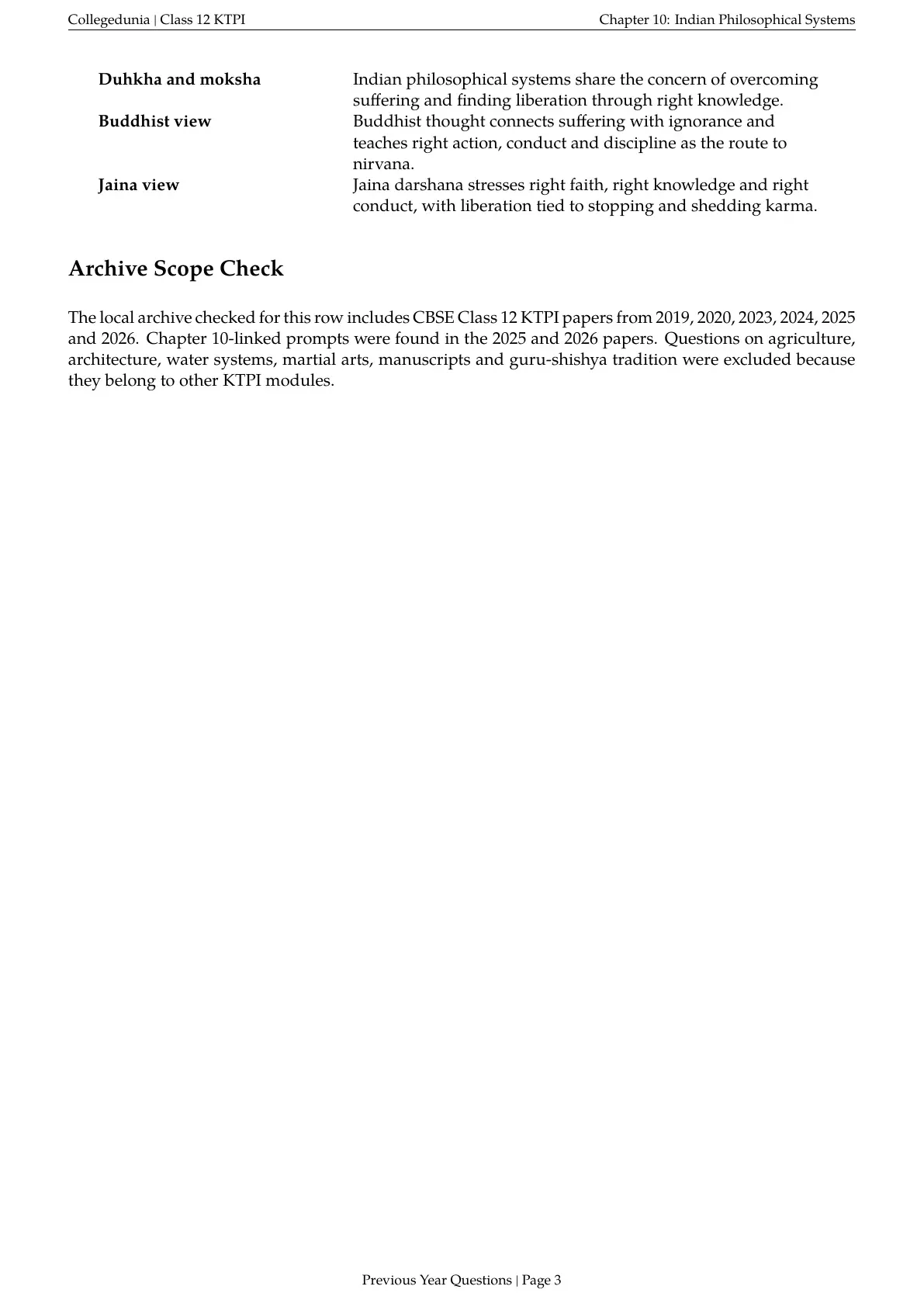
- 6 Chapter 10-linked prompts from the local CBSE KTPI archive are included.
- Source scope is transparent: the PDF uses confirmed philosophy-linked prompts from the 2025 and 2026 papers.
- Revision focus covers darshana, astika and nastika schools, Buddhist ethics, Jaina ethics, duhkha and moksha.
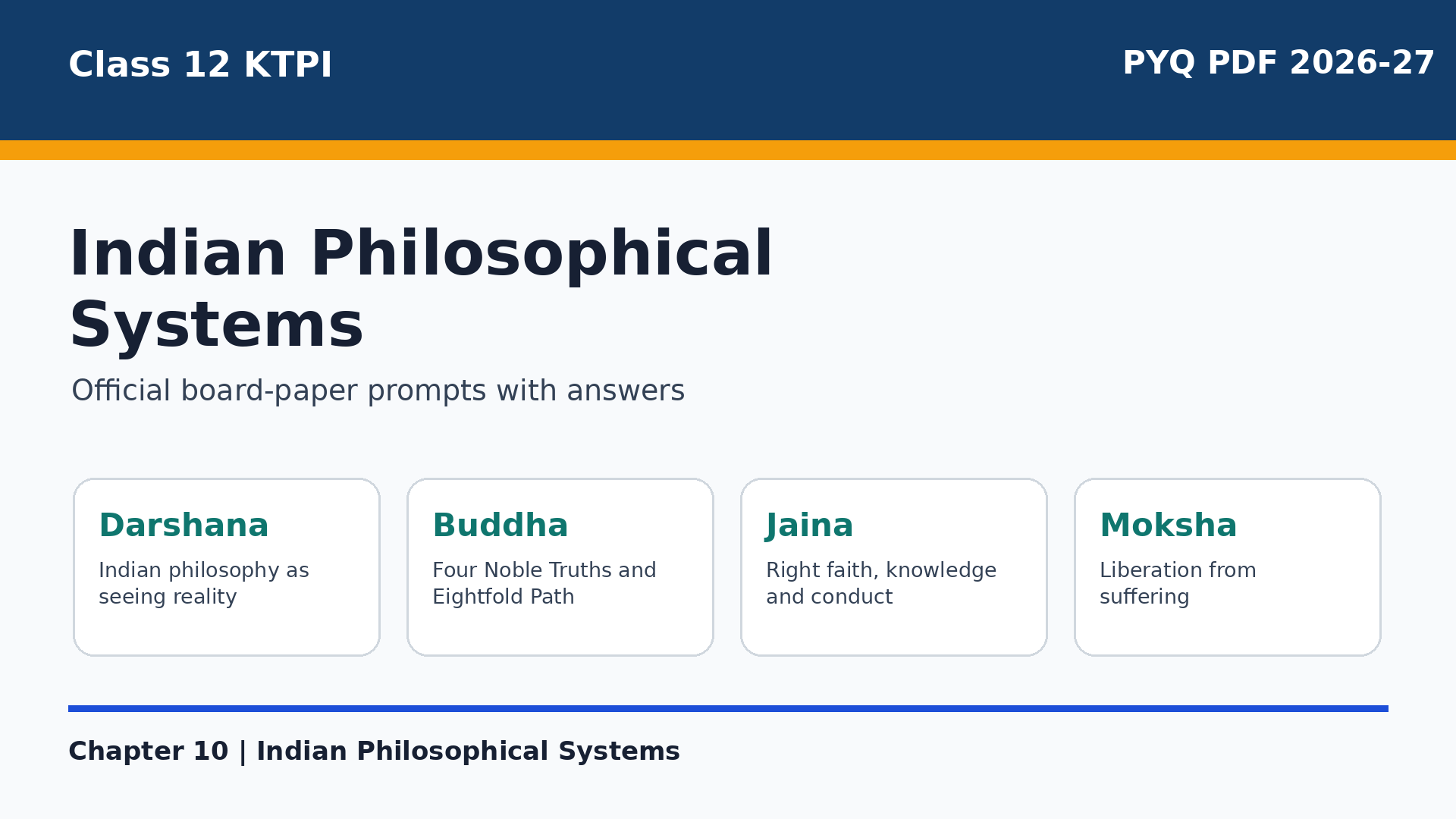
Class 12 KTPI Indian Philosophical Systems PYQ PDF
The Class 12 KTPI Indian Philosophical Systems PYQ PDF gives students a chapter-focused practice file for questions around Indian darshana and ethical thought. The official prompts found in the archive focus on Buddhist ethics, the Eightfold Path, the Four Noble Truths and the ethical component in Jainism.
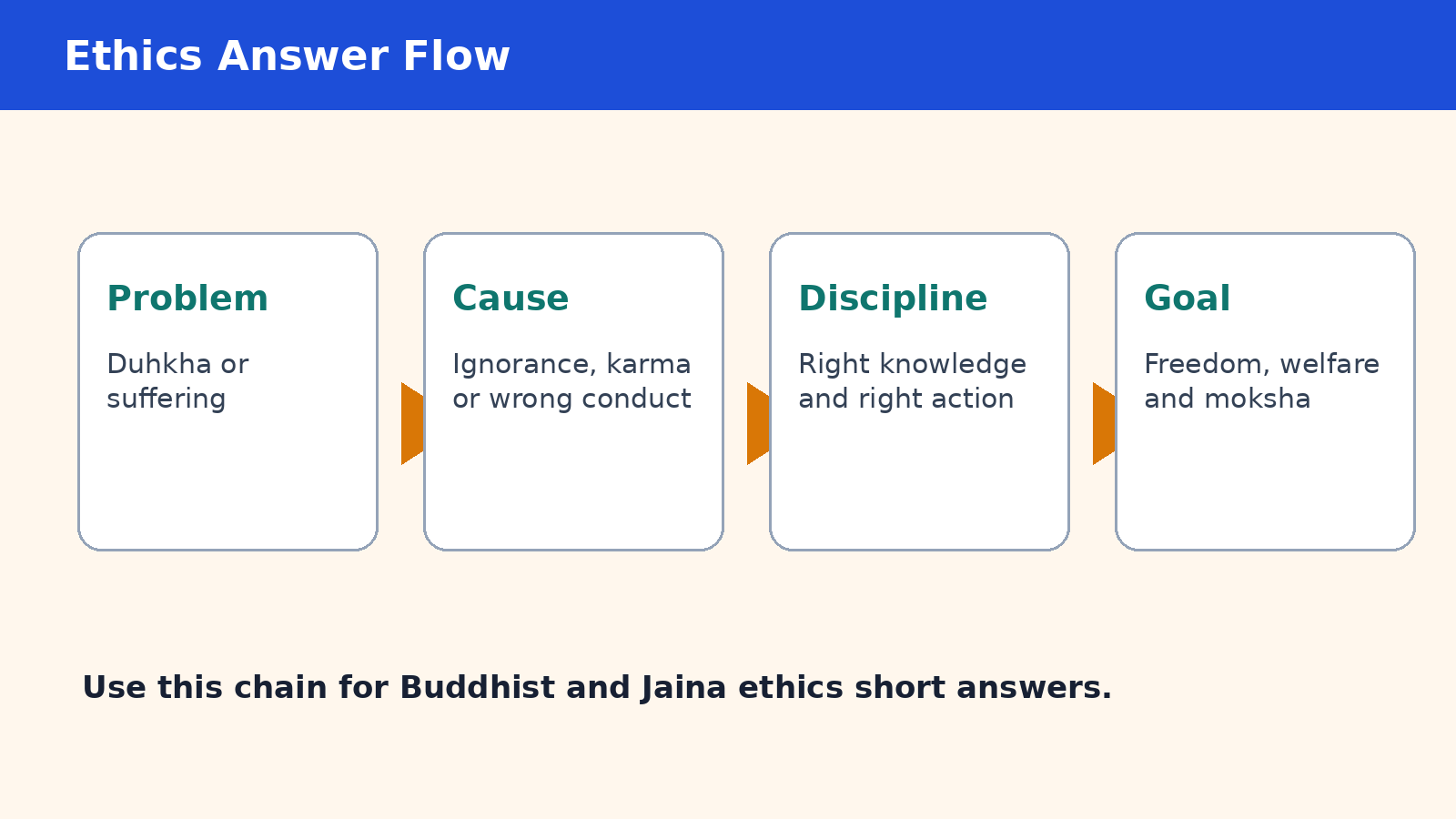
For 2026-27 revision, keep every answer tied to the chapter's practical view of philosophy. The chapter treats philosophy as a way to understand duhkha and pursue moksha through right knowledge, right conduct and disciplined living.
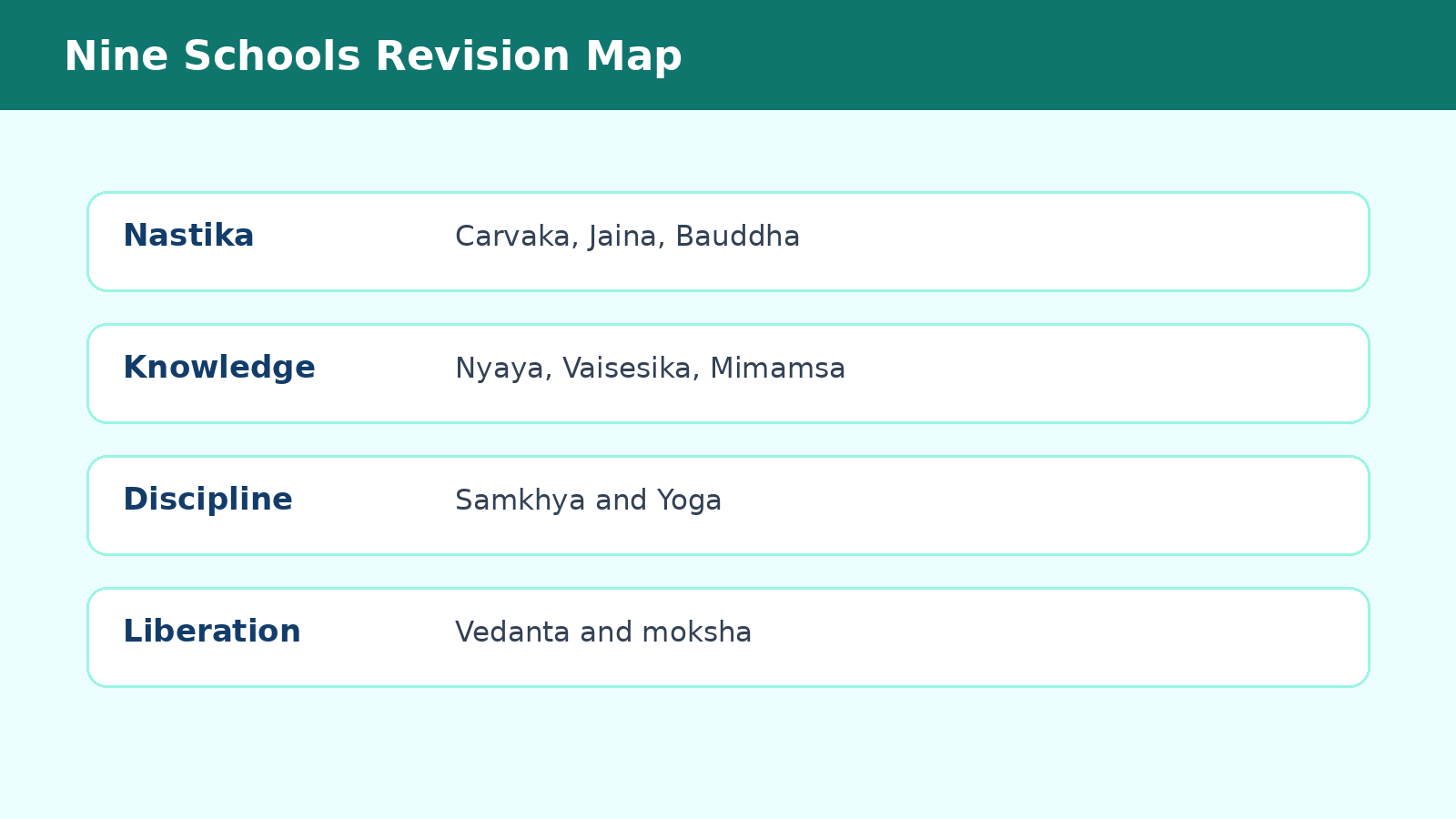
Indian Philosophical Systems Quick Revision
Source: Khan Academy on YouTube
Questions Covered in the Chapter 10 PYQ PDF
The PDF includes Chapter 10 questions traced from the local official CBSE KTPI paper archive. Each item is tagged by year, focus area and marks, then followed by the answer and explanation.
| Year | Question Focus | Type | Marks |
|---|---|---|---|
| 2025 | Buddhist ethics and the Eightfold Path | Match the Columns | 1 |
| 2025 | Four Noble Truths in Buddhist ethics | MCQ | 1 |
| 2025 | Ethical component in Buddhism | Short Answer | 2 |
| 2026 | Buddhist ethics and Niti texts | Match the Columns | 1 |
| 2026 | Features of Buddhist ethics | MCQ | 1 |
| 2026 | Ethical component in Jainism | Short Answer | 2 |
Revision Focus for Philosophical Systems PYQs
Students should revise Chapter 10 as a concept-and-application chapter. A strong answer defines the school or ethical idea, links it to suffering and liberation, and then states how the idea shapes conduct.
- Classification: revise astika and nastika as acceptance or non-acceptance of the Vedas as pramana, not simply belief or disbelief in God.
- Schools: keep Carvaka, Jaina, Bauddha, Samkhya, Yoga, Vaisesika, Nyaya, Mimamsa and Vedanta distinct.
- Ethics: connect Buddhism with the Four Noble Truths and Eightfold Path, and Jainism with right faith, right knowledge and right conduct.
| Topic | What to revise from Chapter 10 |
|---|---|
| Darshana | Darshana means seeing or observing reality as it is. The chapter presents Indian philosophy as a practical inquiry into life and suffering. |
| Astika and Nastika | The classification depends on accepting the Vedas as a valid means of knowledge. Carvaka, Buddhist and Jain systems are treated as nastika in this sense. |
| Nine major schools | Revise Carvaka, Jaina, Bauddha, Samkhya, Yoga, Vaisesika, Nyaya, Mimamsa and Vedanta with their associated thinkers and sutras. |
| Duhkha and moksha | Indian philosophical systems share the concern of overcoming suffering and finding liberation through right knowledge. |
| Buddhist view | Buddhist thought connects suffering with ignorance and teaches right action, conduct and discipline as the route to nirvana. |
| Jaina view | Jaina darshana stresses right faith, right knowledge and right conduct, with liberation tied to stopping and shedding karma. |
Other Class 12 KTPI Philosophy Resources
| Resource | Use It For | Link |
|---|---|---|
| NCERT Solutions | Exercise answers and extended activities for the chapter | NCERT Solutions for Indian Philosophical Systems |
| Chapter PDF | The official chapter text, source examples and activity prompts | Indian Philosophical Systems Chapter PDF |
| Notes | Topic-wise recap for board revision | Indian Philosophical Systems Notes |
| Handwritten Notes | Quick handwritten revision once the chapter notes page is live | Indian Philosophical Systems Handwritten Notes |
All Class 12 KTPI PYQ Chapters
| Chapter | PYQ Link |
|---|---|
| Chapter 1 Astronomy in India | Chapter 1 Astronomy in India PYQ |
| Chapter 2 Chemistry in India | Chapter 2 Chemistry in India PYQ |
| Chapter 3 Mathematics in India | Chapter 3 Mathematics in India PYQ |
| Chapter 4 Life Sciences | Chapter 4 Life Sciences PYQ |
| Chapter 5 Medicine in India | Chapter 5 Medicine in India PYQ |
| Chapter 6 Agriculture | Chapter 6 Agriculture PYQ |
| Chapter 7 Metallurgy in India | Chapter 7 Metallurgy in India PYQ |
| Chapter 8 Architecture, Engineering and Technology | Chapter 8 Architecture, Engineering and Technology PYQ |
| Chapter 9 Indian Languages and Grammar | Chapter 9 Indian Languages and Grammar PYQ |
| Chapter 10 Indian Philosophical Systems | Chapter 10 Indian Philosophical Systems PYQ |
Frequently Asked Questions
Ques. Does the Class 12 KTPI Indian Philosophical Systems PYQ PDF include answers?
Ans. Yes. The PDF includes answers and explanations for the official-paper questions included in the Chapter 10 extract.
Ques. How many official-paper prompts are included for Chapter 10?
Ans. The current file includes 6 prompts traced from the available 2025 and 2026 CBSE KTPI papers in the local archive.
Ques. Is this PYQ PDF aligned with the 2026-27 syllabus?
Ans. Yes. The article and PDF are prepared for the 2026-27 NCERT workflow and focus on Chapter 10 Indian Philosophical Systems.



Comments