



29 CBSE board questions from 2022 to 2026 make up this Psychological Disorders PYQ set for Class 12 Psychology. Every question in the PDF comes with a full step-by-step solution, so this is a questions-and-answers resource, not a questions-only download.
- 29 questions, CBSE 2022-2026: Section A (10 MCQs, 1 mark), Section B (5 VSA, 2 marks), Section C (7 SA, 3 marks), Section D (4 case-study questions, 4 marks), Section F (3 long-answer questions, 6 marks).
- Full solutions included: every question has a worked, step-by-step answer, not just the bare question paper.
- Topics covered: criteria of abnormality, anxiety and mood disorders, somatic and dissociative disorders, schizophrenia, substance use, and neurodevelopmental disorders in children.
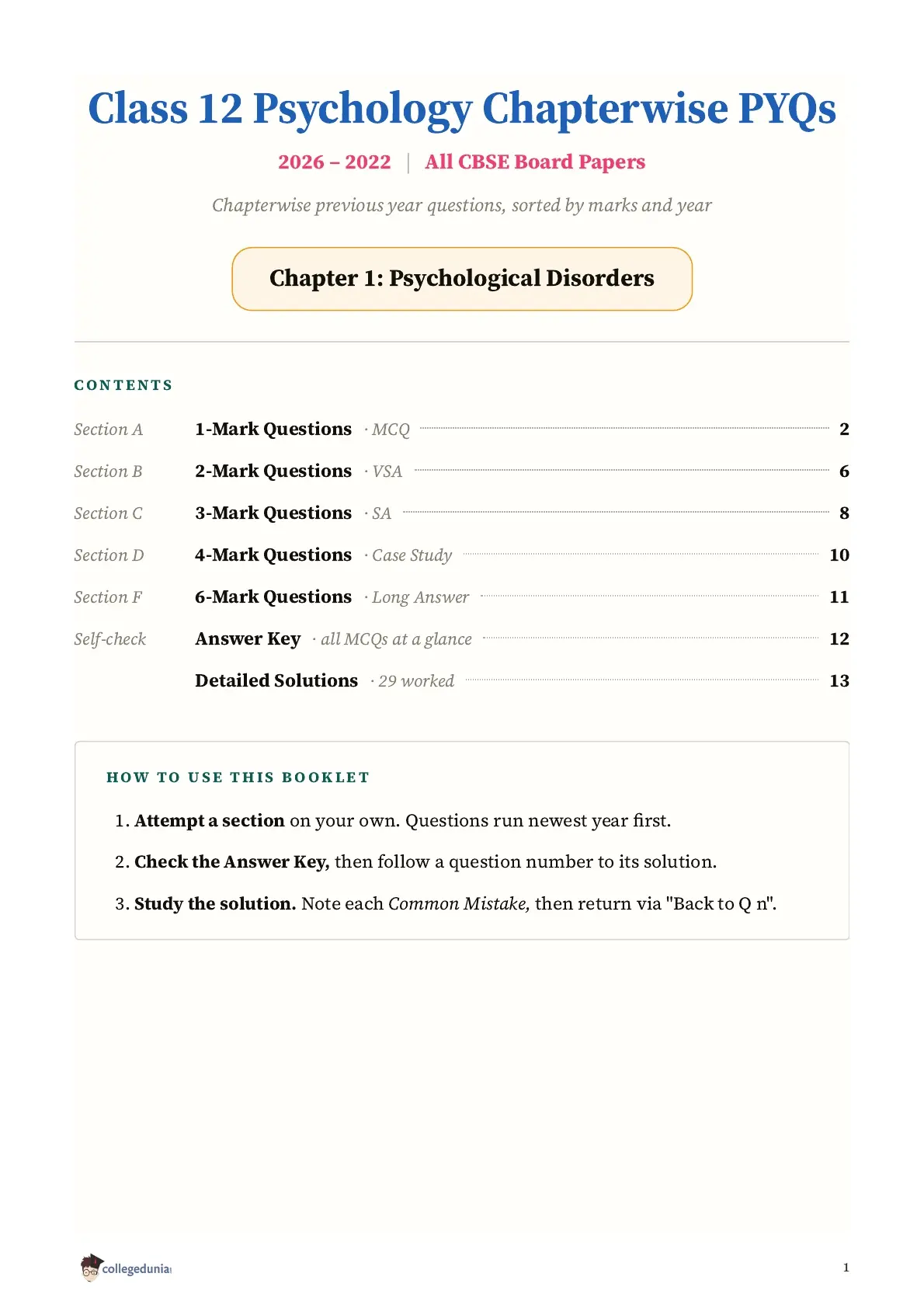
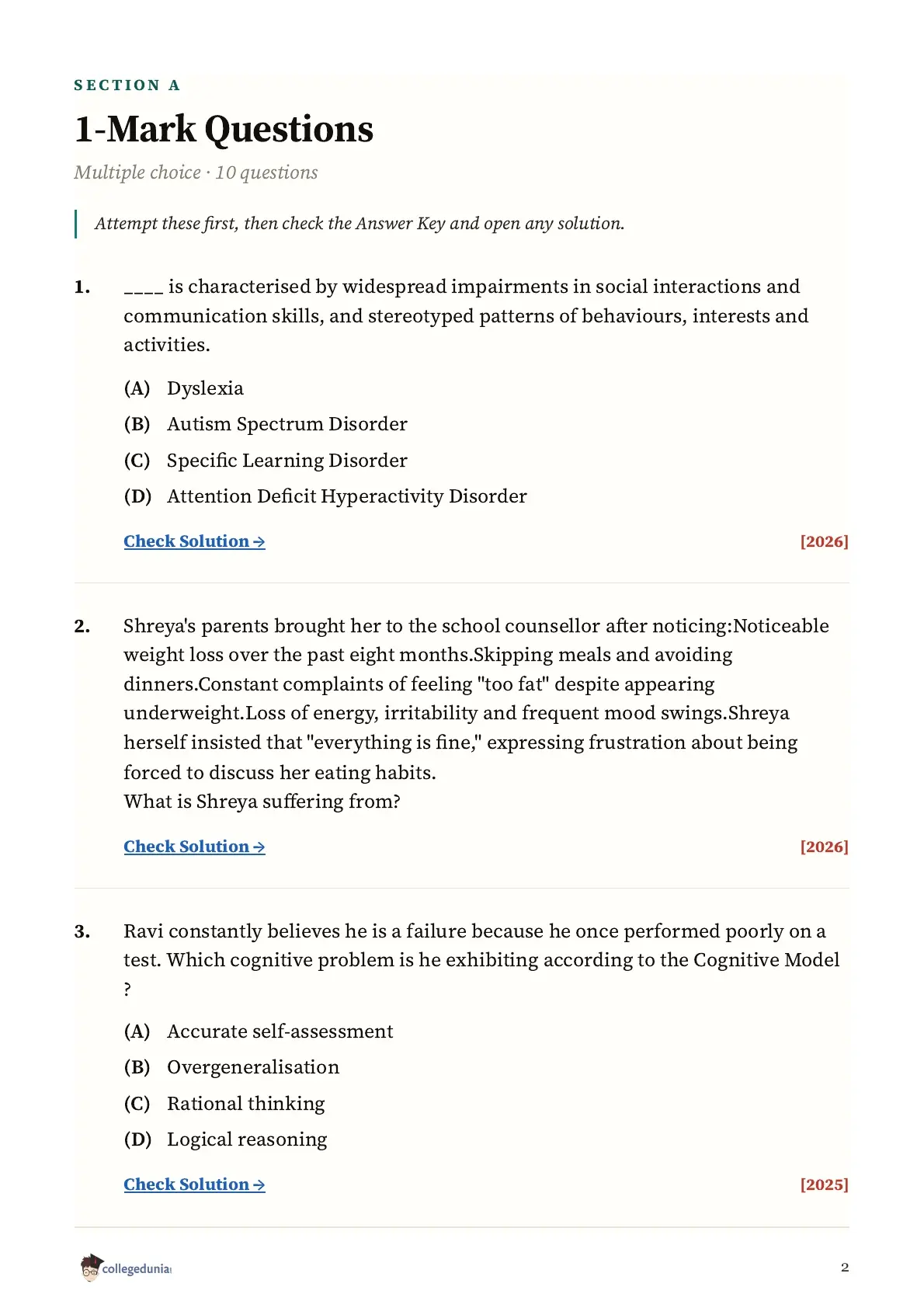
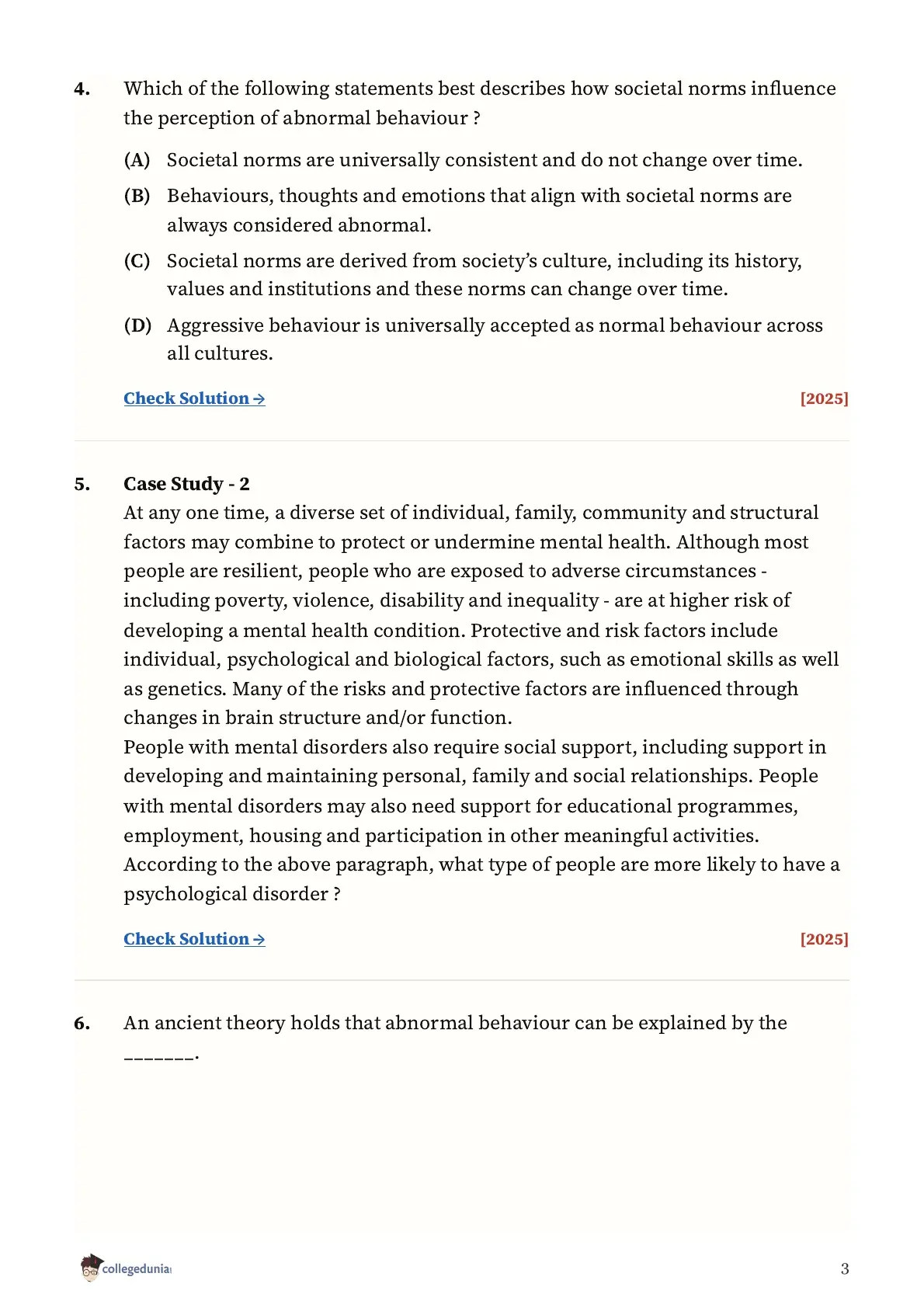
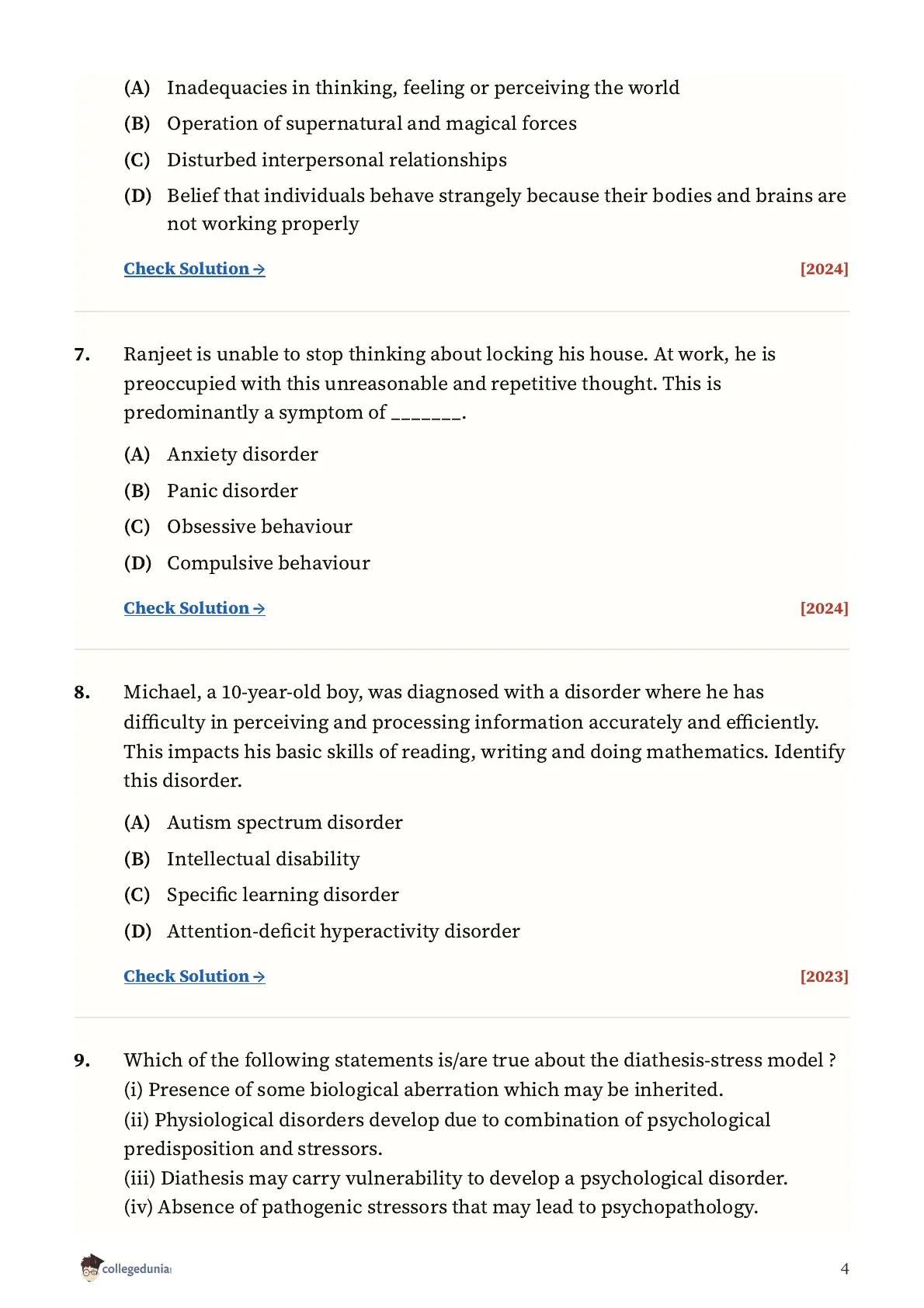
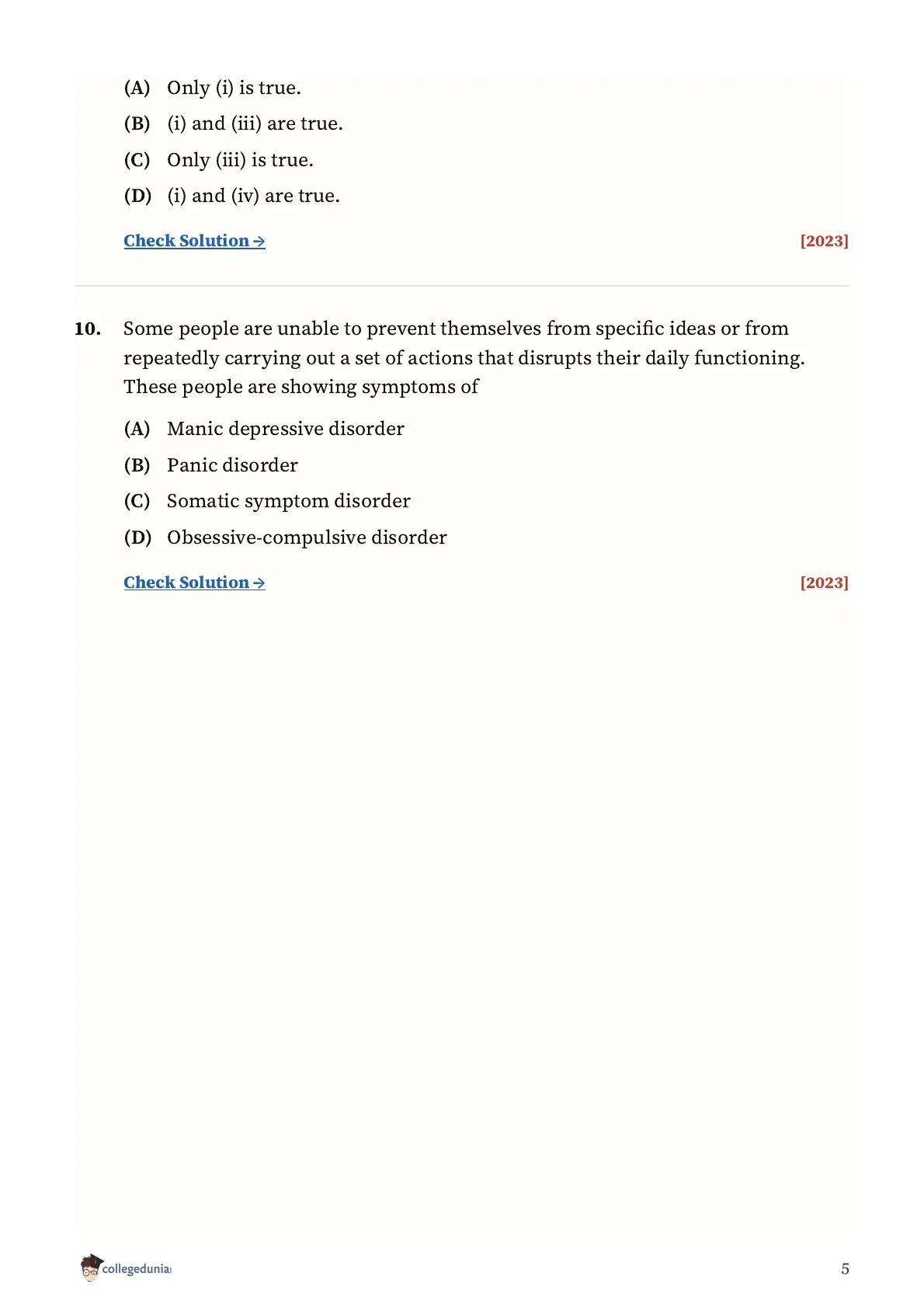
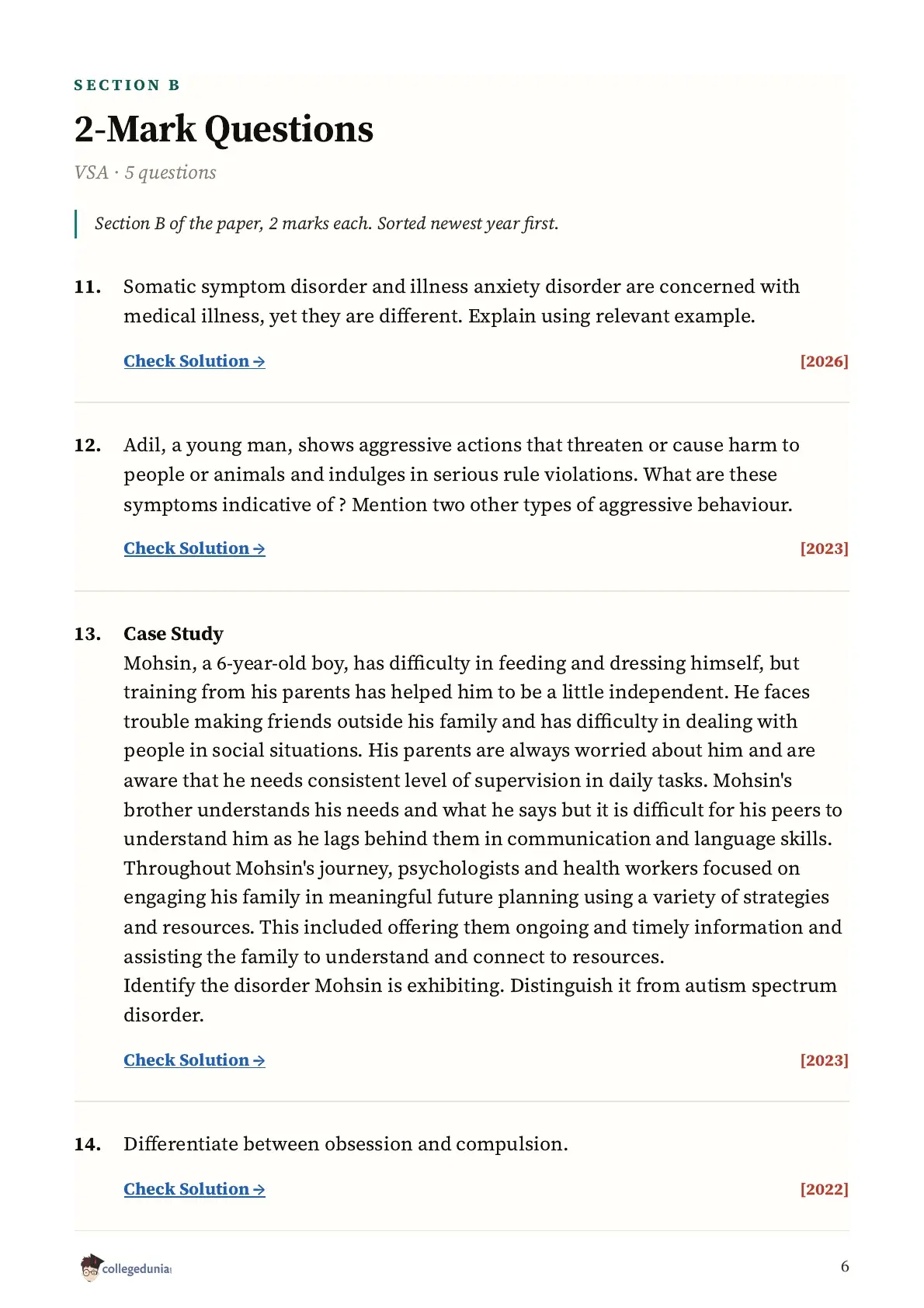
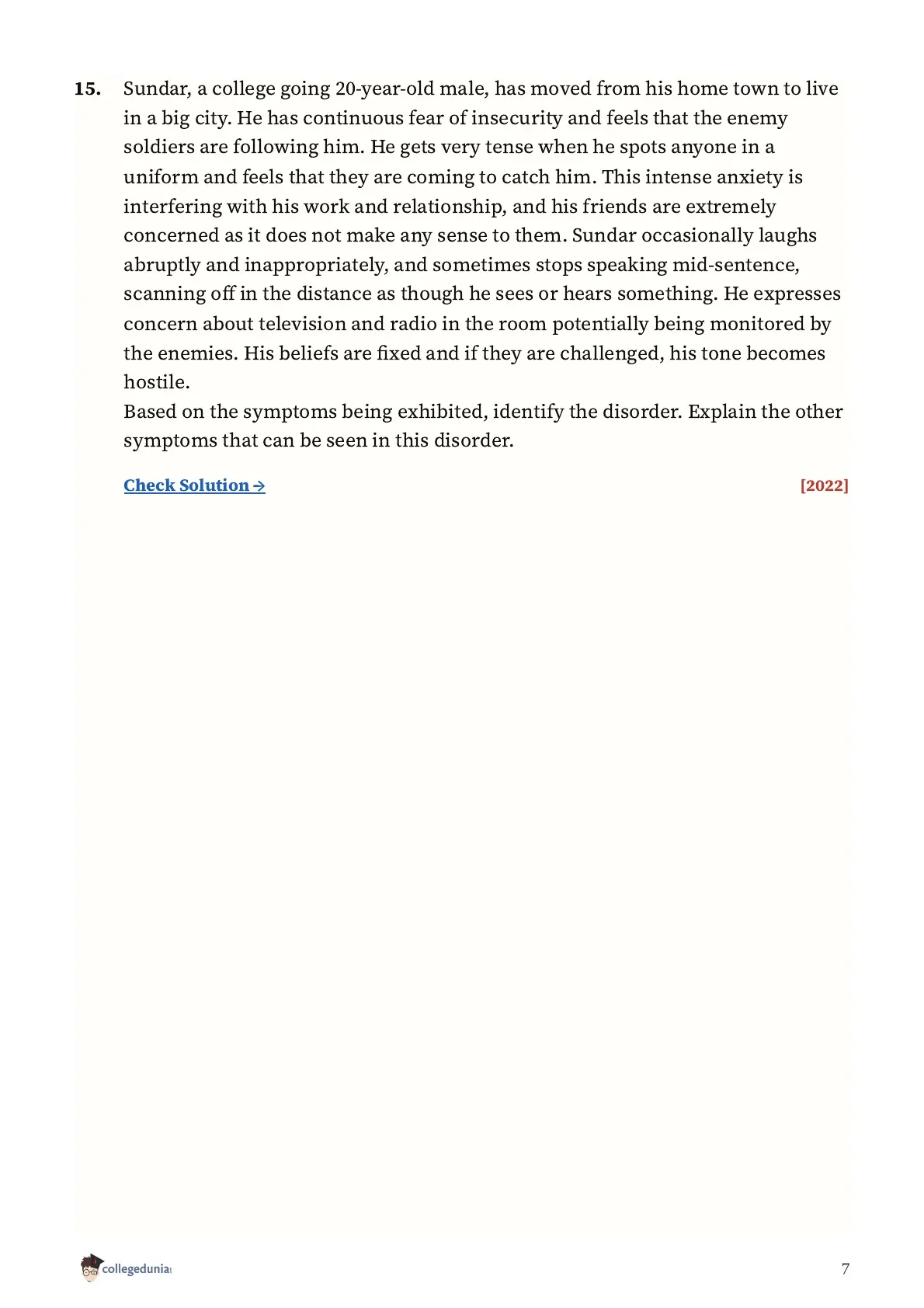
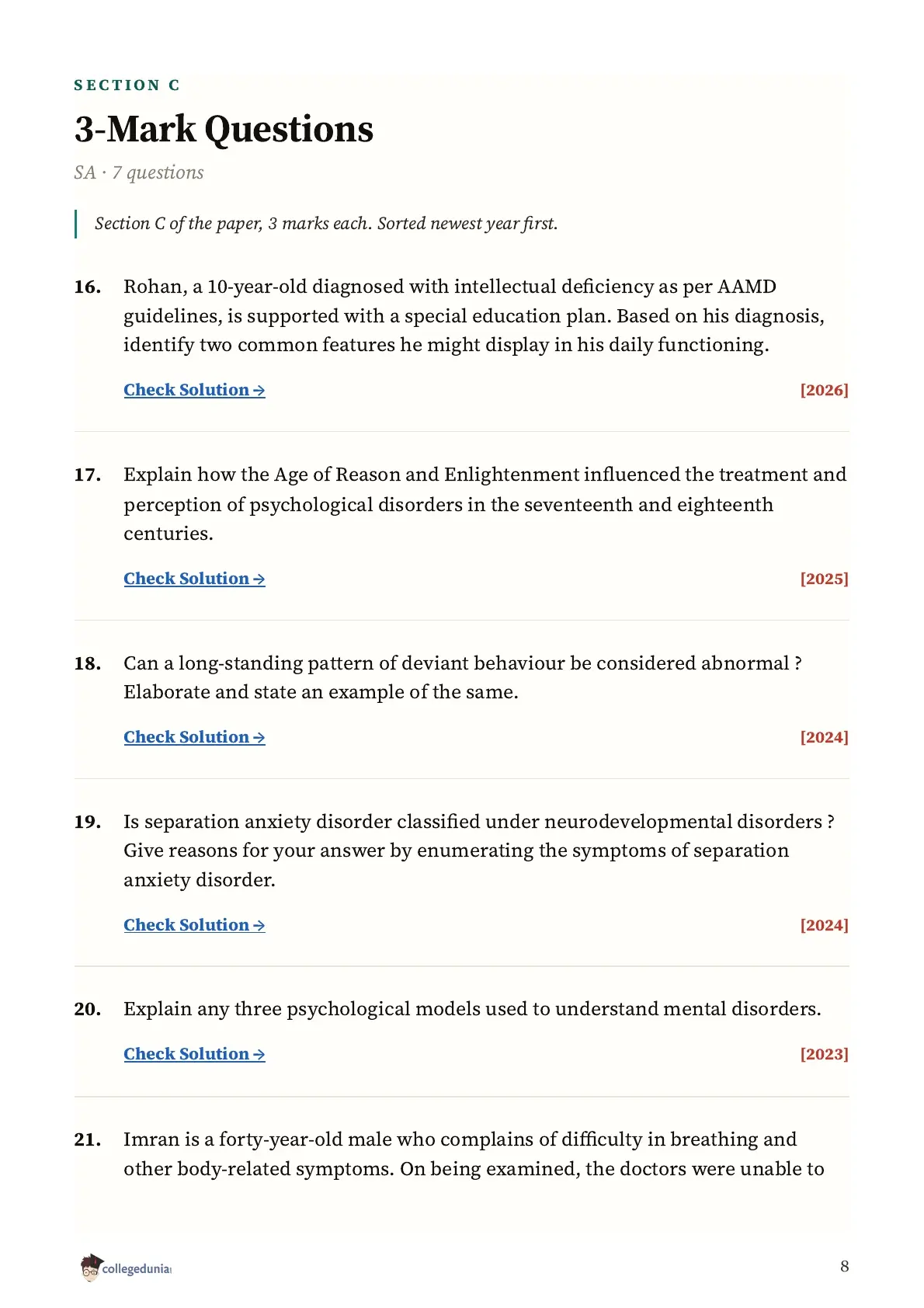
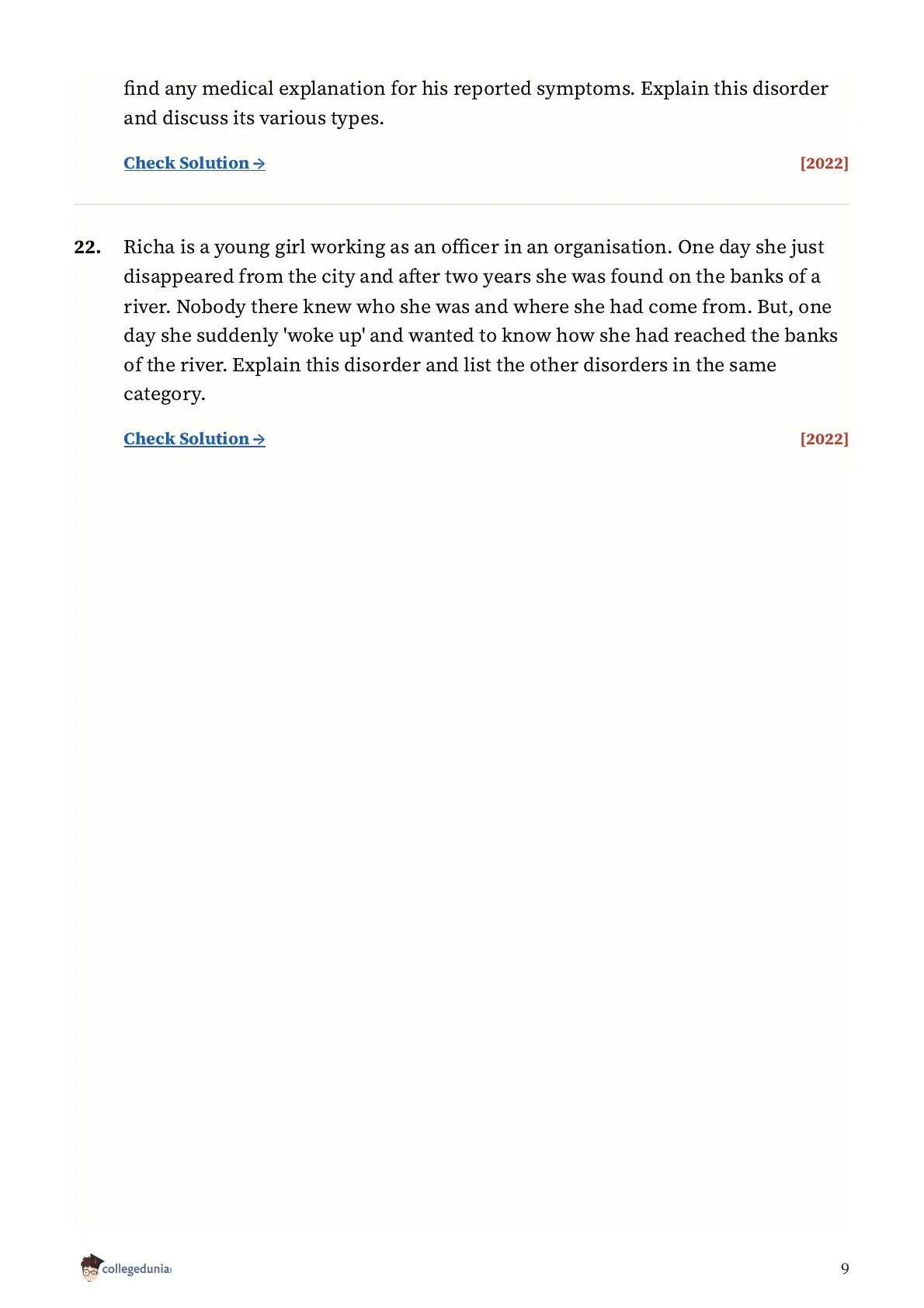
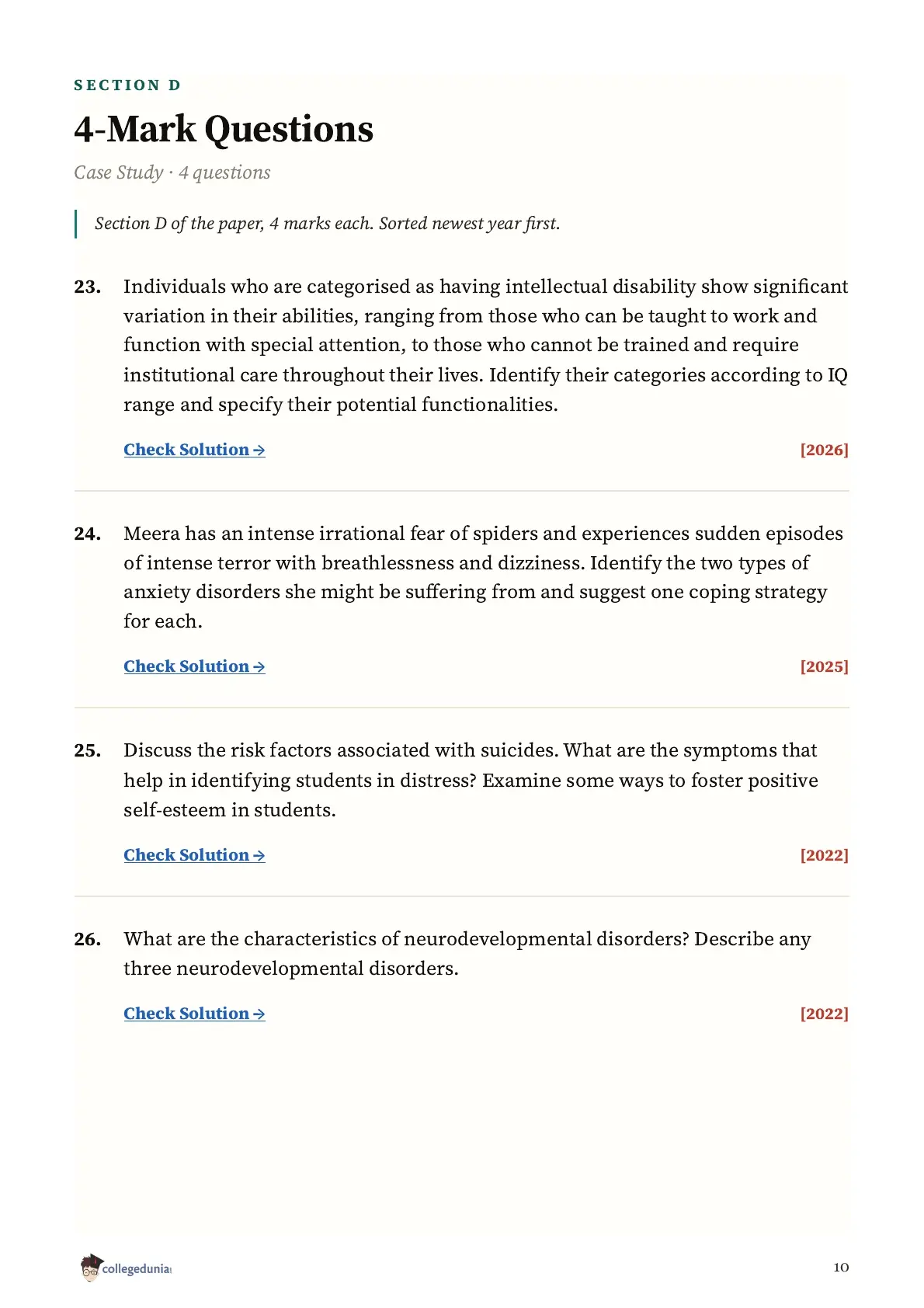
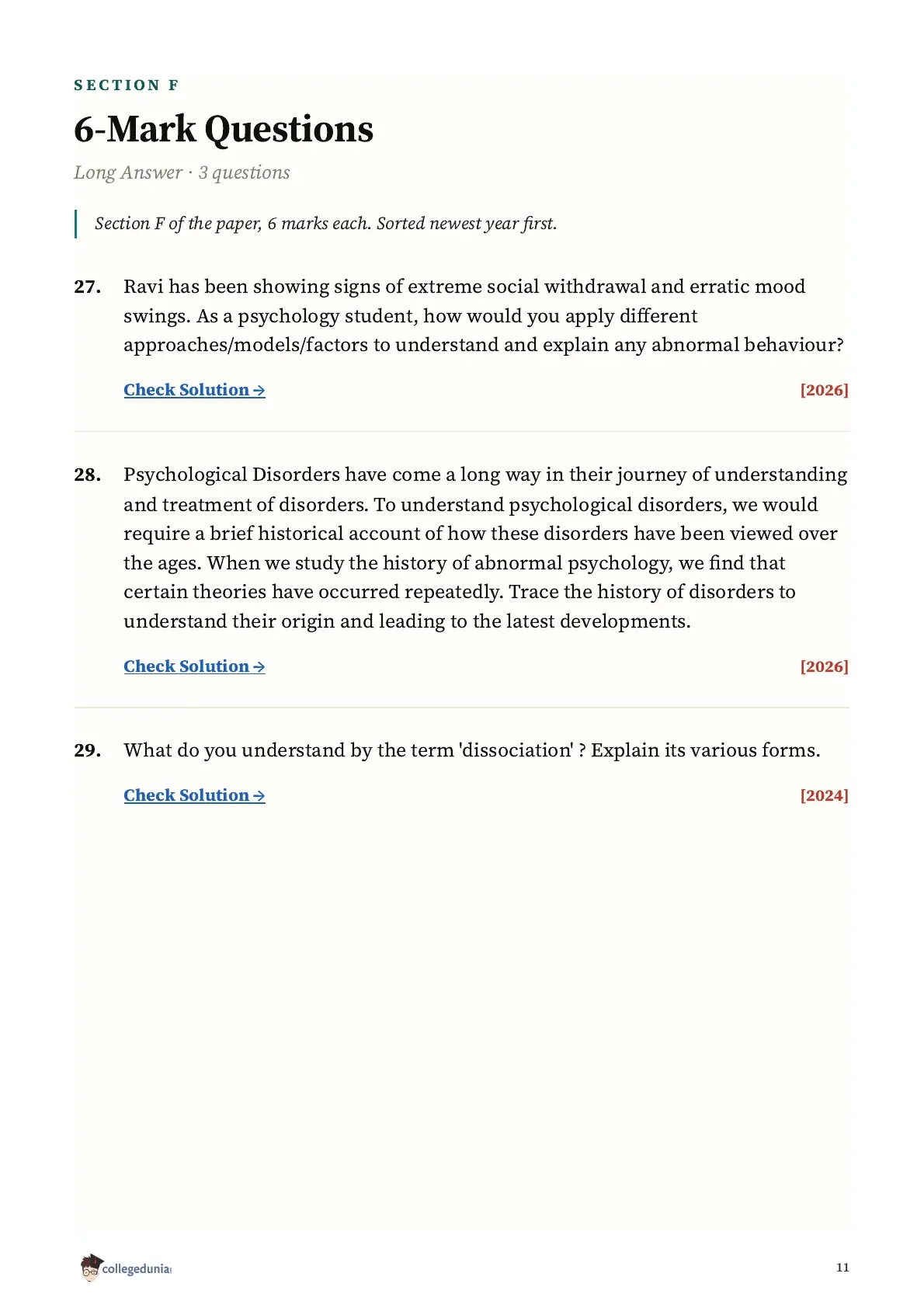
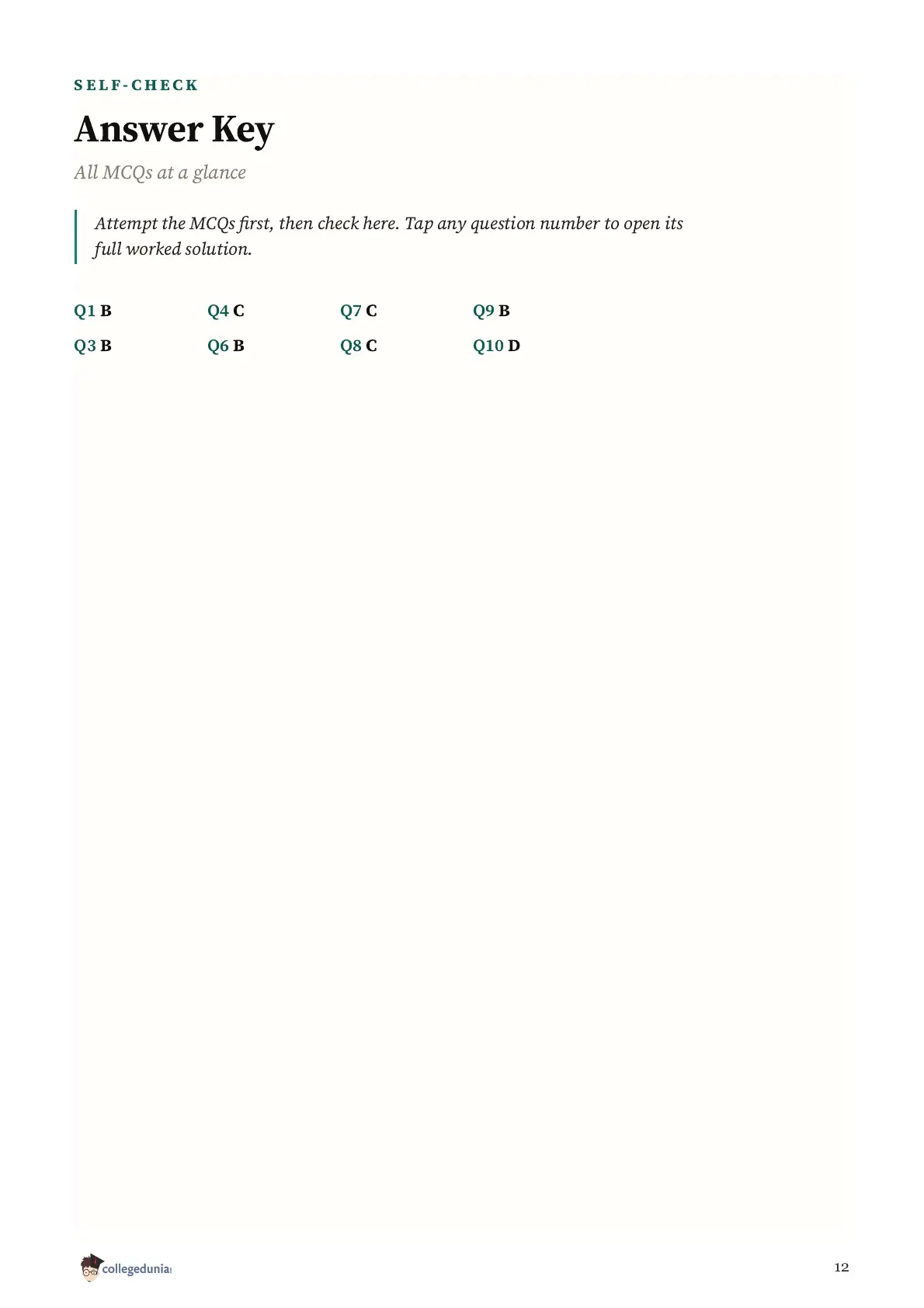
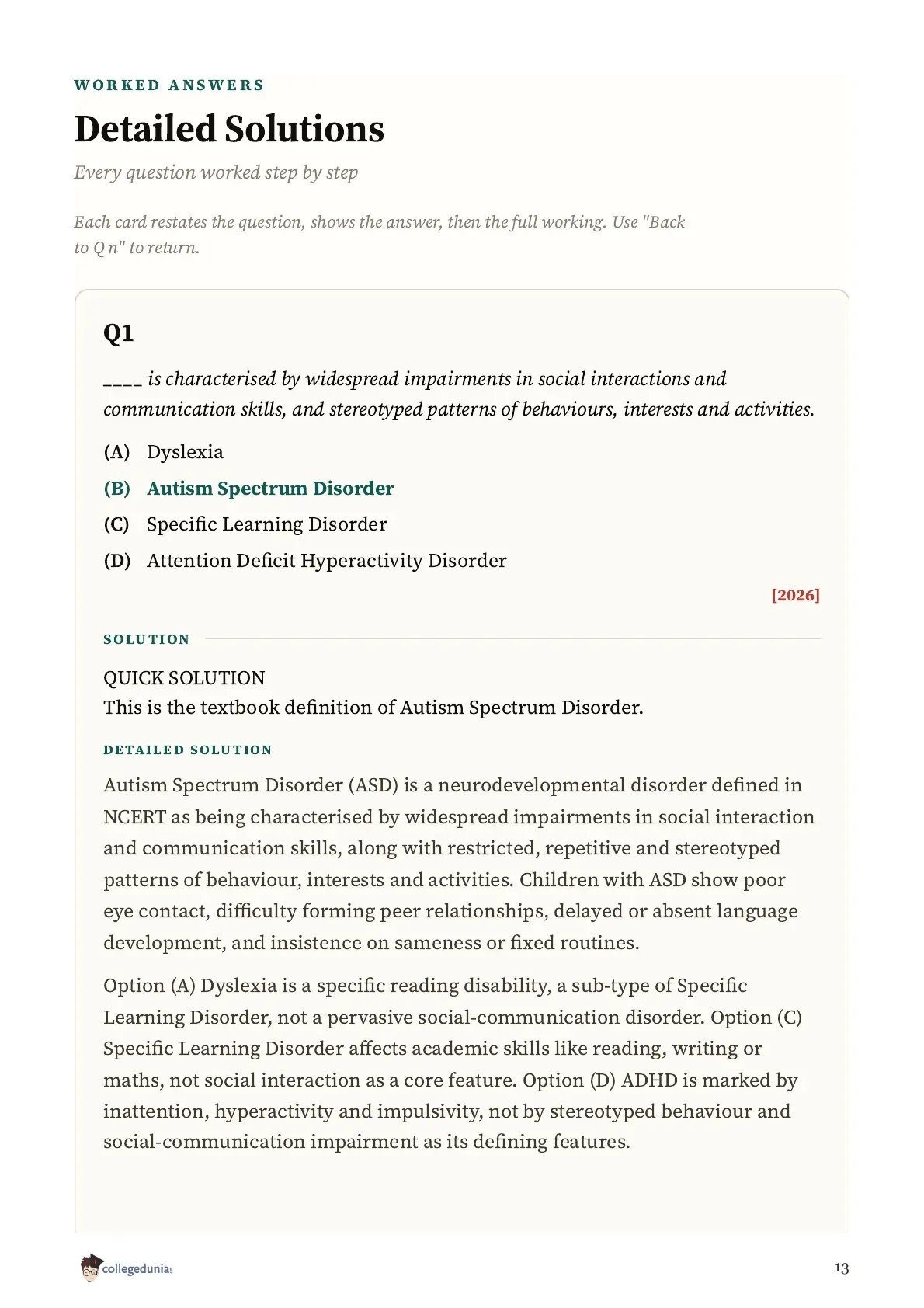
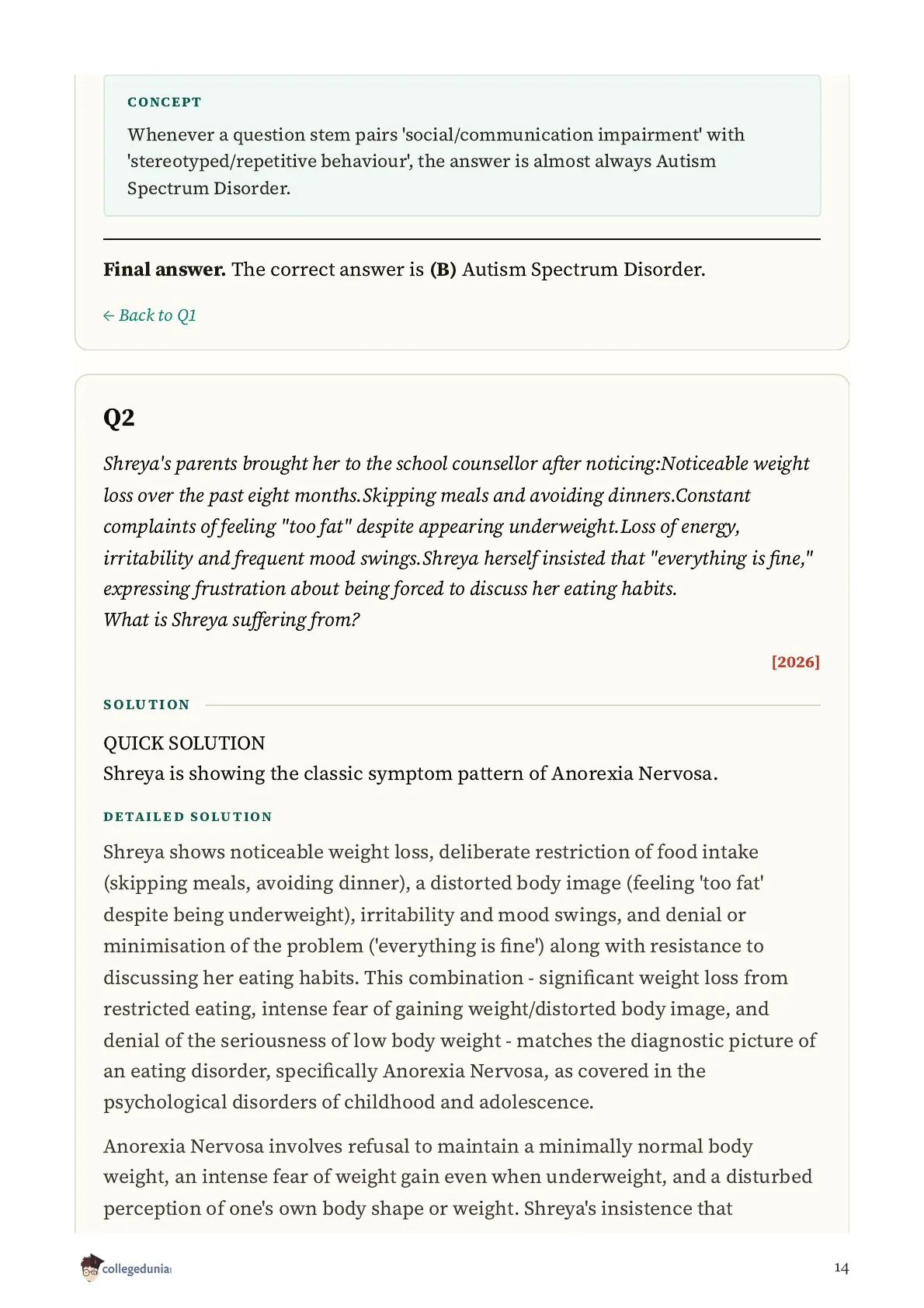
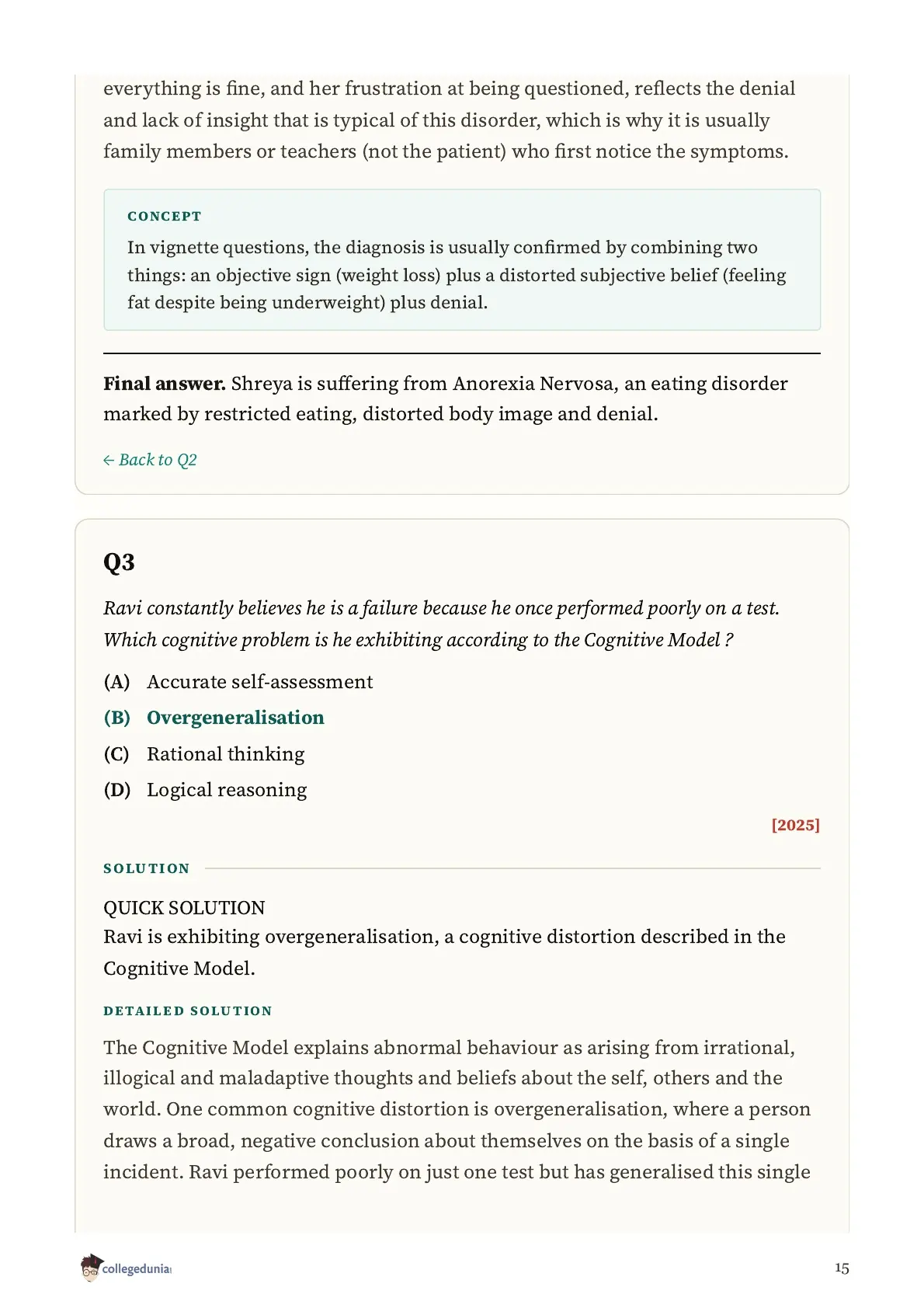
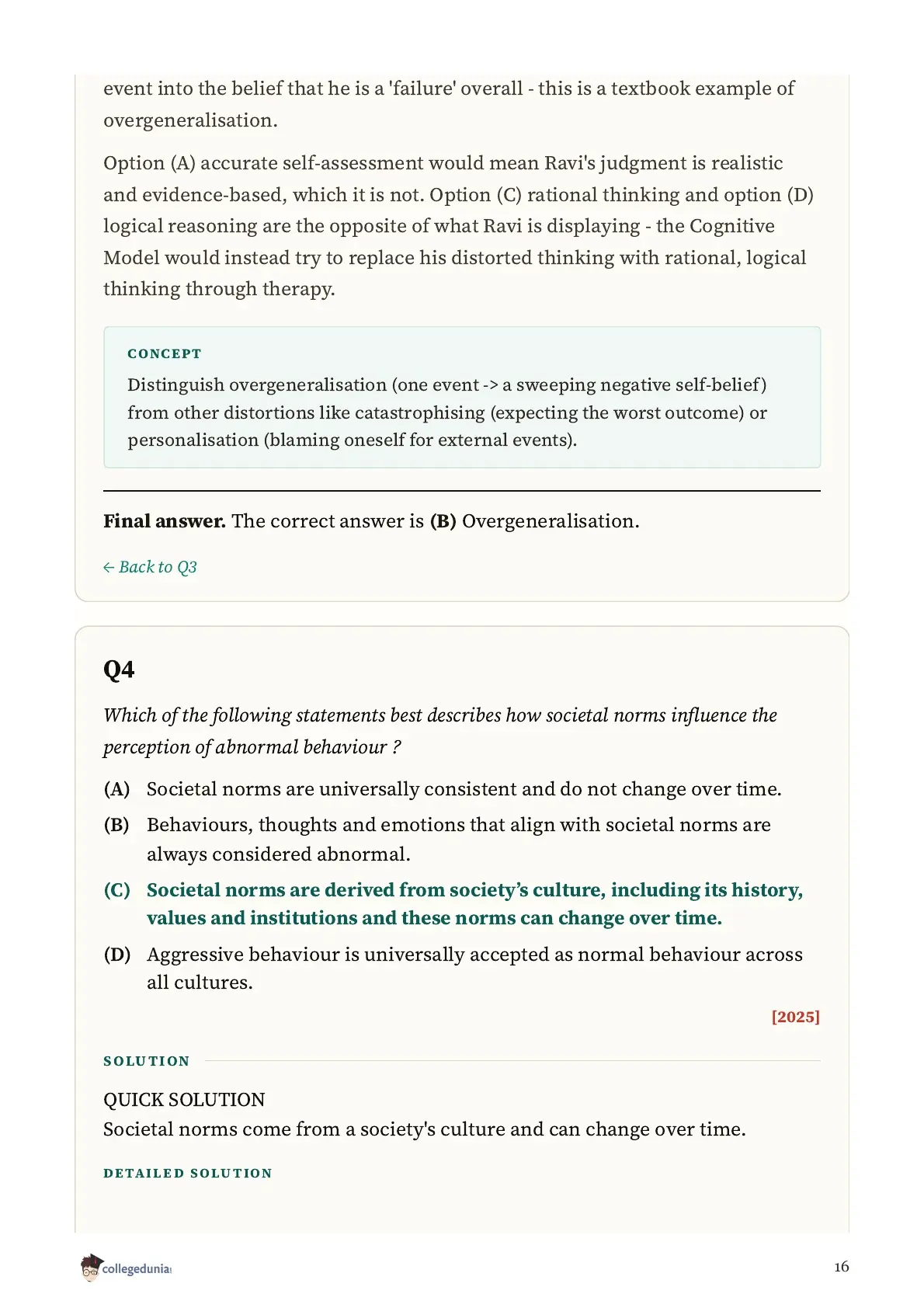
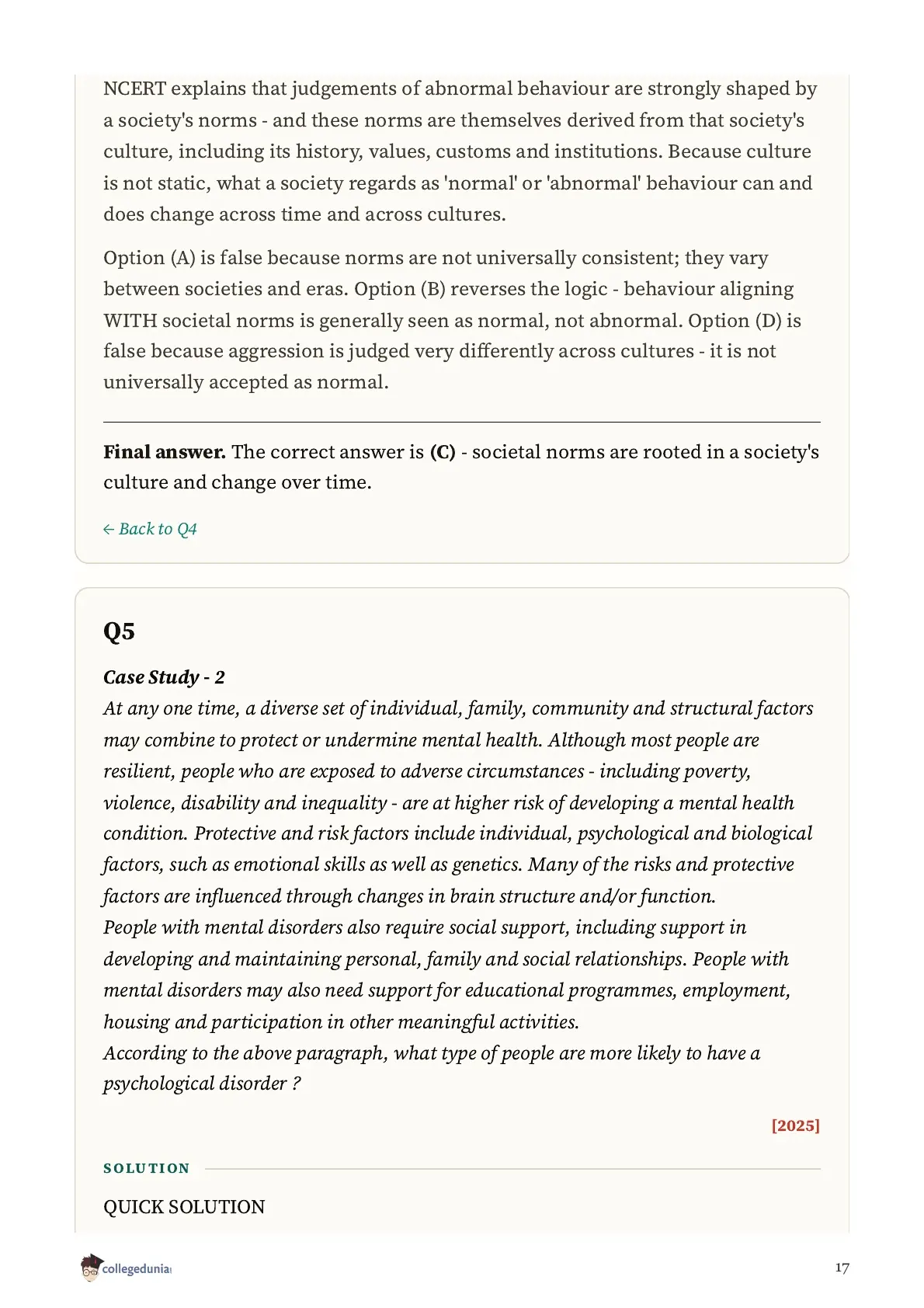
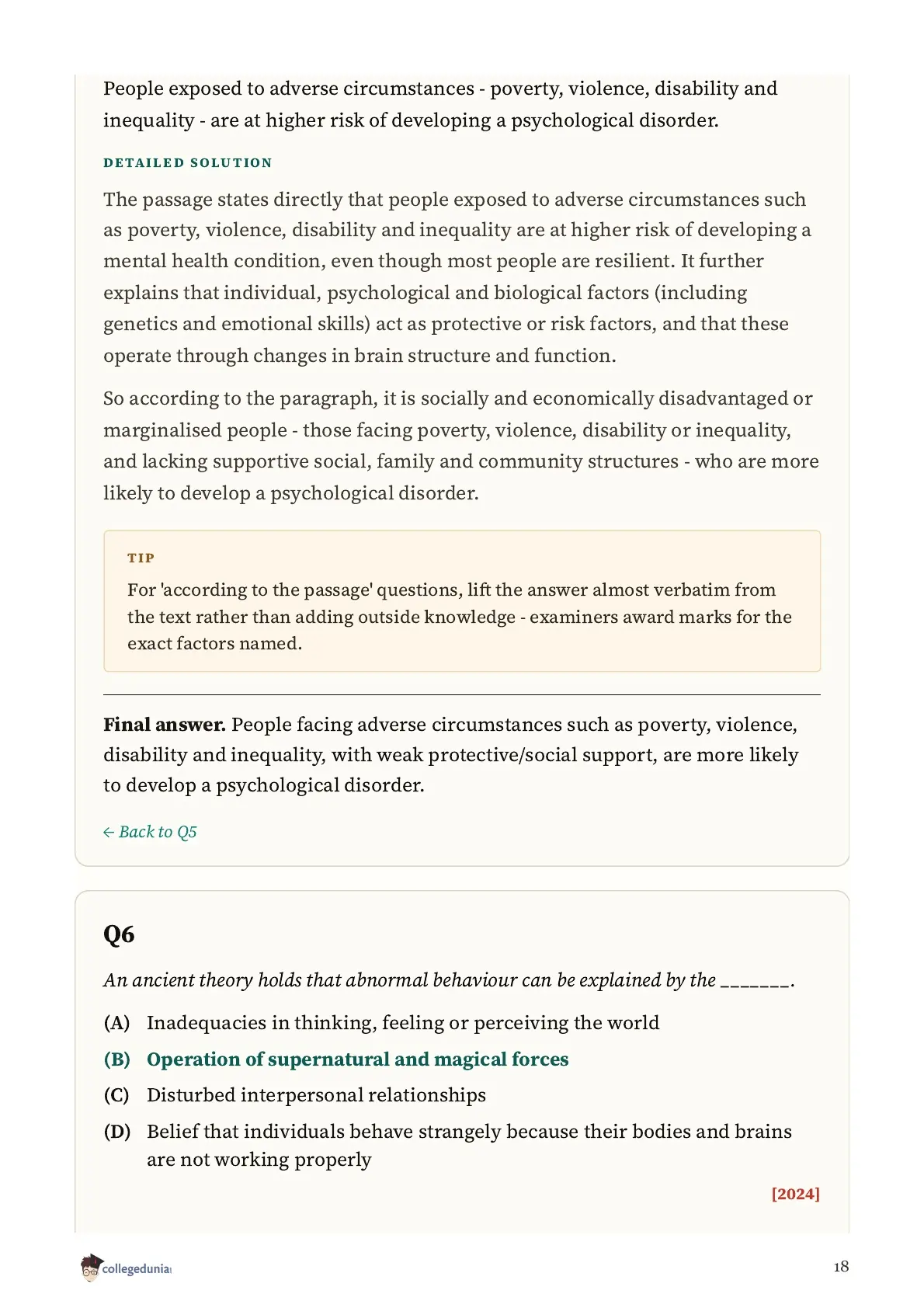
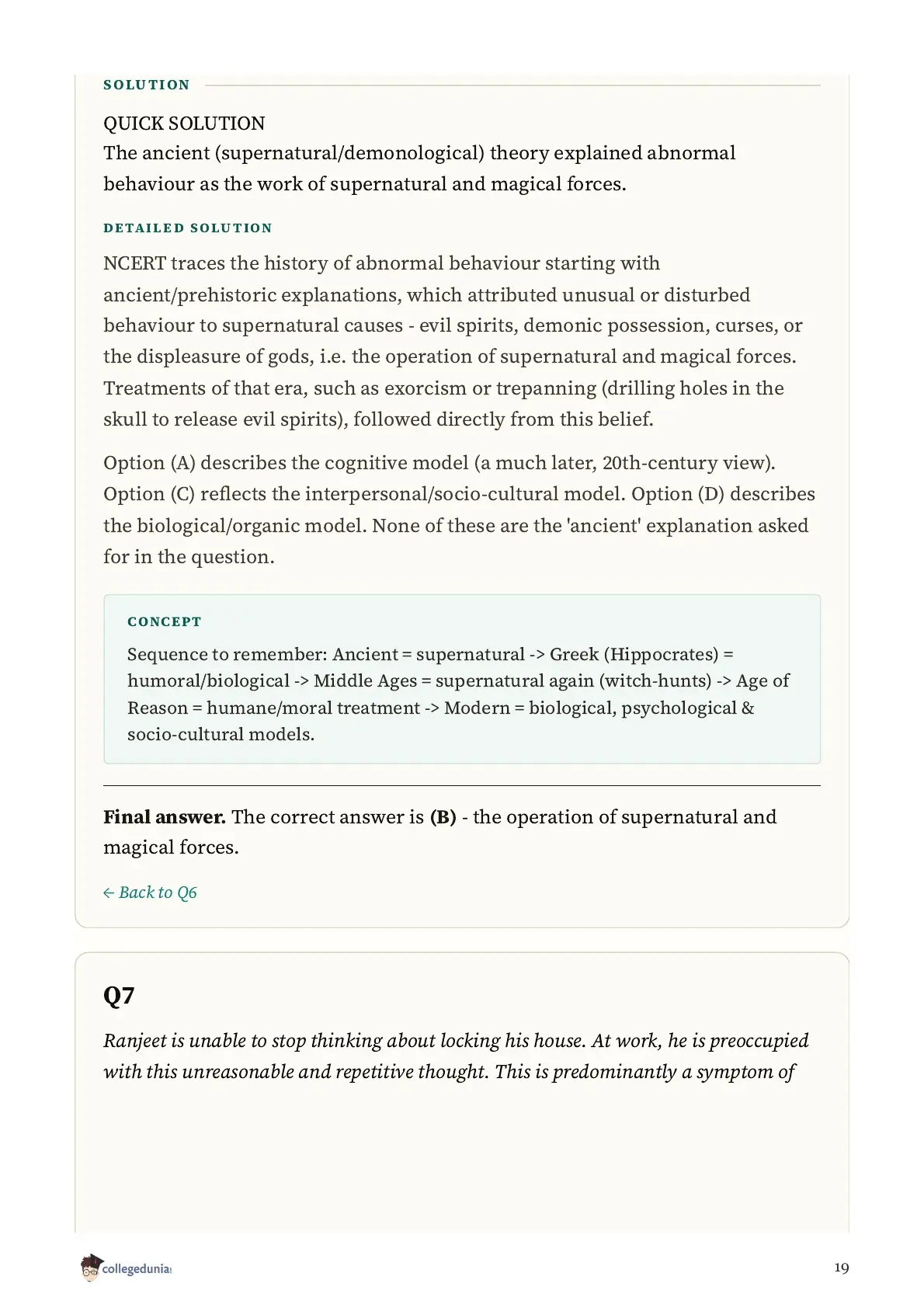
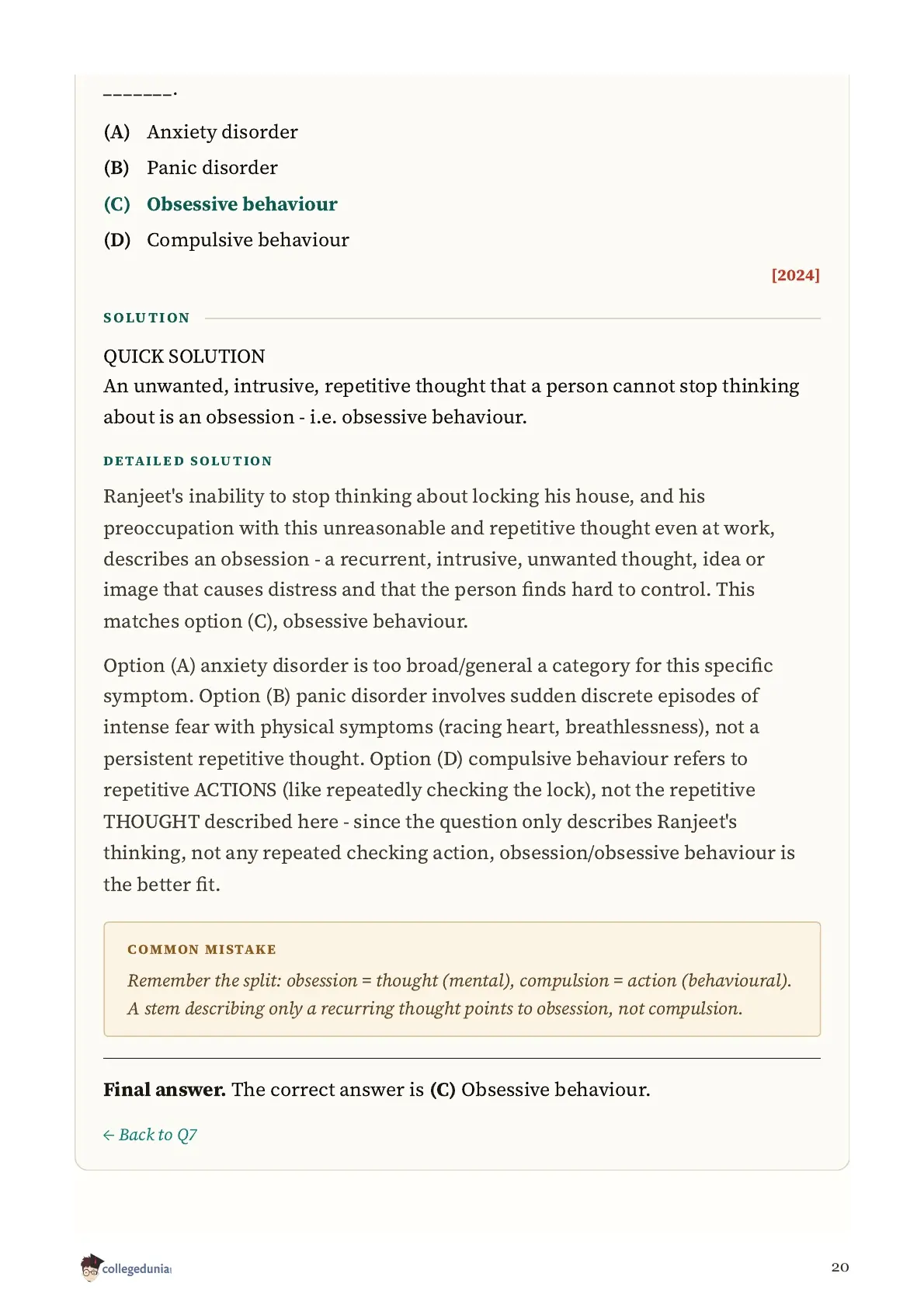
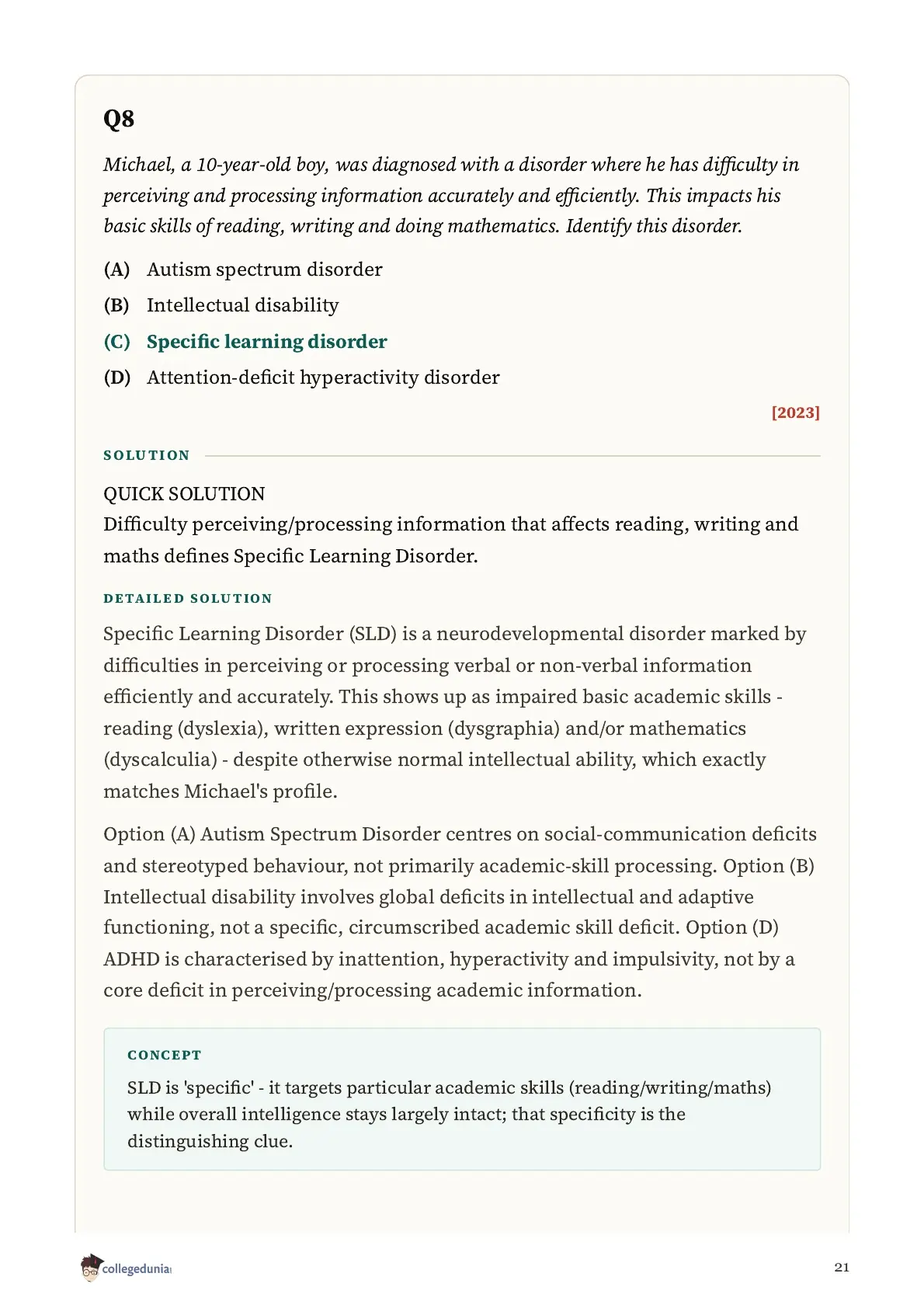
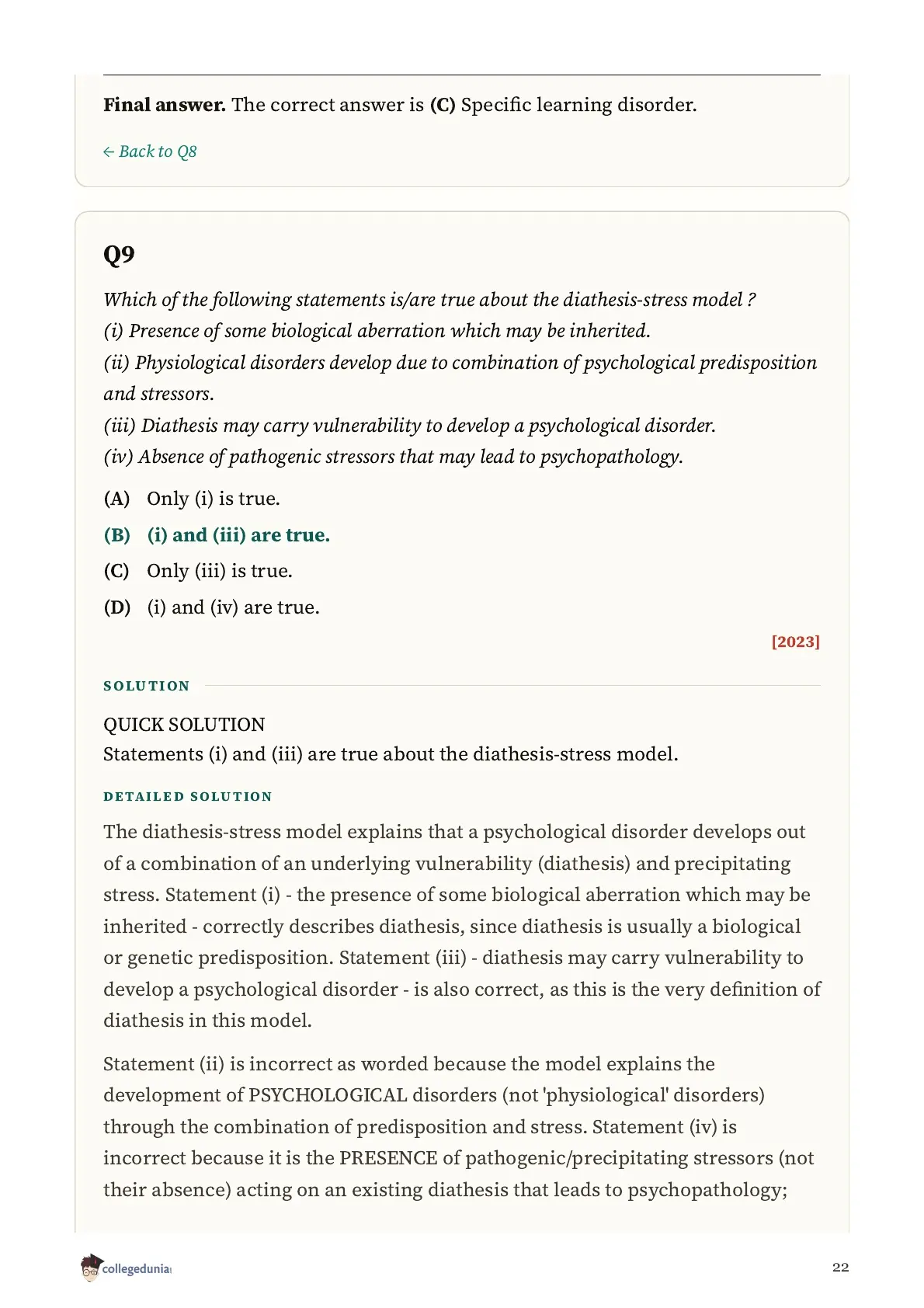
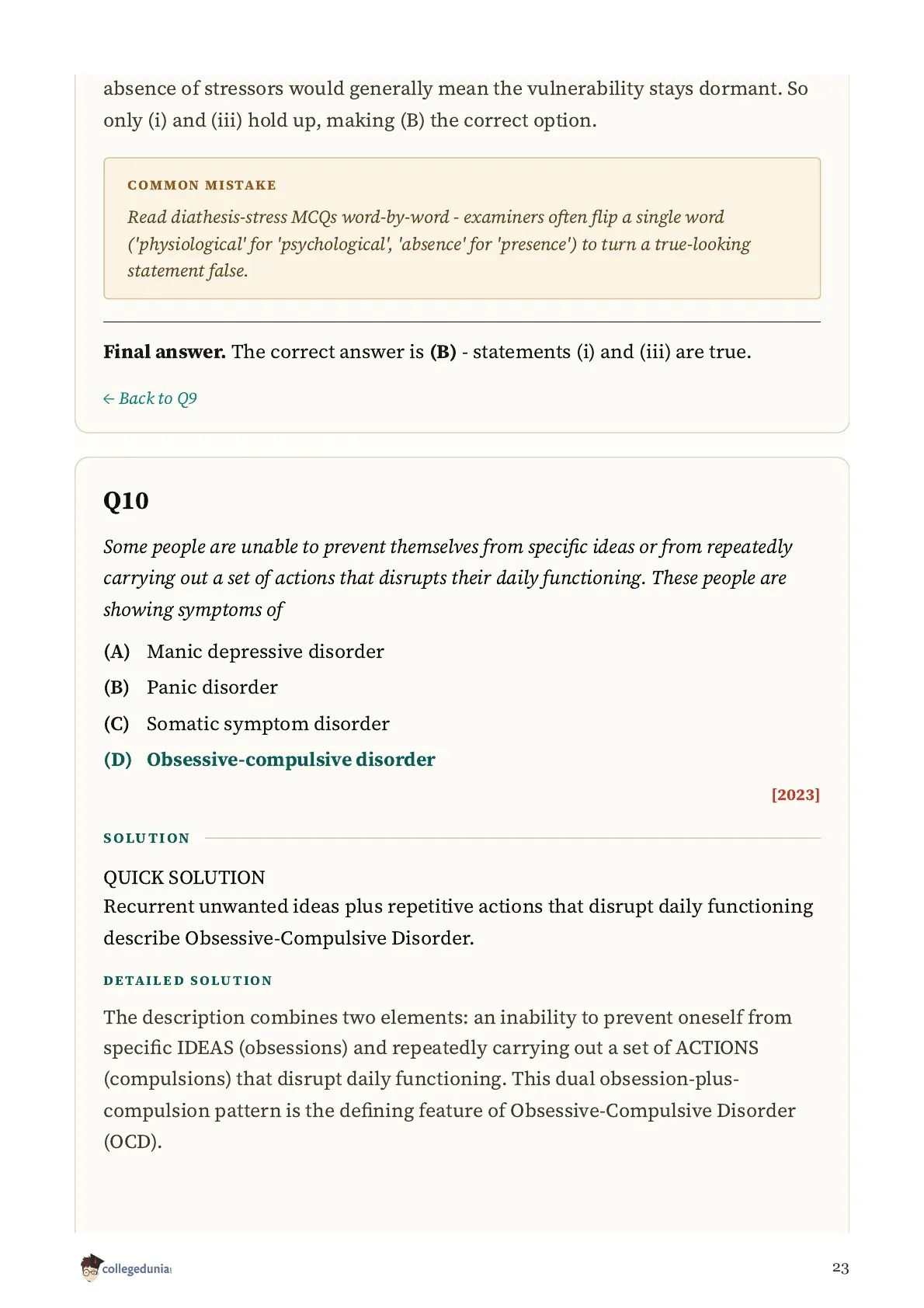
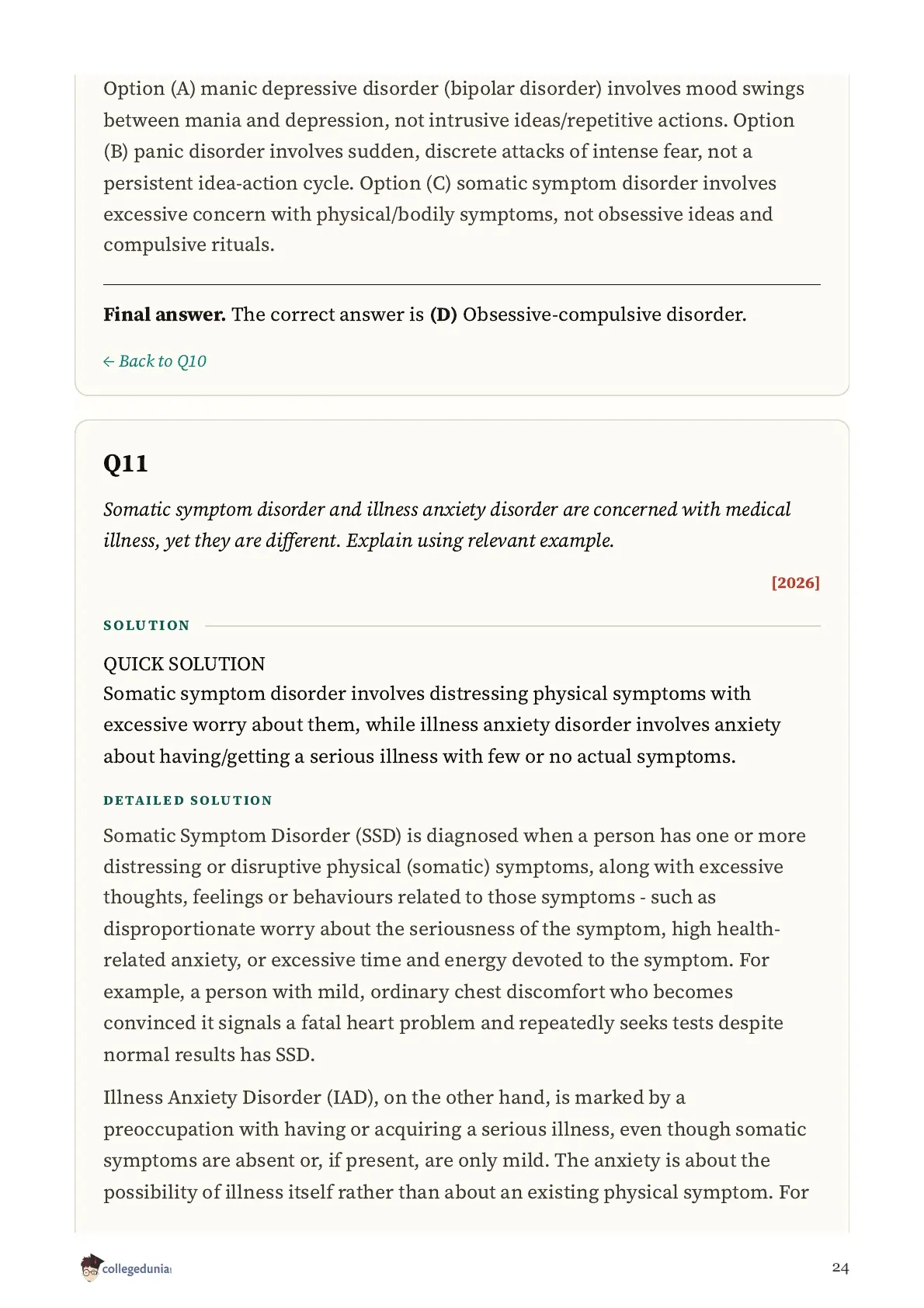
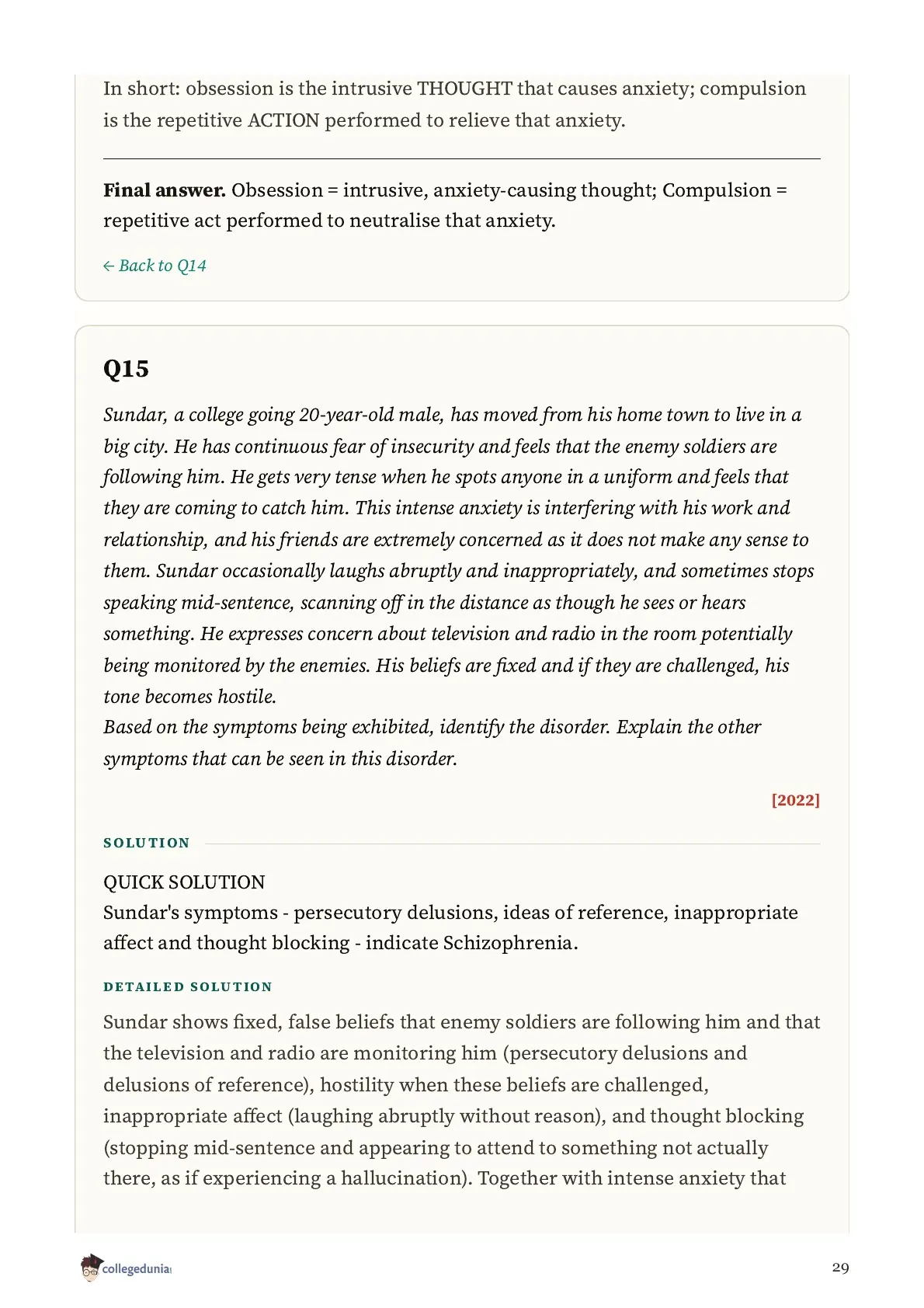
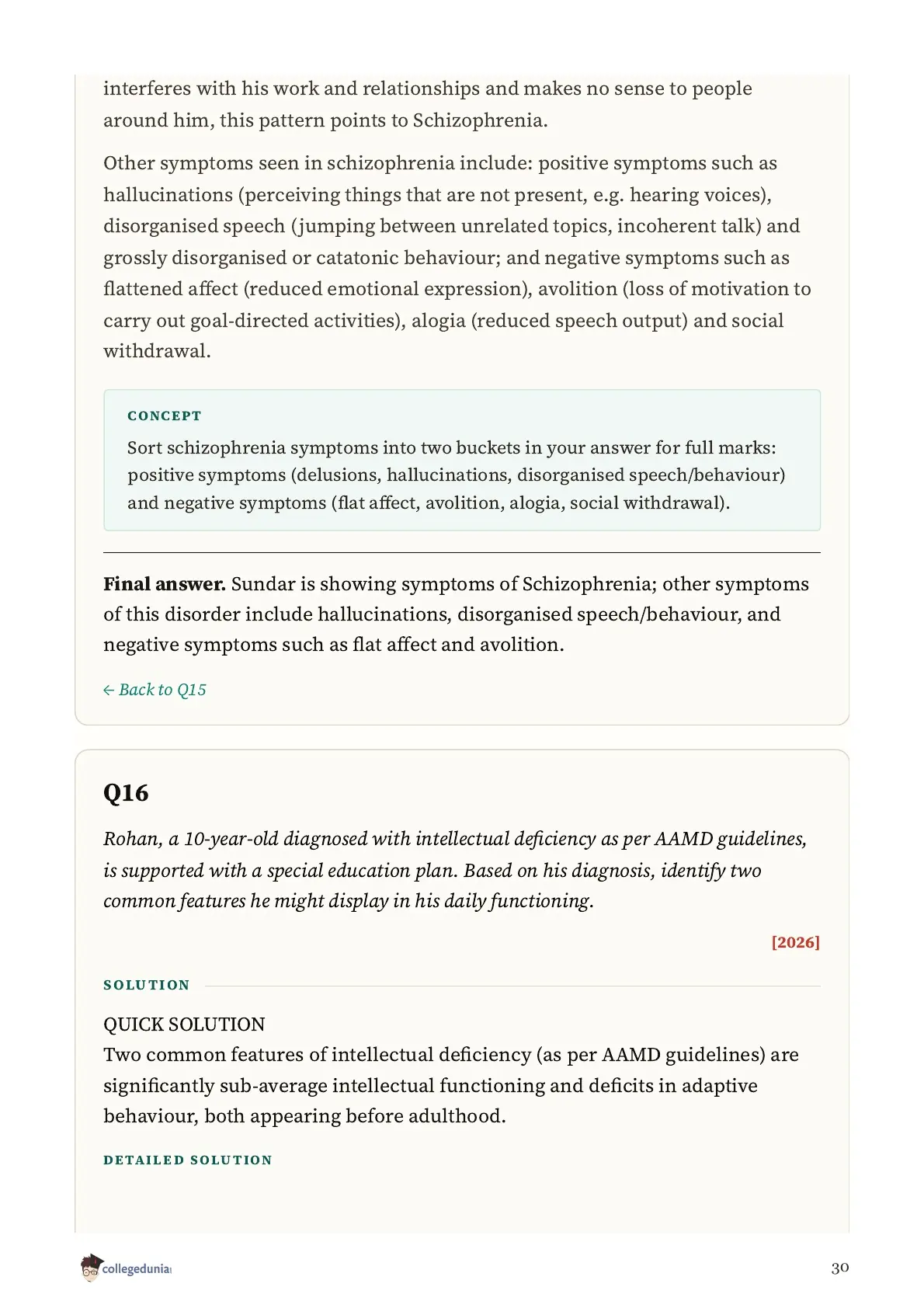
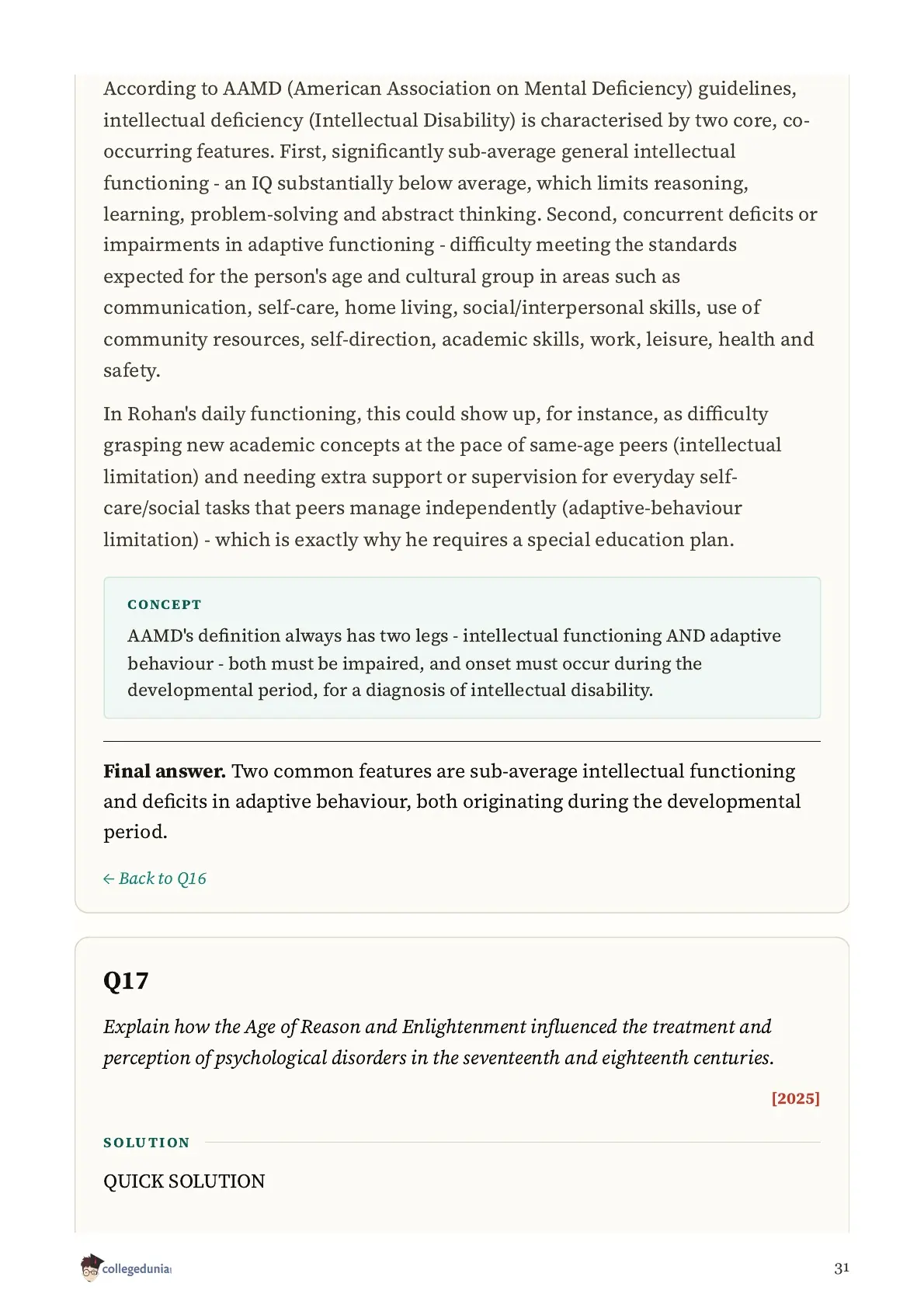
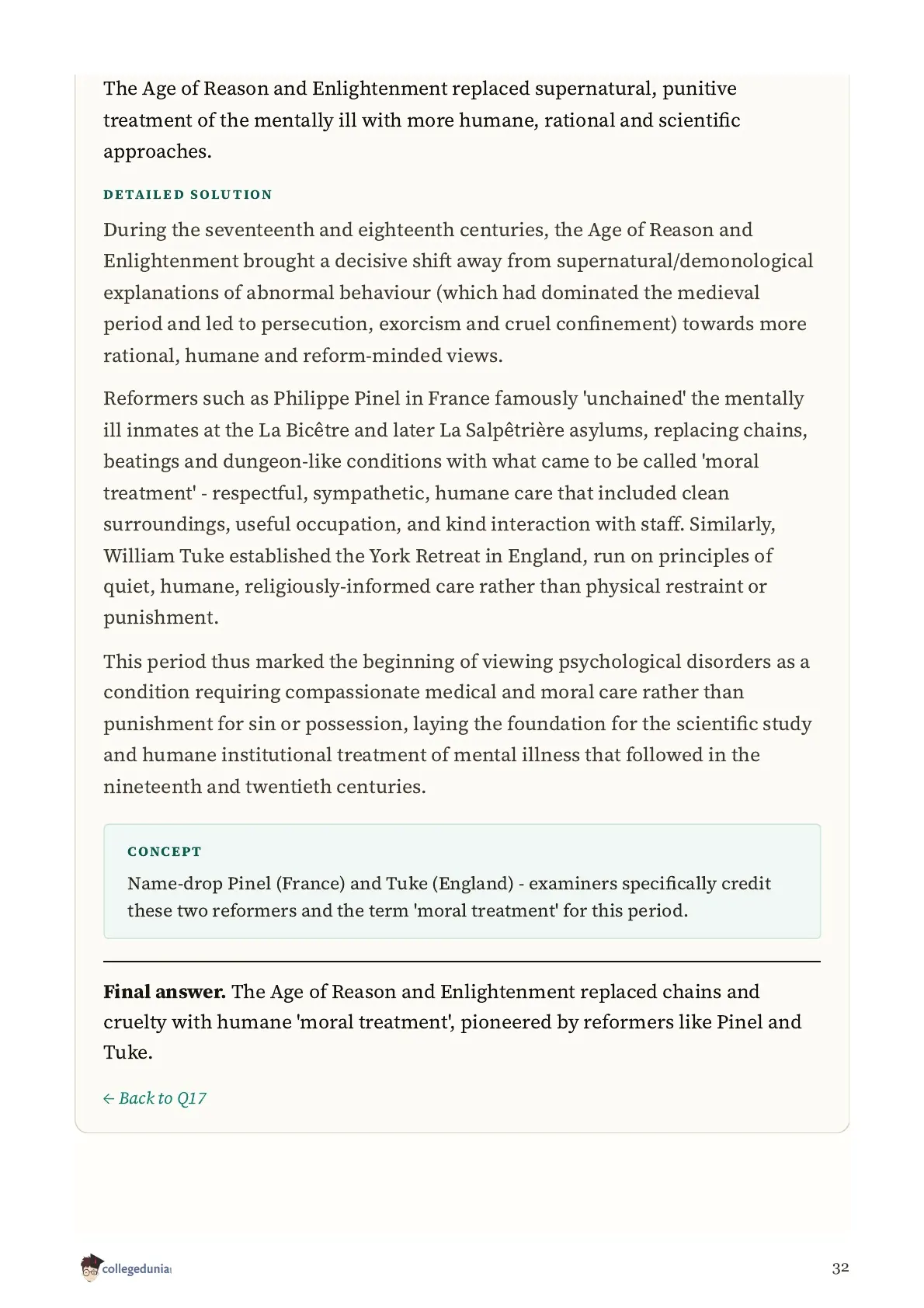
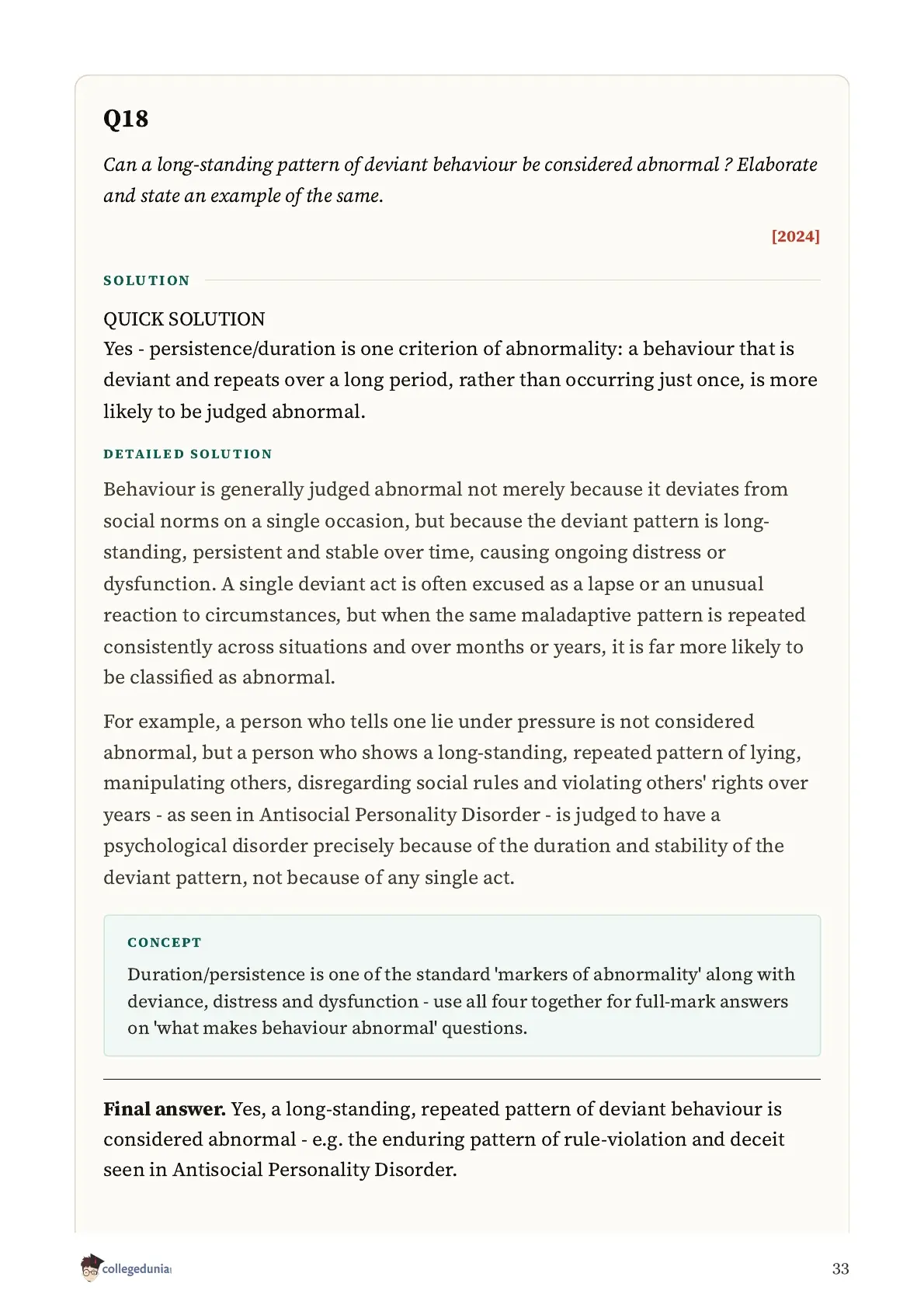
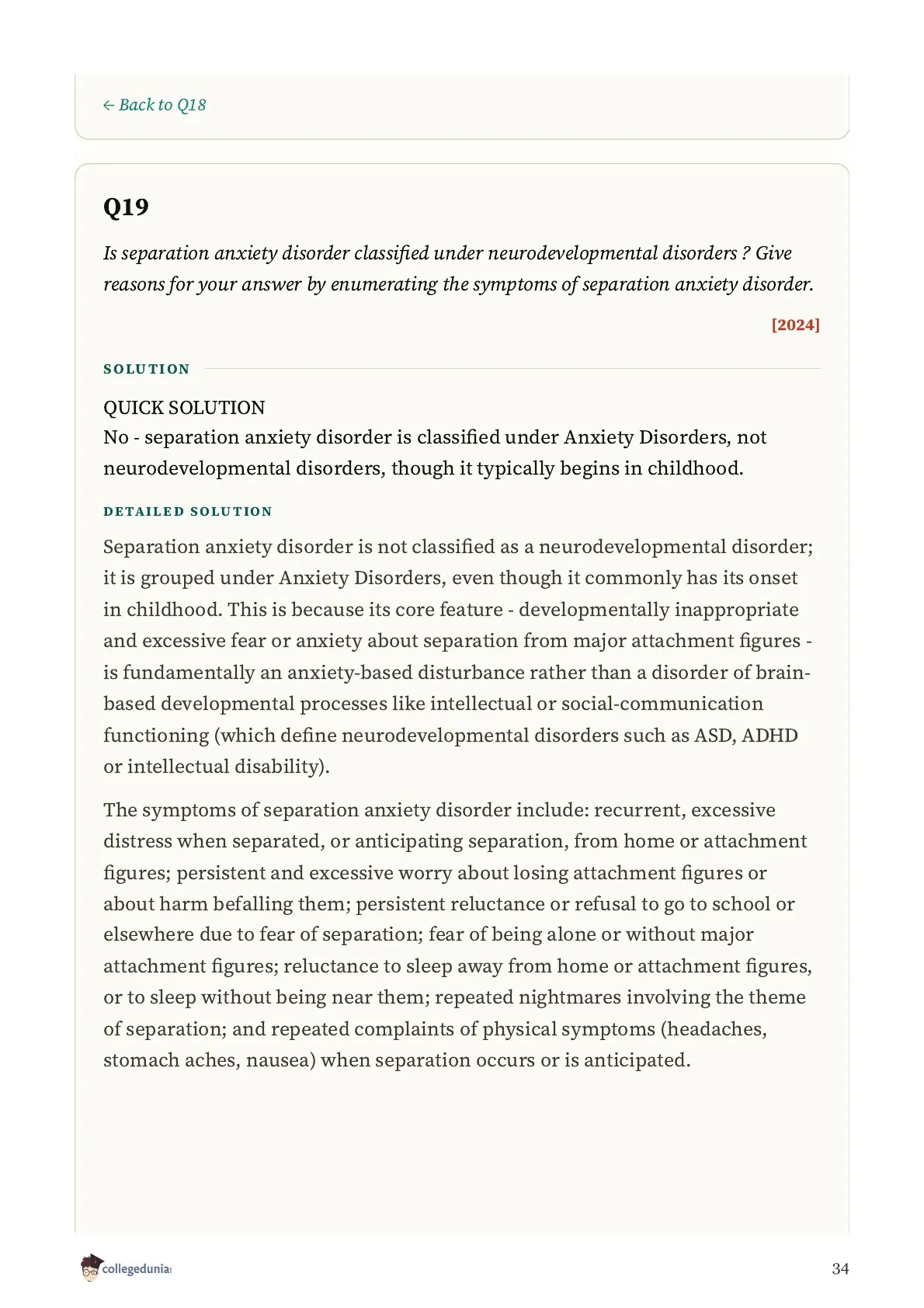
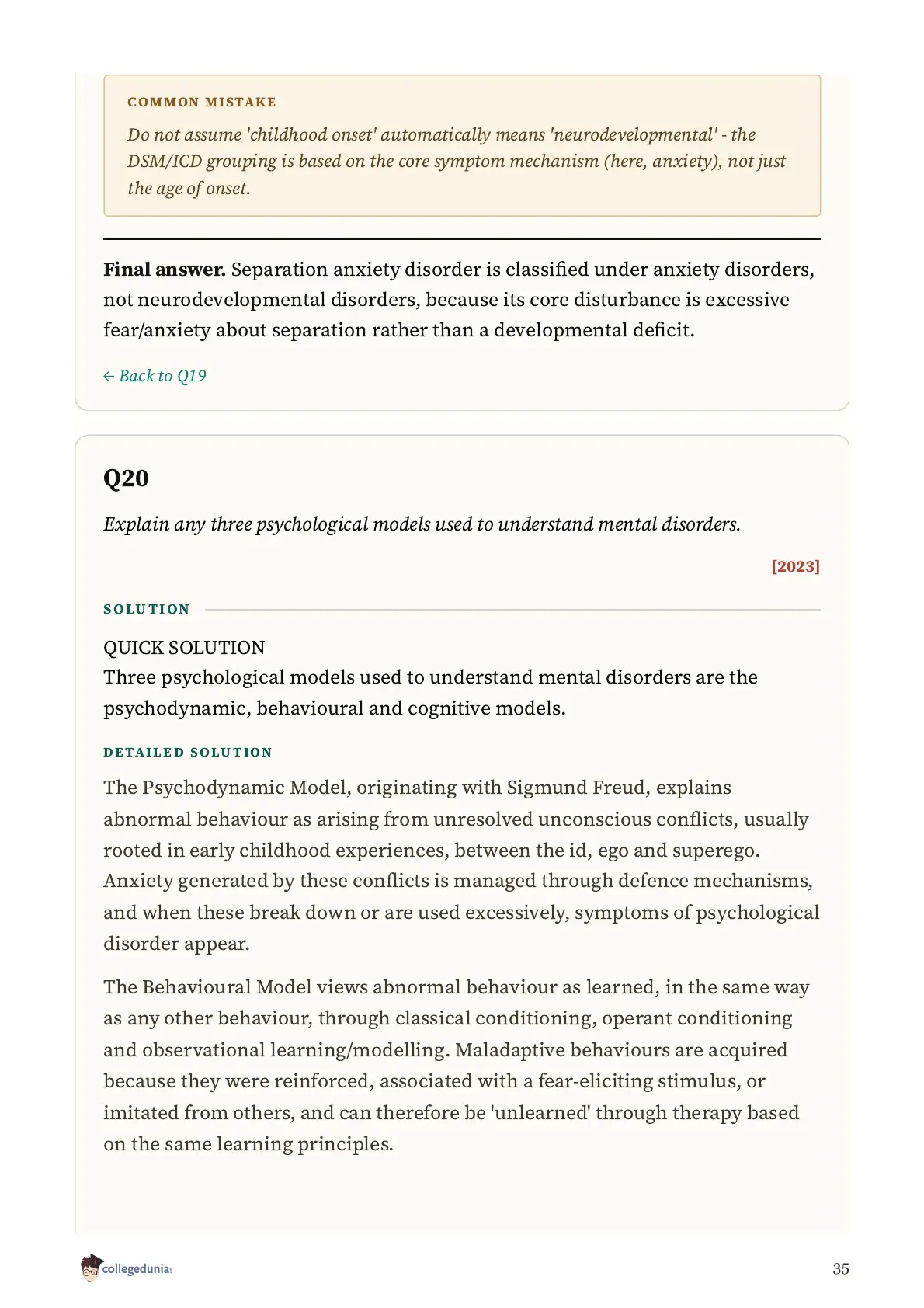
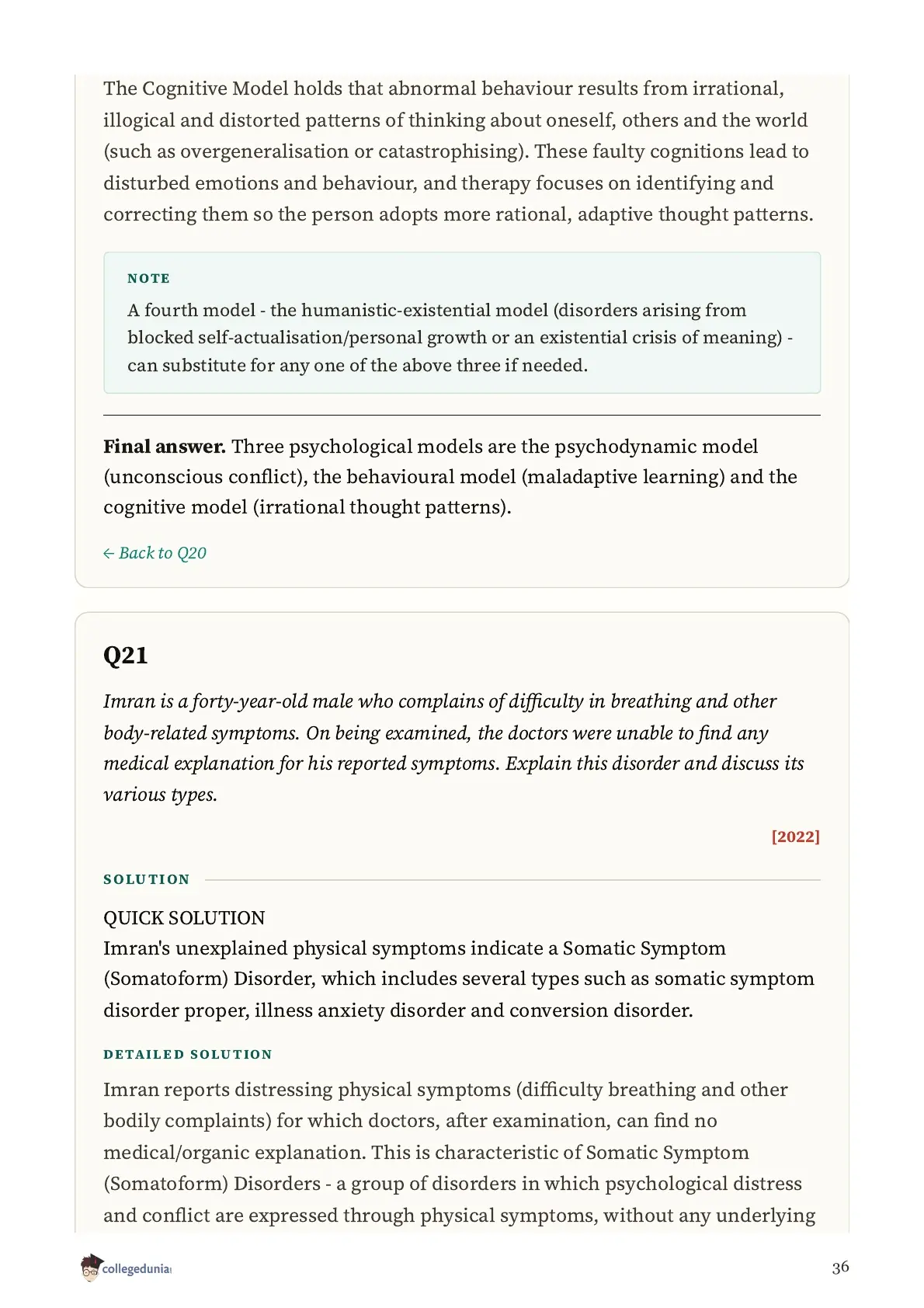
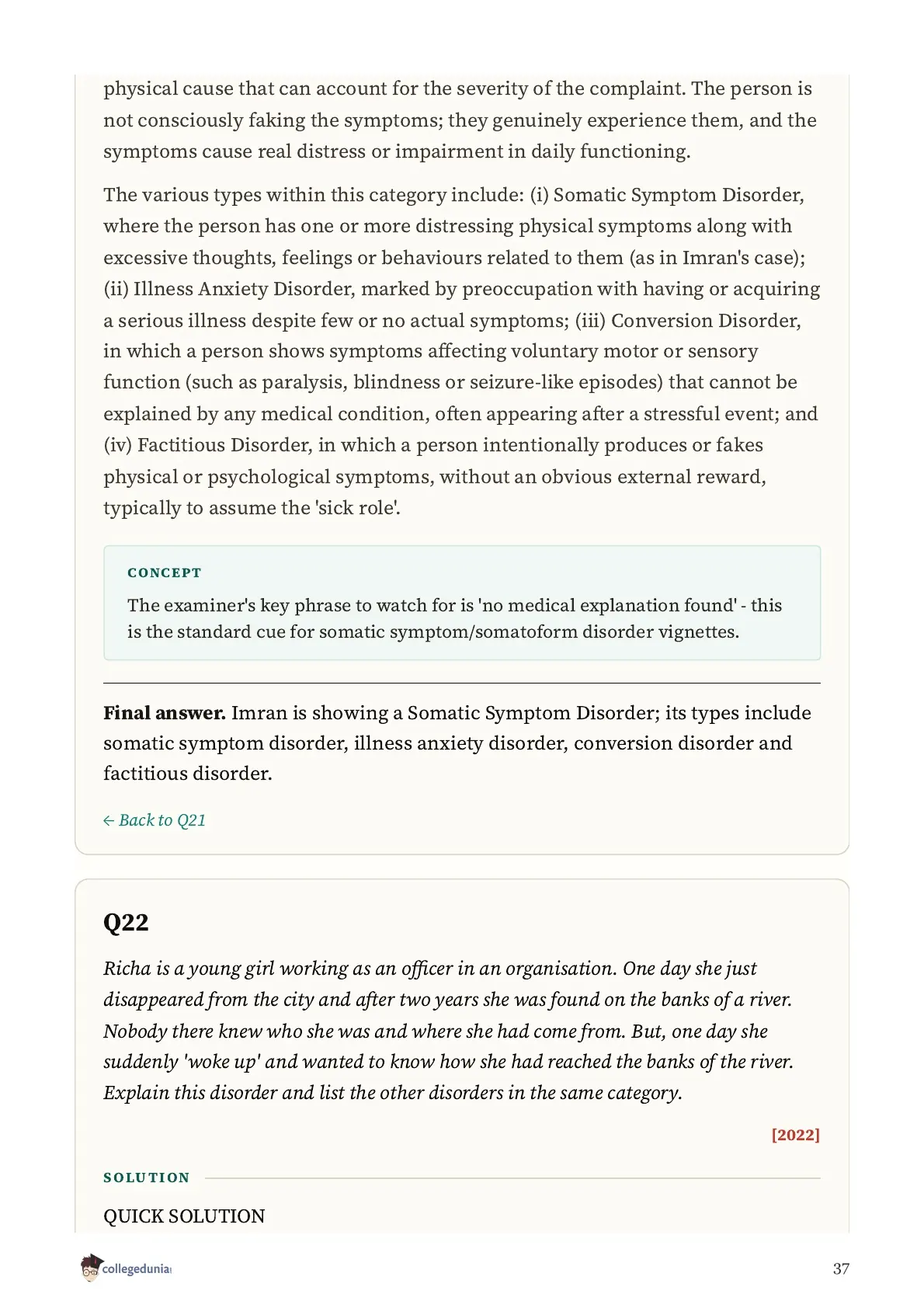
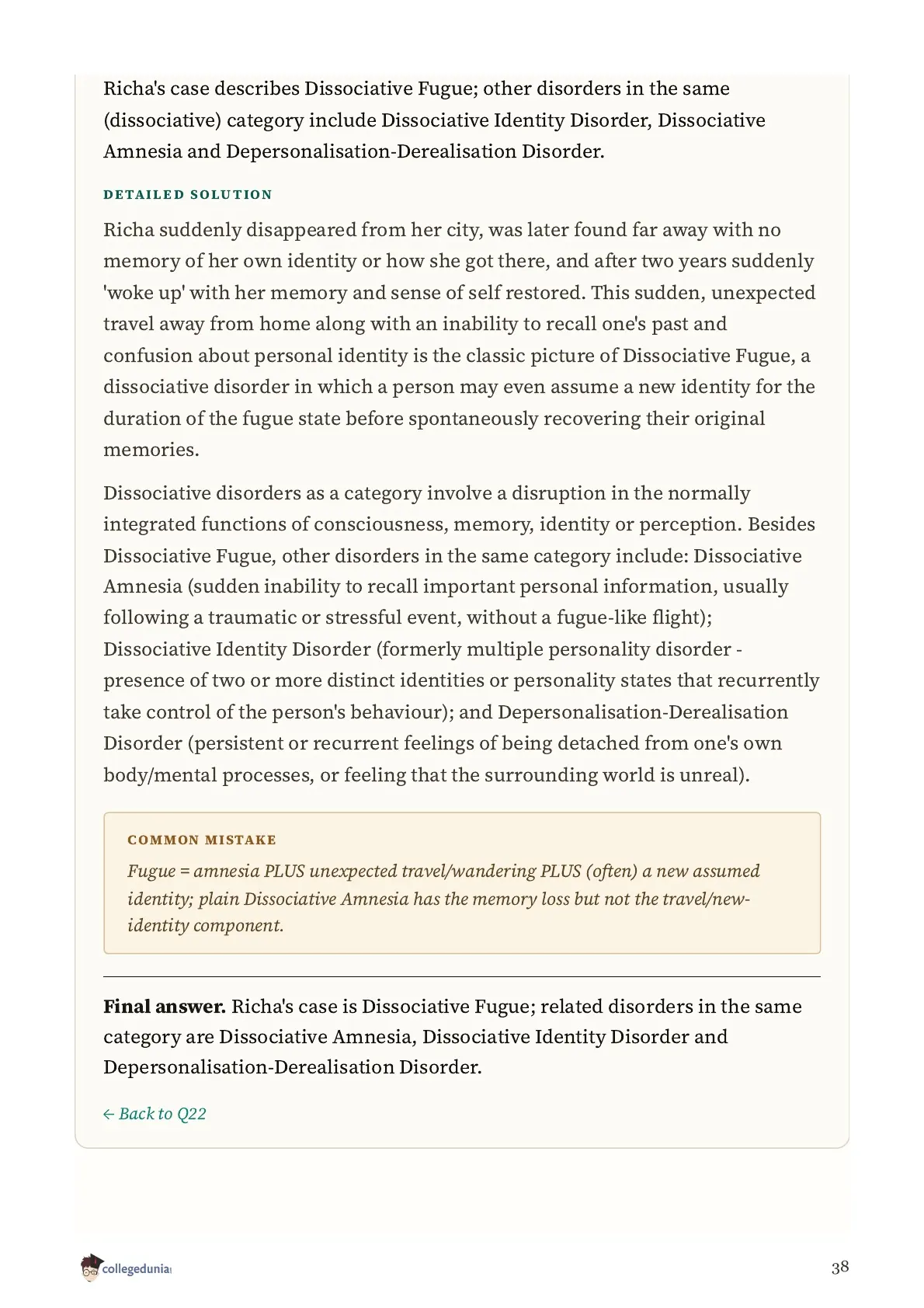
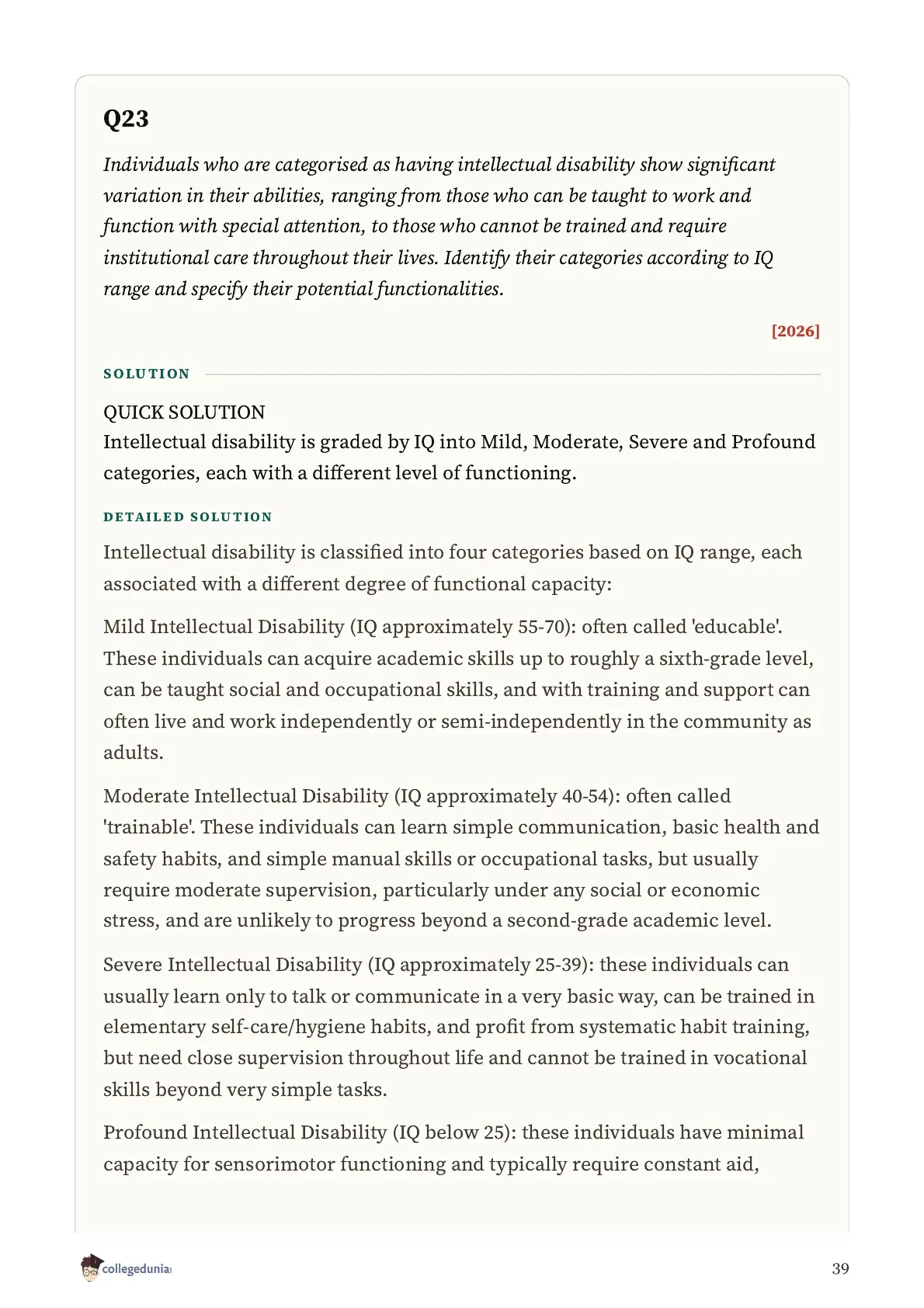
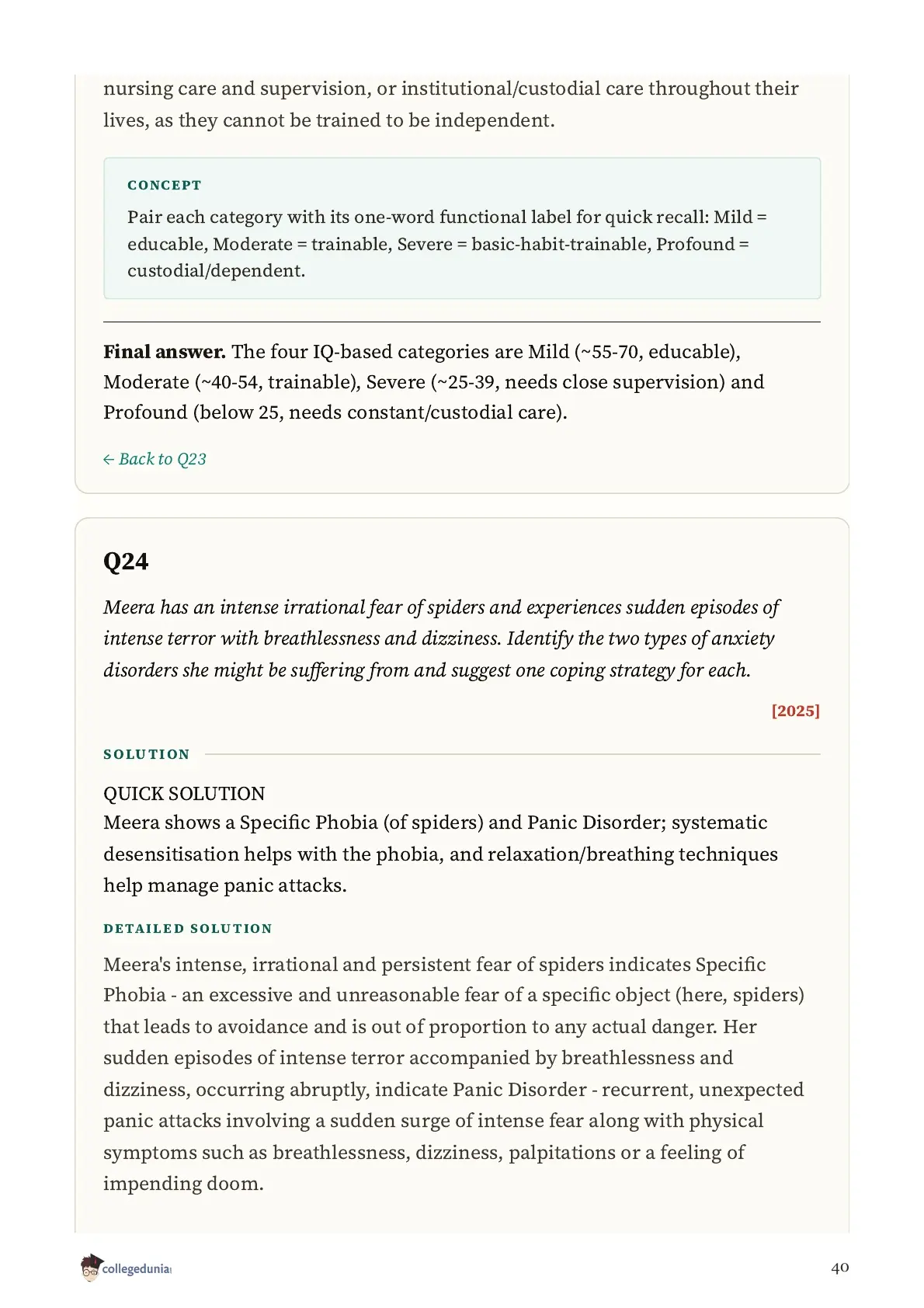
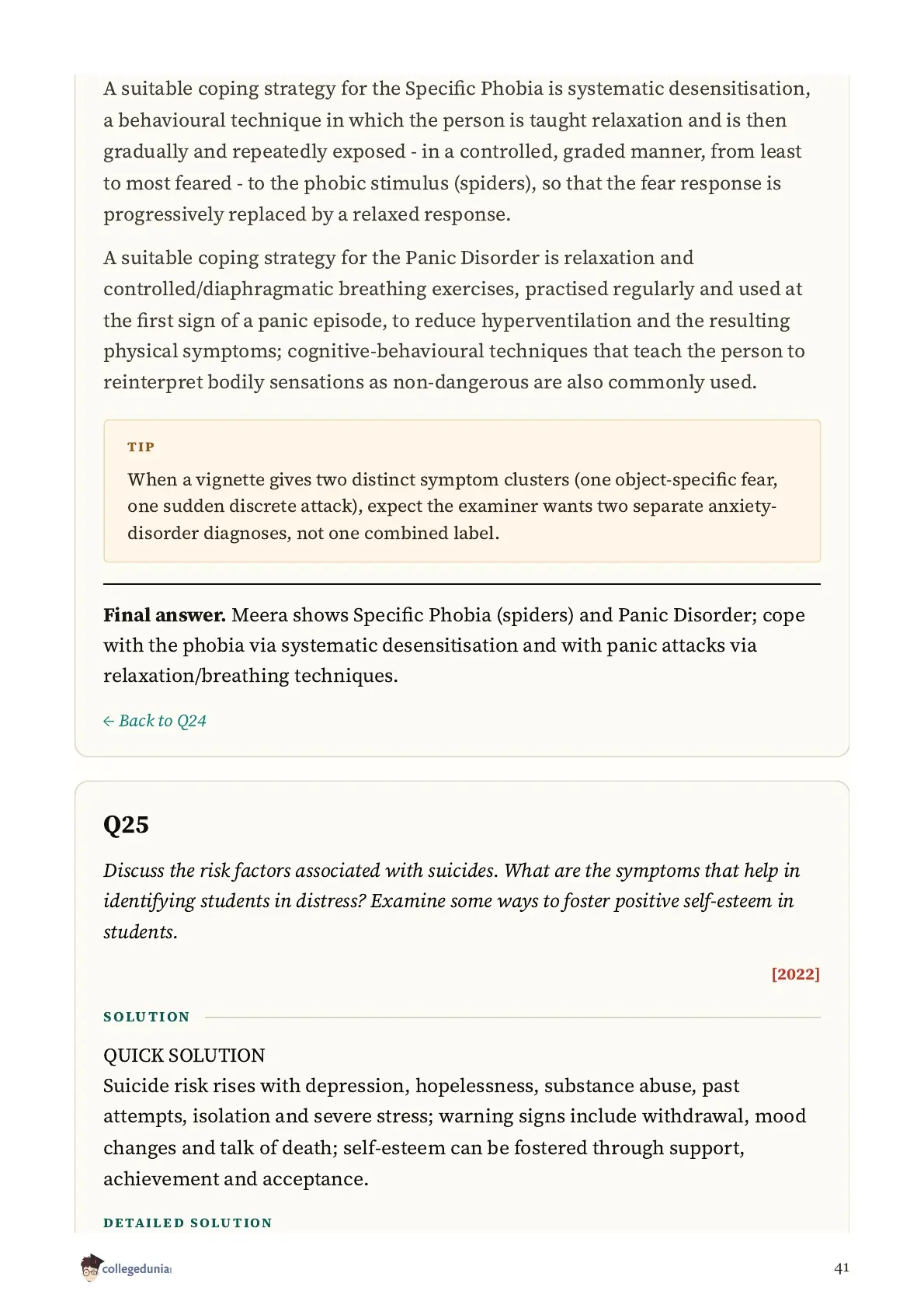
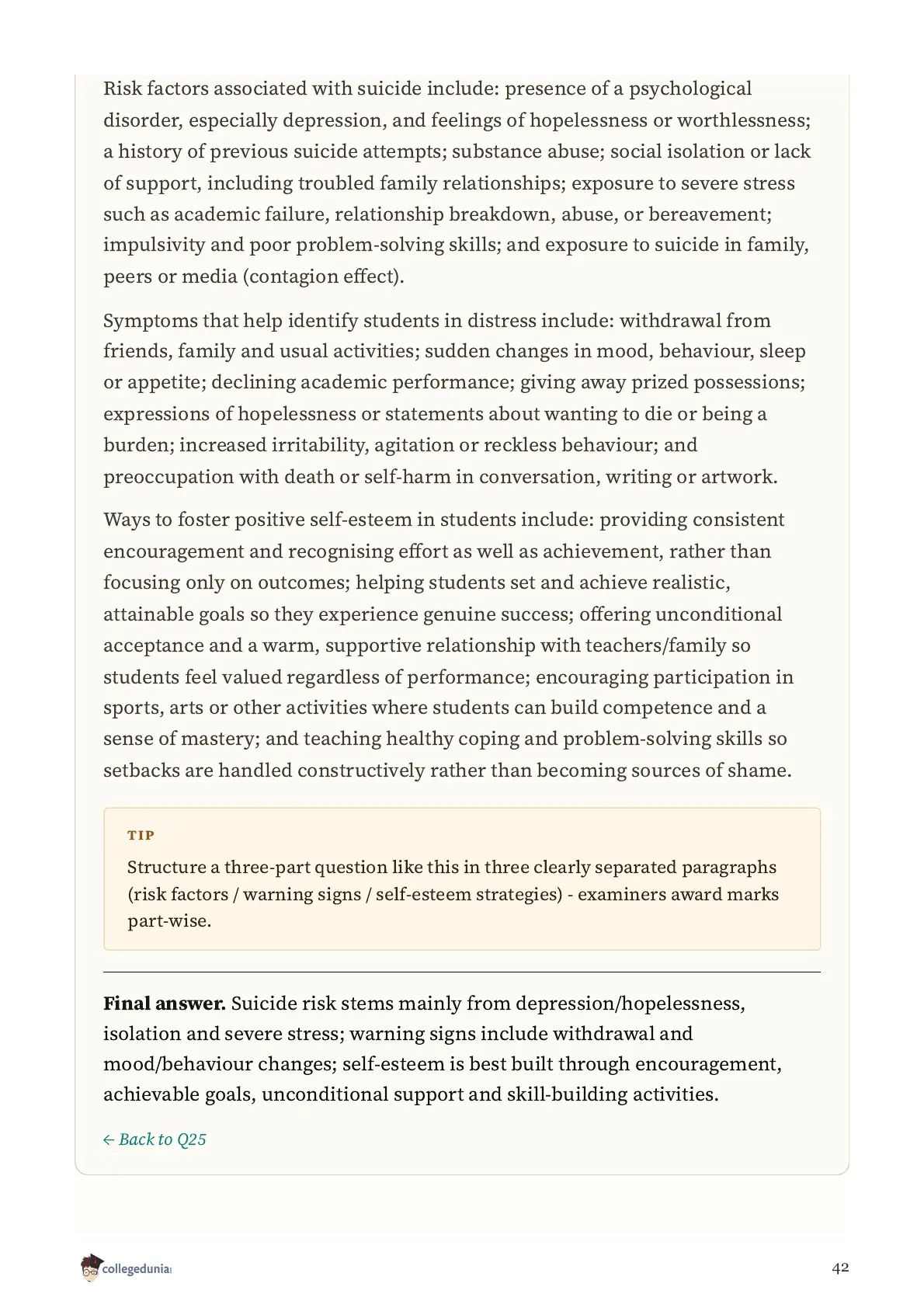
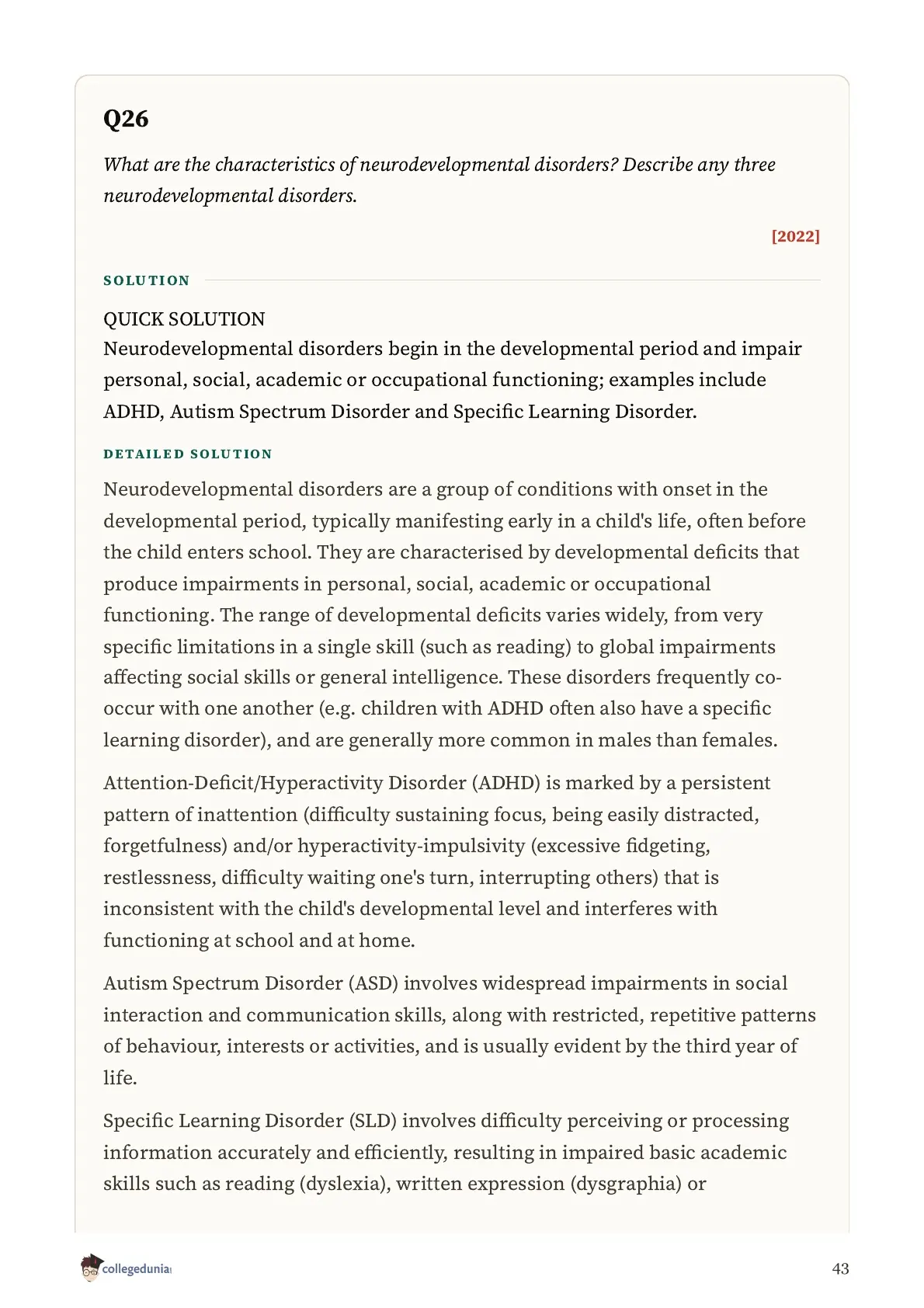
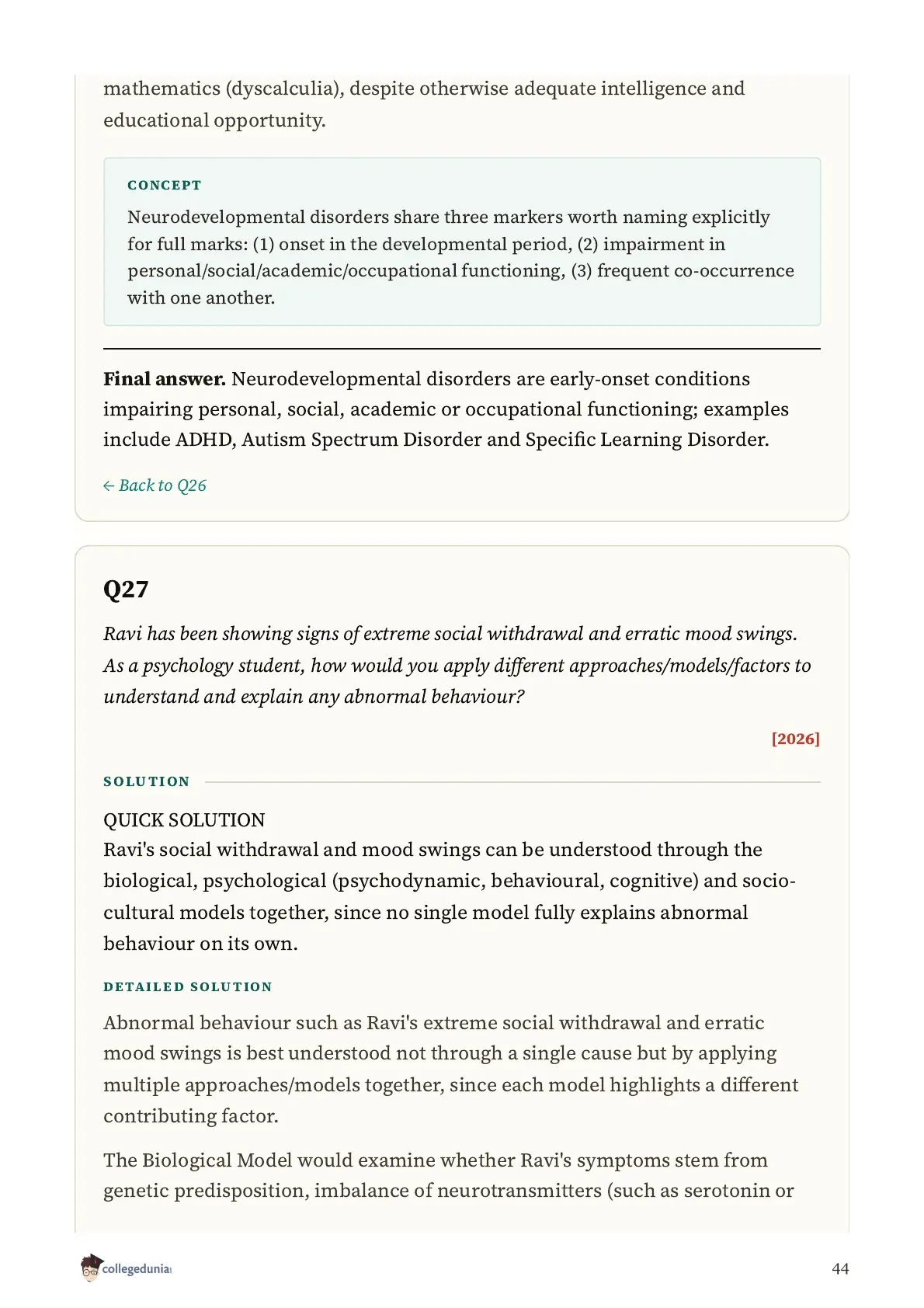
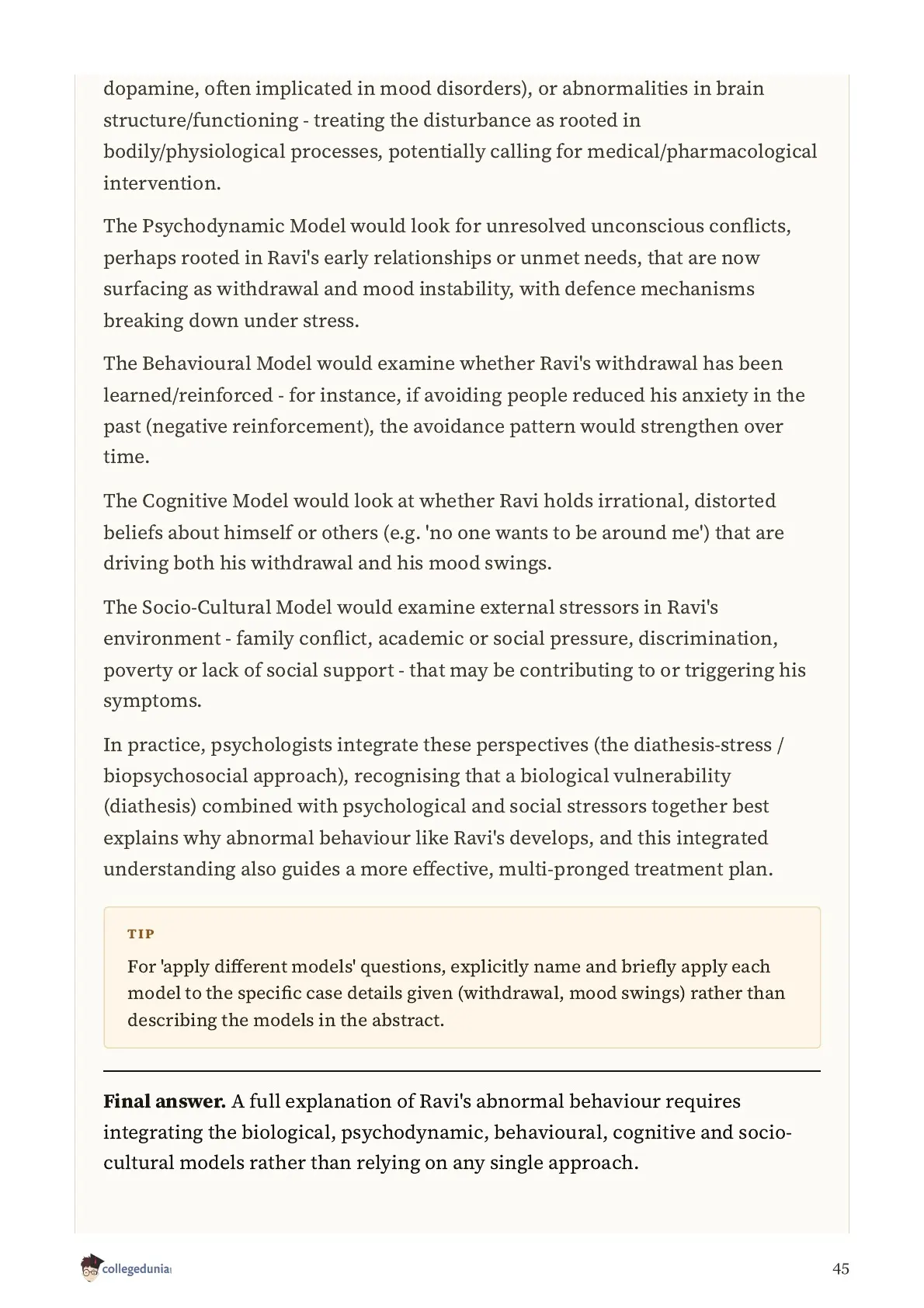
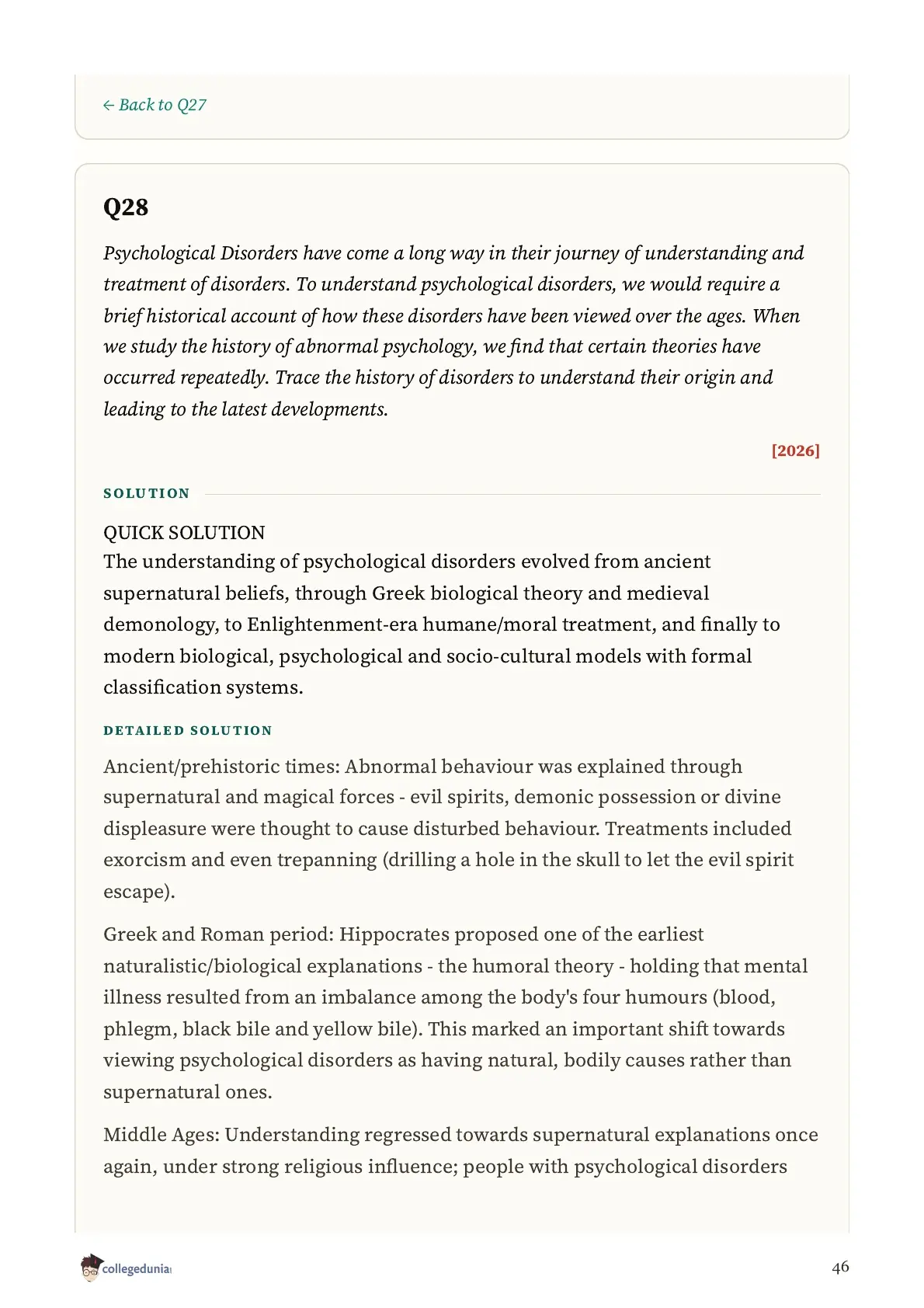
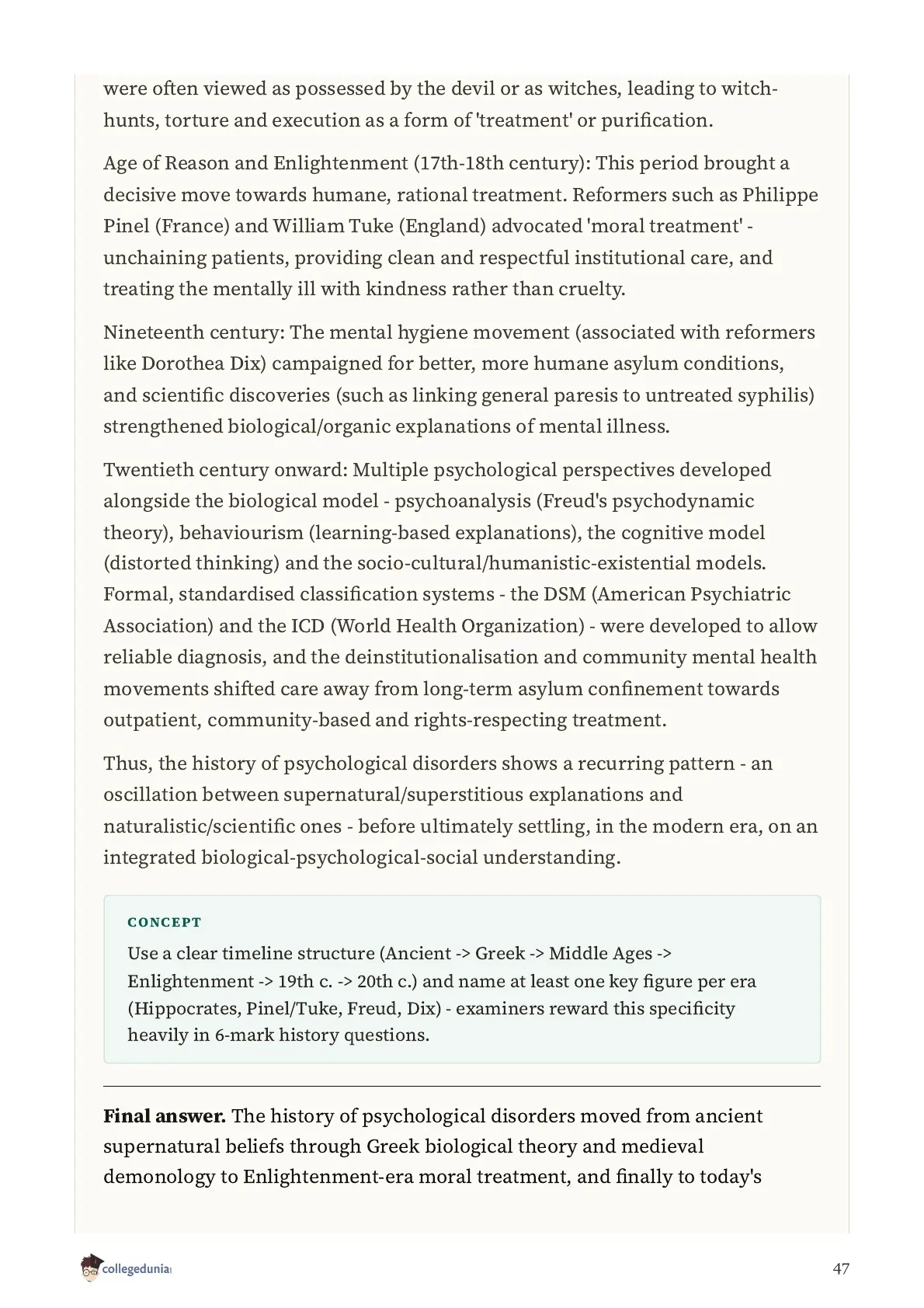
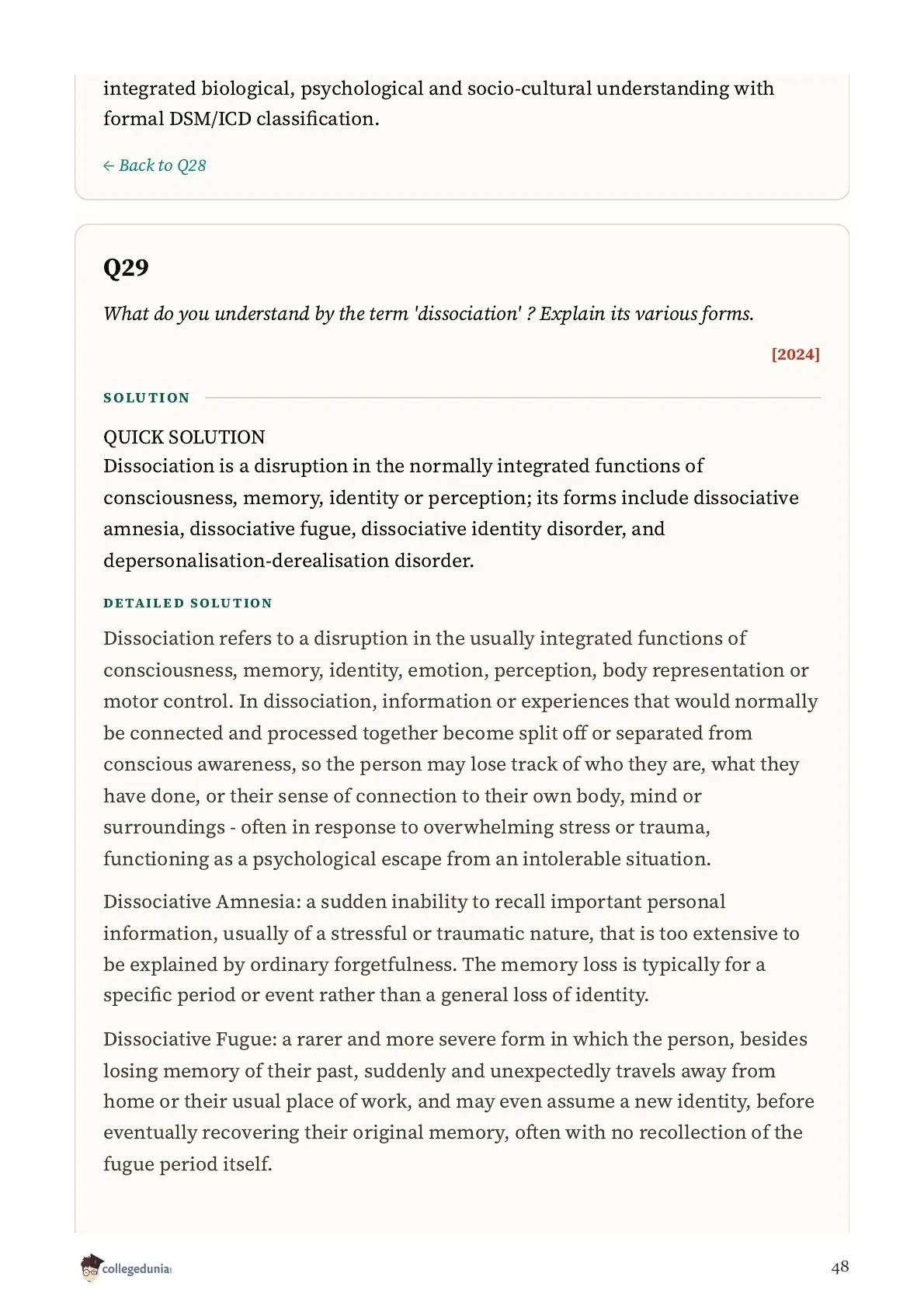
Every question in this Class 12 Psychology Chapter 4 PYQ set is lifted from an actual CBSE board paper (2022-2026) and answered in full by Collegedunia's Psychology experts, according to the 2026-27 NCERT syllabus.
|
Table of Contents |
What Class 12 Psychology Chapter 4 PYQs Test: Disorders, Models and Case Studies
The Psychological Disorders chapter is where CBSE tests both theory and application. Board papers ask you to define abnormality against changing social norms, explain the ancient and Enlightenment-era views of mental illness, and apply the diathesis-stress model and other psychological models to a real case. A large share of the paper is case-study based, so knowing a definition is not enough: you also have to spot the disorder in a short scenario.
- Defining abnormality: the criteria used, and how societal norms shape what counts as abnormal.
- Historical and theoretical models: supernatural, biological, psychological and diathesis-stress explanations.
- Anxiety-related disorders: generalised anxiety, phobia, panic, and obsessive-compulsive disorder.
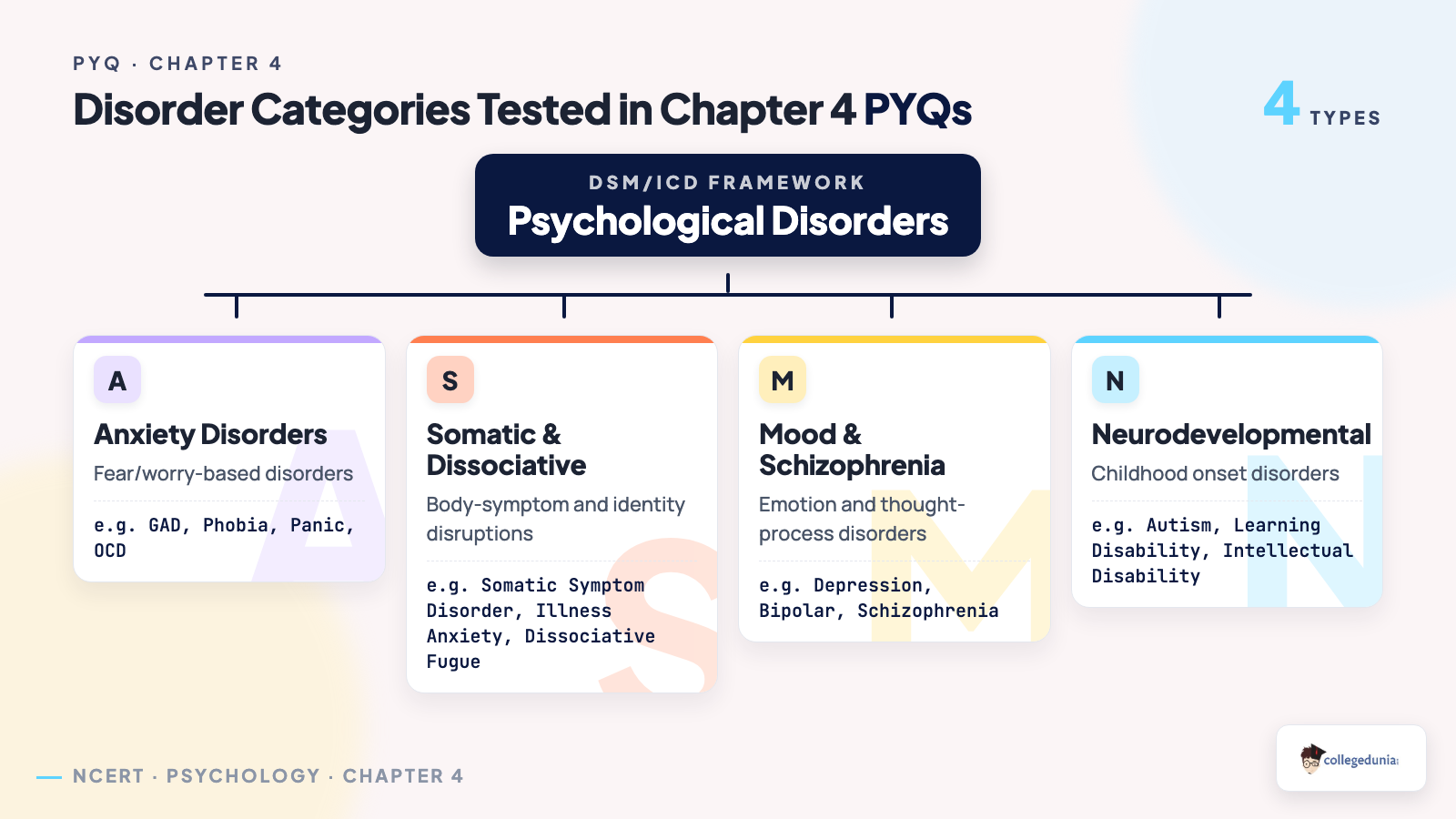
- Somatic and dissociative disorders: somatic symptom disorder, illness anxiety disorder, dissociative fugue and other forms of dissociation.
- Mood, schizophrenia and neurodevelopmental disorders: depression, schizophrenia-spectrum symptoms, autism, intellectual disability and learning disability.
Psychological Disorders Explained for Class 12 Boards
Source: Magnet Brains on YouTube
Marks-wise Distribution of Psychological Disorders PYQs
The 29 questions are spread across five CBSE mark bands. Section A carries the most questions (10 MCQs), while the 6-mark long-answer questions in Section F carry the most marks per question.
| Section | Marks Each | Question Type | Number of Questions |
|---|---|---|---|
| Section A | 1 mark | MCQ | 10 |
| Section B | 2 marks | Very Short Answer (VSA) | 5 |
| Section C | 3 marks | Short Answer (SA) | 7 |
| Section D | 4 marks | Case Study based | 4 |
| Section F | 6 marks | Long Answer | 3 |
MCQs test whether you can recognise a disorder from a short description. Case-study and long-answer questions test whether you can apply a model or diagnostic criterion to a person described in the question.
Year-wise Spread of Psychological Disorders PYQs: 2022 to 2026
The bank covers five consecutive CBSE board papers. 2026 contributed the most questions (7), while 2022 and 2023 each add 6, and 2024 and 2025 add 5 each.
| Year | Number of Questions |
|---|---|
| 2026 | 7 |
| 2025 | 5 |
| 2024 | 5 |
| 2023 | 6 |
| 2022 | 6 |
Practising all five years together shows how CBSE rotates the disorders it tests, rather than repeating the same case study every year.
Which Topics Repeat Most in Psychological Disorders PYQs
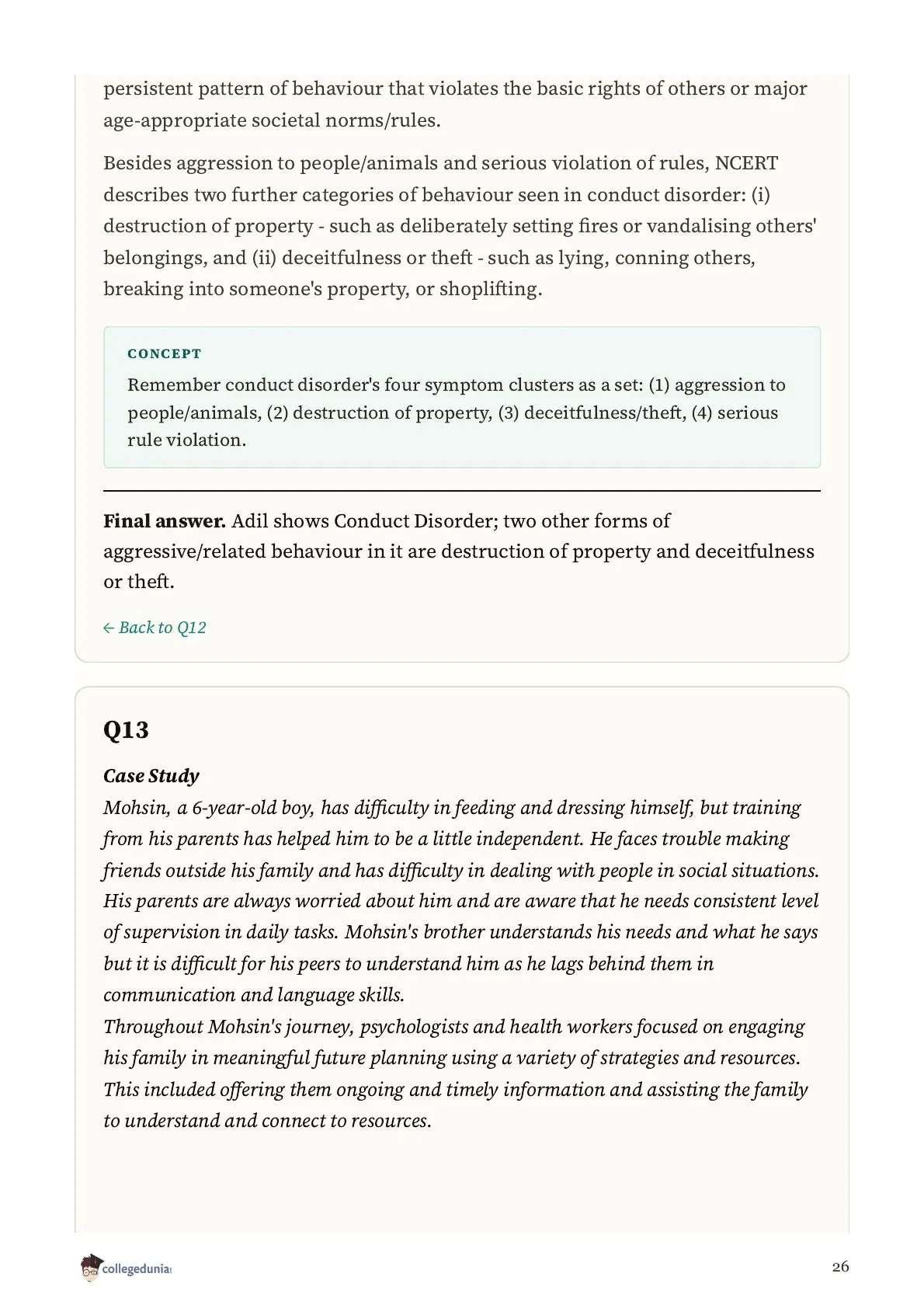
Anxiety-related and somatic disorders show up most often in this chapter's PYQs. Obsessive-compulsive disorder (the obsession-versus-compulsion distinction) and somatic symptom disorder versus illness anxiety disorder each recur across more than one year. Neurodevelopmental disorders, intellectual disability, specific learning disorder and autism spectrum disorder, also come back repeatedly, usually as case studies naming a child by age. Dissociation, mood and schizophrenia-spectrum scenarios, and the historical/theoretical models round out the set.
- Most frequent: OCD (obsession vs compulsion), somatic symptom disorder vs illness anxiety disorder.
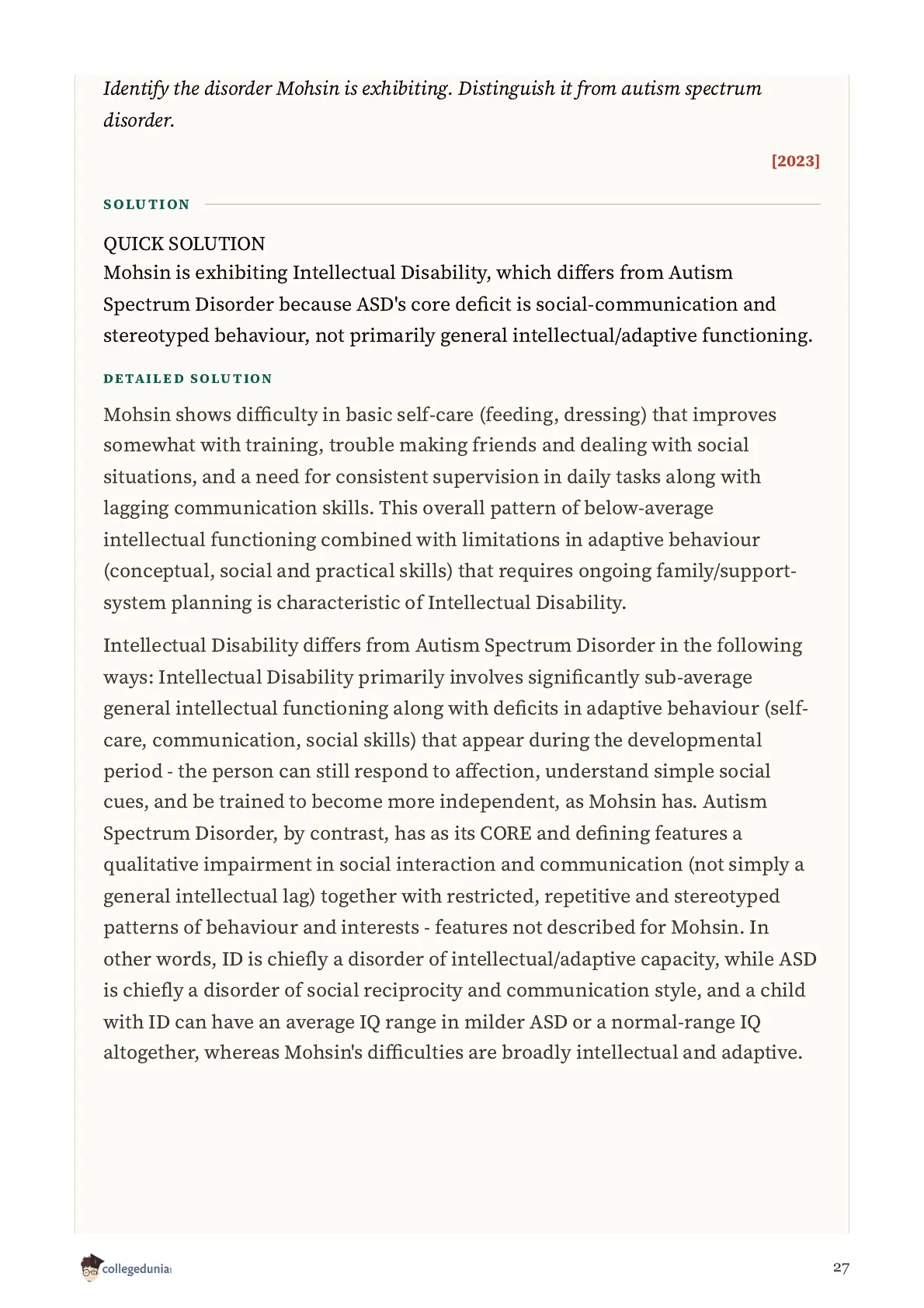
- Frequent: intellectual disability (AAMD/adaptive-behaviour criteria), specific learning disorder, autism spectrum disorder.
- Regular: dissociation and dissociative fugue, mood/schizophrenia-spectrum case studies, ancient theories and the Age of Reason, the diathesis-stress model, suicide risk factors.
How to Attempt Psychological Disorders PYQs
Start with the MCQs in Section A. They move fast and warm you up before the longer case studies. Then work through Section D and Section F, since these carry the most marks and reward a clear structure.
- Name the disorder first. Every case-study answer should open with the disorder name before you explain the symptoms.
- Match symptoms to criteria. Quote the specific detail in the case (weight loss, repeated checking, memory loss) that points to the diagnosis.
- Use the correct model name: biological, psychological, sociocultural or diathesis-stress, instead of a vague description.
- Keep VSA answers to 2-3 lines and SA answers to a short paragraph with one example.
Sample Question and Answer Approach for Psychological Disorders
Here is how to structure two typical question types from this chapter's PYQs. The pattern below is the same one the PDF's step-by-step solutions follow.
| Question Type | How to Structure the Answer |
|---|---|
| 1-mark MCQ (e.g. identifying a disorder from a one-line description) | Read the description first, then match it to the closest diagnostic term before picking an option. Don't pick the option that "sounds right" without checking the exact symptom pattern. |
| 4 or 6-mark case study (e.g. a person showing withdrawal, mood swings or repeated behaviours) | Name the disorder or model in the first line, list the matching symptoms or components, then map each one to a line from the case. End with a one-line conclusion linking back to the question. |
This two-step habit, name the disorder, then map it to the case, is what separates a partial-mark case-study answer from a full-mark one.
Common Mistakes Students Make in Psychological Disorders Questions
Watch out for these recurring errors:
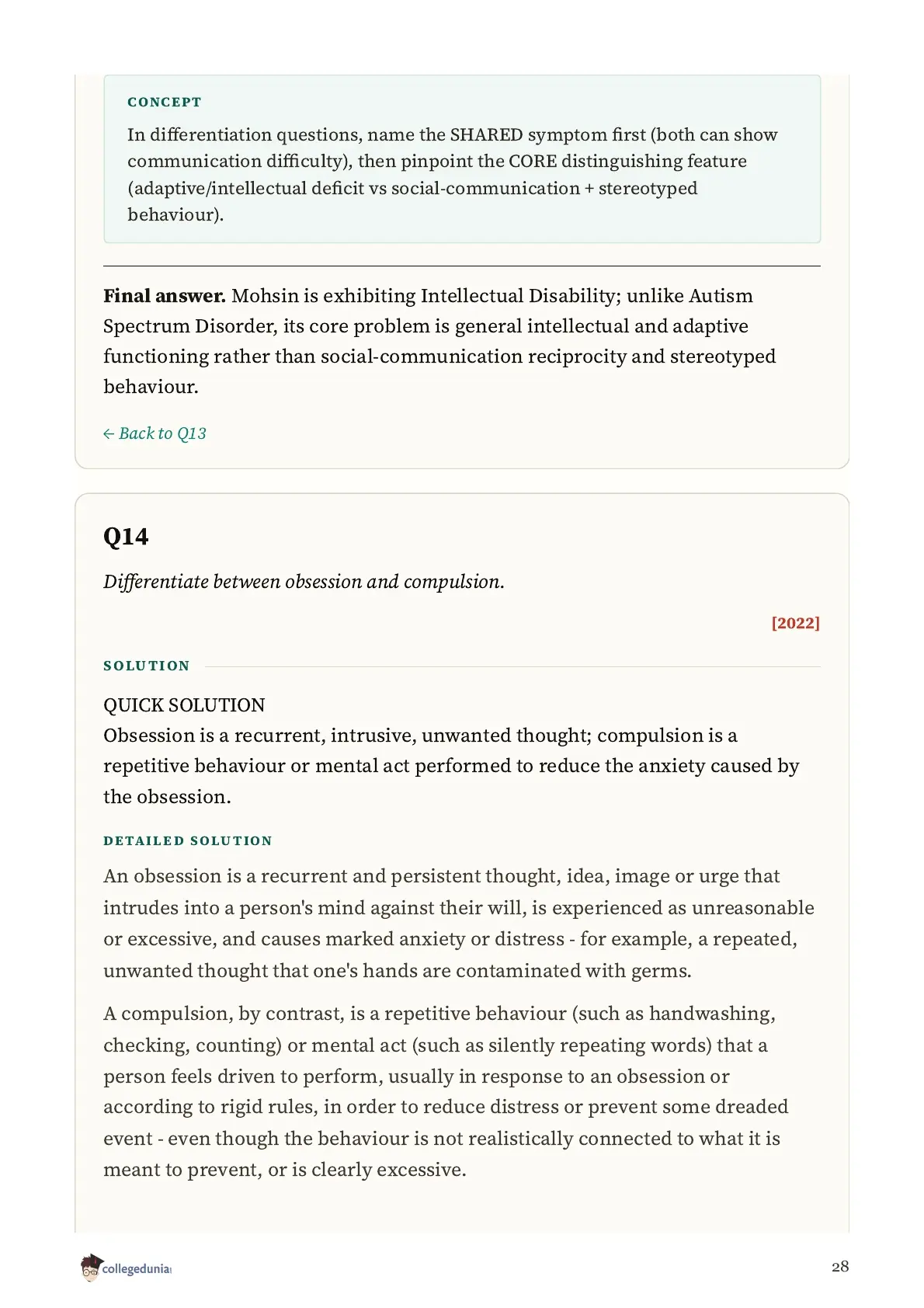
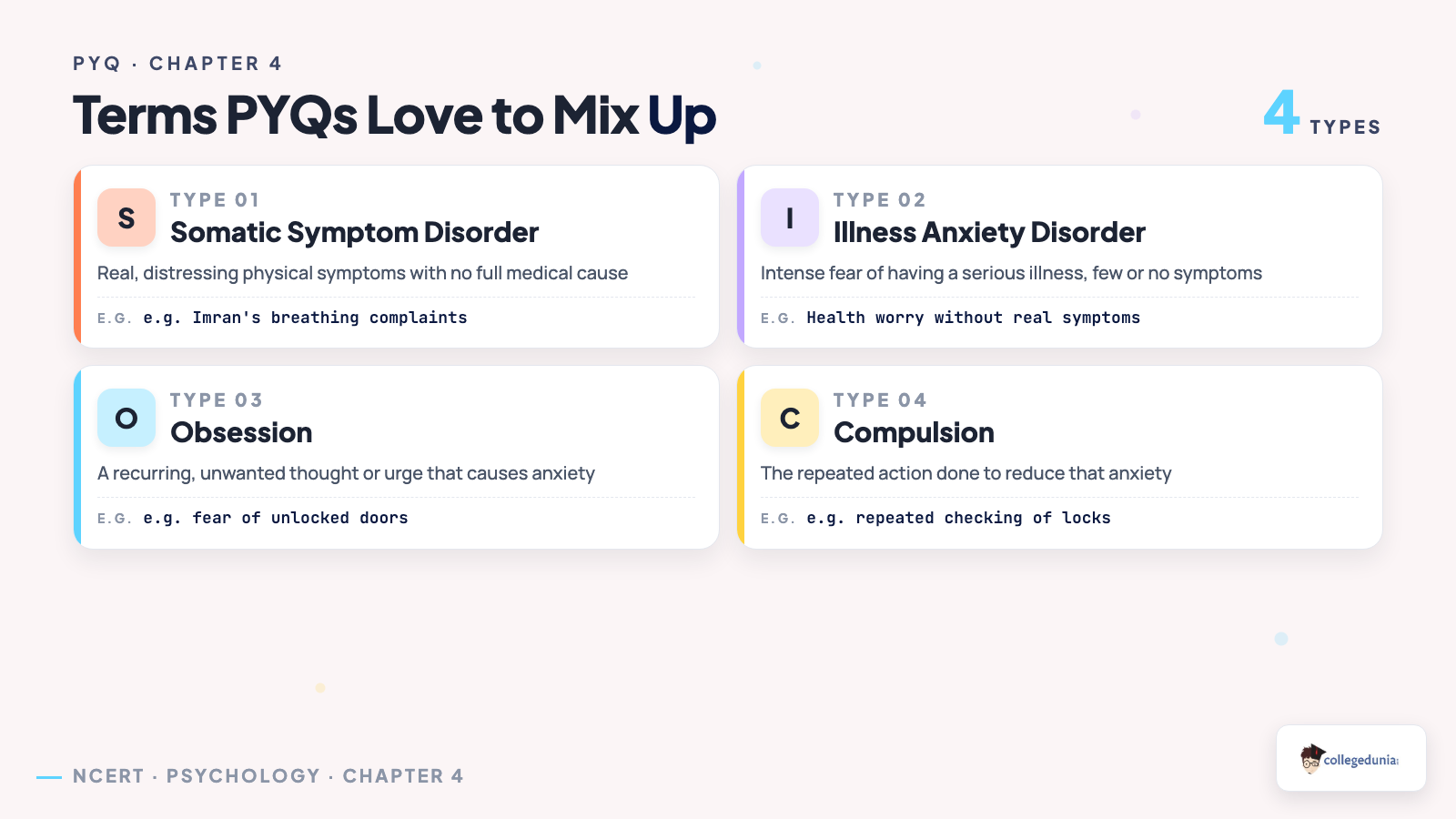
- Mixing up obsession and compulsion. An obsession is a recurring, unwanted thought; a compulsion is the repeated action done to reduce the anxiety it causes. Answers that use the two words interchangeably lose marks.
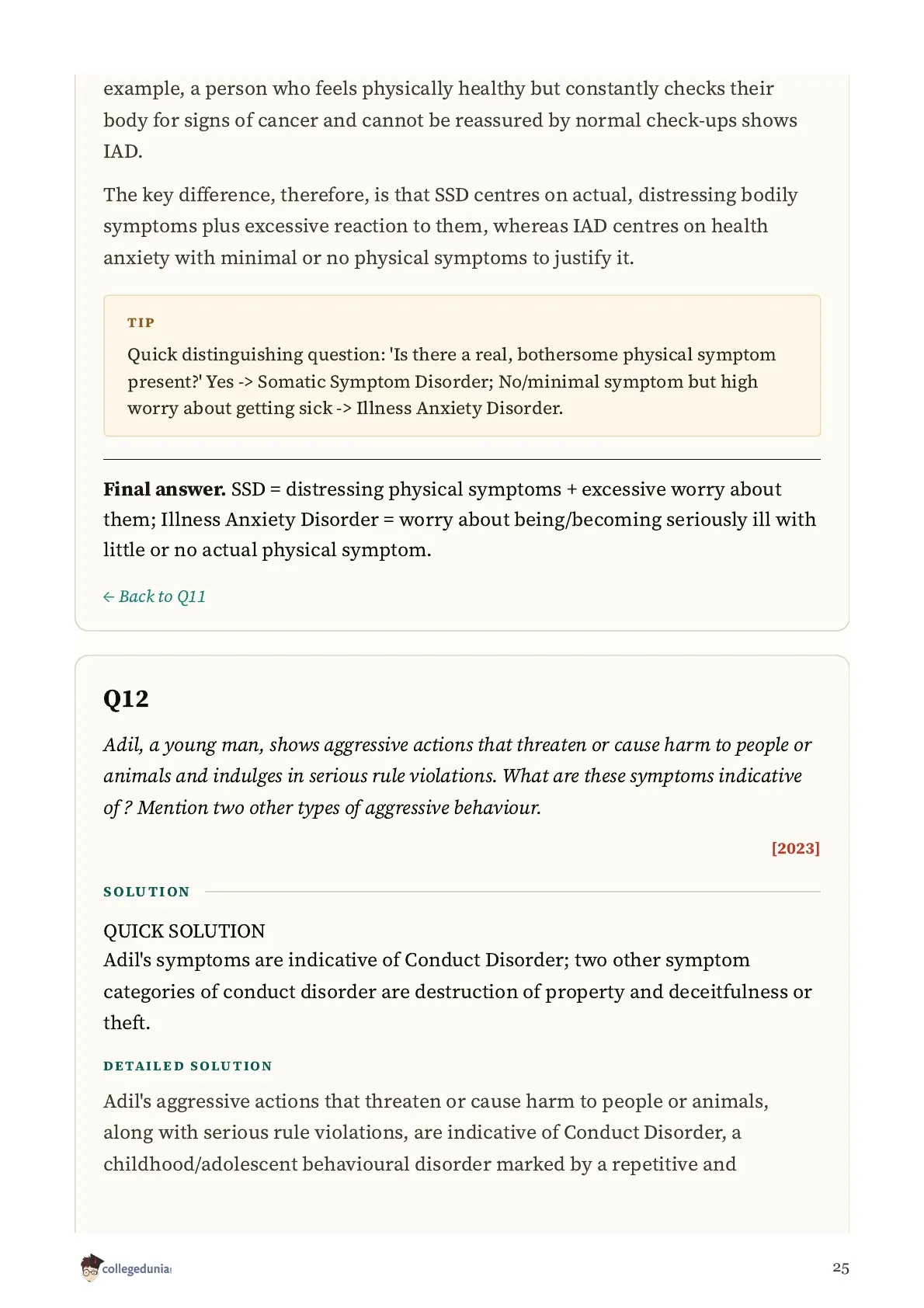
- Confusing somatic symptom disorder with illness anxiety disorder. Somatic symptom disorder involves real, distressing physical symptoms; illness anxiety disorder is fear of having an illness with few or no actual symptoms. Students often blur this line.
- Skipping the diagnostic criteria in intellectual disability answers. A case-study answer needs the AAMD-style criteria (intellectual functioning plus adaptive behaviour), not just "the child is slow at studies".
- Naming a disorder without naming the model. When a question asks which model explains a case, naming the disorder alone (without biological, psychological or sociocultural framing) earns partial marks at best.
Student Feedback: Psychological Disorders Difficulty Rating
What 12,840 students told us about this chapter's PYQs
In a Collegedunia poll of 12,840 Class 12 Psychology students conducted before the 2027 boards, 71% rated the case-study questions on somatic and dissociative disorders as the hardest part of this chapter, mainly because the symptom lists look similar at first read. Students who practised all five years of PYQs together reported fewer mix-ups between disorders on the actual paper.
Source: 2026-27 Class 12 Psychology student poll. Sample of 12,840 students from CBSE schools across 15 states.
How These PYQs Pair with Other Class 12 Psychology Chapter 4 Resources
This PYQ set works best alongside the other Chapter 4 resources already live on Collegedunia. Read the notes first, revise from the handwritten notes, solve these PYQs, then cross-check tricky answers against the full NCERT solutions.
| Resource | Link |
|---|---|
| NCERT Notes | Psychological Disorders Class 12 Notes |
| Handwritten Notes | Psychological Disorders Class 12 Handwritten Notes |
| NCERT Solutions | Psychological Disorders Class 12 NCERT Solutions |
| NCERT Book PDF | Psychological Disorders Class 12 NCERT Book PDF |
| PYQ (this page) | Psychological Disorders Class 12 PYQ |
The other Class 12 Psychology chapters (Variations in Psychological Attributes, Self and Personality, Attitude and Social Cognition, Social Influence and Group Processes, Therapeutic Approaches and Meeting Life Challenges) are being added to this same PYQ series and will link here once live.
How to Use the Psychological Disorders PYQ PDF Effectively
Don't jump to the solution on the first read. Try to name the disorder and sketch an answer yourself, then check it against the step-by-step solution in the PDF.
- First pass: attempt all 29 questions without looking at the solutions, section by section.
- Second pass: compare each answer against the solution and mark where the diagnostic term or model name was missing.
- Third pass: redo only the questions you got wrong, a day or two later, from memory.
Downloading and Using the PYQ PDF
The PDF is 49 pages and free to download. It opens with the question paper sorted by mark band, closes with a self-check answer key, and links every question to its full solution.
Psychological Disorders Class 12 Psychology PYQ FAQs
Ques. How many questions are in the Psychological Disorders Class 12 PYQ PDF?
Ans. The PDF has 29 questions from CBSE board papers between 2022 and 2026: 10 one-mark MCQs, 5 two-mark VSA, 7 three-mark SA, 4 four-mark case-study questions and 3 six-mark long-answer questions.
Ques. Does this PYQ PDF include solutions, or only the questions?
Ans. It includes full solutions. Every one of the 29 questions has a step-by-step answer written out in the PDF, so you can check your own attempt against a worked solution rather than just an answer key.
Ques. Which years of CBSE board papers does this PYQ set cover?
Ans. It covers five consecutive years: 2022, 2023, 2024, 2025 and 2026. 2026 has the most questions (7), followed by 2022 and 2023 (6 each), then 2024 and 2025 (5 each).
Ques. Where can I download the Psychological Disorders PYQ PDF?
Ans. You can download it directly from this page. It is free and runs to 49 pages, with the questions sorted by mark band and every question linked to its solution.
Ques. Is this PYQ set aligned with the 2026-27 CBSE syllabus?
Ans. Yes. The chapter content and question pattern match the current 2026-27 NCERT Psychology syllabus for Class 12.
Ques. What is the difference between somatic symptom disorder and illness anxiety disorder?
Ans. Somatic symptom disorder involves real physical symptoms that cause significant distress and disrupt daily life. Illness anxiety disorder is an intense fear of having or getting a serious illness, with few or no actual physical symptoms present. This distinction is one of the most frequently tested points in this chapter's PYQs.
Ques. What is the difference between an obsession and a compulsion?
Ans. An obsession is a recurring, unwanted thought, image or urge that causes anxiety. A compulsion is the repetitive behaviour or mental act a person carries out to reduce that anxiety, such as repeated checking or washing. Together they define obsessive-compulsive disorder.



Comments