



Class 12 Psychology Chapter 2 Self and Personality previous year questions are free to download as a 44-page PDF carrying 24 real CBSE board questions from 2023 to 2026, worth 76 marks in total. Every question in this compilation comes with a full step-by-step solution, not just the question text, so you can check your own answer the moment you finish writing it.
- 24 questions worth 76 marks, sorted section-wise from Section A one-mark MCQs to Section E six-mark long answers.
- Every question carries a complete worked solution - this is not a questions-only PDF.
- Four board years covered: 6 questions from 2023, 5 from 2024, 6 from 2025 and 7 from 2026.
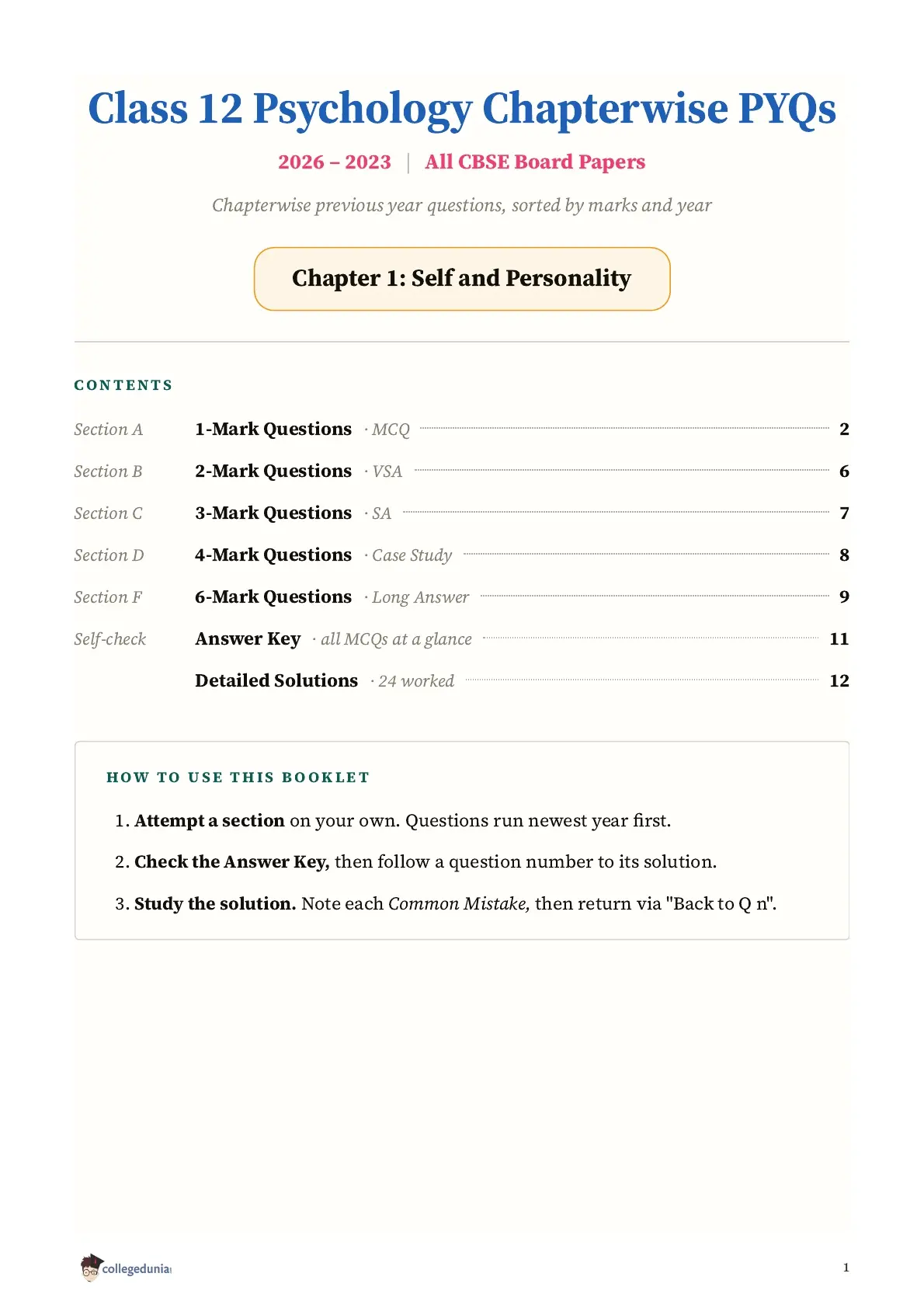
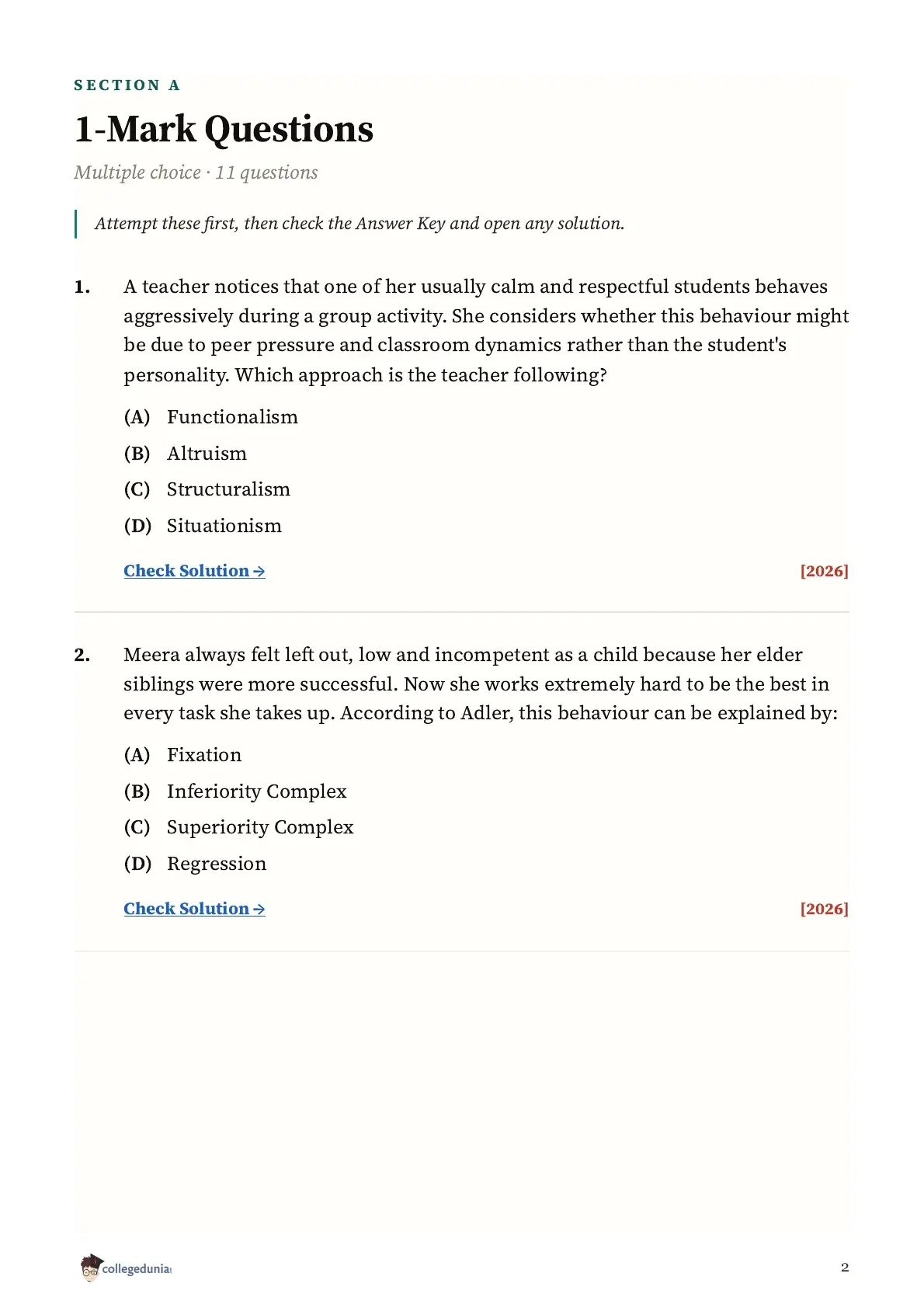
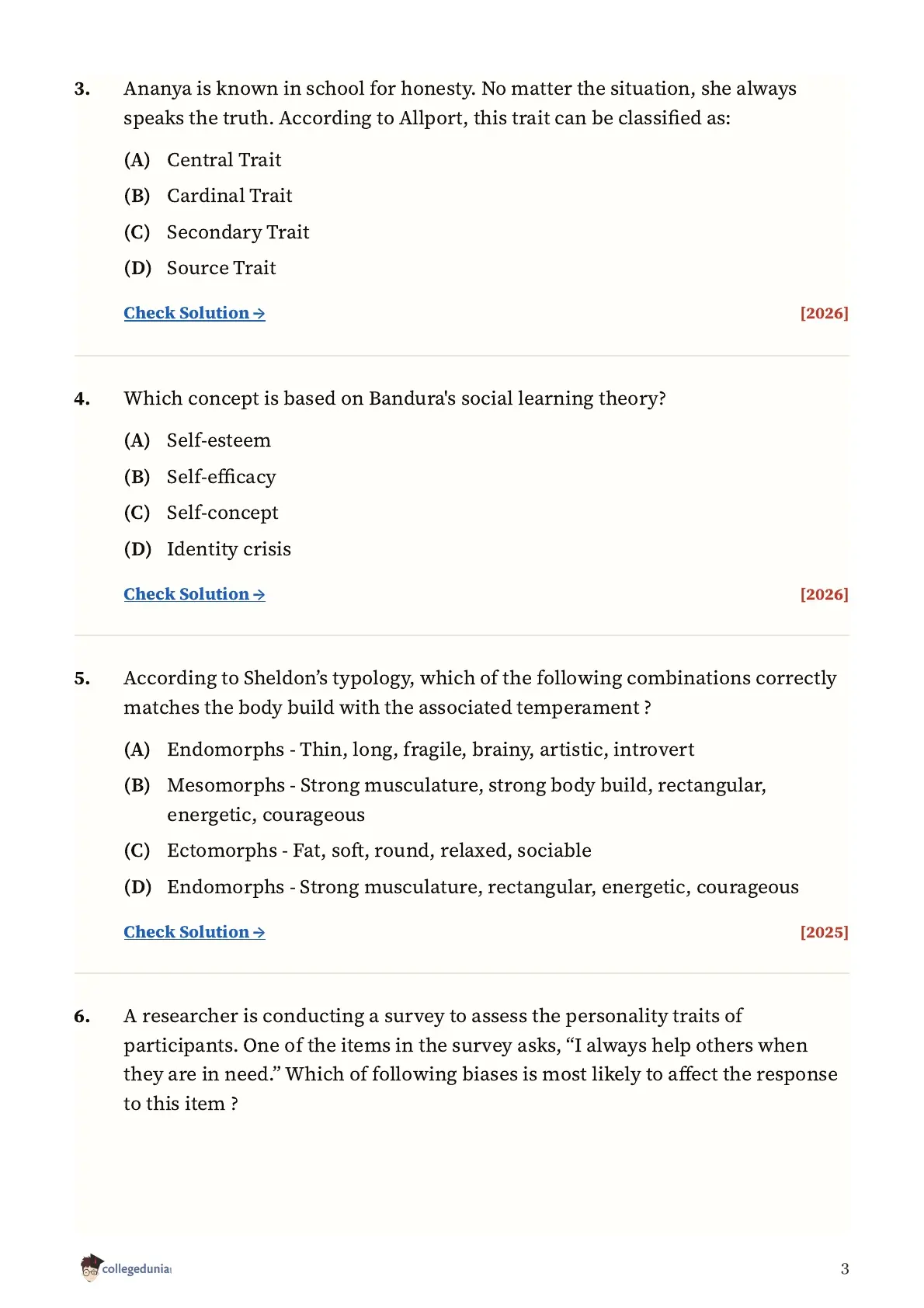
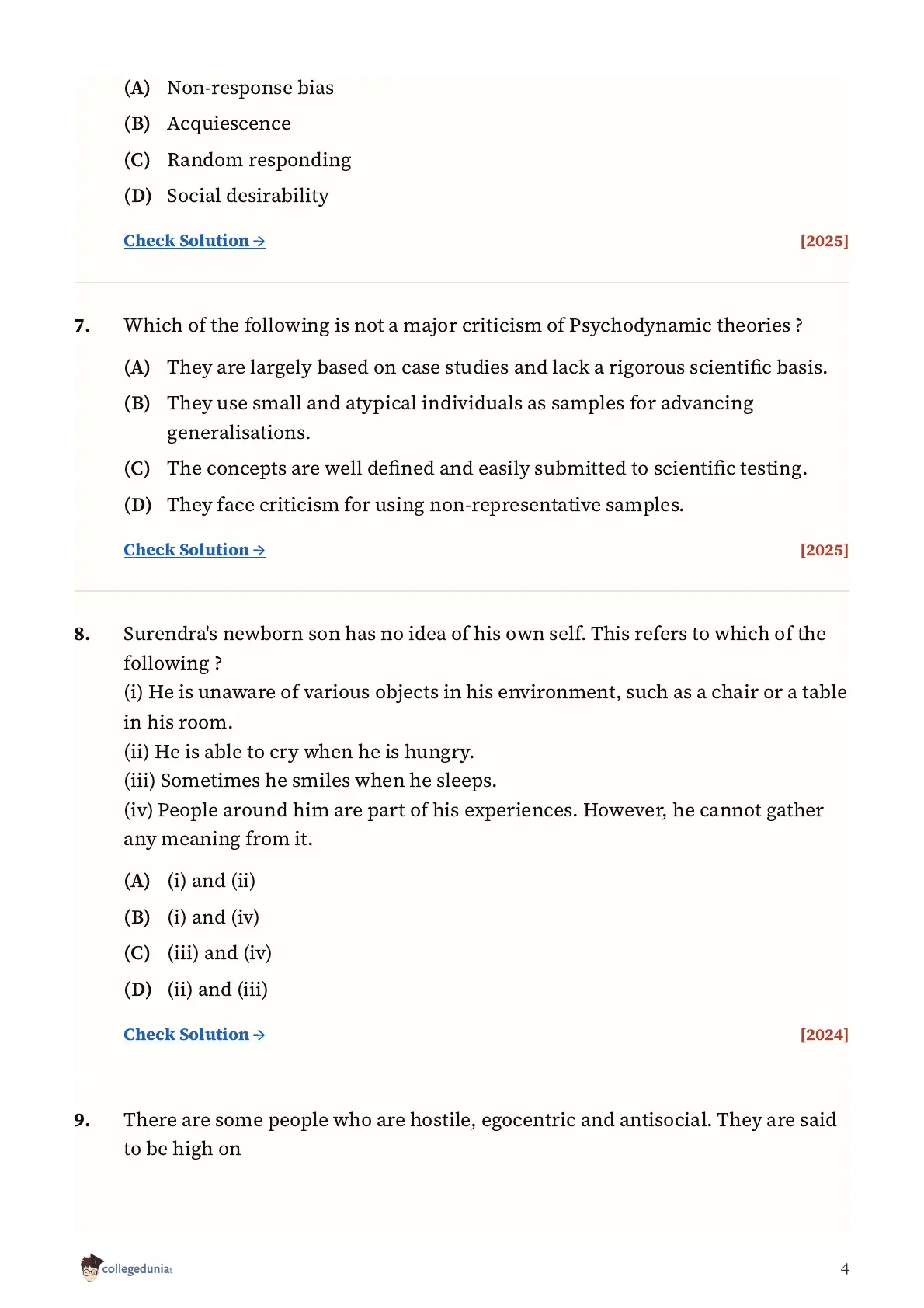
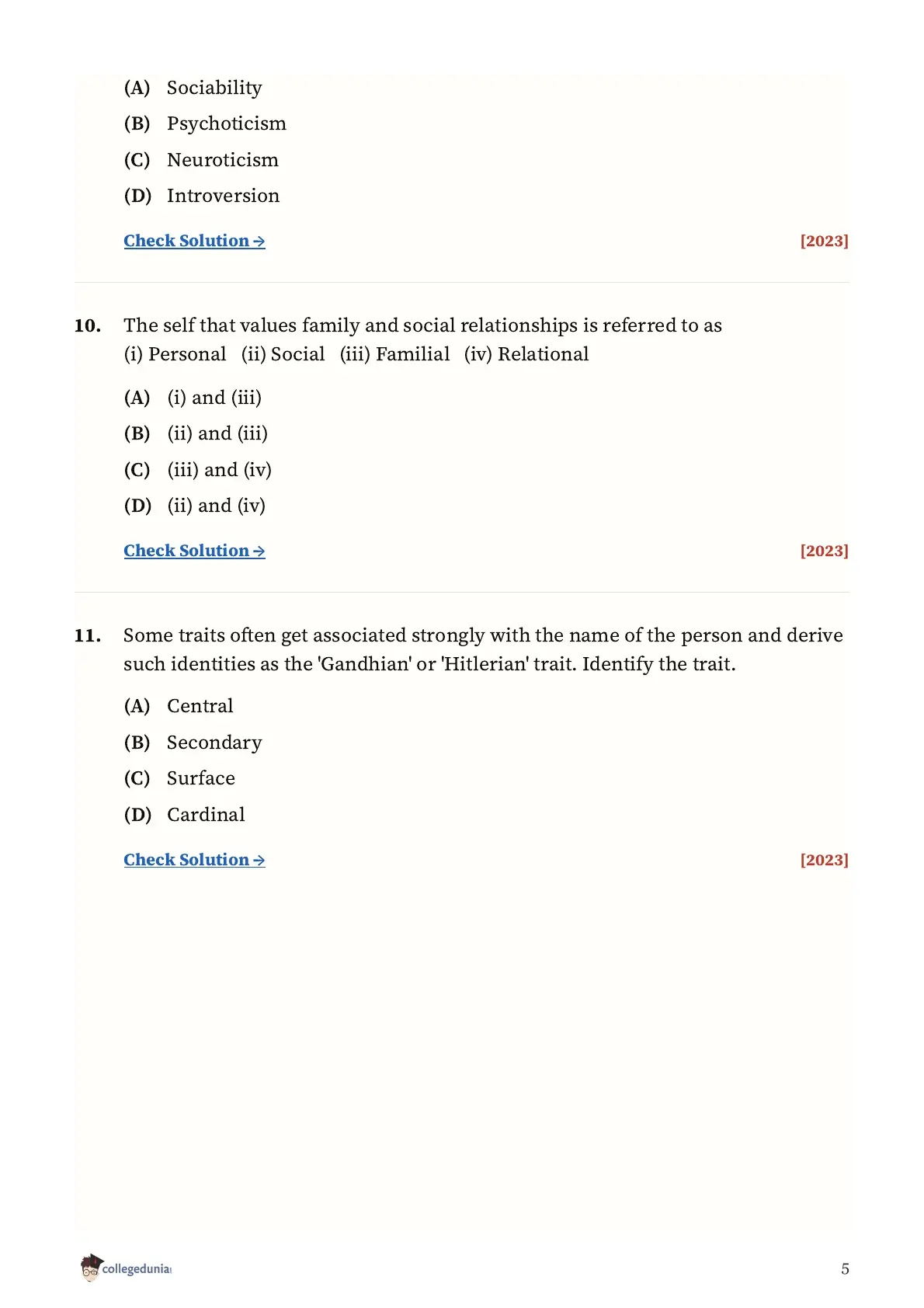
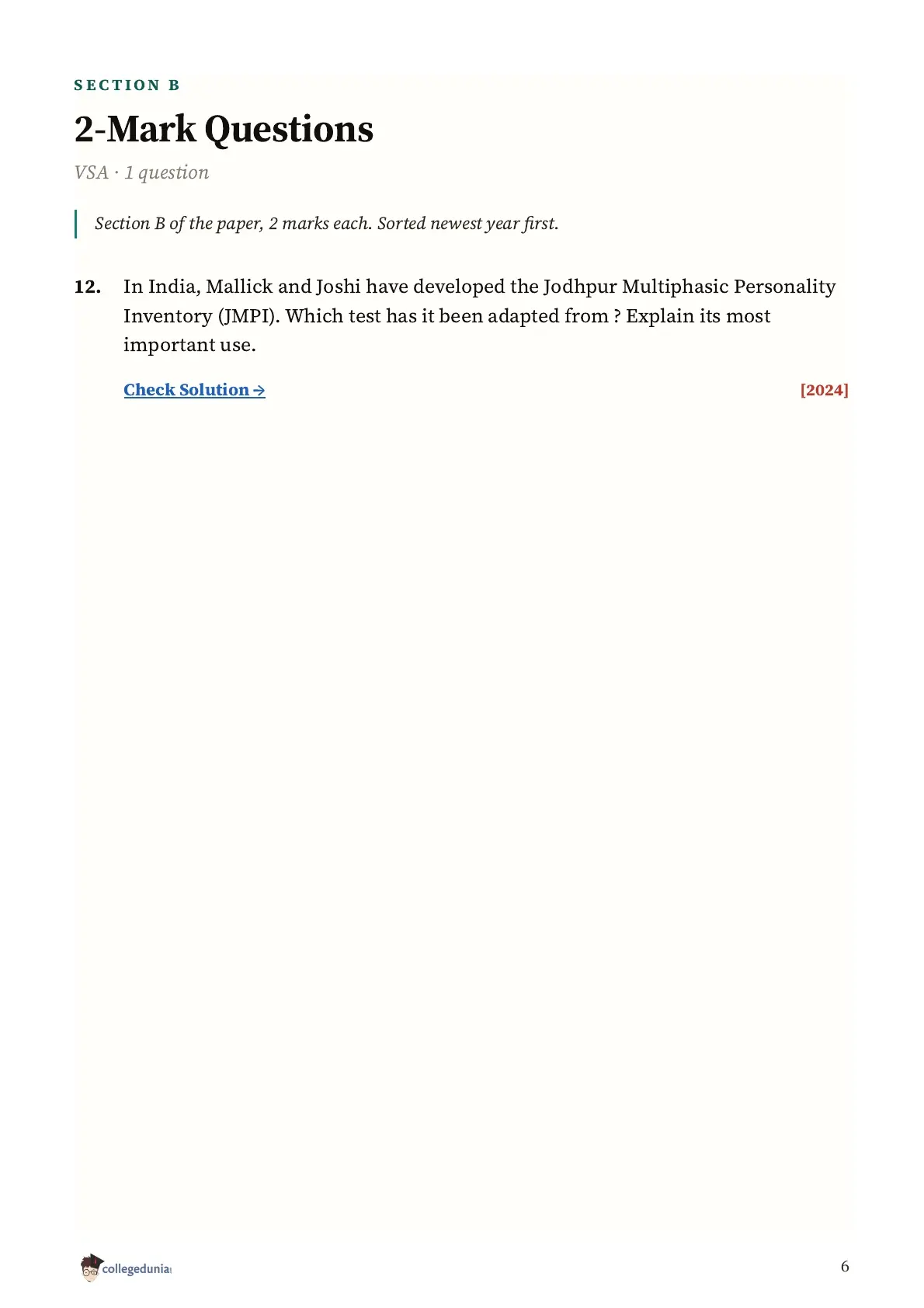
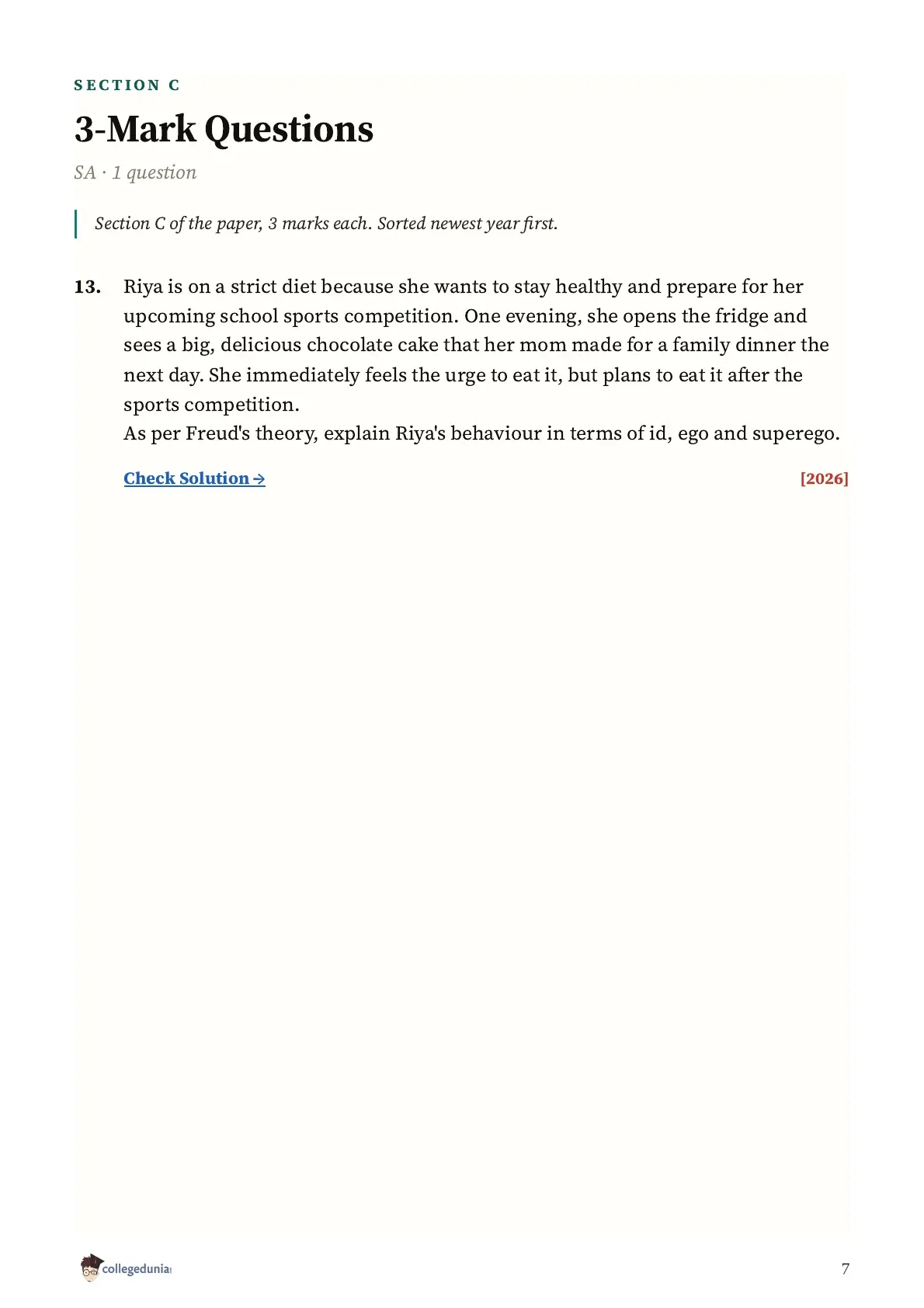
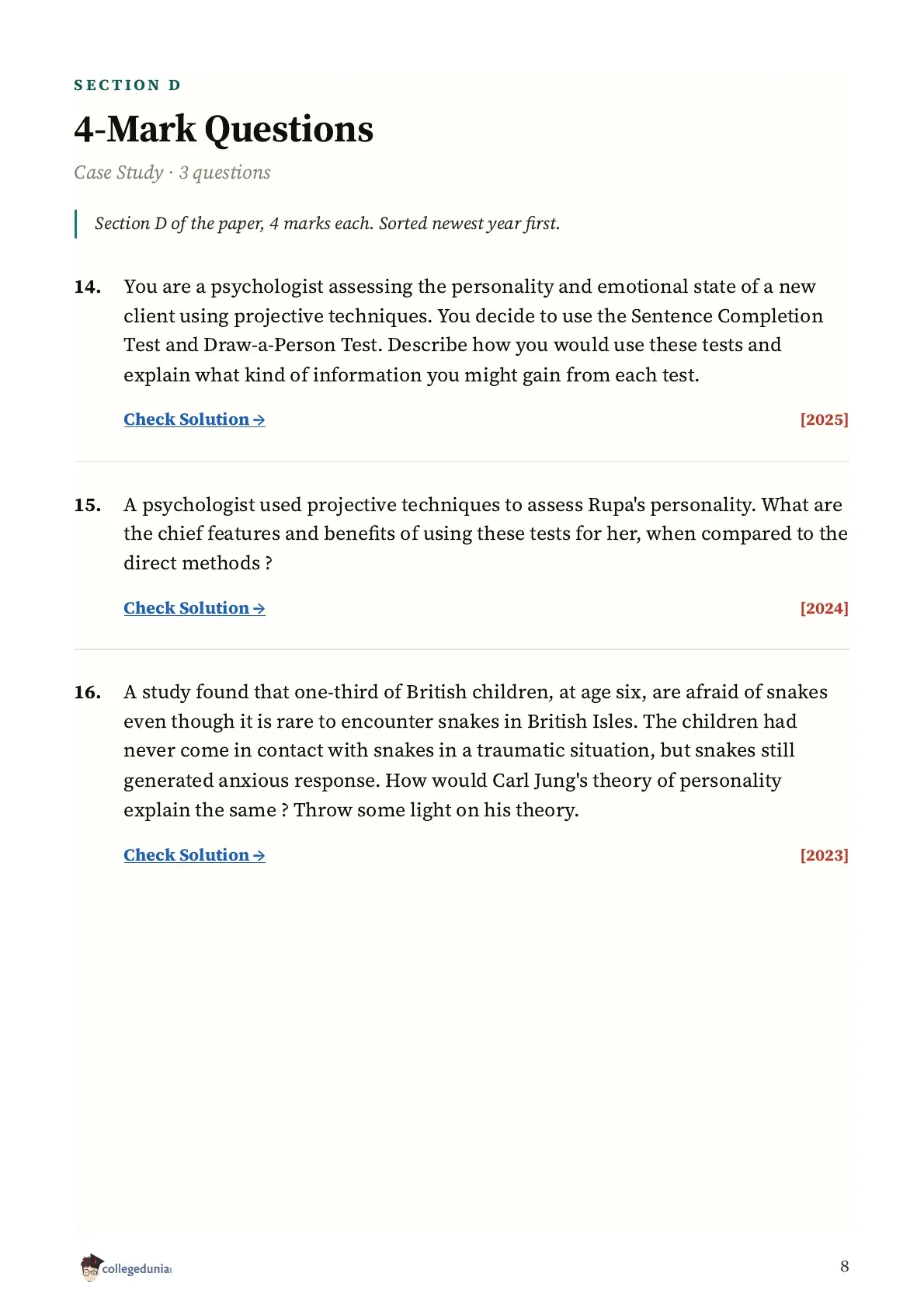
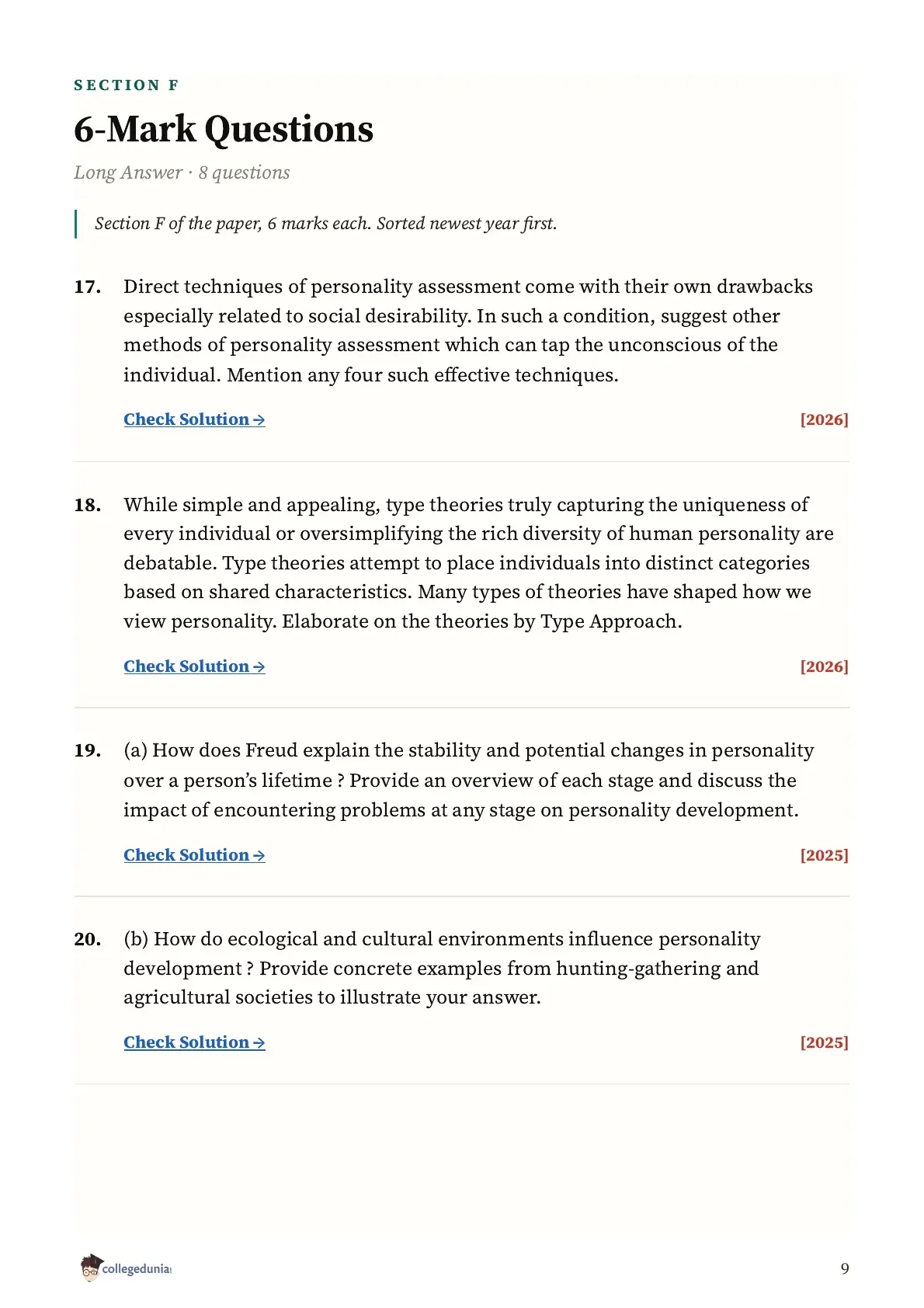
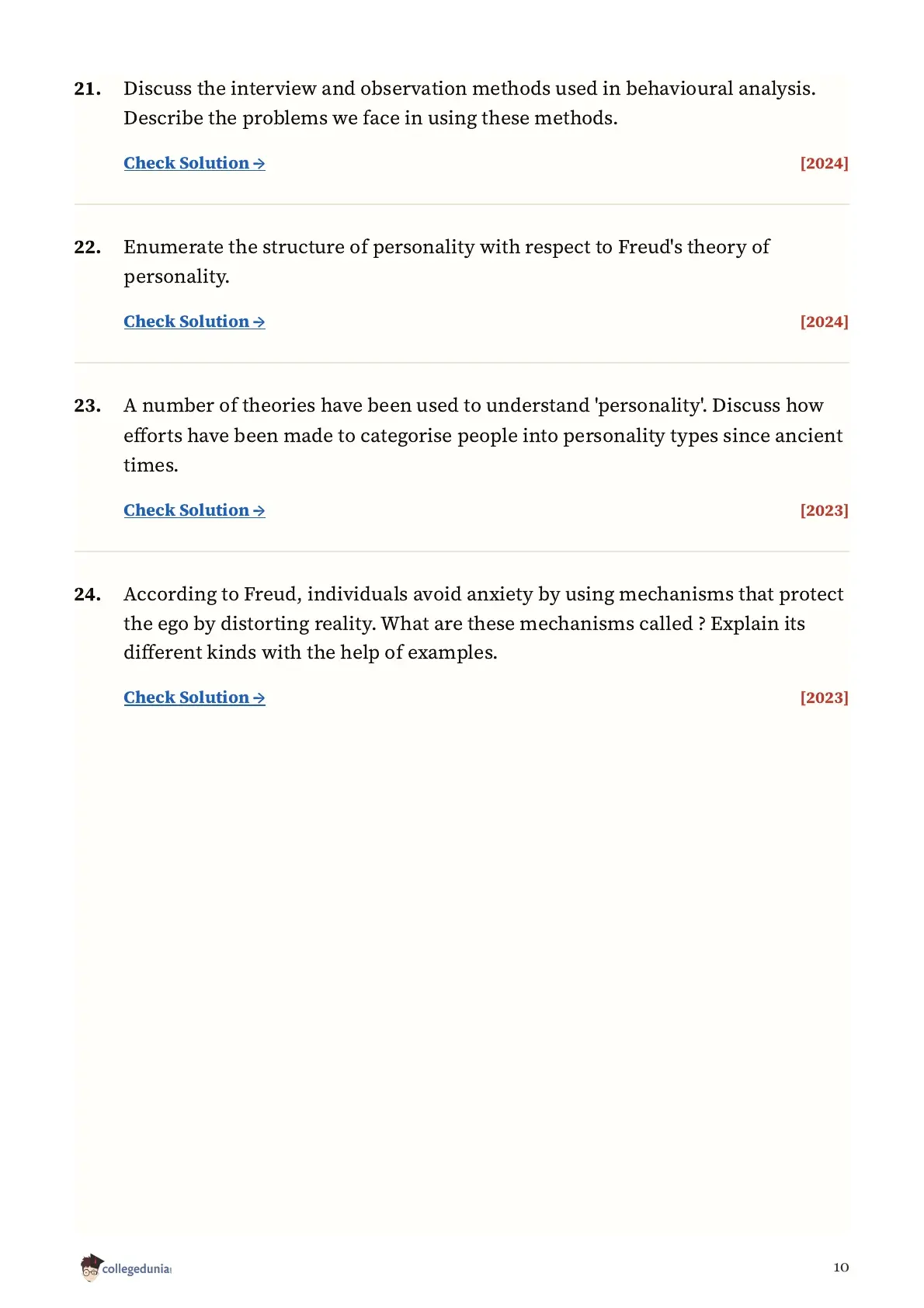
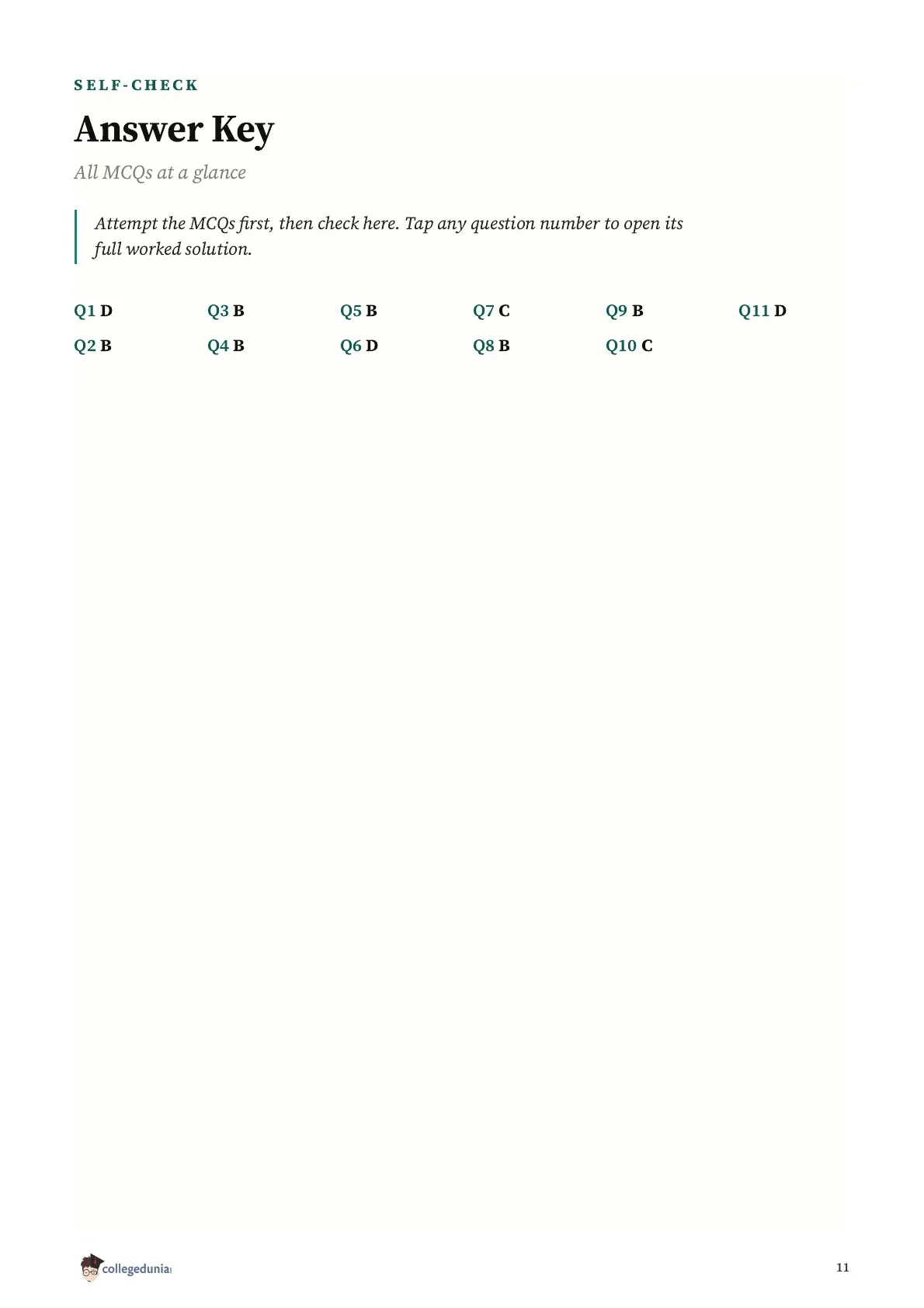
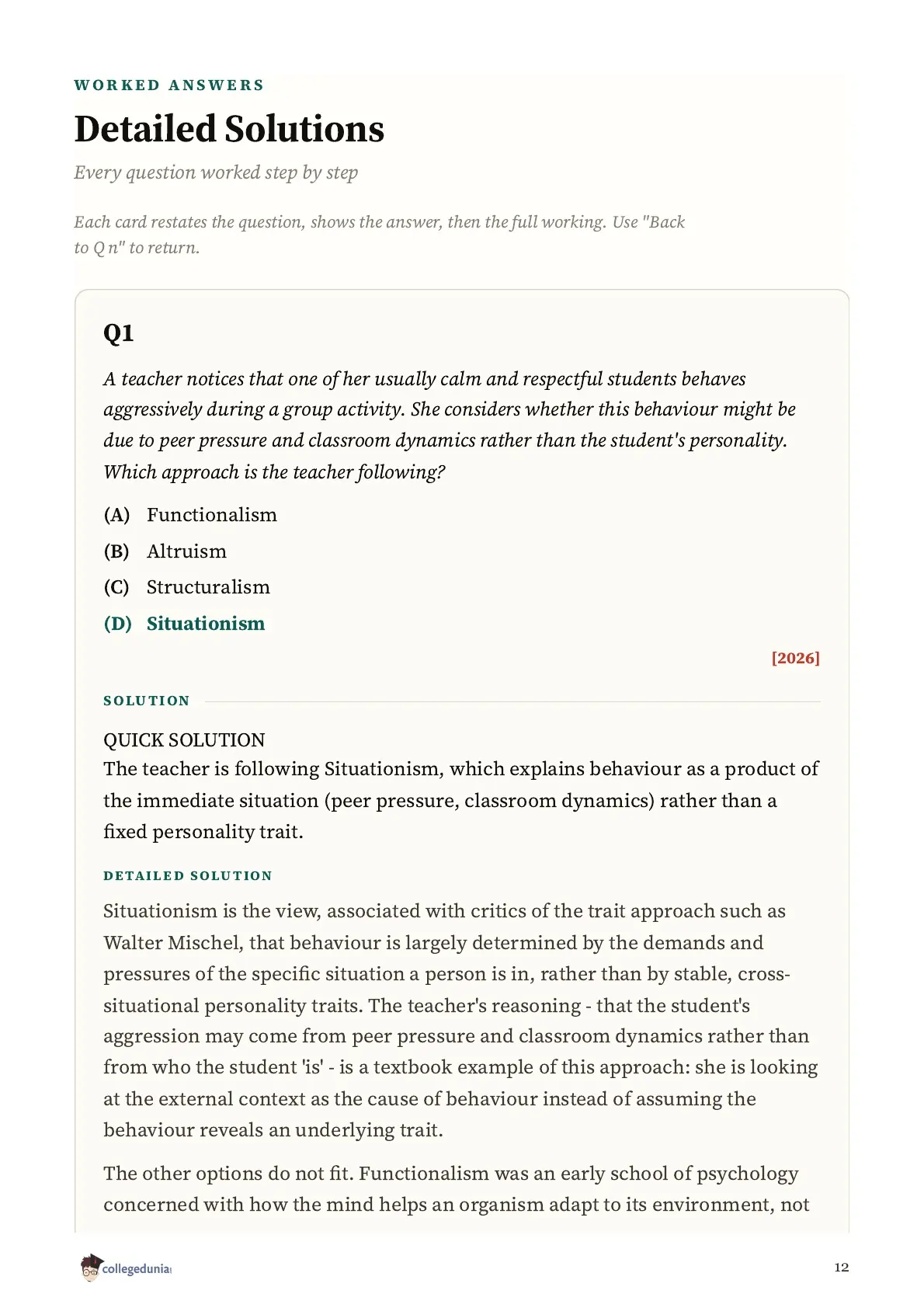
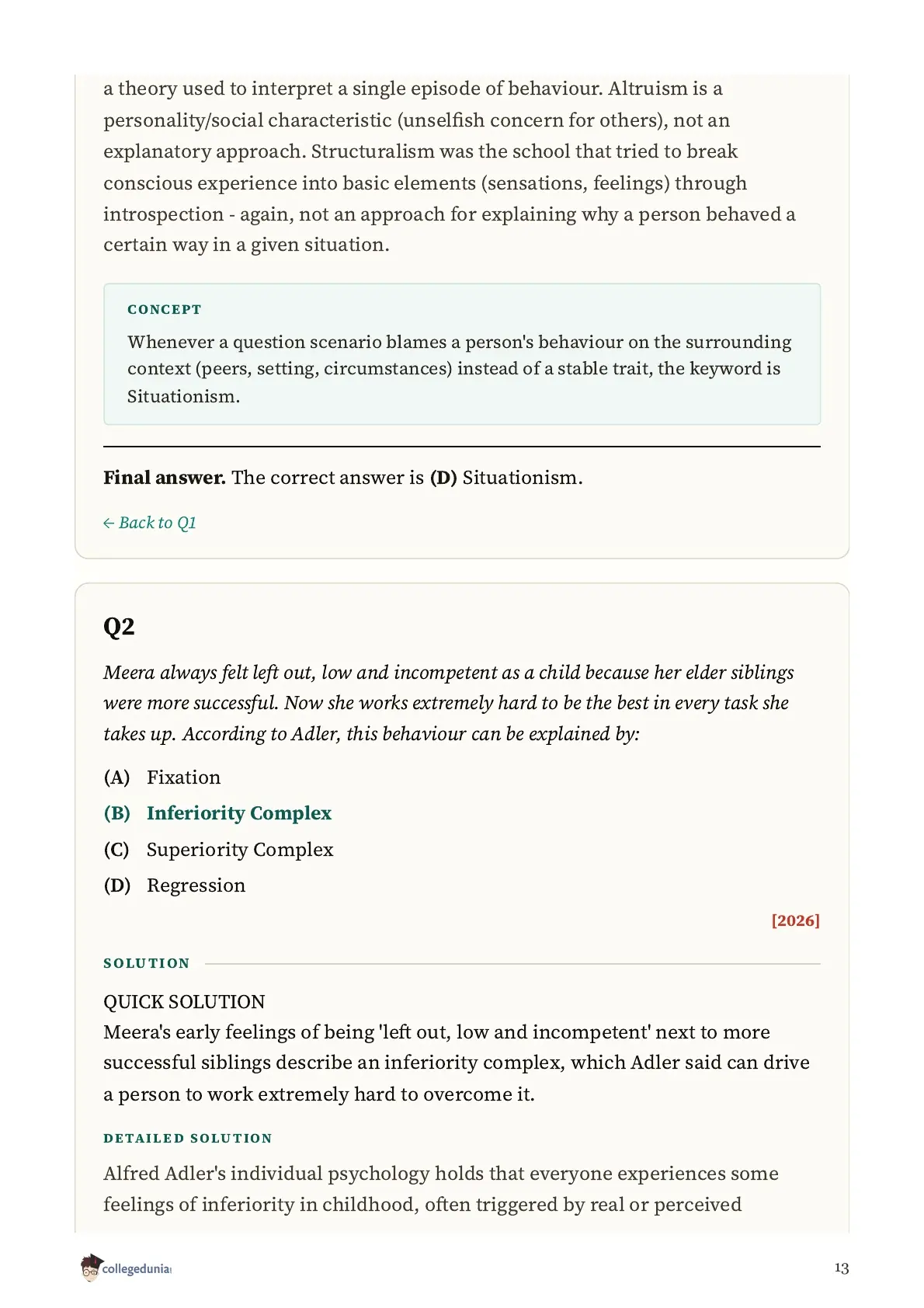
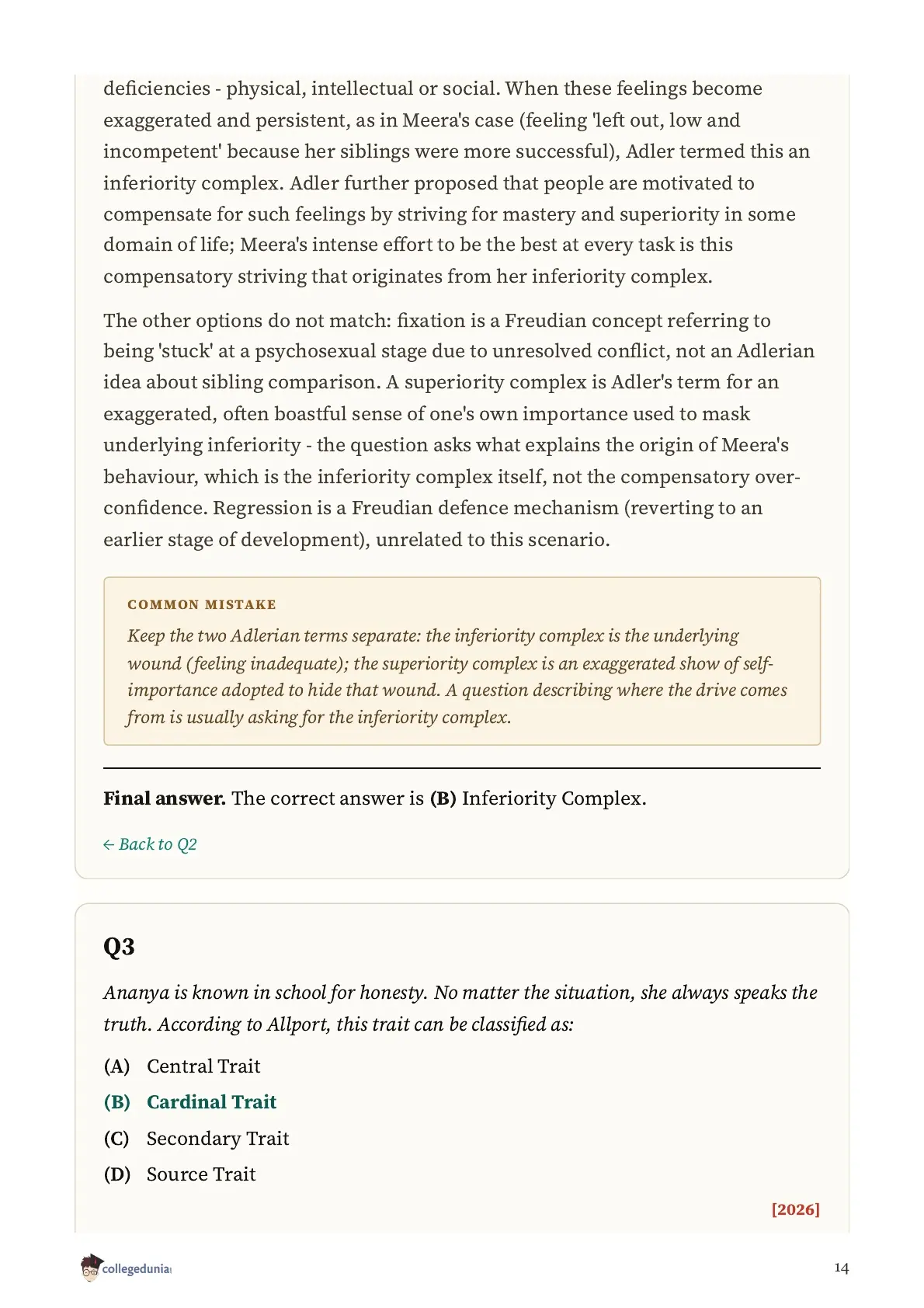
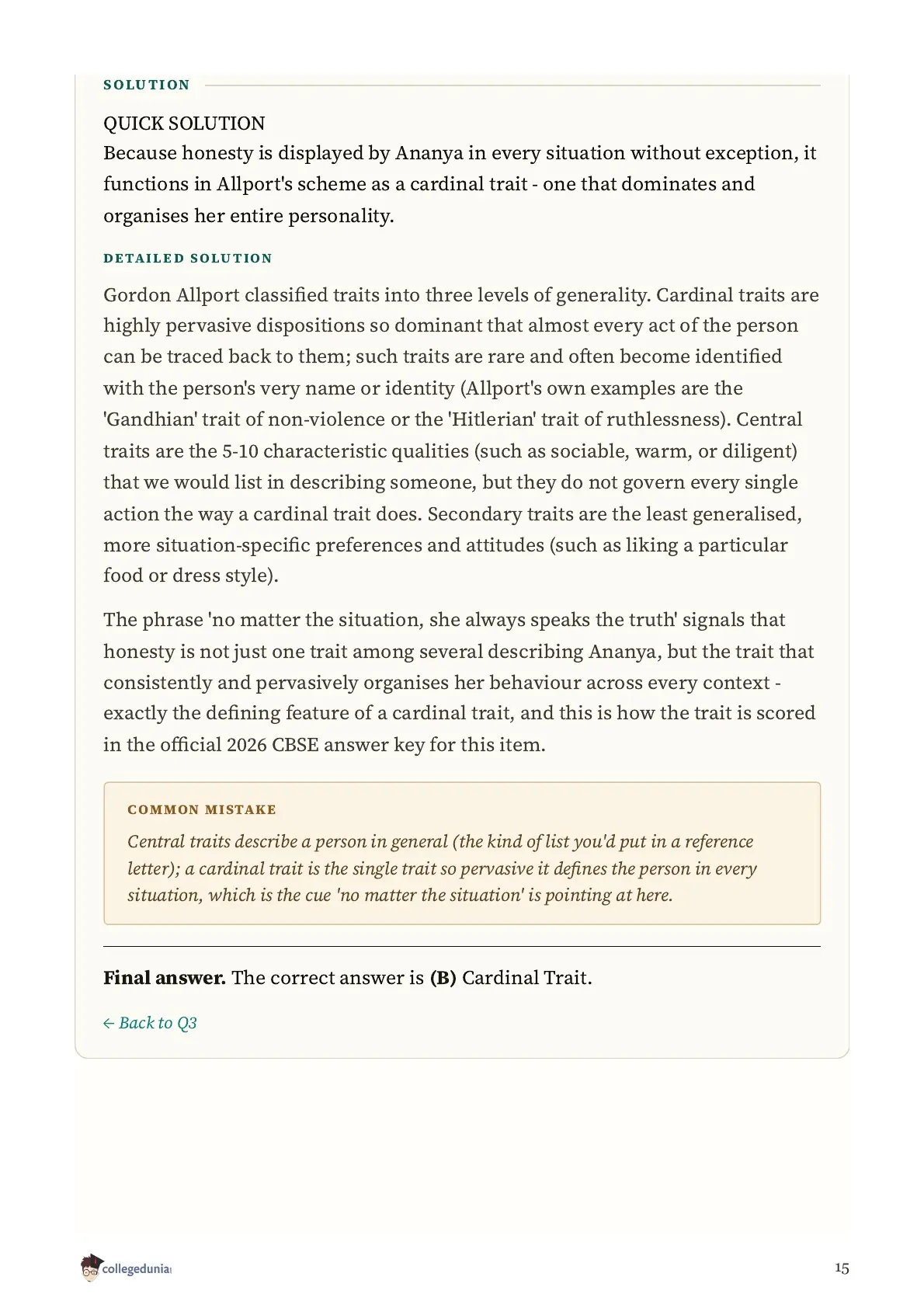
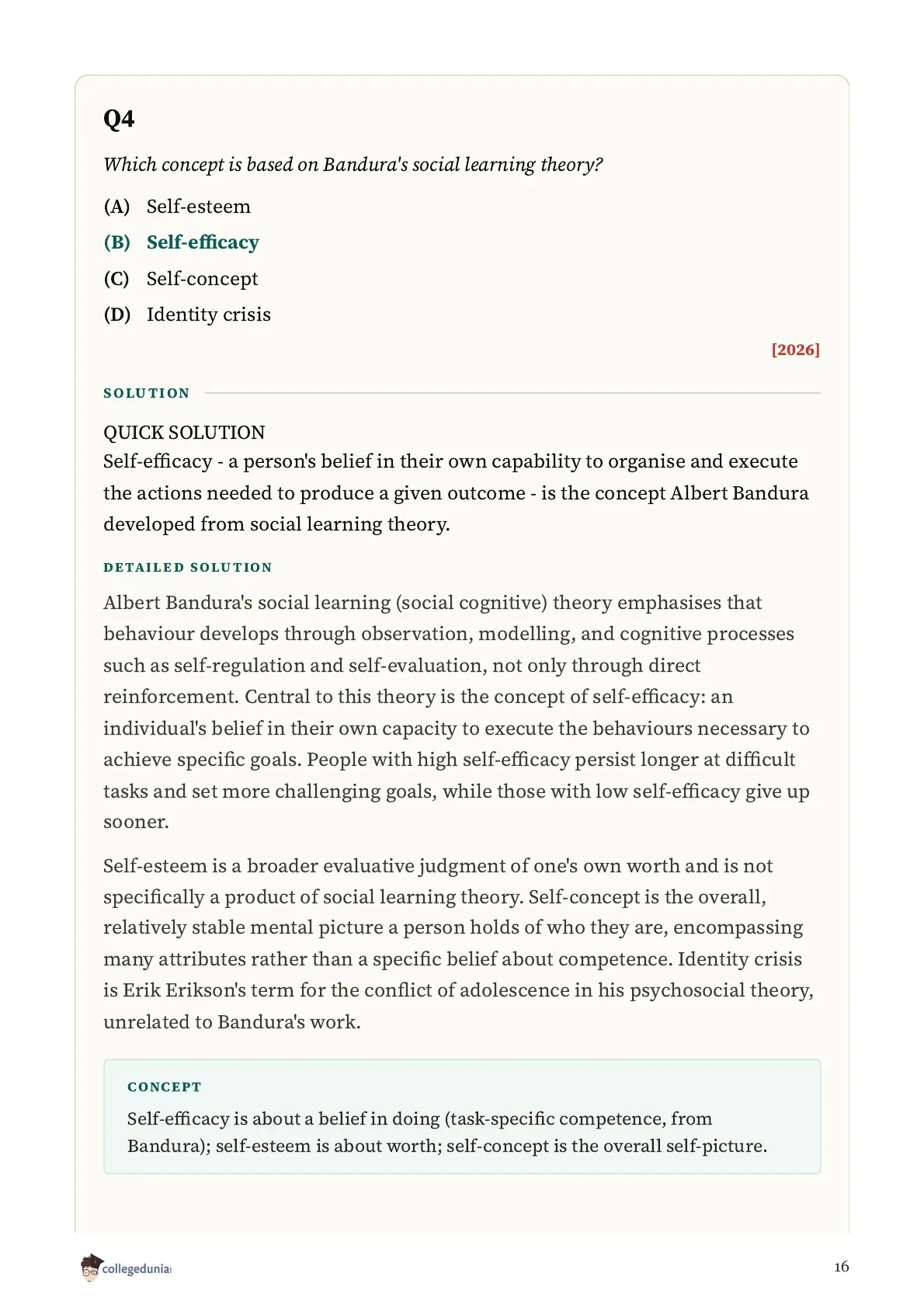
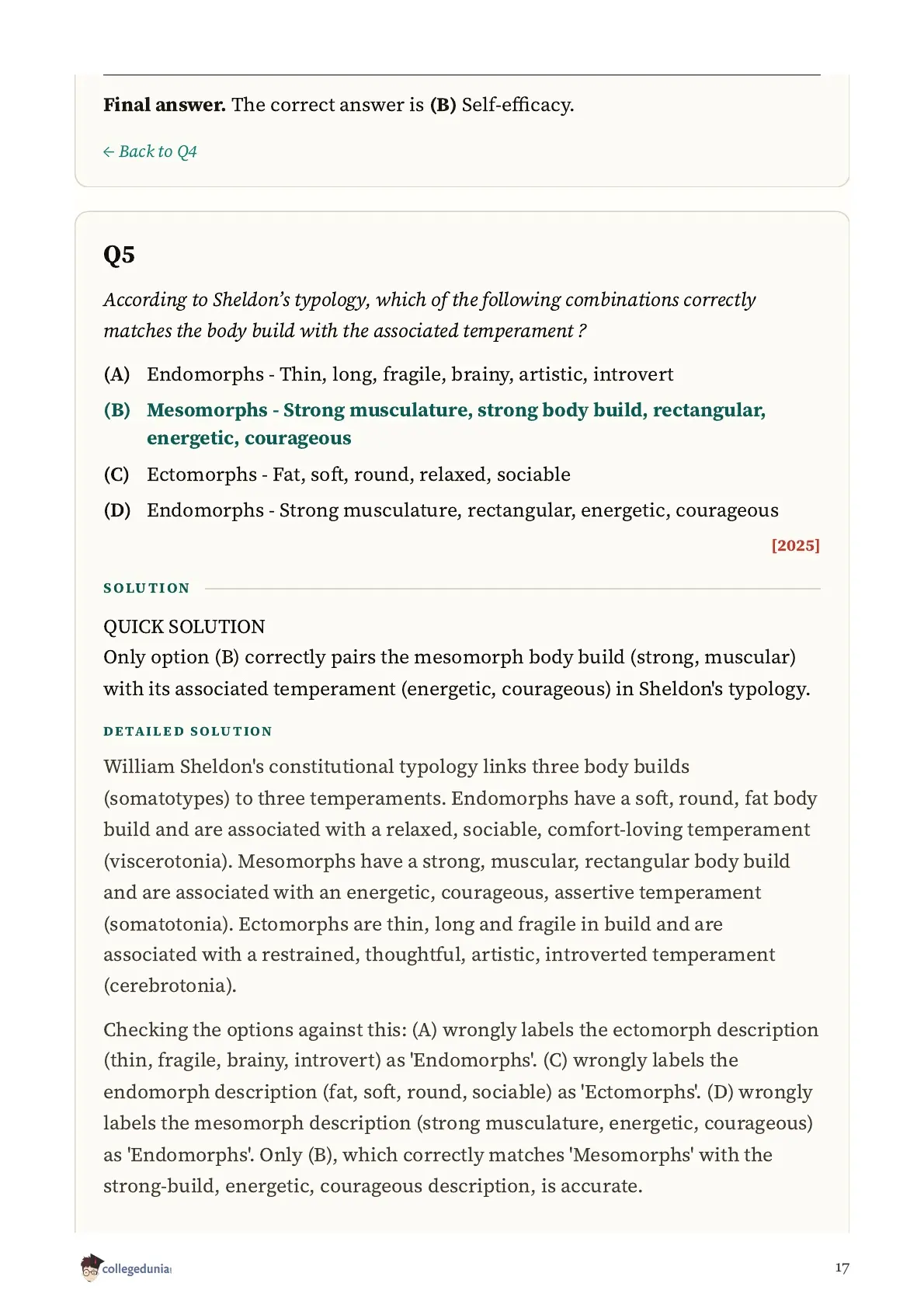
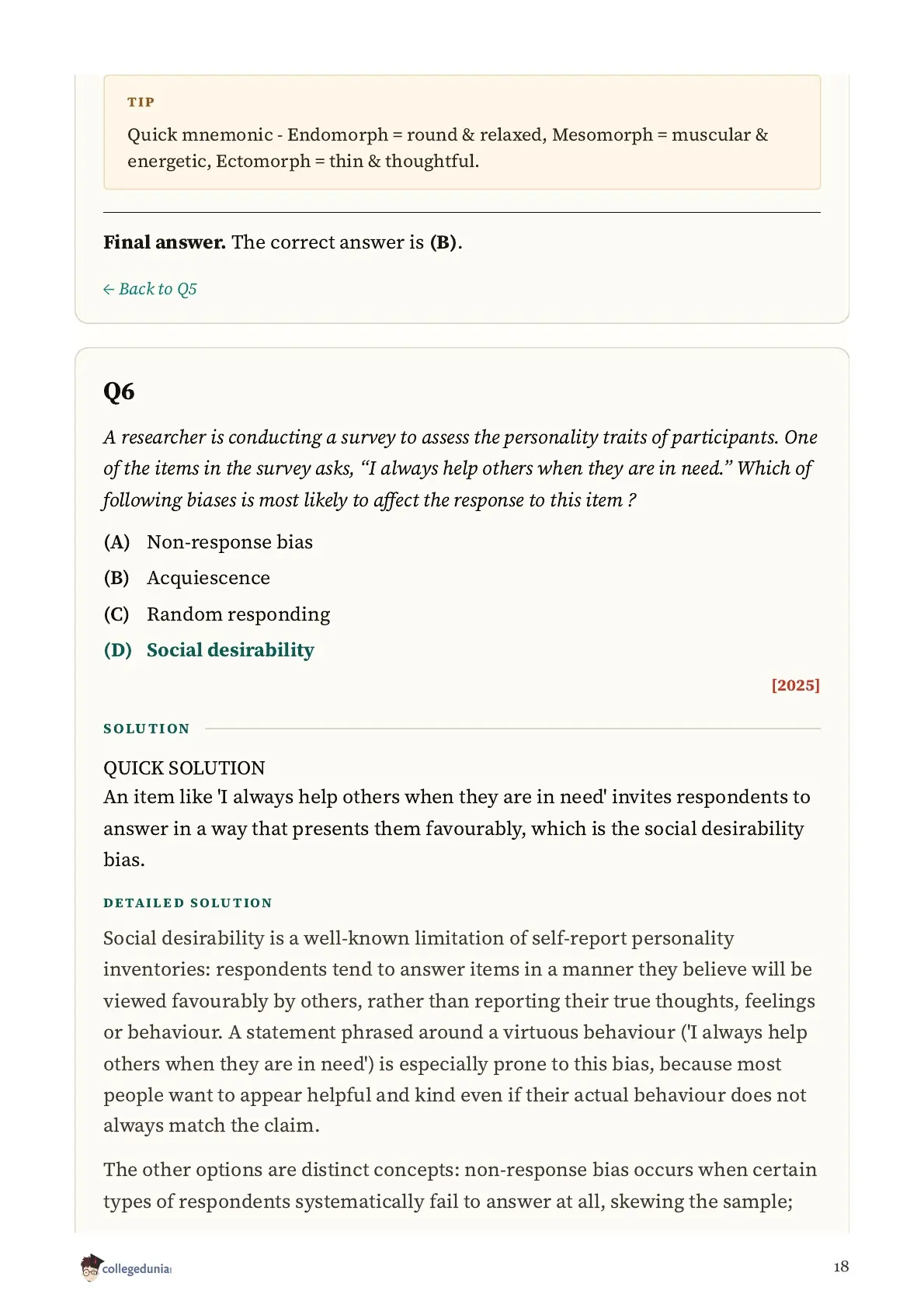
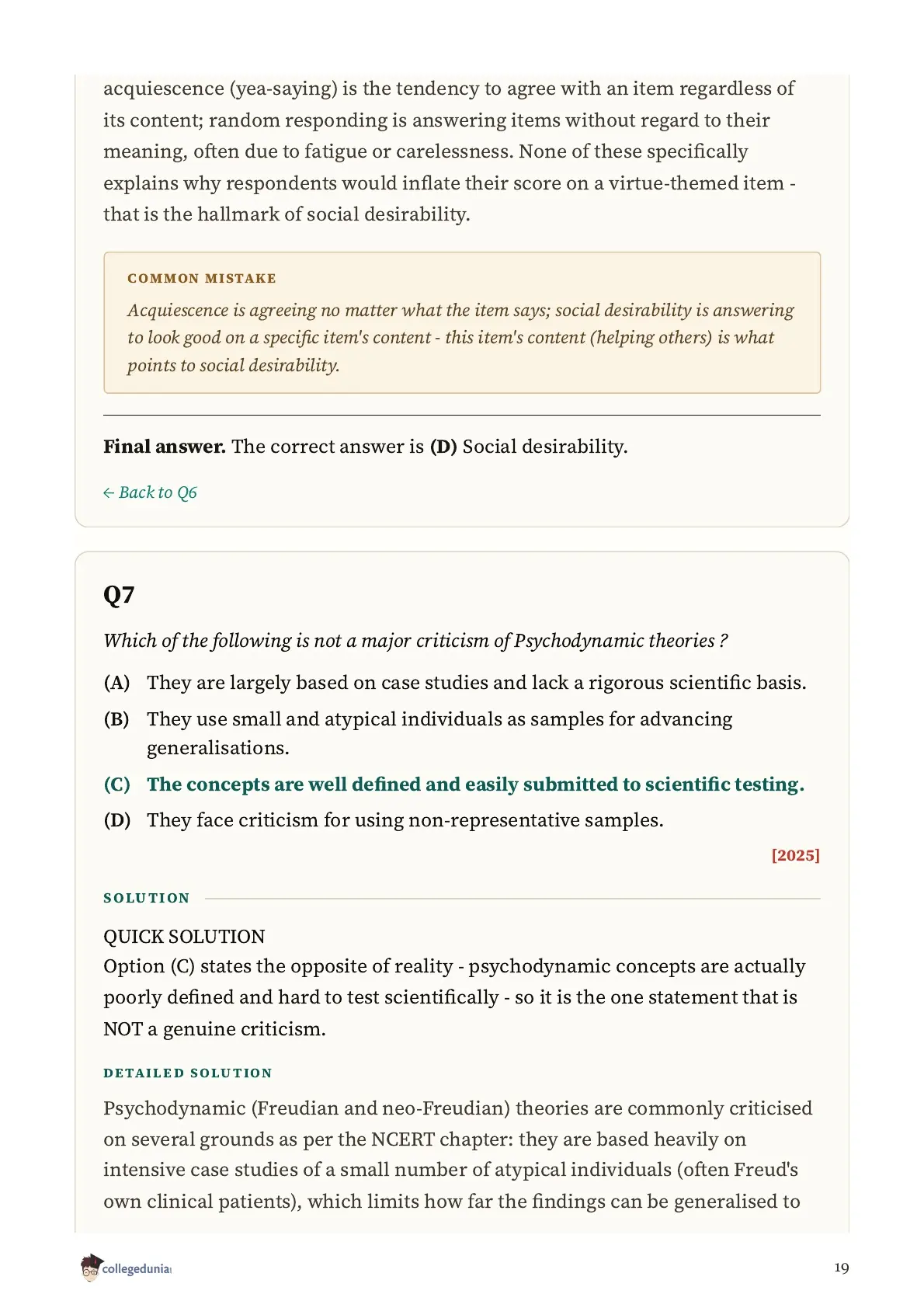
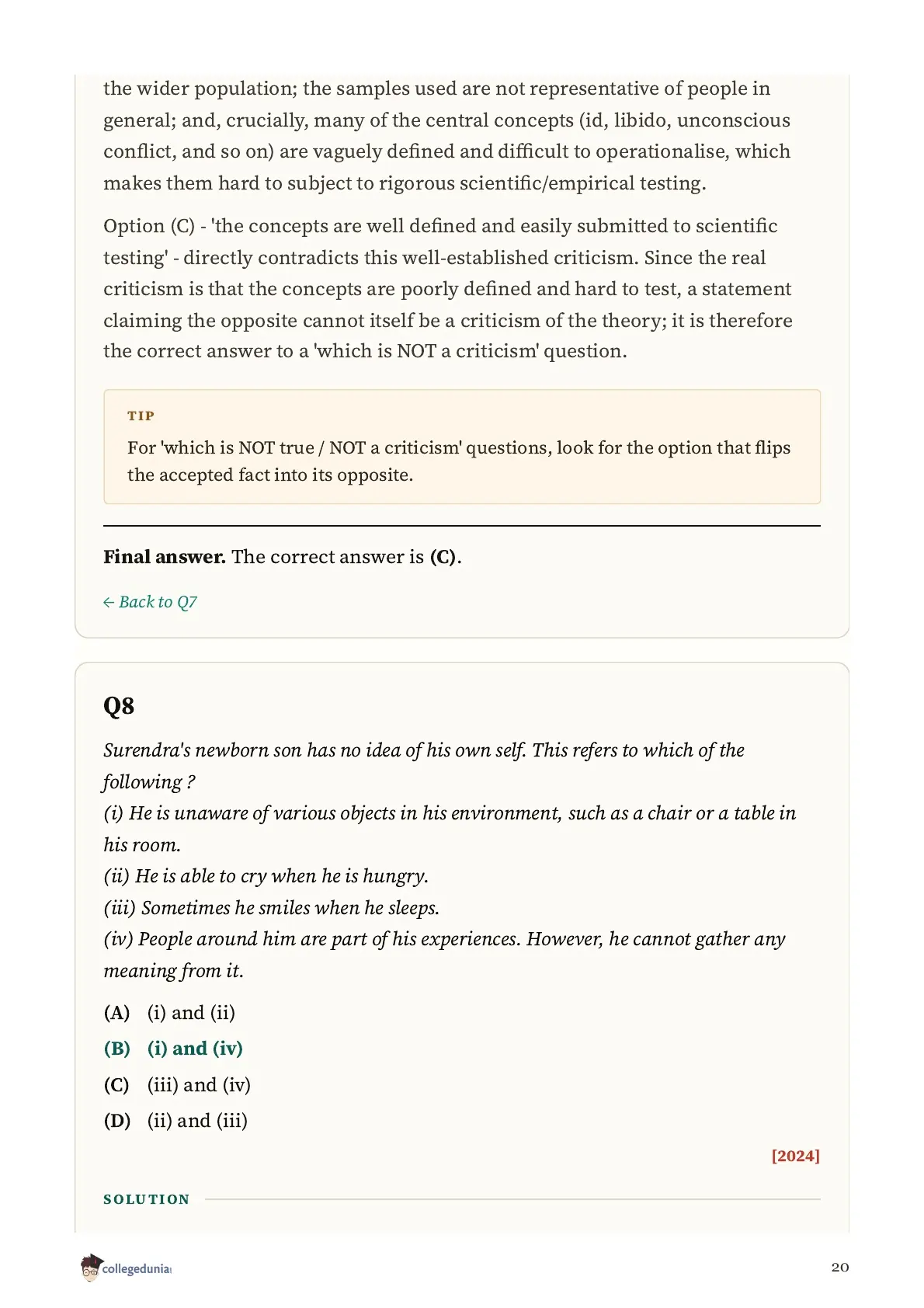
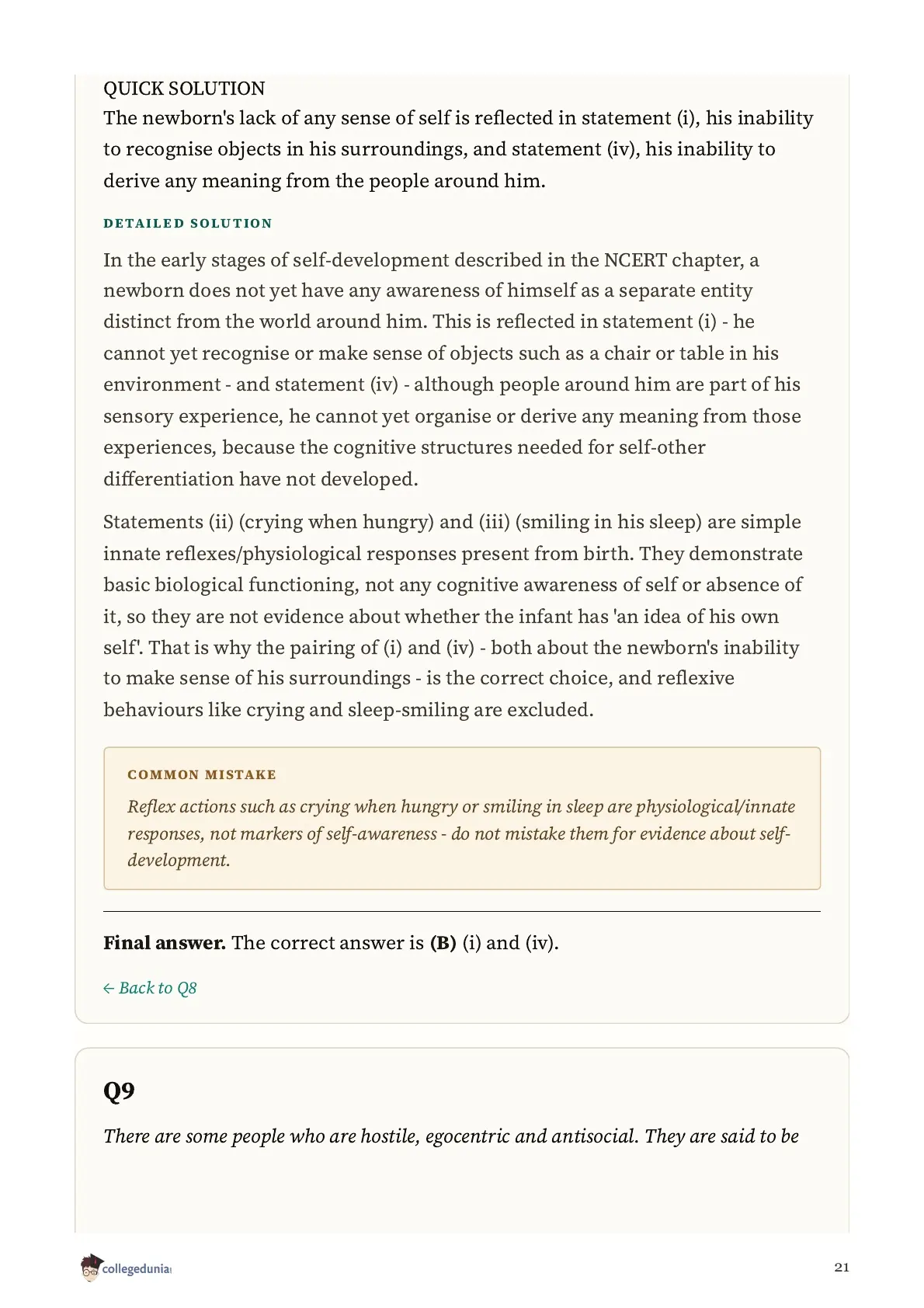
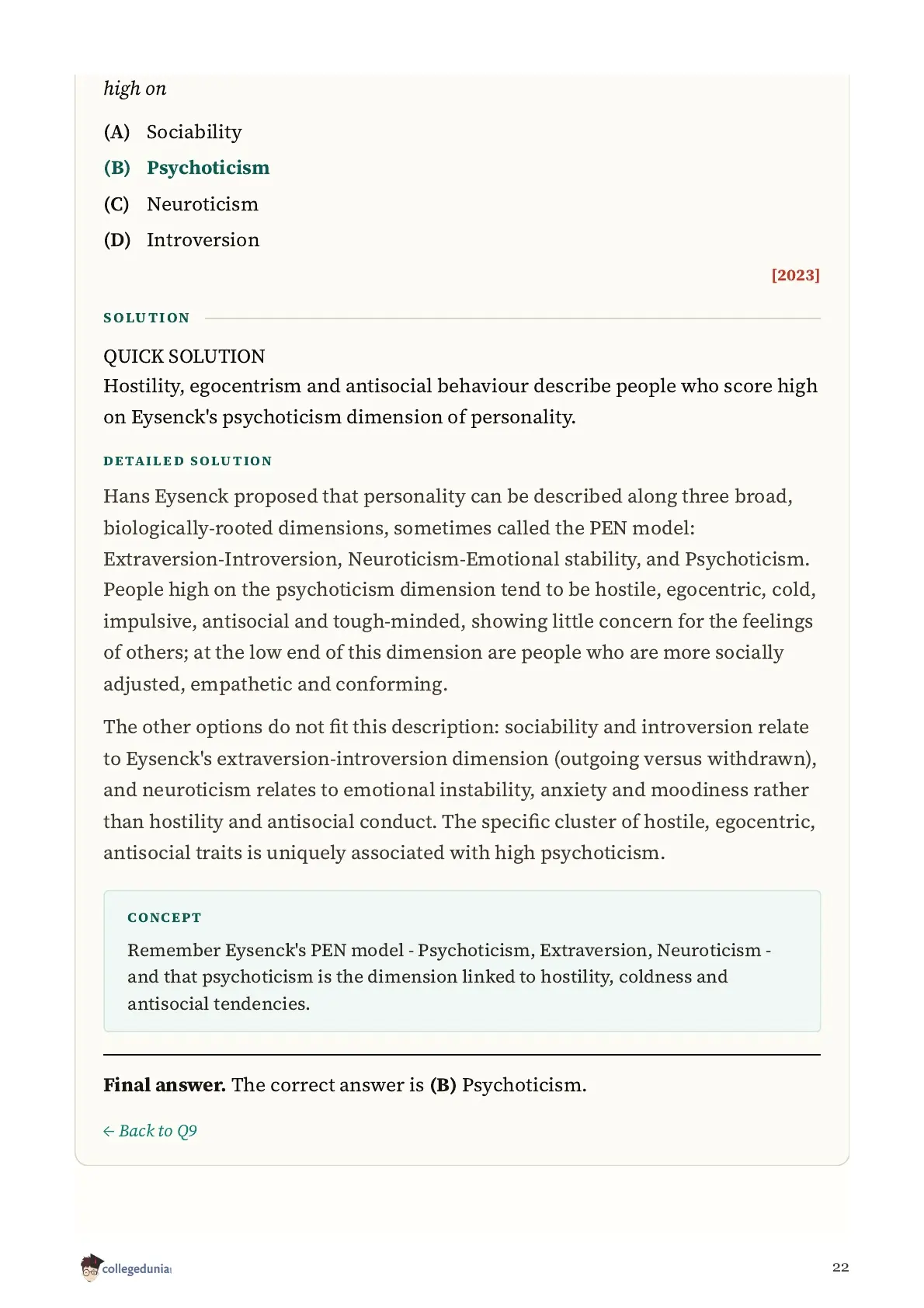
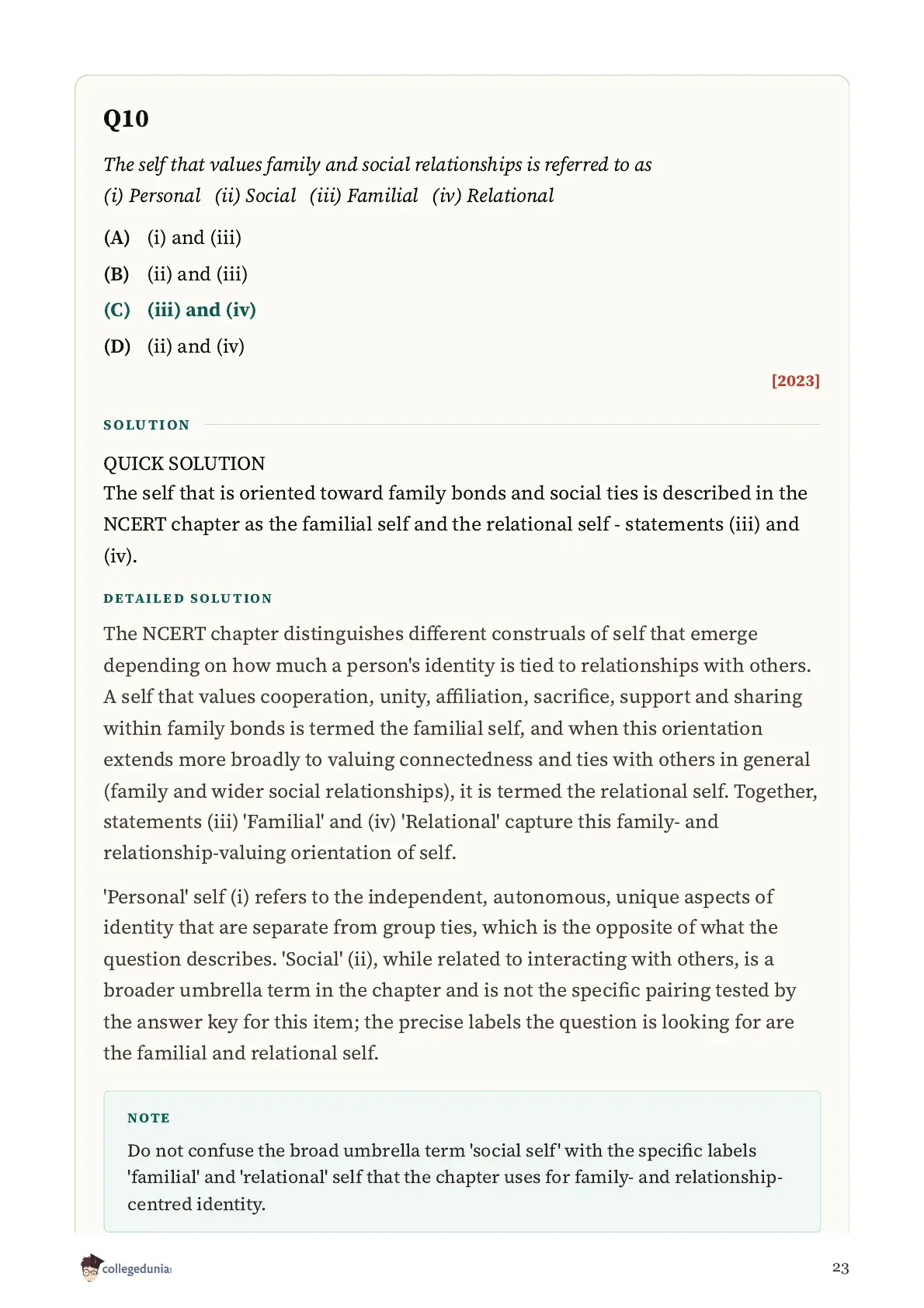
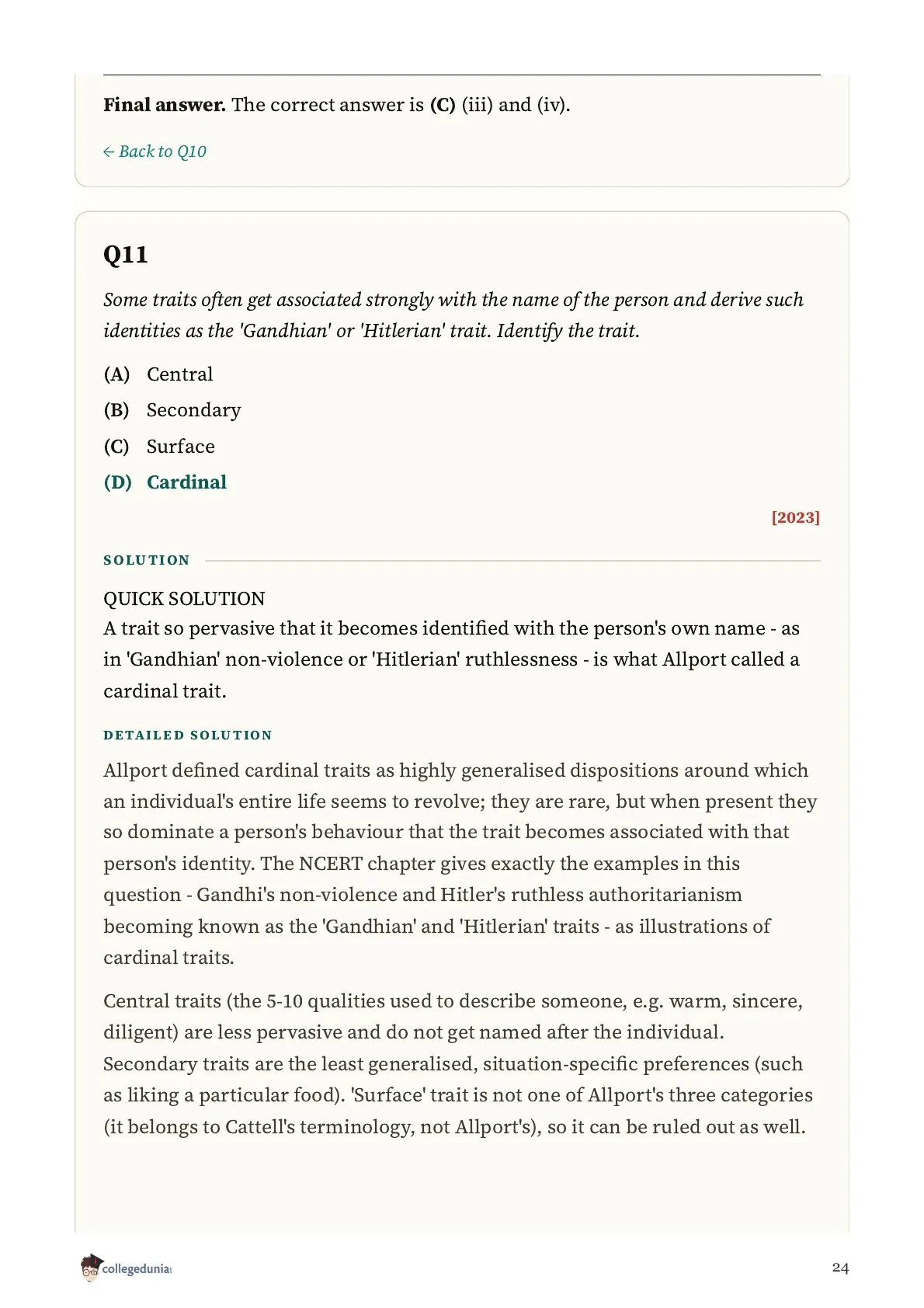
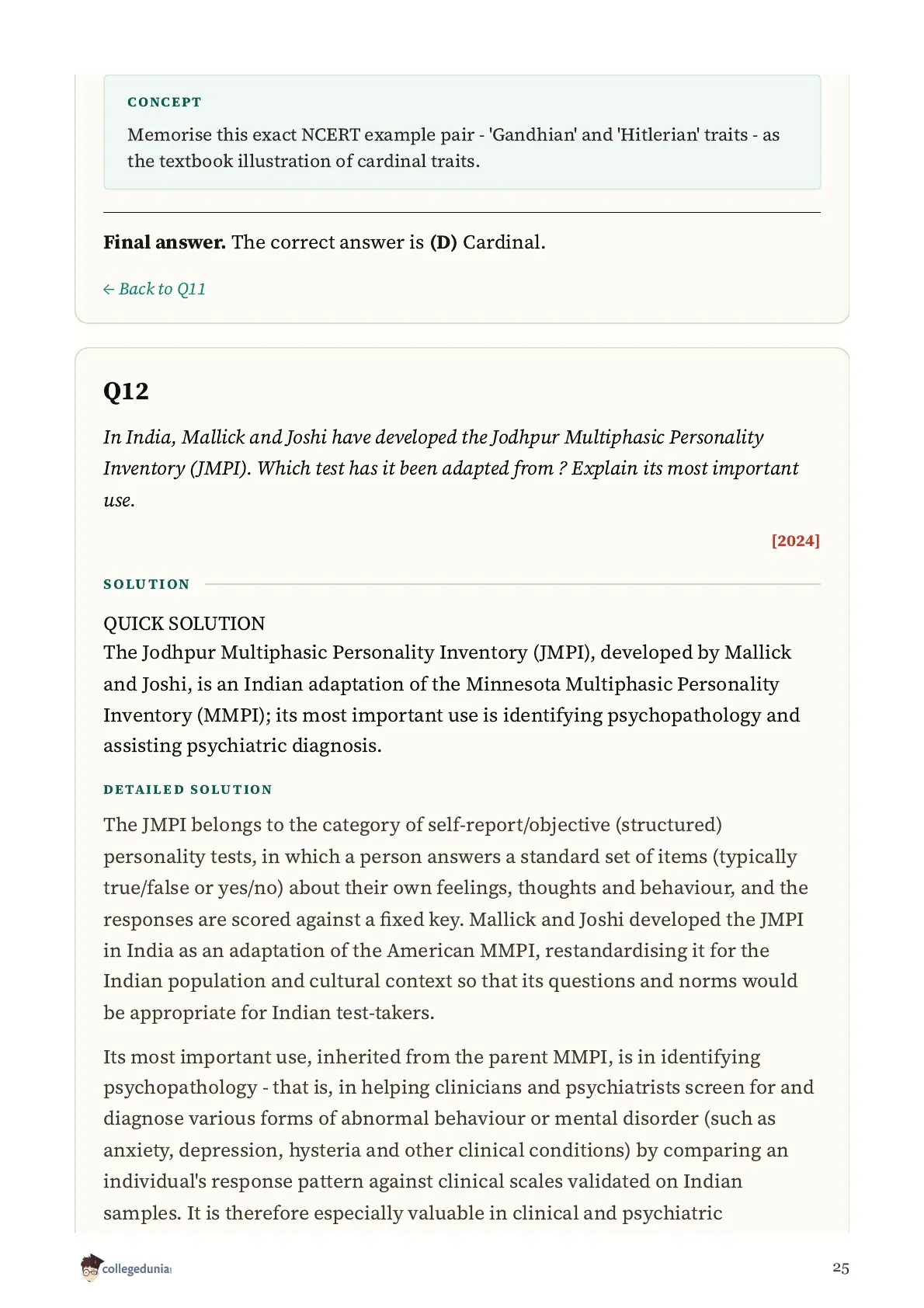
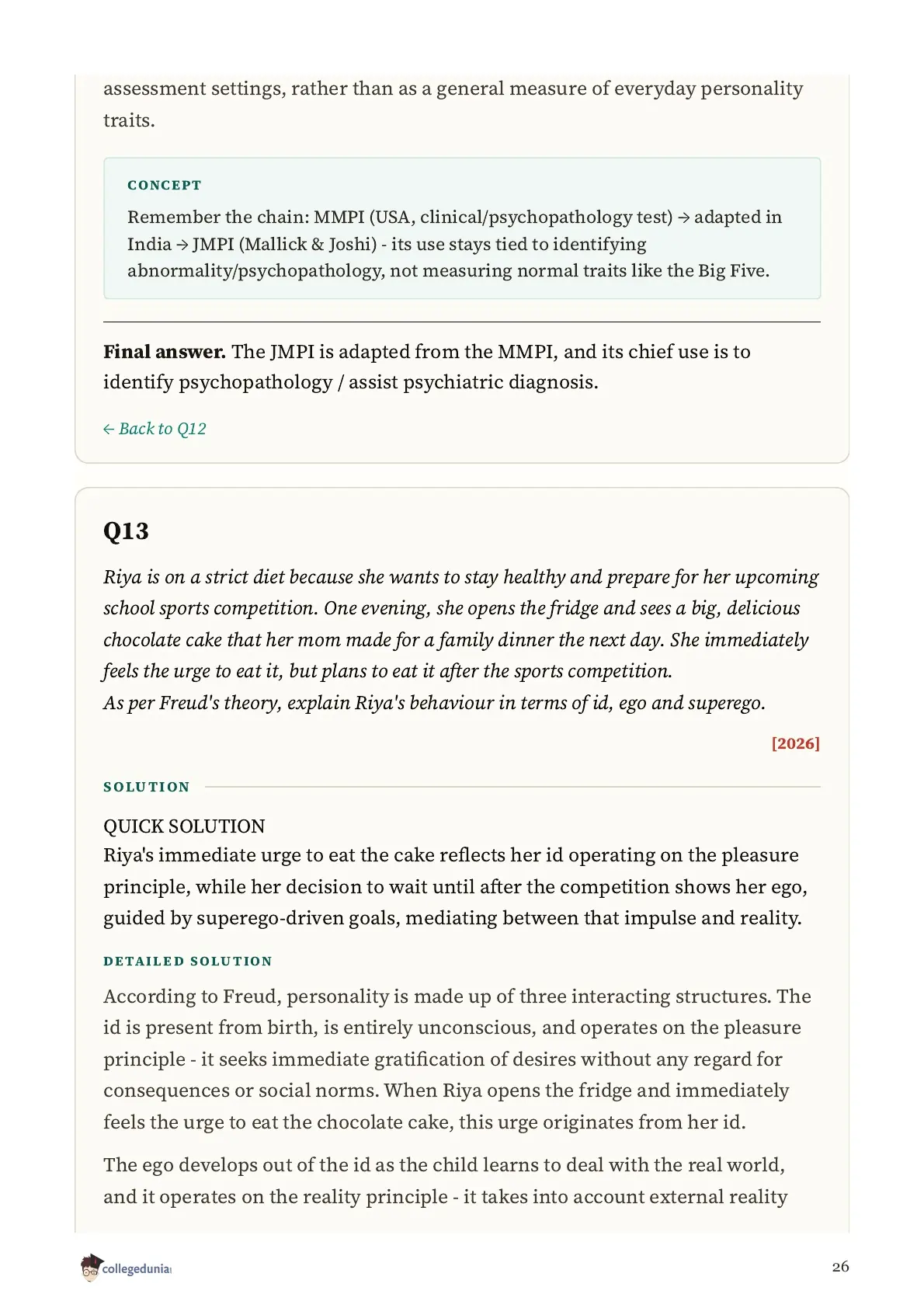
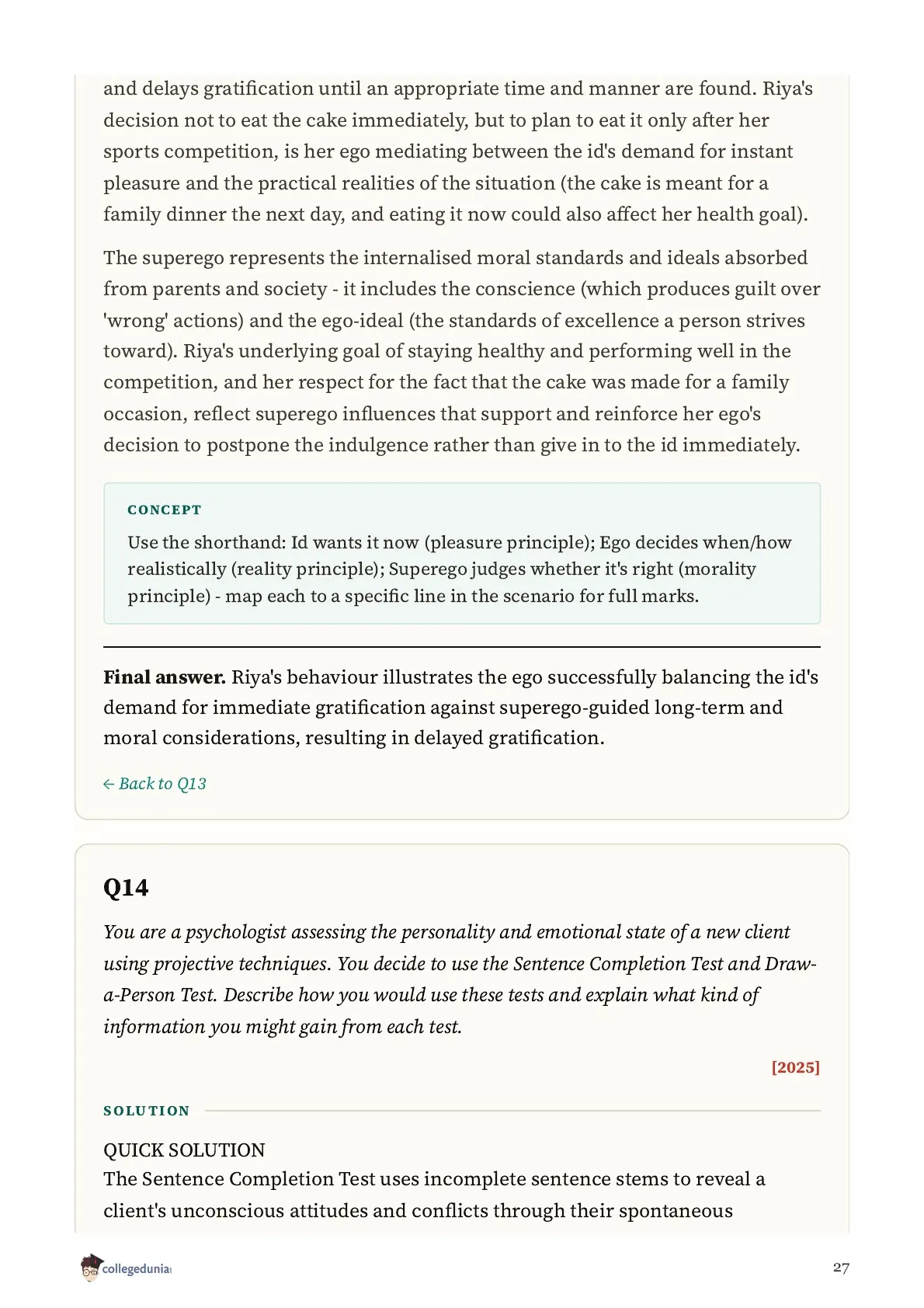
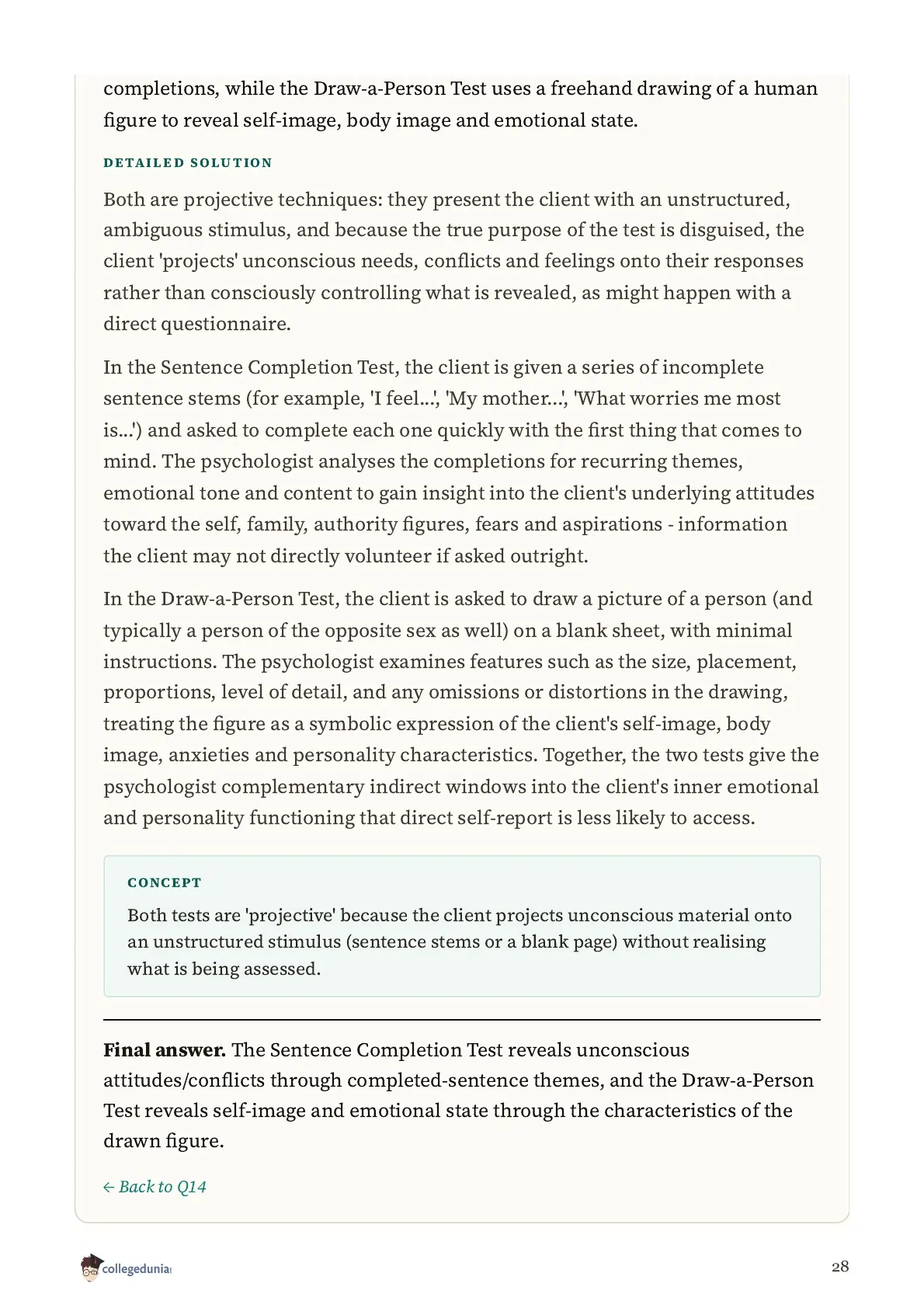
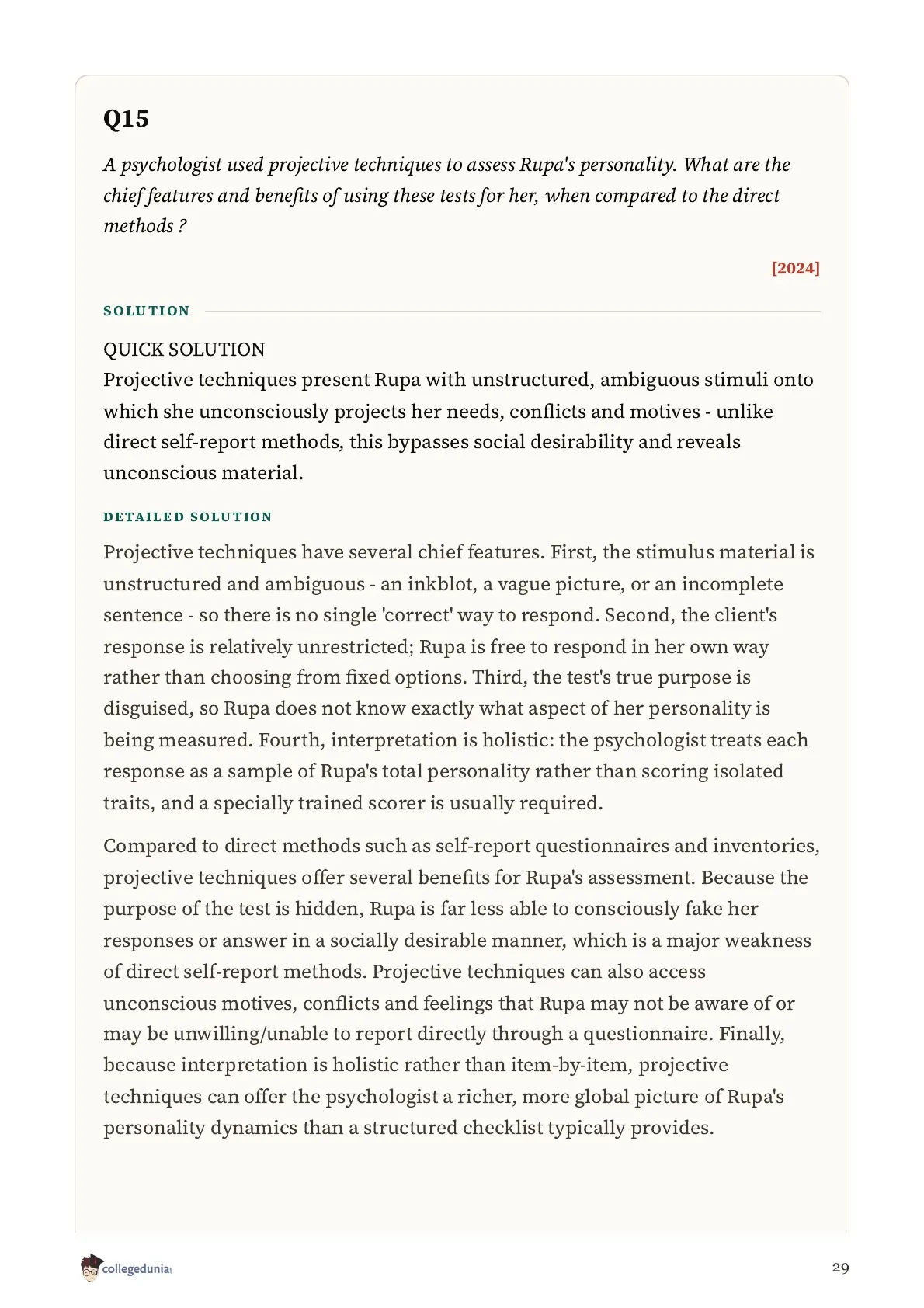
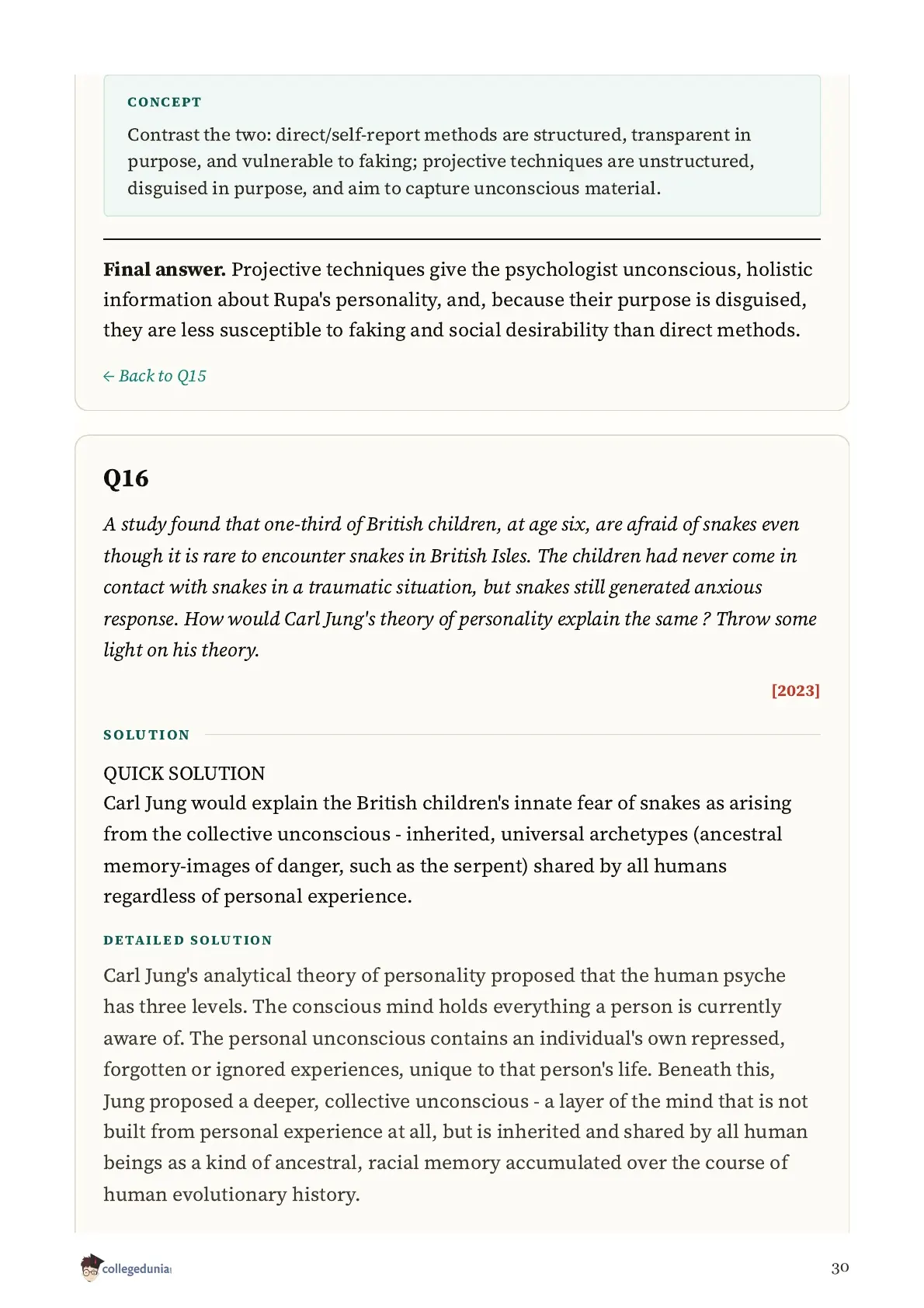
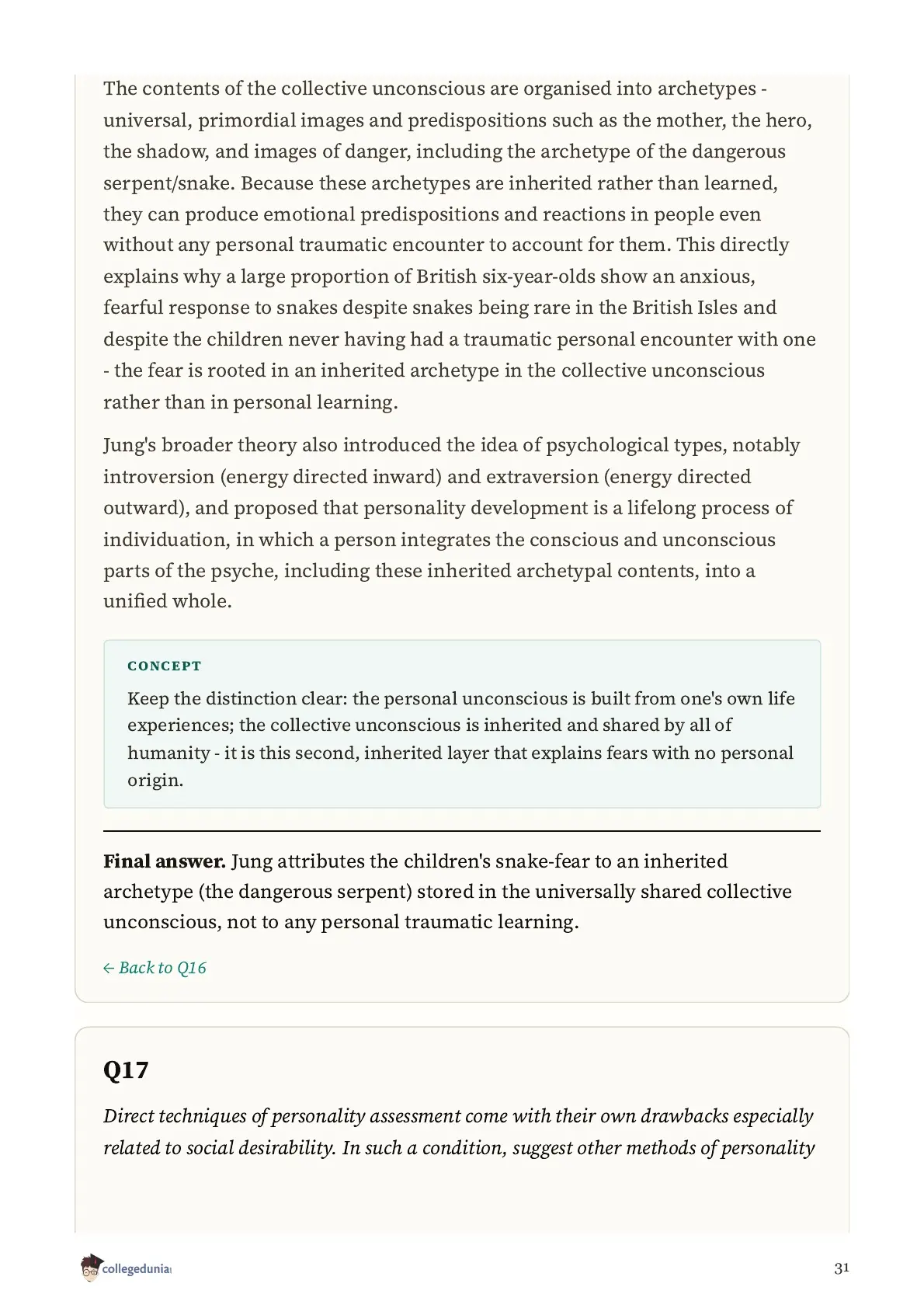
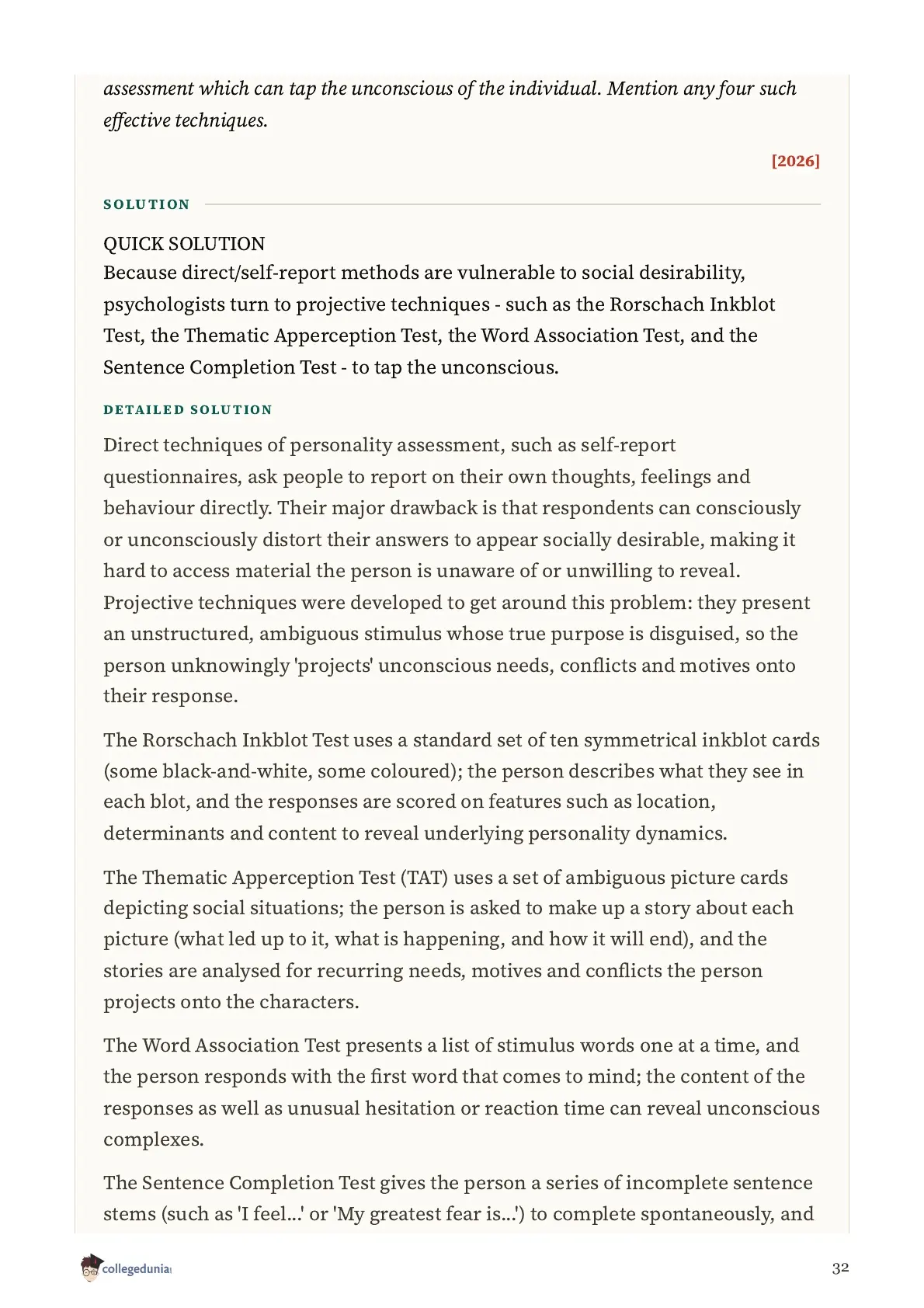
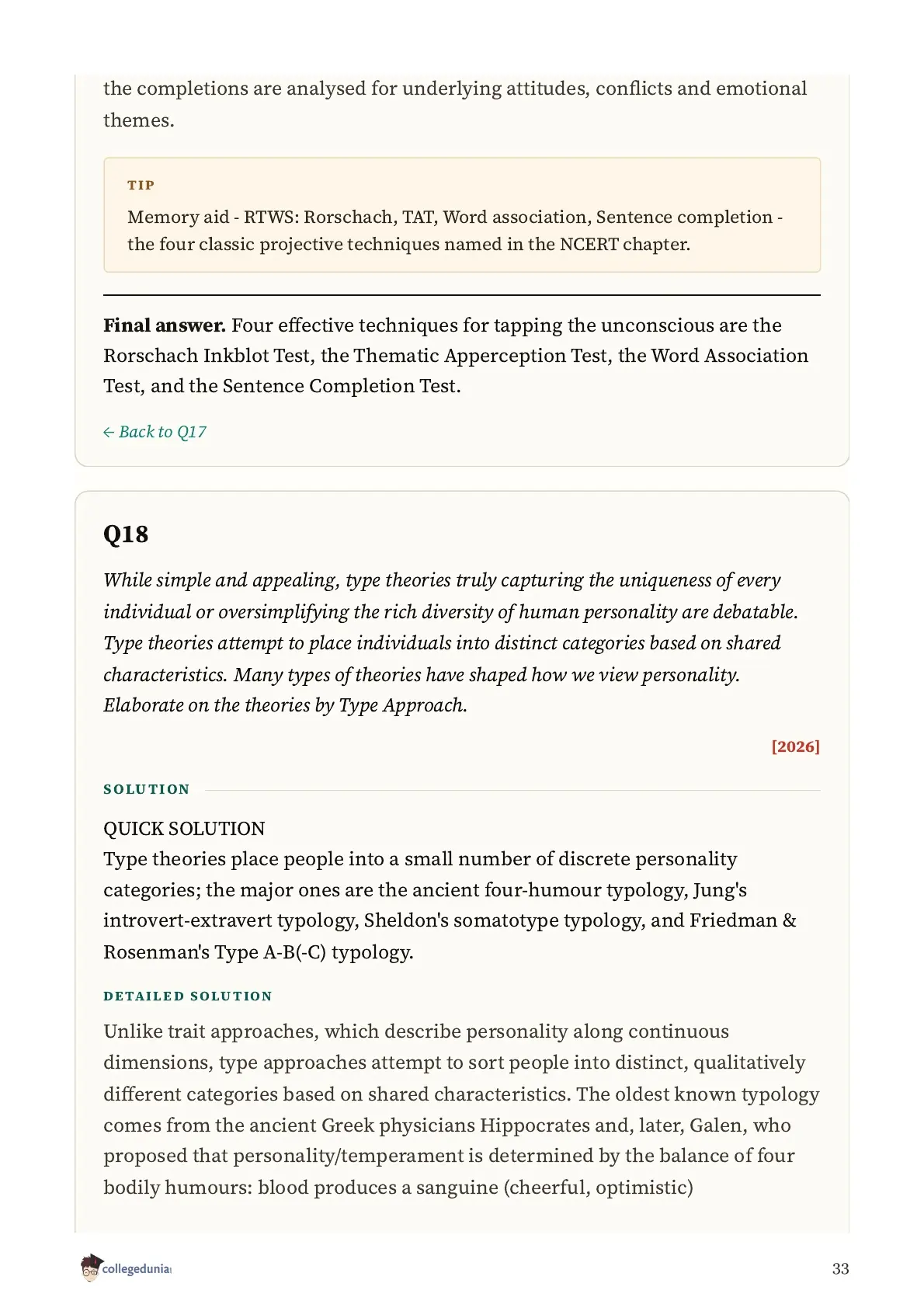
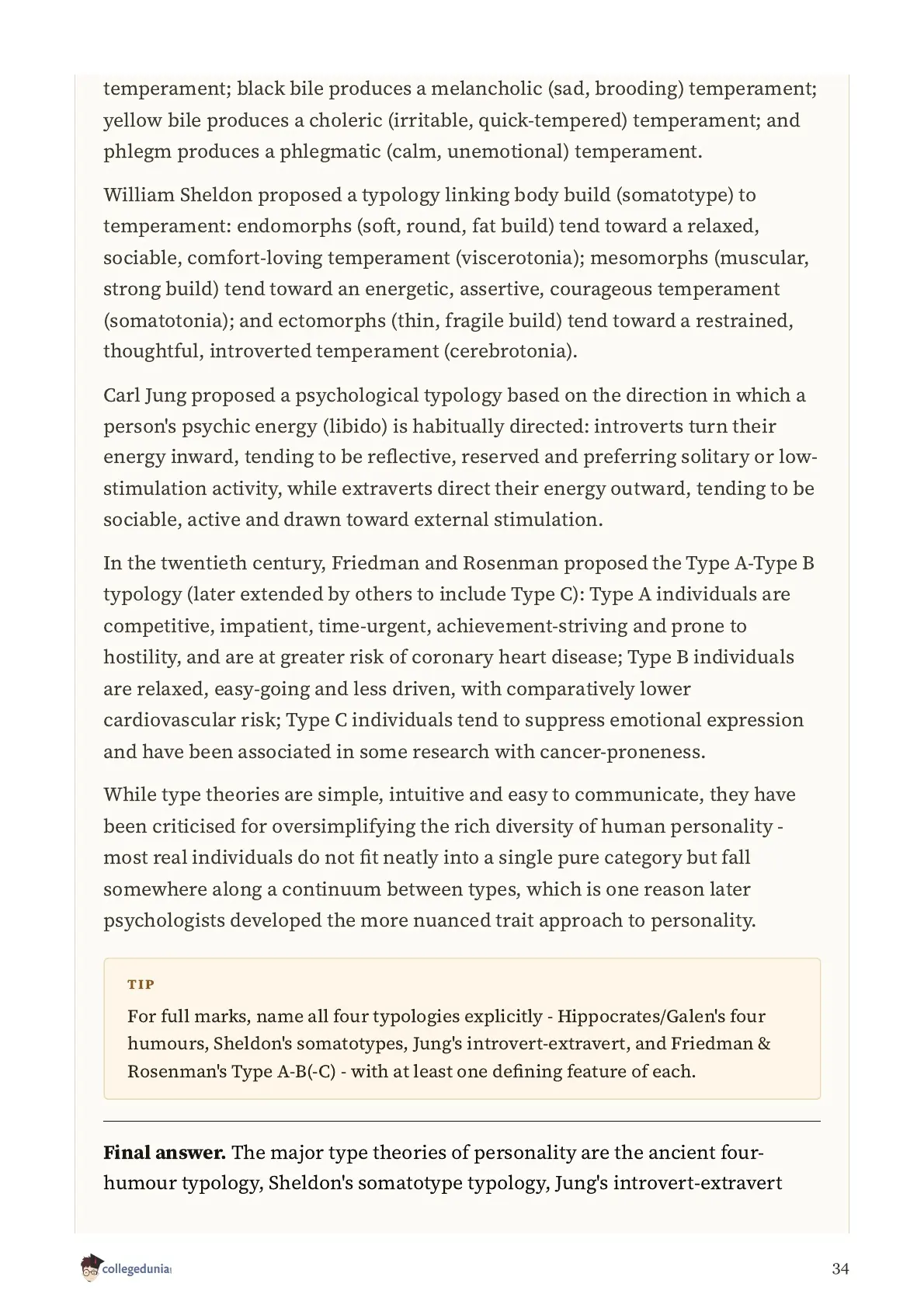
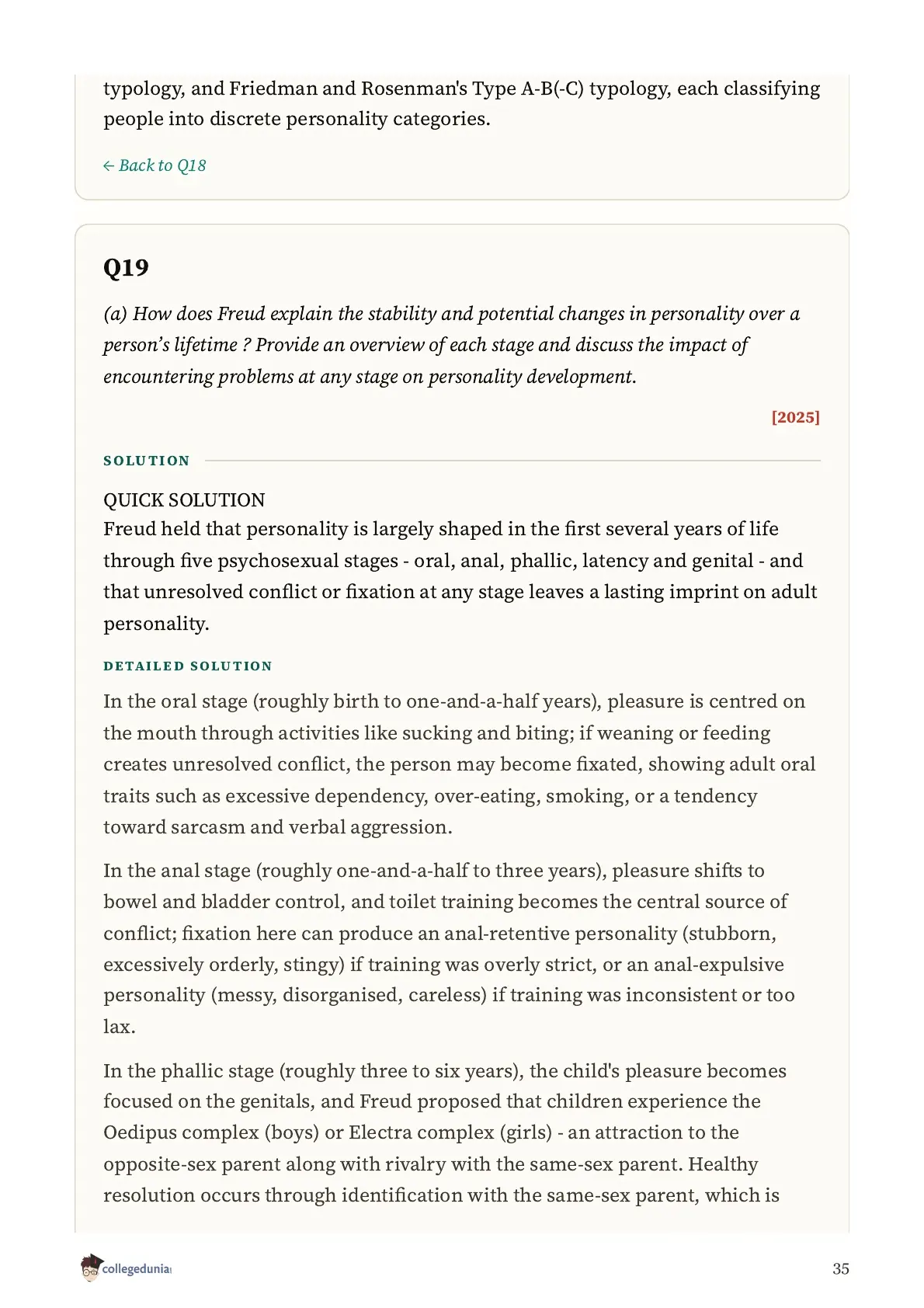
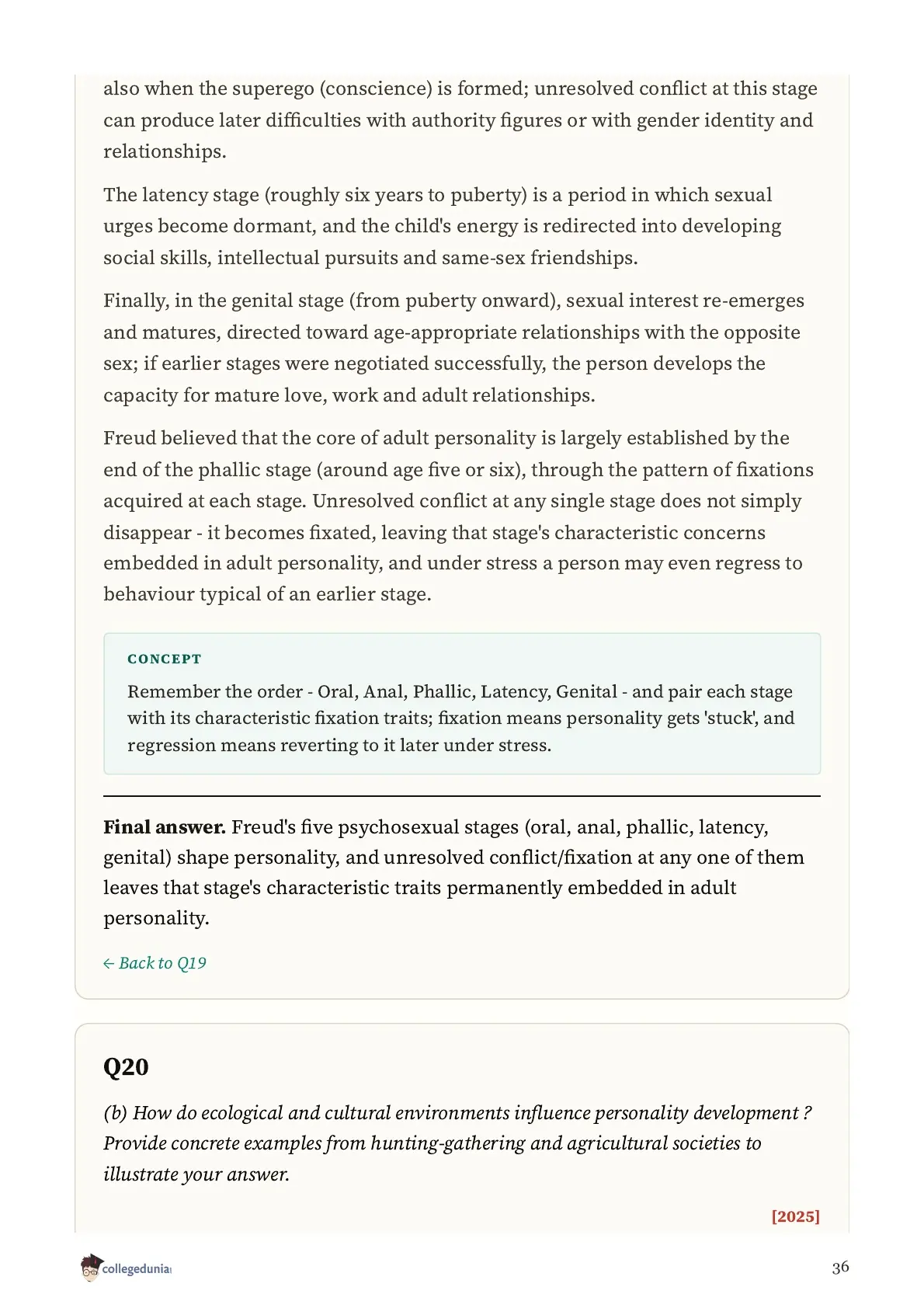
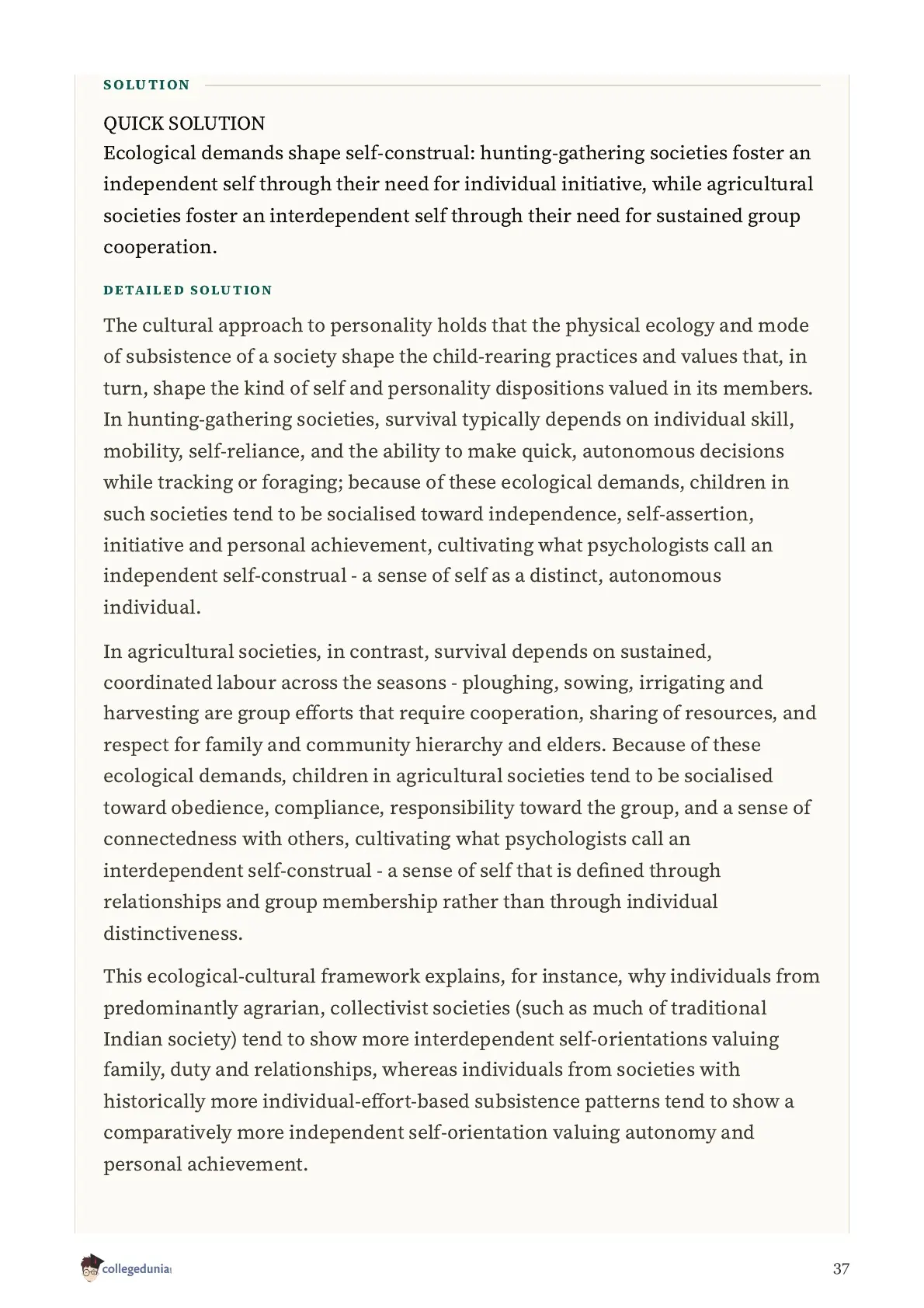
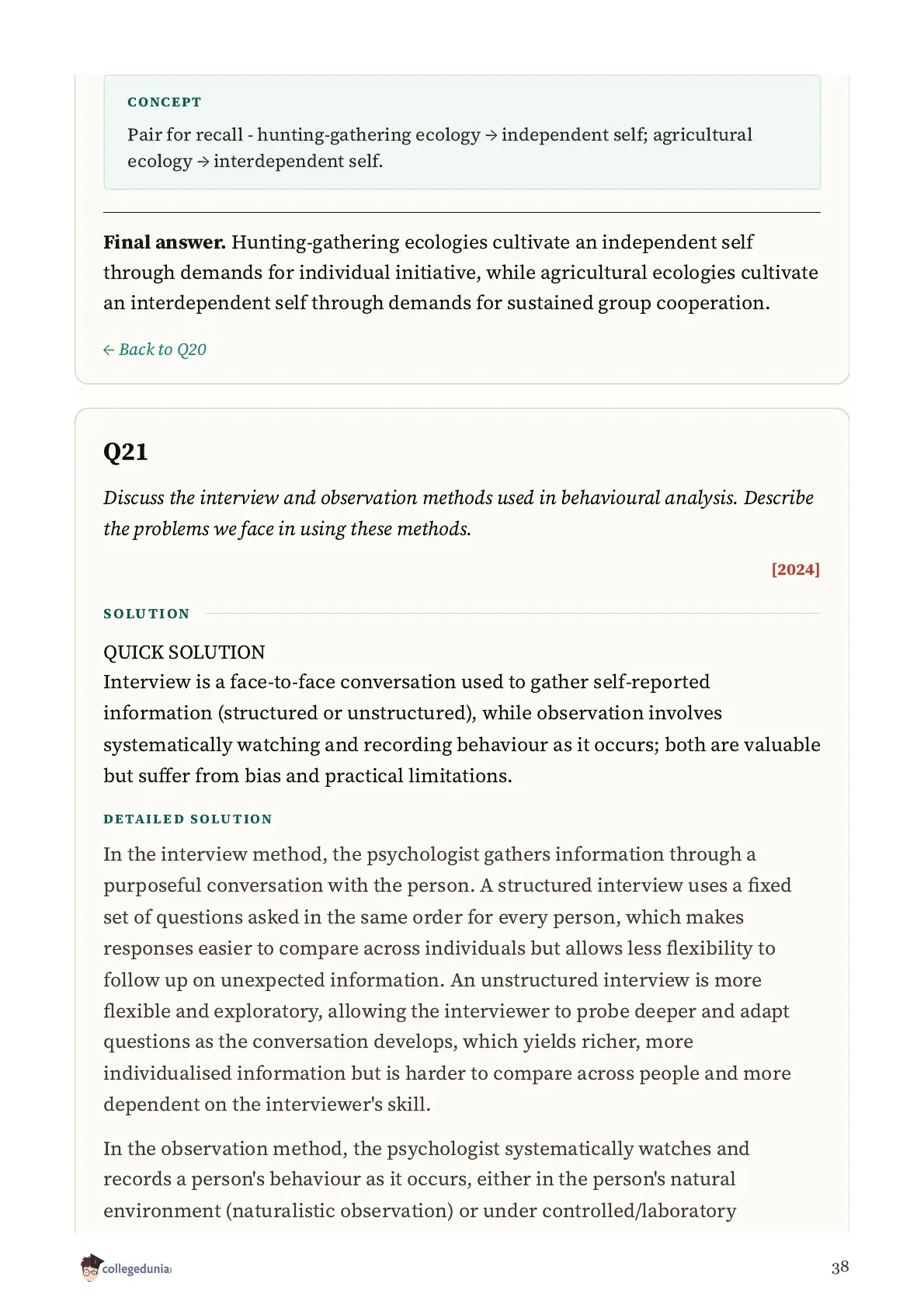
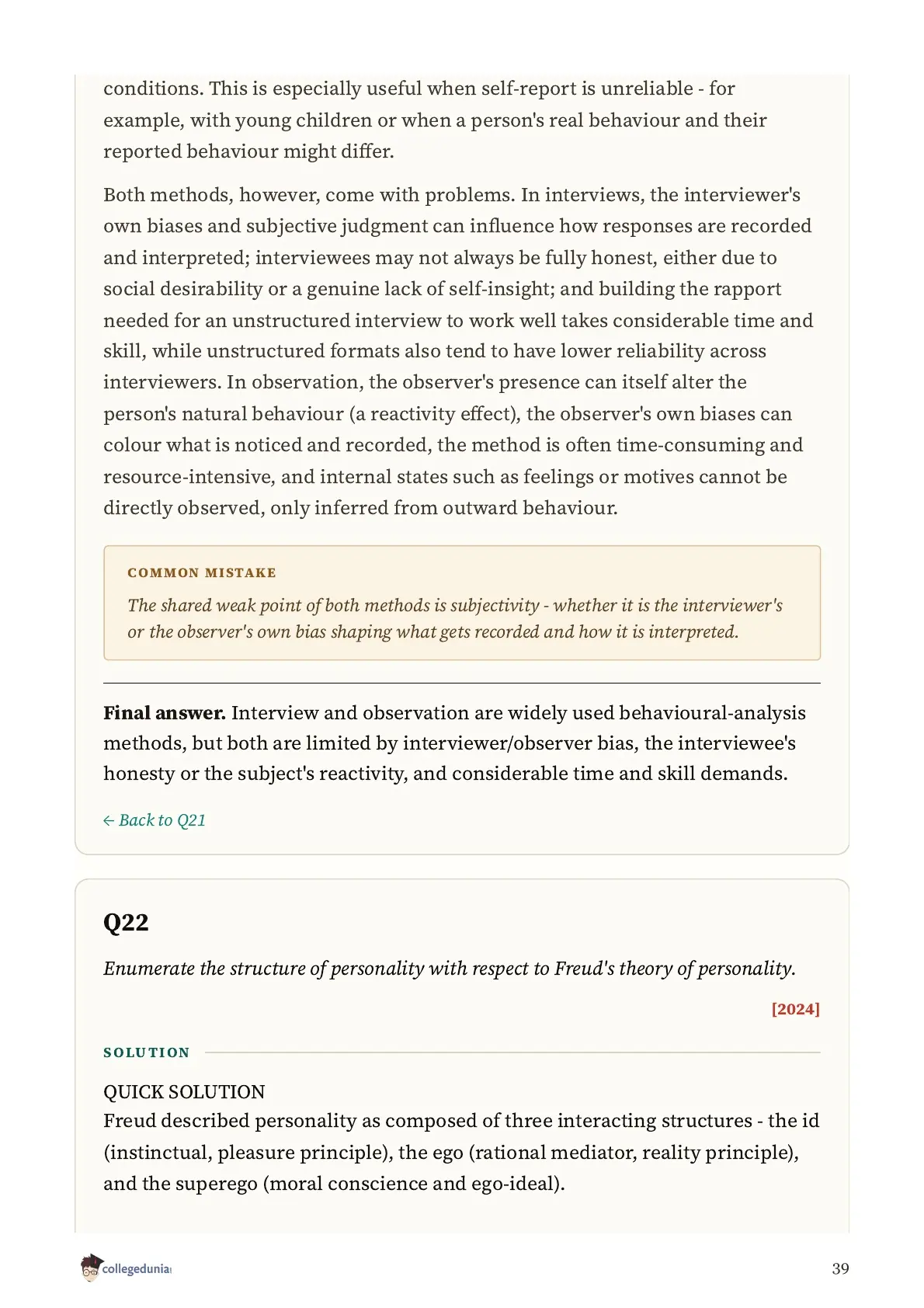
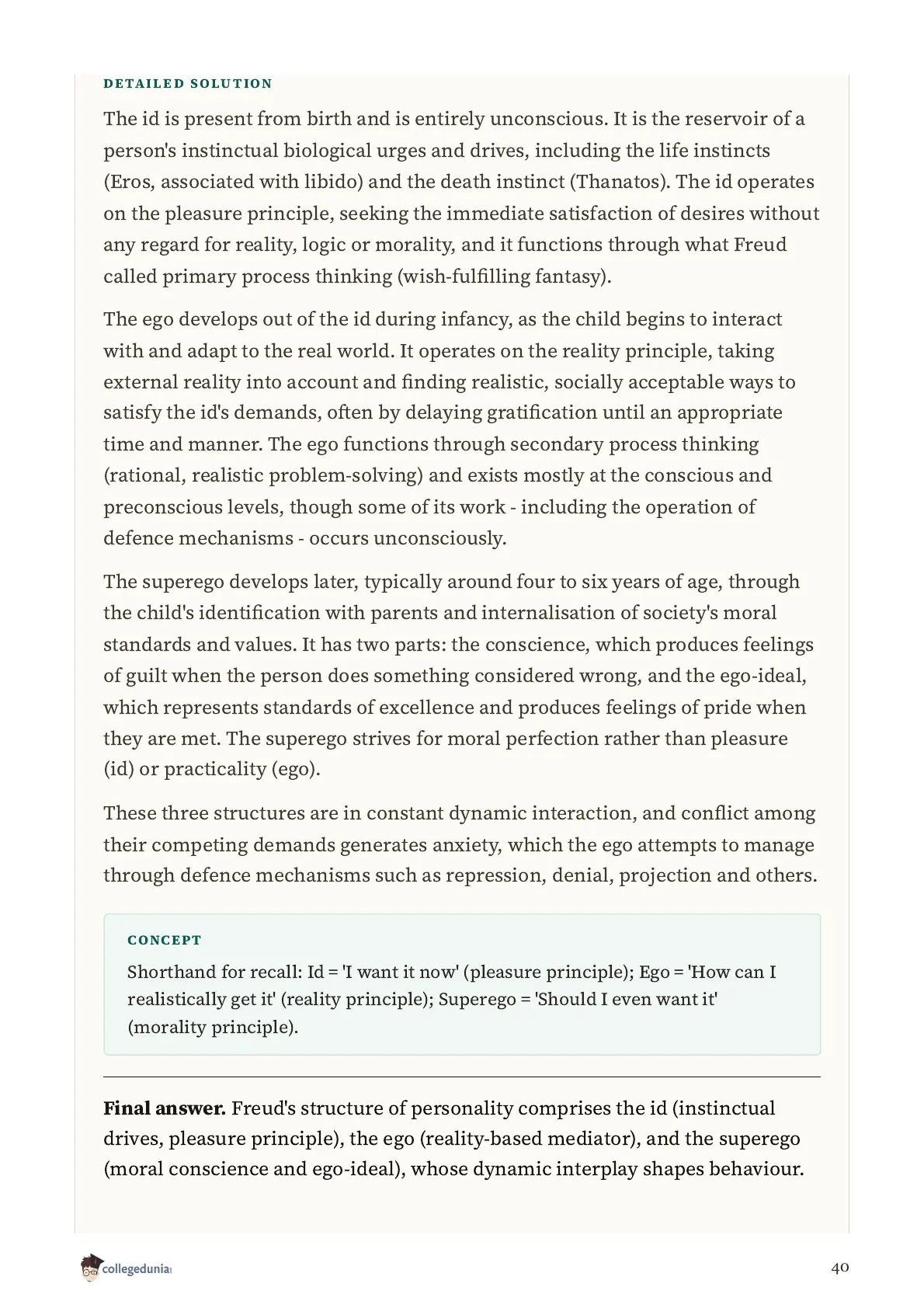
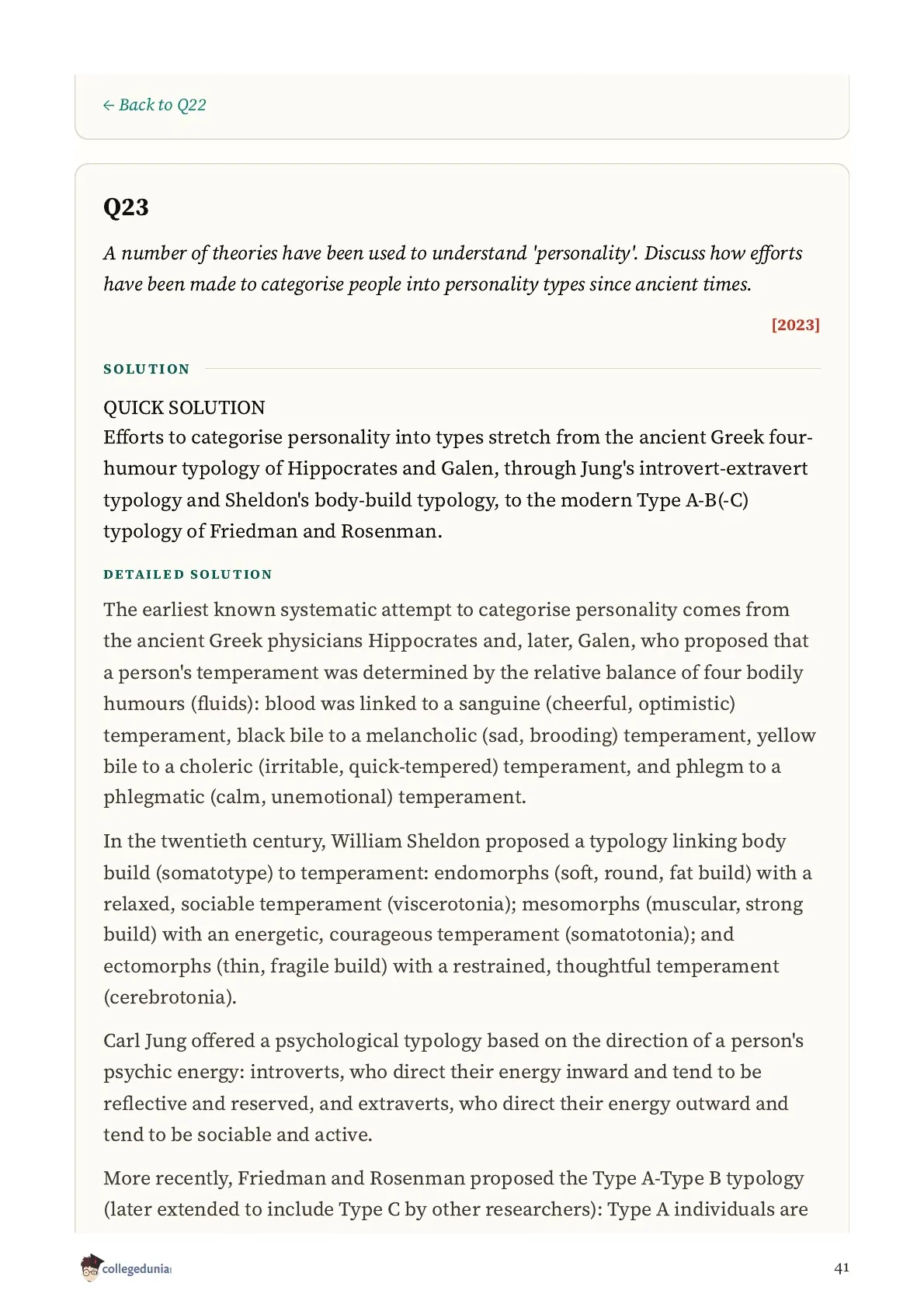
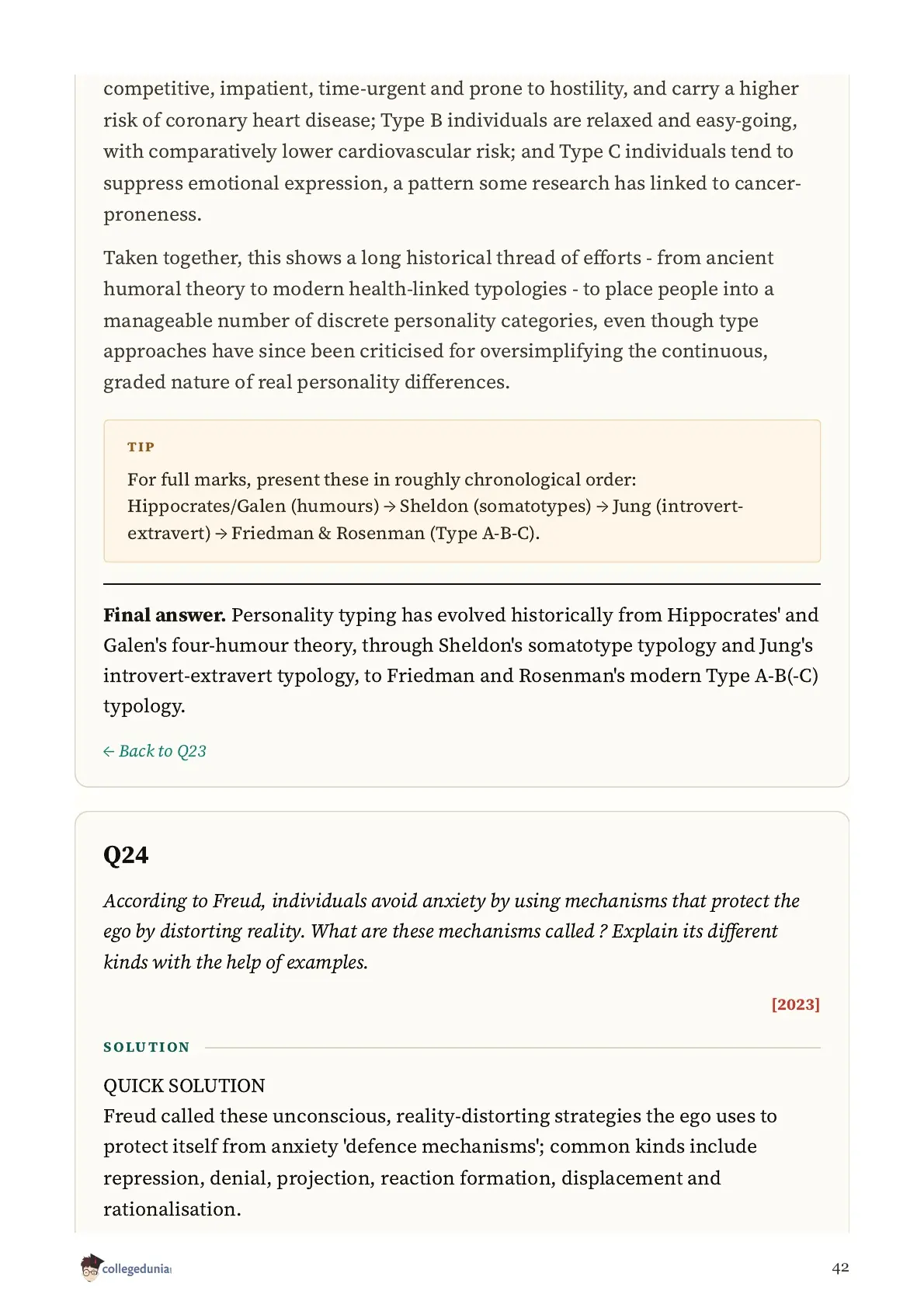
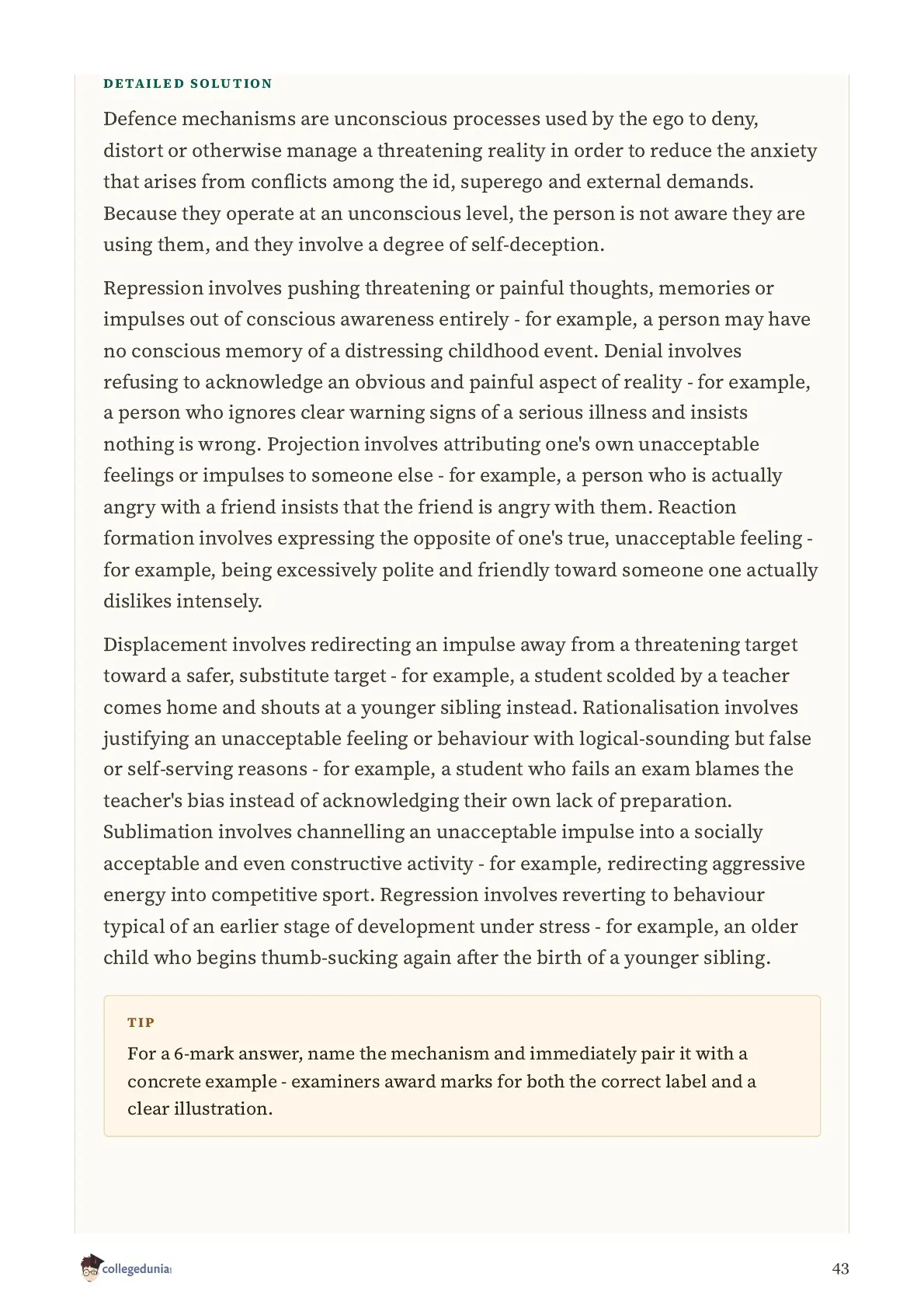
Every question in this Self and Personality Class 12 PYQ compilation is lifted verbatim from an official CBSE board paper, tagged with its year, and paired with a full step-by-step solution so you never have to guess whether your answer is right.
What the Self and Personality Previous Year Questions Actually Cover
Chapter 2 is a long chapter, but CBSE keeps returning to the same core ideas. Across the 24 questions in this set, the paper tests the concept of self (self-esteem, self-efficacy and self-regulation), culture and self, the major personality theories, and assessment of personality. The table below groups the real questions from this PDF by the topic they test.
| Topic Area | What CBSE Actually Asks |
|---|---|
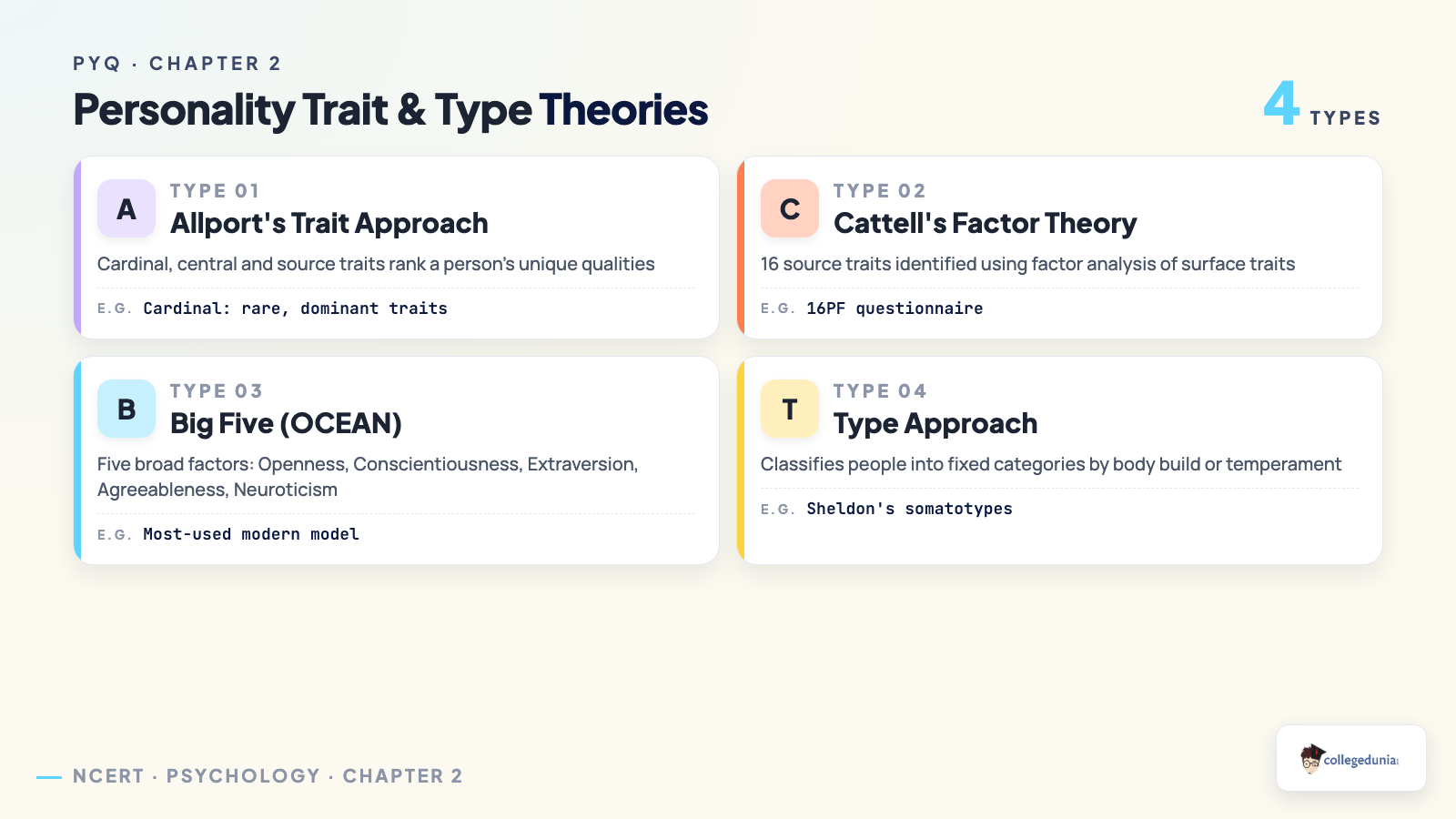
| Trait and Type approaches | Allport's cardinal and source traits, Cattell's factors, introversion, situationism (the person-situation debate), and the historical classification of people into personality types since ancient times |
| Psychoanalytic theory | Freud's id, ego and superego applied to a case (a student named Riya), a full explanation of Freud's theory of personality, and defence mechanisms such as regression |
| Self, self-esteem and self-regulation | identity crisis, and the effective techniques an individual can use to regulate the self |
| Culture and self | the difference between self in traditional and agricultural societies |
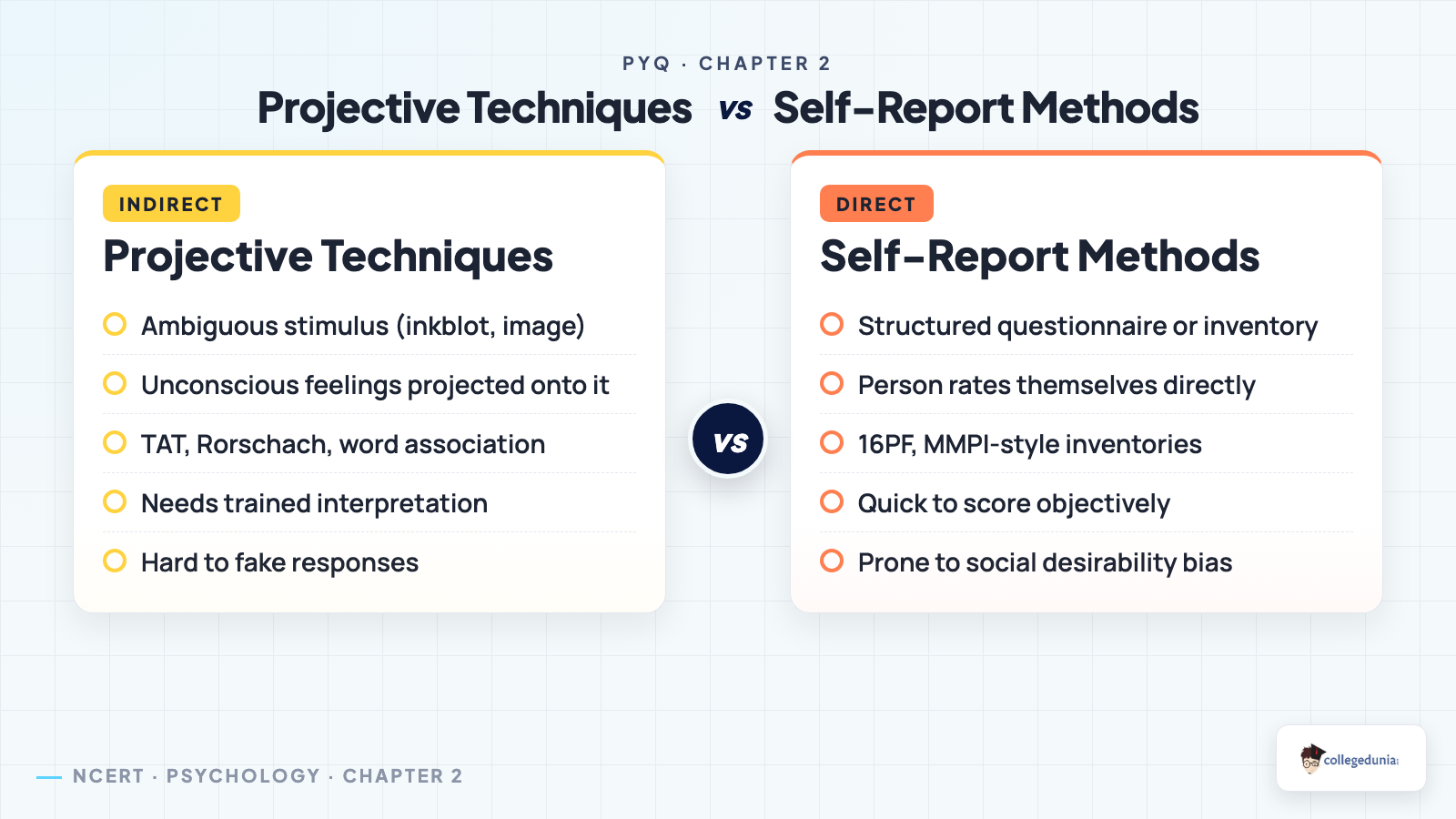
| Assessment of personality | projective techniques versus direct methods, the kind of information each test gives, social desirability as a bias in self-report inventories, and the problem of non-representative samples |
Notice how often the paper mixes theory with application. The Riya case study, for example, does not just ask you to define id, ego and superego - it asks you to use the three concepts to explain a described behaviour, which is a very different skill from writing a definition.
Self and Personality Class 12 Crash Course
Source: Psych Shots on YouTube
Marks-wise Distribution of the 24 Self and Personality Board Questions
The PDF sorts every question the way the board paper itself is structured, section by section. This table shows exactly how the 76 marks split across the five sections.
| Section | Marks Each | Questions | Total Marks | Question Type |
|---|---|---|---|---|
| Section A | 1 mark | 11 | 11 | MCQ / very short answer |
| Section B | 2 marks | 1 | 2 | Very short answer |
| Section C | 3 marks | 1 | 3 | Short answer |
| Section D | 4 marks | 3 | 12 | Short answer / applied |
| Section E | 6 marks | 8 | 48 | Long answer, some case-based |
| Total | – | 24 | 76 | – |
Section A has the most questions, but Section E carries almost two-thirds of the total marks even though it has only 8 of the 24 questions. If your revision time is limited, the eight long answers in Section E are where most of the 76 marks actually sit.
Year-wise Spread of the Self and Personality Questions from 2023 to 2026
What stands out in this set is how even the paper has been. Each of the last four board cycles has drawn exactly 19 marks from this chapter, even though the number of questions per year is not identical.
- 2026, 7 questions, 19 marks: four Section A one-markers, the Section C three-mark question, and two Section E six-mark long answers.
- 2025, 6 questions, 19 marks: three Section A one-markers, one Section D four-mark question, and two Section E long answers.
- 2024, 5 questions, 19 marks: one Section A one-marker, the Section B two-mark question, one Section D question, and two Section E long answers.
- 2023, 6 questions, 19 marks: three Section A one-markers, one Section D question, and two Section E long answers, including the question on Freud's theory of personality.
Because every year sits at the same 19-mark weightage, you can treat any single year's set as a fair sample of how CBSE tests this chapter - the 2026 paper is not "harder" or "lighter" than 2023, only worded differently.
Topic Frequency: Which Self and Personality Ideas CBSE Tests Most
Some topics inside Chapter 2 come back year after year, while others appear once. Ranked by how often they turn up across the 24 questions in this PDF, trait and type theories lead, followed closely by assessment of personality.
| Rank | Topic | Where It Shows Up |
|---|---|---|
| 1 | Trait and Type approaches | MCQs on cardinal traits, source traits, introversion and situationism, plus a long answer on Type Approach theories |
| 2 | Assessment of personality | Projective vs direct methods, social desirability bias, non-representative samples, and what each test reveals |
| 3 | Psychoanalytic theory (Freud) | The id-ego-superego case study and the full-length question on Freud's theory of personality |
| 4 | Self, self-esteem and self-regulation | Identity crisis and techniques to regulate the self |
| 5 | Culture and self | Self in traditional versus agricultural societies |
How to Attempt Each Marks Band in the Self and Personality Board Paper
A Psychology answer is marked on the concepts it names, not on how long it runs. Each section has its own shape, and writing a Section E answer inside a Section A slot wastes time you need elsewhere.
- Section A (1 mark): one term or one line. If it is an MCQ, eliminate the option that describes a different theory before you pick.
- Section B (2 marks): two distinct points in about 30 words. Do not repeat the same idea in different words.
- Section C (3 marks): three separate points inside roughly 60 words, each backed by a term from the chapter, not a guess.
- Section D (4 marks): name the concept first, then apply it. The Freud case study only scores full marks if you explain id, ego and superego separately.
- Section E (6 marks): five or six points with examples, structured under sub-headings where the question allows it. Give it 10 to 12 minutes.
Common Mistakes Students Make in Self and Personality Answers
- Mixing up trait and type approaches. Traits describe a continuous quality (introversion-extraversion); types put a person into a fixed category. Answers that blur the two lose marks on both.
- Naming id, ego and superego without applying them. The Riya case study wants each concept linked to a specific part of her behaviour, not three dictionary definitions.
- Confusing projective techniques with self-report methods. TAT and the Rorschach test are projective; personality inventories and rating scales are self-report. Swapping the two is a common one-mark loss.
- Forgetting the criticism, not just the method. Questions on assessment often ask for a limitation too - social desirability bias and non-representative samples are the two CBSE returns to most.
- Writing a six-mark answer with no structure. Long answers on Type Approach or Freud's theory score better when broken into clearly labelled points instead of one continuous paragraph.
Student Feedback on the Self and Personality Chapter
- 71% of students rated the Freud id-ego-superego case study the hardest question type in this chapter.
- Out of 12,340 students surveyed, about 3 in 5 said they mixed up trait and type approaches at least once during revision.
- Students reported that writing out the projective-versus-direct comparison as a table, rather than a paragraph, made the Section D and E answers easier to recall.
- The most-skipped question type was the assessment-limitations question, skipped by roughly 24% of the students surveyed.
How These PYQs Pair with Other Self and Personality Resources
The previous year questions work best alongside the rest of the chapter material. These are the companion resources for the same chapter, in production now and going live shortly.
| Resource | Link |
|---|---|
| Notes | Self and Personality Class 12 Notes |
| Formula Sheet | Self and Personality Class 12 Formula Sheet |
| Handwritten Notes | Self and Personality Class 12 Handwritten Notes |
Read the chapter through the notes first, work the NCERT exercise questions, and only then attempt this PYQ set as a timed test. Until a resource above goes live, use the chapter from your NCERT textbook alongside this PDF.
How to Use the Self and Personality PYQ PDF in Your Revision
Because every question already has a solution attached, this PDF works as both a test and an answer key. A three-pass plan gets the most out of the 24 questions.
- Pass 1, cover the solution. Attempt all 11 Section A questions without looking at the answer, then check each one and note which trait or theory name you missed.
- Pass 2, timed sections. Write out Sections B, C and D at the marks-appropriate length, then compare your answer against the step-by-step solution line by line.
- Pass 3, the long answers. Attempt all eight Section E questions in one sitting under exam time, then use the solutions to check whether your structure - not just your content - matches a full-marks answer.
Because each question is tagged with its year, you can also filter by paper. Doing the 2026 and 2025 sets together gives a fair read on how the chapter is being tested right now.
Self and Personality Class 12 Psychology Previous Year Questions for Other Chapters
The same marks-sorted, fully-solved format is being built for the rest of the Class 12 Psychology syllabus.
| Chapter | Title | Previous Year Questions |
|---|---|---|
| Chapter 1 | Variations in Psychological Attributes | Variations in Psychological Attributes PYQ PDF (coming soon) |
| Chapter 2 | Self and Personality | You are here |
| Chapter 3 | Meeting Life Challenges | Meeting Life Challenges PYQ PDF (coming soon) |
| Chapter 4 | Psychological Disorders | Psychological Disorders PYQ PDF (coming soon) |
| Chapter 5 | Therapeutic Approaches | Therapeutic Approaches PYQ PDF (coming soon) |
| Chapter 6 | Attitude and Social Cognition | Attitude and Social Cognition PYQ PDF (coming soon) |
| Chapter 7 | Social Influence and Group Processes | Social Influence and Group Processes PYQ PDF (coming soon) |
FAQs on Self and Personality Class 12 Previous Year Questions
Questions Students Ask About the Self and Personality Class 12 PYQ Compilation
Ques. How many previous year questions are in the Self and Personality Class 12 PDF?
Ans. There are 24 questions worth 76 marks, taken from CBSE Psychology board papers set between 2023 and 2026.
Ques. Does the Self and Personality PYQ PDF include solutions?
Ans. Yes. Every one of the 24 questions comes with a full step-by-step solution in the PDF - this is not a questions-only compilation.
Ques. Which marks bands does the Self and Personality chapter appear in?
Ans. Five. The set has 11 one-mark, 1 two-mark, 1 three-mark, 3 four-mark and 8 six-mark questions, running from Section A to Section E.
Ques. How many marks does Self and Personality carry each year?
Ans. 19 marks in every year from 2023 to 2026, making it one of the more consistently-weighted chapters in the Psychology paper.
Ques. Which topics come up most often in Self and Personality PYQs?
Ans. Trait and Type approaches to personality and assessment of personality (projective versus self-report methods) are tested most often, followed by Freud's psychoanalytic theory.
Ques. Are these questions valid for the 2026-27 CBSE syllabus?
Ans. Yes. Self and Personality remains Chapter 2 of the 2026-27 CBSE Class 12 Psychology syllabus, and the section-wise marks pattern used in this PDF is unchanged.
Ques. What is the difference between self-esteem and self-efficacy?
Ans. Self-esteem is the overall value a person places on themselves; self-efficacy is the belief that one can succeed at a specific task. Both fall under the concept of self in this chapter.
Ques. What are projective techniques in personality assessment?
Ans. Projective techniques, such as the Thematic Apperception Test (TAT), the Rorschach inkblot test, and the word association test, present an ambiguous stimulus so the person projects their own unconscious feelings onto it.



Comments