




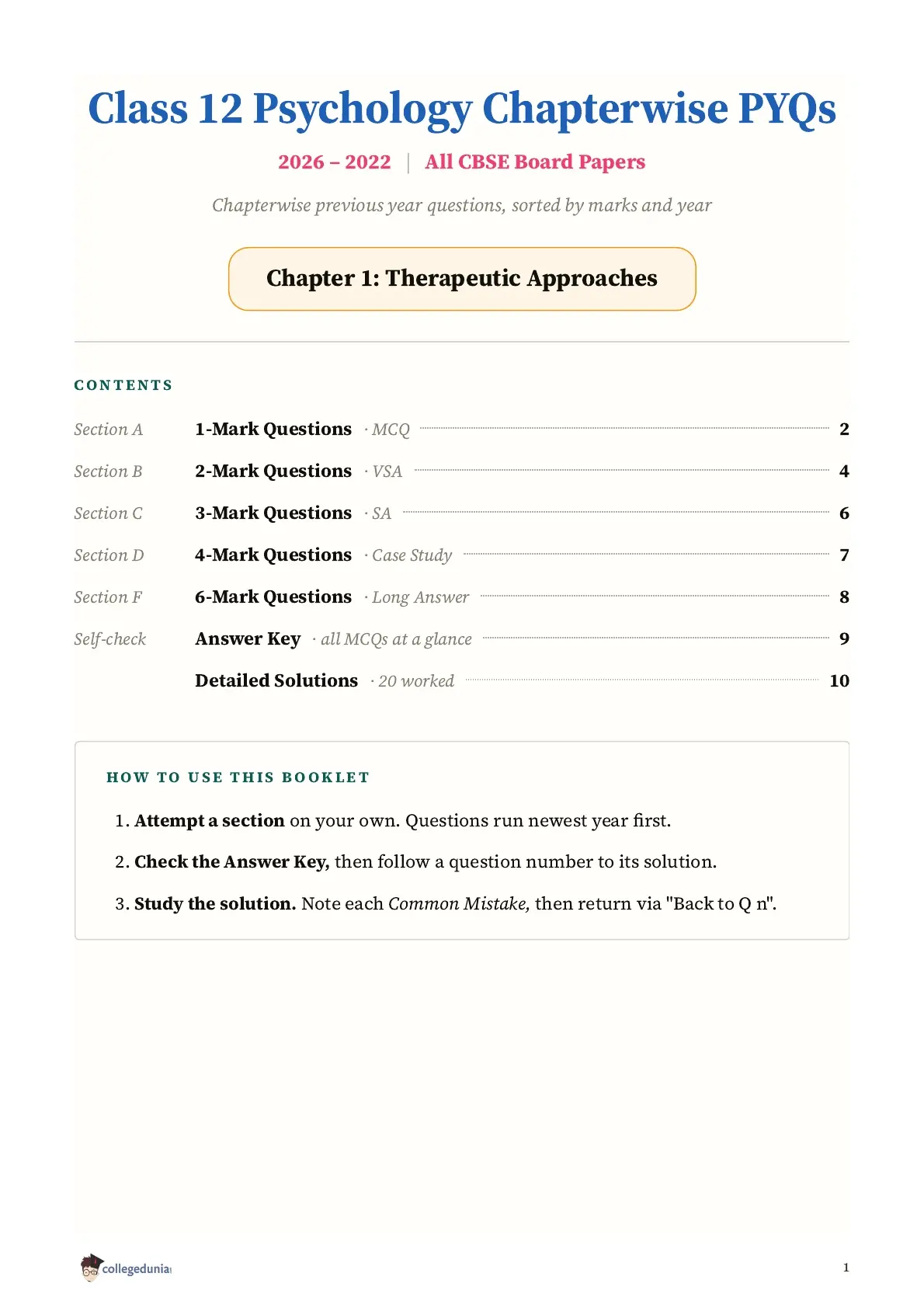
The Class 12 Psychology Chapter 5 Therapeutic Approaches PYQ PDF brings together 20 board-paper questions from CBSE papers between 2022 and 2026. Every question carries a full step-by-step solution, so students can check an answer and see exactly how examiners expect psychotherapy, behaviour therapy, and rehabilitation questions to be answered, according to the latest 2026-27 CBSE syllabus.
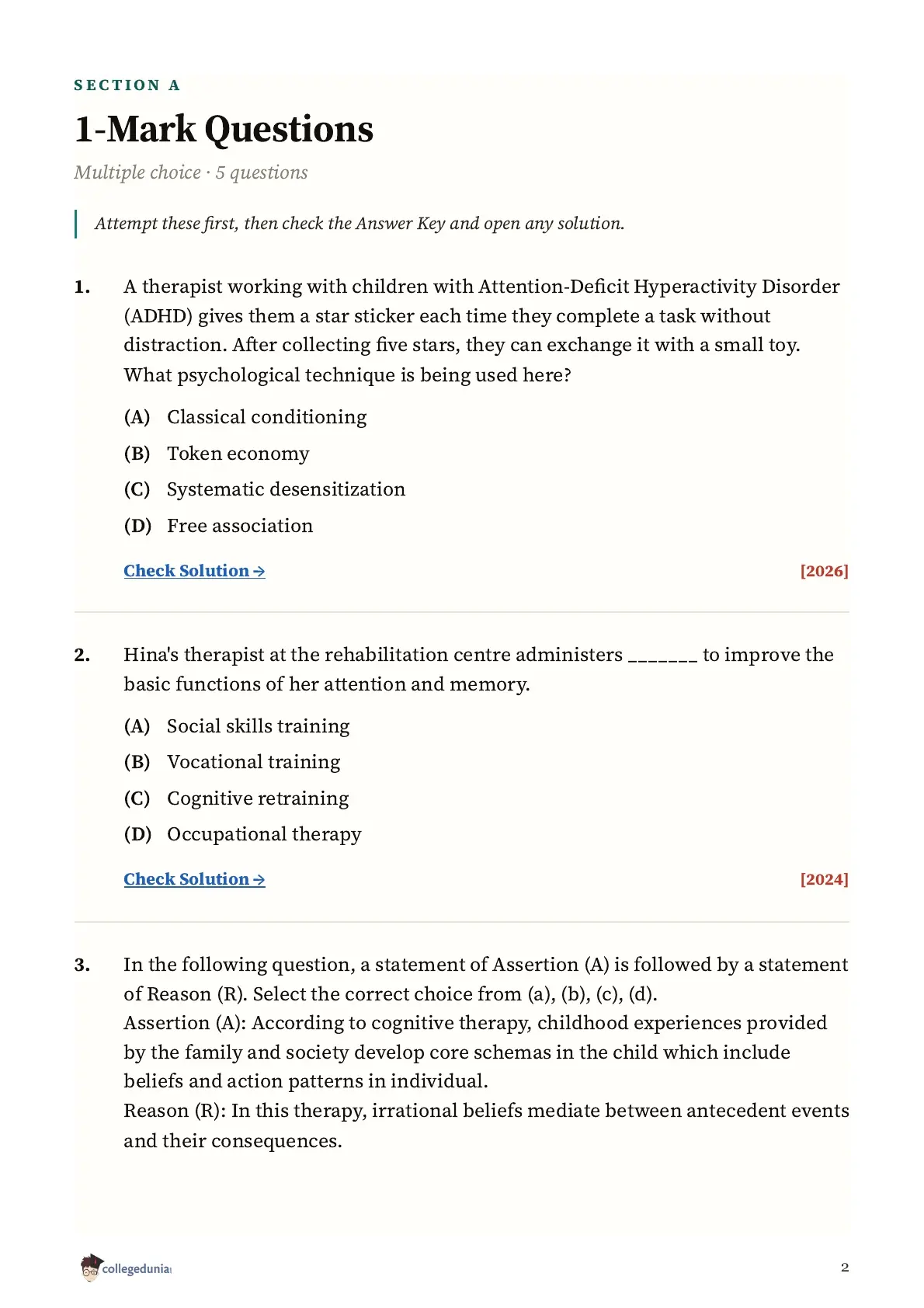
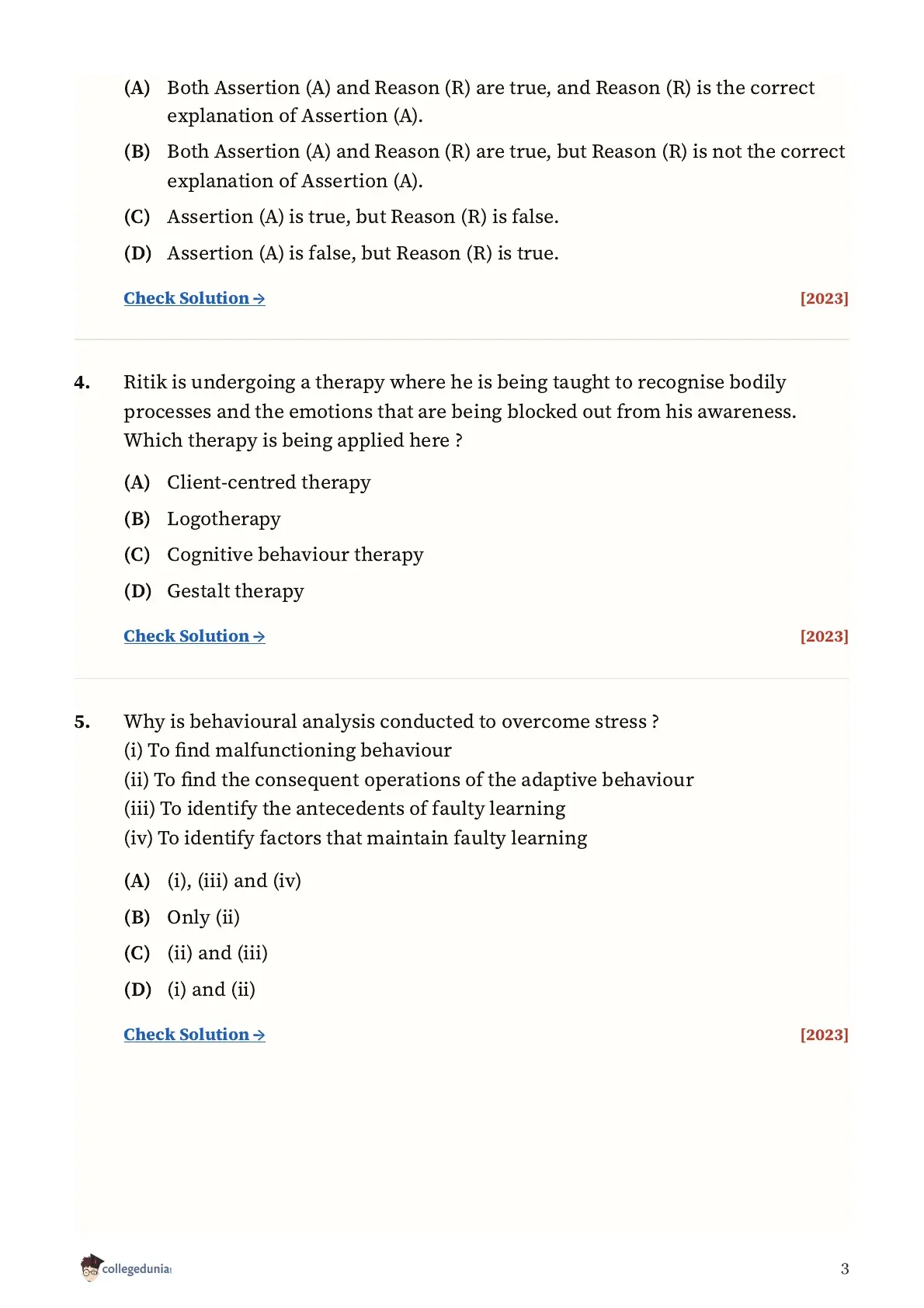
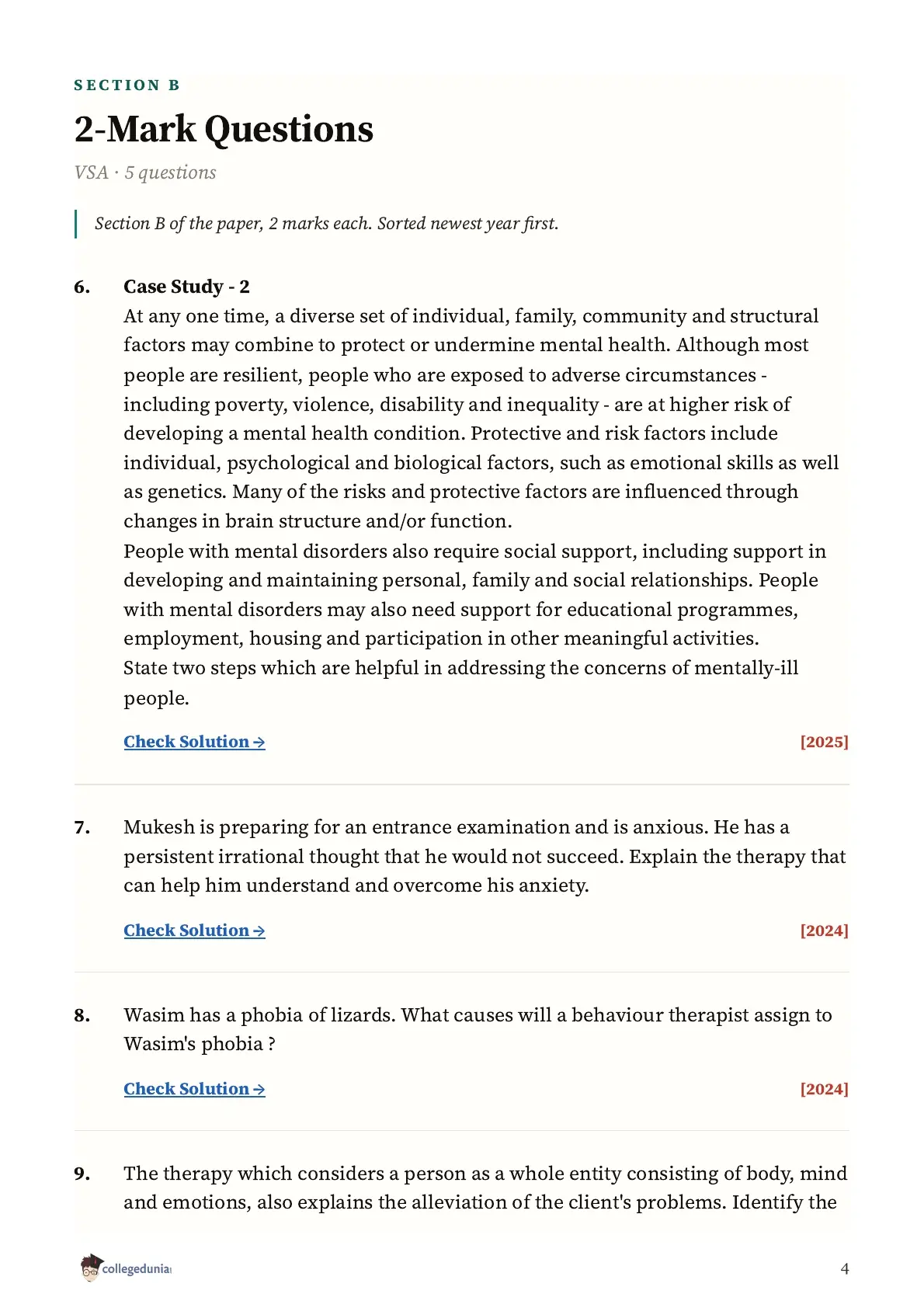
- 20 questions in a mix of MCQs, Assertion-Reason, case studies, and short/long descriptive answers, ranging from 2-mark to 6-mark formats.
- Full solutions included for all 20 questions, not just a bare answer key.
- Five exam years covered: 2022, 2023, 2024, 2025, and 2026.
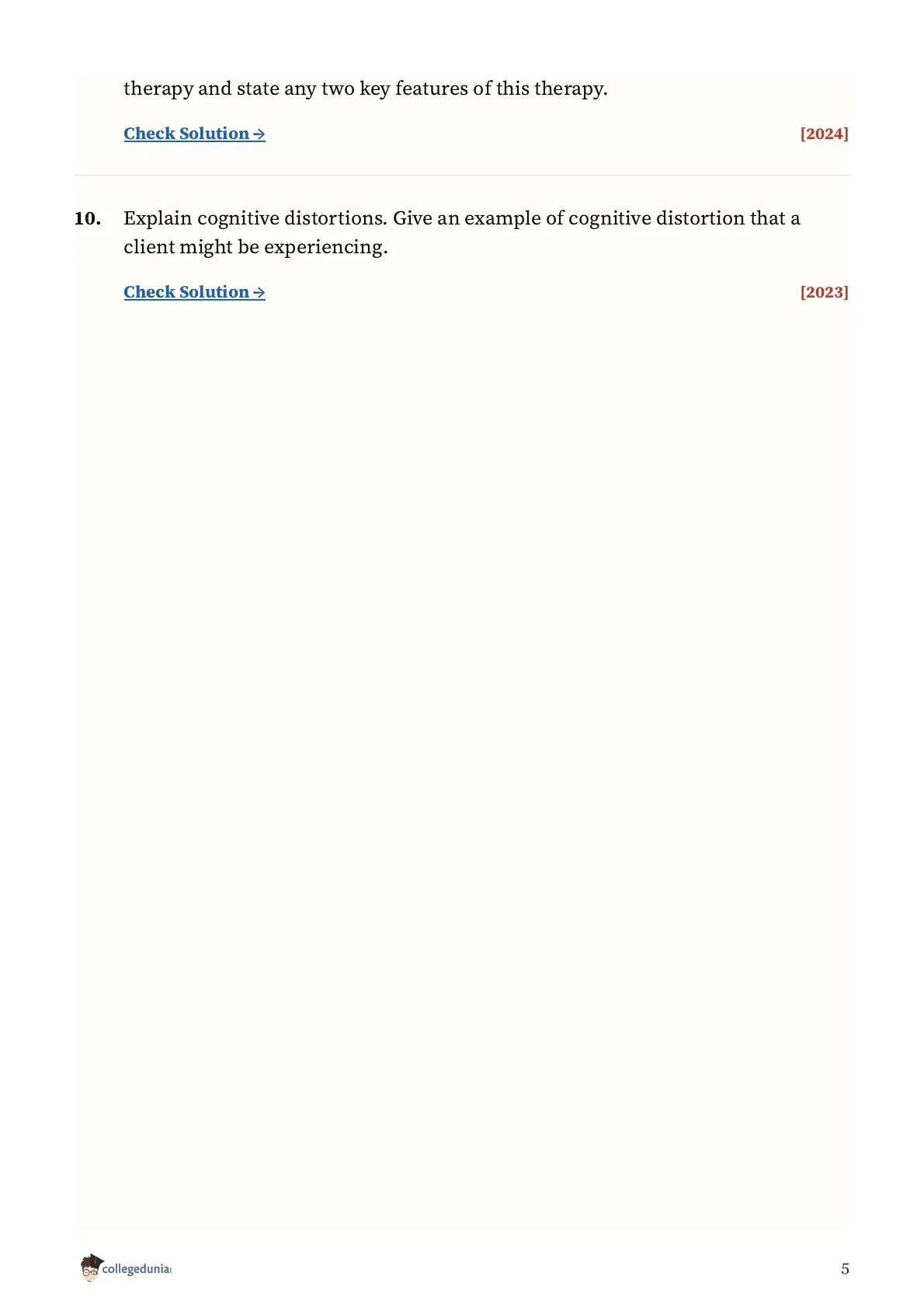
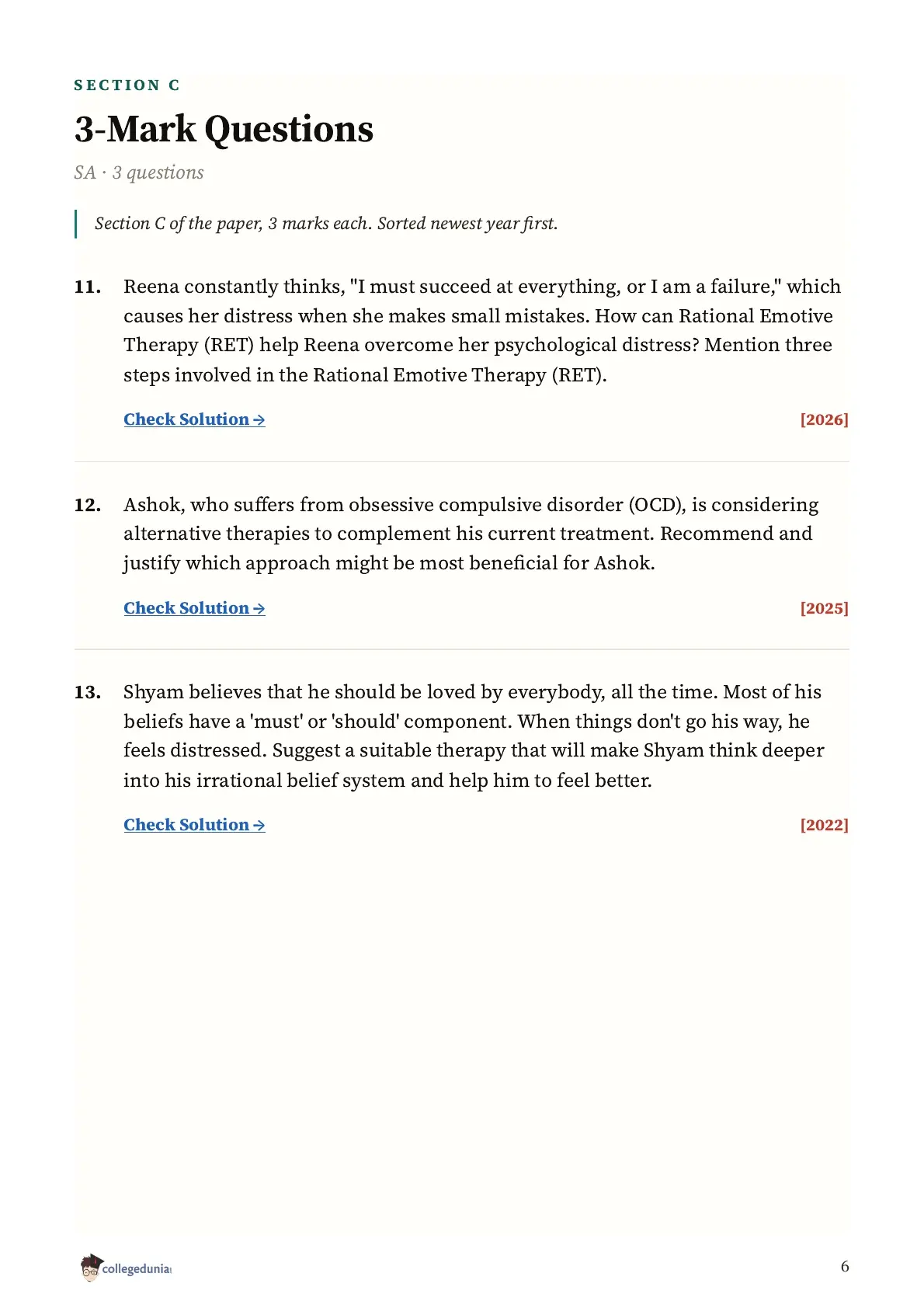
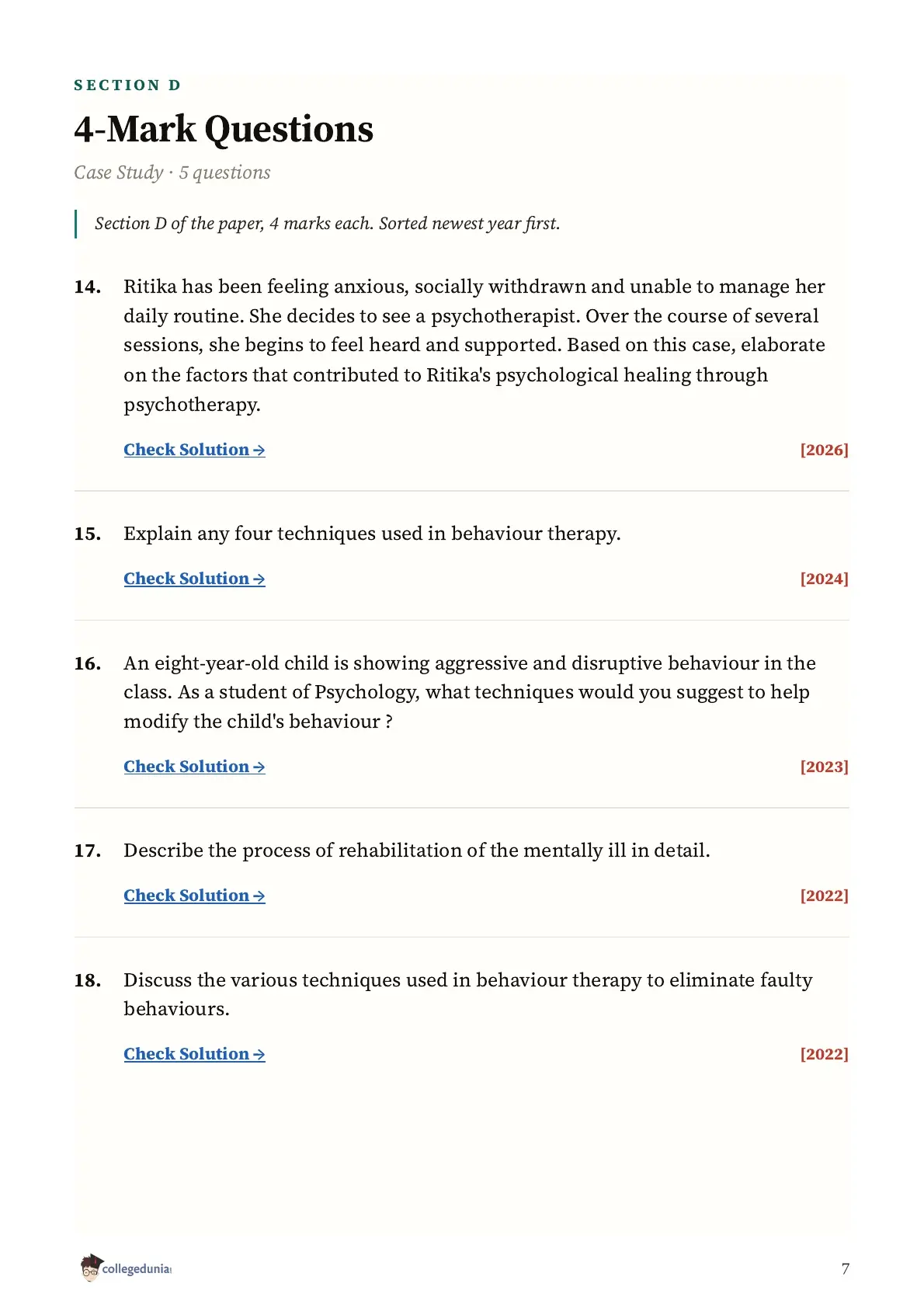
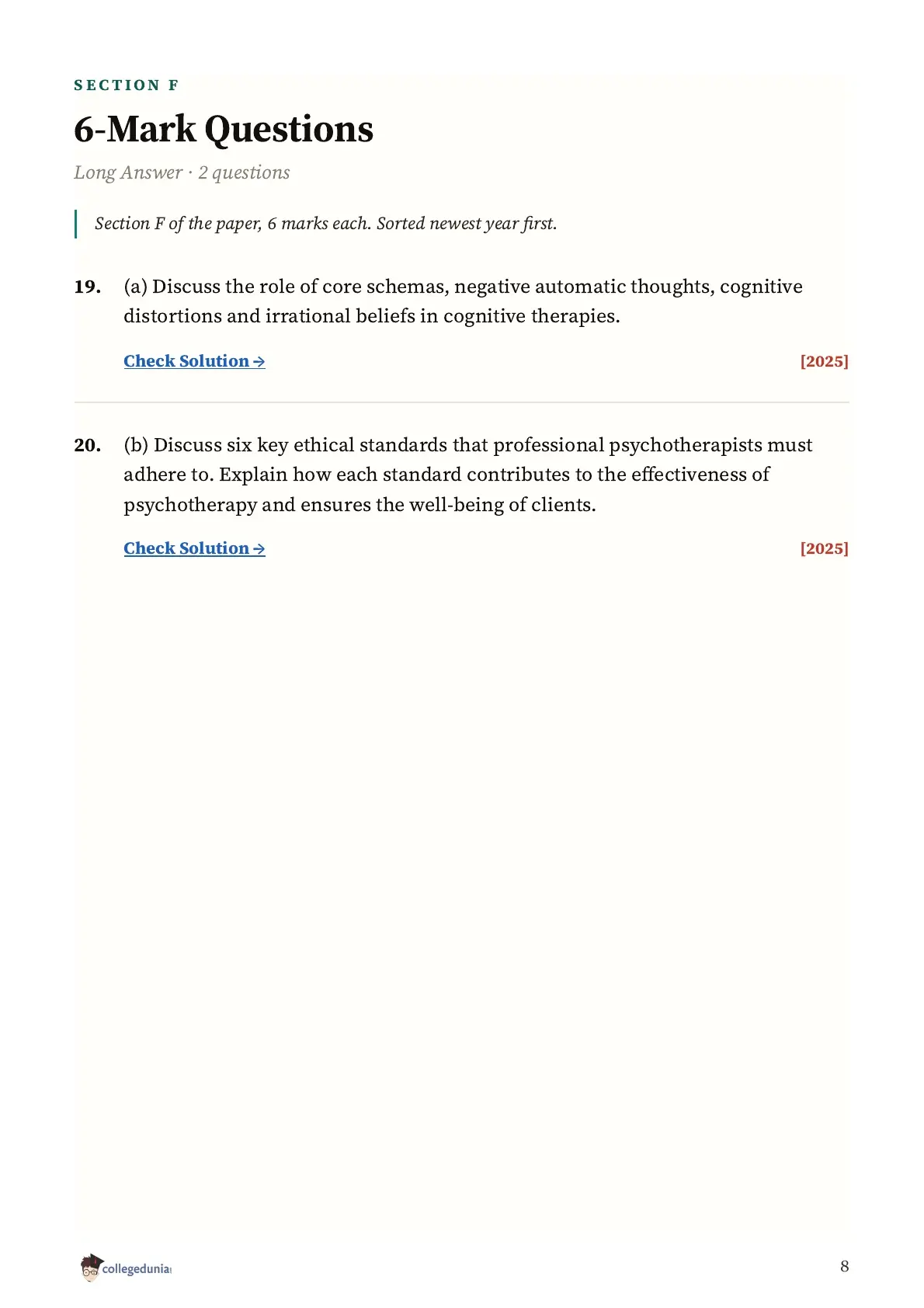
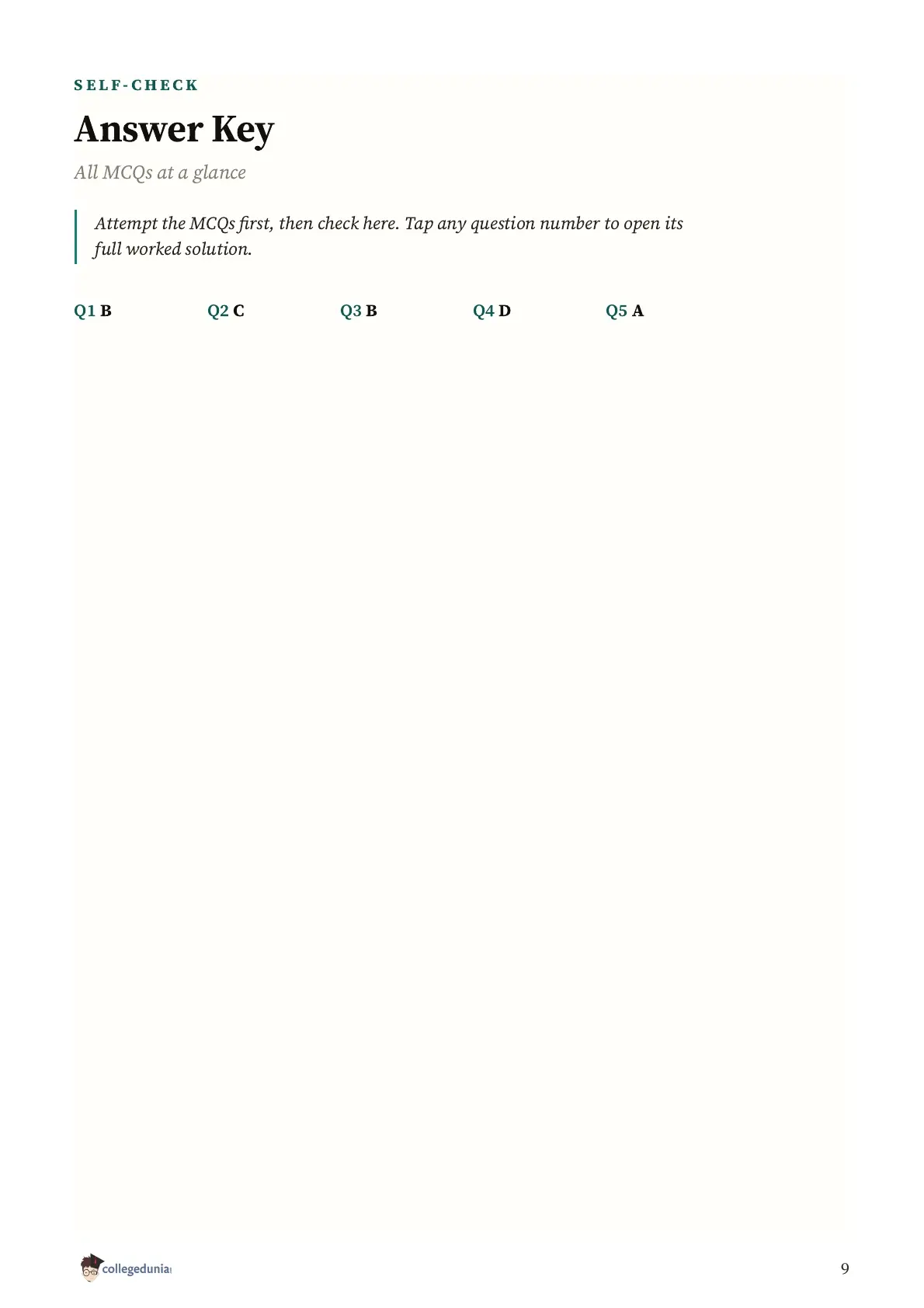
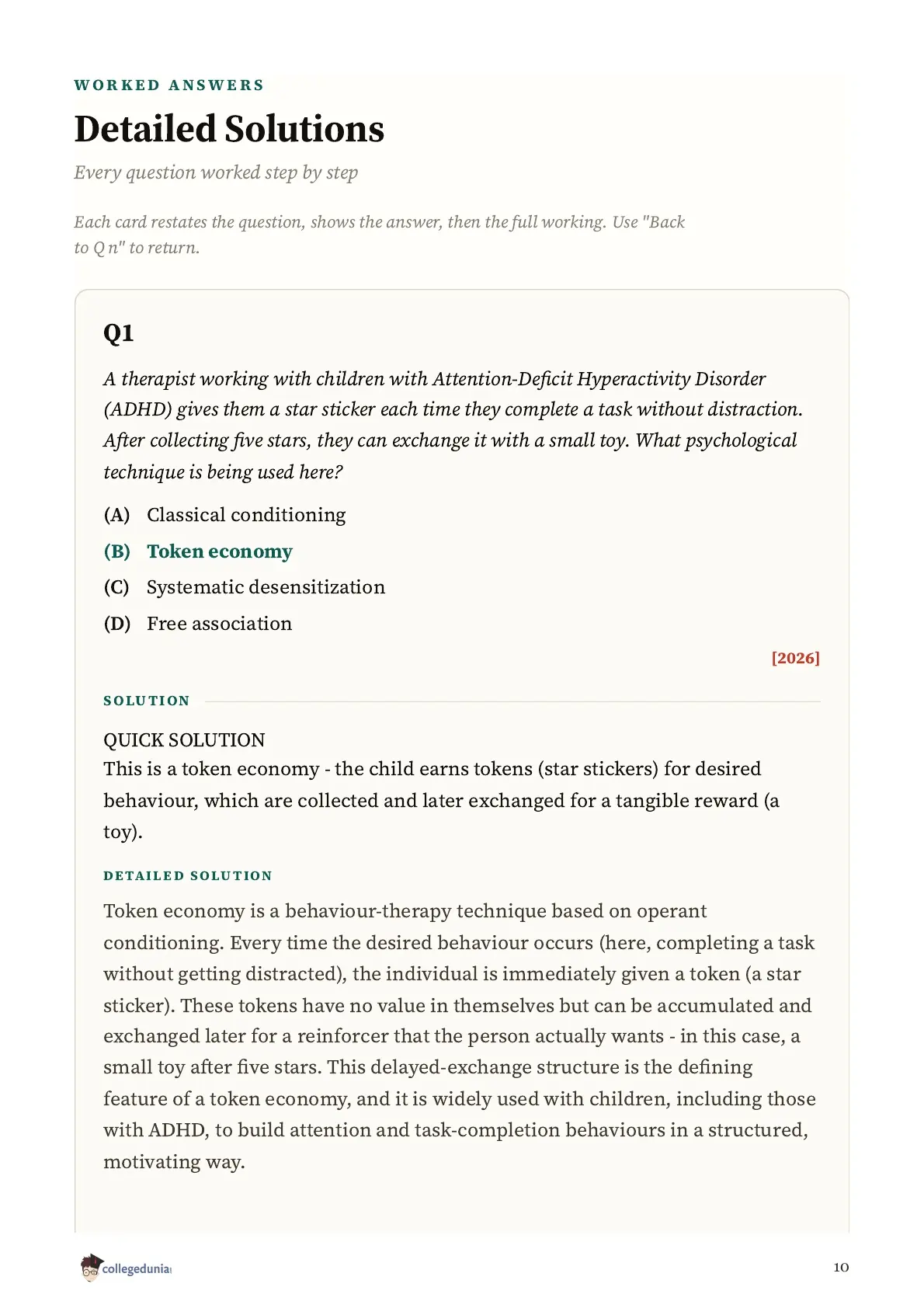
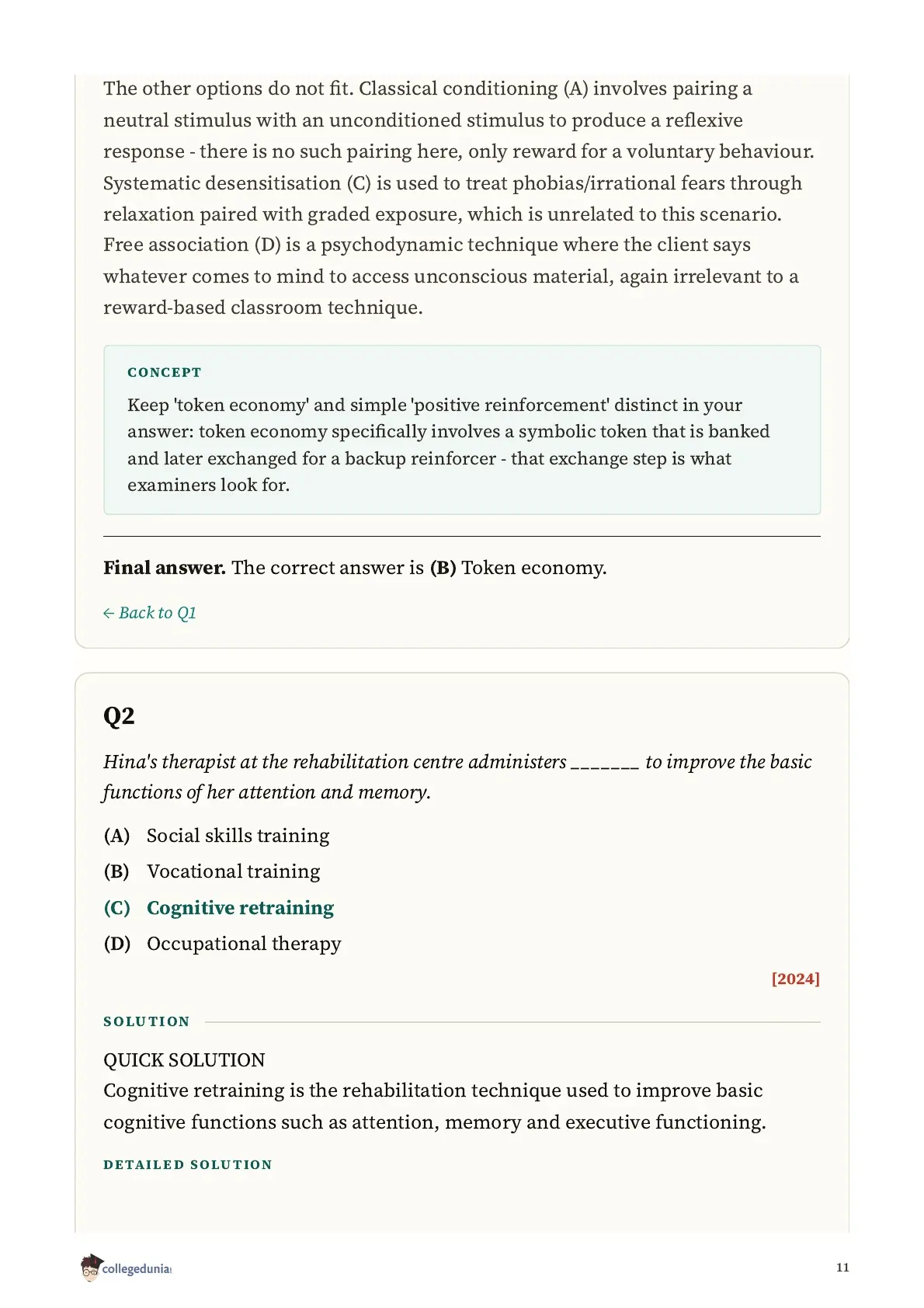
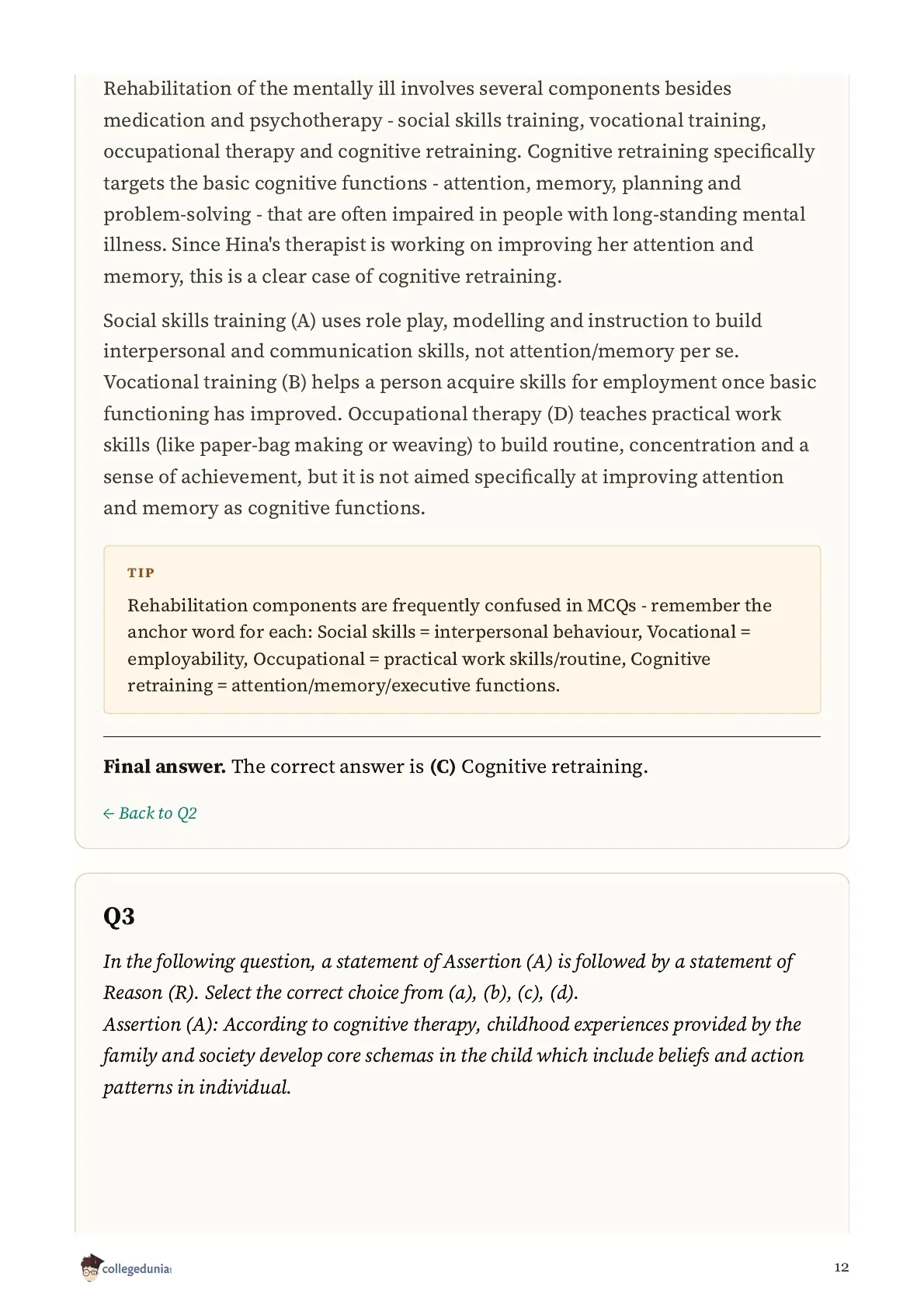
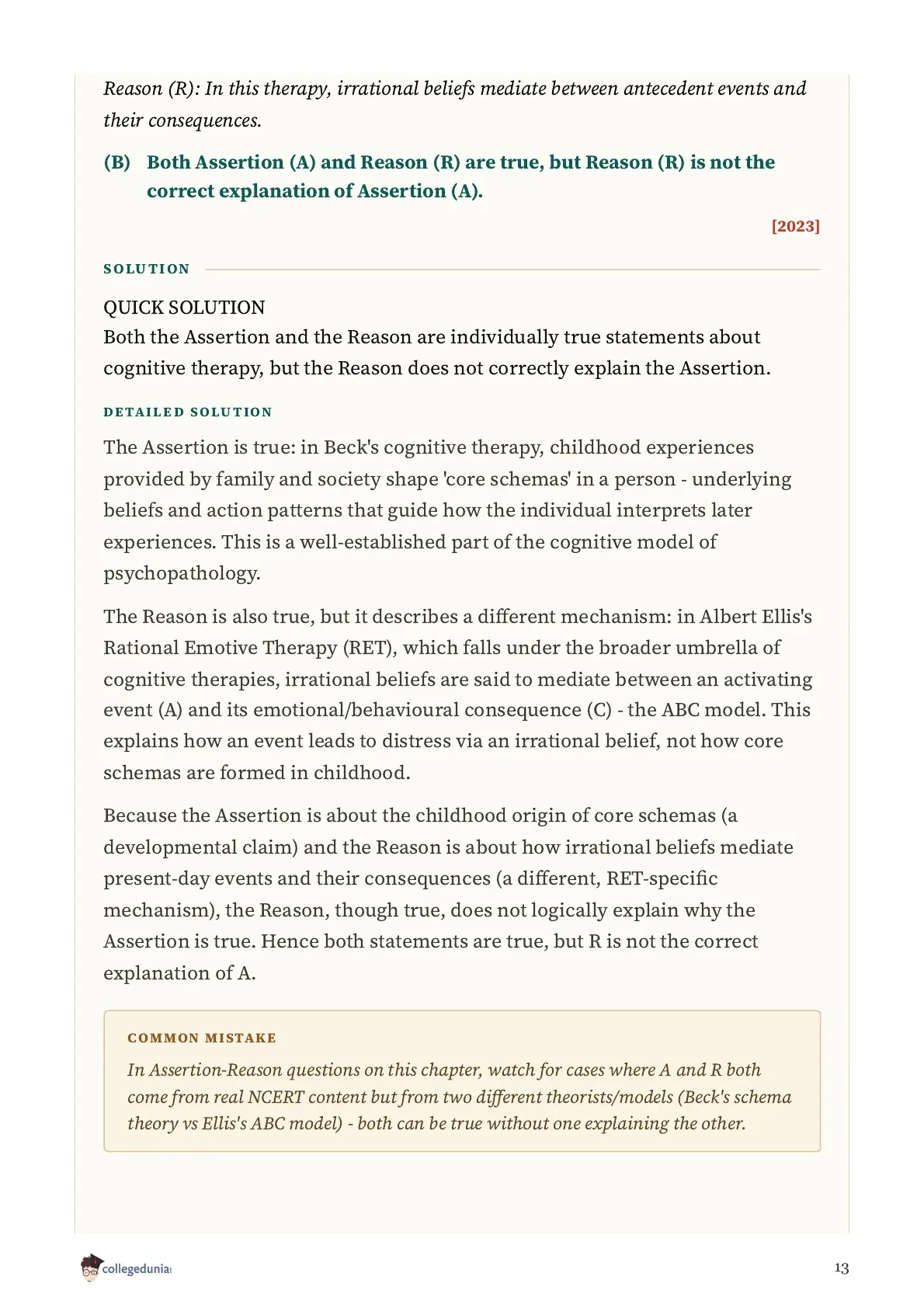
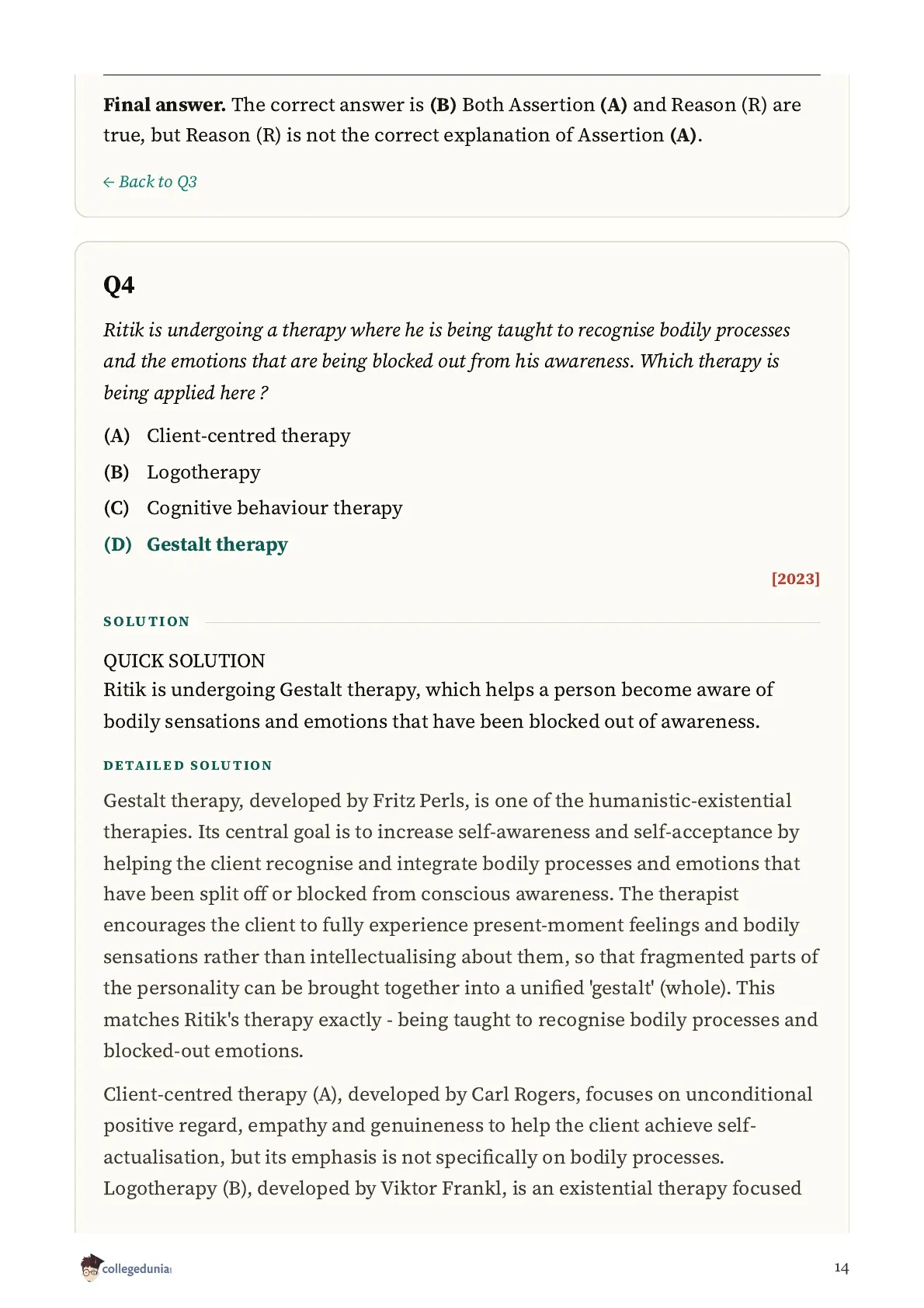
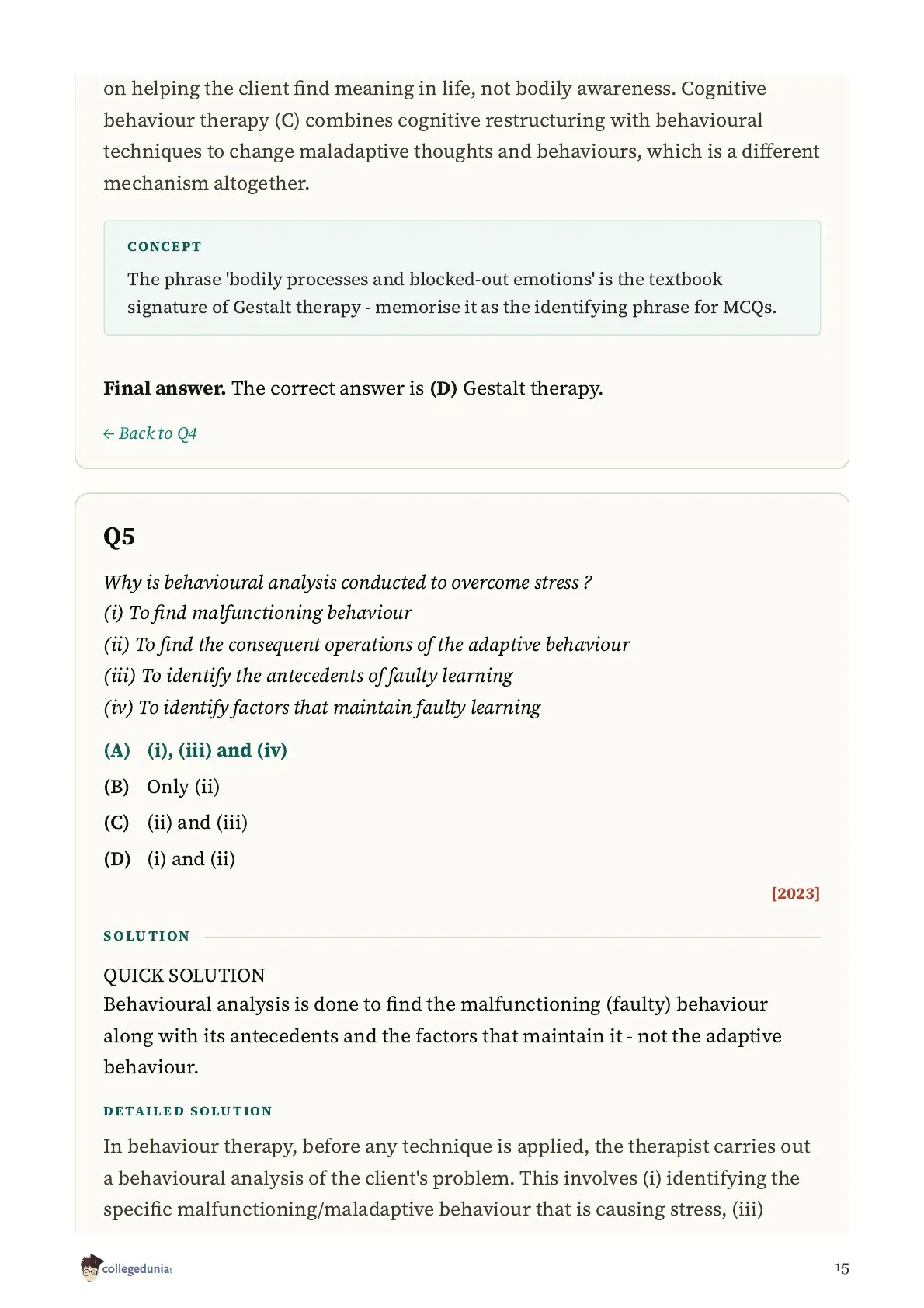
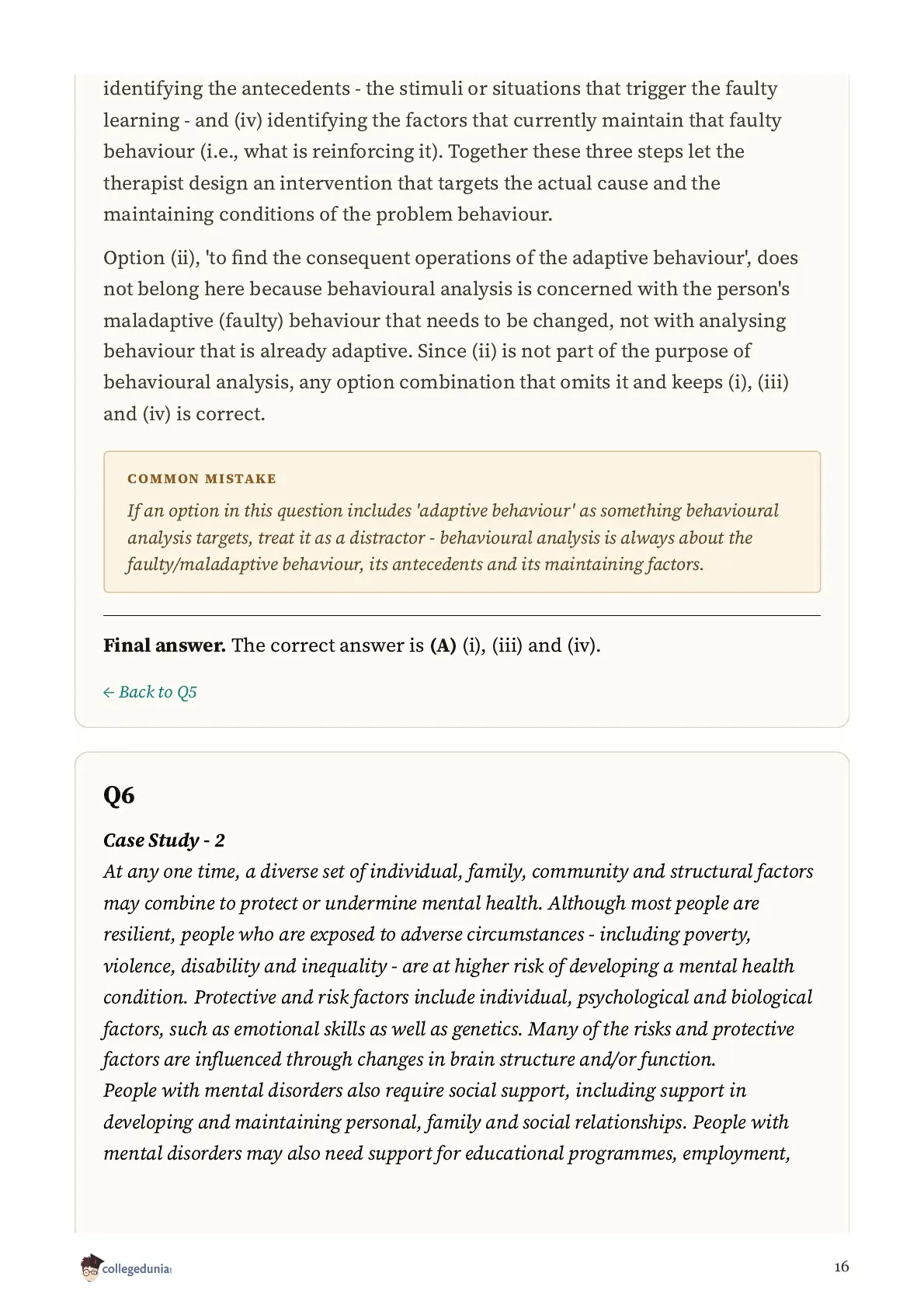
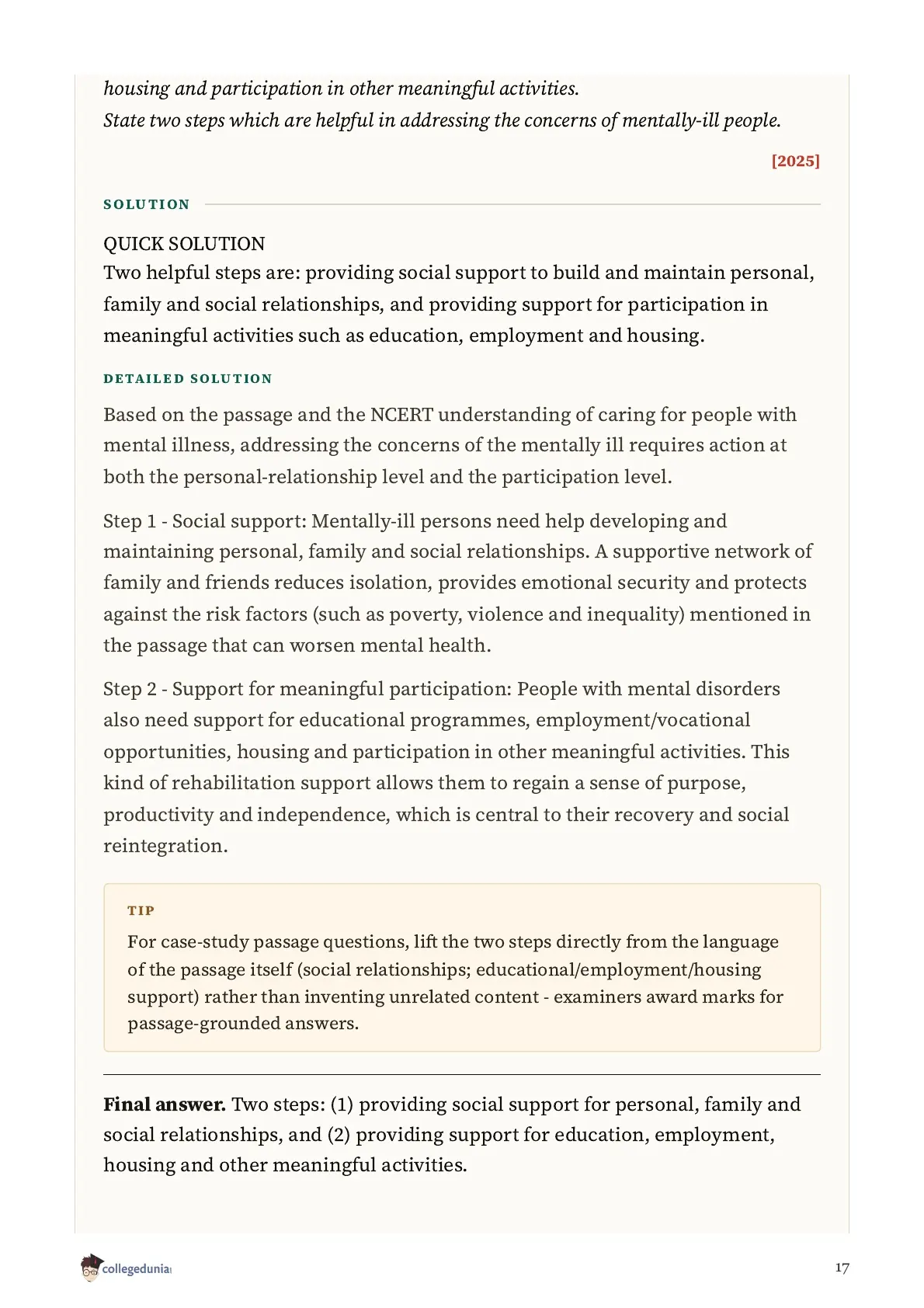
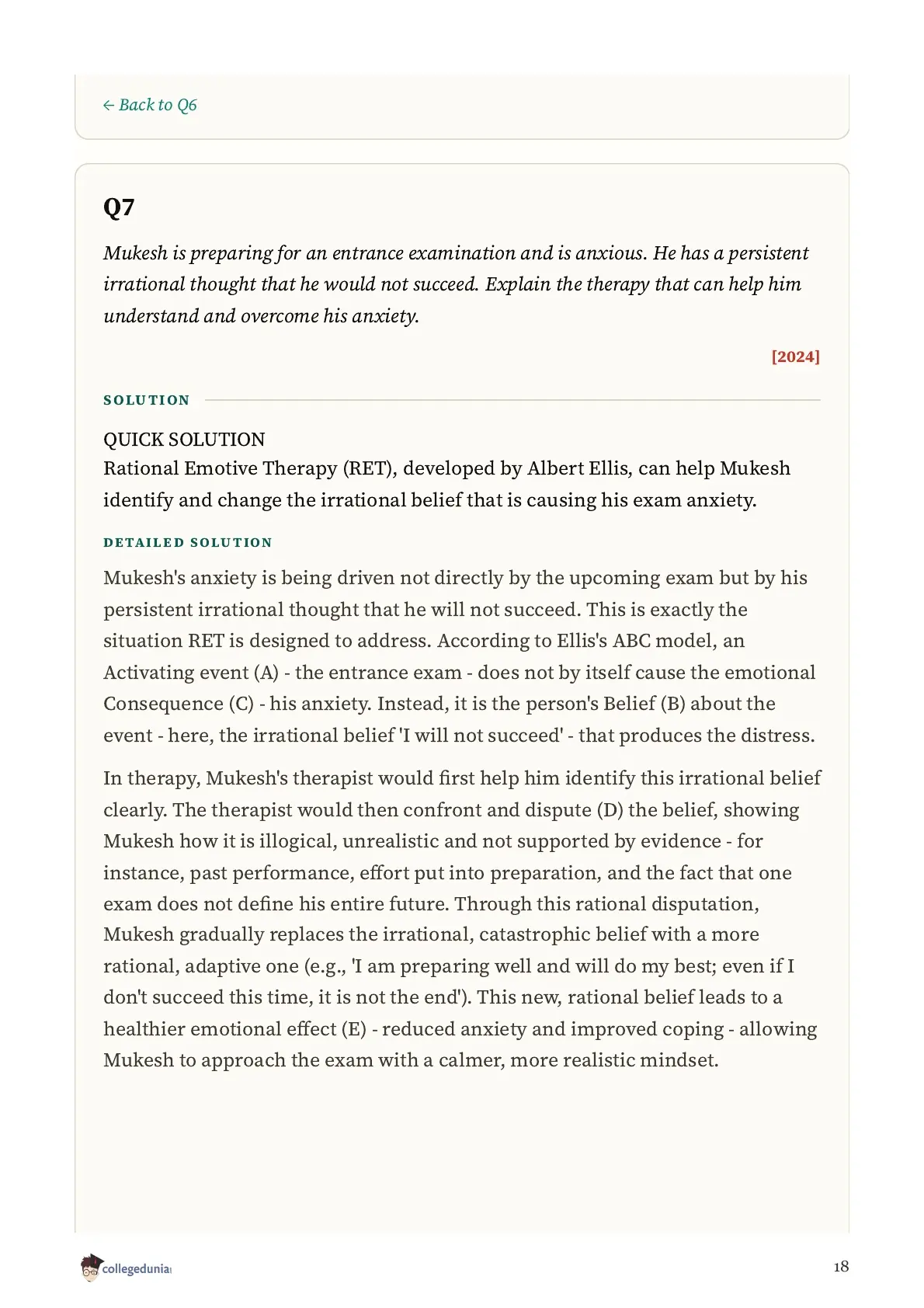
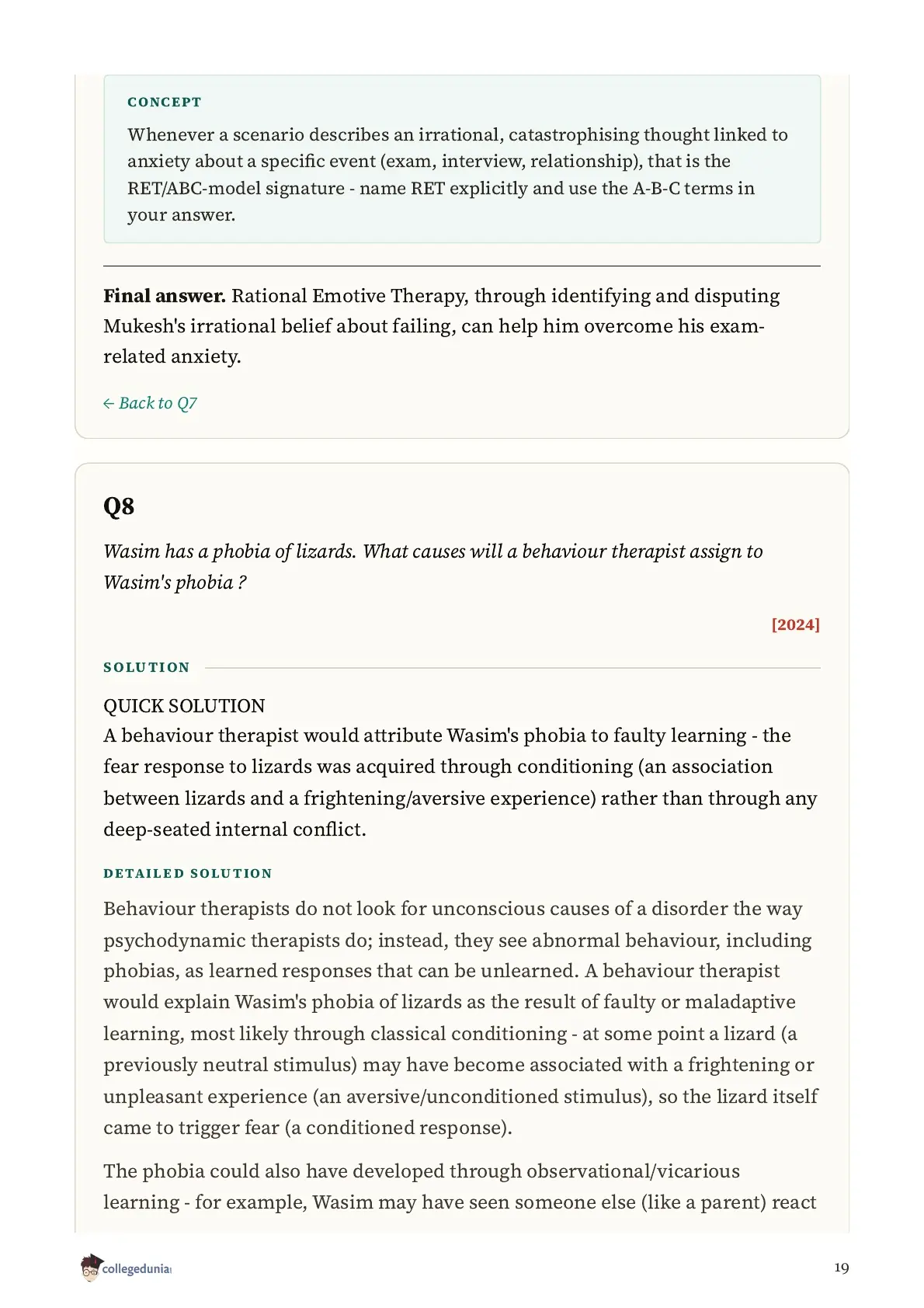
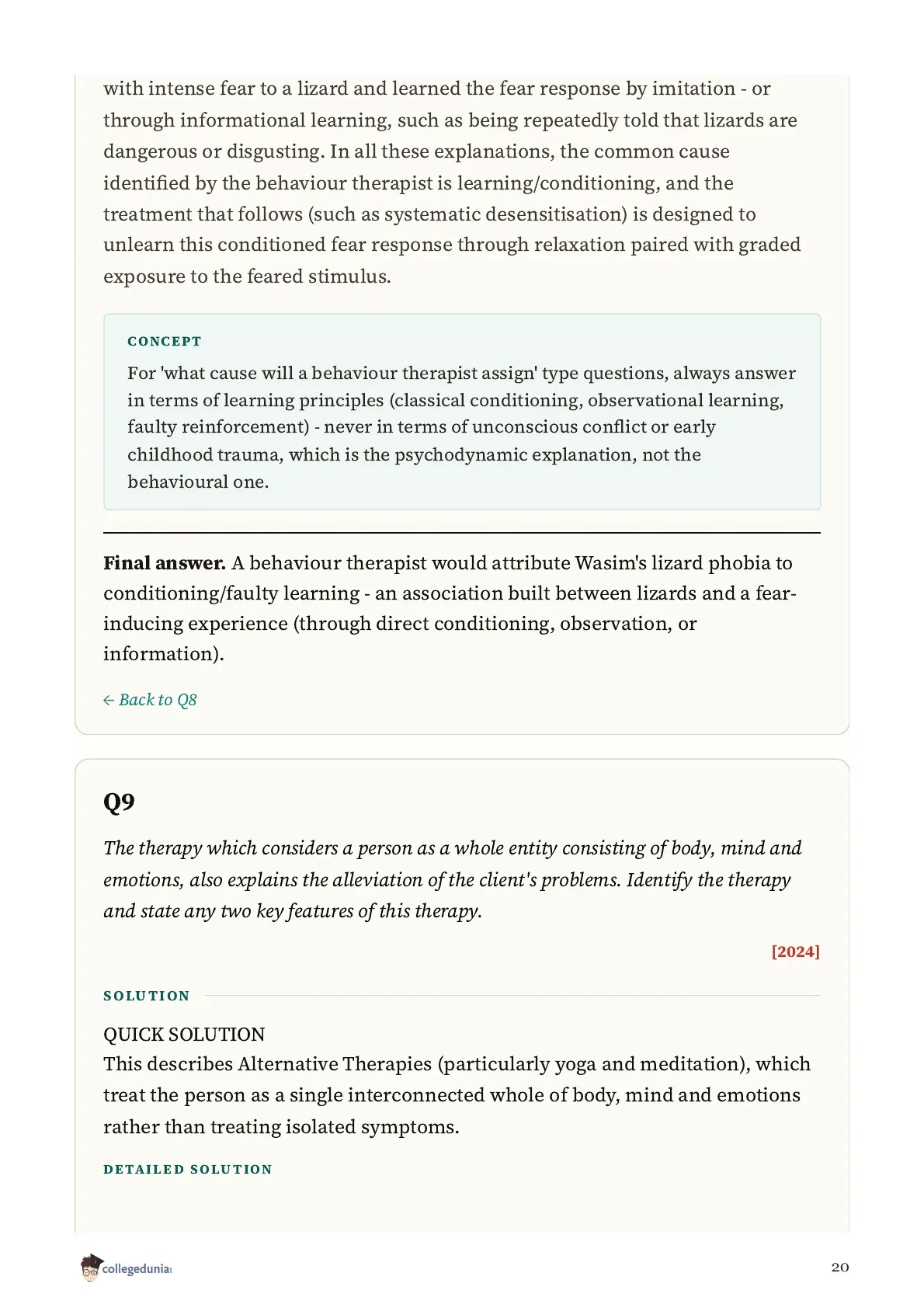
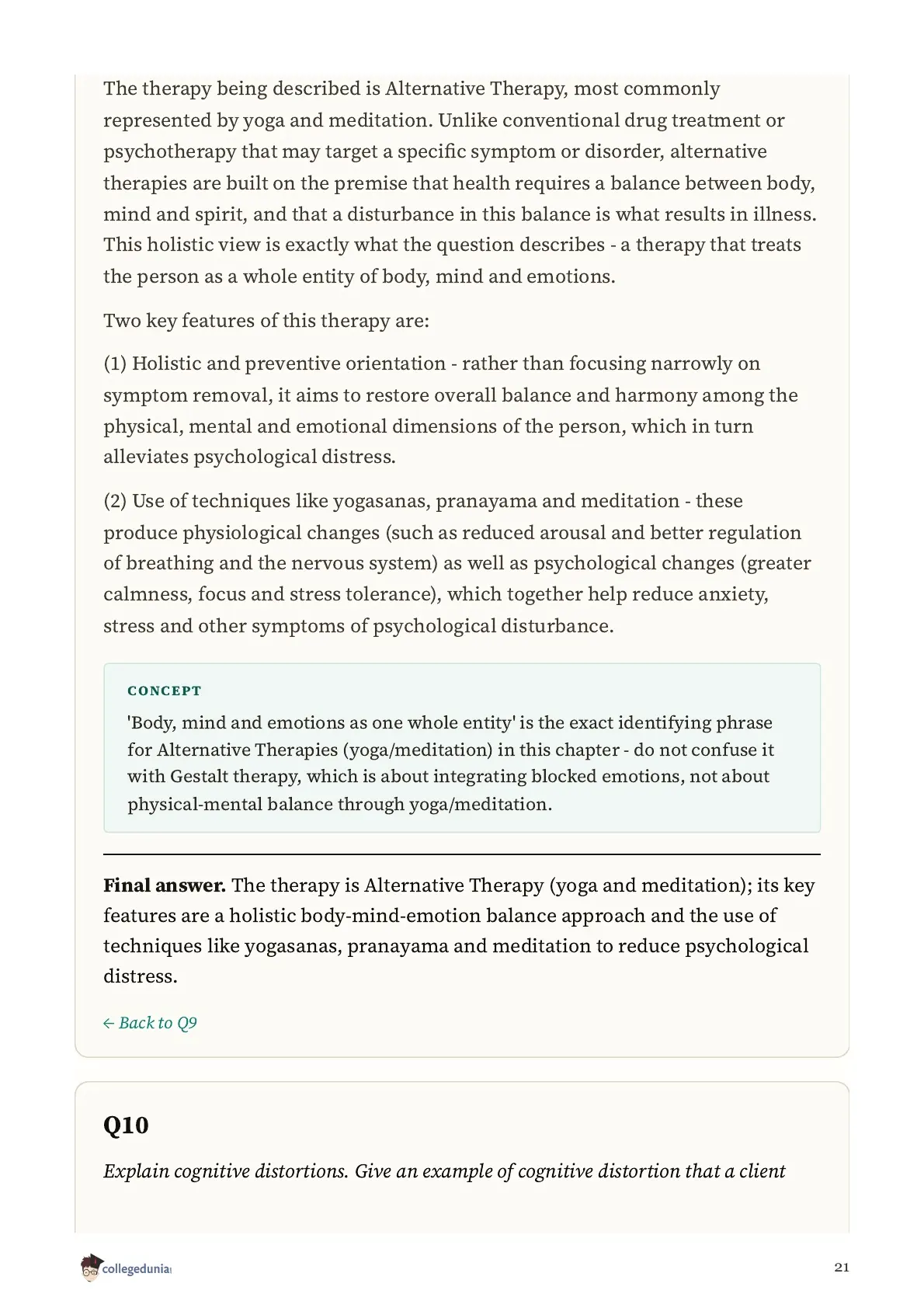
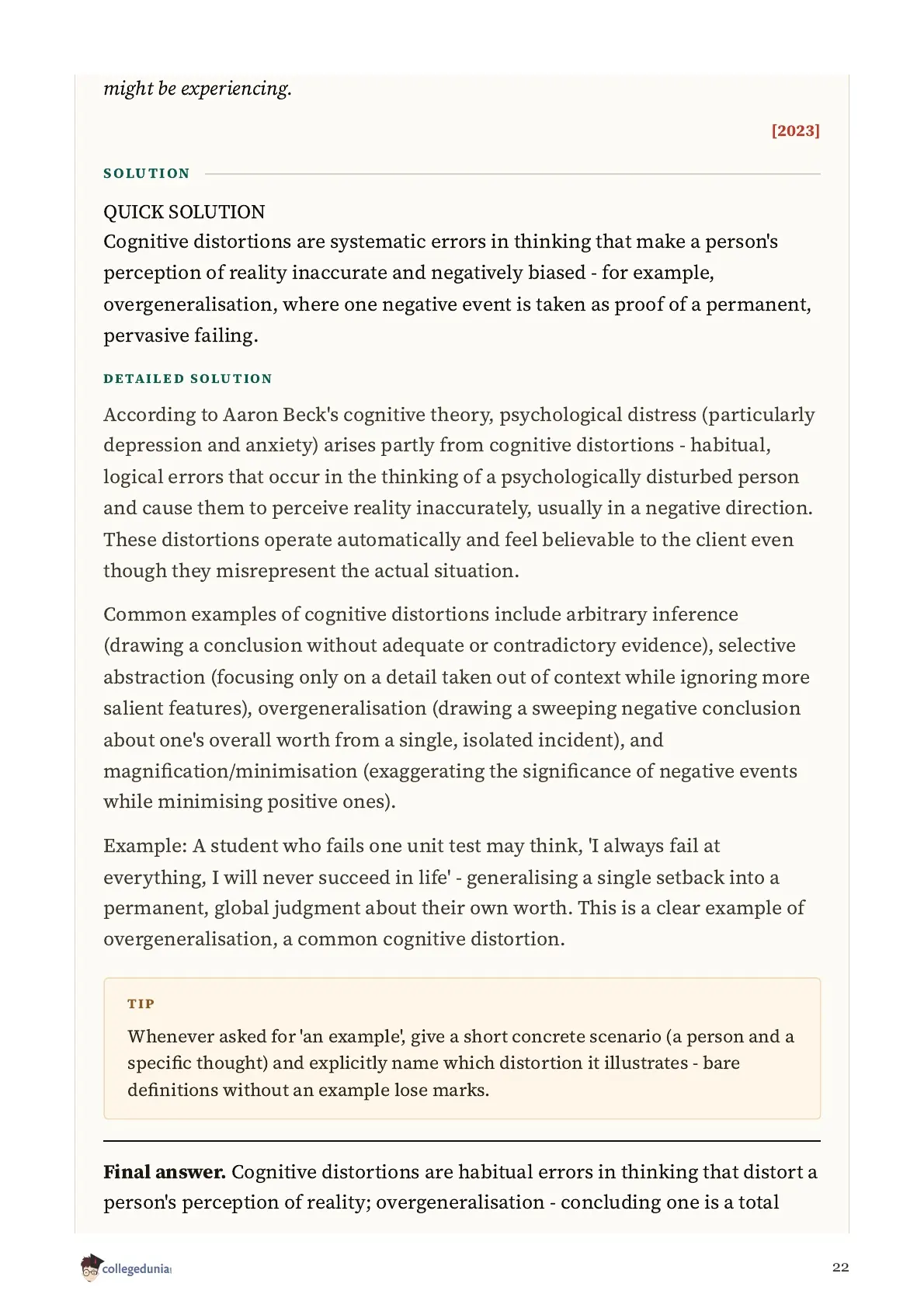
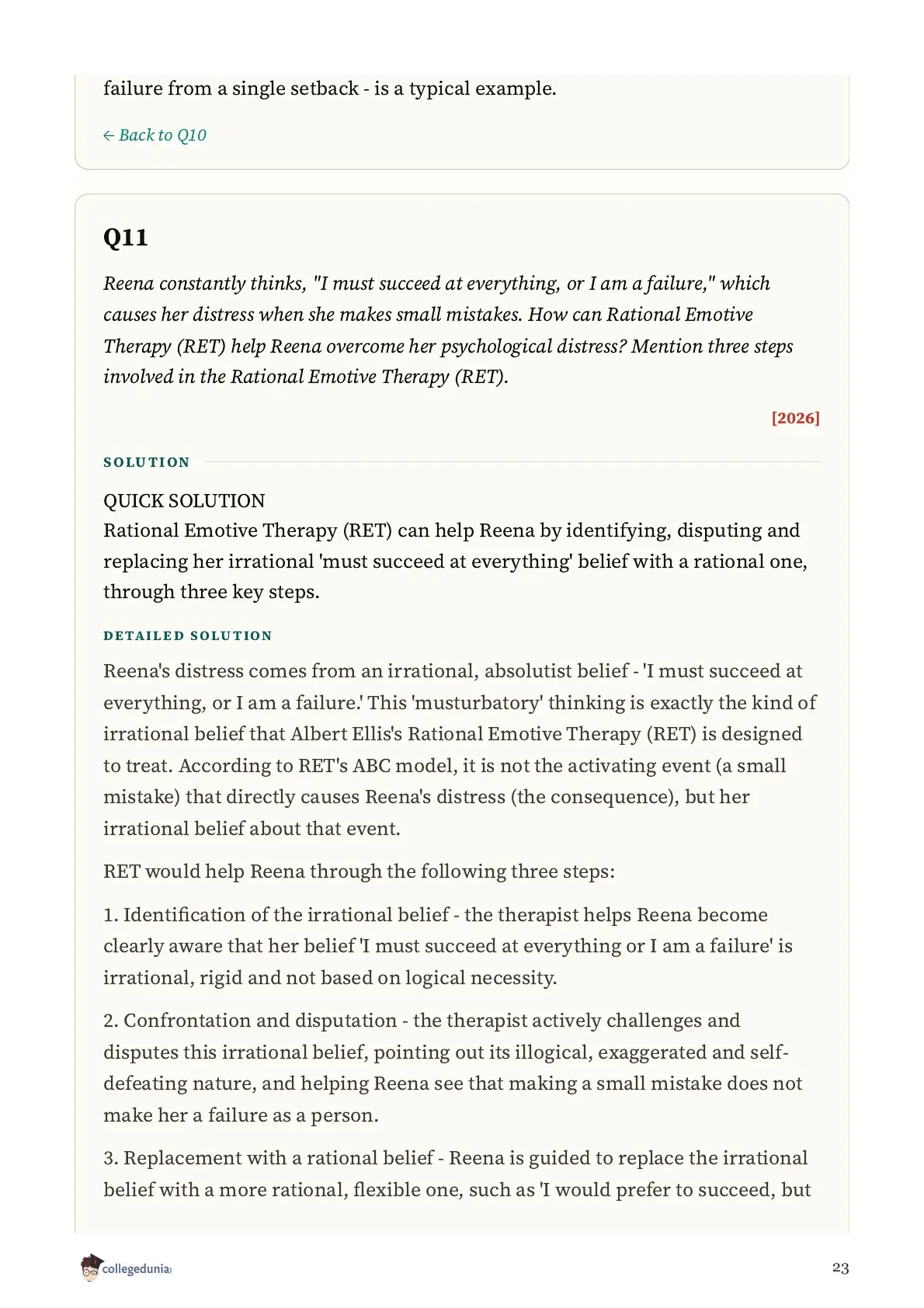
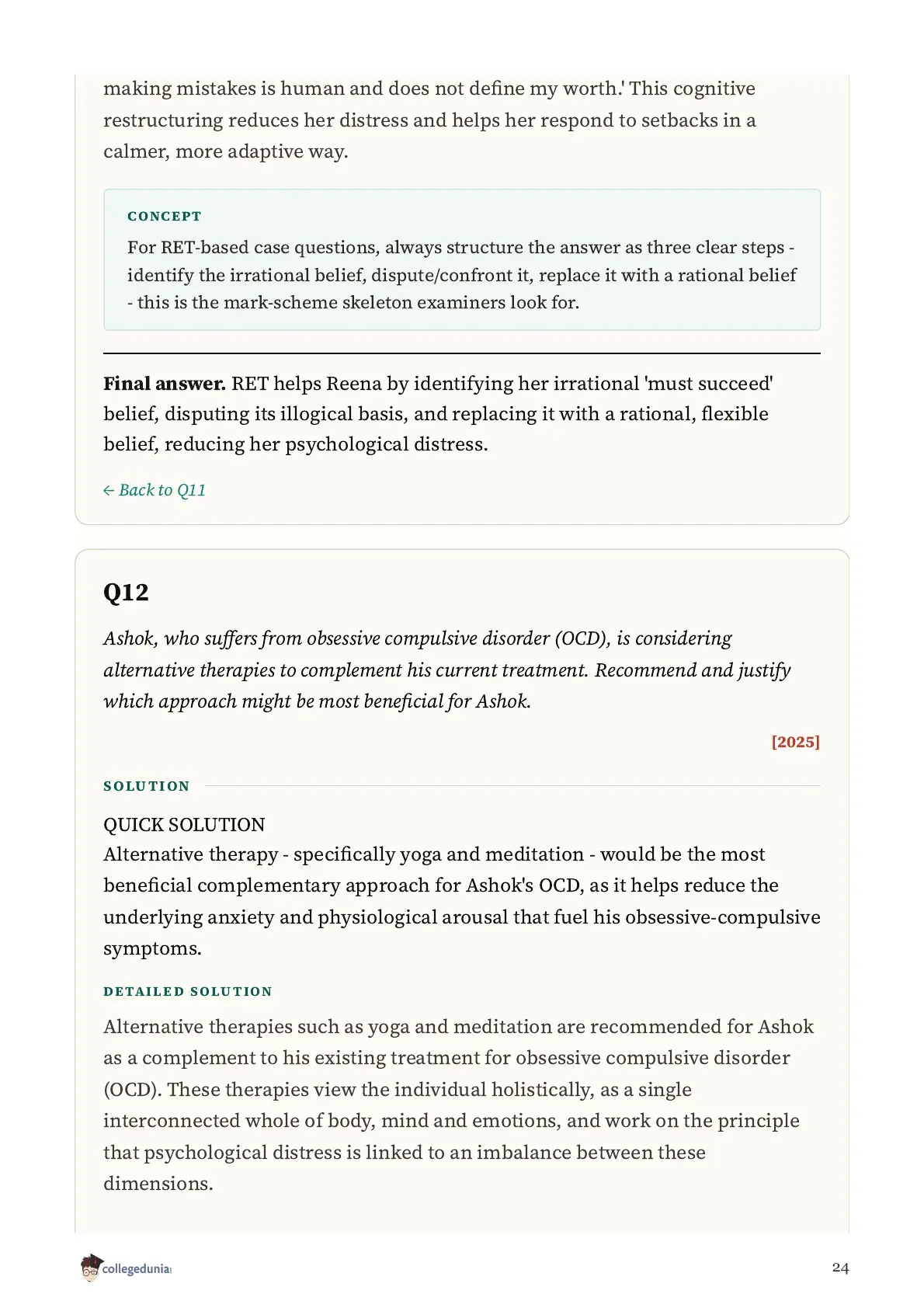
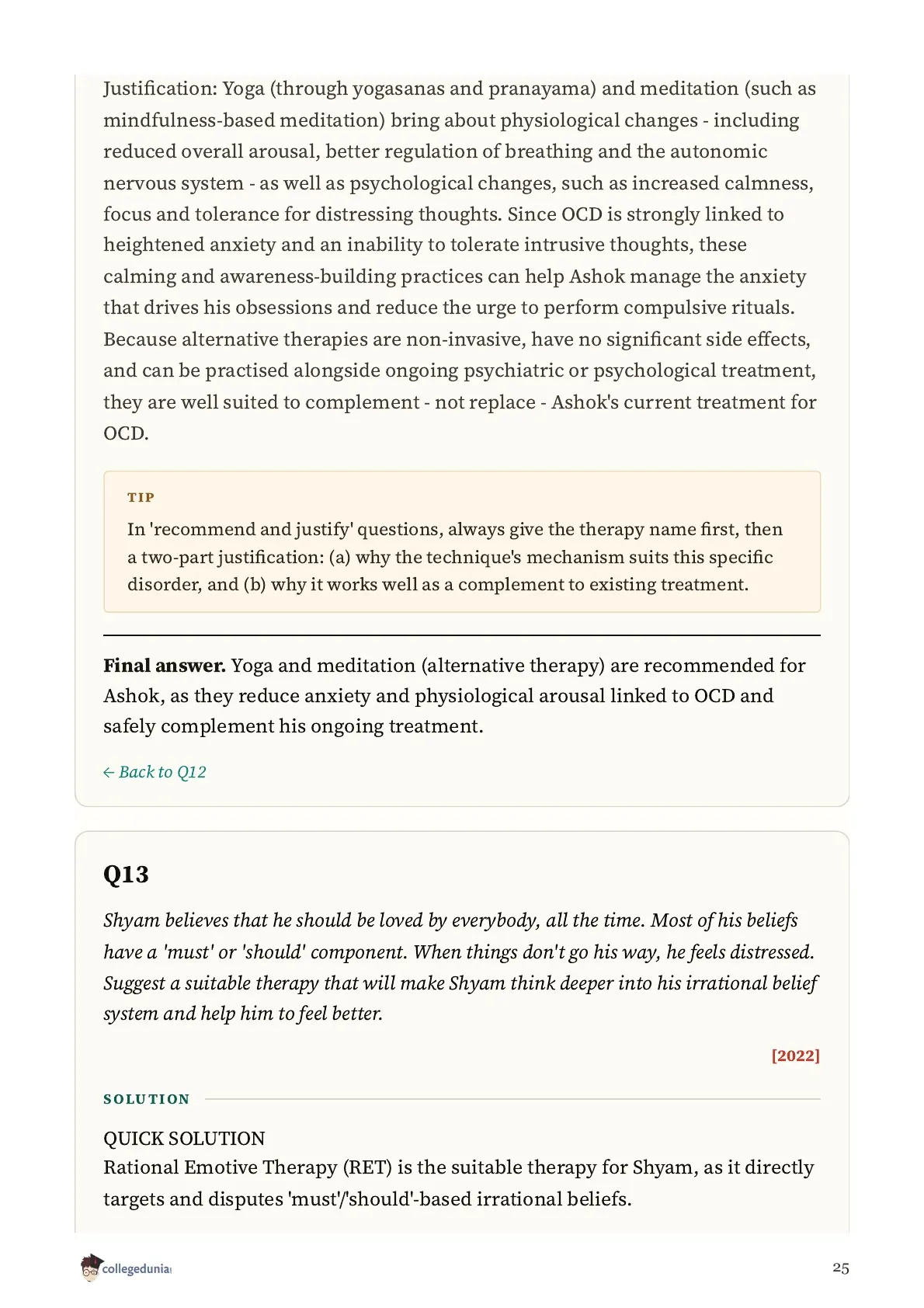
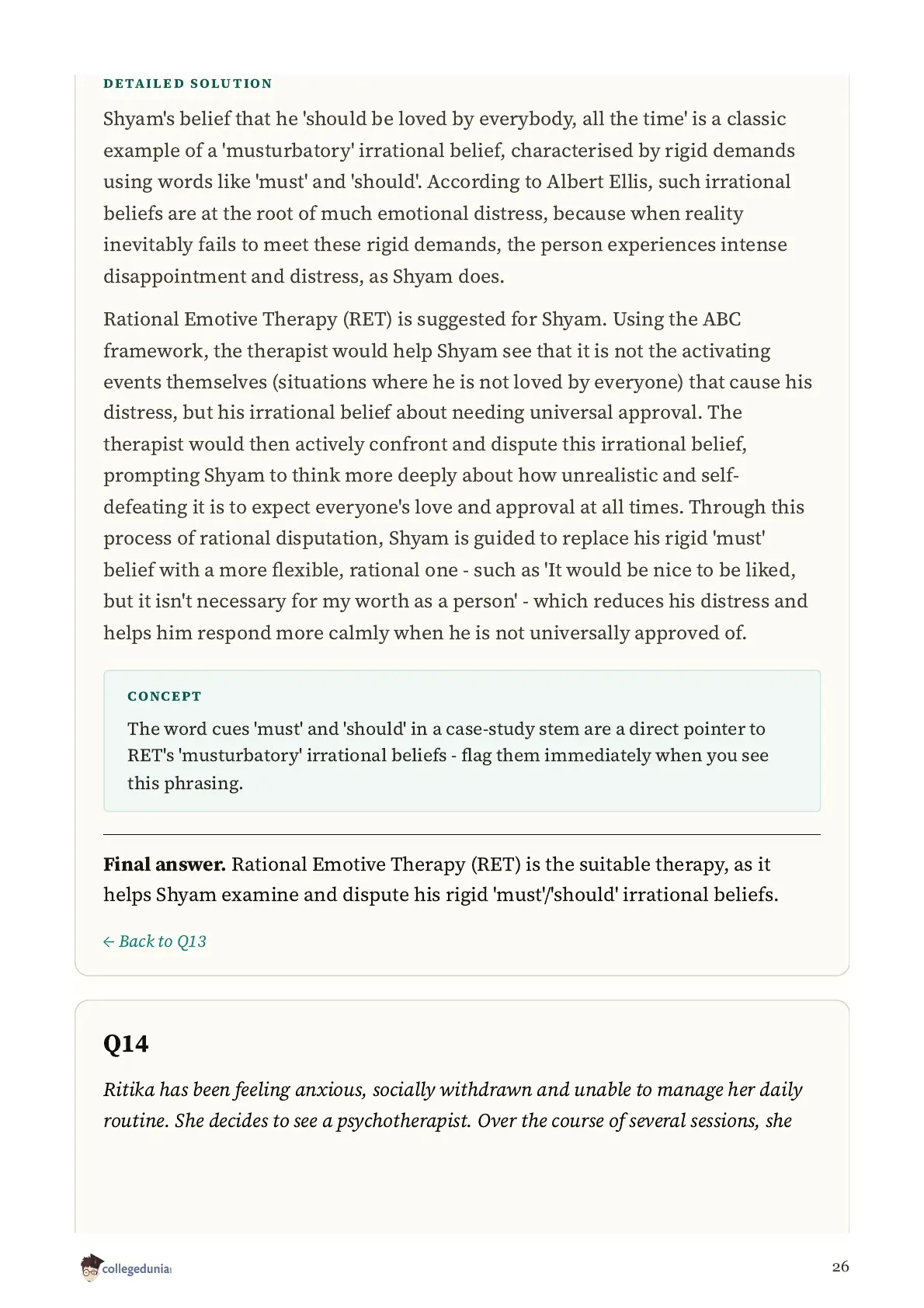
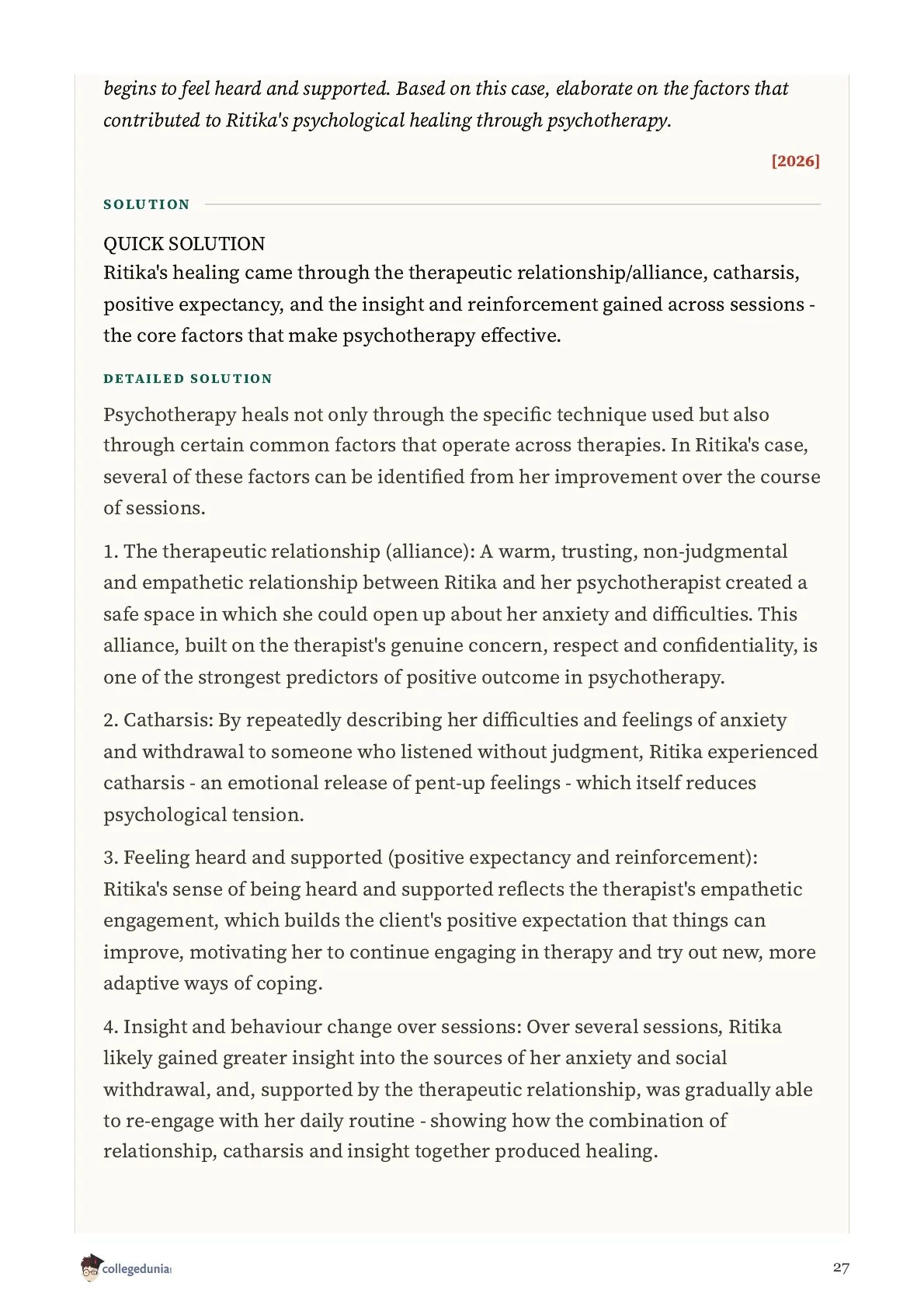
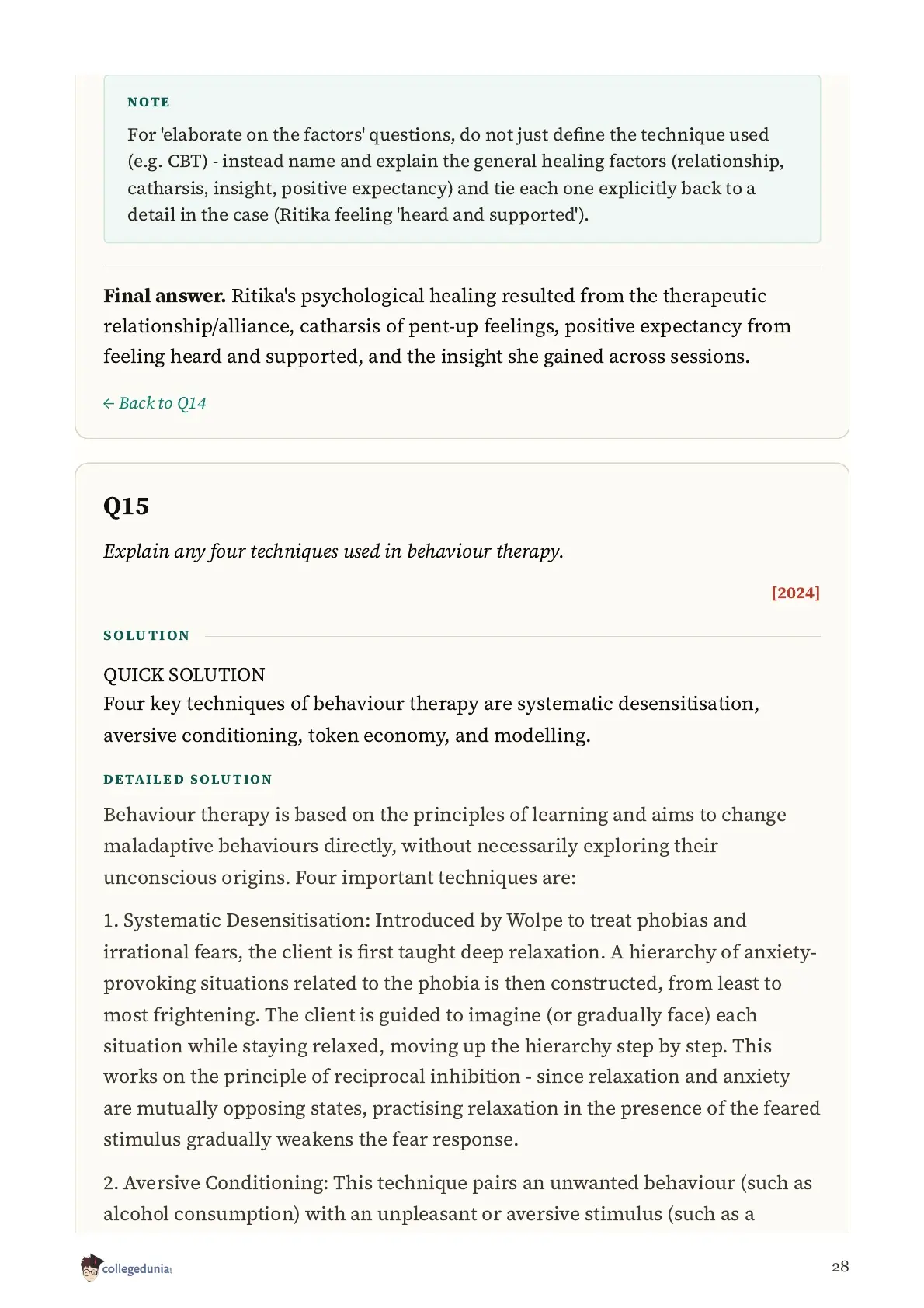
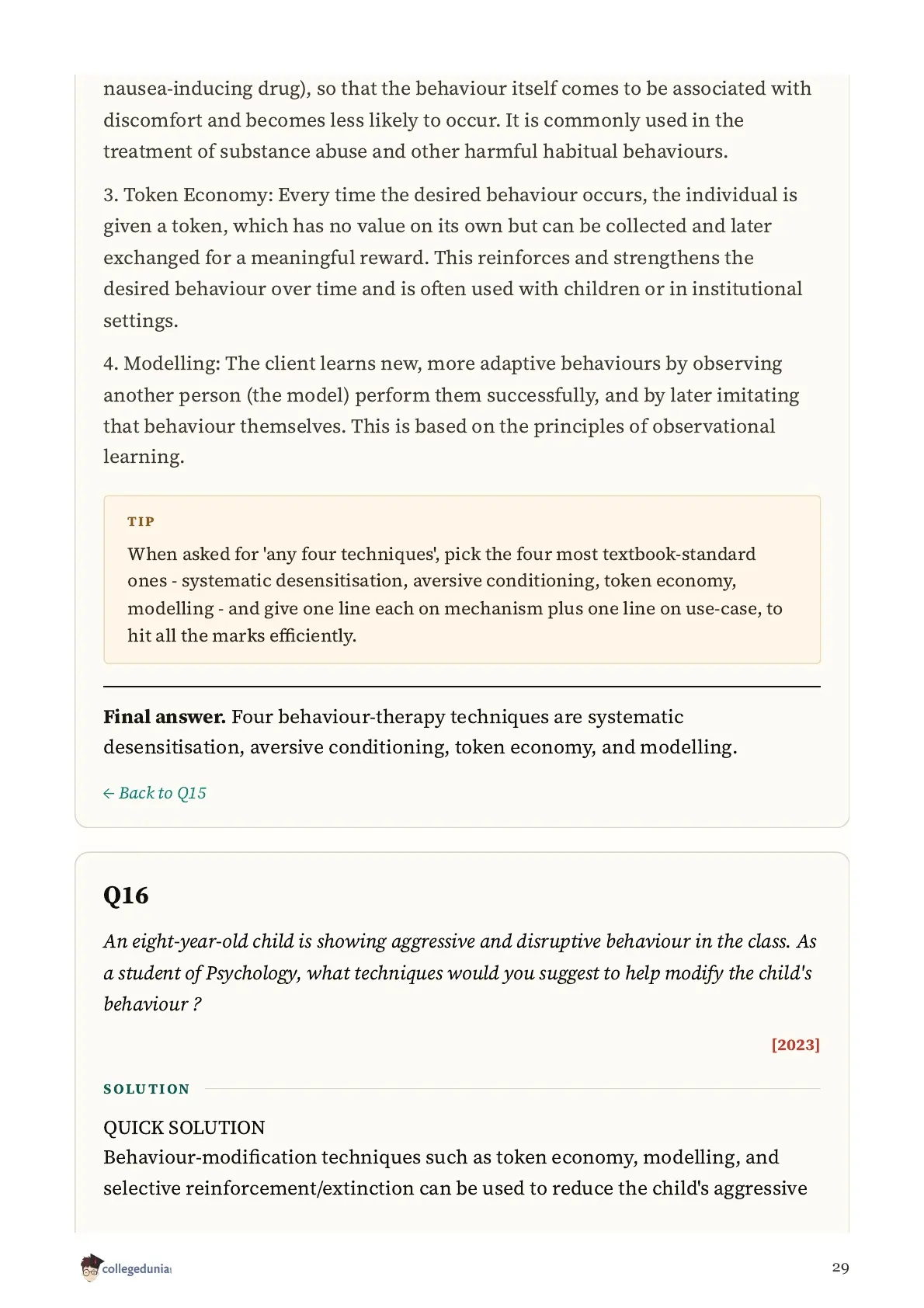
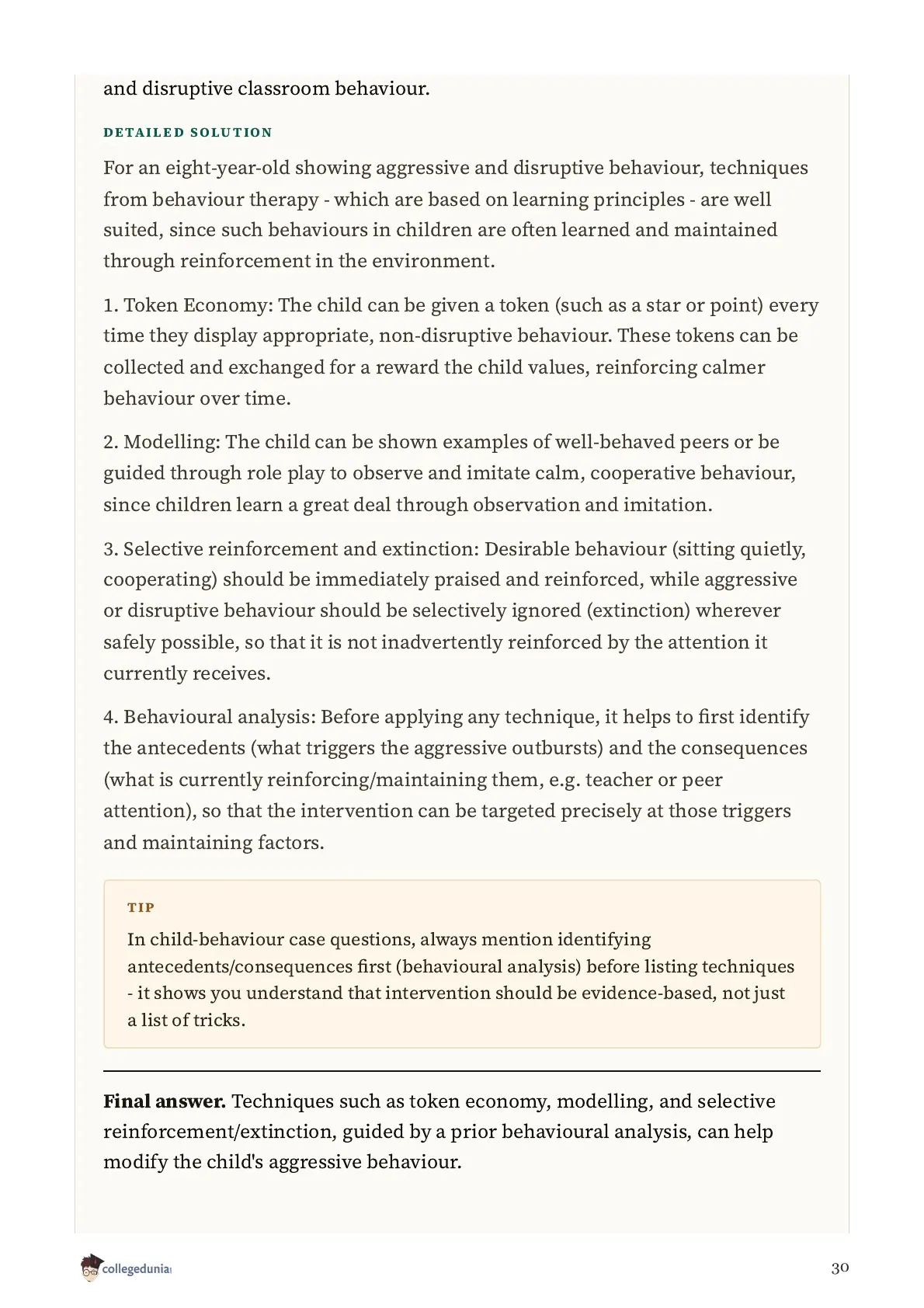
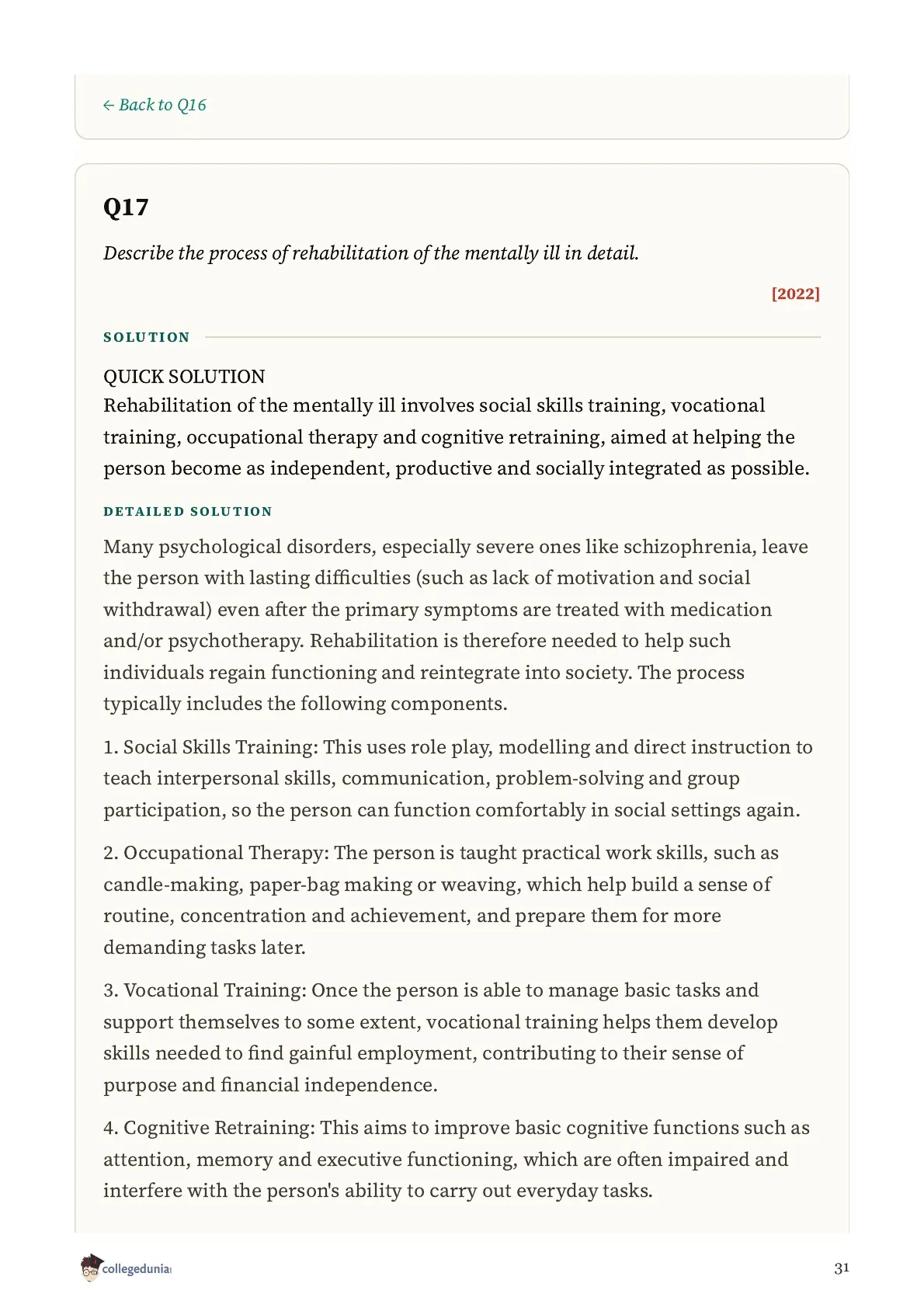
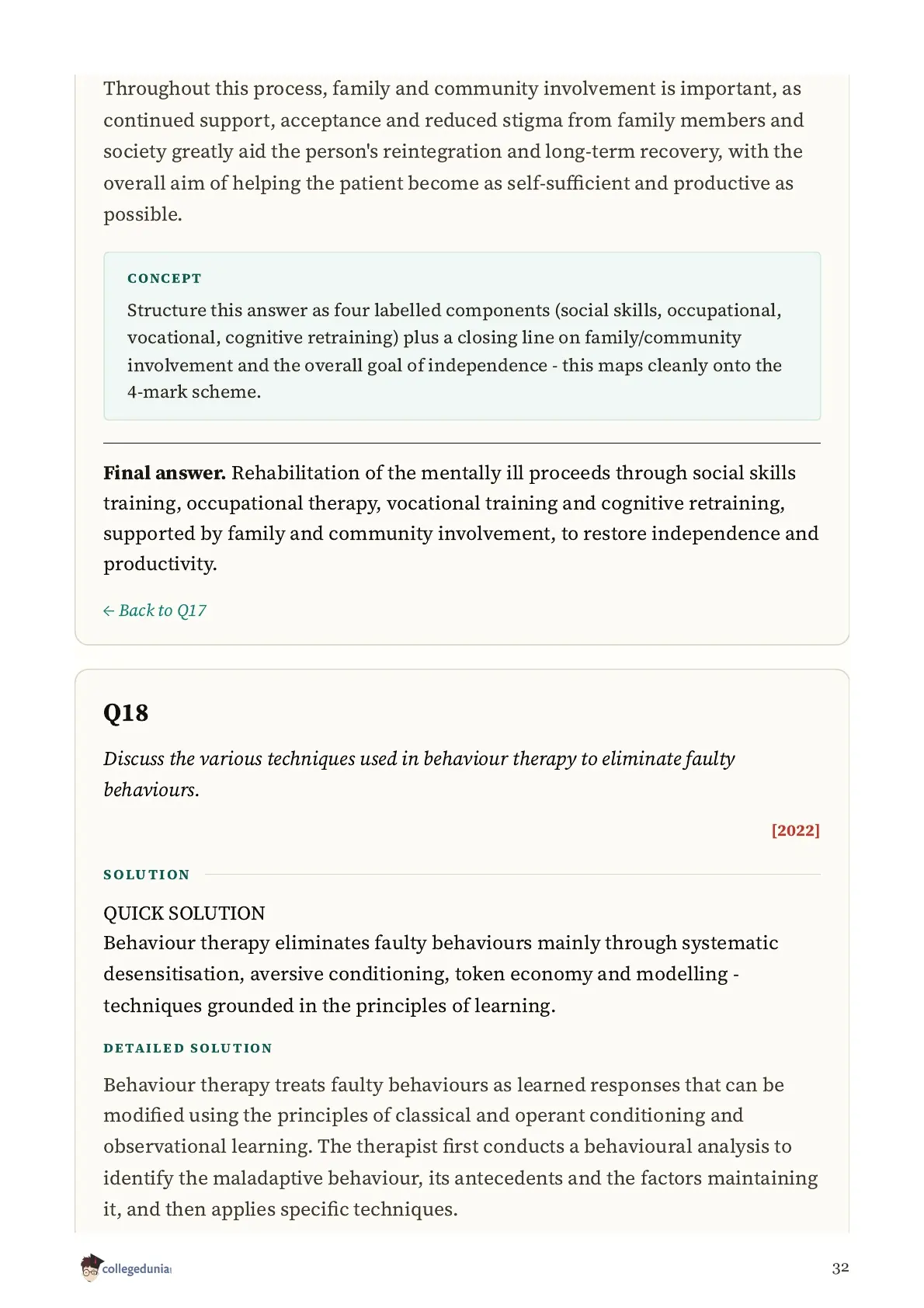
Every solution in this Therapeutic Approaches PYQ PDF is checked question by question against the 2022 to 2026 CBSE Class 12 Psychology board papers, and mapped to the 2026-27 NCERT chapter.
Source: 2026-27 Class 12 Psychology student poll. Sample of 12,840 students from CBSE schools across 15 states.
What the Therapeutic Approaches Previous Year Questions Cover
The Therapeutic Approaches PYQs test the entire treatment unit, not just definitions. Case-study questions usually place a named character in a therapy scenario and ask which approach or technique applies.
- Nature and goals of psychotherapy, and the qualities of a good therapeutic relationship.
- Psychodynamic therapy, including free association and resistance.
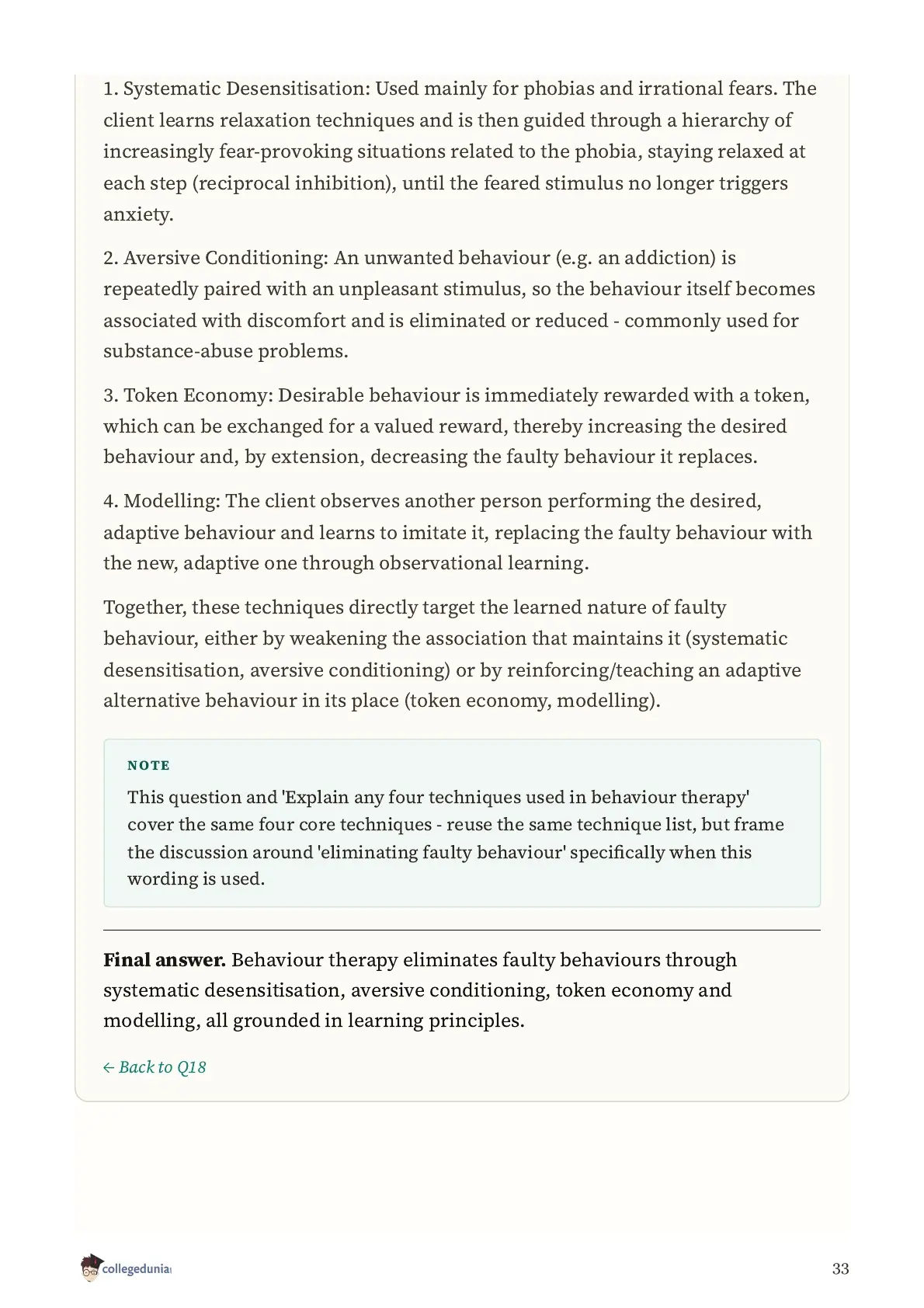
- Behaviour therapy techniques: systematic desensitisation, aversive conditioning, token economy, and modelling.
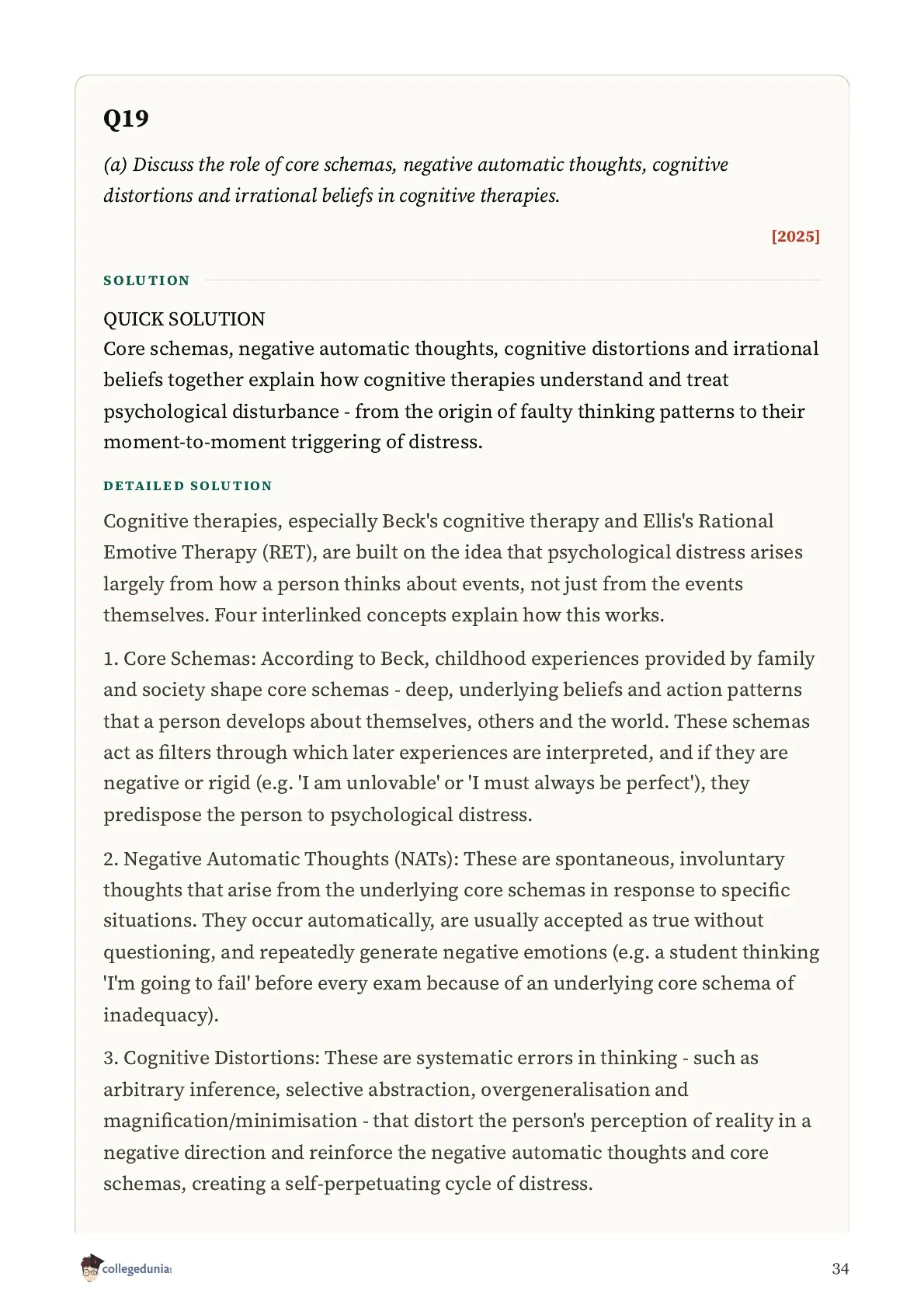
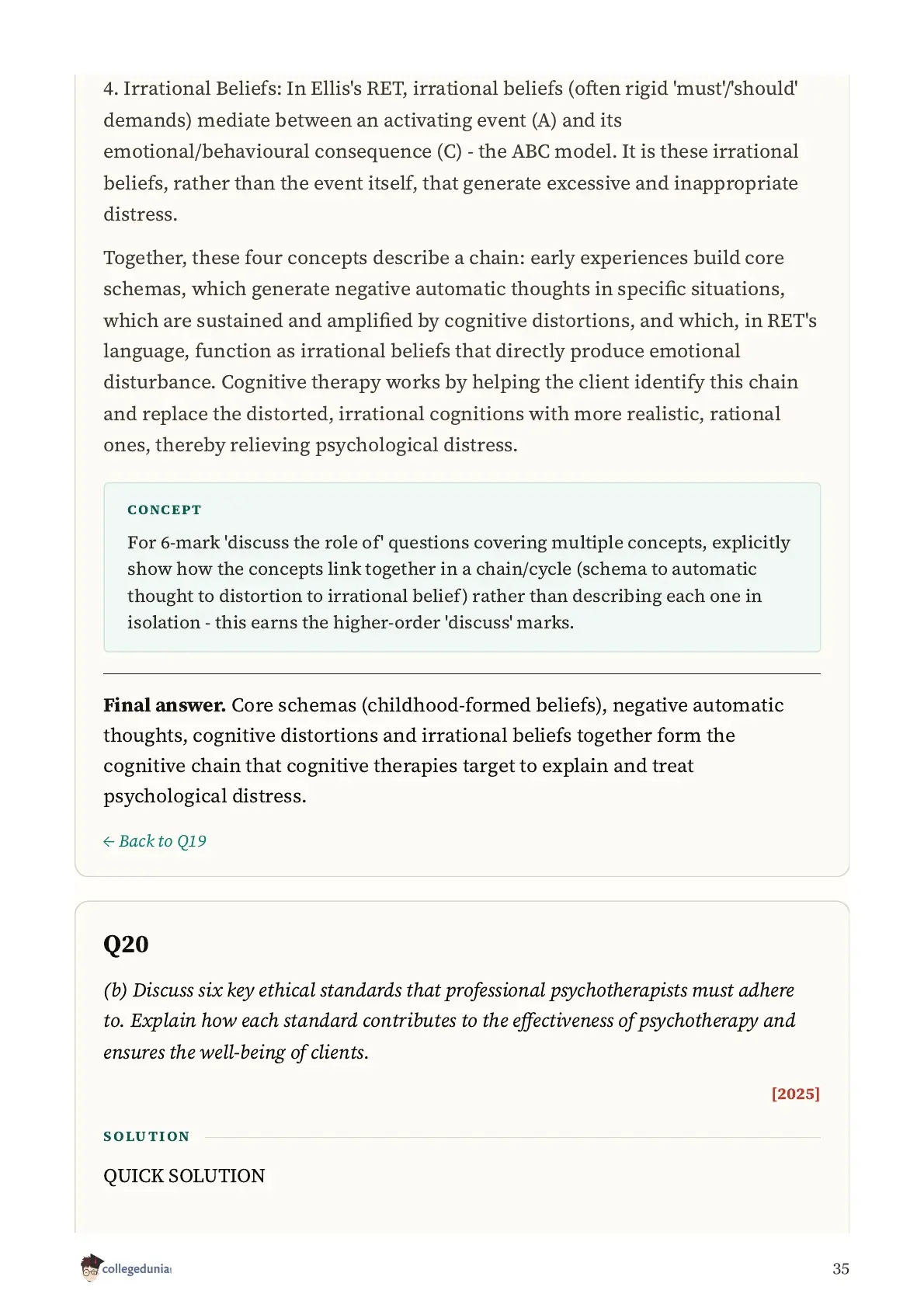
- Cognitive therapy, covering cognitive distortions, irrational beliefs, and core schemas.
- Humanistic-existential (client-centred) therapy and its focus on the whole person.
- Biomedical therapy and alternative therapies such as yoga and meditation.
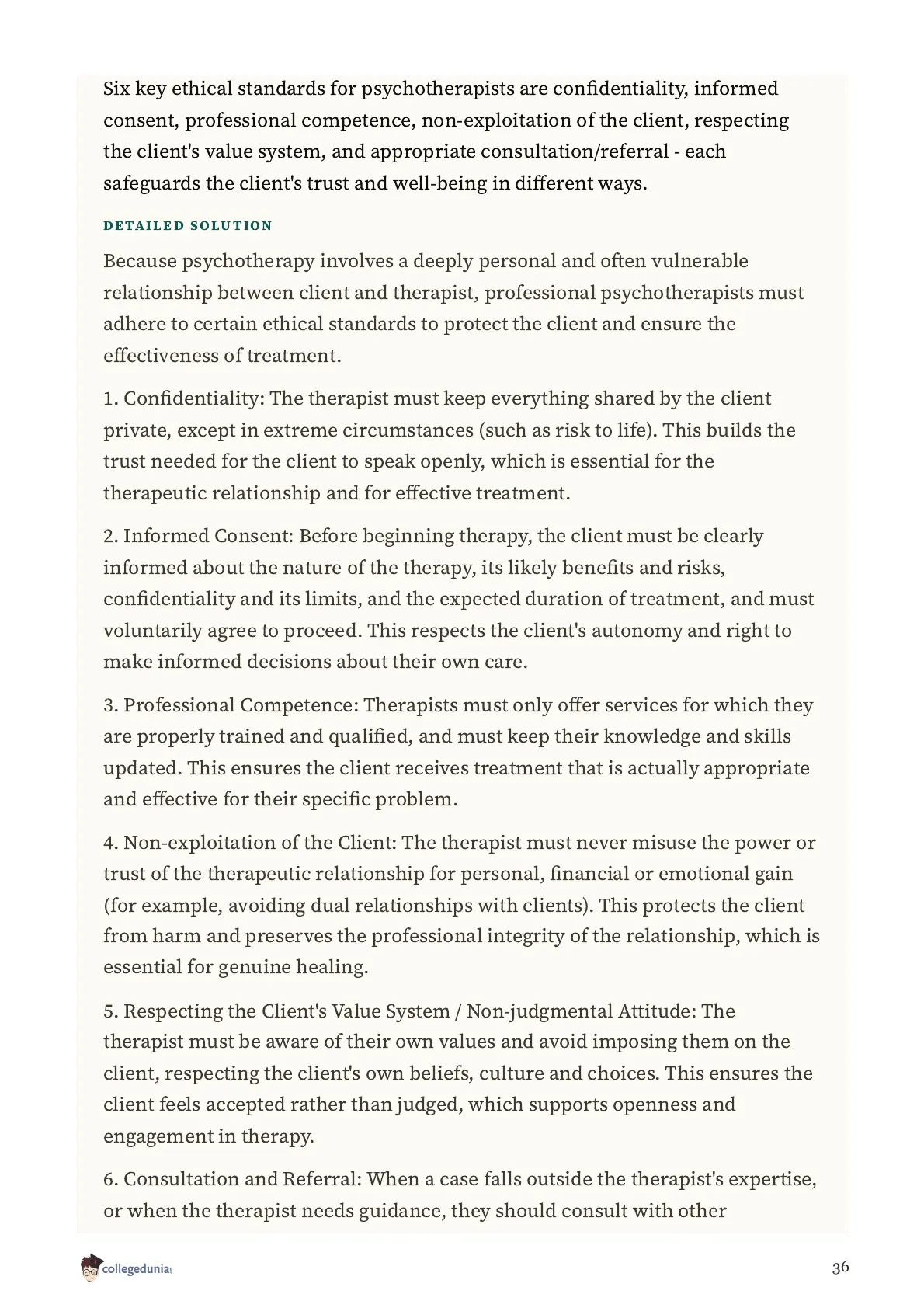
- Rehabilitation of the mentally ill and the ethical standards a psychotherapist must follow.
Therapeutic Approaches Class 12 Psychology One Shot Revision
Source: The Twin Bros - Humanities on YouTube
Marks-wise Distribution of the Therapeutic Approaches PYQs
The 20 questions in this PDF are not evenly weighted. They move from quick recall questions to longer descriptive answers, in a spread that closely tracks the CBSE Class 12 Psychology paper pattern.
| Question Style | Typical Marks | What It Tests |
|---|---|---|
| MCQ / Assertion-Reason | 1-2 marks | Quick recall of a therapy term, technique, or definition |
| Short Answer | 2-3 marks | Explaining one concept or technique with an example |
| Case Study | 3-4 marks | Applying a therapy approach to a described character or situation |
| Long Answer | 4-6 marks | Describing a full process, such as rehabilitation or behaviour therapy techniques |
The longer 4 to 6-mark questions carry the most weight in this chapter, and they usually ask for a described process rather than a single-line definition, so a one-word answer never scores full marks.
Year-wise Spread of the Therapeutic Approaches Board Questions (2022-2026)
This PDF pulls from five back-to-back CBSE cycles, so students can see how examiners have varied the question style across recent board papers.
| Year | Questions in this PDF |
|---|---|
| 2023 | 10 |
| 2024 | 10 |
| 2025 | 8 |
| 2022 | 6 |
| 2026 | 6 |
The 2023 and 2024 papers contribute the largest share of questions in this compilation, and both years lean more heavily on case-study and application-based formats than the 2022 paper did.
Topic Frequency in the Therapeutic Approaches PYQs
Not every topic in the chapter gets asked with equal weight. Based on the 20 questions in this PDF, behaviour therapy techniques and case-study application questions come up most often, usually dressed up as a short story about a client or a therapist.
| Topic Cluster | How Often It Appears |
|---|---|
| Behaviour therapy techniques (token economy, systematic desensitisation, aversive conditioning, modelling) | Most frequent |
| Case-study application of a named therapy approach | Frequent |
| Cognitive therapy (distortions, irrational beliefs) | Frequent |
| Rehabilitation of the mentally ill | Occasional |
| Humanistic-existential and alternative therapies | Occasional |
| Ethical standards for psychotherapists | Occasional |
Marks-Band Attempt Strategy for the Therapeutic Approaches Chapter
A clear order of attempt saves time in the actual CBSE Class 12 Psychology paper. Most students should not start with the longest descriptive question.
- Start with the MCQs and Assertion-Reason questions: they need recall, not writing, so clear them first.
- Move to the short answers: name the technique first, then give one clear example.
- Then the case studies: read the scenario twice, underline the therapy clue words, before naming the approach.
- Finish with the long answers: plan the points before writing, since rehabilitation and ethics questions expect a full process, not a list.
Common Mistakes Students Make in the Therapeutic Approaches Chapter
- Confusing systematic desensitisation (pairs relaxation with a feared stimulus) with aversive conditioning (pairs an unwanted behaviour with discomfort).
- Mixing up cognitive distortions with irrational beliefs, which the chapter treats as related but separate ideas.
- Naming a therapy approach in a case study without explaining why it fits the described behaviour.
- Writing rehabilitation as a single step, when the chapter expects a described process with multiple stages.
- Skipping the "assertion" and "reason" labels separately in Assertion-Reason questions.
Behaviour Therapy Techniques Compared
Behaviour therapy is the most heavily tested block in this chapter, and the PYQs frequently ask students to tell one technique apart from another inside a case study.
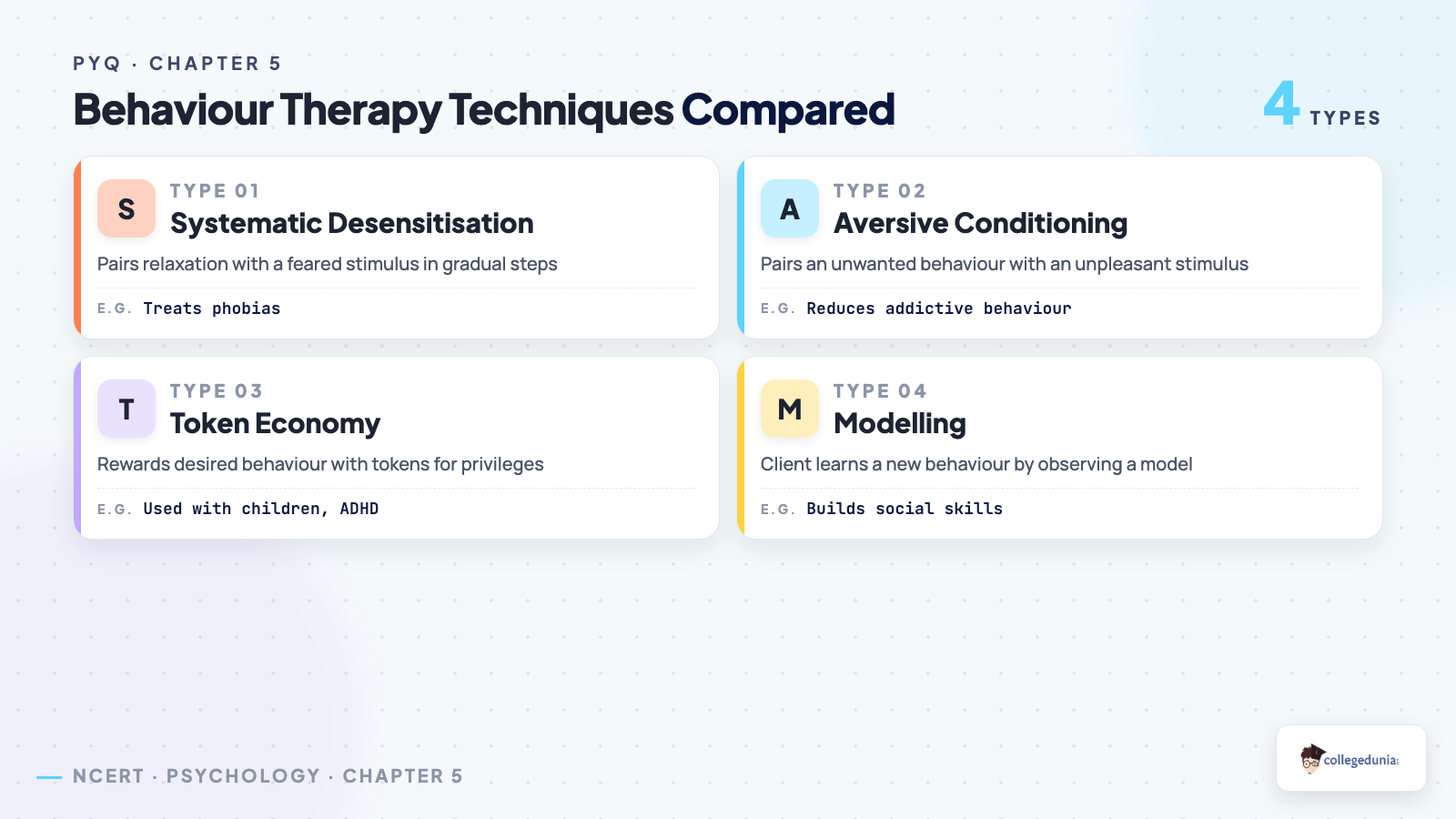
The quick test that solves most PYQs on this topic: is the aim to reduce a fear, remove an unwanted habit, or reward a new one? Systematic desensitisation reduces fear, aversive conditioning removes a habit, and token economy rewards a new one.
How Systematic Desensitisation Works, Step by Step
Systematic desensitisation is the single most-asked behaviour therapy technique in this PDF. Examiners like to test whether a student can describe the process in the correct order, not just name it.
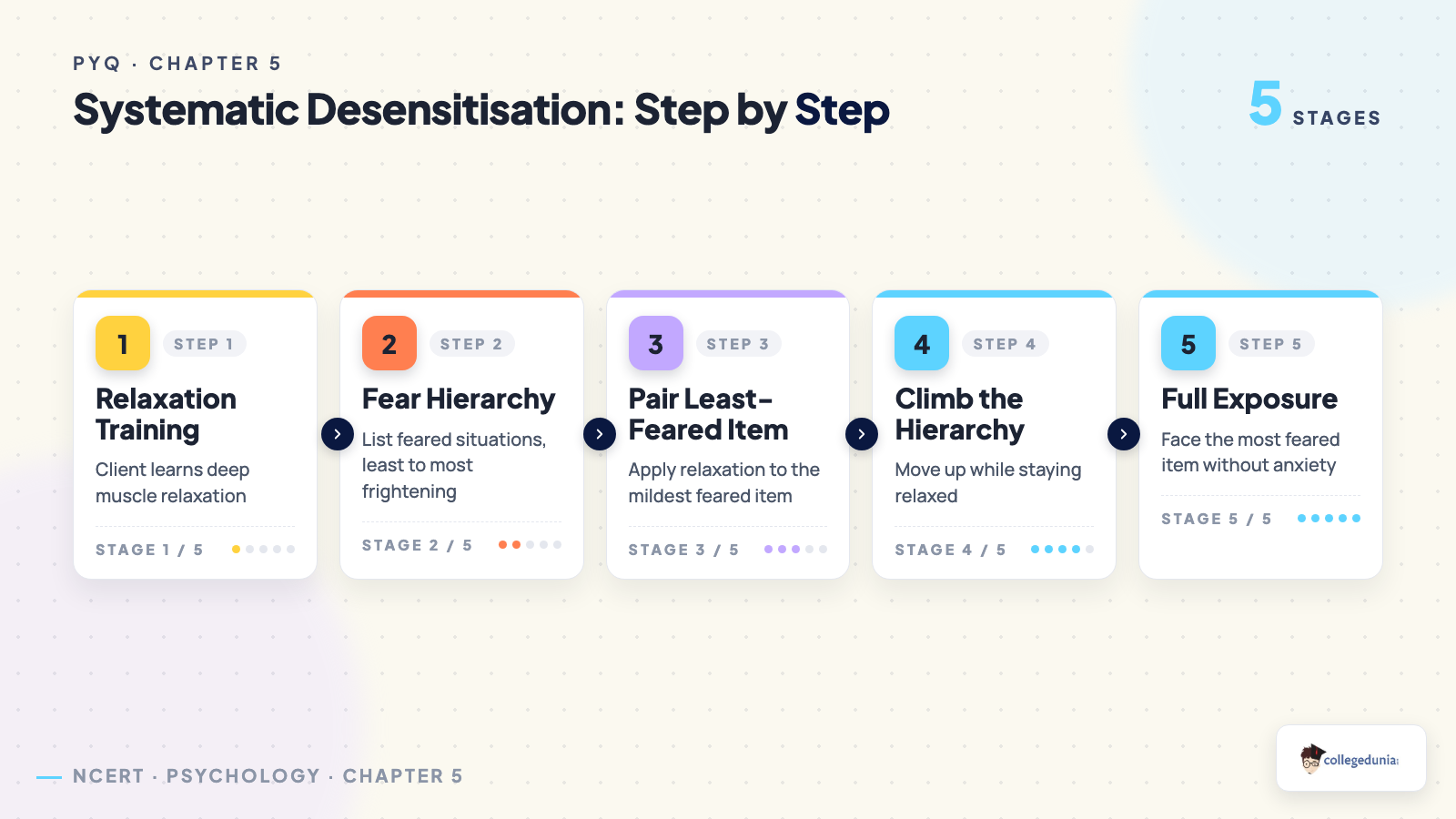
A case-study question on this topic usually describes a client's phobia and asks the student to list the steps in order: relaxation training, building a fear hierarchy, then pairing relaxation with each feared item from least to most frightening.
How These PYQs Pair with Other Chapter 5 Resources
This PDF works best alongside the other Class 12 Psychology Chapter 5 resources on Collegedunia. Use the PYQ PDF to practise recall and timing after the concepts are already clear from the notes. A Formula Sheet / quick-revision sheet for this chapter is not yet available on Collegedunia.
| Resource | Best Used For | Link |
|---|---|---|
| NCERT Notes | First read of every concept, definition, and example | Therapeutic Approaches Class 12 Notes |
| NCERT Solutions | Textbook exercise questions, answered in full | Therapeutic Approaches Class 12 NCERT Solutions |
| Handwritten Notes | Quick one-shot revision the night before the exam | Therapeutic Approaches Handwritten Notes |
| NCERT Book PDF | The original textbook chapter, for reference | Therapeutic Approaches Class 12 NCERT Book PDF |
| PYQ (this page) | Timed practice on real board questions with solutions | Therapeutic Approaches PYQ |
How to Use the Therapeutic Approaches PYQ PDF Most Effectively
The PDF works best as a timed drill, not a read-through. A simple three-round routine covers all 20 questions without wasting a full mock-test slot.
- Round 1: attempt the MCQs and short answers cold, without looking at the solutions, and time yourself.
- Round 2: attempt the case studies and long answers, then check every answer against the step-by-step solution in the PDF.
- Round 3: redo only the questions marked wrong, a day or two later, to confirm the concept has stuck.
NCERT PYQ for Class 12 Psychology: All Chapters
The table below lists the PYQ PDF for every chapter of Class 12 Psychology, so students can move straight to the next chapter's board questions. Chapters 1, 2, 3, 4, 6, and 7 are still in progress.
| Chapter | Resource |
|---|---|
| Chapter 1 | Variations in Psychological Attributes PYQ (coming soon) |
| Chapter 2 | Self and Personality PYQ (coming soon) |
| Chapter 3 | Meeting Life Challenges PYQ (coming soon) |
| Chapter 4 | Psychological Disorders PYQ (coming soon) |
| Chapter 5 | Therapeutic Approaches PYQ |
| Chapter 6 | Attitude and Social Cognition PYQ (coming soon) |
| Chapter 7 | Social Influence and Group Processes PYQ (coming soon) |
Therapeutic Approaches Class 12 Psychology PYQ FAQs
Ques. Does the Therapeutic Approaches PYQ PDF include solutions?
Ans. Yes. All 20 questions in this PDF come with a full step-by-step solution, not just a final answer key. Each solution shows the exact points an examiner would look for.
Ques. How many questions are in the Class 12 Psychology Therapeutic Approaches PYQ PDF?
Ans. The PDF has 20 board-paper questions in a mix of MCQs, Assertion-Reason, case studies, and short/long descriptive answers.
Ques. Which years are covered in this PYQ compilation?
Ans. The questions are drawn from the 2022, 2023, 2024, 2025, and 2026 CBSE Class 12 Psychology board papers.
Ques. Is this PYQ PDF free to download?
Ans. Yes, the Therapeutic Approaches PYQ PDF is free to download from this page, with no login required.
Ques. Is this PDF according to the 2026-27 CBSE syllabus?
Ans. Yes. Every question is checked against the current 2026-27 NCERT chapter, and none of the questions test content that has been dropped from the rationalised syllabus.
Ques. How should I use this PDF to prepare for boards?
Ans. Attempt the questions in order under a timer, check each answer against the solution, then redo only the ones marked wrong a few days later.
Ques. What is psychotherapy?
Ans. Psychotherapy is a systematic, structured interaction between a trained therapist and a client, aimed at removing or reducing psychological distress and helping the client cope better.
Ques. How is systematic desensitisation defined?
Ans. Systematic desensitisation is a behaviour therapy technique that pairs relaxation with a step-by-step exposure to a feared object or situation, from least to most frightening, to reduce a phobia.
Ques. What are cognitive distortions?
Ans. Cognitive distortions are faulty, biased ways of thinking about oneself and the world, such as all-or-nothing thinking or overgeneralisation, that cognitive therapy works to identify and correct.



Comments