



Class 12 Physics Chapter 14 Semiconductor Electronics notes give you a quick, exam-ready summary of the whole chapter. They follow the latest NCERT textbook and cover every topic you need for the boards. You can read the notes below and download the full PDF right on this page.
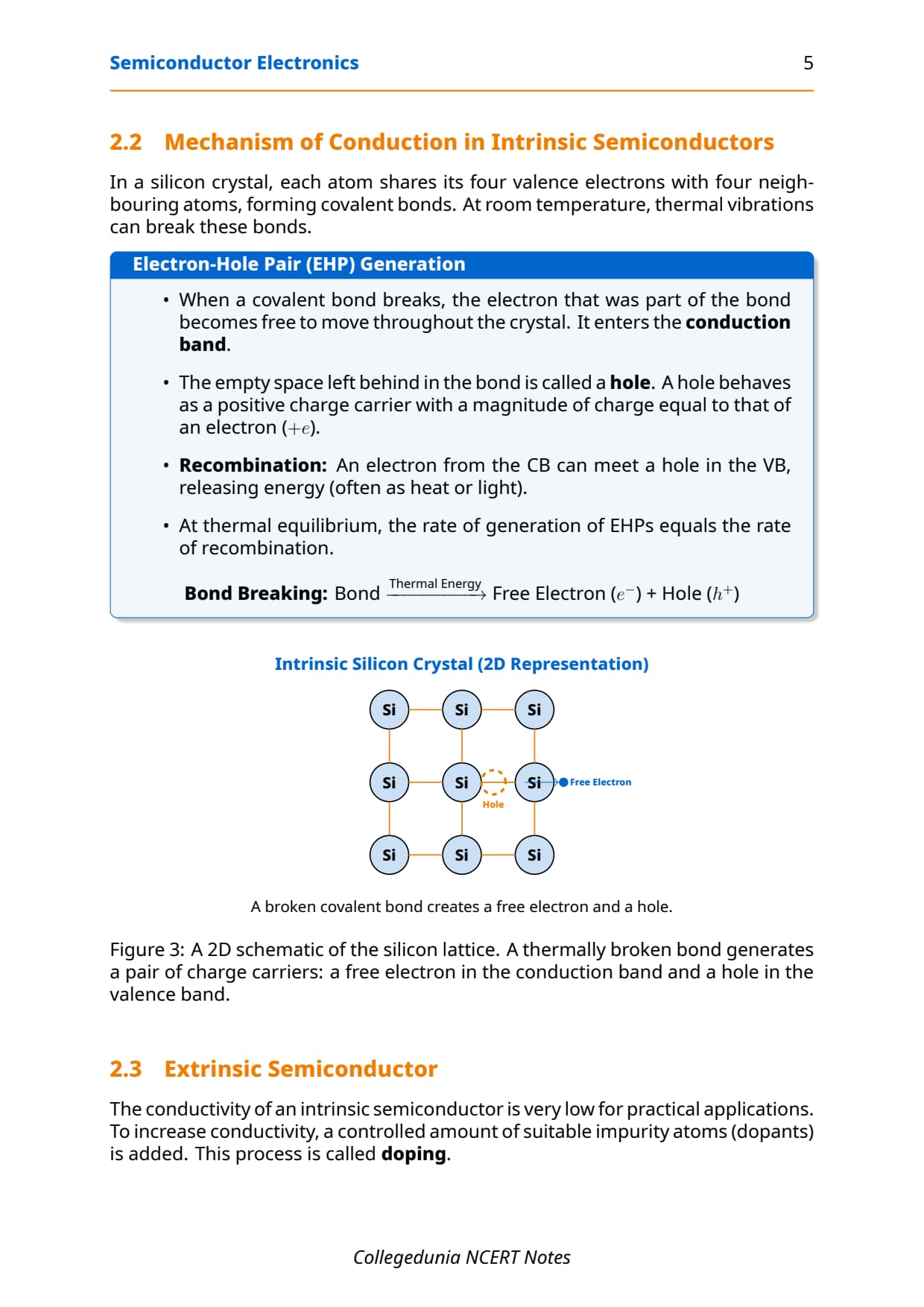
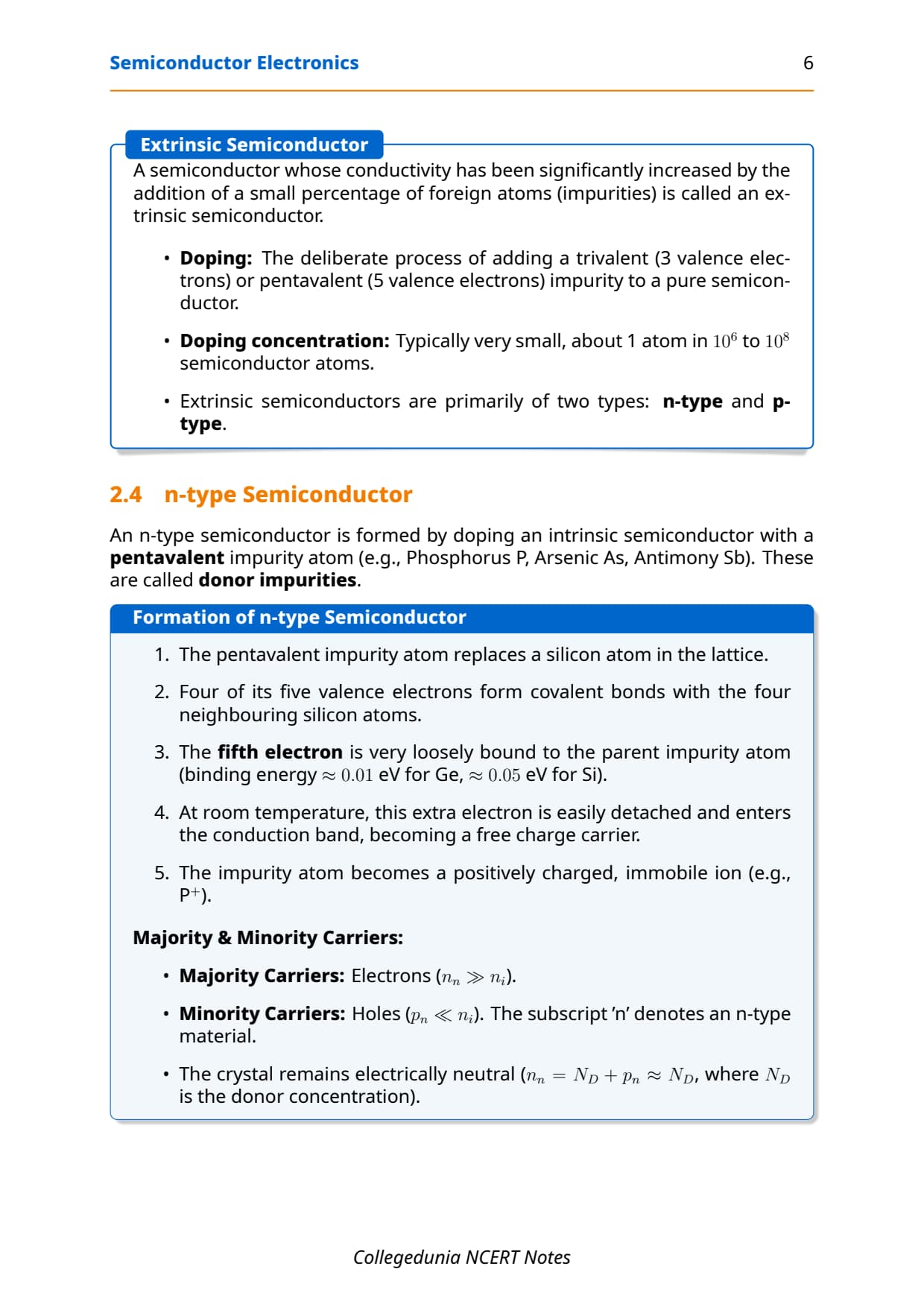
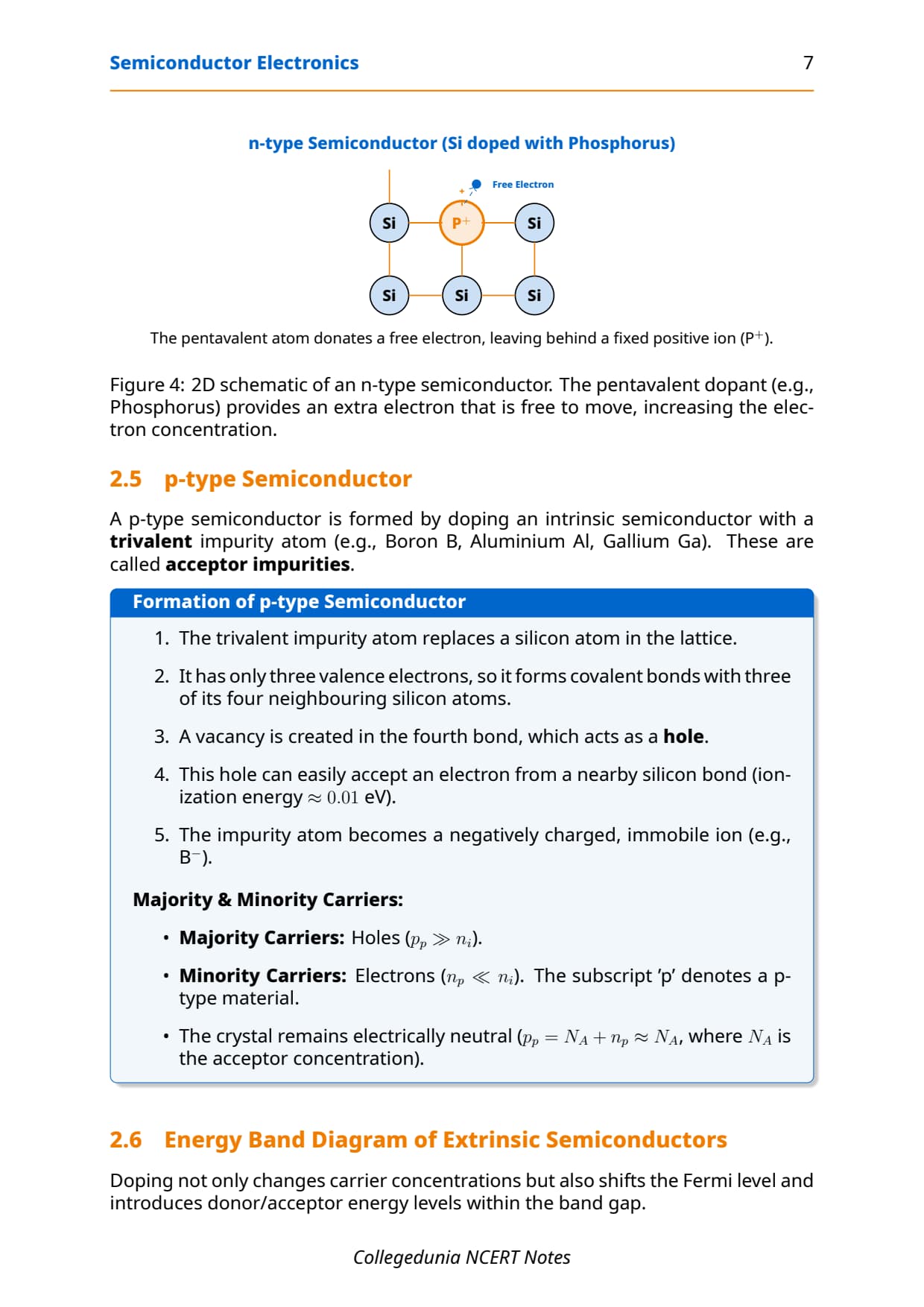
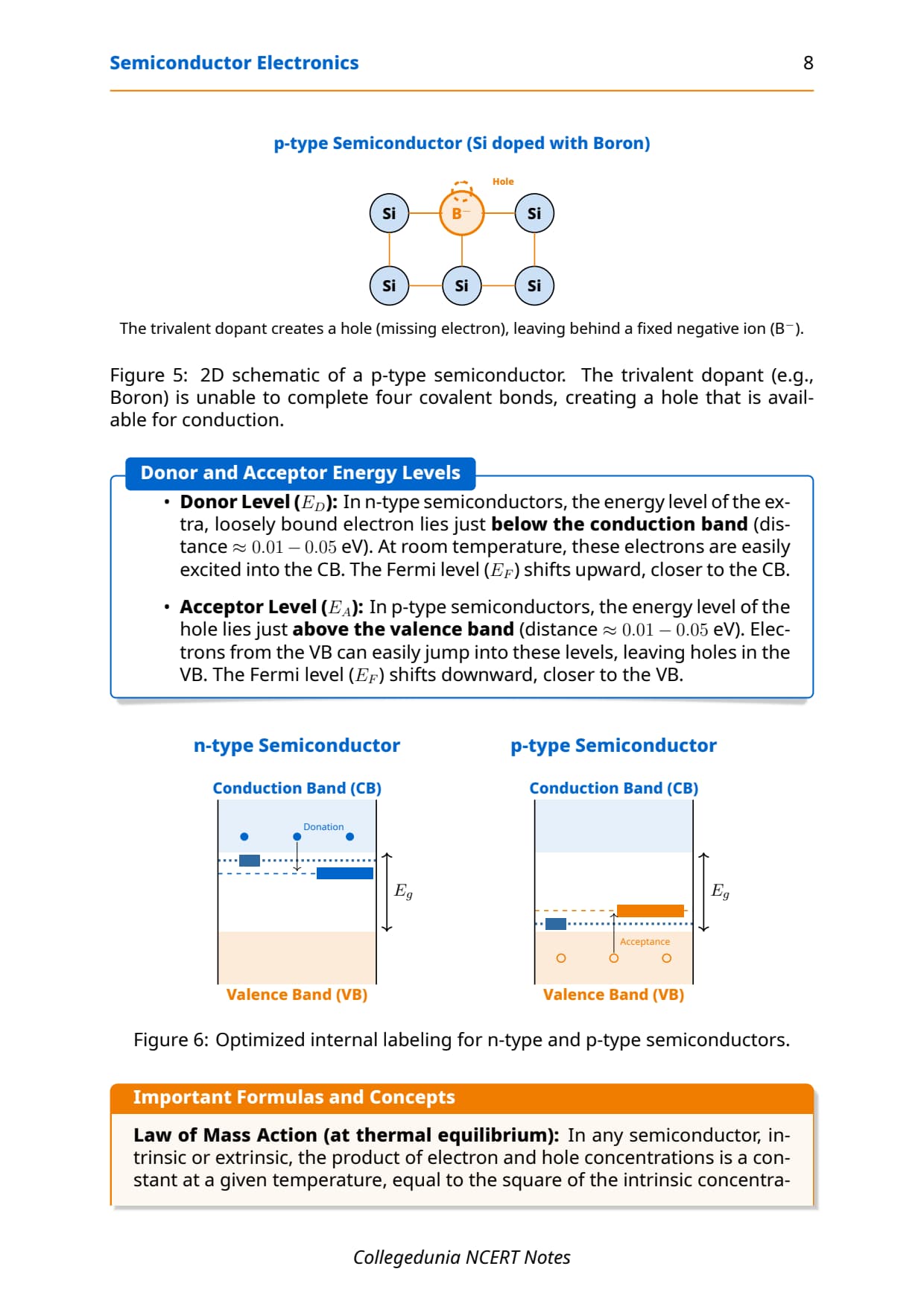
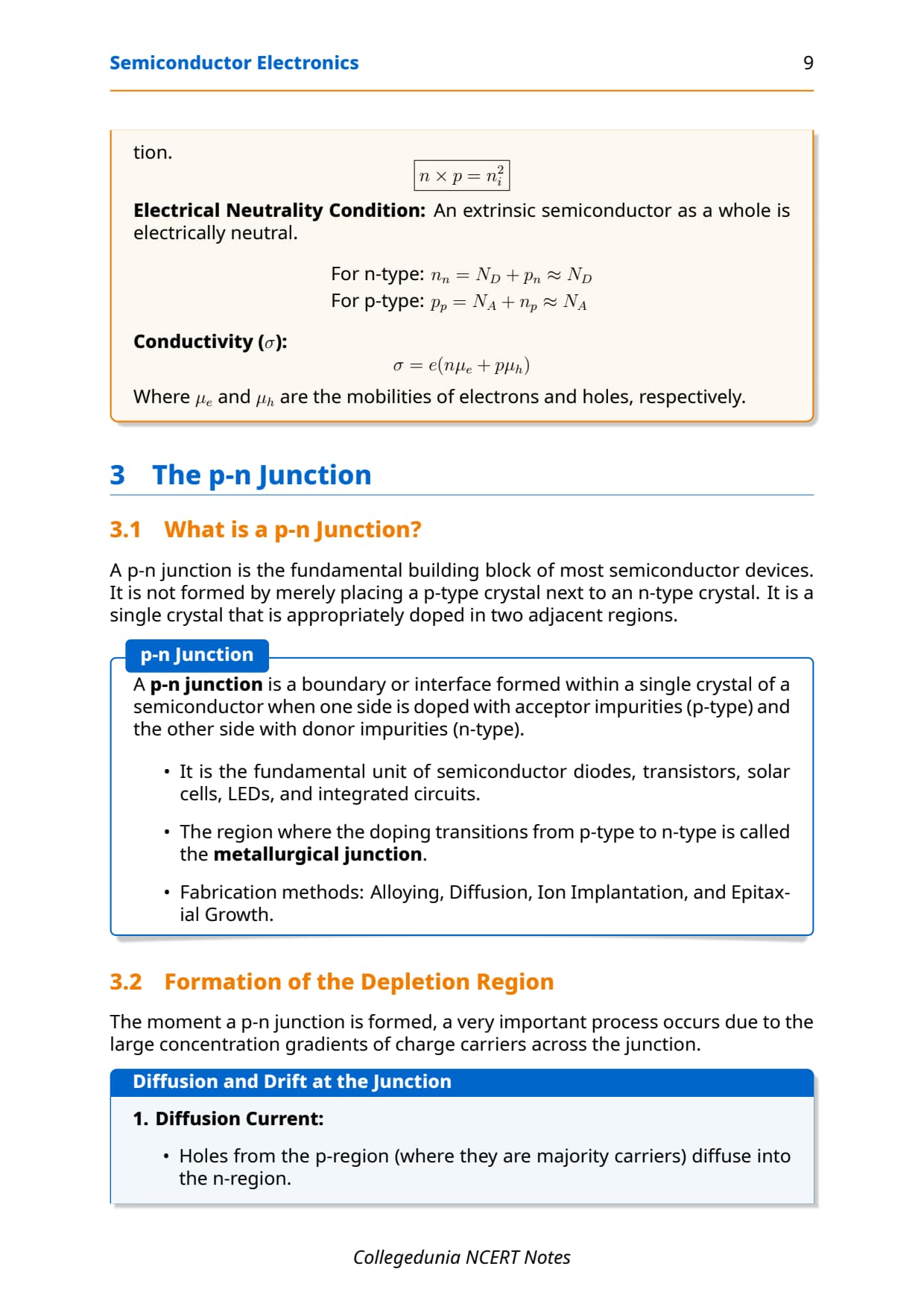
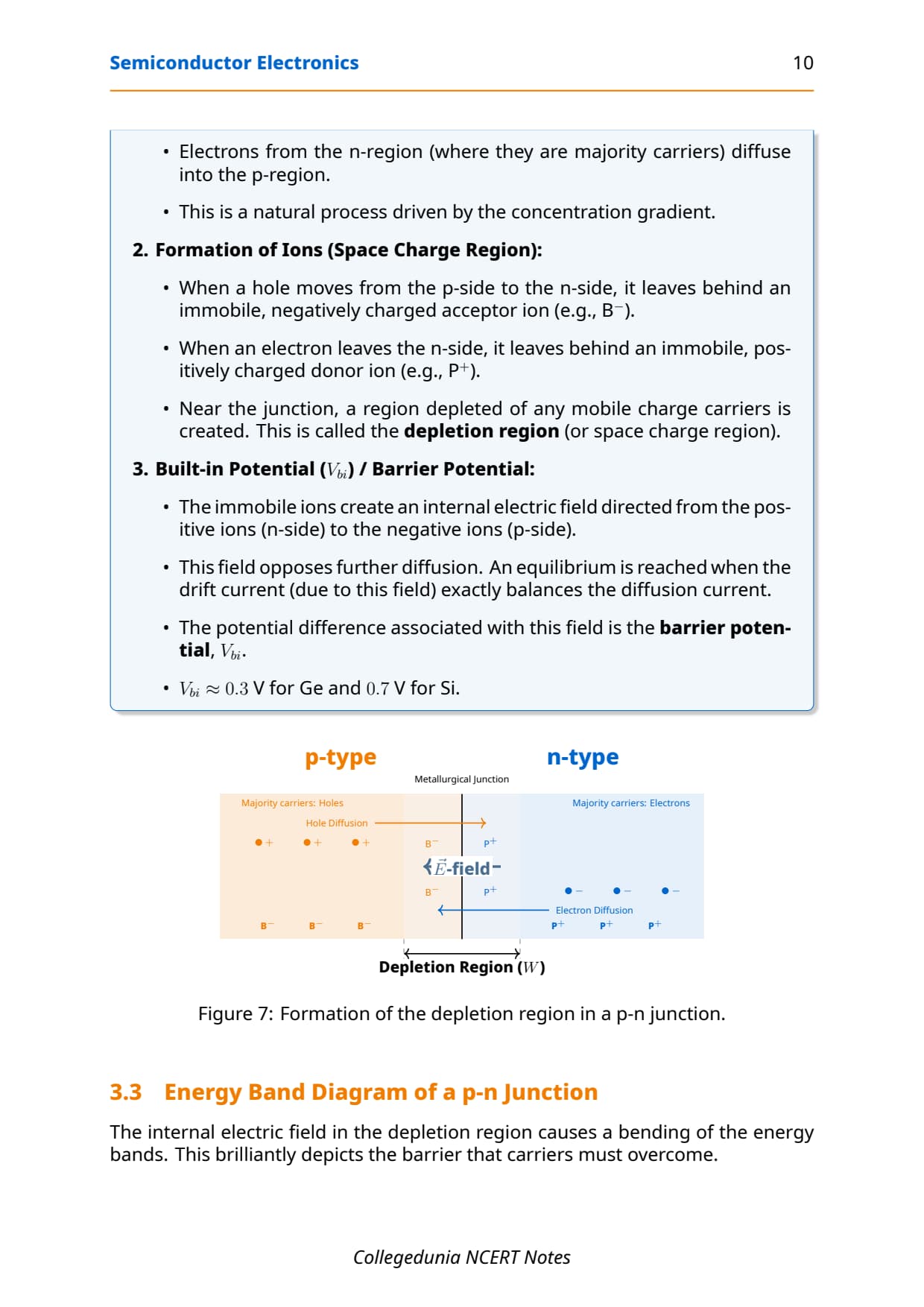
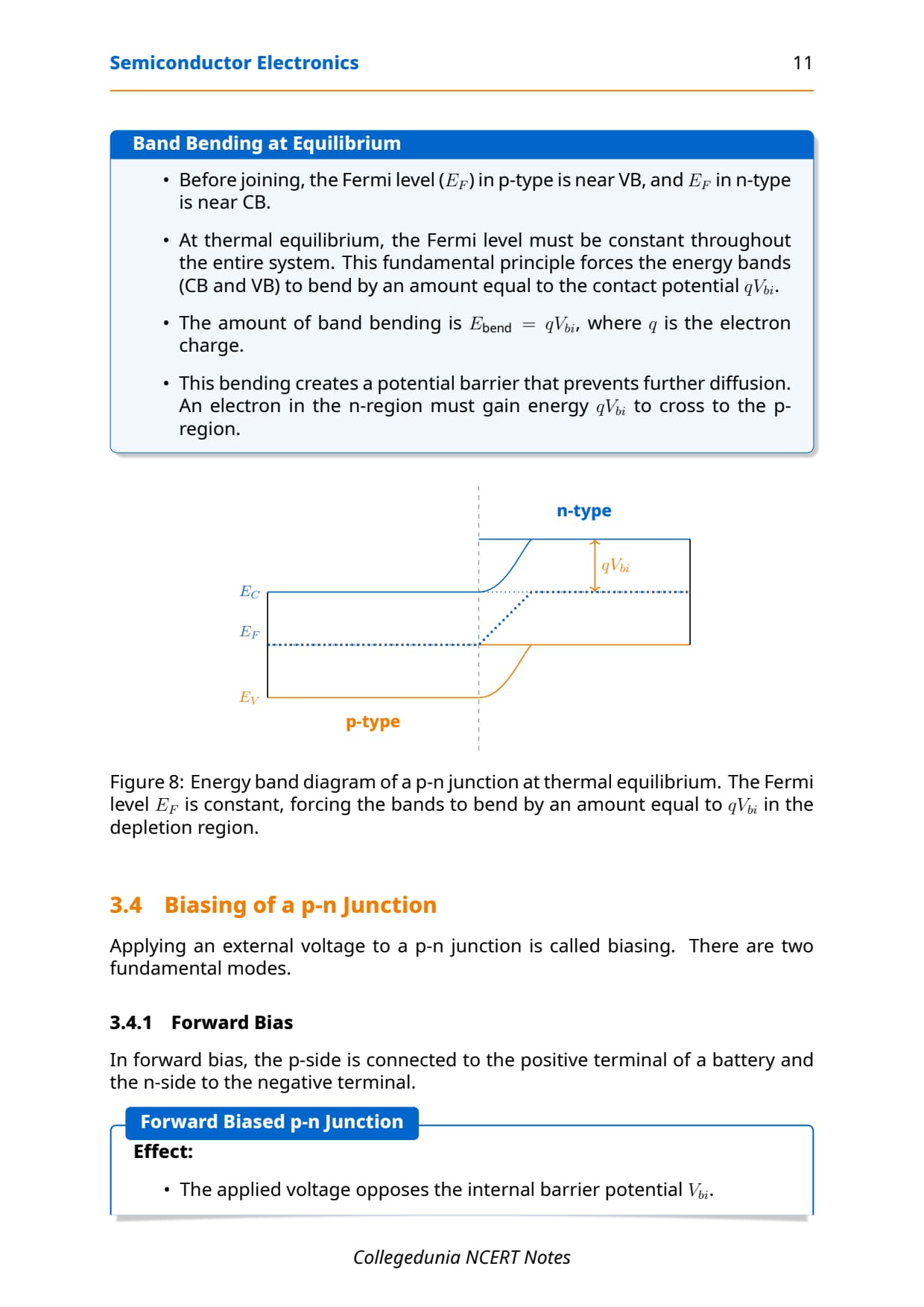
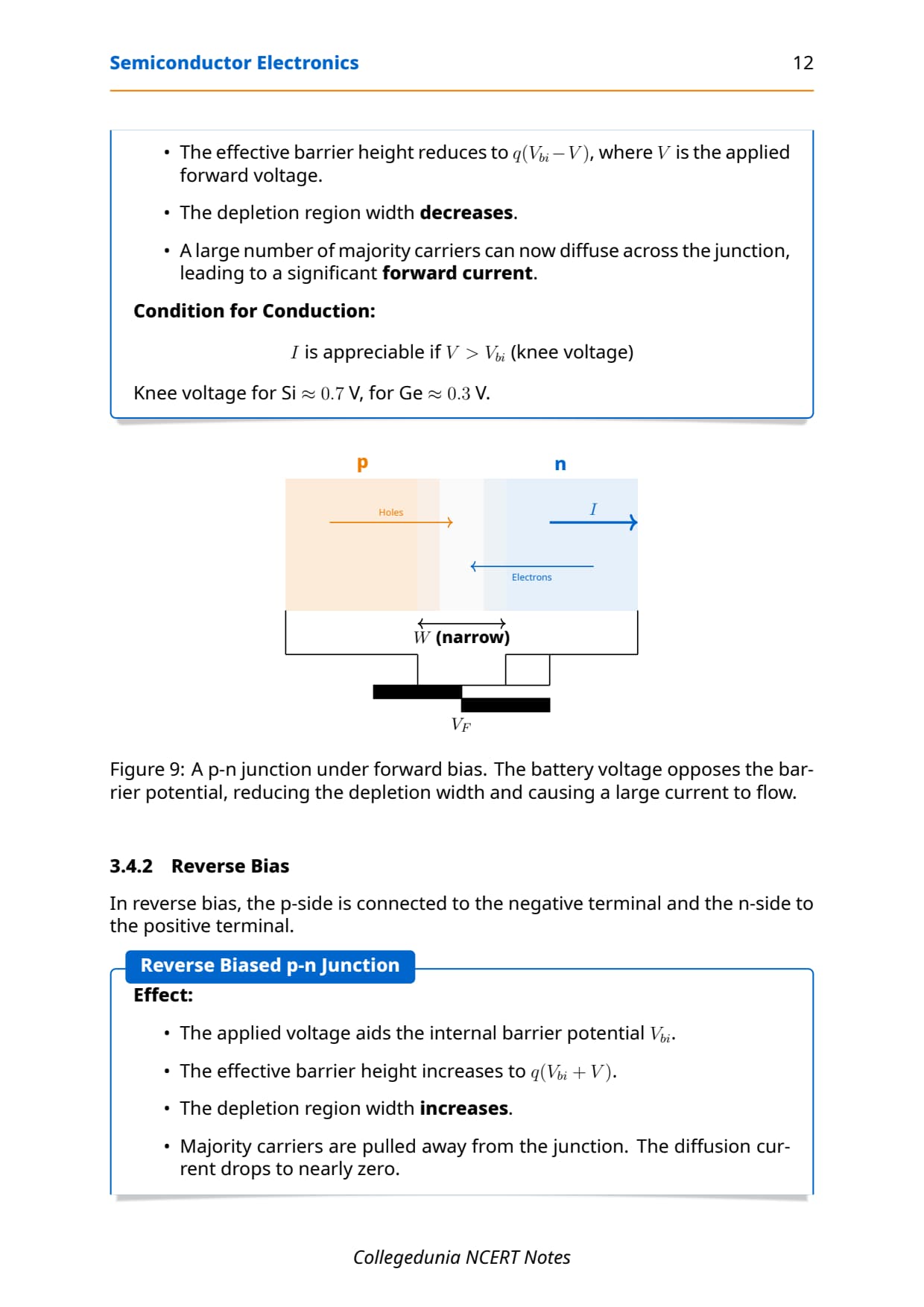
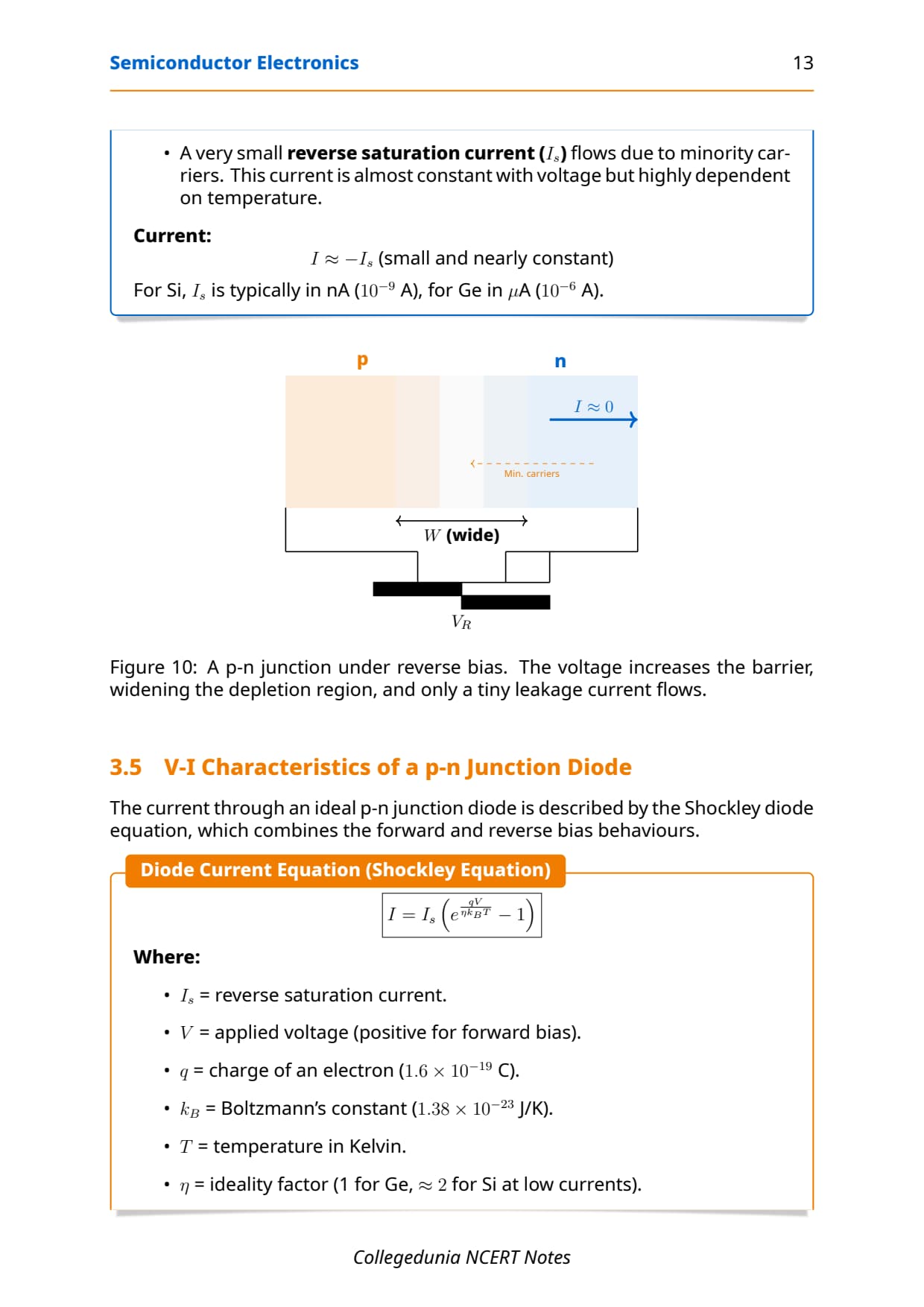
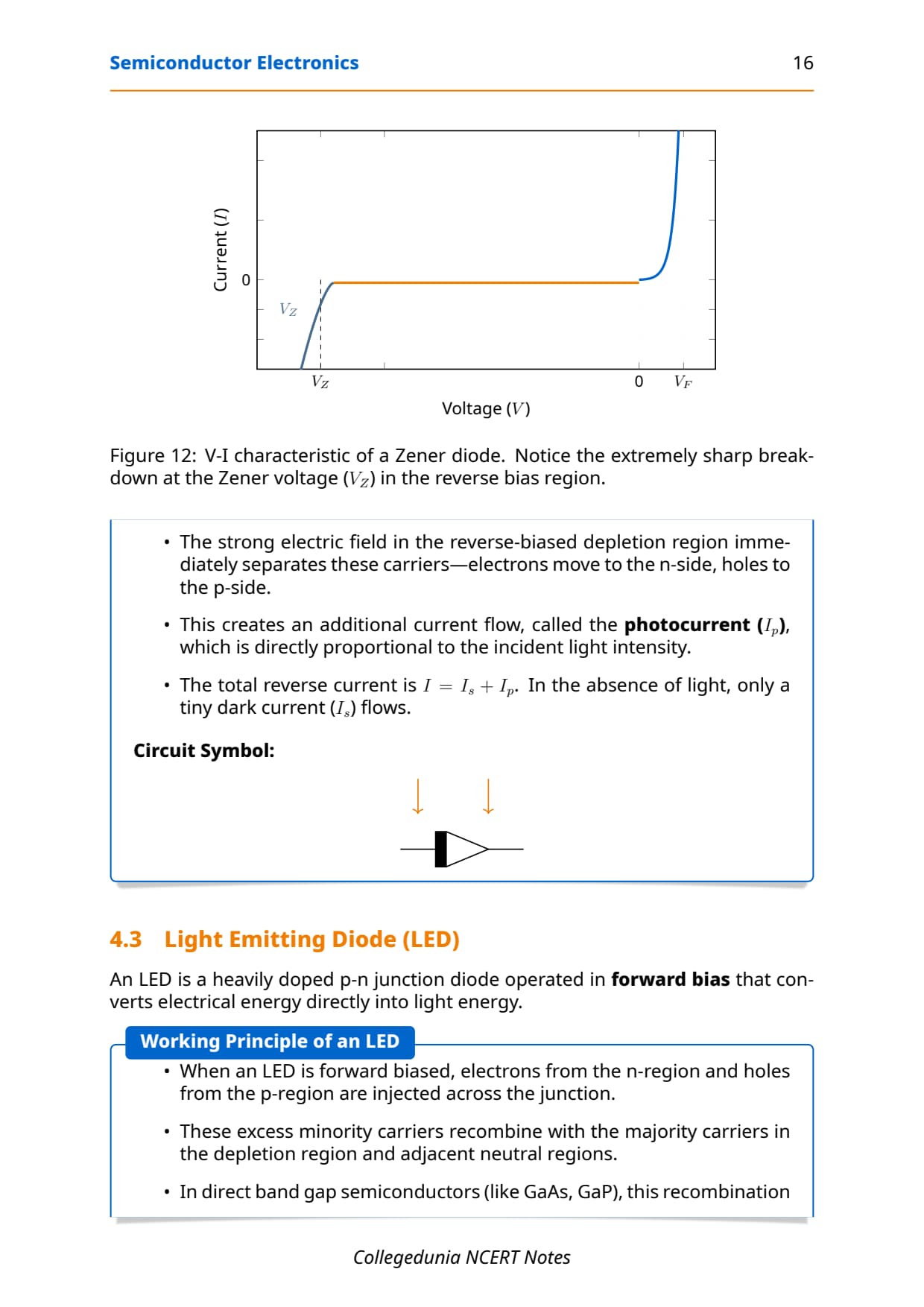
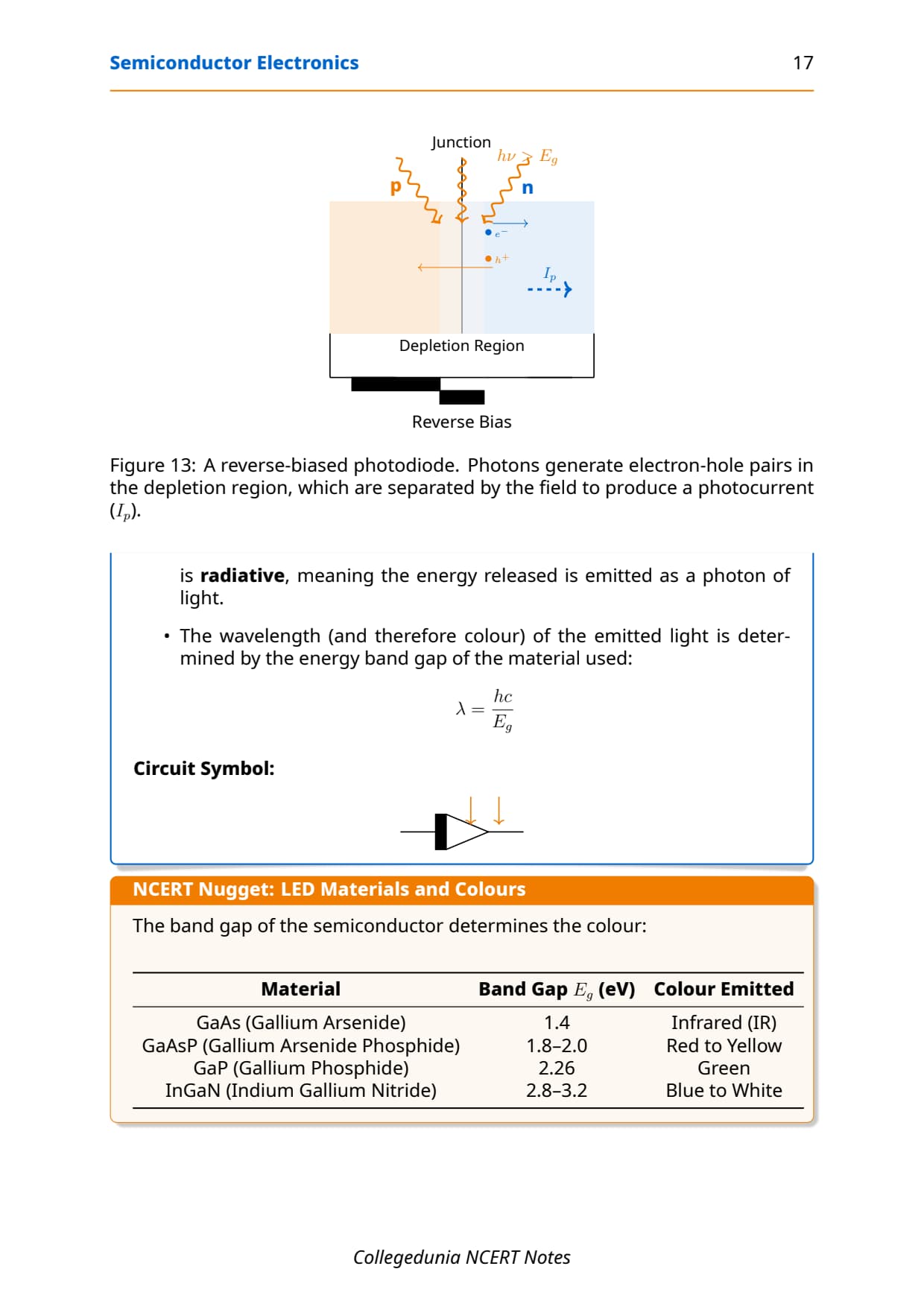
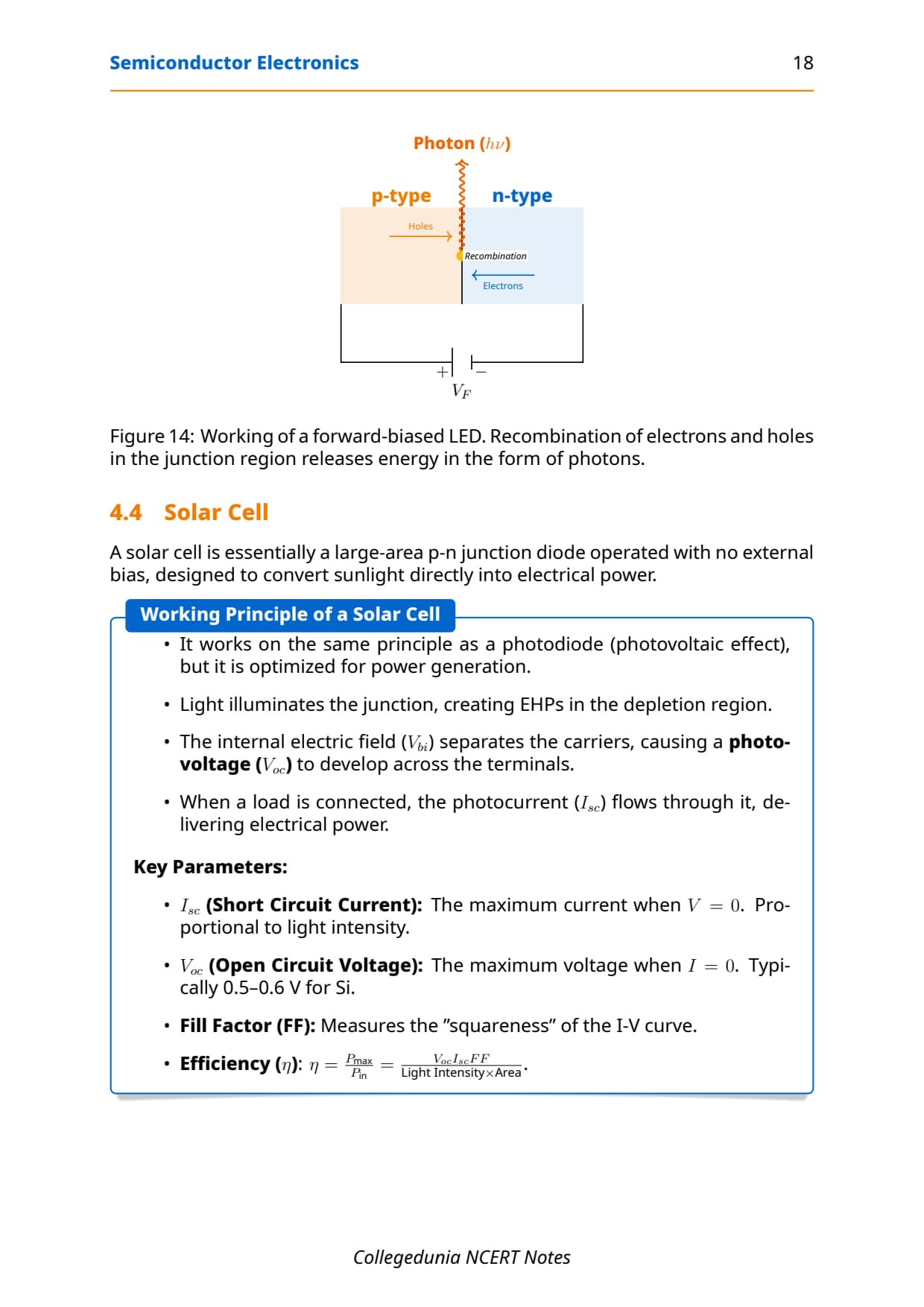
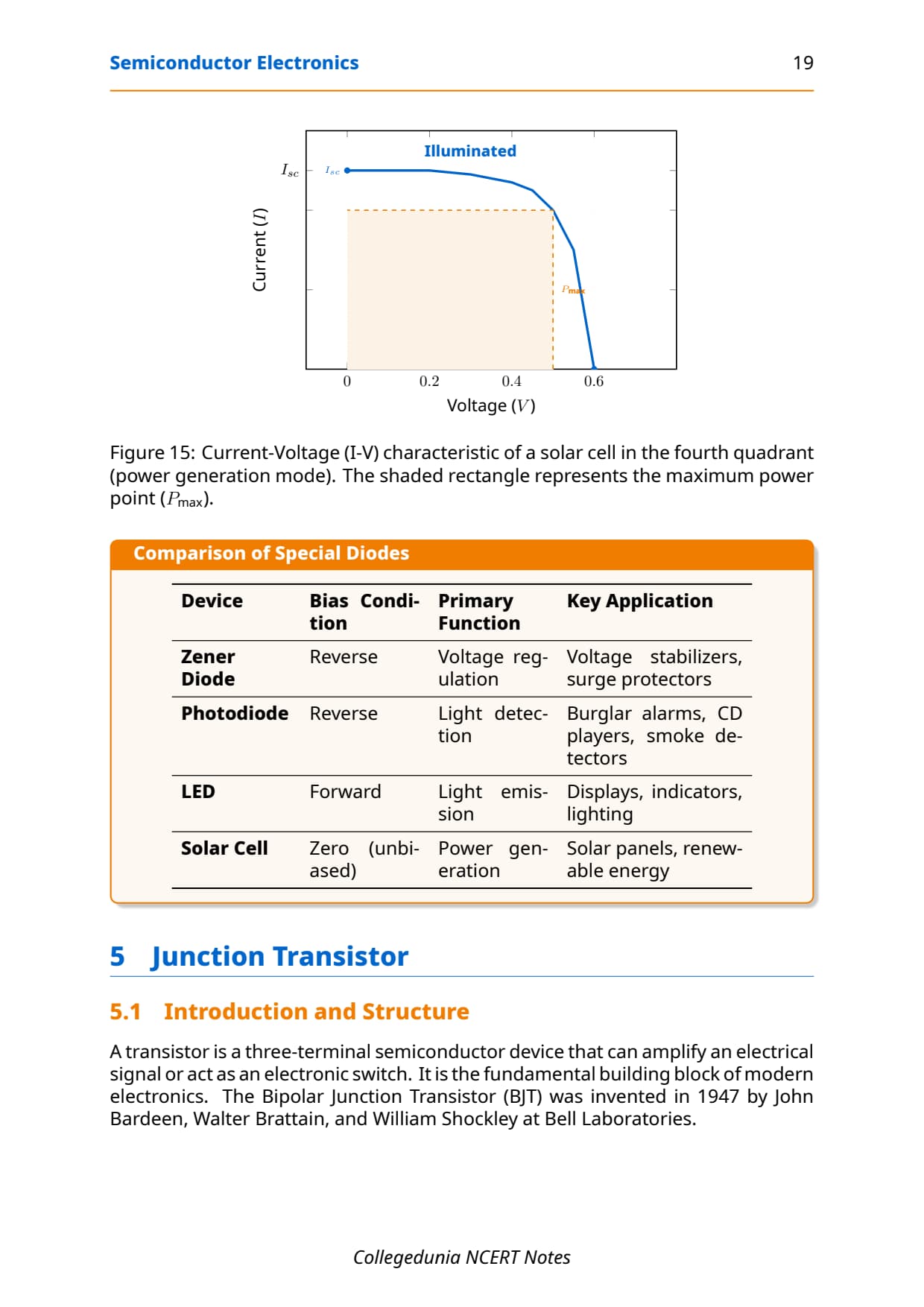
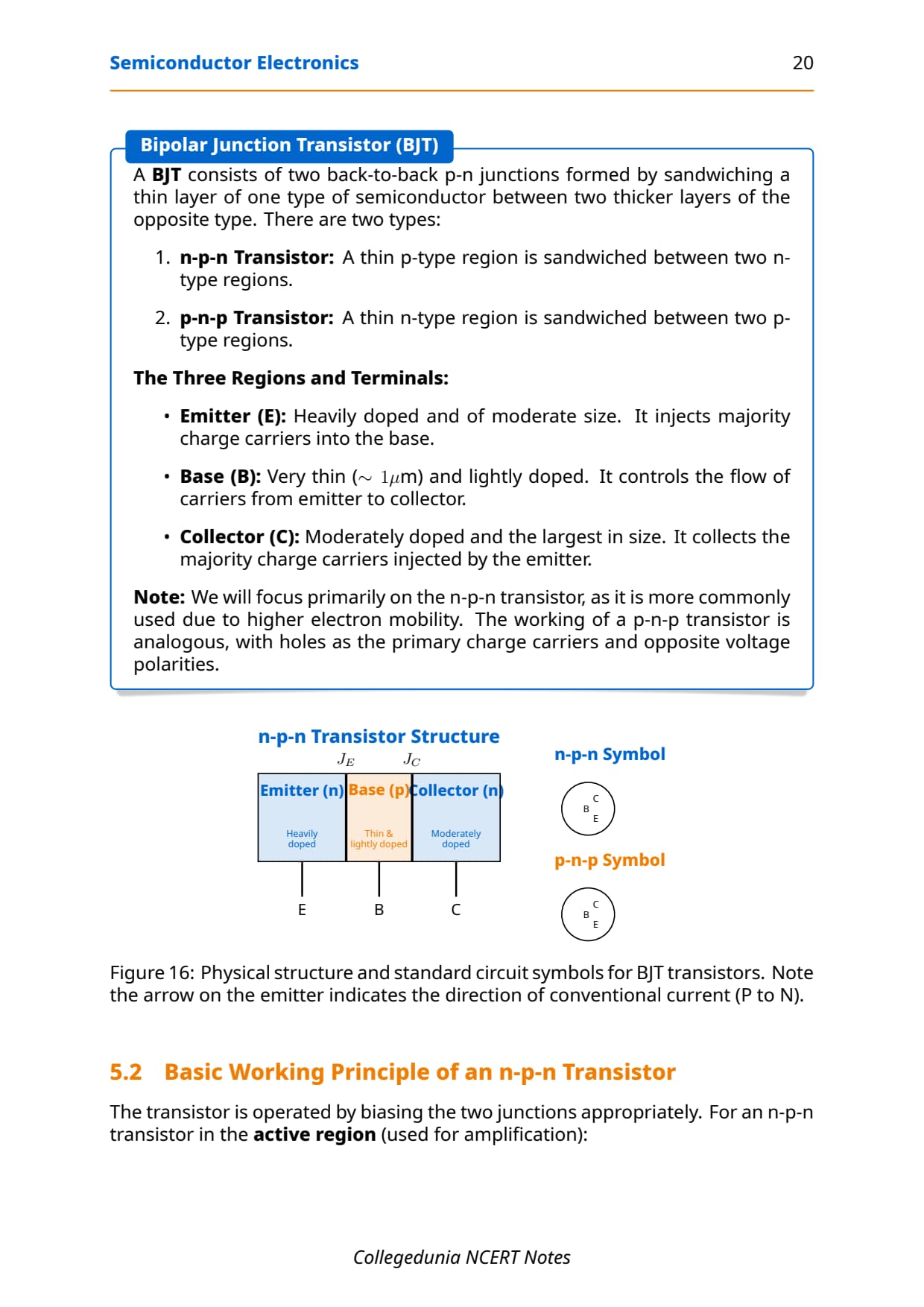
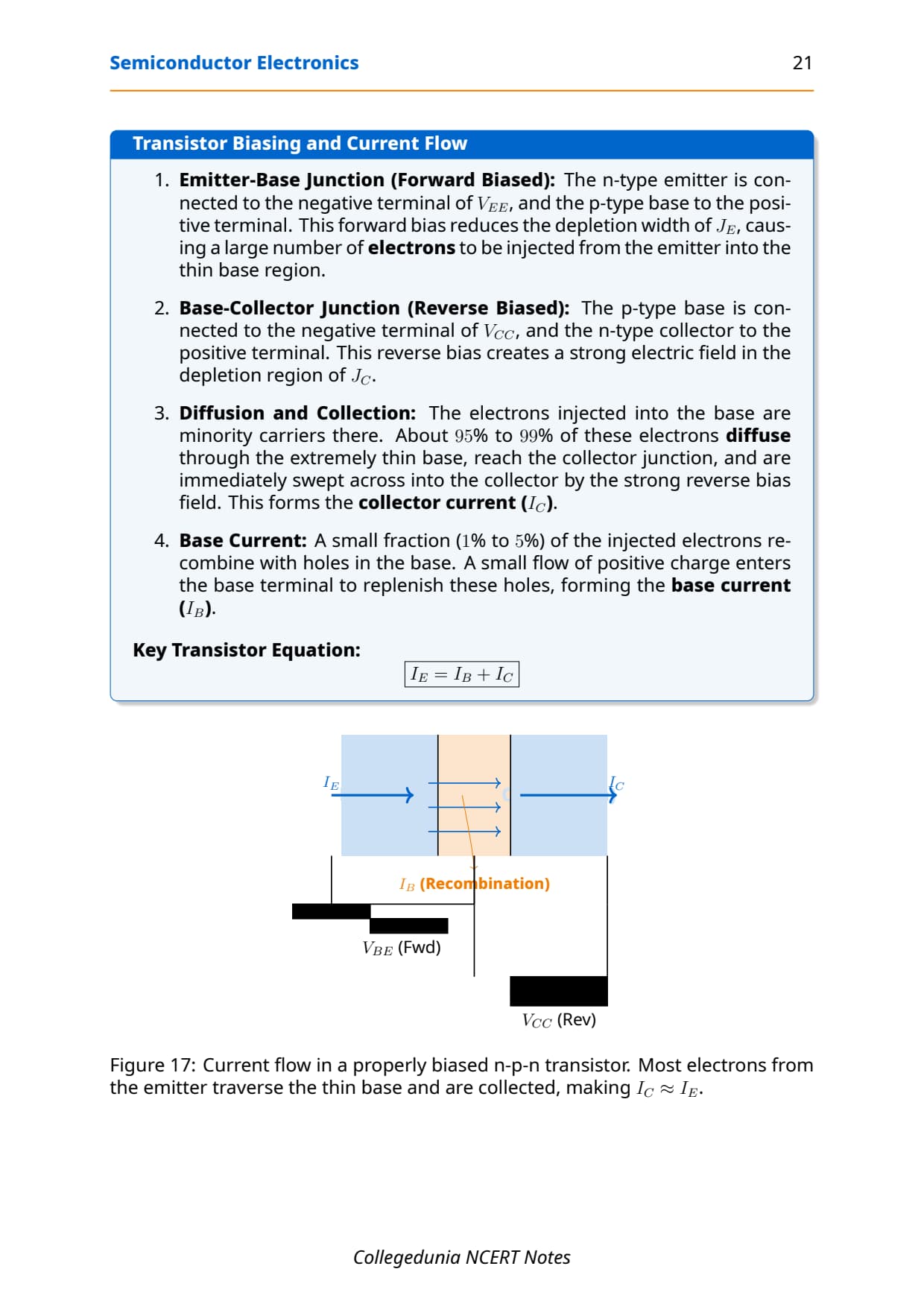
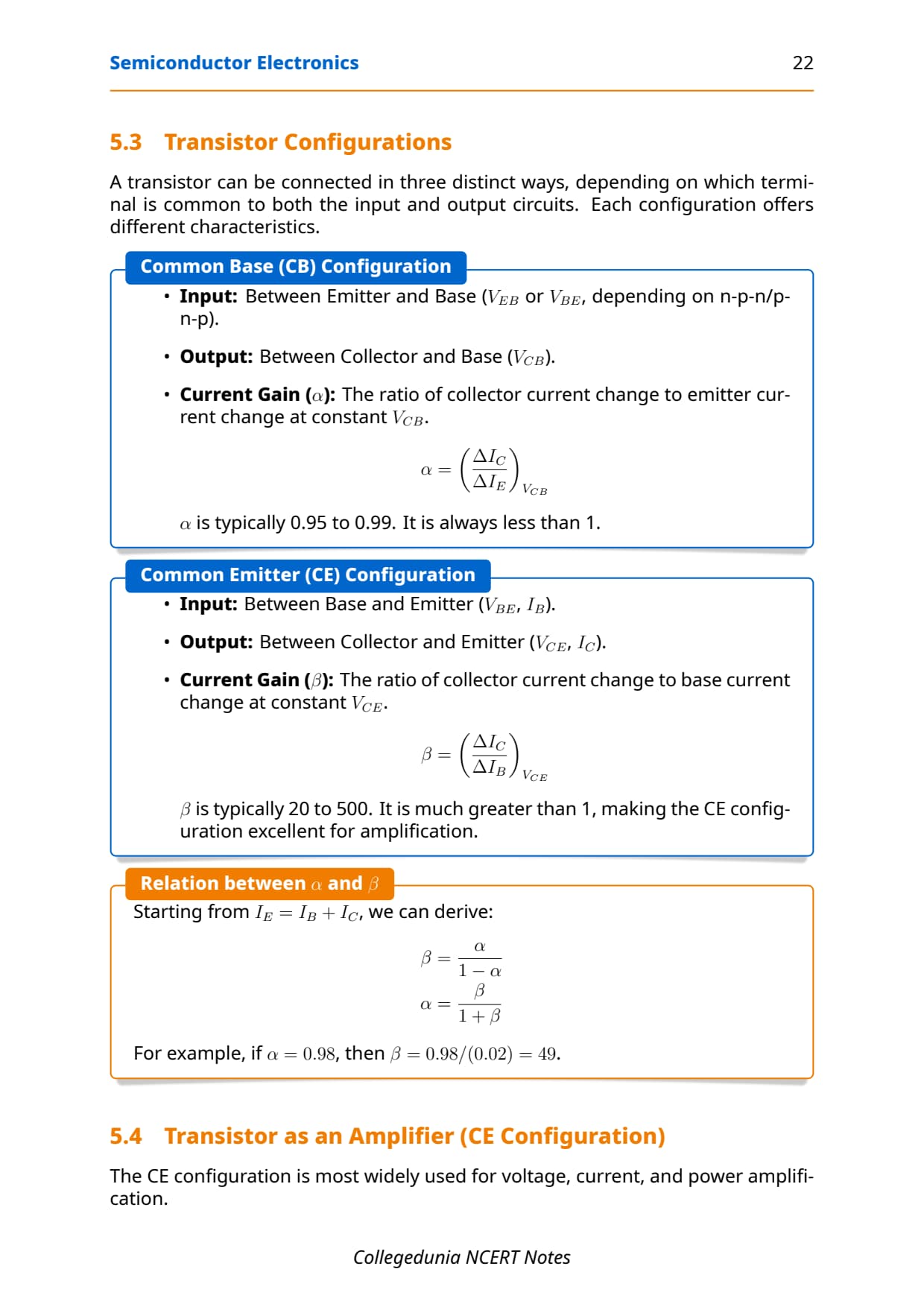
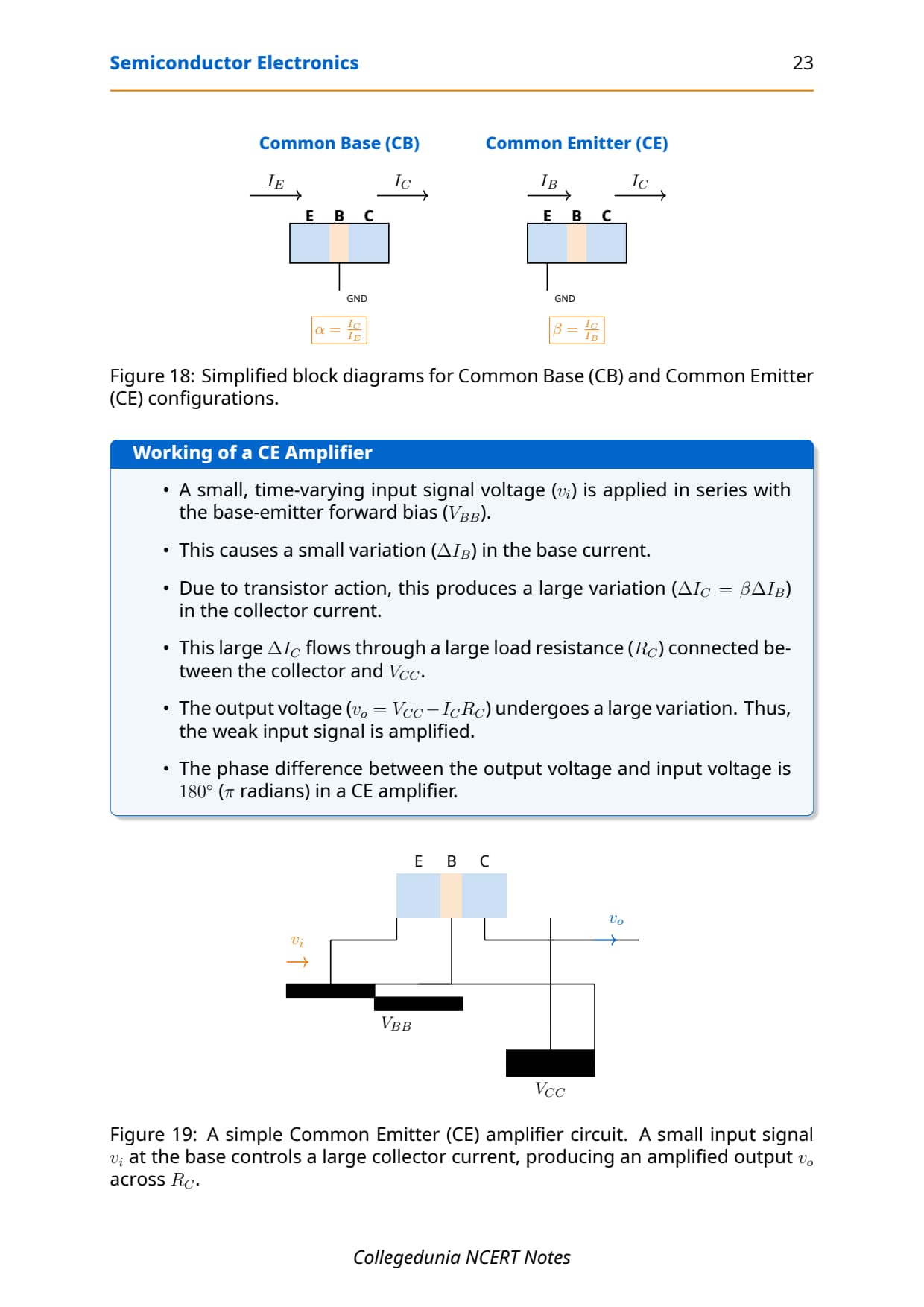
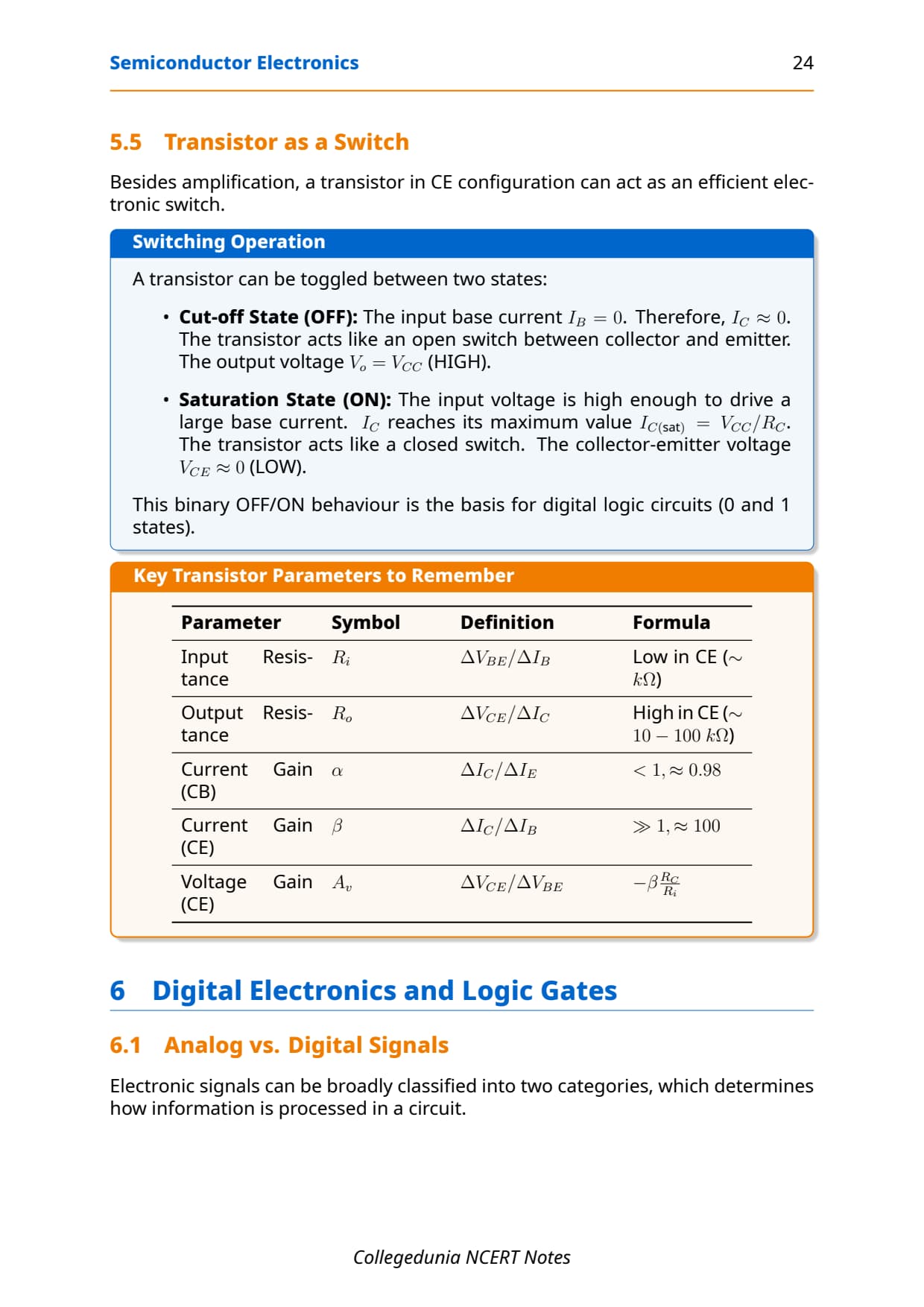
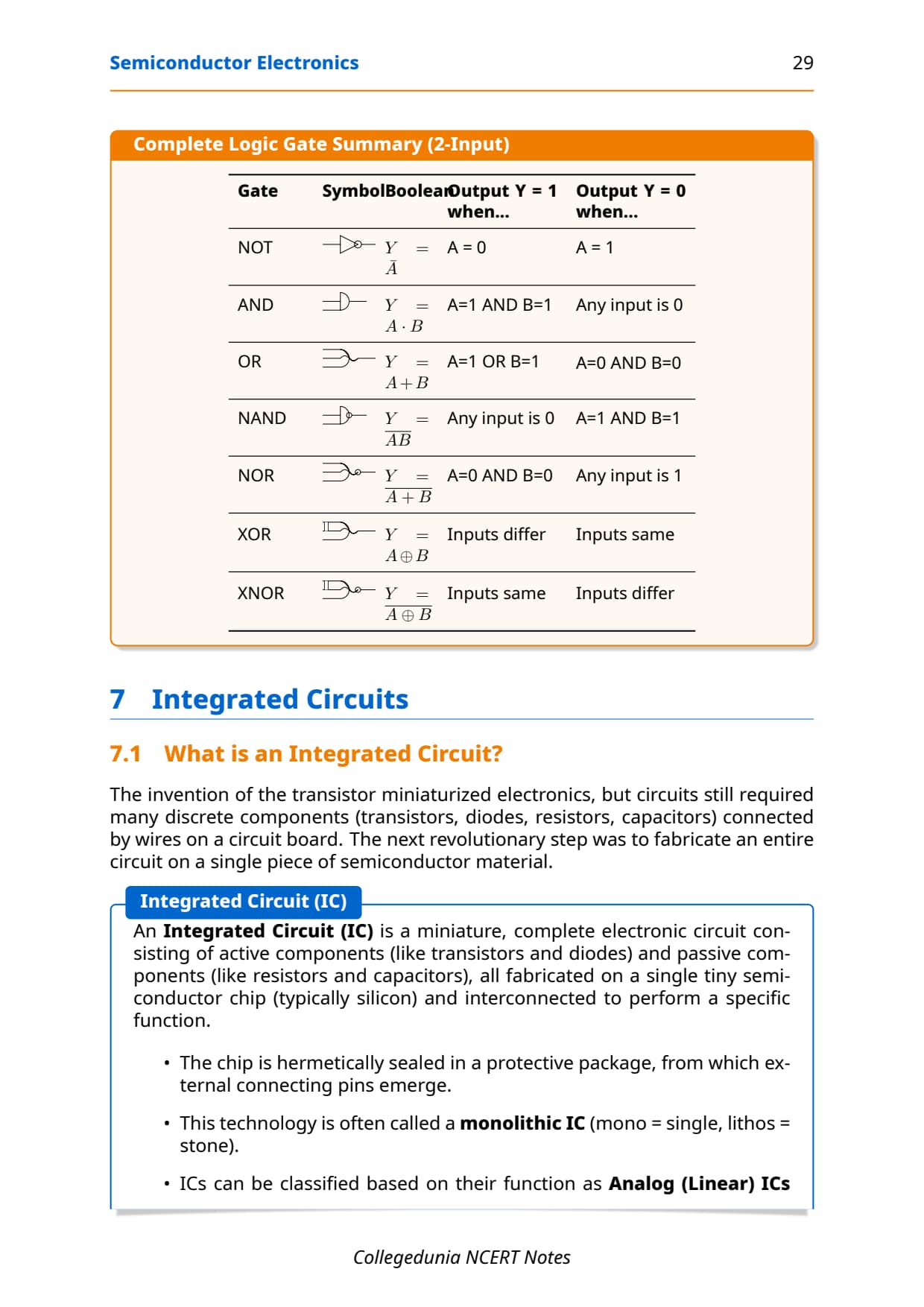
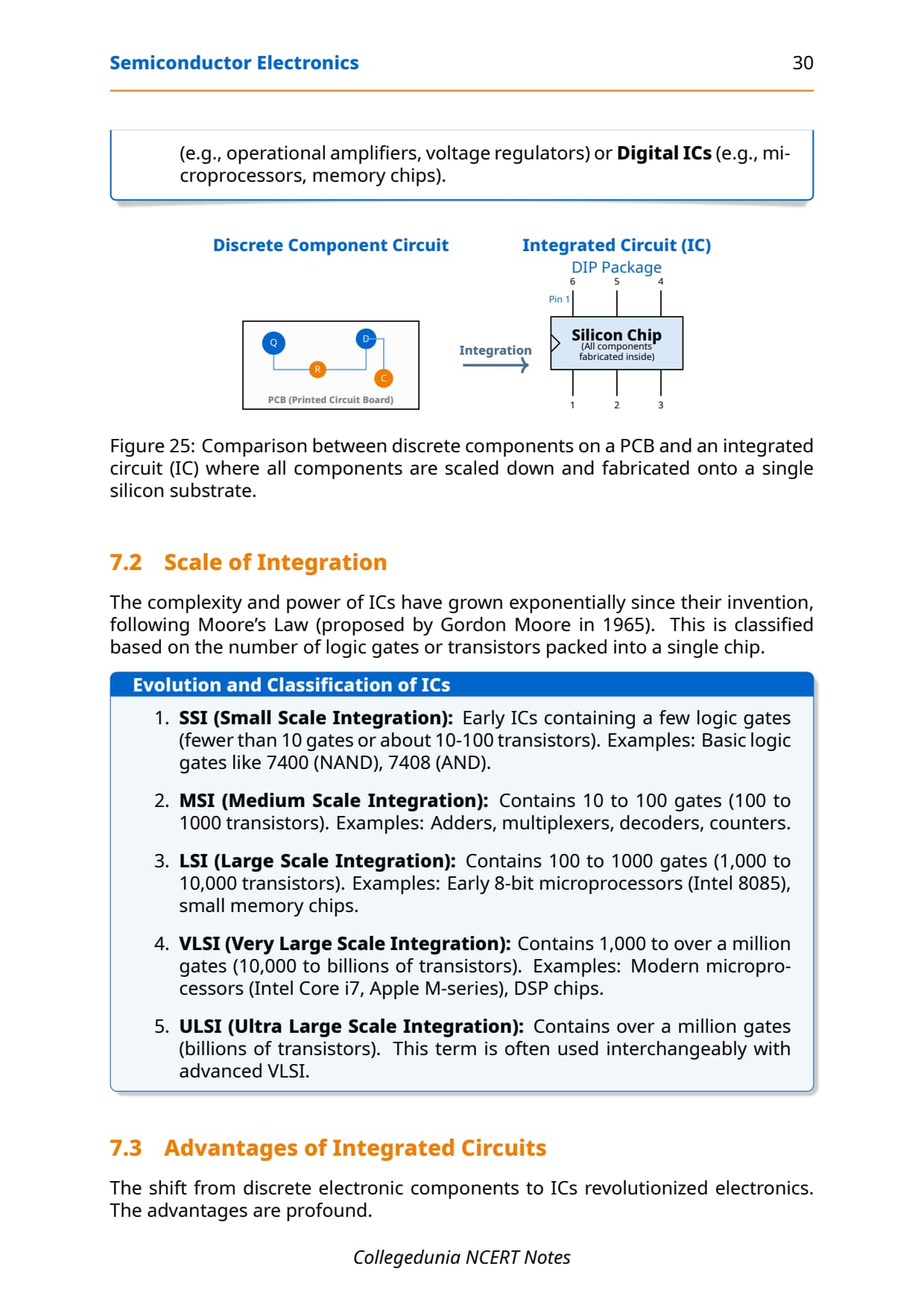
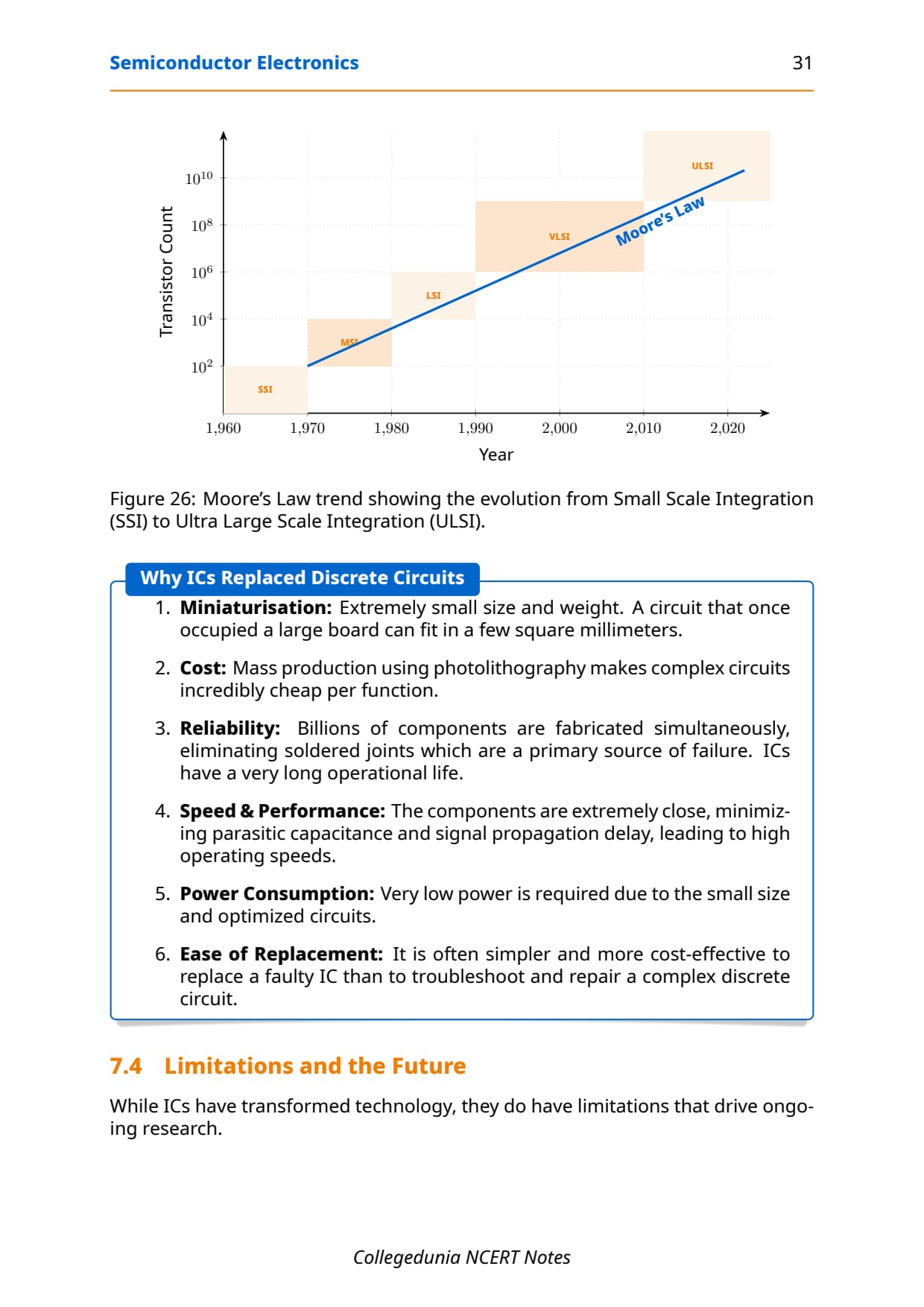
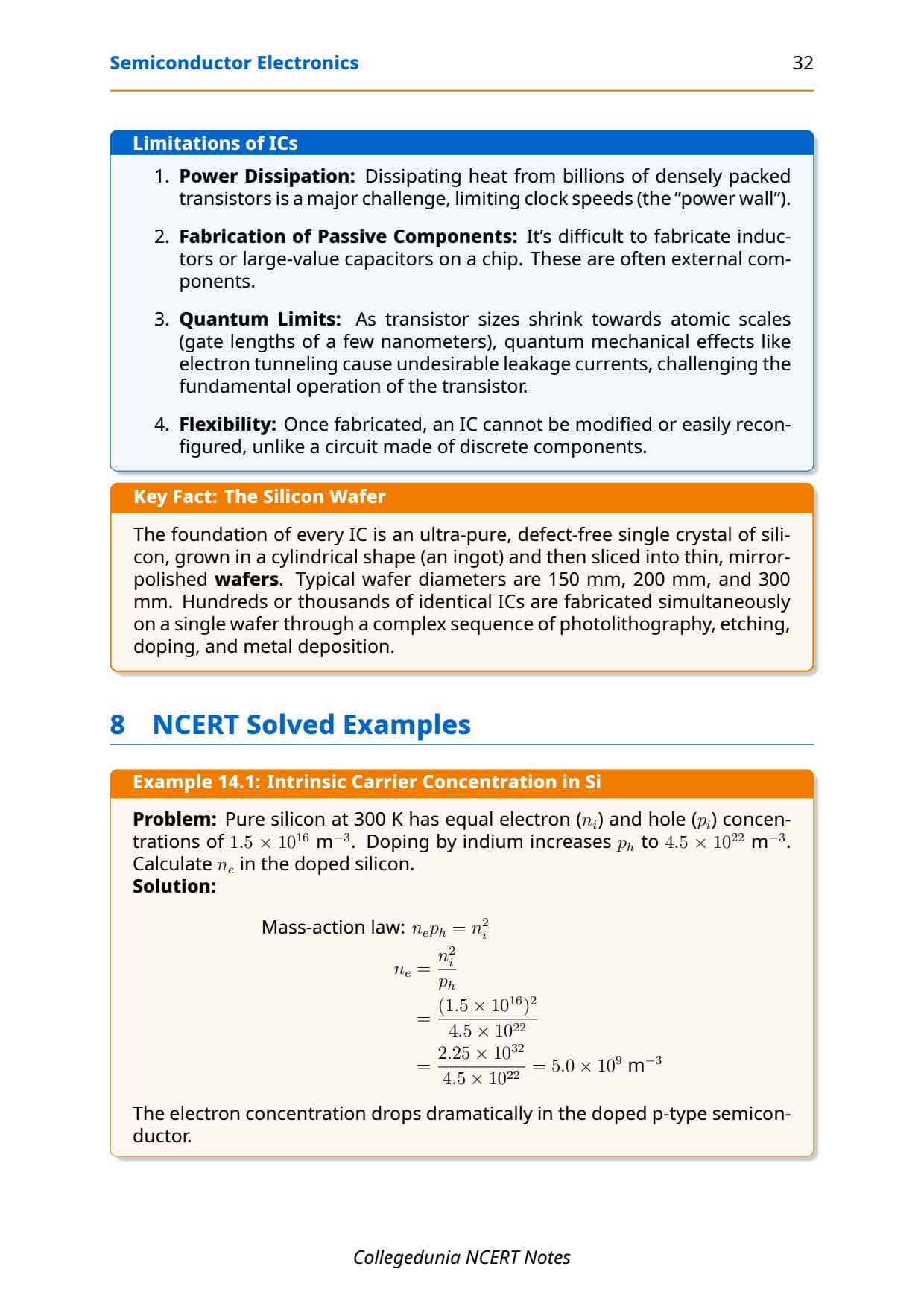
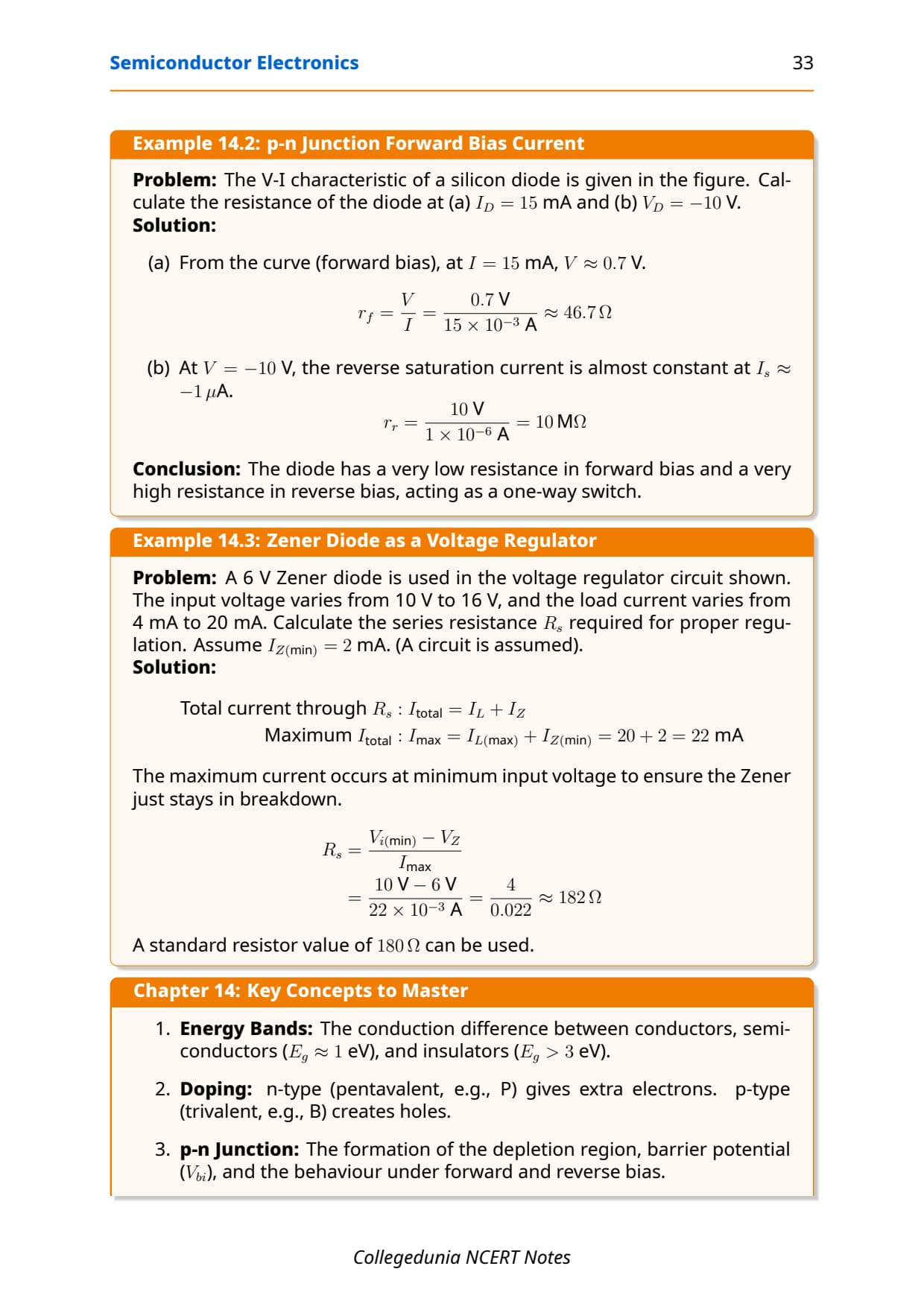
Here is what Chapter 14 is worth across the main exams:
- CBSE Boards: Chapter 14 carries about 6 marks, usually one derivation plus one short-answer question.
- JEE Main: The chapter holds around 3 to 4% weightage, mostly on diodes and rectifiers.
- NEET: You can expect 2 to 3 questions every year on the core concepts.
Topic-by-Topic Summary of Class 12 Physics Chapter 14 Semiconductor Electronics
The chapter splits into 6 topic blocks. The list below maps each block to its usual CBSE mark value, so you know where to spend time.
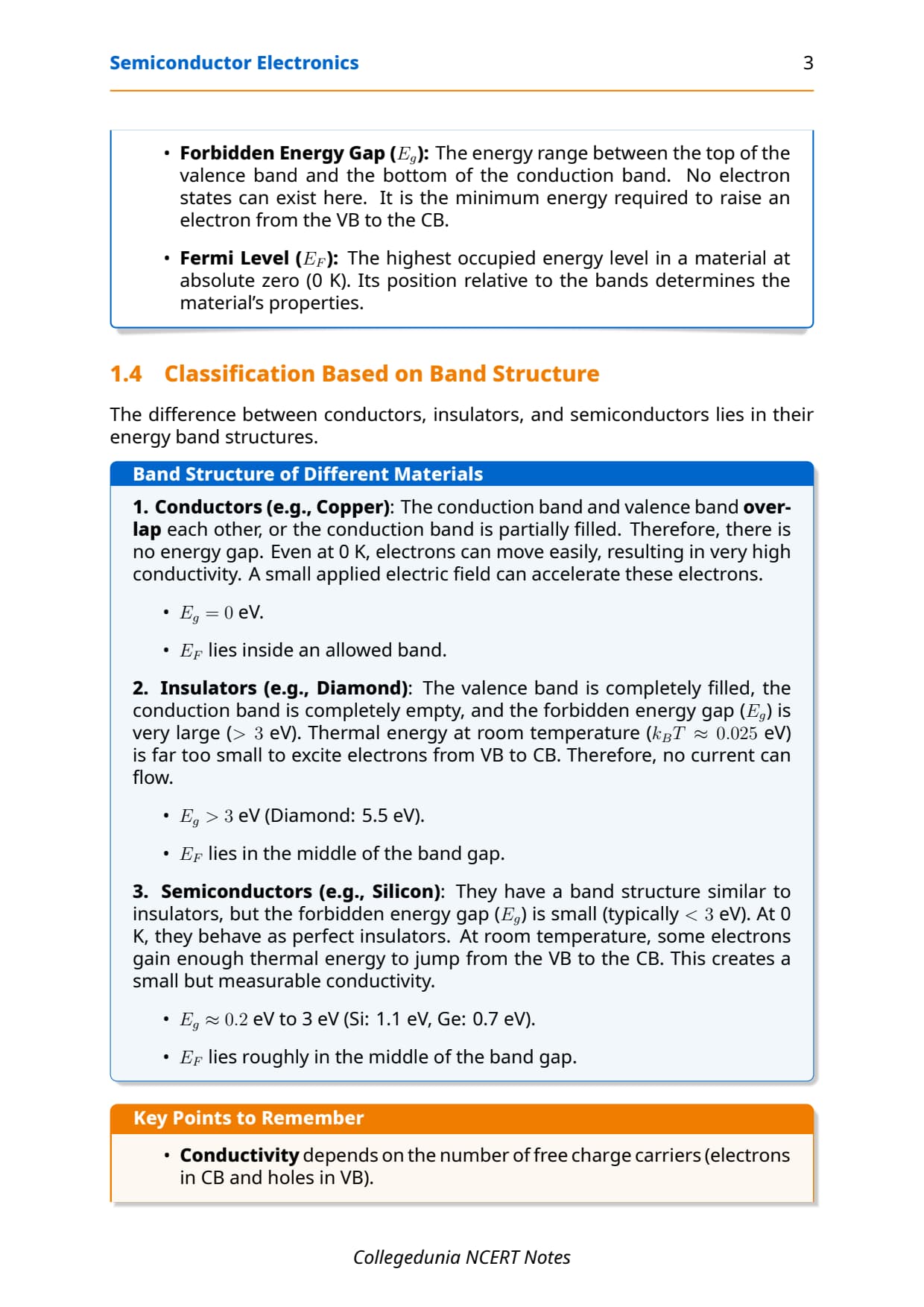
- Energy bands (conductor, insulator, semiconductor): 2-mark conceptual question.
- Intrinsic vs extrinsic semiconductors: 3-mark question on doping.
- n-type and p-type semiconductors: 2-mark question on donor and acceptor atoms.
- p-n junction and diode: 5-mark question on biasing and the I-V curve.
- Rectifiers (half-wave and full-wave): 3-mark question on output and ripple.
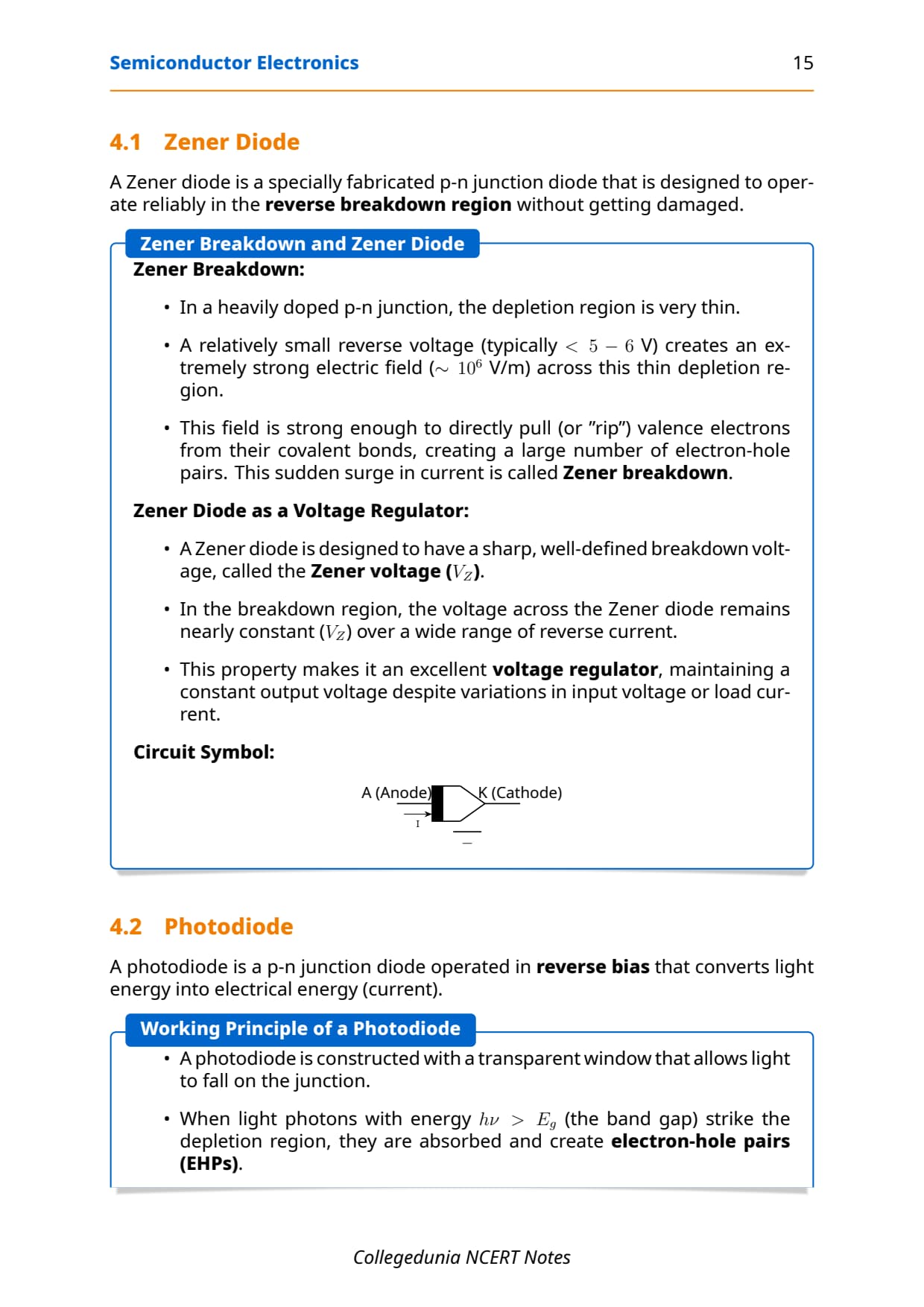
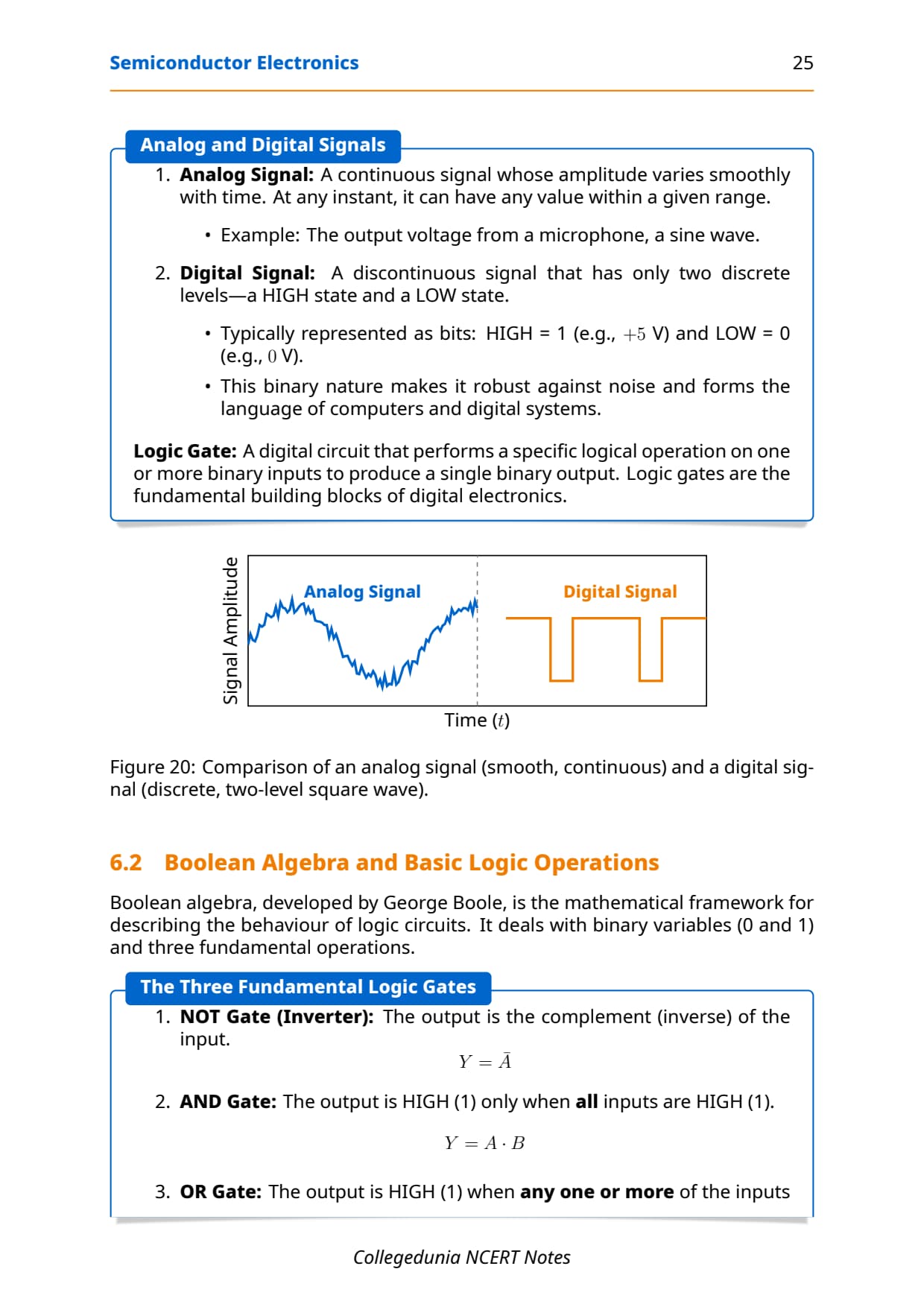
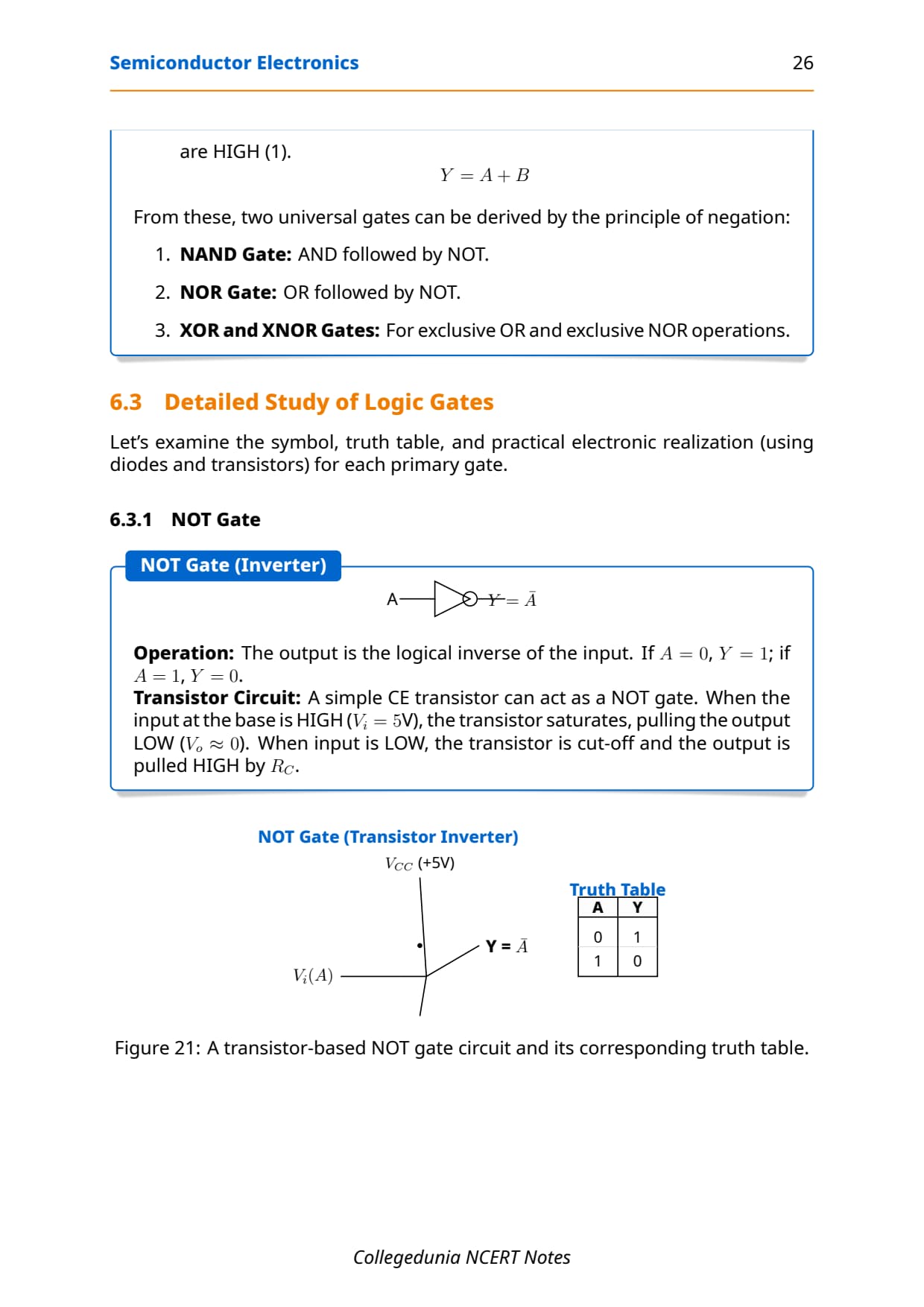
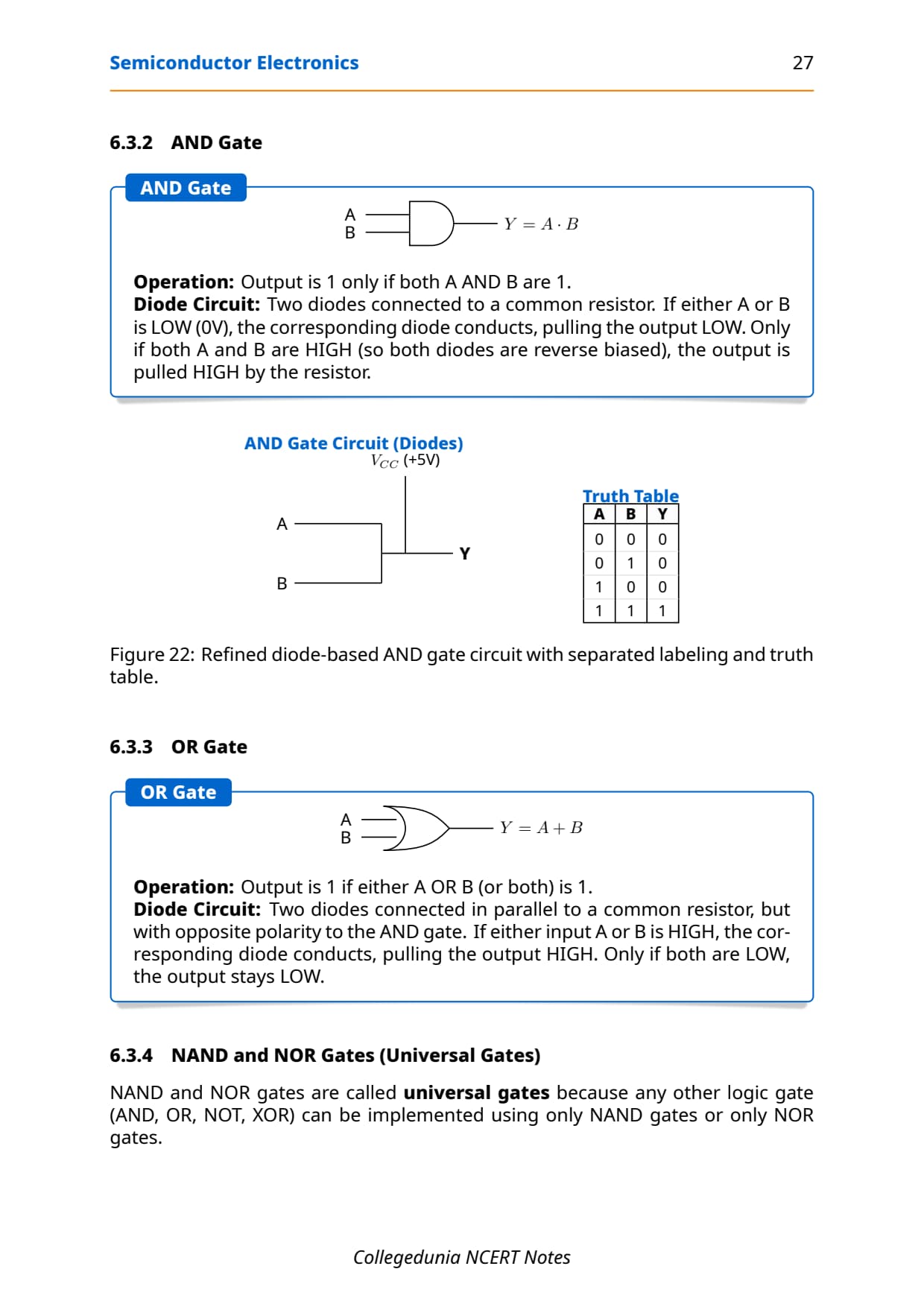
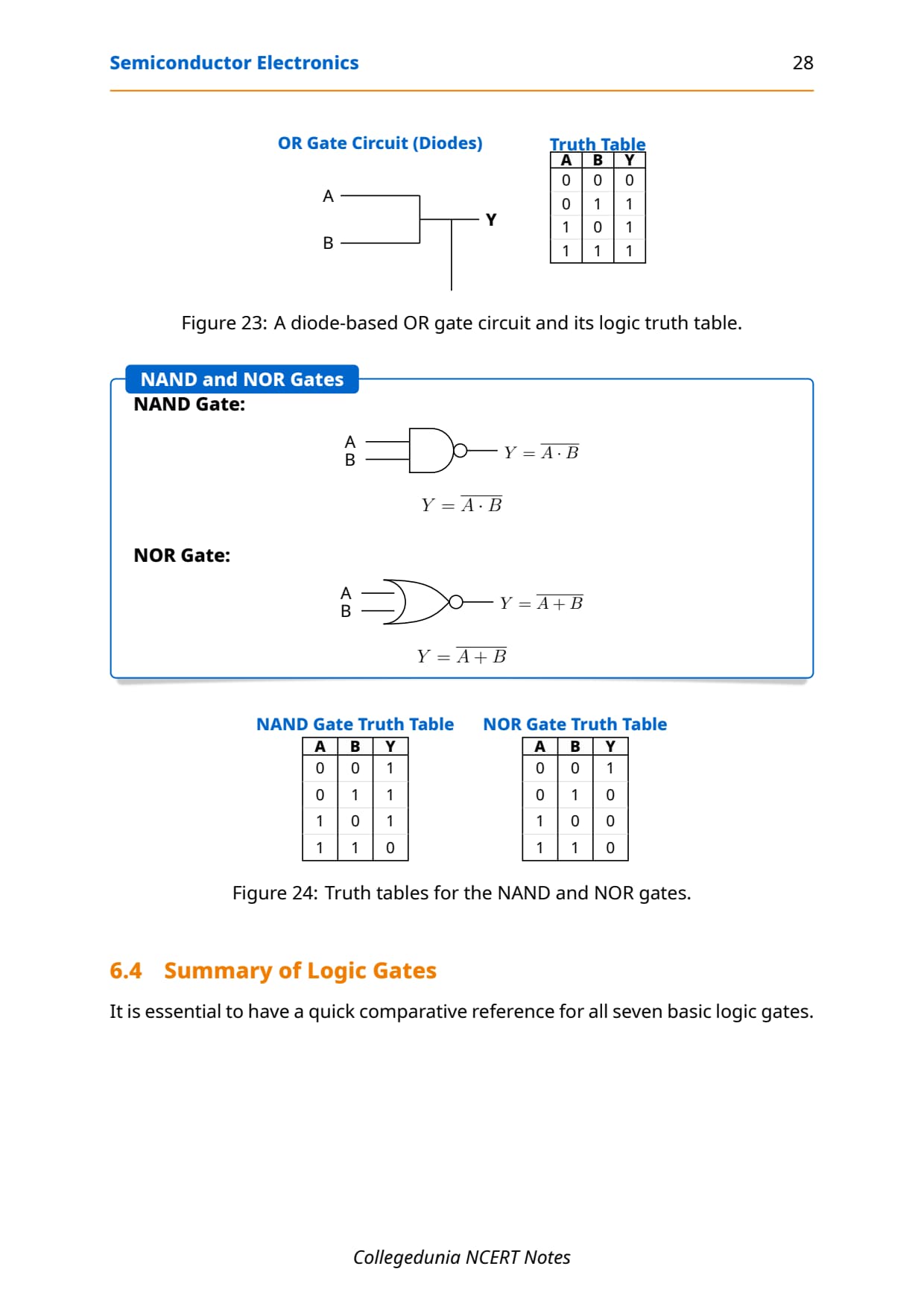
- Zener diode and logic gates: 3-mark question on truth tables.
The image below sums up how n-type and p-type semiconductors differ at a glance.
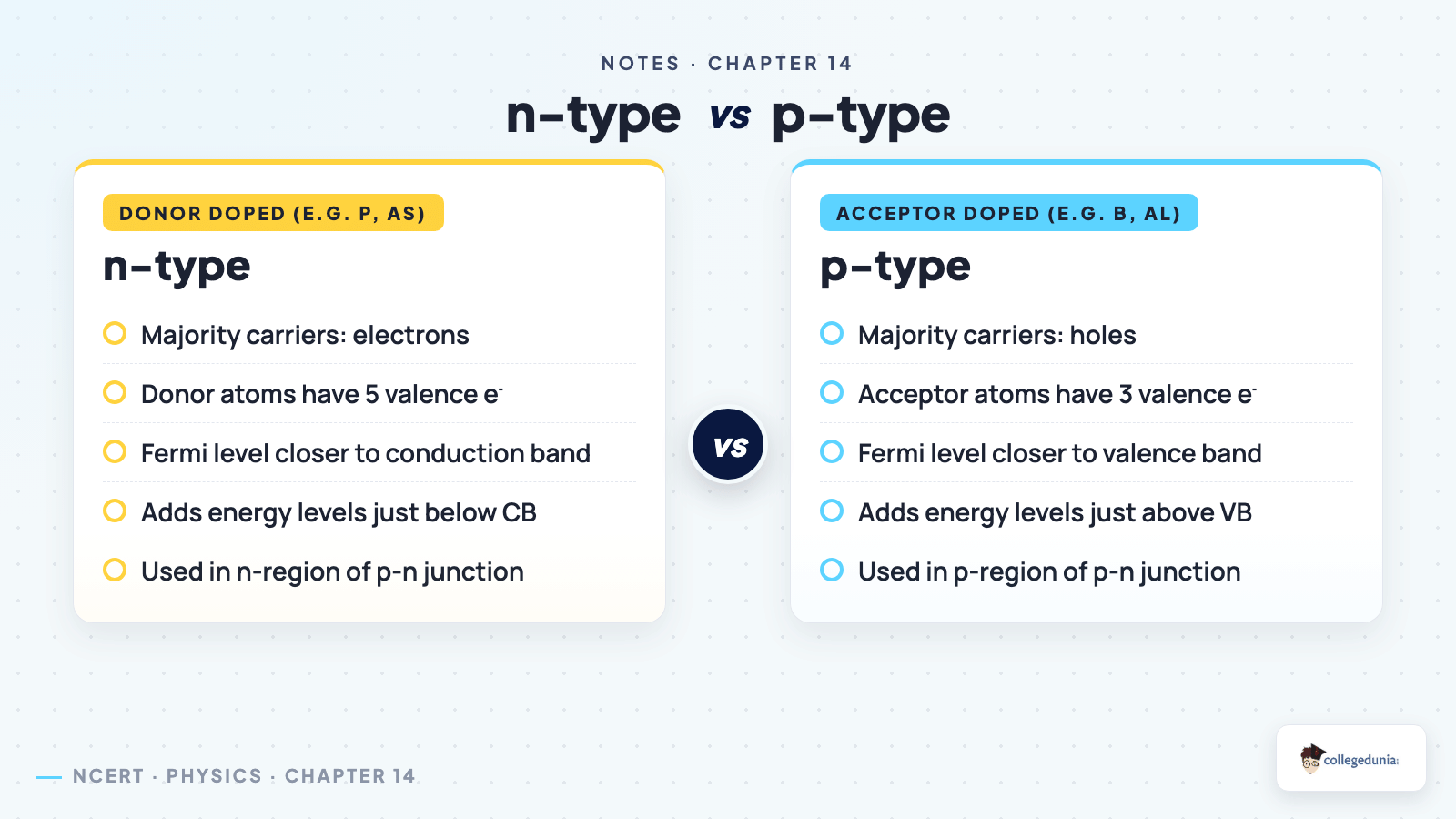
n-type vs p-type semiconductors at a glance.
Class 12 Physics Chapter 14 Semiconductor Electronics All Formulas
The table below lists every formula the chapter needs for numericals. The same list sits on the back page of the PDF for last-minute revision.
| Concept | Formula | SI Unit |
|---|---|---|
| Mass-action law | n p = n_i² | 1/m^6 |
| Conductivity | σ = e (n μ_e + p μ_h) | S/m |
| Diode current (Shockley) | I = I_0 (e^(eV/kT) - 1) | ampere |
| Half-wave DC voltage | V_dc = V_max / π | volt |
| Full-wave DC voltage | V_dc = 2 V_max / π | volt |
| Half-wave efficiency | η = 40.6% | % |
| Full-wave efficiency | η = 81.2% | % |
| Ripple factor (half-wave) | r = 1.21 | n/a |
| Ripple factor (full-wave) | r = 0.48 | n/a |
Full formula sheet with derivations: Class 12 Physics Chapter 14 Formula Sheet
Class 12 Physics Chapter 14 Semiconductor Electronics All Derivations
The 5 derivations below carry most of the marks in this chapter. Each one in the PDF comes with the full sketch, the set-up, and the final result.
| Derivation | Marks (CBSE) |
|---|---|
| p-n junction formation and depletion region | 3 |
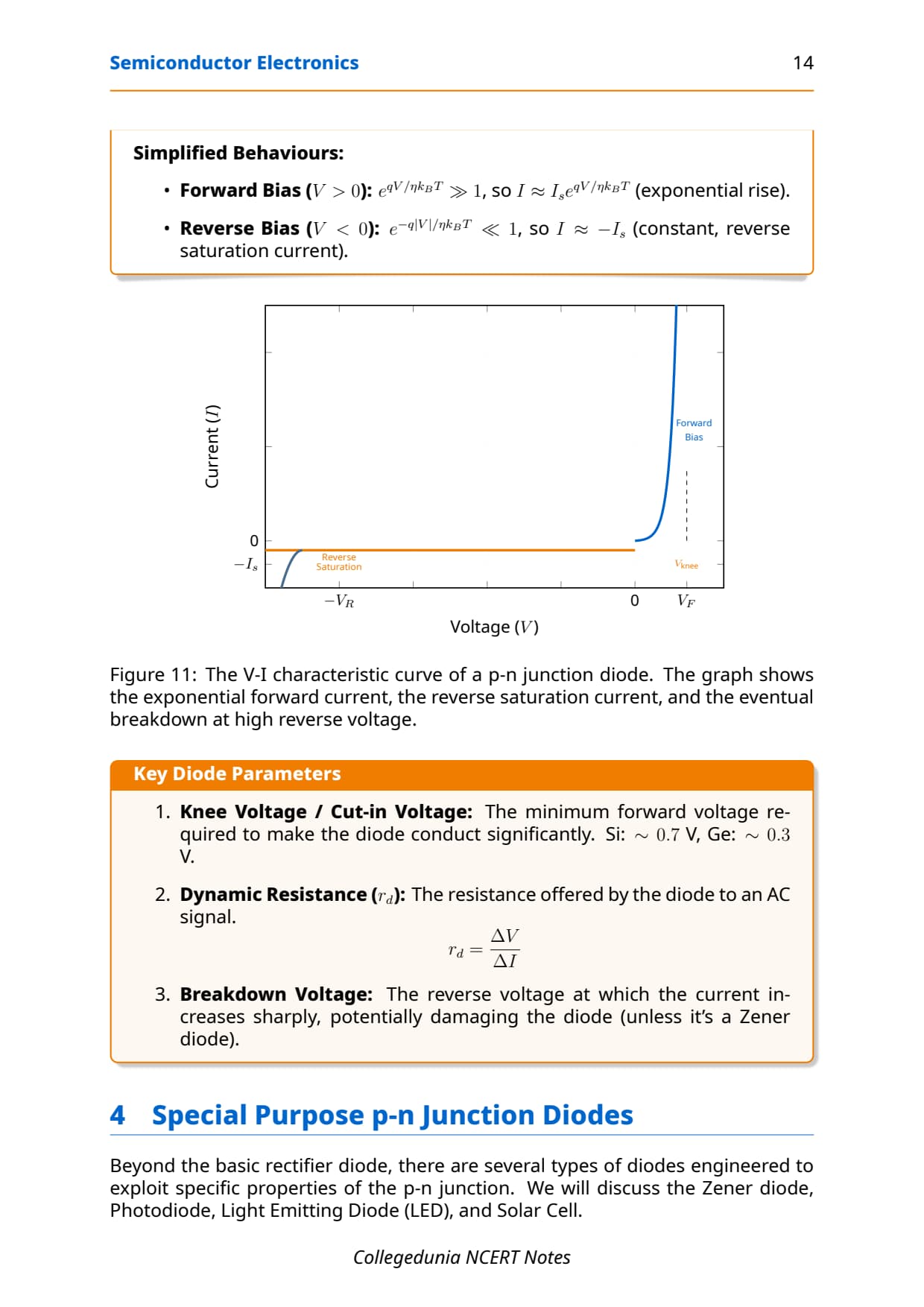
| Diode forward and reverse I-V characteristics | 3 |
| Half-wave rectifier output | 3 |
| Full-wave rectifier output and ripple factor | 5 |
| Zener diode as voltage regulator | 3 |
The diode equation, shown below, is the one formula you will use most in this chapter.
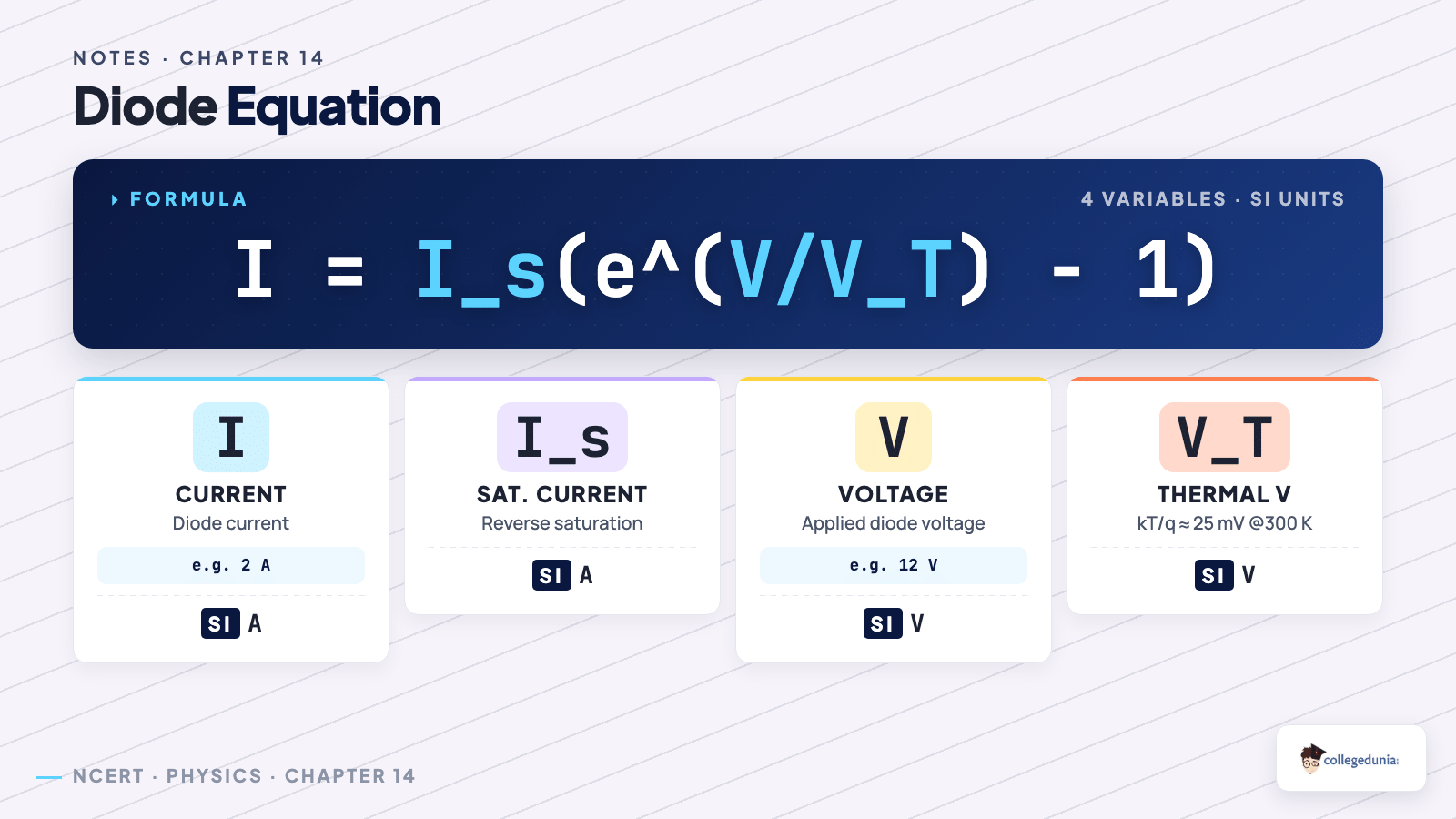
Diode equation: exponential in forward bias, small leakage in reverse.
Semiconductor Electronics Weightage Across Class 12 Physics Chapters
This table shows how Chapter 14 compares with the other Class 12 Physics chapters. Marks are CBSE board averages over the last five papers.
| Chapter | Topic | Avg CBSE Marks |
|---|---|---|
| Ch 1 | Electric Charges and Fields | 6 marks |
| Ch 2 | Electrostatic Potential and Capacitance | 7 marks |
| Ch 3 | Current Electricity | 7 marks |
| Ch 4 | Moving Charges and Magnetism | 6 marks |
| Ch 5 | Magnetism and Matter | 3 marks |
| Ch 6 | Electromagnetic Induction | 5 marks |
| Ch 7 | Alternating Current | 6 marks |
| Ch 8 | Electromagnetic Waves | 2 marks |
| Ch 9 | Ray Optics and Optical Instruments | 7 marks |
| Ch 10 | Wave Optics | 5 marks |
| Ch 11 | Dual Nature of Radiation and Matter | 4 marks |
| Ch 12 | Atoms | 3 marks |
| Ch 13 | Nuclei | 3 marks |
| Ch 14 | Semiconductor Electronics | 6 marks |
Semiconductor Electronics Previous Year Questions in Class 12 Physics (2021 to 2026)
This table lists how Chapter 14 topics showed up in CBSE Board, JEE Main, and NEET over the last six sessions.
| Year | CBSE Board | JEE Main | NEET |
|---|---|---|---|
| 2026 | p-n junction diode I-V (5 marks) | Zener voltage regulator (4 marks) | Diodes, logic gates and rectifiers (3 questions) |
| 2025 | Full-wave rectifier (5 marks) | LED working principle | Doping type MCQ |
| 2024 | Intrinsic vs extrinsic semiconductor (3 marks) | Diode forward bias characteristic | Logic gate truth table |
| 2023 | Half-wave rectifier output (3 marks) | n-type vs p-type comparison | NAND gate MCQ |
| 2022 | Energy band diagram (3 marks) | Ripple factor calculation | Solar cell working |
| 2021 | - | Zener breakdown mechanism | Conduction band MCQ |
Common Mistakes in Class 12 Physics Chapter 14 Semiconductor Electronics
Mistake 1: Mixing up forward and reverse bias on the diode I-V curve. Mark the axes before you sketch.
Mistake 2: Swapping donor and acceptor atoms for n-type and p-type. Donor gives electrons, acceptor gives holes.
Mistake 3: Using the wrong ripple factor for half-wave and full-wave rectifiers. Half-wave is 1.21, full-wave is 0.48.
Mistake 4: Forgetting to state assumptions before a derivation. Boards award method marks for clear steps.
Each one can cost you 1 to 2 marks.
How to Revise Class 12 Physics Chapter 14 Semiconductor Electronics in 2 Hours
- 0 to 30 min: Energy bands and intrinsic vs extrinsic semiconductors. Solve 2 numericals.
- 30 to 60 min: n-type and p-type semiconductors and the p-n junction.
- 60 to 90 min: Half-wave and full-wave rectifiers with ripple factor.
- 90 to 120 min: Run through the 9 formulas and 5 derivations. Cover Zener diode and logic gates.
Semiconductor Electronics Video Lecture for Class 12 Physics Chapter 14
Source: Magnet Brains on YouTube
Student Feedback
In a Collegedunia poll of 14,260 Class 12 Physics students before the 2026 boards, here is what they said about Chapter 14:
- 69% of students found rectifier output computations the hardest sub-topic.
- 57% got stuck on logic-gate truth tables in at least one class test.
- 4 out of 5 students revised the p-n junction derivation the night before boards.
- Students spent about 5 hours on the first read and 2.4 hours on focused revision.
Source: 2025-26 Class 12 Physics student poll, 14,260 CBSE students across 16 states.
Other Resources for Class 12 Physics Chapter 14 Semiconductor Electronics
| Resource | Link |
|---|---|
| NCERT Notes | Semiconductor Electronics Notes |
| NCERT Solutions | Semiconductor Electronics Solutions |
| Formula Sheet | Semiconductor Electronics Formula Sheet |
| NCERT Book PDF | Semiconductor Electronics Book PDF |
| Exemplar Book PDF | Semiconductor Electronics Exemplar Book PDF |
| Exemplar Solutions | Semiconductor Electronics Exemplar Solutions |
| Handwritten Notes | Semiconductor Electronics Handwritten Notes |
NCERT Notes for Class 12 Physics: All Chapters
| Chapter | Resource |
|---|---|
| Chapter 1 | Electric Charges and Fields Notes |
| Chapter 2 | Electrostatic Potential and Capacitance Notes |
| Chapter 3 | Current Electricity Notes |
| Chapter 4 | Moving Charges and Magnetism Notes |
| Chapter 5 | Magnetism and Matter Notes |
| Chapter 6 | Electromagnetic Induction Notes |
| Chapter 7 | Alternating Current Notes |
| Chapter 8 | Electromagnetic Waves Notes |
| Chapter 9 | Ray Optics and Optical Instruments Notes |
| Chapter 10 | Wave Optics Notes |
| Chapter 11 | Dual Nature of Radiation and Matter Notes |
| Chapter 12 | Atoms Notes |
| Chapter 13 | Nuclei Notes |
| Chapter 14 | Semiconductor Electronics Notes |
Class 12 Physics Chapter 14 Semiconductor Electronics Notes FAQs
Ques. What topics do the Class 12 Physics Chapter 14 notes cover?
Ans. They cover energy bands, intrinsic vs extrinsic semiconductors, n-type and p-type semiconductors, the p-n junction and diode, rectifiers, and Zener diode with logic gates.
Ques. What are the most-asked derivations in Chapter 14?
Ans. The 5 key ones are p-n junction formation, diode I-V characteristics, half-wave rectifier output, full-wave rectifier with ripple factor, and Zener diode as a voltage regulator.
Ques. How many formulas are in the Chapter 14 notes?
Ans. There are 9 formulas. The Quick-Reference Table above lists them all with their SI units, and the PDF carries the same list on one cover sheet.
Ques. What is the weightage of Class 12 Physics Chapter 14?
Ans. Chapter 14 carries about 6 marks in CBSE Class 12 Physics, 3 to 4% in JEE Main, and 2 to 3 questions per year in NEET.
Ques. Where can I download the Chapter 14 notes PDF?
Ans. You can download it from the card at the top of this page. The PDF covers all 9 formulas, 5 derivations, and worked numericals.



Comments