


The class 10 geography handwritten notes chapter 2 Forest and Wildlife Resources turn the whole chapter into clean, scanned notebook pages for fast last-minute revision.
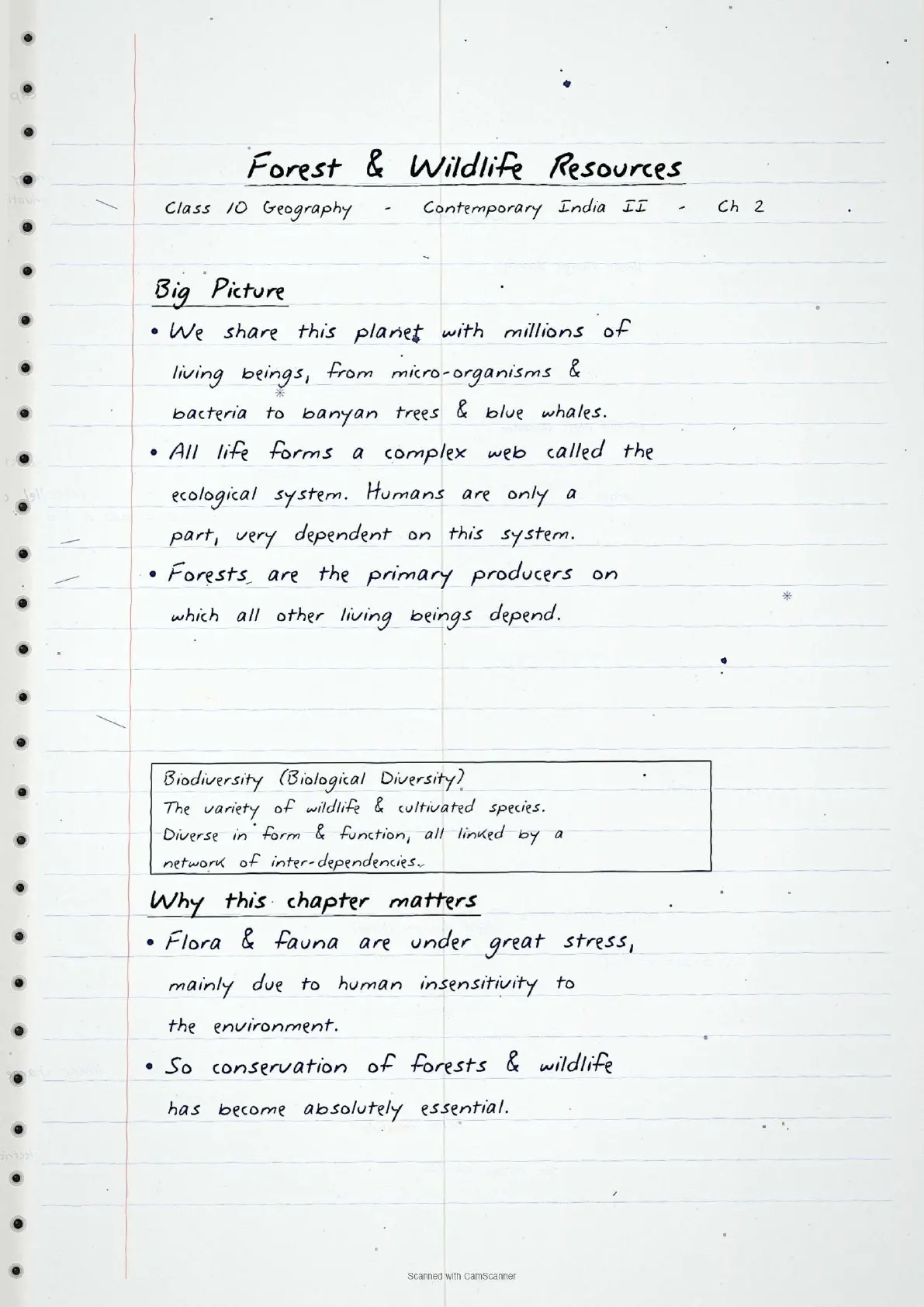
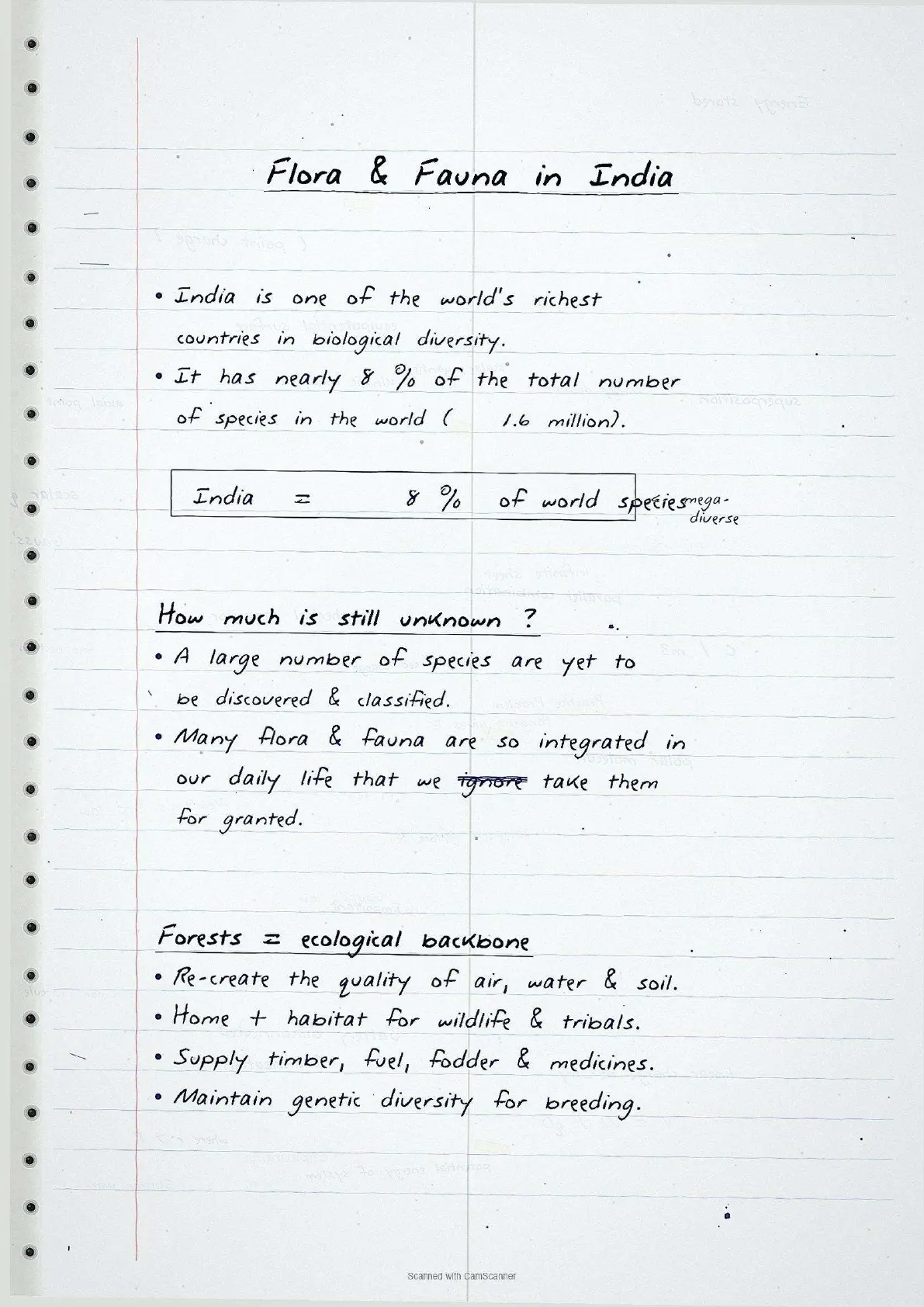
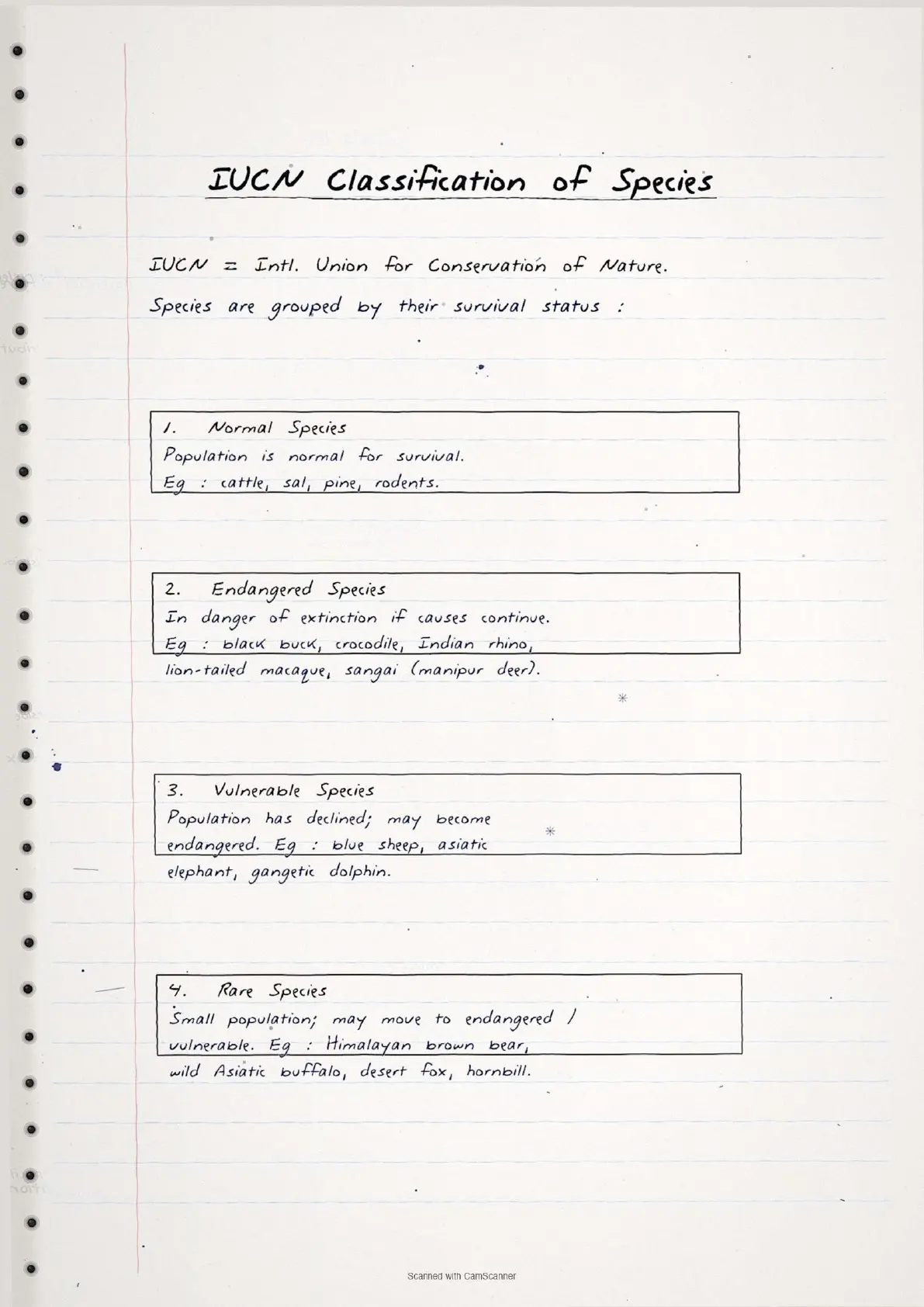
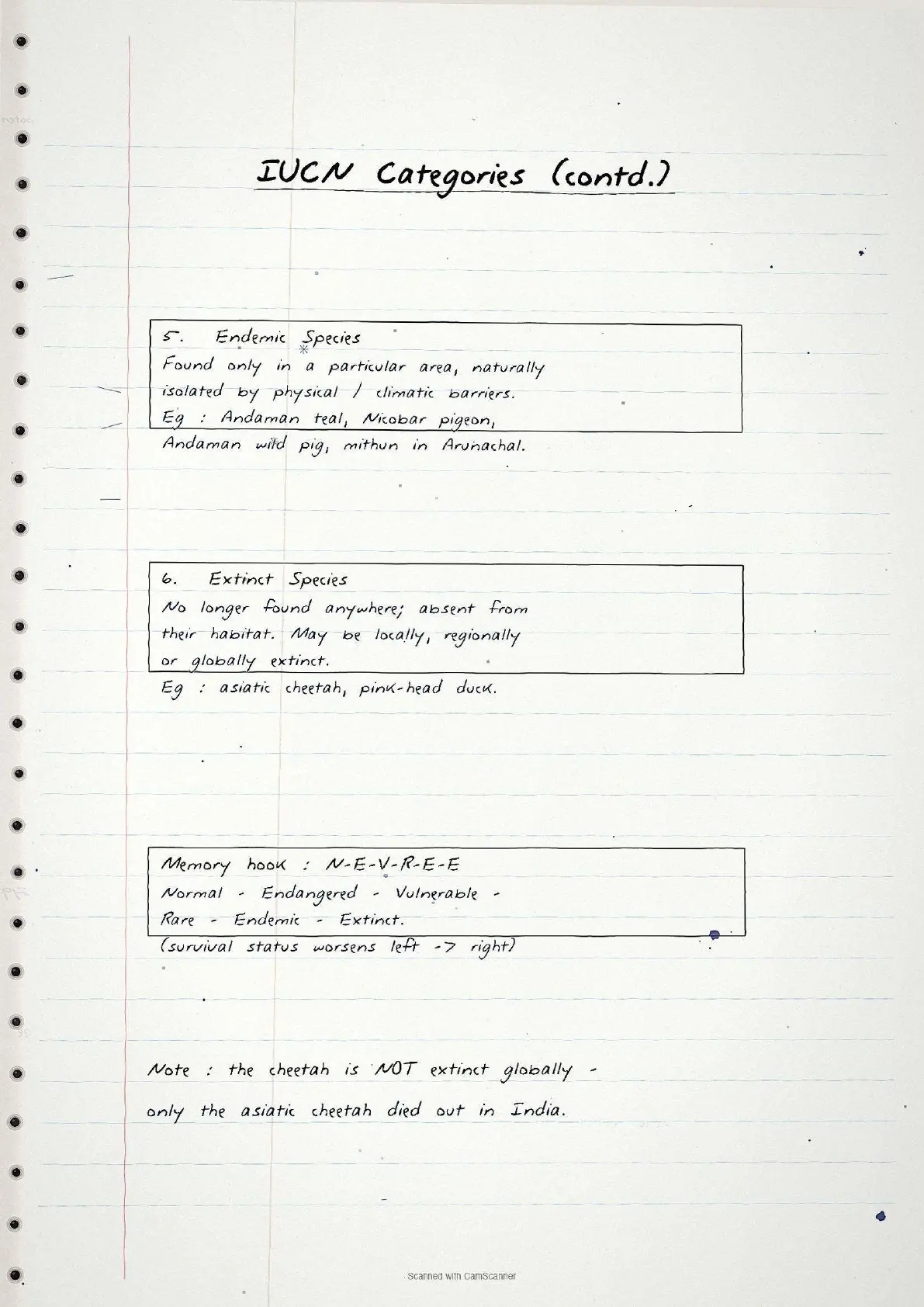
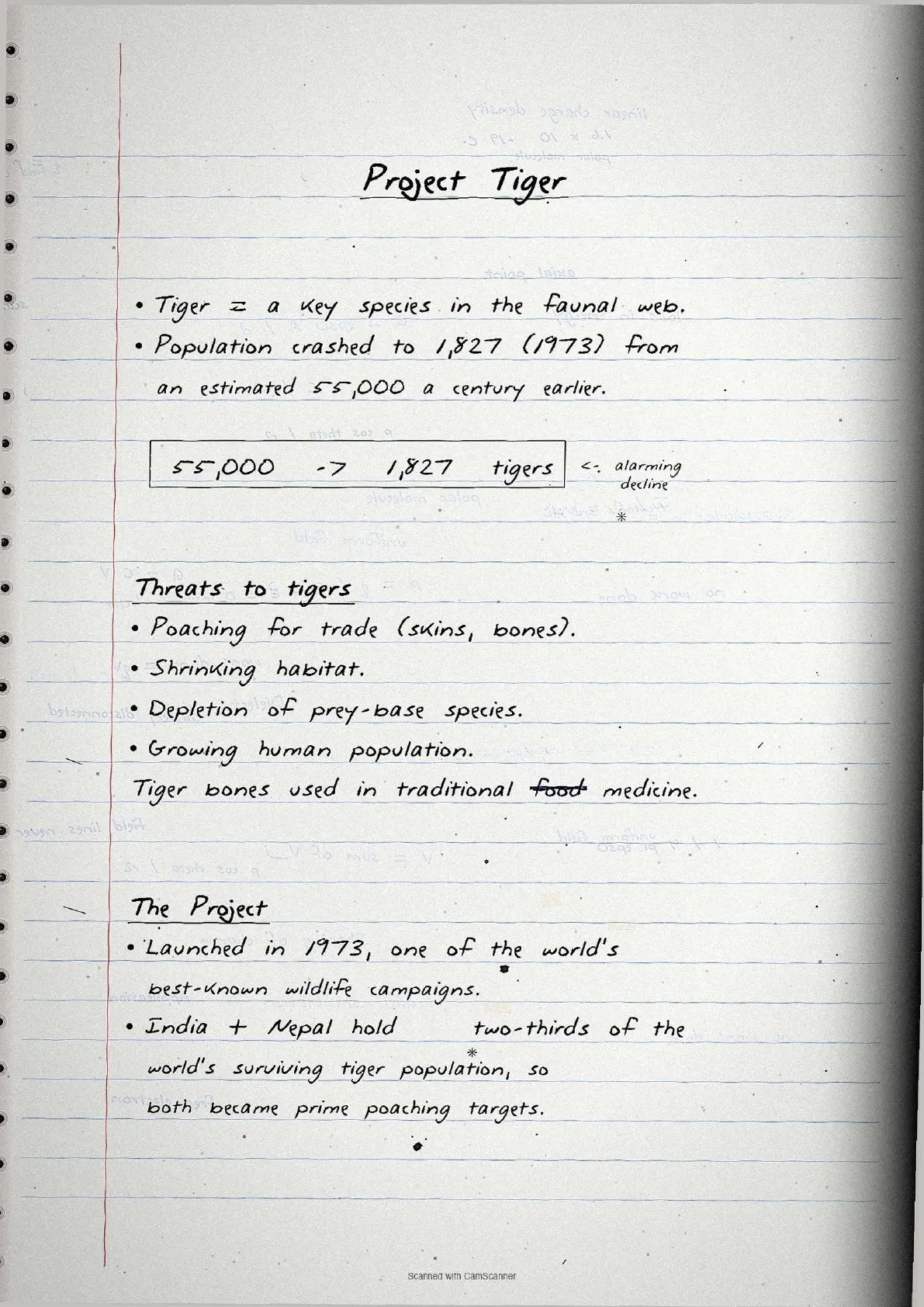
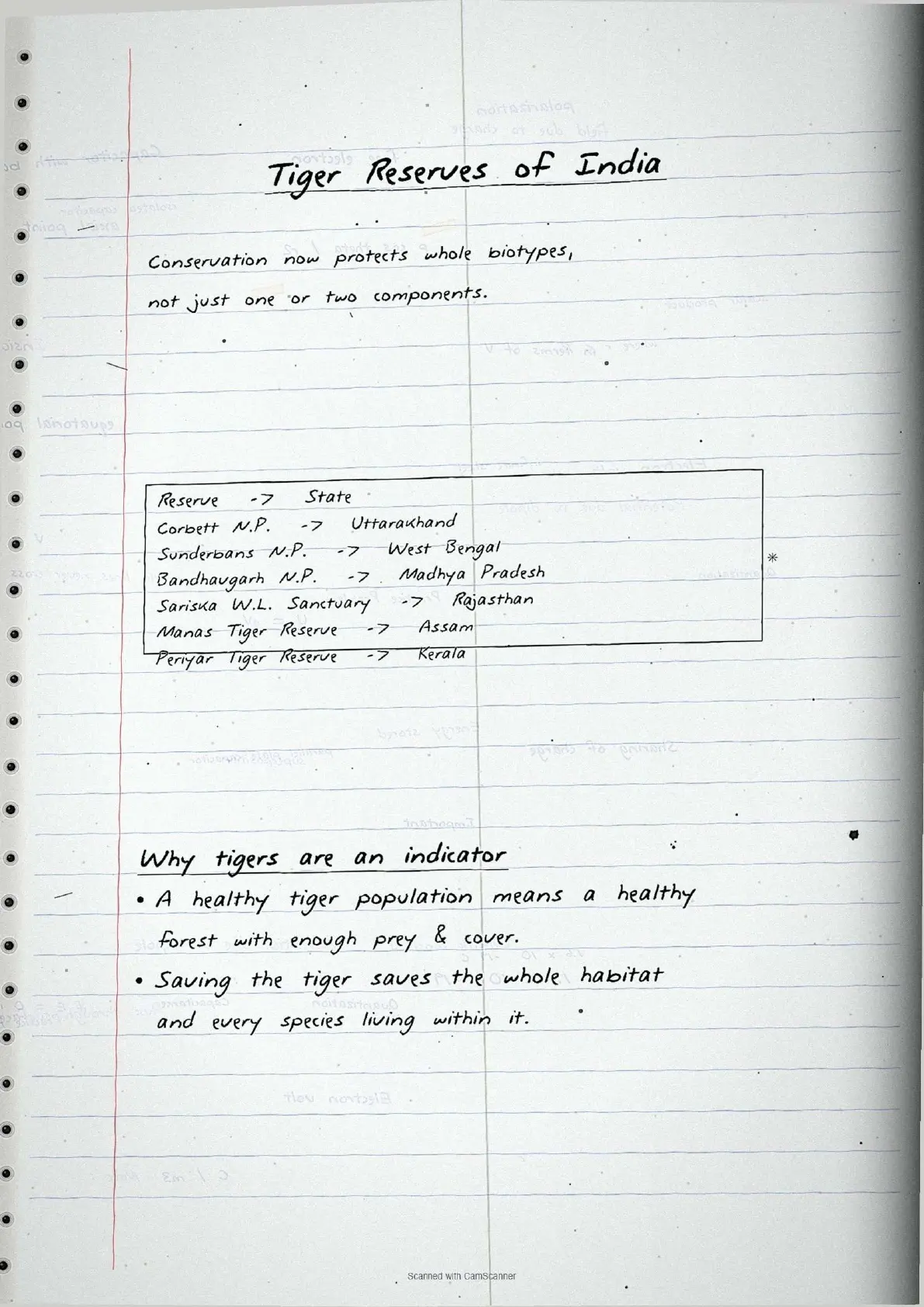
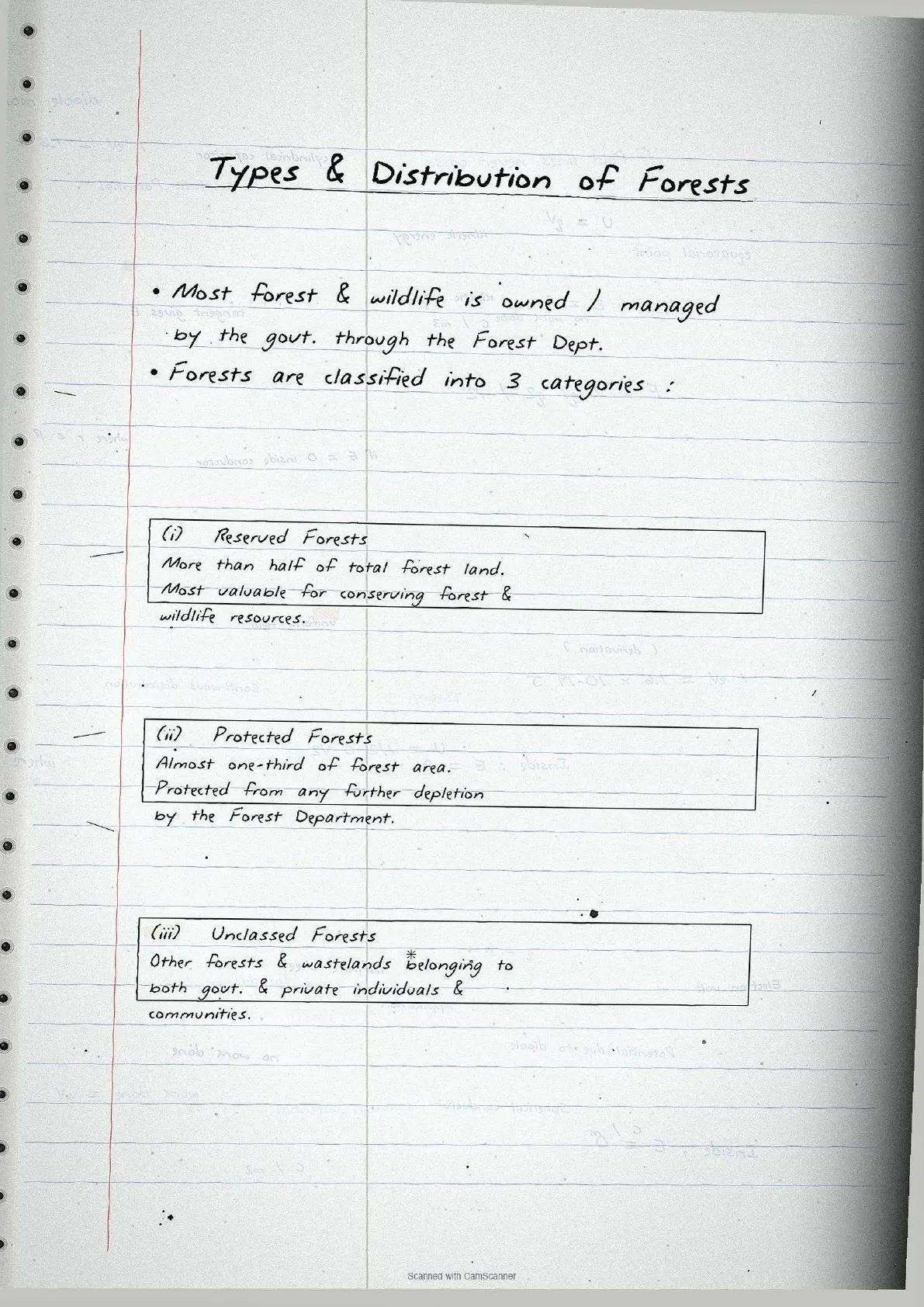
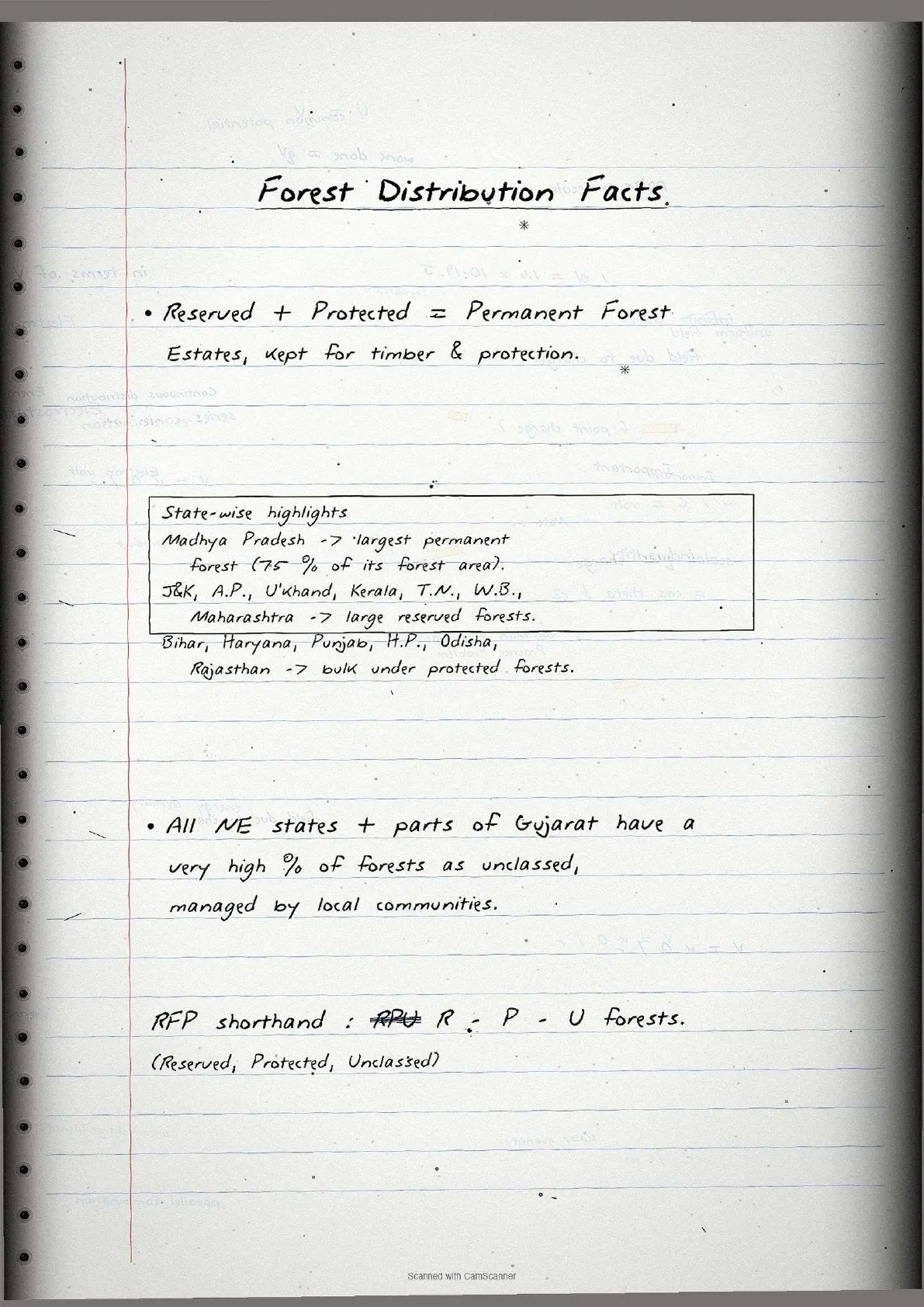
They follow the 2026-27 CBSE syllabus and Chapter 2 of Contemporary India II. Students get the IUCN species categories, the causes of forest loss, the conservation laws, and the community movements in a pen-on-paper format that is easy to skim before a test.
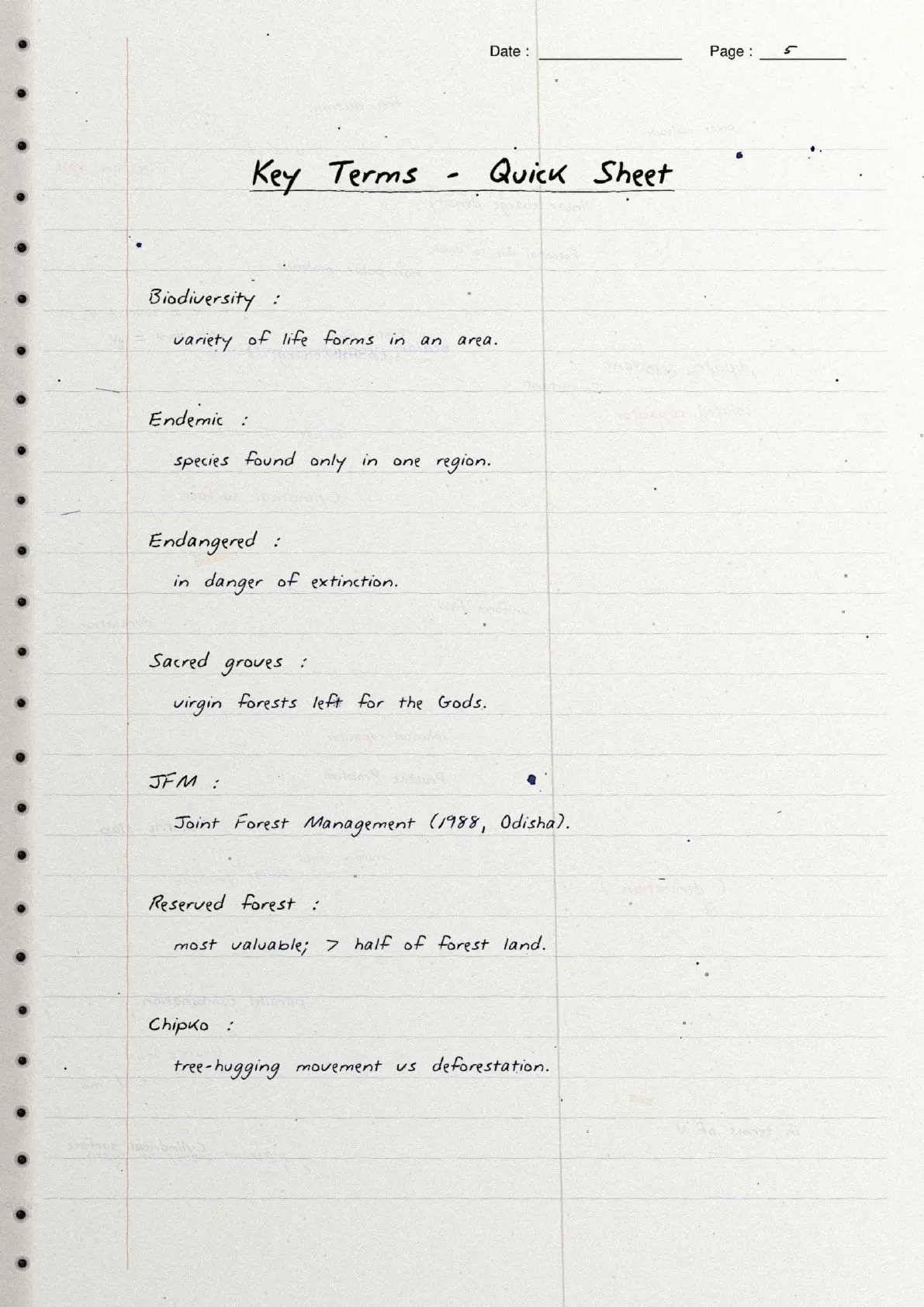
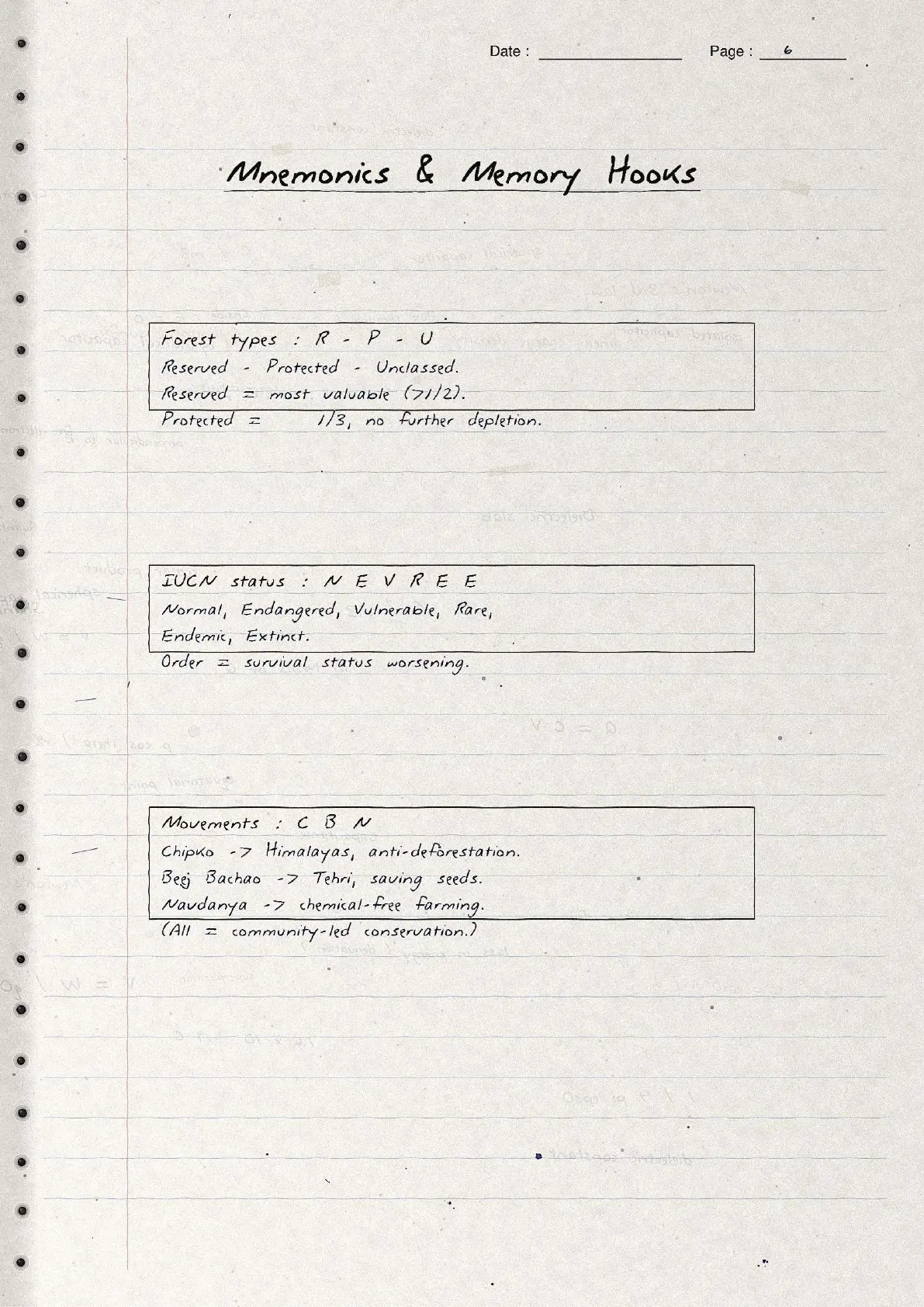
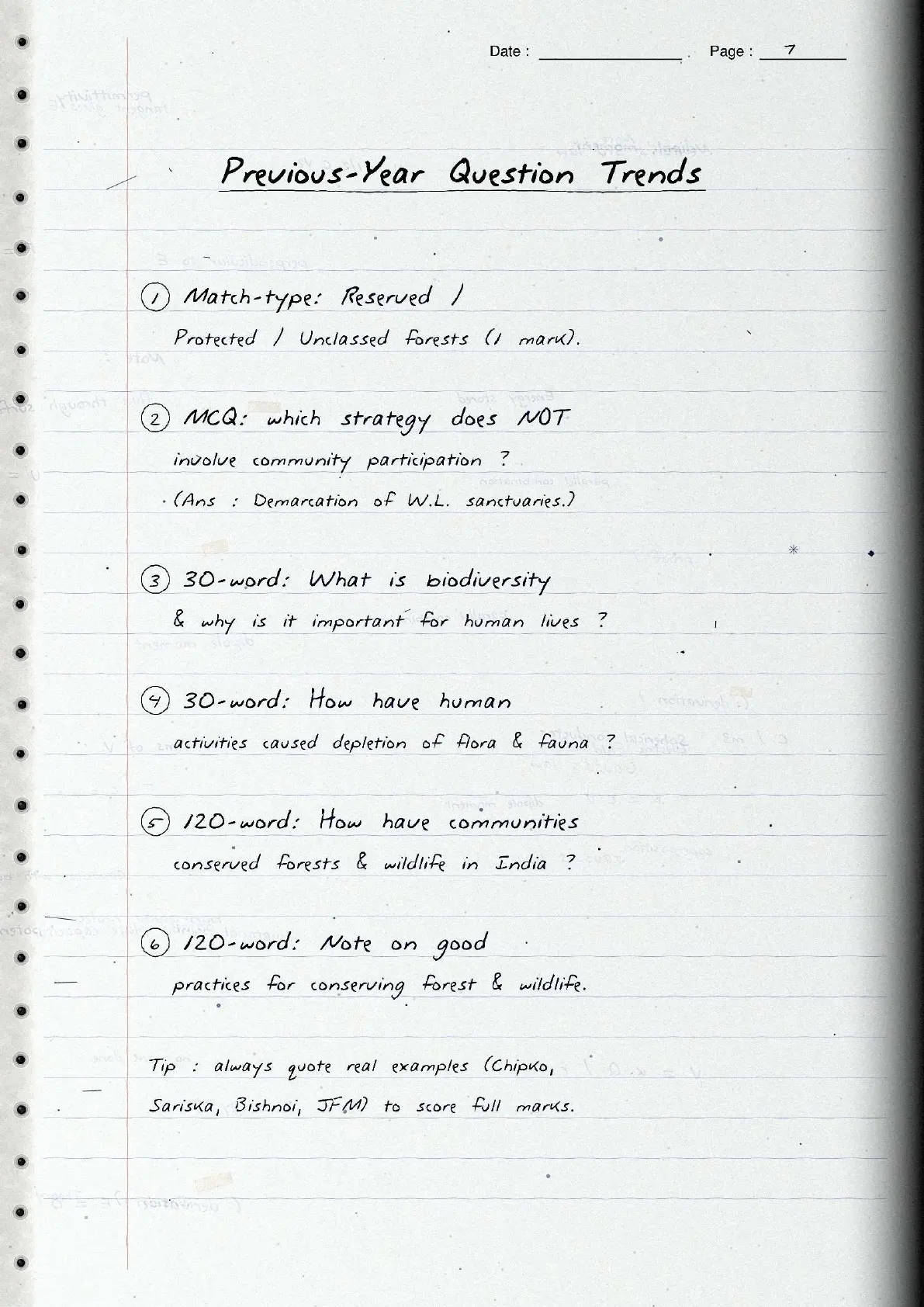
- Handwritten, scanned-style pages with boxed key terms and a labelled IUCN categories chart.
- This Class 10 Geography chapter usually carries 5 to 6 marks in the board paper.
- Pairs with the NCERT Solutions, Notes and Book PDF linked lower on this page.
These Forest and Wildlife Resources handwritten notes are prepared from the official NCERT Contemporary India II textbook and checked against the last five years of CBSE board papers.
Student Feedback: In a Collegedunia poll of 11,540 Class 10 Geography students before the 2026 boards, 74% of students said handwritten, scanned-style notes felt faster to revise from than printed text for this chapter. Most students used the boxed IUCN categories chart to recall the six species types in the exam.
Source: 2026-27 Class 10 Geography student poll. Sample of 11,540 students from CBSE schools across 14 states.
What These Handwritten Notes Include
Forest and Wildlife Resources is the second chapter of Contemporary India II. It studies India's rich biodiversity, why species are vanishing, and how the government and local communities work to save forests and wildlife. The class 10 geography handwritten notes chapter 2 Forest and Wildlife Resources condense the chapter into pages a student can read in one sitting.
Every page is built around the four threads of the chapter:
- Biodiversity pages cover flora, fauna and where India stands among the world's mega-diverse nations.
- IUCN pages box the six species categories with a one-word cue for each.
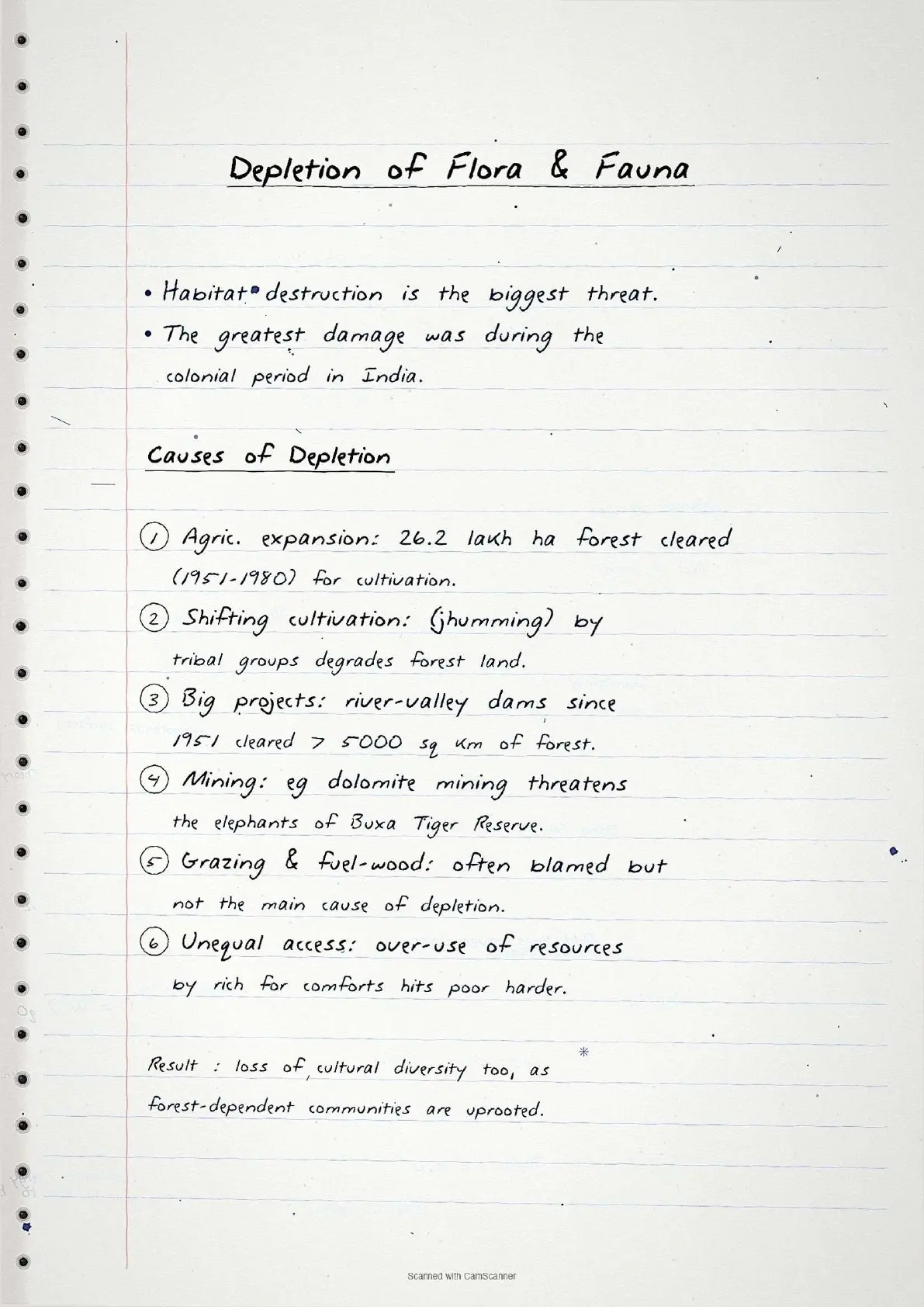
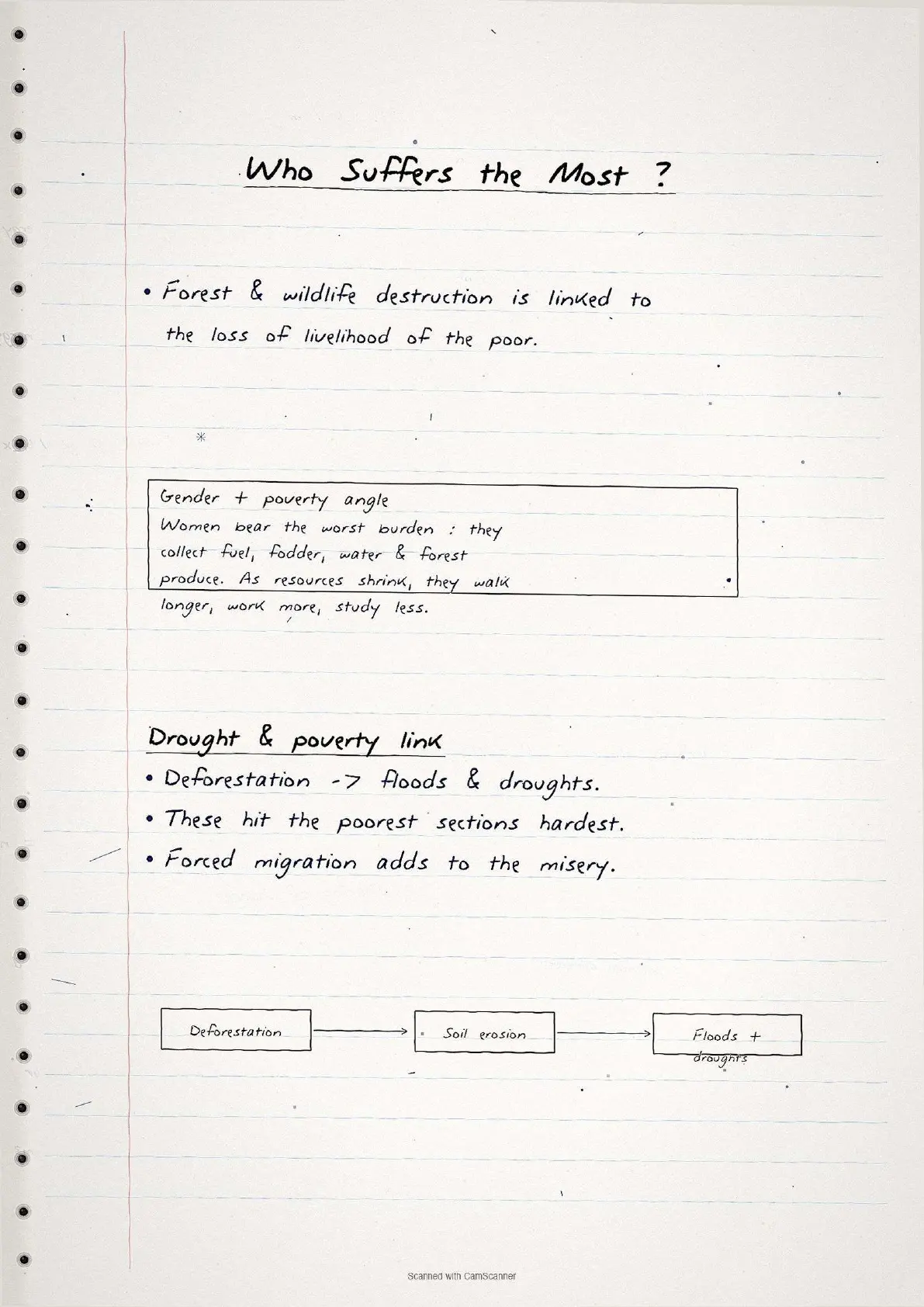
- Depletion pages list the human causes of forest and wildlife loss.
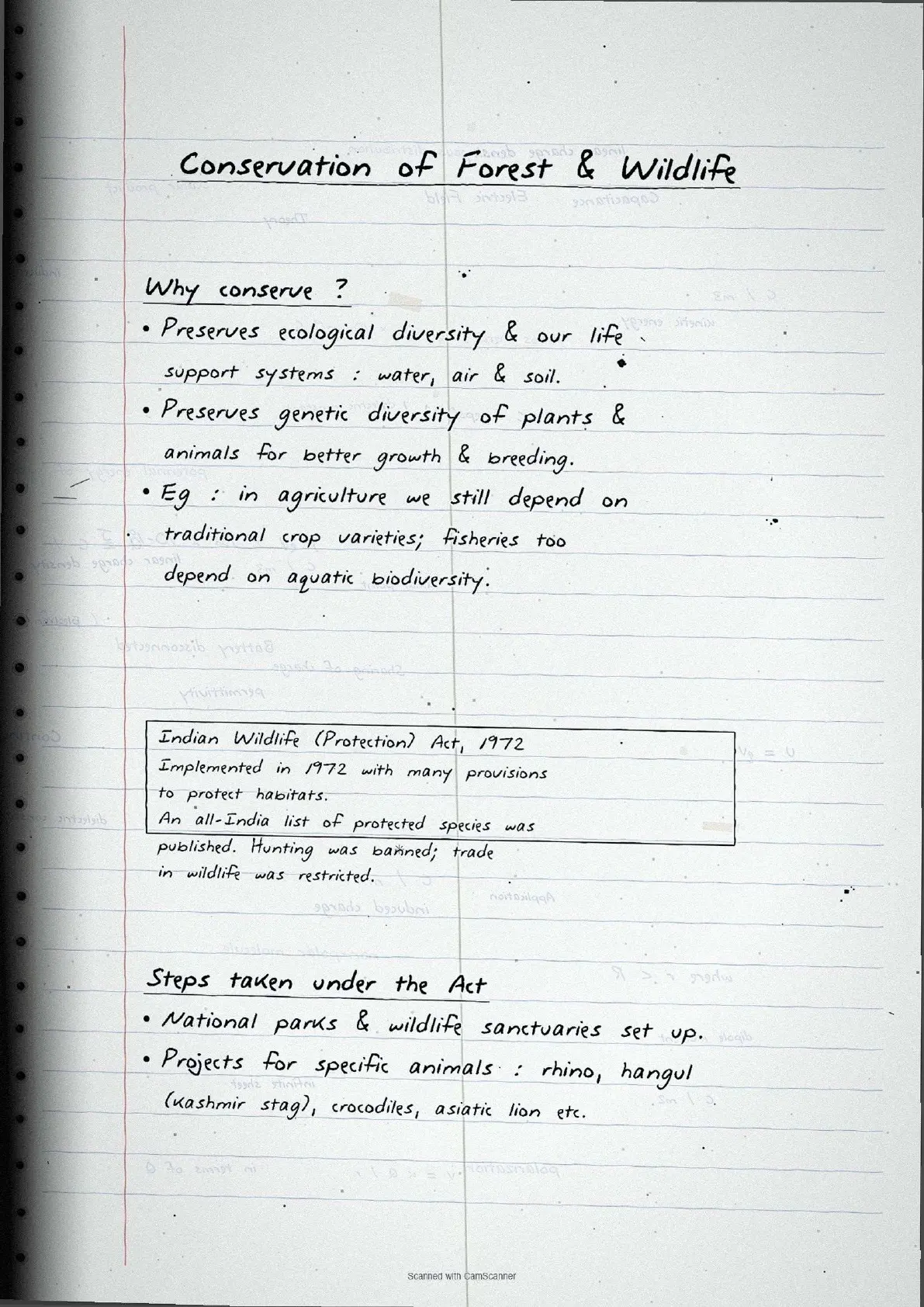
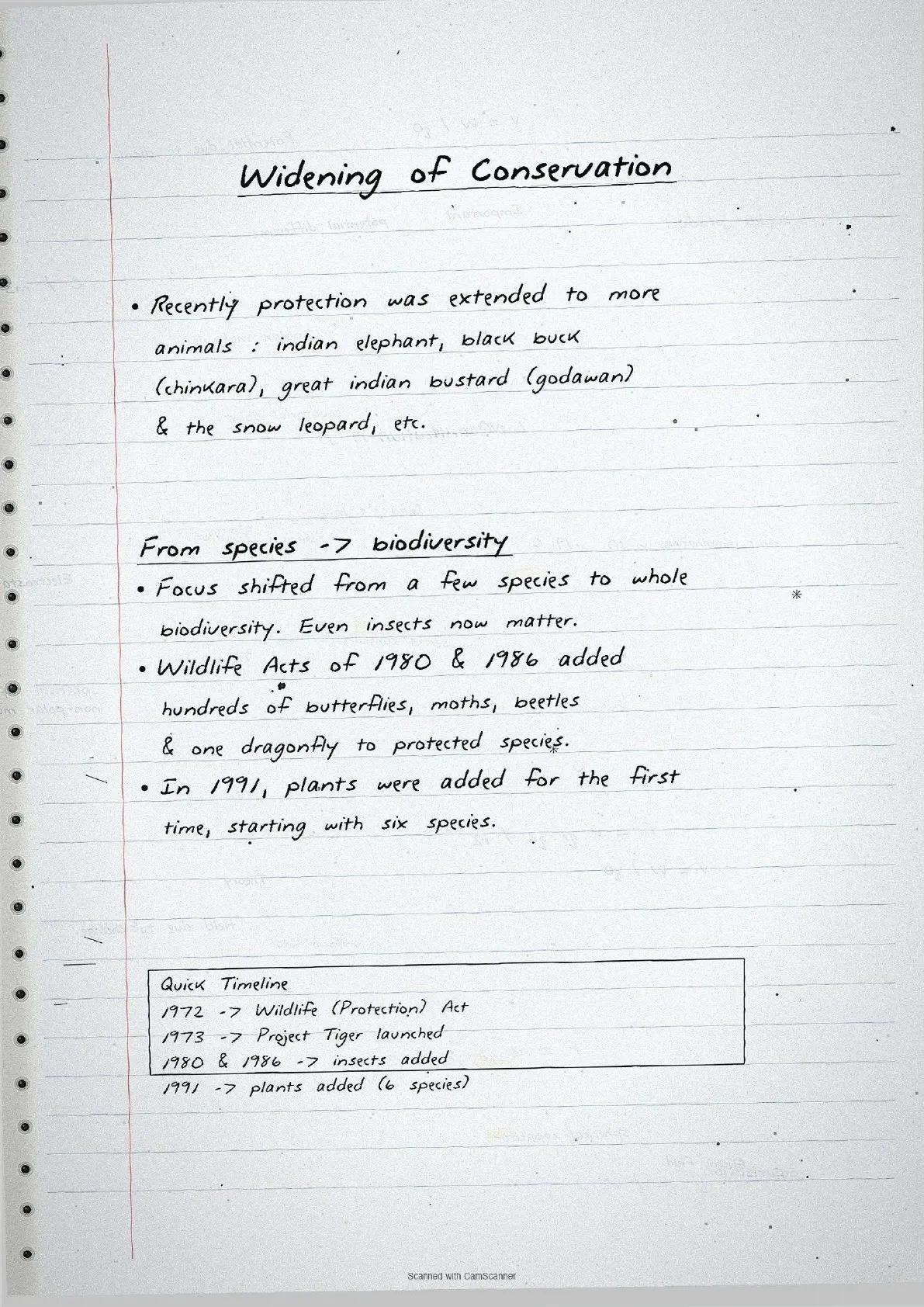
- Conservation pages cover the 1972 Act, Project Tiger and community movements.
Key terms sit in boxes and important years are underlined, so the eye jumps straight to them. Sort each fact under biodiversity, IUCN, depletion or conservation, and the whole chapter falls into place.
Forest and Wildlife Resources Explained in Simple Language
Source: Magnet Brains on YouTube
India's Biodiversity, Flora and Fauna Pages
The first pages explain why India is one of the world's most biodiverse countries, with the headline numbers in a boxed, underlined list students can copy straight onto the answer sheet.
- Biodiversity: the huge variety of plants, animals and micro-organisms that depend on each other.
- Flora and fauna: flora is plant life, fauna is animal life.
- India's share: about 8 per cent of the world's species live here.
- Still counting: a large share of India's species is yet to be discovered and named.
The notes box the most-tested point in red ink: humans, plants and animals form one web of life, so harming one part harms all. This makes the "why protect biodiversity" short answer easy to write, and the boxed flora-versus-fauna split keeps the two terms from getting mixed up.
The Six IUCN Species Categories Pages
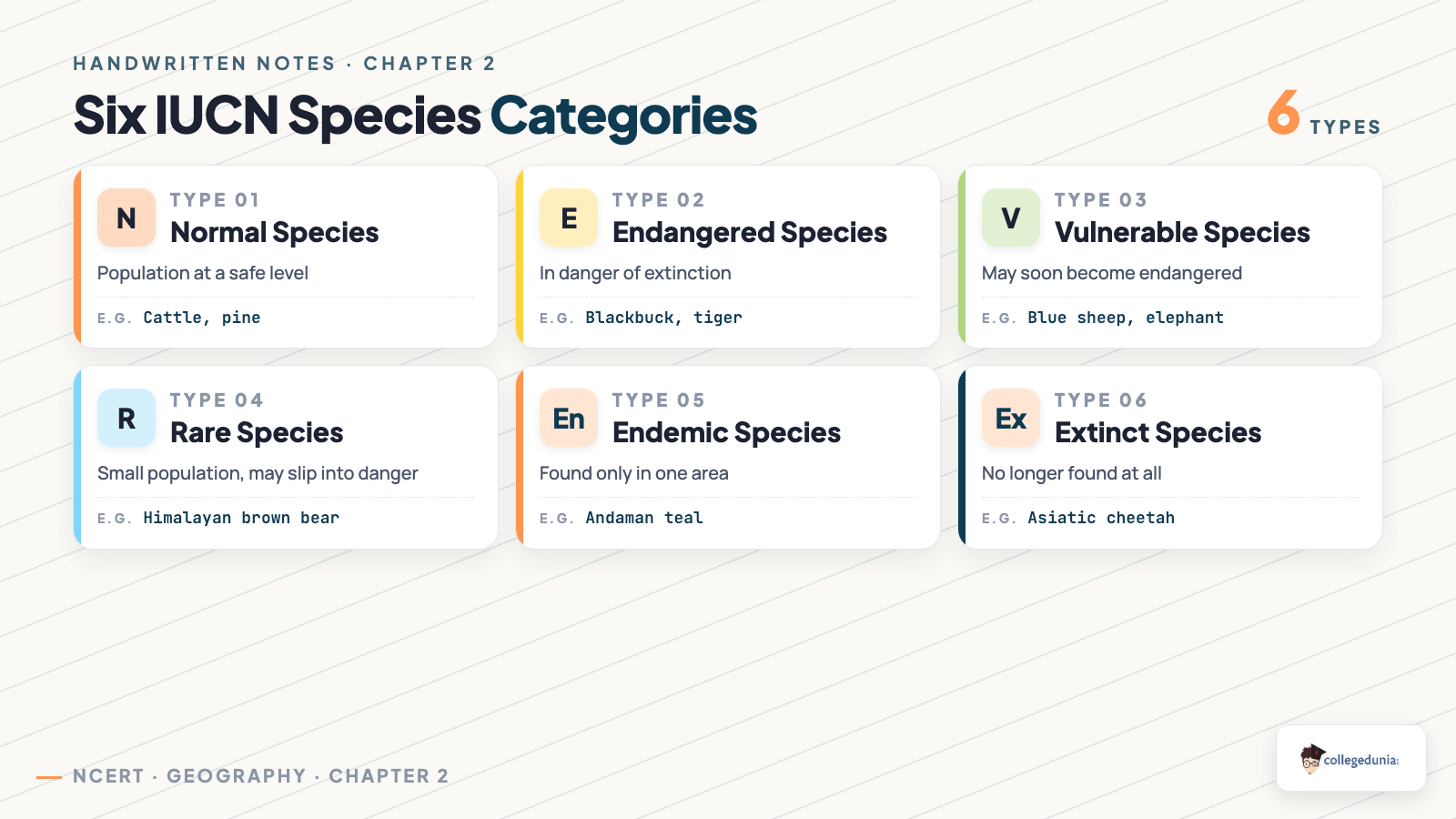
The IUCN pages carry the most-asked part of the chapter. The notes list the six categories with a one-line cue and an example for each. The table below mirrors what the pages box for quick revision.
| Category | One-line cue to recall |
|---|---|
| Normal species | Population is at a safe level, like cattle and pine. |
| Endangered species | In danger of extinction, like the blackbuck and tiger. |
| Vulnerable species | May soon become endangered, like the blue sheep and Asiatic elephant. |
| Rare species | Small population that may slip into danger, like the Himalayan brown bear. |
| Endemic species | Found only in one area, like the Andaman teal. |
| Extinct species | No longer found at all, like the Asiatic cheetah. |
A margin warning tells students never to confuse endemic (found in one place) with extinct (gone for good), the single most common slip in this chapter. Getting these six categories right is what turns an average answer into a full-marks one.
Causes of Forest and Wildlife Depletion Pages
These pages list why India is losing forests and wildlife. The notes give one line for each cause so students can write the long answer without missing a point, and add a hand-drawn arrow from each cause to the loss it creates.
- Agricultural expansion: forest land cleared for farming, the biggest single cause.
- Shifting cultivation: the slash-and-burn jhum method clears patches of forest.
- Development projects: dams, roads and railways after 1951 took large forest areas.
- Mining and grazing: mining strips the land and heavy grazing stops new growth.
- Forest fires and over-harvesting: destroy habitat and remove species faster than they recover.
The margin note underlines the honest link: most forest loss is caused by humans, not nature. The boxed example of the Narmada Sagar Project reminds students that one big dam can submerge a huge area of forest. Redrawing the cause-to-loss arrows once fixes the whole long answer in memory.
Government Conservation Laws and Projects Pages
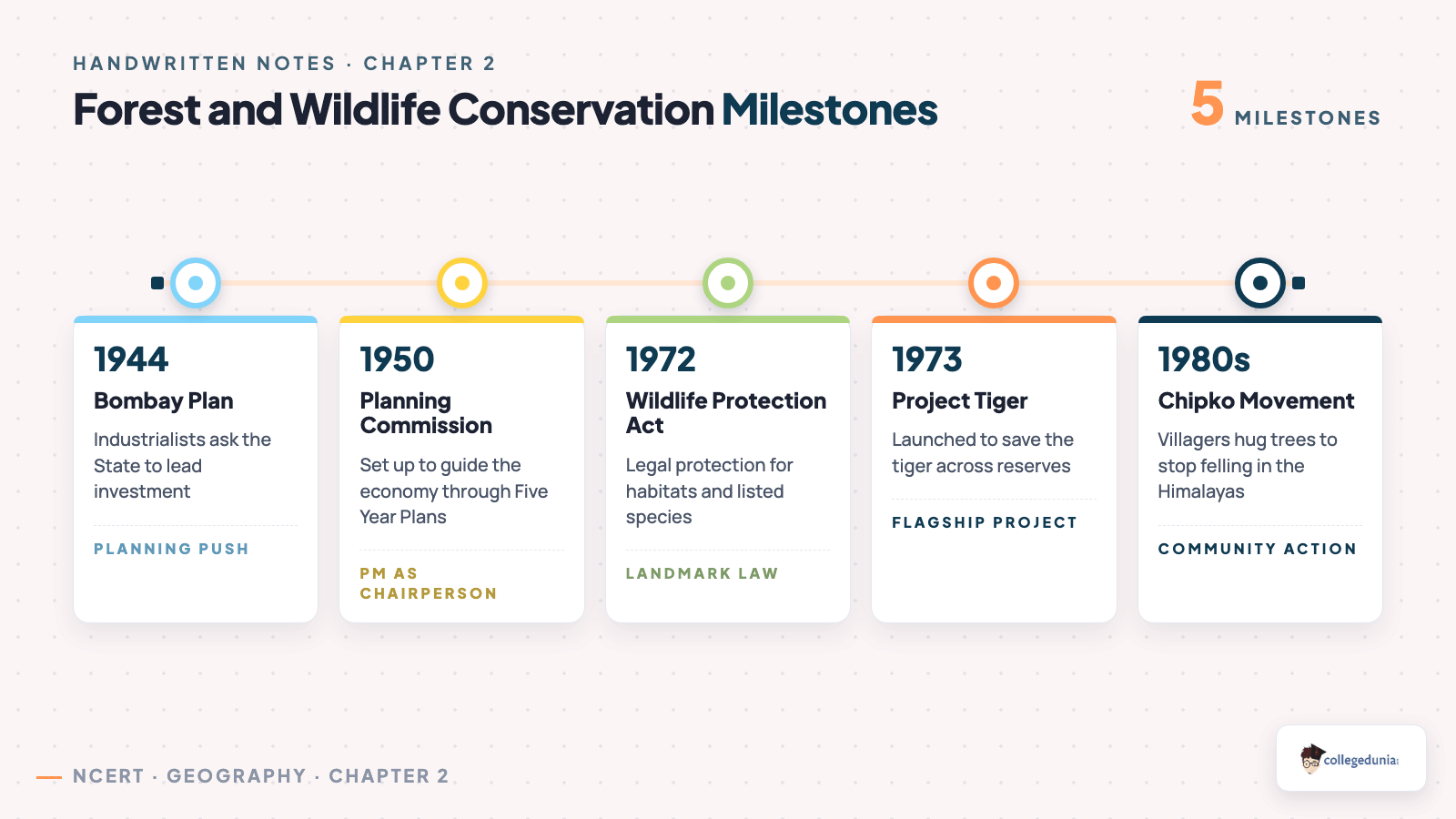
The conservation pages cover how the government protects wildlife. The notes line the laws and projects up by year, because the dates are the part students forget first. A small hand-drawn timeline helps them keep the order straight.
- Wildlife Protection Act, 1972: gave legal protection to habitats and listed protected species.
- Project Tiger, 1973: launched to save the tiger, India's most well-known conservation project.
- Reserves: national parks, wildlife sanctuaries and biosphere reserves were set up across India.
- Forest types: reserved, protected and unclassed forests, by how much they are protected.
The pages box the sharpest point in the margin: reserved forests are the most protected, more than half of India's total forest land. A linking arrow ties the 1972 Act to Project Tiger so students recall both dates together. Keeping these years boxed makes the date-based MCQs quick to answer under exam pressure.
Community and Conservation Pages
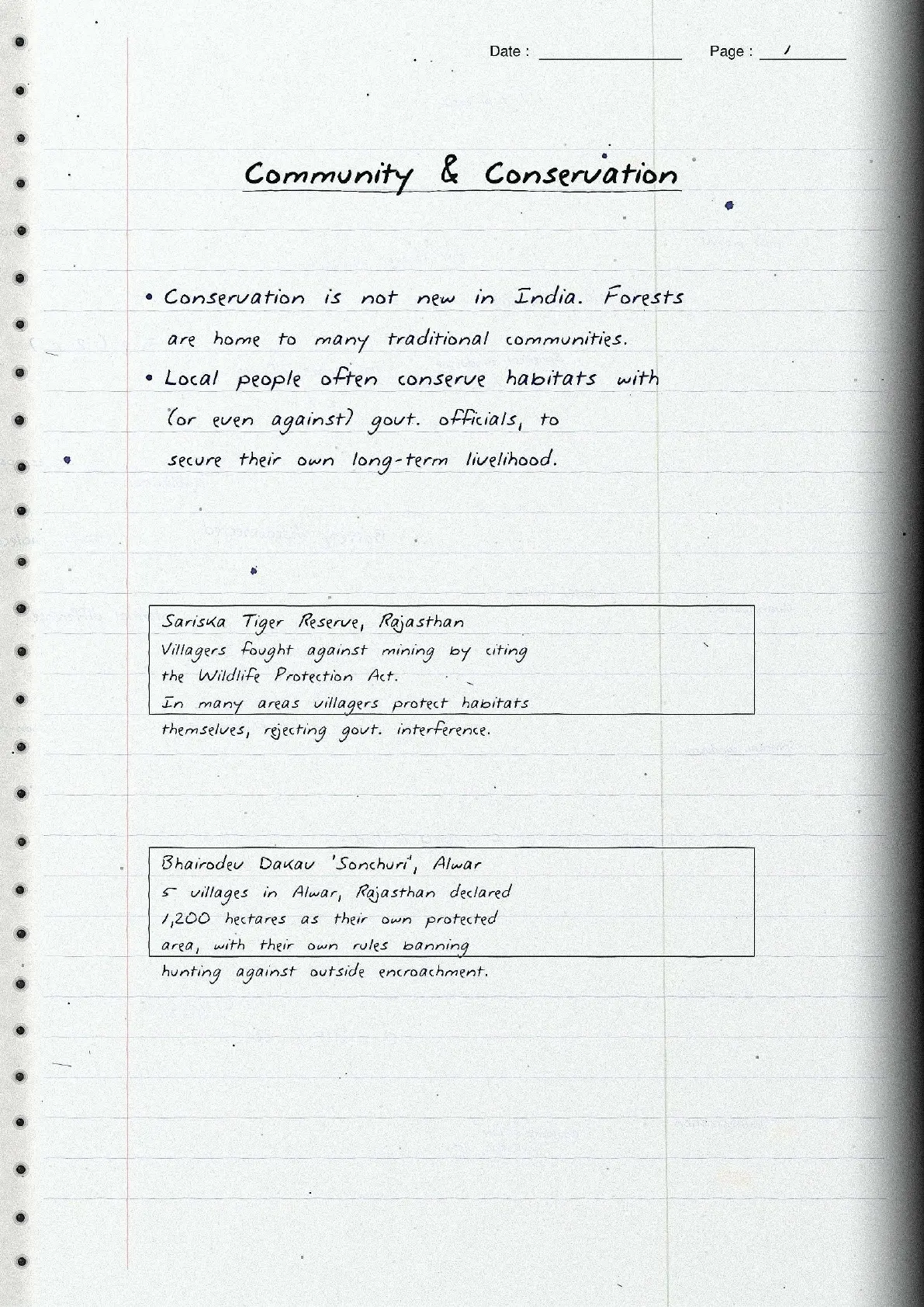
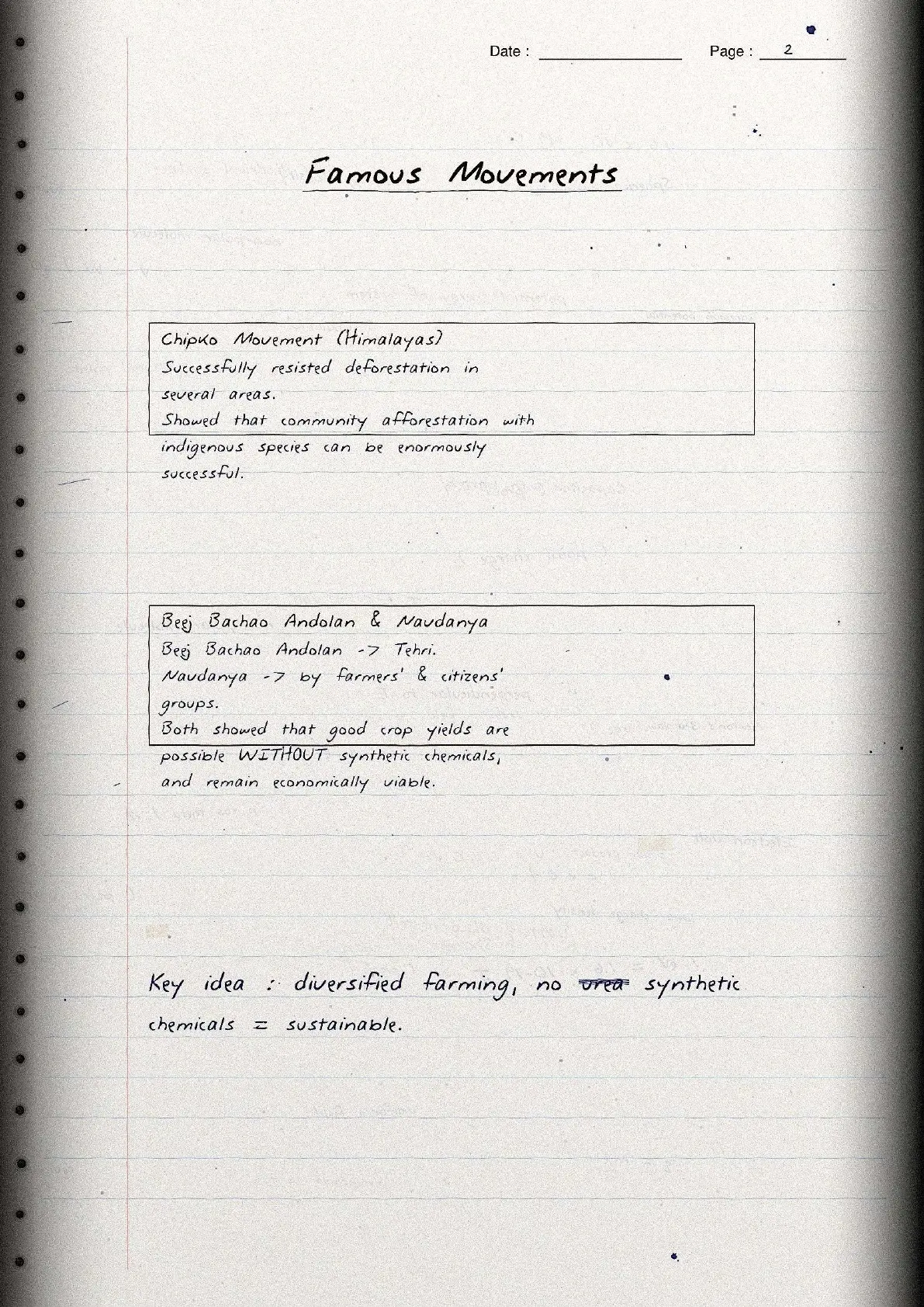
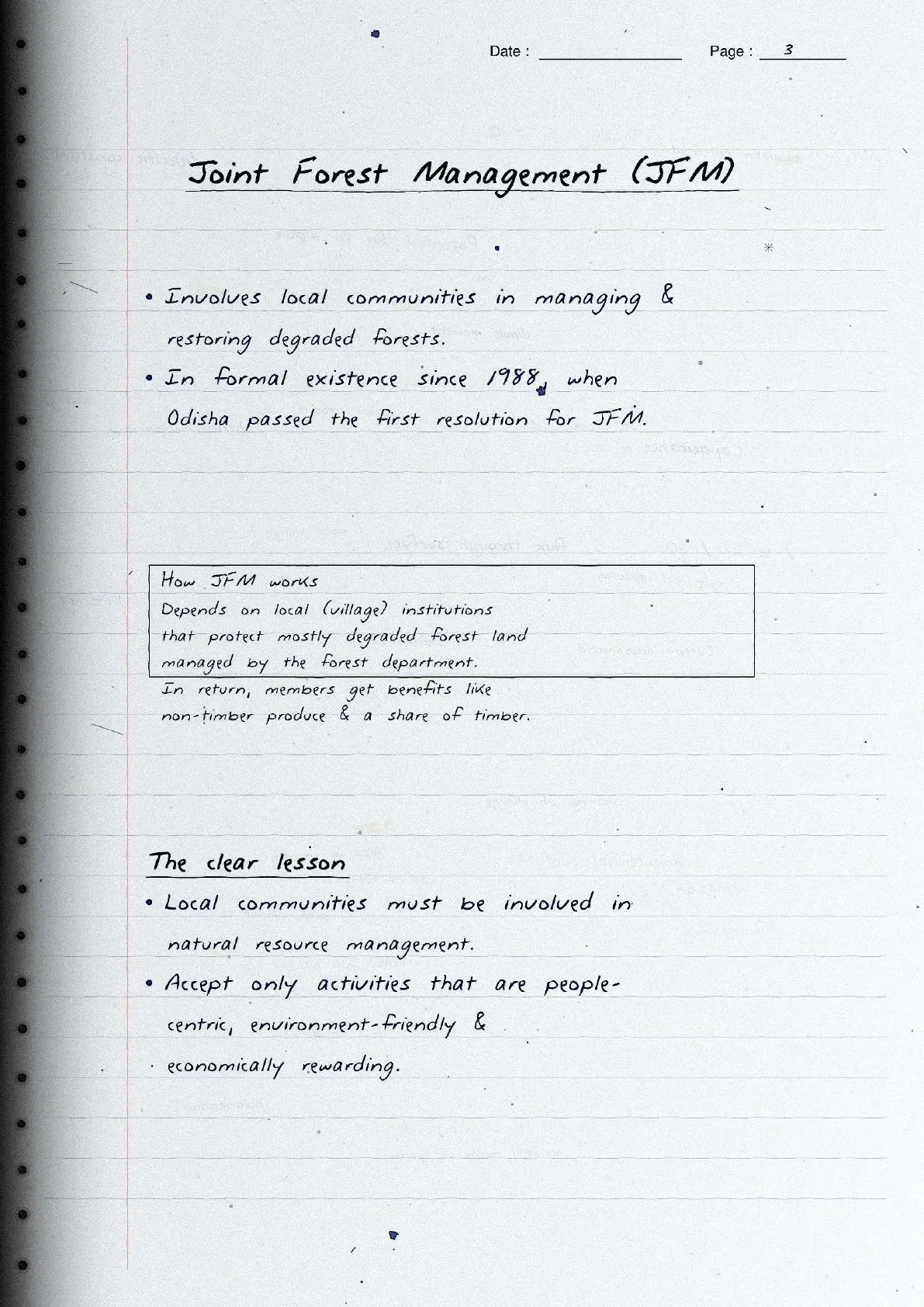
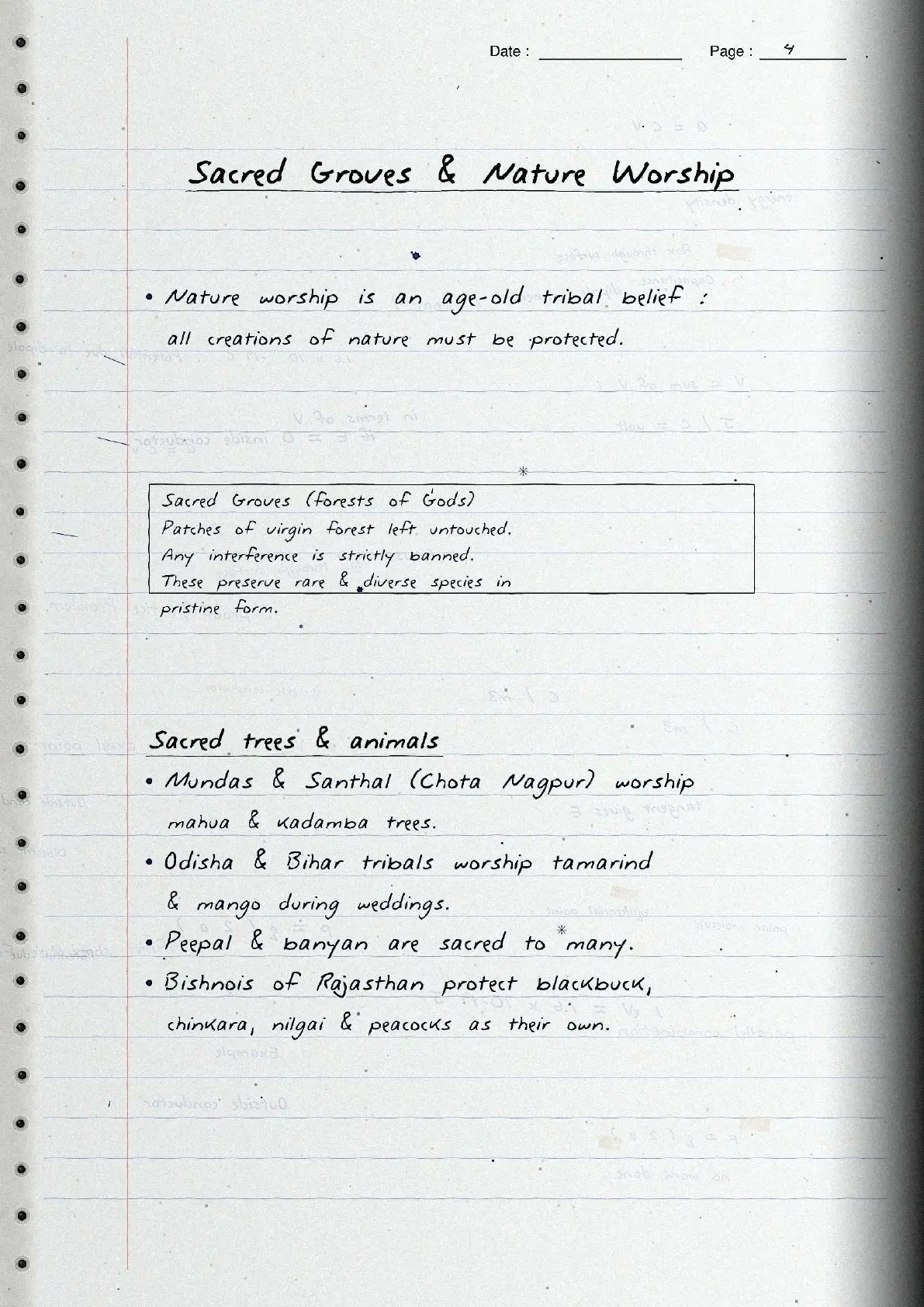
The last set of pages shows how local people protect forests, often better than the State. The notes keep the three big examples side by side, because the exam loves a community-conservation question. A small sketch of villagers hugging trees helps students recall the Chipko Movement.
- Chipko Movement: villagers in the Himalayas hugged trees to stop them being cut.
- Joint Forest Management (JFM): villages and the forest department protect forests together.
- Sacred groves: patches of forest left untouched for religious reasons, rich in rare species.
- Sariska and Bharatpur: local people resisted projects that harmed their wildlife.
The notes box the takeaway clearly: conservation works best when local communities lead it. A hand-drawn arrow links sacred groves to the idea that culture and nature protect each other. This balance between government law and community action is exactly what the five-mark answer asks for.
How to Use These Handwritten Notes
Handwritten notes work best as a final layer of revision, not as your first read. The plan below helps students get the most out of the handwritten notes before the board exam. Follow it once a week in the run-up to the test.
- First pass: read the notes once, following the biodiversity, IUCN, depletion and conservation order.
- Active recall: cover the boxed IUCN categories and try to write all six from memory.
- Timeline practice: redraw the conservation timeline and label 1972 and 1973 without looking.
- Self-test: attempt a short class 10 geography chapter 2 mcq drill to check the small facts.
Because the pages are scanned, students can save them on a phone and revise offline on the way to the exam centre. Many students search for forest and wildlife resources class 10 notes on their phone the night before a test, so a saved PDF means revision is always at hand. Pair these pages with the full solutions to check your written answers against model points.
Common Mistakes These Notes Help You Avoid
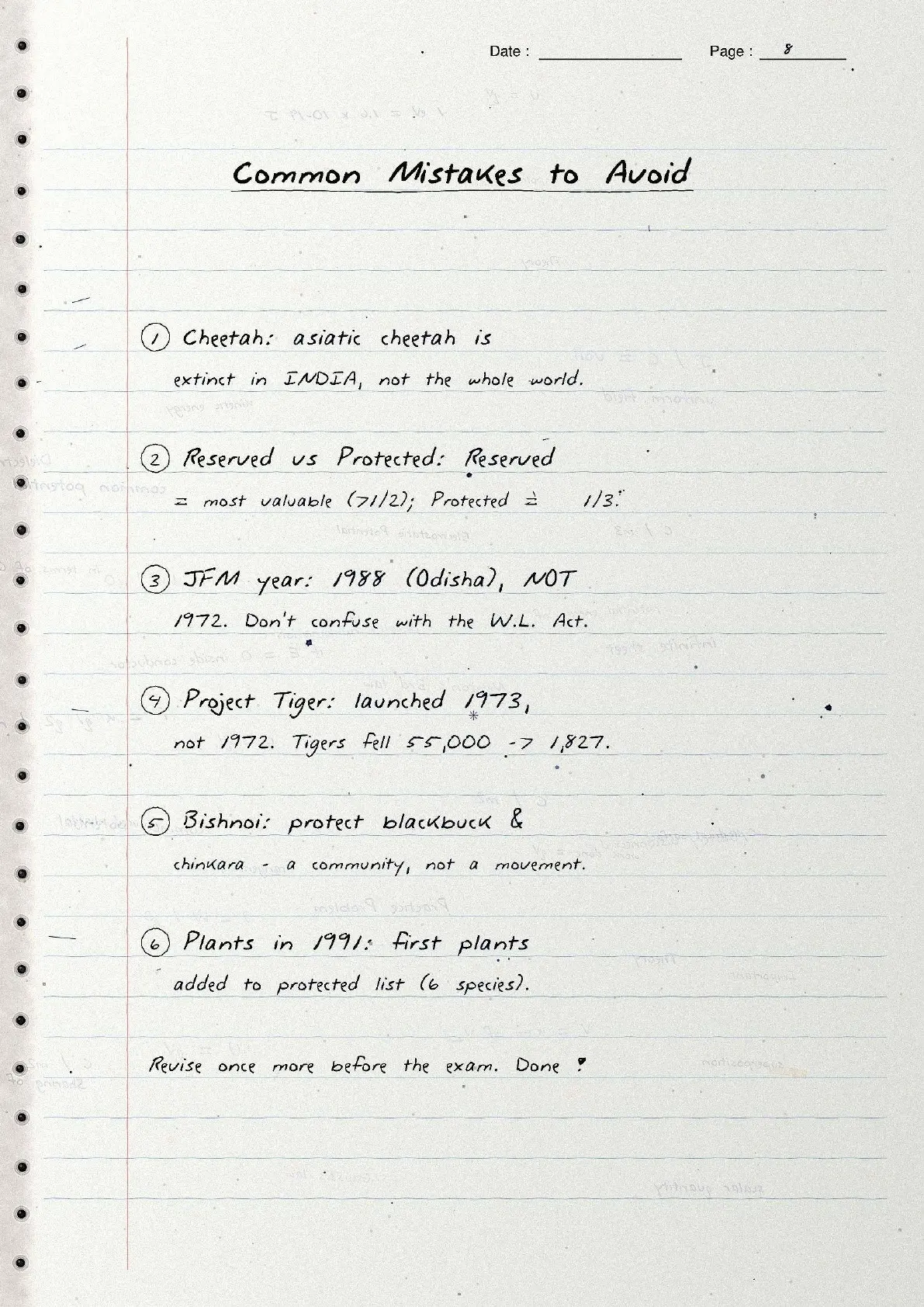
A few errors cost marks in this chapter every year. Most come from mixing up the IUCN categories or forgetting the conservation years. The notes flag each soft point in the margin so students phrase it safely on the answer sheet.
- Confusing endemic (found in one place) with extinct (gone for good).
- Swapping the years - the Wildlife Protection Act is 1972, Project Tiger is 1973.
- Naming only government action and forgetting community movements like Chipko and JFM.
- Calling all forest types equal - reserved forests are the most protected, not unclassed ones.
- Treating forest loss as natural - most of it is caused by human activity.
Students who fix these five points usually move from average to high marks. The exam rewards a balanced view, so always show both the government and the community side before you judge India's conservation record. The handwritten margin notes nudge you to keep that balance in the right places.
How These Notes Pair with the Solutions and Book PDF
These handwritten notes are a revision layer. To prepare fully, students should use them with the other resources for the same chapter, all linked in the table below. Read the notes, then test yourself with the solutions, and open the book PDF for the original text and figures.
| Resource | Best used for |
|---|---|
| Forest and Wildlife Resources NCERT Solutions | Step-by-step answers to all the back-exercise questions |
| Forest and Wildlife Resources Class 10 Notes | Quick chapter summary with all years and key terms in one place |
| Forest and Wildlife Resources NCERT Book PDF | Reading the original NCERT chapter text and figures |
Tip: use the handwritten IUCN chart to memorise the six categories, then write the full answer in your own words. Drawing the conservation timeline once from memory fixes the 1972 and 1973 years for good.
All Class 10 Geography Handwritten Notes by Chapter
The table links the handwritten notes for every chapter in Class 10 Geography Contemporary India II, so students can move across the course in one click. Forest and Wildlife Resources is highlighted.
| Chapter | Handwritten Notes |
|---|---|
| Contemporary India II | |
| Chapter 1 | Resources and Development |
| Chapter 2 | Forest and Wildlife Resources |
| Chapter 3 | Water Resources |
| Chapter 4 | Agriculture |
| Chapter 5 | Minerals and Energy Resources |
| Chapter 6 | Manufacturing Industries |
| Chapter 7 | Lifelines of National Economy |
Forest and Wildlife Resources Class 10 Handwritten Notes Common Questions
Ques. Where can I download the class 10 geography handwritten notes chapter 2 Forest and Wildlife Resources PDF?
Ans. You can download the Forest and Wildlife Resources handwritten notes PDF directly from this page. It is free, follows the 2026-27 NCERT, and gives the chapter as clean scanned notebook pages with boxed terms and a labelled IUCN categories chart.
Ques. Are handwritten notes good enough for the class 10 geography board exam?
Ans. Yes, for revision. Handwritten notes are best used as a final layer after you have read the chapter and practised the solutions. They make the IUCN categories, the conservation years and the community movements quick to recall in the exam.
Ques. What does the Forest and Wildlife Resources chapter cover?
Ans. It covers India's biodiversity, flora and fauna, the six IUCN species categories, the human causes of forest and wildlife loss, the Wildlife Protection Act of 1972, Project Tiger, and community efforts like the Chipko Movement, Joint Forest Management and sacred groves.
Ques. What are the six IUCN categories of species in this chapter?
Ans. The six categories are normal, endangered, vulnerable, rare, endemic and extinct species. The notes box each one with a one-word cue and an Indian example, so students never confuse endemic species, which live in one place, with extinct species, which are gone for good.
Ques. How should I use these notes for quick revision?
Ans. Read the pages once in the biodiversity, IUCN, depletion and conservation order, cover the boxed categories and write all six from memory, redraw the conservation timeline, then attempt a short class 10 geography chapter 2 mcq drill to test the small facts.



Comments