



About 5 to 7 marks per CBSE Social Science board paper come from Manufacturing Industries, Chapter 6 of Contemporary India II.
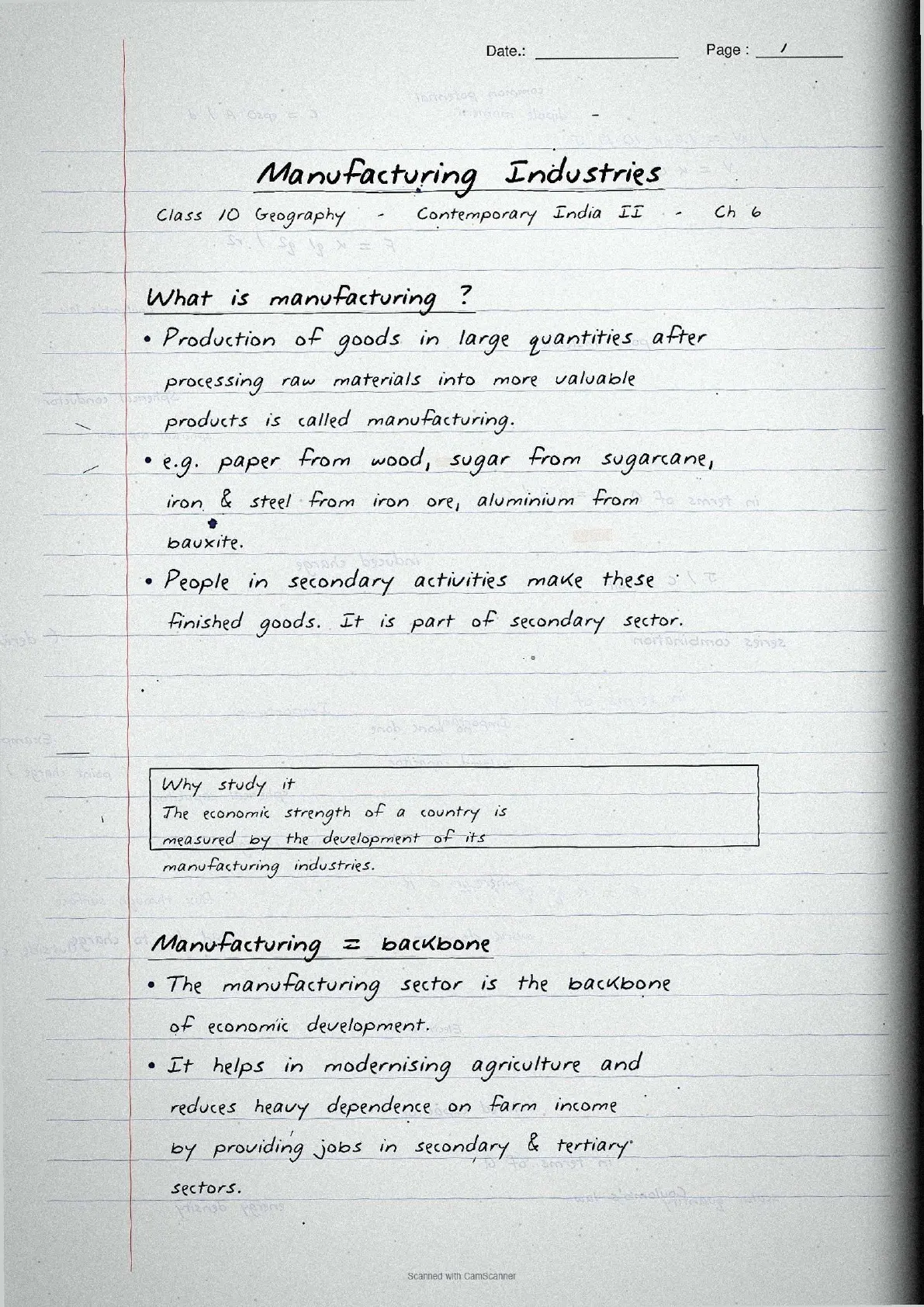
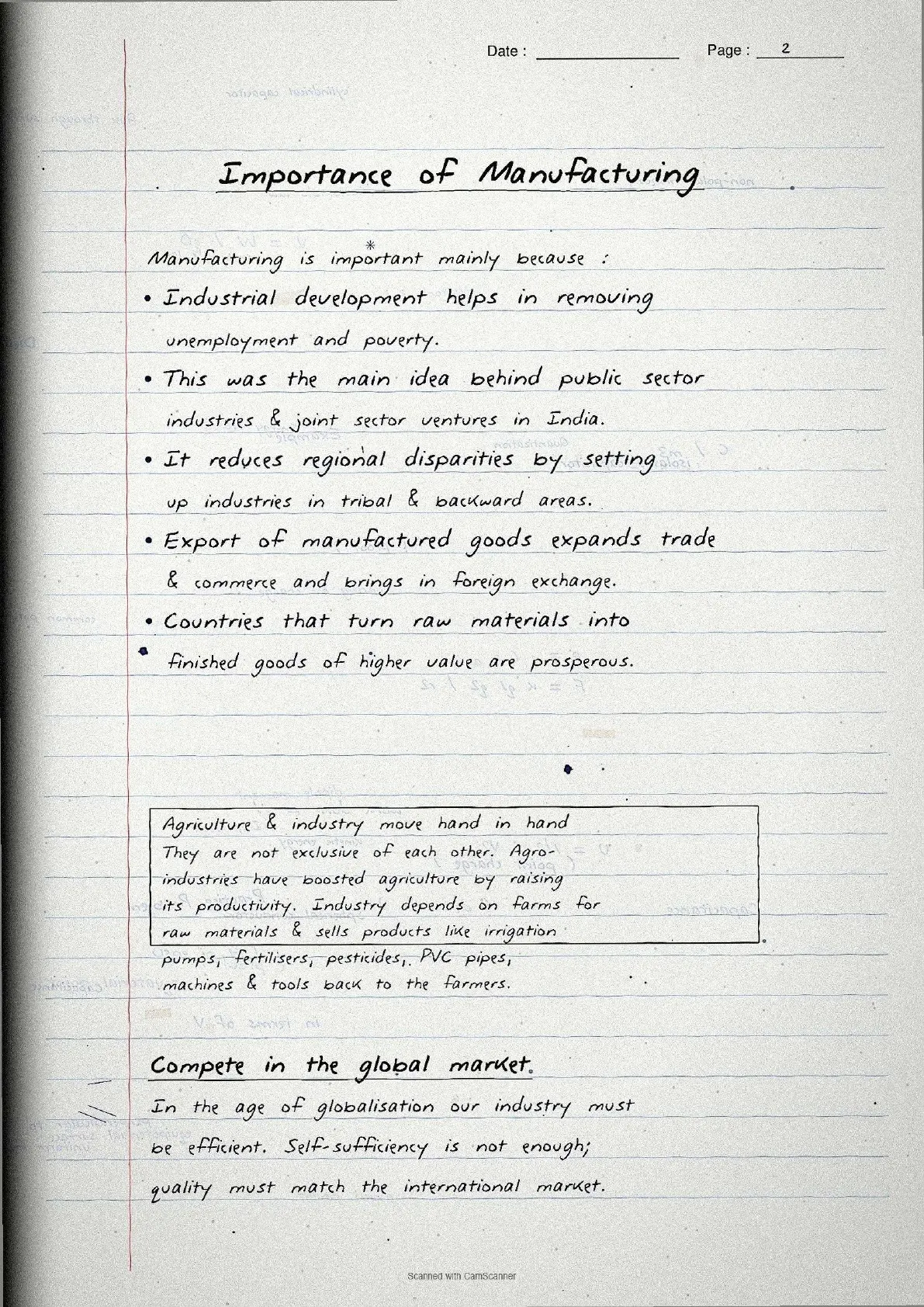
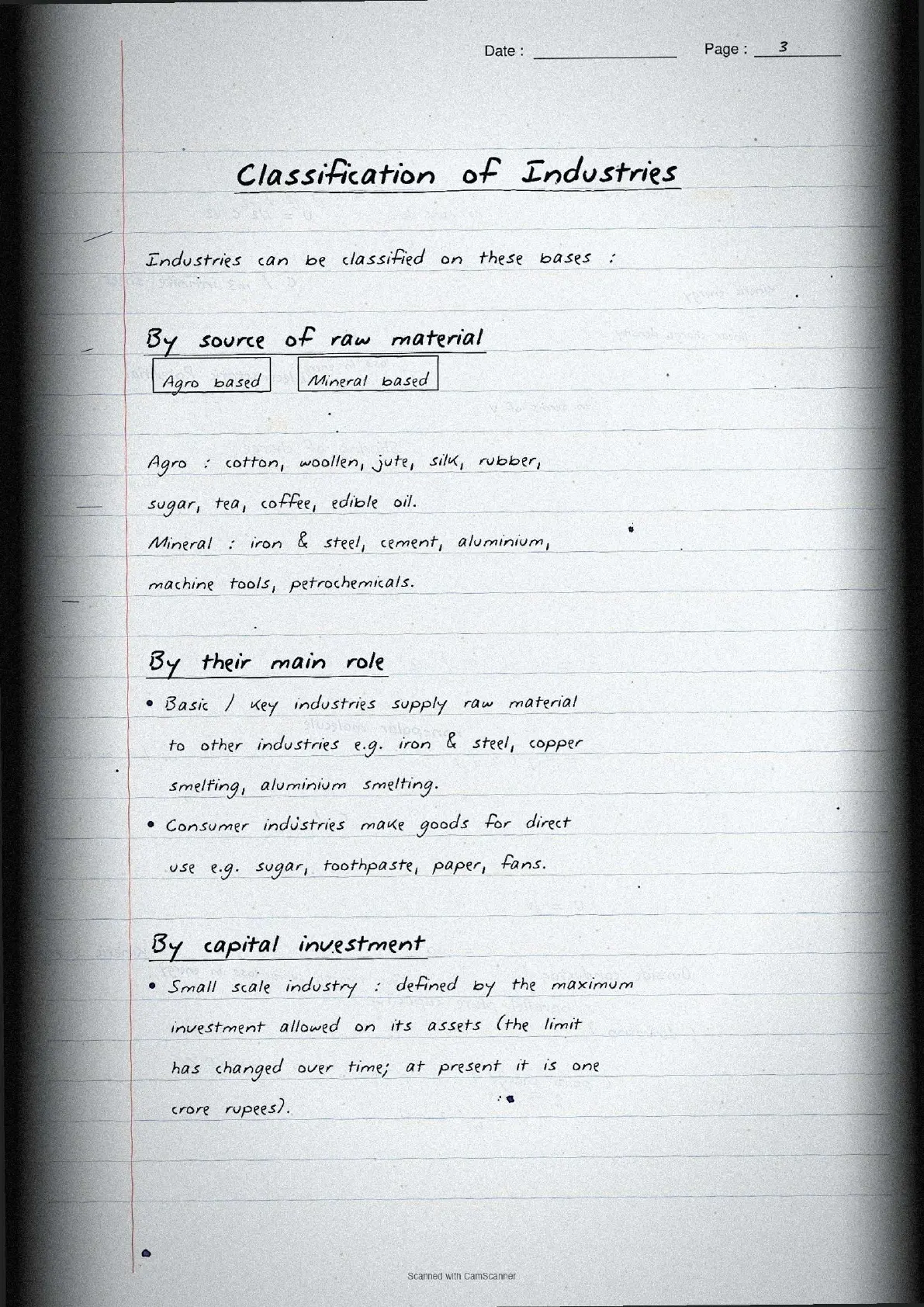
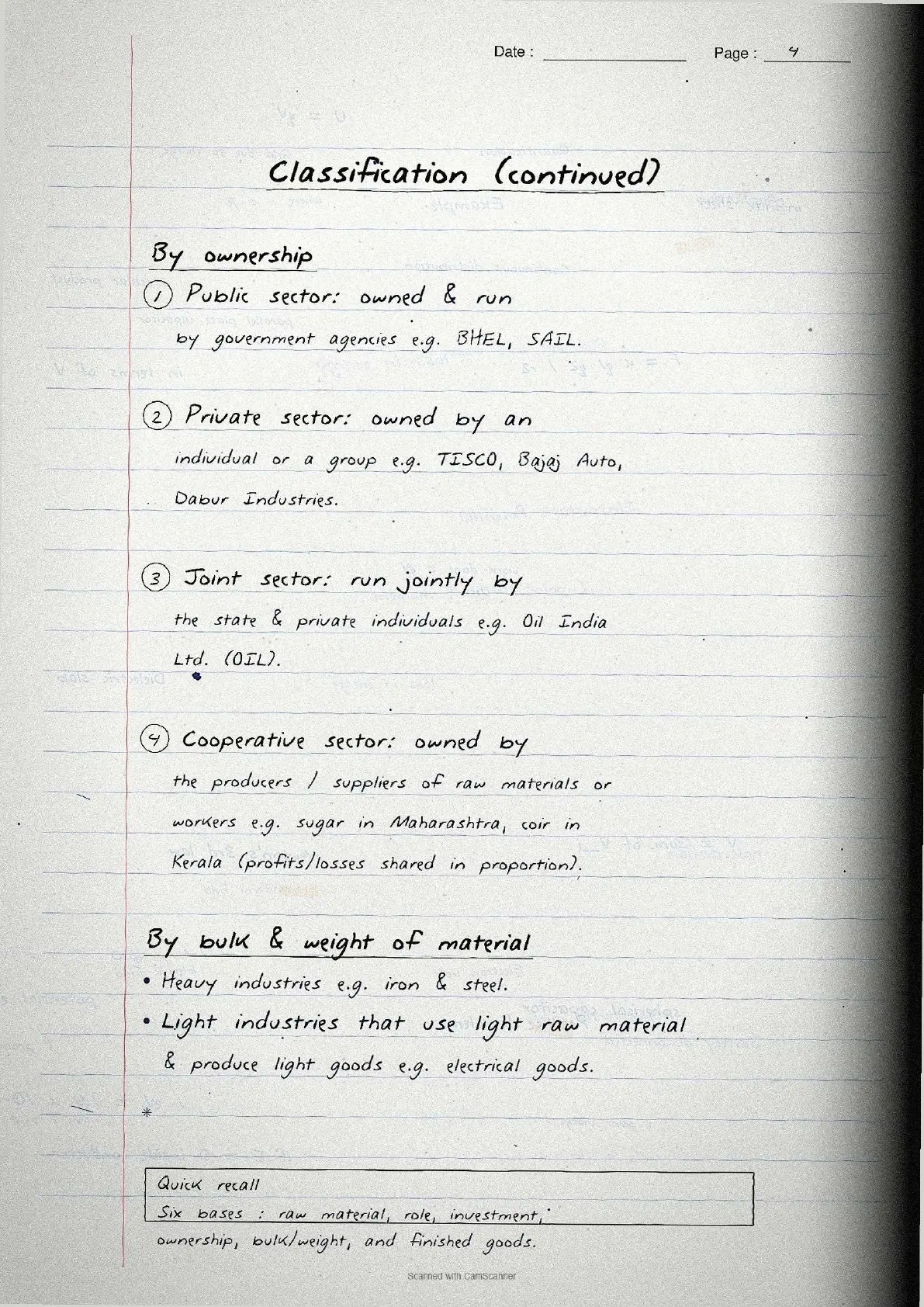
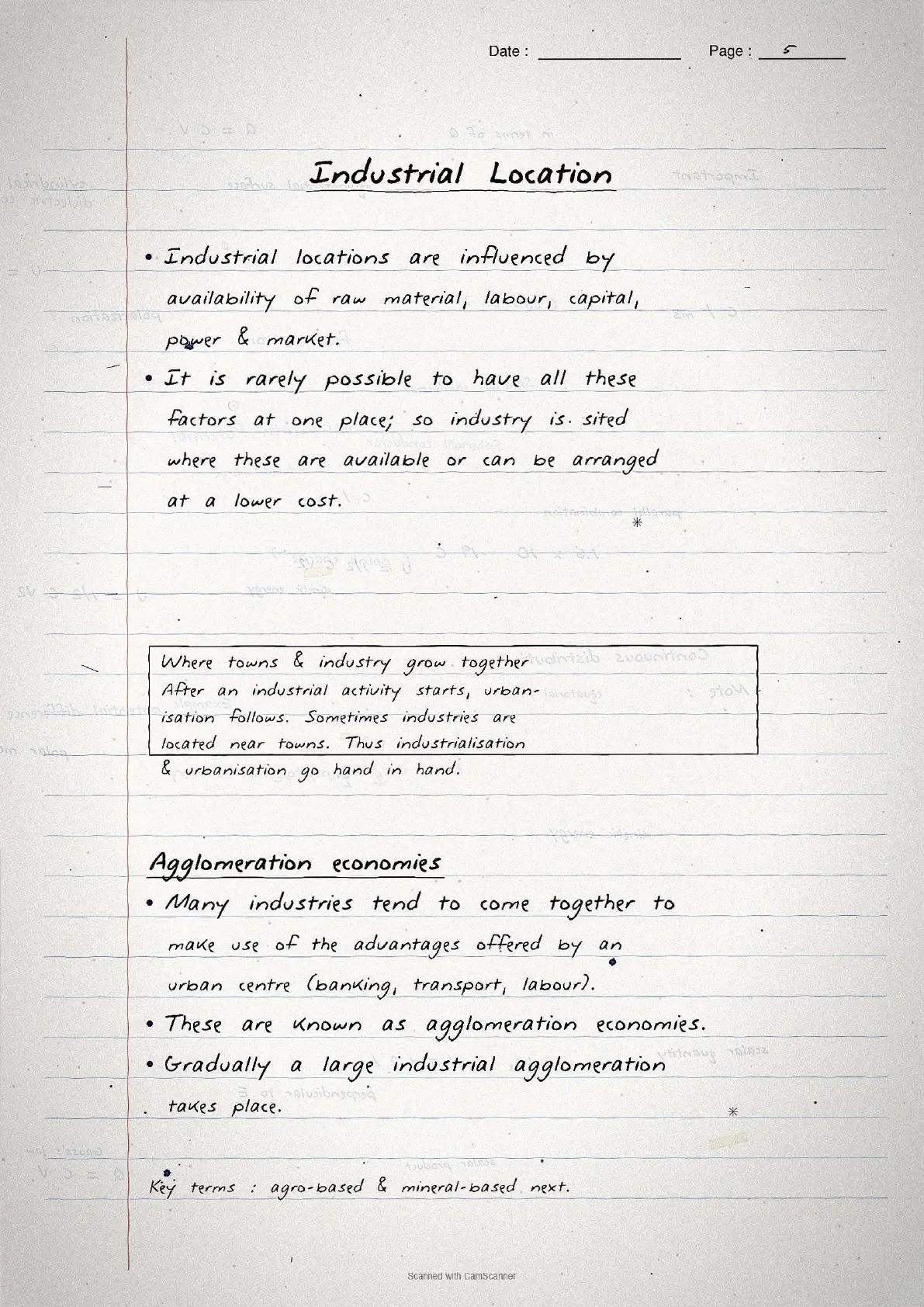
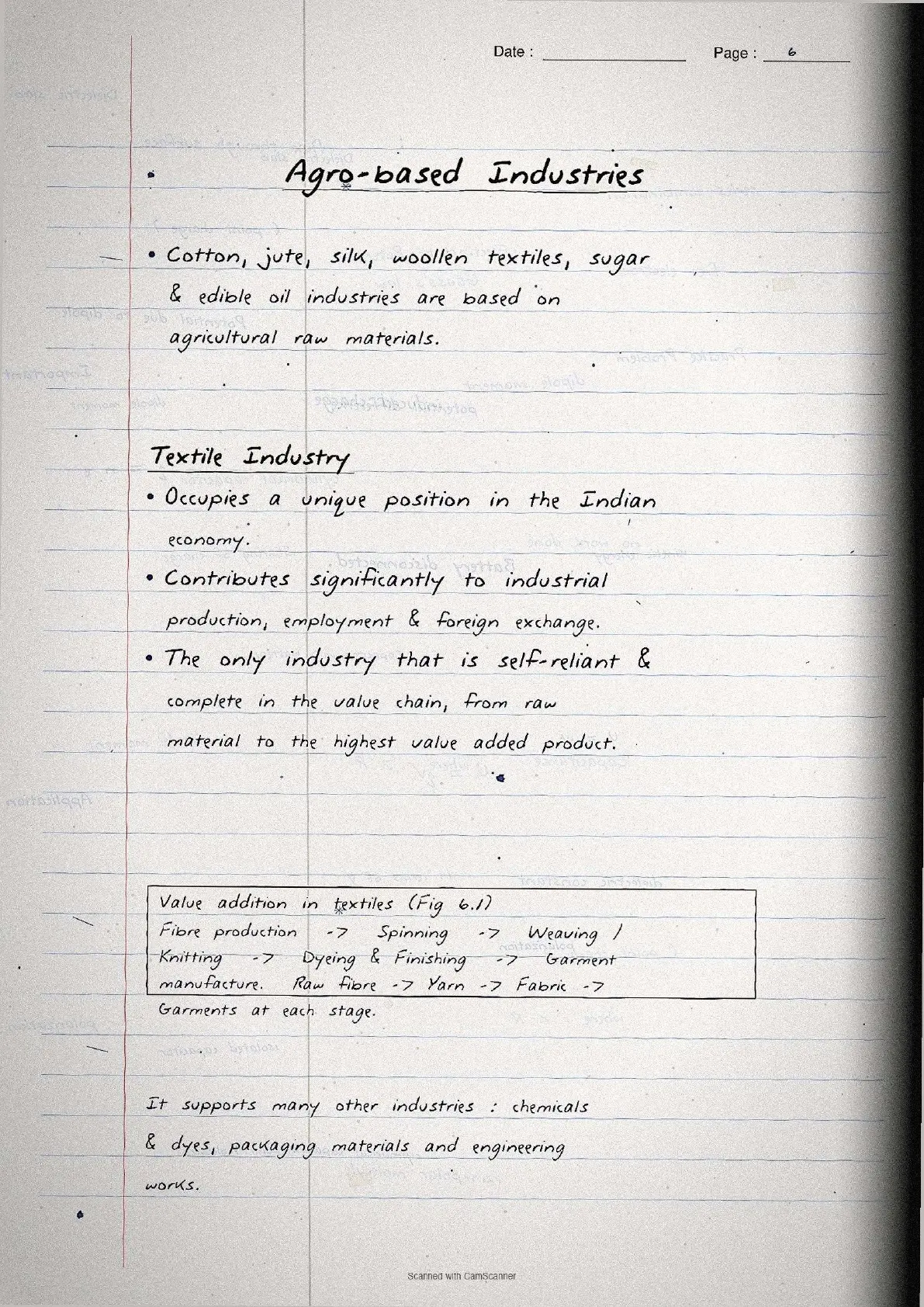
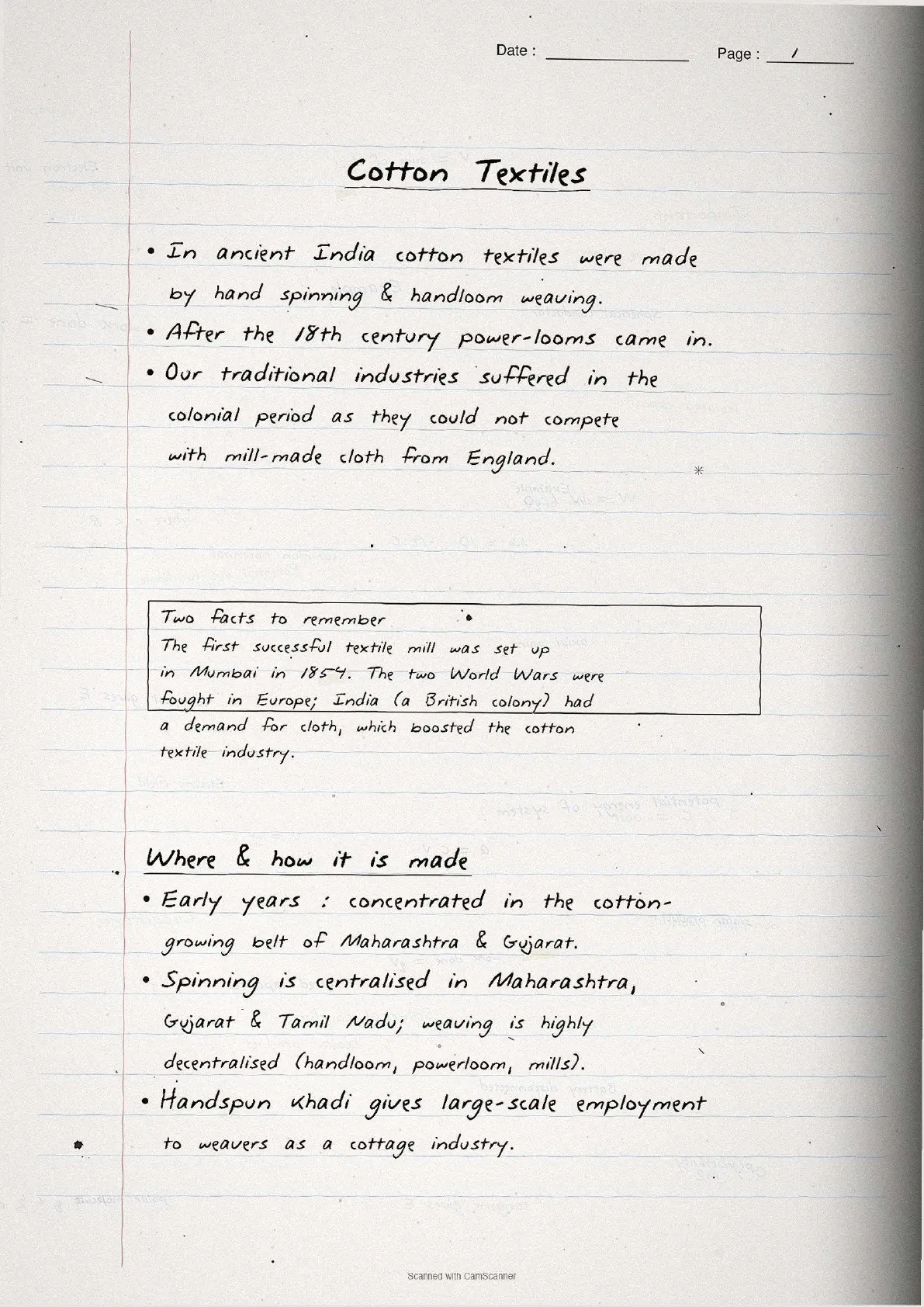
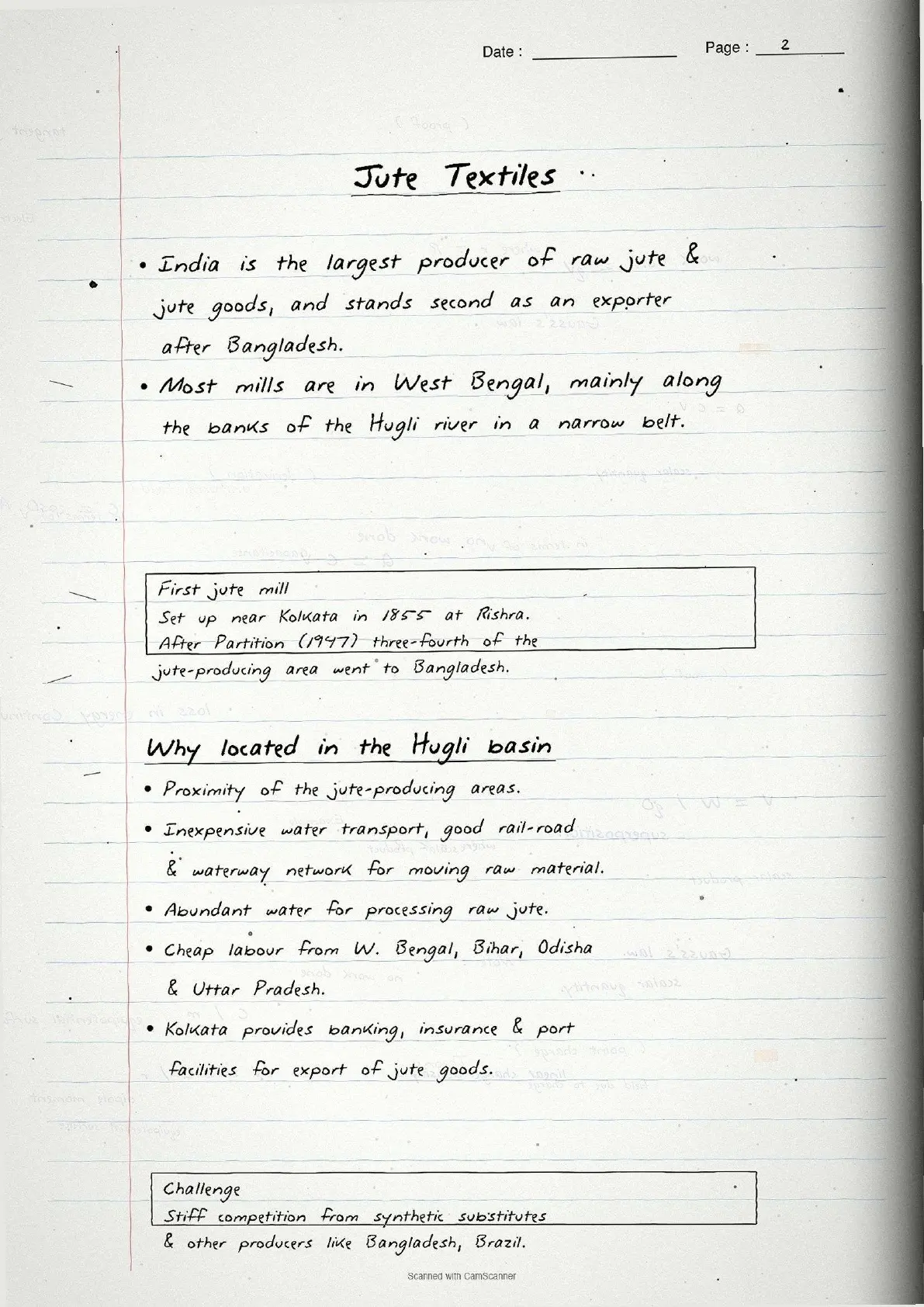
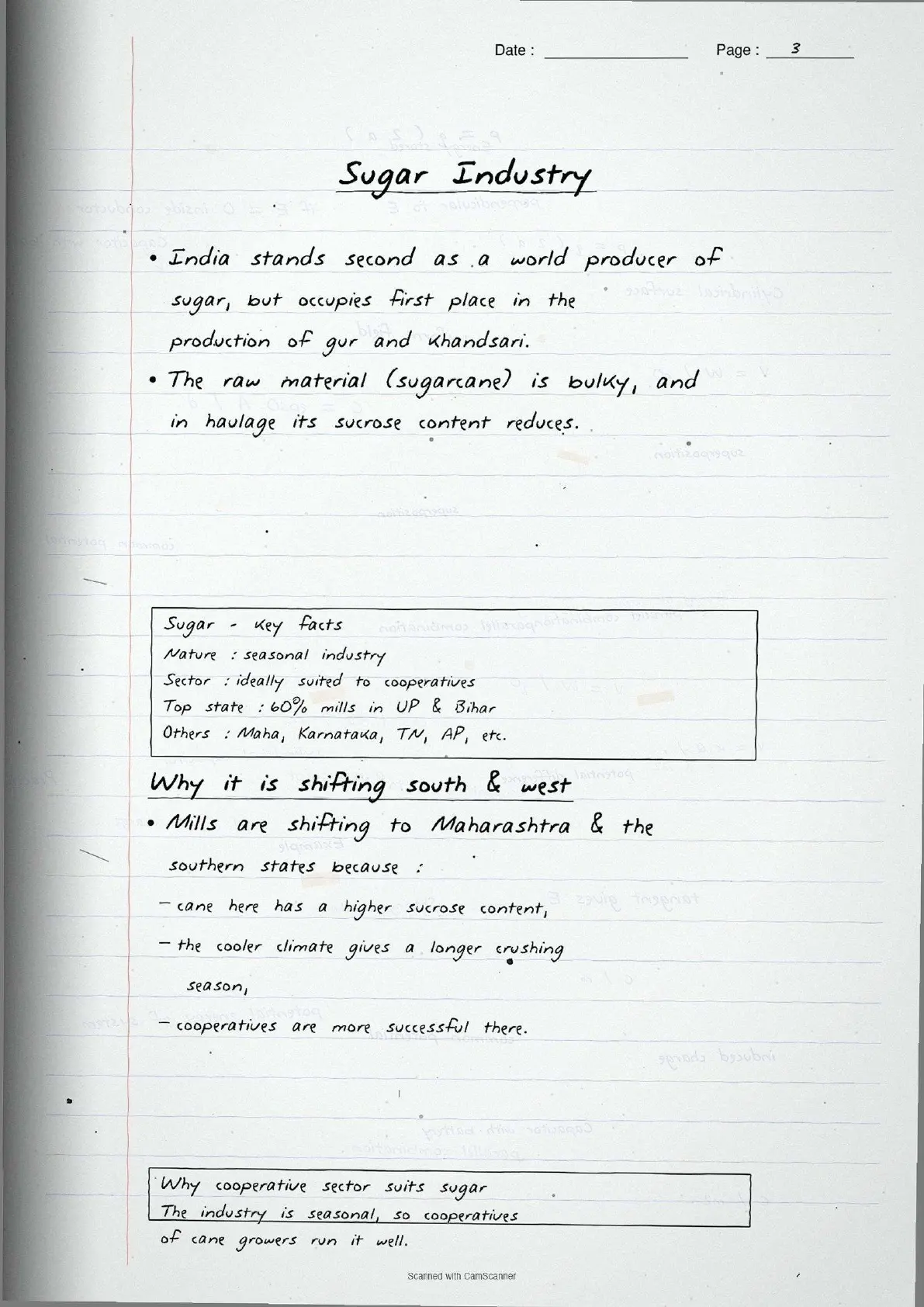
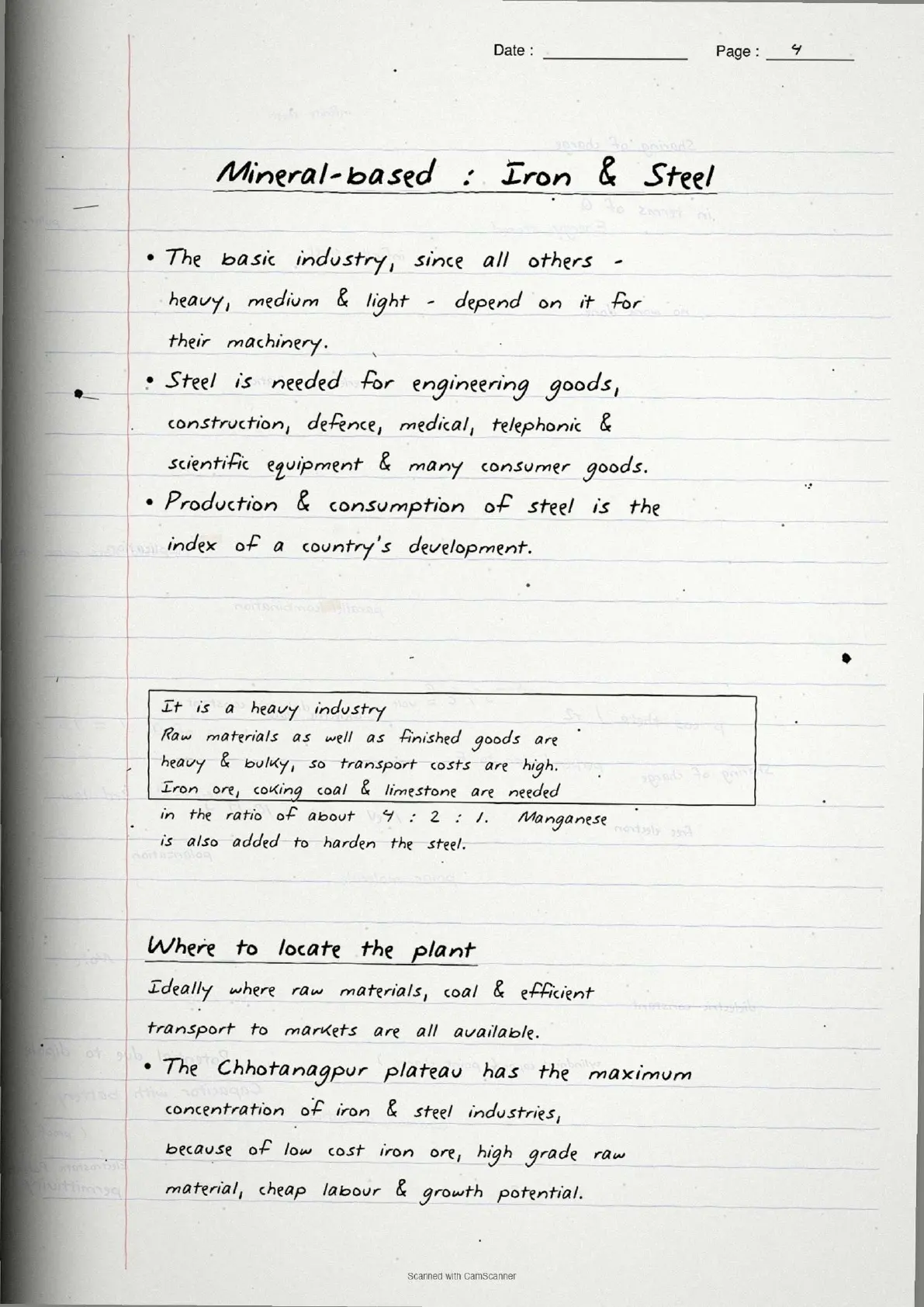
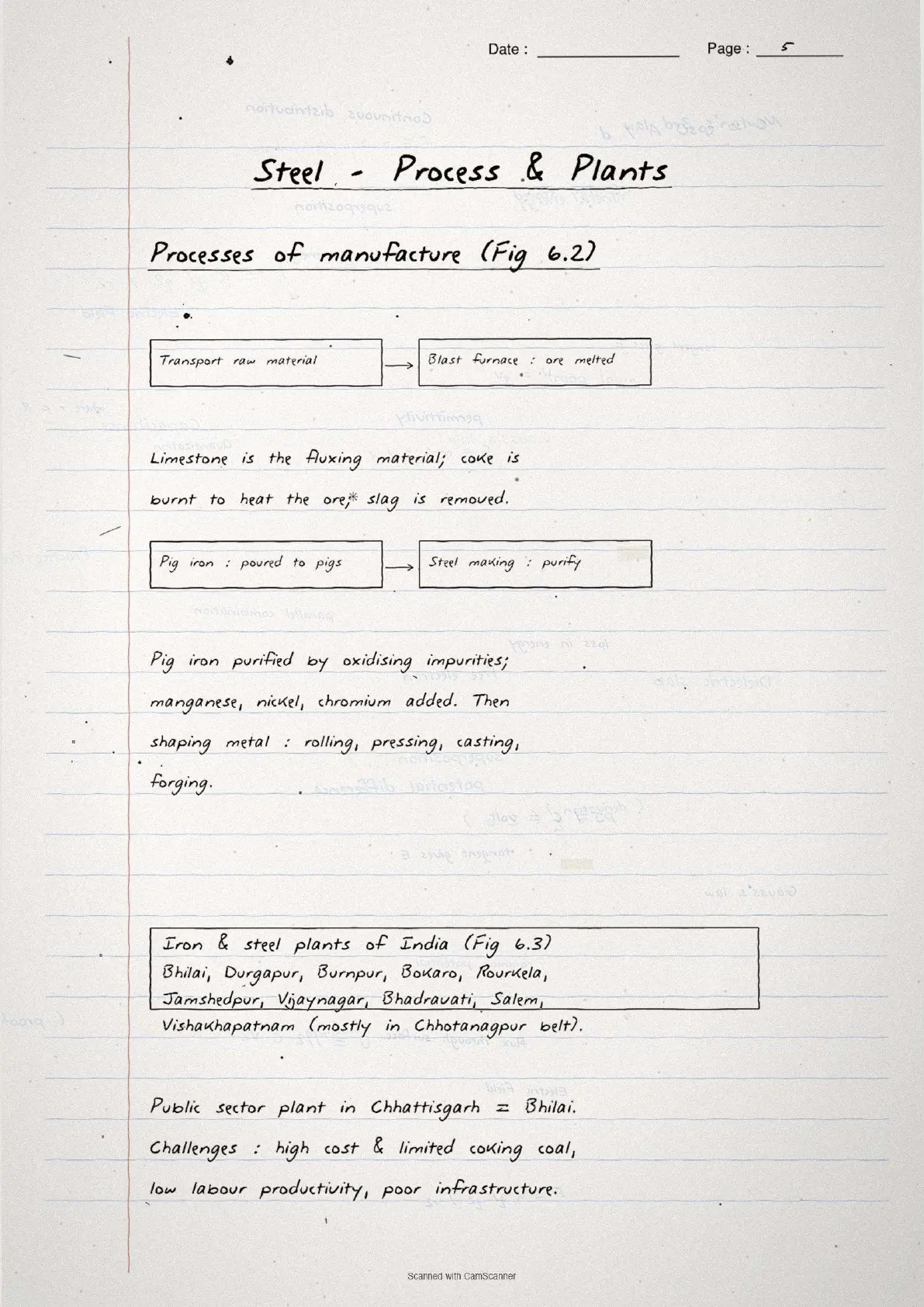
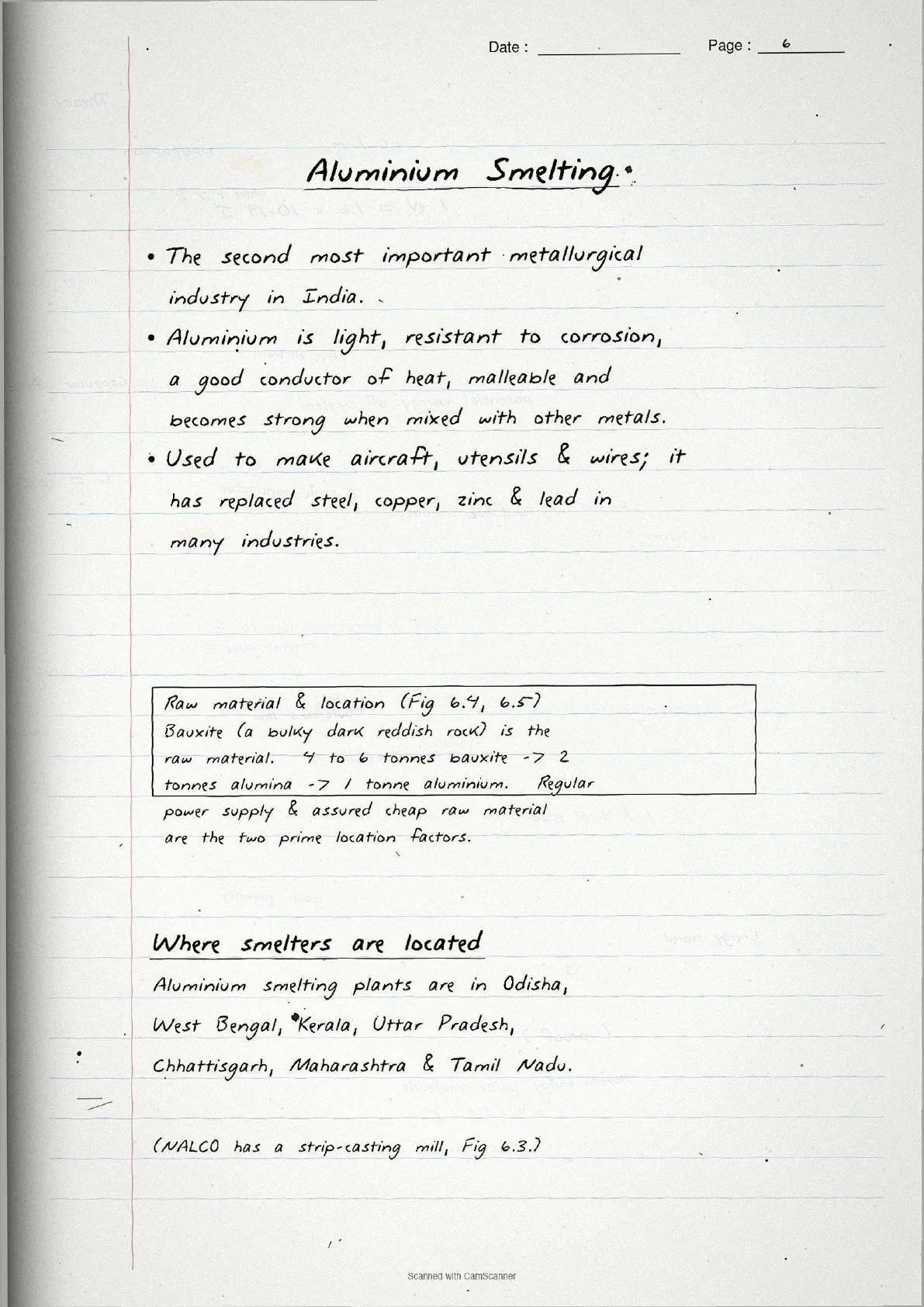
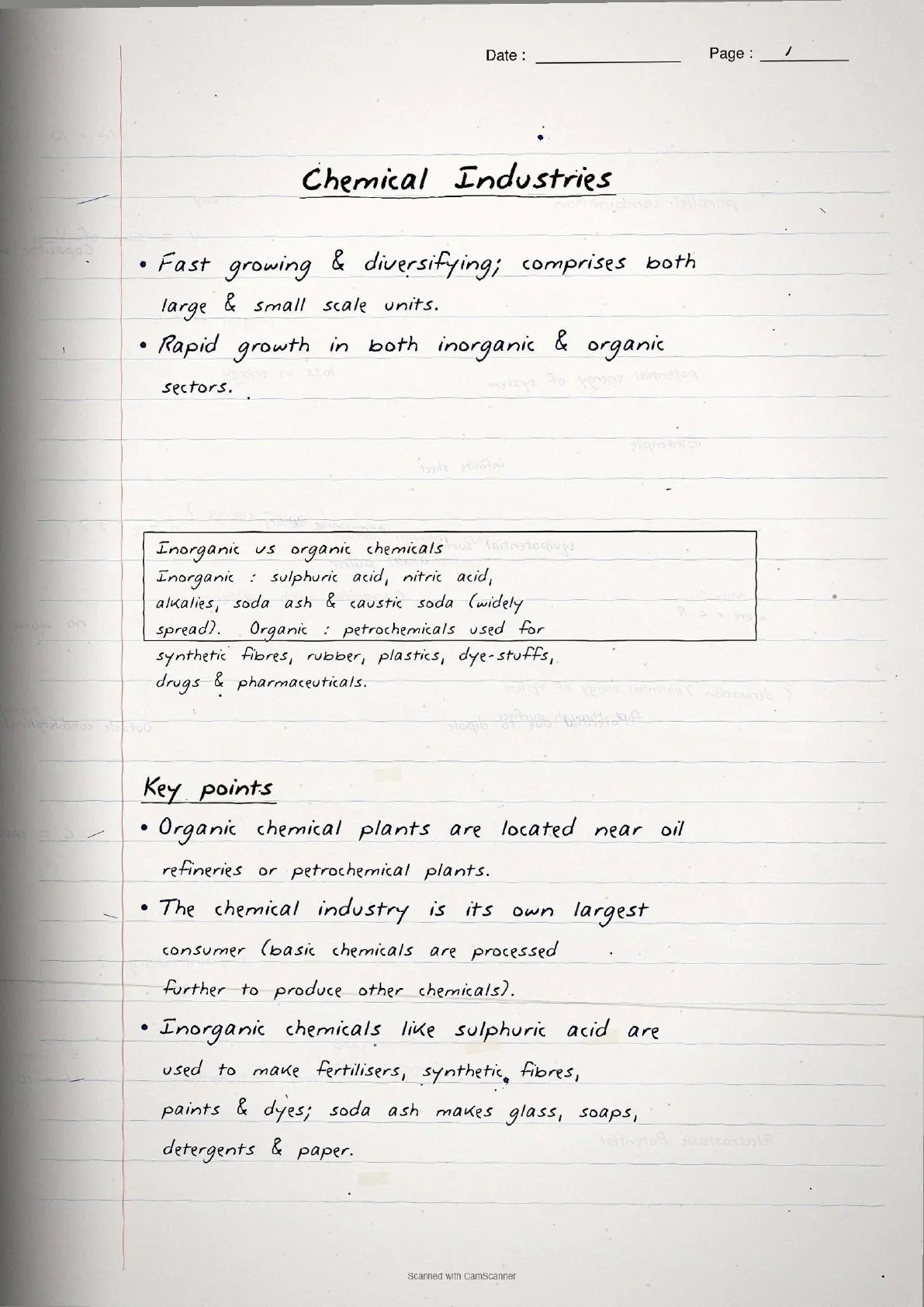
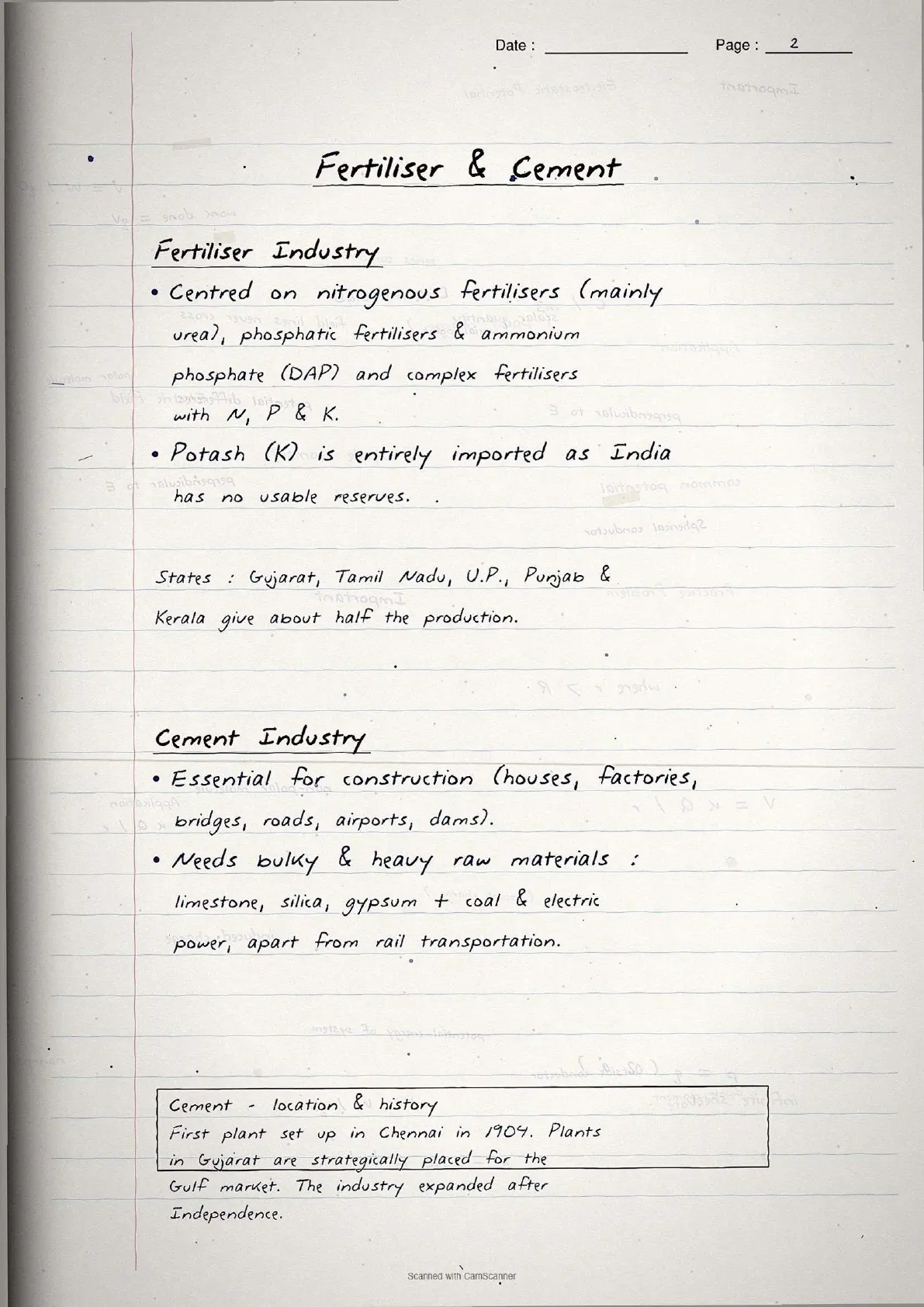
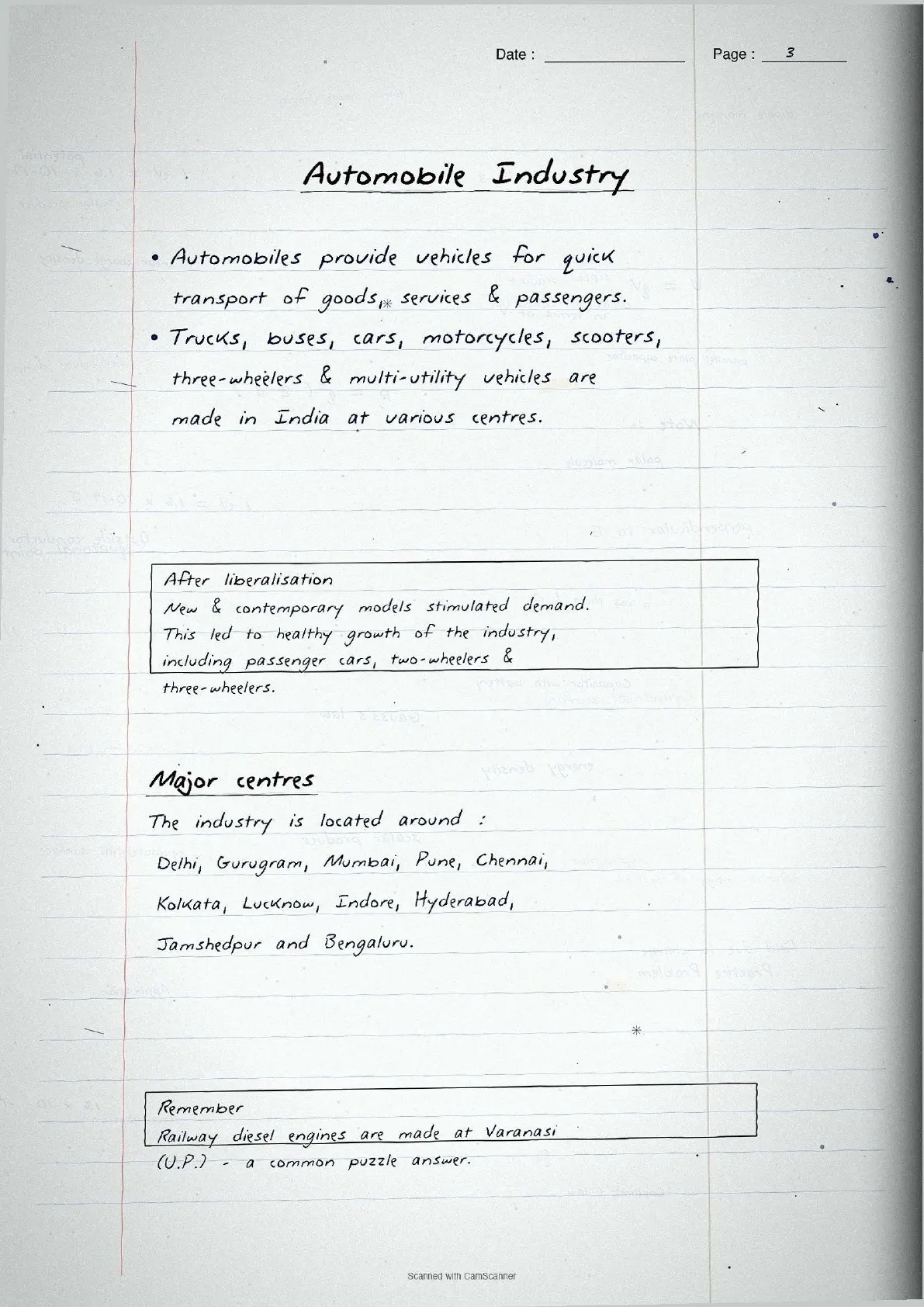
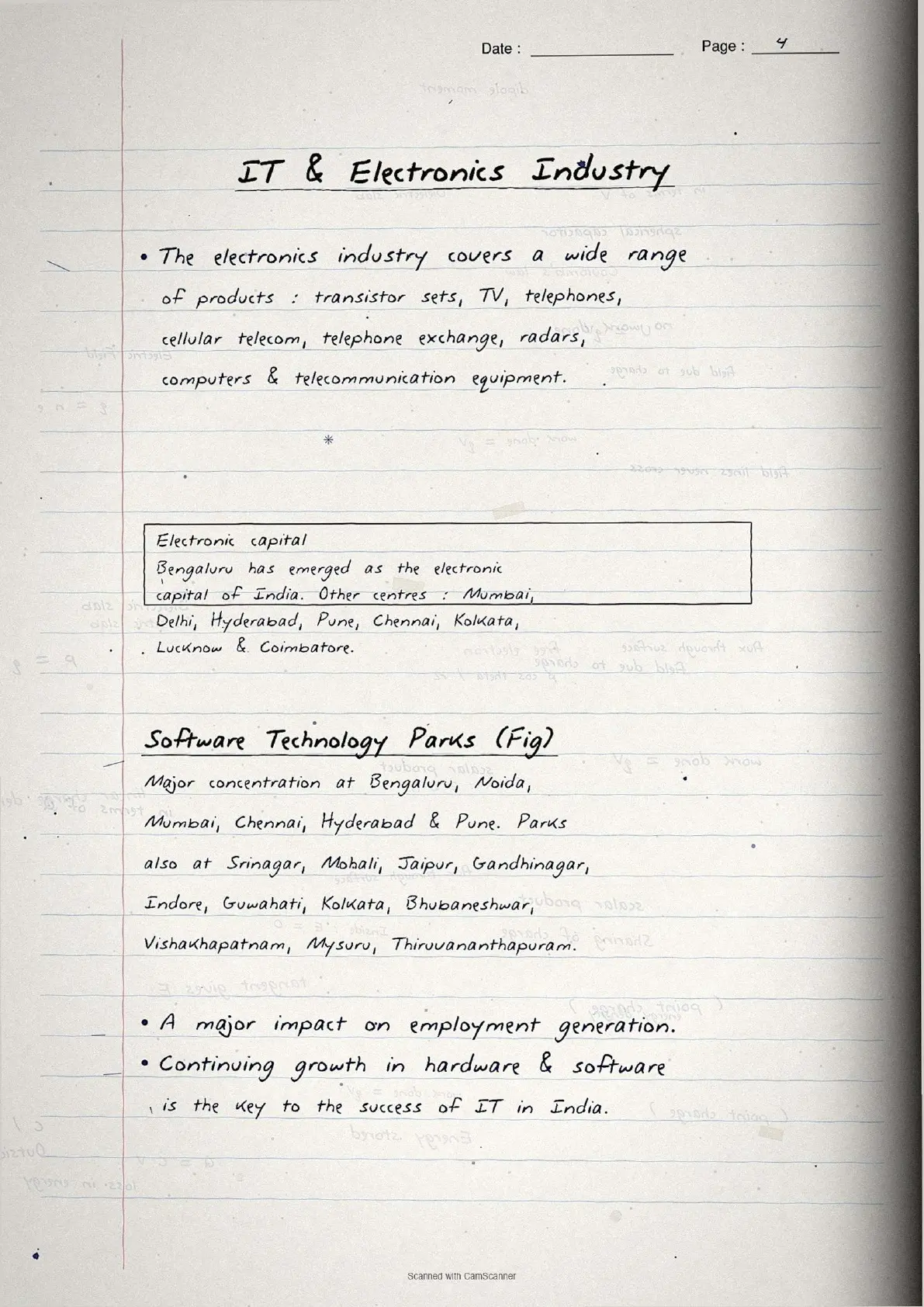
These class 10 geography handwritten notes chapter 6 Manufacturing Industries turn the chapter into clean, scanned notebook pages for fast revision under the 2026-27 CBSE syllabus.
- Scanned, pen-on-paper pages with boxed key terms, an industry-classification chart and an India iron-and-steel location sketch.
- One of the higher-weightage Class 10 Geography chapters, often carrying a Long Answer plus a map-marking question on industrial towns.
- Pairs with the NCERT Solutions, Notes and Book PDF for the same chapter, all linked lower on this page.
These Manufacturing Industries handwritten notes are prepared from the official NCERT Contemporary India II textbook and checked against the last five years of CBSE Social Science board papers.
|
Table of Contents |
What These Handwritten Notes Include
Manufacturing Industries is Chapter 6 of Contemporary India II. It covers why manufacturing matters, how industries are classified, where major industries are located, and how factories pollute and how that is controlled. These handwritten notes condense it into pages you can read in one sitting.
Every page follows the four threads the board paper tests:
- Classification pages group industries by raw material, role, capital, ownership and bulk of product.
- Iron and steel and textile pages cover the major industries, their inputs and their locations.
- Other industries pages cover cement, fertiliser, automobile and the information technology industry.
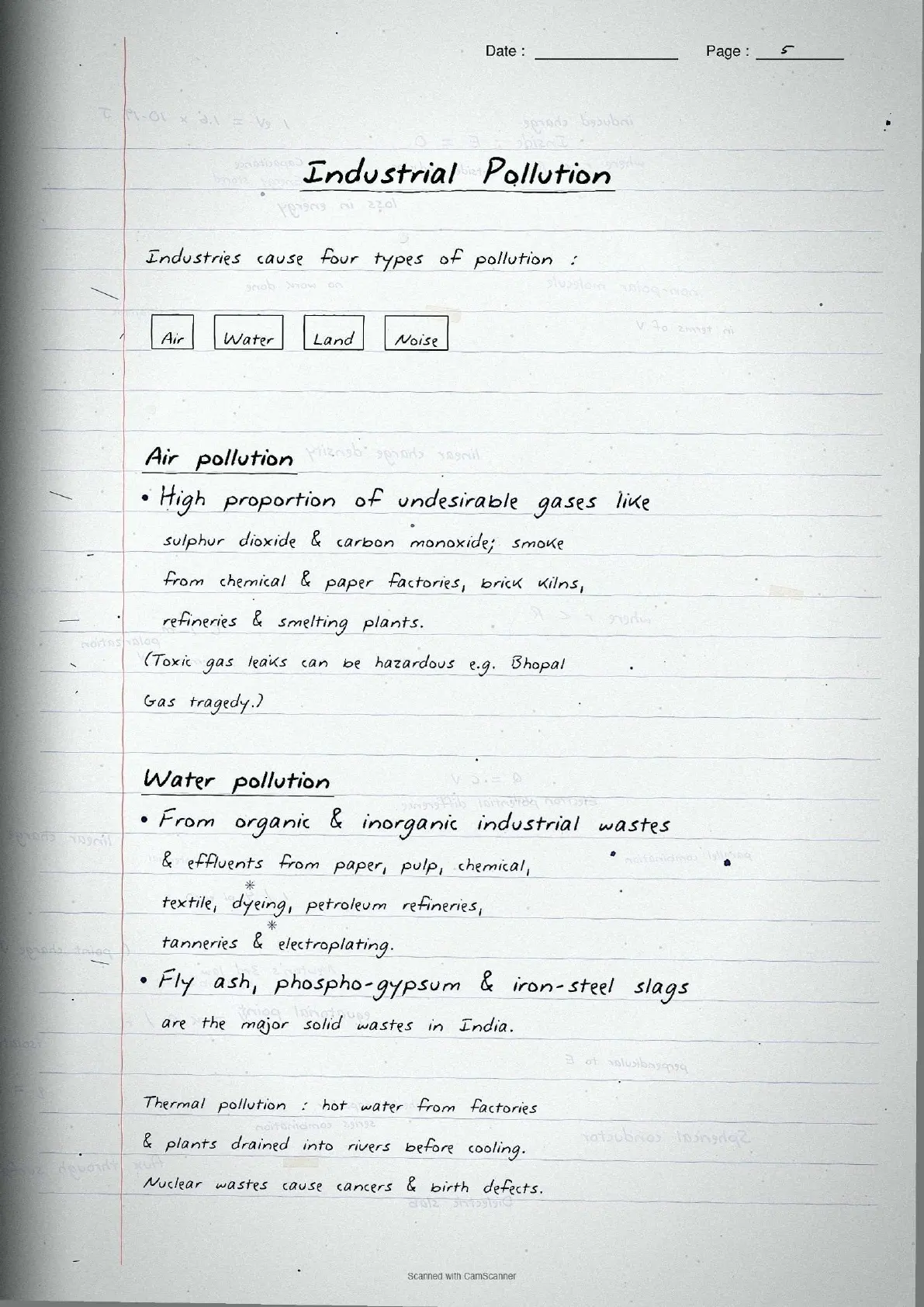
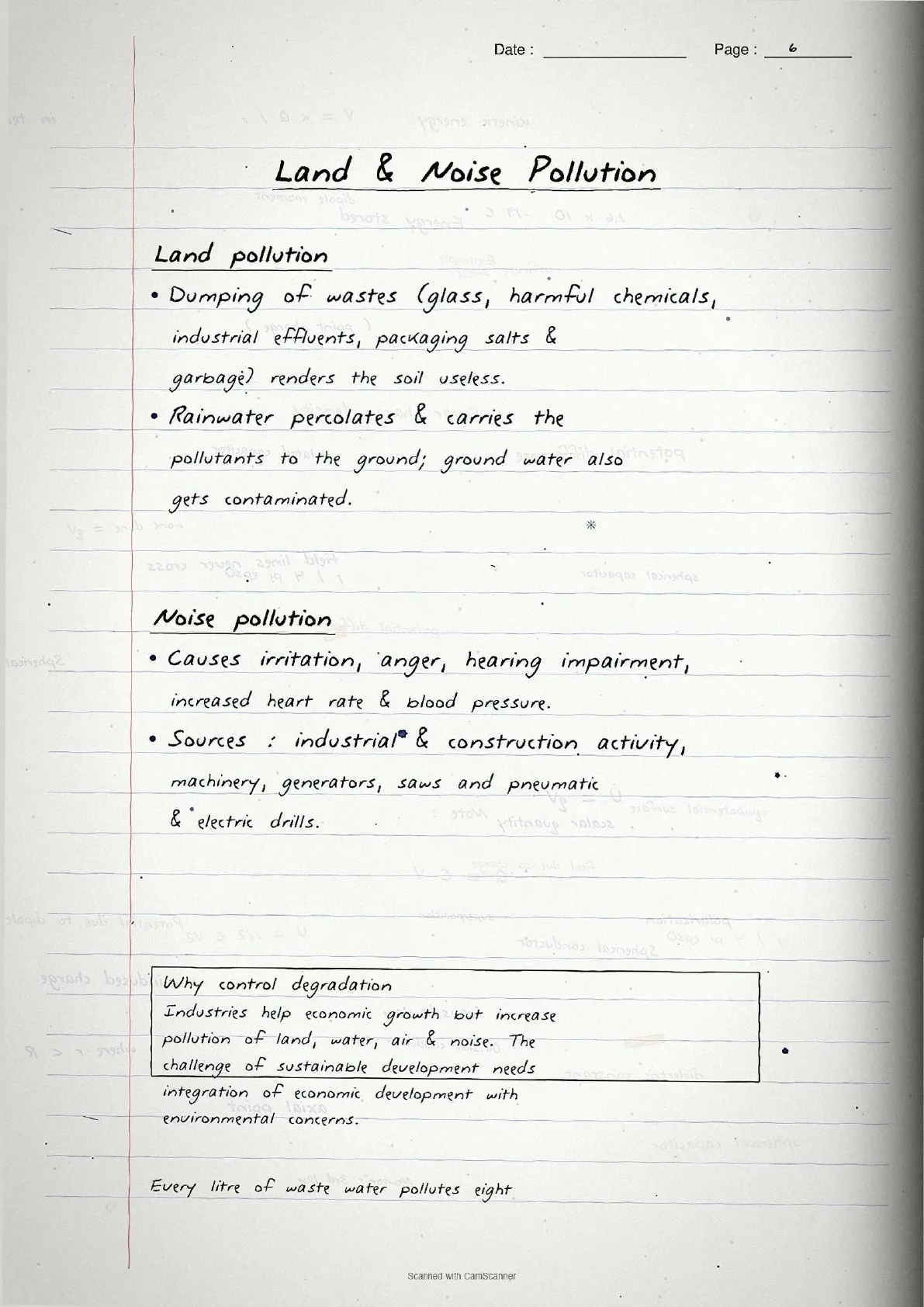
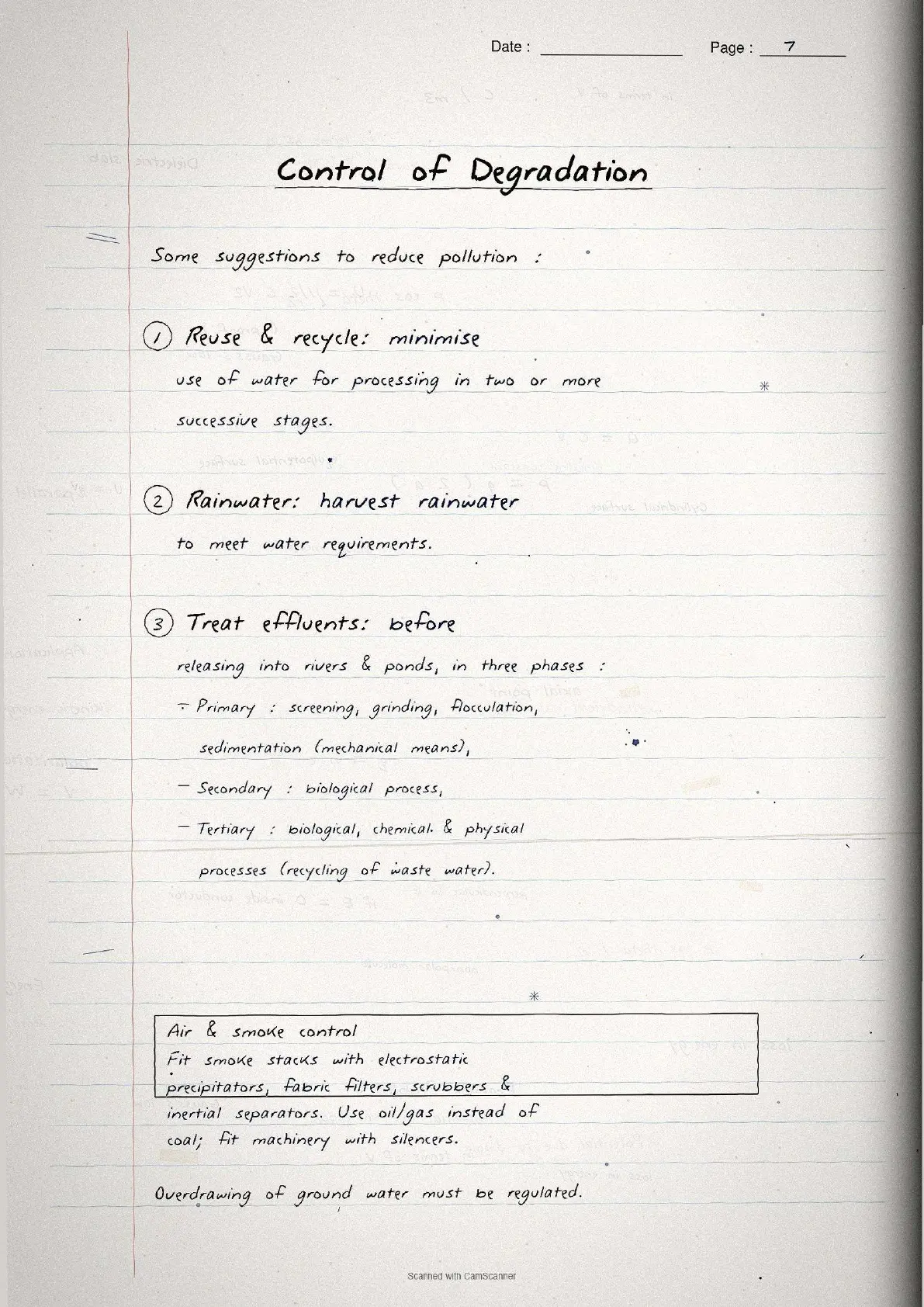
- Pollution and control pages cover air, water, land and noise pollution and the steps to reduce it.
Key terms sit in boxes and important industrial towns are underlined, so the Manufacturing Industries handwritten notes work for a last revision when there is no time to read full paragraphs.
Classification of Industries Pages
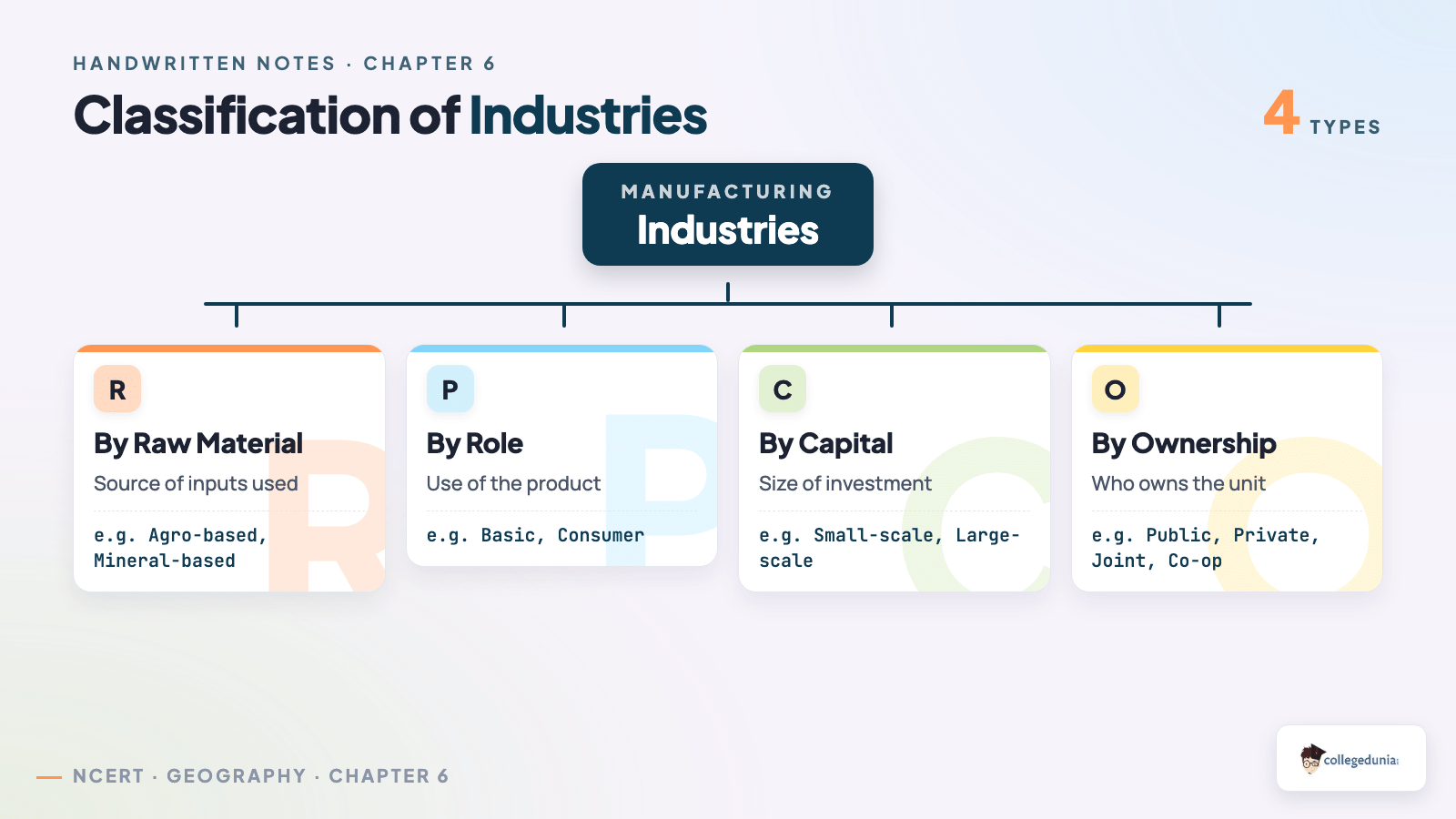
The first pages keep the bases of classification side by side, because the board picks a three or five-mark question straight from this list. Each box gives one basis with its two groups and an example.
| Basis of classification | Groups and examples |
|---|---|
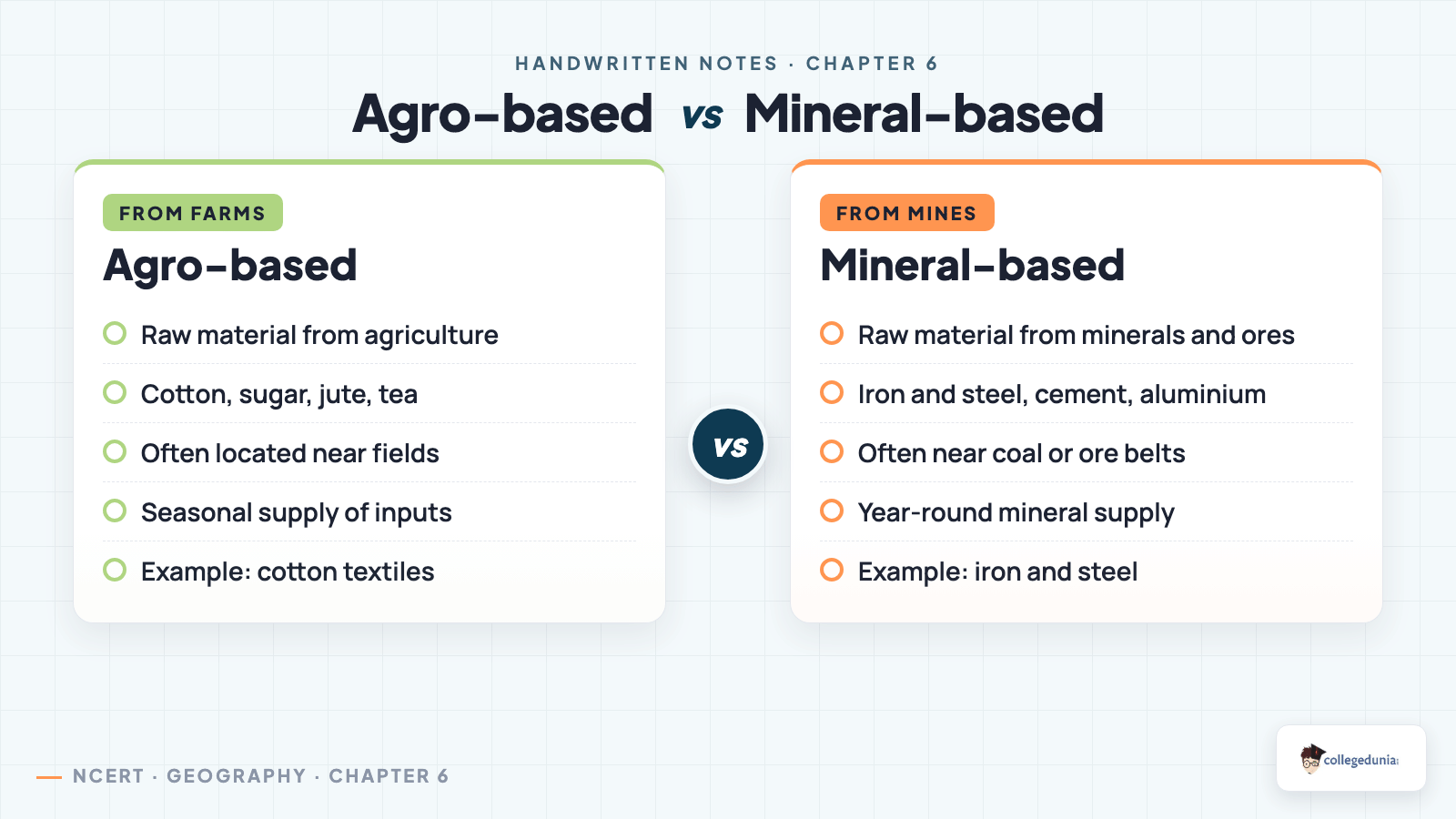
| Source of raw material | Agro-based (cotton, sugar, tea) and mineral-based (iron and steel, cement, aluminium). |
| Role of the product | Basic or key industries (iron and steel) and consumer industries (toothpaste, sugar, fans). |
| Capital invested | Small-scale (low investment) and large-scale industries (high investment, like steel plants). |
| Ownership | Public, private, joint and cooperative sector industries. |
| Bulk and weight of material | Heavy industries (iron and steel) and light industries (electrical goods). |
The pages box the most-tested fact in red ink: agro-based industries draw raw material from farms, while mineral-based industries use ores from mines. Learn the five bases once and these manufacturing industries class 10 notes questions become easy marks.
Iron, Steel and Textile Industry Pages
These pages keep the two anchor industries in order, because the board often asks students to locate a plant or trace a raw material. The inputs come first, then the location factors, so the answer reads point-wise.
| Industry | Inputs, location and key facts |
|---|---|
| Iron and steel | Needs iron ore, coking coal and limestone in about 4:2:1; most plants lie in the Chhota Nagpur plateau; basic and heavy industry. |
| Cotton textiles | Agro-based; first mill in Mumbai (1854); needs raw cotton, humid climate and a port; Maharashtra and Gujarat lead. |
| Jute textiles | Concentrated in the Hugli basin in West Bengal; uses cheap water transport, abundant labour and the jute-growing belt. |
The notes underline the most-asked link: India is the largest producer of jute goods but the second largest exporter after Bangladesh. A margin note keeps mini steel plants apart from integrated plants.
Manufacturing Industries Class 10 Explained by Magnet Brains
Source: Magnet Brains on YouTube
Other Major Industries Pages
These pages are the breadth part of the chapter, with one box per industry, its raw material and a location fact. A small India map sketch helps with the map-work question.
- Cement: needs bulky raw material like limestone, silica, gypsum and coal; the first plant was set up in Chennai in 1904.
- Sugar: agro-based and seasonal; sucrose falls after harvest, so mills sit close to sugarcane fields in Uttar Pradesh and Maharashtra.
- Fertiliser: linked to the green revolution; produces nitrogenous, phosphatic and complex fertilisers.
- Automobile: makes trucks, buses, cars and two-wheelers; grew after liberalisation; clustered near Delhi, Gurugram, Chennai and Pune.
- Information technology: the IT and electronics hub of Bengaluru leads, with software parks in many cities; a major employer of women.
The notes box the most-asked economy fact: manufacturing strengthens agriculture, brings in foreign exchange and lifts the whole economy, the sign of a developed country.
Industrial Pollution and Control Pages
These pages keep the pollution story in order, because the board pairs each type of pollution with its control step.
- Air pollution: caused by smoke and gases from factories; controlled by smokestacks with filters and electrostatic precipitators.
- Water pollution: caused by organic and inorganic industrial waste; treated in three stages before the water is reused or released.
- Land and soil pollution: caused by solid waste and chemicals; controlled by safe disposal and recycling of waste.
- Noise pollution: caused by machinery and generators; reduced by silencers, by oiling machines and by using ear protection.
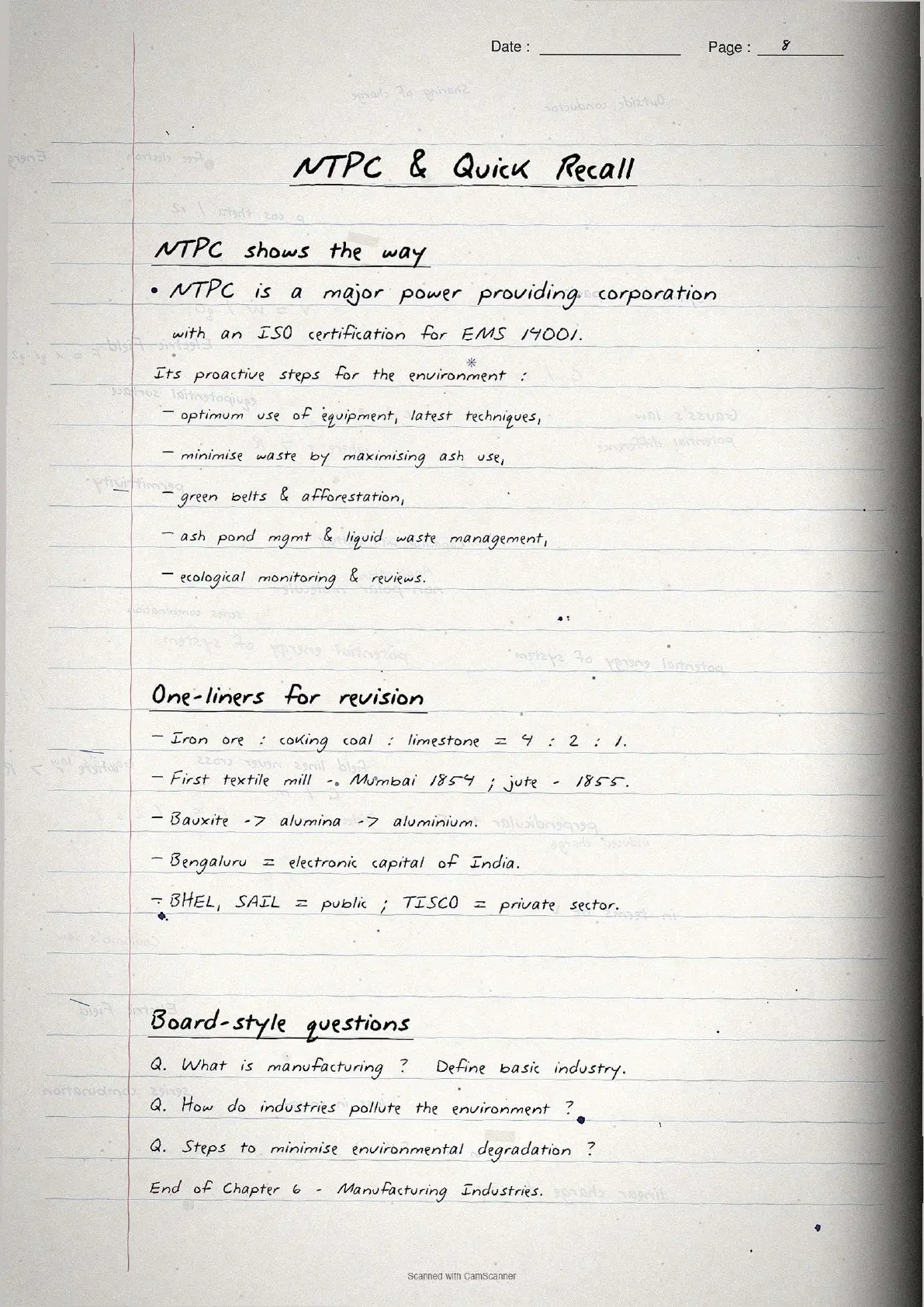
The margin boxes the water-saving idea: treating water in three phases, harvesting rainwater and reusing water in stages cuts the water a factory draws from rivers. A note adds the NTPC clean-technology example.
How to Use These Handwritten Notes
Handwritten notes work best as a final layer of revision, not as a first read. The plan below helps students use these class 10 geography handwritten notes chapter 6 Manufacturing Industries before the board exam.
- First pass: read the notes once, following the classification, location, industry and pollution order.
- Active recall: cover the boxed plant names and write each industry with its raw material and location from memory.
- Map practice: redraw the India industrial-town sketch and mark the iron, steel and cotton centres.
- Self-test: attempt a short class 10 geography chapter 6 mcq drill to check the small facts.
Because the pages are scanned, students can save them on a phone and revise offline. Pair these pages with the full manufacturing industries class 10 notes and solutions to check your written answers against model points.
Common Mistakes These Notes Help You Avoid
A few errors cost marks every year. Most come from mixing up the bases of classification or matching an industry to the wrong location factor.
- Swapping agro-based and mineral-based - sugar is agro-based, cement is mineral-based; learn the source once and never mix them.
- Calling iron and steel a consumer industry - it is a basic or key industry that feeds other industries.
- Forgetting the raw-material ratio - iron ore, coking coal and limestone are used in about 4:2:1.
- Writing that all textile mills need a port - only the cotton industry needs the humid coastal sites; jute sits in the Hugli basin.
- Confusing the largest producer with the largest exporter of jute - India produces most, but Bangladesh exports more.
Students who fix these five points usually move from average to high marks. Always pair each industry with its raw material and location factor.
Other Resources for Manufacturing Industries Class 10 Geography
These handwritten notes are a revision layer. Use them with the other resources below: read the notes, test yourself with the solutions, then open the book PDF for the original text and maps.
| Resource | Best used for |
|---|---|
| Manufacturing Industries NCERT Solutions | Step-by-step answers to every back-exercise question |
| Manufacturing Industries Class 10 Notes | Quick chapter summary with classification, locations and pollution data in one place |
| Manufacturing Industries NCERT Book PDF | Reading the original NCERT chapter text, industry maps and figures |
Tip: use the handwritten industrial-town sketch to memorise which industry sits where, then write the full answer in your own words.
Student Feedback
In a Collegedunia poll of 11,800 Class 10 Social Science students before the 2026 boards, 81% of students said the scanned industry-classification chart was the fastest way to revise this chapter.
Source: 2026-27 Class 10 Social Science student poll. Sample of 11,800 students from CBSE schools across 15 states.
All Class 10 Geography Handwritten Notes by Chapter
The table links the handwritten notes for every chapter in Class 10 Geography Contemporary India II. Manufacturing Industries is highlighted.
| Chapter | Handwritten Notes |
|---|---|
| Chapter 1 | Resources and Development |
| Chapter 2 | Forest and Wildlife Resources |
| Chapter 3 | Water Resources |
| Chapter 4 | Agriculture |
| Chapter 5 | Minerals and Energy Resources |
| Chapter 6 | Manufacturing Industries |
| Chapter 7 | Lifelines of National Economy |
Manufacturing Industries Class 10 Handwritten Notes Common Questions
Ques. Where can I download the Manufacturing Industries handwritten notes PDF?
Ans. You can download the Manufacturing Industries handwritten notes PDF directly from this page. It is free, follows the 2026-27 NCERT, and gives the chapter as clean scanned notebook pages with boxed industry names, an industry-classification chart and an India industrial-town sketch.
Ques. Are handwritten notes good enough for the class 10 geography board exam?
Ans. Yes, for revision. Handwritten notes are best used as a final layer after you have read the chapter and practised the solutions. They make the bases of classification, the iron and steel and textile industries, and the pollution control steps quick to recall in the exam.
Ques. What does the Manufacturing Industries chapter cover?
Ans. It covers the importance of manufacturing, the classification of industries, the major industries such as iron and steel, cotton and jute textiles, cement, fertiliser, automobile and information technology, their locations, and the four kinds of industrial pollution with their control measures.
Ques. What raw materials does the iron and steel industry need in class 10?
Ans. The iron and steel industry needs iron ore, coking coal and limestone in a ratio of about 4:2:1, along with labour, capital and transport. Most plants are located in the Chhota Nagpur plateau because these raw materials are found close together there.
Ques. How should I use these notes for quick revision?
Ans. Read the pages once in the classification, location, industry and pollution order, cover the boxed industry names and write each industry with its raw material and location from memory, redraw the India industrial-town sketch, then attempt a short class 10 geography chapter 6 mcq drill to test the small facts.



Comments