




The handwritten notes on Class 11 English Hornbill Chapter 9, The Voice of the Rain, have been carefully prepared for quick one-shot revision, according to the latest 2026-27 CBSE syllabus. They cover Walt Whitman's poem line by line, so students can revise the full chapter in one sitting before an exam or a class test.
- Board Weightage: poetry extracts from this chapter carry 4-6 marks through reference-to-context and short-answer questions.
- Question Types: extract-based questions, one-line meaning questions, and short answers on poetic devices.
- 2026-27 NCERT: The Voice of the Rain stays unchanged in the rationalised Hornbill syllabus.
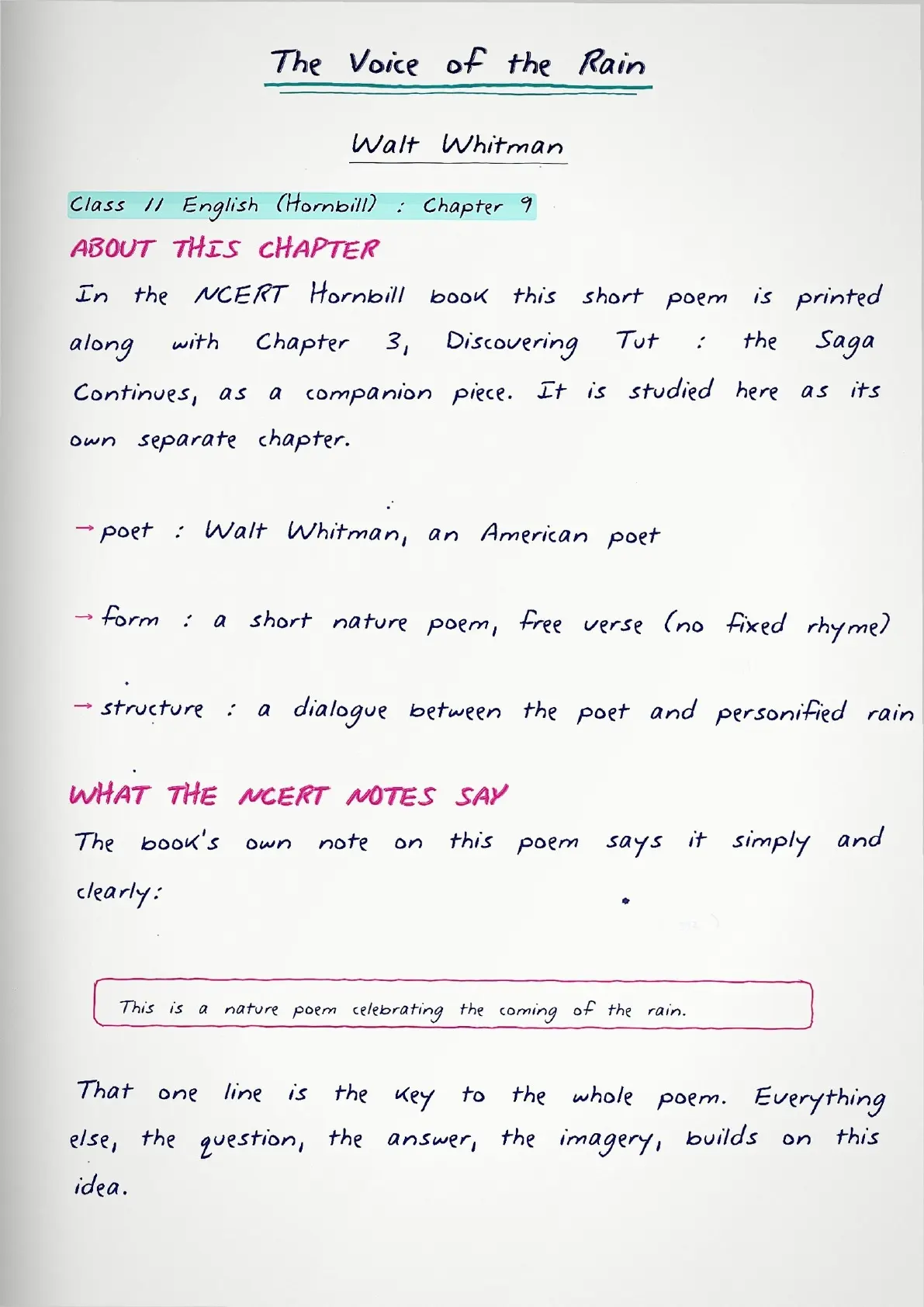
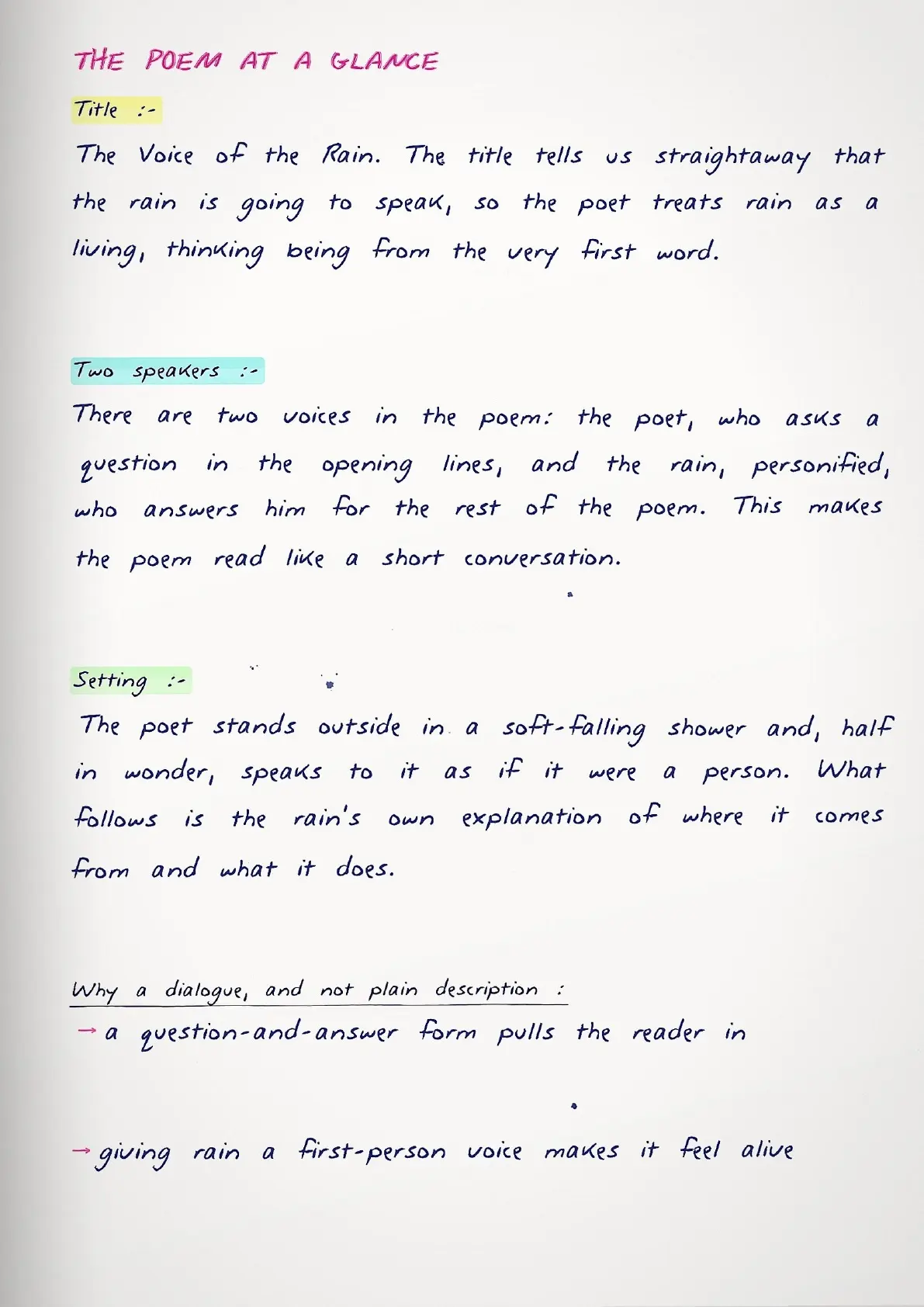
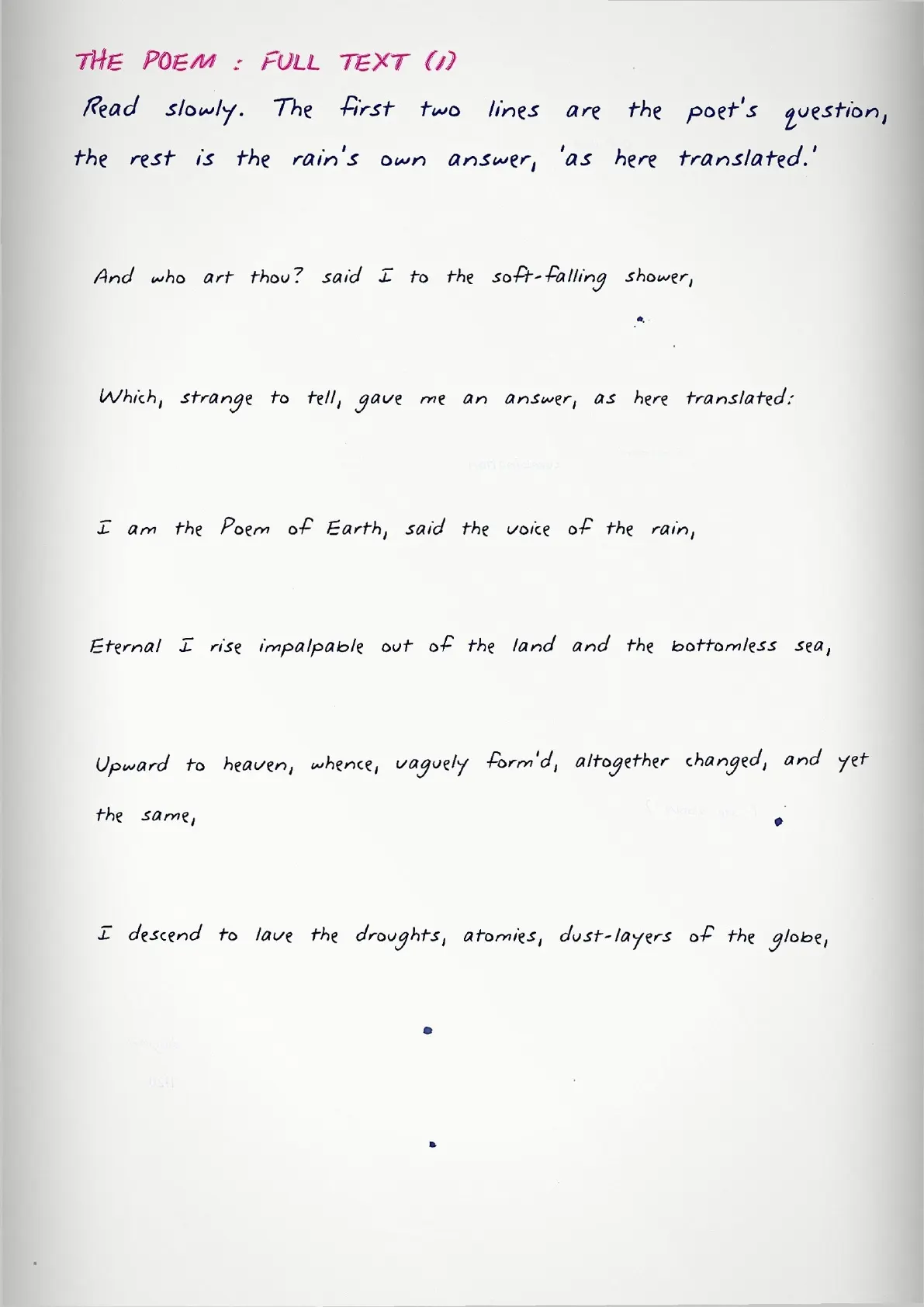
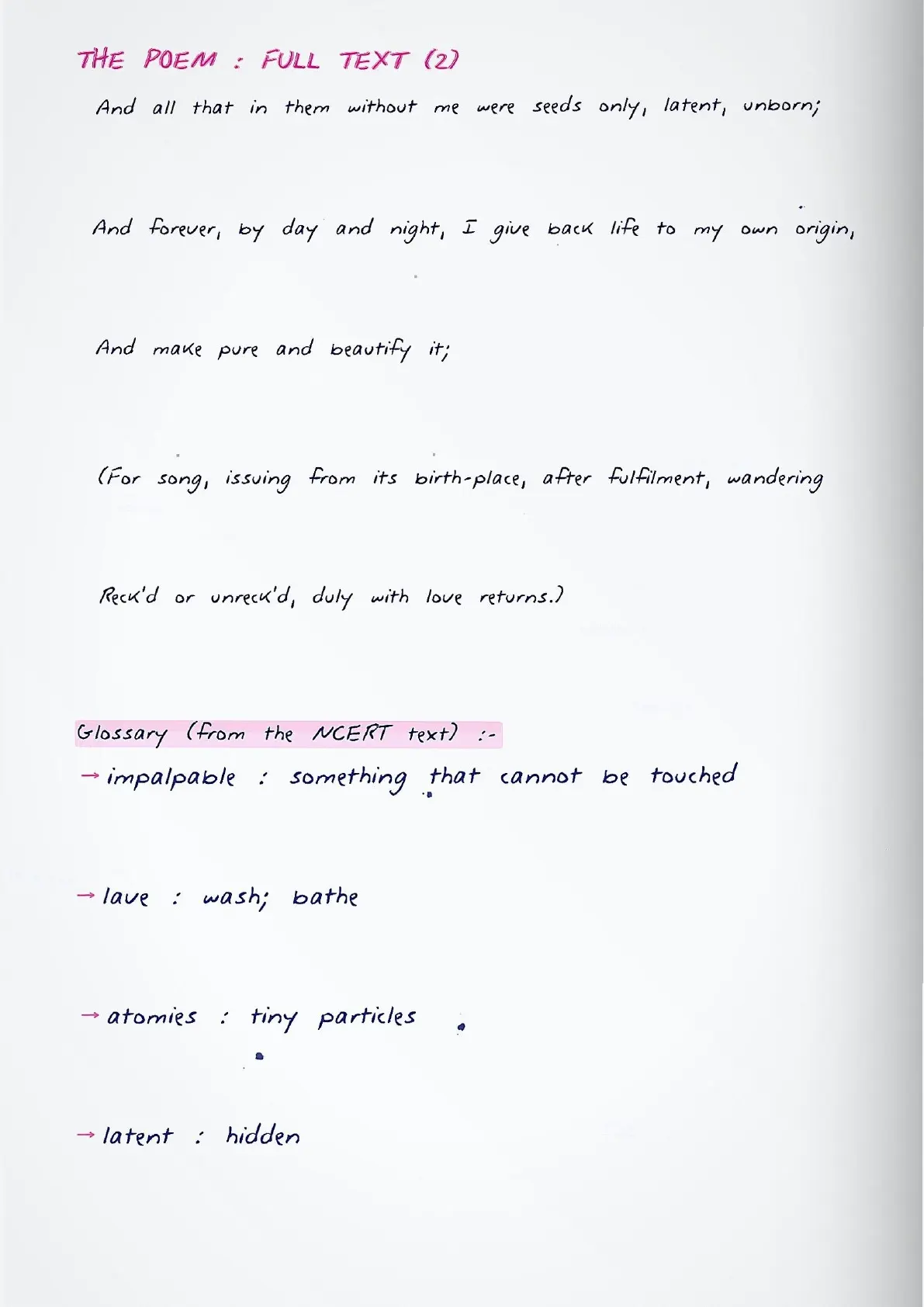
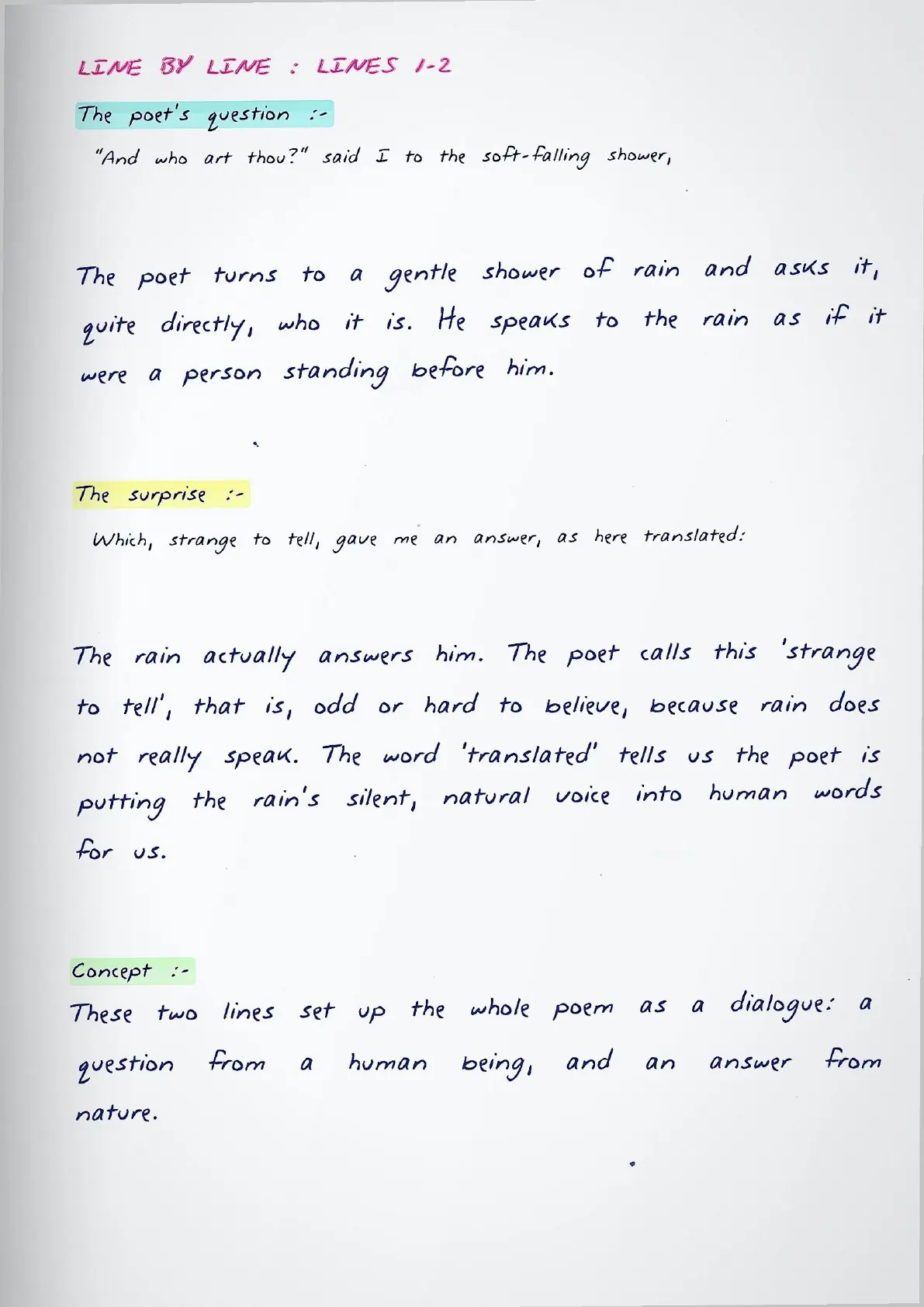
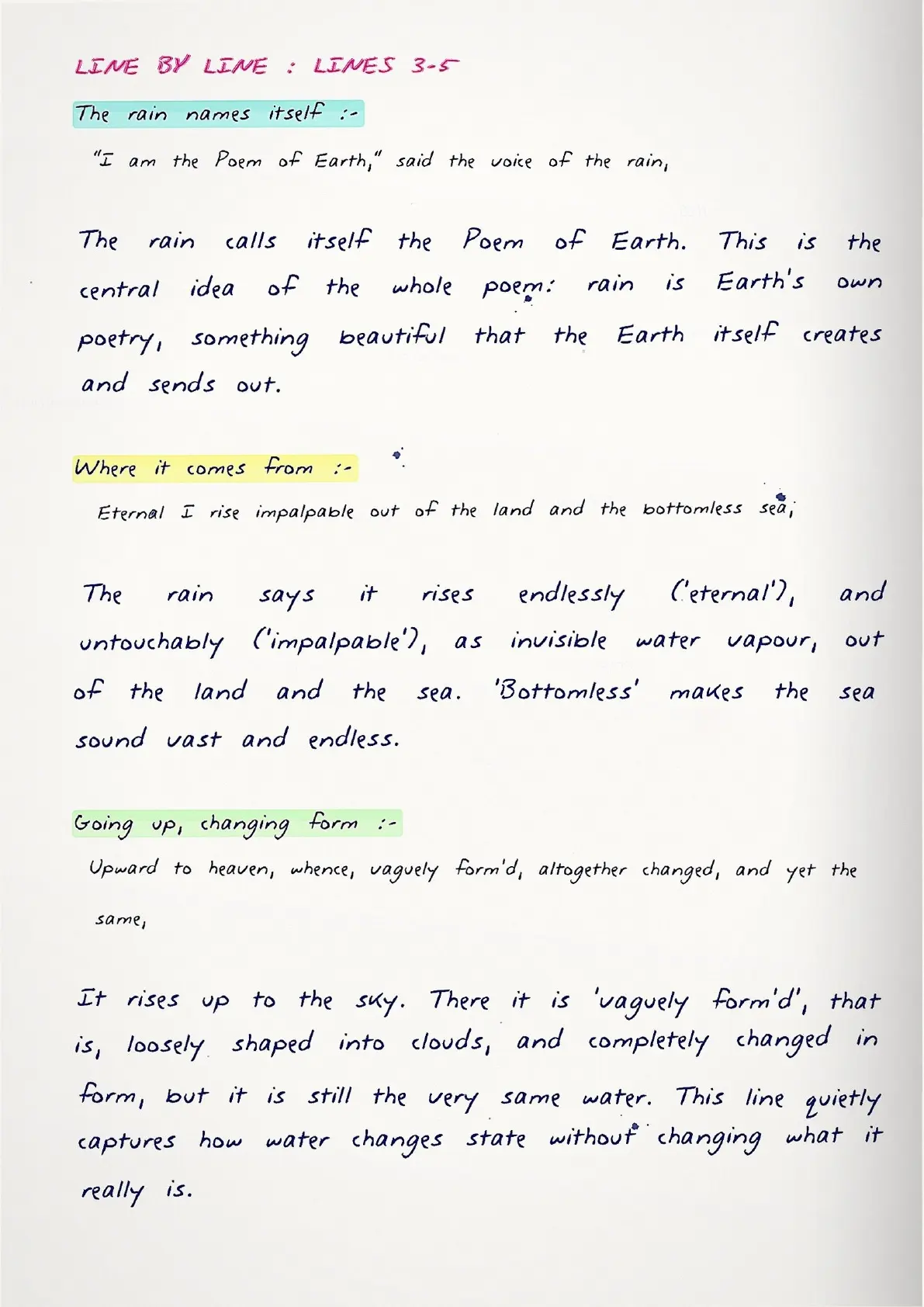
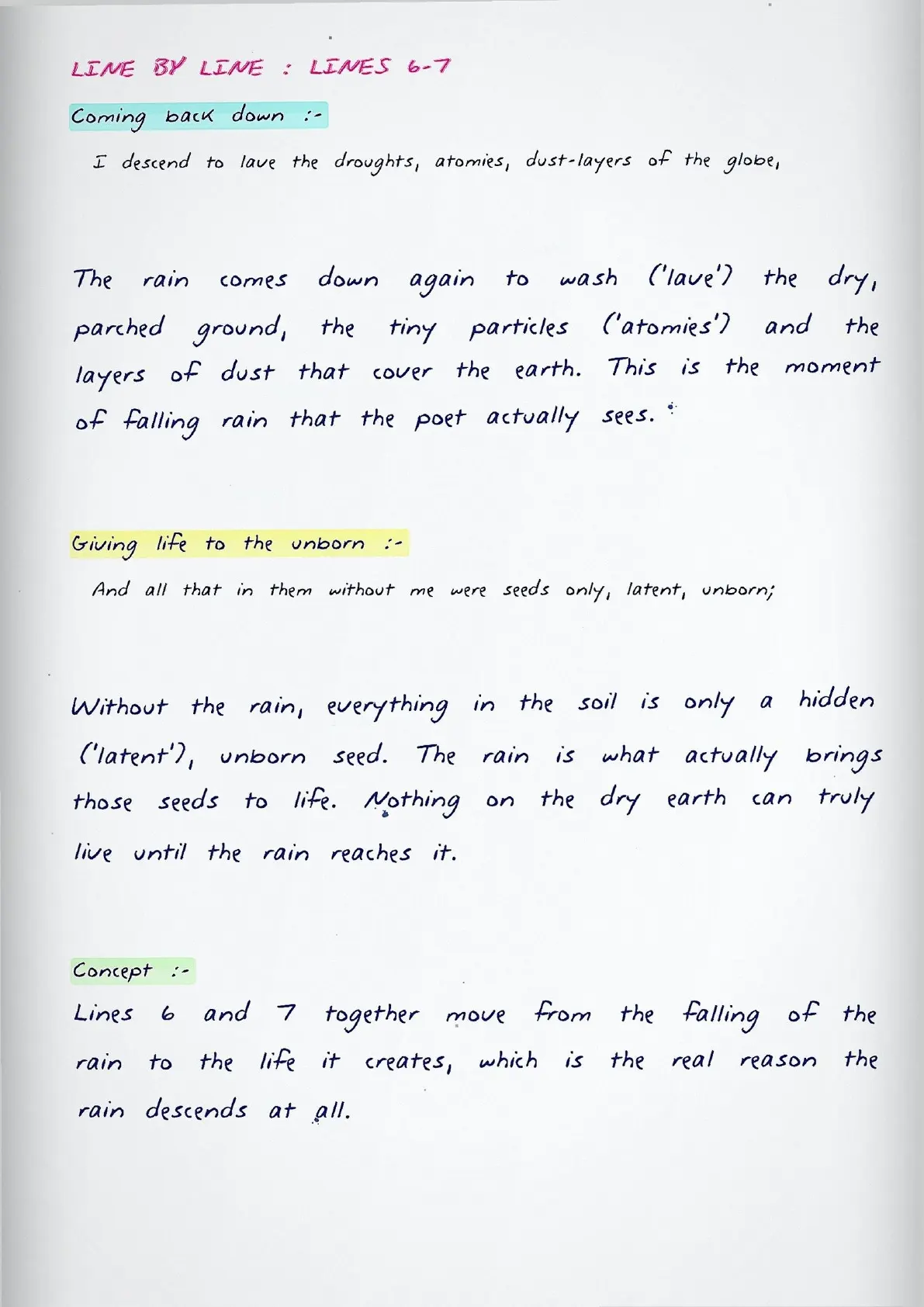
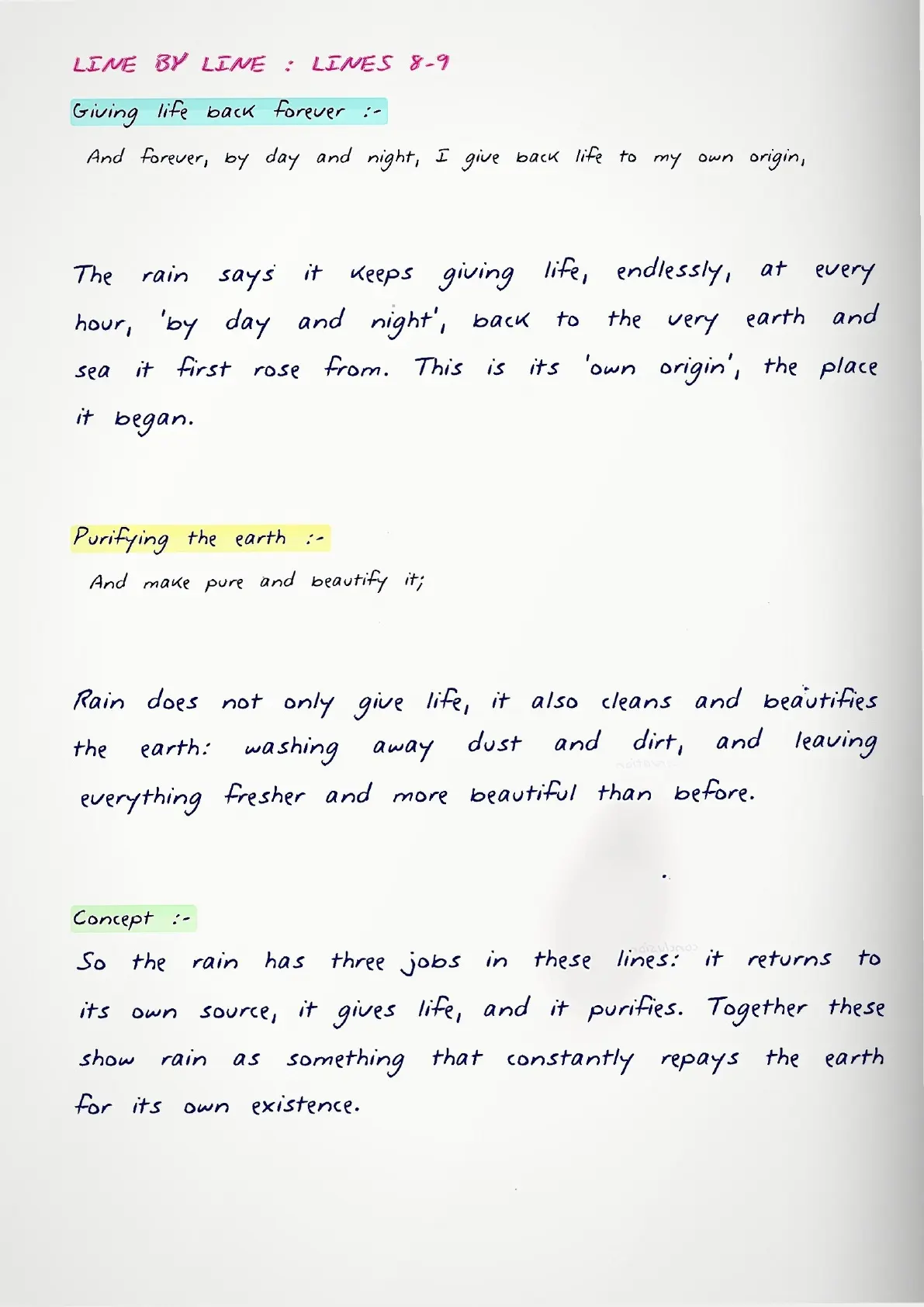
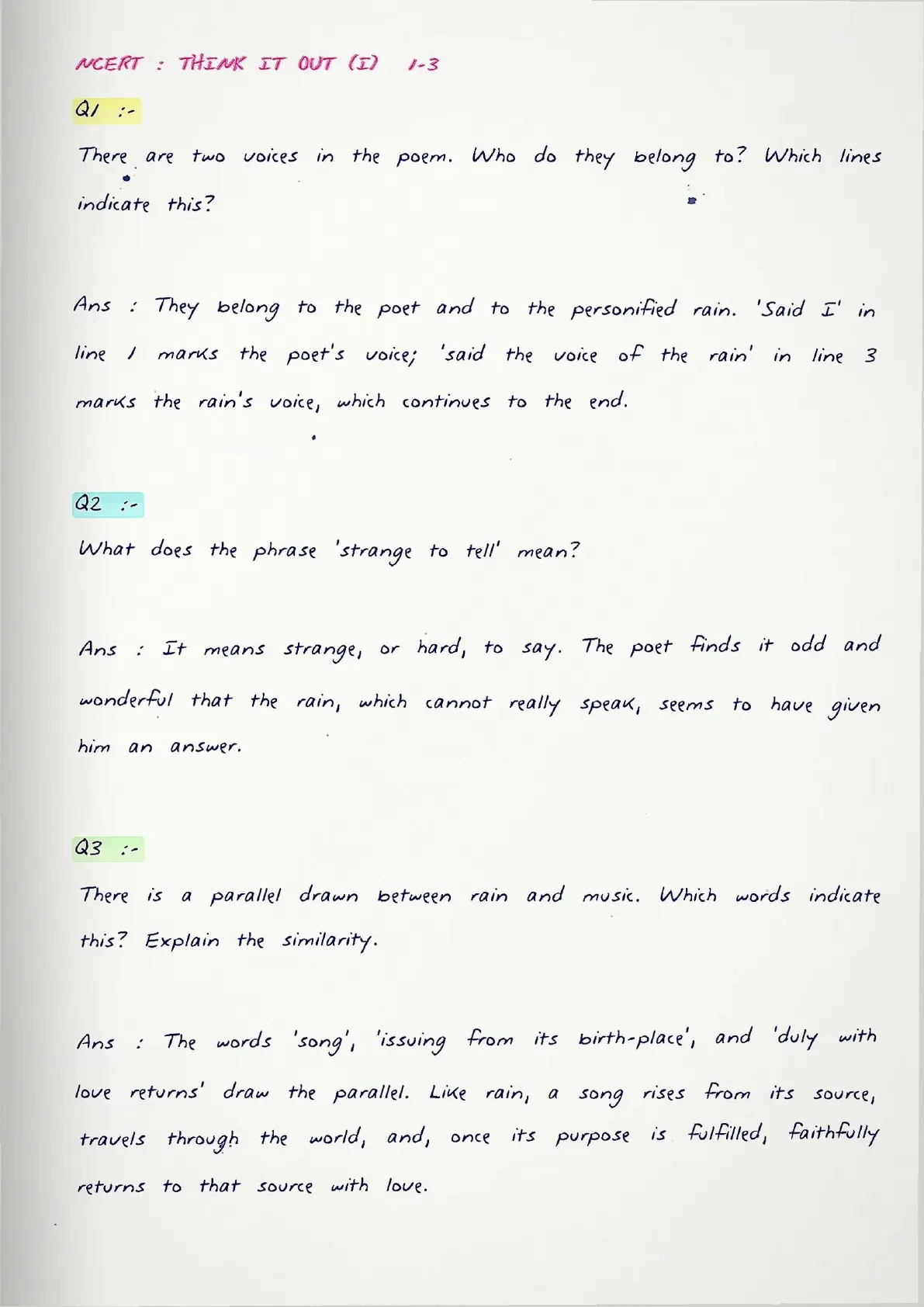
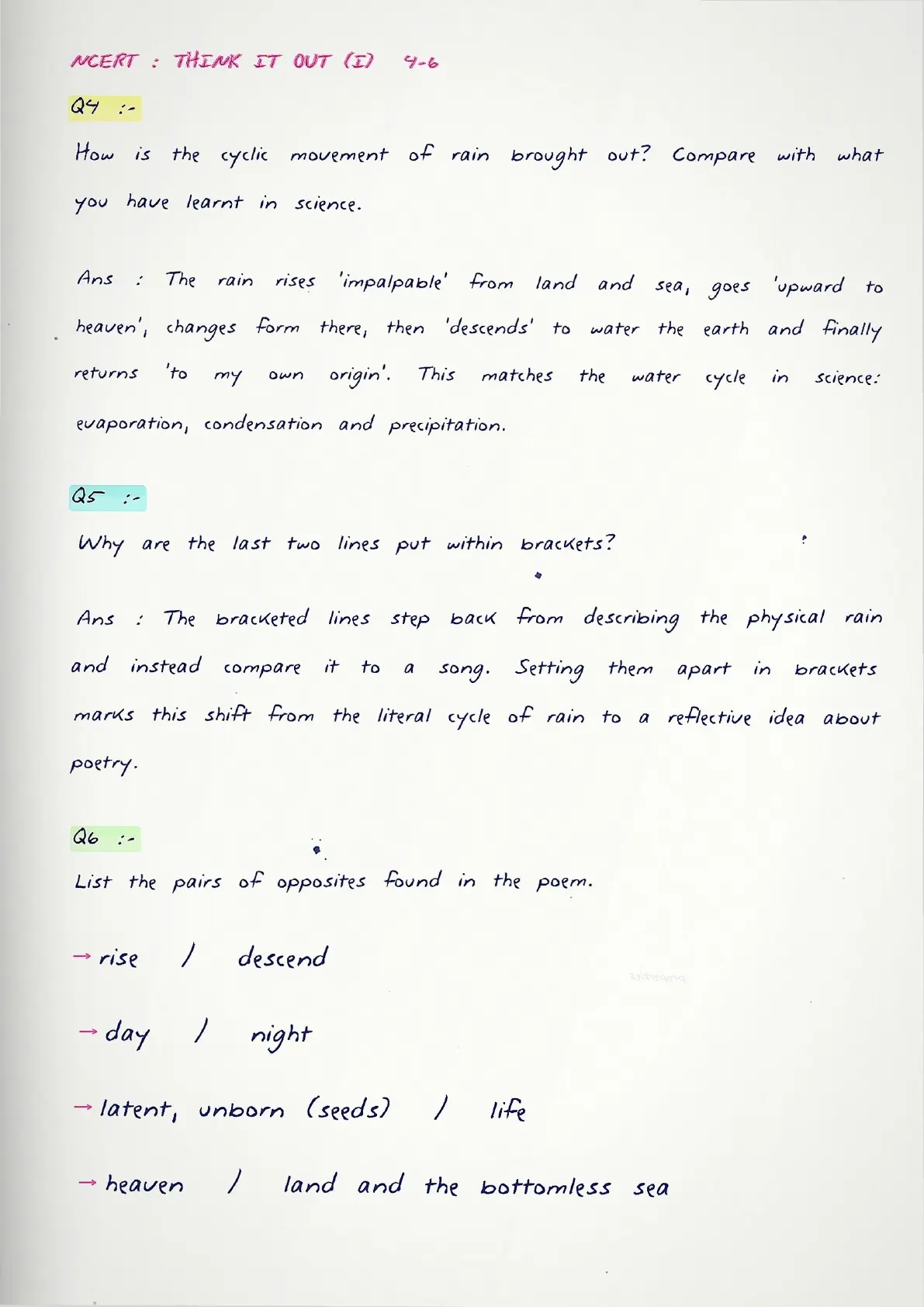
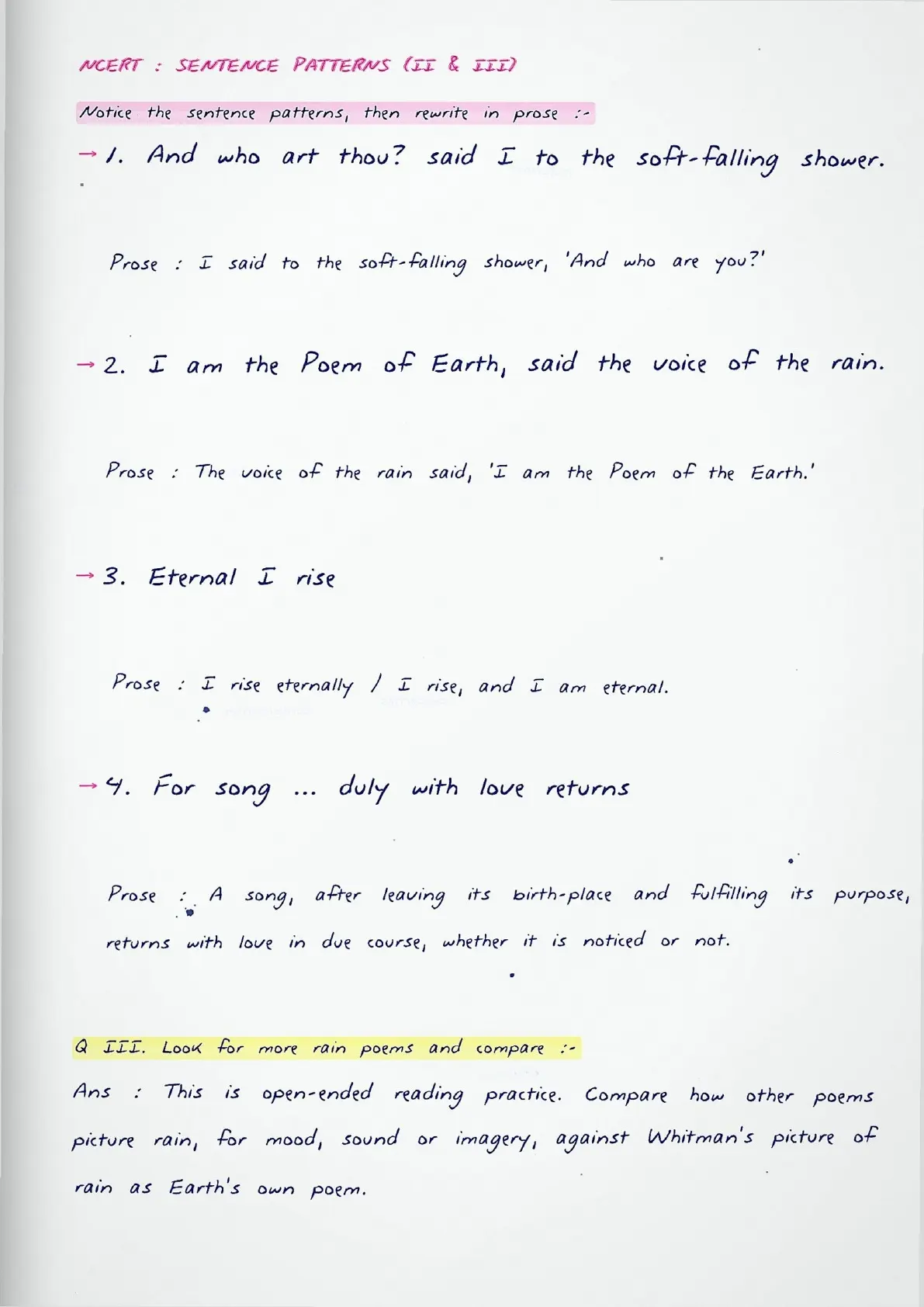
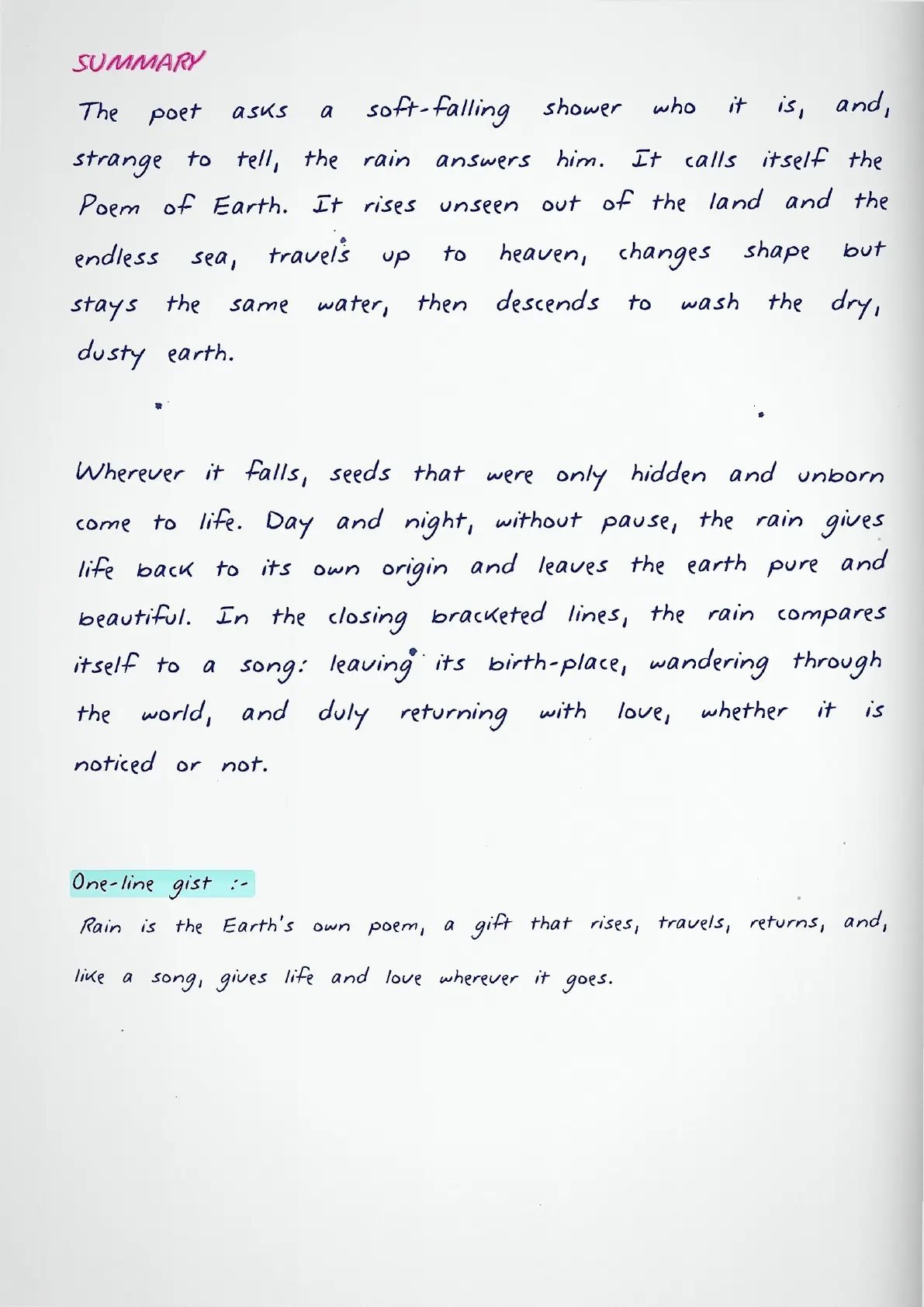
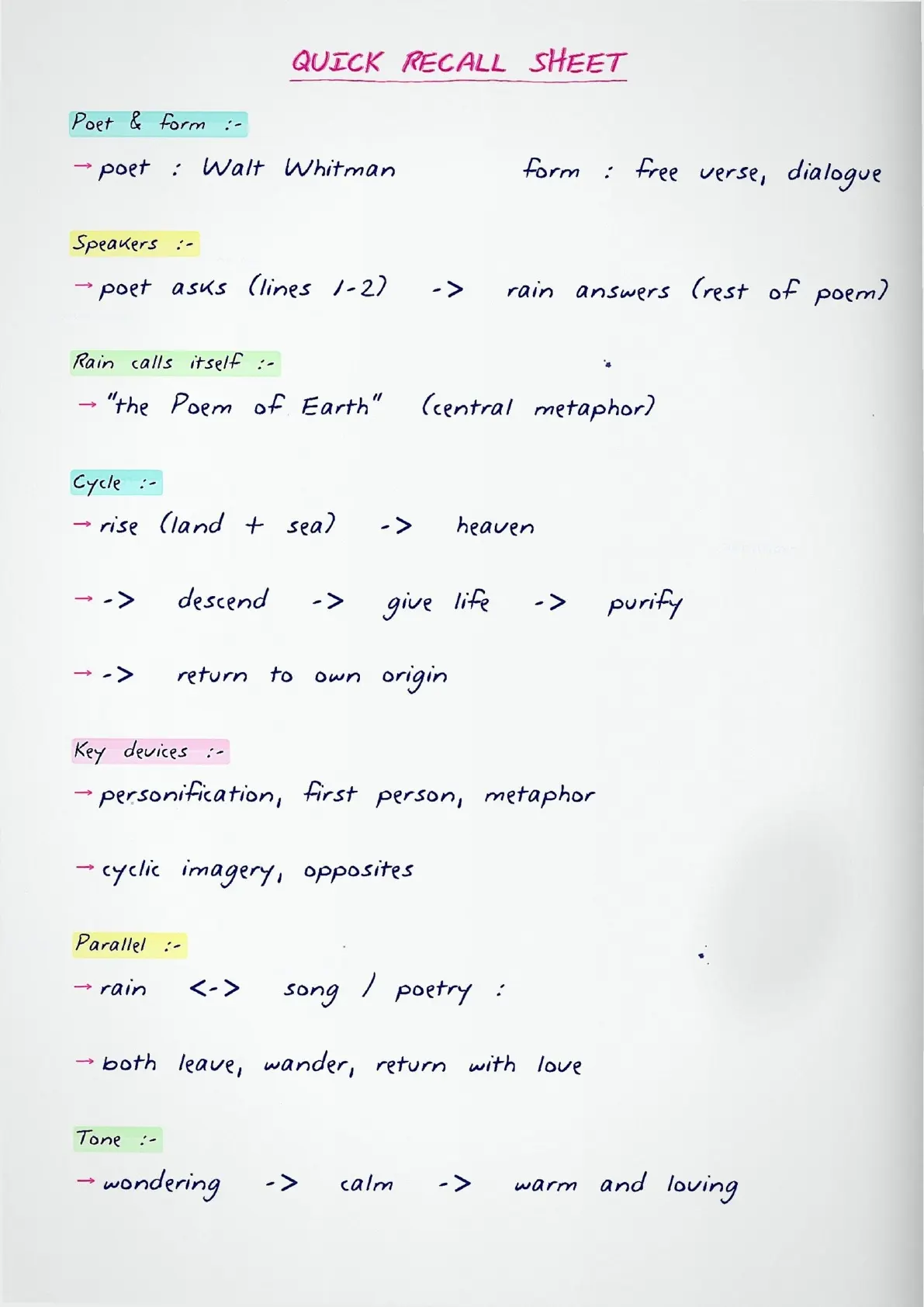
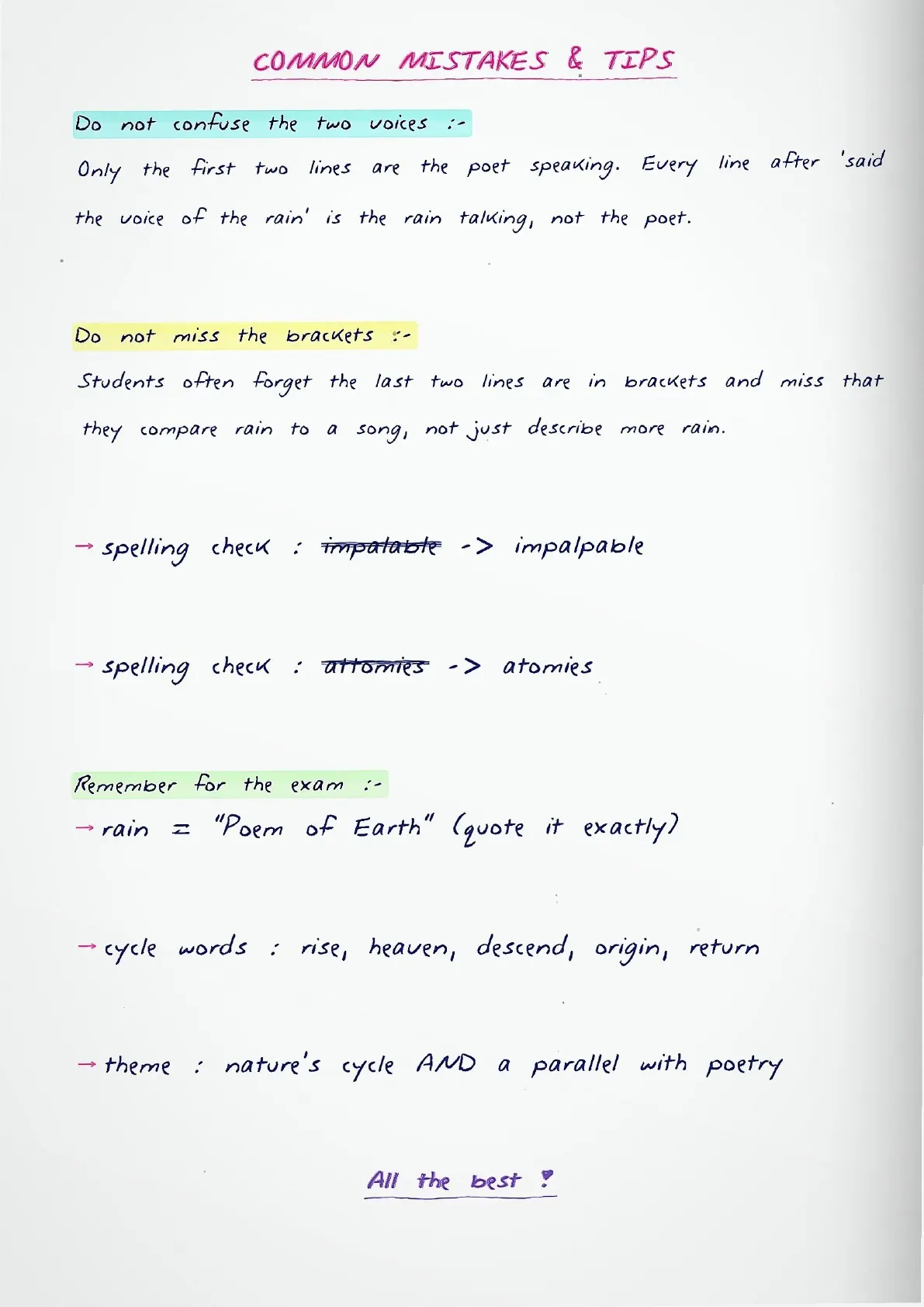
Every page in these Voice of the Rain notes is written by hand, checked against the 2026-27 Class 11 Hornbill print, and matched to the way CBSE board papers ask about Walt Whitman's poem.
You will find the full poem text, a line-by-line paraphrase, every poetic device Whitman uses, and NCERT's own exercise answers inside this 22-page set, all according to the latest 2026-27 CBSE syllabus.
|
Table of Contents |
About the Poem The Voice of the Rain and Poet Walt Whitman
The Voice of the Rain is written by Walt Whitman, the 19th-century American poet best known for his collection Leaves of Grass. Whitman wrote in free verse, meaning the poem has no fixed rhyme scheme or regular metre, which was unusual for poetry of his time.
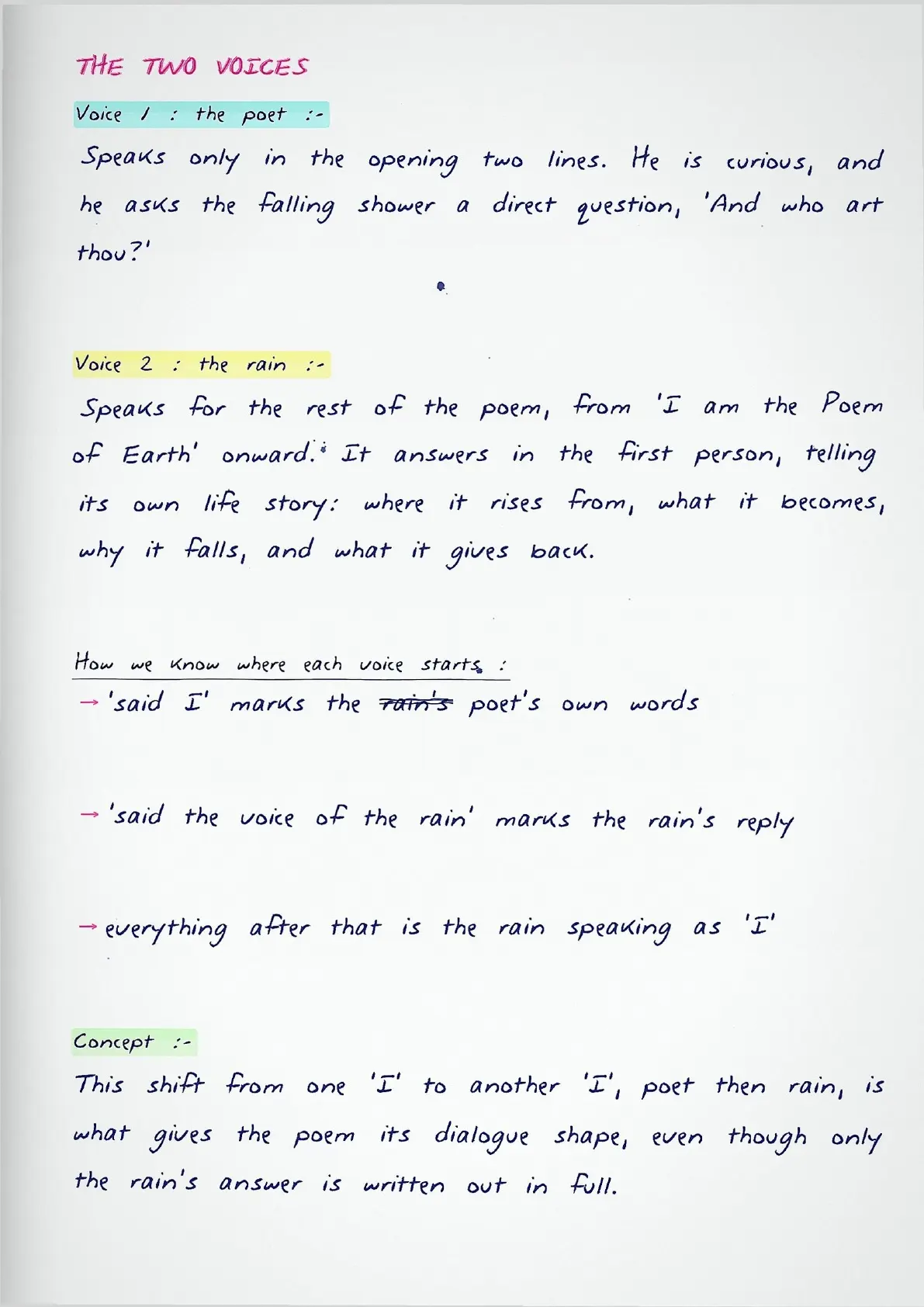
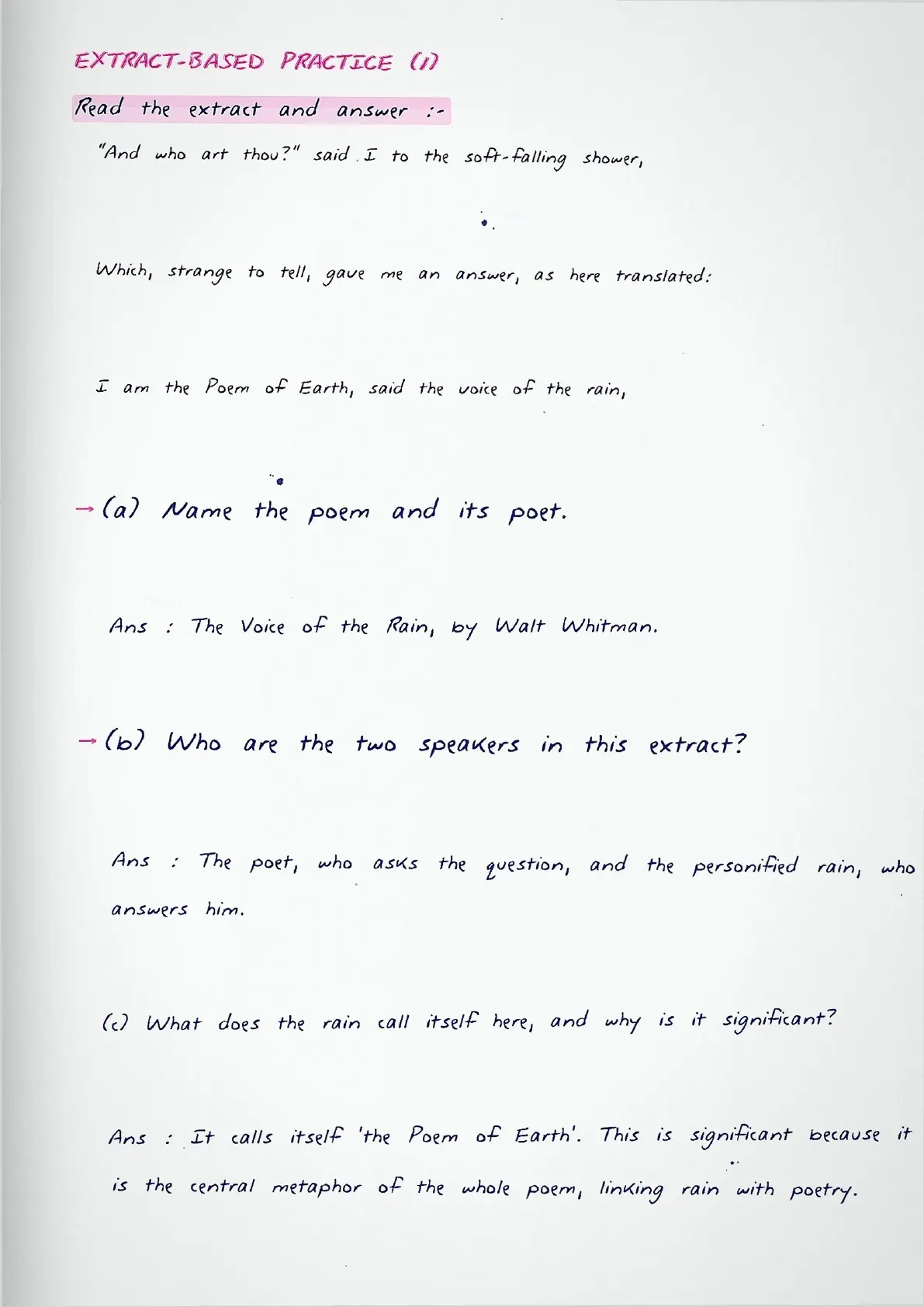
- The poem is structured as a dialogue between the poet and the rain.
- The poet asks the rain, "And who art thou?" and the rain answers in its own voice for the rest of the poem.
- Whitman gives the rain a voice to explain where it comes from and why it falls.
The Voice of the Rain Explained in Simple Language
Source: Education Made Easier on YouTube
The Voice of the Rain Summary in Simple Words
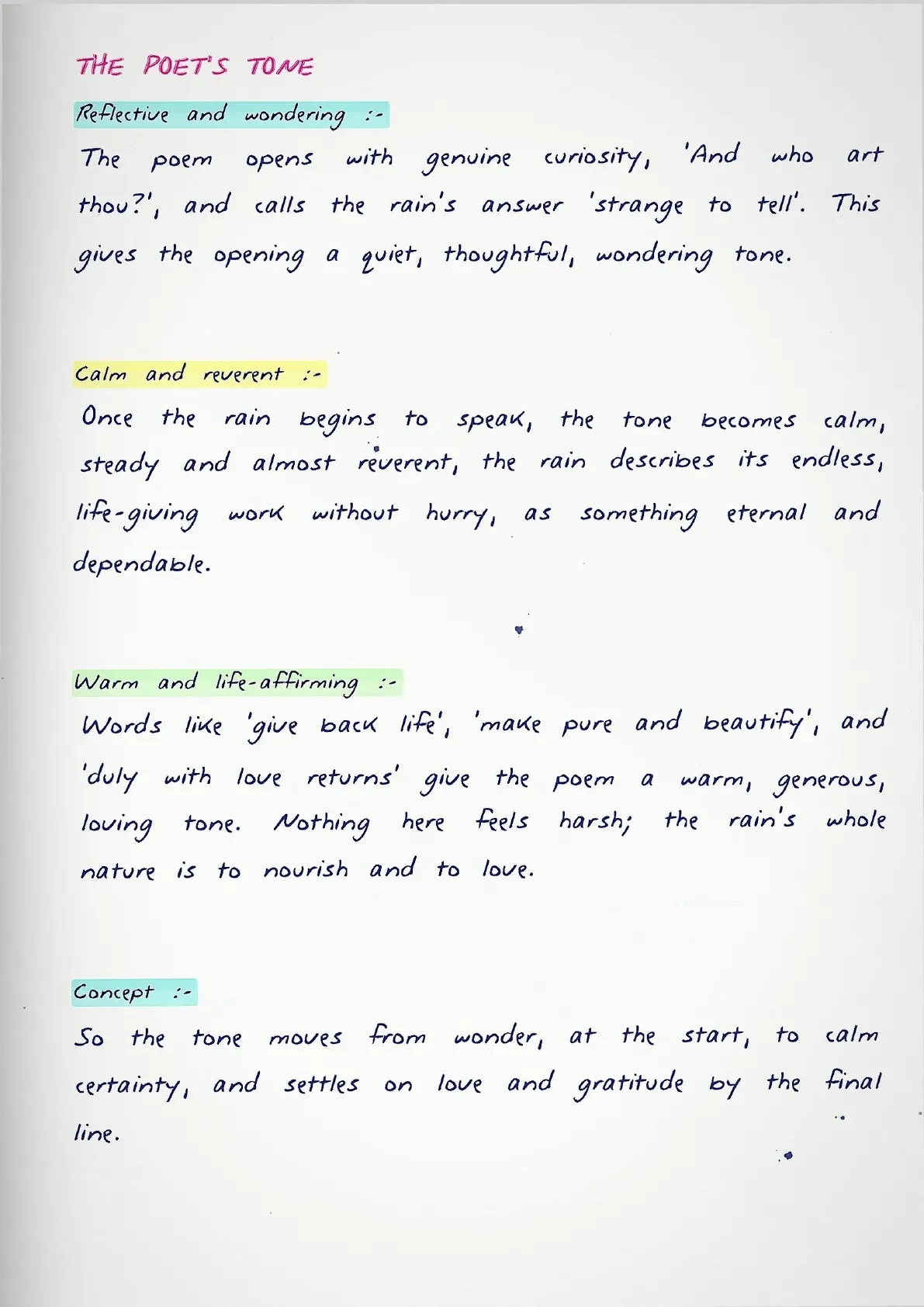
The poet notices a soft shower falling and asks the rain who it is. The rain answers that it is the "Poem of Earth", rising endlessly, invisible, out of the land and the bottomless sea.
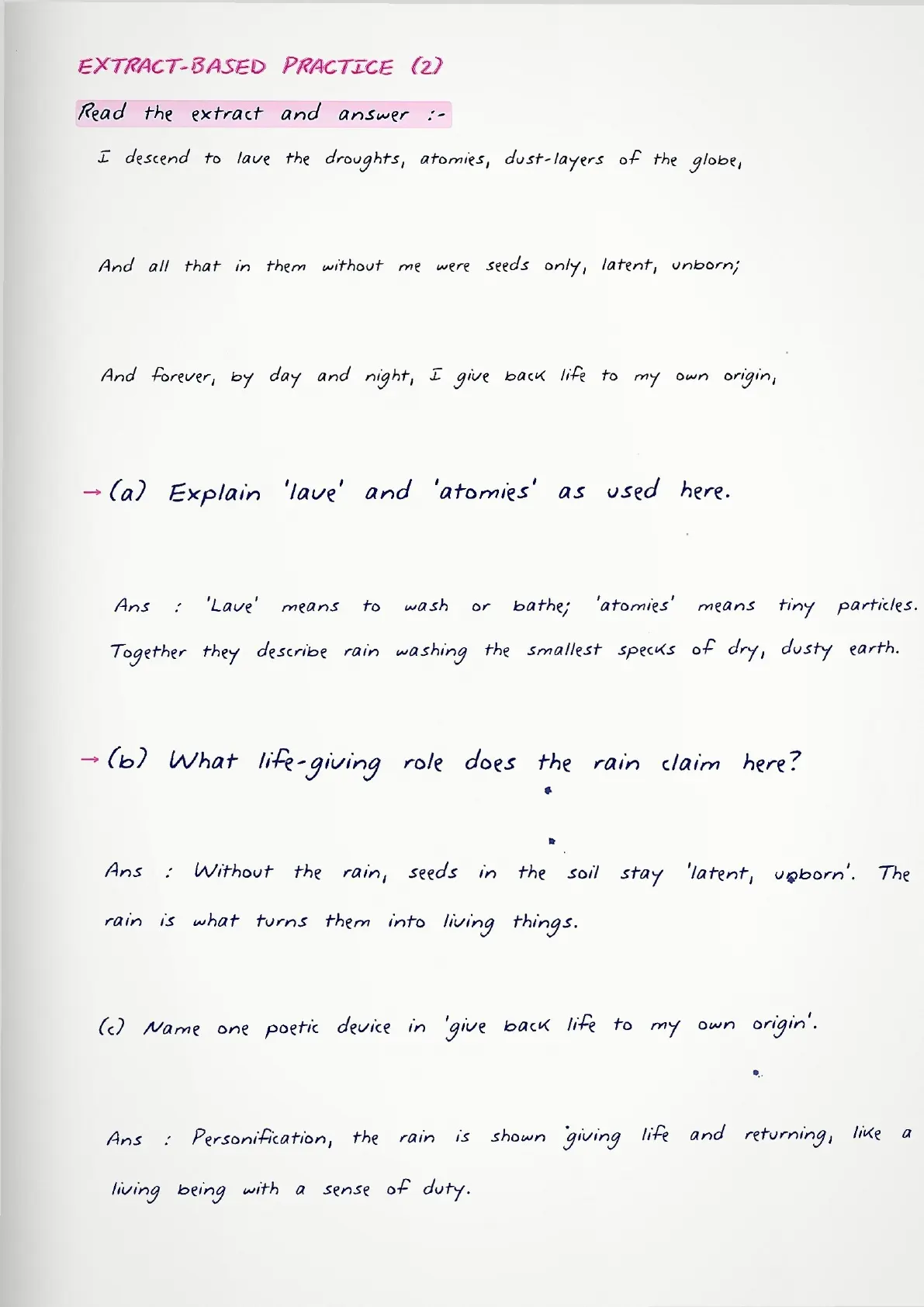
It floats up to the sky, changes shape into clouds, yet stays the same rain at heart. Then it comes back down to earth to soak the dry land and the dust, giving life to seeds that would stay buried without it. The rain says it repeats this journey forever, day and night, giving life back to the place it came from and making it clean and beautiful again.
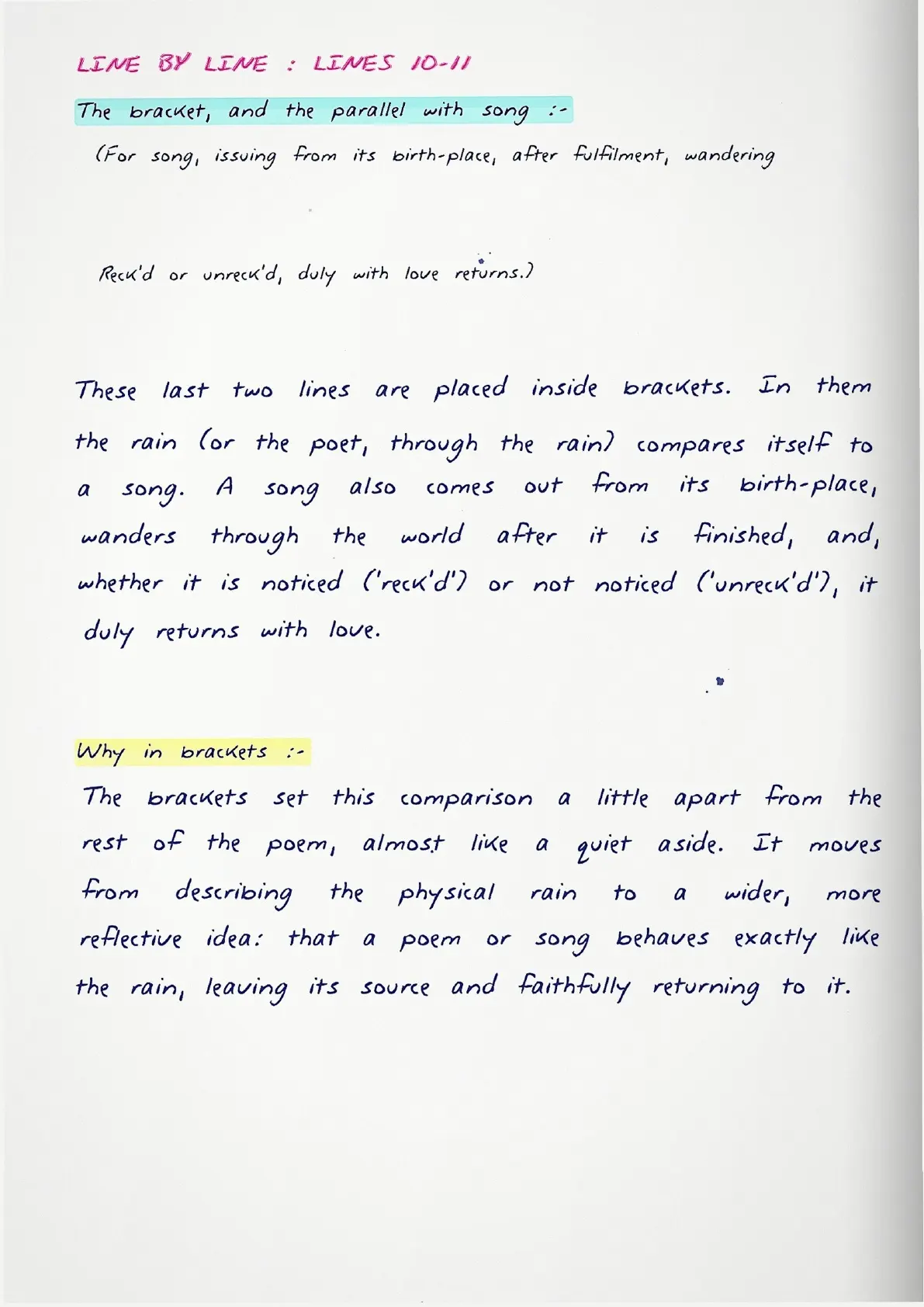
In the last lines, the rain compares itself to a song. A song starts somewhere, travels far, and whether people notice it or not, it always returns with love to where it began. In the same way, the rain always returns to the earth and sea.
Poetic Devices Used in The Voice of the Rain
Whitman builds the whole poem around a handful of poetic devices. The table below lists each one with where it appears.
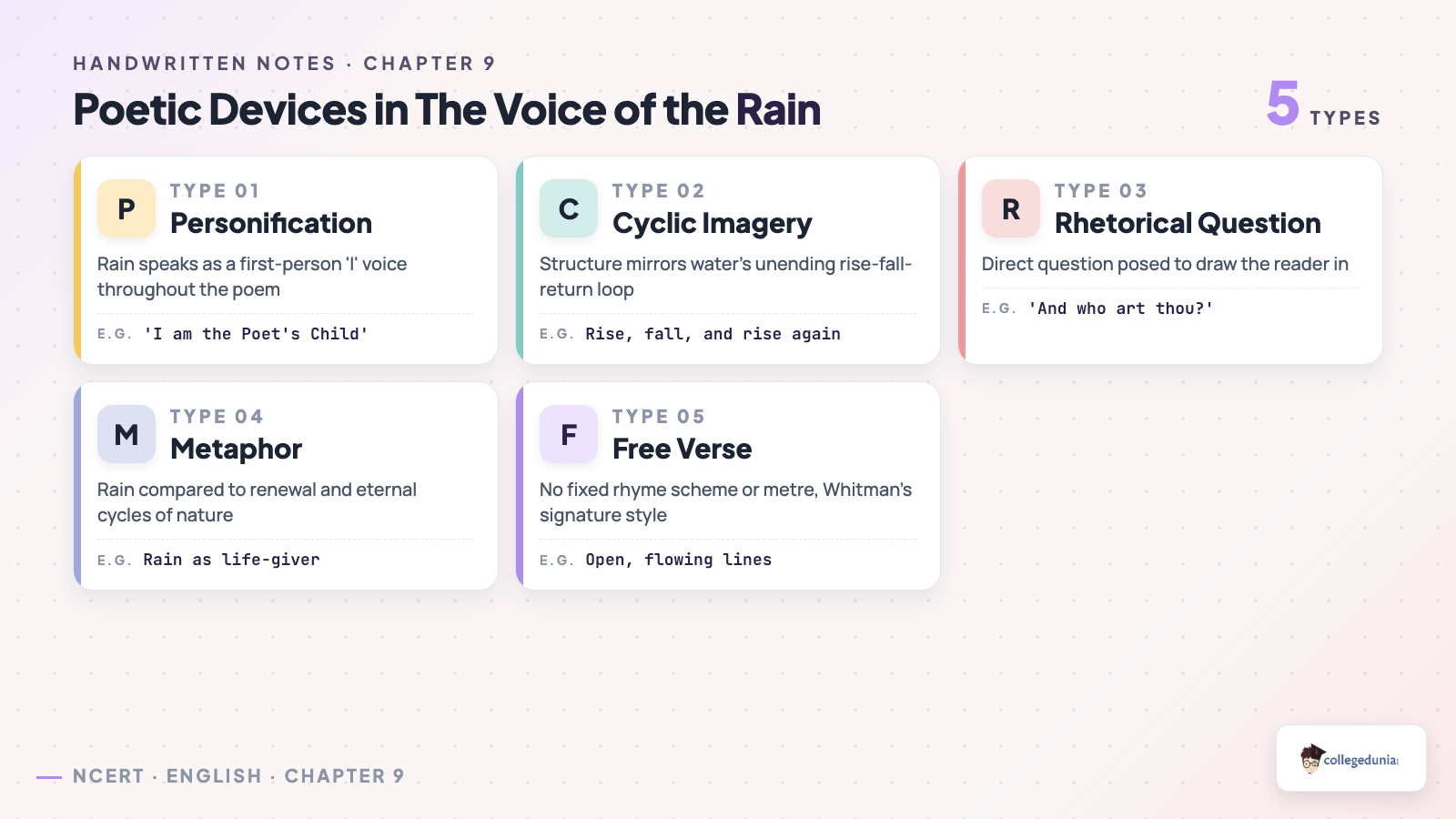
| Poetic Device | Where It Appears | Effect |
|---|---|---|
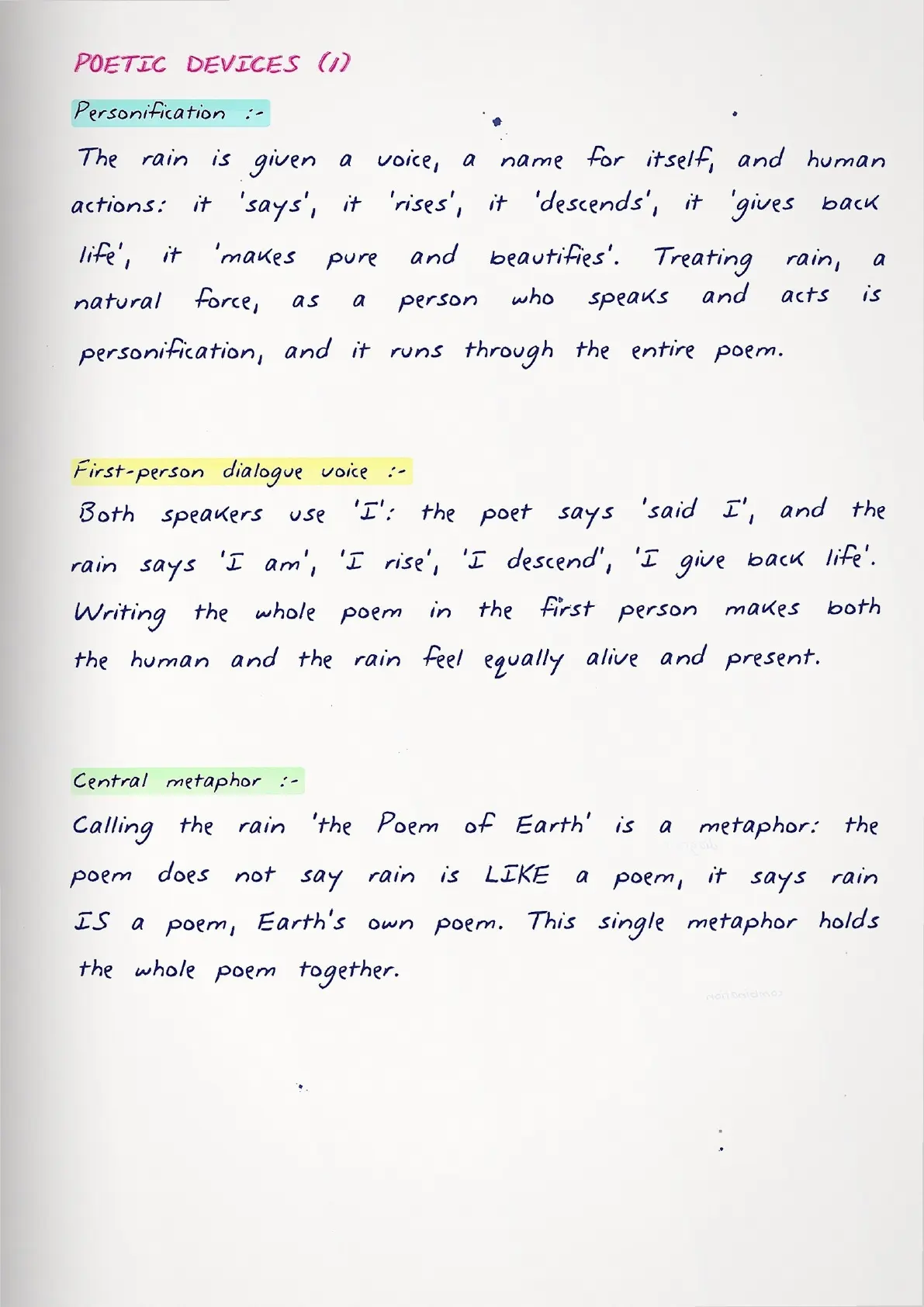
| Personification | The rain speaks and calls itself "I" | Gives the rain a living voice and identity |
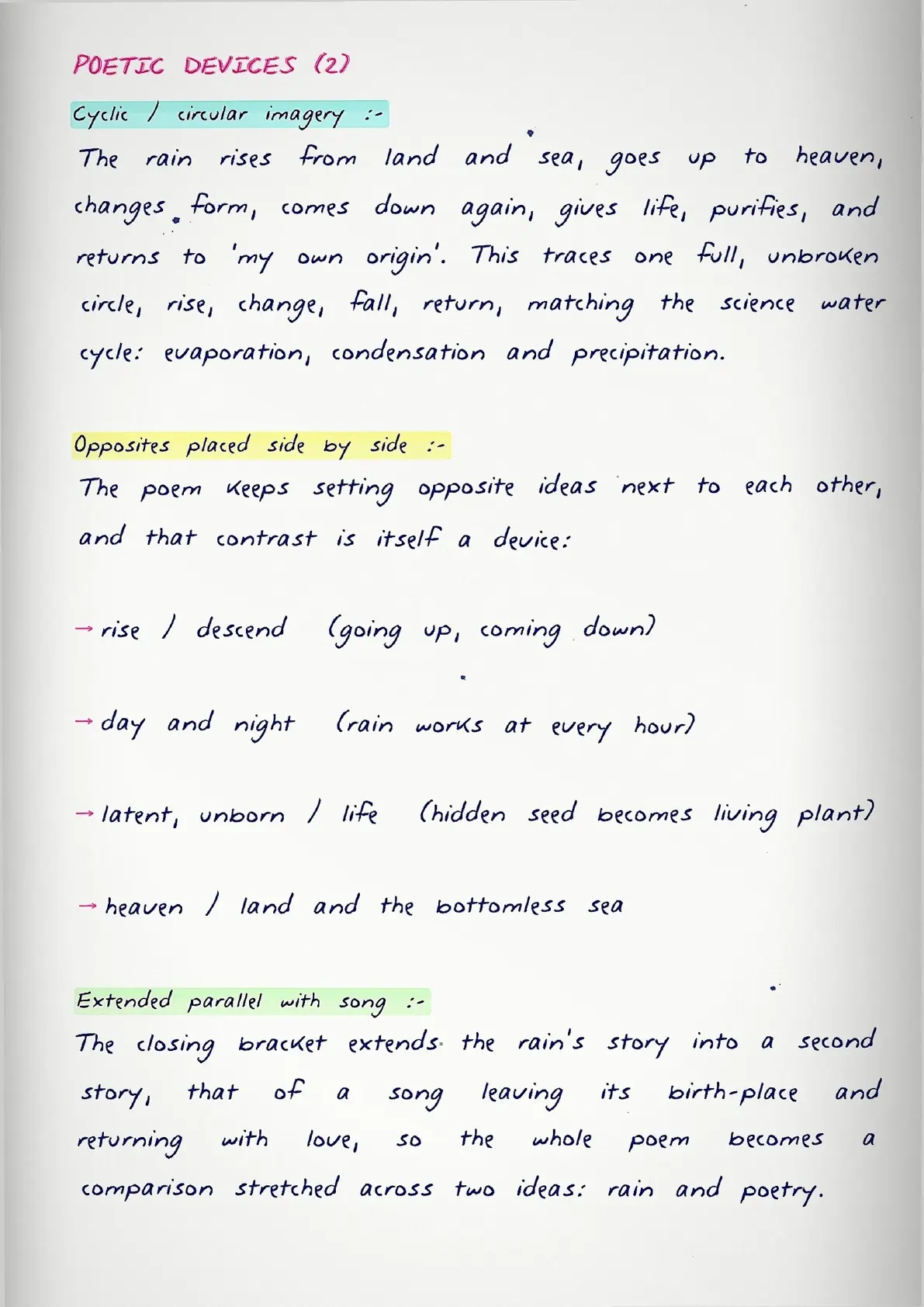
| Cyclic Imagery | Rain rising from sea to sky and falling back to land | Shows nature's water cycle as endless and self-renewing |
| Rhetorical Question | "And who art thou?" | Opens the poem and sets up the dialogue |
| Metaphor | Rain compared to a song that "duly with love returns" | Links the rain's cycle to how poetry and life carry meaning |
| Free Verse | The entire poem | No fixed rhyme or metre, matching Whitman's natural style |
Theme and Message of The Voice of the Rain
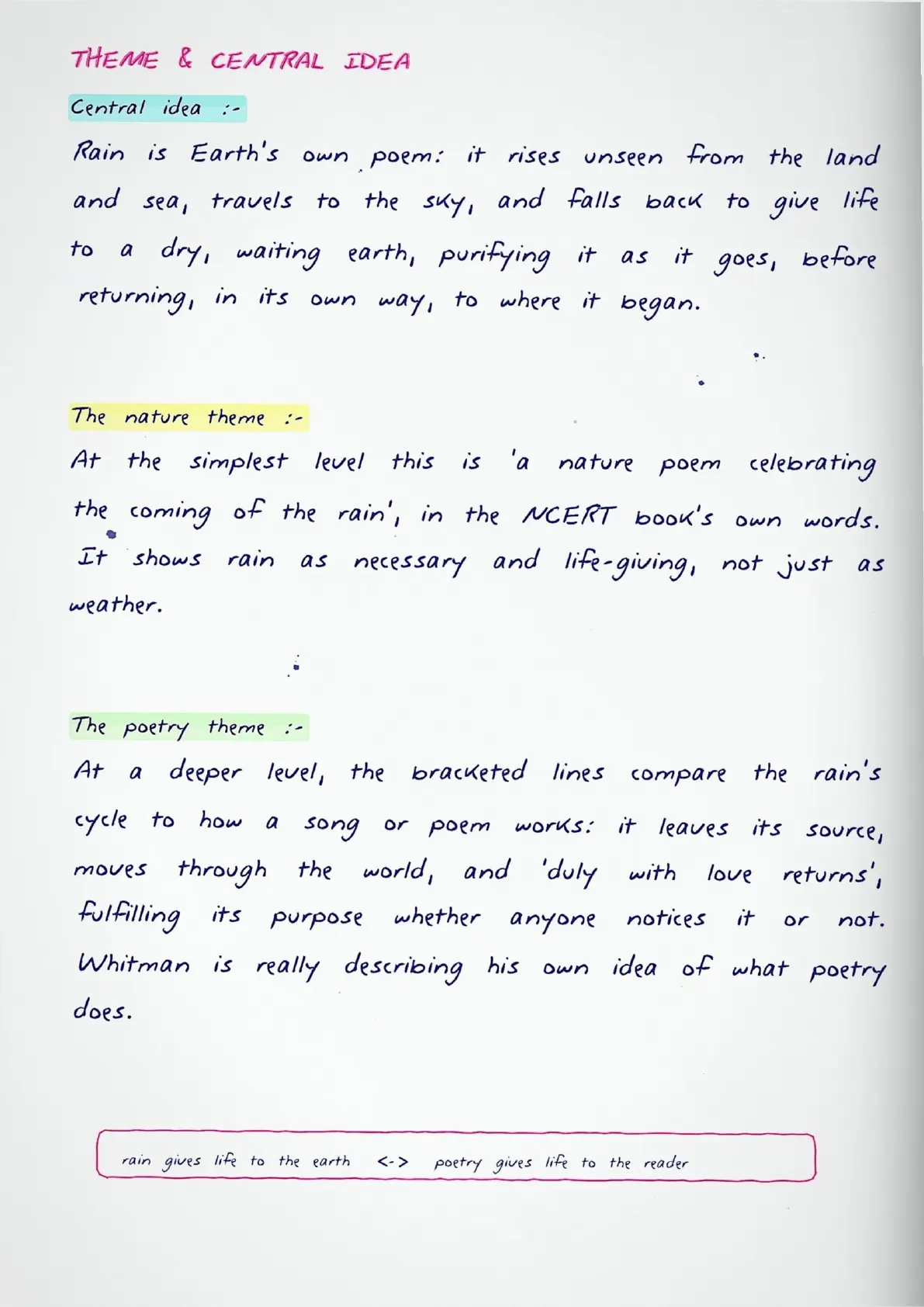
At its core, the poem is about giving back what you receive. The rain takes water from the sea, rises as vapour, and returns it to the land as rain. Nothing is wasted, and the cycle keeps going.
- Nature works in cycles, and every part of that cycle has a purpose.
- The rain calls itself the "Poem of Earth", comparing nature's cycle to the way poetry moves people.
- Whitman suggests that true purpose, like the rain and like a song, always comes back to its source.
Word Meanings from The Voice of the Rain
A few words in the poem are unfamiliar even to strong students. This table explains each one in plain English.
| Word | Meaning |
|---|---|
| Impalpable | Something that cannot be touched or felt physically |
| Bottomless | Extremely deep, without a visible bottom |
| Lave | To wash or moisten gently |
| Drouths | An older spelling of "droughts", meaning long dry spells |
| Atomies | Tiny particles or specks of dust |
| Reck'd or unreck'd | Noticed or unnoticed, cared for or not cared for |
The Voice of the Rain NCERT Textbook Questions Covered
The handwritten notes answer every question NCERT sets under "Understanding the Poem" for this chapter.
| NCERT Question | What the Notes Cover |
|---|---|
| Which lines do you think are the most poetic, and why? | Line-by-line explanation with reasons for the strongest imagery |
| Which lines show the cyclic movement of the rain? | Marked-up lines tracing the rain's journey from sea to sky to land |
| What does the rain compare itself to? | Explanation of the song metaphor in the closing lines |
Common Mistakes Students Make While Studying The Voice of the Rain
Watch out for these:
- Calling the poem's structure a "conversation between two people" instead of a dialogue between the poet and the personified rain.
- Missing that the rain's cycle (sea to sky to land) is the same idea as the song that "returns" at the end.
- Confusing "reck'd or unreck'd" with a rhyme word instead of reading it as "noticed or unnoticed".
Getting the dialogue structure and the song metaphor wrong costs marks on reference-to-context questions every year.
Student Feedback: In a Collegedunia survey of 11,240 Class 11 students conducted before the 2026 boards, 68% said the song metaphor in the last four lines was the hardest part of The Voice of the Rain to explain in their own words.
Source: 2026-27 Class 11 English student poll. Sample of 11,240 students from CBSE schools across 14 states.
How These Handwritten Notes Help You Revise The Voice of the Rain
The notes are built to be read once, right before the exam, without needing the full textbook open beside you.
- Full Poem Text: the complete poem is copied out by hand for quick reading.
- Line-by-Line Paraphrase: every stanza is explained in plain words next to the original lines.
- Poetic Devices Marked: personification, cyclic imagery, and the closing metaphor are labelled where they occur.
- NCERT Answers Included: all three "Understanding the Poem" questions are answered in full.
The Voice of the Rain and the Water Cycle Behind the Poem
Whitman's cyclic imagery in The Voice of the Rain closely follows the real water cycle: evaporation, condensation, and rainfall. Reading the poem alongside the science behind it makes the imagery easier to remember for the exam.
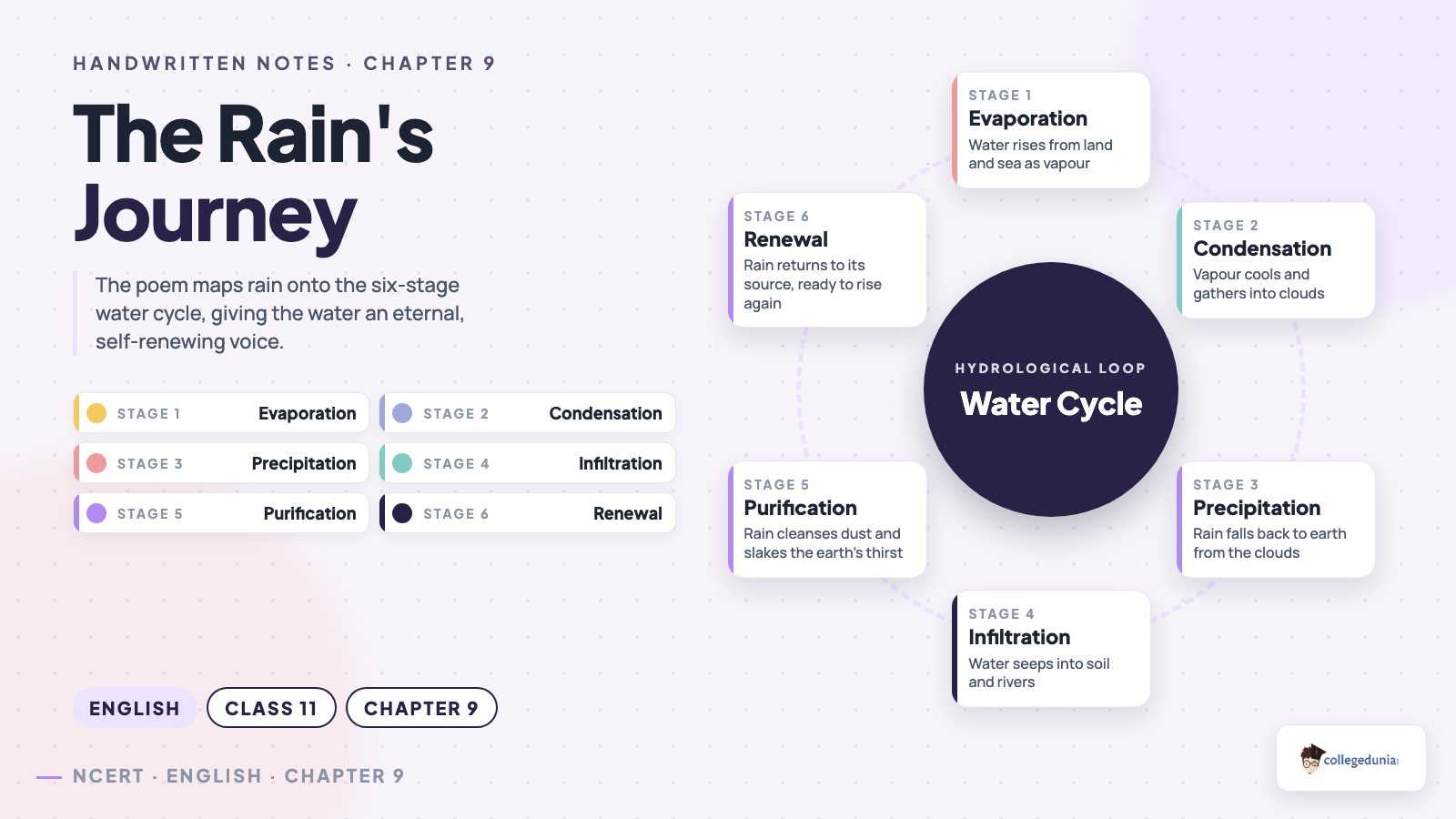
| Poem Line / Idea | Water Cycle Stage |
|---|---|
| "Eternal I rise impalpable out of the land and the bottomless sea" | Evaporation: water rises as invisible vapour |
| "Upward to heaven, whence, vaguely form'd, altogether changed" | Condensation: vapour forms clouds |
| "I descend to lave the drouths, atomies, dust-layers of the globe" | Precipitation: rain falls back to earth |
Cross-Resource Study Material for The Voice of the Rain
These handwritten notes work best alongside the other Class 11 English Hornbill Chapter 9 resources for the 2026-27 session.
| Resource | Status |
|---|---|
| The Voice of the Rain Handwritten Notes | Live on this page |
| The Voice of the Rain NCERT Solutions | Read the Solutions |
| The Voice of the Rain Notes | Coming soon (coming soon) |
| Class 11 English NCERT Book PDF | Read the Book PDF |
NCERT Handwritten Notes for Class 11 English Hornbill: All Chapters
Use this table to find handwritten notes for the rest of the Hornbill chapters as Collegedunia adds them through the 2026-27 session.
| Chapter | Resource |
|---|---|
| Chapter 7 | A Photograph Handwritten Notes (coming soon) |
| Chapter 8 | The Laburnum Top Handwritten Notes (coming soon) |
| Chapter 9 | The Voice of the Rain Handwritten Notes |
| Chapter 10 | Childhood Handwritten Notes (coming soon) |
| Chapter 11 | Father to Son Handwritten Notes (coming soon) |
The Voice of the Rain Class 11 English Handwritten Notes FAQs
Ques. Where can I download The Voice of the Rain Class 11 English Handwritten Notes PDF?
Ans. You can download The Voice of the Rain Class 11 English Handwritten Notes PDF directly from this page. Both the Normal and HD versions are available, and both are free.
Ques. Who wrote The Voice of the Rain?
Ans. The Voice of the Rain was written by Walt Whitman, an American poet known for his free-verse collection Leaves of Grass.
Ques. What is the central theme of The Voice of the Rain?
Ans. The poem is about nature's endless cycle of giving. The rain rises from the sea, forms clouds, and falls back to earth to nourish it, comparing this cycle to a song that always returns to its source.
Ques. Is this Handwritten Notes PDF aligned with the 2026-27 NCERT?
Ans. Yes. This page reflects the current 2026-27 syllabus for Class 11 English Hornbill. The Voice of the Rain is unchanged in the rationalised syllabus.
Ques. How many pages is the Class 11th English Hornbill Chapter 9 Handwritten Notes PDF?
Ans. The Handwritten Notes PDF runs 22 pages and covers the full poem text, a line-by-line paraphrase, poetic devices, the theme, and NCERT's own exercise answers.
Ques. What poetic device does Whitman use to give the rain a voice?
Ans. Whitman uses personification. The rain speaks in the first person and answers the poet's question, "And who art thou?"
Ques. What does the rain compare itself to at the end of the poem?
Ans. The rain compares itself to a song that, whether noticed or not, always returns with love to the place where it began.



Comments