




The handwritten notes on Class 12 Legal Studies Chapter 5 Legal Profession in India have been carefully prepared for one-shot revision, according to the latest 2026-27 CBSE syllabus. The chapter moves from history to regulation to careers, and these notes keep that order.
- Length: 28 handwritten pages covering the Advocates Act, the Bar Councils, professional ethics, legal education and career paths.
- Must-learn pair: Senior Advocate against Advocate-on-Record, the distinction that anchors almost every question on this chapter.
- Also on this page: a Bar Council structure chart, a quick recall sheet, a mistake list and links to the related Judiciary chapter.
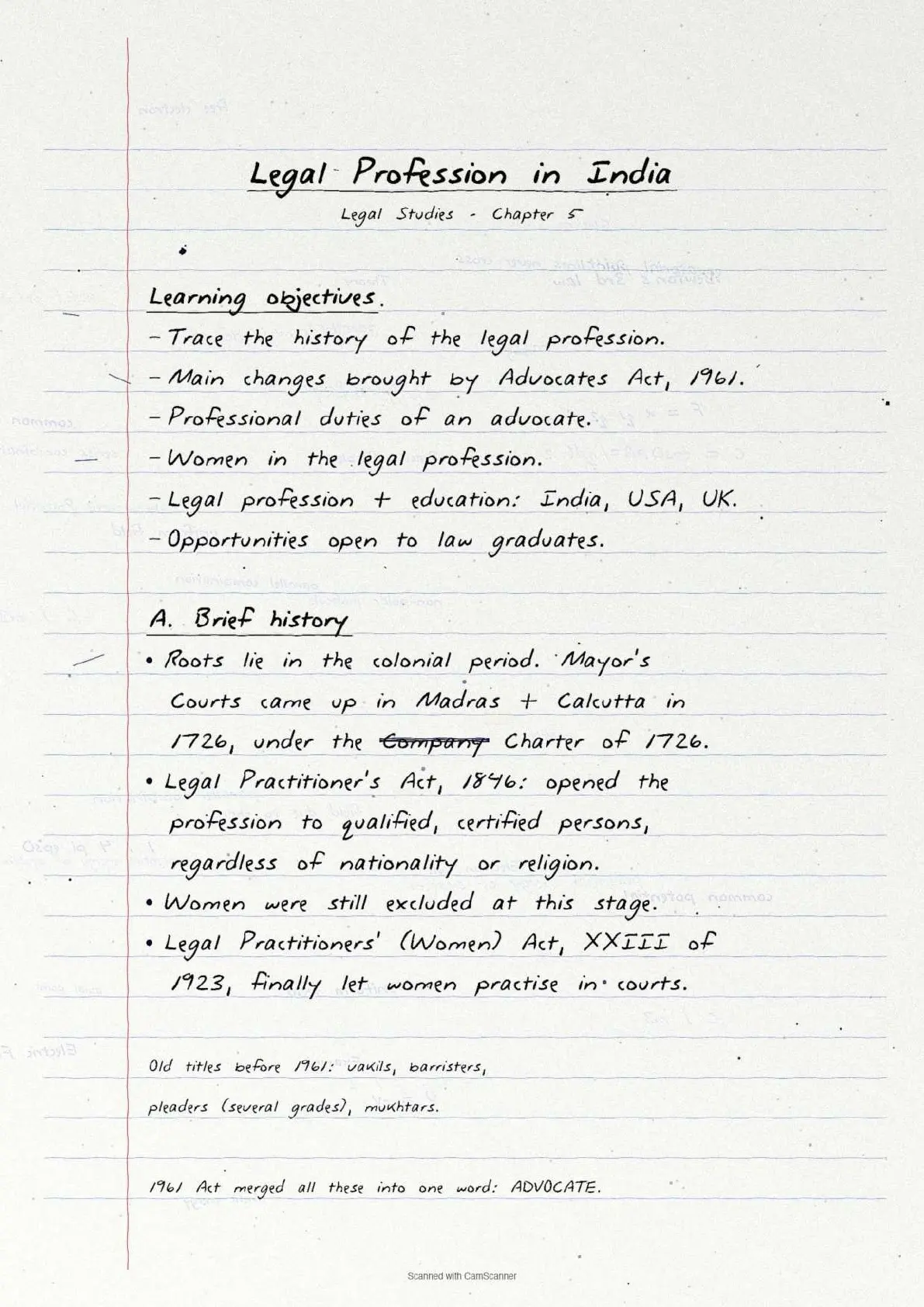
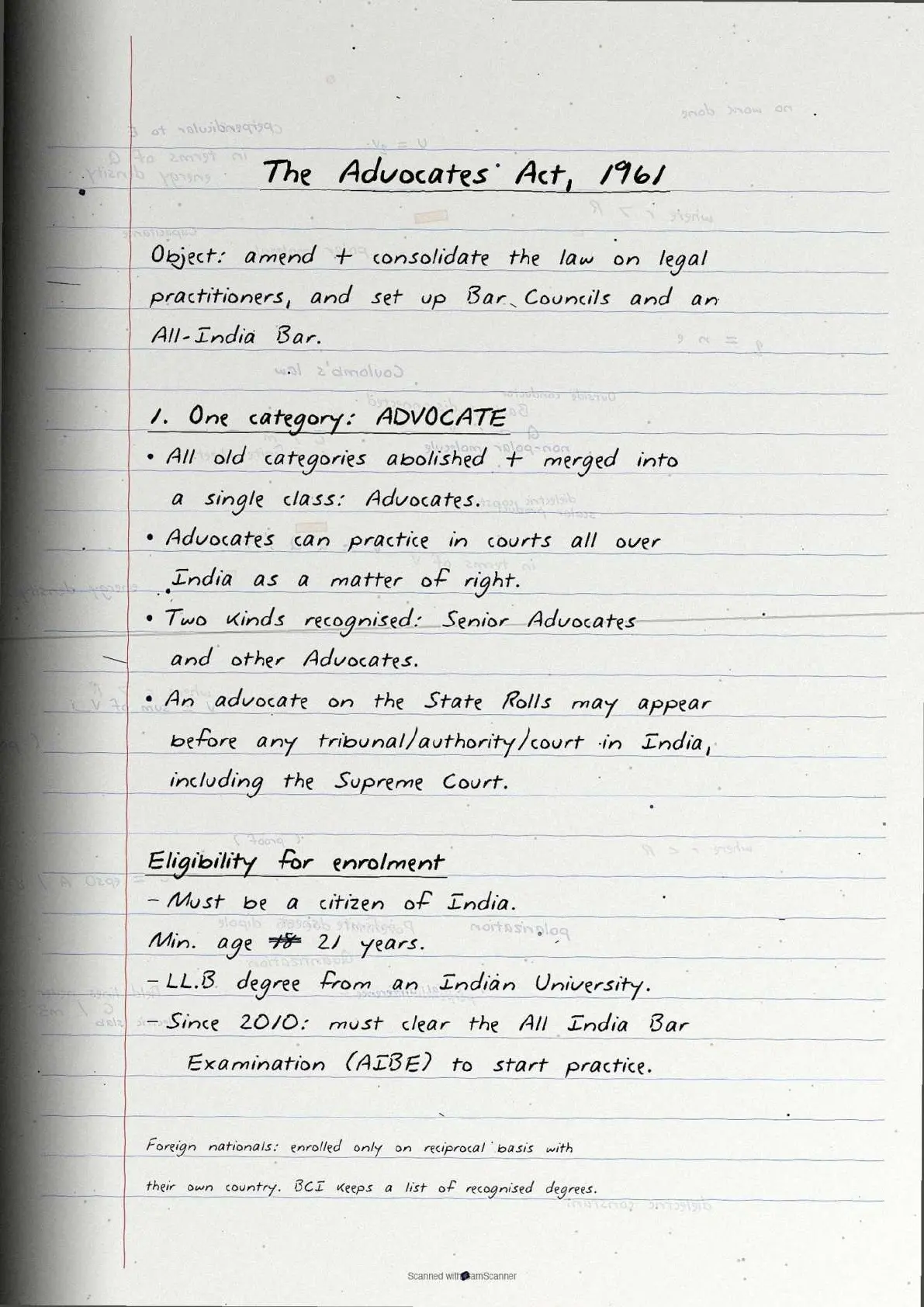
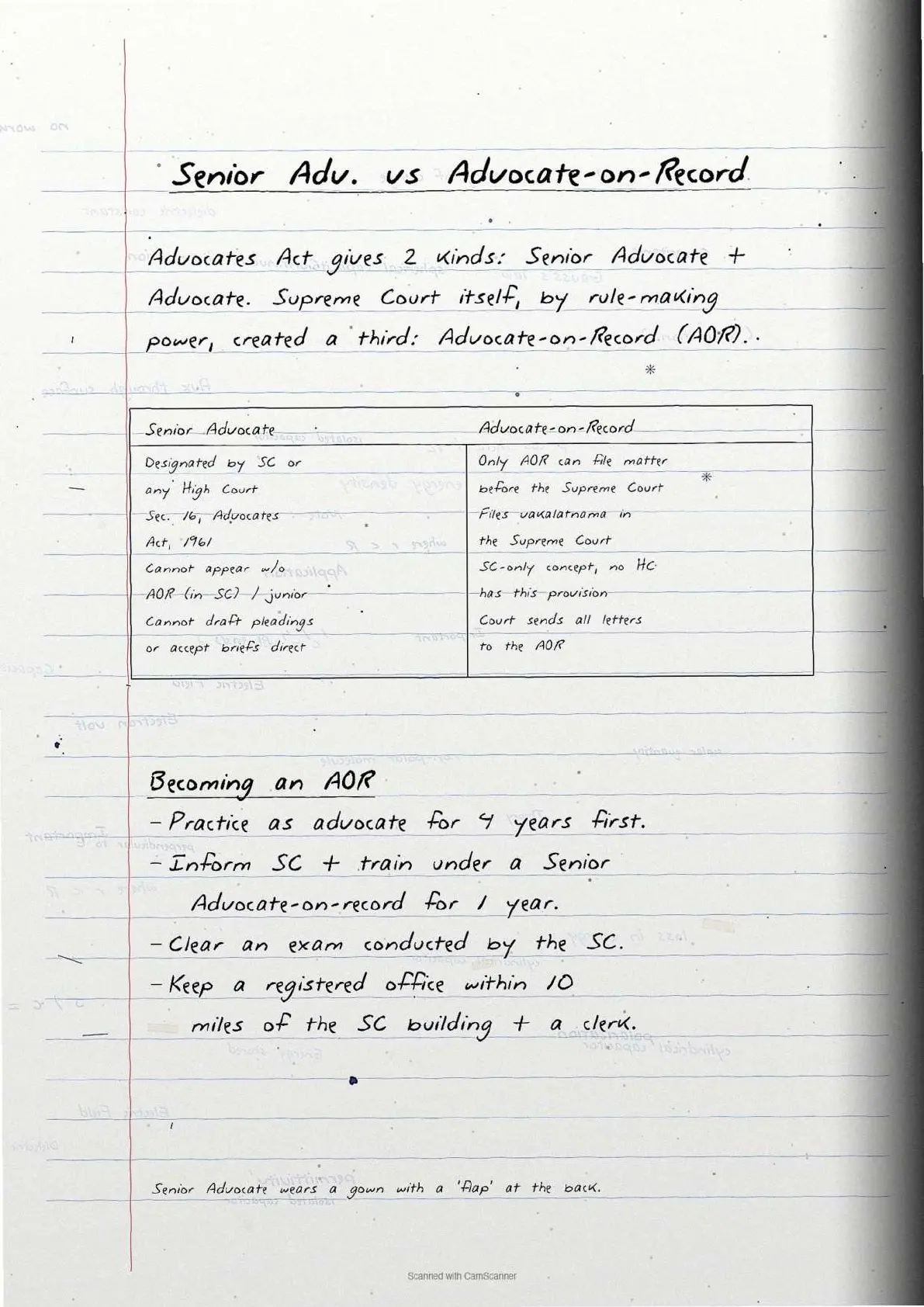
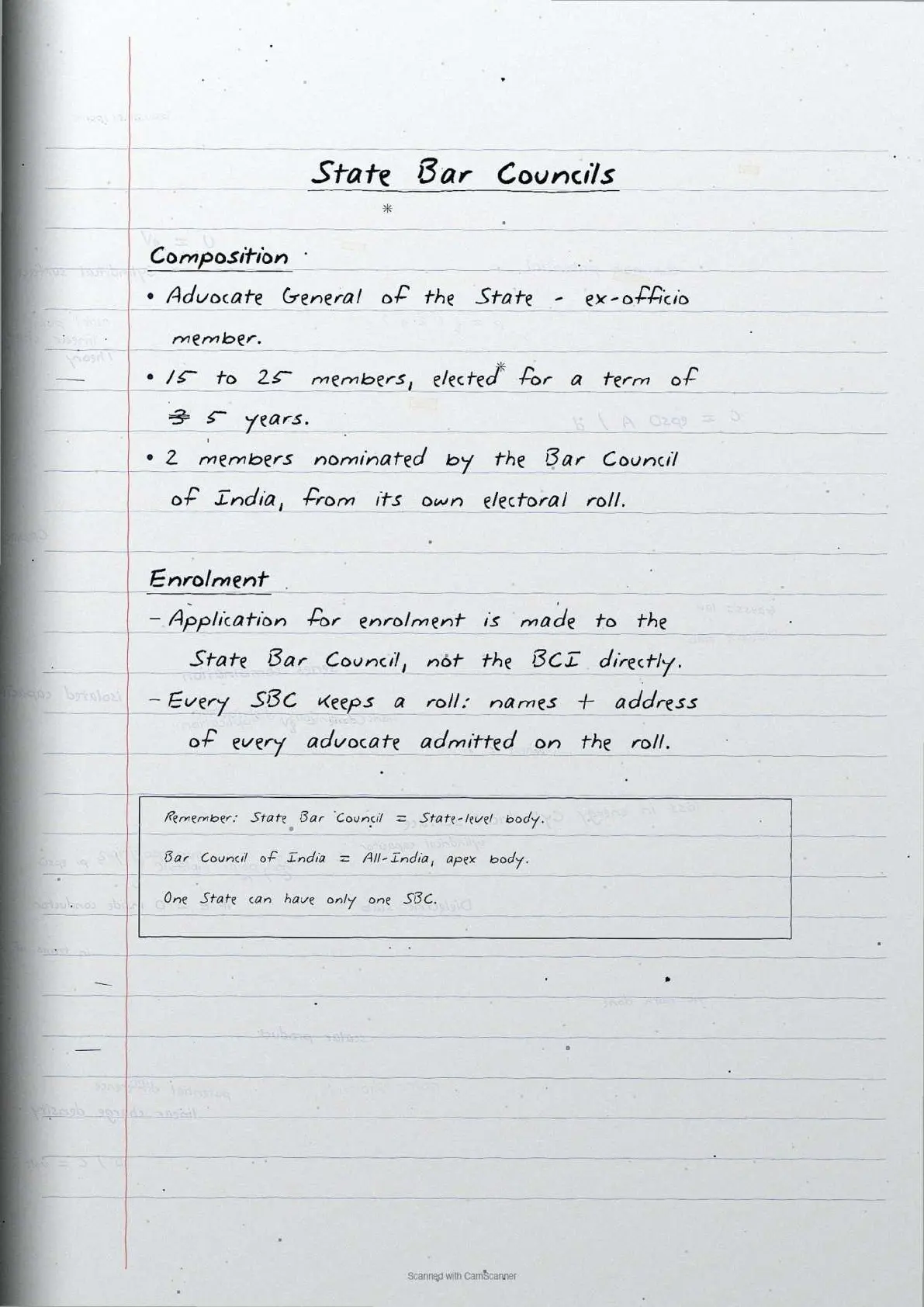
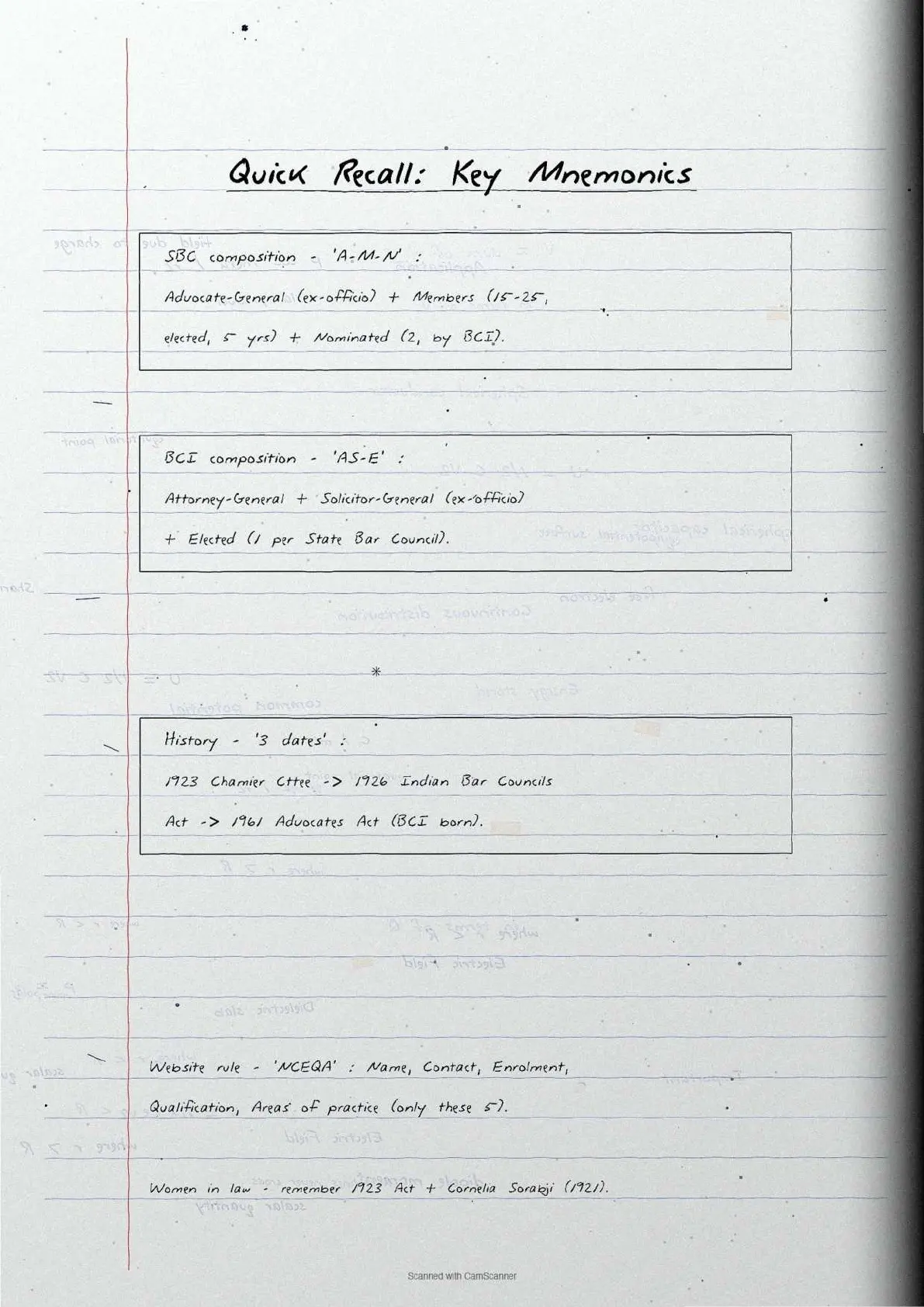
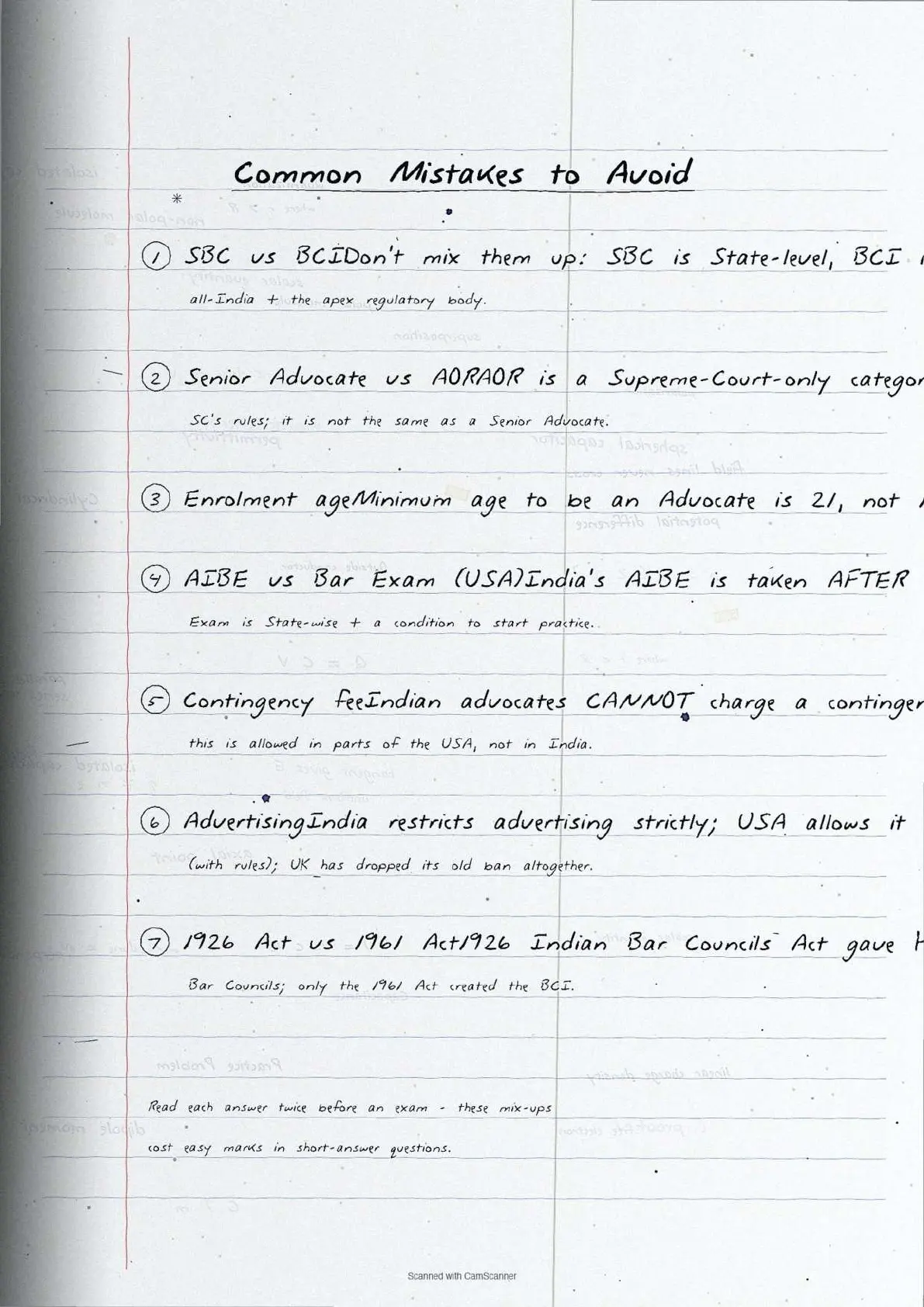
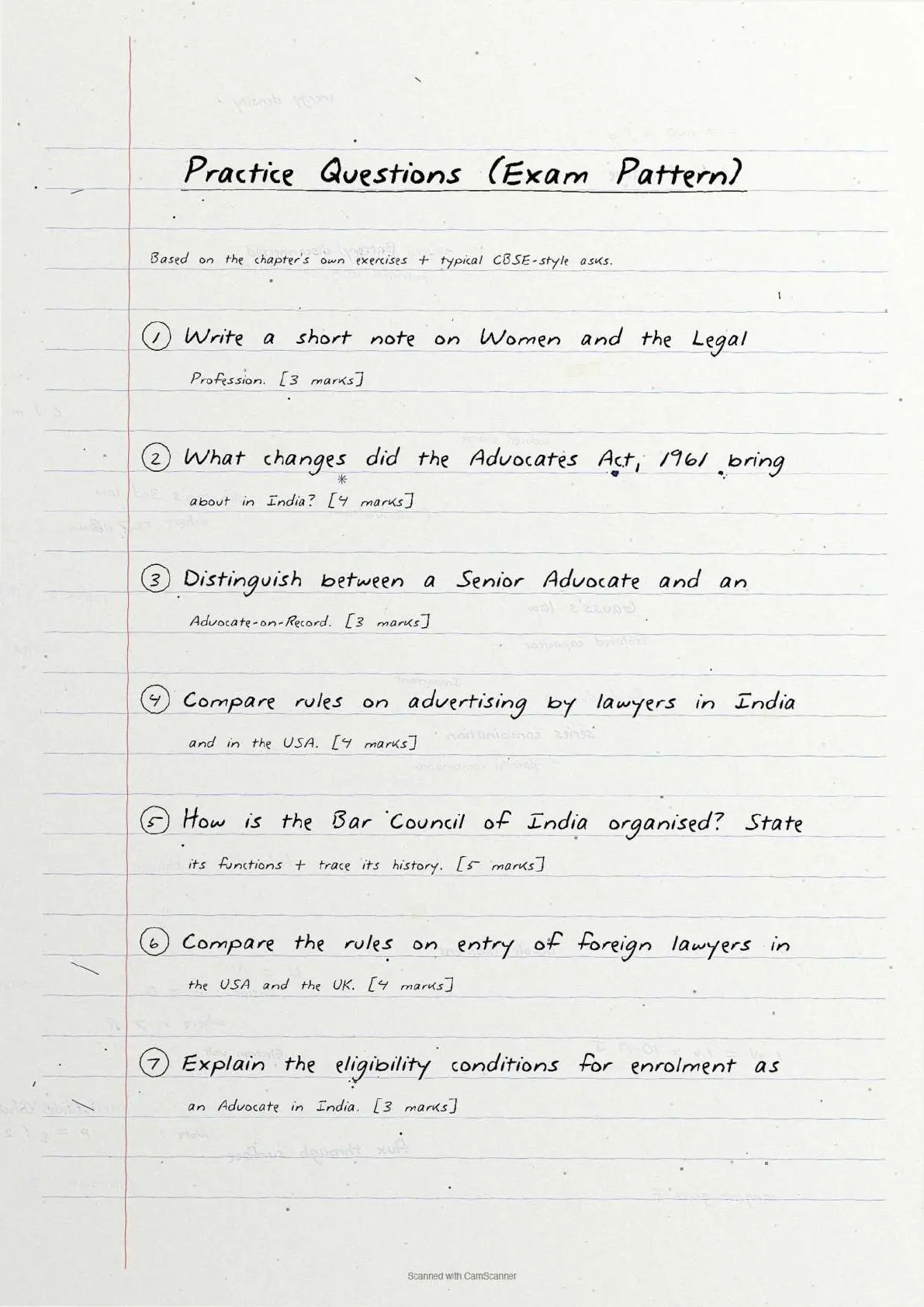
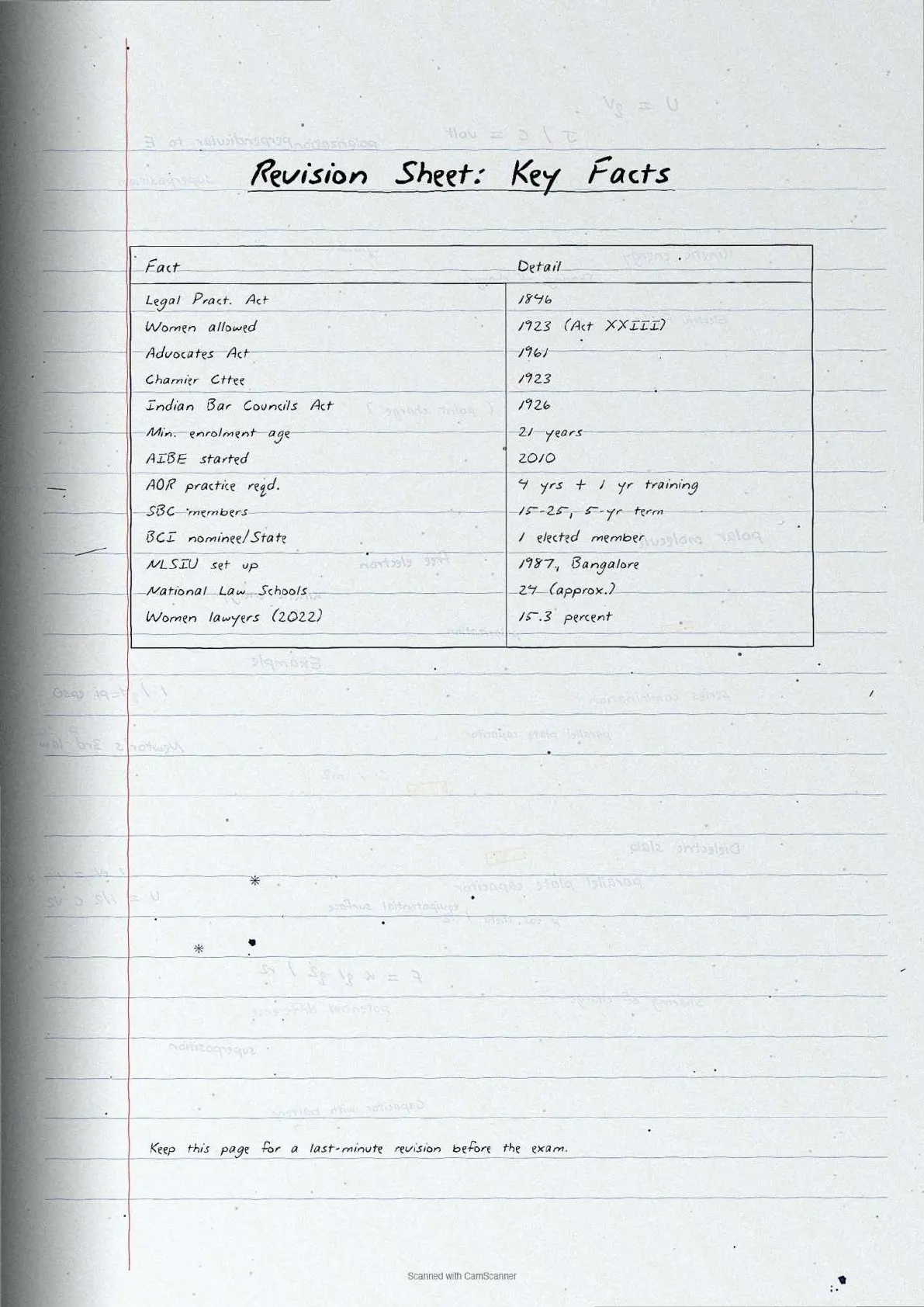
Every page in these Legal Profession in India notes is written by hand, checked against the 2026-27 NCERT Legal Studies print, and matched to the way Class 12 papers ask about the Advocates Act, the Bar Council structure and legal education.
Student Feedback: In a Collegedunia survey of 11,540 Class 12 Legal Studies students conducted before the 2026 boards, 69% of students said they mix up Senior Advocate and Advocate-on-Record on their first attempt. Students who learned the two roles as a single comparison table, instead of two separate paragraphs, reported getting the five-mark question right on the first try.
Source: 2026-27 Class 12 Legal Studies student poll. Sample of 11,540 students from CBSE schools across 16 states.
What Legal Profession in India Covers: History, Regulation and Careers
CBSE labels this chapter Unit 7, and it moves through seven lettered parts, from the colonial roots of the profession to the jobs a law graduate can actually take up. Nearly every part builds on the one before it, so skipping the Advocates Act section makes the Bar Council section harder to follow. The table below is the map the rest of these notes follow.
| Part | What it covers | Core statute or body |
|---|---|---|
| A | Brief history and the Advocates Act, 1961 | Charter of 1726, Legal Practitioners Act 1846, Advocates Act 1961 |
| B | Lawyers and professional ethics | Bar Council of India Rules |
| C | Advertising by lawyers | Bar Council of India Rules, Model Rules of Professional Conduct (USA) |
| D | Liberalisation and globalisation of the profession | GATS under the WTO, 1995 |
| E | Women and the legal profession in India | Legal Practitioners' (Women) Act, XXIII of 1923 |
| F | Legal education in India, the USA and the UK | Bar Council of India, ABA, SRA |
| G | Opportunities for law graduates | Litigation, law firms, judicial services, JAG |
One category of practitioner runs through the whole chapter. Before 1961, India had vakils, barristers, pleaders and mukhtars, all governed by different rules. After the Advocates Act, all of them became one class, the advocate, and that single change is what makes every later section of the chapter possible.
Legal Profession in India Explained in One Video
Source: CUET LearnKaro Classes
History of the Legal Profession in India: From Mayor's Courts to 1961
The modern legal profession did not begin with the Advocates Act. It started under colonial rule, and the chapter expects three dates in the correct order.
| Year | What happened |
|---|---|
| 1726 | Mayor's Courts set up in Madras and Calcutta under the Charter of 1726, the profession's colonial starting point |
| 1846 | Legal Practitioners' Act opens the profession to duly qualified, certified practitioners of good character, regardless of nationality or religion |
| 1923 | Legal Practitioners' (Women) Act, XXIII of 1923, ends the exclusion of women from practising in courts |
Notice what the 1846 Act did not fix: women were still excluded from practice, and that gap stayed open for another 77 years. The chapter treats 1846 and 1923 as two separate reforms, not one, and an exam answer that merges them into a single date loses marks.
The Advocates Act 1961: One Class of Practitioners Called Advocates
The Advocates Act, 1961 had one clear aim: amend and consolidate the law on legal practitioners and set up the Bar Councils and an All-India Bar. Every old category, vakils, barristers, pleaders of several grades and mukhtars, was abolished and merged into a single class called advocates.
- Citizenship: the applicant must be a citizen of India.
- Age: at least 21 years at the time of enrolment.
- Degree: an LLB from an Indian university recognised by the Bar Council.
- Bar exam: the All India Bar Examination, compulsory since 2010, before starting practice.
An advocate on the State Rolls can practise as of right before any tribunal, authority or court in India, including the Supreme Court. A foreign national can be enrolled only on a reciprocal basis, if their home country allows Indian lawyers to practise there and their degree appears on the Bar Council's recognised list. Without that reciprocity, a foreign national cannot practise law in India at all.
Senior Advocate Against Advocate-on-Record: The Distinction Class 12 Always Asks

The Advocates Act itself recognises only Senior Advocates and other advocates. Advocate-on-Record is a separate category the Supreme Court created using its own rule-making power, not something the Act names directly. Exercise question 3 asks for this comparison, so the table is worth learning row by row.
| Point of difference | Senior Advocate | Advocate-on-Record |
|---|---|---|
| Source of the category | Section 16 of the Advocates Act, 1961 | A Supreme Court rule, not the Act |
| How designated | By the Supreme Court or a High Court, with the advocate's consent, for ability, standing or special knowledge | By passing a Supreme Court examination after four years as an advocate |
| Who can file papers | Cannot file a vakalatnama or draft pleadings in any court | Only an AOR can file a vakalatnama or any document before the Supreme Court |
| Must appear with | Cannot appear in the Supreme Court without an AOR, or without a junior elsewhere | Can appear and act for a party on their own |
| Recognisable by | A gown with a "flap" at the back | No special dress, but a registered office within 10 miles of the Supreme Court and a registered clerk |
Becoming an AOR takes time. Four years as a practising advocate, one year of training with an AOR, and a Supreme Court examination come before the certificate is granted. Once qualified, all correspondence from the Supreme Court in that case goes to the AOR, even if a Senior Advocate is arguing it.
State Bar Councils: Composition and Functions
The Advocates Act creates a State Bar Council in every state, with the state's Advocate General as an ex-officio member and 15 to 25 elected members serving five-year terms. Two of its members are nominated by the Bar Council of India from advocates already on that state's electoral roll.
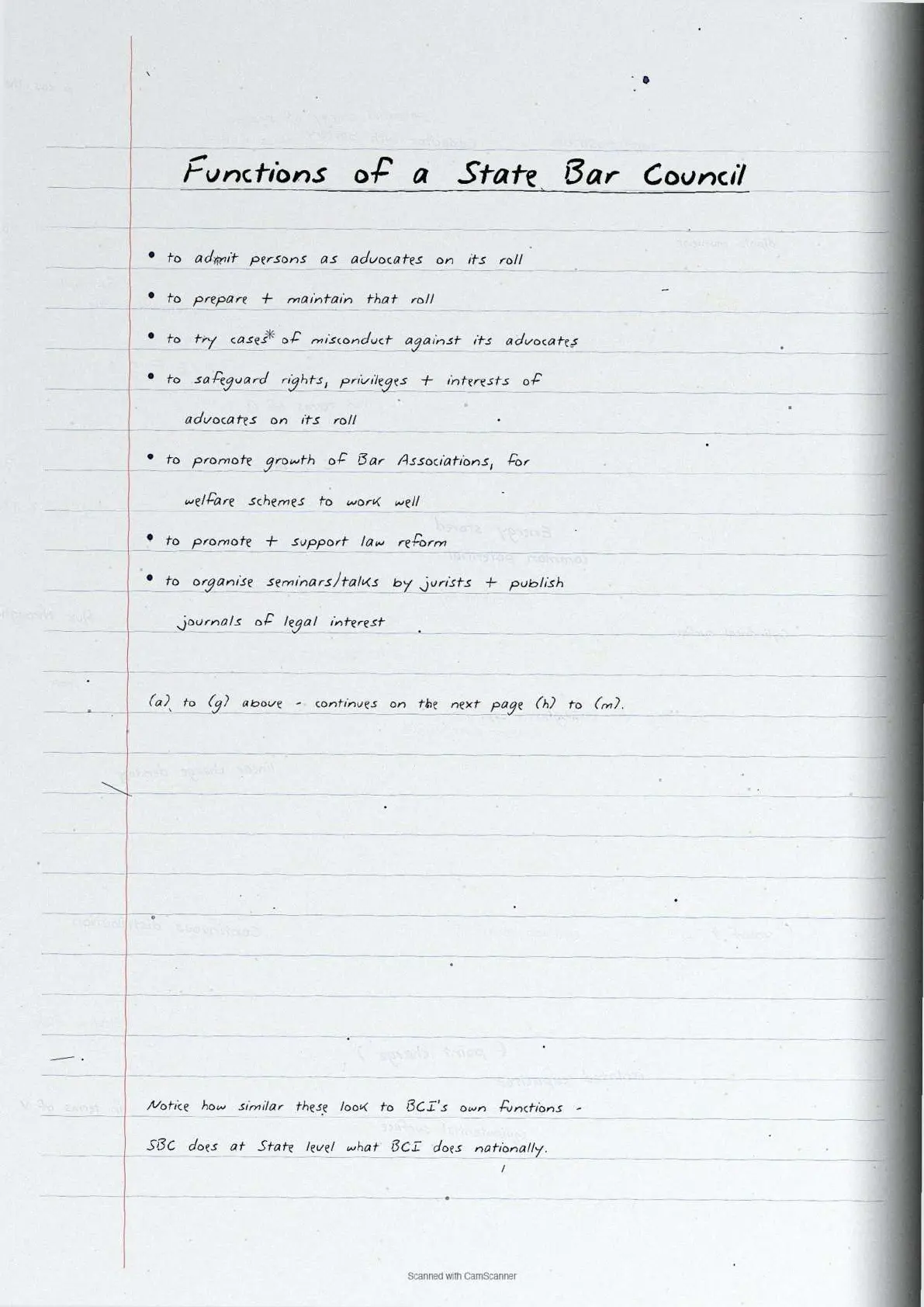
- Admit and enrol advocates, and maintain the roll of their names and addresses.
- Discipline advocates on its roll by hearing cases of misconduct.
- Safeguard rights, privileges and interests of its own advocates.
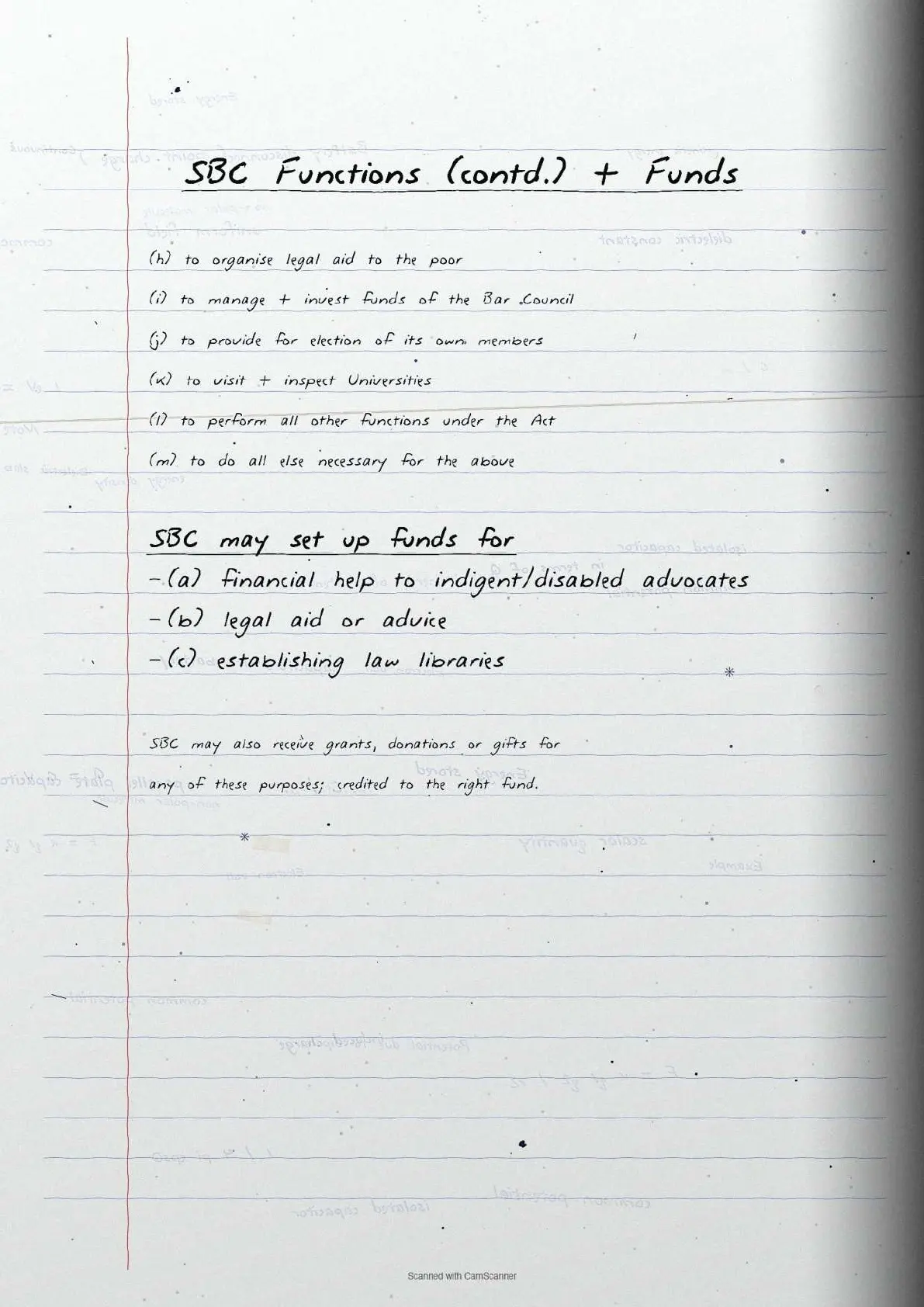
- Promote Bar Associations and support law reform and legal aid to the poor.
- Manage funds, including grants for indigent advocates and for law libraries.
Every application for enrolment goes to the State Bar Council, not to the Bar Council of India directly. That single fact is the one most exam answers get backwards, since students assume the national body handles enrolment.
The Bar Council of India: History, Composition and Functions

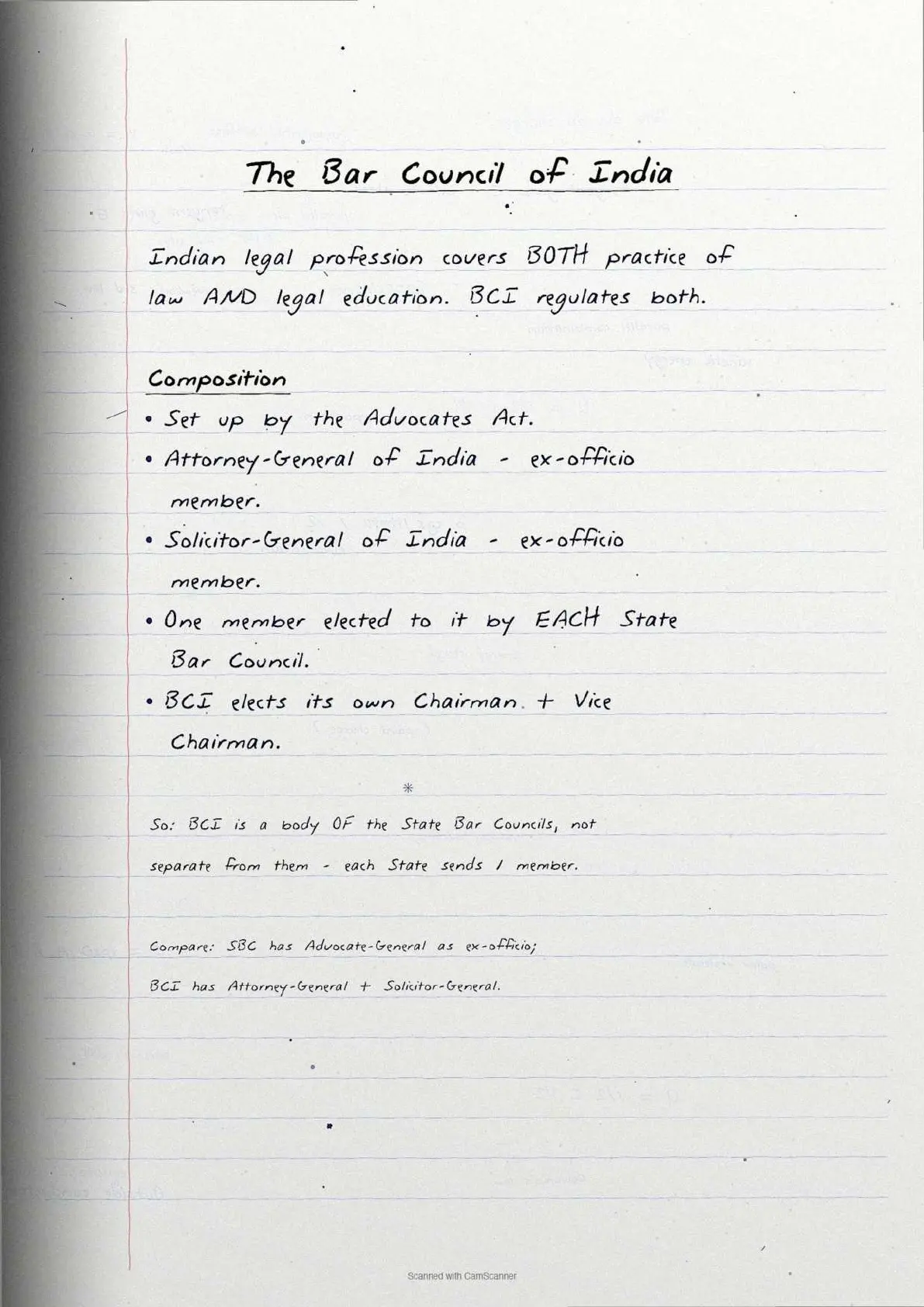
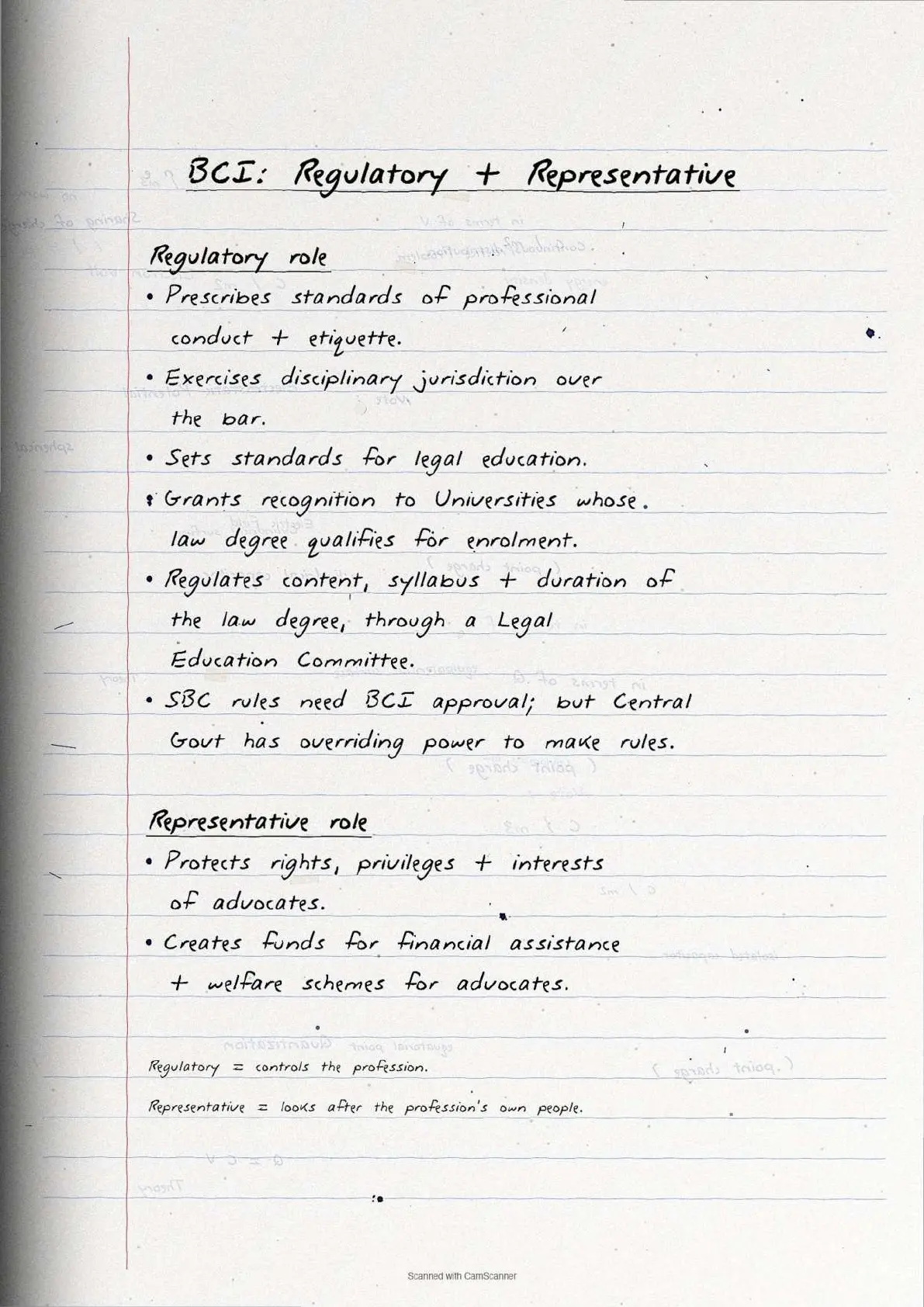
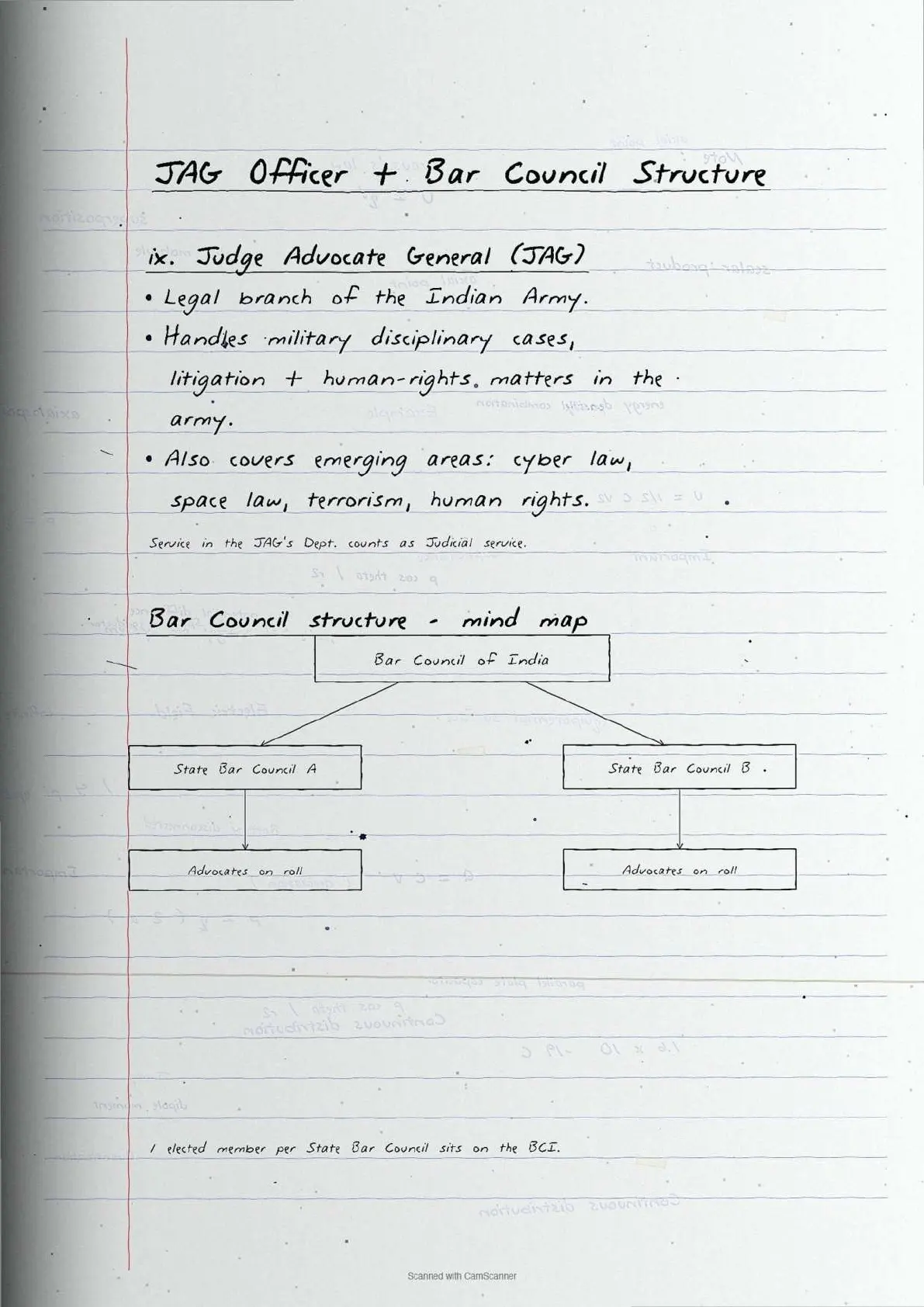
The Bar Council of India regulates both the practice of law and legal education, so it sits above the State Bar Councils in the structure. The Attorney-General and Solicitor General of India are its ex-officio members, and one elected member comes from each State Bar Council.
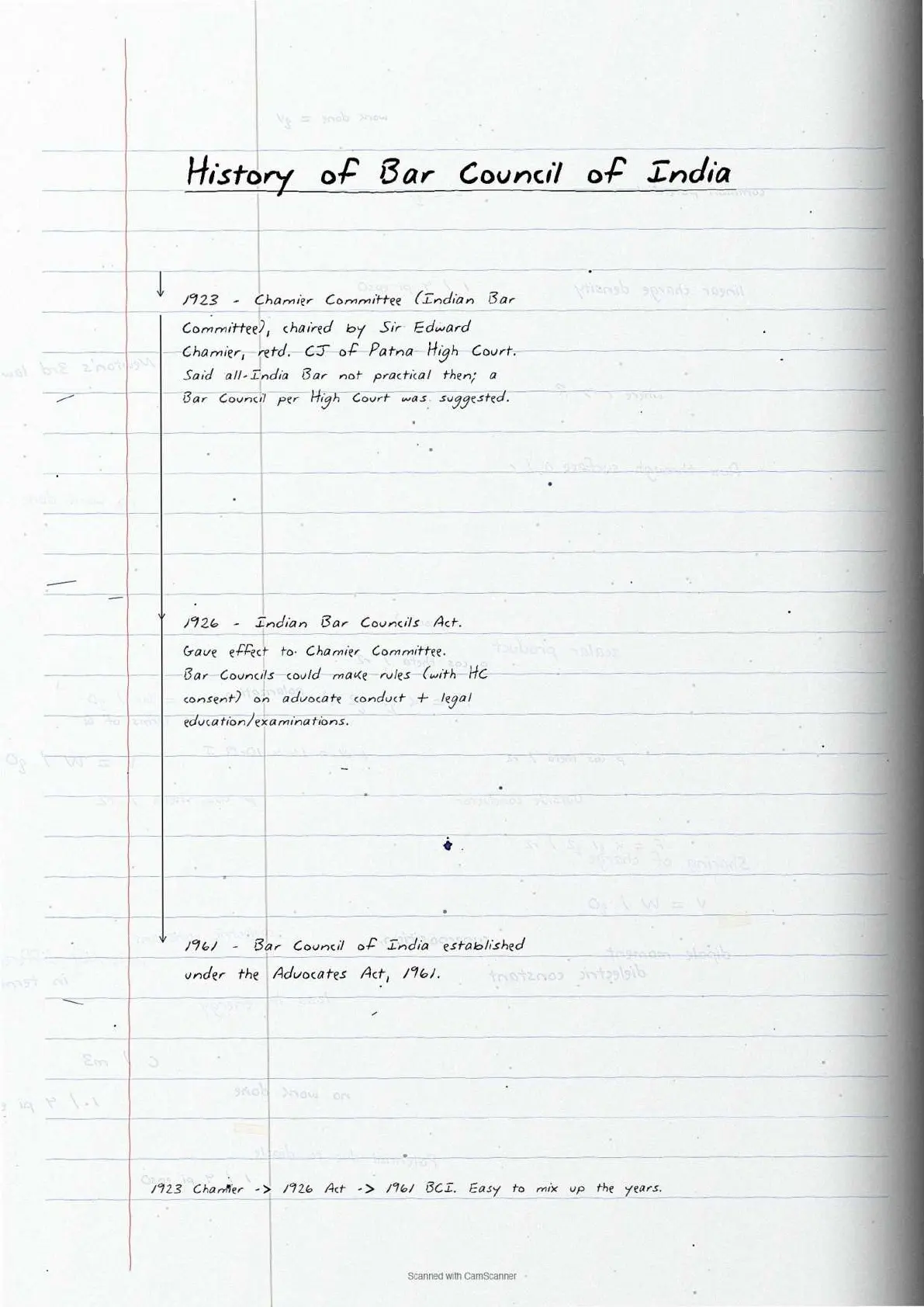
Its history has three dates that build on each other, and the chapter treats them as a single timeline.
| Year | What happened |
|---|---|
| 1923 | The Chamier Committee, chaired by Sir Edward Chamier, a retired Chief Justice of the Patna High Court, is appointed to study disparities in the profession |
| 1926 | The Indian Bar Councils Act sets up a Bar Council for each High Court, giving it power over admission, legal education and discipline |
| 1961 | The Advocates Act establishes the Bar Council of India itself |
The Chamier Committee actually rejected the idea of a single all-India Bar as impractical for its time, and recommended High Court-level councils instead. The all-India Bar Council only arrived 35 years later, with the 1961 Act.
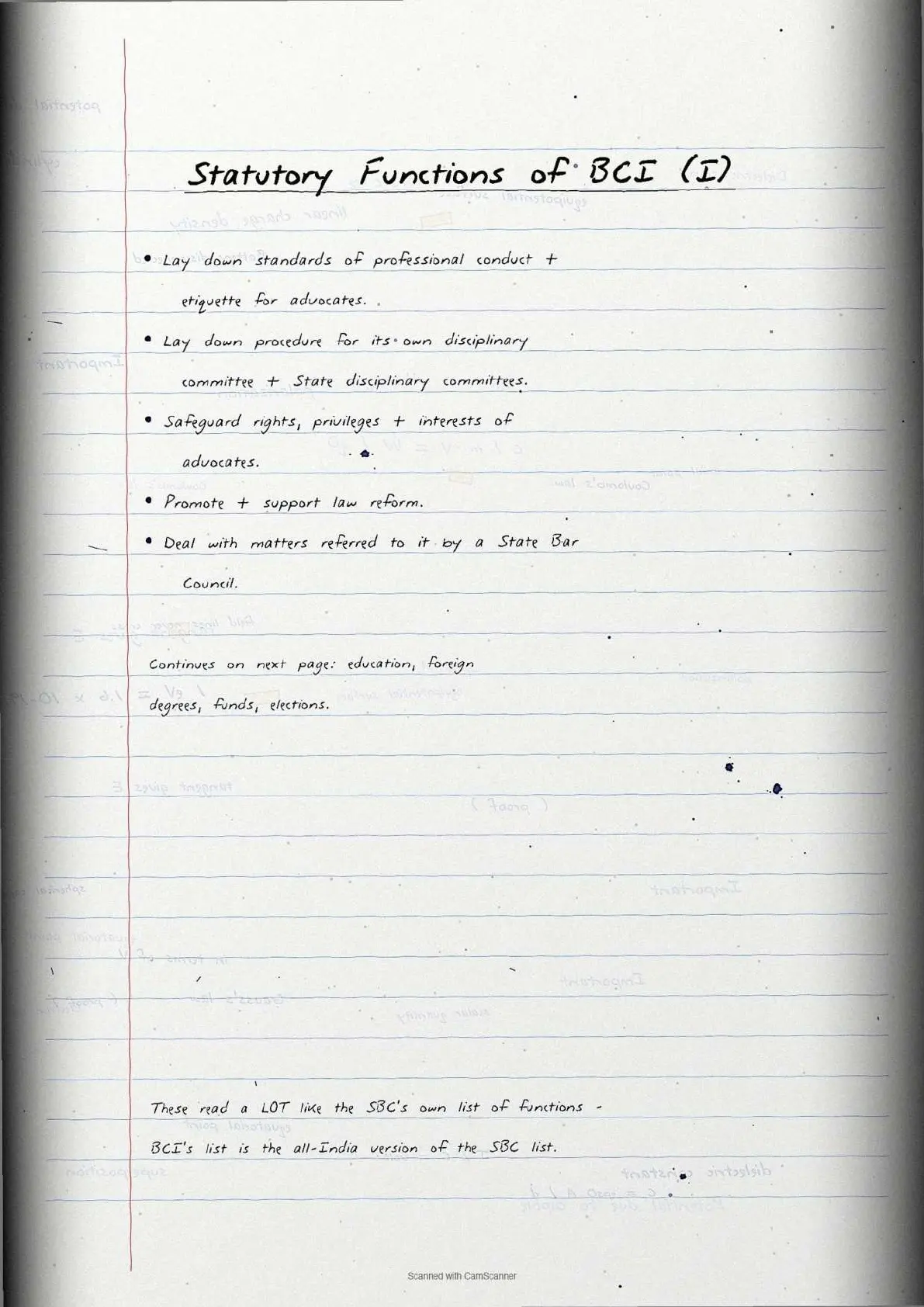
- Standards: lays down professional conduct and etiquette for advocates across the country.
- Discipline: sets the procedure its own disciplinary committee and every State Bar Council's committee follow.
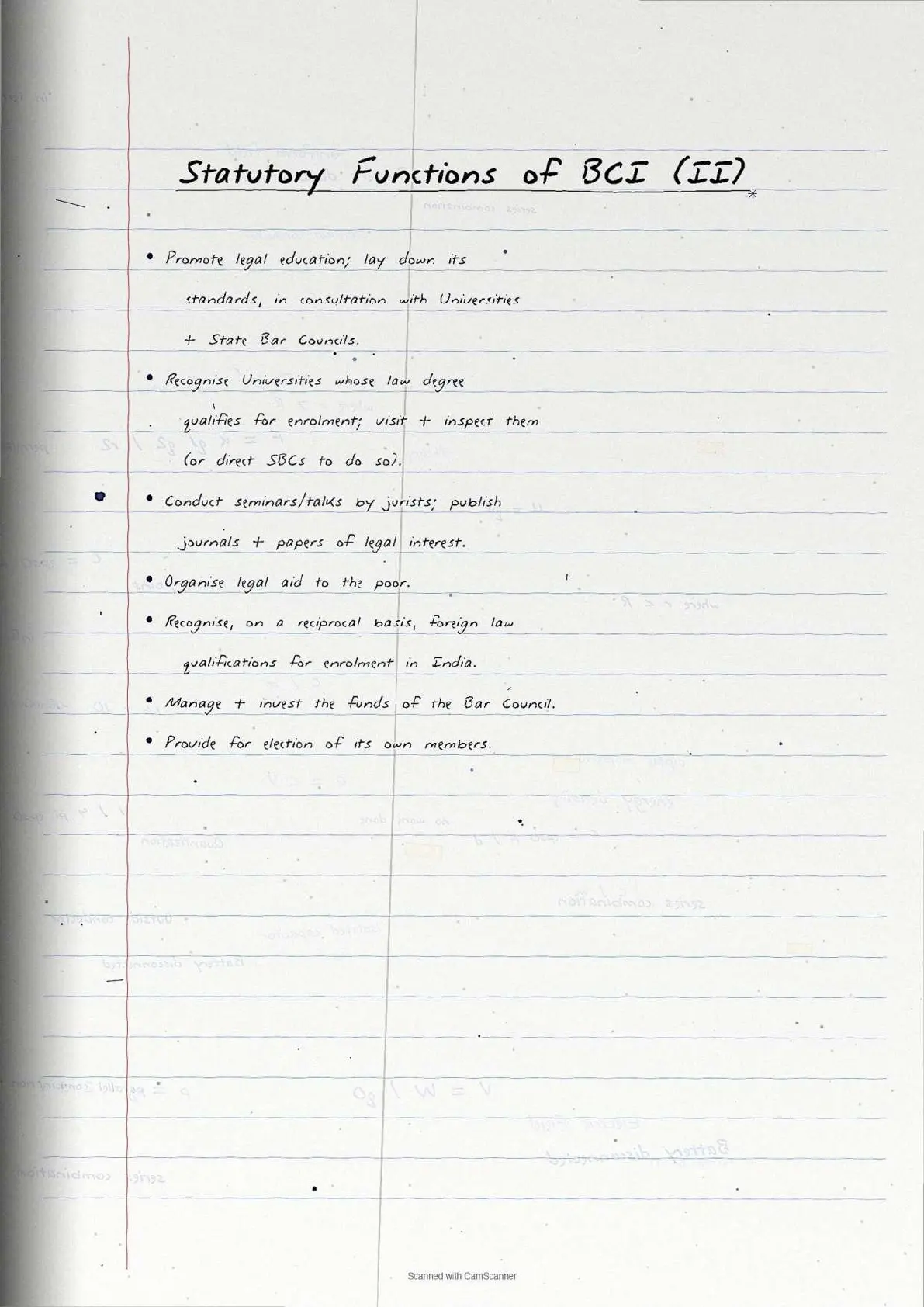
- Legal education: recognises universities whose law degree qualifies a graduate for enrolment, and inspects them through its Legal Education Committee.
- Representation: protects advocates' rights and privileges, organises legal aid to the poor, and manages the Council's funds.
- Reciprocity: recognises foreign law qualifications for enrolment in India, on a reciprocal basis only.
State Council rules need the Bar Council of India's approval, but the Central Government has overriding power to make rules of its own. That override is a small detail with a large exam weight, since it is the one line that separates the Bar Council's authority from Parliament's.
Professional Ethics: Duties of an Advocate to the Court and the Client
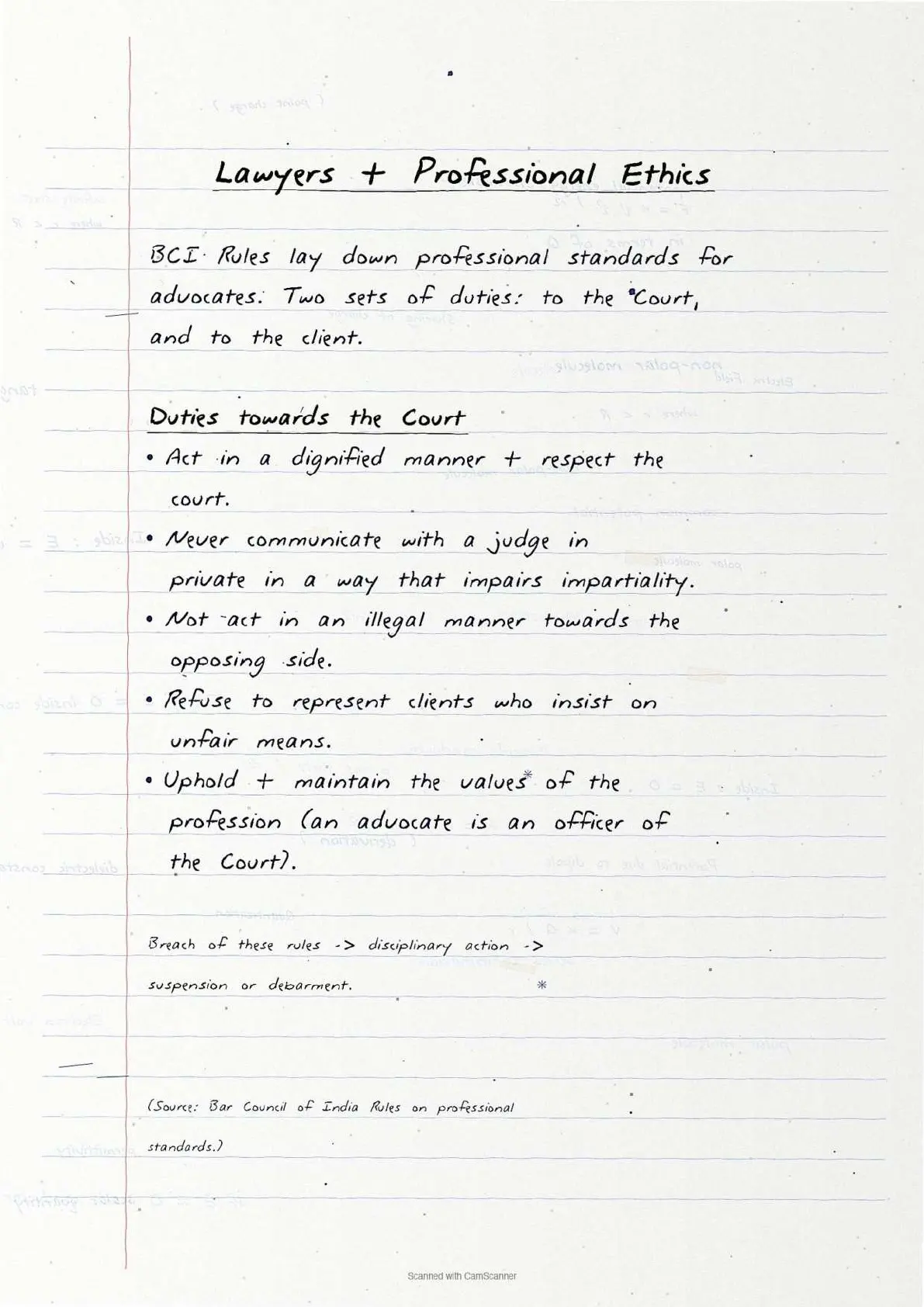
The Bar Council of India Rules split an advocate's duties into two directions, and the chapter expects both, not just one, in a full answer.
| Duty owed to | What the rule requires |
|---|---|
| The Court | Act with dignity, respect the court, never communicate privately with a judge, and refuse clients who insist on unfair means |
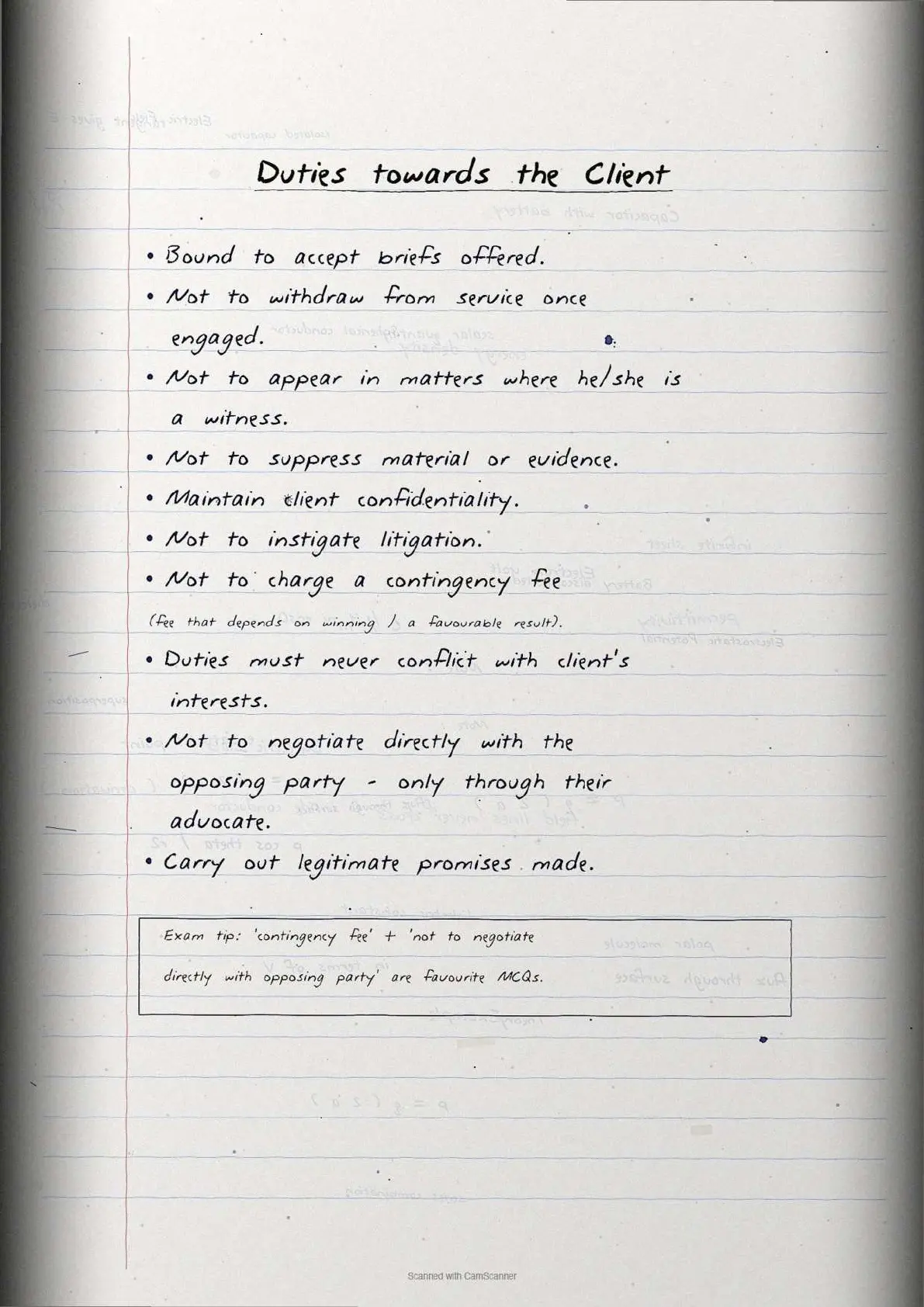
| The Client | Accept briefs, never withdraw from service, keep client information confidential, and never charge a contingency fee |
An advocate is also barred from appearing in a matter where they are themselves a witness, and cannot negotiate directly with the opposing party, only through the opposing advocate. Breach of these standards can lead to suspension or debarment, decided by the disciplinary committee described in the Bar Council section above.
Advertising by Lawyers: India's Five-Point Rule Against the USA and the UK
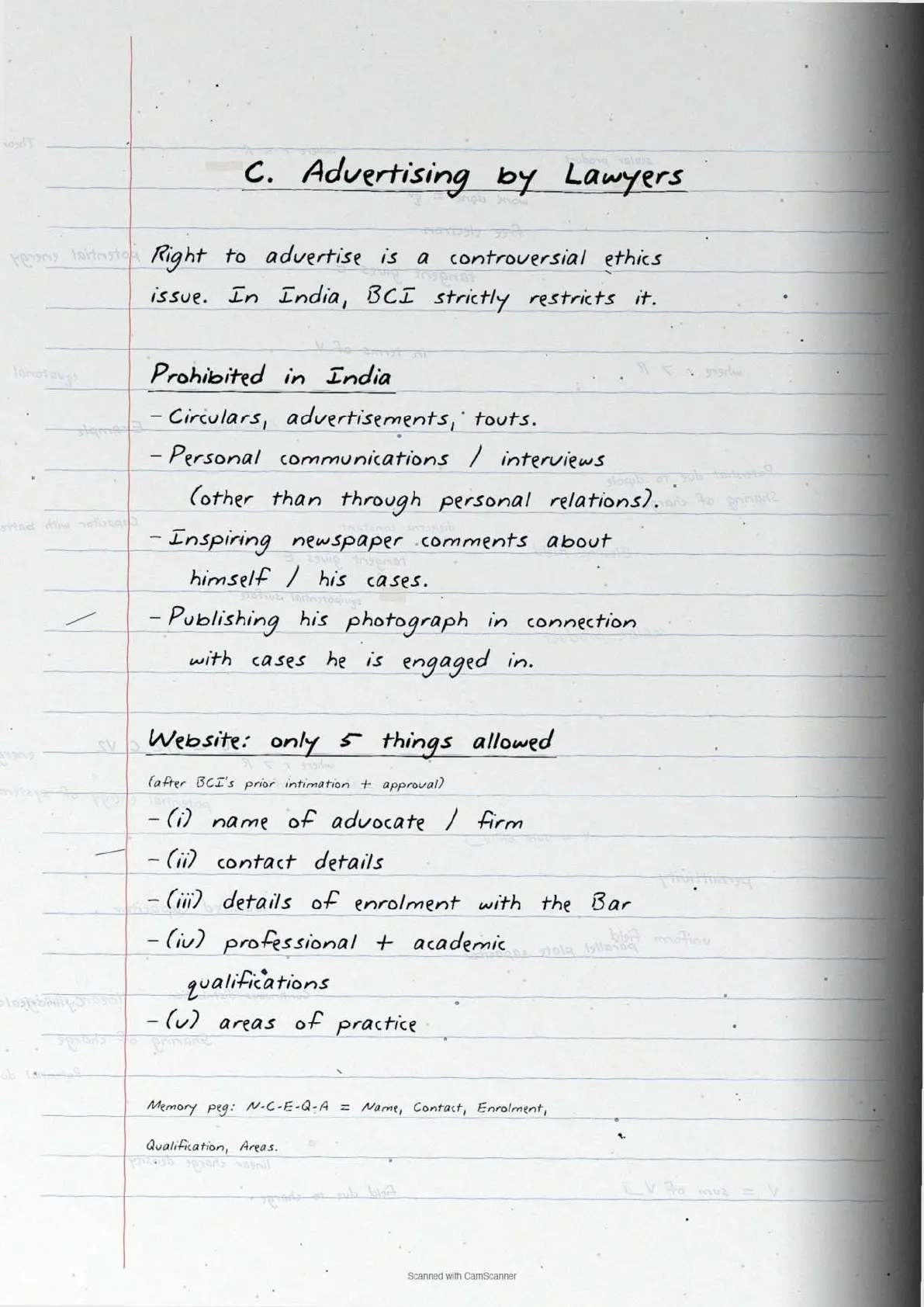
India keeps the tightest rule in the chapter. An advocate cannot promote themselves through circulars, ads, touts, interviews, or by having their photograph published with a case they handled.
- Name of the advocate or firm.
- Contact details only.
- Enrolment details with the Bar.
- Qualifications, professional and academic.
- Areas of practice, nothing more specific.
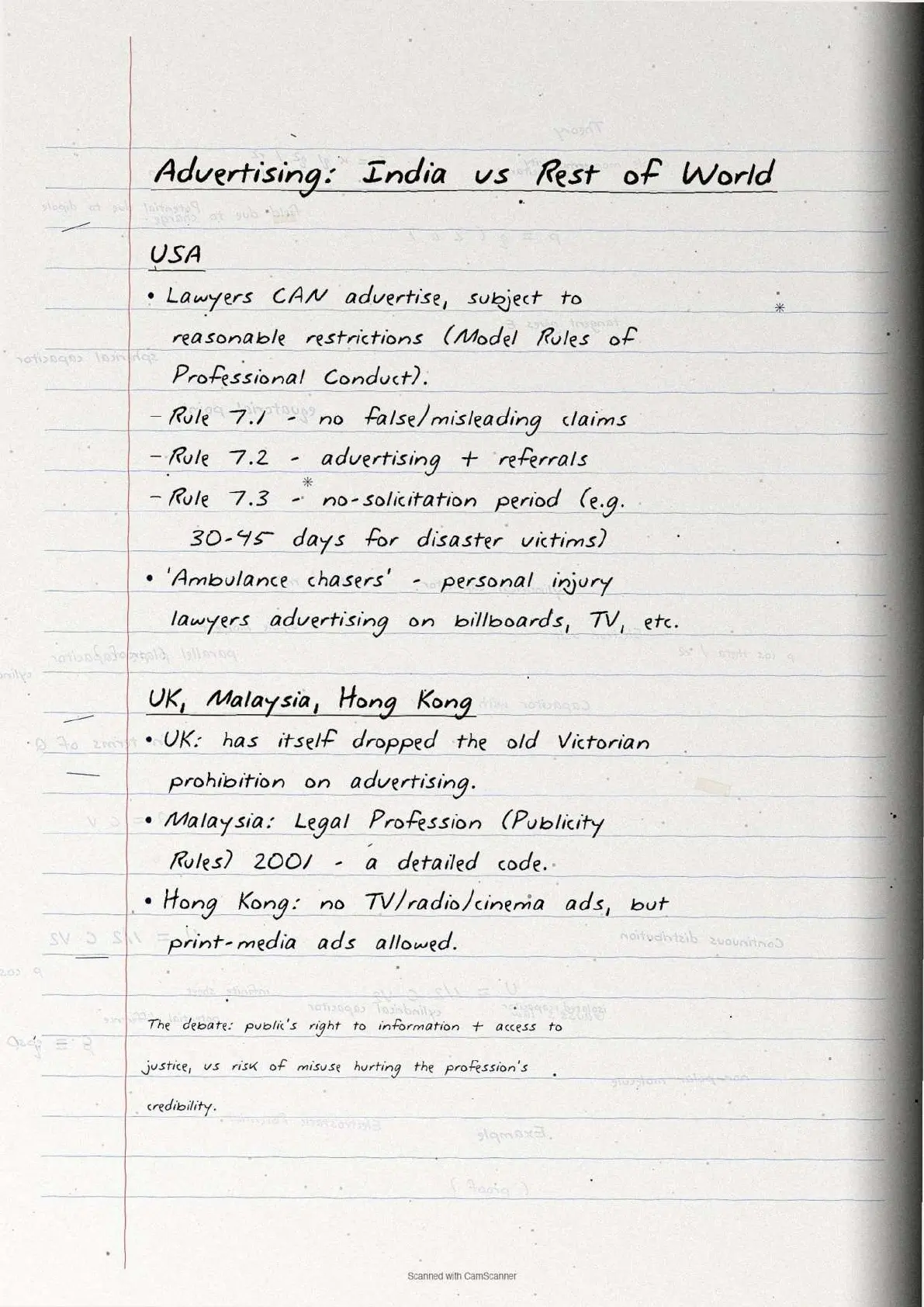
That five-item list is all a website can carry, and only after the Bar Council of India has approved it. The USA allows far more: Rule 7.1 to 7.3 of the Model Rules of Professional Conduct bans false advertising and sets solicitation limits, but permits business cards, internet forums and even mass emails, so long as they are not misleading. Personal injury lawyers who advertise aggressively in the USA are nicknamed "ambulance chasers," a term the chapter uses directly.
| Country | Position on lawyer advertising |
|---|---|
| India | Strictly restricted, only five pieces of website information allowed after Bar Council approval |
| USA | A right to advertise, subject to Model Rules and no-solicitation periods for disaster victims |
| UK | Has done away with its own Victorian-era prohibition on advertising |
| Hong Kong | No television, radio or cinema ads, but print media is allowed |
| Malaysia | A comprehensive publicity code under the Legal Profession (Publicity Rules), 2001 |
Liberalisation and Globalisation of the Legal Profession
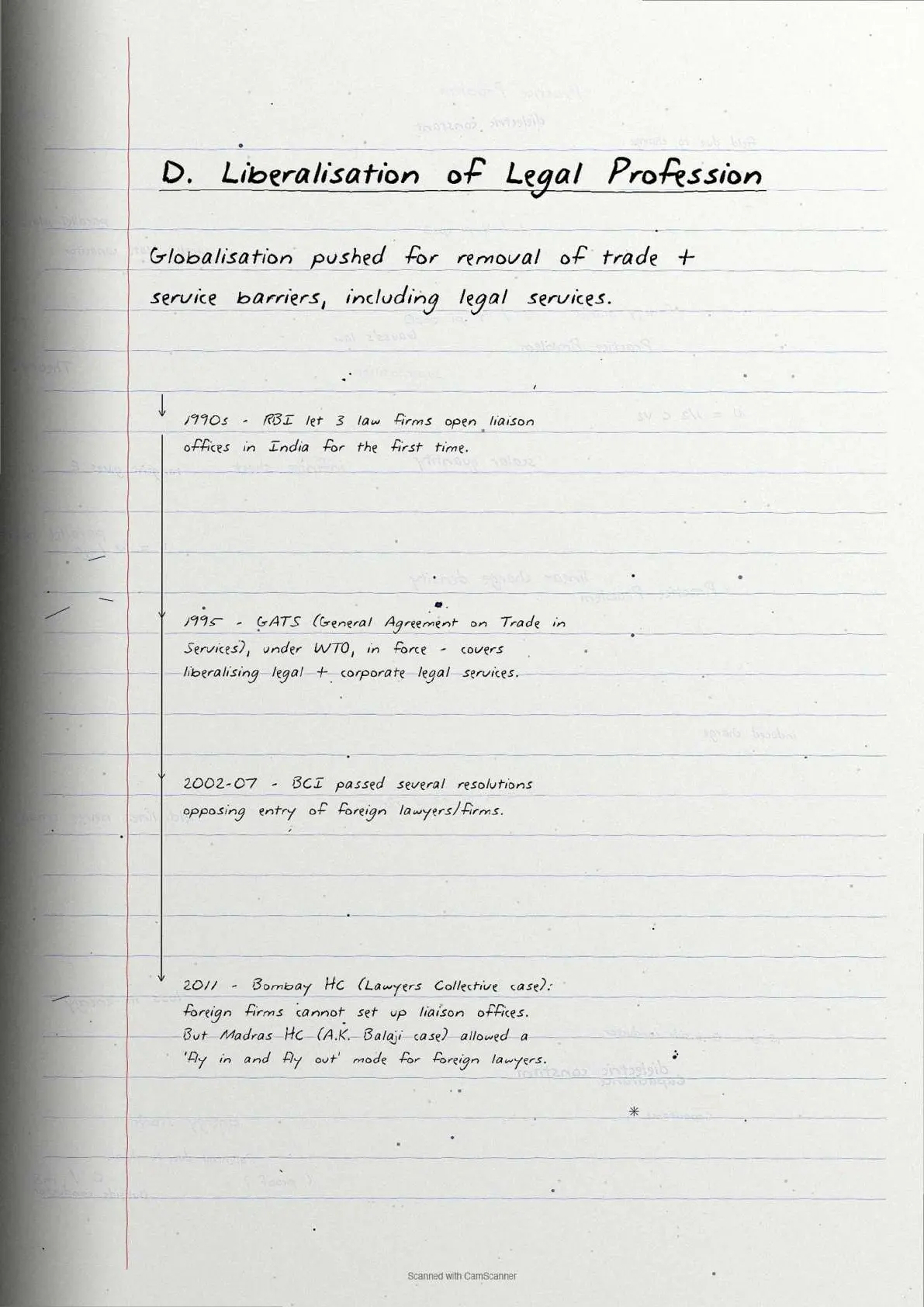
The 1990s opened India's legal sector cautiously. The RBI first let three foreign law firms open liaison offices in India, and in 1995 the General Agreement on Trade in Services under the WTO created a framework for liberalising legal services worldwide.
- 2002 to 2007: the Bar Council of India passed several resolutions opposing entry of foreign lawyers or firms.
- 2011, Bombay High Court: ruled foreign law firms could not set up liaison offices in India.
- Madras High Court, A.K. Balaji case: permitted foreign lawyers to advise Indian clients on a "fly in and fly out" basis.
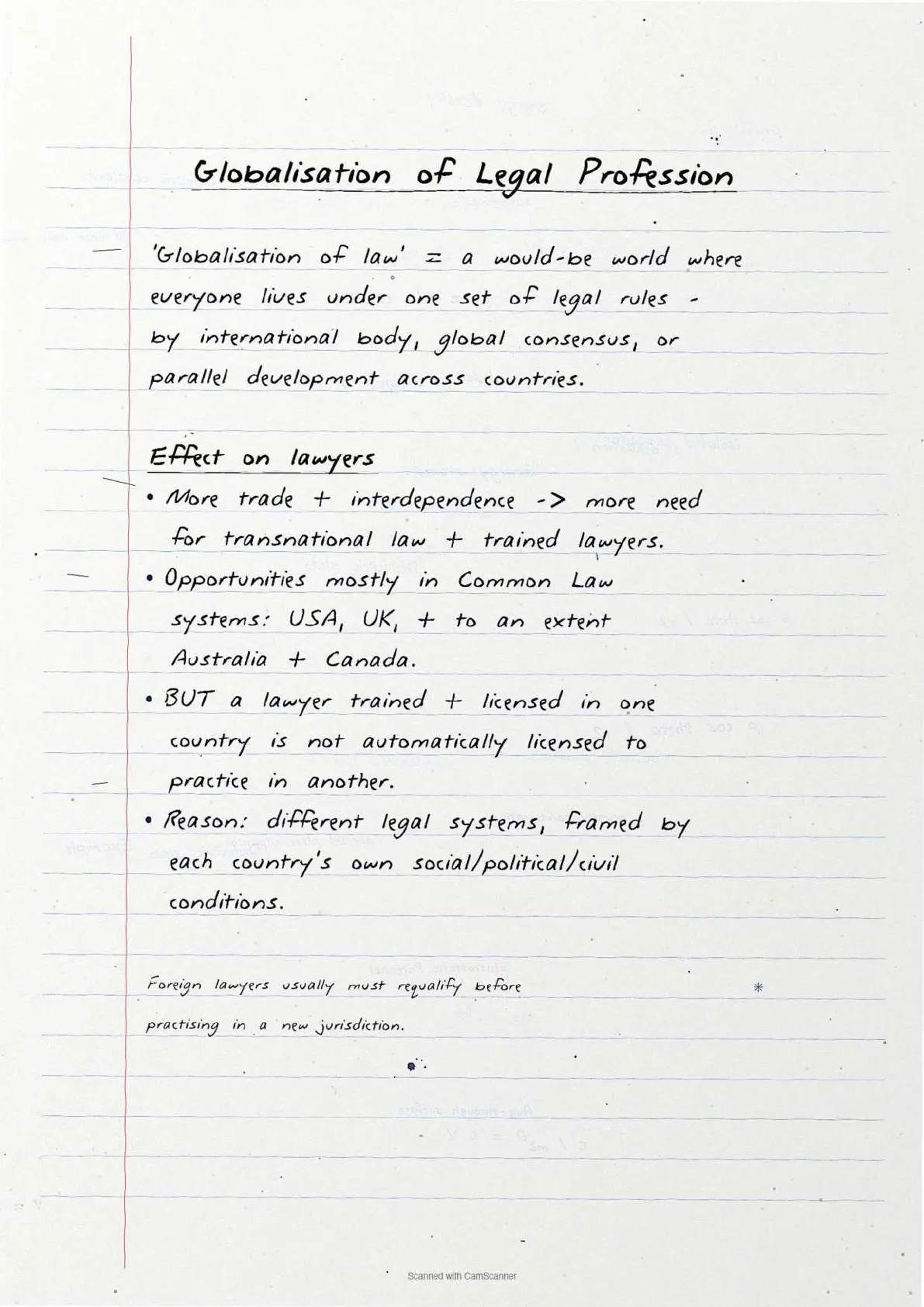
Globalisation raises a separate problem for lawyers that most other professions do not face. A lawyer licensed in one country generally cannot practise in another without requalifying, because every country's laws are shaped by its own social and political conditions. Opportunities from globalisation mostly open up in common law jurisdictions such as the USA, UK, Australia and Canada.
Women and the Legal Profession in India: From Exclusion to Cornelia Sorabji
Women could not practise law in British India for decades after men could. Two High Courts said so directly, and the chapter names both.
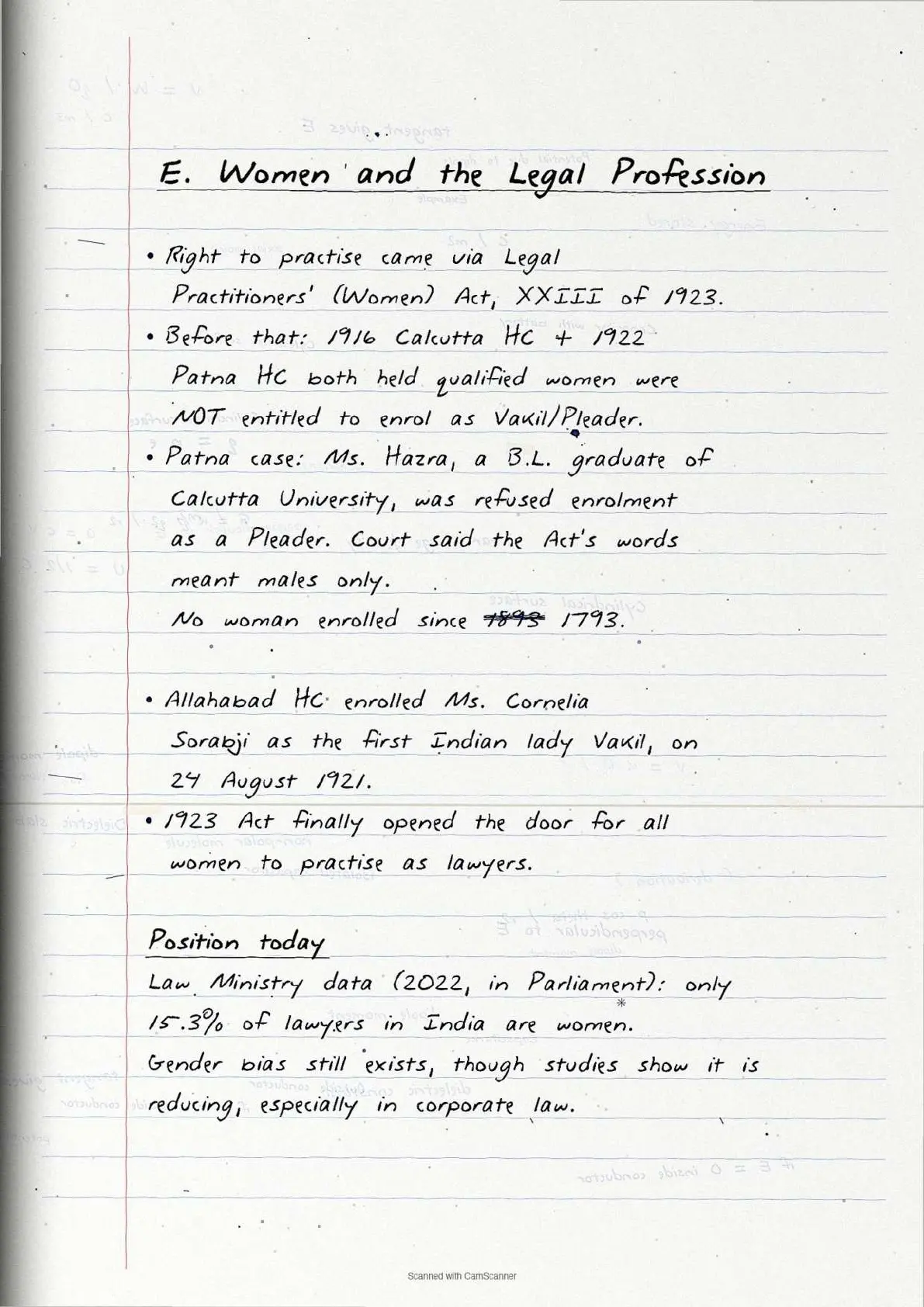
| Year | Event |
|---|---|
| 1916 | Calcutta High Court holds that qualified women are not entitled to enrol as Vakil or Pleader |
| 1921, 24 August | Allahabad High Court enrols Cornelia Sorabji as the first Indian lady Vakil, ahead of the law changing |
| 1922 | Patna High Court refuses Ms Hazra's enrolment as a Pleader despite her BL degree, ruling the Act's language covered only males |
| 1923 | Legal Practitioners' (Women) Act, XXIII of 1923, finally removes the bar on women practising law |
Since 1793, no woman had ever been admitted to the roll of pleaders before Cornelia Sorabji's enrolment. Even after 1923, progress stayed slow. According to data the Law Ministry tabled in Parliament in 2022, only 15.3 percent of lawyers in India are women, though the chapter notes the gap is narrowing faster in the corporate law sector.
Legal Education in India: NLSIU, CLAT and the Two Degree Routes
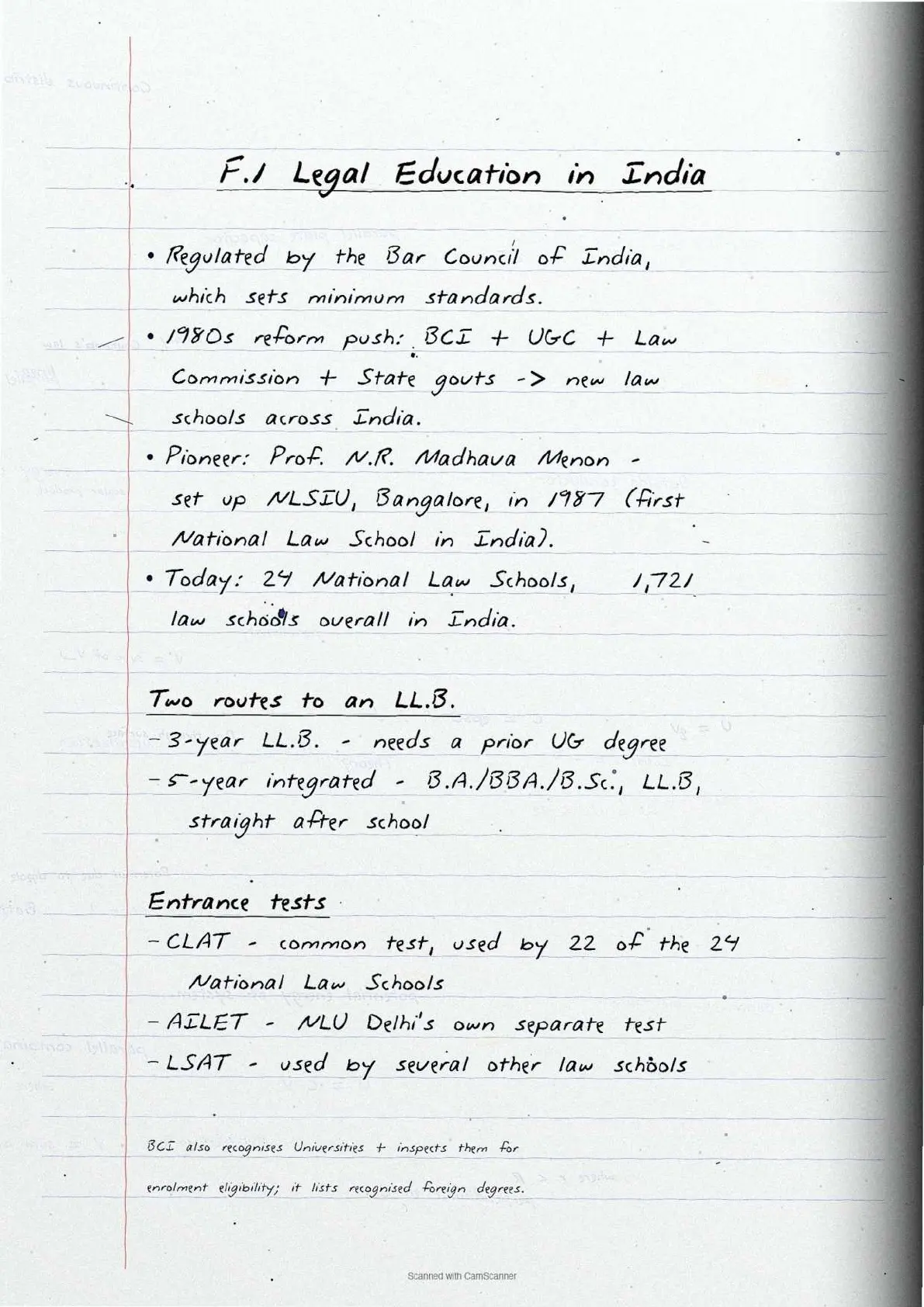
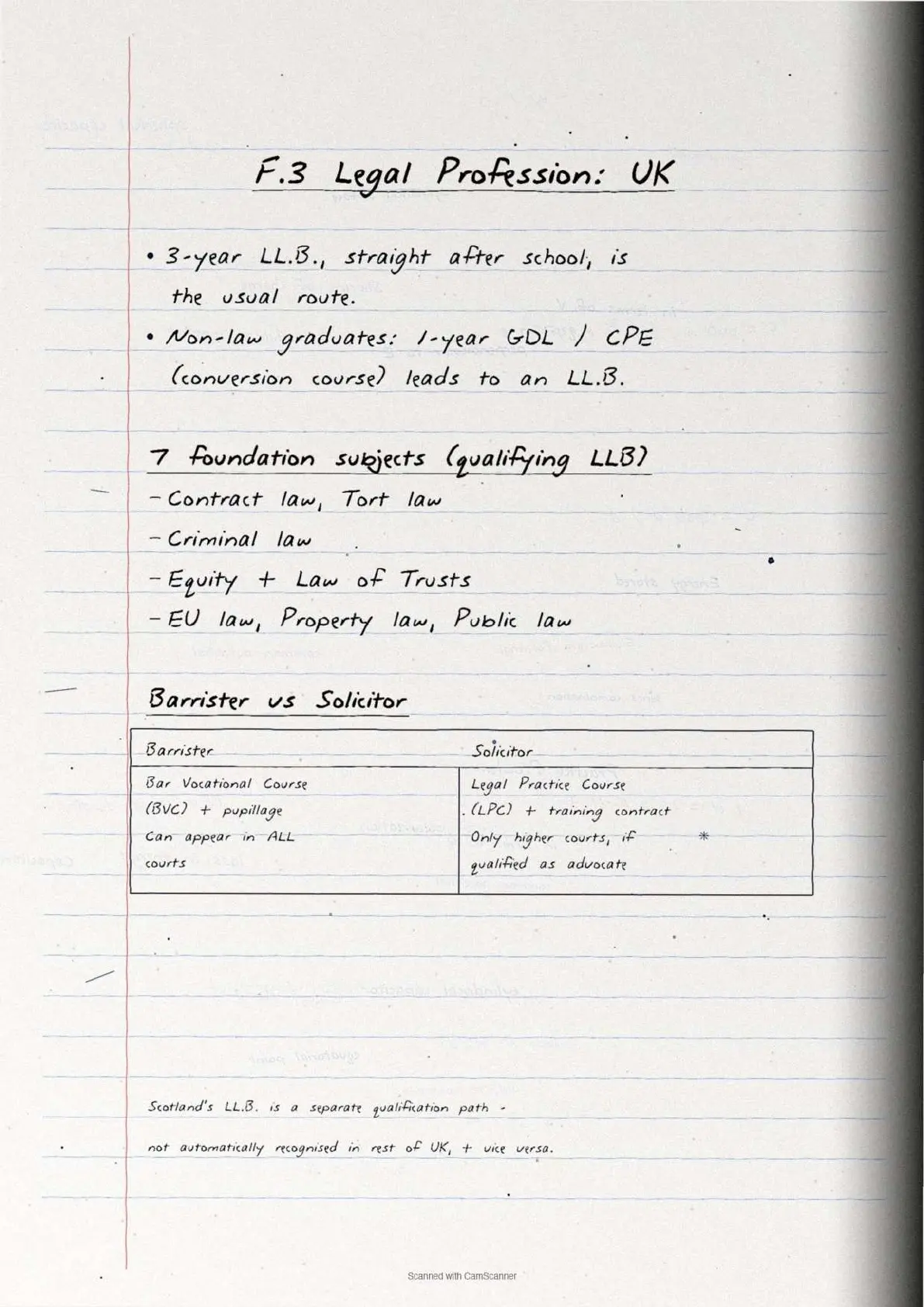
Legal education in India runs entirely through the Bar Council of India, which sets minimum standards and recognises which university degrees count for enrolment. Two paths lead to the same LLB qualification.
- 3-year LLB: requires a prior undergraduate degree in any subject.
- 5-year integrated LLB: a combined BA LLB, BBA LLB or BSc LLB, starting right after school.
The reform movement behind this system has one name attached to it. Professor N.R. Madhava Menon set up India's first National Law School, the National Law School of India University in Bangalore, in 1987. There are now 24 National Law Schools in India, out of roughly 1,721 law schools overall, and 22 of the National Law Schools share a common entrance test, CLAT. Delhi's National Law University runs its own test, AILET, and some schools use the LSAT instead.
Legal Education in the USA and UK Compared with India
The three systems the chapter compares look similar on the surface, but the entry route and the exam differ sharply. A five-mark comparison question expects all three columns, not just India and one other country.
| Point | India | USA | UK |
|---|---|---|---|
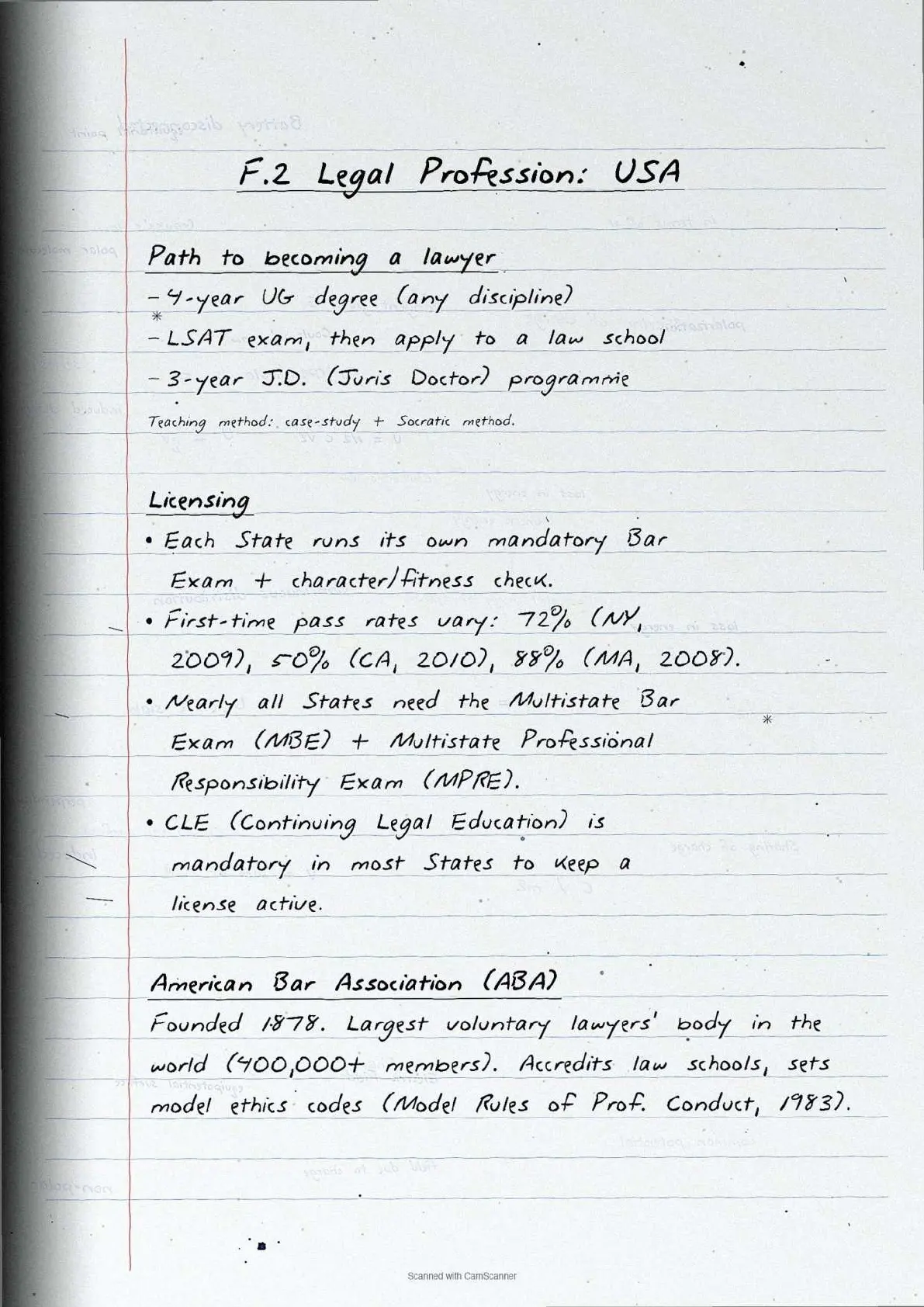
| Entry route | 3-year LLB after a degree, or 5-year integrated LLB after school | 4-year undergraduate degree, then the LSAT, then a 3-year JD | 3-year LLB directly after school, or a 1-year GDL conversion course |
| Licensing exam | All India Bar Examination since 2010 | A separate state Bar Exam in each state, plus the MBE and MPRE | Legal Practice Course for solicitors, Bar Vocational Course for barristers |
| Regulator | Bar Council of India and State Bar Councils | State bar or the state's highest court, unified or non-unified | Solicitors Regulation Authority, and separate rules for barristers |
| Teaching method | Case-based, with clinical and moot court components | The case study method and the Socratic Method | Foundation subjects, including the Law of Contract, Tort and Trusts |
The USA also runs the American Bar Association, founded in 1878, a voluntary body with over 400,000 members that accredits law schools and maintains the Model Rules of Professional Conduct. The UK splits its profession into two roles the chapter compares directly.
| Point | Barrister | Solicitor |
|---|---|---|
| Court access | Can appear in all courts | Only higher courts, and only after qualifying as a solicitor advocate |
| Training route | Bar Vocational Course, then a pupillage | Legal Practice Course, then a training contract |
| Can hold both roles | No, not simultaneously | No, not simultaneously |
Career Opportunities for Law Graduates: Litigation to JAG
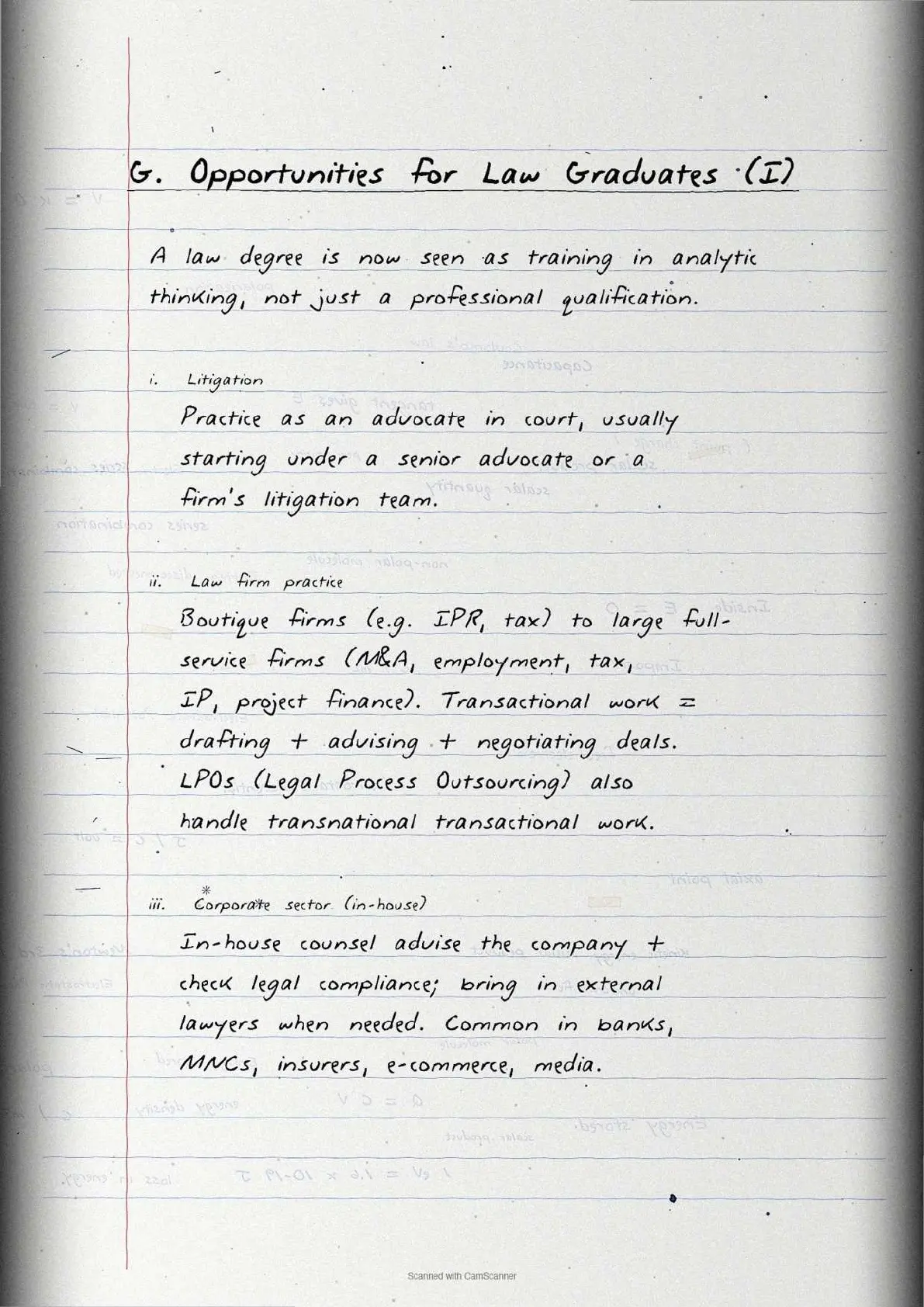
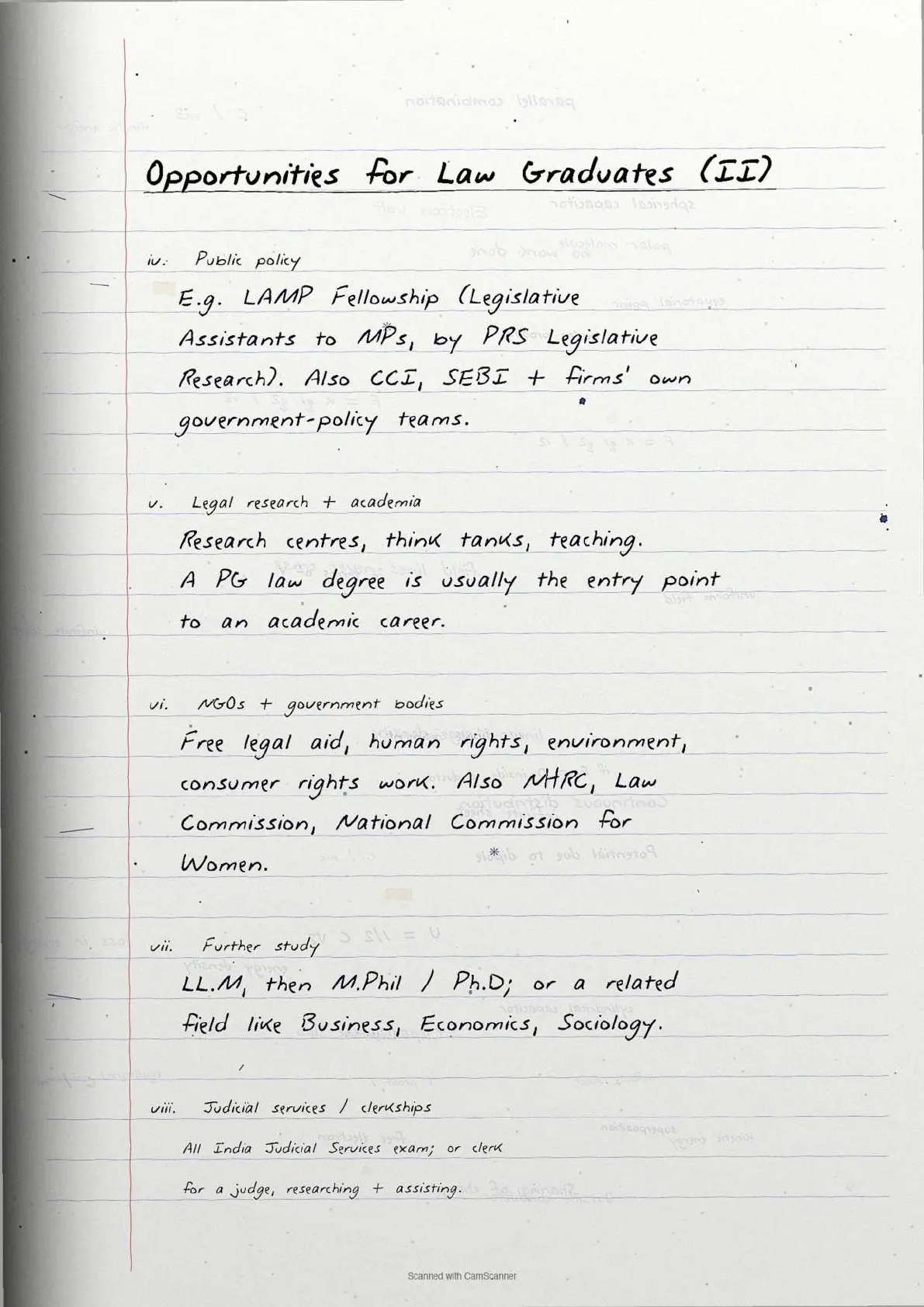
Exercise question 1 asks students to write short notes on eligibility and career options, and the chapter names nine distinct paths a law graduate can follow after their degree.
| Opportunity | What it involves |
|---|---|
| Litigation | Practising as an advocate in court, usually starting under an experienced senior |
| Law firm practice | Boutique, mid-size or full-service firms, drafting contracts and advising on transactions |
| Corporate sector | In-house counsel advising a company on compliance and legal risk |
| Public policy | Roles such as the LAMP Fellowship, or work at bodies like SEBI and the Competition Commission |
| Legal research and academia | Teaching and research, usually requiring a postgraduate law degree |
| NGOs and government bodies | Legal aid work, or roles at the National Human Rights Commission and Law Commission |
| Further study | An LLM followed by an MPhil or PhD, in India or abroad |
| Judicial services | Law clerkships, or the All India Judicial Services Examination into subordinate courts |
| JAG Officer | The Judge Advocate General's Department, the Indian Army's legal branch |
The JAG Department deserves its own note. It handles military disciplinary cases and litigation, advises the Chief of Army Staff on legal matters, and has grown into newer areas such as cyber law, space law and terrorism. Service in this department counts as judicial service under Army regulations.
Common Mistakes Students Make in Legal Profession in India
Five traps that cost easy marks in this chapter:
- Treating Advocate-on-Record as a category under the Advocates Act. The Act only names Senior Advocates and advocates. AOR is a Supreme Court rule.
- Sending enrolment applications to the wrong body. Applications go to the State Bar Council, never directly to the Bar Council of India.
- Mixing up 1846 and 1923. The 1846 Act opened the profession generally, the 1923 Act specifically ended the bar on women.
- Assuming India's advertising rules match the USA's. India permits only five website details after Bar Council approval, the USA allows far more.
- Confusing barrister and solicitor training. Barristers take the Bar Vocational Course and a pupillage, solicitors take the Legal Practice Course and a training contract.
Write each of these five out from memory once before an exam. Students who did this reported the Senior Advocate versus AOR question stopped costing them marks within one revision round.
Quick Recall Sheet for Legal Profession in India
| Term | One-line meaning |
|---|---|
| Advocate | The single class of legal practitioner created by the Advocates Act, 1961 |
| Senior Advocate | Designated by a court for ability or standing, cannot file a vakalatnama |
| Advocate-on-Record | Only advocate who can file documents in the Supreme Court |
| All India Bar Examination | Compulsory since 2010 before an advocate can start practice |
| State Bar Council | Enrols and disciplines advocates within one state |
| Bar Council of India | Regulates legal practice and legal education across the country |
| Chamier Committee | 1923 committee that recommended High Court-level Bar Councils |
| Cornelia Sorabji | First Indian lady Vakil, enrolled by Allahabad High Court in 1921 |
| NLSIU | India's first National Law School, set up in Bangalore in 1987 |
| CLAT | Common entrance test shared by most National Law Schools |
| JAG Department | The Indian Army's legal branch, open to law graduates |
The notebook also carries a short mnemonic for the chapter's running order: H-A-E-A-W-E-O, standing for History, Advocates Act, Ethics, Advertising, Women, Education, Opportunities.
What the Legal Profession in India Handwritten Notes PDF Contains
The file is written by hand, with every comparison table placed exactly where the chapter needs it, so it reads the way a well-organised classmate's notes read.
- Pages 1 to 6: the colonial history, the 1846 and 1923 Acts, and the Advocates Act 1961 with the eligibility rules.
- Pages 7 to 12: Senior Advocate against Advocate-on-Record, State Bar Councils and their functions.
- Pages 13 to 17: the Bar Council of India, its history from the Chamier Committee to 1961, and its full function list.
- Pages 18 to 22: professional ethics, advertising rules in India, the USA and the UK, and liberalisation of the profession.
- Pages 23 to 28: women in the profession, legal education in India, the USA and the UK, and every career opportunity with the JAG Department.
Textbook Exercise Questions and How These Notes Answer Them
The chapter closes with six exercises, and the table below shows where the answer material sits in these notes.
| Exercise question | Where the answer is built |
|---|---|
| Short notes on women, ethics, eligibility and legal education | The four dedicated sections covering each topic in turn |
| Changes the Advocates' Act brought about | The single-class-of-advocate section and the eligibility list |
| Main points of difference between Senior Advocate and Advocate-on-Record | The five-row comparison table |
| Comparing advertising rules across countries | The India, USA, UK, Hong Kong and Malaysia advertising table |
| Organisation, roles and history of the Bar Council of India | The Chamier Committee timeline and the function list |
| Entry of foreign lawyers in the USA and UK | The Foreign Lawyers subsections under legal education in both countries |
How to Use These Handwritten Notes Most Effectively
This chapter carries a lot of names, years and committees packed close together, so spreading revision across short blocks works better than one long sitting. Students who split it this way reported finishing it in about three hours total.
- Block 1, 40 minutes. History, the Advocates Act 1961, and Senior Advocate against Advocate-on-Record.
- Block 2, 35 minutes. State Bar Councils and the Bar Council of India, including the Chamier Committee timeline.
- Block 3, 35 minutes. Professional ethics, advertising rules and liberalisation of the profession.
- Block 4, 30 minutes. Women in the profession, legal education across three countries, and career opportunities.
- Night before, 15 minutes. Quick recall sheet and the five common mistakes, nothing else.
How These Handwritten Notes Pair with Other Legal Studies Resources
Also Check: the courts that advocates argue before are covered in detail in the Class 11 Political Science Judiciary chapter, which explains the Supreme Court and High Court structure this chapter's Bar Council and AOR rules sit on top of.
| Resource | Best used for | Open it |
|---|---|---|
| Class 11 Political Science Handwritten Notes | The Supreme Court and High Court structure that advocates and AORs practise in front of | Judiciary Class 11 Handwritten Notes |
| Class 12 Legal Studies Notes | Typed revision notes with the Bar Council structure explained in full | Legal Profession in India Class 12 Notes (coming soon) |
| Class 12 Legal Studies Book PDF | The official chapter text with the exercise questions | Legal Profession in India Class 12 Book PDF (coming soon) |
| Class 12 Legal Studies Chapter 1 Handwritten Notes | The Judiciary chapter within this same Legal Studies syllabus | Judiciary Class 12 Handwritten Notes (coming soon) |
| Class 12 Legal Studies Chapter 6 Handwritten Notes | Legal Services, the chapter that follows this one | Legal Services Class 12 Handwritten Notes (coming soon) |
NCERT Handwritten Notes for Class 12 Legal Studies: All Chapters
Related Links: handwritten revision notes for the Class 12 Legal Studies textbook, written to the 2026-27 syllabus.
| Chapter | Class 12 Legal Studies Handwritten Notes |
|---|---|
| Chapter 1 | Judiciary Class 12 Handwritten Notes (coming soon) |
| Chapter 2 | Topics in Law Class 12 Handwritten Notes (coming soon) |
| Chapter 4 | Human Rights in India Class 12 Handwritten Notes (coming soon) |
| Chapter 5 | Legal Profession in India Class 12 Handwritten Notes (this page) |
Legal Profession in India Class 12 Handwritten Notes FAQs
Questions Students Ask Before Downloading These Notes
Ques. What is the difference between a Senior Advocate and an Advocate-on-Record?
Ans. A Senior Advocate is designated by the Supreme Court or a High Court for ability, standing or special knowledge, and cannot file a vakalatnama or draft pleadings. An Advocate-on-Record is created by a separate Supreme Court rule, requires four years of practice plus one year of training and an examination, and is the only advocate who can file documents before the Supreme Court on a client's behalf.
Ques. What changes did the Advocates Act, 1961 bring about in India?
Ans. It abolished all the old categories of legal practitioners, vakils, barristers, pleaders and mukhtars, and merged them into a single class called advocates. It also created the Bar Council of India and a State Bar Council for every state, and set out eligibility rules including citizenship, a minimum age of 21, and an LLB degree.
Ques. How is the Bar Council of India organised and what are its functions?
Ans. The Attorney-General and Solicitor General of India are its ex-officio members, along with one elected member from each State Bar Council. It sets standards for professional conduct and legal education, recognises universities for enrolment purposes, organises legal aid, and traces its history to the Chamier Committee of 1923 and the Indian Bar Councils Act of 1926.
Ques. What are the functions of a State Bar Council?
Ans. A State Bar Council admits and enrols advocates, maintains the roll of advocates in that state, hears cases of professional misconduct, safeguards the rights of its advocates, and manages funds for legal aid and law libraries. Every application for enrolment is made to the State Bar Council, not to the Bar Council of India directly.
Ques. How do advertising rules for lawyers differ between India and the USA?
Ans. India strictly restricts advertising, allowing an advocate to publish only five pieces of information on a website, name, contact details, Bar enrolment, qualifications and areas of practice, after Bar Council of India approval. The USA allows lawyers a right to advertise under the Model Rules of Professional Conduct, permitting business cards, internet forums and mass emails as long as they are not misleading.
Ques. Who was Cornelia Sorabji and why is she important to this chapter?
Ans. Cornelia Sorabji was enrolled by the Allahabad High Court on 24 August 1921 as the first Indian lady Vakil, ahead of any change in the law. The Legal Practitioners' (Women) Act, XXIII of 1923, later removed the general bar on women practising law across India.
Ques. What are the eligibility requirements to practise as an advocate in India?
Ans. An applicant must be a citizen of India, at least 21 years old, and hold an LLB degree from a university recognised by the Bar Council of India. Since 2010, clearing the All India Bar Examination is also compulsory before an enrolled advocate can begin practice.
Ques. How is legal education in India different from the USA and UK?
Ans. India offers a 3-year LLB after a degree or a 5-year integrated LLB after school, regulated by the Bar Council of India. The USA requires a 4-year undergraduate degree, the LSAT, and a 3-year JD, with a separate Bar Exam for each state. The UK offers a 3-year LLB or a 1-year GDL conversion course, followed by different routes for solicitors and barristers.
Ques. What career opportunities are open to law graduates in India?
Ans. Options include litigation, law firm practice, in-house corporate counsel, public policy roles, legal research and academia, work with NGOs and government bodies, further study through an LLM, judicial services through the All India Judicial Services Examination, and the Judge Advocate General's Department, the legal branch of the Indian Army.
Ques. Where can I download the Class 12 Legal Studies Chapter 5 handwritten notes PDF?
Ans. Use the download button at the top of this page. The file is free and printable, runs to 28 handwritten pages, and follows the 2026-27 chapter order, so it can sit beside the textbook while you revise.



Comments