



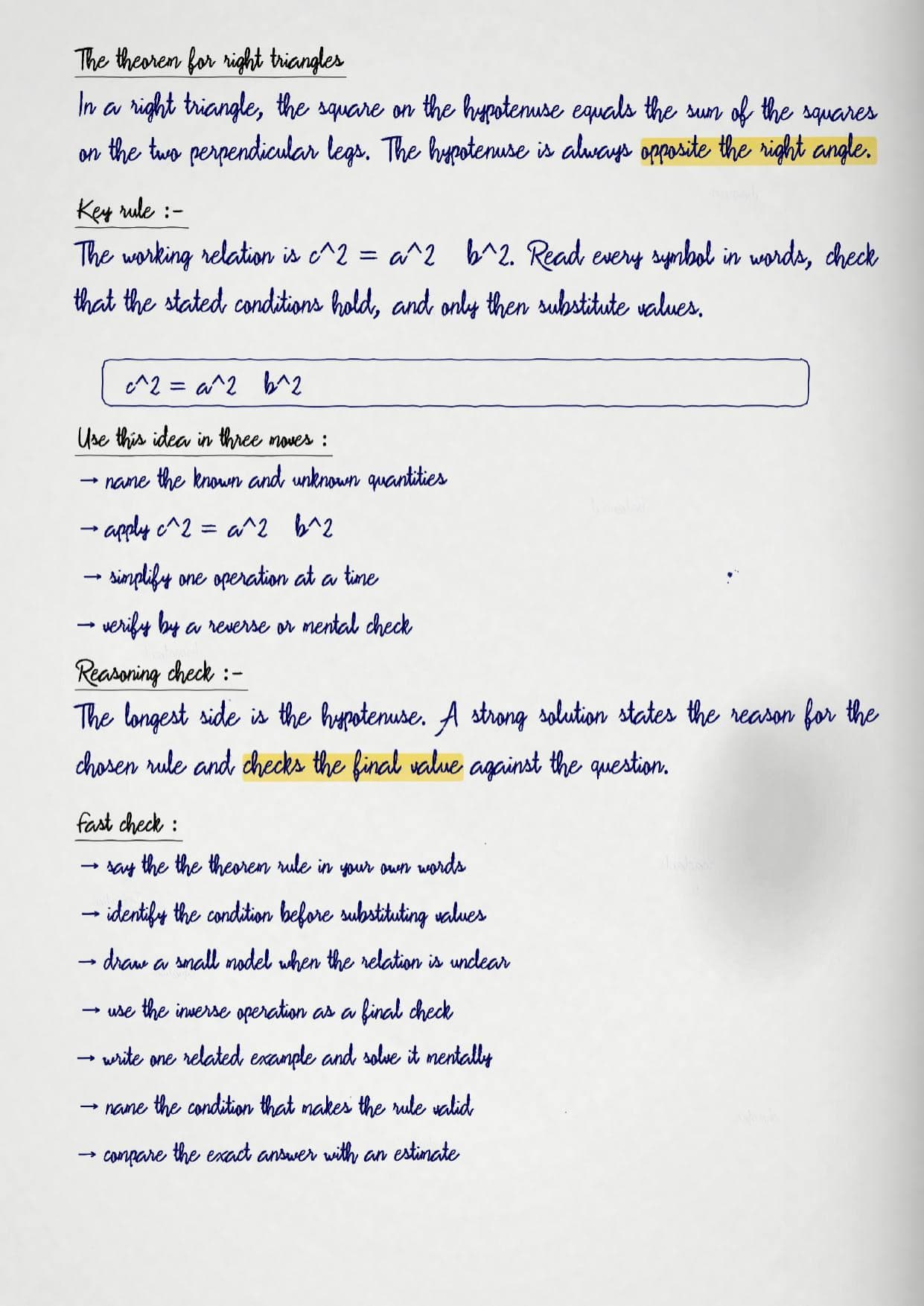
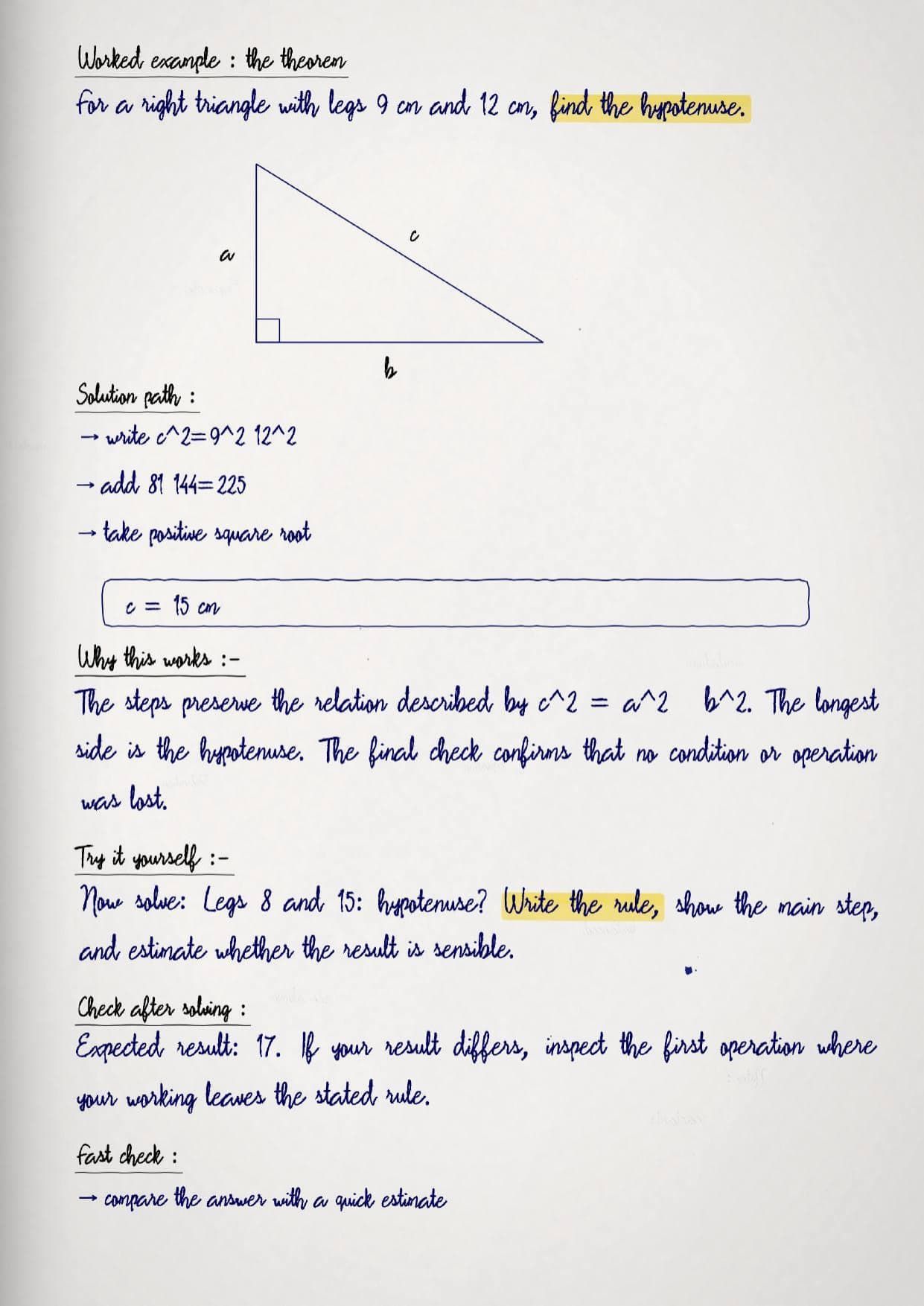
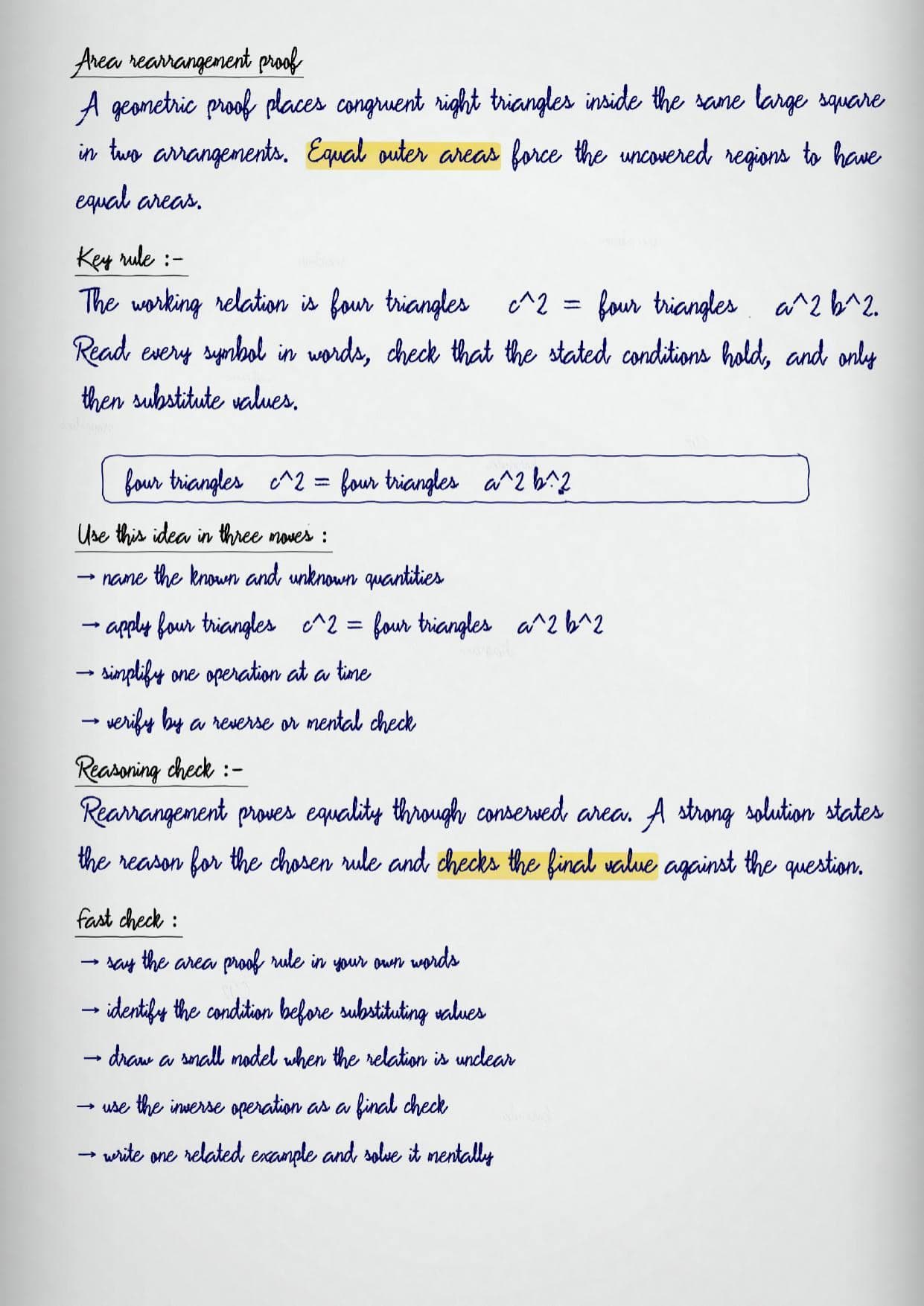
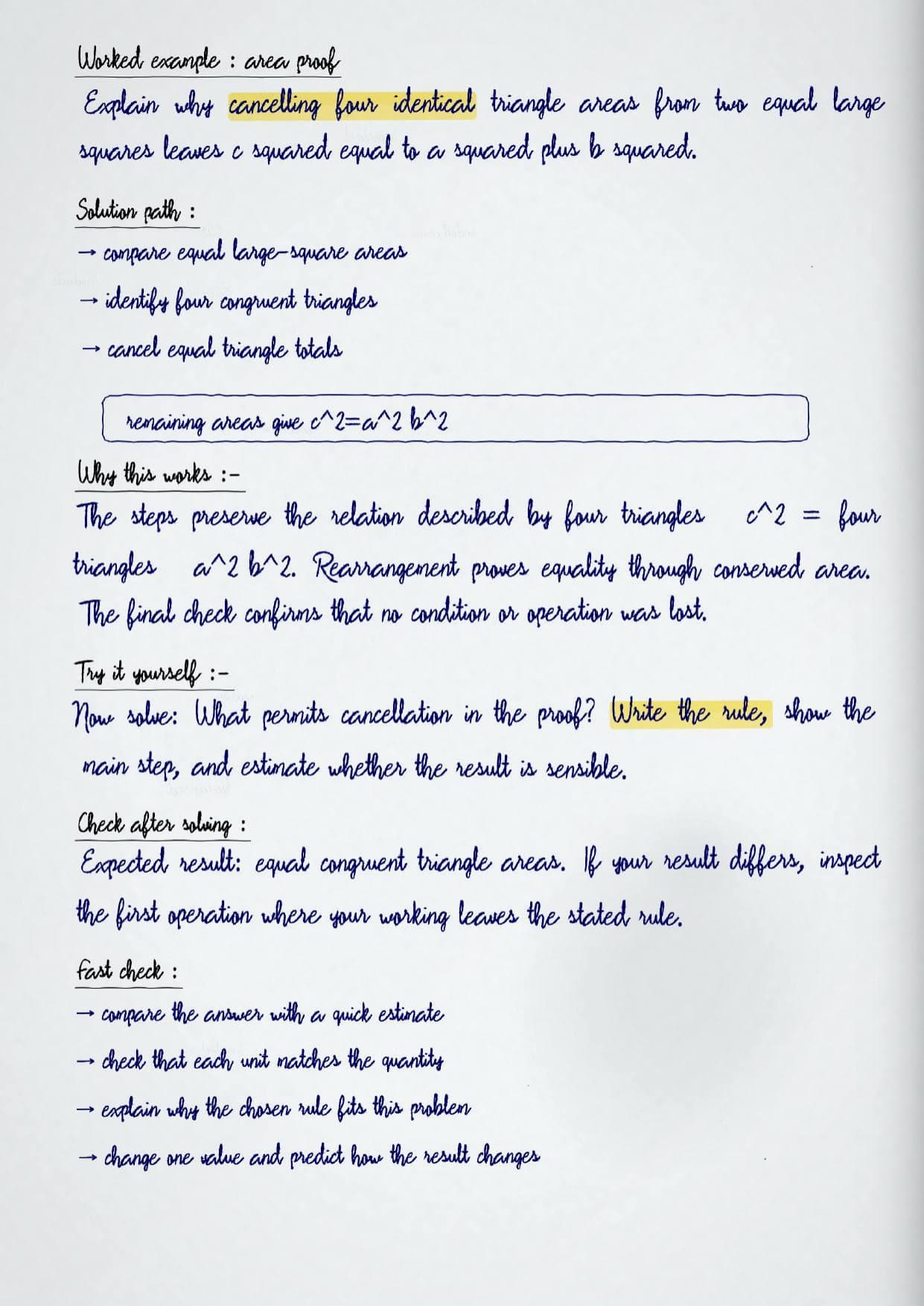
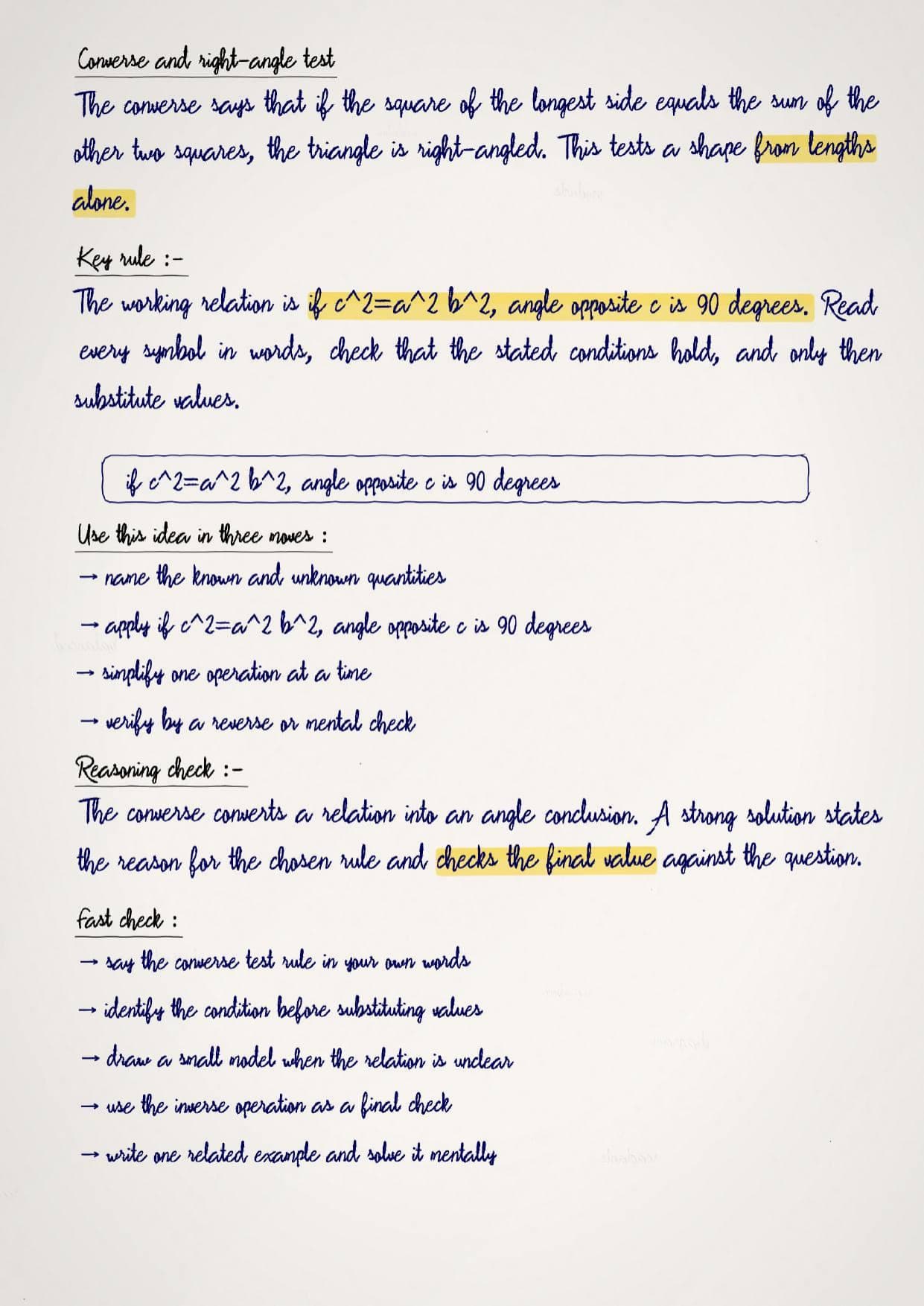
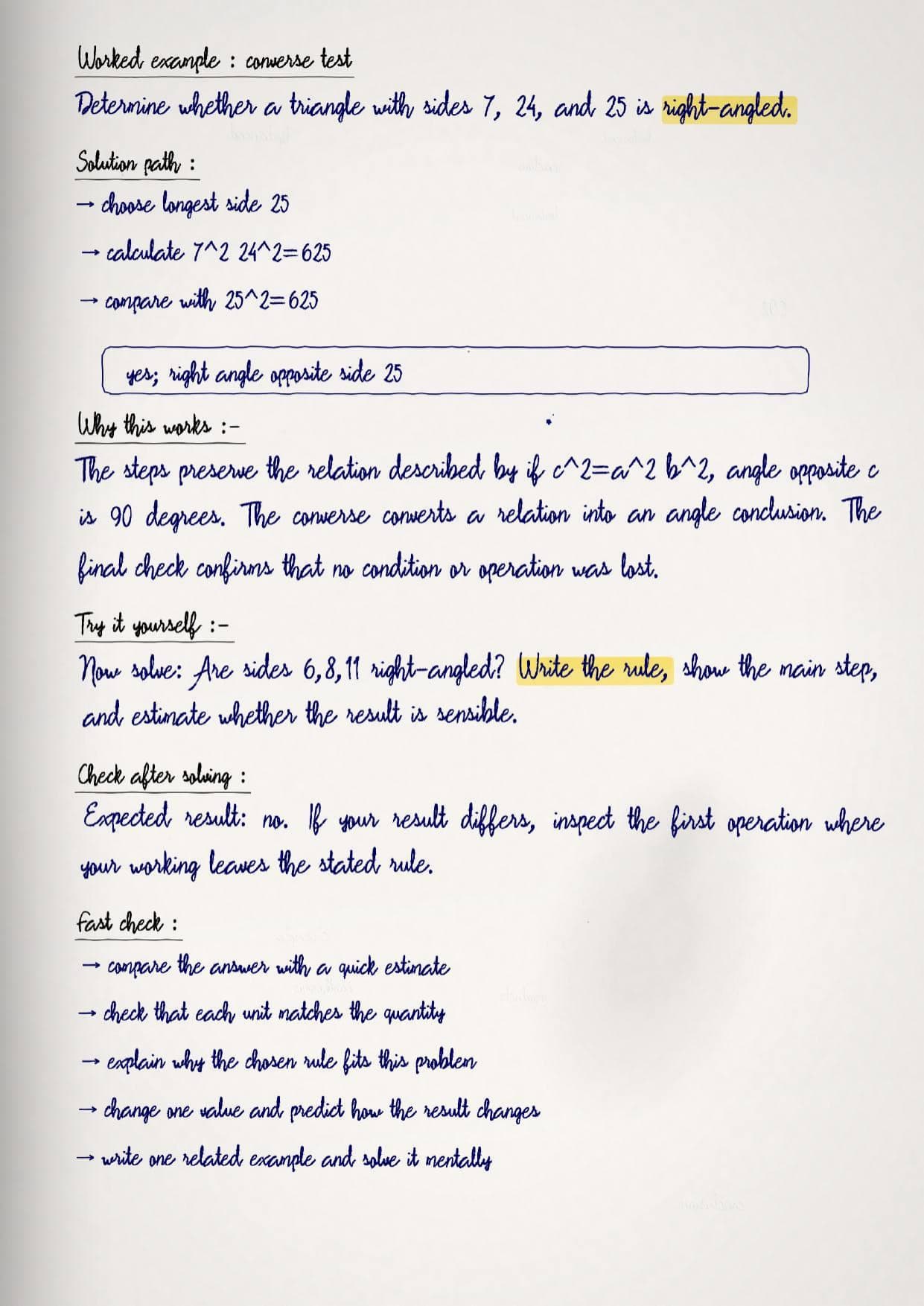
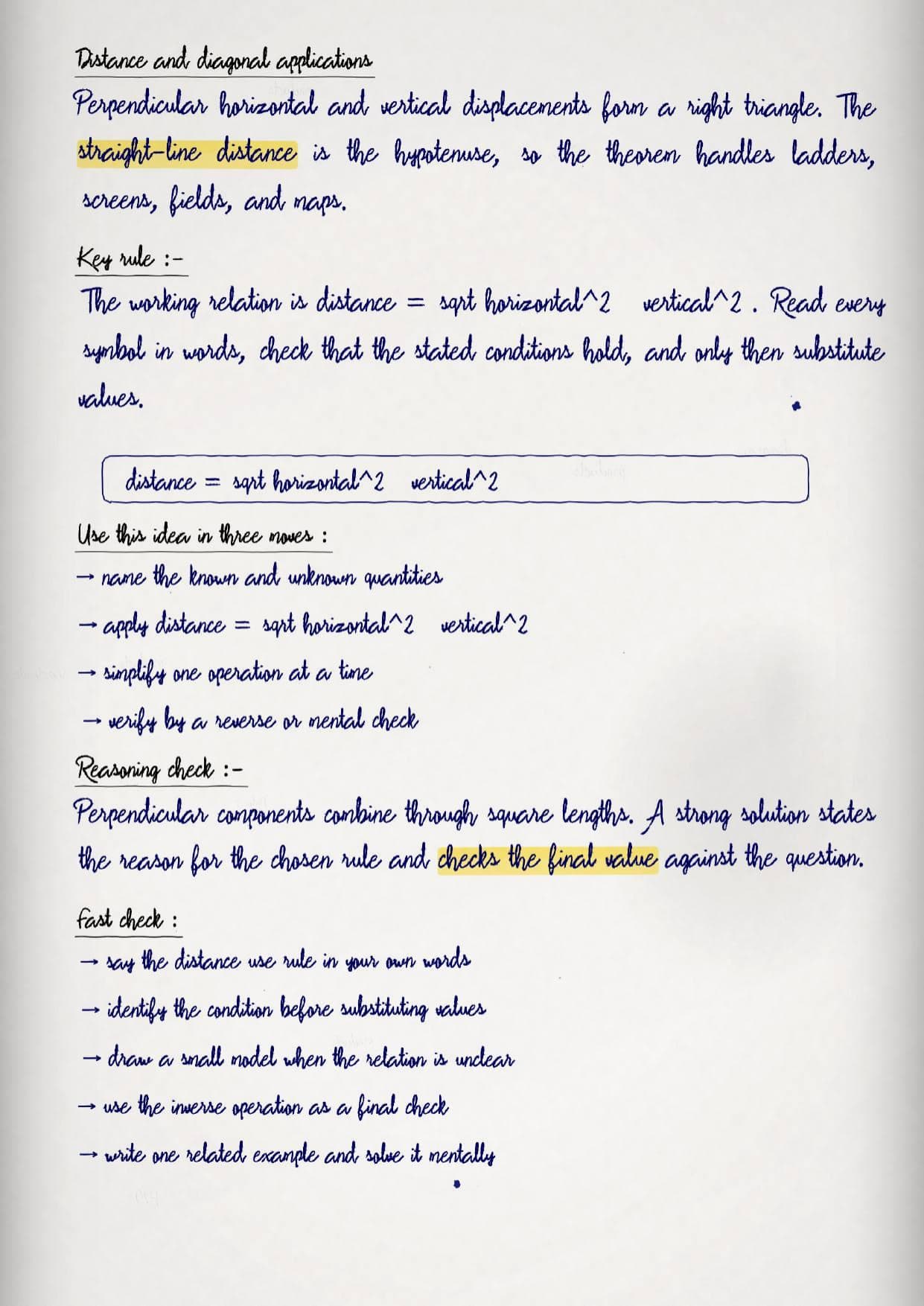
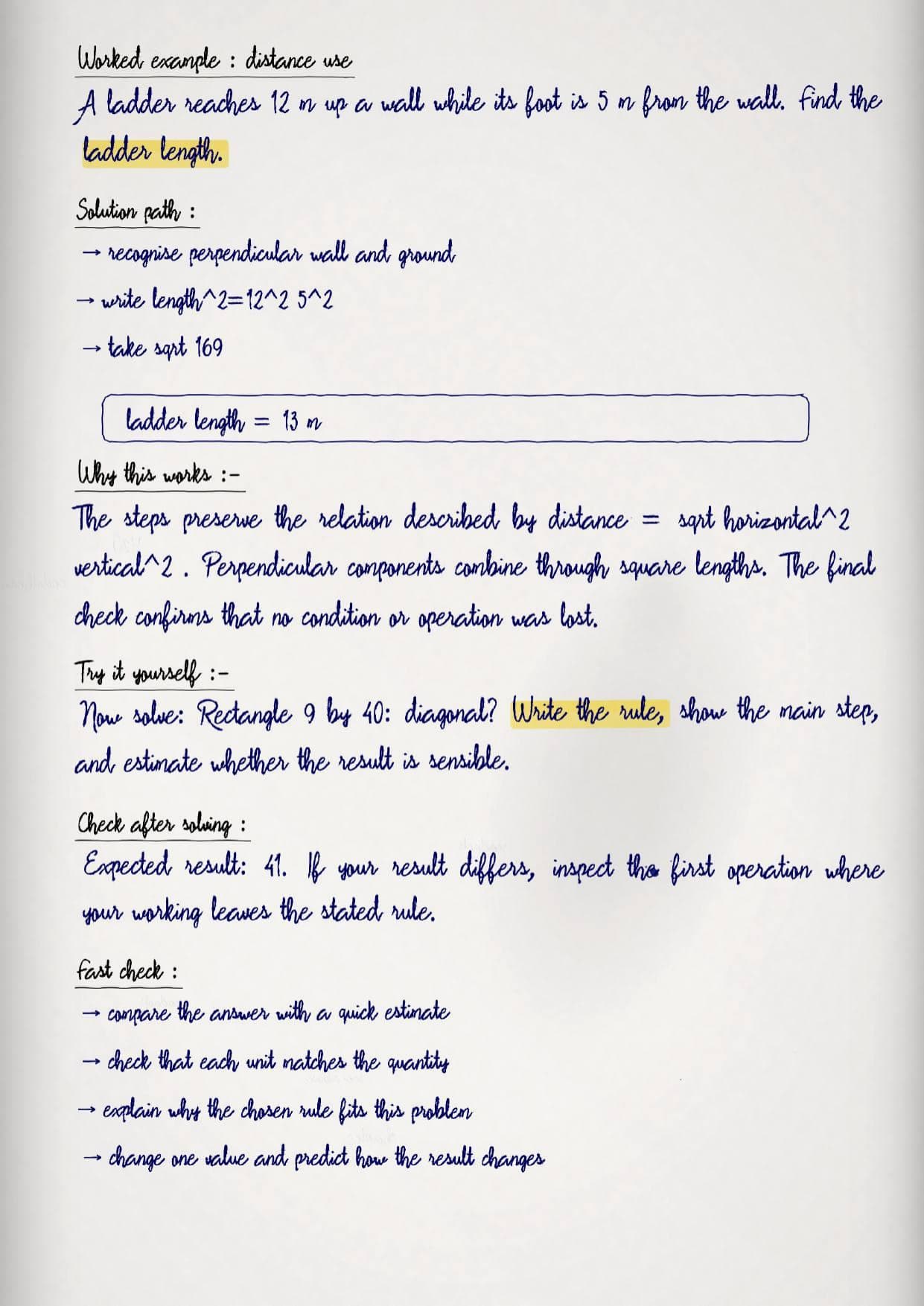
In any right-angled triangle with legs a and b and hypotenuse c, the areas of the squares on the two legs add up to the square on the hypotenuse, so a squared plus b squared equals c squared. Class 8 Mathematics Chapter 2 The Baudhayana-Pythagoras Theorem builds this idea step by step. These class 8 maths handwritten notes.
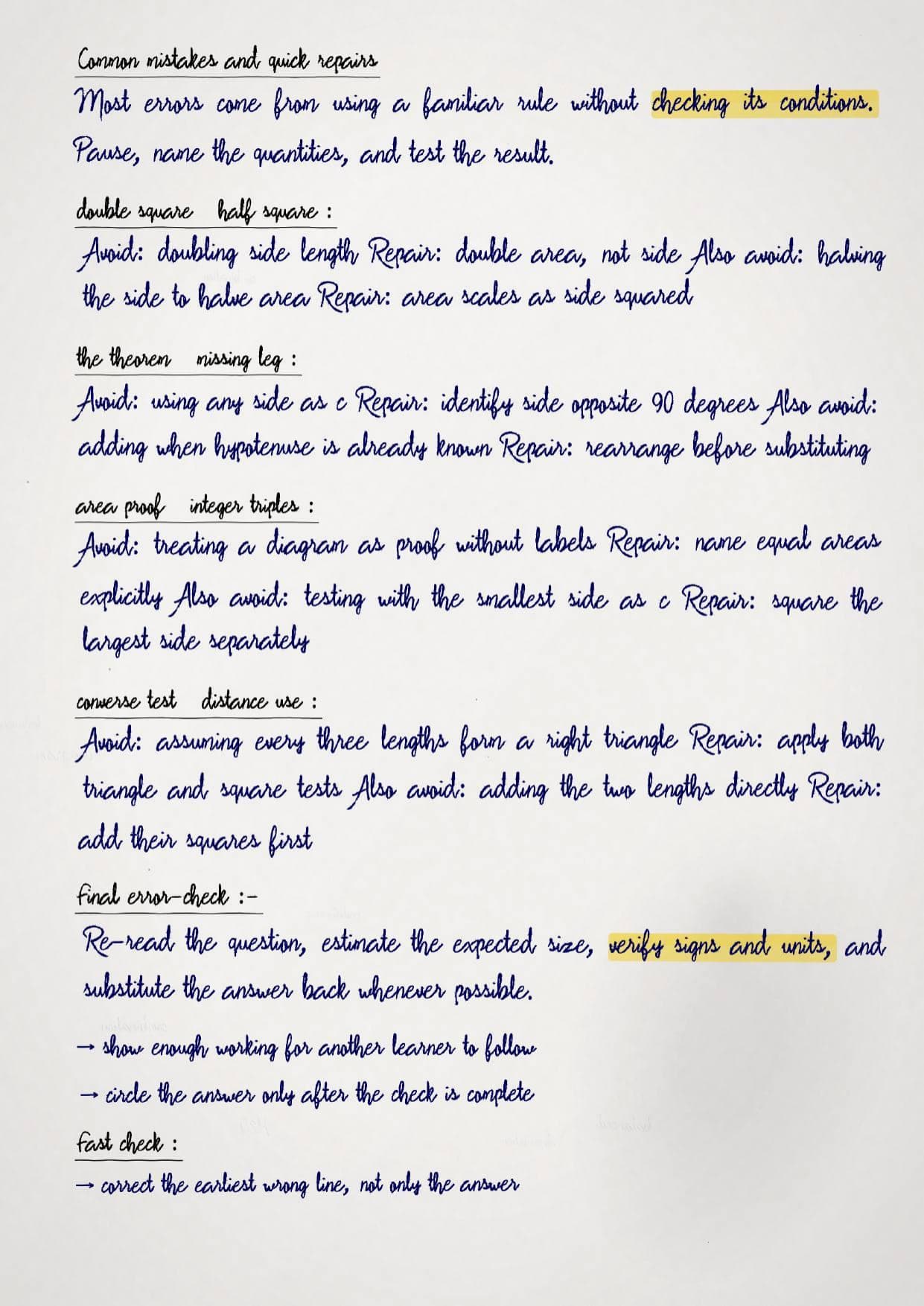
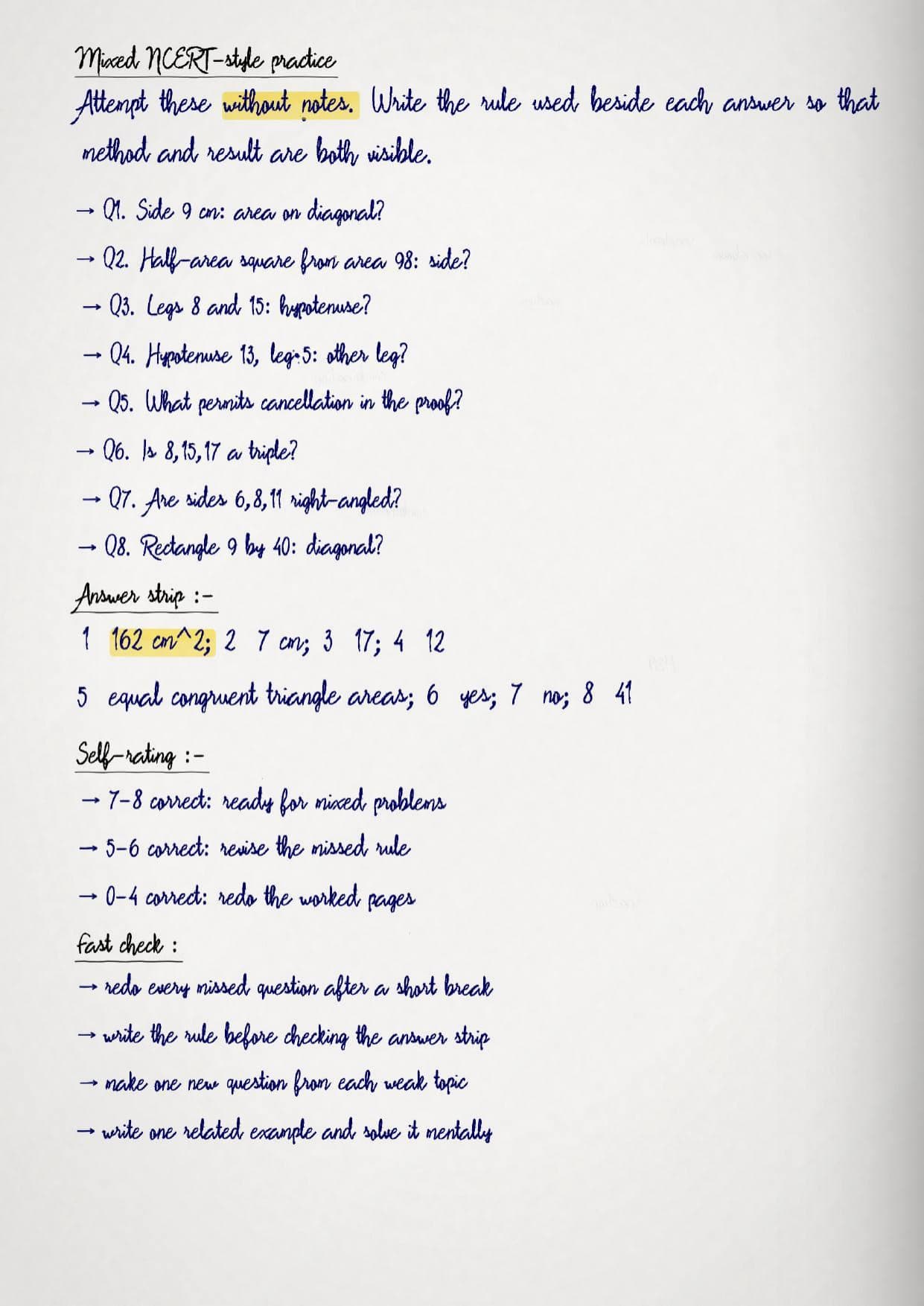
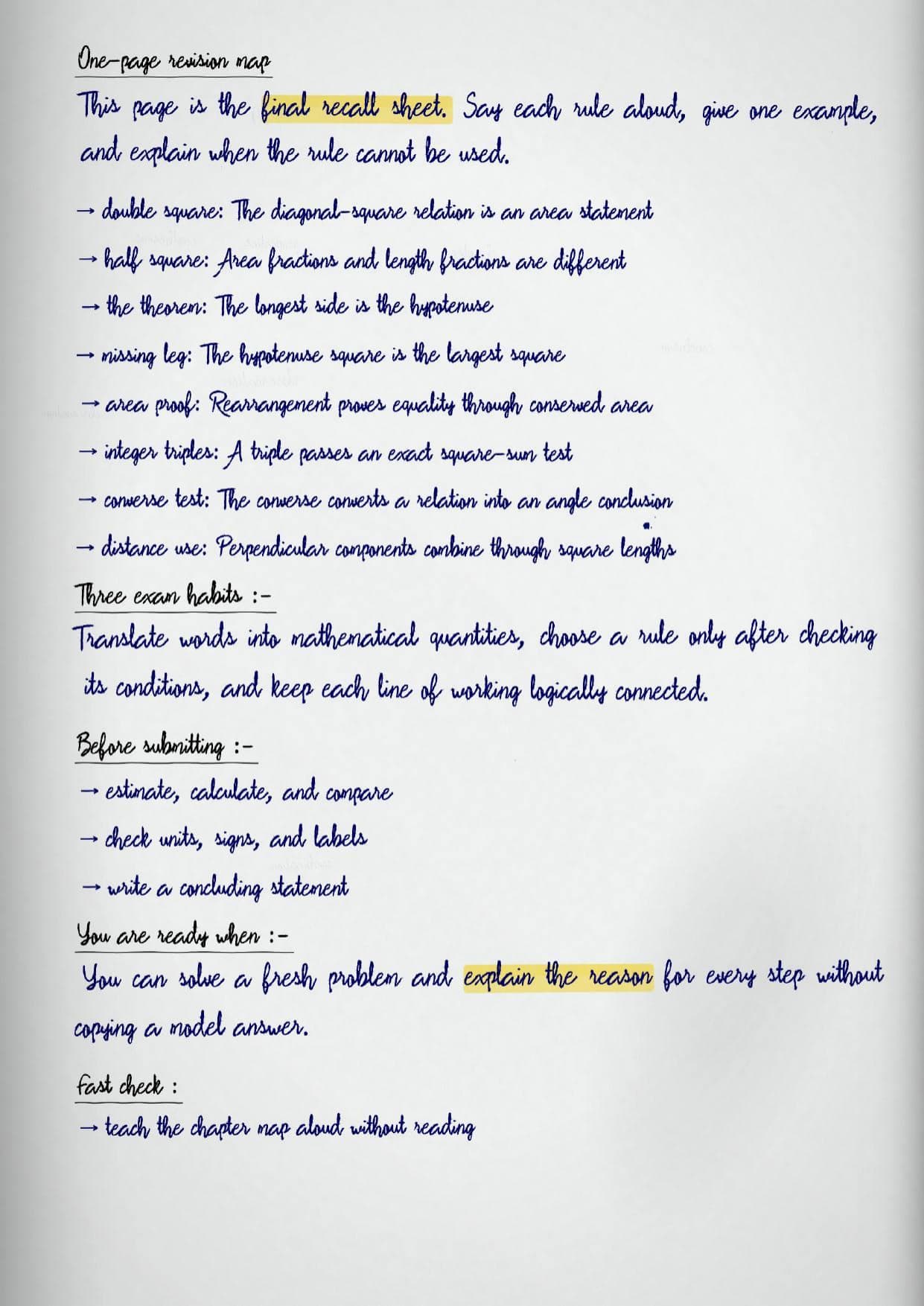
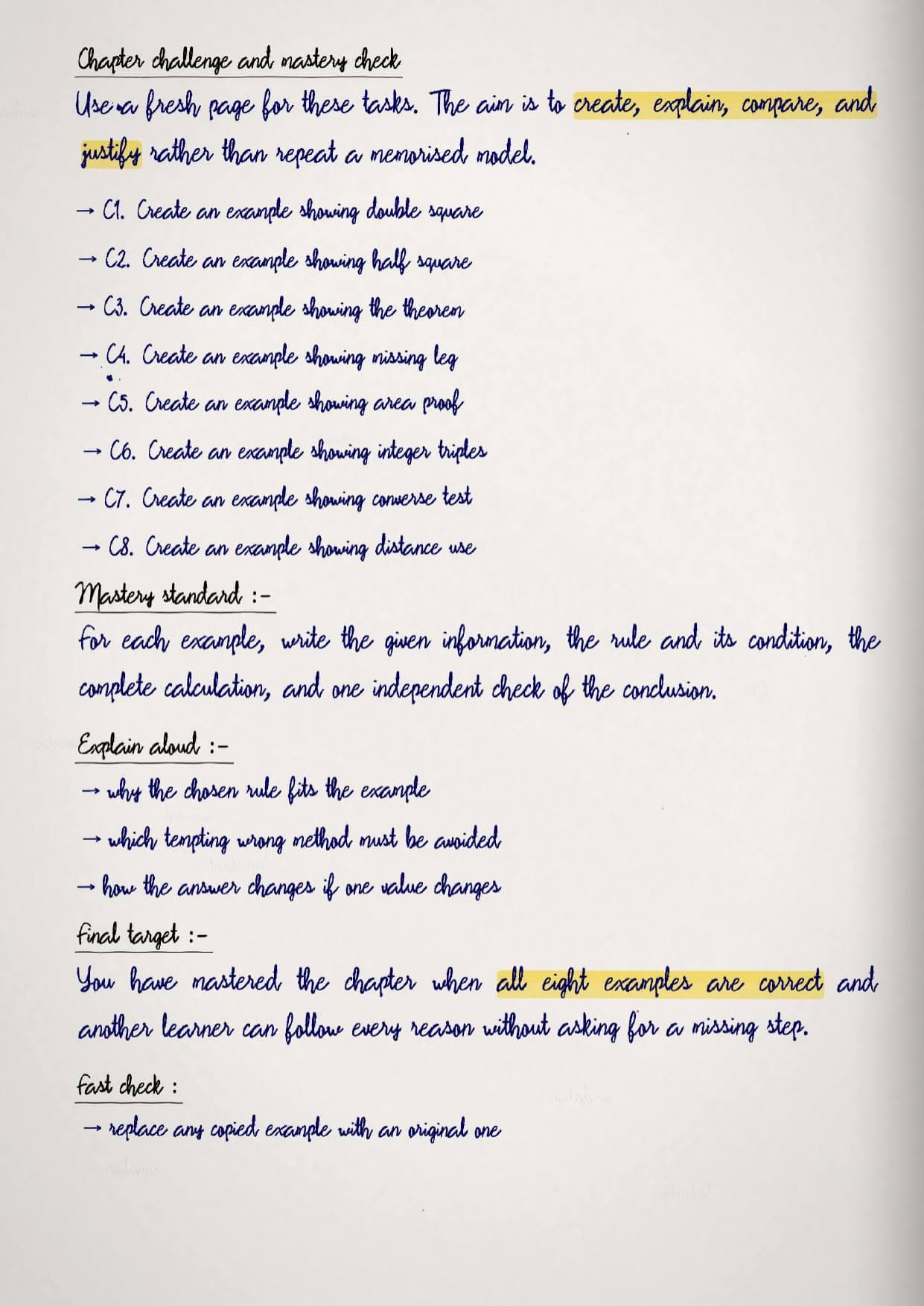
- CBSE Class 8 Weightage: a scoring chapter in the Mathematics paper, asked in short and long answers.
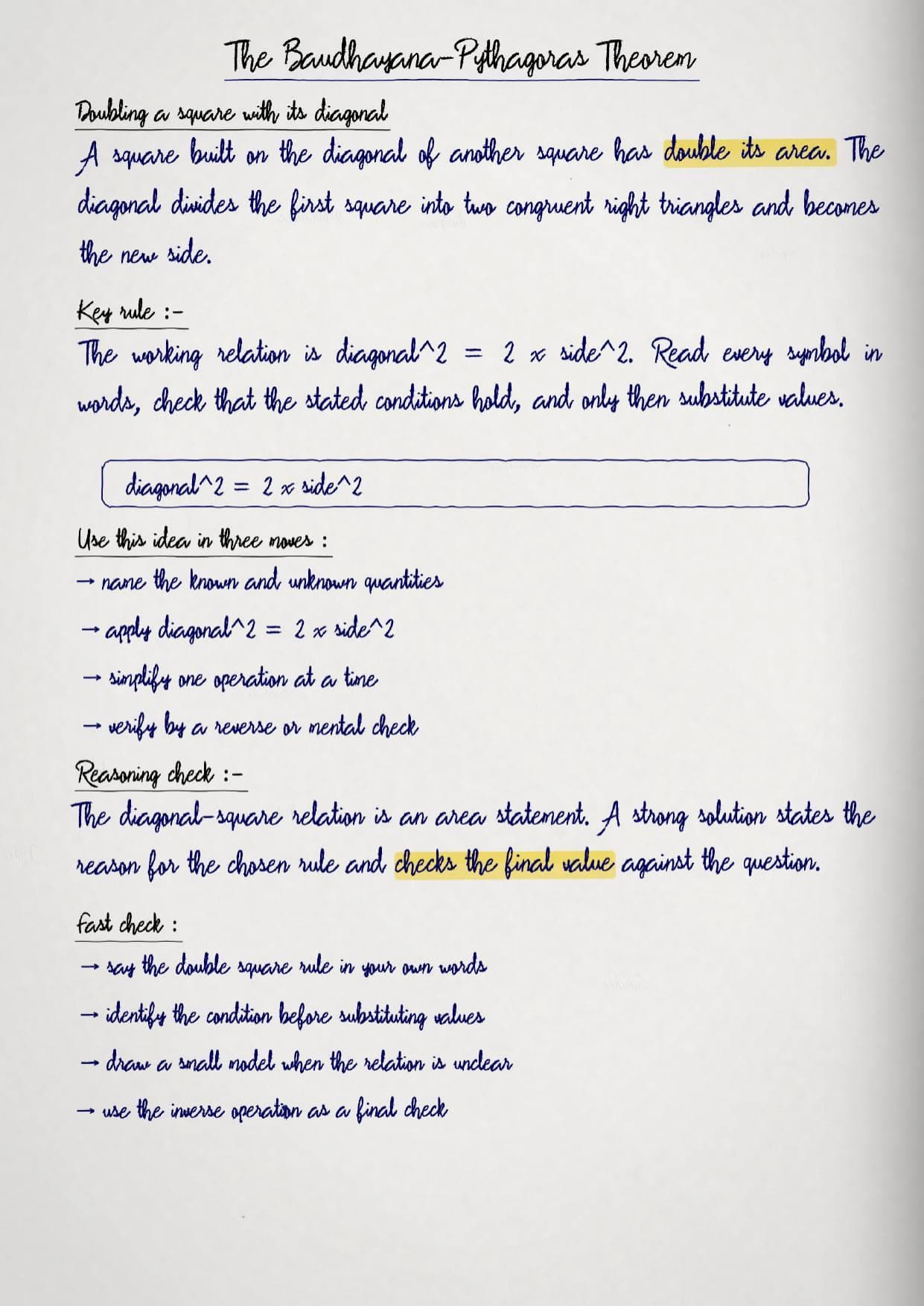
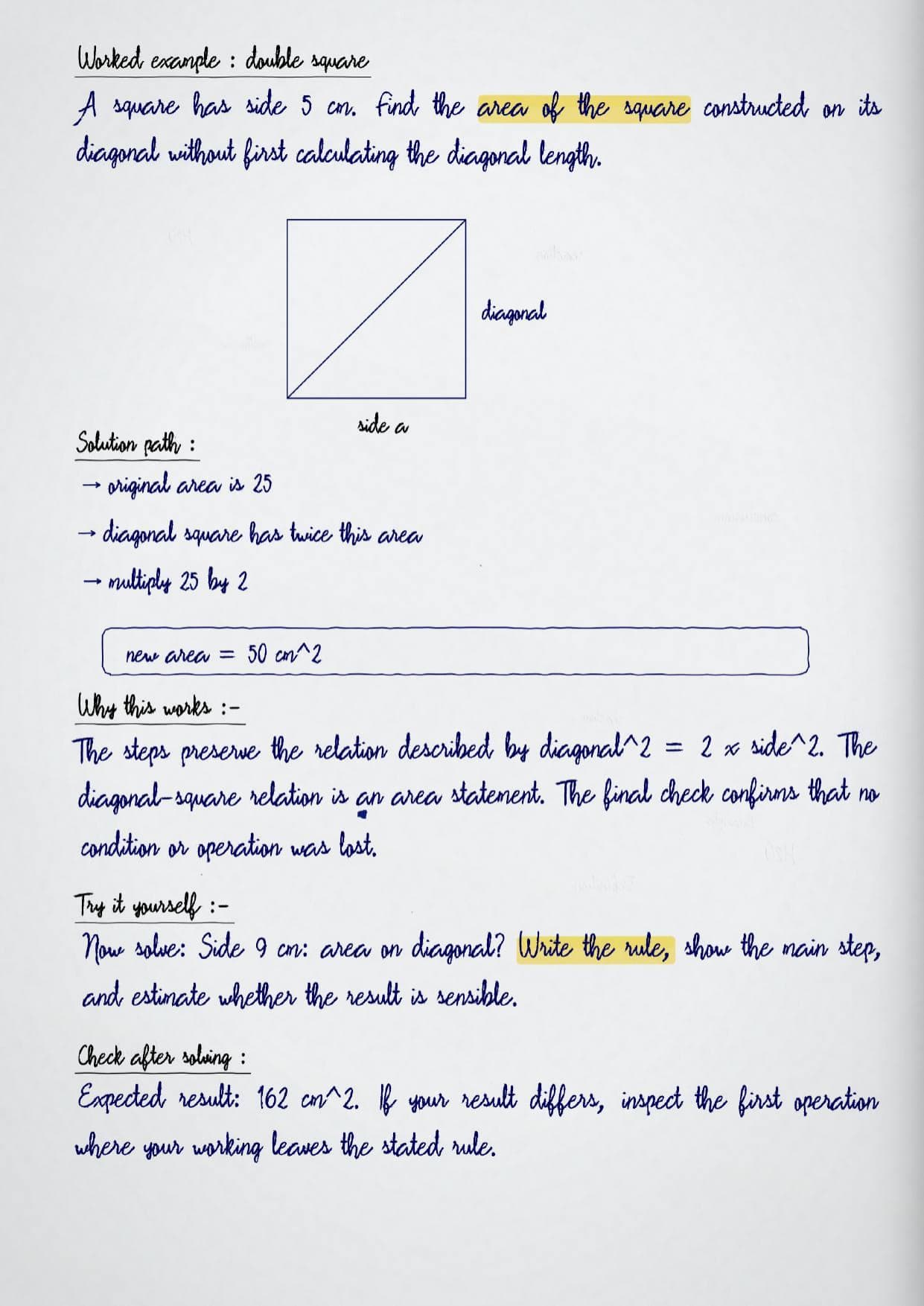
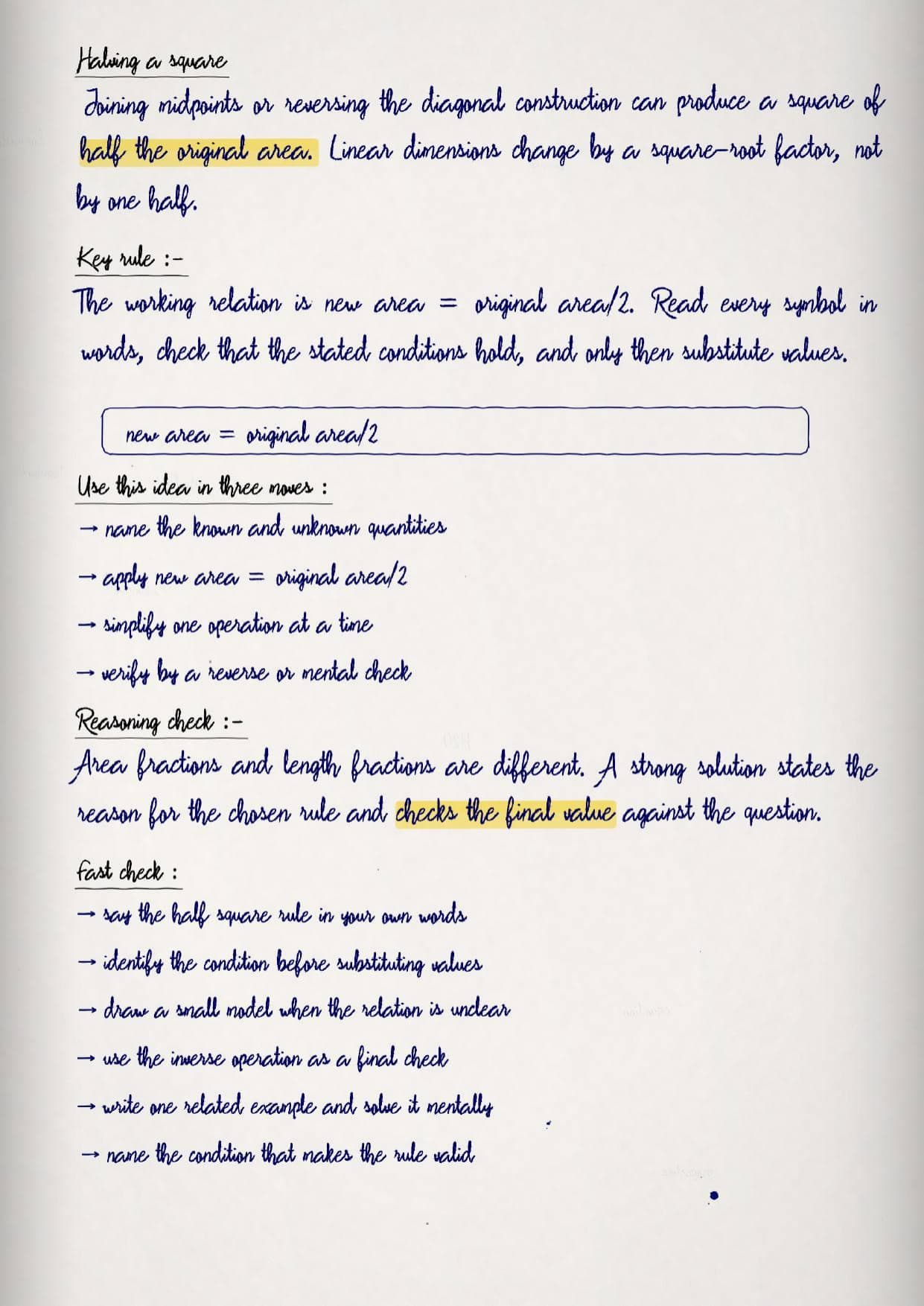
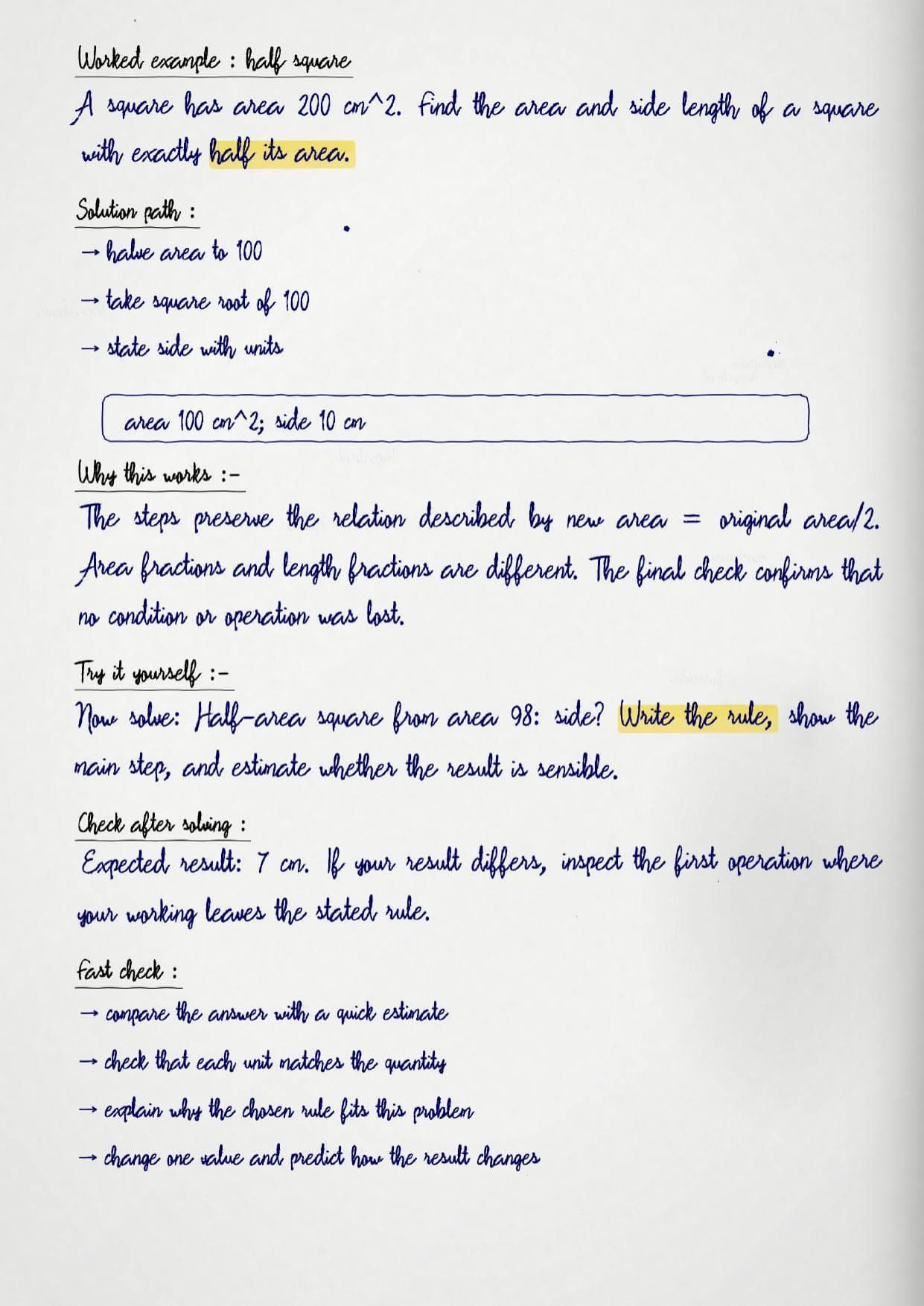
- What the notes cover: doubling a square using its diagonal, halving a square, hypotenuse of an isosceles right triangle, the number root 2 and its decimal value.
- Best for: quick revision before Class 8 exams and a strong base for Class 9.
You can read the complete class 8 maths handwritten notes for The Baudhayana-Pythagoras Theorem, with key terms, boxed definitions, and quick revision points, in the PDF below.
These handwritten notes are written by subject teachers, mapped to the 2026-27 NCERT, and checked against the last five years of CBSE Class 8 Mathematics papers.
Key Terms and Ideas in The Baudhayana-Pythagoras Theorem
These are the terms and ideas the exam asks about most. Learn each one so you can define it and use it in your answers.
| Term / Idea | What it means |
|---|---|
| Hypotenuse | the side opposite the right angle, the longest side |
| Baudhayana's theorem | a squared plus b squared equals c squared for a right triangle |
| Doubling a square | the square on the diagonal has double the area |
| Isosceles right triangle | equal legs of length a give hypotenuse squared equal to 2 a squared |
| Root 2 | the length of the diagonal of a unit square, about 1.41421356 |
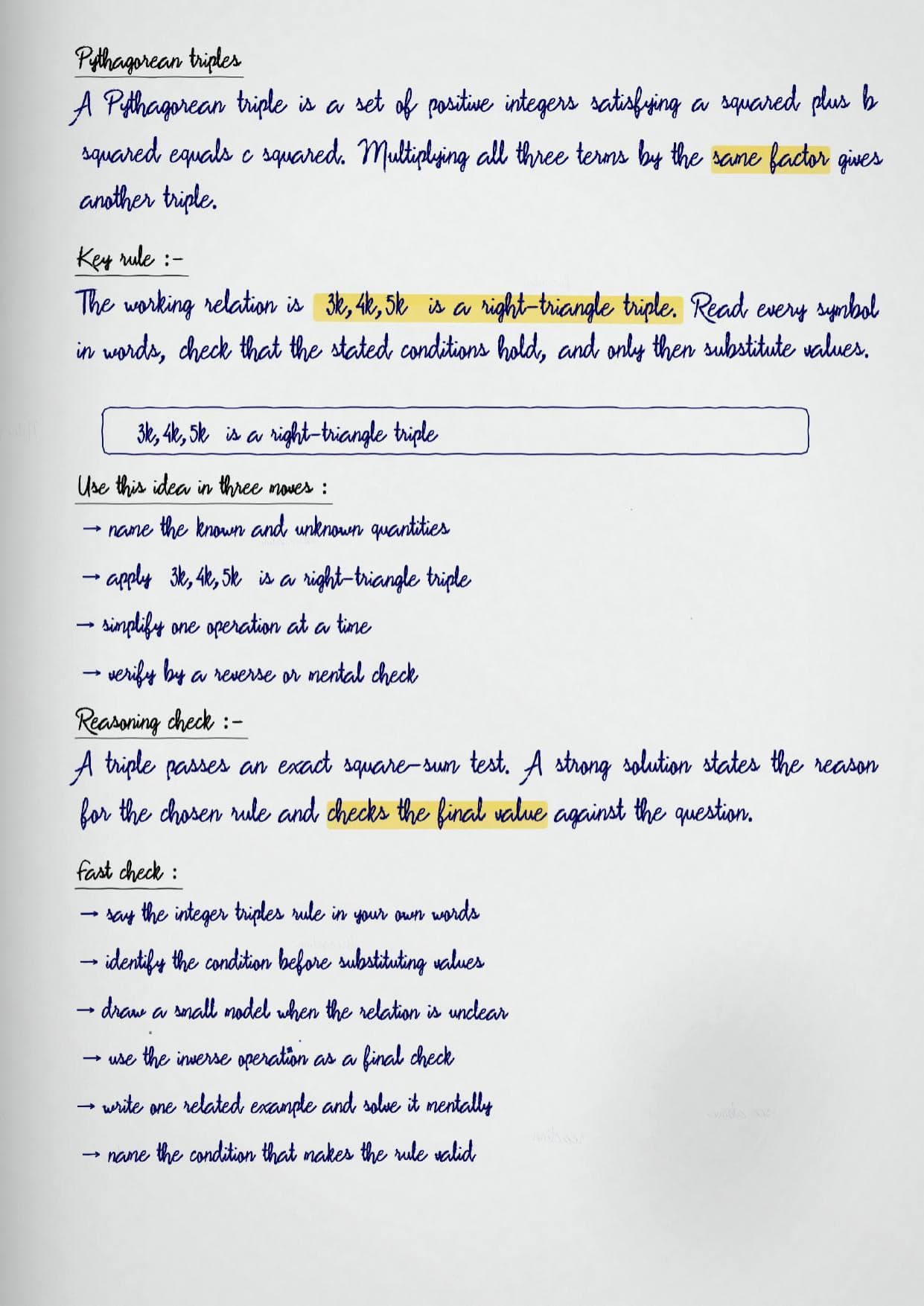
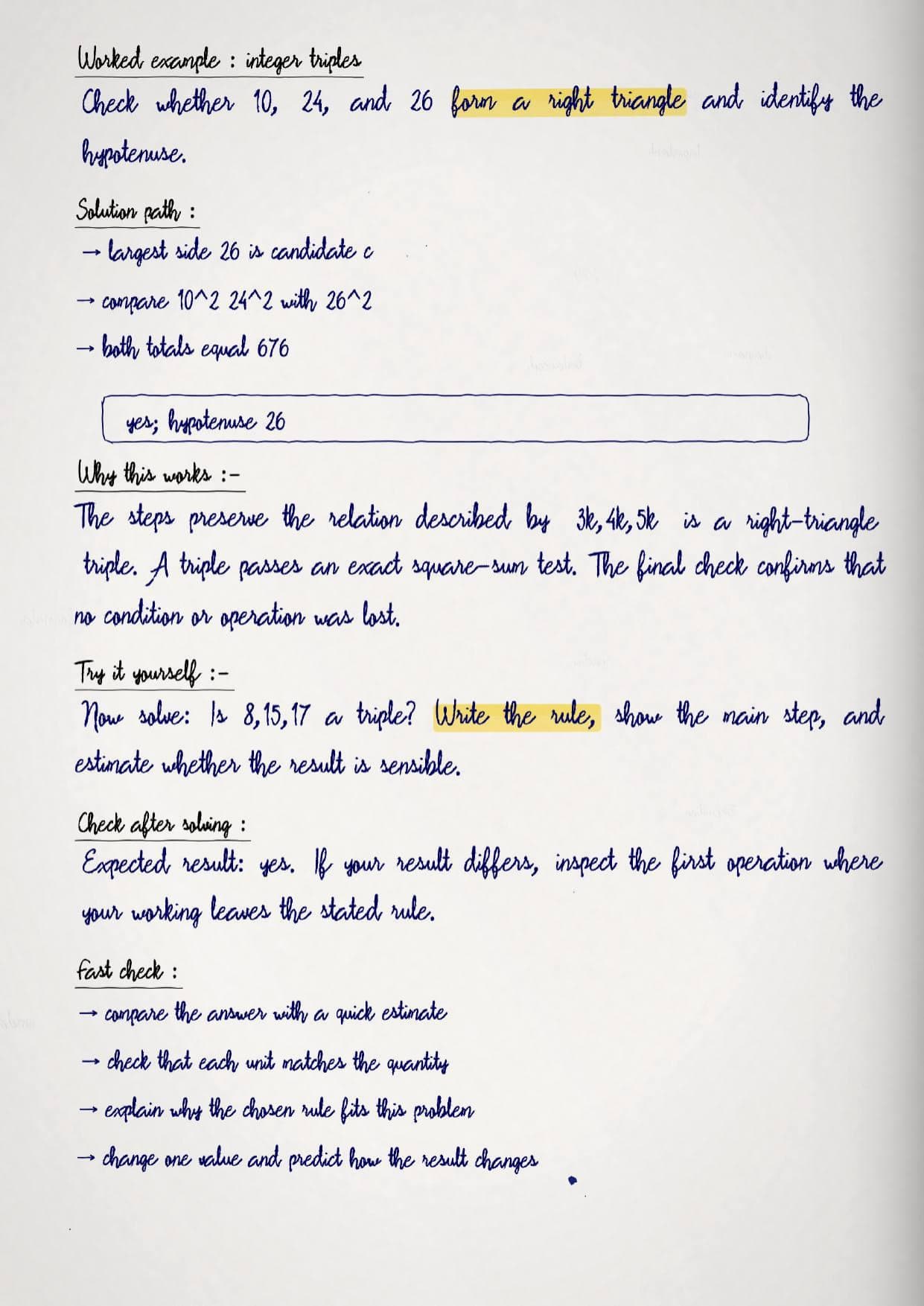
| Baudhayana triple | three whole numbers a, b, c with a squared plus b squared equal to c squared |
| Primitive triple | a triple with no common factor greater than 1, like 3, 4, 5 |
| Fermat's Last Theorem | no whole number solutions of x to the n plus y to the n equal z to the n for n greater than 2 |
What the The Baudhayana-Pythagoras Theorem Handwritten Notes Cover
This chapter follows an ancient Indian idea from Baudhayana about squares and right triangles. You will double and halve squares, find the hypotenuse of a right triangle, meet the number root 2, and reach the famous result a squared plus b squared equals c squared.
- Doubling a square using its diagonal
- Halving a square
- Hypotenuse of an isosceles right triangle
- The number root 2 and its decimal value
- Why root 2 is not a fraction
- Combining two different squares
- Baudhayana's theorem on right triangles
- Baudhayana and Pythagorean triples
- Primitive triples
- Fermat's Last Theorem story
The Baudhayana-Pythagoras Theorem Topic-wise Weightage for CBSE Class 8 Mathematics
Some parts of this chapter are asked more often than others. The table below shows which sub-topics to revise first, based on recent CBSE Class 8 question trends.
| Sub-topic | Weightage | CBSE Frequency |
|---|---|---|
| Using a squared plus b squared equals c squared | High | asked often |
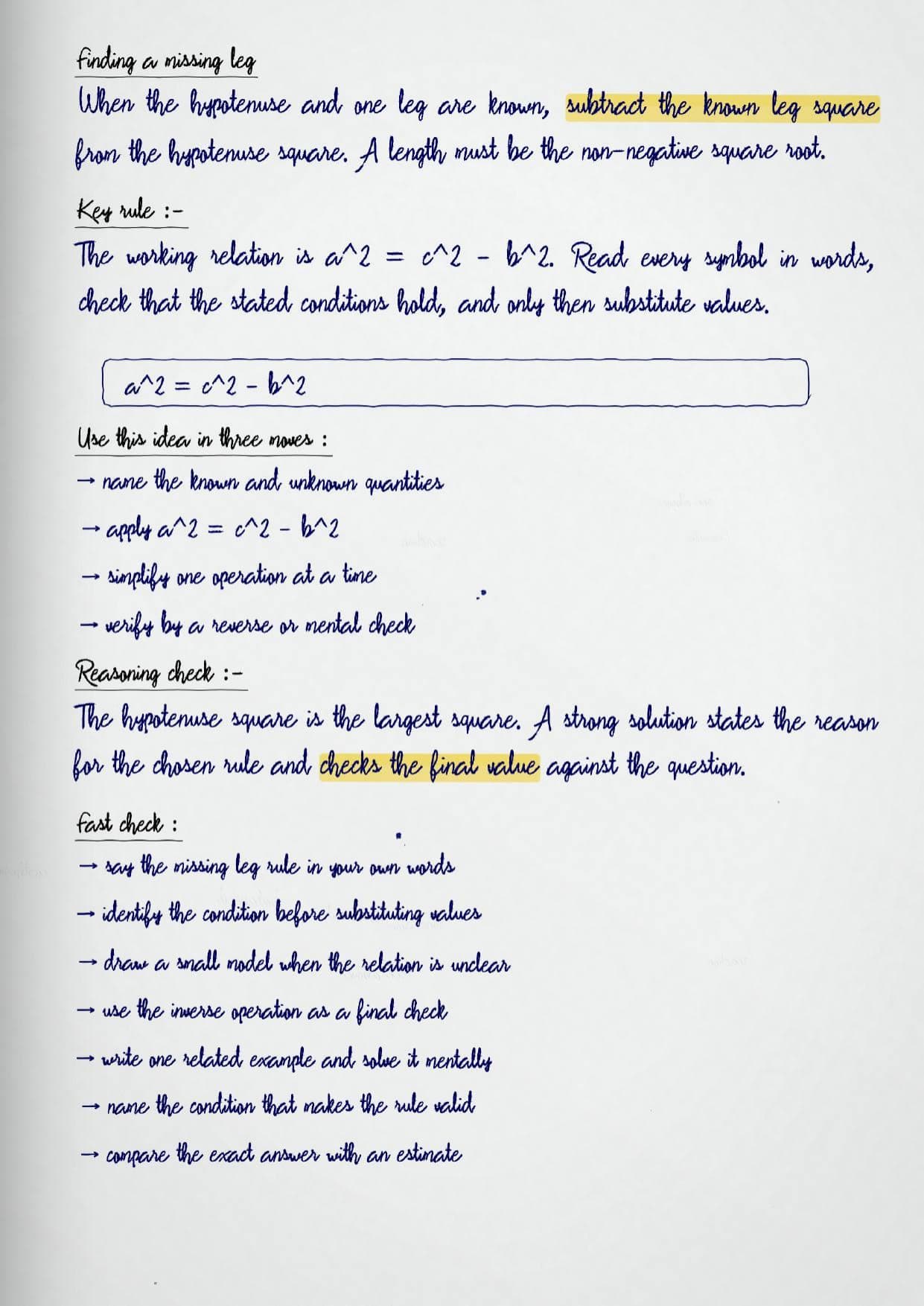
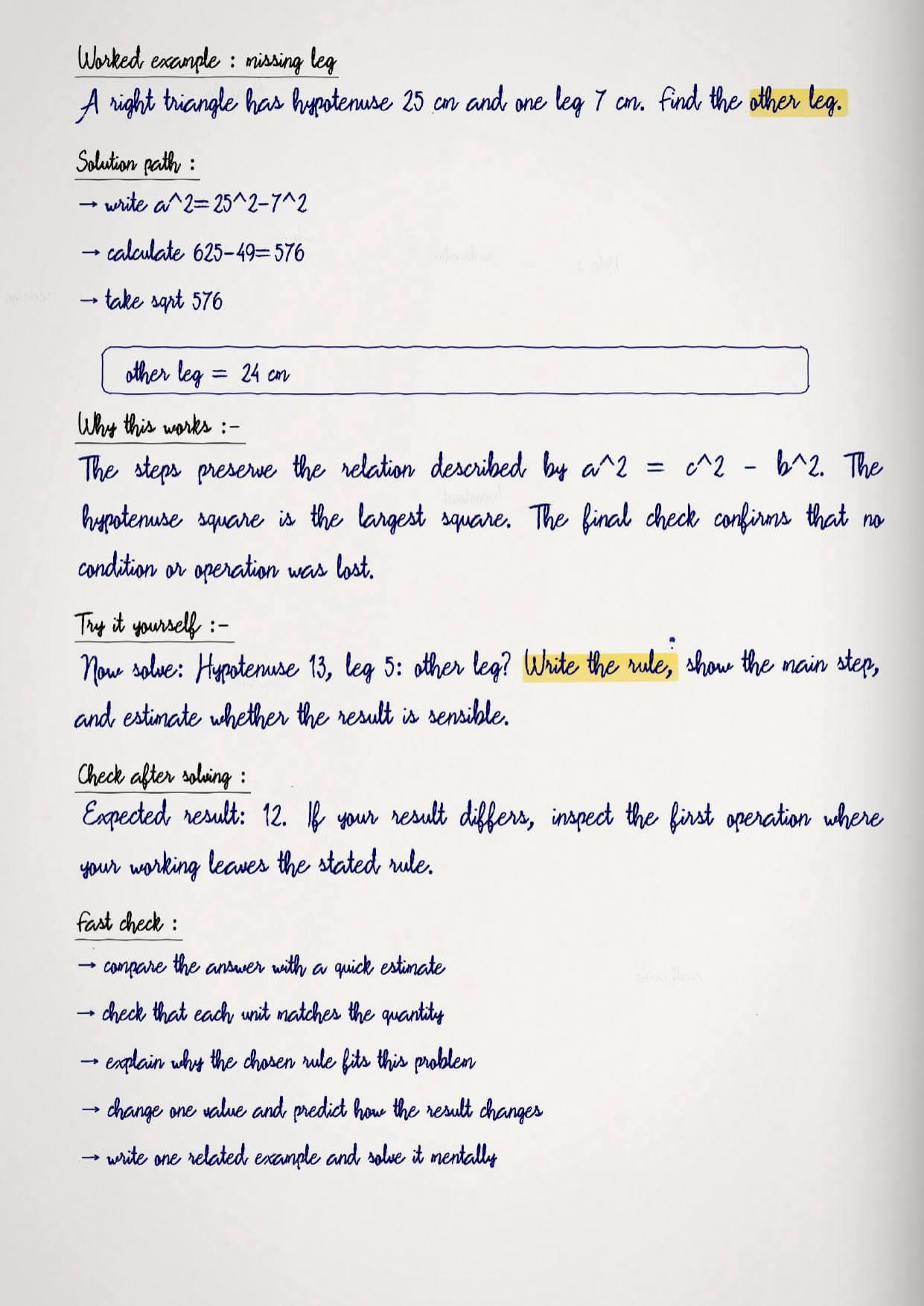
| Finding a missing side of a right triangle | High | asked often |
| Hypotenuse of an isosceles right triangle | Medium | asked sometimes |
| Baudhayana and Pythagorean triples | Medium | asked sometimes |
| Doubling and halving a square | Medium | asked sometimes |
| Why root 2 is not a fraction | Low | asked rarely |
How Collegedunia's Handwritten Notes Help You Revise The Baudhayana-Pythagoras Theorem
These notes are made for the night before the exam. They keep the facts short and easy to scan. Collegedunia maps every point to the 2026-27 NCERT.
- Clear handwriting: each topic is written in neat, easy-to-read handwriting.
- Boxed key terms: the main terms and definitions are boxed by hand for fast recall.
- Diagrams and tables: simple hand-drawn tables and charts make ideas clear.
- Colour-coded headings: new sub-topics stand out, so you find any section in seconds.
The Baudhayana-Pythagoras Theorem Self-Assessment Quiz
Try these quick questions after you read the notes. Tap each question to check your answer. They cover the points CBSE asks most often.
A right triangle has legs 3 and 4. Its hypotenuse is?
(a) 5 (b) 6 (c) 7 (d) 12
Answer: (a) 5 - since 9 plus 16 equals 25
The hypotenuse of an isosceles right triangle with legs 1 is?
(a) 1 (b) 2 (c) root 2 (d) root 3
Answer: (c) root 2 - since c squared equals 2
Which of these is a Baudhayana triple?
(a) 2, 3, 4 (b) 5, 12, 13 (c) 4, 5, 6 (d) 6, 7, 8
Answer: (b) 5, 12, 13 - since 25 plus 144 equals 169
The square on the diagonal of a square has how many times the area?
(a) 1 (b) 2 (c) 3 (d) 4
Answer: (b) 2 - the diagonal square is double the area
Which triple is primitive?
(a) 6, 8, 10 (b) 9, 12, 15 (c) 3, 4, 5 (d) 12, 16, 20
Answer: (c) 3, 4, 5 - it has no common factor above 1
How to Use These Handwritten Notes for Class 8 Mathematics Revision
Use these class 8 maths handwritten notes in two passes. Read them slowly once for the full chapter. Then, near the exam, read only the boxes and key terms for a fast recall.
- Read the notes once with the NCERT chapter open beside you.
- Say each key term and idea in your own words.
- Practise one long-answer question from a past paper.
- On the last day, revise only the key terms and the boxes.
Class 8 Mathematics Handwritten Notes for All Chapters
The table below links the class 8 maths handwritten notes for every chapter. Use it to jump to any other chapter's notes.
| Chapter | Resource |
|---|---|
| Chapter 1 | Fractions in Disguise Handwritten Notes |
| Chapter 2 | The Baudhayana-Pythagoras Theorem Handwritten Notes |
| Chapter 3 | Proportional Reasoning-2 Handwritten Notes |
| Chapter 4 | Exploring Some Geometric Themes Handwritten Notes |
| Chapter 5 | Tales by Dots and Lines Handwritten Notes |
| Chapter 6 | Algebra Play Handwritten Notes |
| Chapter 7 | Area Handwritten Notes |
The Baudhayana-Pythagoras Theorem Class 8 Mathematics Handwritten Notes FAQs
Ques. Where can I download The Baudhayana-Pythagoras Theorem Class 8 Mathematics Handwritten Notes PDF?
Ans. You can download the The Baudhayana-Pythagoras Theorem Class 8 Mathematics Handwritten Notes PDF directly from this page. Both the Normal and HD versions are free.
Ques. Are these handwritten notes aligned with the 2026-27 NCERT?
Ans. Yes. These notes follow the current 2026-27 syllabus for Class 8 Mathematics. why 3, 4, 5 always makes a right angle
Ques. How many pages is the Class 8 Mathematics The Baudhayana-Pythagoras Theorem Handwritten Notes PDF?
Ans. The notes run about 20 pages. They cover the full chapter with key terms, hand-drawn boxes, and a short self-assessment quiz.
Ques. What is the main idea of the 8th standard Mathematics chapter The Baudhayana-Pythagoras Theorem?
Ans. The main idea is Baudhayana's result that in a right triangle the squares on the two shorter sides add up to the square on the hypotenuse. This lets you find any missing side and recognise whole-number triples like 3, 4, 5 that form right angles.
Ques. Are these The Baudhayana-Pythagoras Theorem notes enough for the CBSE Class 8 exam?
Ans. Yes, for revision. The Collegedunia handwritten notes cover every key point and exam term. Read them with the NCERT chapter and practise past questions.



Comments