



The NCERT Notes Class 11 Accountancy Chapter 3 Recording of Transactions-I bring together every source document, accounting rule, journal format and ledger format that the CBSE board paper actually tests. These notes follow the 2026-27 NCERT print and walk through each rule with a solved example, so you can practise the exact skill examiners check.
- CBSE Weightage: Journal and ledger numericals from this chapter appear almost every year in the board paper.
- CUET Weightage: Rules of debit and credit are a recurring MCQ topic in CUET Commerce.
- Covers: Source documents, the accounting equation, debit-credit rules, journal format and ledger posting, according to the 2026-27 NCERT.
This NCERT Notes Class 11 Accountancy Chapter 3 Recording of Transactions-I page is curated by subject experts, mapped to the 2026-27 NCERT, and checked against the last five years of CBSE board question papers.
Source Documents and Accounting Vouchers in Recording of Transactions-I
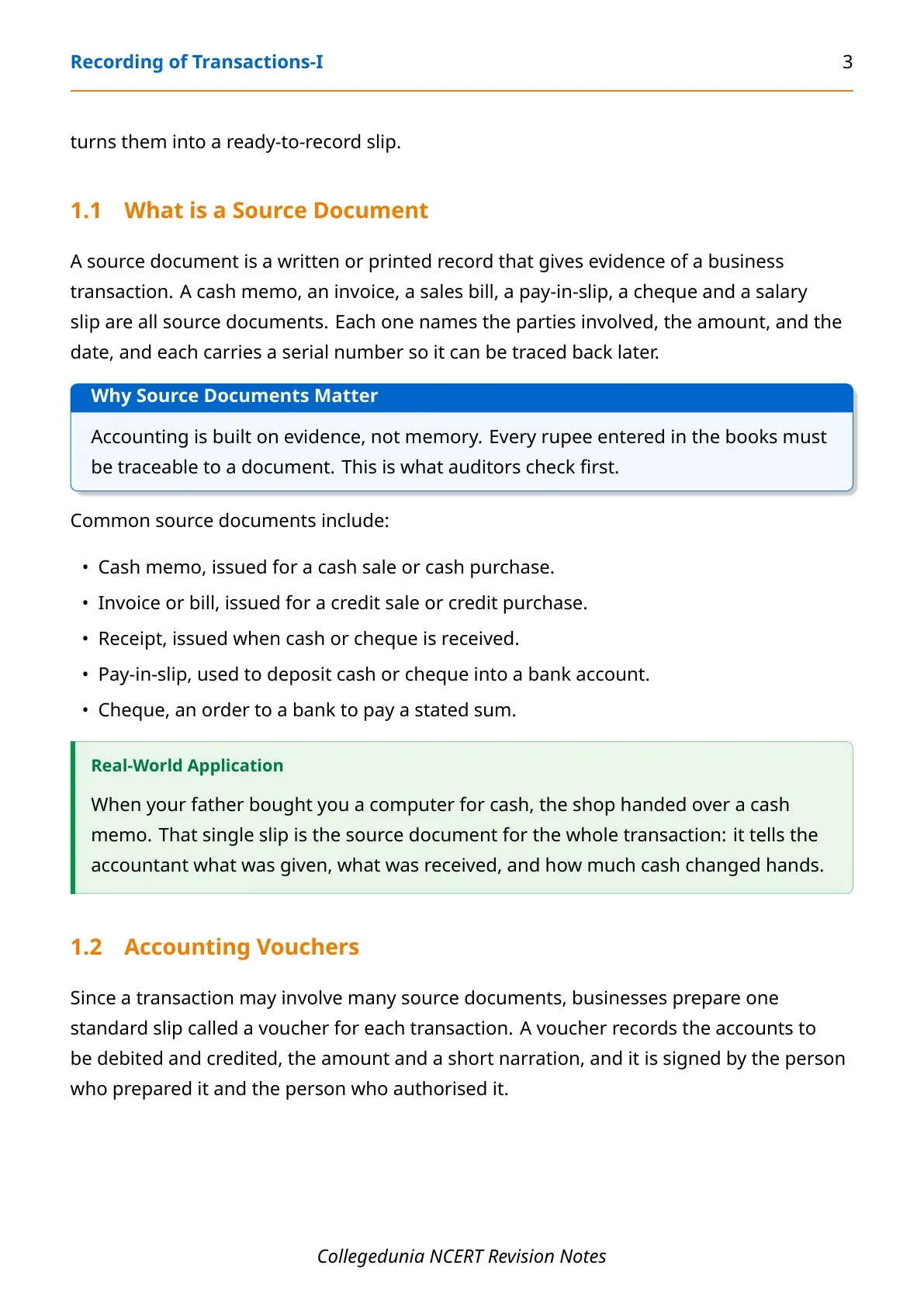
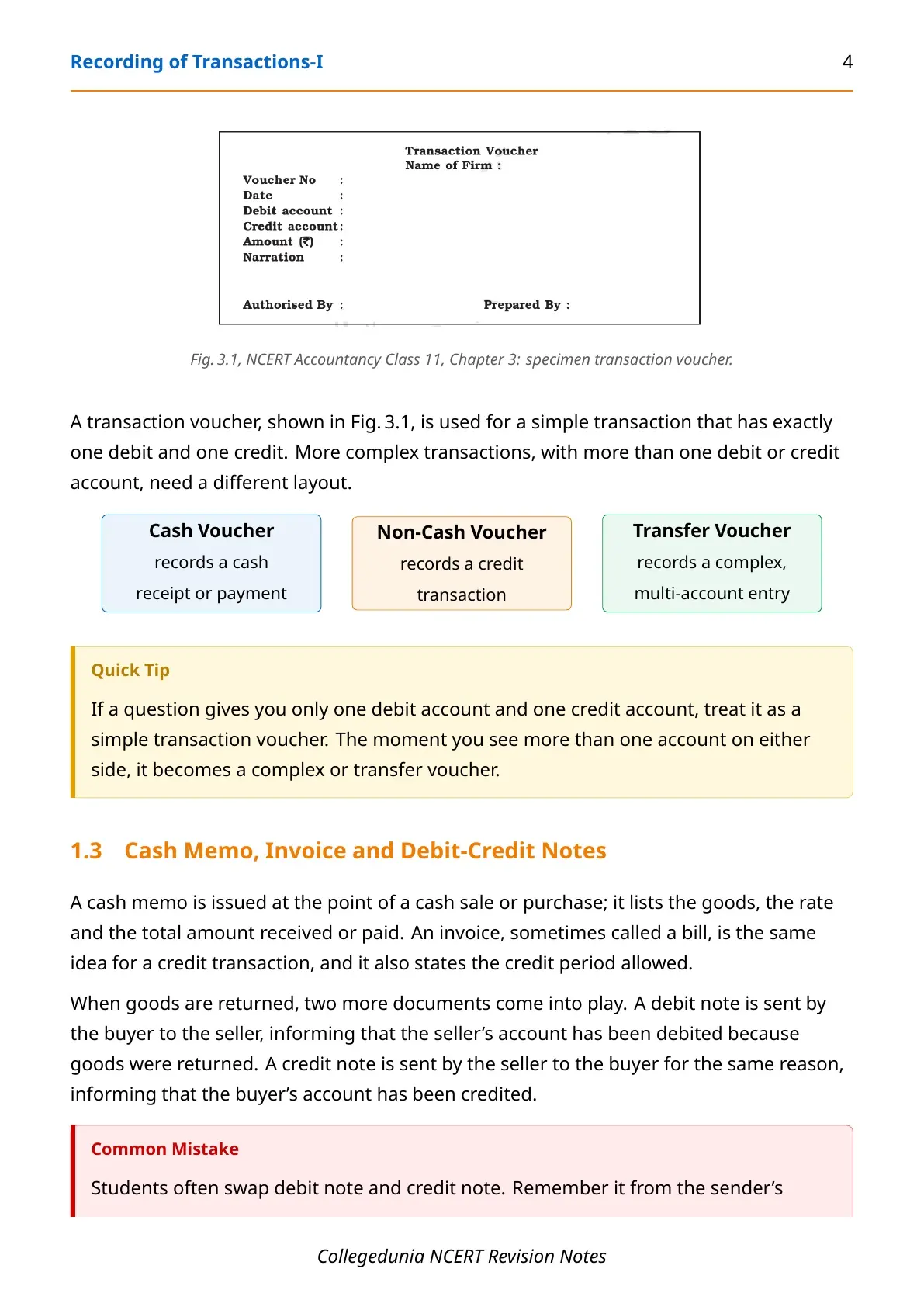
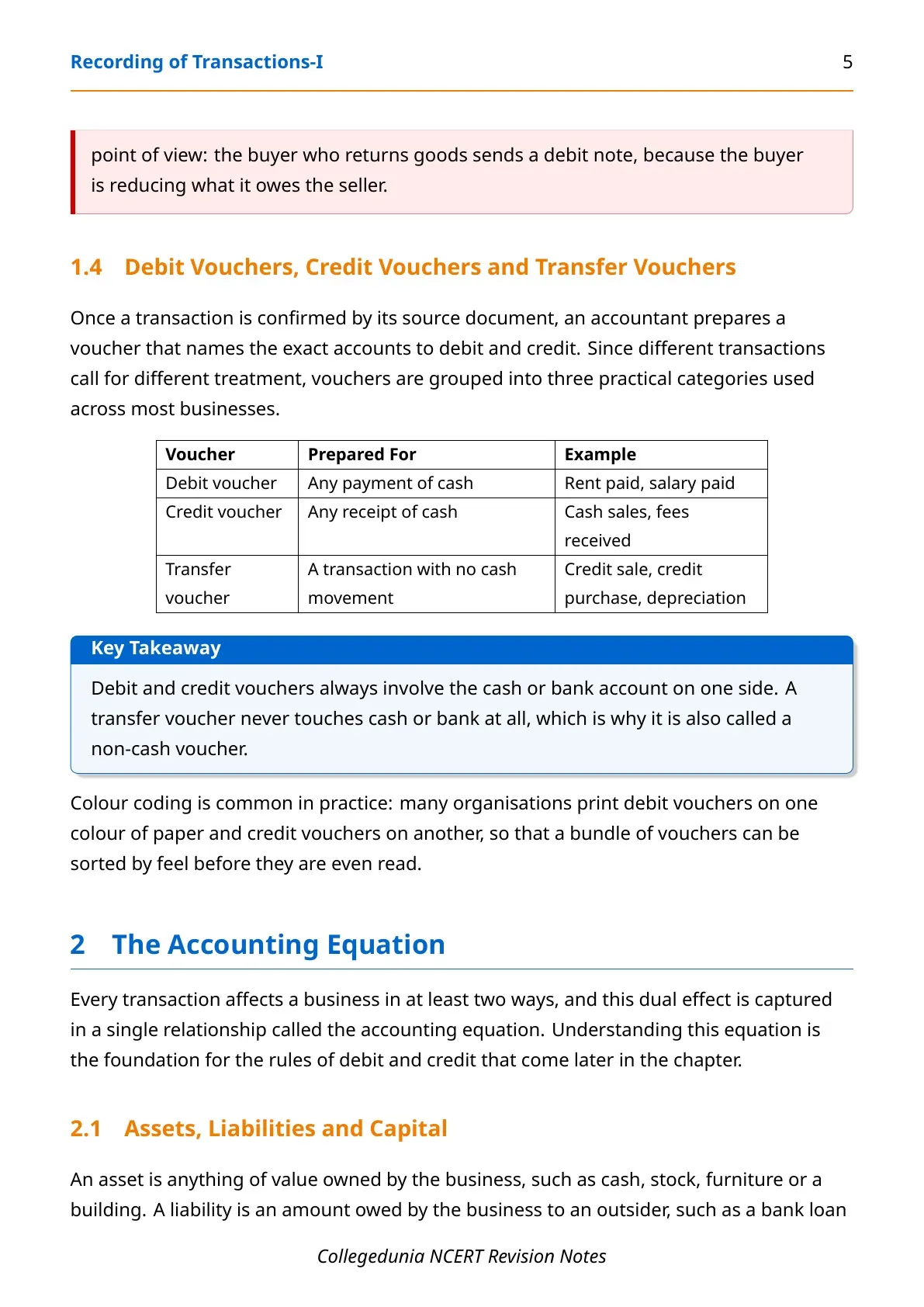
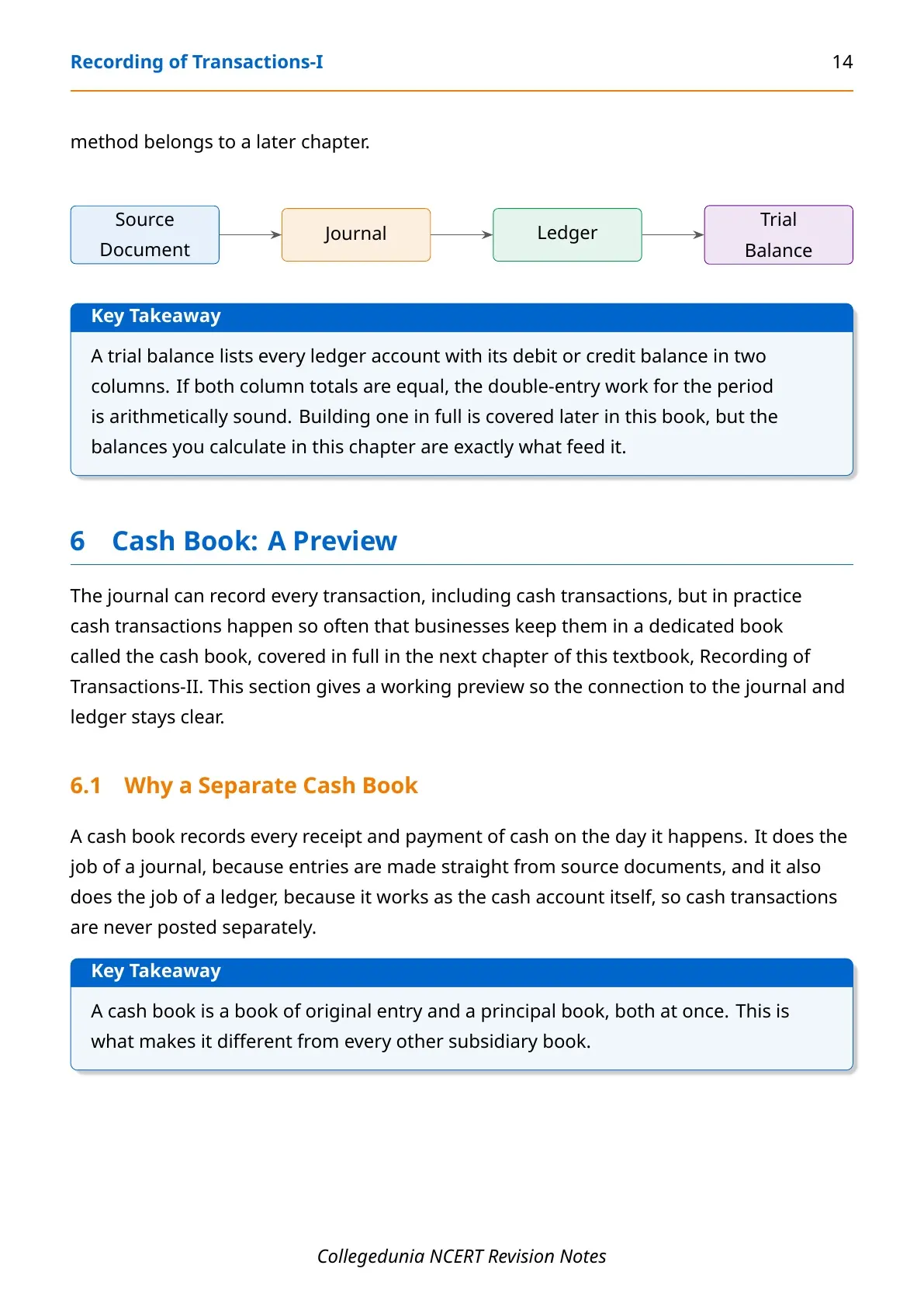
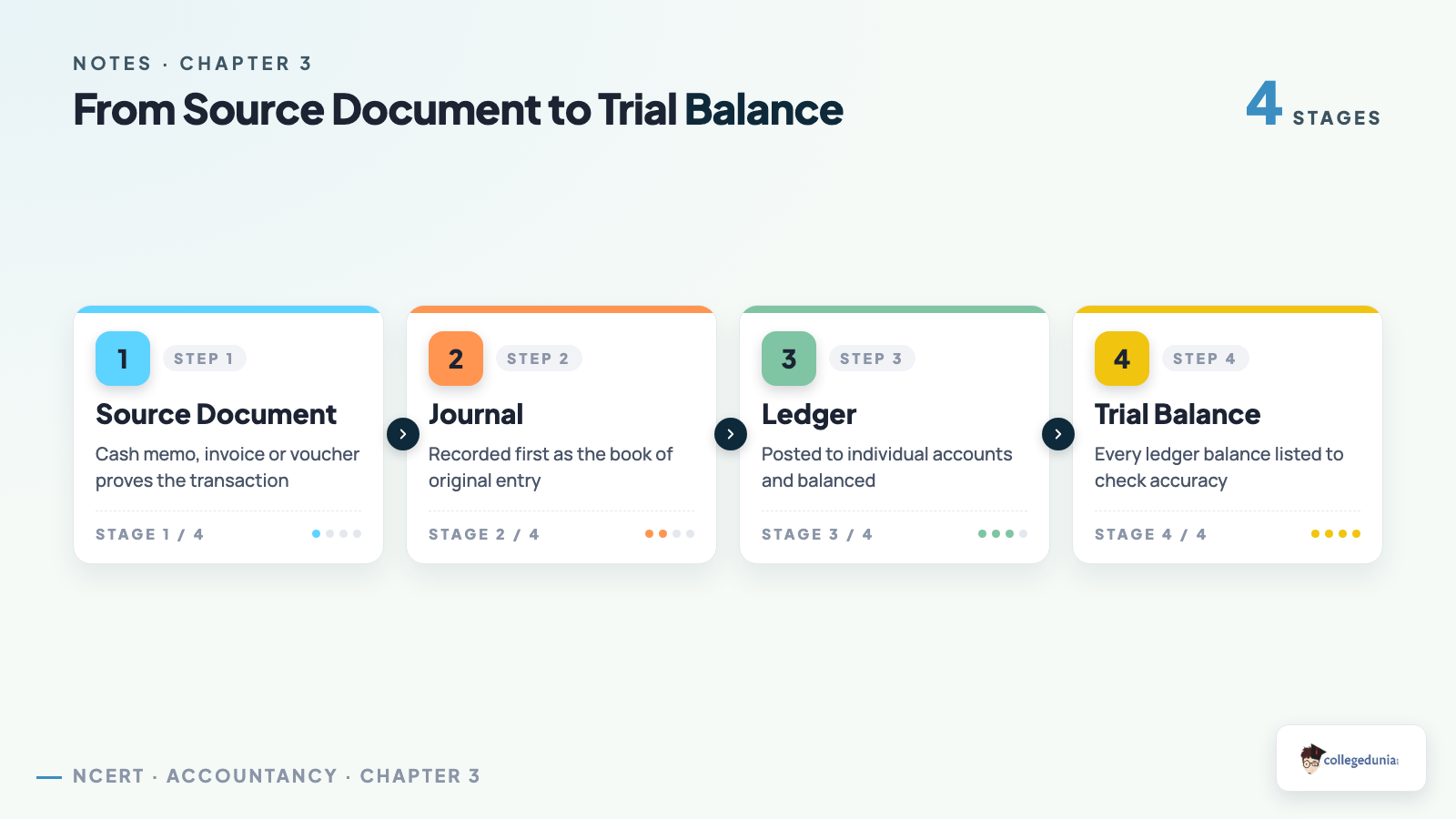
Every accounting entry starts with proof that a transaction happened. A source document is that proof: a cash memo, invoice, receipt, pay-in-slip or cheque. Businesses then convert each source document into a standard slip called a voucher before it is recorded in the journal.
| Document / Voucher | Used For |
|---|---|
| Cash memo | Cash sale or cash purchase |
| Invoice / bill | Credit sale or credit purchase |
| Debit note | Sent by the buyer when goods are returned |
| Credit note | Sent by the seller when goods are returned |
| Debit voucher | Any payment of cash |
| Credit voucher | Any receipt of cash |
| Transfer voucher | A non-cash transaction, such as a credit sale |
A debit voucher and a credit voucher always involve cash or bank on one side. A transfer voucher never touches cash at all, which is why some businesses call it a non-cash voucher.
Simple and Compound Journal Entries Explained
Source: Magnet Brains on YouTube
The Accounting Equation Explained for Class 11 Accountancy
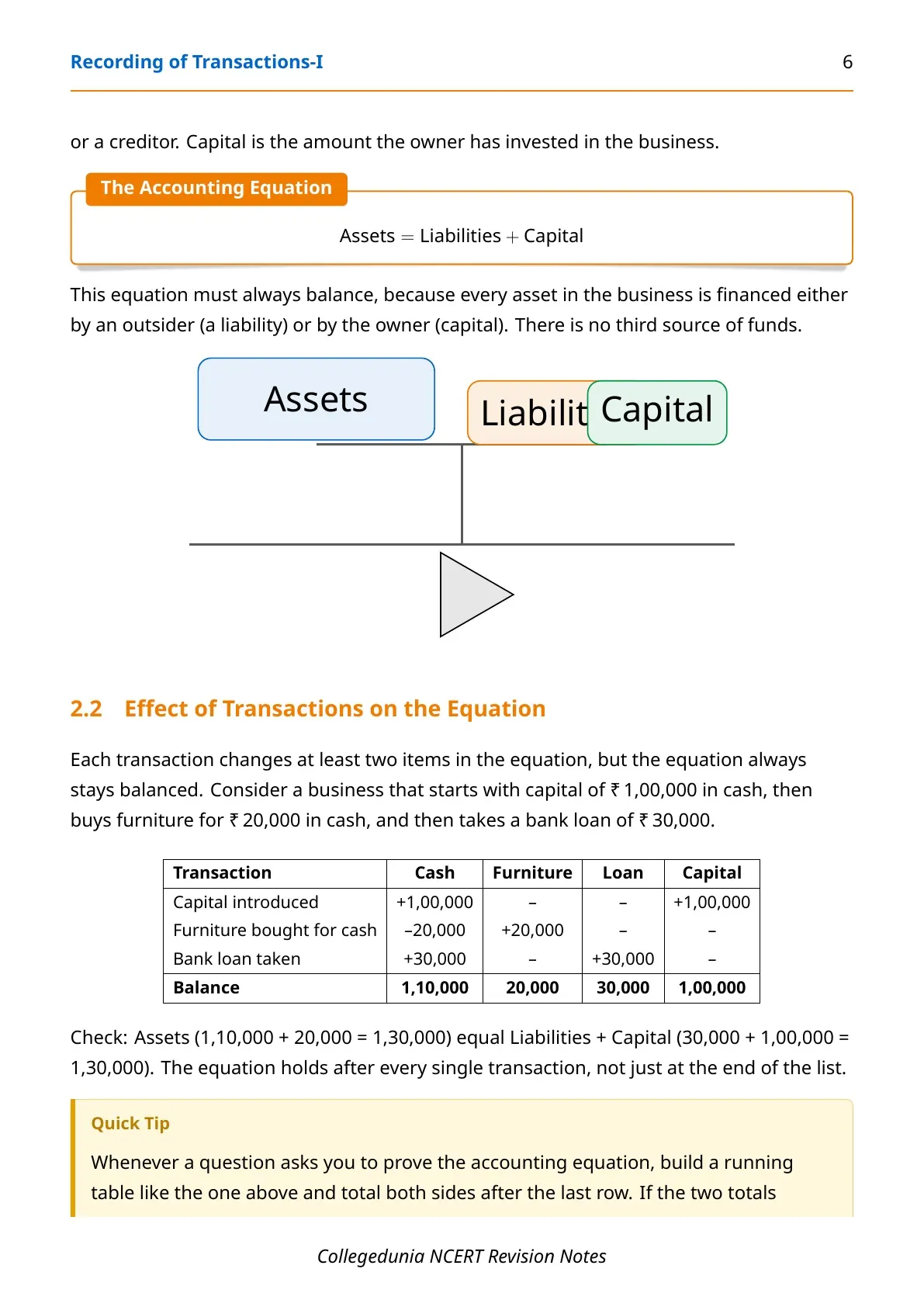
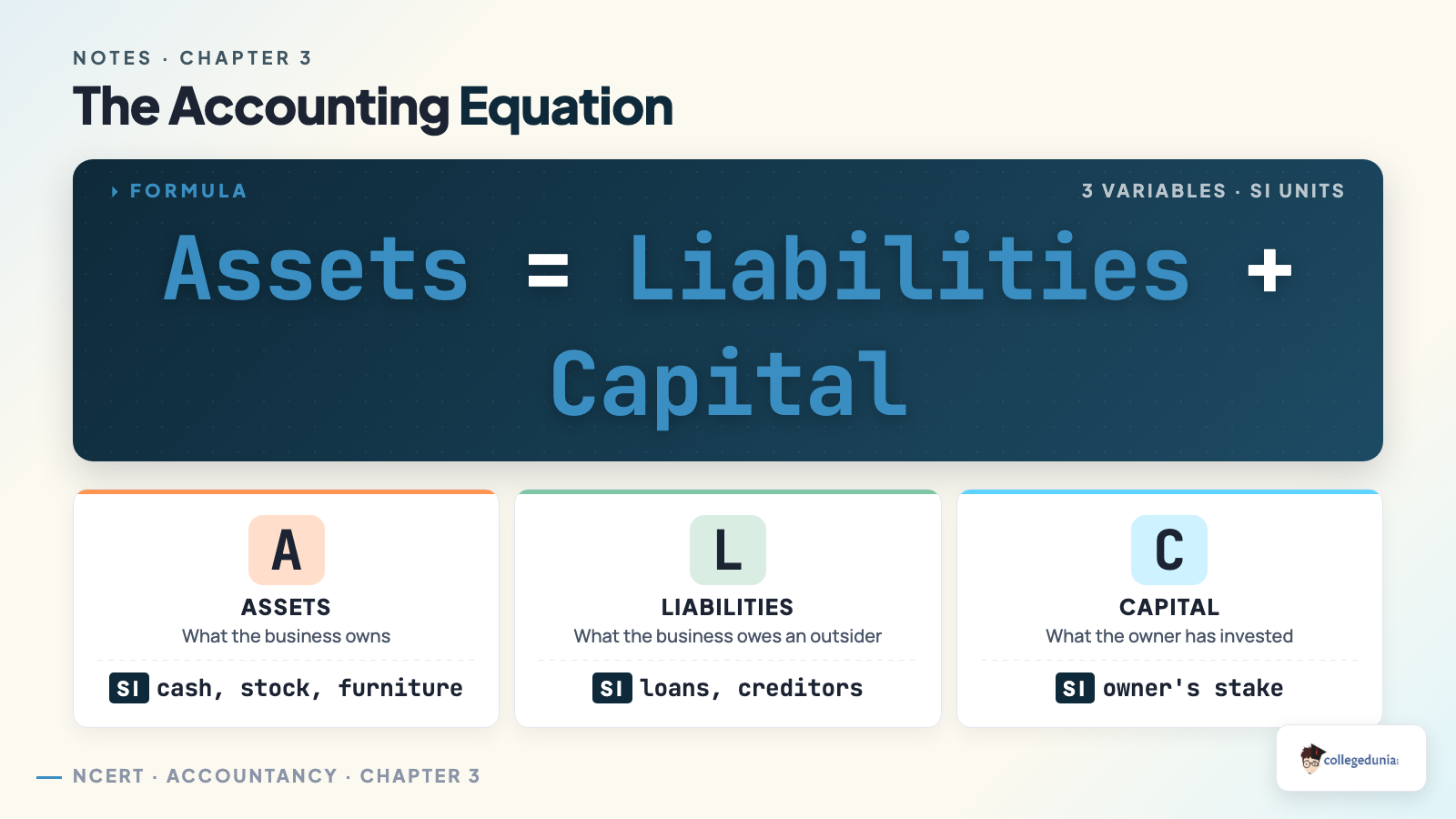
The accounting equation is the single rule every transaction must obey: Assets = Liabilities + Capital. Every asset a business owns is funded either by an outsider (a liability) or by the owner (capital), so the equation must balance after every transaction, not just at the end of the year.
- Buying furniture for cash swaps one asset for another; total assets stay the same.
- Taking a bank loan raises both cash (an asset) and the loan (a liability) by the same amount.
- Paying rent reduces cash and reduces capital, since an expense eats into the owner's stake.
Rules of Debit and Credit: Traditional and Modern Approach
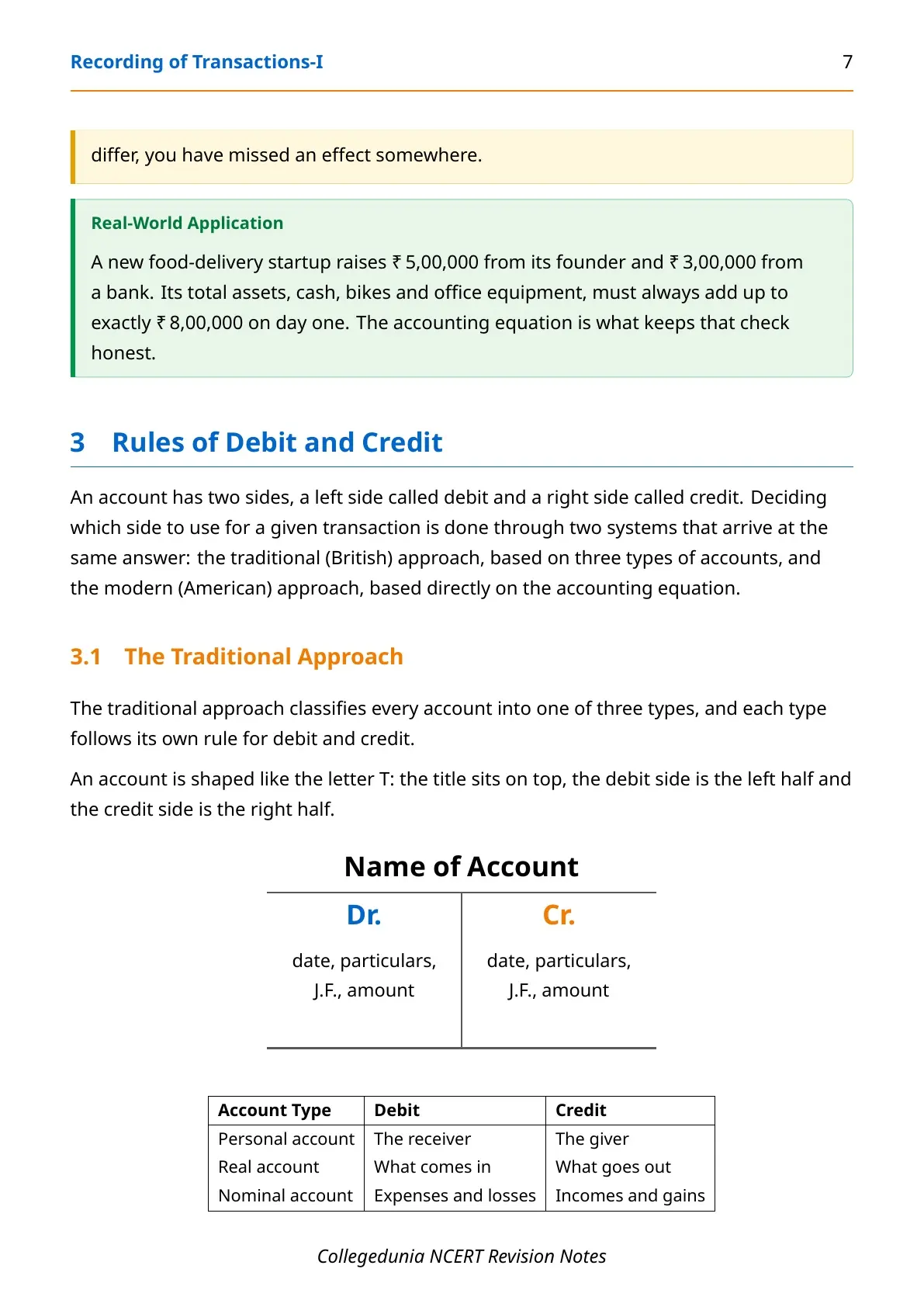
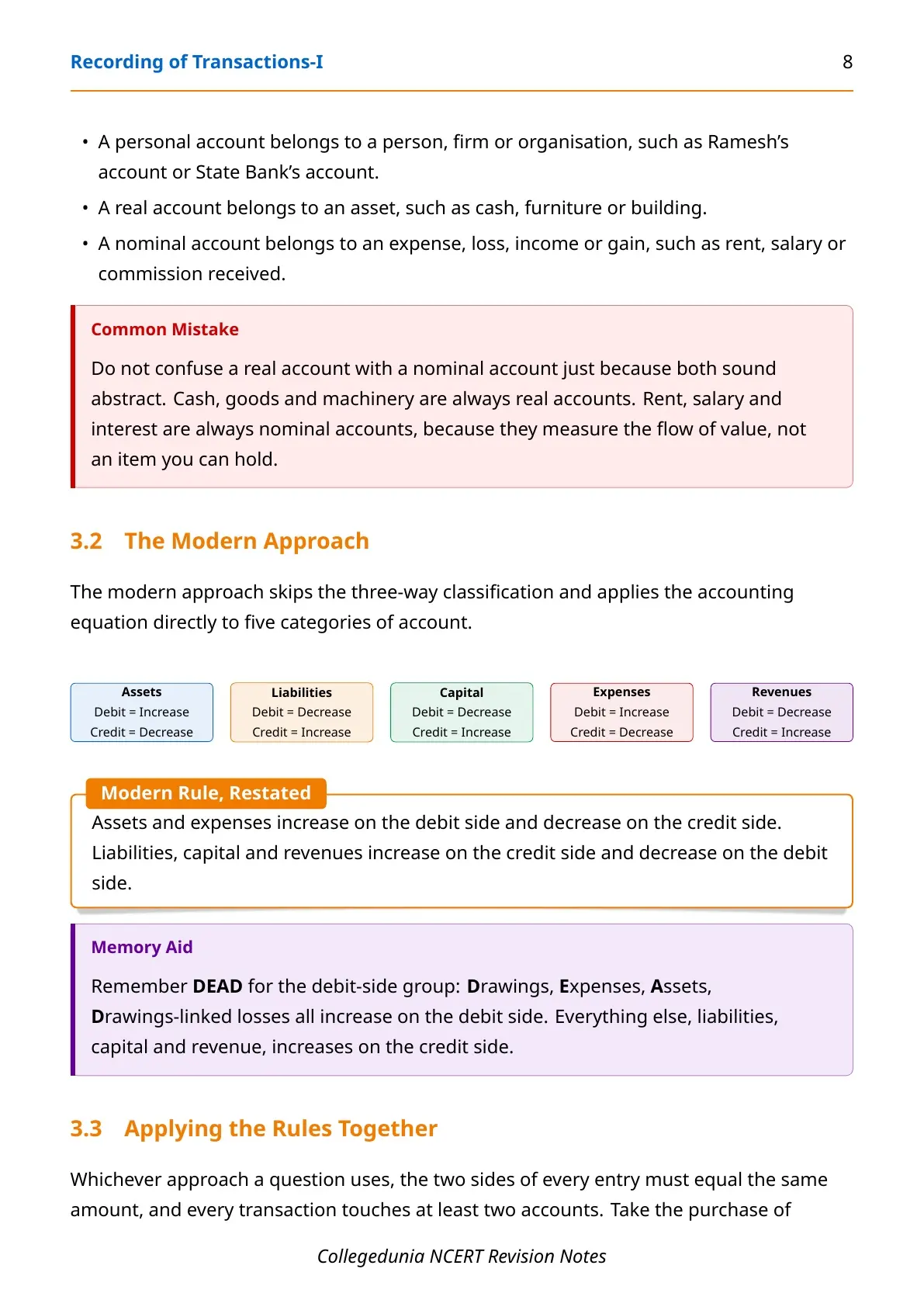
An account has a left side (debit) and a right side (credit). CBSE tests two systems for deciding which side to use, and Class 11 students need both, since board questions can name either one.
| Approach | Debit | Credit |
|---|---|---|
| Personal account (traditional) | The receiver | The giver |
| Real account (traditional) | What comes in | What goes out |
| Nominal account (traditional) | Expenses and losses | Incomes and gains |
| Assets / Expenses (modern) | Increase | Decrease |
| Liabilities / Capital / Revenue (modern) | Decrease | Increase |
Both systems give the same answer for the same transaction. Name the account type first, then apply its rule mechanically; guessing the side without naming the type is where most Class 11 students lose marks.
Journal Format and How to Pass a Journal Entry
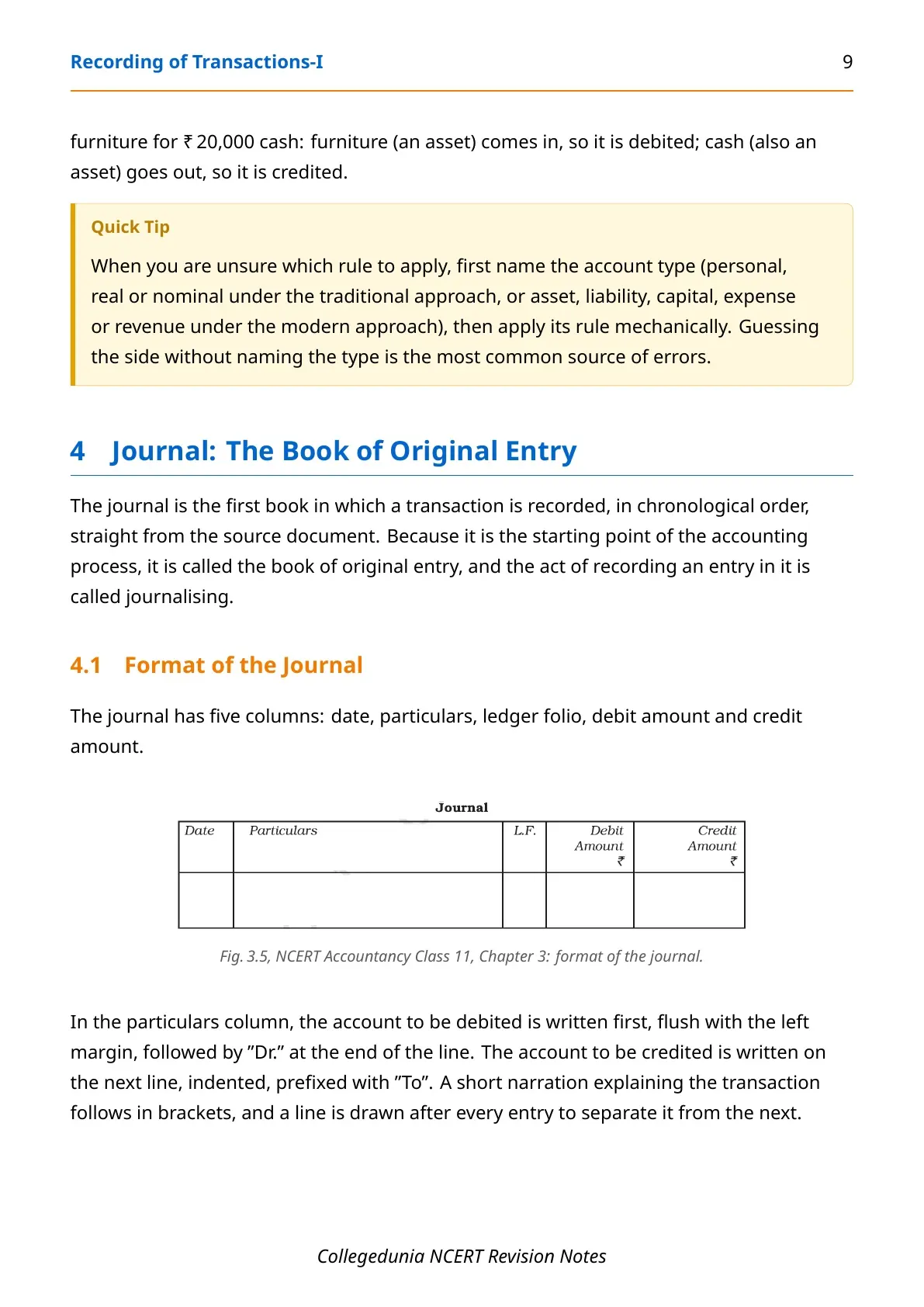
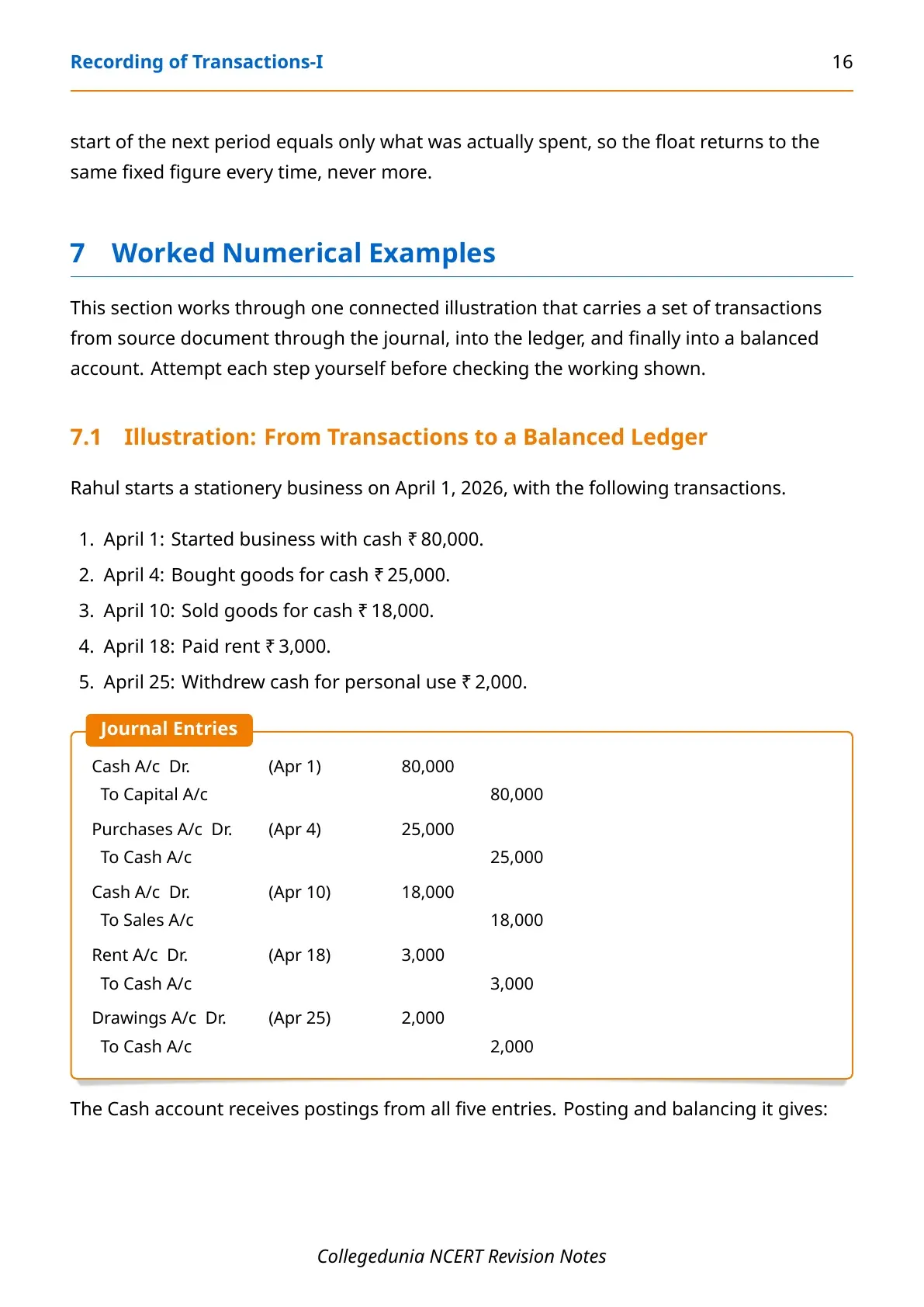
The journal is the book of original entry, the first place a transaction is recorded, straight from its source document and in date order. The account debited is written first with "Dr." at the end of the line; the account credited follows on the next line, indented, with "To" in front.
| Column | What It Records |
|---|---|
| Date | The date the transaction took place |
| Particulars | Account debited (Dr.), account credited (To ...), narration |
| L.F. (Ledger Folio) | Page number of the ledger account, filled in at posting |
| Debit Amount | The amount debited |
| Credit Amount | The amount credited |
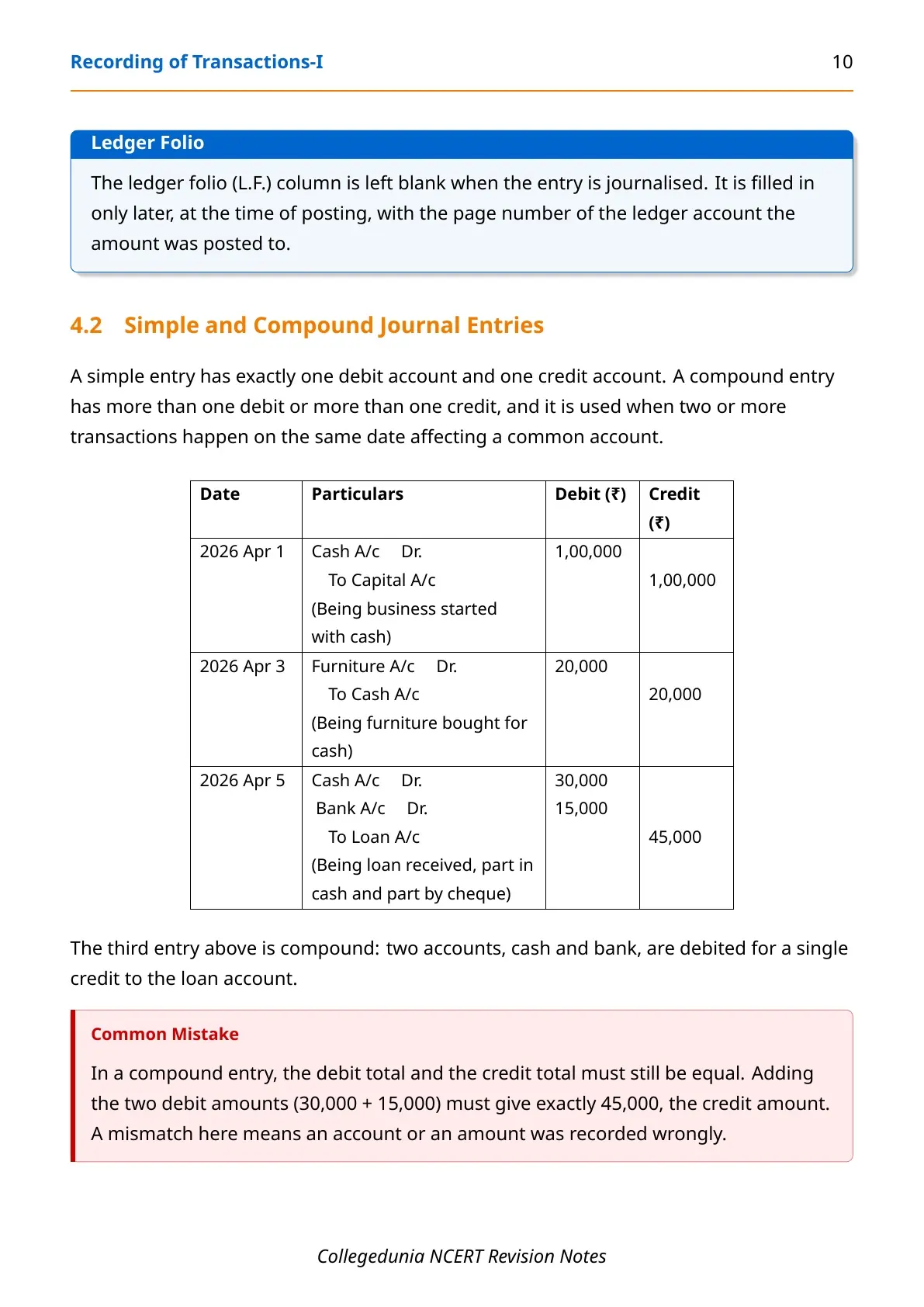
A simple entry has one debit and one credit account. A compound entry has more than one of either, used when two or more transactions on the same date share a common account. In a compound entry, the debit total must always equal the credit total.
Ledger Posting and Balancing an Account
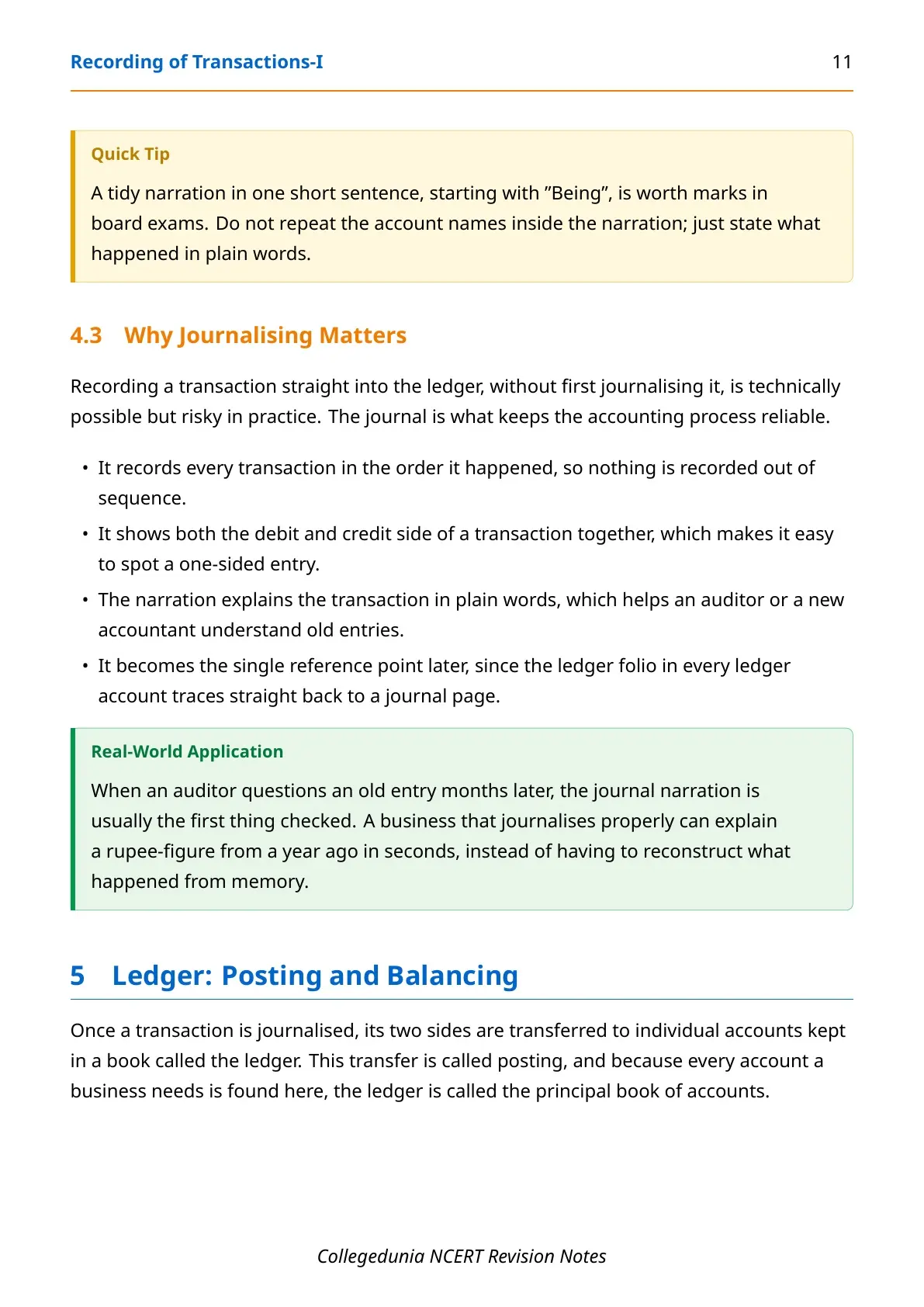
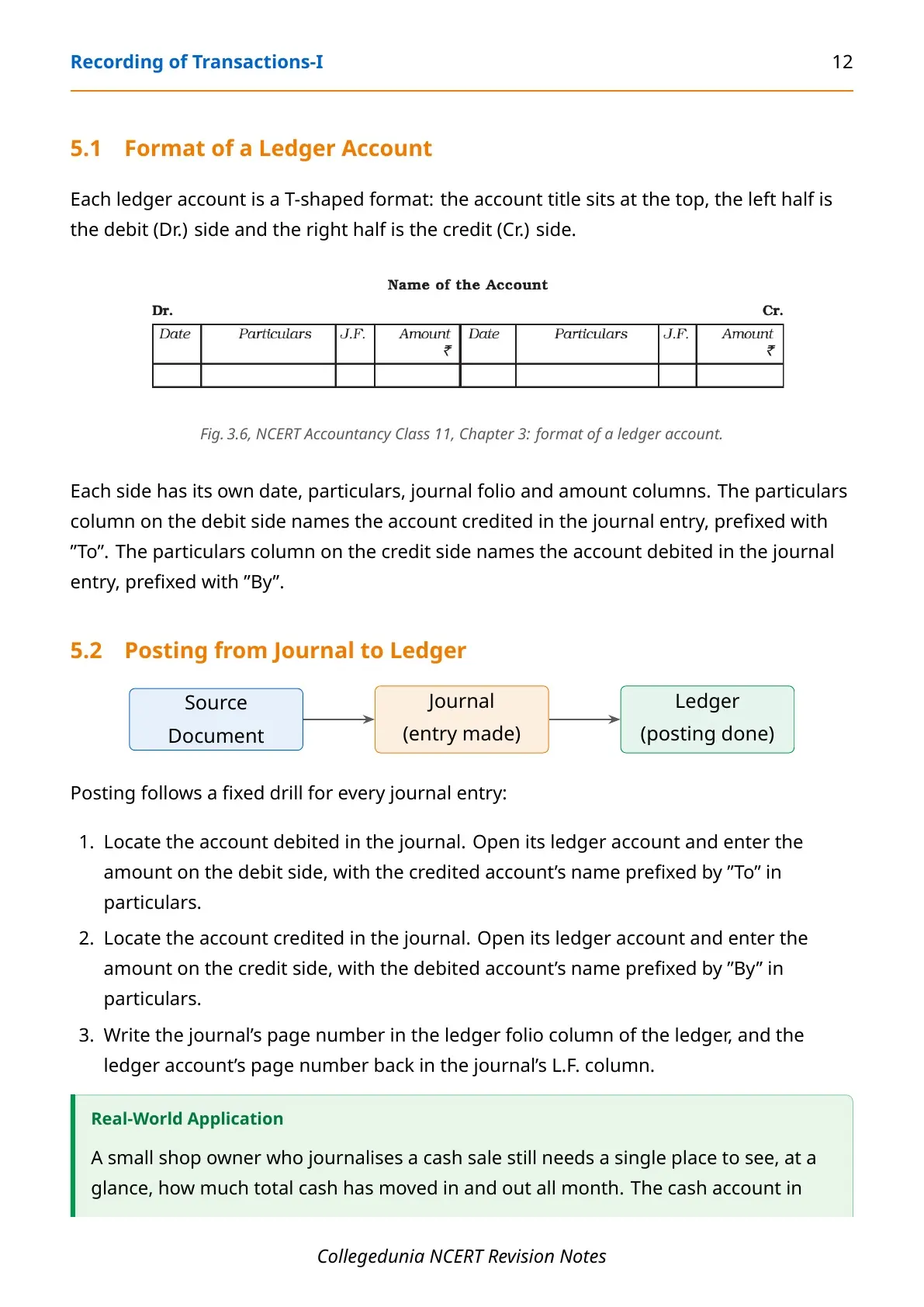
The ledger is the principal book of accounts. Once a transaction is journalised, both its debit and credit sides are transferred, a process called posting, to the individual T-shaped accounts kept in the ledger.
- The account debited in the journal gets the amount posted on its debit side, with the credited account's name prefixed "To".
- The account credited in the journal gets the amount posted on its credit side, with the debited account's name prefixed "By".
- The journal's page number goes into the ledger's L.F. column, and the ledger's page number goes back into the journal's L.F. column.
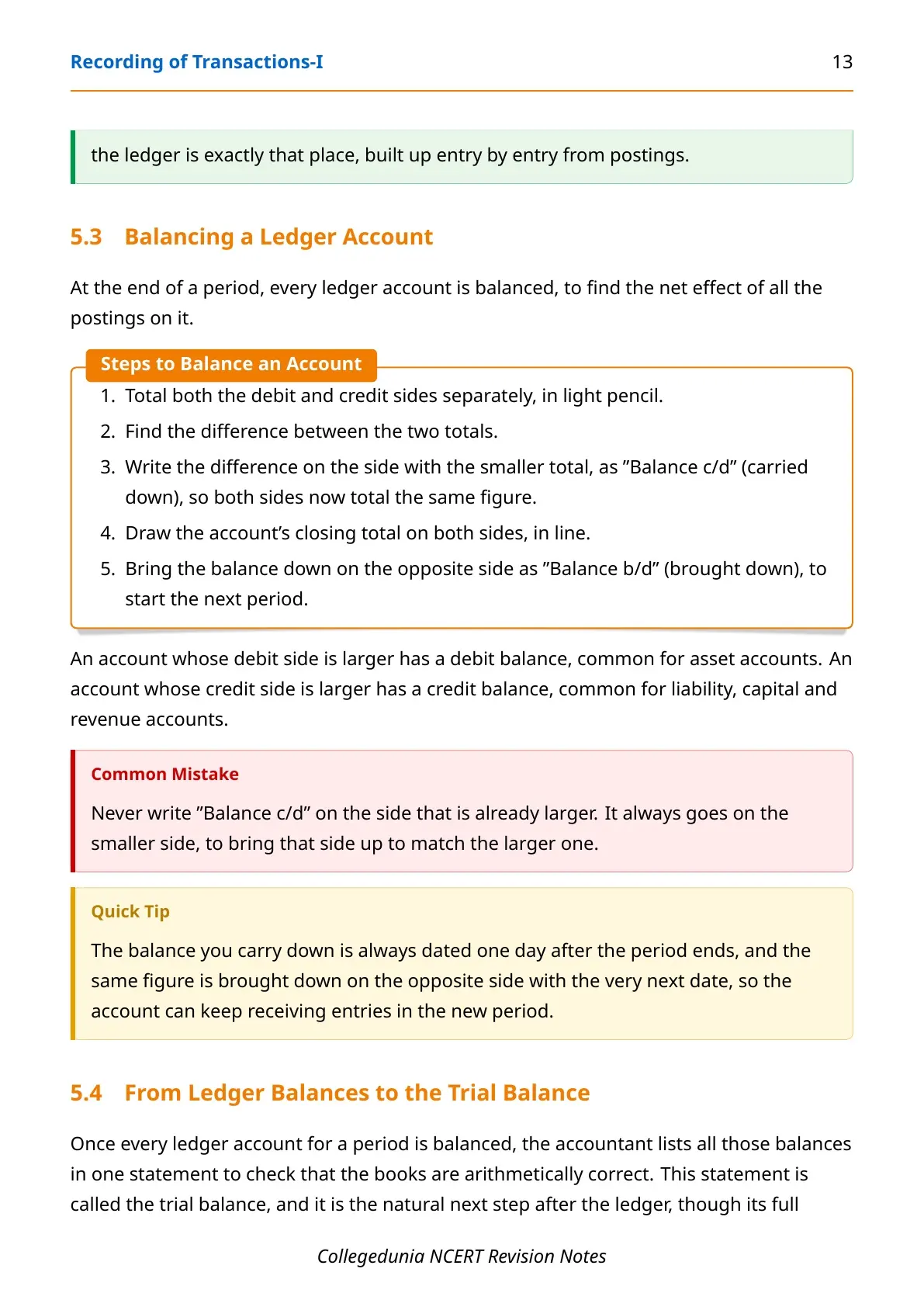
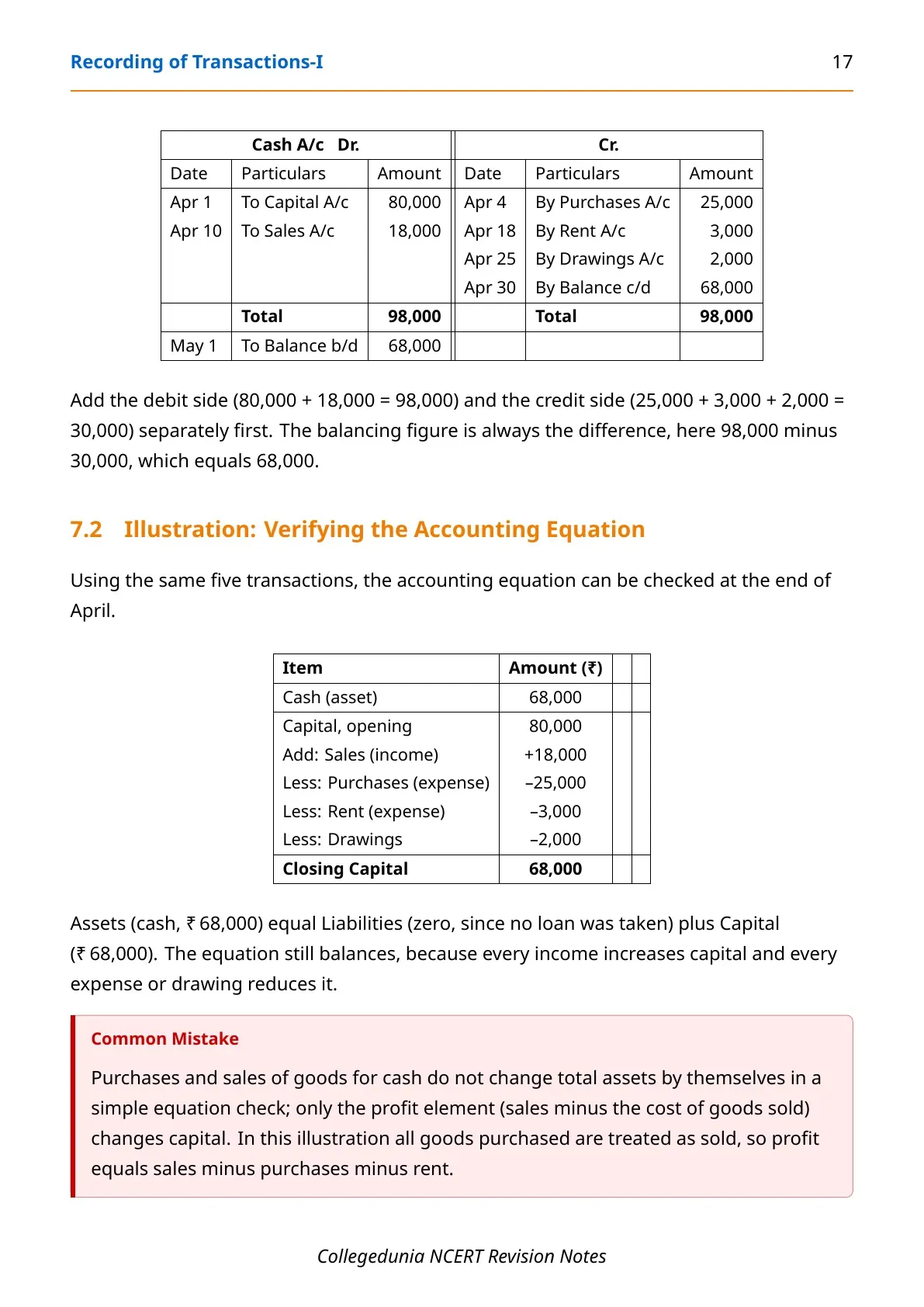
At the end of a period, every ledger account is balanced: both sides are totalled, the difference is written on the smaller side as "Balance c/d", and the same figure is brought down on the opposite side as "Balance b/d" to open the next period.
Cash Book: A Quick Preview Before Chapter 4
The NCERT book itself notes that cash transactions are recorded in a dedicated book called the cash book, and its full method is covered in Chapter 4, Recording of Transactions-II. Since it comes up in board revision plans, here is the short version.
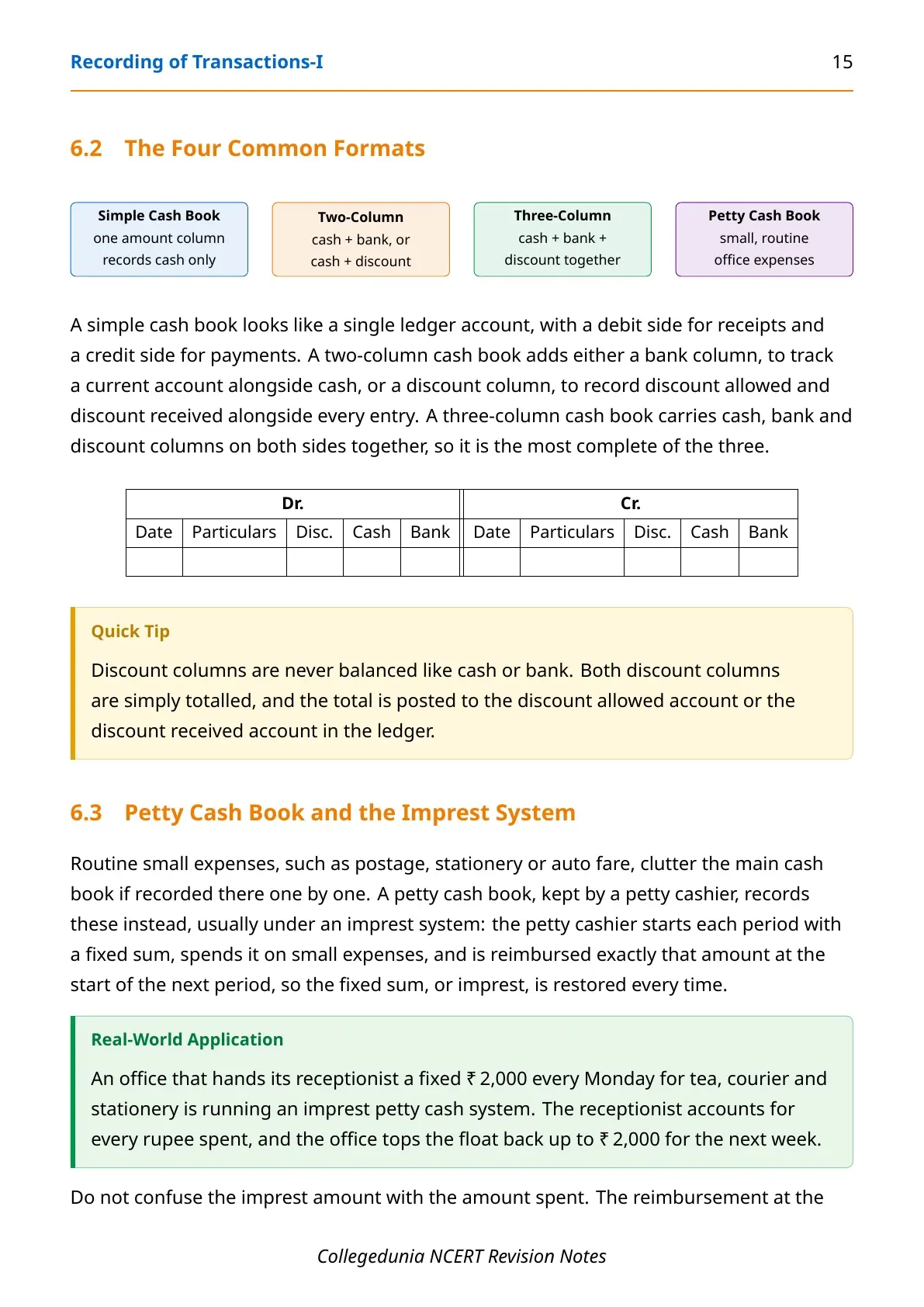
- A simple cash book works like a single ledger account for cash: debit side for receipts, credit side for payments.
- A two-column cash book adds either a bank column or a discount column.
- A three-column cash book carries cash, bank and discount columns together on both sides.
- A petty cash book records small routine expenses under the imprest system, where a fixed float is topped up every period.
Recording of Transactions-I Topic-wise Weightage for CBSE Class 11
Journal and ledger questions carry the most weight in this chapter's exam pattern, since they combine two skills, debit-credit rules and posting, in one numerical.
| Sub-topic | Weightage | CBSE Frequency |
|---|---|---|
| Journal entries (simple and compound) | High | Almost every year |
| Ledger posting and balancing | High | Almost every year |
| Rules of debit and credit (traditional and modern) | Medium | 3 out of last 5 years |
| Accounting equation | Medium | 3 out of last 5 years |
| Source documents and vouchers | Low | 1-2 out of last 5 years |
Important Formats and Formulas to Remember
These are the exact formats and the one formula this chapter is built on. Keep this box open while you practise journal and ledger numericals.
- Accounting equation: Assets = Liabilities + Capital, must hold after every transaction.
- Journal format: Date, Particulars (debit account "Dr.", credit account "To ..."), L.F., Debit Amount, Credit Amount.
- Ledger format: T-shaped, Dr. side and Cr. side, each with Date, Particulars, J.F. and Amount.
- Balancing rule: the difference between the two sides goes on the smaller side as "Balance c/d", then "Balance b/d" opens the next period.
Common Mistakes Students Make in the Recording of Transactions-I Chapter
| Mistake | Fix |
|---|---|
| Swapping debit note and credit note | The buyer who returns goods sends a debit note, since it is reducing what it owes. |
| Writing "Balance c/d" on the larger side | It always goes on the smaller side, to bring both sides to the same total. |
| Guessing the debit-credit side without naming the account type | Name personal, real or nominal (or asset, liability, capital, expense, revenue) first, then apply the rule. |
| Compound entry where debit total does not equal credit total | Add both sides separately before moving on; a mismatch means an account or amount is wrong. |
Key Accounting Terms Glossary for Recording of Transactions-I
| Term | Meaning |
|---|---|
| Source document | Evidence of a transaction, such as a cash memo or invoice |
| Voucher | A standard slip prepared from source documents for recording |
| Journalising | The act of recording a transaction in the journal |
| Posting | Transferring a journal entry to the correct ledger accounts |
| Narration | A short note in brackets explaining a journal entry |
| Balancing | Finding the net figure on a ledger account at period end |
How Collegedunia's Notes Help You With Recording of Transactions-I
The NCERT Notes Class 11 Accountancy Chapter 3 Recording of Transactions-I on this page are built to match how Class 11 board papers actually test this chapter.
- 2026-27 NCERT Alignment: Every rule and format matches the current NCERT print.
- Both Debit-Credit Systems Side by Side: Traditional and modern rules in one table, so no switching between books.
- Solved Journal and Ledger Examples: A full transaction-to-balanced-account walkthrough, the exact skill the board tests.
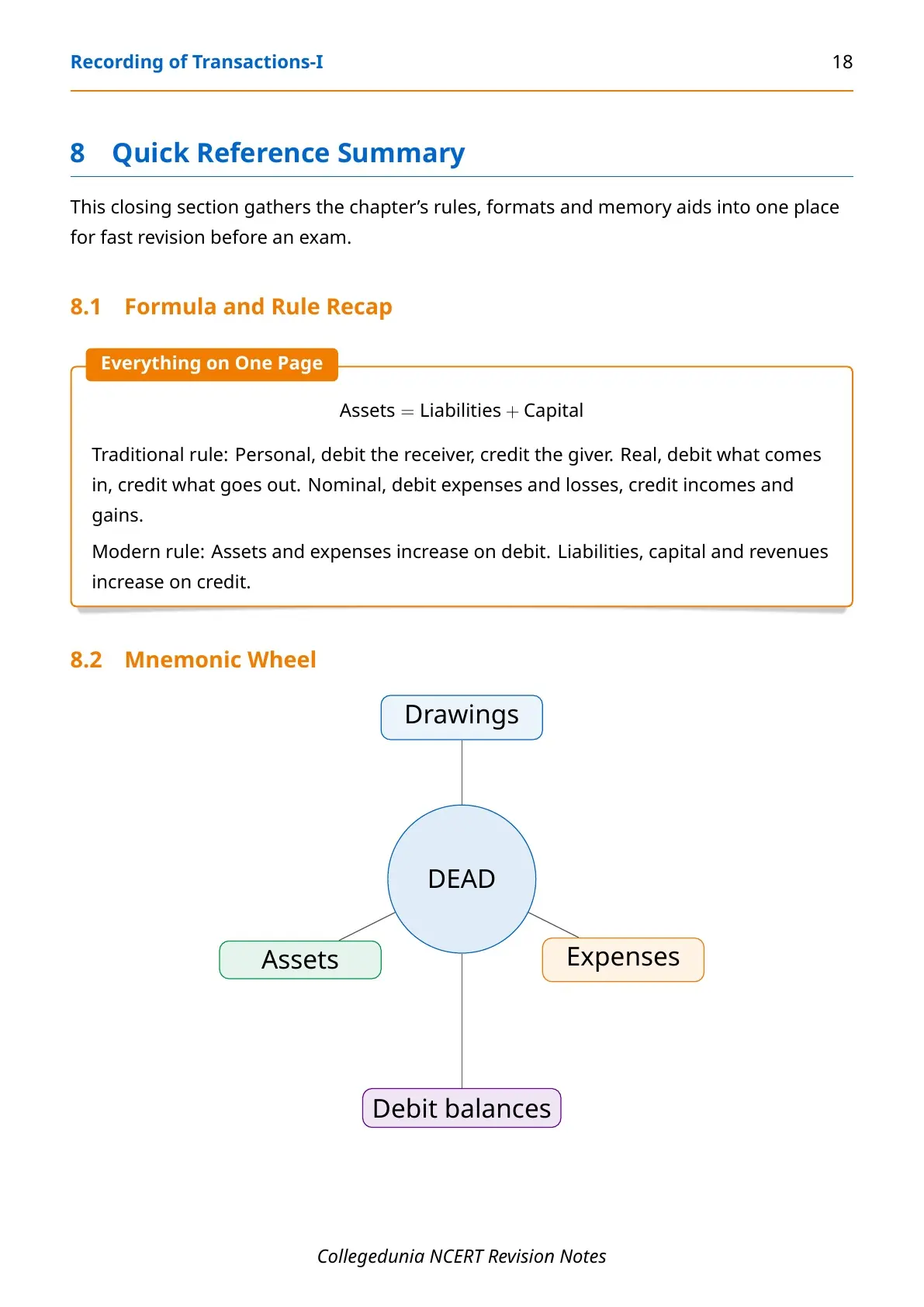
- Quick Recall Boxes: Formats, formulas and the DEAD mnemonic in one place for last-day revision.
Recording of Transactions-I Class 11 Accountancy Resources
Besides the NCERT Notes Class 11 Accountancy Chapter 3 Recording of Transactions-I on this page, every other resource type for this chapter sits in one place below.
| Resource | Status |
|---|---|
| Recording of Transactions-I Class 11 Notes | You are reading this page |
| Recording of Transactions-I Class 11 Handwritten Notes | Available |
| Recording of Transactions-I Class 11 NCERT Solutions | (coming soon) |
| Recording of Transactions-I Class 11 NCERT Book PDF | (coming soon) |
NCERT Notes for Class 11 Accountancy: All Chapters
Jump to the notes for any other Class 11 Accountancy chapter.
| Chapter | Notes |
|---|---|
| Chapter 1 | Introduction to Accounting (coming soon) |
| Chapter 2 | Theory Base of Accounting (coming soon) |
| Chapter 3 | Recording of Transactions-I (this page) |
| Chapter 4 | Recording of Transactions-II (coming soon) |
| Chapter 5 | Bank Reconciliation Statement (coming soon) |
| Chapter 6 | Trial Balance and Rectification of Errors (coming soon) |
| Chapter 7 | Depreciation, Provisions and Reserves (coming soon) |
Recording of Transactions-I Class 11 Accountancy Notes FAQs
Ques. What is the difference between a journal and a ledger in Recording of Transactions-I?
Ans. The journal is the book of original entry, where a transaction is recorded first, in date order, straight from its source document. The ledger is the principal book, where each journal entry is posted to the correct account. Journalising happens first, posting happens second.
Ques. What is the accounting equation in Class 11 Accountancy Chapter 3?
Ans. The accounting equation is Assets = Liabilities + Capital. It states that every asset a business owns is financed either by an outsider (liability) or by the owner (capital), and it must balance after every single transaction.
Ques. What are the rules of debit and credit under the traditional approach?
Ans. Under the traditional approach, a personal account is debited for the receiver and credited for the giver, a real account is debited for what comes in and credited for what goes out, and a nominal account is debited for expenses and losses and credited for incomes and gains.
Ques. Is the cash book covered in Recording of Transactions-I?
Ans. Only a brief preview. The NCERT textbook covers the cash book in full detail in Chapter 4, Recording of Transactions-II. Chapter 3 focuses on source documents, the accounting equation, debit-credit rules, the journal and the ledger.
Ques. Are these Class 11 Accountancy notes aligned with the 2026-27 NCERT?
Ans. Yes. These notes follow the current 2026-27 NCERT print for Class 11 Accountancy Chapter 3, Recording of Transactions-I, including its journal and ledger formats.
Ques. How many pages is the Class 11 Accountancy Chapter 3 Notes PDF?
Ans. The Notes PDF runs to 20 pages and covers source documents, the accounting equation, both debit-credit approaches, the journal, the ledger, a cash book preview and solved numerical examples.
Ques. What is a source document?
Ans. A source document is a written or printed record, such as a cash memo, invoice or cheque, that gives evidence a business transaction actually happened. It is the starting point for every voucher and journal entry.
Ques. How is posting defined in accounting?
Ans. Posting is the process of transferring an amount from a journal entry to the debit or credit side of the correct ledger account, using "To" on the debit side and "By" on the credit side.
Ques. What are the golden rules of accounting used in this chapter?
Ans. They are the traditional rules: debit the receiver and credit the giver for personal accounts, debit what comes in and credit what goes out for real accounts, and debit expenses and losses while crediting incomes and gains for nominal accounts.



Comments