



The Business, Trade and Commerce Class 11 notes cover the first Business Studies chapter for the 2026-27 NCERT syllabus. Use this page to revise ancient trade, business features, industry, commerce, trade, auxiliaries, objectives, risk and the first steps in starting a business before opening the full PDF.
- Download the 27-page Chapter 1 Business Studies notes PDF for offline revision.
- Revise industry, commerce, trade and aids to trade with exam-ready tables.
- Student focus: keep the difference between business, profession and employment clear.
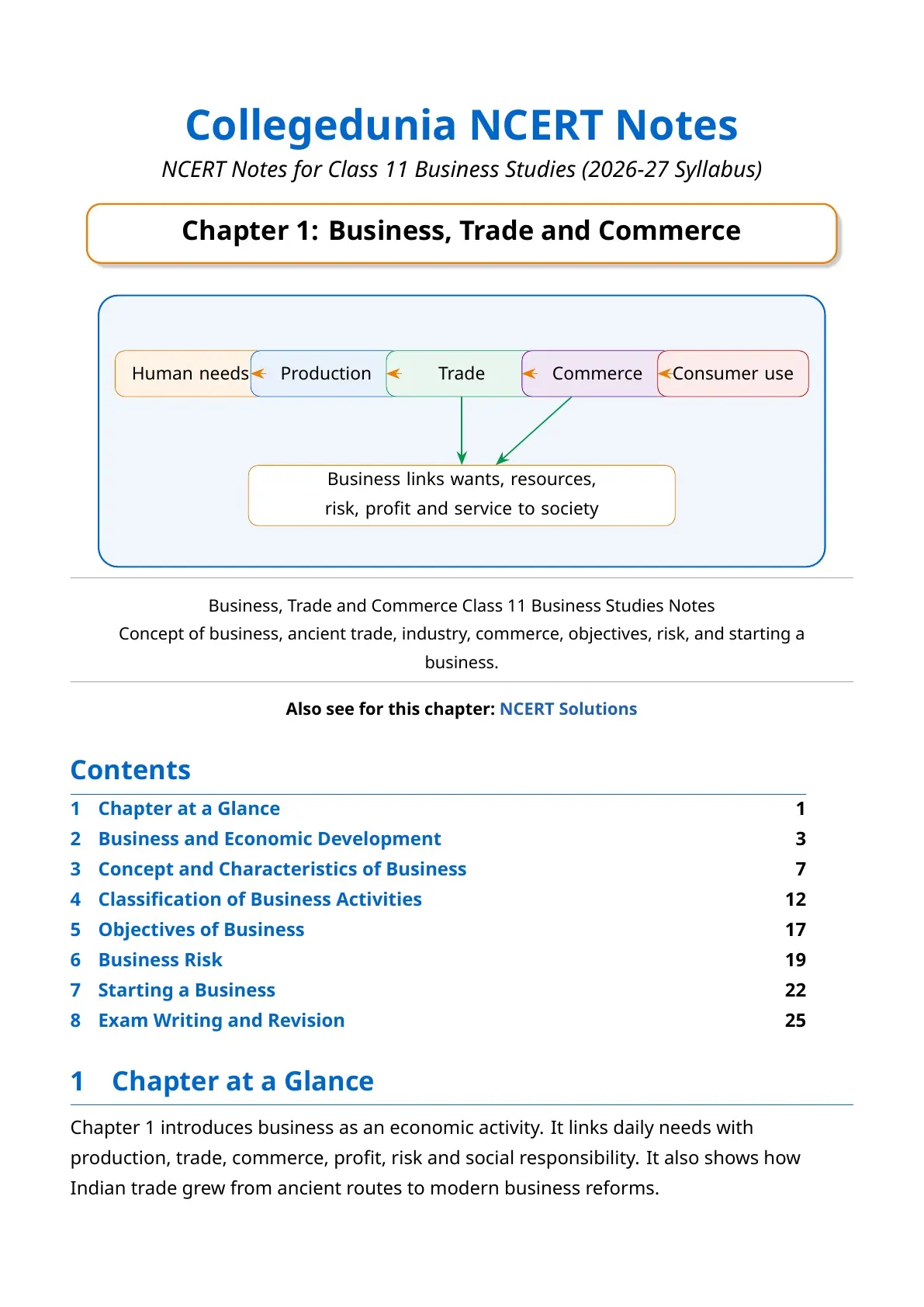
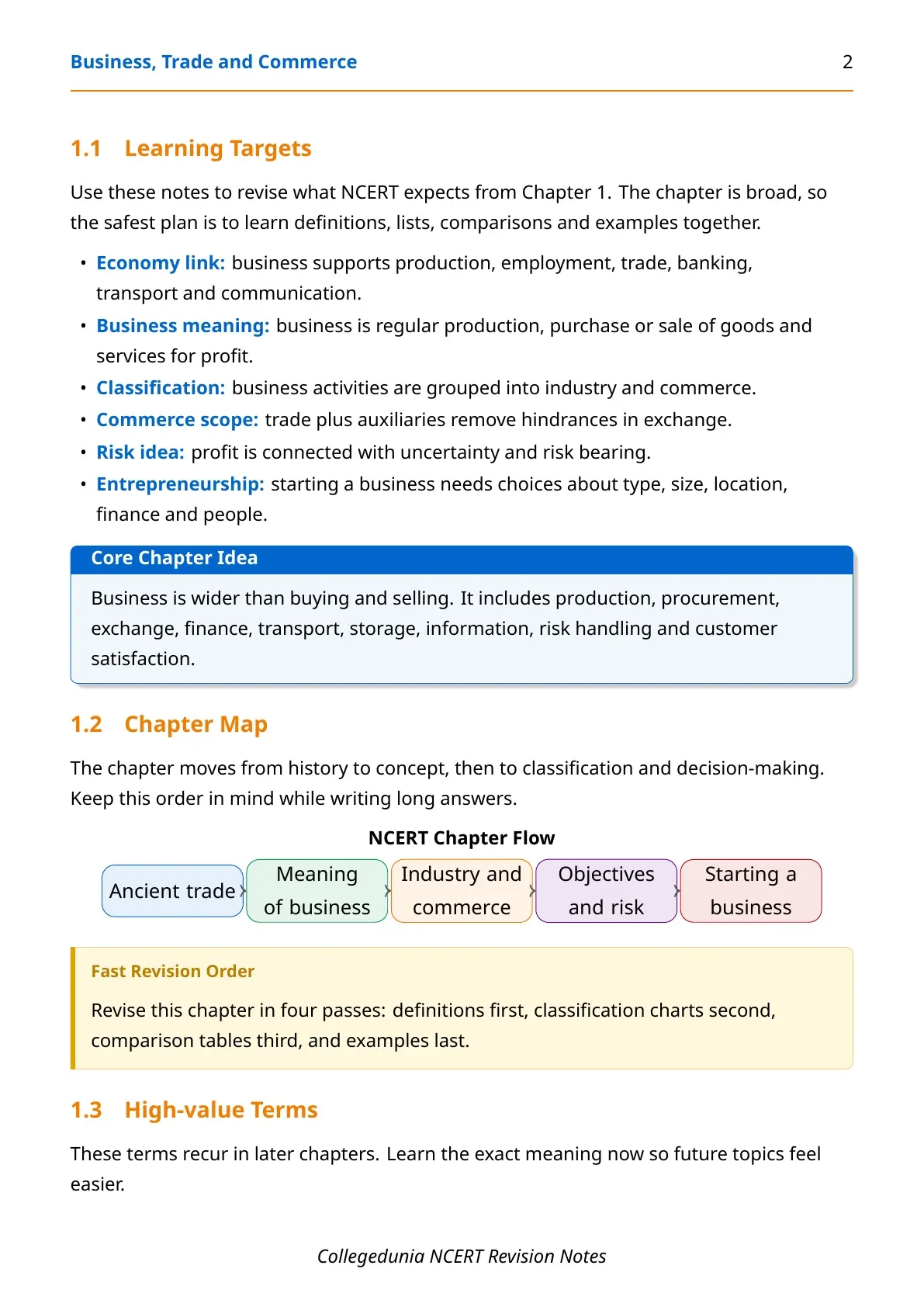
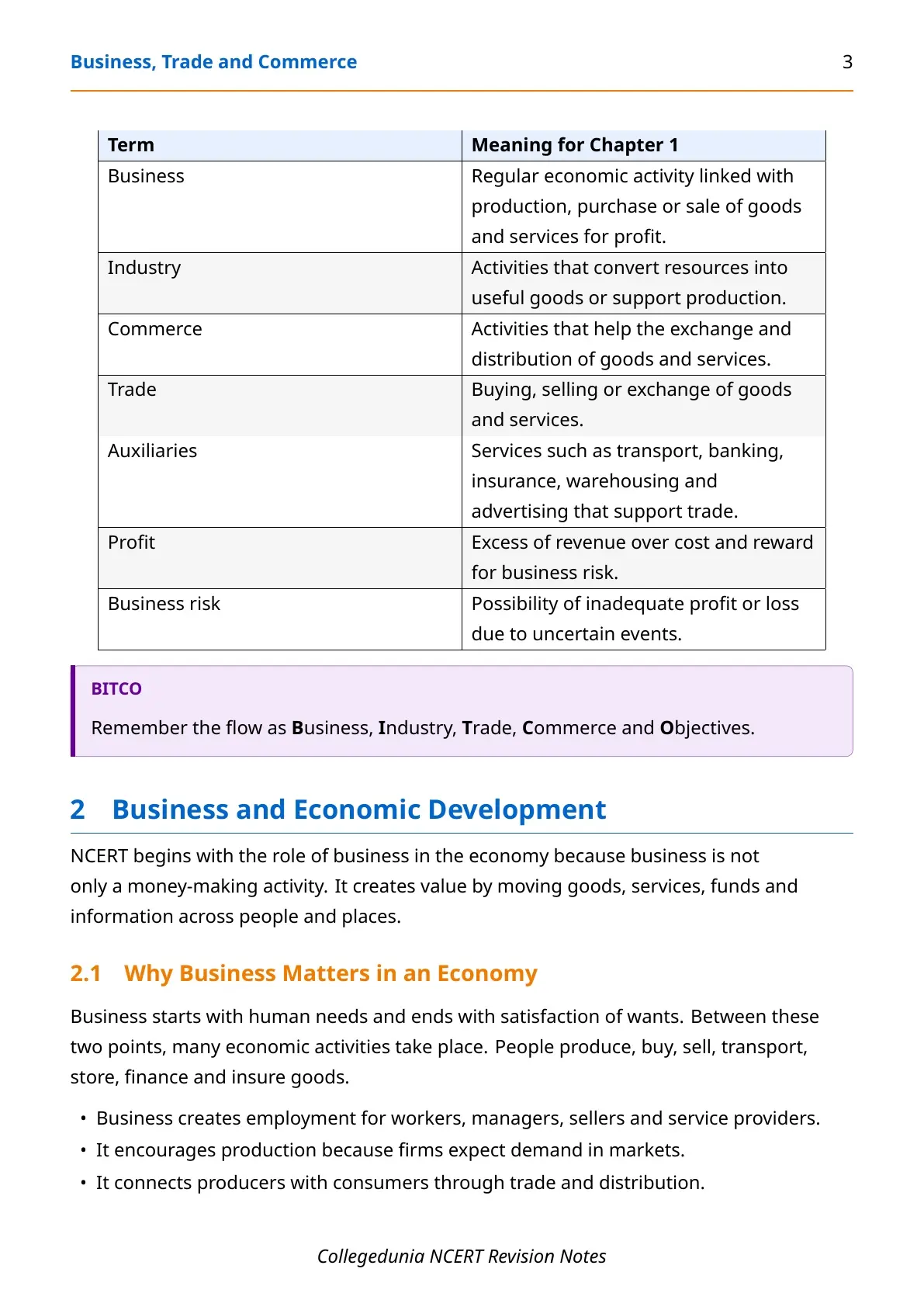
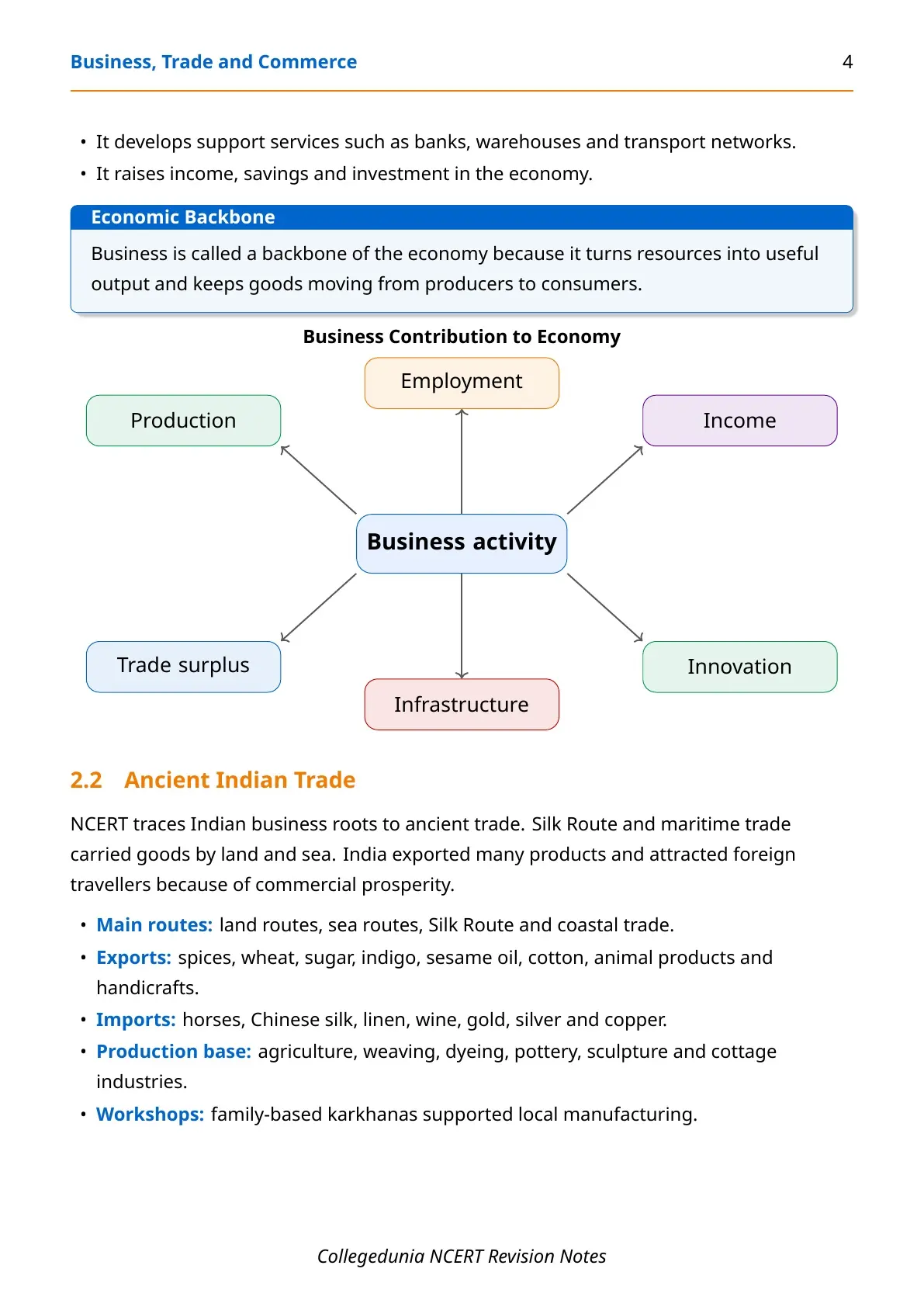
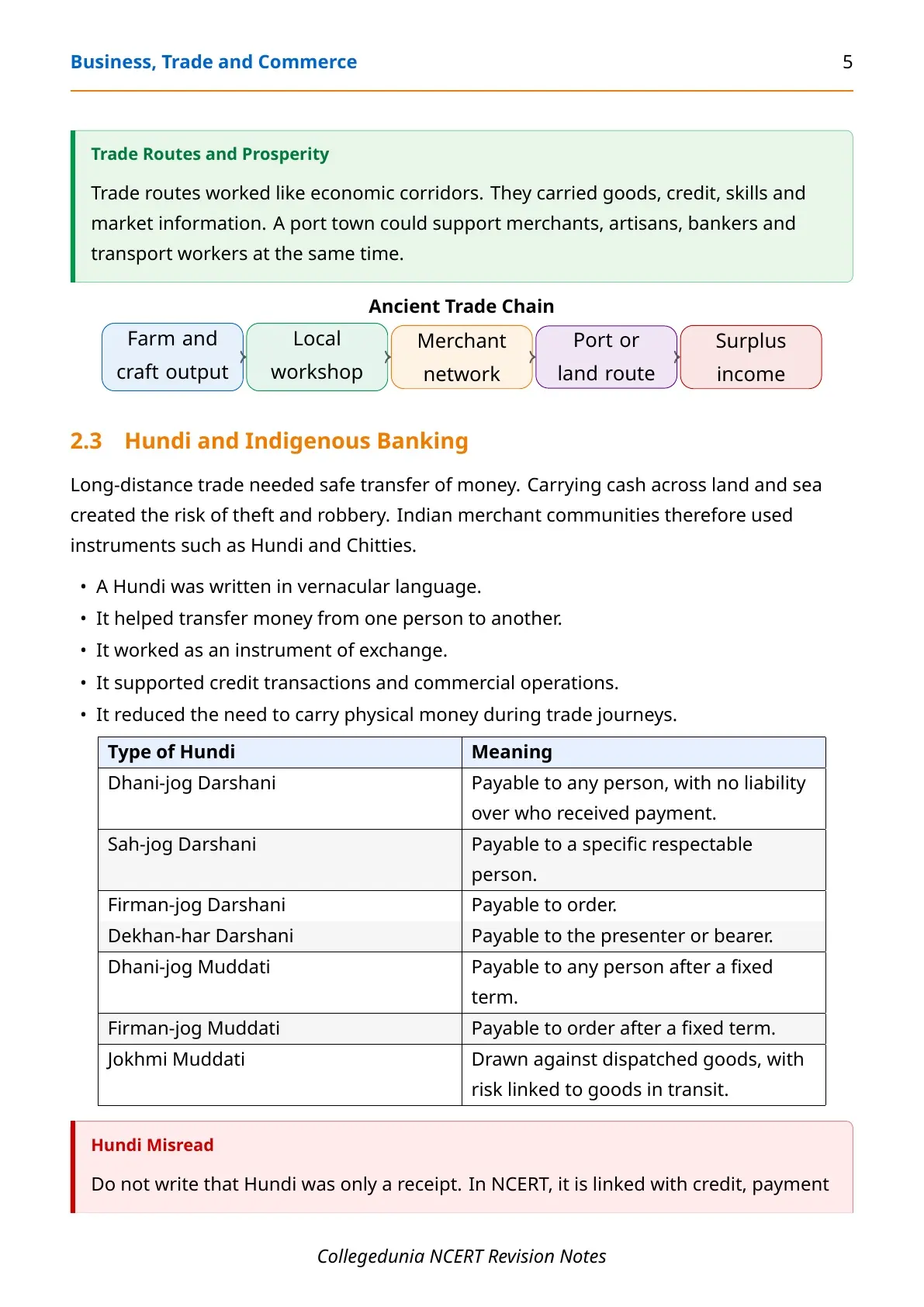
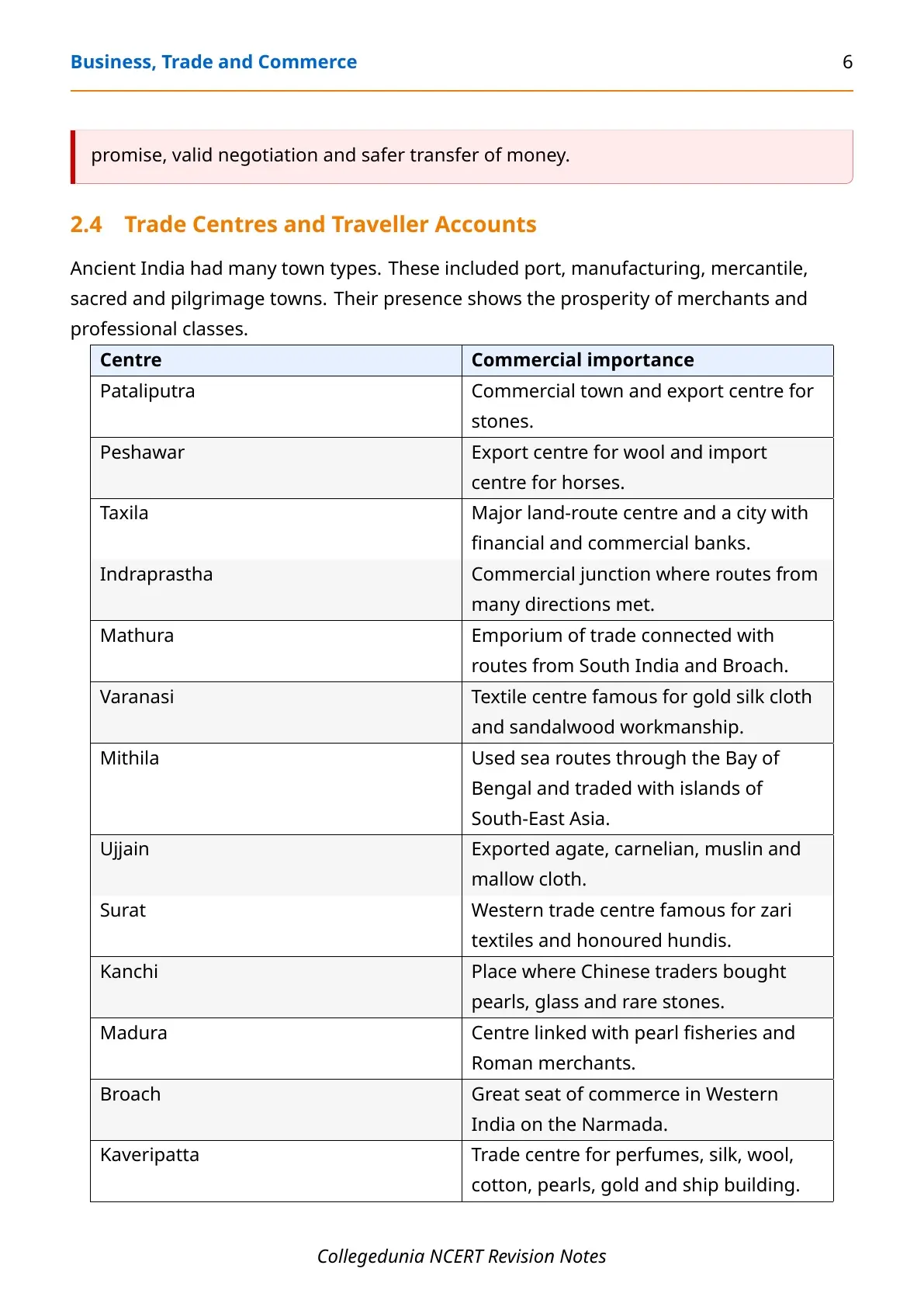
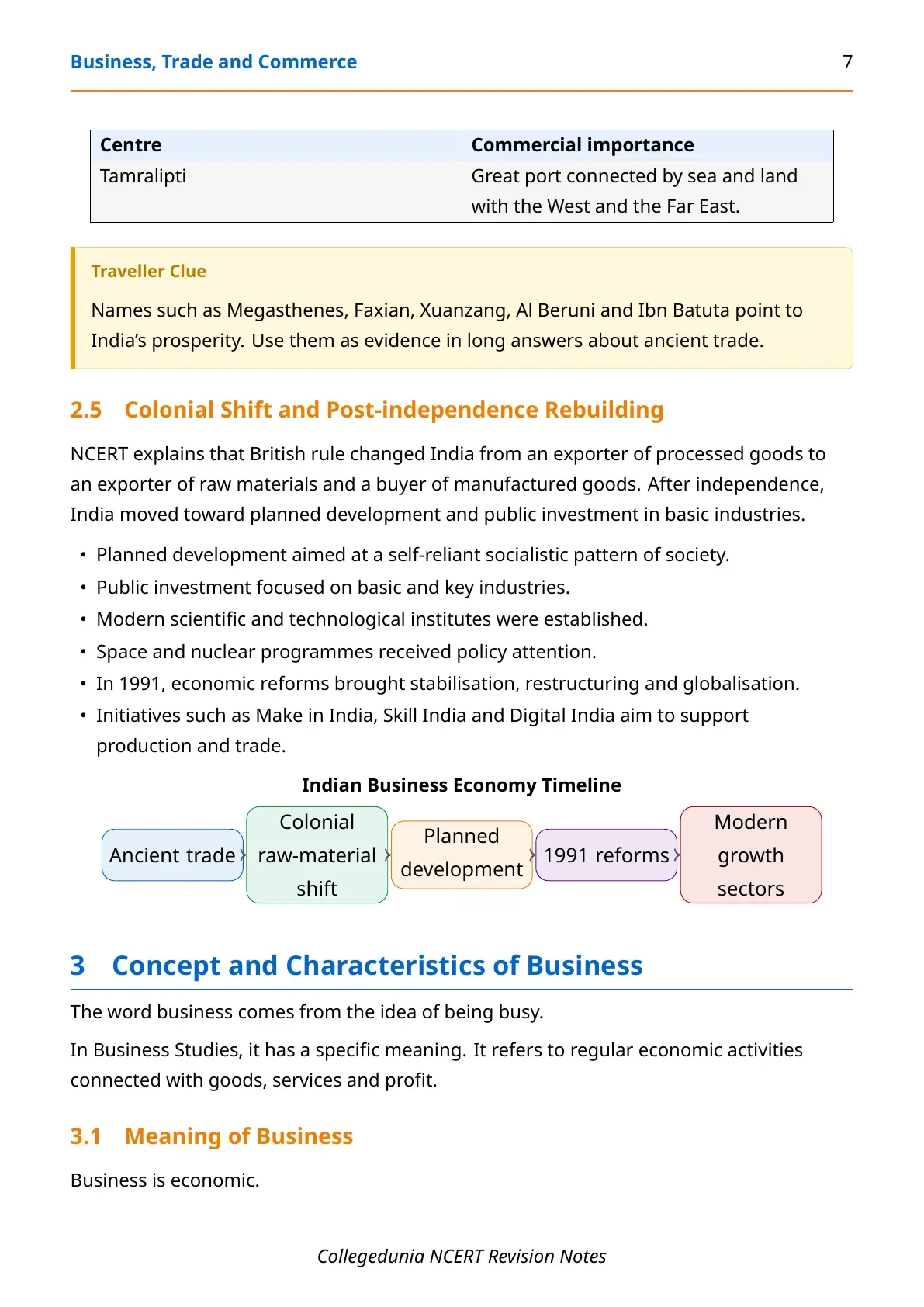
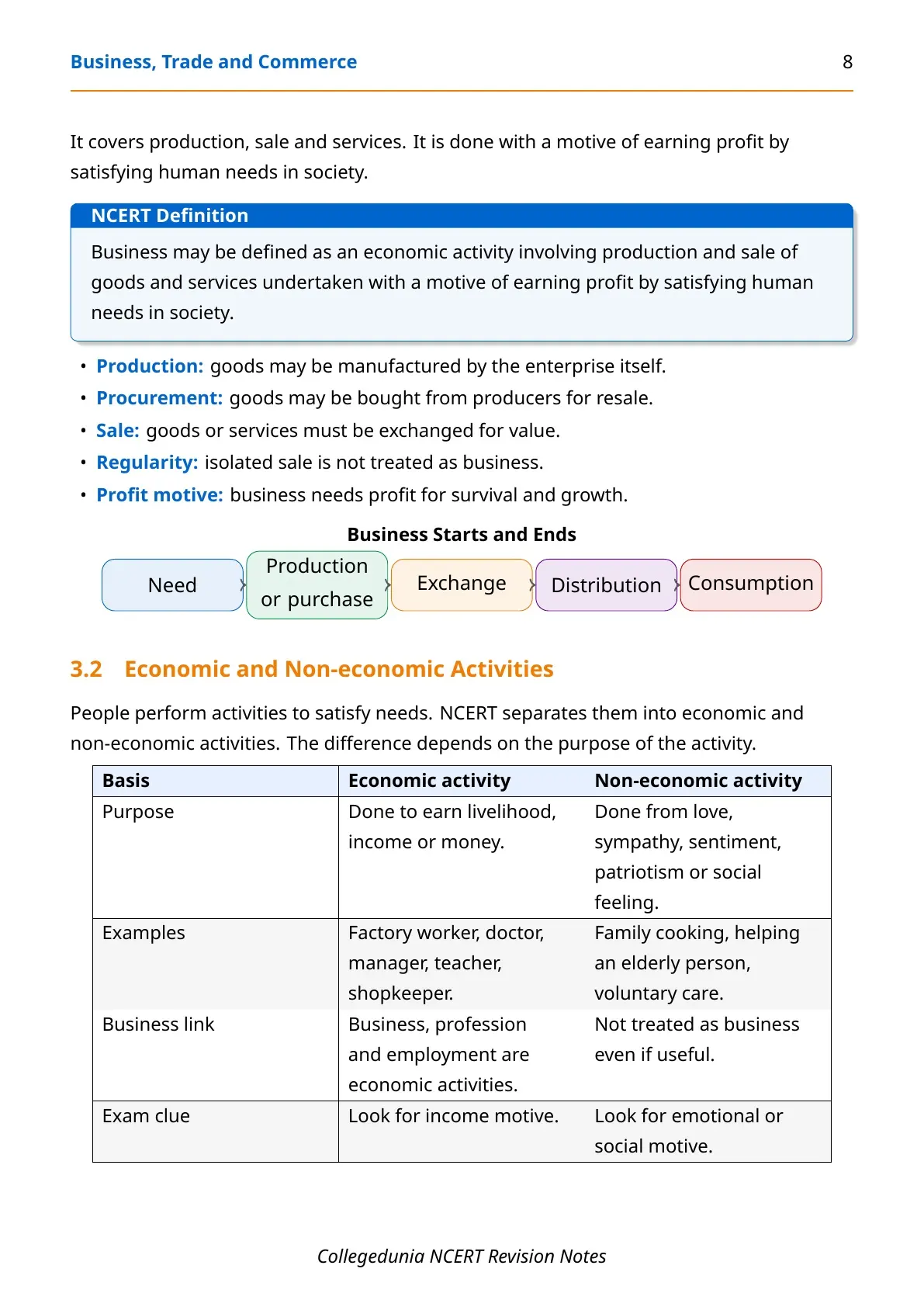
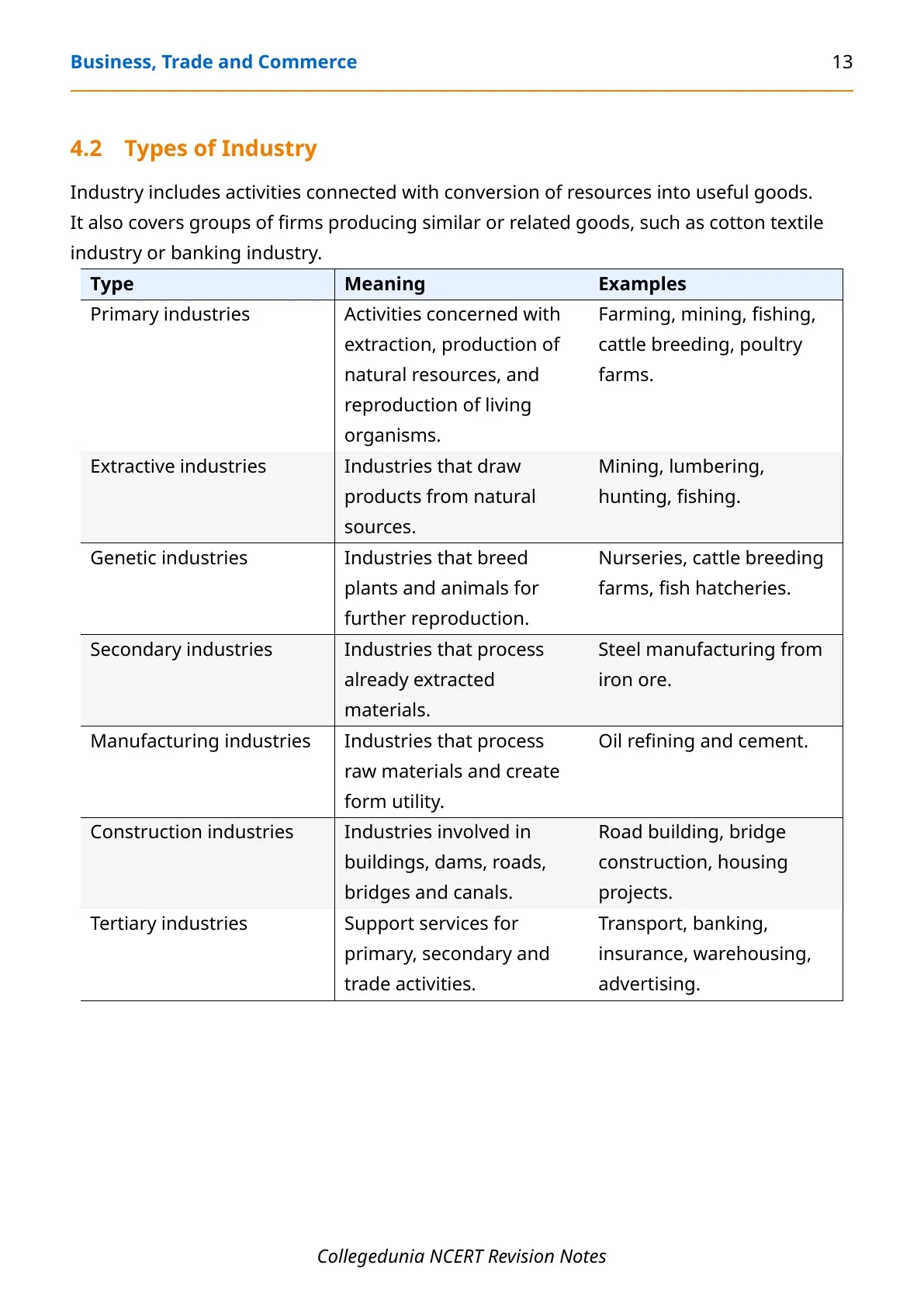
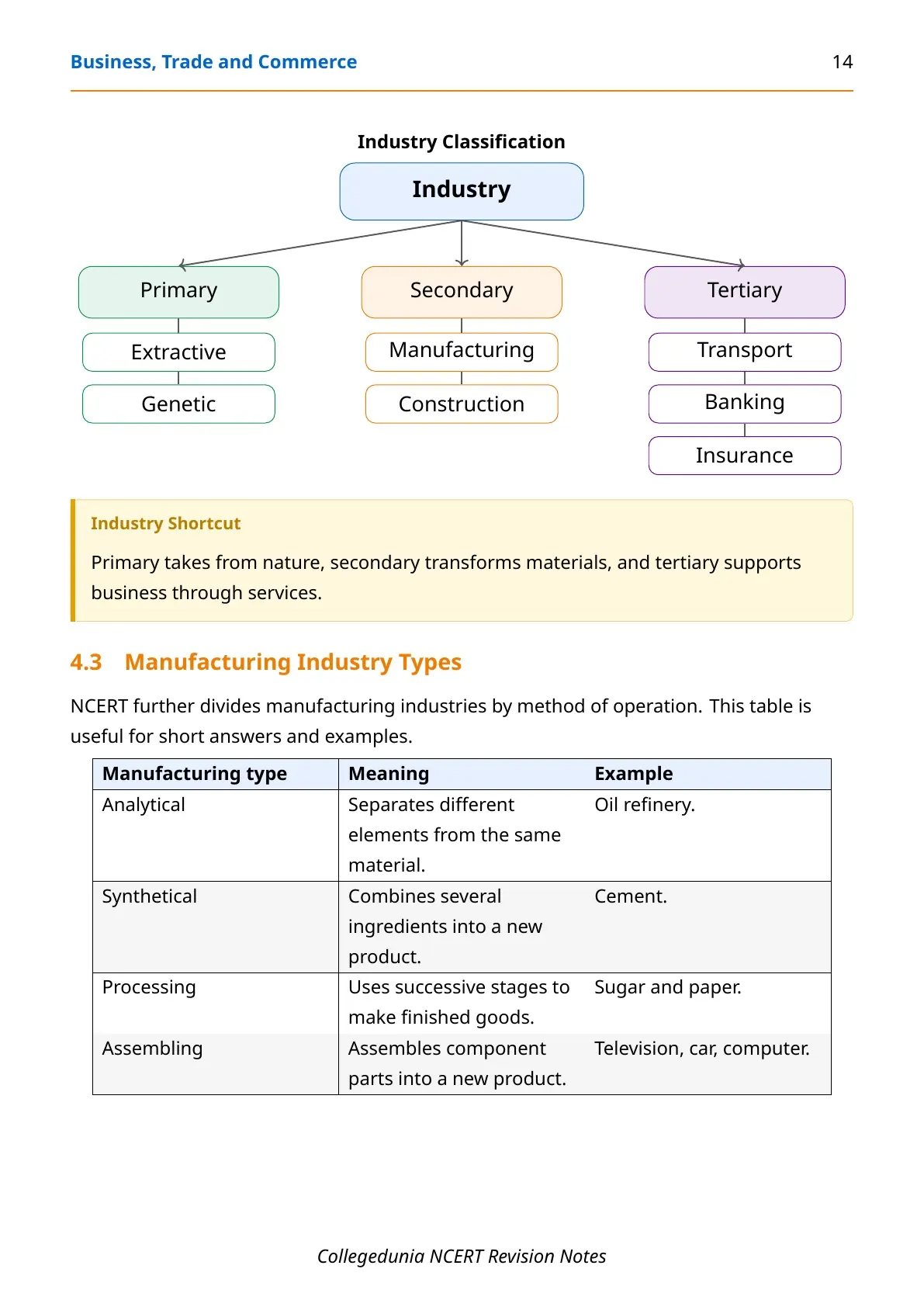
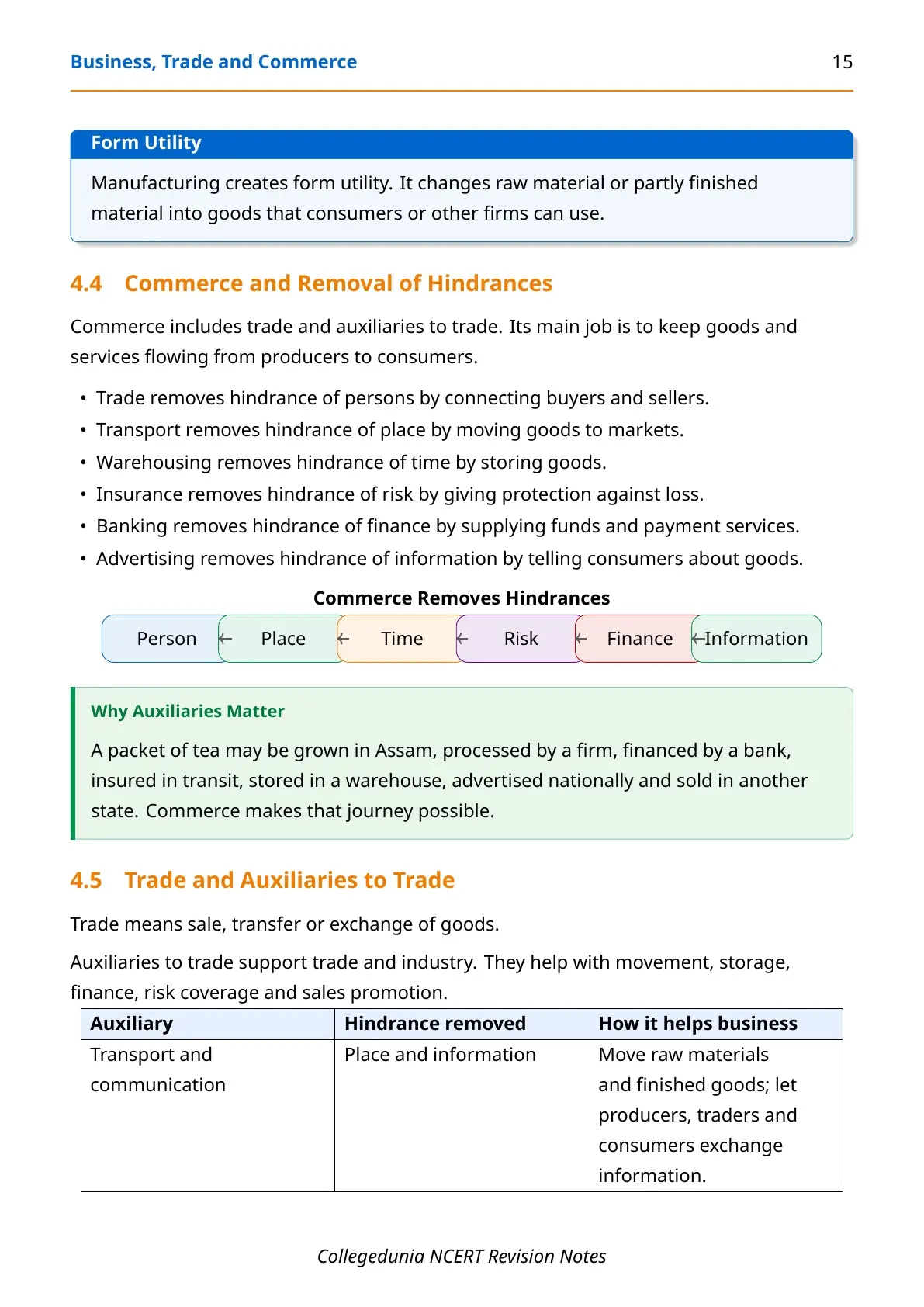
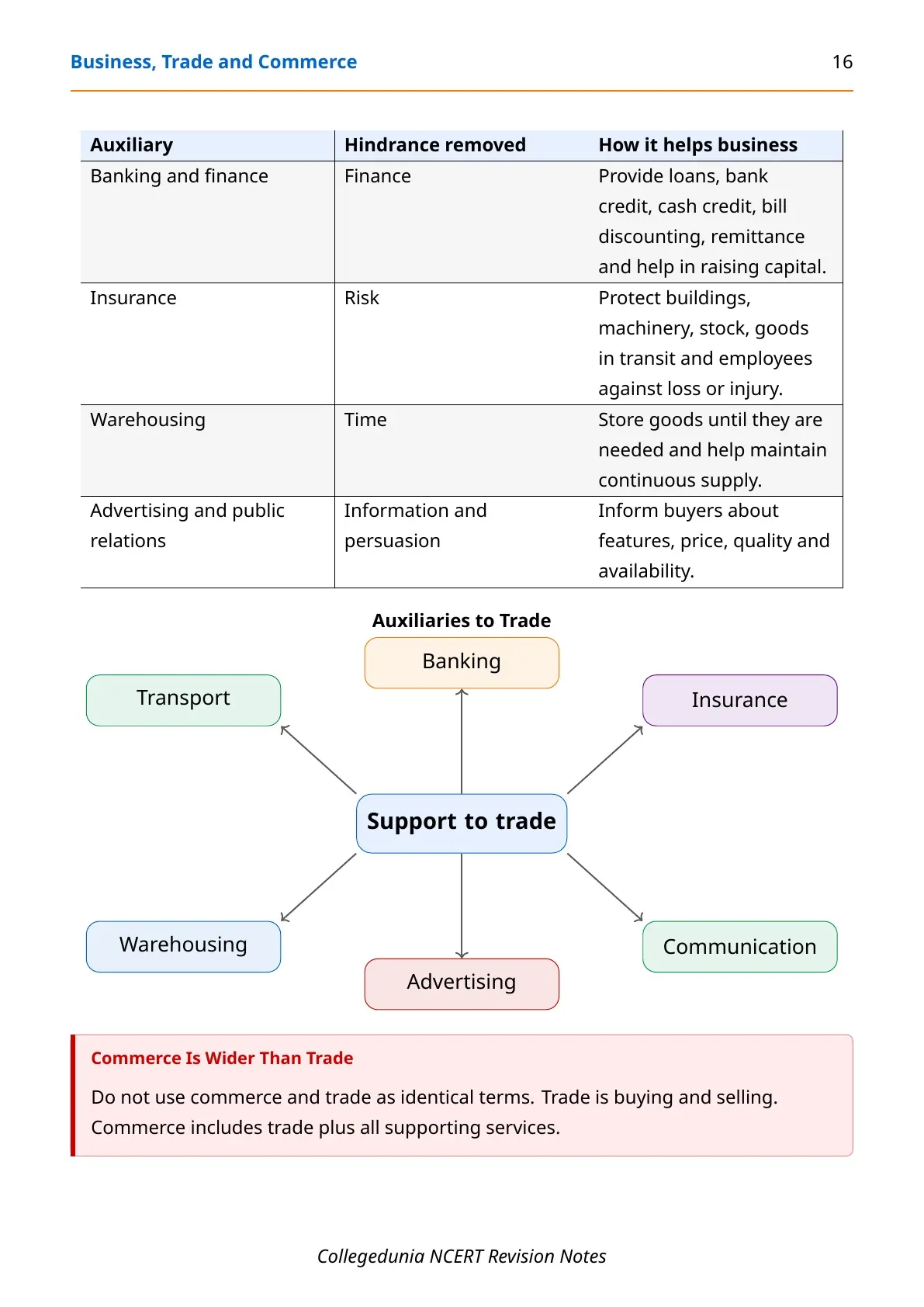
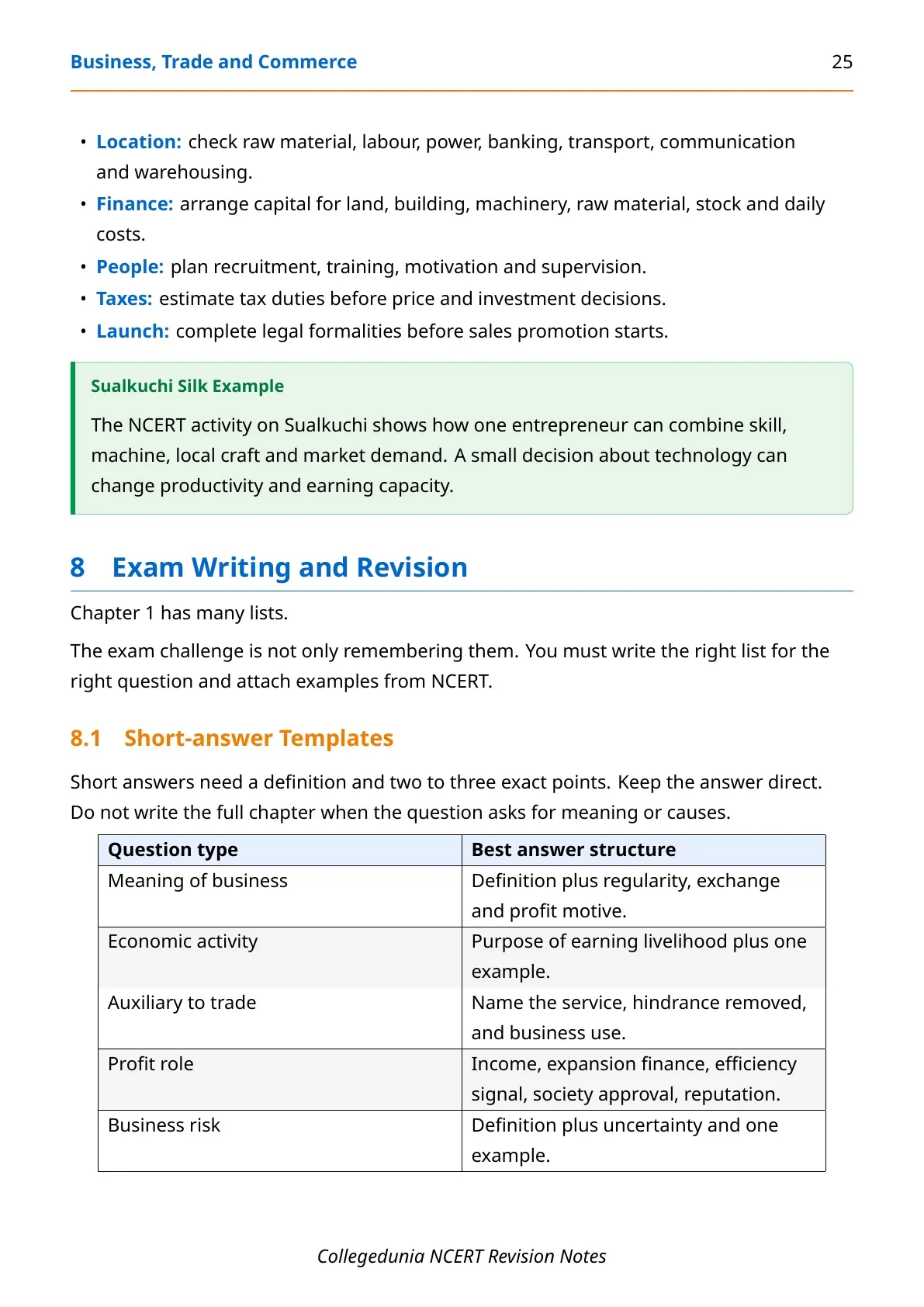
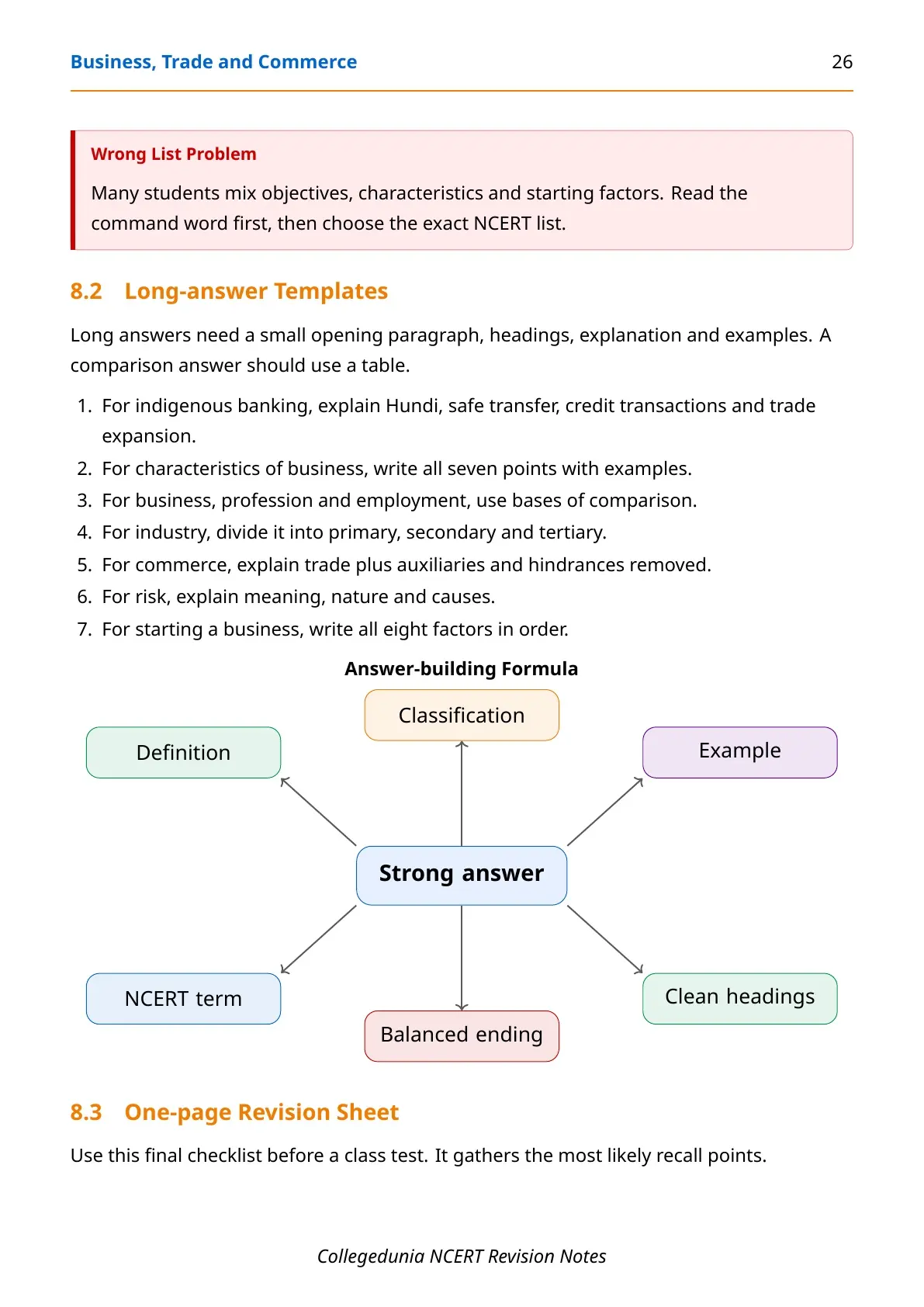
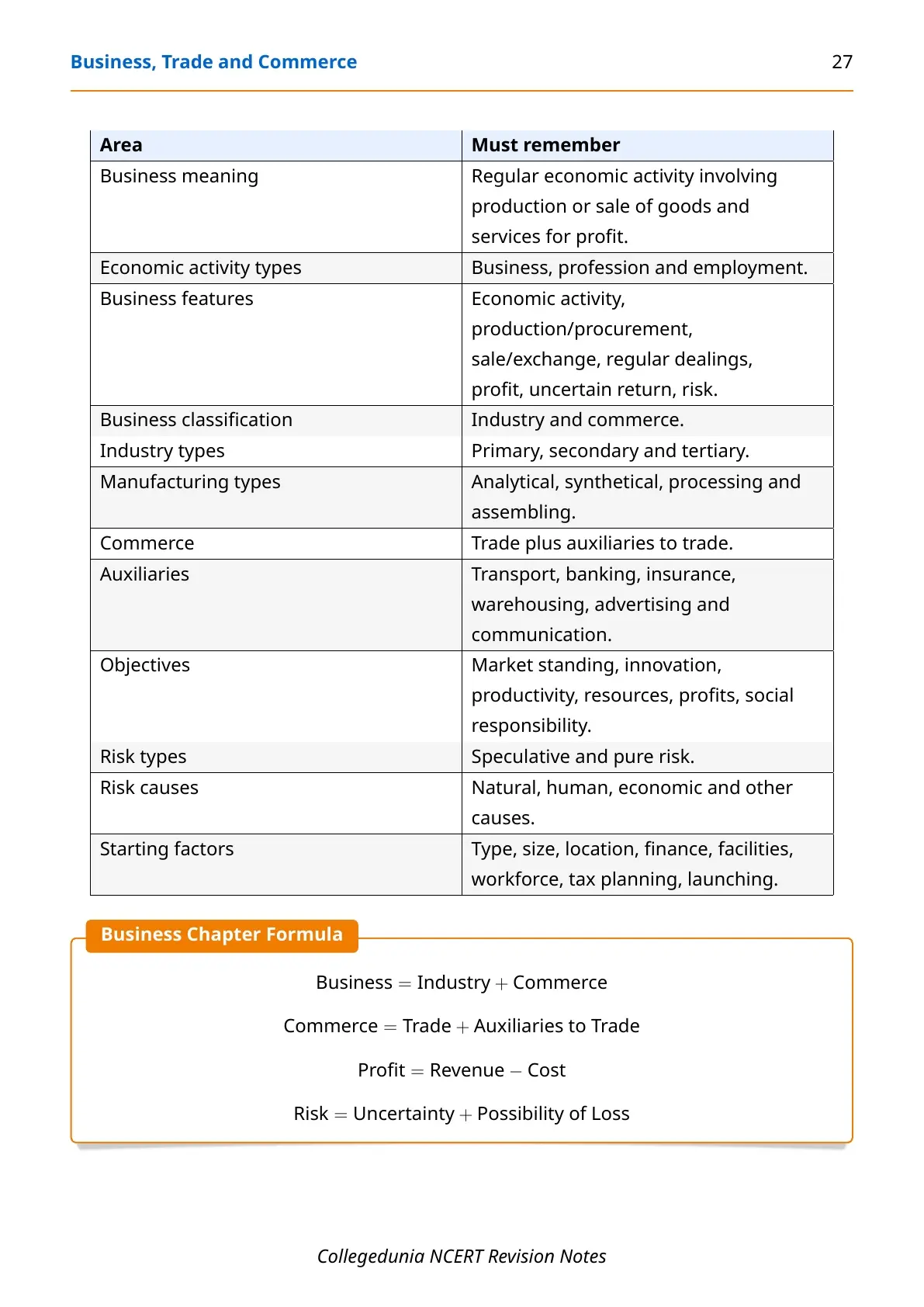
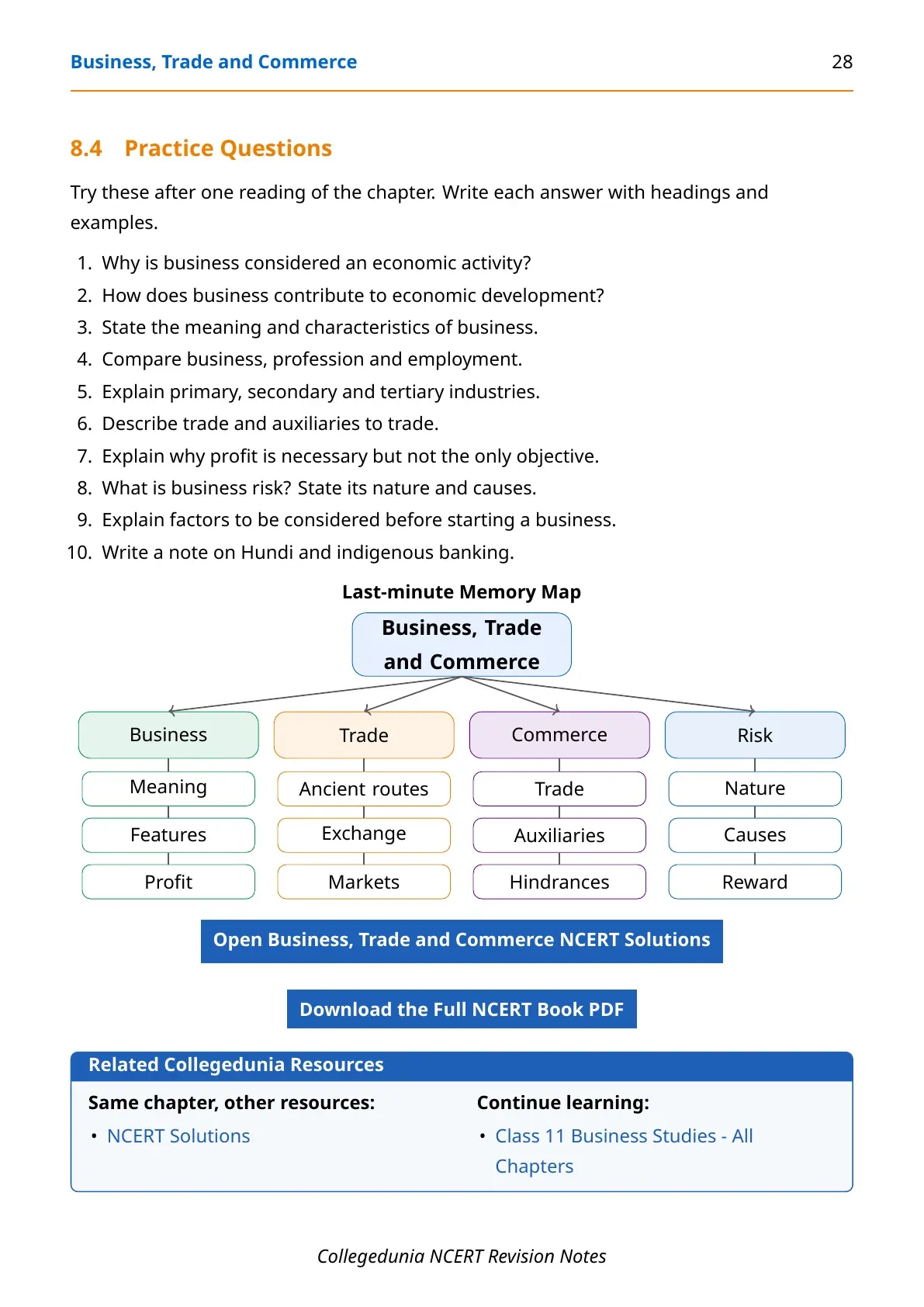
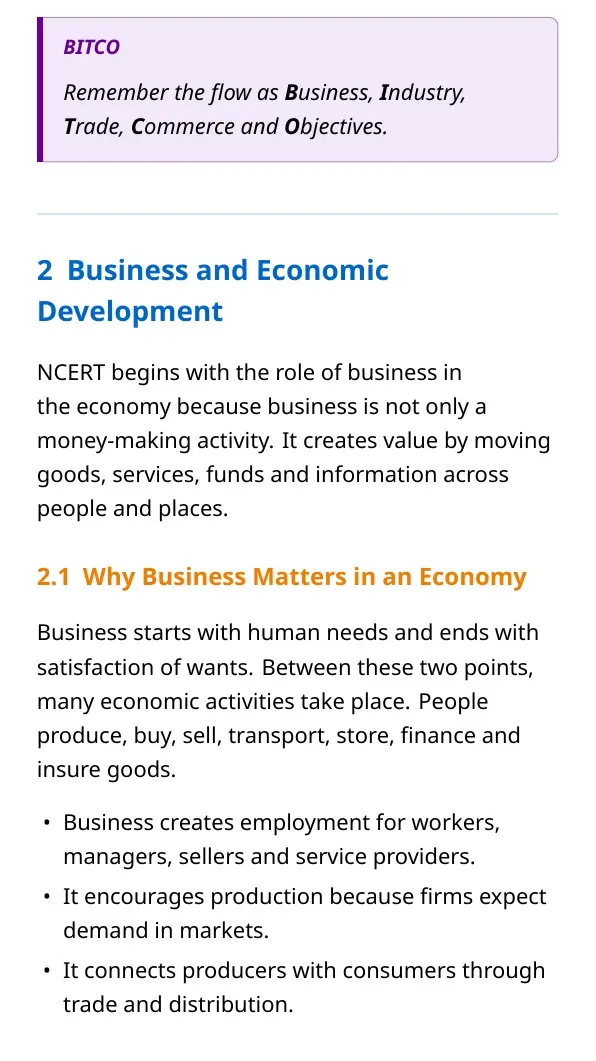
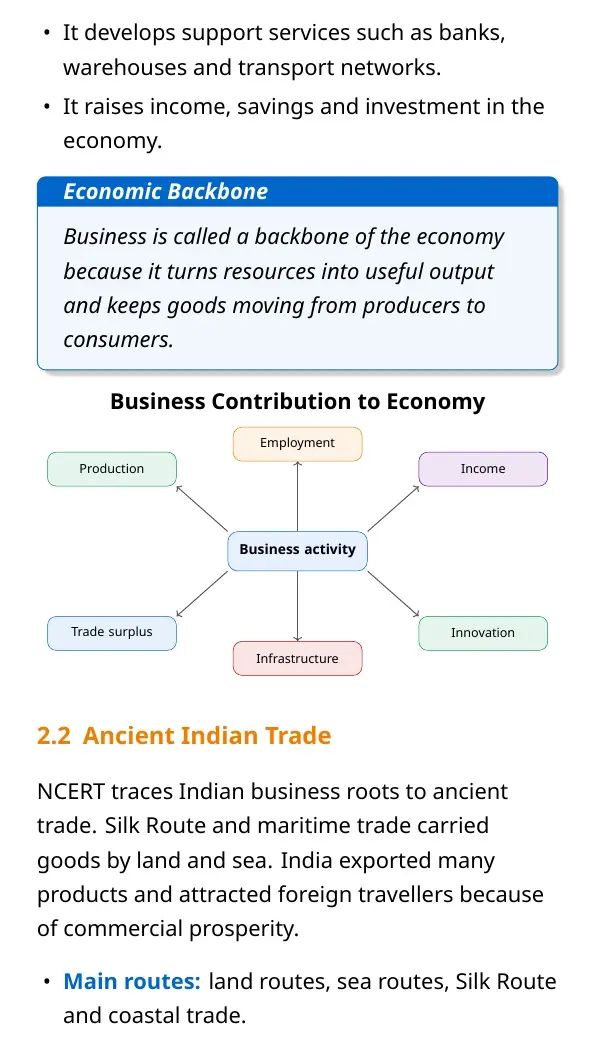
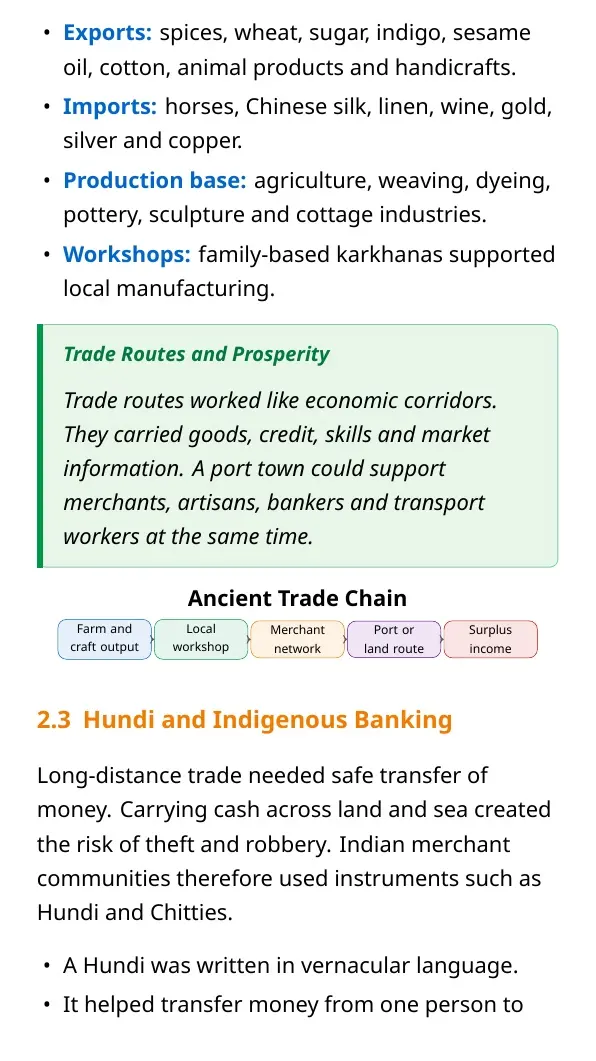
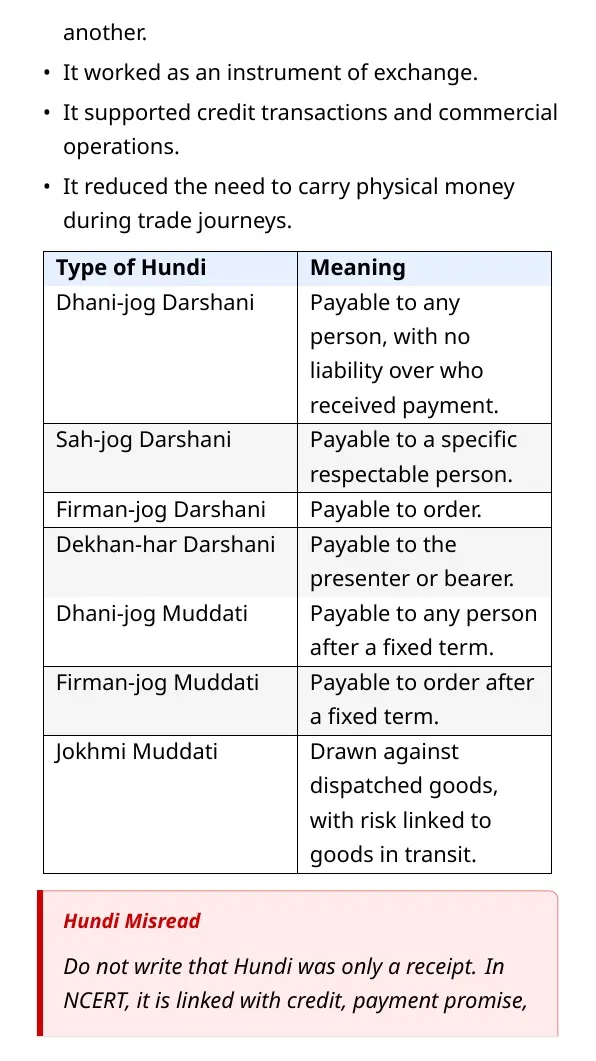
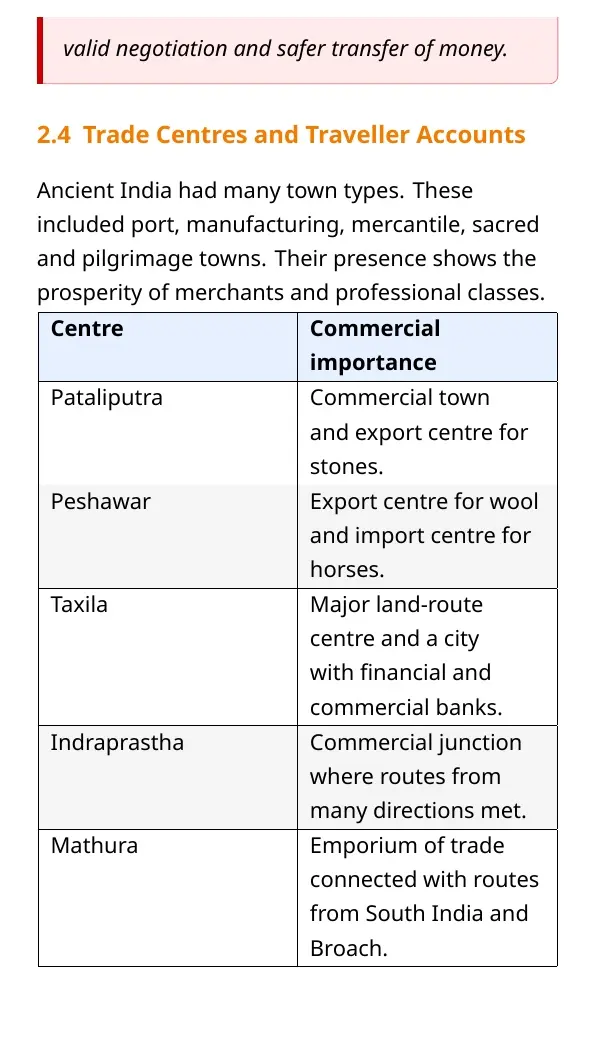
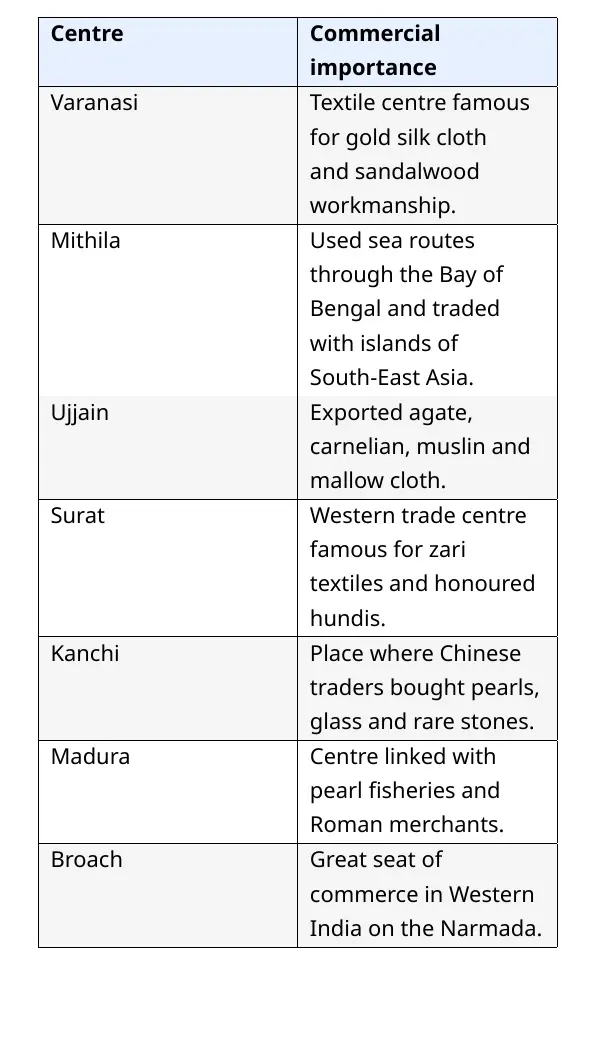
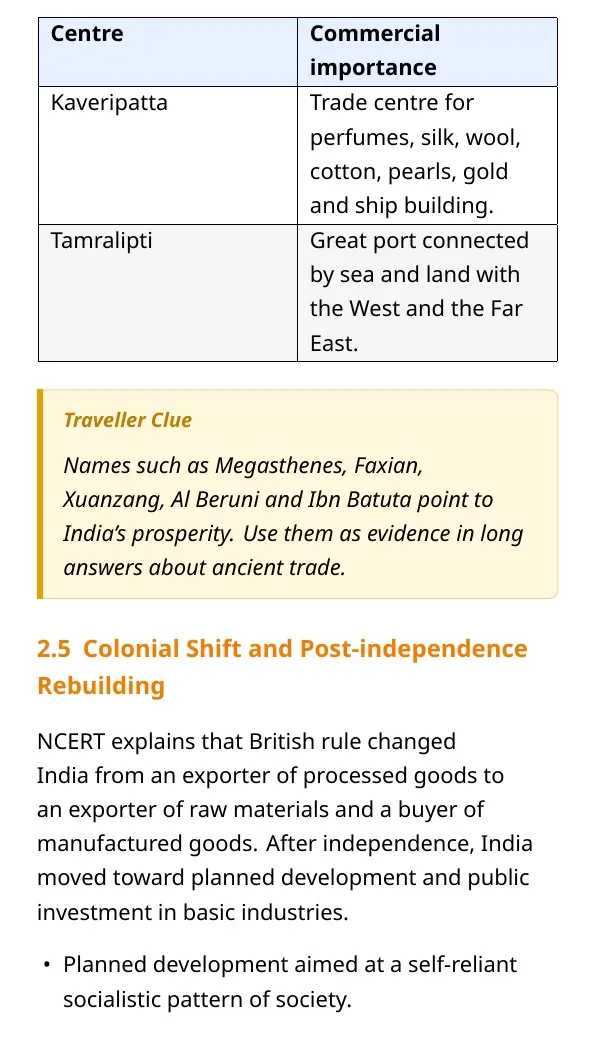
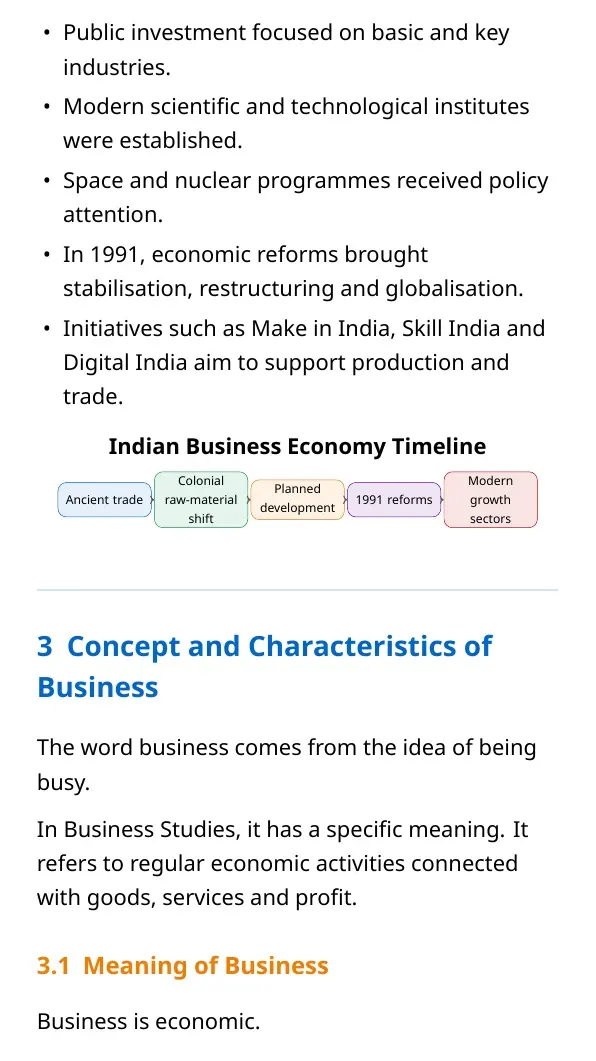
These Class 11 Business Studies notes are checked against the 2026-27 NCERT chapter and written for fast board revision.
Student Feedback on Business, Trade and Commerce
In a Collegedunia poll of 12,480 Class 11 Commerce students before the 2026 exams, many students said this opening chapter felt easy but became confusing in comparison questions.
- 74% wanted one table for business, profession and employment.
- 6 out of 10 students mixed trade with commerce in short answers.
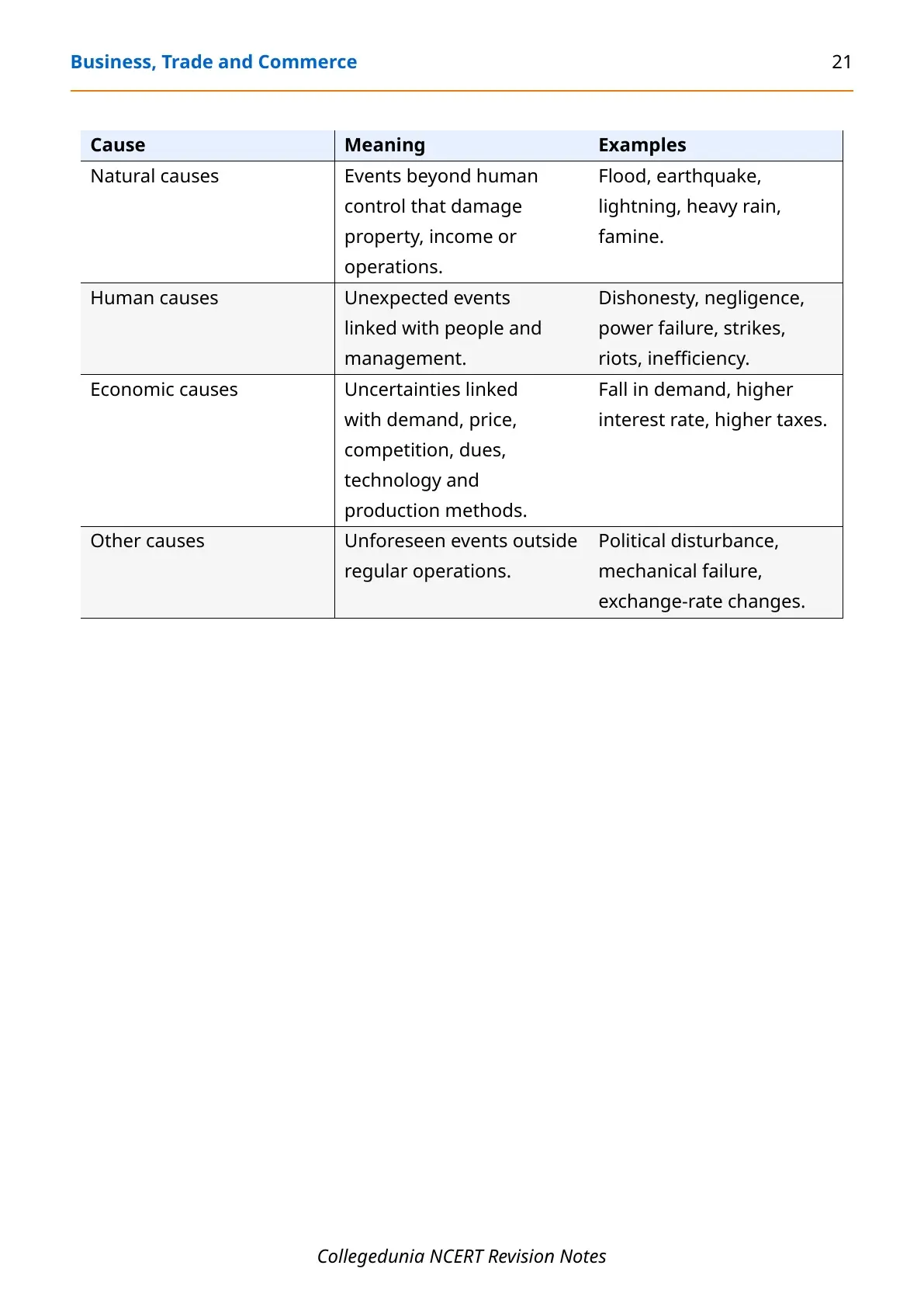
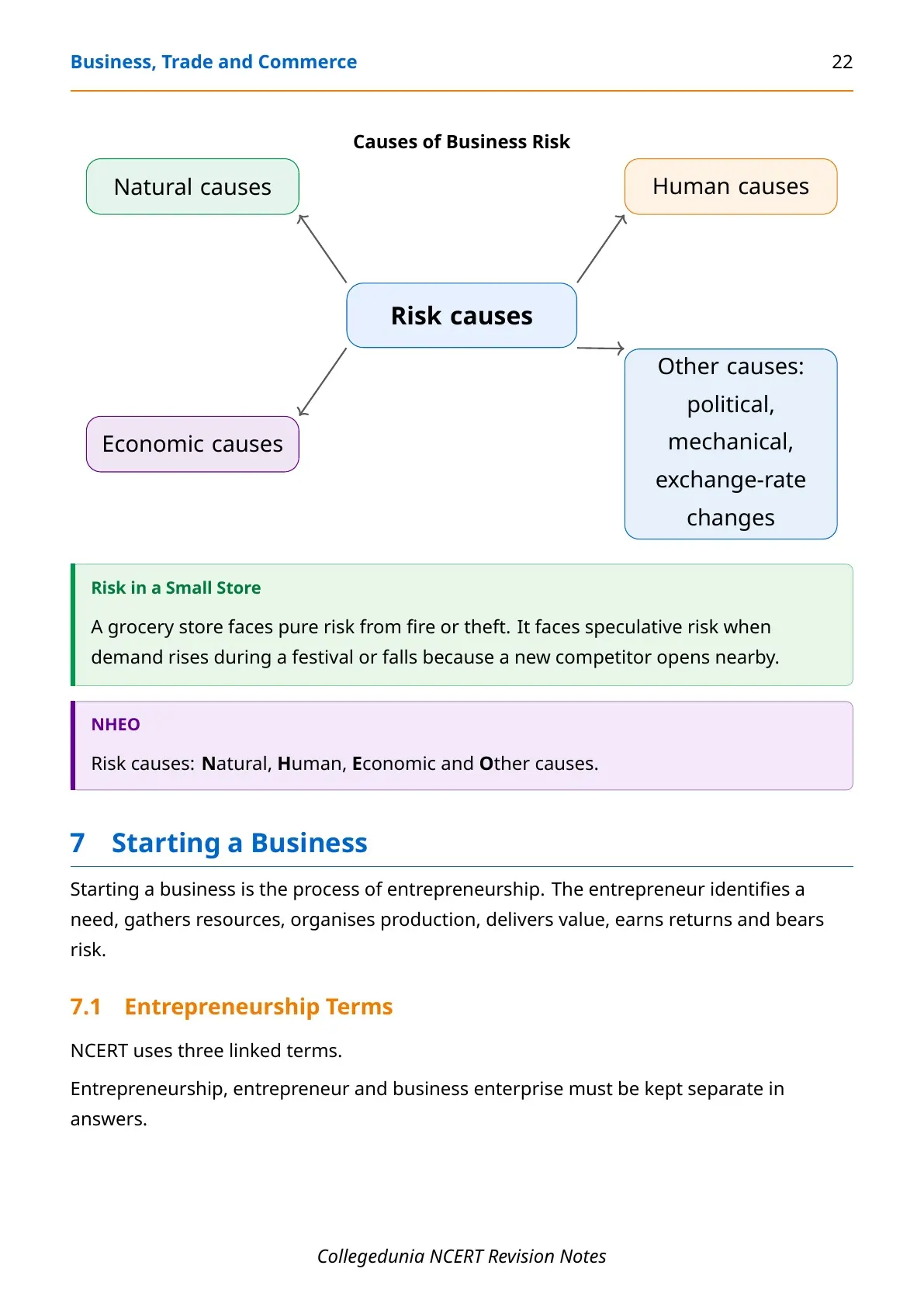
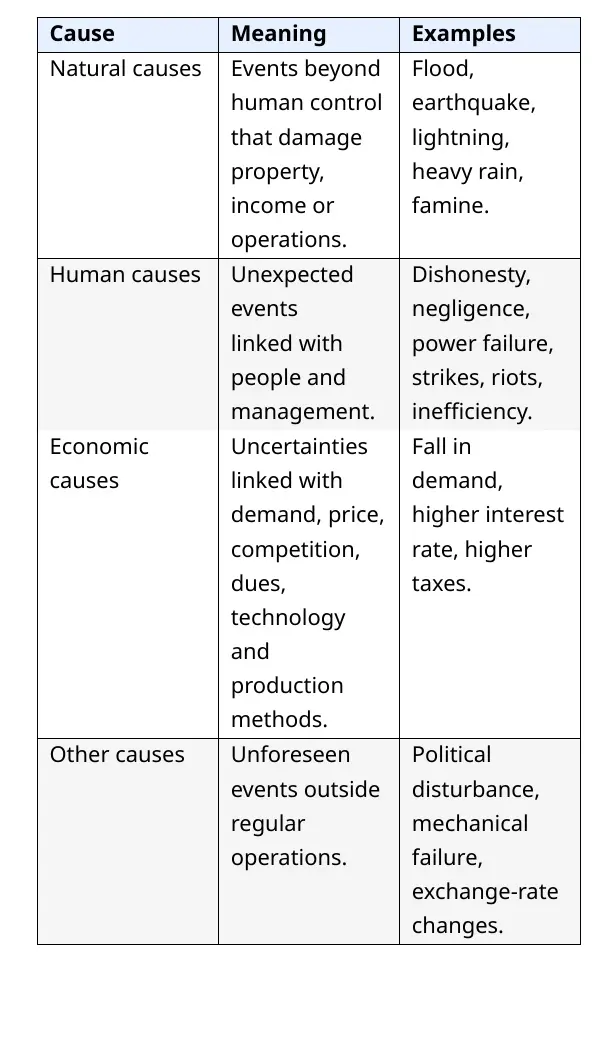
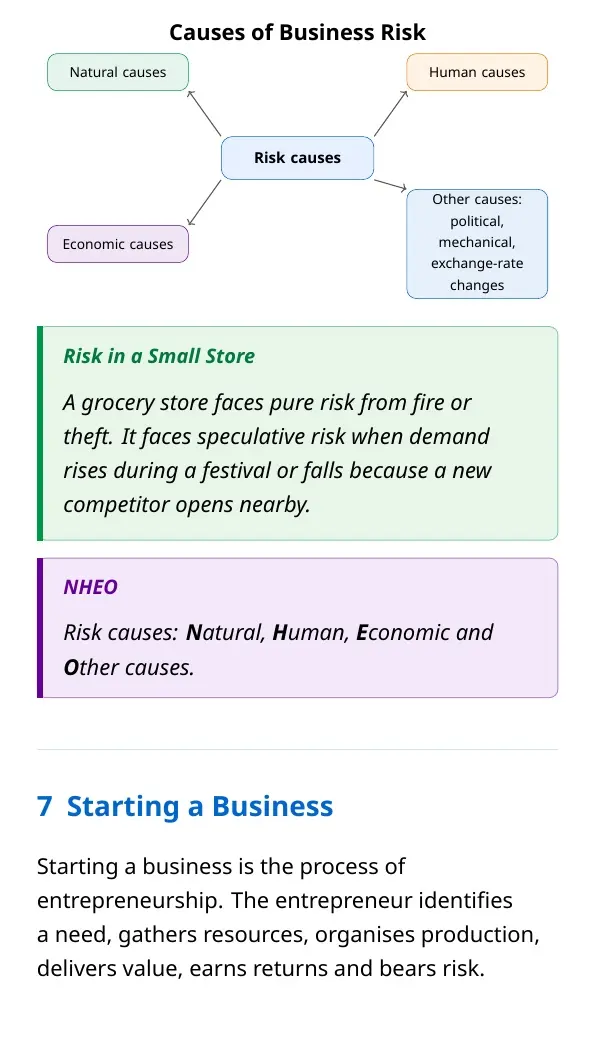
- 52% needed help with risk causes. The notes separate natural, human and economic causes.
Source: 2026-27 Class 11 Commerce student poll. Sample of 12,480 students from CBSE schools across 15 states.
Business, Trade and Commerce Chapter 1 Quick Map
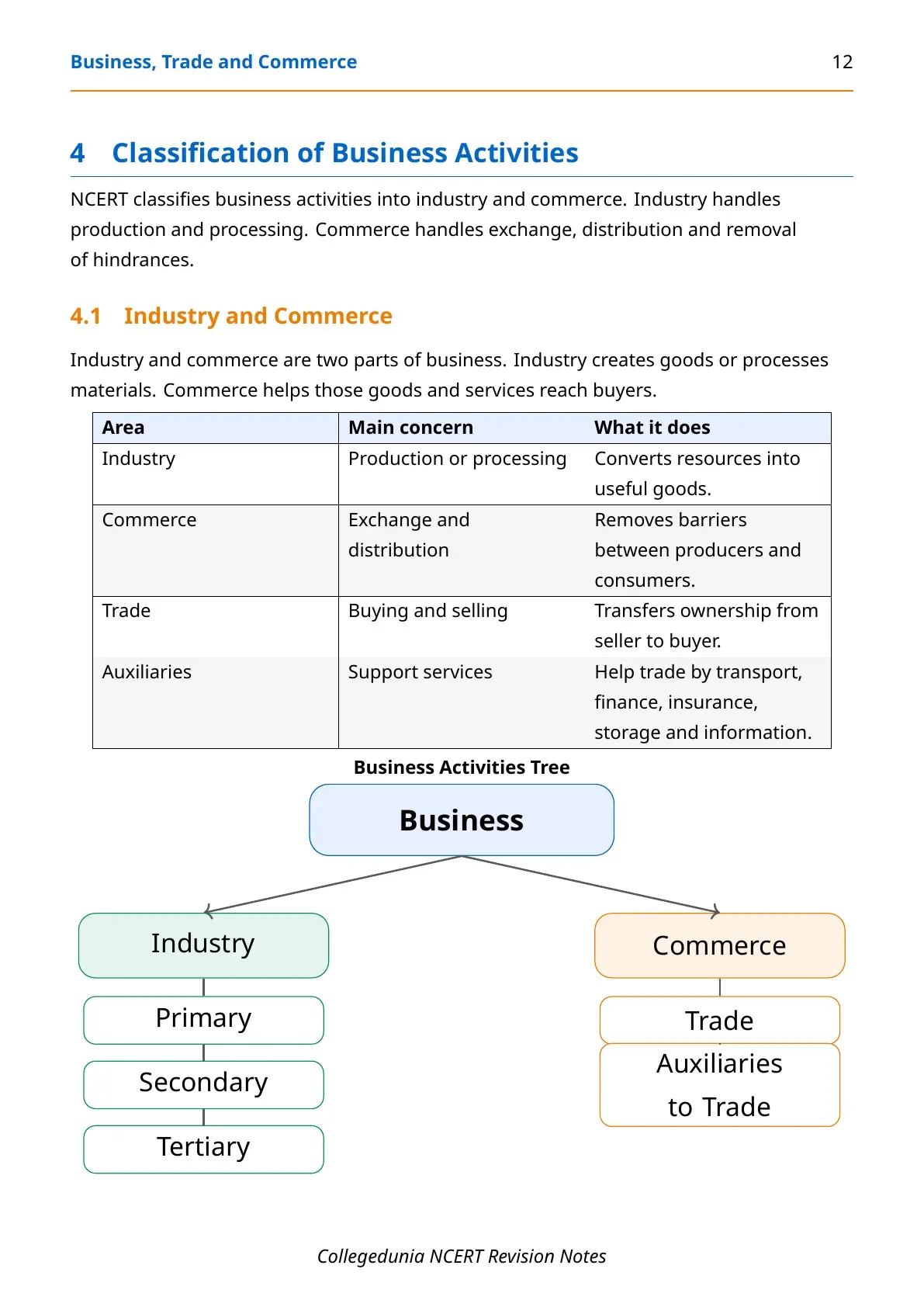
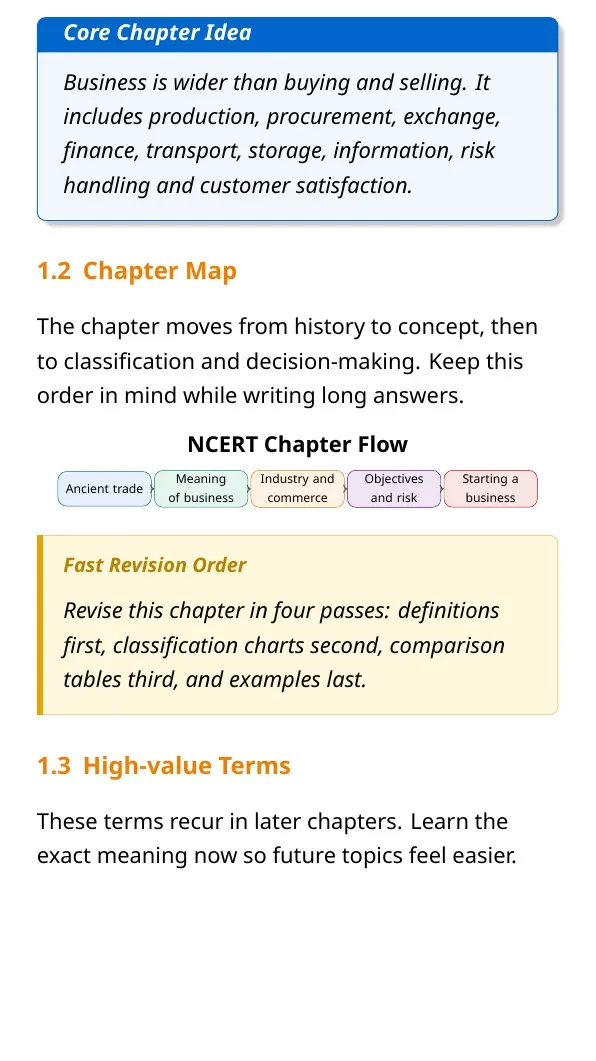
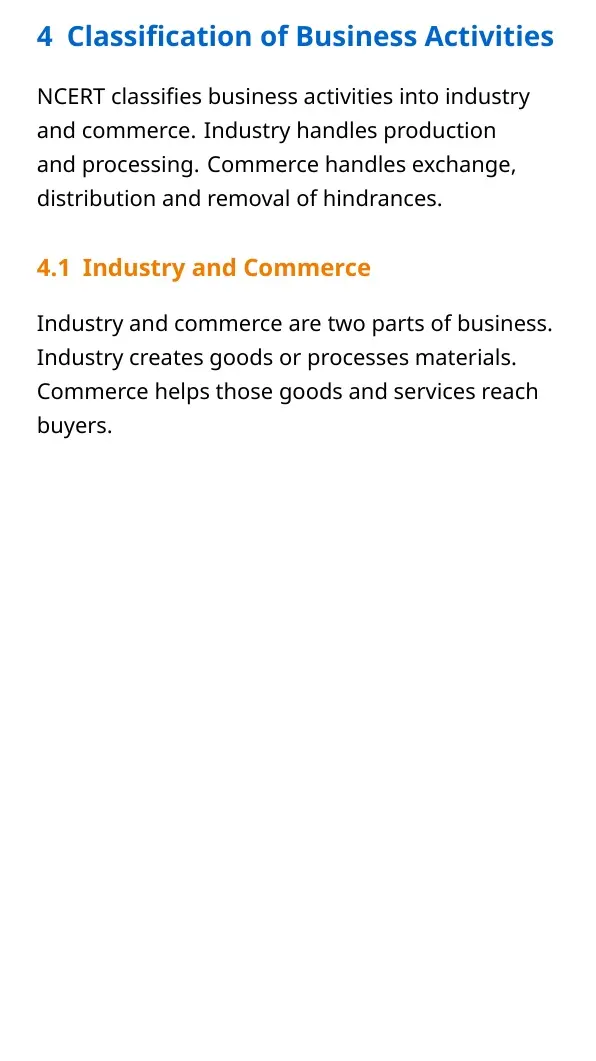
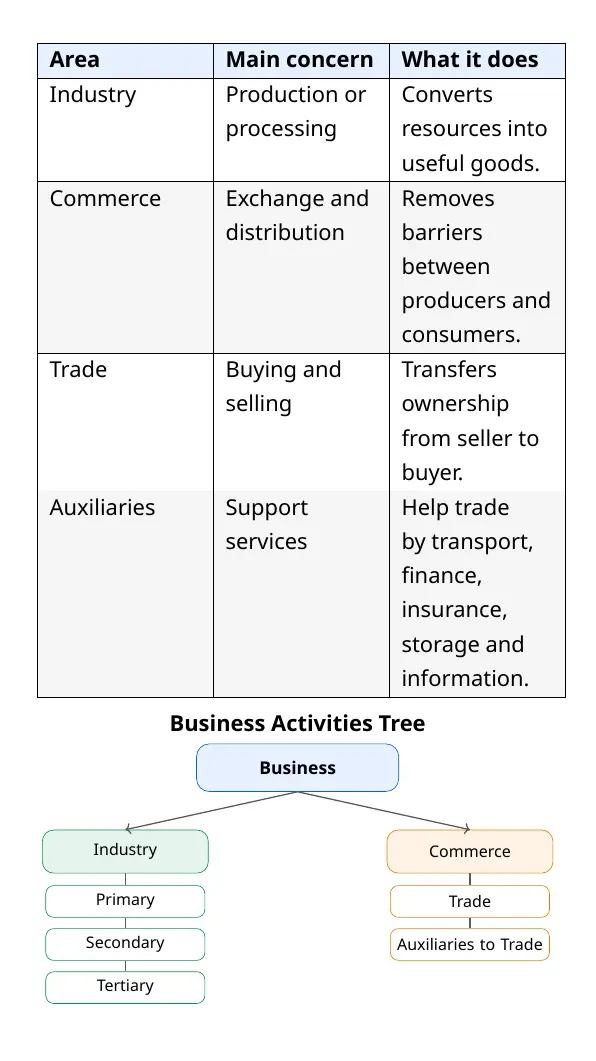
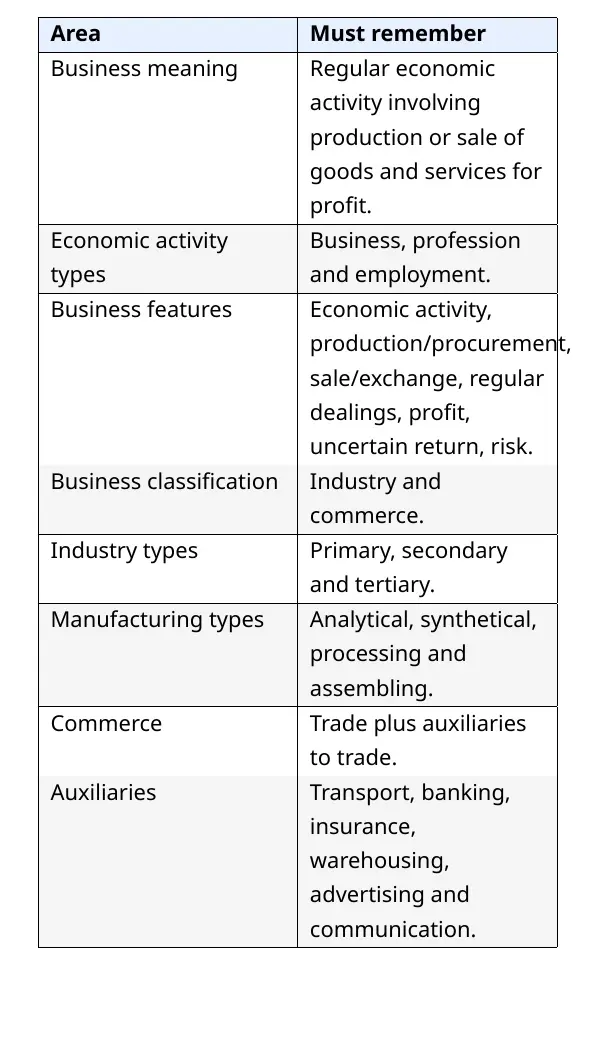
This chapter explains how economic activity becomes business. It also shows why business cannot work with production alone. Goods must be bought, sold, transported, stored, insured, financed and advertised.
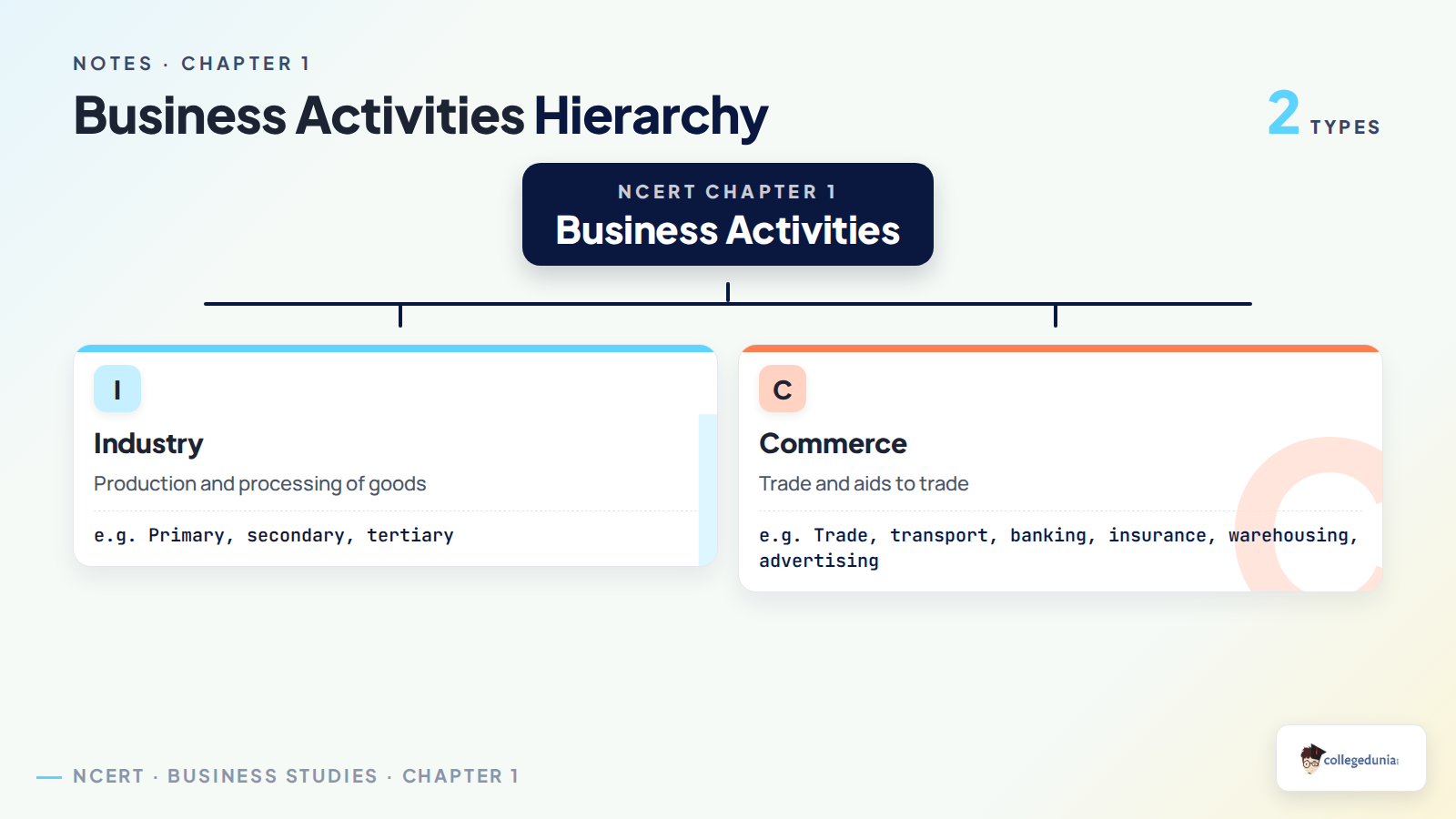
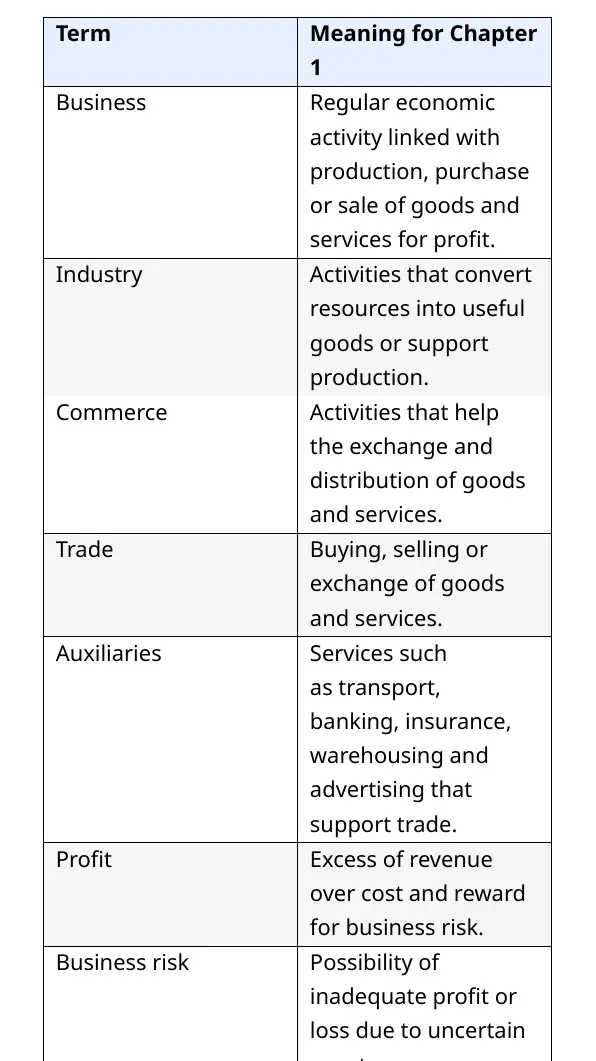
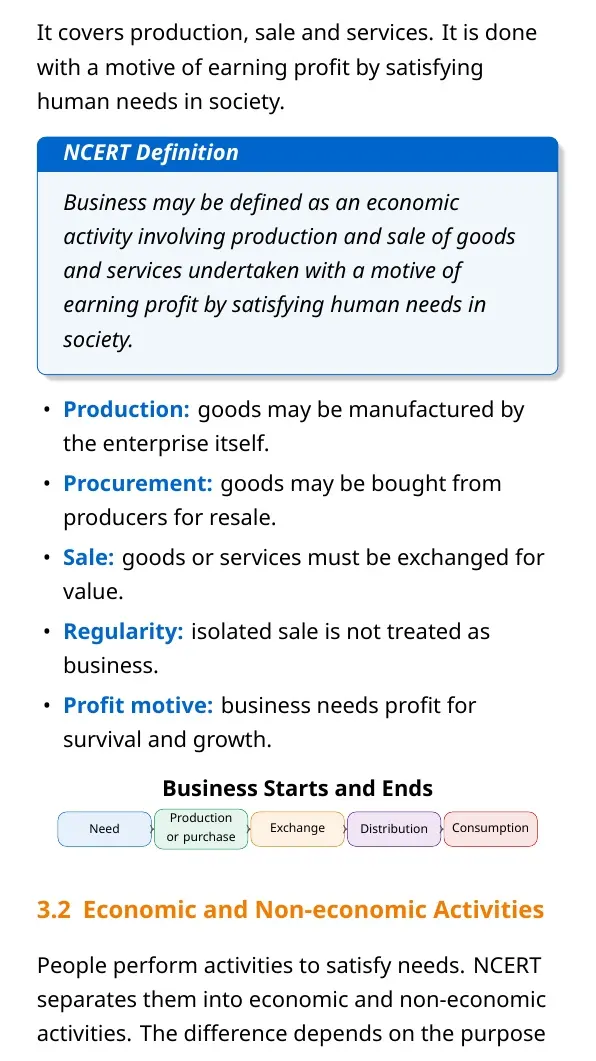
- Business covers regular production or purchase and sale for profit.
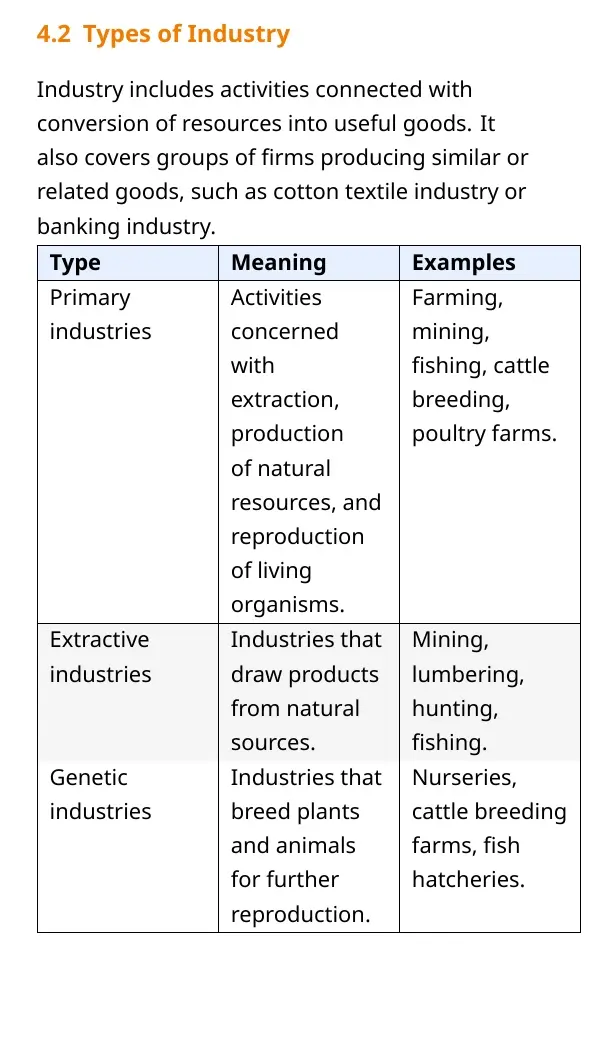
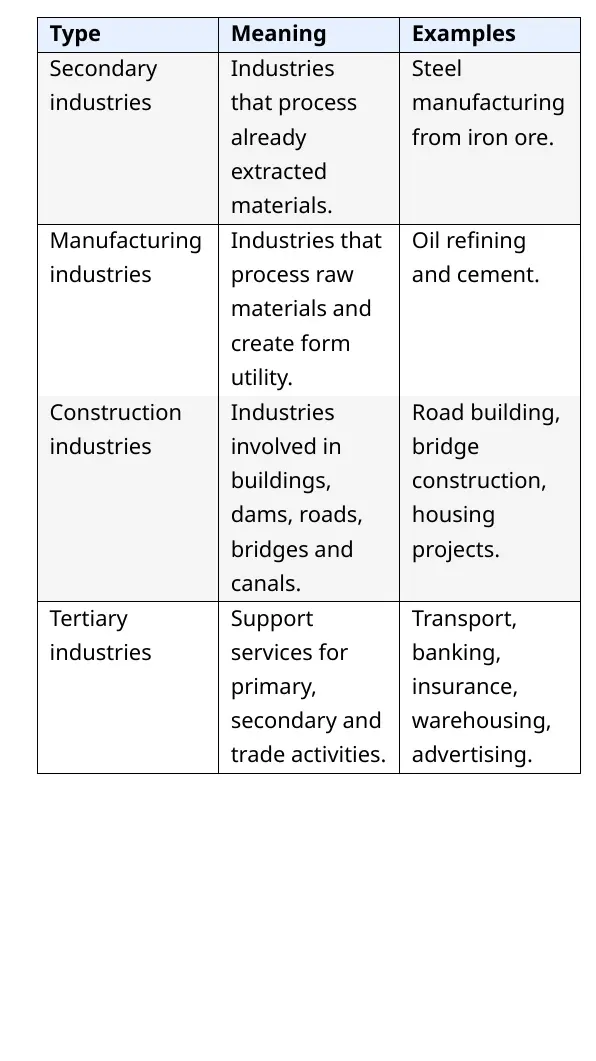
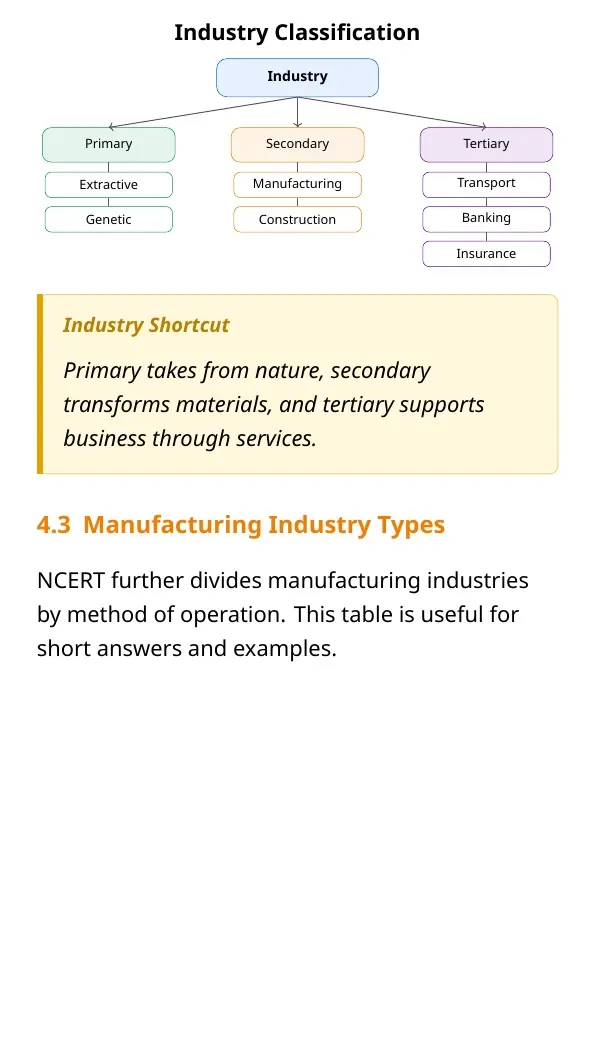
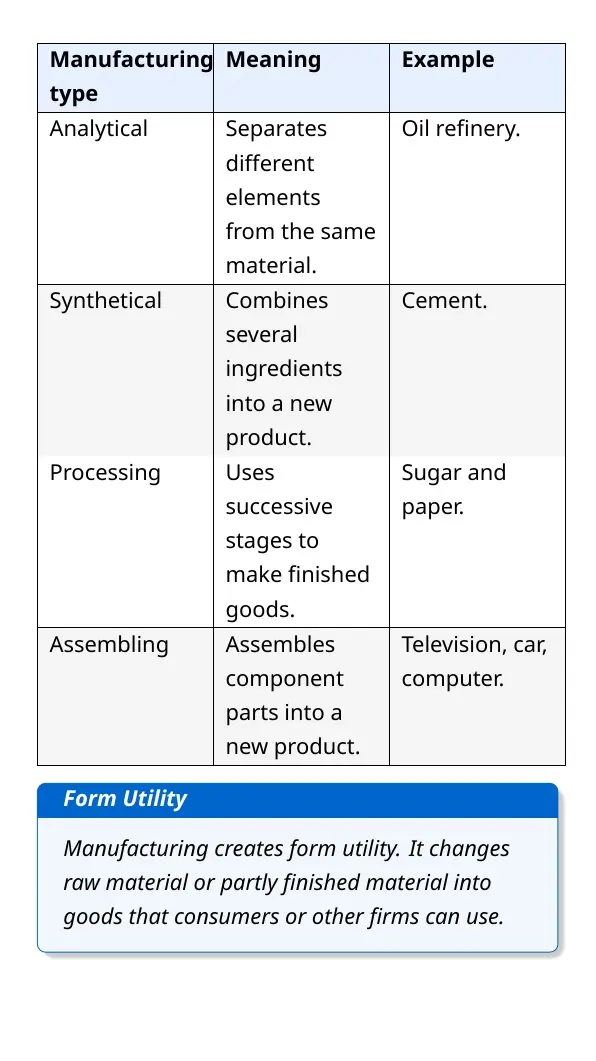
- Industry creates form utility by producing or processing goods.
- Trade creates ownership transfer between seller and buyer.
- Commerce includes trade plus services that help trade happen.
Concept and Features of Business in Class 11 Business Studies
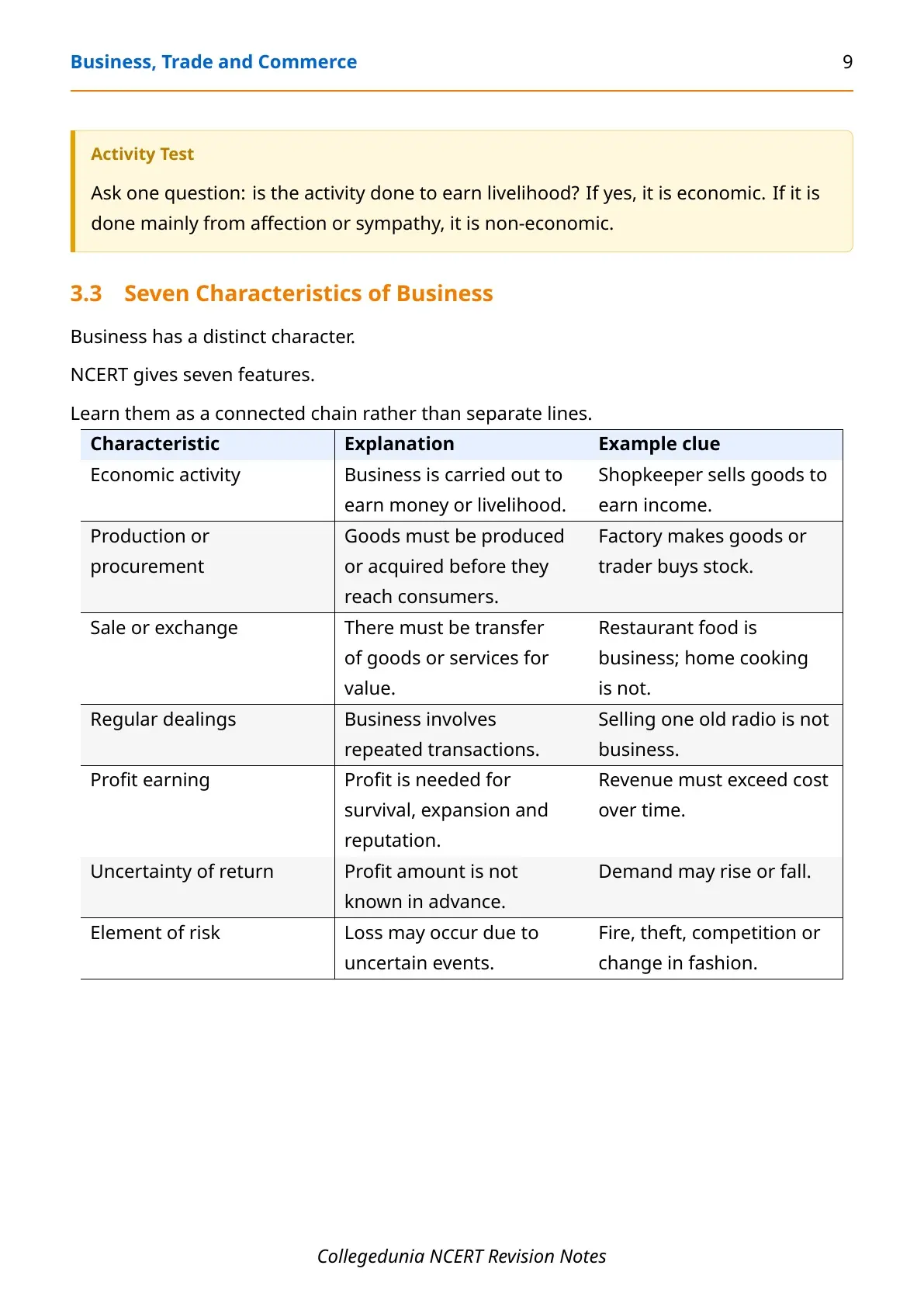
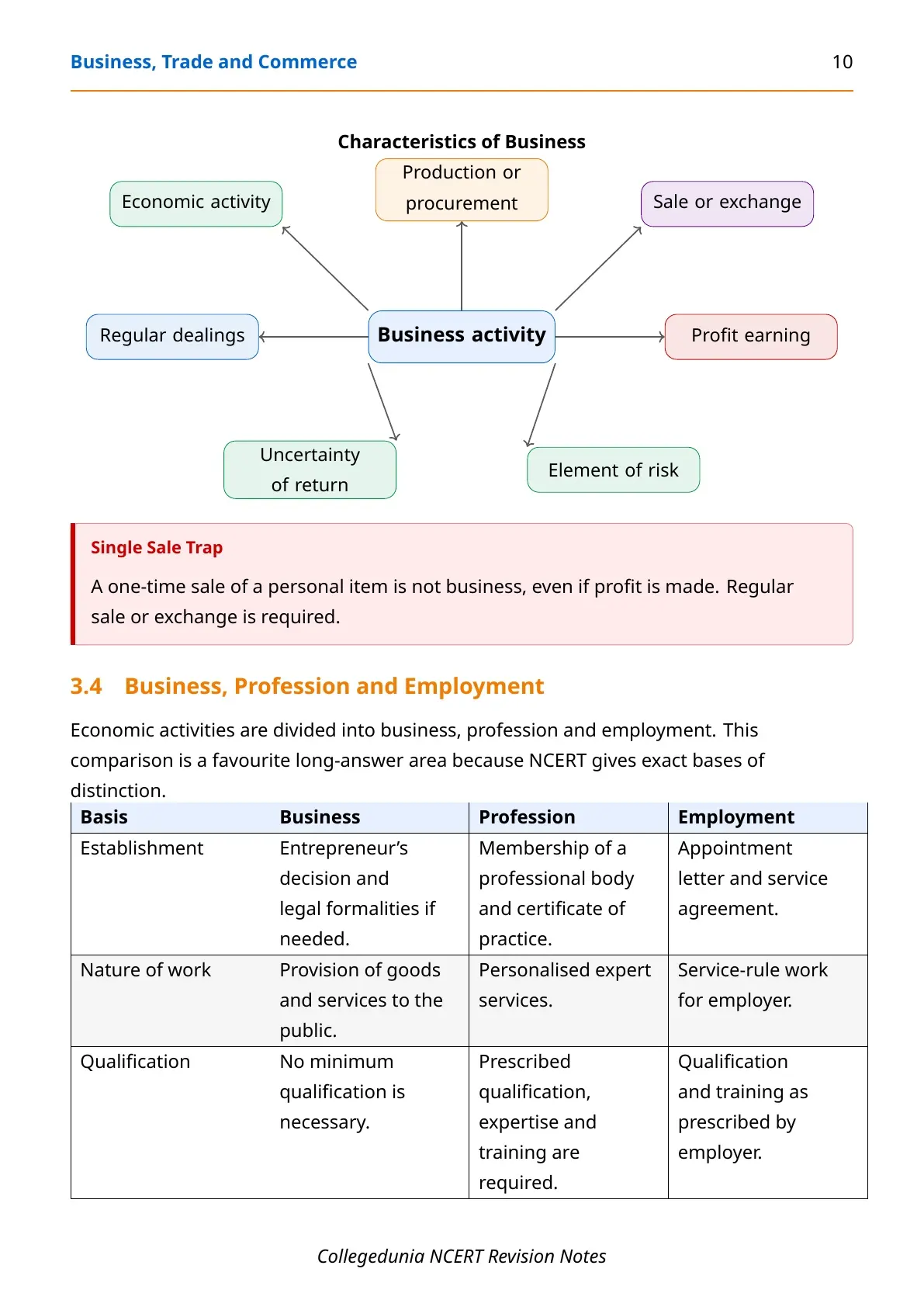
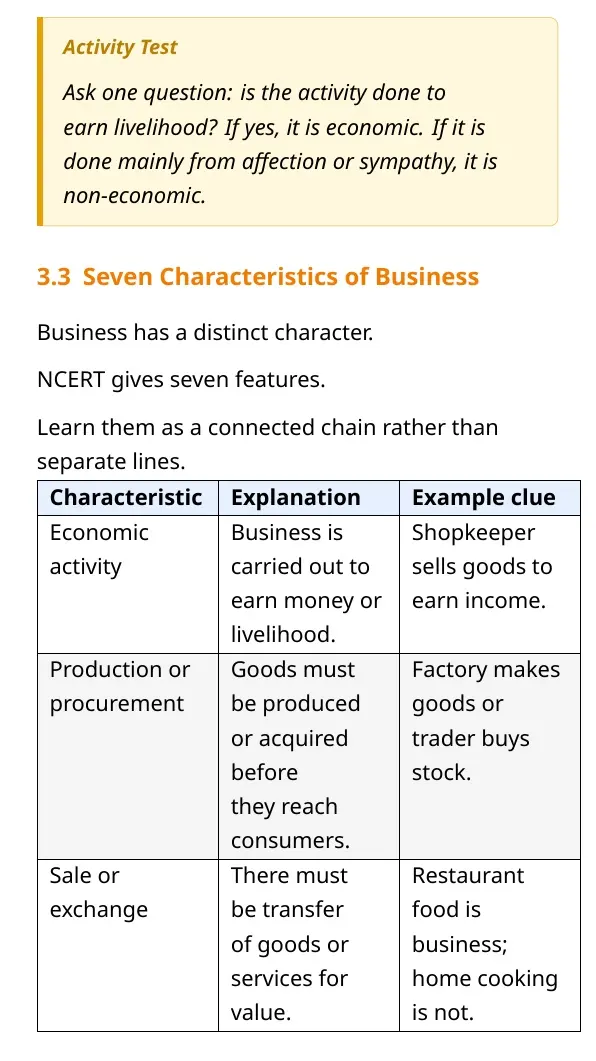
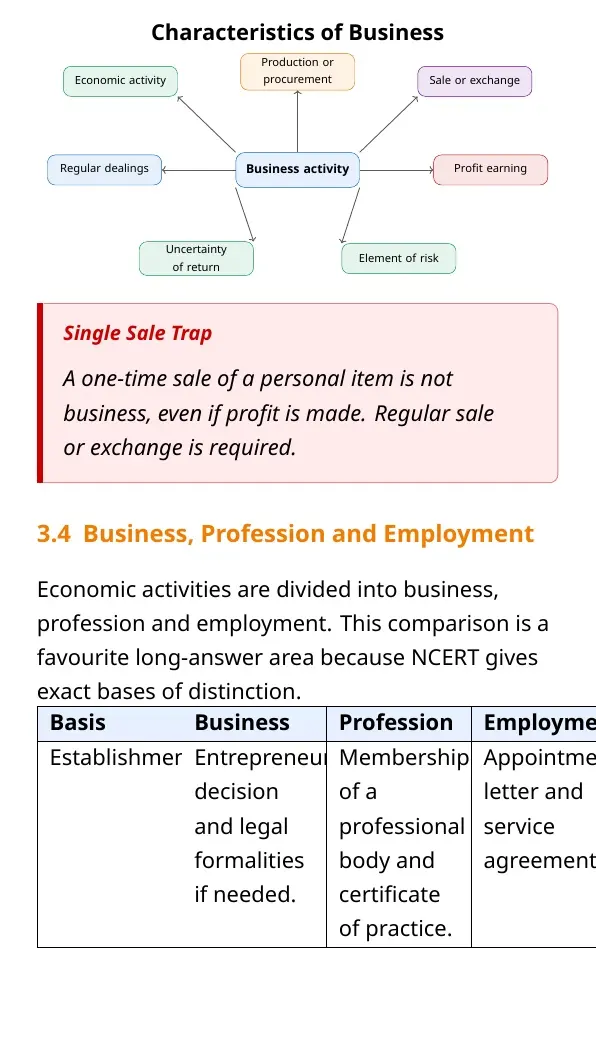
Business is an economic activity because it is done to earn income. NCERT gives seven features that students should learn as a marker checklist.
| Feature | Meaning for exams | Fast example |
|---|---|---|
| Economic activity | Done to earn livelihood or profit | Shopkeeper sells stationery |
| Production or procurement | Goods are made or bought for resale | Factory makes shoes |
| Sale or exchange | Personal use is not business | Selling cakes to customers |
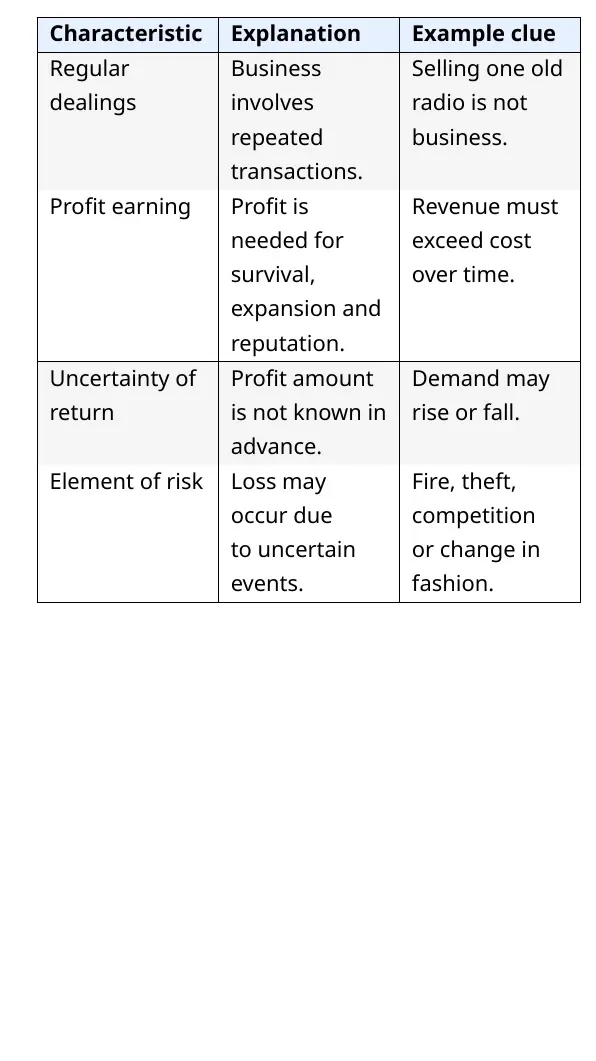
| Regular dealings | One isolated sale is not business | Daily retail sales |
| Profit motive | Profit is the basic reason | Markup on goods sold |
| Risk | Profit is uncertain | Fire, theft or fall in demand |
Business, Profession and Employment Difference Table
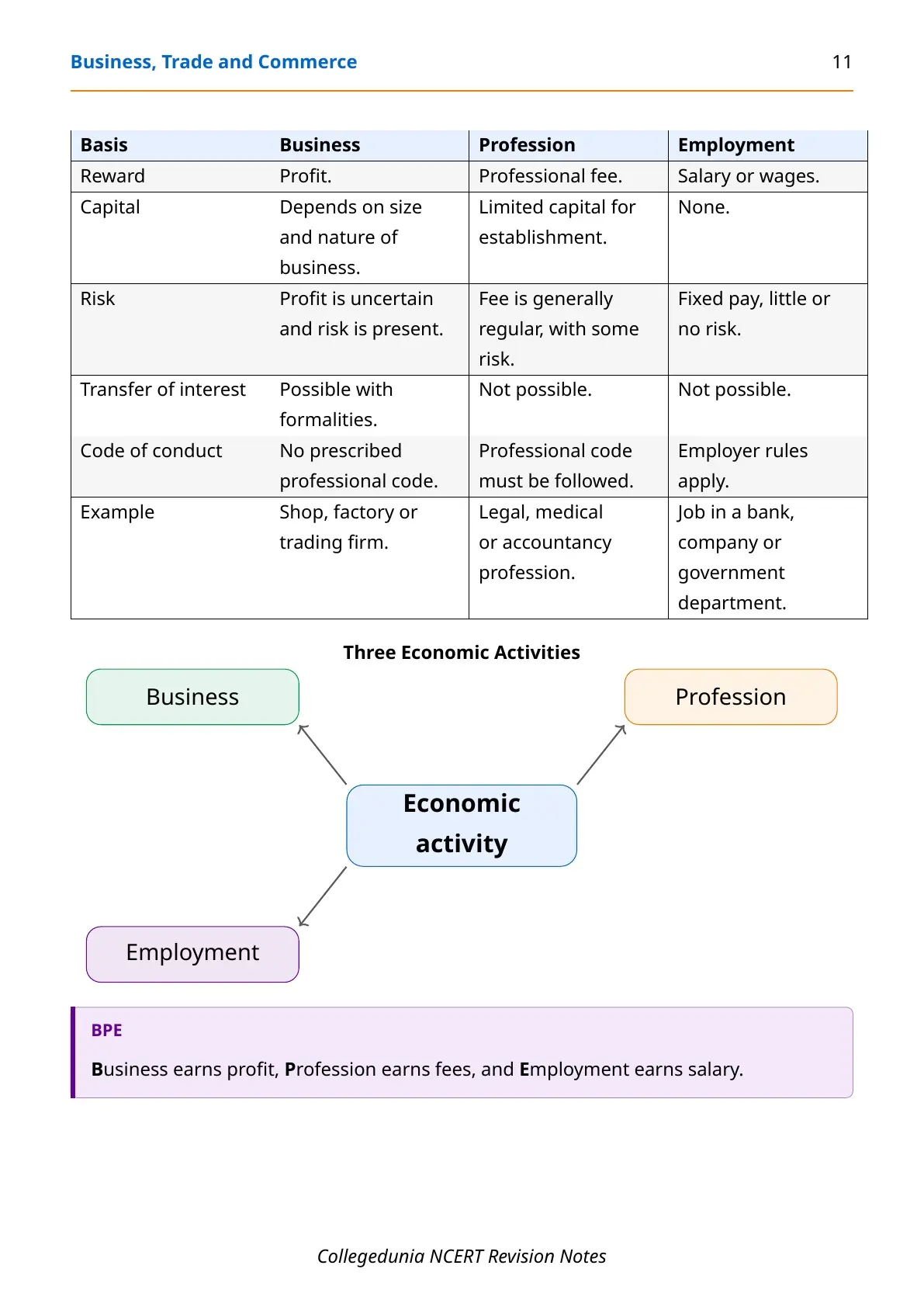
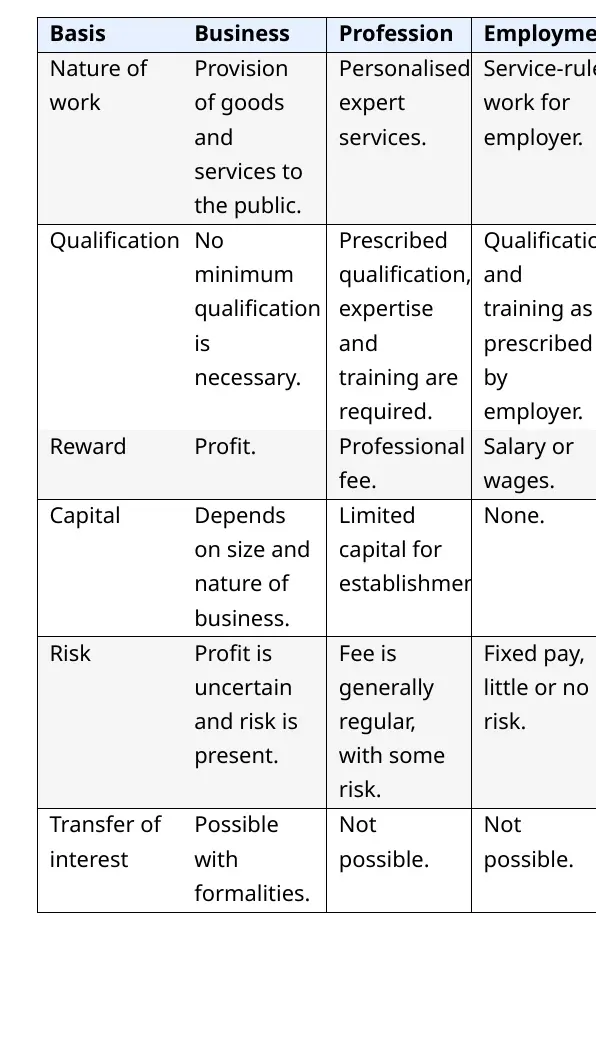
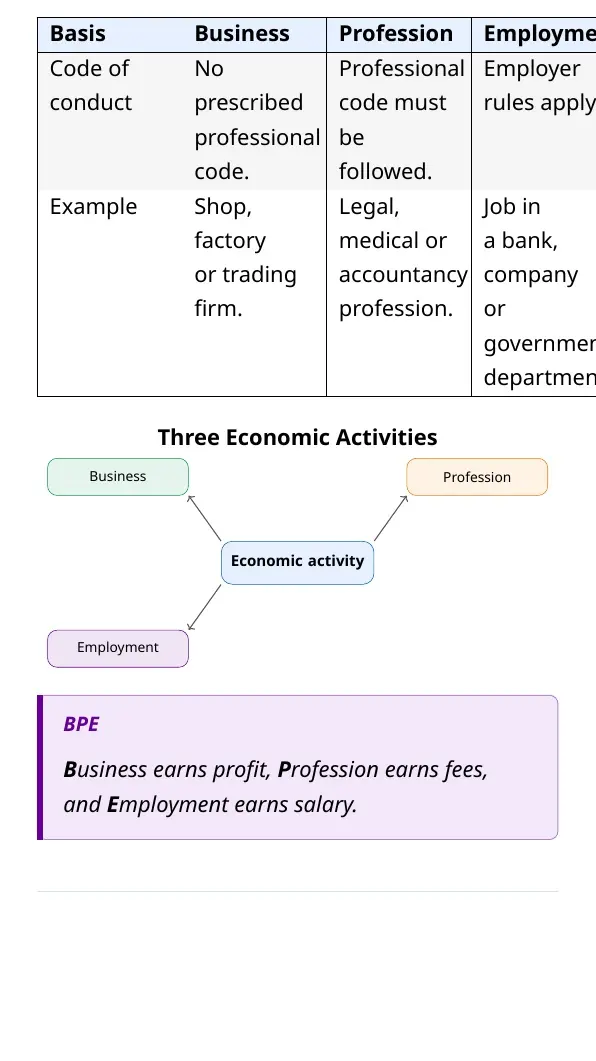
NCERT often asks this comparison because the three activities all earn income. The difference lies in entry, reward, risk and the nature of work.
| Basis | Business | Profession | Employment |
|---|---|---|---|
| Entry | No minimum qualification fixed | Special knowledge and degree needed | Appointment letter or service contract |
| Reward | Profit | Professional fee | Salary or wages |
| Risk | High risk of loss | Moderate professional risk | Low direct business risk |
| Capital | Needed according to size | Limited capital for office or tools | No capital investment by employee |
Business, Trade and Commerce Class 11 Video Recap
Source: Magnet Brains on YouTube
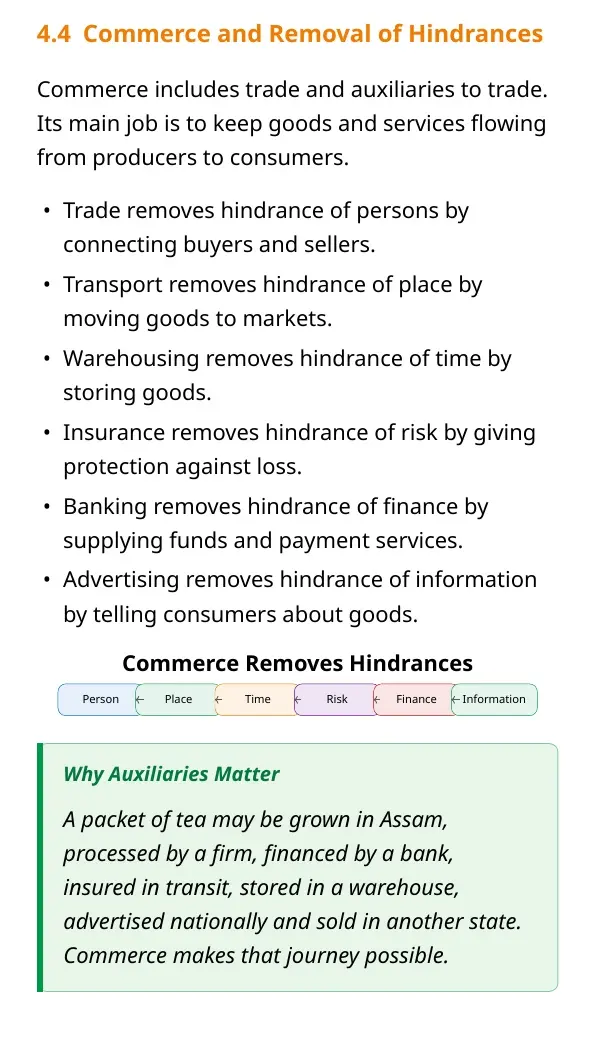
Commerce Removes Hindrances in Trade
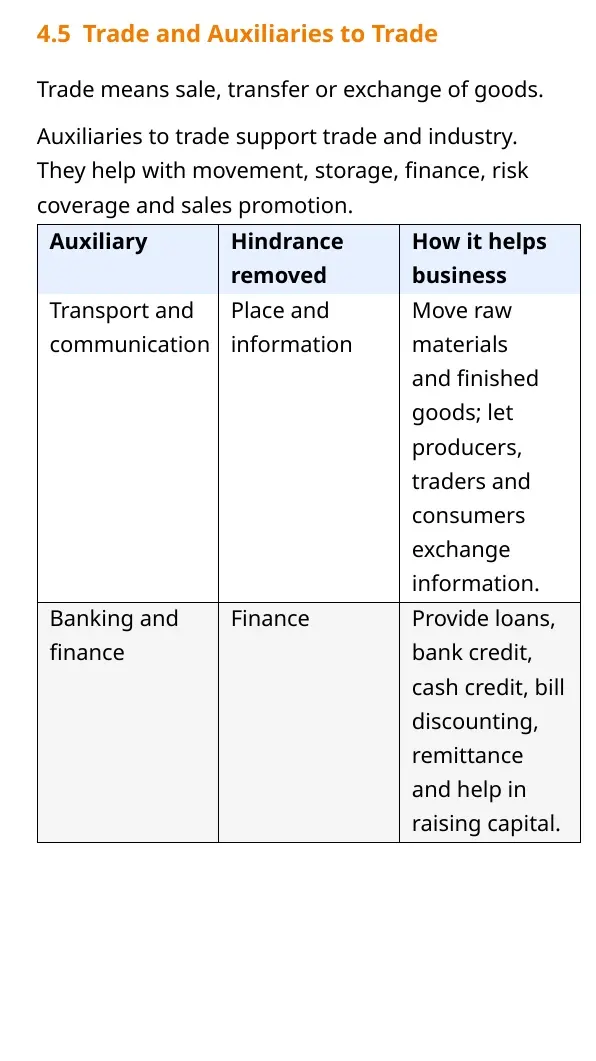
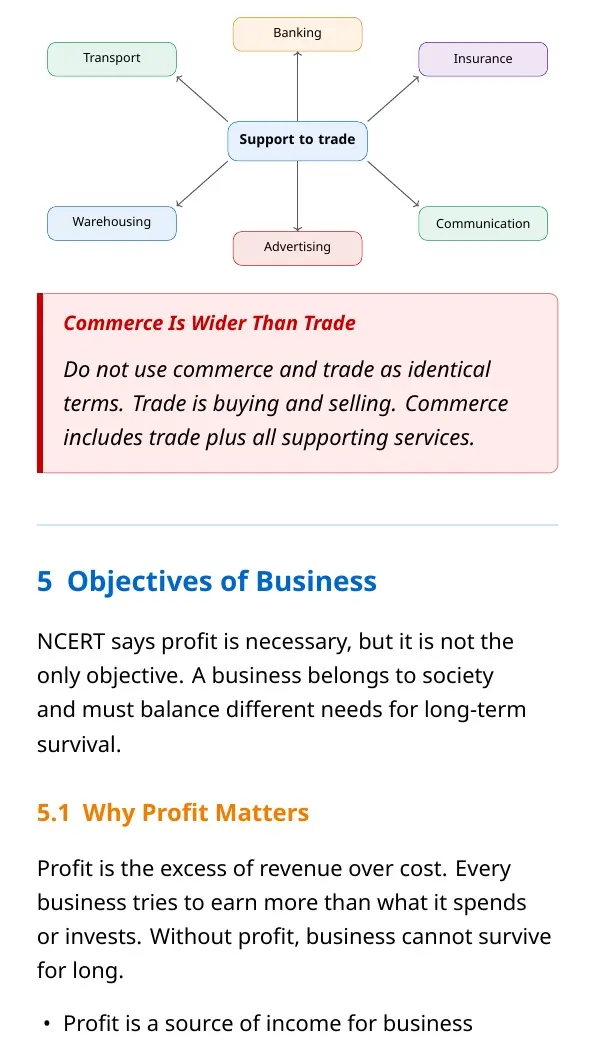
Commerce solves the practical problems that stand between producers and customers. Trade is only one part of commerce. The other parts are called auxiliaries to trade.
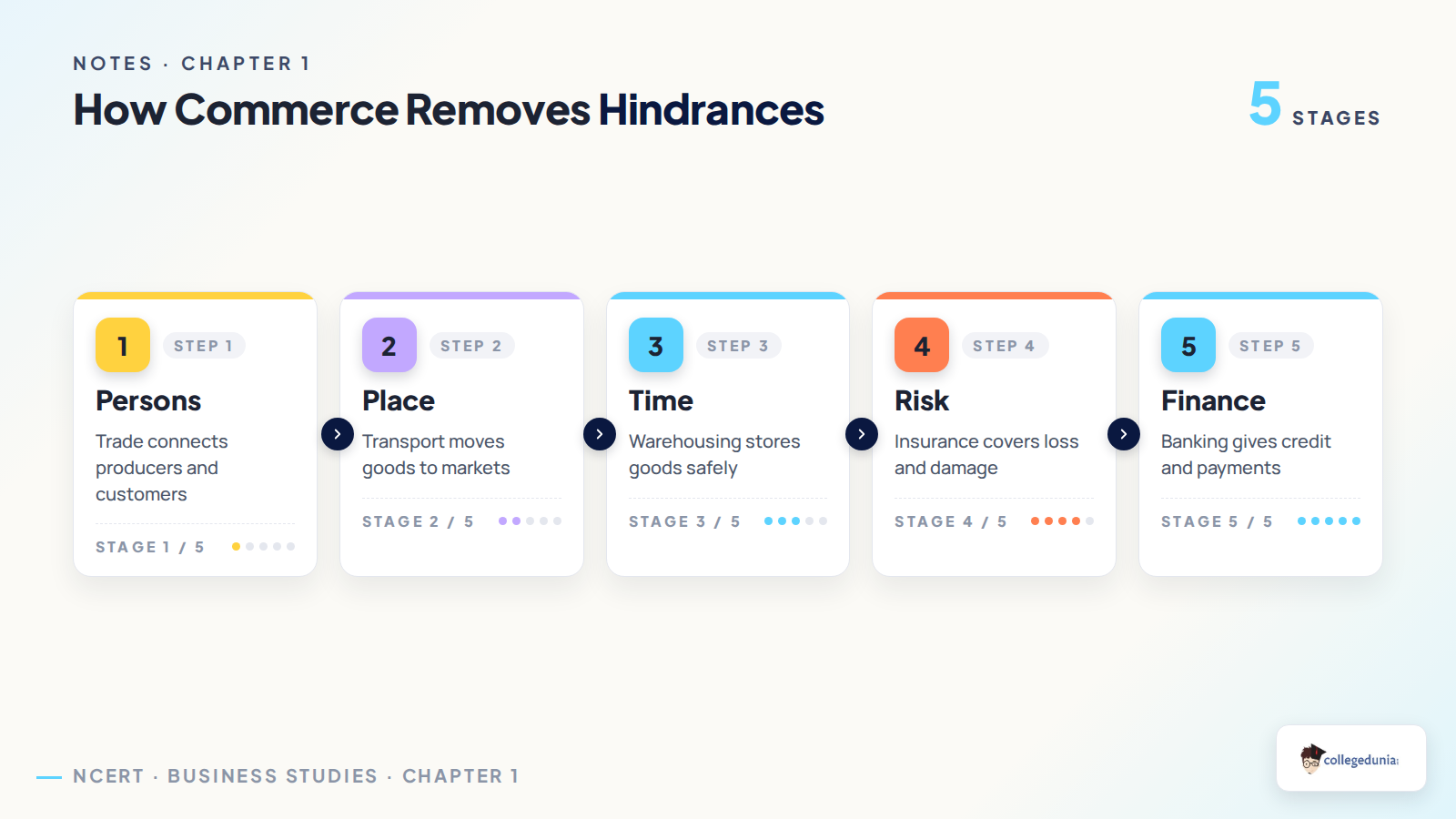
- Transport and communication remove the hindrance of place and contact.
- Banking removes the hindrance of finance and payments.
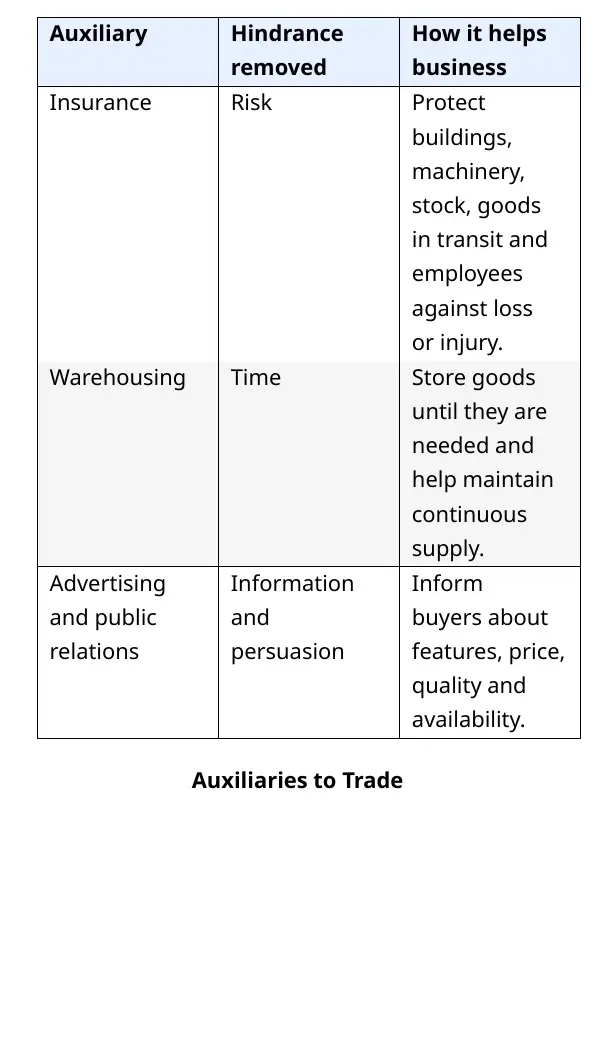
- Insurance removes the hindrance of risk from loss or damage.
- Warehousing removes the hindrance of time by storing goods.
- Advertising removes the hindrance of information for customers.
Objectives and Risks of Business for Chapter 1 Revision
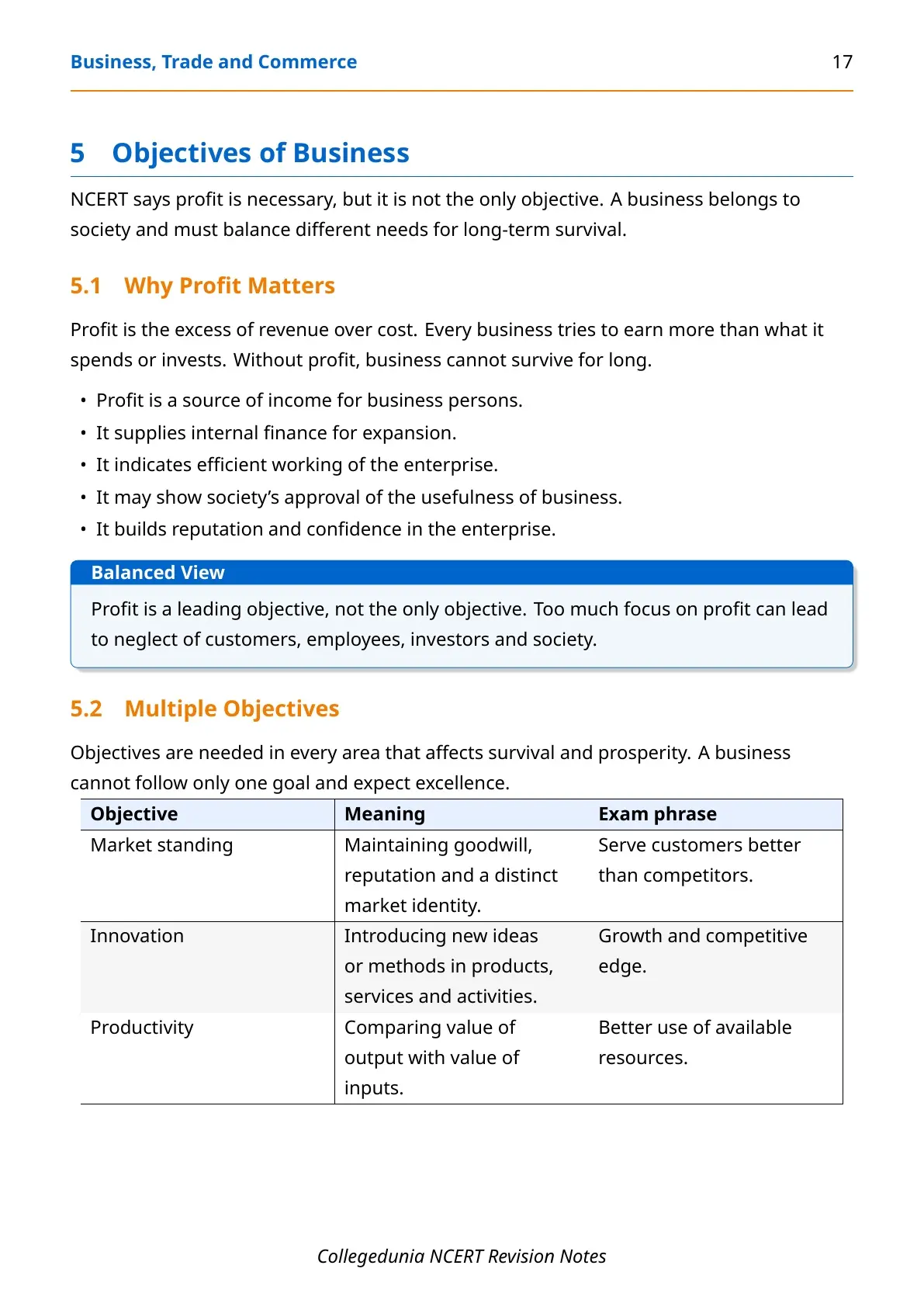
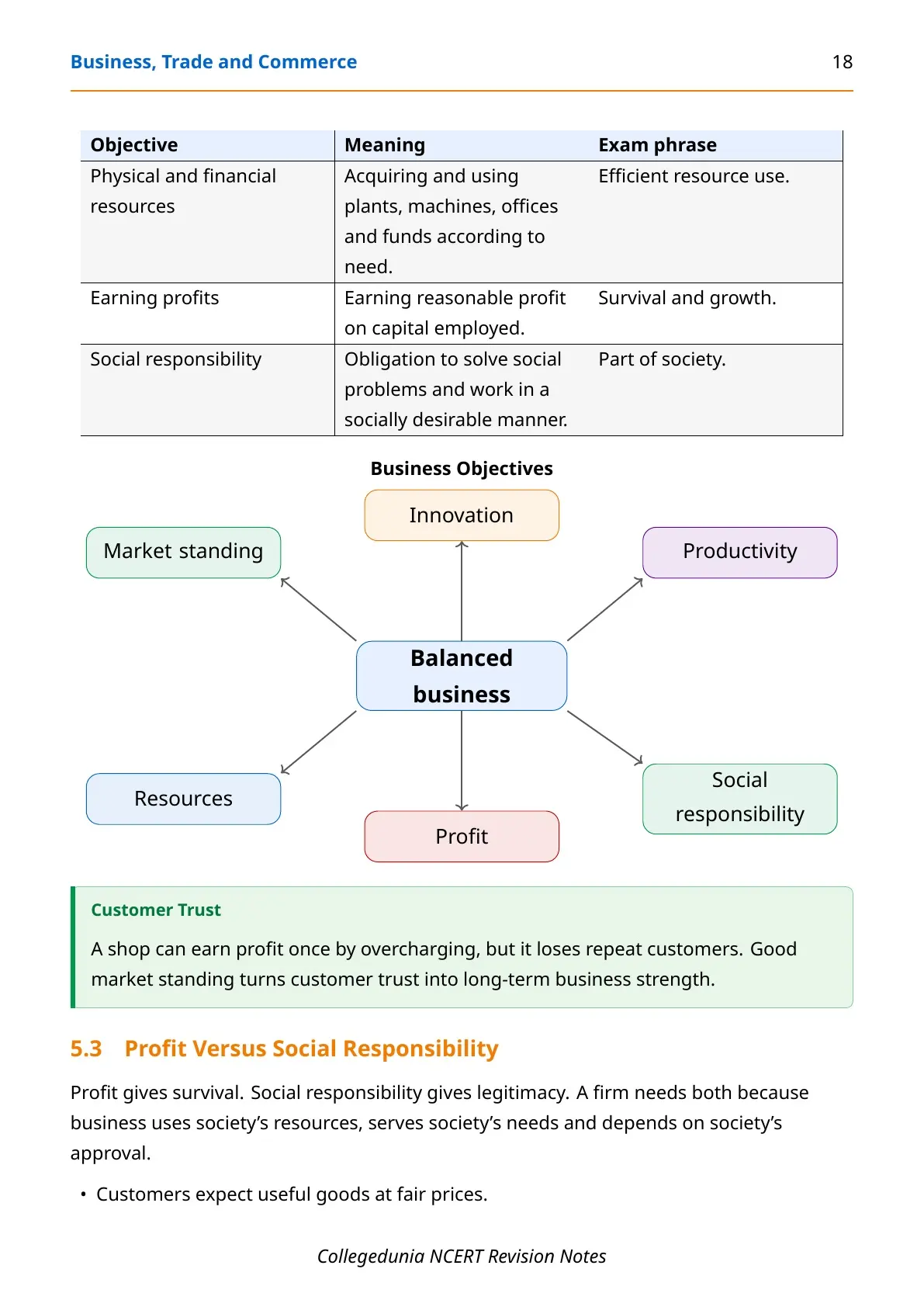
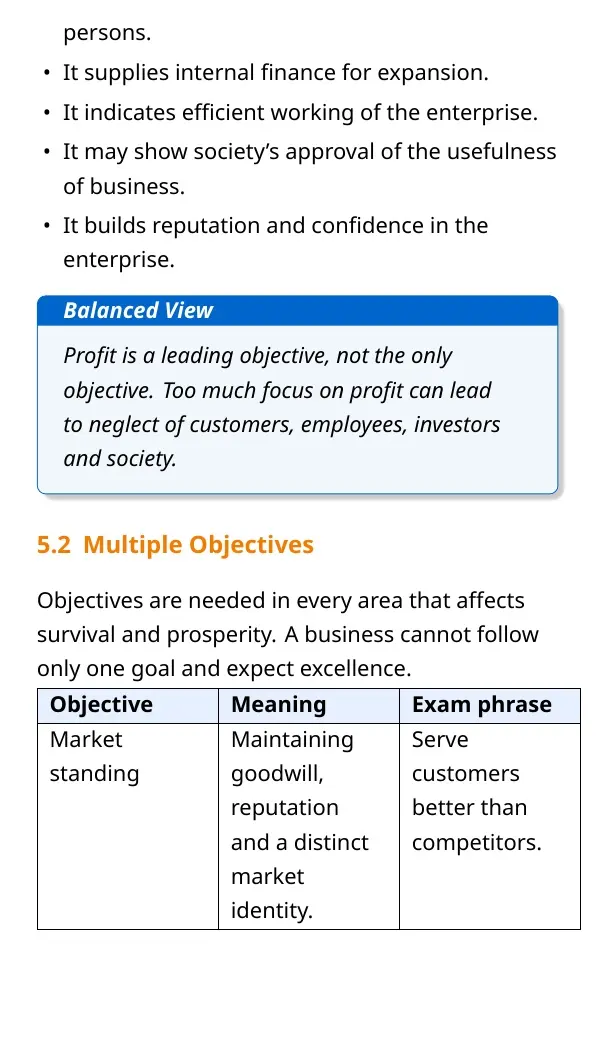
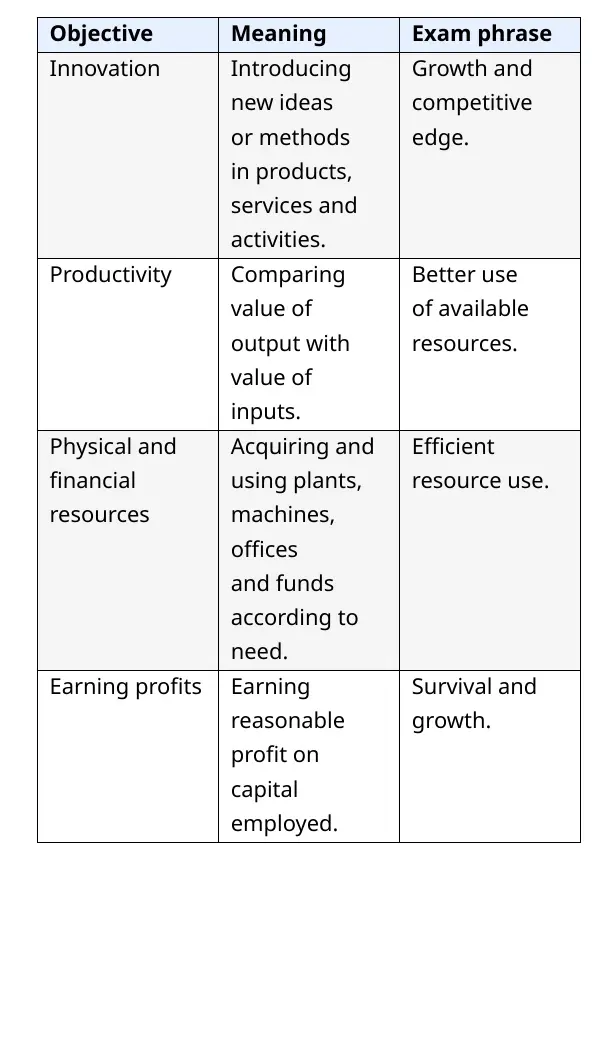
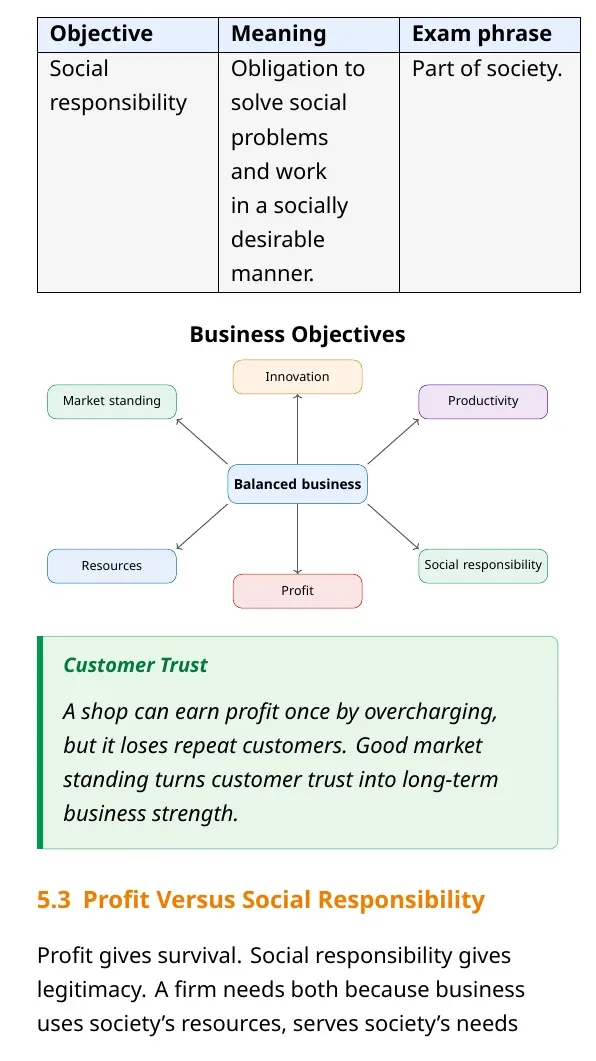
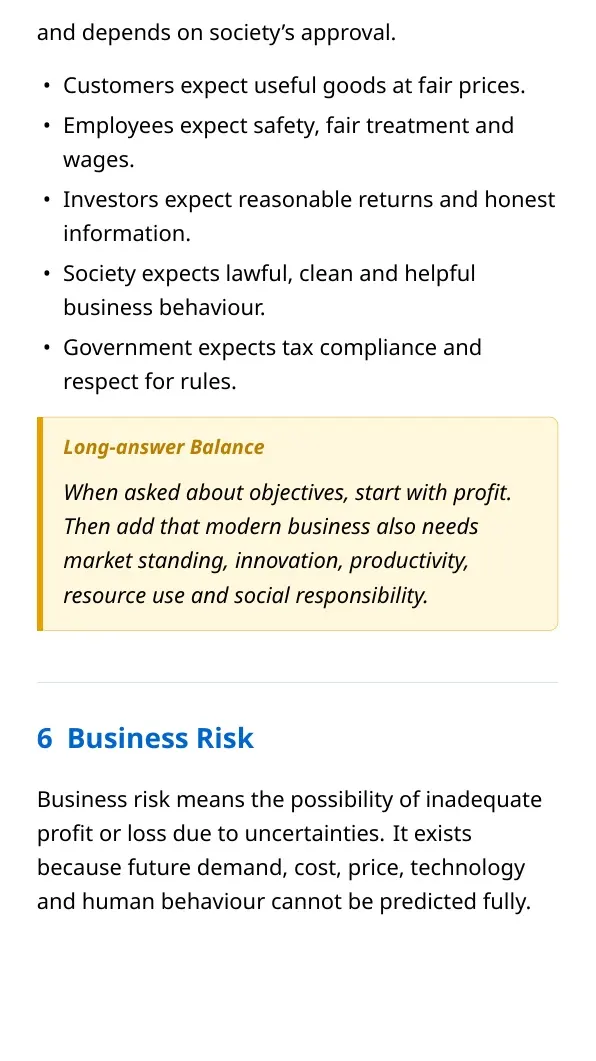
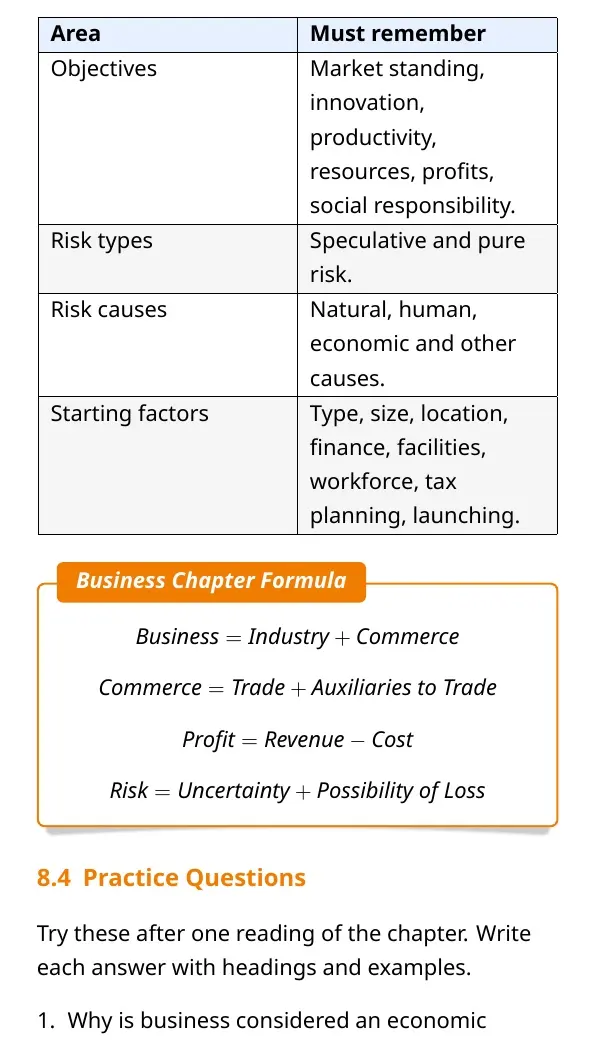
Profit is essential, but NCERT does not treat it as the only objective. A business also needs market standing, innovation, productivity, resources and social responsibility.
| Area | What to remember | Exam cue |
|---|---|---|
| Economic objective | Earn profit, survive and grow | Profit is needed, not unlimited greed |
| Innovation | Improve goods, services and methods | New products keep customers |
| Productivity | Use resources well | Output should rise with quality |
| Social objective | Serve society fairly | Quality goods and fair practice |
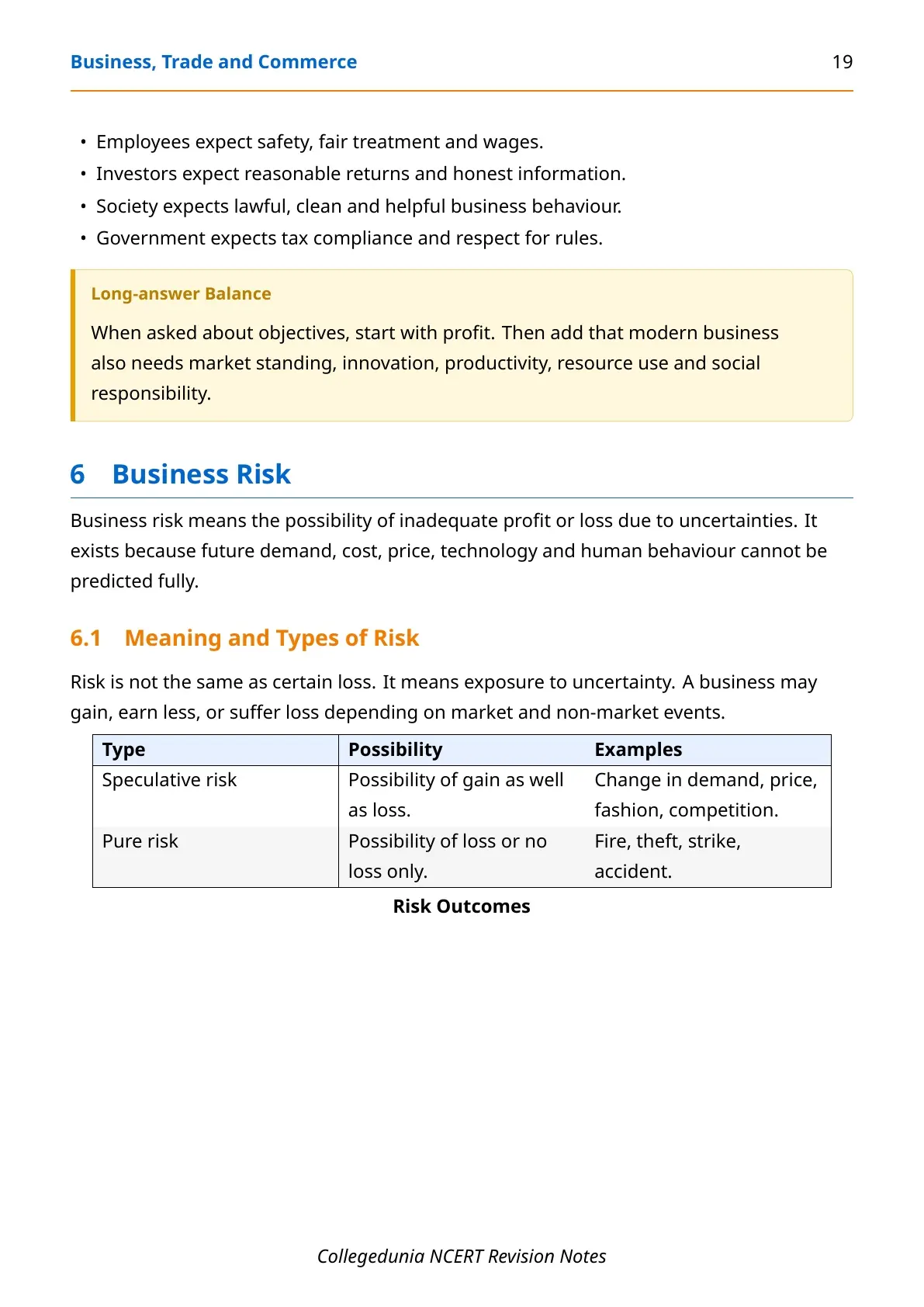
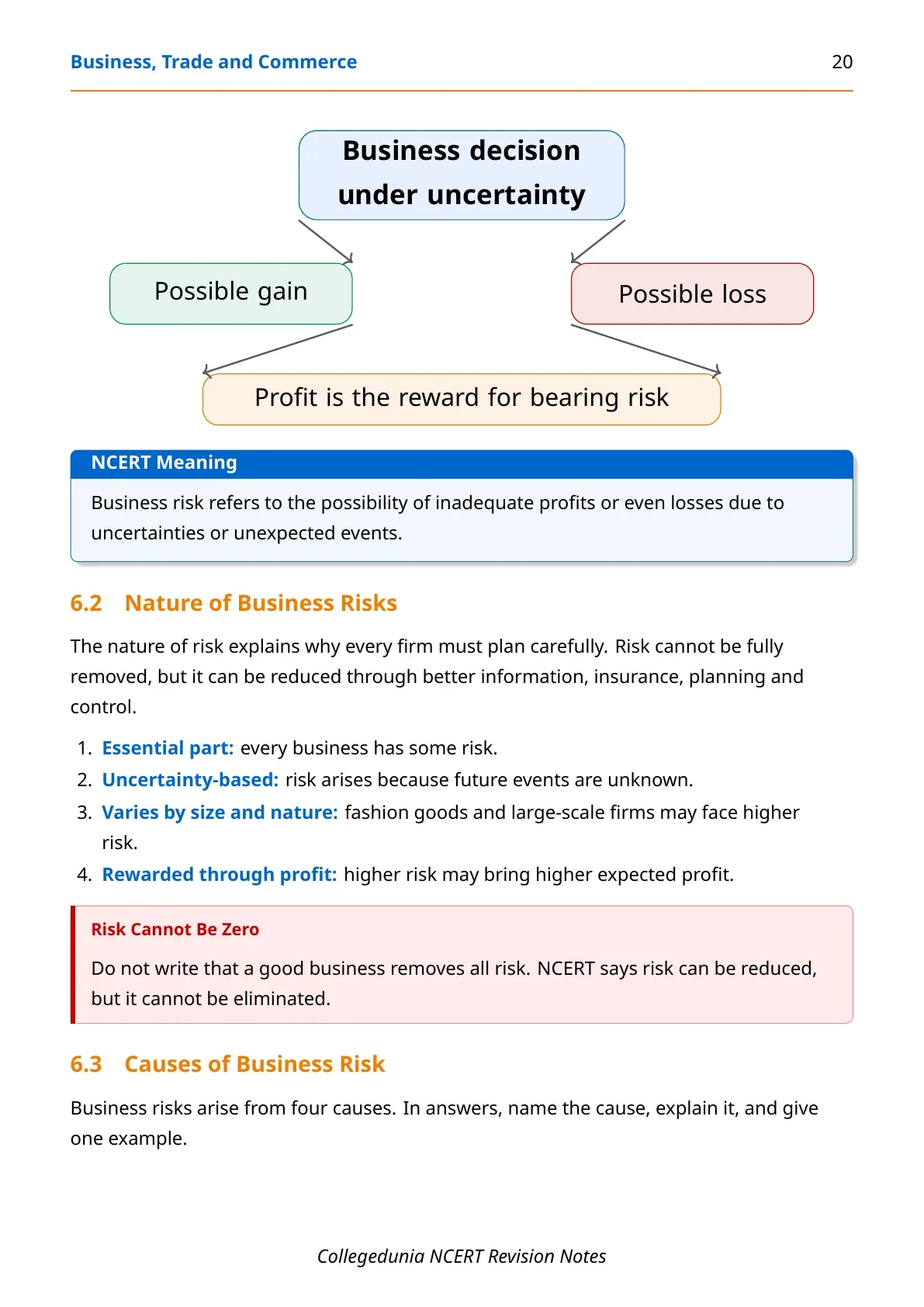
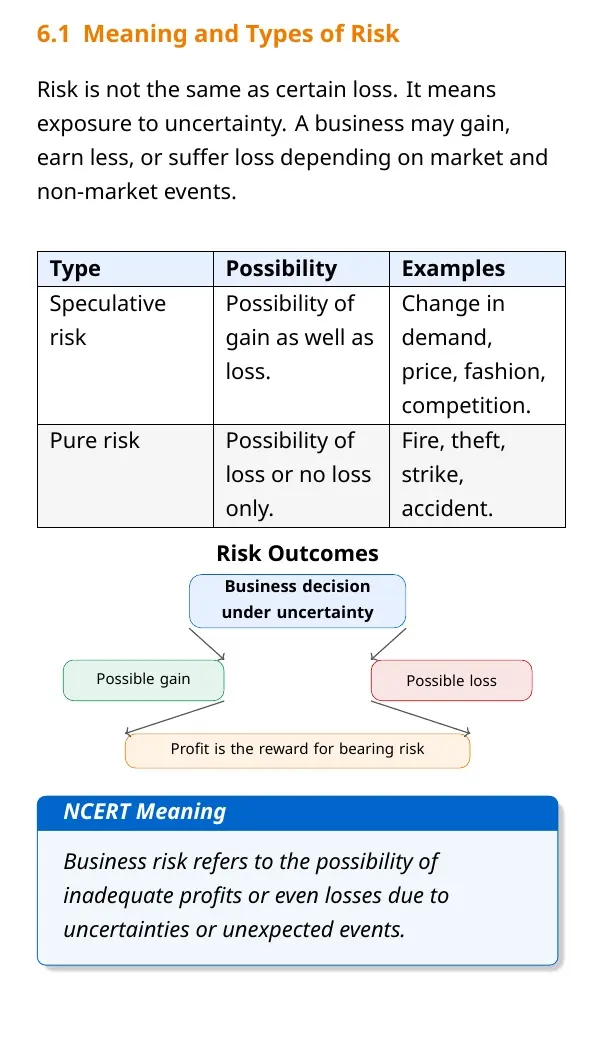
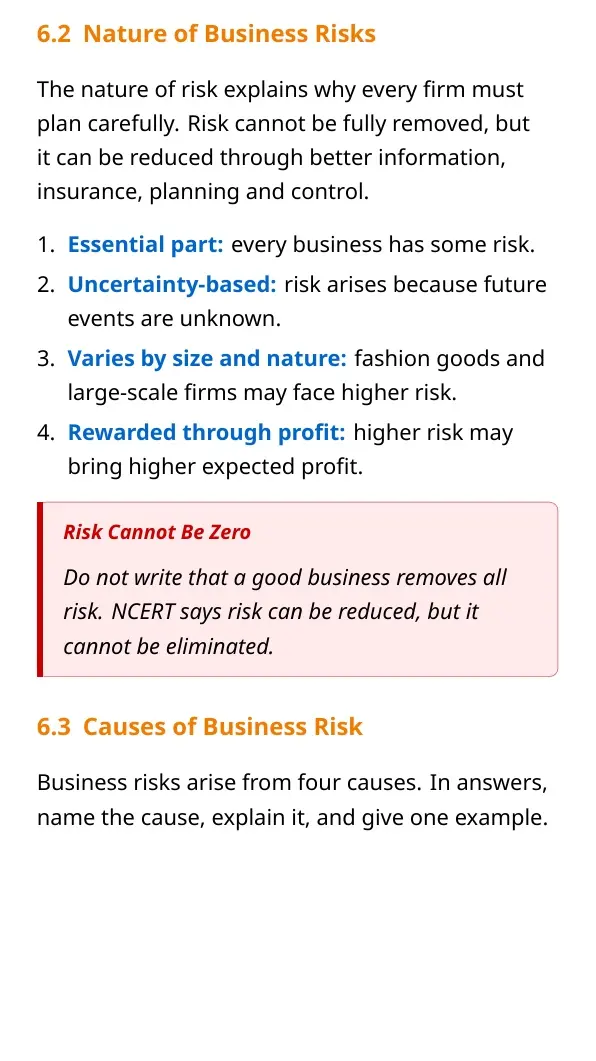
| Business risk | Uncertainty of profit or loss | Caused by natural, human or economic factors |
How to Write Better Answers on Business, Trade and Commerce
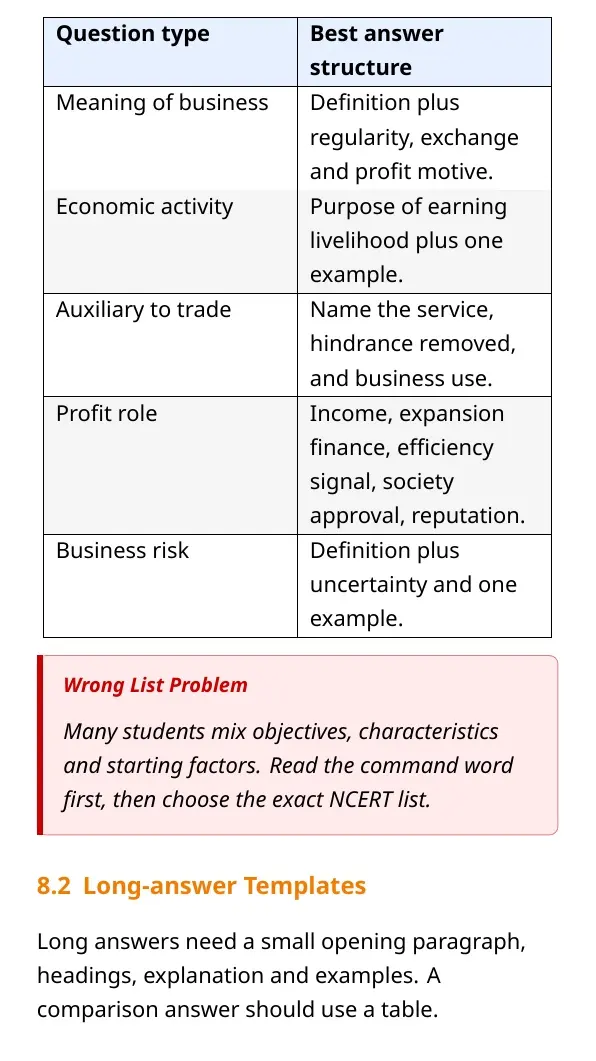
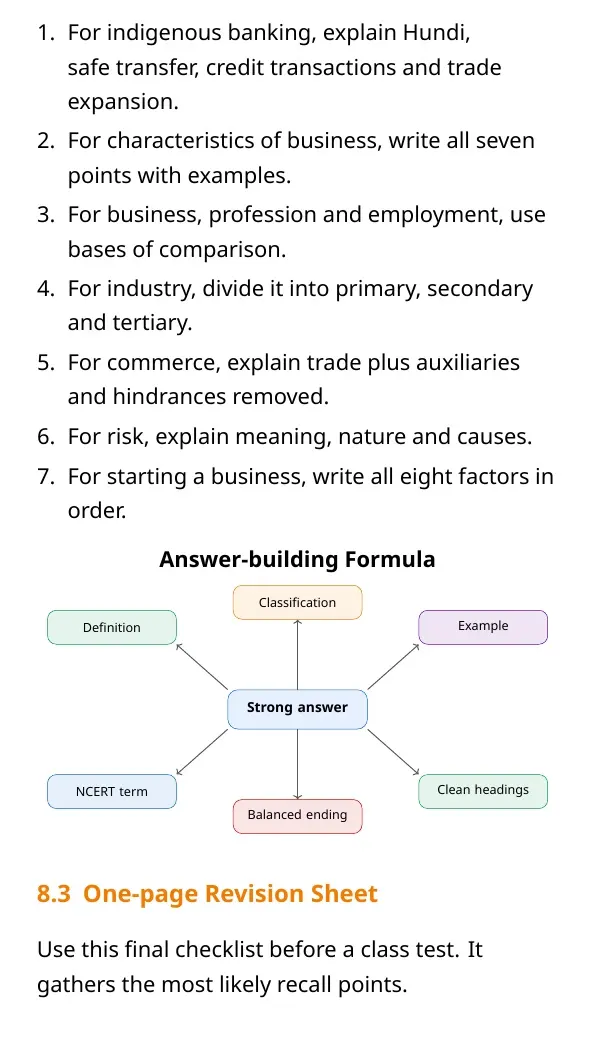
Strong answers should define the term first, then add the marker points. Do not write only examples. Keep one line for each feature, difference or objective.
- For feature questions: write economic activity, sale, regularity, profit motive, uncertainty and risk.
- For commerce questions: show the hindrance and the auxiliary that removes it.
- For risk questions: separate natural, human, economic and other causes.
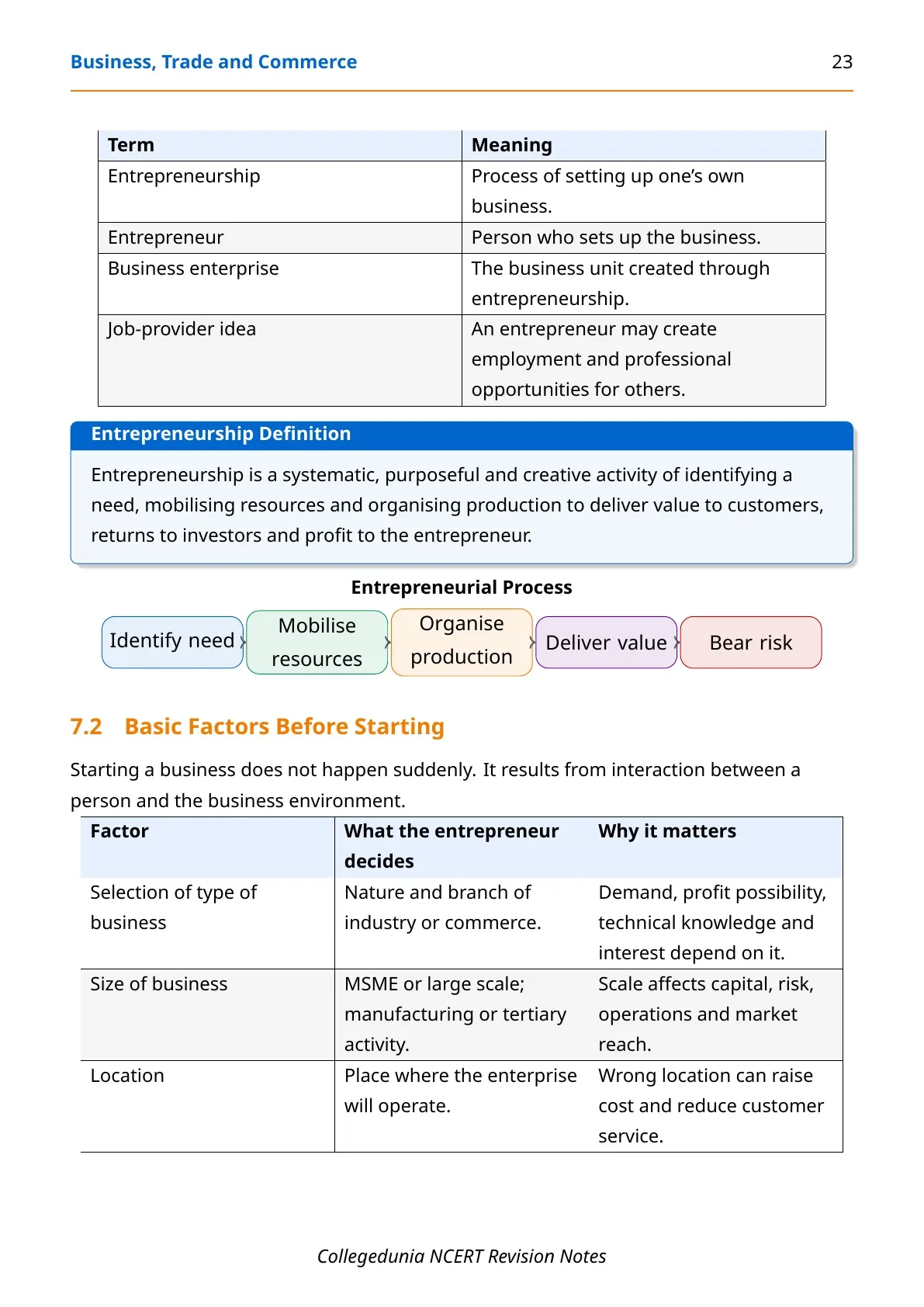
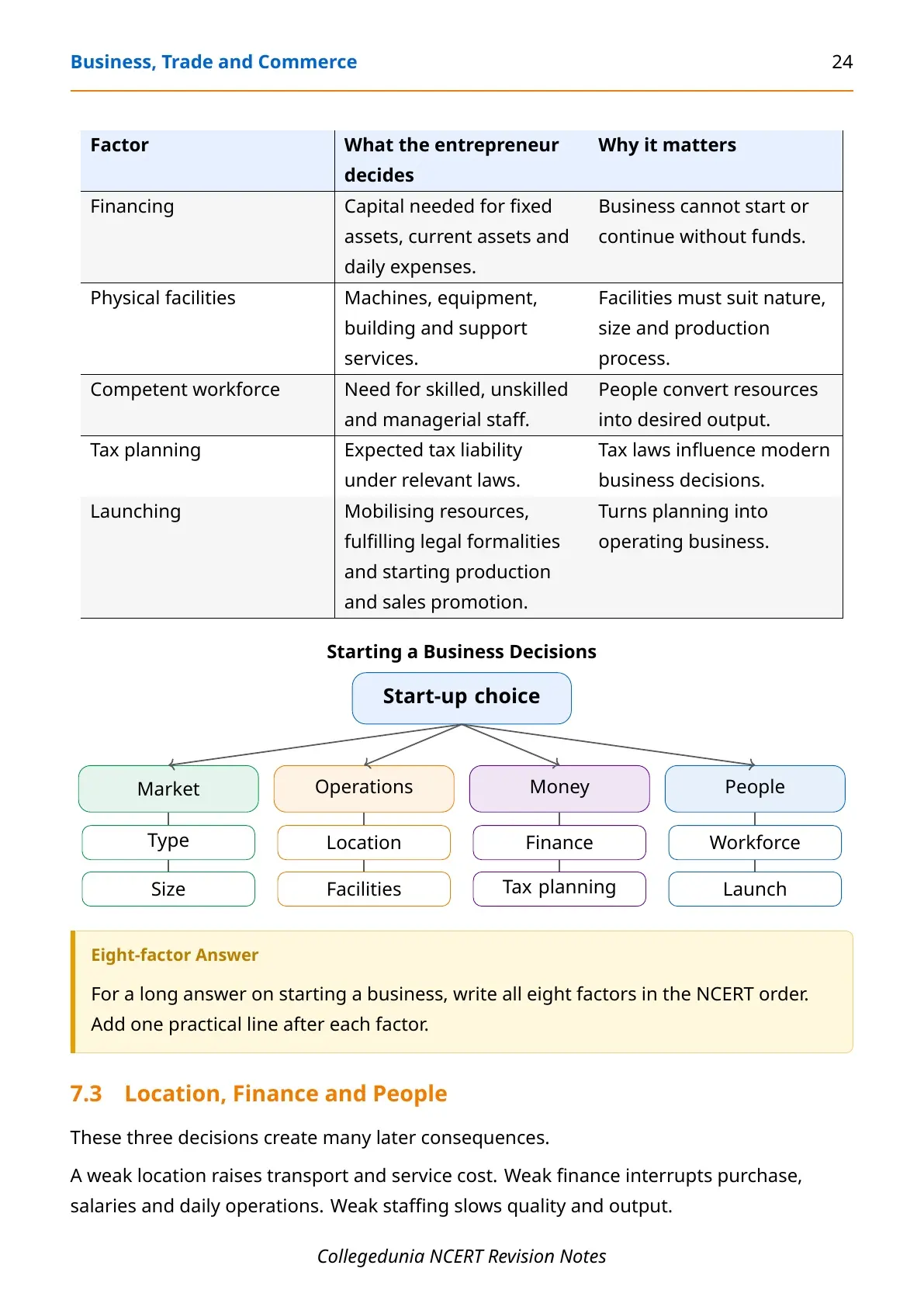
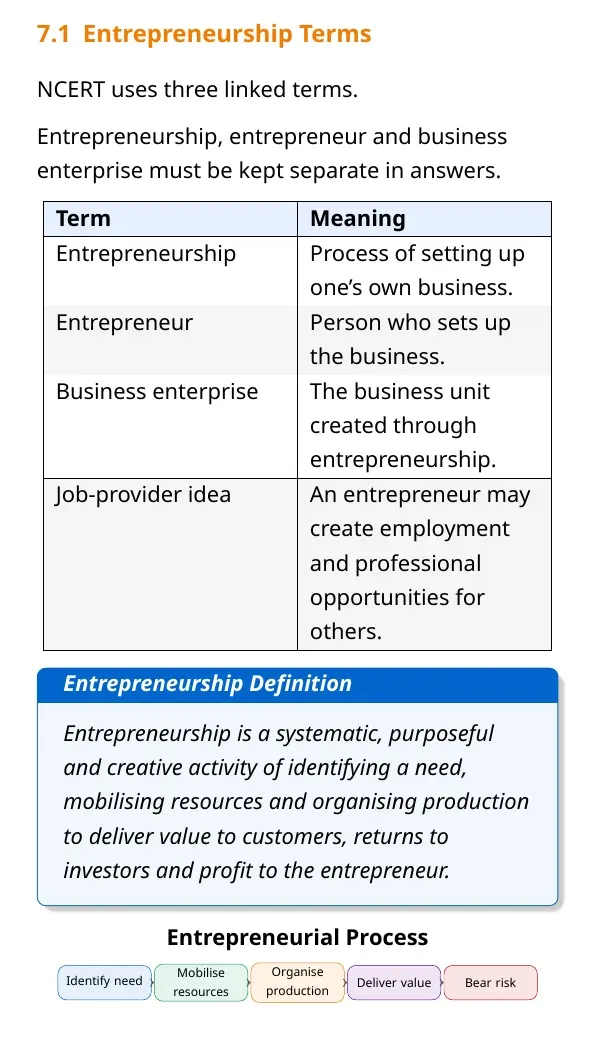
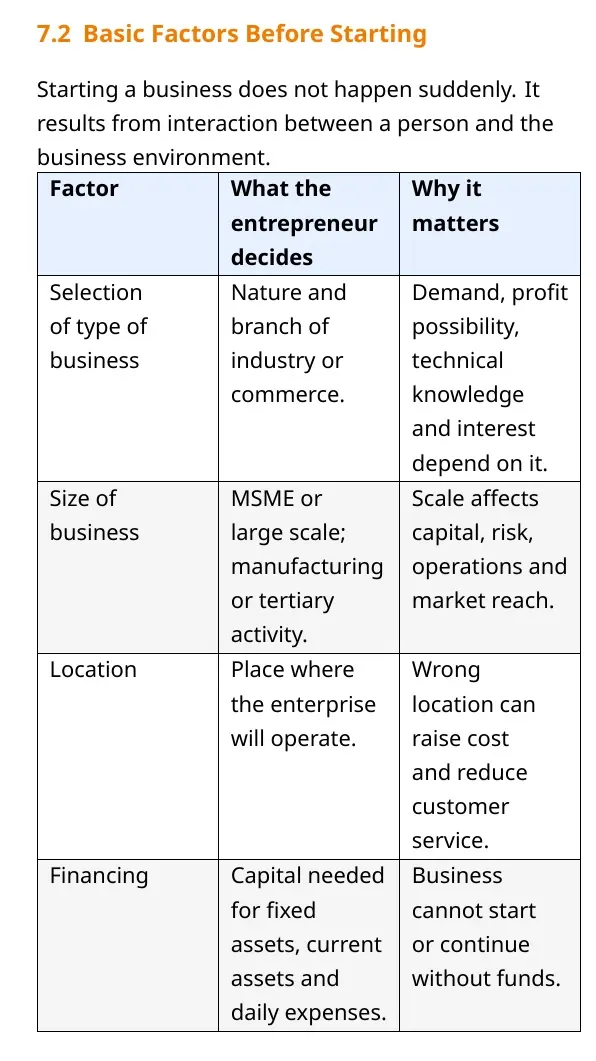
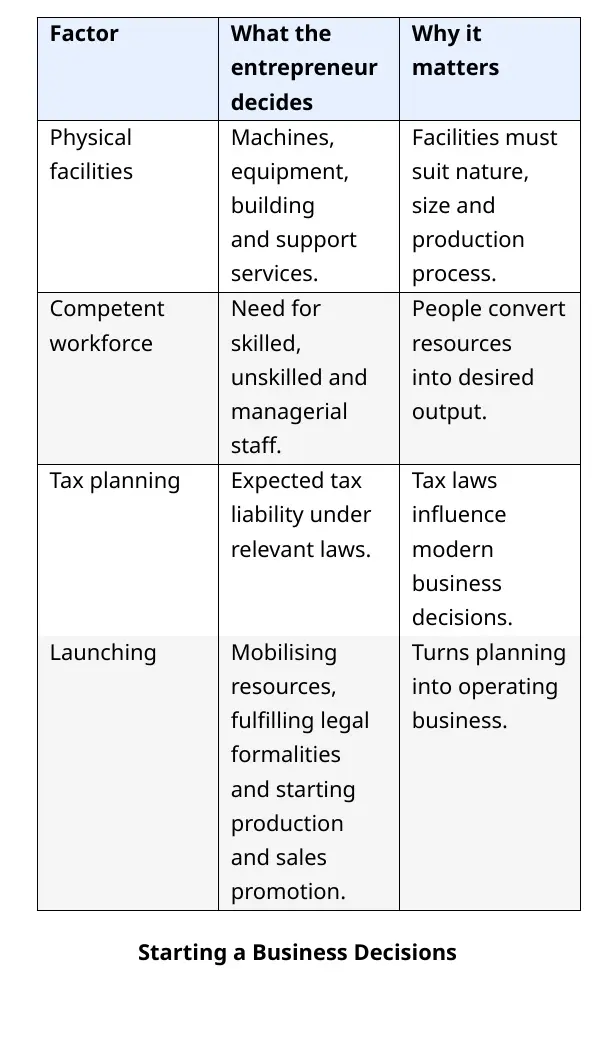
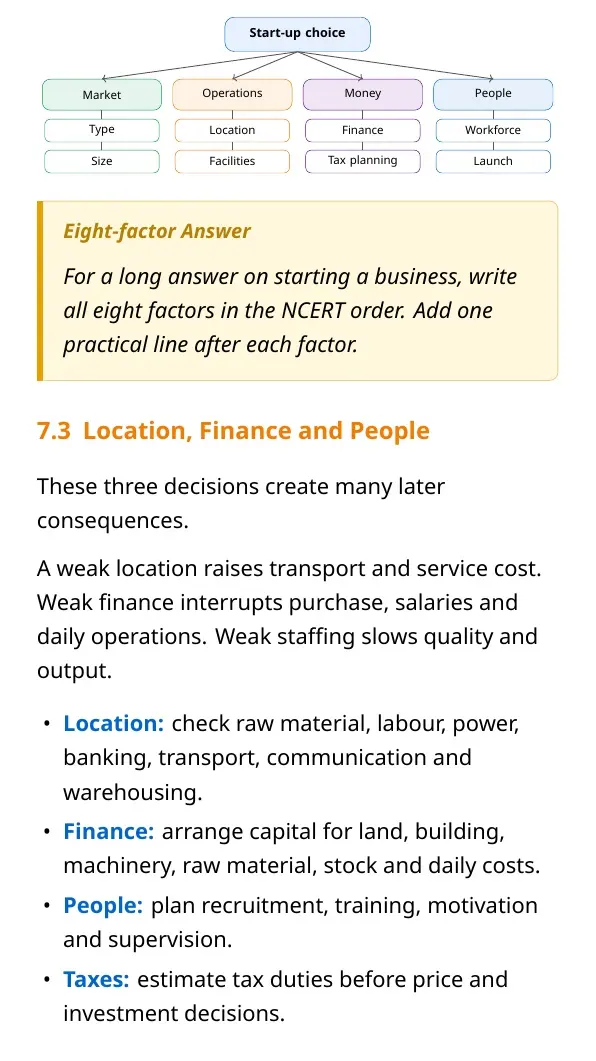
- For starting business questions: mention line of business, size, finance, location and workforce.
Related Resources for Business, Trade and Commerce
| Resource | Use it for | Link |
|---|---|---|
| NCERT Solutions | Full answers to textbook questions | Open NCERT Solutions |
| Handwritten Notes | Topper-style last-minute revision | Open Handwritten Notes |
| Chapter Notes PDF | Use this page for the full revision PDF | Open Chapter Notes |
All Class 11 Business Studies Notes Chapters
| Chapter | Title | Notes Link |
|---|---|---|
| Chapter 1 | Business, Trade and Commerce | You are here |
| Chapter 2 | Forms of Business Organisation | Open Notes |
| Chapter 3 | Private, Public and Global Enterprises | Open Notes |
| Chapter 4 | Business Services | Open Notes |
| Chapter 5 | Emerging Modes of Business | Open Notes |
Business, Trade and Commerce Class 11 Notes FAQs
Ques. What does Business, Trade and Commerce Chapter 1 explain?
Ans. It explains business as an economic activity, the role of trade and commerce, business objectives, business risk and the basic factors needed to start a business.
Ques. What is the difference between trade and commerce?
Ans. Trade means buying and selling goods. Commerce is wider because it includes trade plus transport, banking, insurance, warehousing and advertising.
Ques. Why is profit important in business?
Ans. Profit helps a business survive, grow, attract capital and face risk. NCERT also says business must serve society fairly.
Ques. How should students revise Class 11 Business Studies Chapter 1?
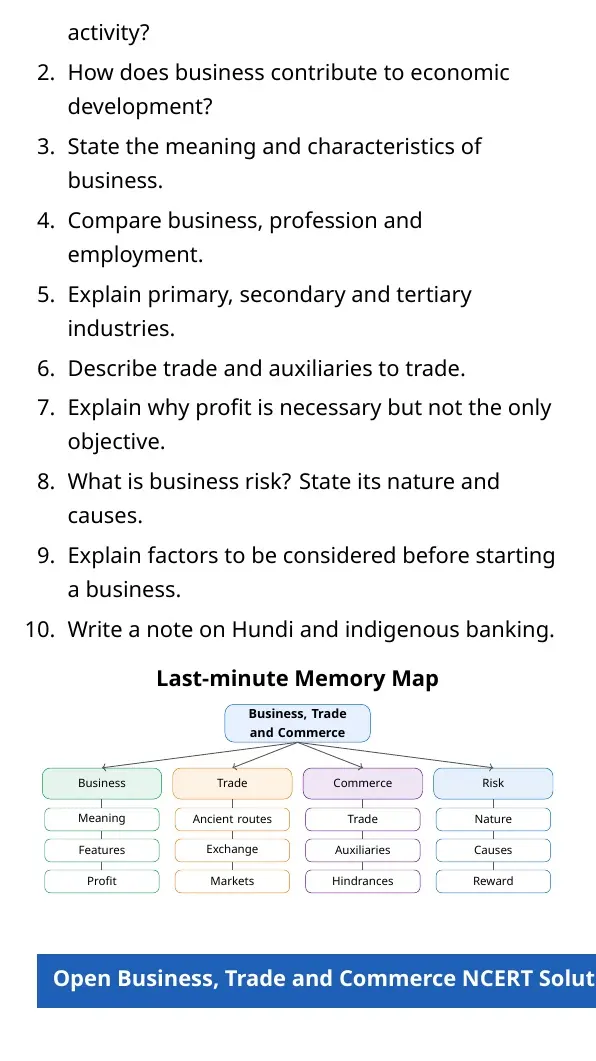
Ans. Students should revise definitions, seven business features, business-profession-employment differences, auxiliaries to trade, objectives, risk causes and start-up factors.



Comments