



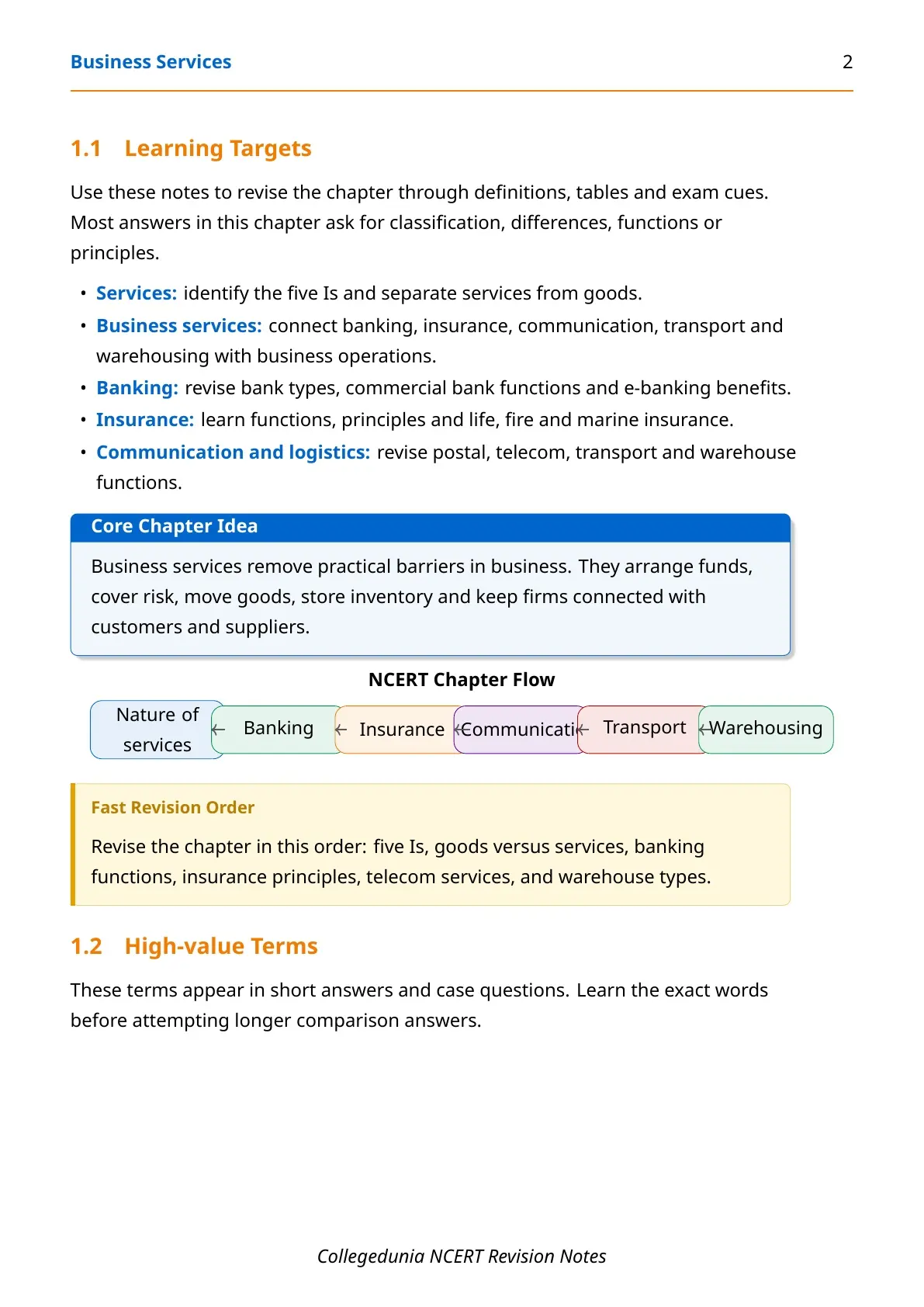
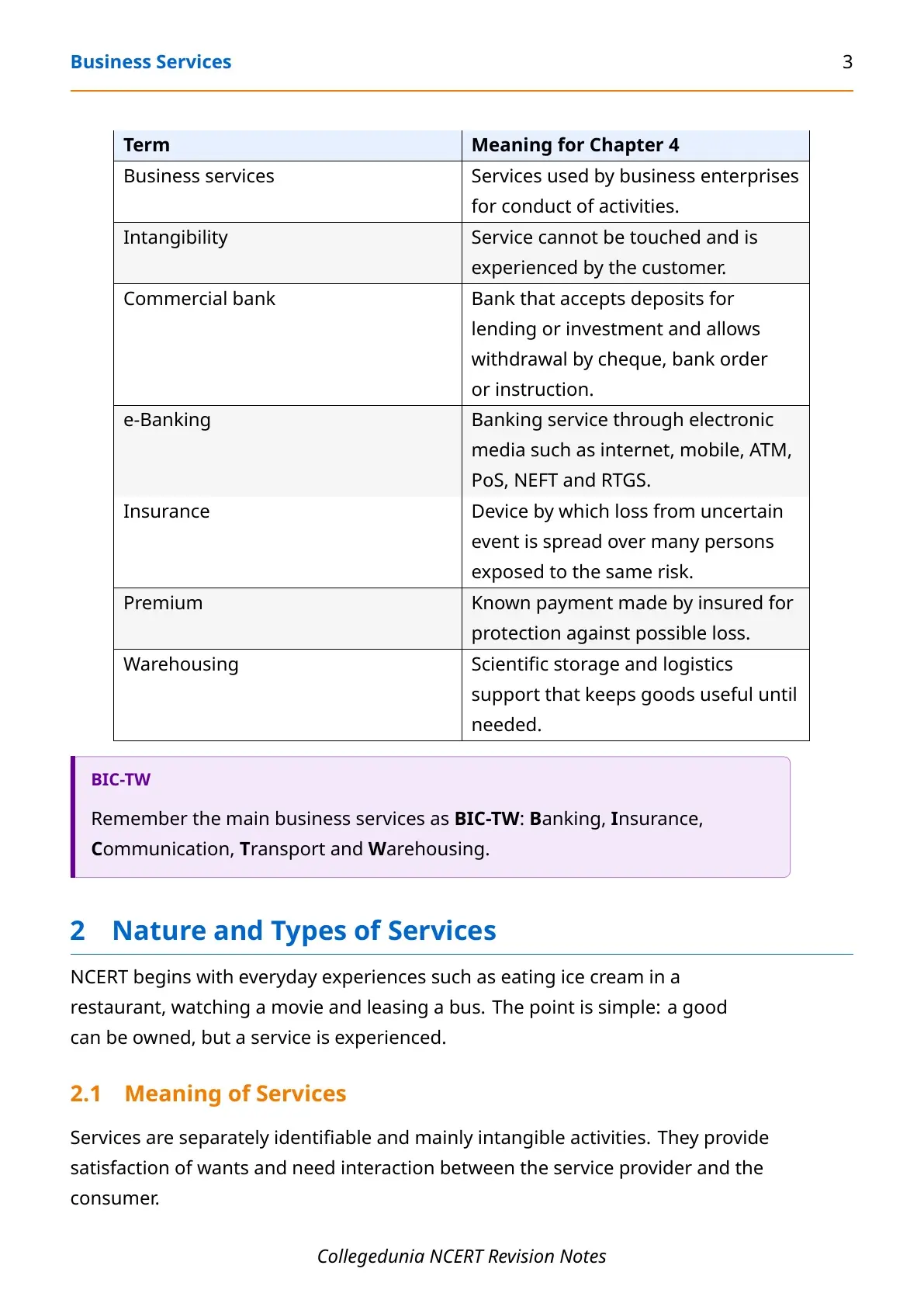
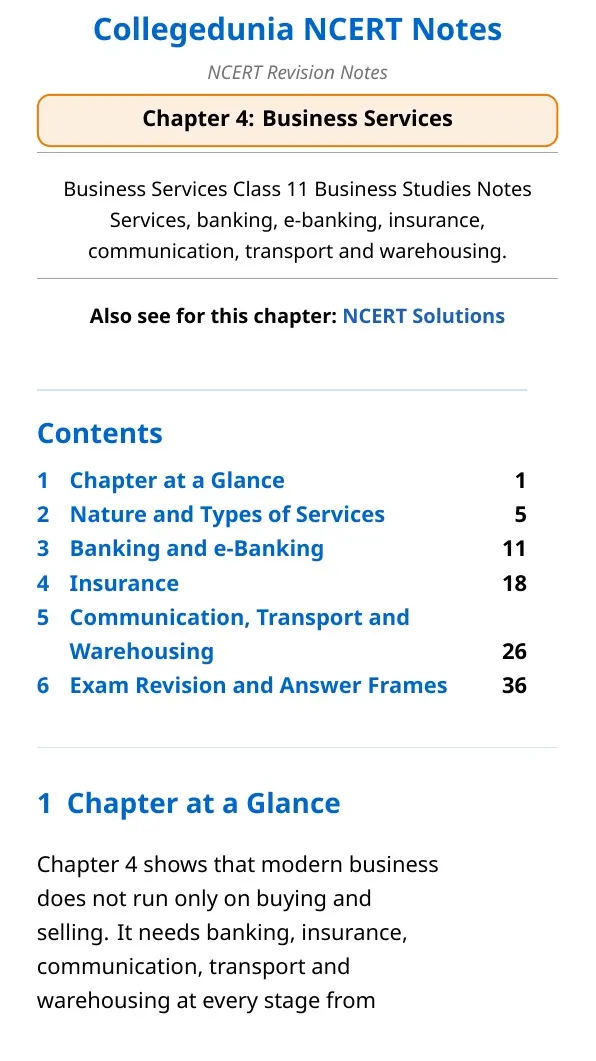
The Business Services Class 11 notes explain the service support system used by modern business for the 2026-27 NCERT syllabus. Use this page to revise service features, banking, e-banking, insurance, communication, transport and warehousing before opening the full PDF.
- Download the 20-page Chapter 4 Business Studies notes PDF for offline revision.
- Revise banking, insurance, telecom, transport and warehouses with exam-ready tables.
- Student focus: learn the five Is of services and the insurance principles first.
These Class 11 Business Studies notes are checked against the 2026-27 NCERT chapter and written for fast board revision.
Student Feedback on Business Services
In a Collegedunia poll of 12,760 Class 11 Commerce students before the 2026 exams, many students said Chapter 4 felt simple until banking terms and insurance principles appeared together.
- 73% wanted one table for the types of bank accounts.
- 61% confused indemnity with contribution in insurance questions.
- 54% needed help separating transport and warehousing functions. The notes treat both as separate business services.
Source: 2026-27 Class 11 Commerce student poll. Sample of 12,760 students from CBSE schools across 15 states.
Business Services Class 11 Chapter 4 Quick Map
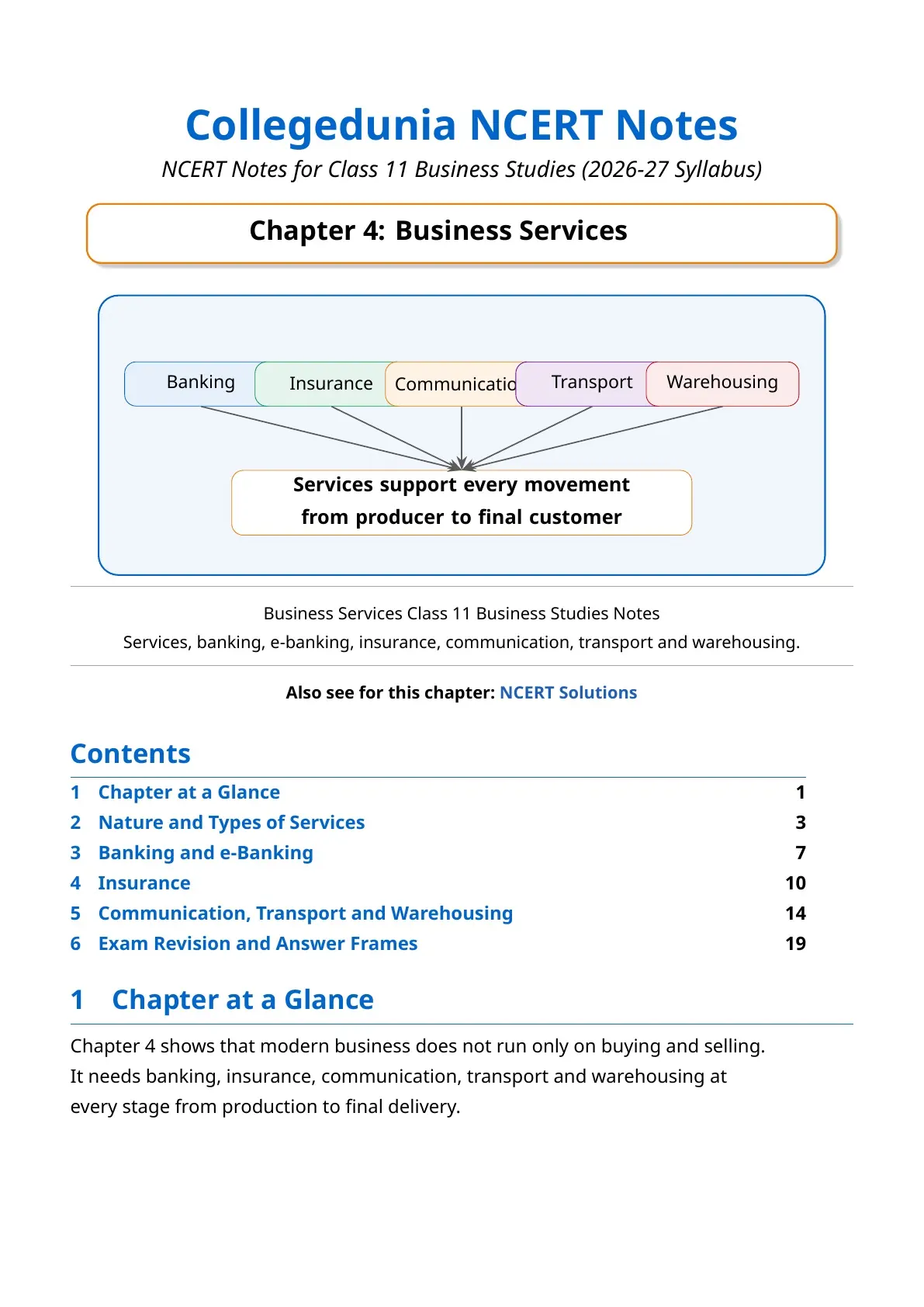
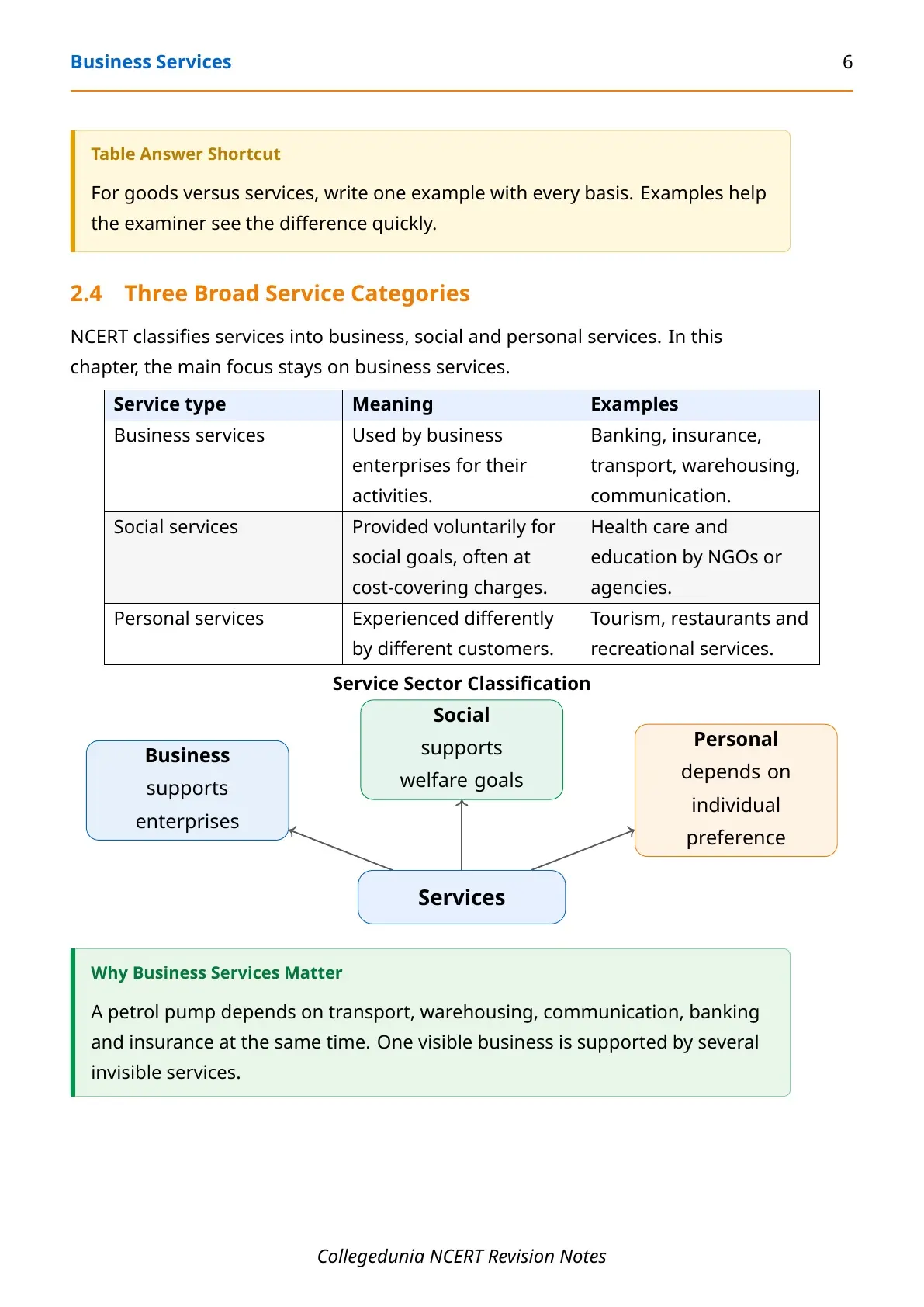
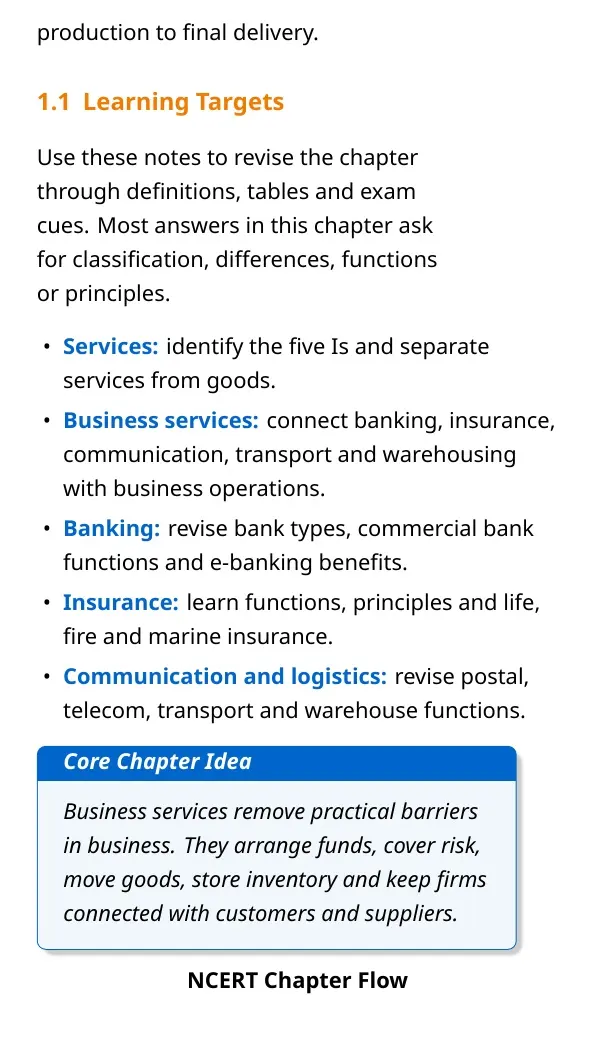
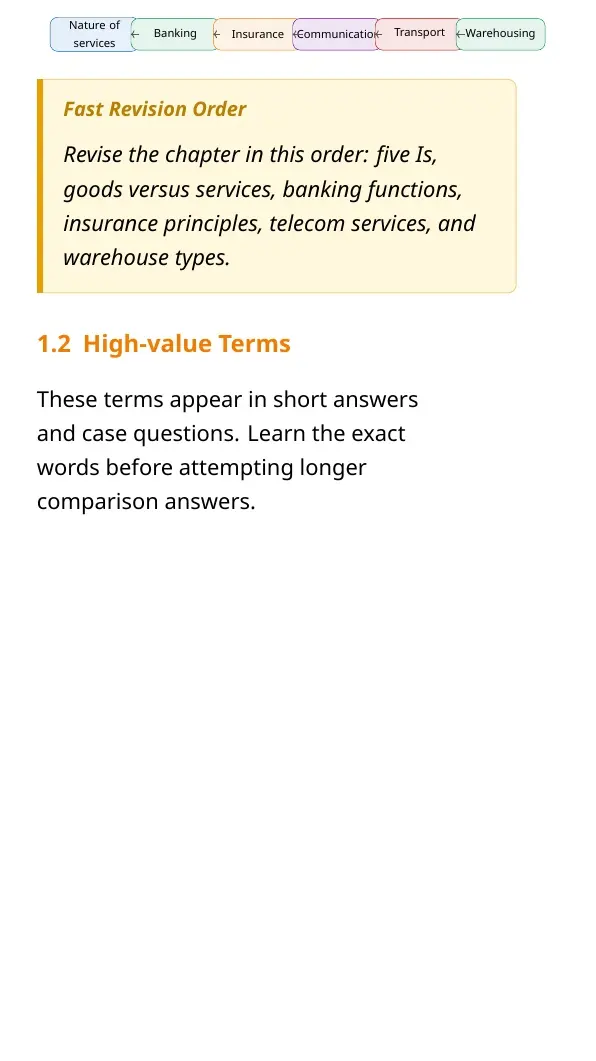
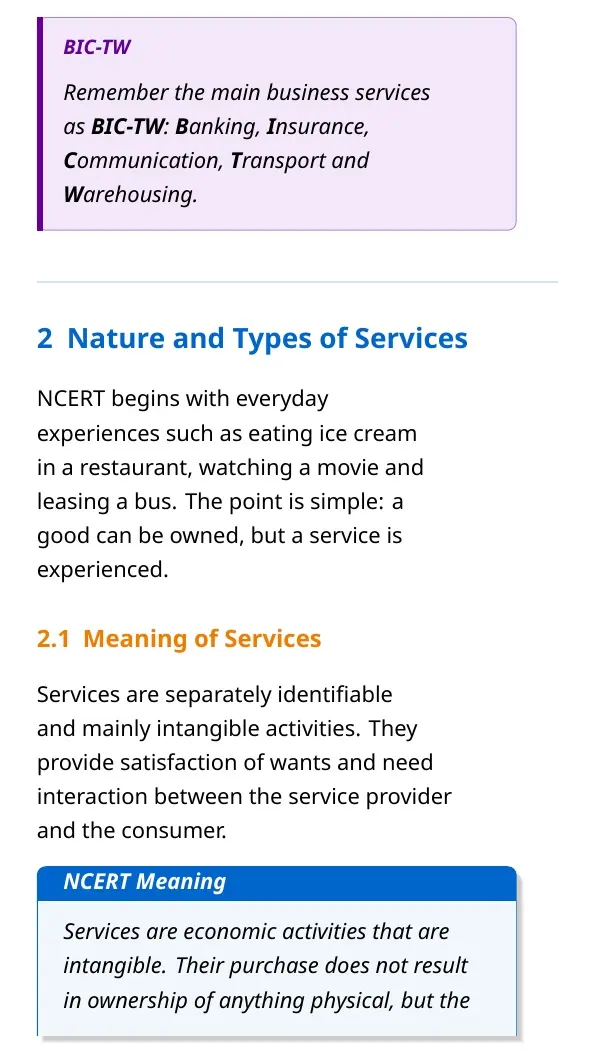
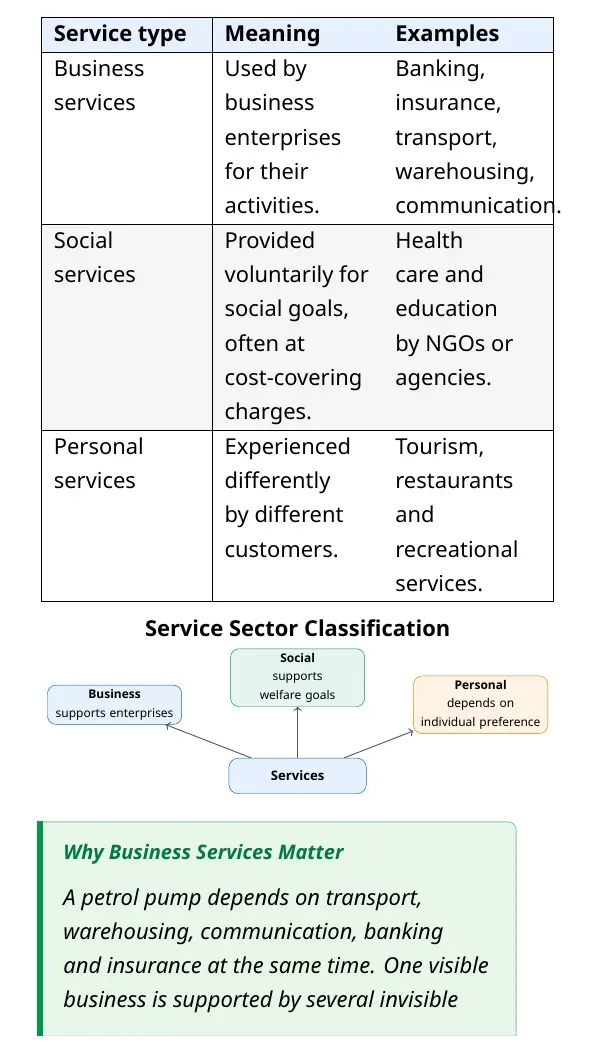
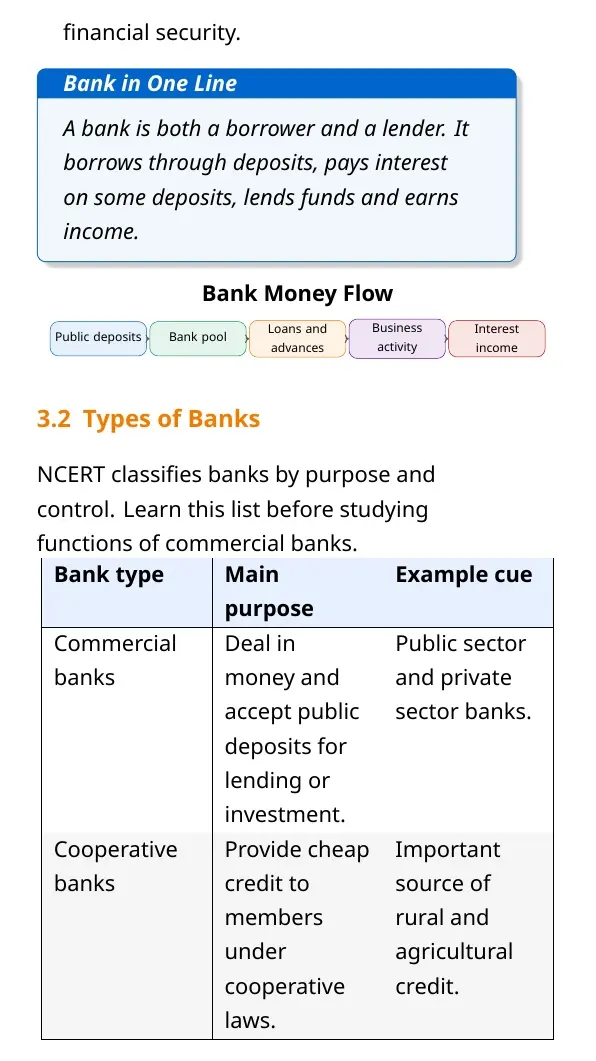
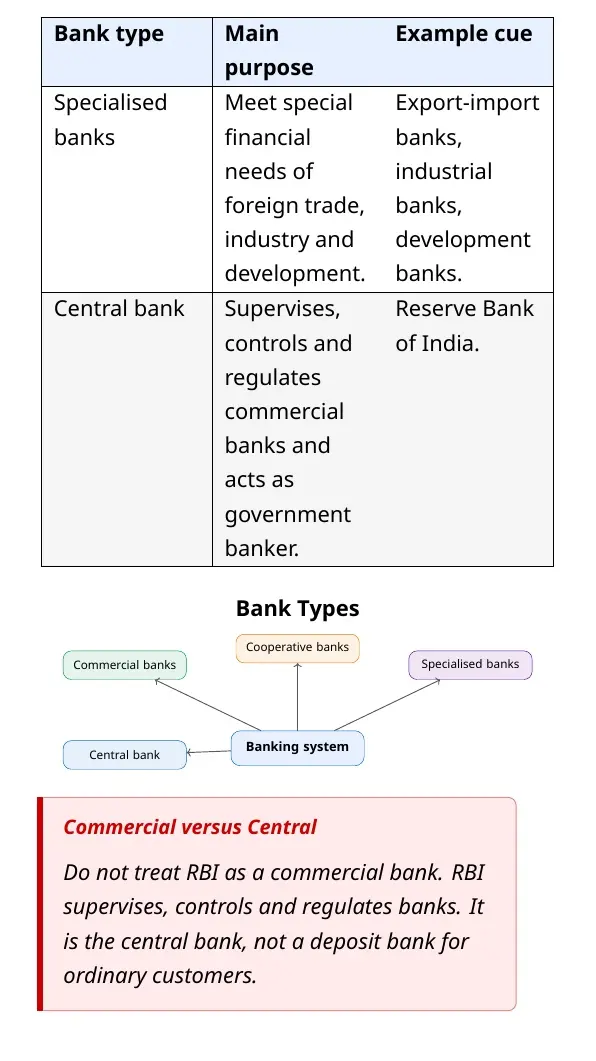
Business services are activities that support trade and industry without producing physical goods themselves. NCERT groups the chapter around banking, insurance, communication, transport and warehousing because these services keep buying, selling and delivery moving.
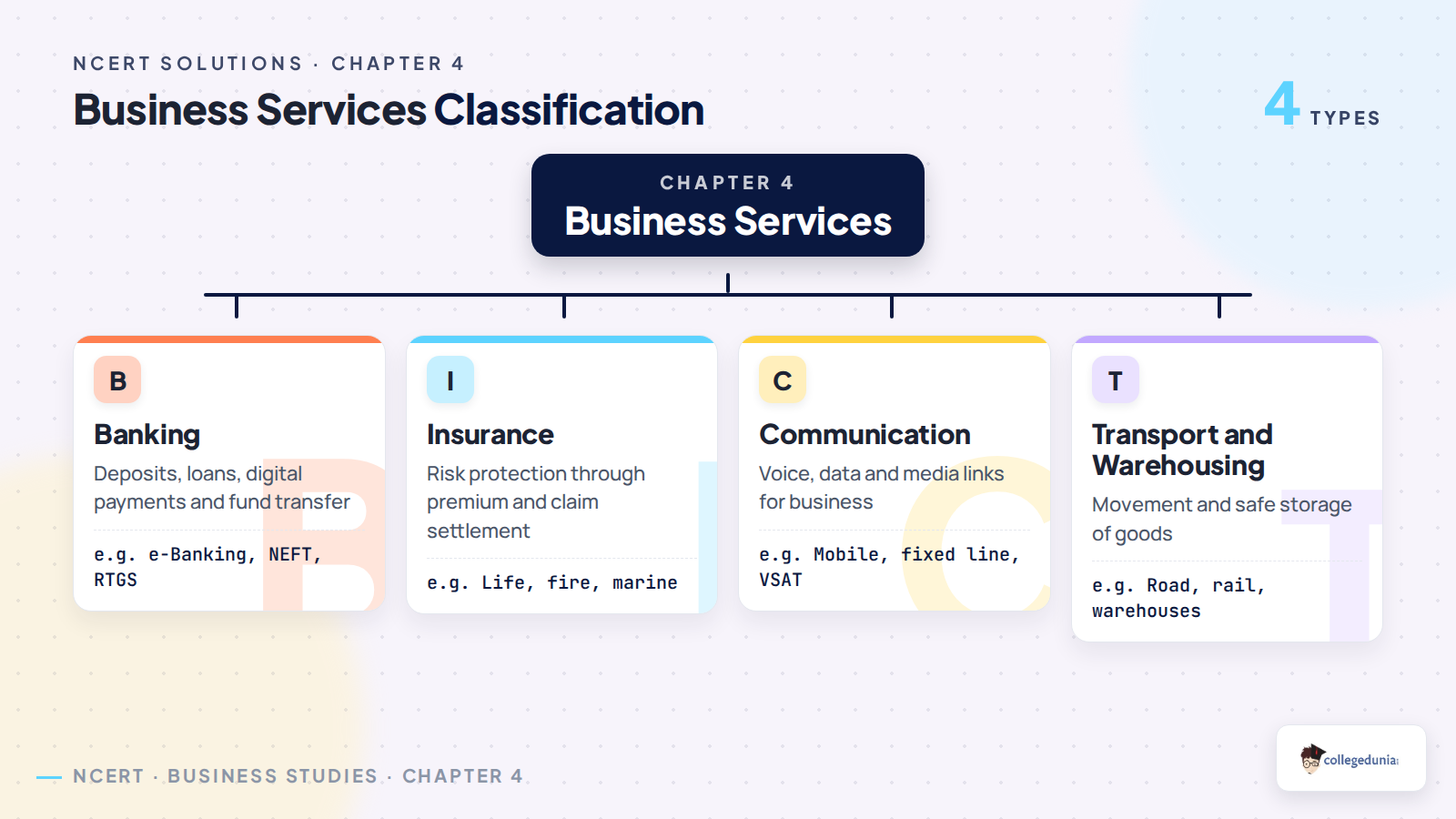
- Banking solves finance, payment and credit problems.
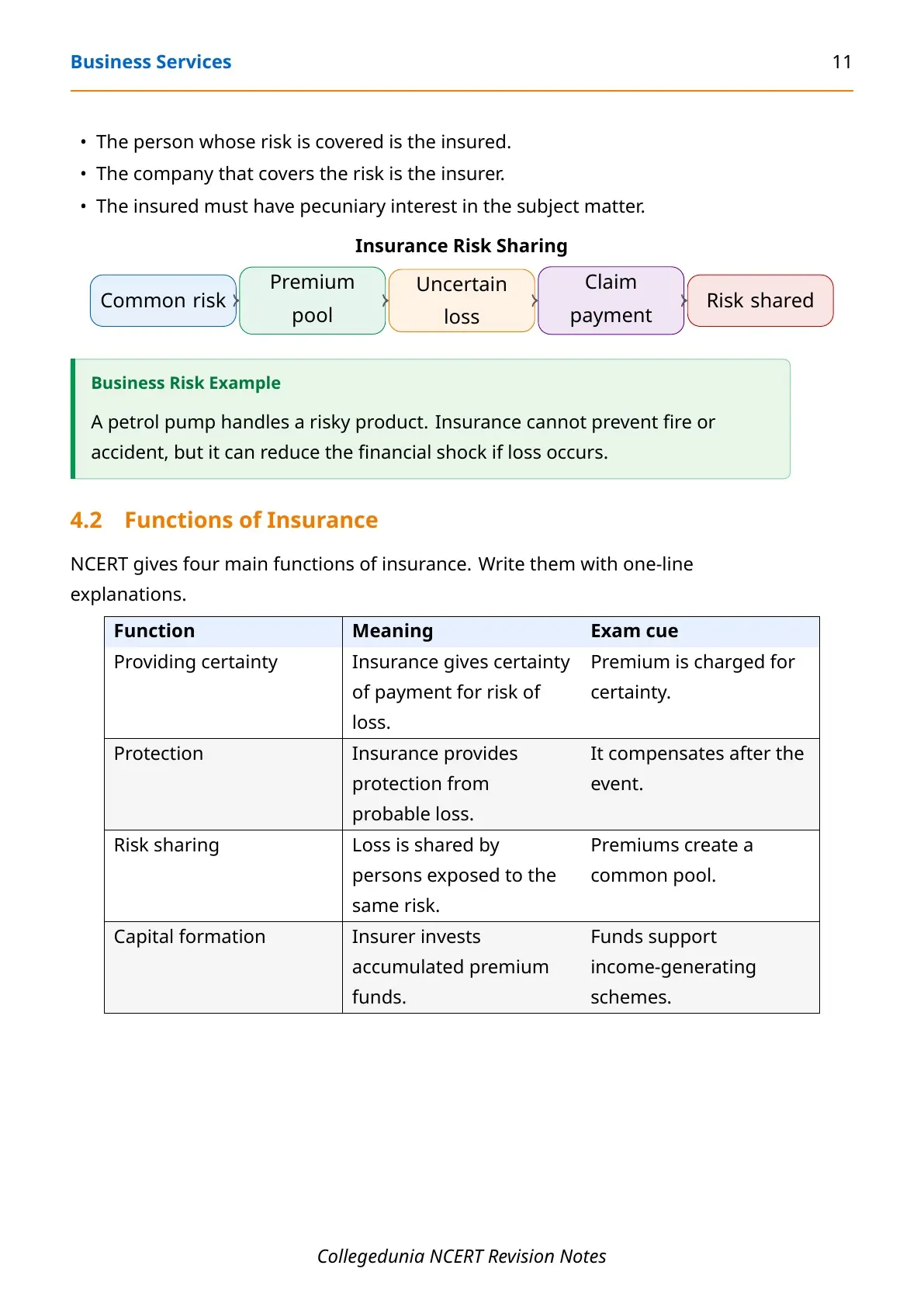
- Insurance spreads risk through premium and policy protection.
- Communication connects producers, sellers and customers quickly.
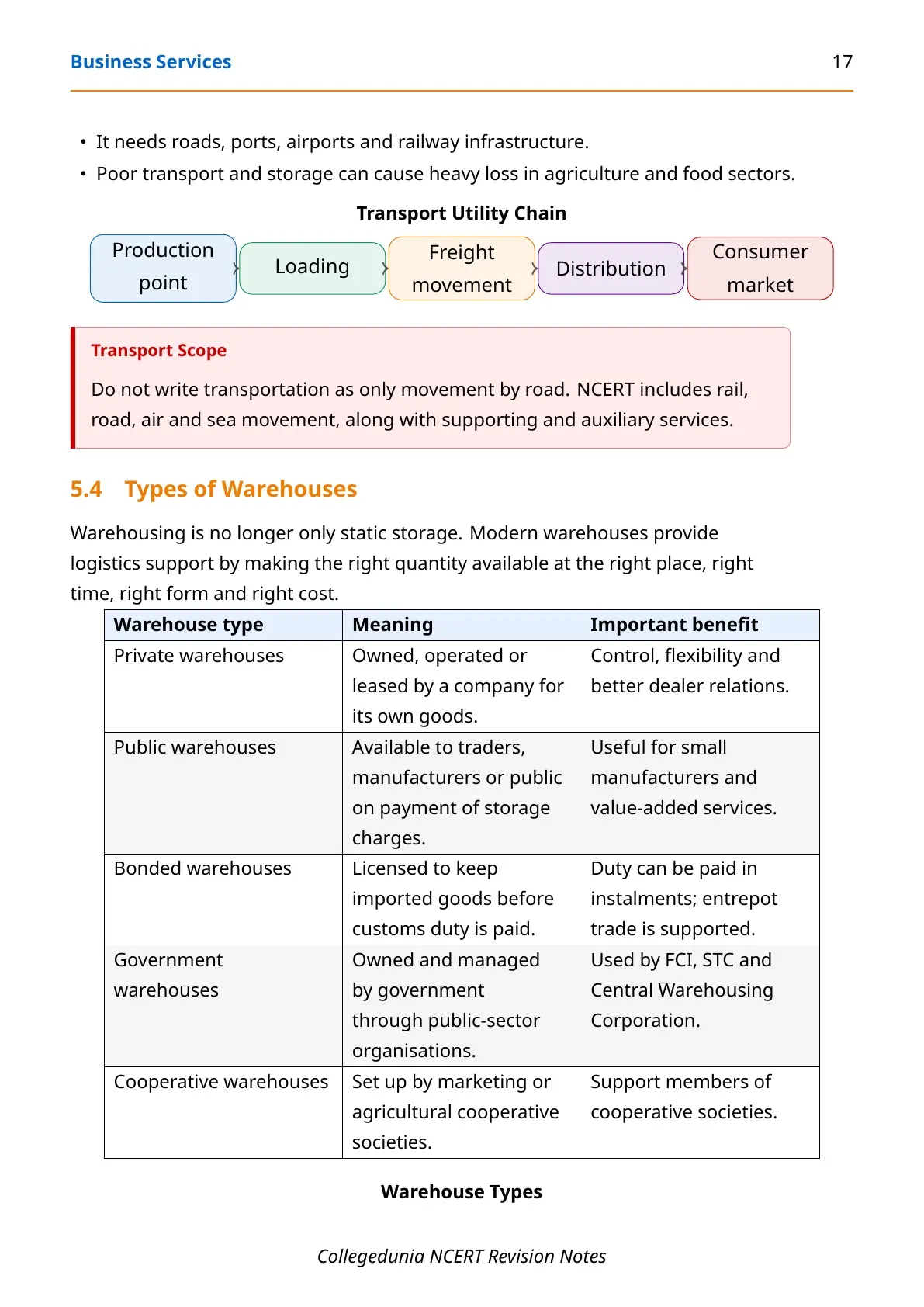
- Transport and warehousing move goods and store them safely until demand arises.
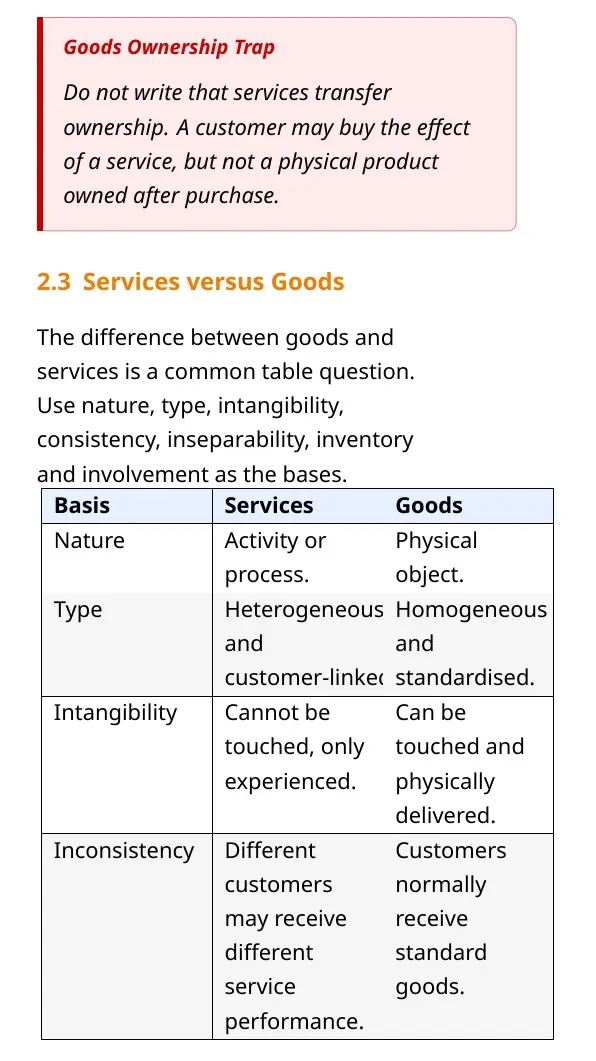
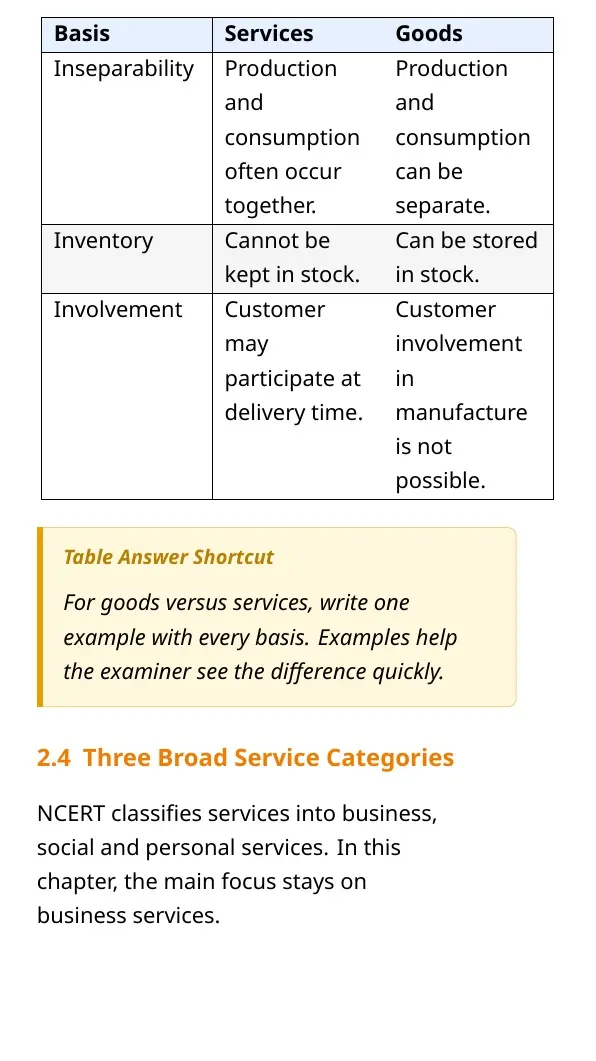
Goods and Services Difference in Business Services
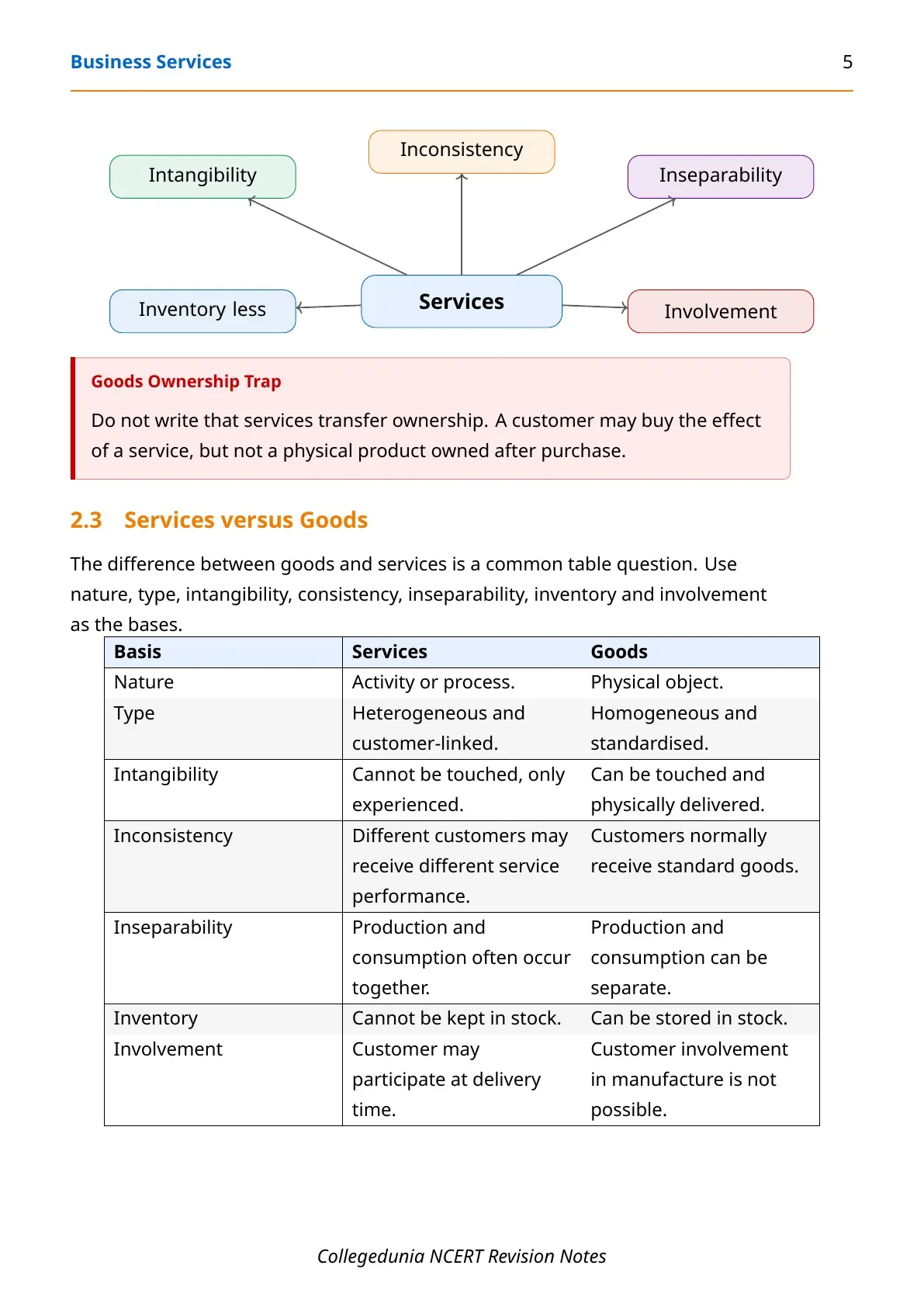
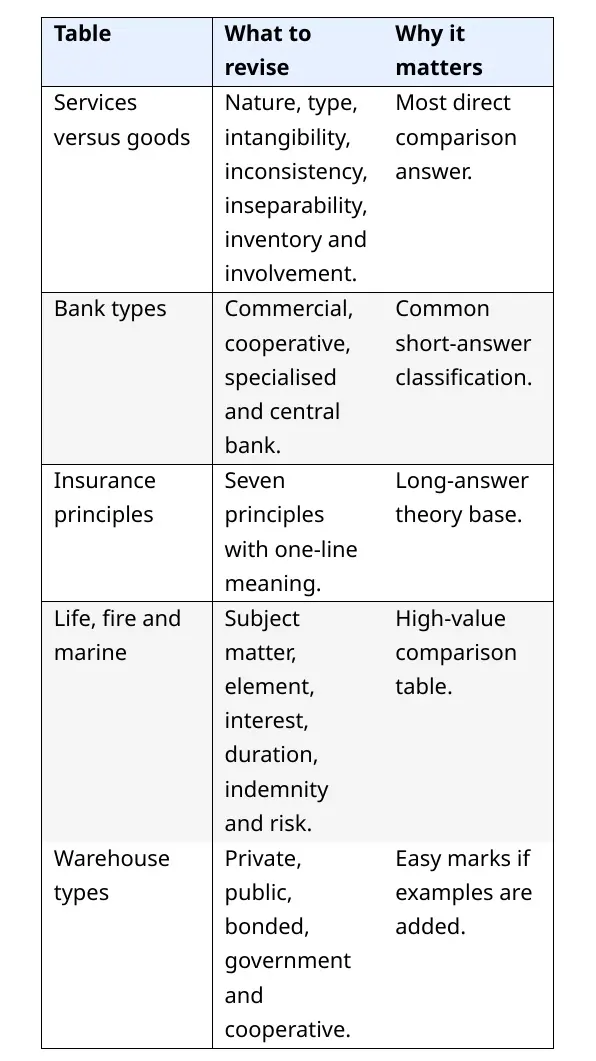
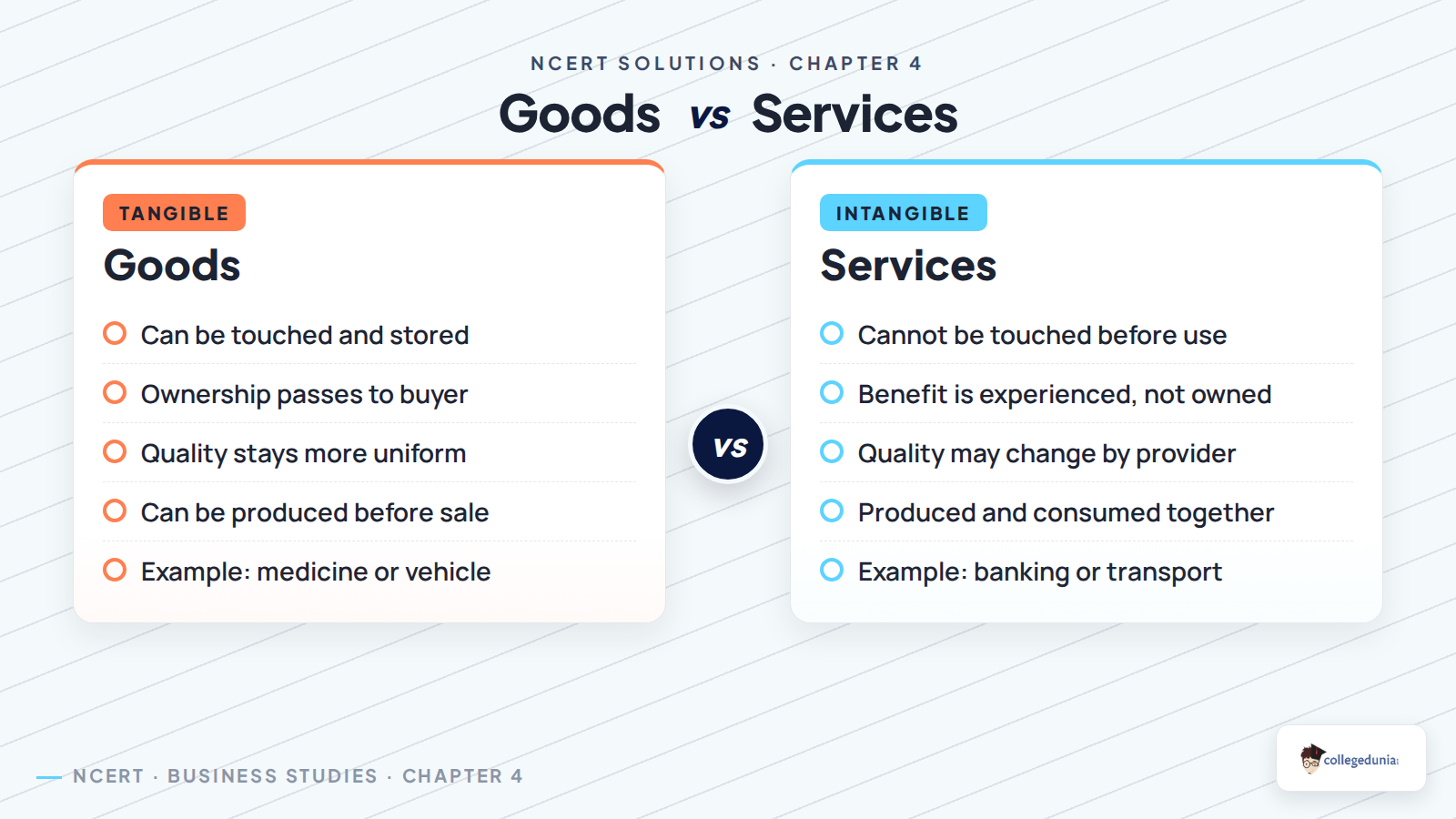
The first scoring idea in Chapter 4 is the difference between goods and services. Goods are visible and can be stored. Services are mainly intangible and are produced and consumed together.
| Basis | Goods | Services |
|---|---|---|
| Nature | Tangible and visible | Intangible and experienced |
| Storage | Can usually be stored | Cannot usually be stored |
| Ownership | Ownership transfers to buyer | No ownership transfer in the same way |
| Quality check | Quality can be inspected before purchase | Quality is judged during or after use |
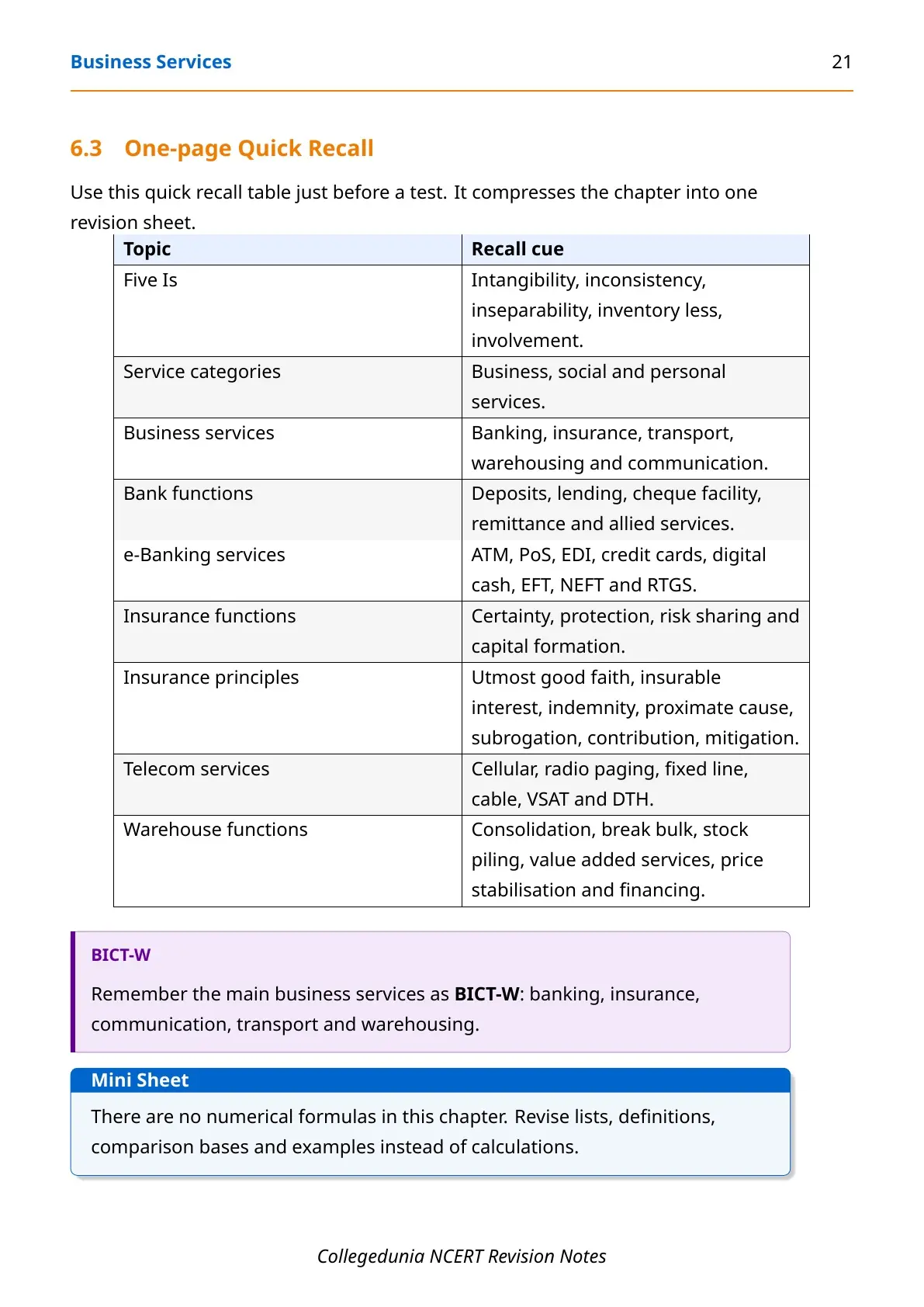
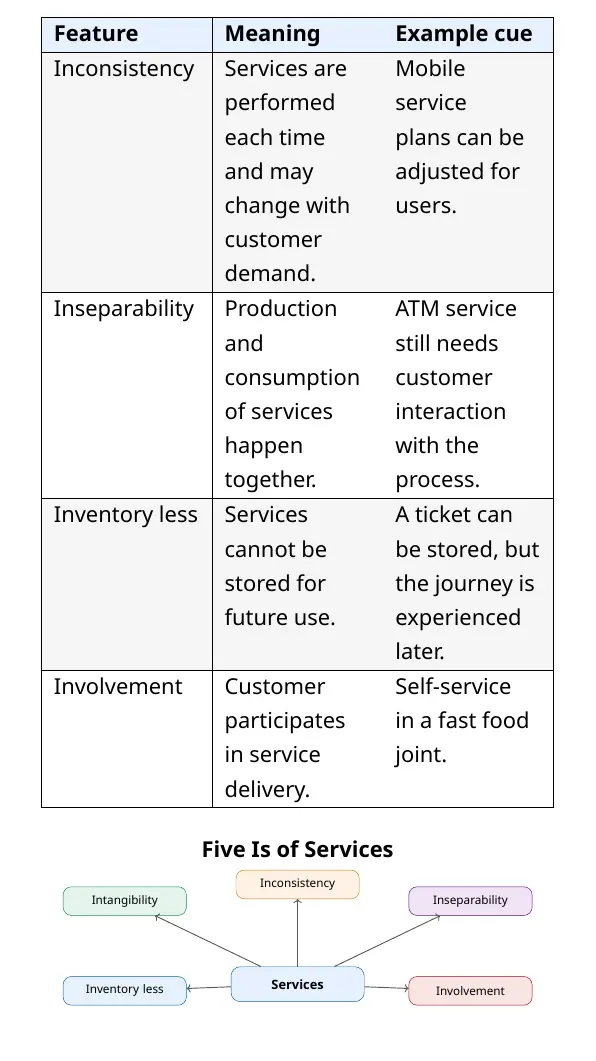
Features of Services: The Five Is
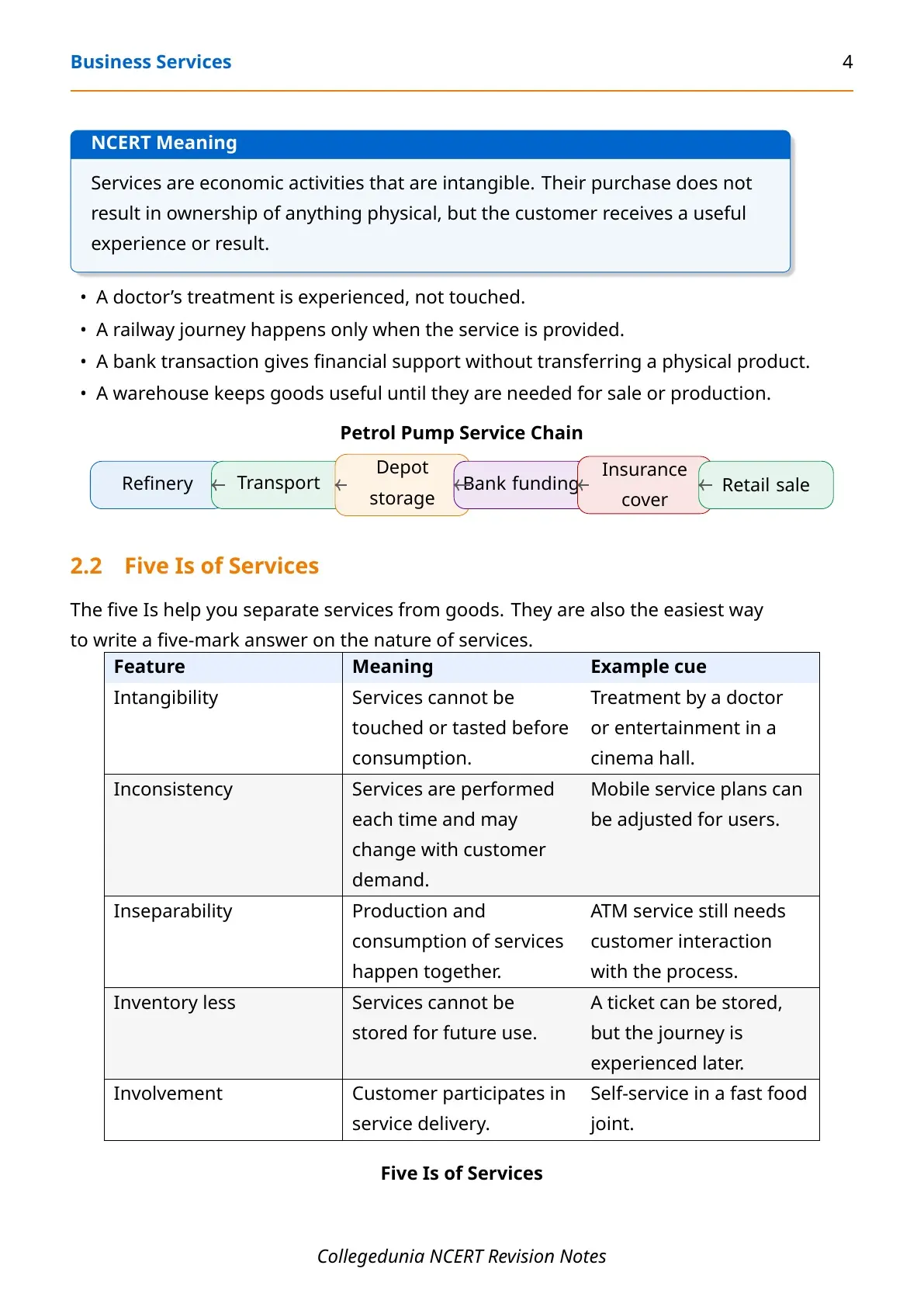
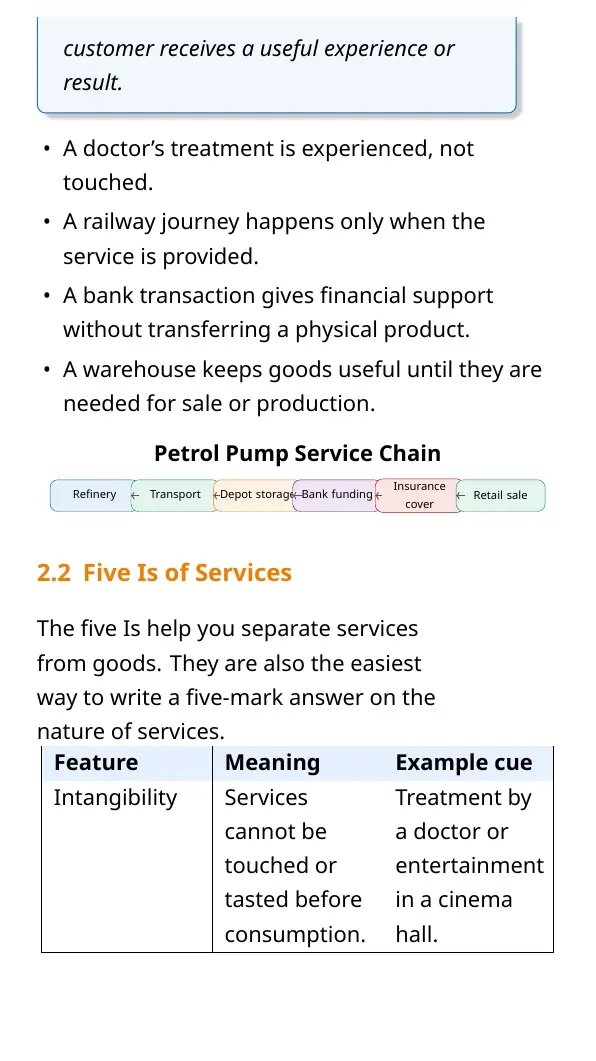
NCERT uses five features to explain why services need different handling from goods. Learn them as an answer frame because short-answer questions often ask for features of services directly.
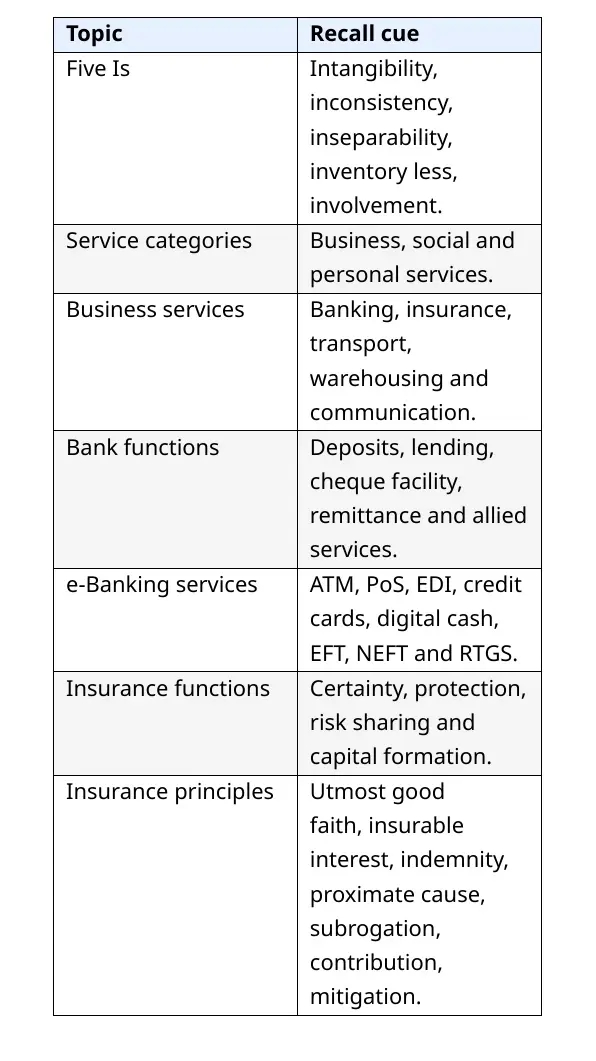
- Intangibility: services cannot be touched before purchase.
- Inconsistency: quality may vary with people, time and place.
- Inseparability: production and consumption often happen together.
- Inventory: services cannot be stored like stock in a warehouse.
- Involvement: the customer often participates in service delivery.
Banking Services in Class 11 Business Studies
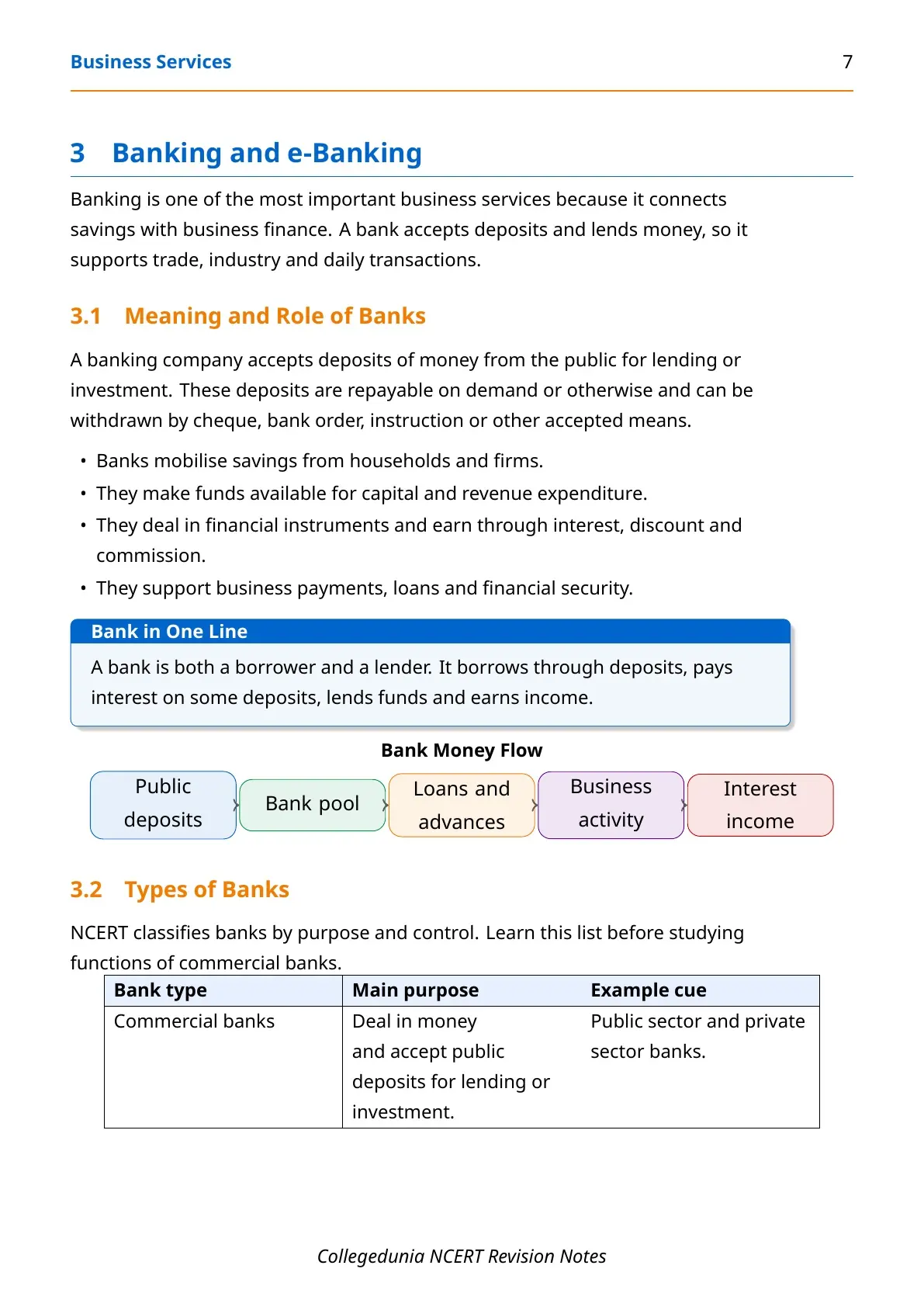
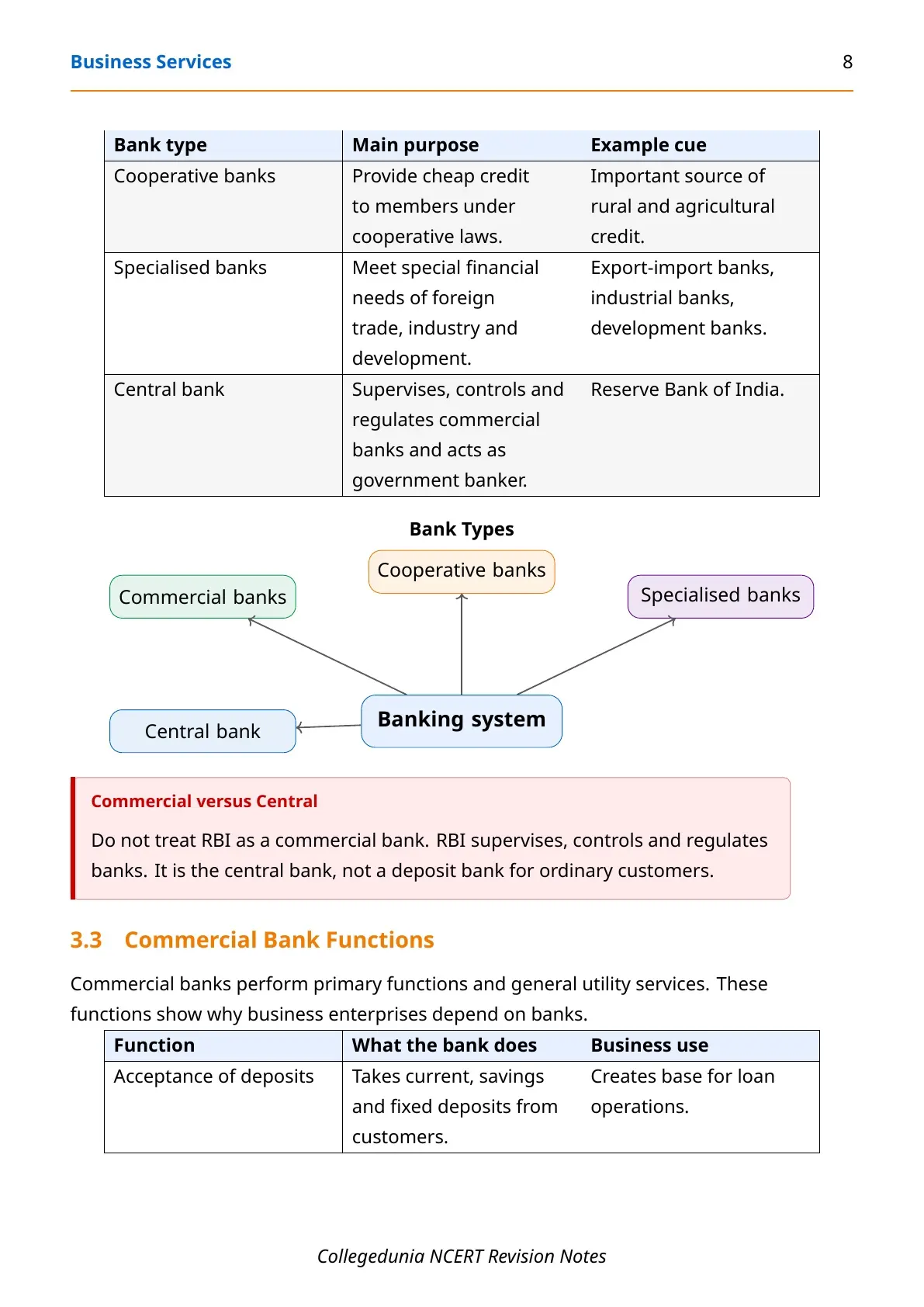
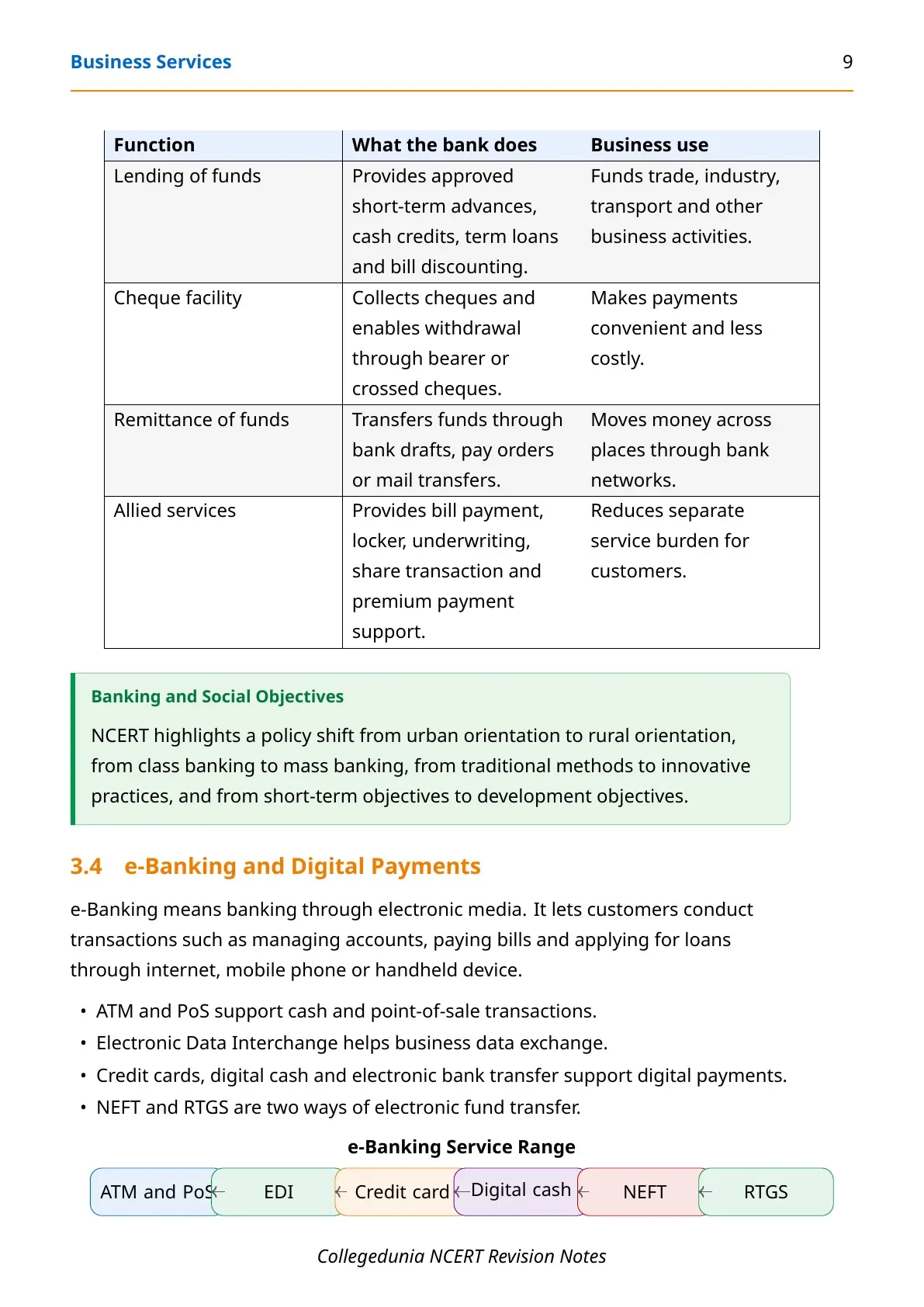
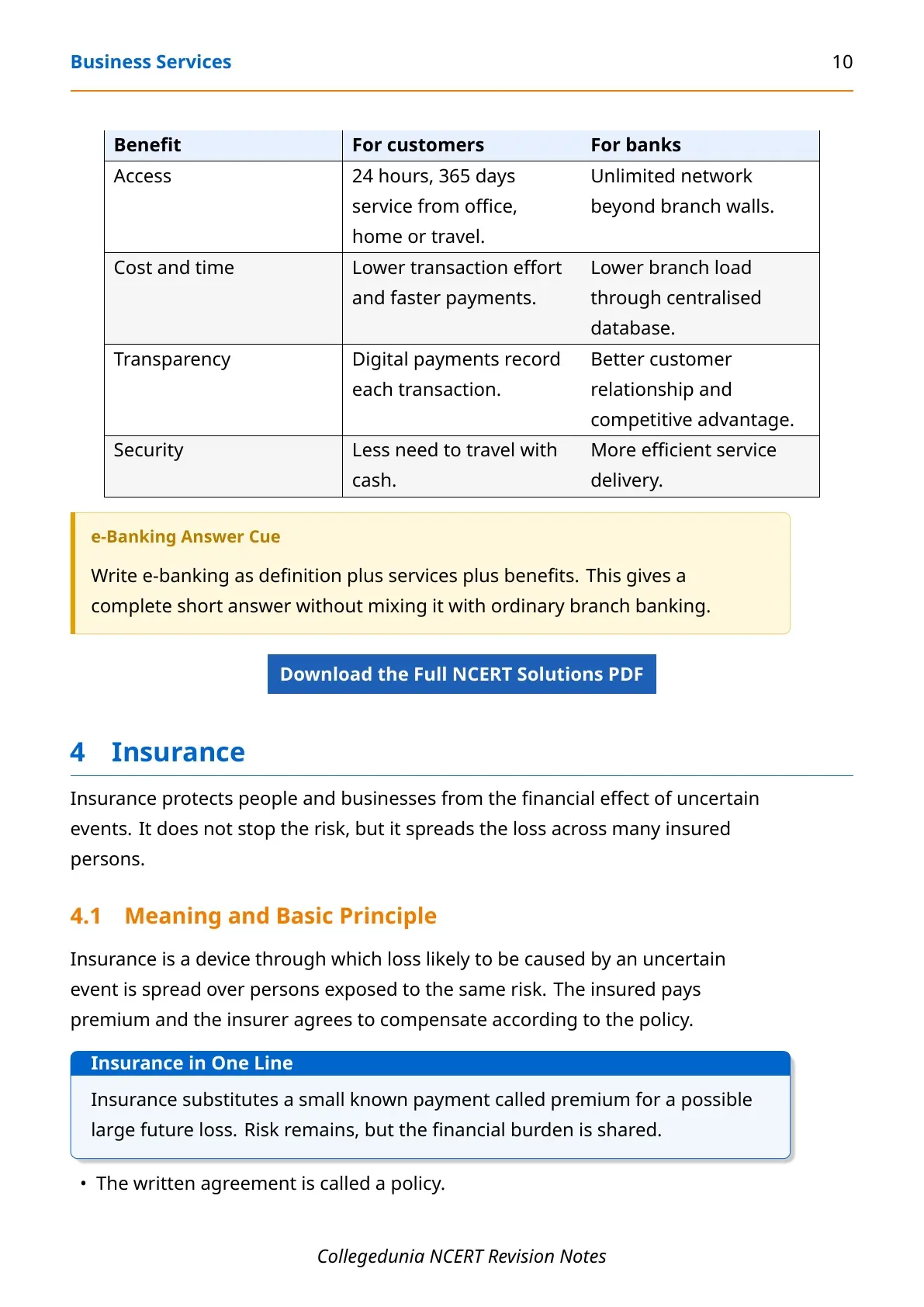
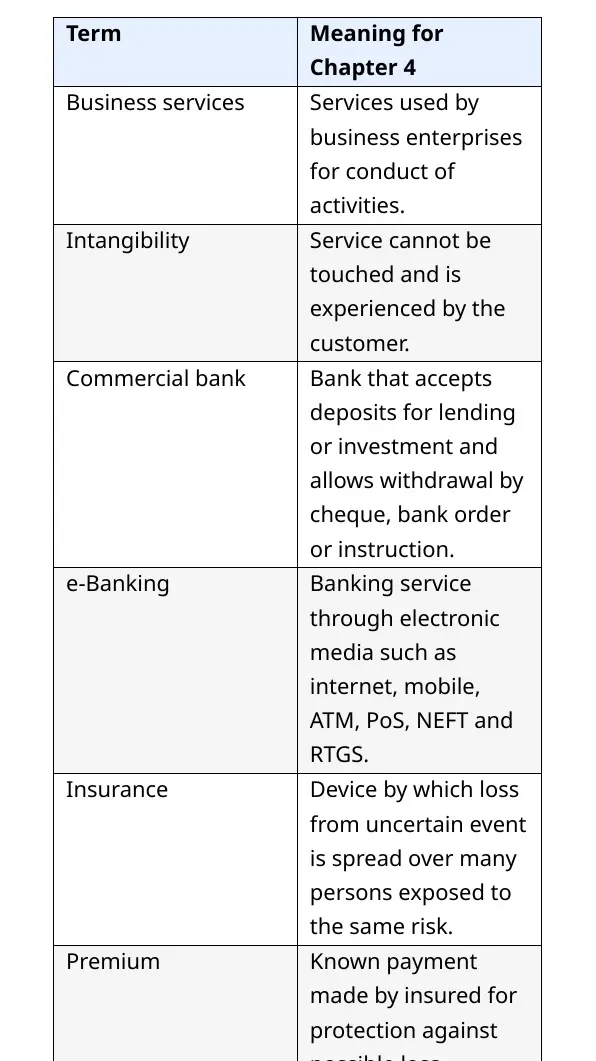
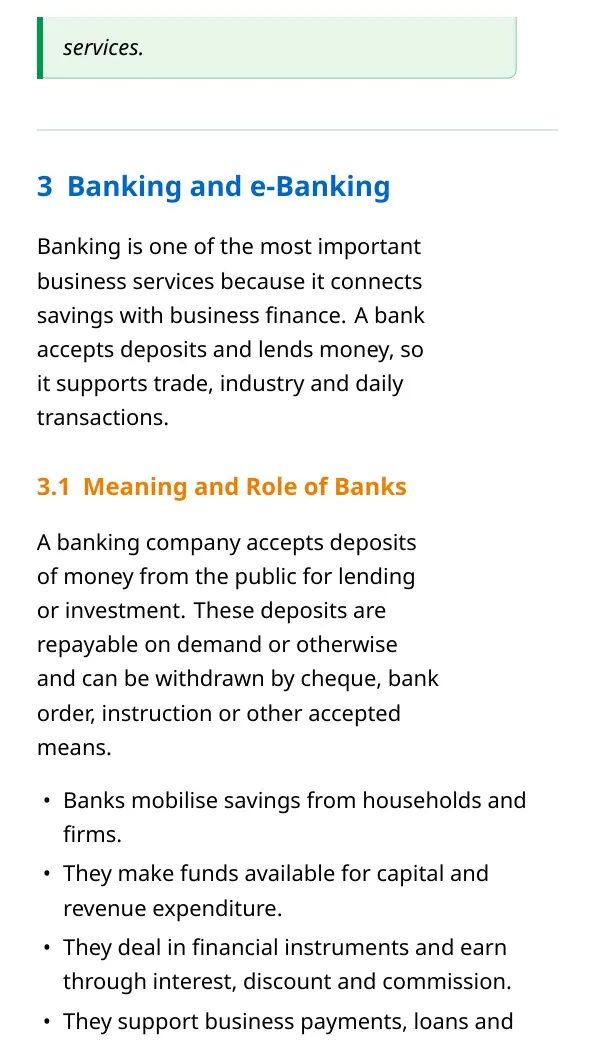
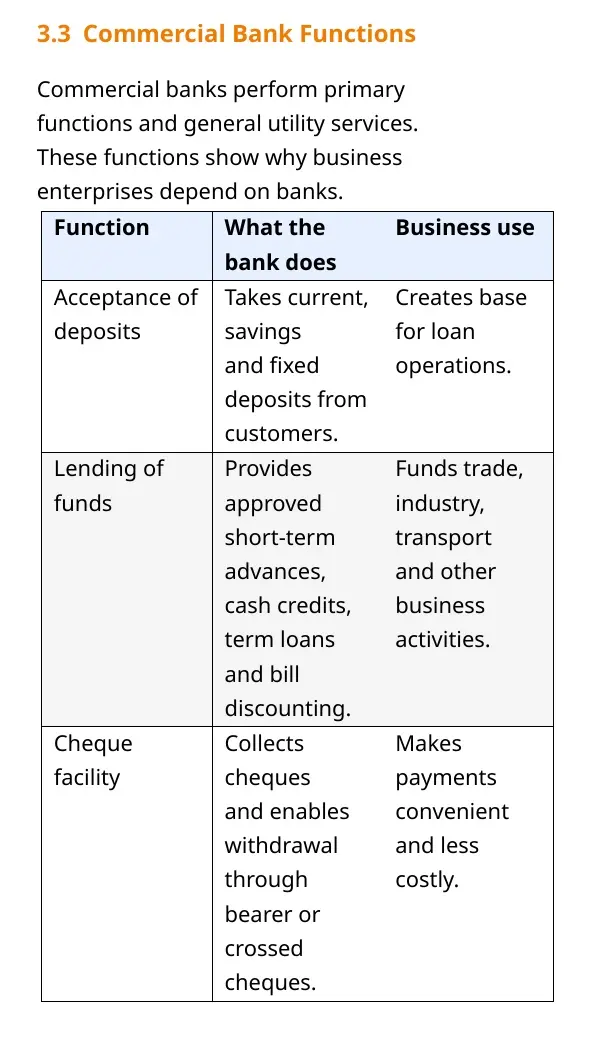
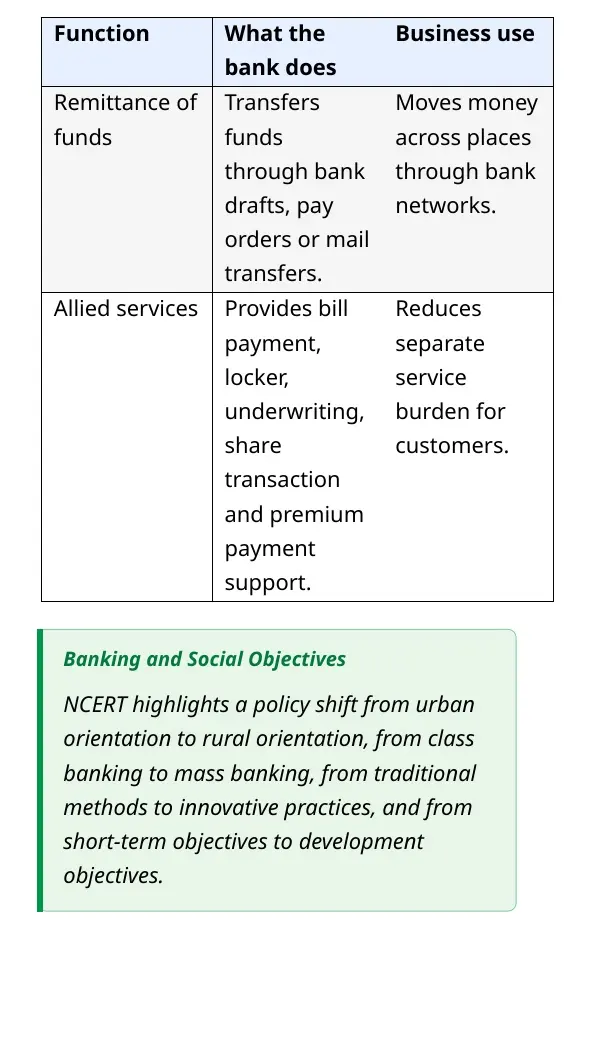
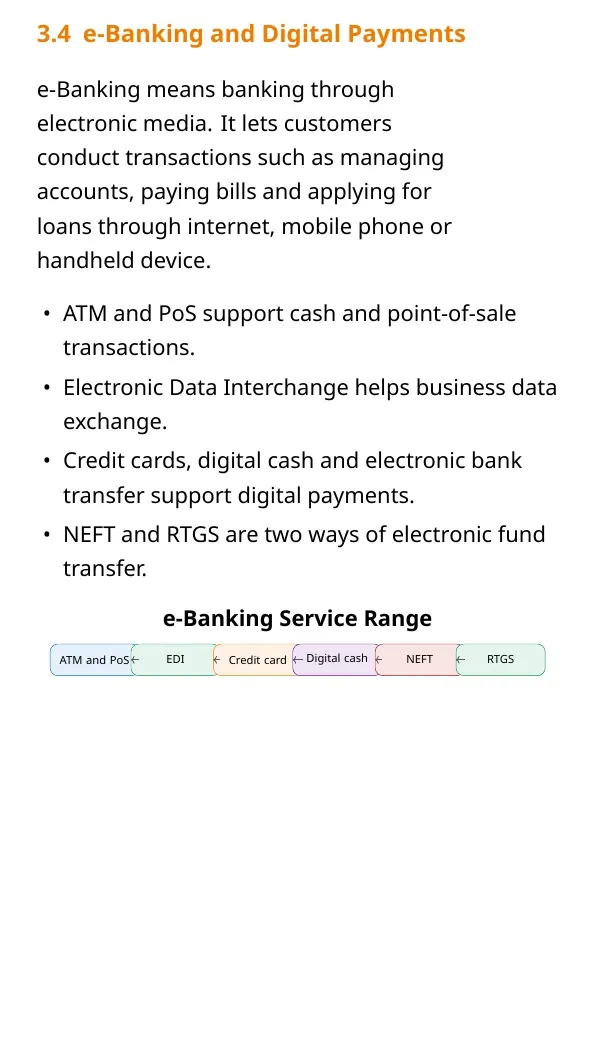
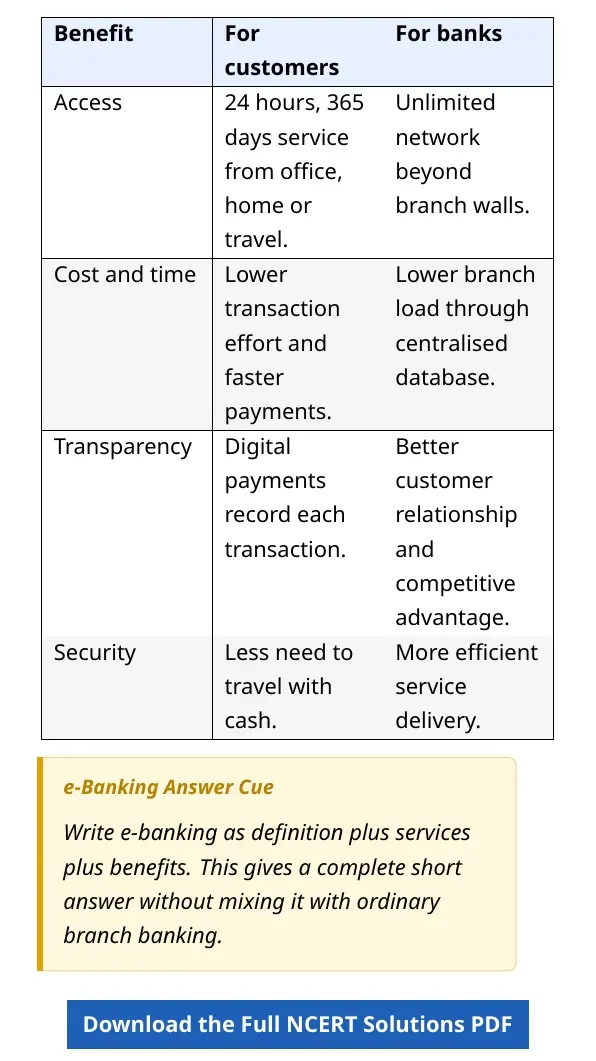
Banks accept deposits, lend money, create credit and help in payments. The chapter also explains e-banking because business now depends on quick fund transfer and digital records.
| Banking topic | What to remember | Exam example |
|---|---|---|
| Savings account | Used by individuals to save money and earn interest | Monthly savings of a student or household |
| Current account | Used by business firms for frequent transactions | Shop or company payments |
| Fixed deposit | Money kept for a fixed period at higher interest | One-year deposit with bank |
| E-banking | Banking through ATM, debit card, credit card, NEFT, RTGS and internet banking | Online supplier payment |
Insurance Principles and Types in Business Services
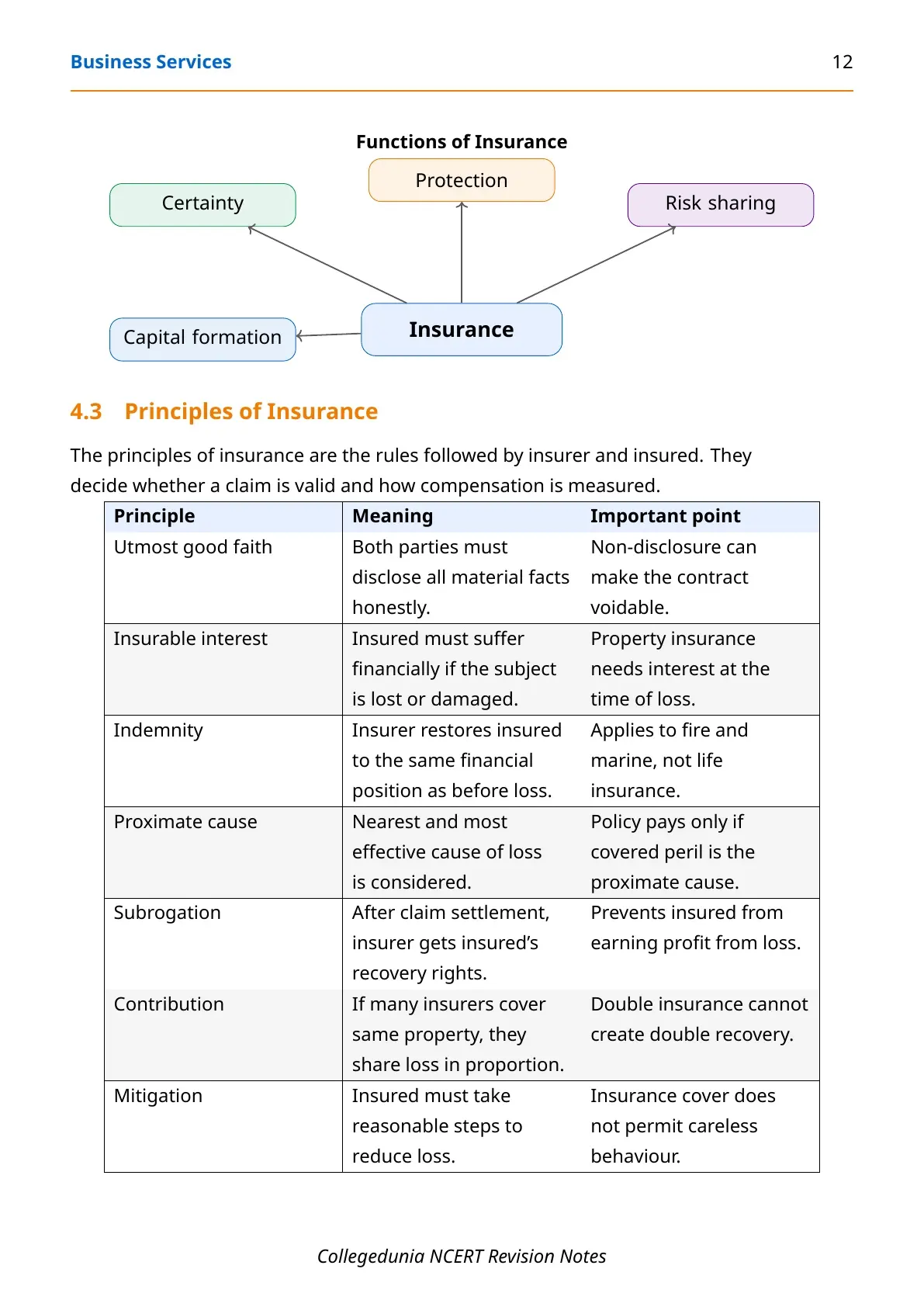
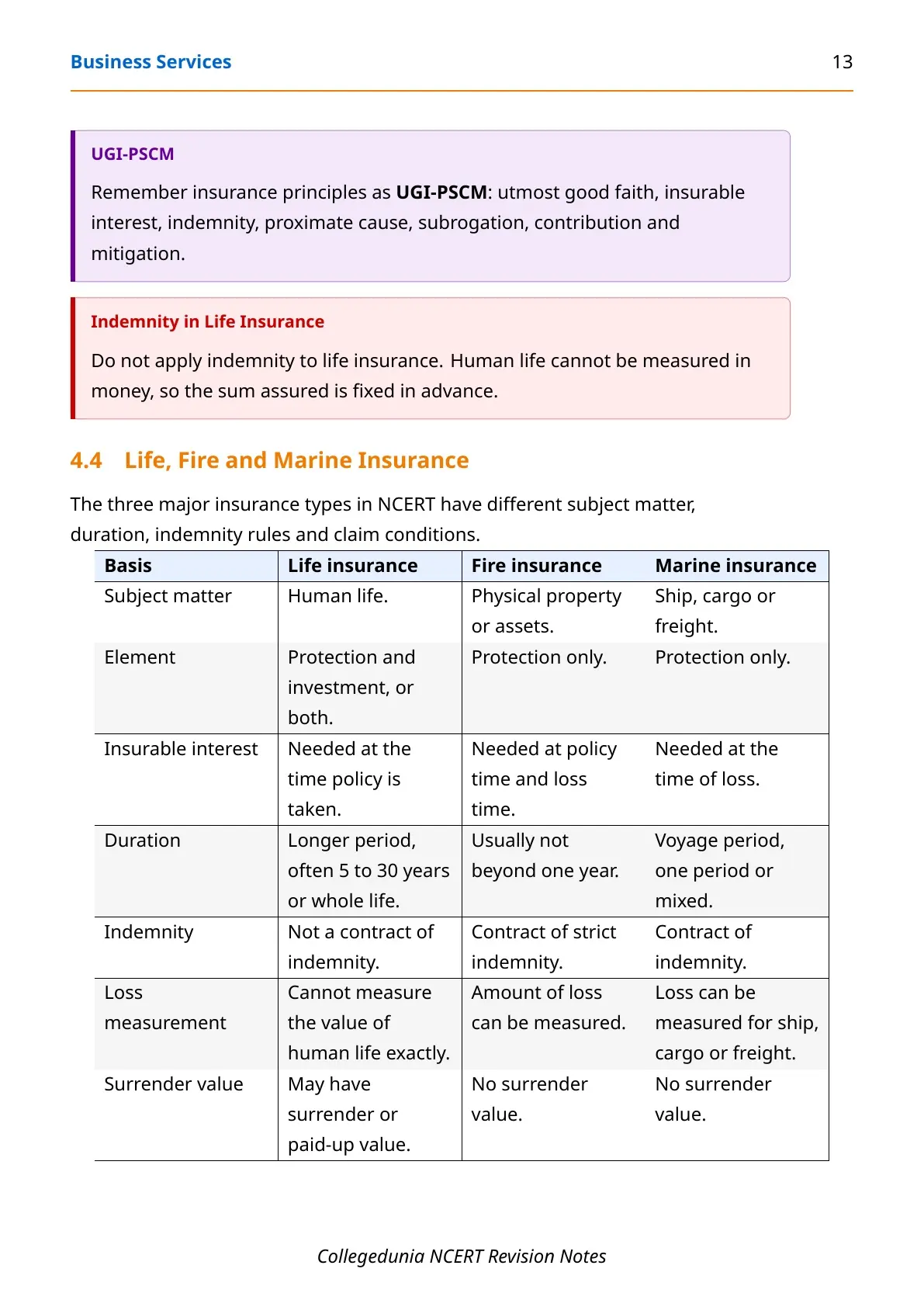
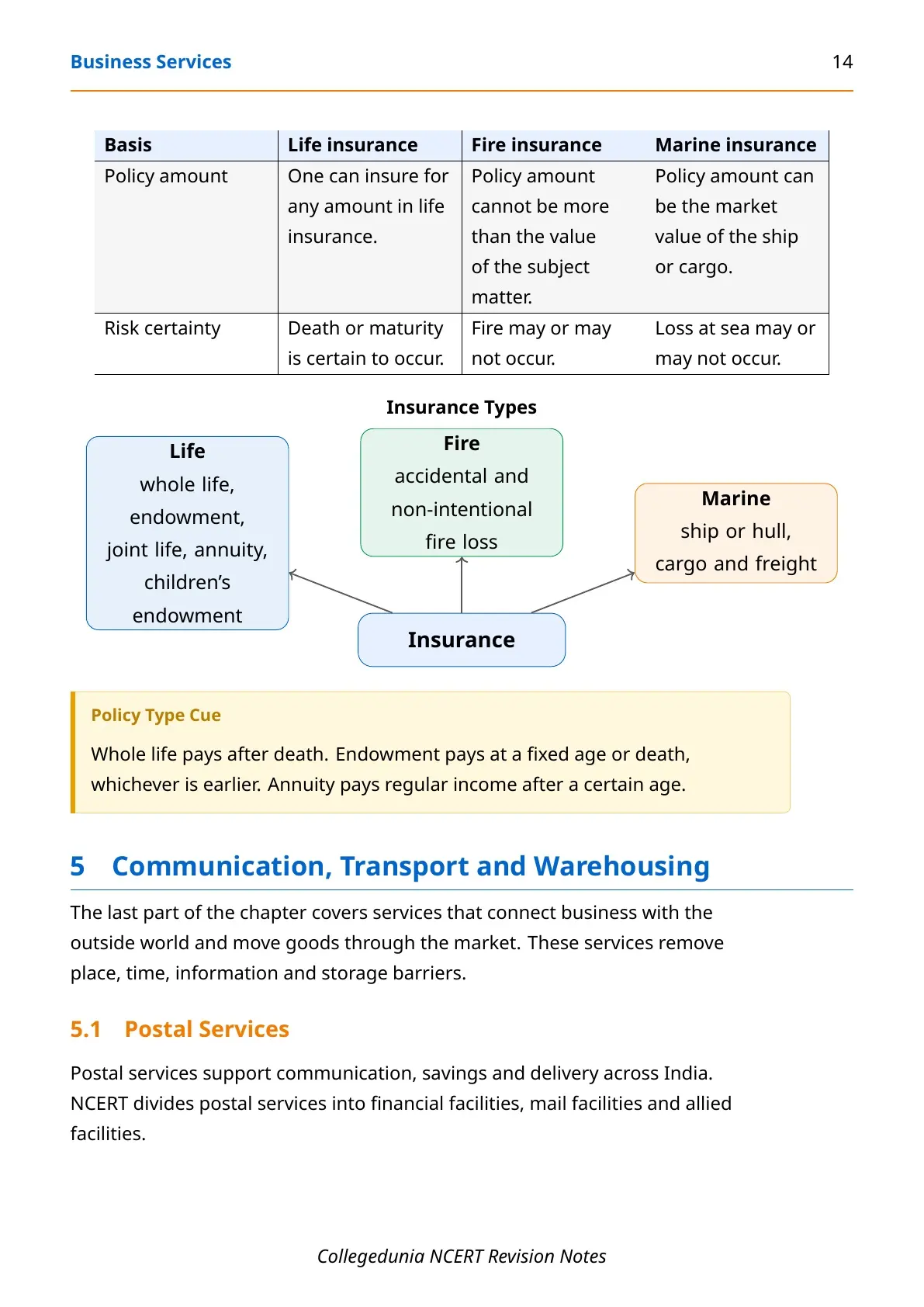
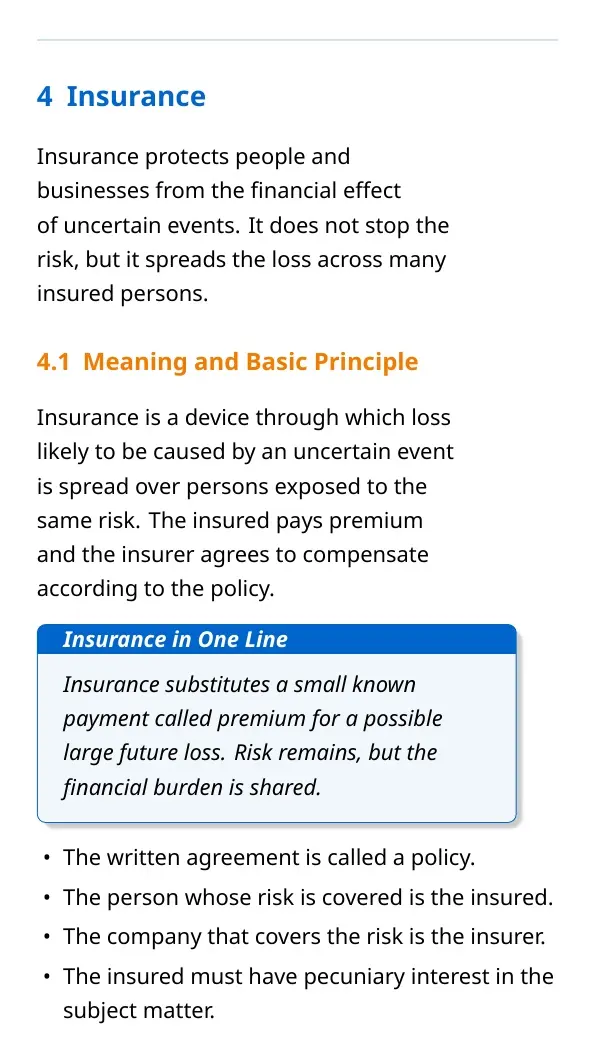
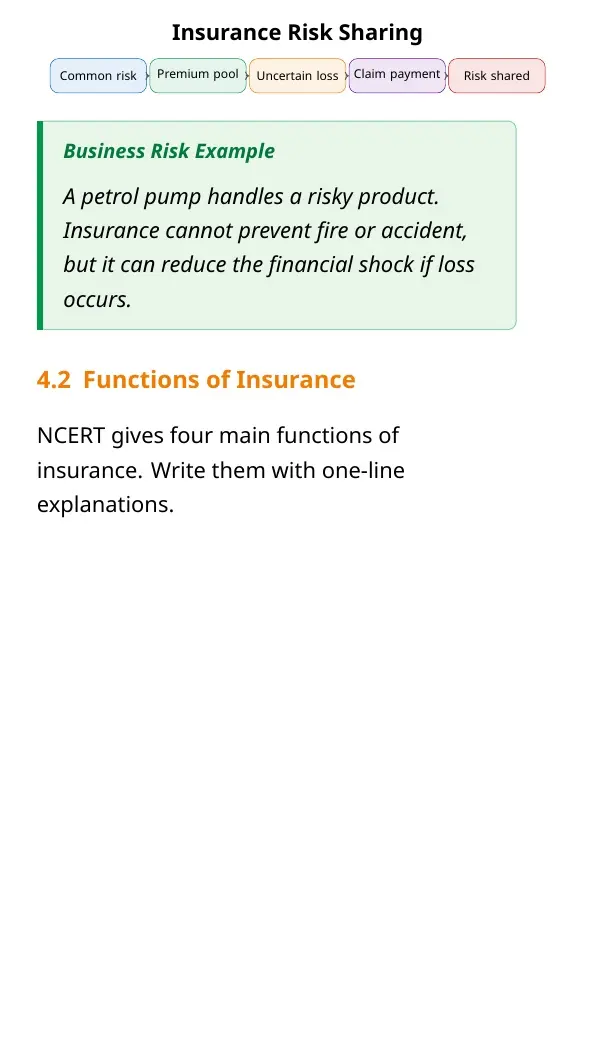
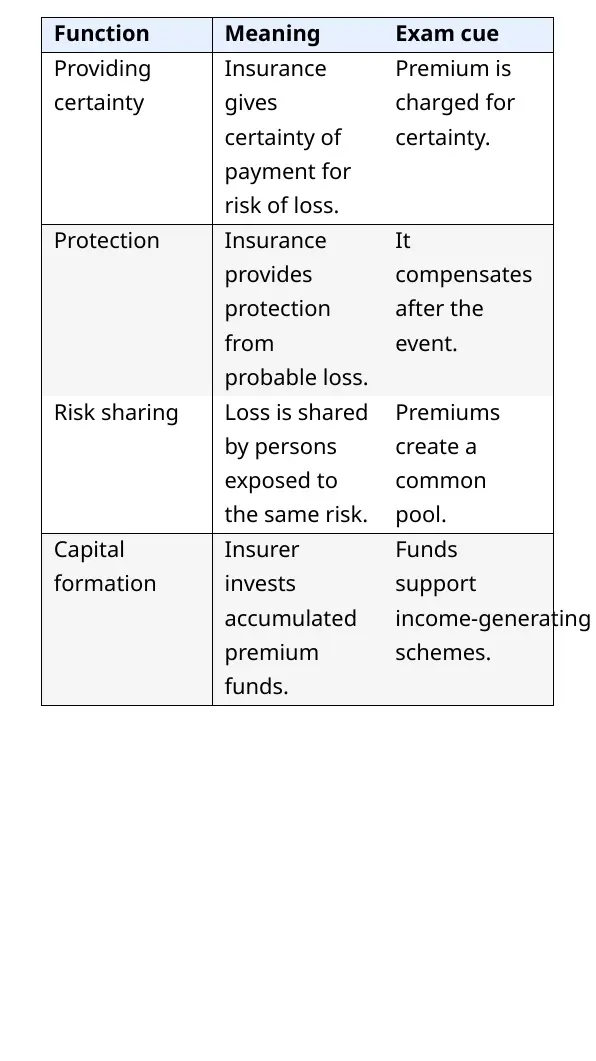
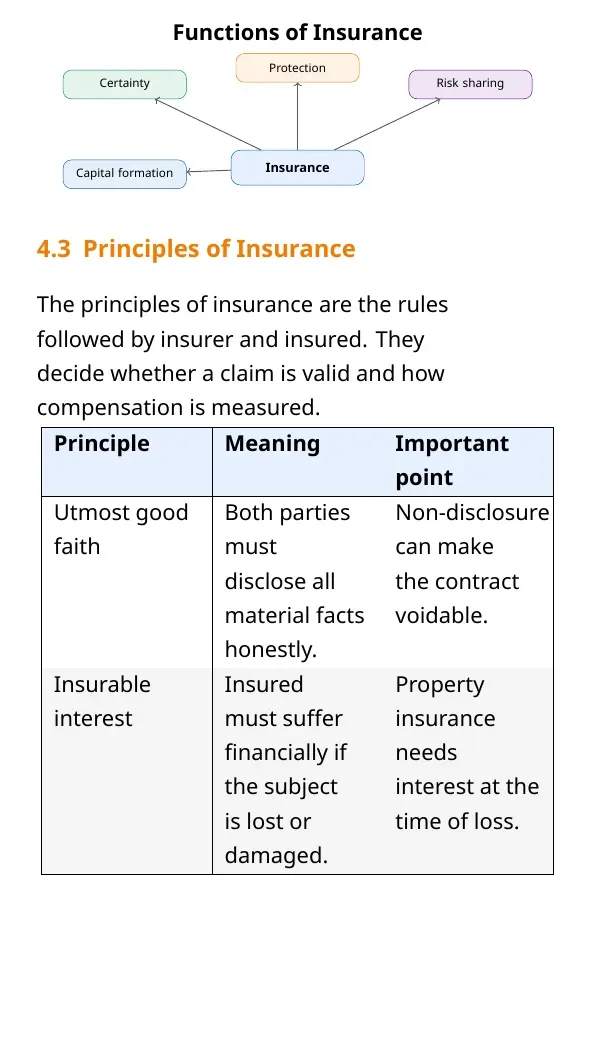
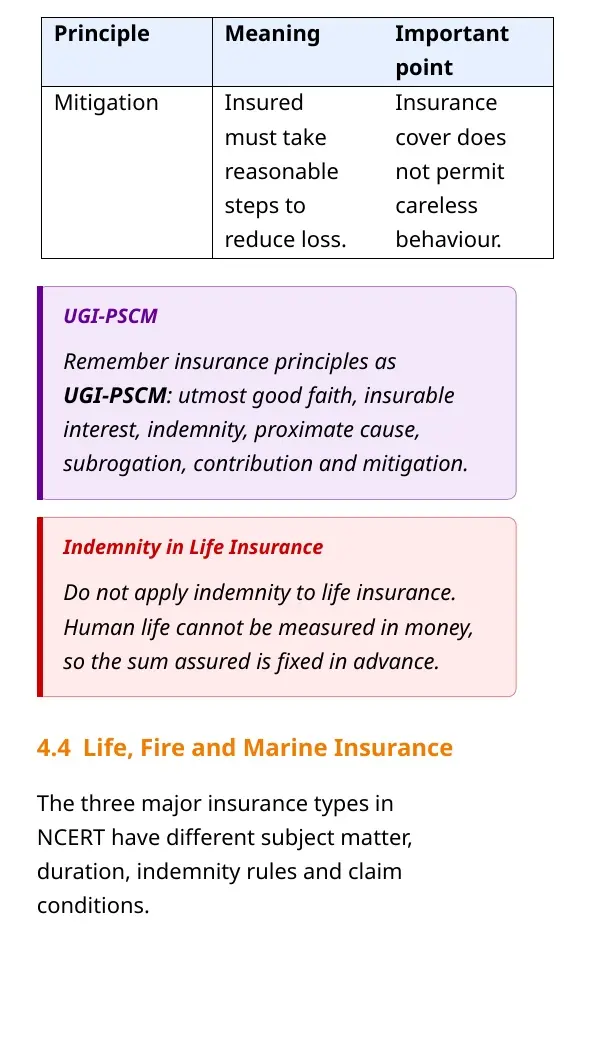
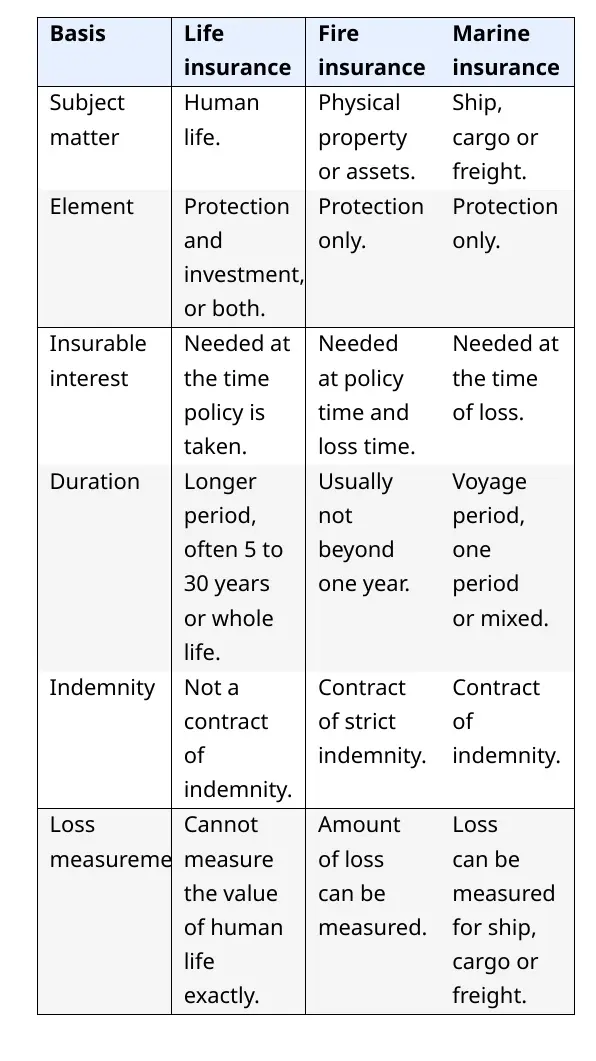
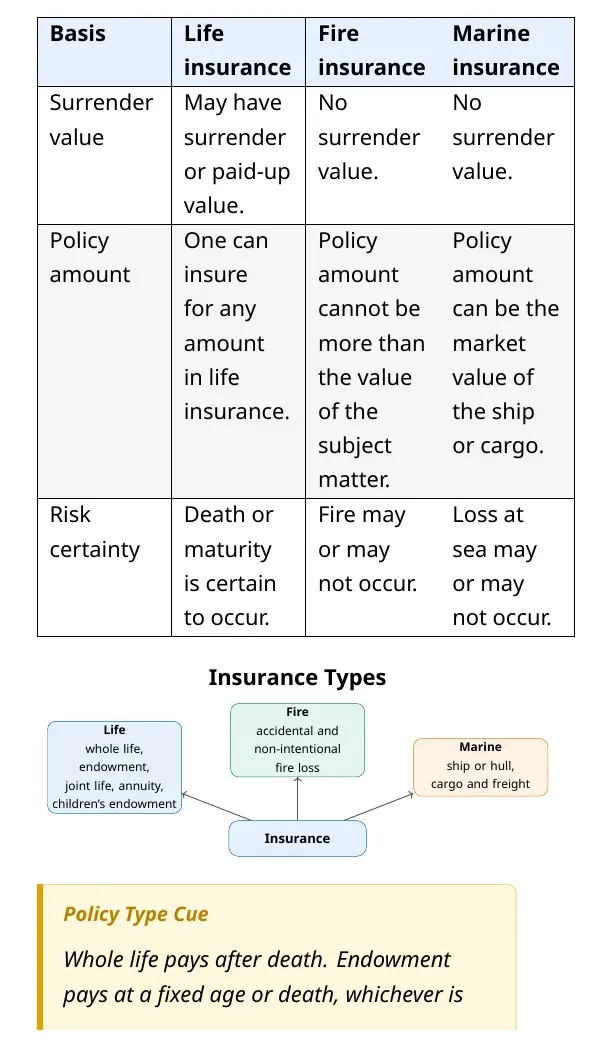
Insurance protects a business from possible loss. A person pays premium, the insurer promises compensation if the insured event happens, and the contract works only when key principles are followed.
| Principle | Meaning | One-line cue |
|---|---|---|
| Utmost good faith | Both parties disclose material facts honestly | No hiding important facts |
| Insurable interest | The insured must suffer loss if the subject is damaged | You insure what affects you |
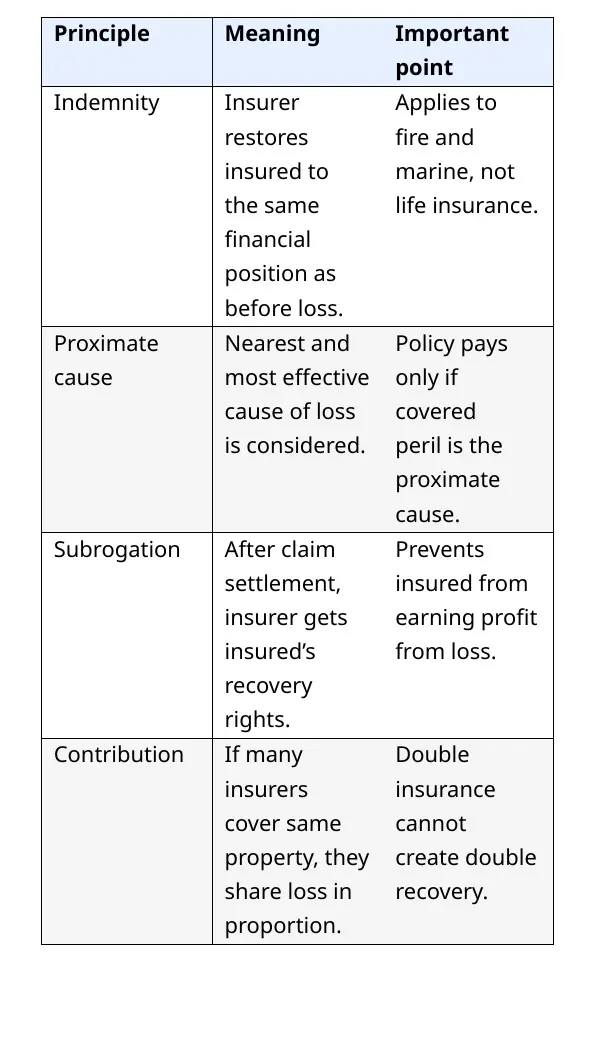
| Indemnity | Compensation restores loss, not profit | No gain from loss |
| Contribution | Multiple insurers share the claim | One loss, shared payment |
| Subrogation | After paying, insurer gets recovery rights | Insurer steps into insured person's place |
Communication, Transport and Warehousing Services
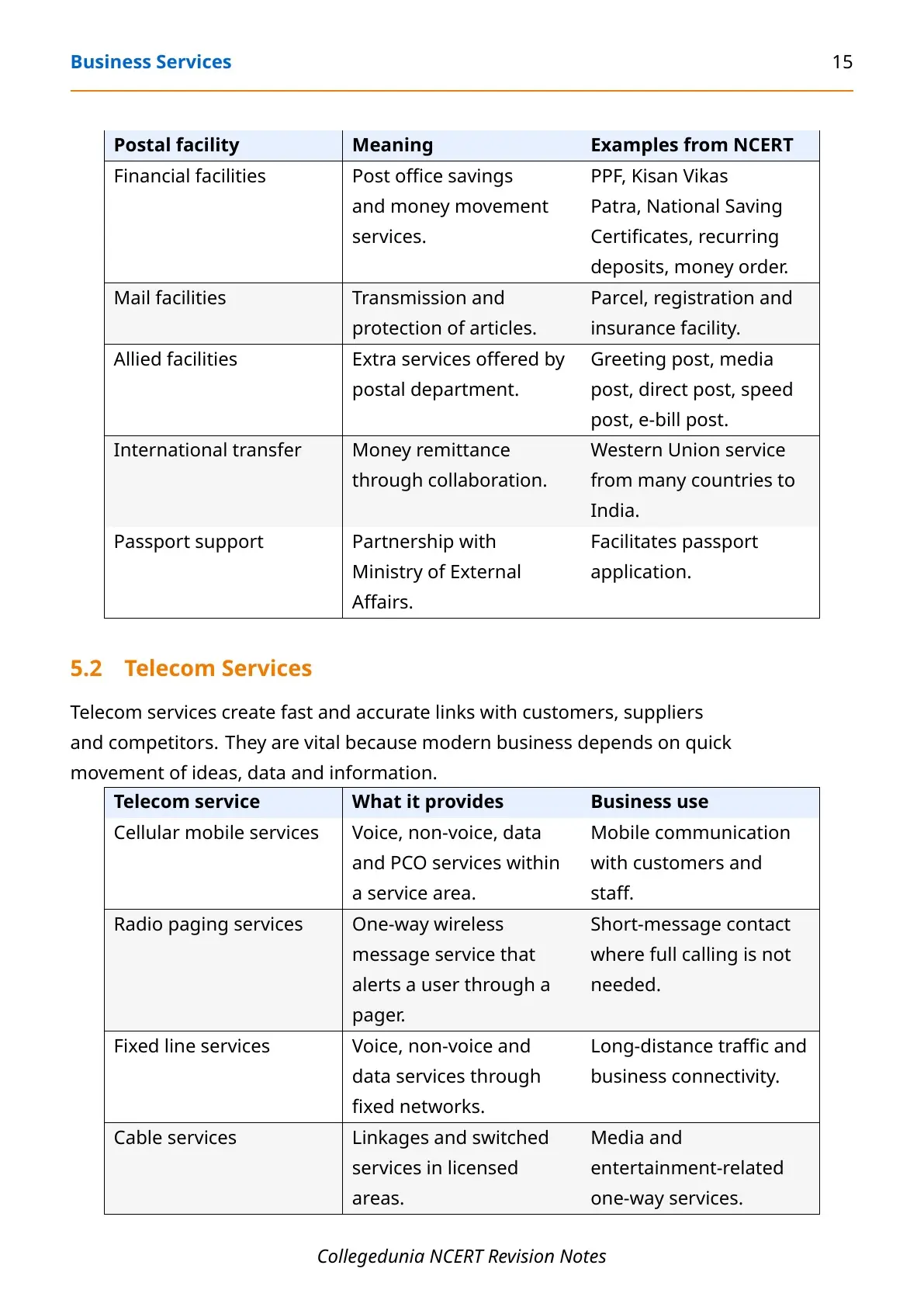
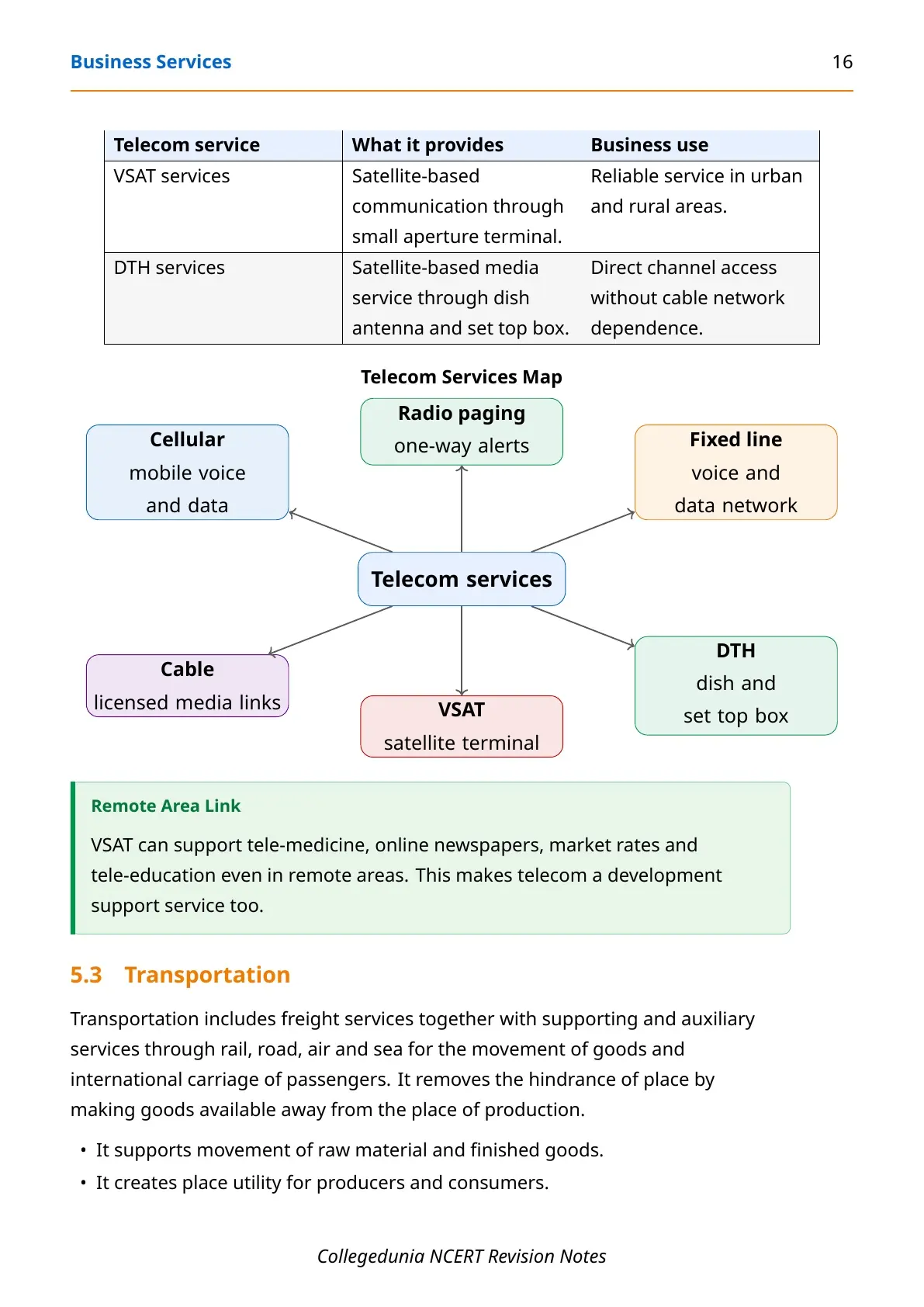
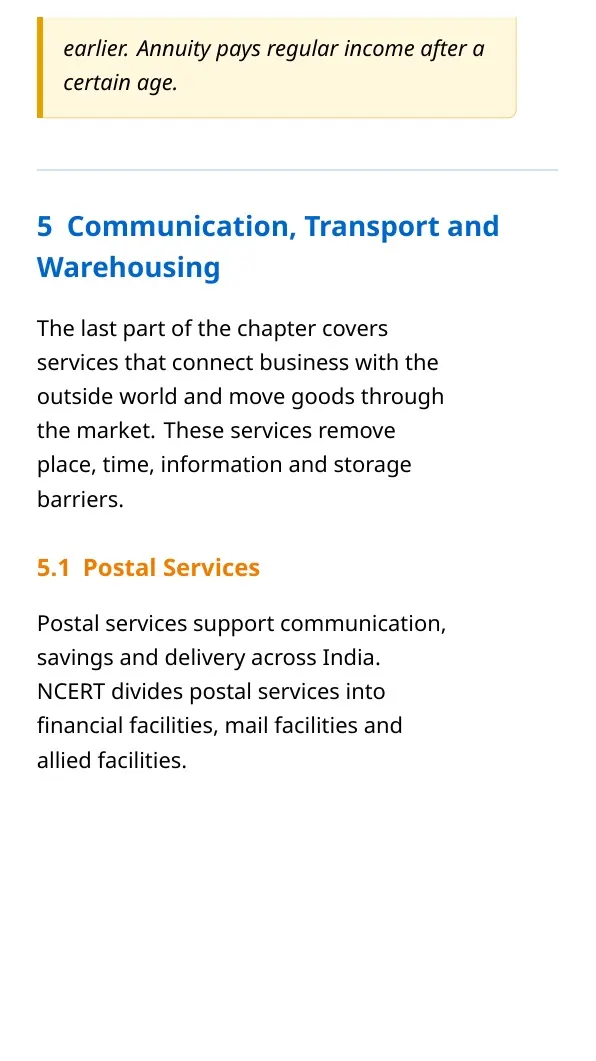
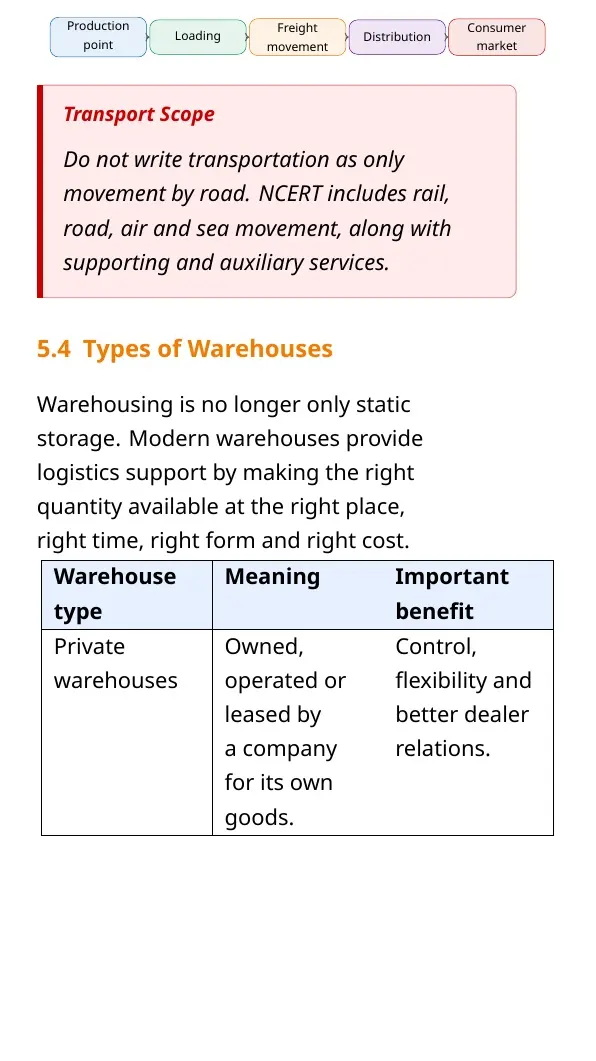
Communication services help businesses exchange information, transport moves goods from one place to another, and warehousing stores goods until they are required. These three areas often appear as direct-definition or function-based questions.
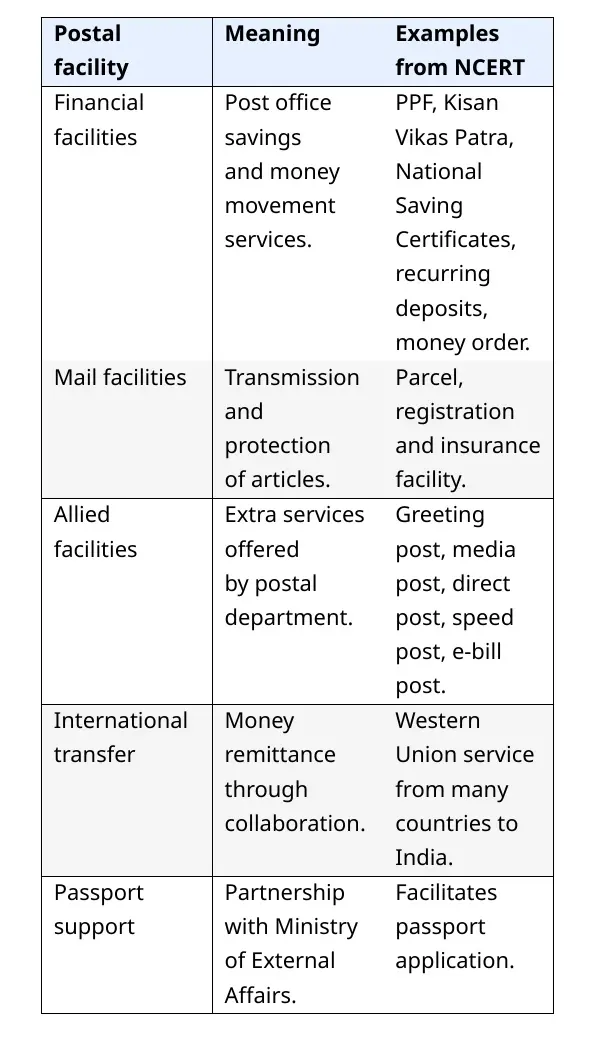
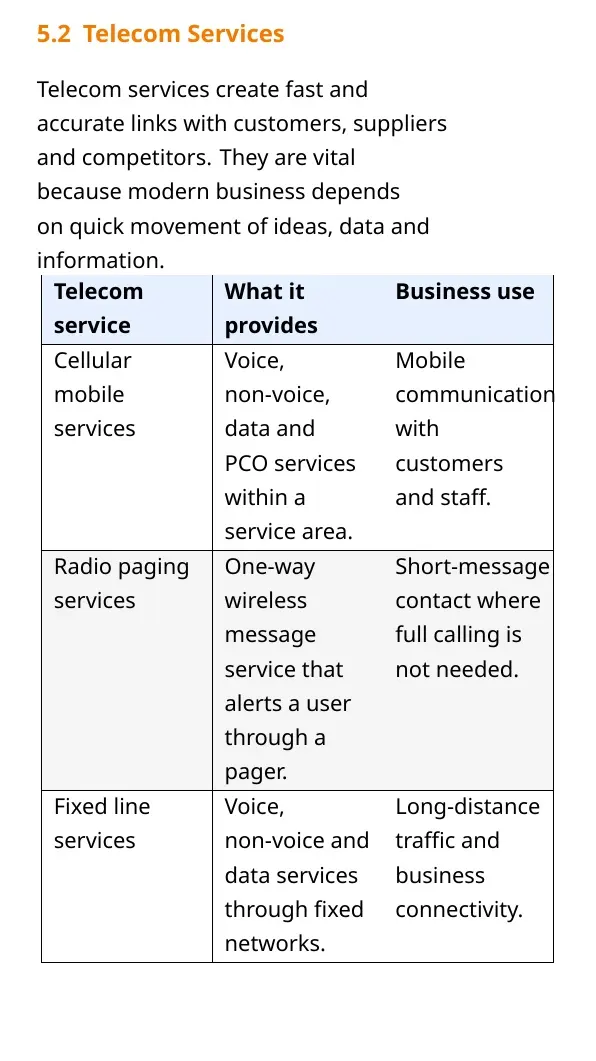
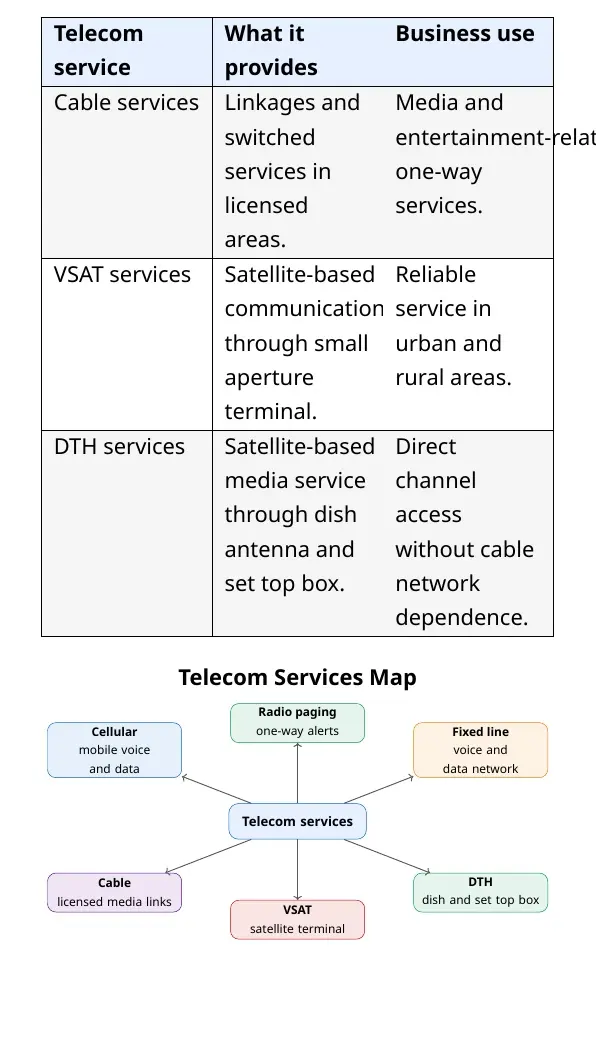
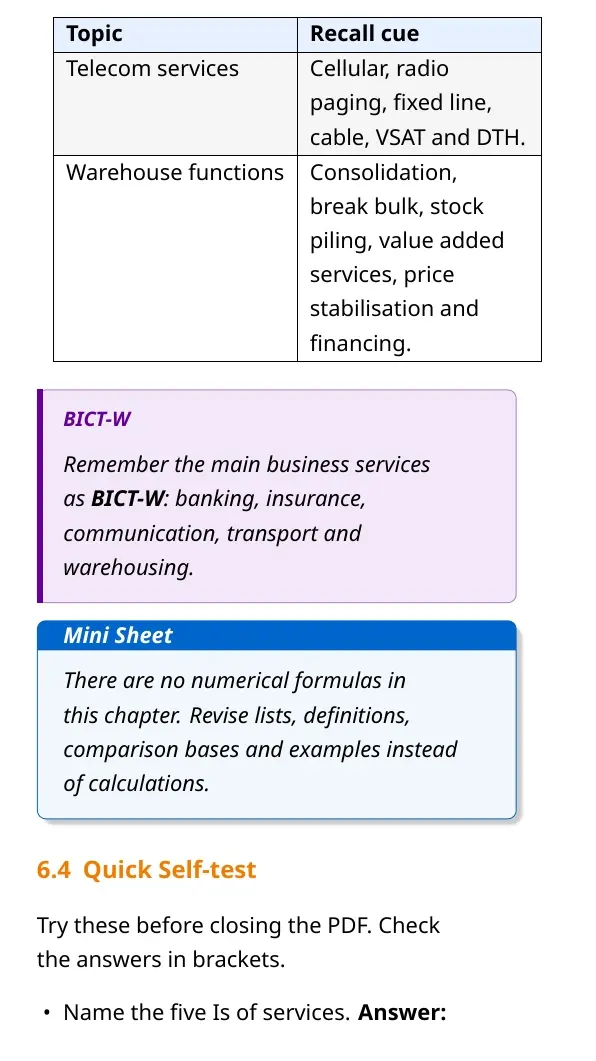
- Communication services: postal, telecom, mobile, cable, DTH and internet services help business contact customers and suppliers.
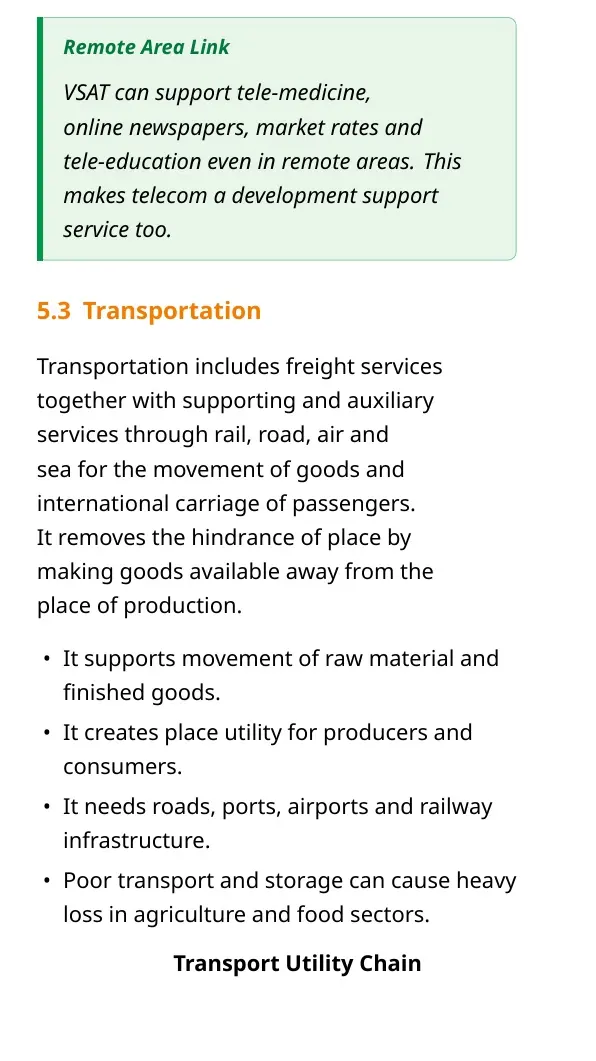
- Transport services: road, rail, air and water transport create place utility.
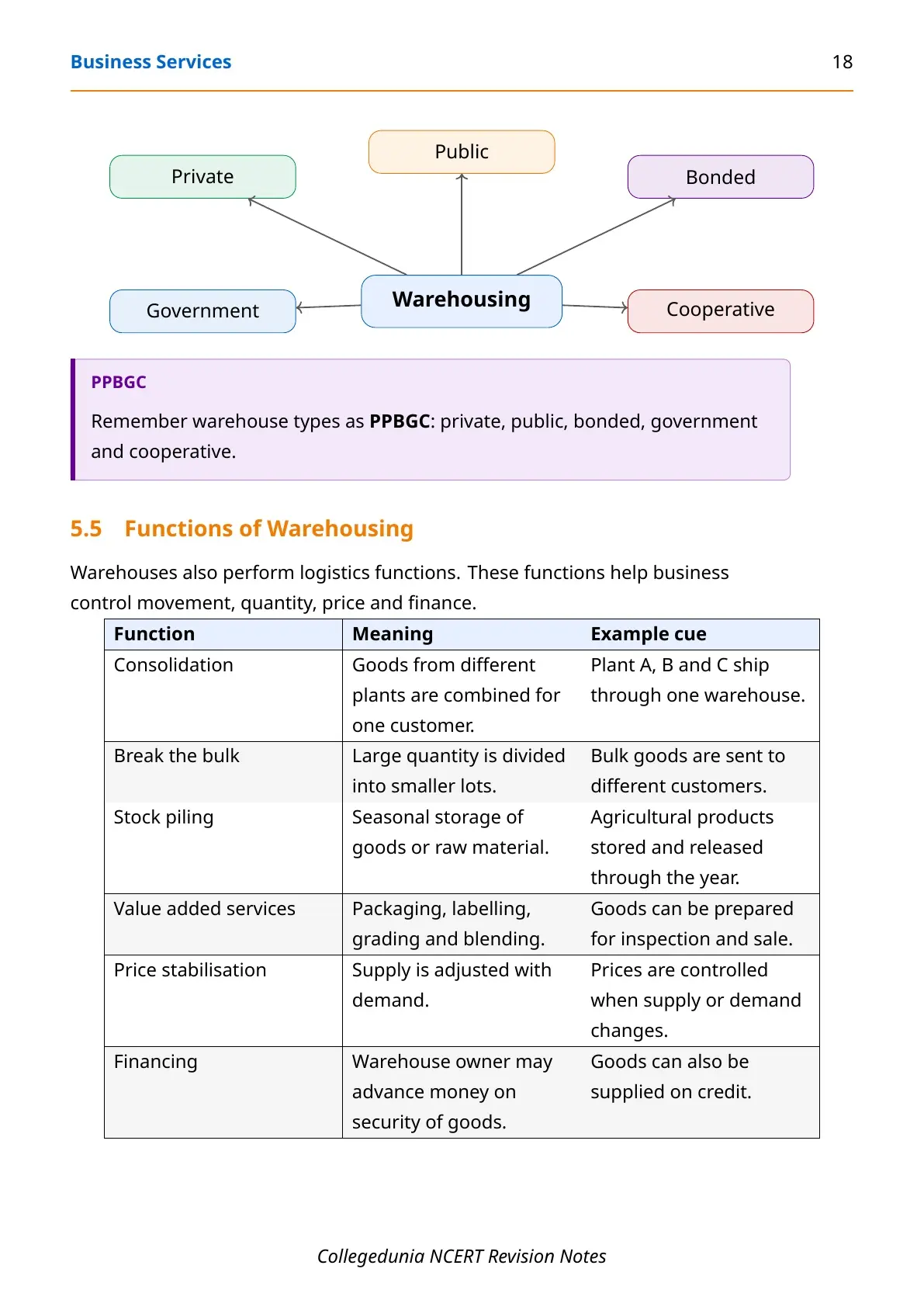
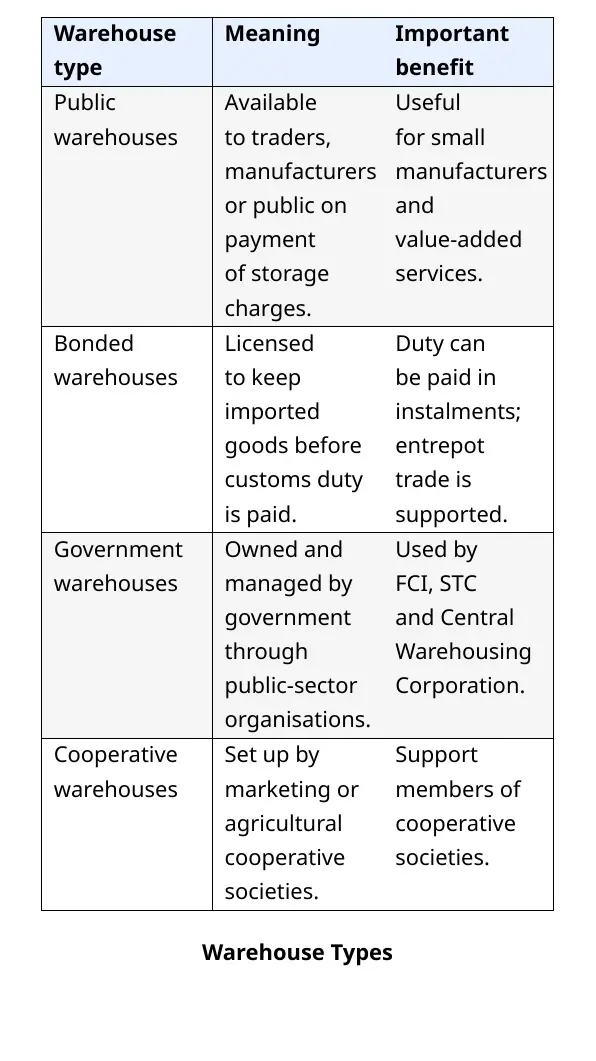
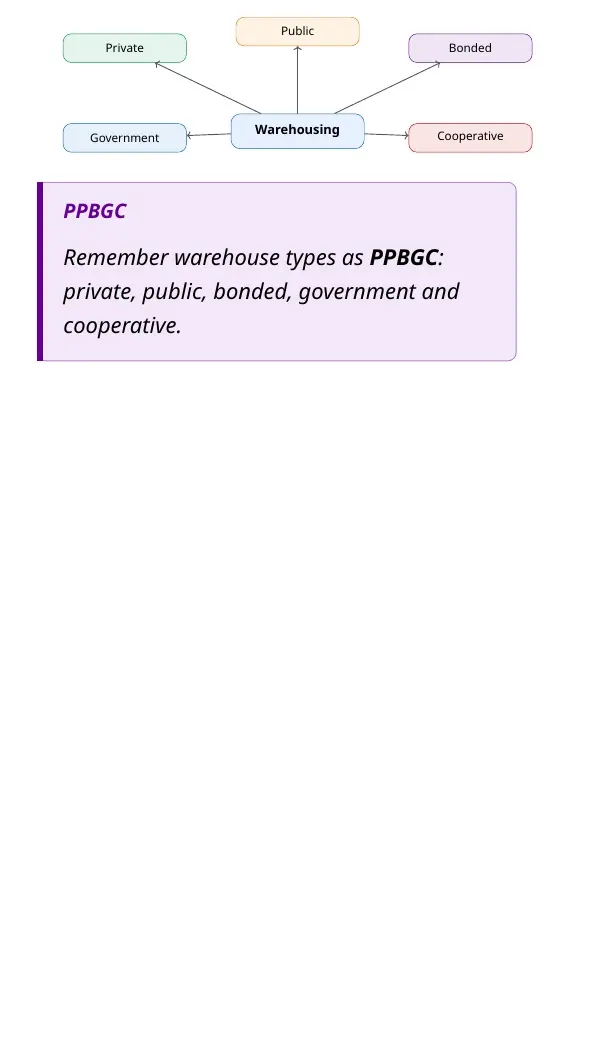
- Warehousing services: private, public and bonded warehouses create time utility and help with grading, packaging and risk protection.
Business Services Class 11 Banking Insurance and Warehousing Video
Source: Magnet Brains on YouTube
How to Write Better Answers on Business Services
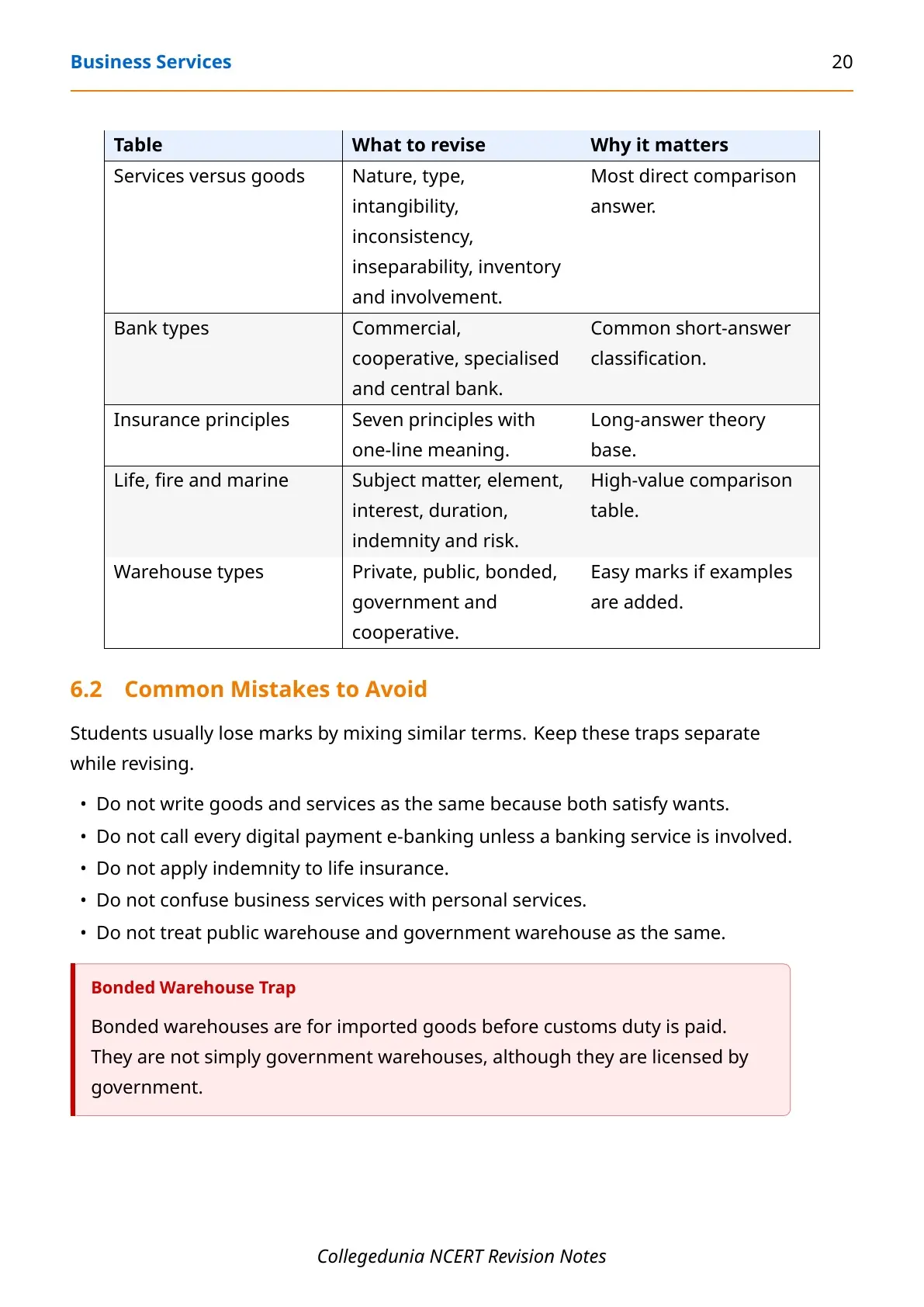
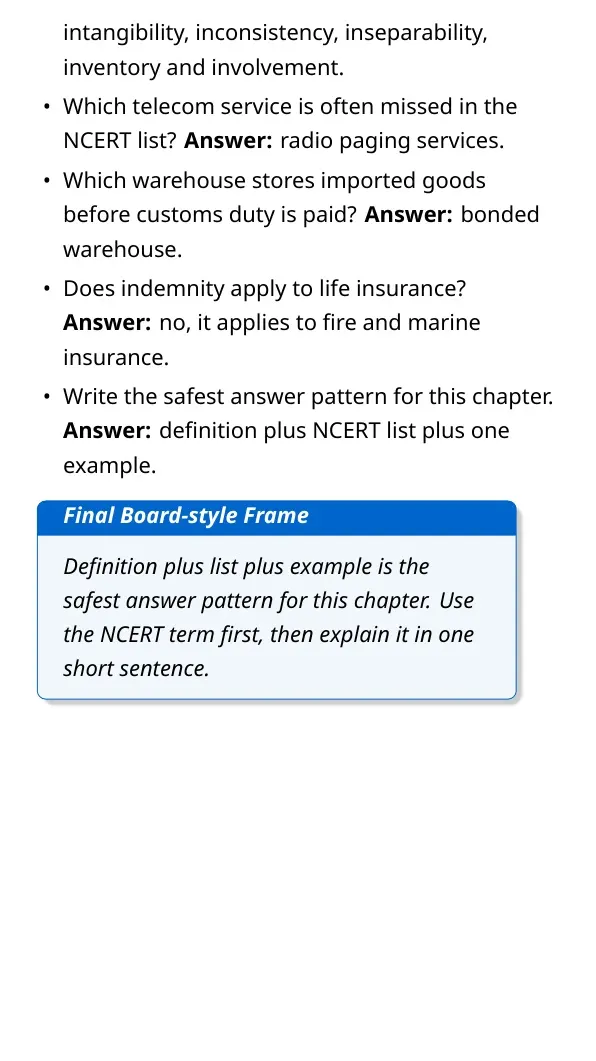
Strong Business Services answers use headings from NCERT and avoid mixing one service with another. Start with the meaning, then list features, principles or functions in separate points.
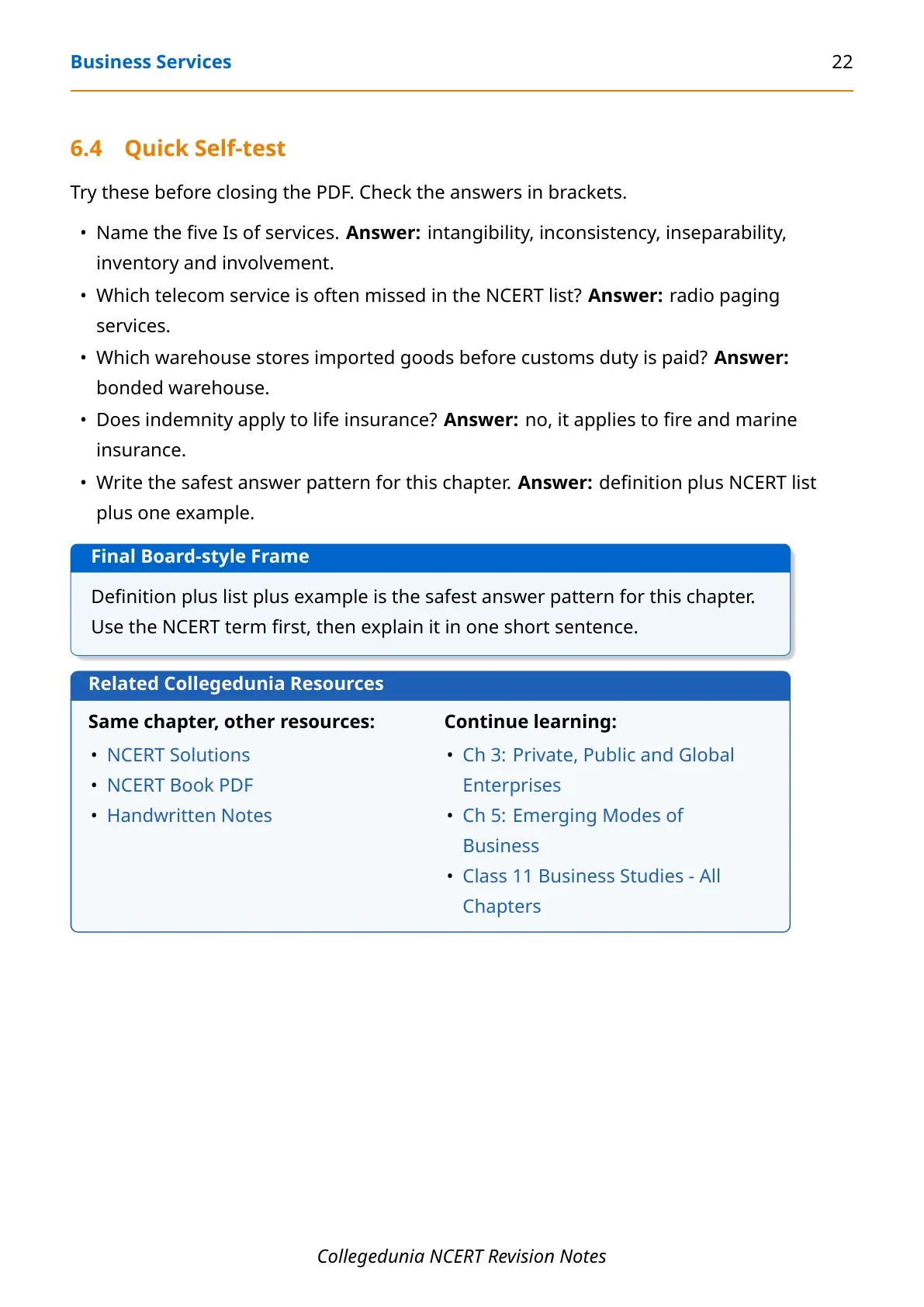
- For service feature questions: write the five Is with one phrase each.
- For banking questions: separate deposit accounts, lending and e-banking services.
- For insurance questions: name the principle first, then explain it with an example.
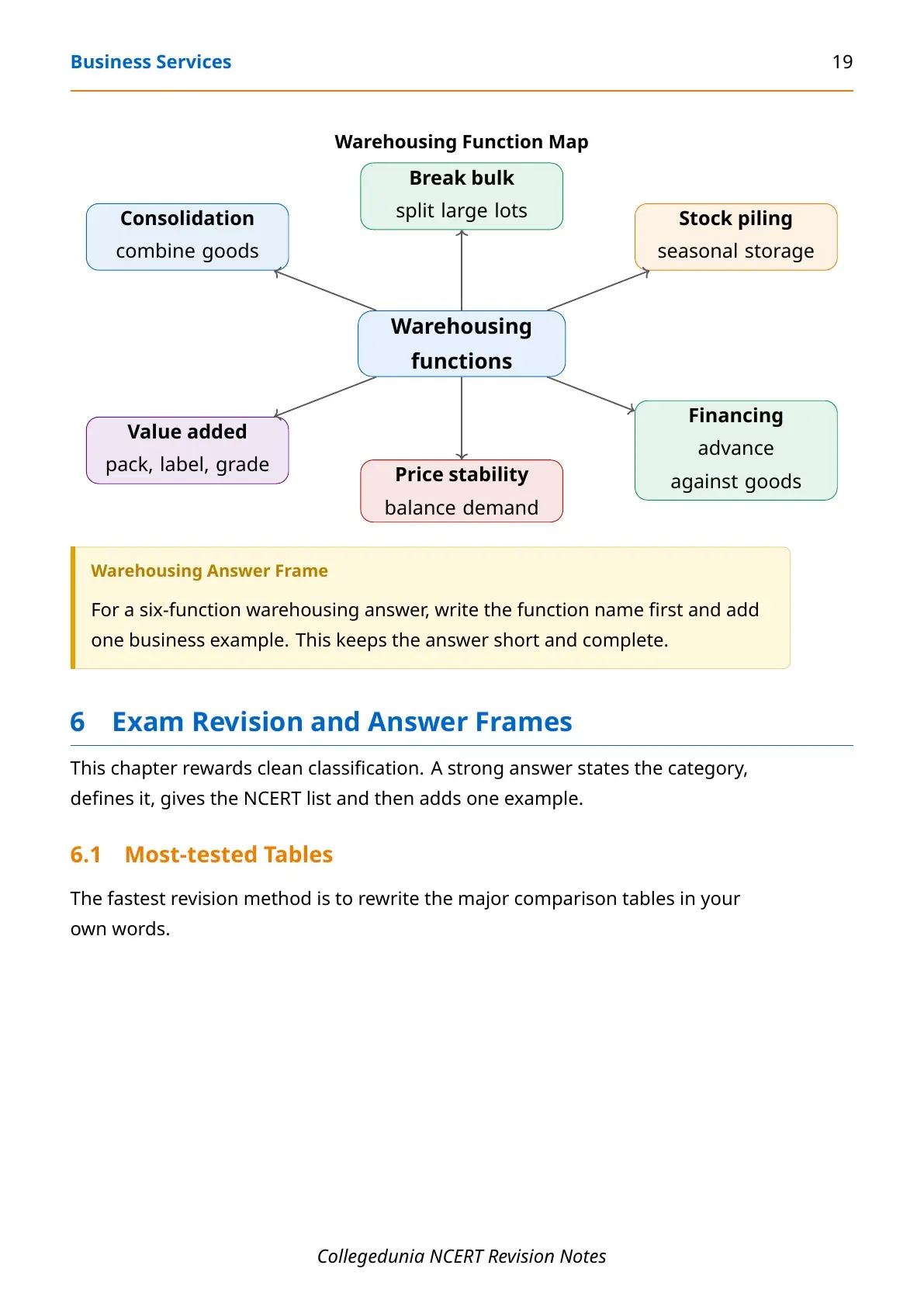
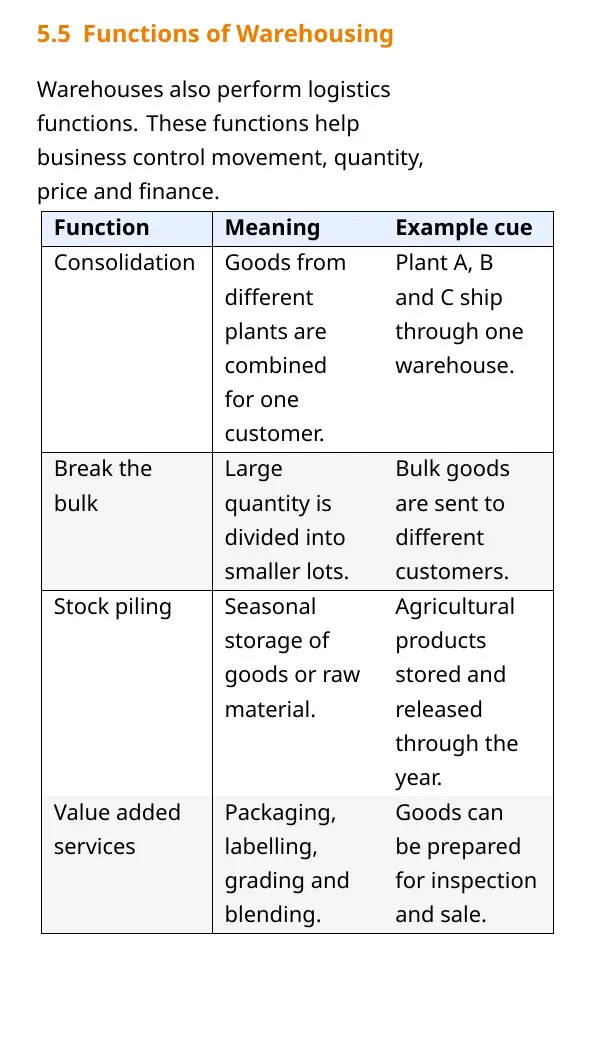
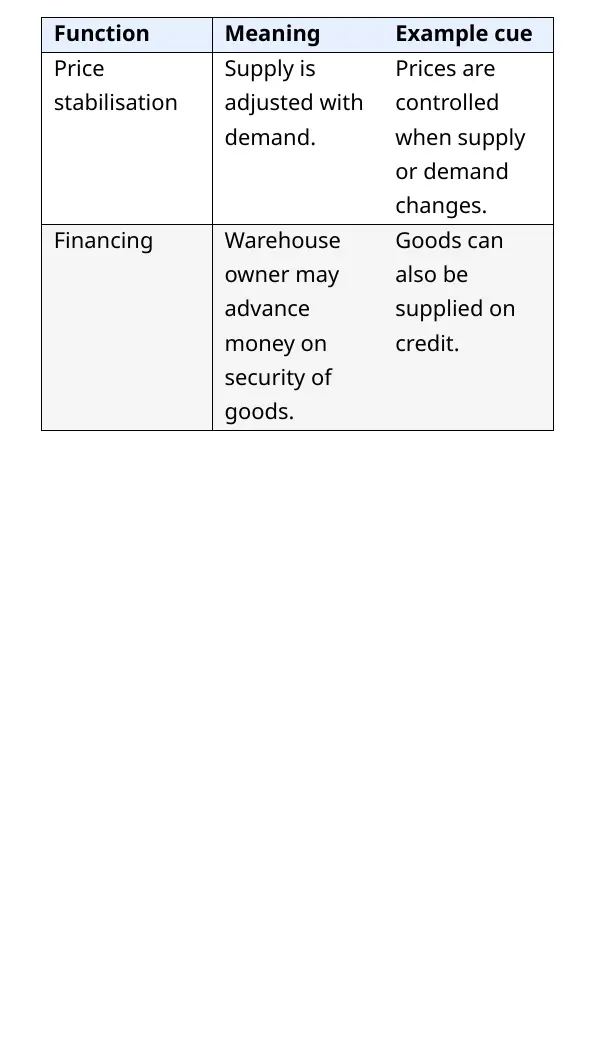
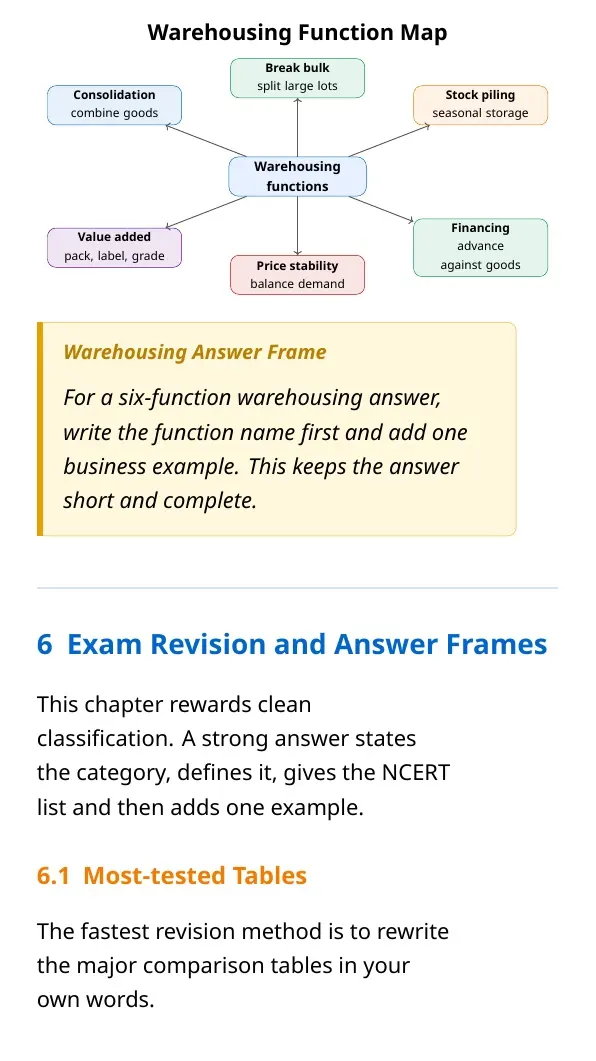
- For warehousing questions: include storage, consolidation, break-bulk, grading and risk-bearing functions.
Related Resources for Business Services
| Resource | Use it for | Link |
|---|---|---|
| NCERT Solutions | Practice all textbook answers for Chapter 4 | Open NCERT Solutions |
| NCERT Book PDF | Read the official textbook chapter with these notes | Open NCERT Book PDF |
| Handwritten Notes | Revise definitions and tables in topper-style format | Open Handwritten Notes |
All Class 11 Business Studies Notes Chapters
| Chapter | Title | Notes Link |
|---|---|---|
| Chapter 1 | Business, Trade and Commerce | Open Notes |
| Chapter 2 | Forms of Business Organisation | Open Notes |
| Chapter 3 | Private, Public and Global Enterprises | Open Notes |
| Chapter 4 | Business Services | You are here |
| Chapter 5 | Emerging Modes of Business | Open Notes |
| Chapter 6 | Social Responsibilities of Business and Business Ethics | Open Notes |
Business Services Class 11 Notes FAQs
Ques. What does Business Services Class 11 Chapter 4 cover?
Ans. It covers the nature of services, types of business services, banking, e-banking, insurance, communication, transport and warehousing.
Ques. What are the five features of services?
Ans. The five features are intangibility, inconsistency, inseparability, inventory and involvement. These are often called the five Is of services.
Ques. Which insurance principles are most important in Chapter 4?
Ans. Students should revise utmost good faith, insurable interest, indemnity, contribution and subrogation with one clear example each.
Ques. How should students revise Class 11 Business Studies Chapter 4?
Ans. Students should first learn the service features, then revise banking services, e-banking terms, insurance principles and warehouse functions from tables.



Comments