



NCERT Class 11 English Woven Words Chapter 18 Ode to a Nightingale Notes explain John Keats's poem through ecstasy, human suffering, beauty, love, symbolic immortality and the final waking dream question for the 2026-27 syllabus.
- Download the Chapter 18 Notes PDF for offline revision.
- Revise the nightingale's song, human condition, immortal bird and elusive happiness.
- Student focus: connect every answer to the poem's movement from pain to song and back to doubt.
Chapter18OdetoaNightingaleNotes.pdf?page=1&dpi=150)
Chapter18OdetoaNightingaleNotes.pdf?page=2&dpi=150)
Chapter18OdetoaNightingaleNotes.pdf?page=3&dpi=150)
Chapter18OdetoaNightingaleNotes.pdf?page=4&dpi=150)
Chapter18OdetoaNightingaleNotes.pdf?page=5&dpi=150)
Chapter18OdetoaNightingaleNotes.pdf?page=6&dpi=150)
Chapter18OdetoaNightingaleNotes.pdf?page=7&dpi=150)
Chapter18OdetoaNightingaleNotes.pdf?page=8&dpi=150)
Chapter18OdetoaNightingaleNotes.pdf?page=9&dpi=150)
Chapter18OdetoaNightingaleNotes.pdf?page=10&dpi=150)
Chapter18OdetoaNightingaleNotes.pdf?page=11&dpi=150)
Chapter18OdetoaNightingaleNotes.pdf?page=12&dpi=150)
Chapter18OdetoaNightingaleNotes.pdf?page=13&dpi=150)
Chapter18OdetoaNightingaleNotes.pdf?page=14&dpi=150)
Chapter18OdetoaNightingaleNotes.pdf?page=15&dpi=150)
Chapter18OdetoaNightingaleNotes.pdf?page=16&dpi=150)
Chapter18OdetoaNightingaleNotes.pdf?page=17&dpi=150)
Chapter18OdetoaNightingaleNotes.pdf?page=18&dpi=150)
Chapter18OdetoaNightingaleNotes.pdf?page=19&dpi=150)
Chapter18OdetoaNightingaleNotes.pdf?page=20&dpi=150)
Chapter18OdetoaNightingaleNotes.pdf?page=21&dpi=150)
Chapter18OdetoaNightingaleNotes.pdf?page=22&dpi=150)
Chapter18OdetoaNightingaleNotes_flat_MobileCard.pdf?page=1&dpi=150)
Chapter18OdetoaNightingaleNotes_flat_MobileCard.pdf?page=2&dpi=150)
Chapter18OdetoaNightingaleNotes_flat_MobileCard.pdf?page=3&dpi=150)
Chapter18OdetoaNightingaleNotes_flat_MobileCard.pdf?page=4&dpi=150)
Chapter18OdetoaNightingaleNotes_flat_MobileCard.pdf?page=5&dpi=150)
Chapter18OdetoaNightingaleNotes_flat_MobileCard.pdf?page=6&dpi=150)
Chapter18OdetoaNightingaleNotes_flat_MobileCard.pdf?page=7&dpi=150)
Chapter18OdetoaNightingaleNotes_flat_MobileCard.pdf?page=8&dpi=150)
Chapter18OdetoaNightingaleNotes_flat_MobileCard.pdf?page=9&dpi=150)
Chapter18OdetoaNightingaleNotes_flat_MobileCard.pdf?page=10&dpi=150)
Chapter18OdetoaNightingaleNotes_flat_MobileCard.pdf?page=11&dpi=150)
Chapter18OdetoaNightingaleNotes_flat_MobileCard.pdf?page=12&dpi=150)
Chapter18OdetoaNightingaleNotes_flat_MobileCard.pdf?page=13&dpi=150)
Chapter18OdetoaNightingaleNotes_flat_MobileCard.pdf?page=14&dpi=150)
Chapter18OdetoaNightingaleNotes_flat_MobileCard.pdf?page=15&dpi=150)
Chapter18OdetoaNightingaleNotes_flat_MobileCard.pdf?page=16&dpi=150)
Chapter18OdetoaNightingaleNotes_flat_MobileCard.pdf?page=17&dpi=150)
Chapter18OdetoaNightingaleNotes_flat_MobileCard.pdf?page=18&dpi=150)
Chapter18OdetoaNightingaleNotes_flat_MobileCard.pdf?page=19&dpi=150)
Chapter18OdetoaNightingaleNotes_flat_MobileCard.pdf?page=20&dpi=150)
Chapter18OdetoaNightingaleNotes_flat_MobileCard.pdf?page=21&dpi=150)
Chapter18OdetoaNightingaleNotes_flat_MobileCard.pdf?page=22&dpi=150)
Chapter18OdetoaNightingaleNotes_flat_MobileCard.pdf?page=23&dpi=150)
Chapter18OdetoaNightingaleNotes_flat_MobileCard.pdf?page=24&dpi=150)
Chapter18OdetoaNightingaleNotes_flat_MobileCard.pdf?page=25&dpi=150)
Chapter18OdetoaNightingaleNotes_flat_MobileCard.pdf?page=26&dpi=150)
Chapter18OdetoaNightingaleNotes_flat_MobileCard.pdf?page=27&dpi=150)
Chapter18OdetoaNightingaleNotes_flat_MobileCard.pdf?page=28&dpi=150)
Chapter18OdetoaNightingaleNotes_flat_MobileCard.pdf?page=29&dpi=150)
Chapter18OdetoaNightingaleNotes_flat_MobileCard.pdf?page=30&dpi=150)
Chapter18OdetoaNightingaleNotes_flat_MobileCard.pdf?page=31&dpi=150)
Chapter18OdetoaNightingaleNotes_flat_MobileCard.pdf?page=32&dpi=150)
Chapter18OdetoaNightingaleNotes_flat_MobileCard.pdf?page=33&dpi=150)
Chapter18OdetoaNightingaleNotes_flat_MobileCard.pdf?page=34&dpi=150)
Chapter18OdetoaNightingaleNotes_flat_MobileCard.pdf?page=35&dpi=150)
Student Feedback on Ode to a Nightingale
In a Collegedunia revision poll of 10,920 Class 11 English students, most students said this poem became easier after they tracked the mood shift from numbness to song, then to forlorn doubt.
Ode to a Nightingale Class 11 Notes PDF Overview
Ode to a Nightingale follows a speaker who hears a bird's song and briefly imagines escape from human pain. The PDF explains the poem's key images, myth references, sensuous detail and final doubt.
Ode to a Nightingale Poem Explanation
Source: Magnet Brains
Ode to a Nightingale Summary and Mood Movement
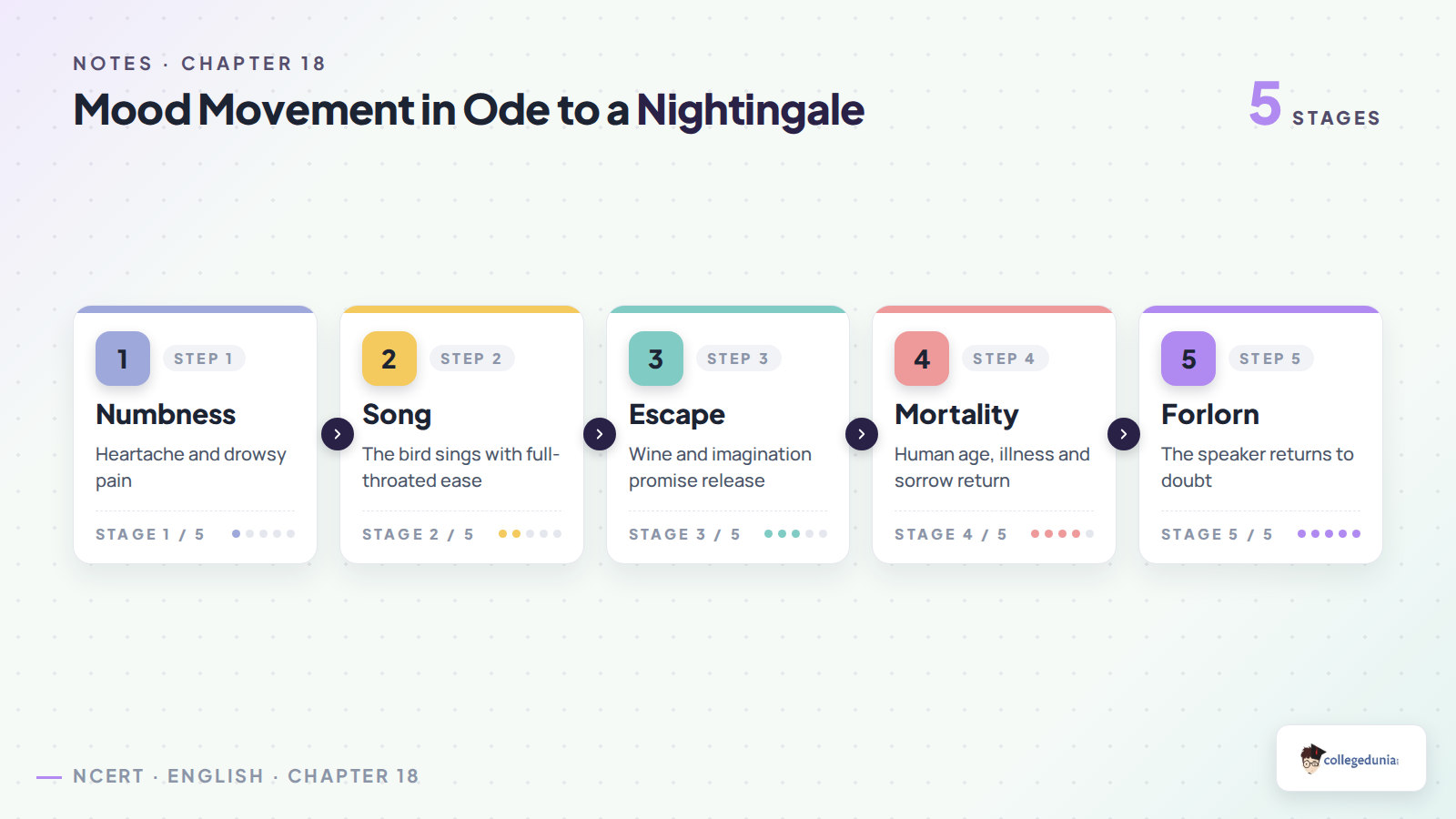
The poem begins with heartache and drowsy numbness. The speaker hears the nightingale and feels too happy in the bird's happiness. He imagines wine, poetic inspiration and a fading away into the forest dim.
The poem then returns to the painful human condition: age, illness, sorrow, fading beauty and short-lived love. The word forlorn breaks the spell and brings the speaker back to his sole self.
- The nightingale's song gives a brief state of ecstasy.
- Human life is shown through weariness, fever, fret and despair.
- The bird's song seems immortal because it crosses time and legend.
- The ending leaves the speaker unsure whether he woke or dreamed.
Human Condition and Immortal Bird in Ode to a Nightingale
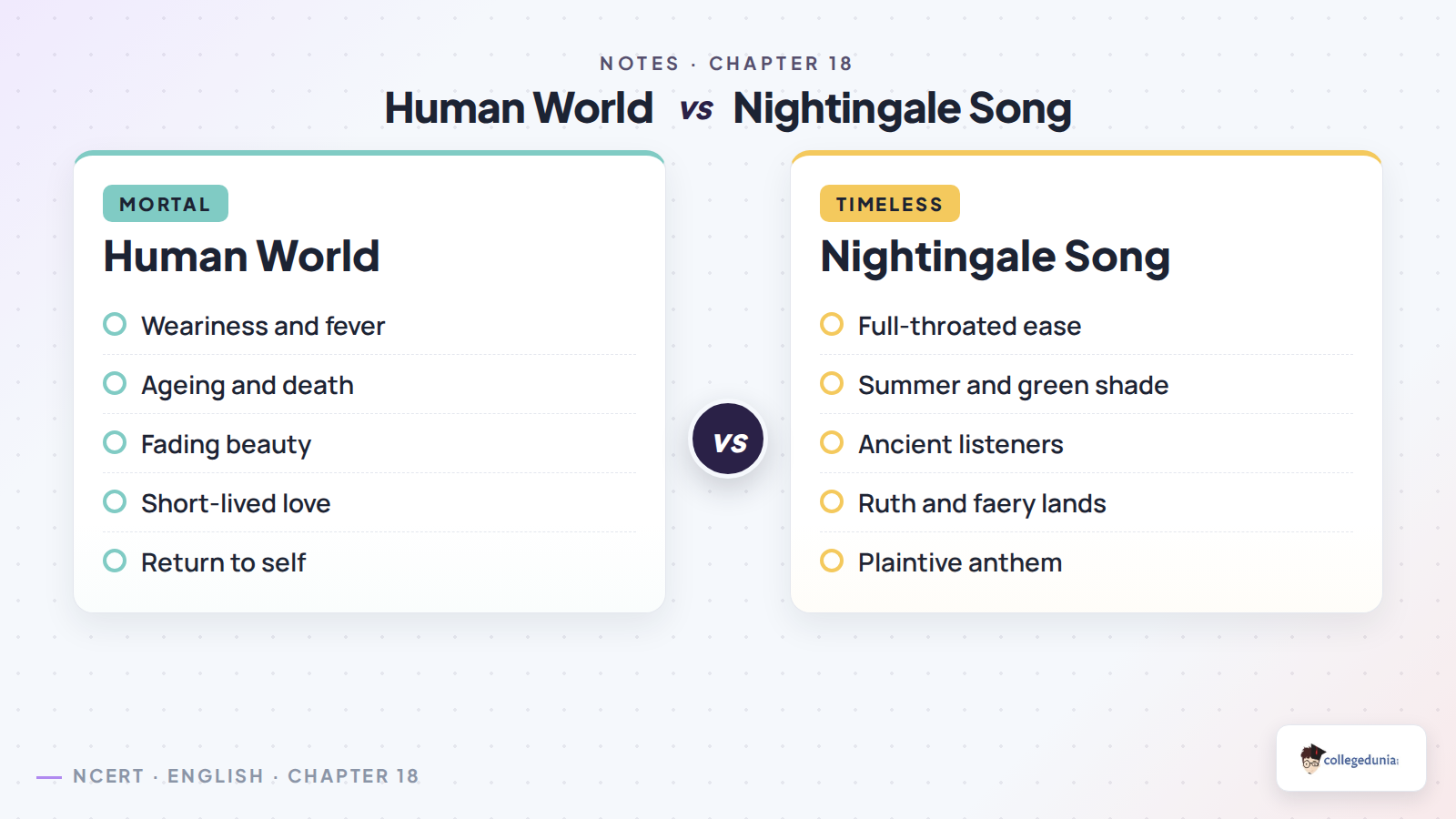
Keats contrasts the mortal human world with the nightingale's apparently timeless song. Humans face illness, ageing, death and fading love. The bird's song, by contrast, seems to have been heard by ancient people, Ruth and figures in faery lands.
| Theme | Key image | Answer cue |
|---|---|---|
| Ecstasy | Full-throated ease | The song lifts the speaker |
| Human condition | Weariness, fever and fret | Life is painful and unstable |
| Immortality | Immortal Bird | The song crosses generations |
| Elusive happiness | Do I wake or sleep? | Joy fades into uncertainty |
How to Write NCERT Answers for Ode to a Nightingale
For NCERT answers, begin with the poem's exact image and then explain the mood. A strong answer does not retell the whole poem. It names the image, links it to the speaker's feeling and closes with the larger idea.
| Prompt | Best evidence | Closing idea |
|---|---|---|
| Ecstasy | Too happy in thine happiness | The song lifts the poet from pain |
| Human condition | Weariness, fever, fret | Human life is full of suffering |
| Beauty and love | Beauty cannot keep its eyes | Both fade with time |
| Immortal bird | Emperor, clown, Ruth and faery lands | The song feels timeless |
| Forlorn | The word is like a bell | Imagination breaks and reality returns |
Related Resources for Ode to a Nightingale Class 11 English
| Resource | Use it for | Link |
|---|---|---|
| NCERT Solutions | Practise textbook answers | Open Solutions |
| NCERT Book PDF | Read the source poem | Open Book PDF |
| Handwritten Notes | Revise with compact visual cues | Open Handwritten Notes |
All Class 11 English Woven Words Notes Chapters
| Chapter | Notes Link |
|---|---|
| Chapter 15 For Elkana | Open Notes |
| Chapter 16 Refugee Blues | Open Notes |
| Chapter 17 Felling of the Banyan Tree | Open Notes |
| Chapter 18 Ode to a Nightingale | Current chapter notes |
| Chapter 19 Ajamil and the Tigers | Open Notes |
| Chapter 20 My Three Passions | Open Notes |
| Chapter 21 Patterns of Creativity | Open Notes |
Ode to a Nightingale Class 11 Notes FAQs
Ques. What is the main idea of Ode to a Nightingale?
Ans. The main idea is that beauty and song can lift the human mind briefly, but mortal pain and doubt return.
Ques. Why is the nightingale called immortal?
Ans. The bird is called immortal because its song seems to cross generations, history, scripture and fairy romance.
Ques. What human sufferings does the poet want to escape?
Ans. He wants to escape weariness, illness, ageing, death, sorrow, despair, fading beauty and short-lived love.
Ques. What does forlorn do in the poem?
Ans. The word forlorn breaks the imagined escape. It brings the poet back from the bird's world to his lonely self.



Comments