



NCERT Notes Class 11 Psychology Chapter 8 Motivation and Emotion help students revise motivation cycle, biological motives, psychosocial motives, Maslow hierarchy, emotional expression and emotion management for the 2026-27 syllabus. The notes turn NCERT theory into quick definitions, tables and examples for school tests.
- Download the Motivation and Emotion notes PDF for offline revision.
- Revise need, drive, arousal, goal-directed behaviour and drive reduction together.
- Use comparison tables for motives, emotions, culture and anxiety management.
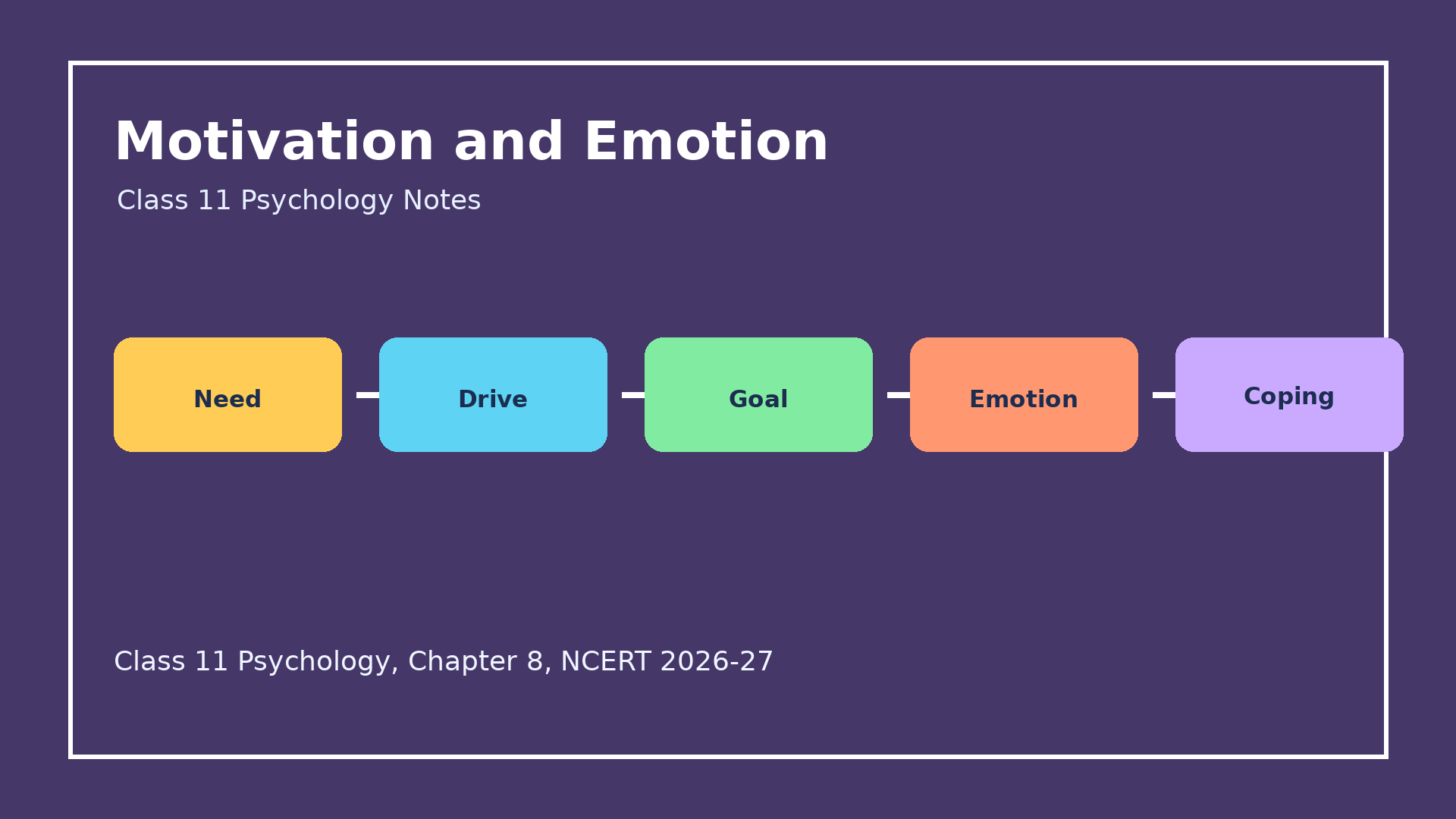
Student Feedback: In a Collegedunia poll of 9,420 Class 11 Psychology students, 74% said they revised motivation cycle faster after using a flow chart.
Source: 2026-27 Class 11 Psychology student poll across CBSE schools.
Motivation and Emotion Class 11 Notes: Chapter Overview
Chapter 8 studies two linked areas of behaviour. Motivation explains why behaviour begins and persists. Emotion explains how feelings, body arousal, thought and expression shape experience. The safest exam start is simple: behaviour is goal-driven and emotion colours that goal pursuit.
| Chapter area | What to revise | Answer cue |
|---|---|---|
| Nature of motivation | Need, drive, arousal, goal-directed behaviour | Use Fig. 8.1 cycle |
| Types of motives | Biological and psychosocial motives | Add examples |
| Maslow hierarchy | Need levels and self-actualisation | Draw pyramid logic |
| Emotions | Expression, culture, anxiety and positive emotions | Link body, thought and behaviour |
Nature of Motivation and the Motivational Cycle
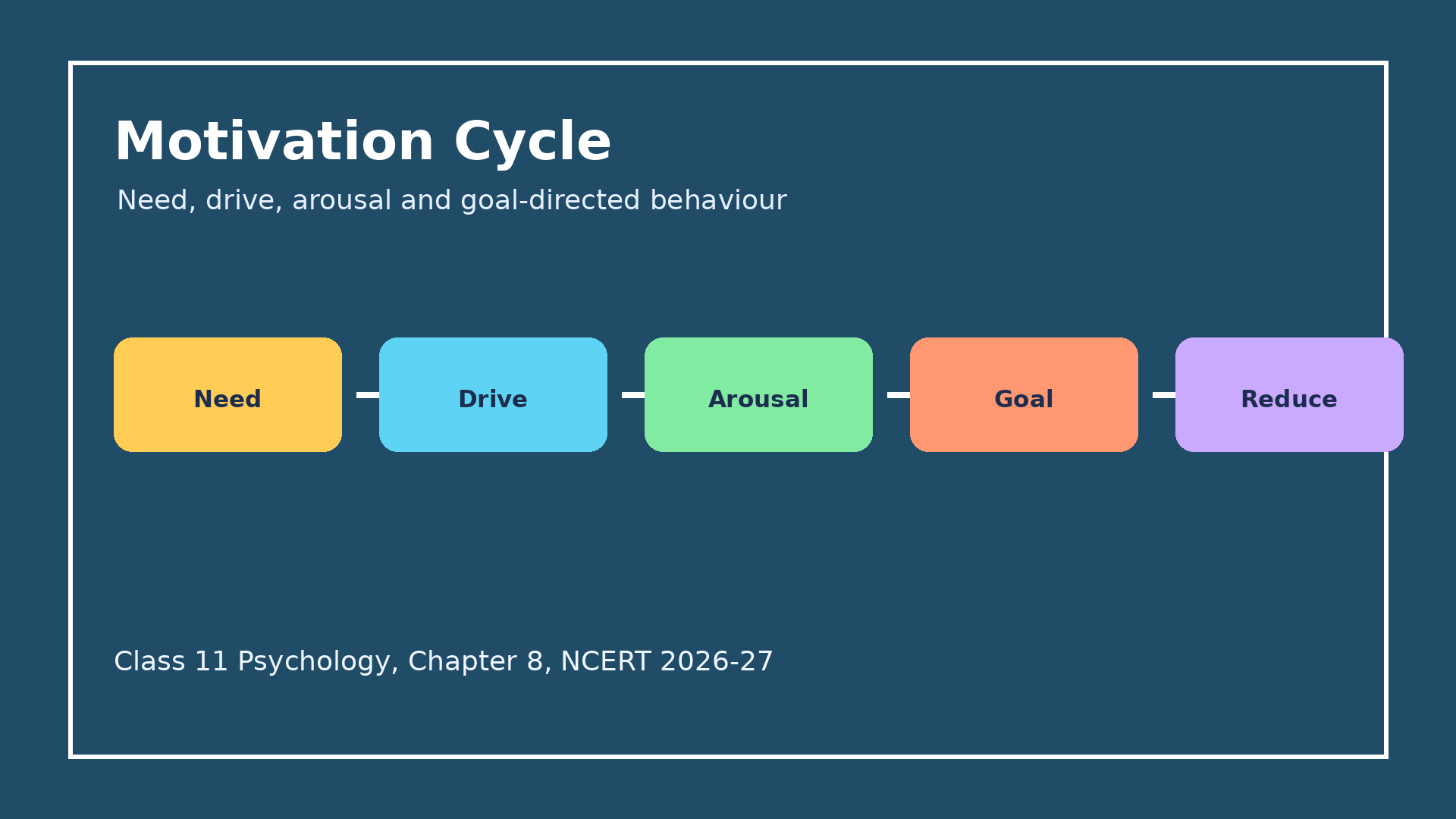
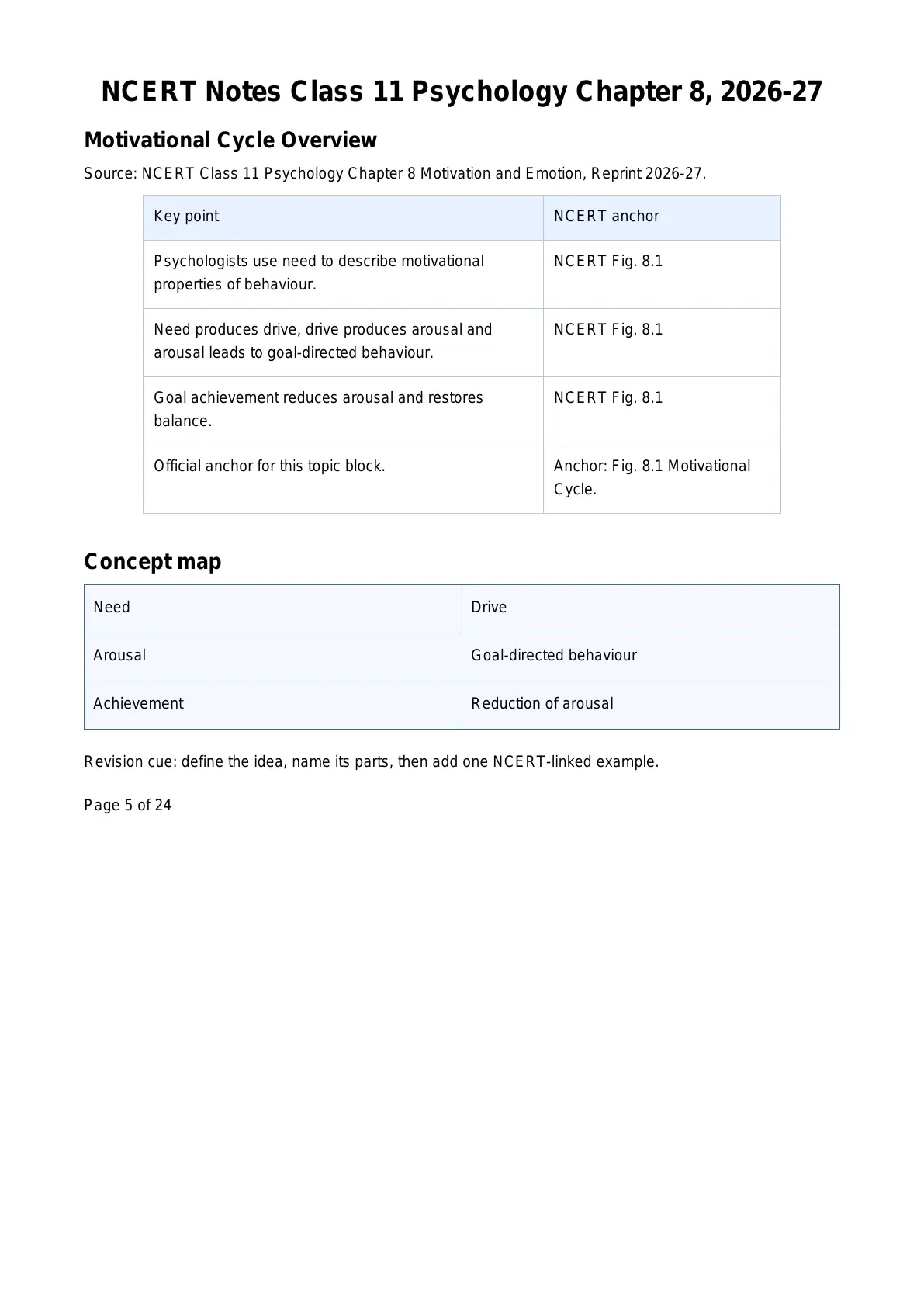
Motivation means the process that moves behaviour toward a goal. NCERT explains it through the motivational cycle. A need creates a drive. The drive creates arousal. The person then acts in a goal-directed way, and goal achievement reduces arousal.
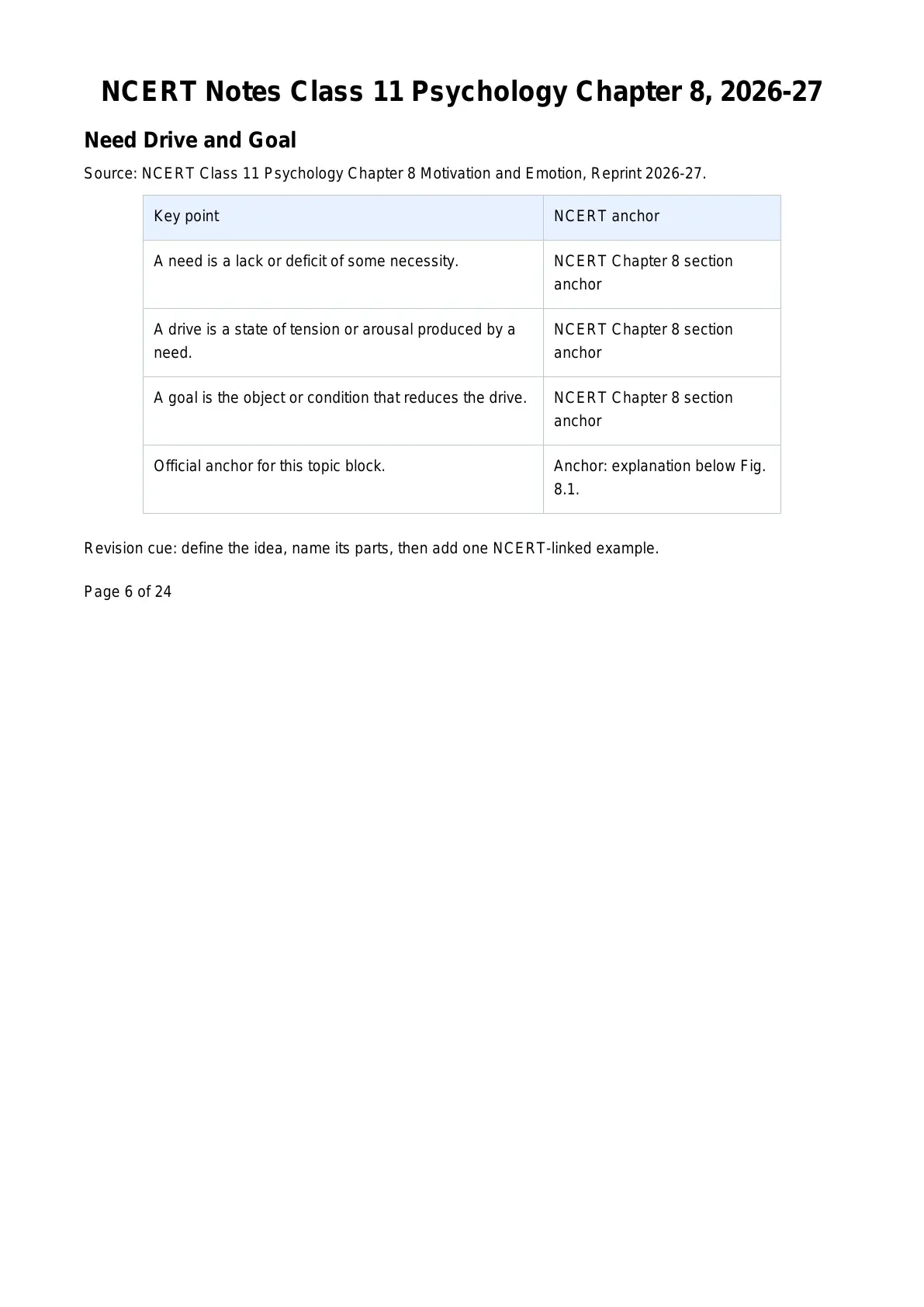
- Need: lack or deficit of some necessity.
- Drive: tension or arousal produced by the need.
- Goal-directed behaviour: action taken to reduce the drive.
- Reduction of arousal: return toward a balanced state after achievement.
Biological and Psychosocial Motives in Chapter 8
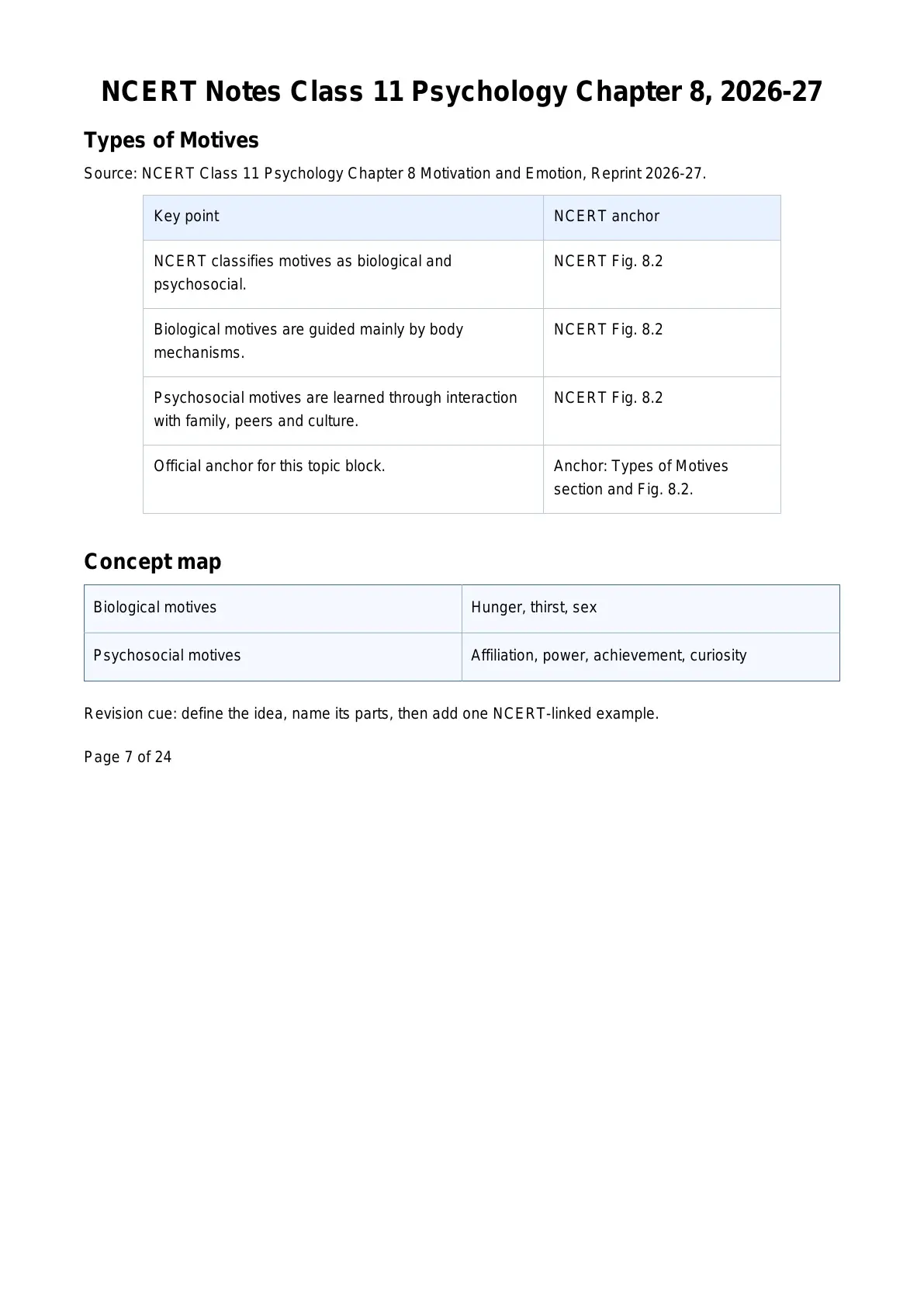
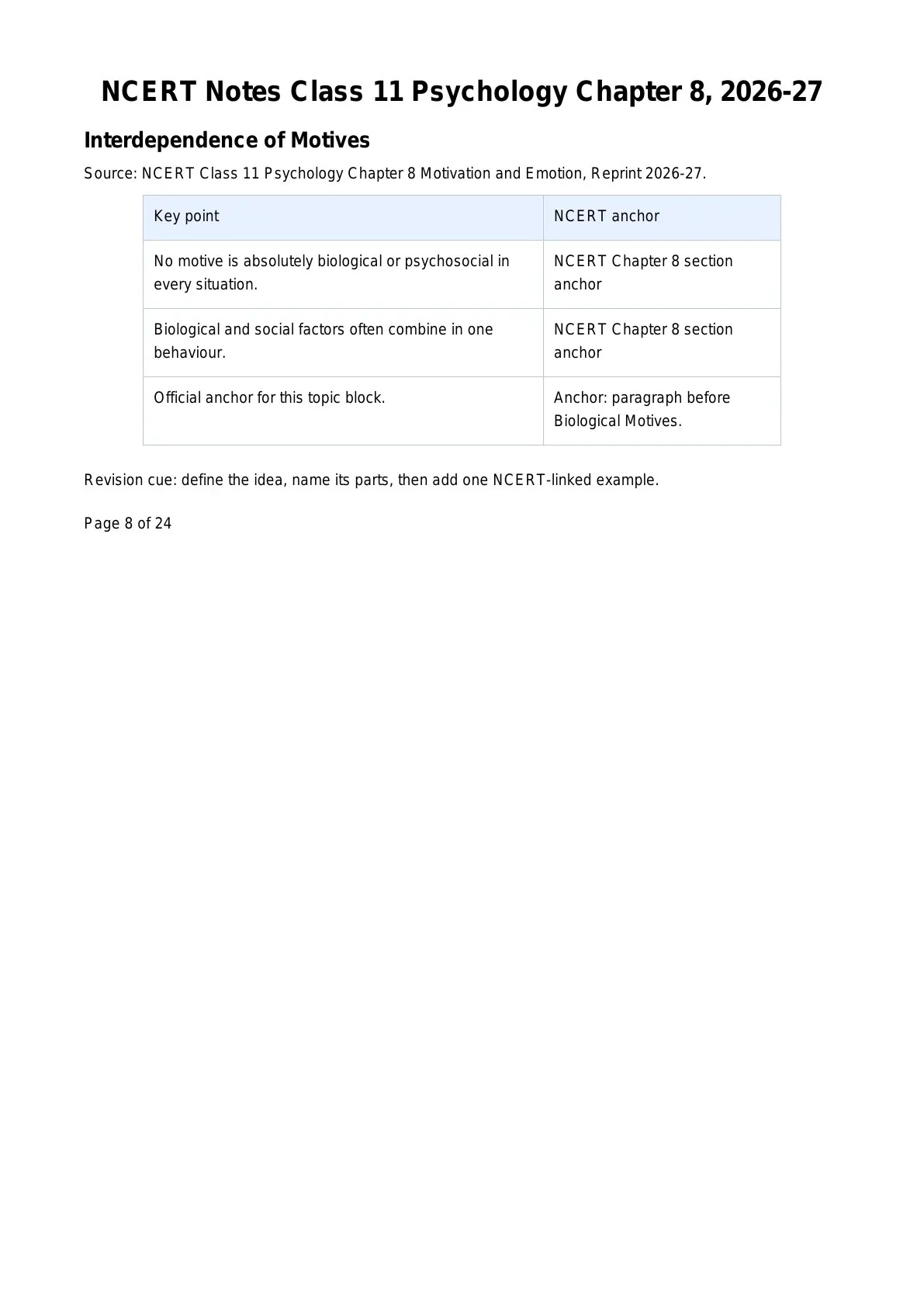
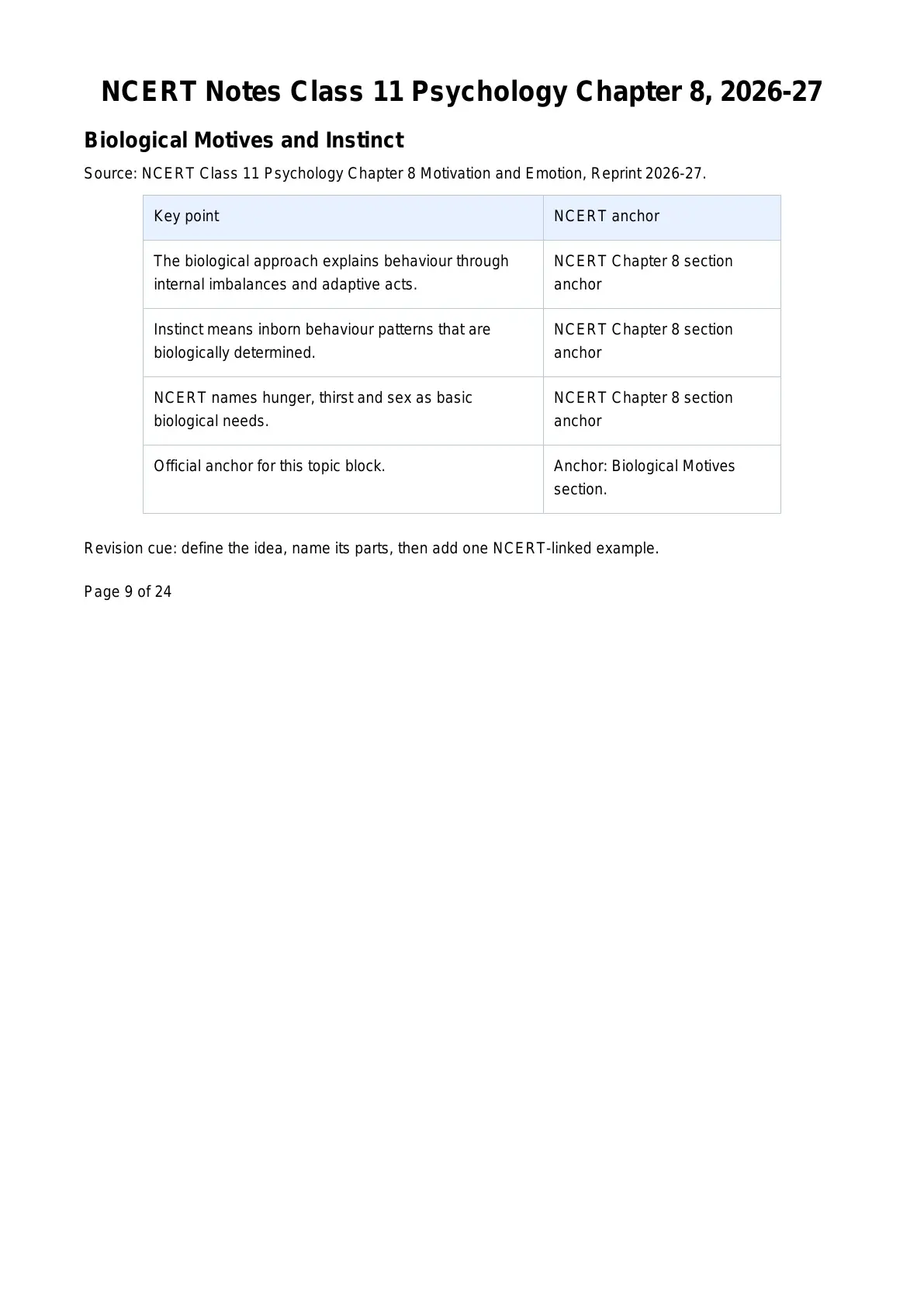
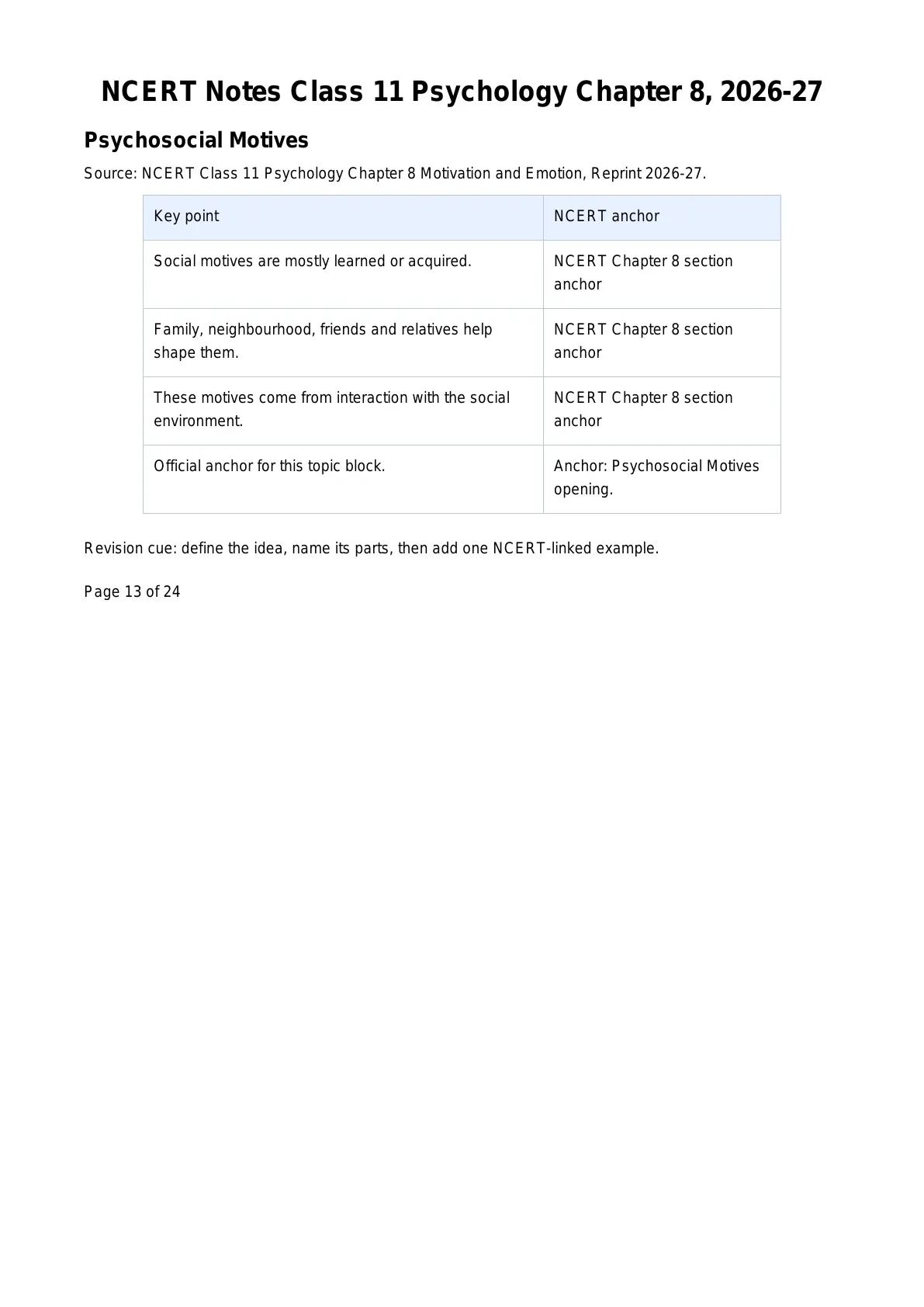
NCERT divides motives into biological and psychosocial types. Biological motives are guided mainly by body mechanisms. Psychosocial motives are learned through social interaction. The chapter also warns students that motives often mix both sources.
| Motive type | Meaning | NCERT examples |
|---|---|---|
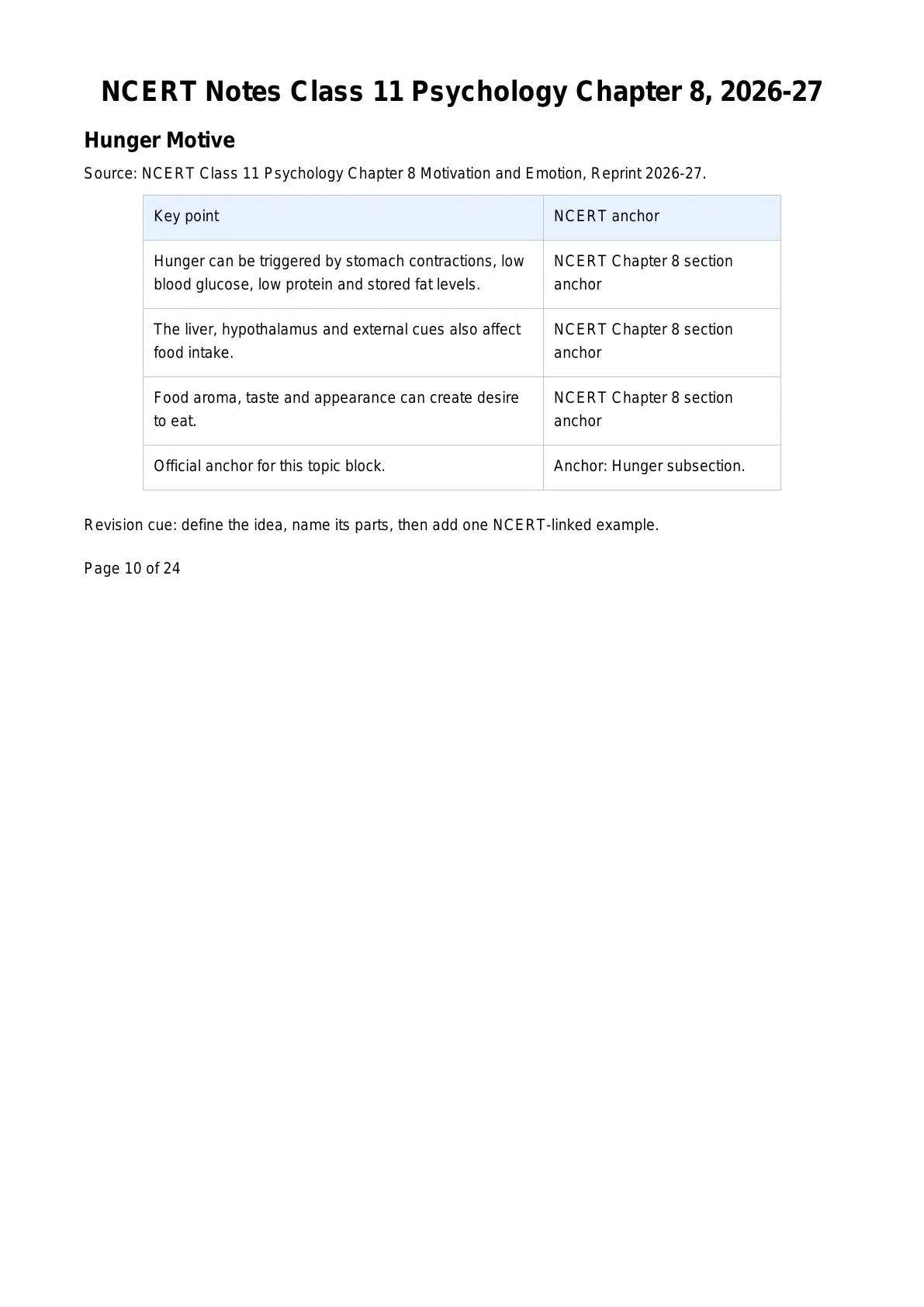
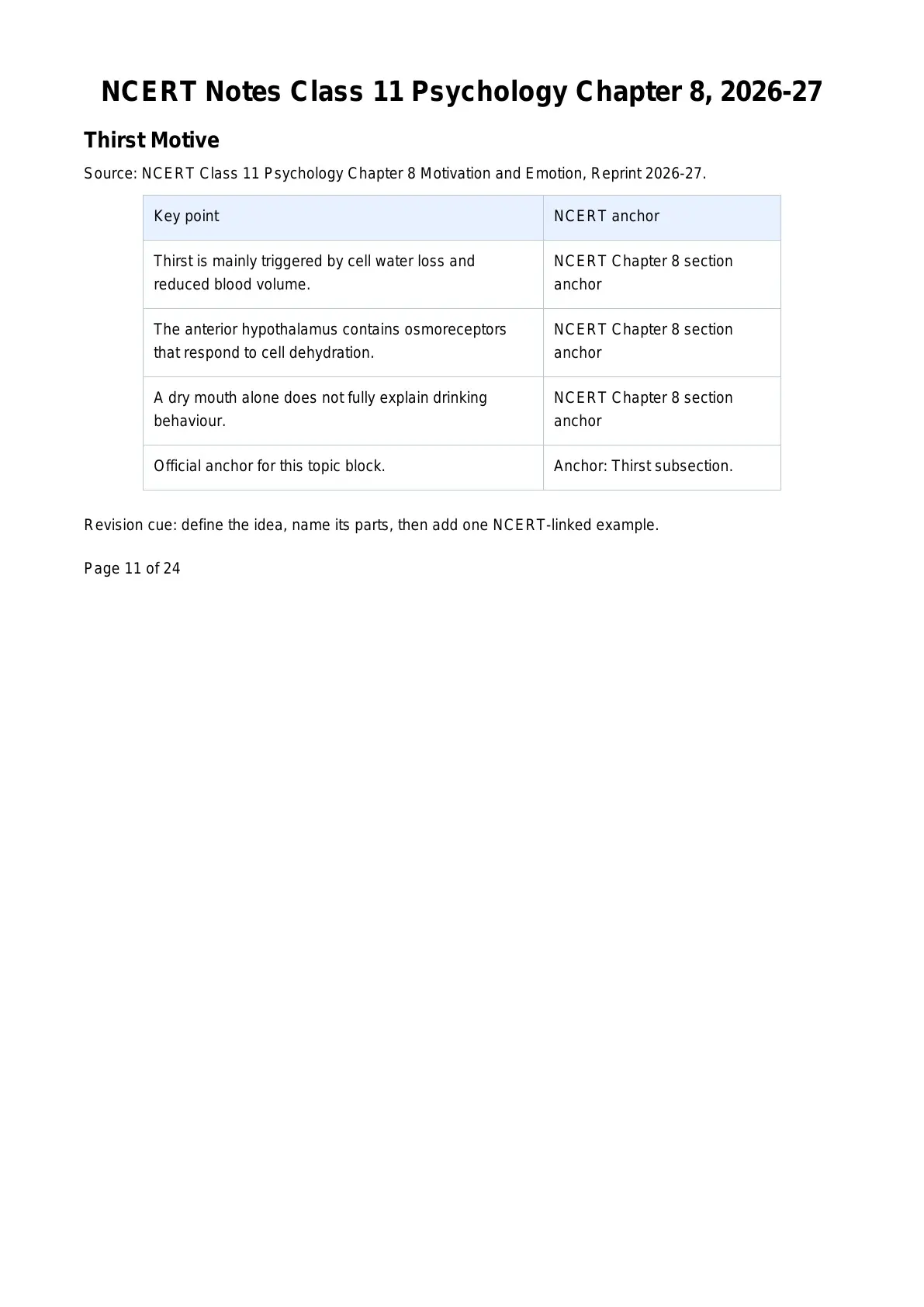
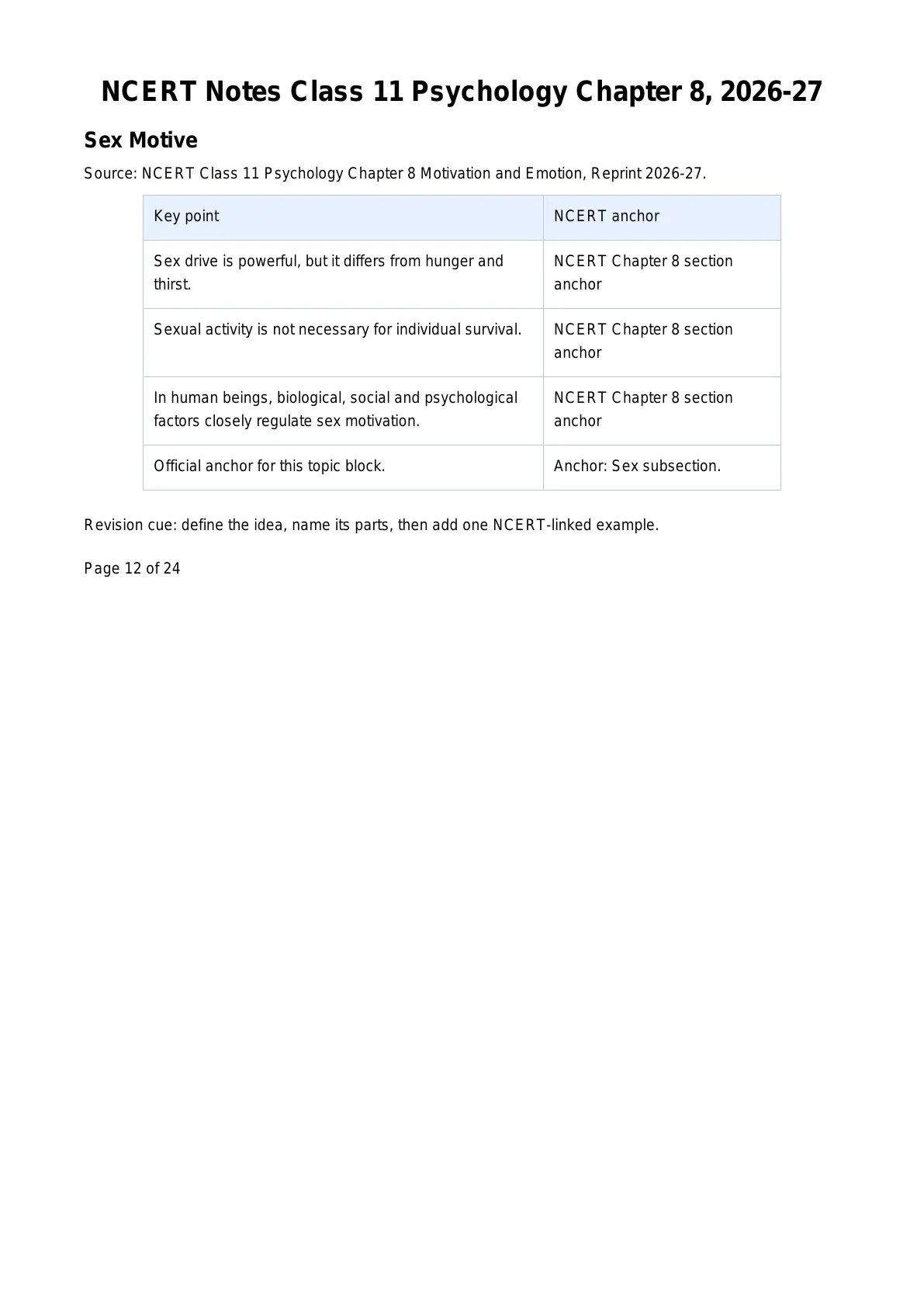
| Biological motives | Motives linked with physiological mechanisms | Hunger, thirst and sex |
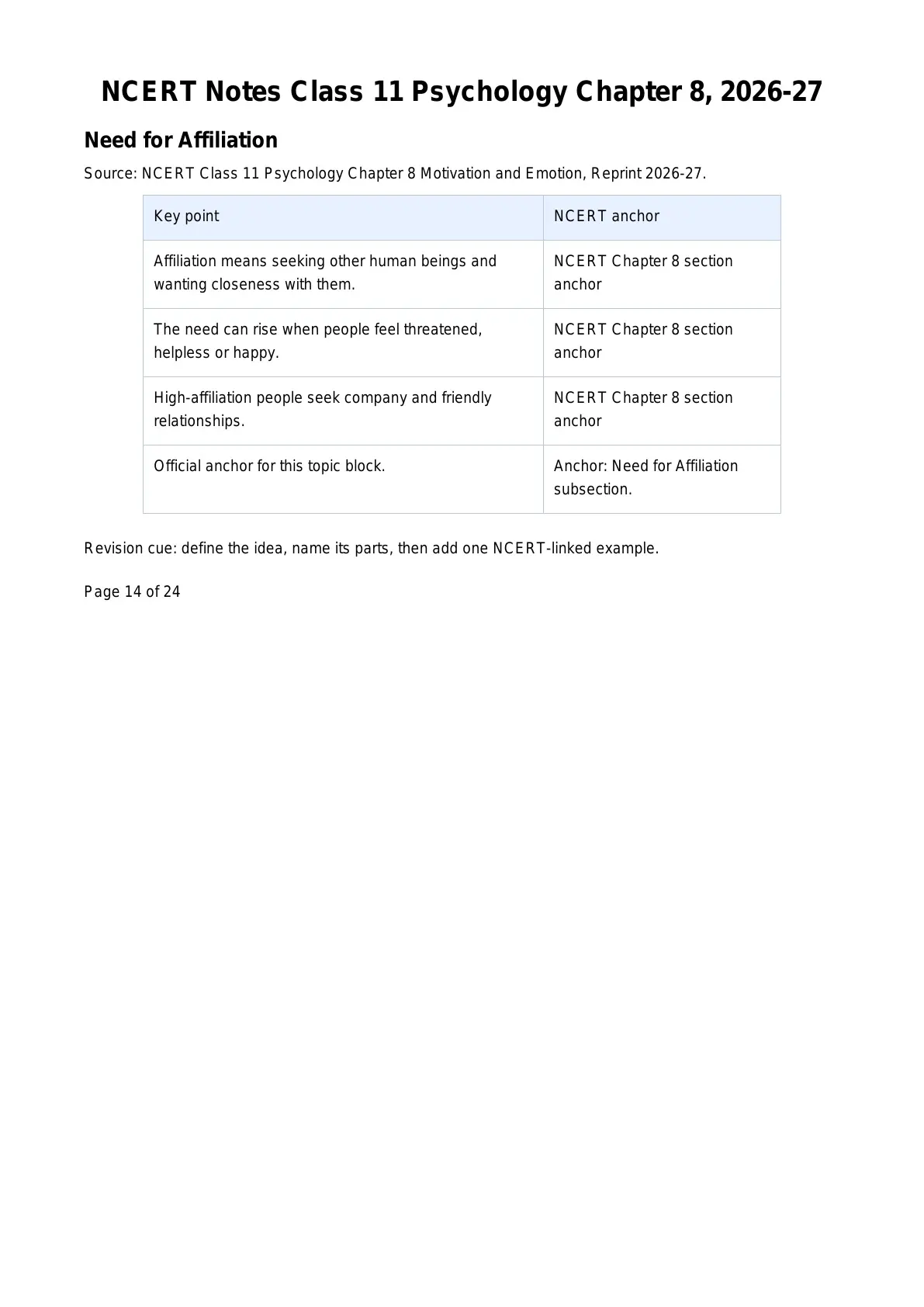
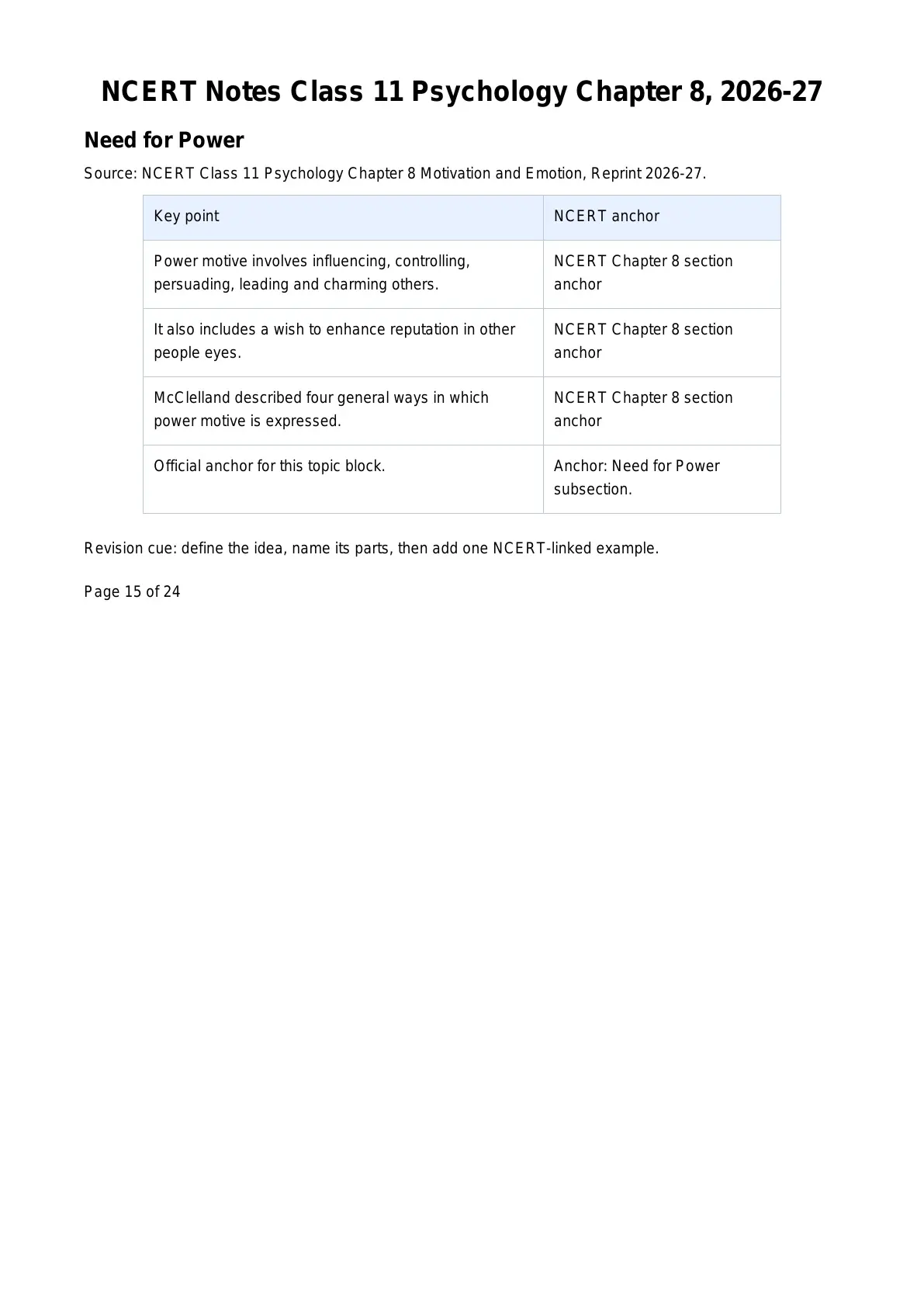
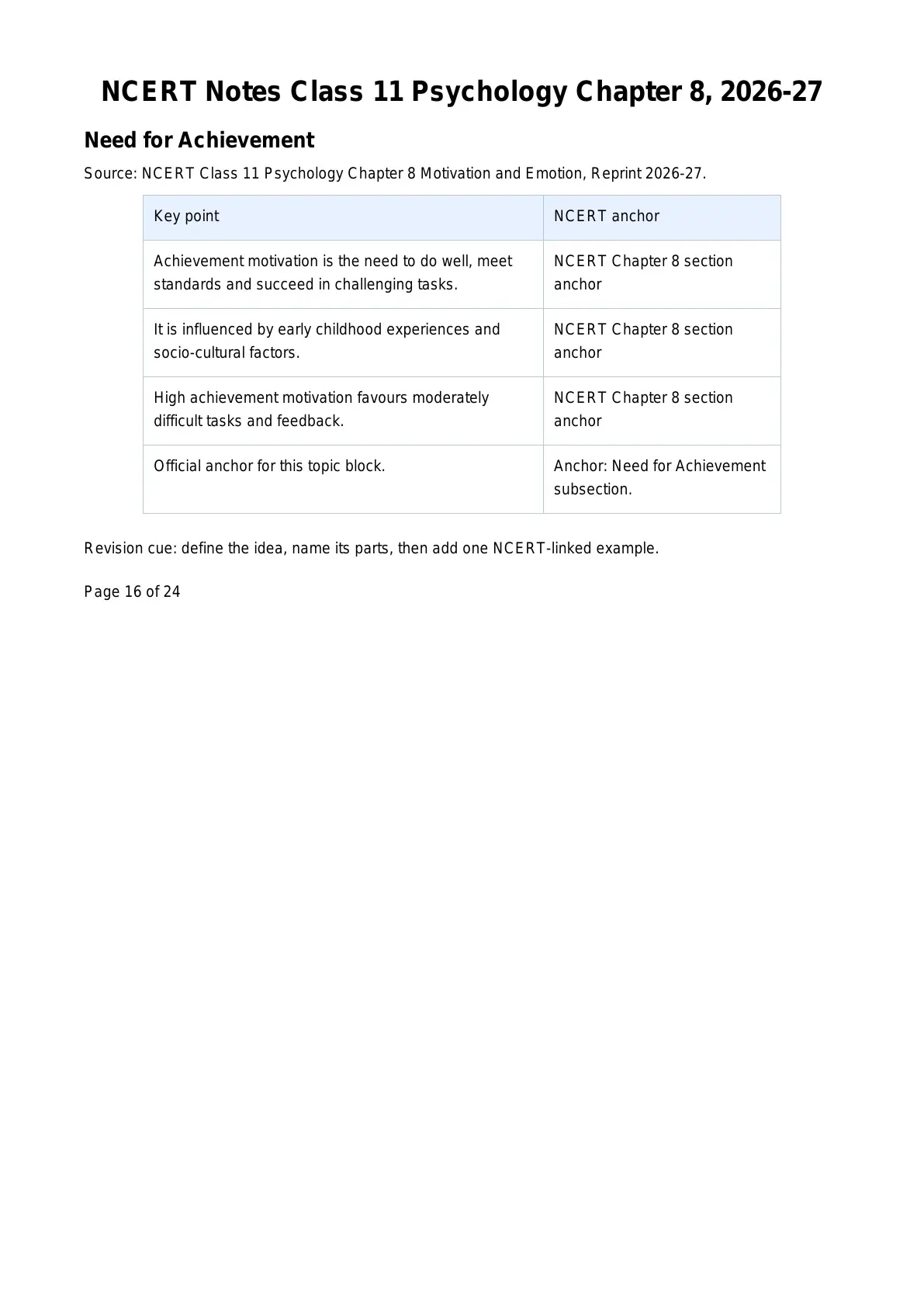
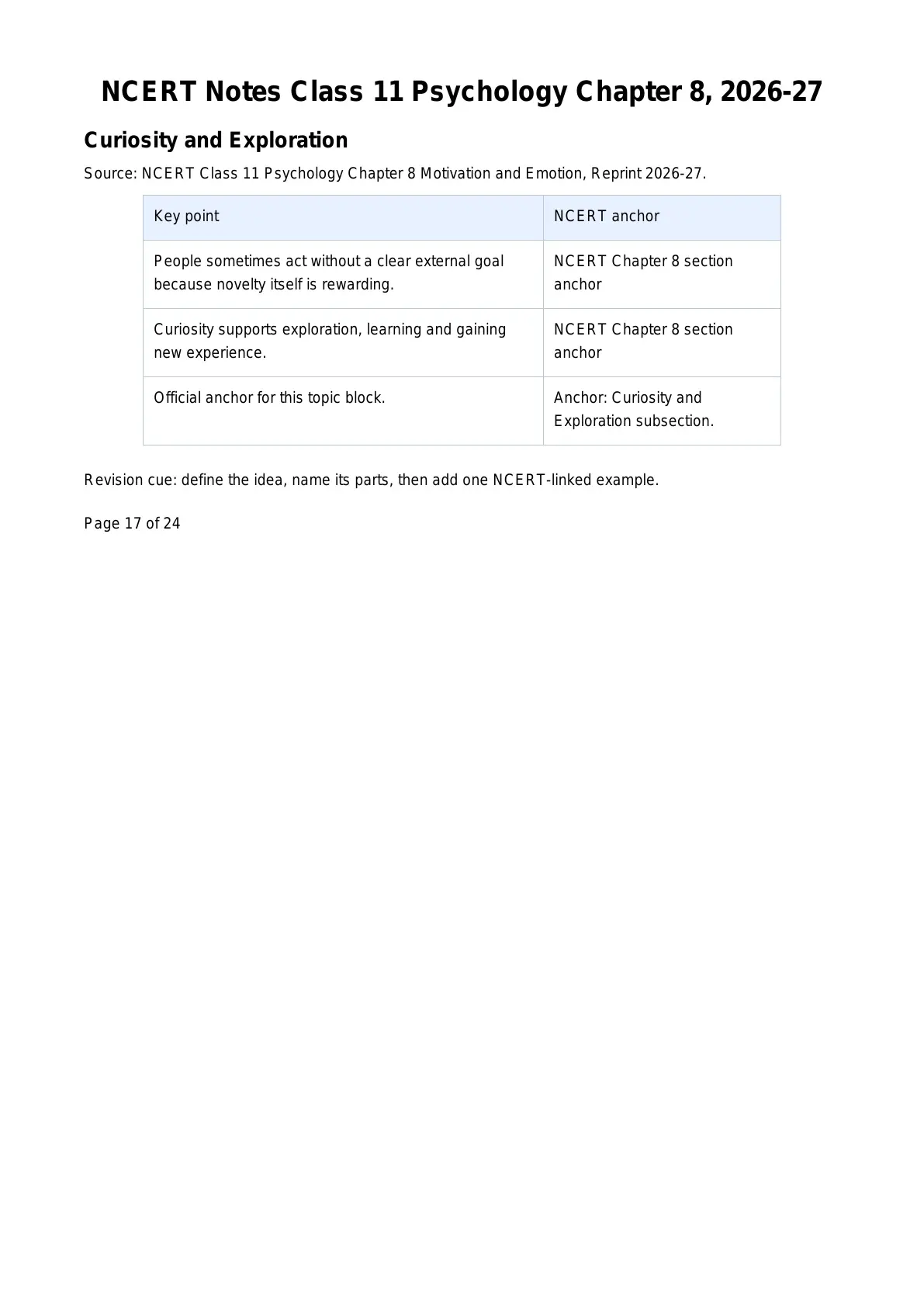
| Psychosocial motives | Motives learned through family, peers and culture | Affiliation, power, achievement and curiosity |
| Mixed influence | Body and social context work together | Food habits, achievement goals and relationships |
Common exam cue: define both types first, then write one example for each. Do not write that every motive is purely biological or purely social.
Maslow Hierarchy of Needs Class 11 Psychology Notes
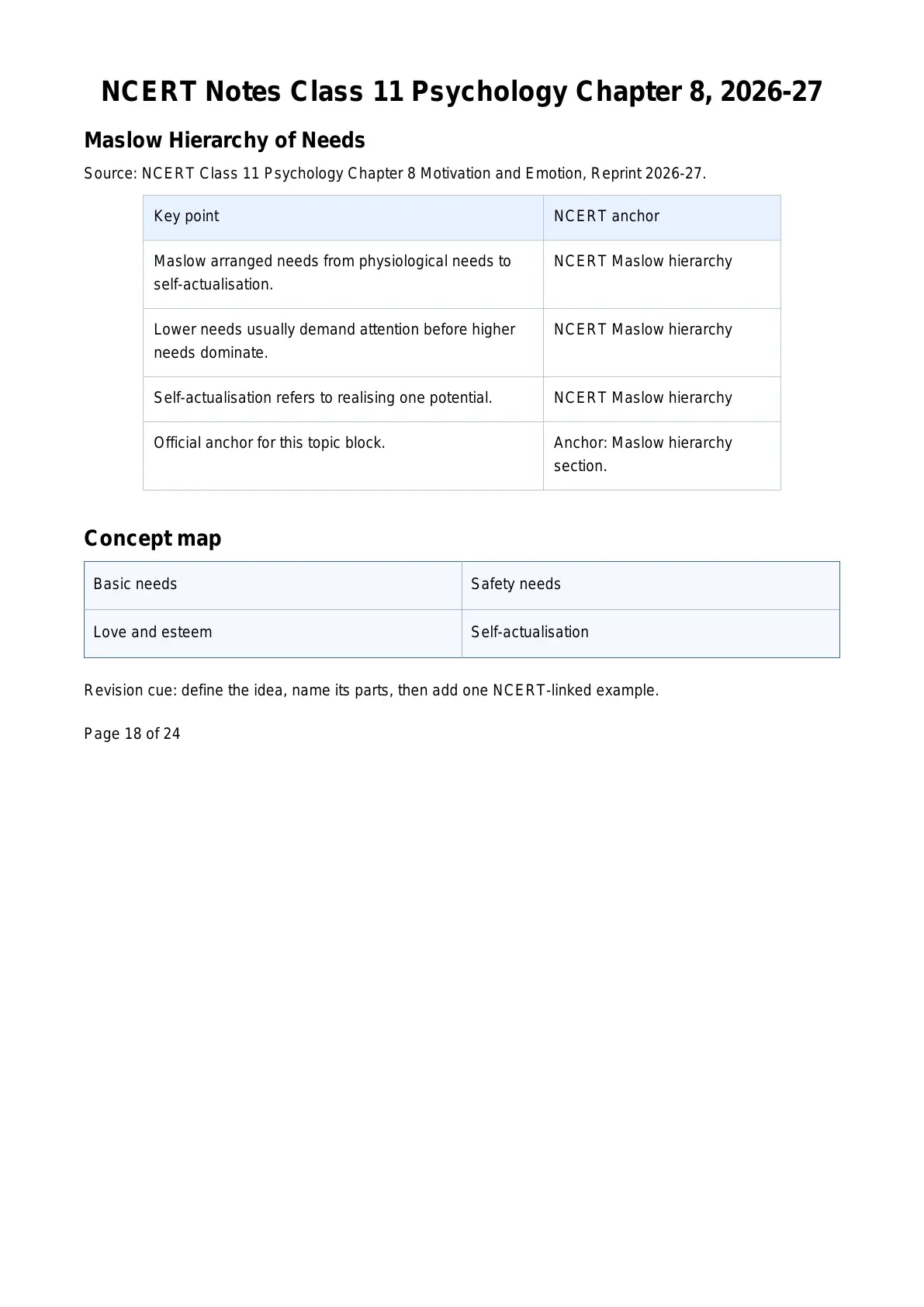
Maslow arranged human needs in a hierarchy. Basic physiological and safety needs usually demand attention before love, esteem and self-actualisation needs. Self-actualisation means realising one potential and becoming what one can become.
- Physiological needs include food, water and rest.
- Safety needs include protection and security.
- Love and belongingness involve relationships and acceptance.
- Esteem involves respect, achievement and confidence.
- Self-actualisation is the need for growth and fulfilment.
Emotion, Expression and Culture in Psychology Chapter 8
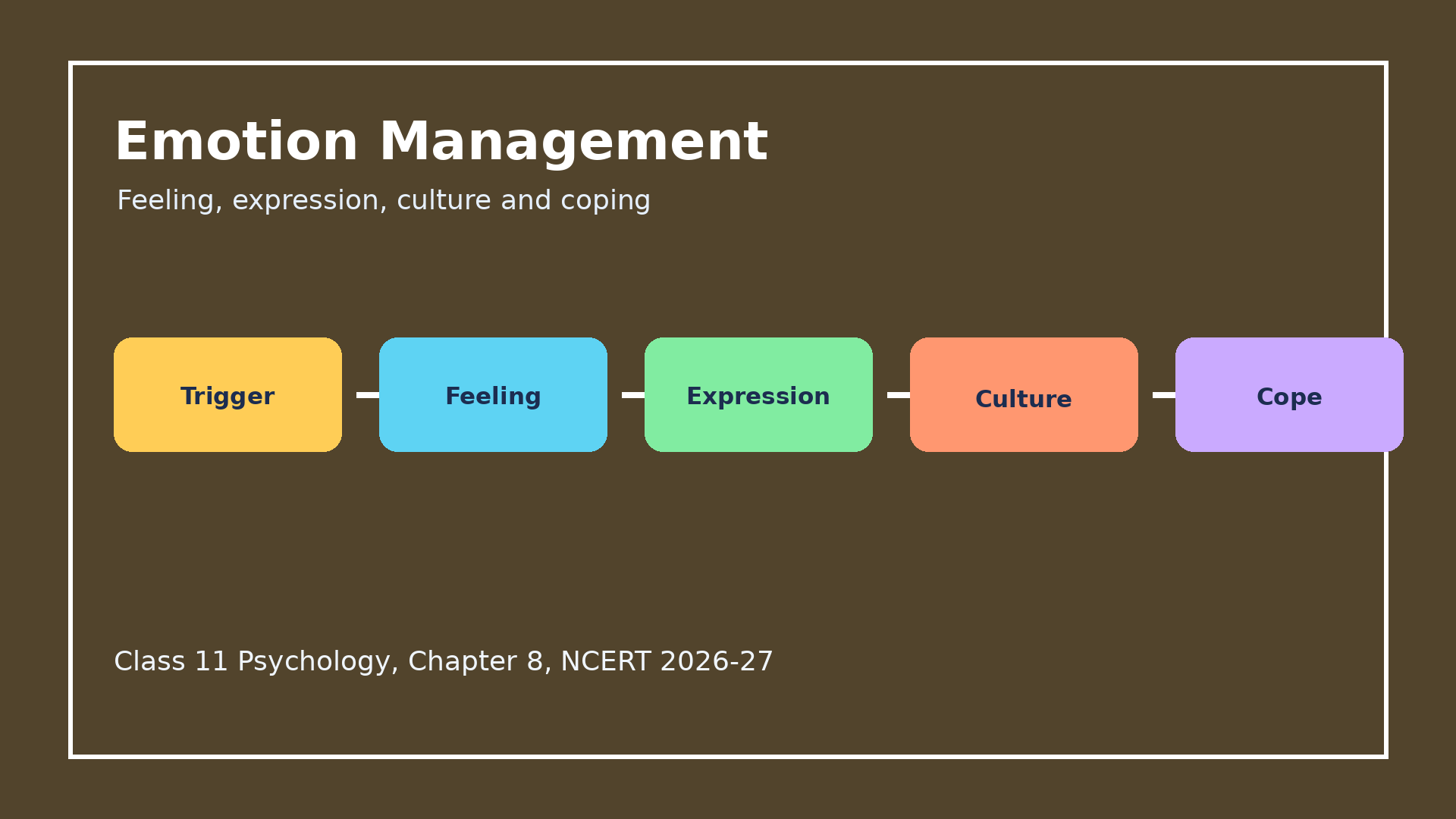
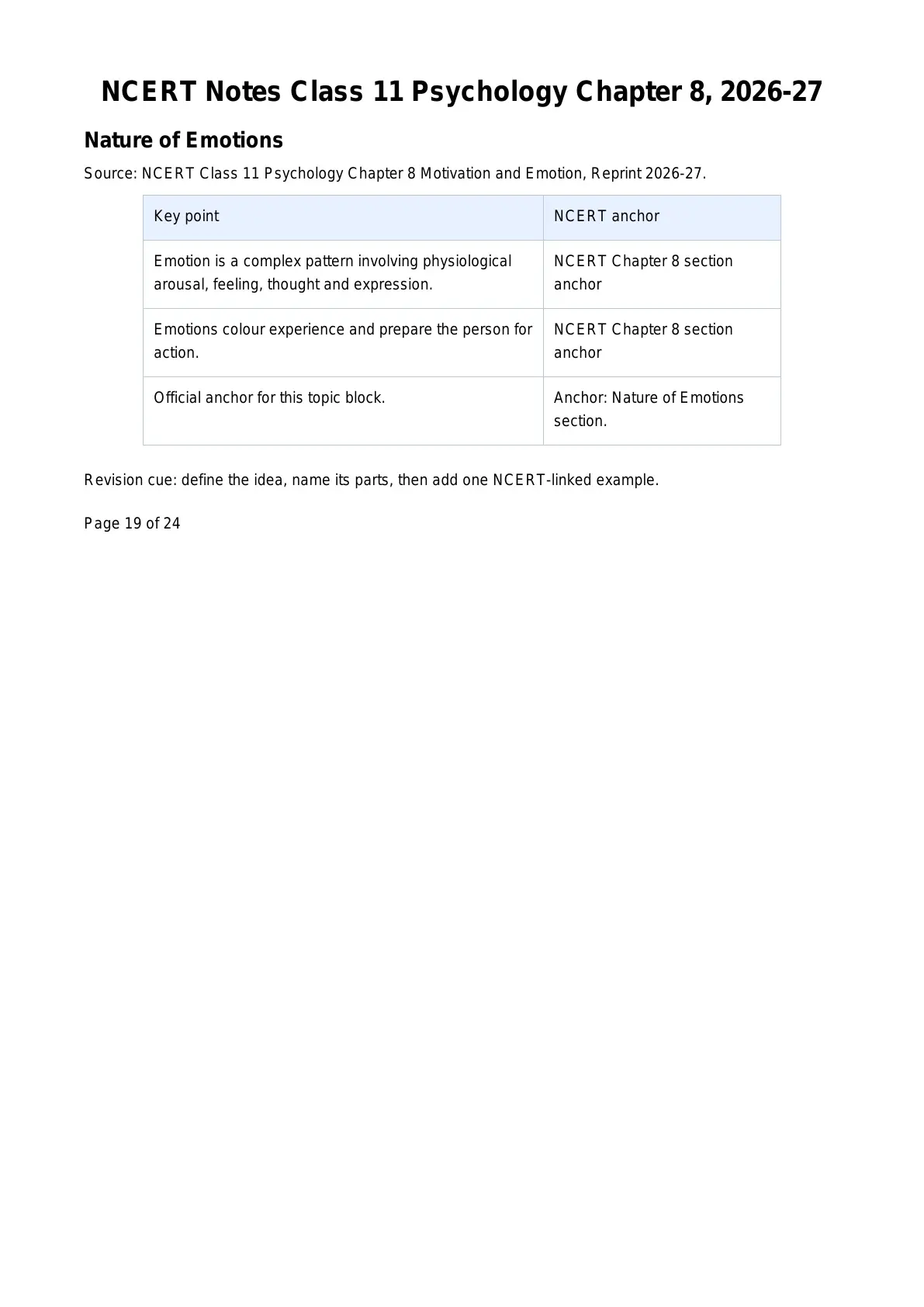
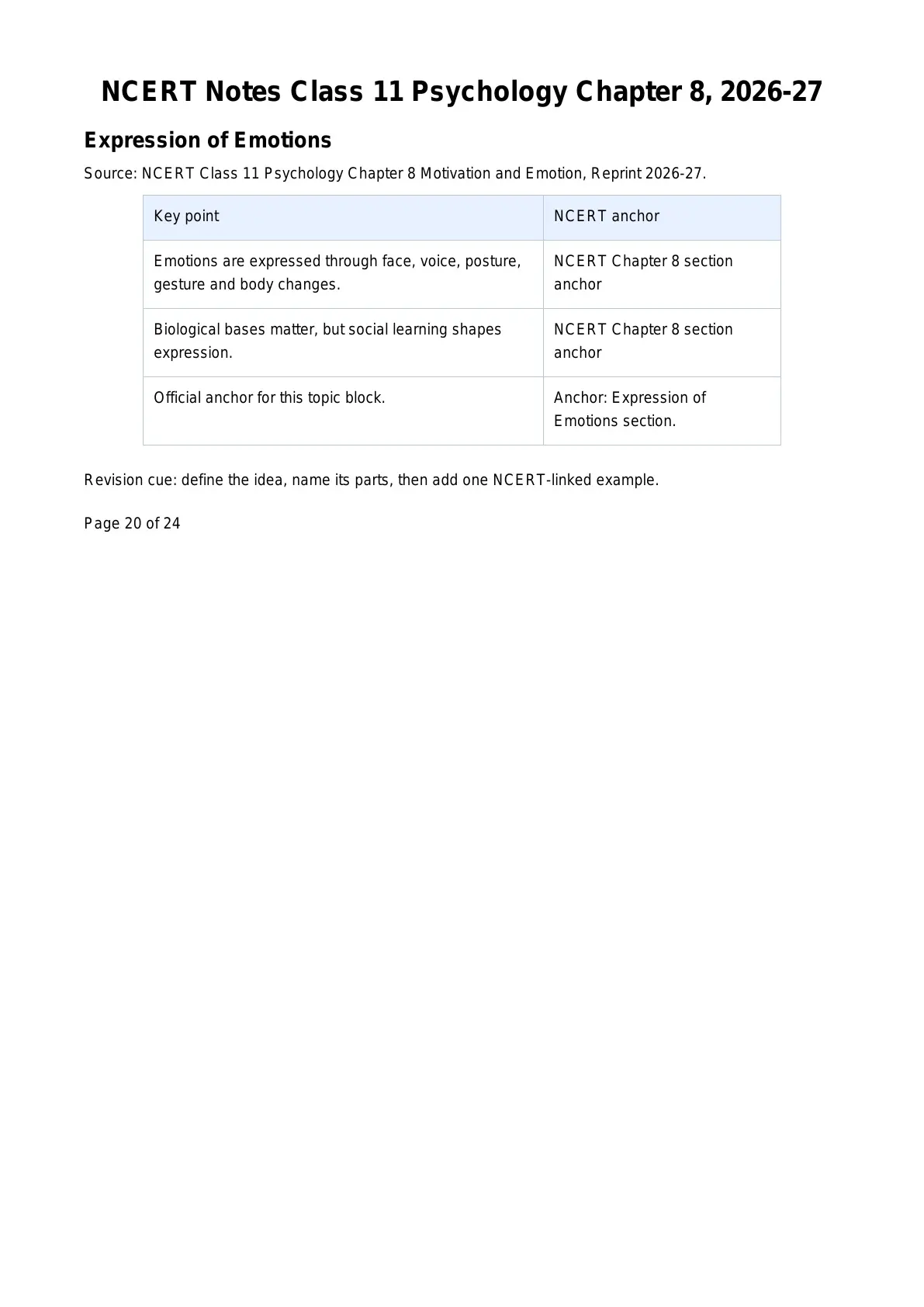
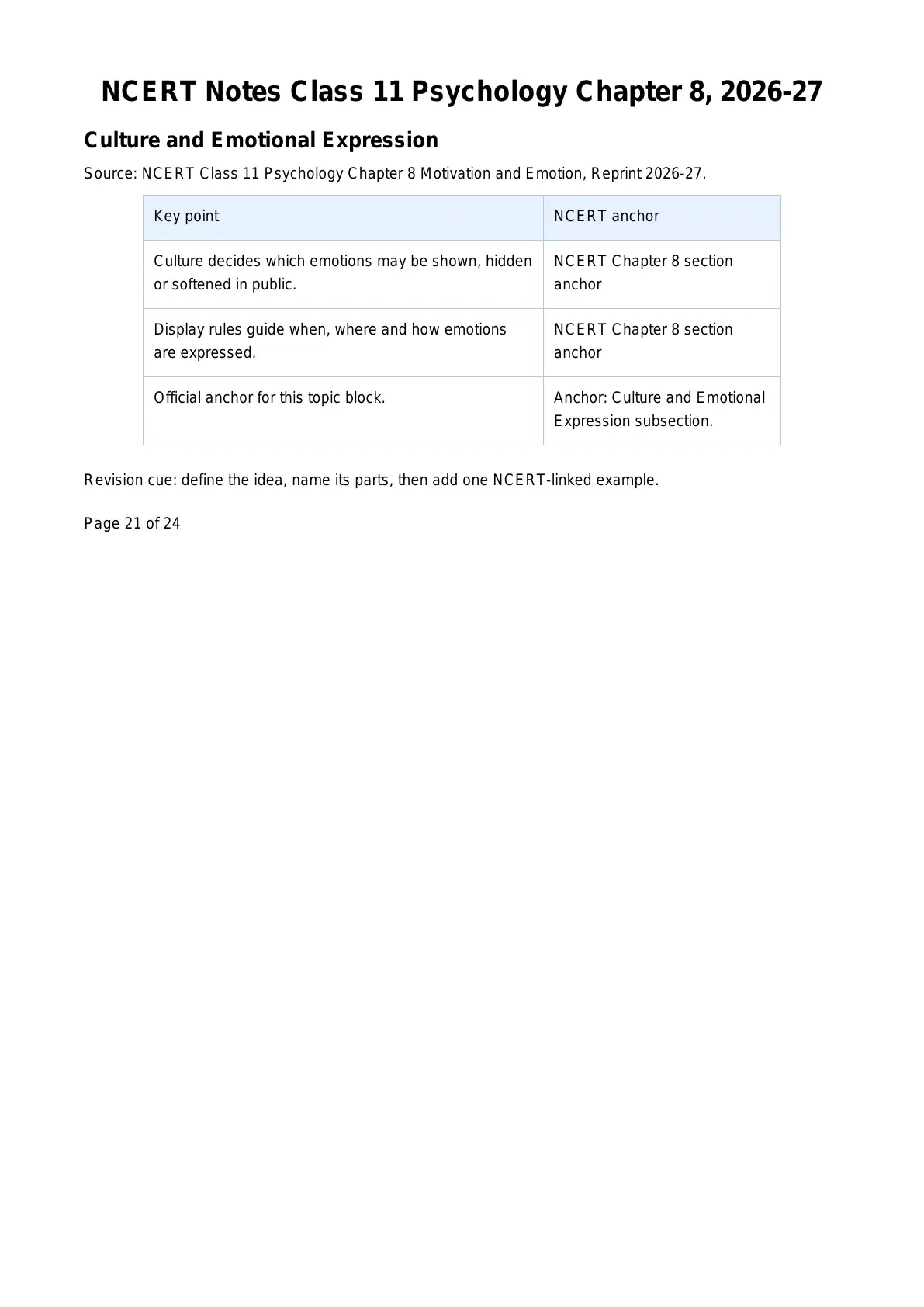
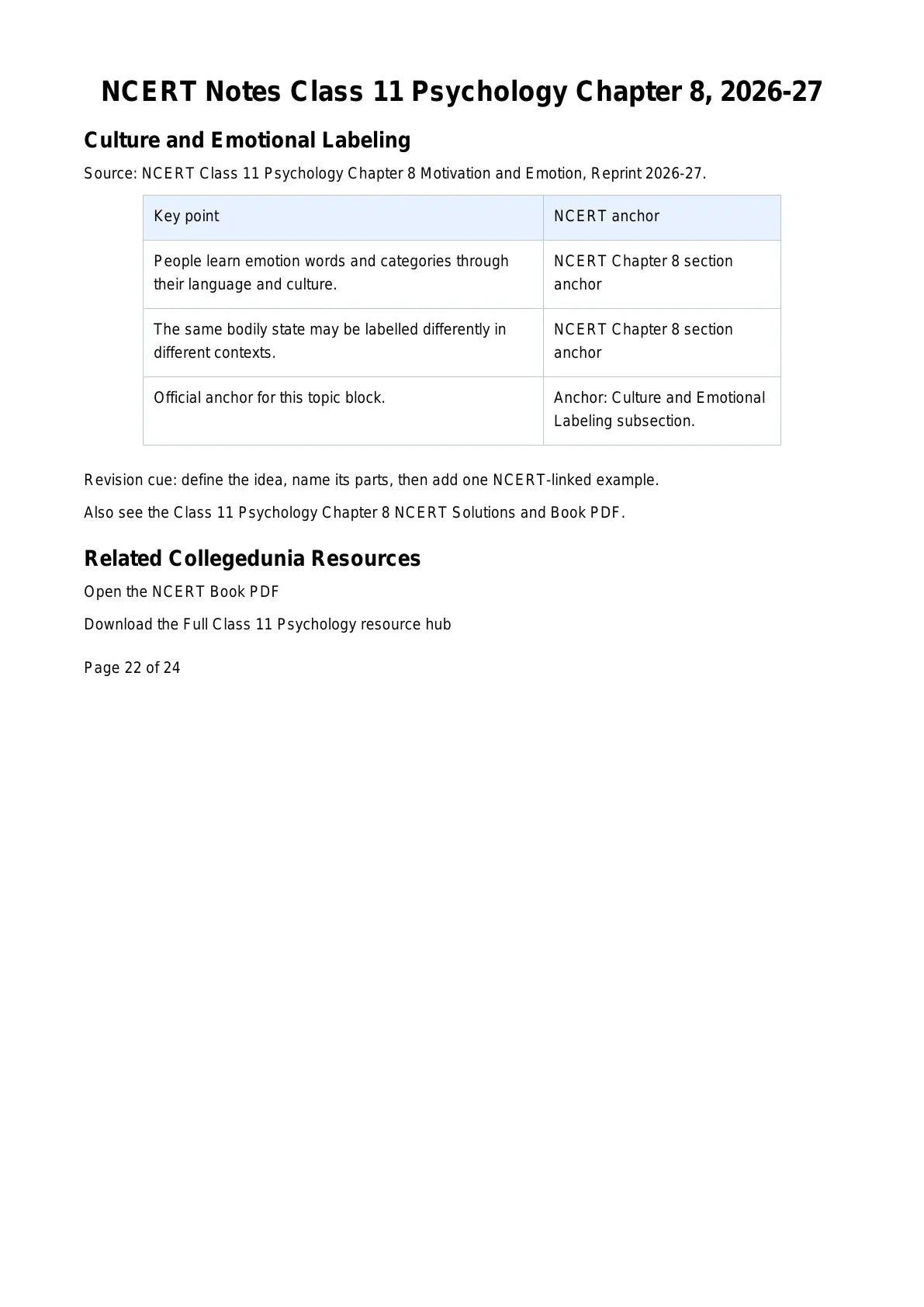
Emotion includes feeling, body arousal, thought and expression. People express emotions through face, voice, posture and gestures. Culture shapes emotional expression by teaching display rules. It also shapes emotional labeling because people learn emotion words through language and social experience.
- Expression: visible display of feeling through face, body and voice.
- Display rules: cultural rules about when and how emotions may be shown.
- Labeling: naming and interpreting an emotional state in context.
Managing Negative Emotions and Exam Anxiety
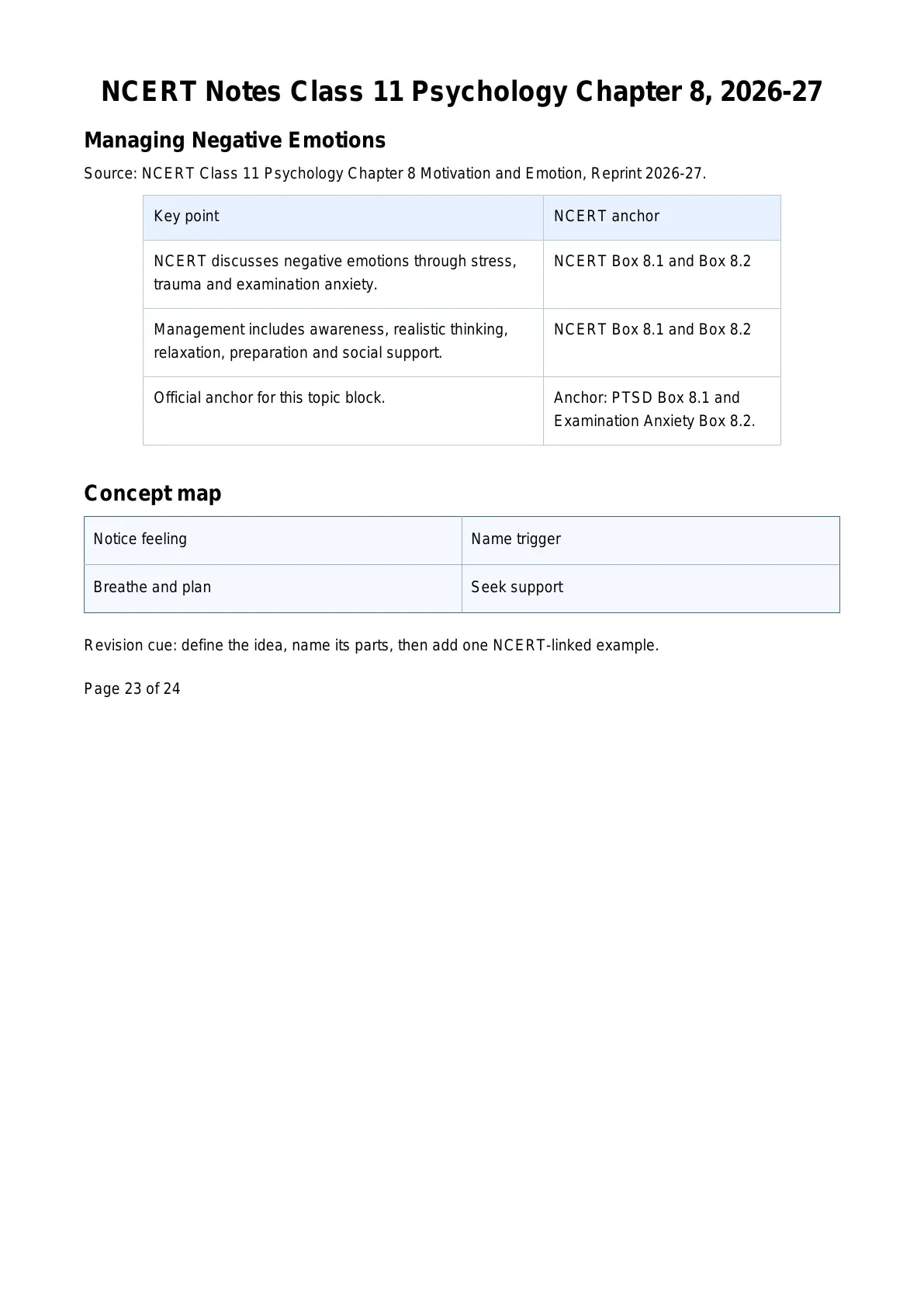
Negative emotions become easier to manage when students name the trigger and choose a practical response. NCERT links this section with post-traumatic stress disorder and examination anxiety. For school answers, combine awareness, preparation, relaxation and support.
| Situation | Helpful response | Why it helps |
|---|---|---|
| Examination anxiety | Plan revision, practise papers and breathing | Reduces uncertainty and body arousal |
| Anger or sadness | Name the feeling and pause before acting | Separates emotion from impulsive response |
| Stress after trauma | Seek support and professional help when needed | Protects recovery and safety |
Motivation and Emotion Chapter 8 Video Explanation
Source: Magnet Brains on YouTube
Download the Motivation and Emotion Notes PDF
Use the PDF for motivation cycle, motives, Maslow hierarchy, emotions and anxiety management.
Download PDFRelated Psychology Resources for Motivation and Emotion
Also Check: use these links with the notes PDF when you need the same chapter in another format.
| Resource | Best use | Link |
|---|---|---|
| NCERT Solutions | Stepwise answers to textbook questions | Motivation and Emotion Class 11 NCERT Solutions |
| NCERT Book PDF | Original NCERT reading and review questions | Motivation and Emotion Class 11 NCERT Book PDF |
| Handwritten Notes | Fast visual revision before tests | Motivation and Emotion Class 11 Handwritten Notes |
Class 11 Psychology Notes for All Chapters
| Chapter | Notes Link |
|---|---|
| Chapter 1 | What is Psychology? Notes |
| Chapter 2 | Methods of Enquiry in Psychology Notes |
| Chapter 3 | Human Development Notes |
| Chapter 4 | Sensory, Attentional and Perceptual Processes Notes |
| Chapter 5 | Learning Notes |
| Chapter 6 | Human Memory Notes |
| Chapter 7 | Thinking Notes |
| Chapter 8 | You are here |
Motivation and Emotion Class 11 Notes FAQs
Ques. What is covered in Class 11 Psychology Chapter 8 notes?
Ans. The notes cover motivation cycle, biological motives, psychosocial motives, Maslow hierarchy, emotions, culture, anxiety management and positive emotions.
Ques. What is the motivational cycle?
Ans. The motivational cycle moves from need to drive, arousal, goal-directed behaviour, achievement and reduction of arousal.
Ques. What are psychosocial motives?
Ans. Psychosocial motives are learned through social interaction. NCERT discusses affiliation, power, achievement, curiosity and exploration.
Ques. How can students manage examination anxiety?
Ans. Students can manage exam anxiety through planned revision, practice, realistic thinking, breathing, rest and support from trusted people.



Comments