




The Poems by Milton Class 12 notes explain both poems from the NCERT Kaleidoscope 2026-27 reprint. Use this page to revise Time and Eternity, Shakespeare's living monument, old spellings, etymology and direct NCERT answer cues before downloading the full PDF.
- Download the Class 12 English Supplementary Chapter 7 notes PDF for quick revision.
- Revise On Time, On Shakespear and the Language Study item in one place.
- Student focus: the chapter tests contrast, close reading and word history.
Chapter7Kaleidoscope:PoemsbyMiltonNotes.pdf?page=1&dpi=150)
Chapter7Kaleidoscope:PoemsbyMiltonNotes.pdf?page=2&dpi=150)
Chapter7Kaleidoscope:PoemsbyMiltonNotes.pdf?page=3&dpi=150)
Chapter7Kaleidoscope:PoemsbyMiltonNotes.pdf?page=4&dpi=150)
Chapter7Kaleidoscope:PoemsbyMiltonNotes.pdf?page=5&dpi=150)
Chapter7Kaleidoscope:PoemsbyMiltonNotes.pdf?page=6&dpi=150)
Chapter7Kaleidoscope:PoemsbyMiltonNotes.pdf?page=7&dpi=150)
Chapter7Kaleidoscope:PoemsbyMiltonNotes.pdf?page=8&dpi=150)
Chapter7Kaleidoscope:PoemsbyMiltonNotes.pdf?page=9&dpi=150)
Chapter7Kaleidoscope:PoemsbyMiltonNotes.pdf?page=10&dpi=150)
Chapter7Kaleidoscope:PoemsbyMiltonNotes.pdf?page=11&dpi=150)
Chapter7Kaleidoscope:PoemsbyMiltonNotes.pdf?page=12&dpi=150)
Chapter7Kaleidoscope:PoemsbyMiltonNotes.pdf?page=13&dpi=150)
Chapter7Kaleidoscope:PoemsbyMiltonNotes.pdf?page=14&dpi=150)
Chapter7Kaleidoscope:PoemsbyMiltonNotes.pdf?page=15&dpi=150)
Chapter7Kaleidoscope:PoemsbyMiltonNotes.pdf?page=16&dpi=150)
Chapter7Kaleidoscope:PoemsbyMiltonNotes.pdf?page=17&dpi=150)
Chapter7Kaleidoscope:PoemsbyMiltonNotes.pdf?page=18&dpi=150)
Chapter7Kaleidoscope:PoemsbyMiltonNotes.pdf?page=19&dpi=150)
Chapter7Kaleidoscope:PoemsbyMiltonNotes.pdf?page=20&dpi=150)
Chapter7Kaleidoscope:PoemsbyMiltonNotes.pdf?page=21&dpi=150)
Chapter7Kaleidoscope:PoemsbyMiltonNotes.pdf?page=22&dpi=150)
Chapter7Kaleidoscope:PoemsbyMiltonNotes.pdf?page=23&dpi=150)
Chapter7Kaleidoscope:PoemsbyMiltonNotes.pdf?page=24&dpi=150)
Chapter7Kaleidoscope:PoemsbyMiltonNotes.pdf?page=25&dpi=150)
Chapter7Kaleidoscope:PoemsbyMiltonNotes_flat_MobileCard.pdf?page=1&dpi=150)
Chapter7Kaleidoscope:PoemsbyMiltonNotes_flat_MobileCard.pdf?page=2&dpi=150)
Chapter7Kaleidoscope:PoemsbyMiltonNotes_flat_MobileCard.pdf?page=3&dpi=150)
Chapter7Kaleidoscope:PoemsbyMiltonNotes_flat_MobileCard.pdf?page=4&dpi=150)
Chapter7Kaleidoscope:PoemsbyMiltonNotes_flat_MobileCard.pdf?page=5&dpi=150)
Chapter7Kaleidoscope:PoemsbyMiltonNotes_flat_MobileCard.pdf?page=6&dpi=150)
Chapter7Kaleidoscope:PoemsbyMiltonNotes_flat_MobileCard.pdf?page=7&dpi=150)
Chapter7Kaleidoscope:PoemsbyMiltonNotes_flat_MobileCard.pdf?page=8&dpi=150)
Chapter7Kaleidoscope:PoemsbyMiltonNotes_flat_MobileCard.pdf?page=9&dpi=150)
Chapter7Kaleidoscope:PoemsbyMiltonNotes_flat_MobileCard.pdf?page=10&dpi=150)
Chapter7Kaleidoscope:PoemsbyMiltonNotes_flat_MobileCard.pdf?page=11&dpi=150)
Chapter7Kaleidoscope:PoemsbyMiltonNotes_flat_MobileCard.pdf?page=12&dpi=150)
Chapter7Kaleidoscope:PoemsbyMiltonNotes_flat_MobileCard.pdf?page=13&dpi=150)
Chapter7Kaleidoscope:PoemsbyMiltonNotes_flat_MobileCard.pdf?page=14&dpi=150)
Chapter7Kaleidoscope:PoemsbyMiltonNotes_flat_MobileCard.pdf?page=15&dpi=150)
Chapter7Kaleidoscope:PoemsbyMiltonNotes_flat_MobileCard.pdf?page=16&dpi=150)
Chapter7Kaleidoscope:PoemsbyMiltonNotes_flat_MobileCard.pdf?page=17&dpi=150)
Chapter7Kaleidoscope:PoemsbyMiltonNotes_flat_MobileCard.pdf?page=18&dpi=150)
Chapter7Kaleidoscope:PoemsbyMiltonNotes_flat_MobileCard.pdf?page=19&dpi=150)
Chapter7Kaleidoscope:PoemsbyMiltonNotes_flat_MobileCard.pdf?page=20&dpi=150)
Chapter7Kaleidoscope:PoemsbyMiltonNotes_flat_MobileCard.pdf?page=21&dpi=150)
Chapter7Kaleidoscope:PoemsbyMiltonNotes_flat_MobileCard.pdf?page=22&dpi=150)
Chapter7Kaleidoscope:PoemsbyMiltonNotes_flat_MobileCard.pdf?page=23&dpi=150)
Chapter7Kaleidoscope:PoemsbyMiltonNotes_flat_MobileCard.pdf?page=24&dpi=150)
Chapter7Kaleidoscope:PoemsbyMiltonNotes_flat_MobileCard.pdf?page=25&dpi=150)
Chapter7Kaleidoscope:PoemsbyMiltonNotes_flat_MobileCard.pdf?page=26&dpi=150)
Chapter7Kaleidoscope:PoemsbyMiltonNotes_flat_MobileCard.pdf?page=27&dpi=150)
Chapter7Kaleidoscope:PoemsbyMiltonNotes_flat_MobileCard.pdf?page=28&dpi=150)
Chapter7Kaleidoscope:PoemsbyMiltonNotes_flat_MobileCard.pdf?page=29&dpi=150)
Chapter7Kaleidoscope:PoemsbyMiltonNotes_flat_MobileCard.pdf?page=30&dpi=150)
Chapter7Kaleidoscope:PoemsbyMiltonNotes_flat_MobileCard.pdf?page=31&dpi=150)
Chapter7Kaleidoscope:PoemsbyMiltonNotes_flat_MobileCard.pdf?page=32&dpi=150)
These Class 12 English Supplementary notes are checked against the 2026-27 NCERT chapter and built for fast NCERT revision.
Scope note: These notes follow the NCERT Kaleidoscope chapter from the 2026-27 reprint. For board-only revision, confirm your school or board's prescribed chapter shortlist before prioritising this poem.
Student Feedback on Poems by Milton
In a Collegedunia poll of 12,860 Class 12 English students using NCERT literature resources, many students understood the two poems separately but missed how both poems ask what truly lasts.
- 72% wanted a clearer Time versus Eternity comparison.
- 64% needed help with Shakespeare's living monument image.
- 59% found the etymology note hard to place in answers.
Source: 2026-27 Class 12 English student poll. Sample of 12,860 students using NCERT-aligned study resources.
Poems by Milton Summary for Class 12 Kaleidoscope
Poems by Milton brings together two short poems: On Time and On Shakespear. On Time shows Time as powerful over mortal things, but finally weaker than Eternity and divine truth.
On Shakespear shifts the idea of permanence from stone to literature. Milton says Shakespeare does not need a tomb because his book creates a living monument in students' minds.
- On Time moves from mortal loss to eternal joy.
- On Shakespear moves from stone memory to literary memory.
- The Language Study item asks students to explain etymology through entomb'd.
Poems by Milton Explained for Class 12
Source: Magnet Brains on YouTube
On Time Temporal and Eternal Values
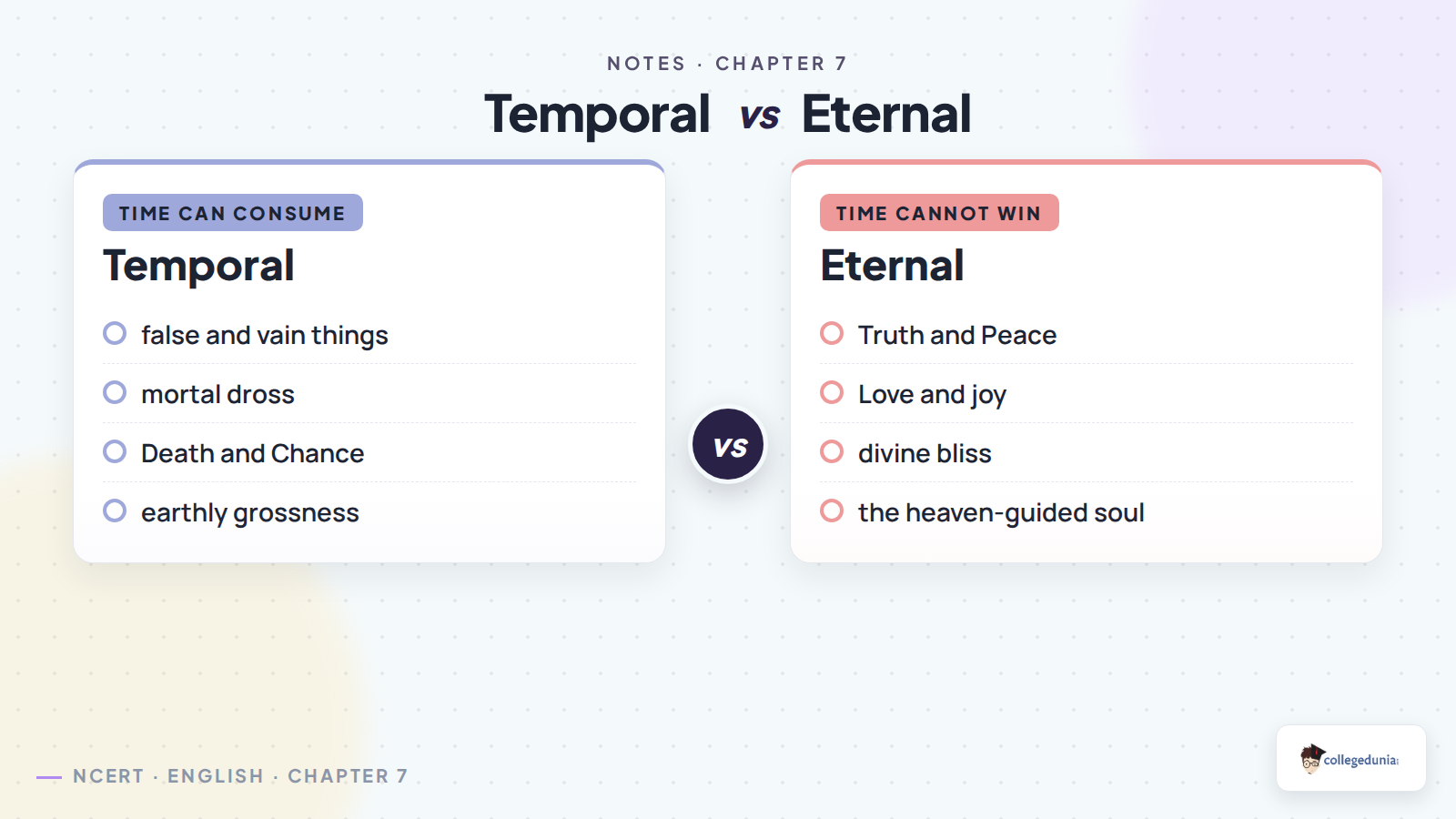
Milton makes Time look hungry and jealous. Time can eat false, vain and mortal things, but it cannot defeat truth, peace, love, joy or the heaven-guided soul.
| Group | Poem words | Answer cue |
|---|---|---|
| Temporal | false, vain, mortal dross, Death and Chance | These belong to things Time can consume. |
| Eternal | Truth, Peace, Love, Joy and divine bliss | These remain beyond Time's reach. |
| Soul route | heavenly guided soul to happy-making sight | The soul moves toward divine vision. |
On Shakespear Living Monument Explained
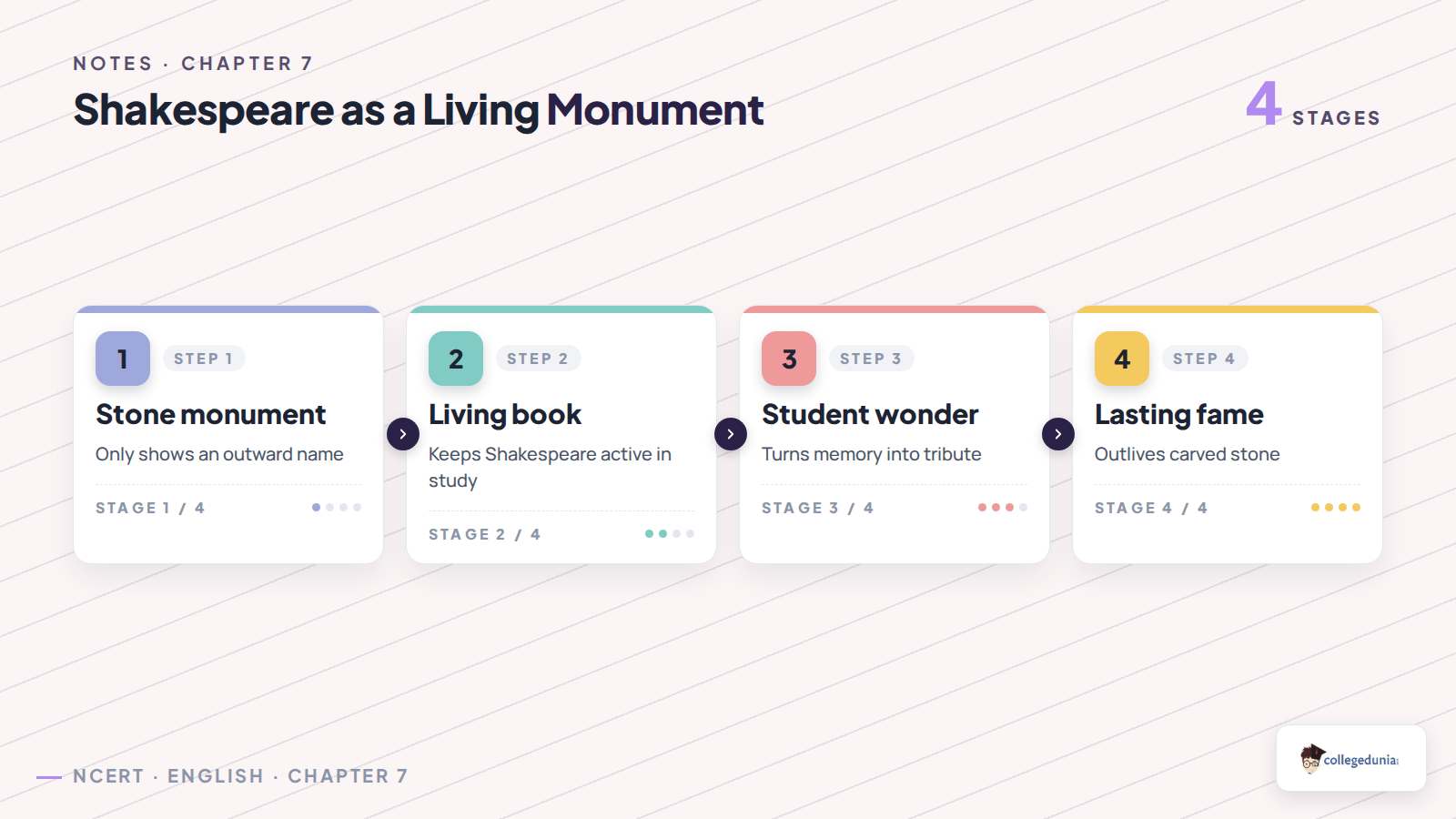
In On Shakespear, Milton rejects carved stone as a weak witness. A tomb can show a name, but Shakespeare's work creates wonder whenever students study it.
- Stone monument: outward and weaker than living memory.
- Living book: Shakespeare's words keep acting across time.
- Best answer cue: explain why literature lasts better than stone.
Language Study and Etymology in Poems by Milton
The Language Study asks students to read old spellings and word history. Etymology means the study of a word's origin, earlier forms and route into modern usage.
| NCERT clue | Meaning for answer |
|---|---|
| late ME entoumbe(n) | The word is found in late Middle English. |
| MF entombe(r) | The word has a Middle French source. |
| French origin from 1578 | Use the dictionary note as evidence. |
| About 30 per cent French words | Connect the word to wider English borrowing. |
NCERT Question Pointers for Poems by Milton
Strong answers in this chapter start with the poem phrase, then explain the contrast. Avoid general praise. Name the exact image and its meaning.
- On Time Q1: contrast fast destructive Time with slow clock-time.
- On Time Q2: group temporal and eternal values clearly.
- On Time Q3: explain the heaven-guided soul and divine sight.
- On Shakespear: show why a book is stronger than stone.
- Language Study: decode entomb'd through etymology, not only meaning.
Related Resources for Poems by Milton
| Resource | Use it for | Link |
|---|---|---|
| Chapter 6 Notes | Previous poetry chapter revision | Open Chapter 6 Notes |
| Chapter 8 Solutions | Next poetry chapter textbook answers | Open Chapter 8 Solutions |
All Class 12 English Supplementary Notes Chapters
| Chapter | Notes link |
|---|---|
| Chapter 1: Kaleidoscope: I Sell My Dreams | Open Notes |
| Chapter 2: Kaleidoscope: Eveline | Open Notes |
| Chapter 3: Kaleidoscope: A Wedding in Brownsville | Open Notes |
| Chapter 5: Kaleidoscope: One Centimetre | Open Notes |
| Chapter 6: Kaleidoscope: A Lecture upon the Shadow | Open Notes |
Poems by Milton Quick Questions
Frequently Asked Questions
Ques. What does On Time mainly contrast?
Ans. On Time contrasts mortal things that Time can consume with eternal values such as truth, peace, love, joy and divine bliss.
Ques. Why does Milton say Shakespeare needs no stone monument?
Ans. Milton says Shakespeare needs no stone monument because his works make a living monument through memory, admiration and study.
Ques. What does etymology mean in the Language Study?
Ans. Etymology means the study of a word's origin and history. NCERT uses entomb'd to show this word-history method.
Ques. How should students revise Poems by Milton?
Ans. Students should revise the Time and Eternity contrast, Shakespeare's living monument, key poem phrases and the entomb'd etymology note.



Comments