




The NCERT Class 6 Arts Chapter 11 Music and Society notes explain how songs bring people together and carry social messages. They cover the national anthem, an inspirational verse, positive change and stereotypes in lyrics. Use these notes with the listening and singing activities in the 2026-27 Kriti-I textbook. You will practise hearing a song's message, discussing it kindly and trying fairer words.
- Revise the four NCERT activities on music, unity and social ideas.
- Learn to recognise stereotypes and suggest respectful alternatives.
- Use the Collegedunia notes PDF alongside the official chapter's songs.
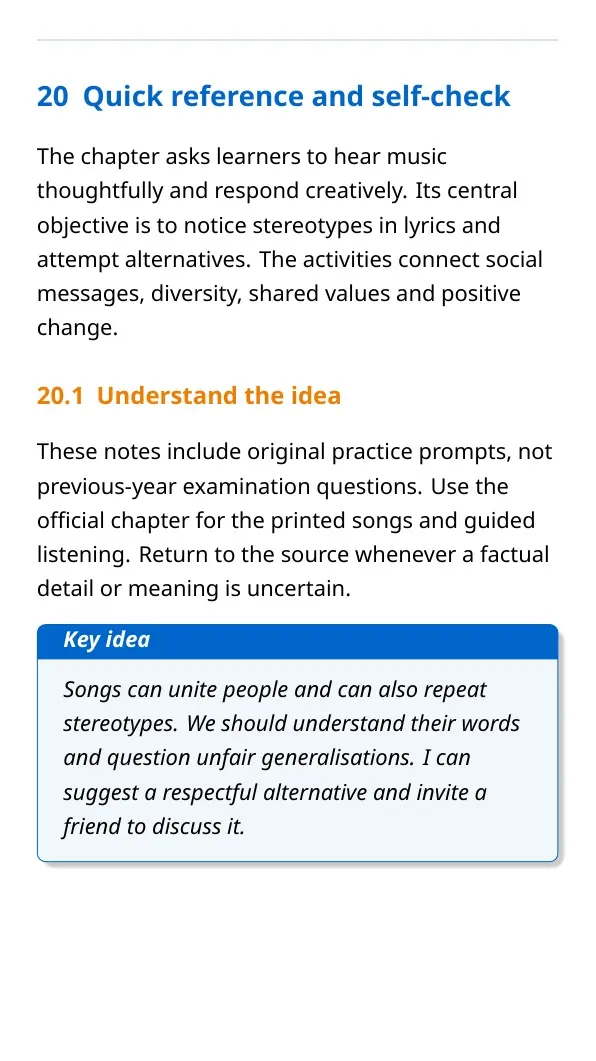
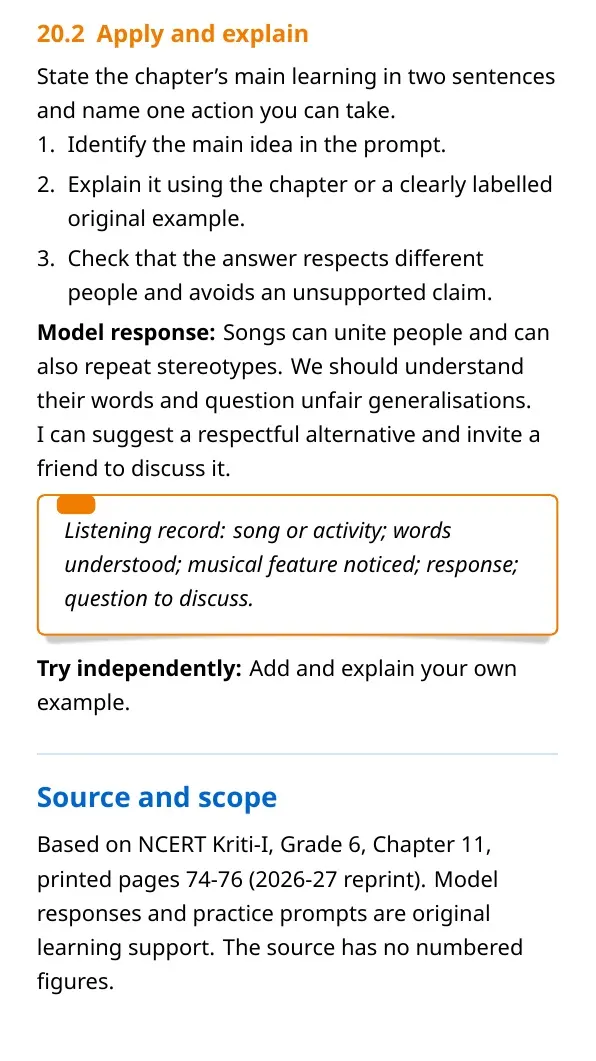
These Collegedunia notes explain the listening, discussion and rewriting tasks in the official NCERT Music and Society chapter.
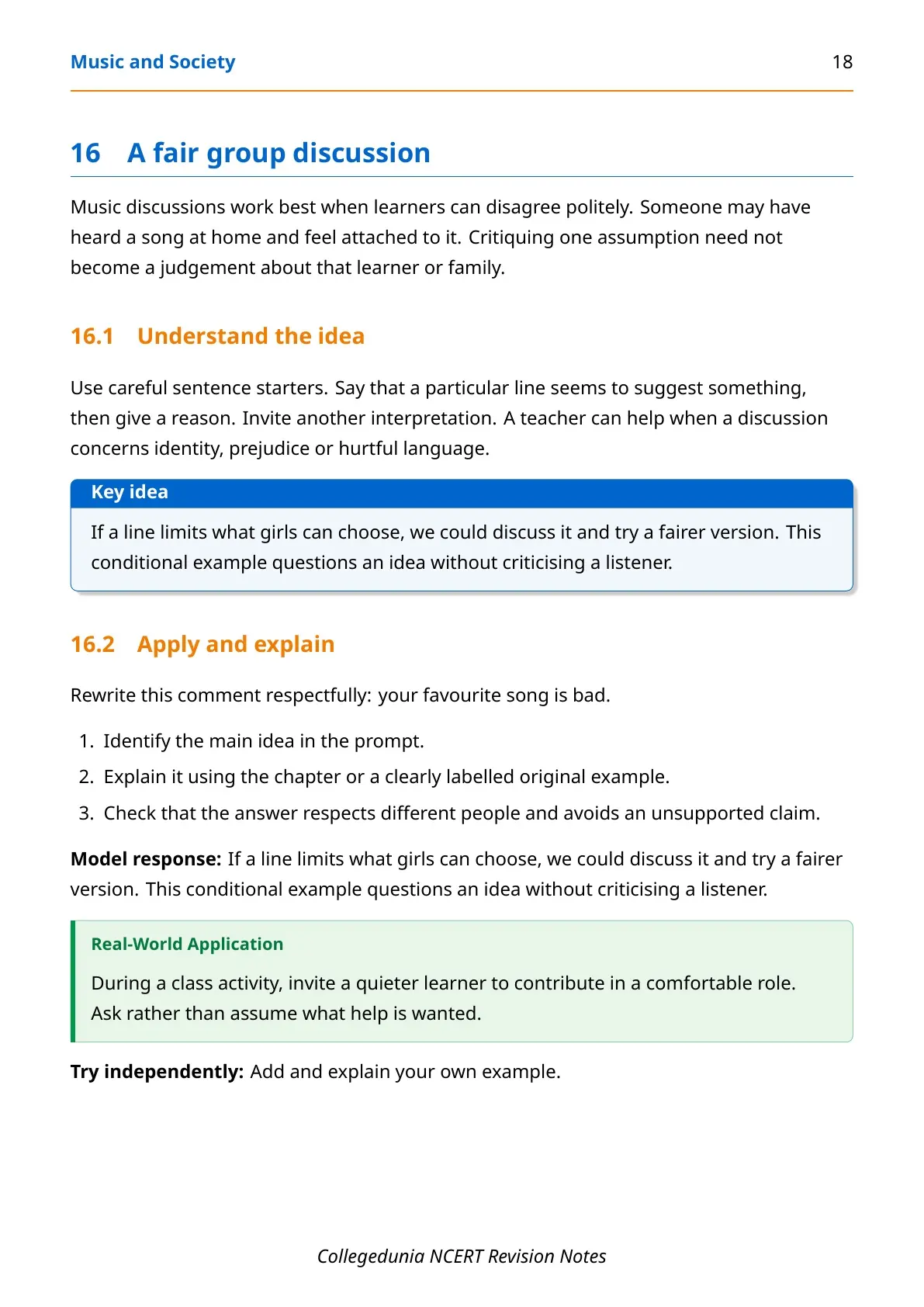
Share your revised lines with a classmate. Ask whether the new words respect everyone. Give one specific, kind suggestion in return.
Music and Society: How Songs Bring People Together
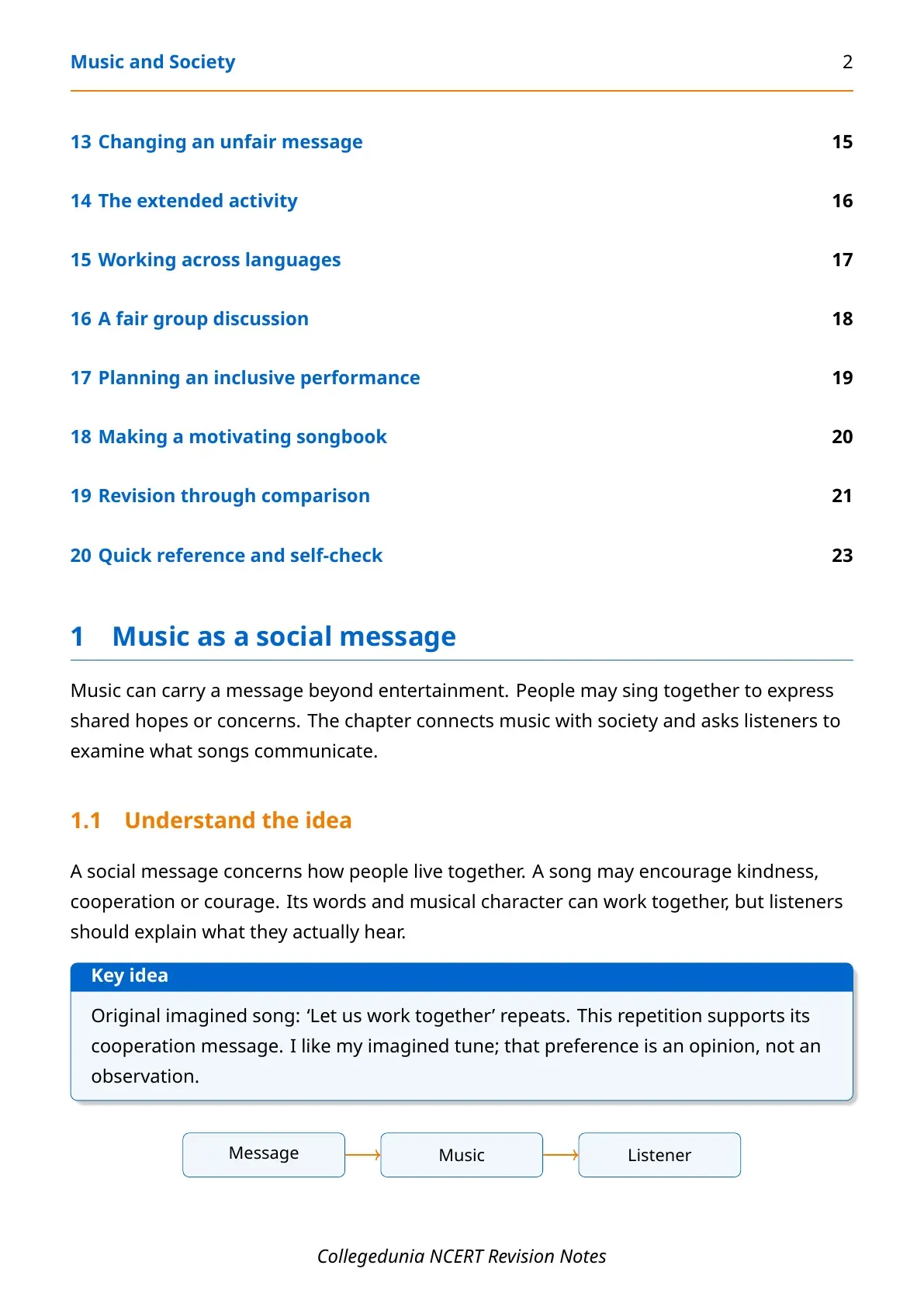
Music can carry a social message: an idea about how people live and treat one another. During India's freedom struggle, leaders used songs to unite people against British rule. A shared song can create a feeling of belonging.
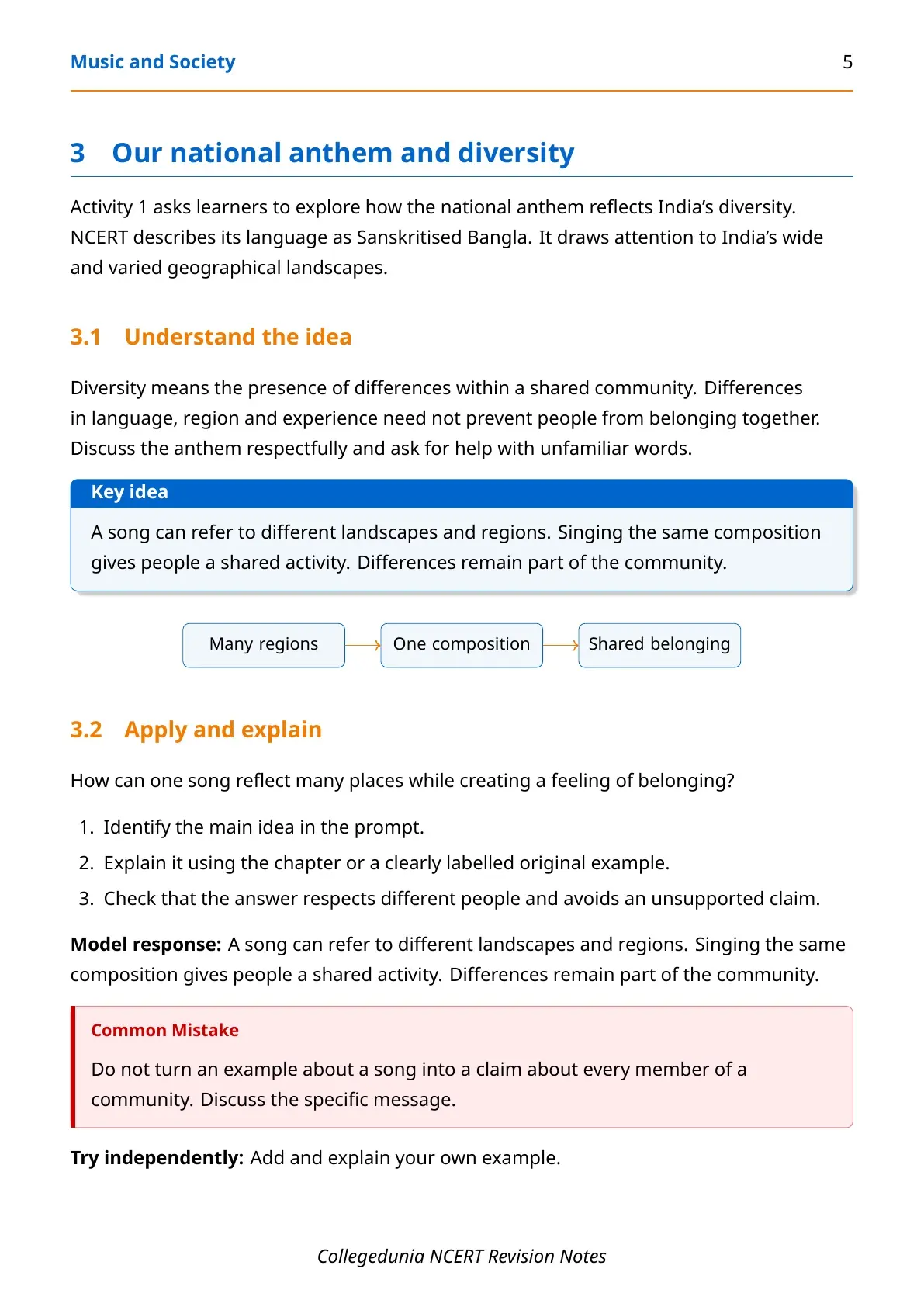
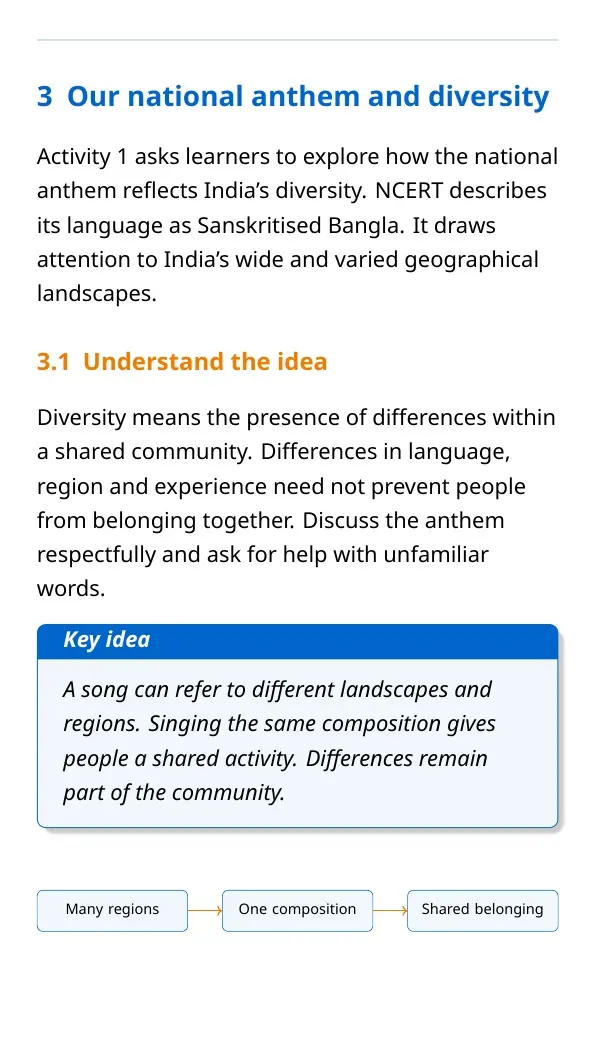
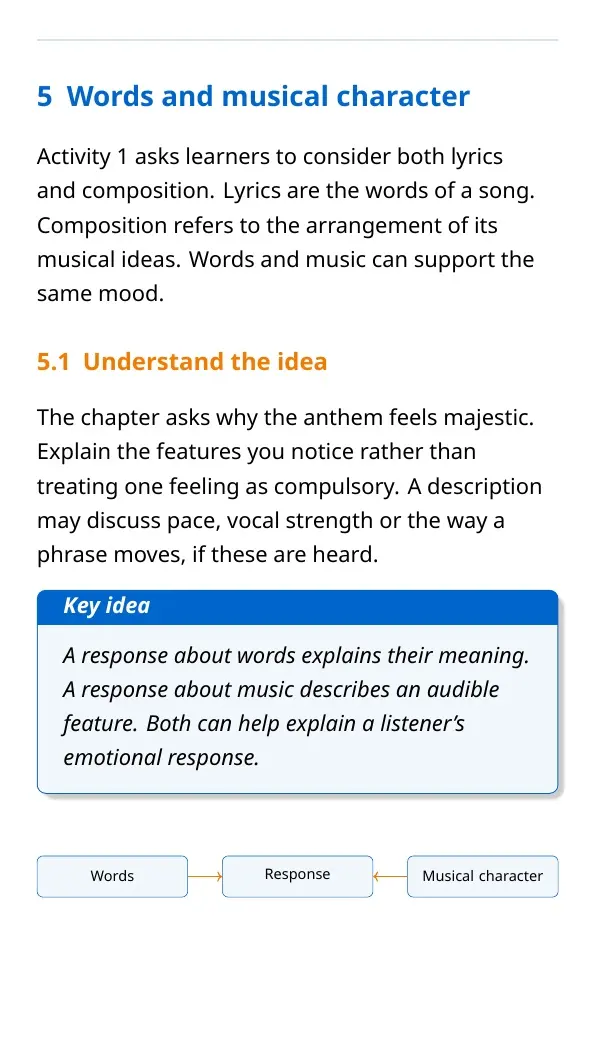
Activity 1 explores the national anthem, composed by Rabindranath Tagore in Sanskritised Bangla. Its words name India's varied geographical landscapes. Listen to the words and the composition together.
- Find out what the lyrics mean.
- Discuss how they celebrate India's diversity.
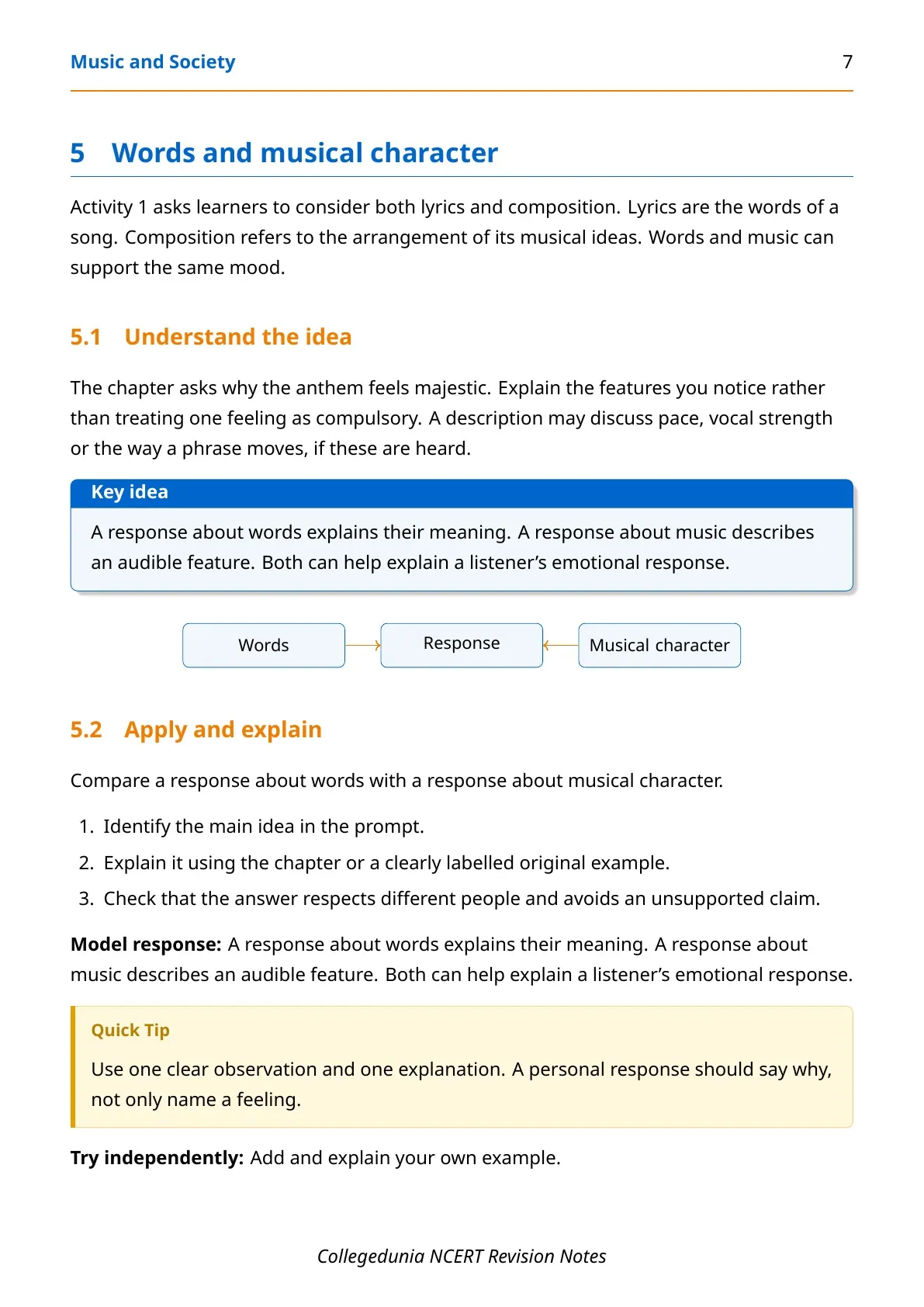
- Notice how the composition creates a majestic feeling.
- Name the emotion you feel and explain your choice.
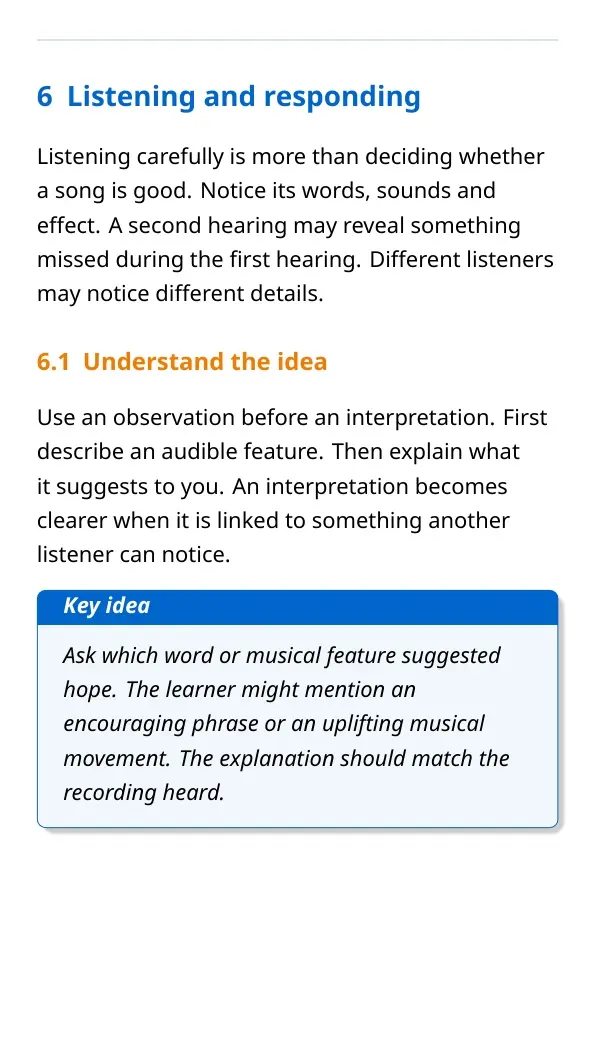
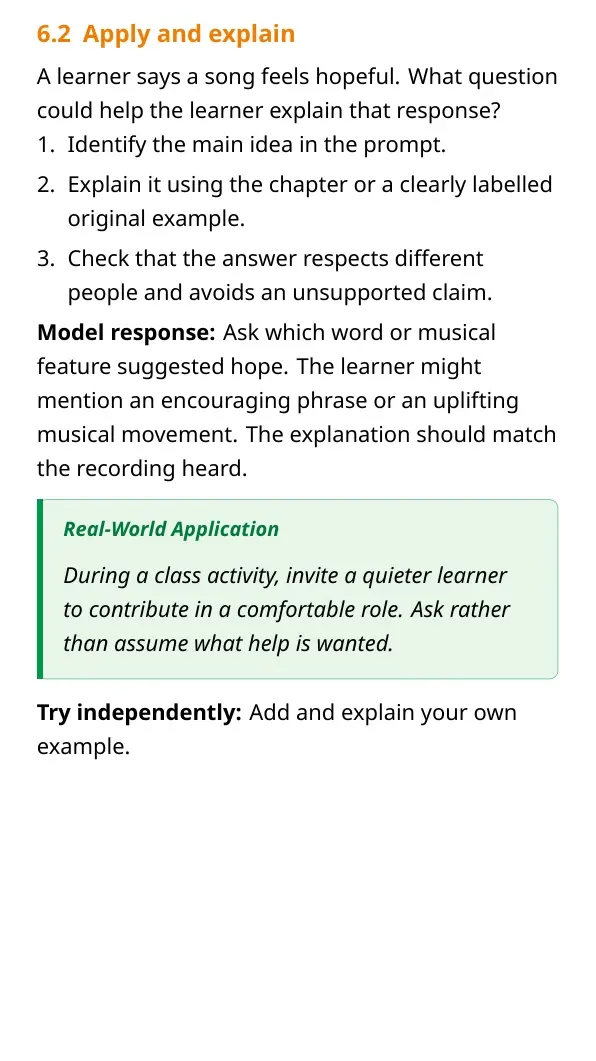
Listen to both the words and the music before describing a song's effect. Different students may describe different feelings. Explain your response with a detail you heard.
Music and Society: Questioning Stereotypes
This short explains stereotypes as a general social idea. Apply that idea to the hen and rooster song below.
Source: Magnet Brains on YouTube
Music and Society Activities: Roots and Positive Change
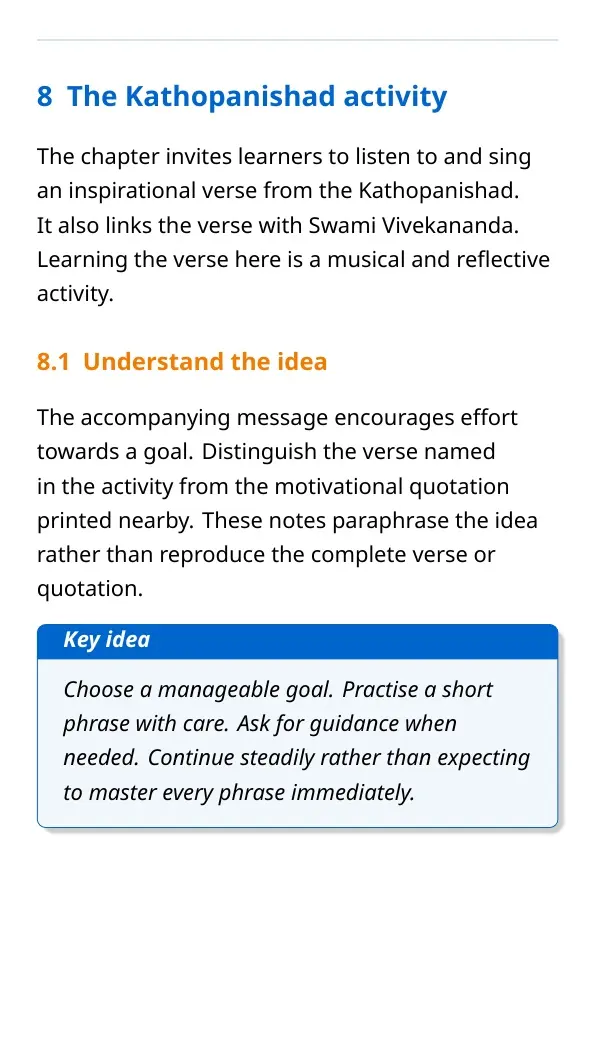
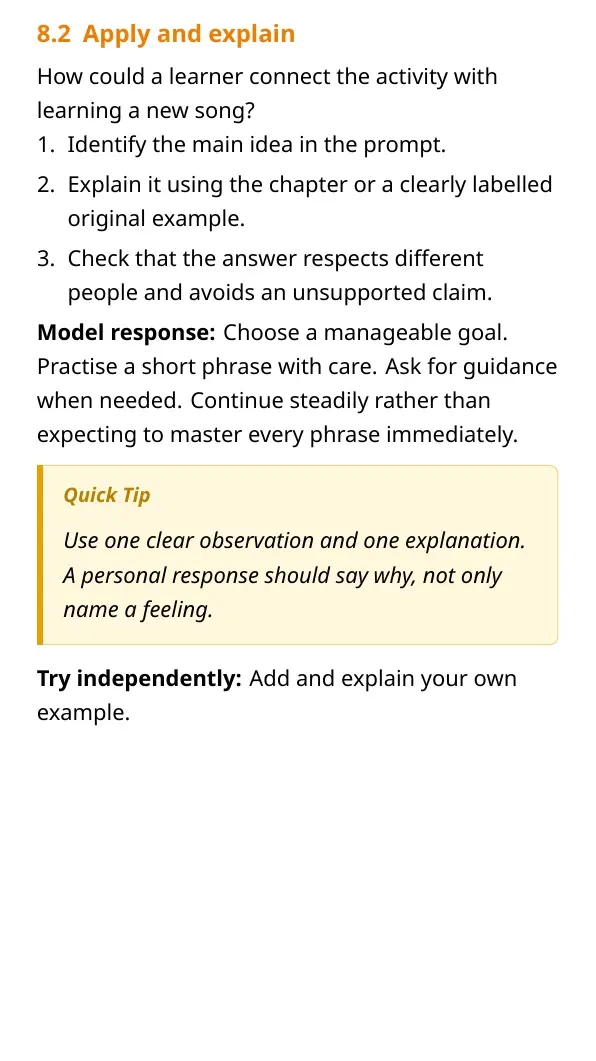
Activity 2 introduces an inspirational verse from the Kathopanishad. It begins with Uthishtha Jaagrata and encourages awakening, learning and effort. The chapter connects it with Swami Vivekananda, who valued this verse.
| NCERT activity | What to notice | Your response |
|---|---|---|
| Our Roots | The verse and the feeling it creates | Listen, learn to sing and describe your feeling. |
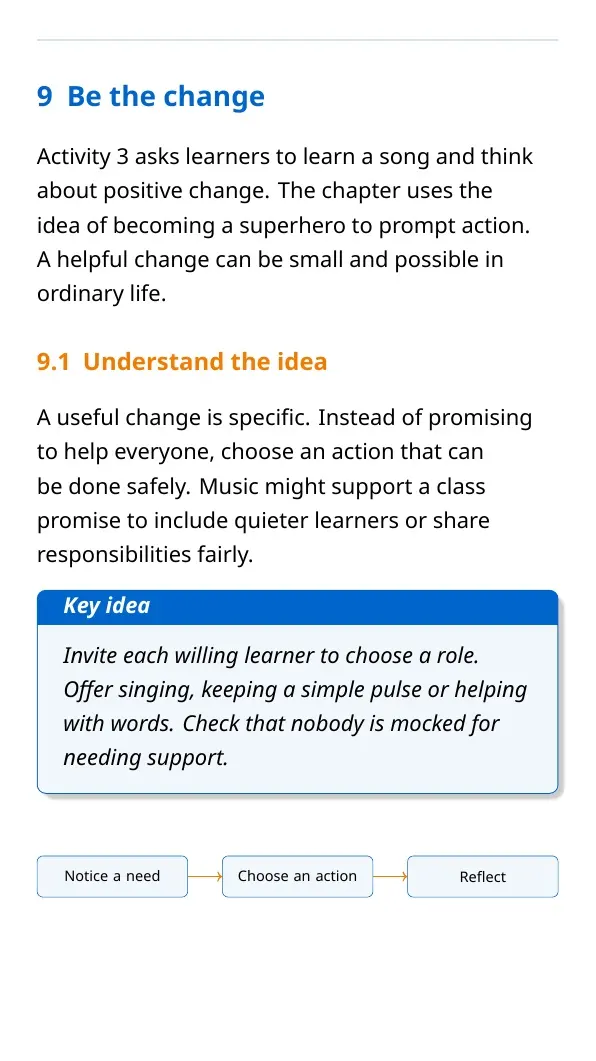
| Be the Change! | The song's encouraging message | Think about how you could bring positive change. |
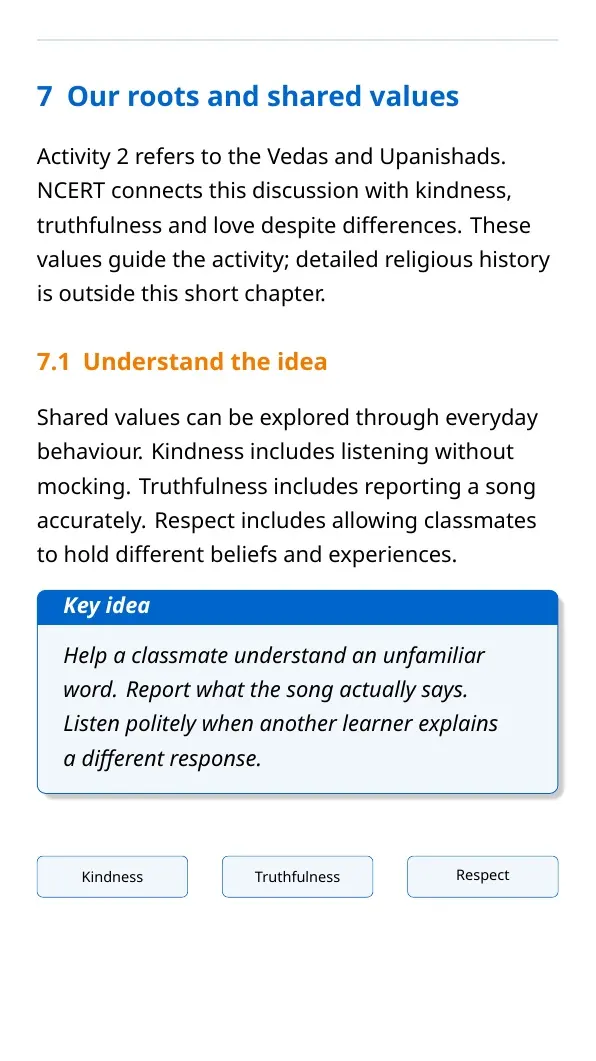
The Vedas and Upanishads are ancient texts. NCERT introduces kindness, truthfulness and love while discussing these roots. You do not need to memorise a long history of these texts for this listening task.
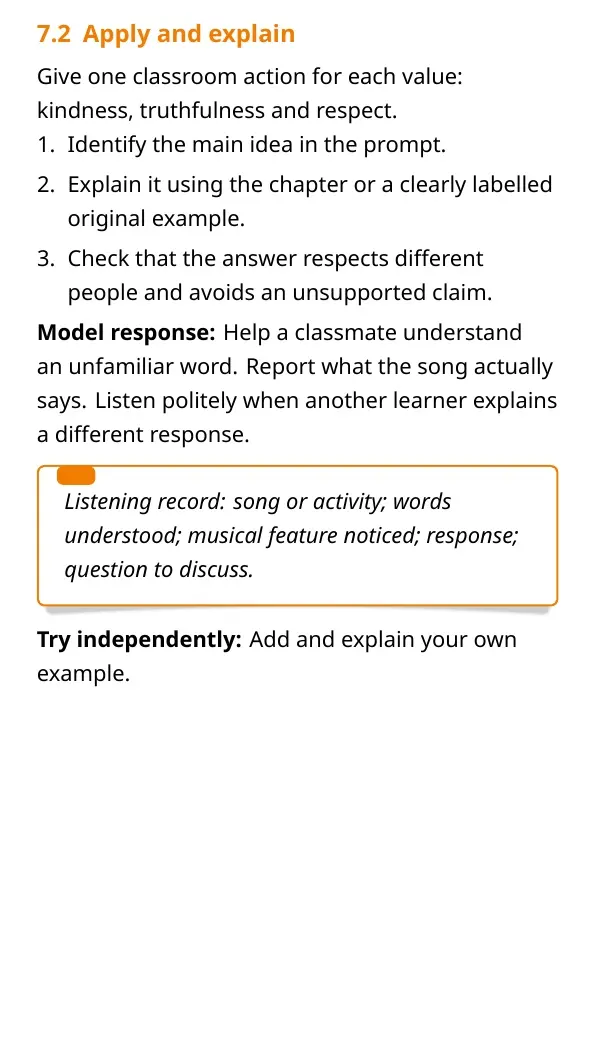
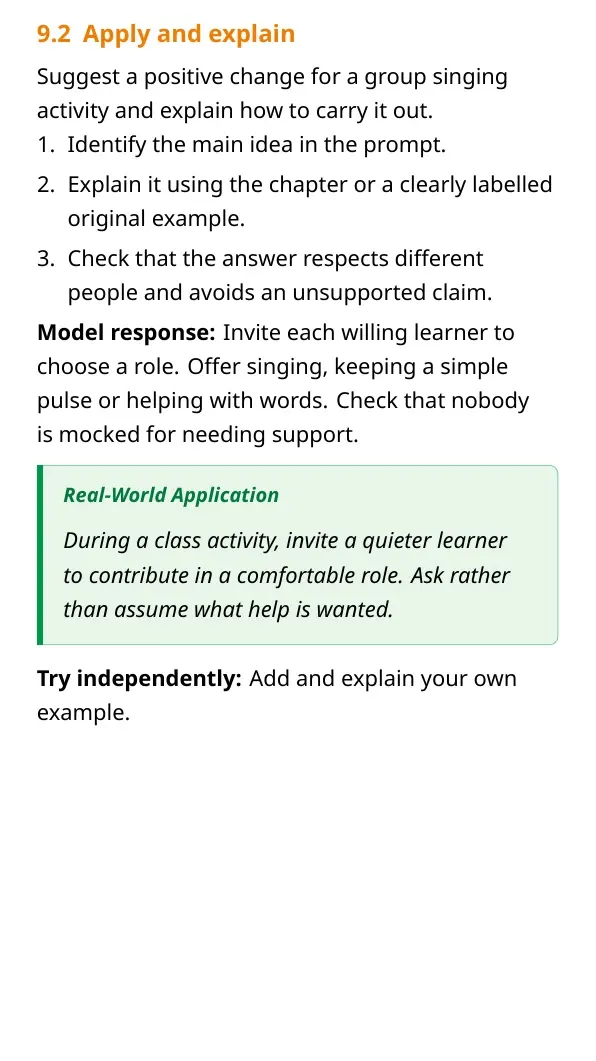
For your own response, choose a small action: include someone in a group song or help a friend learn it. A positive message becomes useful when you connect it with an action.
Music and Society: Recognise Stereotypes in Lyrics
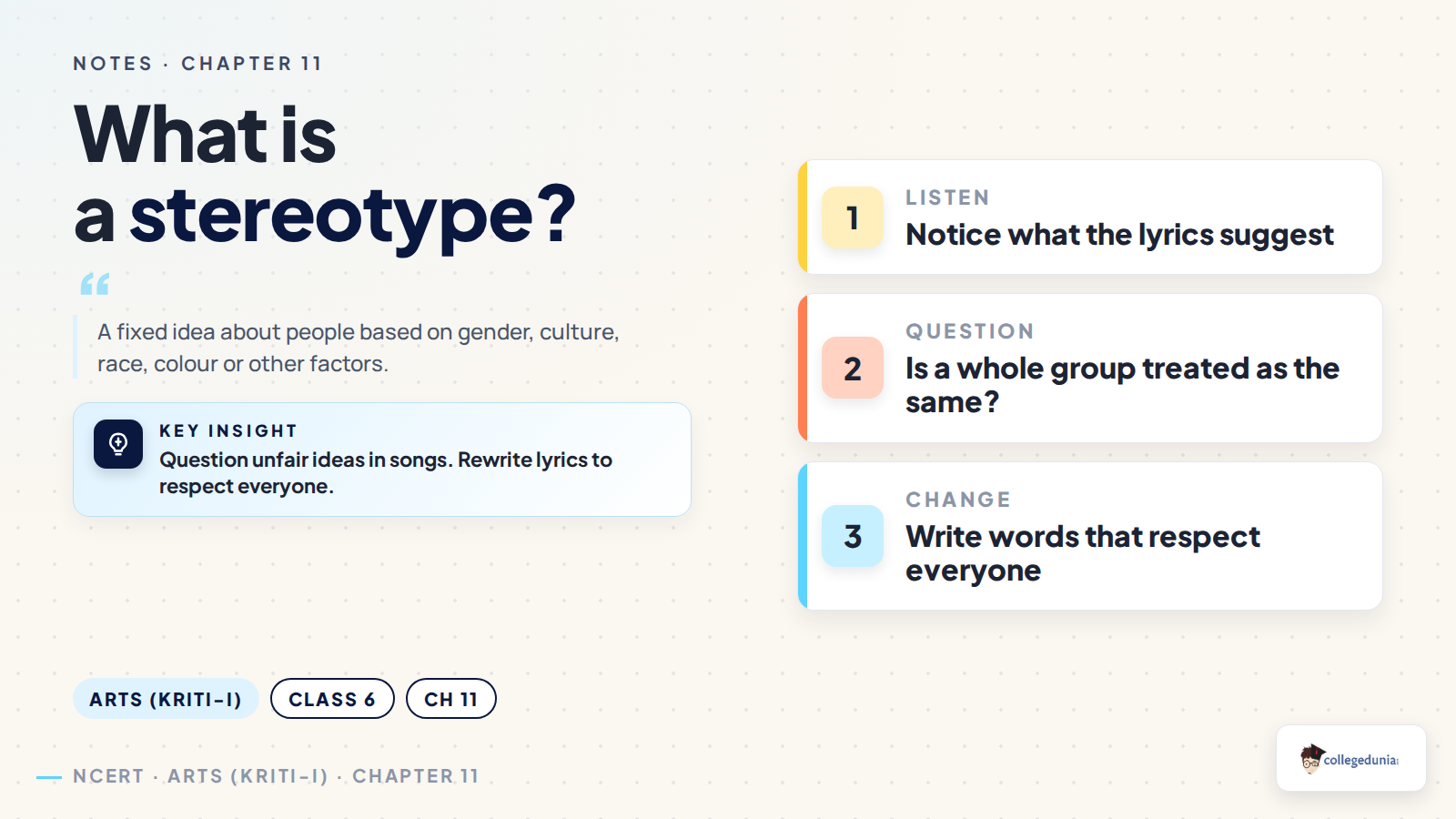
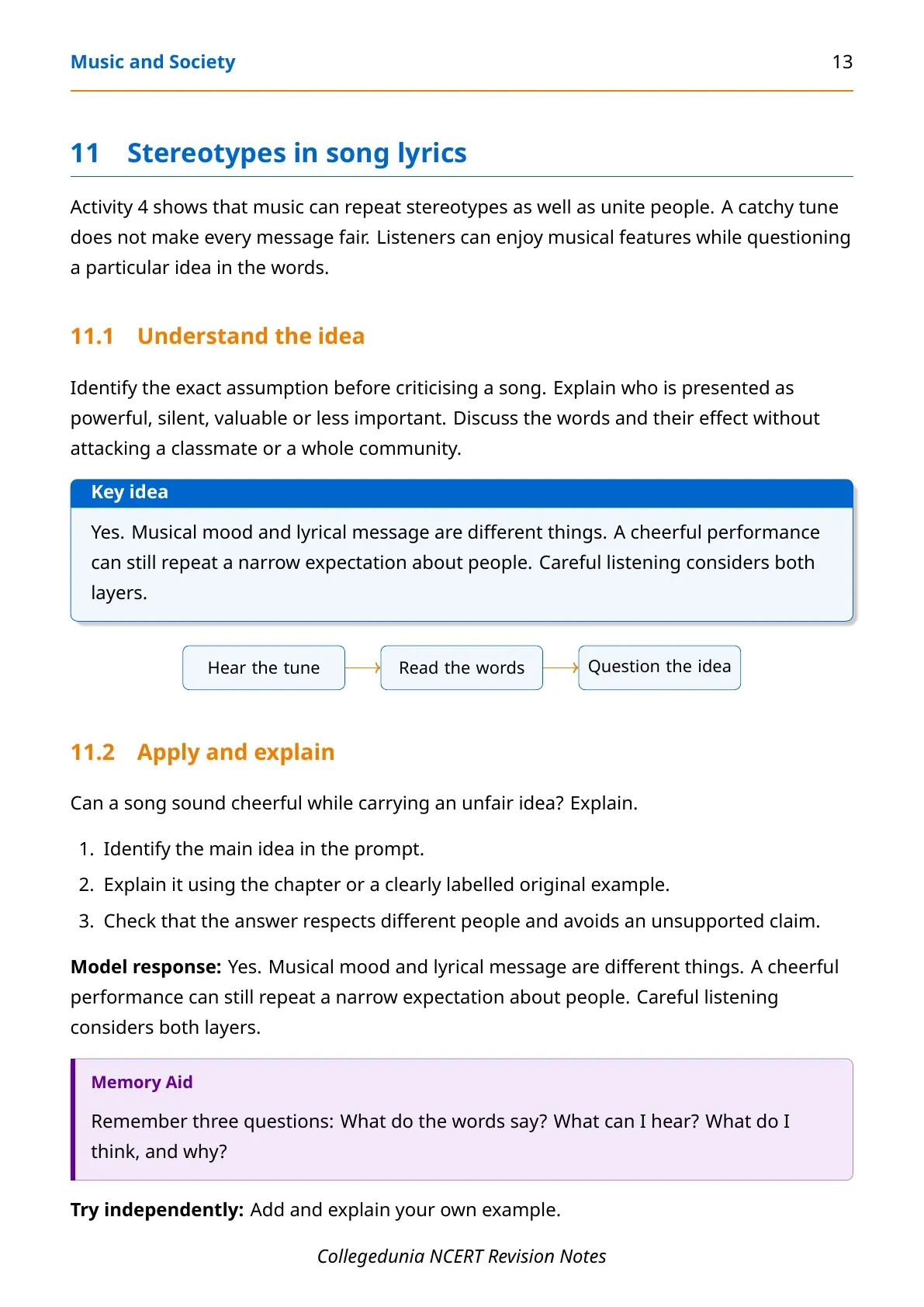
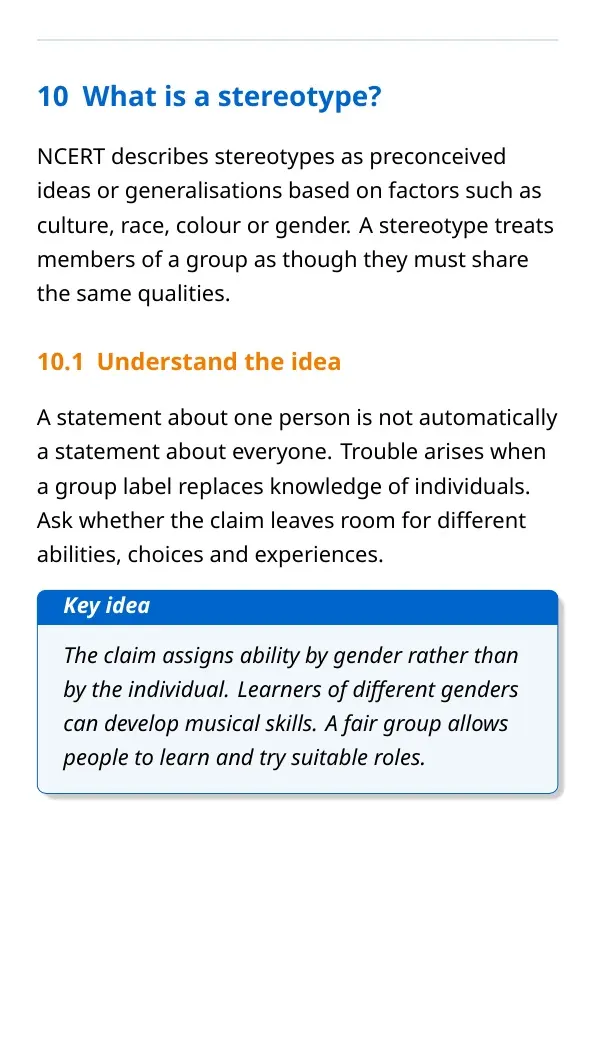
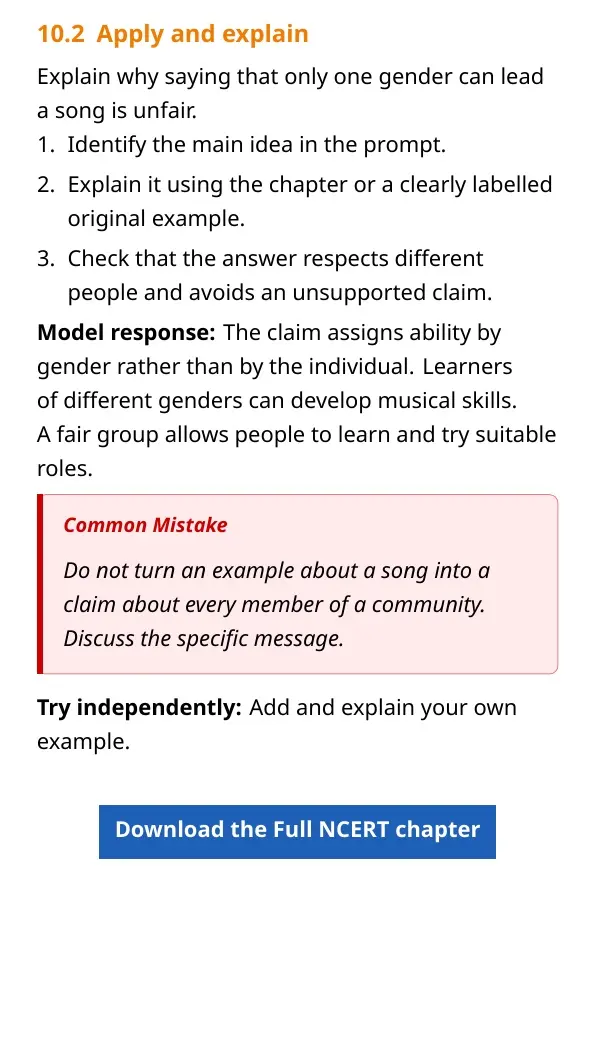
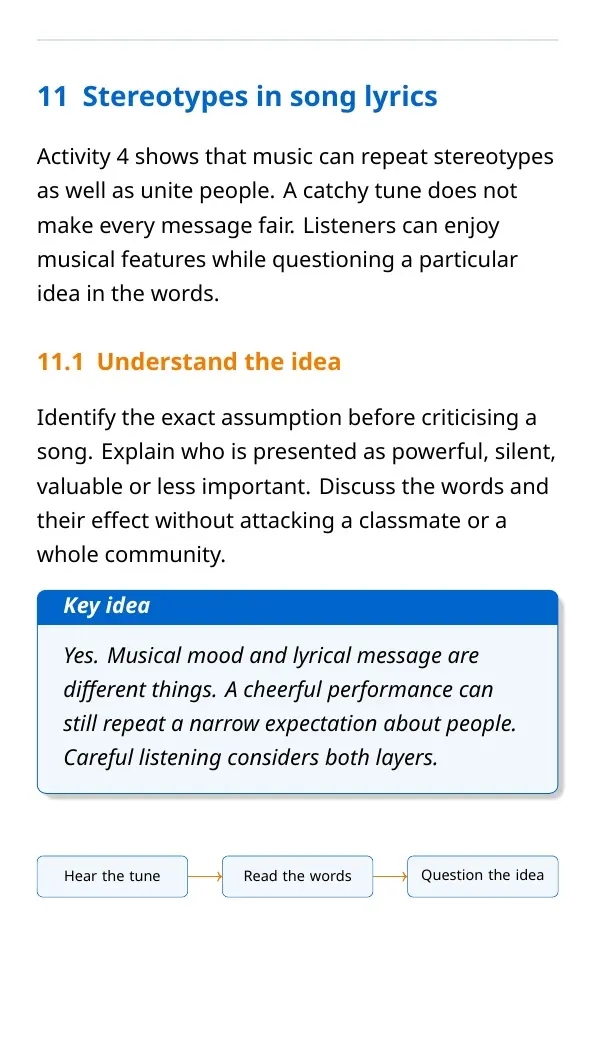
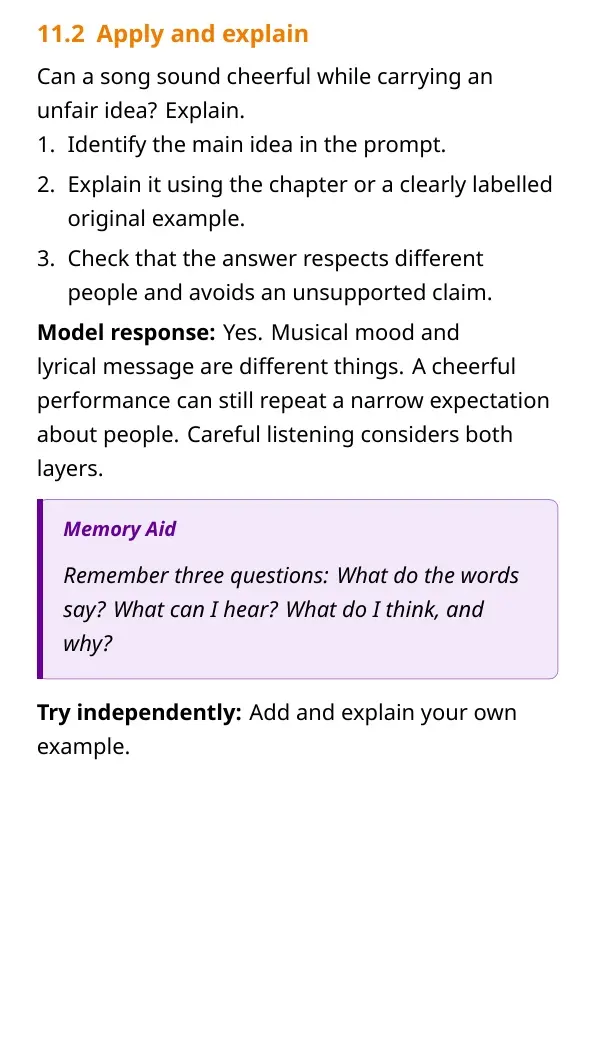
A stereotype is a fixed, general idea about people based on gender, culture, race, colour or other factors. It ignores differences between individuals. Songs can repeat these ideas even when their tunes are enjoyable.
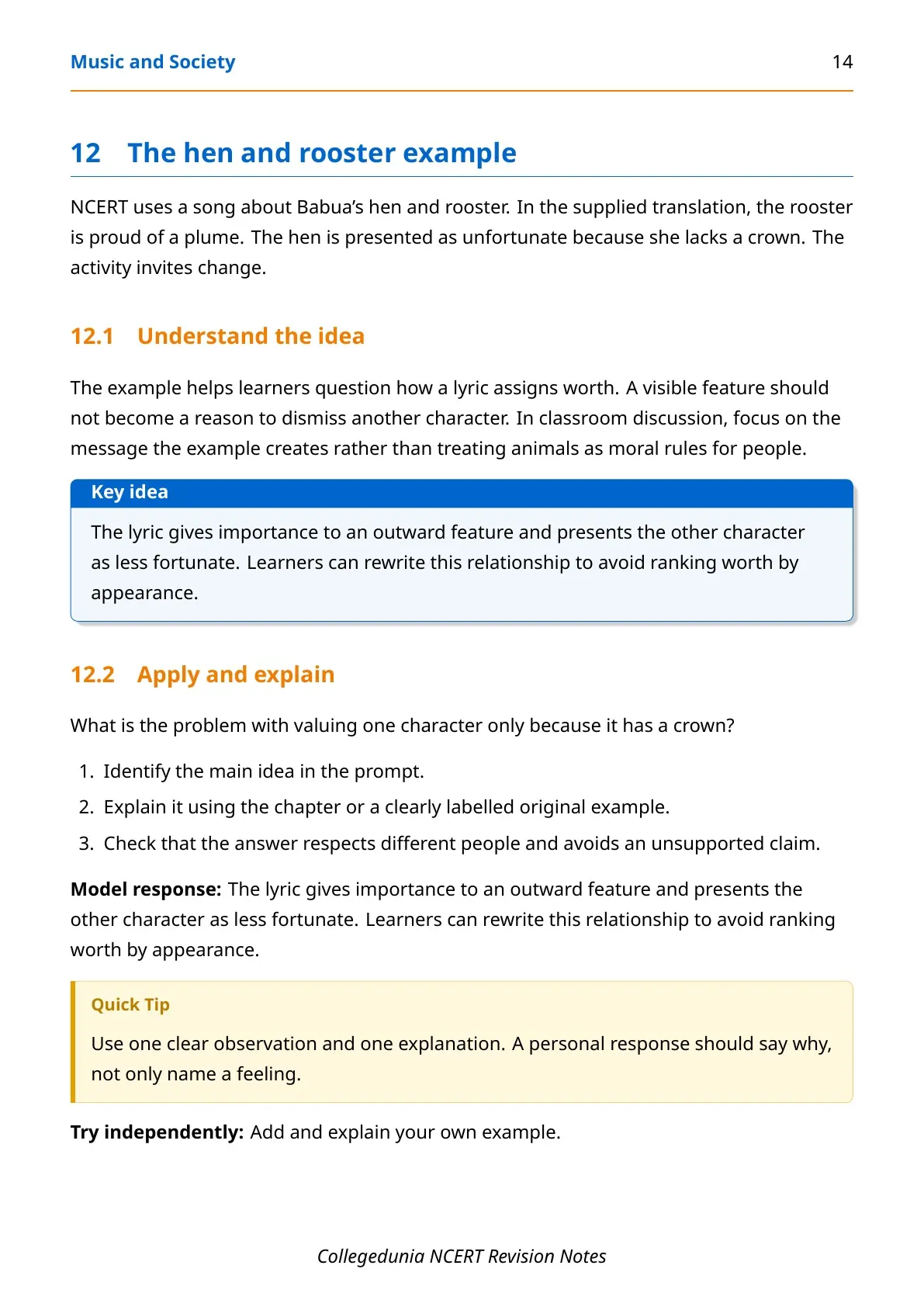
Activity 4 uses a song about a hen and a rooster. The rooster appears proud because it has a plume. The hen is described as unfortunate because it has no crown. Discuss how those words create an unfair comparison.
| Listen for | Question to ask |
|---|---|
| Fixed roles | Does the song suggest that only one group can do something? |
| Appearance | Does it judge worth by colour or looks? |
| Unequal treatment | Is one character praised while another is made small? |
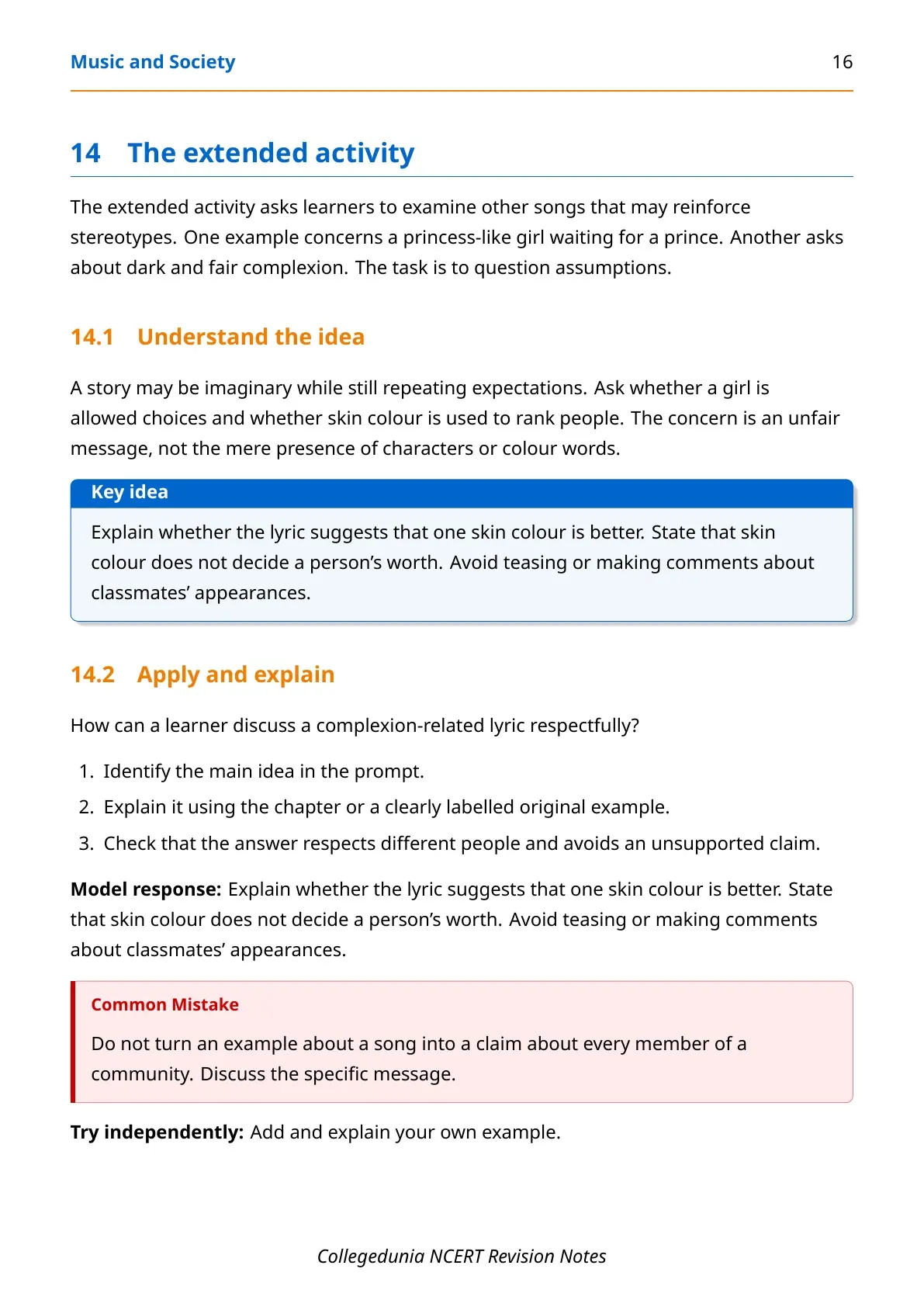
The extended activity includes songs about a girl waiting for a prince and questions about dark and fair skin. Discuss the ideas respectfully. Question the message without mocking the language, singer or community.
Music and Society Practice: Rewrite a Song Respectfully
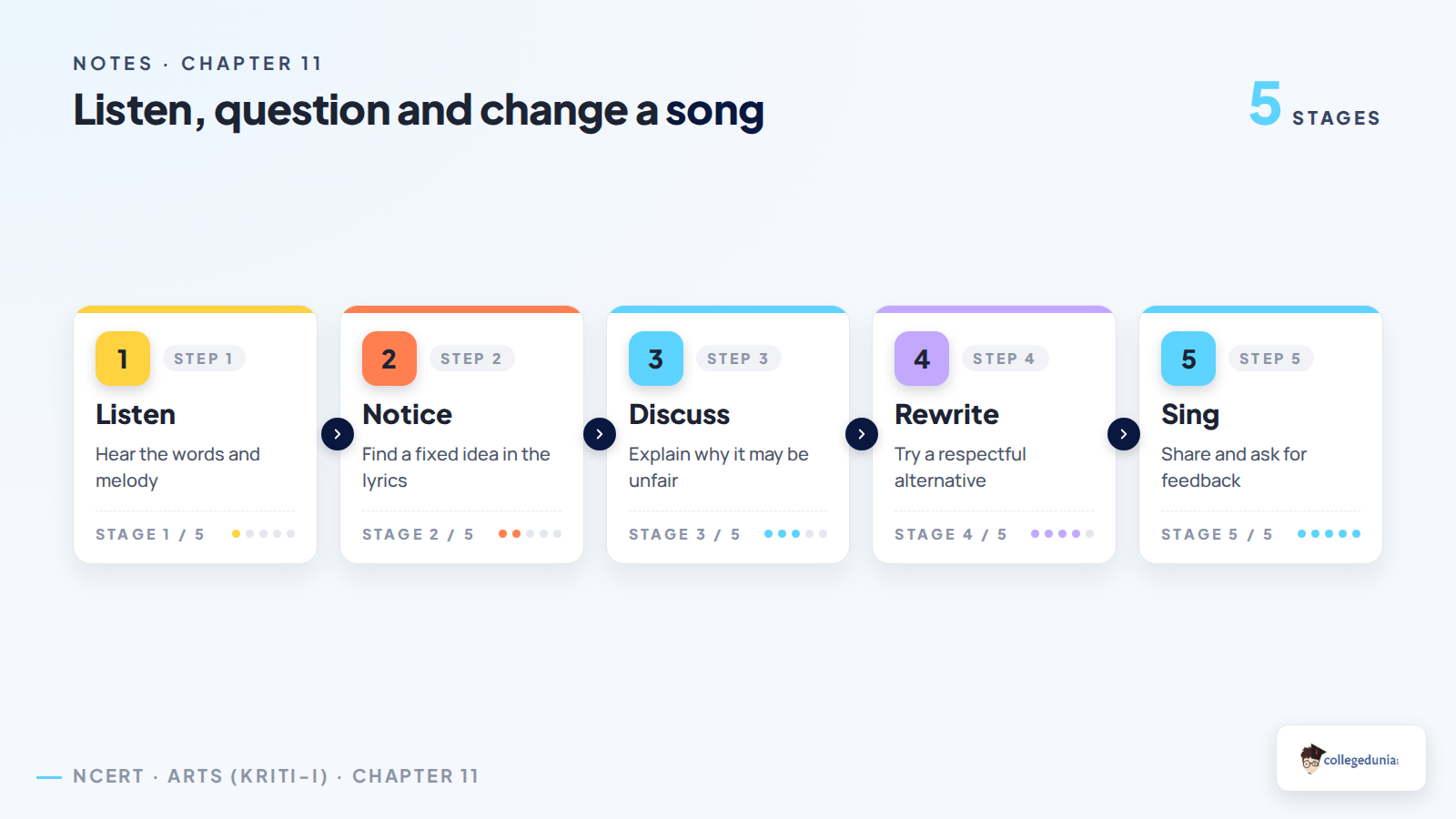
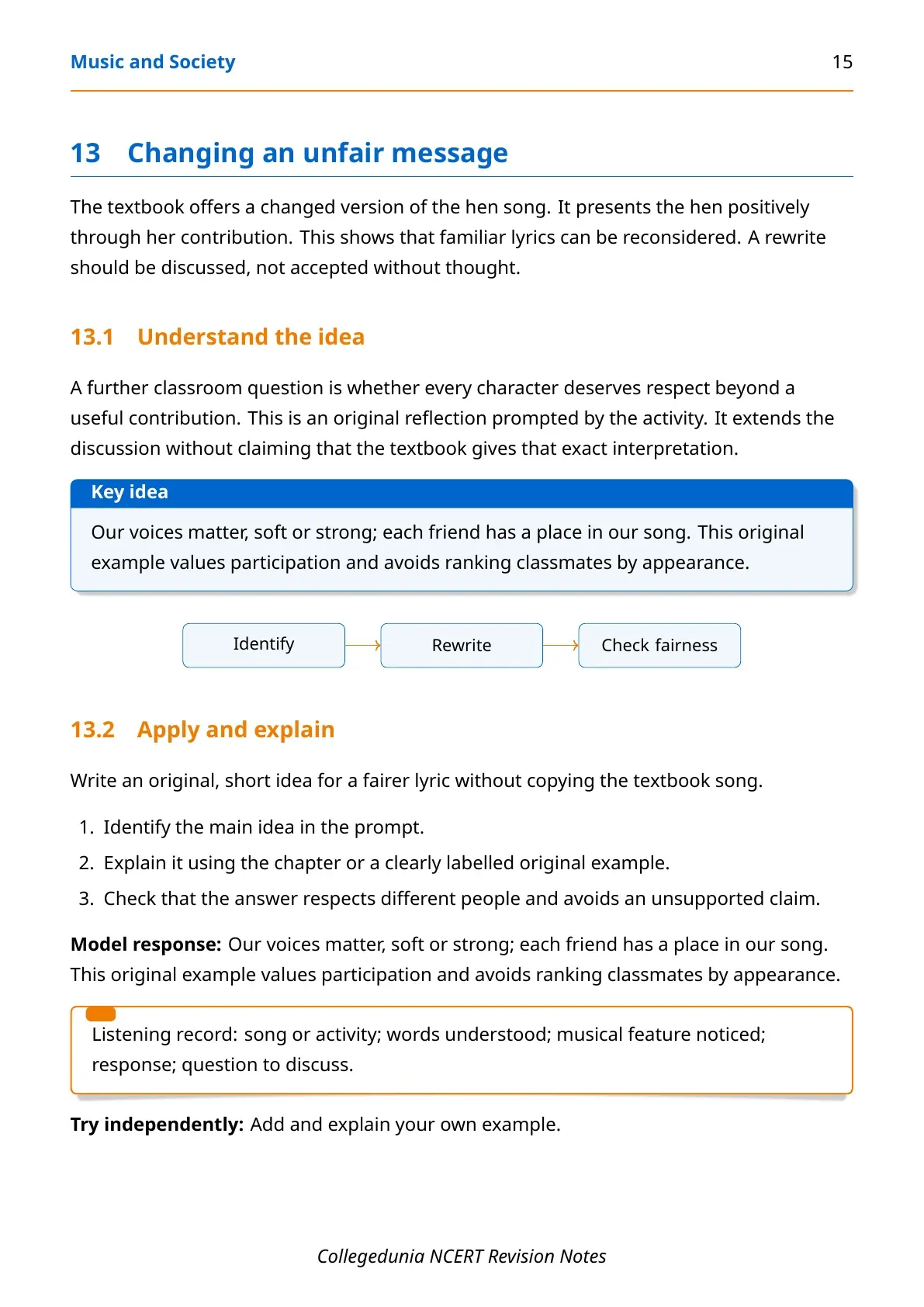
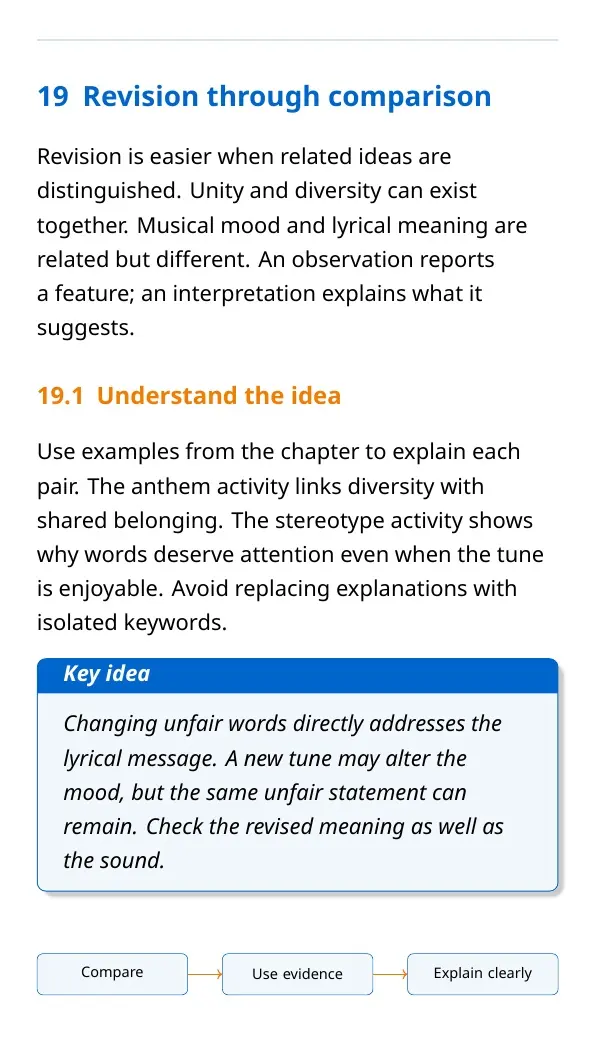
NCERT offers a changed version of the hen song. It celebrates the hen's ability to lay eggs. This shifts attention from an unfair comparison to a positive quality. You can try another respectful version too.
- Choose a song in a language you understand.
- Identify the fixed idea in one line.
- Explain why the idea may be unfair.
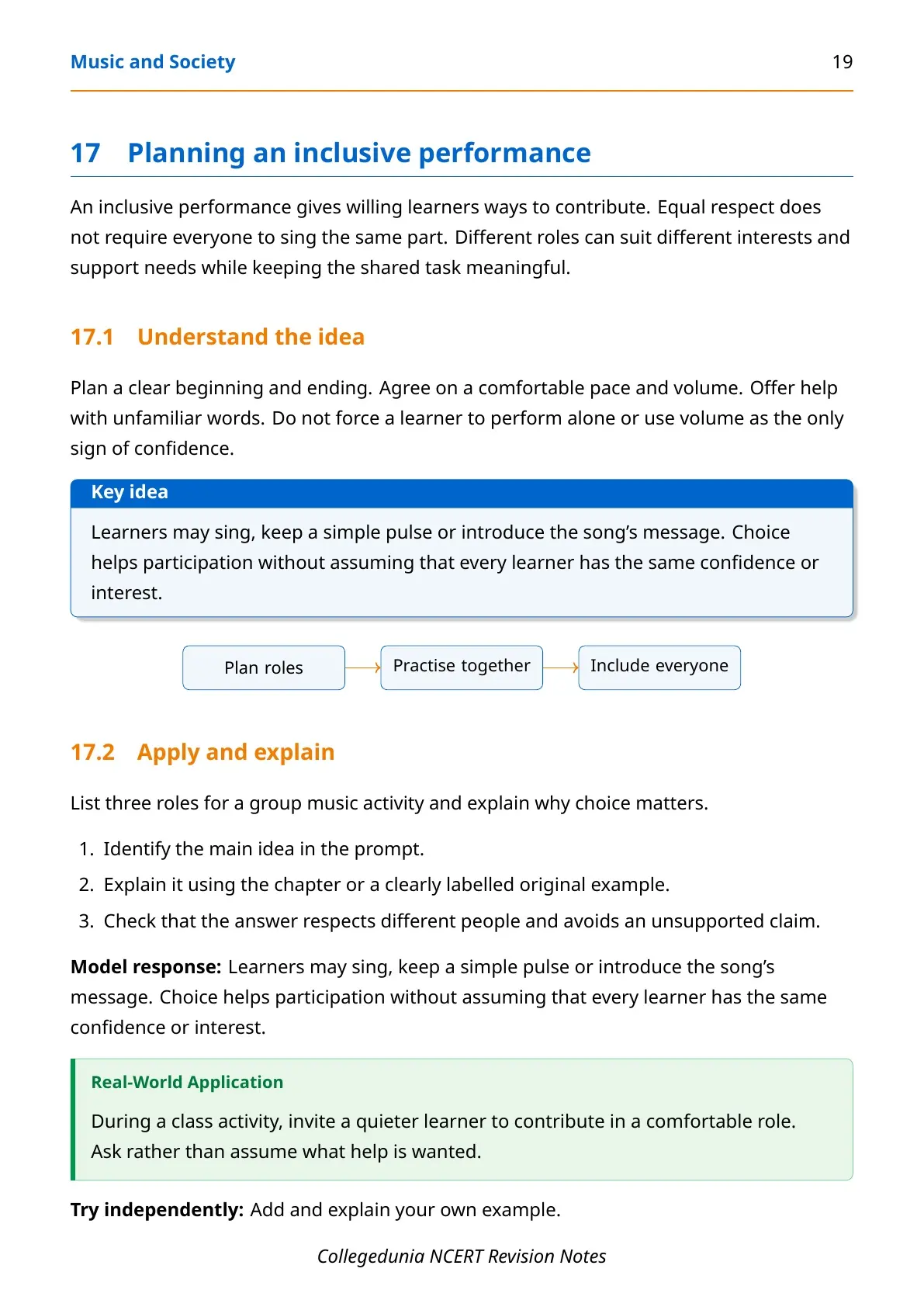
- Write alternative words that respect the characters.
- Sing the new version and discuss how its message changes.
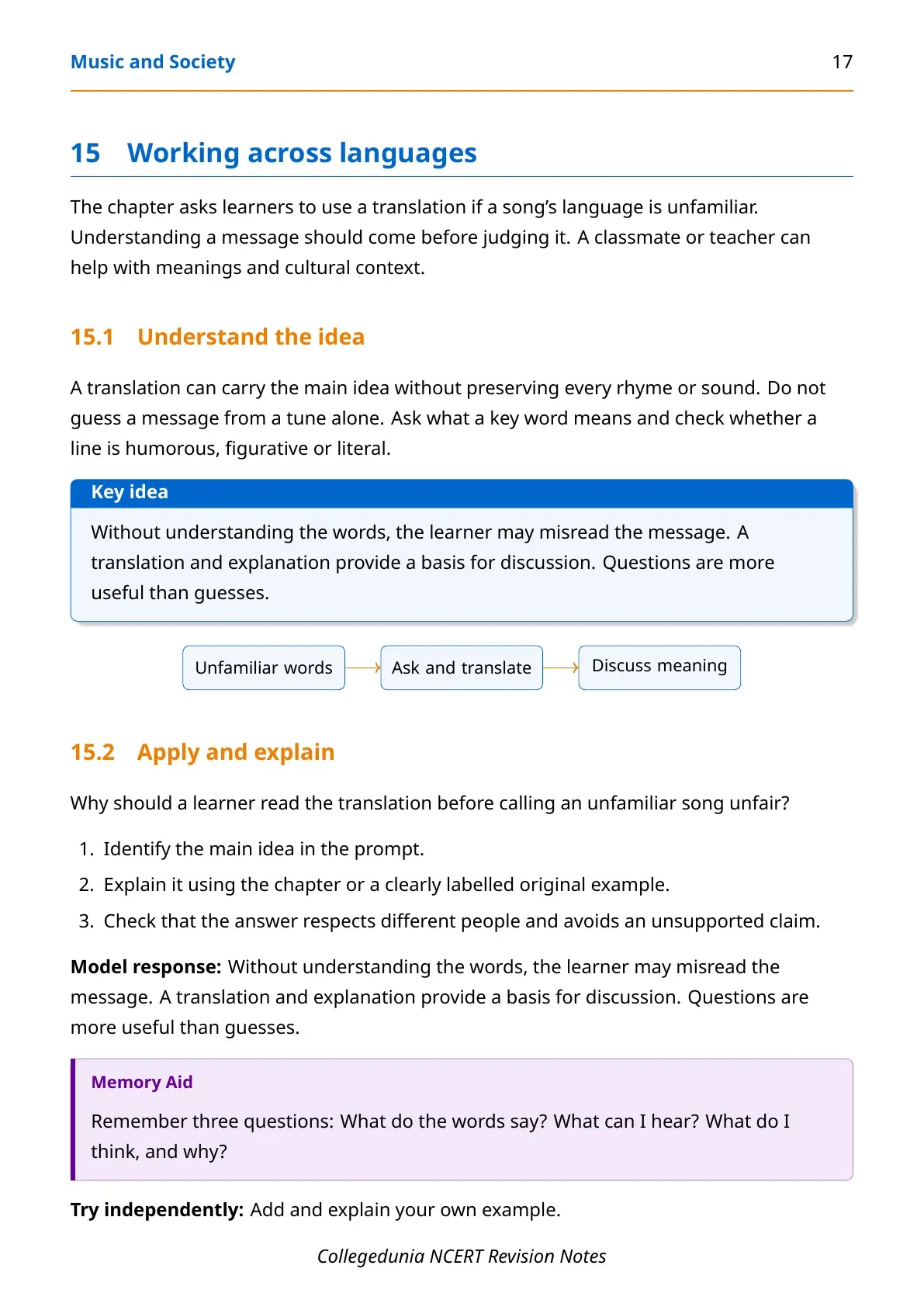
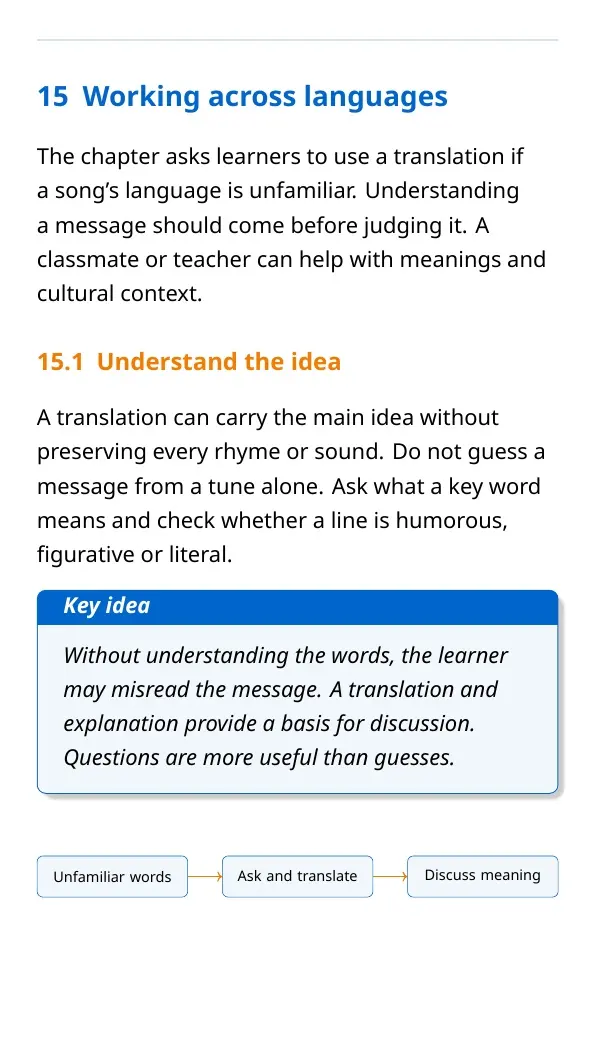
Changing a stereotype means changing the idea, not just replacing one word. Do not rewrite a song to make another group seem inferior. If the language is unfamiliar, read a translation before discussing its message.
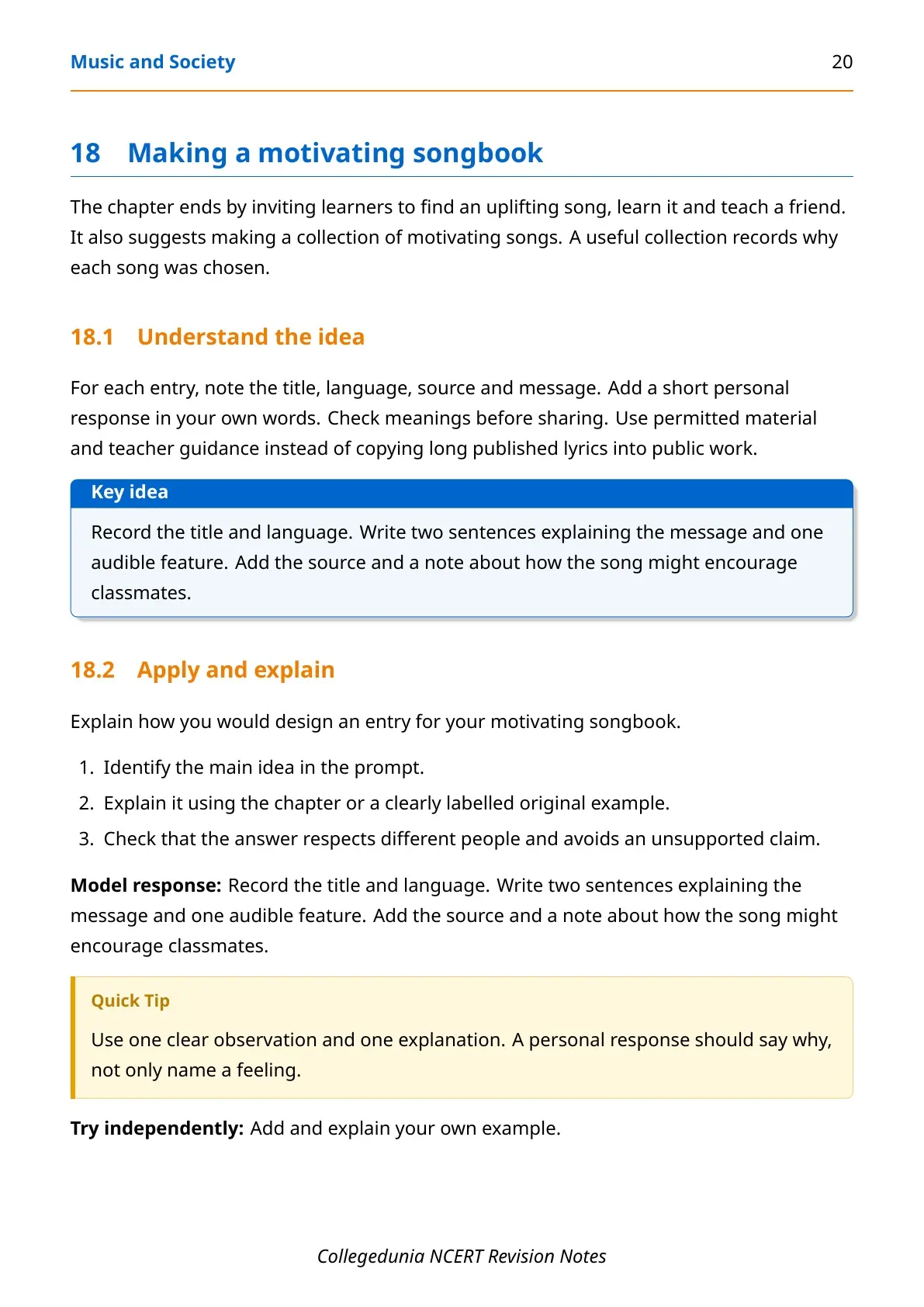
Finish by choosing a song that encourages you. Learn it, teach it to a friend and consider making a small collection of motivating songs. Keep notes on each song's message and the feelings it creates.
Music and Society Related Resources for Class 6 Arts
Read the original chapter for its songs and listening prompts. Use the solutions for help with the open-ended activities.
| Resource | How it helps |
|---|---|
| Music and Society NCERT Solutions | Approach the listening and discussion tasks. |
| Official NCERT Music and Society PDF | Read the lyrics, translations and activities. |
NCERT Notes for Class 6 Arts: All Chapters
Connect Music and Society with these earlier arts topics.
| Chapter notes | Connection |
|---|---|
| Objects and Still Life Notes | Practise observing and describing details. |
| Melodies of Diversity Notes | Listen to different musical traditions. |
| Songwriting Notes | Practise choosing words for a song. |
Music and Society Class 6 Arts Notes FAQs
Ques. What do the Music and Society notes cover?
Ans. They cover music as a social message, unity, the four NCERT activities, stereotypes and respectful alternative lyrics.
Ques. Are these notes for the 2026-27 session?
Ans. Yes. They follow the official NCERT Class 6 Kriti-I Music and Society chapter reprinted for 2026-27.
Ques. Who composed the national anthem?
Ans. Rabindranath Tagore composed it in Sanskritised Bangla. Activity 1 asks you to reflect on its words, music and celebration of diversity.
Ques. What should I notice when listening to the anthem?
Ans. Understand its lyrics, notice the landscapes it names and discuss how the composition makes it feel majestic.
Ques. Which ancient text appears in Our Roots?
Ans. Activity 2 uses an inspirational verse from the Kathopanishad. Listen to the verse and describe the feeling it creates.
Ques. What is the aim of Be the Change?
Ans. It asks you to listen to an encouraging song and think about how you can bring positive change.
Ques. How can I change the hen and rooster song?
Ans. Replace the unfair comparison with words that value the characters. NCERT gives an example celebrating the hen laying eggs.
Ques. What should I do if I do not understand a song?
Ans. Read its translation before discussing the words. Ask your teacher for help with unfamiliar meanings.
Ques. Can my response differ from a classmate's?
Ans. Yes. Listening responses and creative lyrics can differ. Explain your ideas with details from the song and respect other views.
Ques. What is a stereotype?
Ans. It is a fixed general idea about people based on factors such as gender, culture, race or colour.
Ques. How is social messaging defined here?
Ans. It means using music to communicate ideas about society, shared values or how people treat one another.
Ques. What are lyrics?
Ans. Lyrics are the words of a song. They can encourage unity, share feelings or repeat social ideas.



Comments