



Inside the NCERT Notes for Class 6 Sanskrit (Deepakam) Chapter 1 वयं वर्णमालां पठामः, you will find the full स्वर and व्यञ्जन split, the five वर्ग grid of स्पर्श sounds, the complete गुणिताक्षर मात्रा table and the six उच्चारण-स्थान of the mouth, according to the latest 2026-27 NCERT textbook. This is the chapter that decides how well a student reads Sanskrit for the next six years.
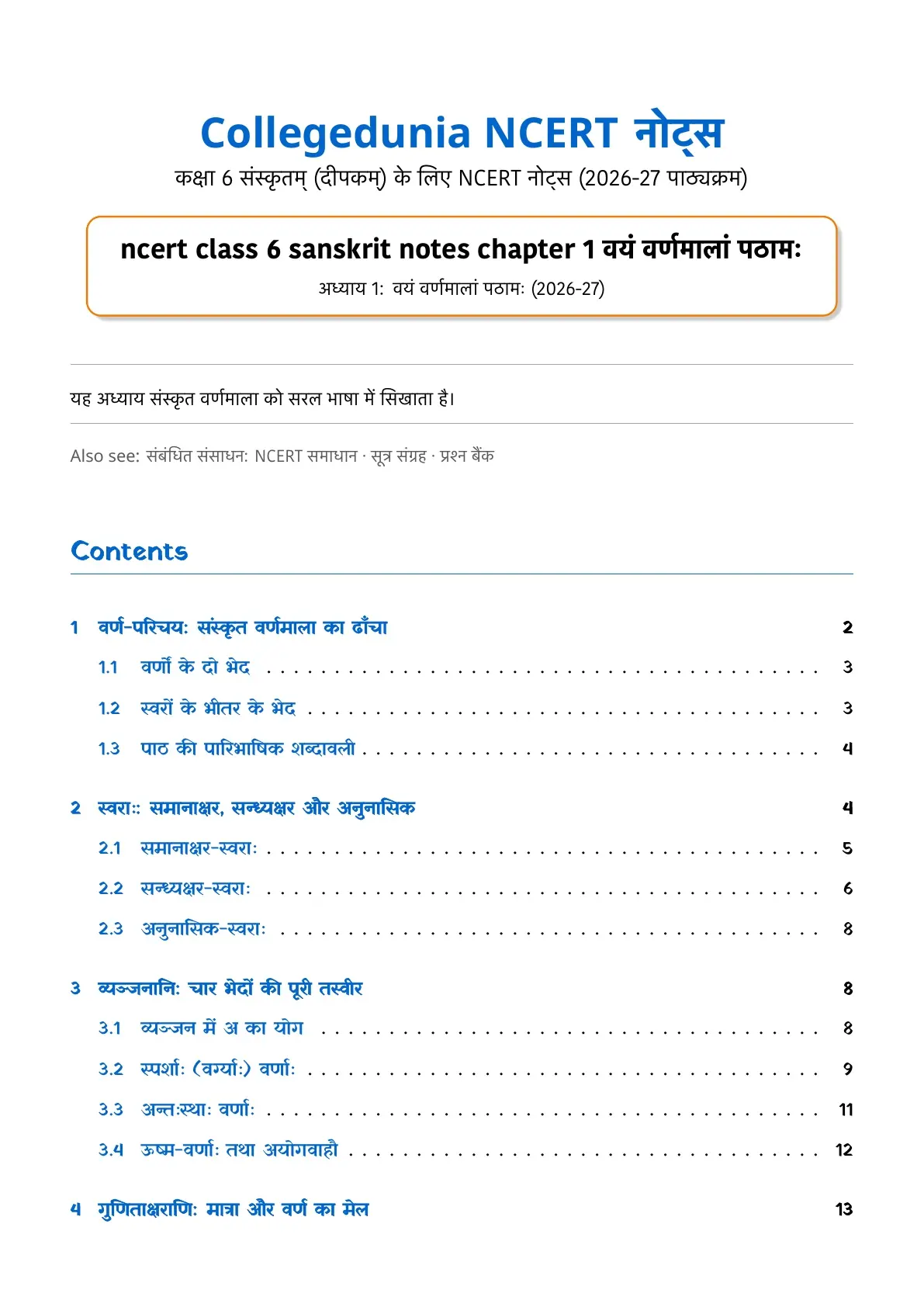
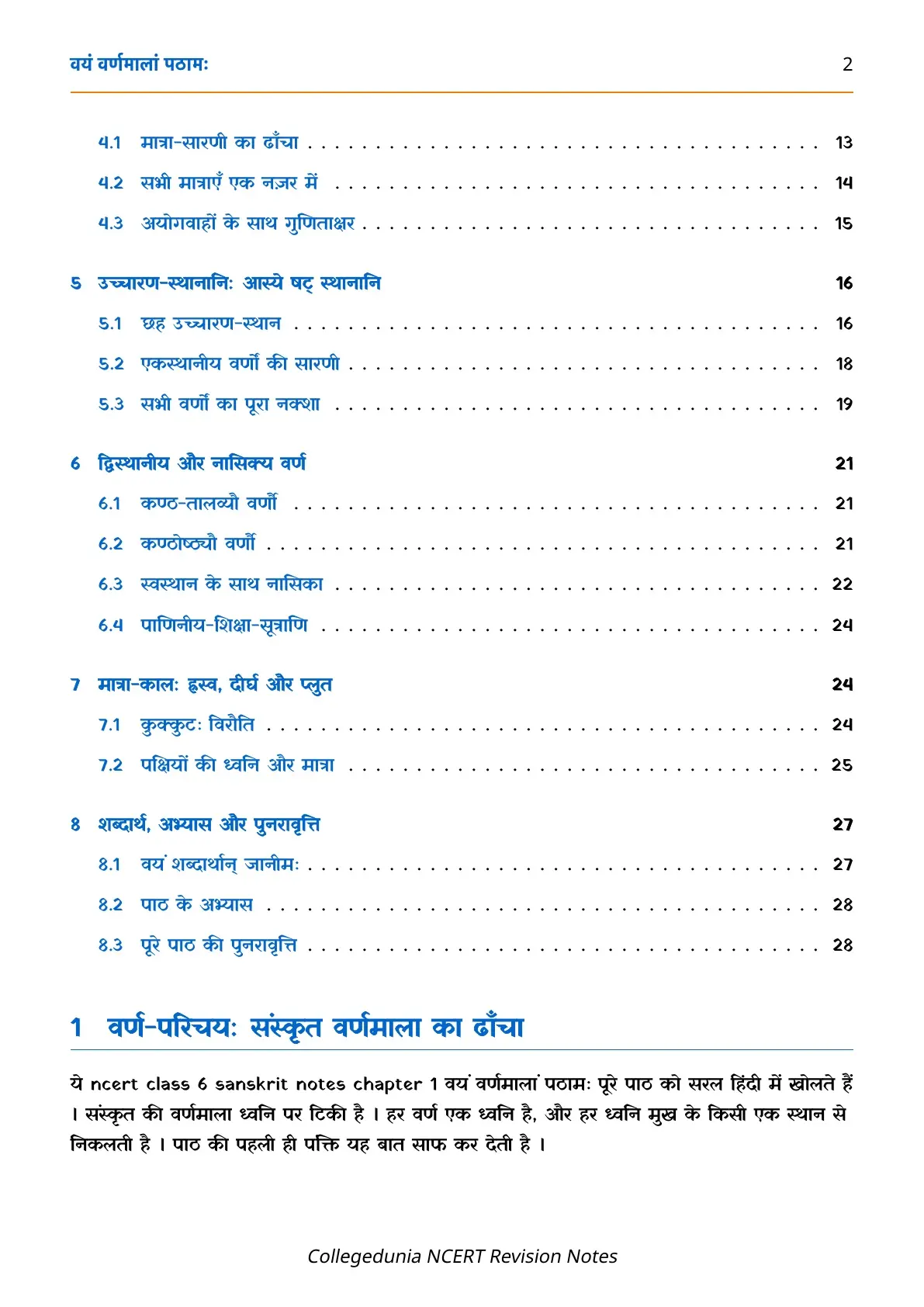
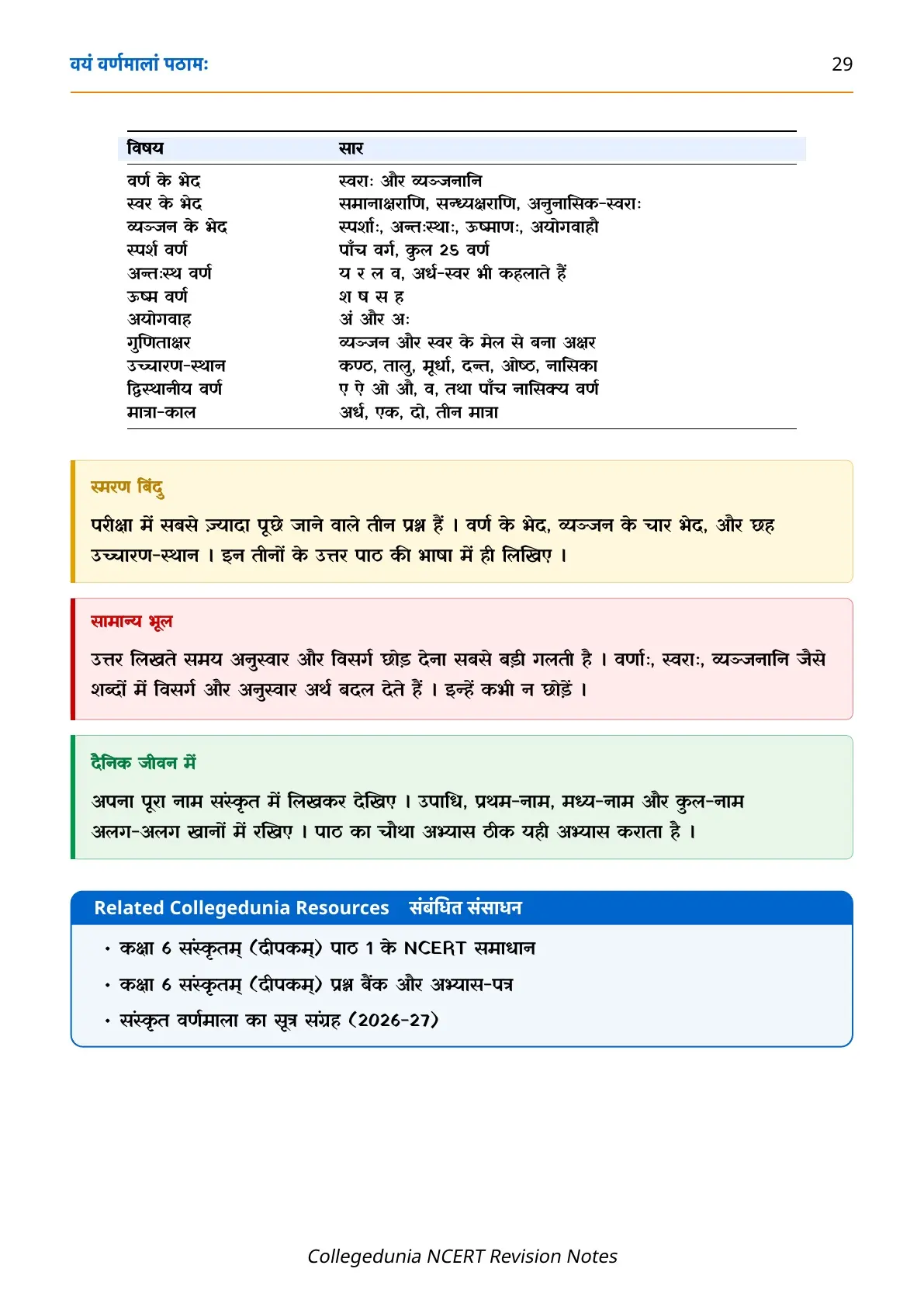
- Covers all 13 स्वराः, 33 व्यञ्जनानि and both अयोगवाहौ with their उच्चारण-स्थान.
- Includes the पाणिनीय-शिक्षा sutras that Class 6 papers ask as one-mark questions.
- Carries the मात्रा-काल shloka on चाष, वायस, शिखी and नकुल with meanings.
Every definition, table and sutra on this page is taken straight from the NCERT दीपकम् textbook for Class 6 Sanskrit, checked line by line against the 2026-27 print.
Student Feedback: What 12,460 students told us about learning the Sanskrit वर्णमाला.
- 61% of students said the four भेद of व्यञ्जन were the hardest part to recall in the exam.
- Most-skipped topic: उच्चारण-स्थान, left blank by nearly 3 in 10 students.
- Students who wrote the वर्ग table from memory once a week scored 4 to 5 marks higher on the first term paper.
Source: 2026-27 Class 6 Sanskrit student poll. Sample of 12,460 students from CBSE schools across 14 states, collected before their 2026 annual exams.
वयं वर्णमालां पठामः Explained: How Sanskrit Sorts Every Sound into स्वर and व्यञ्जन
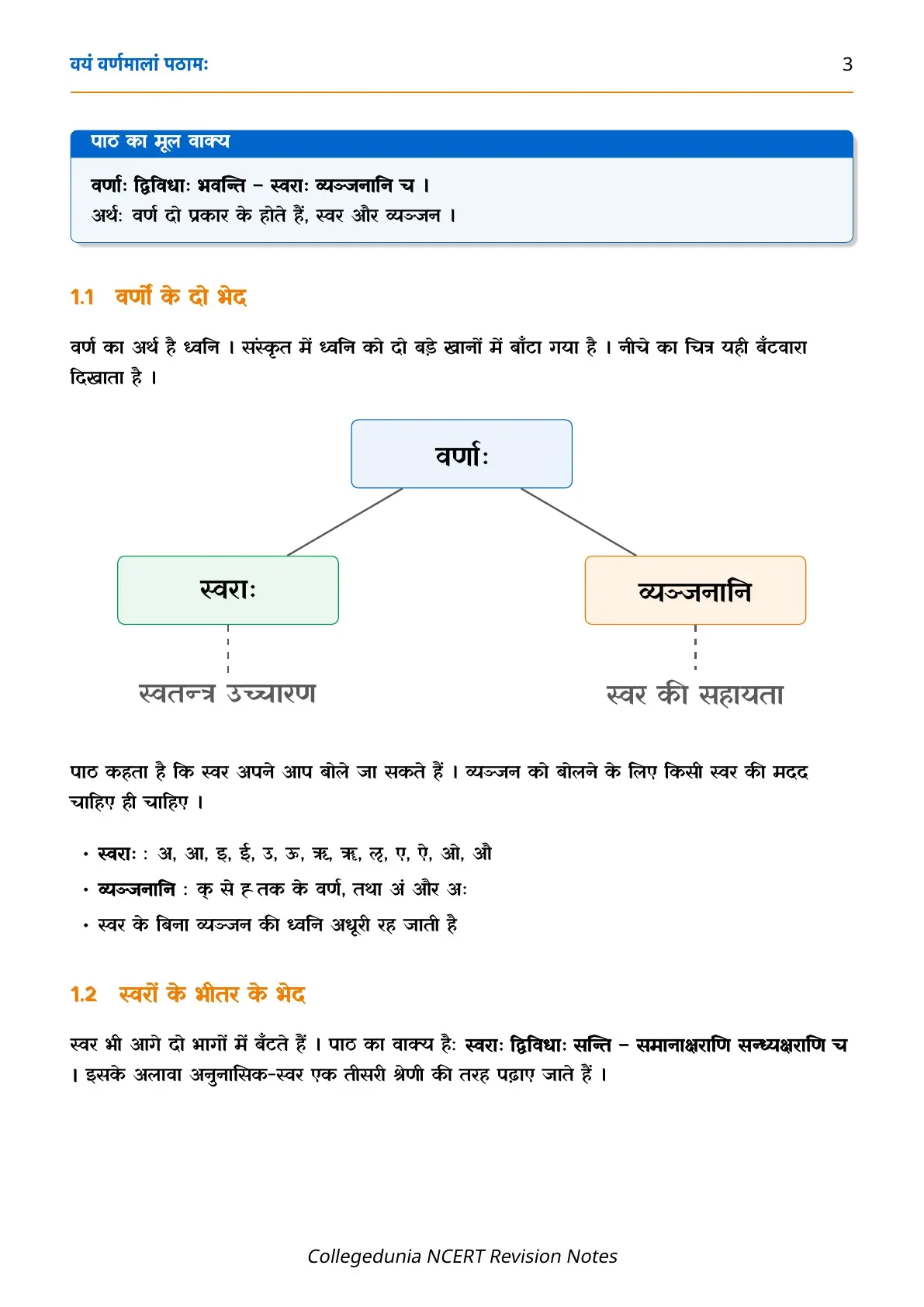
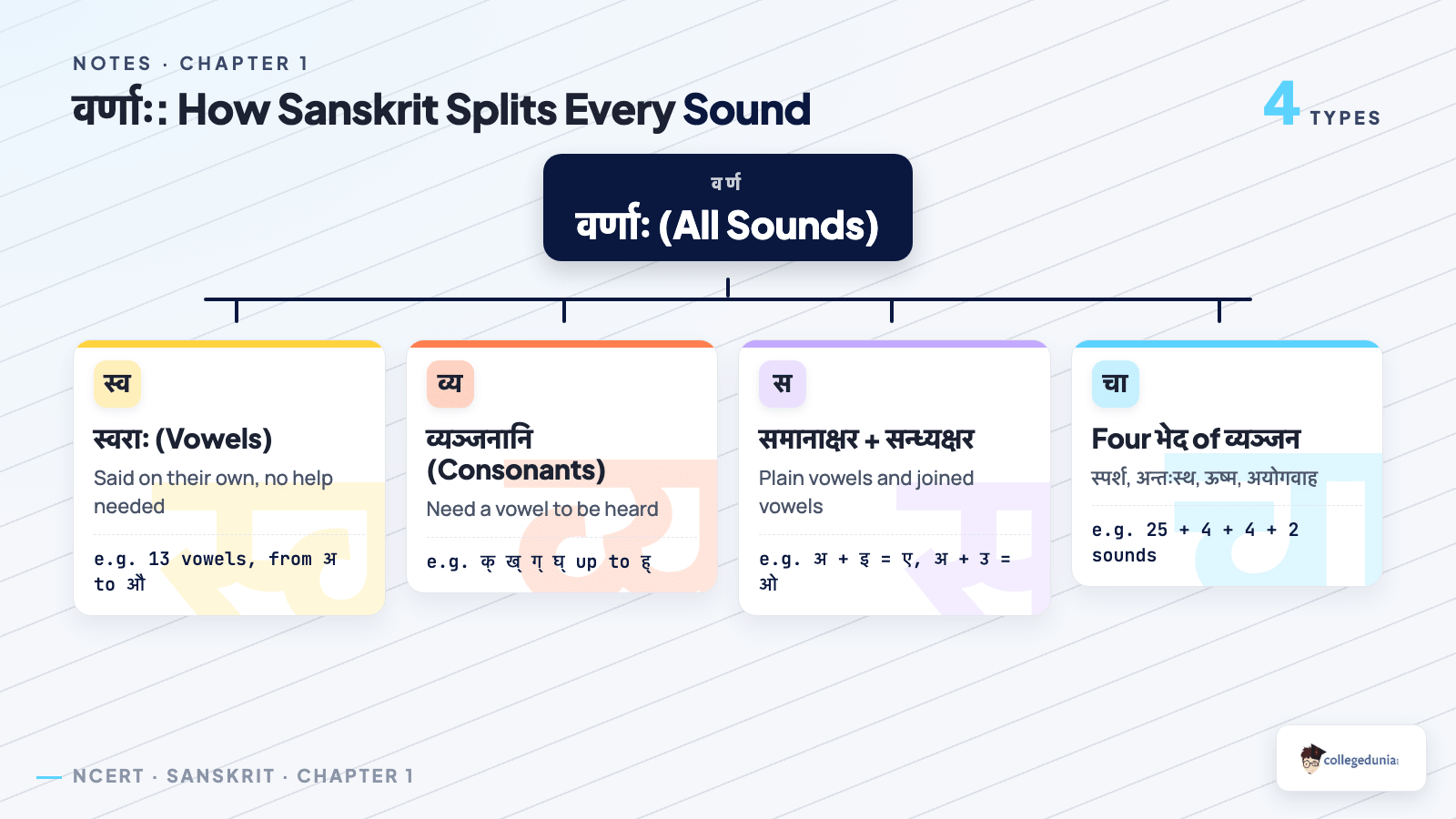
The chapter opens with one line that carries the whole lesson: वर्णाः द्विविधाः भवन्ति, स्वराः व्यञ्जनानि च. A वर्ण is a single sound, not a letter shape. Sanskrit sorts every sound into two boxes, and the test is simple. Can you say it on its own?
- स्वराः are said on their own. The textbook line is स्वराणाम् उच्चारणं स्वतन्त्ररूपेण भवति.
- व्यञ्जनानि need a vowel to be heard. क् alone is only half a sound.
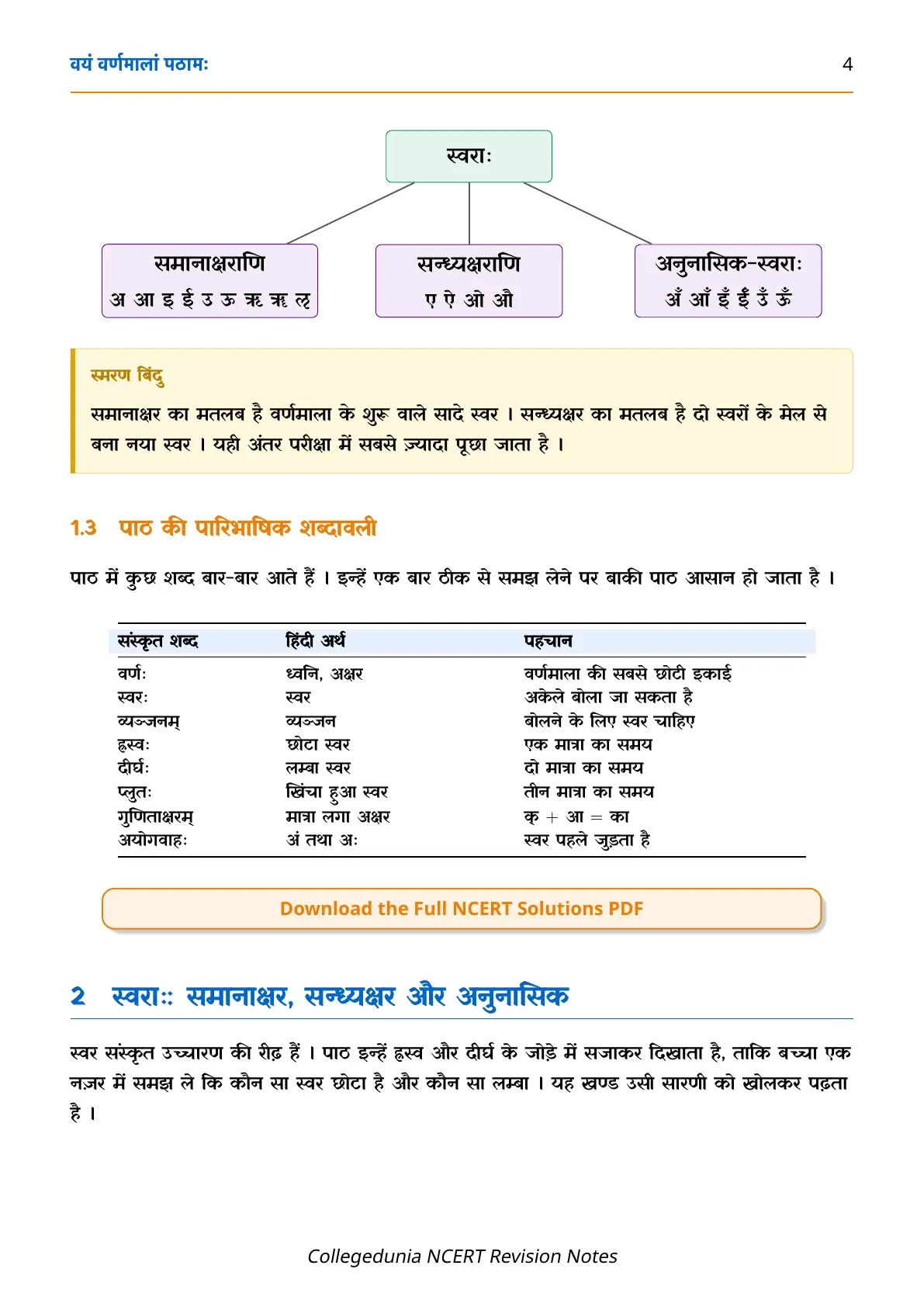
- There are 13 स्वराः: अ आ इ ई उ ऊ ऋ ॠ ऌ ए ऐ ओ औ.
- व्यञ्जनानि run from क् to ह्, plus the two अयोगवाह sounds अं and अः.
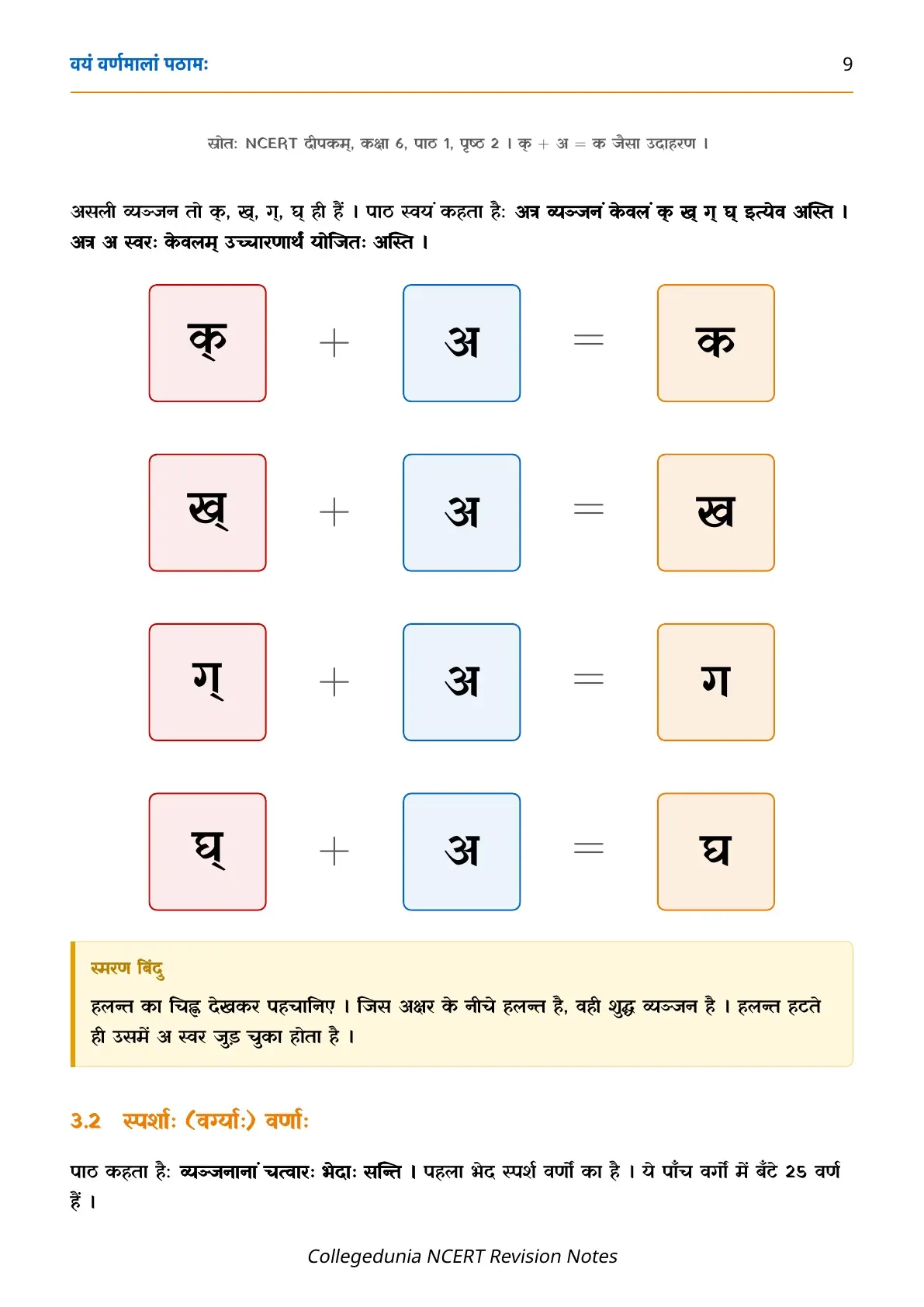
This is why the hal sign matters. Write क् and you have a pure व्यञ्जन. Drop the hal and write क, and the अ sound has already joined it. Class 6 papers test this exact difference in the very first question of the term paper.
Sanskrit Varnamala Class 6 Explained in Simple Language
Source: Kailash sharma on YouTube
स्वराः in वयं वर्णमालां पठामः: समानाक्षर, सन्ध्यक्षर and अनुनासिक Vowels
Vowels split further. The book says स्वराः द्विविधाः सन्ति, समानाक्षराणि सन्ध्यक्षराणि च. A third group, the अनुनासिक vowels, is taught alongside them because the nose joins the mouth while saying them.
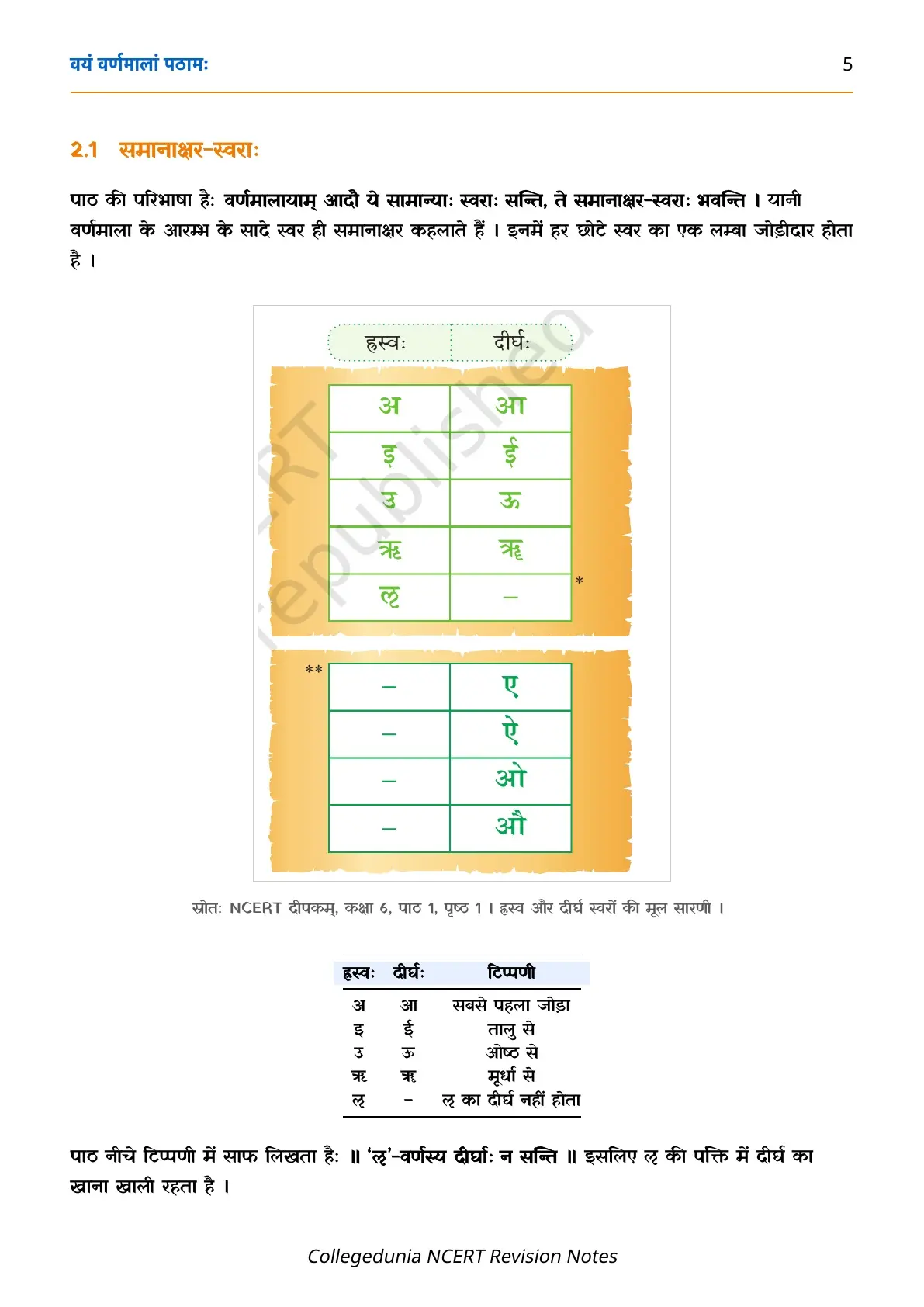
समानाक्षर vowels are the plain ones at the start of the वर्णमाला. Each short vowel has a long partner, and the pair is the first thing to learn by heart.
| ह्रस्व (short) | दीर्घ (long) | Note |
|---|---|---|
| अ | आ | The first pair in the alphabet |
| इ | ई | Said at the तालु |
| उ | ऊ | Said at the ओष्ठ |
| ऋ | ॠ | Said at the मूर्धा |
| ऌ | none | ऌ has no long form in this table |
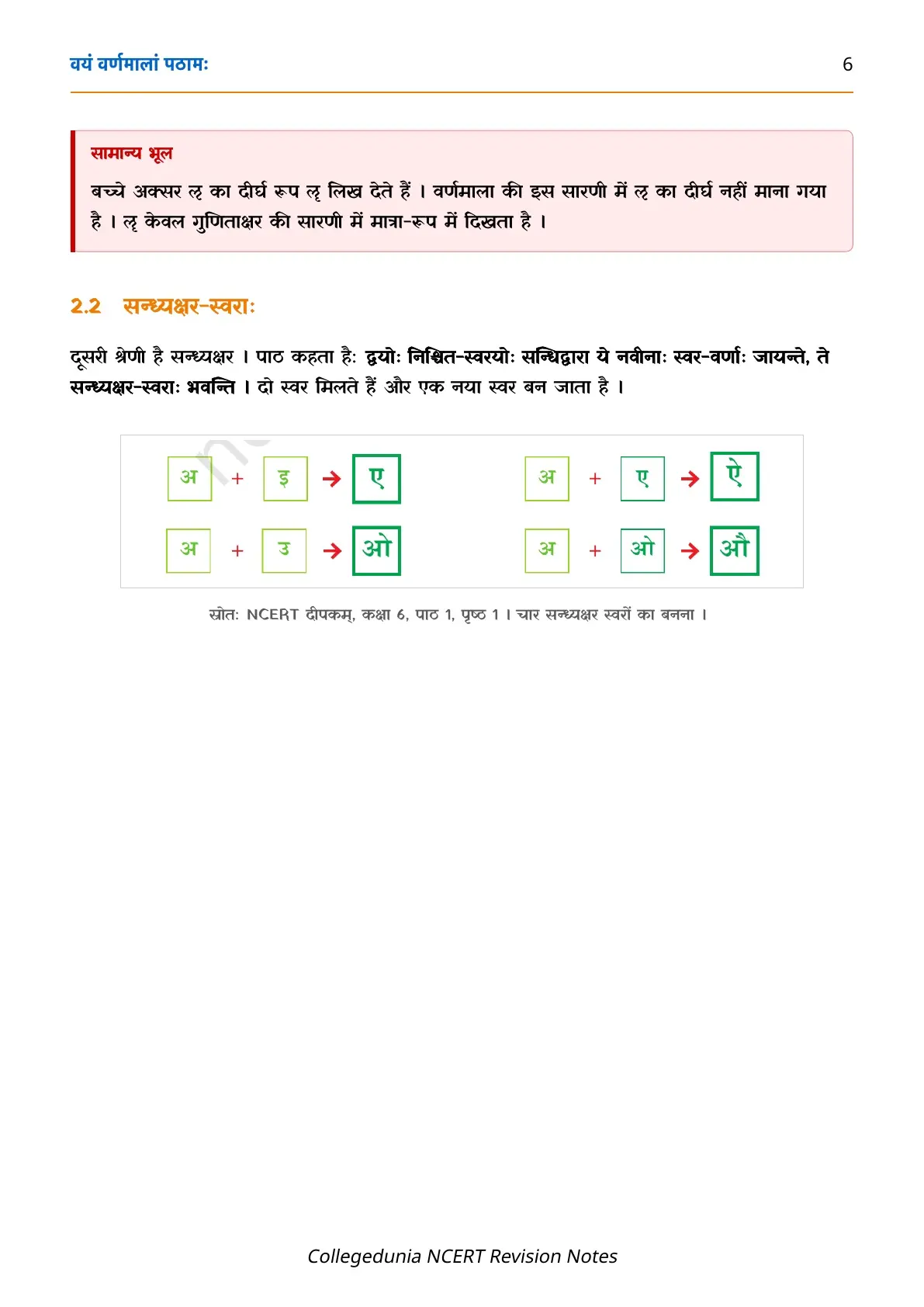
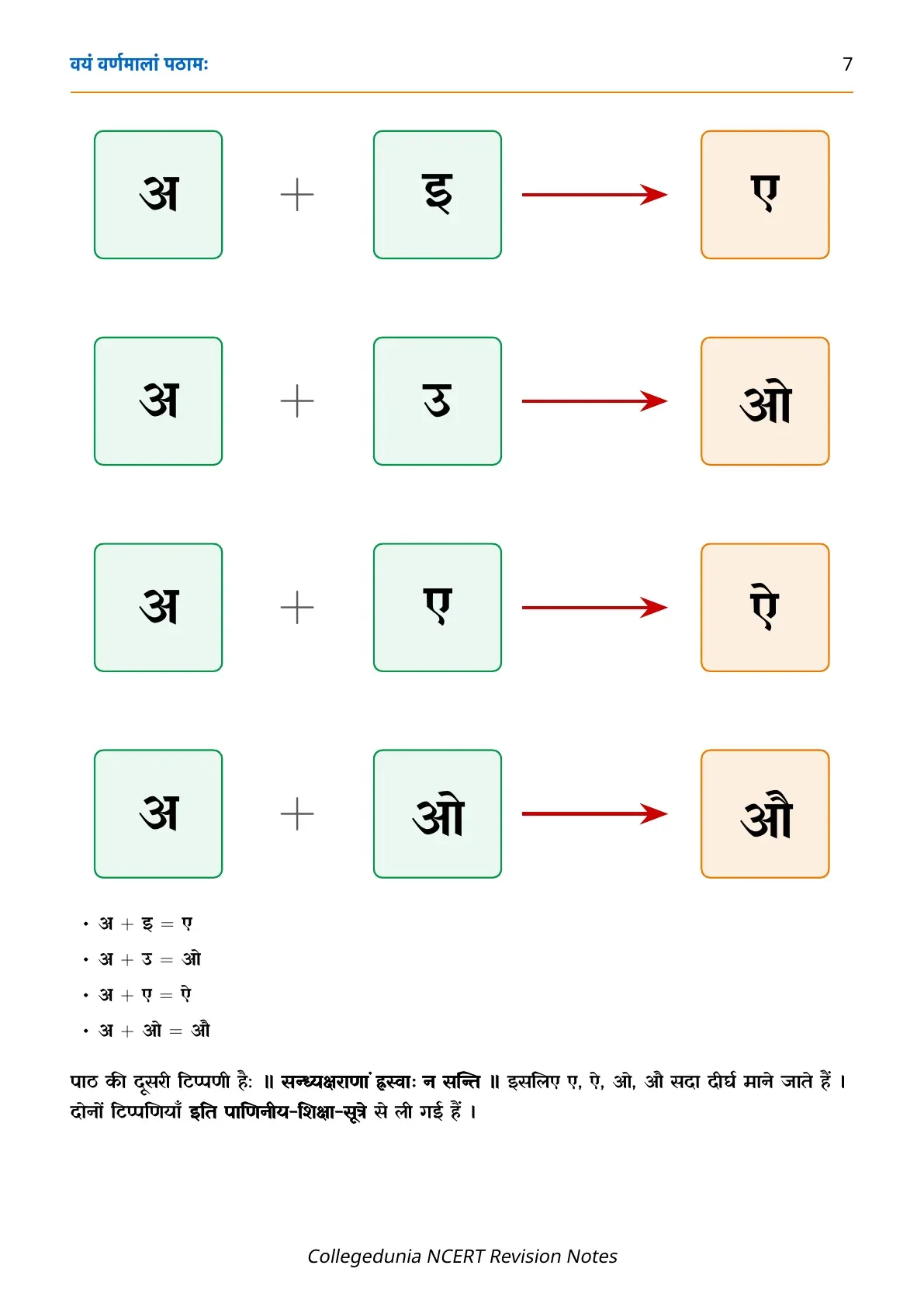
The book prints the reason in a footnote: ऌ-वर्णस्य दीर्घाः न सन्ति. That is why the last cell stays blank. सन्ध्यक्षर vowels are the opposite case, born when two vowels join and make a new sound.
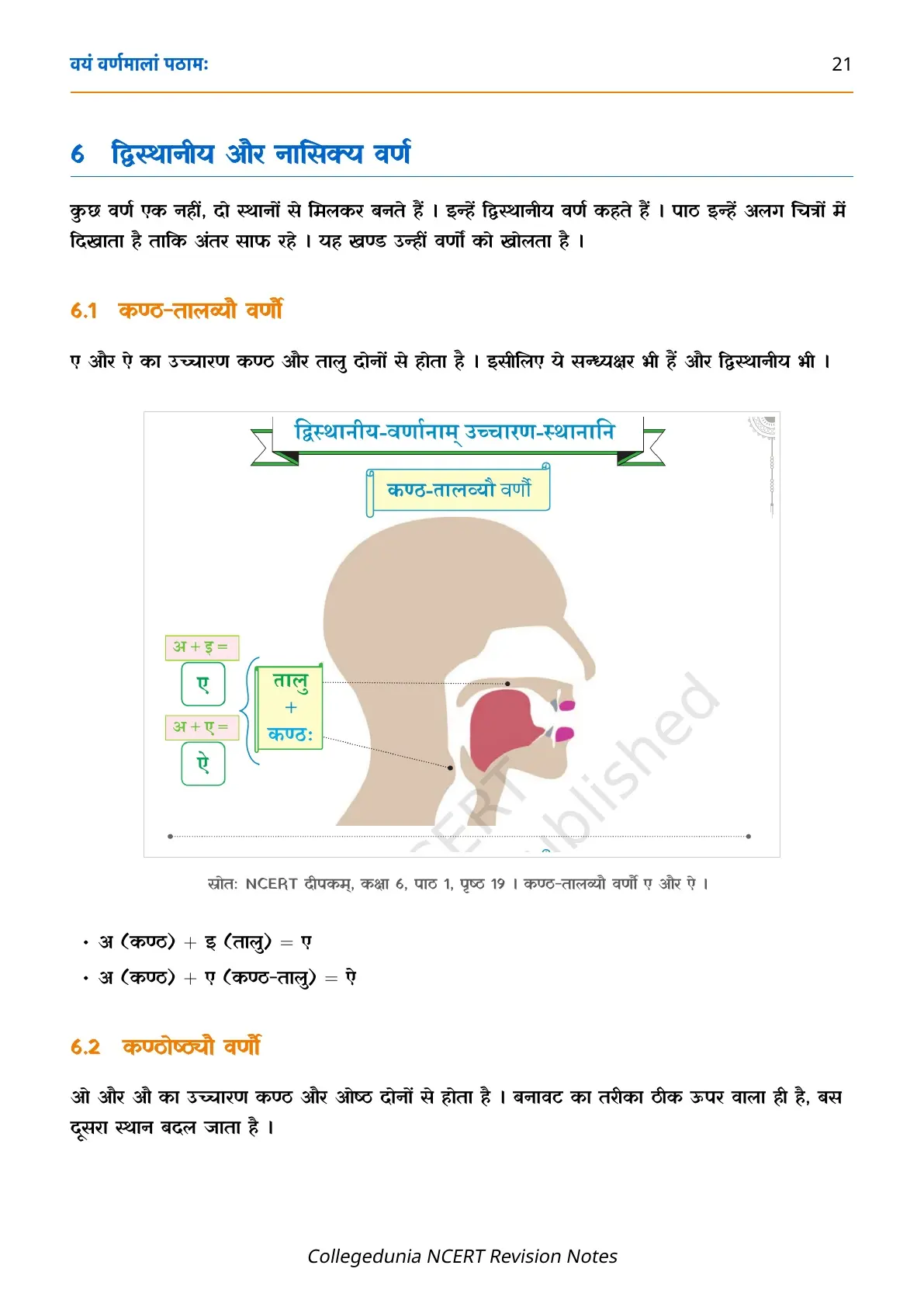
- अ + इ = ए
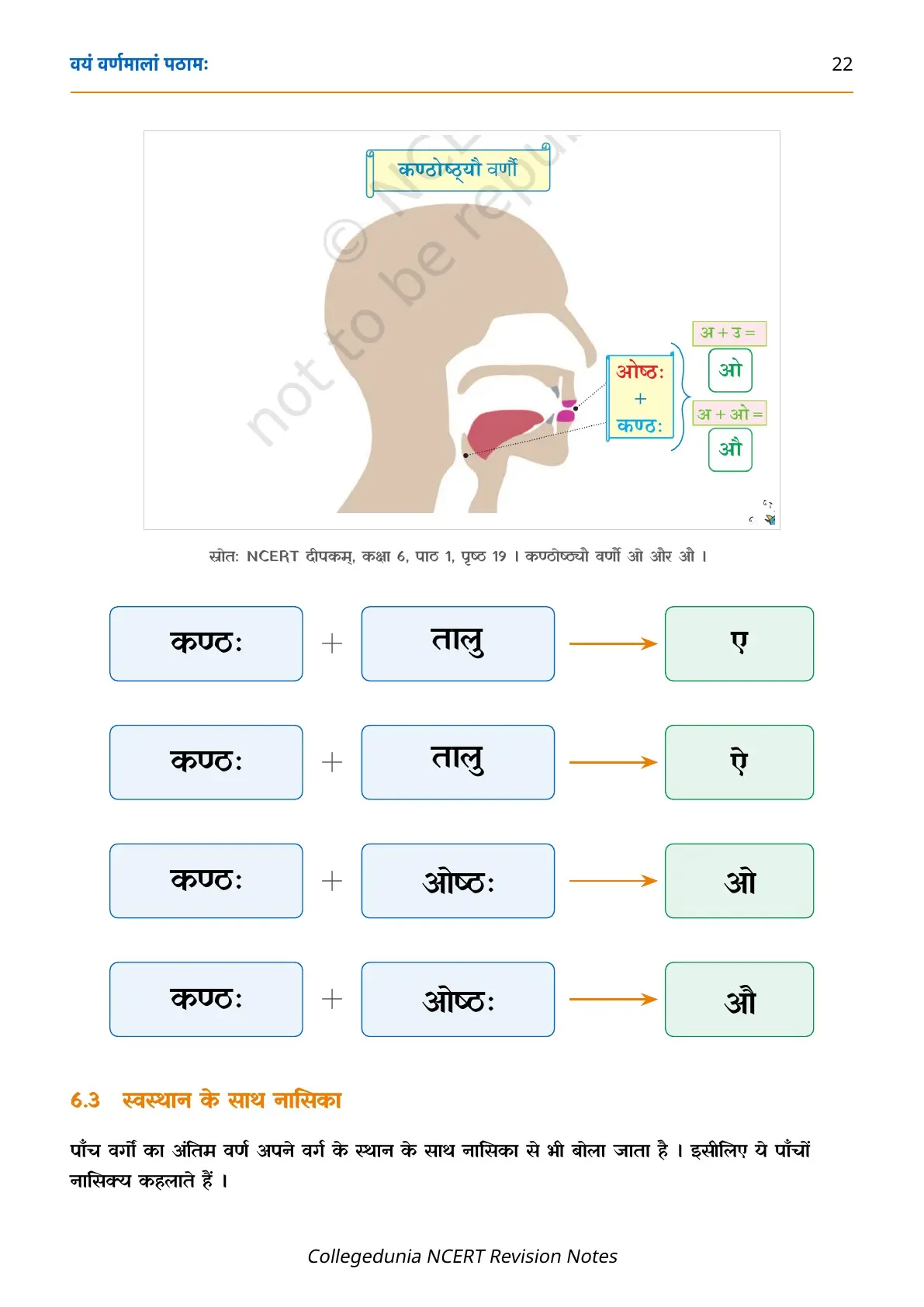
- अ + उ = ओ
- अ + ए = ऐ
- अ + ओ = औ
A second footnote settles the follow-up question: सन्ध्यक्षराणां ह्रस्वाः न सन्ति. So ए, ऐ, ओ and औ are always long. Both footnotes are quoted from the पाणिनीय-शिक्षा-सूत्र.
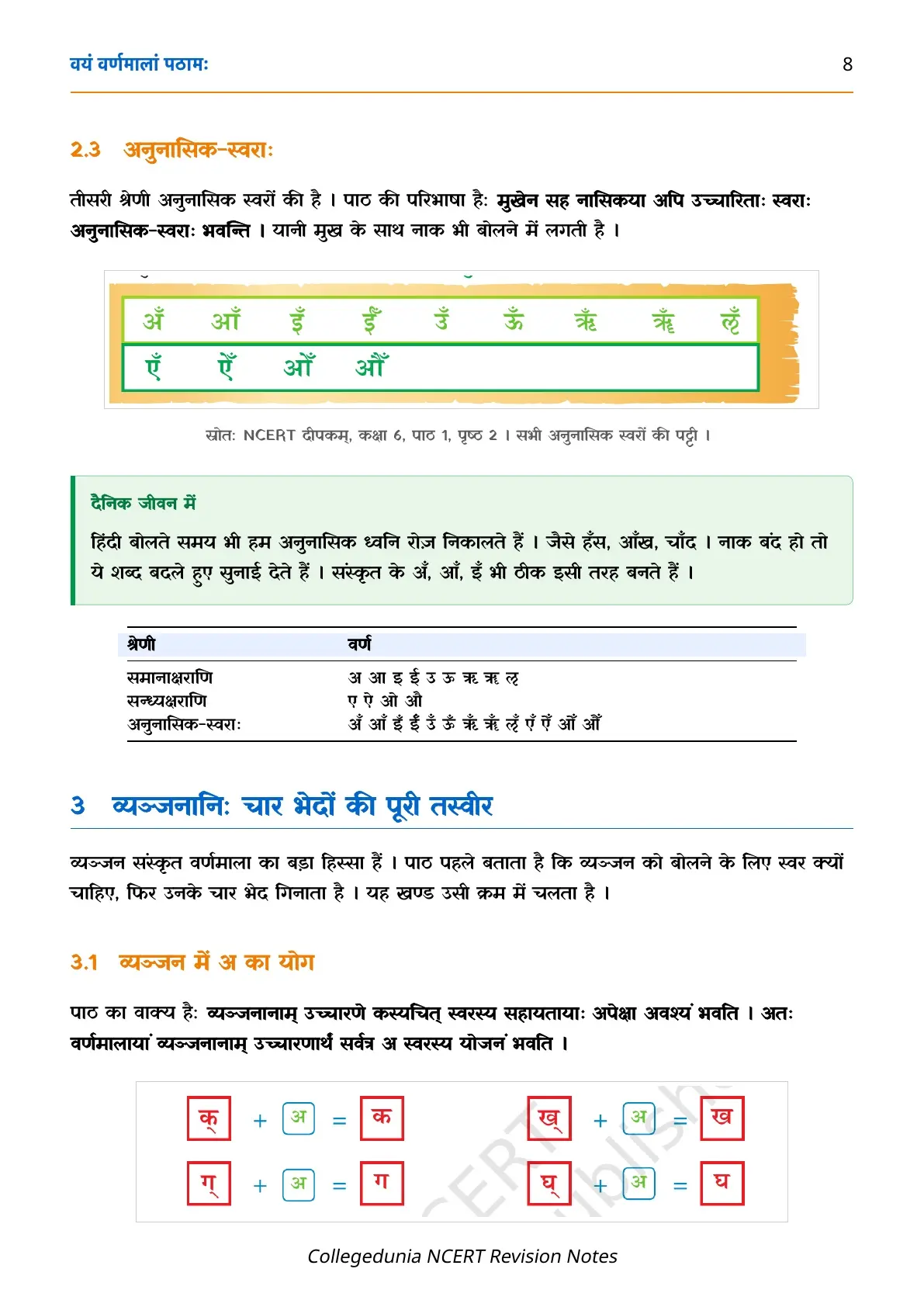
अनुनासिक vowels come last. The definition is मुखेन सह नासिकया अपि उच्चारिताः स्वराः अनुनासिक-स्वराः भवन्ति. You already make these sounds in Hindi every day, in हँस, आँख and चाँद. Block your nose and the sound changes at once, which is the easiest way to prove it in class.
व्यञ्जनानि and the Four Groups Every Class 6 Sanskrit Student Must Know
The book states it plainly: व्यञ्जनानां चत्वारः भेदाः सन्ति. Four groups, and every consonant sits in exactly one of them. Learning the four names first makes the rest of the chapter fall into a simple order.
| भेद | वर्ण | What makes the group |
|---|---|---|
| स्पर्शाः (वर्ग्याः) | क to म, 25 sounds | The tongue touches a fixed spot in the mouth |
| अन्तःस्थाः | य र ल व | Half vowels, they stand in for vowels in सन्धि |
| ऊष्माणः | श ष स ह | Warm air leaves the mouth while saying them |
| अयोगवाहौ | अं अः | The अ joins before the sound, not after |
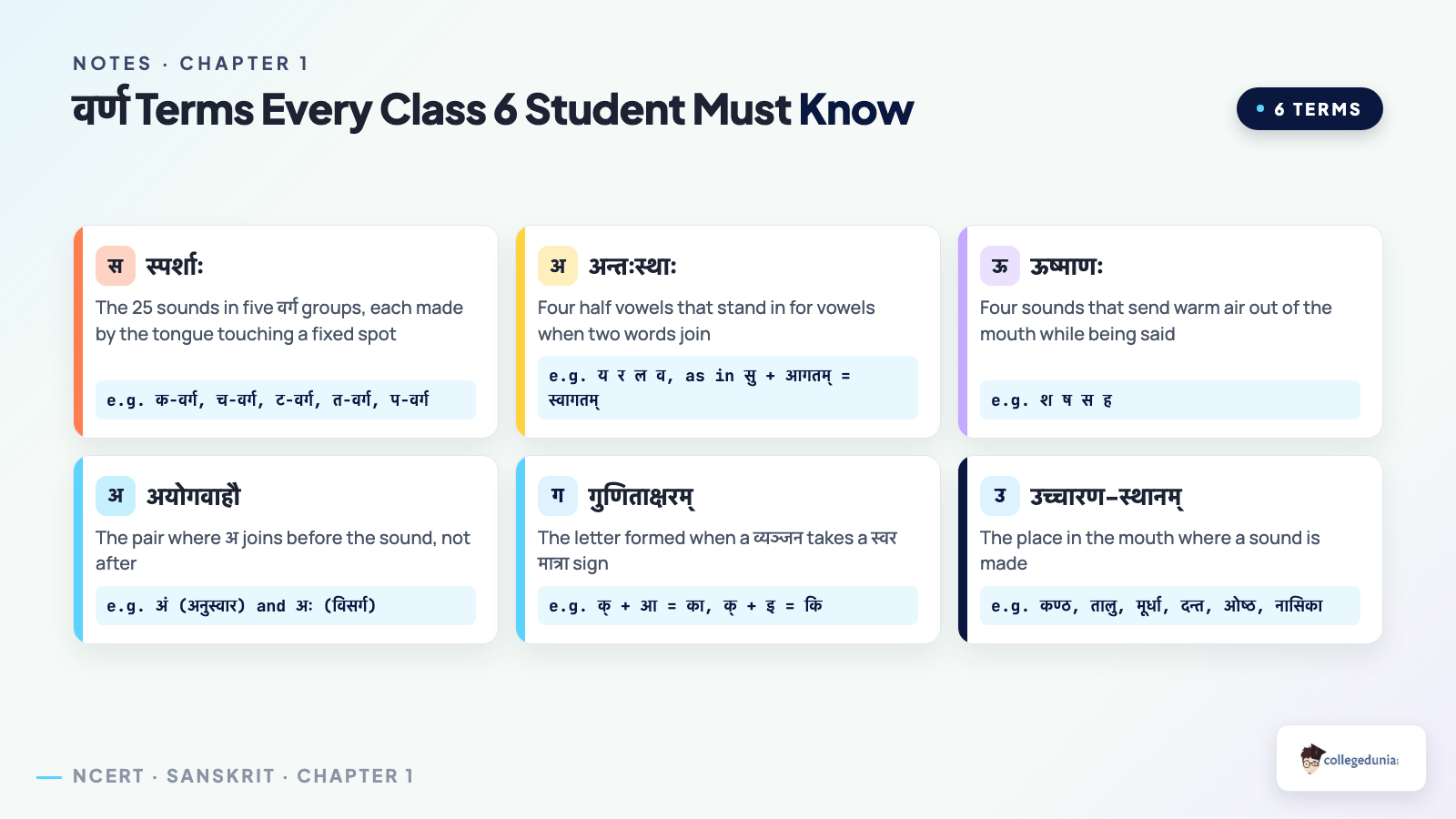
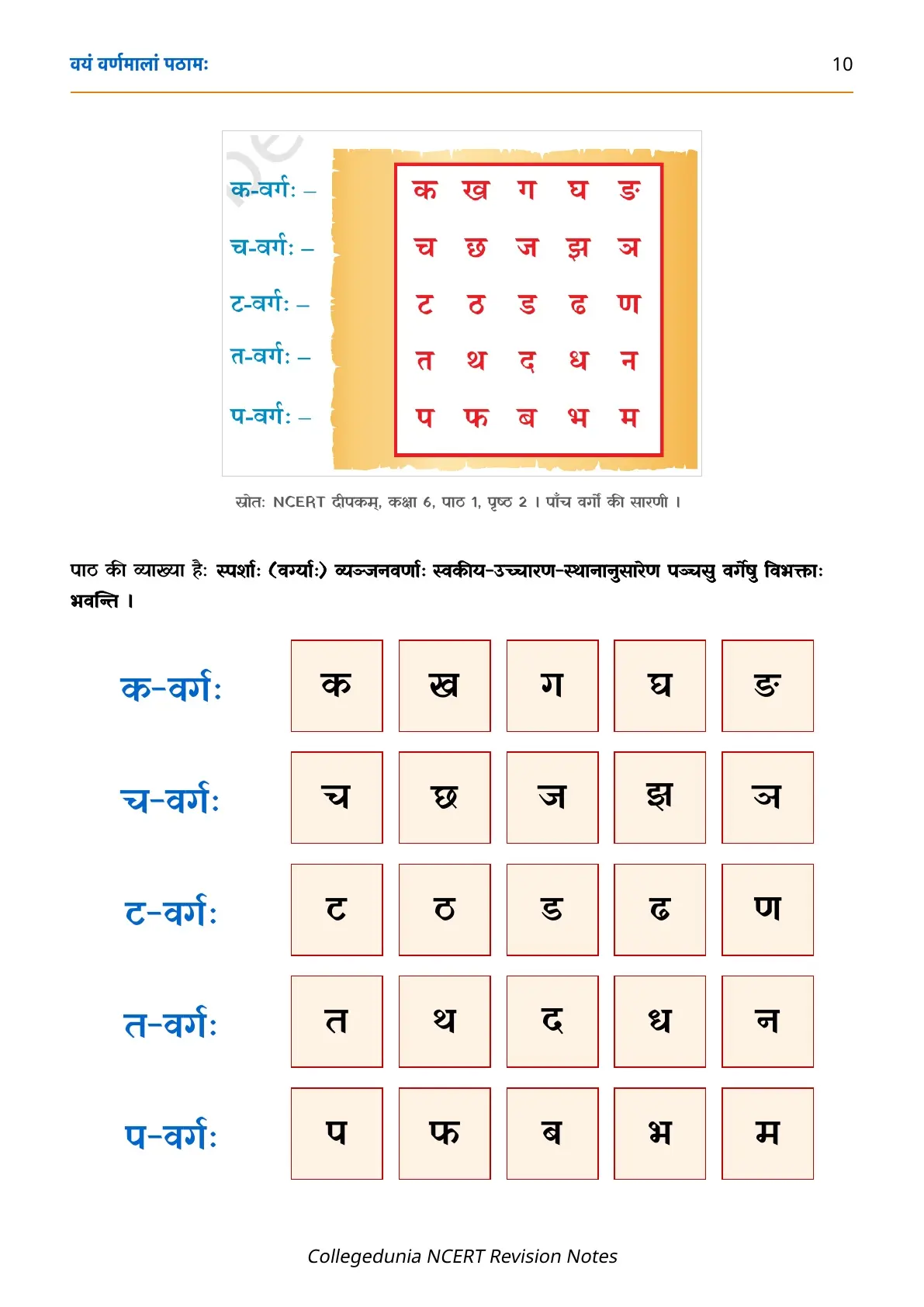
स्पर्श sounds are grouped by where they are made: स्पर्शाः व्यञ्जनवर्णाः स्वकीय-उच्चारण-स्थानानुसारेण पञ्चसु वर्गेषु विभक्ताः भवन्ति. Each वर्ग takes its name from its own first letter and holds exactly five sounds.
| वर्गः | वर्णाः | Last sound |
|---|---|---|
| क-वर्गः | क ख ग घ ङ | ङ, nasal |
| च-वर्गः | च छ ज झ ञ | ञ, nasal |
| ट-वर्गः | ट ठ ड ढ ण | ण, nasal |
| त-वर्गः | त थ द ध न | न, nasal |
| प-वर्गः | प फ ब भ म | म, nasal |
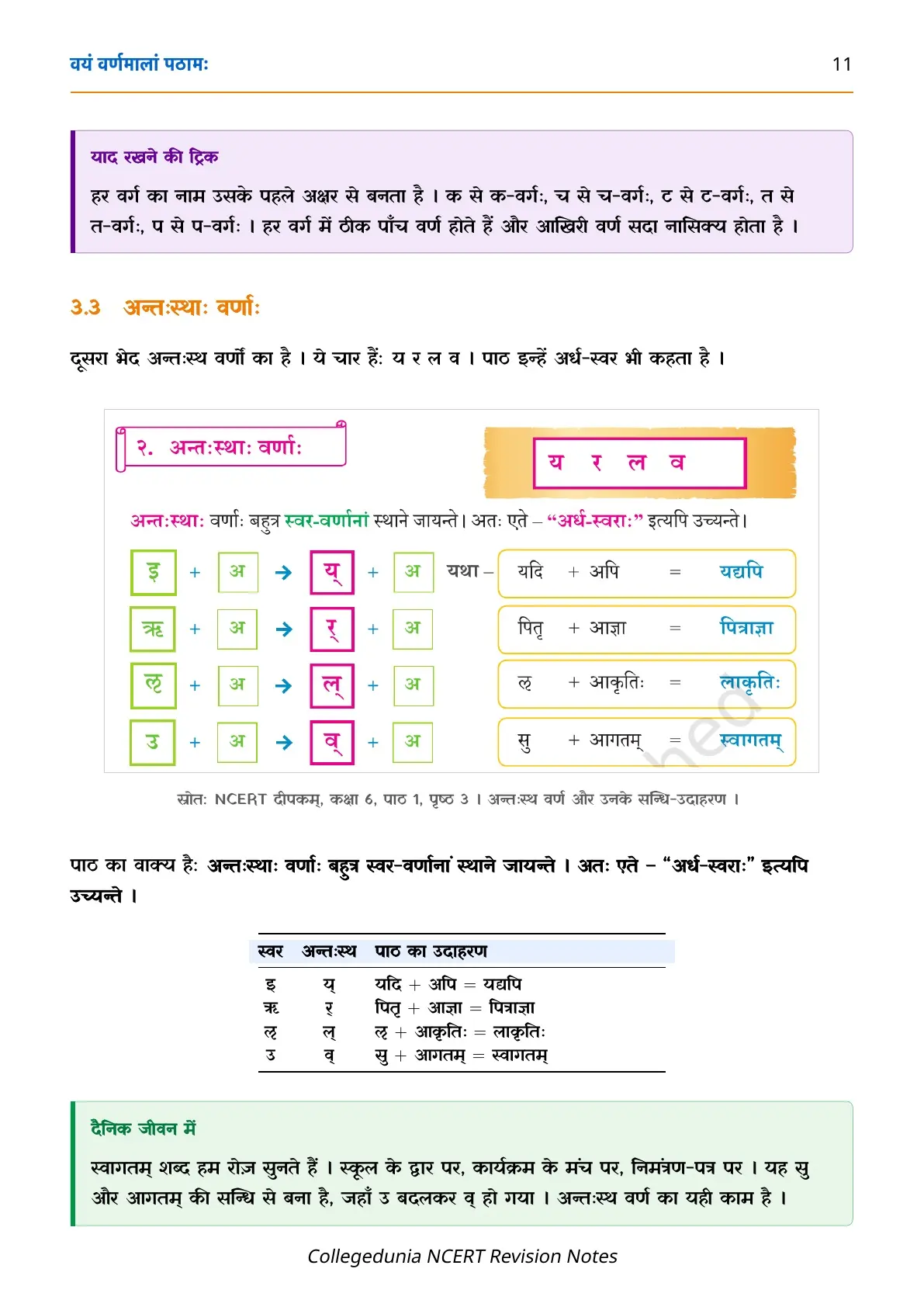
The अन्तःस्थ four are the most useful group in later chapters. The book calls them half vowels because अन्तःस्थाः वर्णाः बहुत्र स्वर-वर्णानां स्थाने जायन्ते. Each one replaces a matching vowel when two words join.
- इ becomes य्: यदि + अपि = यद्यपि
- ऋ becomes र्: पितृ + आज्ञा = पित्राज्ञा
- ऌ becomes ल्: ऌ + आकृतिः = लाकृतिः
- उ becomes व्: सु + आगतम् = स्वागतम्
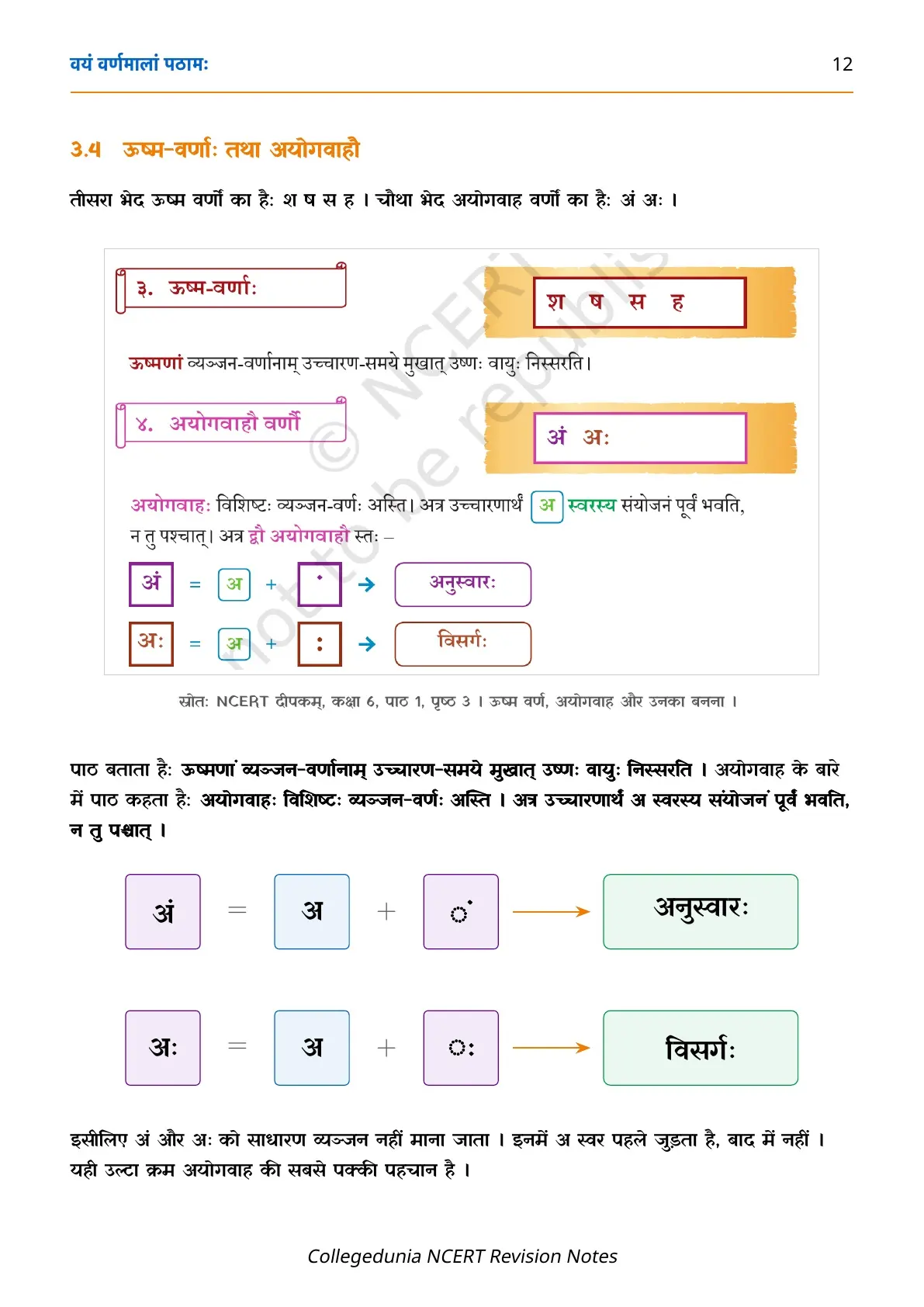
The word स्वागतम् is on every school gate, so this one sticks fast. For the ऊष्म group the book explains ऊष्मणां व्यञ्जन-वर्णानाम् उच्चारण-समये मुखात् उष्णः वायुः निस्सरति. Hold your palm near your mouth while saying श, ष, स, ह and you feel the warm air.
अयोगवाह sounds are the odd pair. The book says अत्र उच्चारणार्थं अ स्वरस्य संयोजनं पूर्वं भवति, न तु पश्चात्. In every other व्यञ्जन the अ is added after, as in क् + अ = क. In अं and अः the अ comes first. That reversed order is the one-line answer examiners want for the अयोगवाह question.
गुणिताक्षराणि: How मात्रा Signs Join व्यञ्जन and स्वर in वयं वर्णमालां पठामः
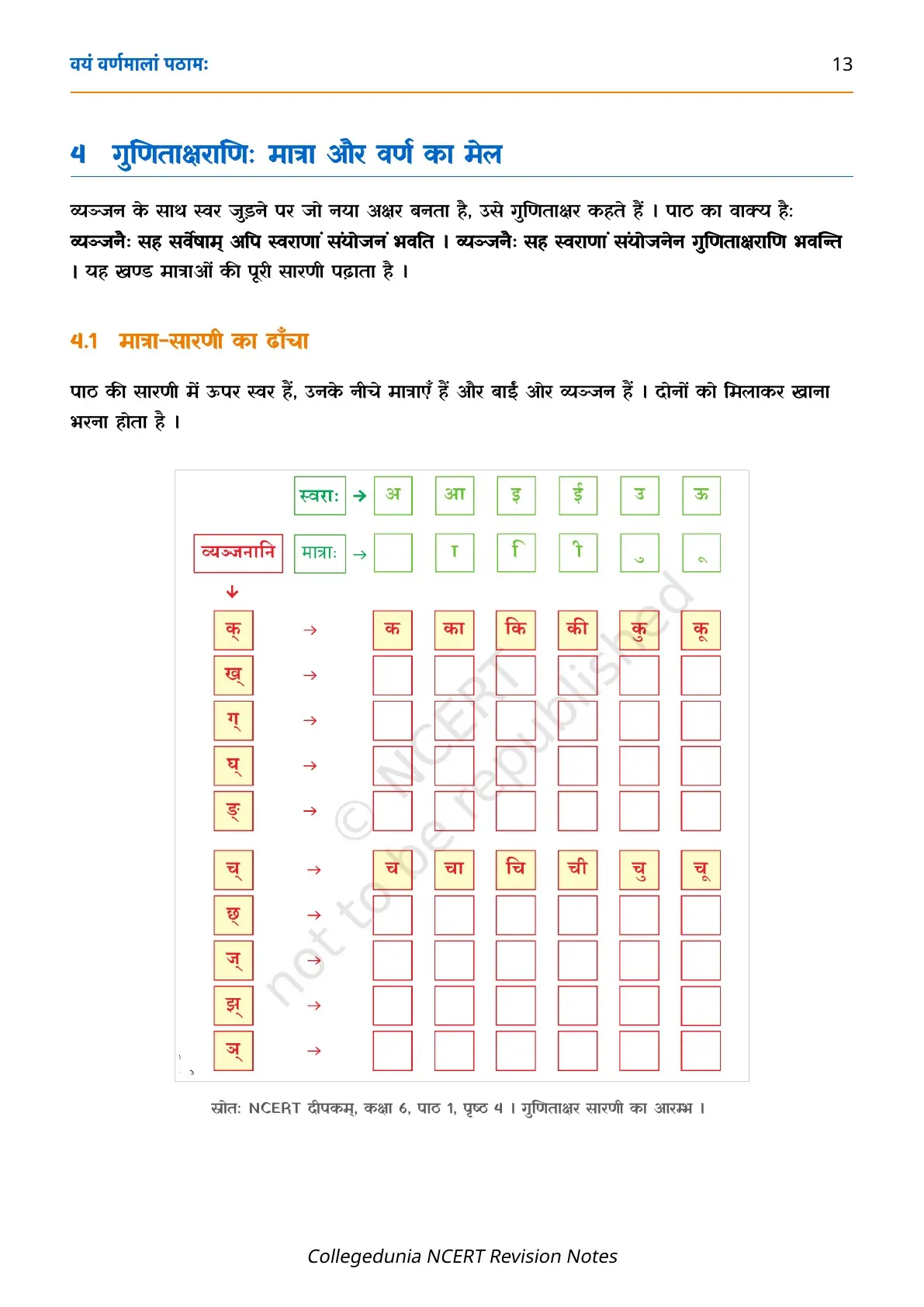
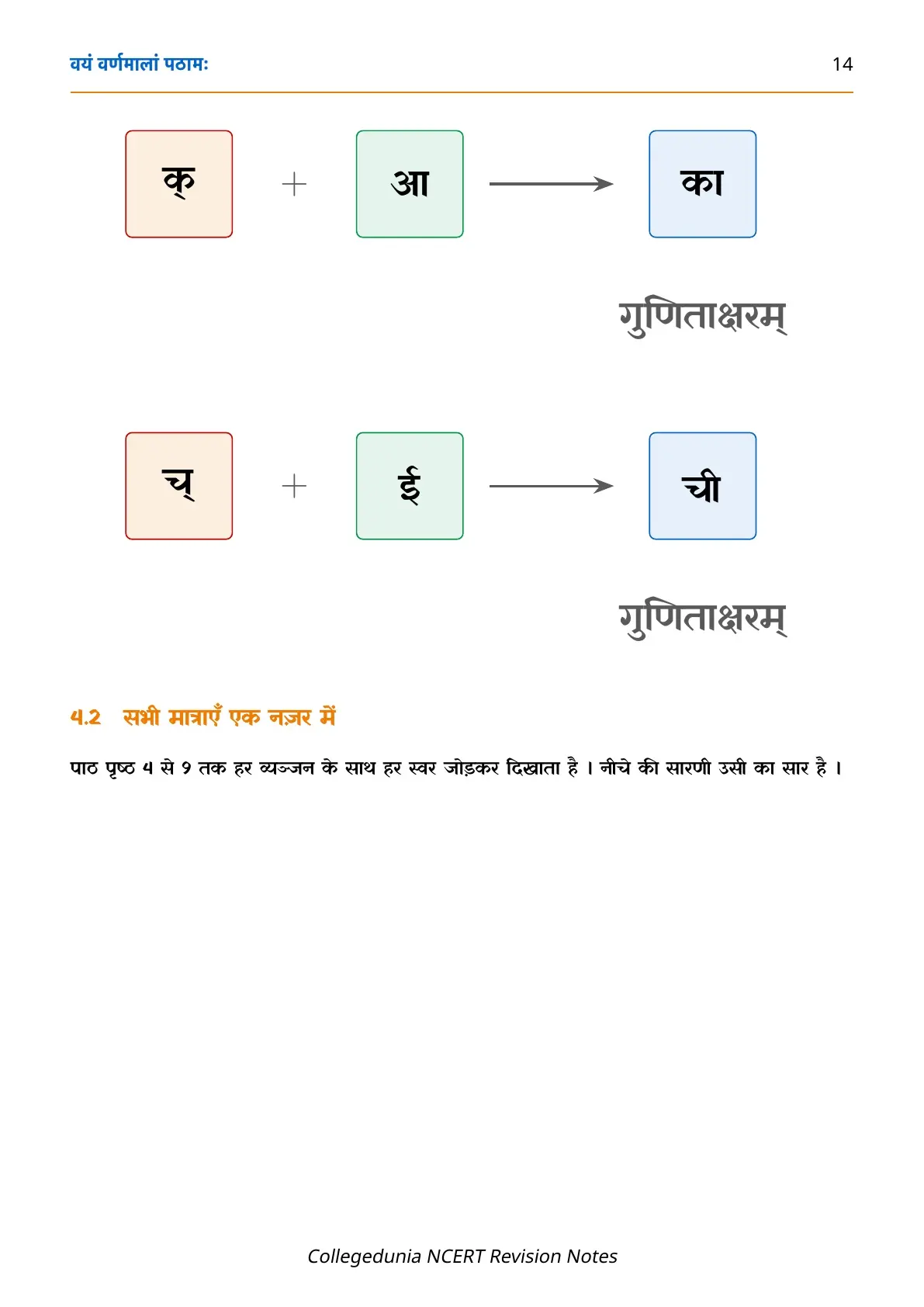
When a consonant takes a vowel, the new letter is a गुणिताक्षर. The book puts it as व्यञ्जनैः सह स्वराणां संयोजनेन गुणिताक्षराणि भवन्ति. Pages 4 to 9 of the textbook run this pairing for every consonant, and the pattern never changes.
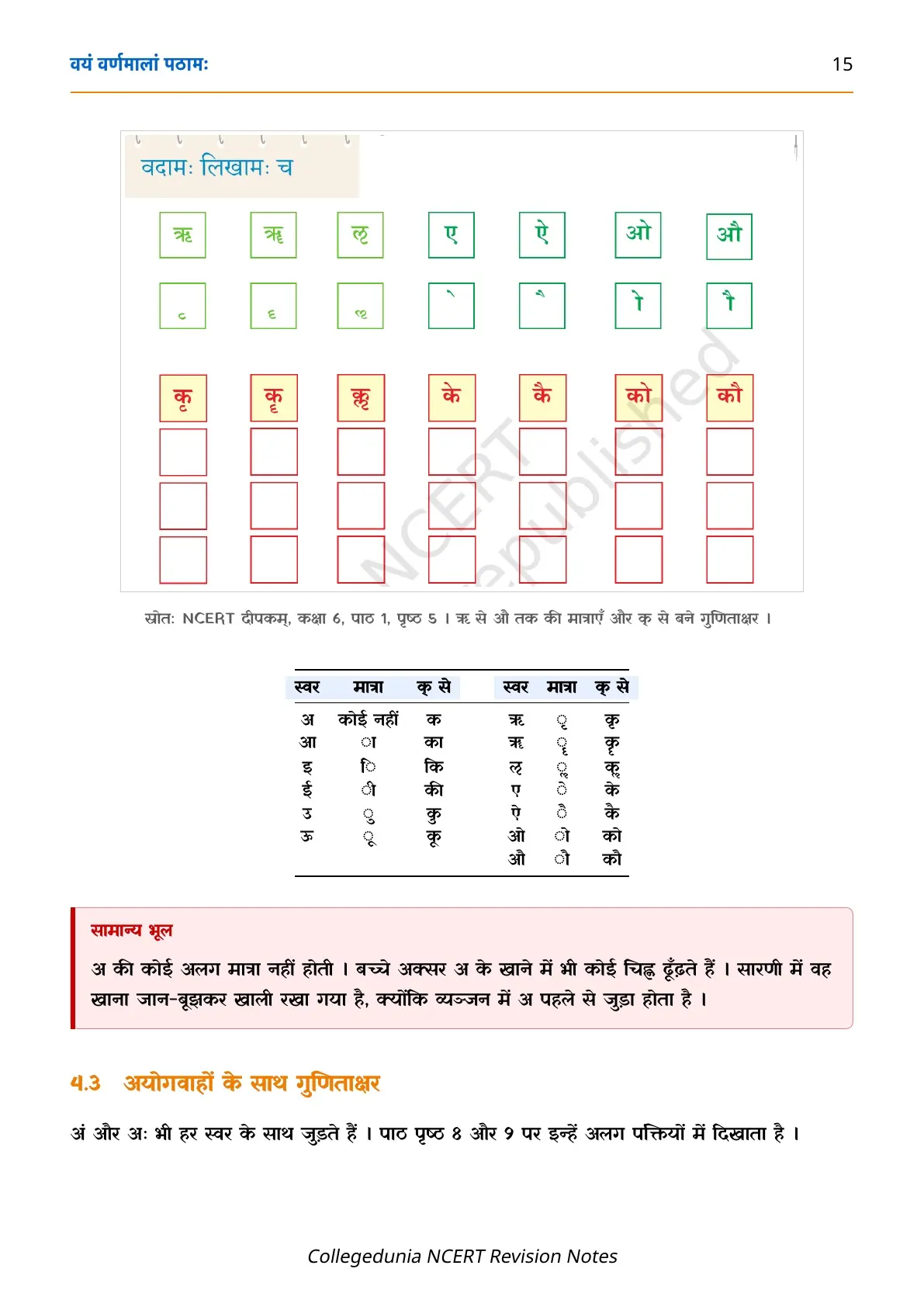
| स्वर | मात्रा | With क् | स्वर | मात्रा | With क् |
|---|---|---|---|---|---|
| अ | no sign | क | ऋ | ृ | कृ |
| आ | ा | का | ॠ | ॄ | कॄ |
| इ | ि | कि | ऌ | ॢ | कॢ |
| ई | ी | की | ए | े | के |
| उ | ु | कु | ऐ | ै | कै |
| ऊ | ू | कू | ओ | ो | को |
| औ | ौ | कौ |
अ has no मात्रा sign of its own. Students hunt for one and lose time. The cell is blank on purpose, because the अ is already inside the printed consonant. The two अयोगवाह signs behave differently again.
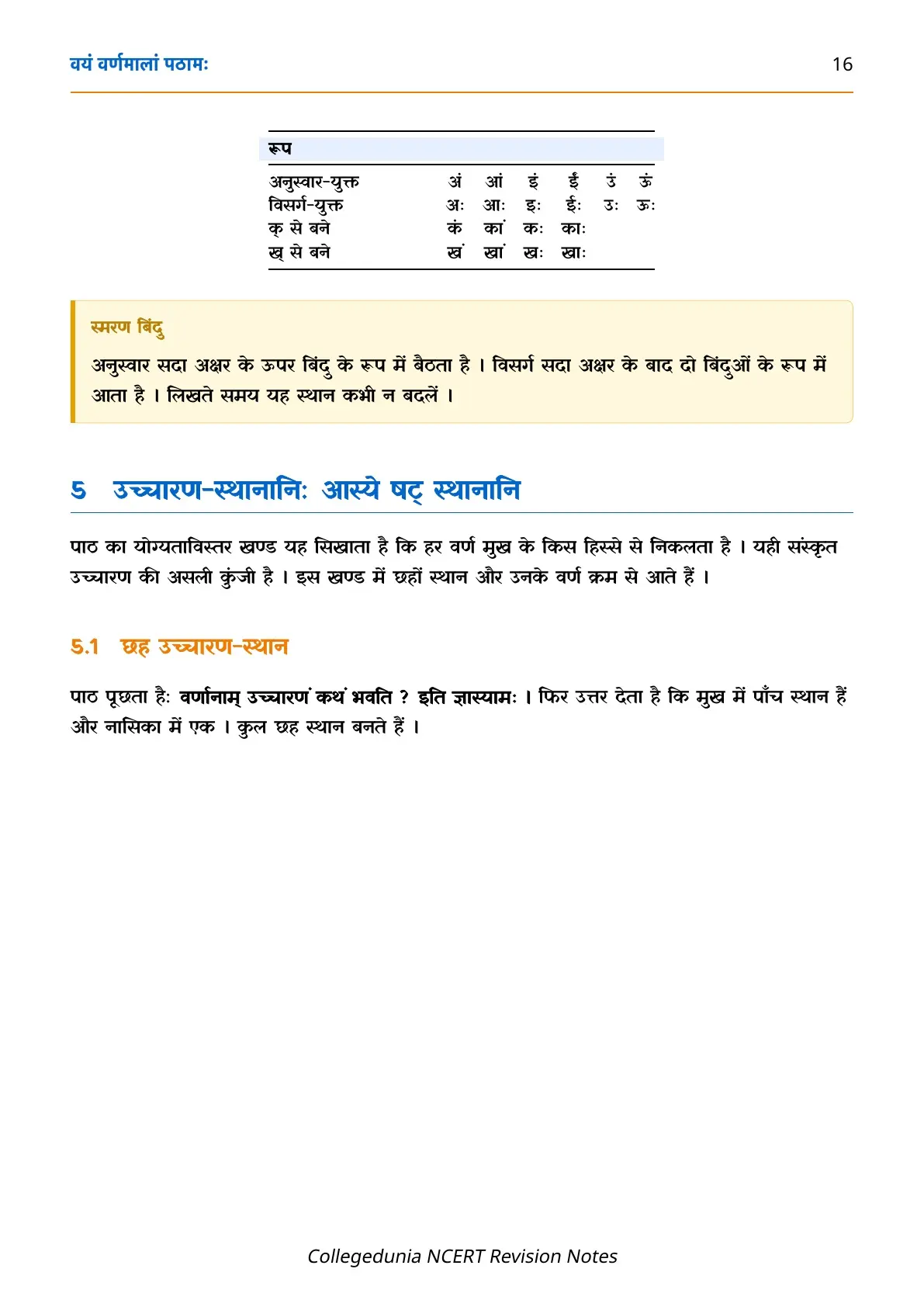
- अनुस्वार sits above the letter as a single dot: कं, कां, खं, खां.
- विसर्ग sits after the letter as two dots: कः, काः, खः, खाः.
- Both attach to every vowel form, which is how अं, आं, इं and अः, आः, इः are built.
उच्चारण-स्थानानि: Six Places in the Mouth That Shape Every Sanskrit Sound
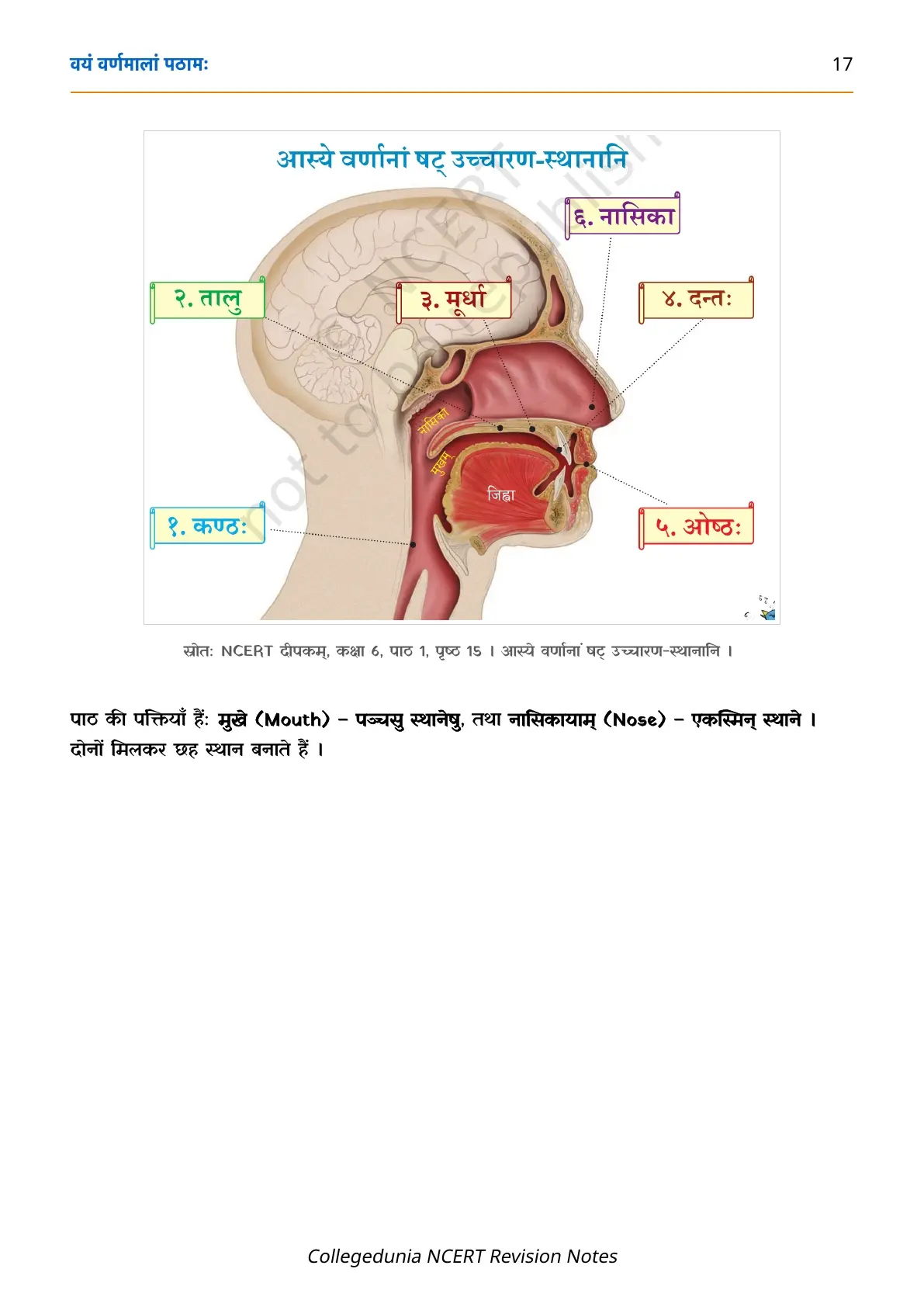
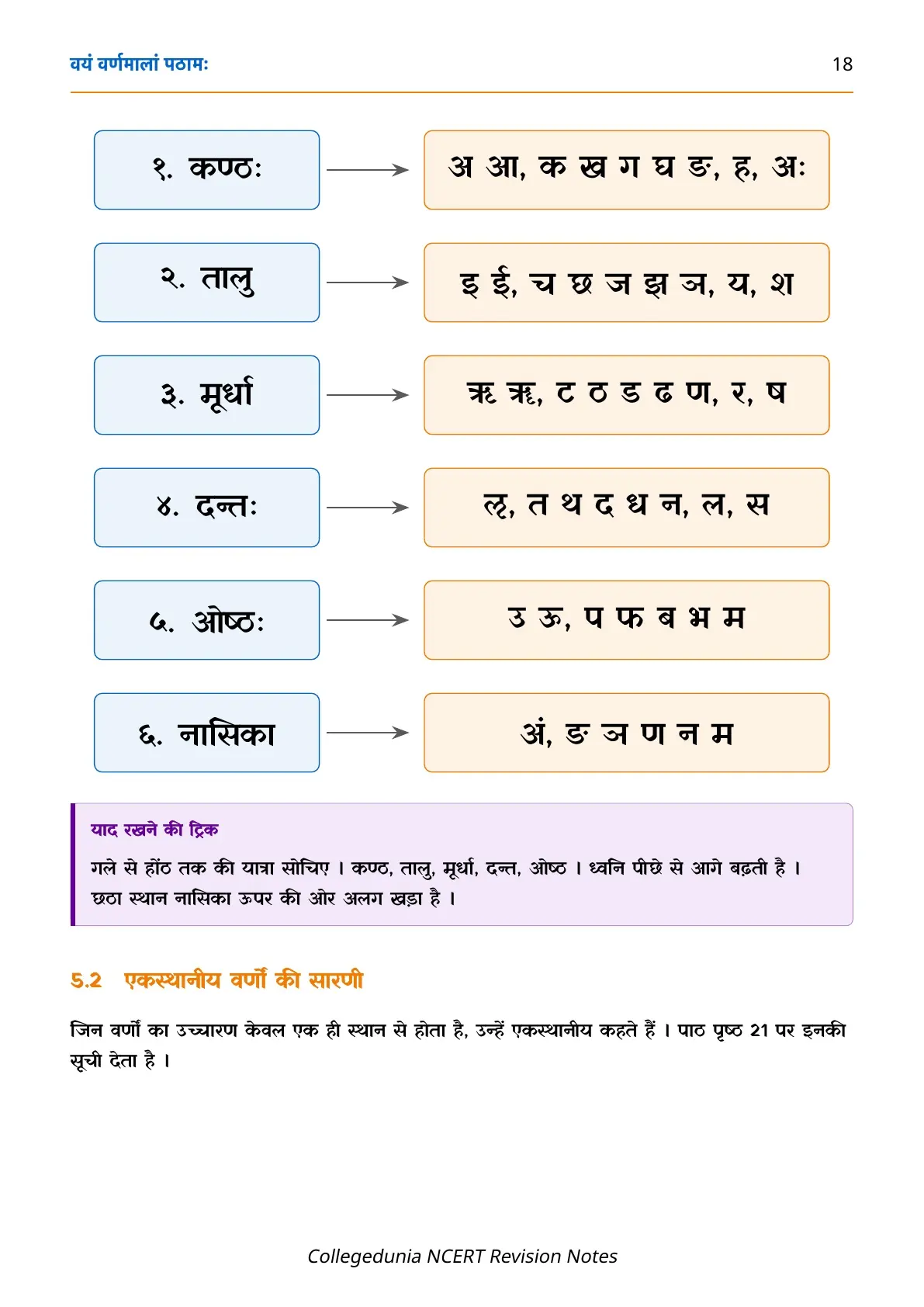
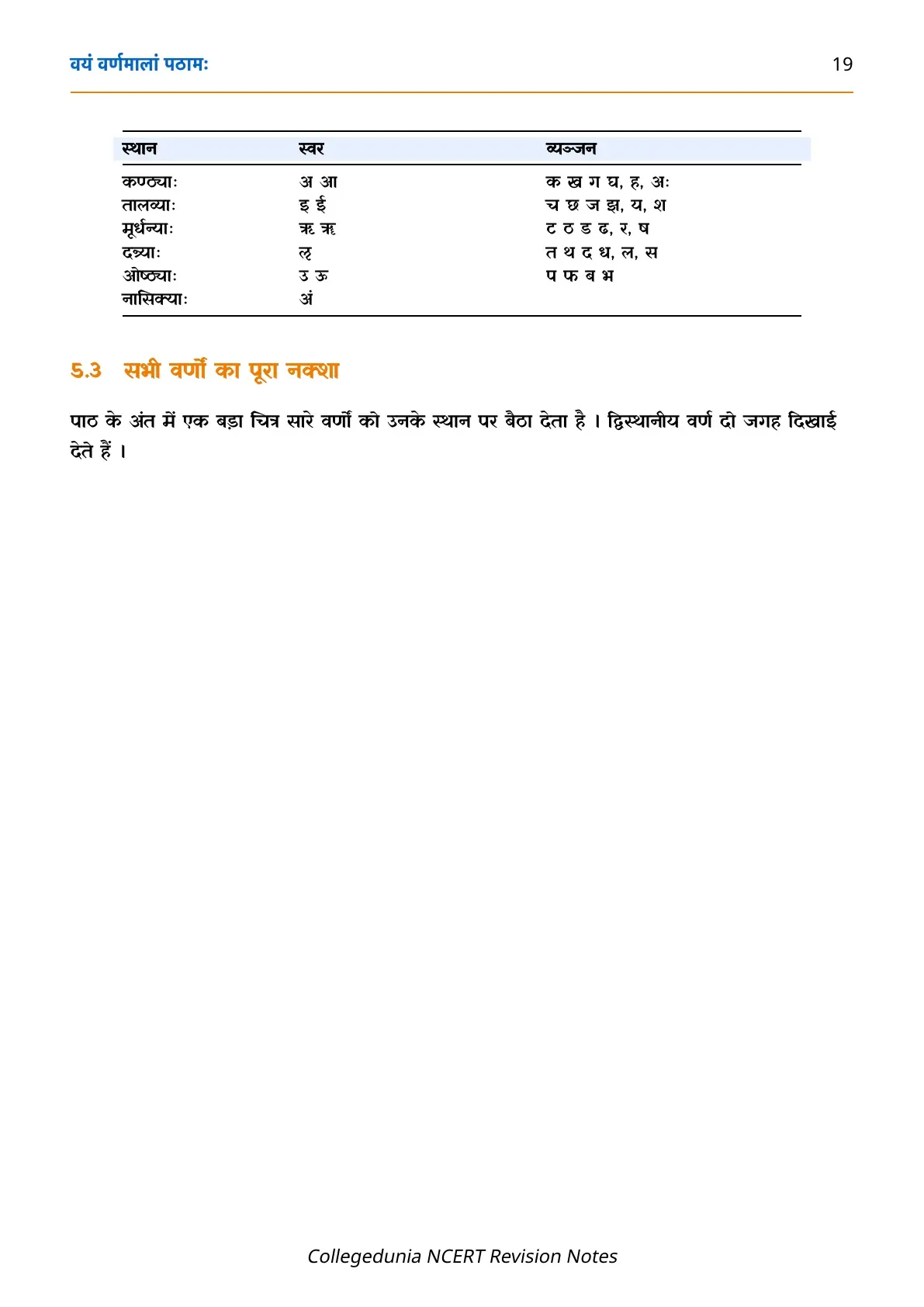
The योग्यताविस्तर part of the chapter asks वर्णानाम् उच्चारणं कथं भवति and then answers it with a map of the mouth. Five places sit inside the mouth and one is the nose, so six in all. This section is where marks are won, because the same table answers four or five different question types.
| स्थानम् | स्वराः | व्यञ्जनानि |
|---|---|---|
| कण्ठः (throat) | अ आ | क ख ग घ ङ, ह, अः |
| तालु (palate) | इ ई | च छ ज झ ञ, य, श |
| मूर्धा (roof ridge) | ऋ ॠ | ट ठ ड ढ ण, र, ष |
| दन्तः (teeth) | ऌ | त थ द ध न, ल, स |
| ओष्ठः (lips) | उ ऊ | प फ ब भ म |
| नासिका (nose) | अं | ङ ञ ण न म |
Read the list from throat to lips and the order becomes a small journey: कण्ठ, तालु, मूर्धा, दन्त, ओष्ठ. The sound moves from the back of the mouth to the front. नासिका stands apart, above the line. Say क and then प one after the other and you can feel the two ends of that journey.
द्विस्थानीय and नासिक्य वर्ण with the पाणिनीय-शिक्षा Sutras Explained
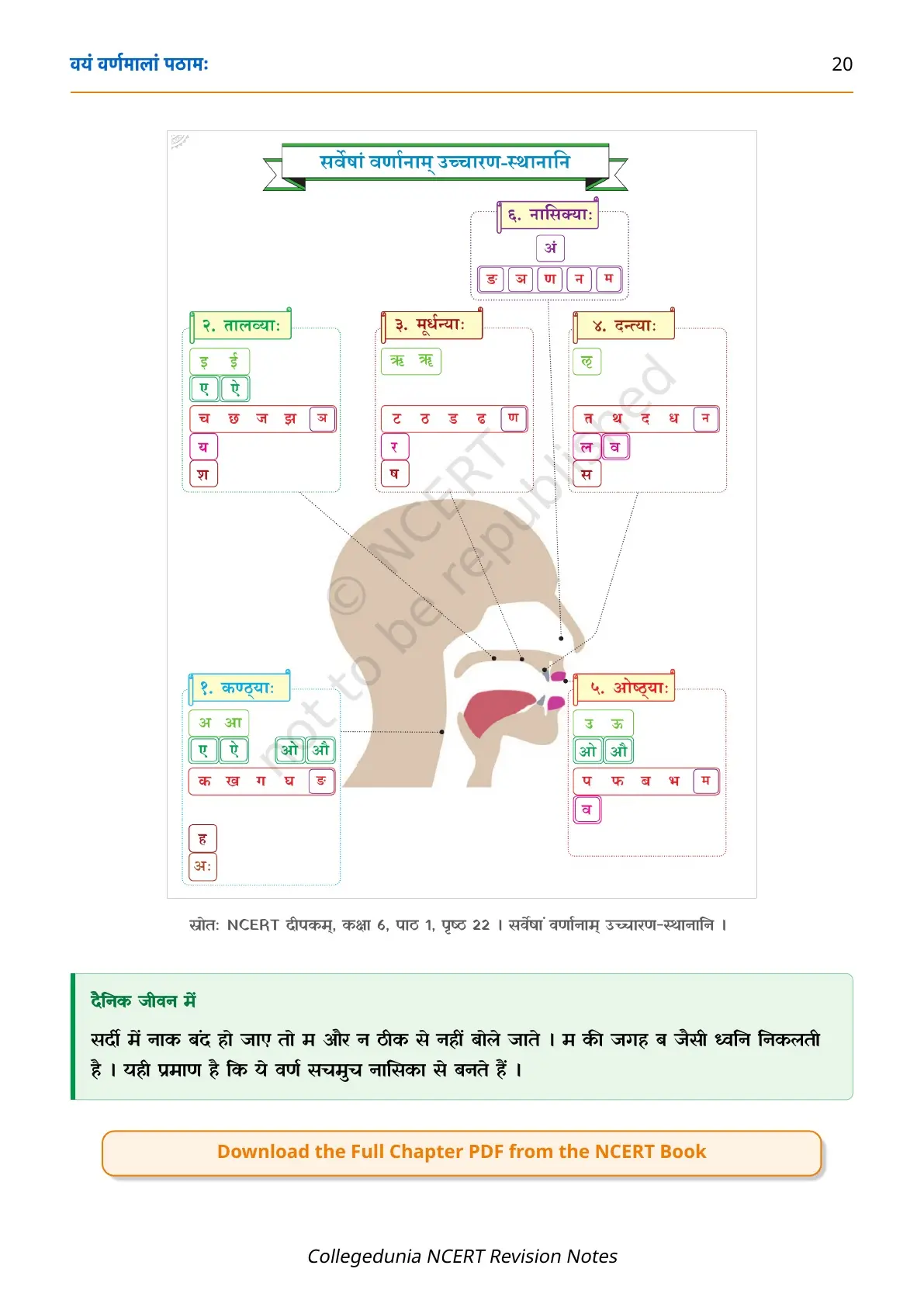
Some sounds are not made at one place. They need two, so the book calls them द्विस्थानीय. These are the sounds that appear twice on the big mouth chart at the end of the chapter, which confuses students until they know the rule.
- ए and ऐ are कण्ठ-तालव्यौ, made at the throat and the palate together.
- ओ and औ are कण्ठोष्ठ्यौ, made at the throat and the lips together.
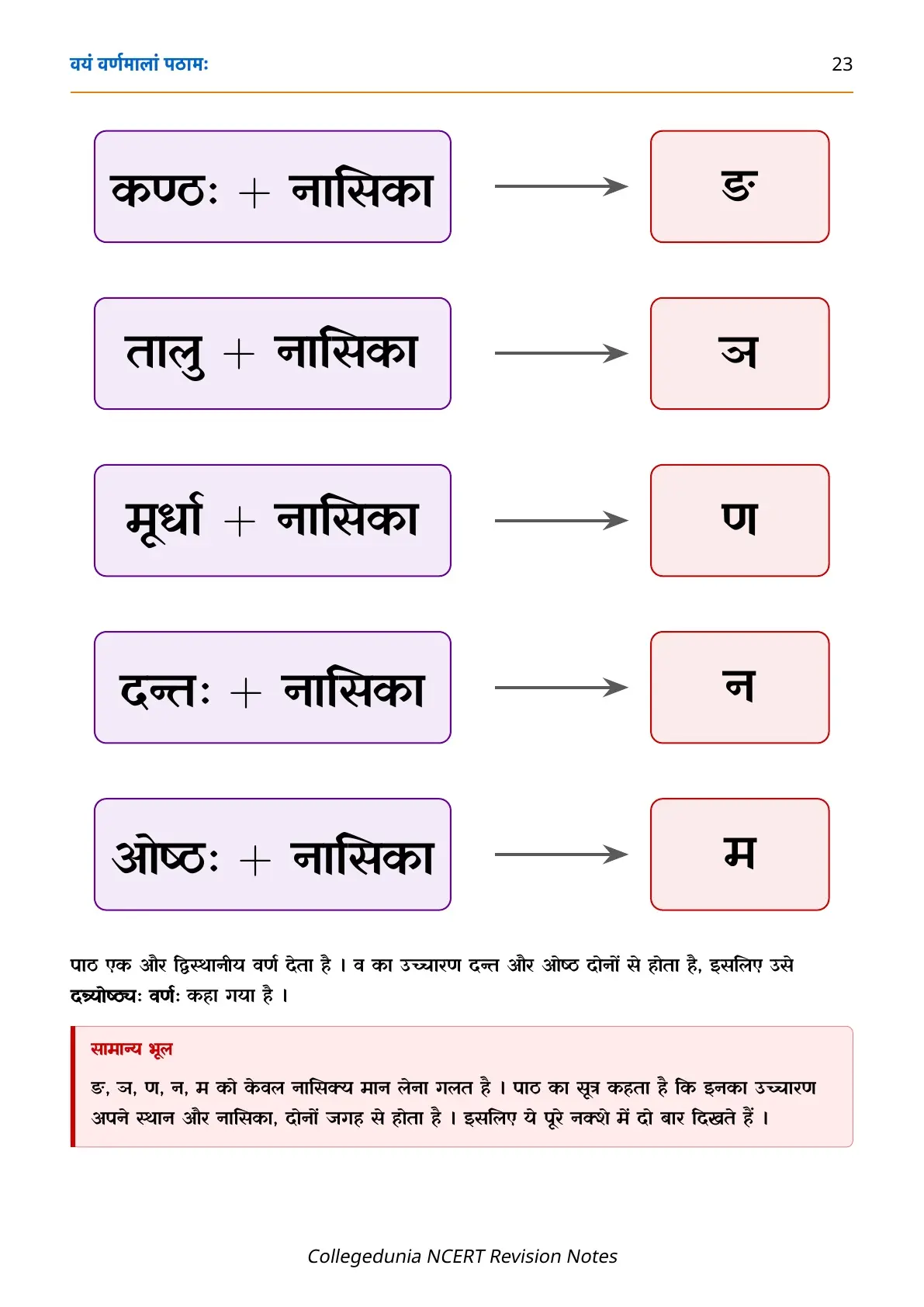
- व is दन्त्योष्ठ्यः, made at the teeth and the lips together.
- ङ ञ ण न म are made at their own वर्ग place and at the nose.
The textbook then hands over the traditional sutras. Each sutra packs a whole row of the table into a few syllables, which is why they are worth memorising word for word.
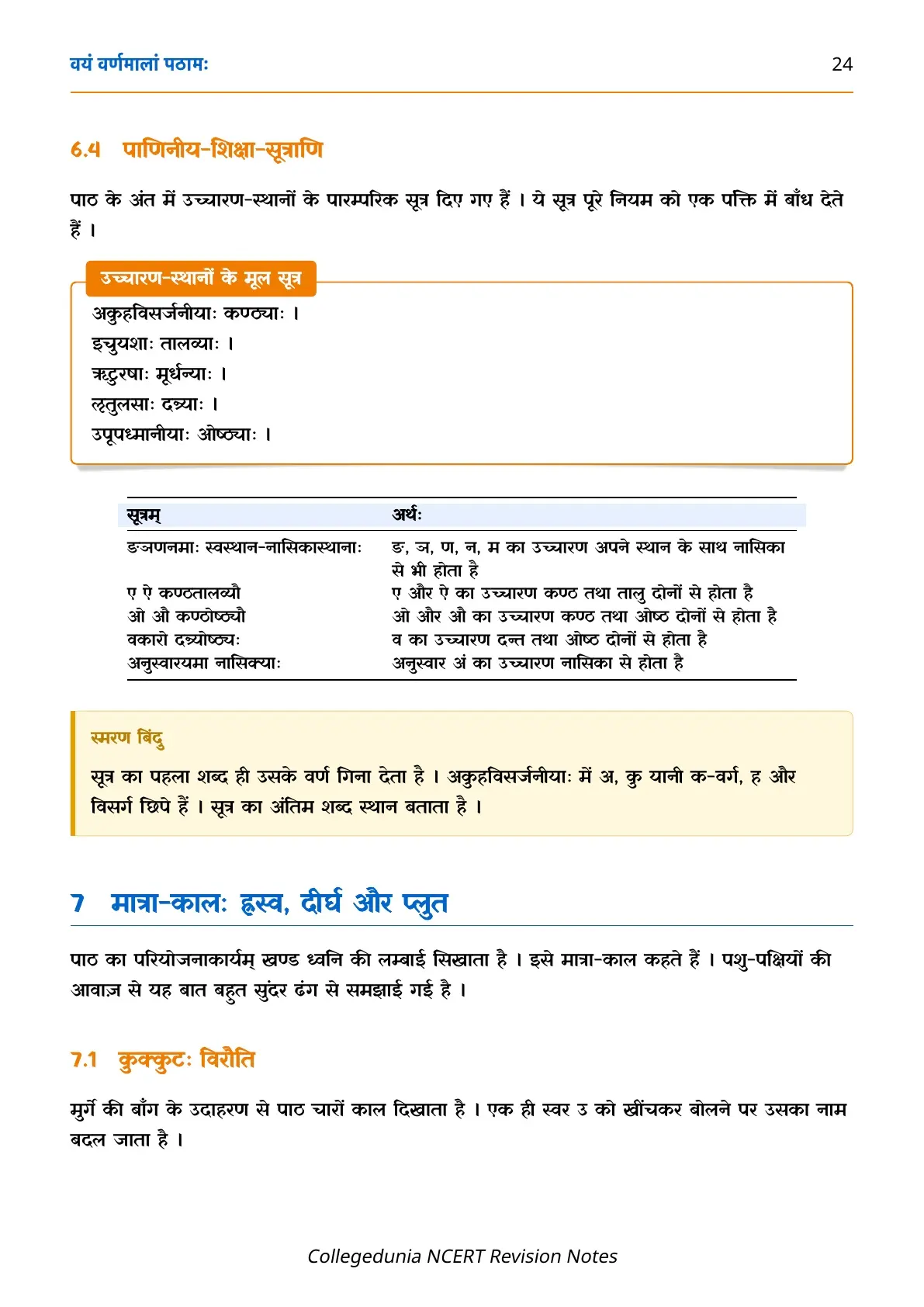
| सूत्रम् | What it means |
|---|---|
| अकुहविसर्जनीयाः कण्ठ्याः | अ, the क-वर्ग, ह and विसर्ग come from the throat |
| इचुयशाः तालव्याः | इ, the च-वर्ग, य and श come from the palate |
| ऋटुरषाः मूर्धन्याः | ऋ, the ट-वर्ग, र and ष come from the roof ridge |
| ऌतुलसाः दन्त्याः | ऌ, the त-वर्ग, ल and स come from the teeth |
| उपूपध्मानीयाः ओष्ठ्याः | उ, the प-वर्ग and उपध्मानीय come from the lips |
| ङञणनमाः स्वस्थान-नासिकास्थानाः | The five nasal sounds use their own place and the nose |
The trick is to read the first word of each sutra as a list. In अकुहविसर्जनीयाः you can see अ, कु (the whole क-वर्ग), ह and विसर्जनीय. The last word always names the place. Once you spot that pattern, all five sutras take about ten minutes to learn.
मात्रा-काल in वयं वर्णमालां पठामः: ह्रस्व, दीर्घ and प्लुत with the Bird Shloka
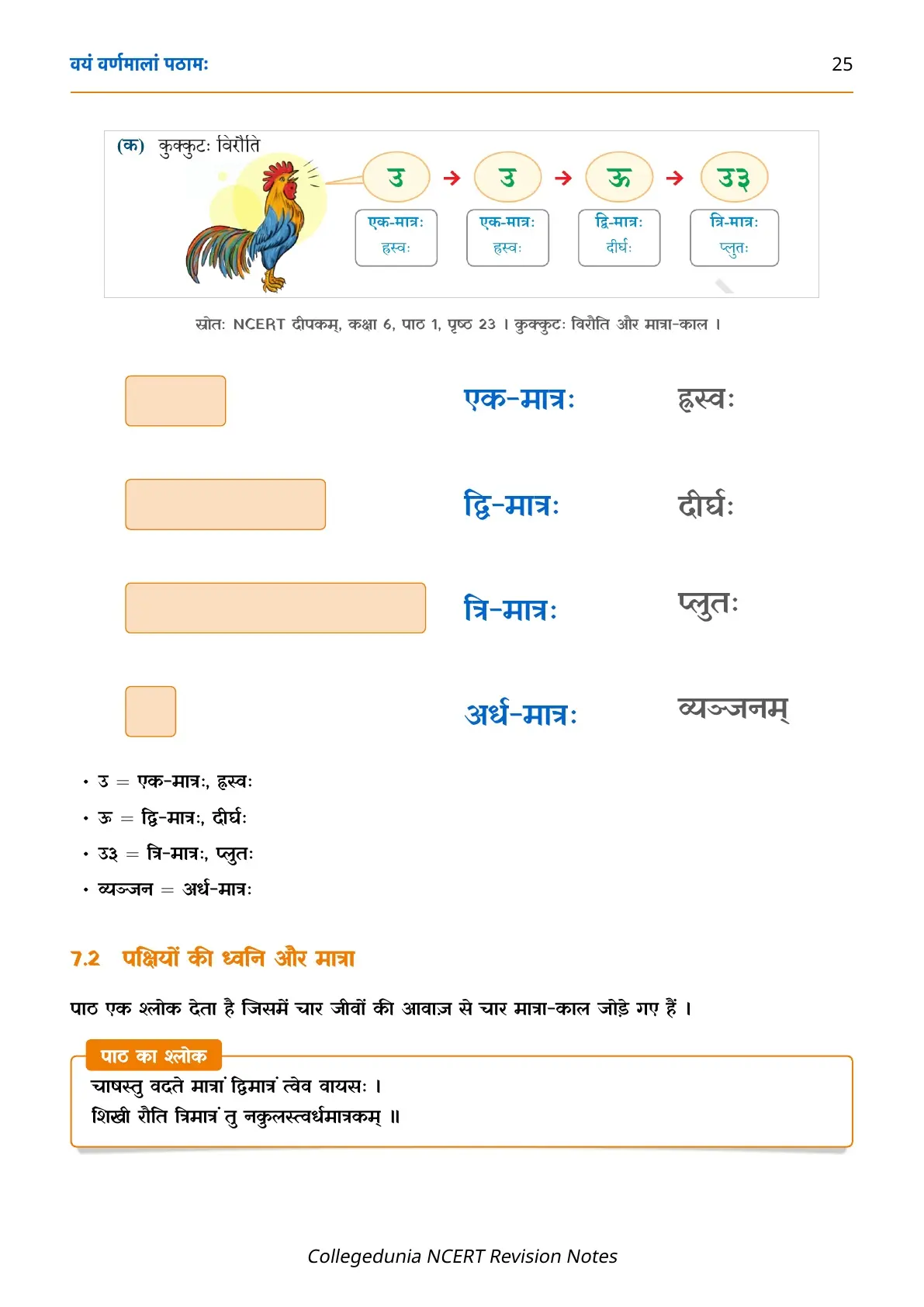
The परियोजनाकार्यम् part of the chapter teaches how long a sound is held. This is called मात्रा-काल. The book uses a rooster crowing, कुक्कुटः विरौति, to stretch one vowel through all four lengths.
- उ is एक-मात्रः, a ह्रस्व sound.
- ऊ is द्वि-मात्रः, a दीर्घ sound.
- उ३ is त्रि-मात्रः, a प्लुत sound.
- A plain व्यञ्जन is अर्ध-मात्रः, half a beat.
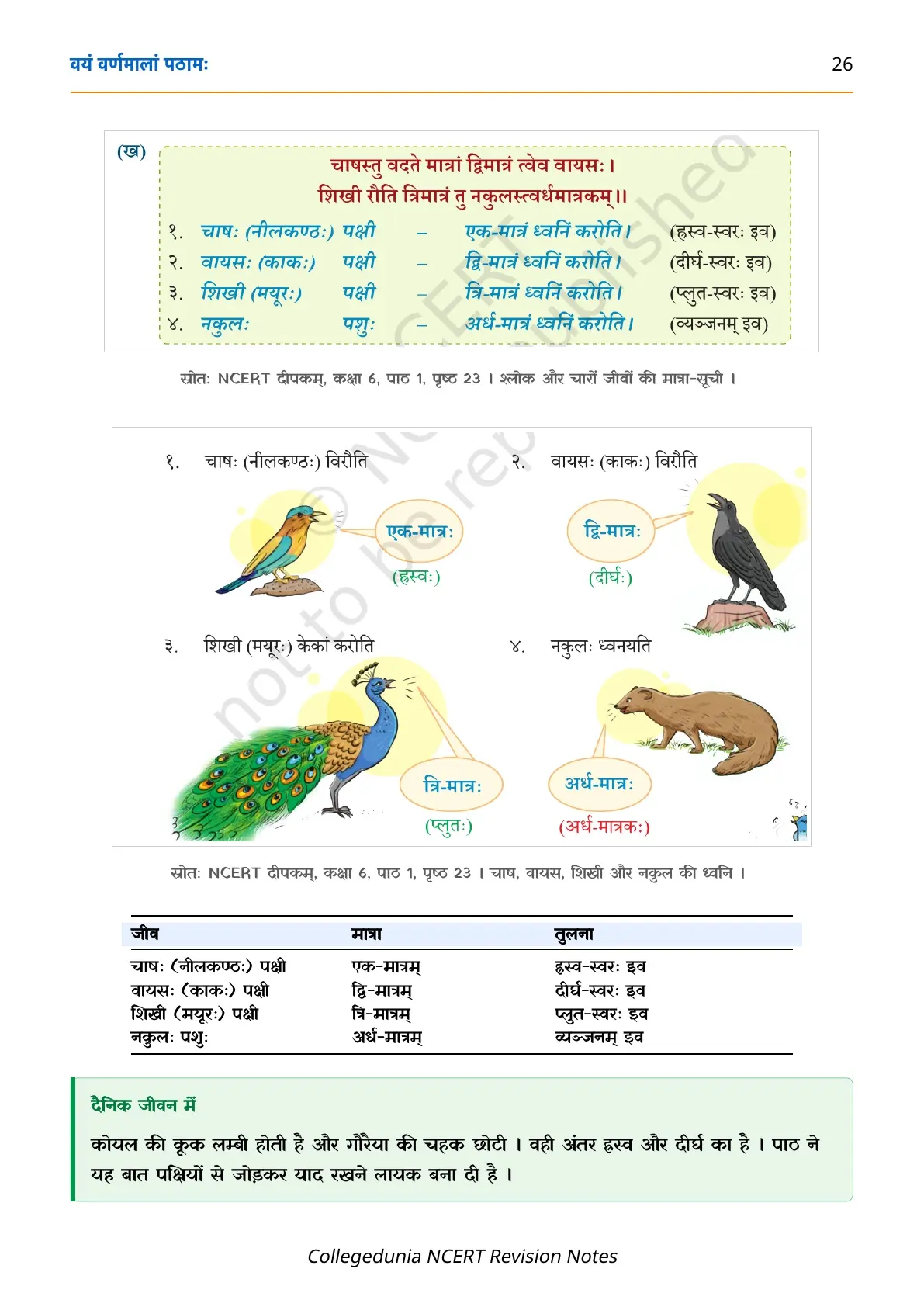
Then comes the shloka that ties four creatures to those four lengths: चाषस्तु वदते मात्रां द्विमात्रं त्वेव वायसः, शिखी रौति त्रिमात्रं तु नकुलस्त्वर्धमात्रकम्. It is short, and Class 6 papers ask for it as a fill-in-the-blank almost every year.
| जीवः | मात्रा | Same as |
|---|---|---|
| चाषः, the blue jay | एक-मात्रम् | a ह्रस्व vowel |
| वायसः, the crow | द्वि-मात्रम् | a दीर्घ vowel |
| शिखी, the peacock | त्रि-मात्रम् | a प्लुत vowel |
| नकुलः, the mongoose | अर्ध-मात्रम् | a plain व्यञ्जन |
Count them as half, one, two, three and the order stays fixed: नकुल, चाष, वायस, शिखी. The koel's long call and the sparrow's short chirp make the same point outside the classroom.
शब्दार्थ and the Six Exercises in the वयं वर्णमालां पठामः Chapter
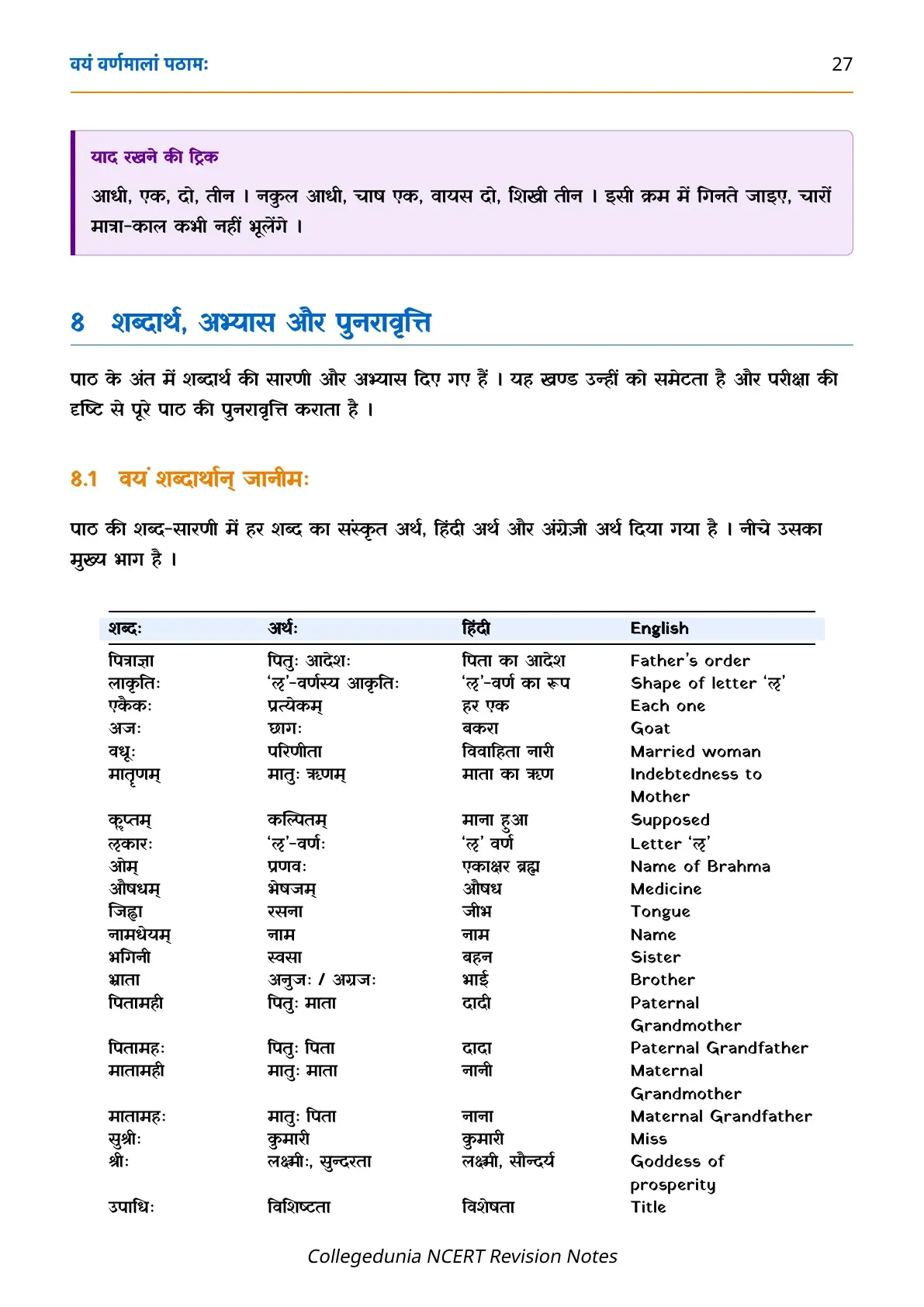
The chapter closes with a शब्दार्थ table and six exercises. The word list gives each term in Sanskrit, Hindi and English, and most of it is family vocabulary that returns in later chapters.
| शब्दः | अर्थः | English |
|---|---|---|
| पितामहः / पितामही | पितुः पिता / पितुः माता | Paternal grandfather / grandmother |
| मातामहः / मातामही | मातुः पिता / मातुः माता | Maternal grandfather / grandmother |
| भ्राता / भगिनी | अनुजः अग्रजः वा / स्वसा | Brother / sister |
| वधूः | परिणीता | Married woman |
| कुल-नाम | कुलस्य गोत्रस्य वा नाम | Family name |
| ओम् | प्रणवः | The one-syllable name of Brahma |
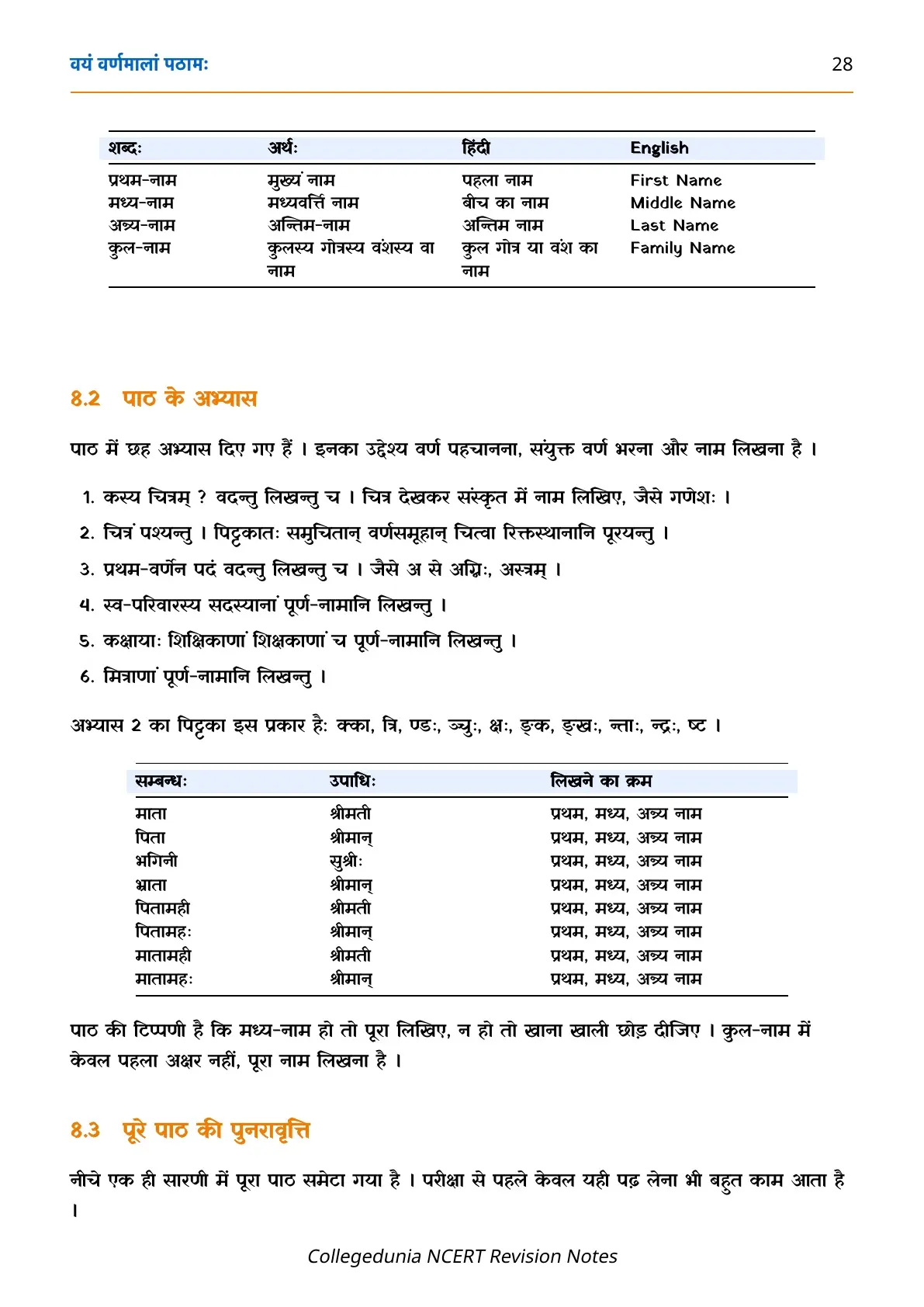
The six exercises move from picture reading to writing full names in Sanskrit, so they are easy to finish once the tables are learnt.
- Name the picture in Sanskrit, for example गणेशः.
- Fill blanks from the पिट्टका box: क्का, त्रि, ण्डः, ञ्चुः, क्षः, ङ्क, ङ्खः, न्ताः, न्द्रः, ष्ट.
- Say and write a word starting with a given letter, such as अ for अग्निः.
- Write the full names of family members, teachers and friends in Sanskrit.
For the name exercises the book asks for a fixed order: उपाधि, then प्रथम-नाम, then मध्य-नाम, then कुल-नाम. Use श्रीमान् for men and boys and श्रीमती for married women, and सुश्रीः for an unmarried girl. If there is no middle name, leave that column empty rather than repeating the family name.
Common Mistakes Students Make in the वयं वर्णमालां पठामः Chapter
- Dropping विसर्ग and अनुस्वार. वर्णाः, स्वराः and व्यञ्जनानि change meaning without them, and the marker cuts the mark.
- Writing ॡ as the long form of ऌ. The वर्णमाला table has no long ऌ. ॡ shows up only as a मात्रा form.
- Calling ङ ञ ण न म nasal only. They are made at their own place and at the nose, so they appear twice on the chart.
- Mixing up अनुस्वार and विसर्ग placement. One dot above, two dots after. Never the other way round.
- Counting ए ऐ ओ औ as short vowels. सन्ध्यक्षराणां ह्रस्वाः न सन्ति, so all four are always long.
What the Class 6 Sanskrit वयं वर्णमालां पठामः Notes PDF Contains
The downloadable PDF above is the printable version of everything on this page, set for the 2026-27 session. It runs across 29 pages and is built for a single sitting of revision the night before a test.
- Labelled charts for the स्वर and व्यञ्जन split, the five वर्ग grid and the six उच्चारण-स्थान.
- The full गुणिताक्षर table with every मात्रा sign shown next to its vowel.
- All five पाणिनीय-शिक्षा sutras with plain-language meanings beside them.
- Memory boxes, common-mistake alerts and a one-page revision table of the whole chapter.
How to Use the वयं वर्णमालां पठामः Notes Page Most Effectively
This chapter is learnt by saying it aloud, not by reading it silently. Three short sittings work better than one long one, because the mouth needs practice as much as the memory does.
- Sitting one, about 20 minutes. Say all 13 स्वराः aloud in order, then the five वर्ग rows. Mark the short and long pairs as you go.
- Sitting two, about 25 minutes. Copy the गुणिताक्षर table for क् and one more consonant of your choice. Add अं and अः rows at the end.
- Sitting three, about 20 minutes. Cover the उच्चारण-स्थान table and rebuild it from the five sutras alone. Check, then fix only what you missed.
Finish by writing your own full name and two family names in Sanskrit with the correct उपाधि. That single exercise uses the alphabet, the मात्रा signs and the शब्दार्थ list together, which is exactly how the annual paper tests this chapter.
FAQs on Class 6 Sanskrit वयं वर्णमालां पठामः Notes
Quick answers on the Sanskrit वर्णमाला for Class 6
Ques. What does वयं वर्णमालां पठामः mean?
Ans. It means "we read the alphabet". It is the first chapter of the Class 6 Sanskrit दीपकम् textbook and it introduces every sound of the Sanskrit वर्णमाला, along with the place in the mouth where each sound is made.
Ques. How many स्वराः and व्यञ्जनानि are there in the Sanskrit वर्णमाला?
Ans. The chapter lists 13 स्वराः: अ आ इ ई उ ऊ ऋ ॠ ऌ ए ऐ ओ औ. The व्यञ्जनानि run from क् to ह् and are sorted into four groups, the 25 स्पर्श sounds, the four अन्तःस्थ sounds, the four ऊष्म sounds and the two अयोगवाह sounds अं and अः.
Ques. What is the difference between समानाक्षर and सन्ध्यक्षर vowels?
Ans. समानाक्षर vowels are the plain vowels at the start of the alphabet, from अ to ऌ. सन्ध्यक्षर vowels are new vowels formed when two vowels join, so अ + इ gives ए and अ + उ gives ओ. The four सन्ध्यक्षर vowels ए, ऐ, ओ and औ have no short forms.
Ques. What are the four भेद of व्यञ्जन in this chapter?
Ans. They are स्पर्शाः, the 25 sounds in five वर्ग groups from क to म; अन्तःस्थाः, the four half vowels य र ल व; ऊष्माणः, the four warm-air sounds श ष स ह; and अयोगवाहौ, the pair अं and अः.
Ques. What are गुणिताक्षराणि?
Ans. A गुणिताक्षर is the letter formed when a व्यञ्जन takes a स्वर, as in क् + आ = का. Every vowel except अ adds a मात्रा sign, and अ needs no sign because it is already present inside the printed consonant.
Ques. What are the six उच्चारण-स्थान of Sanskrit sounds?
Ans. कण्ठ, तालु, मूर्धा, दन्त and ओष्ठ sit inside the mouth, and नासिका is the sixth place. Sounds move from the back of the mouth to the front in that order, and the five पाणिनीय-शिक्षा sutras list which वर्ण belongs to each place.
Ques. Why are अं and अः called अयोगवाह?
Ans. In every other व्यञ्जन the अ sound is added after the consonant, as in क् + अ = क. In अं and अः the अ joins before the sound instead. That reversed order is why the textbook treats them as a separate group.
Ques. What is मात्रा-काल and how does the bird shloka explain it?
Ans. मात्रा-काल is how long a sound is held. The shloka gives one beat to the चाष, two to the वायस, three to the शिखी and half a beat to the नकुल. Those four match ह्रस्व, दीर्घ, प्लुत and a plain व्यञ्जन.
Ques. Which vowel has no long form in the chapter?
Ans. ऌ has no long form. The textbook footnote says ऌ-वर्णस्य दीर्घाः न सन्ति, so the दीर्घ cell for ऌ stays blank in the वर्णमाला table. ॡ appears only as a मात्रा form in the गुणिताक्षर table.
Ques. Are these Class 6 Sanskrit notes based on the 2026-27 syllabus?
Ans. Yes. Every definition, table and sutra on this page follows the 2026-27 print of the NCERT दीपकम् textbook for Class 6 Sanskrit, including the शब्दार्थ list and all six exercises at the end of the chapter.



Comments