



Inside the NCERT Class 7 Science notes for Light: Shadows and Reflections, you will find material comparisons, shadow activities and plane-mirror image properties. These notes follow Chapter 11 of Curiosity for the 2026-27 session. Use the PDF to revise observations before explaining why shadows change size or a pinhole image appears upside down.
- Compare transparent, translucent and opaque materials using familiar objects.
- Revise reflection, lateral inversion, pinhole cameras, periscopes and kaleidoscopes.
- Practise diagrams and explanations for school assessments; marks depend on your school's question paper.
Collegedunia's notes follow the concepts and activities in the NCERT Curiosity Chapter 11 reprint for 2026-27.
Light Sources and Materials: What You Need to Remember
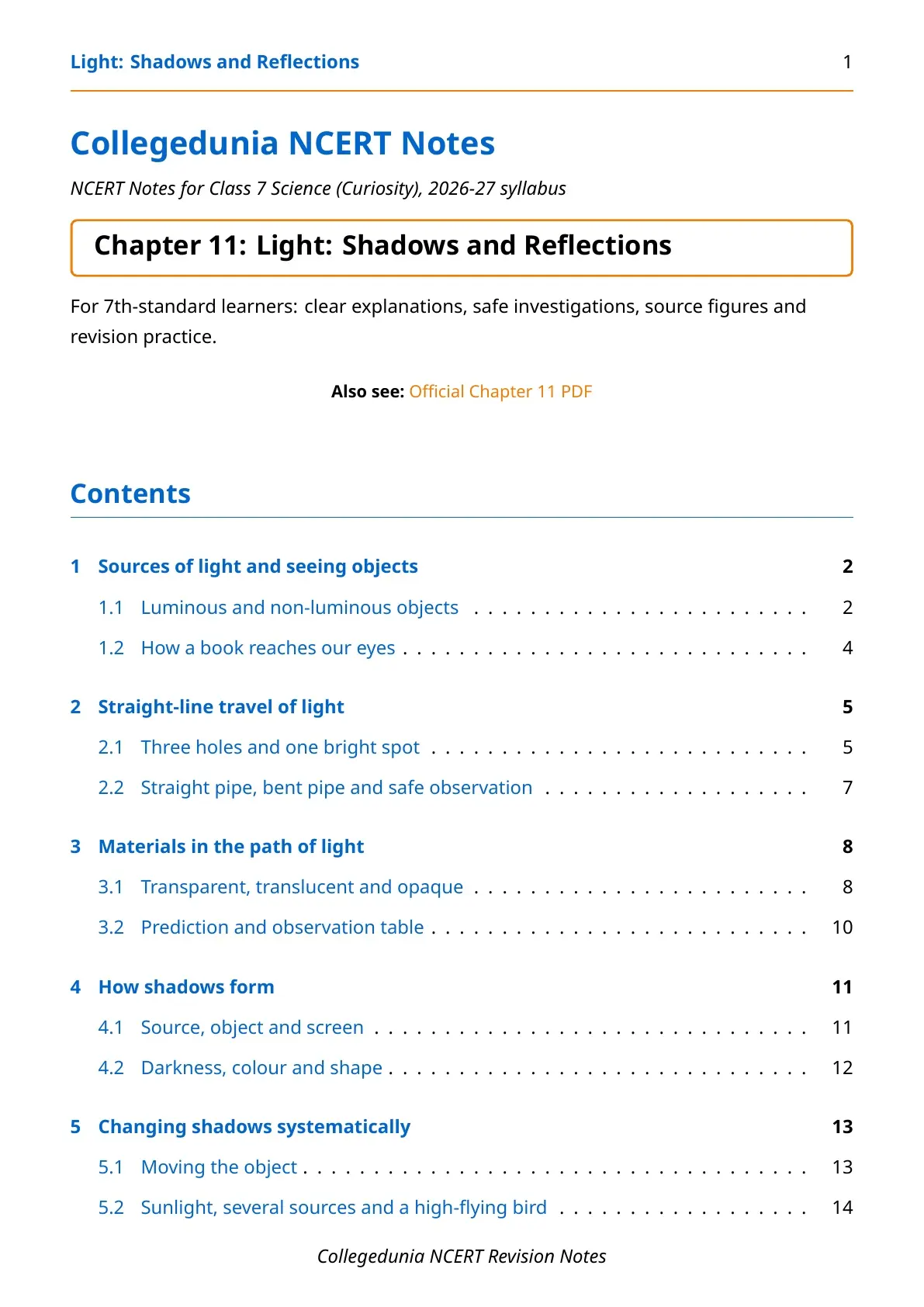
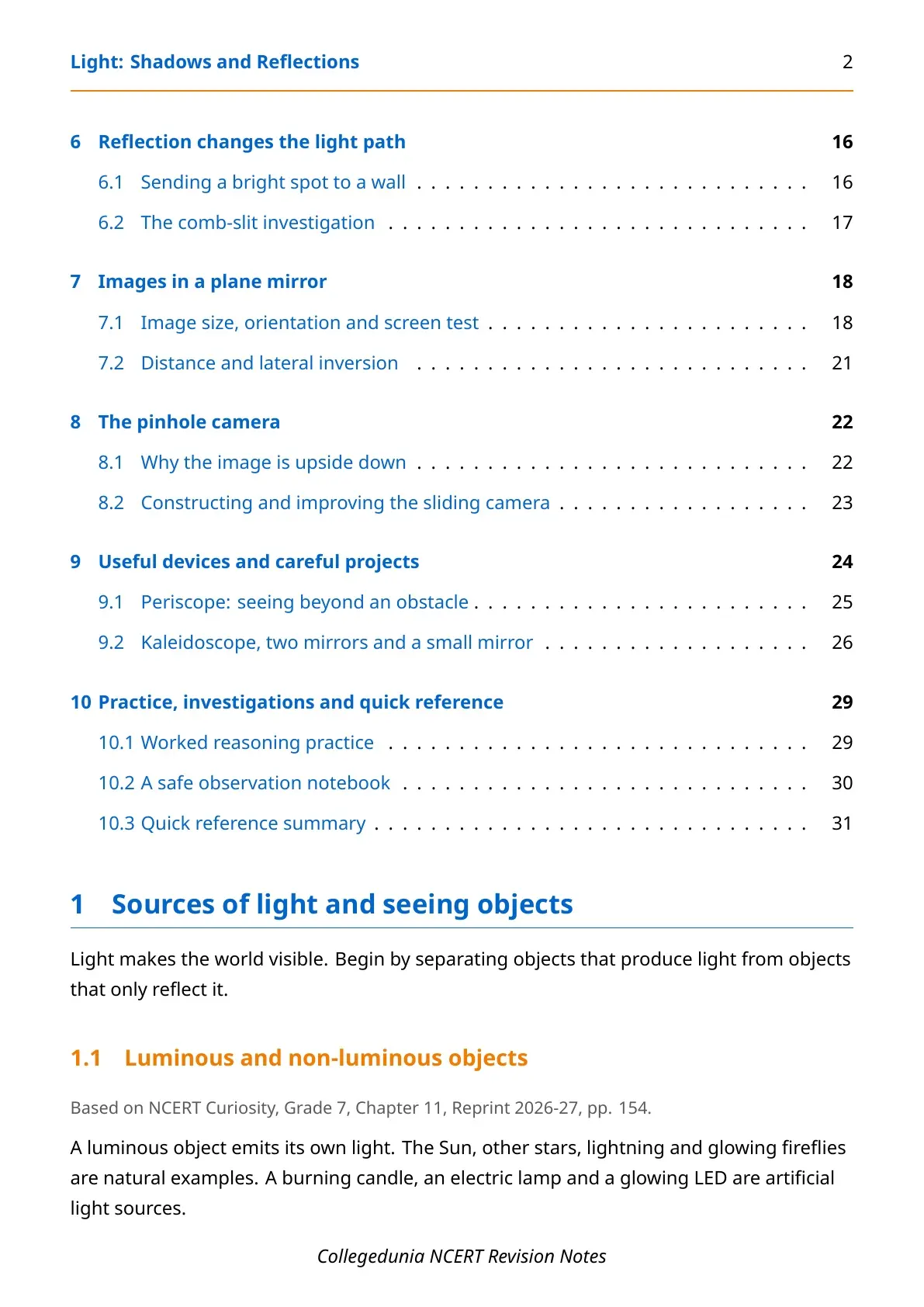
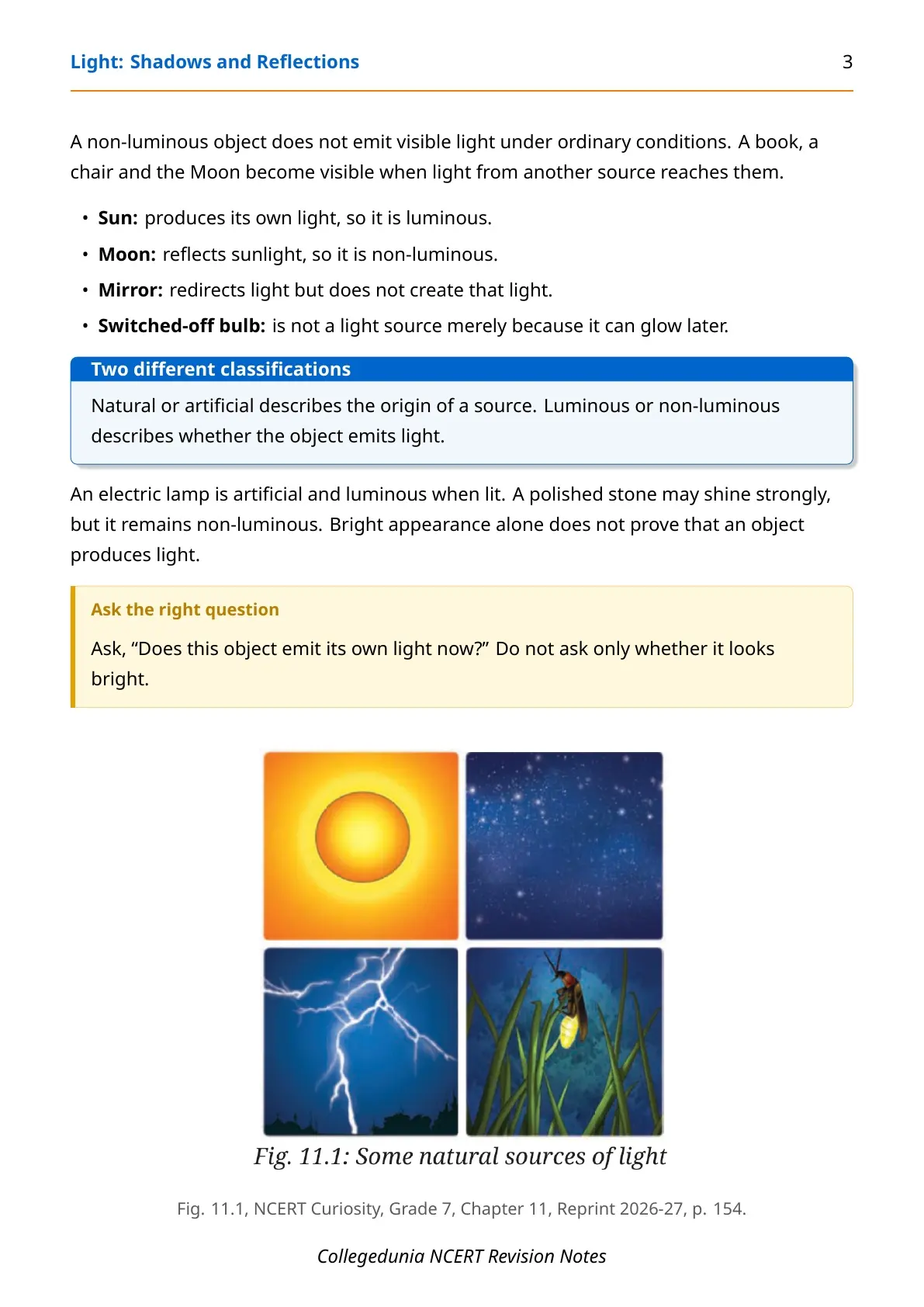
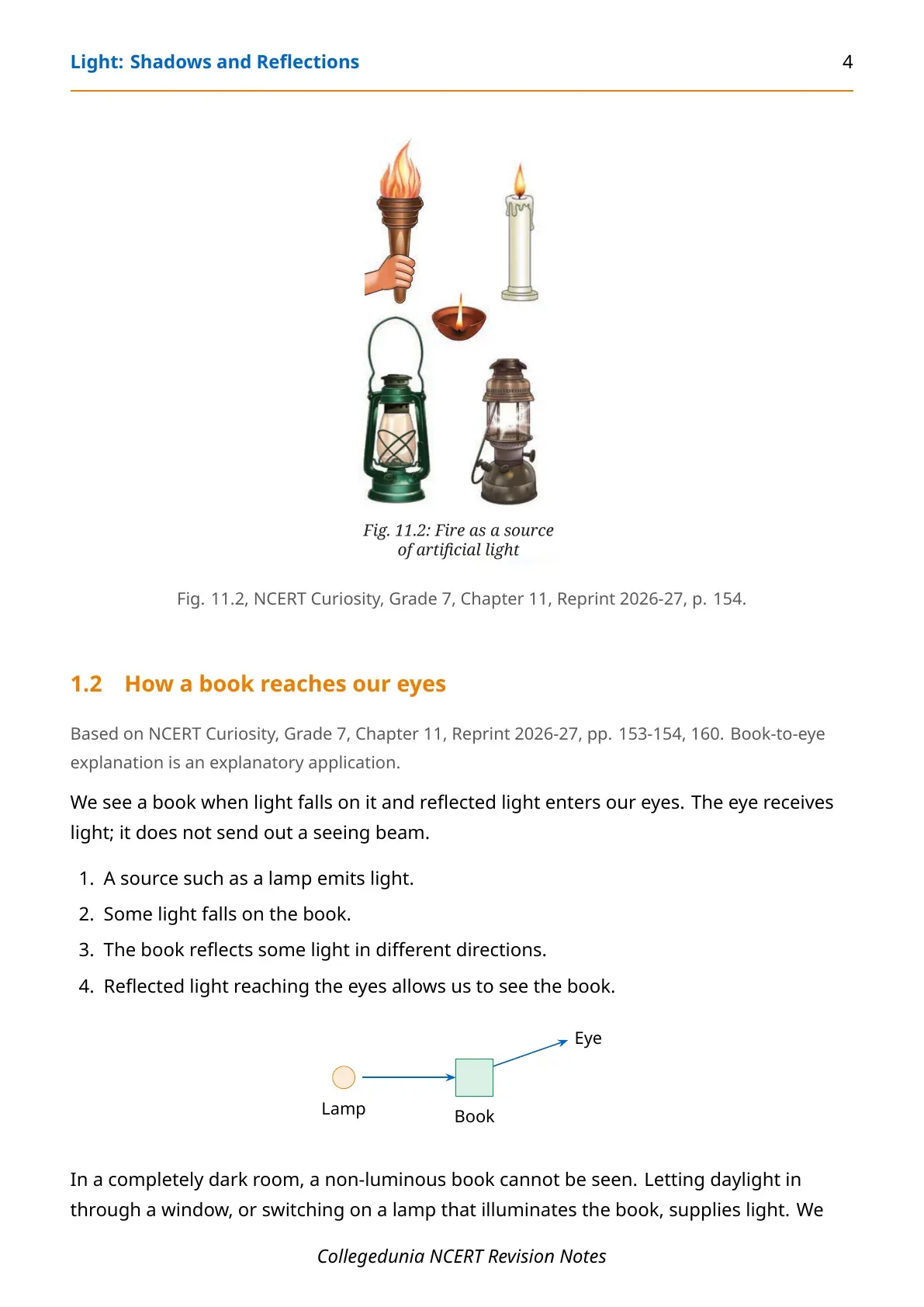
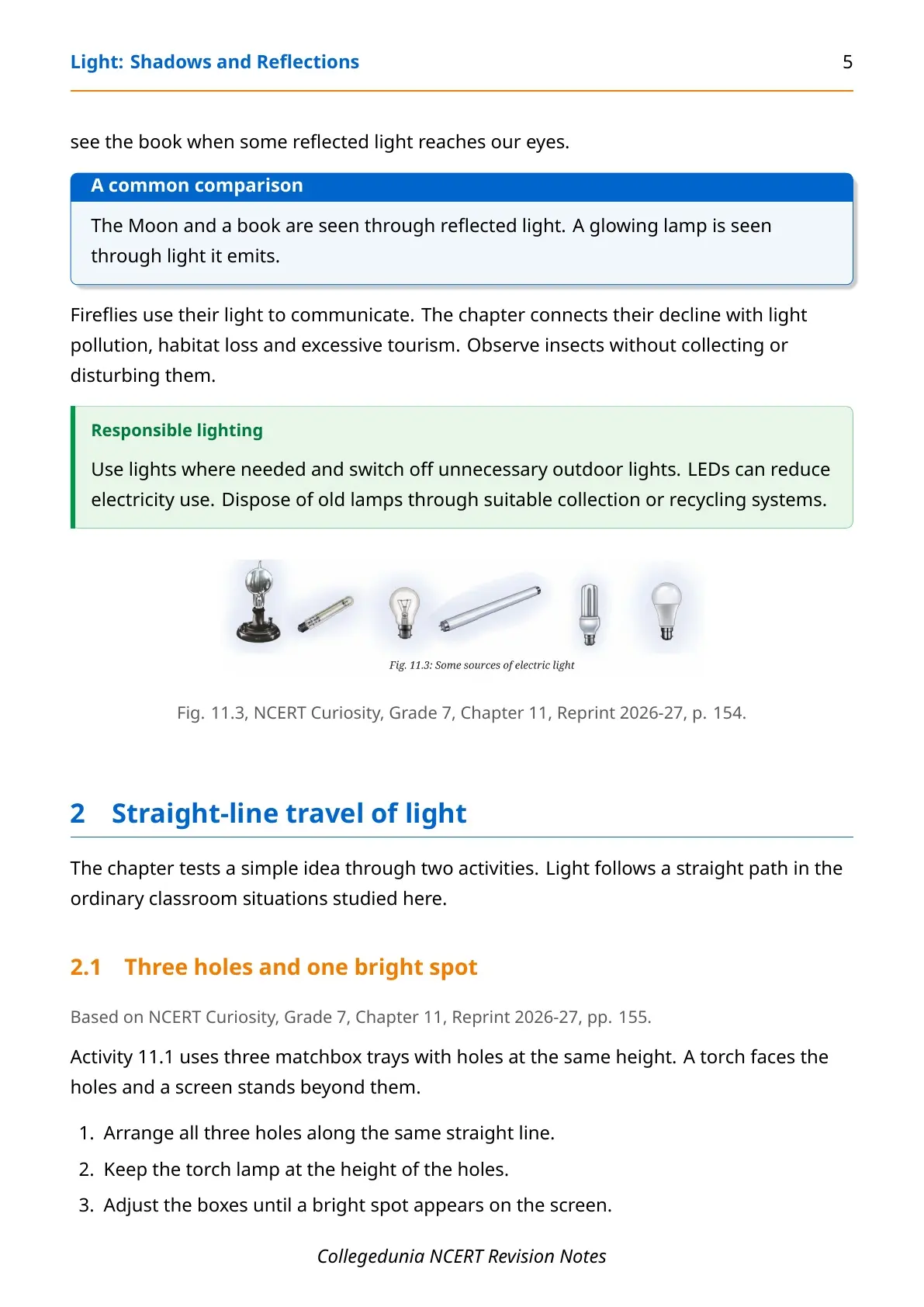
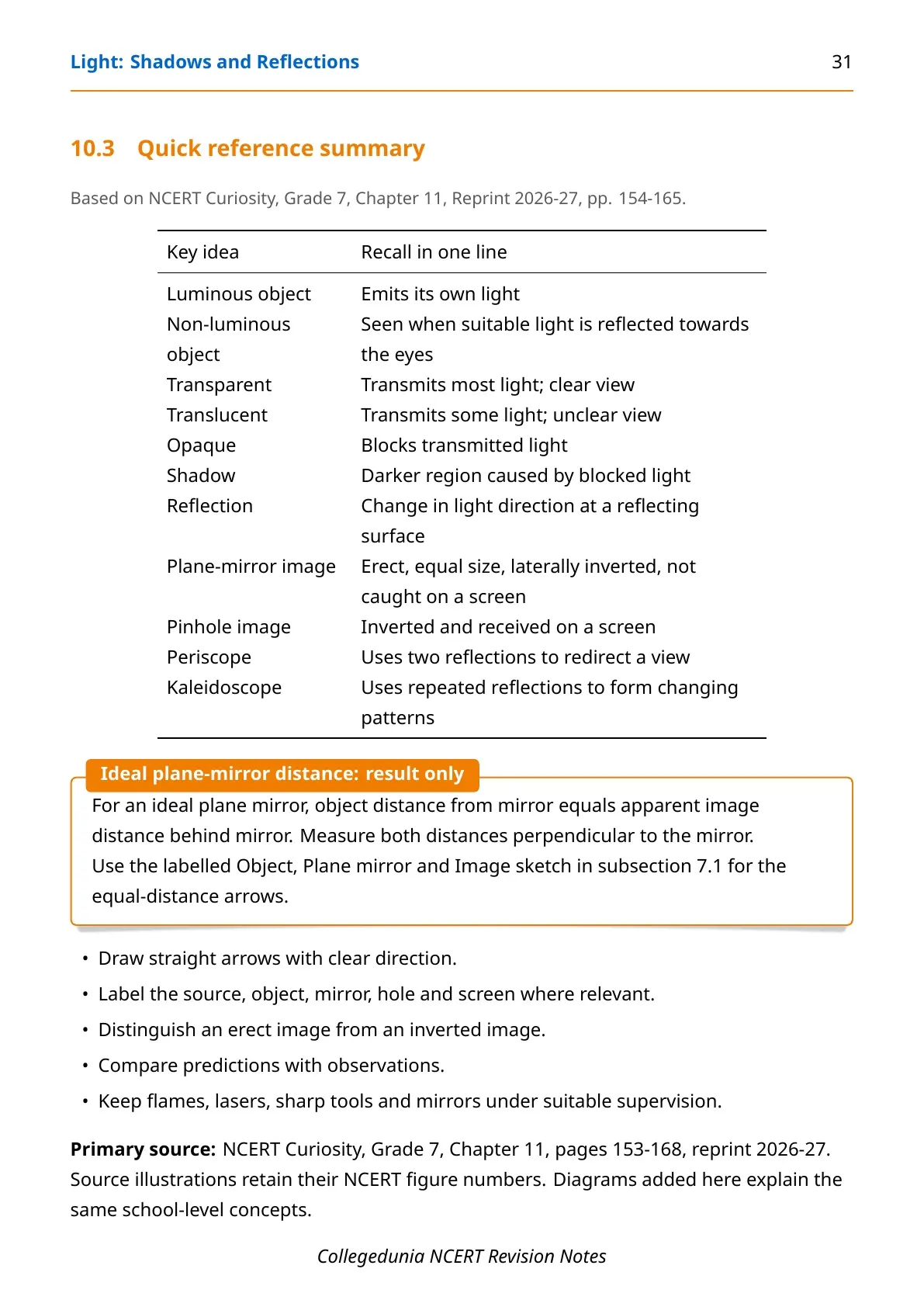
A luminous object emits its own light. The Sun, stars, a glowing lamp and fireflies are examples. A book or the Moon is non-luminous. We see such objects when light reflected from them enters our eyes. The Moon reflects sunlight; it does not produce its own light.
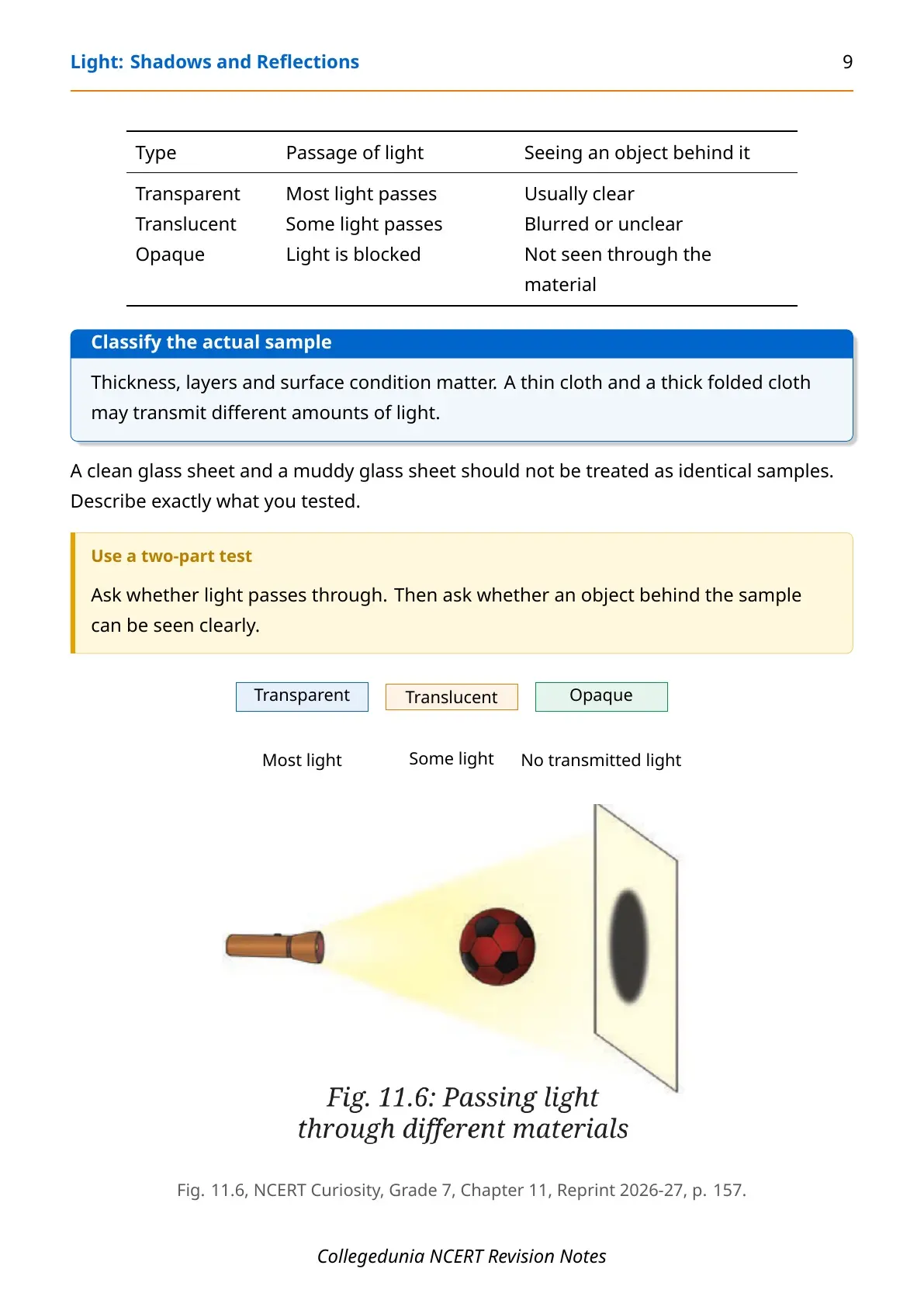
The material determines how much light passes through an object. Test materials of similar thickness using a torch and a screen.
| Material type | Light transmission | Example |
|---|---|---|
| Transparent | Almost all light passes through | Clear glass |
| Translucent | Only some light passes through | Tracing paper |
| Opaque | Light does not pass through | Wooden board |
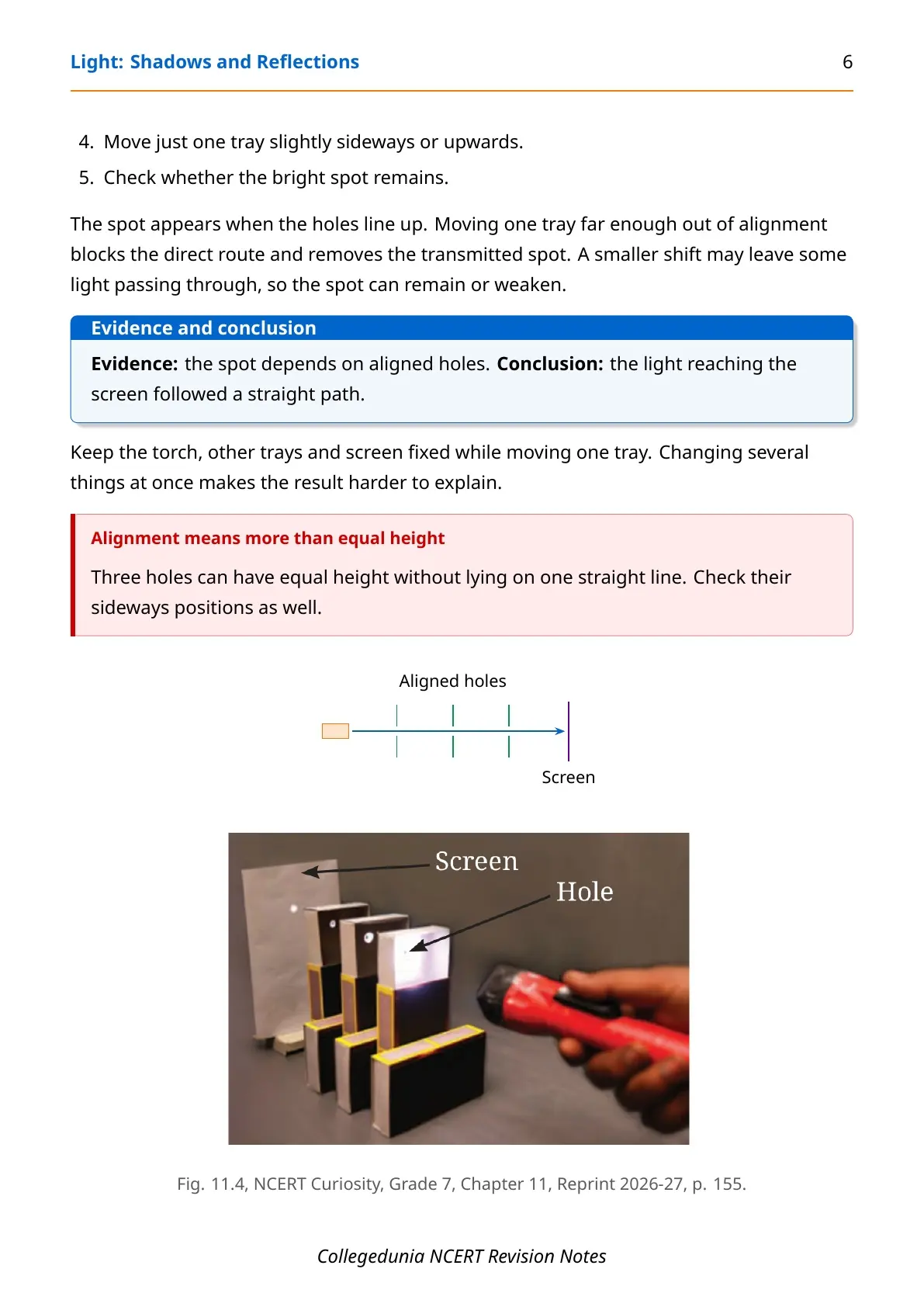
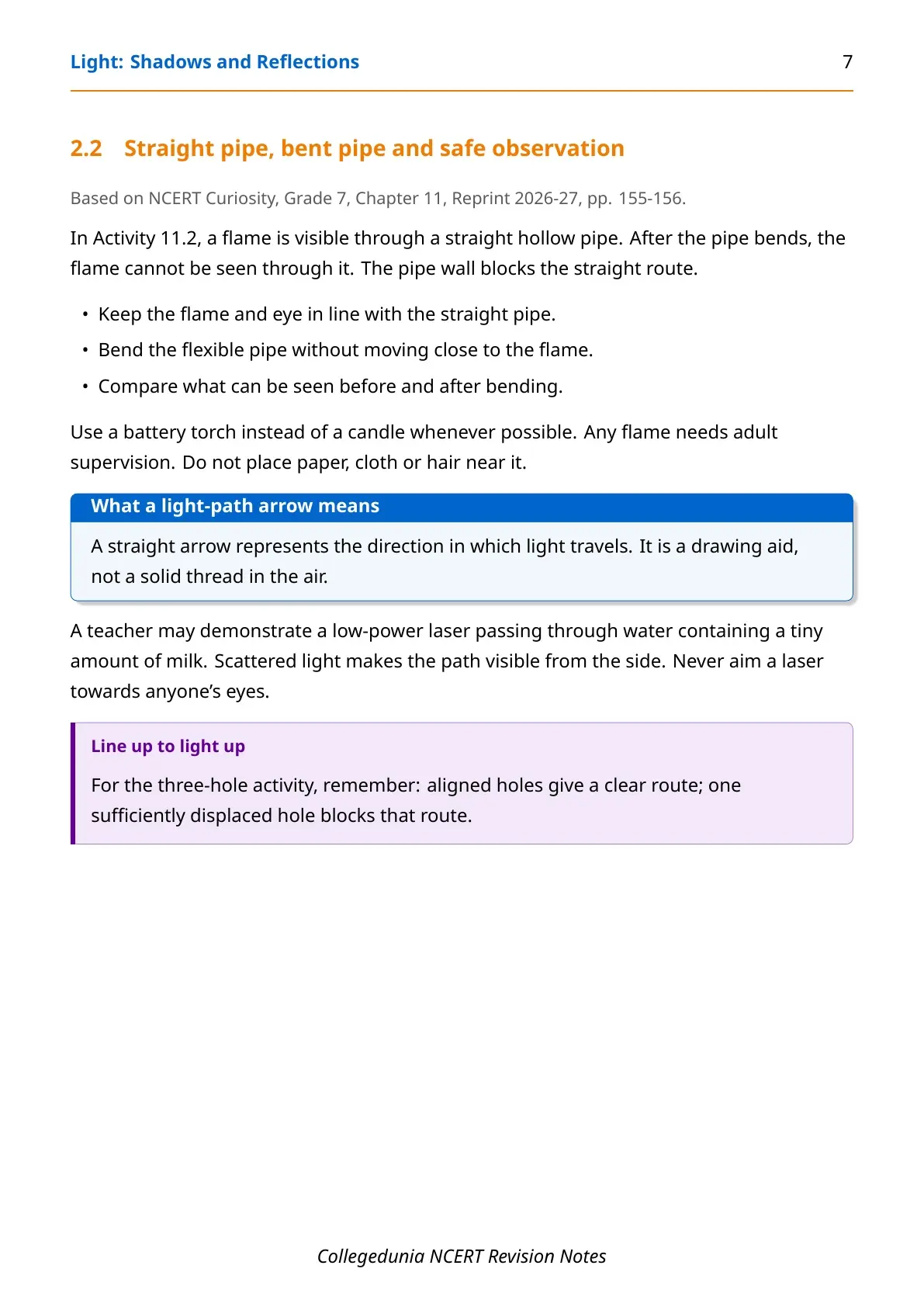
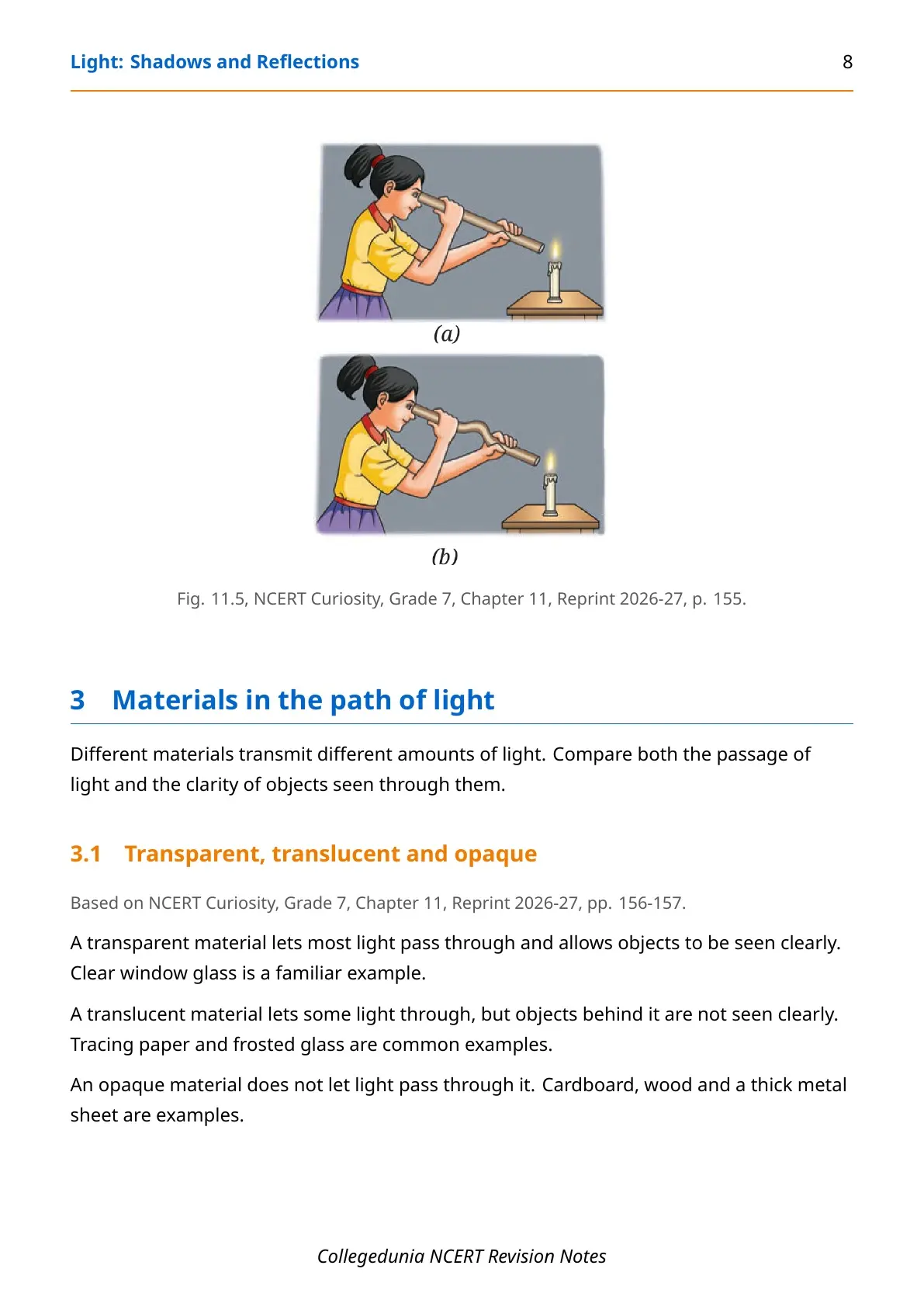
Light travels in straight lines in the chapter's activities. A torch shines through three aligned holes. Moving one hole out of line blocks the light. A bent tube also stops a direct view of a flame.
Light, Shadows and Reflections: Class 7 Practice
Source: Magnet Brains on YouTube
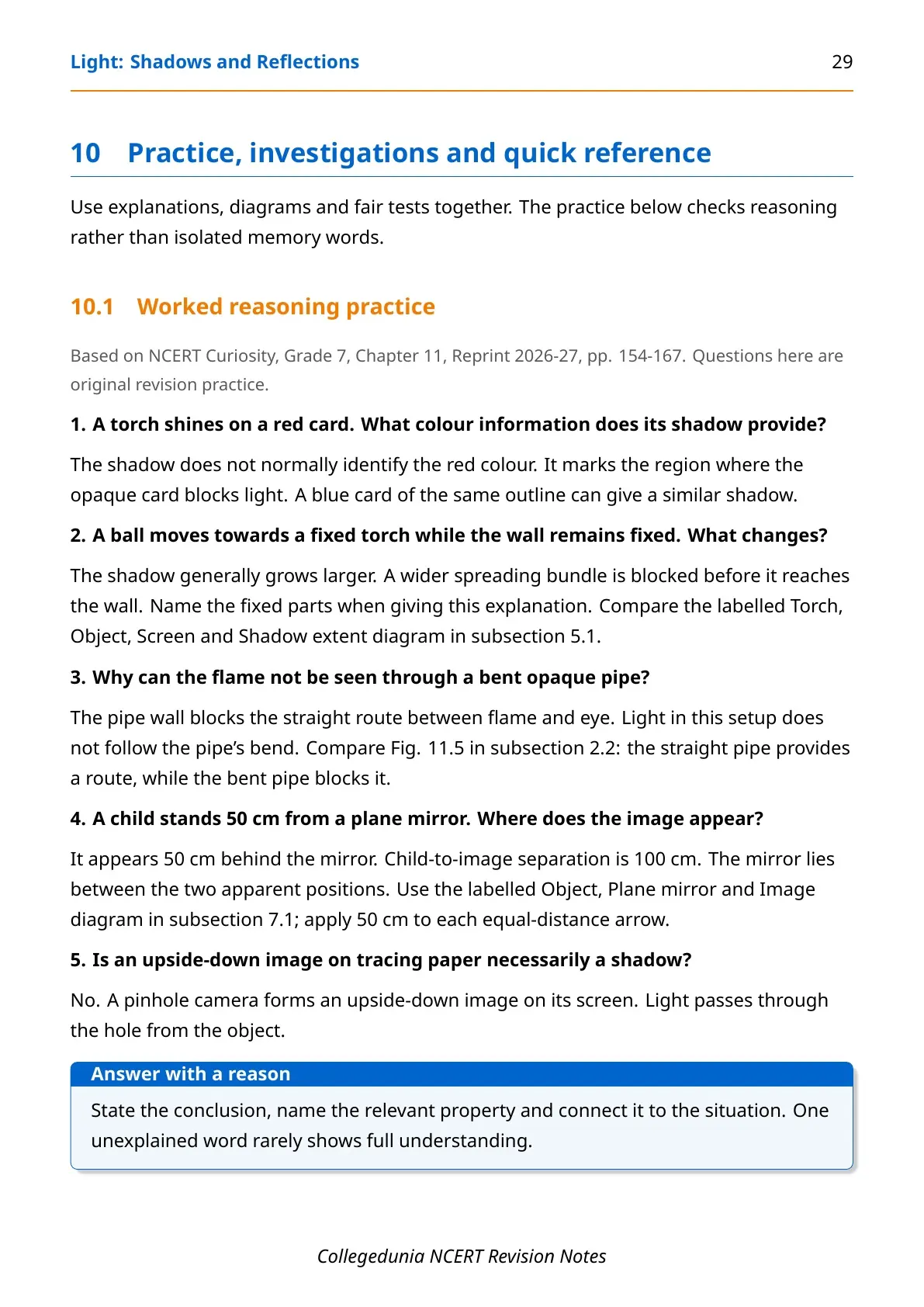
Shadow Formation: Predict Changes in Size and Shape
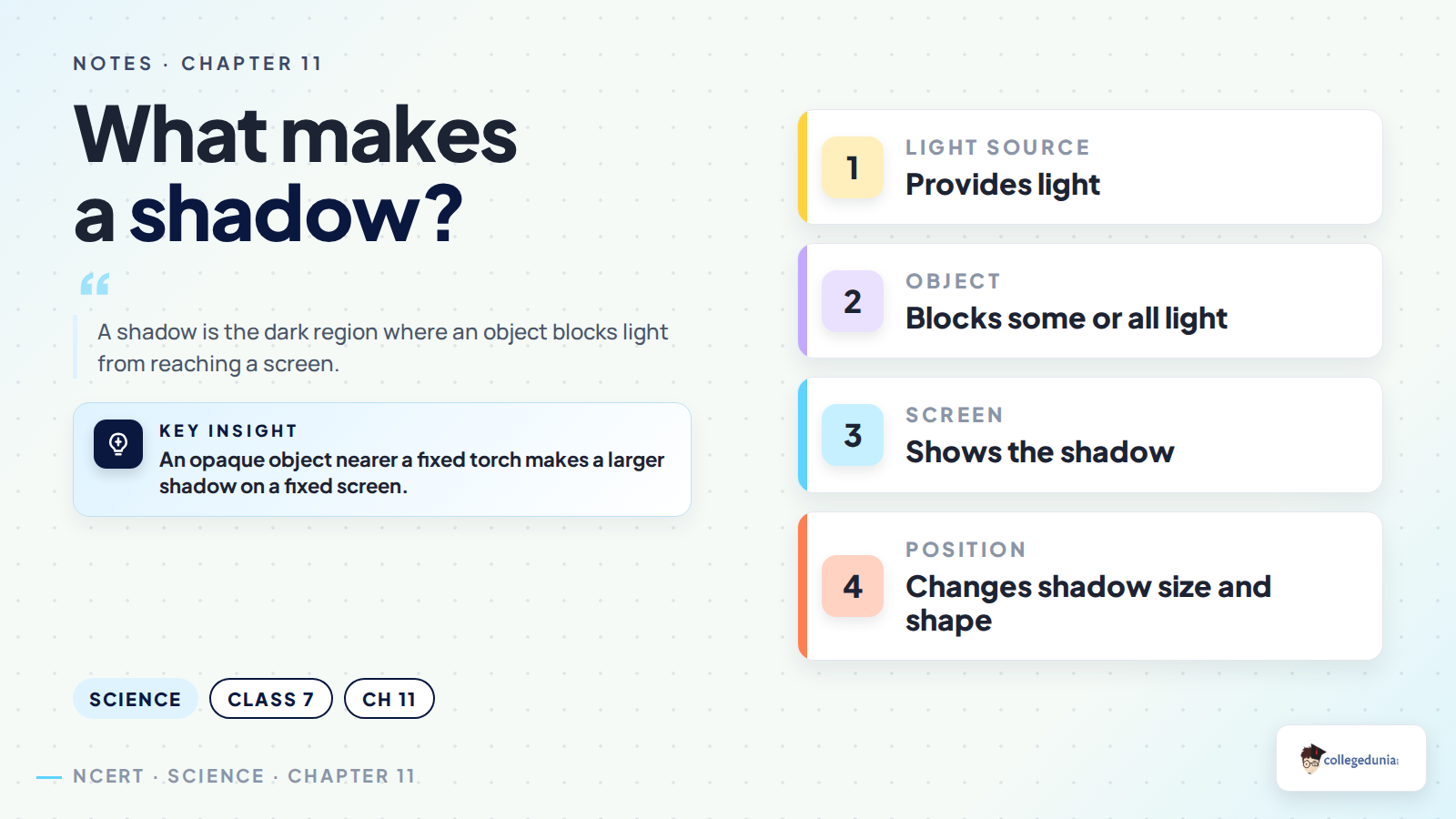
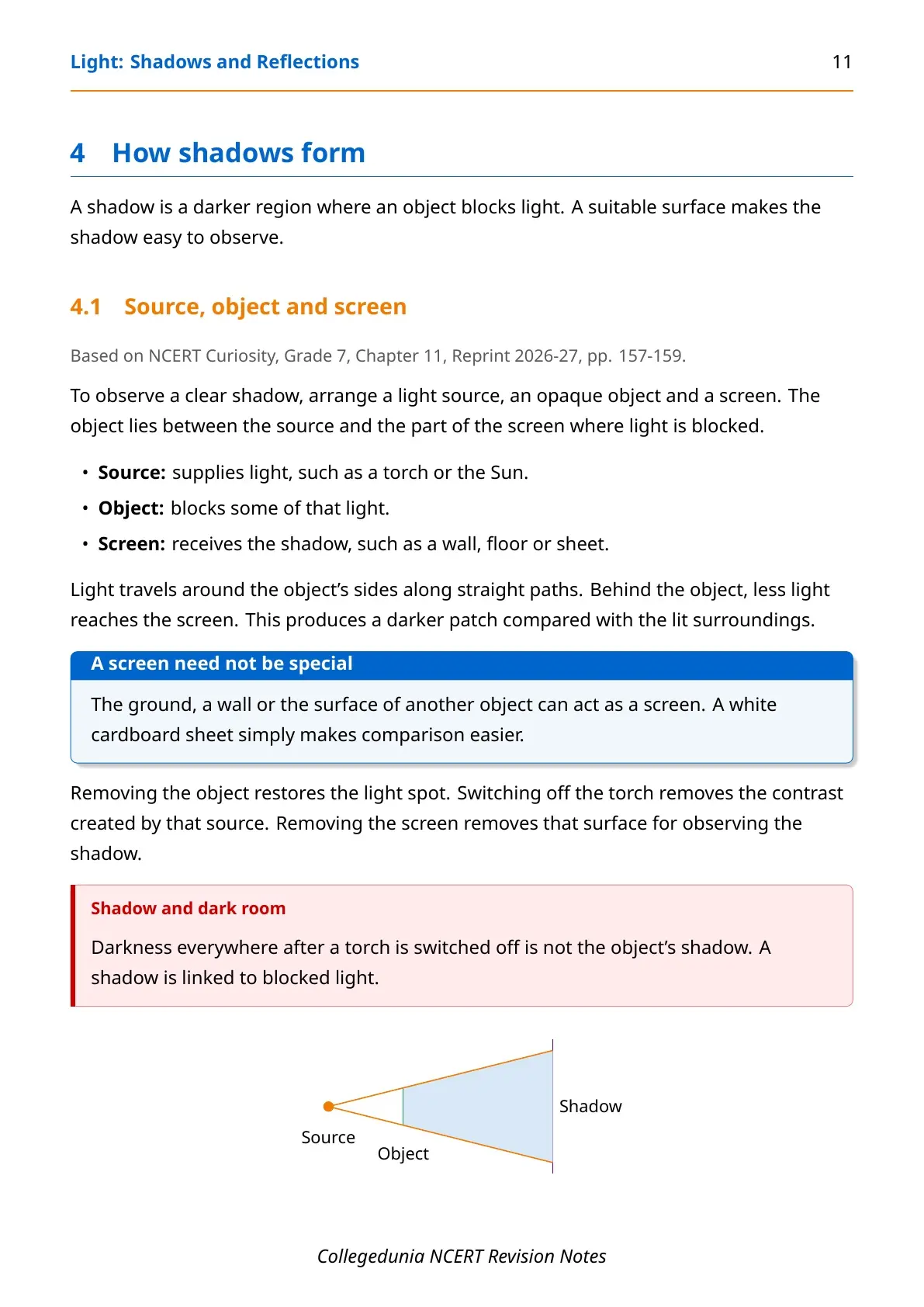
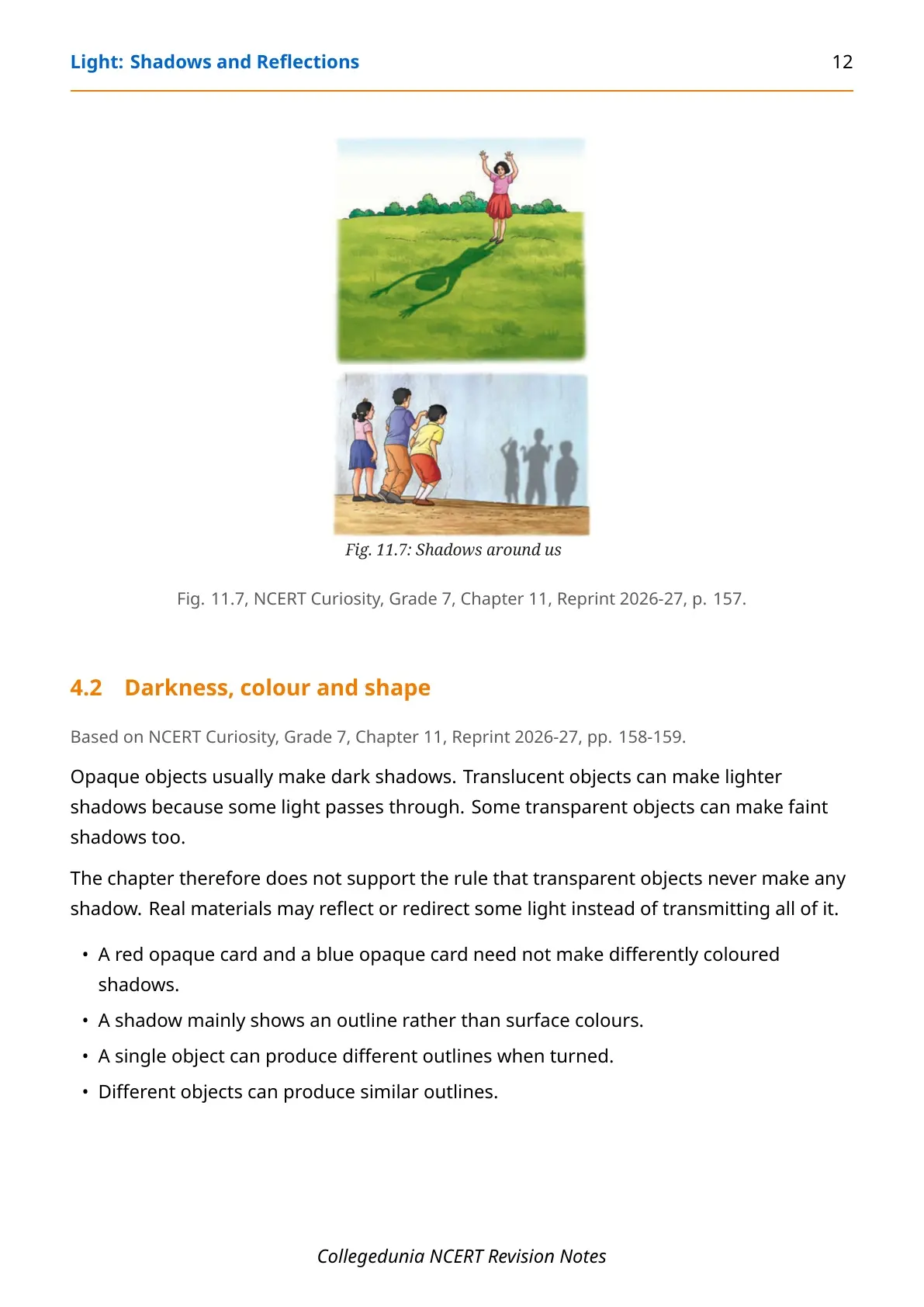
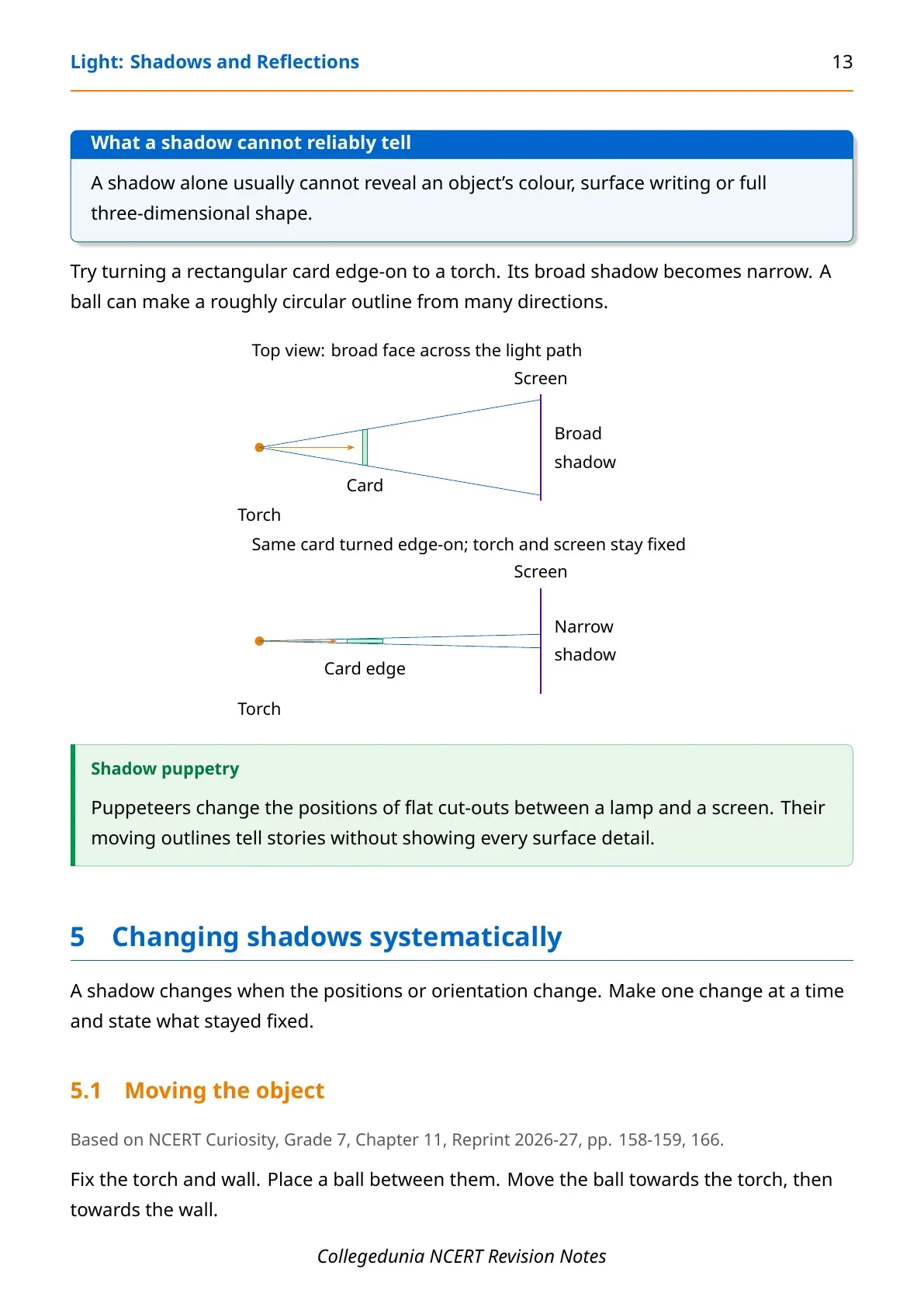
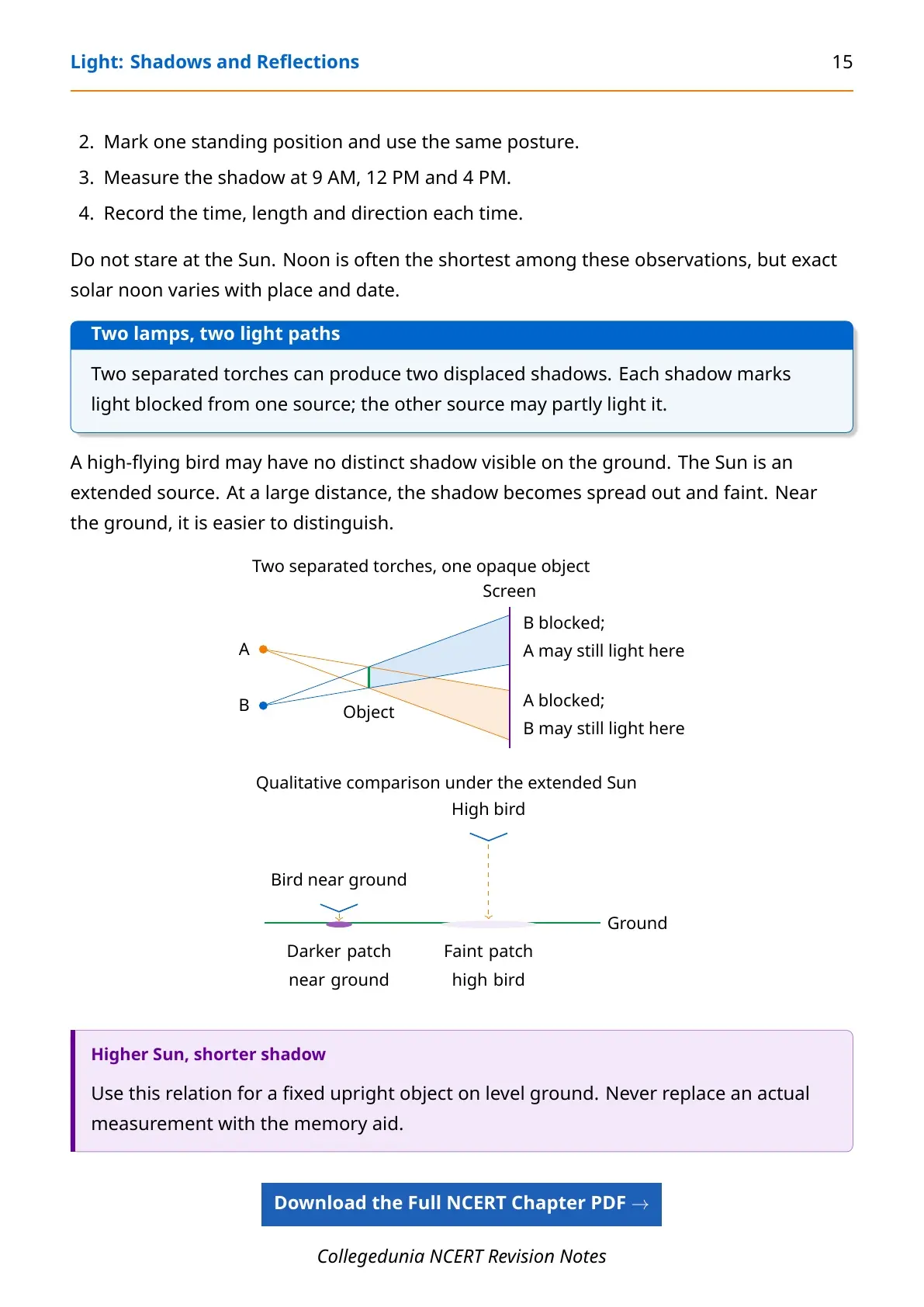
A shadow forms where an object blocks light. To observe one, use a light source, an object and a screen. A wall, floor or the ground can act as the screen. A shadow is a dark region, not a coloured picture of the object.
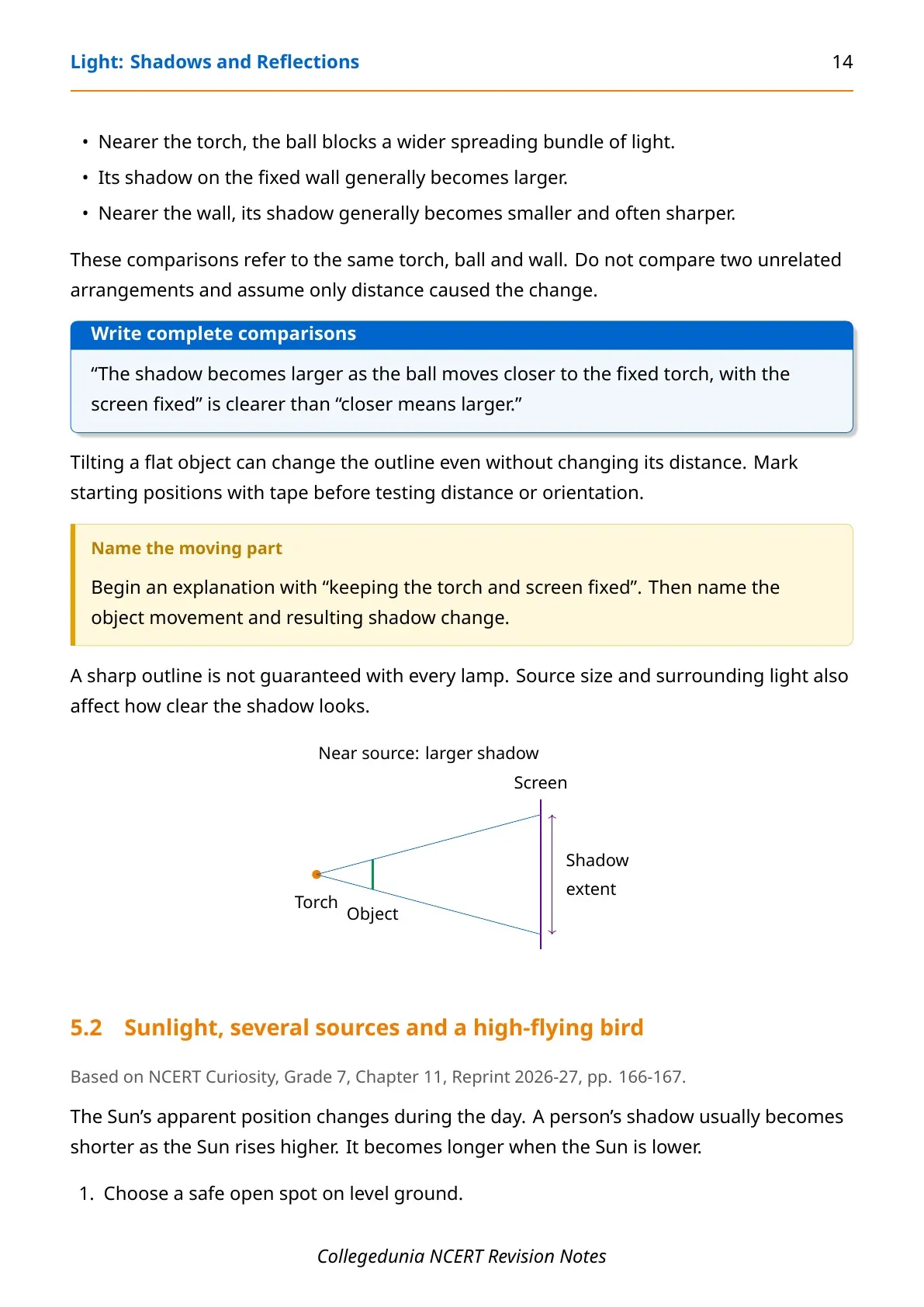
- Keep the torch and screen fixed: moving the object towards the torch makes its shadow larger.
- Move the object towards the fixed screen: its shadow becomes smaller and usually sharper.
- Tilt the object: its shadow's shape may change.
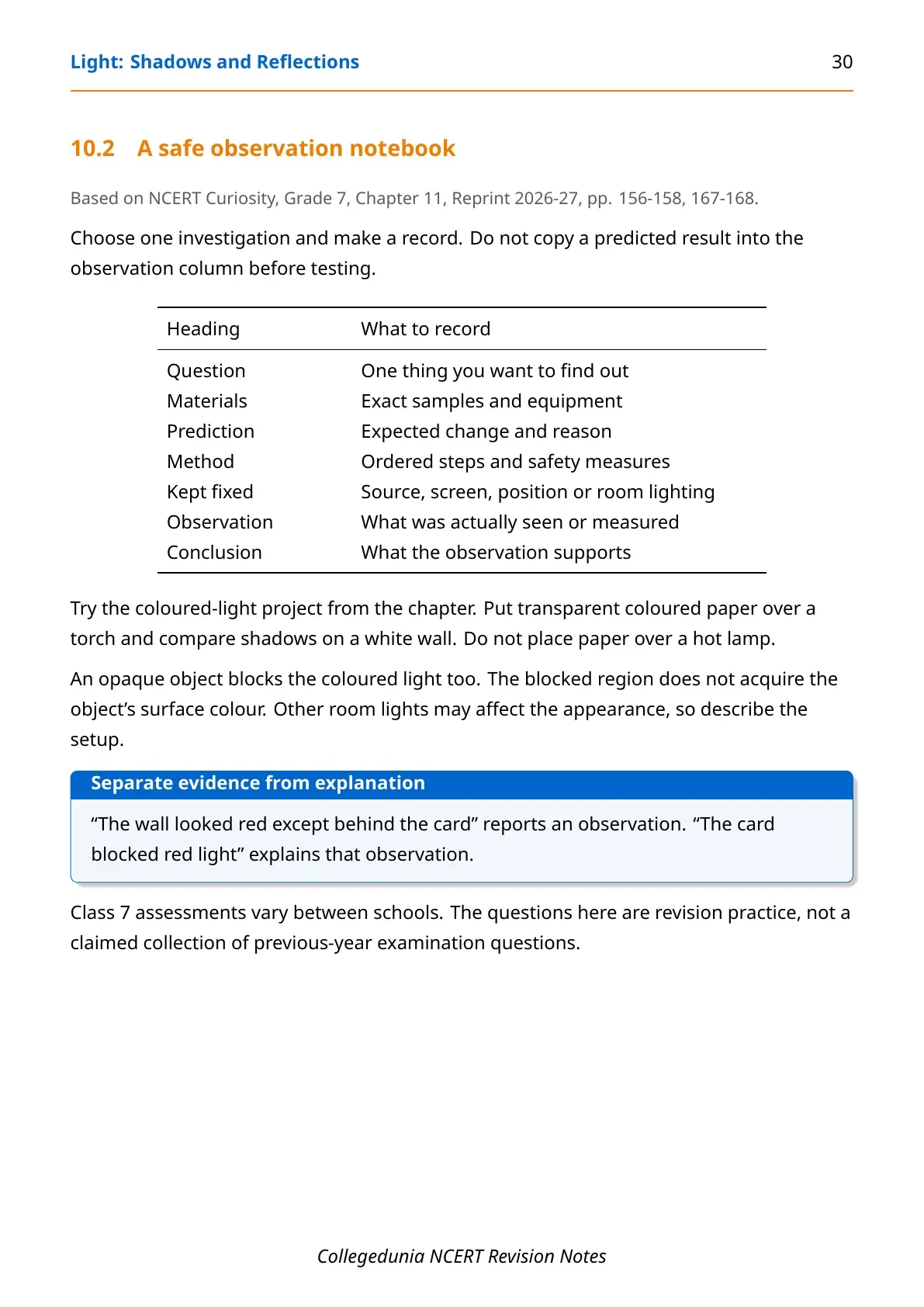
- Change the colour of an opaque object: its shadow does not take that colour.
Opaque objects give darker shadows. Translucent objects give lighter shadows. Some transparent objects can also produce faint shadows. Avoid the claim that transparent objects can never cast a shadow.
Reflection and Pinhole Images: Compare the Results
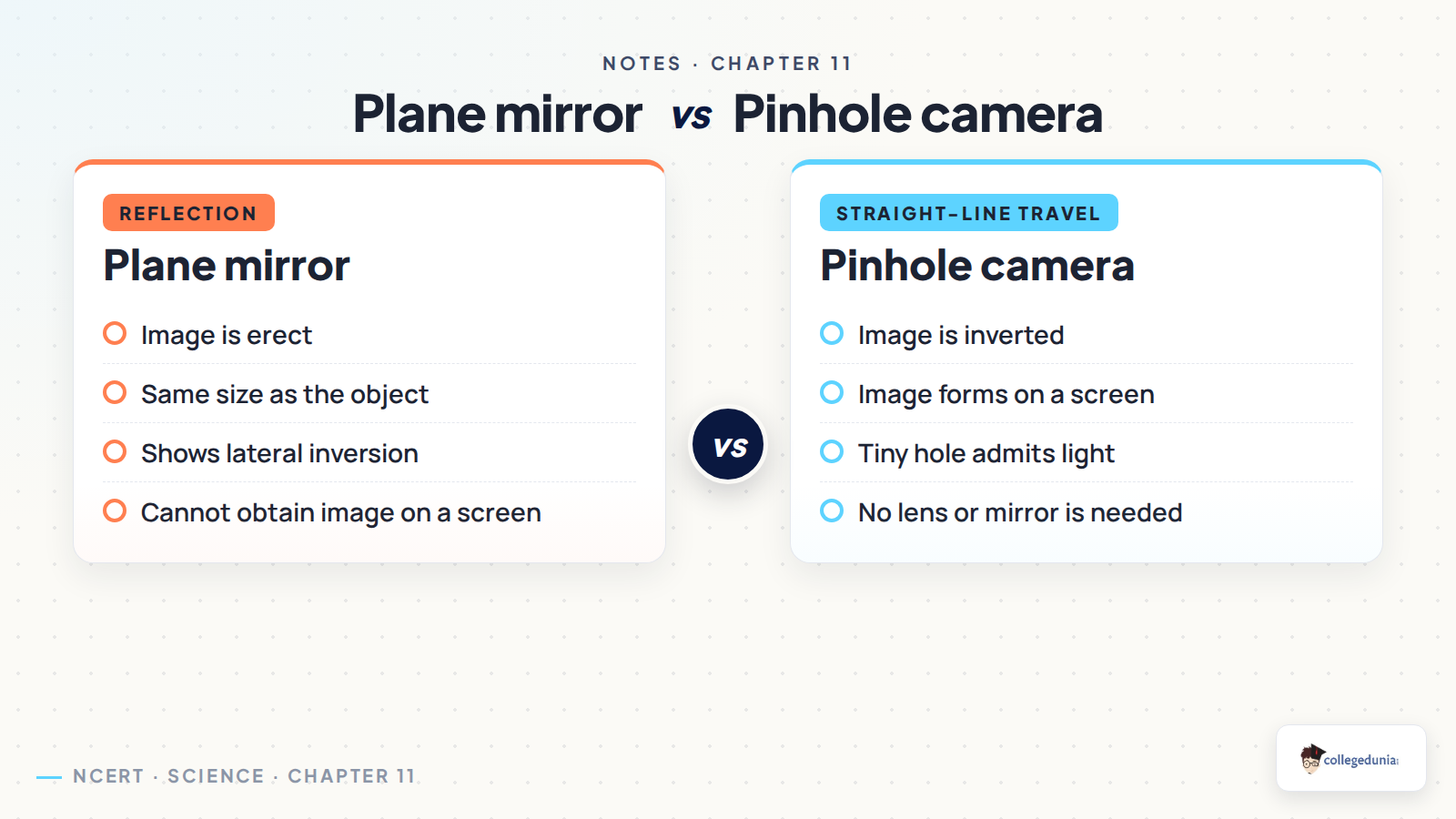
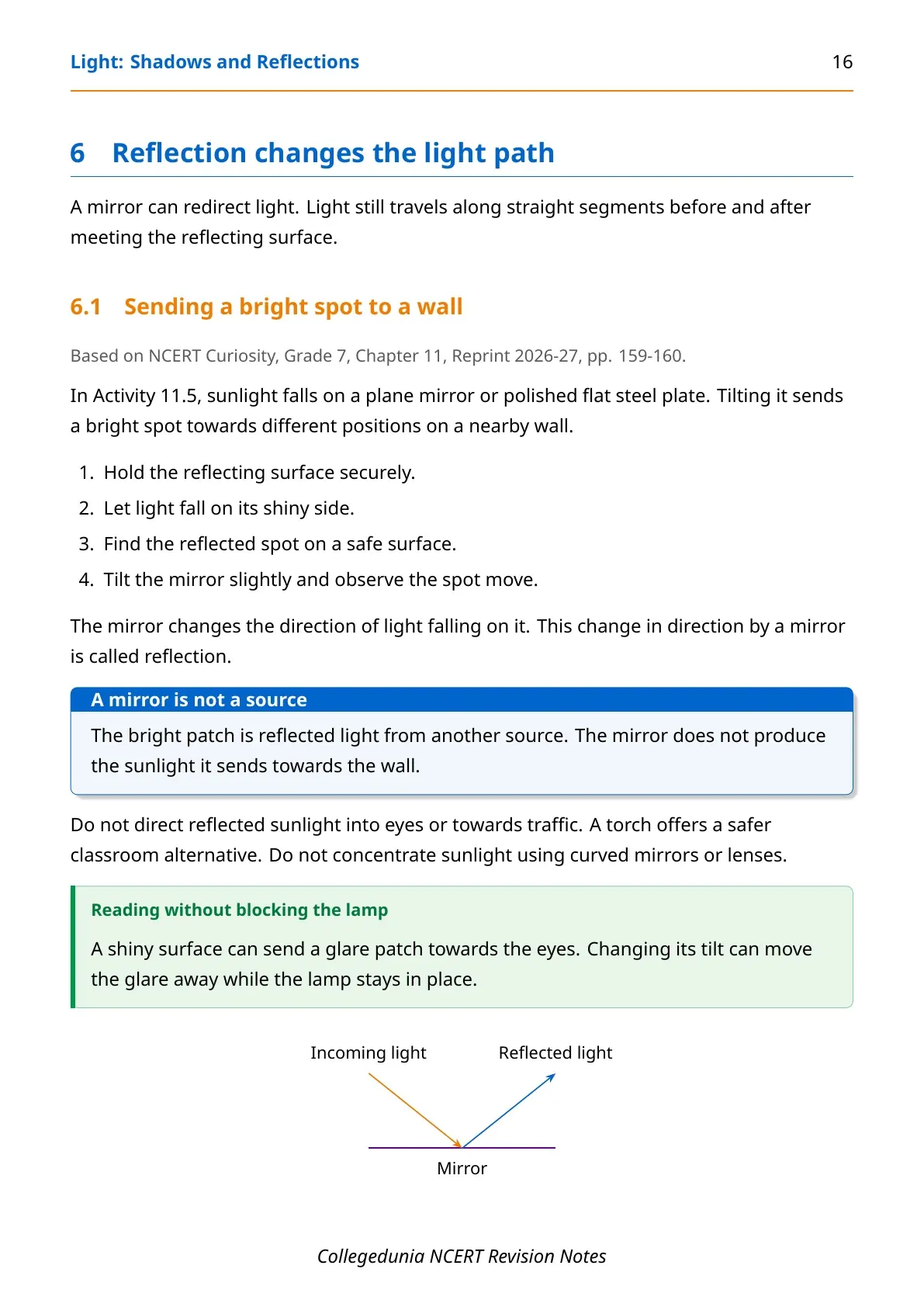
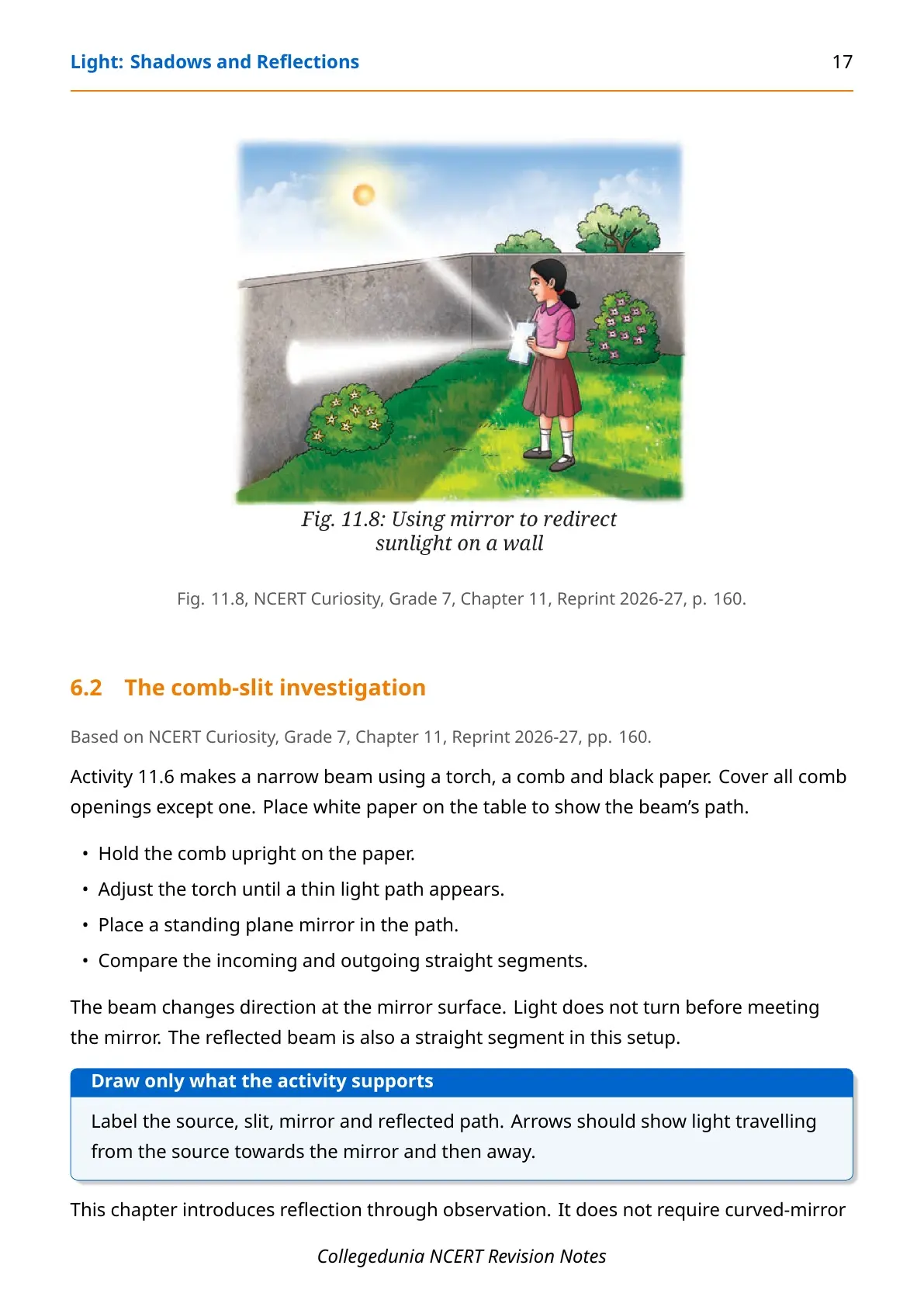
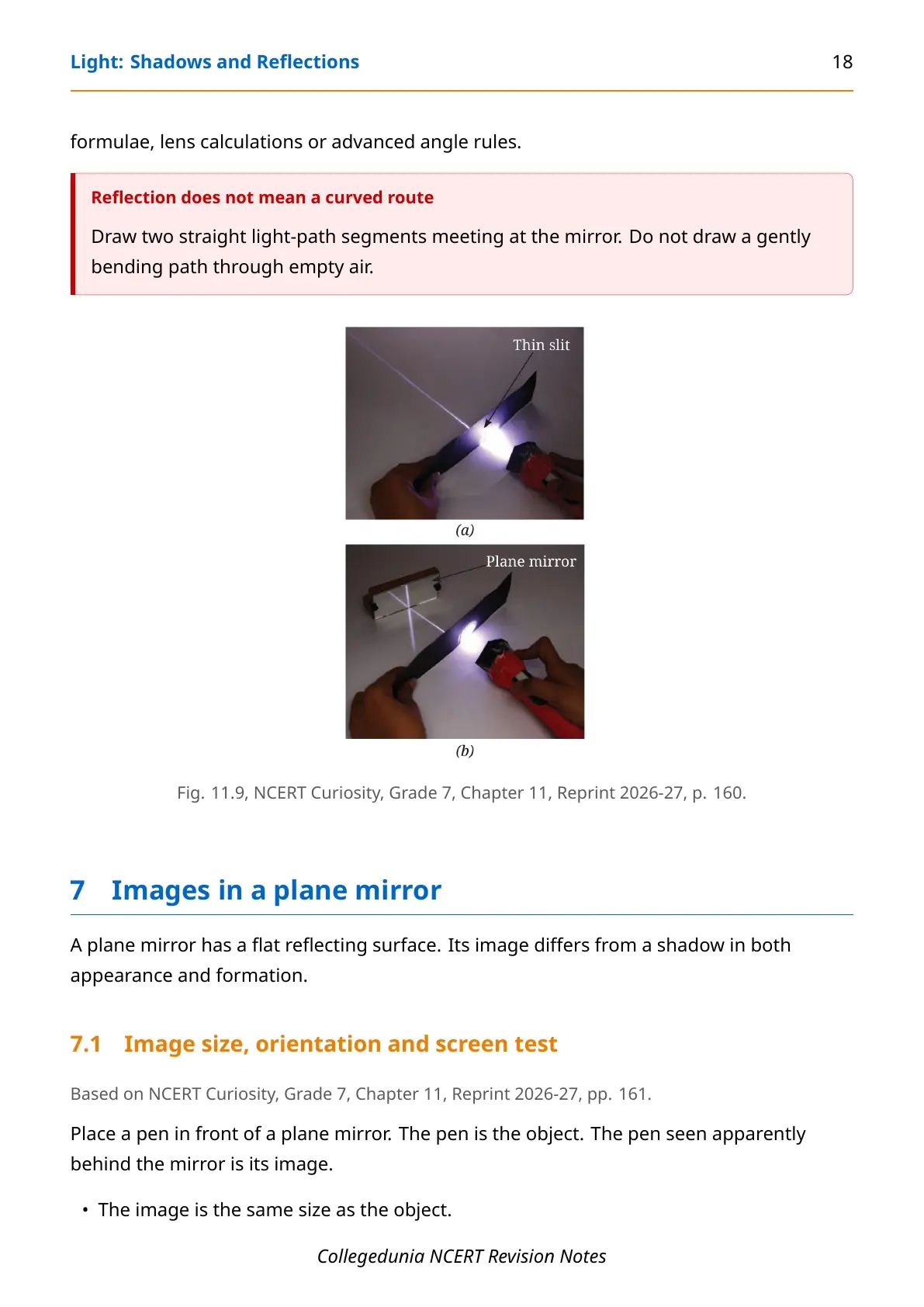
Reflection changes the direction of light at a surface. A mirror can redirect a torch beam onto a wall. It does not create the light. The light follows straight paths before and after reflection.
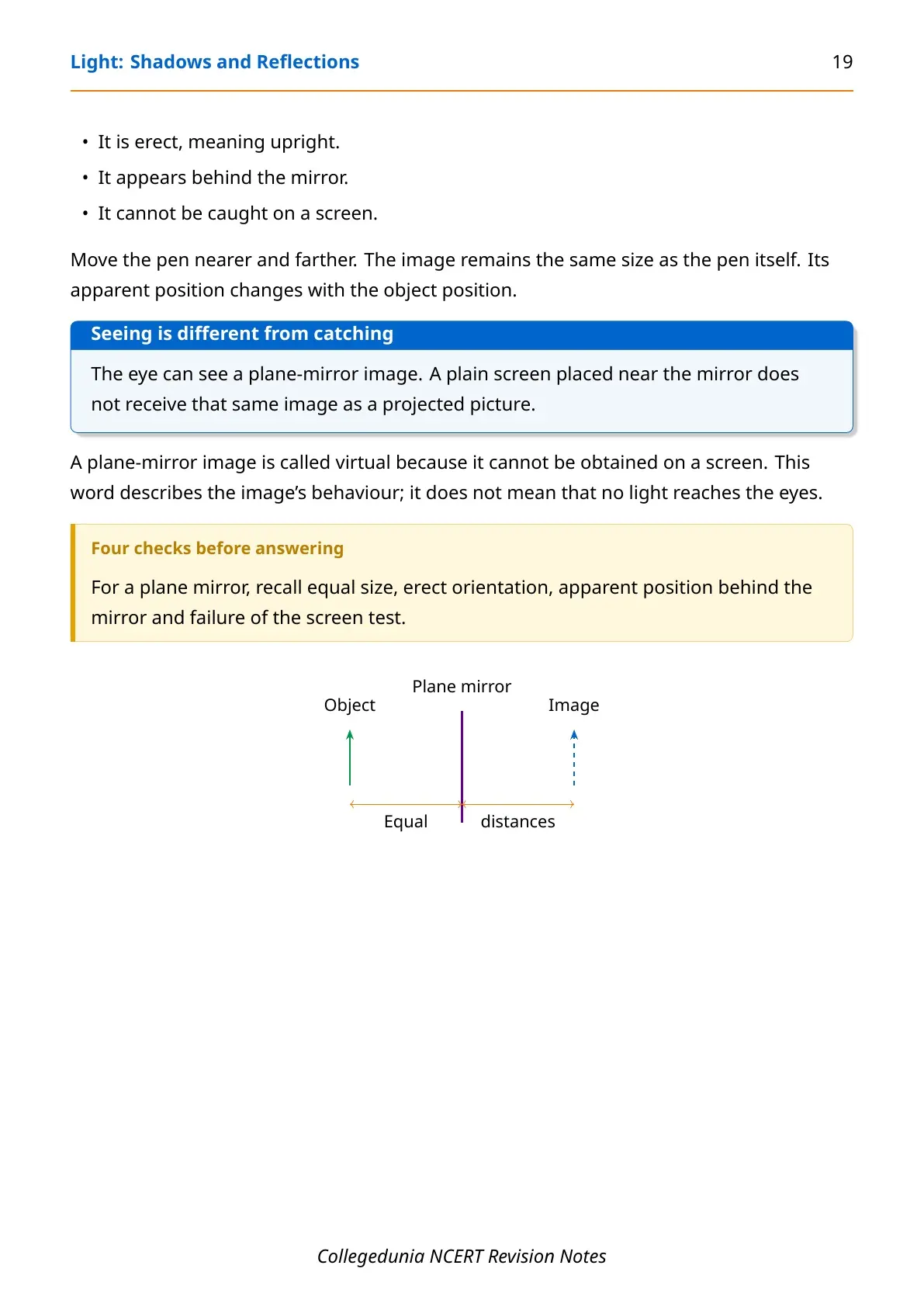
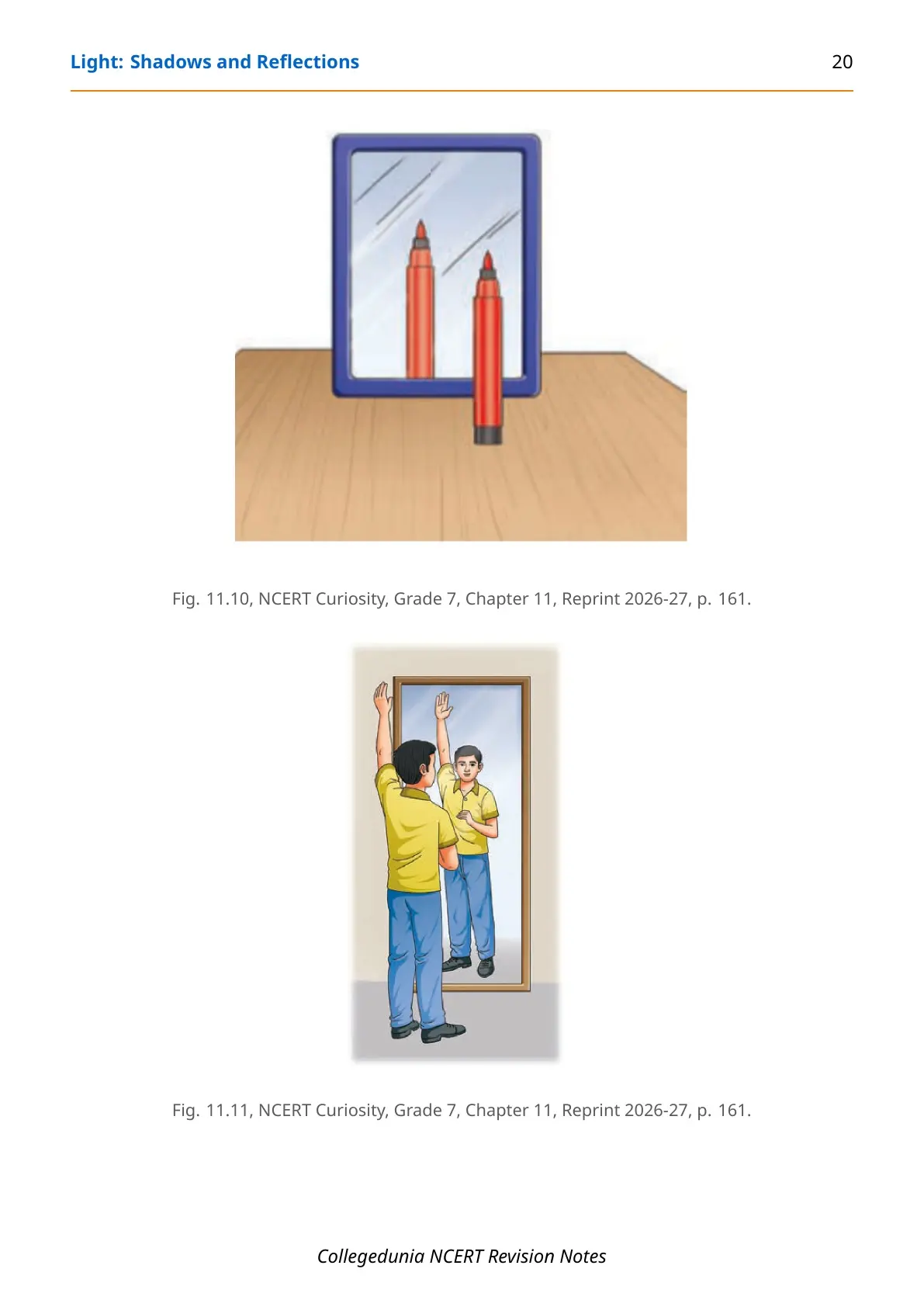
A plane mirror forms an erect image of the same size as the object. The image appears behind the mirror and cannot be obtained on a screen. Lateral inversion is the perceived left-right reversal in a plane-mirror image. It is different from turning an image upside down.
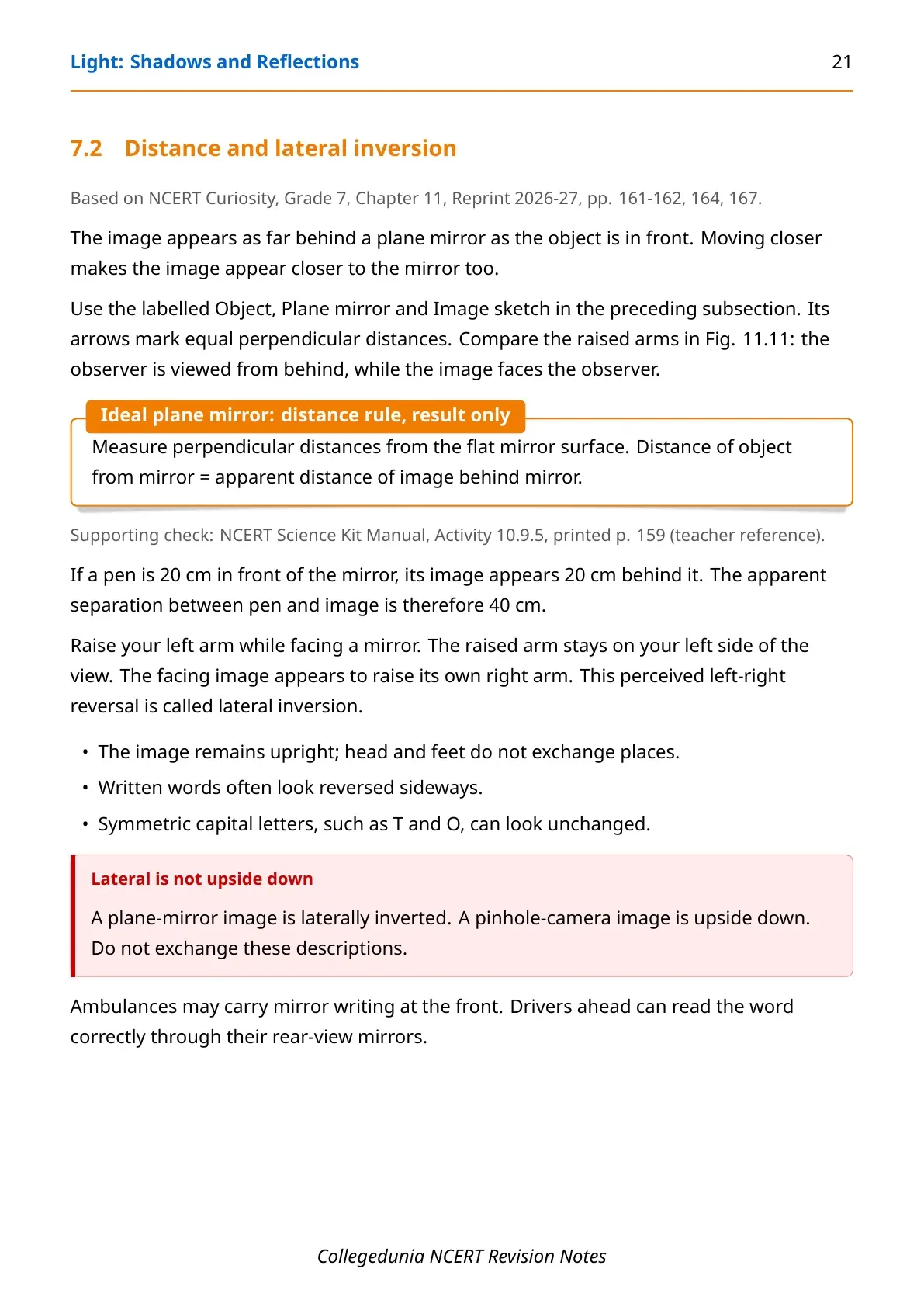
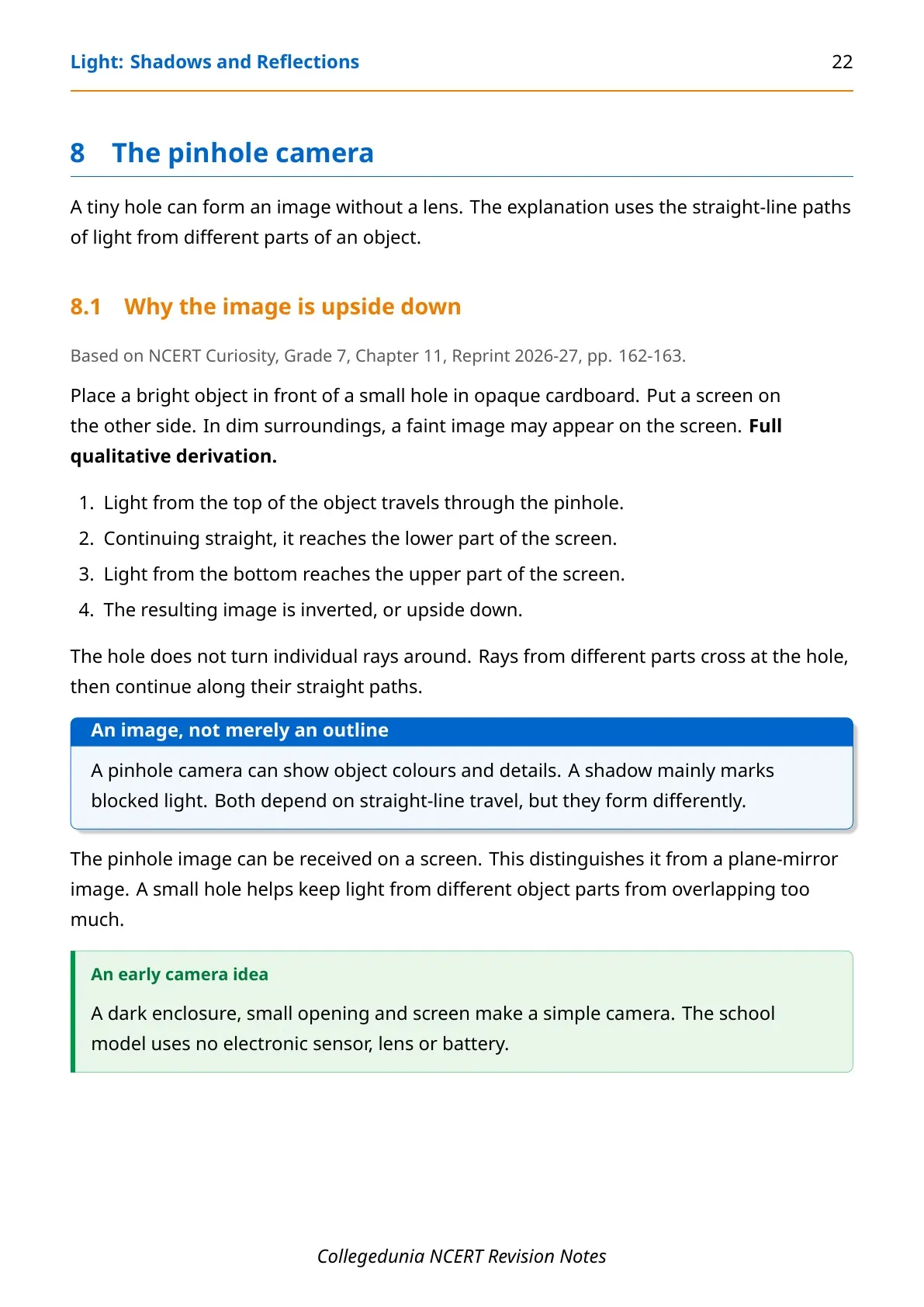
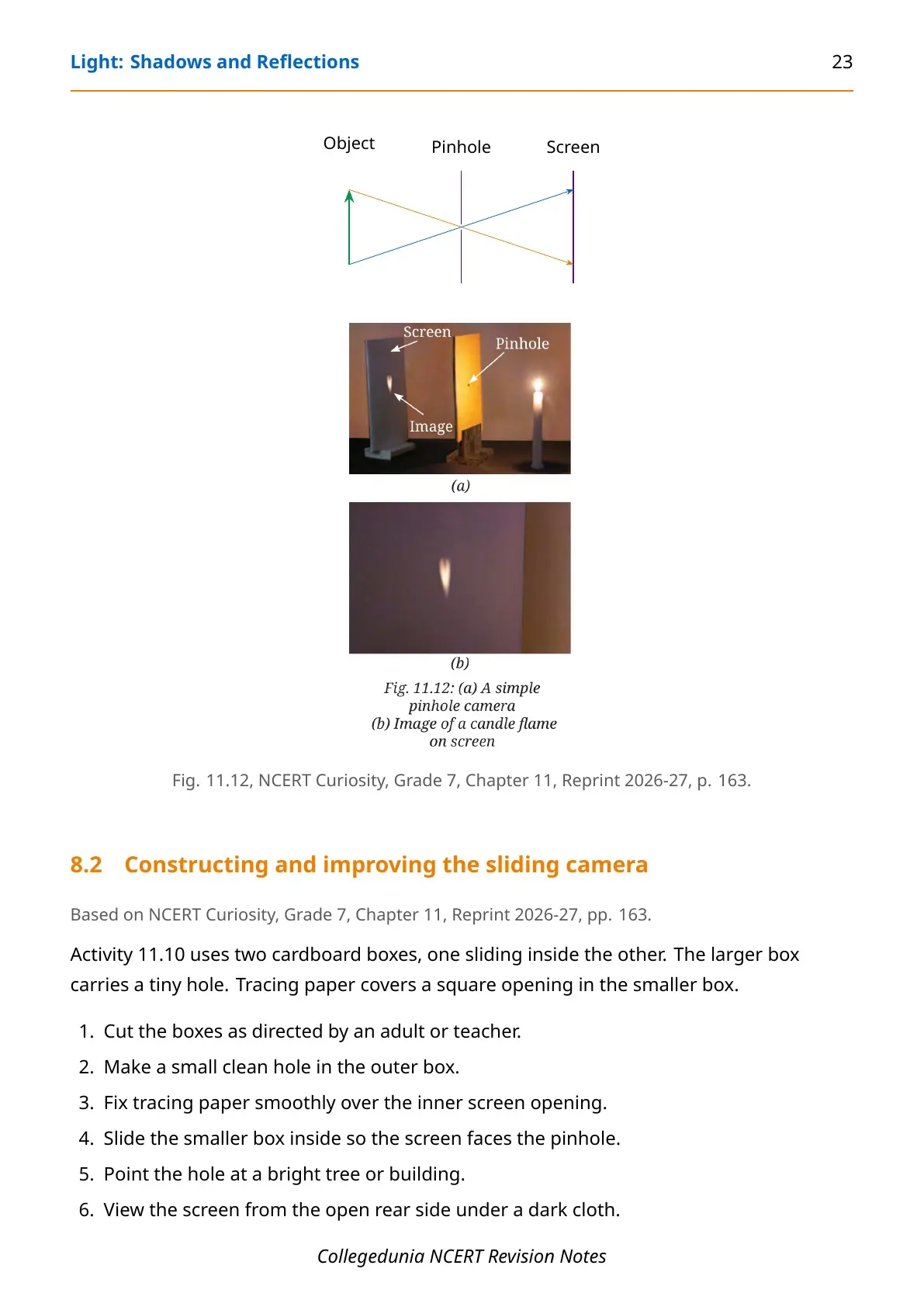
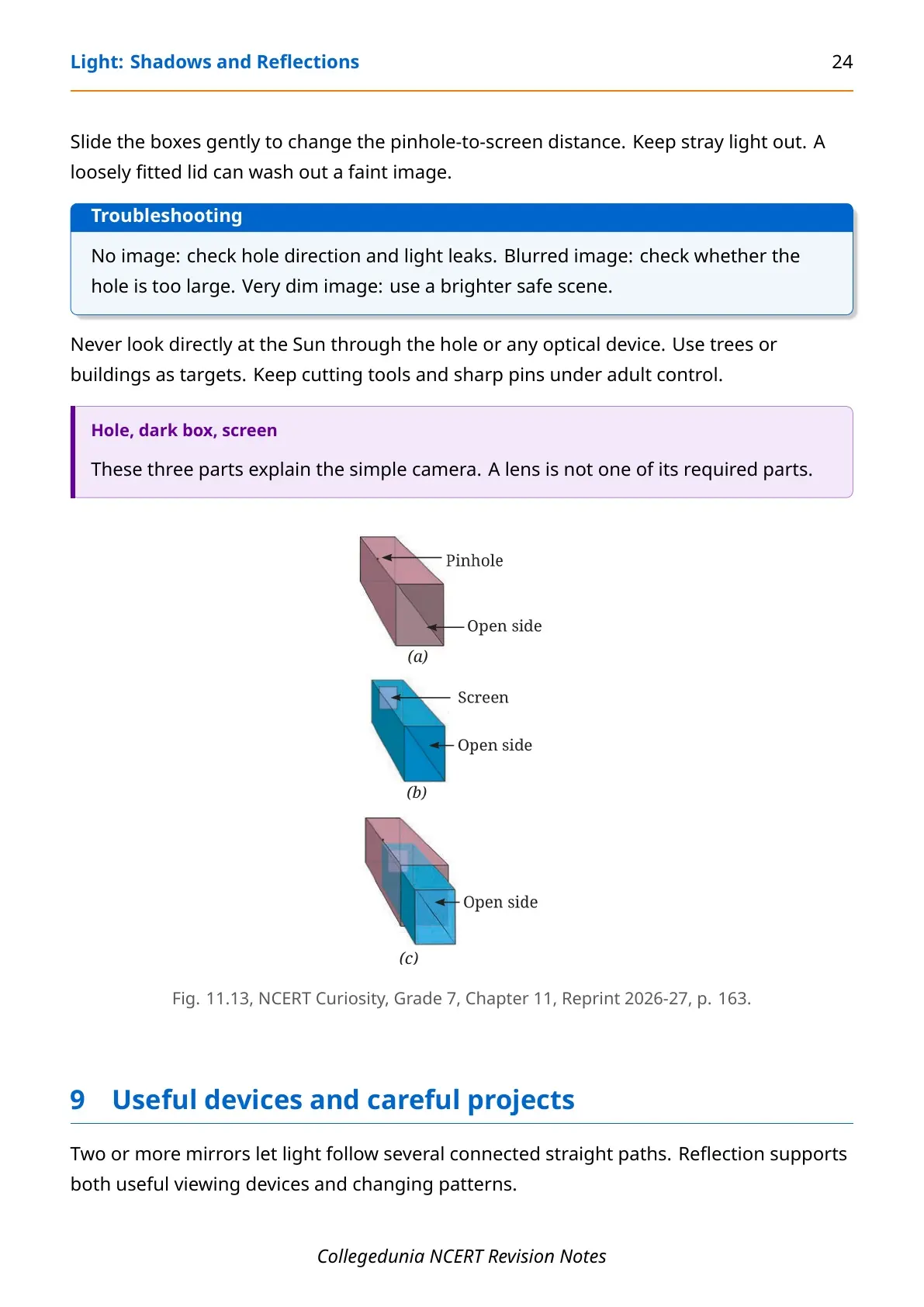
A pinhole camera uses a tiny hole and a screen inside a dark enclosure. Light from the top of an object reaches the lower screen. Light from the bottom reaches the upper screen. The image is therefore inverted. Unlike a shadow, it can show the object's colours.
- Plane mirror: an erect, laterally inverted image.
- Pinhole camera: an upside-down image on a screen.
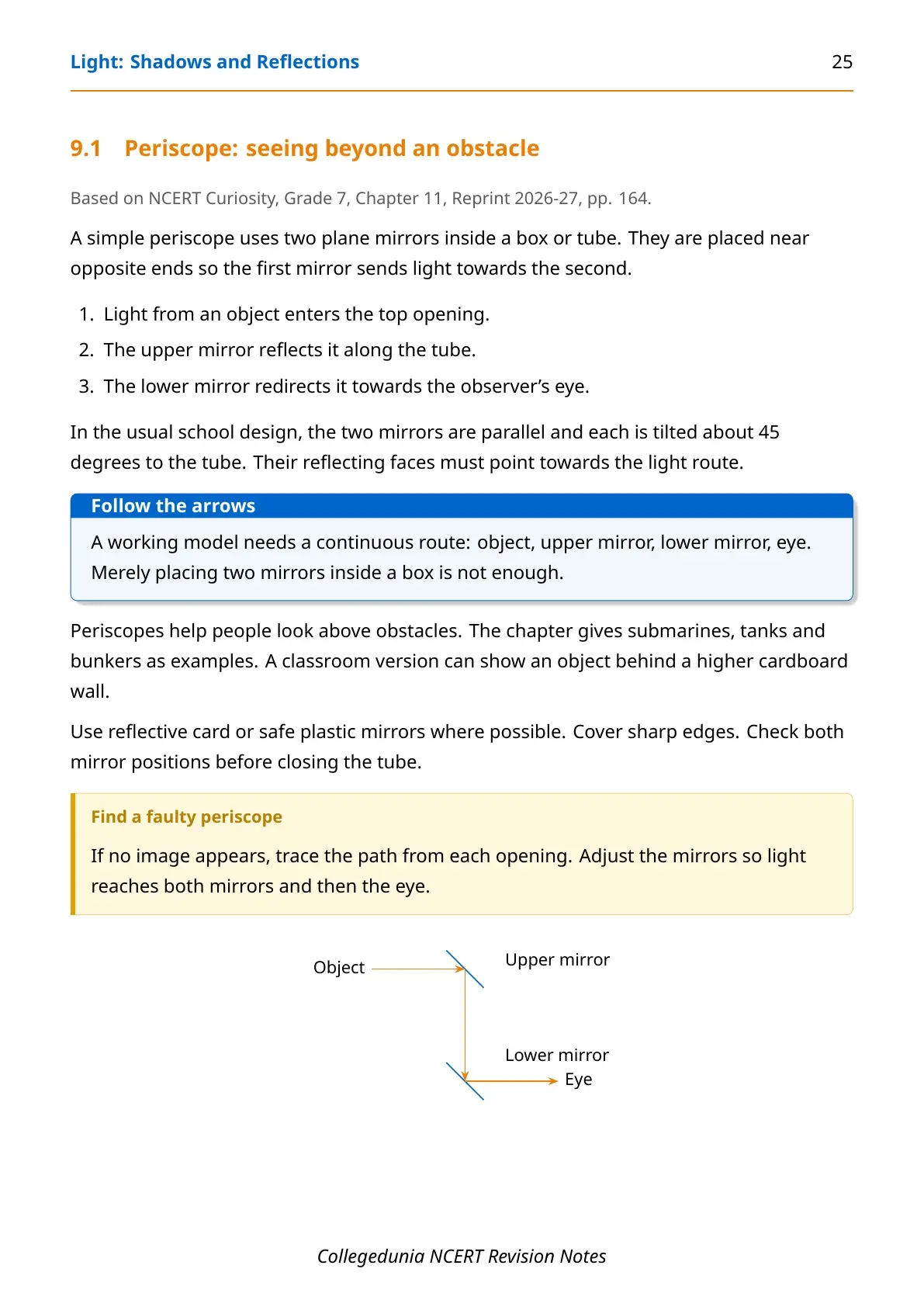
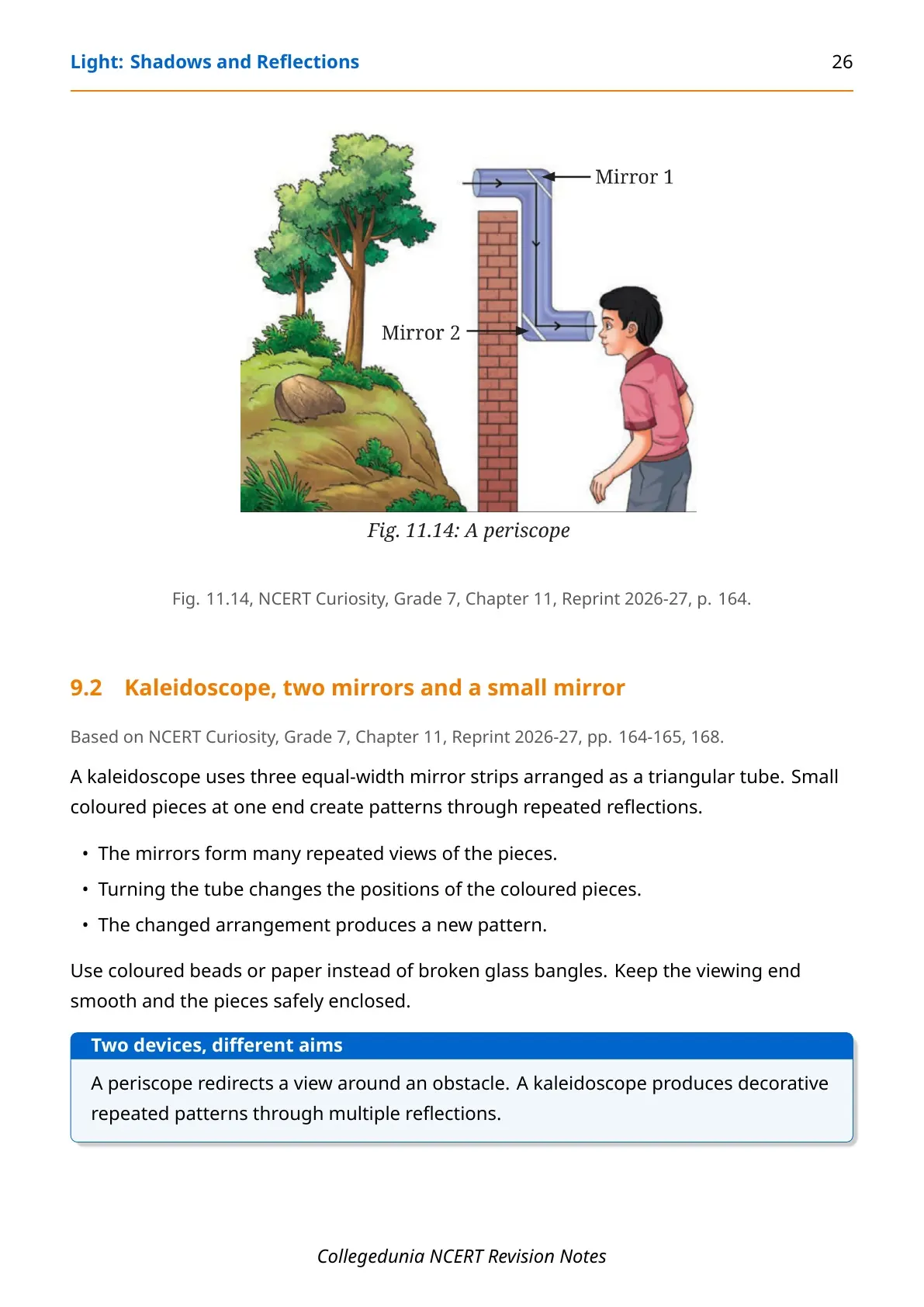
- Periscope: two plane mirrors redirect light so you can see past an obstacle.
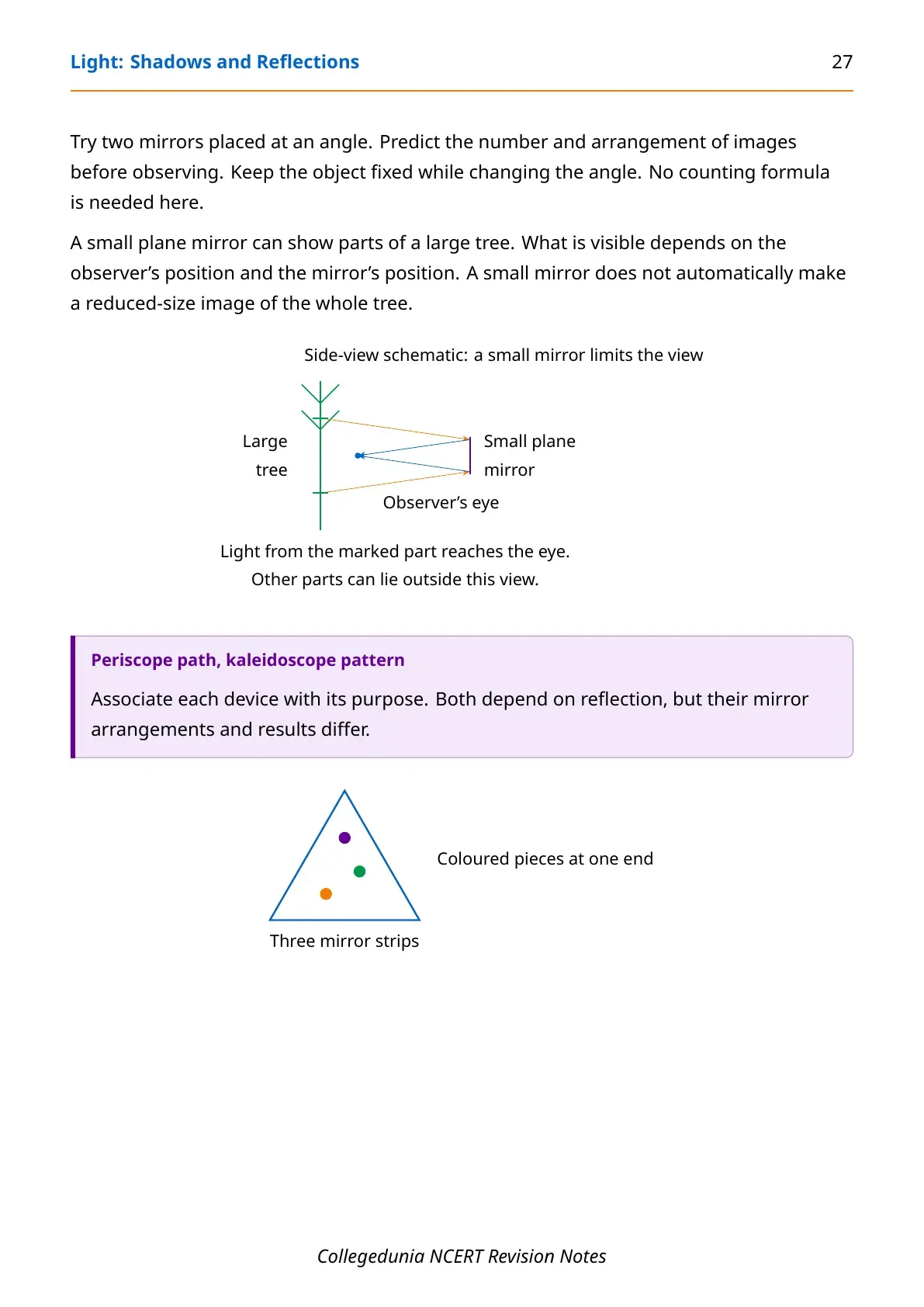
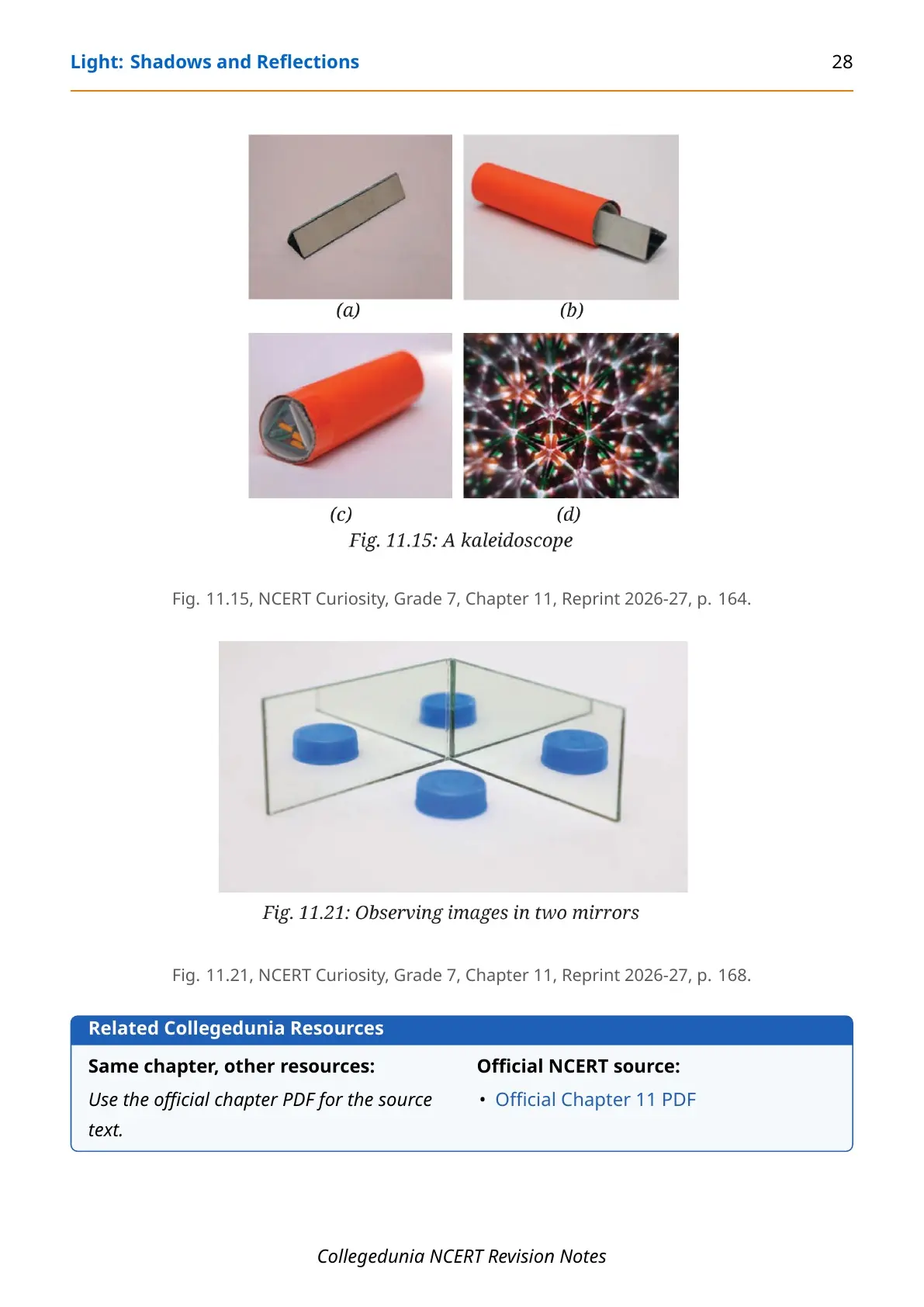
- Kaleidoscope: three mirror strips create patterns through repeated reflections.
Light Activities: Check Your Observations Before Revising
Collegedunia's revision checklist focuses on what you can observe and explain. Use a torch for a classroom demonstration. Handle mirrors carefully and ask an adult before using a candle. Never look directly at the Sun or aim a laser at anyone's eyes.
| Activity | Check your explanation |
|---|---|
| Align three holes | Why does shifting one card block the beam? |
| Move an object between torch and wall | Which positions make a larger shadow? |
| Raise one hand before a mirror | How does lateral inversion differ from upside-down inversion? |
| View a tree using a pinhole camera | Why is its image inverted? |
Student Feedback: Light: Shadows and Reflections
Which comparison still needs practice: shadow versus image, or mirror versus pinhole camera? Ask a classmate to explain it, then compare both explanations with NCERT. No student-survey result is claimed here.
Light: Shadows and Reflections Related Resources
Read the textbook activity first, then use the companion resources for revision or checking your answers.
| Resource | Use it for |
|---|---|
| Light: Shadows and Reflections NCERT Book | the original activities and questions |
| Light: Shadows and Reflections NCERT Solutions | checking explanations after attempting questions |
| Light: Shadows and Reflections Handwritten Notes | another format for revision |
Class 7 Science Curiosity Notes for Other Chapters
Continue revision with these chapters from the same textbook.
| Chapter | Notes |
|---|---|
| 6: Adolescence: A Stage of Growth and Change | Adolescence Class 7 Notes |
| 8: Measurement of Time and Motion | Measurement of Time and Motion Class 7 Notes |
| 9: Life Processes in Animals | Life Processes in Animals Class 7 Notes |
Light: Shadows and Reflections Class 7 Science Notes FAQs
Ques. Which textbook do these notes follow?
Ans. These notes follow Chapter 11, Light: Shadows and Reflections, of NCERT Curiosity for Grade 7, reprint 2026-27.
Ques. Does the Moon produce its own light?
Ans. No. The Moon is non-luminous. It is visible because it reflects sunlight.
Ques. What three things help us observe a shadow?
Ans. A light source, an object that blocks light and a screen. The ground or a wall may be the screen.
Ques. Does a red opaque ball cast a red shadow?
Ans. No. Changing the colour of an opaque object does not make its shadow take that colour.
Ques. Can transparent objects cast shadows?
Ans. Some transparent objects produce faint shadows. Opaque objects generally cast darker shadows.
Ques. What happens when the object moves towards a torch?
Ans. With the torch and screen fixed, moving the object closer to the torch makes its shadow larger.
Ques. Is a plane-mirror image upside down?
Ans. No. It is erect and laterally inverted. It has the same size as the object and cannot be obtained on a screen.
Ques. Why does a pinhole camera form an inverted image?
Ans. Light travels in straight lines. Rays from the top pass through the hole to the lower screen, and rays from the bottom reach the upper screen.
Ques. How does a periscope help us see past an obstacle?
Ans. Its two plane mirrors reflect light along a changed path to the eye.
Ques. What is a luminous object?
Ans. A luminous object emits its own light, such as the Sun or a glowing lamp.
Ques. How is reflection defined?
Ans. Reflection is the change in direction of light at a reflecting surface, such as a mirror.
Ques. What are translucent materials?
Ans. Translucent materials allow light to pass only partly. Tracing paper is an example.



Comments