



The NCERT Class 8 Arts (Kriti) Chapter 4 Applause and Advice Notes explain how students should watch a performance, appreciate it, and write a fair review. The PDF follows the 2026-27 NCERT textbook and covers viewer duties, Natyashastra-based appreciation, self-review, peer review, critical review and beginner review writing.
- Use these notes to revise viewer behaviour, applause, feedback and review structure.
- The chapter helps students write about acting, story, costumes, lights, sound and flow.
- The chapter asks students to observe, reflect and write with fair reasons.
Chapter4ApplauseandAdviceNotes.pdf?page=1&dpi=150)
Chapter4ApplauseandAdviceNotes.pdf?page=2&dpi=150)
Chapter4ApplauseandAdviceNotes.pdf?page=3&dpi=150)
Chapter4ApplauseandAdviceNotes.pdf?page=4&dpi=150)
Chapter4ApplauseandAdviceNotes.pdf?page=5&dpi=150)
Chapter4ApplauseandAdviceNotes.pdf?page=6&dpi=150)
Chapter4ApplauseandAdviceNotes.pdf?page=7&dpi=150)
Chapter4ApplauseandAdviceNotes.pdf?page=8&dpi=150)
Chapter4ApplauseandAdviceNotes.pdf?page=9&dpi=150)
Chapter4ApplauseandAdviceNotes.pdf?page=10&dpi=150)
Chapter4ApplauseandAdviceNotes.pdf?page=11&dpi=150)
Chapter4ApplauseandAdviceNotes.pdf?page=12&dpi=150)
Chapter4ApplauseandAdviceNotes.pdf?page=13&dpi=150)
Chapter4ApplauseandAdviceNotes.pdf?page=14&dpi=150)
Chapter4ApplauseandAdviceNotes.pdf?page=15&dpi=150)
Chapter4ApplauseandAdviceNotes.pdf?page=16&dpi=150)
Chapter4ApplauseandAdviceNotes.pdf?page=17&dpi=150)
Chapter4ApplauseandAdviceNotes.pdf?page=18&dpi=150)
Chapter4ApplauseandAdviceNotes.pdf?page=19&dpi=150)
Chapter4ApplauseandAdviceNotes.pdf?page=20&dpi=150)
Chapter4ApplauseandAdviceNotes.pdf?page=21&dpi=150)
Chapter4ApplauseandAdviceNotes_flat_MobileCard.pdf?page=1&dpi=150)
Chapter4ApplauseandAdviceNotes_flat_MobileCard.pdf?page=2&dpi=150)
Chapter4ApplauseandAdviceNotes_flat_MobileCard.pdf?page=3&dpi=150)
Chapter4ApplauseandAdviceNotes_flat_MobileCard.pdf?page=4&dpi=150)
Chapter4ApplauseandAdviceNotes_flat_MobileCard.pdf?page=5&dpi=150)
Chapter4ApplauseandAdviceNotes_flat_MobileCard.pdf?page=6&dpi=150)
Chapter4ApplauseandAdviceNotes_flat_MobileCard.pdf?page=7&dpi=150)
Chapter4ApplauseandAdviceNotes_flat_MobileCard.pdf?page=8&dpi=150)
Chapter4ApplauseandAdviceNotes_flat_MobileCard.pdf?page=9&dpi=150)
Chapter4ApplauseandAdviceNotes_flat_MobileCard.pdf?page=10&dpi=150)
Chapter4ApplauseandAdviceNotes_flat_MobileCard.pdf?page=11&dpi=150)
Chapter4ApplauseandAdviceNotes_flat_MobileCard.pdf?page=12&dpi=150)
Chapter4ApplauseandAdviceNotes_flat_MobileCard.pdf?page=13&dpi=150)
Chapter4ApplauseandAdviceNotes_flat_MobileCard.pdf?page=14&dpi=150)
Chapter4ApplauseandAdviceNotes_flat_MobileCard.pdf?page=15&dpi=150)
Chapter4ApplauseandAdviceNotes_flat_MobileCard.pdf?page=16&dpi=150)
Chapter4ApplauseandAdviceNotes_flat_MobileCard.pdf?page=17&dpi=150)
Chapter4ApplauseandAdviceNotes_flat_MobileCard.pdf?page=18&dpi=150)
Chapter4ApplauseandAdviceNotes_flat_MobileCard.pdf?page=19&dpi=150)
Chapter4ApplauseandAdviceNotes_flat_MobileCard.pdf?page=20&dpi=150)
Chapter4ApplauseandAdviceNotes_flat_MobileCard.pdf?page=21&dpi=150)
Chapter4ApplauseandAdviceNotes_flat_MobileCard.pdf?page=22&dpi=150)
Chapter4ApplauseandAdviceNotes_flat_MobileCard.pdf?page=23&dpi=150)
Chapter4ApplauseandAdviceNotes_flat_MobileCard.pdf?page=24&dpi=150)
Chapter4ApplauseandAdviceNotes_flat_MobileCard.pdf?page=25&dpi=150)
Chapter4ApplauseandAdviceNotes_flat_MobileCard.pdf?page=26&dpi=150)
Chapter4ApplauseandAdviceNotes_flat_MobileCard.pdf?page=27&dpi=150)
Chapter4ApplauseandAdviceNotes_flat_MobileCard.pdf?page=28&dpi=150)
Applause and Advice Chapter Snapshot
Applause and Advice teaches that viewers also have duties in performing arts. Students must watch respectfully, avoid distractions, applaud at the right time and respond kindly after the show.
| Chapter idea | What students learn |
|---|---|
| Good viewers | Watch and listen without disturbing actors or other viewers. |
| Appreciation | Use words, writing, clapping and respectful actions. |
| Review writing | Observe, reflect and give fair feedback on a performance. |
Viewer Duties and Applause
The chapter says small distractions can disturb performers and viewers. Good viewers support the performance through attention, silence and timely applause.
- Do not talk, fidget or use phones during a show.
- Applaud at the right time and appreciate the effort of performers.
- Congratulate performers with kind words after the show.
NCERT links appreciation with the Natyashastra. It explains vocal response through words, exclamations and writing, and physical response through clapping, standing up and respectful actions.
Review Writing Steps
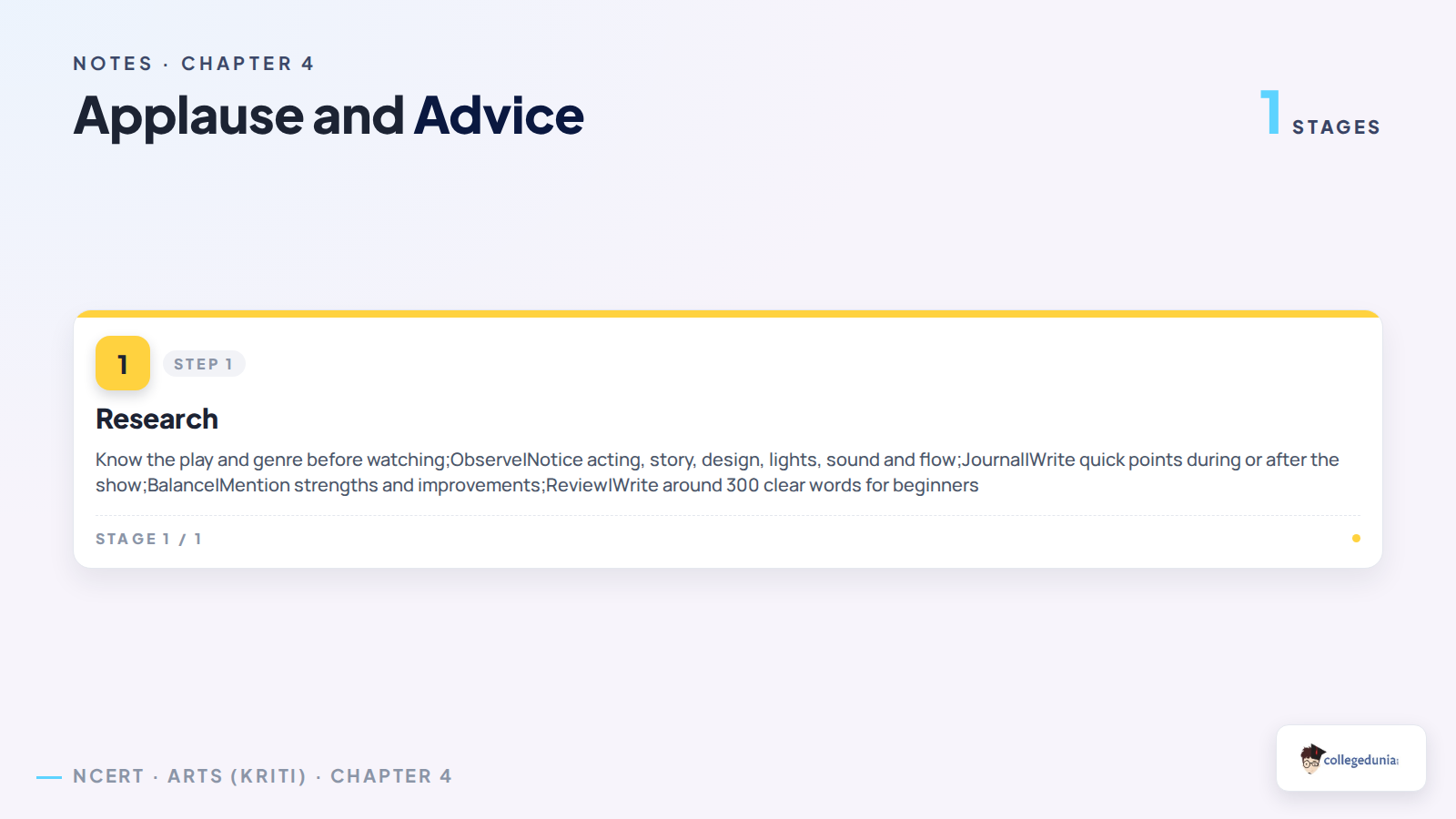
A review is thoughtful feedback after watching a performance. It is not only fault-finding. It should notice strengths, details and improvement areas.
- Research the play name, playwright and basic plot without spoilers.
- Know the genre, such as comedy, tragedy, musical or historical drama.
- Carry a small journal and note acting, story, set, costume, light, sound and flow.
- Write with balance. Mention positives and suggestions.
Beginners can aim for about 300 words. The review should be detailed but easy to read.
Self Review, Peer Review and Critical Review
| Review type | Meaning | Use |
|---|---|---|
| Self-review | Creators examine their own art. | Improve before presenting. |
| Peer review | Contemporaries in the field give suggestions. | Improve before or after the show. |
| Critical review | Everyone gives detailed analysis after the show. | Study strengths, weaknesses and scope for improvement. |
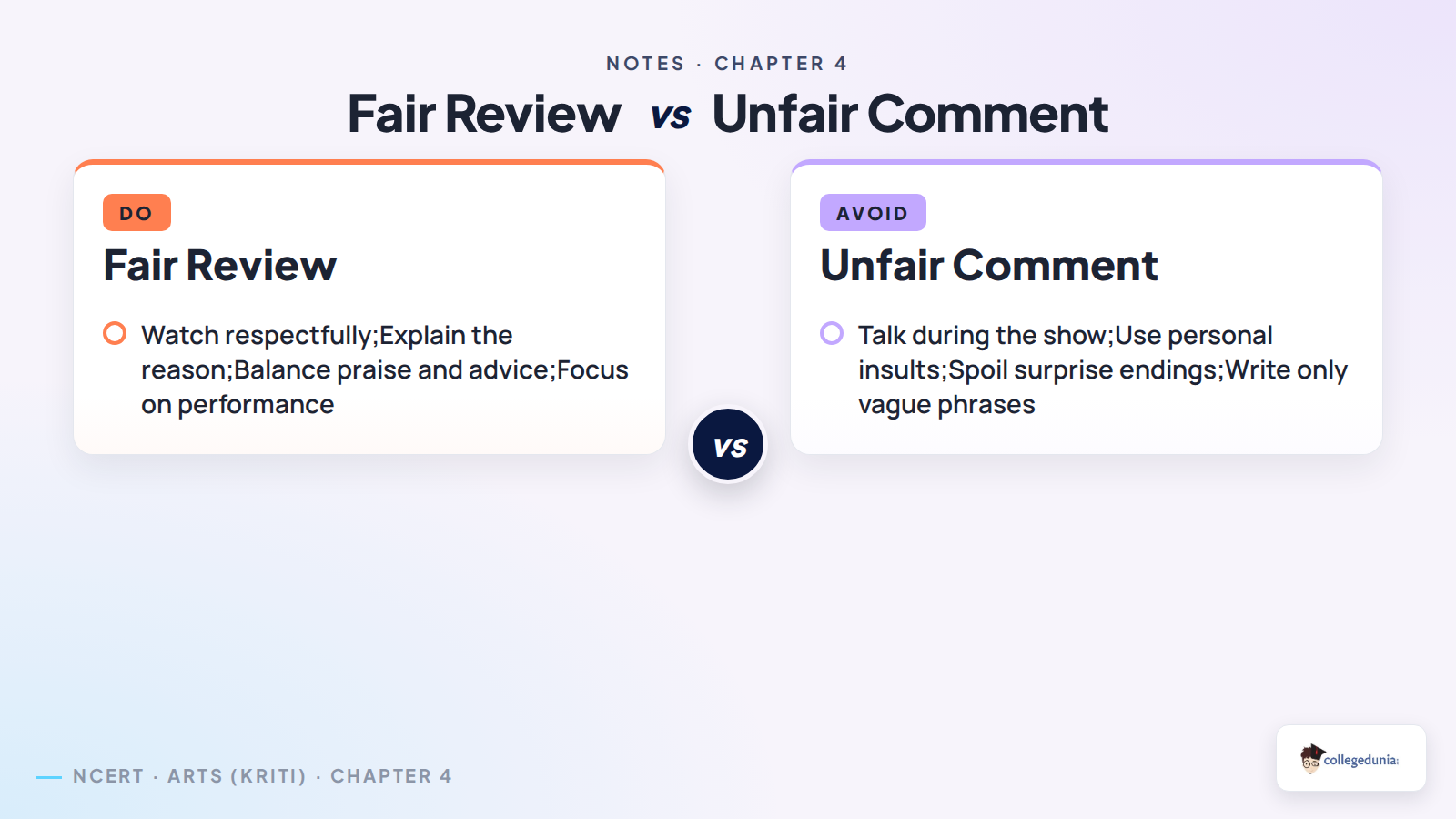
Fair feedback critiques the performance, not the person. Avoid personal insults, spoilers and vague phrases like "it was not bad." Explain every opinion with a reason.
Applause and Advice Video Lesson for Class 8 Arts
Source: Wisdom of Avyaan on YouTube
More Class 8 Arts Resources for Applause and Advice
| Resource | Link |
|---|---|
| NCERT Book PDF | Applause and Advice Class 8 Book PDF |
| NCERT Solutions | Applause and Advice Class 8 Solutions |
| Handwritten Notes | Applause and Advice Class 8 Handwritten Notes |
Class 8 Arts (Kriti) Notes for Other Chapters
| Chapter | Notes PDF |
|---|---|
| Chapter 1 Bringing Words Alive: Play Reading | Download Chapter 1 Notes |
| Chapter 2 One Stage, Many Scripts | Download Chapter 2 Notes |
| Chapter 3 From Page to Stage | Download Chapter 3 Notes |
Applause and Advice Class 8 Arts Notes FAQs
Ques. What is covered in Applause and Advice Class 8 notes?
Ans. The notes cover viewer duties, applause, Natyashastra-based appreciation, review types, play-watching preparation and review writing from Class 8 Arts (Kriti) Chapter 4.
Ques. What are the three types of reviews in Applause and Advice?
Ans. The chapter lists self-review, peer review and critical review. Each one helps performers or creators improve their work.
Ques. Are these notes based on the 2026-27 NCERT textbook?
Ans. Yes. The notes follow Class 8 Arts (Kriti) Chapter 4 Applause and Advice from the 2026-27 NCERT book.



Comments