



The NCERT Book PDF for Class 10 Geography Chapter 2 Forest and Wildlife Resources gives the full official chapter text that the CBSE board paper tests.
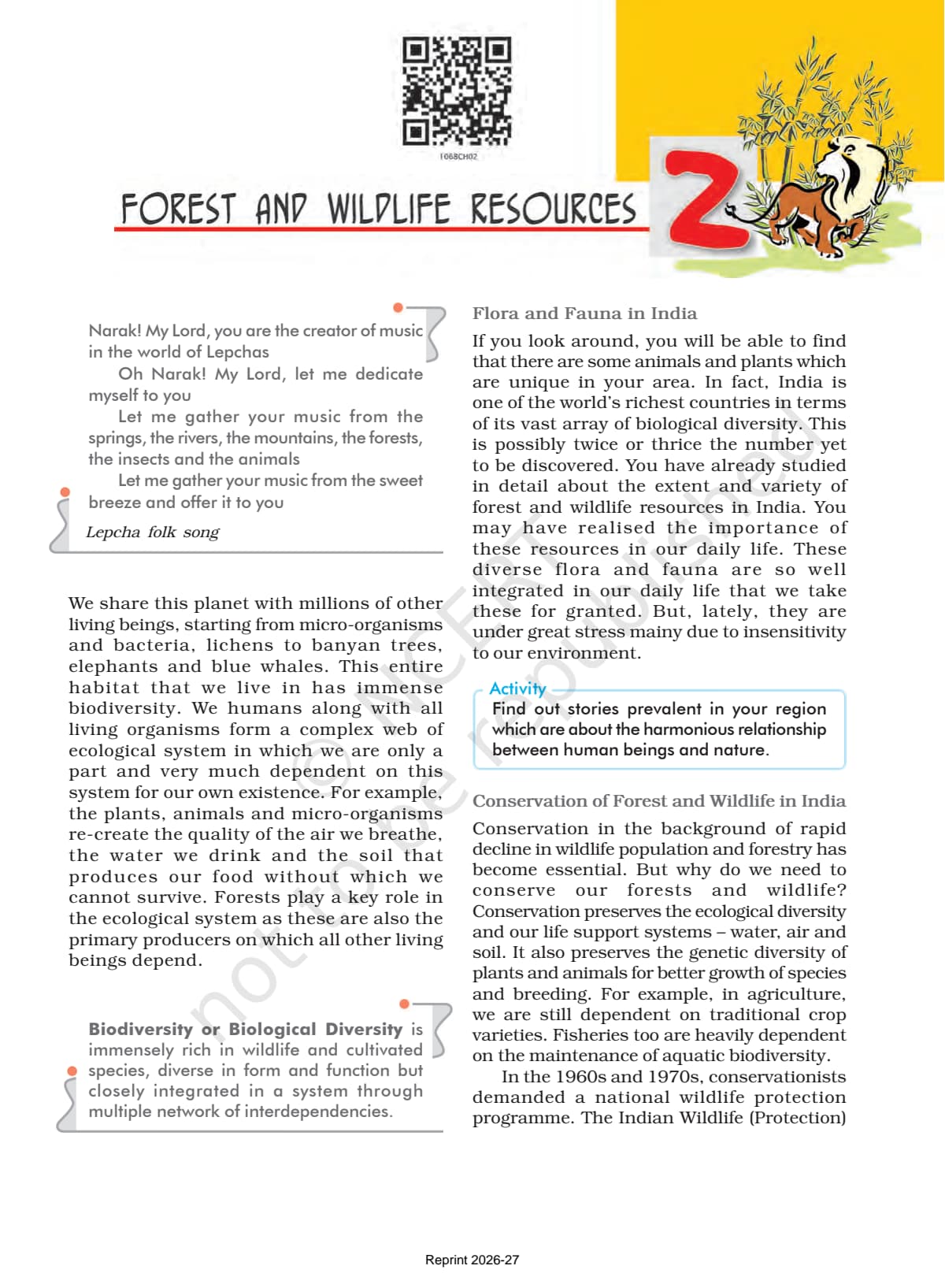
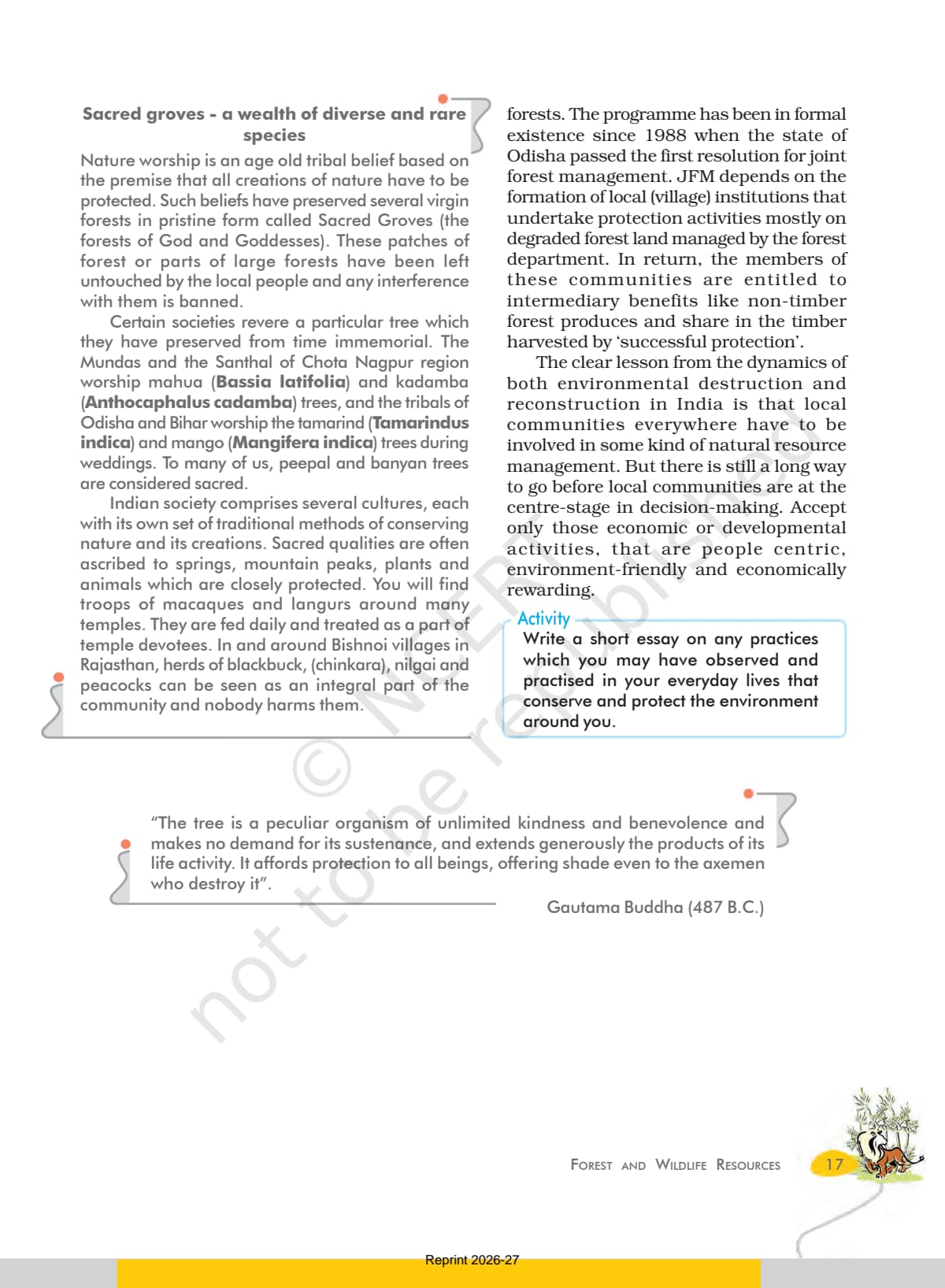
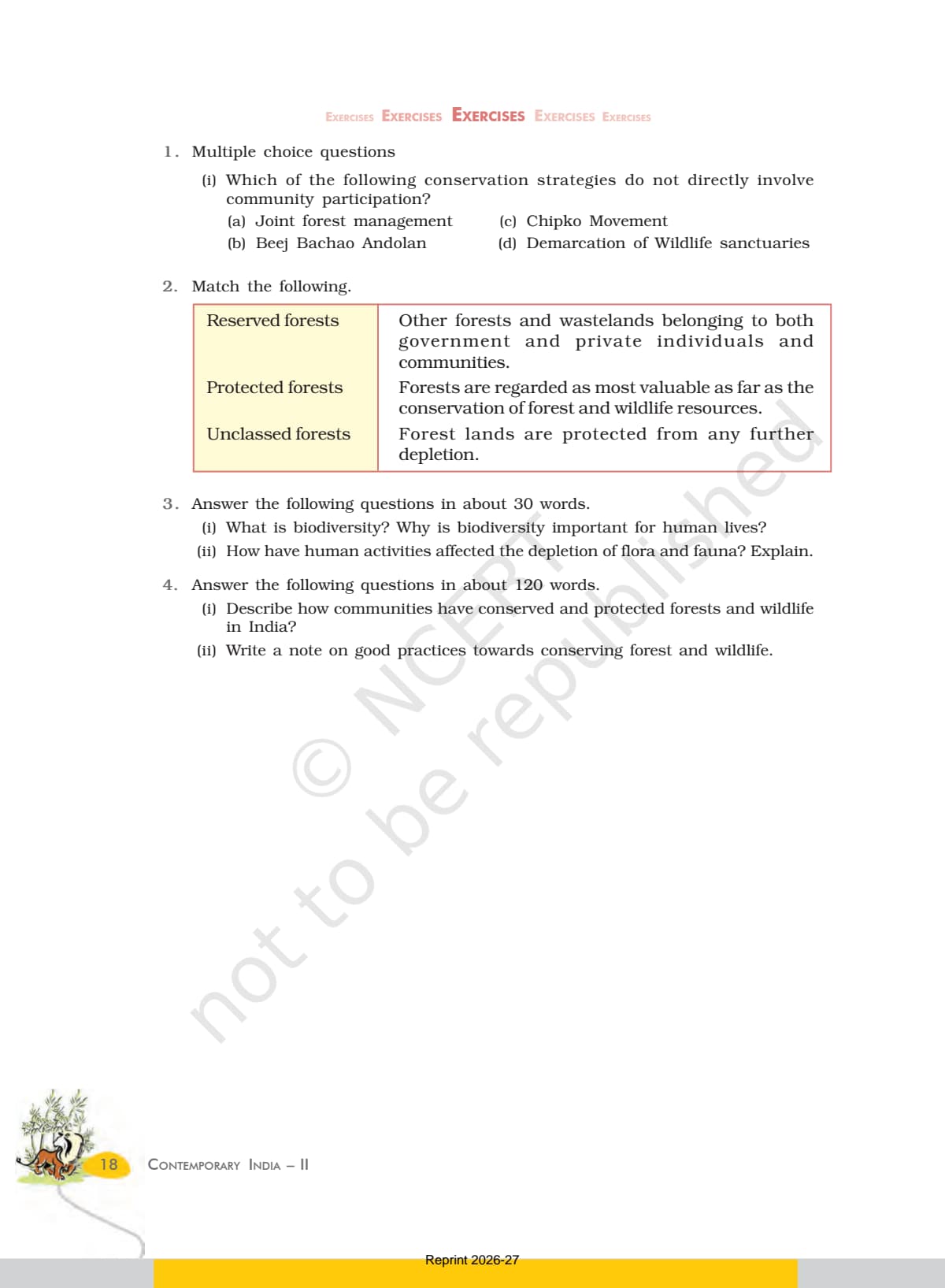
Students can read the forest and wildlife resources class 10 pdf online or download it free for the 2026-27 session. The chapter covers biodiversity, conservation of forest and wildlife, Project Tiger, types of forests, and movements like Chipko.
- Source: Official NCERT Contemporary India II textbook, Chapter 2, 2026-27 reprint.
- Exam value: carries about 6 to 7 marks in the CBSE Class 10 Social Science paper.
- Key topics: biodiversity, reserved and protected forests, Project Tiger, Joint Forest Management.
This PDF is the exact official NCERT chapter text, checked against the 2026-27 Contemporary India II reprint, so it matches the printed book word for word.
The text below explains what the chapter covers, how to use the PDF, and how it links to the other Class 10 Geography resources.
What the Forest and Wildlife Resources Class 10 PDF Contains
The PDF holds the full Chapter 2 of the NCERT Contemporary India II book in the 2026-27 edition. It runs across six pages and ends with the back-exercise questions.
- Biodiversity and flora and fauna in India: why India is one of the world's richest countries in biological diversity.
- Conservation of forest and wildlife: the Indian Wildlife (Protection) Act, 1972 and the all-India list of protected species.
- Project Tiger: launched in 1973 to save the tiger, with reserves like Corbett, Sunderbans, and Bandhavgarh.
- Types of forests: reserved forests, protected forests, and unclassed forests.
- Community and conservation: the Chipko movement, Beej Bachao Andolan, sacred groves, and Joint Forest Management.
Forest and Wildlife Resources Class 10 Full Chapter Video
Source: Magnet Brains on YouTube
Forest and Wildlife Resources Class 10 Notes Inside the Chapter
The chapter opens with biodiversity. Biodiversity, or biological diversity, is the huge variety of life, from micro-organisms to banyan trees, elephants, and blue whales. All living beings form one web of an ecological system, and we depend on it for clean air, water, and soil. Forests are the primary producers on which other living beings depend.
India is one of the world's richest countries in biological diversity. This rich flora and fauna are now under great stress because we are not sensitive to the environment. In the 1960s and 1970s, conservationists demanded a national wildlife protection programme.
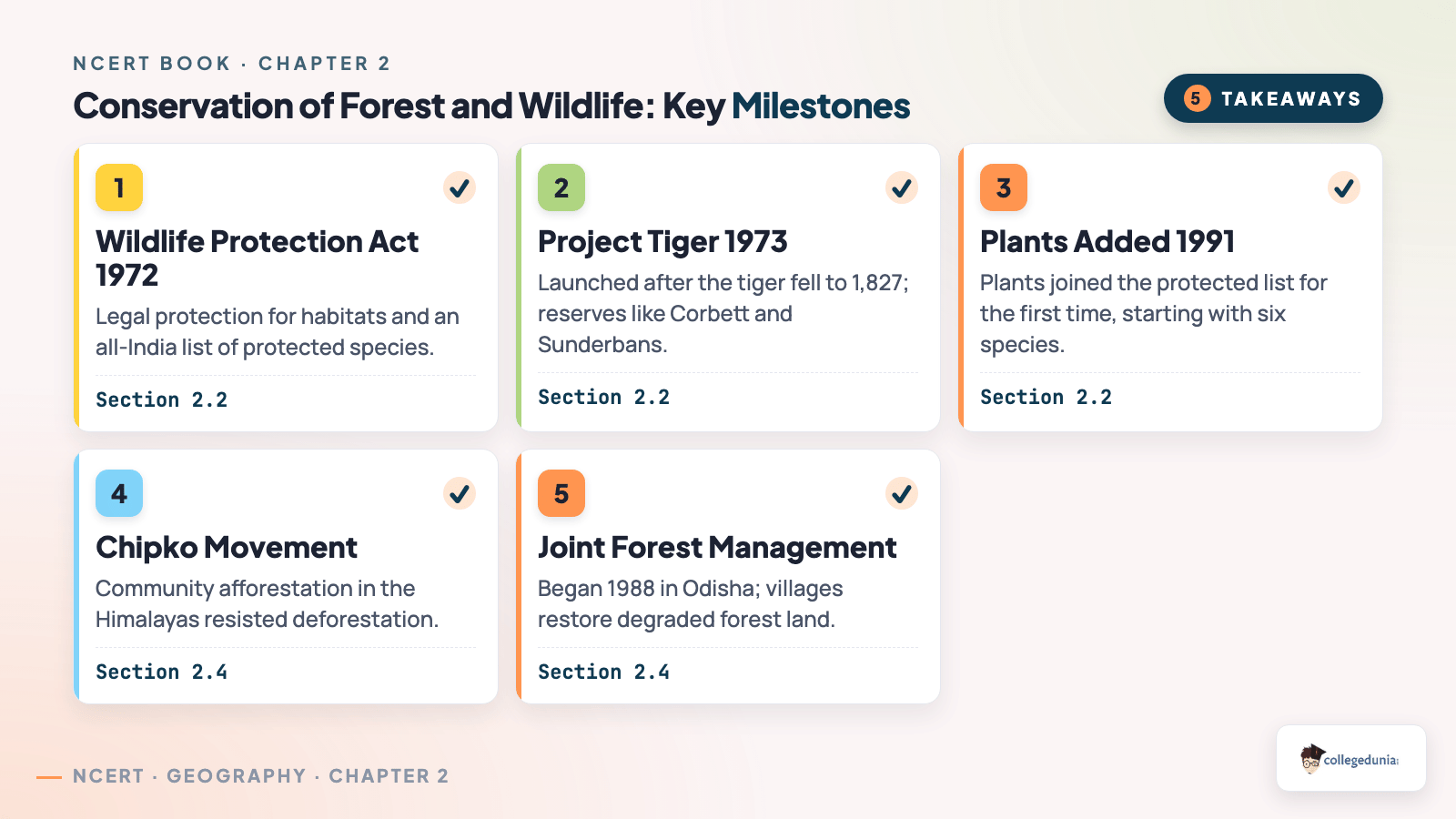
- Indian Wildlife (Protection) Act, 1972: brought in legal protection for habitats and banned hunting of listed species.
- Protected species: the one-horned rhinoceros, the Kashmir stag (hangul), three types of crocodiles, the Asiatic lion, and others.
- 1991 update: plants were added to the protected list for the first time, starting with six species.
Project Tiger and Wildlife Conservation in the Class 10 Geography PDF
Project Tiger is one of the most well-known wildlife campaigns in the world. The tiger is a key species in the faunal web. By 1973, the tiger population had dropped to 1,827 from an estimated 55,000 at the turn of the century. The main threats were poaching for trade, shrinking habitat, loss of prey, and a growing human population.
"Project Tiger" was launched in 1973 to save the species and preserve large biotypes. The major tiger reserves include Corbett in Uttarakhand, Sunderbans in West Bengal, Bandhavgarh in Madhya Pradesh, Sariska in Rajasthan, Manas in Assam, and Periyar in Kerala.
Forest and Wildlife Resources Class 10 PDF Section-Wise Contents
The 2026-27 NCERT prints this chapter across clear sections. Use the table below as a checklist while you read the PDF.
| Section | Topic | What you will learn |
|---|---|---|
| 2.1 | Flora and Fauna in India | Why India is rich in biodiversity and how flora and fauna are under stress today |
| 2.2 | Conservation of Forest and Wildlife | The Wildlife Protection Act 1972, protected species, and Project Tiger of 1973 |
| 2.3 | Types and Distribution of Forest and Wildlife Resources | Reserved, protected, and unclassed forests, with state-wise forest distribution |
| 2.4 | Community and Conservation | Chipko movement, Beej Bachao Andolan, sacred groves, and Joint Forest Management |
Types of Forests Covered in the Class 10 Geography Chapter 2 PDF
In India, much of the forest and wildlife is managed by the government through the Forest Department. The book groups forests into three categories, a favourite match-the-column question in the board paper.
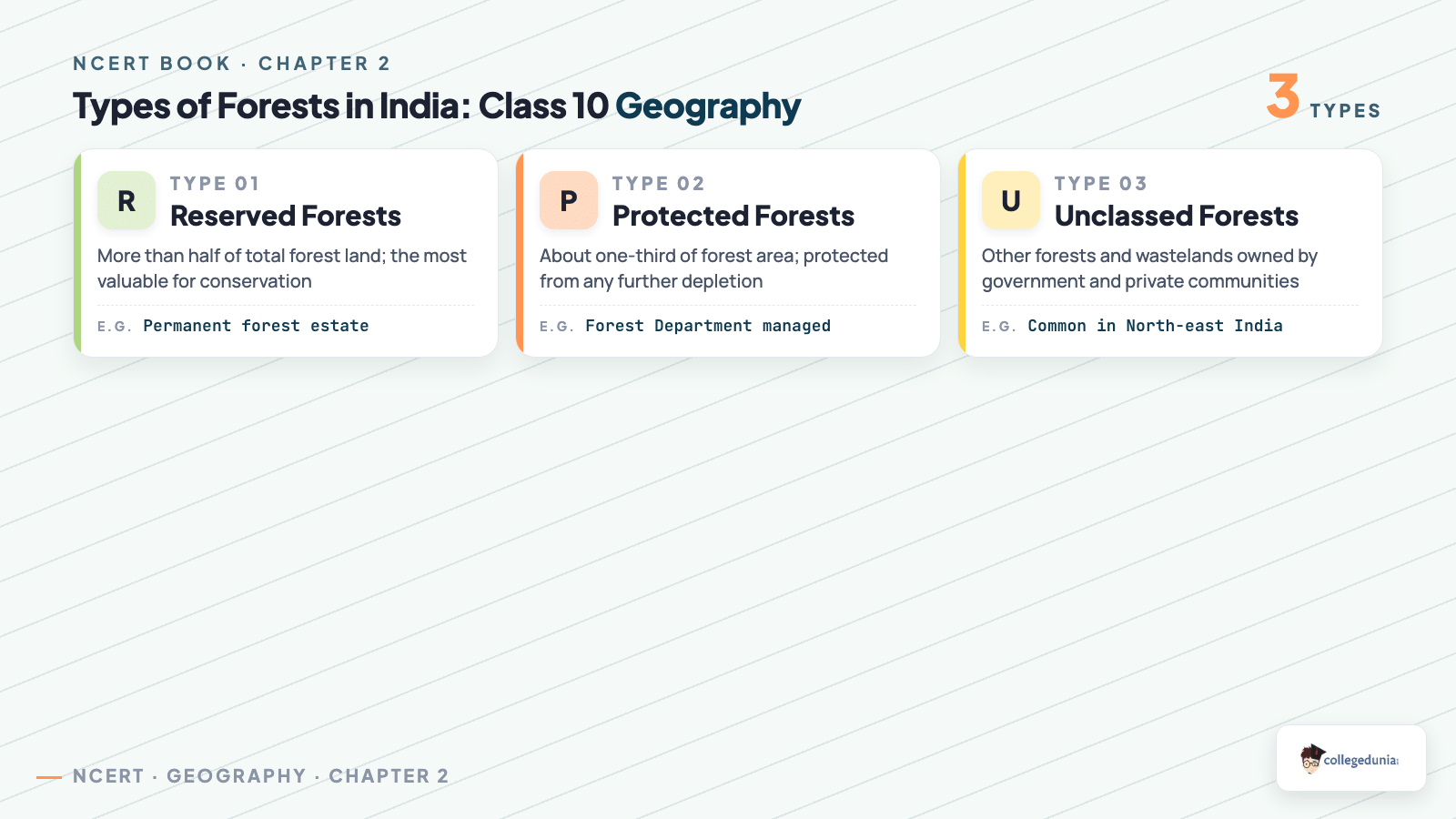
| Forest Type | Share of Forest | Meaning |
|---|---|---|
| Reserved Forests | More than half | The most valuable forests for conserving forest and wildlife resources. |
| Protected Forests | About one-third | Forest land protected from any further depletion by the Forest Department. |
| Unclassed Forests | The rest | Other forests and wastelands owned by both government and private communities. |
Reserved and protected forests are also called permanent forest estates, kept for timber, other produce, and protection. Madhya Pradesh has the largest area of permanent forests, about 75 per cent of its total forest area. The North-eastern states and parts of Gujarat have a high share of unclassed forests managed by local communities.
Community and Conservation in the Forest and Wildlife Resources Class 10 PDF
Conservation strategies are not new in our country. In many areas, local communities protect habitats with government officials because this secures their livelihood. In Sariska Tiger Reserve, villagers fought against mining using the Wildlife Protection Act. People of five villages in Alwar, Rajasthan declared 1,200 hectares as the Bhairodev Dakav Sonchuri, with their own rules against hunting.
- Chipko movement: in the Himalayas, it resisted deforestation and showed that community afforestation with local species works.
- Beej Bachao Andolan and Navdanya: showed that good crop yields are possible without chemical fertilisers and are economically viable.
- Sacred groves: virgin forests preserved by tribal nature worship, where any interference is banned.
- Joint Forest Management (JFM): began formally in 1988 when Odisha passed the first resolution, involving village institutions in restoring degraded forests.
The clear lesson from both forest destruction and restoration is that local communities must be involved in natural resource management. JFM depends on local institutions that protect degraded forest land in return for non-timber forest produce and a share in the timber harvested.
How the Forest and Wildlife Resources PDF Helps You Score in Boards
This chapter rewards students who recall the right years and examples. The official PDF gives the exact wording the examiner expects, so your 3-mark and 5-mark answers stay accurate.
- 2026-27 NCERT alignment: every line matches the current Contemporary India II reprint.
- Exam-ready facts: the 1972 Act, 1973 Project Tiger launch, and the three forest types are framed the way boards ask them.
- Free and offline: download the forest and wildlife resources class 10 pdf once and read it without internet.
- Map and match practice: use the section table and forest-type table for last-day revision.
Forest and Wildlife Resources Class 10 PDF: Editions, Language and Download
The PDF on this page is the most-downloaded format for Class 10 Geography students who want the exact book text.
Languages and Format of the Class 10 Geography Chapter 2 PDF
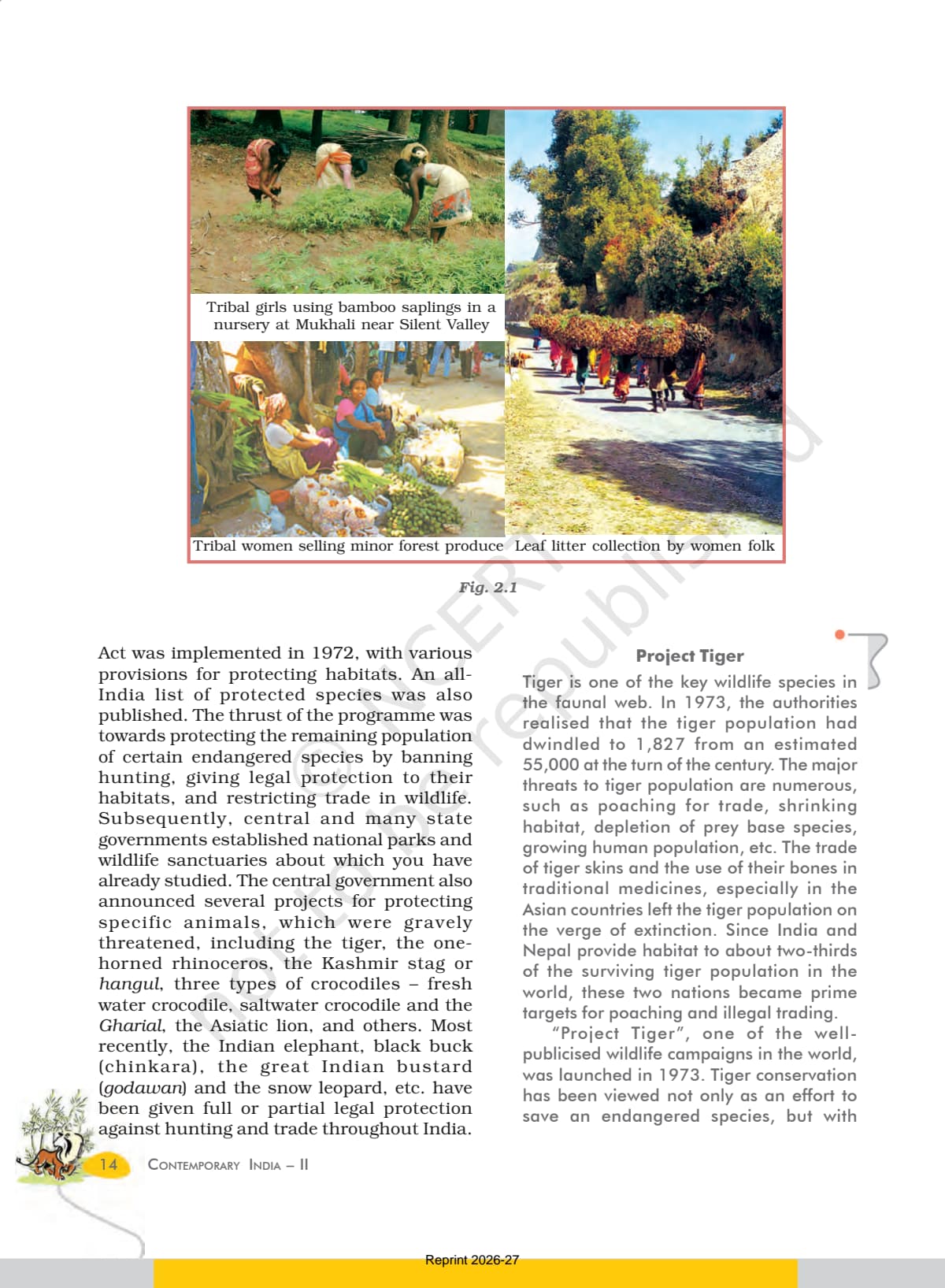
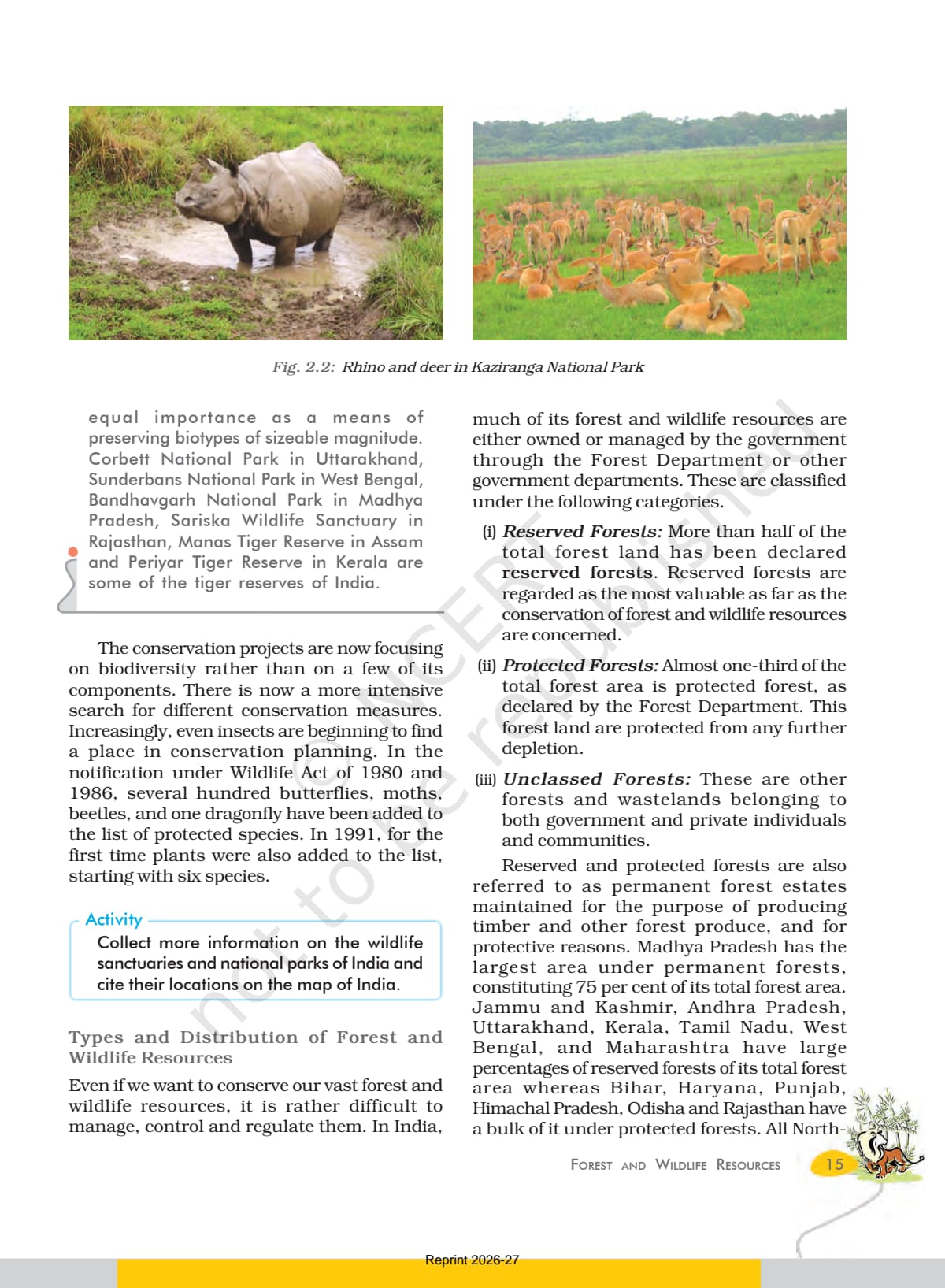
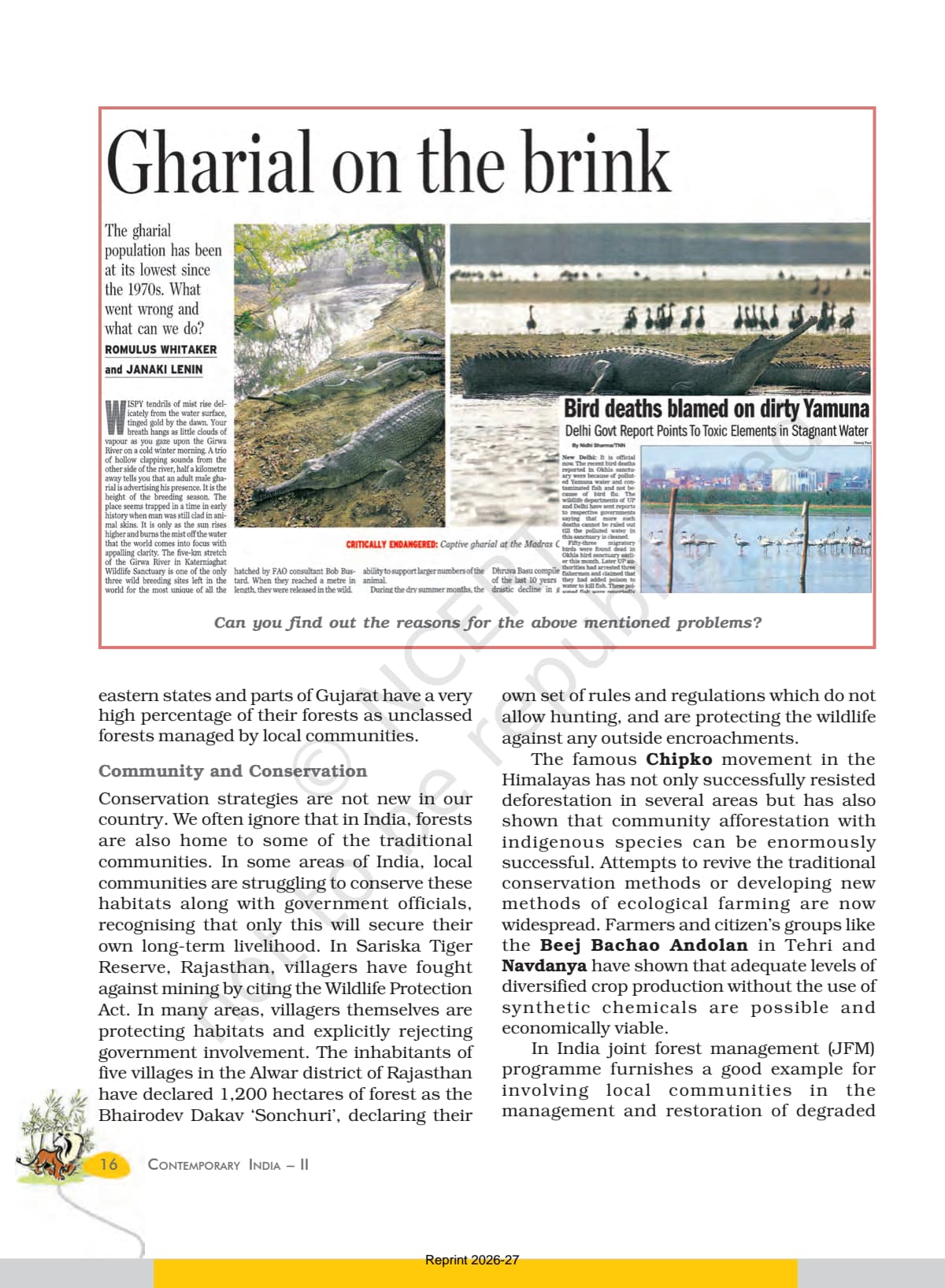
The chapter is in English here, and NCERT also prints a Hindi-medium version. The file is the standard-resolution official scan, so the diagrams of Kaziranga, the gharial, and the Silent Valley nursery stay clear when you zoom in.
Is the Class 10 Geography Chapter 2 Book Alone Enough for Boards?
The book text covers the facts, but pair it with the notes and solutions for full marks. The linked resources add explanations and solved back exercises.
How This Chapter Connects to Other Class 10 Geography Resources
Read this Book PDF first, then move to the chapter notes for a quick summary and the solutions for the back-exercise questions.
Student Feedback
In a Collegedunia poll of 1,150 Class 10 students, 74% said the official NCERT PDF was their first choice for revising Forest and Wildlife Resources before the board exam. Most paired it with the chapter notes for a quick recap.
Source: Collegedunia student poll, Class 10 Social Science, 2026-27 session.
Other Resources for This Chapter
Pair this with the other Class 10 Geography resources for this chapter, all linked below.
| Resource | Open |
|---|---|
| NCERT Solutions | Class 10 Geography Chapter 2 NCERT Solutions |
| Notes | Class 10 Geography Chapter 2 Notes |
| Formula Sheet | Class 10 Geography Chapter 2 Formula Sheet |
| Handwritten Notes | Class 10 Geography Chapter 2 Handwritten Notes |
| NCERT Book PDF | Class 10 Geography Chapter 2 NCERT Book PDF |
NCERT Book PDF for Class 10 Geography: All Chapters
Download the NCERT Book PDF for every Class 10 Geography chapter from the table below.
| Chapter | Resource |
|---|---|
| Chapter 1 | Resources and Development NCERT Book PDF |
| Chapter 3 | Water Resources NCERT Book PDF |
| Chapter 4 | Agriculture NCERT Book PDF |
| Chapter 5 | Minerals and Energy Resources NCERT Book PDF |
| Chapter 6 | Manufacturing Industries NCERT Book PDF |
| Chapter 7 | Lifelines of National Economy NCERT Book PDF |
Forest and Wildlife Resources Class 10 PDF FAQs
Ques. Where can I download the Forest and Wildlife Resources Class 10 PDF?
Ans. You can download the forest and wildlife resources class 10 pdf directly from this page. It is the official NCERT Chapter 2 text from Contemporary India II, and it is free.
Ques. Is this Class 10 Geography Chapter 2 PDF aligned with the 2026-27 NCERT?
Ans. Yes. This PDF is the current 2026-27 reprint of the NCERT Contemporary India II textbook, so every line matches the syllabus you study for the board exam.
Ques. How many pages is the Class 10 Geography Forest and Wildlife Resources PDF?
Ans. The chapter PDF runs about six pages and covers biodiversity, conservation, Project Tiger, types of forests, and community conservation, ending with the back-exercise questions.
Ques. What is Project Tiger in Class 10 Geography Chapter 2?
Ans. Project Tiger was launched in 1973 to save the tiger after its population fell to 1,827. It set up reserves like Corbett, Sunderbans, and Bandhavgarh to protect the species and its habitat.
Ques. What are the three types of forests in this chapter?
Ans. The chapter lists reserved forests, protected forests, and unclassed forests. Reserved forests are the most valuable, protected forests are saved from depletion, and unclassed forests belong to both government and communities.



Comments