



This is the 2026-27 print of the NCERT Class 10 Geography book PDF Chapter 6 Manufacturing Industries, the industry chapter of Contemporary India II. The full 13-page chapter is free to download below, with a page-by-page map to its sections.
The manufacturing industries class 10 PDF here is free and updated for the 2026-27 CBSE syllabus.
- CBSE Weightage: 6 to 7 marks per board paper, from Unit 1 Manufacturing Industries.
- Question Mix: 1 MCQ, one 3-mark factor or industry question, and one 5-mark pollution or location answer in most papers.
- Most Tested: classification of industries, the iron and steel industry, and industrial pollution.
This NCERT book PDF page is curated by subject experts from the 2026-27 NCERT print and checked against the last five years of CBSE papers.
How the NCERT Class 10 Geography Book PDF Chapter 6 Helps You Prepare
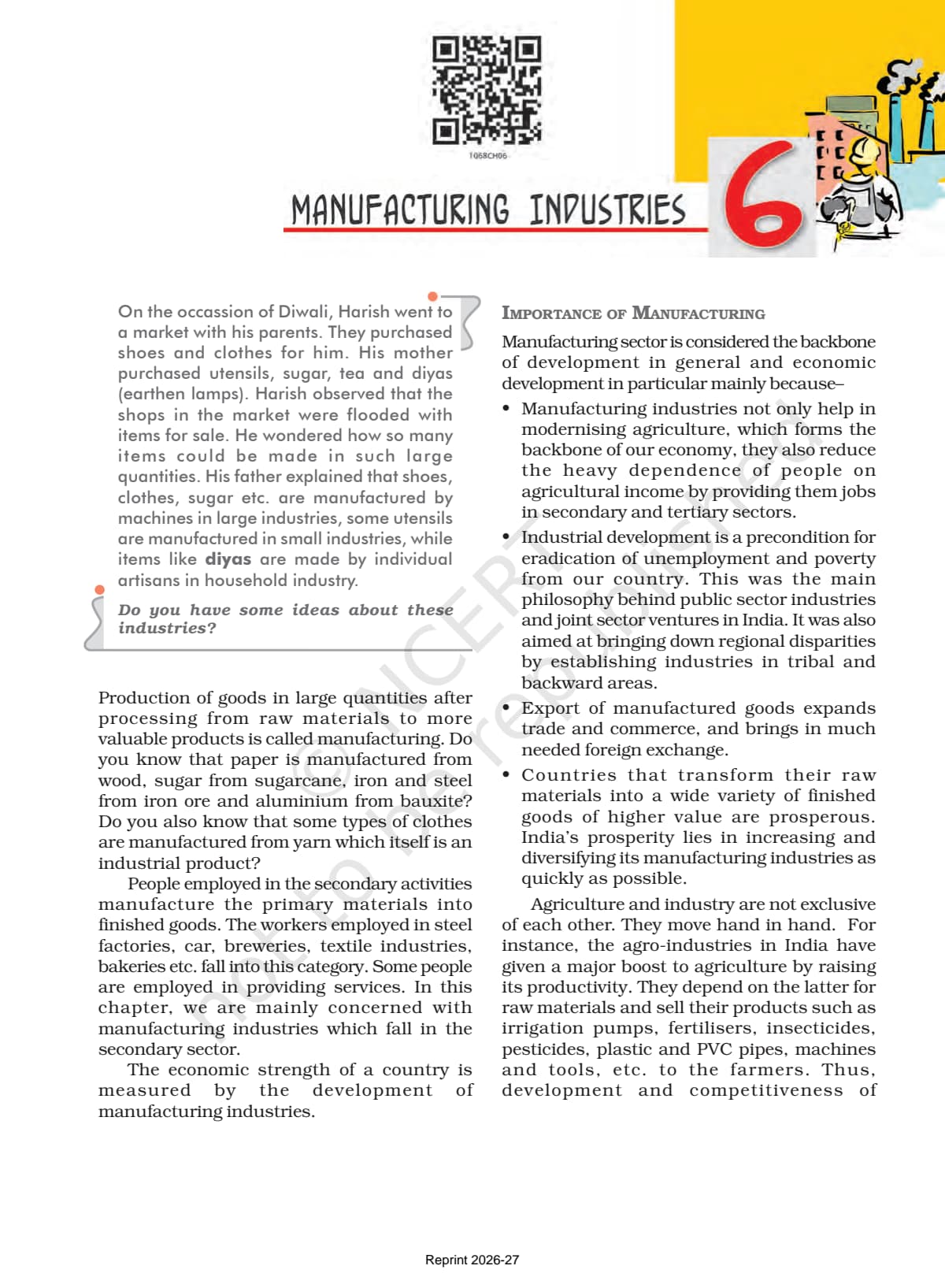
Manufacturing Industries is the sixth chapter in Contemporary India II and a steady scorer. It carries 6 to 7 marks across classification, the major agro and mineral industries, and pollution.
- 2026-27 NCERT Match: Section, figure, and exercise counts match the current print.
- Page-Band Map: Every topic is tagged with its page range in the official PDF.
- Industry Focus: Textile, iron and steel, and pollution sit in single tables.
- Exam-Tagged Reading: Each section is flagged with the CBSE question type.
Manufacturing Industries Class 10 Explained for Boards
Source: Magnet Brains on YouTube
What the Manufacturing Industries Class 10 PDF Contains
The table below lists each part with its page band.
| Topic | Page Range | What it Covers |
|---|---|---|
| Importance of Manufacturing | 58 | Why manufacturing is the backbone of development. |
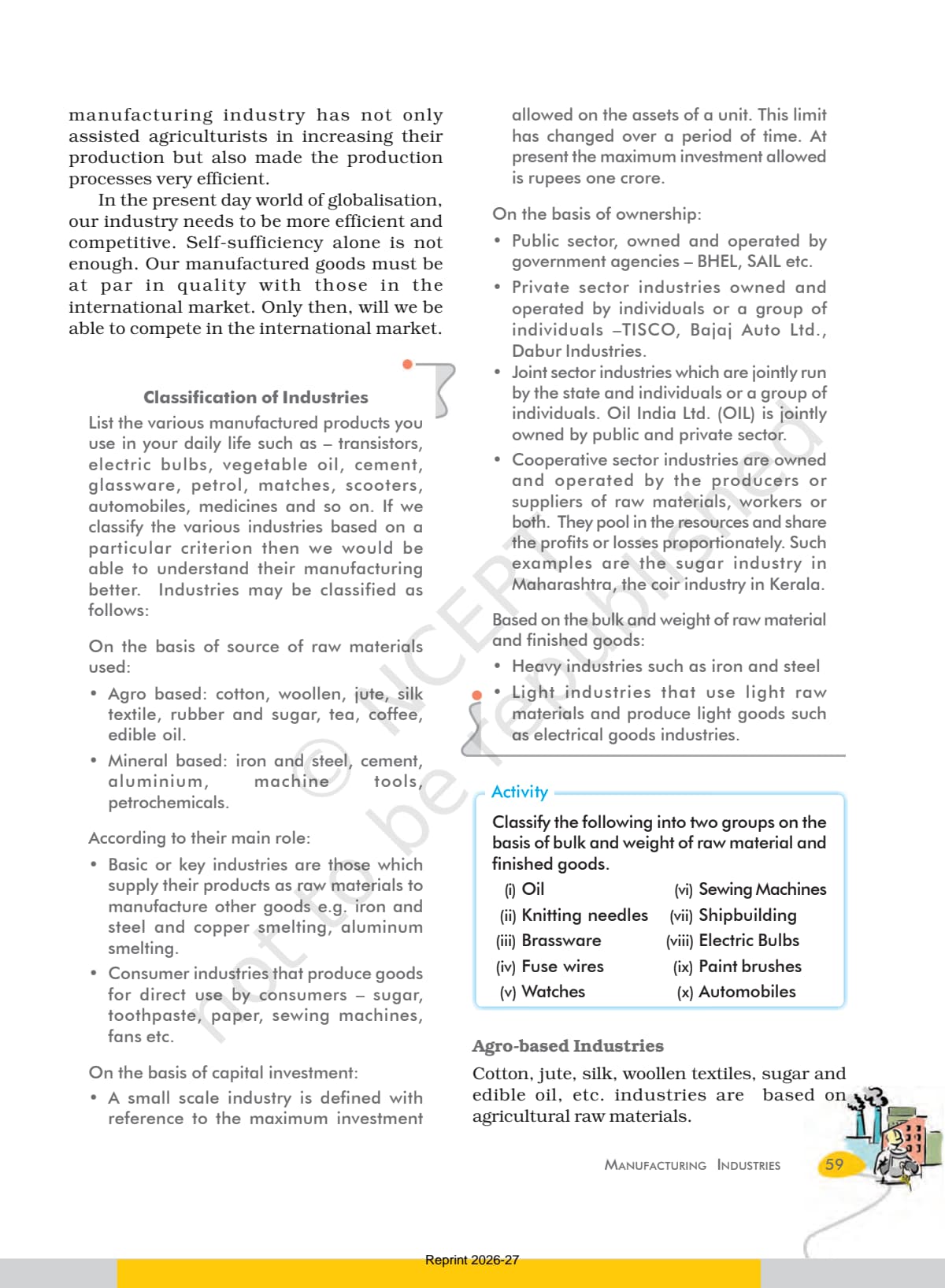
| Classification of Industries | 59 | Grouped by raw material, role, ownership, and capital. |
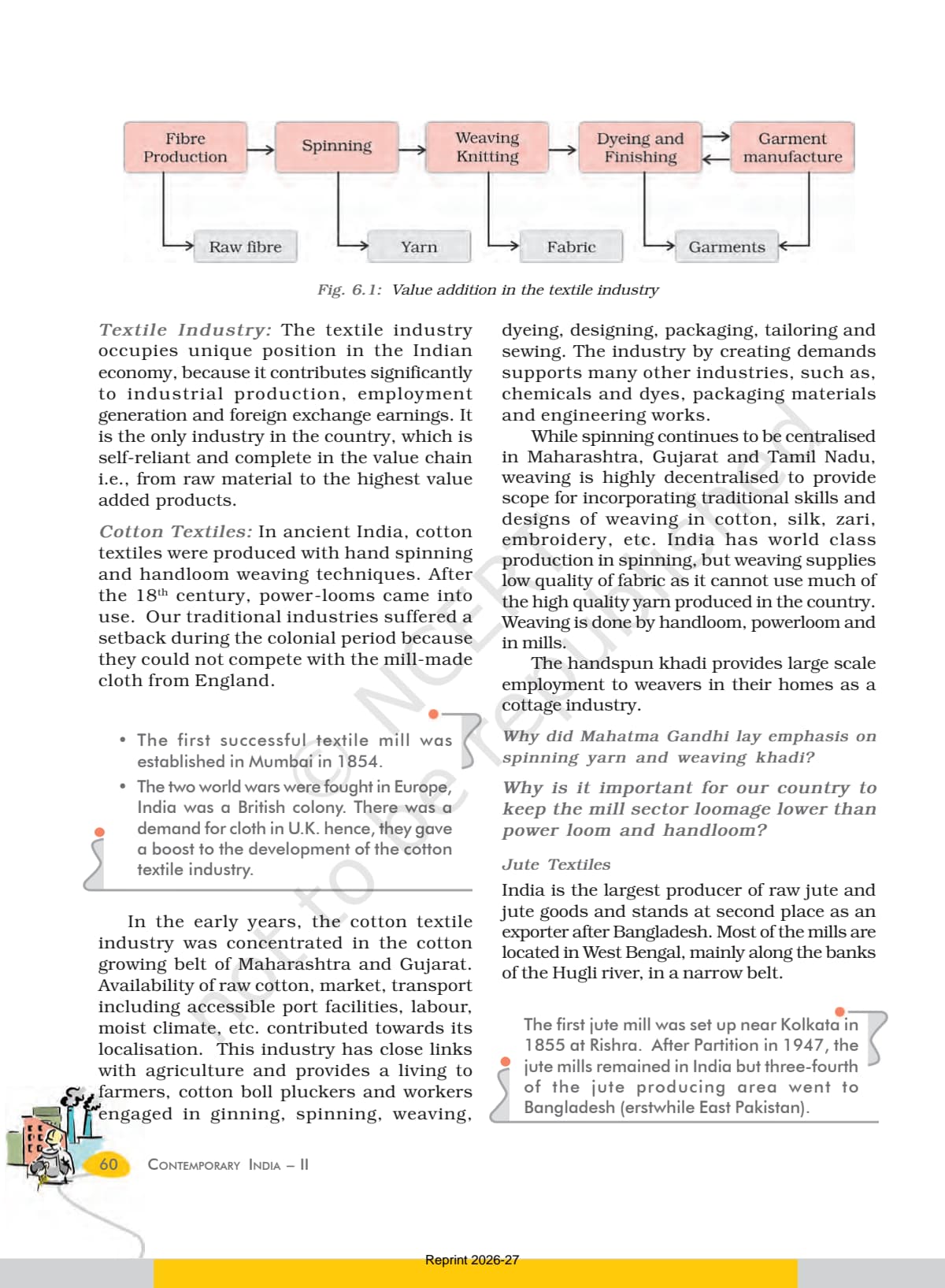
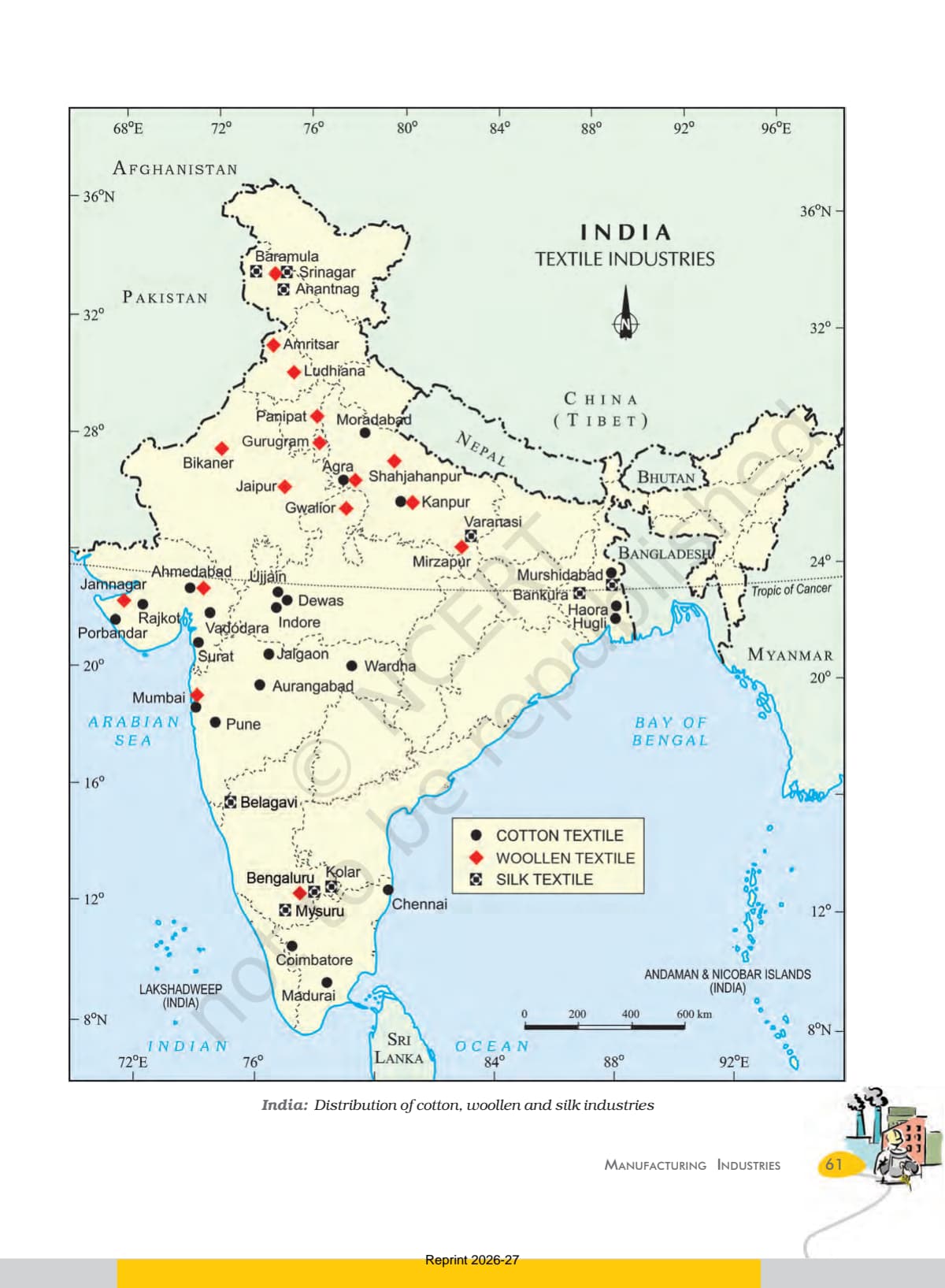
| Agro-based Industries | 60-62 | Textile, cotton, jute, and sugar with location factors (Fig 6.1). |
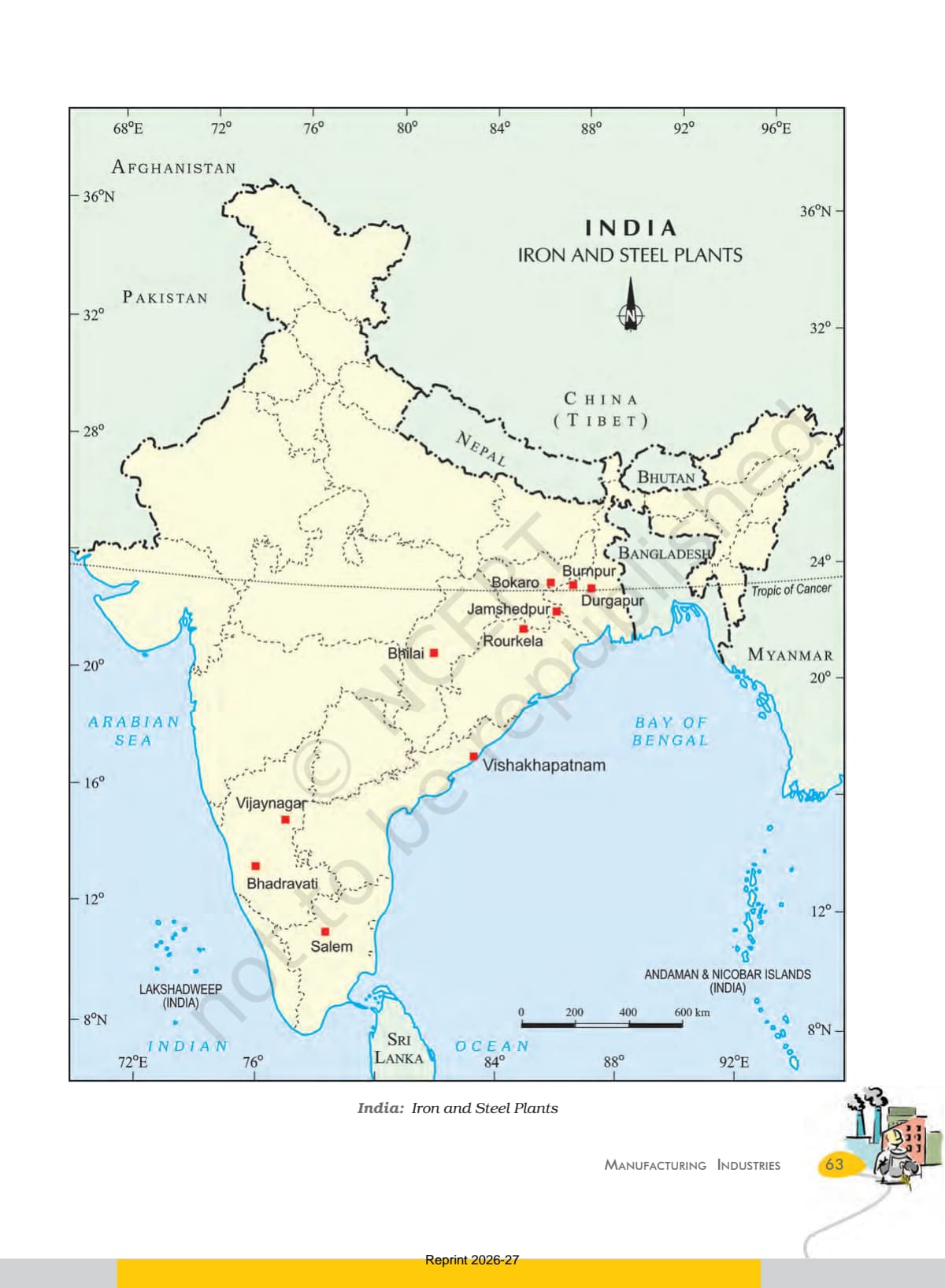
| Iron and Steel Industry | 62-63 | Raw material ratio and plants on the Chhotanagpur plateau (Fig 6.2). |
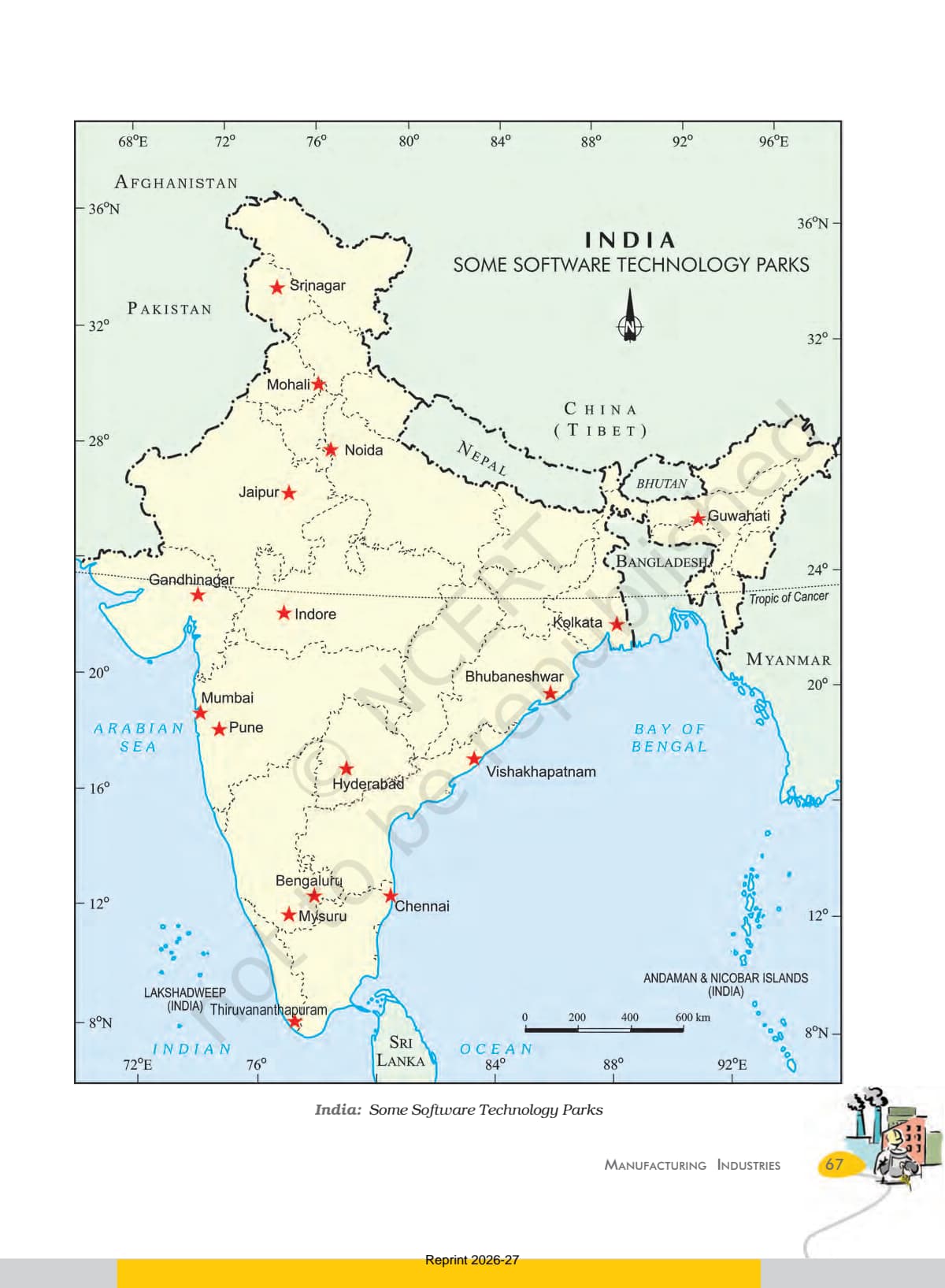
| Mineral-based Industries | 64-65 | Aluminium, chemical, fertiliser, cement, automobile, IT (Fig 6.3 to 6.6). |
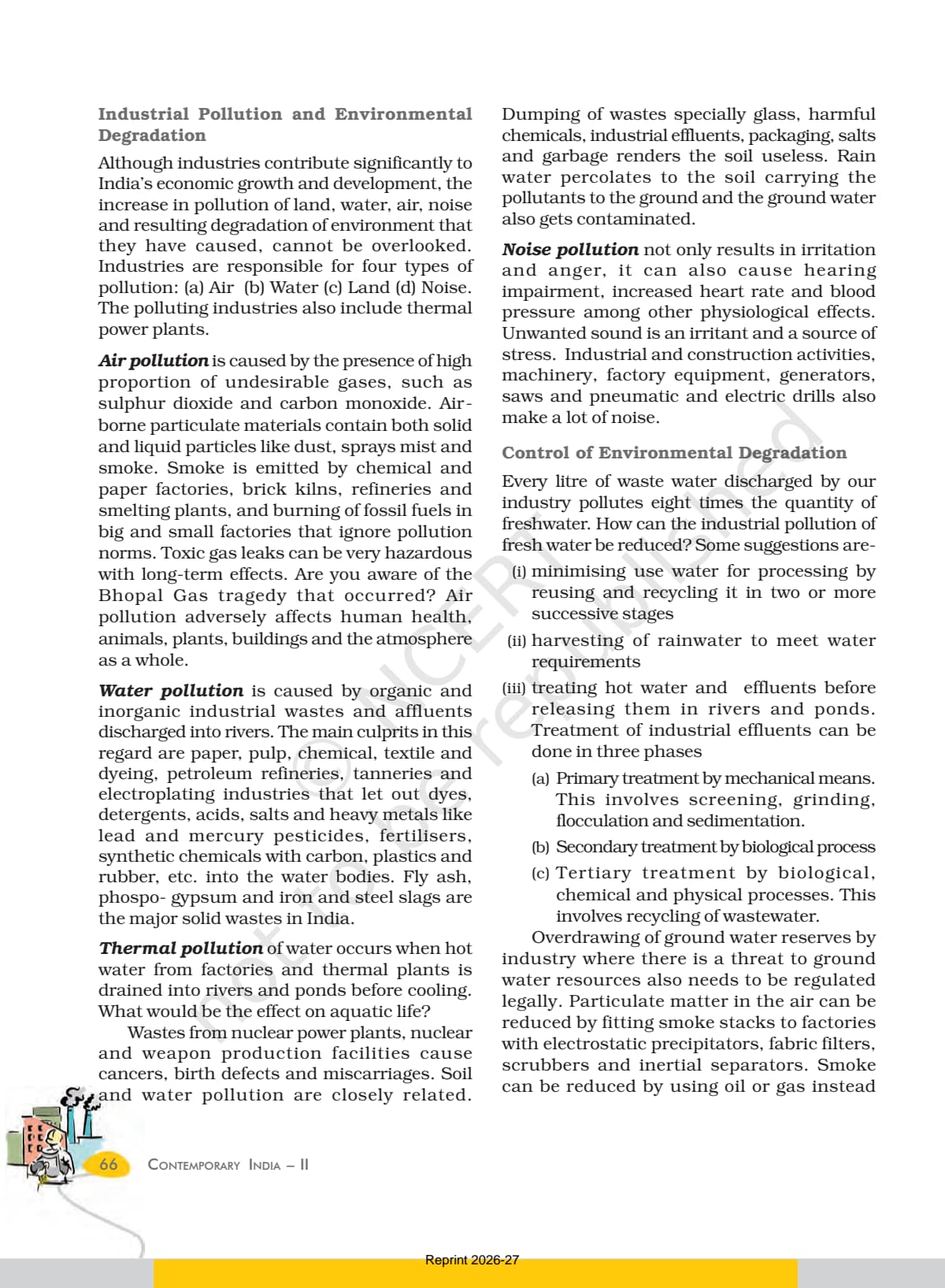
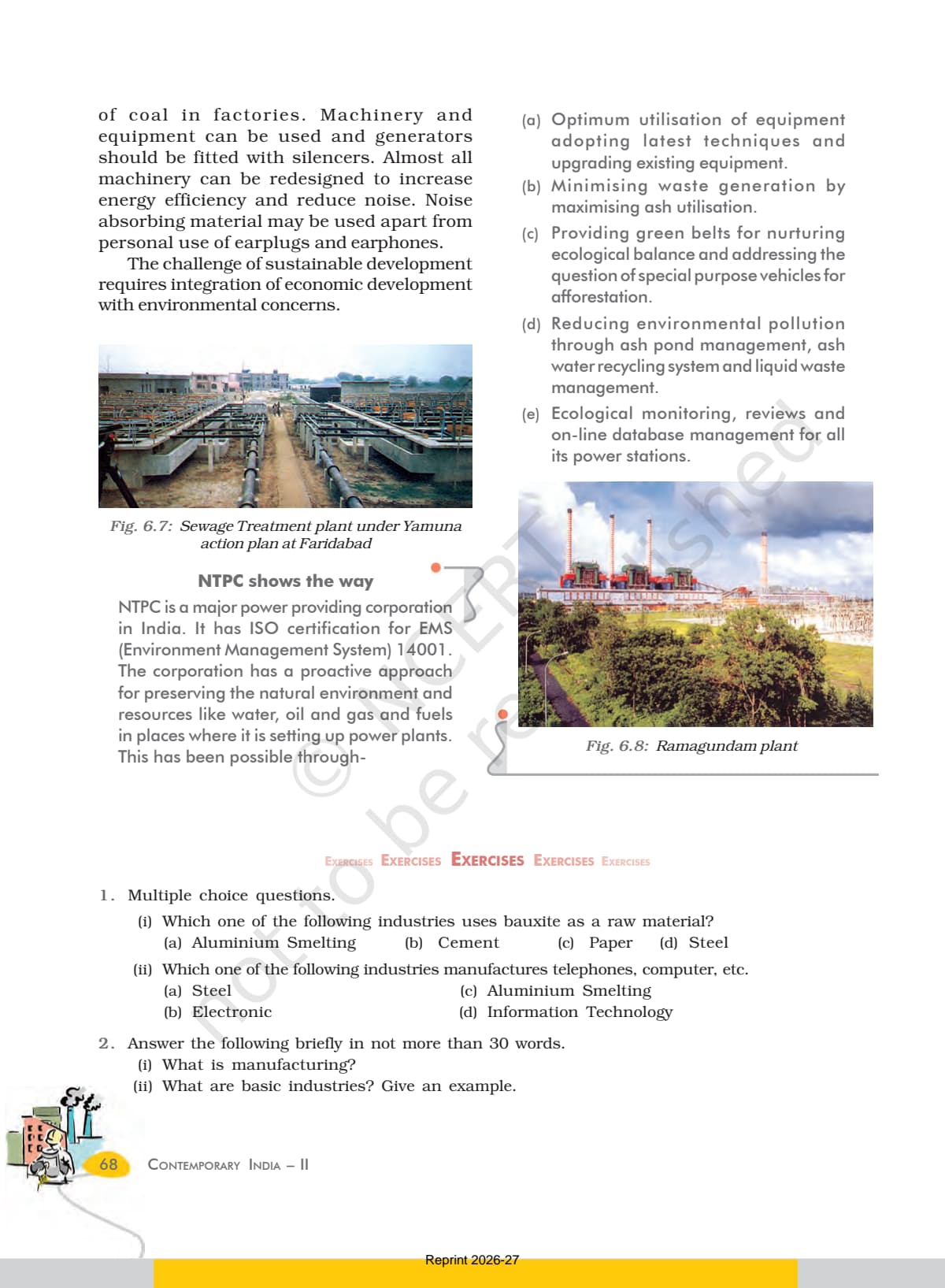
| Industrial Pollution | 66-67 | Air, water, land, and noise pollution and its control (Fig 6.7, 6.8). |
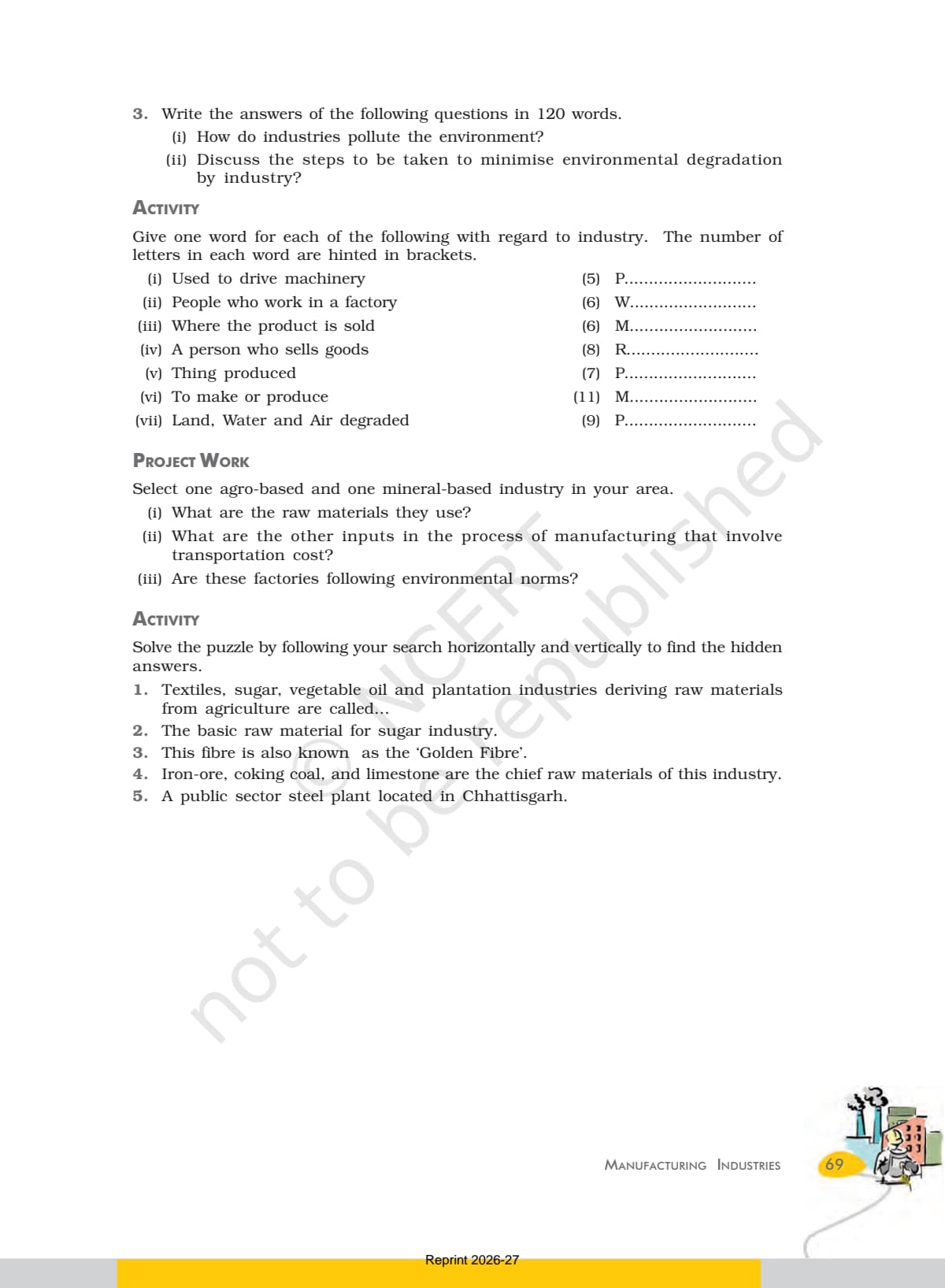
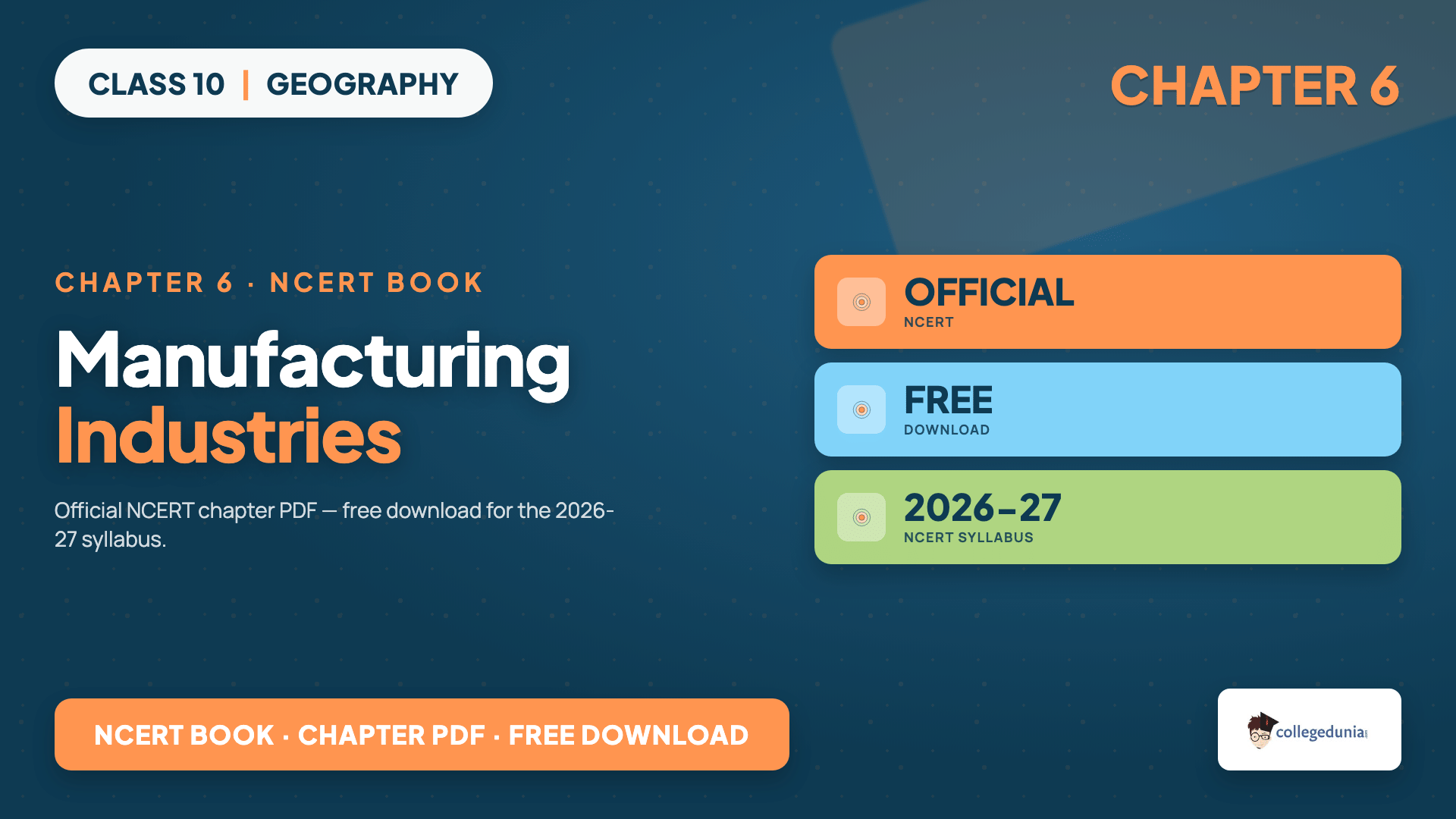
| Exercises and Activity | 68-70 | MCQs, 30-word and 120-word questions, project, word-search. |
Treat the classification (page 59) and iron and steel (pages 62 to 63) as primary.
Classification of Industries in NCERT Class 10 Geography Chapter 6
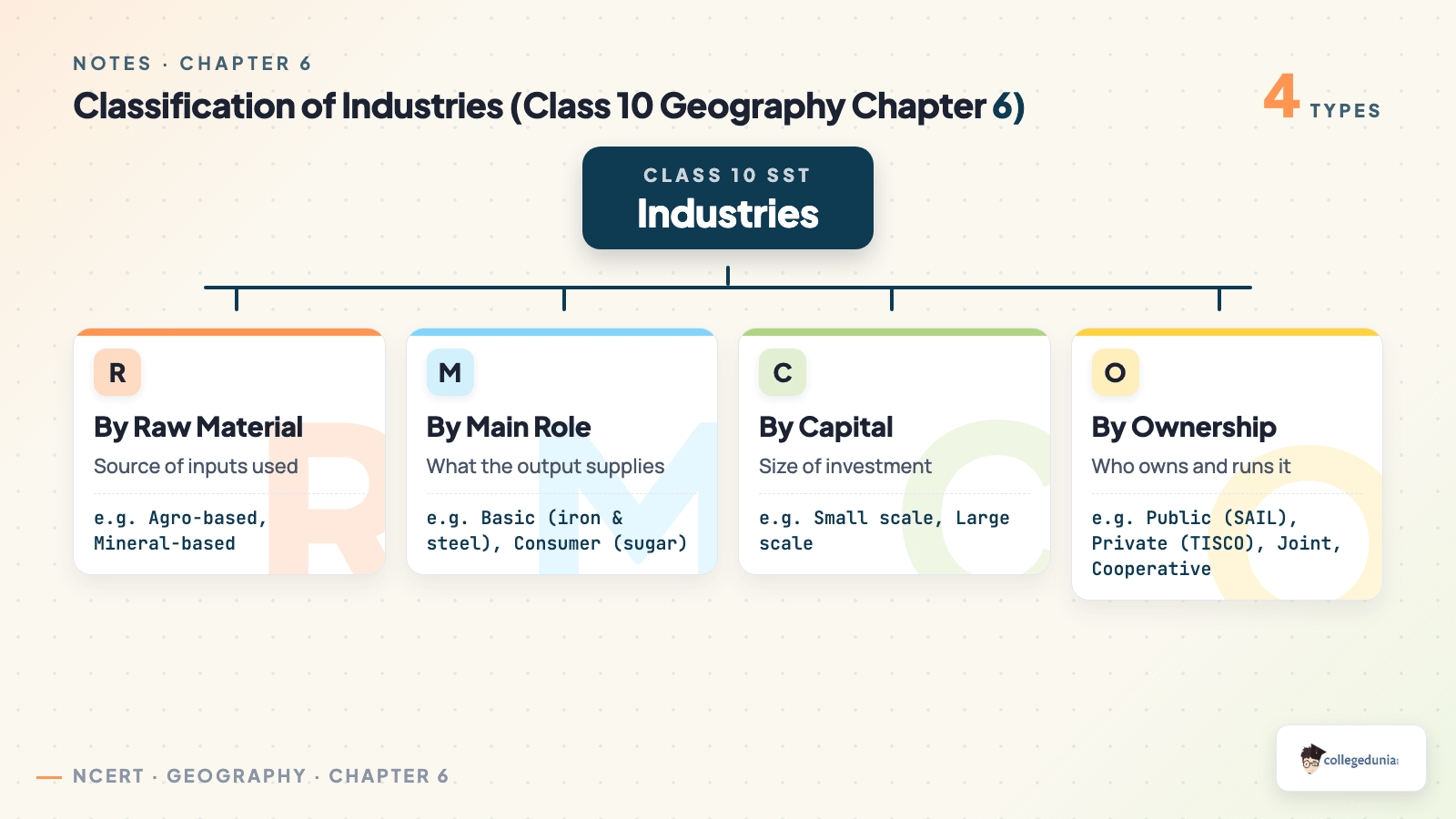
NCERT sorts industries on four bases, the source of most short-answer questions.
- By raw material: agro-based (cotton, jute, silk, sugar) and mineral-based (iron and steel, cement, aluminium, machine tools).
- By main role: basic industries that supply others (iron and steel) and consumer industries for direct use (sugar, paper, fans).
- By capital investment: a small scale industry is set by a ceiling on a unit's asset investment.
- By ownership: public (BHEL, SAIL), private (TISCO, Dabur), joint (Oil India Ltd), and cooperative sector (sugar in Maharashtra).
Industries are also grouped by bulk and weight into heavy industries like iron and steel and light industries like electrical goods.
Agro-Based Industries in Manufacturing Industries Class 10 PDF
Agro-based industries use farm output as raw material, and textiles are the standout example. A direct question usually asks about cotton textile location factors or the jute industry.
- Cotton textiles: first concentrated in Maharashtra and Gujarat for raw cotton, market, transport, ports, labour, and moist climate. First successful mill at Mumbai in 1854.
- Jute textiles: India is the largest producer of raw jute and second after Bangladesh as an exporter. Most mills line the Hugli river in West Bengal; first at Rishra in 1855.
- Sugar: India is second in sugar but first in gur and khandsari. Mills are seasonal, suit the cooperative sector, and are shifting south to Maharashtra for higher sucrose.
The textile industry is the only one complete in the value chain, from raw fibre to garment (Fig 6.1, value addition). A common 3-mark question asks for the location factors of the jute industry in the Hugli basin.
Iron and Steel Industry in Class 10 Geography Chapter 6
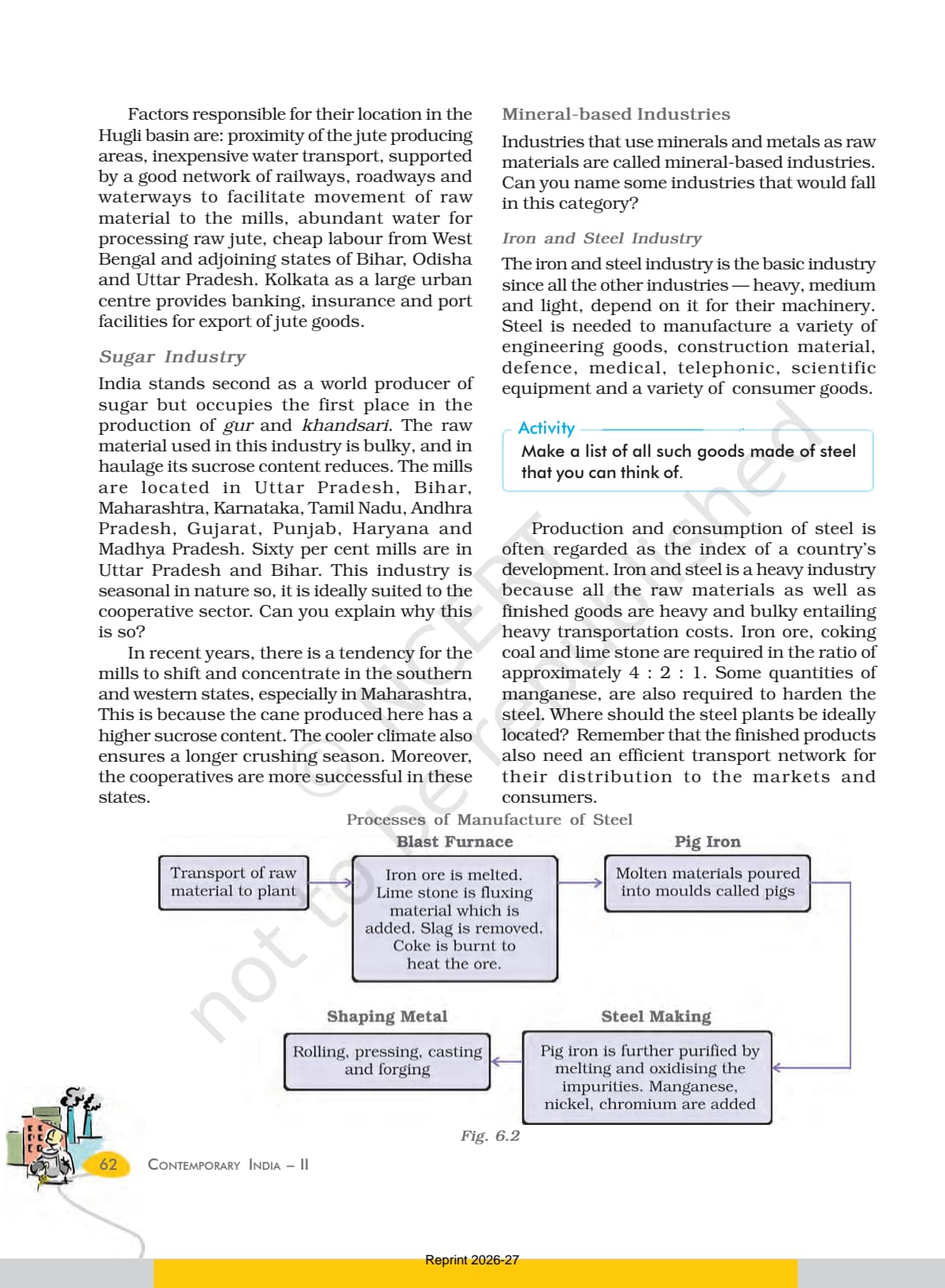
The iron and steel industry is the basic industry because every other industry depends on it for machinery. Its location and raw material ratio are guaranteed questions.
| Point | Detail |
|---|---|
| Type of industry | Heavy industry; raw and finished goods are bulky, so transport costs are high. |
| Raw material ratio | Iron ore, coking coal, and limestone in roughly 4 : 2 : 1, plus manganese to harden the steel. |
| Main concentration | The Chhotanagpur plateau has the maximum concentration of plants. |
| Location advantages | Cheap iron ore, high-grade materials nearby, cheap labour, and a vast home market. |
| Process | Blast furnace to pig iron to steel, then rolling, pressing, casting, and forging (Fig 6.2). |
A frequent 3-mark question asks why steel plants sit on the Chhotanagpur plateau: cheap iron ore, high-grade materials nearby, cheap labour, and market potential.
Mineral-Based Industries in NCERT Chapter 6
NCERT also lists the mineral-based industries that drive modern India. They appear often as 3-mark questions.
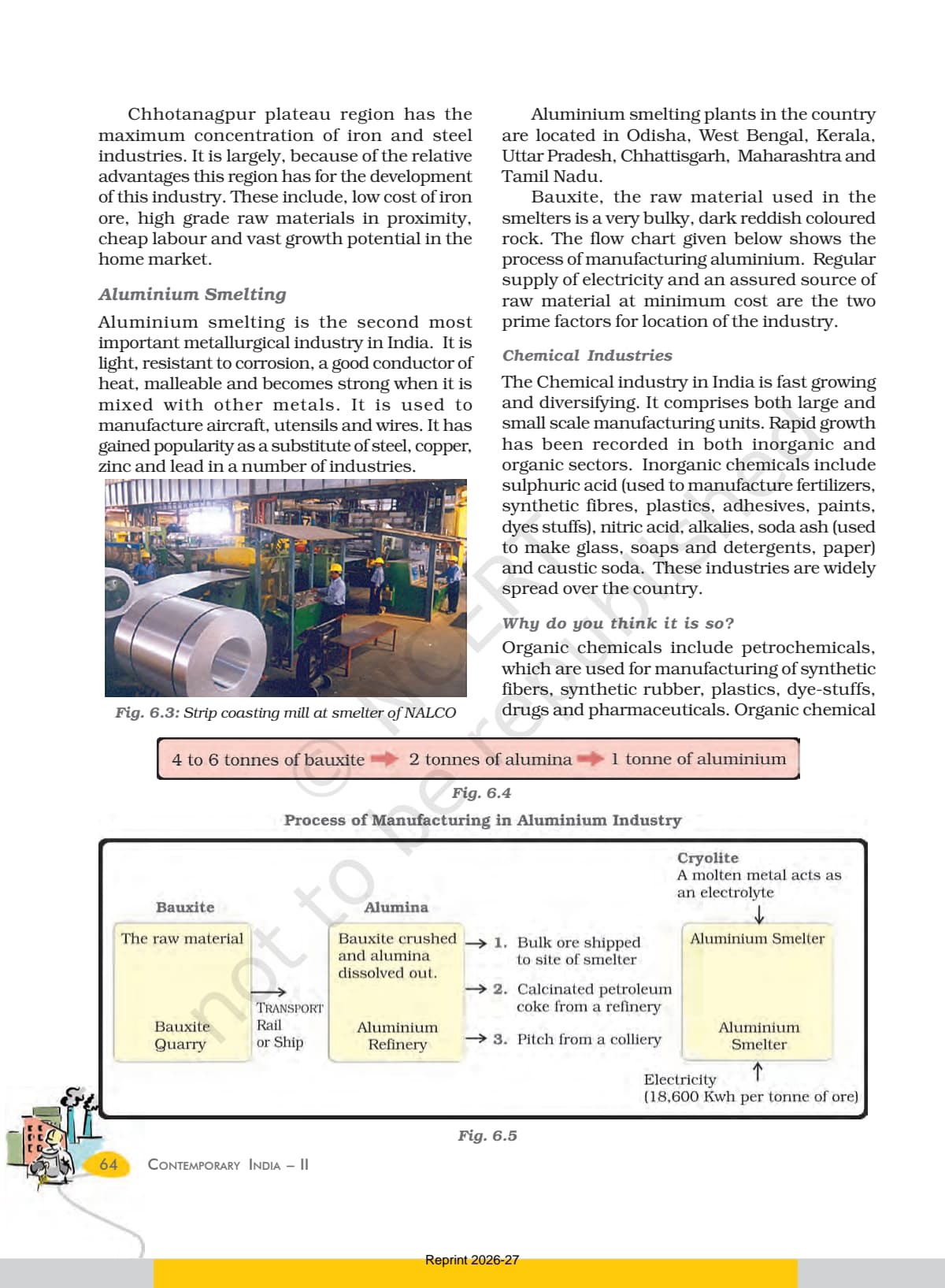
- Aluminium smelting: the second metallurgical industry; light, corrosion-resistant, a good conductor. 4 to 6 tonnes of bauxite give 1 tonne of aluminium (Fig 6.4, 6.5).
- Chemical industry: fast growing in inorganic (sulphuric acid, soda ash, caustic soda) and organic (petrochemicals) sectors; its own largest consumer.
- Fertiliser: nitrogenous (mainly urea), phosphatic, and complex types. Potash is fully imported as India has no usable reserves.
- Cement: needs bulky limestone, silica, and gypsum plus coal and power. First plant at Chennai in 1904.
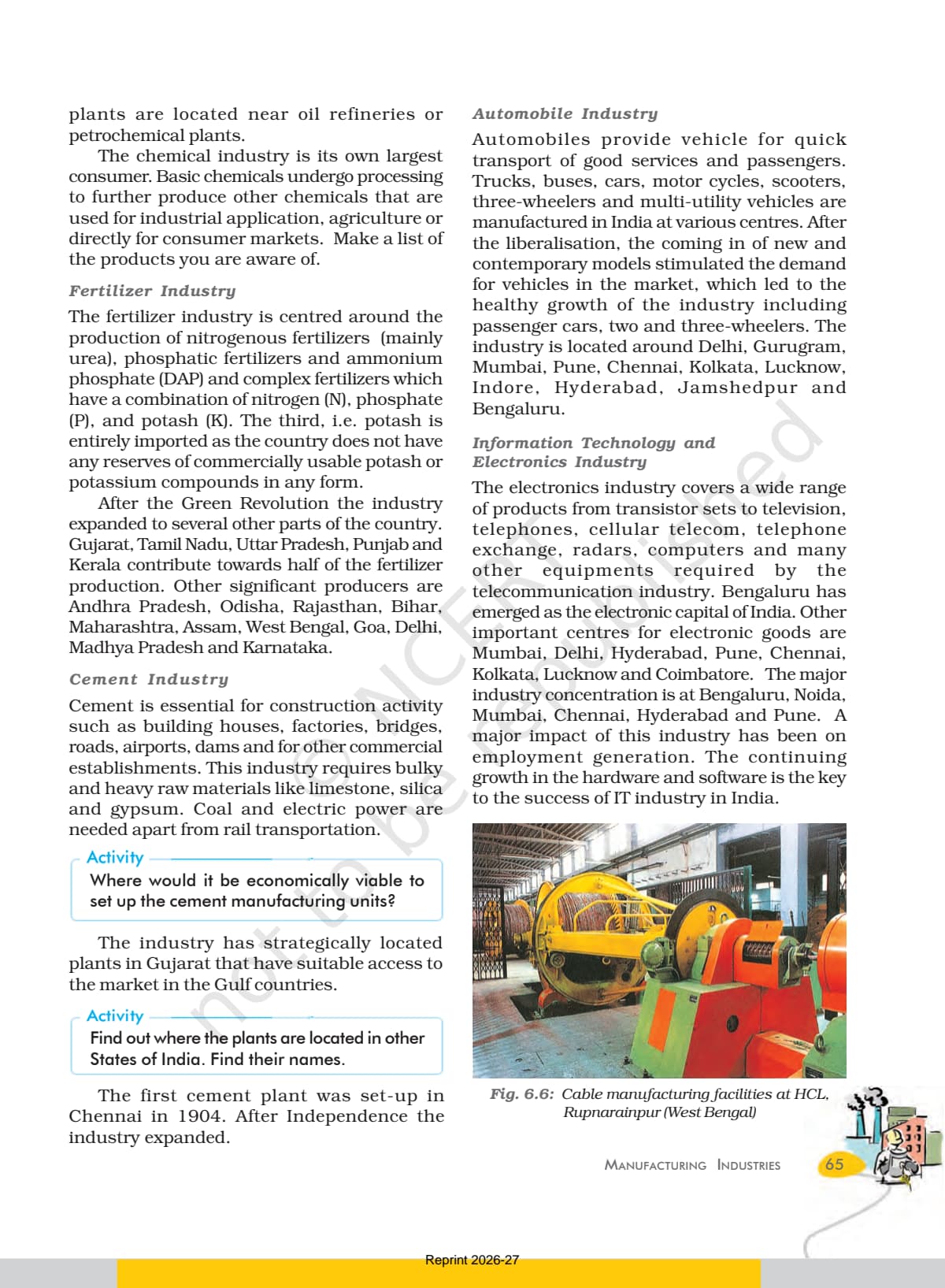
- Automobile and IT: automobiles at Mumbai, Pune, Chennai, and others. Bengaluru is the electronic capital of India (Fig 6.6).
The IT and electronics industry is a major driver of employment.
Industrial Pollution and Its Control in Chapter 6
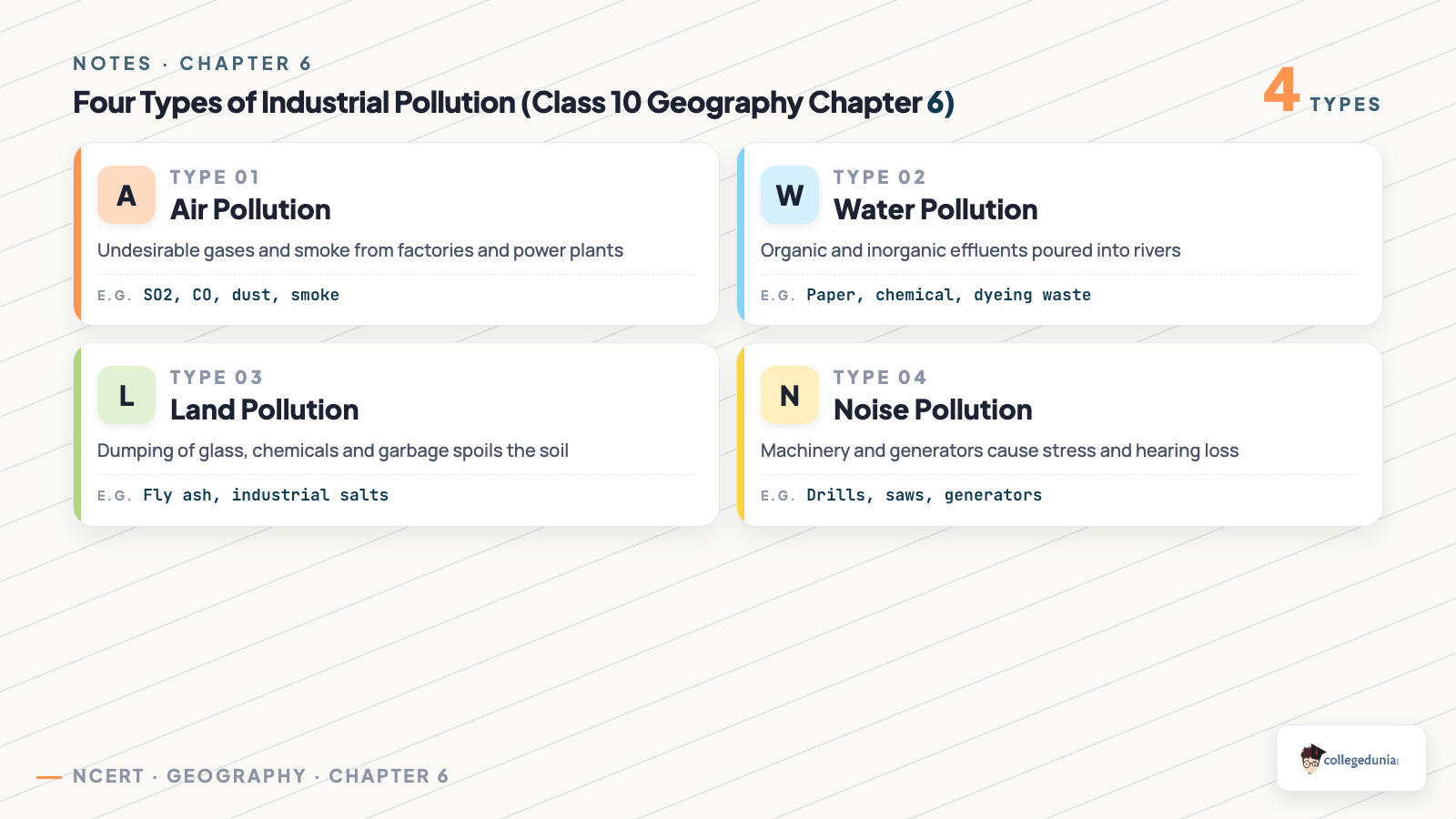
The last section explains how industries damage the environment and how it is controlled. They cause four types of pollution, a common 5-mark question.
- Air pollution: undesirable gases like sulphur dioxide and carbon monoxide, plus dust and smoke from factories and power plants.
- Water pollution: organic and inorganic wastes and effluents; paper, chemical, textile, and dyeing industries are the main culprits.
- Thermal pollution: hot water drained into rivers before cooling, harming aquatic life.
- Land and noise pollution: dumped glass, chemicals, and garbage spoil the soil; machinery and generators cause stress.
Control measures include recycling water, rainwater harvesting, and treating effluents in three phases: primary, secondary, and tertiary. Every litre of waste water pollutes eight times the freshwater.
How to Read the Manufacturing Industries Chapter for Boards
The chapter is 13 pages, so one focused session covers it. Use a three-pass routine: read, table-make, then practise.
- Pass 1 (45 min): Read all sections once. Mark every defined term (manufacturing, basic industry, agro-based, smelting, effluents).
- Pass 2 (90 min): Build two tables from memory, one for the four bases of classification and one for iron and steel.
- Pass 3 (60 min): Solve the MCQs and 30-word questions on page 68, then both 120-word pollution answers.
- Final pass (30 min): Memorise the iron and steel ratio and the four types of pollution.
Student Feedback
In a Collegedunia poll of more than 15,000 Class 10 students before the 2026 boards, students rated the classification of industries as the hardest part to recall. Most said one classification table fixed it in a day.
Source: Collegedunia pre-board student poll, 2026.
NCERT Class 10 Geography Chapter 6 Important Questions and Exercises
The page 68 exercises mirror the CBSE pattern.
- MCQs: which industry uses bauxite; which makes telephones and computers.
- 30-word answers: what is manufacturing; what are basic industries with an example.
- 120-word answers: how industries pollute; steps to minimise environmental degradation.
Other Resources for This Chapter
Pair this with the other Class 10 Geography resources for this chapter.
| Resource | Open |
|---|---|
| NCERT Solutions | Manufacturing Industries NCERT Solutions |
| Notes | Manufacturing Industries Notes |
| Formula Sheet | Manufacturing Industries Formula Sheet |
| Handwritten Notes | Manufacturing Industries Handwritten Notes |
| NCERT Book PDF | Manufacturing Industries NCERT Book PDF |
NCERT Class 10 Geography Book PDF: All Chapters
Other Class 10 Geography NCERT book PDFs, free to download:
| Chapter | Resource |
|---|---|
| Chapter 1 | Resources and Development NCERT PDF |
| Chapter 2 | Forest and Wildlife Resources NCERT PDF |
| Chapter 3 | Water Resources NCERT PDF |
| Chapter 4 | Agriculture NCERT PDF |
| Chapter 5 | Minerals and Energy Resources NCERT PDF |
| Chapter 7 | Lifelines of National Economy NCERT PDF |
NCERT Class 10 Geography Book PDF Chapter 6 Manufacturing Industries - Frequently Asked Questions
Ques. Where can I download the manufacturing industries class 10 PDF for Chapter 6 for free?
Ans. You can download the Manufacturing Industries NCERT PDF directly from this page. The full 13-page chapter from the 2026-27 NCERT print is free to download.
Ques. Is this Manufacturing Industries Class 10 PDF aligned with the 2026-27 CBSE syllabus?
Ans. Yes. The page reflects the current 2026-27 Class 10 Geography (Contemporary India II) syllabus. It keeps all sections, the classification of industries, the agro and mineral industries, and the pollution section.
Ques. How are industries classified in Class 10 Geography Chapter 6?
Ans. NCERT classifies industries four ways: by source of raw material (agro-based and mineral-based), by their main role (basic and consumer), by capital investment (small and large scale), and by ownership (public, private, joint, and cooperative sector).
Ques. What is the raw material ratio for the iron and steel industry?
Ans. Iron ore, coking coal, and limestone are required in the ratio of roughly 4 : 2 : 1. Some quantities of manganese are also added to harden the steel. The Chhotanagpur plateau has the maximum concentration of iron and steel plants.
Ques. What are the four types of industrial pollution in this chapter?
Ans. Industries cause air pollution, water pollution, land pollution, and noise pollution. Air pollution comes from undesirable gases and smoke, water pollution from effluents, and noise pollution from machinery and generators.
Ques. How many marks does the Manufacturing Industries chapter carry in the Class 10 board exam?
Ans. The chapter usually carries 6 to 7 marks in the CBSE Class 10 Social Science paper. Most papers ask one MCQ, one 3-mark factor or industry answer, and one 5-mark pollution or location-based answer from it.
Ques. What is manufacturing according to NCERT Class 10 Geography Chapter 6?
Ans. Manufacturing is the production of goods in large quantities after processing raw materials into more valuable products. For example, paper is manufactured from wood, sugar from sugarcane, and iron and steel from iron ore.



Comments