


The NCERT Book for Class 10 Maths Chapter 14 Probability is the official CBSE textbook chapter, free to read and download for the 2026-27 session. It introduces classical probability using coins, dice, and cards.
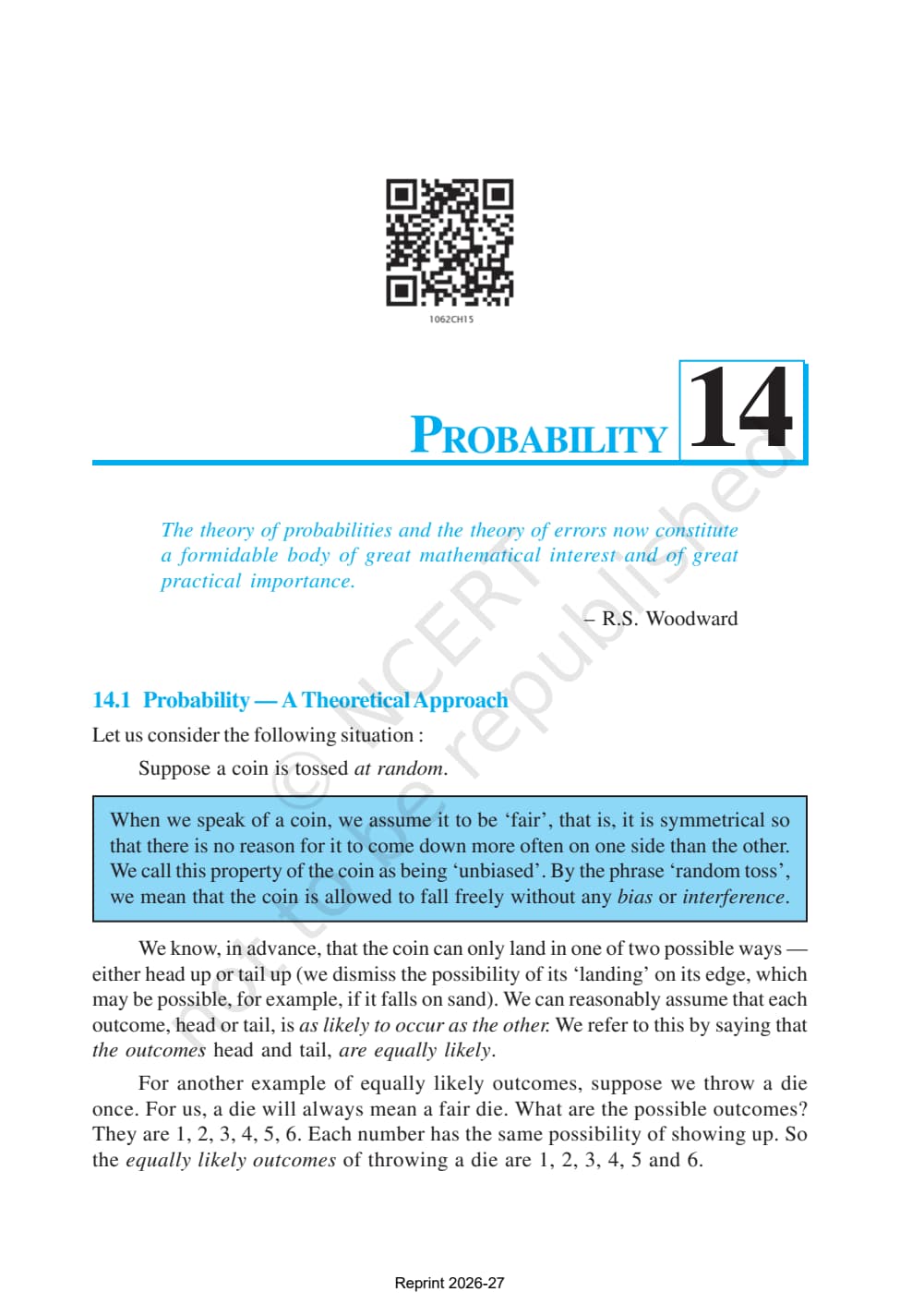
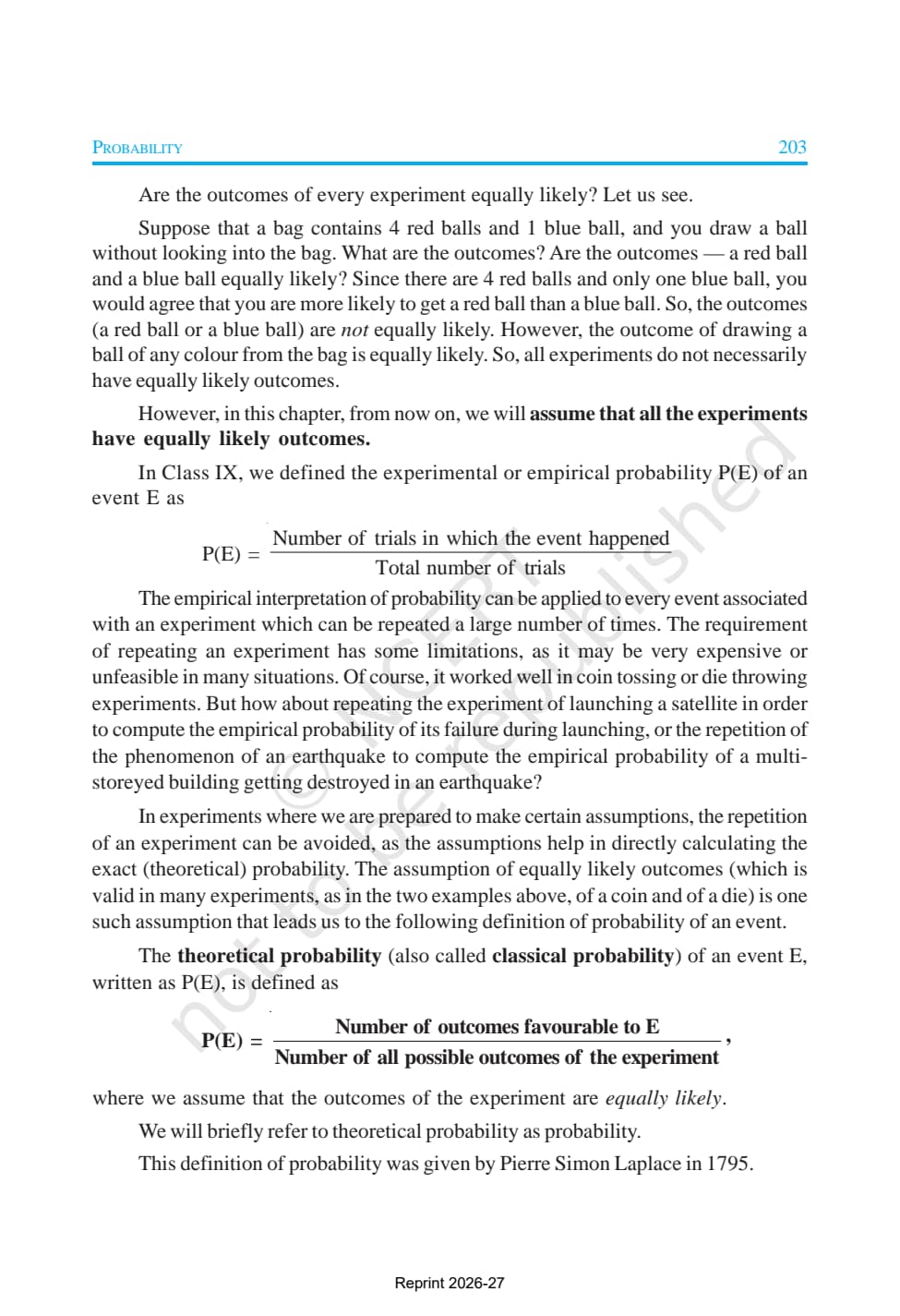
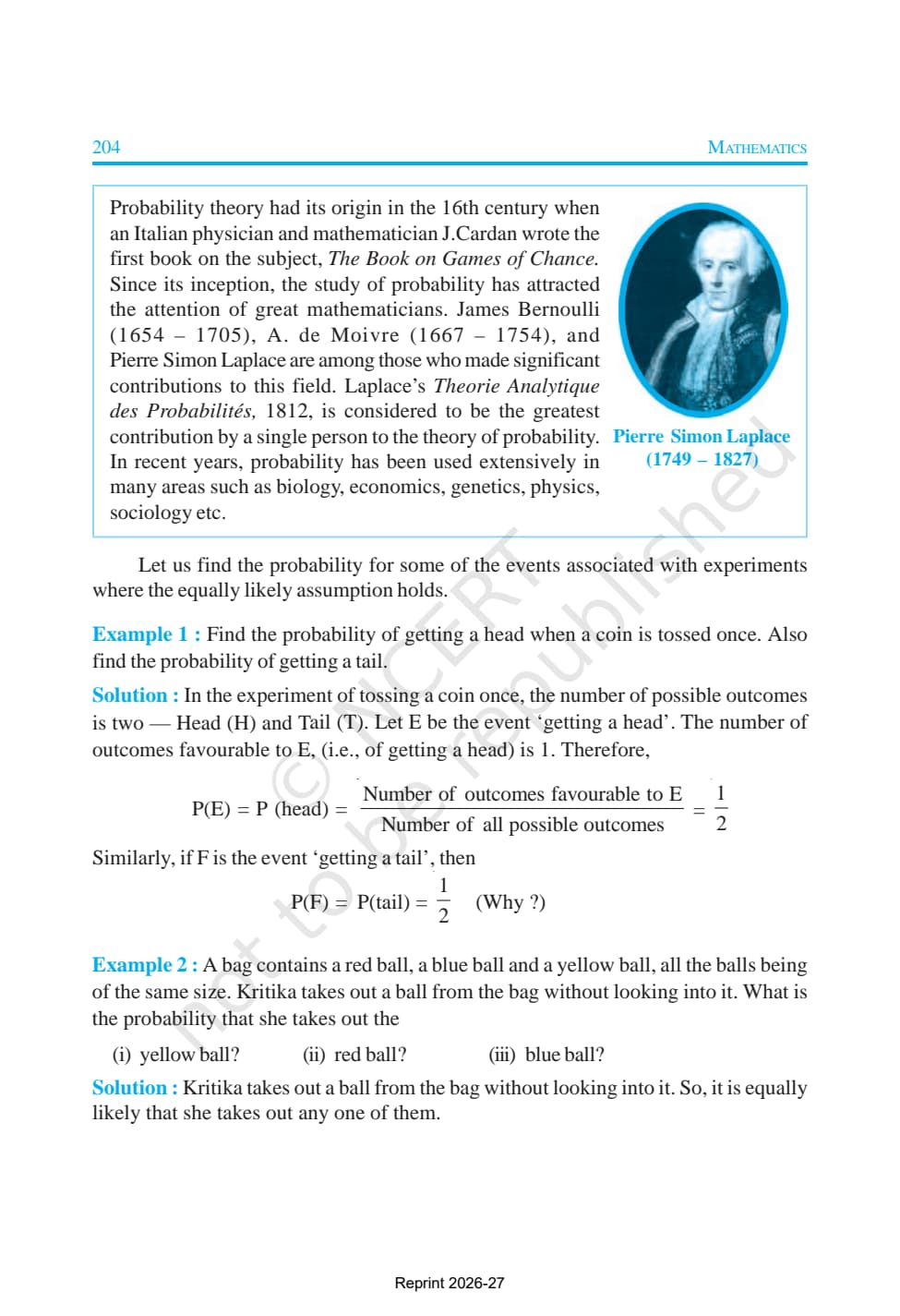
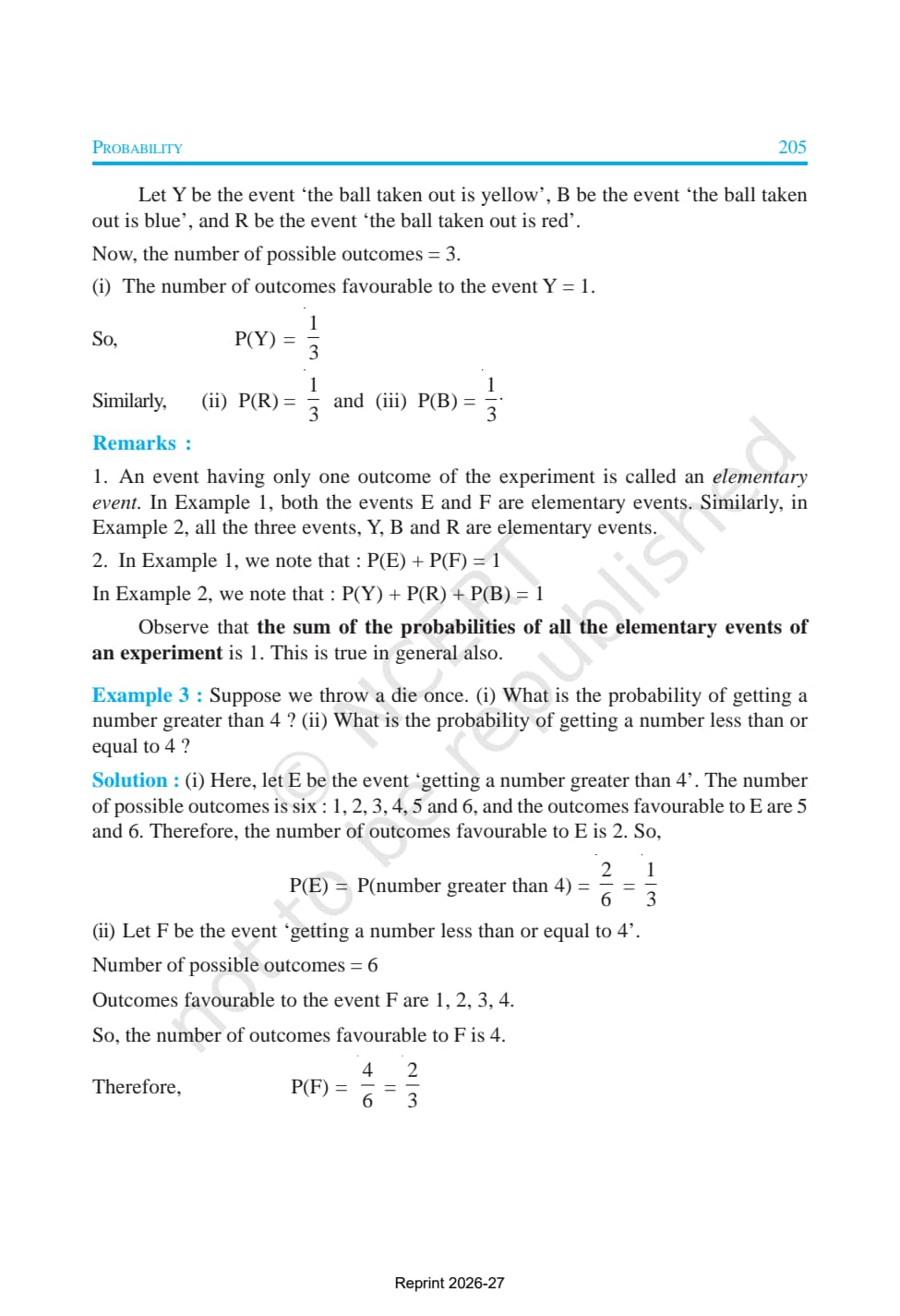
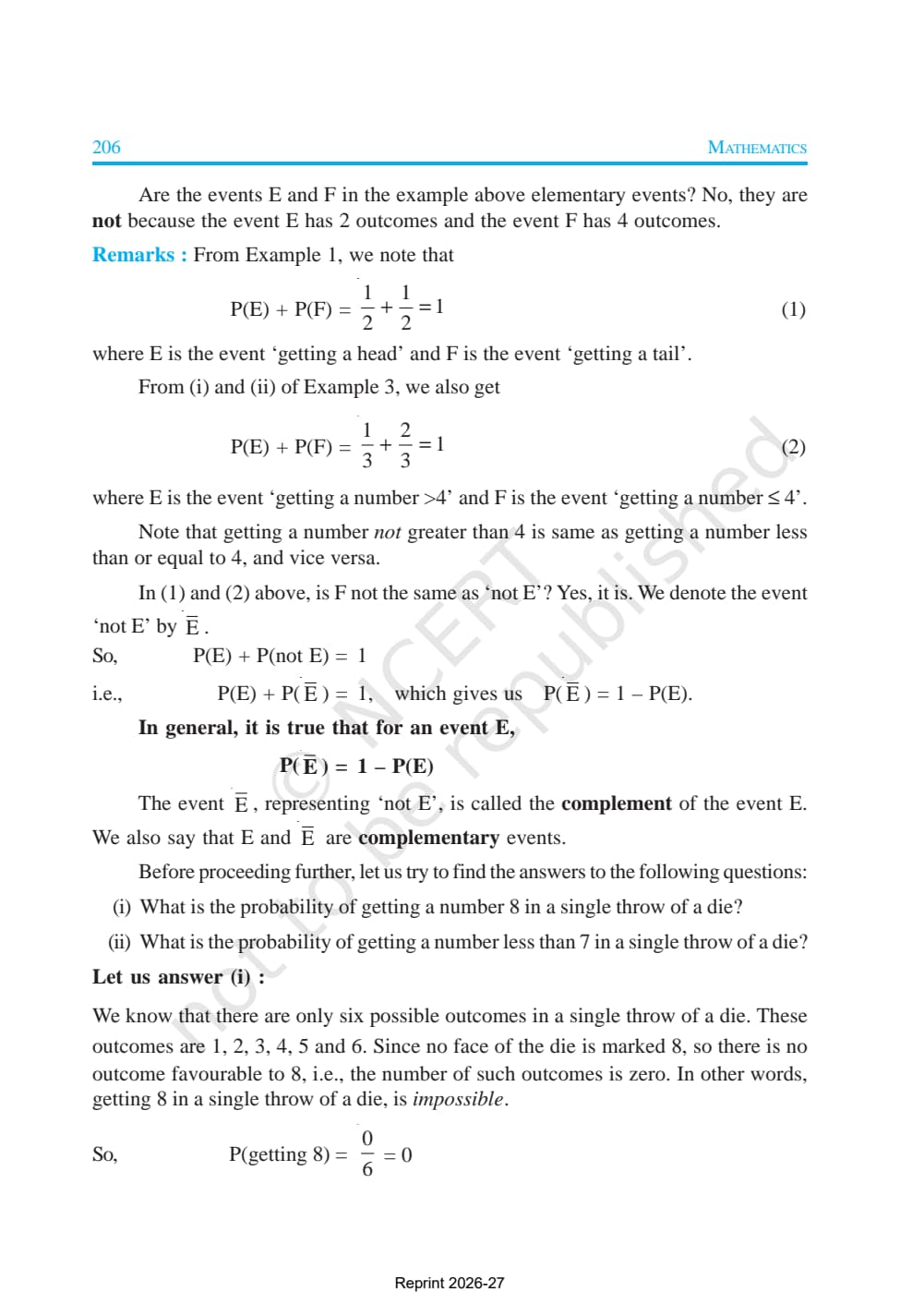
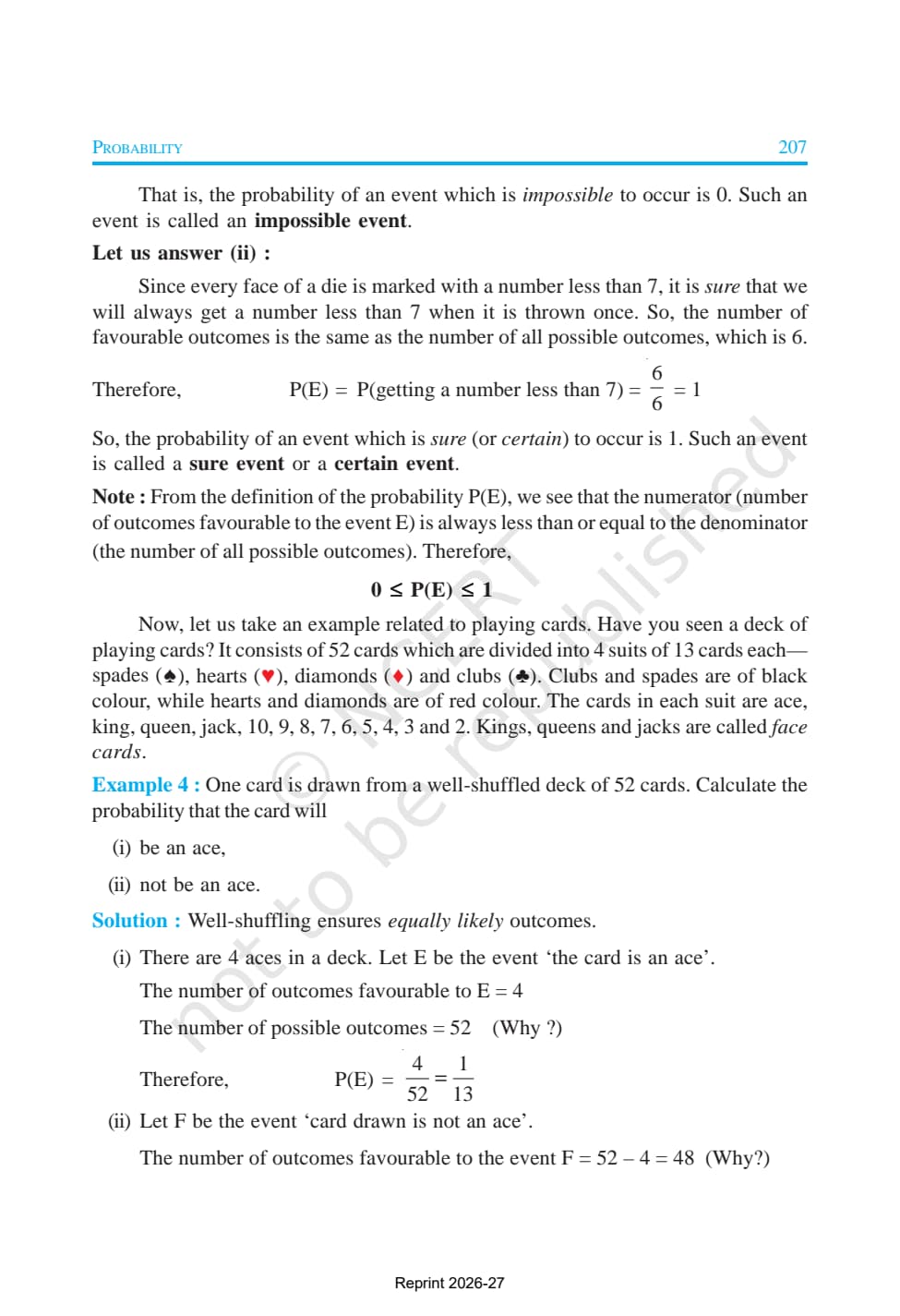
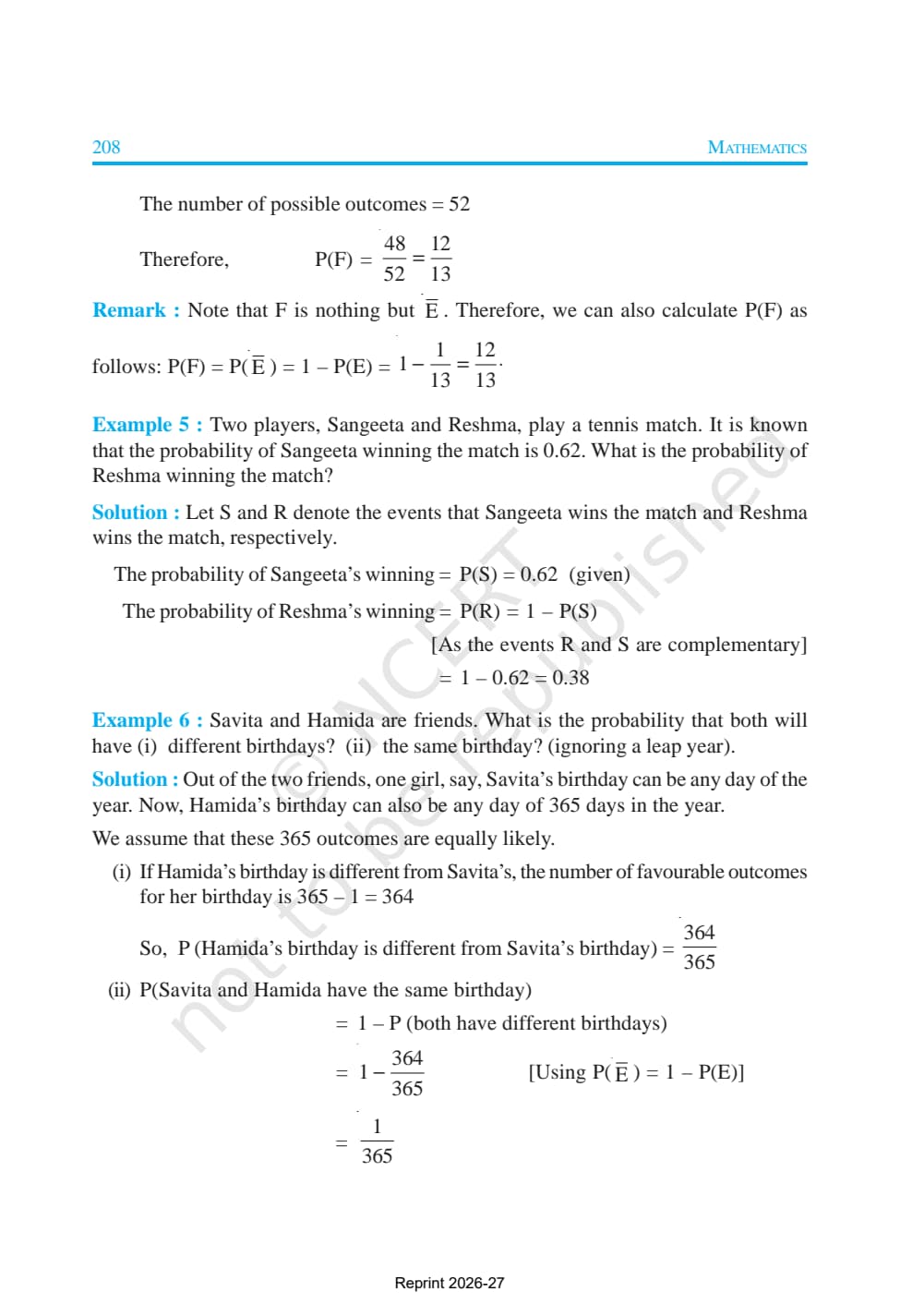
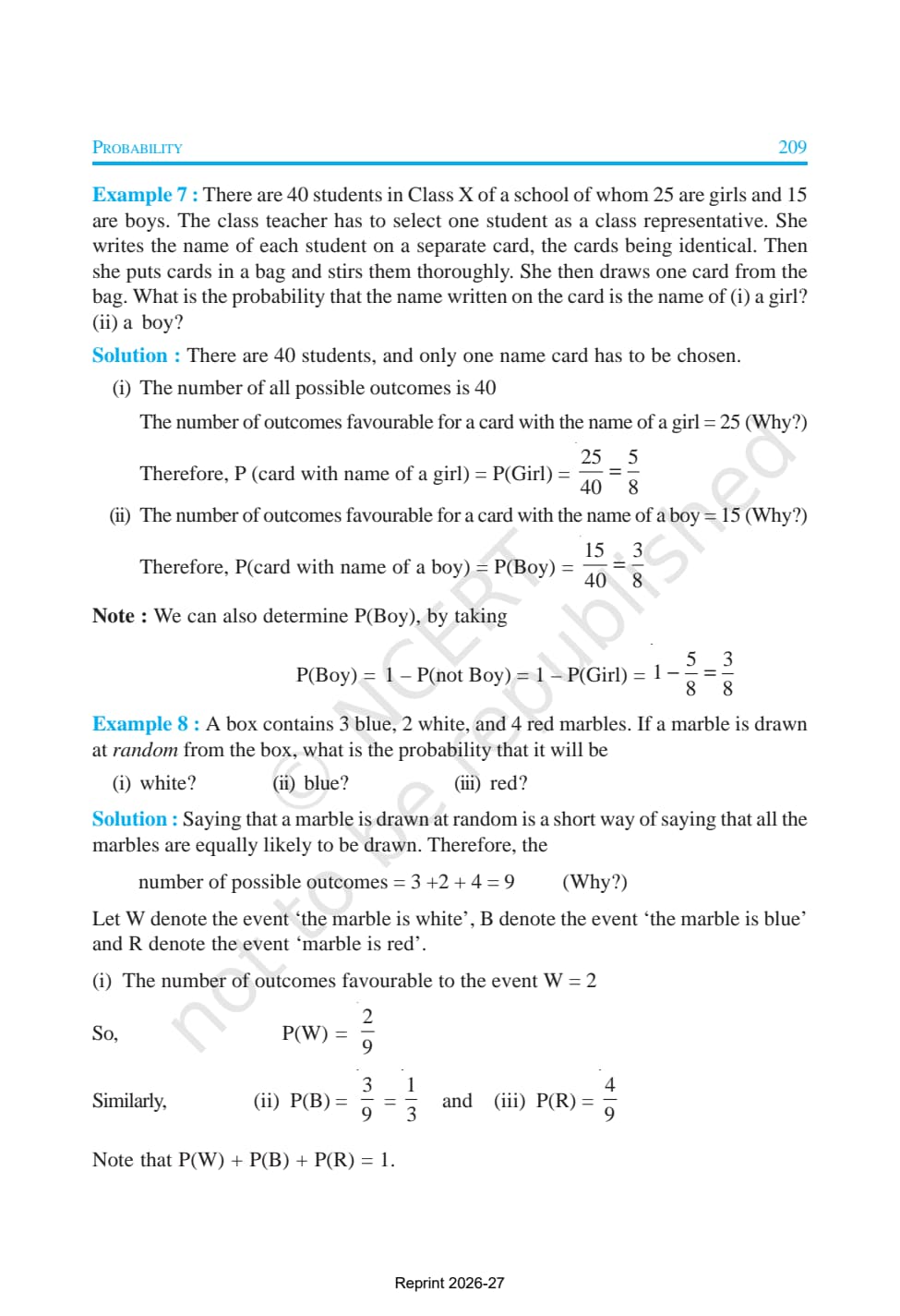
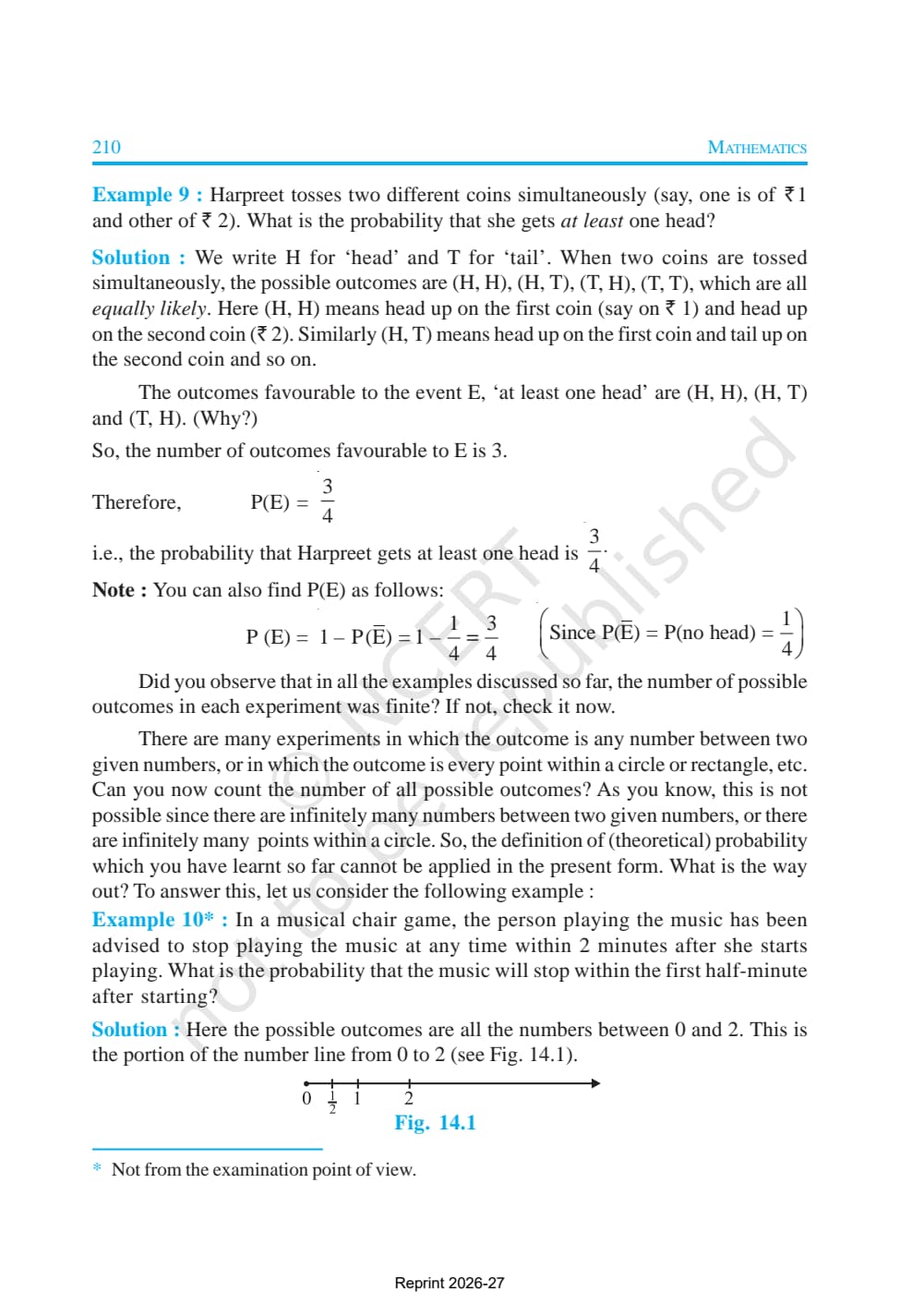
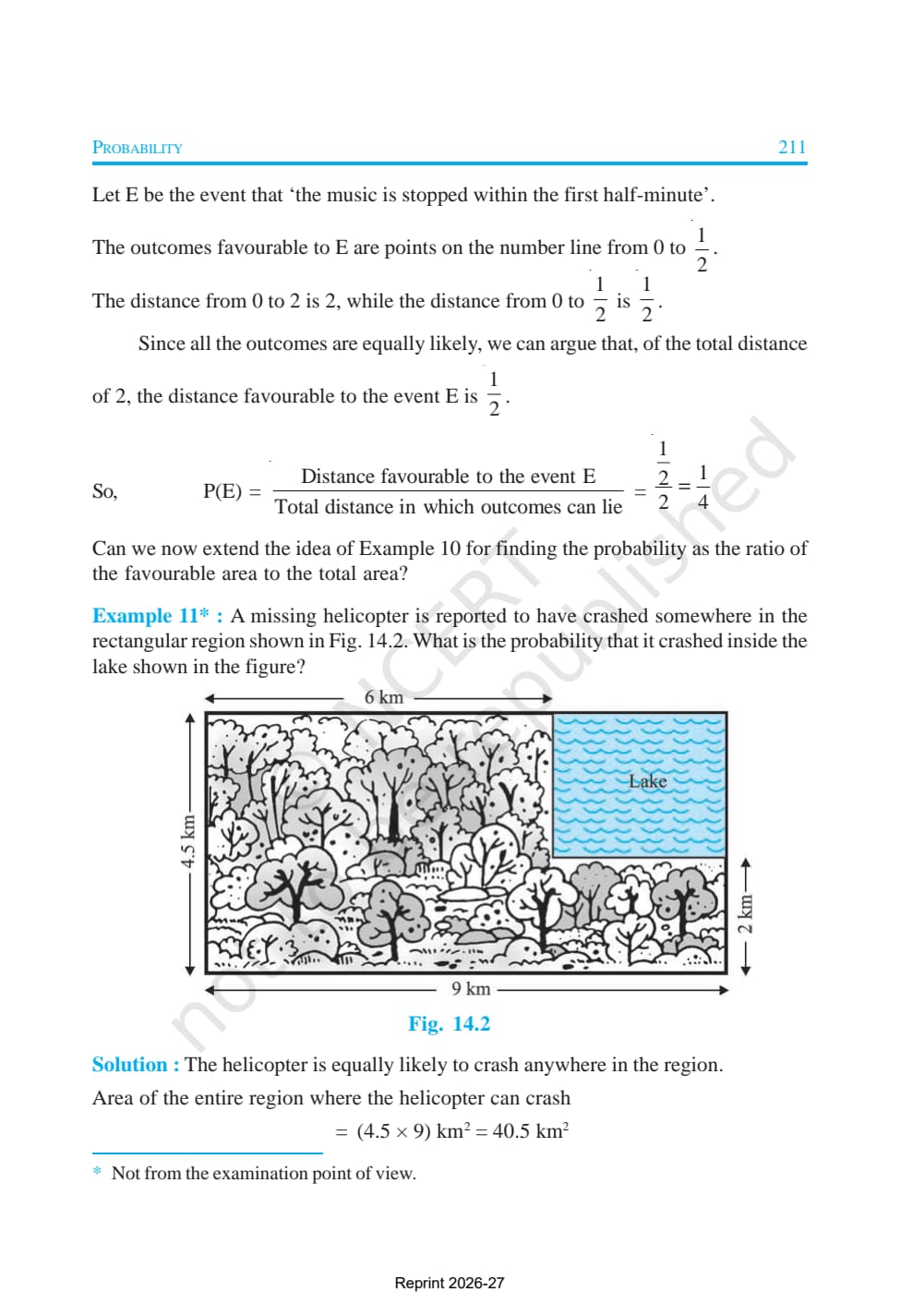
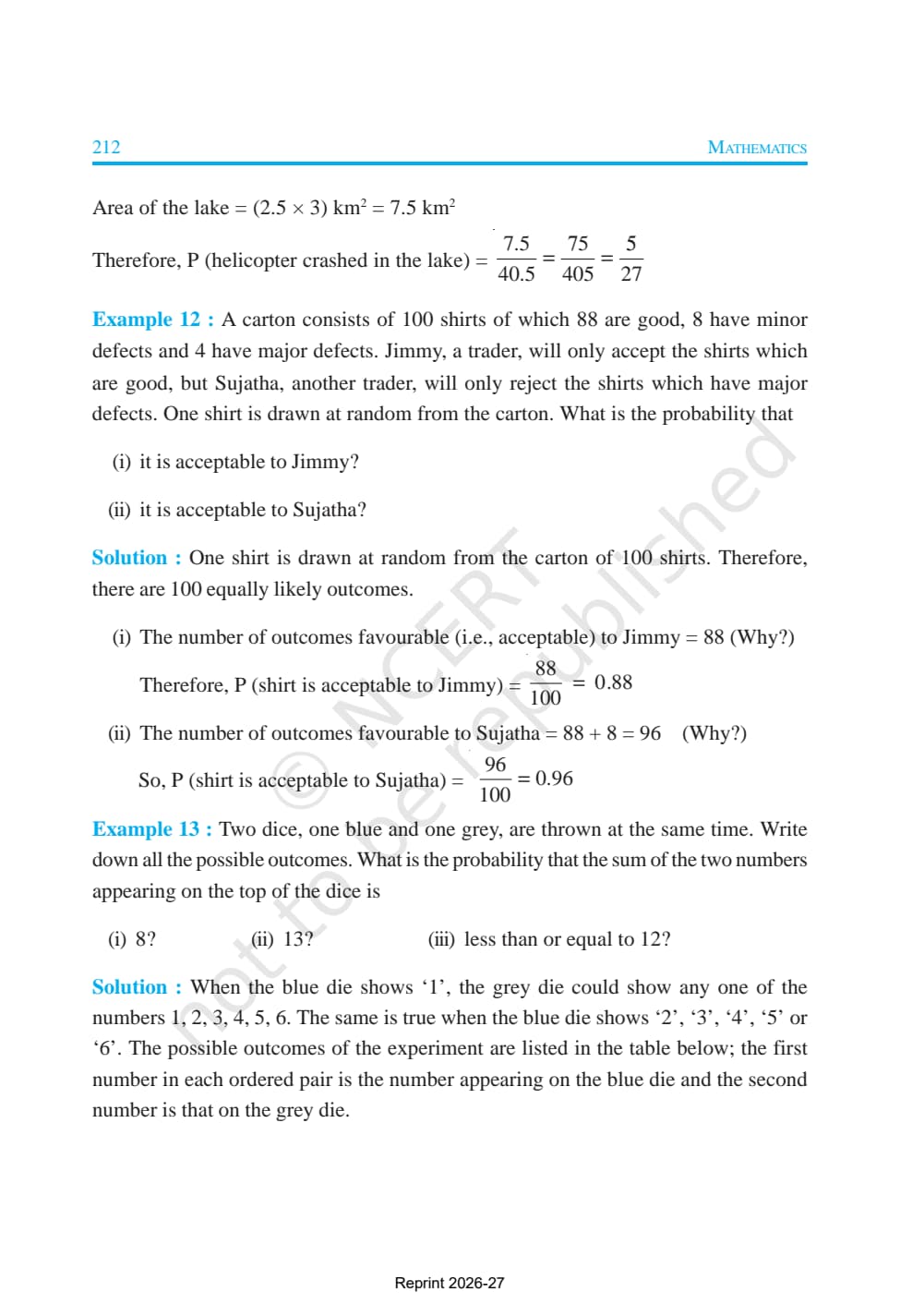
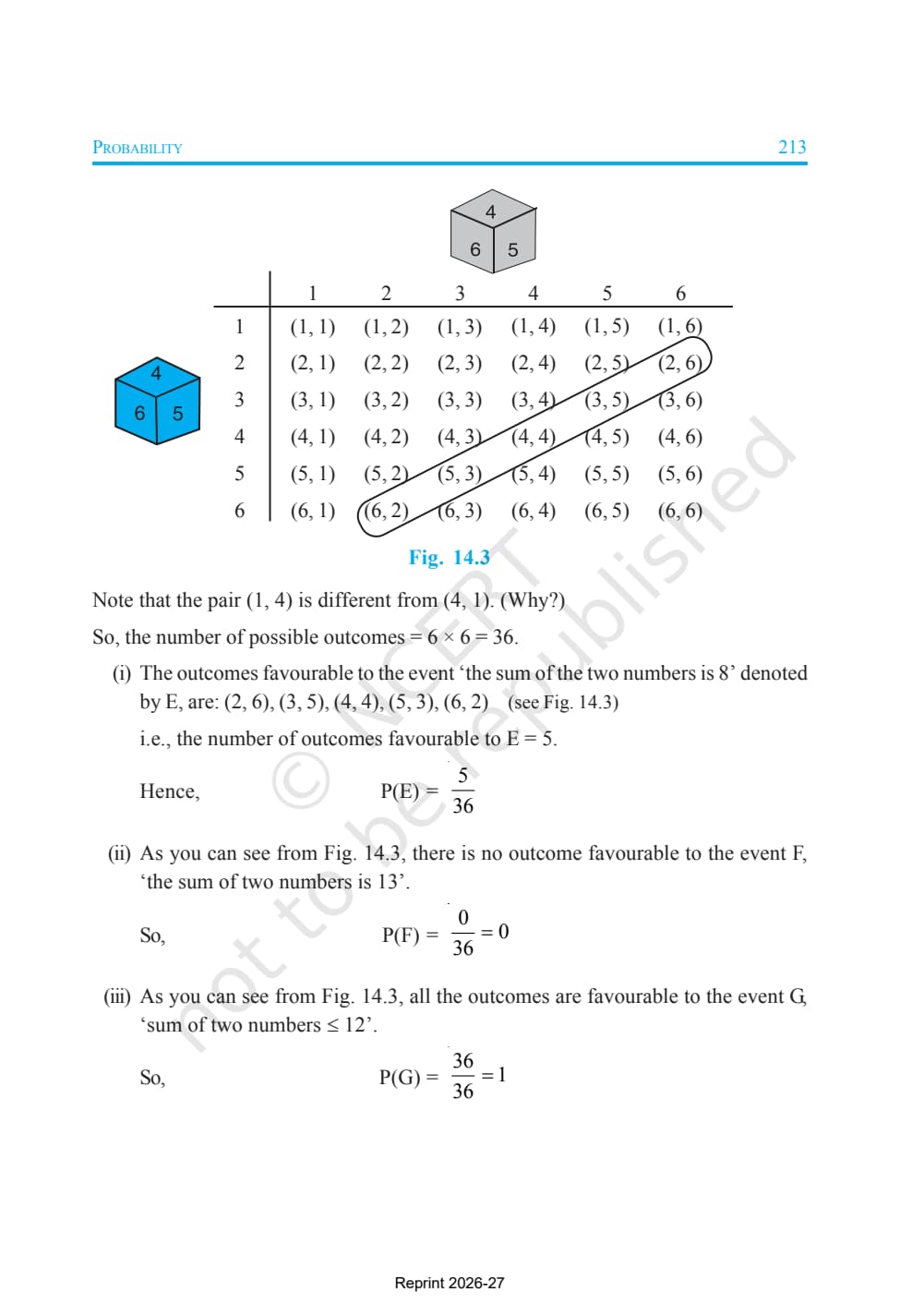
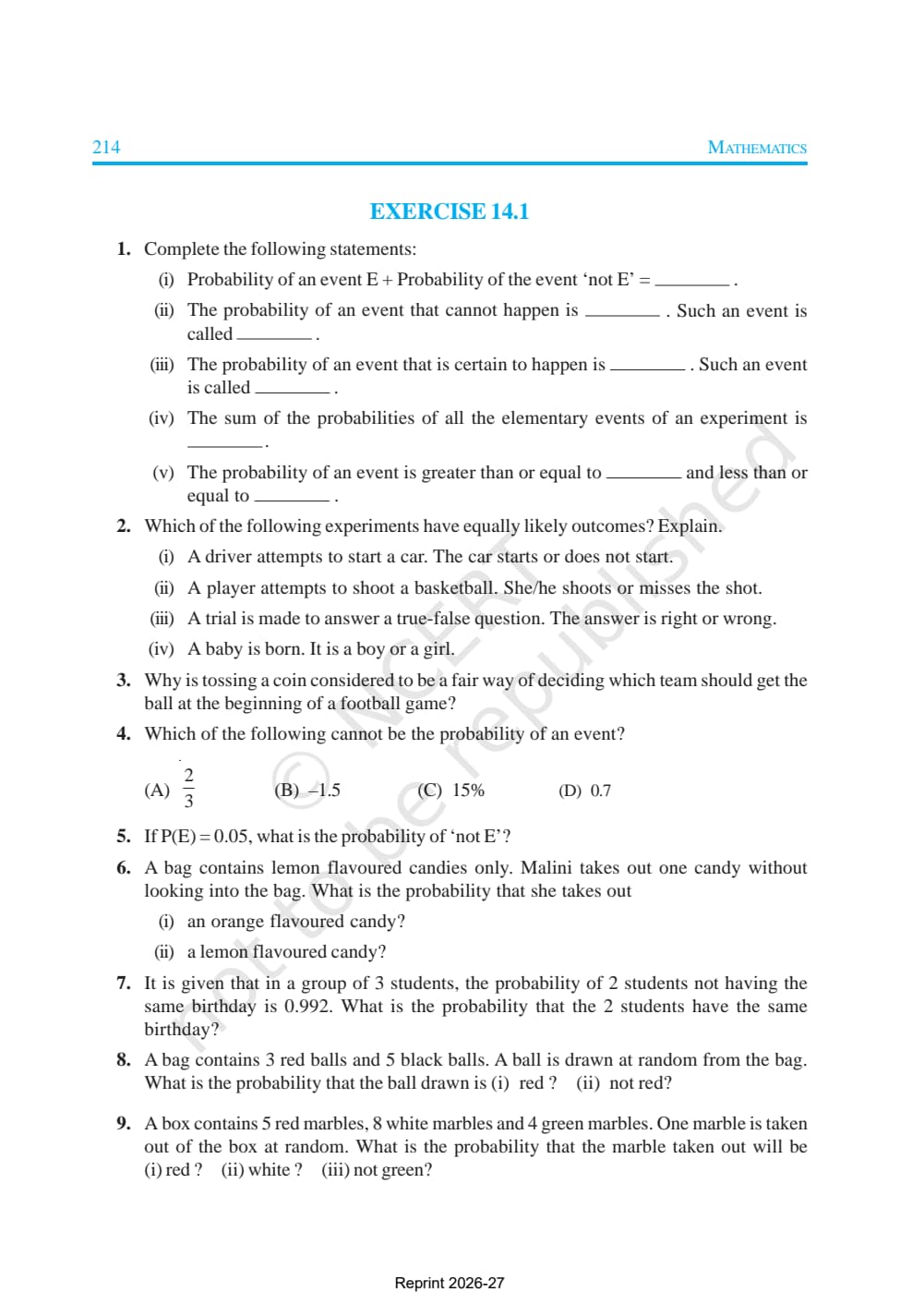
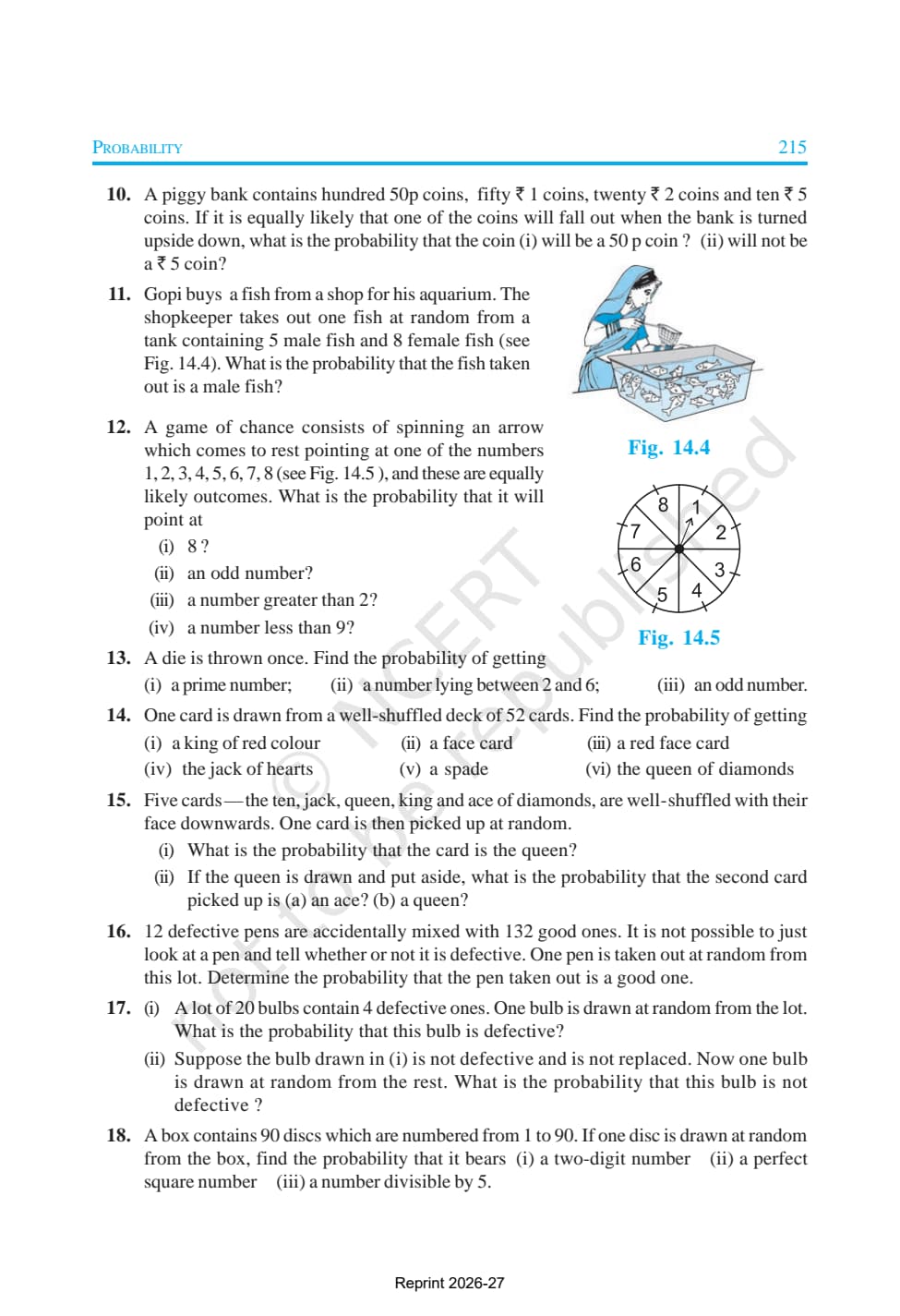
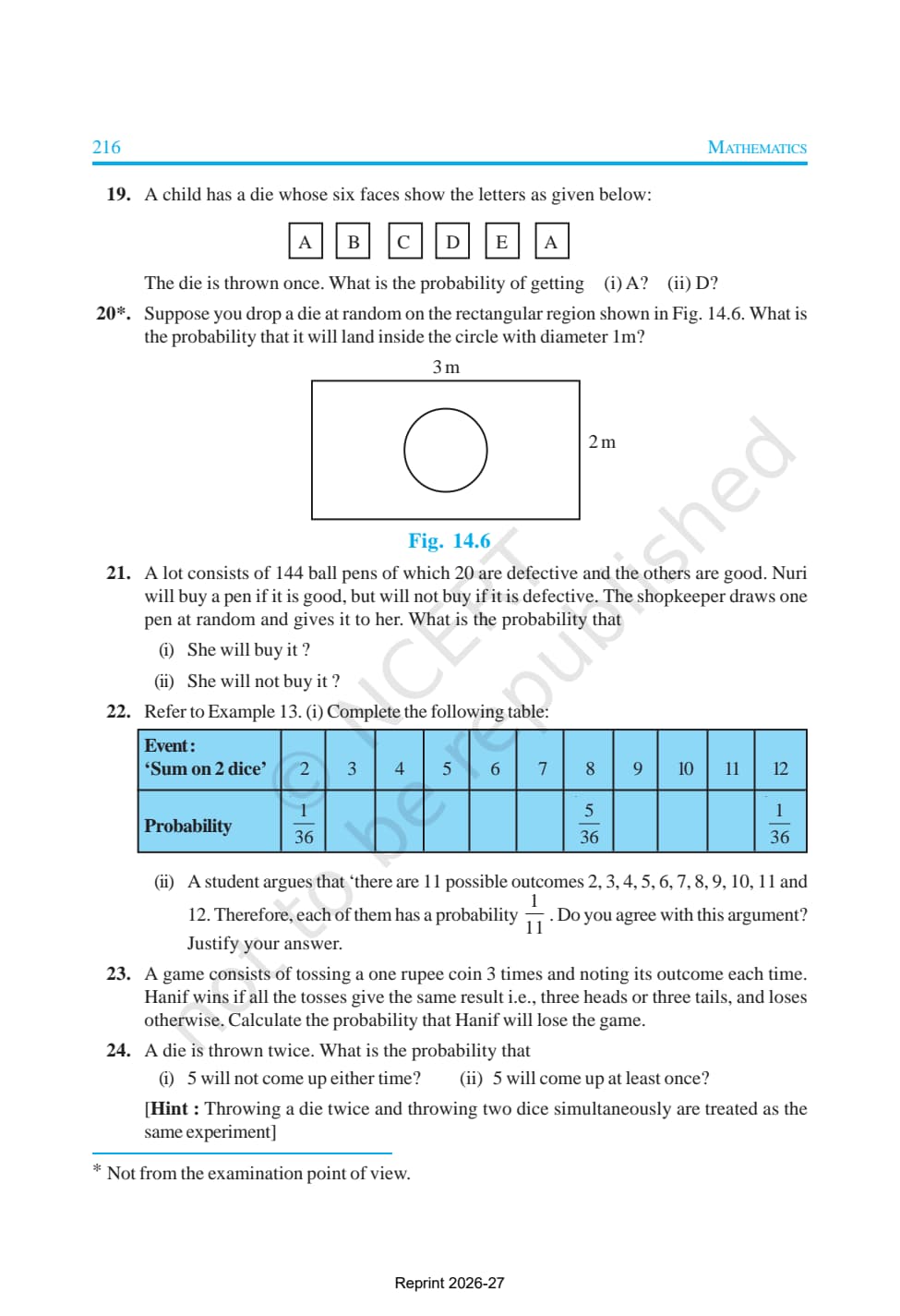
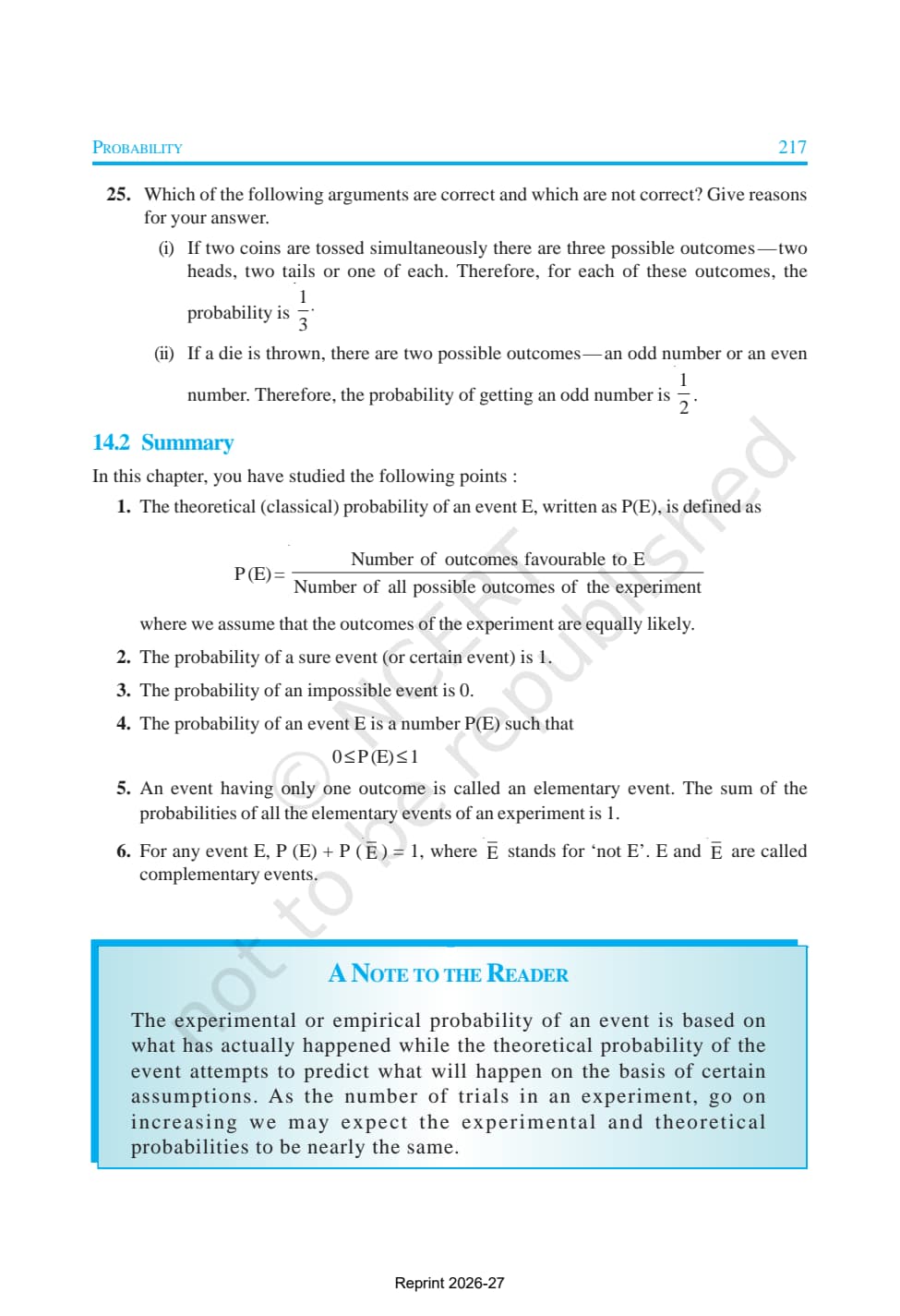
- Official NCERT textbook PDF of Chapter 14, with every definition, solved example, and exercise as printed.
- Covers the classical definition, elementary events, complementary events, and listing the sample space.
- Aligned with the 2026-27 CBSE syllabus; the last chapter and a regular source of easy scoring questions.
This page hosts the official NCERT Class 10 Maths textbook chapter, mapped to the 2026-27 CBSE syllabus.
Watch Probability Class 10 Maths Explained
Source: Magnet Brains on YouTube
What the NCERT Book Chapter Covers
The PDF above is the full official NCERT chapter, the last in the book. It builds on the basic probability ideas from Class 9 and sets out the classical definition. The focus is theoretical probability, worked out by reasoning, not experiments.
- Classical definition: P(E) = favourable outcomes divided by total equally likely outcomes.
- Elementary events: each single outcome; the sum of their probabilities is always 1.
- Complementary events: "E does not occur", written E-bar or E'; P(E) + P(E') = 1.
- Real-world contexts: cards, coins, dice, and marbles run across the exercises.
Classical Probability, Sample Space & Elementary Events
The classical definition works only when all outcomes are equally likely, so list the full sample space first. Each single outcome in it is an elementary event.
Key properties:
0 ≤ P(E) ≤ 1 for any event E
Sum of probabilities of all elementary events = 1
| Experiment | Sample space | Total outcomes |
|---|---|---|
| Tossing one coin | {H, T} | 2 |
| Tossing two coins | {HH, HT, TH, TT} | 4 |
| Rolling one die | {1, 2, 3, 4, 5, 6} | 6 |
| Drawing one card from 52 | 52 cards (4 suits of 13) | 52 |
All outcomes must be equally likely before you use the formula. NCERT says "well-shuffled", "unbiased", or "fair" to confirm this holds.
Complementary Events & Their Probability
For any event E, the complementary event is "E does not occur", holding every outcome not in E, written E-bar or E'. The key result is:
∴ P(E̅) = 1 − P(E)
This saves time when the event is hard to count but its complement is easy, as in "at least one head".
- E and E-bar are mutually exclusive and exhaustive (together they cover all outcomes).
- P(E) = 0 means impossible; P(E) = 1 means certain (sure).
- If P(getting a 6) = 1/6, then P(not a 6) = 1 - 1/6 = 5/6.
Impossible & Sure Events Explained
Two special cases turn up often. An impossible event has no favourable outcomes, so P = 0. A sure (certain) event has every outcome favourable, so P = 1.
| Event type | Favourable outcomes | Probability | Example |
|---|---|---|---|
| Impossible event | 0 | P = 0 | Getting a 7 when rolling a standard die |
| Sure event | All outcomes in sample space | P = 1 | Getting a number less than 7 when rolling a die |
| Complementary events | Remaining outcomes | P(E) + P(E') = 1 | Getting a head vs. getting a tail on one coin |
Every probability lies between 0 and 1. If yours is negative or above 1, you have miscounted.
Sample Space for Coins, Dice & Cards
Most questions use one of three standard setups: a 52-card deck, one or two fair coins, and one fair die. Knowing each sample space in advance helps you answer faster.
| Context | Total outcomes | Key subsets to remember |
|---|---|---|
| One fair coin | 2 (H, T) | 1 head: {H}; 1 tail: {T} |
| Two fair coins | 4 (HH, HT, TH, TT) | At least 1 head: {HH, HT, TH}; both heads: {HH} |
| One fair die | 6 (1-6) | Even: {2,4,6}; odd: {1,3,5}; prime: {2,3,5}; perfect square: {1,4} |
| Standard deck | 52 cards | 4 suits of 13; 4 aces; 12 face cards (J, Q, K in each suit); 26 red, 26 black |
Know the deck layout cold: 4 suits of 13 cards (A, 2-10, J, Q, K). Each suit has 3 face cards, so 12 in all. Hearts and diamonds are red; clubs and spades are black.
- Ace cards: 4 in total (one per suit), not face cards.
- Face cards: 12 in total (J, Q, K in each suit).
- Numbered cards: 36 in total.
- A well-shuffled deck means every card is equally likely, the condition for the formula.
Exercises & Solved Examples
The chapter has one main exercise, Exercise 14.1, with 25 questions covering every type the board can ask. Several solved examples come first and model the working the board expects.
| Section | What it covers | Type of question |
|---|---|---|
| Theory and definitions | Classical probability, sample space, elementary events, impossible and sure events | Definitional and conceptual |
| Solved examples (coins and dice) | Listing sample space, counting favourable outcomes, using P(E) = favourable/total | Short answer with working shown |
| Solved examples (cards) | Events involving aces, face cards, suits, numbered cards | Formula application with sample space reasoning |
| Exercise 14.1 (Q1-Q25) | Full range: coins, dice, cards, bags of marbles, number lines, real-world word problems | CBSE short and long answer, 1-3 marks |
Work through all 25 questions and you will have seen every variant. The solved examples show how to write the sample space, count favourable outcomes, and give the answer as a fraction in lowest terms.
Also Check:
- Class 10 Maths Chapter 14 Probability NCERT Solutions
- Class 10 Maths Chapter 14 Probability Formula Sheet
How to Use the Book PDF for Board Revision
Use this PDF in two reading passes, with the solutions and notes below.
- First pass: read each definition, then work through every solved example, writing the sample space before the formula.
- Second pass: attempt all 25 questions unaided, then check against the NCERT Solutions.
- Board angle: Probability sits in the Statistics and Probability unit (about 11 marks); its 1-to-3-mark questions are among the easiest.
Student Feedback
72% of Class 10 students said listing the sample space for multi-step experiments was the trickiest part. 4 out of 5 found reading each solved example slowly before the exercises helped most.
Source: 2026-27 Class 10 Maths student poll of 8,400 students from CBSE schools across 13 states.
Other Resources for This Chapter
Revise with the matching NCERT Solutions, notes, formula sheet, and handwritten notes below.
| Resource | What it covers | Open |
|---|---|---|
| NCERT Book PDF | Official Class 10 Maths Chapter 14 textbook, with every solved example and exercise. | Probability NCERT Book PDF |
| NCERT Solutions | Step-by-step answers to all exercise questions of Chapter 14. | Class 10 Maths Chapter 14 NCERT Solutions |
| Notes | Concept-first revision notes on probability definitions, formulas, and events. | Class 10 Maths Chapter 14 Notes |
| Formula Sheet | Quick reference of all key Probability formulas for fast board revision. | Class 10 Maths Chapter 14 Formula Sheet |
| Handwritten Notes | Scanned-style handwritten pages for last-minute board revision. | Class 10 Maths Chapter 14 Handwritten Notes |
| Exemplar Solutions | Worked solutions to NCERT Exemplar problems for deeper practice. | Class 10 Maths Chapter 14 Exemplar Solutions |
| Exemplar Book PDF | Official NCERT Exemplar chapter PDF for additional problem practice. | Class 10 Maths Chapter 14 Exemplar Book PDF |
NCERT Book PDF: All Chapters
Related Links: Open the NCERT Book PDF for the other Class 10 Maths chapters below.
| Chapter | NCERT Book PDF link |
|---|---|
| Chapter 1 | Real Numbers NCERT Book PDF |
| Chapter 2 | Polynomials NCERT Book PDF |
| Chapter 3 | Pair of Linear Equations in Two Variables NCERT Book PDF |
| Chapter 4 | Quadratic Equations NCERT Book PDF |
| Chapter 5 | Arithmetic Progressions NCERT Book PDF |
| Chapter 6 | Triangles NCERT Book PDF |
| Chapter 7 | Coordinate Geometry NCERT Book PDF |
| Chapter 8 | Introduction to Trigonometry NCERT Book PDF |
| Chapter 9 | Some Applications of Trigonometry NCERT Book PDF |
| Chapter 10 | Circles NCERT Book PDF |
| Chapter 11 | Areas Related to Circles NCERT Book PDF |
| Chapter 12 | Surface Areas and Volumes NCERT Book PDF |
| Chapter 13 | Statistics NCERT Book PDF |
| Chapter 14 | Probability NCERT Book PDF |
Probability Class 10 Maths Chapter 14 NCERT Book FAQs
Ques. What does Chapter 14 Probability cover in the Class 10 Maths NCERT Book?
Ans. Chapter 14 of the Class 10 Maths NCERT Book covers the theoretical (classical) definition of probability. It introduces the sample space (the set of all possible outcomes), elementary events (individual outcomes), and the classical probability formula: P(E) = number of favourable outcomes divided by the total number of equally likely outcomes. The chapter also covers complementary events (P(E) + P(E') = 1), impossible events (P = 0), and sure events (P = 1). The exercises use everyday experiments like tossing one or two coins, rolling a die, drawing a card from a standard 52-card deck, and picking coloured marbles from a bag. The chapter has one main exercise (Exercise 14.1) with 25 questions covering the full range of probability question types tested in the 2026-27 CBSE Class 10 board exam.
Ques. What is the classical probability formula in Class 10 Maths Chapter 14?
Ans. The classical probability formula given in NCERT Chapter 14 is: P(E) = (Number of outcomes favourable to E) divided by (Total number of equally likely outcomes in the sample space). This formula applies only when all outcomes are equally likely (for example, a fair coin or an unbiased die). P(E) always lies between 0 and 1. A value of 0 means the event is impossible (no favourable outcomes). A value of 1 means the event is certain (every outcome is favourable). For the complementary event E', P(E') = 1 - P(E), which is a useful shortcut in questions where it is easier to count the outcomes where E does not happen than the ones where it does.
Ques. What is a sample space in Class 10 Maths Probability?
Ans. A sample space is the set of all possible outcomes of an experiment. For a single coin toss, the sample space is {H, T}. For two coins, it is {HH, HT, TH, TT}. For one die, it is {1, 2, 3, 4, 5, 6}. For drawing one card from a 52-card deck, the sample space has 52 elements. The NCERT chapter always requires students to identify the sample space before applying the probability formula, because the total number of outcomes in the sample space is the denominator of the probability fraction. Listing the sample space completely and systematically is one of the key skills practised in the solved examples and Exercise 14.1.
Ques. What are complementary events in Class 10 Maths Probability?
Ans. Complementary events are a pair of events where one event happens if and only if the other does not. For an event E, its complement E' (or E-bar) consists of all outcomes in the sample space that are not in E. The key property is P(E) + P(E') = 1, which means P(E') = 1 minus P(E). For example, if the probability of drawing a king from a deck is 4/52 = 1/13, then the probability of not drawing a king is 1 minus 1/13 = 12/13. This relationship is especially useful in board questions that ask for "at least one" or "not" type events, where the complement is simpler to calculate than the event itself.
Ques. How many exercises are in Class 10 Maths Chapter 14 Probability?
Ans. Class 10 Maths Chapter 14 Probability has one main exercise, Exercise 14.1, which contains 25 questions. The questions cover all the probability concepts taught in the chapter: listing sample spaces, finding probability using the classical formula, using the complement rule, and applying probability to real-world contexts (cards, dice, coins, marbles). There are also several solved examples before Exercise 14.1 that model the layout and working that the CBSE board expects in the answer sheet. Students who work through all 25 questions in Exercise 14.1 and study the solved examples will be well prepared for the probability questions in the CBSE Class 10 Maths board exam.
Ques. What is the difference between an impossible event and a sure event in Class 10 Maths?
Ans. An impossible event has no favourable outcomes in the sample space, so its probability is 0. For example, the event of rolling a 7 on a standard six-faced die is impossible because 7 is not in the sample space {1, 2, 3, 4, 5, 6}. A sure event (also called a certain event) has all outcomes in the sample space as favourable, so its probability is 1. For example, the event of rolling a number less than 7 on a standard die is a sure event. Every other event has a probability strictly between 0 and 1. The NCERT chapter uses these two extremes to confirm the range rule: 0 is less than or equal to P(E), which is less than or equal to 1.
Ques. Is the Class 10 Maths Chapter 14 NCERT Book PDF free to download for 2026-27?
Ans. Yes. The official NCERT Book PDF for Class 10 Maths Chapter 14 Probability is free to read and download on this page for the 2026-27 session. It is the complete chapter exactly as printed in the CBSE textbook, including all the solved examples and Exercise 14.1 with all 25 questions. You can pair the book PDF with the NCERT Solutions and revision notes for the same chapter, both linked on this page, so you can read, practise, and revise from one place without needing to search multiple sites.



Comments