


The NCERT Book for Class 10 Maths Chapter 6 Triangles is the official CBSE textbook chapter, free to read and download for the 2026-27 session. It builds on triangle congruence from Class 9. The chapter introduces similar triangles, two key theorems, and the famous Pythagoras theorem with its proof.
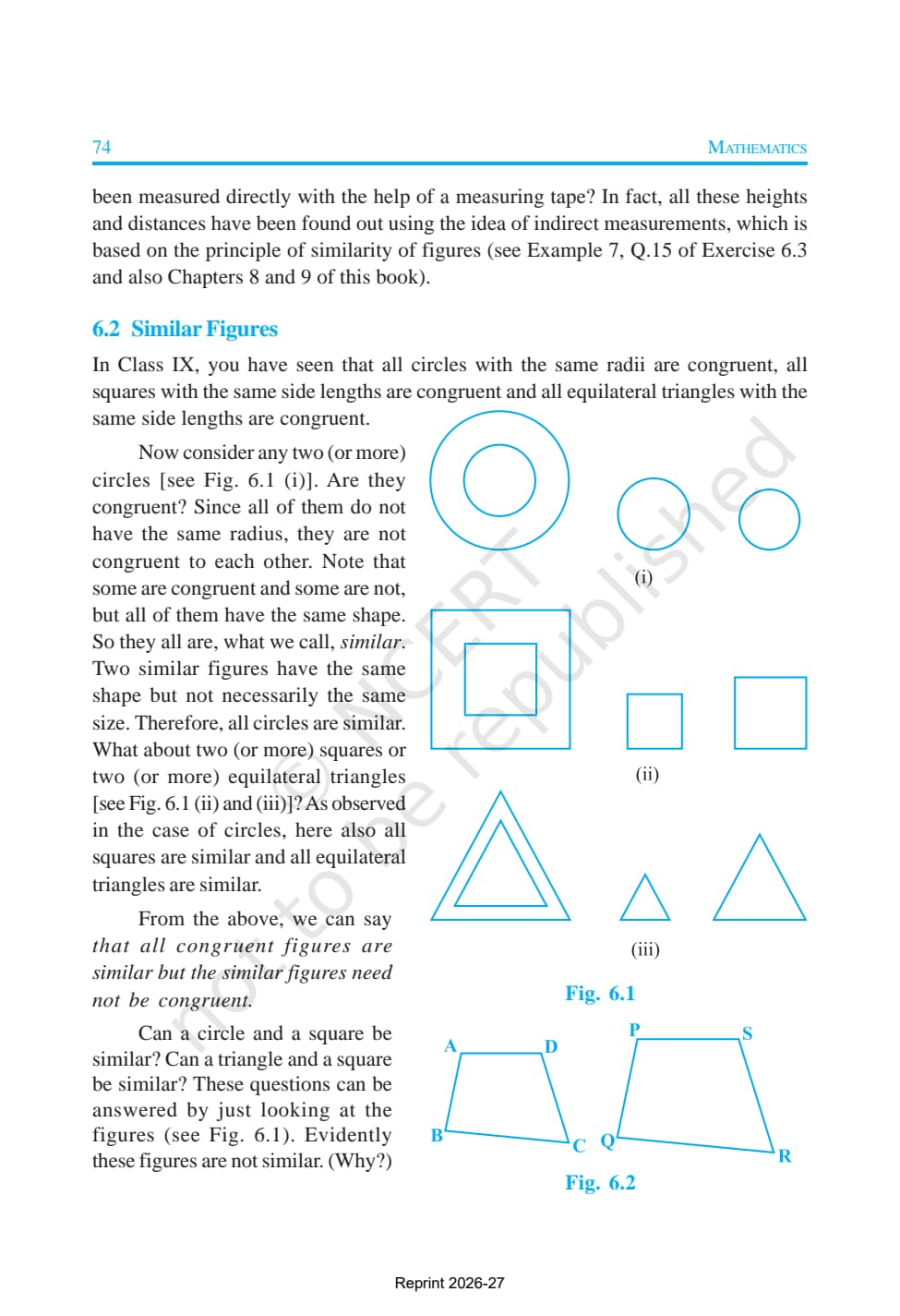
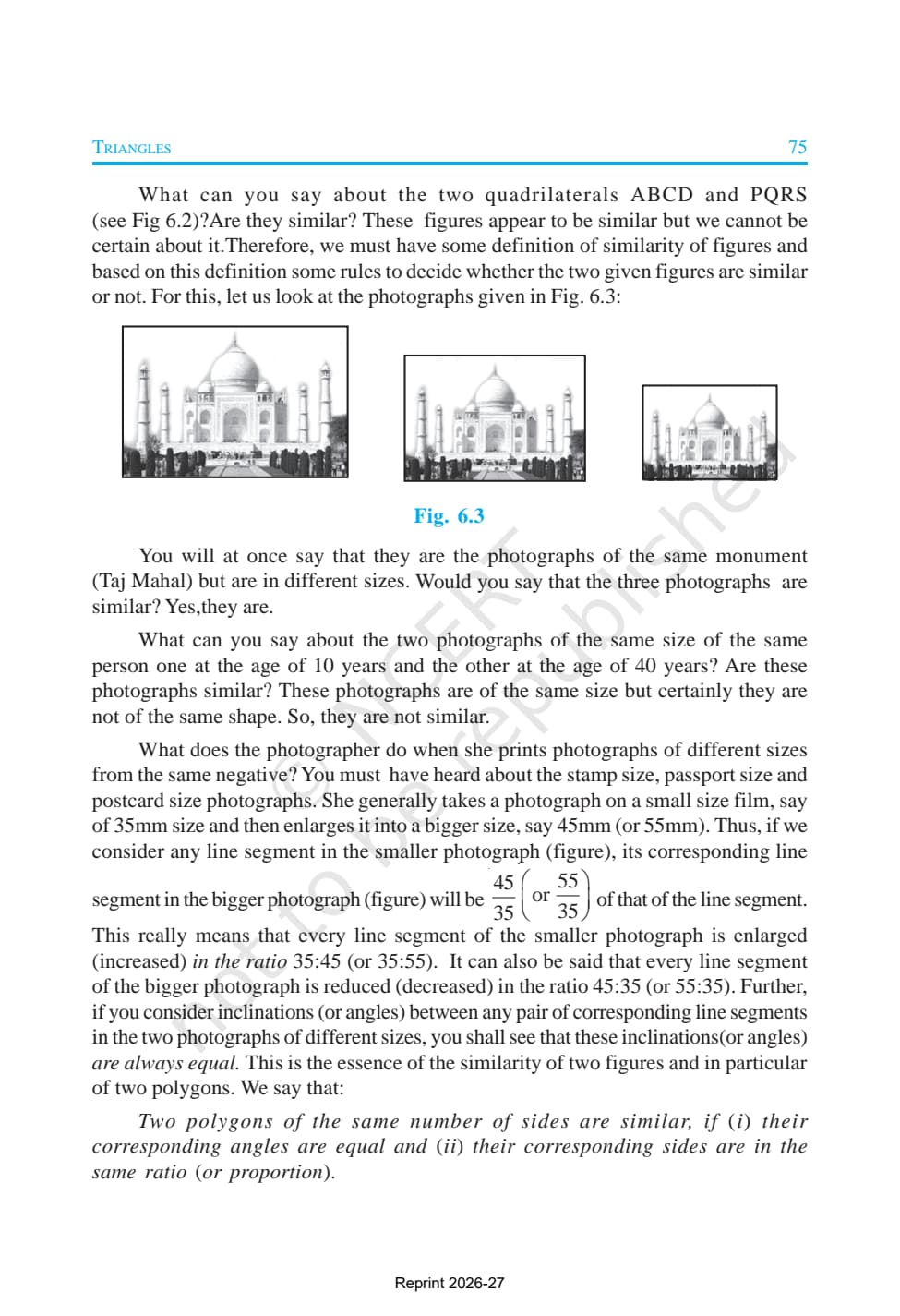
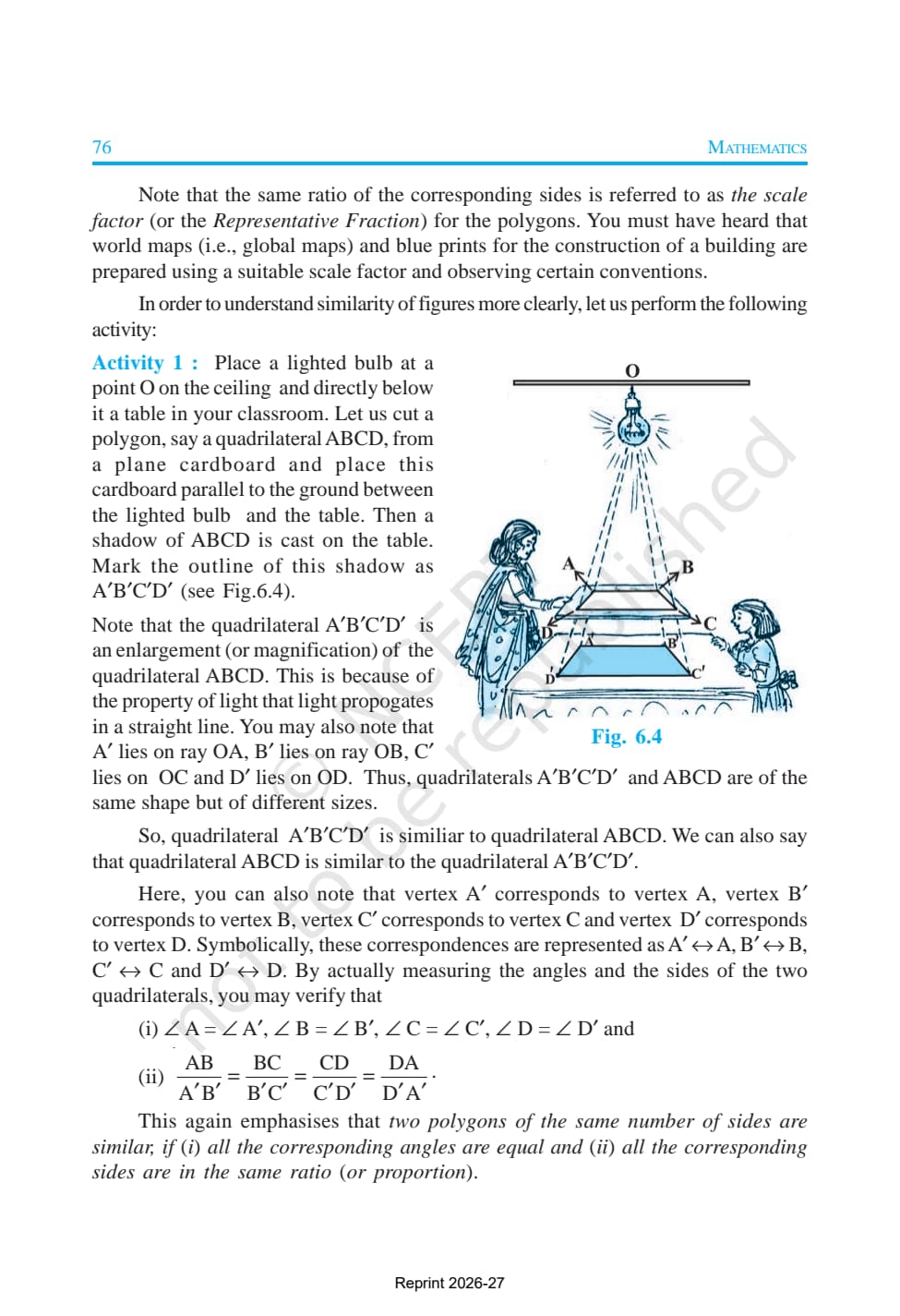
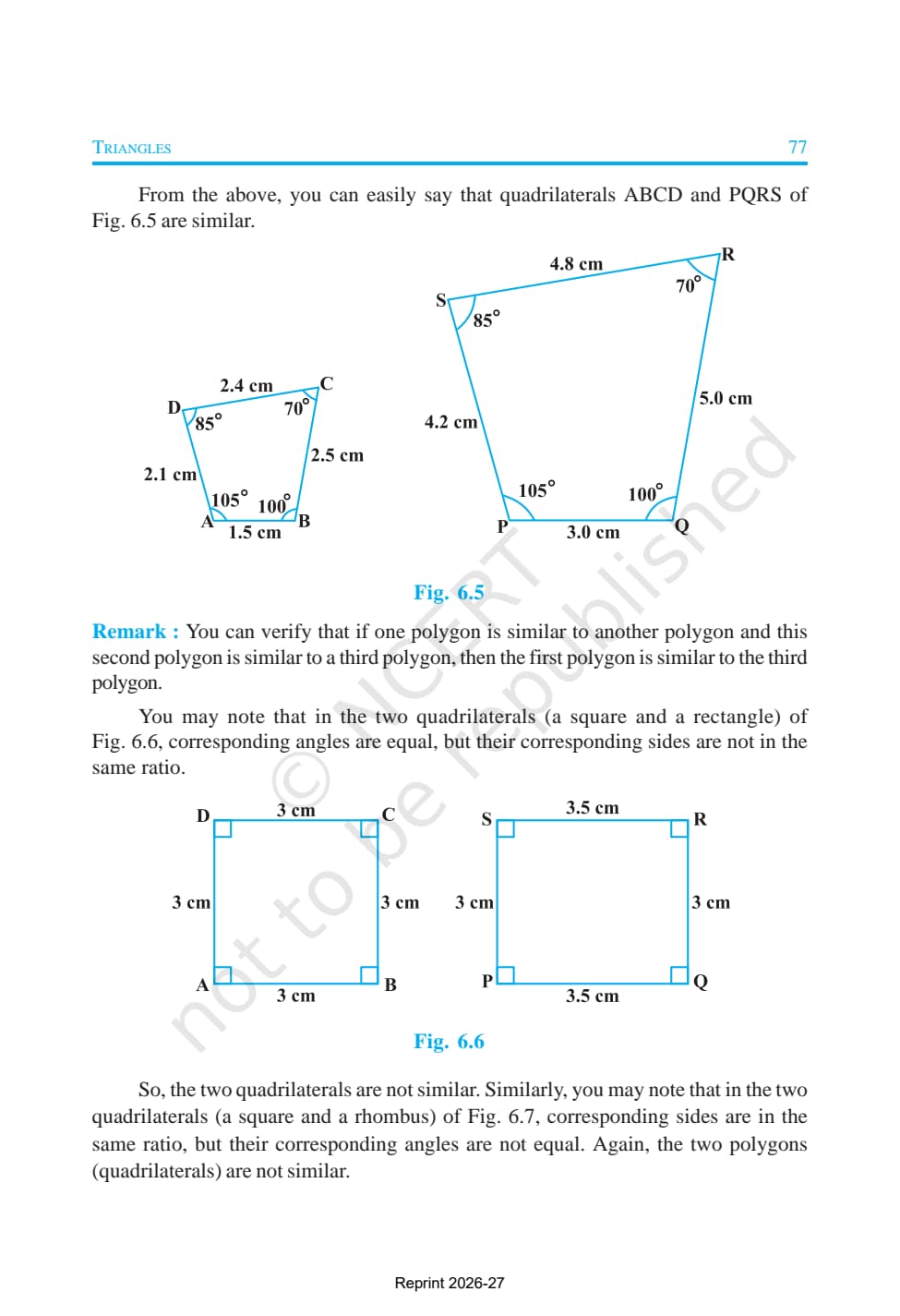
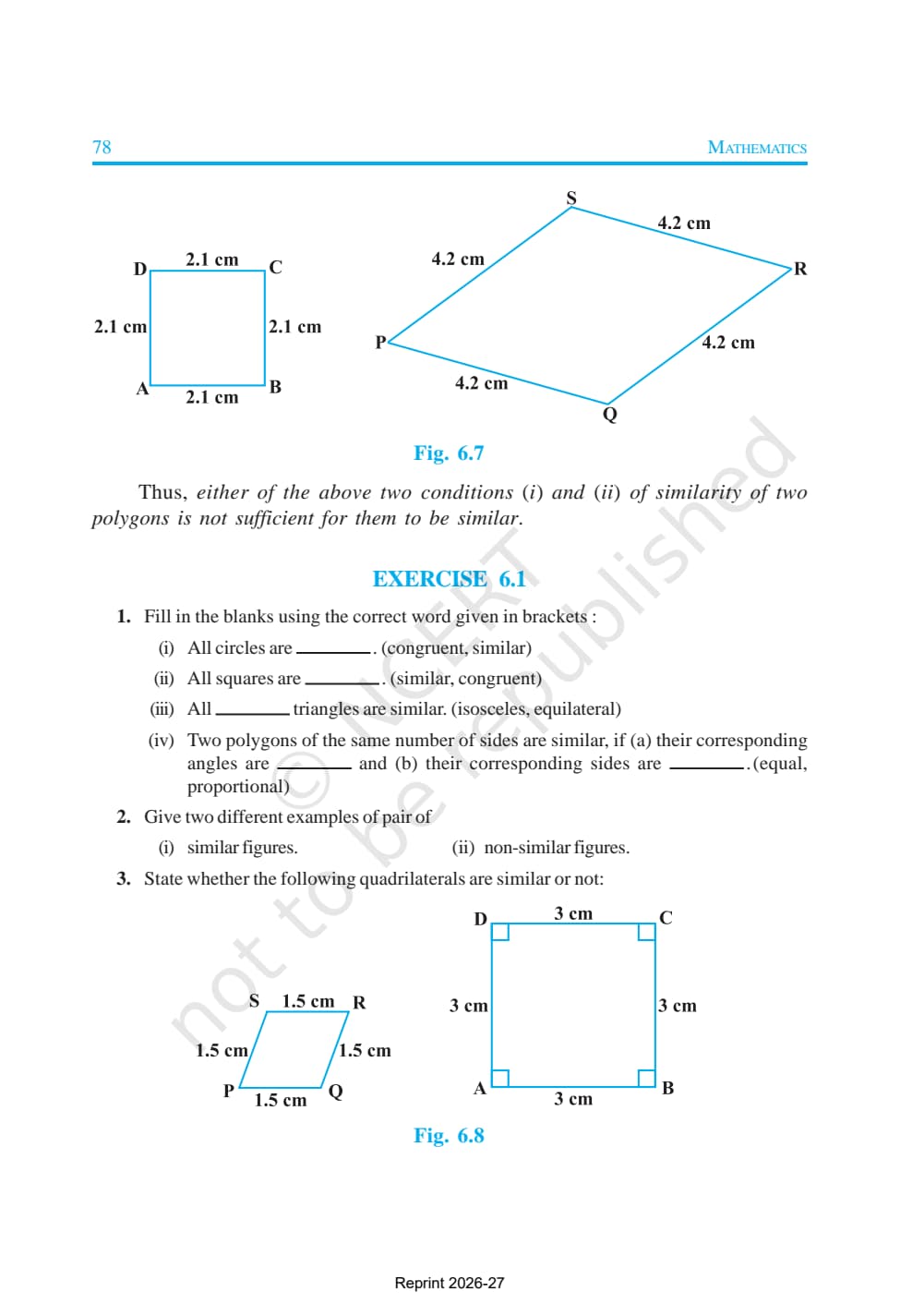
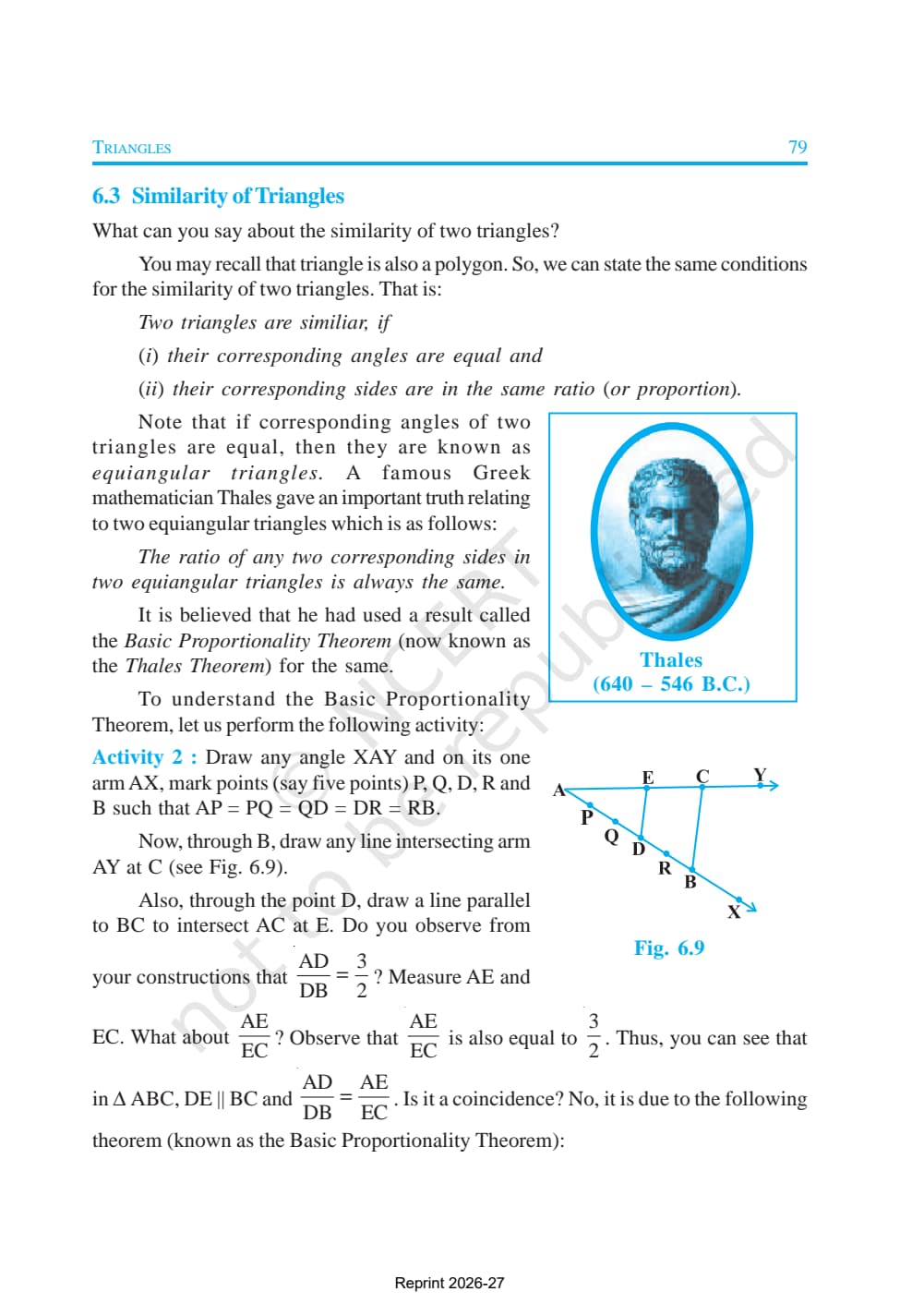
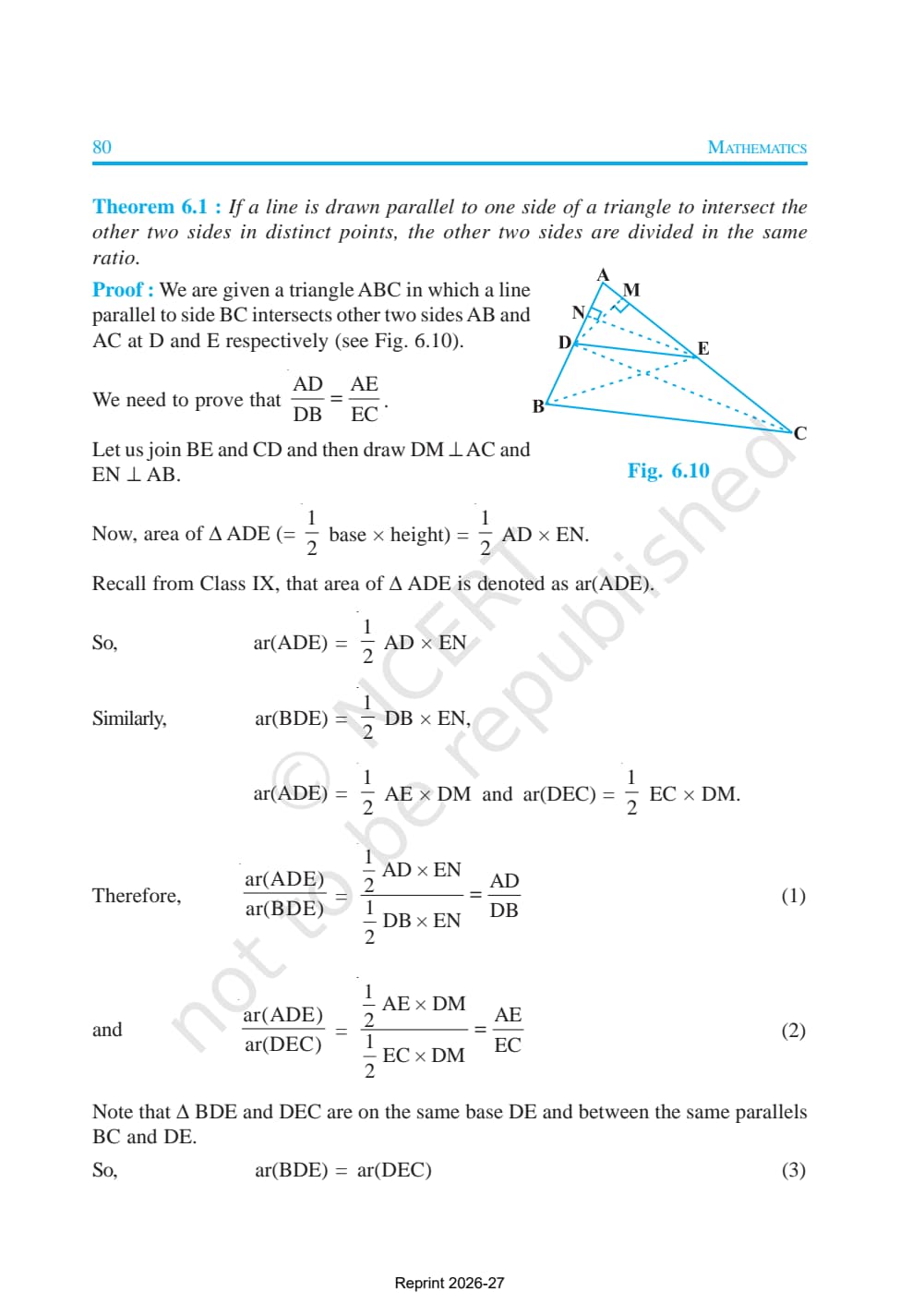
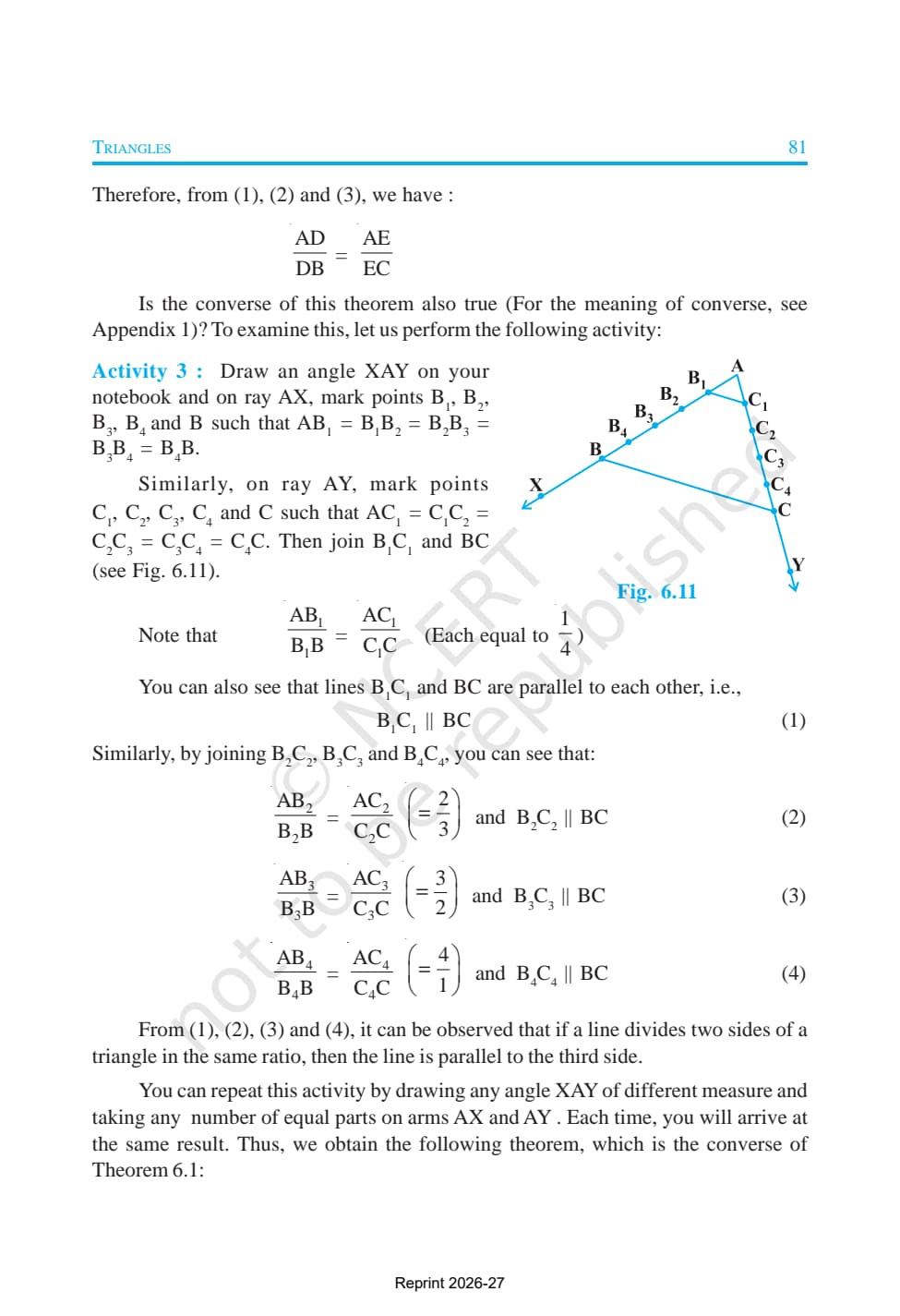
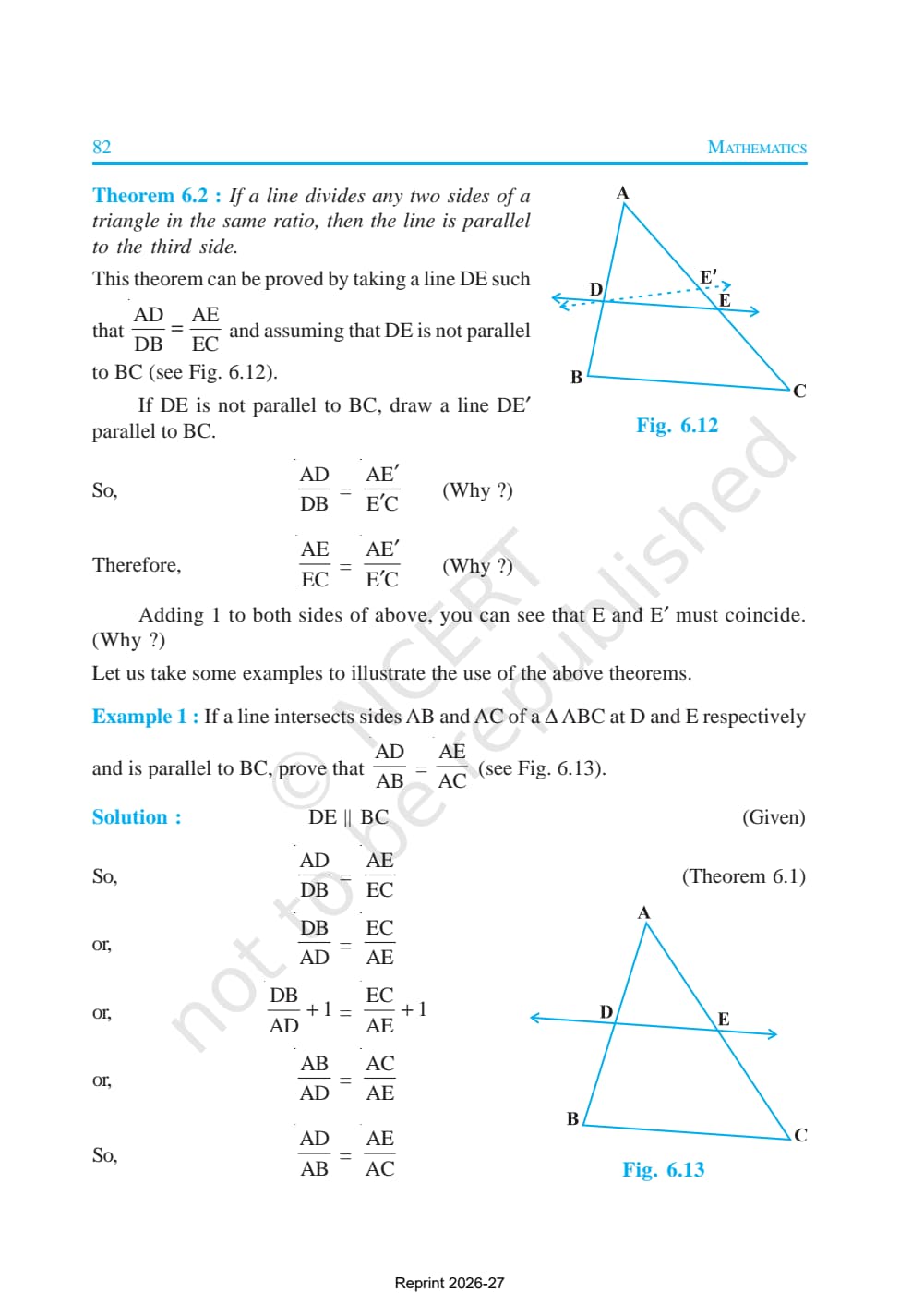
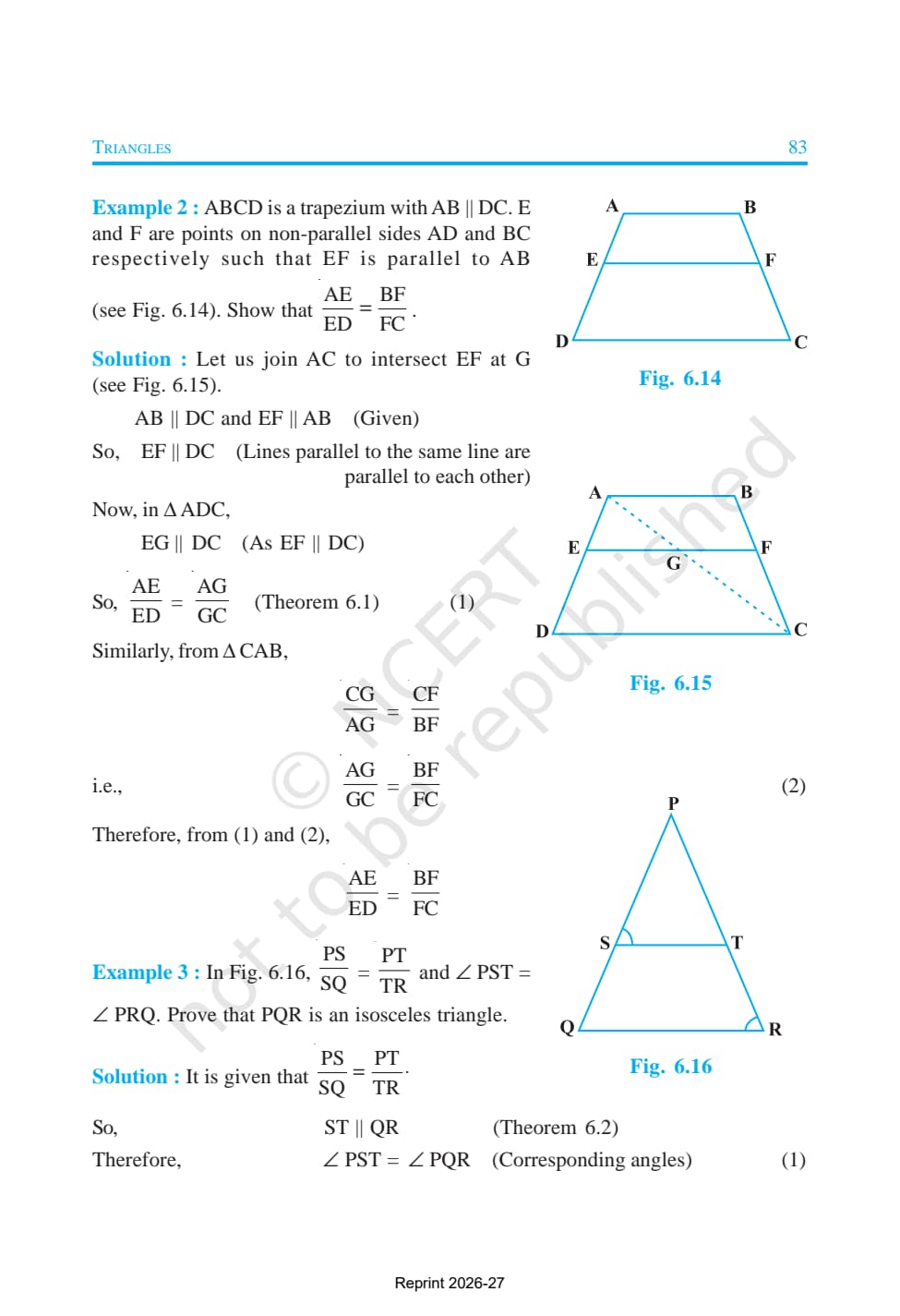
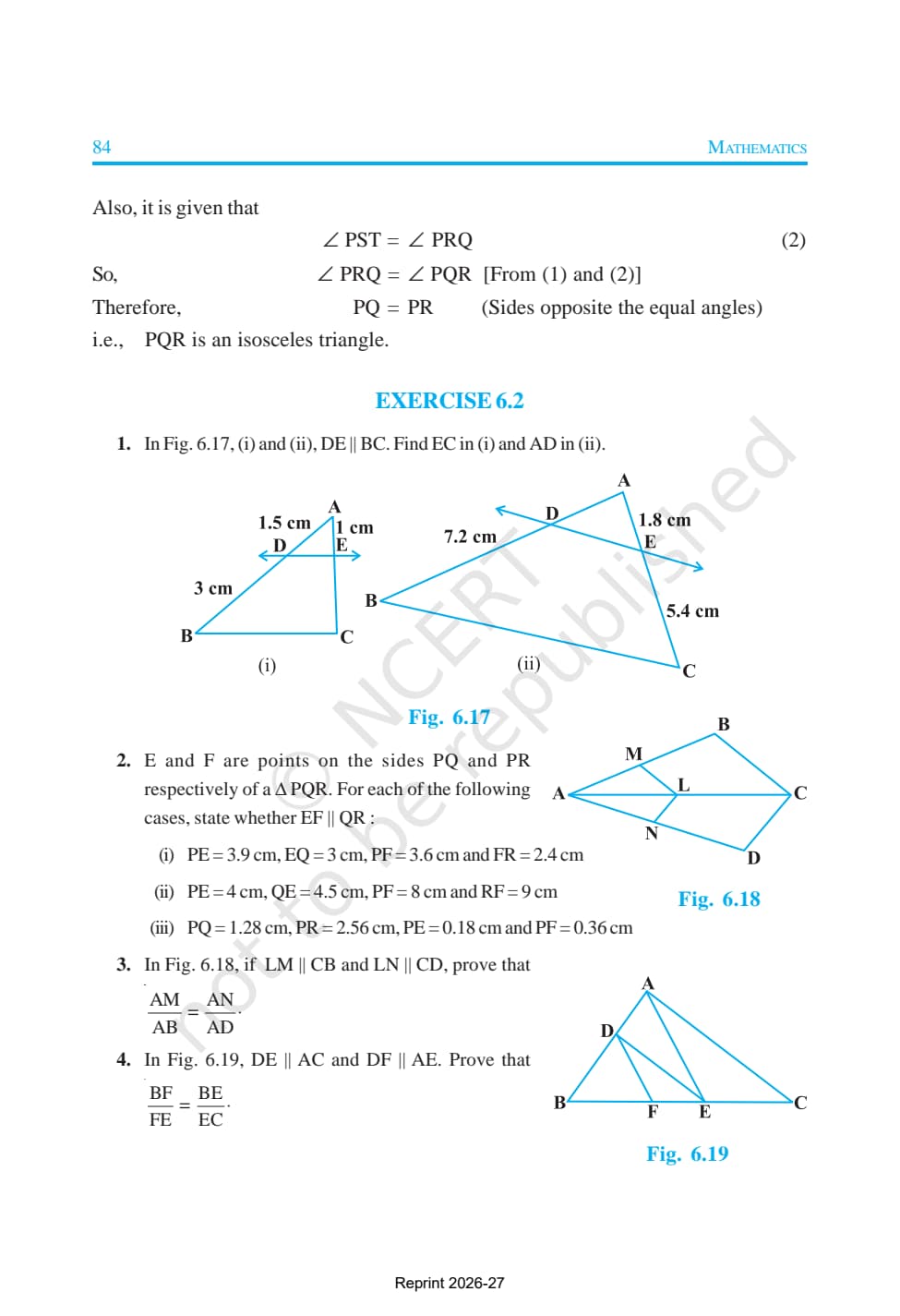
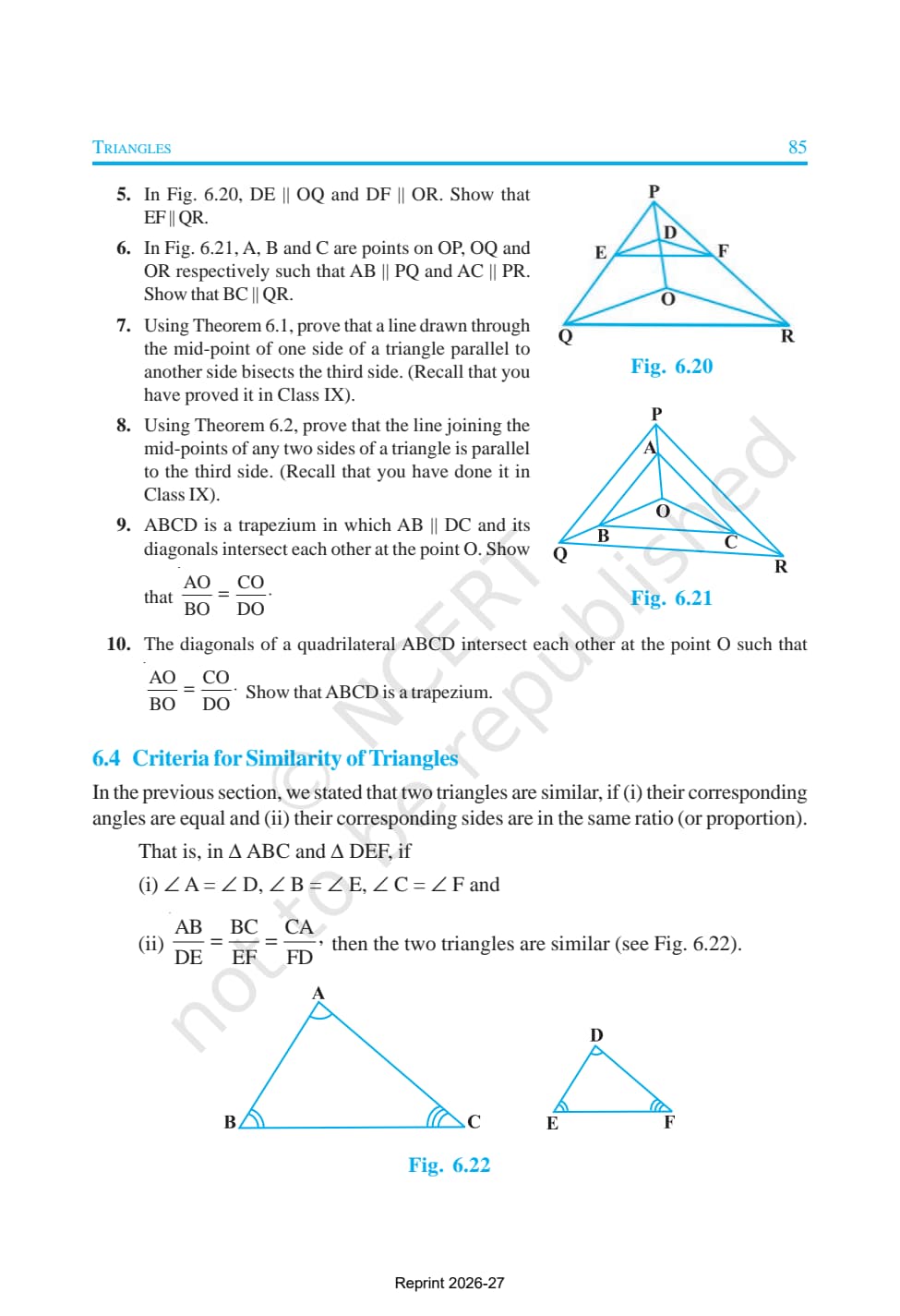
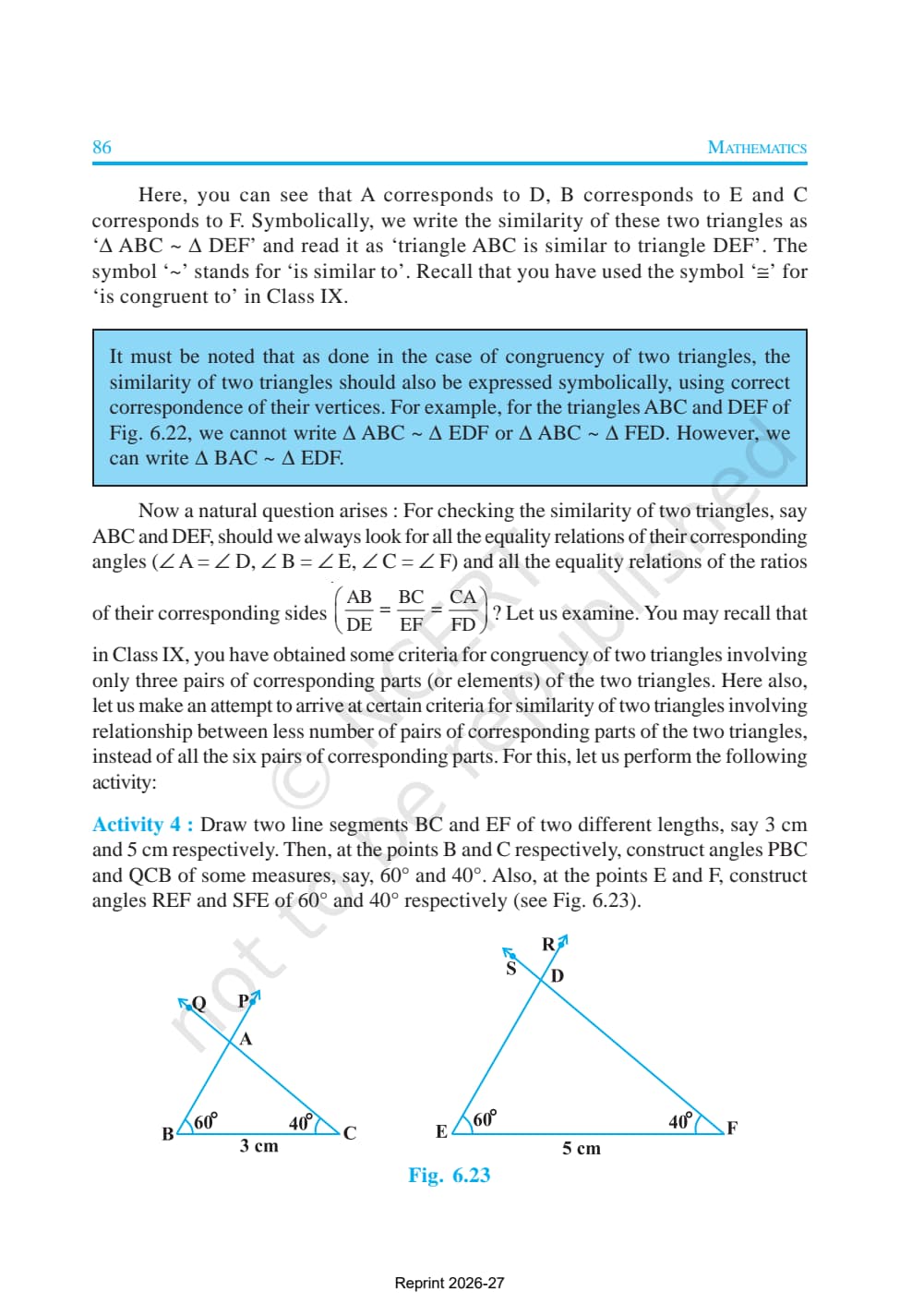
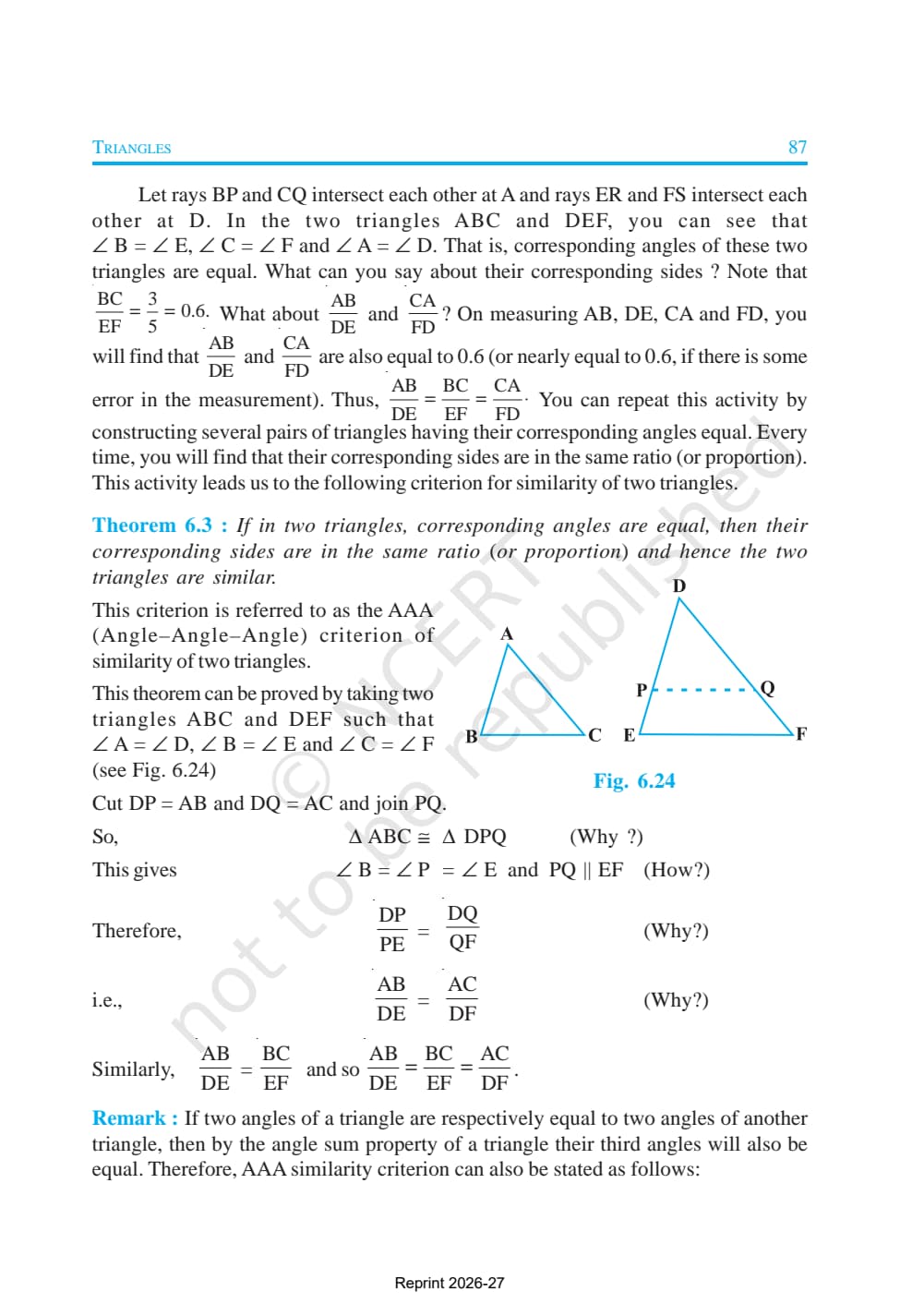
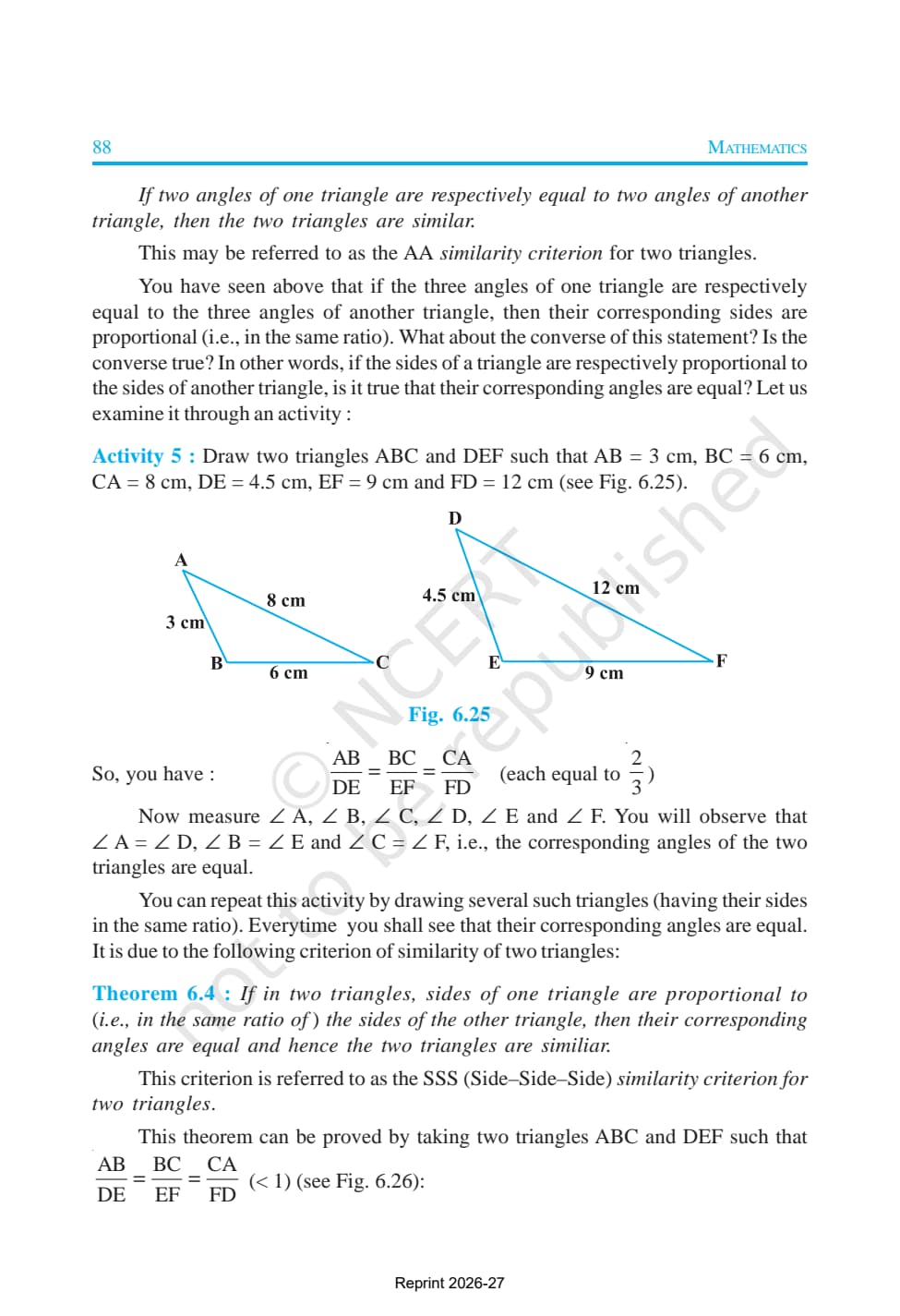
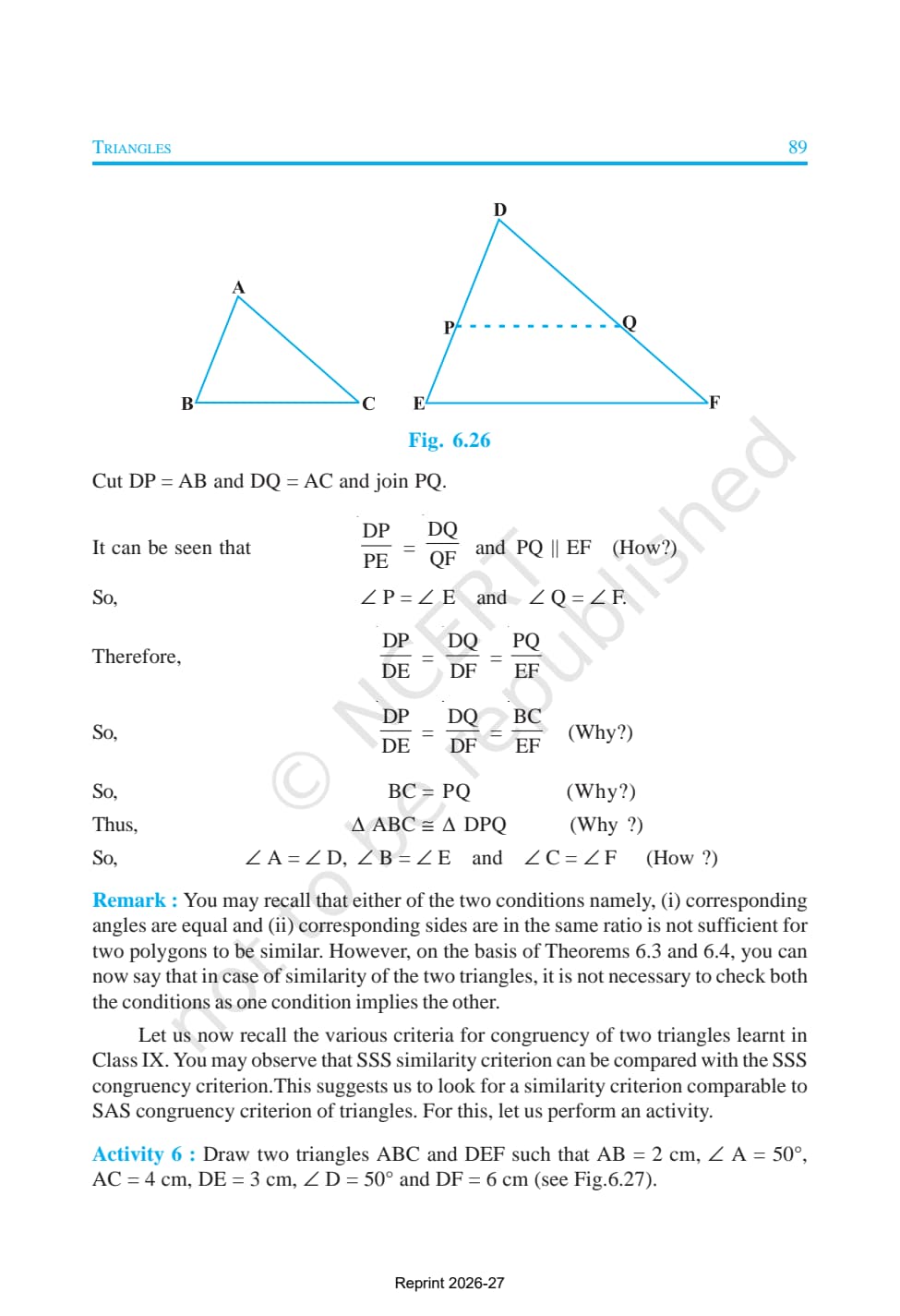
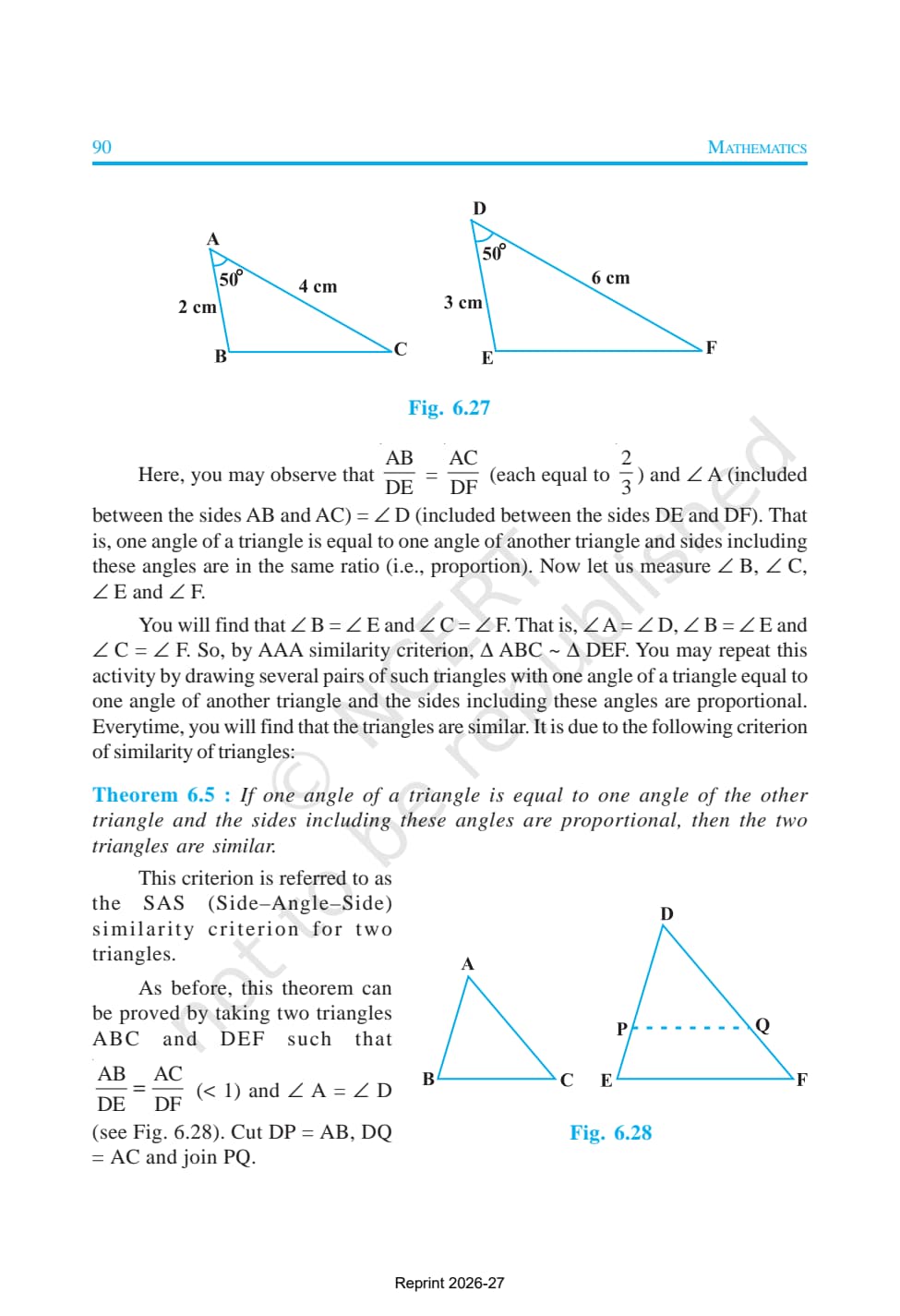
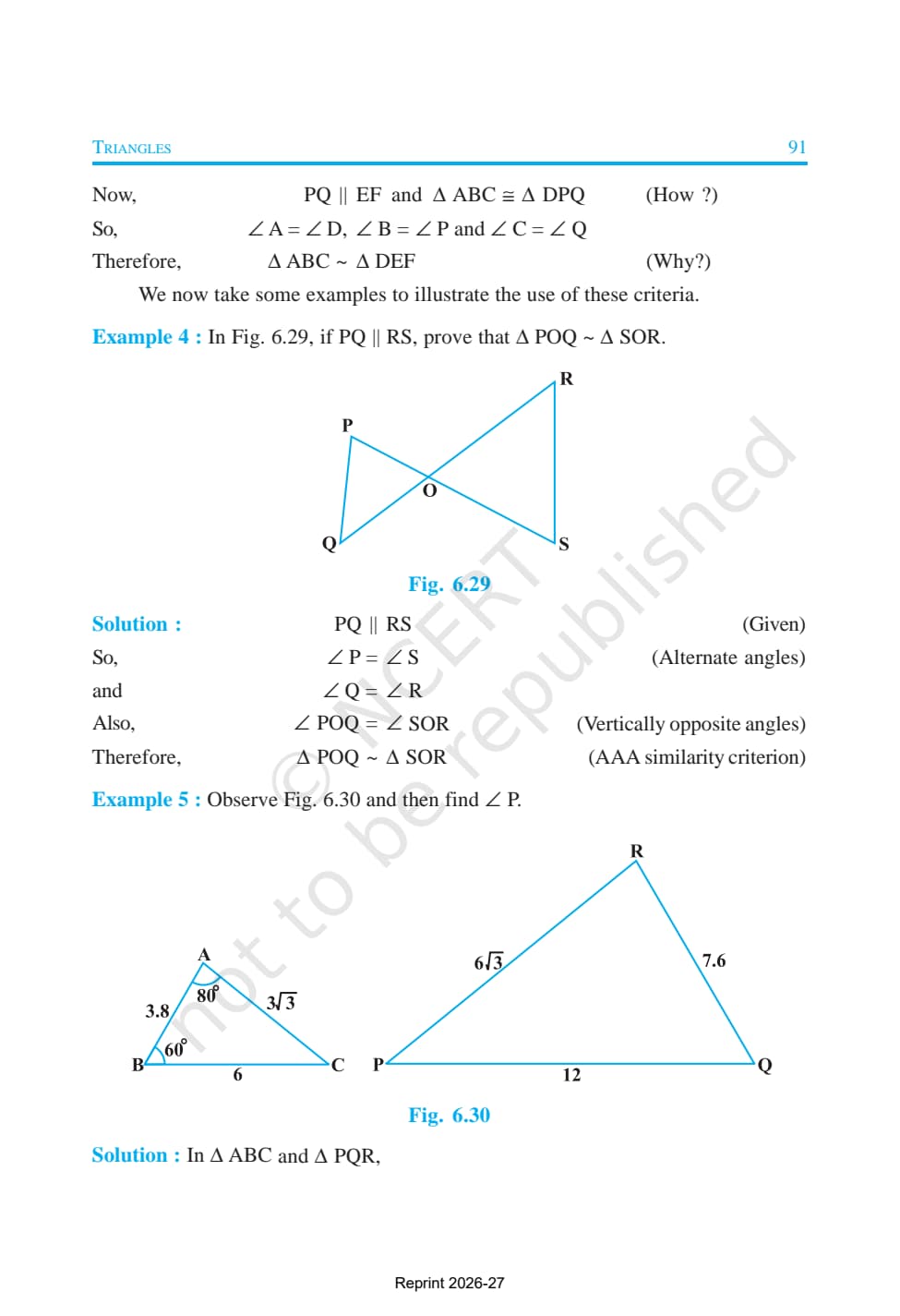
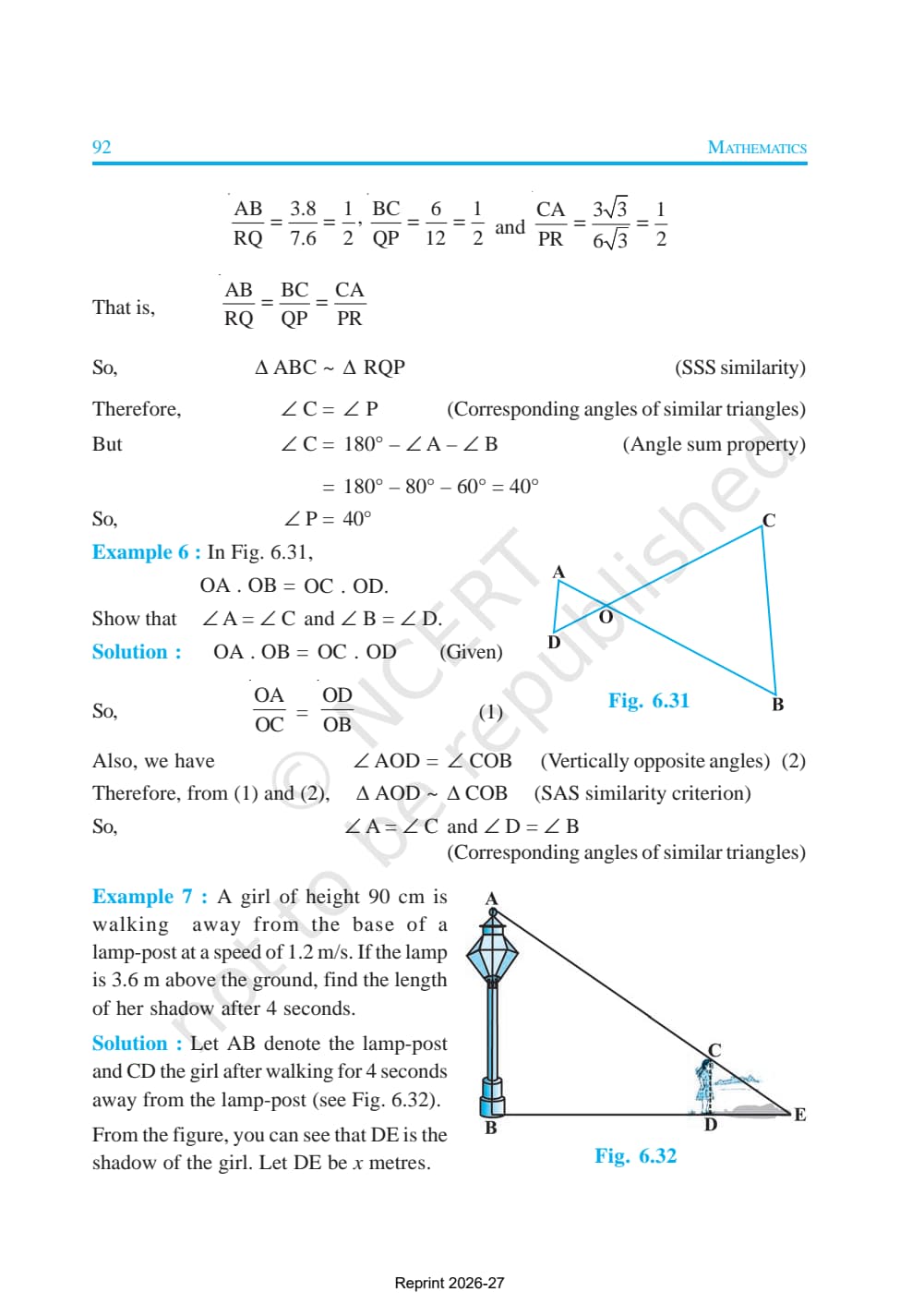
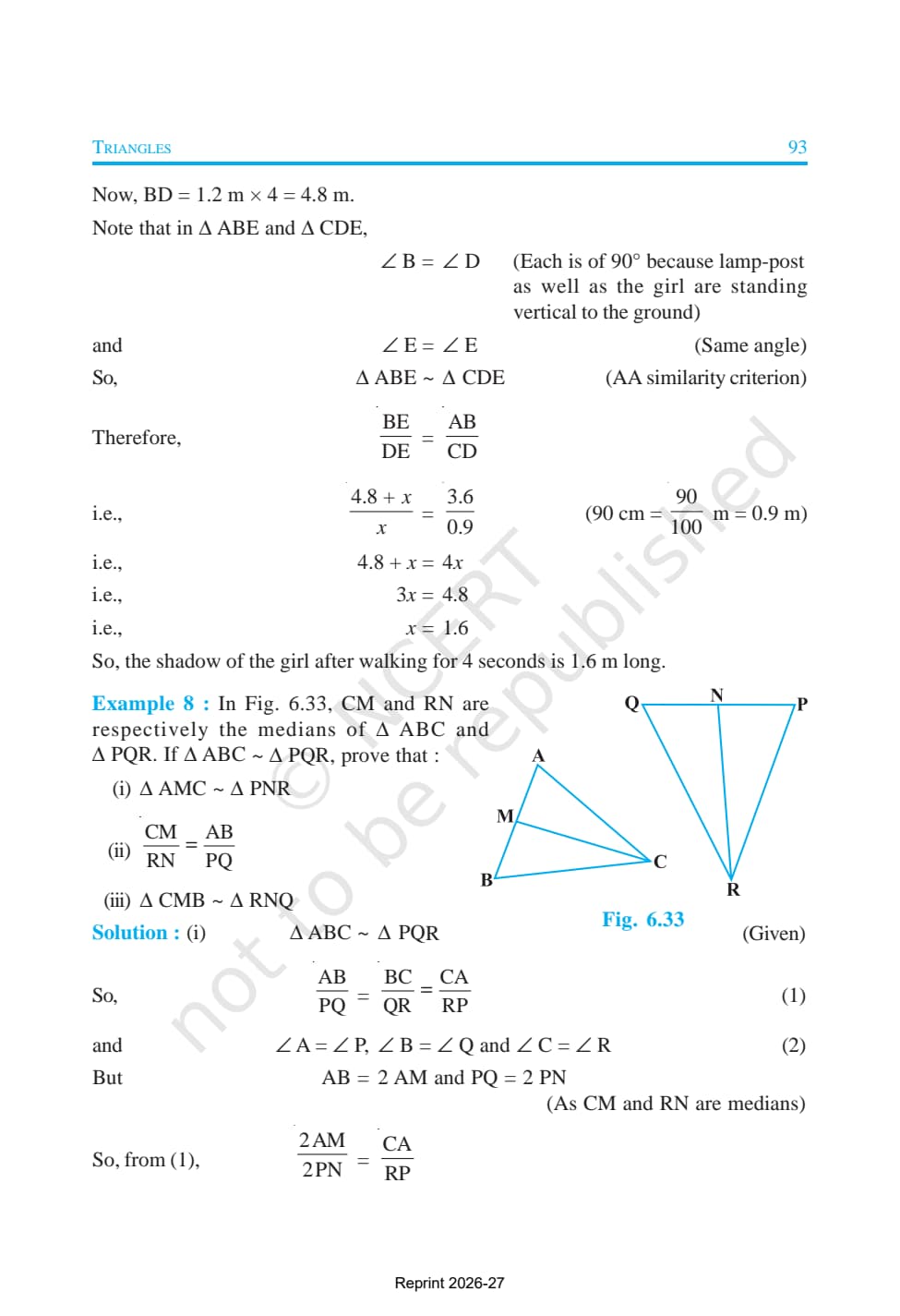
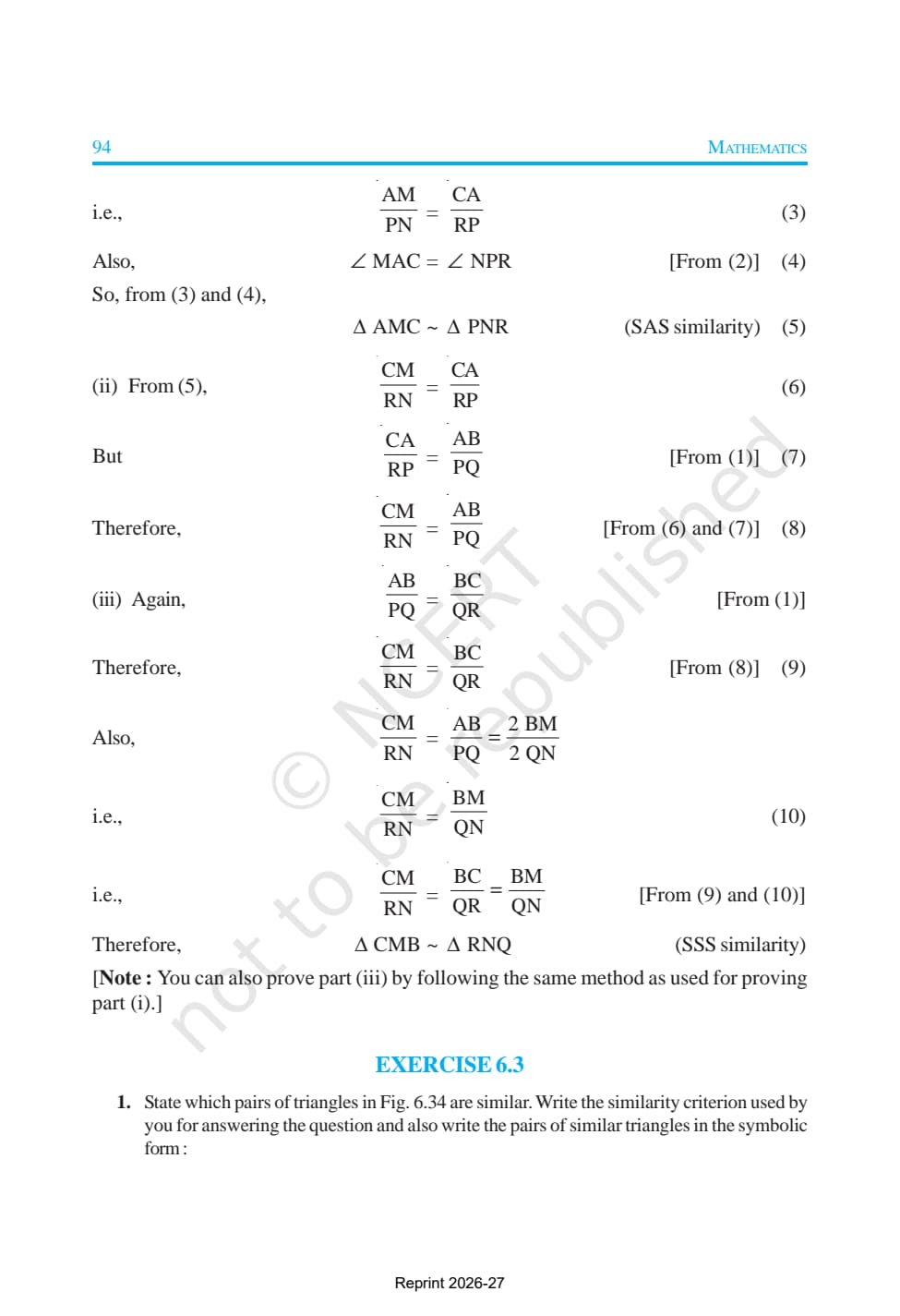
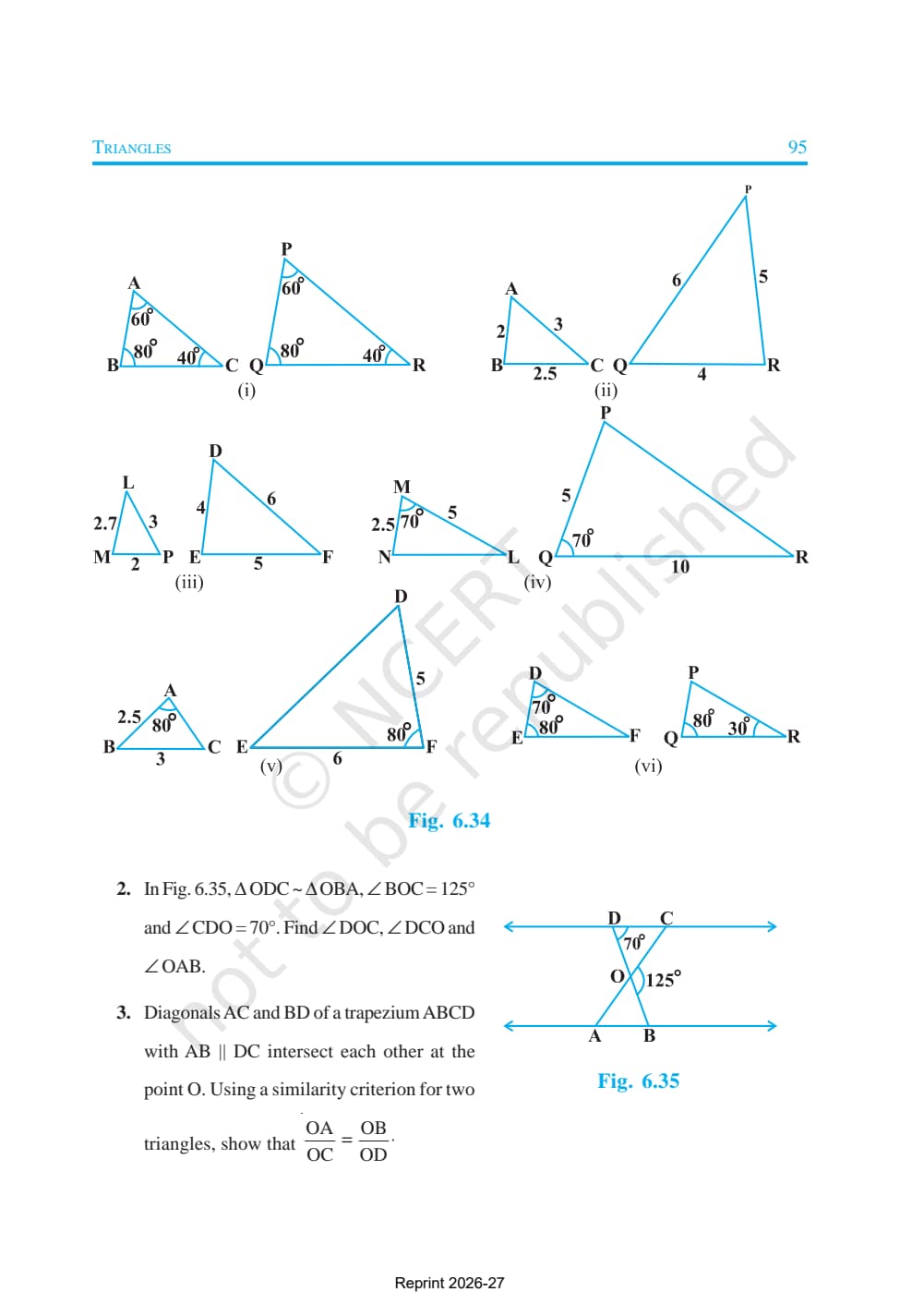
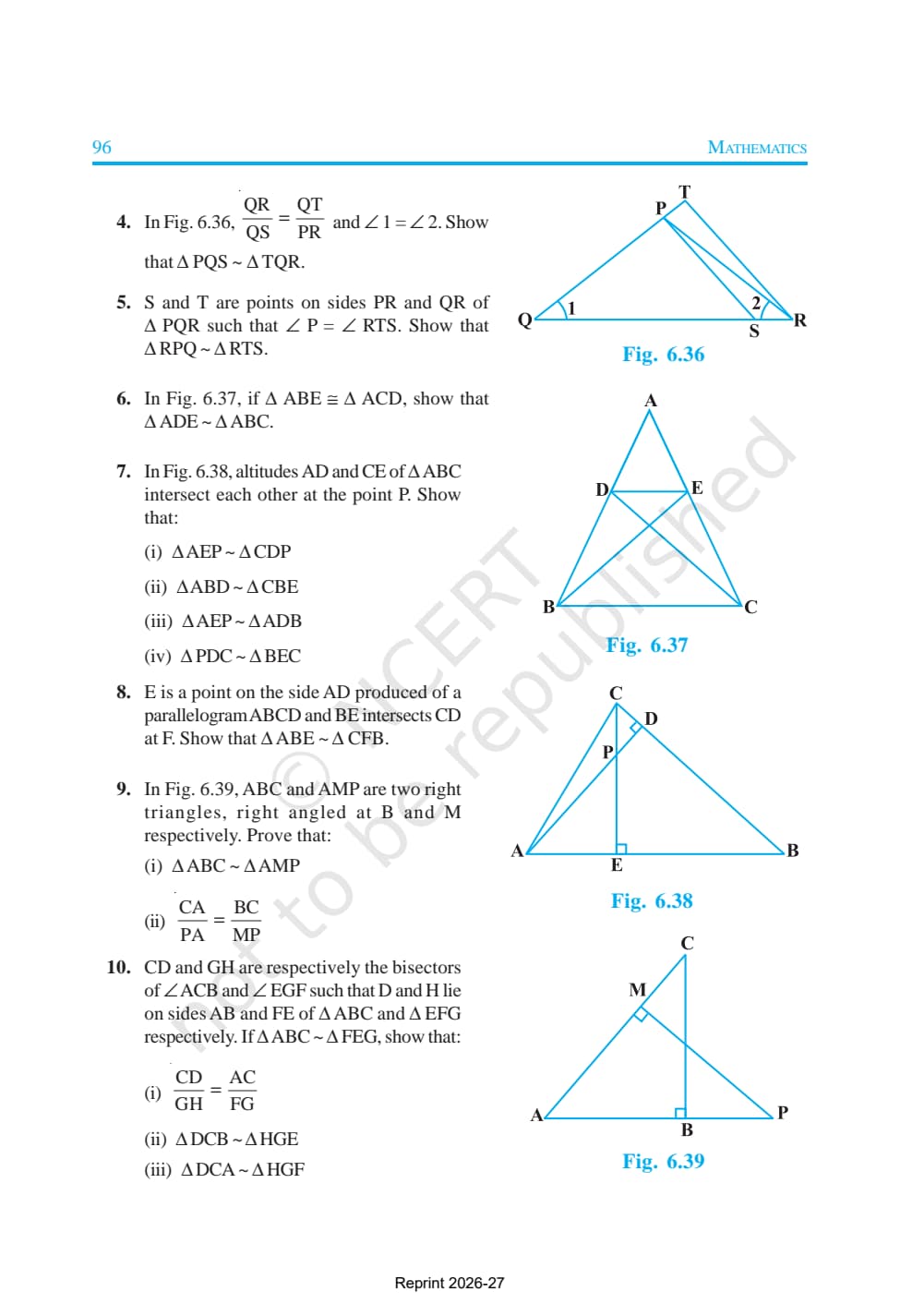
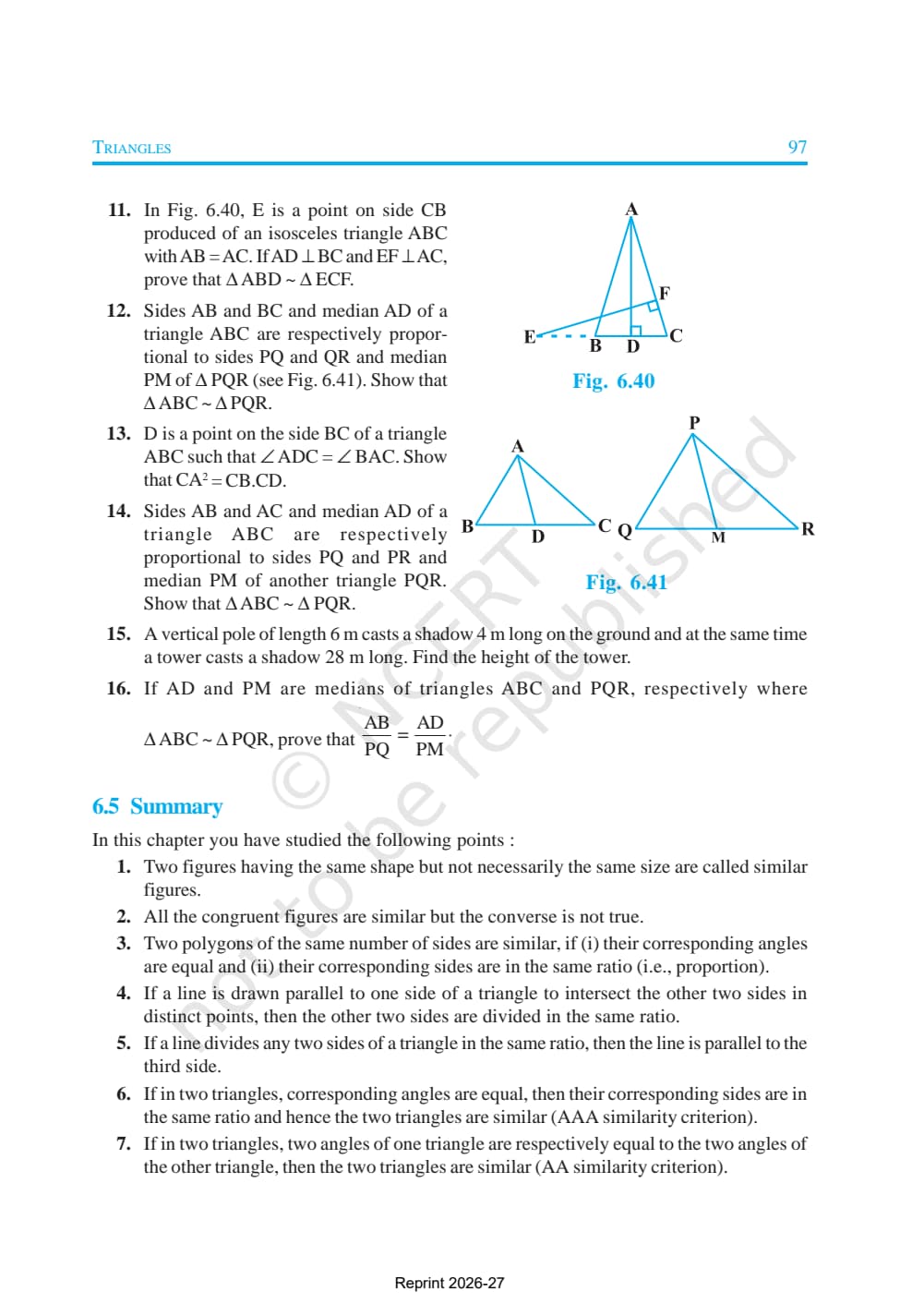
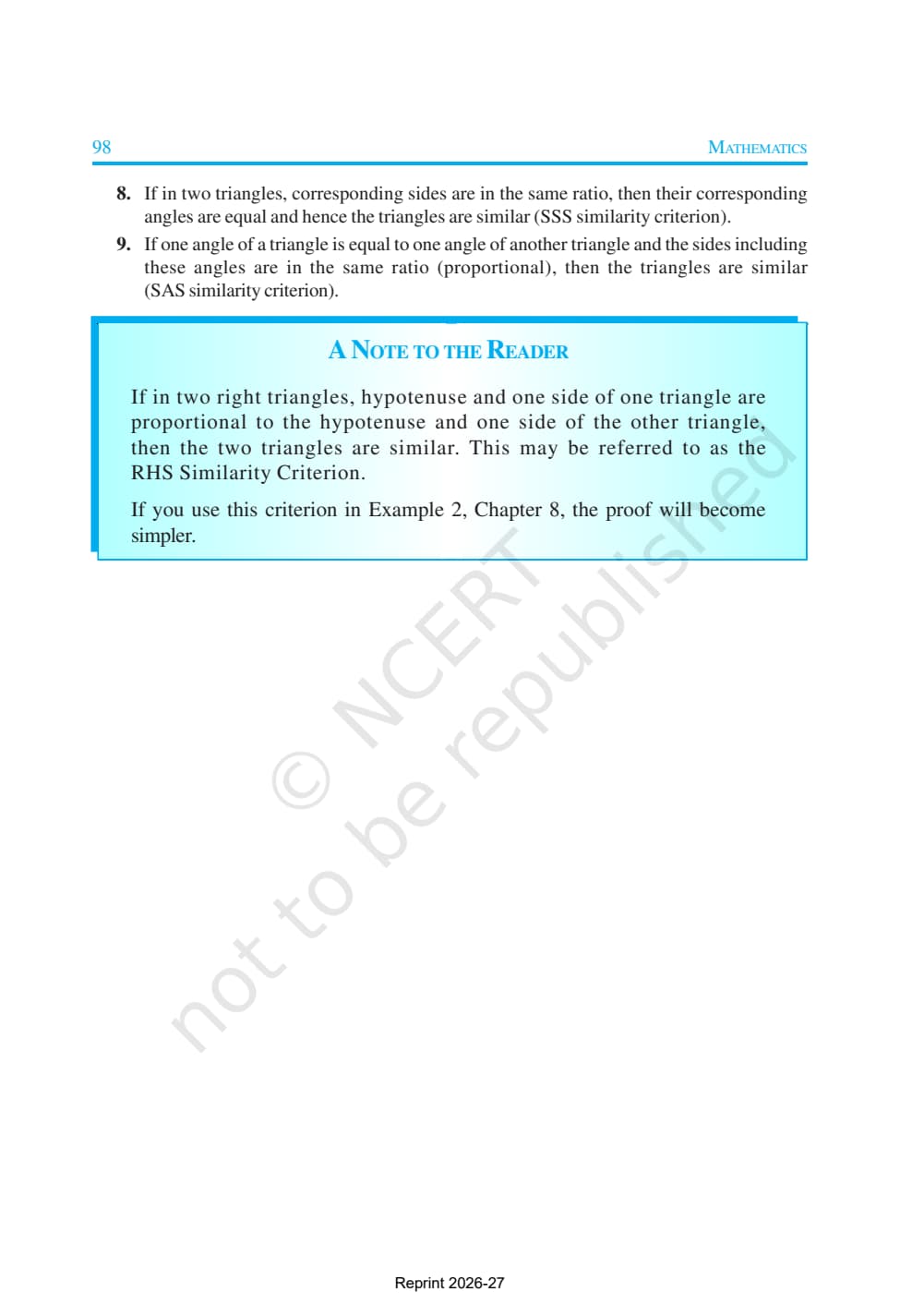
- Official NCERT textbook PDF of Chapter 6, with every definition, theorem, solved example, and exercise exactly as printed.
- Covers the Basic Proportionality Theorem (Thales' theorem), the criteria for similarity of triangles, and the Pythagoras theorem with its converse.
- Aligned with the 2026-27 CBSE Class 10 Maths syllabus, useful for board revision and as the base text for solutions and notes.
This page hosts the official NCERT Class 10 Maths textbook chapter, mapped to the 2026-27 CBSE syllabus and checked page by page against the printed Triangles chapter.
Student Feedback: What 9,200 students told us about this chapter
68% of Class 10 students said the trickiest part of Chapter 6 was knowing which similarity criterion (AA, SAS, or SSS) to apply in a given proof problem. 4 out of 5 students told us that reading the NCERT textbook chapter first, especially the theorems and their proofs, made it far easier to write step-by-step geometry proofs in the board exam.
Students reported spending on average 6 to 7 hours on the full chapter across a first read and revision. Toppers said following the NCERT book's proof of the Pythagoras theorem word by word helped them score full marks on the most common 5-mark geometry question in CBSE boards.
Source: 2026-27 Class 10 Maths student poll. Sample of 9,200 students from CBSE schools across 15 states, taken before the 2026 board exams.
Watch Triangles Class 10 Maths Explained
Source: Magnet Brains on YouTube
What the NCERT Book Covers
The PDF above is the complete official chapter, exactly as printed in the 2026-27 textbook. It builds on congruent triangles from Class 9 and adds similarity: two triangles are similar if they have the same shape but not always the same size. The chapter gives the conditions for similarity and uses them to prove two major results.
- Similar figures: what it means for two figures to be similar; why congruent figures are always similar but similar figures need not be congruent.
- Basic Proportionality Theorem: if a line is drawn parallel to one side of a triangle, it divides the other two sides in the same ratio.
- Similarity criteria: AA, SSS, and SAS rules that let you prove two triangles are similar without checking every side and angle.
- Areas of similar triangles: the ratio of their areas equals the square of the ratio of their corresponding sides.
- Pythagoras theorem: full proof using similar triangles, plus the converse and its applications.
Similar Figures Explained
Two figures are similar if they have the same shape. All circles are similar, all squares are similar, but two rectangles are similar only if their side ratios match. For triangles, similarity is more structured than for general polygons. Two triangles are similar if:
- Their corresponding angles are equal (all three pairs), and
- Their corresponding sides are in the same ratio.
The book writes triangle ABC ~ triangle DEF to mean angle A = angle D, angle B = angle E, angle C = angle F, and AB/DE = BC/EF = CA/FD. The order of vertices matters: the first vertex of one matches the first vertex of the other. Writing the order wrong is a common exam slip.
Basic Proportionality Theorem (Thales' Theorem)
Section 6.2 also states the Basic Proportionality Theorem (BPT), also called Thales' theorem. It is the first major result of the chapter and a 2 to 3 mark question in CBSE boards. A line drawn parallel to one side of a triangle divides the other two sides in the same ratio. So if DE is parallel to BC in triangle ABC, with D on AB and E on AC, then:
It is proved using the fact that two triangles on the same base have areas in the ratio of their heights. The converse is also true: if a line divides two sides in the same ratio, it is parallel to the third side. Both appear in Exercise 6.2, and board questions often ask you to apply BPT in either direction.
Criteria for Similarity of Triangles
Section 6.3, Criteria for Similarity of Triangles, is the heart of the chapter and the most tested in boards. Checking all six conditions is slow, so the book gives three shortcut criteria, each proving similarity with fewer conditions.
| Criterion | What it says | Minimum conditions needed |
|---|---|---|
| AA (Angle-Angle) | If two angles of one triangle equal two angles of another, the triangles are similar. | 2 pairs of equal angles (the third follows automatically) |
| SSS (Side-Side-Side) | If the three pairs of corresponding sides are in the same ratio, the triangles are similar. | All three ratios of corresponding sides must be equal |
| SAS (Side-Angle-Side) | If two pairs of corresponding sides are in the same ratio and the included angles are equal, the triangles are similar. | 2 side ratios equal + the angle between those sides equal |
The AA criterion is by far the most used in board proofs. Most proofs in Exercise 6.3 start by spotting two equal angles (alternate, vertically opposite, or a common angle), then cite AA, and finally write the full ratio of all three side pairs to solve for unknown lengths. For SAS, confirm the angle is the included angle between the two given sides.
Area Ratio Result
Section 6.4, Areas of Similar Triangles, gives an important result: if two triangles are similar, their area ratio equals the square of the side ratio. If triangle ABC is similar to triangle DEF, then:
If one triangle's sides are k times another's, its area is k2 times larger, so sides in ratio 2:3 give areas in ratio 4:9. The result is tested often, as a 1 to 2 mark direct question or part of a longer proof.
Pythagoras Theorem
Section 6.5, Pythagoras Theorem, uses the earlier sections to prove the most famous result in geometry. In a right-angled triangle, the square of the hypotenuse equals the sum of the squares of the other two sides. In triangle ABC right-angled at B:
The book's proof is neat. Draw a perpendicular from the right angle B to the hypotenuse AC, with foot D. Then triangle ABD ~ triangle ABC and triangle BCD ~ triangle ABC, both by AA. So AB2 = AD times AC and BC2 = DC times AC. Adding gives AB2 + BC2 = AC times (AD + DC) = AC2. This is a frequent 5-mark board question, and students who read the textbook directly reproduce it more accurately.
The section also covers the converse: if the square of one side equals the sum of the squares of the other two, the angle opposite the longest side is 90 degrees. Exercise 6.5 uses this to check whether a triangle is right-angled. Common Pythagorean triplets in the NCERT examples are (3, 4, 5), (5, 12, 13) and (8, 15, 17).
Exercises and Solved Examples
Chapter 6 has five exercises with many solved examples that show every board question type. The solved examples use the exact proof format examiners want, so copy the layout in your own answers, with clear "Given", "To prove" and "Proof" headings, for full marks in geometry.
- Exercise 6.2: BPT and its converse, finding unknown lengths.
- Exercise 6.3: all three similarity criteria, proving triangles similar and finding sides. The most important exercise.
- Exercise 6.4: areas of similar triangles.
- Exercise 6.5: Pythagoras theorem and its converse.
The most common board types are a proof using AA (3 to 5 marks), a BPT ratio calculation (2 to 3 marks), and a Pythagoras application (2 marks). Check the latest CBSE 2026-27 syllabus to confirm which exercises carry marks this year.
Other Triangles Resources
Read the official NCERT Book chapter above, then revise with the matching NCERT Solutions, notes, formula sheet and handwritten notes. All Triangles resources are linked in the table below.
| Resource | What it covers | Open |
|---|---|---|
| NCERT Book PDF | Official Class 10 Maths Chapter 6 textbook, with every theorem, proof, and exercise. | You are here |
| NCERT Solutions | Step-by-step answers to all exercise questions of the chapter. | Class 10 Maths Chapter 6 NCERT Solutions |
| Notes | Concept-first revision notes on similarity criteria, BPT, and the Pythagoras theorem. | Class 10 Maths Chapter 6 Notes |
| Formula Sheet | Quick reference of BPT ratios, similarity conditions, area ratio, and Pythagoras theorem for fast revision. | Class 10 Maths Chapter 6 Formula Sheet |
| Handwritten Notes | Scanned-style handwritten pages for last-minute board revision. | Class 10 Maths Chapter 6 Handwritten Notes |
NCERT Book for Class 10 Maths: All Chapters
Related Links: Use the table below to open the official NCERT Book PDF for the other chapters of Class 10 Maths. Every chapter ships with the same official textbook PDF, chapter overview, and board-ready FAQ.
| Chapter | NCERT Book PDF link |
|---|---|
| Chapter 1 | Real Numbers NCERT Book PDF |
| Chapter 2 | Polynomials NCERT Book PDF |
| Chapter 3 | Pair of Linear Equations in Two Variables NCERT Book PDF |
| Chapter 4 | Quadratic Equations NCERT Book PDF |
| Chapter 5 | Arithmetic Progressions NCERT Book PDF |
| Chapter 6 | Triangles NCERT Book PDF (You are here) |
| Chapter 7 | Coordinate Geometry NCERT Book PDF |
| Chapter 8 | Introduction to Trigonometry NCERT Book PDF |
| Chapter 9 | Some Applications of Trigonometry NCERT Book PDF |
| Chapter 10 | Circles NCERT Book PDF |
| Chapter 11 | Areas Related to Circles NCERT Book PDF |
| Chapter 12 | Surface Areas and Volumes NCERT Book PDF |
| Chapter 13 | Statistics NCERT Book PDF |
| Chapter 14 | Probability NCERT Book PDF |
Triangles NCERT Book FAQs
Ques. What does Chapter 6 Triangles cover in the Class 10 Maths NCERT Book?
Ans. Chapter 6 of the Class 10 Maths NCERT Book teaches you to work with similar triangles. It begins with the concept of similar figures and defines what it means for two triangles to be similar. It then proves the Basic Proportionality Theorem (also called Thales' theorem), which states that a line parallel to one side of a triangle divides the other two sides in the same ratio. Section 6.3 gives three criteria for similarity: AA, SSS, and SAS. Section 6.4 proves that the ratio of areas of two similar triangles equals the square of the ratio of their corresponding sides. Section 6.5 proves the Pythagoras theorem using similarity and also covers its converse. The chapter has five exercises and is aligned to the 2026-27 CBSE Class 10 Maths syllabus.
Ques. What is the Basic Proportionality Theorem in Class 10 Maths Chapter 6?
Ans. The Basic Proportionality Theorem, also known as Thales' theorem, states that if a line is drawn parallel to one side of a triangle, it divides the other two sides proportionally. In practical terms, if DE is parallel to BC in triangle ABC, with D on AB and E on AC, then AD divided by DB equals AE divided by EC. The converse is also true: if a line divides two sides of a triangle in the same ratio, it is parallel to the third side. Both the theorem and its converse are proved in the NCERT textbook, and the proportion is directly tested in Exercise 6.2 problems where you need to find unknown lengths when a parallel line divides the sides.
Ques. What are the three criteria for similarity of triangles in Class 10 Maths?
Ans. The three criteria for similarity of triangles given in the NCERT Book are AA (Angle-Angle), SSS (Side-Side-Side), and SAS (Side-Angle-Side). The AA criterion says that if two angles of one triangle are equal to two corresponding angles of another triangle, the triangles are similar. The SSS criterion says that if the three pairs of corresponding sides are in the same ratio, the triangles are similar. The SAS criterion says that if two pairs of corresponding sides are in the same ratio and the included angles are equal, the triangles are similar. Among these, the AA criterion is used most often in board exam proofs because it is easiest to apply: just find two pairs of equal angles and cite AA similarity.
Ques. How is the Pythagoras theorem proved in Class 10 Maths Chapter 6?
Ans. The NCERT Book proves the Pythagoras theorem using similar triangles. In a right-angled triangle ABC with the right angle at B, a perpendicular BD is drawn to the hypotenuse AC, with D on AC. This creates two smaller triangles, ABD and BCD, inside the original triangle ABC. Using the AA similarity criterion, triangle ABD is shown to be similar to triangle ABC, giving AB squared equals AD times AC. Similarly, triangle BCD is similar to triangle ABC, giving BC squared equals DC times AC. Adding these two results: AB squared plus BC squared equals AC times (AD plus DC) equals AC times AC equals AC squared. This is the Pythagoras theorem. The proof is a common 5-mark board question and is best learned directly from the textbook.
Ques. What is the ratio of areas of two similar triangles in Class 10 Maths?
Ans. If two triangles are similar, the ratio of their areas equals the square of the ratio of their corresponding sides. If triangle ABC is similar to triangle DEF, then the area of triangle ABC divided by the area of triangle DEF equals (AB divided by DE) squared, which equals (BC divided by EF) squared, which equals (CA divided by FD) squared. This result means that if the sides of one similar triangle are k times the sides of another, its area is k squared times larger. For example, if the ratio of sides is 2:3, the ratio of areas is 4:9. This result is proved in Section 6.4 of the NCERT Book and is directly tested in Exercise 6.4.
Ques. How many exercises are there in Class 10 Maths Chapter 6 Triangles?
Ans. Chapter 6 Triangles has five exercises in the NCERT Book. Exercise 6.1 covers the idea of similar figures and checks whether given triangles are similar. Exercise 6.2 tests the Basic Proportionality Theorem and its converse, with ratio problems involving parallel lines inside triangles. Exercise 6.3 is the longest and most important exercise, covering all three similarity criteria (AA, SSS, SAS) and asking students to prove triangles similar and find unknown sides. Exercise 6.4 applies the area-ratio result for similar triangles. Exercise 6.5 covers the Pythagoras theorem and its converse. Check the latest CBSE 2026-27 syllabus for whether Exercises 6.4 and 6.5 are compulsory or optional in your session.
Ques. Is the Class 10 Maths Chapter 6 Triangles NCERT Book PDF free to download for 2026-27?
Ans. Yes. The official NCERT Book PDF for Class 10 Maths Chapter 6 Triangles is free to read and download on this page for the 2026-27 session. It is the complete chapter as printed in the CBSE textbook, including the introduction to similar figures, all three similarity criteria with their proofs, the areas of similar triangles result, the Pythagoras theorem proof, and all five exercises. You can pair the book with the linked NCERT Solutions and revision notes for the same chapter so that you read the textbook and revise from one place.



Comments