



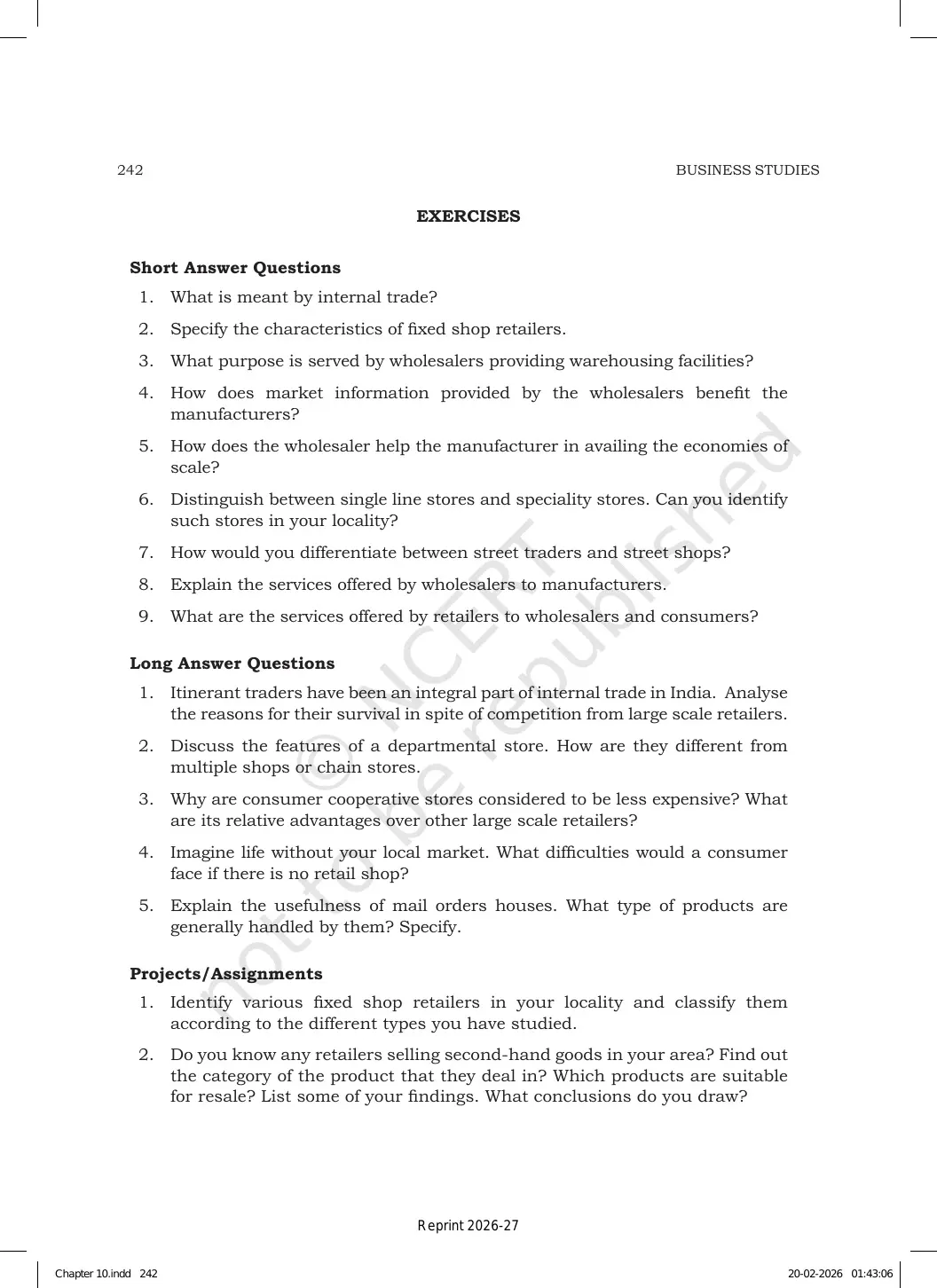
The NCERT Class 11 Business Studies Chapter 10 Internal Trade PDF covers wholesale trade, retail trade, retailer types, GST and trade associations. It follows the official 2026-27 textbook and helps students connect each trader with the services they provide.
- Core idea: trade within national boundaries has wholesale and retail stages.
- Retail focus: compare itinerant, small fixed-shop and large fixed-shop retailers.
- Exam focus: revise services, retailer differences, GST and chambers of commerce.
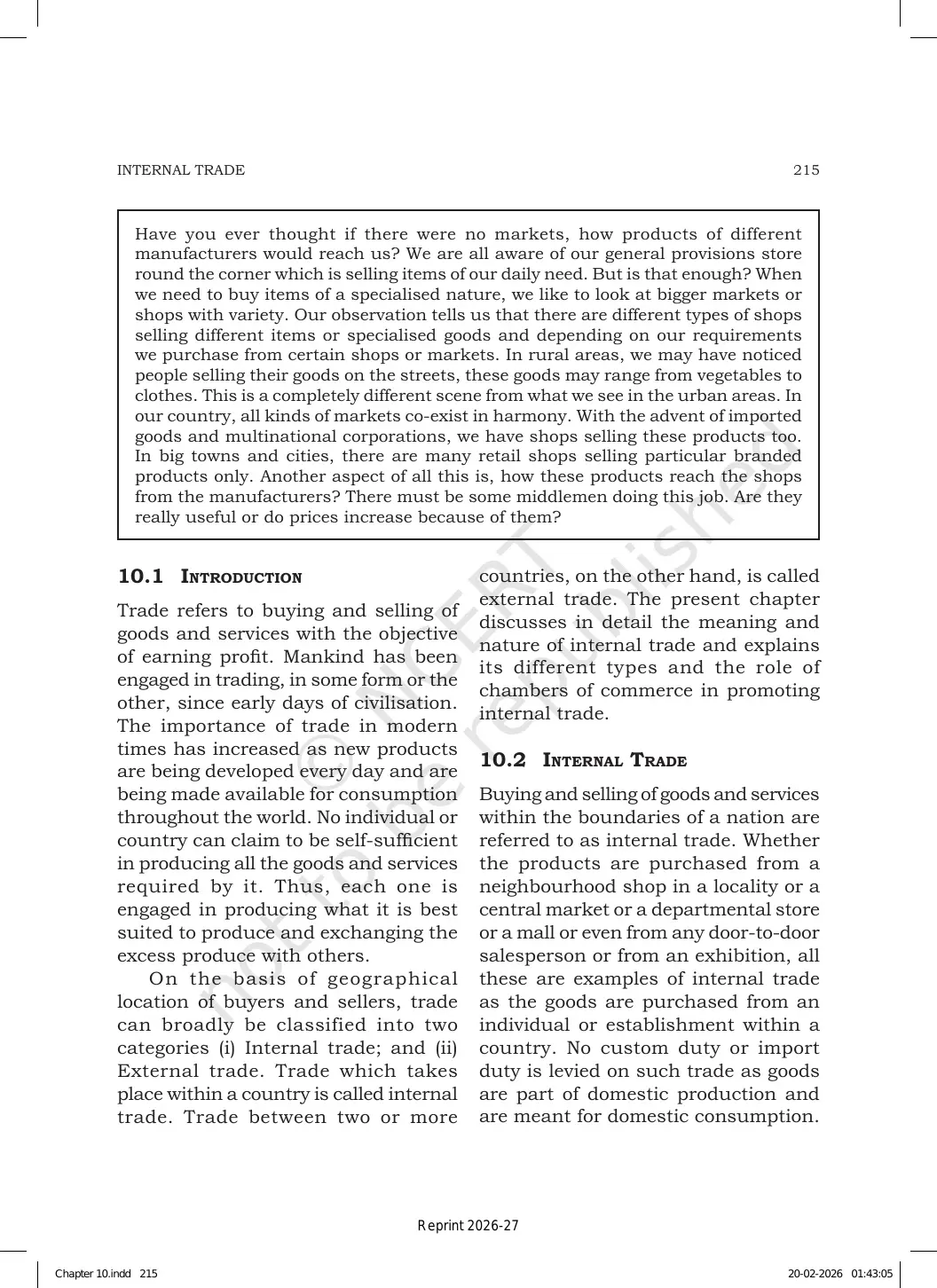
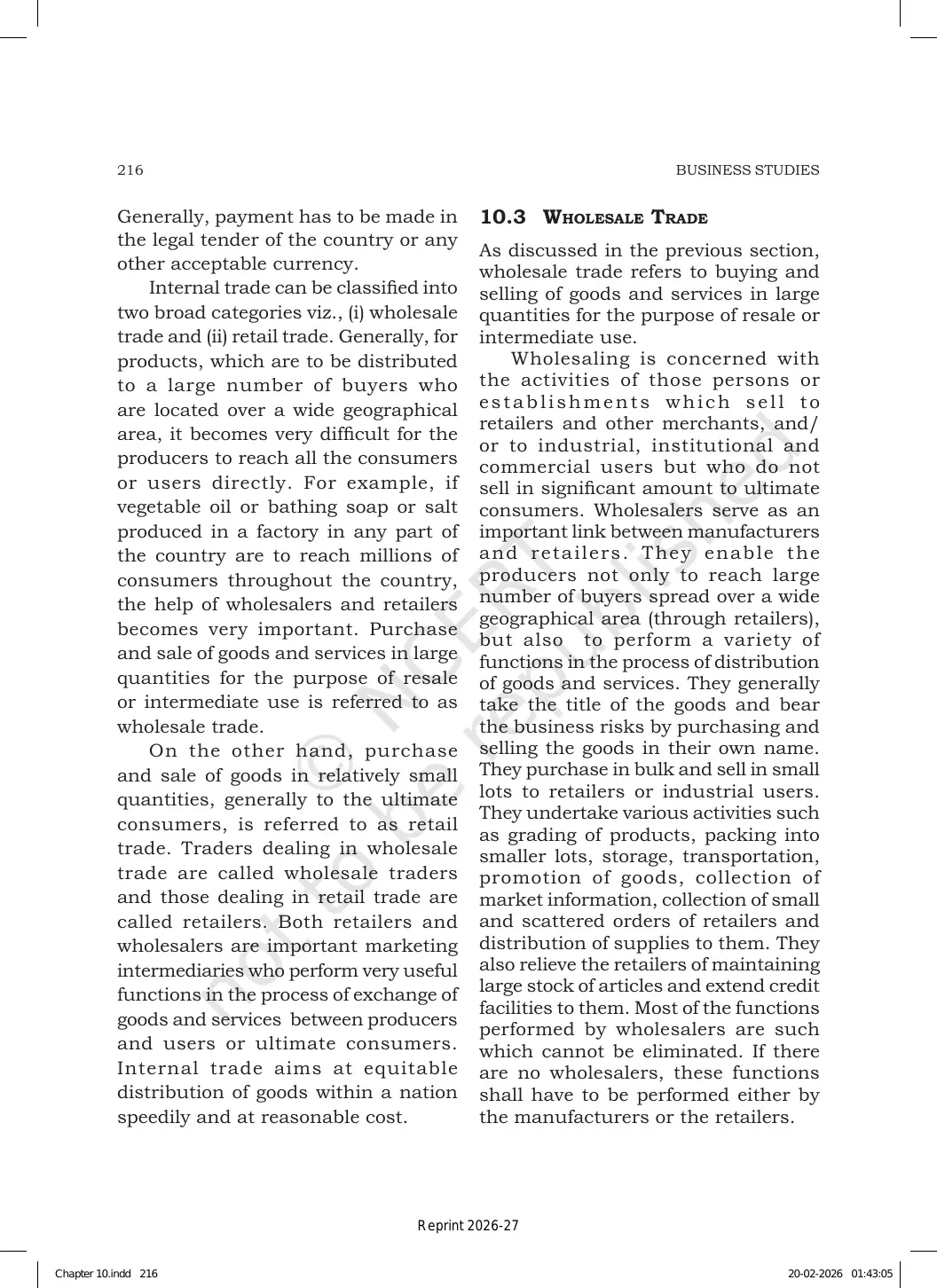
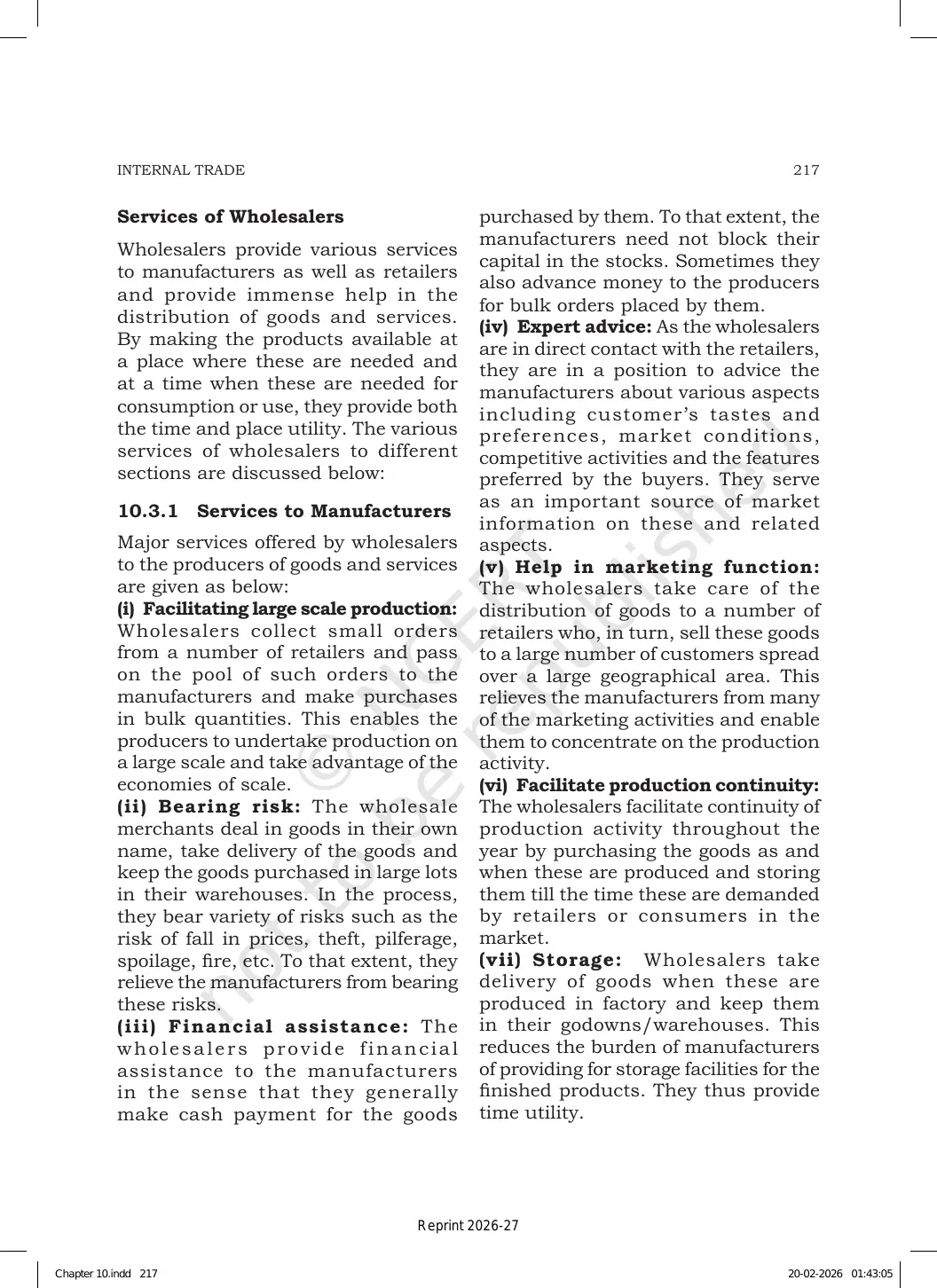
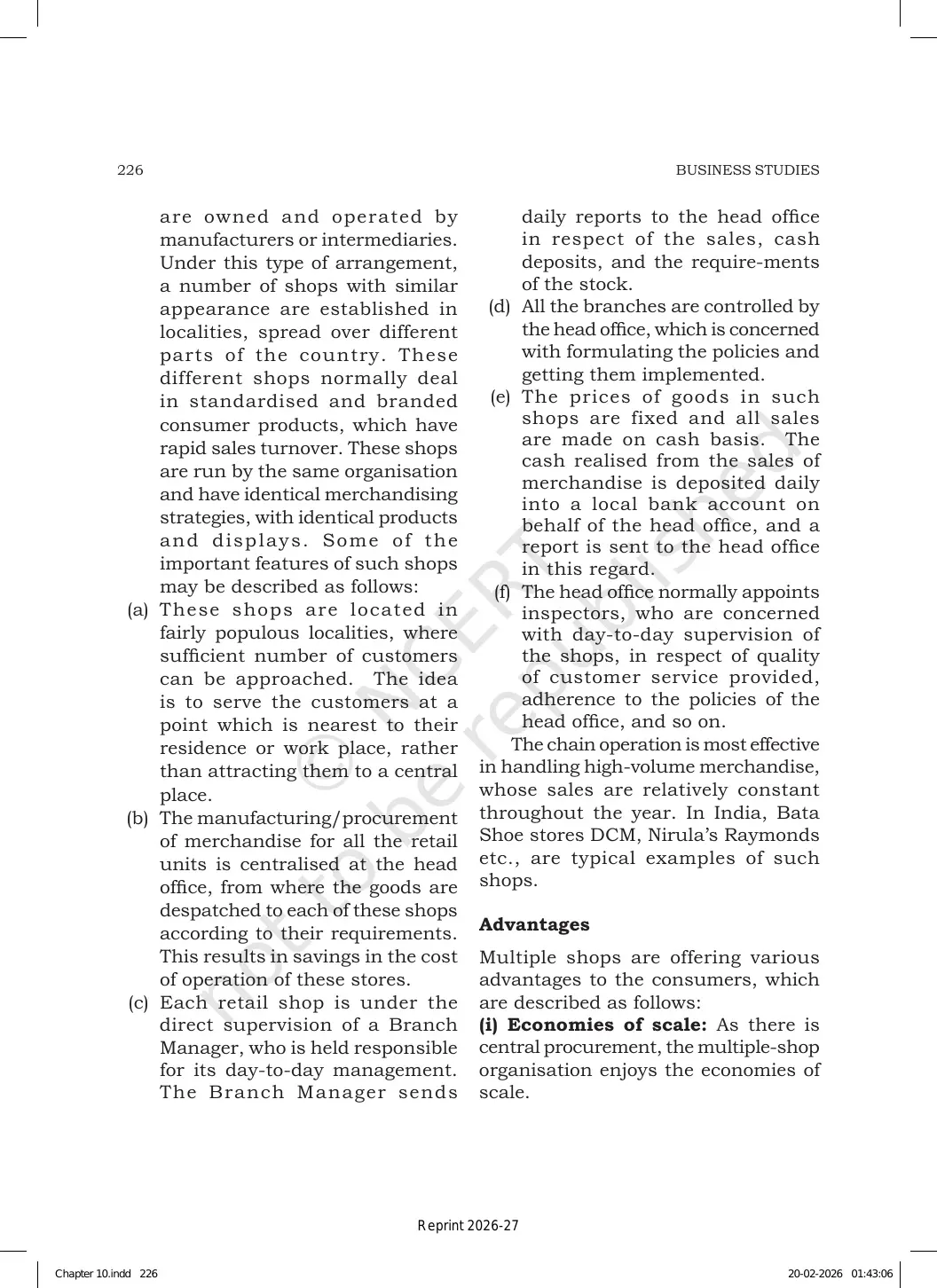
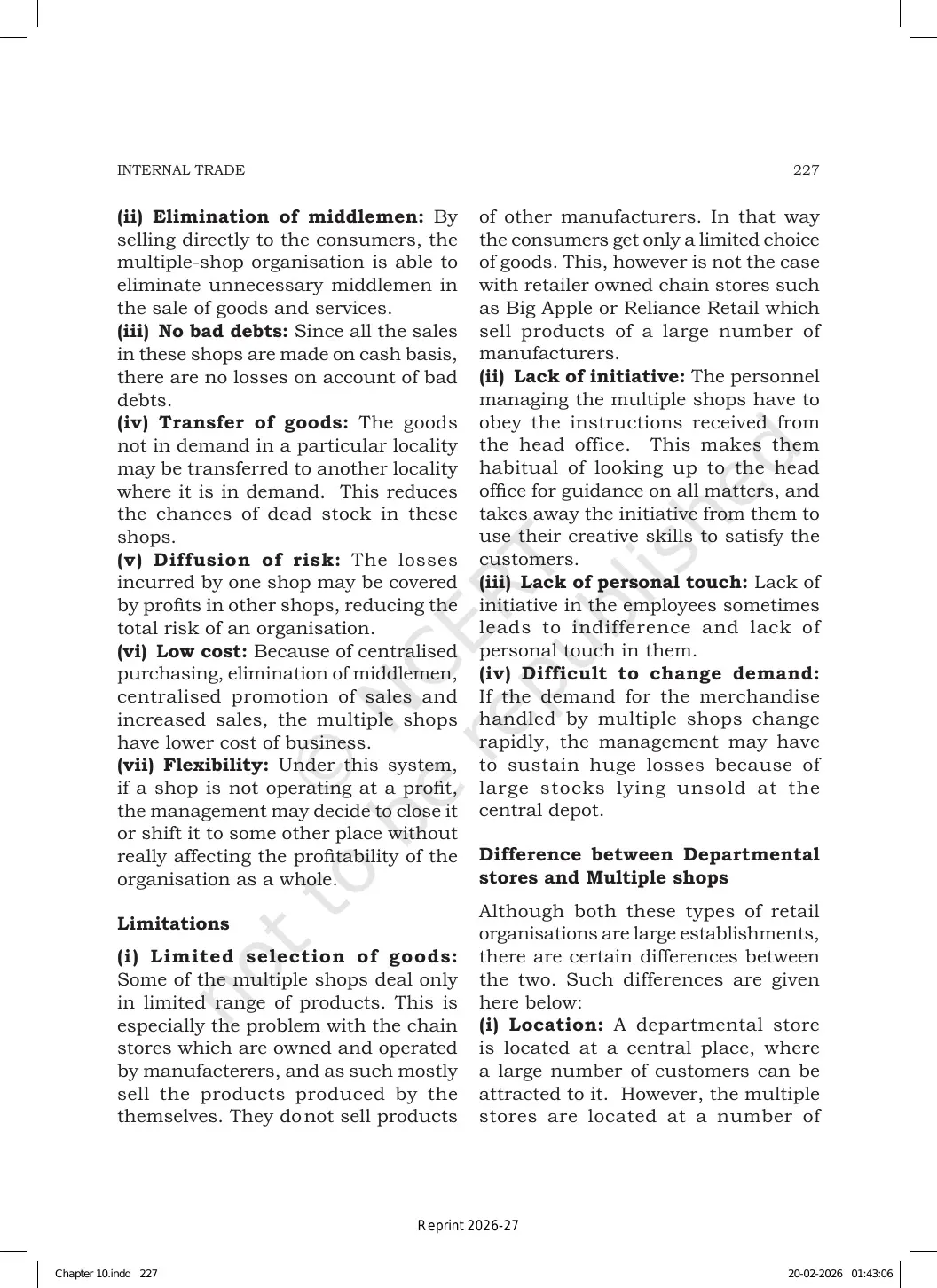
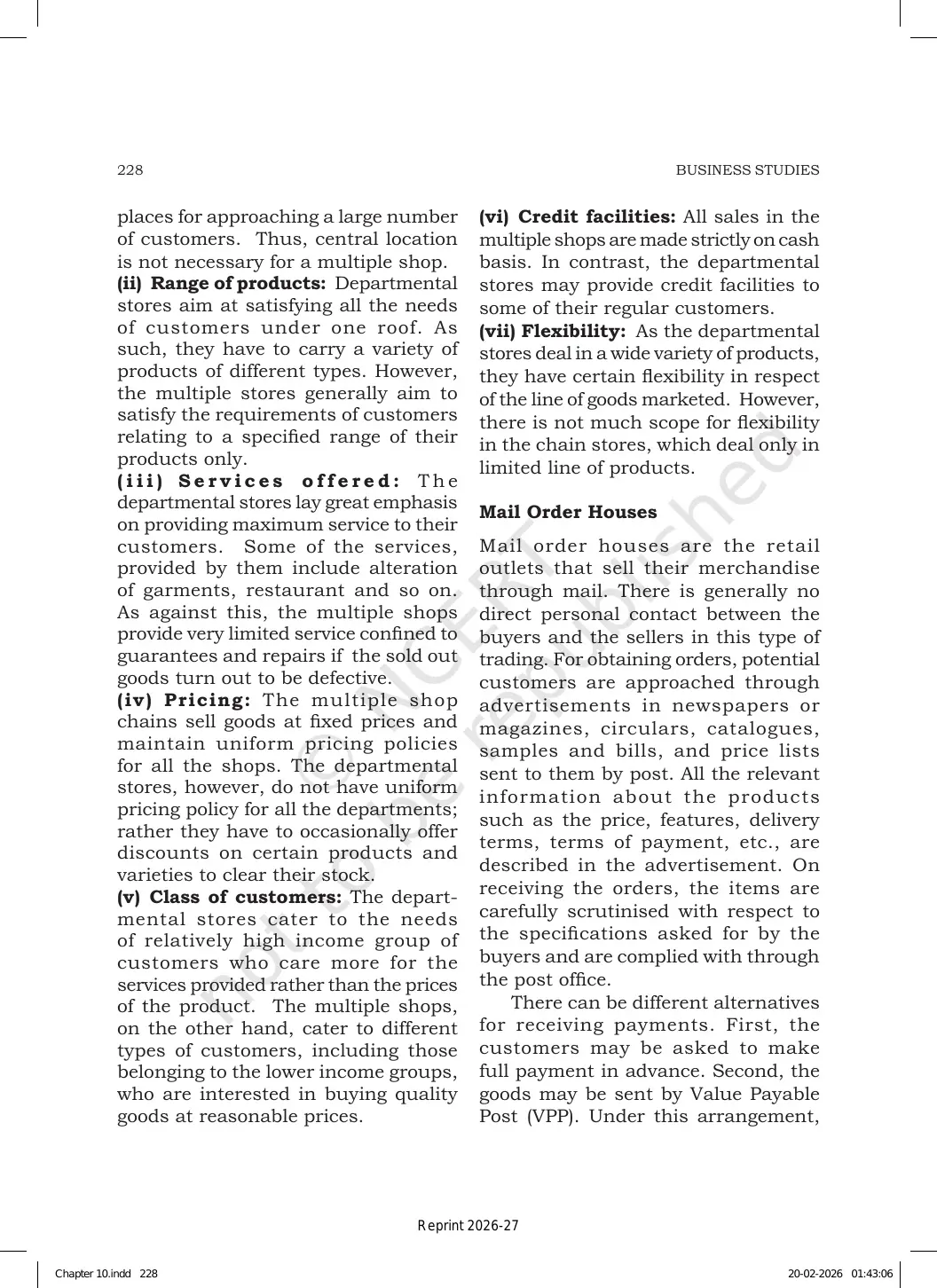
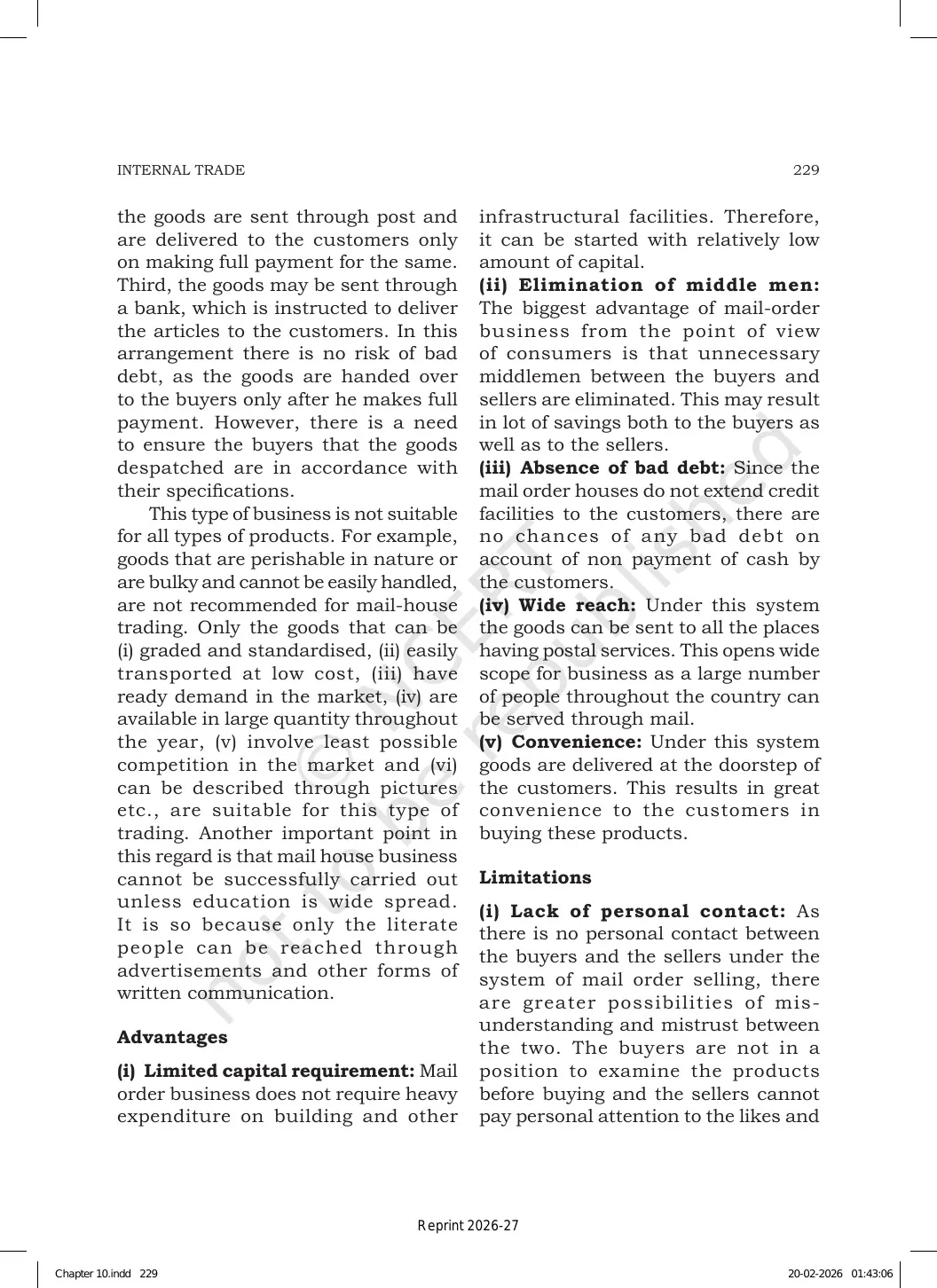
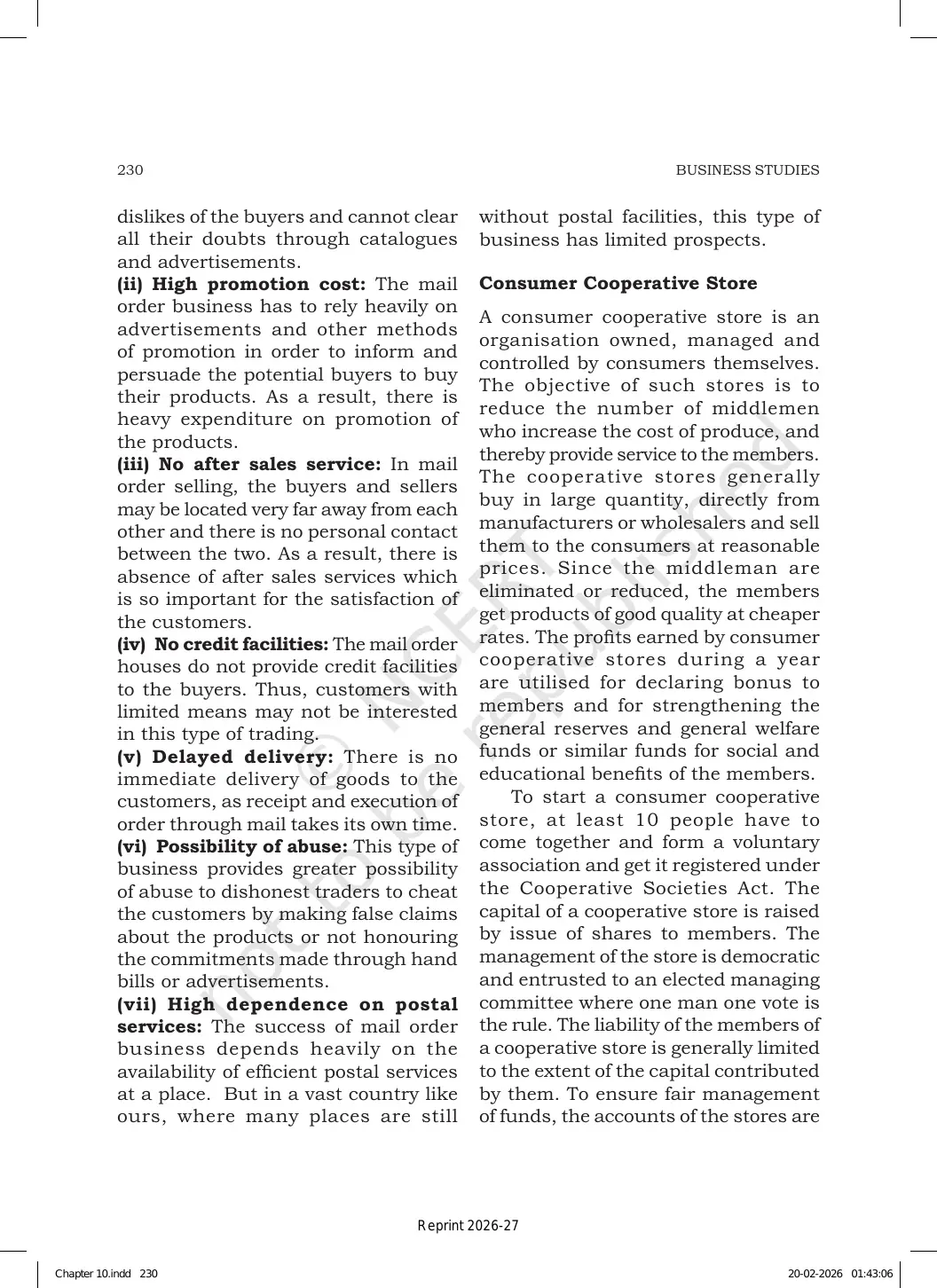
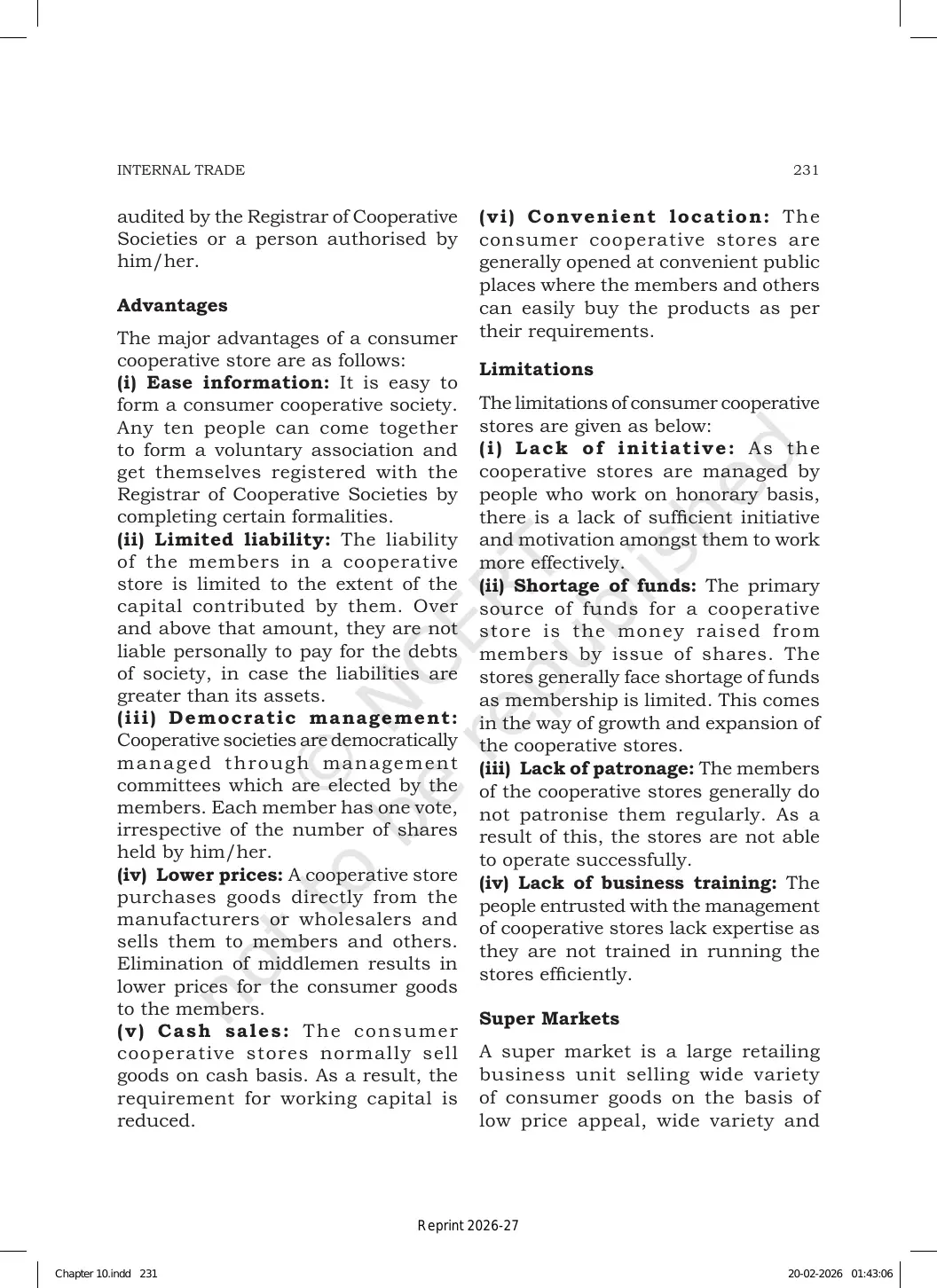
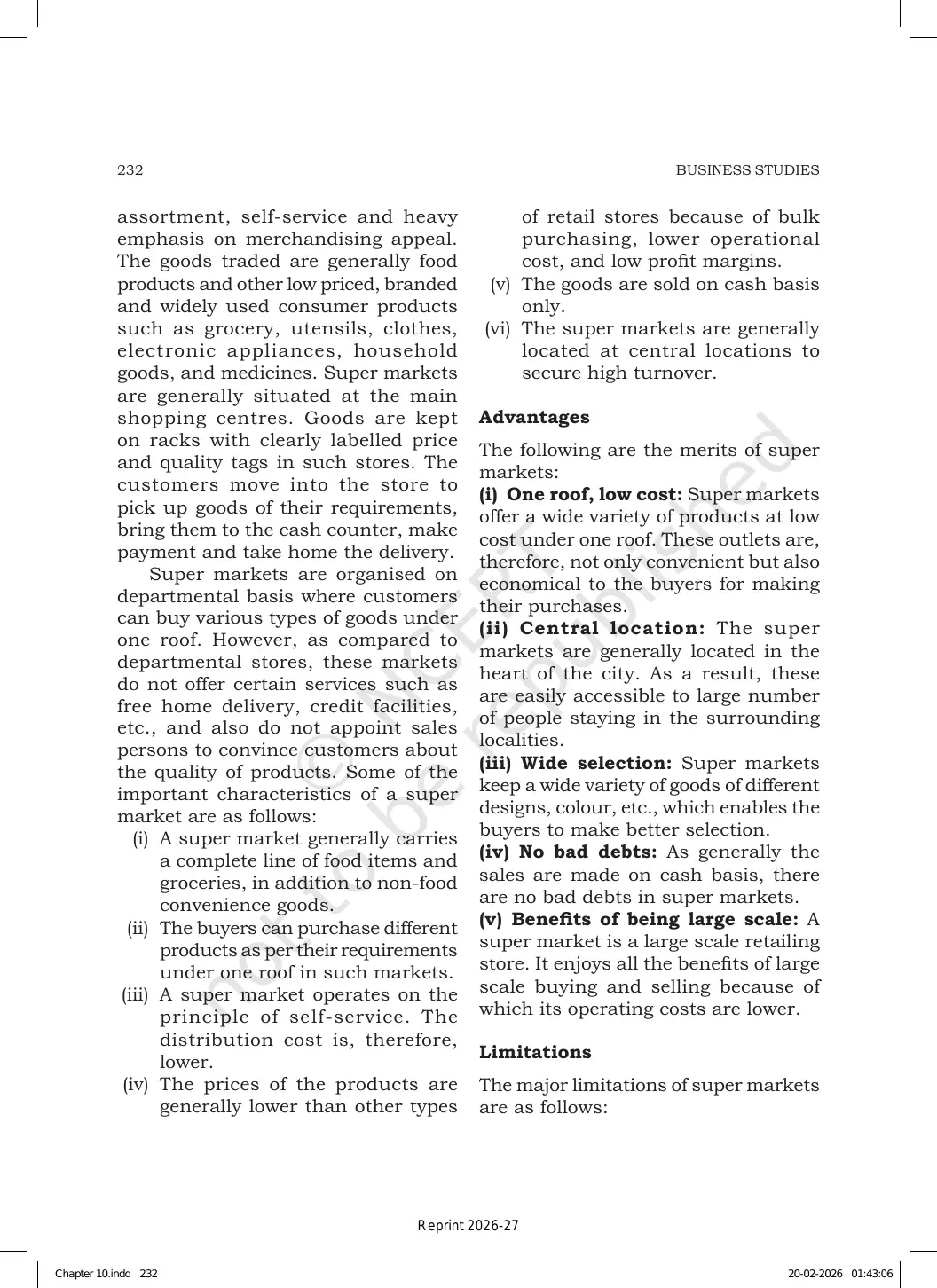
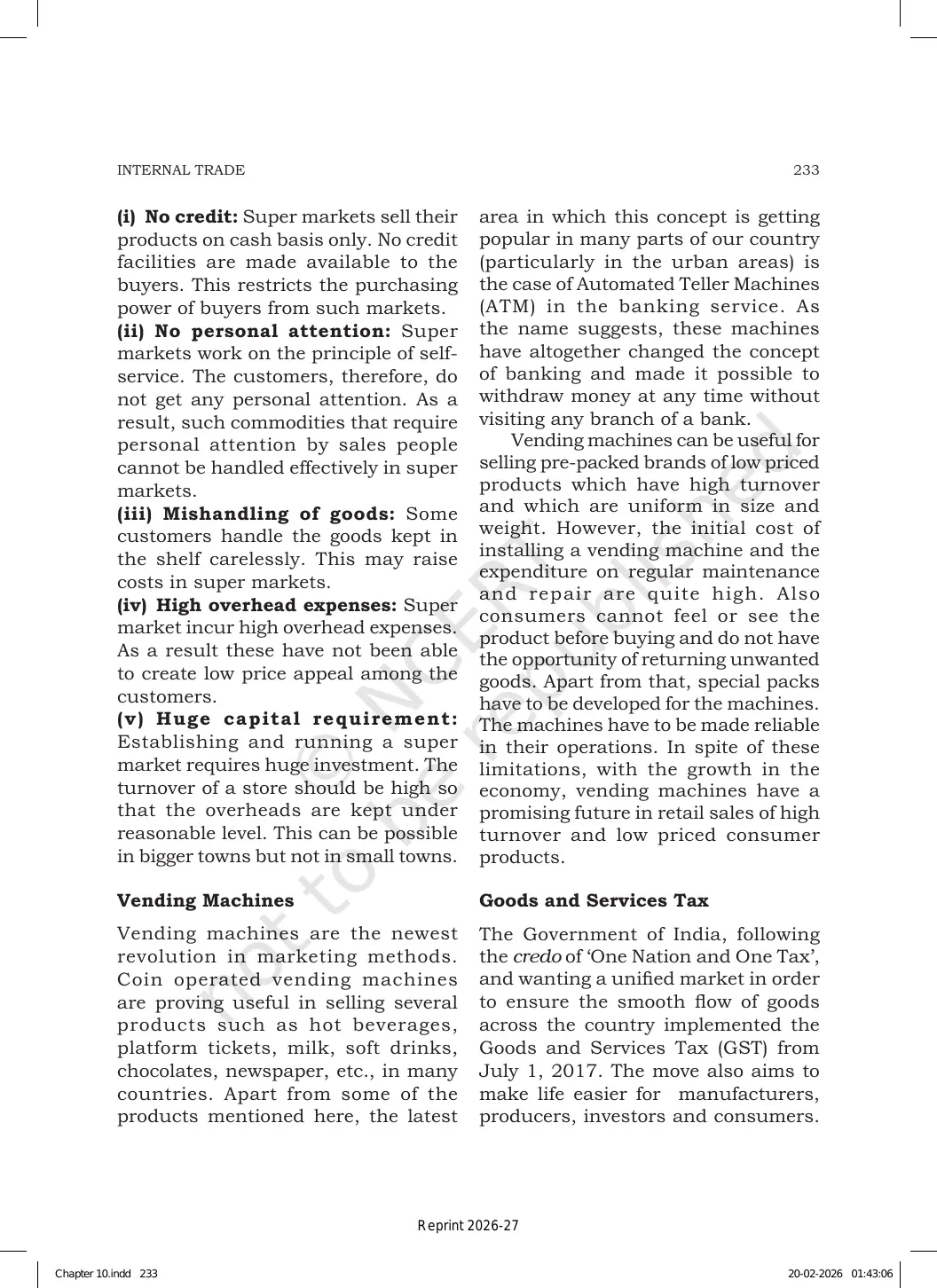
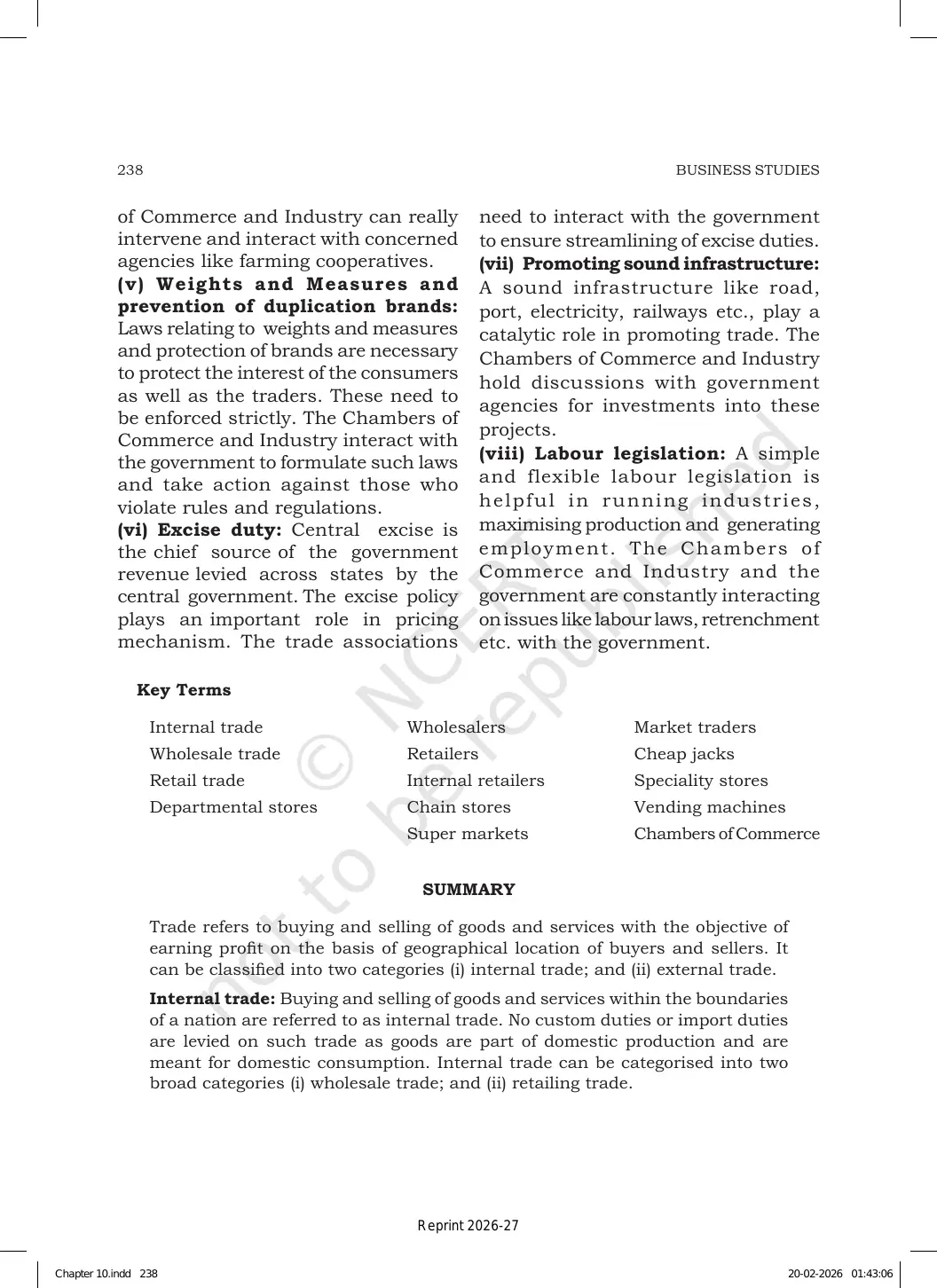
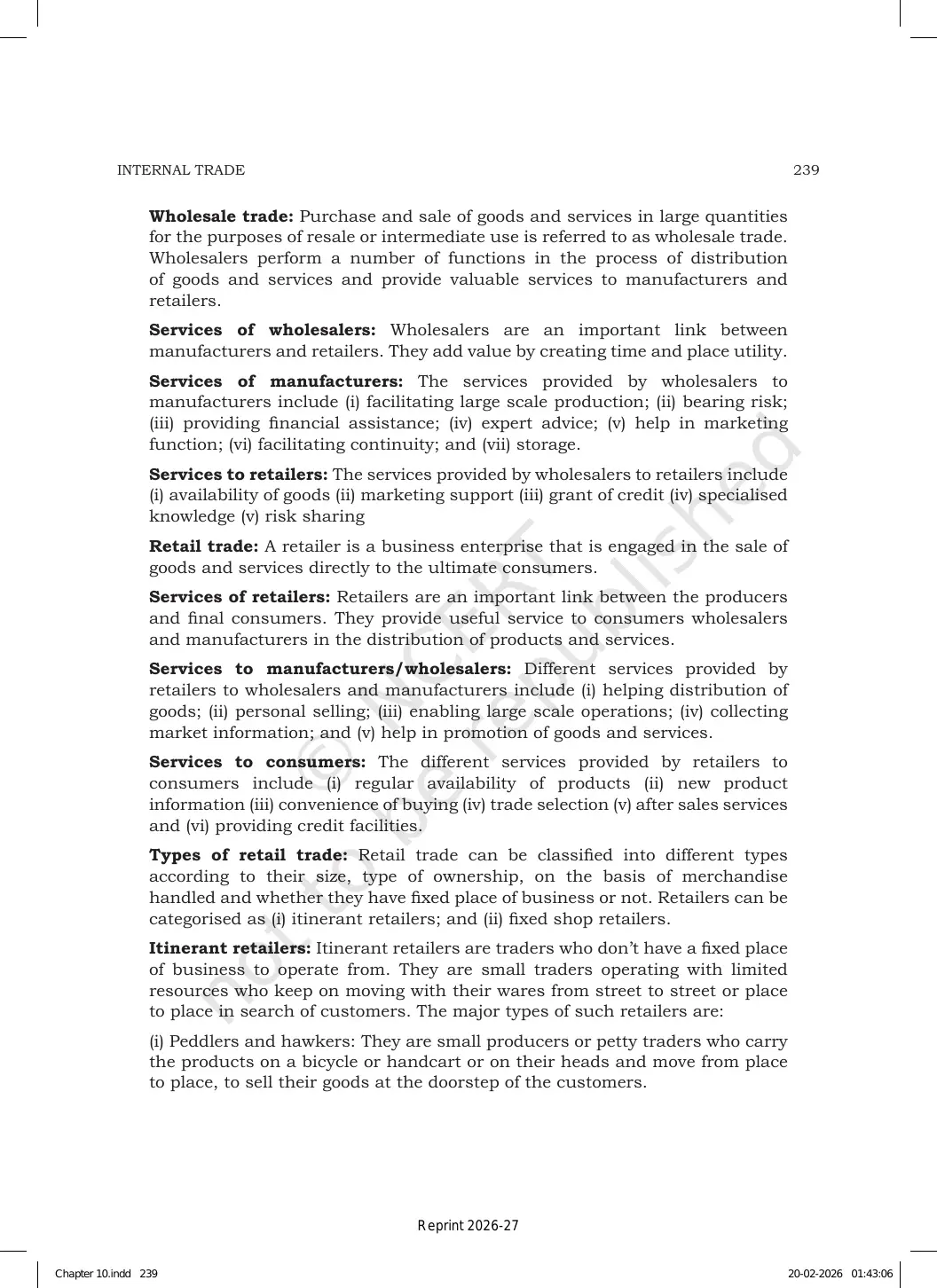
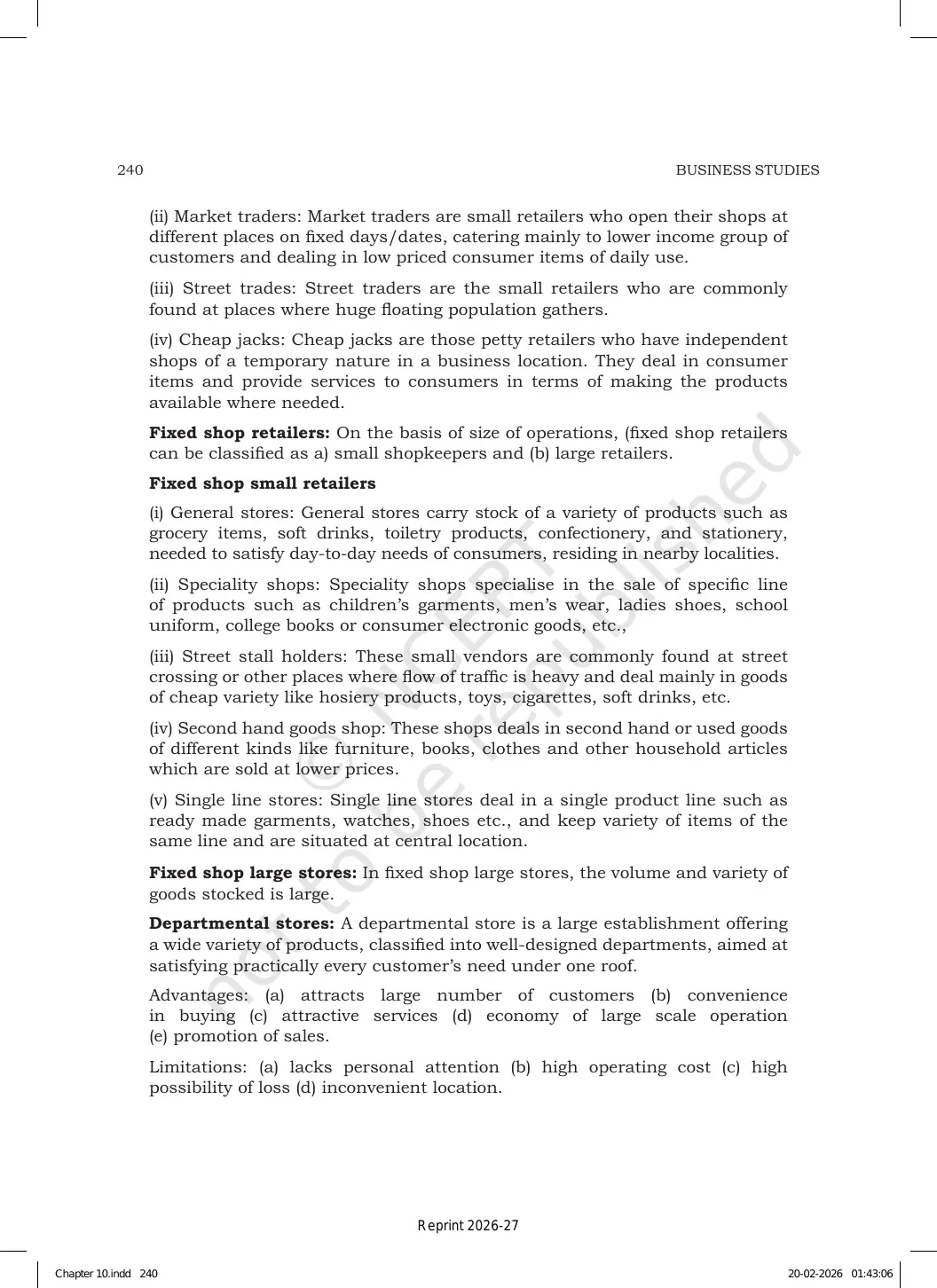
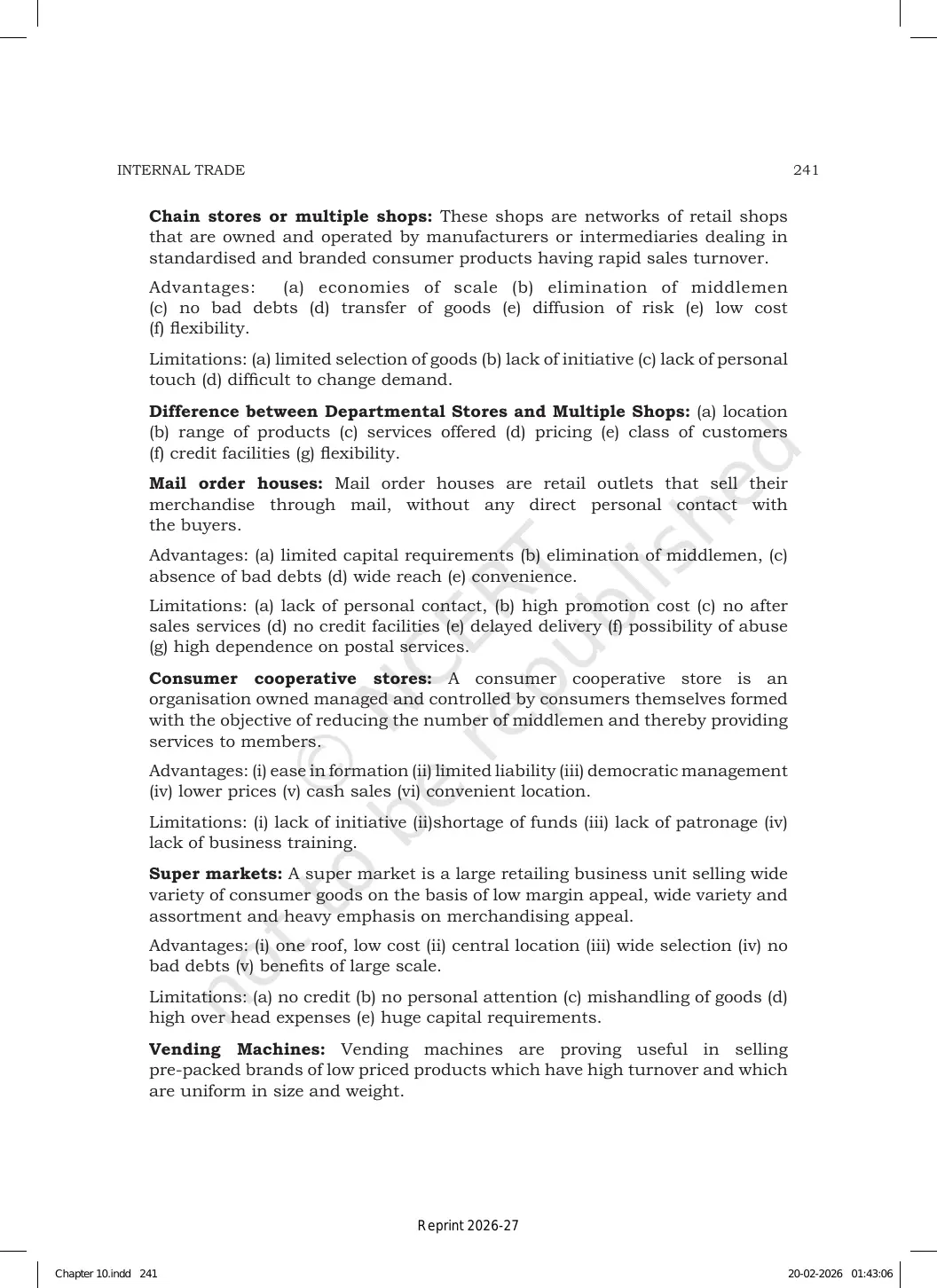
This guide follows the 2026-27 NCERT Business Studies book and keeps every point tied to the official Internal Trade chapter.
Internal Trade Topics Covered in the 2026-27 NCERT Book
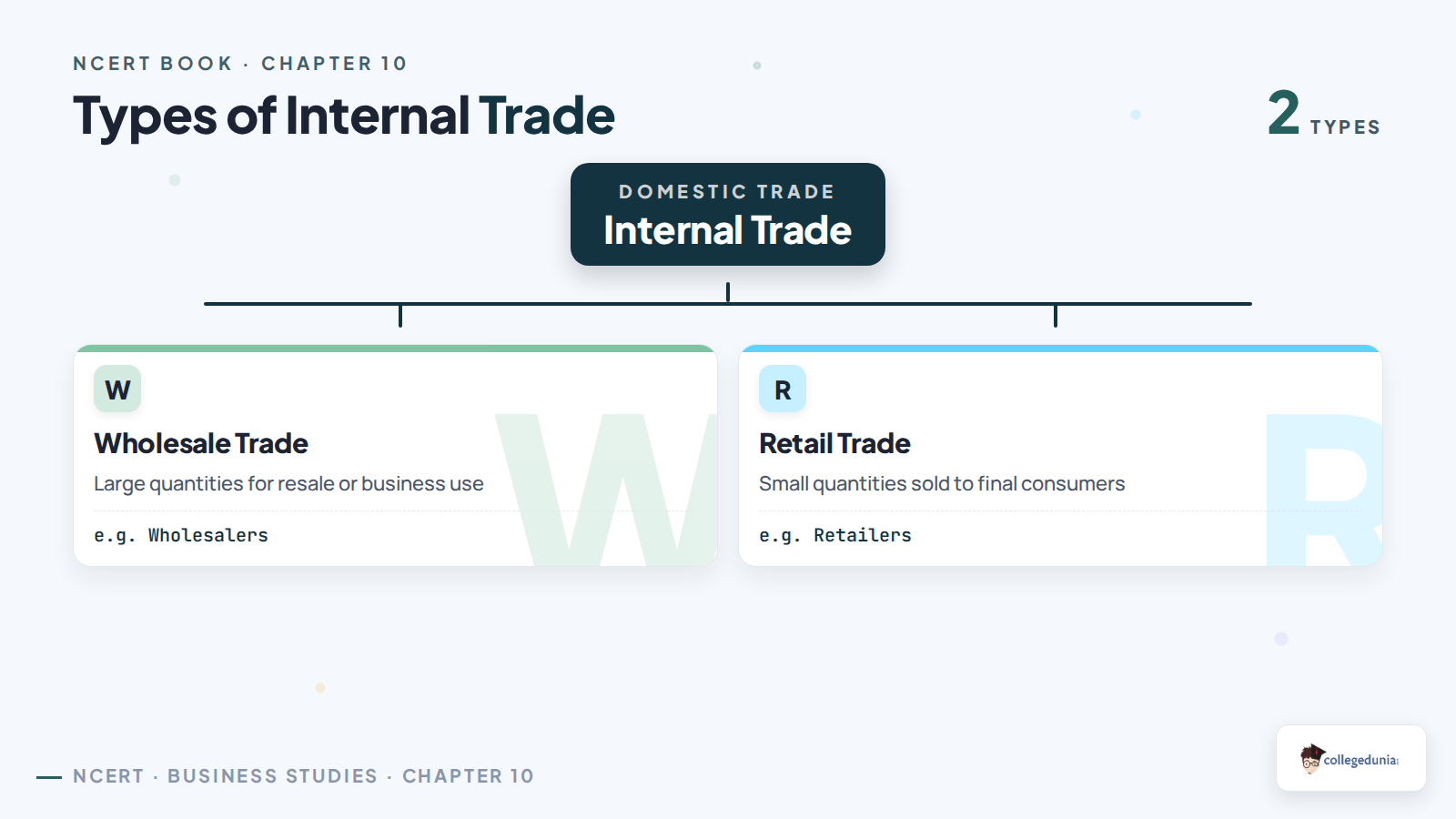
Internal trade means buying and selling goods or services within a country. Domestic goods do not attract customs or import duty. The chapter divides this trade by the quantity sold and the buyer served.
| Chapter area | What the NCERT explains |
|---|---|
| Wholesale trade | Large-quantity sales for resale or intermediate use |
| Retail trade | Small-quantity sales mainly to final consumers |
| Retailer types | Itinerant and fixed-shop retailers, including large stores |
| GST | A destination-based tax on the supply of goods and services |
| Trade associations | Support for transport, taxation, laws and business interests |
Internal Trade Chapter Overview
Source: Magnet Brains on YouTube
Wholesale and Retail Trade Services Every Class 11 Student Should Know
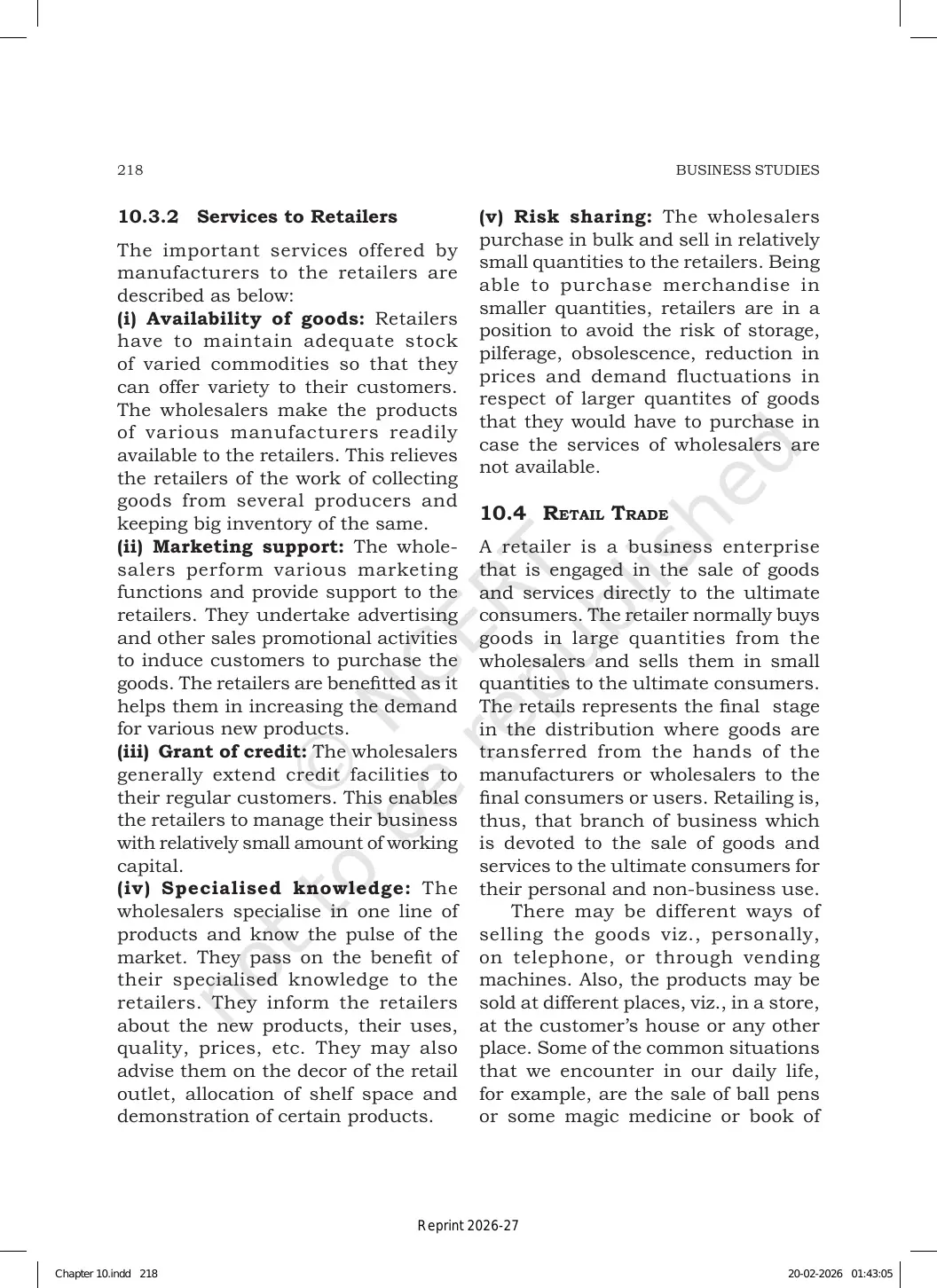
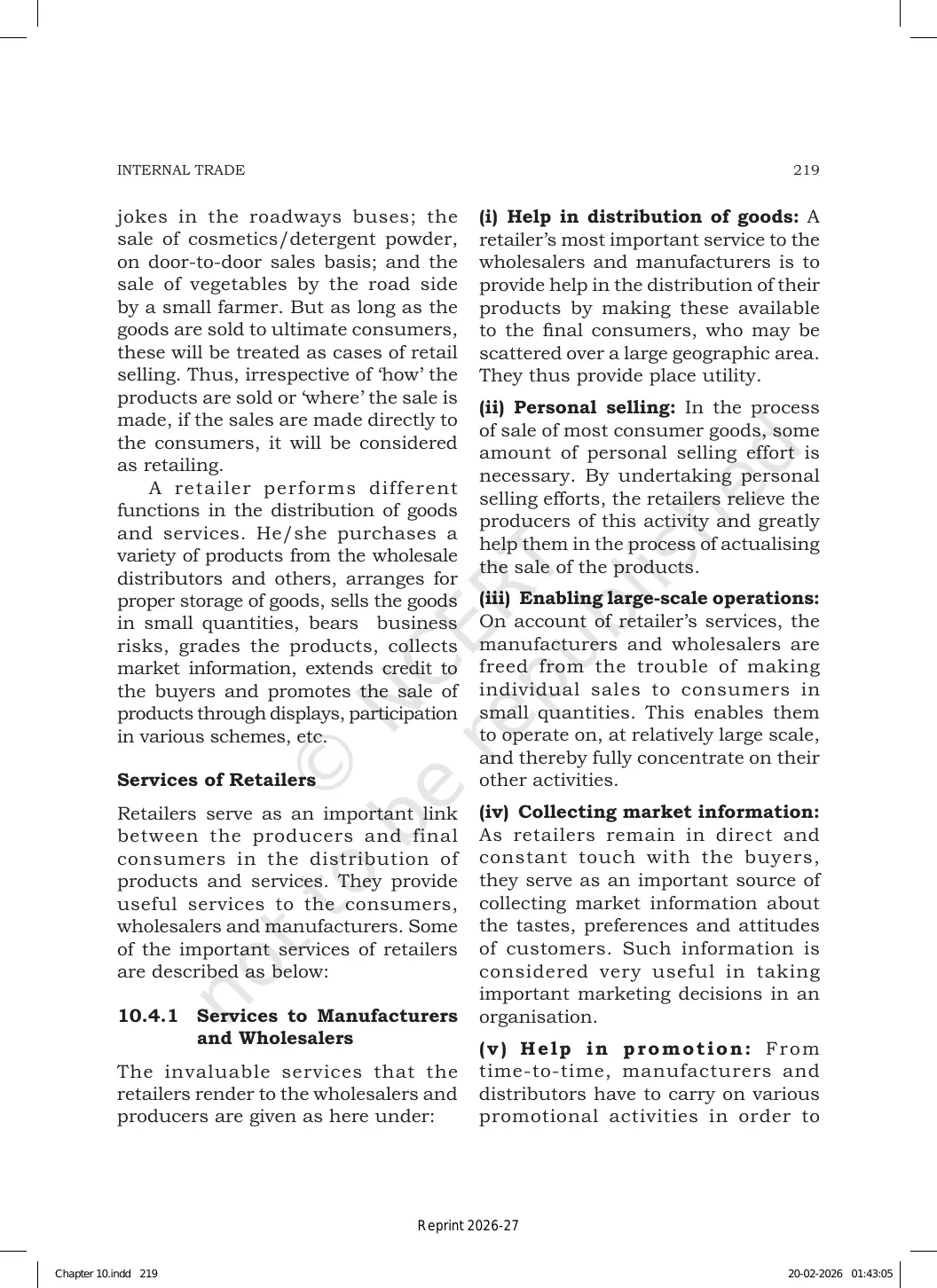
Wholesalers link manufacturers with retailers. They buy in bulk, store goods and divide supplies into smaller lots. Retailers complete the distribution chain by selling to consumers and sharing market information.
- Wholesalers help manufacturers through bulk orders, cash payments, warehousing, risk bearing and market information.
- Wholesalers help retailers through regular supply, credit, specialised knowledge, risk sharing and smaller lots.
- Retailers help manufacturers by distributing goods, promoting products and reporting consumer demand.
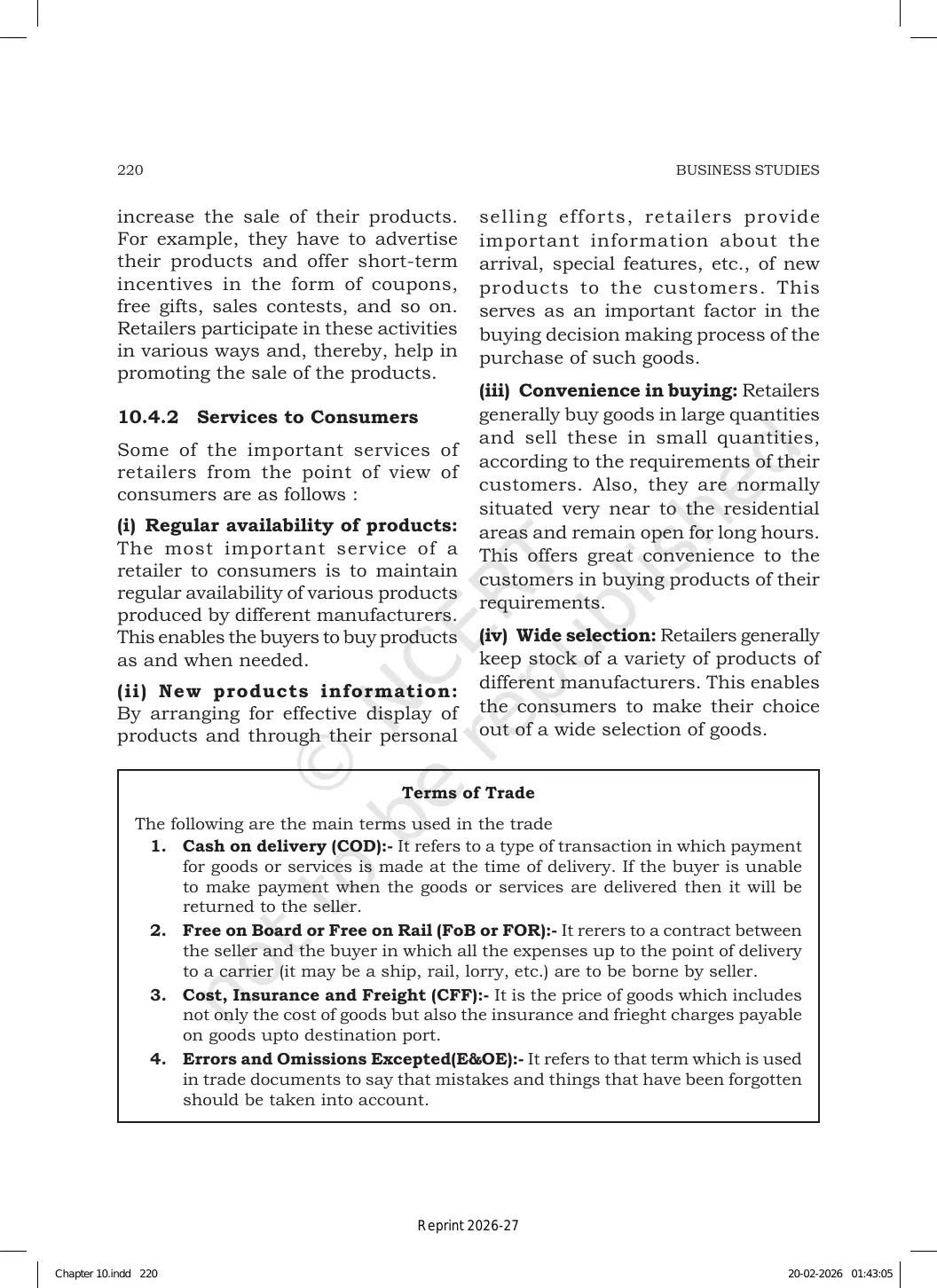
- Retailers help consumers through choice, convenience, information, credit and after-sales services.
The clearest exam method is to separate services to manufacturers, retailers and consumers. This prevents similar points from being placed under the wrong heading.
Types of Retailers in Internal Trade with Simple Examples
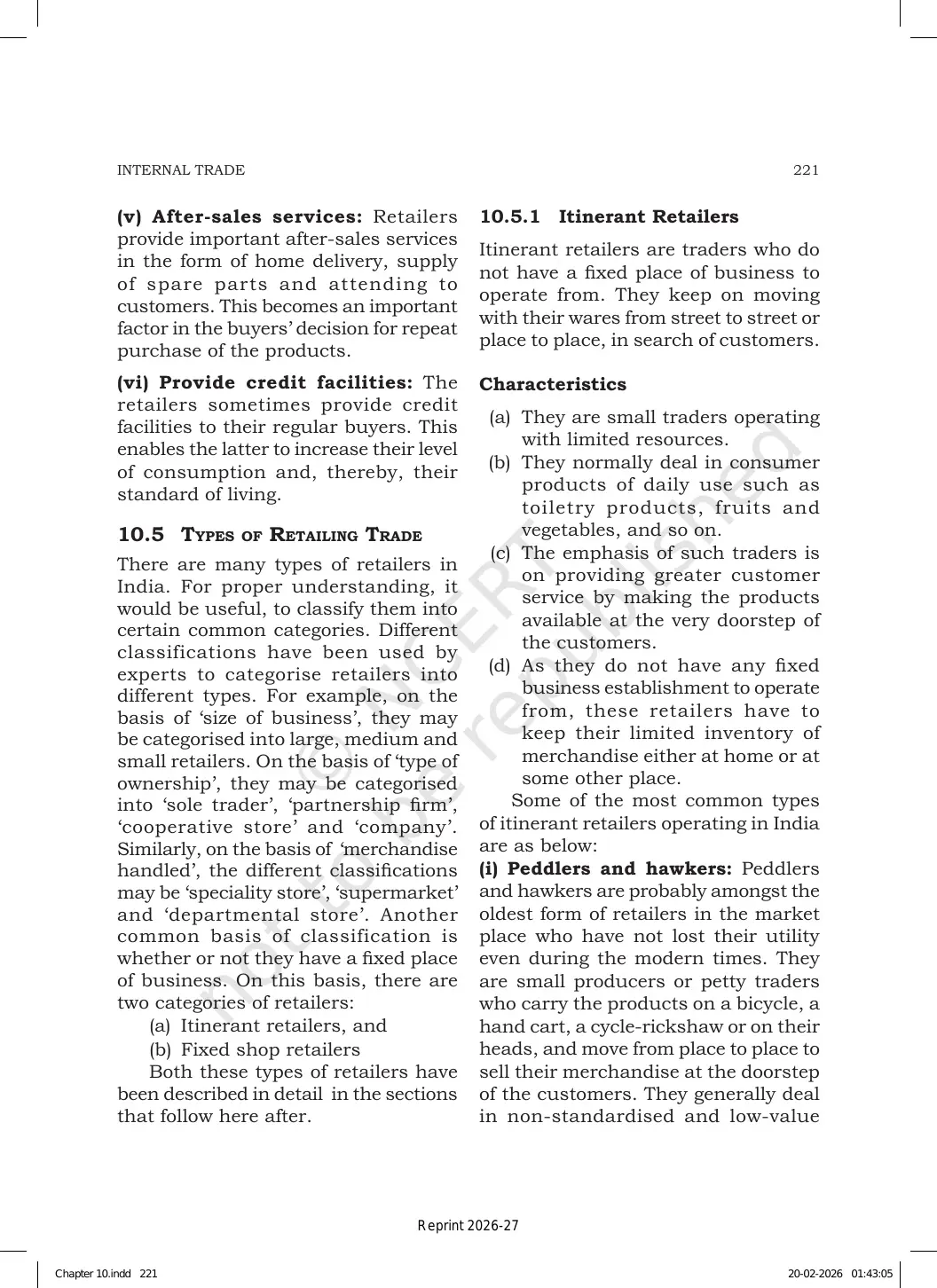
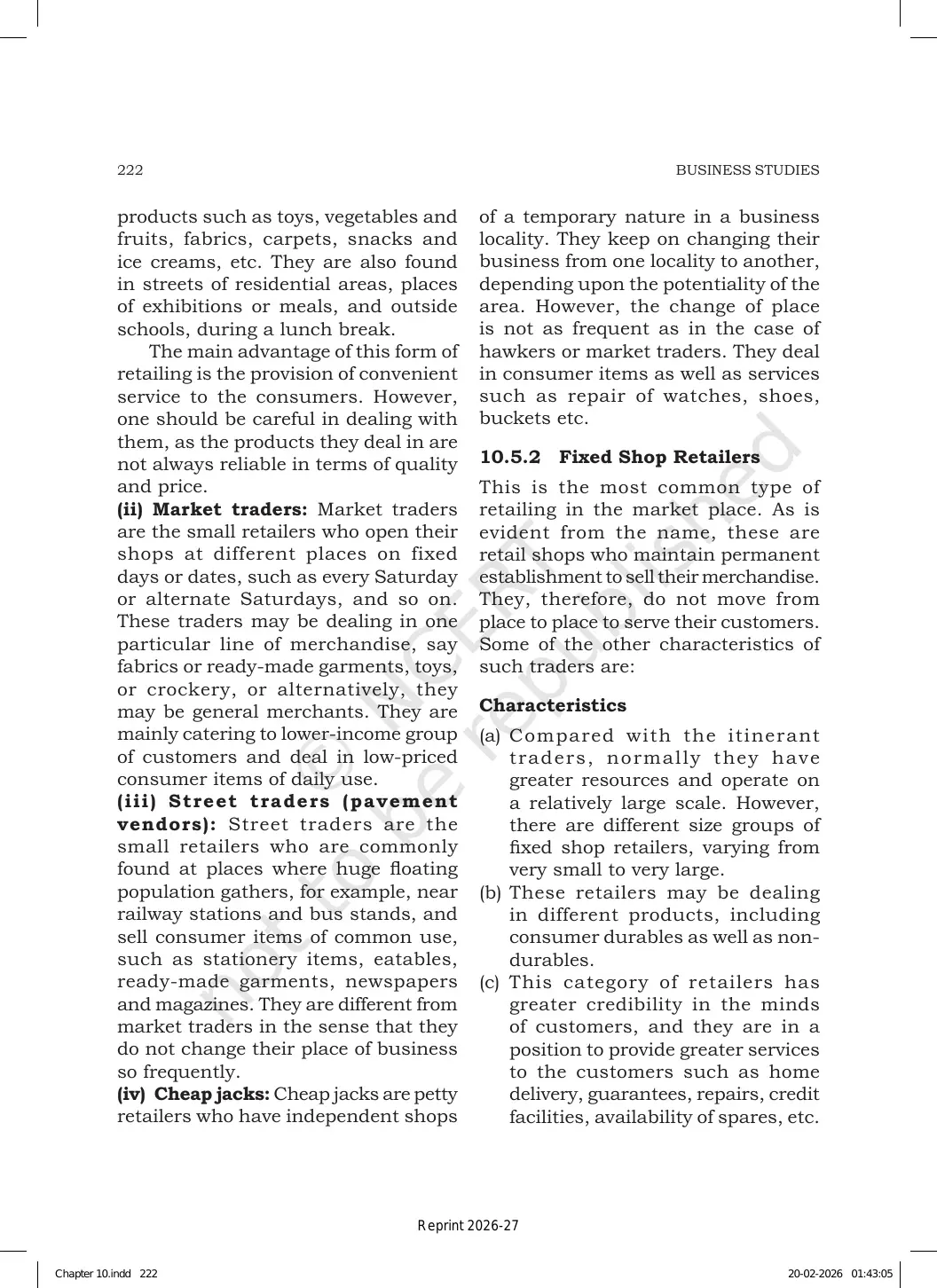
Retailers differ by location, product range and scale. Itinerant retailers have no fixed place of business, while fixed-shop retailers operate from permanent premises.
| Group | Forms discussed in the NCERT | Main clue |
|---|---|---|
| Itinerant retailers | Hawkers and peddlers, market traders, street traders, cheap jacks | Move or use temporary selling places |
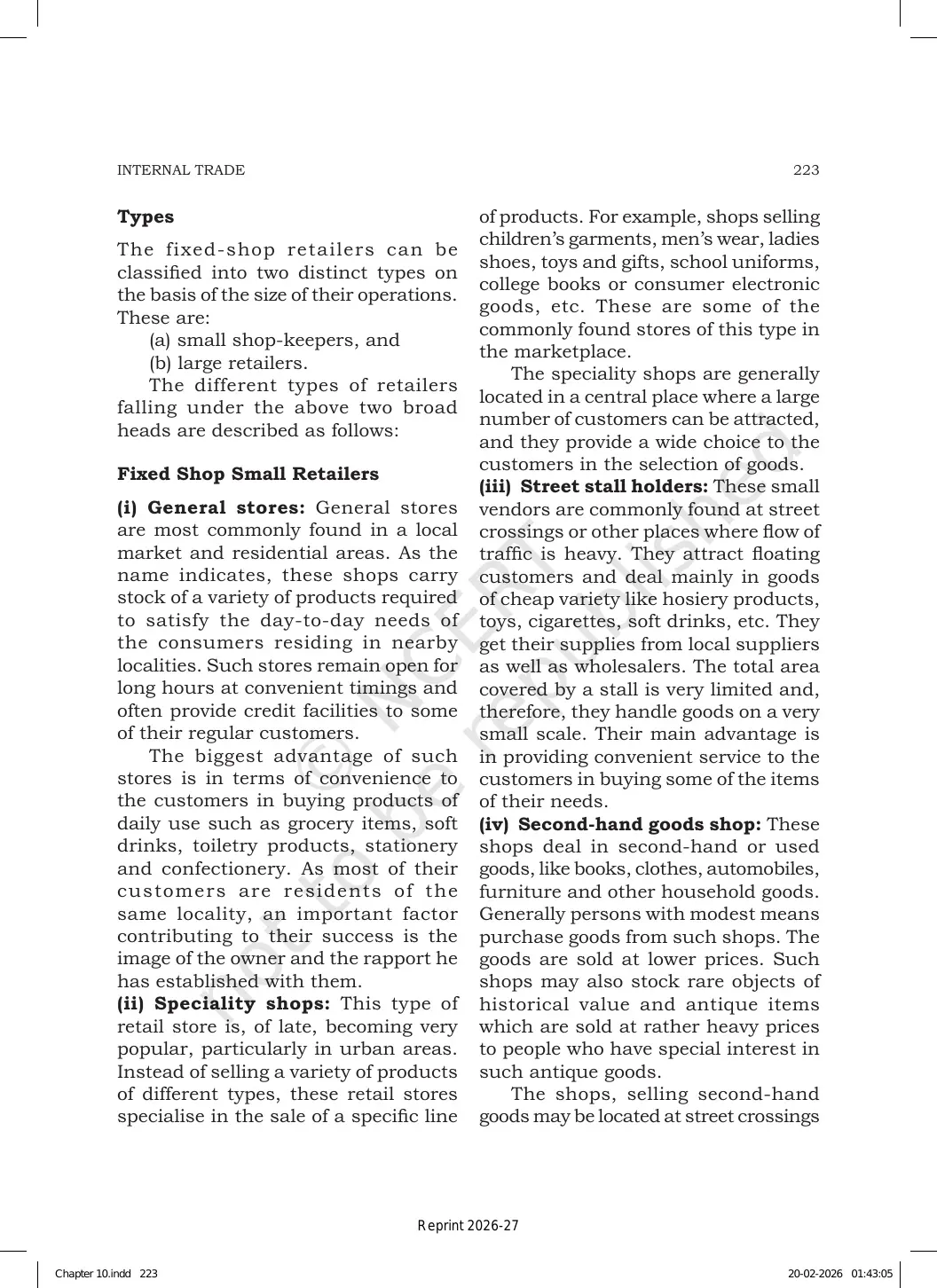
| Small fixed shops | General stores, speciality shops, street stalls, second-hand shops | Limited scale with direct customer contact |
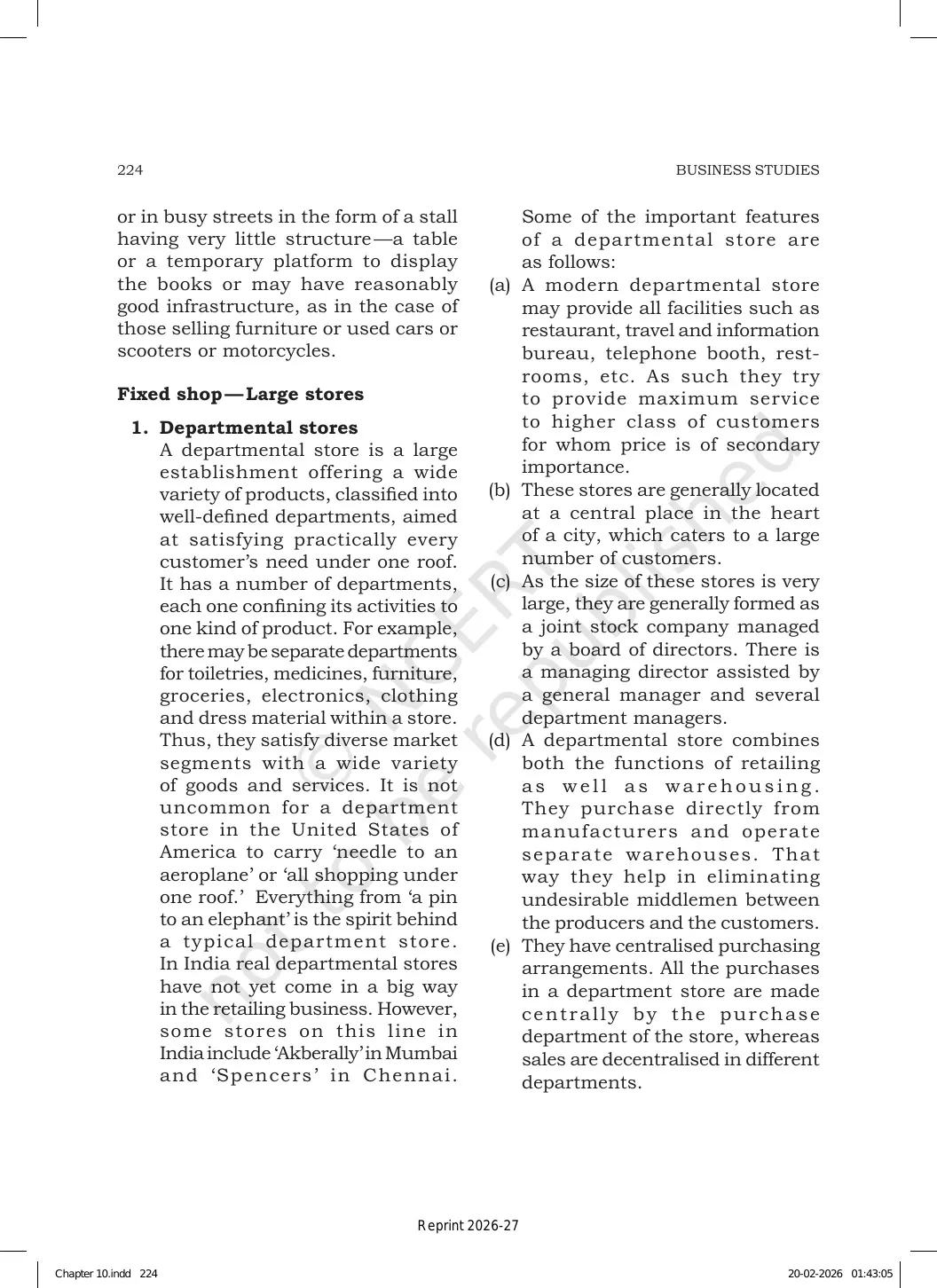
| Large fixed shops | Departmental stores, chain stores, mail-order houses, cooperative stores, supermarkets | Large operations or organised ownership |
| Automatic retailing | Vending machines | Standard products sold without a salesperson |
GST and Chambers of Commerce in the Internal Trade Chapter
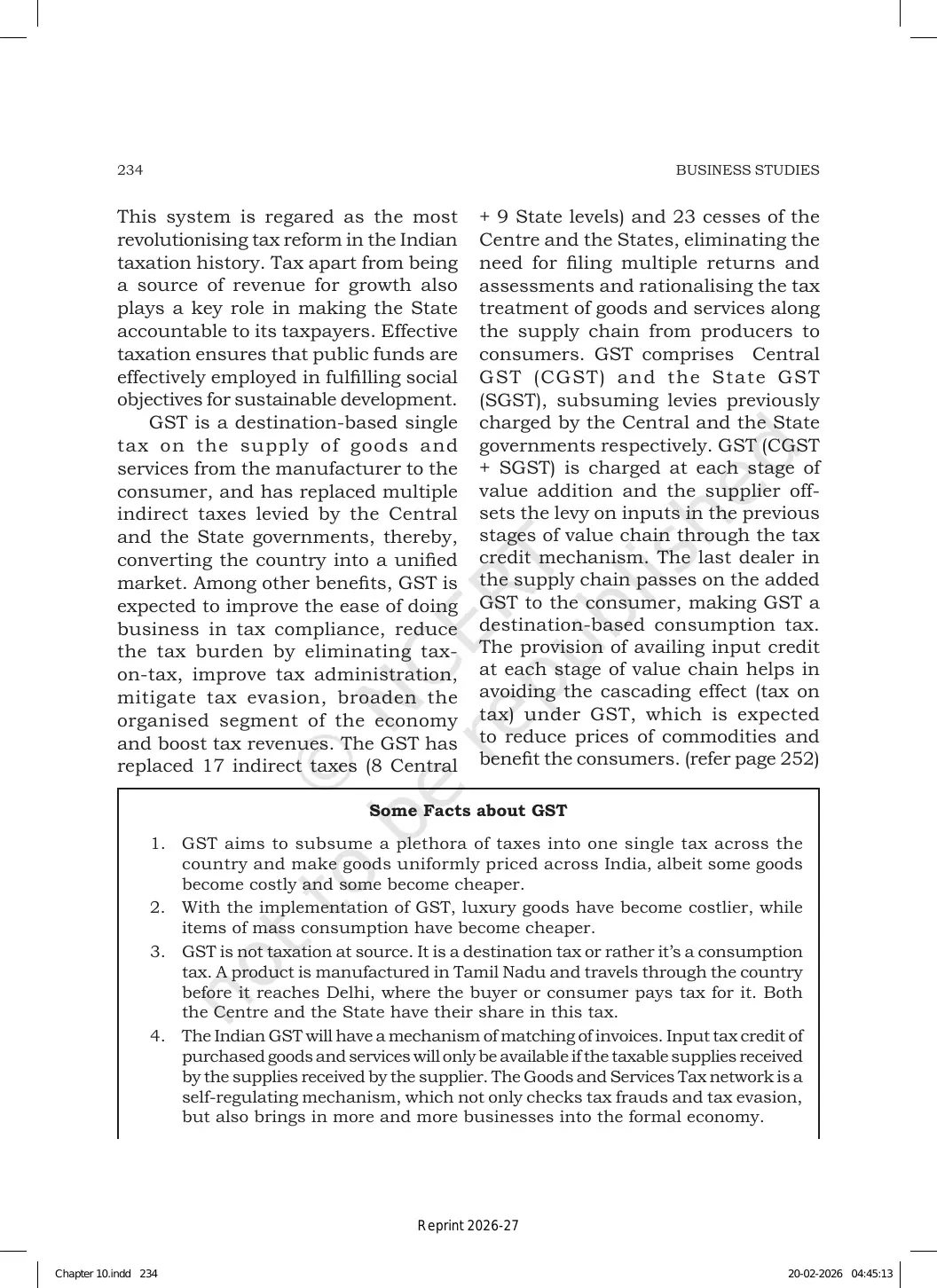
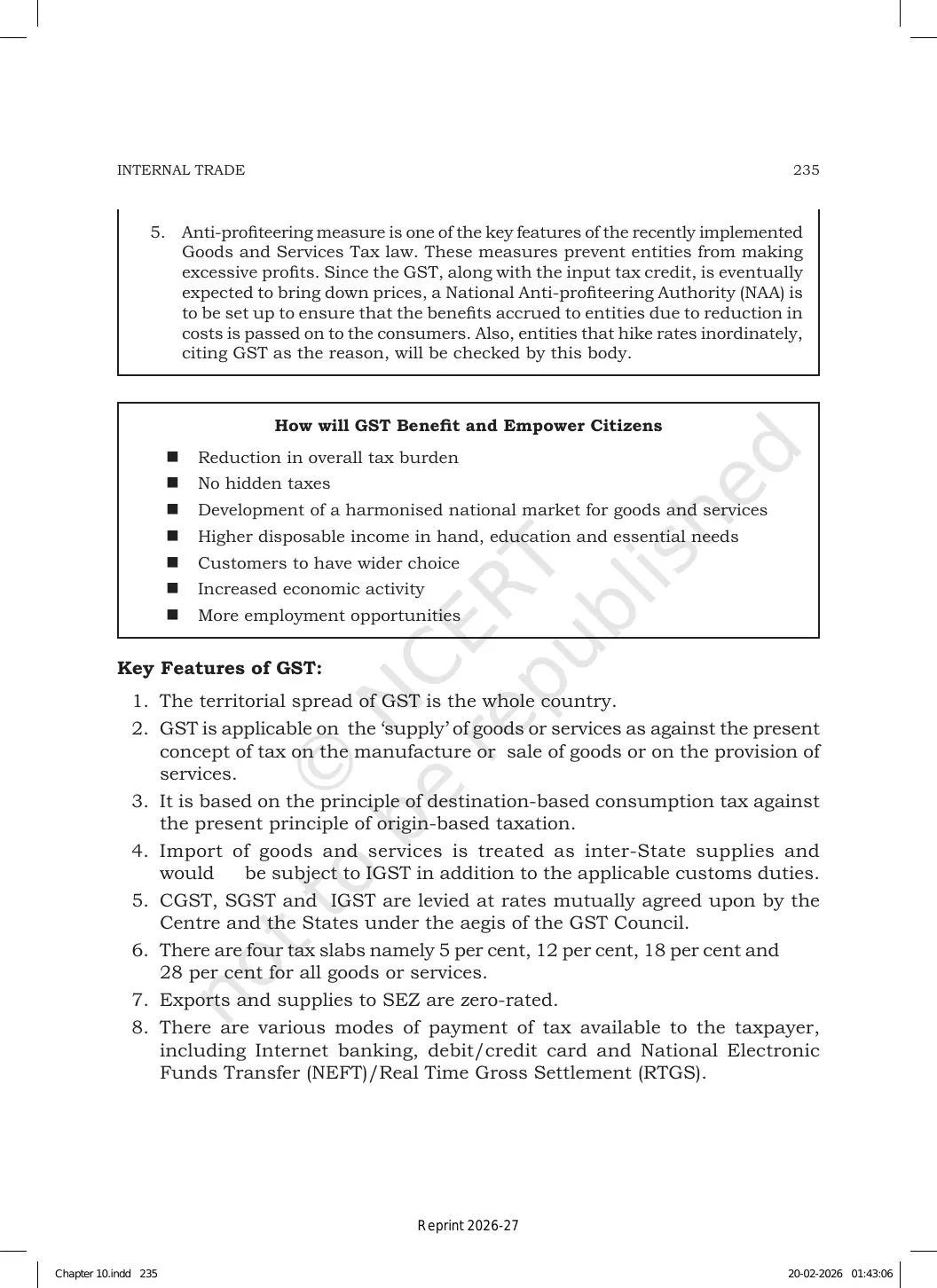
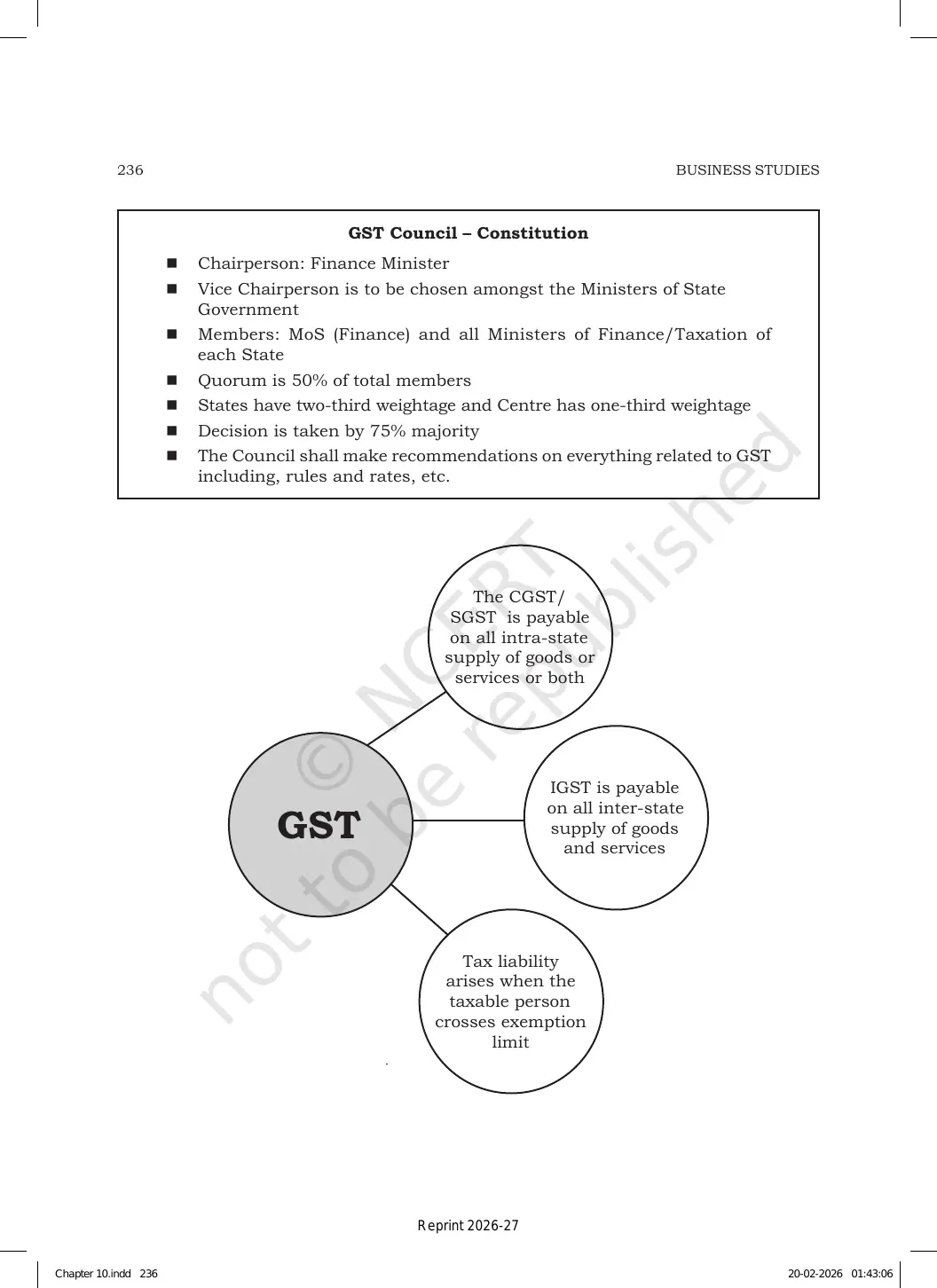
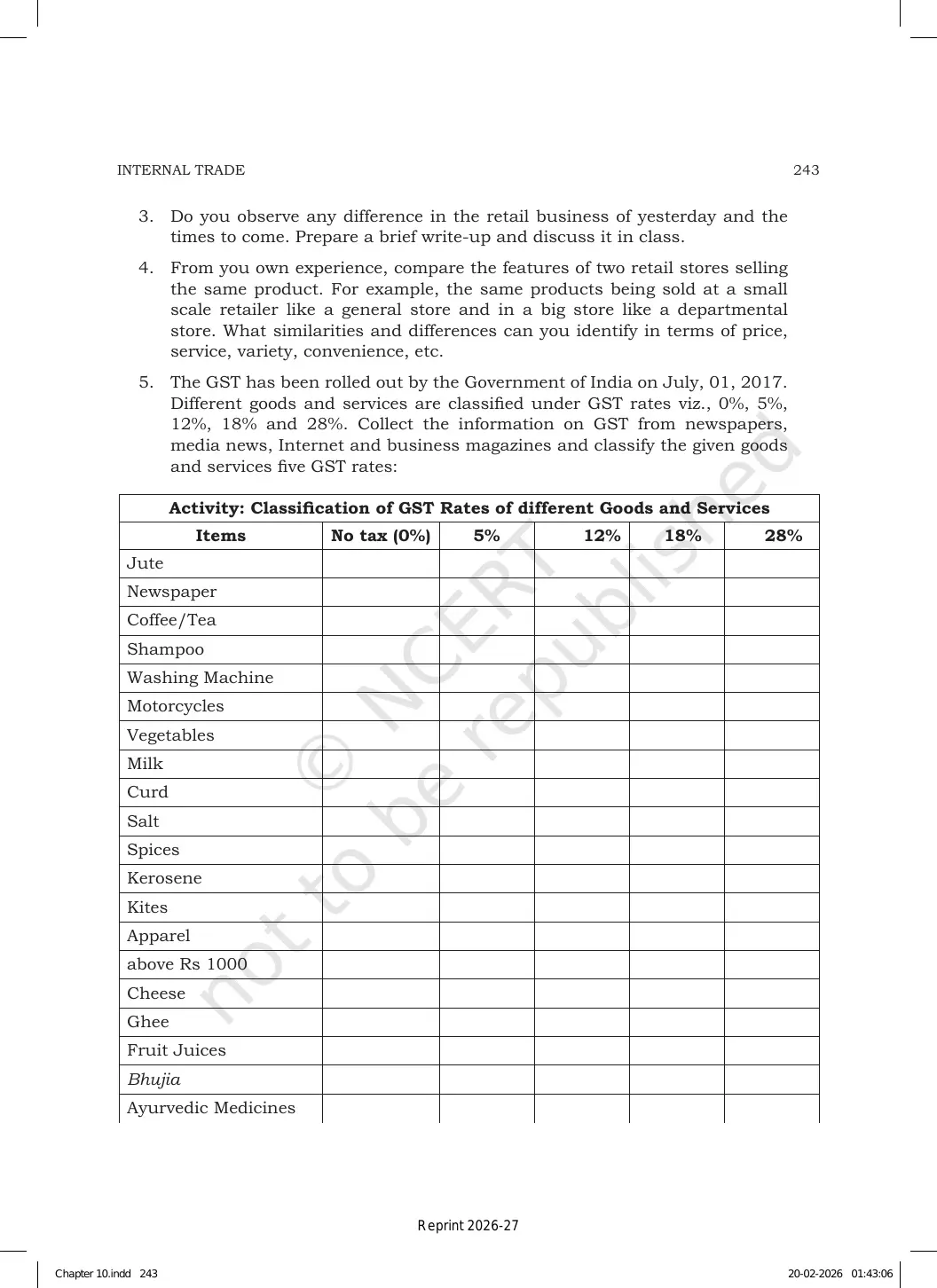
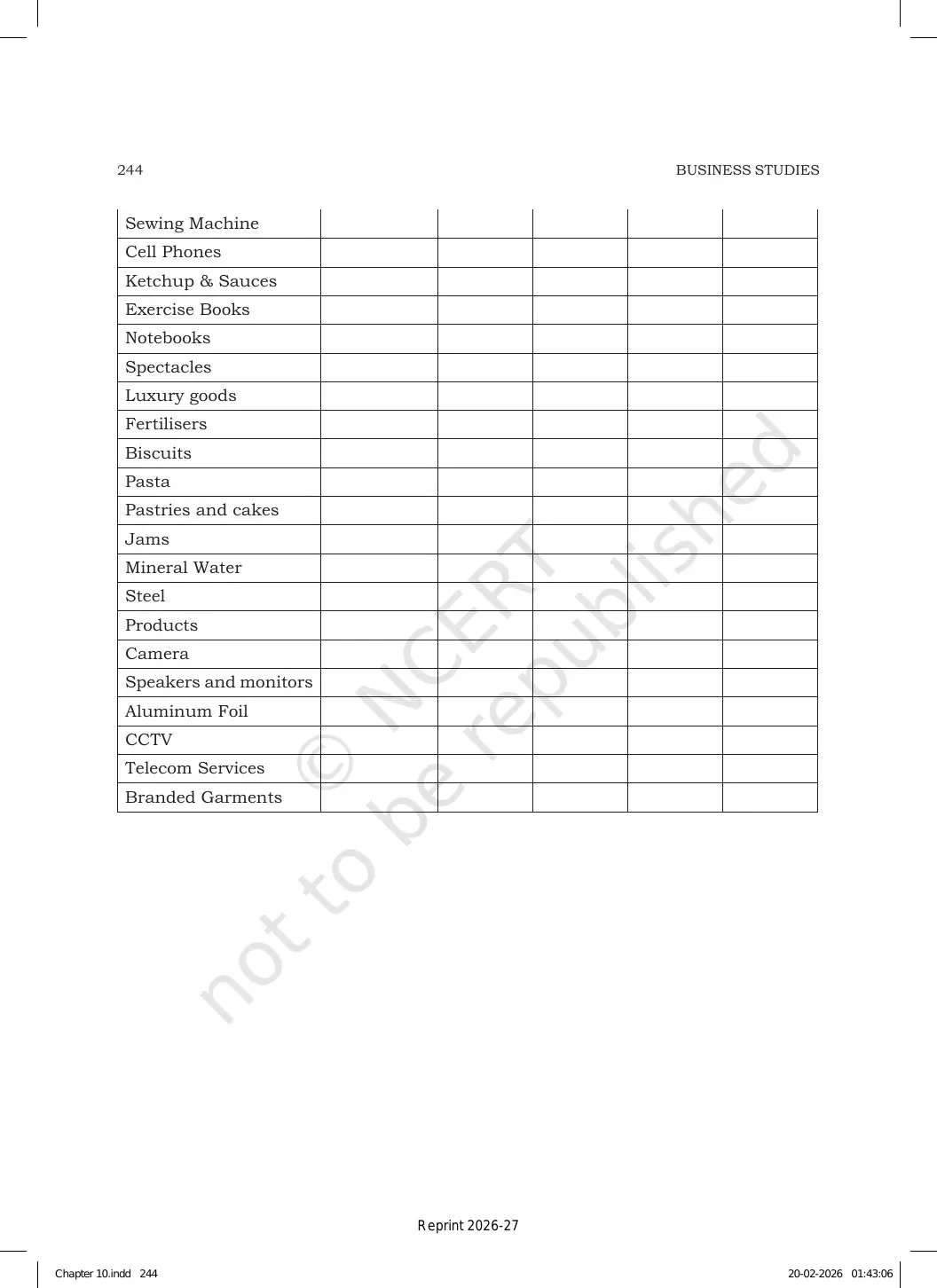
The book explains Goods and Services Tax as a destination-based tax. It applies to supply and uses input tax credit across the distribution chain. GST includes CGST, SGST and IGST in the situations described by the textbook.
- GST: supports a common national market and reduces repeated taxation on the same value.
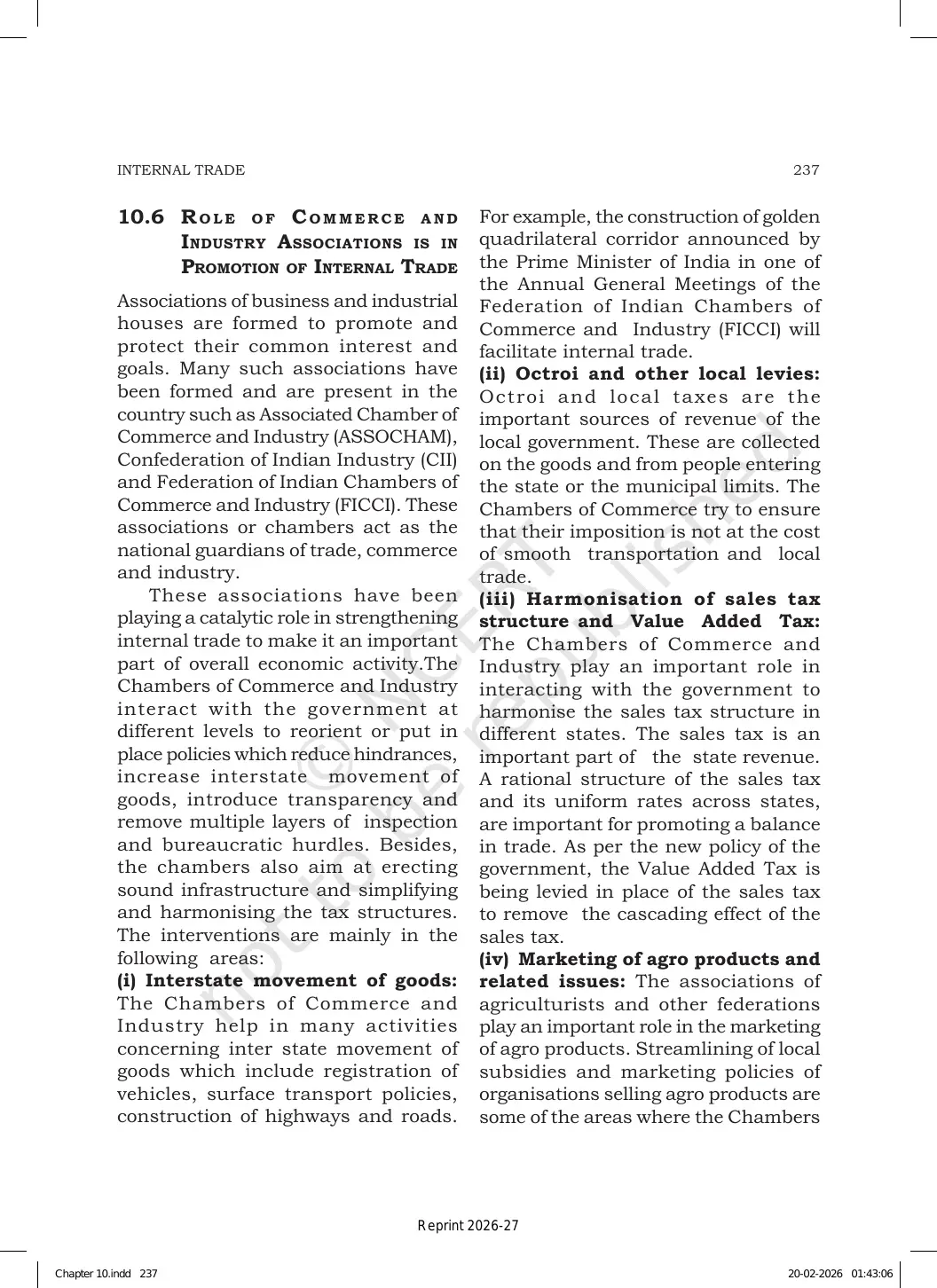
- Chambers of commerce: represent business interests before government bodies.
- Trade support: includes views on taxation, infrastructure, laws, labour and interstate movement.
GST was introduced in India on 1 July 2017. Students should explain the concept and its broad role, not guess changing product rates.
How to Read the Internal Trade NCERT PDF for Exams
Start with the wholesale-retail distinction. Then learn service lists and retailer classifications. End with GST and the role of business associations.
- Make a two-column chart for wholesale trade and retail trade.
- Sort every retailer under itinerant, small fixed-shop or large fixed-shop trade.
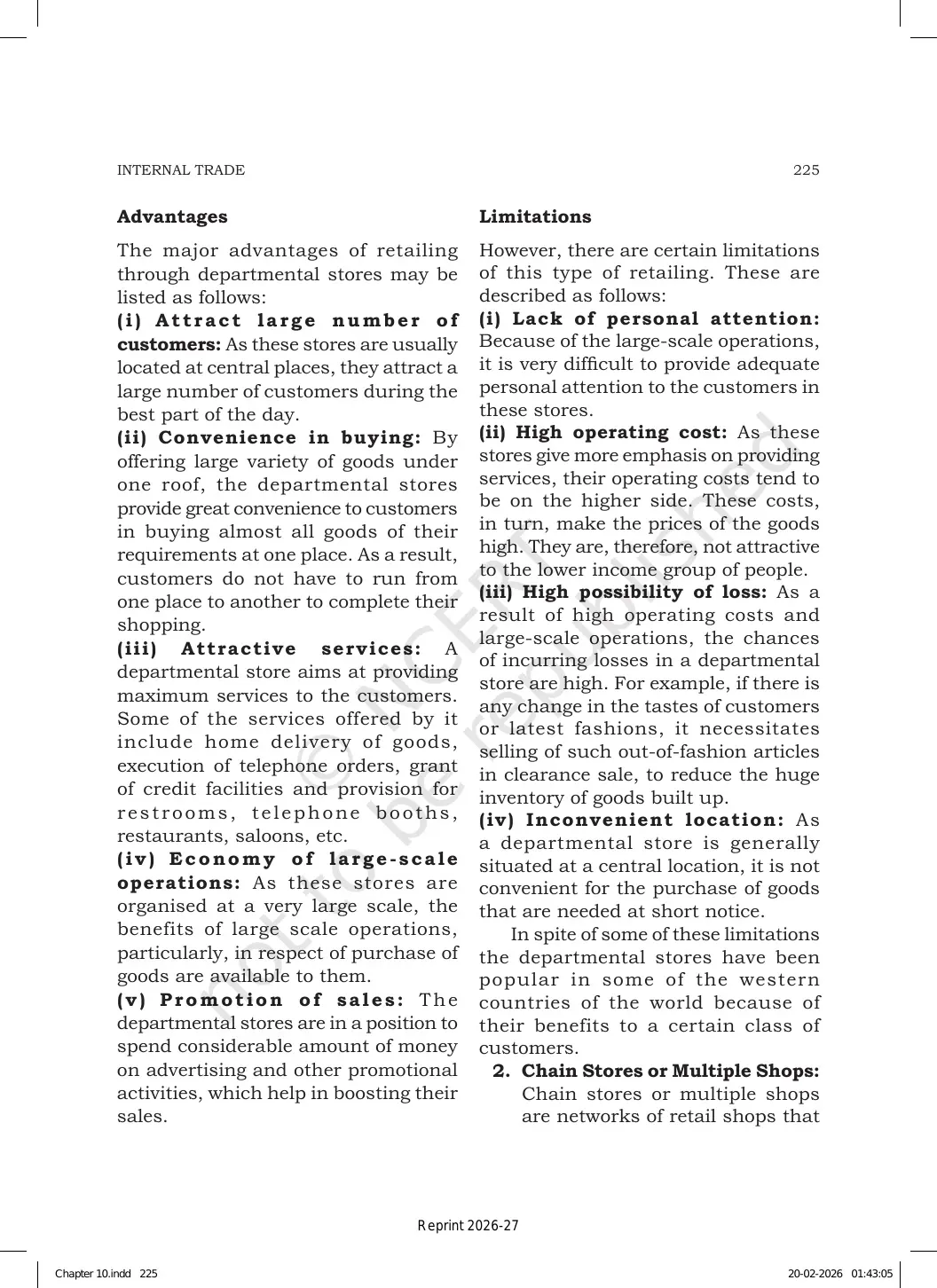
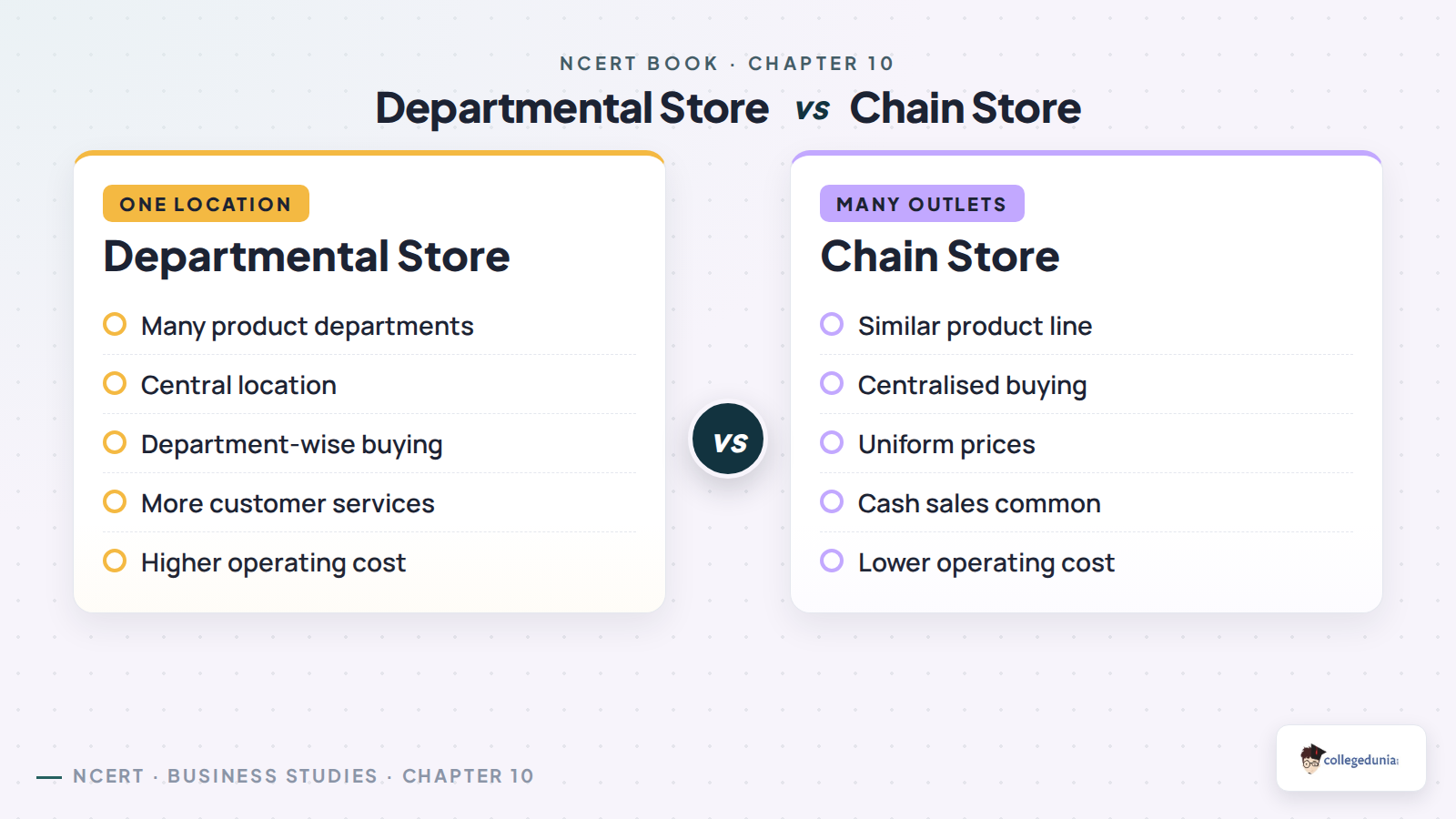
- Compare departmental stores and chain stores by location, range, control and pricing.
- Practise case questions by identifying the seller before naming its features.
Internal Trade Student Feedback
What 12,480 students told us about Internal Trade: In a Collegedunia poll during the 2026-27 session, most students preferred comparison tables for retailer types.
Source: 2026-27 Class 11 Business Studies student poll. Sample of 12,480 students from CBSE schools.
More Internal Trade Class 11 Resources
| Resource | Best use |
|---|---|
| Internal Trade Class 11 NCERT Solutions | Textbook answers and case questions |
| Internal Trade Class 11 Notes | Concept revision and comparisons |
| Internal Trade Class 11 Handwritten Notes | Quick recall before an exam |
NCERT Book for Class 11 Business Studies: All Chapters
Use these same-resource links to continue reading the Class 11 Business Studies NCERT book.
| Chapter | NCERT Book PDF |
|---|---|
| Chapter 8 | Sources of Business Finance |
| Chapter 9 | MSME and Business Entrepreneurship |
| Chapter 10 | Internal Trade |
| Chapter 11 | International Business |
Internal Trade Business Studies NCERT Book FAQs
Ques. What is internal trade?
Ans. Internal trade is the buying and selling of goods and services within a country's boundaries.
Ques. What are the two main types of internal trade?
Ans. The two main types are wholesale trade and retail trade.
Ques. What is the difference between wholesale and retail trade?
Ans. Wholesalers usually sell large quantities for resale. Retailers sell smaller quantities mainly to final consumers.
Ques. Who are itinerant retailers?
Ans. They are retailers without a fixed business location, such as hawkers, peddlers and market traders.
Ques. How are departmental stores different from chain stores?
Ans. A departmental store has many departments at one site. A chain store has similar outlets under central control.
Ques. What is GST in Internal Trade?
Ans. GST is a destination-based tax on the supply of goods and services, supported by input tax credit.
Ques. Is this Internal Trade PDF based on the 2026-27 NCERT book?
Ans. Yes. The content follows the official 2026-27 Class 11 Business Studies chapter.



Comments