



The NCERT Class 11 Business Studies Chapter 6 Social Responsibilities of Business and Business Ethics PDF explains why firms must balance profit with duties to people and the environment. It follows the 2026-27 textbook and covers stakeholder duties, pollution control and ethical conduct.
- Core focus: social responsibility, stakeholder duties, environmental protection and business ethics.
- Exam focus: arguments, responsibilities, pollution control and ethical programme elements.
- Best use: read the official PDF and build one stakeholder chart.
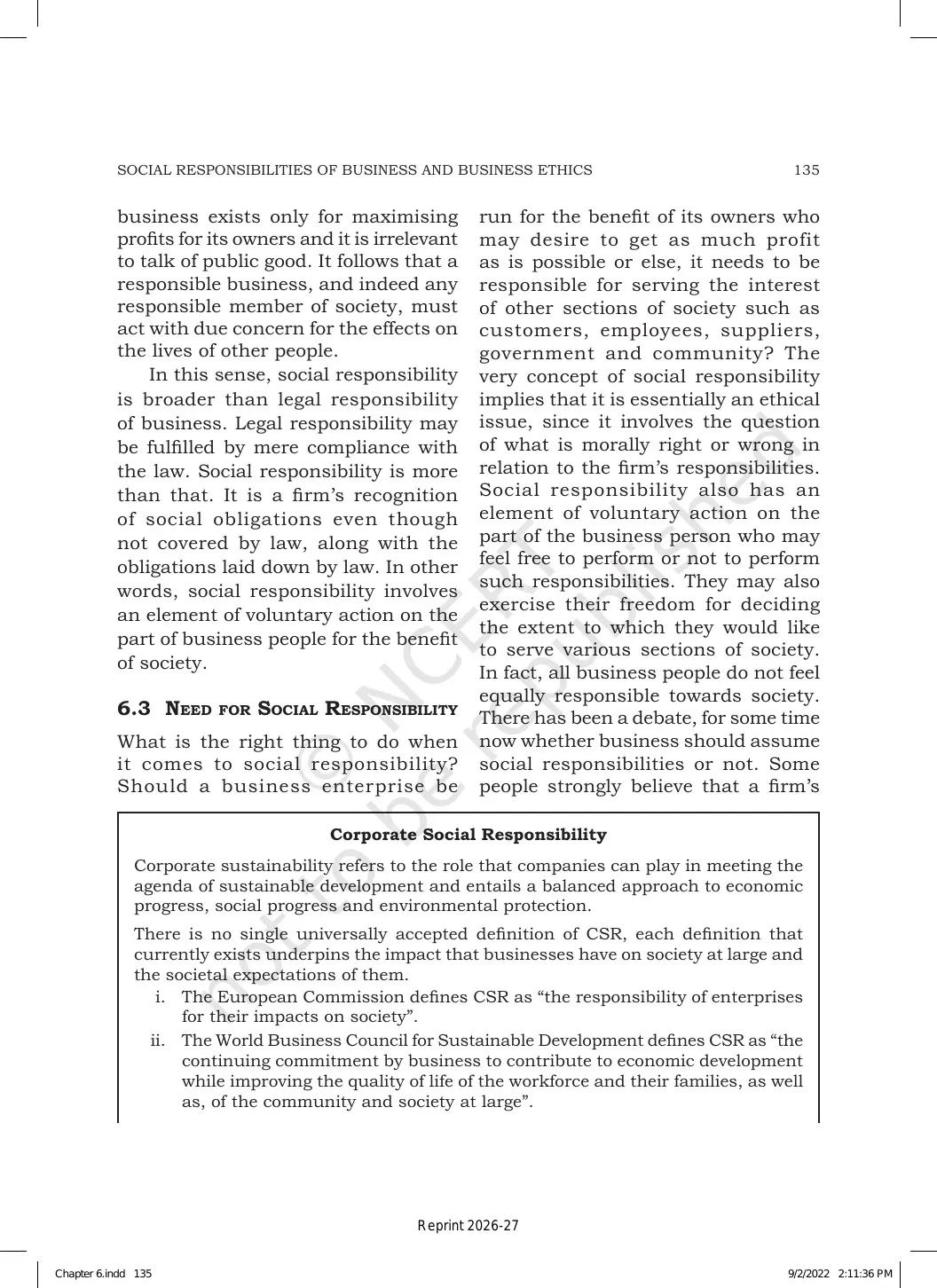
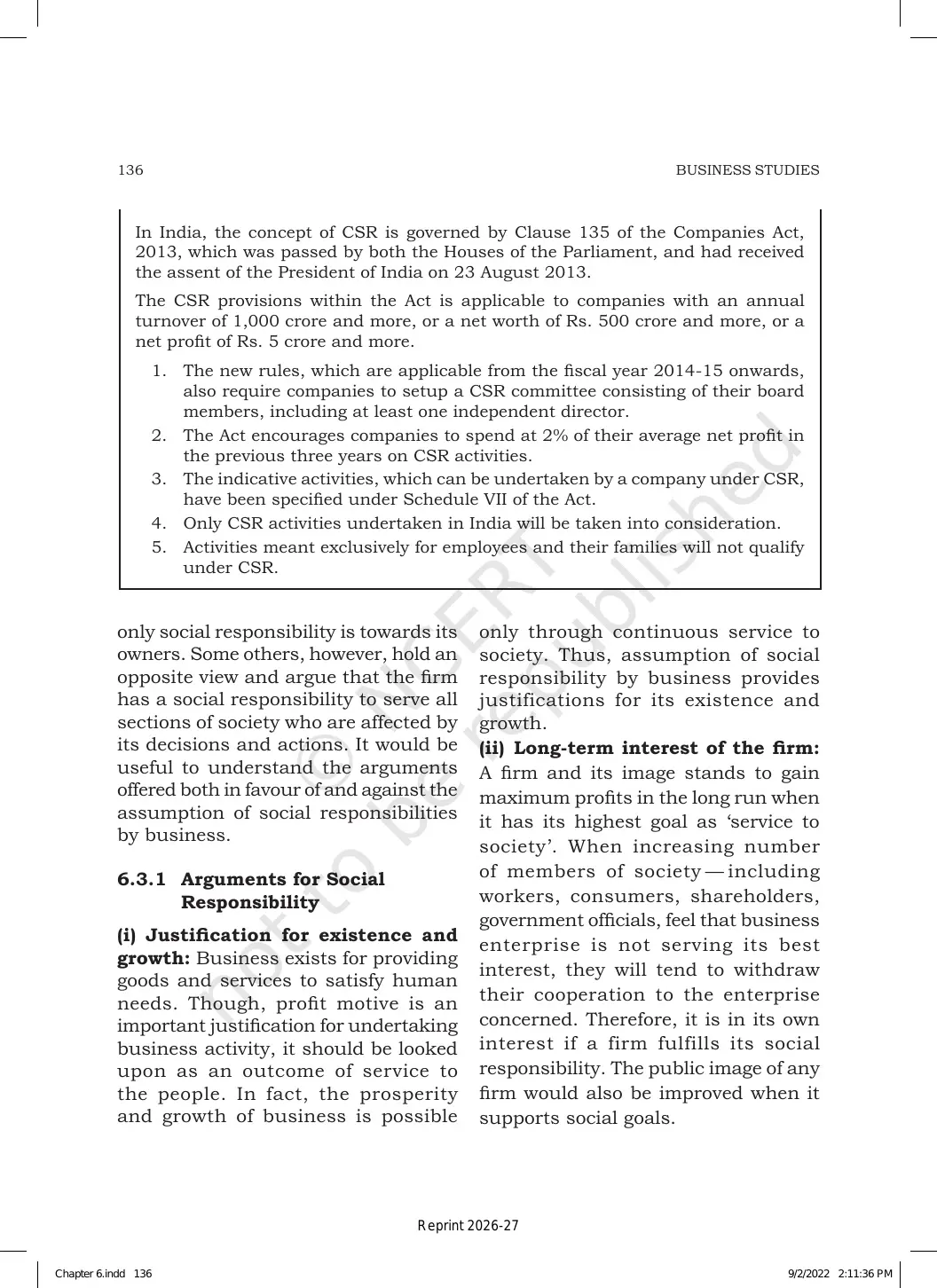
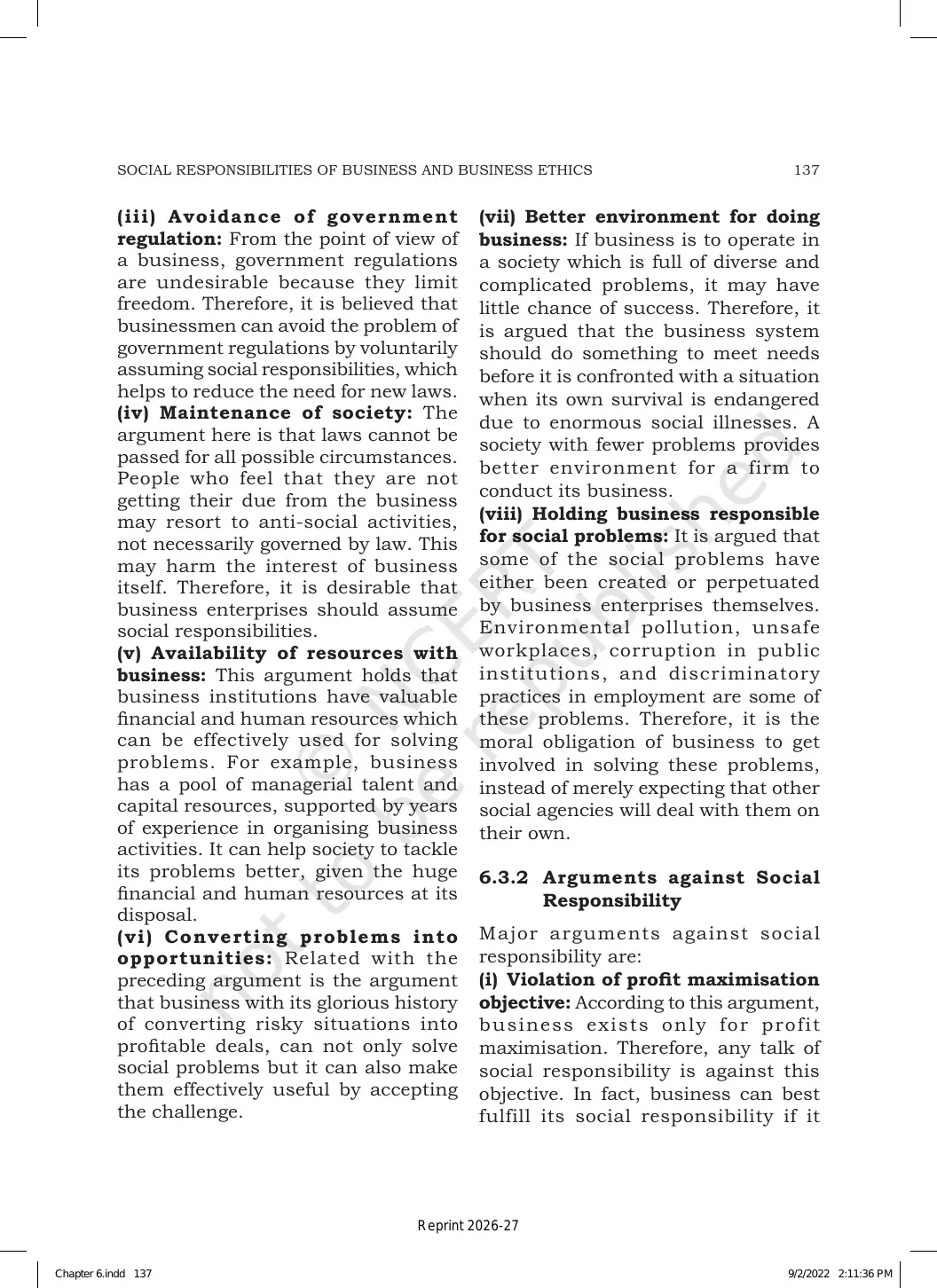
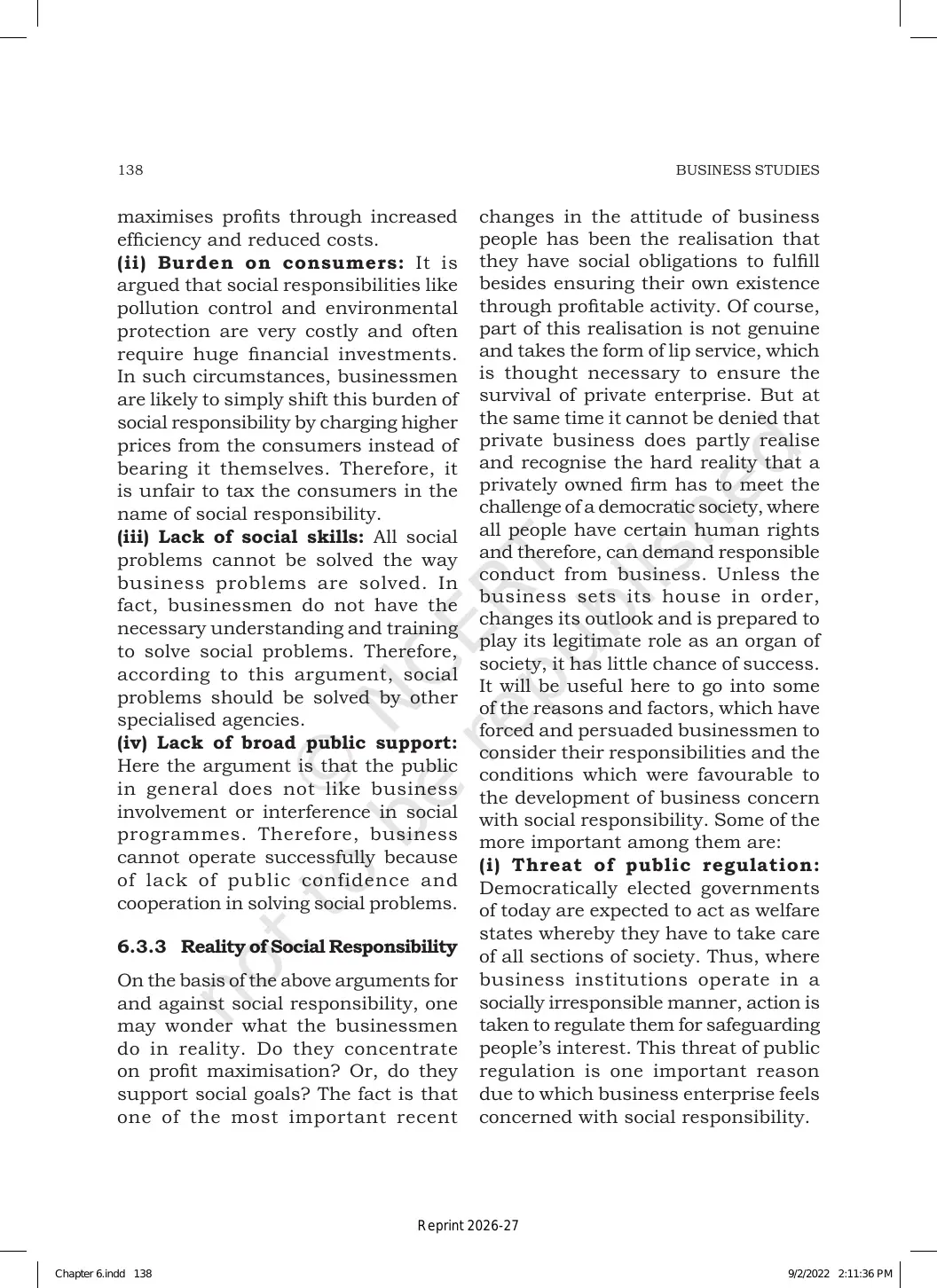
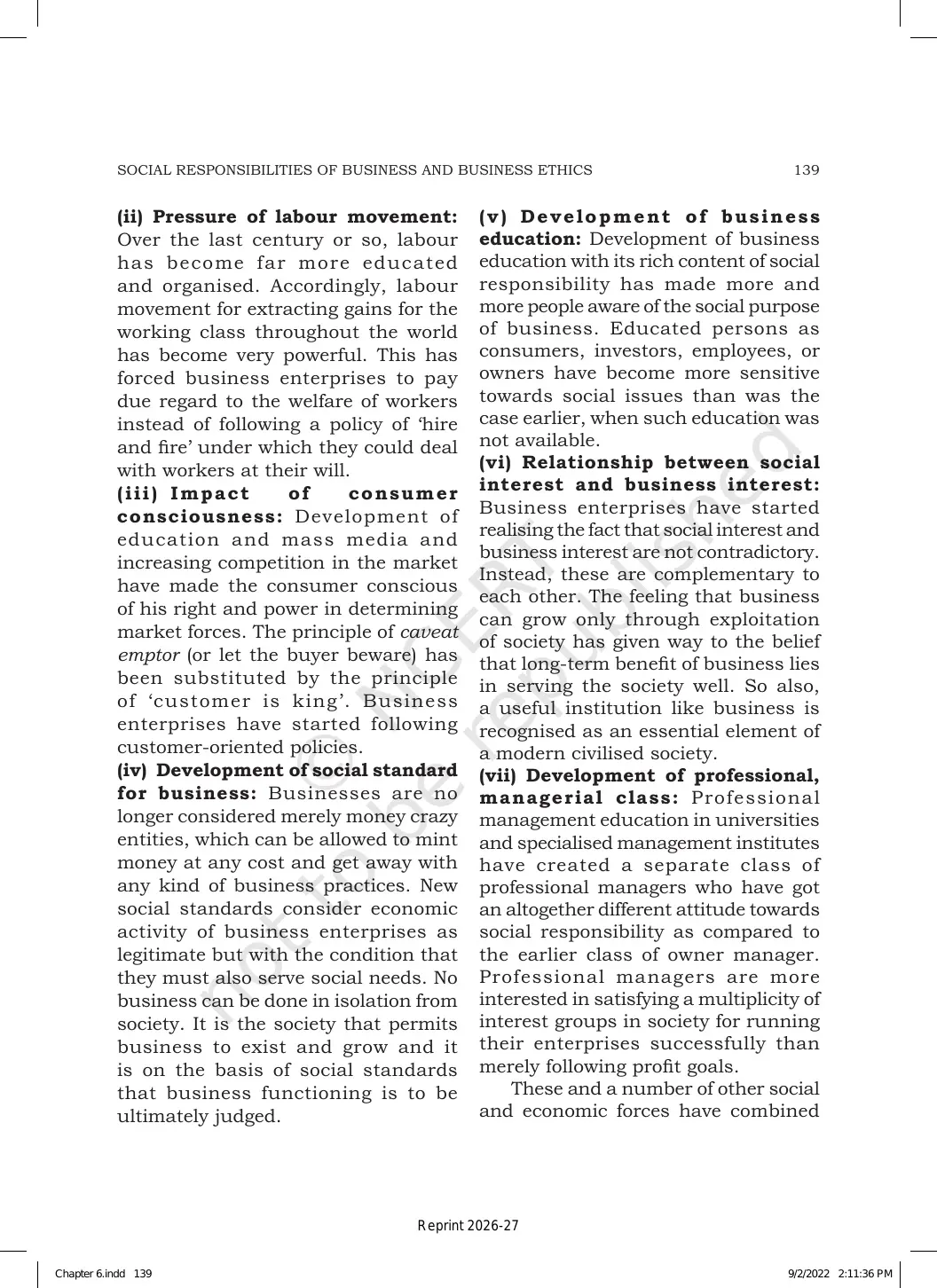
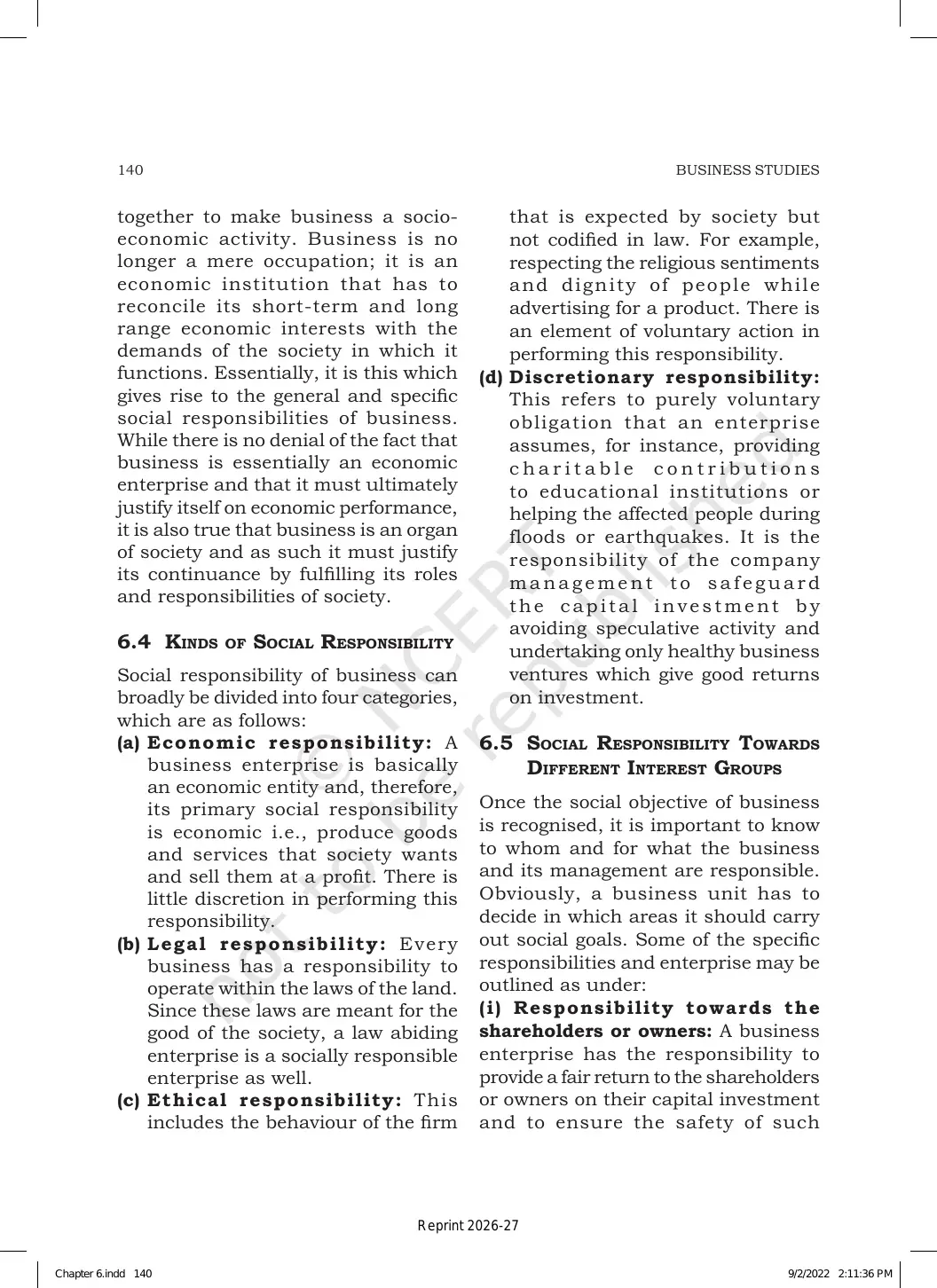
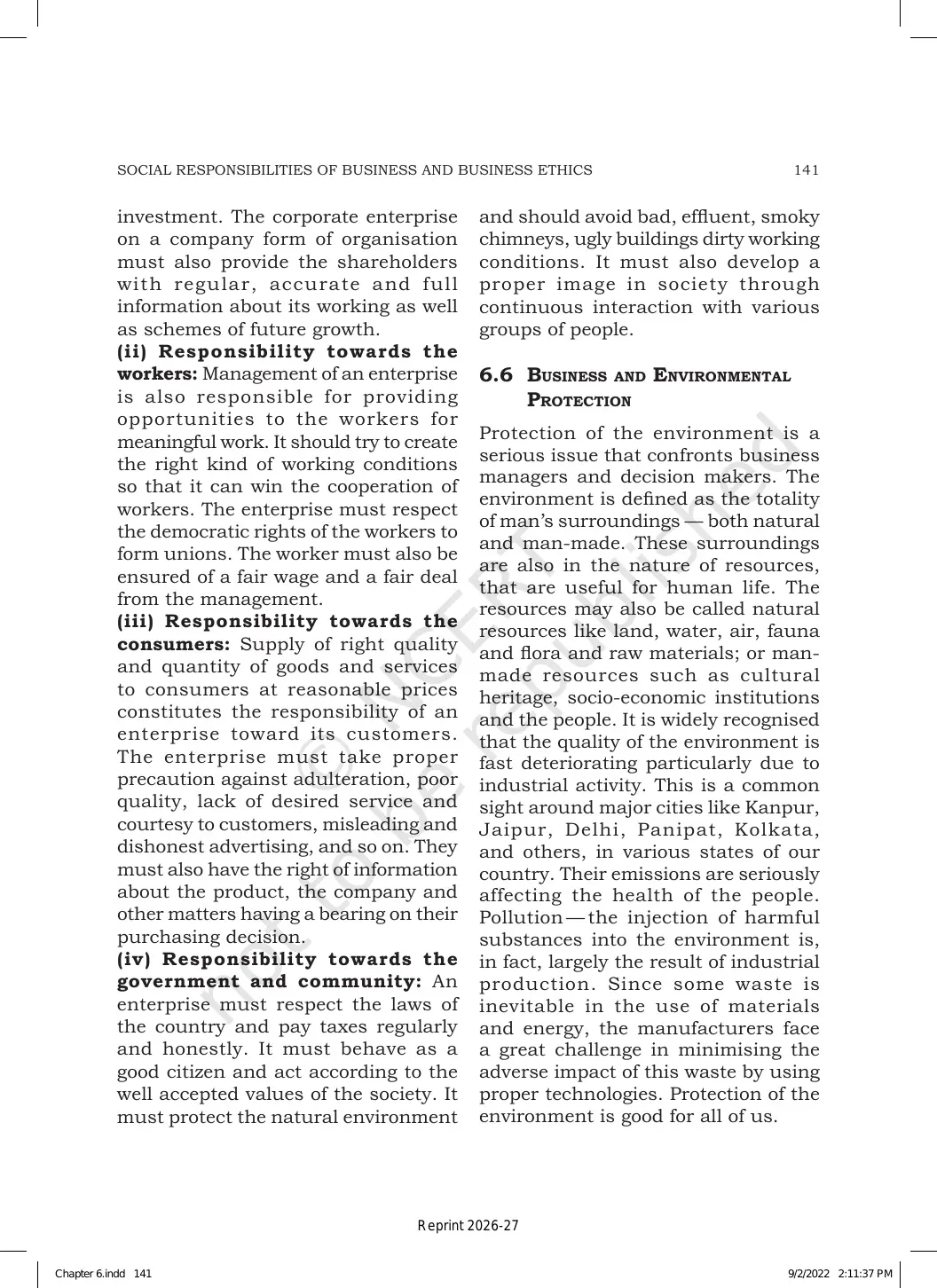
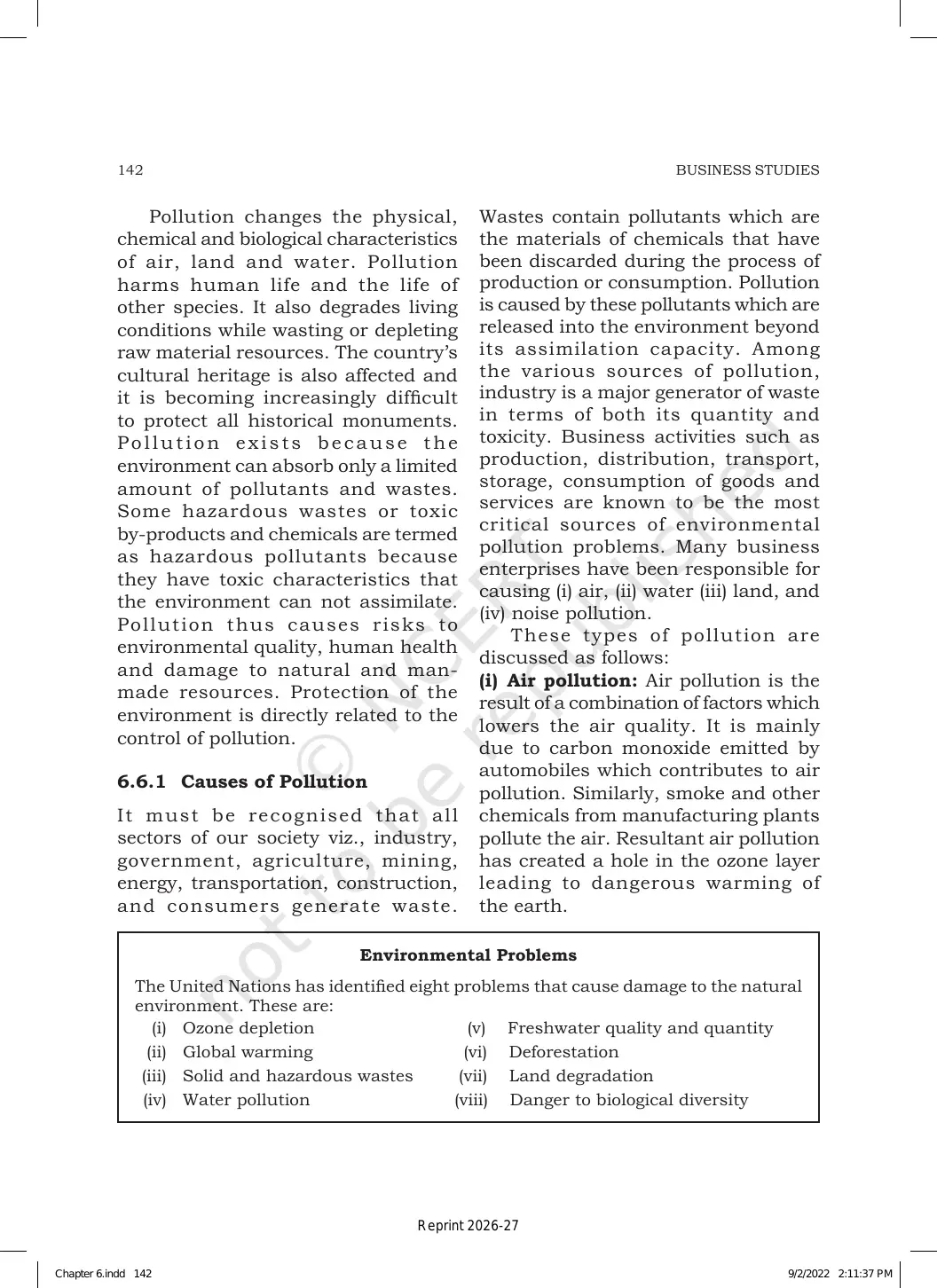
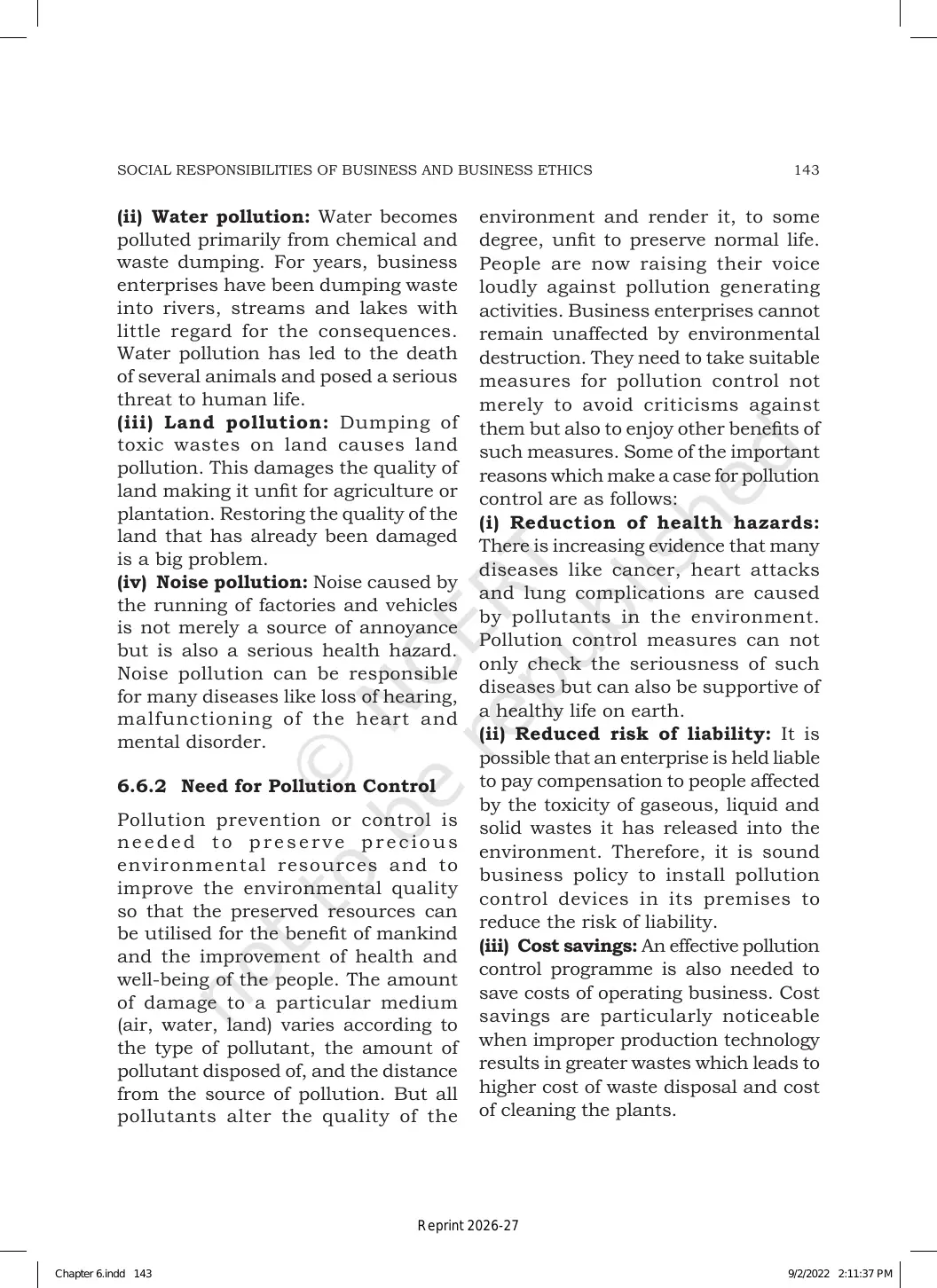
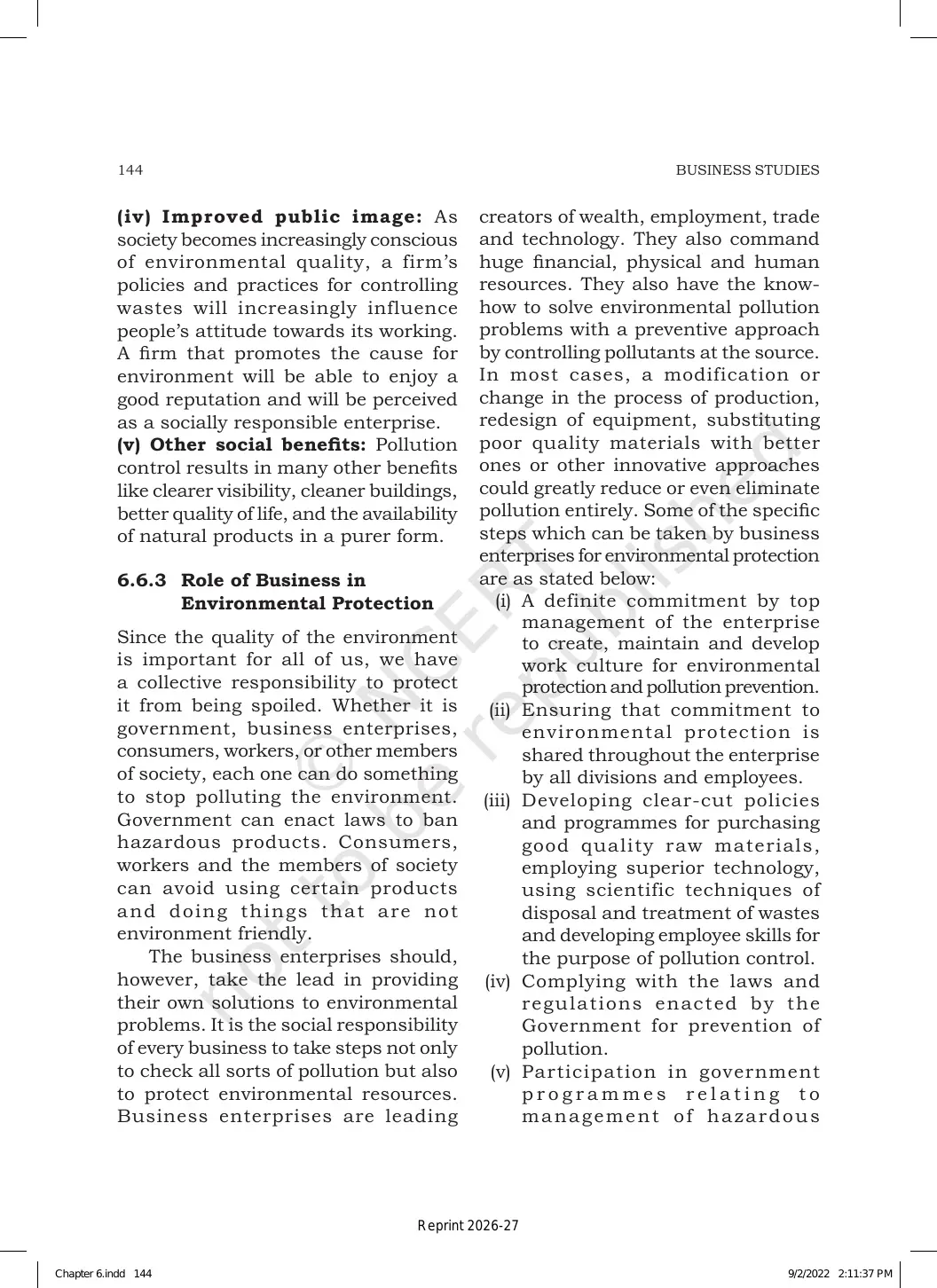
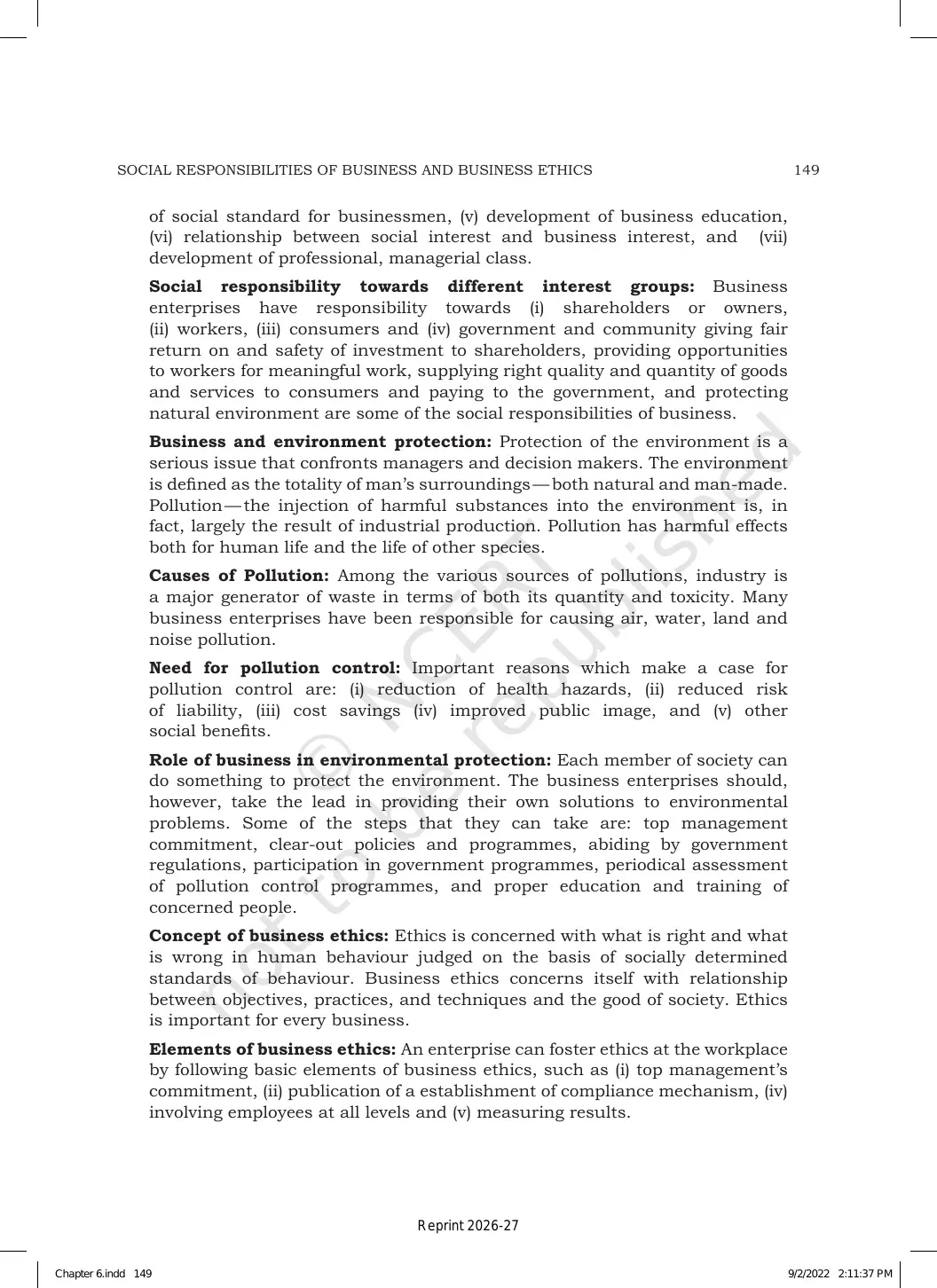
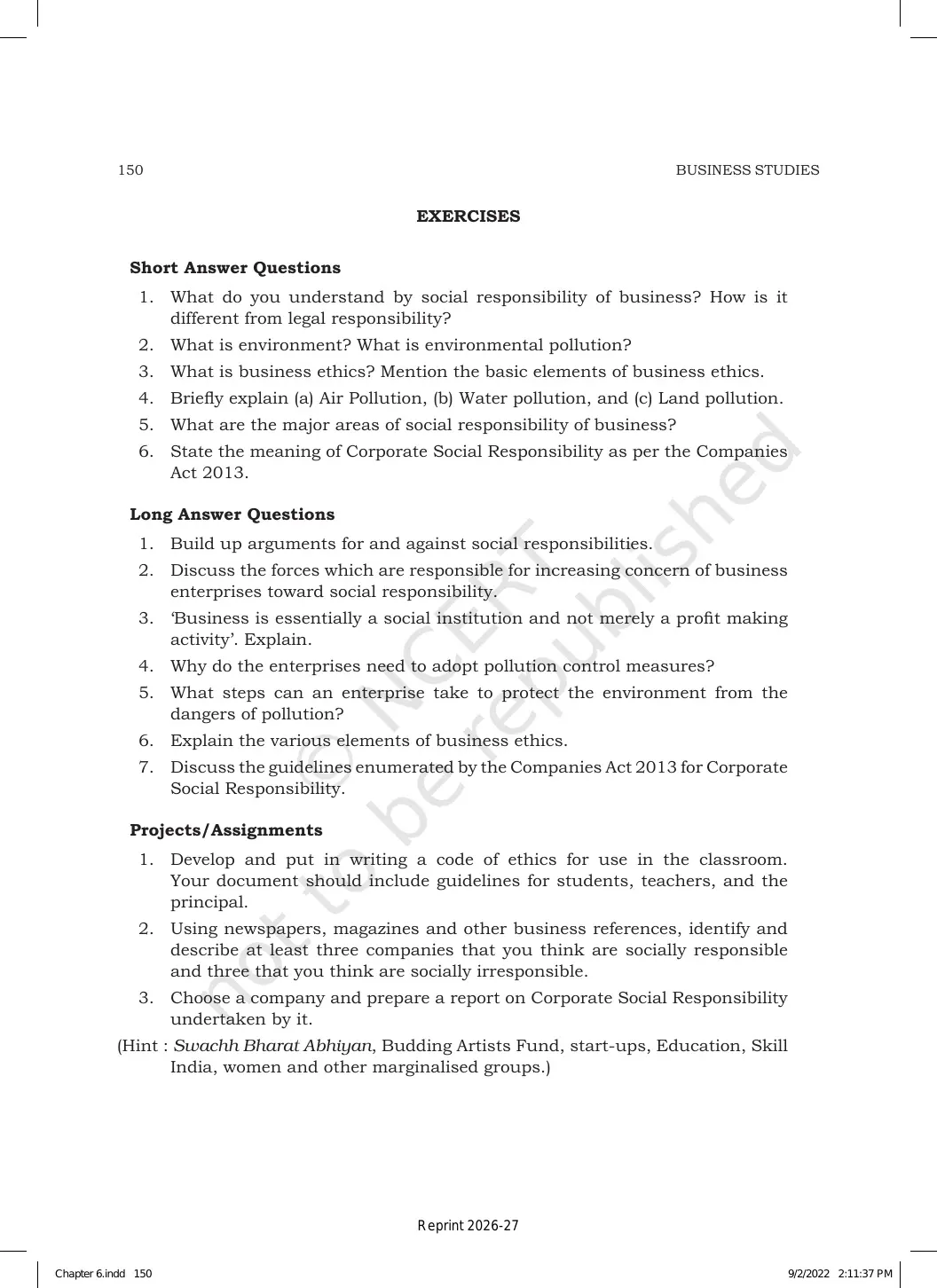
This Collegedunia guide follows the 2026-27 NCERT Business Studies textbook and keeps every explanation tied to the official chapter.
Student Feedback: In a Collegedunia poll of 10,420 students before the 2026 boards, most students said a stakeholder chart made this chapter easier to revise.
Topics Covered in the Social Responsibilities of Business NCERT PDF
The official chapter starts with the meaning of social responsibility. It then weighs the case for and against responsible business conduct. Students learn why legal compliance is only the minimum expected from a firm.
- Meaning of social responsibility and its voluntary element
- Arguments supporting and opposing social responsibility
- Duties towards owners, investors, workers, consumers and government
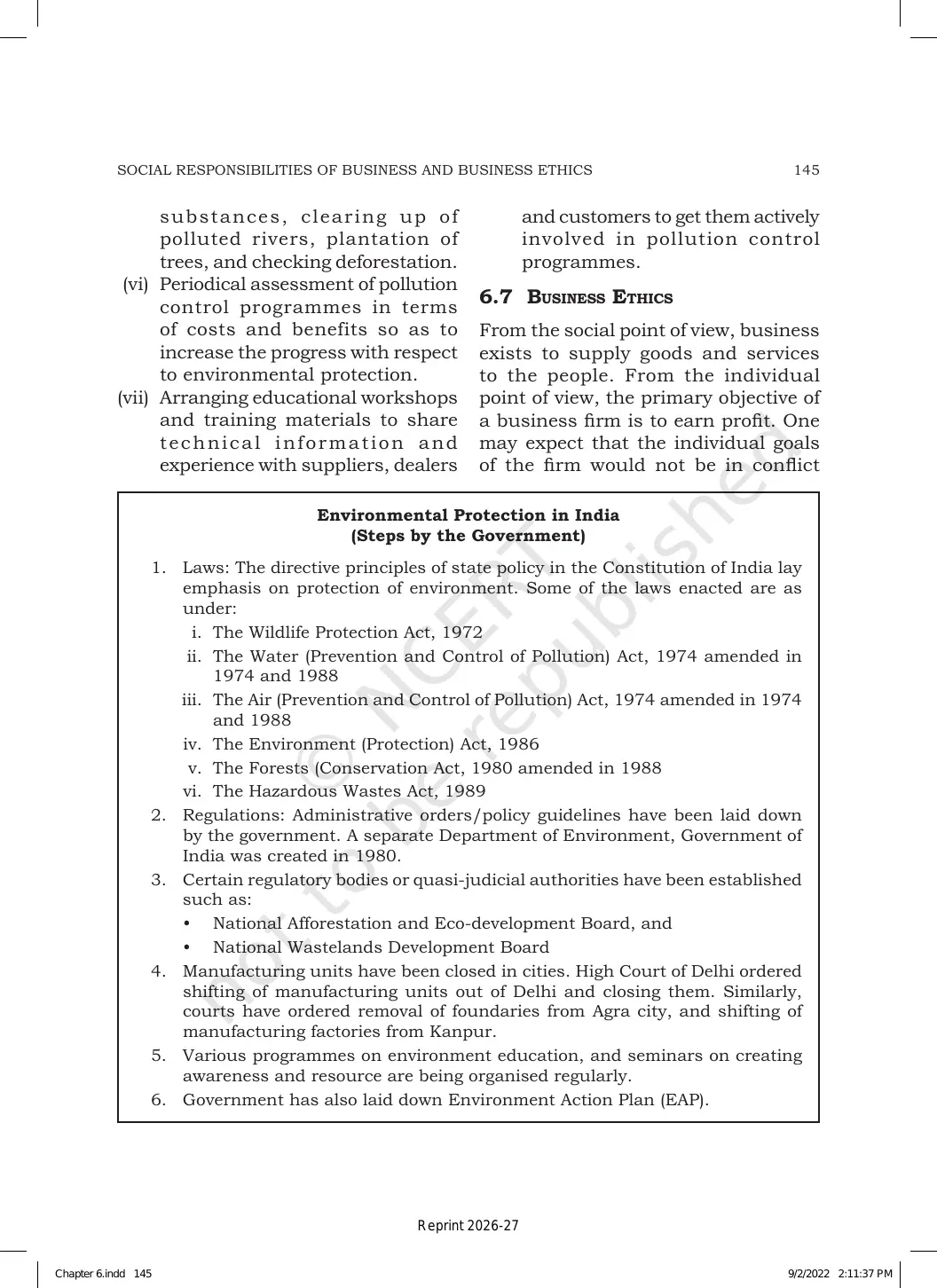
- Business role in environmental protection
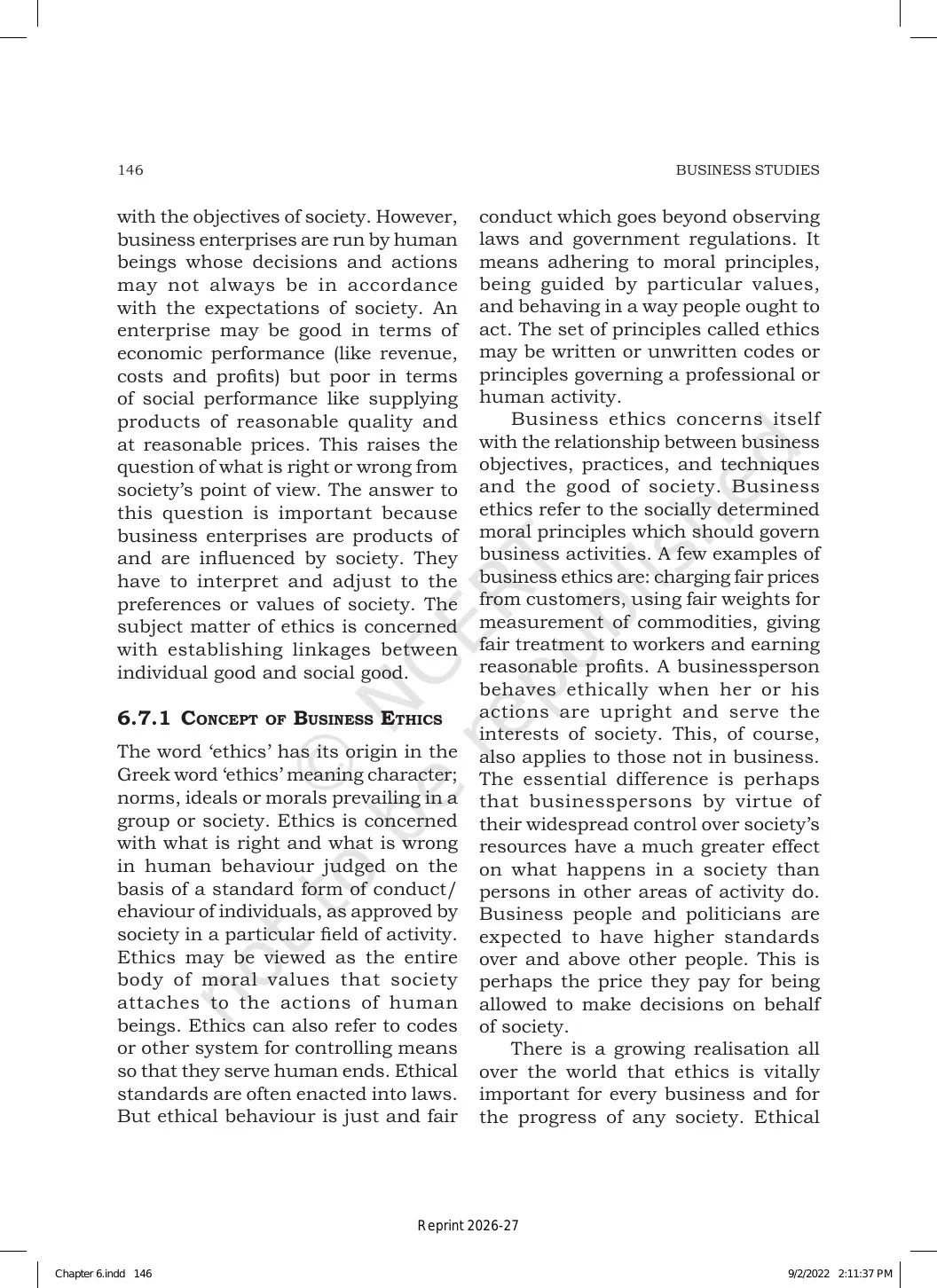
- Meaning and elements of business ethics
Social Responsibilities and Business Ethics Video Lesson
Source: Magnet Brains on YouTube
Meaning of Social Responsibility in Business
Social responsibility means taking decisions that support both business goals and society's values. A firm uses society's labour, capital and natural resources. NCERT explains that the firm must also protect the interests affected by its actions.
Profit and responsibility are not opposites. Responsible conduct can build trust, reduce conflict and support long-term survival. It also asks managers to consider effects that may not appear in short-term accounts.
Arguments For and Against Social Responsibility
| Arguments for | Arguments against |
|---|---|
| Long-term interest of the business | Profit is the main business objective |
| Better public image and social support | Social spending may raise costs |
| Avoids strict government regulation | Managers may lack social skills |
| Business has resources to solve problems | Public support may be uncertain |
For exam answers, state each argument with a short explanation. Do not treat charity as the only form of responsibility.
Responsibilities of Business Towards Stakeholders
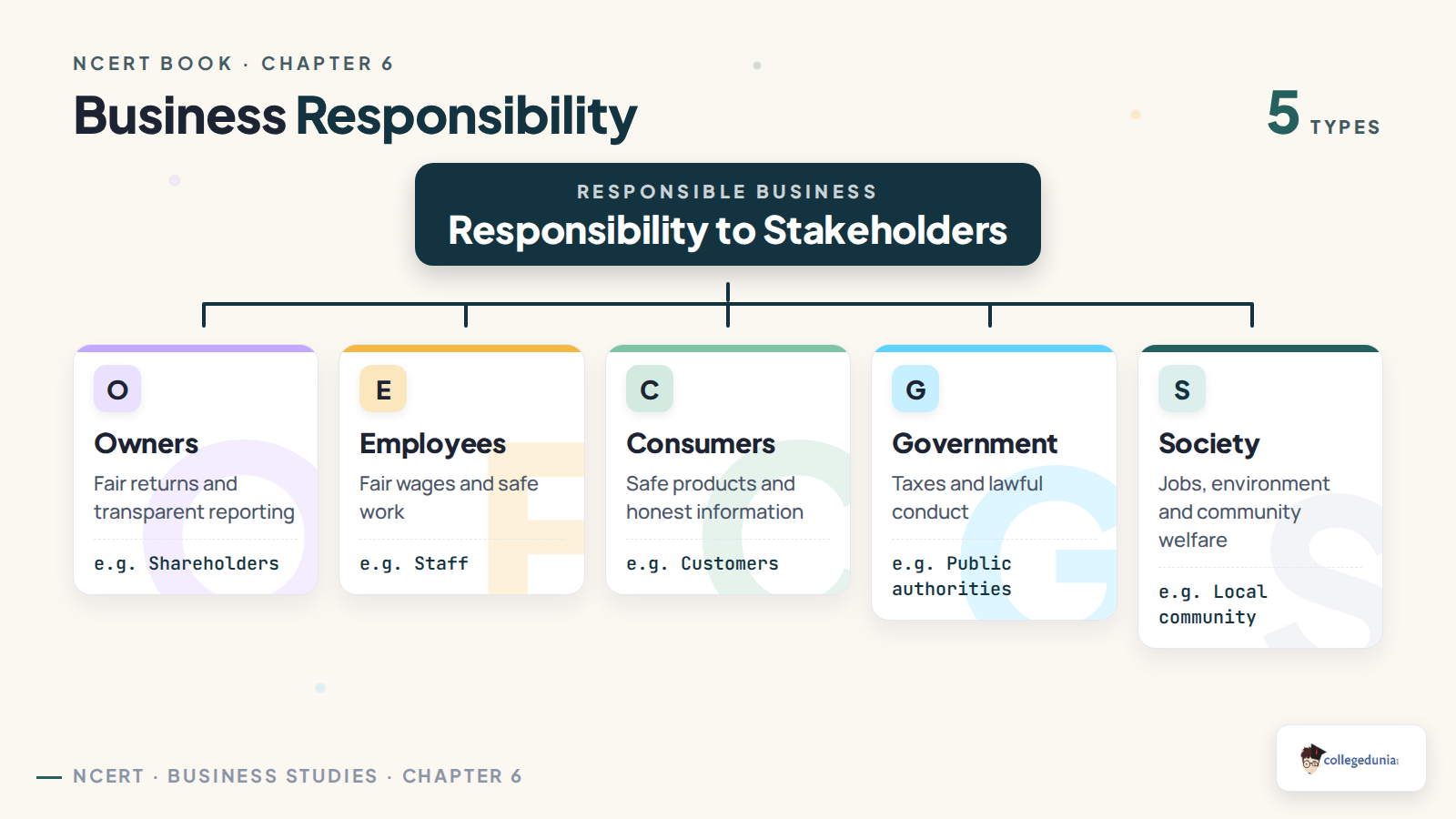
A stakeholder is any group affected by the business. The chapter separates these duties so students can write clear, point-wise answers.
- Owners: protect investment and provide fair returns.
- Employees: pay fair wages and provide safe conditions.
- Consumers: supply safe goods with honest information.
- Government: pay taxes and follow the law.
- Community: create jobs and support social welfare.
Business and Environmental Protection
Industrial activity may create air, water, land and noise pollution. The chapter connects prevention with better technology, waste treatment and responsible use of natural resources.
- Use cleaner production methods and safer inputs.
- Treat waste before releasing it.
- Follow pollution-control laws and standards.
- Train employees to handle materials safely.
Prevention usually costs less than repairing environmental damage later. This point works well as the closing line in a long answer.
Business Ethics and the Five Elements of an Ethical Programme
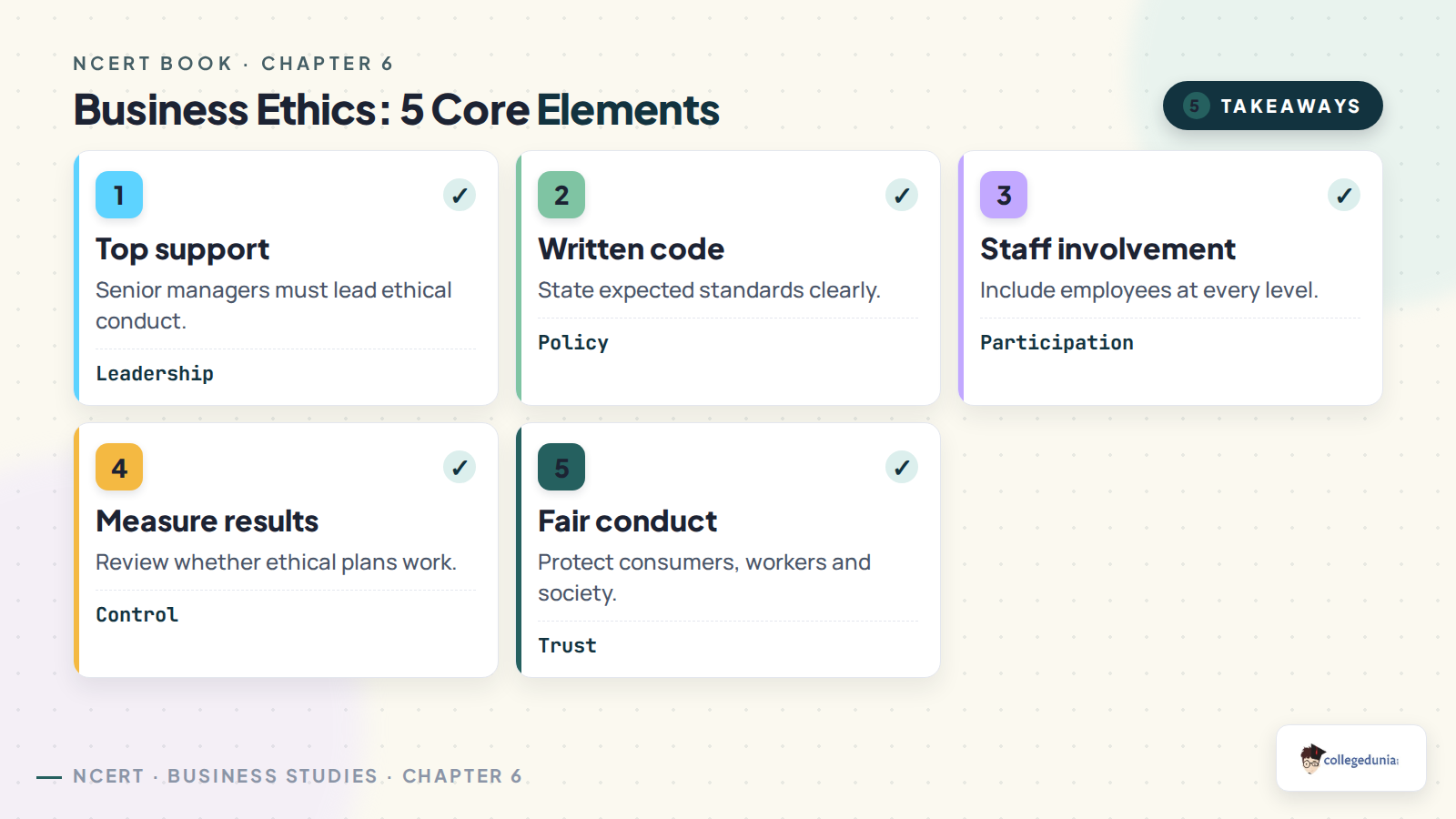
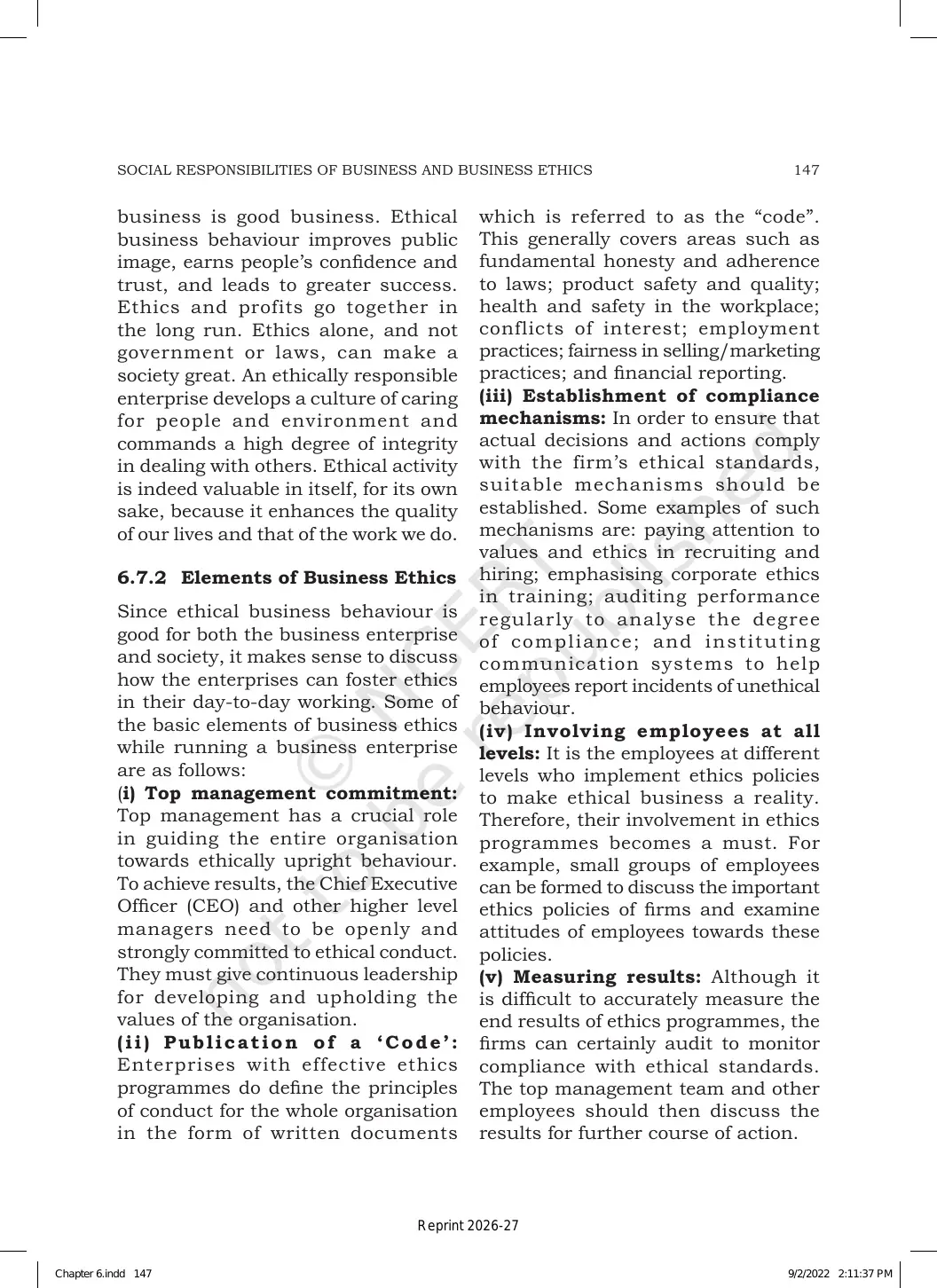
Business ethics are moral principles that guide business behaviour. An ethical programme needs visible support from senior managers and clear rules for everyday decisions.
- Top management must commit to ethical conduct.
- A written code should state expected behaviour.
- Employees at every level should take part.
- The firm needs systems to check ethical results.
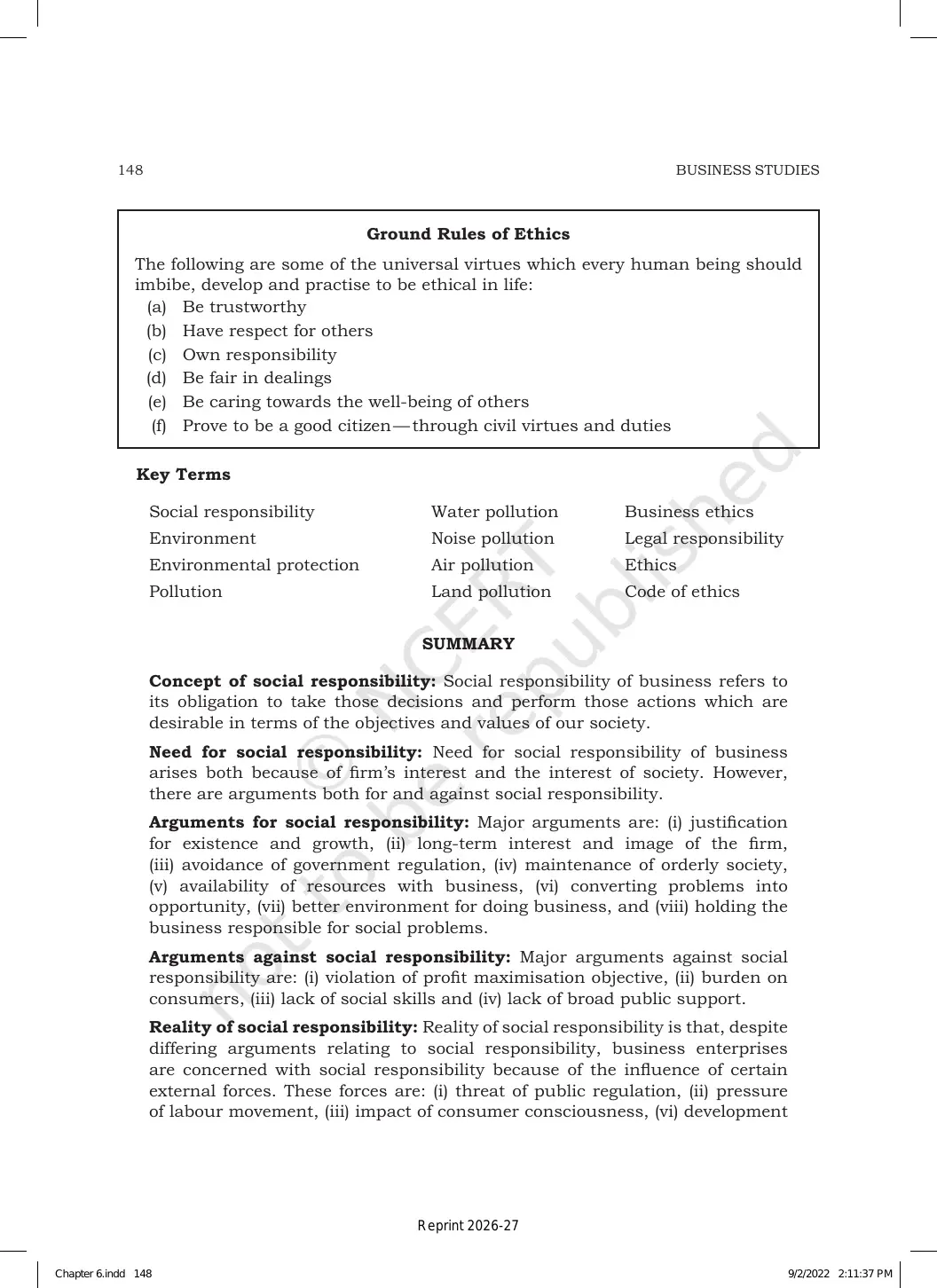
- Decisions should protect fairness and public trust.
How to Study Social Responsibilities and Business Ethics
Start with the official PDF and underline the NCERT headings. Turn each stakeholder duty into a two-column chart. Then practise one answer on pollution control and one on business ethics.
- Learn the definition of social responsibility.
- Compare arguments for and against it.
- Revise five stakeholder groups from the infographic.
- Write the five elements of business ethics from memory.
Related Class 11 Business Studies Chapter 6 Resources
| Resource | Use it for |
|---|---|
| Chapter 6 NCERT Solutions | Textbook question answers |
| Chapter 6 Notes | Fast concept revision |
| Chapter 6 Handwritten Notes | One-shot recall |
All Class 11 Business Studies NCERT Book Chapters
| Chapter | NCERT Book PDF |
|---|---|
| Chapter 3 | Private, Public and Global Enterprises |
| Chapter 4 | Business Services |
| Chapter 5 | Emerging Modes of Business |
| Chapter 7 | Formation of a Company |
Social Responsibilities of Business and Business Ethics NCERT Book FAQs
Ques. What does social responsibility of business mean?
Ans. It means taking decisions that protect business interests while respecting society's objectives and values.
Ques. Which stakeholder groups are covered in this chapter?
Ans. The chapter covers owners, investors, employees, consumers, government and the wider community.
Ques. Why should businesses protect the environment?
Ans. Businesses use natural resources and may create pollution, so they must prevent harm and follow environmental laws.
Ques. What is business ethics?
Ans. Business ethics are moral principles that guide fair and responsible decisions in business.
Ques. What are the main elements of business ethics?
Ans. They include top management support, a written code, employee involvement, checking systems and fair conduct.



Comments