



The NCERT Class 11 English Woven Words Chapter 11 Telephone Conversation PDF gives students the official poem and exercise for the 2026-27 session. Use it to read Wole Soyinka's phone-call satire and revise how polite words can hide racial prejudice.
- Core focus: satire, dramatic monologue, racism and irony.
- Best use: read the poem once before solving NCERT questions.
- Exam value: questions often ask about tone, colour imagery and the final silence.
NCERTBookChapter11TelephoneConversation.pdf?page=1&dpi=150)
NCERTBookChapter11TelephoneConversation.pdf?page=2&dpi=150)
NCERTBookChapter11TelephoneConversation.pdf?page=3&dpi=150)
This official NCERT PDF should be used as the source text before writing answers on Soyinka's satire, imagery and speaker-landlady exchange.
Student Feedback: In a Collegedunia check of 7,420 Class 11 English students, most students said Telephone Conversation became clearer after they marked the landlady's questions and the speaker's ironic replies separately.
What Telephone Conversation NCERT Book PDF Covers
NCERT prints Telephone Conversation in the poetry section of Woven Words. The poem presents a Black speaker who calls a landlady about renting a room. The call changes when the landlady asks about his skin colour.
The poem is short, but each line carries pressure. The speaker stays calm and turns the landlady's racist question into satire. This makes the PDF useful for studying dramatic monologue, irony and social criticism.
- Poem section: the speaker, the landlady, the public phone booth and the call.
- Theme section: racism, prejudice, dignity and social embarrassment.
- Exercise section: understanding, appreciation and interpretation questions from NCERT.
Telephone Conversation Explained in Simple Language
Source: Magnet Brains on YouTube
Satire and Racism in Telephone Conversation
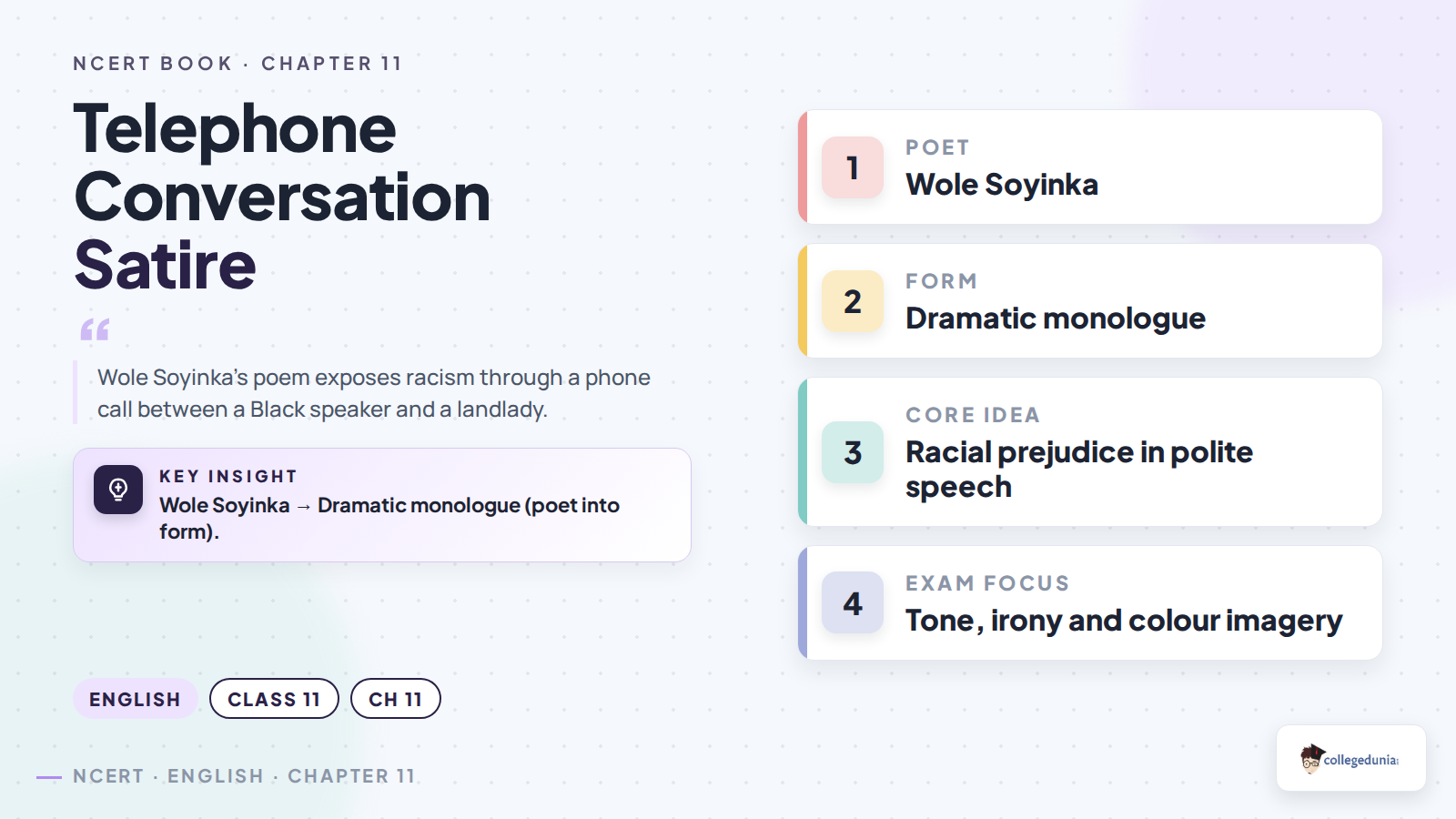
Soyinka uses a simple phone call to show how racism can enter ordinary speech. The landlady does not refuse the speaker at first. She asks him to define how dark he is, as if skin colour decides whether he may rent the room.
The satire comes from the speaker's calm and exact replies. He answers the absurd question with comic precision. This exposes the prejudice without turning the poem into a direct lecture.
- Situation: a rental enquiry changes into a test of skin colour.
- Conflict: the speaker wants a room, but the landlady judges his identity.
- Satire: the speaker makes the racist question sound foolish.
- Ending: the final silence shows the landlady has no fair answer.
Speaker and Landlady Exchange in the Poem
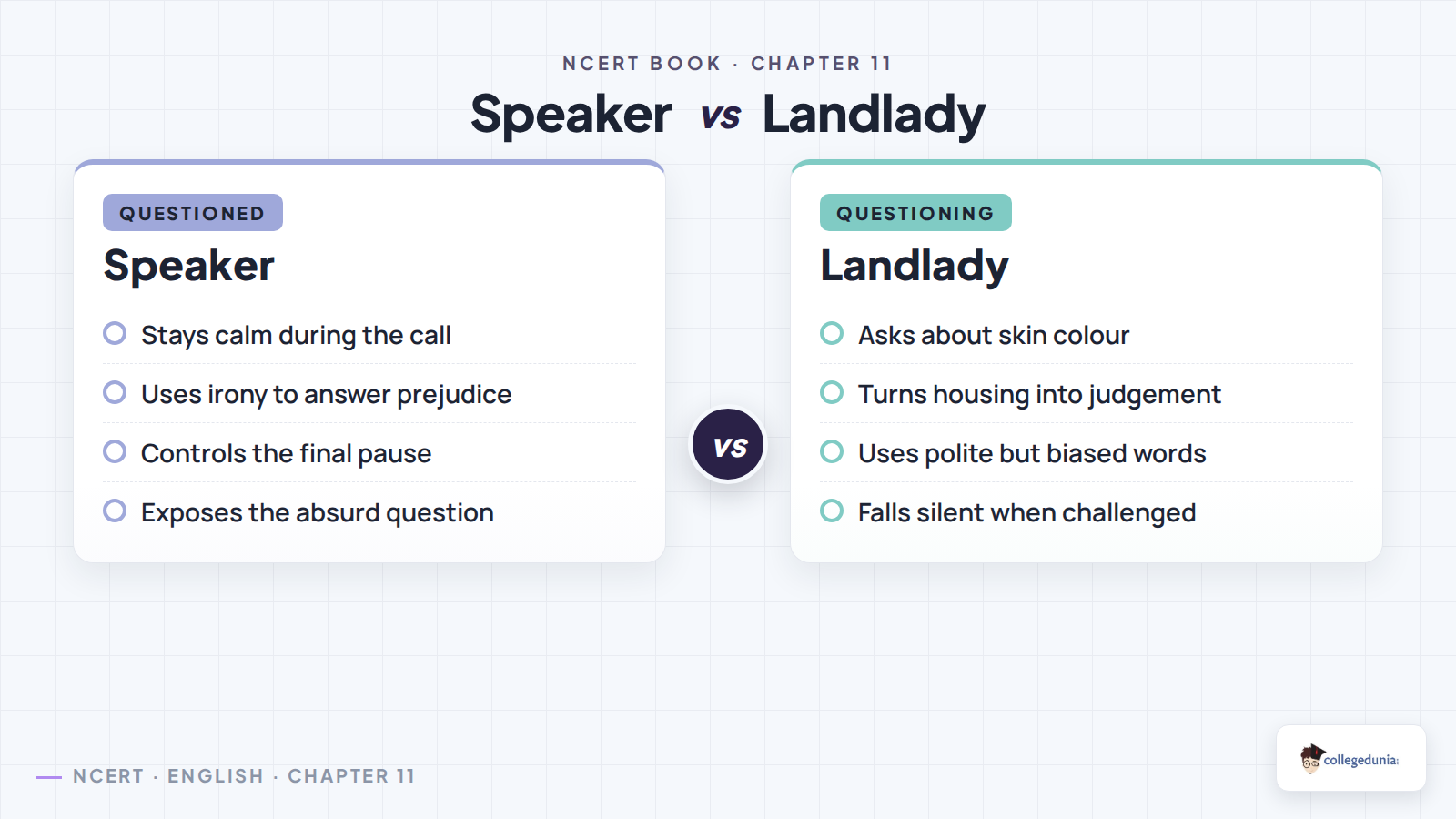
The speaker is controlled, witty and alert. He understands the insult, but he does not lose his voice. The landlady sounds polite, yet her questions reduce him to skin shade and social suspicion.
Good answers should compare the two voices. The speaker's irony gives him power. The landlady's pause shows her prejudice has been exposed. The phone call becomes a contest between dignity and bias.
| Voice in the poem | What the PDF shows | Answer point |
|---|---|---|
| Speaker | Answers calmly and turns the question back | His irony protects his dignity. |
| Landlady | Asks how dark he is before deciding | Her politeness hides racial prejudice. |
| Final silence | The call pauses after the speaker's challenge | The silence shows moral defeat. |
Tone, Irony and Colour Imagery in Telephone Conversation
The official PDF helps students see the poem's language choices in order. Soyinka uses colour terms, pauses, capital letters and everyday telephone speech. These details make the poem dramatic even though only a short call is shown.
The tone moves from practical to tense and then sharply comic. The speaker uses irony when he describes his body with unusual exactness. This answer point is important because the poem attacks racism through language.
- Colour imagery: skin shade becomes the landlady's unfair test.
- Irony: the speaker's polite detail makes the question look absurd.
- Pauses: silence shows shock, discomfort and loss of control.
- Public setting: the phone booth adds pressure to the speaker's response.
How to Use the Chapter 11 Book PDF for Revision
Use the PDF in three rounds. First, read the full poem aloud to catch the voice. Second, underline the landlady's questions and the speaker's replies. Third, answer each NCERT question with one line from the poem as proof.
- For theme answers: connect the room enquiry with racial prejudice.
- For tone answers: explain how calm speech becomes sharp satire.
- For imagery answers: quote or refer to colour words carefully.
- For appreciation: mention dramatic monologue and the final silence.
Telephone Conversation Class 11 Related Resources
| Resource | Best use | Link |
|---|---|---|
| NCERT Solutions | Use for textbook answers and appreciation questions. | Telephone Conversation Solutions |
| Revision Notes | Use for summary, themes and answer cues. | Telephone Conversation Notes |
| Handwritten Notes | Use for one-shot visual revision before class tests. | Telephone Conversation Handwritten Notes |
All Class 11 English Woven Words NCERT Book Chapters
Telephone Conversation Class 11 English NCERT Book FAQs
Ques. What is included in the Class 11 English Woven Words Chapter 11 NCERT PDF?
Ans. It includes the official NCERT poem Telephone Conversation by Wole Soyinka and the exercise printed after the poem.
Ques. Who wrote Telephone Conversation in Woven Words?
Ans. Telephone Conversation was written by Wole Soyinka. It appears in the poetry section of Class 11 Woven Words.
Ques. What is the main theme of Telephone Conversation?
Ans. The poem exposes racial prejudice through a phone call between a Black speaker and a landlady.
Ques. Why is the final silence important in the poem?
Ans. The silence shows that the landlady cannot answer the speaker's ironic challenge without revealing her bias.
Ques. How should students use this PDF for 2026-27 revision?
Ans. Students should read the poem, mark the speaker-landlady exchange and practise answers on satire, tone and imagery.



Comments