



The NCERT Class 11 English Woven Words Chapter 19 Ajamil and the Tigers PDF gives students the official Arun Kolatkar poem and textbook exercise for the 2026-27 session. Use it to read the fable closely before writing answers on power, satire and Ajamil's quick thinking.
- Core focus: fable, satire, power, fear and clever resistance.
- Best use: read the poem once, then mark every shift in Ajamil's reply.
- Exam value: questions usually test allegory, tone, treaty ending and animal symbols.
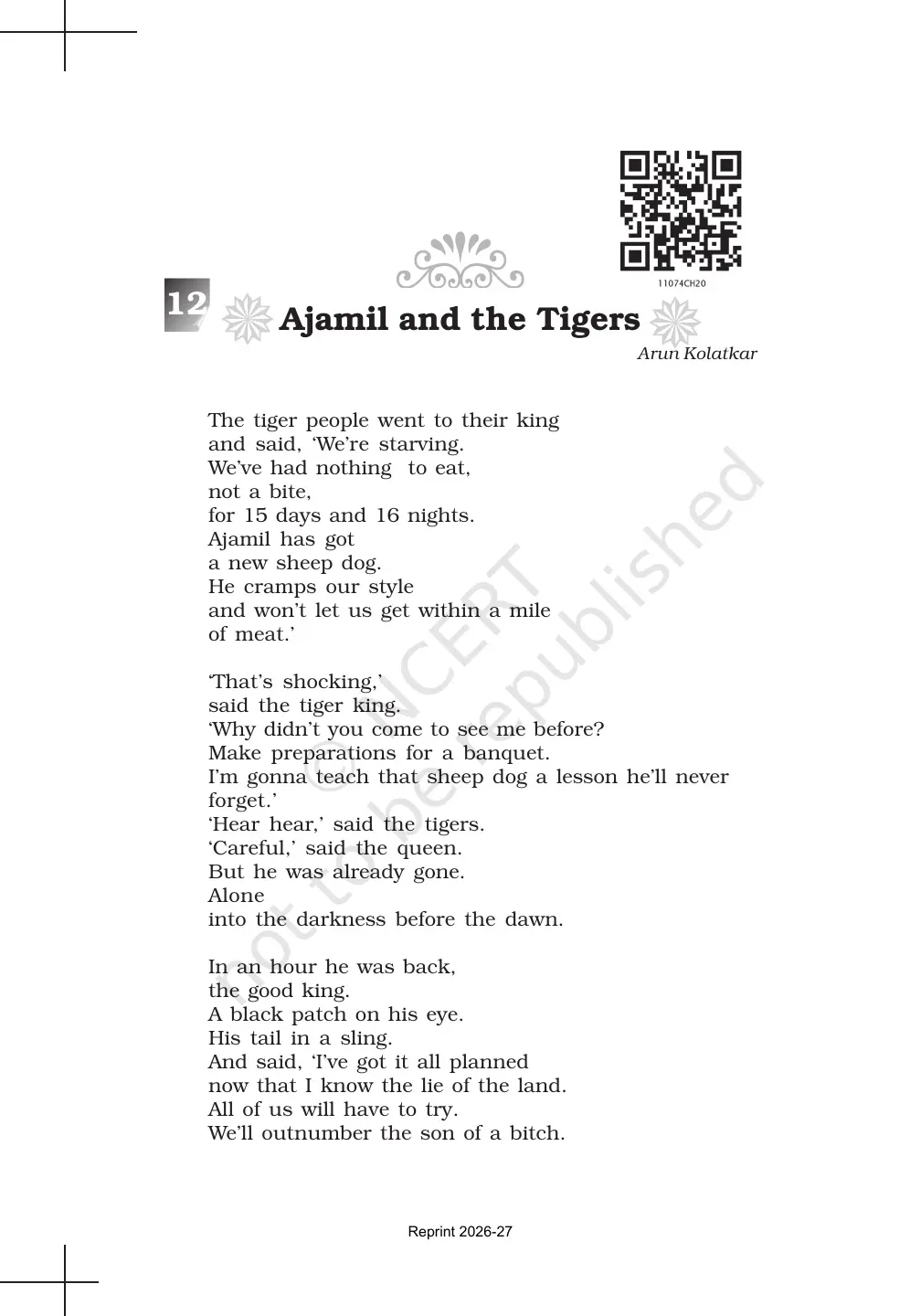
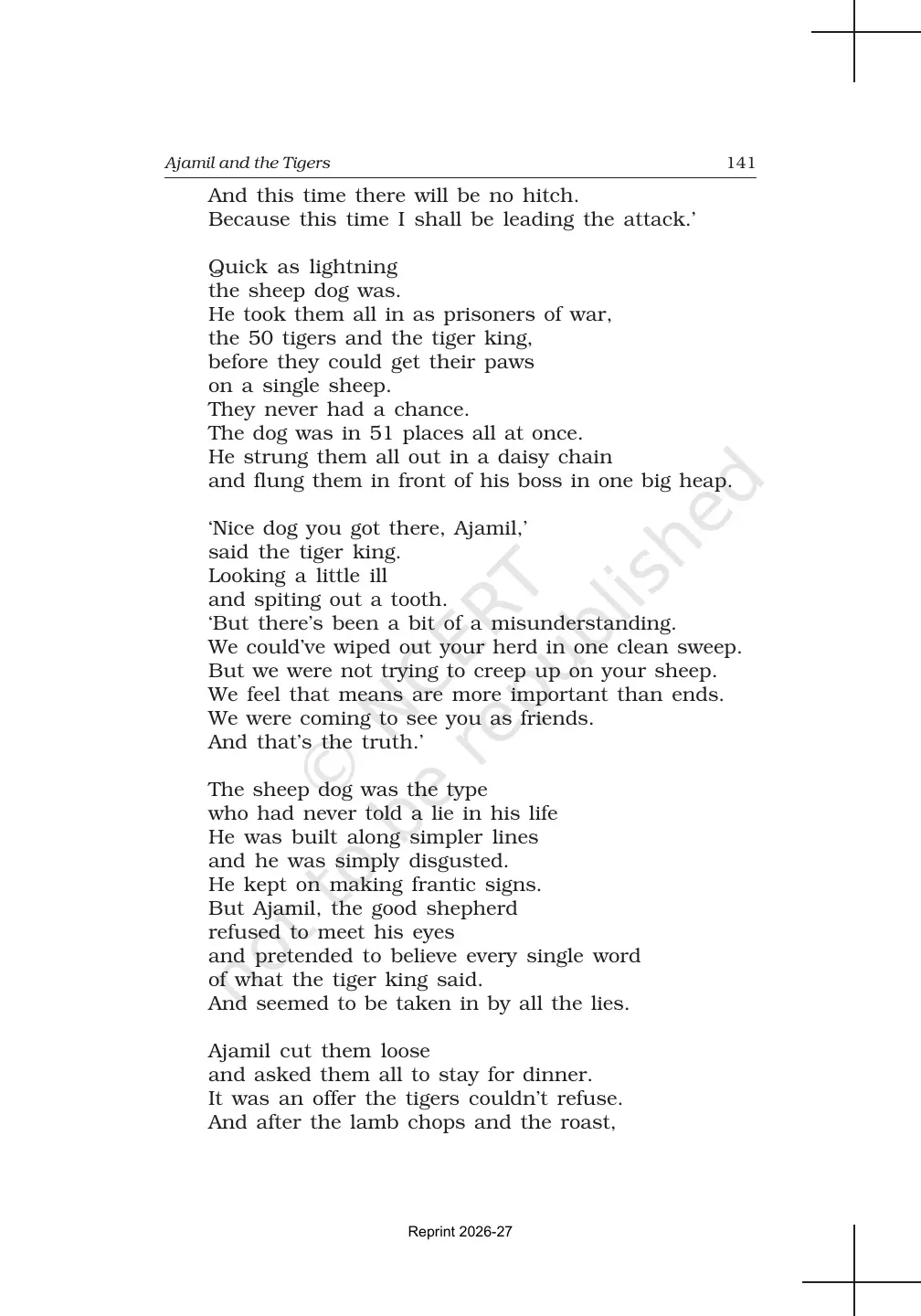
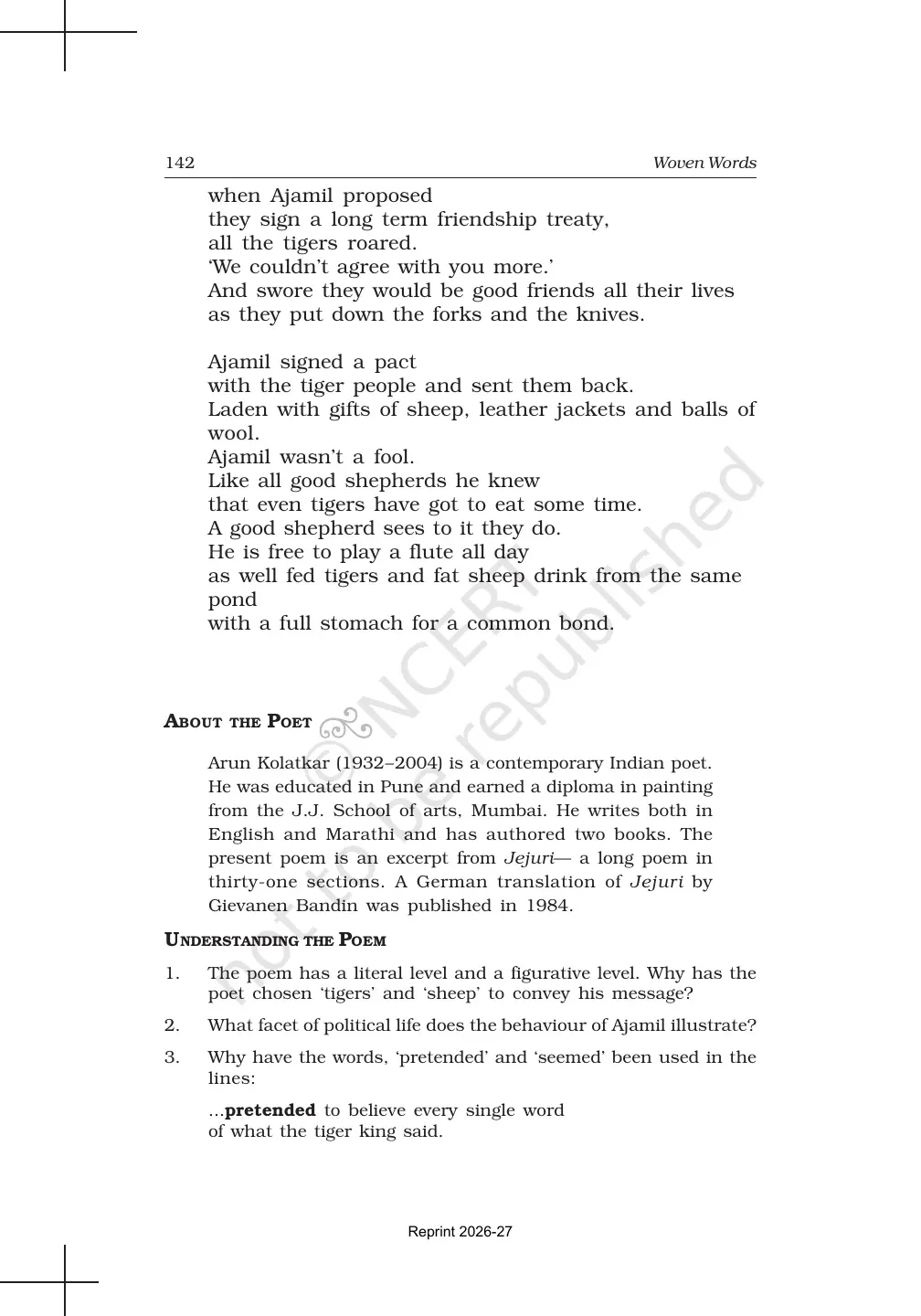
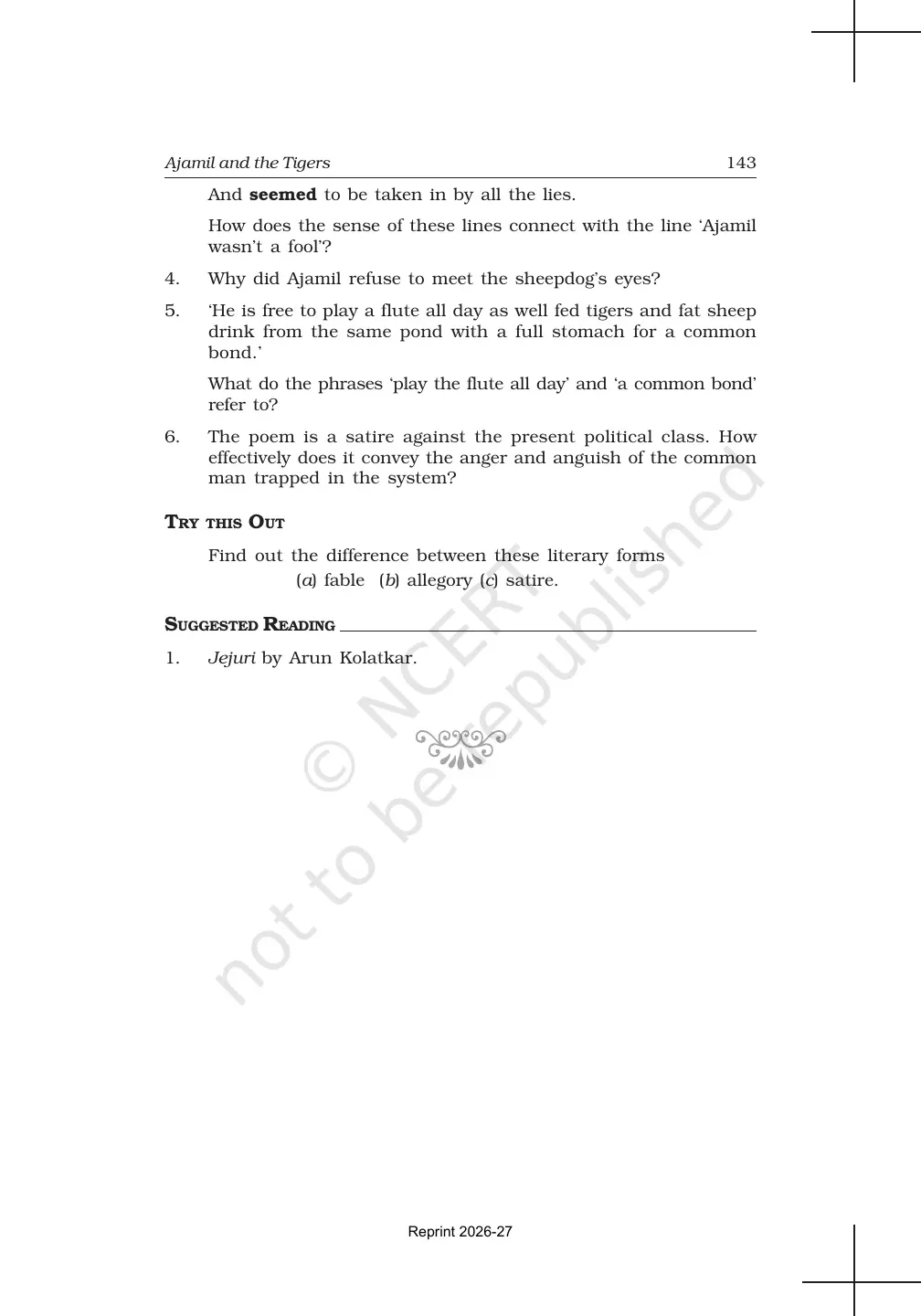
This official NCERT PDF should be used as the source text before writing answers on Ajamil, the tiger king, political satire and the poem's fable structure.
Student Feedback: In a Collegedunia revision check of 8,960 Class 11 English students, most students said the poem became easier after they read it as both an animal story and a political satire.
What Ajamil and the Tigers NCERT Book PDF Covers
NCERT places Ajamil and the Tigers in the poetry section of Woven Words. The PDF includes the poem by Arun Kolatkar and the textbook questions that follow it.
The poem looks like a simple fable about a shepherd and tigers. Under that surface, it shows how power can frighten ordinary people, and how wit can disturb that power. The key answer point is that the animal story works as satire, not just as a funny incident.
- Poem section: Ajamil, his sheep, the tiger king, the tiger group and the tense exchange.
- Theme section: fear, negotiation, political power, cleverness and survival.
- Exercise section: questions on tone, allegory, images and the treaty ending.
Ajamil and the Tigers Poem Explanation
Source: Magnet Brains on YouTube
Ajamil and the Tigers Story Flow
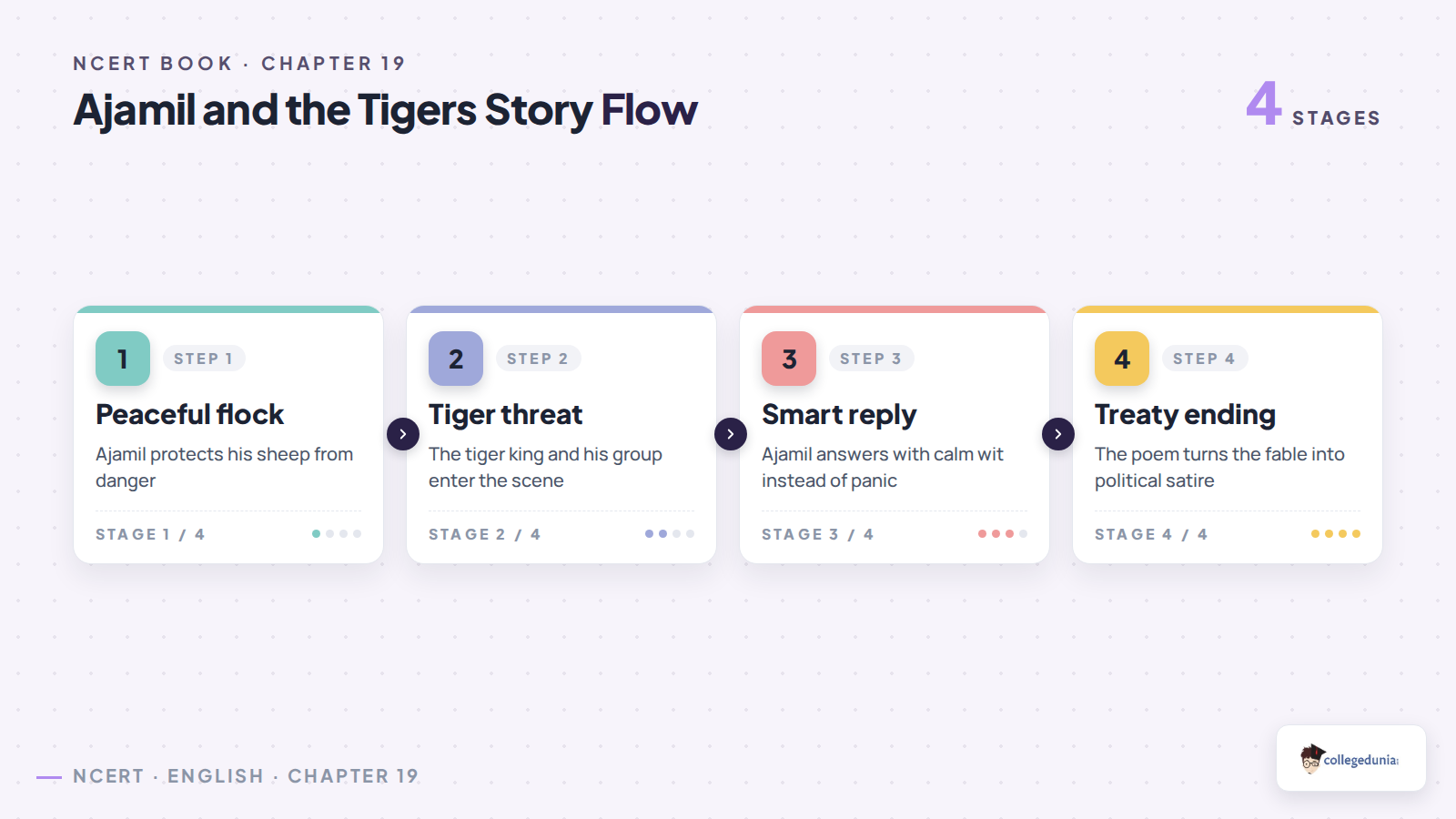
The story begins with Ajamil guarding his sheep. The arrival of the tiger king and the other tigers changes the situation. Ajamil seems weaker, but he does not answer with panic.
His strength is his quick use of language. He treats danger as a negotiation. The poem's ending turns that negotiation into a sharp comment on power, fear and public agreements.
- Opening situation: a shepherd is placed before a stronger force.
- Main tension: the tiger group can use fear, but Ajamil can use wit.
- Closing effect: the treaty ending makes the fable sound political.
Ajamil and Tigers as Satire
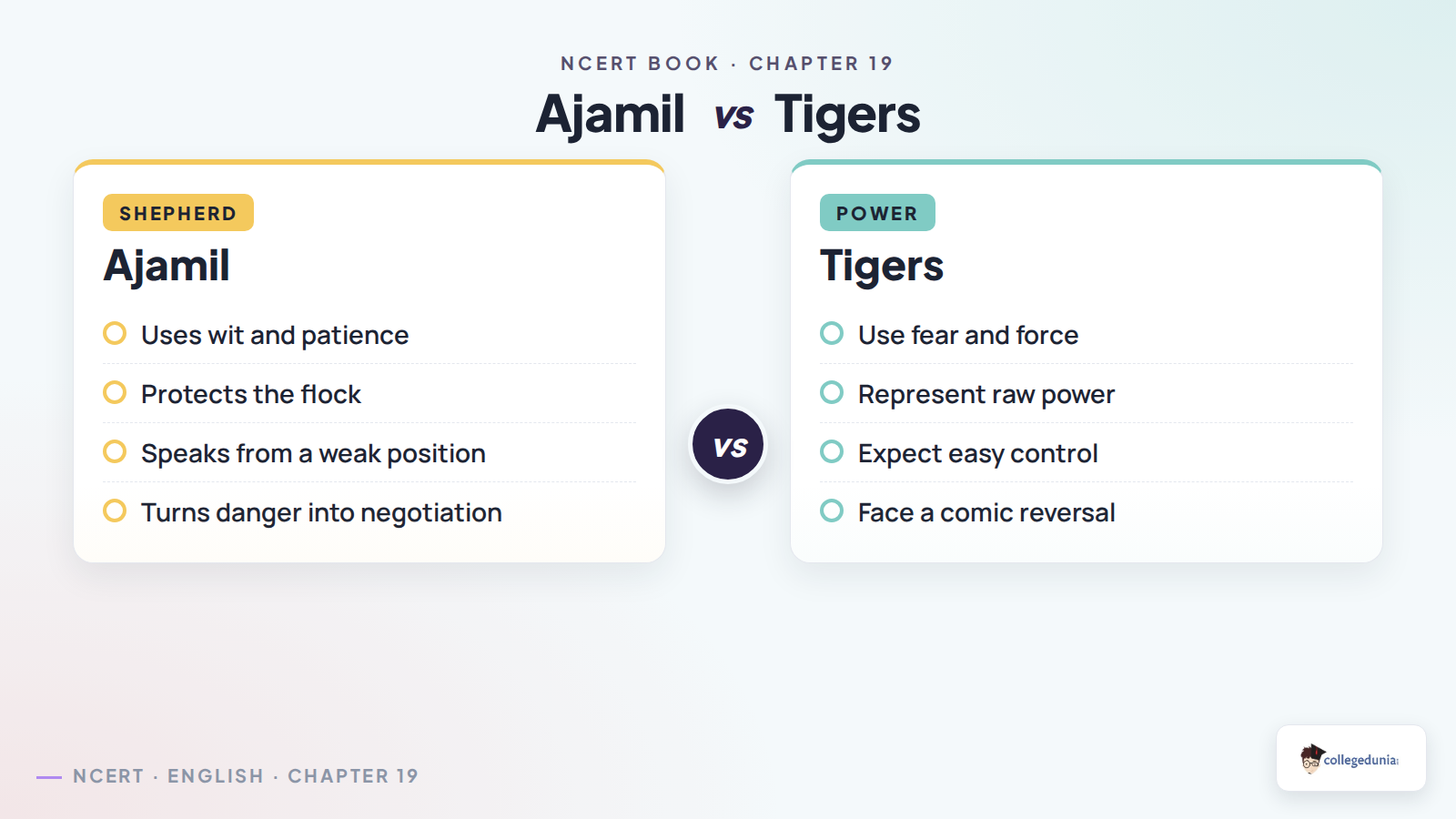
Kolatkar does not write the poem as a plain animal tale. The tigers stand for power that expects obedience. Ajamil stands for a person who has fewer weapons but refuses to surrender his mind.
Good answers should explain both levels of meaning. On the literal level, the poem has a shepherd, sheep and tigers. On the figurative level, it studies power, threat, bargaining and survival. This double level is what makes the poem useful for exam answers.
| Image or character | Literal role | Answer cue |
|---|---|---|
| Ajamil | Shepherd facing danger | Represents wit, courage and survival under pressure. |
| Tigers | Threatening animals | Suggest power, force and organised intimidation. |
| Sheep | Ajamil's flock | Show the vulnerable group that needs protection. |
| Treaty | Agreement at the end | Turns the fable into a political joke. |
How to Use the Chapter 19 Book PDF for Revision
Use the PDF in three rounds. First, read the poem as a story and identify who speaks or acts. Second, mark the lines where fear turns into negotiation. Third, write one answer that explains the literal level and one that explains the satire.
- For theme answers: connect power, fear and Ajamil's clever reply.
- For symbol answers: explain what the tigers and sheep suggest beyond the story.
- For tone answers: mention humour, tension and political sharpness.
- For long answers: use the treaty ending as proof of satire.
Ajamil and the Tigers Class 11 Related Resources
| Resource | Best use | Link |
|---|---|---|
| NCERT Solutions | Use for textbook answers on satire, allegory and tone. | Ajamil and the Tigers Solutions |
| Notes | Use for summary, symbols, themes and answer frames. | Ajamil and the Tigers Notes |
| Handwritten Notes | Use for fast visual revision before tests. | Ajamil and the Tigers Handwritten Notes |
All Class 11 English Woven Words NCERT Book Chapters
Ajamil and the Tigers Class 11 English NCERT Book FAQs
Ques. What is included in the Class 11 English Woven Words Chapter 19 NCERT PDF?
Ans. It includes the official NCERT poem Ajamil and the Tigers by Arun Kolatkar and the textbook exercise questions.
Ques. Who wrote Ajamil and the Tigers?
Ans. Ajamil and the Tigers was written by Arun Kolatkar, an Indian poet known for sharp, compact writing.
Ques. What is the main idea of Ajamil and the Tigers?
Ans. The poem uses an animal fable to show power, fear, clever resistance and political satire.
Ques. Why are the tigers important in the poem?
Ans. The tigers create the threat in the story and also suggest organised power on the figurative level.
Ques. How should students use this PDF for 2026-27 revision?
Ans. Students should read the poem, mark the fable elements and practise answers on satire, symbols and the treaty ending.



Comments