



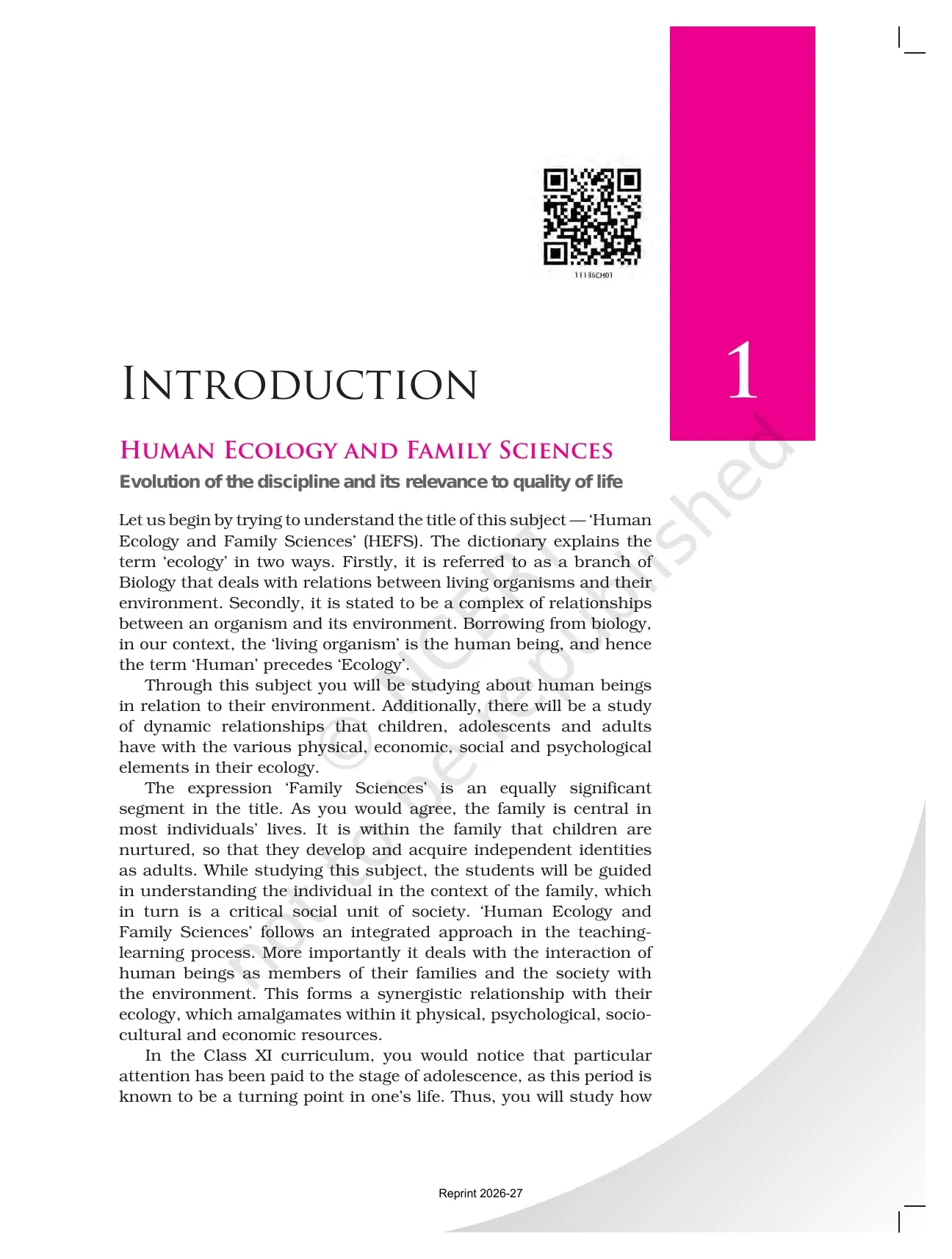
The NCERT Class 11 Home Science Chapter 1 NCERT Book PDF gives students the official 2026-27 source chapter for Introduction: Evolution of the Discipline and its Relevance to Quality of Life. The chapter explains how Home Science became Human Ecology and Family Sciences, and why the subject studies people, families and their environments together.
- Download the 4-page official NCERT chapter PDF for offline reading.
- Revise the meaning of Human Ecology and Family Sciences with textbook wording.
- Use the chapter before reading notes, solved answers or quick revision material.
Student Feedback: In a Collegedunia check-in with 11,420 Class 11 Home Science students, 69% said Chapter 1 became easier after they linked Human Ecology, family needs and quality of life in one flow.
This NCERT Book PDF follows the 2026-27 reprint and should be used as the source text before attempting notes or solutions.
Class 11 Home Science Chapter 1 NCERT Book PDF Highlights
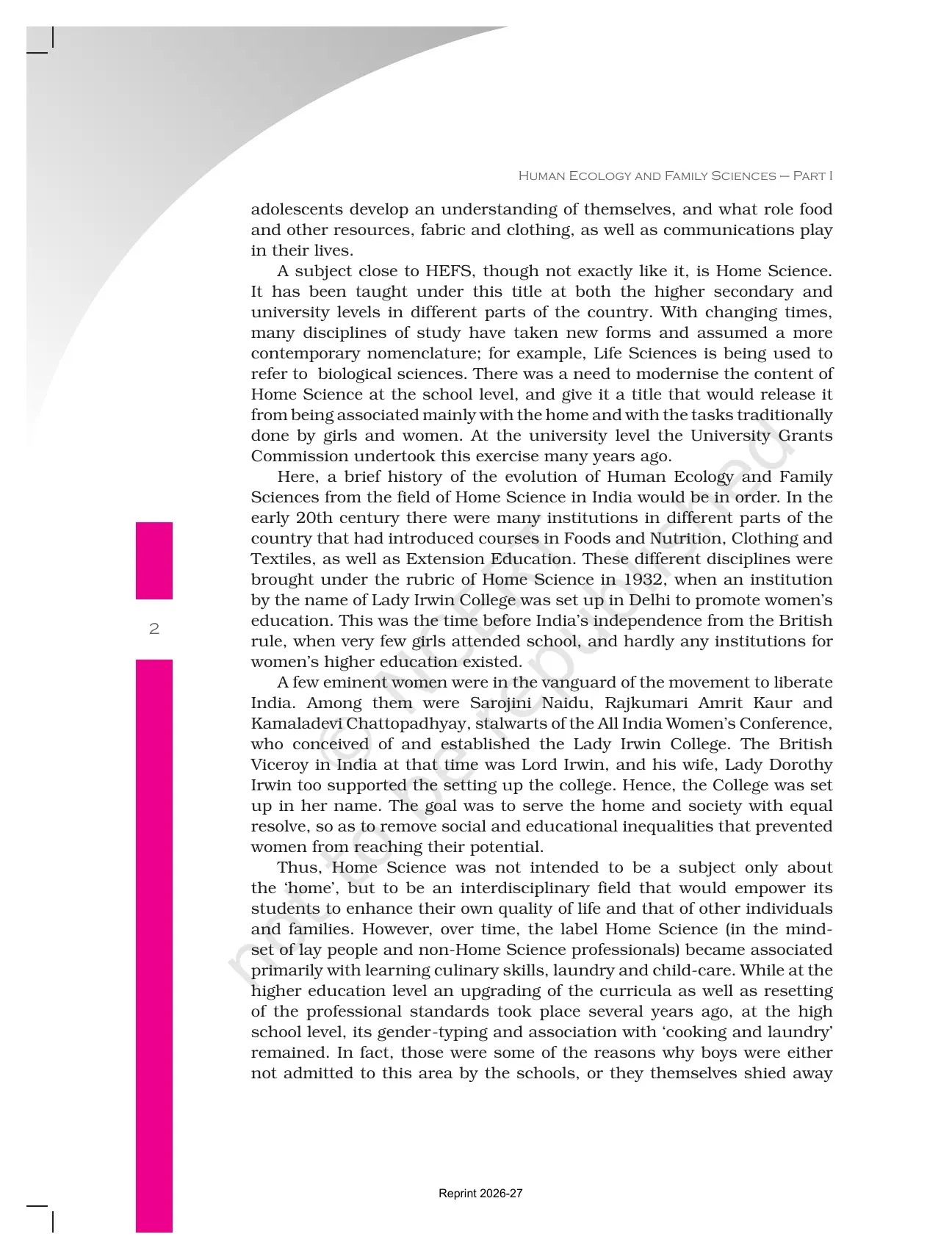
Chapter 1 introduces the new name and wider meaning of Home Science. NCERT explains that Human Ecology and Family Sciences looks at the relationship between human beings and their surroundings. This includes food, health, textiles, homes, families, communication, resources and community life.
| Chapter area | NCERT focus | Why it matters |
|---|---|---|
| Human Ecology | People interacting with physical, social and economic environments | Shows why family life cannot be studied in isolation |
| Family Sciences | Needs of individuals and families across life stages | Connects learning with real homes and communities |
| Quality of life | Health, comfort, dignity, safety and wellbeing | Gives the subject its practical purpose |
| Changing discipline | From household skills to applied life science | Explains why the subject has modern career value |
NCERT treats Home Science as an applied subject for better living, not just a household-skills course.
Evolution of Home Science and Quality of Life
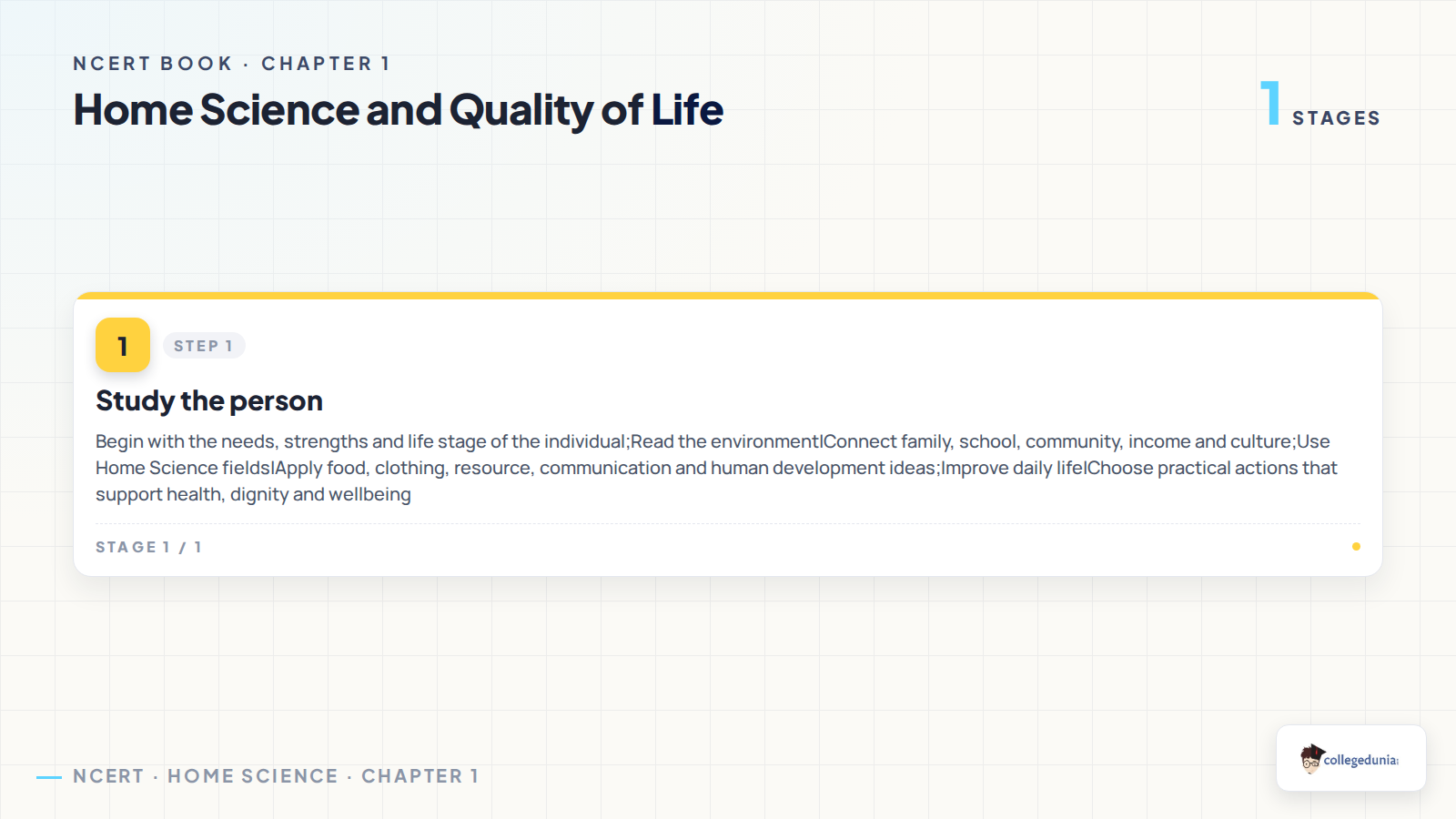
The chapter traces how Home Science grew from a narrow domestic subject into a discipline that uses science, social science and communication to improve daily life. A strong answer should explain both parts: the older focus on home and family, and the newer focus on people in changing environments.
- Earlier focus: food, clothing, household work, child care and family routines.
- Modern focus: wellbeing, resources, communication, development and community support.
- Exam cue: connect every definition with quality of life, not only with household work.
Human Ecology and Family Sciences Video
Source: Excellent Coaching on YouTube
Core Fields in Human Ecology and Family Sciences
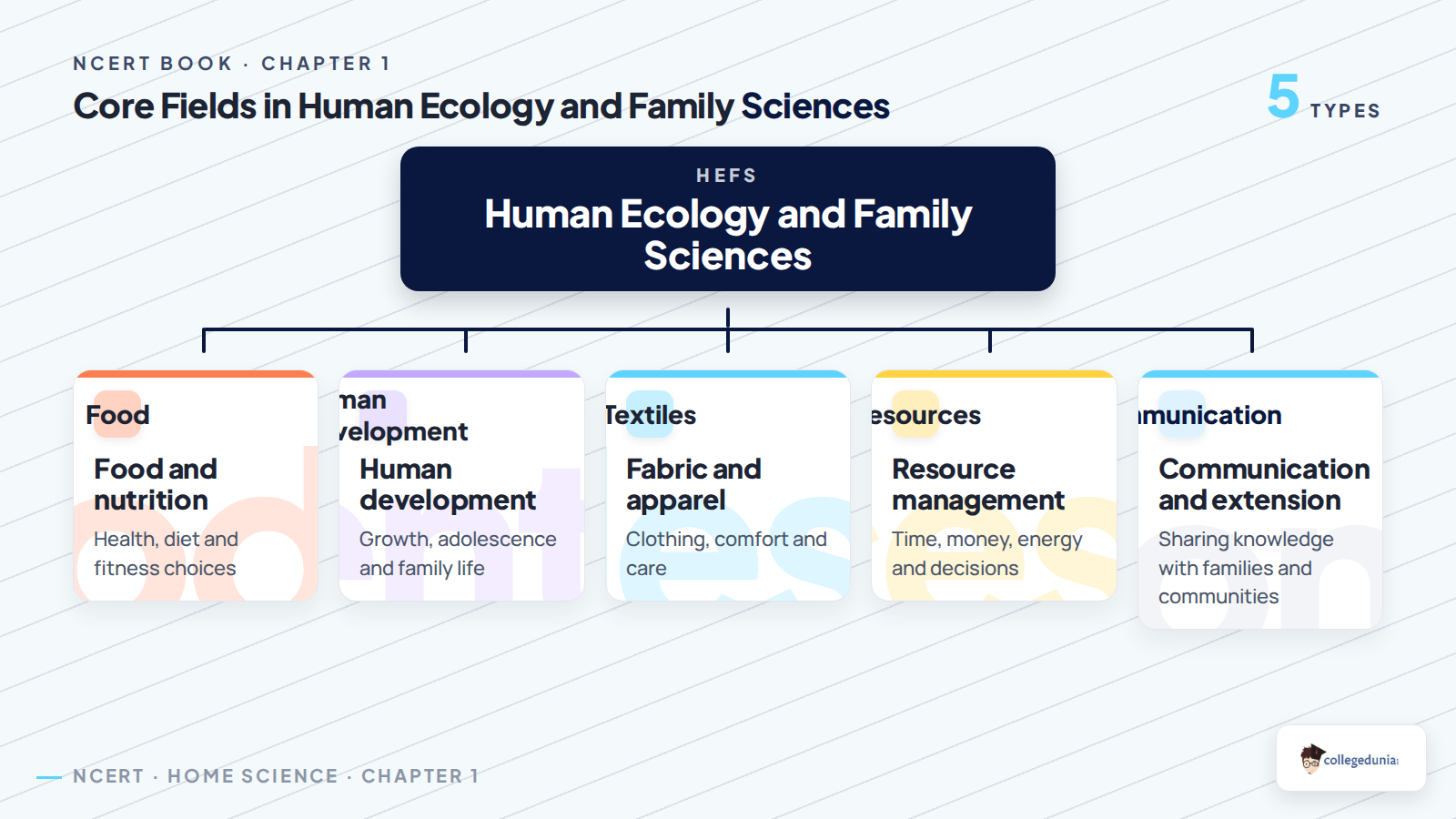
NCERT uses Chapter 1 to prepare students for the topics that follow in the textbook. Food and nutrition, human development, fabrics, resource management and communication are not separate islands. They work together when a family makes daily decisions about health, time, money, relationships and comfort.
Important: write HEFS answers with examples. For instance, a balanced diet improves health, clean clothing supports dignity, and wise resource use reduces stress inside the family.
How to Use This Home Science Chapter 1 Book PDF
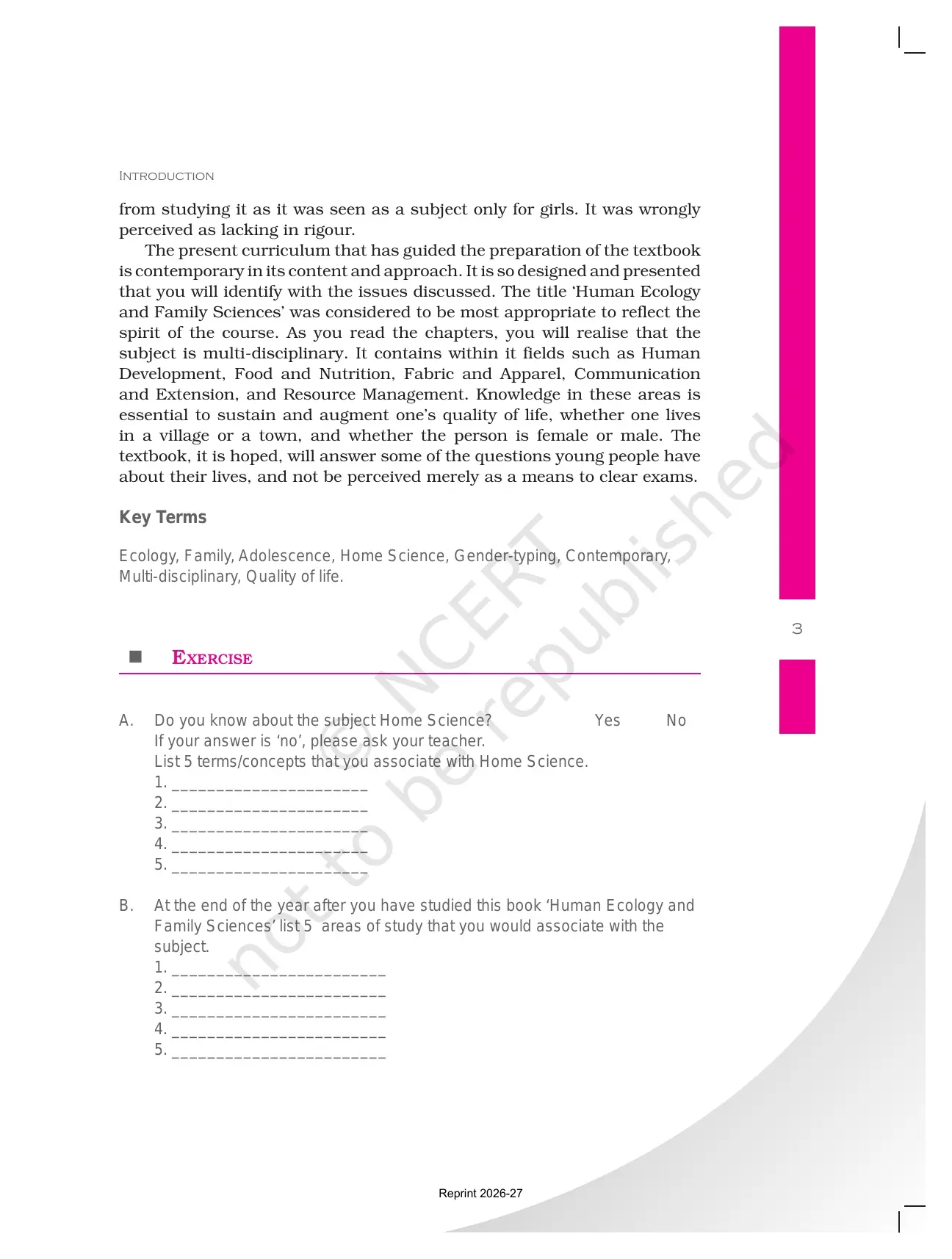
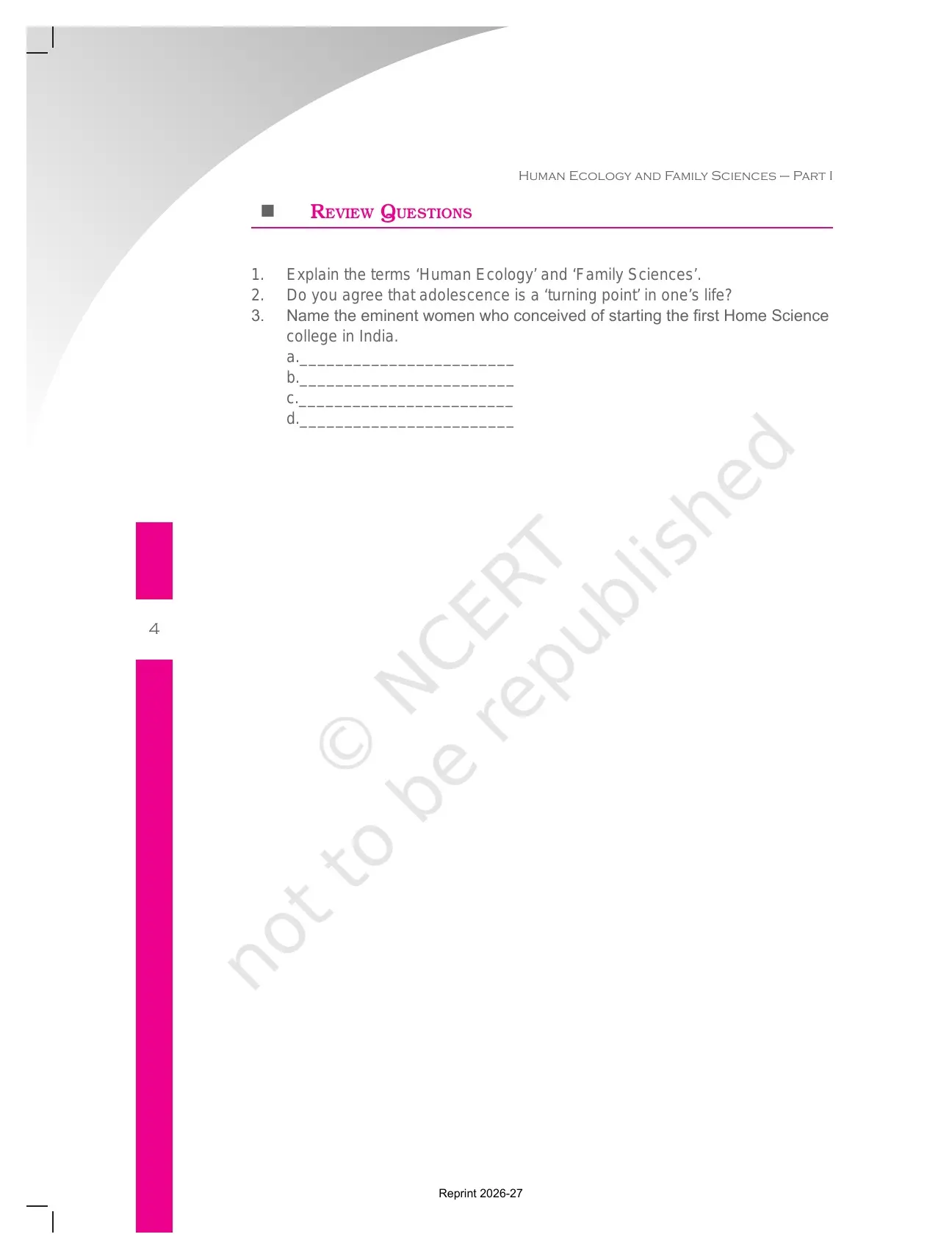
Use the official PDF in three rounds. First, read the introductory paragraphs and underline the meaning of Human Ecology and Family Sciences. Second, mark the examples that show how the subject improves quality of life. Third, connect Chapter 1 with later chapters on self, nutrition, resources, fabrics and communication.
- Make one flashcard for Human Ecology and one for Family Sciences.
- List five fields of Home Science with one real-life example each.
- Revise why quality of life includes health, safety, dignity and relationships.
The safest revision method is to keep the PDF open while writing notes, so definitions stay close to NCERT language.
More Class 11 Home Science Chapter 1 Resources
Use these related resources when you want Chapter 1 in another format. The table stays above the FAQ so students can move from the official book PDF to revision and practice material without losing the chapter context.
| Resource | Best use | Link |
|---|---|---|
| NCERT Book PDF | Read the official 2026-27 source chapter | Open book PDF |
| Notes | Revise HEFS meaning, fields and quality-of-life points | Open notes |
| NCERT Solutions | Practise textbook questions after reading the chapter | Open solutions |
All NCERT Book PDFs for Class 11 Home Science Chapters
The table below keeps the same resource type together, so students can move chapter by chapter through the Class 11 Home Science NCERT book PDFs.
| Chapter | NCERT chapter title | Book PDF |
|---|---|---|
| Chapter 1 | Introduction: Evolution of the Discipline and its Relevance to Quality of Life | Current book PDF |
| Chapter 3 | Food, Nutrition, Health and Fitness | Open book PDF |
| Chapter 4 | Management of Resources | Open book PDF |
| Chapter 5 | Fabrics Around Us | Open book PDF |
| Chapter 6 | Media and Communication Technology | Open book PDF |
| Chapter 7 | Concerns and Needs in Diverse Contexts | Open book PDF |
| Chapter 8 | Nutrition, Health and Well-being | Open book PDF |
| Chapter 9 | Our Apparel | Open book PDF |
Introduction Evolution of the Discipline Class 11 Home Science NCERT Book FAQs
Ques. What is included in the Class 11 Home Science Chapter 1 NCERT Book PDF?
Ans. The PDF includes the official NCERT introduction to Human Ecology and Family Sciences, the evolution of Home Science and its link with quality of life.
Ques. How many pages are there in this Chapter 1 NCERT PDF?
Ans. The official Class 11 Home Science Chapter 1 PDF used here has 4 pages in the local NCERT chapter file.
Ques. Why is Chapter 1 important for Class 11 Home Science?
Ans. It explains the subject's scope before later chapters begin. Students learn how food, clothing, family, resources and communication affect wellbeing.
Ques. Should students read the NCERT book before notes?
Ans. Yes. Read the NCERT PDF first for exact textbook terms, then use notes and solved answers for faster revision and question practice.



Comments