



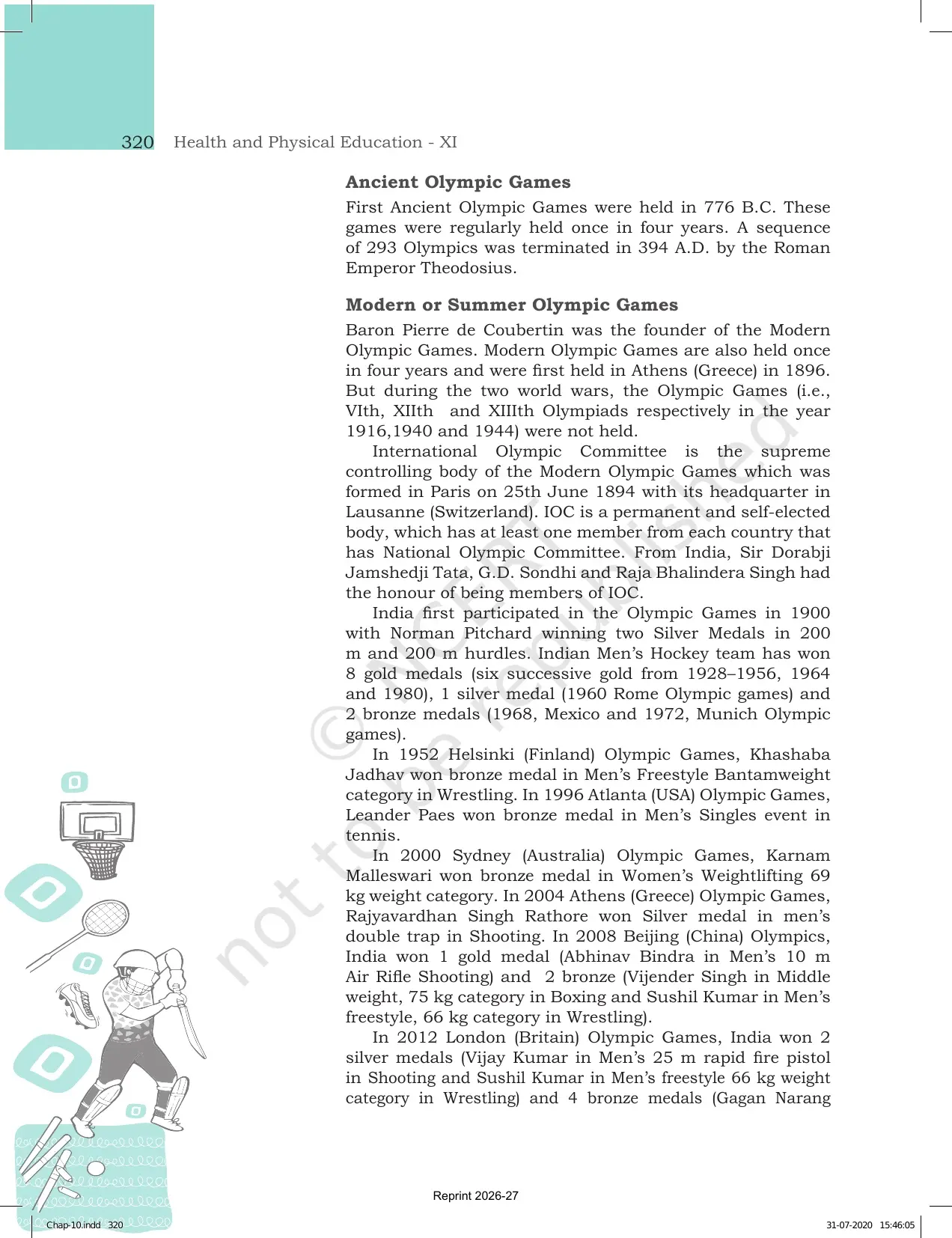
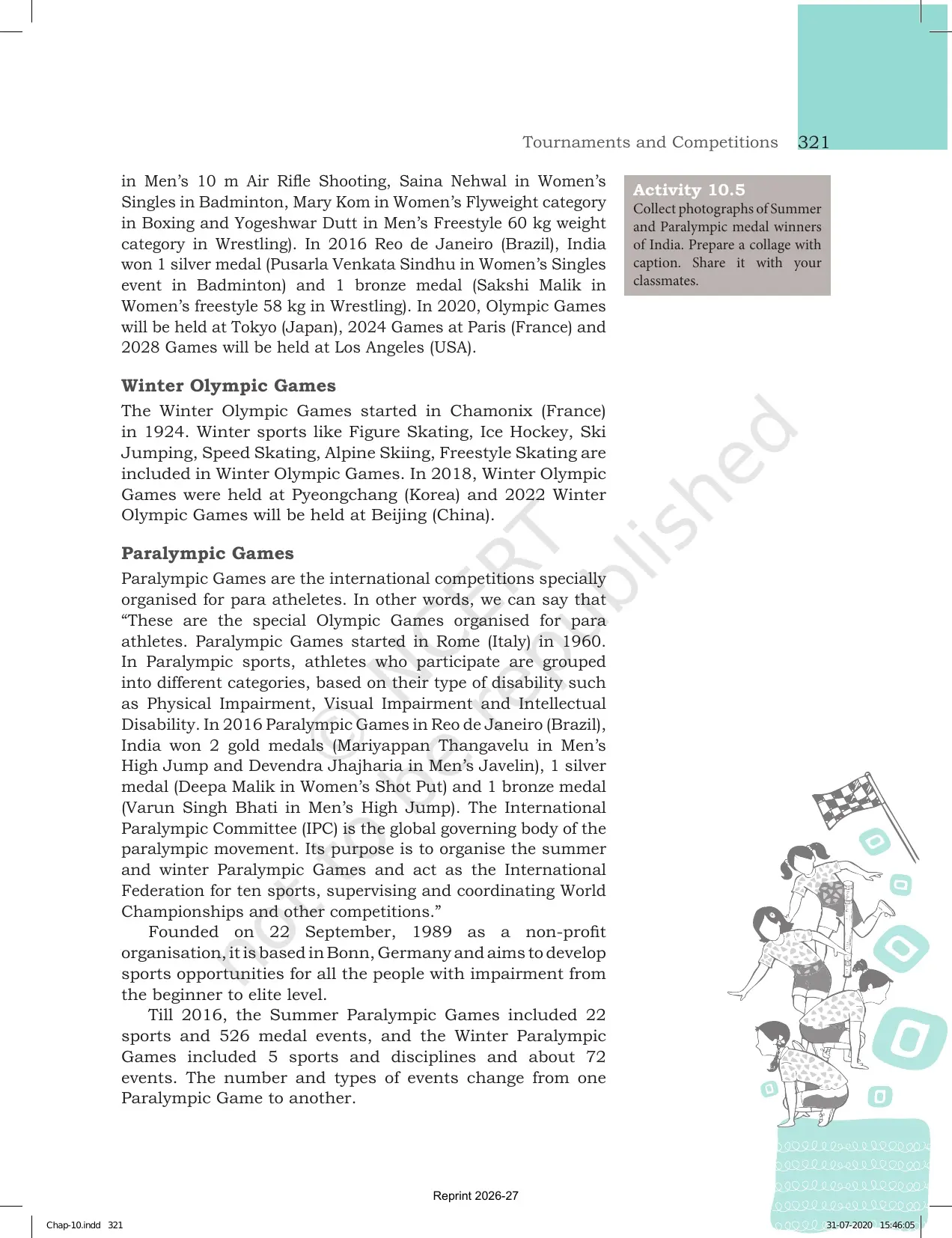
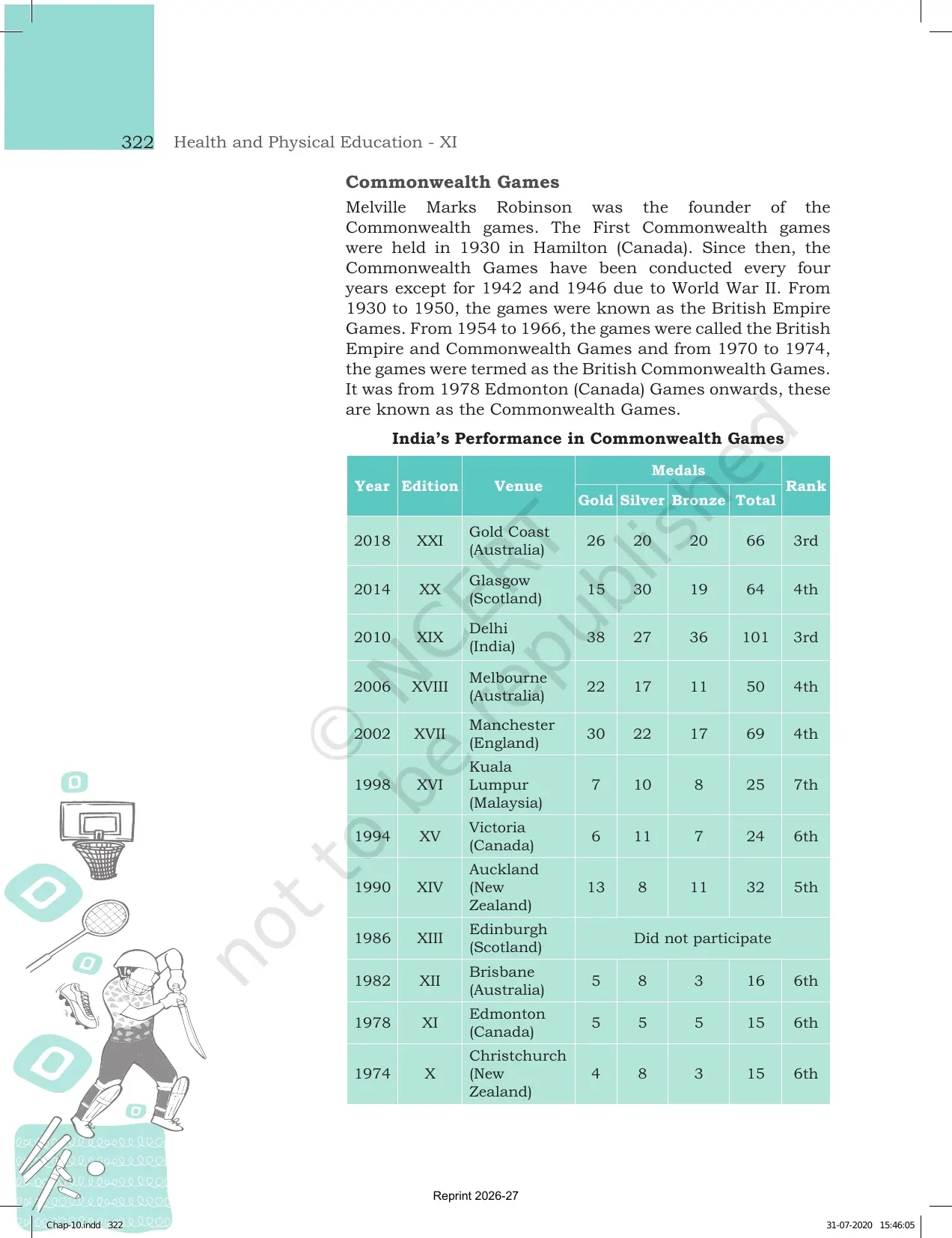
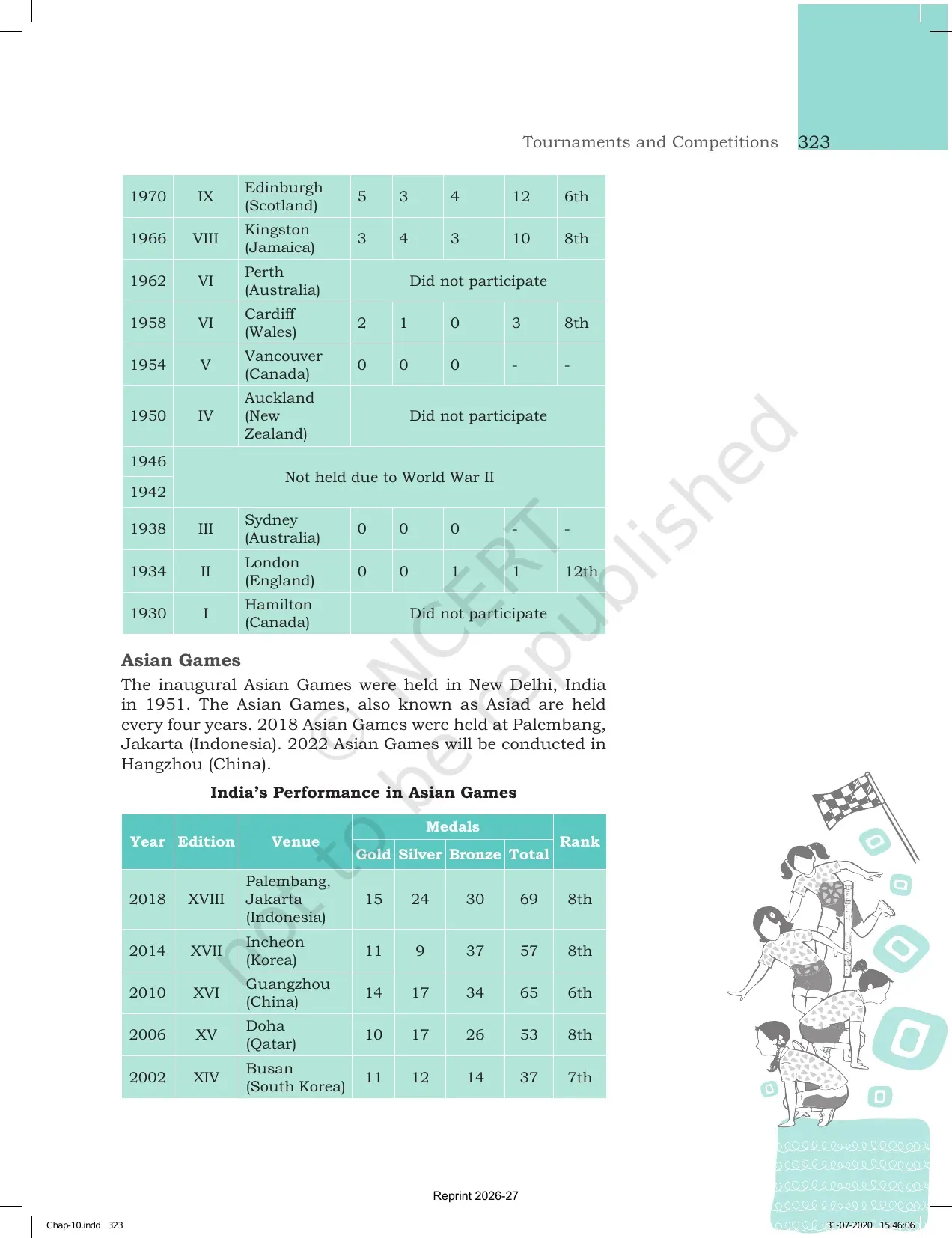
The NCERT Book PDF for Class 11 Physical Education Chapter 10 Tournaments and Competitions gives students the official textbook chapter for the 2026-27 CBSE course.
- Page count: 28 pages from the Health and Physical Education textbook.
- Core focus: tournament types, fixture planning, bye, seeding and competition organisation.
- Best use: read the format rules first, then practise fixture-making examples.
Student Feedback: Students usually find this chapter easier after separating tournament formats from fixture-drawing rules.
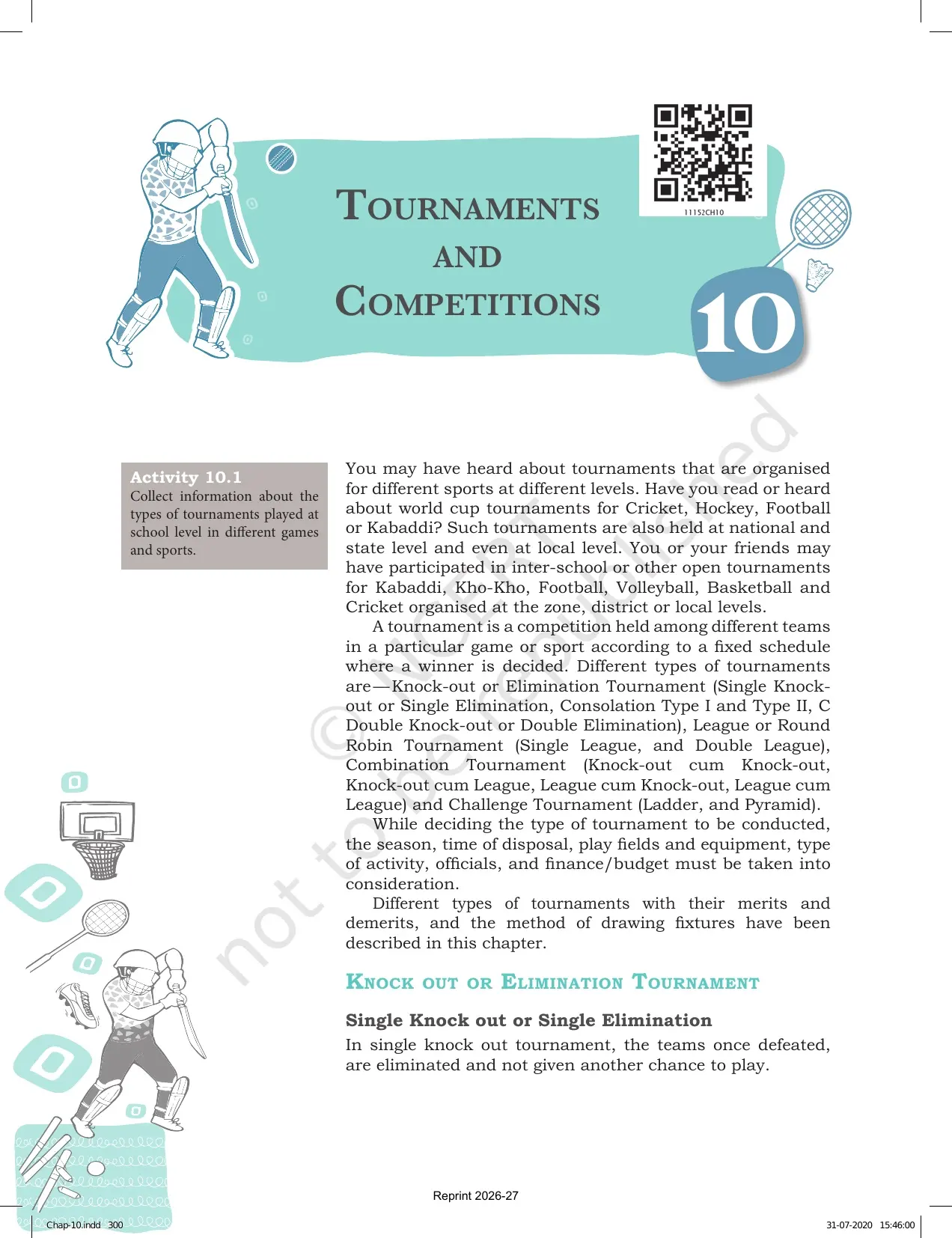
Tournaments and Competitions Chapter Overview
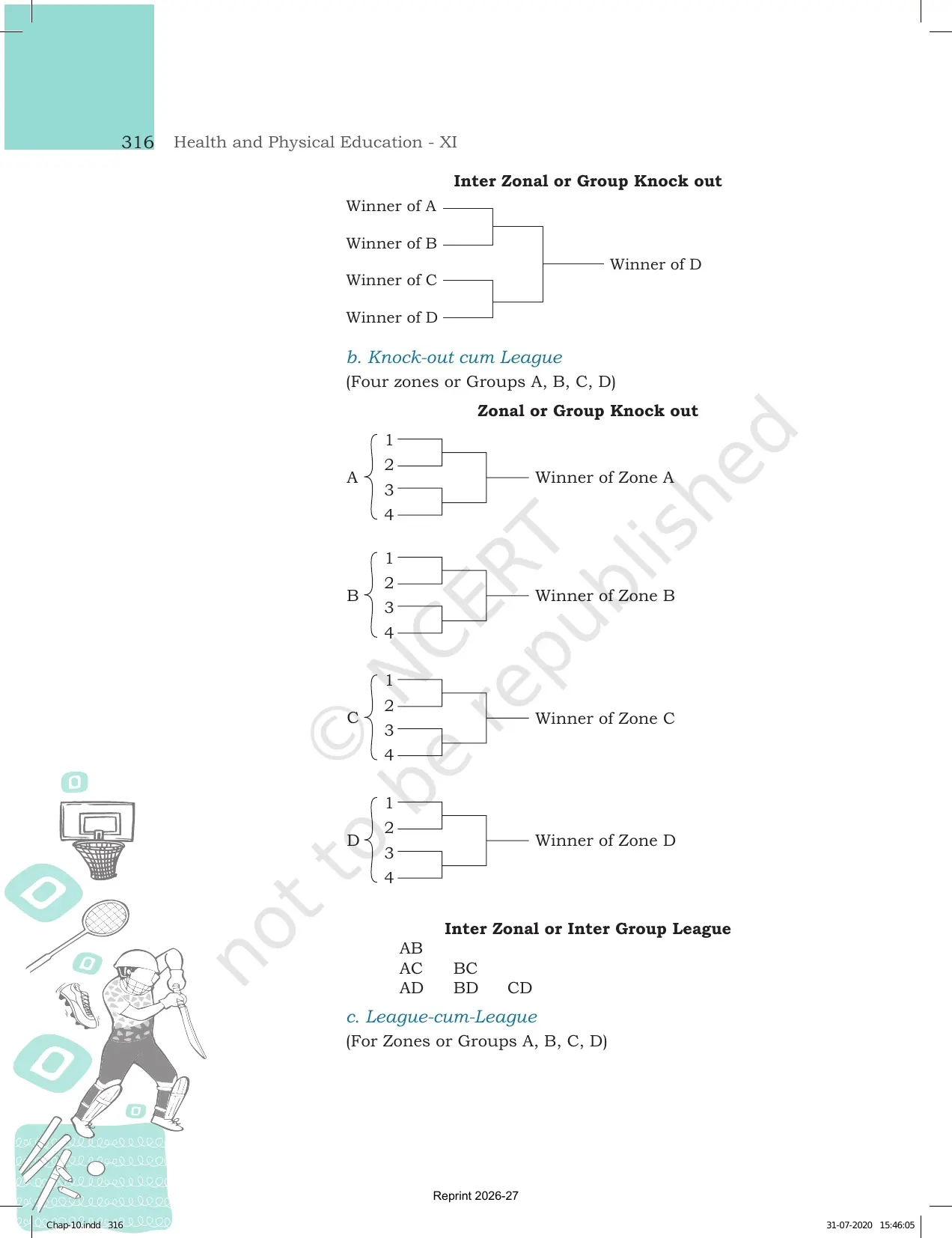
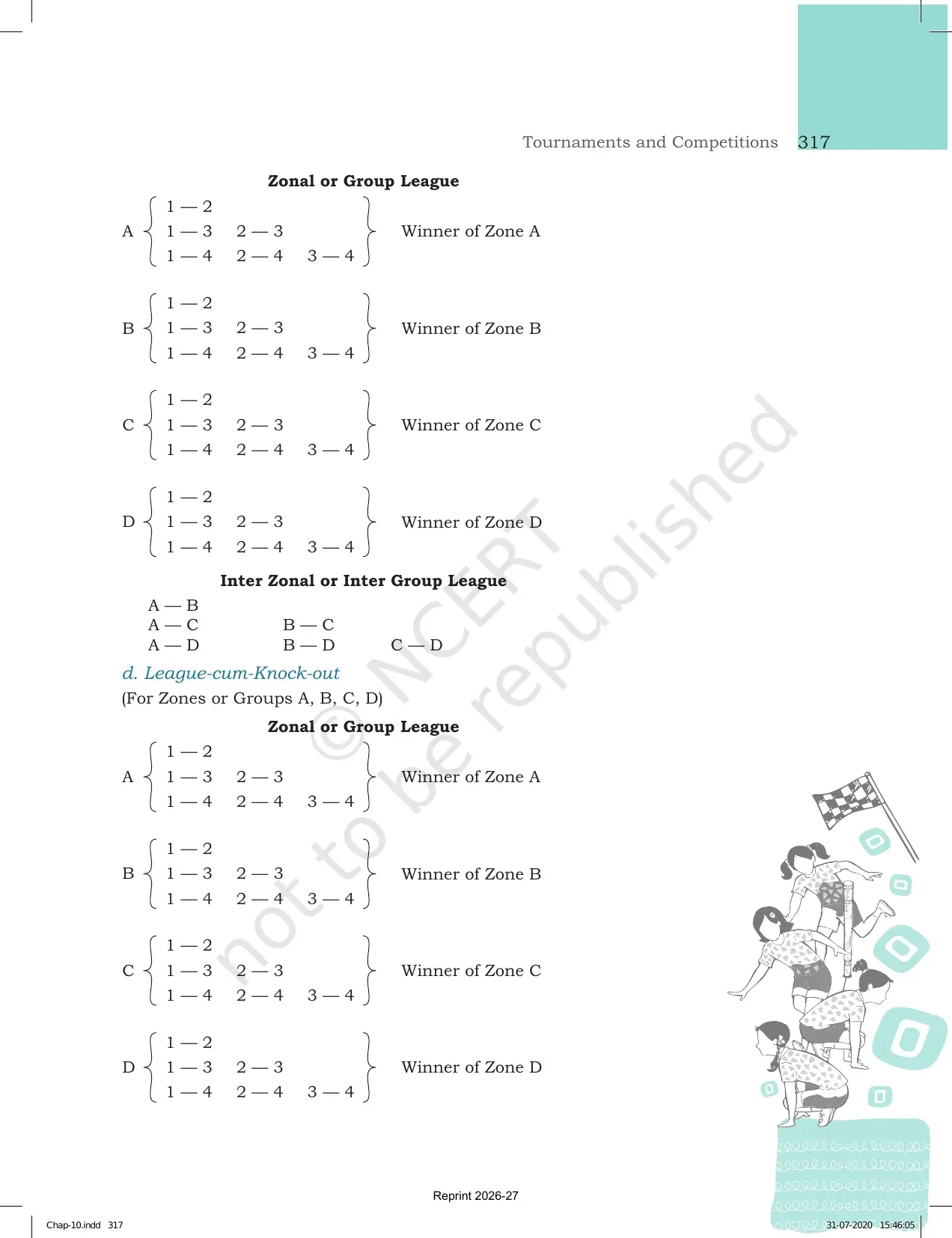
Chapter 10 explains how sports events are planned, organised and conducted. It introduces tournament formats and shows why fixture planning matters in school competitions, inter-house meets and larger sports events. The chapter is especially useful for questions that ask students to identify a suitable format, calculate byes or prepare a basic fixture.
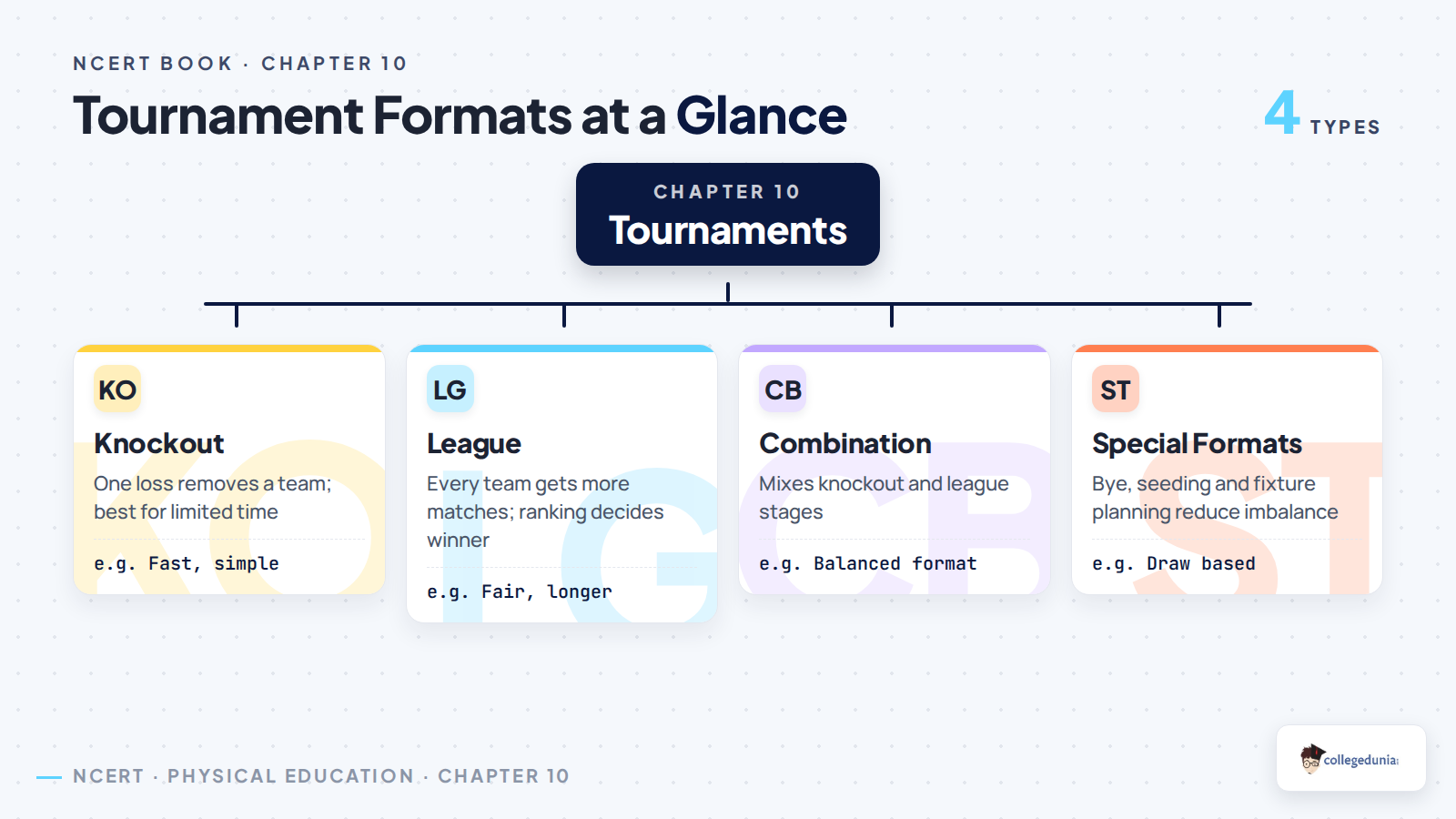
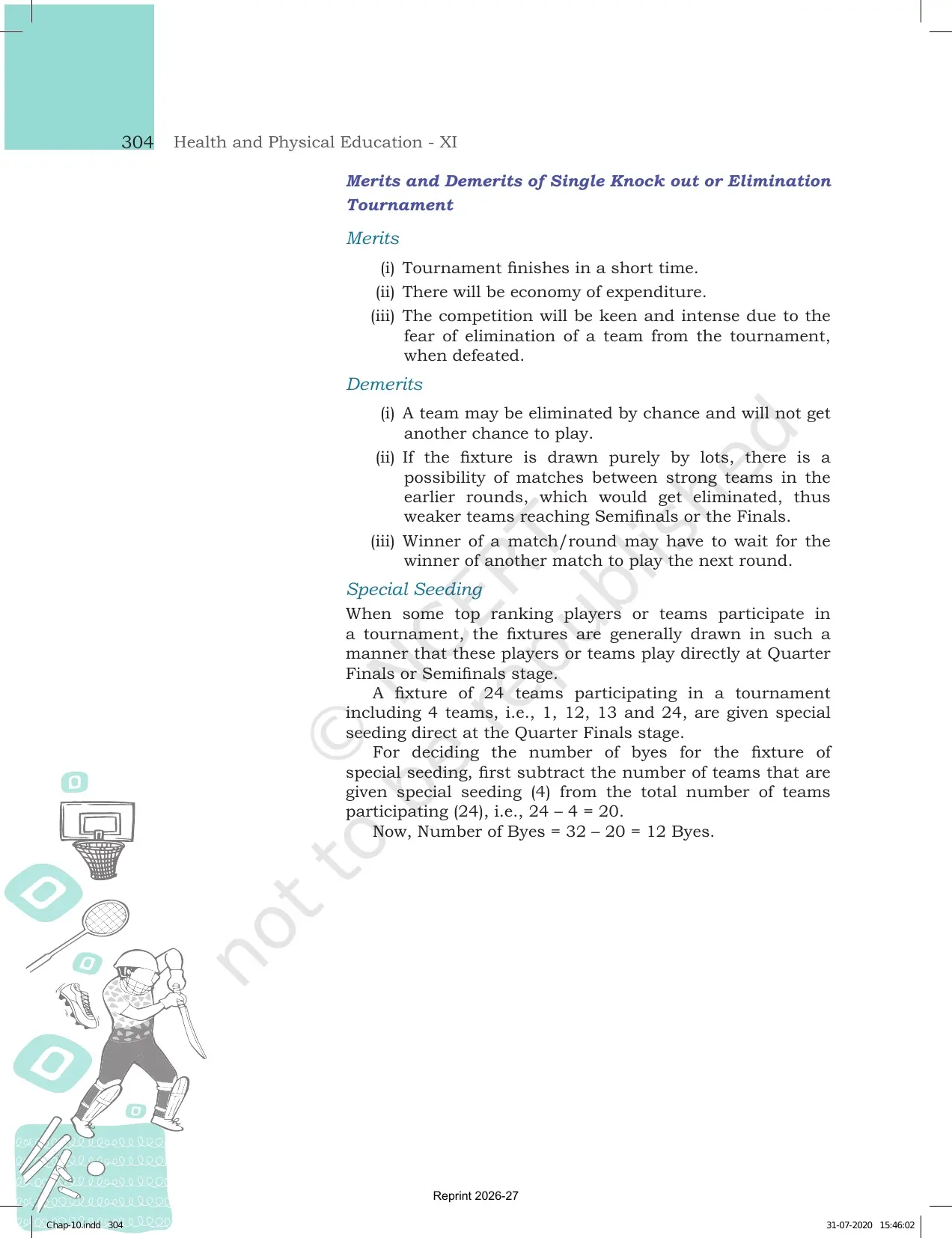
- Knockout tournaments are short and direct because a losing team exits the event.
- League tournaments give every team more chances and produce a ranked result.
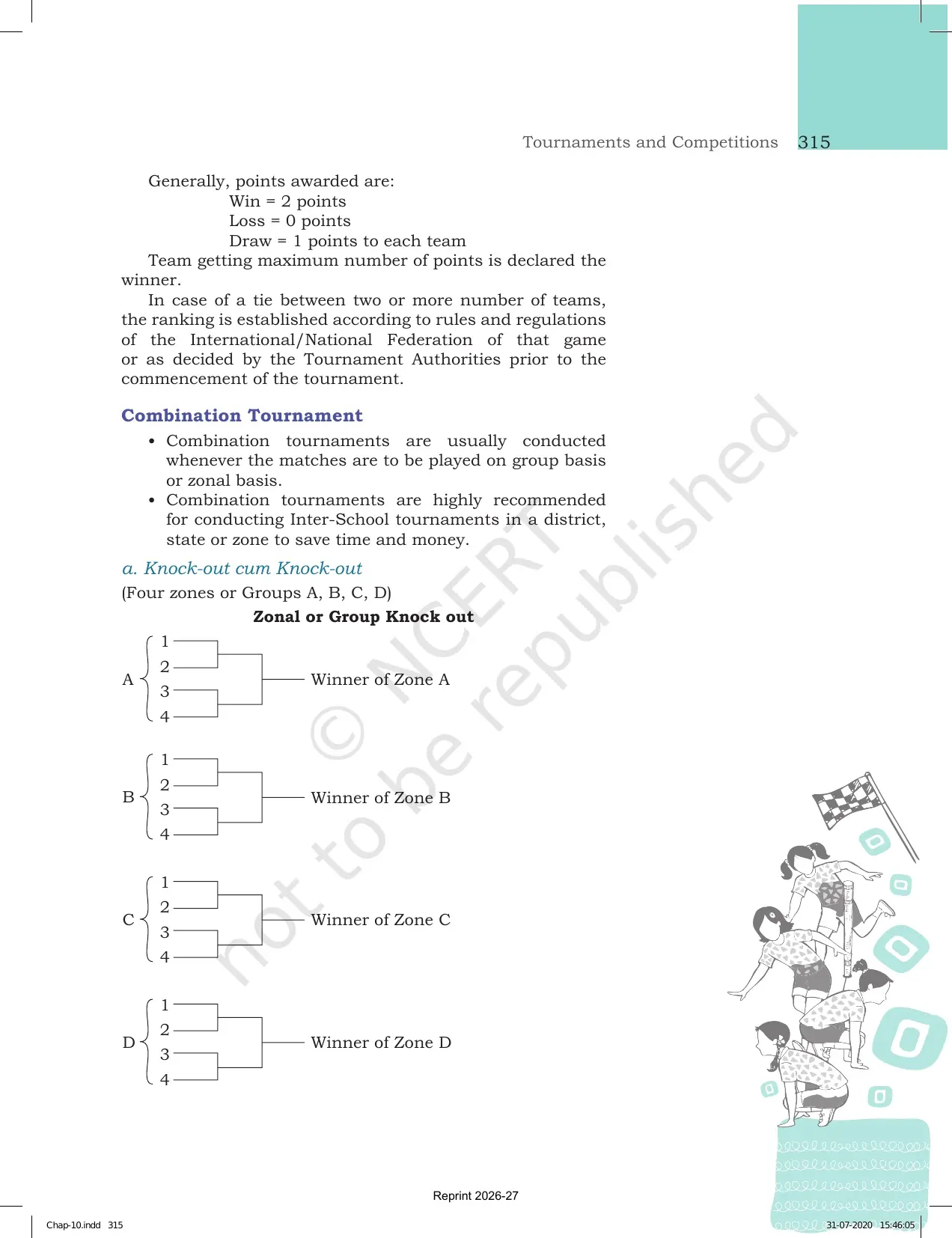
- Combination tournaments mix two or more methods to balance fairness and time.
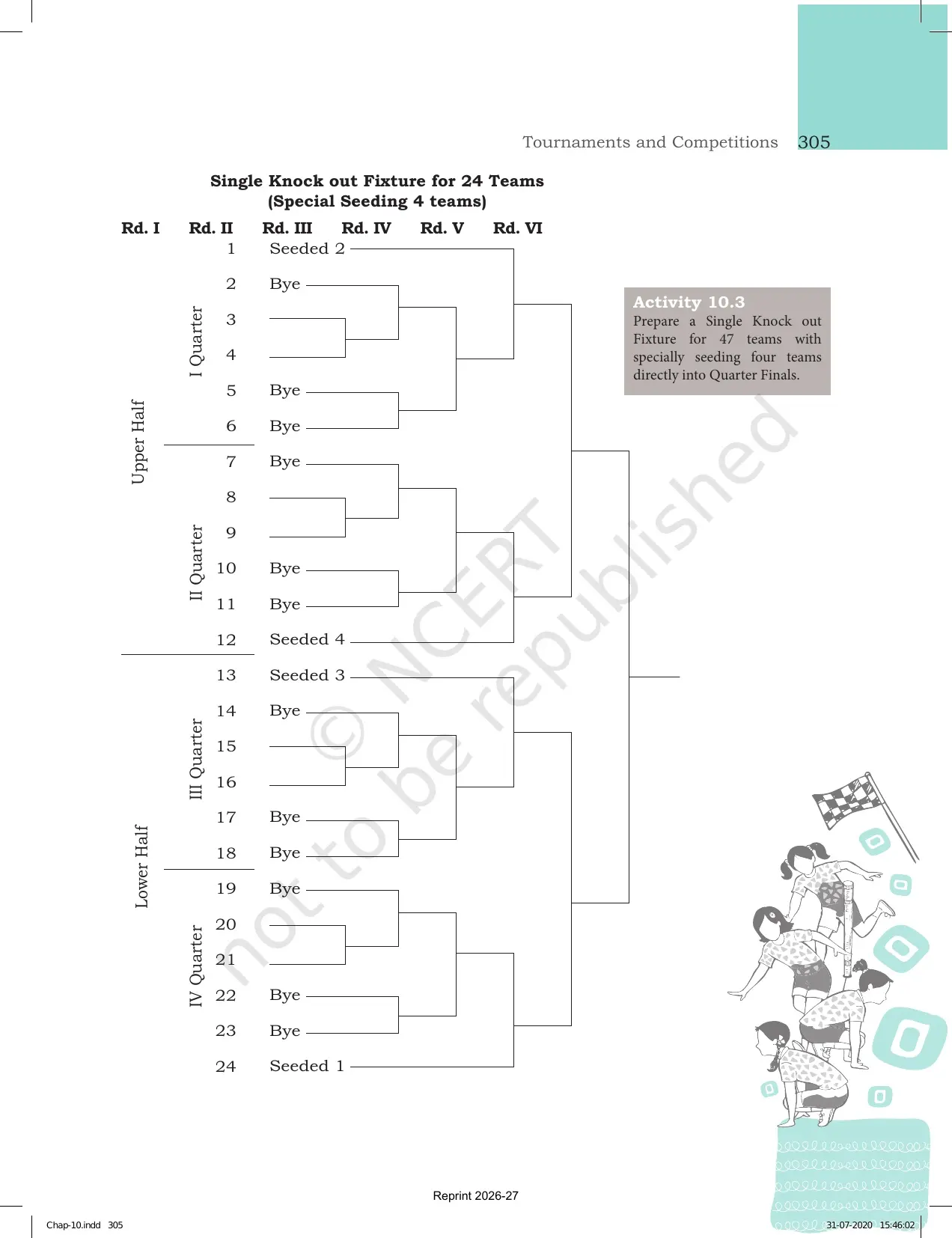
- Fixture planning keeps matches fair, timely and easy for officials to manage.
Tournament Formats Covered in the PDF
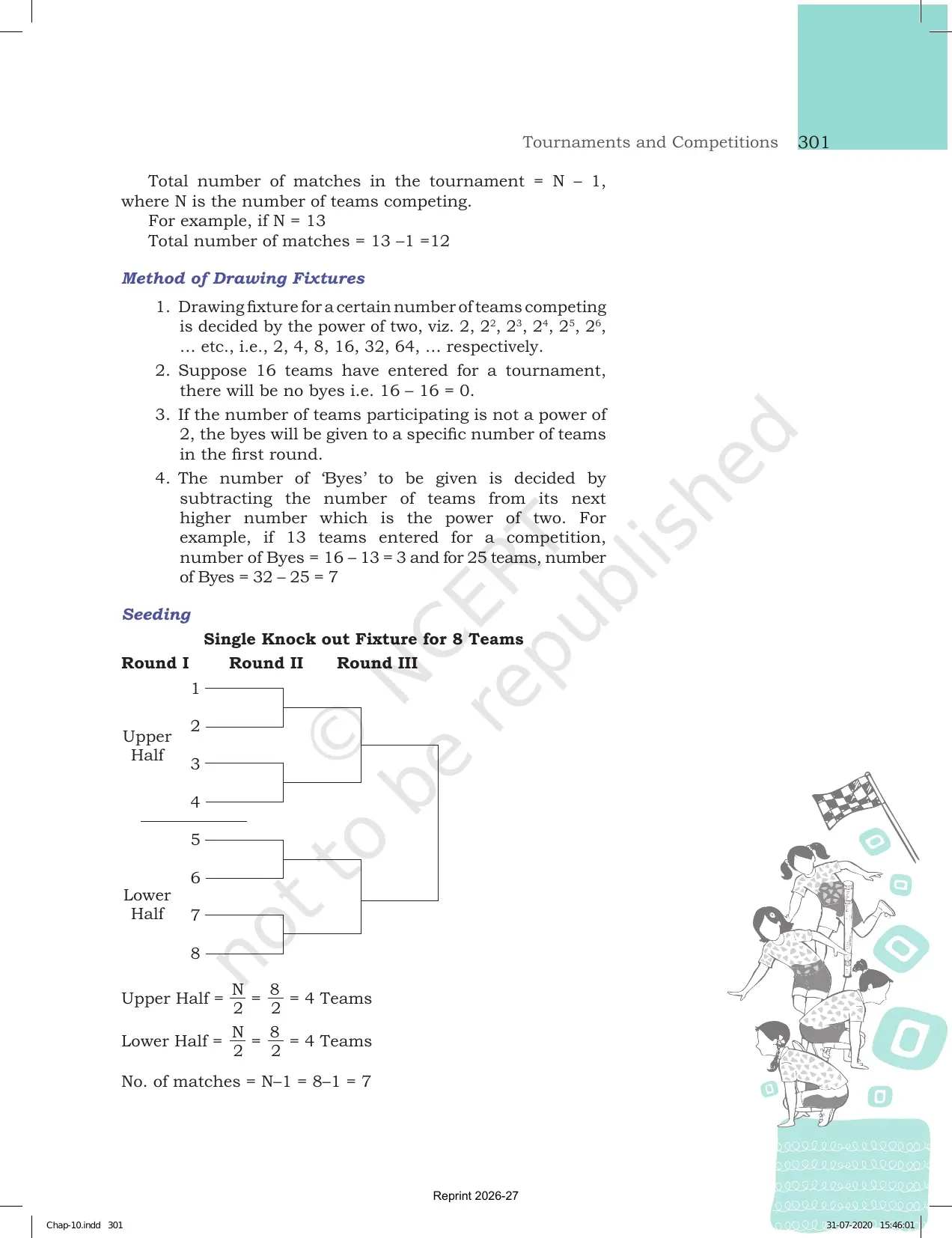
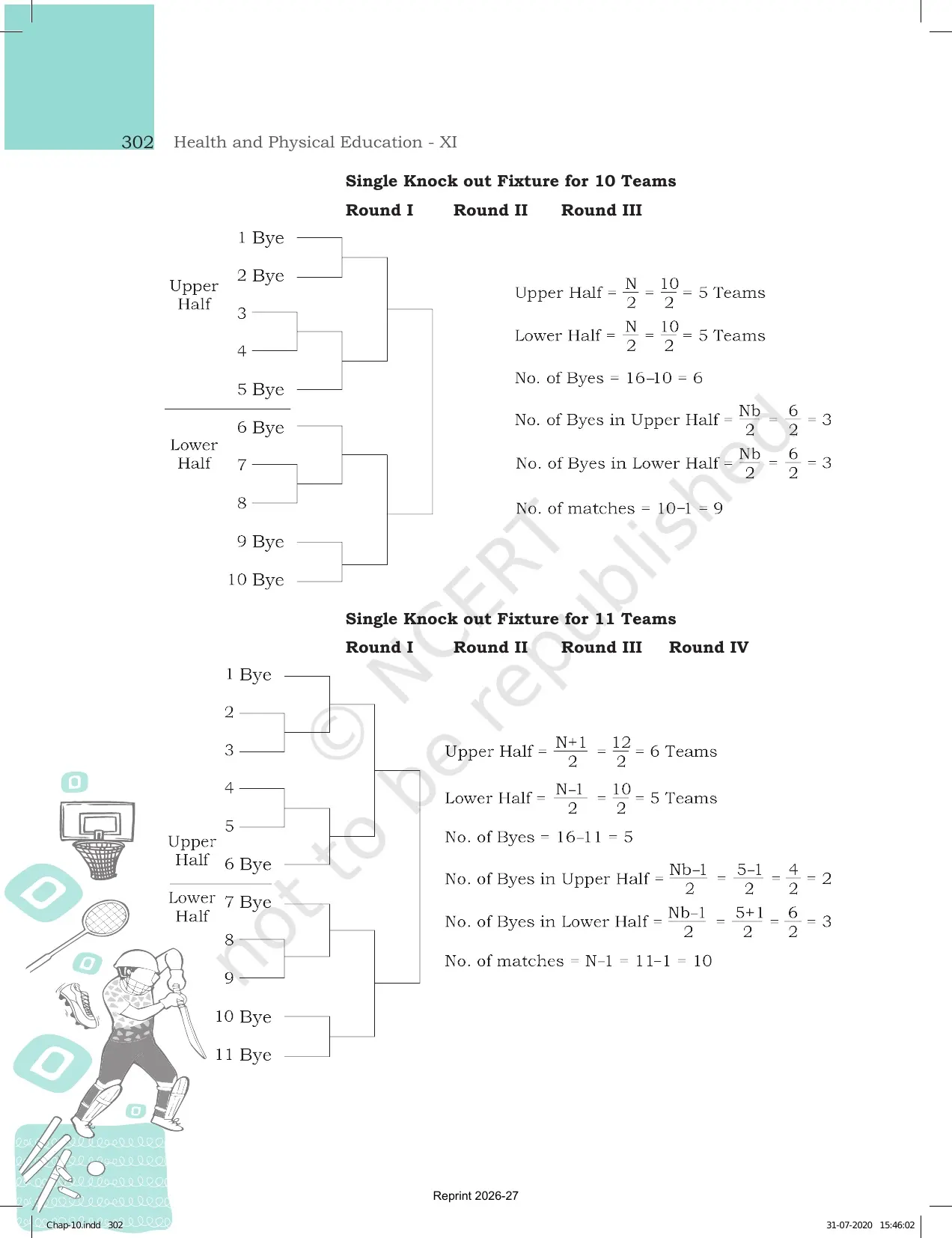
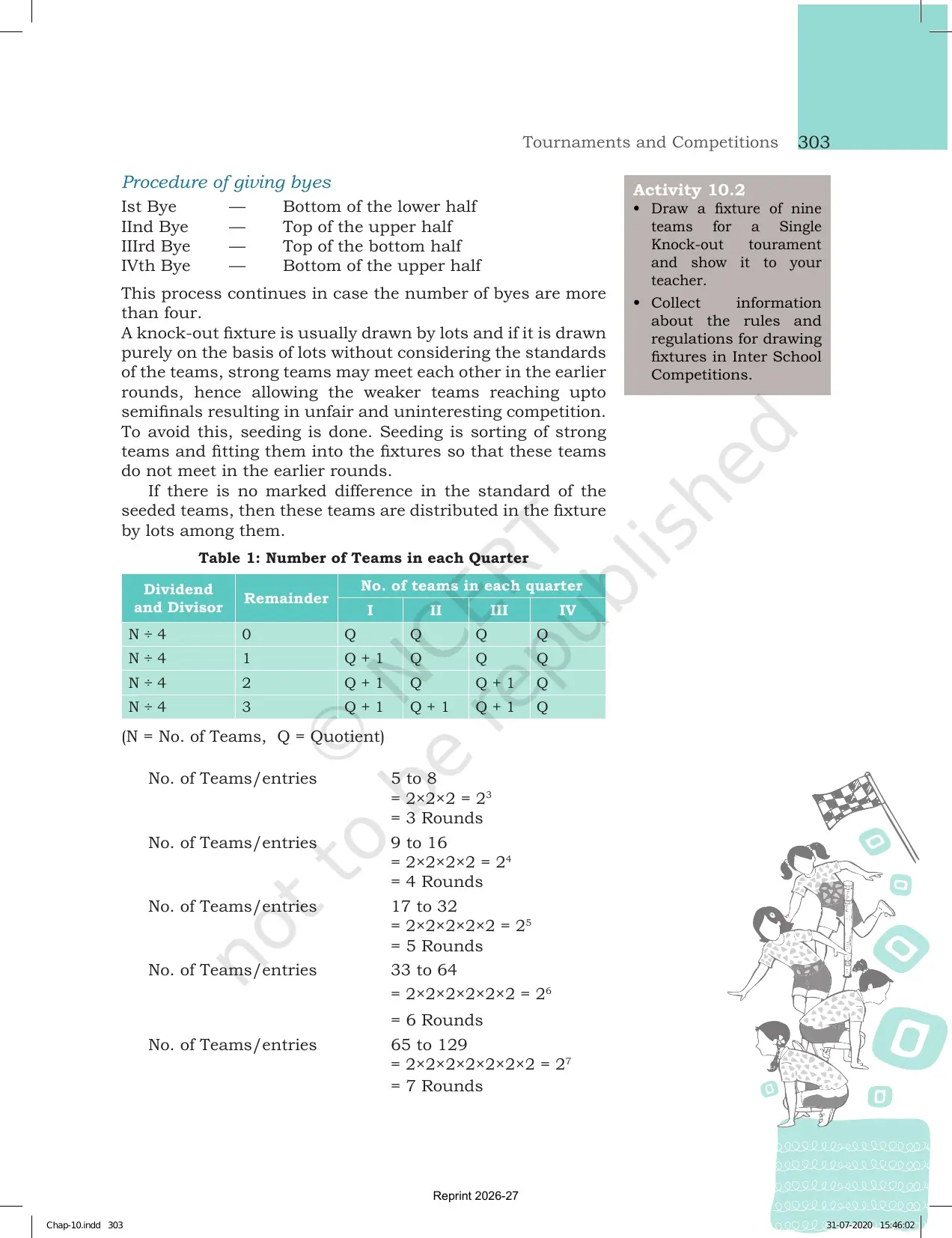
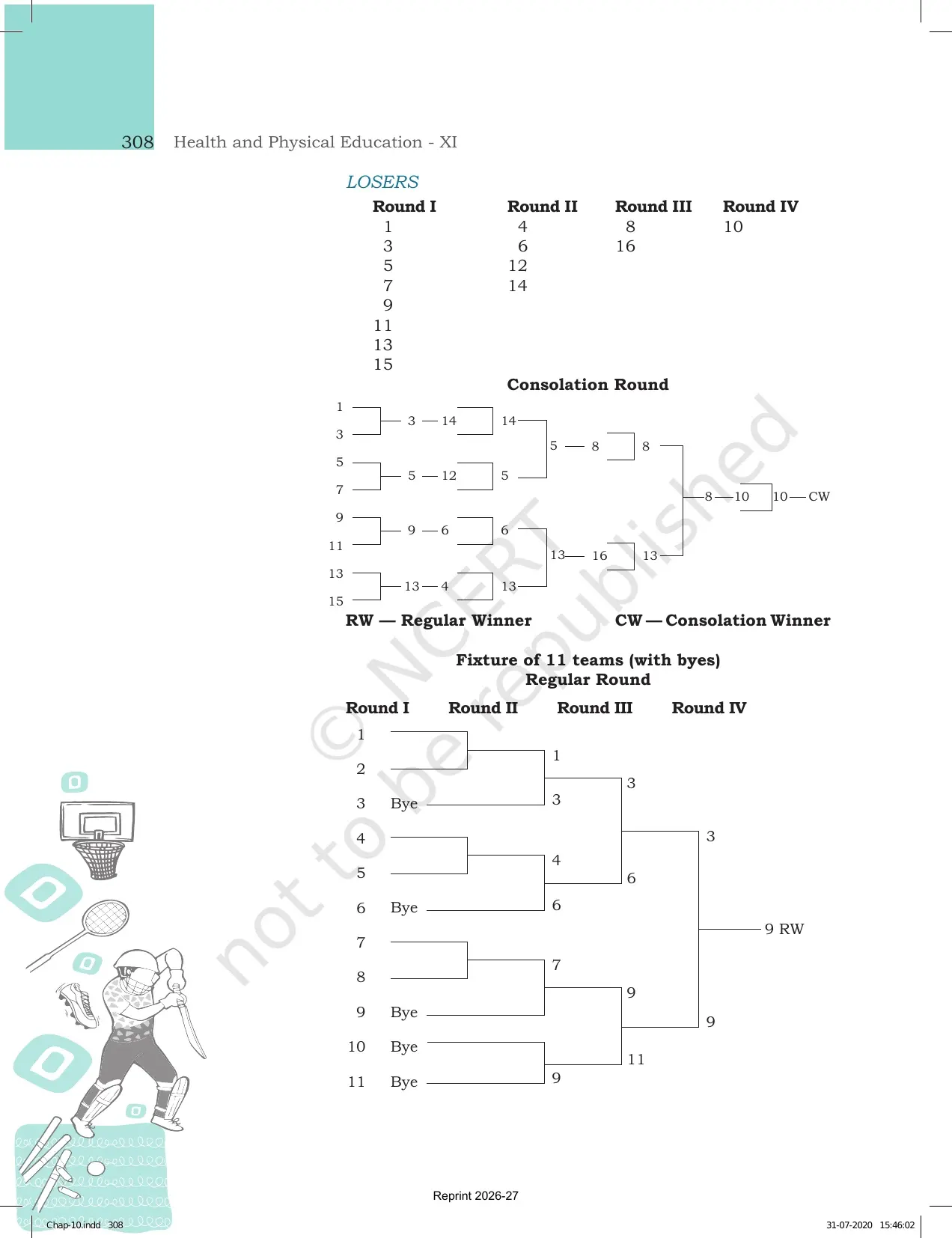
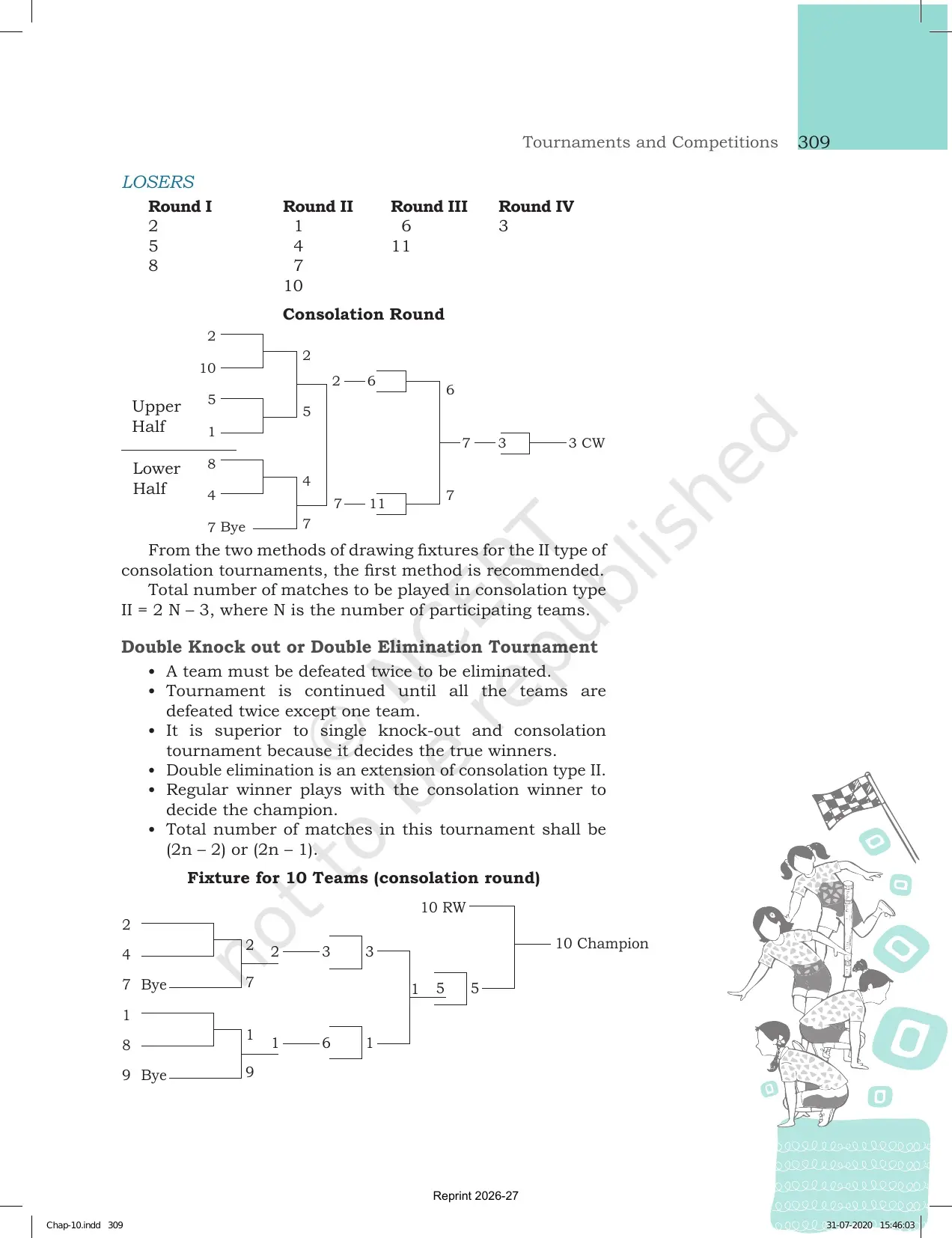
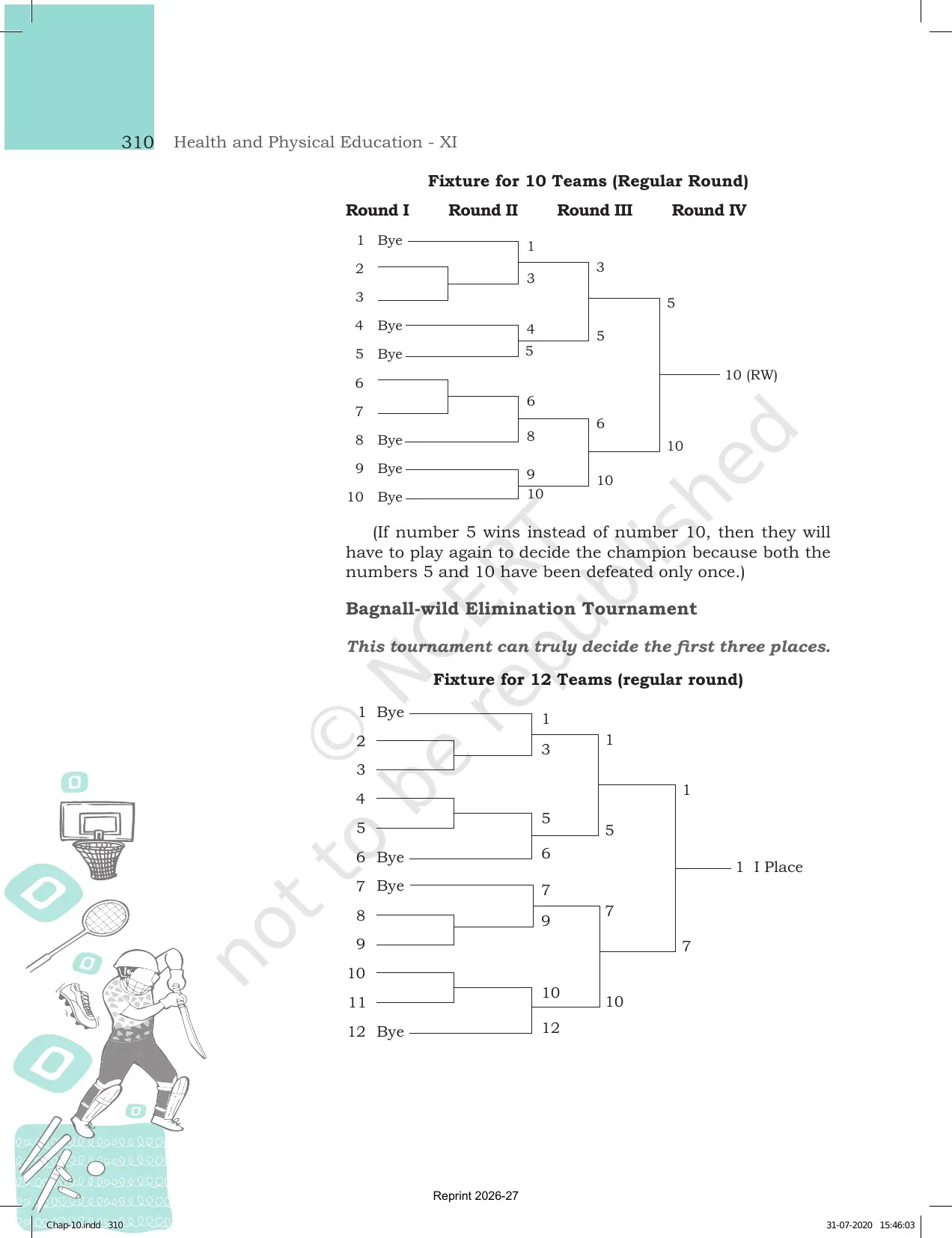
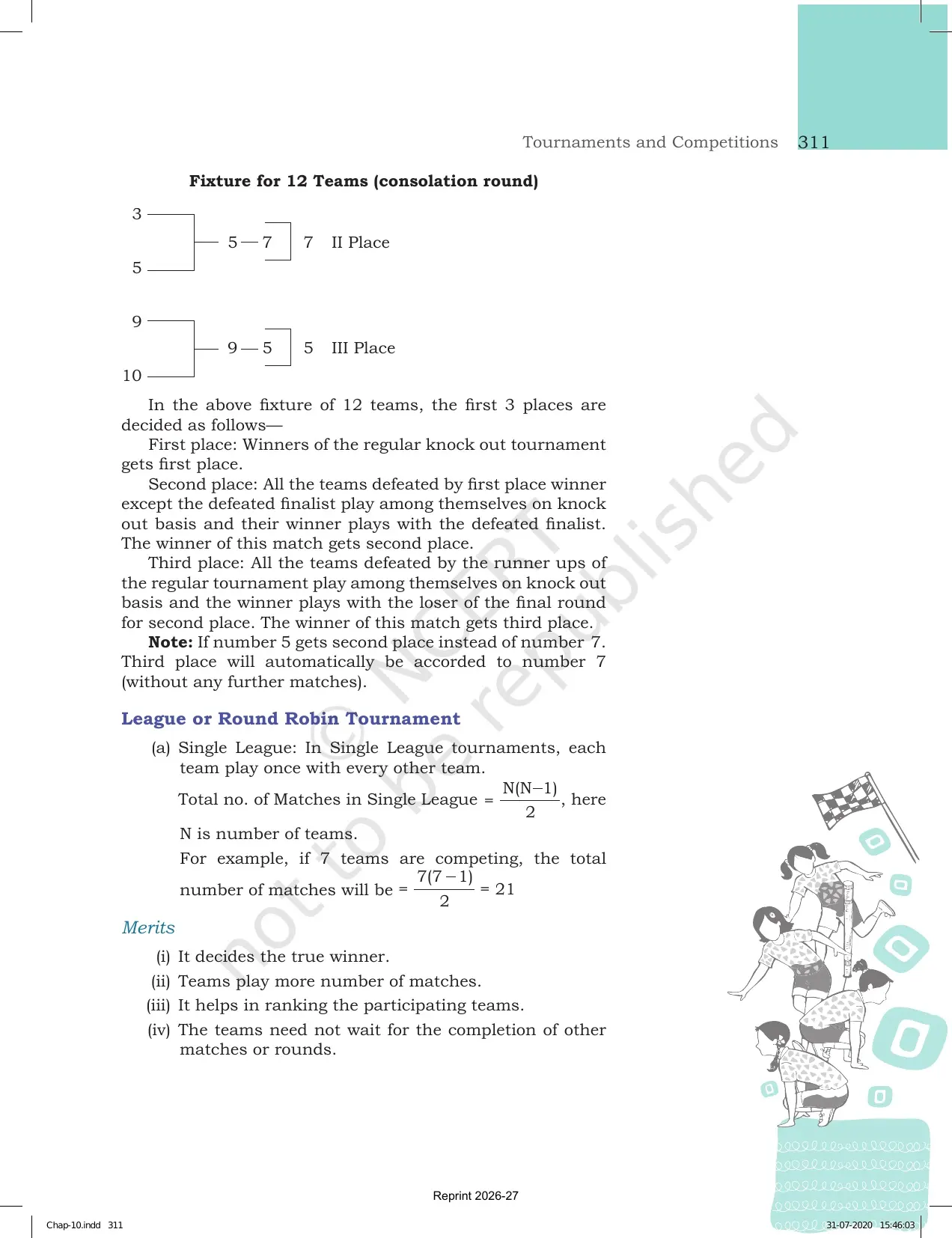
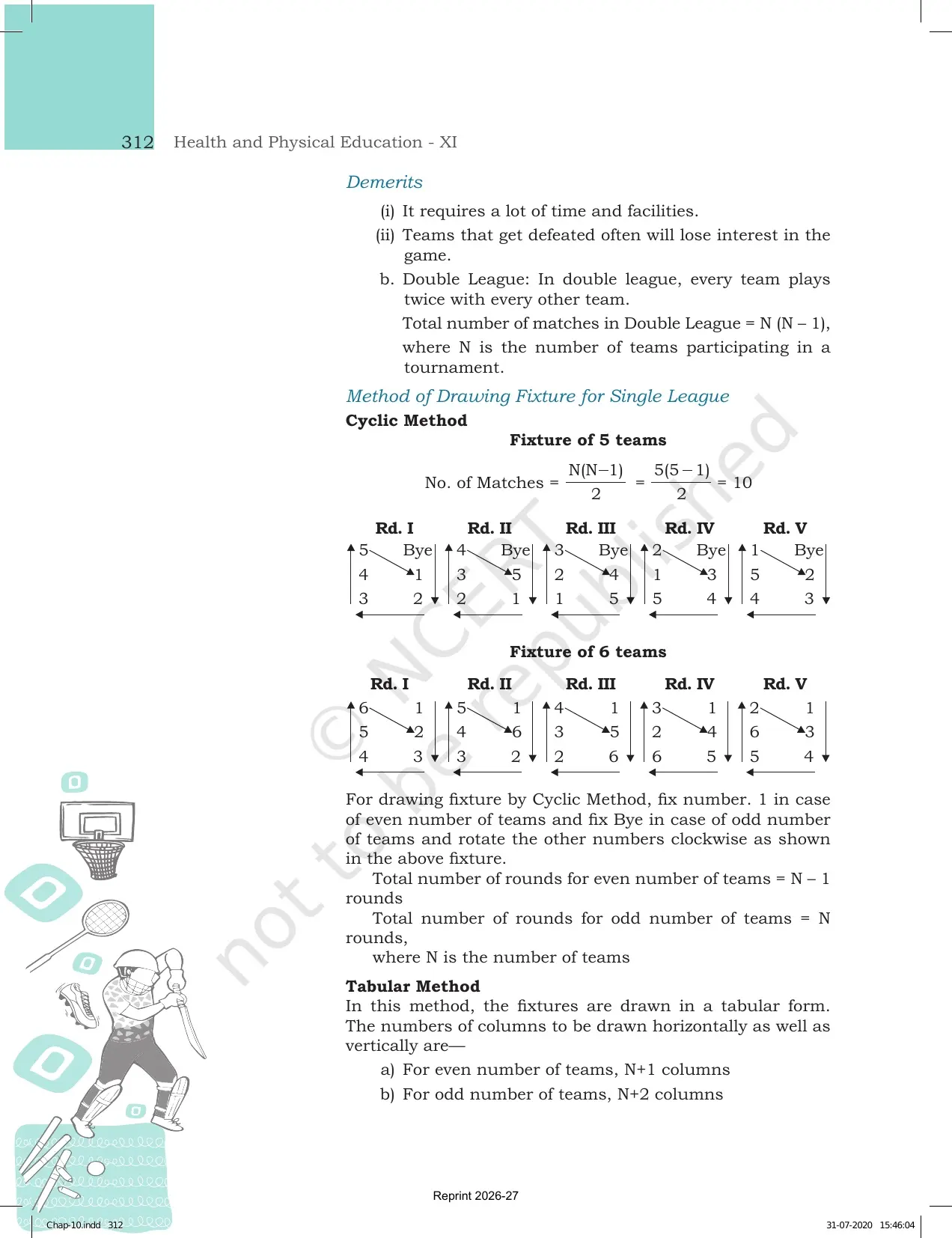
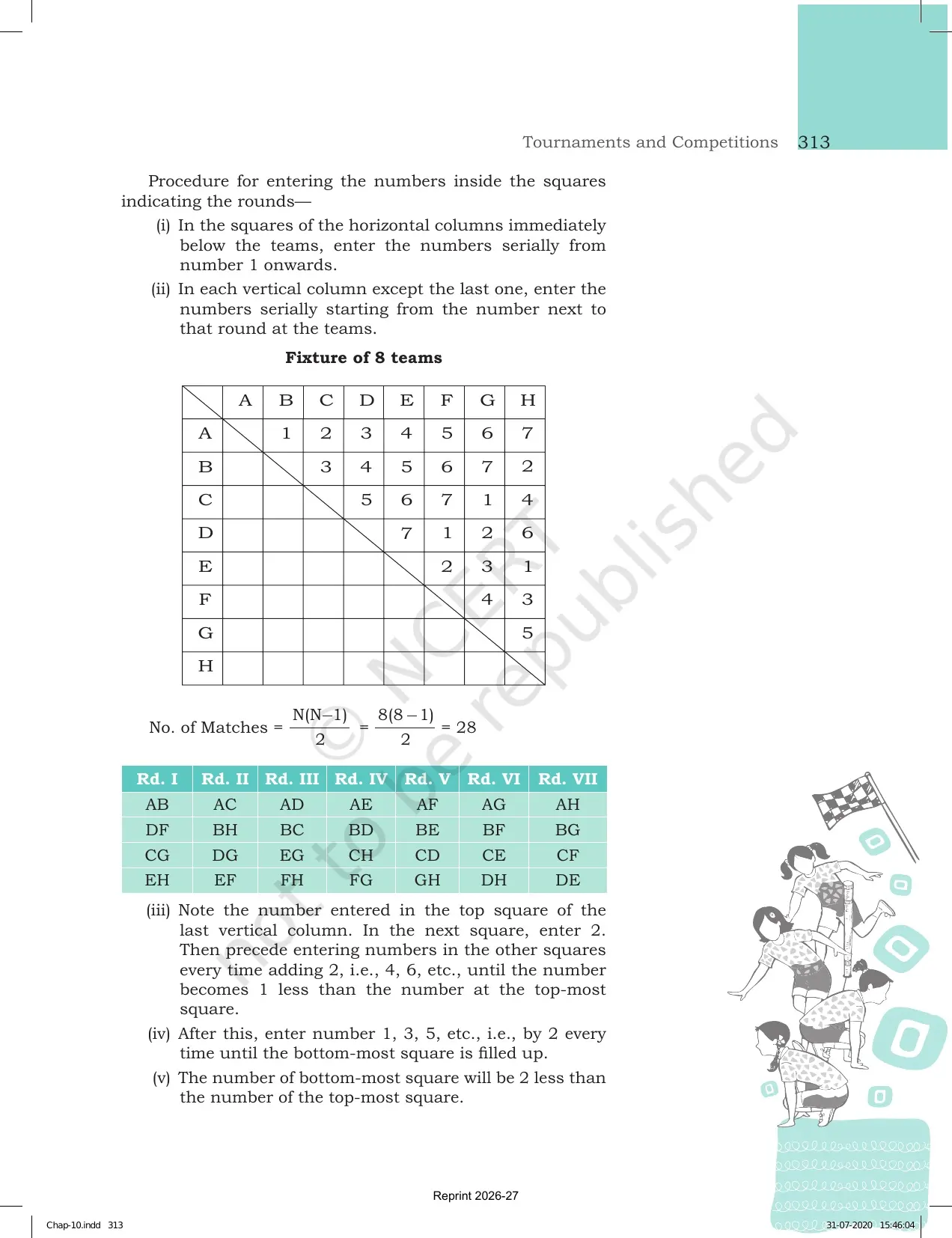
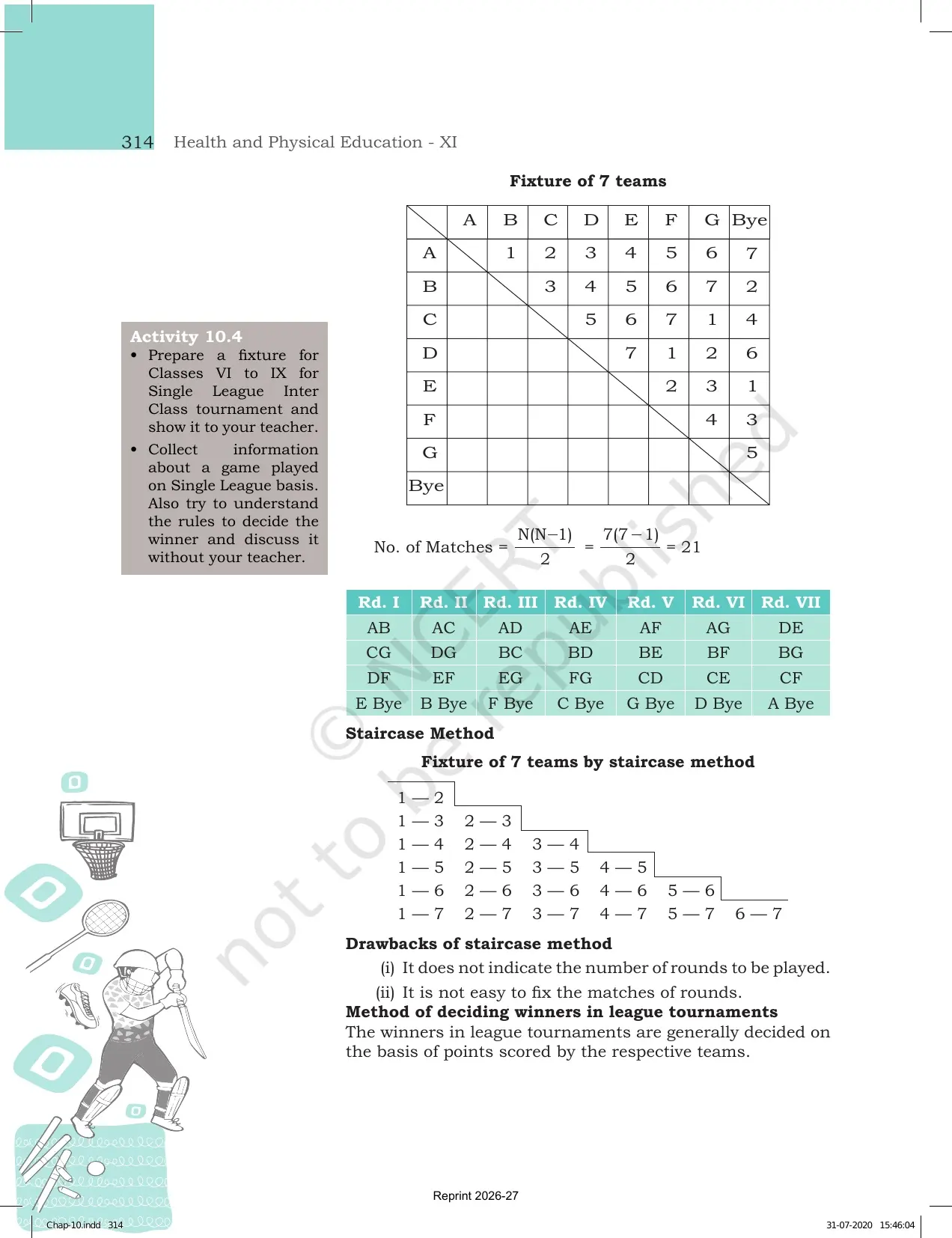
The official PDF helps students revise definitions and rules in one place. A strong answer should explain not only the tournament name but also why that format is chosen for a specific situation. For fixture questions, always start with number of teams, number of byes and total rounds.
| Format | Where it helps | Revision point |
|---|---|---|
| Knockout | Limited time and many teams | One defeat eliminates the team |
| League | Fair ranking and more participation | Each team plays multiple matches |
| Combination | Large competitions with stages | League and knockout can be used together |
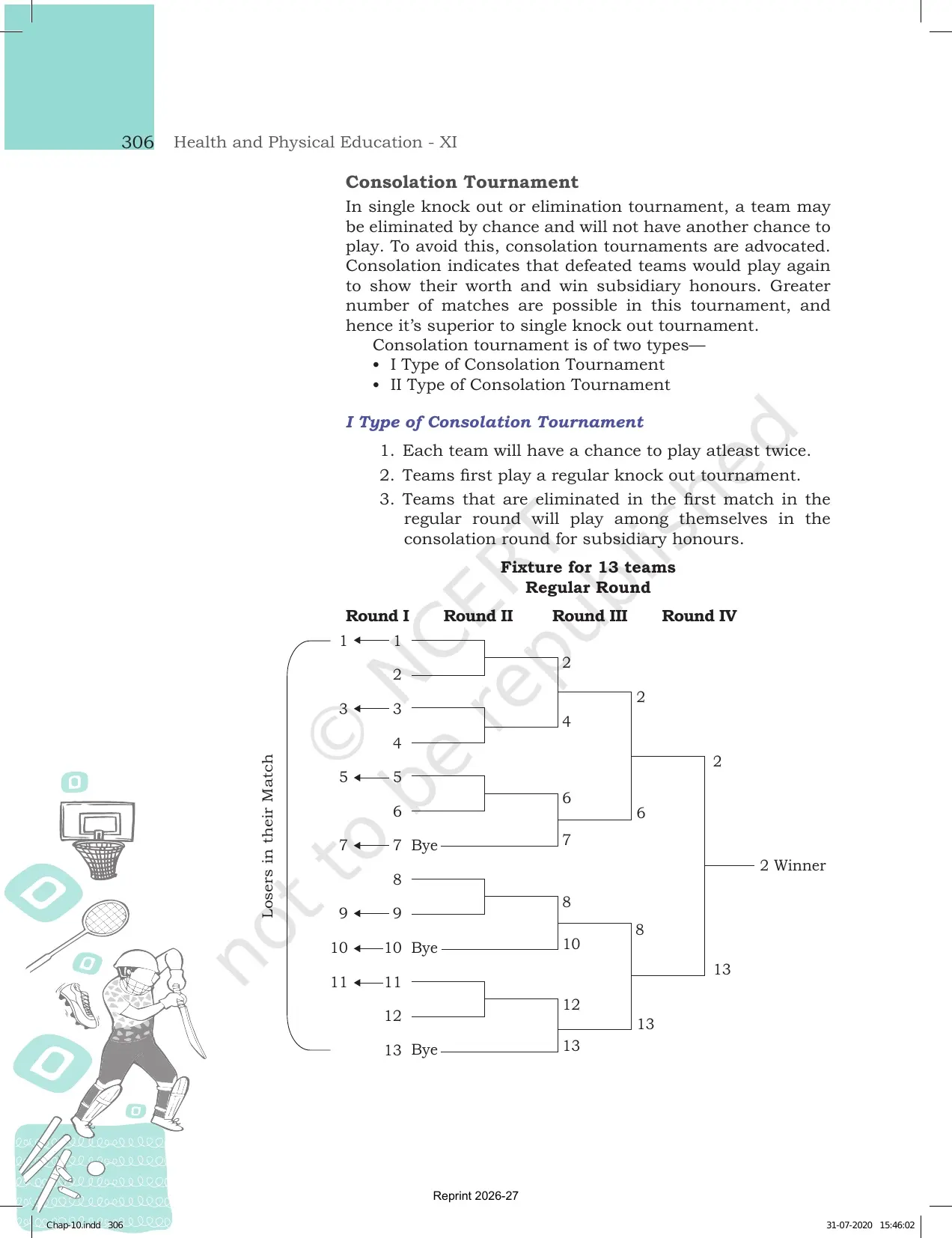
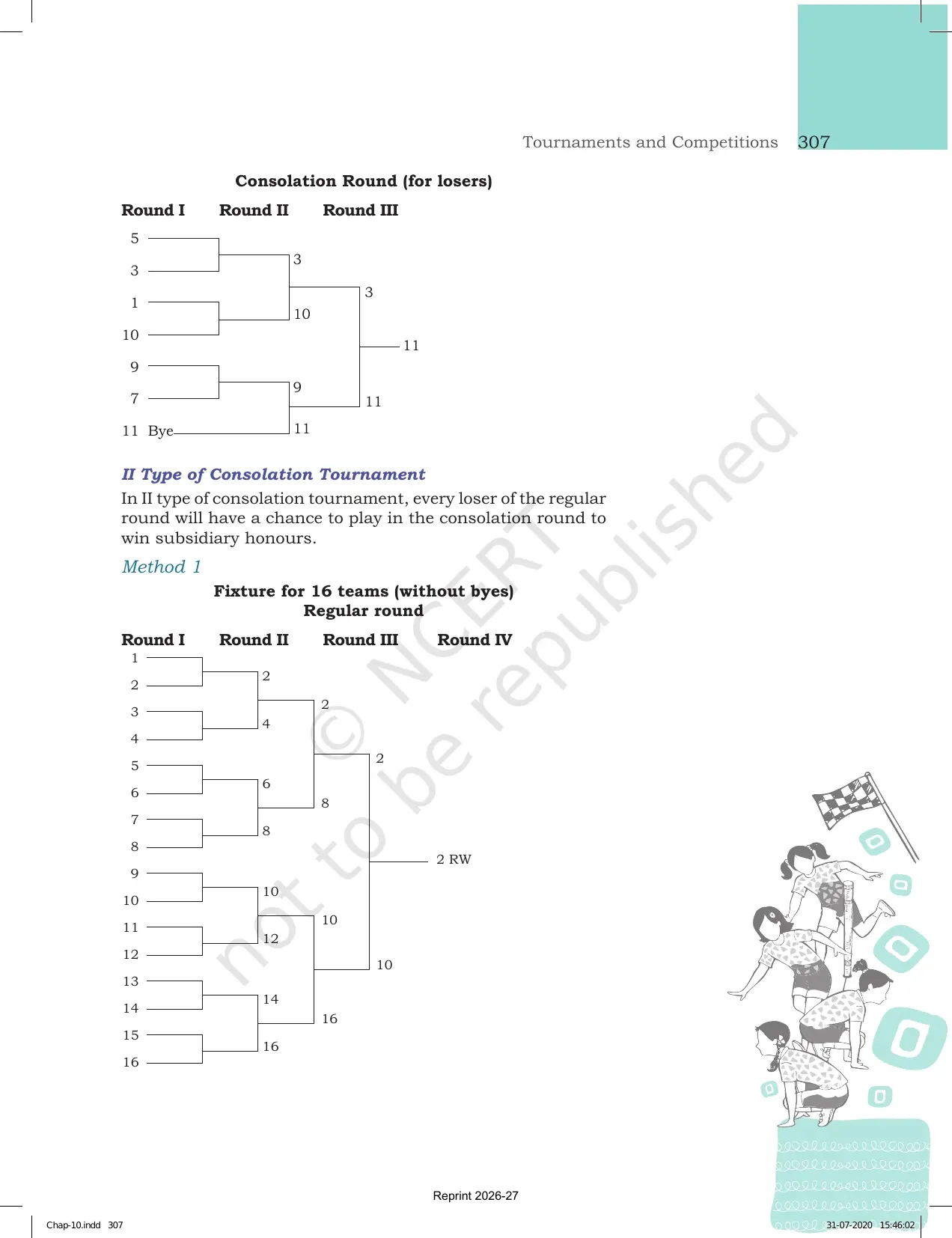
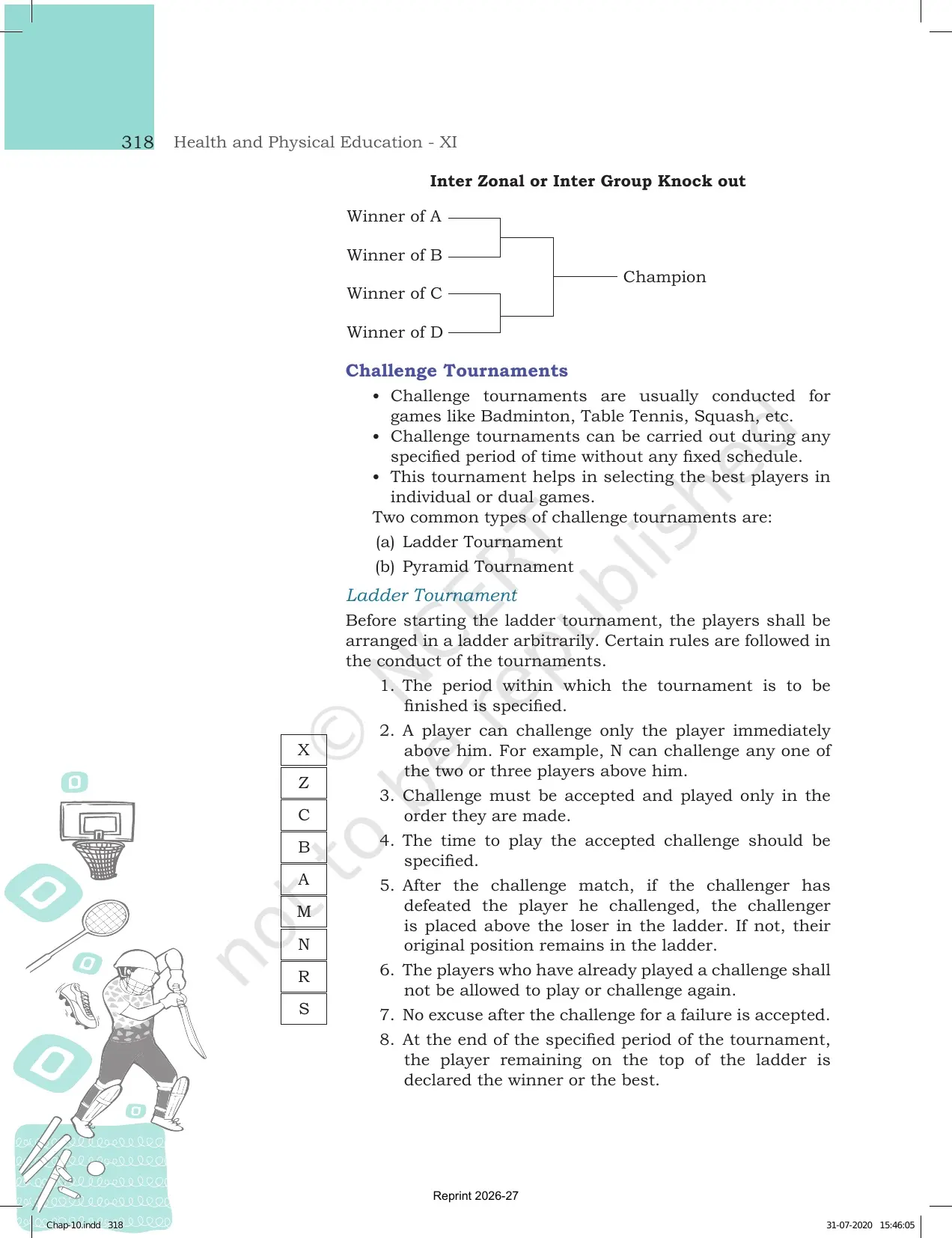
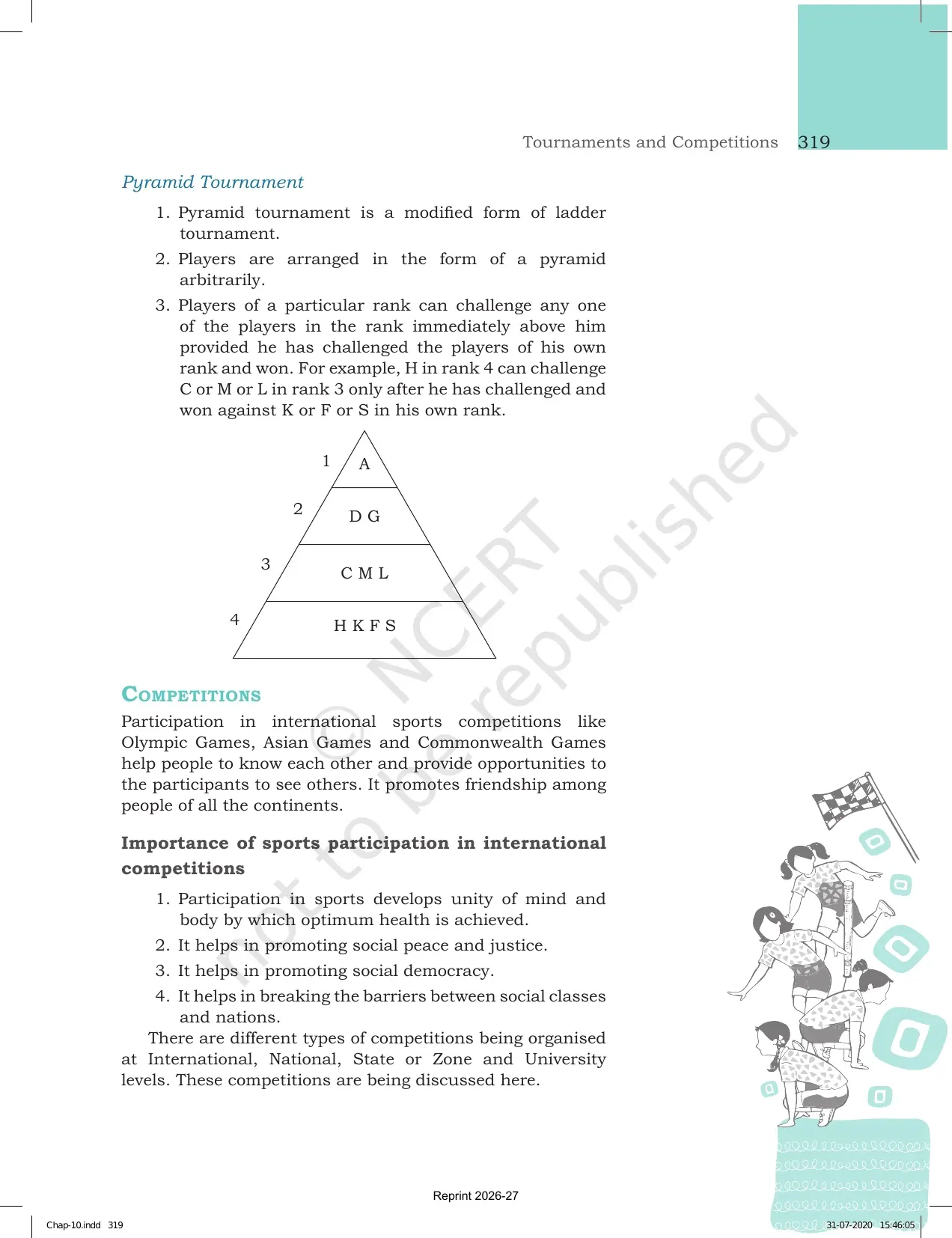
| Challenge and Consolation | Special event conditions | Useful for ranking, recovery chances and special formats |
Tournament Planning Revision Video
Source: Magnet Brains on YouTube
How to Use This Book PDF
Read the chapter with a rough notebook beside you. First mark the names of tournament types. Then write one line each for knockout, league, combination, challenge and consolation tournaments. After that, practise a fixture layout by taking sample team counts such as 8, 10, 12 and 16 teams.
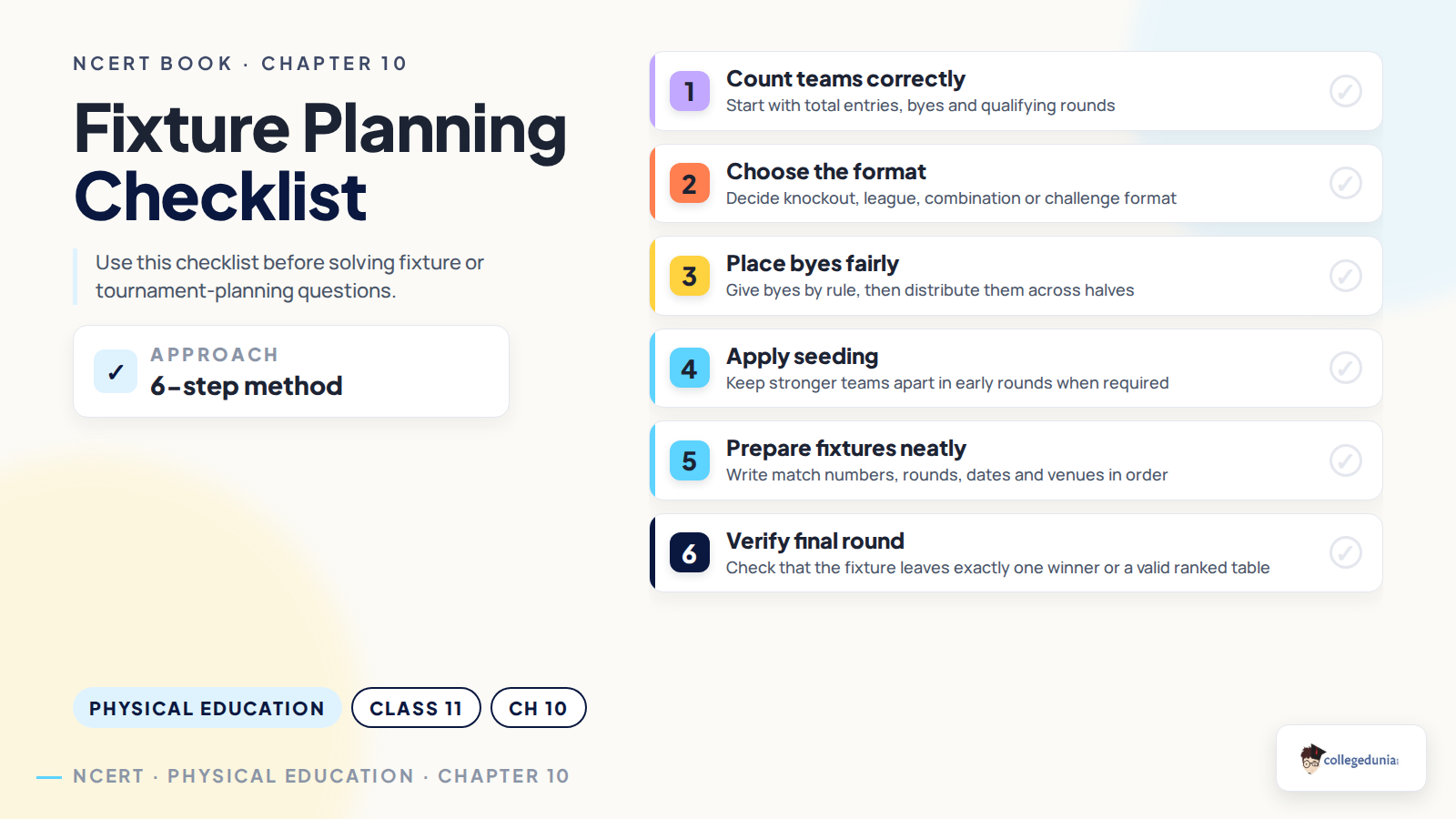
Important: do not memorise fixture diagrams blindly. Understand why a bye is given, where seeded teams are placed and how rounds reduce the number of teams.
Tournaments and Competitions Related Resources
| Resource | Best use | Link |
|---|---|---|
| NCERT Book PDF | Official textbook chapter | Current page |
| NCERT Notes | Quick topic-wise revision | Open Notes |
| Handwritten Notes | Fast one-sitting recap | Open Handwritten Notes |
Physical Education Book PDFs for All Chapters
| Chapter | NCERT chapter title | Book PDF link |
|---|---|---|
| Chapter 6 | Yoga and its Relevance in the Modern Times | Open Book PDF |
| Chapter 7 | Safety and Security | Open Book PDF |
| Chapter 8 | Health Related Physical Fitness | Open Book PDF |
| Chapter 9 | Measurement and Evaluation | Open Book PDF |
| Chapter 10 | Tournaments and Competitions | Current Book PDF |
| Chapter 11 | Adventure Sports | Open Book PDF |
Class 11 Physical Education Chapter 10 NCERT Book PDF FAQs
Ques. What does Class 11 Physical Education Chapter 10 cover?
Ans. It covers tournament types, competition planning, knockout and league formats, fixture preparation, byes, seeding and event organisation.
Ques. How many pages are in this Chapter 10 PDF?
Ans. This official NCERT Book PDF has 28 pages from the Class 11 Health and Physical Education textbook.
Ques. How should students revise fixture-making from this PDF?
Ans. Students should identify the number of teams, calculate byes, choose the tournament format and then draw rounds step by step.
Ques. Is this PDF useful for the 2026-27 CBSE course?
Ans. Yes. The page provides the official NCERT chapter PDF for Class 11 Physical Education Chapter 10 according to the 2026-27 session.



Comments