



The NCERT Class 11 Sociology Chapter 3 Understanding Social Institutions PDF covers family, marriage, kinship, politics, economy, religion and education according to the 2026-27 textbook.
- Core focus: how institutions guide behaviour and create unequal chances.
- Best use: read one institution at a time and note examples.
- Exam value: short answers often ask for functionalist and conflict views.

Student Feedback: In a Collegedunia check of 7,200 Class 11 humanities students, 71% said this chapter became easier after they revised each institution with one Indian example.
|
Table of Contents |
What the Understanding Social Institutions NCERT PDF Covers
Chapter 3 starts with the link between the individual and society. NCERT explains that people do not act only from personal choice. Social institutions constrain, control, punish and reward, while also giving people roles, identities and chances to act.
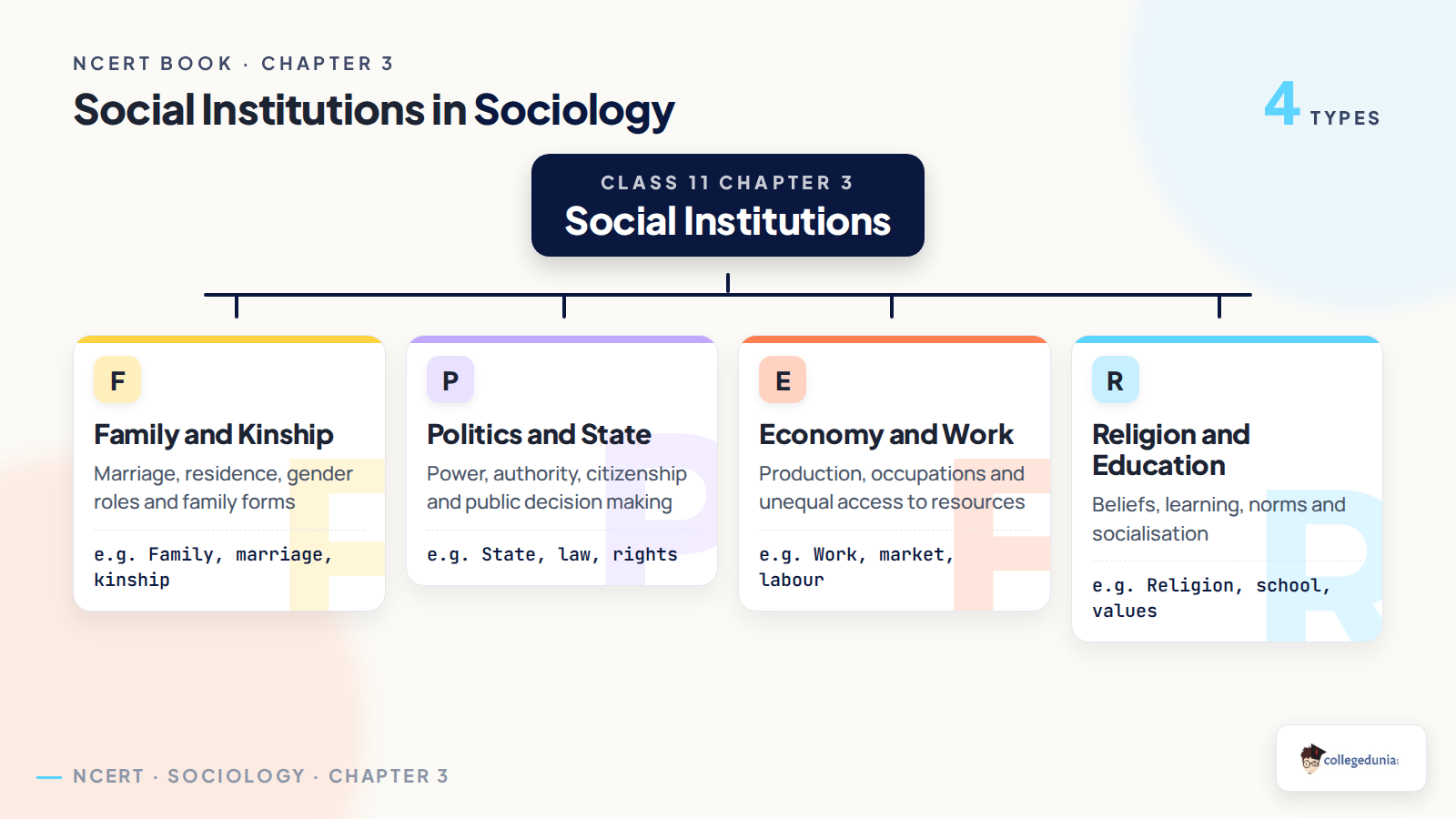
The PDF introduces five major areas: family, marriage and kinship; politics; economics; religion; and education. Students should read the chapter as a map of social life, not as a list of definitions.
Meaning of Social Institutions in Class 11 Sociology
NCERT defines an institution as something that works through rules accepted by law or custom. These rules are not always written. Family customs, school rules, religious practices and state laws all shape how people behave in daily life.
| Institution | What students should note | Useful example |
|---|---|---|
| Family | Kinship, marriage, residence and gender roles | Joint family, nuclear family, female-headed household |
| Politics | Power, authority, citizenship and state action | Law, elections, rights and public policy |
| Economy | Work, production, property and unequal access | Market, labour, informal work and class |
| Religion and education | Belief, learning, values and socialisation | Ritual, school, moral rules and textbooks |
Understanding Social Institutions Explained for Class 11
Source: Magnet Brains on YouTube
Functionalist and Conflict Views of Institutions
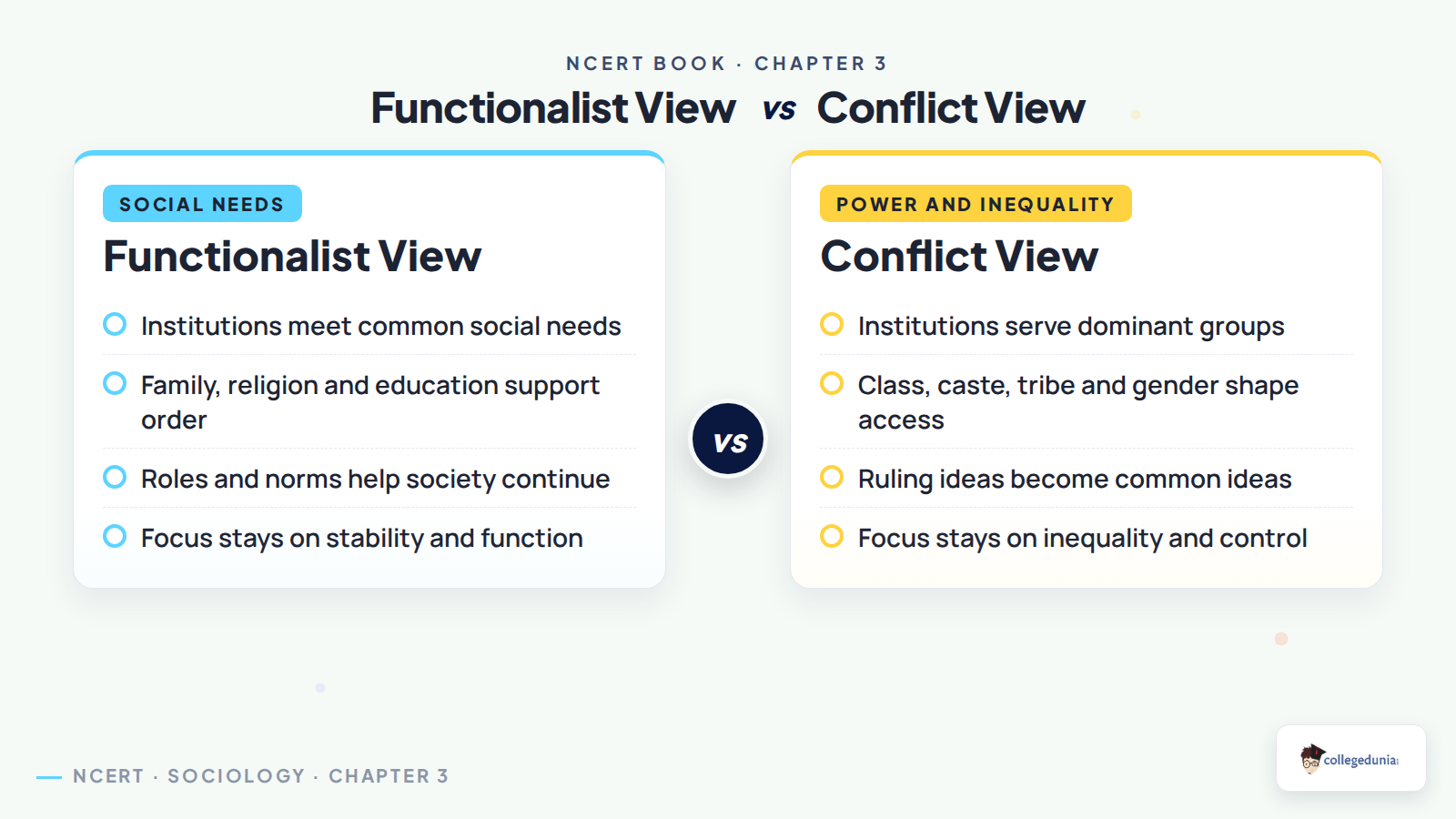
The chapter asks students to compare two ways of studying institutions. The functionalist view sees institutions as systems that meet social needs and keep social order. Family, religion and education are studied for the roles they play in keeping society going.
The conflict view asks a sharper question. It studies how institutions may serve dominant groups. Class, caste, tribe and gender can decide who benefits from an institution and who faces limits.
Family, Marriage and Kinship in Understanding Social Institutions
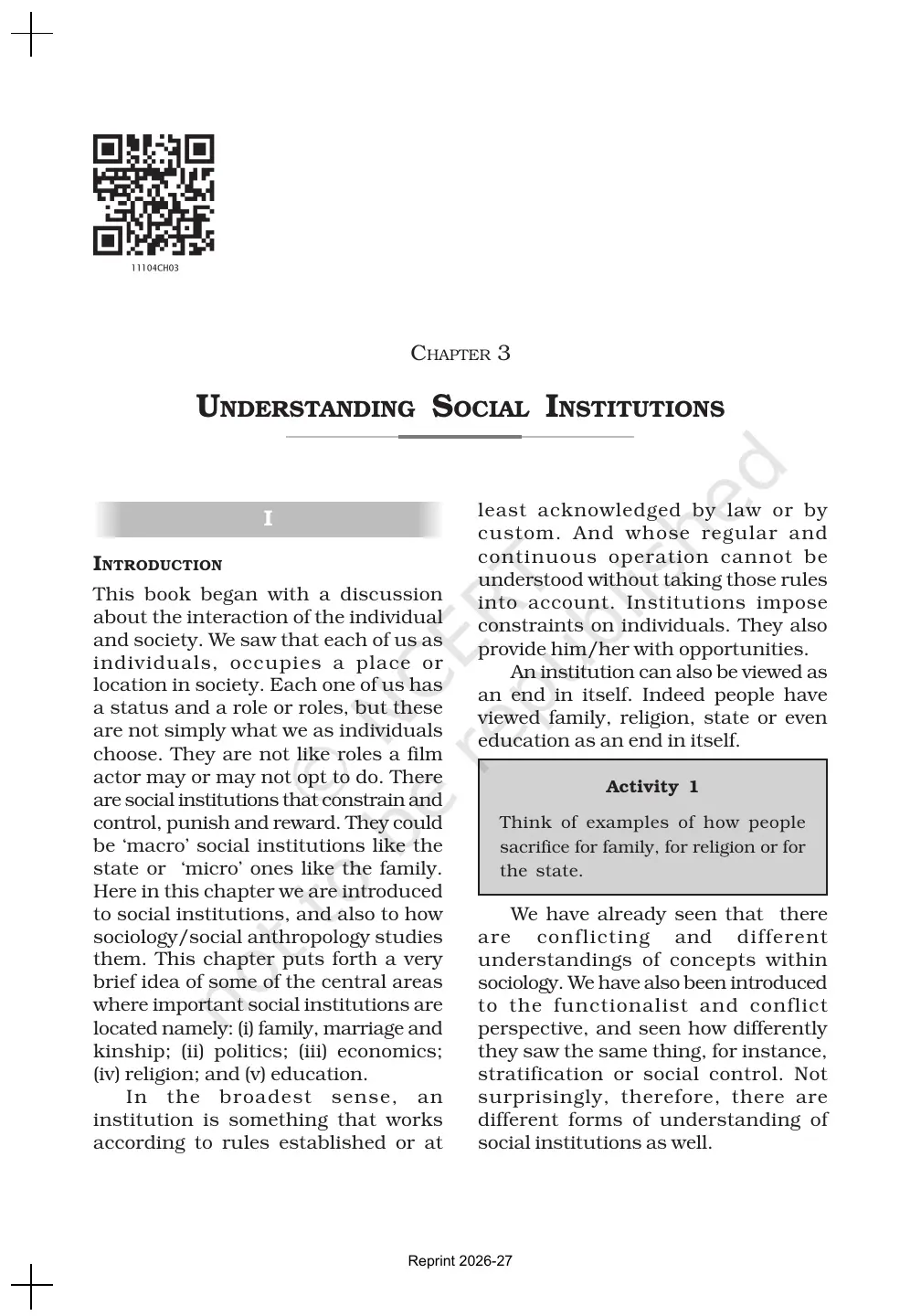
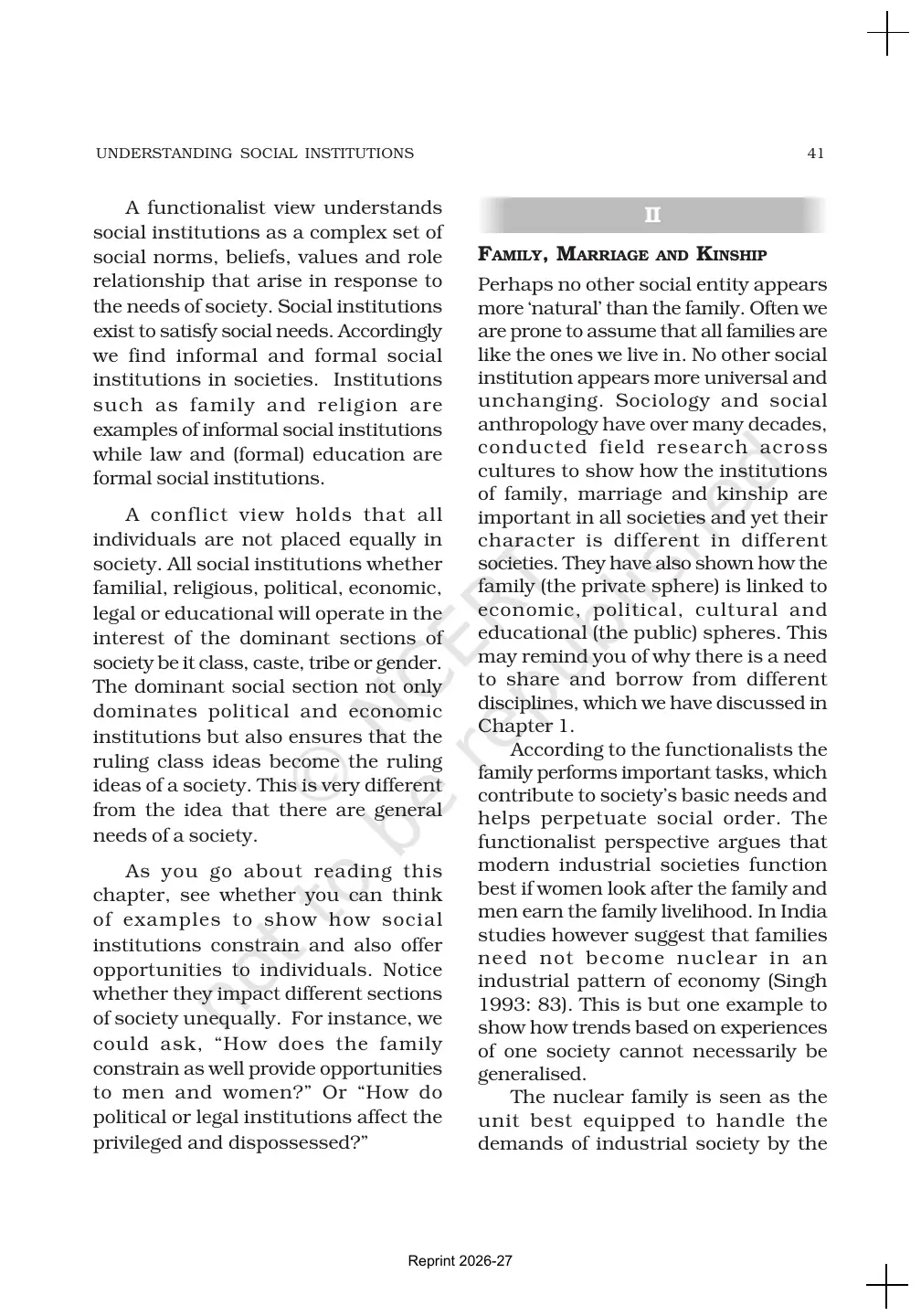
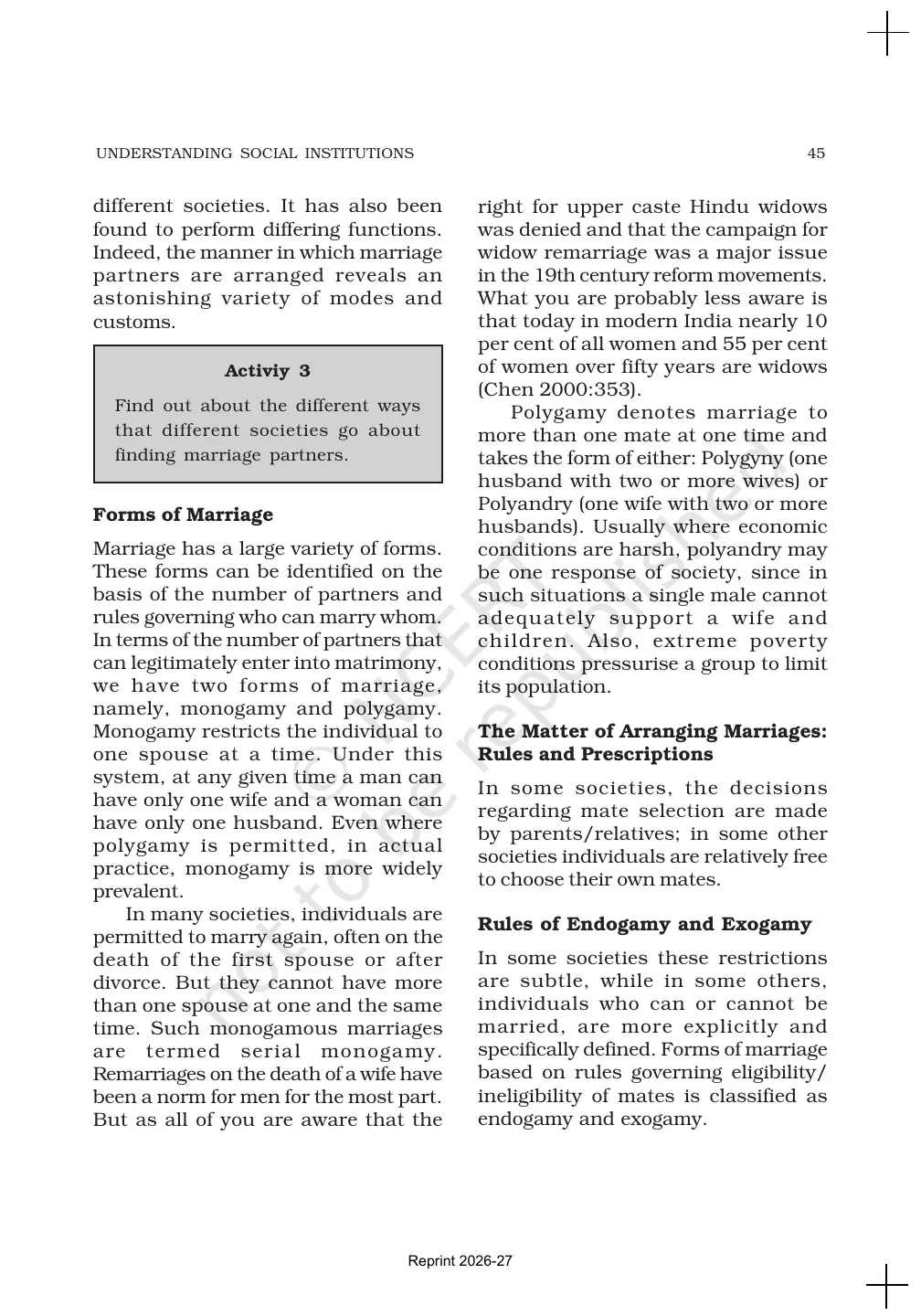
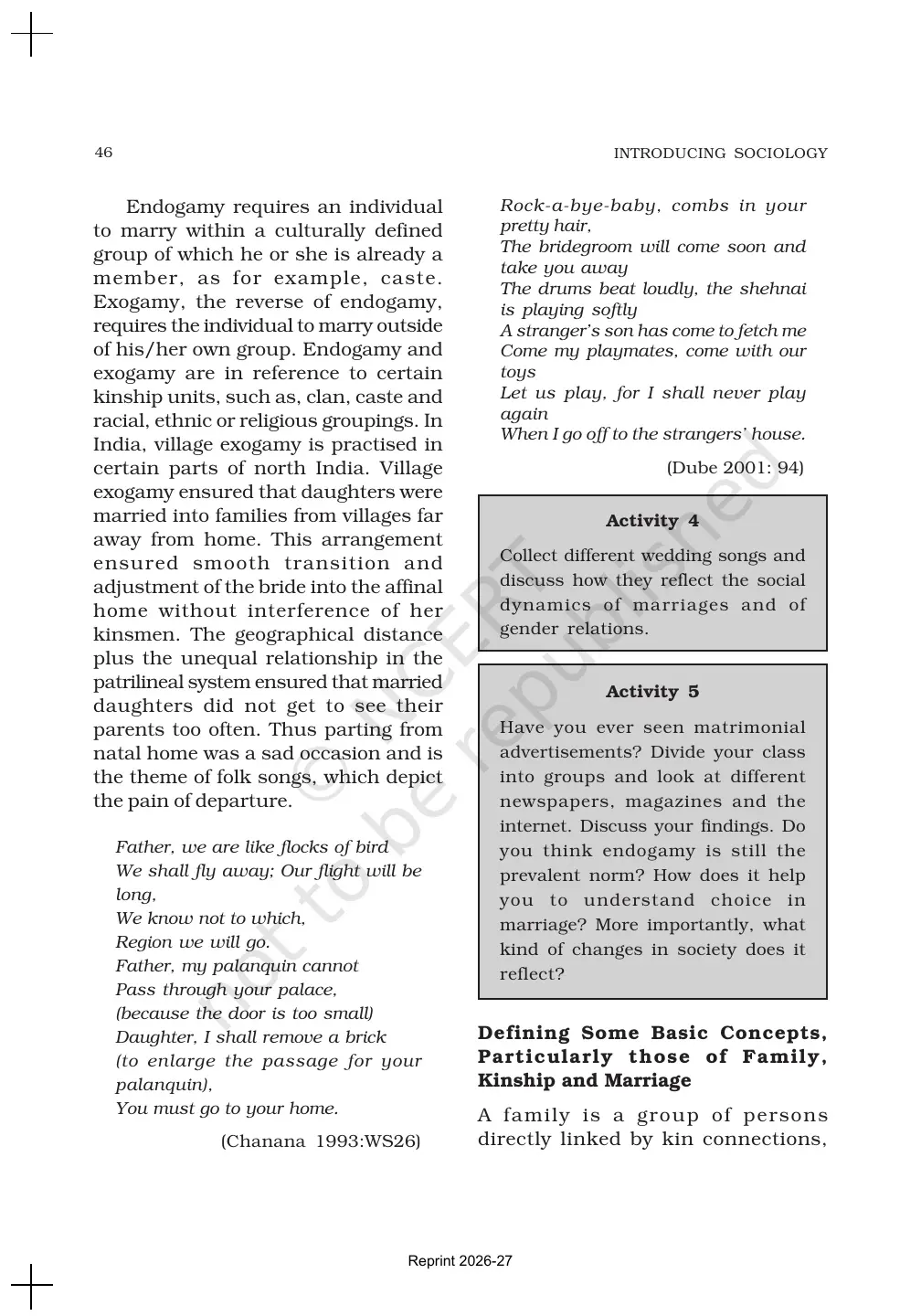
NCERT warns students not to assume that all families are like their own. Sociology and social anthropology show that family forms vary across societies. Residence may be patrilocal or matrilocal. Authority may be patriarchal, while matrilineal descent can also exist.
- Nuclear family: parents and children living as a smaller unit.
- Joint family: several generations or related units living together.
- Female-headed household: women manage family support due to migration, widowhood or separation.
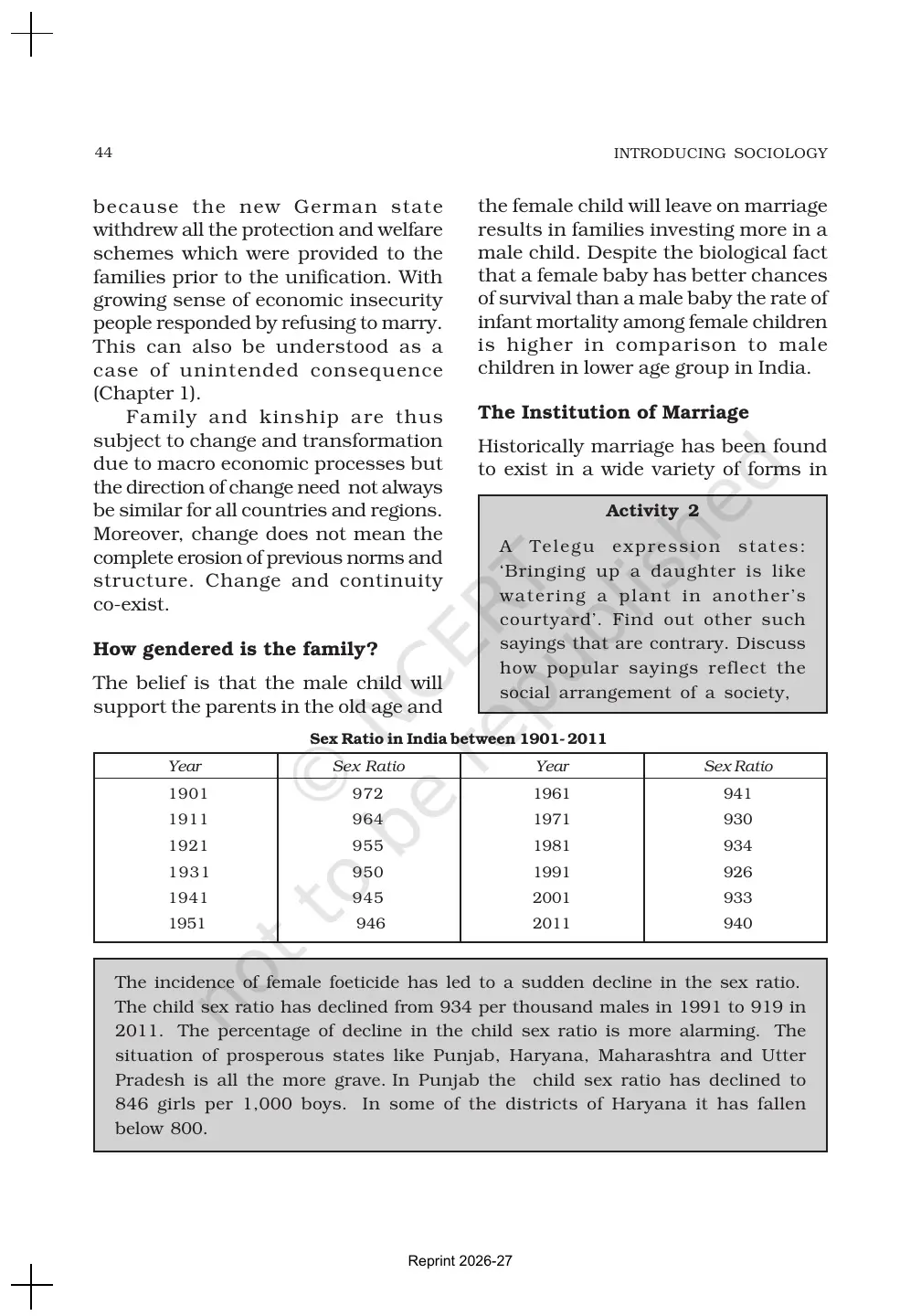
- Gendered family: sons and daughters may receive unequal care and investment.
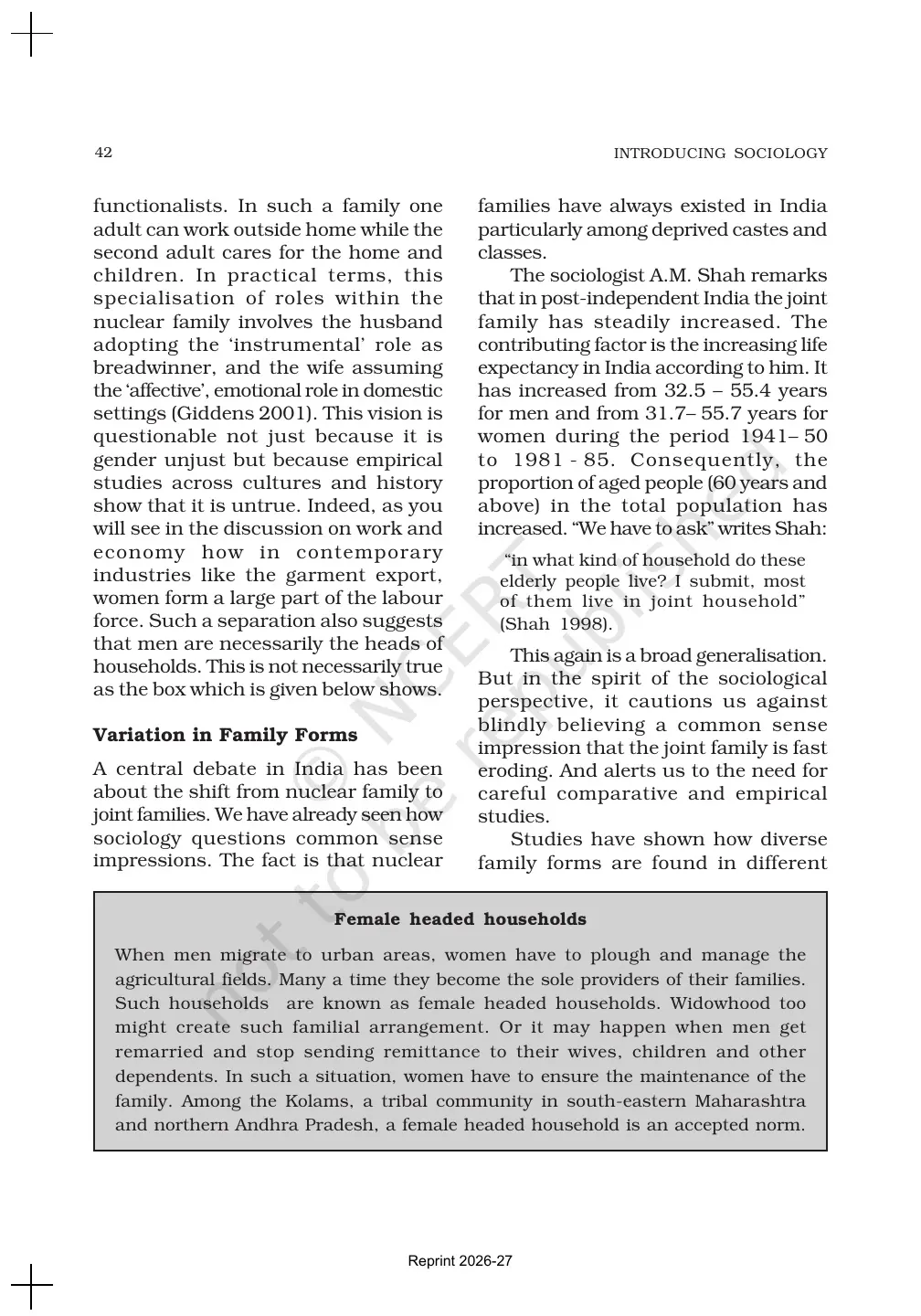
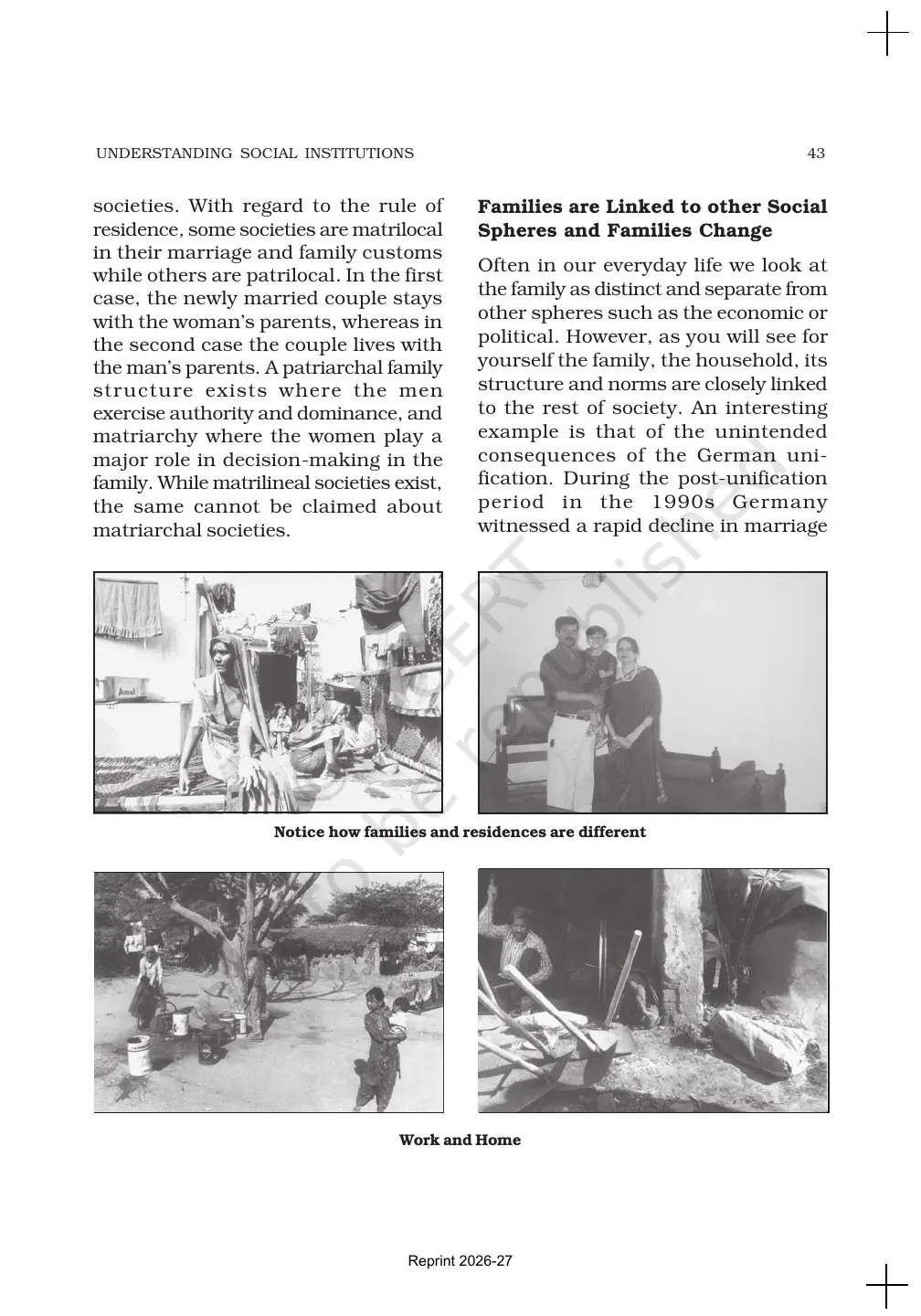
The key lesson is careful comparison. Family is linked with economy, politics, education and gender, so it never stands outside society.
Politics, Economy, Religion and Education in the Chapter
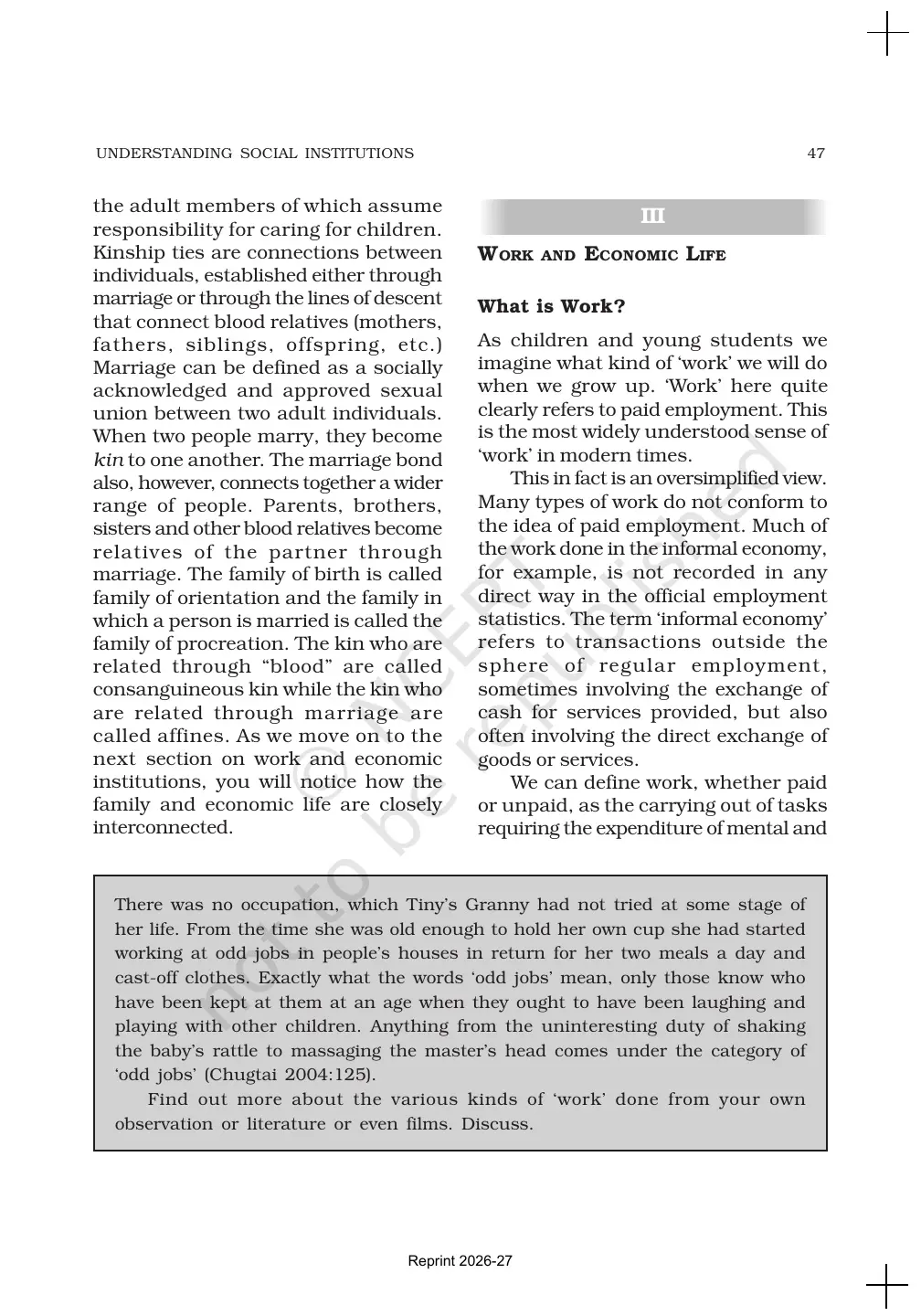
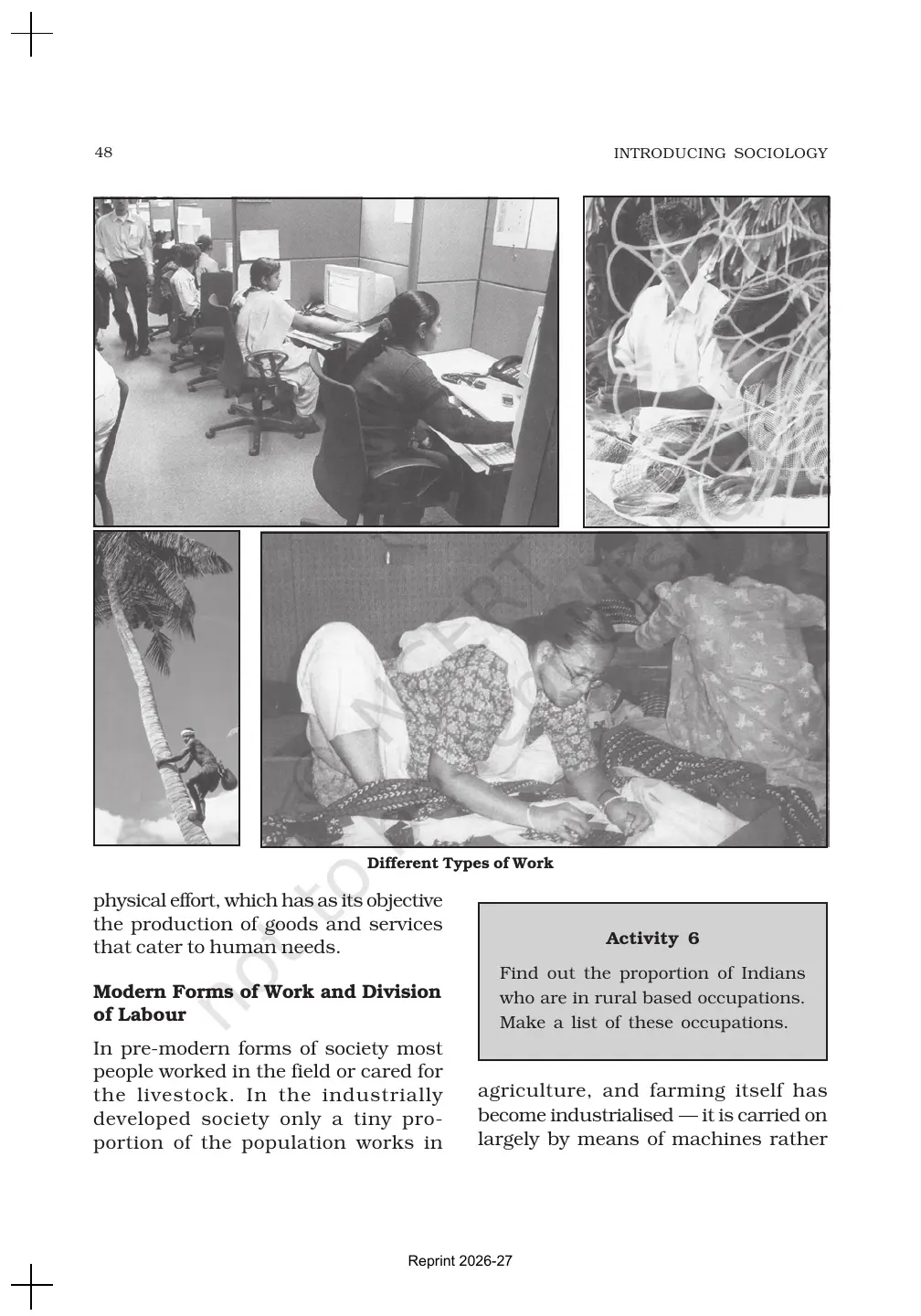
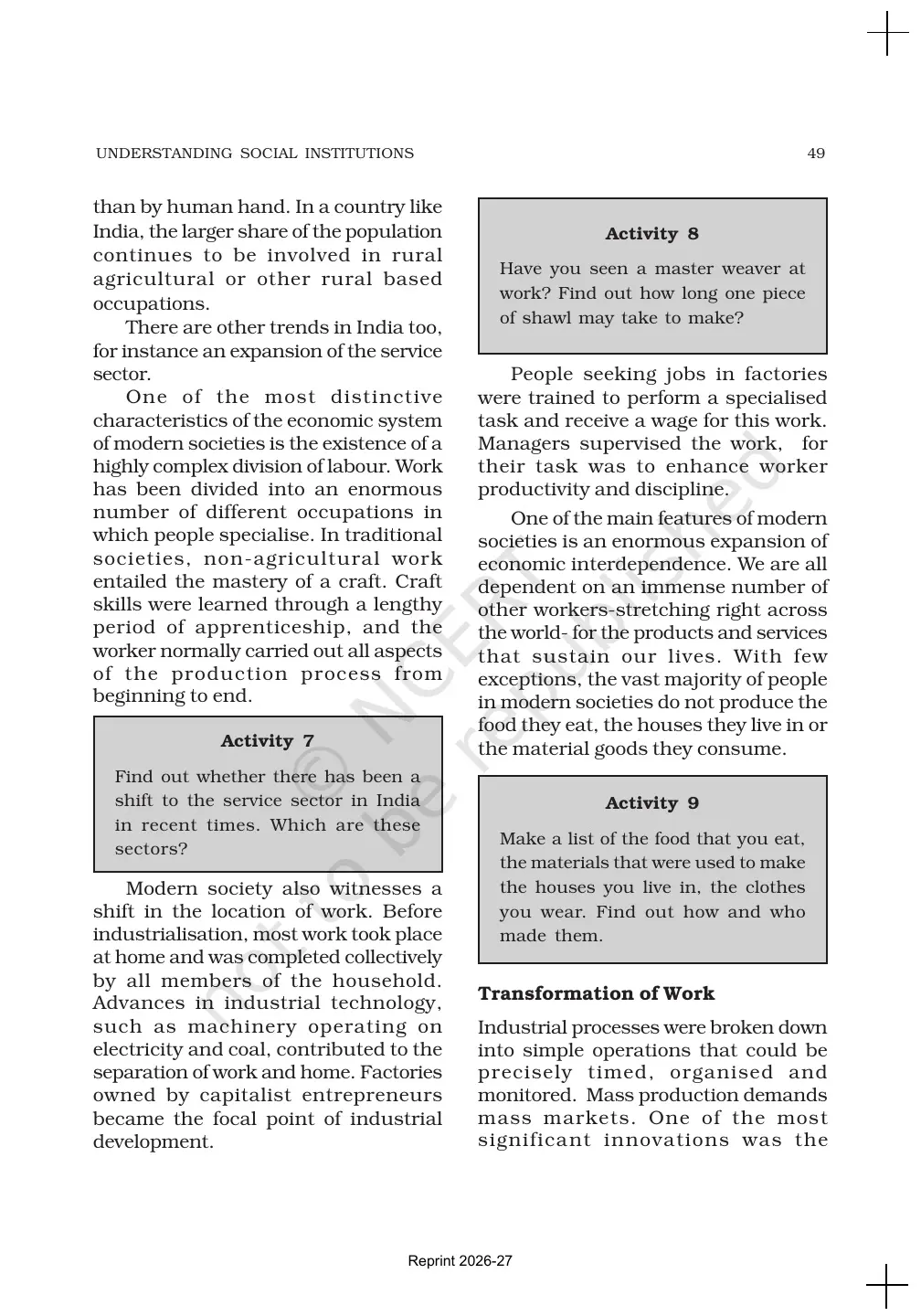
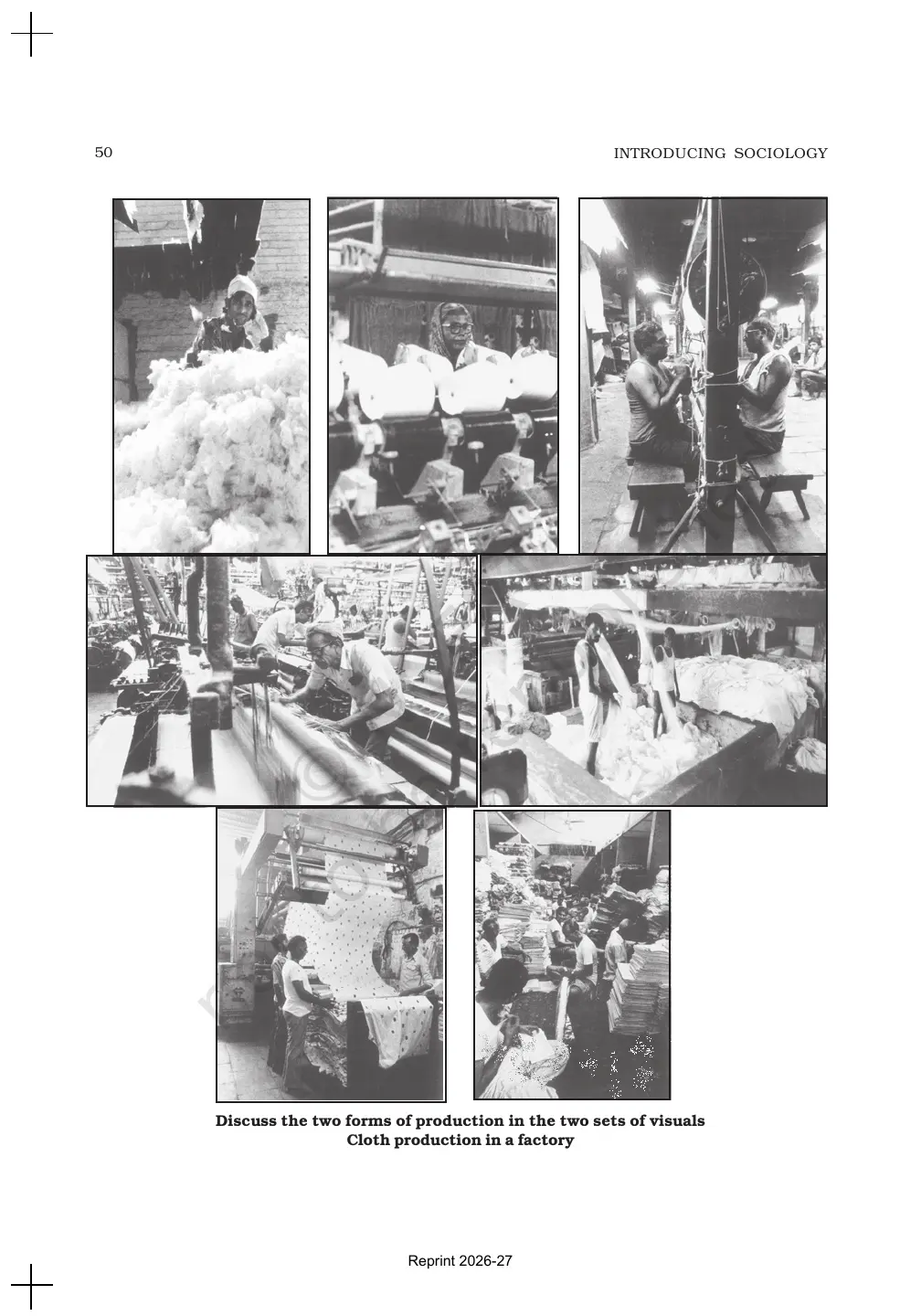
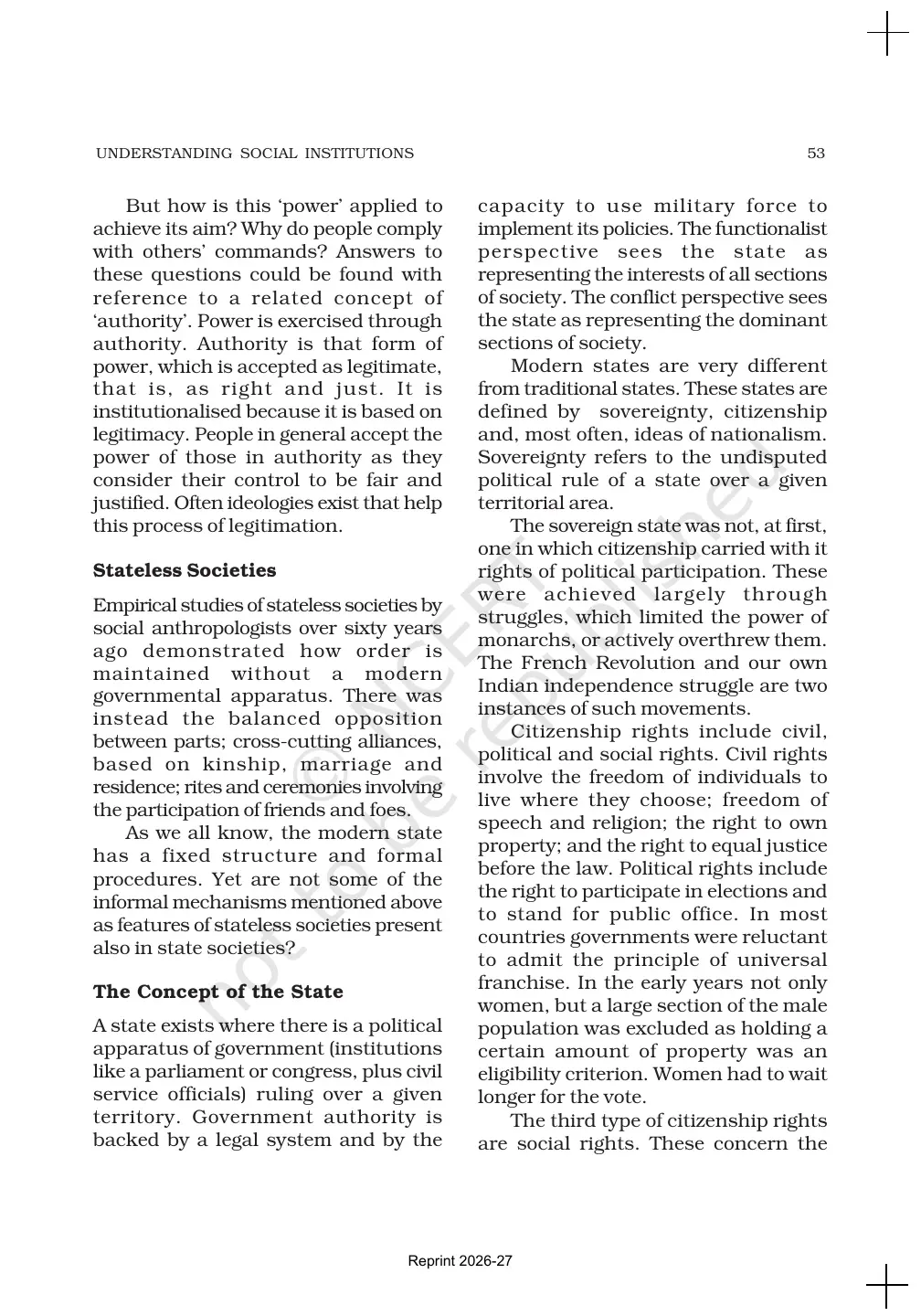
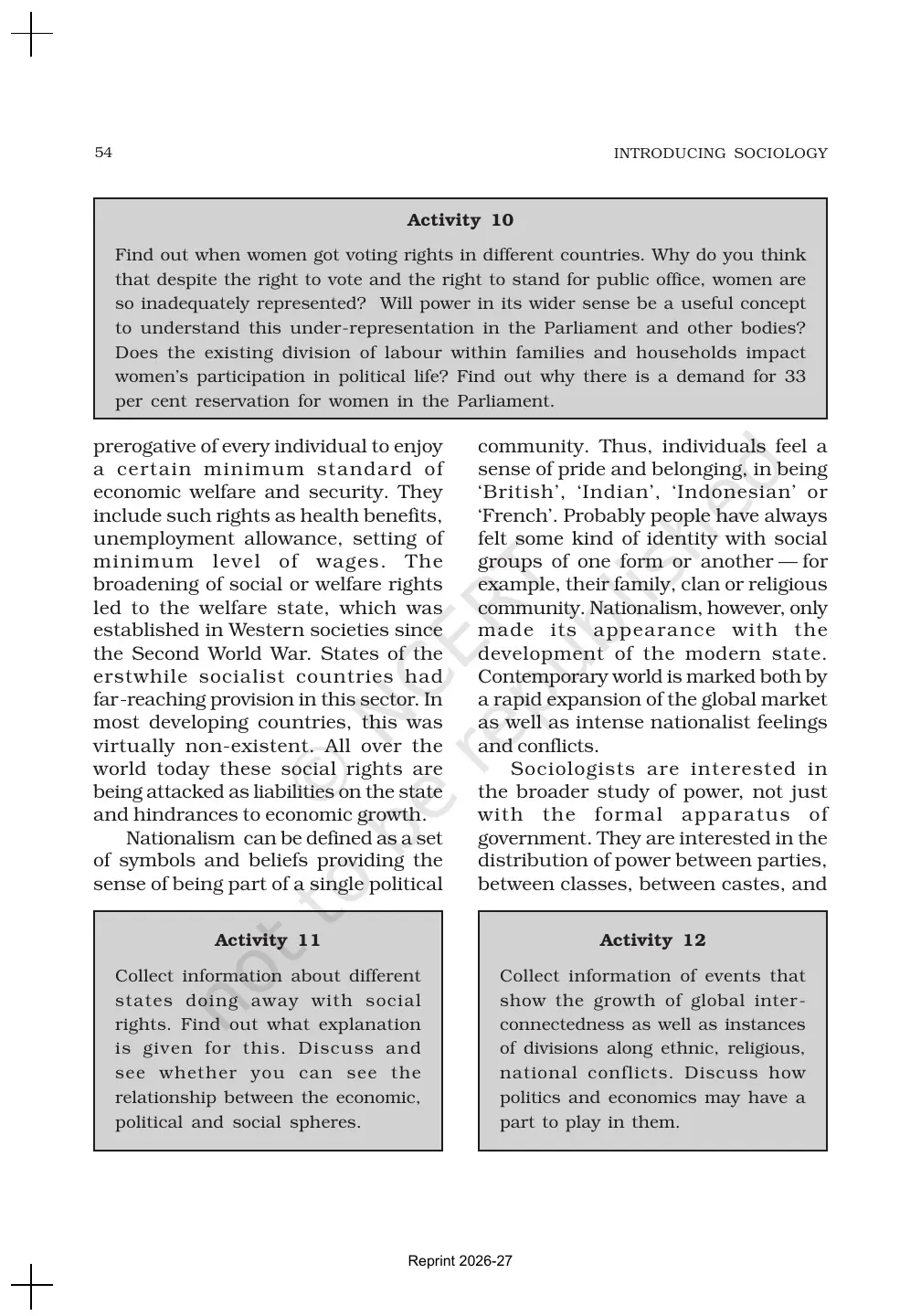
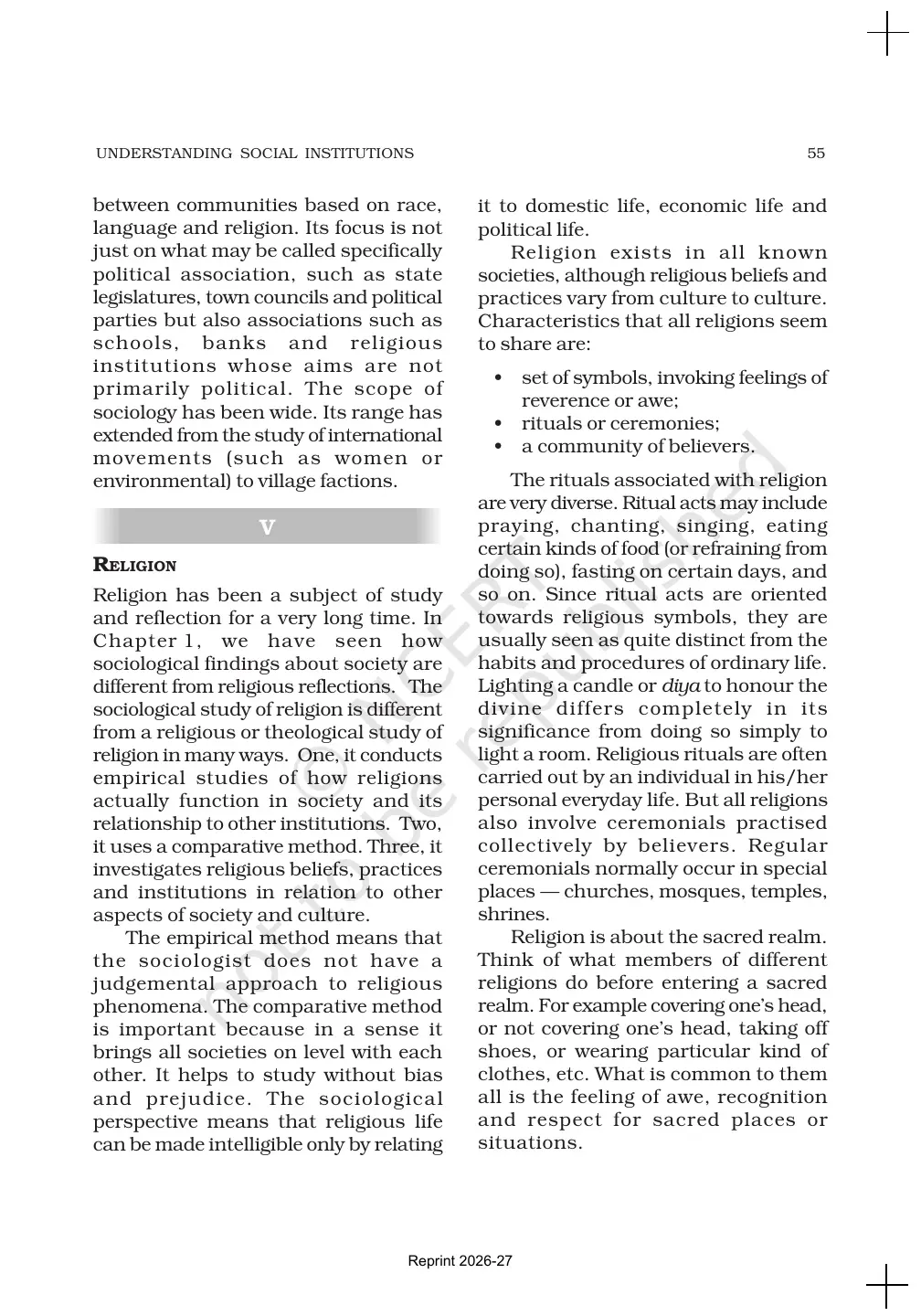
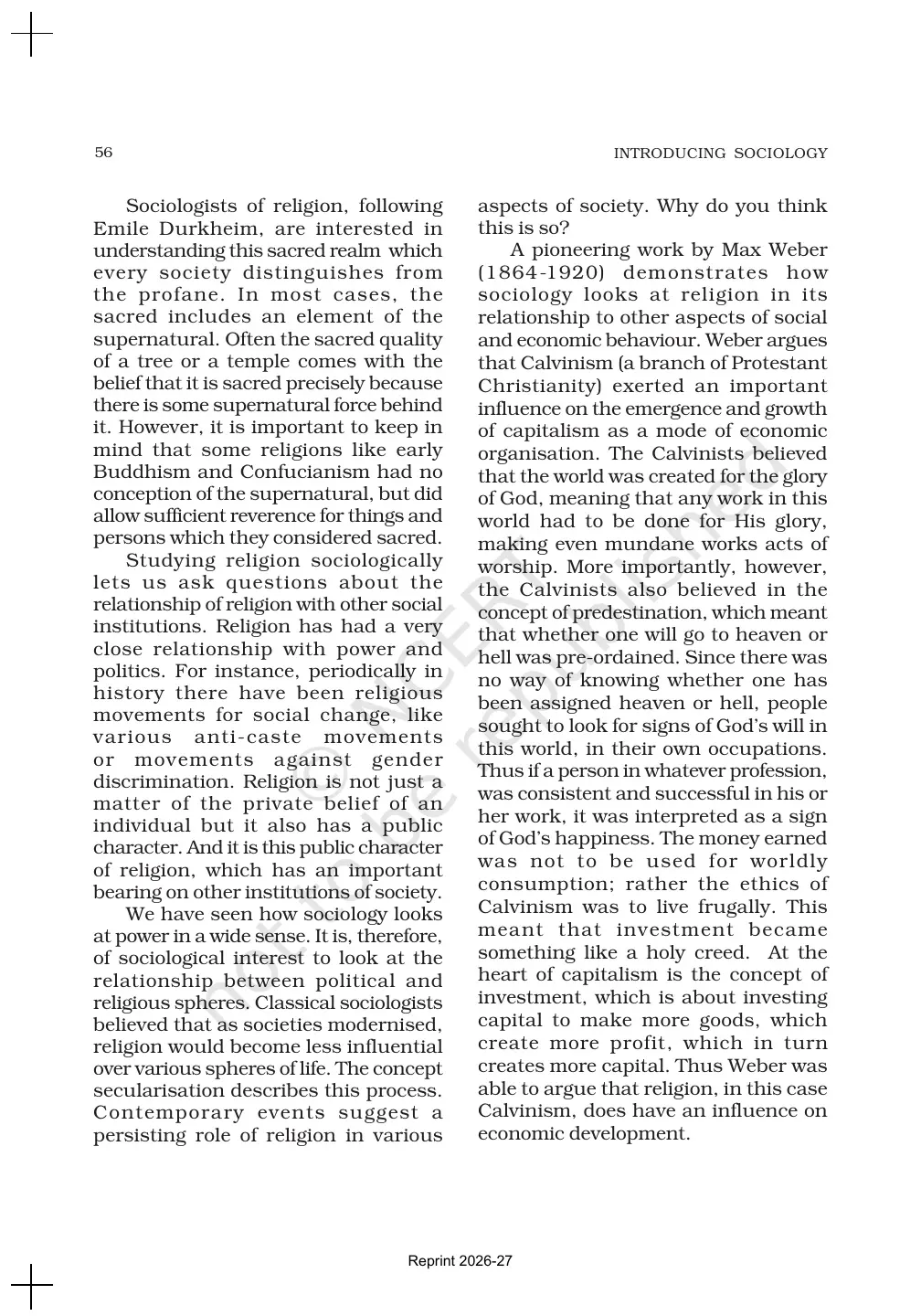
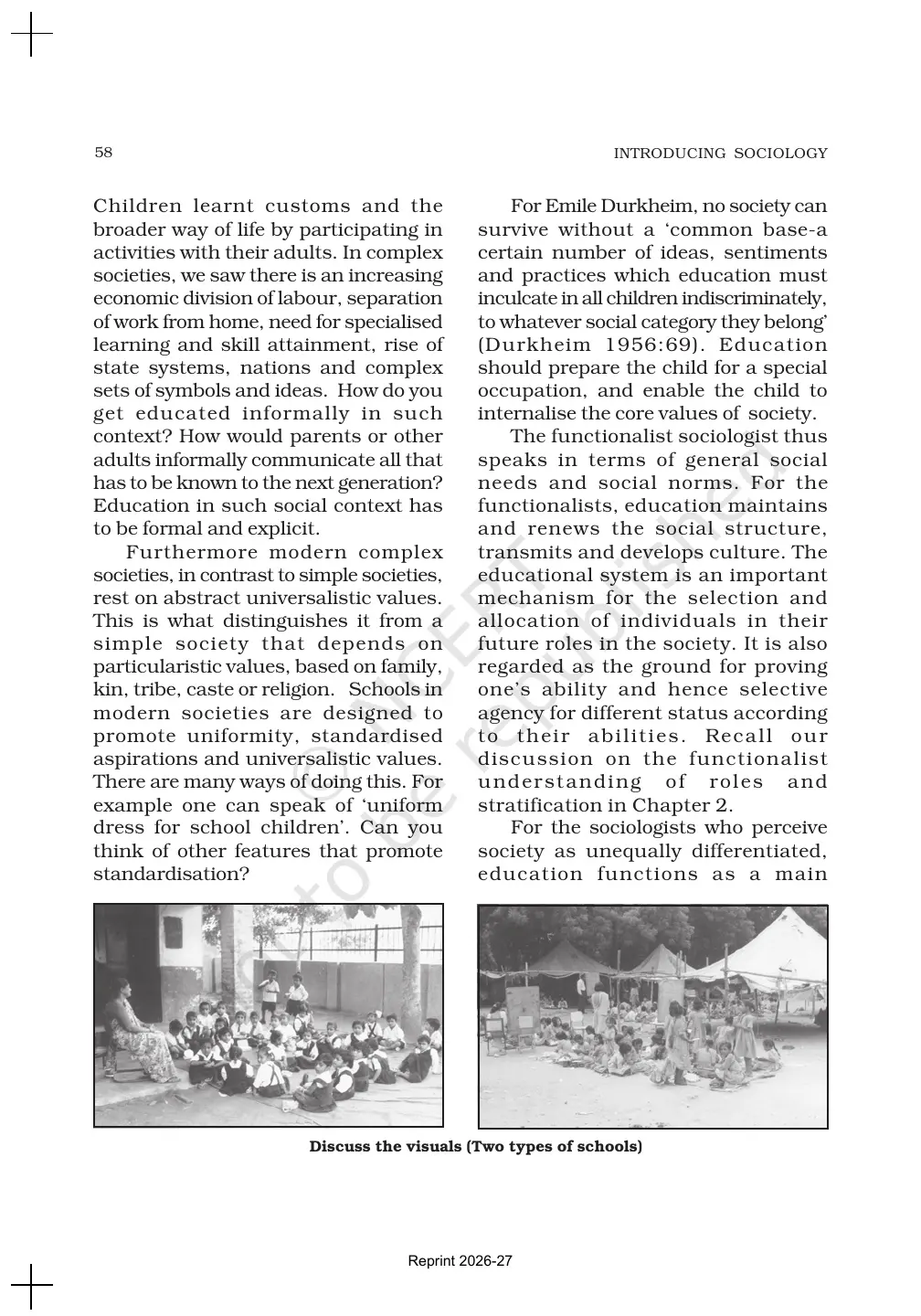
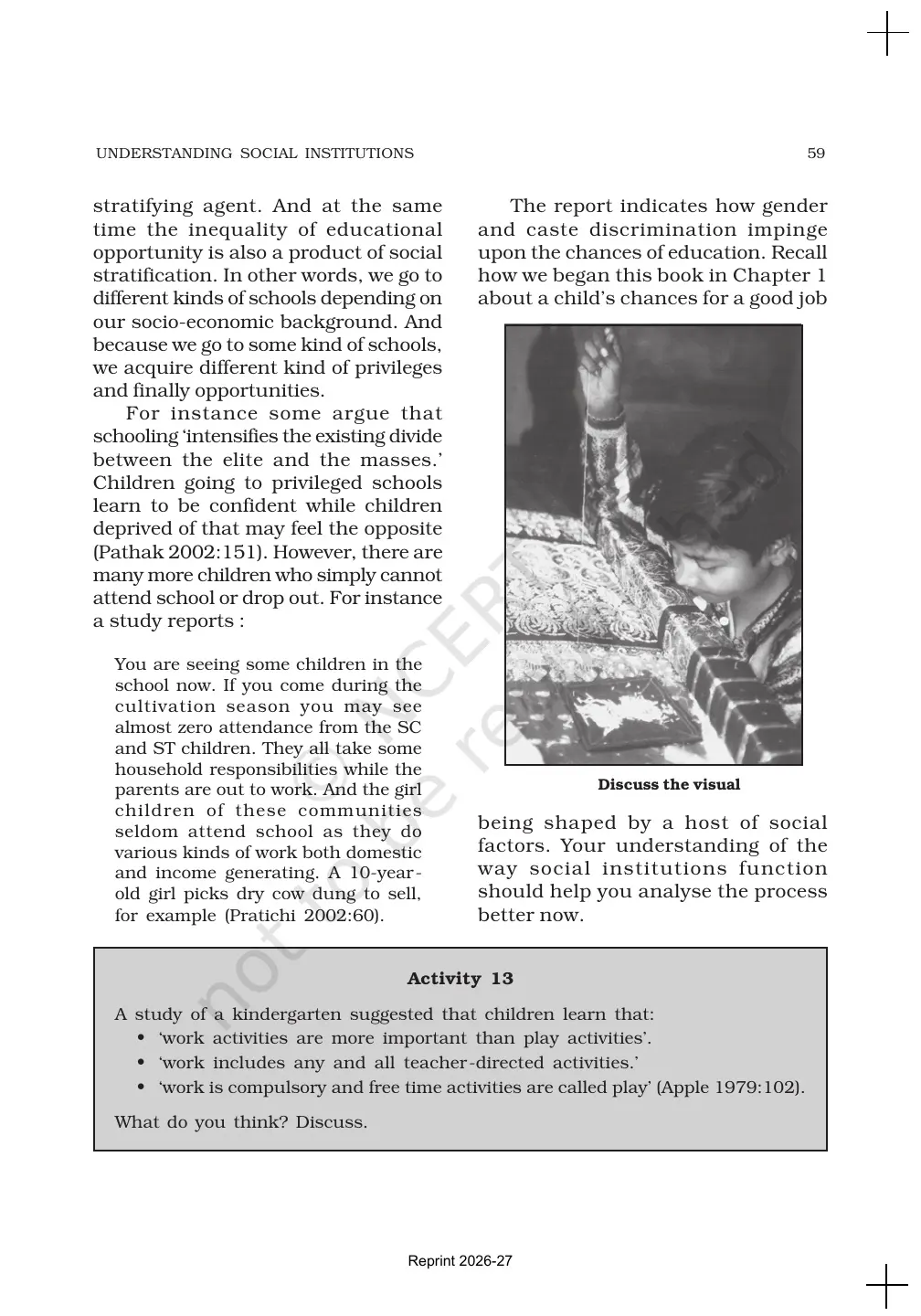
The second half of the chapter widens the discussion beyond the family. Political institutions deal with power and collective decisions. Economic institutions organise work and resources. Religion connects belief, ritual and community. Education passes knowledge, values and social habits across generations.
For revision, keep the NCERT question in mind: do institutions affect all sections of society equally? This one question helps students move from description to sociological analysis.
How to Use the Chapter 3 Book PDF for Revision
Use the official PDF in three rounds. First, read the chapter for the meaning of institution. Second, make a table for each institution. Third, write short answers using one concept, one example and one view.
- Mark the views: functionalist and conflict perspectives.
- List the institutions: family, politics, economy, religion and education.
- Add examples: joint family, state law, market work, ritual and school.
- Practise comparison: write how the same institution can help and constrain people.
Understanding Social Institutions Class 11 Related Resources
| Resource | Best use |
|---|---|
| Understanding Social Institutions Handwritten Notes | Use for quick last-minute revision after reading the book PDF. |
| Understanding Social Institutions Notes | Use for shorter explanations of the chapter concepts once the notes page is live. |
| Understanding Social Institutions NCERT Solutions | Use for textbook answers and activity-based practice once the solutions page is live. |
All Class 11 Sociology NCERT Book Chapters
| Chapter | NCERT Book PDF |
|---|---|
| 1 | Sociology and Society |
| 2 | Terms, Concepts and Their Use in Sociology |
| 3 | Understanding Social Institutions |
| 4 | Culture and Socialisation |
| 5 | Doing Sociology Research Methods |
| 6 | Social Structure, Stratification and Social Processes in Society |
| 7 | Social Change and Social Order in Rural and Urban Society |
| 8 | Environment and Society |
| 9 | Introducing Western Sociologists |
| 10 | Indian Sociologists |
Understanding Social Institutions Class 11 NCERT Book FAQs
Ques. What is included in the Class 11 Sociology Chapter 3 NCERT PDF?
Ans. It includes the official Understanding Social Institutions chapter, covering family, marriage, kinship, politics, economy, religion and education.
Ques. What is a social institution in this chapter?
Ans. A social institution is a rule-based arrangement accepted by law or custom that shapes regular behaviour in society.
Ques. Why are functionalist and conflict views important?
Ans. The functionalist view explains social order, while the conflict view explains how institutions may support dominant groups and unequal power.
Ques. How should students revise this chapter for 2026-27 exams?
Ans. Students should prepare one example for every institution and practise comparing how each institution offers opportunities and creates constraints.



Comments