



The NCERT Class 12 English Supplementary Chapter 8 Poems by Blake Book PDF gives students the official 2026-27 Kaleidoscope text. Use it to read The Divine Image and The Human Abstract, compare innocence with experience, and revise the NCERT questions before checking notes or solutions.
- Best use: read both poems together and mark how Blake repeats Mercy, Pity, Peace and Love.
- Chapter focus: human goodness, social cruelty, religious symbols and Blake's idea of the divided human soul.
- Revision cue: connect every answer to the contrast between Songs of Innocence and Songs of Experience.
Student Feedback: In a Collegedunia survey of 8,920 Class 12 English Elective students, most students said this chapter became easier after they compared the same virtue words in both poems.
|
Table of Contents |
Poems by Blake NCERT Book PDF Overview
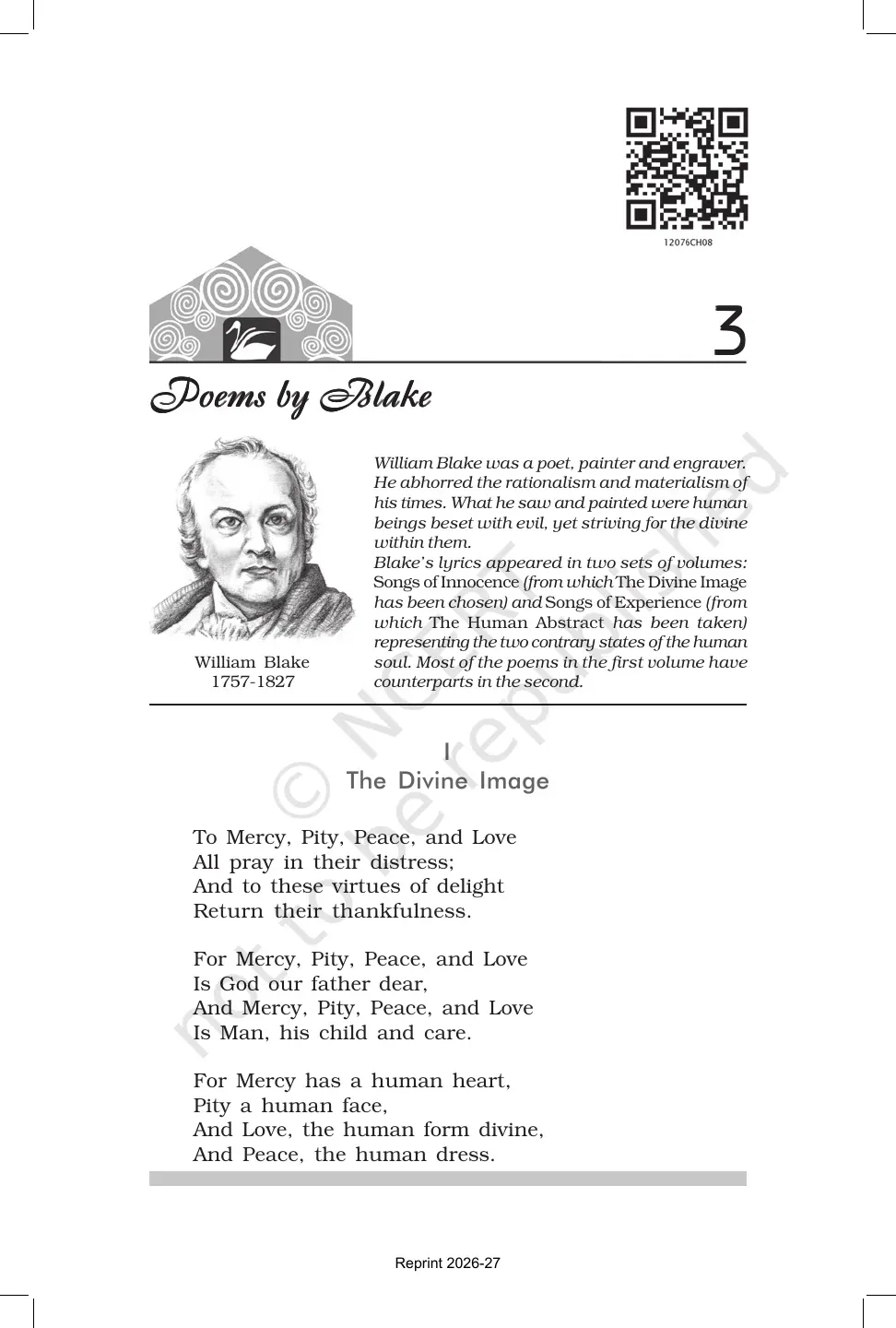
Class 12 English Supplementary Chapter 8 places two Blake poems side by side. The Divine Image comes from Songs of Innocence and sees human virtues as divine. The Human Abstract comes from Songs of Experience and shows how those virtues become distorted when people create poverty, fear and secrecy.
| NCERT part | Central idea | Answer cue |
|---|---|---|
| The Divine Image | Mercy, Pity, Peace and Love as human and divine virtues | Human goodness reflects God's image |
| The Human Abstract | Virtues twisted by poverty, fear, cruelty and deceit | Social evil grows inside the human brain |
| Language Work | Capital letters and syllable pattern | Notice personified qualities and rhythm |
Poems by Blake Class 12 Video Explanation
Source: Magnet Brains on YouTube
The Divine Image Meaning in Class 12 English
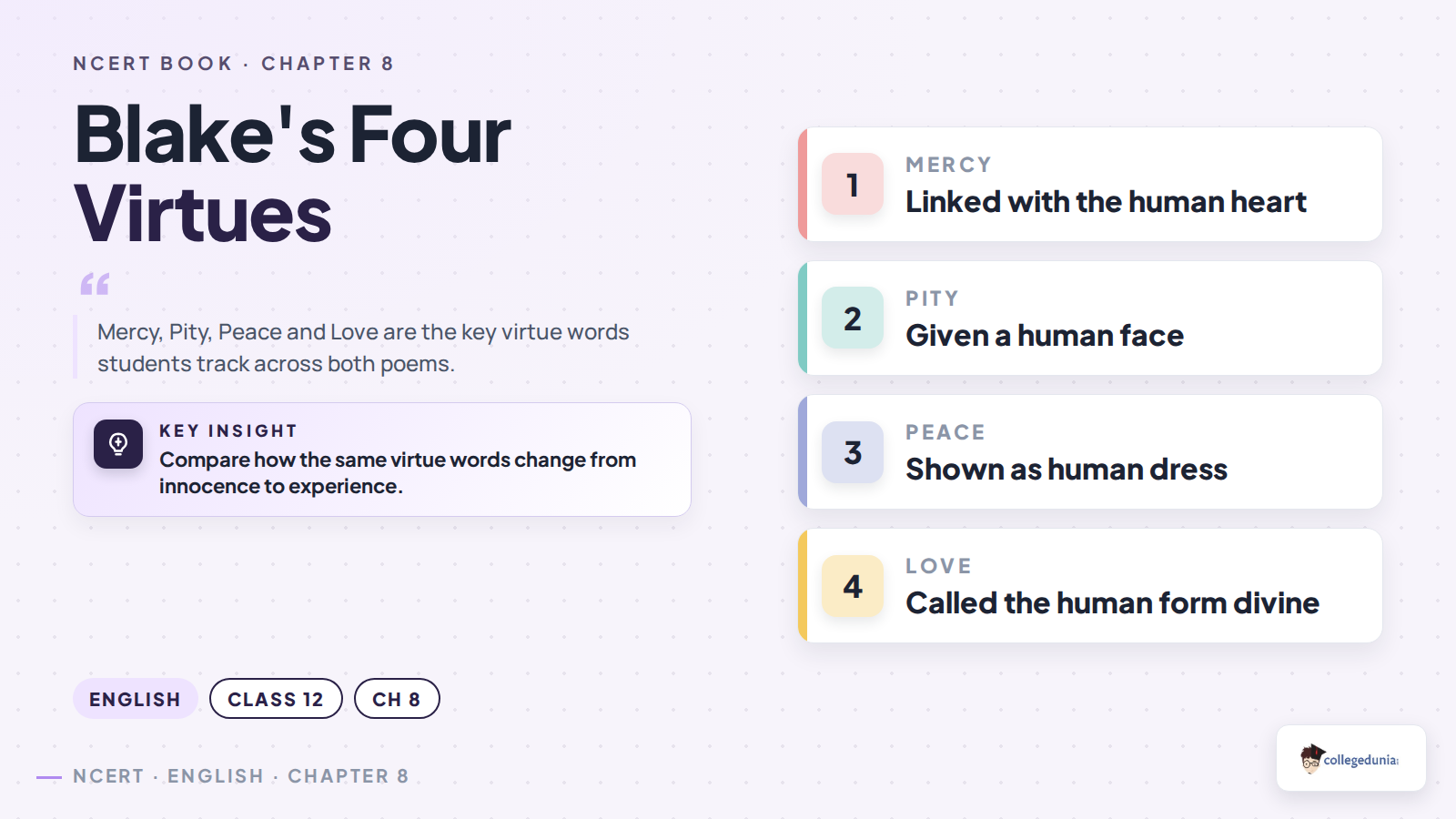
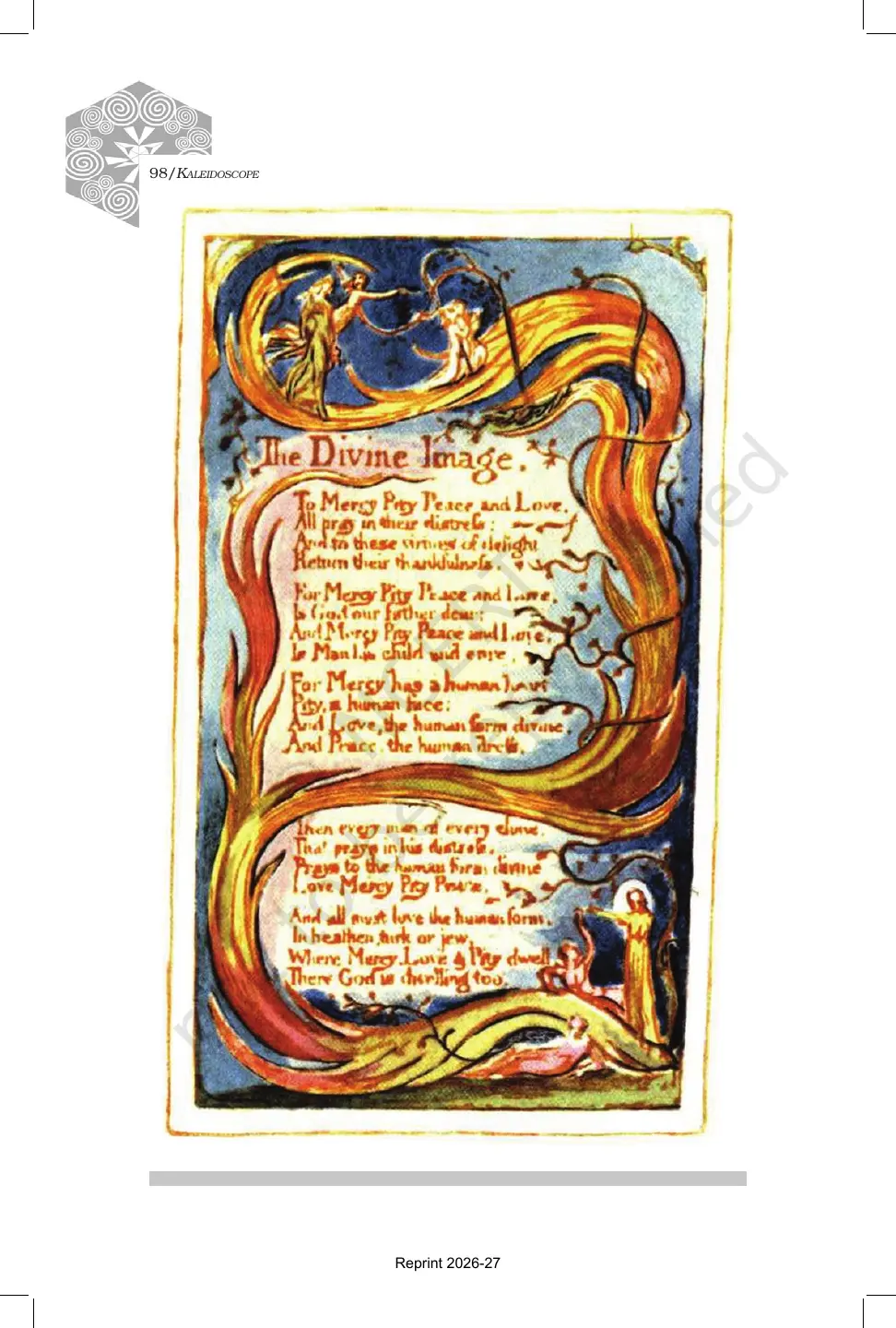
In The Divine Image, Blake presents Mercy, Pity, Peace and Love as qualities that belong to both God and human beings. The poem is simple on the surface, but it carries a strong idea: the divine is seen through human compassion.
- Mercy has a human heart because kindness is felt through human action.
- Pity has a human face because suffering is recognised through another person.
- Love becomes the human form divine because love gives humanity its sacred shape.
- Peace is the human dress because it is the outward sign of inner goodness.
The Human Abstract and Blake's Criticism
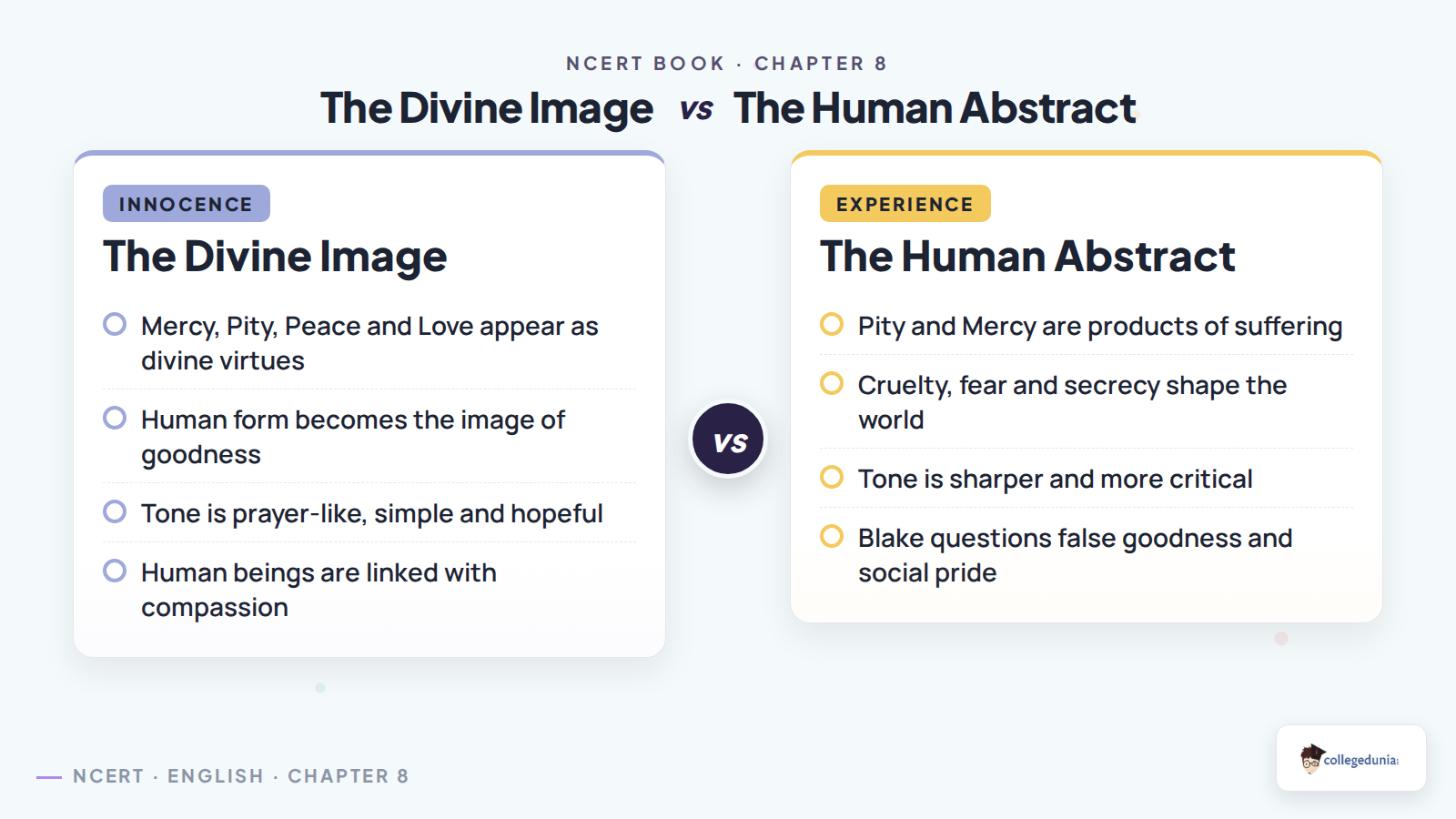
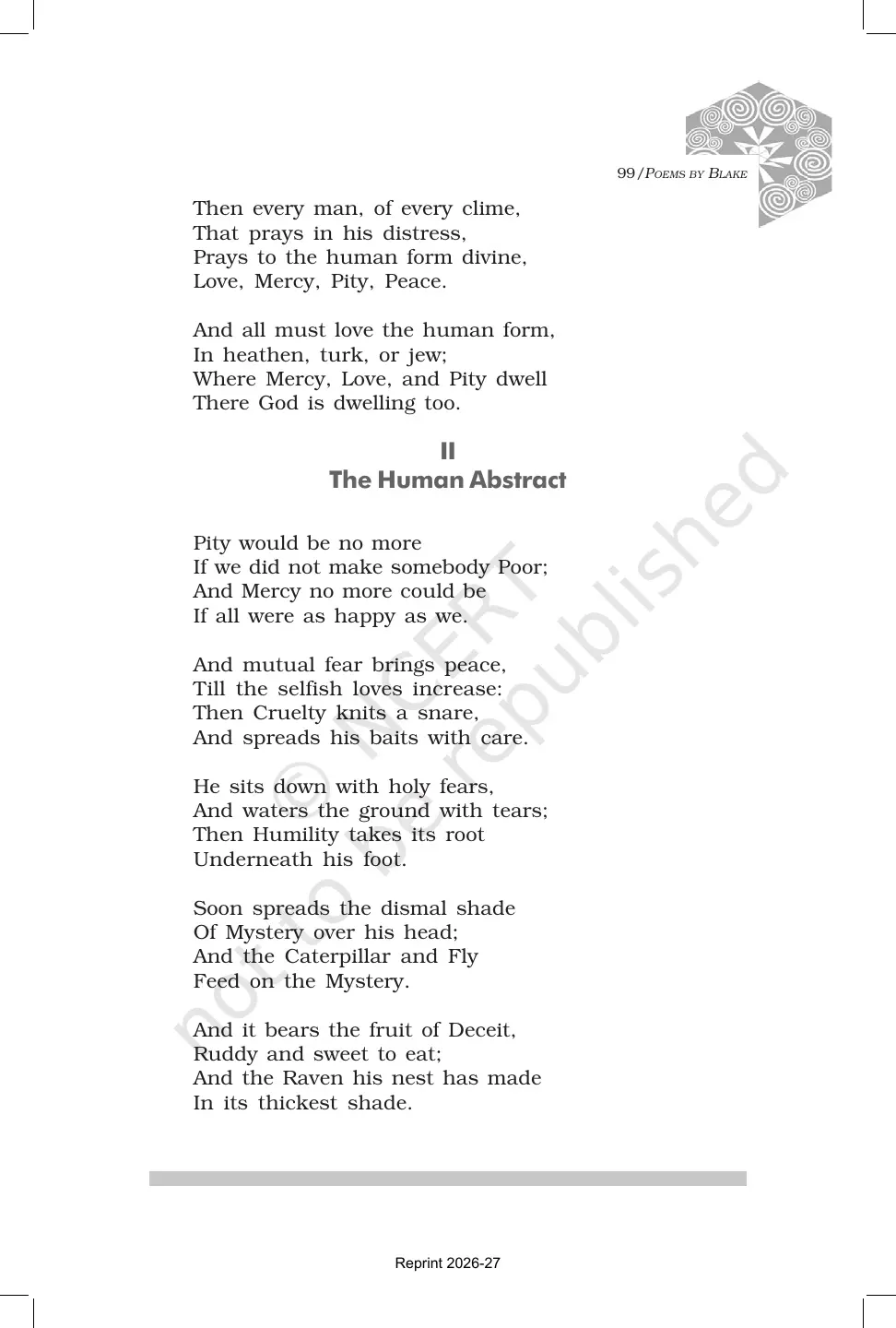
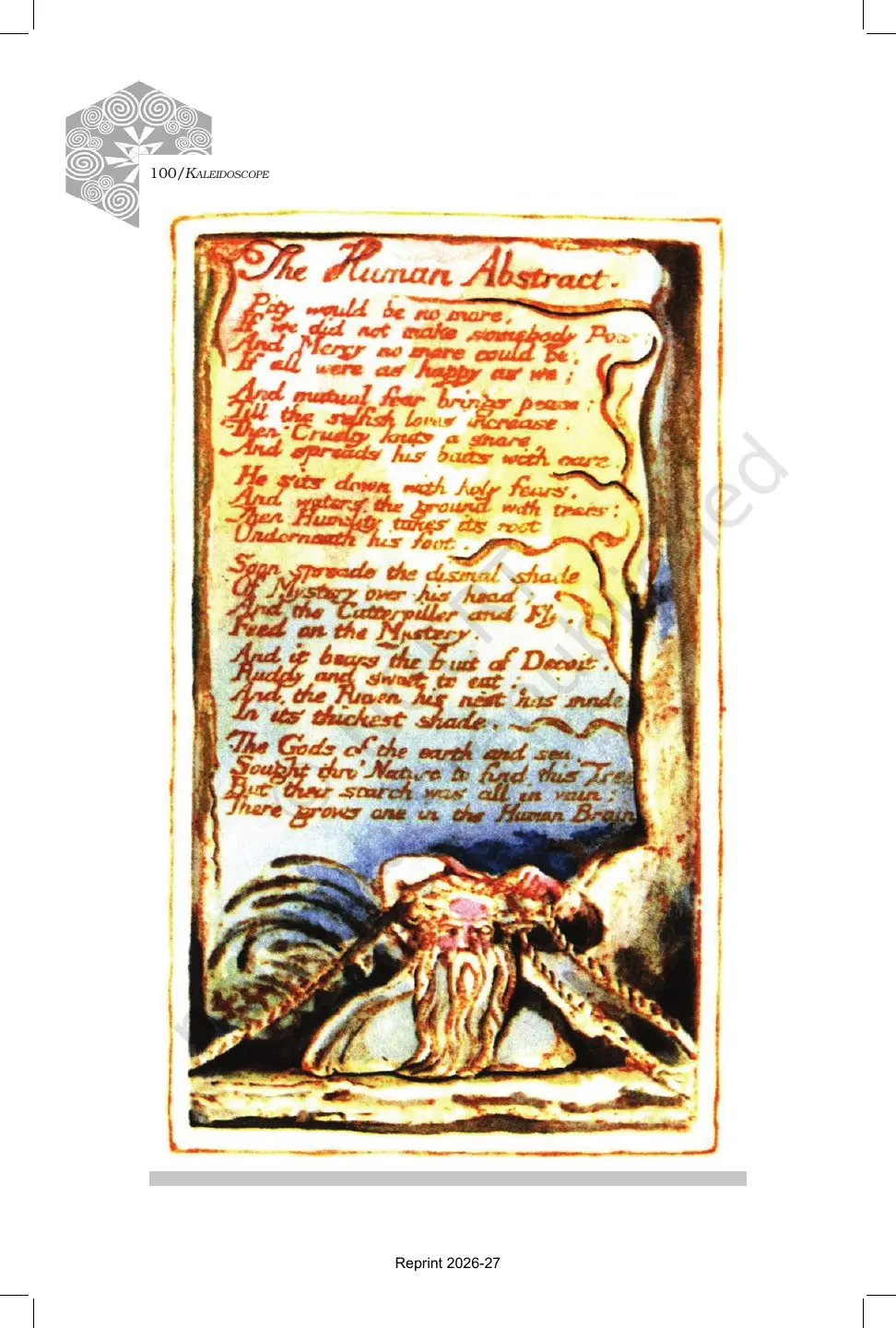
The Human Abstract changes the mood sharply. Blake says Pity would not exist if people did not make somebody poor. Mercy would not be needed if everyone were happy. This does not reject kindness. It asks students to see how false charity can hide cruelty.
- Mutual fear creates a weak form of peace.
- Selfish love grows into cruelty and traps others.
- Mystery, deceit and the raven image show a dark inner world.
- The final tree grows in the human brain, so evil is also mental and social.
Compare The Divine Image and The Human Abstract
The two poems are matched because Blake uses similar virtue words in opposite ways. In the first poem, the human being is close to divinity. In the second poem, the human mind creates systems that make suffering look natural. This contrast is the safest answer-frame for the NCERT long questions.
| Point of comparison | The Divine Image | The Human Abstract |
|---|---|---|
| Collection | Songs of Innocence | Songs of Experience |
| View of human nature | Human beings can reflect divine love | Human beings can create cruelty and deceit |
| Key words | Mercy, Pity, Peace, Love | Pity, Mercy, fear, cruelty, mystery, deceit |
| Exam angle | Explain human form divine | Explain distorted virtues in the human brain |
Language Work and Capitalised Words
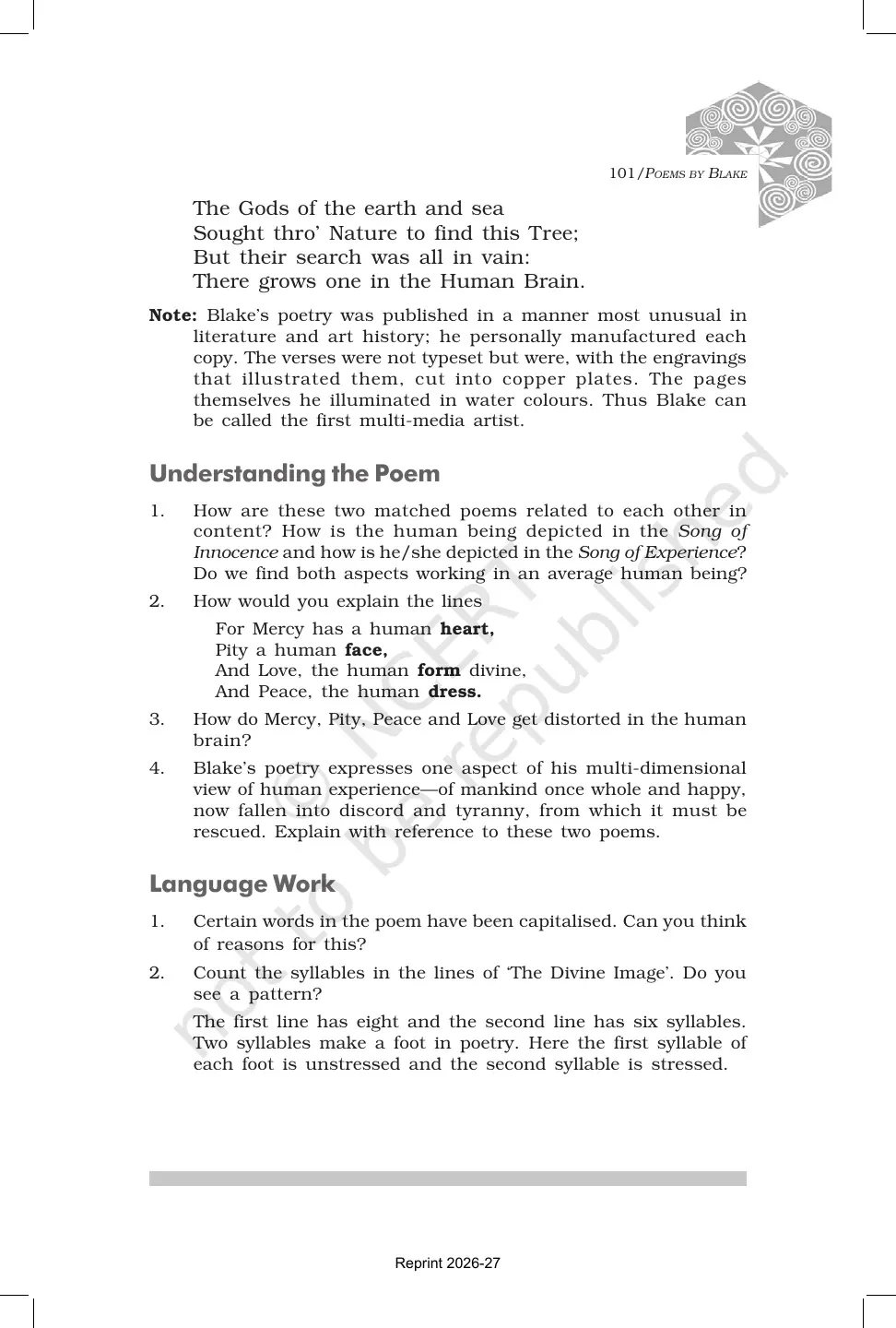
The NCERT language-work section asks students to notice capitalised words. Blake writes words such as Mercy, Pity, Peace, Love, Cruelty, Mystery and Deceit with capital letters because they behave almost like characters. This is called personification.
- Capital letters make abstract ideas feel alive.
- The same words can carry different meanings in the two poems.
- Syllable counting in The Divine Image helps students hear the poem's regular rhythm.
How to Use This NCERT Book PDF
Read the PDF once for the poem text and once for the questions. Then write a short comparison note with three columns: virtue word, innocence meaning and experience meaning. This keeps answers specific.
- Underline Mercy, Pity, Peace and Love in both poems.
- Write one sentence on the meaning of the human form divine.
- Write one sentence on the tree growing in the human brain.
- Revise capitalised words before attempting the language-work question.
Related Class 12 English Supplementary Chapter 8 Resources
Use these links after reading the official NCERT Book PDF for Poems by Blake.
| Resource | Best use | Link |
|---|---|---|
| NCERT Solutions | Understanding the Poem answers and language-work help | Open solutions |
| Notes | Summary, themes and quick revision points | Open notes |
| PYQ | Chapter-wise board-style prompts for Blake's poems | Open PYQ file |
All NCERT Book PDFs for Class 12 English Supplementary Kaleidoscope
The table below keeps the same NCERT Book PDF resource together, so students can move chapter by chapter through the English supplementary Kaleidoscope text.
| Chapter | Text | PDF link |
|---|---|---|
| Chapter 1 | I Sell My Dreams | NCERT Book PDF |
| Chapter 2 | Eveline | NCERT Book PDF |
| Chapter 3 | A Wedding in Brownsville | NCERT Book PDF |
| Chapter 4 | Tomorrow | NCERT Book PDF |
| Chapter 5 | One Centimetre | NCERT Book PDF |
| Chapter 6 | A Lecture upon the Shadow | NCERT Book PDF |
| Chapter 7 | Poems by Milton | NCERT Book PDF |
| Chapter 8 | Poems by Blake | Current PDF |
Class 12 English Supplementary Chapter 8 NCERT Book FAQs
Ques. What is Class 12 English Supplementary Chapter 8 Poems by Blake about?
Ans. It contains William Blake's poems The Divine Image and The Human Abstract, with questions on innocence, experience, human virtues and social cruelty.
Ques. What is the main idea of The Divine Image?
Ans. The Divine Image presents Mercy, Pity, Peace and Love as virtues that belong to God and appear through compassionate human beings.
Ques. What is the main idea of The Human Abstract?
Ans. The Human Abstract shows how qualities such as pity and mercy can become distorted when society creates poverty, fear, cruelty and deceit.
Ques. How should students compare the two Blake poems?
Ans. Students should compare the same virtue words in both poems and explain how innocence sees them as divine, while experience exposes their social misuse.



Comments