




NCERT Class 6 Kaushal Bodh Chapter 2 Biodiversity Register PDF gives students the official Vocational Education chapter for the 2026-27 session. The PDF explains how to observe living things, collect local names, record habitats, ask experts and present a simple biodiversity register.
- Official chapter: 21-page NCERT PDF for Class 6 Vocational Education Kaushal Bodh.
- Project focus: observation, field visits, biodiversity tables, safety and presentation work.
- Best use: keep the PDF open while filling register tables and making sketches.
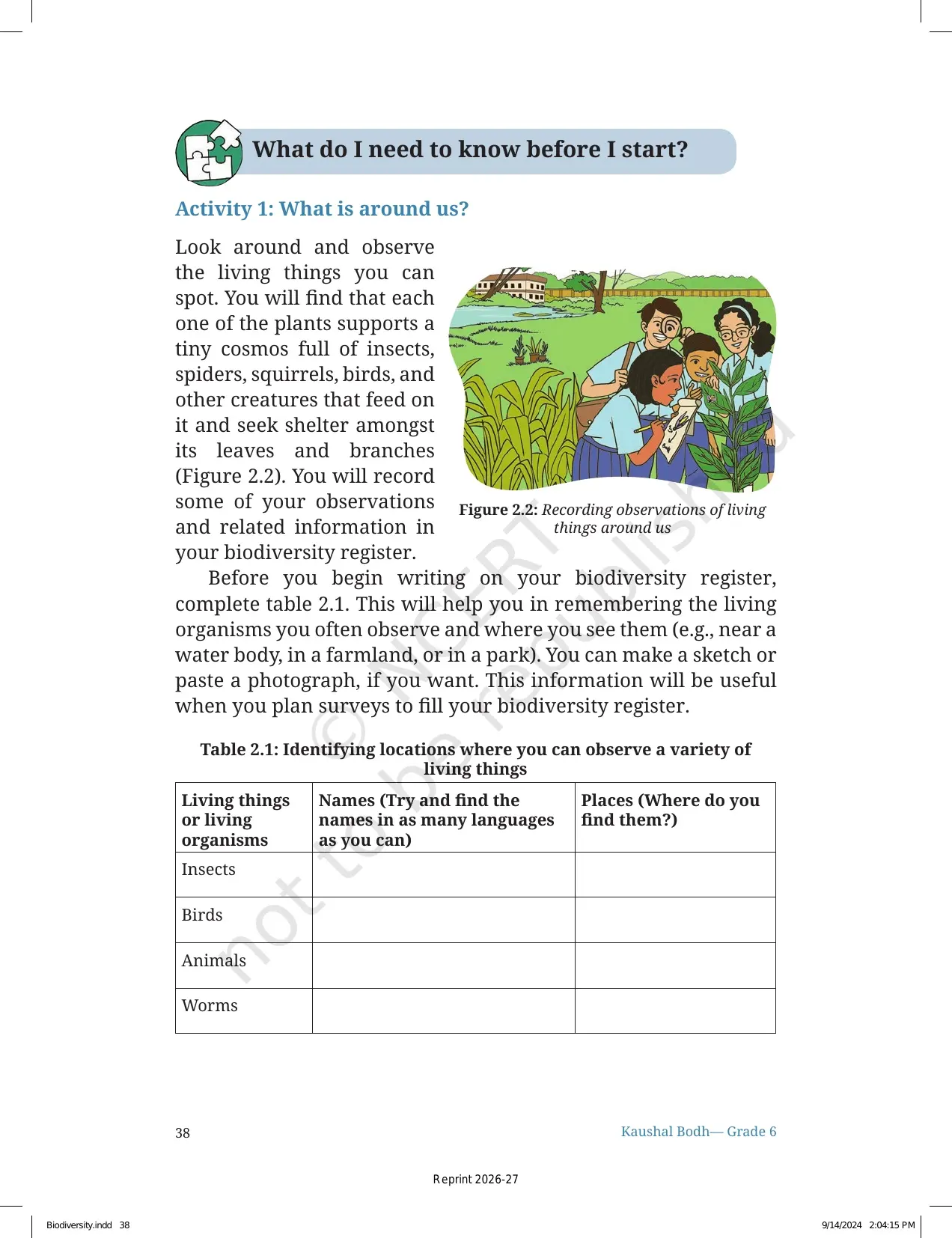
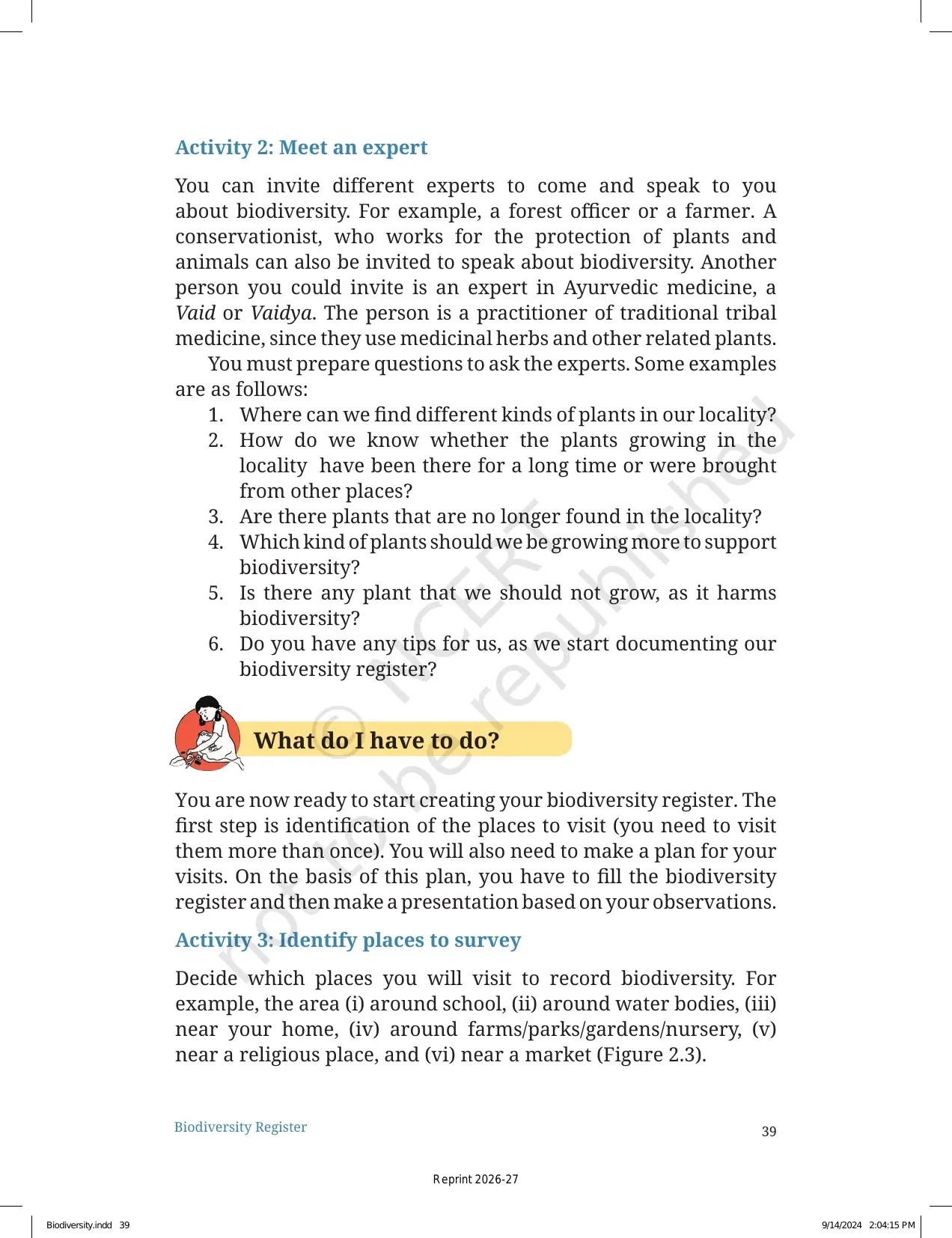
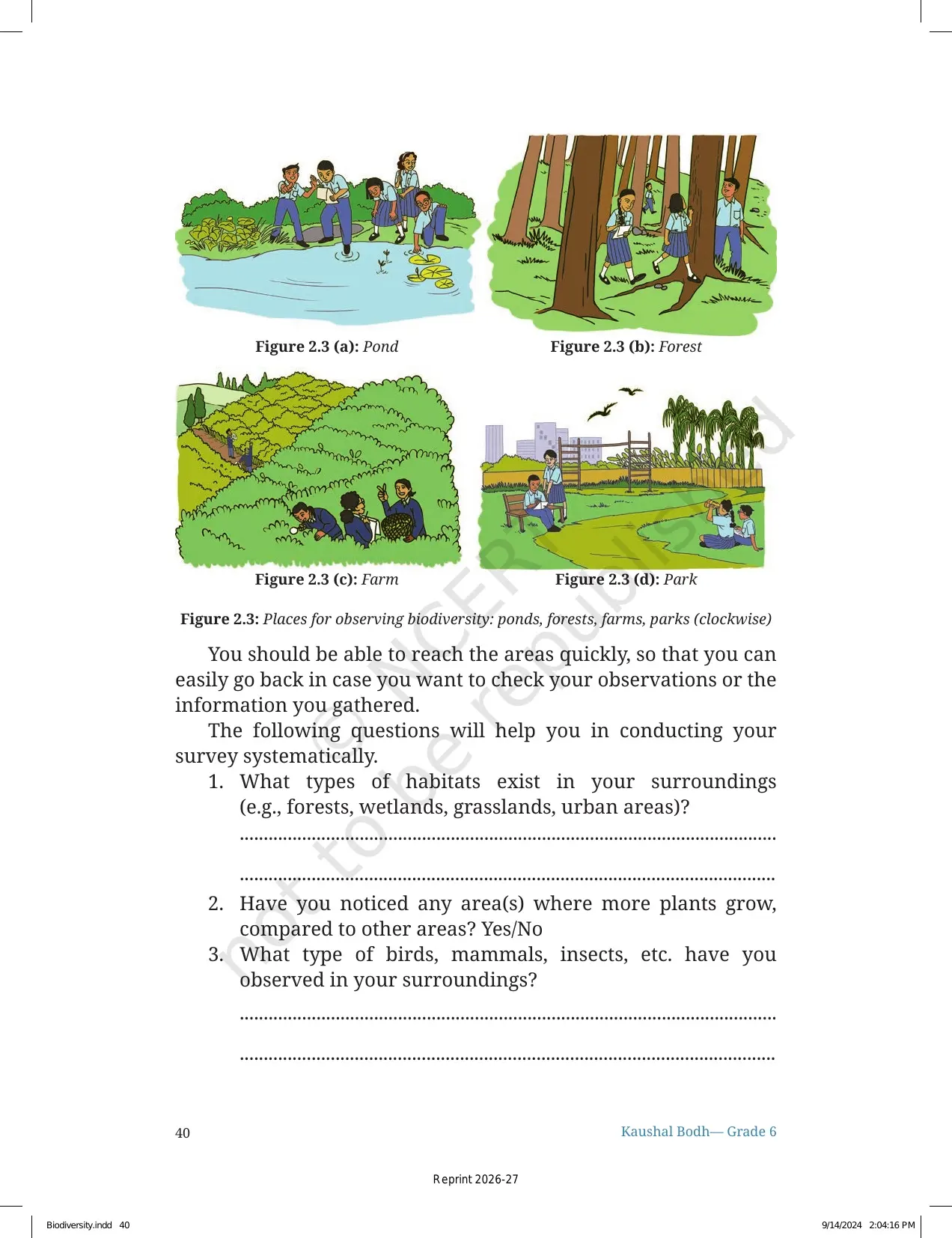
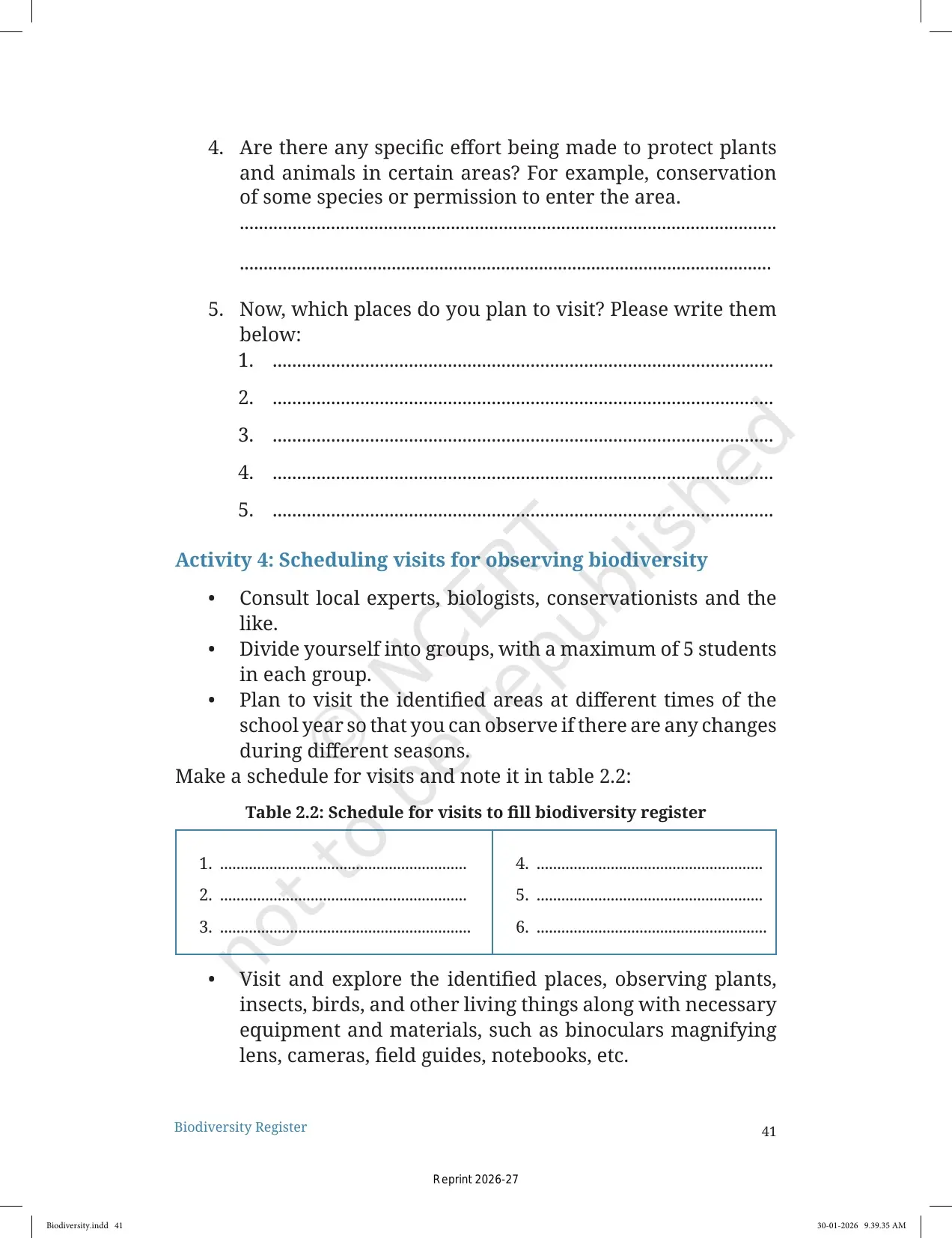
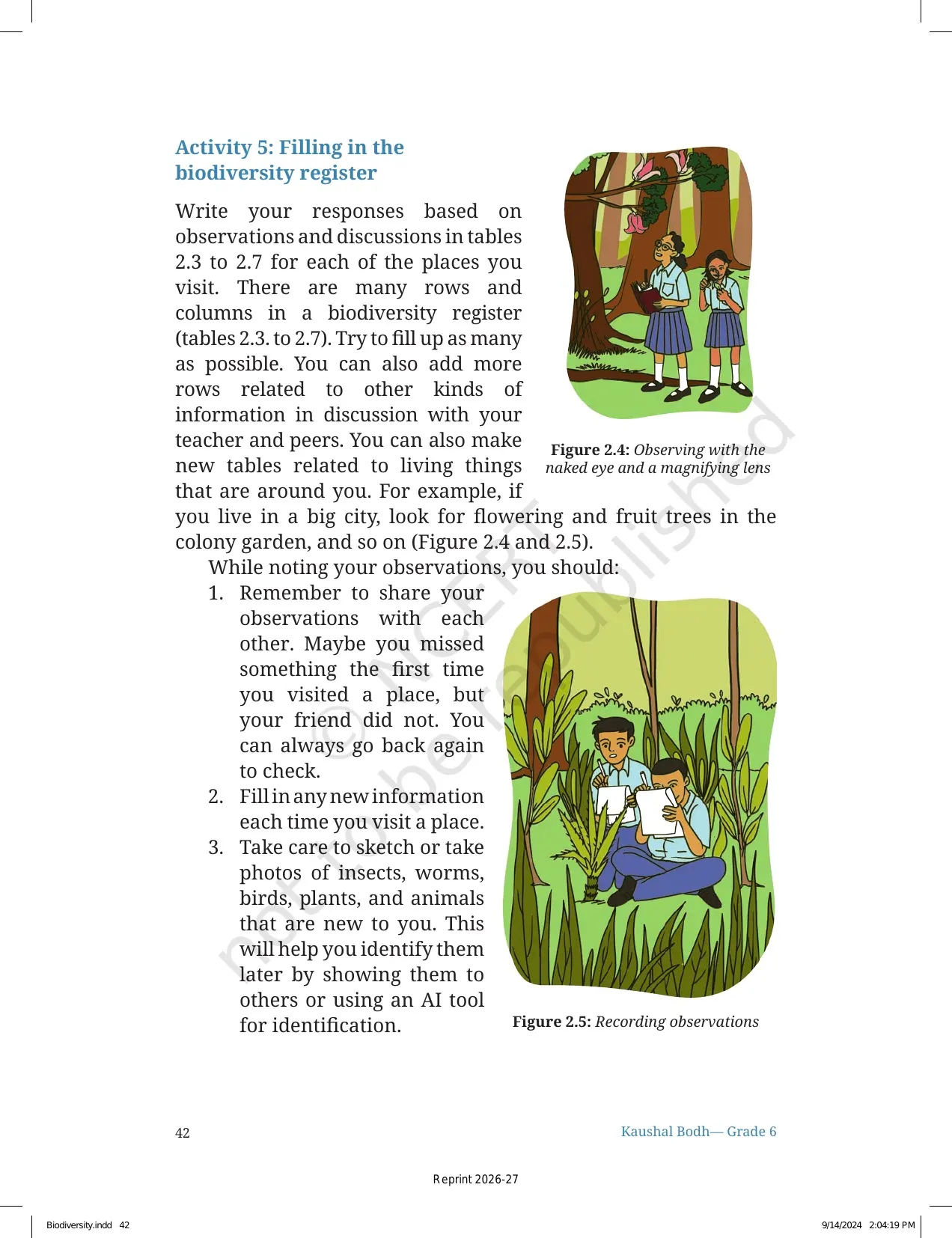
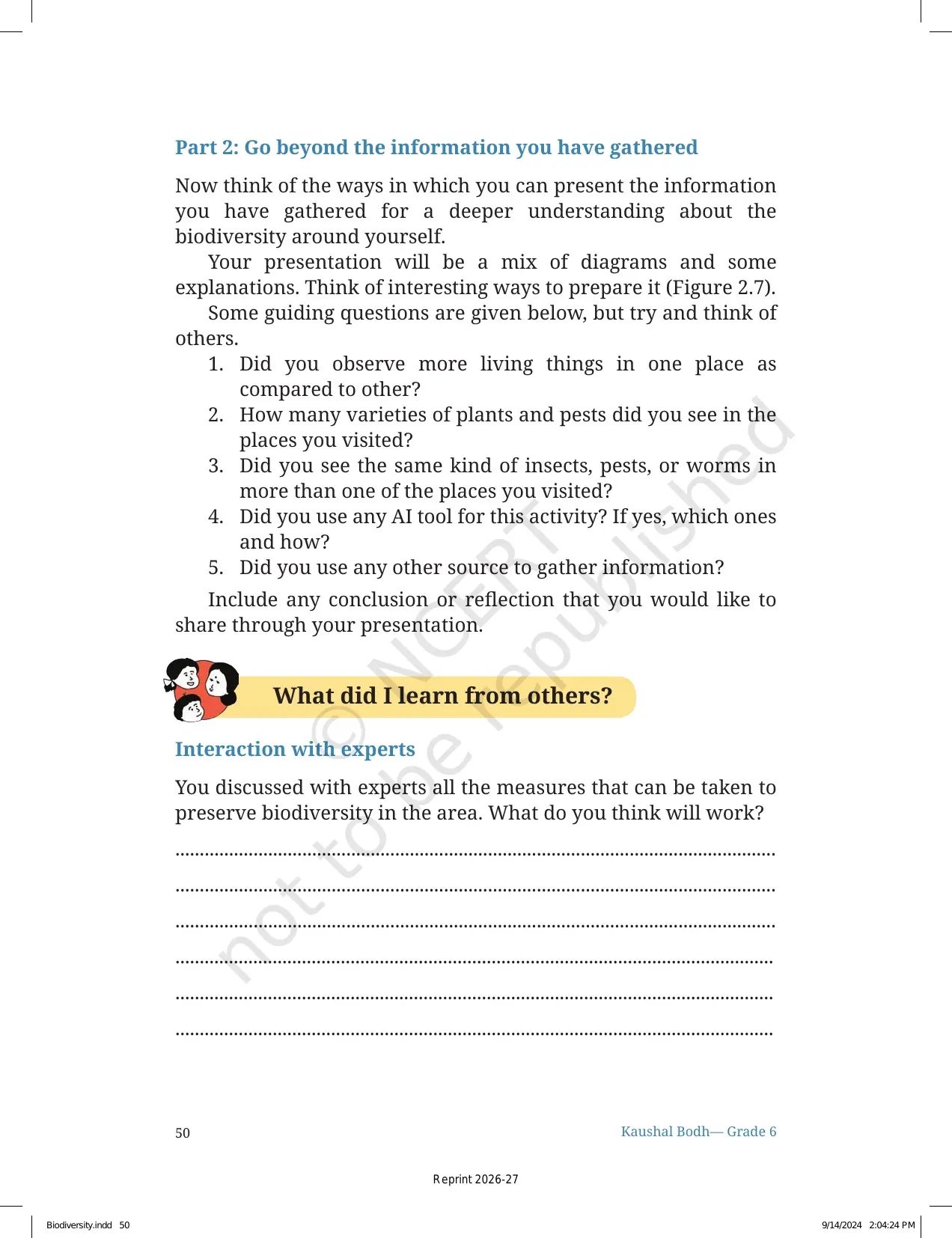
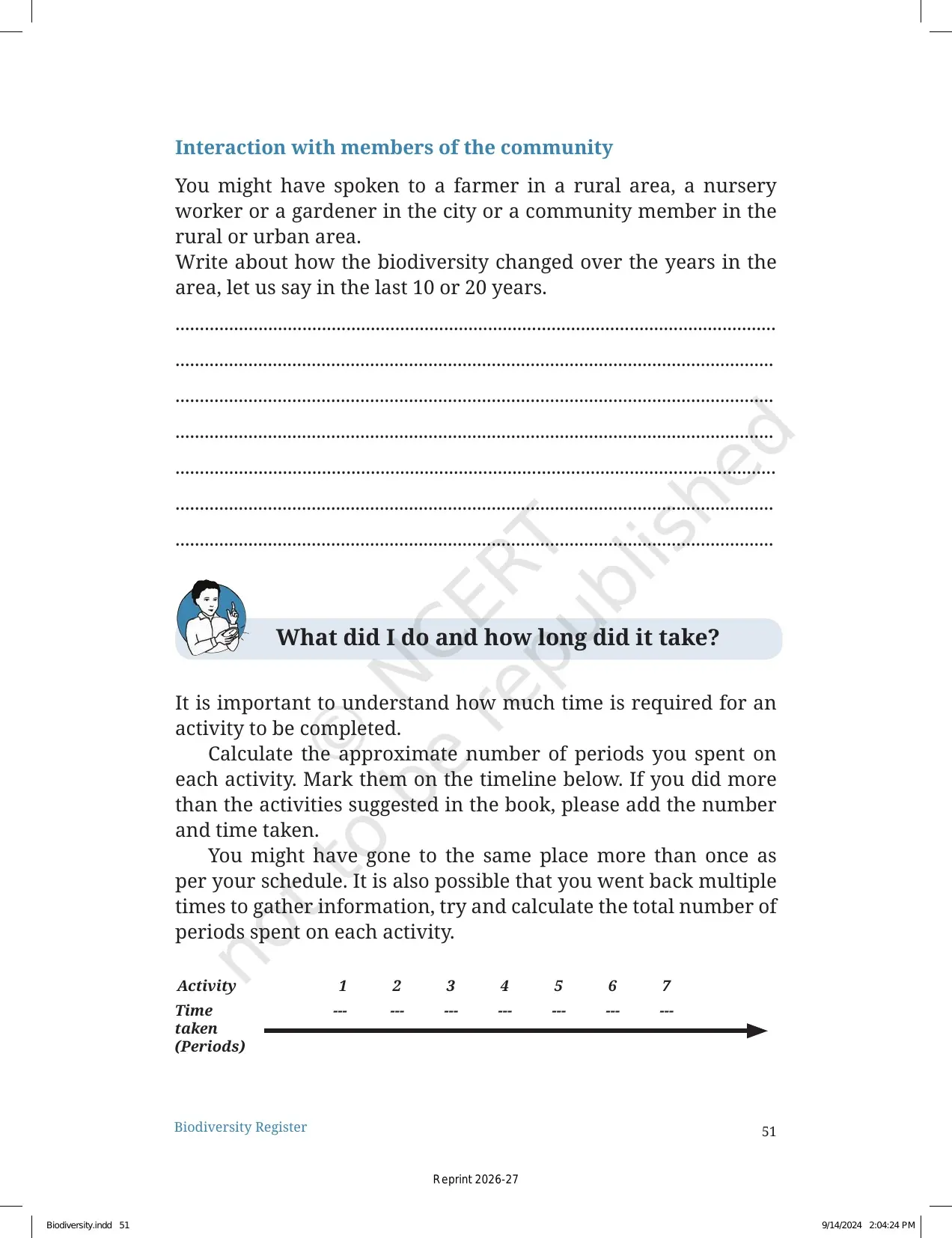
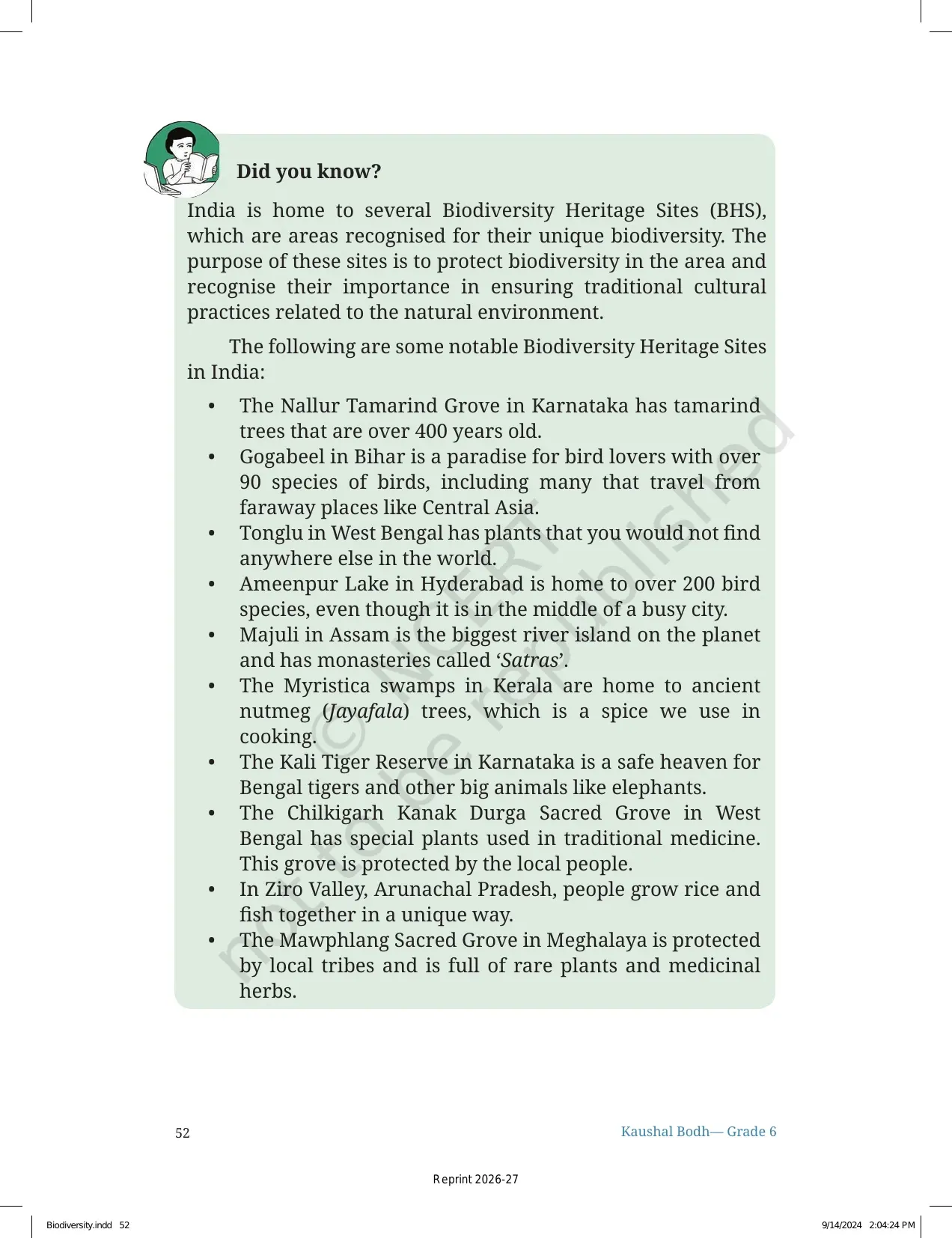
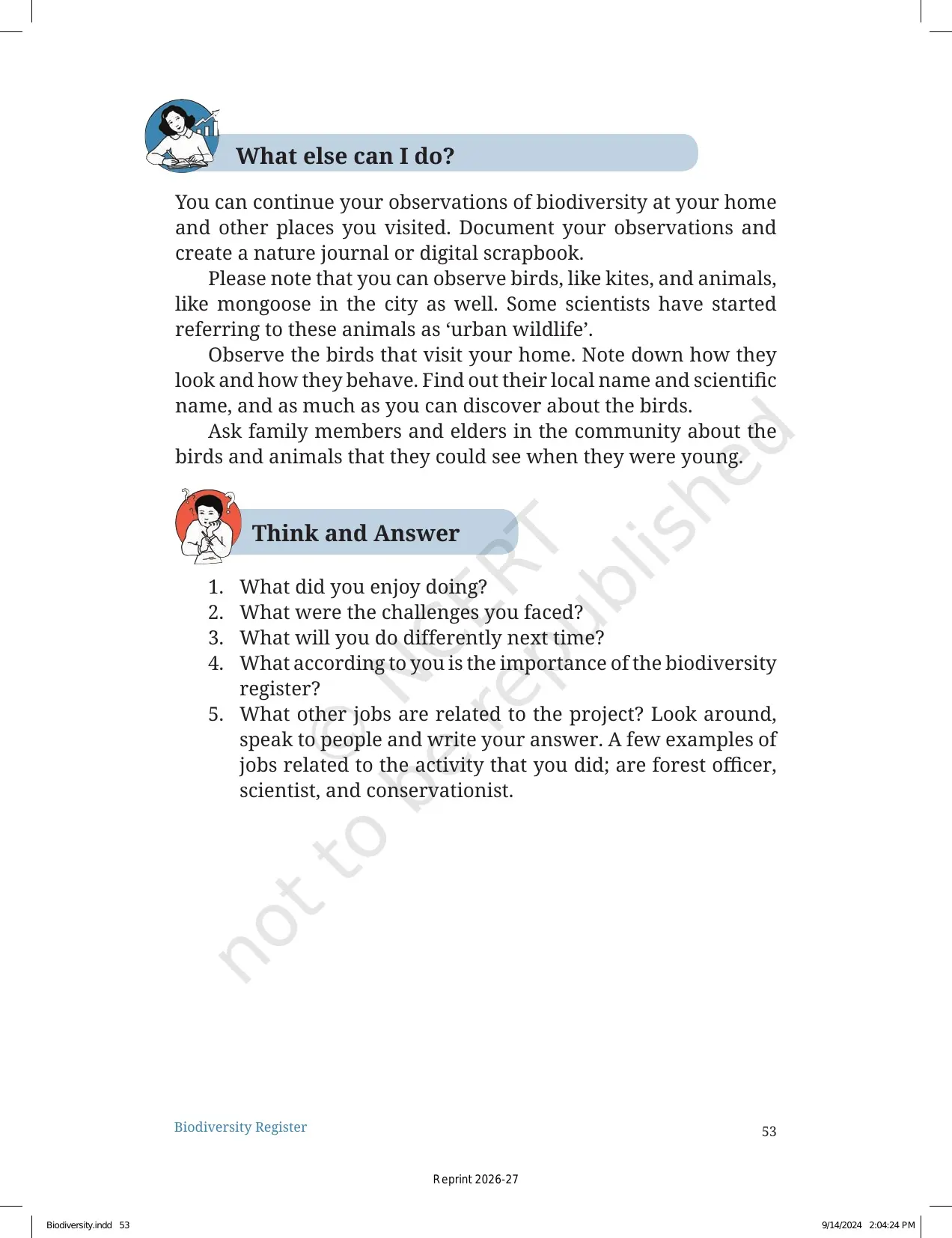
This NCERT Book PDF is the source text for every table, field-visit note and biodiversity observation in the Biodiversity Register project.
Student Feedback: In a Collegedunia survey of 12,740 Class 6 students using Kaushal Bodh in 2026-27, 73% said the register project became easier after they made one table for places, one for plants and one for animals.
Biodiversity Register NCERT Book PDF for Class 6 Vocational Education
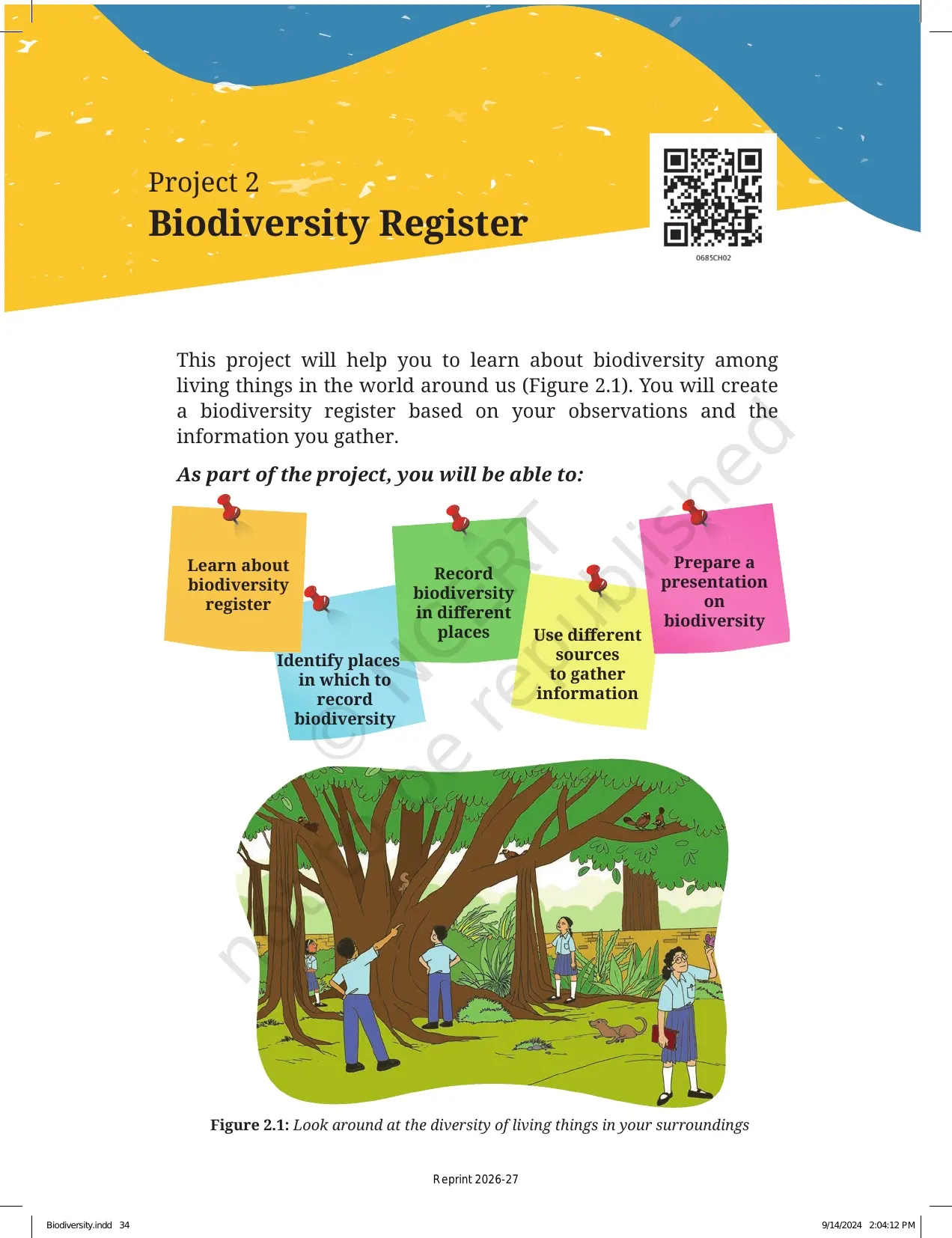
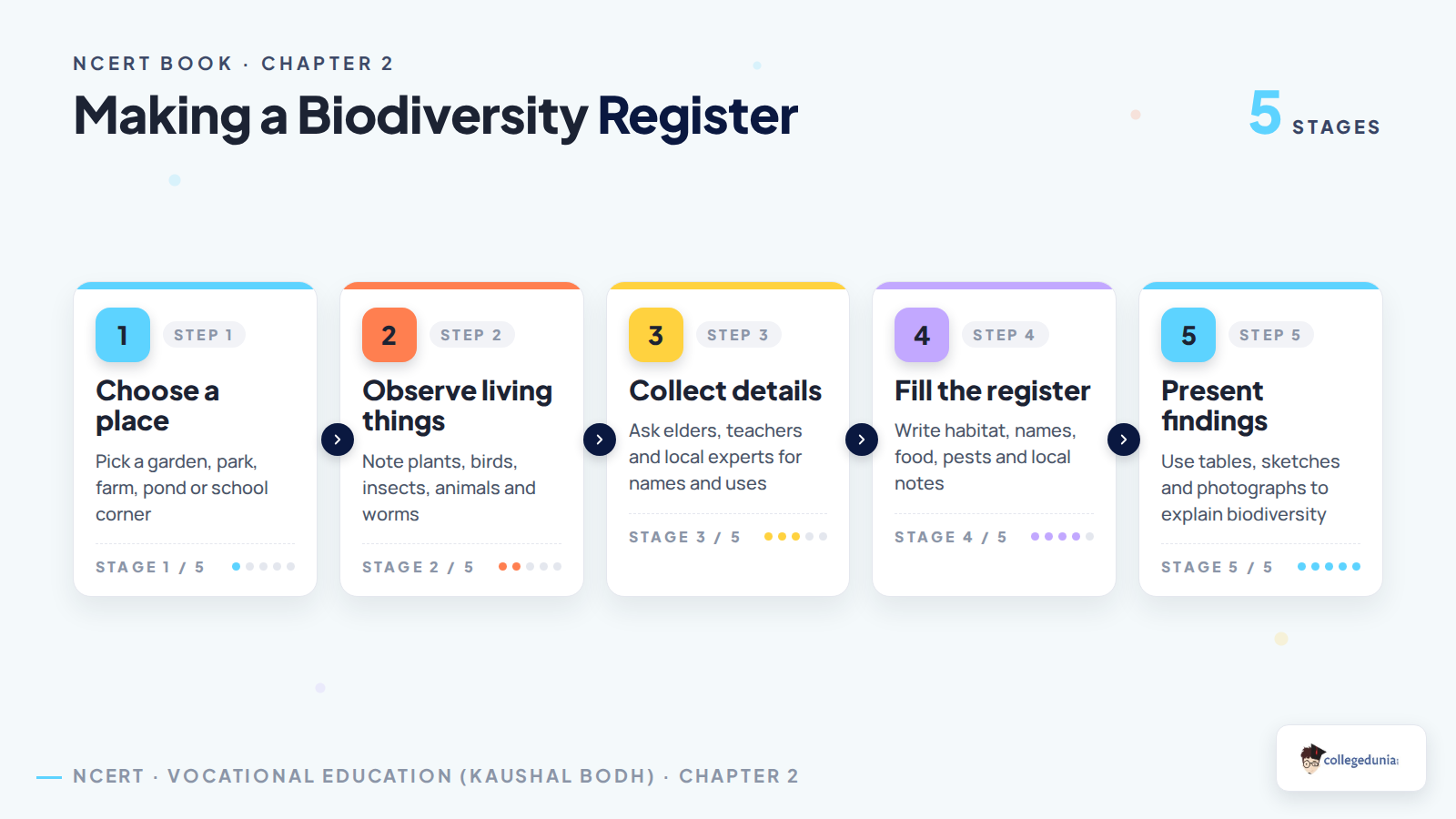
The Biodiversity Register project sits in the Work with Life Forms part of Kaushal Bodh. It asks students to look closely at living things around them and record useful details. The main task is to build a mini biodiversity register using observations, local knowledge, sketches and photographs.
| Chapter part | What the PDF covers | Why students should read it |
|---|---|---|
| Project aim | Learning biodiversity through field observation | Shows what the final register should record |
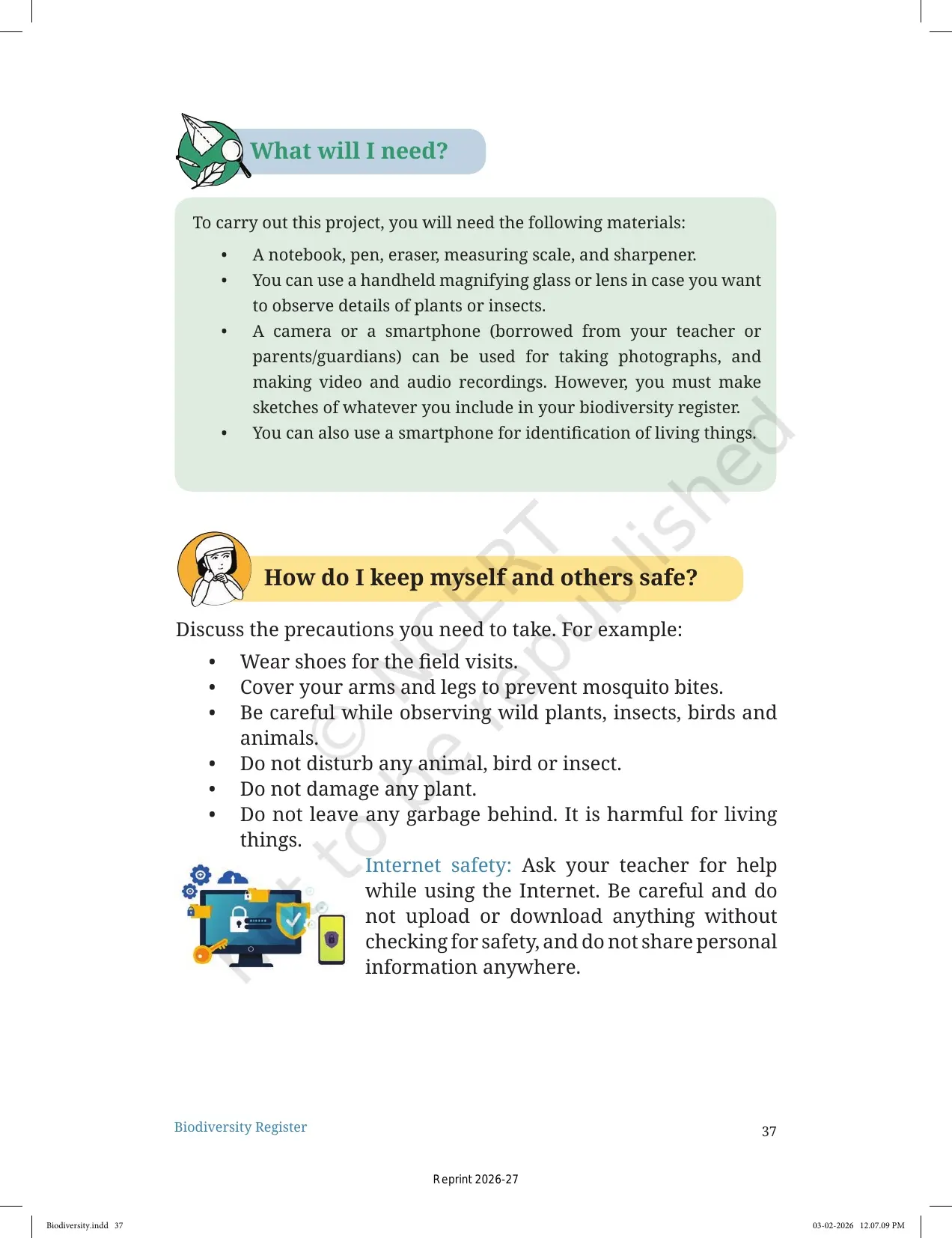
| Safety rules | Shoes, covered arms, careful observation and no damage to plants | Helps students work outdoors safely |
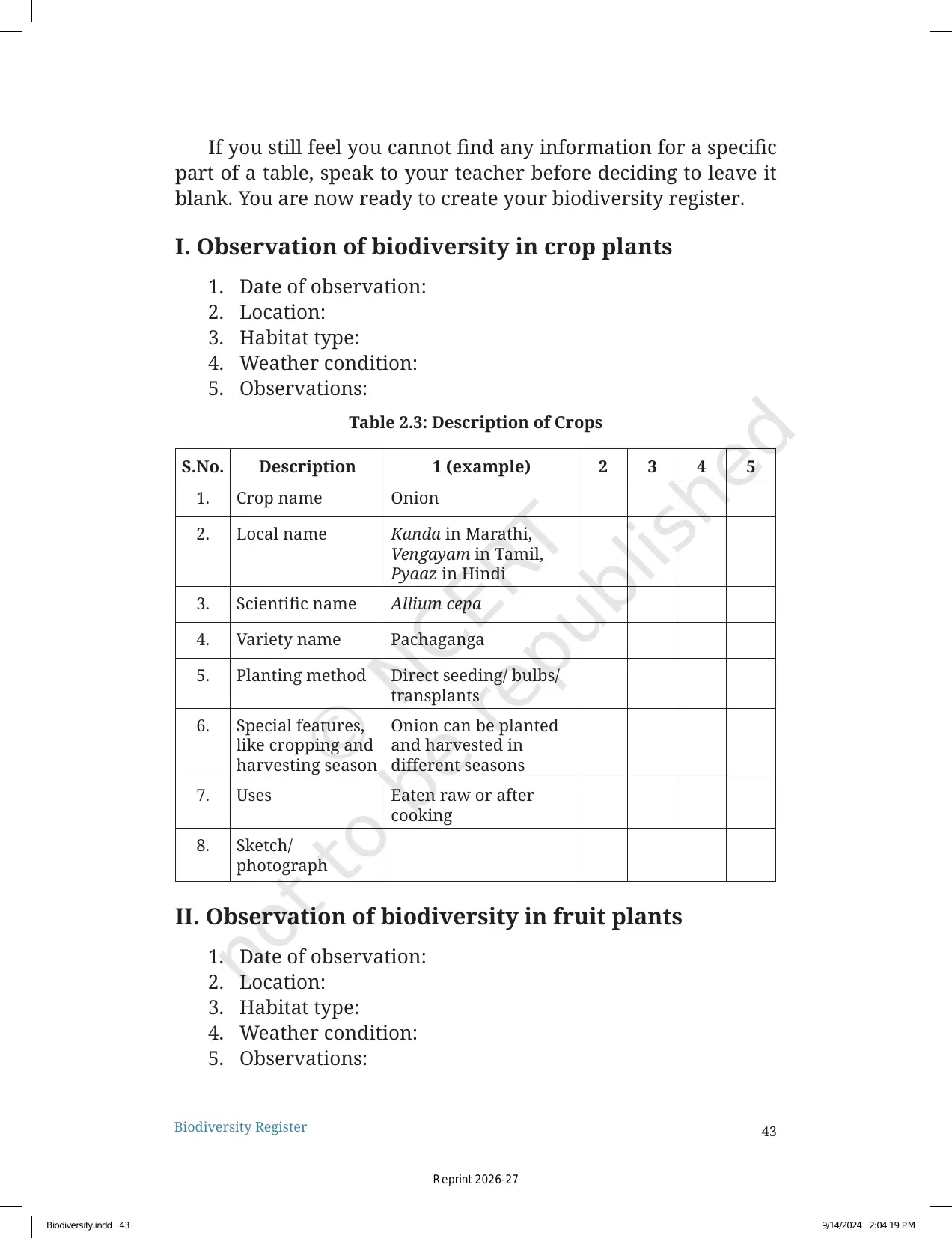
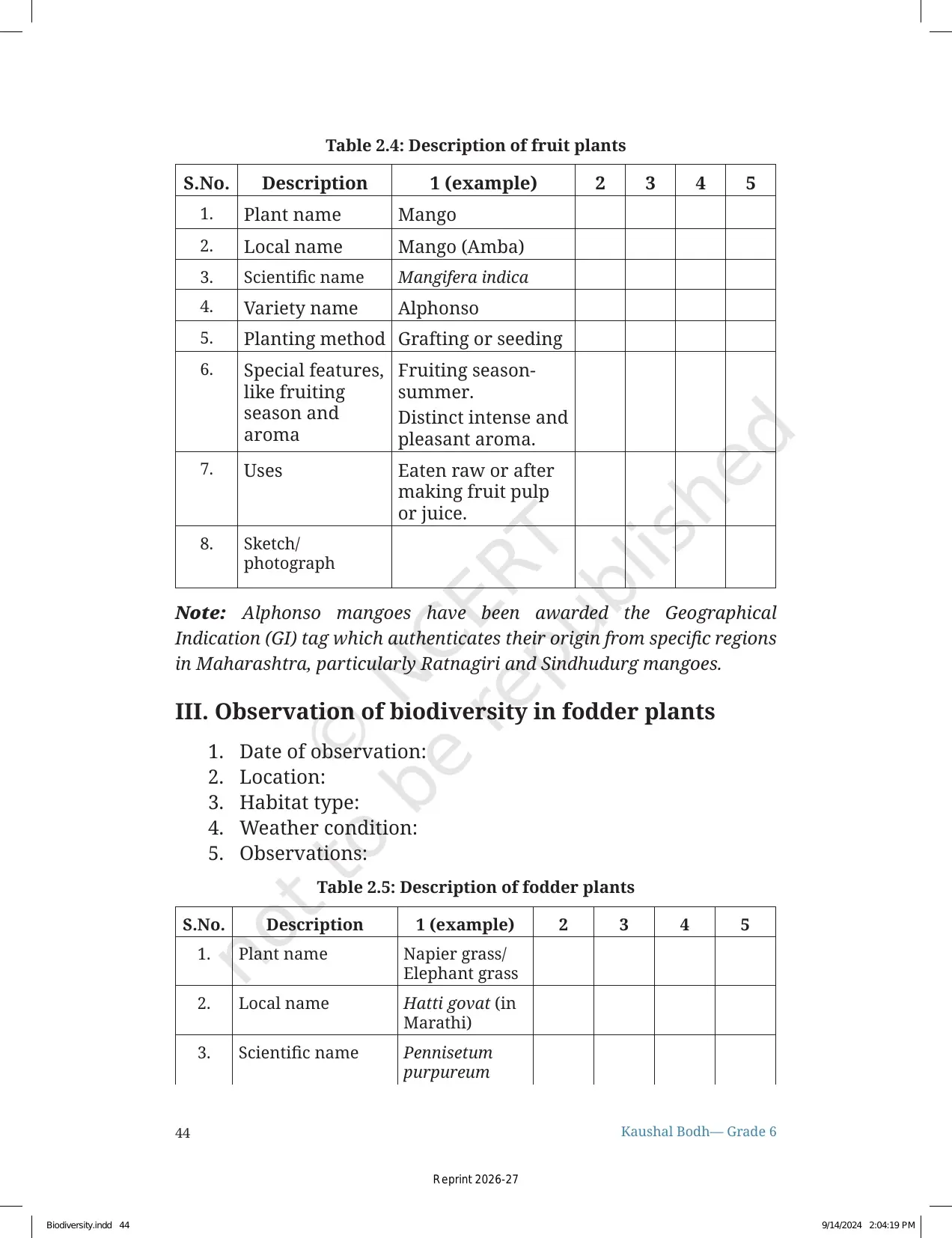
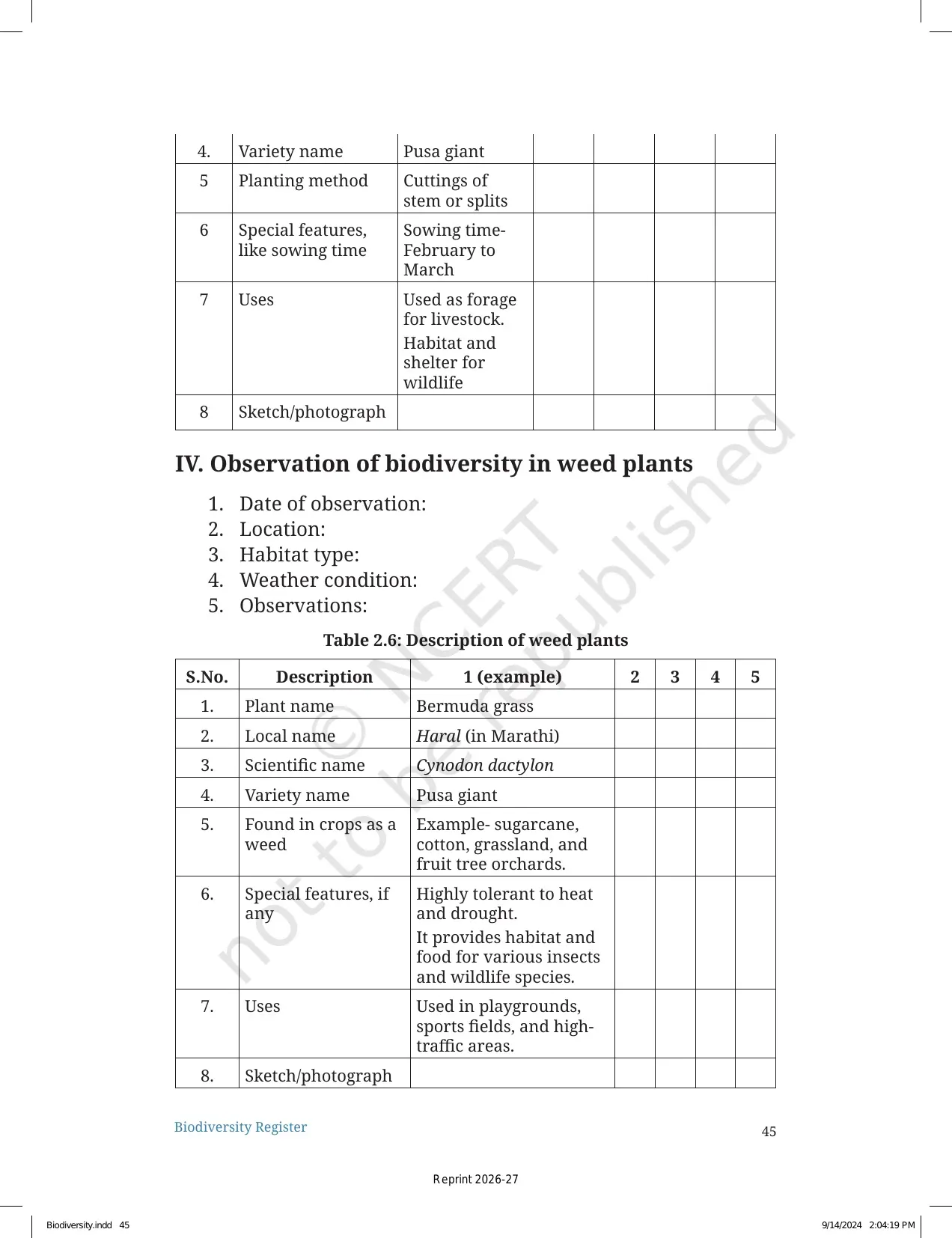
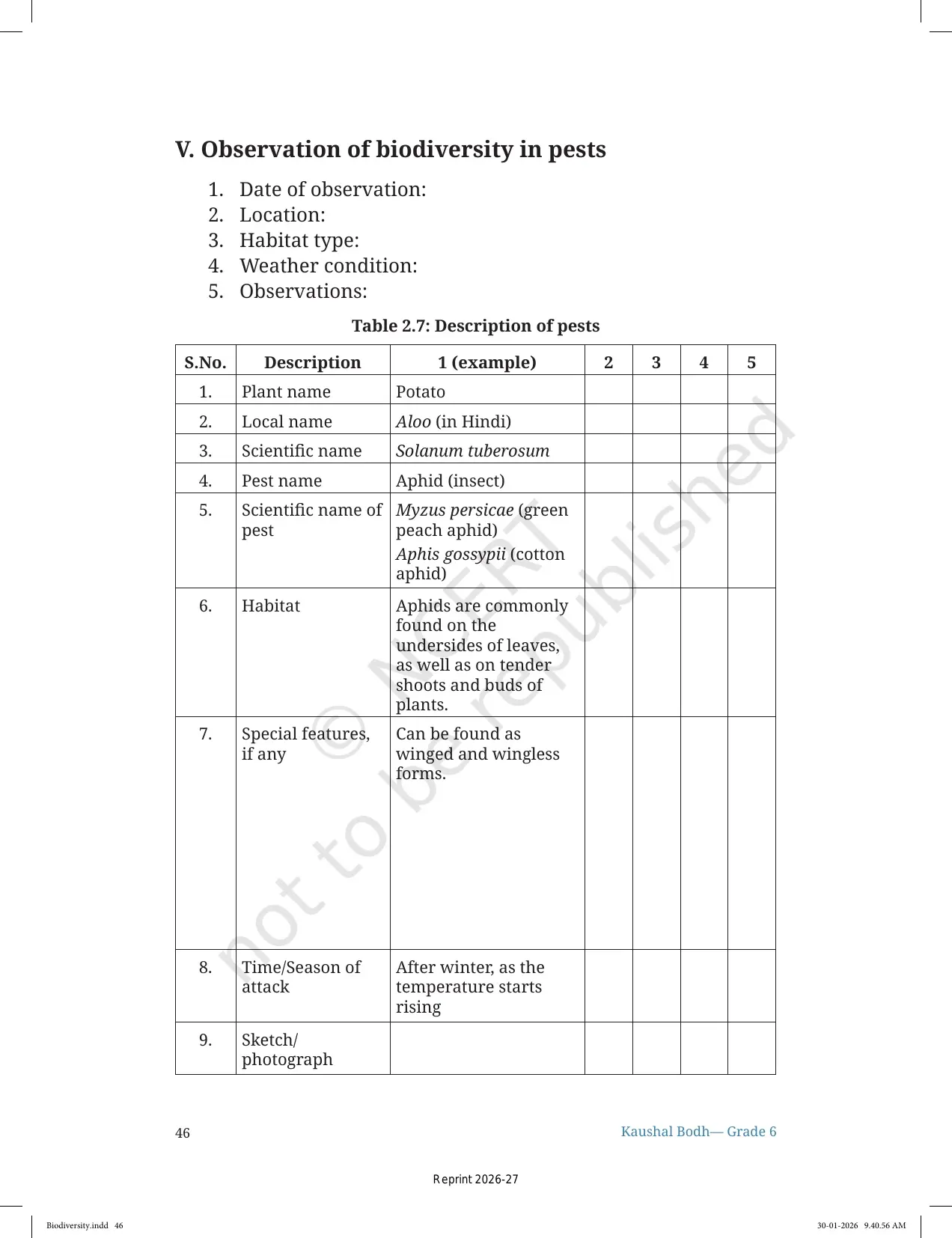
| Register tables | Plants, animals, birds, insects, pests and local uses | Gives the format for project-file entries |
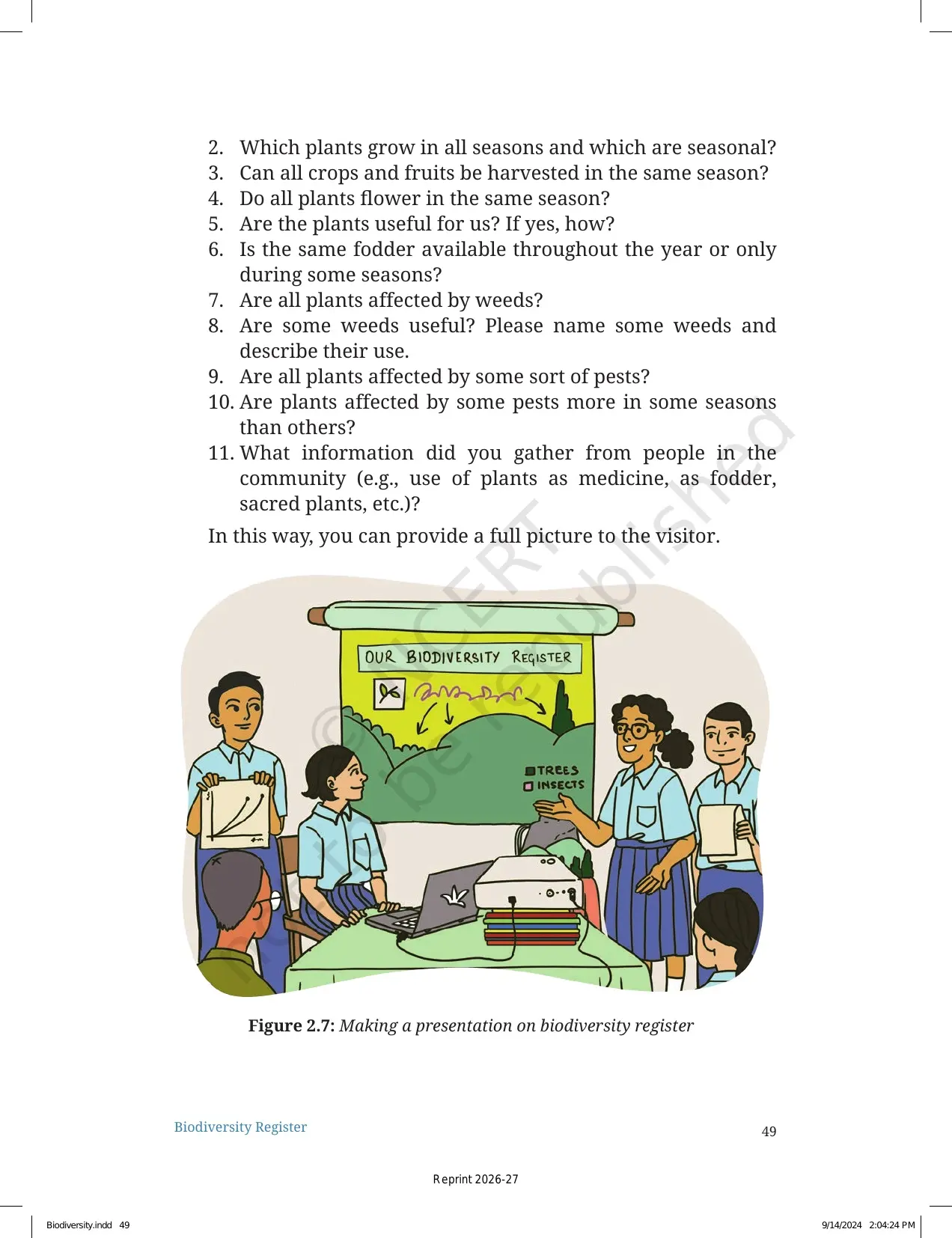
| Presentation | Sharing findings through tables, sketches and discussion | Turns observations into a classroom project |
What Students Learn from the Biodiversity Register Project
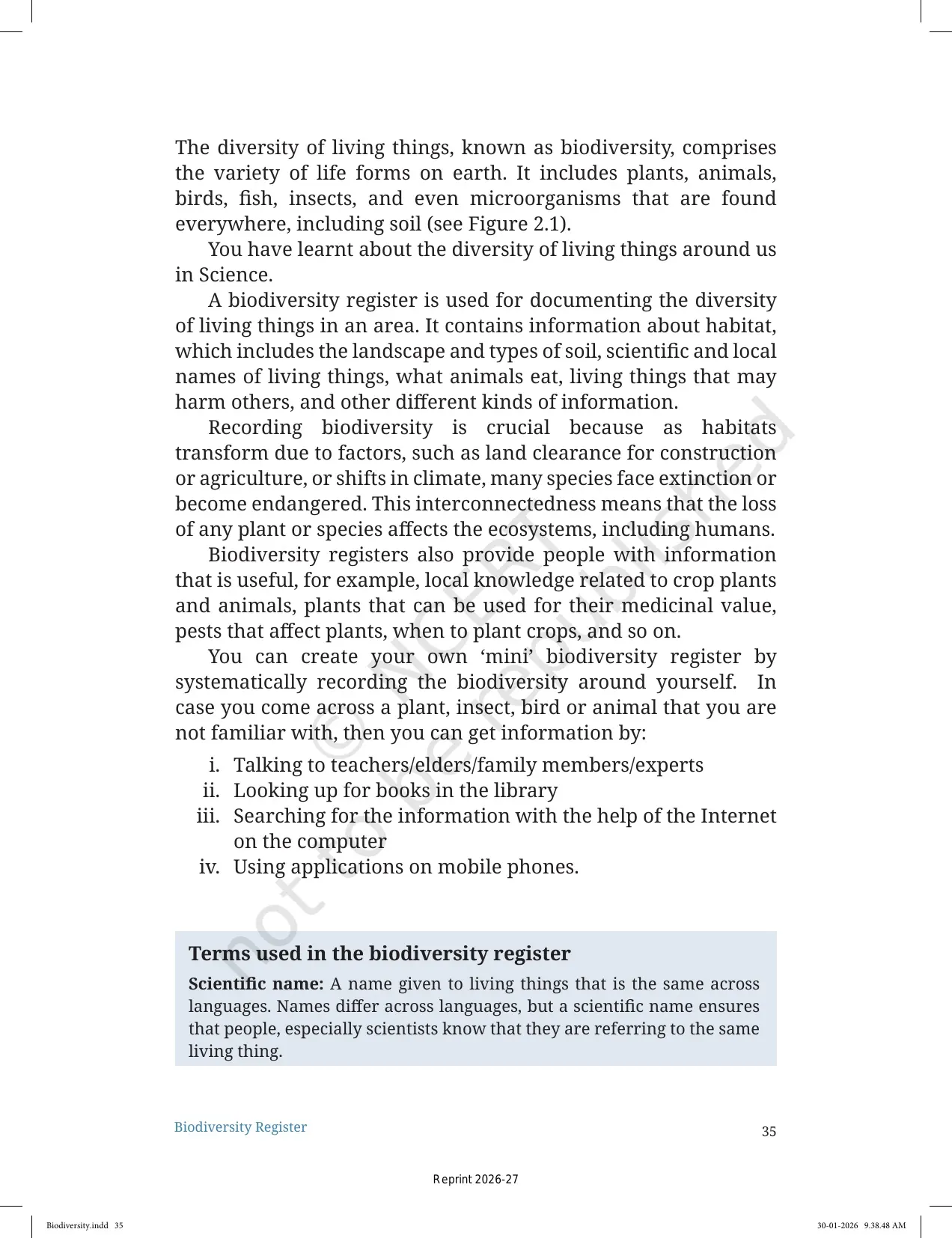
The chapter starts with a clear meaning of biodiversity: the variety of life forms on earth. Students connect this idea with plants, animals, birds, fish, insects and microorganisms around them. The project teaches students to record what they see, not just read about it.
- Observation: spotting living things near school, home, farms, parks or water bodies.
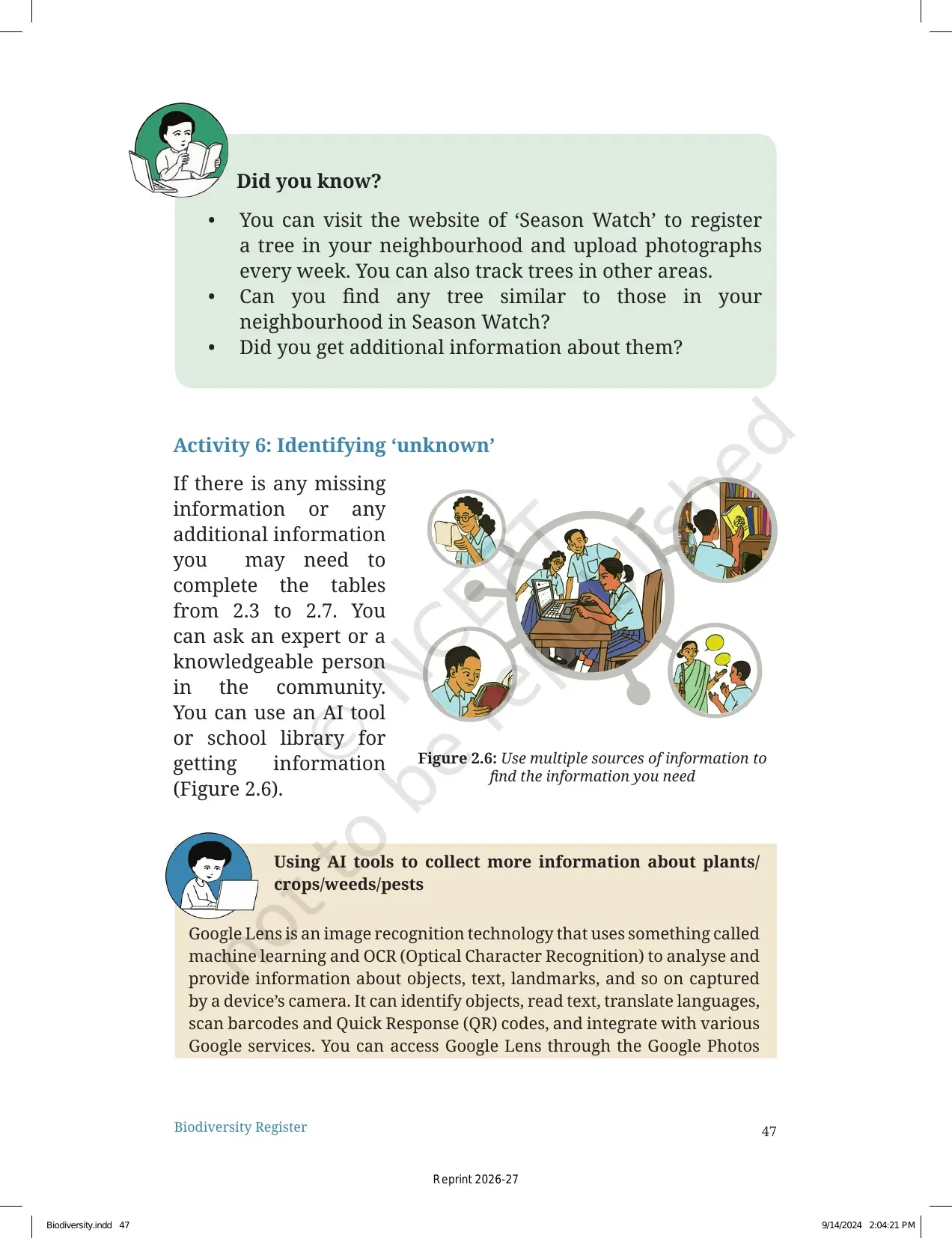
- Information gathering: asking teachers, elders, family members and experts for local details.
- Register writing: noting habitat, names, food, pests, uses, cropping season and seed source.
The PDF also explains why recording biodiversity matters. If habitats change because of construction, farming or climate, some species may become endangered. Loss of one plant or animal can affect the whole ecosystem.
Biodiversity Register Video Explanation for Class 6
Source: NCERT OFFICIAL on YouTube
How Students Fill the Biodiversity Register Tables
Most of the chapter is practical. Students first identify places where they can observe living things. Then they plan visits and collect information for different tables. The register works best when each entry comes from a real observation.
| Register step | What to write | Useful source |
|---|---|---|
| Choose the place | School garden, pond, farm, park, market or home area | Teacher-guided field visit |
| Name the living thing | Local name, common name and scientific name if known | Elders, books or teacher help |
| Record the habitat | Soil, water, shade, field, tree or other surroundings | Direct observation |
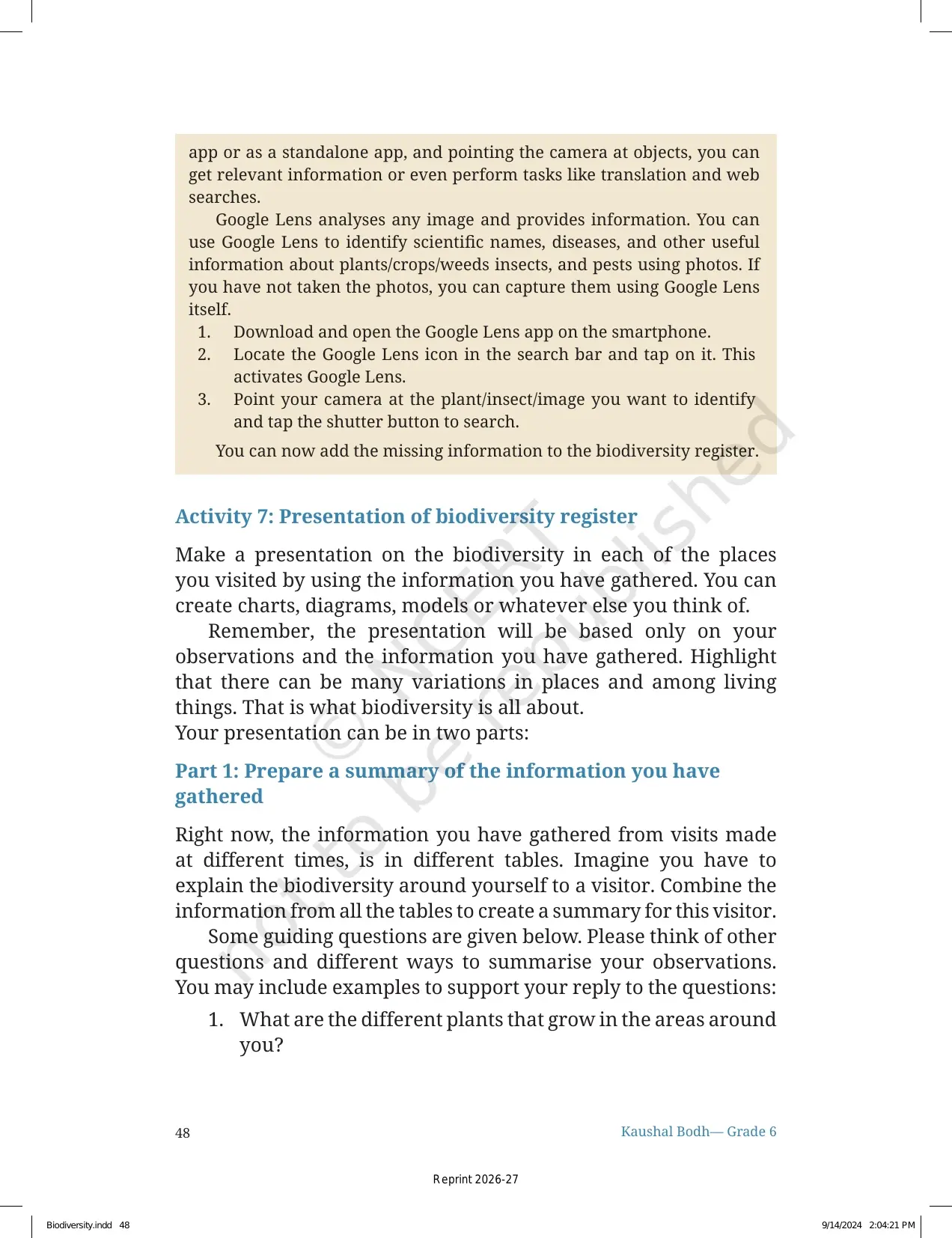
| Add use and relation | Food, medicine, pest, host, crop or animal feed | Local knowledge and library search |
Sketches are compulsory even if students take photographs. This rule helps students observe shape, colour, size and location carefully.
Key Terms Used in the Biodiversity Register Chapter
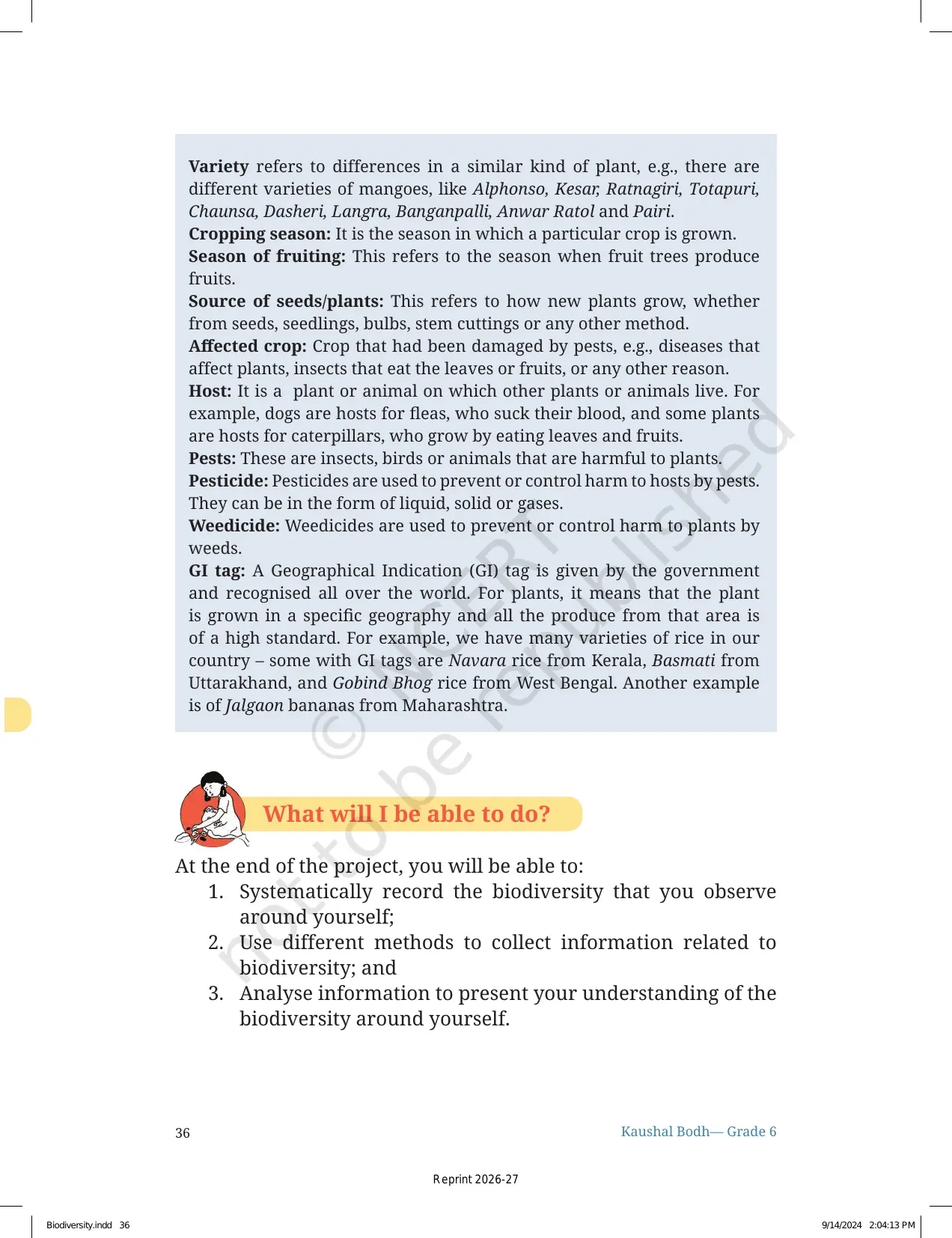
The chapter gives a word list before the field activities. These words help students fill the tables correctly. Scientific name, variety, host, pest, pesticide, weedicide and GI tag are the most useful terms for the project file.
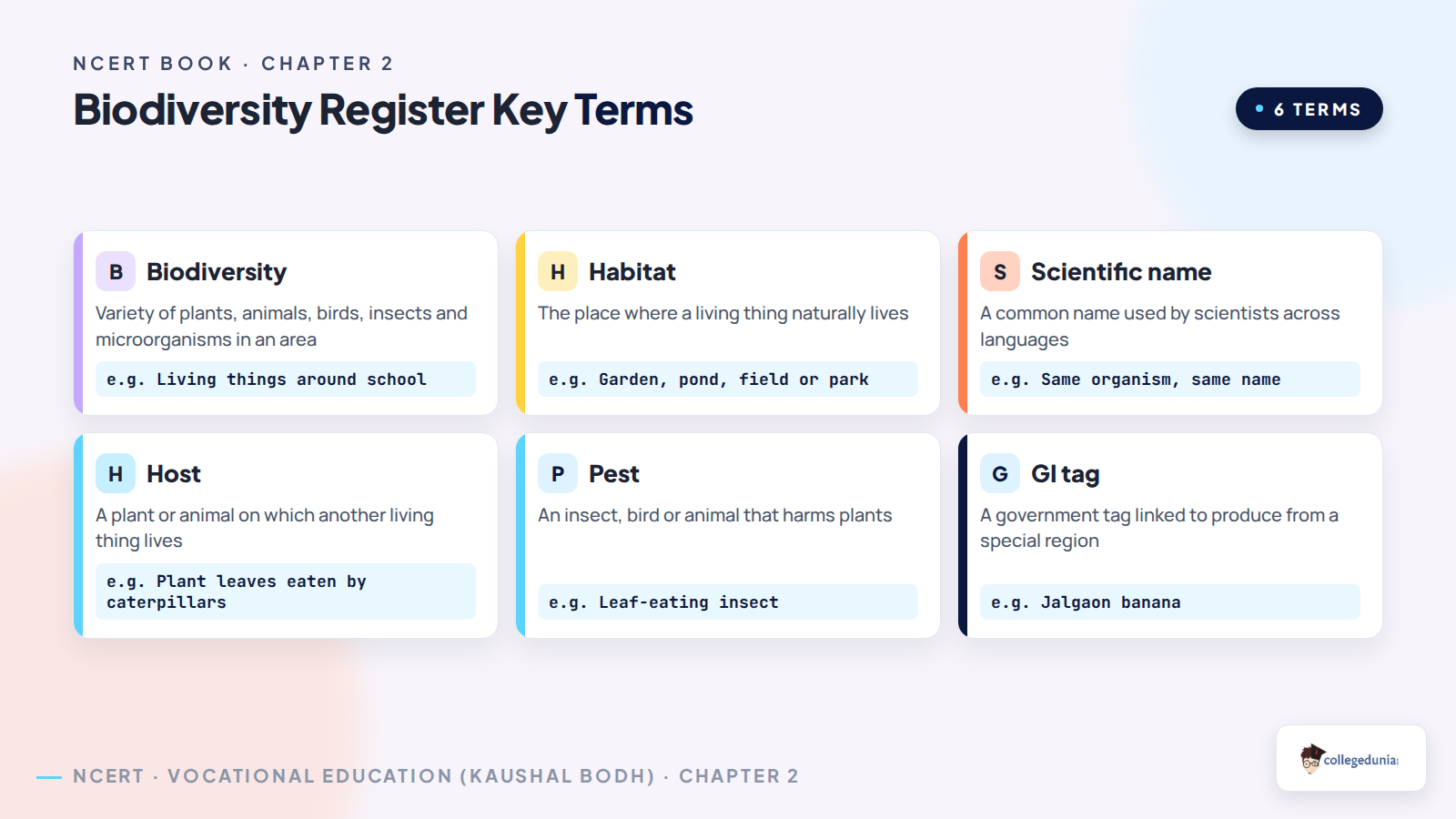
- Scientific name: a name used across languages for the same living thing.
- Host: a plant or animal on which another living thing lives.
- Pest: an insect, bird or animal that harms plants.
- GI tag: a government-recognised tag linked to produce from a specific place.
How to Use This Class 6 Kaushal Bodh PDF
Use the NCERT Book PDF as the main source while preparing the project file. Read the safety page first. Then use the activity pages in the same order as your teacher plans the field visit.
- Read the meaning of biodiversity and biodiversity register before the first activity.
- Use the materials and safety pages before going outdoors.
- Keep the table pages open while writing names, places and observations.
- Use the presentation section after completing the register entries.
The PDF has 21 pages, so students can finish it in small parts. The easiest order is meaning, terms, safety, field visit, register tables and presentation.
Related Class 6 Biodiversity Register Resources
Also Check: use the official book PDF with the matching notes and handwritten revision pages for the same project.
| Resource | Best used for | Open it |
|---|---|---|
| NCERT Book PDF | Official chapter text, figures, tables and activities | Current page |
| NCERT Notes | Typed revision of biodiversity terms, table work and safety points | Biodiversity Register Class 6 Notes |
| Handwritten Notes | Quick revision of register tables and project steps | Biodiversity Register Class 6 Handwritten Notes |
Class 6 Vocational Education Kaushal Bodh NCERT Book PDFs for All Chapters
Related Links: download the other NCERT Book PDFs from the Class 6 Kaushal Bodh textbook.
| Chapter | Class 6 Kaushal Bodh NCERT Book PDF |
|---|---|
| Chapter 1 | School Kitchen Garden Class 6 NCERT Book PDF |
| Chapter 2 | Biodiversity Register Class 6 NCERT Book PDF |
| Chapter 3 | Maker Skills Class 6 NCERT Book PDF |
| Chapter 4 | Animation and Games Class 6 NCERT Book PDF |
| Chapter 5 | School Museum Class 6 NCERT Book PDF |
| Chapter 6 | Cooking without Fire Class 6 NCERT Book PDF |
Biodiversity Register Class 6 NCERT Book PDF FAQs
Ques. What is the Biodiversity Register chapter in Class 6 Kaushal Bodh about?
Ans. It is a Vocational Education project where students observe local plants, animals, birds, insects and worms, then record names, habitats, uses and other details in a biodiversity register.
Ques. Is this NCERT Book PDF useful for the 2026-27 syllabus?
Ans. Yes. The PDF follows the 2026-27 Class 6 Kaushal Bodh textbook and carries the official project activities, safety points, register tables and presentation tasks.
Ques. What materials are needed for the Biodiversity Register project?
Ans. Students need a notebook, pen, eraser, measuring scale and sharpener. A magnifying glass, camera or smartphone can help, but students must still make sketches.
Ques. How should students use this NCERT Book PDF?
Ans. Read the PDF in the order of the project: meaning, terms, materials, safety, field observation, register tables and presentation. Keep it open while filling each table.
Ques. Why is a biodiversity register important?
Ans. A biodiversity register records local living things before habitats change. It also preserves useful local knowledge about crops, animals, pests, medicinal plants and seasons.



Comments