



Class 12 Entrepreneurship Chapter 5 Business Arithmetic NCERT Solutions cover all 16 LET'S REVISE textbook questions for the 2026-27 NCERT resource workflow. The PDF explains cash flow, budgeting, inventory control and working capital with direct answers, expert explanations and a full calculation walkthrough for Raja and Co.
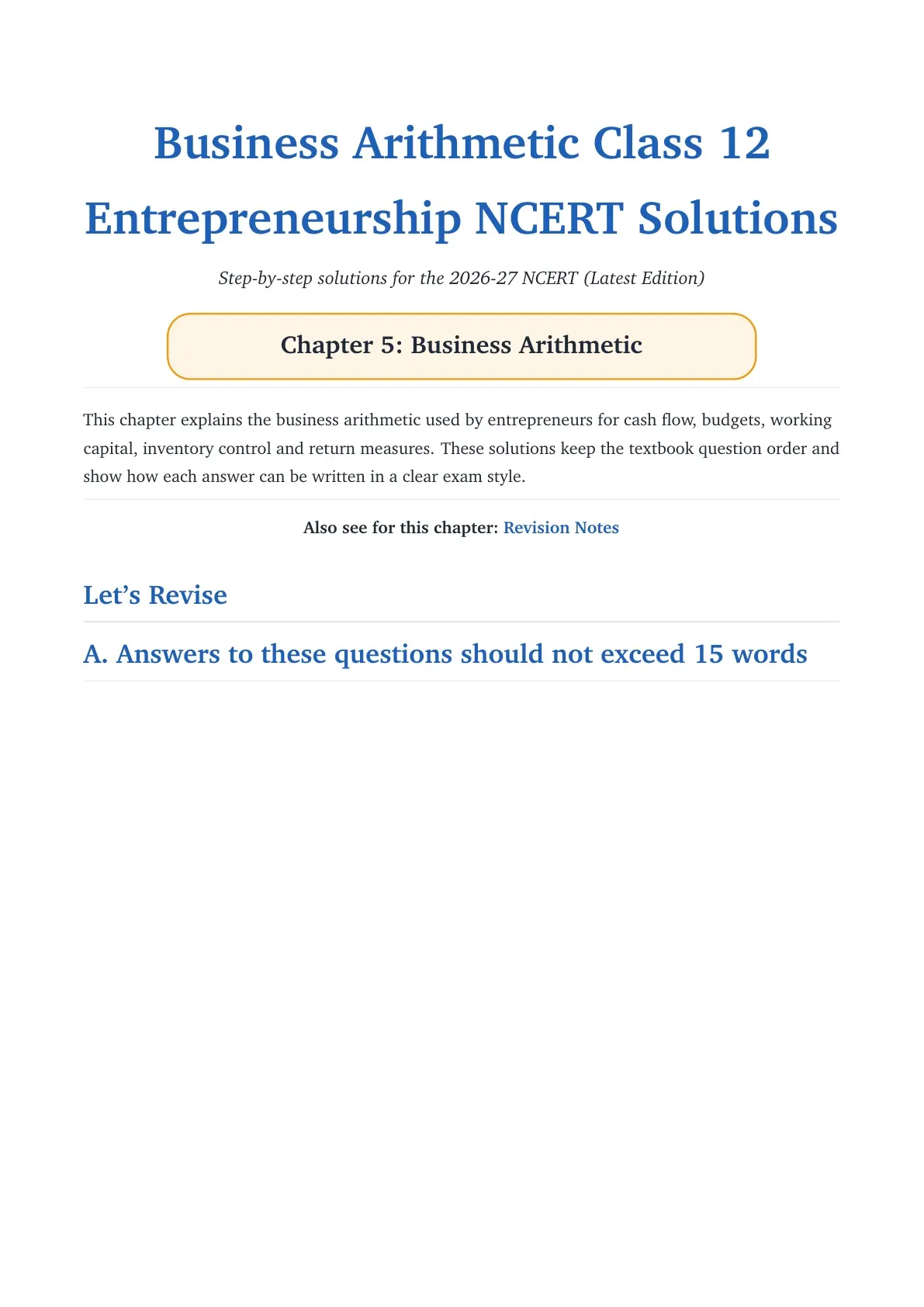
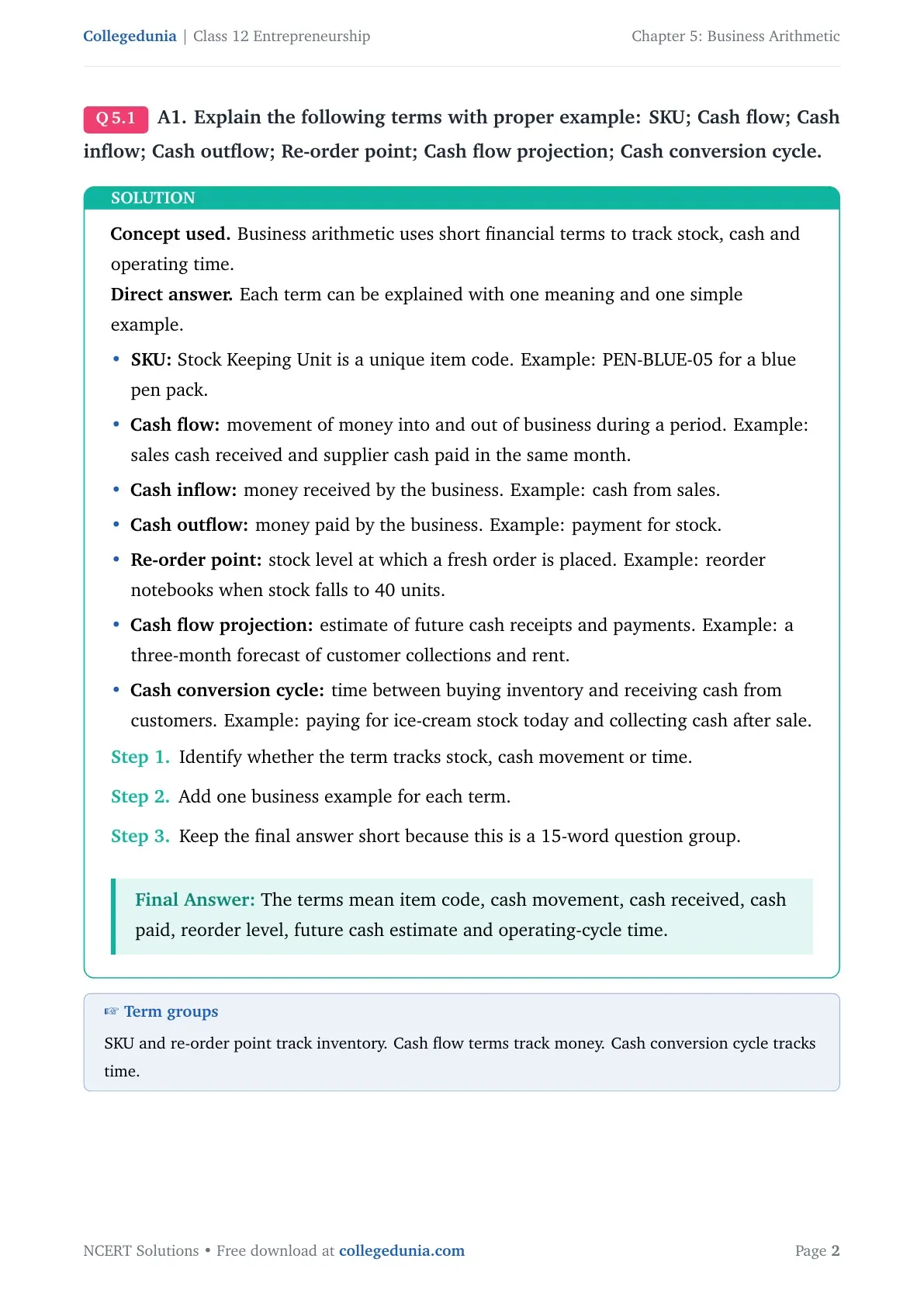
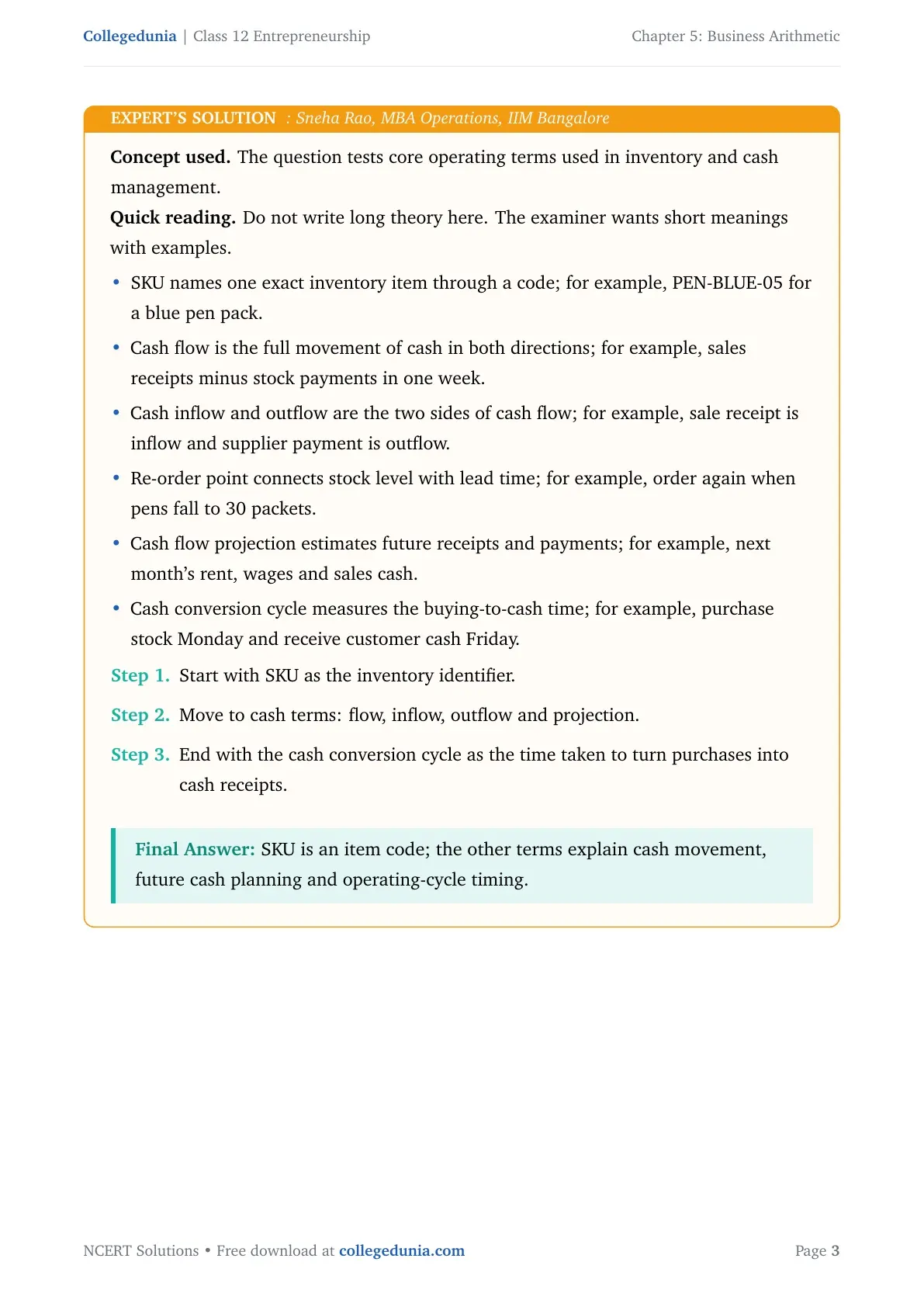
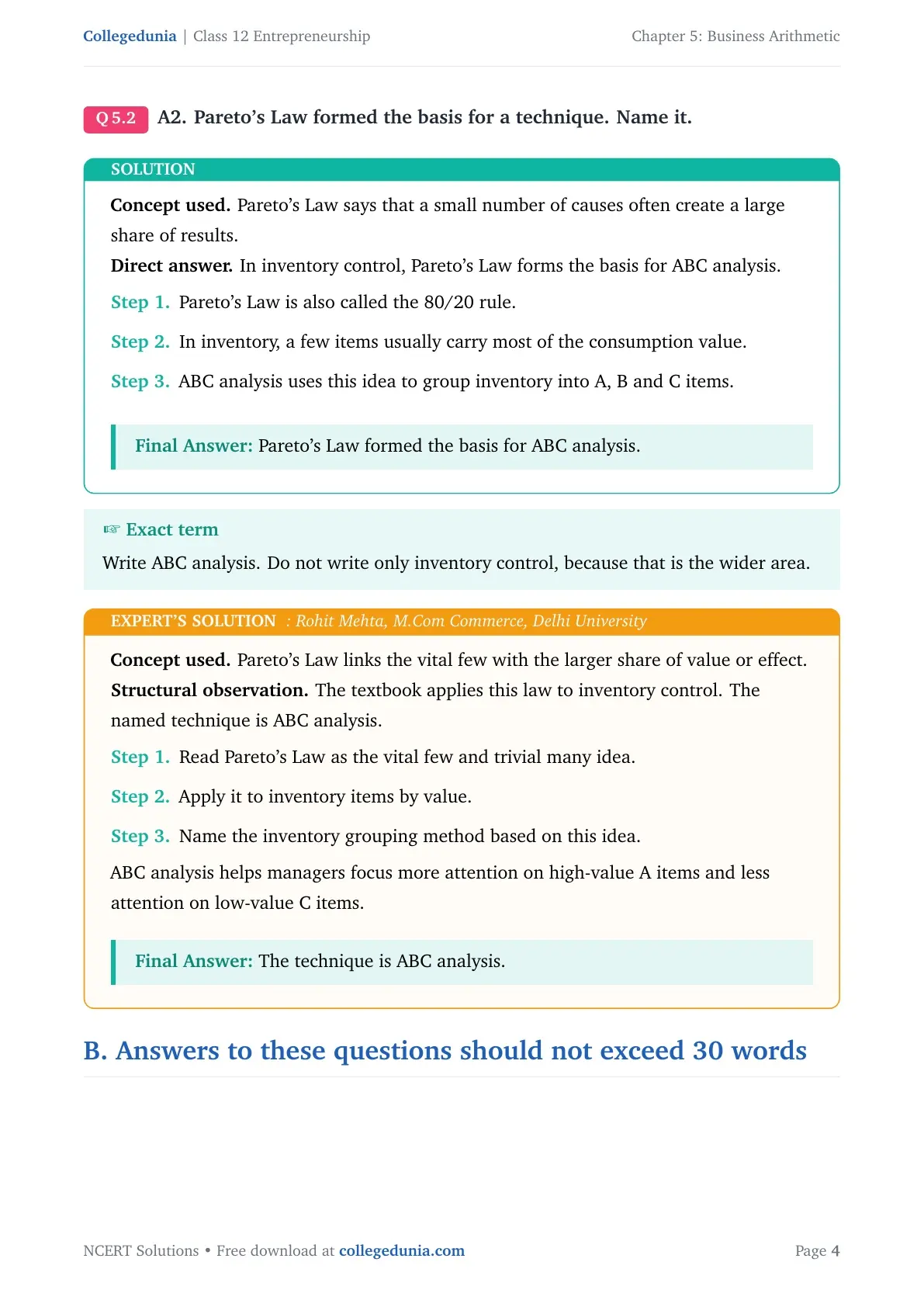
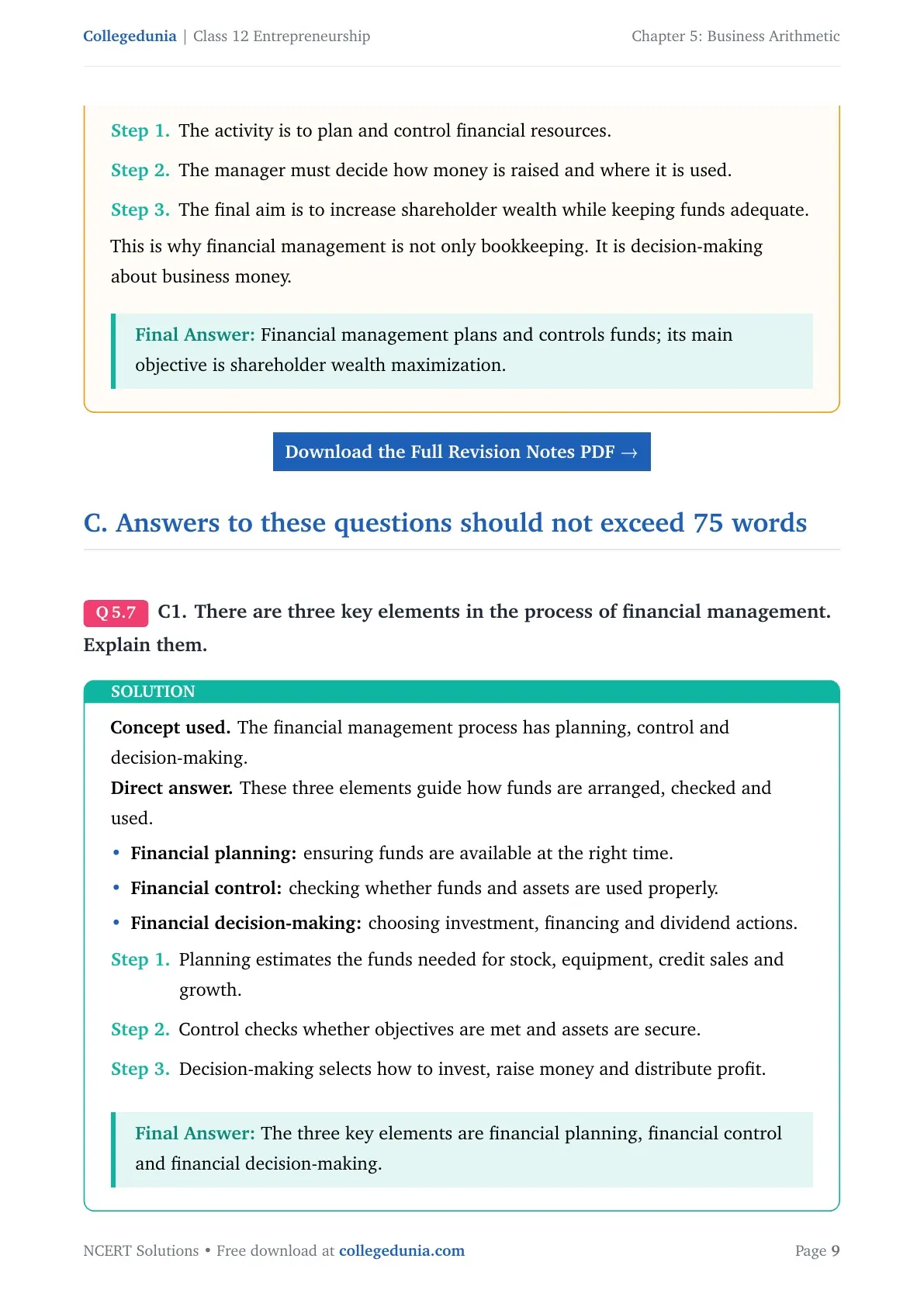
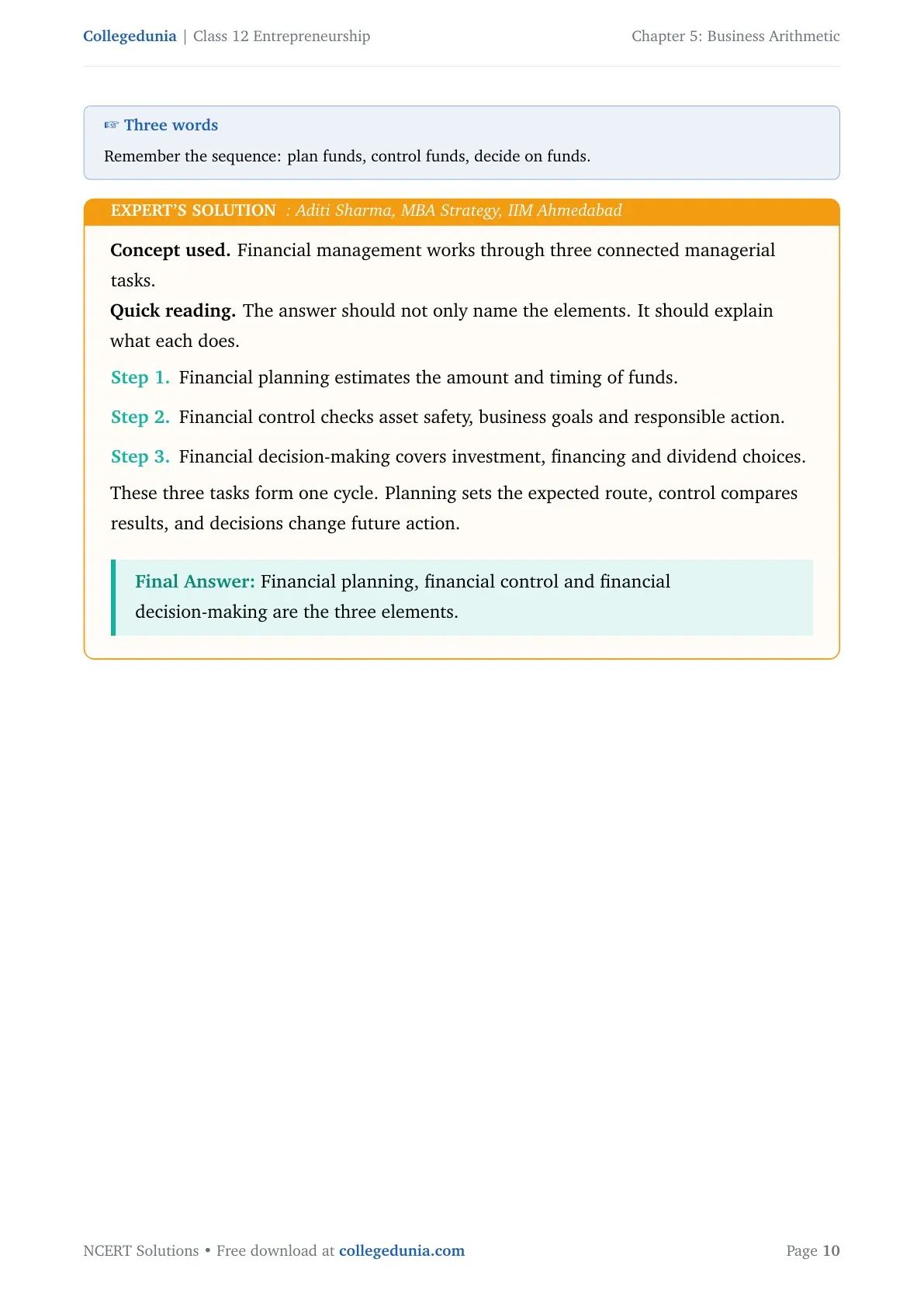
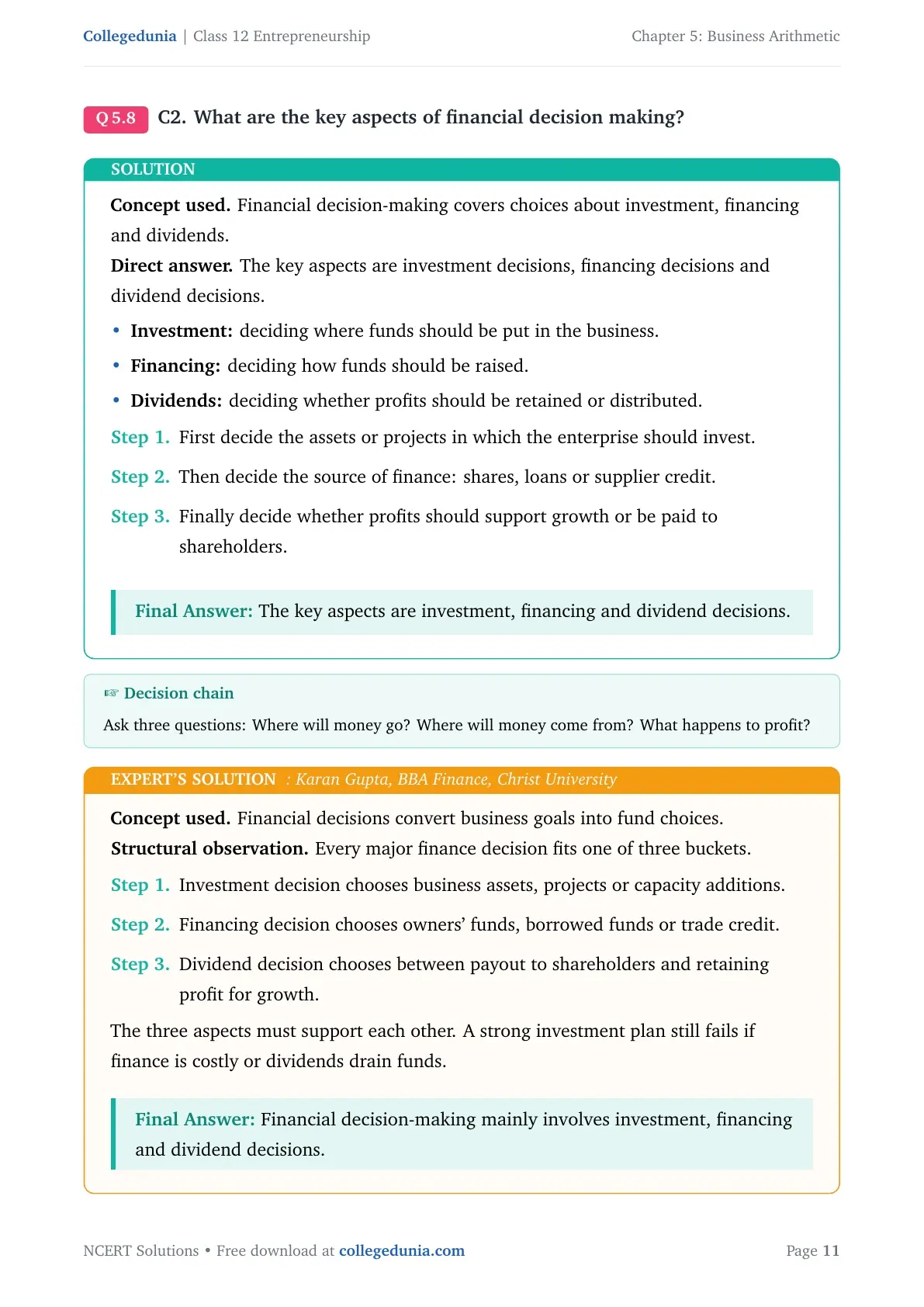
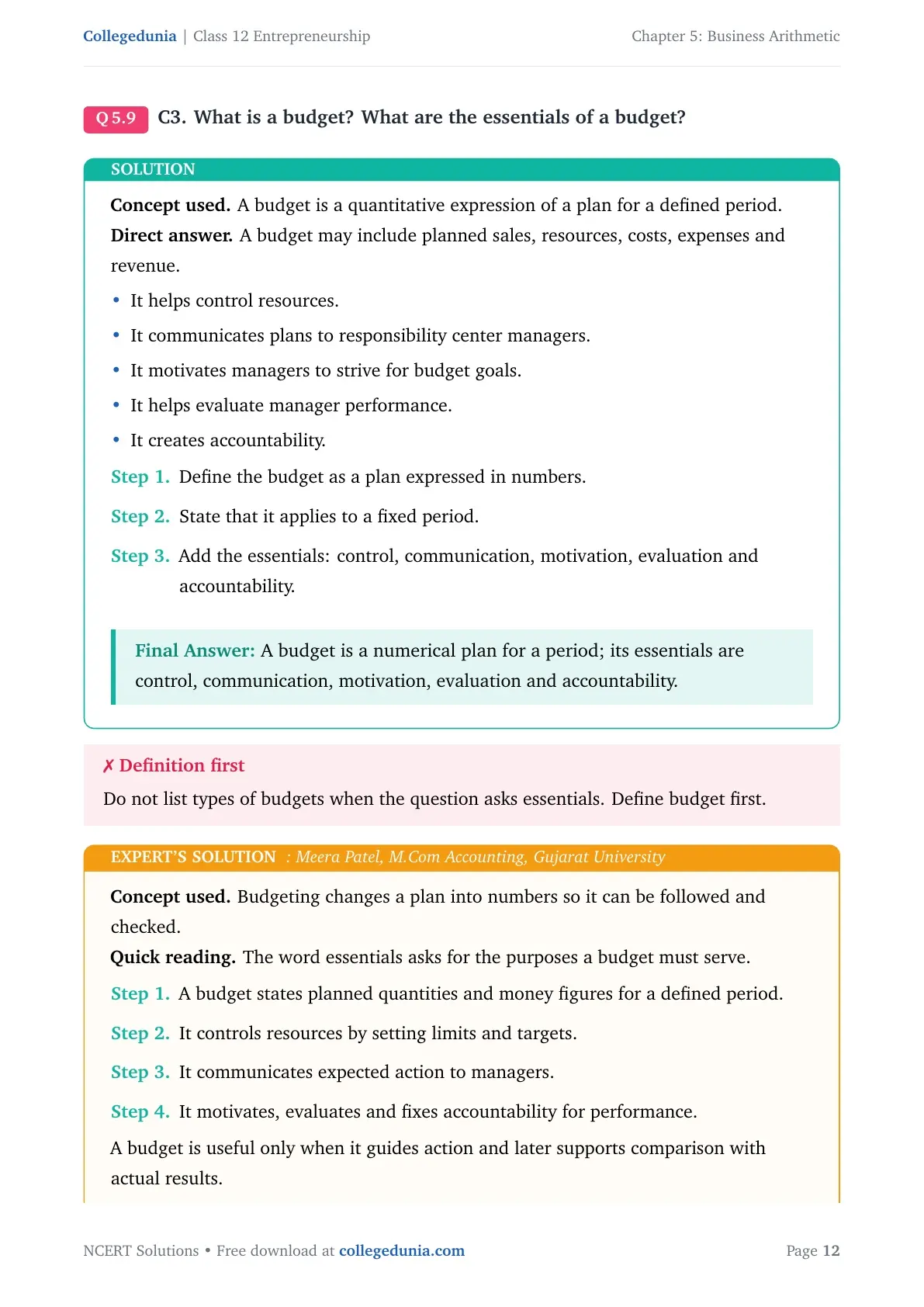
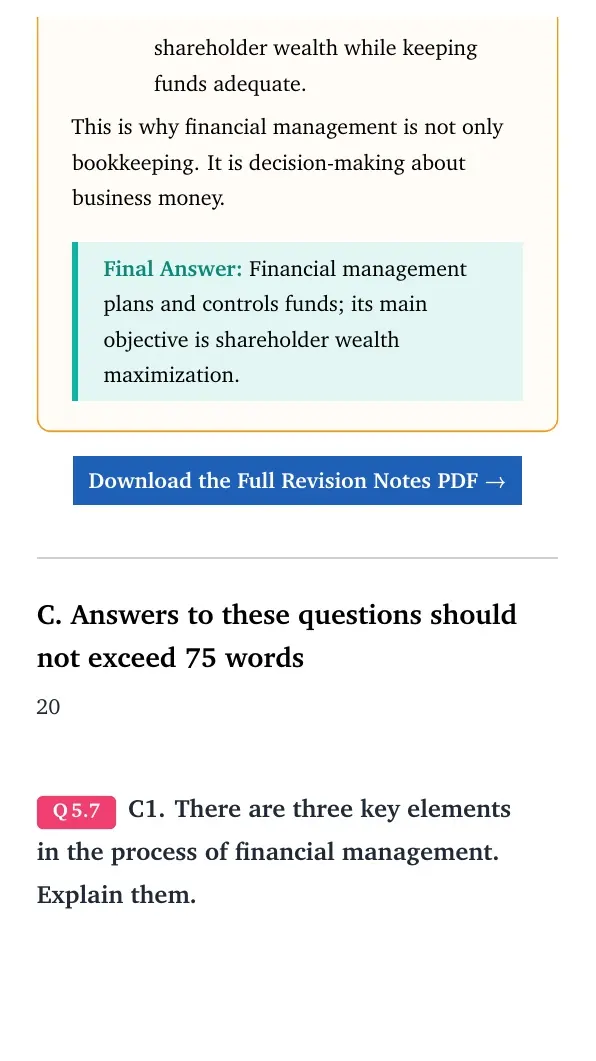
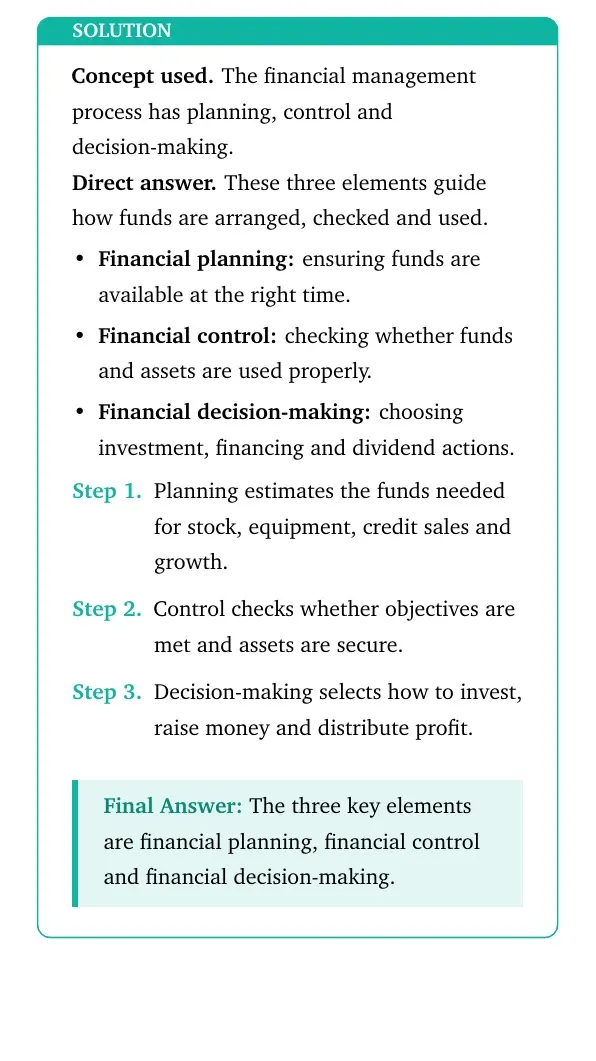
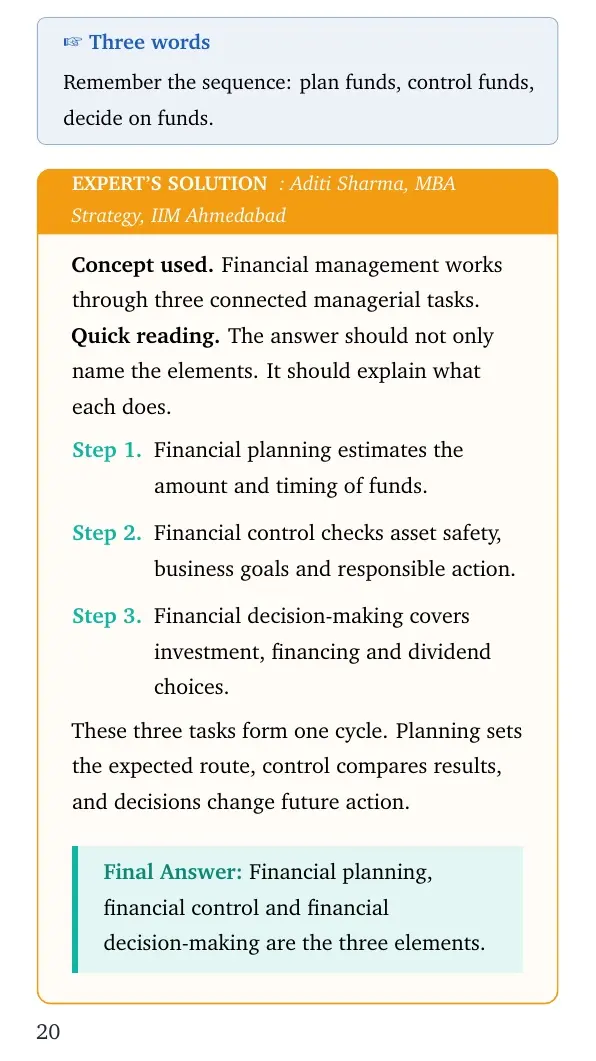
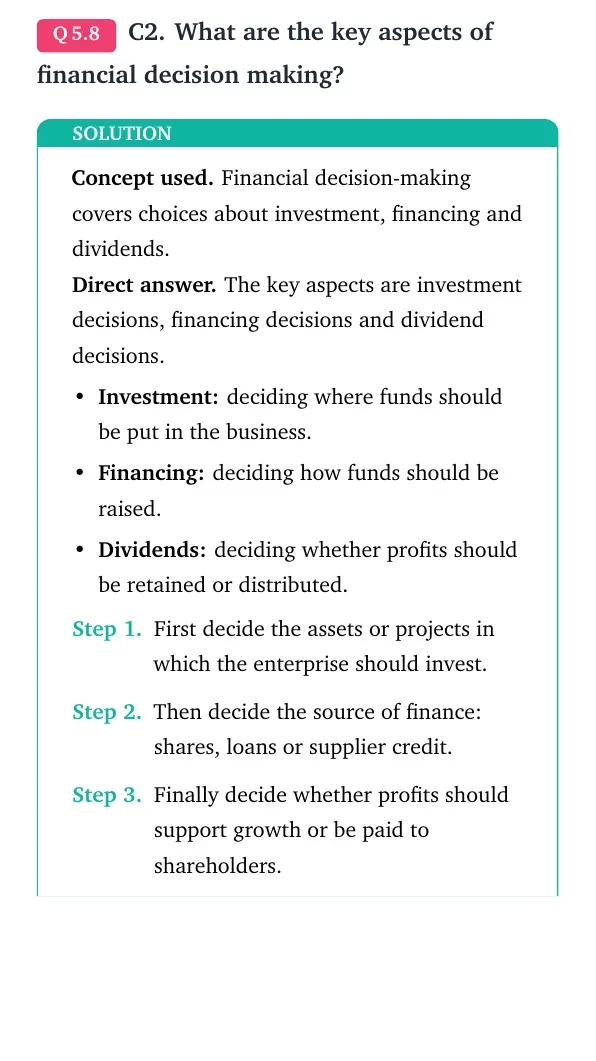
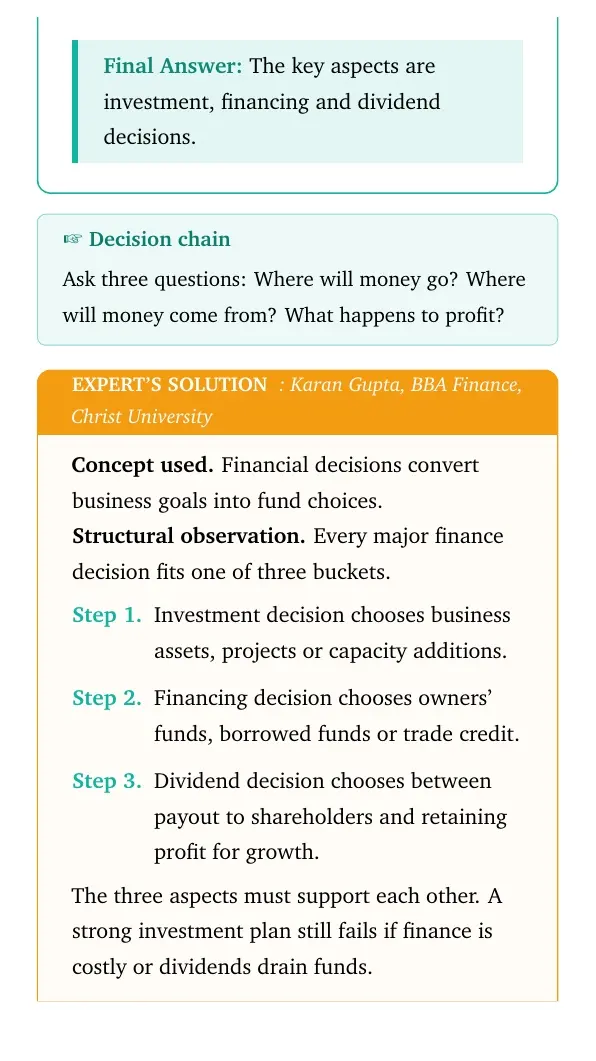
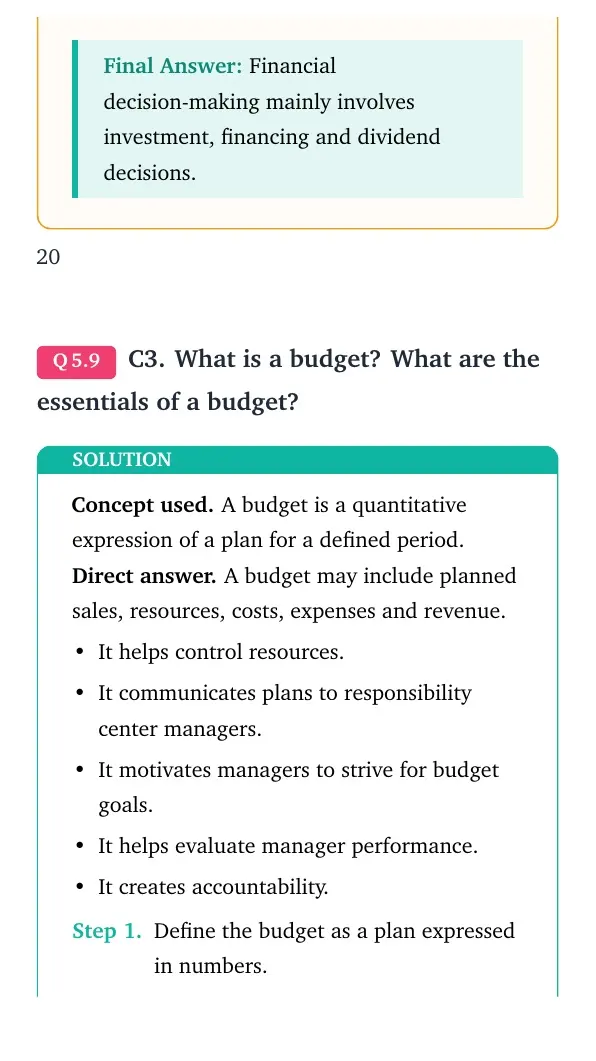
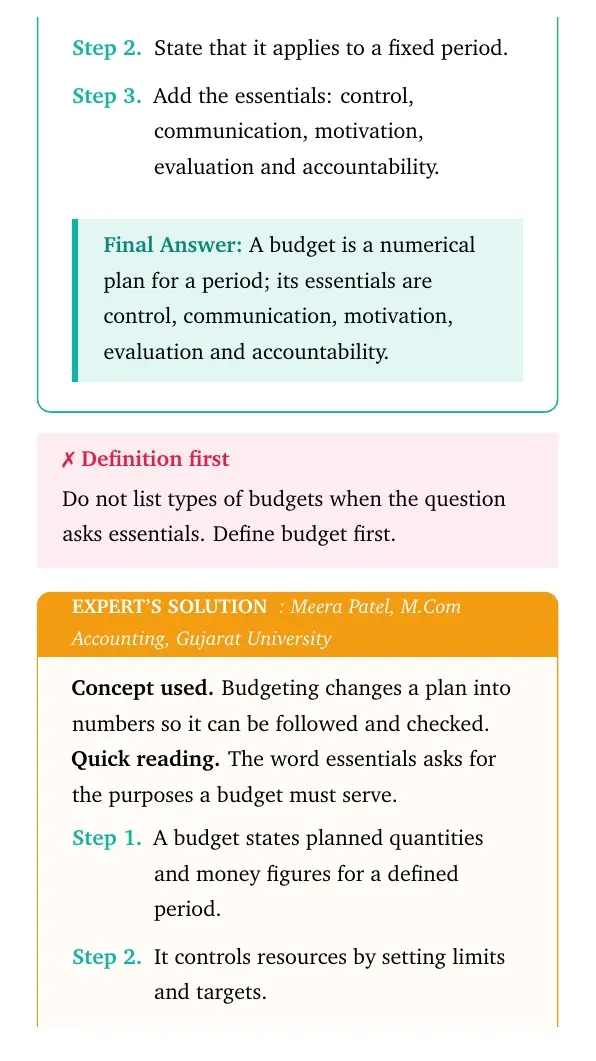
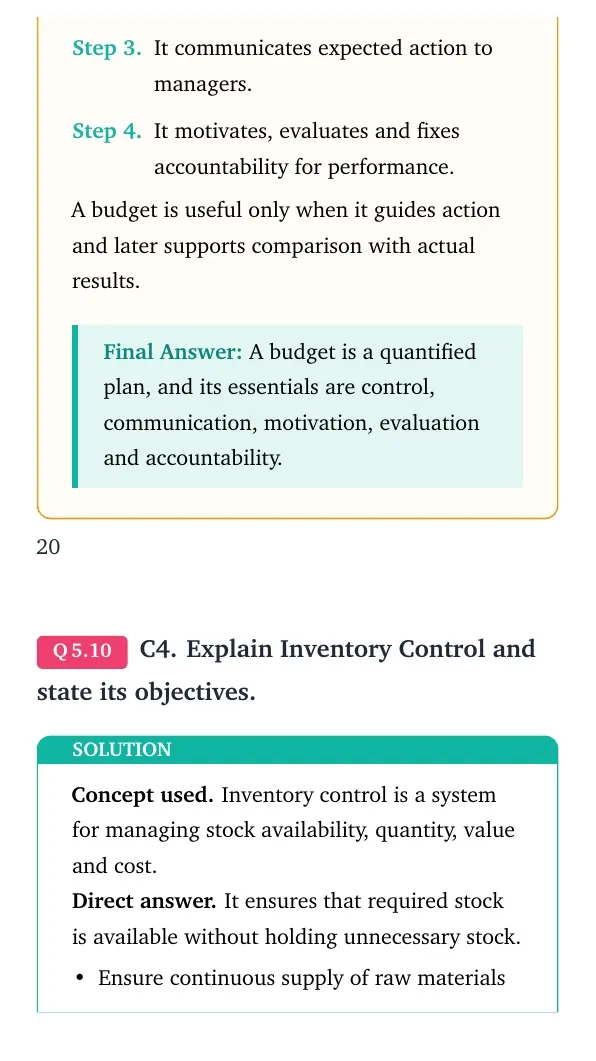
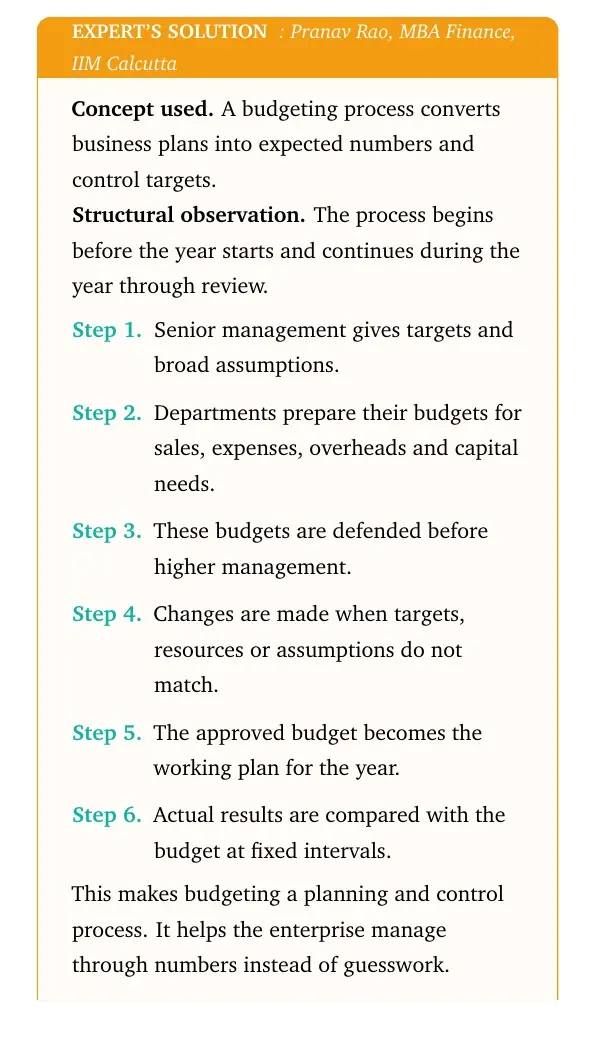
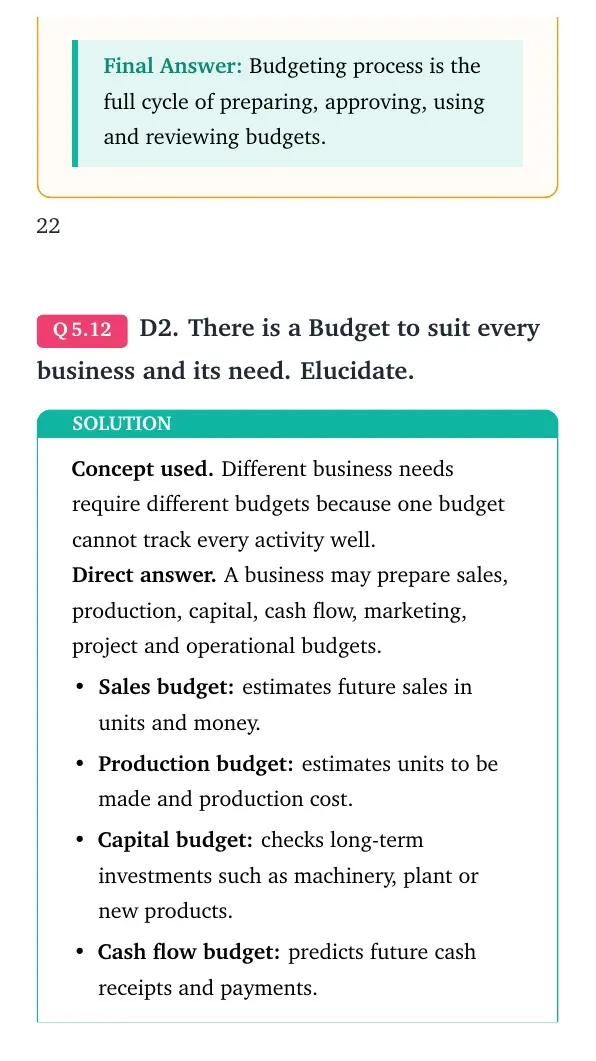
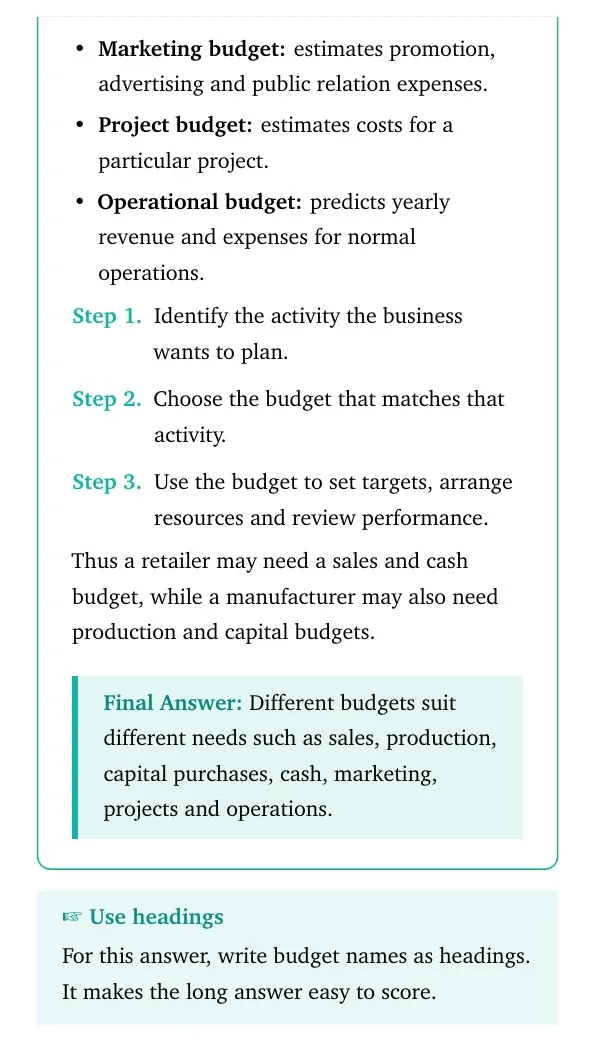
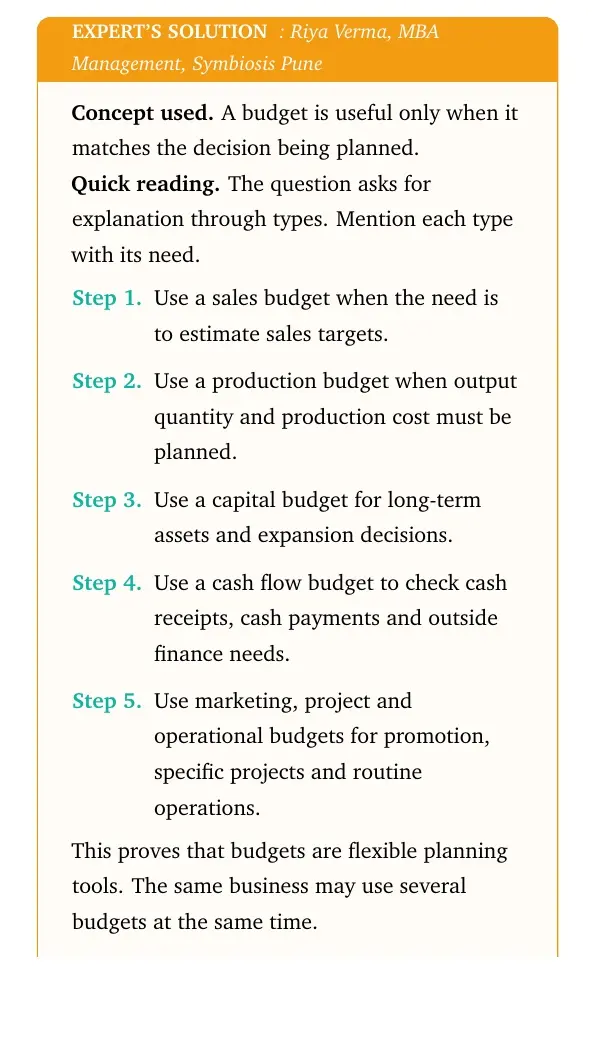

- 16 textbook questions are solved in the same order as the Business Arithmetic exercise.
- The PDF covers very short, short, long and HOTS questions with exam-ready wording.
- Expert solution cards give a second explanation for every question.
Student Feedback on Class 12 Entrepreneurship Chapter 5
In the 2026-27 Collegedunia Entrepreneurship review log, 7,940 Class 12 students marked Business Arithmetic as a chapter where definitions and calculation formats need extra practice.
- 72% wanted cash flow and cash conversion cycle terms explained with examples.
- 68% asked for working capital calculations to show assets and liabilities separately.
- 6 out of 10 students wanted budgeting answers written with clear headings.
Source: 2026-27 Class 12 Entrepreneurship student feedback sample recorded for Collegedunia NCERT resource planning.
Every answer here is checked against the Business Arithmetic unit of the official Class 12 Entrepreneurship textbook and the 2026-27 NCERT resource workflow.
|
Table of Contents |
Business Arithmetic Questions Covered in the PDF
The PDF follows the textbook sequence from one-line terms to case-based HOTS answers. Students can use the table below to revise the exact answer length expected in the chapter.
| Question Set | Focus Area | Answer Skill |
|---|---|---|
| A. Very short answers | SKU, cash flow, cash inflow, cash outflow, re-order point, cash flow projection and cash conversion cycle | Exact term plus one example |
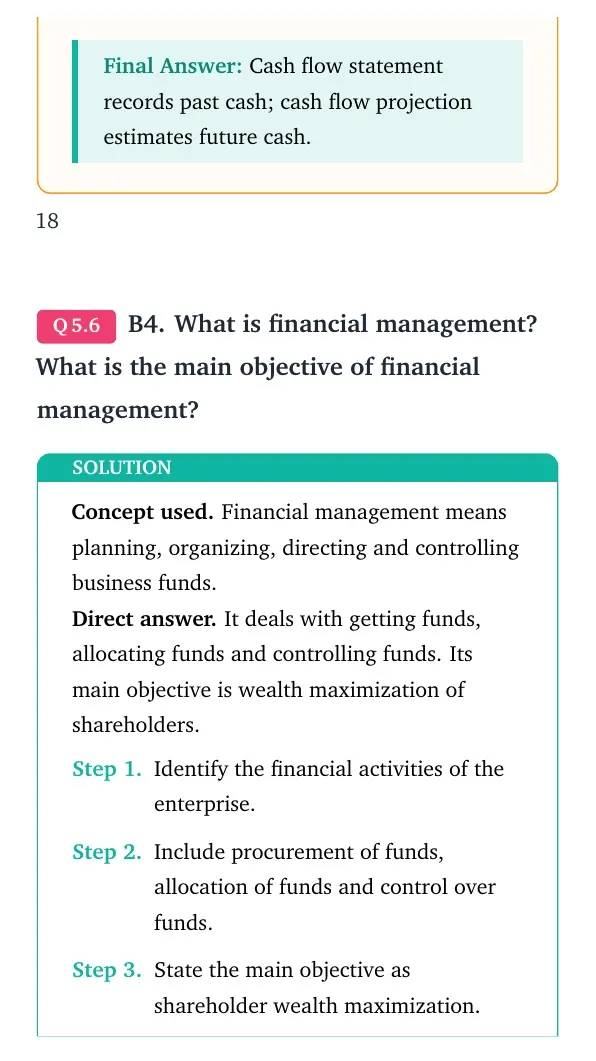
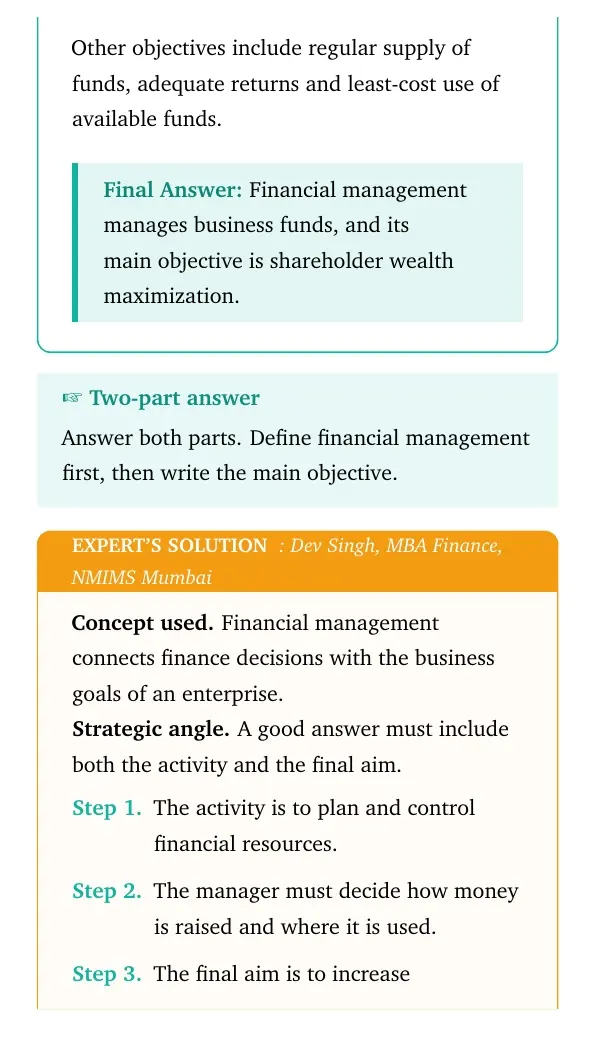
| B. Short answers | ABC analysis, Pareto's Principle, cash flow projection and financial management | Definition with one purpose line |
| C. 75-word answers | Financial management elements, financial decisions, budget essentials and inventory control | Point-wise explanation with headings |
| D. Long answers | Budgeting process, types of budgets and working capital need | Structured paragraphs with business examples |
| E. HOTS | Raja and Co working capital calculation and Ramu's ice-cream working capital case | Classification first, then calculation or case reasoning |
Business Arithmetic Class 12 Revision Video
Source: Rajat Arora on YouTube
Business Arithmetic Planning Flow for Class 12
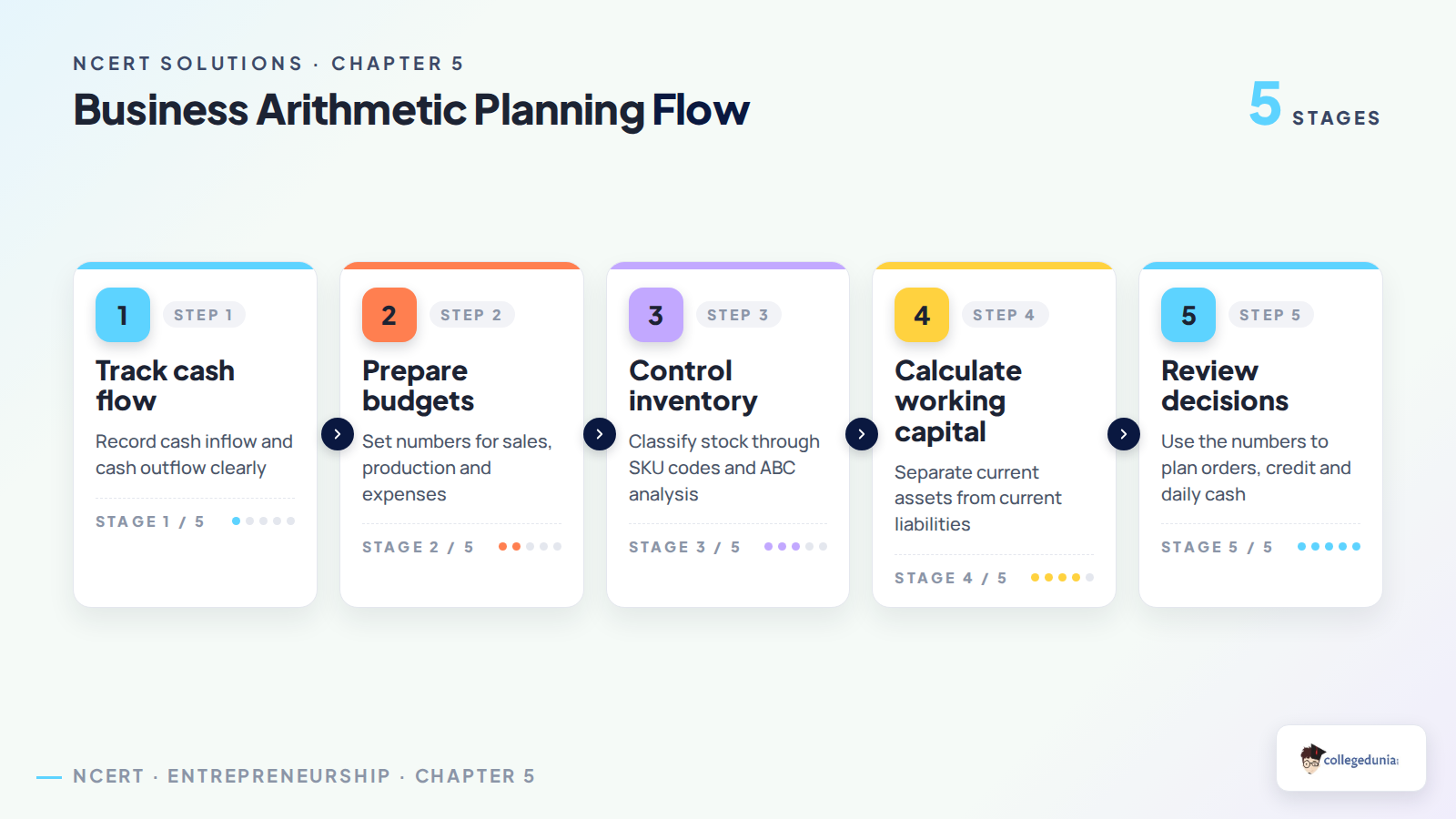
Business Arithmetic teaches students how an entrepreneur converts daily business activity into numbers. Cash movement, budgets, inventory control and working capital are connected because each one affects short-term business decisions.
- Cash flow: tracks money entering and leaving the business during a period.
- Budgeting: turns future plans into estimated income and expense numbers.
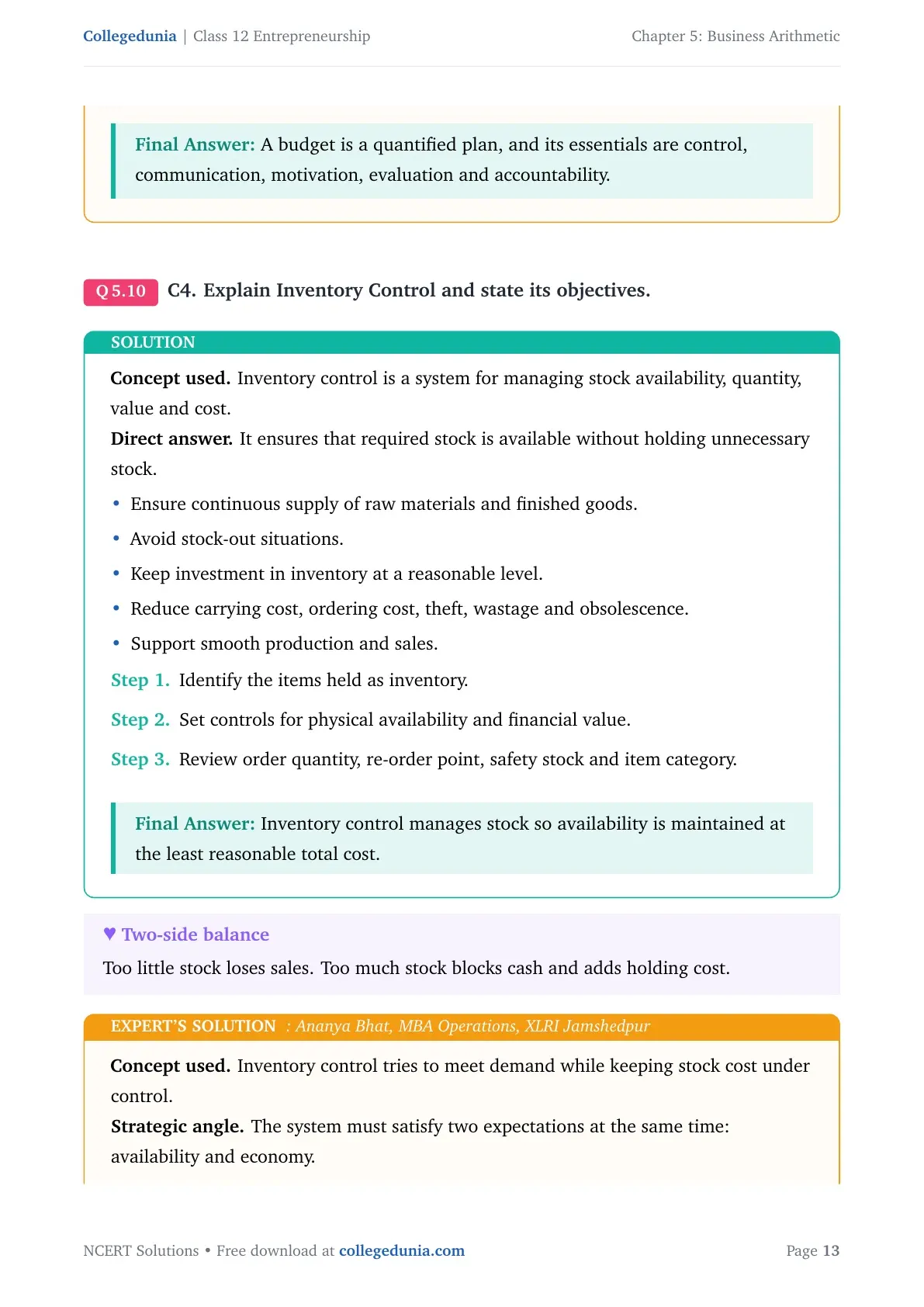
- Inventory control: keeps enough stock without blocking too much money.
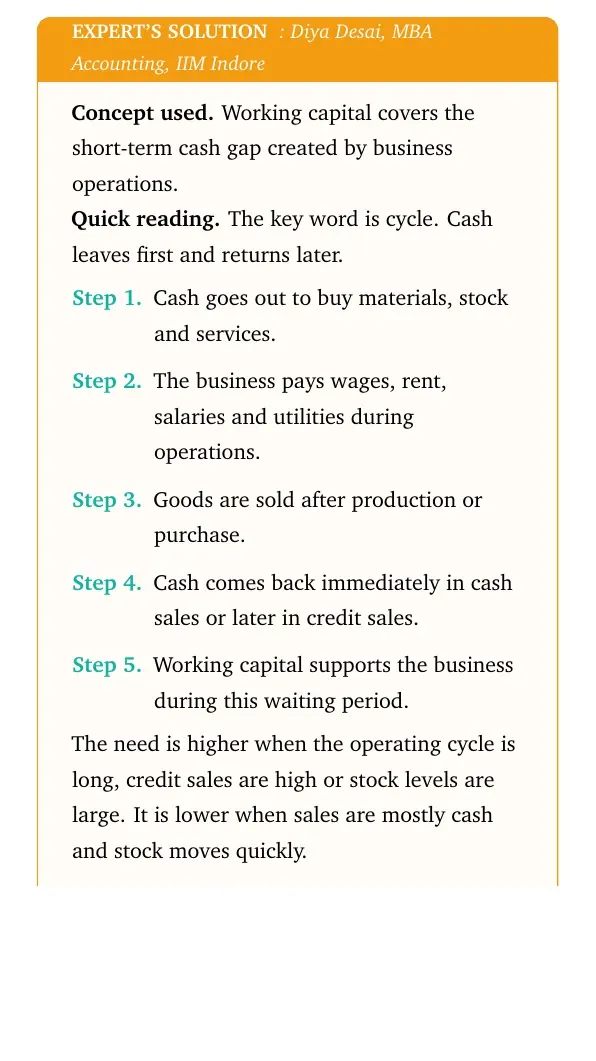
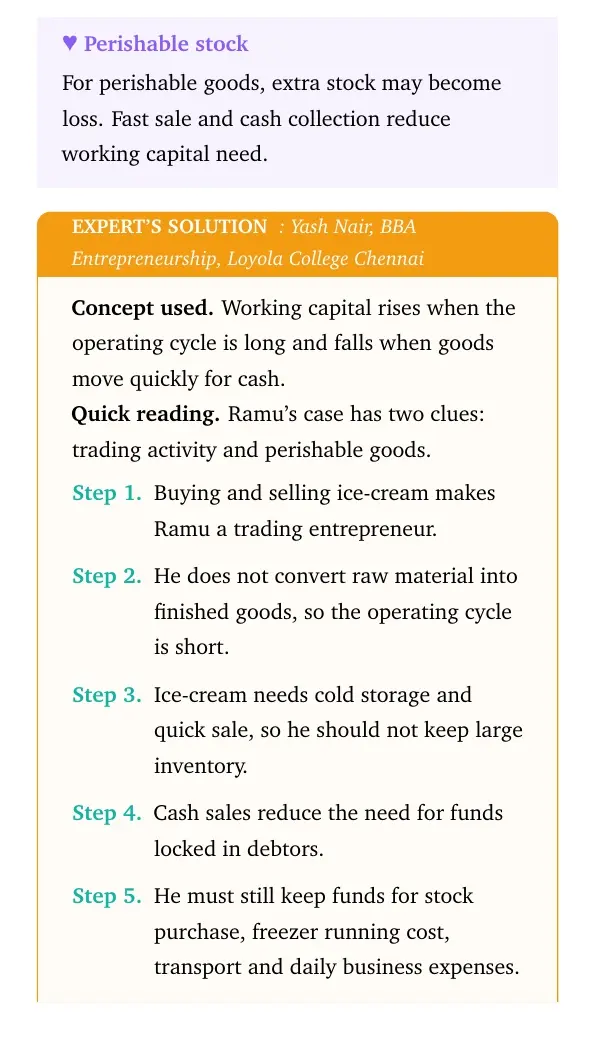
- Working capital: funds day-to-day operations until cash comes back from sales.
Cash Flow and Cash Conversion Cycle
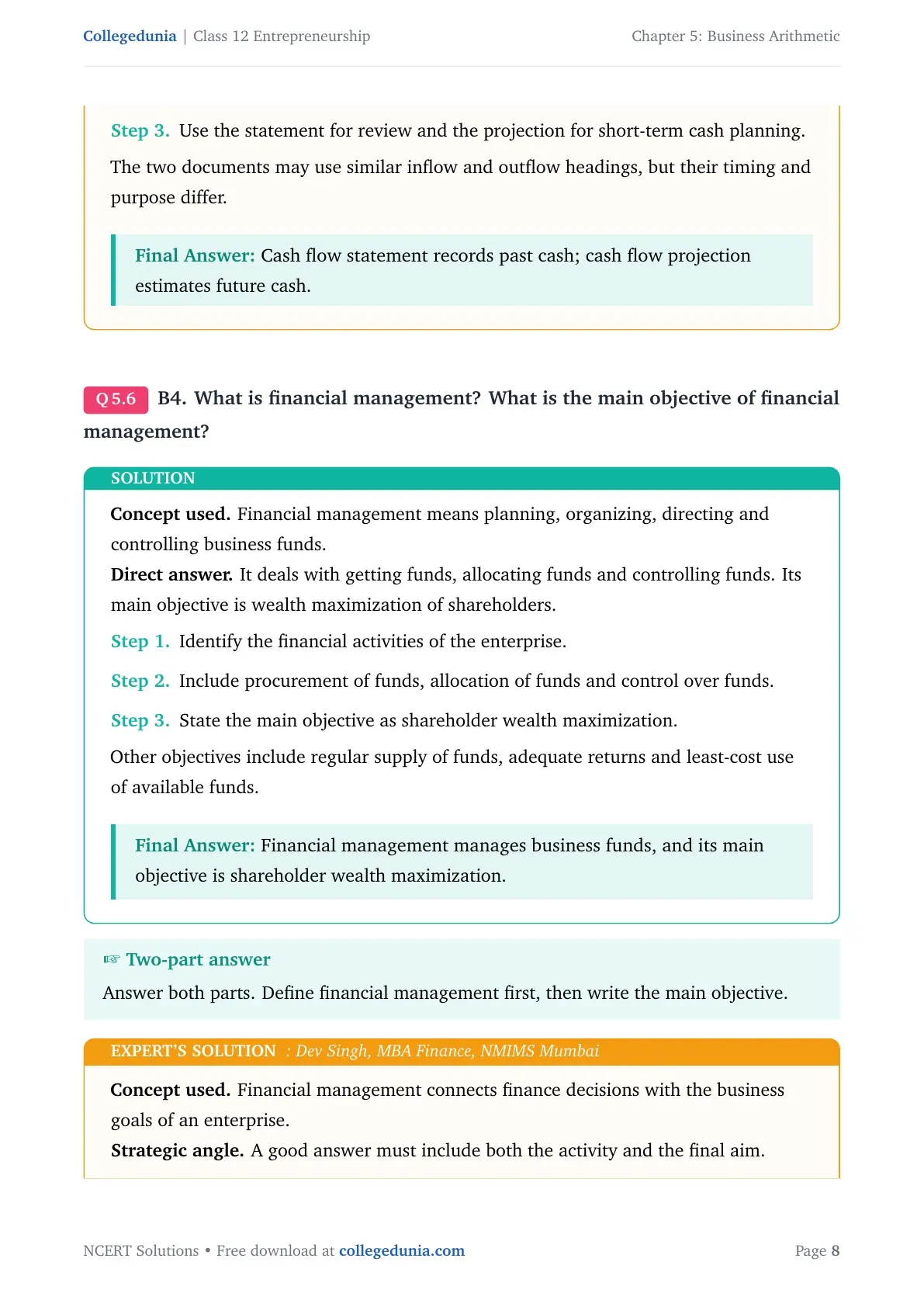
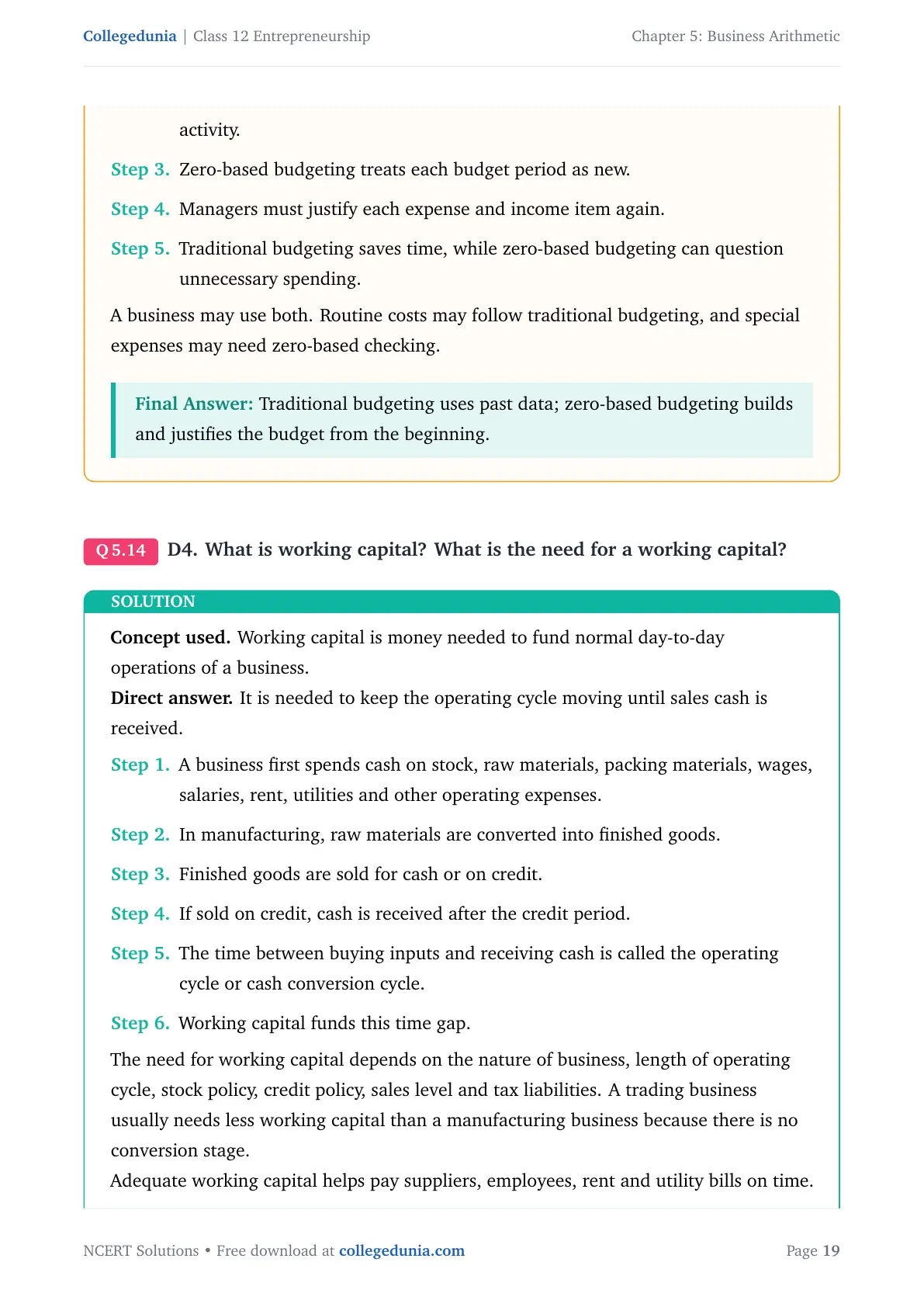
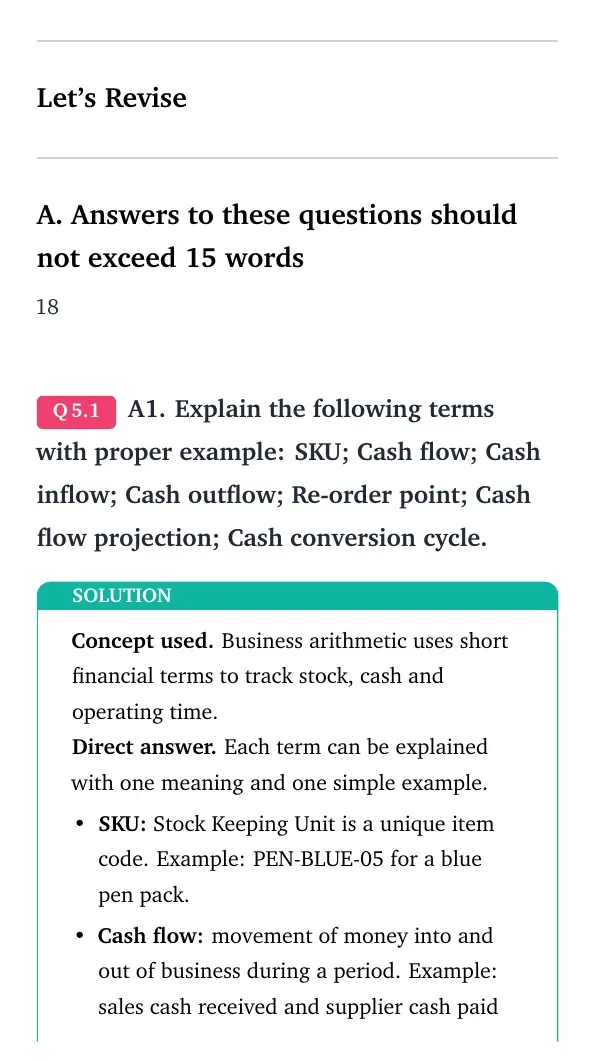
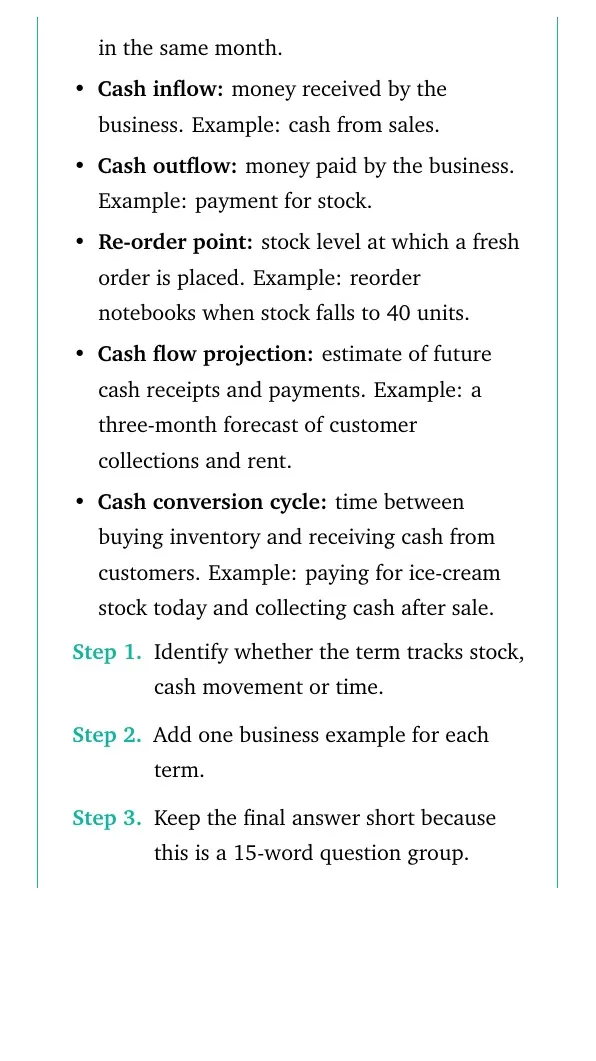
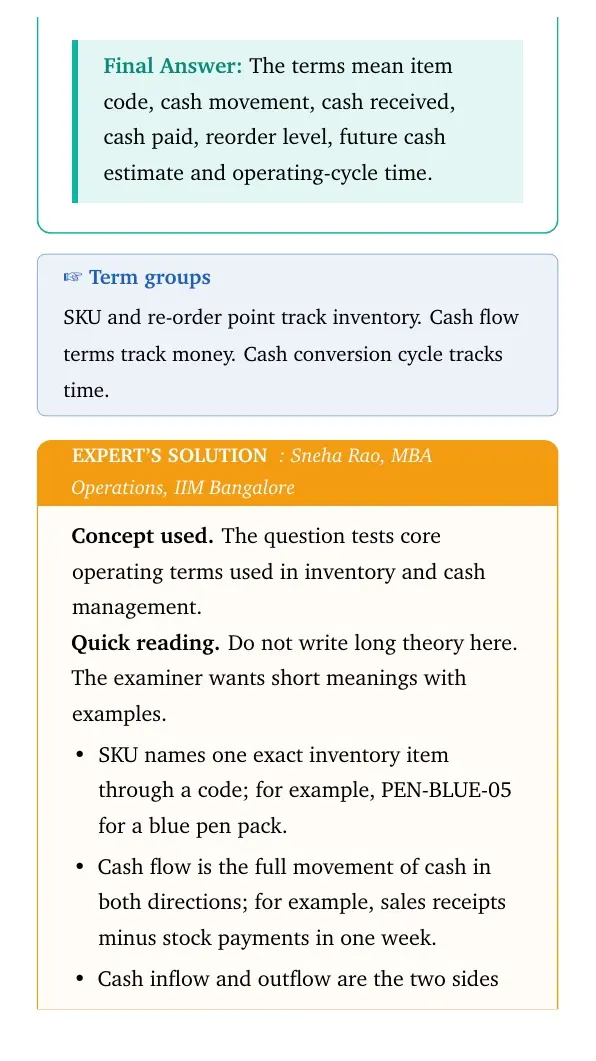
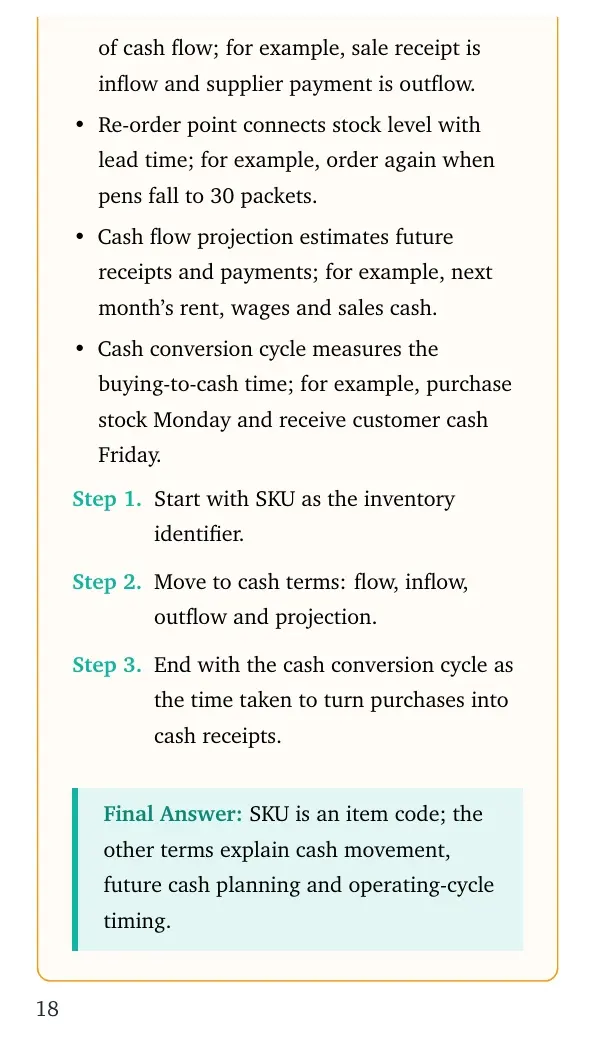
Cash flow is the movement of cash into and out of a business. A cash inflow is money received from sales, debtors, loans or other receipts. A cash outflow is money paid for stock, wages, rent, electricity, transport, tax or other expenses.
The cash conversion cycle explains the time gap between paying for inputs and receiving cash from customers. A shorter cycle usually reduces working capital pressure because money returns faster.
| Term | Meaning | Business Example |
|---|---|---|
| Cash inflow | Cash received by the enterprise | Money received from customers |
| Cash outflow | Cash paid by the enterprise | Payment for stock or rent |
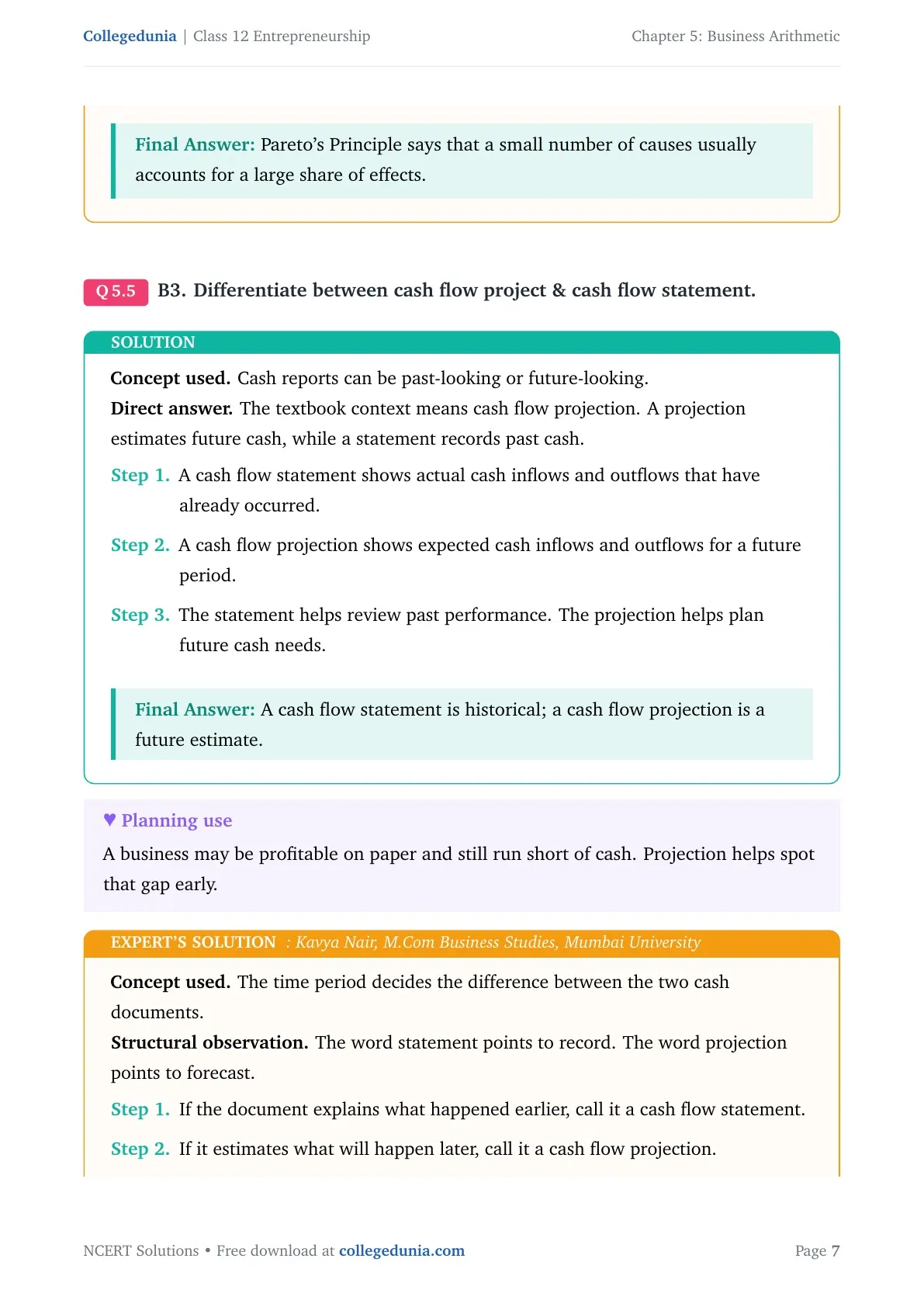
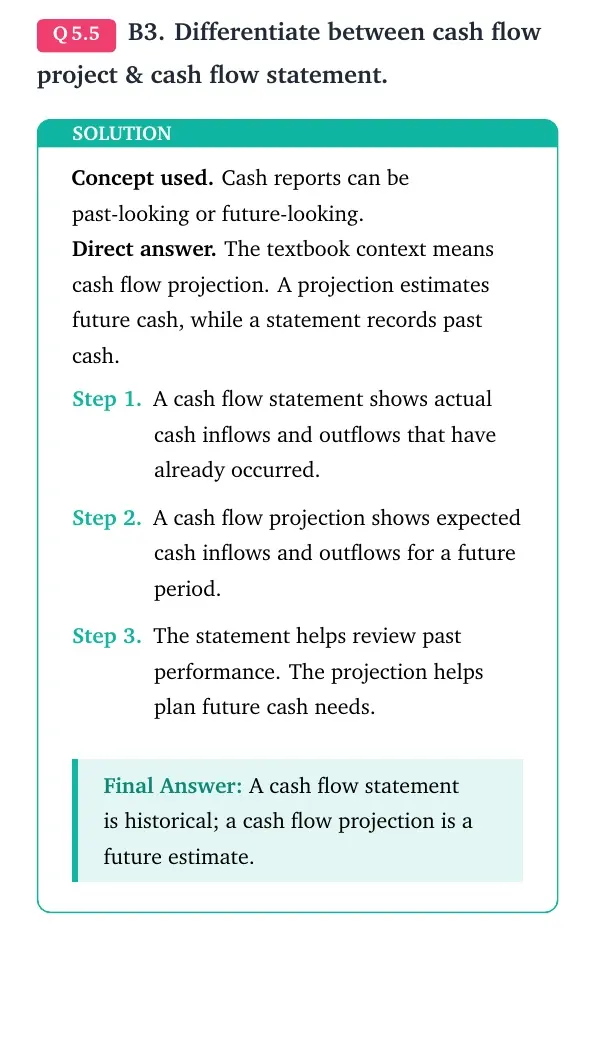
| Cash flow projection | Estimate of future cash receipts and payments | Monthly forecast before buying inventory |
| Cash conversion cycle | Time taken to convert business spending into cash collection | Buying stock today and collecting cash after sale |
ABC Analysis and Inventory Control
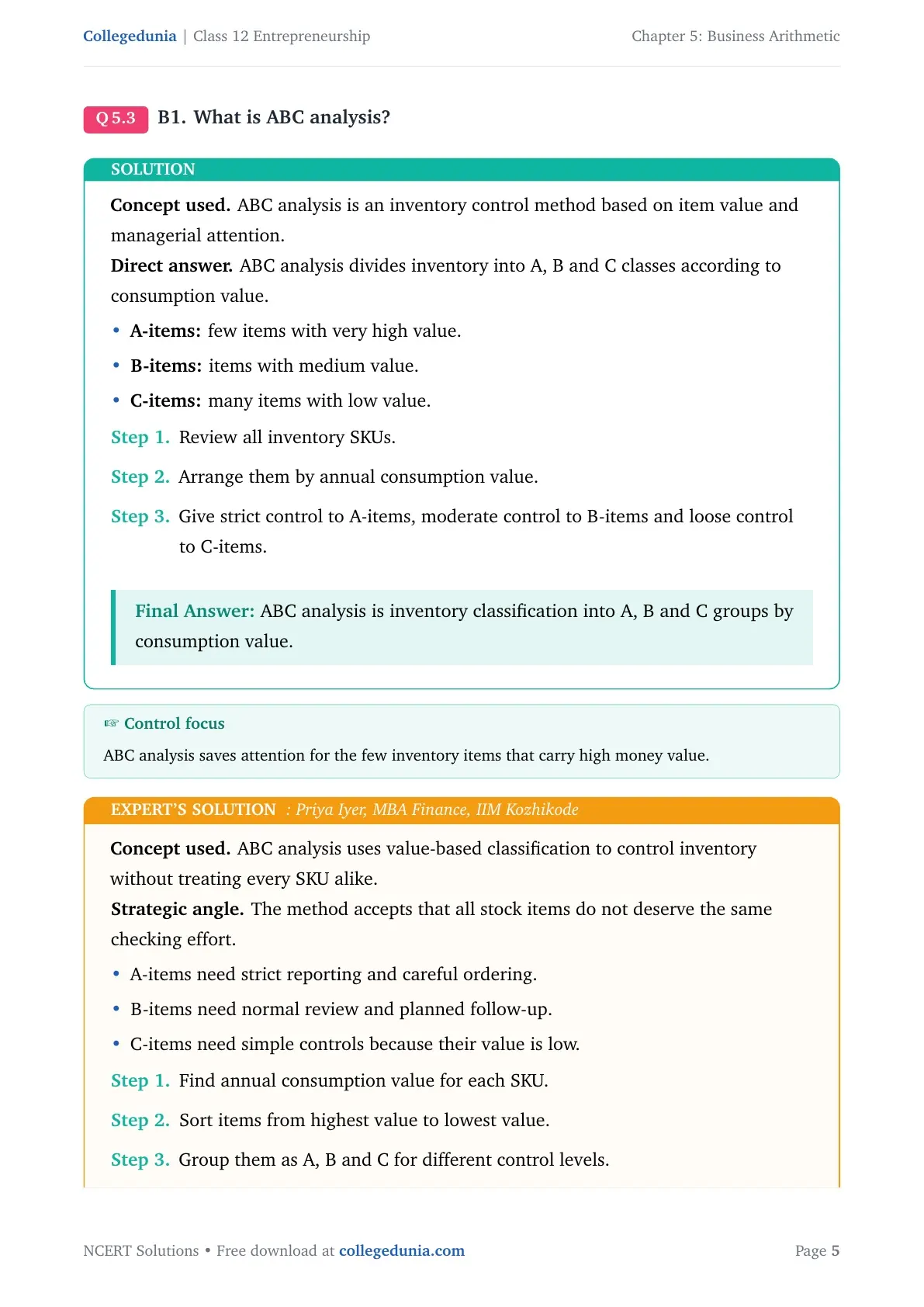
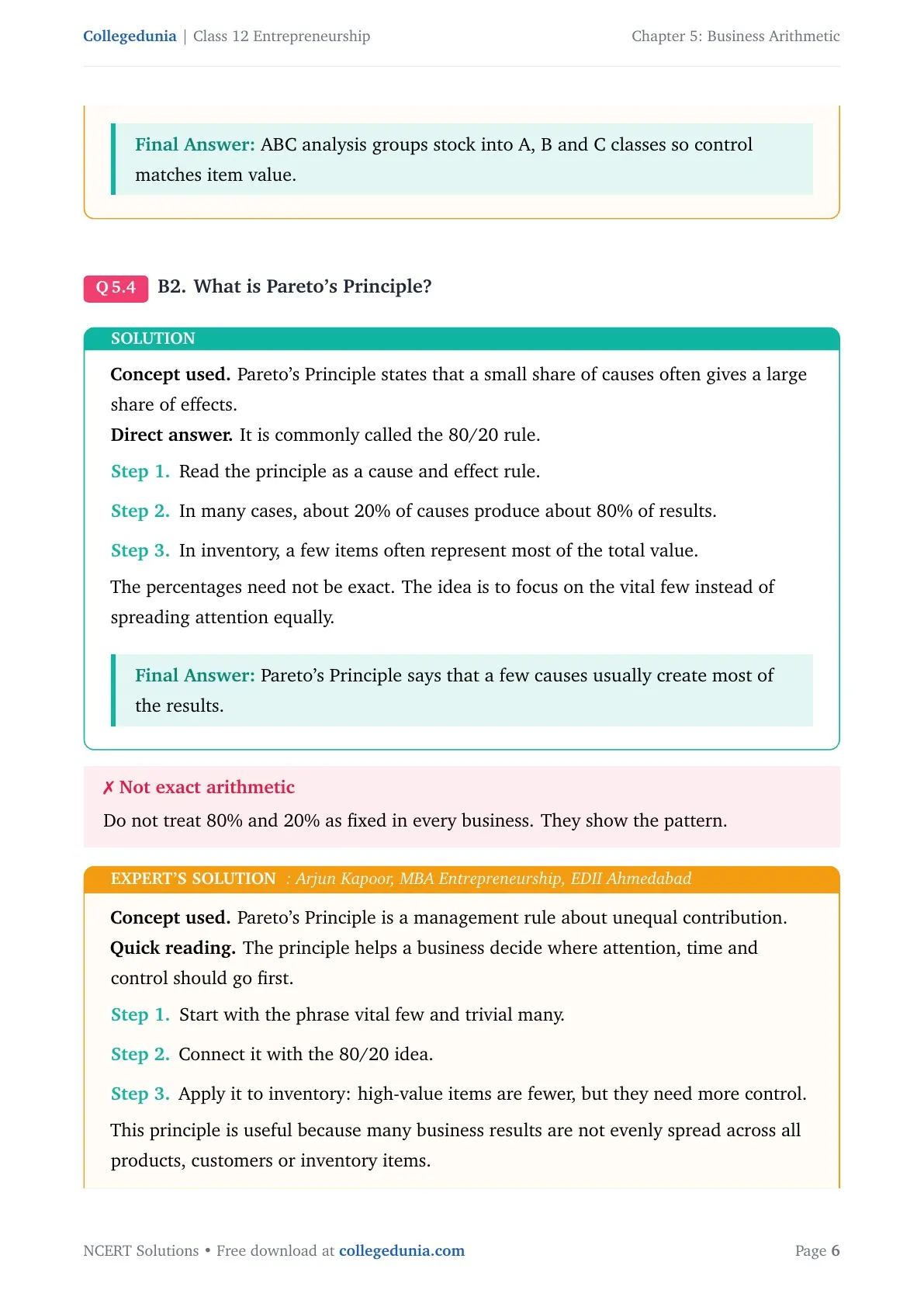
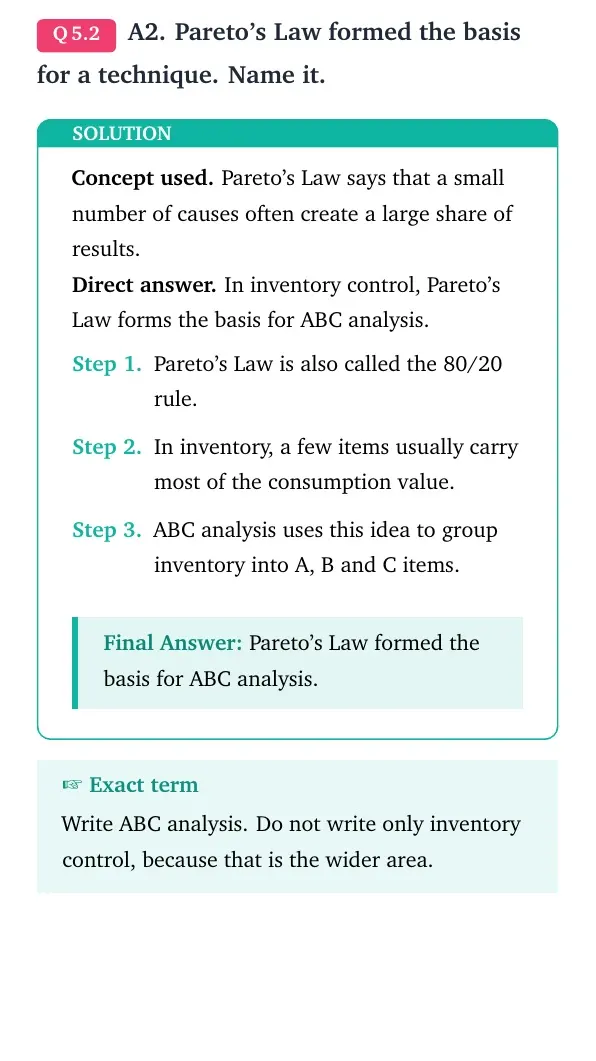
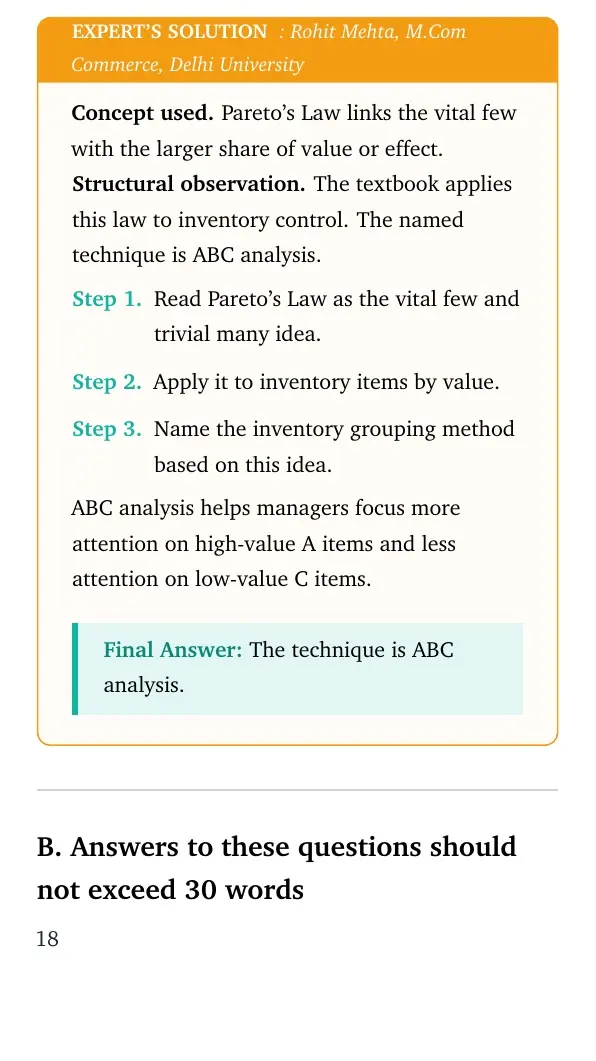
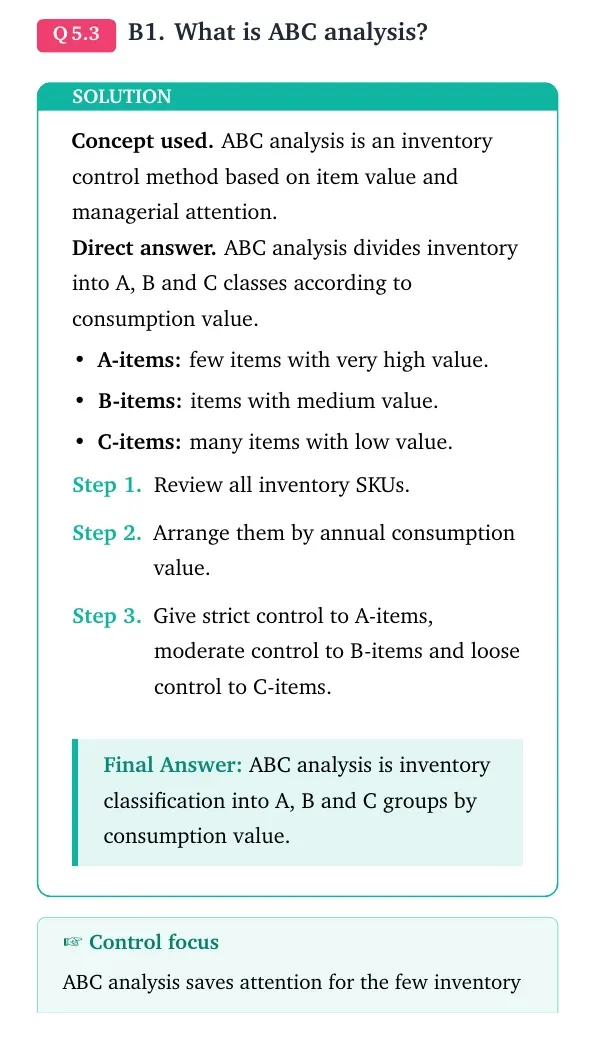
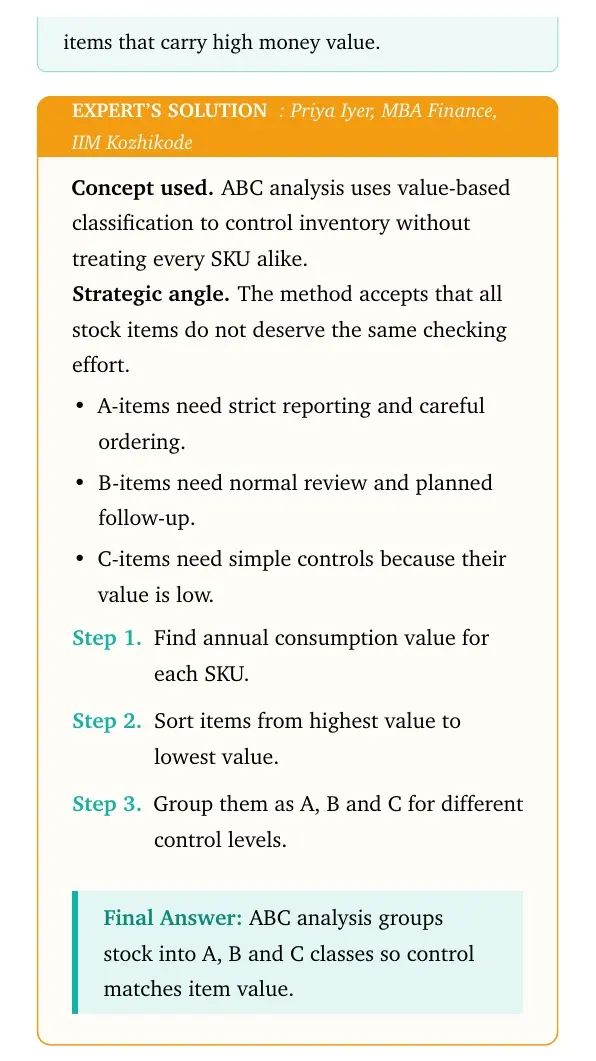
ABC analysis is an inventory control technique based on Pareto's Principle. It separates items according to consumption value so the entrepreneur can give more attention to high-value stock and simpler control to low-value stock.
- A-items: small number of items with high money value and strict control.
- B-items: medium-value items with normal review.
- C-items: many low-value items with simple control.
- Re-order point: the stock level where a fresh order should be placed.
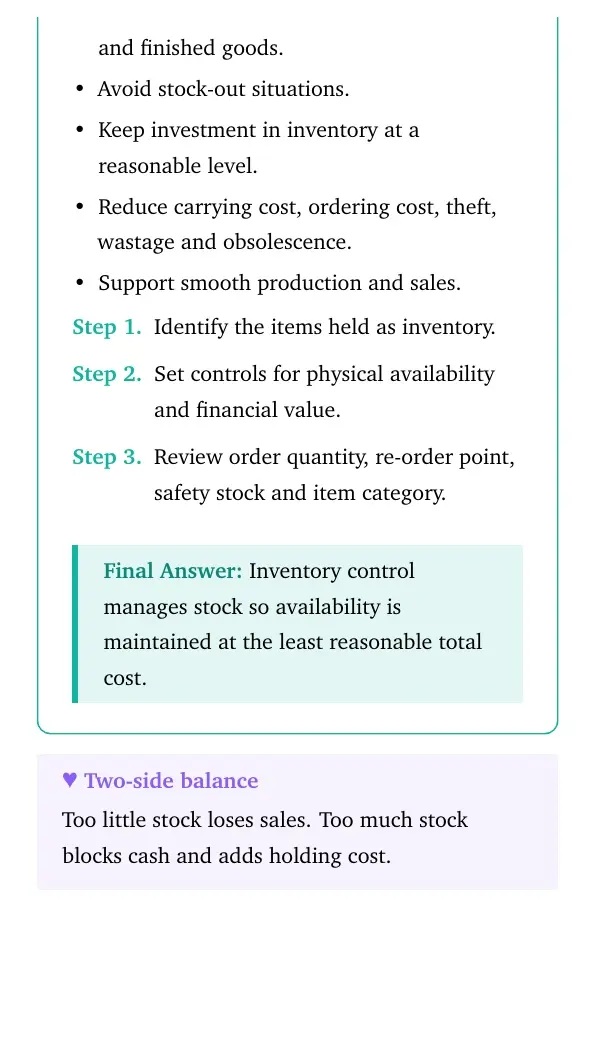
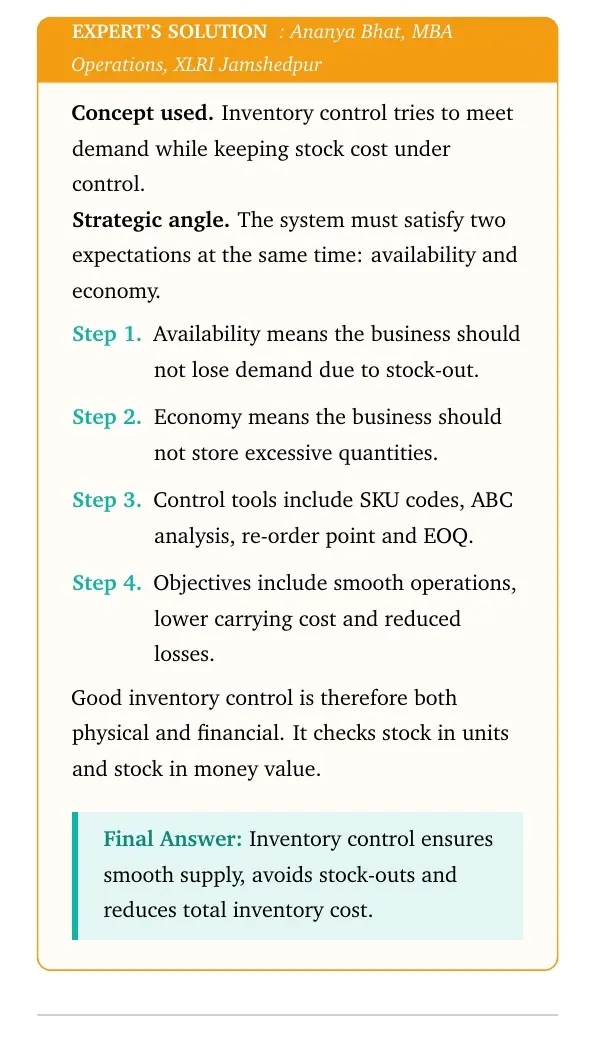
Inventory control has practical objectives. It avoids stock-out situations, keeps stock investment reasonable, reduces carrying cost and supports smooth production or sales.
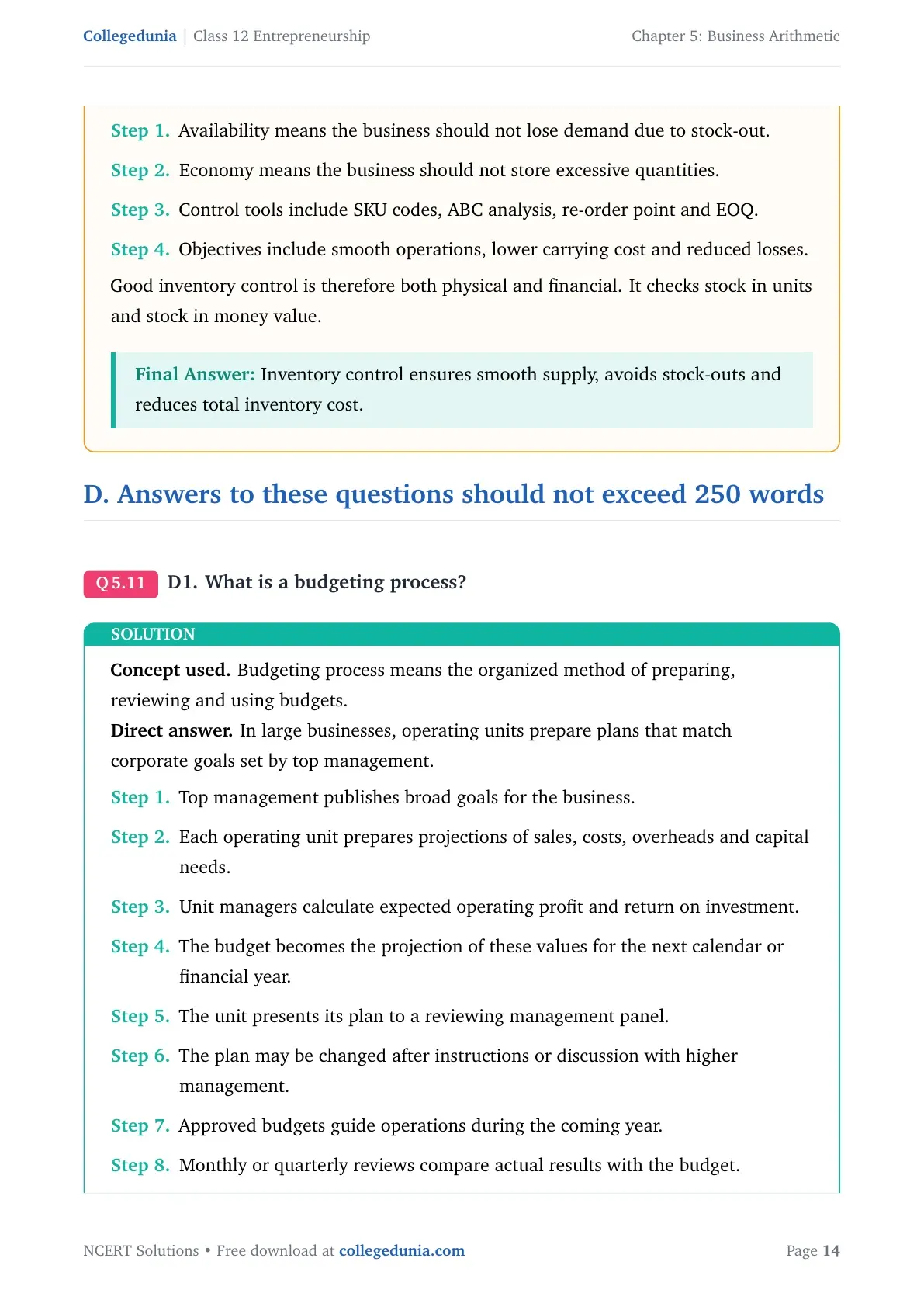
Budgeting Process and Budget Types
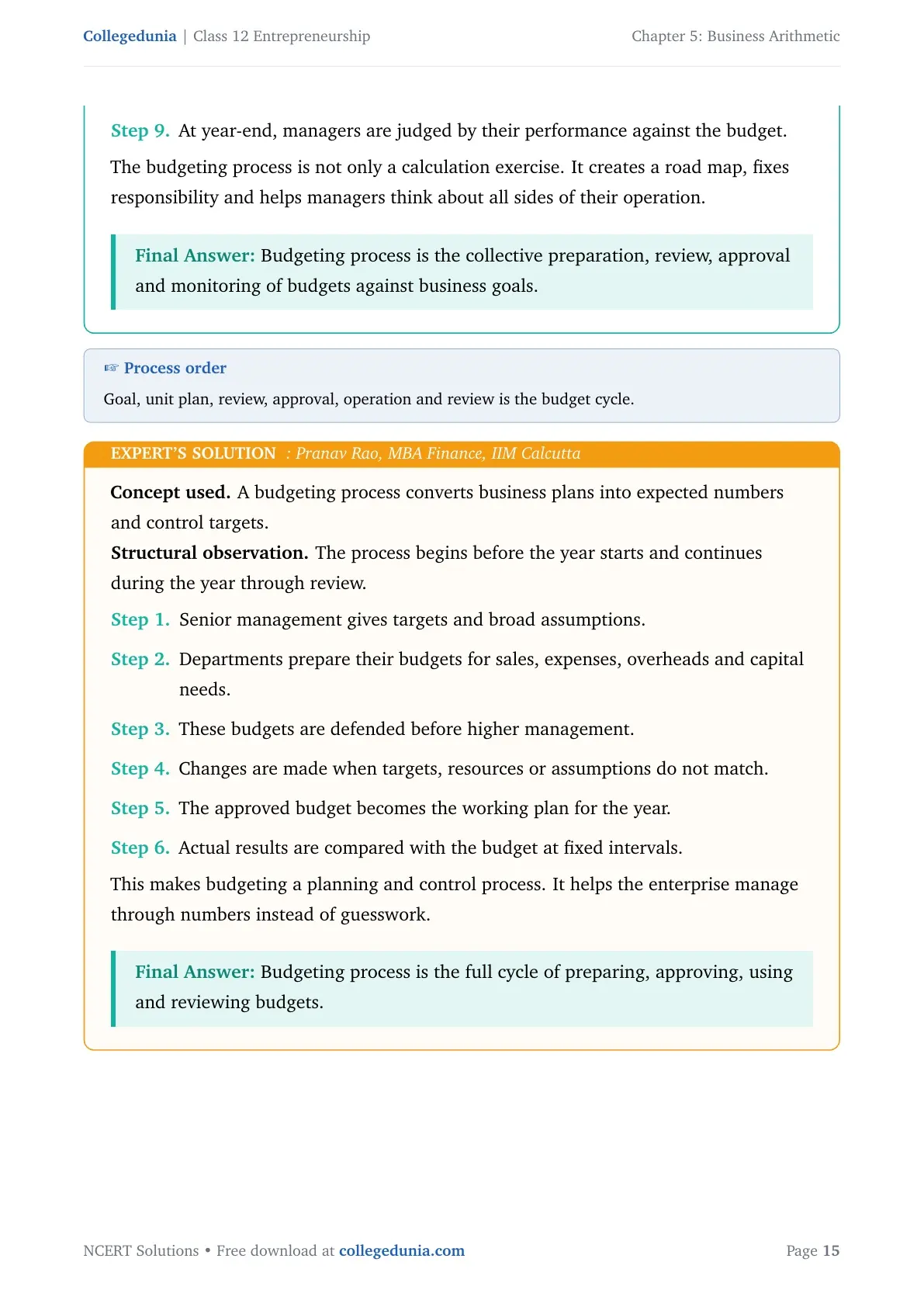
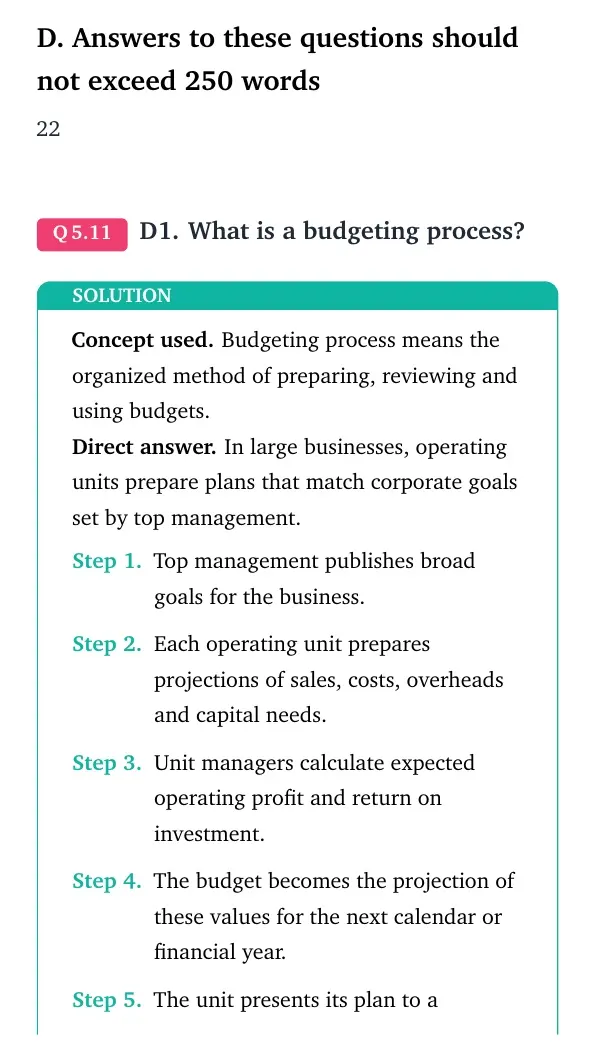
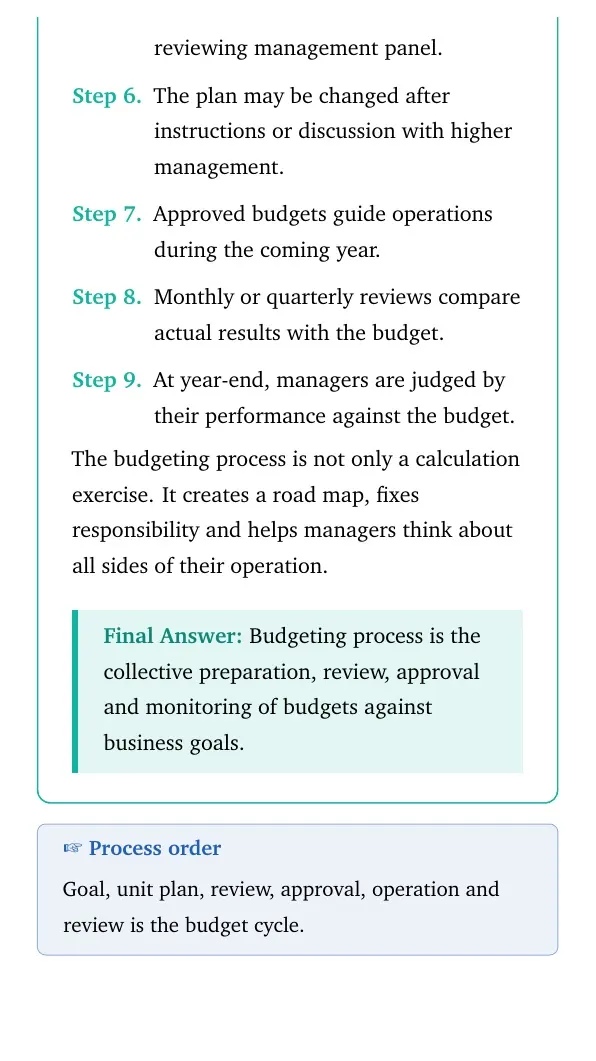
A budget is a financial plan for a future period. It sets expected income, expenses and resources so the entrepreneur can compare actual results with planned results.
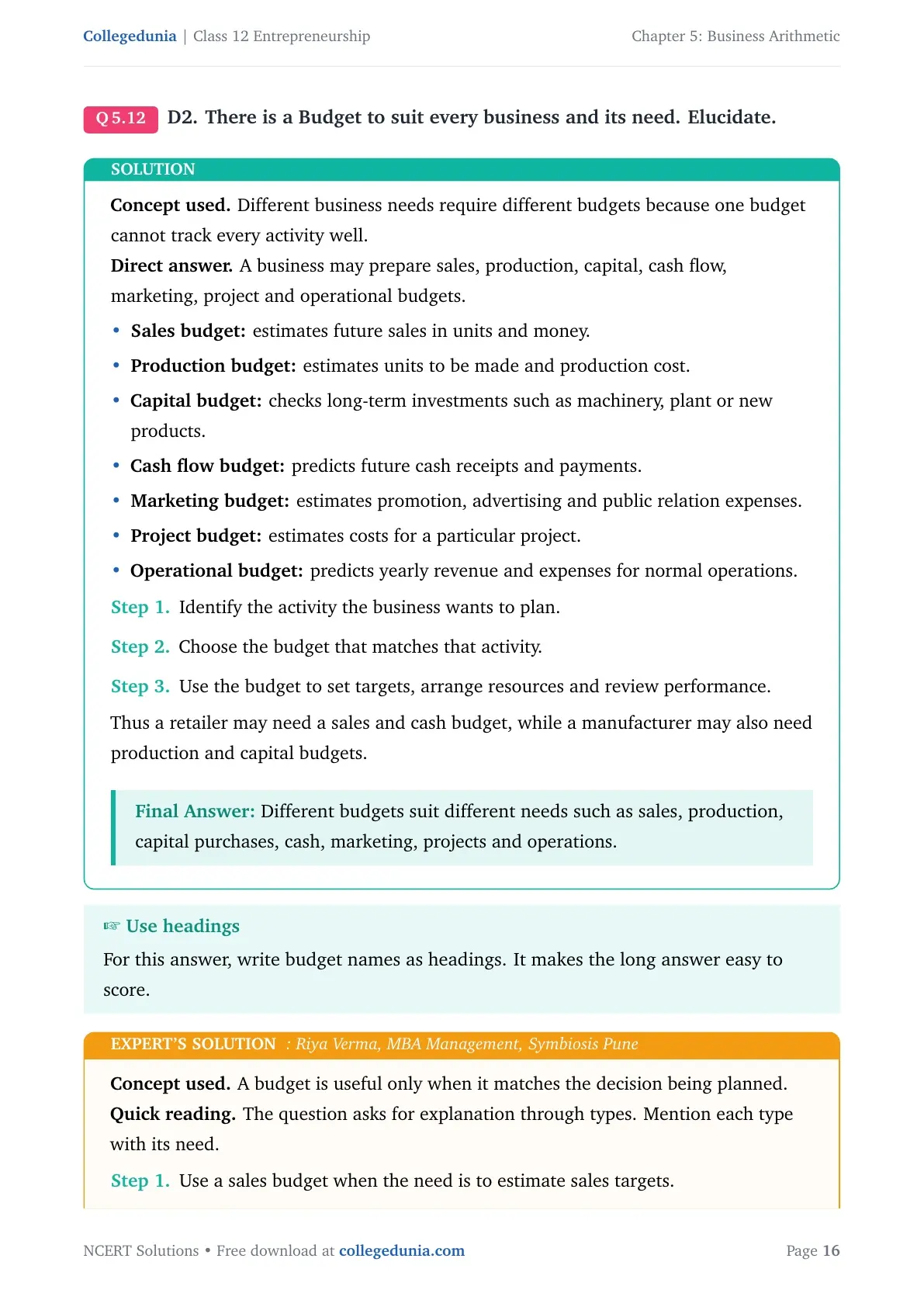
| Budget Type | What It Plans | Best Use |
|---|---|---|
| Sales budget | Expected units and sales value | Setting revenue targets |
| Production budget | Units to be produced and production cost | Manufacturing planning |
| Capital budget | Long-term assets and expansion spending | Machinery or plant decisions |
| Cash flow budget | Future cash receipts and payments | Checking short-term cash needs |
| Marketing budget | Advertising, promotion and public relation cost | Demand creation planning |
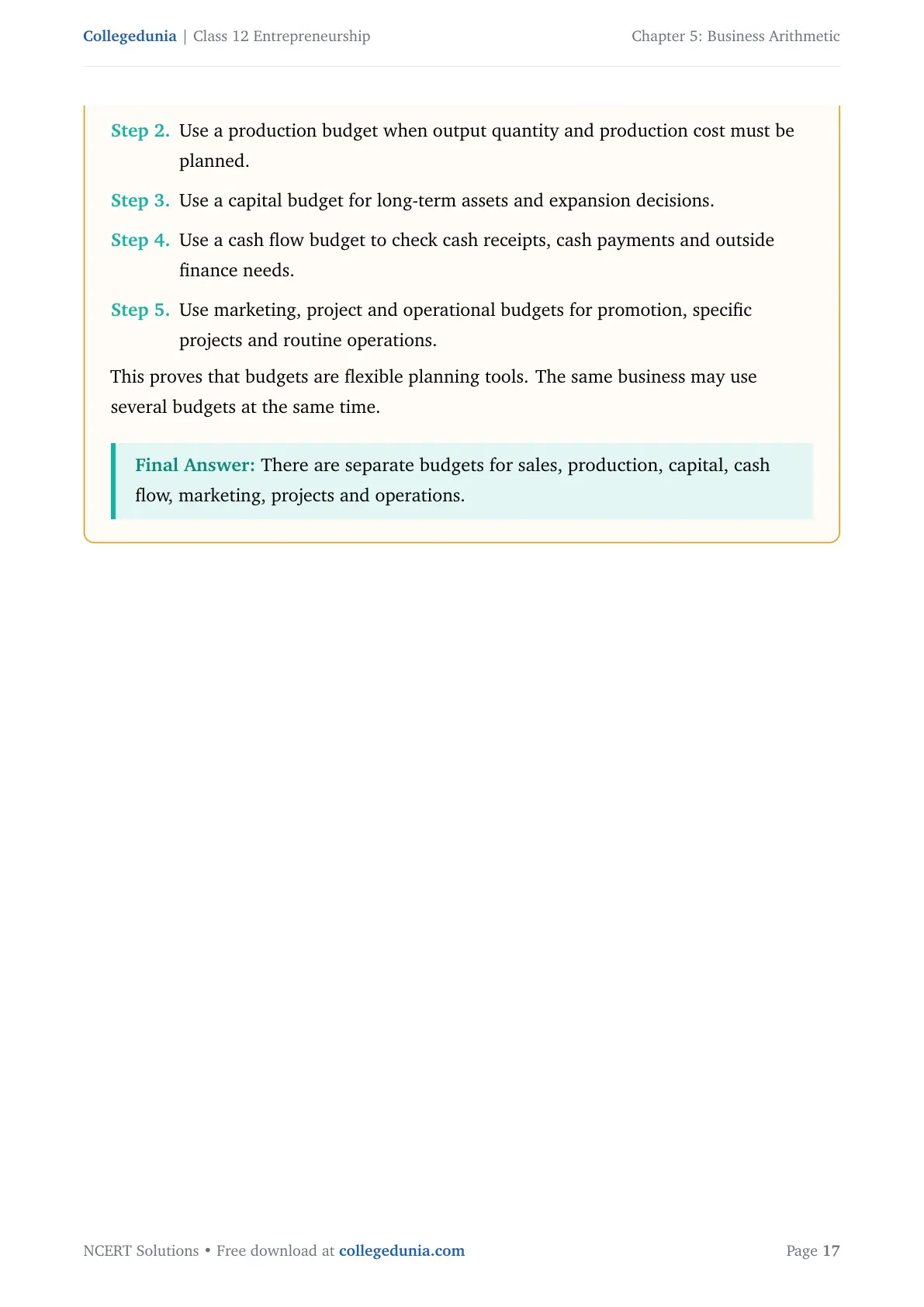
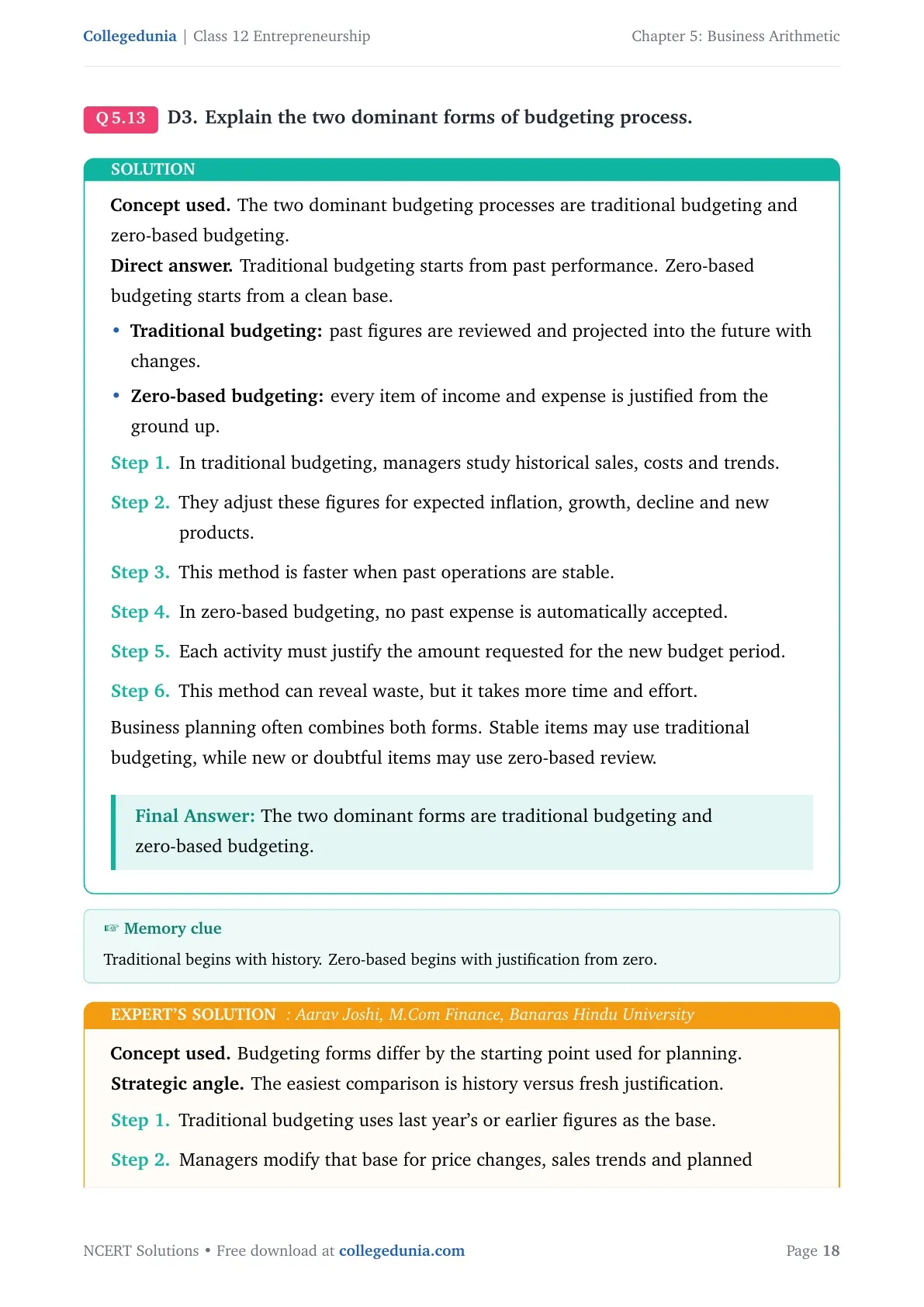
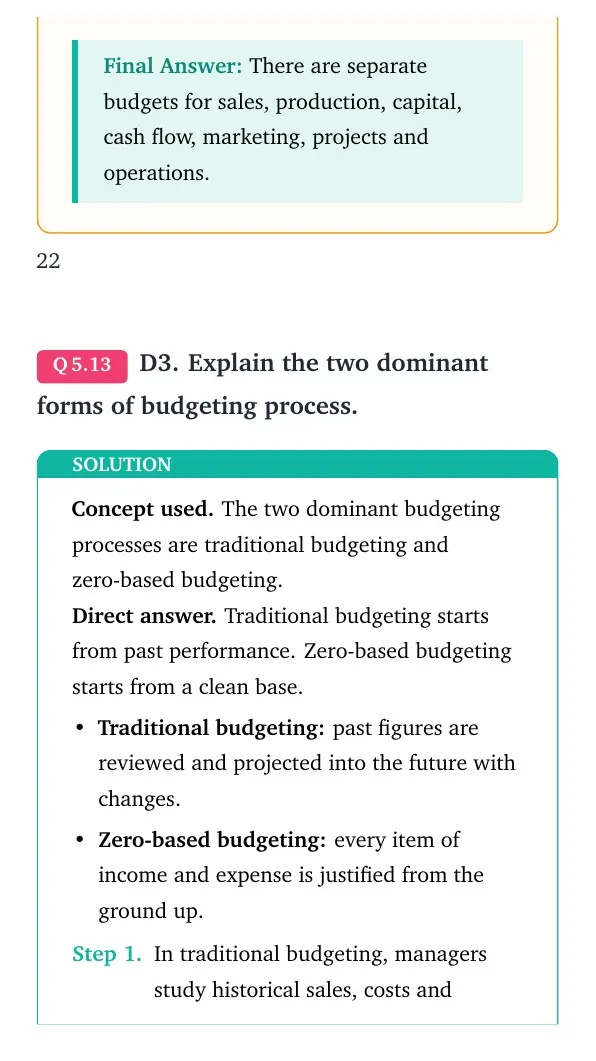
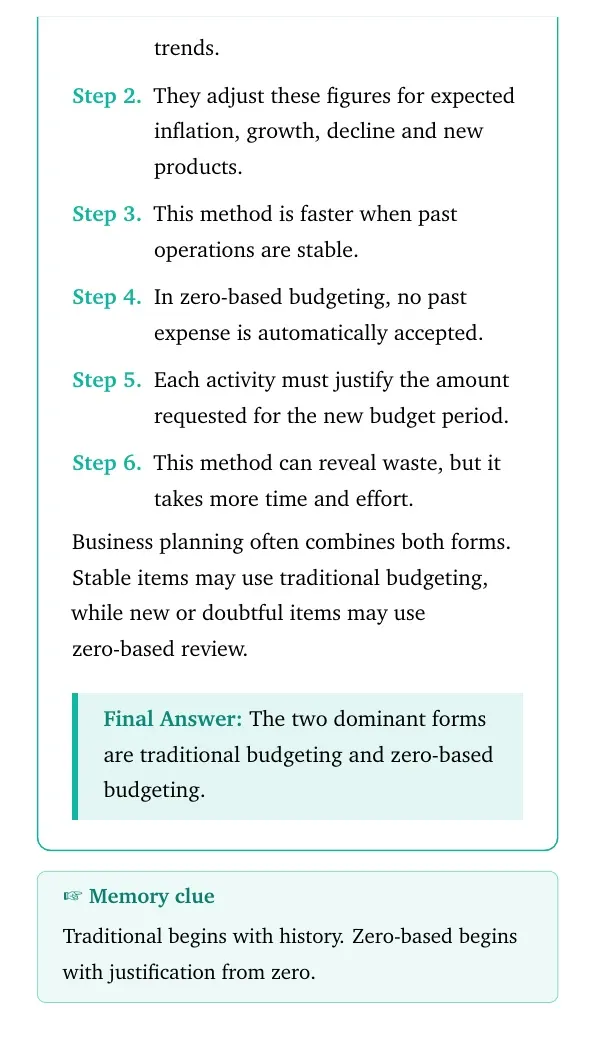
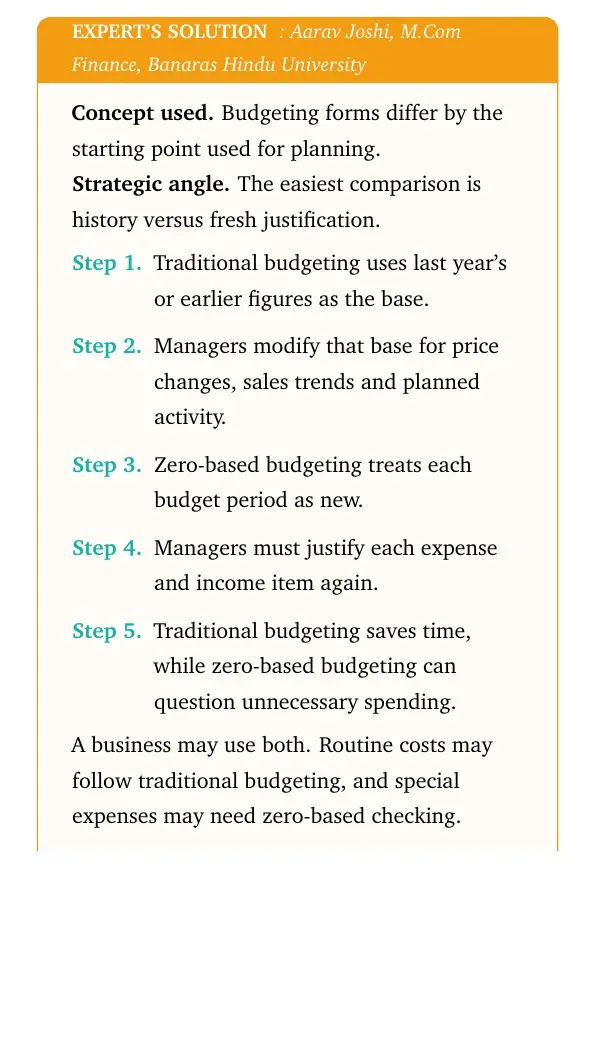
Traditional budgeting begins with past figures and adjusts them for the future. Zero-based budgeting starts fresh and asks every item to justify its amount for the new period.
Working Capital Formula and Raja and Co Calculation
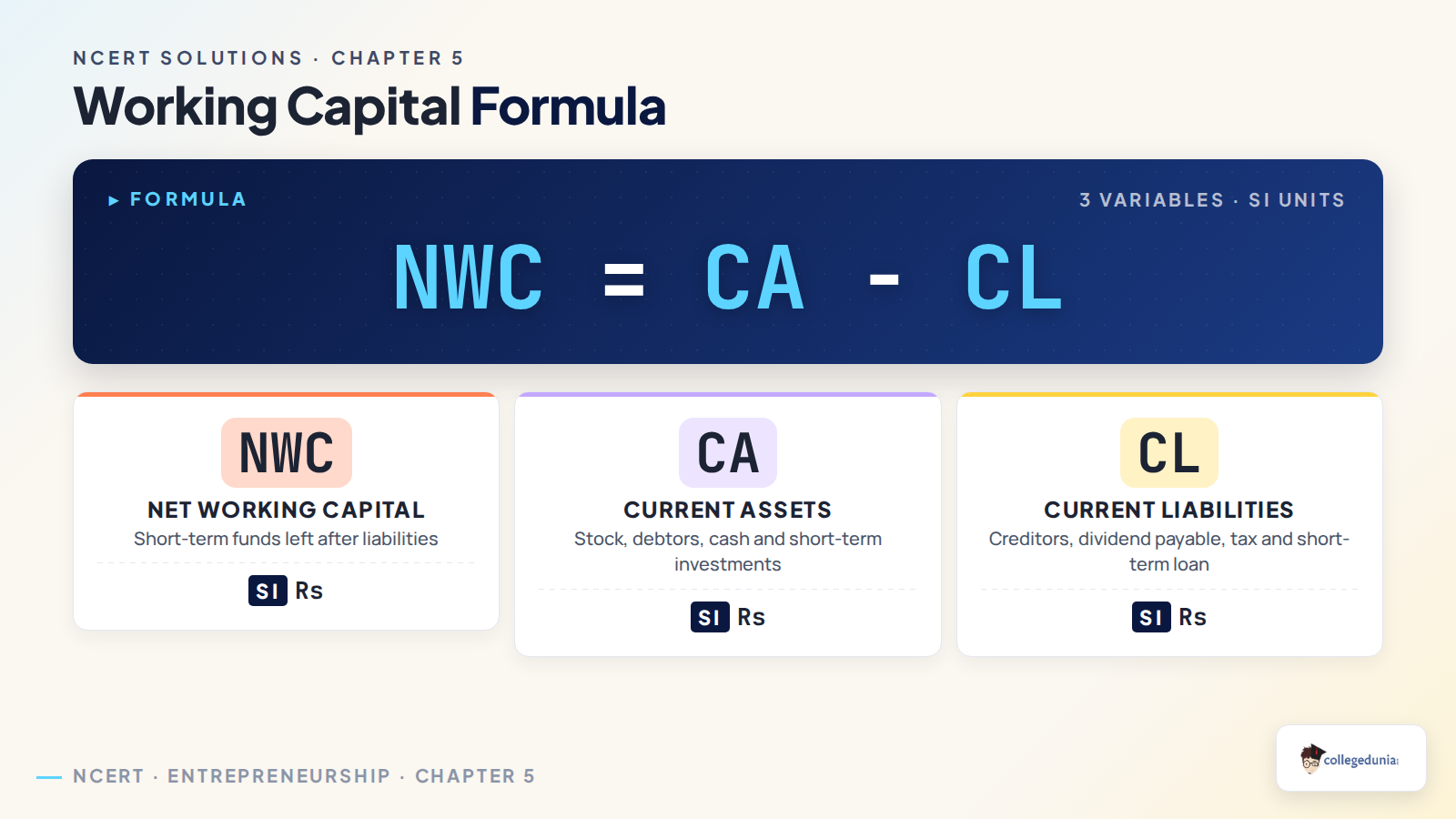
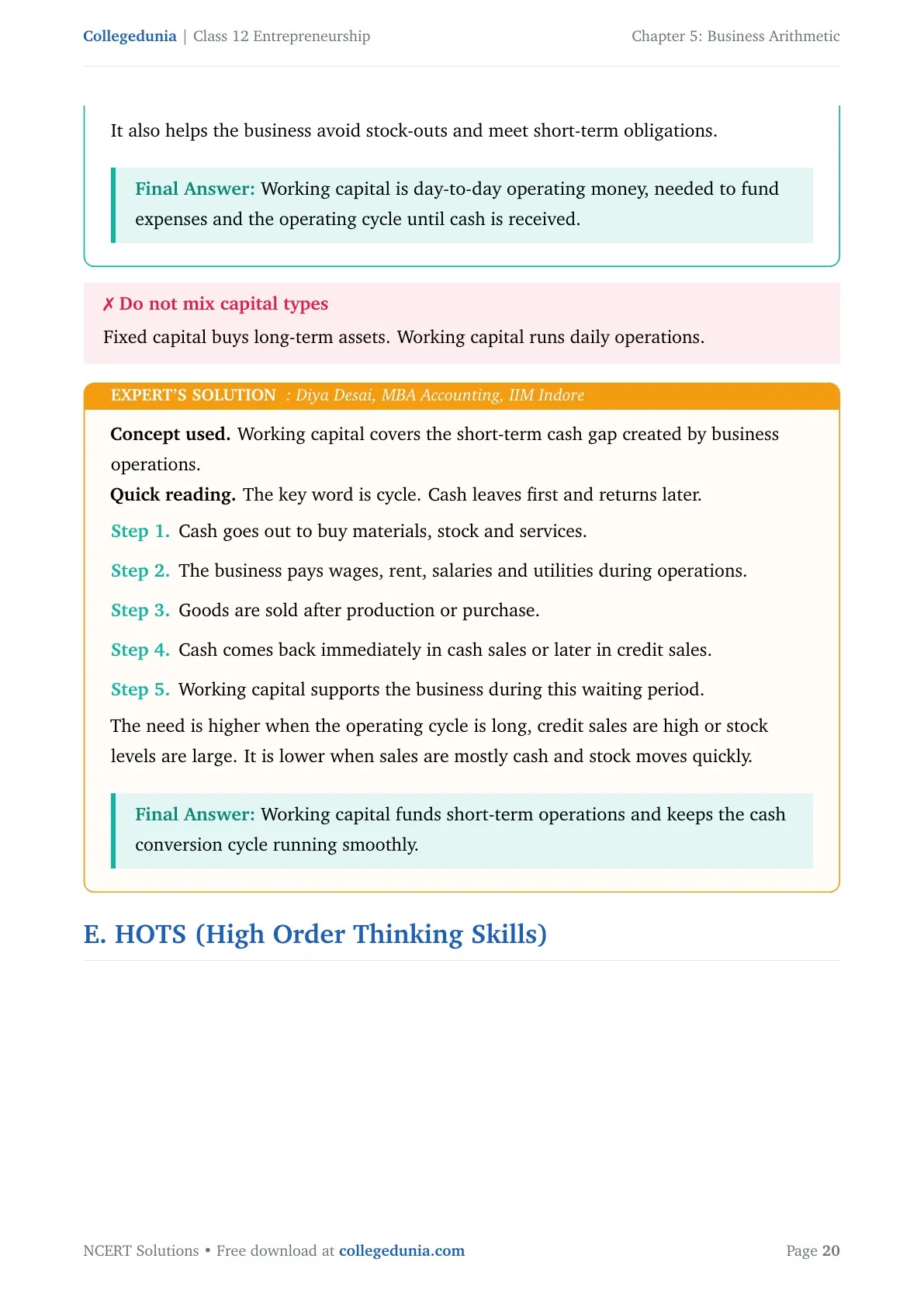
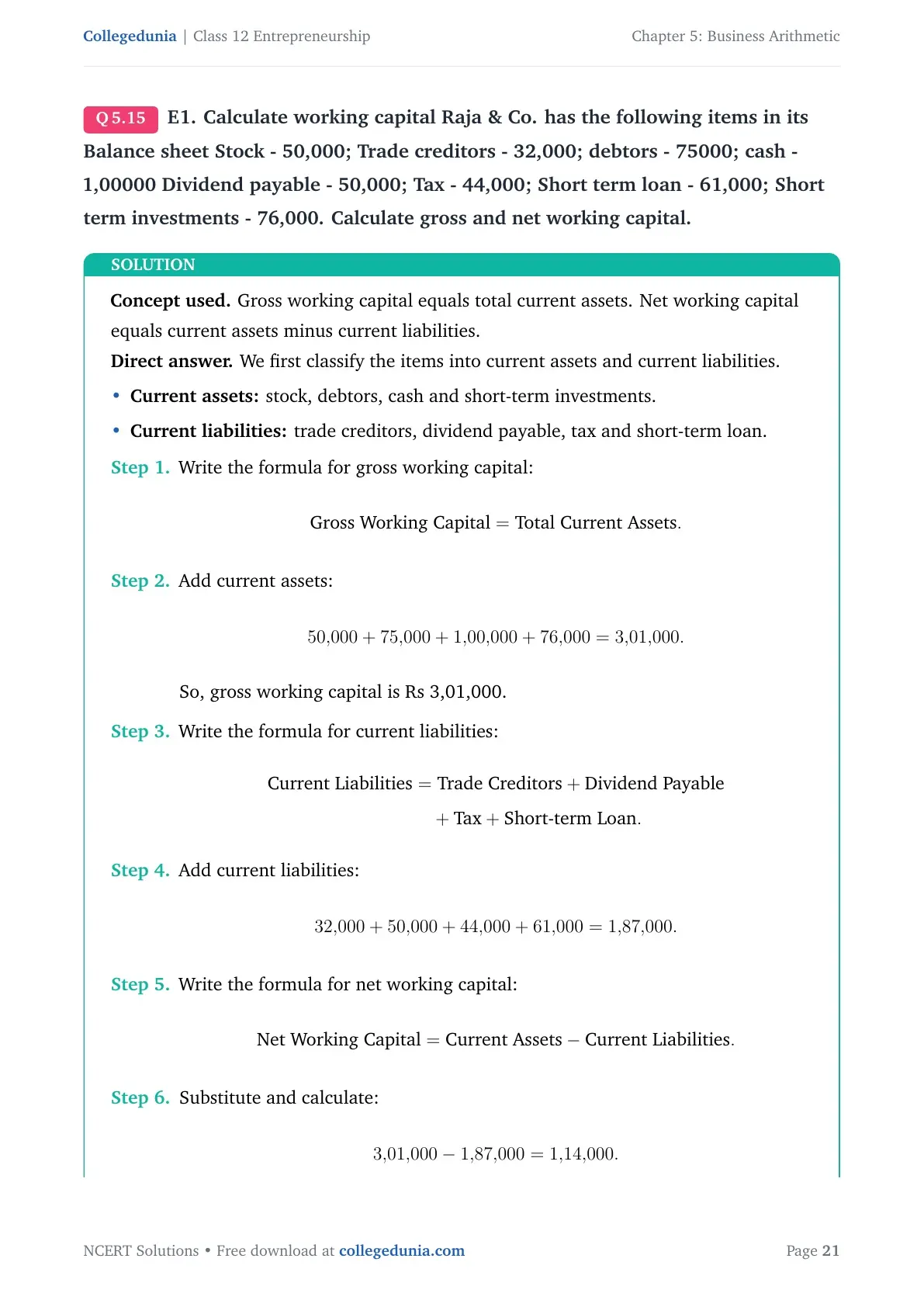
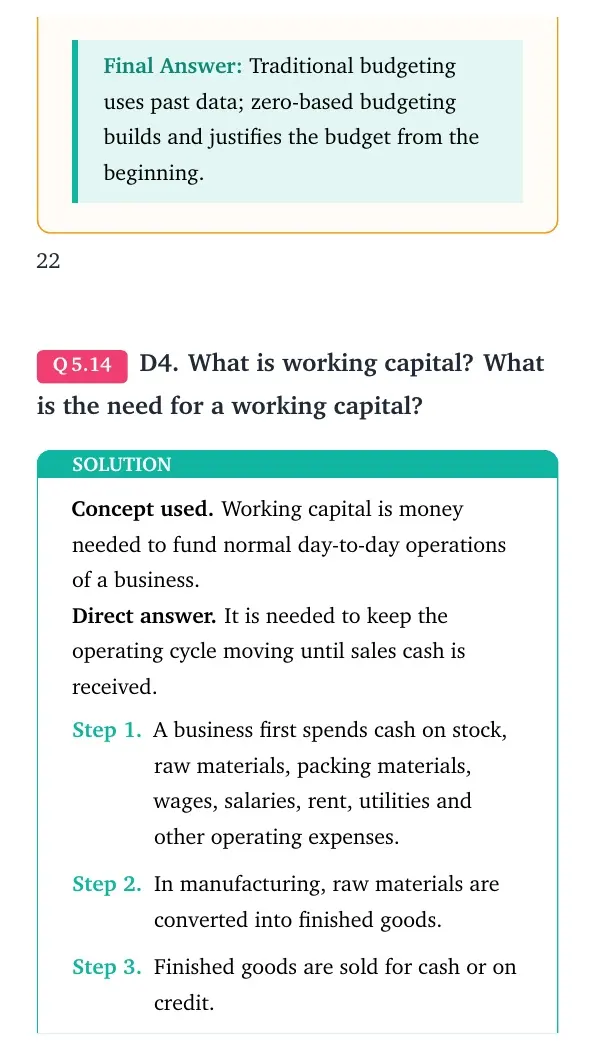
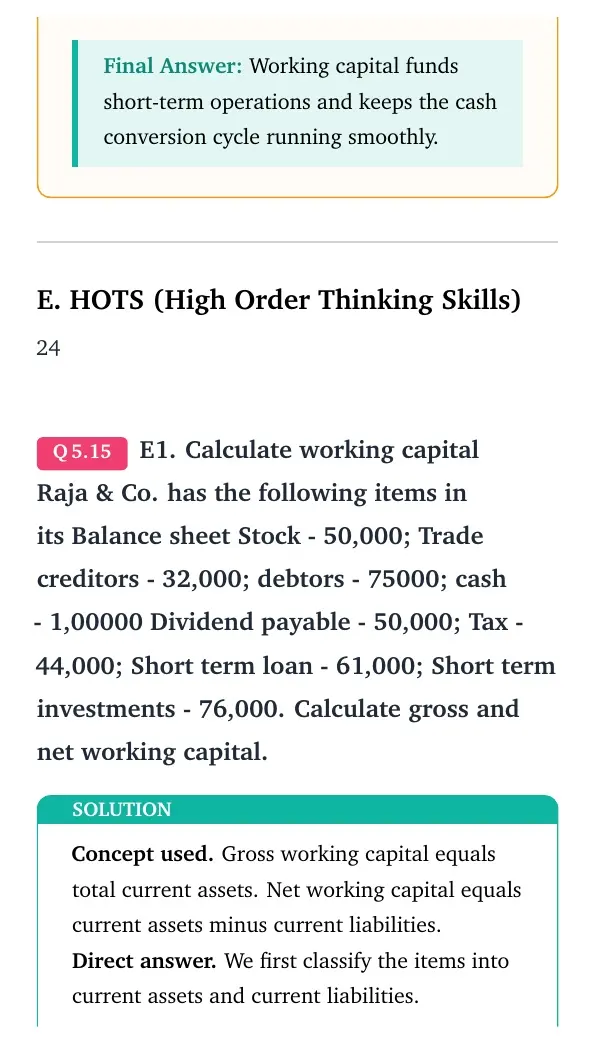
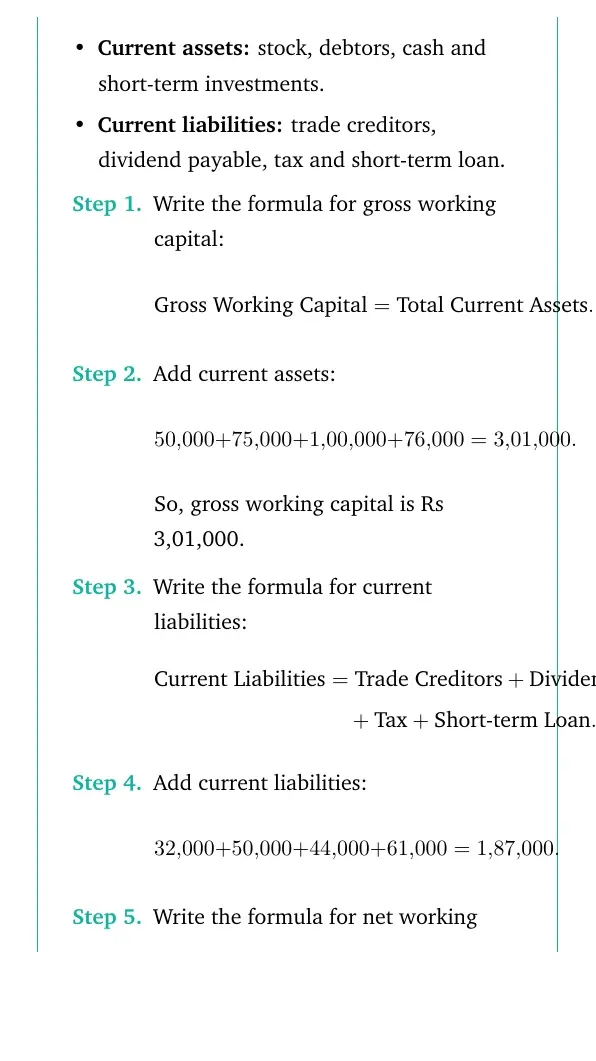
Working capital is the money required for day-to-day operations. In Chapter 5, students must clearly separate current assets from current liabilities before calculating gross and net working capital.
| Item Group | Items in Raja and Co Question | Total |
|---|---|---|
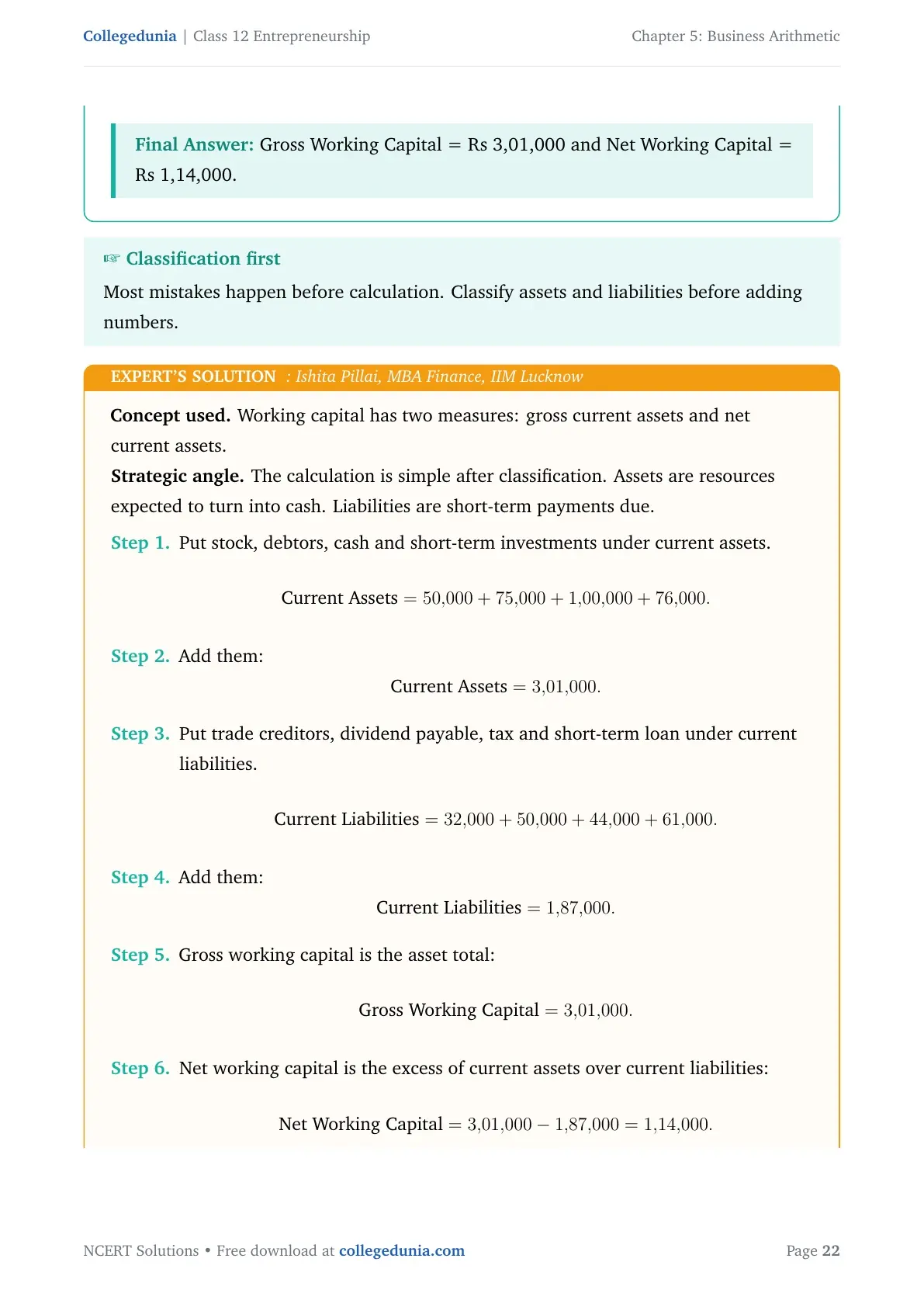
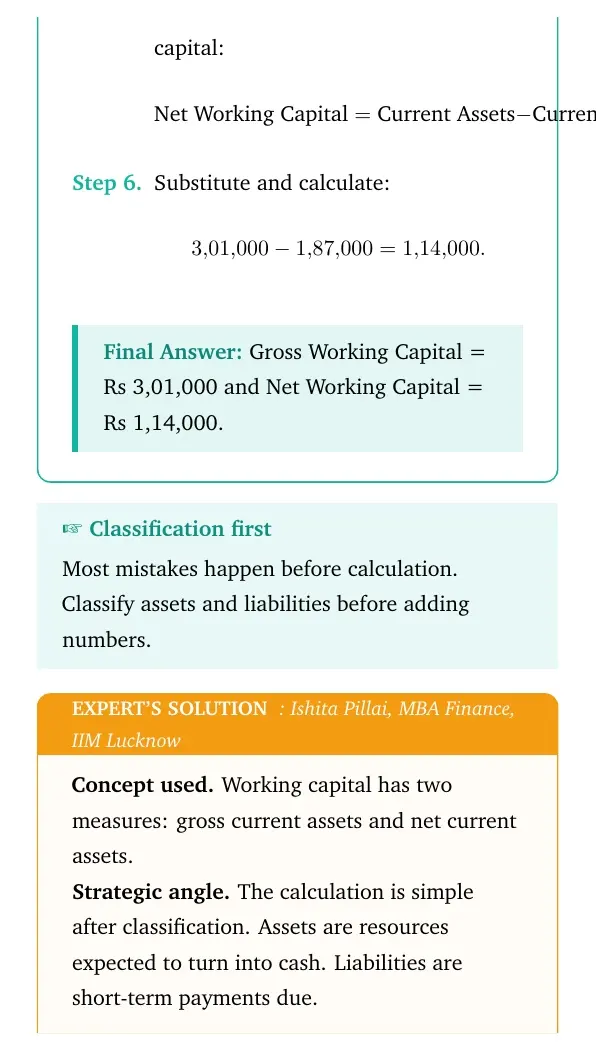
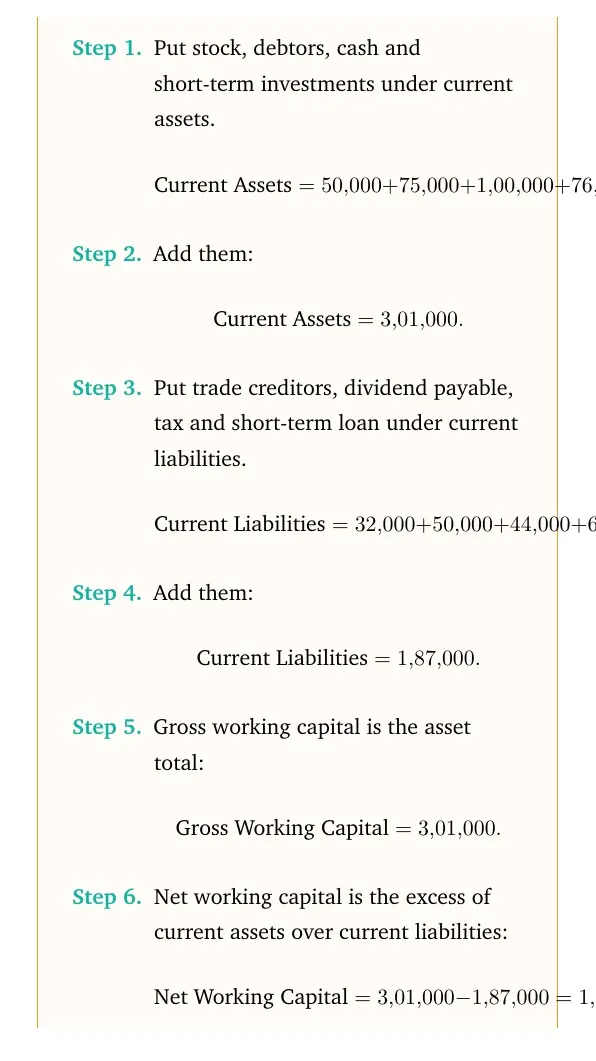
| Current assets | Stock, debtors, cash and short-term investments | Rs 3,01,000 |
| Current liabilities | Trade creditors, dividend payable, tax and short-term loan | Rs 1,87,000 |
| Net working capital | Current assets minus current liabilities | Rs 1,14,000 |
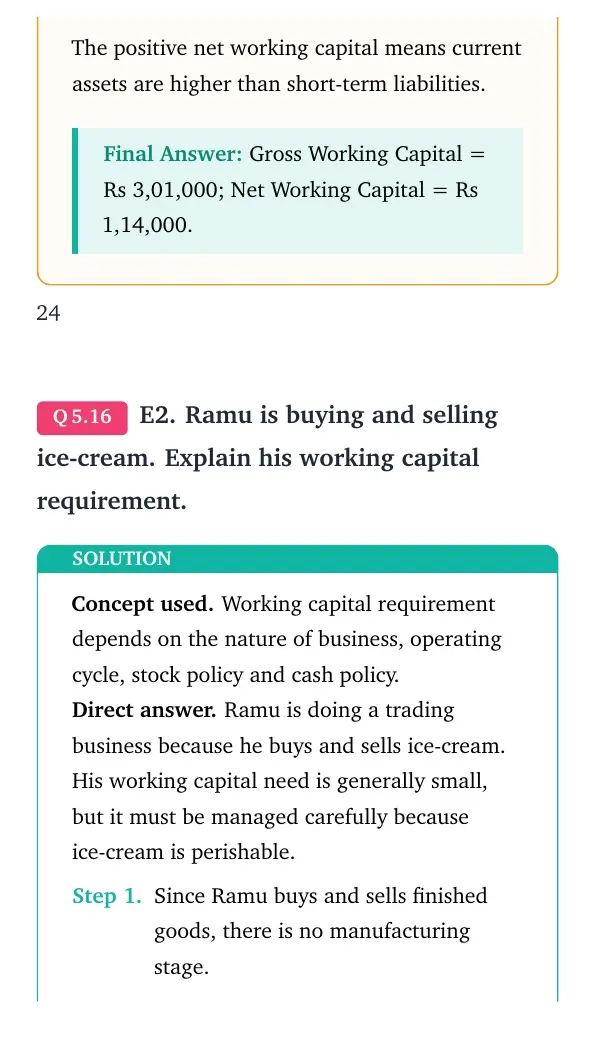
The final answer is: Gross Working Capital = Rs 3,01,000 and Net Working Capital = Rs 1,14,000. The PDF shows each addition step so students can avoid mixing assets and liabilities.
Common Mistakes in Business Arithmetic NCERT Answers
Most errors in this chapter happen when students know the term but write it without the business context. Use these checks before revising the PDF solutions.
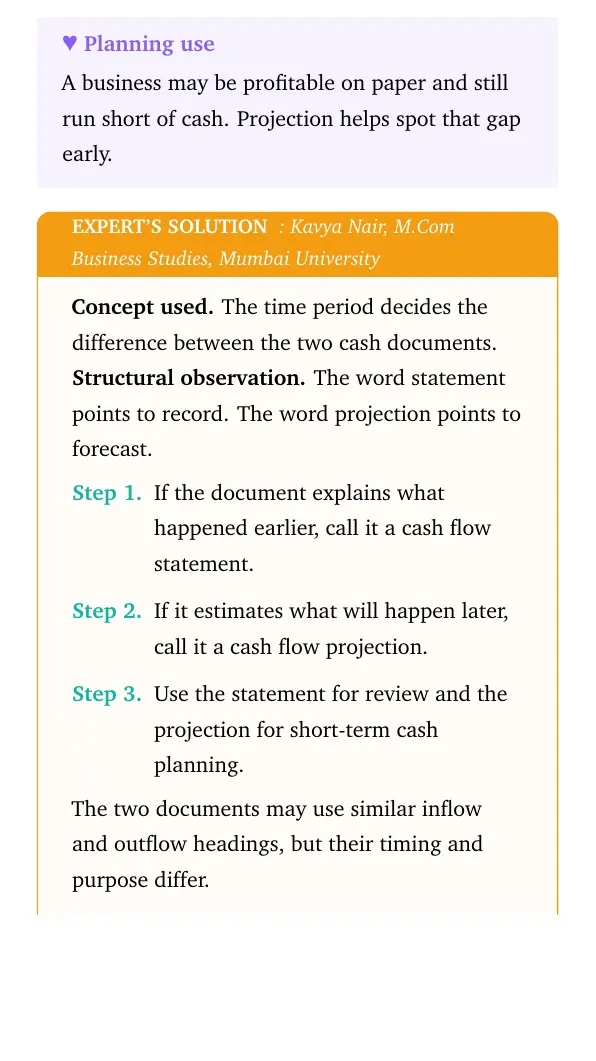
- Do not mix statement and projection: a cash flow statement records past cash, while a projection estimates future cash.
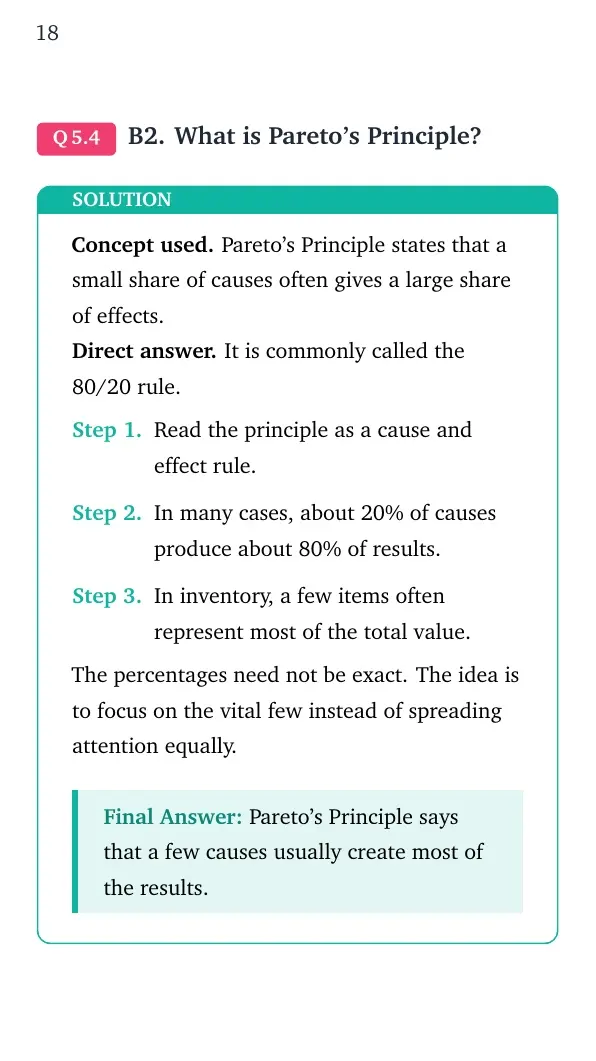
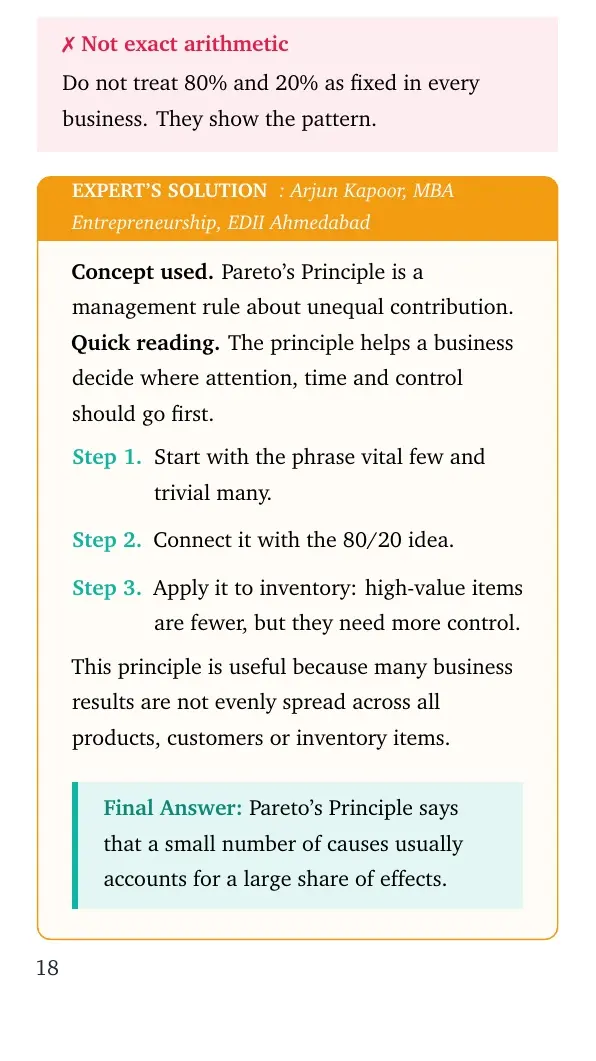
- Do not write only Pareto's Law: when asked for the technique, write ABC analysis.
- Do not calculate working capital first: classify current assets and current liabilities before adding.
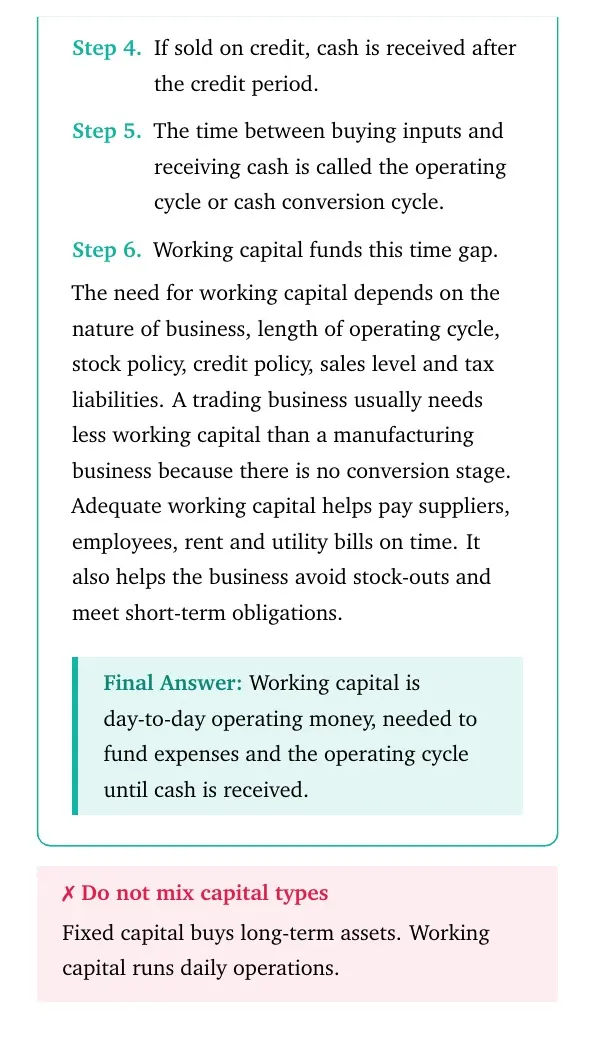
- Do not confuse fixed capital with working capital: fixed capital buys long-term assets, while working capital runs daily operations.
Class 12 Entrepreneurship Chapter 5 Related Resources
| Resource | Best Use | Link |
|---|---|---|
| NCERT Notes | Quick revision of cash flow, budgeting and working capital | Class 12 Entrepreneurship Chapter 5 Notes |
| Handwritten Notes | Visual recap of formulas and inventory control terms | Class 12 Entrepreneurship Chapter 5 Handwritten Notes |
| NCERT Book PDF | Original textbook reading and exercise context | Class 12 Entrepreneurship Chapter 5 Book PDF |
| Questions Page | Open collapsible solution cards separately | Business Arithmetic questions with expert solutions |
NCERT Solutions for Class 12 Entrepreneurship All Chapters
The same chapter-wise NCERT Solutions series helps students revise the full Class 12 Entrepreneurship textbook in order.
| Chapter | Resource |
|---|---|
| Chapter 1 | Entrepreneurial Opportunity NCERT Solutions |
| Chapter 2 | Entrepreneurial Planning NCERT Solutions |
| Chapter 3 | Enterprise Marketing NCERT Solutions |
| Chapter 4 | Enterprise Growth Strategies NCERT Solutions |
| Chapter 5 | Business Arithmetic NCERT Solutions |
Business Arithmetic Questions and Expert Solutions
The separate question-card page lets students open the main solution and expert solution for each textbook question.
Frequently Asked Questions
Ques. How many questions are included in Class 12 Entrepreneurship Chapter 5 Business Arithmetic NCERT Solutions?
Ans. The PDF includes 16 solved LET'S REVISE questions from Business Arithmetic, covering very short, short, long and HOTS answer types.
Ques. What are the main topics in Business Arithmetic?
Ans. The main topics are cash flow, cash flow projection, cash conversion cycle, ABC analysis, budgeting, inventory control and working capital.
Ques. What is the working capital answer for Raja and Co?
Ans. Raja and Co has Gross Working Capital of Rs 3,01,000 and Net Working Capital of Rs 1,14,000 after current liabilities of Rs 1,87,000 are deducted.
Ques. Does the PDF include expert solutions?
Ans. Yes. Every textbook question has a main solution and a paired expert solution with concept framing, steps and a final answer.



Comments