



The NCERT solutions for Class 7 Science Chapter 6 Adolescence: A Stage of Growth and Change explain every textbook idea in simple steps. The answers follow the 2026-27 Curiosity book and cover puberty, hormones, emotional changes, hygiene, nutrition, exercise, and respectful behaviour.
- Core idea: Adolescence brings physical, emotional, and social changes.
- Answer focus: Use correct terms without comparing individual growth rates.
- Health focus: Connect hygiene, food, sleep, and exercise with healthy development.
Chapter6Adolescence:AStageofGrowthandChangeSolutions.pdf?page=1&dpi=150)
Chapter6Adolescence:AStageofGrowthandChangeSolutions.pdf?page=2&dpi=150)
Chapter6Adolescence:AStageofGrowthandChangeSolutions.pdf?page=3&dpi=150)
Chapter6Adolescence:AStageofGrowthandChangeSolutions.pdf?page=4&dpi=150)
Chapter6Adolescence:AStageofGrowthandChangeSolutions.pdf?page=5&dpi=150)
Chapter6Adolescence:AStageofGrowthandChangeSolutions.pdf?page=6&dpi=150)
Chapter6Adolescence:AStageofGrowthandChangeSolutions.pdf?page=7&dpi=150)
Chapter6Adolescence:AStageofGrowthandChangeSolutions.pdf?page=8&dpi=150)
Chapter6Adolescence:AStageofGrowthandChangeSolutions.pdf?page=9&dpi=150)
Chapter6Adolescence:AStageofGrowthandChangeSolutions.pdf?page=10&dpi=150)
Chapter6Adolescence:AStageofGrowthandChangeSolutions.pdf?page=11&dpi=150)
Chapter6Adolescence:AStageofGrowthandChangeSolutions.pdf?page=12&dpi=150)
Chapter6Adolescence:AStageofGrowthandChangeSolutions.pdf?page=13&dpi=150)
Chapter6Adolescence:AStageofGrowthandChangeSolutions.pdf?page=14&dpi=150)
Chapter6Adolescence:AStageofGrowthandChangeSolutions.pdf?page=15&dpi=150)
Chapter6Adolescence:AStageofGrowthandChangeSolutions.pdf?page=16&dpi=150)
Chapter6Adolescence:AStageofGrowthandChangeSolutions.pdf?page=17&dpi=150)
Chapter6Adolescence:AStageofGrowthandChangeSolutions.pdf?page=18&dpi=150)
Chapter6Adolescence:AStageofGrowthandChangeSolutions.pdf?page=19&dpi=150)
Chapter6Adolescence:AStageofGrowthandChangeSolutions_flat_MobileCard.pdf?page=1&dpi=150)
Chapter6Adolescence:AStageofGrowthandChangeSolutions_flat_MobileCard.pdf?page=2&dpi=150)
Chapter6Adolescence:AStageofGrowthandChangeSolutions_flat_MobileCard.pdf?page=3&dpi=150)
Chapter6Adolescence:AStageofGrowthandChangeSolutions_flat_MobileCard.pdf?page=4&dpi=150)
Chapter6Adolescence:AStageofGrowthandChangeSolutions_flat_MobileCard.pdf?page=5&dpi=150)
Chapter6Adolescence:AStageofGrowthandChangeSolutions_flat_MobileCard.pdf?page=6&dpi=150)
Chapter6Adolescence:AStageofGrowthandChangeSolutions_flat_MobileCard.pdf?page=7&dpi=150)
Chapter6Adolescence:AStageofGrowthandChangeSolutions_flat_MobileCard.pdf?page=8&dpi=150)
Chapter6Adolescence:AStageofGrowthandChangeSolutions_flat_MobileCard.pdf?page=9&dpi=150)
Chapter6Adolescence:AStageofGrowthandChangeSolutions_flat_MobileCard.pdf?page=10&dpi=150)
Chapter6Adolescence:AStageofGrowthandChangeSolutions_flat_MobileCard.pdf?page=11&dpi=150)
Chapter6Adolescence:AStageofGrowthandChangeSolutions_flat_MobileCard.pdf?page=12&dpi=150)
Chapter6Adolescence:AStageofGrowthandChangeSolutions_flat_MobileCard.pdf?page=13&dpi=150)
Chapter6Adolescence:AStageofGrowthandChangeSolutions_flat_MobileCard.pdf?page=14&dpi=150)
Chapter6Adolescence:AStageofGrowthandChangeSolutions_flat_MobileCard.pdf?page=15&dpi=150)
Chapter6Adolescence:AStageofGrowthandChangeSolutions_flat_MobileCard.pdf?page=16&dpi=150)
Chapter6Adolescence:AStageofGrowthandChangeSolutions_flat_MobileCard.pdf?page=17&dpi=150)
Chapter6Adolescence:AStageofGrowthandChangeSolutions_flat_MobileCard.pdf?page=18&dpi=150)
Chapter6Adolescence:AStageofGrowthandChangeSolutions_flat_MobileCard.pdf?page=19&dpi=150)
Chapter6Adolescence:AStageofGrowthandChangeSolutions_flat_MobileCard.pdf?page=20&dpi=150)
Chapter6Adolescence:AStageofGrowthandChangeSolutions_flat_MobileCard.pdf?page=21&dpi=150)
Chapter6Adolescence:AStageofGrowthandChangeSolutions_flat_MobileCard.pdf?page=22&dpi=150)
Chapter6Adolescence:AStageofGrowthandChangeSolutions_flat_MobileCard.pdf?page=23&dpi=150)
Chapter6Adolescence:AStageofGrowthandChangeSolutions_flat_MobileCard.pdf?page=24&dpi=150)
Chapter6Adolescence:AStageofGrowthandChangeSolutions_flat_MobileCard.pdf?page=25&dpi=150)
Chapter6Adolescence:AStageofGrowthandChangeSolutions_flat_MobileCard.pdf?page=26&dpi=150)
Chapter6Adolescence:AStageofGrowthandChangeSolutions_flat_MobileCard.pdf?page=27&dpi=150)
Chapter6Adolescence:AStageofGrowthandChangeSolutions_flat_MobileCard.pdf?page=28&dpi=150)
Chapter6Adolescence:AStageofGrowthandChangeSolutions_flat_MobileCard.pdf?page=29&dpi=150)
Chapter6Adolescence:AStageofGrowthandChangeSolutions_flat_MobileCard.pdf?page=30&dpi=150)
Chapter6Adolescence:AStageofGrowthandChangeSolutions_flat_MobileCard.pdf?page=31&dpi=150)
Chapter6Adolescence:AStageofGrowthandChangeSolutions_flat_MobileCard.pdf?page=32&dpi=150)
Each Collegedunia answer follows the 2026-27 NCERT Curiosity chapter and uses age-appropriate language for Class 7 students.
Adolescence and Puberty Explained for Class 7 Students
Adolescence is the stage between childhood and adulthood. Puberty is one important part of this stage. Hormones guide many body changes, but each person develops at a different pace.
- Growth: Height and body shape may change quickly.
- Body changes: Hair growth, voice changes, and skin changes may occur.
- Emotions: Feelings may become stronger or change more often.
- Thinking: Young people begin making more independent choices.
There is no single correct speed or order of development. Healthy variation is normal during adolescence.
Adolescence NCERT Solutions Video for Class 7
Source: Magnet Brains on YouTube
Hormones and Body Changes During Adolescence
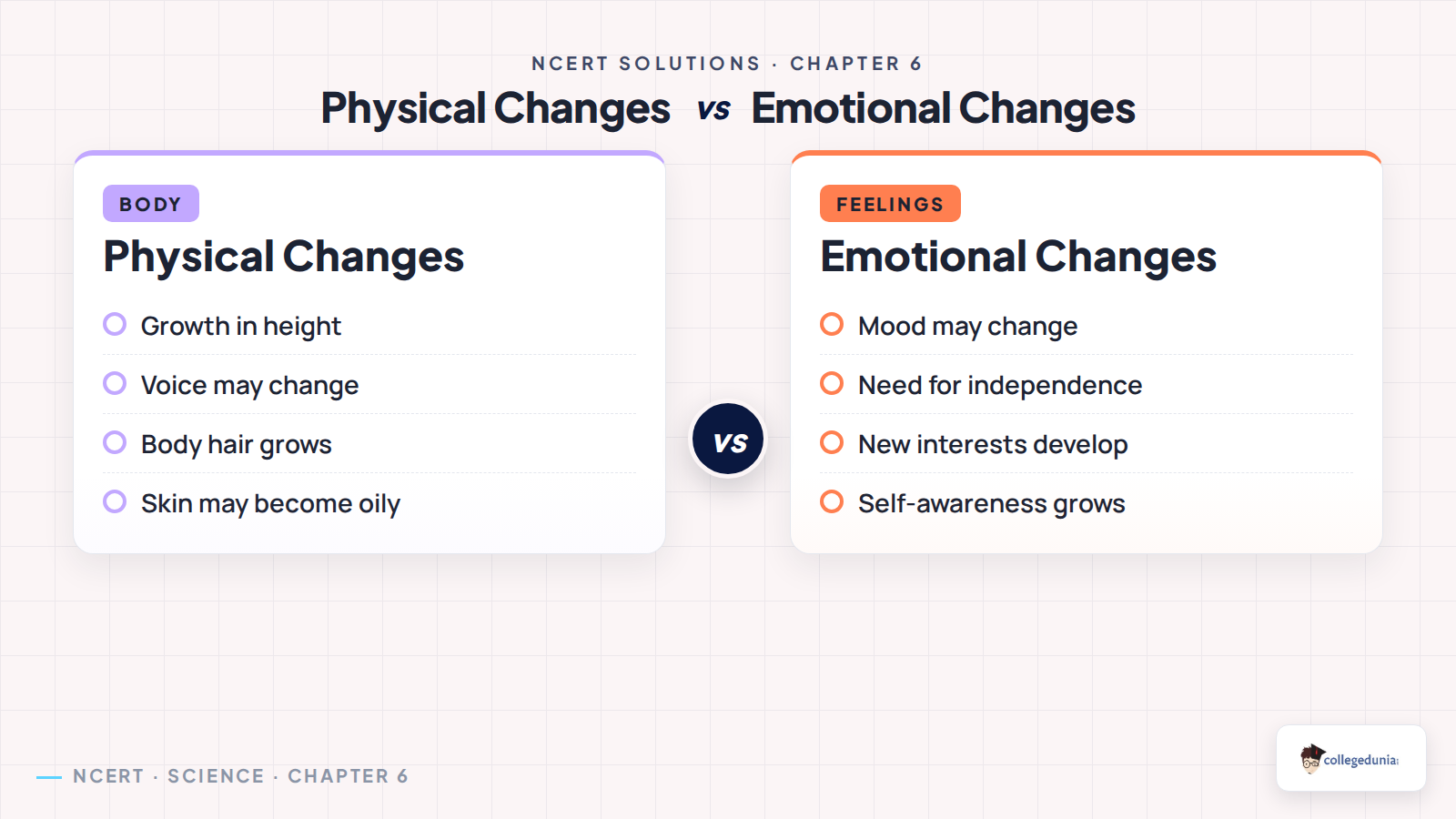
Hormones are chemical messengers made by glands in the body. They travel through blood and affect growth, development, and other body functions.
| Change | What students should understand |
|---|---|
| Growth spurt | Height and weight may increase quickly for some time. |
| Voice change | The voice box grows, so the voice may sound different. |
| Skin changes | Oil glands may become more active and cause pimples. |
| Reproductive maturity | The reproductive organs develop as the body matures. |
| Emotional change | Hormones and new experiences can affect moods and feelings. |
Puberty changes are natural, not a reason for teasing. Respect and privacy help everyone feel safe.
Healthy Habits for Growth During Adolescence
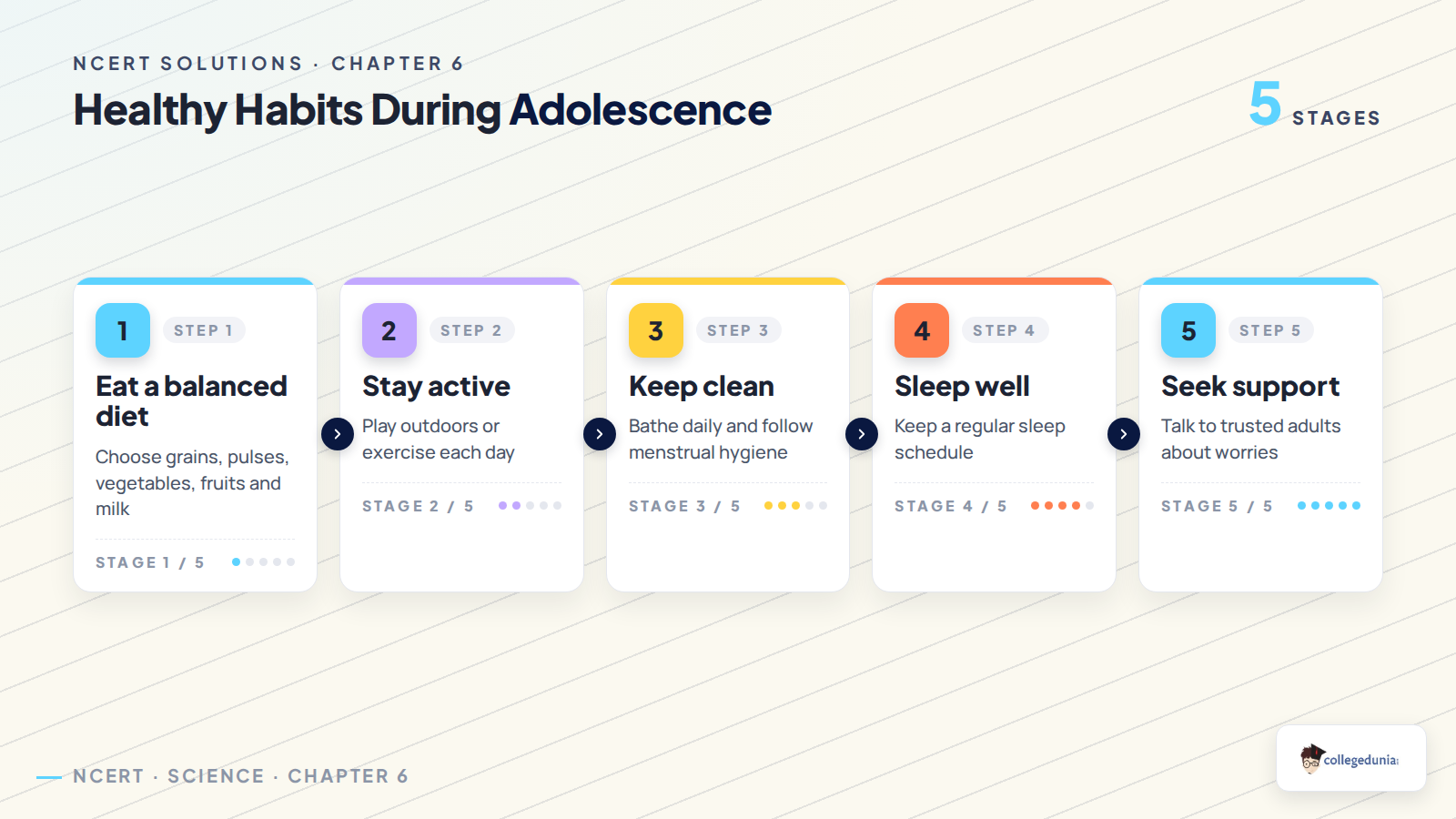
Good daily habits support a changing body and mind. The chapter connects healthy growth with balanced food, cleanliness, movement, rest, and emotional support.
- Eat varied foods, including grains, pulses, vegetables, fruits, and suitable protein sources.
- Keep the skin and body clean, especially after exercise.
- Stay active through games, sports, walking, or another safe activity.
- Sleep enough and follow a regular rest routine.
- Speak with a trusted adult about worries or confusing changes.
A balanced diet supports growth better than one special food or supplement. Medicines or supplements should only be used with expert advice.
Common Mistakes in Adolescence Science Answers
Strong answers use facts and respectful language. They do not present common changes as rules that every person must follow.
- Do not use adolescence and puberty as exact synonyms.
- Do not say every person changes at the same age.
- Do not link maturity only with height or appearance.
- Do not treat mood changes as bad behaviour without context.
- Do not repeat myths about food, skin, or menstruation as science.
Use words such as may, often, and can for changes that vary. This keeps the answer accurate and fair.
How to Use the Adolescence Solutions for Revision
Read the question first and circle its command word. A definition needs a direct meaning. An explanation needs the cause and the effect.
- Make a two-column list of physical and emotional changes.
- Revise the role of hormones using one clear sentence.
- Group healthy habits under food, hygiene, exercise, and rest.
- Practise answers that show respect for individual differences.
Try every textbook question before checking its solution. Then correct only the missing fact or unclear reason.
Adolescence Student Feedback
What students found useful
In a Collegedunia poll of 10,480 students, most preferred answers grouped by body changes, emotions, and healthy habits.
Source: 2026-27 Class 7 Science student poll of 10,480 students.
Other Class 7 Adolescence Resources
Use these chapter resources for reading, revision, and quick recall. Each one keeps the same Class 7 Science context.
| Resource | How it helps |
|---|---|
| Adolescence Class 7 Notes | Revise key terms and healthy habits. |
| Adolescence Class 7 NCERT Book PDF | Read the official chapter activities and explanations. |
| Adolescence Class 7 Handwritten Notes | Use a short visual recap before a test. |
NCERT Solutions for Class 7 Science Curiosity: All Chapters
Continue with the same answer format across the Curiosity textbook. These nearby chapters connect materials, body systems, and everyday observations.
| Chapter | NCERT Solutions |
|---|---|
| Chapter 4 | The World of Metals and Non-metals Solutions |
| Chapter 5 | Changes Around Us Solutions |
| Chapter 6 | Adolescence: A Stage of Growth and Change Solutions |
| Chapter 7 | Heat Transfer in Nature Solutions |
All NCERT Solutions for Adolescence with Step-by-Step Answers
The question cards collect the textbook questions in one place. Compare the direct answer with the detailed explanation after trying each question.
Need every textbook question in one place?
Adolescence: A Stage of Growth and Change Science NCERT Solutions FAQs
Ques. What is adolescence?
Ans. Adolescence is the stage of growth between childhood and adulthood. It includes physical, emotional, and social changes.
Ques. What is puberty?
Ans. Puberty is the period when hormones cause the body to become reproductively mature.
Ques. Why do changes begin at different ages?
Ans. Genes, nutrition, health, and other factors affect development. A range of growth patterns is normal.
Ques. What are hormones?
Ans. Hormones are chemical messengers made by glands. They travel in blood and affect body functions.
Ques. Which habits support healthy growth during adolescence?
Ans. Balanced food, hygiene, exercise, enough sleep, and emotional support help healthy growth.
Ques. How should students answer questions about individual differences?
Ans. State that people develop at different rates. Avoid judging maturity from height, voice, or appearance.
Ques. Are these solutions based on the 2026-27 Curiosity textbook?
Ans. Yes. The answers follow the Class 7 Science Curiosity chapter for the 2026-27 session.



Comments