



Bachelor of Science [BS] (Mining Engineering)
Field of Study:
$34,966 /Yr

University of Alberta Mining Engineering: Program Overview for Indian Students
The Bachelor of Science in Mining Engineering at the University of Alberta is a four-year undergraduate program that equips students with the technical expertise to design, operate, and manage mines across the globe. Located in Edmonton, Alberta, the university ranks among Canada’s top engineering institutions and attracts hundreds of international students annually. The Mining Engineering program is housed within the Faculty of Engineering, which maintains partnerships with major global mining corporations including Rio Tinto, Barrick Gold, and Suncor Energy.
For Indian students, the program offers significant advantages: a globally recognized degree, pathways to Canadian permanent residence, strong employer demand in India’s mining sector, and access to extensive scholarship support. The curriculum balances theoretical foundations in geology, physics, and mathematics with hands-on laboratory work and industry-embedded co-op placements. Graduates typically secure positions at multinational mining firms or return to India with competitive technical credentials that command premium salaries in the domestic mining, quarrying, and mineral exploration industries.
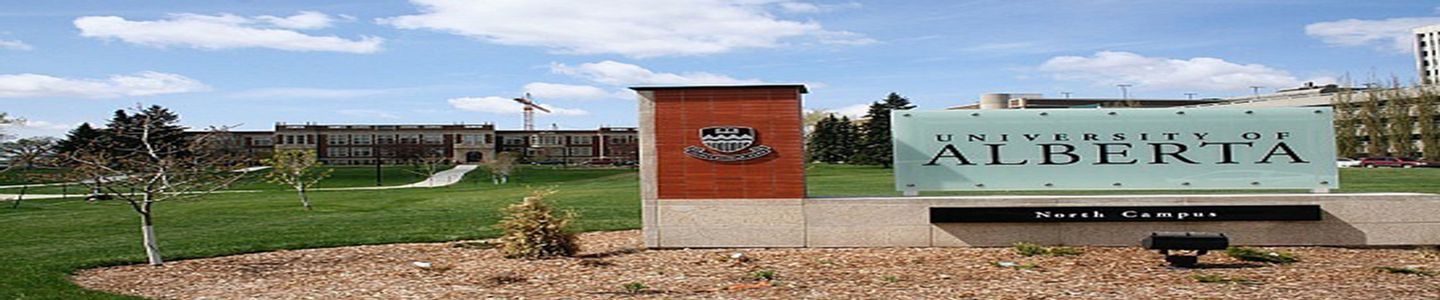
The University of Alberta campus spans 150 buildings across 50 city blocks along the North Saskatchewan River valley. The faculty operates state-of-the-art metallurgical testing facilities, mine simulation laboratories, and field sites that give students exposure to real-world mining challenges. With a cohort of approximately 80-120 mining engineering students per intake, the program maintains strong mentorship ratios and rapid job placement outcomes.
University of Alberta Mining Engineering: Cost Breakdown in CAD and INR
Mining Engineering falls within the higher band of University of Alberta engineering programs due to specialized laboratory requirements and industry partnerships. The annual tuition for international students is estimated at C$48,500 to C$52,000 (approximately ?33,56,000 to ?35,98,000 at the current exchange rate of 69.19 INR per CAD). This tuition includes access to state-of-the-art facilities such as the university’s Metallurgical Testing Laboratory, Mine Design Computer Suite, and field work equipment. International students also encounter a one-time application fee of C$150 (?10,379) and a non-refundable tuition deposit of C$5,000 (?3,45,950) to secure admission and obtain the Provincial Attestation Letter (PAL) required for the study permit.
Non-instructional fees, including student union dues, athletics facilities, health and wellness programs, and the universal transit pass (U-Pass), total approximately C$3,089 annually (?2,13,818). Mandatory health insurance through the University of Alberta Health Insurance Plan (UAHIP) is not required for international students on a 12-month study permit, as they become eligible for free coverage under Alberta’s provincial health plan (AHCIP) after a three-month waiting period.
Total estimated first-year cost of attendance: C$56,639 to C$60,239 (?39,15,768 to ?41,68,588). Returning students (years 2-4) typically pay C$51,639 to C$55,239 annually, excluding the initial deposit.
| Cost Category | Amount (CAD) | Amount (INR) |
|---|---|---|
| Annual Tuition (International) | C$48,500–52,000 | ?33,56,000–35,98,000 |
| Application Fee | C$150 | ?10,379 |
| Tuition Deposit (First Year) | C$5,000 | ?3,45,950 |
| Non-Instructional Fees | C$3,089 | ?2,13,818 |
| Health Insurance (if required) | C$600 | ?41,514 |
| Total First Year | C$56,839–60,239 | ?39,27,661–41,80,661 |
University of Alberta Mining Engineering: Scholarships and Financial Aid
The University of Alberta offers competitive scholarship packages specifically designed for international engineering students with strong academic credentials. The President’s International Distinction Scholarship is the flagship award, providing up to C$120,000 payable over four years (?83,02,800) for entering first-year undergraduate students on a study permit who demonstrate superior admission averages and leadership qualities. Approximately 25 recipients are selected annually; Indian students are explicitly eligible and have been successful recipients in previous cycles. The renewable nature of this scholarship means continued eligibility in subsequent years if the student maintains a minimum GPA of 3.5.
The International Leader Scholarship offers up to C$15,000 (?10,37,850) to students who demonstrate a combination of academic merit and leadership achievements, while the Gold Standard Scholarship automatically awards up to C$6,000 (?4,15,140) to the top 5% of students by admission average within the Faculty of Engineering. The University of Alberta International Admission Scholarship provides up to C$5,000 (?3,45,950) based on superior high-school academic records and is awarded automatically upon admission.
Indian students should note that engineering scholarships typically favor STEM background, strong performance in mathematics and physics during Grade 12, and demonstrable English proficiency (IELTS 7.0+ or TOEFL 100+). Merit-based aid does not require financial need documentation, and most awards are portable across work-study employment and internship periods. Graduate-level scholarships (for Master’s and PhD programs) include the Alberta Graduate Excellence Scholarship (AGES) at C$12,000 (?8,30,280) and the Izaak Walton Killam Memorial Scholarship, which covers the full international differential fee plus a stipend.
University of Alberta Mining Engineering: Admission Requirements for Indian Students
The Bachelor of Science in Mining Engineering is a selective program requiring strong performance in specific Grade 12 subjects. Indian students must have successfully completed (or be completing) Grade 12 or equivalent secondary qualification with the following mandatory subjects: Mathematics (Calculus, typically equivalent to 30-1 level), Physics, and Chemistry or Biology. For Indian students using the CBSE, ICSE, or state board curricula, this translates to successful completion of 12th-grade Physics, Chemistry, and Mathematics with a cumulative average of at least 85% (preferably 90%+ for scholarship consideration).
English language proficiency is a critical requirement for all international applicants. The minimum accepted scores are: IELTS Academic 6.5 overall with no individual band below 6.0, TOEFL iBT 90 points, Duolingo English Test 120, or PTE Academic 61. Students from Indian medium schools or those using English as Additional Language (EAL) should plan to take the IELTS or TOEFL at least three months before the application deadline to allow time for score reporting and potential retakes.
The admission average for competitive entry into Mining Engineering is typically 80-85% at the secondary level, though scholarship consideration requires 90%+. The university uses a holistic admissions process that also weighs the content strength of the transcript (prioritizing mathematics, physics, and chemistry grades) and demonstrated commitment to STEM through extracurricular achievements (science fairs, club participation, research projects).
University of Alberta Mining Engineering: Application Process and Deadlines
Applications to the Bachelor of Science in Mining Engineering are processed through the University of Alberta’s centralized undergraduate admissions portal. Indian students must submit: (1) official secondary school transcript or mark sheet from the CBSE, ICSE, or state board; (2) proof of English language proficiency (IELTS or TOEFL); (3) a completed application form with program-specific questions regarding interest in mining engineering; and (4) a tuition deposit of C$5,000 (?3,45,950) to secure the admission offer and obtain the Provincial Attestation Letter (PAL) for the study permit. The application fee is C$150 (?10,379) and is non-refundable.
The program admits students in two intakes: Fall (September) and Winter (January). Application deadlines for Fall 2027 intake are typically March 31, 2027, with rolling admissions beginning January 15, 2027. Winter 2027 intake applications close November 15, 2026. Early application is strongly recommended for Indian students, as it allows ample time for transcript verification, study permit processing (which can take 4-8 weeks), and visa appointment scheduling at the Canadian High Commission in New Delhi or consulates in Mumbai and Bangalore.
| Milestone | Target Date | Notes for Indian Applicants |
|---|---|---|
| IELTS/TOEFL exam completed | By September 2026 | Schedule exam 3-4 months before application deadline |
| Official transcript obtained from school | By October 2026 | Request from principal’s office; allow 2-3 weeks for processing |
| Application submitted (Winter 2027) | By November 15, 2026 | Online submission via UofA portal |
| Admission offer received | December 2026–January 2027 | Rolling basis; earlier submission = faster offer |
| Tuition deposit paid & PAL obtained | By January 31, 2027 | PAL required for study permit application to IRCC |
| Study permit application to IRCC | By February 15, 2027 | Processing time: 4-8 weeks; use GIC or proof of funds |
| Visa appointment at High Commission/Consulate | By March 15, 2027 | Appointment slots fill quickly; book early in the process |
| Arrival in Edmonton | By August 15, 2027 | Orientation runs mid-August; allow time for housing search |
| Program commencement | September 1, 2027 | Fall semester begins with engineering core courses |
University of Alberta Mining Engineering: Curriculum and Specializations
The Bachelor of Science in Mining Engineering is a 130-credit program completed over four academic years. The curriculum integrates foundational science courses (Mathematics, Physics, Chemistry, Geology) with specialized mining engineering modules such as Ore Reserve Modelling, Mine Planning and Design, Mineral Economics, Rock and Soil Mechanics, and Underground and Surface Mining Technology. First-year courses emphasize calculus, physics, chemistry, and engineering graphics, ensuring all students, regardless of prior background, build strong quantitative skills. Second year introduces geology, surveying, and introductory mining engineering concepts. Third and fourth years shift toward advanced technical electives, including mineral processing, mine ventilation, geostatistics, open-pit mining design, and underground support systems.
Practical experience is embedded within the degree. The co-op (cooperative education) program is optional but highly encouraged; participating students alternate four-month work terms with study, graduating with 8-12 months of industry experience. Co-op employers include Rio Tinto, Barrick Gold, Suncor Energy, Vale, Agnico-Eagle Mines, and numerous junior exploration companies. Placement rates among co-op students exceed 95% upon graduation. Non-co-op students gain practical experience through mandatory summer field schools (typically four weeks in summer between Years 2 and 3, covering surface surveying, geological mapping, and mine site visits) and senior design projects in which teams develop a complete mine development plan for a hypothetical or real deposit.
Specialization options within Mining Engineering include Environmental Sustainability in Mining (covering reclamation, water management, and carbon footprint reduction), Digitalization and Automation (mine simulation software, drone surveys, IoT sensors), and International Development Mining (tailored to extractive industries in emerging markets such as India, Indonesia, and Peru). The program is accredited by Professional Engineers Ontario (PEO) and Engineers and Geoscientists British Columbia (EGBC), meaning graduates are eligible to register as Professional Engineers in Canada and can pursue reciprocal licensure in India through the Council of Architecture (CoA) examination.
University of Alberta Mining Engineering: Campus Life and Student Experience
The University of Alberta campus is a vibrant hub of 40,000+ students from 150 countries, with Indian students comprising approximately 8-10% of the international student body. The Faculty of Engineering operates dedicated student lounges, group study spaces, and the Engineering Design and Robotics Centre where students collaborate on extracurricular projects. For Mining Engineering students, the department hosts regular industry seminars featuring executives from major mining corporations, networking events with alumni working in key positions globally, and field trips to operating mine sites in northern Alberta and British Columbia.
The campus offers extensive recreational facilities: the Peter Lougheed Centre (ice arena, pool, fitness centre), football and soccer fields, and climbing wall. The university’s Quad is home to the university bookstore, cafes, and open space where students gather between classes. Student societies, including the Engineering Students’ Society and the Mining Engineering Club, organize social events, career fairs, and mentorship programs. The International Students’ Centre provides settlement support, visa guidance, and social programming specifically for international students; Indian student associations on campus offer cultural events, Hindi movie nights, and festivals such as Diwali and Holi.
Housing options for international students include university residence halls (on-campus) and privately rented apartments across the university district (Old Strathcona neighbourhood). On-campus residences cost approximately C$10,000-13,000 per academic year (?6,92,000-9,00,000), while shared off-campus housing averages C$800-1,200 monthly (?55,300-83,000). The U-Pass (universal transit pass) included in non-instructional fees provides unlimited access to Edmonton Transit System buses, making commuting cost-effective and convenient.
University of Alberta Mining Engineering: Graduate Outcomes and Career Paths
Mining Engineering graduates from the University of Alberta achieve an employment rate exceeding 80% within six months of graduation, with average entry-level salaries of C$65,000-80,000 annually (?44,93,000-55,35,000). Specialized roles in mine planning, process engineering, or senior project roles command salaries at the higher end of this range or beyond. By mid-career (8-10 years), graduates with MBA qualifications or specialized certifications earn C$90,000-120,000+ (?62,37,000-83,03,000). The strong salary trajectory reflects the global demand for Canadian-trained mining engineers, particularly in developing markets.
Major employers recruiting University of Alberta Mining Engineering graduates include Rio Tinto, Barrick Gold, Agnico-Eagle Mines, Vale, Suncor Energy, Newmont, Kinross Gold, and numerous mid-tier exploration and development companies across Canada, the United States, Australia, and Latin America. For Indian students, the degree is highly valued by mining companies operating in India (Vedanta, Hindustan Copper, NMDC, Indian Bureau of Mines) and multinational firms with Indian operations. Graduates with Canadian permanent residence status are particularly sought after, as they bridge technical expertise with geographic proximity to operational sites and regulatory understanding of Canadian mining standards.
Career pathways include: (1) Site Engineer or Mine Planning Engineer (entry-level, supervising shift operations, drafting mine schedules); (2) Senior Mine Engineer or Mineral Process Engineer (mid-career, designing new mine phases, optimizing extraction); (3) Mine Manager or Operations Manager (senior roles, overseeing 500+ personnel and annual budgets exceeding C$50 million); (4) Technical Director or Chief Operating Officer (executive roles in mining corporations); (5) Consulting Engineer (independent or with firms like AMC, Golder Associates, SRK Consulting); and (6) Academic or Research roles (PhD progression, university faculty, national research institutes). The degree also provides foundations for MBA programs, allowing career transitions into mining finance, exploration investment, and resource policy.
University of Alberta Mining Engineering: Living in Edmonton for International Students
Edmonton, Alberta is a mid-sized Canadian city of 1.5 million people with a lower cost of living than Toronto or Vancouver. International students typically budget C$15,960-16,000 annually for living expenses beyond tuition (?11,04,000-11,07,000), consistent with other major Canadian universities. This breaks down as: accommodation C$10,000-13,000 (?6,92,000-9,00,000 for on-campus residence or shared apartment); food C$300-600 monthly or C$3,600-7,200 annually (?2,49,000-4,98,000); transportation C$0 (U-Pass included in fees, or personal bike); and discretionary spending C$1,500-2,000 (?1,04,000-1,38,000). Climate is a consideration: Edmonton experiences cold winters (temperatures -20°C to -30°C November through March), requiring investment in winter clothing and heating; however, the city receives abundant sunshine (more than 2,200 hours annually) and has excellent indoor recreational facilities.
International students must also budget for travel to and from India. Roundtrip flights from Delhi, Mumbai, or Bangalore to Edmonton (via connecting city such as Toronto or Vancouver) typically cost C$1,200-1,600 (?83,000-1,11,000); booking 4-6 weeks in advance yields better fares. Study permit processing requires proof of funds (Guaranteed Investment Certificate or bank statement) of approximately C$20,000 (?13,84,000) to cover one year of tuition and living expenses; this does not need to be spent but must be demonstrable to Immigration, Refugees and Citizenship Canada (IRCC).
Indian students find Edmonton welcoming: major grocery chains stock Indian spices and produce (Costco, Save-on-Foods), and the city has several Indian restaurants (Namaste, Curry in a Hurry, Passage to India). Religious facilities include gurdwaras, temples, and mosques within walking distance of campus. The city’s international student population is well-established, with peer support networks, cultural associations, and alumni mentors who can guide newcomers through employment authorization, housing searches, and social integration. Part-time work is permitted up to 24 hours weekly during academic terms and full-time during scheduled breaks; minimum wage in Alberta is C$16.55 hourly (?1,145), allowing students to earn C$400-500 weekly (?27,700-34,600) during study periods and C$2,000+ monthly (?1,38,400) during co-op work terms.
University of Alberta Mining Engineering: Visa, Post-Study Work, and Pathway to Permanent Residence
Indian students require a study permit to enroll at the University of Alberta. The study permit process involves: (1) receiving the Provincial Attestation Letter (PAL) from the university upon payment of the tuition deposit; (2) submitting a study permit application to Immigration, Refugees and Citizenship Canada (IRCC) with the admission letter, PAL, proof of financial support (Guaranteed Investment Certificate of C$20,000 or equivalent), a valid passport, and proof of English proficiency; (3) attending a biometric appointment (fingerprints and photograph) at a visa application centre in major Indian cities (Delhi, Mumbai, Bangalore, Hyderabad); and (4) scheduling a visa interview if requested (not all applicants are interviewed). Processing time is typically 4-8 weeks; applications submitted between January and March are processed faster than those in peak summer months.
Upon graduation, international students are eligible for a Post-Graduation Work Permit (PGWP) valid for up to the length of their study program (up to 4 years maximum). A four-year Bachelor’s degree qualifies graduates for a four-year open work permit, allowing unrestricted employment with any Canadian employer or self-employment. This extended work window is crucial for building Canadian work experience, a key requirement for permanent residence applications under the Express Entry federal skilled worker programme. Mining Engineers (National Occupational Classification NOC 2143 - Mineral and Coal Mining Engineers) are designated as skilled occupations eligible for Express Entry with a competitive Comprehensive Ranking System (CRS) score typically in the 430-480 range for recent graduates with Canadian work experience.
Permanent residence pathways include: (1) Express Entry - Federal Skilled Worker category (requires 12 months of Canadian work experience in a skilled NOC role, minimum IELTS 6.5, and a CRS score above the current cutoff of approximately 450); (2) Ontario Provincial Nominee Program (ONPNP) or other provincial streams, which offer accelerated pathways for graduates working in-province; and (3) Canadian Experience Class (CEC), which prioritizes individuals with Canadian work experience. Mining engineers with 2-3 years of Canadian work experience and strong language scores (IELTS 7.0+) are typically successful in permanent residence applications within 12-18 months. Once granted permanent residence status, individuals can sponsor family members, pursue citizenship after three years of residency, and access employment opportunities across Canada, India, and other countries without visa restrictions. The Mining Engineering degree from a tier-1 Canadian university is recognized internationally, making return to India or relocation to other mining jurisdictions (Australia, Chile, Peru, Indonesia) straightforward for career advancement.
Frequently Asked Questions about University of Alberta Mining Engineering
1. What is the minimum IELTS or TOEFL score required for Mining Engineering at University of Alberta?
The minimum accepted scores are: IELTS Academic 6.5 overall with no individual band (Listening, Reading, Writing, Speaking) below 6.0; TOEFL iBT 90 points; Duolingo English Test 120; or PTE Academic 61. Indian students taking the IELTS for the first time should allow 3-4 months for preparation and scheduling, as test slots at authorized Indian centres fill quickly during peak application seasons (August-October). A score of 7.0+ on IELTS is advantageous for scholarship consideration and for express entry permanent residence applications later.
2. Is the co-op program mandatory, and how long does co-op add to the degree?
Co-op is optional; students can graduate with the Bachelor of Science in Mining Engineering in four years (8 semesters) without participating in co-op. However, students who opt into the co-op stream graduate after 4.5 to 5 years (10-11 semesters), as they alternate 4-month work terms with study semesters. Co-op participants graduate with 8-12 months of industry experience and significantly higher employment rates (95%+); co-op graduates are preferred by major employers such as Rio Tinto and Barrick Gold. For Indian students, co-op provides visa sponsorship opportunities and a pathway to Canadian permanent residence through skilled worker experience.
3. Can I work part-time while studying Mining Engineering?
Yes, study permit regulations allow international students to work up to 24 hours per week during academic terms (September to April) and full-time (40+ hours) during scheduled breaks (May-August). Many Mining Engineering students work part-time in campus facilities (library, student services), retail, or as research assistants in university labs. Off-campus work must be authorized through the study permit; limitations were eased in 2023, and most employers readily hire international students on study permits. Average part-time wages in Edmonton are C$18-20 hourly (?1,245-1,383), allowing students to earn C$400-500 weekly (?27,700-34,600) and contribute meaningfully to living expenses or savings.
4. What is the average salary for University of Alberta Mining Engineering graduates, and how do salaries compare internationally?
Entry-level graduates earn approximately C$65,000-80,000 annually (?44,93,000-55,35,000), with mid-career professionals (8-10 years experience) earning C$90,000-120,000+ (?62,37,000-83,03,000). In India, a similarly qualified mining engineer from a top domestic institute earns ?40,00,000-50,00,000 annually; however, Canadian-trained graduates working for multinational firms (Rio Tinto, Barrick, Vale) in India command premiums of 20-30% above domestic salary benchmarks due to perceived technical superiority and safety management expertise. Graduates who pursue MBA or specialized certifications (Professional Engineer - PE) can earn C$120,000-180,000+ (?83,03,000-1,24,54,000) in senior roles.
5. How do I apply for permanent residence after graduating from the Mining Engineering program?
After graduation, complete the four-year Post-Graduation Work Permit (PGWP) by securing employment with a Canadian employer as a Mine Engineer, Mine Planning Engineer, or similar NOC 2143 role. After accumulating 12 months of skilled work experience, apply for permanent residence via Express Entry - Federal Skilled Worker category using the application portal at canada.ca/immigration. You will require: (1) a valid job offer or proof of employment; (2) updated IELTS or equivalent language test (score of 6.5+ minimum, 7.0+ preferred); (3) Canadian work experience documentation (letters from employers); and (4) a police clearance and medical examination. Processing time is typically 6 months; applicants with CRS scores above 450 are usually successful. Alternatively, apply for a provincial nominee program (Ontario, Alberta, British Columbia) if employed in that province, which can accelerate the timeline by 3-6 months.
Important Alert
- Application Deadline for Fall 2027 Intake - Mar 1, 2027
Tuition Fees
| Year | 1st Year Fees |
|---|---|
| Tuition Fees | $34966 (CAD 49952) |
Other Expenses
| Head | Avg Cost Per Year |
|---|---|
| Housing | $7560 (CAD 10800) |
| Food | $1890 (CAD 2700) |
Previous Year Tuition Fees
| Year | 1st Year Fees |
|---|---|
| 2024 | $31837 (CAD 45482) |
| 2023 | $29895 (CAD 42707) |
| 2022 | $28203 (CAD 40290) |
| 2021 | $20738 (CAD 29625) |
Important Dates
Apart from the given date applications are accepted in rolling basis.
| Event | Application Date |
|---|---|
| Application Deadline for Fall 2027 Intake | Mar 1, 2027 |
Scores Required
Required Document List
Complete Application
Application Fee
Official Transcripts
English Language Requirements
A copy of the Passport


Do you think the Rankings are wrong ? Report Here
Key Resources for Your Study Abroad Journey


Course Guides
BTech in Canada: Fees 2024, Top Colleges, Placements & Salaries
Top Undergraduate Courses in Canada: Fees 2024, Top Colleges, Admissions, Placements & Salaries
Career and Placement after Course
Possible careers opportunities after this course are:
- Engineer
- Mining Engineer
Scholarship Grants & Financial Aids
| Name | Scholarship Per Student | Level of Study | Type | |
|---|---|---|---|---|
| Alberta Geomatics Group Scholarship | Scholarship per student$ 254/Yr$363 | Level Of StudyBachelor | TypeCollege-Specific | |
| University of Alberta Graduate Fellowship | Scholarship per student$ 5,600/Yr$8,000 | Level Of StudyBachelor | TypeCollege-Specific | |
| India First Year Excellence Scholarship | Scholarship per student$ 3,500/Yr$5,000 | Level Of StudyBachelor | TypeCollege-Specific | |
| VueVille Future Technology Scholarship | Scholarship per student$ 700/Yr$1,000 | Level Of StudyBachelor | TypeMerit-Based | |
| Go Clean Scholarship | Scholarship per student$ 2,450/Yr$3,500 | Level Of StudyBachelor | TypeMerit-Based | |
| Forktip Women’s- Innovation Scholarship | Scholarship per studentVariable Amount | Level Of StudyBachelor | TypeCollege-Specific |
Similar Programs
| Program | Important Date | Total Fees | Median Exams Score | Action |
|---|---|---|---|---|
Application Deadline for Fall 2027 Intake (1st Mar 2027) | USD 34,966 /Yr CAD 49,952 /Yr |
| ||
Application Deadline for Fall Intake (1st Apr 2027) Document Submission Deadline for Fall Intake (2nd May 2027) | USD 44,215 /Yr CAD 63,164 /Yr |
|


Do you think the Dates are wrong ? Report Here

interested in this College ?
Follow & Share this college to get information about admission.



Comments