



Content Curator
Waste Management is not efficiently handled due to a number of reasons. Human health will be severely affected if waste is not managed properly. Streets, forests, lakes, rivers and oceans will be filled with filth. Apart from domestic waste disposal, many large scale manmade errors such as oil spills, reactor explosions, chemical explosions, etc contribute a lot towards waste generation. The main purpose of waste management practice is to make sure that proper actions are undertaken from initial waste creation to final waste disposal.
Table of Content
| Table of Content |
Key Takeaways: Waste, Waste Segregation, Recycling, Waste management, biodegradable, non-biodegradable
Definition of Waste
Things discarded by human beings that are rendered to be useless are considered waste. Generally, every human activity generates waste. It comes from homes, schools, offices, hospitals, industries and from commercial places. Waste includes the dead and decaying matter of plants and animals as well as many other inorganic matters such as plastics.
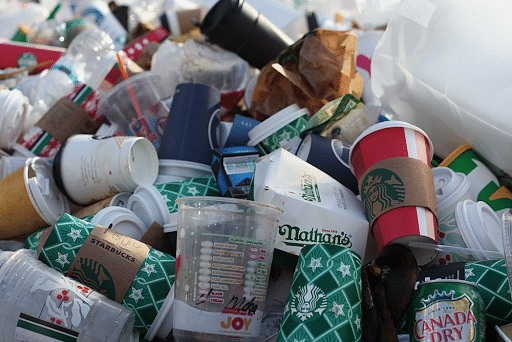
Waste
Read More:
Sources of Waste
There are various sources of wastes:
Domestic Waste: Domestic wastes are those produced from households as a result of our daily activities. These include Kitchen wastes like vegetables & fruit remains and wrappers, Garbage like newspaper, rags and dust and Sewage waste from the bathroom and kitchen. Domestic waste is considered as refuse in waste management as around 90% of it makes up the landfills and causes pollution.
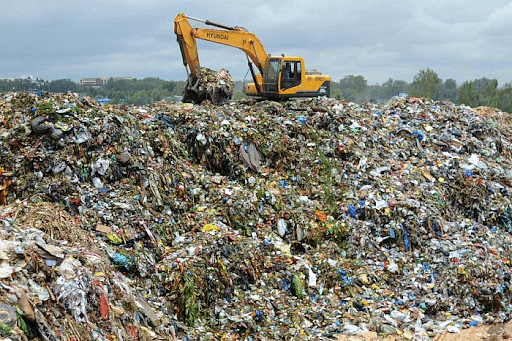
Landfills
Industrial Waste: All types of industries generate waste materials. The wastes generally include ashes, rubbish, building material waste, metal containers, plastic containers, paints, oils, chemical wastes etc. Some of these wastes prove to be hazardous in nature.
Commercial Waste: This includes waste generated from offices, shops, malls, restaurants, medical institutions, hospitals, auto repair shops etc.

Industrial waste
Agricultural Waste: The new and modern techniques employed in the agricultural industry and use of a variety of chemicals have contributed to the production of a large amount of agricultural wastes. The chemicals used in agriculture are toxic in nature. Agricultural wastes include crop residues like husk & straws, animal waste and chemicals like pesticides, fertilizers etc.
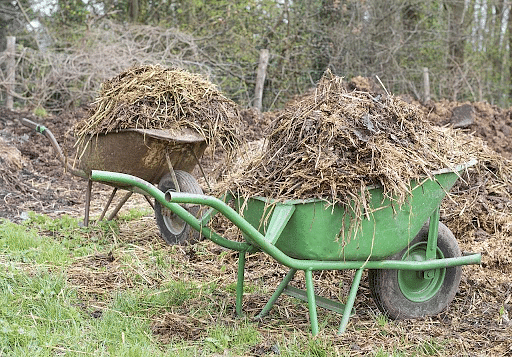
Agricultural Waste
Read More:
Types of Waste
There are two types of wastes.
Biodegradable waste: Wastes that can be decomposed by the action of microorganisms are called biodegradable wastes. For example, Newspapers, vegetable waste, organic waste etc.
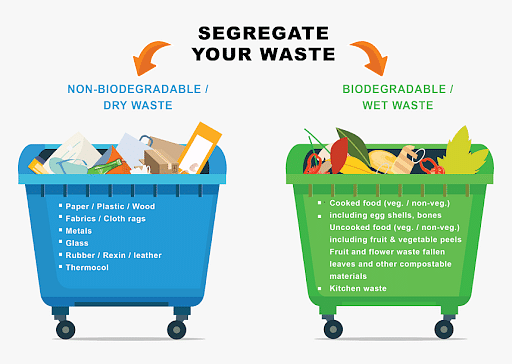
Types of Waste
Non-biodegradable waste: Wastes that cannot be decomposed by the action of microorganisms are called non-biodegradable waste. These can be recycled. For example, Goods made from plastic, polythene bags, aluminium cans, glass, iron nails etc.
Also Read: How to get rid of waste
Waste Management
We see and observe a very large amount of garbage lying along the streets while passing through highways and roads. This is mainly because open dumping or littering is the most common method of disposing of waste especially in India. Sometimes, these dumps result in open burning, which releases toxic fumes and smoke. Sometimes, these wastes are subjected to being dumped illegally into rivers and canals that fill land depressions. This causes water pollution and is harmful to aquatic organisms.

Burning of Waste
Waste management can be simply defined as the collection, transport, disposal, monitoring and regulation of wastes. However, waste management also considers the 7R’s - Rethink, Refuse, Reduce, Reuse, Recycle, Regulate and Research.

Waste Management
Read More:
Effects of Poor Waste Management
- The accumulated wastes will end up becoming a threat to the living organisms and the environment.
- Due to the uneven segregation of wastes, the organic matter along with inorganic wastes combine to produce toxic fumes and act as a breeding ground for many infectious diseases.

Burning of waste produces toxic waste
- Some of the wastes that are hazardous and unhygienic pose a serious threat to the environment.
- The mix up of various types of garbage would make the recycling and disposal process much harder.
- Burning of wastes would produce toxic gases which in turn would affect human physiology and result in many chronic disorders such as skin diseases and cancer.
Effective ways of Waste Management
- Segregate the wastes into biodegradable, non-biodegradable and recyclables.
- Follow the 7Rs of waste management.

Recycle the waste
- Reduce plastic usage as much as possible.
- Do not litter.
- Recycle the wastes as much as possible.
Things to Remember
- Waste management means the removal, disposal, recycling of unwanted waste from agricultural farms, households and industries.
- Waste management incorporates the concept of 7R’s - Rethink, refuse, reduce, reuse, recycle, regulate and research.
- Mainly, most of the waste products generated today are considered non-biodegradable waste.
- Various known waste disposal methods are Garbage dump, Incineration, Biogas production, Compaction of waste, compost and vermicompost.
Read More:
Sample Questions
Ques. What are common methods of waste disposal? (3 marks)
Ans. The most common methods of waste disposal are bioprocessing, thermal processing and sanitary landfill. The bioprocessing method includes aerobic and anaerobic composting. Thermal processing includes incineration and pyrolysis. A Sanitary landfill is used to dispose of final rejects coming out of the biological and thermal waste processing units.
Ques. What is aerobic composting? (2 marks)
Ans. Aerobic composting is the creation of fertilizing compost using bacteria that flourish in an oxygen-rich environment. This is considered the fastest method of composting but it also involves more work in terms of rotating the organic matter periodically.
Ques. What is anaerobic composting? (2 Marks)
Ans. Anaerobic composting is a creation of fertilizing compost using bacteria that cannot thrive in the presence of oxygen. This type of composting is known to work slowly, but in this, lesser work is required as compared to aerobic composting.
Ques. What is Incineration? (2 Marks)
Ans. Incineration is a waste management process that involves the combustion of organic substances contained in the waste materials. In this process, the waste is converted into ash, flue gas and heat. Also, the heat generated by the incineration process can be used to generate electric power.
Also Read: Waste Disposal Overview
Ques. What is a sanitary landfill? (2 Marks)
Ans. A sanitary landfill is a low lying area that is filled with rejected waste materials. The waste is linear at the bottom so as to prevent contamination of waste products with groundwater. The waste is buried in between layers of soil and is compressed to make it a hard surface. When the landfilling is completed, the waste is restricted to a layer of clay to prevent water from entering. Finally, a layer of topsoil is placed, compressed and graded, and various forms of plants are planted in order to reclaim the otherwise useless land.
Ques. How can people dispose of their wastes? (2 Marks)
Ans. Compost wet waste at home - The wet waste can be easily disposed of in an aerated container.
Compost wet waste at the community level - The wet waste can be given to the Municipality collection system. Biomedical waste has to be wrapped separately in a newspaper and handed over to the Municipality collection system. Expired medicines, syringes and injections also should be disposed of in the same manner.
Ques. What are the ways of storing at home? (2 Marks)
Ans. E-waste - Storing the waste in a separate container which is kept closed, away from moisture and in which nothing else should be put.
Dry waste - Storing the waste in the bag in the utility area after cleaning and drying till it is picked up. No food residue must be kept in packets and bottles. If the clothes are unused or damaged, they will be considered as dry waste. If they are soiled with paints or any other chemicals, they are called HHW (Household hazardous waste).
Ques. How can someone practise waste management at home? (2 Marks)
Ans. One should keep separate containers for the dry and wet waste in the kitchen. Keep two bags for dry waste collection - paper and plastic, for other household waste. Keep the kitchen clean from plastics and dry & drop into the dry waste bin. Also, one can practice waste management by keeping a paper bag for throwing sanitary waste.
Ques. What are the first few steps to initiate a waste management programme in an Apartment complex? (2 Marks)
Ans. One should form a group of like-minded people who are more inclined to this initiative. Explain waste segregation to your family/neighbours in your apartment building. Also, get the staff in the apartment building to also understand its importance. Keep separate storage containers for dry or wet waste. Have the dry waste picked up by the dry waste collection centre or your nearby local scrap dealer.
Read More:
Ques. What are the Demerits of plastic? (2 Marks)
Ans.
- Plastic bags do not decompose in the soil and pose a threat of a decrease in soil fertility.
- Most of the people fill the peelings and rotten fruits and vegetables in plastic bags. They throw them on roads, in drains or in fixed dustbins from where cattle like cows, dogs, pigs, bulls, etc., eat them with plastic bags. These bags are not digested by the animals and they suffer from diseases.
Ques. What are some effective waste management strategies? (2 Marks)
Ans.
- Segregate the wastes into biodegradable, non-biodegradable and recyclables.
- Follow the 7Rs of waste management.
- Reduce plastic usage as much as possible.
- Do not litter.
- Recycle the wastes as much as possible.
Ques. What are the effects of poor waste management? (2 Marks)
Ans.
- Some of the wastes that are hazardous and unhygienic pose a serious threat to the environment.
- The mix up of various types of garbage would make the recycling and disposal process much harder.
- Burning of wastes would produce toxic gases which in turn would affect human physiology and result in many chronic disorders such as skin diseases and cancer.
Read More:



Comments