





Wageningen University & Research admissions center on a Studielink and Osiris two-step process, with non-EU master intakes anchored to September and a limited February window. Indian applicants need Class XII around 60 percent for bachelor’s programmes and a related bachelor’s for master’s programmes.
- Next live window: February 2027 Studielink closes 15 September 2026 for five master programmes
- Base tuition: Master €21,900 (around ₹24.20 Lakhs) per year, no application fee at all
- Eligibility floor: Class XII 60% and IELTS 6.0 for UG, bachelor’s 65% and IELTS 6.5 for PG
- Acceptance rate: around 44 to 55% overall, near 25% for competitive master programmes
Indian students head to Wageningen University for MSc Food Technology, MSc Biotechnology, and MSc Environmental Sciences, drawn by strong research ties across the Dutch agri-food sector and a small English-taught cohort where Indian applicants settle in fast.
Admission status. Closing Soon. September 2027 is Wageningen’s primary intake for Indian students, where Studielink registration closes on 15 April 2027 and Osiris documents on 1 May 2027, with a scholarship-eligible cut-off of 1 December 2026. The nearest live window is the February 2027 intake for five master programmes, where Studielink registration closes on 15 September 2026 and Osiris documents on 1 October 2026. Wageningen charges no application fee, and non-EU applicants apply through the Studielink portal.
Table of Contents
- Wageningen University Application Deadlines
- WUR Eligibility for Indian Students
- WUR Master Programs and English Scores
- Wageningen University Bachelor Programs
- WUR PhD Application Path
- Wageningen Application Process
- WUR Admission Decisions Timeline
- WUR Documents Required
- Wageningen University Acceptance Rate
- Netherlands Student Visa for Indian Applicants
- Tips and Checklist for Wageningen University
- Wageningen University Admissions FAQs
Wageningen University & Research Application Deadlines
Wageningen runs two intakes per academic year, but non-EU Indian applicants face deadlines that fall well before the EU cycle to allow room for the residence permit process. Per the WUR master application page, the September start carries the widest programme choice while February is limited to five master programmes.
Wageningen’s primary intake for Indian students is September, where most programmes open. The scholarship deadline of 1 December for the following September start binds any applicant hoping to be considered for the Wageningen University Excellence Scholarship or the Holland Scholarship.
| Intake | Level | Studielink Deadline | Osiris Documents | Portal |
|---|---|---|---|---|
| February 2027 (5 programmes only) | Master | 15 September 2026 | 1 October 2026 | Studielink then Osiris |
| Primary intake September 2027 | Master | 15 April 2027 (scholarship cut-off 1 December 2026) | 1 May 2027 | Studielink then Osiris |
| September 2027 (non-fixus BSc) | Bachelor | 15 April 2027 | 1 May 2027 | Studielink then Osiris |
| September 2027 (numerus fixus BSc, e.g. Animal Sciences) | Bachelor | 15 January 2027 | 15 January 2027 | Studielink then Osiris |
The five master programmes eligible for the February 2027 start are Biosystems Engineering, Biotechnology, Biology, Environmental Sciences, and Forest and Nature Conservation. Any other master programme must wait for the September window.
Planning note: Numerus fixus (a fixed seat cap where the university selects among qualifying applicants) closes three months earlier than the standard bachelor track. If you are targeting BSc Animal Sciences, treat 15 January 2027 as the true deadline for the September 2027 start.
Wageningen University & Research Eligibility for Indian Students
Eligibility at Wageningen runs on two tracks. The academic floor sets whether your prior study clears the level requirement, while the English proficiency floor sets whether you can be taught in the language of instruction. The section below covers both tracks and the narrow set of English waivers that occasionally reach Indian applicants.
Bachelor Eligibility Basics at Wageningen
- Academic base: Class XII from CBSE, ICSE, or a recognised state board at around 60 percent or higher
- Subject prerequisites: Mathematics, Physics, Chemistry, or Biology depending on the target BSc
- Numerus fixus route: selection among qualifying applicants, no direct seat guarantee
- English floor: IELTS 6.0 overall with 6.0 in speaking, or TOEFL iBT 80 with 20 in speaking
Master Eligibility for Wageningen Applicants
- Academic base: a completed bachelor’s in a related field, typically at 65 percent or higher, or a first-division equivalent
- Subject fit: the bachelor’s must cover the prerequisites the programme names on its official page
- English floor: IELTS 6.5 overall with 6.0 in speaking, no section under 6.0
- Test validity: the score must be dated within the past 24 months of your intake start
English Requirements at Wageningen University
| English Test | Master Minimum | Bachelor Minimum |
|---|---|---|
| IELTS Academic | 6.5 overall (6.0 speaking) | 6.0 overall (6.0 speaking) |
| TOEFL iBT | 90 (22 speaking) | 80 (20 speaking) |
| PTE Academic | 62 (59 speaking) | Not accepted |
| Cambridge C1 Advanced | Grade C or 176 to 210 | Not accepted |
| Cambridge C2 Proficiency | Grade C or 180 to 230 | Not accepted |
| LanguageCert Academic | 67 | Not accepted |
Wageningen IELTS Waiver for Indian Students
Wageningen does not accept the Indian medium-of-instruction letter as an English waiver, even if you completed your bachelor’s at an English-medium Indian college. IELTS, TOEFL, PTE, Cambridge, or LanguageCert remains mandatory for the standard Indian applicant.
The narrow set of Indian applicants who qualify for a waiver are those who completed their entire bachelor’s on-campus in Australia, Canada, Ireland, New Zealand, Singapore, South Africa, the UK, or the USA in English. A separate pathway exists for anyone who has already earned 24 ECTS of Wageningen English-taught coursework, which mainly helps pre-master or exchange returnees.
Wageningen University & Research Master Programs and English Scores
Wageningen runs its master portfolio in English across food, life, environmental, and social science tracks, with a two-year MSc as the standard shape. Non-EU tuition for 2026-2027 is fixed at €21,900 per year (around ₹24.20 Lakhs) for a full-time master’s, and a full course-wise fees breakdown is on the Wageningen programs and fees page.
The table below lists the master programmes most Indian applicants file for. Each row shows the institution-wide English floor because Wageningen applies the same 6.5 IELTS overall standard across taught master programmes. Programme-specific academic prerequisites vary and should be confirmed on the WUR programme page you target.
| Programme | Duration | Minimum Eligibility | English Req. Min. |
|---|---|---|---|
| MSc Food Technology | 2 years | Bachelor’s in Food Technology, Chemistry, or Biology at 65 percent-plus | IELTS 6.5 |
| MSc Biotechnology | 2 years | Bachelor’s in Biotechnology, Biology, or Chemical Engineering | IELTS 6.5 |
| MSc Plant Sciences | 2 years | Bachelor’s in Biology, Agriculture, or Plant Sciences | IELTS 6.5 |
| MSc Environmental Sciences | 2 years | Bachelor’s in Environmental Sciences, Earth Sciences, or Biology | IELTS 6.5 |
| MSc Water Technology | 2 years | Bachelor’s in Engineering, Chemistry, or Physics | IELTS 6.5 |
| MSc Molecular Life Sciences | 2 years | Bachelor’s in Chemistry, Biochemistry, or Molecular Biology | IELTS 6.5 |
| MSc Nutrition and Health | 2 years | Bachelor’s in Nutrition, Food Science, or Biomedical Sciences | IELTS 6.5 |
| MSc Animal Sciences | 2 years | Bachelor’s in Animal Sciences, Veterinary, or Biology | IELTS 6.5 |
| MSc International Development Studies | 2 years | Bachelor’s in Social Sciences, Development Studies, or Economics | IELTS 6.5 |
| MSc Climate Studies | 2 years | Bachelor’s in Natural Sciences, Engineering, or Earth Sciences | IELTS 6.5 |
A part-time online second-master is offered for applicants who already hold a WUR master’s, priced at €12,045 (around ₹13.31 Lakhs) per year and delivered as a modular route rather than a full residential programme.
Note: Program-specific entry requirements, fees, and intake availability may differ from the institution-wide minimums shown above. Always confirm on the official Wageningen master application page for your chosen programme before applying.
Wageningen University & Research Bachelor Programs
Wageningen offers a small, English-taught BSc portfolio that leans hard into environmental, agricultural, and life sciences. Bachelor tuition for non-EU students in 2026-2027 runs €18,300 per year (around ₹20.22 Laksh) for a three-year BSc, and payment is due before enrolment. BSc Animal Sciences is the flagship numerus fixus programme, which shifts your deadline to 15 January.
| Programme | Duration | Minimum Eligibility | English Req. Min. |
|---|---|---|---|
| BSc Data Science for Global Challenges | 3 years | Class XII at 65% with Mathematics | IELTS 6.0 |
| BSc International Land and Water Management | 3 years | Class XII at 60% with Mathematics and Physics or Chemistry | IELTS 6.0 |
| BSc Environmental Sciences | 3 years | Class XII at 60% with Biology, Chemistry, or Physics | IELTS 6.0 |
| BSc Soil, Water, Atmosphere | 3 years | Class XII at 60% with Mathematics and Chemistry | IELTS 6.0 |
| BSc Food Technology | 3 years | Class XII at 60% with Chemistry, Biology, or Mathematics | IELTS 6.0 |
| BSc Marine Sciences | 3 years | Class XII at 60% with Biology or Chemistry | IELTS 6.0 |
| BSc Animal Sciences (numerus fixus) | 3 years | Class XII at 60% with Biology and Chemistry | IELTS 6.0 |
| BSc Tourism | 3 years | Class XII at 60% in any stream | IELTS 6.0 |
Insider note: Class XII grade averages are the anchor for Indian applicants, but Wageningen also looks at your Mathematics and science marks specifically for STEM BSc tracks. A weak science score in Class XII can sink an otherwise strong overall average.
Wageningen University & Research PhD Application Path
Wageningen treats the PhD as a paid research position, not a coursework degree. You either apply to a posted vacancy at a Wageningen chair group or bring external funding and secure a supervisor first. There is no institution-wide PhD deadline because vacancies open through the year.
Wageningen PhD Structure and Funding
Employed PhDs earn on the Dutch academic pay scale, which rises with each year of the four-year track. A Y1 PhD stipend of around €2,770 per month (around ₹3.06 Lakhs) climbs to €3,539 per month (around ₹3.91 Lakhs) by Y4. Scholarship-funded PhDs must show a minimum living stipend of €1,950 per month (around ₹2.15 Lakhs) for the 2026 academic year.
How to Find a Wageningen PhD Position
- Search the WUR vacancies portal filtered by PhD candidate and match your background to the group’s ongoing projects
- Contact the intended promoter with a CV, transcripts, and a short research statement before formally applying
- Bring external funding (ICAR, DBT, DST, or country-of-origin scholarship) if applying outside a posted vacancy
- Prepare for a two-round interview covering research fit, methodology, and English fluency
Planning note: Indian applicants who bring their own funding through ICAR-Netherlands Fellowship or DST partnerships often move faster than open-market applicants, because the funding proof unlocks the residence permit path without waiting for a vacancy match.
Note: PhD stipend rates, vacancy availability, and supervisor requirements may differ from the institution-wide minimums shown above. Always confirm on the official Wageningen PhD vacancy listing for your chosen chair group before applying.
Wageningen University & Research Application Process
Every non-EU Indian application at Wageningen runs on a two-portal handshake. Studielink is the Dutch national registration portal that flags your intent to the government, and Osiris is the internal WUR system where you upload documents once WUR invites you after Studielink. Nothing at Wageningen bypasses this two-step route.
- Register on the Studielink portal for your chosen programme and intake by the Studielink deadline. There is no application fee at either Studielink or WUR for the standard bachelor or master track.
- Wait for WUR to issue an Osiris invitation, usually within a few working days of your Studielink registration reaching them.
- Upload every required document in Osiris by the Osiris deadline. Late documents cause your file to be withdrawn from review.
- Wait for the admissions committee decision, which typically takes 6 to 8 weeks after your Osiris file is complete.
- Accept your offer in Osiris and pay the tuition instalment, which unlocks the residence permit process.
- Complete the WUR VisaHousing service intake so WUR can file your MVV and residence permit with IND.
- Book your travel only after IND approval, and collect your residence permit card in Wageningen after arrival.
Note: Wageningen charges no application fee for its master or bachelor programmes routed through Studielink. Any third-party site quoting an application fee for WUR is quoting a service charge that Wageningen itself does not levy.
Wageningen University & Research Admission Decisions Timeline
Wageningen turns around most admission decisions in 6 to 8 weeks once your Osiris file is complete. The clock starts from the day your file is marked ready for review, not from the day you registered on Studielink. Applicants who upload late in the window often face longer waits because the committee is deep in review by then.
- Conditional offer: issued when academic fit is confirmed but your English score, final transcripts, or degree certificate is still pending
- Unconditional offer: issued after all documents are verified and every requirement is met
- Acceptance deadline: WUR asks for offer acceptance within a set window in Osiris, usually a few weeks before the intake month
- Deferral policy: deferring to a later intake is not automatic, and most applicants must re-apply for the new cycle
Insider note: An early Osiris upload works in your favour because the committee reviews files as they arrive. Uploading four weeks before the deadline can shave your wait from 8 weeks to 5 weeks in practice.
Wageningen University & Research Documents Required
Every document below must be uploaded in Osiris after your Studielink registration is accepted. Scans should be clear, in colour, and in PDF format. Documents in Hindi or a regional Indian language need an official English translation attached.
- Passport bio page valid for at least the full length of study
- Class XII marksheet and passing certificate from CBSE, ICSE, or the state board
- Bachelor’s transcript for every semester or year, certified by the issuing university
- Bachelor’s degree certificate or a provisional certificate if you have not yet graduated
- Grading scale document from your Indian institution converting your marks or CGPA
- Motivation letter explaining programme fit, career direction, and academic background
- Curriculum vitae covering education, internships, publications, and any work history
- Two reference letters from academic supervisors, required for select master programmes
- English test score report (IELTS, TOEFL iBT, PTE, Cambridge, or LanguageCert) within 24 months of intake
- Copy of any research output or thesis abstract for research-heavy MSc applications
- Passport-size photograph meeting Dutch biometric guidelines
Financial proof for the visa step is submitted separately during the WUR VisaHousing process, not at the Osiris stage.
Wageningen University & Research Acceptance Rate
Wageningen does not publish an official institutional acceptance rate. Third-party estimates put the overall admit rate at around 44 to 55 percent, based on the split between qualifying and admitted applicants across the wider international portfolio, with competitive master programmes tightening to about 25 percent.
Wageningen Acceptance Rate for Master Programmes
The competitive master programmes (Food Technology, Biotechnology, Nutrition and Health, and Molecular Life Sciences) tend to sit at the lower end of that range because Indian applicant volume for these tracks is high. Environmental Sciences, Forest and Nature Conservation, and International Development Studies typically admit a higher share of qualifying applicants.
Why WUR Master Rates Are Competitive
Wageningen sits in the global top ranking band for agriculture and environmental sciences, so applications concentrate on the branded flagship master tracks. The bar is not the academic floor of 65 percent but the strength of the science background across the applicant’s transcript relative to the seat count.
Insider note: If your undergraduate transcript is heavier in general biology than in the target programme’s core subject (say, food chemistry for MSc Food Technology), consider a bridging course or a specific internship before applying. This closes a gap the admissions committee reads quickly.
Netherlands Student Visa for Indian Applicants
Indian students admitted to Wageningen apply for the MVV entry visa (Machtiging tot Voorlopig Verblijf, the entry clearance for stays over 90 days) alongside a residence permit through the Dutch immigration service (IND). WUR is a recognised sponsor and files both applications on your behalf once you have paid the tuition instalment, so you do not visit the embassy for a traditional student visa interview.
Financial proof at the visa step requires you to show a per-month living amount set by IND, currentlyaround €1,270 per month (around ₹1.40 Lakhs per month), which comes to roughly €15,240 per year (around ₹16.84 Lakhs) parked in a Dutch student account or transferred through WUR. IND processing typically takes up to 60 days after WUR files the application.
After arrival, you must register with the Wageningen municipality within five working days to receive your BSN (citizen service number), pick up the residence permit card at the WUR pick-up point, and enrol in Dutch basic health insurance if you work part-time. Failing the five-day registration window can delay your bank account, tuition transfer, and part-time work permission.
2026 update: The IND per-month living amount is indexed each year, so the €1,270 figure typically climbs slightly for the 2027 intake. Confirm the current rate on the IND site before you book a flight, since underestimating causes visa rejection more often than any other single factor.
Tips and Checklist for Wageningen University & Research
The following tips and steps are drawn from Indian-applicant patterns at Wageningen, focused on the moves that shift outcomes rather than generic advice. Timeline anchors reference the September 2027 intake, so shift them earlier by six months if you are targeting February 2027.
- Book IELTS by November 2026 if targeting the 1 December 2026 scholarship cut-off, since IELTS booking windows in metro cities fill 6 to 8 weeks ahead
- Request certified transcripts 8 weeks before the Osiris deadline because Indian university registrars often take 4 to 6 weeks to issue attested copies
- Draft the motivation letter around programme-specific coursework at Wageningen, not around generic career goals, because the committee reads for fit not ambition
- Complete Studielink registration by mid-March 2027 for the September intake, giving a buffer before the 15 April Studielink deadline
- File the Wageningen Excellence Scholarship application by 1 November 2026 so you have time to fix any missing documents before 1 December
- Save the WUR VisaHousing intake for right after acceptance, because tuition instalment payment triggers the IND process and delays here compound into flight-booking chaos
- Line up two academic referees by January 2027 for master programmes that require reference letters, since Indian professors respond faster to early requests than deadline-day pings
- Plan for a Wageningen city arrival by mid-August 2027 so you clear the five-day municipality registration before the September orientation week
Wageningen admissions reward Indian applicants who treat the two-step Studielink and Osiris timeline as the actual deadline, not the Osiris date alone. The absence of an application fee lowers the entry cost, but the 1 December scholarship cut-off, the 15 January numerus fixus deadline, and the mandatory IELTS score all set the true admission bar. Plan for the March-to-April run-up as your working deadline for the September intake.
Wageningen University & Research Admissions: Frequently Asked Questions
Ques. Does Wageningen accept an Indian English-medium bachelor’s as an English proof waiver?
Ans. No. Wageningen does not waive its English test requirement for Indian bachelor’s completed in English at Indian institutions. Indian applicants must submit an IELTS, TOEFL iBT, PTE, Cambridge, or LanguageCert score within 24 months of the intake start.
Ques. When is the next application deadline for Indian students at Wageningen?
Ans. The nearest live deadline is 15 September 2026 for Studielink registration for the February 2027 master intake (five programmes only). For the primary September 2027 intake, the Studielink deadline is 15 April 2027, with a scholarship-eligible cut-off of 1 December 2026.
Ques. Is there an application fee for Wageningen University?
Ans. No. Wageningen charges no application fee at either the Studielink or the Osiris stage for bachelor and master applications. Any third-party fee you see is a service charge from an agent or platform, not from WUR itself.
Ques. What is the difference between Studielink and Osiris?
Ans. Studielink is the Dutch national registration portal used by every Dutch university to flag your intent to enrol. Osiris is the WUR internal system where you upload documents after WUR issues you an Osiris invitation, usually within a few working days of Studielink registration.
Ques. What is the tuition fee for a master’s programme at Wageningen for Indian students?
Ans. Non-EU master tuition at Wageningen is €21,900 per year (around ₹24.20 Lakhs) for the 2026-2027 academic year. Bachelor tuition is €18,300 per year (around ₹20.22 Lakhs). A part-time online second-master option runs at €12,045 (around ₹13.31 Lakhs) per year for those who already hold a WUR master’s.
Ques. What IELTS score does Wageningen require for Indian applicants?
Ans. Master applicants need IELTS 6.5 overall with at least 6.0 in speaking and no section under 6.0. Bachelor applicants need IELTS 6.0 overall with 6.0 in speaking. The test must be dated within 24 months of your intake start.
Ques. How long does Wageningen take to give an admission decision?
Ans. Wageningen typically issues a decision 6 to 8 weeks after your Osiris file is complete. Files uploaded well before the Osiris deadline often move faster, sometimes clearing in 4 to 5 weeks, because the committee reviews files as they arrive.
Ques. Does Wageningen offer scholarships for Indian students?
Ans. Yes. The Wageningen University & Research Excellence Scholarship and the Holland Scholarship are the two main master funding routes for Indian applicants. Both require your Osiris documents to be complete by the 1 December cut-off for the following September intake.
Ques. Which Wageningen master programmes accept a February intake?
Ans. Five master programmes accept a February start: MSc Biosystems Engineering, MSc Biotechnology, MSc Biology, MSc Environmental Sciences, and MSc Forest and Nature Conservation. Every other master programme runs only in the September intake.
Ques. Is IELTS the only accepted English test at Wageningen?
Ans. No. Wageningen accepts TOEFL iBT (90 for master, 80 for bachelor), PTE Academic (62 for master, with 59 speaking), Cambridge C1 Advanced or C2 Proficiency at Grade C or higher, and LanguageCert Academic at 67 for master applicants.
Ques. What visa do I need to study at Wageningen from India?
Ans. You need an MVV entry visa combined with a residence permit for study, both processed through the Dutch immigration service (IND). WUR files both on your behalf as a recognised sponsor once you pay the tuition instalment, so there is no traditional embassy interview step.
Ques. What is the acceptance rate at Wageningen University?
Ans. Wageningen does not publish an official institutional acceptance rate. Third-party estimates place it at around 44 to 55 percent overall, tightening to about 25 percent for competitive master programmes such as Food Technology, Biotechnology, and Molecular Life Sciences.
College Student Profiles

Wageningen University & Research Program Fees & Deadlines
| Program | Important Dates | Fees | Eligibility | Financial Aid |
|---|---|---|---|---|
MS Food Technology 2 years | USD 24,528 /Yr EUR 21,900 /Yr | IELTS- 6.5, TOEFL- 90, PTE- 62 | ||
MS Plant Sciences 2 years | USD 24,528 /Yr EUR 21,900 /Yr | IELTS- 6.5, TOEFL- 90, PTE- 62 | ||
M.S Molecular Life Sciences 2 years | USD 24,528 /Yr EUR 21,900 /Yr | IELTS: 6.5, TOEFL iBT: 92 | ||
MS Biotechnology 2 years | USD 24,528 /Yr EUR 21,900 /Yr | IELTS- 6.5, TOEFL- 90, PTE- 62 | ||
M.S Water Technology 2 years | USD 24,528 /Yr EUR 21,900 /Yr | IELTS: 6.5, TOEFL iBT: 92 |
Do you think the Dates are wrong ? Report Here
Course Finder - Search from 50K+ courses
Popular Streams:
Reviews
5 Reviews Found
Likes
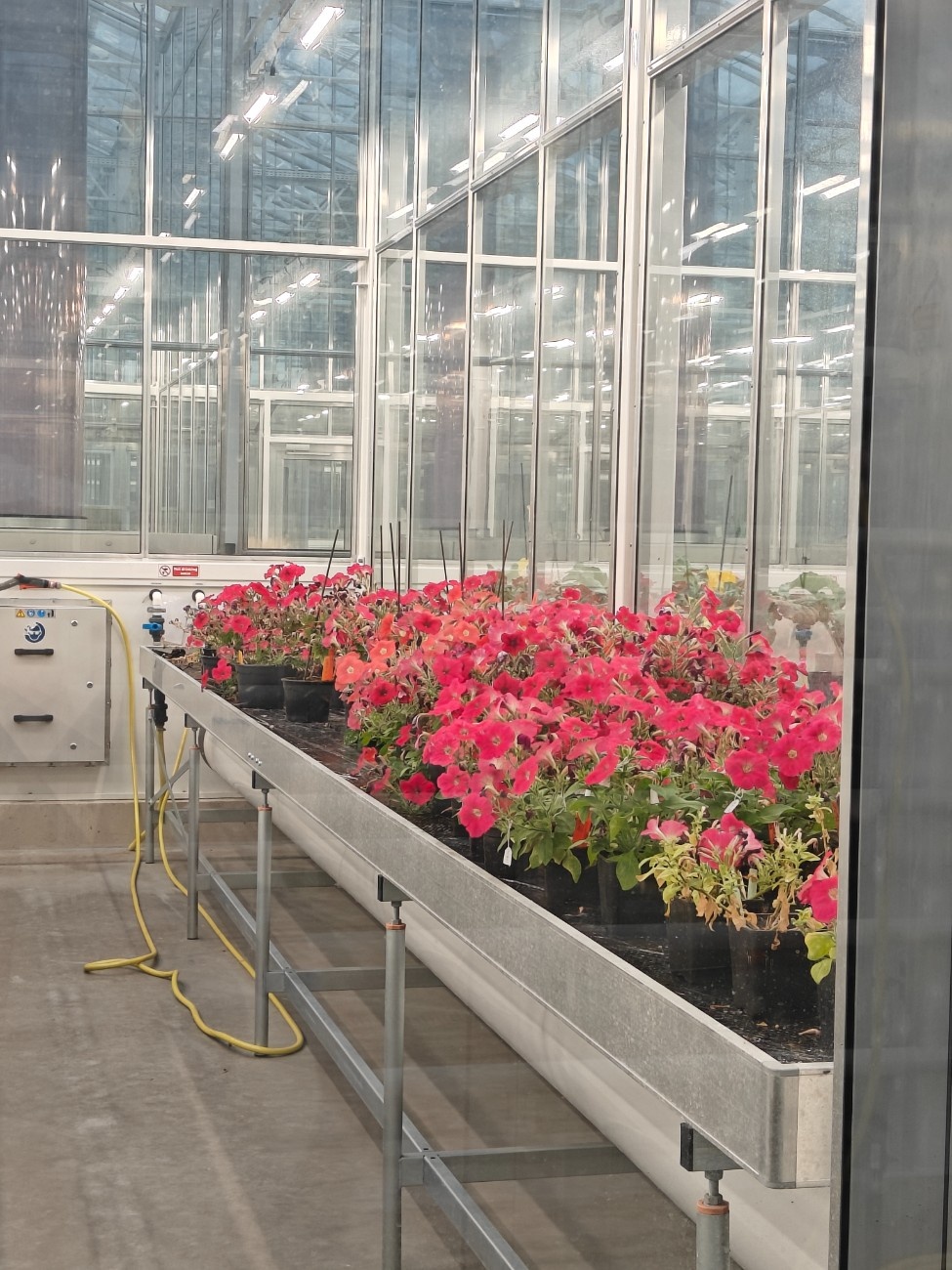
- Amazing academics and facilities for pursuing a master's degree in Plant sciences.
Likes
- WUR is a great university for someone who wants to do a PhD and postdoc and settle into an academic life.
Dislikes
- But if you want to see yourself working in the industry after the master's, it's good to have a lot of connections with people already working in MNCs and other companies. You need to network a lot, really.
- Even though there is a student career services wing in the university, they don't really help a lot in the job hunting process and internship finding process.
- There's no spoon-feeding, so the student is expected to find internships and jobs by networking and sending tons of applications.
Overview
Internationally ranked University and reputation, and for education quality
Scholarship
No
Overview
Because of the course. It is the only university with specialization in Food Laws and Regulatory Affairs - for Science students
Scholarship
Nope
Overview
Wageningen University and Research(WUR) is one of the best universities for Life Sciences. It stands in 16th place overall in the world according to Times Higher Education World University Rankings. Europe has always had my heart, I fell in love with this place when I had come in 2012. It was then that I decided if I will pursue my higher education then it will be in Europe. So then as my field is biotechnology and WUR was the best university to make my dreams come true.
Scholarship
No
interested in this College ?
Follow & Share this college to get information about admission.



Comments