




Master of Architecture [MArch] (Architecture (RIBA Part 2 Exemption))
Field of Study:
$25,230 /Yr

Birmingham City University Master of Architecture is a two-year, full-time postgraduate degree at the City Centre Campus in Birmingham, with September 2027 entry. Applicants normally need an architecture honours degree equivalent to a UK upper second class, approximately 60% or above in India, plus nine months of professional experience. First-year international tuition is £19,630 (INR 24.92 Lakhs); the university has not fixed the complete two-year tuition total.
At BCU (Birmingham City University), the MArch (Master of Architecture) develops architectural design through material investigation, collaborative live projects and an individual research-led thesis. It provides RIBA (Royal Institute of British Architects) Part 2 exemption, the second stage of professional architectural training. The curriculum suits architecture graduates ready to connect practice experience with critical design research, while further registration requirements remain outside this degree.
- Co.Lab projects involve partner organisations, giving applicants interested in community-based design a practical reason to choose this studio environment.
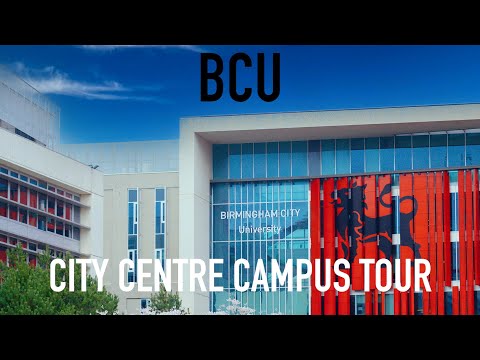
- The Parkside Building provides traditional workshops and digital fabrication facilities for developing physical models alongside architectural proposals.
- Visiting practitioners contribute to studio teaching and criticism, allowing students to test design decisions against professional perspectives.
Current Admission Status
Applications for the September 2027 intake are Open, with the international application account portal accessible. International student deadline: publication scheduled for February 2027.
Indian applicants can prepare their architecture portfolio and practice evidence against the announced intake. The university has not published a September 2027 cutoff, so January 2027 deadlines do not apply to this course.
Also Check: Birmingham City University Architecture Admission
BCU MArch Fees and Living Costs 2027
The 2027/28 international tuition fee covers the first year of this two-year MArch. Because subsequent-year fees can increase, the published annual rate should not be presented as a guaranteed complete-course price.
September 2027 entry: tuition below is the confirmed first-year international rate; materials and equipment figures are the programme page’s current published estimates.
| Item | Amount (GBP) | INR equivalent |
|---|---|---|
| First-year international tuition | £19,630 | INR 24.92 Lakhs |
| Project materials budget | £150 | INR 19,041 |
| Safety clothing and equipment | £70 to £90 | INR 8,886 to INR 11,425 |
| Printing and photocopying consumables | £50 | INR 6,347 |
| Large-format printing consumables | £150 | INR 19,041 |
| Modelling consumables | £200 | INR 25,388 |
| Calculated combined listed mandatory extras | £620 to £640 | INR 78,703 to INR 81,242 |
All INR conversions in the article use a conversion rate of GBP 1 = INR 126.94 as of 25 October 2026. Rates fluctuate daily, verify before applying.
Source: Birmingham City University Architecture MArch, 2027/28 entry, international fees and additional course costs.
- The university includes essential field trips and associated travel, so separate optional overseas visits from the compulsory study budget.
- Specialist workshop equipment and software access are provided, but individual project materials remain an additional expense when selecting your thesis medium.
- The calculated extras combine the five published estimates, whose frequency is not specified, so obtain an annual materials allowance from the course team.
Deposit planning needs a regional check. The current payment page differentiates Punjab and Haryana from other Indian regions, while its dated instalment schedule covers 2026/27. Treat those earlier arrangements as context and obtain September 2027 payment terms in your offer before committing funds.
2026/27 payment-policy reference: applicants from Indian regions other than Punjab and Haryana pay £1,000 (INR 1.27 Lakhs) before the credibility interview. The published policy then requires 50% of gross tuition before study sponsorship documentation, while Punjab and Haryana have higher pre-interview and pre-sponsorship requirements. These earlier-cycle arrangements explain why the applicant’s region matters, without establishing September 2027 payment amounts.
Cost of Living in Birmingham for MArch Students
The university publishes weekly spending ranges, rather than a MArch-specific annual maintenance budget. The monthly figures below are calculated using 52 weeks divided by 12, making the conversion method explicit for a course spanning two academic years.
Current university living-cost guide: these monthly equivalents are planning calculations from published weekly estimates, rather than fixed 2027 accommodation quotations.
| Expense | Monthly (GBP) | Monthly (INR) |
|---|---|---|
| University accommodation | £498.33 to £905.67 | INR 63,258 to INR 1.15 Lakhs |
| Food and other shopping | £130 to £433.33 | INR 16,502 to INR 55,007 |
| Laundry | £21.67 to £43.33 | INR 2,750 to INR 5,501 |
| Books, stationery and related study costs | £21.67 to £216.67 | INR 2,750 to INR 27,504 |
| Bus pass | £195 | INR 24,753 |
| Other bills and subscriptions | £86.67 to £433.33 | INR 11,001 to INR 55,007 |
| Social activities | £43.33 to £216.67 | INR 5,501 to INR 27,504 |
| Monthly total, calculated before rounding | £996.67 to £2,444 | INR 1.27 Lakhs to INR 3.10 Lakhs |
| Annual total, 12 months | £11,960 to £29,328 | INR 15.18 Lakhs to INR 37.23 Lakhs |
The accommodation guide describes 51-week contracts, whereas the annual illustration extends the weekly rate across 52 weeks for a continuous living allowance. Bills are usually included in university accommodation, so check your contract before adding separate household charges. Generic study-cost allowances may overlap with the course’s materials estimates; reconcile the two rather than adding every line twice.
Calculated first-year tuition plus living costs are £31,590 (INR 40.10 Lakhs) to £48,958 (INR 62.15 Lakhs). The arithmetic is published first-year tuition plus the calculated 12-month living range, before visa charges, flights and any non-overlapping course extras.
A two-year planning scenario is £63,180 (INR 80.20 Lakhs) to £98,897.50 (INR 1.26 Crore) for tuition and living costs. It combines two annual living allowances with tuition unchanged at the lower end and increased by 5% in year two at the upper end. The university permits an inflation increase capped at 5%, while separately reserving changes arising from government funding or parliamentary decisions.
That scenario is not a confirmed all-in quotation, because year-two tuition, visa duration, optional travel and project choices affect the eventual amount. Keep the Student visa maintenance requirement separate from this spending estimate, as it is a financial-evidence test rather than a two-year budget.
Read More: UK Student Living Costs
Student perspective
University-level student reviews from November 2025 describe different housing commutes and the need to understand room and contract descriptions. These accounts concern other master’s courses; use them to check Parkside travel time and tenancy length before booking accommodation.
These comments are anecdotal and do not replace official Birmingham City University data.
Tip for Indian students: The published fee covers one year of a two-year qualification, so secure year-two funding before treating an admission offer as affordable.
BCU MArch Admission 2027
The MArch is an architecture progression degree, requiring relevant academic preparation and normally at least nine months of post-undergraduate practice. Its published intake is September 2027, with full-time international entry; it is unsuitable as a conversion route from an unrelated bachelor’s subject.
September 2027 entry requirements: the programme-specific architecture and practice conditions apply alongside the university’s country-level assessment.
| Requirement | Published position and Indian-applicant implication |
|---|---|
| Academic qualification | Minimum UK 2:1 honours degree or equivalent in Architecture, approximately 60% or above for Indian planning, subject to university assessment. |
| Indian qualification assessment | The India page lists 55% for general postgraduate entry and 60% for Built Environment; confirm how your architecture degree meets the course-specific standard. |
| Professional experience | Normally at least nine months of post-undergraduate professional practice, supported by evidence of practical training. |
| Part 1 preparation | Architecture with RIBA Part 1 exemption is the normal route; exceptional applicants without Part 1 may be considered against equivalent academic and practical experience. |
| Portfolio | A good architecture portfolio is required; the fees and application section requests submission within four weeks of an offer. |
| Interview | A successful interview is required when essential entry requirements are not fully met, with design and technical work available for discussion. |
A 55% general postgraduate threshold does not establish eligibility for this professionally validated architecture course. Send your transcript, architecture qualification and practice record for an individual equivalency decision rather than assuming the general country minimum overrides the programme standard. The university makes the official assessment, including how prior study and professional experience satisfy the course requirements.
Applicants without Part 1 exemption must separate admission from eventual UK registration. The programme states that completing Part 2 without Part 1 does not remove the remaining prescribed qualification and practical-training requirements. Ask admissions to assess your existing architecture education before paying for a route whose professional sequence may require further study or examinations.
The university can consider alternative practical experience, including voluntary work, competitions, related construction or design work and self-generated projects. That flexibility matters when conventional practice experience is difficult to obtain, but it does not waive the architecture-degree requirement. Present dates, responsibilities and your individual contribution so the admissions team can assess the evidence.
The checked programme does not publish an admitted-class academic profile or course acceptance rate. Neither the GMAT (Graduate Management Admission Test) nor the GRE (Graduate Record Examinations) appears as a requirement. Its selection evidence centres on architecture study, practice and a portfolio, so prioritise those materials rather than treating an unpublished class benchmark as an admissions target.
The QS World University Rankings 2027 places Birmingham City University in the 1001 to 1200 overall band. That university-wide position is not an architecture programme ranking and provides no evidence about this MArch’s admission odds or graduate placement rate.
English Language Requirements
The course specifies IELTS (International English Language Testing System) 6.0 overall, with no band below 5.5. Every component matters for admission, so an overall score alone cannot establish that you meet the requirement.
Current accepted routes linked from the 2027/28 programme: central English-test policies are live published requirements, without a separate intake-year heading.
| Route | Requirement or restriction |
|---|---|
| IELTS Academic | 6.0 overall with no band below 5.5. |
| PTE (Pearson Test of English) Academic | 59 overall with at least 59 in all four skills; PTE Academic Online is not accepted. |
| TOEFL iBT (Test of English as a Foreign Language, internet-based test), taken from 21 January 2026 | The university’s IELTS 6.0 equivalent is 4 on its 1 to 6 scale for reading, listening, speaking, writing and overall. |
| Indian Standard XII English | 65% for the IELTS 6.0 equivalent from listed boards, subject to regional restrictions and any required speaking or listening assessment. |
| Punjab and Haryana applicants | The India page requires a Secure English Language Test or the four-part university English Proficiency Test. |
The central policy labels the revised test “TOEFL tests taken 21 January 2026 onwards:” and specifies “TOEFL score scale 1-6 (Reading, Listening, Speaking, Writing, Overall)”. Its IELTS 6.0 row gives 4, so the revised scale is explicitly published rather than independently converted here. The Home Edition is not accepted for direct entry, which affects which version applicants should book.
The school-English route lists Andhra Pradesh, the Central Board of Secondary Education, CISCE, Maharashtra and Tamil Nadu. CISCE means Council for the Indian School Certificate Examinations, identifying one of the listed school-examination bodies. The India page separately restricts applicants from Punjab and Haryana, so send your board, English mark and regional details before relying on a waiver.
- For PTE Academic, check every skill reaches 59 rather than relying on the overall result when selecting a test date.
- Prepare portfolio evidence while resolving your English route, because the course requests portfolio submission within four weeks after an offer.
- For a pre-sessional English route, confirm the required secure test before booking, since online and on-campus preparation have different accepted qualifications.
Studio and Research Fit
The published curriculum contains 240 credits across two 120-credit stages, combining design, research and collaborative practice. The university says the course is undergoing revalidation, so confirm the final modules and studio options before basing your application on a particular project theme.
Indicative curriculum on the 2027/28 programme page: modules may change through revalidation.
| Stage | Published core modules and credits |
|---|---|
| Stage 1, 120 credits | Advanced Praxis, 40; Research Principles, 20; Material Practices, 40; Co.Lab II, 20. |
| Stage 2, 120 credits | Architectural Thesis, 60; Negotiated Practice, 20; Special Study, 40. |
Research Principles involves reading and seminar discussion, while Material Practices develops investigation through making. Consequently, a portfolio that explains research questions and material testing has a clear relationship to the teaching model. Prepare to discuss the decisions behind your work alongside its final architectural form.
The 60-credit Architectural Thesis and 40-credit Special Study make sustained independent enquiry central to the second stage. The Special Study can take the form of researched design and production or a dissertation, allowing different ways to develop architectural interests. Applicants seeking practice progression should identify how that research output could strengthen the portfolio they intend to present to employers.
Application-document conflict
The official MArch requirements exempt non-EU applicants from a personal statement in one passage but request one elsewhere. The India page also lists a statement of purpose, so prepare a reflective draft and obtain written confirmation of the documents required for your application.
Honest take: An architecture degree and nine months of practice are the normal preparation, so a portfolio must demonstrate both design development and your contribution in practice.
BCU MArch Application 2027
September 2027 is the advertised MArch intake, and the programme displays an international online application option. The university’s international dates page explicitly schedules publication of that intake’s deadlines for February 2027, so no final application cutoff is confirmed.
Check the official September 2027 international application dates when the university releases the schedule. Its January 2027 table relates to a different intake and cannot establish a MArch deadline. No reliable programme-specific prior September deadline supports projecting an exact date for this article.
Confirmed application checkpoints: the programme publishes a relative portfolio deadline, while the general international process explains the order of offer and immigration preparation.
| Checkpoint | Published timing or sequence |
|---|---|
| Course entry | September 2027, full-time. |
| International deadline schedule | Publication in February 2027. |
| Portfolio submission | Within four weeks of receiving an offer. |
| Conditional offer | Accept through the student portal and supply requested evidence. |
| Immigration preparation | Meet offer conditions, complete required interview and deposit steps, then obtain study sponsorship documentation before applying for a visa. |
The four-week portfolio window makes it useful to assemble your work before submitting the initial application. Include undergraduate design development, technical resolution and professional work that identifies your own role. If invited to interview, be ready to explain how your practice experience changed your design decisions rather than relying only on finished visualisations.
- Submit clear architecture transcripts, degree evidence and practice records, keeping project dates consistent across your portfolio and application.
- Prepare a reflective statement addressing studio interests, research preparation and collaboration while admissions resolves the conflicting statement instructions.
- Keep academic selection separate from the pre-visa credibility interview, since the latter tests a different part of the international application process.
- Recheck the India-specific deadline row when September 2027 dates appear, because the university’s published schedules can distinguish countries and regions.
For this MArch, a research-led portfolio has a direct curricular purpose because the final year includes an architectural thesis and a substantial special study. Select work that shows the relationship between investigation, material choices and design outcomes, then explain what you want to develop through a studio unit. This is a preparation strategy based on the course structure, rather than an unpublished scoring rubric.
The university has not published a September 2027 decision-release calendar or portal cutoff time on the checked programme and international application surfaces. Once a timed cutoff is issued, retain the university’s timezone and obtain the corresponding Indian Standard Time date before scheduling submission. Until then, an invented midnight deadline would give applicants false precision.
Application tip: Prepare the portfolio before applying, because the programme requests it within four weeks of an offer even while the intake’s final deadline remains unpublished.
BCU MArch Scholarships 2027
No general international scholarship is confirmed for September 2027 on the checked funding pages. Applicants should therefore use gross MArch tuition in their initial funding assessment, rather than deducting an award advertised for a different intake.
The Graduate Scholarship is potentially relevant only if you already hold an eligible Birmingham City University qualification and meet its self-funding conditions. The current page announces a 20% reduction for 2026/27 and 2027/28, but its detailed eligibility text still names 2026/27. That internal cycle mismatch needs written confirmation before a September 2027 applicant treats the reduction as secured.
For a first-time applicant arriving from an Indian university, the International Postgraduate Scholarship offers only prior-cycle context. Its published 2026/27 value is £3,000 (INR 3.81 Lakhs), restricted to eligible September 2026 or January 2027 entrants. The offer is a tuition discount, so it should not be interpreted as money paid toward housing or as a confirmed September 2027 award.
- University alumni should ask admissions to confirm that the 20% Graduate Scholarship applies to their specific qualification and September 2027 MArch offer.
- First-time international applicants should check their offer for a September 2027 award rather than transferring the earlier postgraduate scholarship into their budget.
- Applicants eligible for more than one university award should obtain the combined funding position, because the published terms award the larger scholarship rather than both.
The general postgraduate award’s 2026/27 terms use an automatic assessment route without a separate scholarship form. Those terms also require a proportion of gross tuition before study sponsorship documentation, with the discount applied after enrolment. Because September 2027 terms remain unconfirmed, ask when any new discount affects the amount payable instead of assuming it reduces the initial transfer.
External loan scholarships checked during research did not establish open September 2027 funding for this applicant profile. Consequently, no closed award or one-year-only scheme is presented as available funding for this two-year course. If you need an award to finance year two, secure its duration and disbursement conditions before accepting an offer that depends on that money.
Also Check: Birmingham City University Scholarships
Alumni funding needs cycle confirmation
The official Graduate Scholarship terms have a 2027/28 announcement alongside older eligibility wording. Eligible alumni should request written clarification of the intake, course eligibility and discount duration before using an award in their two-year funding calculation.
Scholarship reality: The published international postgraduate award names earlier intakes, so September 2027 applicants need an intake-specific award confirmation before reducing their gross tuition budget.
BCU MArch Salary 2027
Course-specific graduate salaries and placement rates are not published on the checked MArch employability and programme surfaces. No named graduating cohort, salary measure, offer rate or sector and geography breakdown was available, so the course cannot support a numerical earnings forecast.
The university reports MArch graduate destinations including Foster + Partners, Hawkins/Brown, Glenn Howells Architects, Hopkins Architects and Intervention Architecture. These names establish reported employment destinations without showing how many graduates joined, when they joined or whether their roles involved visa sponsorship. Use them to frame questions about recent alumni work, rather than as evidence of a guaranteed recruitment pipeline.
External occupational benchmark, not a BCU graduate outcome: the UK National Careers Service publishes annual gross salary indicators for the architect occupation.
| Evidence scope | Annual gross salary (GBP) | INR equivalent |
|---|---|---|
| UK architect occupation, starter benchmark | £31,000 | INR 39.35 Lakhs |
| UK architect occupation, experienced benchmark | £58,000 | INR 73.63 Lakhs |
Source: UK National Careers Service, Architect occupational profile, checked 6 November 2026; these are external market benchmarks without a BCU cohort.
The occupational salary range concerns architects, whereas the MArch provides Part 2 exemption within a longer professional qualification sequence. A new MArch graduate still completing registration requirements should not treat the occupational starter figure as a confirmed architectural-assistant offer. Request role-specific salary and registration expectations from prospective employers before basing borrowing on an architect’s salary.
There is no formal placement year within this MArch, although the university describes industry-linked projects and other opportunities. Co.Lab can strengthen a portfolio of collaborative design work, but a live academic project is different from a salaried placement contract. Applicants relying on paid practice during the degree should obtain an actual employment arrangement rather than funding tuition from a presumed placement.
Take-home earnings depend on tax, pension deductions and the employment arrangement; use the official UK take-home pay estimator with an actual offer. That calculation should also allow for post-graduation housing costs before identifying money available for loan repayments.
Is the MArch Investment Rational?
The calculated two-year tuition-and-living scenario is £63,180 (INR 80.20 Lakhs) to £98,897.50 (INR 1.26 Crore), before visa charges and non-overlapping extras. Its value therefore depends on needing this professional design stage and financing the complete study period, rather than expecting an automatic graduate salary. Without course-cohort earnings evidence, a numerical payback forecast would not be supportable.
- The two-year MArch has no formal placement year, so remove assumed placement earnings from your funding spreadsheet unless you hold a separate employment contract.
- Part 2 exemption does not complete UK registration, so identify remaining qualification and practical-training costs before borrowing for an architect’s expected earnings.
- The advertised international scholarship covers earlier intakes, so retain gross 2027 tuition until your offer confirms a discount and its duration.
- Under current rules, eligible graduates applying from January 2027 receive an 18-month Graduate visa, so investigate suitable practice roles before completing the thesis.
- The course develops a design thesis and material practice, so India-return applicants should test that portfolio’s value against specific Indian roles before assuming UK-level loan repayment capacity.
Student perspective
Several university-level reviews from 2024 and 2025 question the usefulness of careers assistance, but they concern courses other than the MArch. Treat this recurring anecdotal concern as a reason to ask the architecture team about portfolio reviews, practice introductions and recent international alumni job searches.
ROI reality: The university names architecture employer destinations without cohort salary evidence, so assess this MArch as a funded professional progression step rather than a salary-backed repayment promise.
UK Visa for BCU MArch Students 2027
The two-year, full-time MArch requires eligible international applicants to obtain Student visa sponsorship documentation before applying for immigration permission. The document is a CAS (Confirmation of Acceptance for Studies). It identifies the sponsored course and fee information used in the visa application. Current charges are £558 (INR 70,833) for the visa and £776 (INR 98,505) per visa year for the healthcare surcharge, whose total depends on permission length.
- Birmingham’s maintenance requirement is £1,171 (INR 1.49 Lakhs) monthly for nine months, totalling £10,539 (INR 13.38 Lakhs), held for 28 consecutive days alongside required unpaid tuition.
- The current Graduate visa provides eligible master’s graduates applying from 1 January 2027 with 18 months, so check the applicable rule again before completing this two-year MArch.
- Skilled Worker sponsorship normally requires £41,700 (INR 52.93 Lakhs) or the occupation’s higher going rate; eligible reductions exist, and qualifying settlement currently requires five years.
- This taught MArch does not meet the research-degree dependant exception, but qualifying government-sponsored students on courses exceeding six months have a separate route for eligible family members.
Read More: UK Student Visa Application Requirements
Visa reality: This MArch provides a qualification stage rather than immigration sponsorship by an employer, so assess practice-job eligibility separately from admission and Part 2 exemption.
Birmingham City University’s MArch fits architecture graduates ready to connect practice experience with material investigation, collaborative projects and research-led design. Its Part 2 exemption supports professional progression, while the thesis and special study create room for an individual architectural direction. The material tradeoff is financing two years without a formal placement year or published course-cohort salary evidence. Prepare your portfolio and practice record, then use the February 2027 deadline publication and an intake-specific funding confirmation to settle your application decision.
BCU MArch Architecture FAQs
Ques. Can an Indian BArch graduate enter BCU MArch without RIBA Part 1?
Ans. Exceptional entry is possible where the university accepts equivalent academic and practical preparation, but the honours degree must remain in architecture. Admission and eventual UK professional registration require separate checks, because Part 2 does not remove missing Part 1 requirements. Send your degree, transcript and practice evidence for an assessment before choosing this MArch primarily for a UK registration pathway.
Ques. How should I strengthen a BCU MArch application if my final design project is weaker than my other work?
Ans. Build a portfolio that explains design development, technical decisions and your contribution to professional work, rather than relying only on one final presentation. The university’s reflective application guidance invites discussion of strengths and weaknesses, which makes critical explanation relevant. It publishes no course-level acceptance rate or portfolio scoring formula, so neither a mark nor an attractive visualisation establishes your admission probability.
Ques. Can I budget for BCU MArch by doubling the first-year tuition fee?
Ans. Doubling gives only an unchanged-fee scenario, because the university allows subsequent-year increases and does not publish a fixed complete-course price. Build year-two tuition separately, include living costs across the study period and reconcile general study allowances with course-specific materials. Visa charges and the healthcare surcharge also sit outside tuition, so a two-year fee multiplication cannot establish the amount your family needs to finance.
Ques. Should I wait for a September 2027 scholarship before preparing my BCU MArch application?
Ans. Prepare the portfolio and eligibility evidence while keeping your funding decision separate from application preparation. The course requests a portfolio within four weeks of an offer, whereas the general international scholarship currently names earlier intakes. Check the September 2027 deadline release in February 2027 and obtain award terms before accepting a place that depends on scholarship support.
Ques. Does BCU MArch offer enough employment evidence to justify a large education loan?
Ans. The university names architecture employers but provides no course-cohort earnings or placement-rate evidence on the checked surfaces to support a salary-based repayment forecast. Its live projects and thesis can contribute to a professional portfolio, but the degree has no formal placement year. Borrowing therefore needs to rest on secured funding and a realistic role-specific employment plan, including any remaining registration steps and the applicable post-study work window.
Important Alert
- Fall 2027 intake application deadline - Jul 31, 2027
Tuition Fees
| Year | 1st Year Fees |
|---|---|
| Tuition Fees | $25230 (GBP 18970) |
Other Expenses
| Head | Avg Cost Per Year |
|---|---|
| Accommodation cost | $7608 (GBP 5720) |
| Total Cost | $7608 (GBP 5720) |
Tuition fee per credit- 310
Previous Year Tuition Fees
| Year | 1st Year Fees |
|---|---|
| 2024 | $24738 (GBP 18600) |
Important Dates
Late applications will be accepted where places are still available
| Event | Application Date |
|---|---|
| Fall 2027 intake application deadline | Jul 31, 2027 |
Scores Required
Required Document List
- Academic transcripts and certificates
- Passport copy (minimum 6 months validity)
- English language proficiency certificate
- Personal statement

Do you think the Rankings are wrong ? Report Here
TOP Scholarships
| Scholarship name | Award amount | Eligibility |
|---|---|---|
| International Undergraduate Scholarships | 5000 | Merit-based Automatic tuition fee discount for self-funded international students on an eligible full-time undergraduate degree, Jan/Sept 2026 intake |
Key Resources for Your Study Abroad Journey


Course Guides
1 Year Masters Programs in UK for International Students
Masters in Architecture in UK: Fees 2024, Top Colleges, Admissions, Placements & Salaries
Masters in UK: Top Universities, Admission Requirements, Tuition Fees, and Scholarships
Scholarship Grants & Financial Aids
| Name | Scholarship Per Student | Level of Study | Type | |
|---|---|---|---|---|
| VueVille Future Technology Scholarship | Scholarship per student$ 1,330/Yr$1,000 | Level Of StudyBachelor | TypeMerit-Based | |
| Bharat Petroleum Scholarship | Scholarship per studentVariable Amount | Level Of StudyMaster | TypeMerit-Based | |
| Forktip Women’s- Innovation Scholarship | Scholarship per studentVariable Amount | Level Of StudyBachelor | TypeCollege-Specific | |
| India Postgraduate Taught Master’s Scholarship | Scholarship per student$ 4,728/Yr$3,555 | Level Of StudyMaster | TypeCollege-Specific | |
| Axol Science Scholarship | Scholarship per student$ 2,660/Yr$2,000 | Level Of StudyBachelor | TypeCompany-Sponsored | |
| Leo Murray Entrepreneurship Scholarship | Scholarship per student$ 18,620/Yr$14,000 | Level Of StudyMaster | TypeCollege-Specific |

interested in this College ?
Follow & Share this college to get information about admission.



Comments