



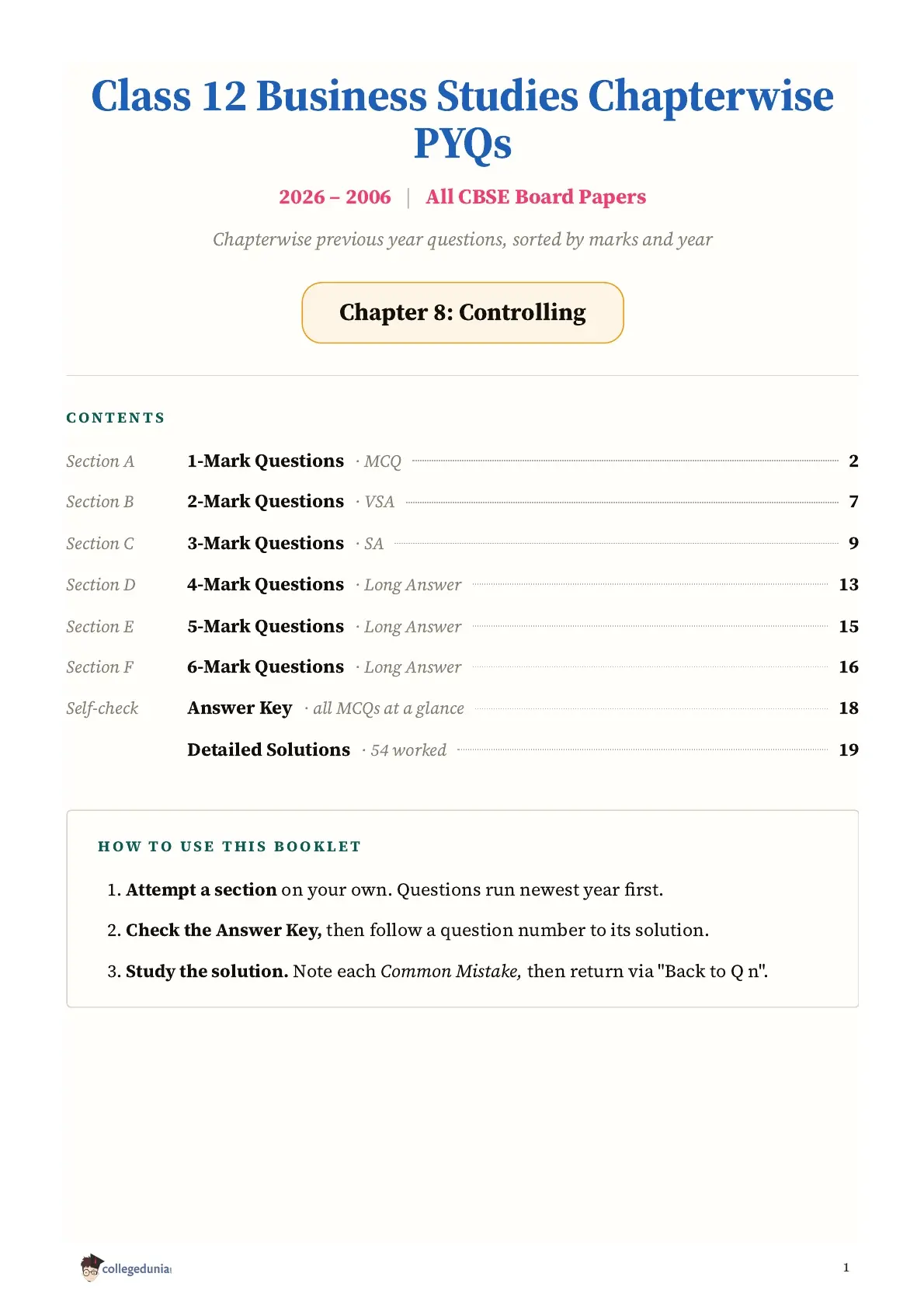
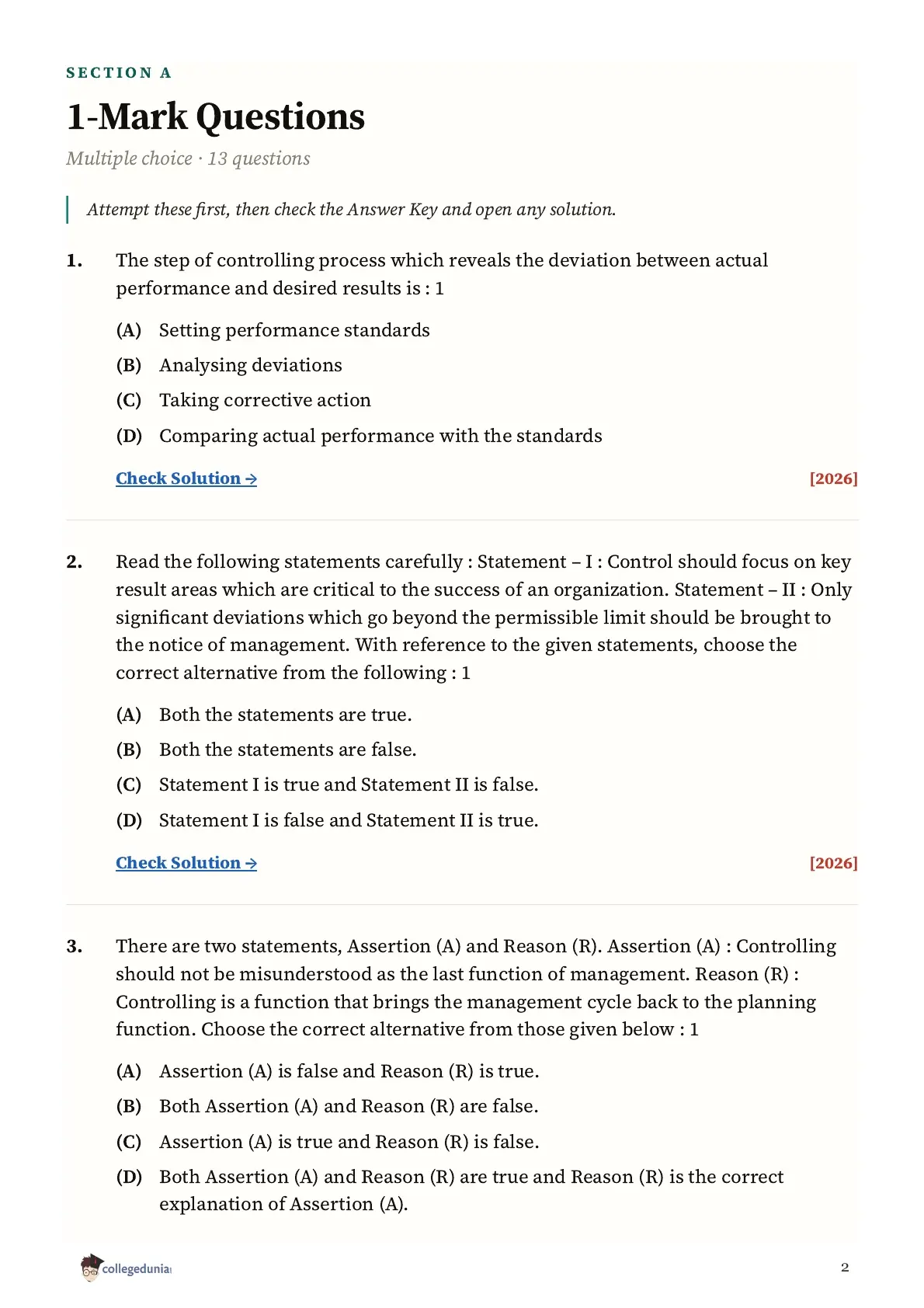
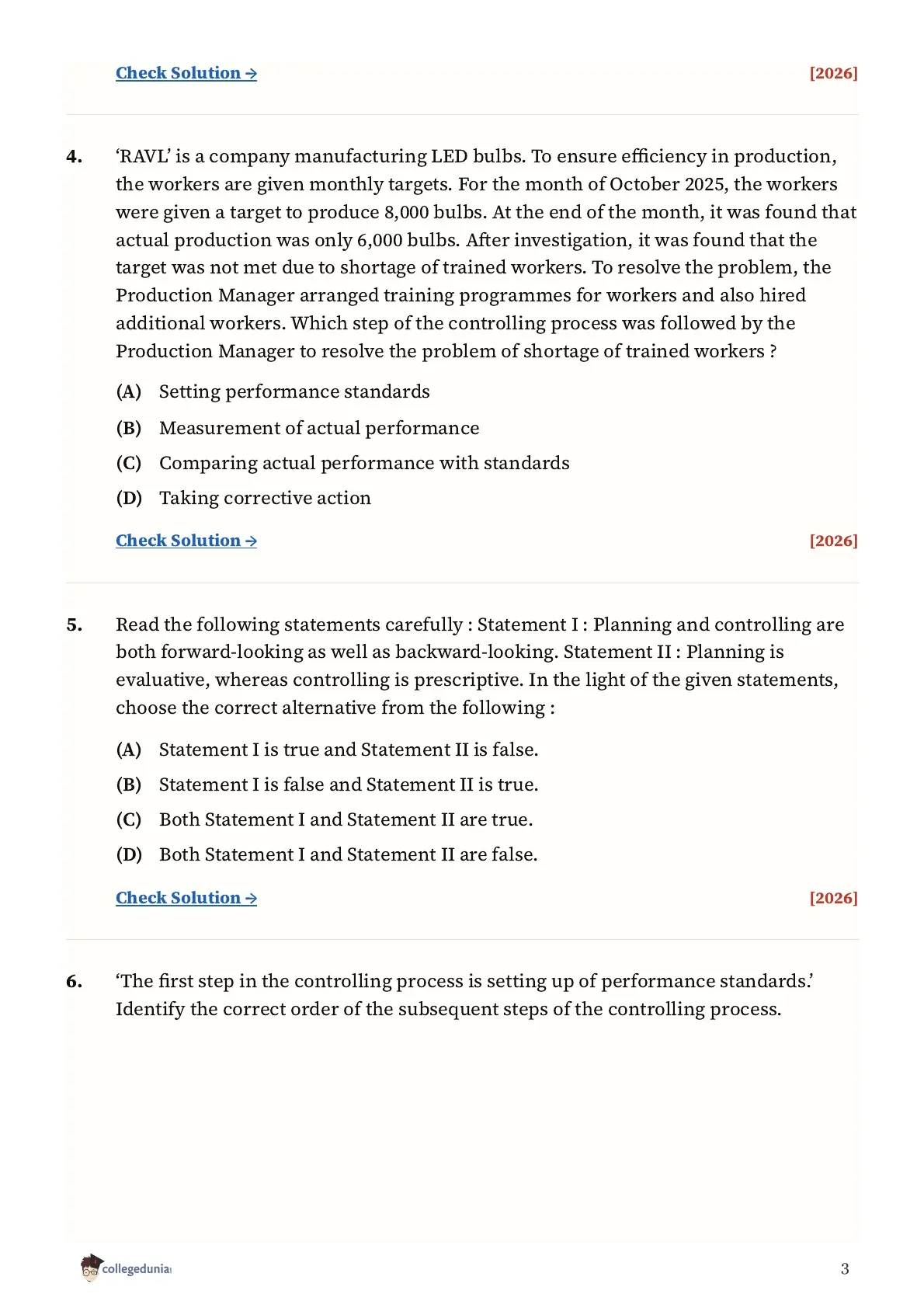
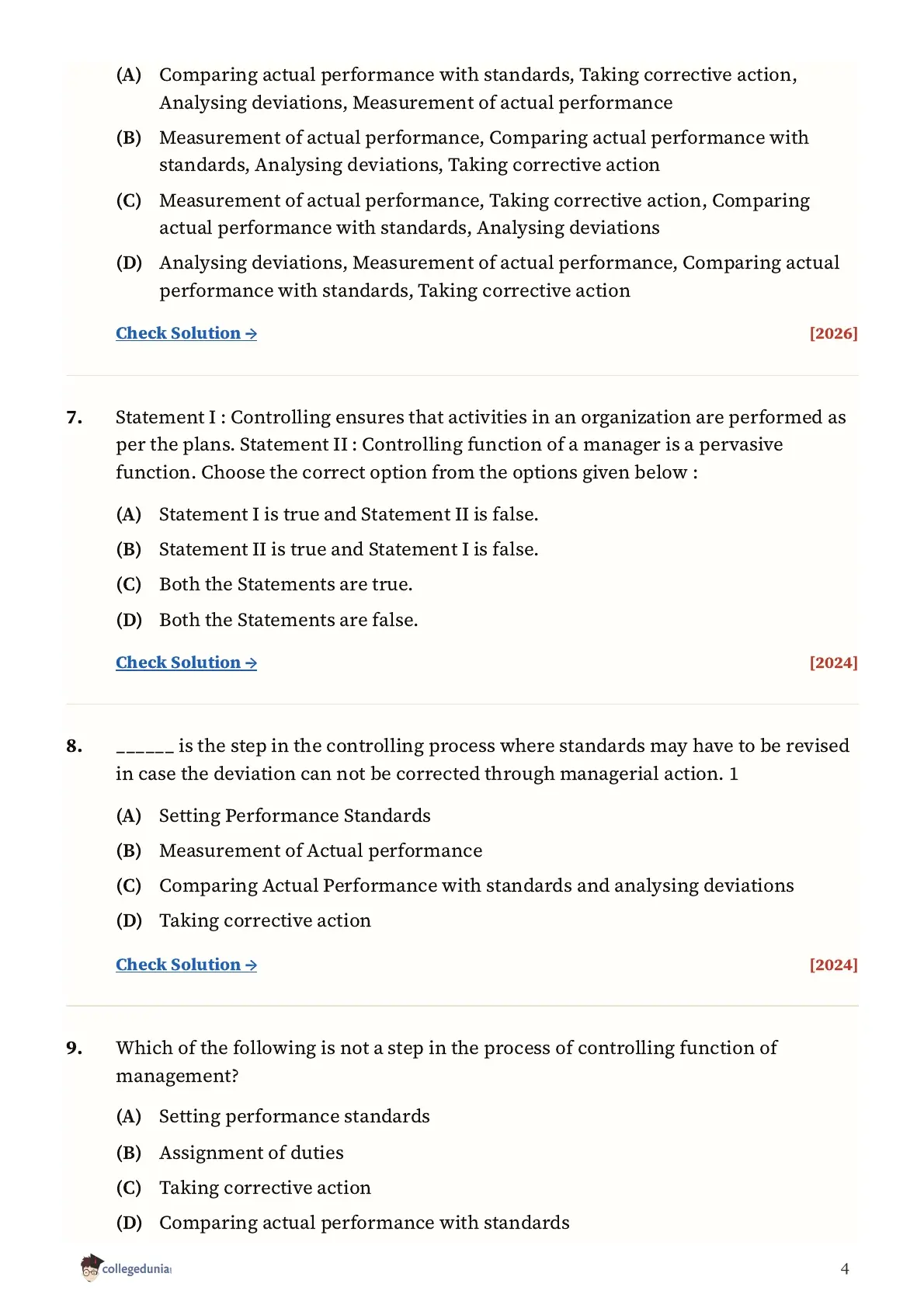
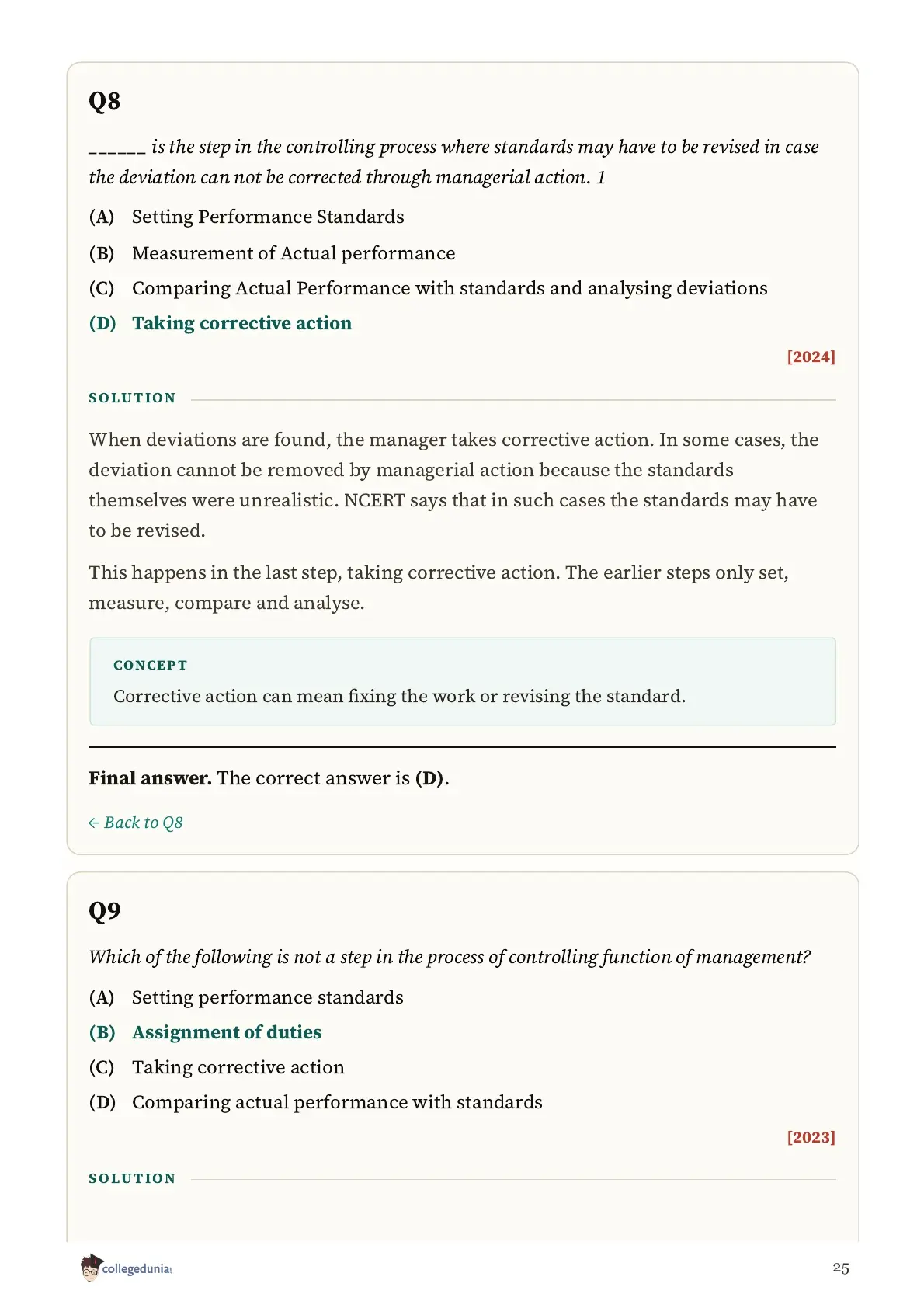
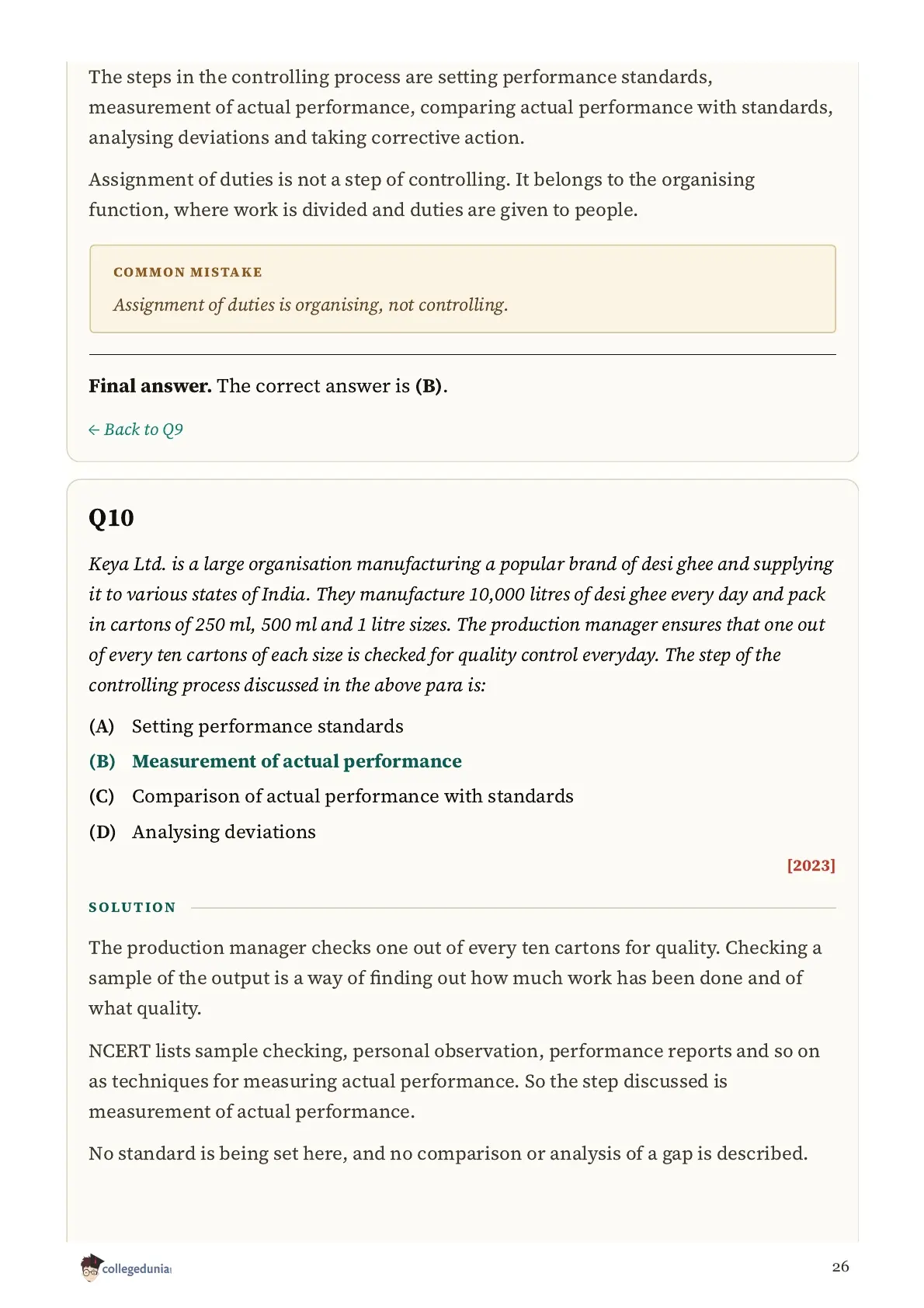
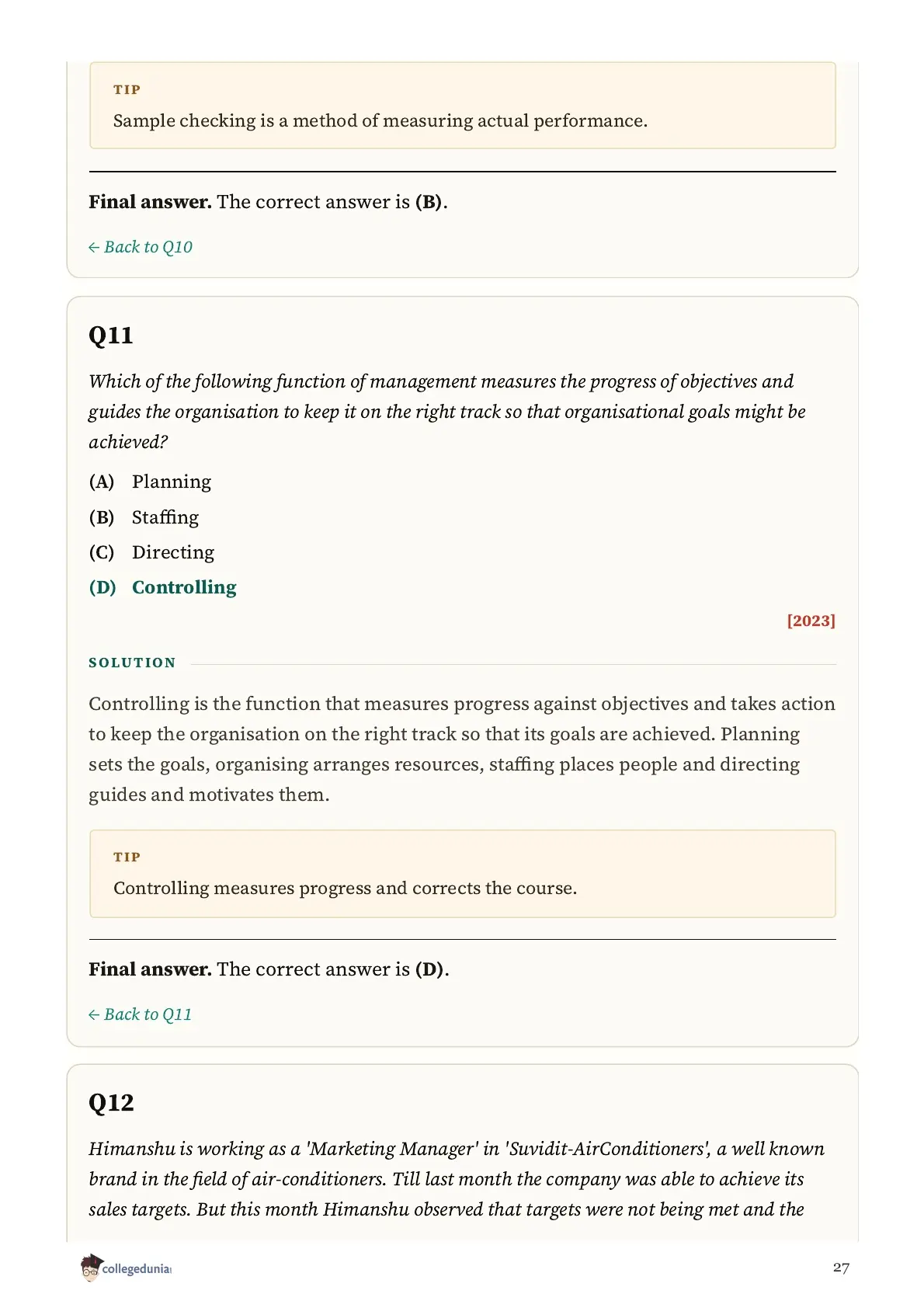
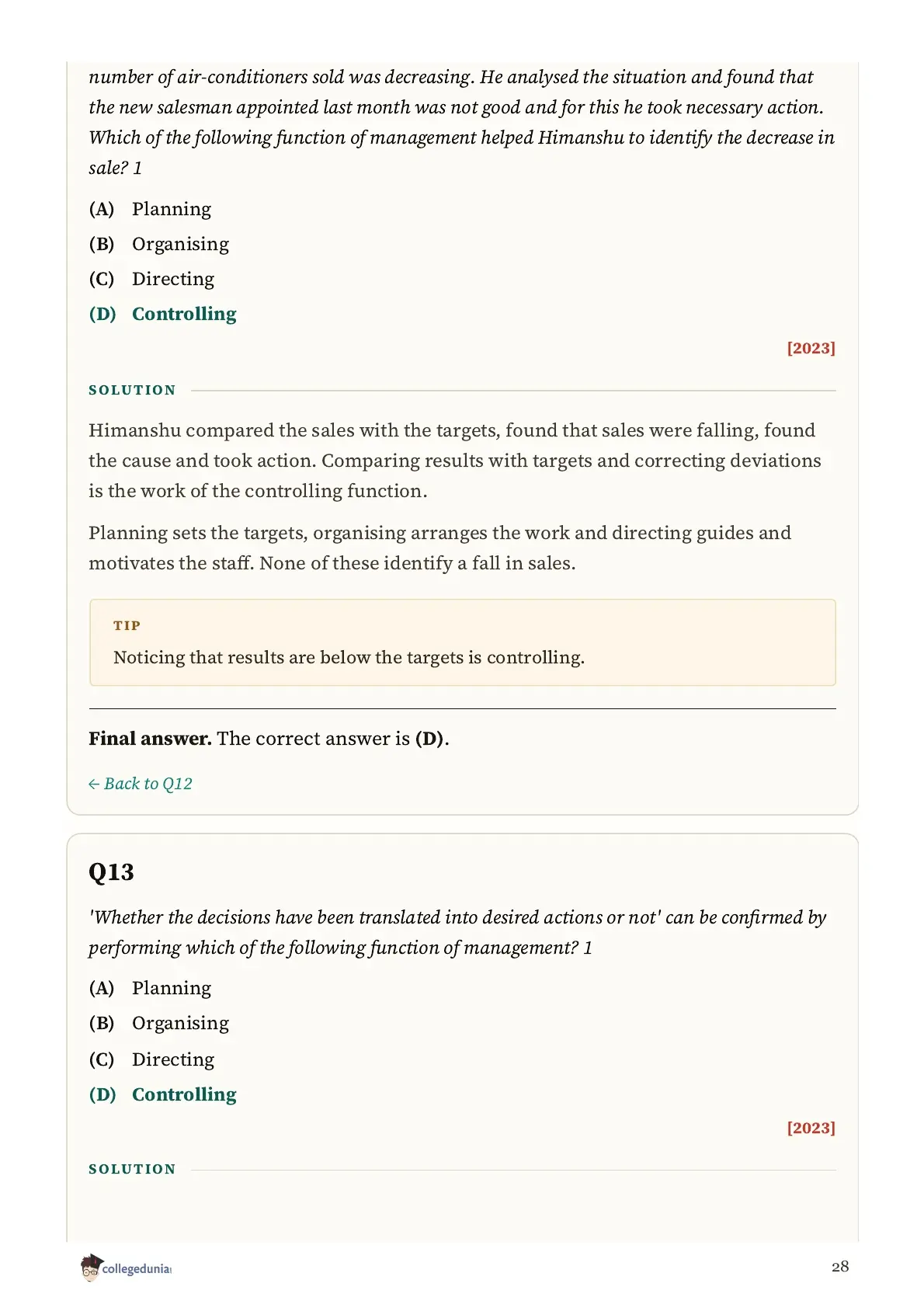
Class 12 Business Studies Controlling PYQ, free to download as a 56-page PDF. The chapter carries about 4 of the 80 marks in the board paper, and the set holds 54 solved questions from the 2006 to 2026 papers on the steps in the controlling process, importance of controlling, the relationship between planning and controlling, critical point control and management by exception, and takes roughly three and a half hours to work through, so do it right after you finish the chapter in NCERT.
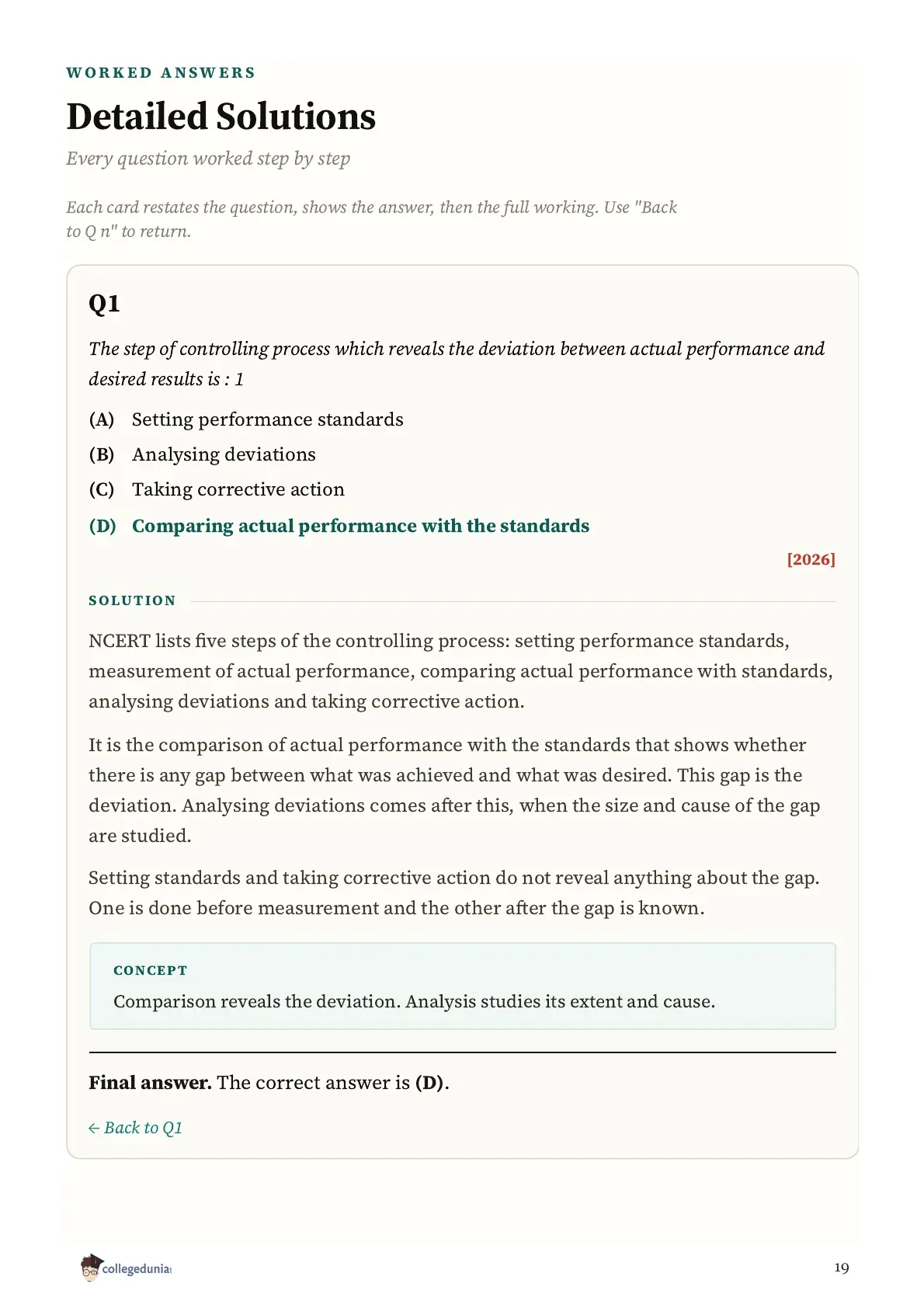
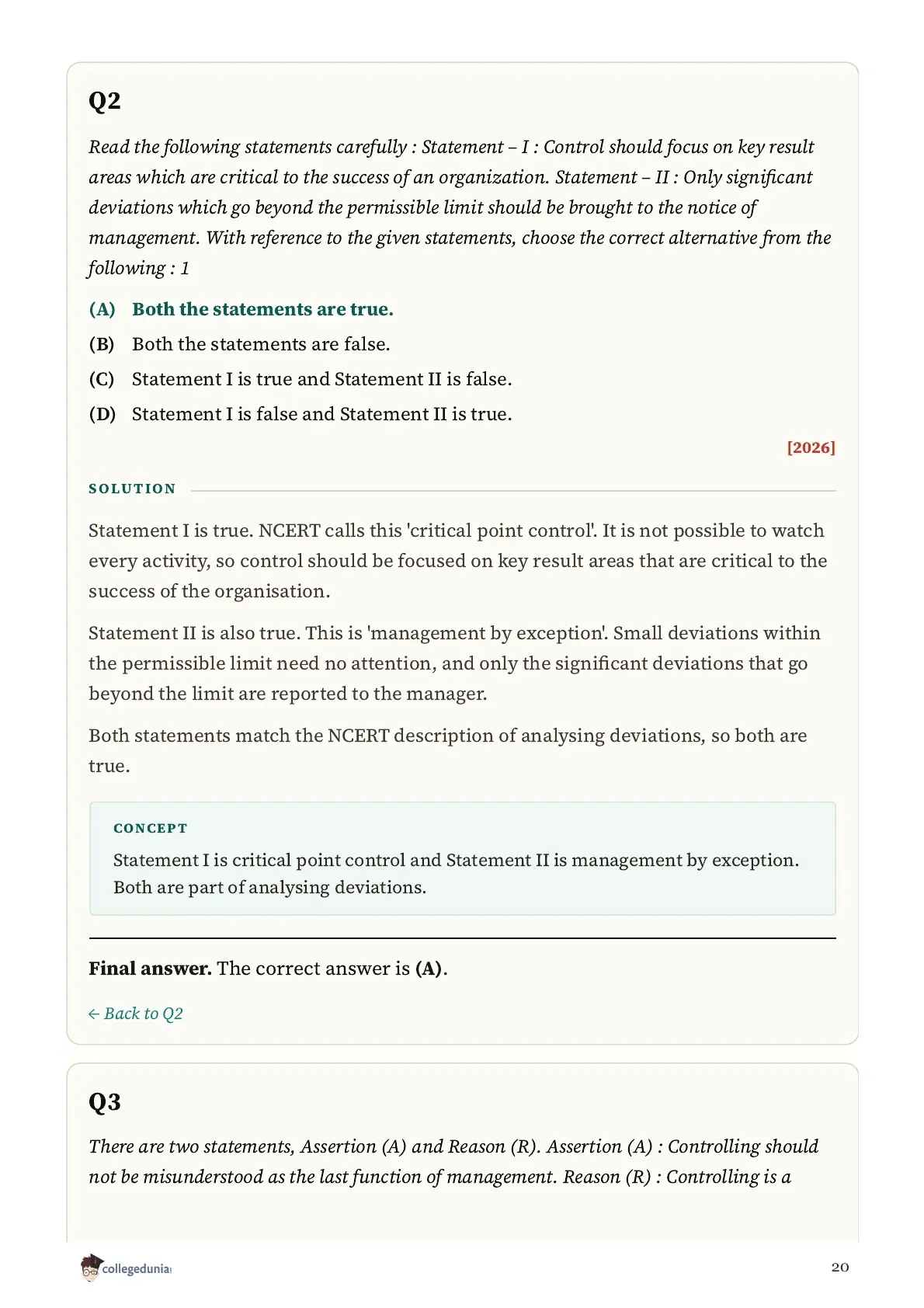
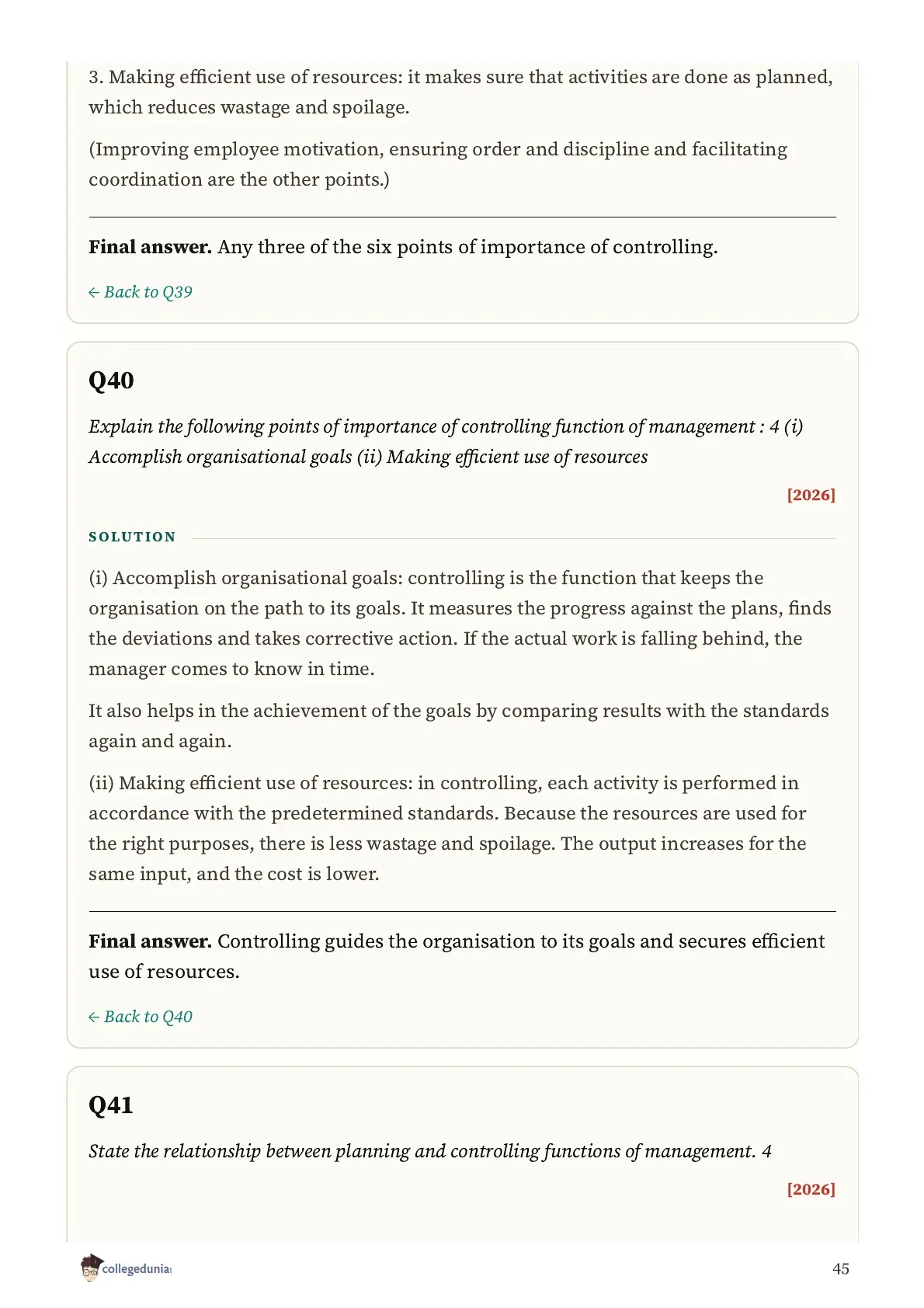
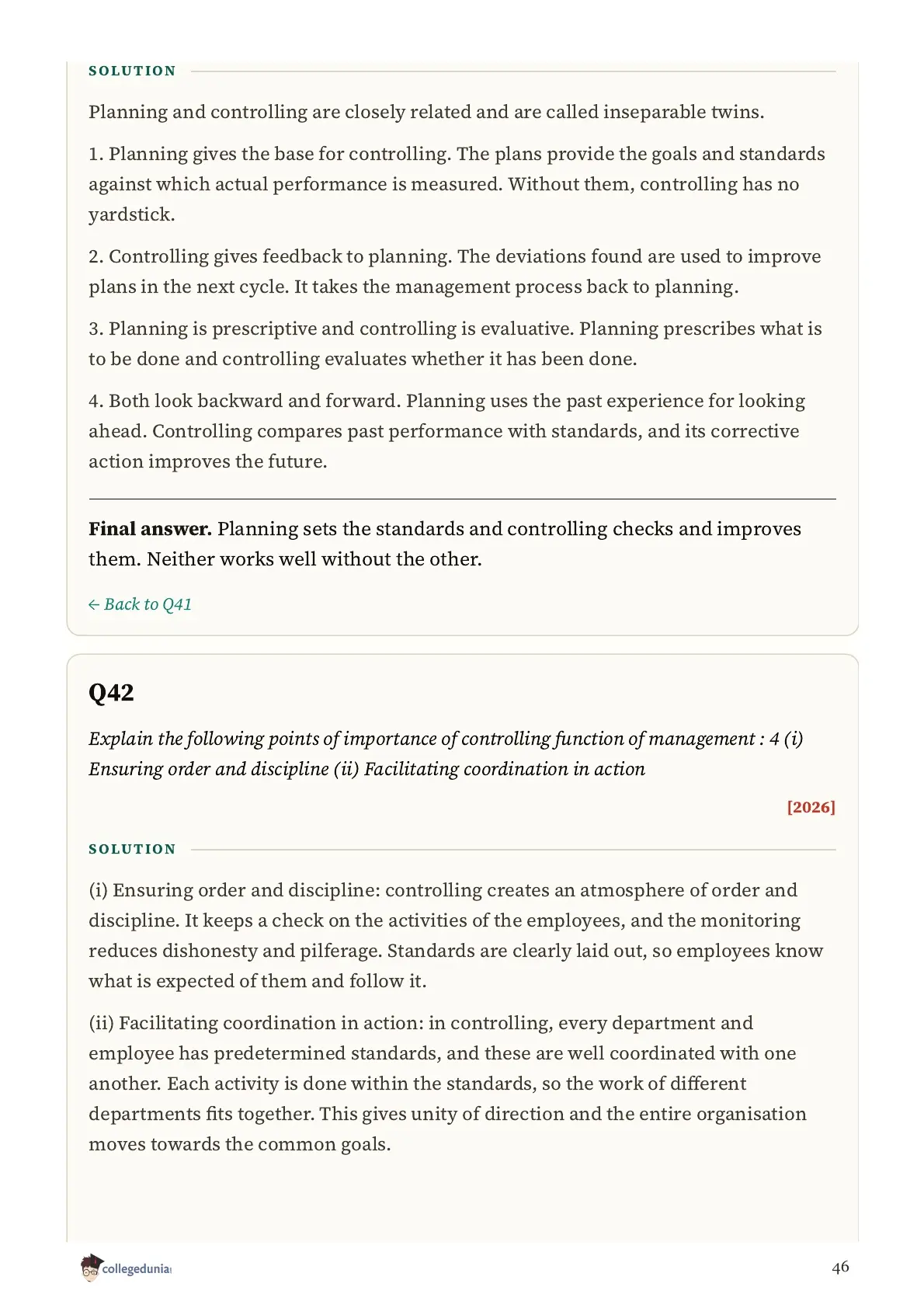
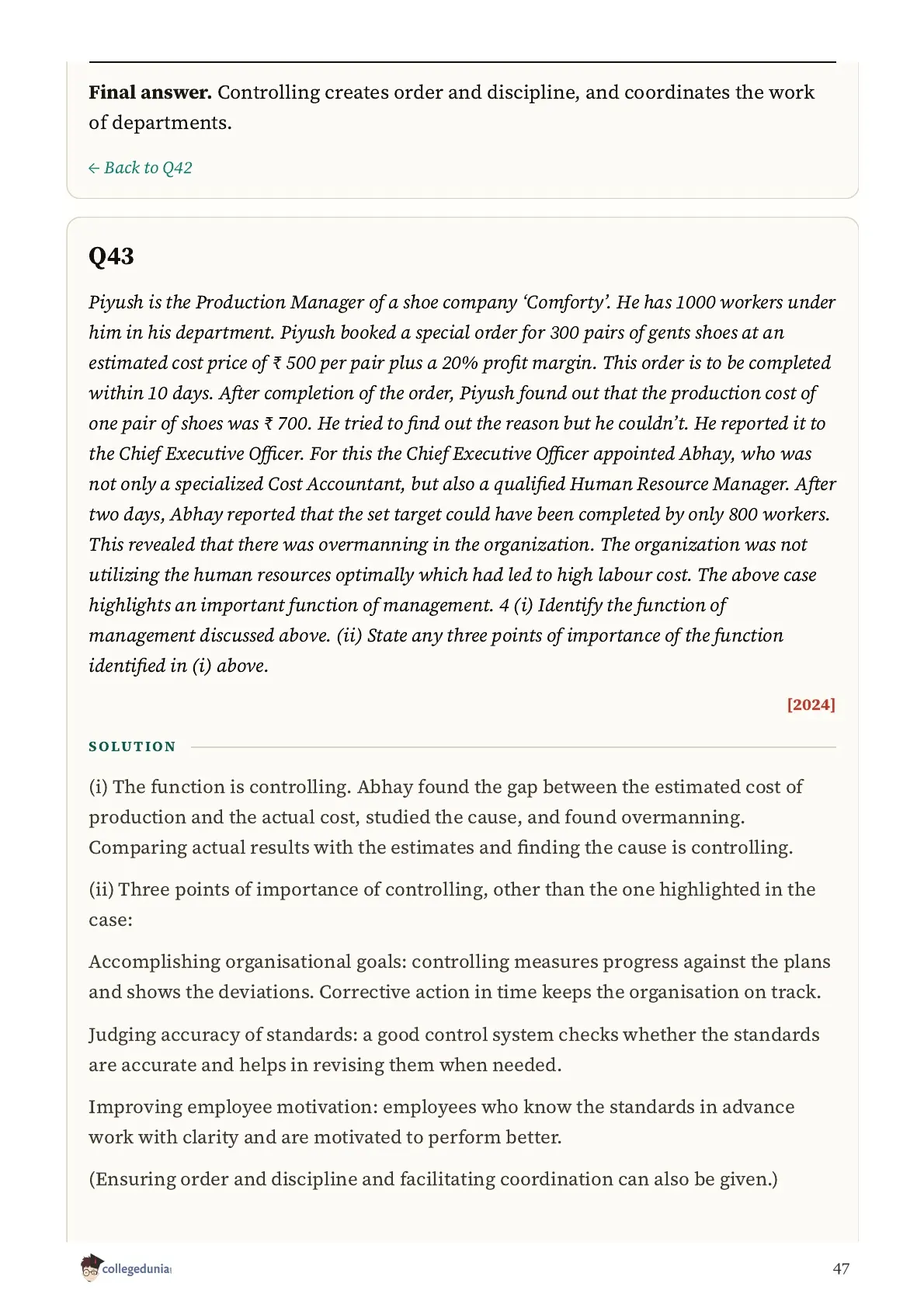
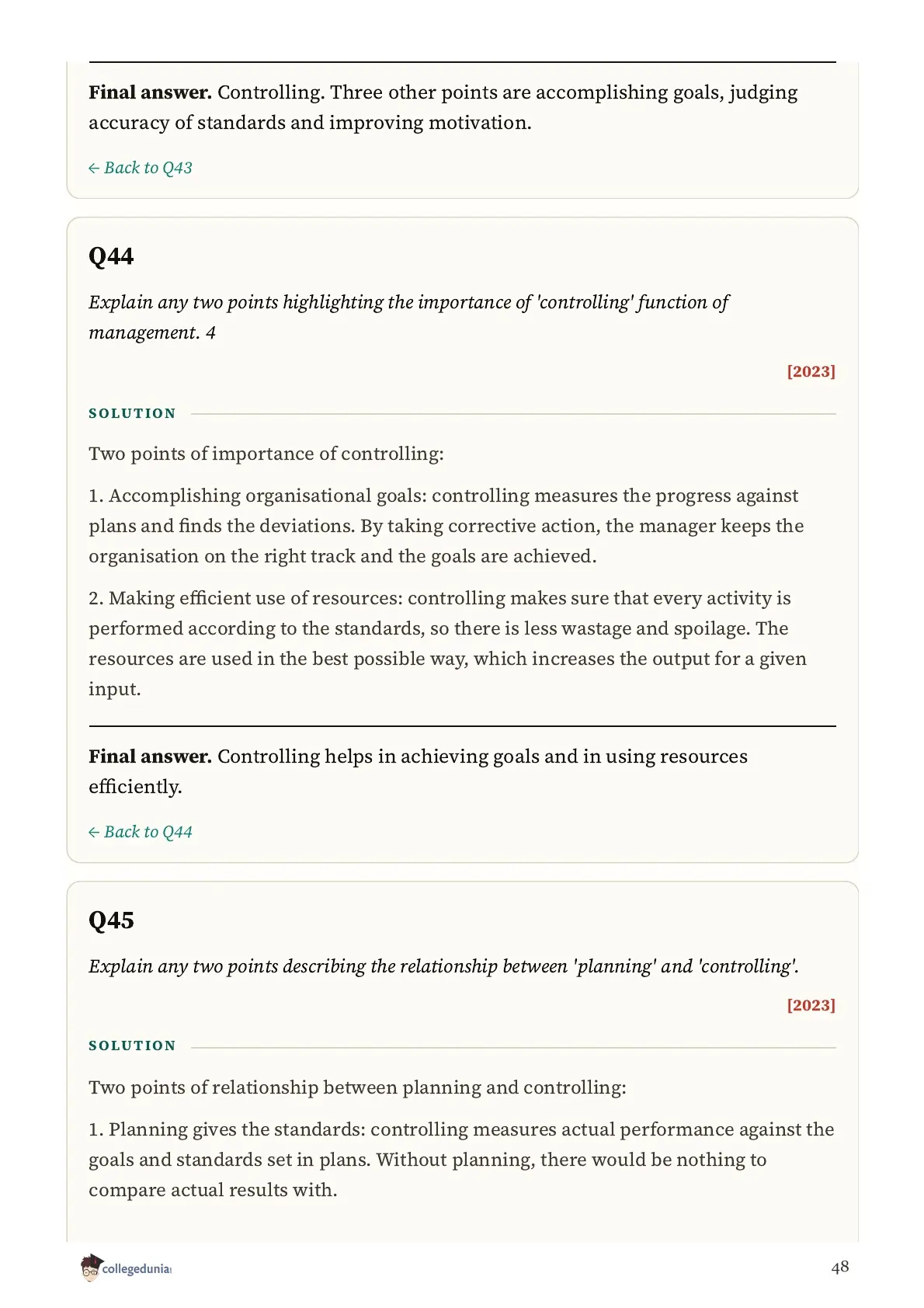
Controlling Weightage in the Class 12 Board Paper
As per Business Studies Controlling weightage from past years, students can expect about 4 marks from this chapter in the 80-mark board paper. Marks per chapter change from one paper to the next, so treat the figure as a guide and check the CBSE curriculum for the official unit marks.
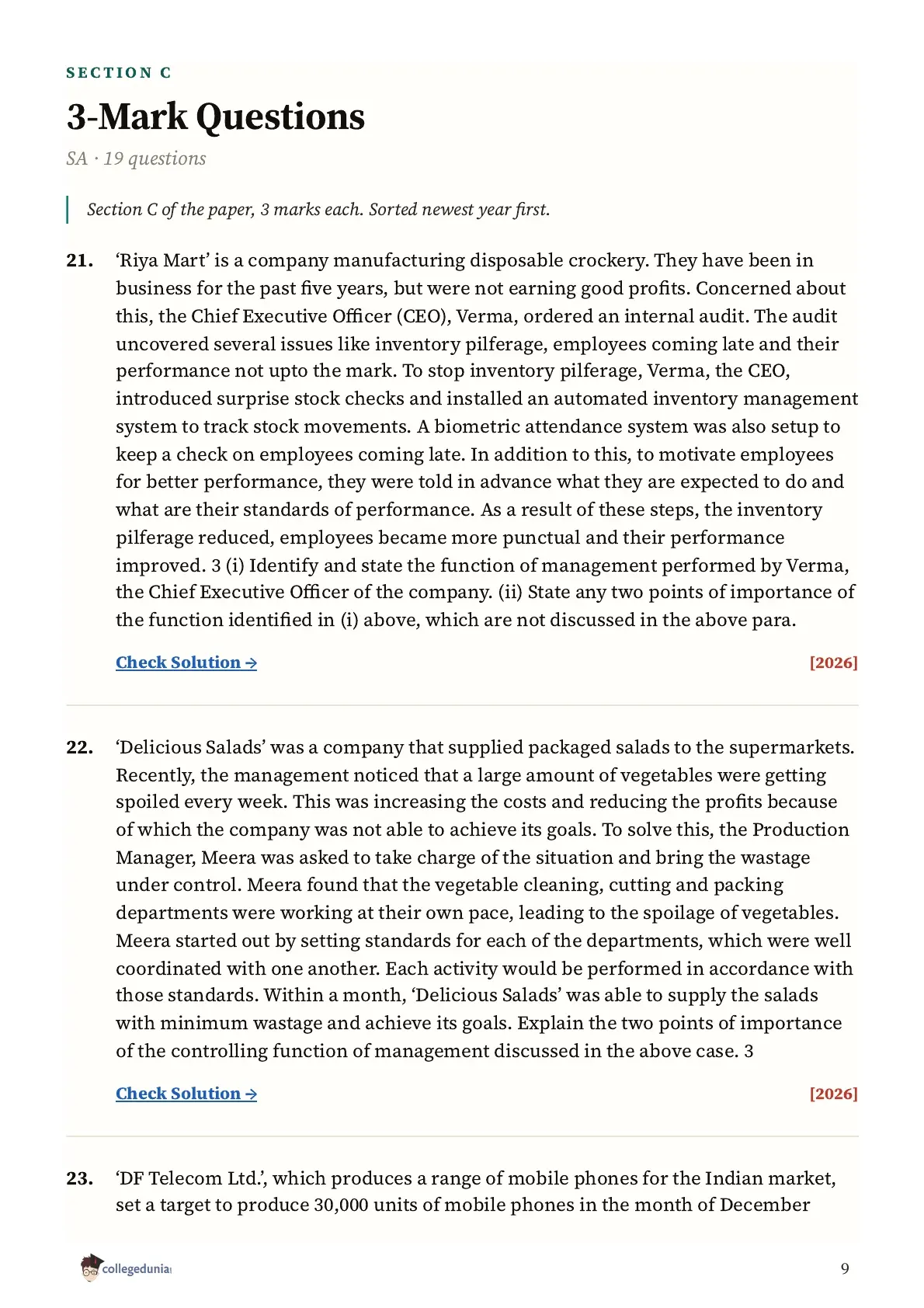
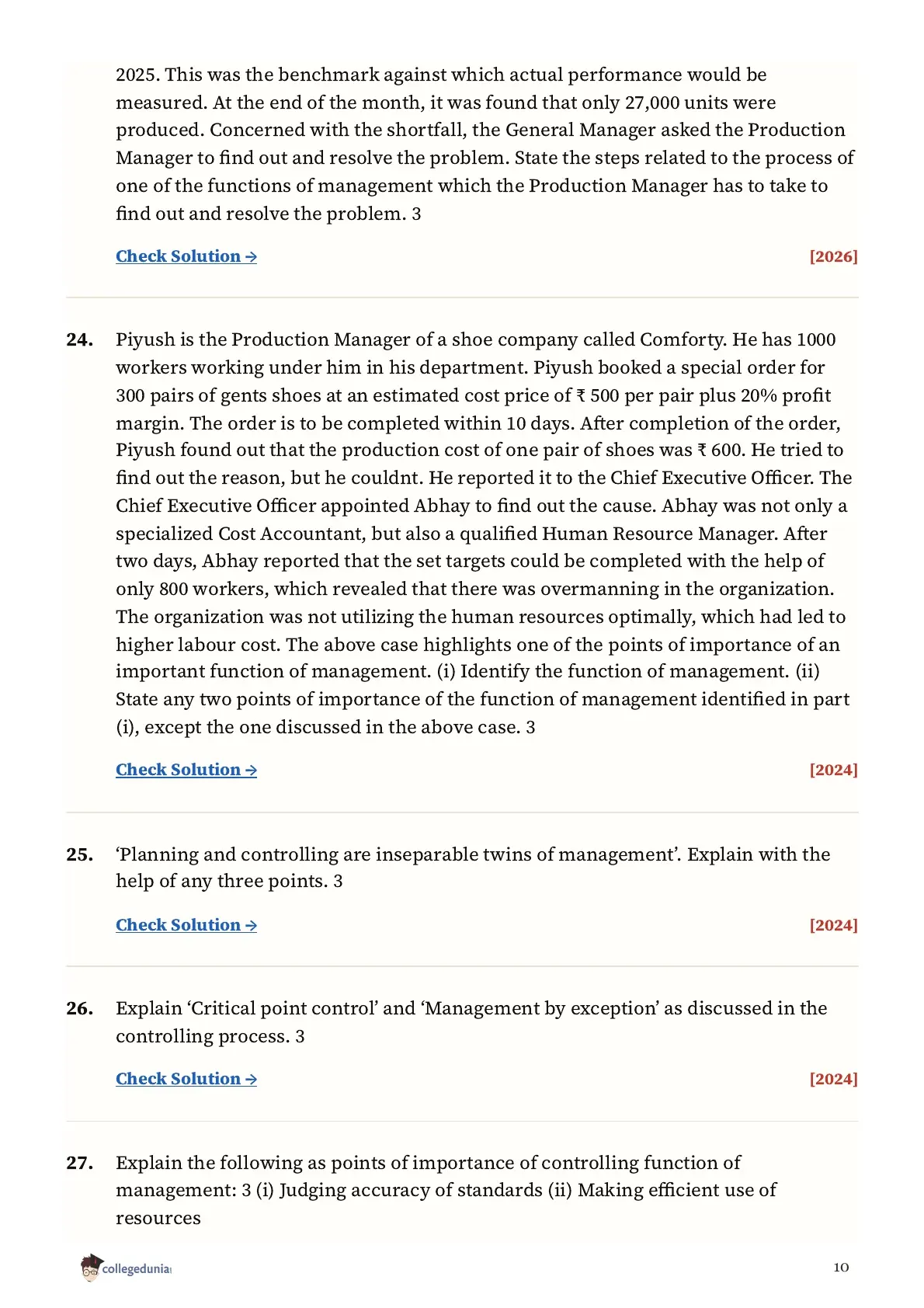
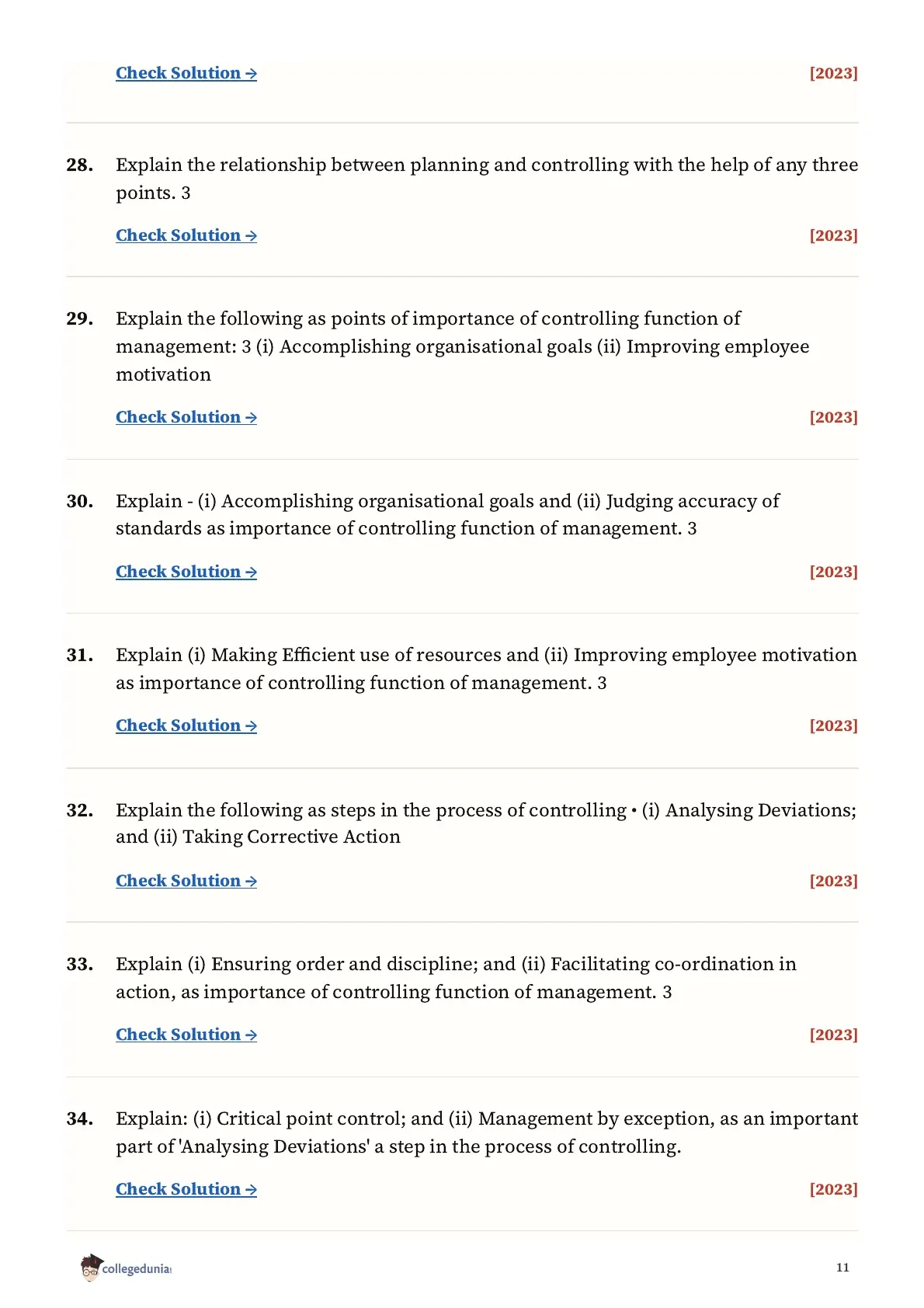
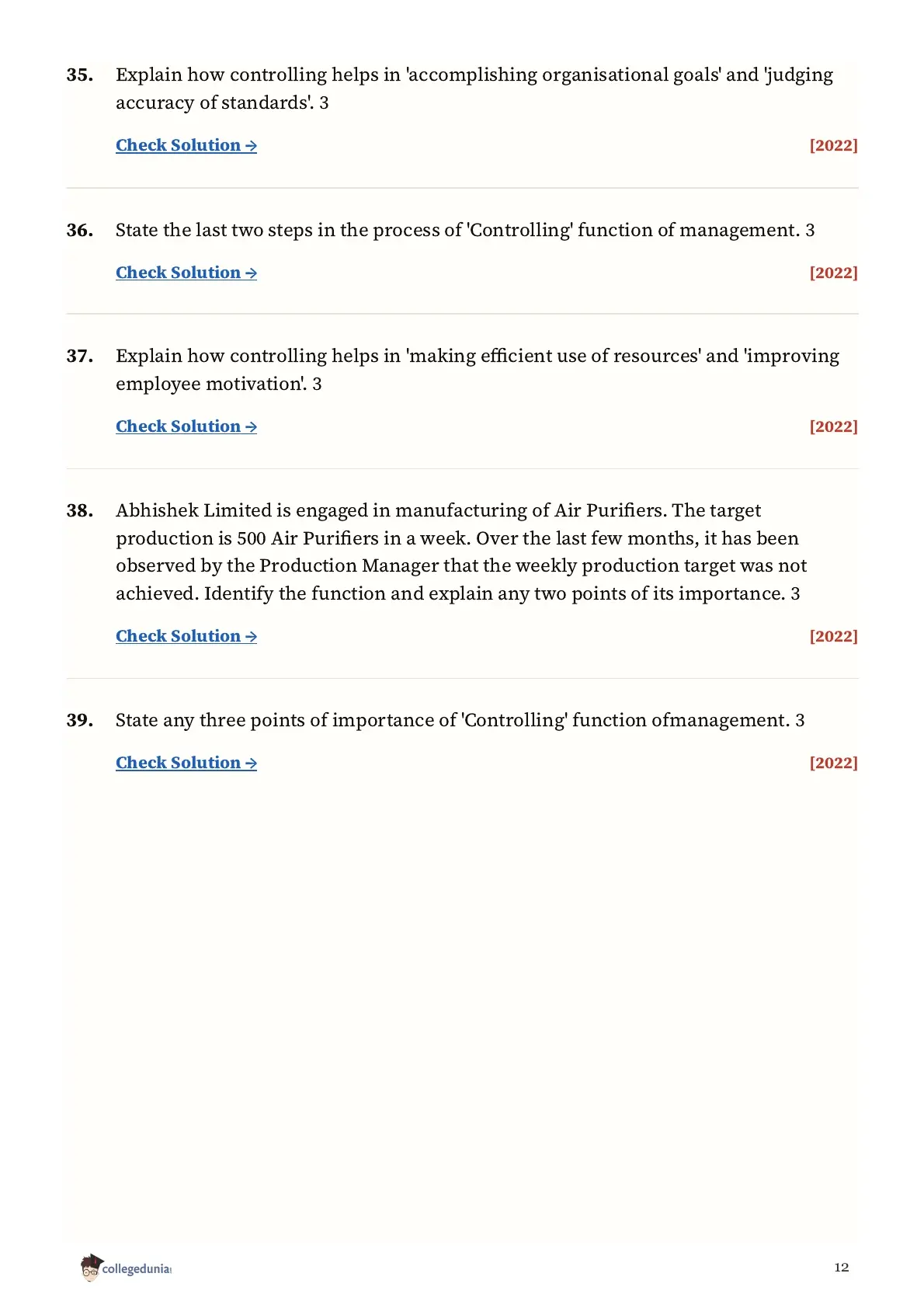
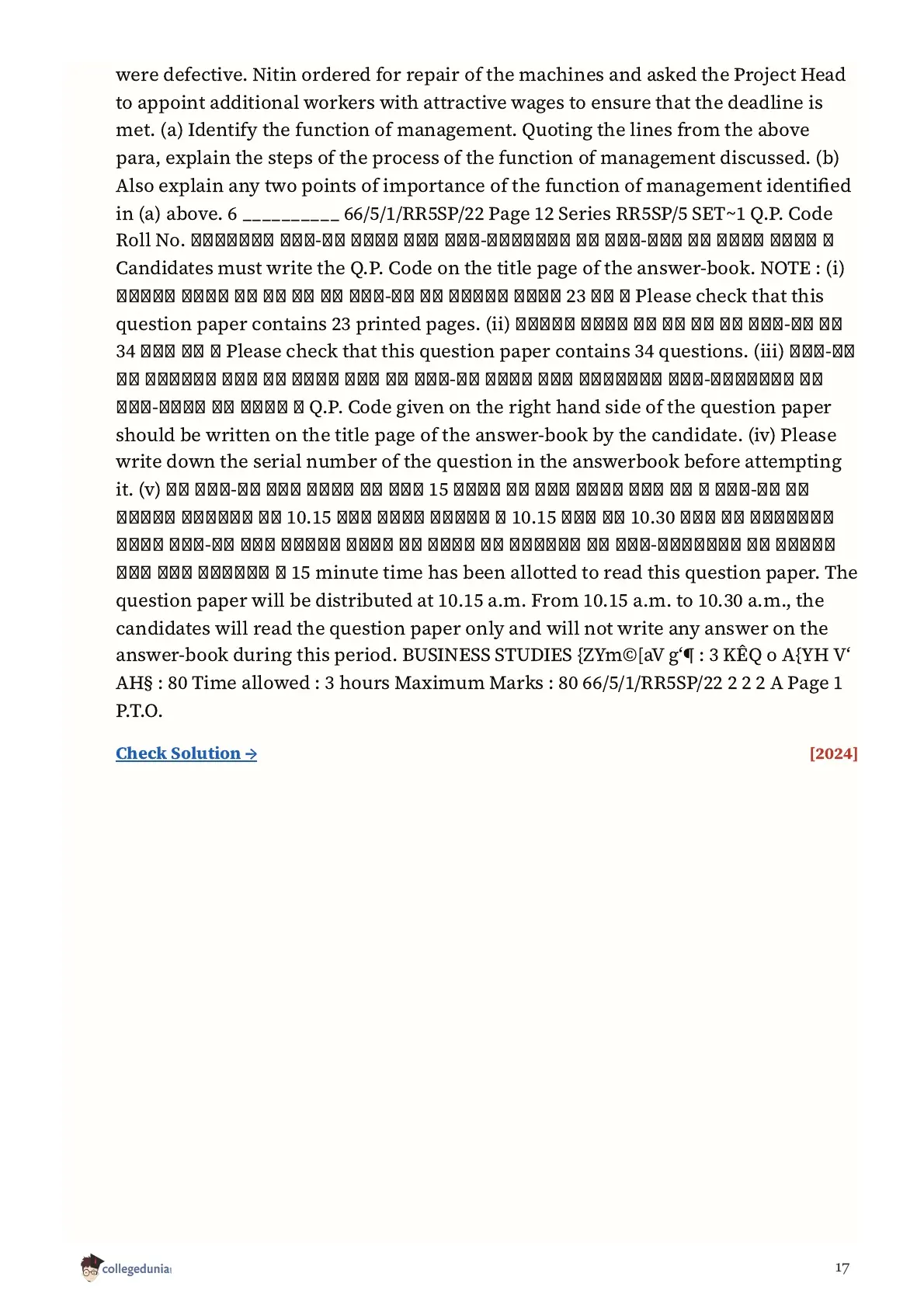
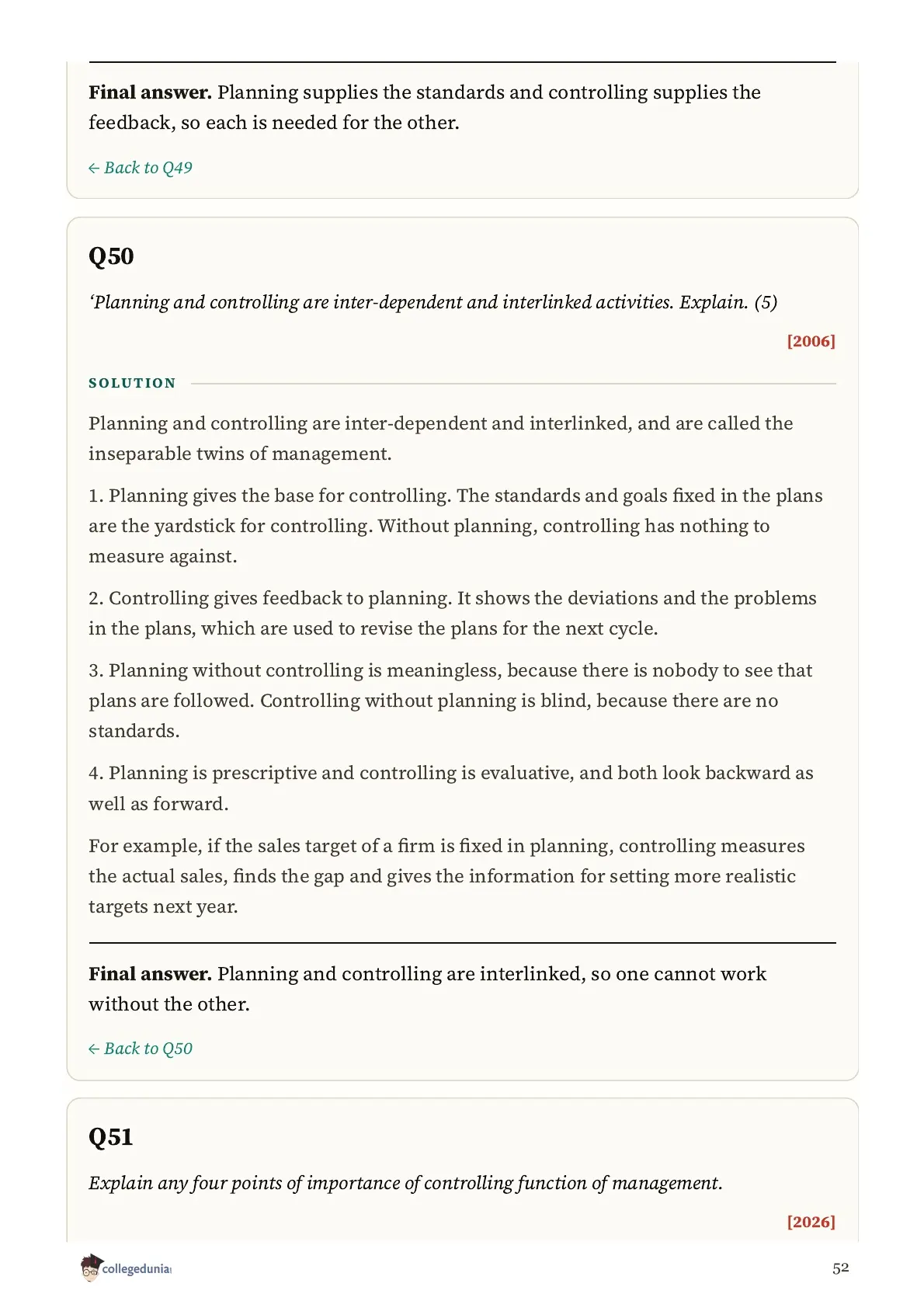
The 54 questions in this set fall in six mark bands. The 3-mark answers are the largest group with 19 questions, followed by 13 one-mark MCQs and 8 questions of 4 marks. The rest are 7 questions of 2 marks, 4 of 6 marks and 3 of 5 marks, so 41 of the 54 need a written answer.
| Marks Each | Question Type | Questions in the Set |
|---|---|---|
| 1 mark | MCQ | 13 |
| 2 marks | Very Short Answer (VSA) | 7 |
| 3 marks | Short Answer (SA) | 19 |
| 4 marks | Long Answer | 8 |
| 5 marks | Long Answer | 3 |
| 6 marks | Long Answer | 4 |
Controlling Questions by Topic
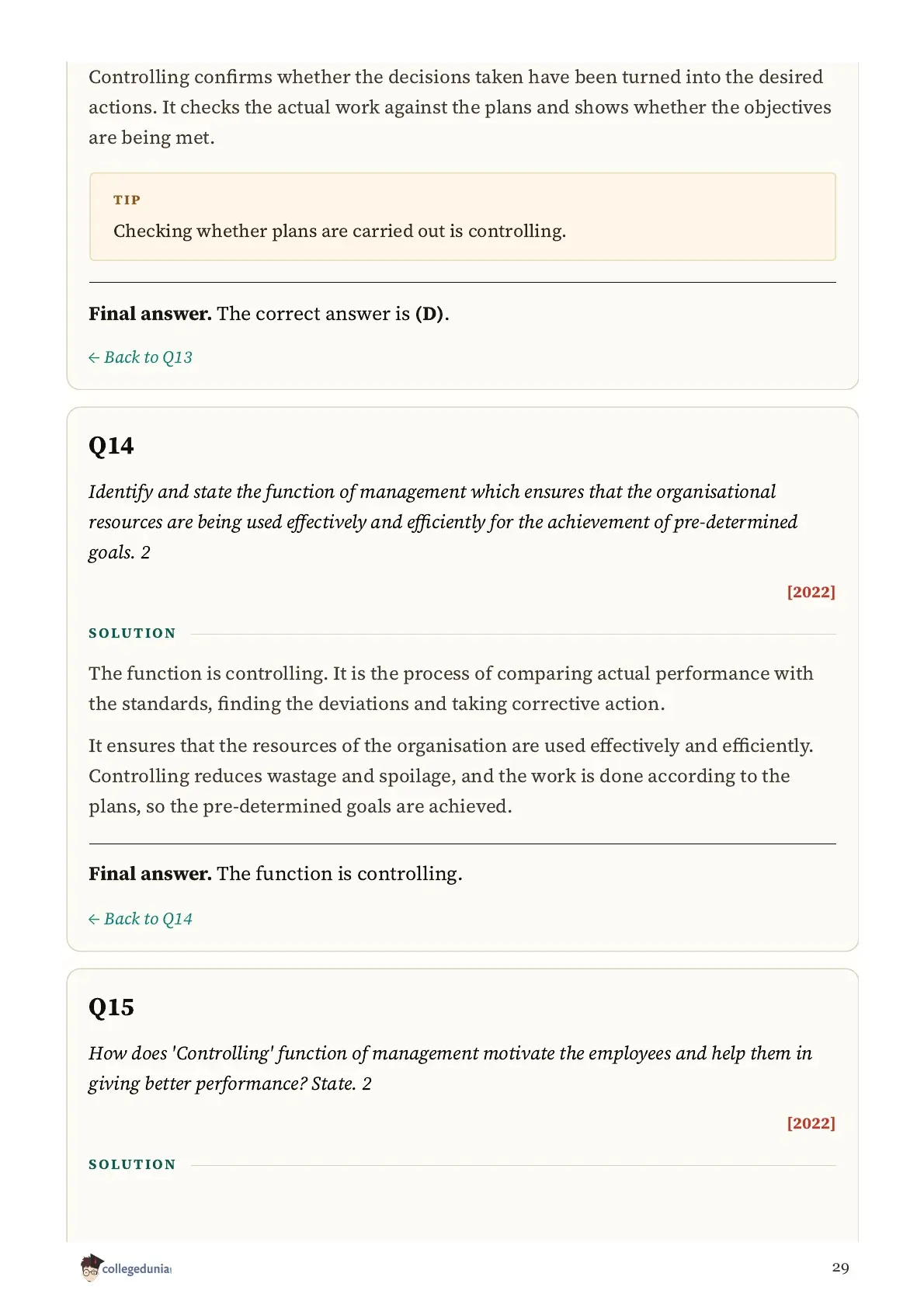
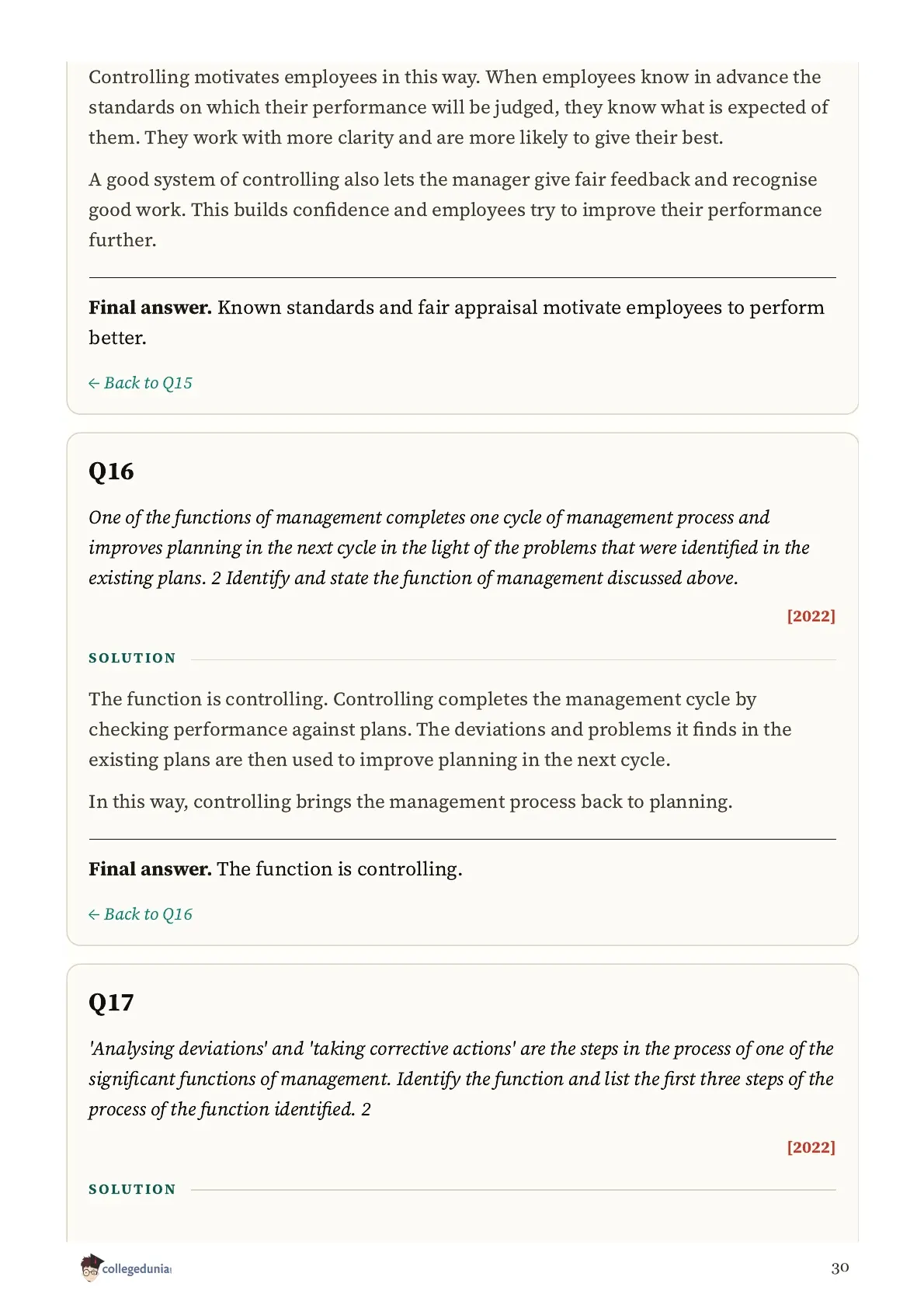
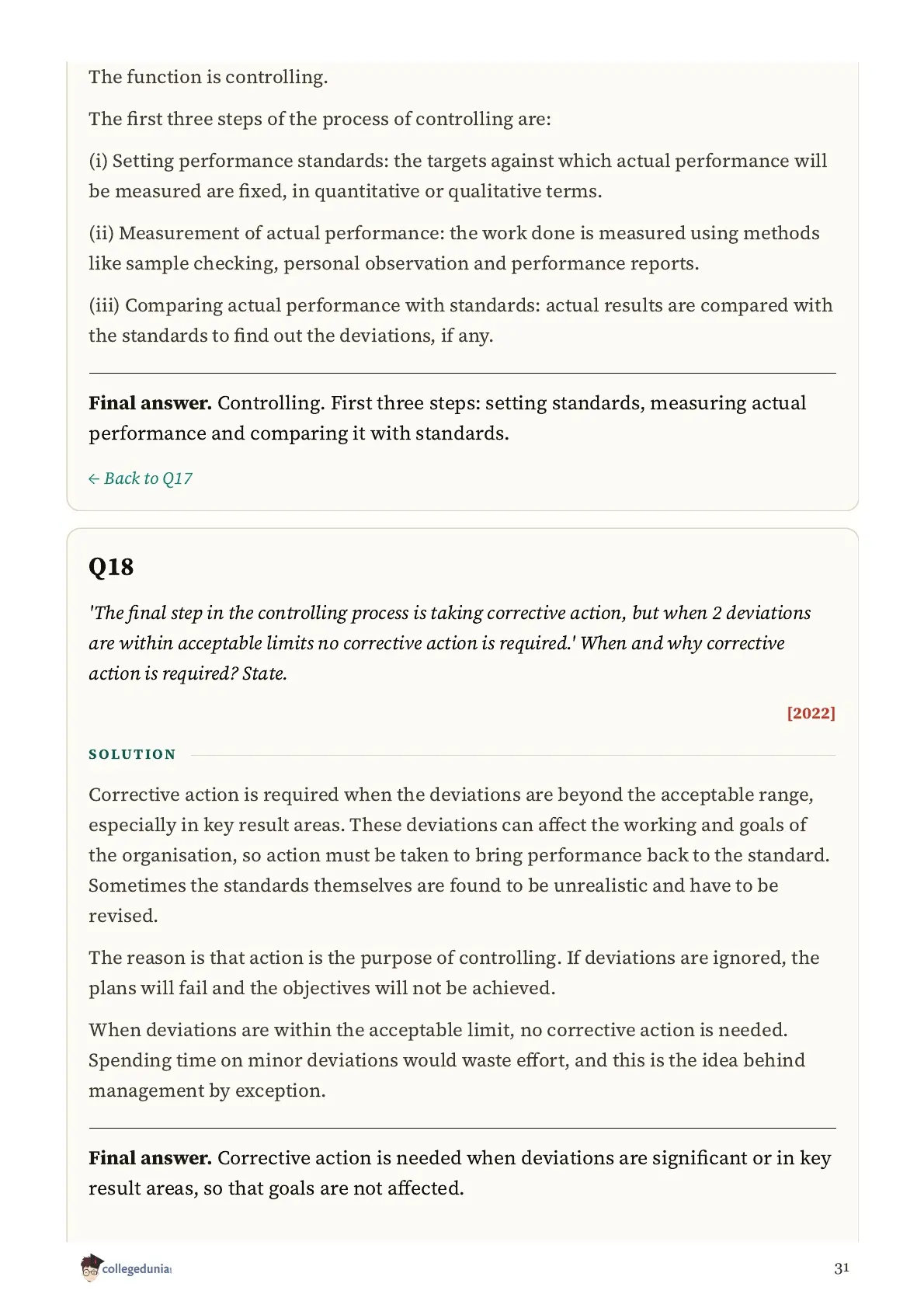
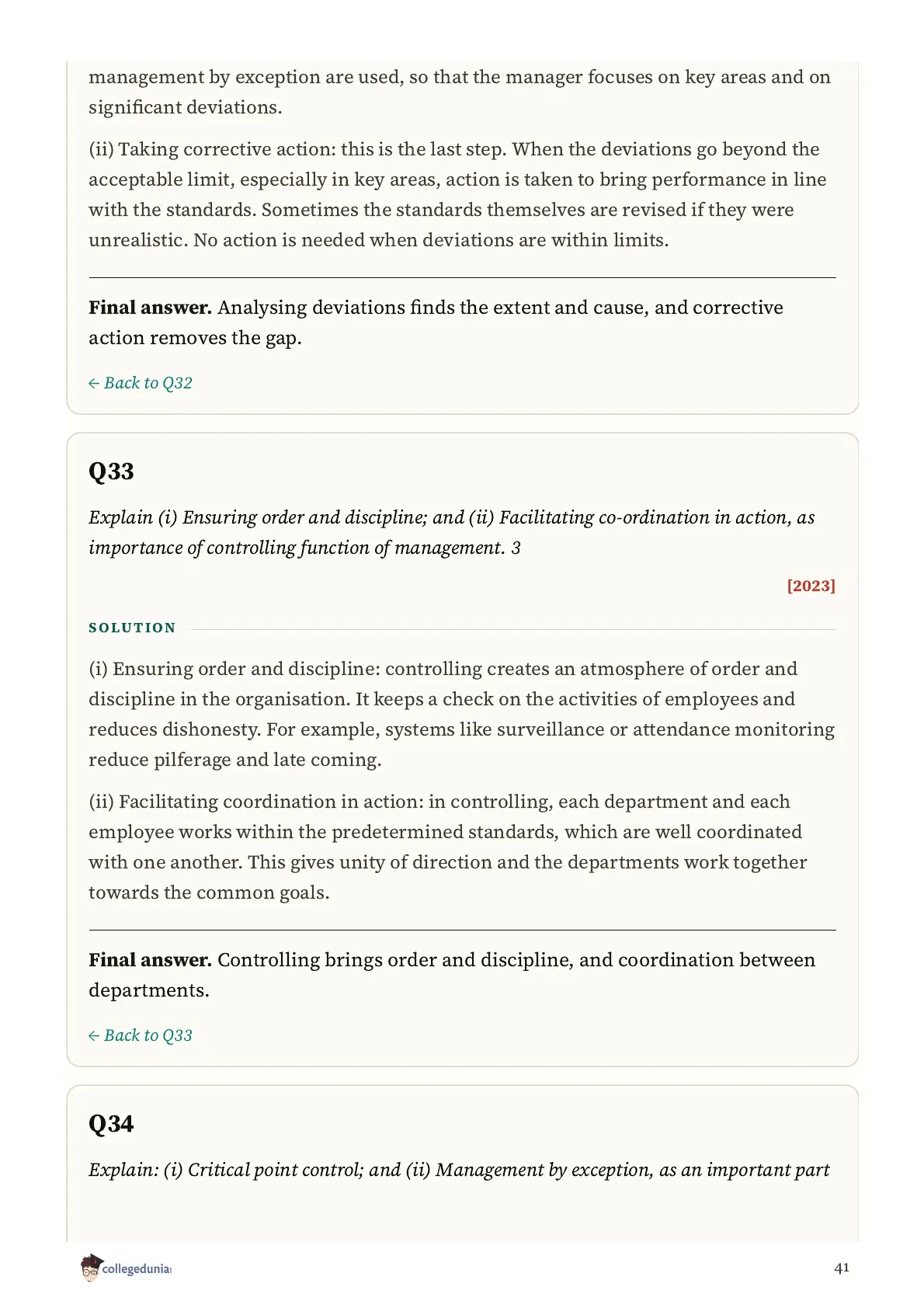
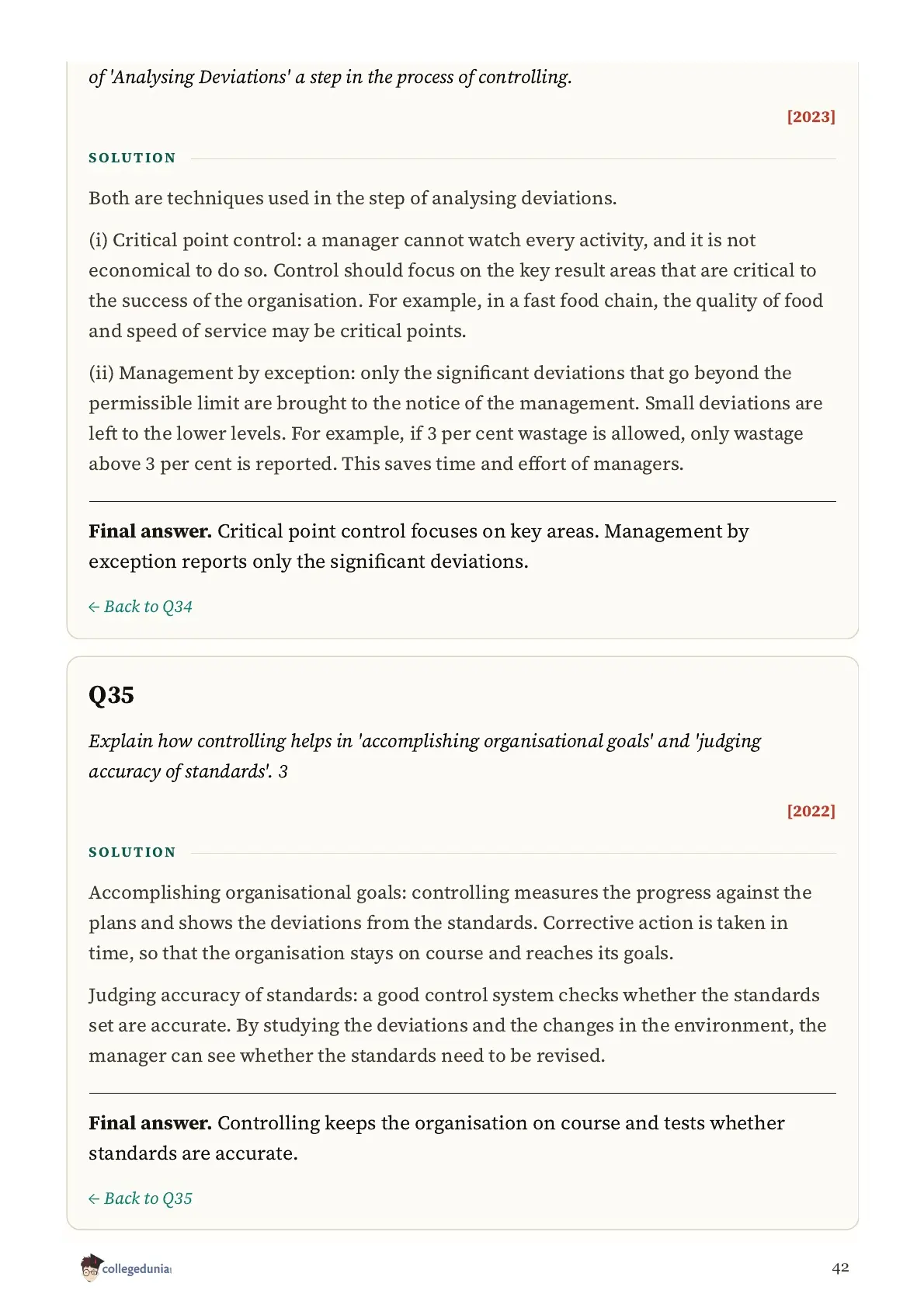
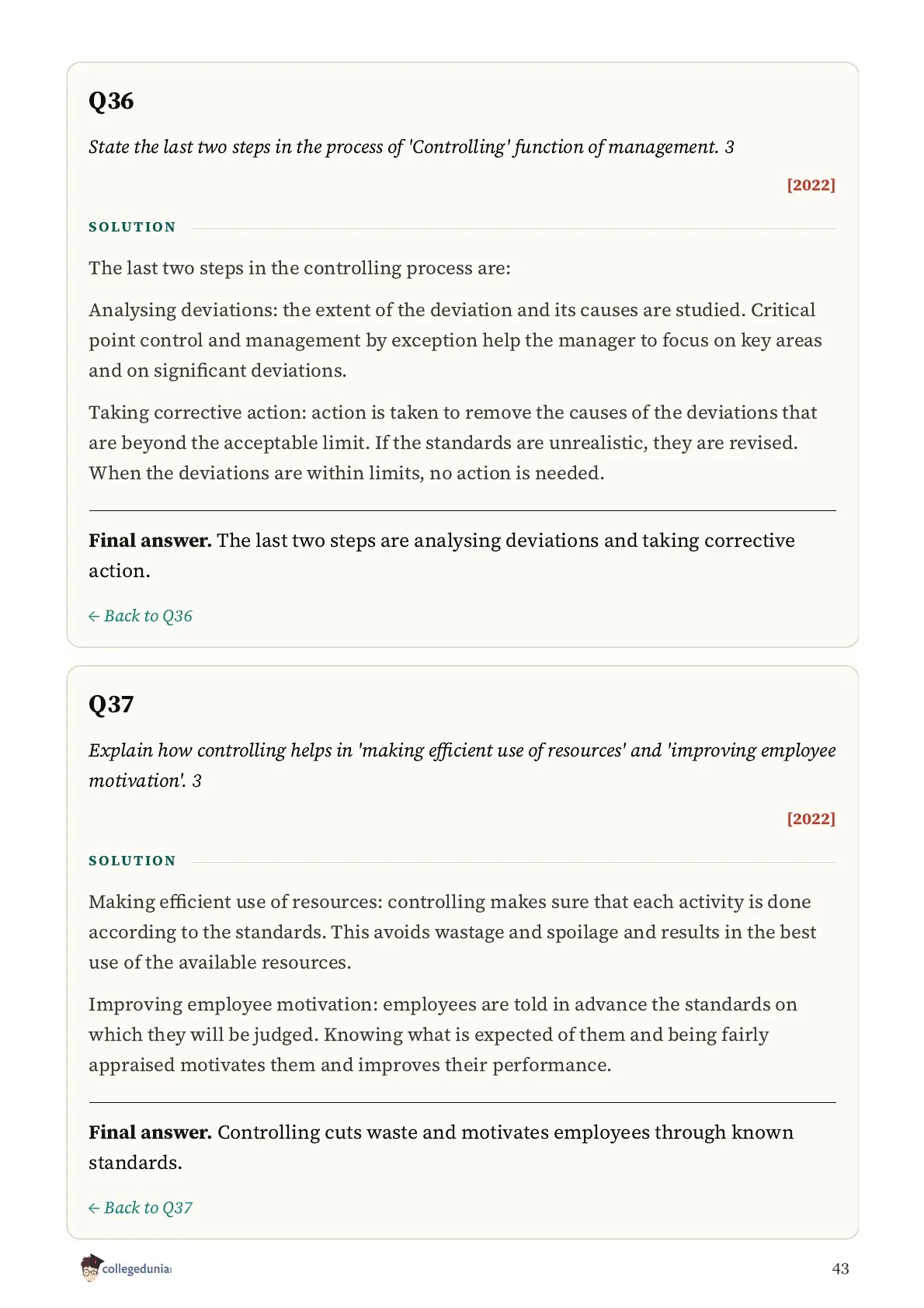
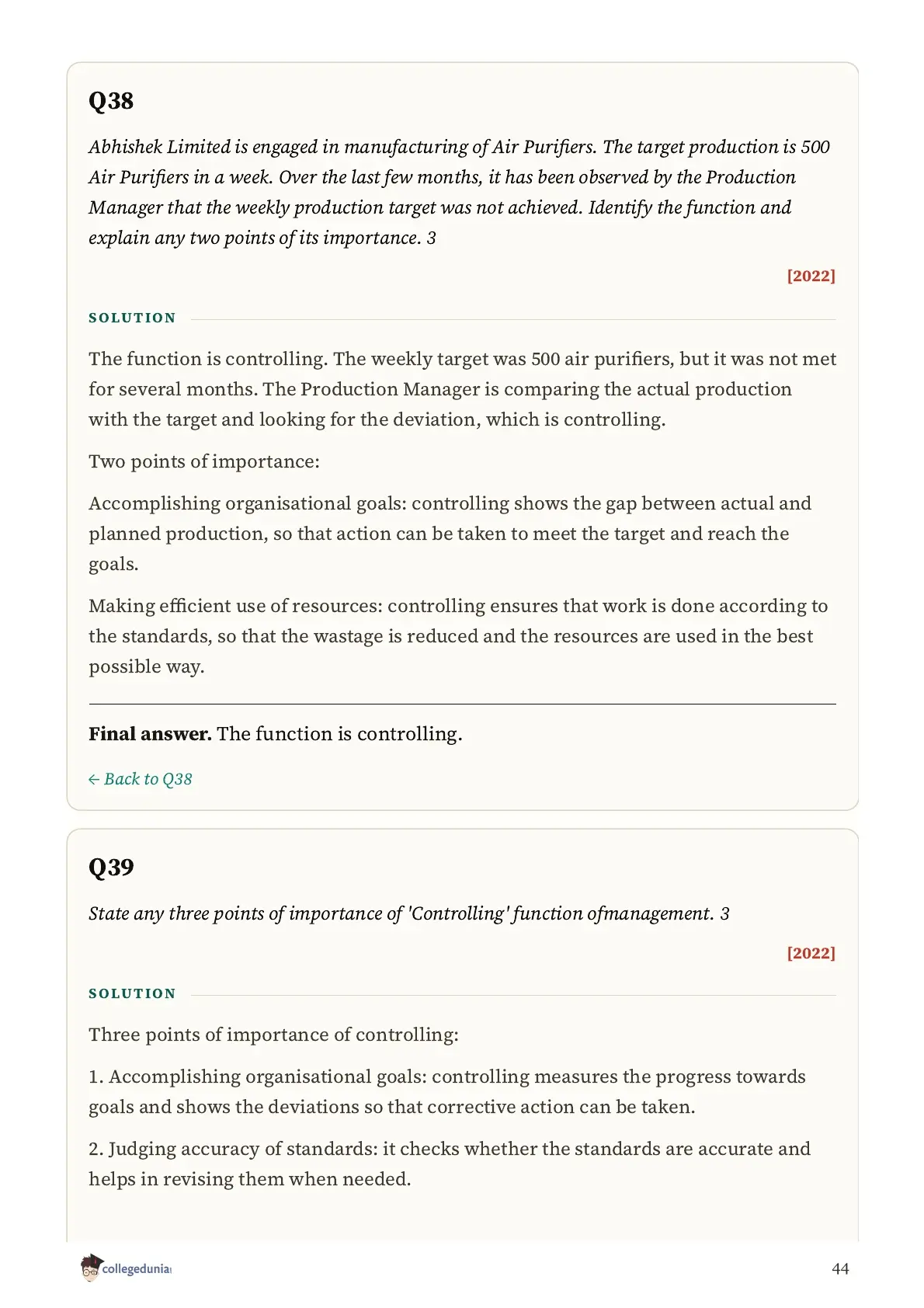
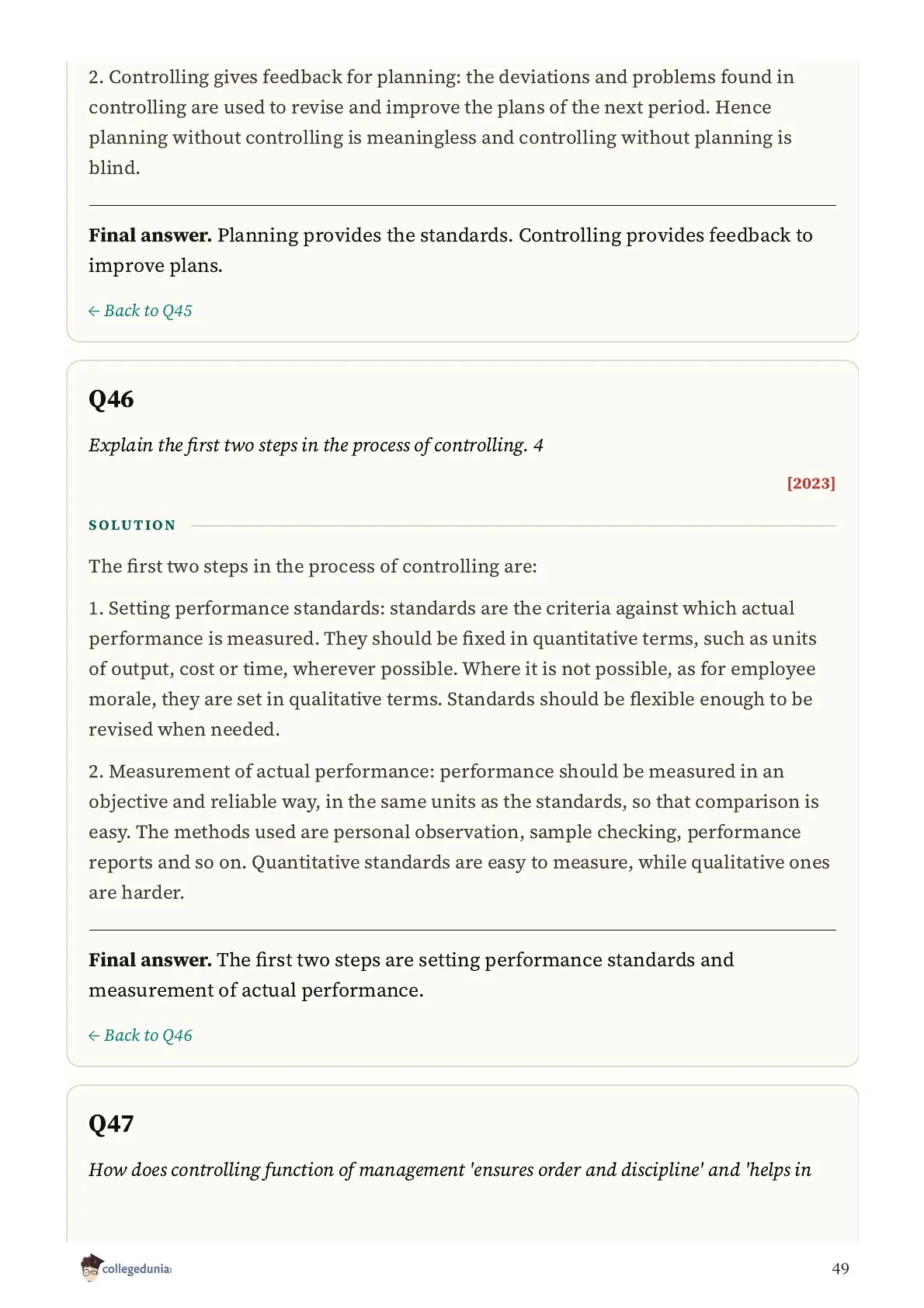
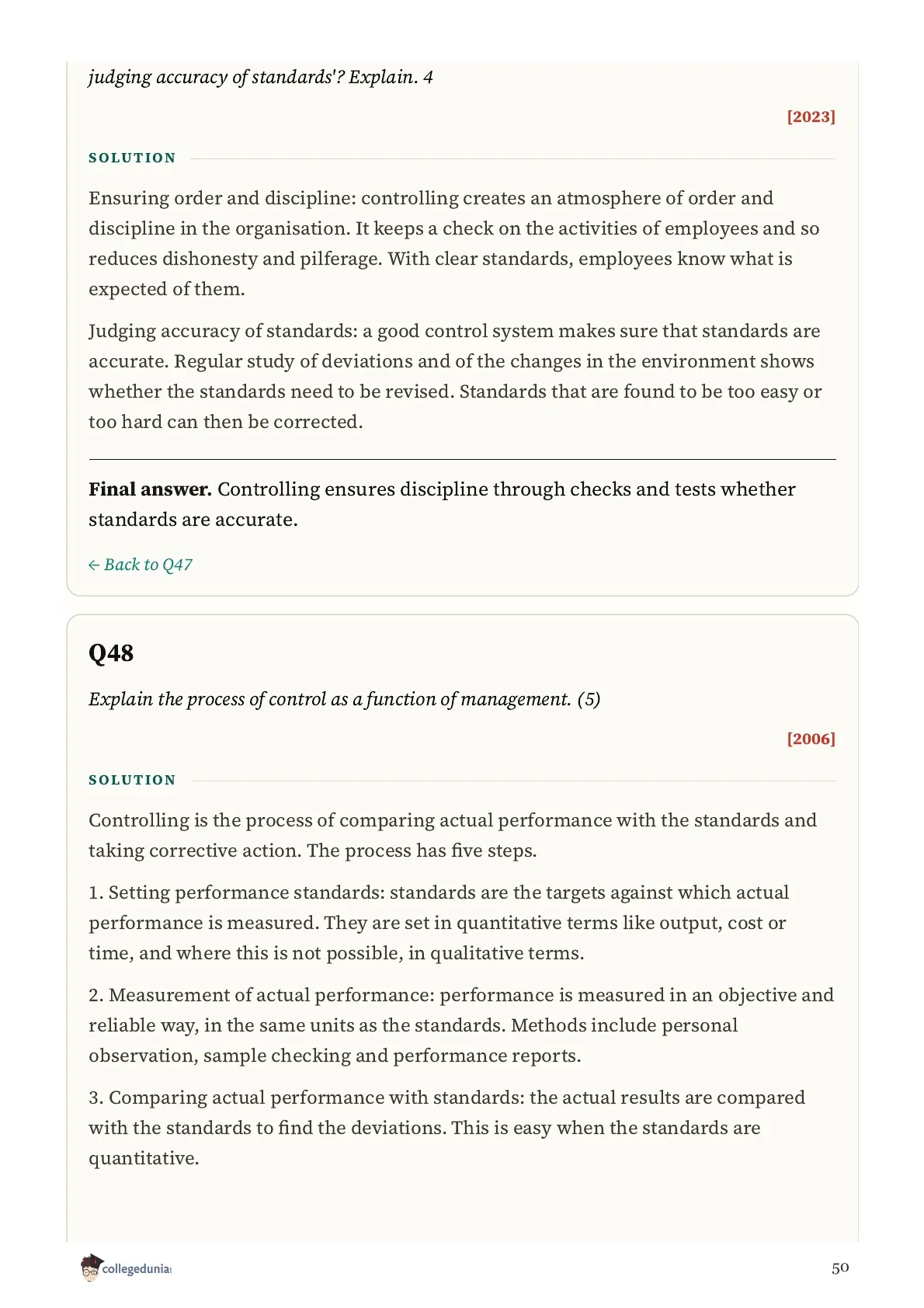
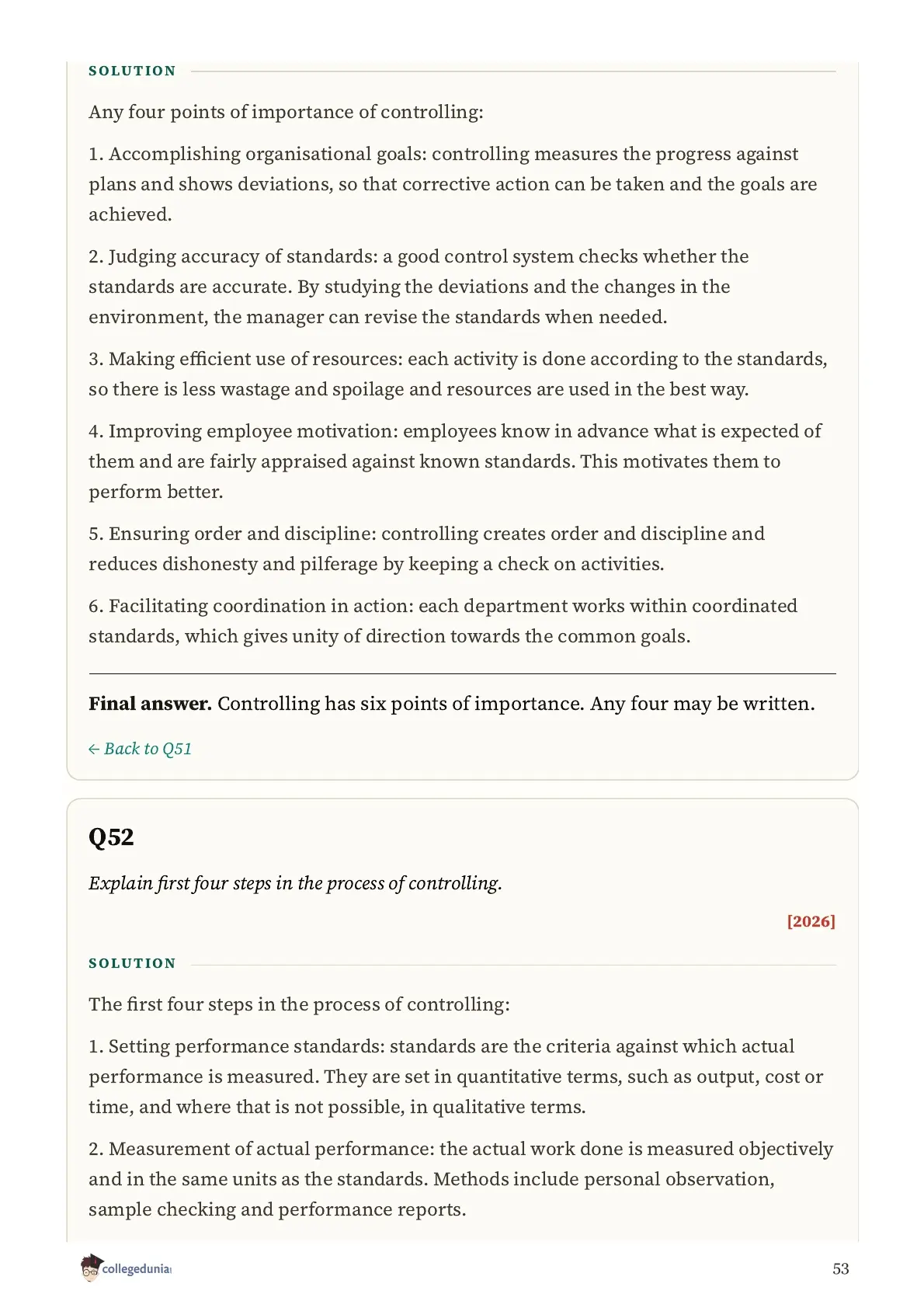
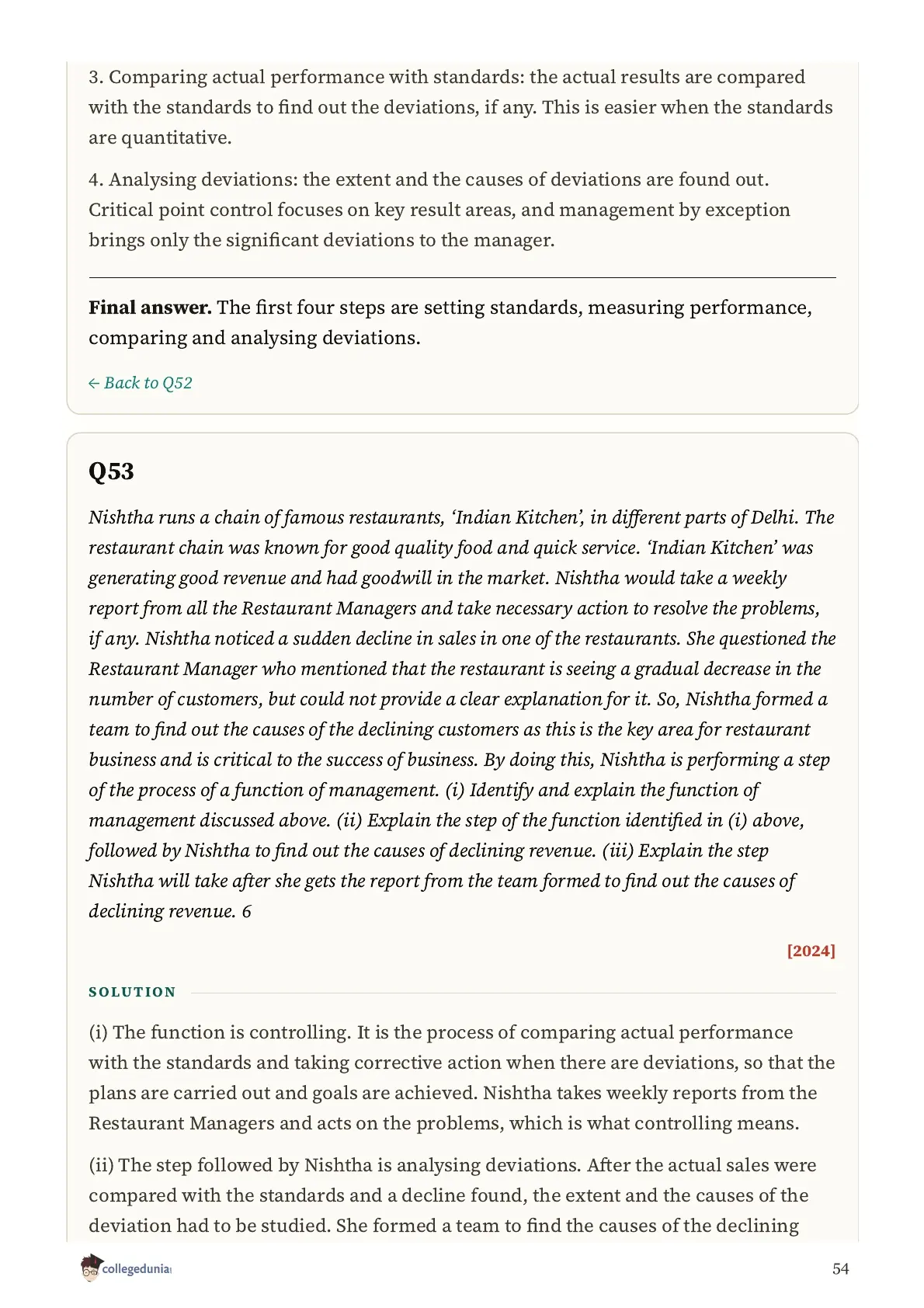
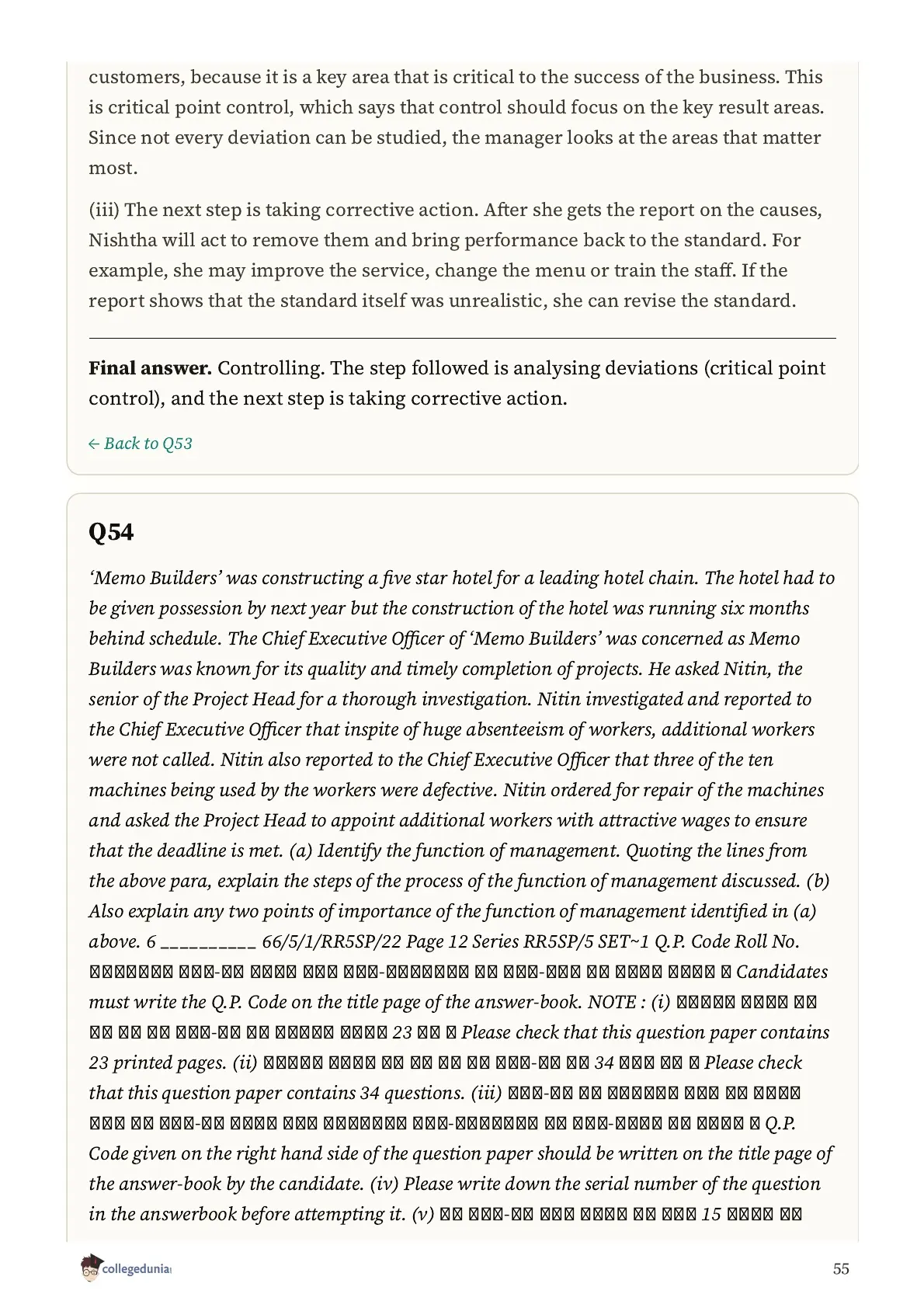
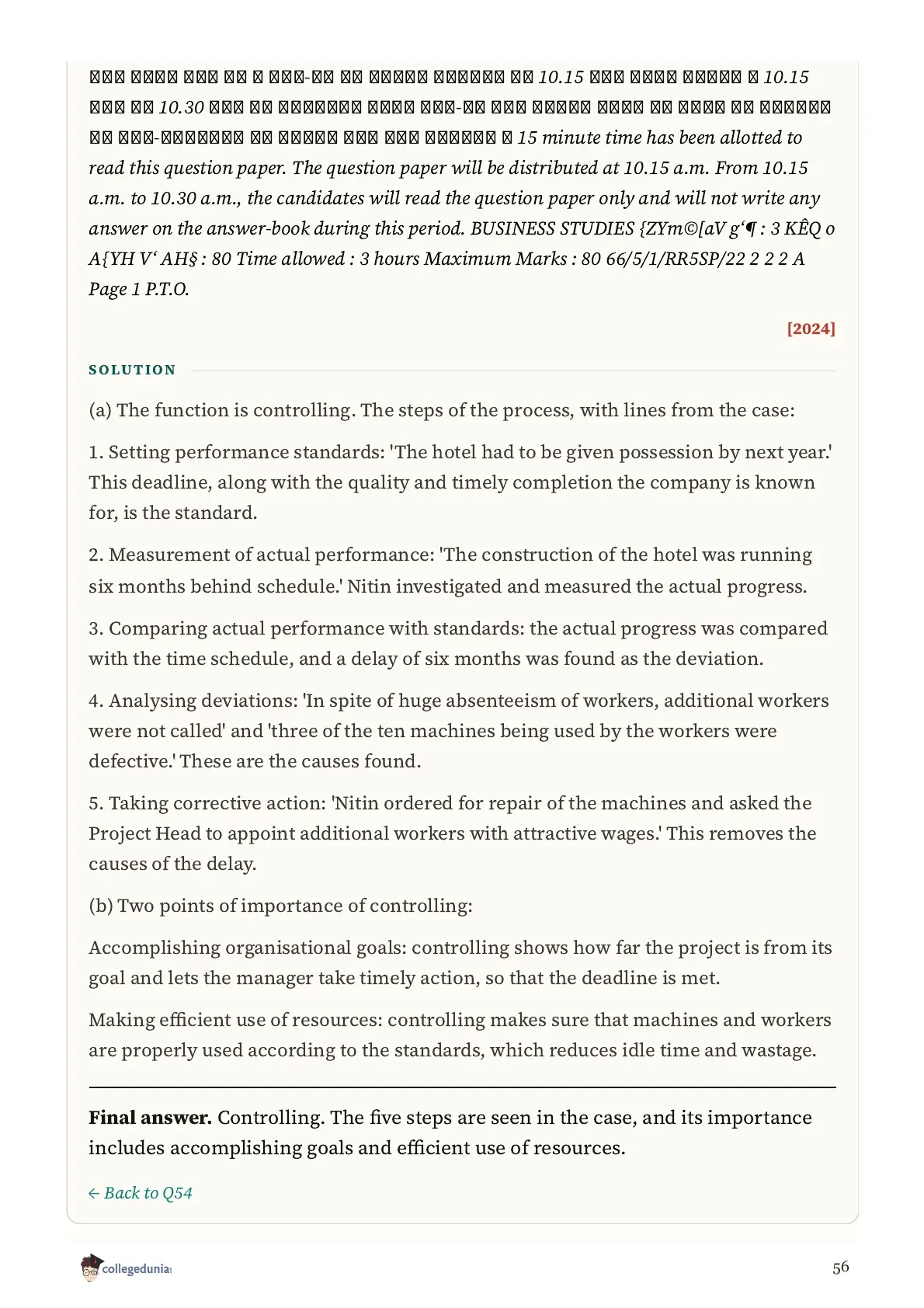
Two topics carry the set. About 19 questions ask for the importance of controlling, usually as two named points to explain together, such as accomplishing organisational goals with judging accuracy of standards, or making efficient use of resources with improving employee motivation. Another 19 or so are on the steps of the controlling process, from setting performance standards to analysing deviations and taking corrective action.
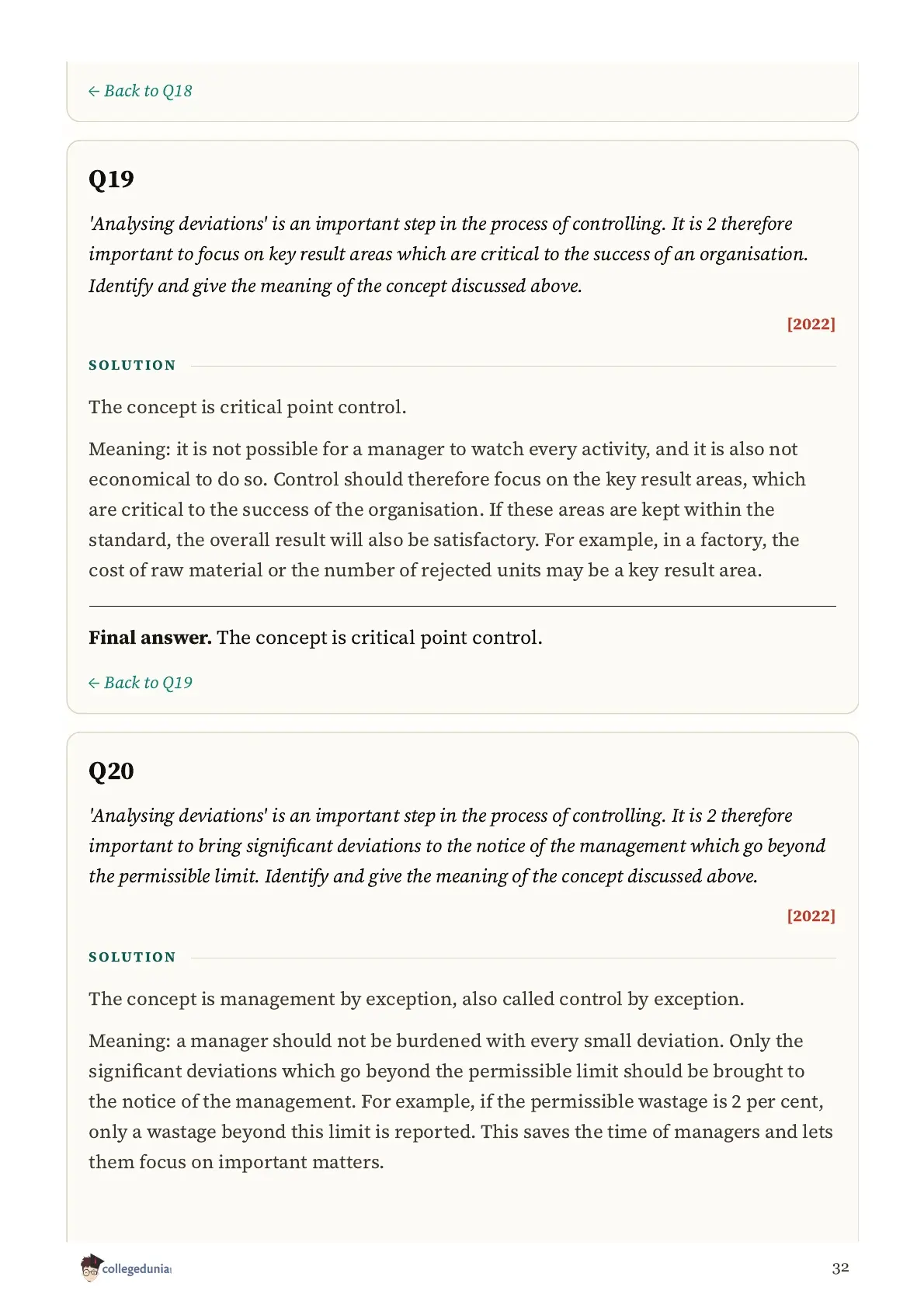
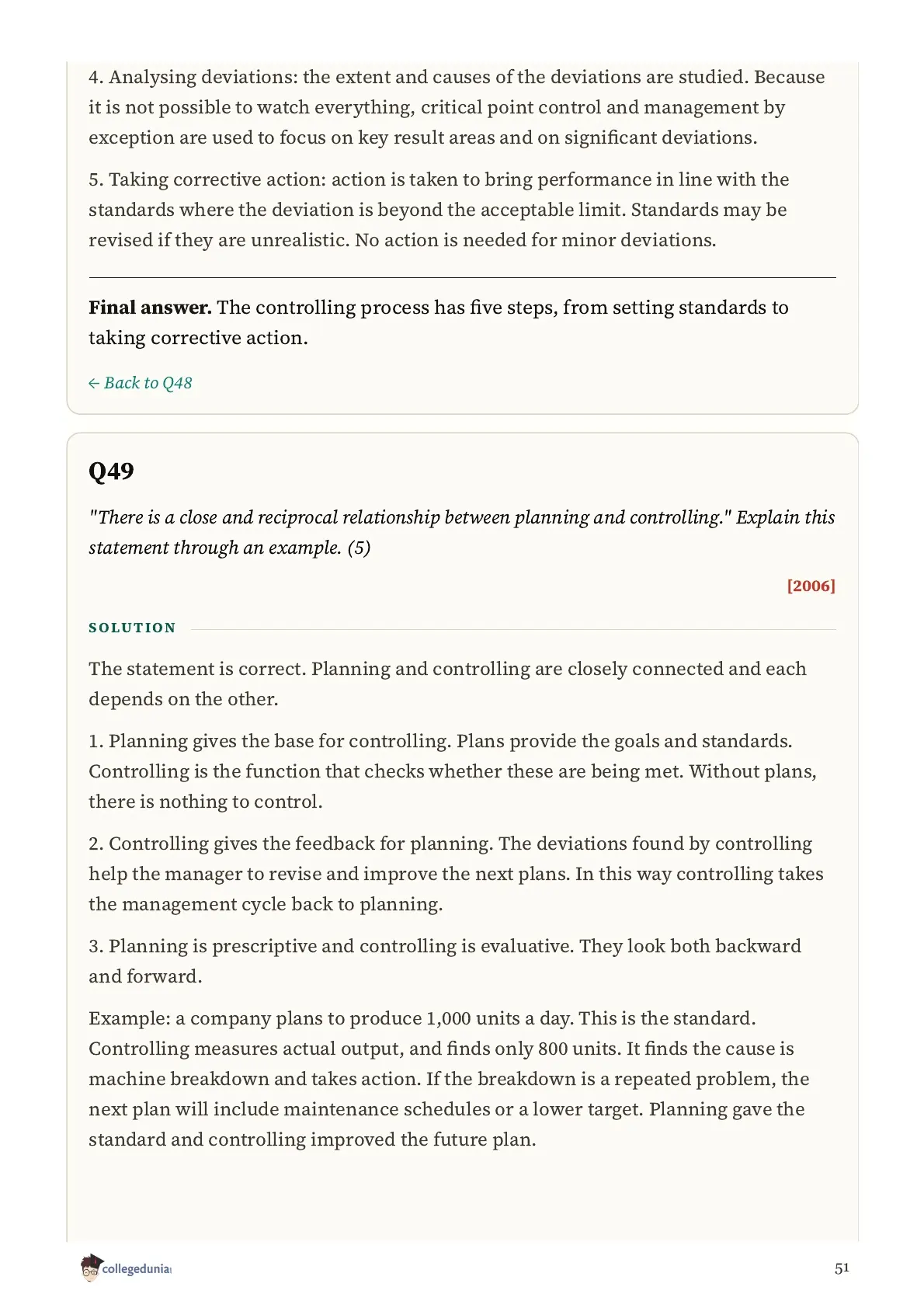
The relationship between planning and controlling is asked in 7 questions, two of them 5-mark questions from the 2006 paper. Critical point control, management by exception and key result areas come up in about 5, all tied to the analysing-deviations step. The counts come from keyword matches, so a question on two topics is counted under both.
| Topic | Questions Naming It (approx.) |
|---|---|
| Importance of controlling | 19 |
| Steps in the controlling process | 19 |
| Planning and controlling | 7 |
| Critical point control, management by exception, key result areas | 5 |
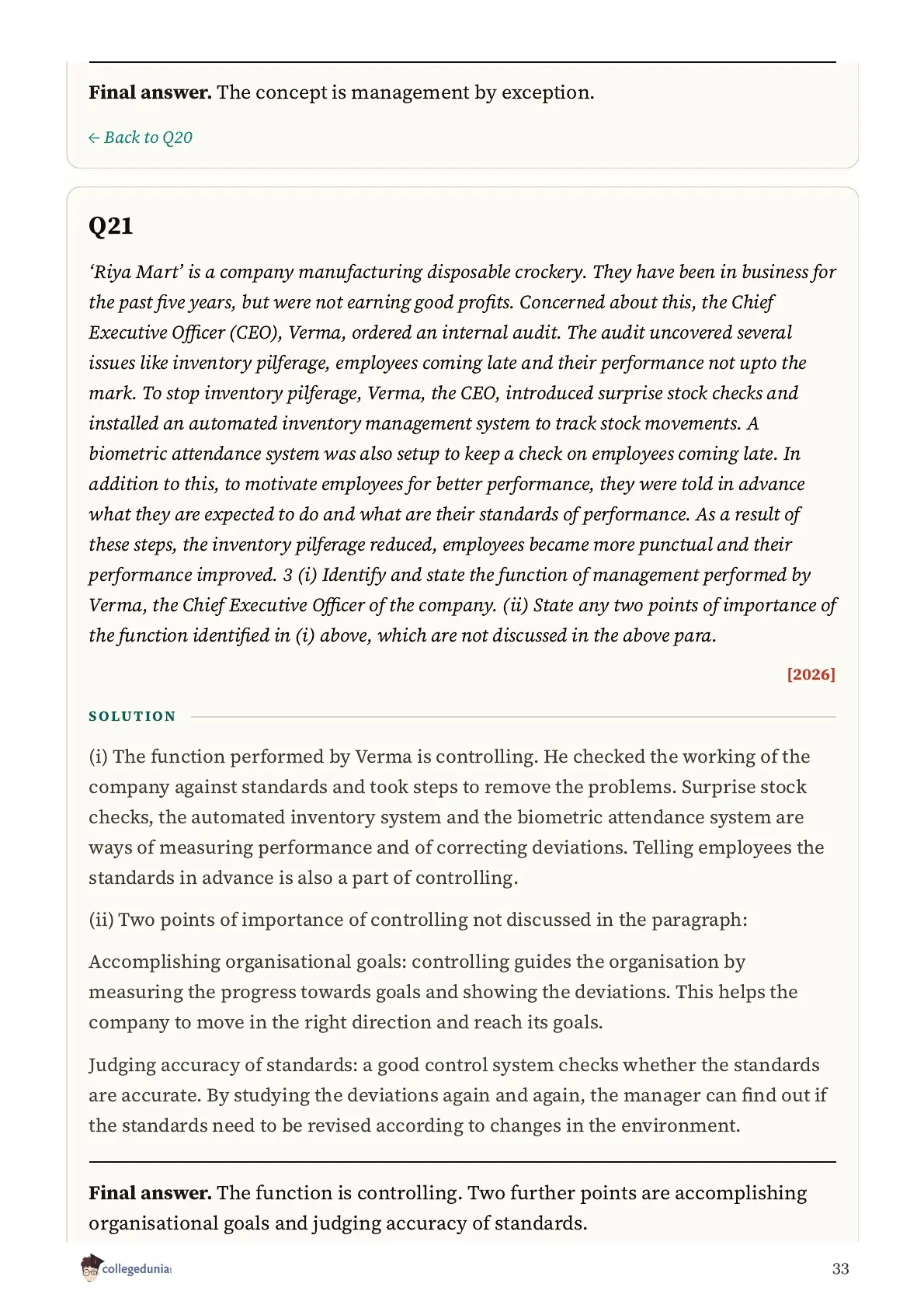
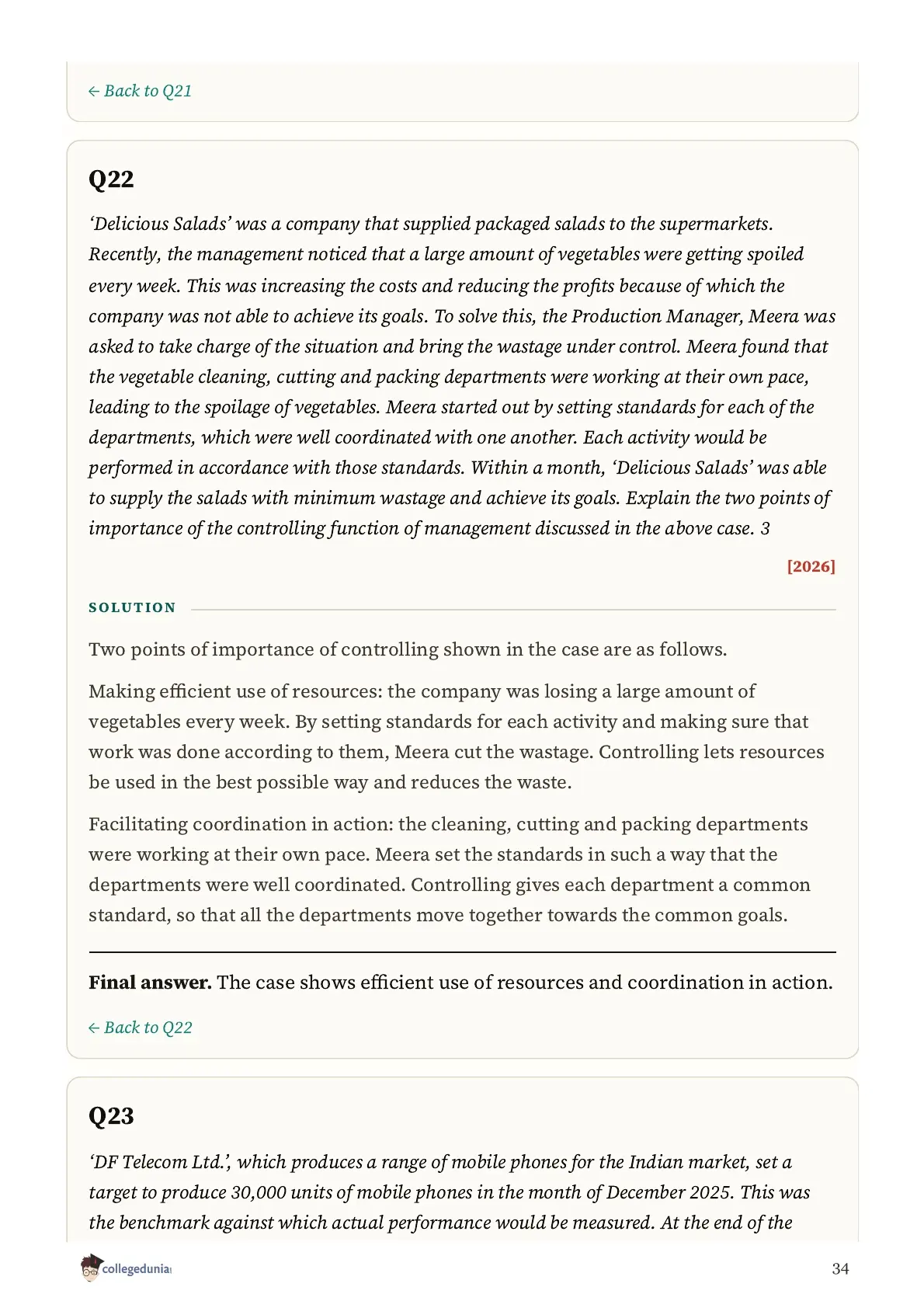
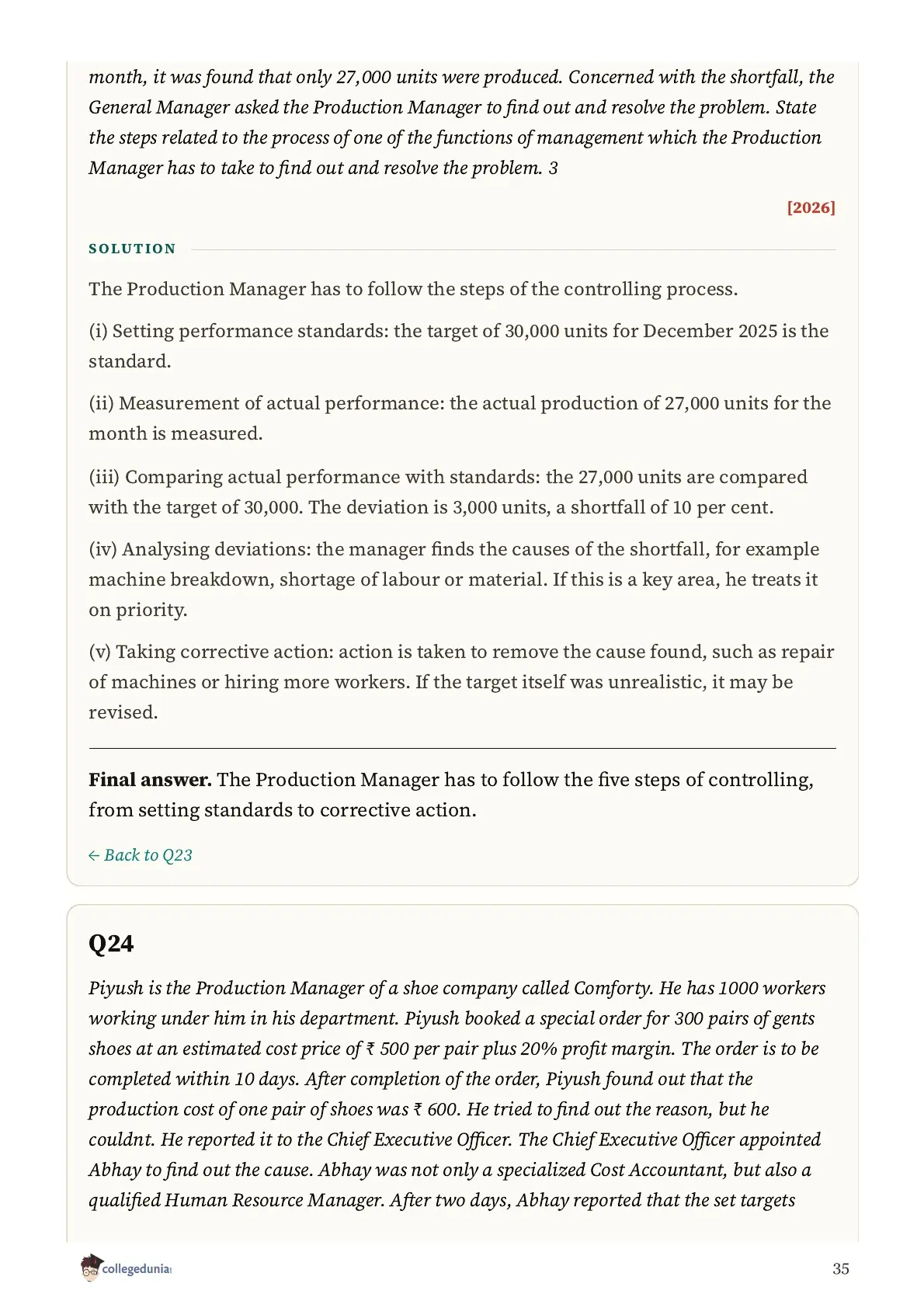
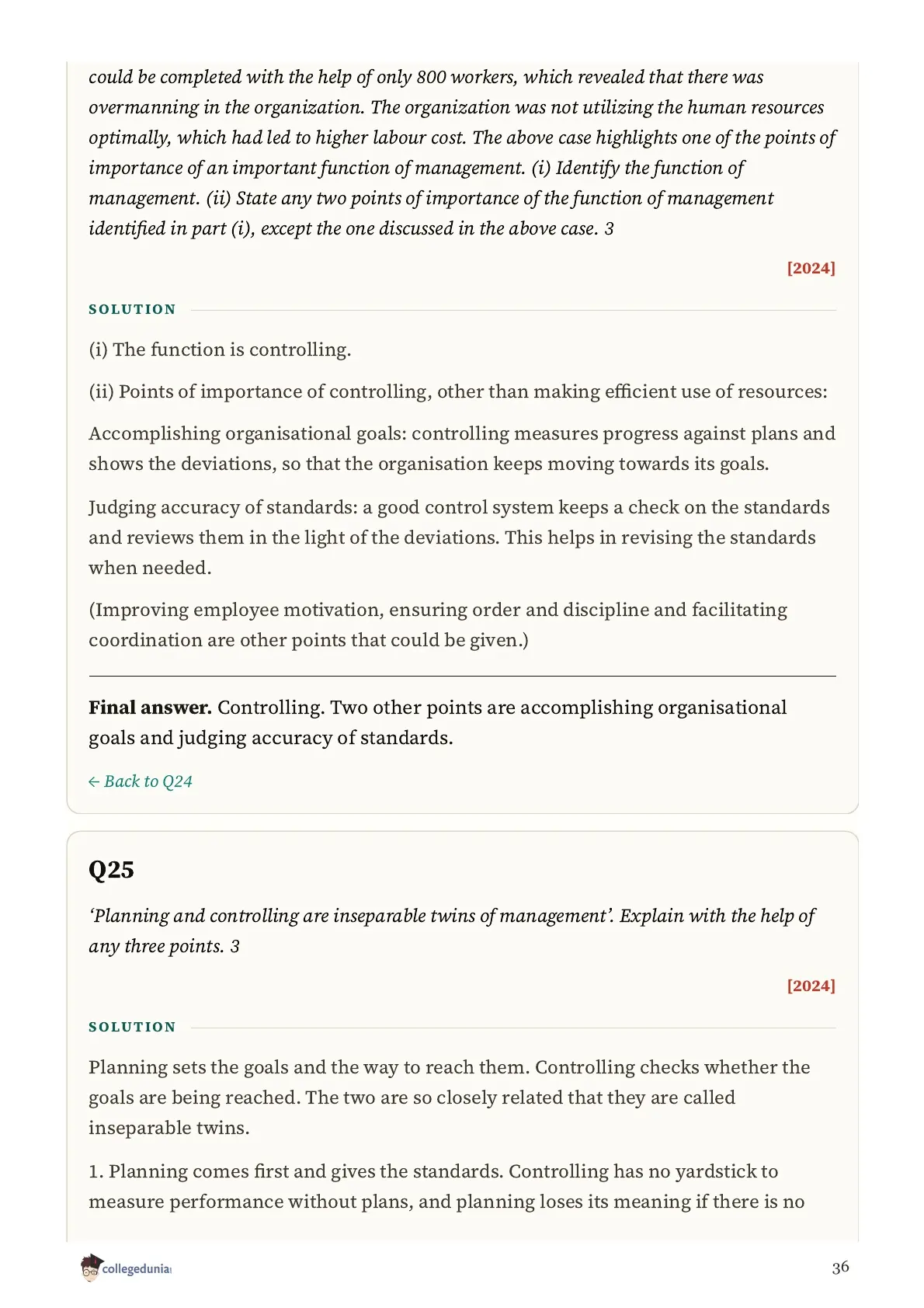
The format is predictable. 14 of the written questions are "Explain (i) ... and (ii) ..." pairs, and 11 questions ask for "any two", "any three" or "any four" points.
Controlling Video Lesson
Source: Next Toppers - 12th Commerce on YouTube
How to Approach the Controlling Set
Do the 13 MCQs first, in about 15 minutes. 4 are statement or assertion-reason questions where one word decides the answer, and 3 describe a company in a few lines and ask which step or function is at work, such as workers given a monthly target of 8,000 bulbs. The other 6 are direct questions on the steps or on which function is being described.
For the written answers, count the points asked and stop there. 7 of the written questions are case paragraphs, and the marks go to quoting the figures that show the deviation, for instance a production target of 500 purifiers a week that was missed month after month. When two importance points are asked together, give each its own short paragraph with an example.
Common Mistakes in Controlling Questions
- Calling controlling the last function of management. It feeds the next planning cycle.
- Swapping the two: planning is prescriptive, controlling is evaluative.
- Writing that corrective action is always needed. It is needed only when deviations go beyond the permissible limit.
- Listing steps out of order after setting performance standards.
- Mixing up critical point control (focus on key result areas) with management by exception (report only significant deviations).
- Giving a definition of controlling when the stem asks for the importance points by name.
Using the Answer Key and Solutions
The PDF is 56 pages and free to download. Each section is sorted newest year first, the Answer Key lists every MCQ at a glance, and each question links to its worked solution and back. Attempt a section first, check the key, then read the solution and note the common mistake given with it. The solutions are written by Collegedunia's Business Studies experts and are not official CBSE marking schemes.
Class 12 Business Studies PYQs by Chapter
| Chapter | PYQ Page |
|---|---|
| Chapter 1 | Chapter 1: Nature and Significance of Management Class 12 PYQ |
| Chapter 2 | Chapter 2: Principles of Management Class 12 PYQ |
| Chapter 3 | Chapter 3: Business Environment Class 12 PYQ |
| Chapter 4 | Chapter 4: Planning Class 12 PYQ |
| Chapter 5 | Chapter 5: Organising Class 12 PYQ |
| Chapter 6 | Chapter 6: Staffing Class 12 PYQ |
| Chapter 7 | Chapter 7: Directing Class 12 PYQ |
| Chapter 8 | Chapter 8: Controlling Class 12 PYQ |
| Chapter 9 | Chapter 9: Financial Management Class 12 PYQ |
| Chapter 10 | Chapter 10: Marketing Class 12 PYQ |
| Chapter 11 | Chapter 11: Consumer Protection Class 12 PYQ |
Controlling Class 12 Business Studies PYQ FAQs
Ques. How many questions are in the Controlling Class 12 PYQ PDF?
Ans. The PDF has 54 questions from CBSE board papers between 2006 and 2026: 13 one-mark MCQs, 7 two-mark, 19 three-mark, 8 four-mark, 3 five-mark and 4 six-mark questions.
Ques. Does this PYQ PDF include solutions, or only the questions?
Ans. Yes. All 54 questions have a worked solution in the PDF, and the MCQs also have an Answer Key.
Ques. Are the solutions official?
Ans. No. They are written by Collegedunia's Business Studies experts and are not an official CBSE marking scheme.
Ques. How many marks does Controlling carry in the Class 12 board paper?
Ans. About 4 of the 80 marks, going by past papers. It is an estimate and changes from year to year.
Ques. What are the steps in the controlling process?
Ans. Setting performance standards, measuring actual performance, comparing actual performance with standards, analysing deviations and taking corrective action. About 19 questions in this set are on the steps.
Ques. What is the relationship between planning and controlling?
Ans. They are inter-dependent. Planning sets the targets and controlling checks performance against them, and the deviations found in controlling improve the plans of the next cycle. 7 questions in this set are on this relationship.
Ques. What are critical point control and management by exception?
Ans. Critical point control means watching the key result areas that decide the success of the organisation. Management by exception means bringing only significant deviations, those beyond the permissible limit, to the manager's notice. About 5 questions in this set touch these.



Comments