




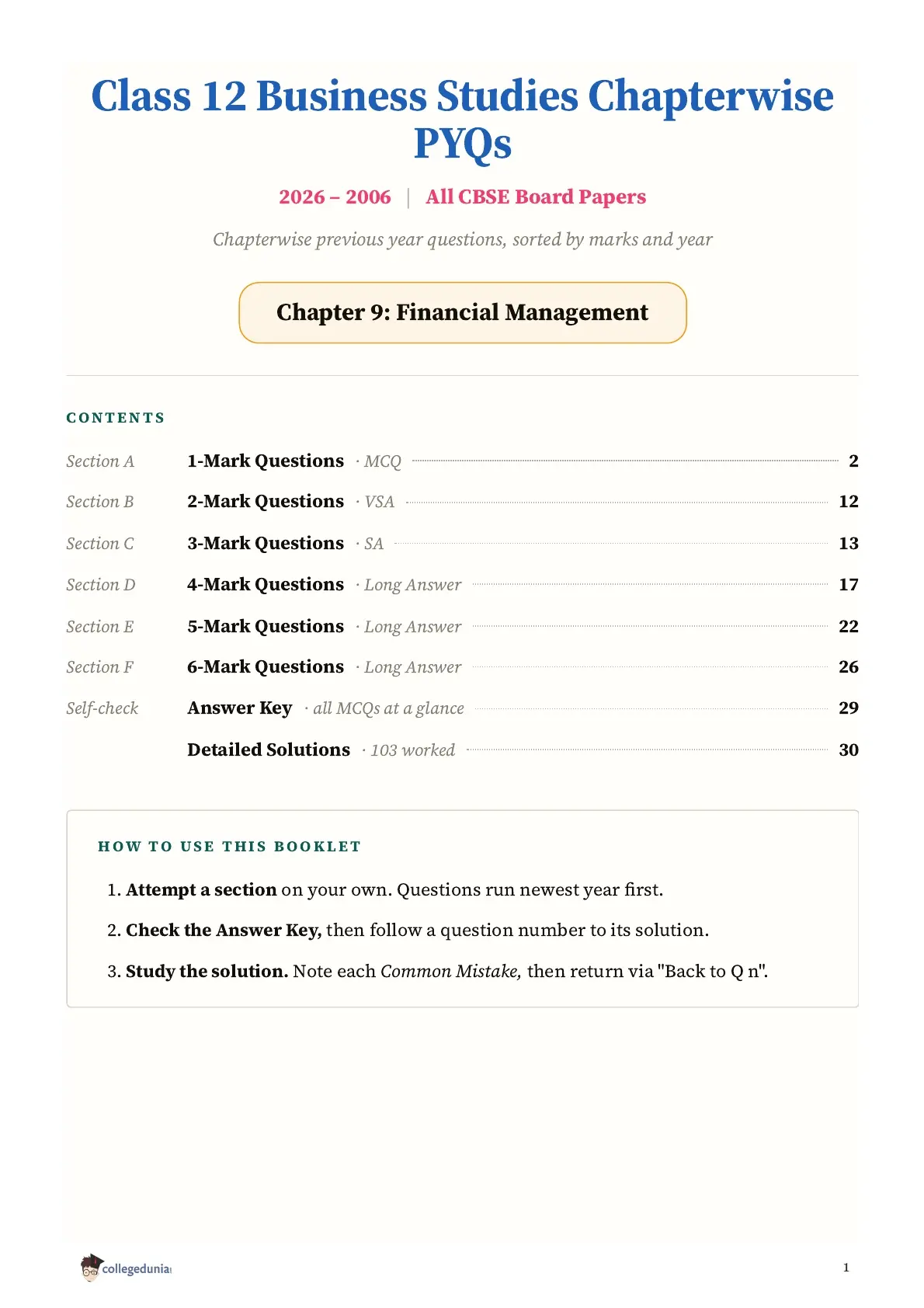
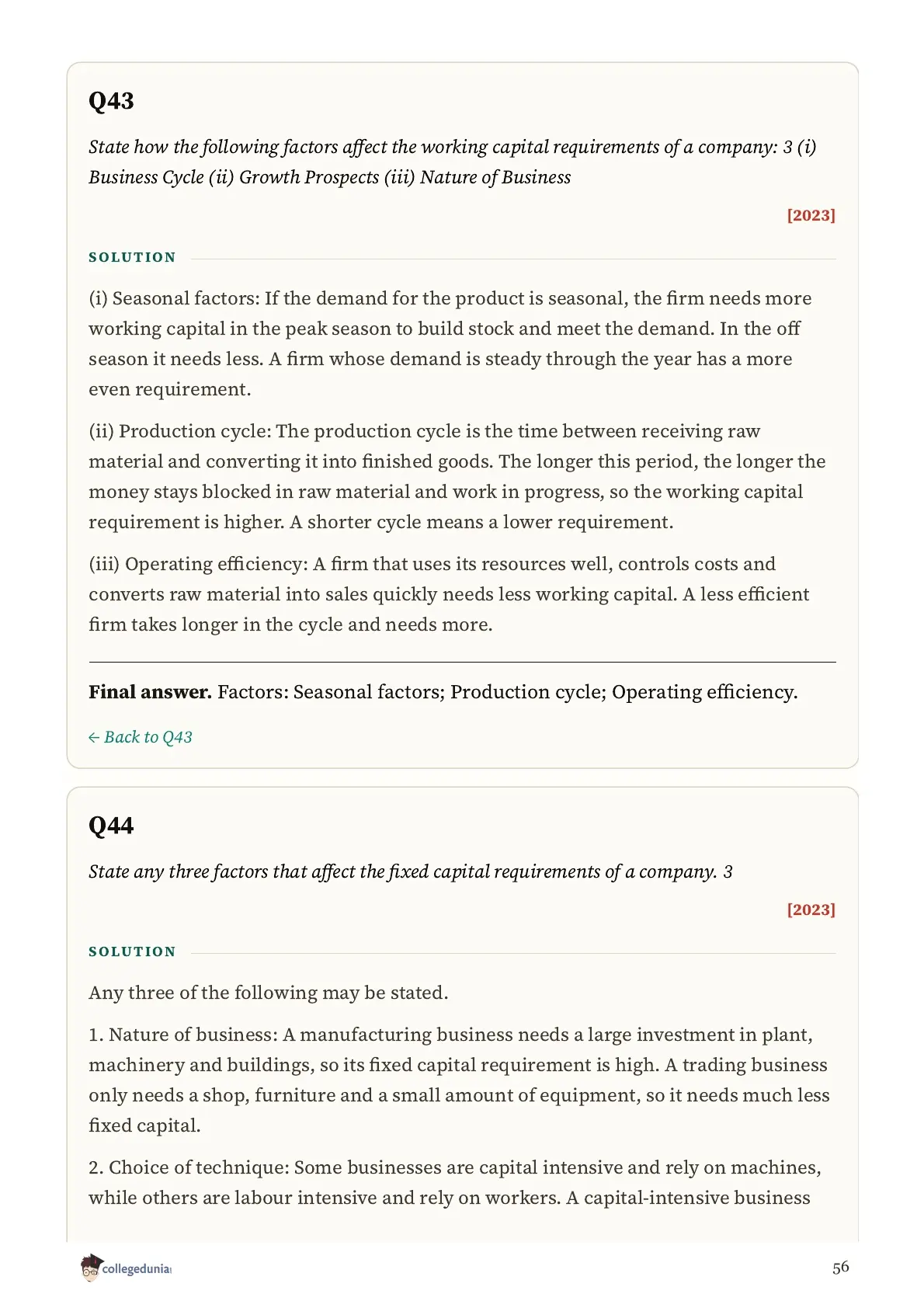
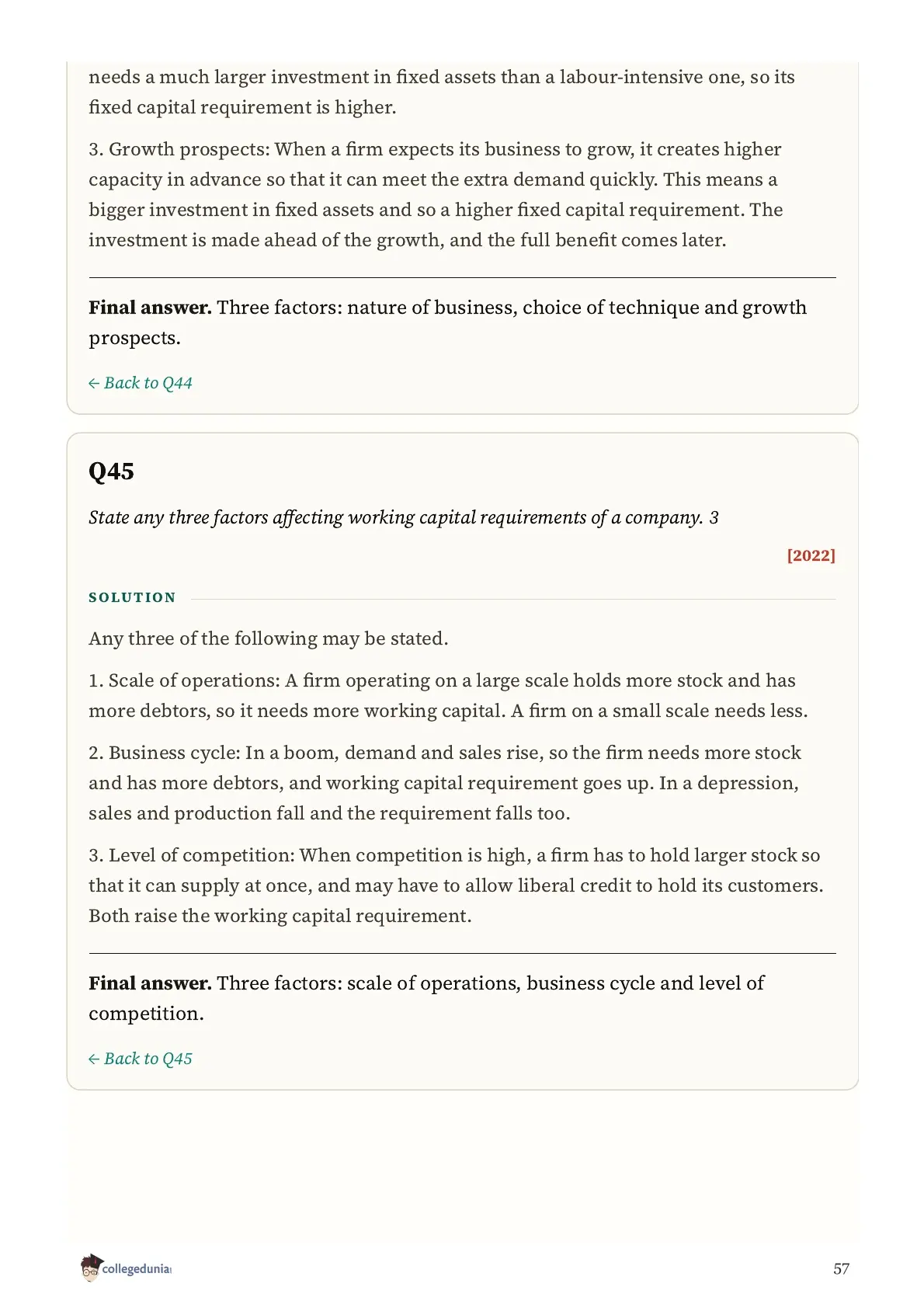
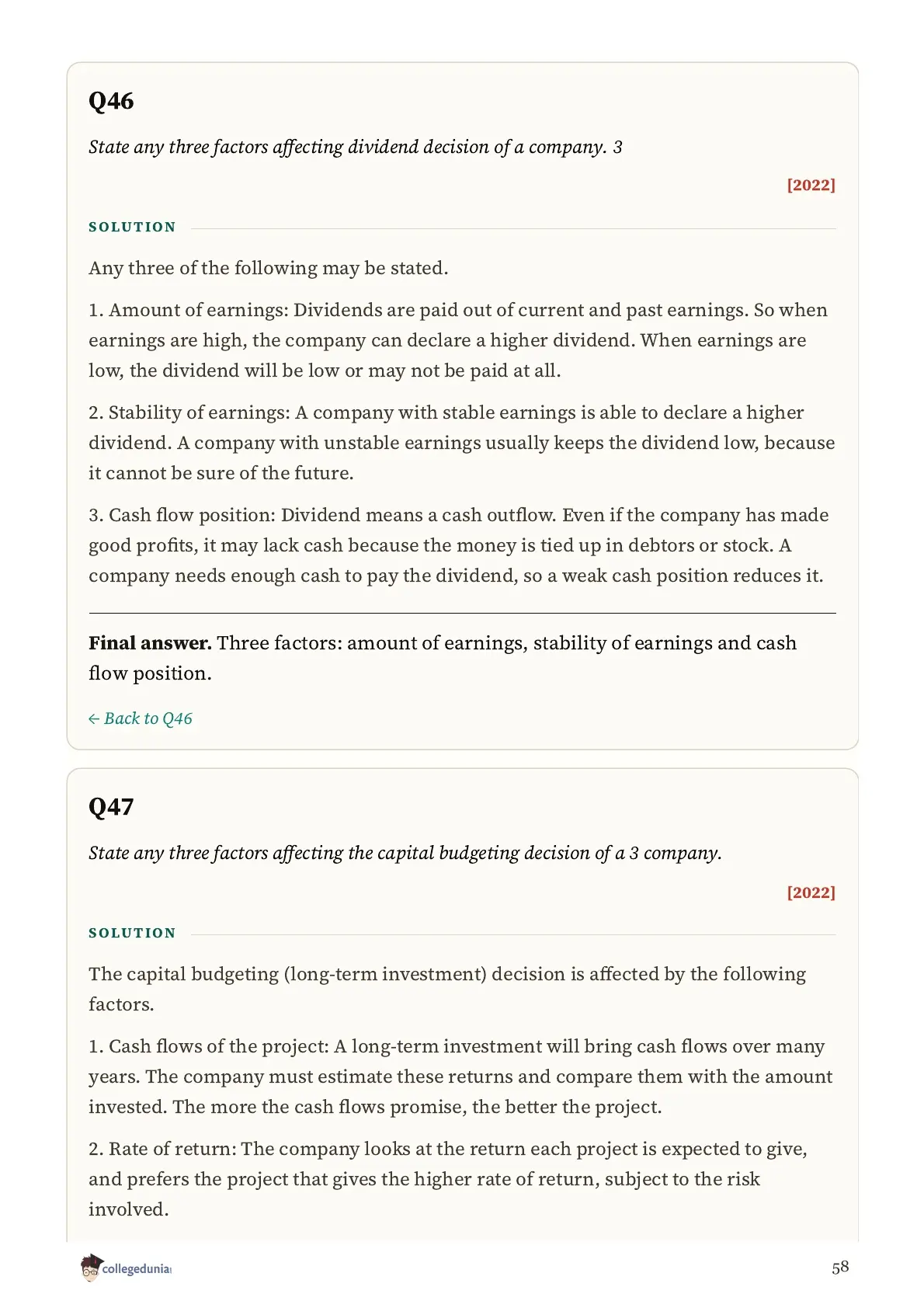
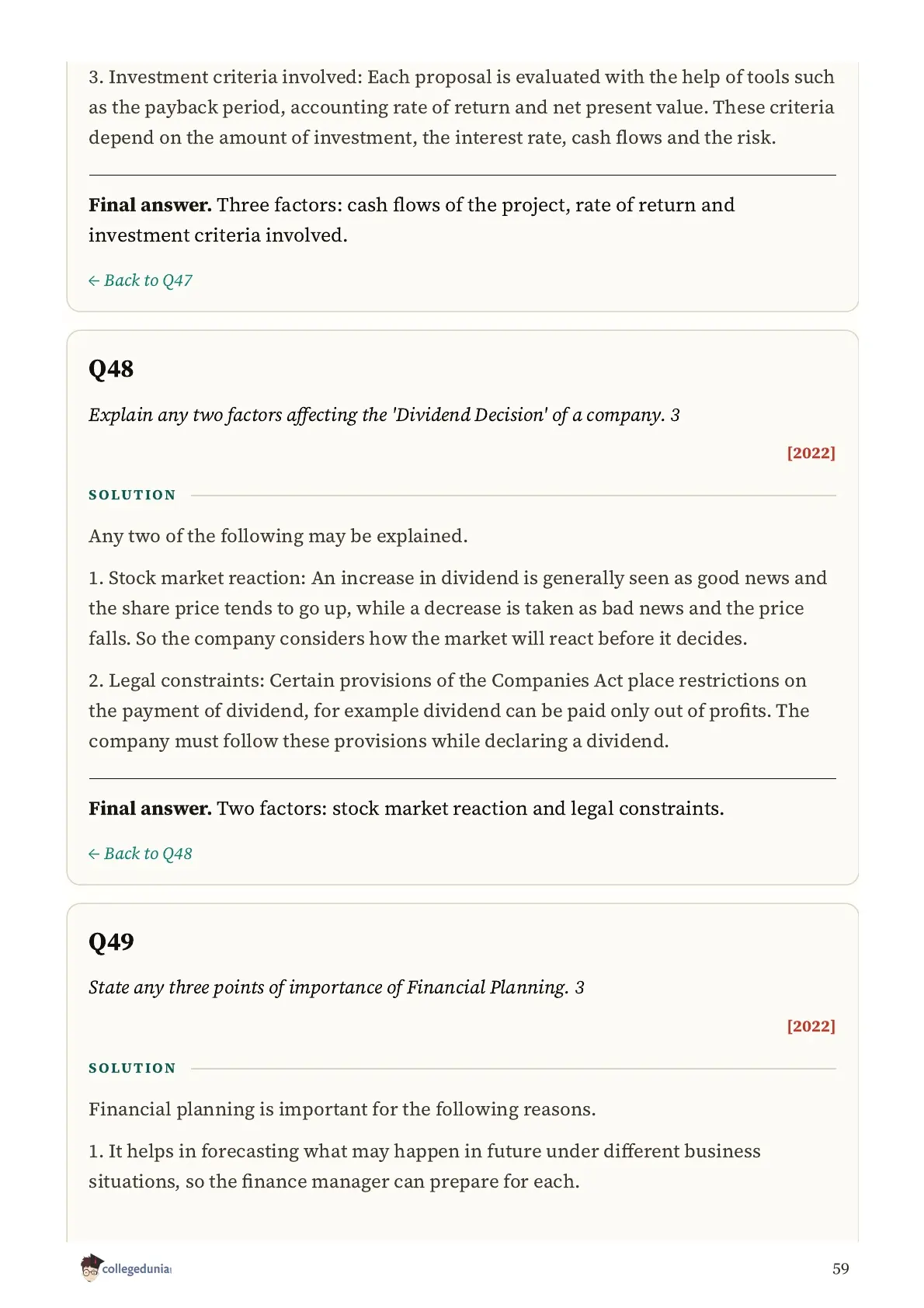
Class 12 Business Studies Financial Management PYQ, free to download as a 98-page PDF. The chapter carries about 8 of the 80 marks in the board paper, and the set holds 103 solved questions from the 2006 to 2026 papers on factors affecting fixed capital requirements, working capital requirements, the choice of capital structure and the dividend decision, plus financing and investment decisions, financial planning, and trading on equity and financial leverage, and takes roughly seven hours to work through, so split it across three sittings.


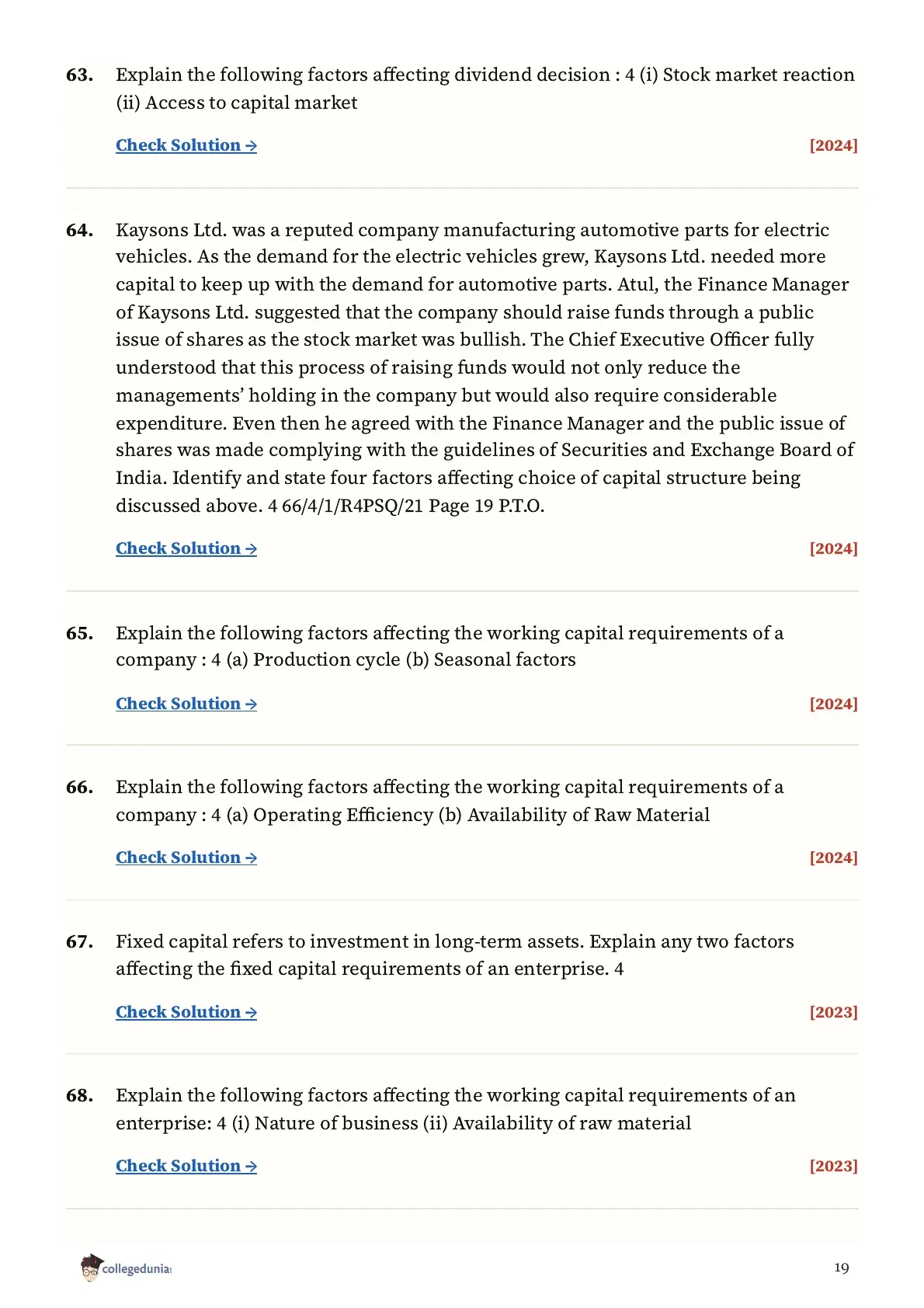
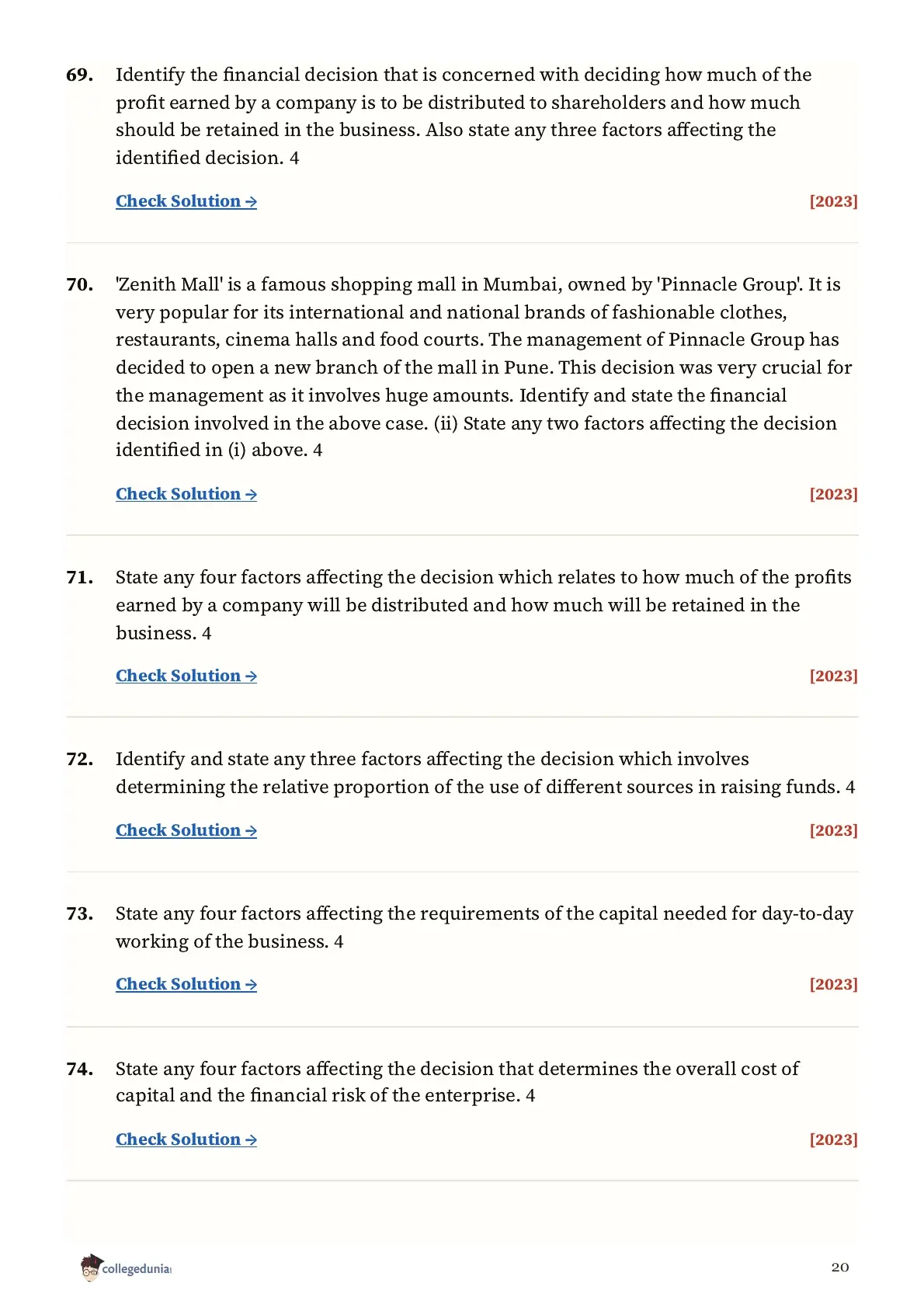
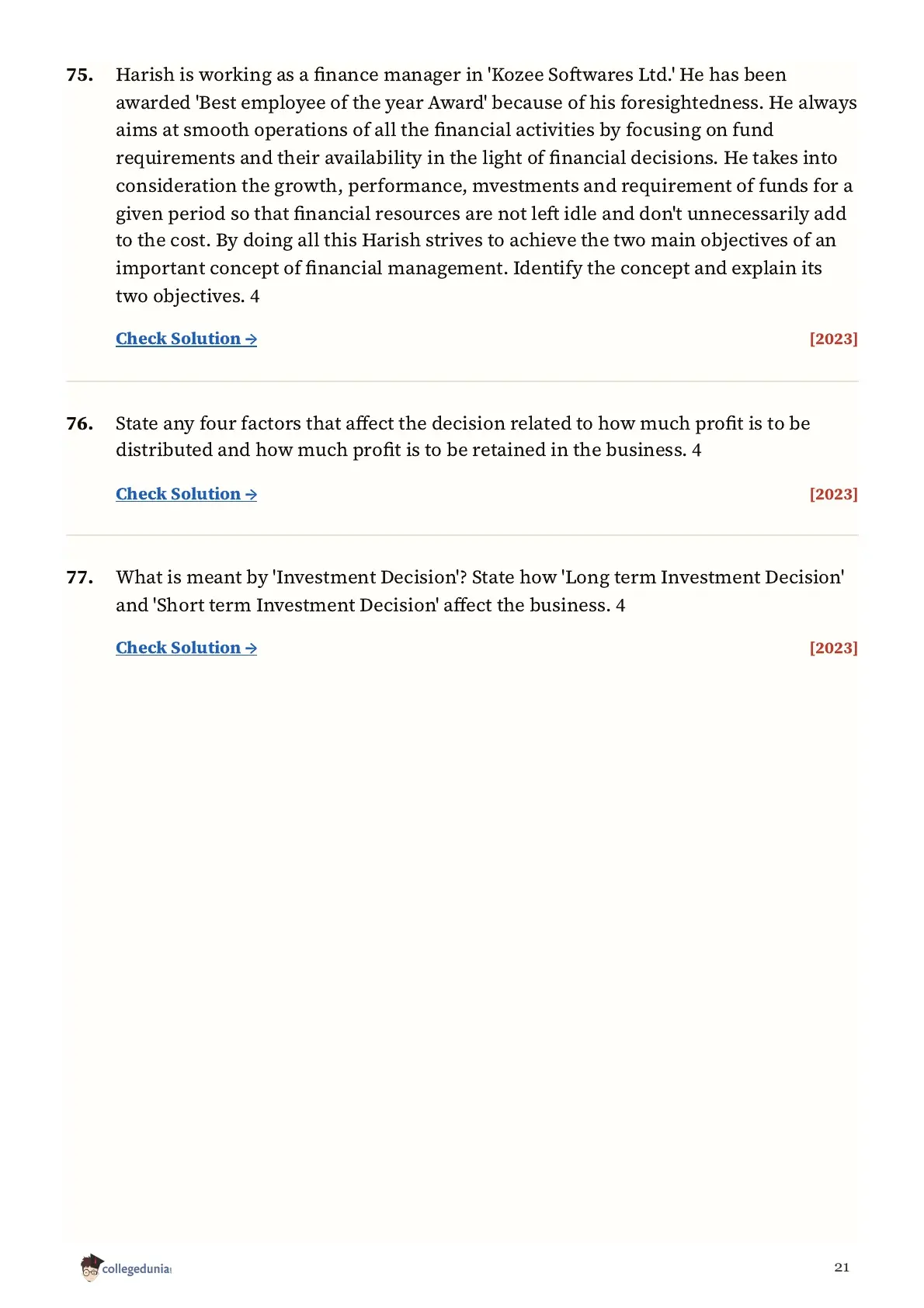
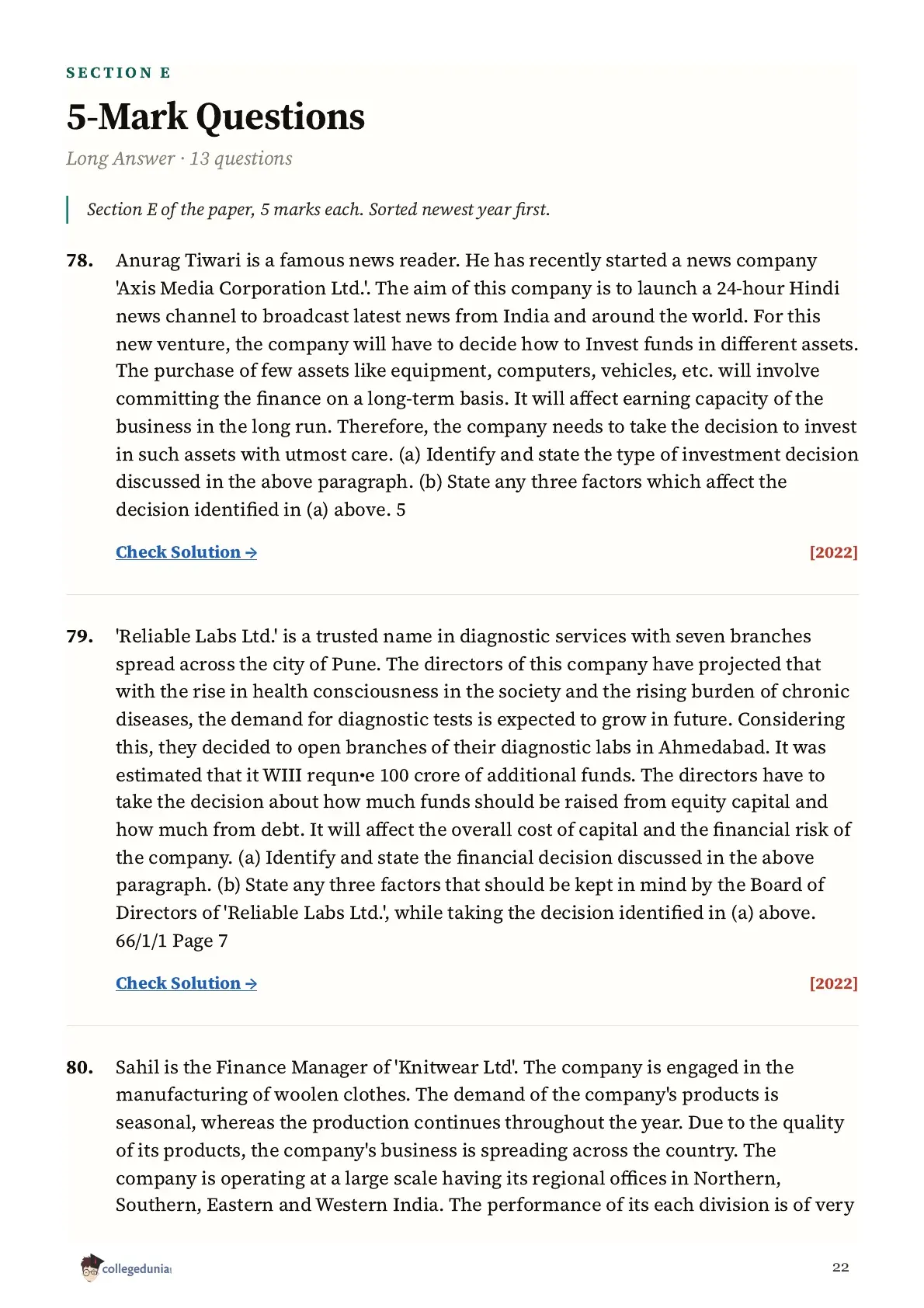

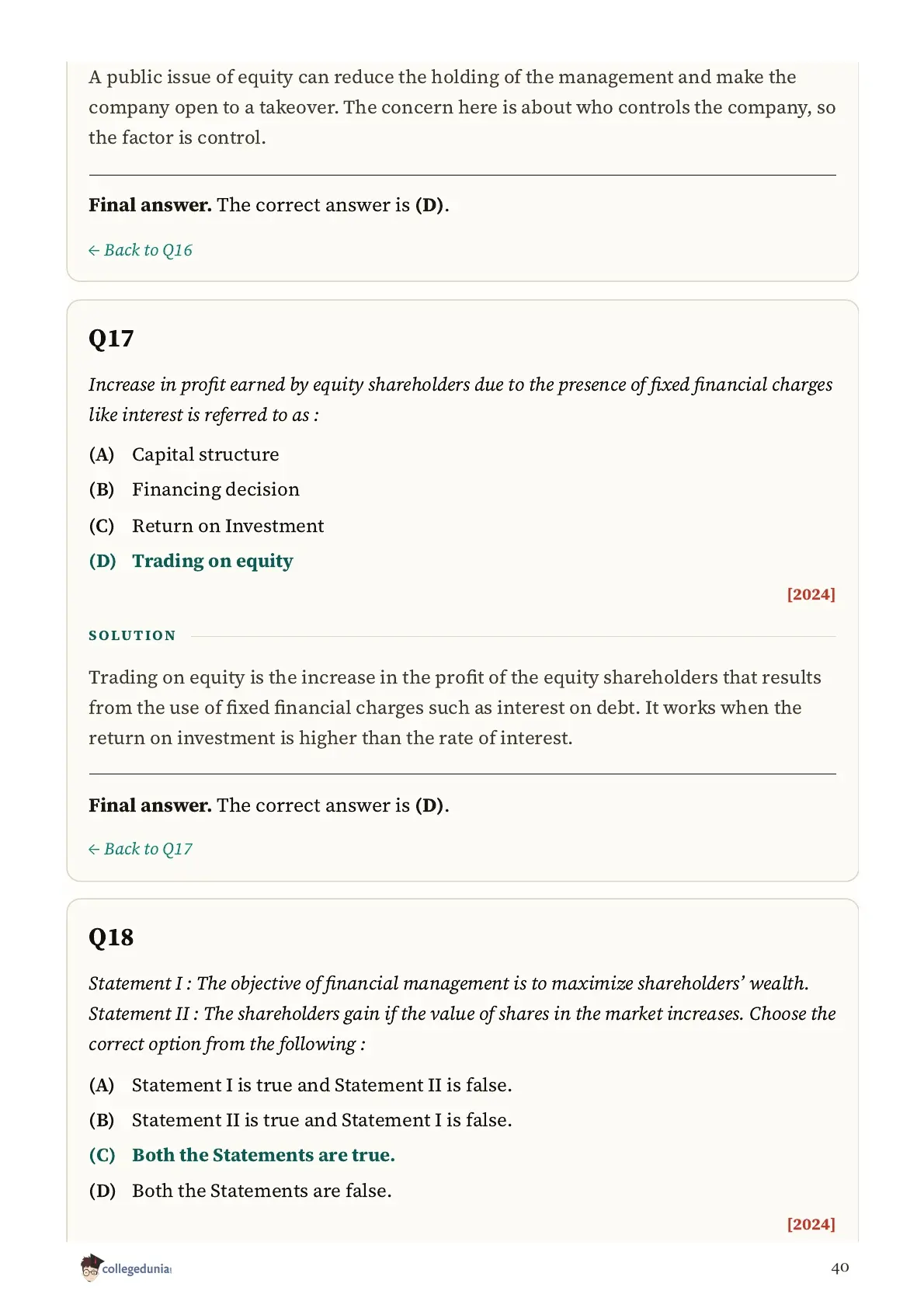
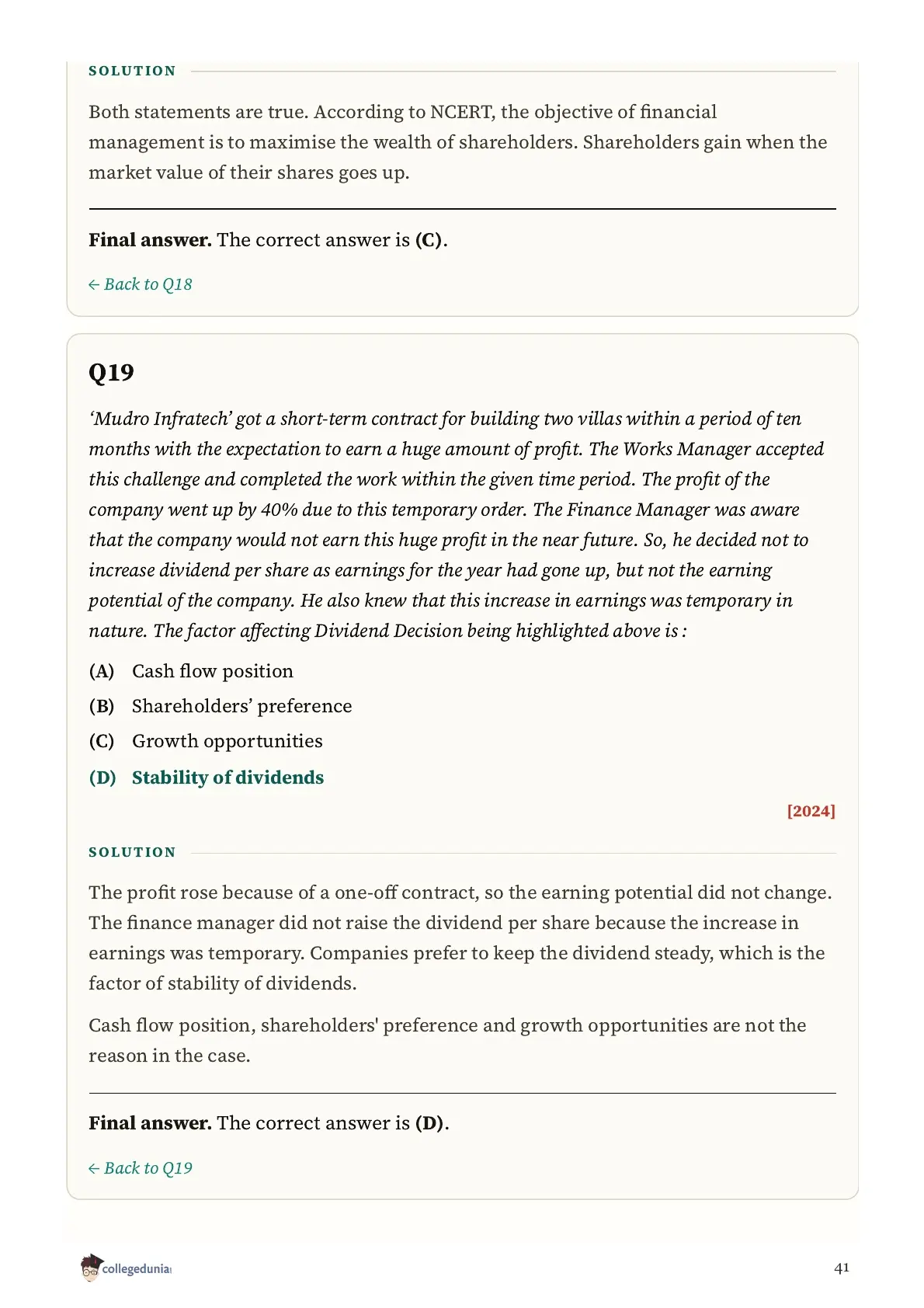
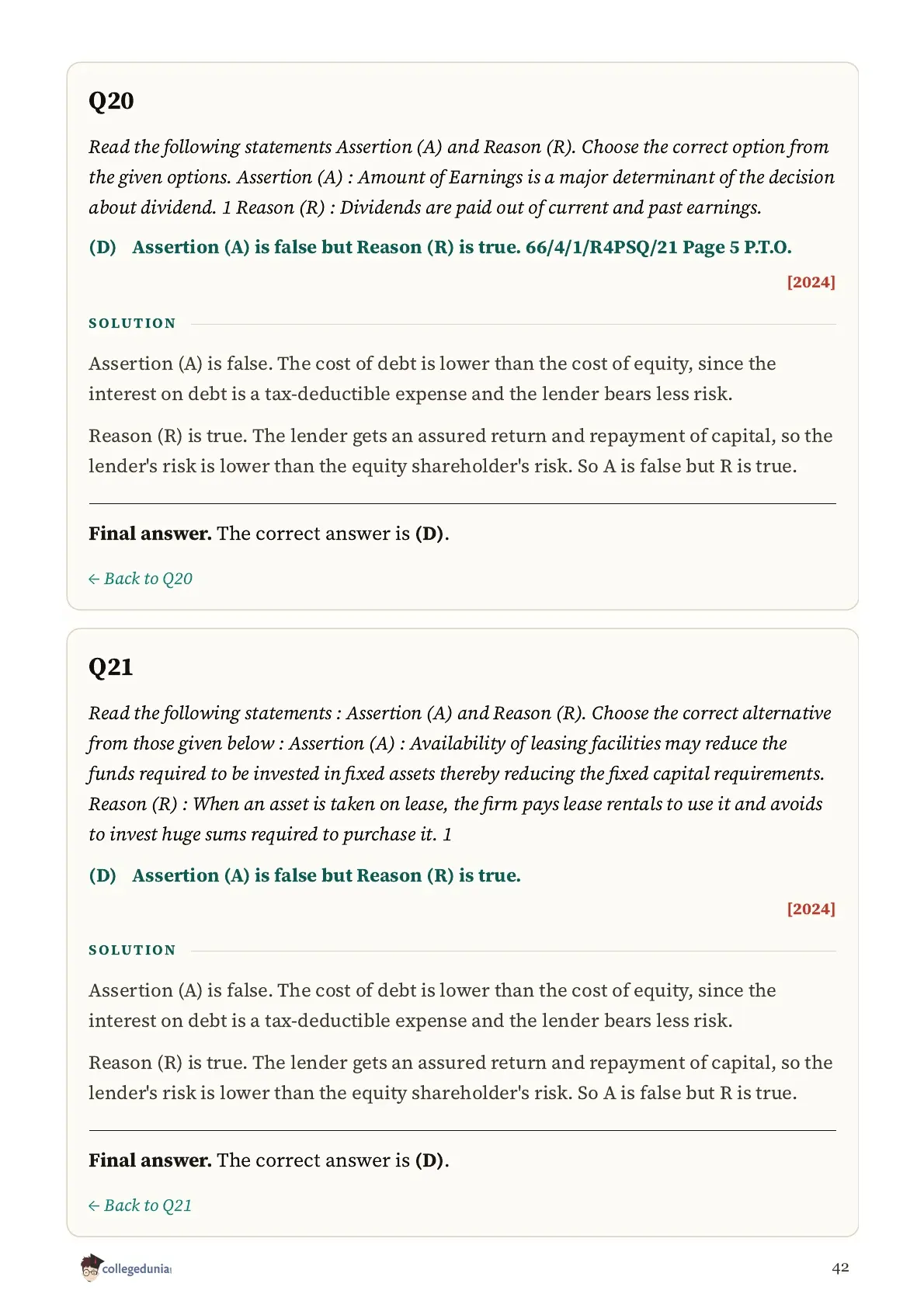
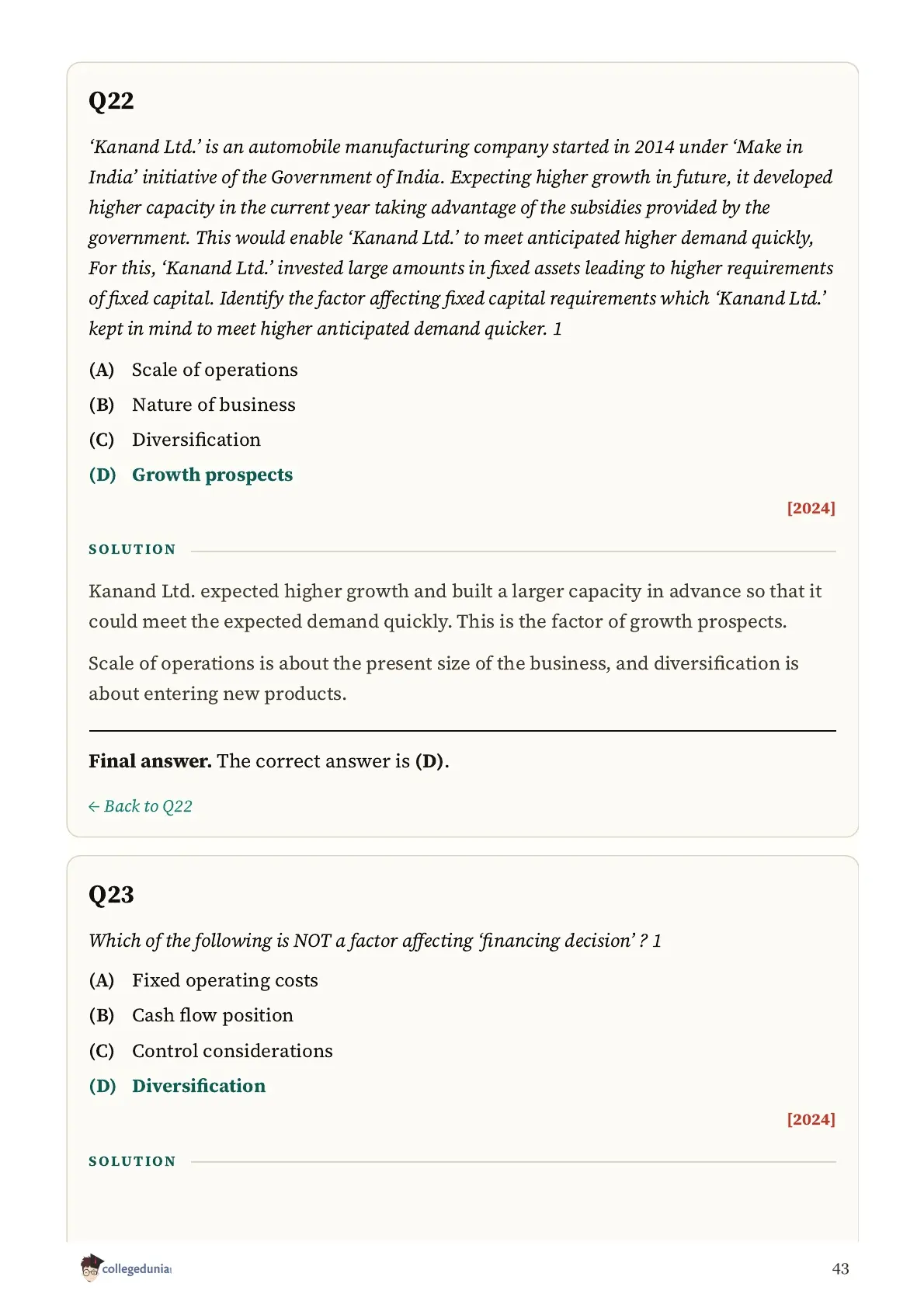
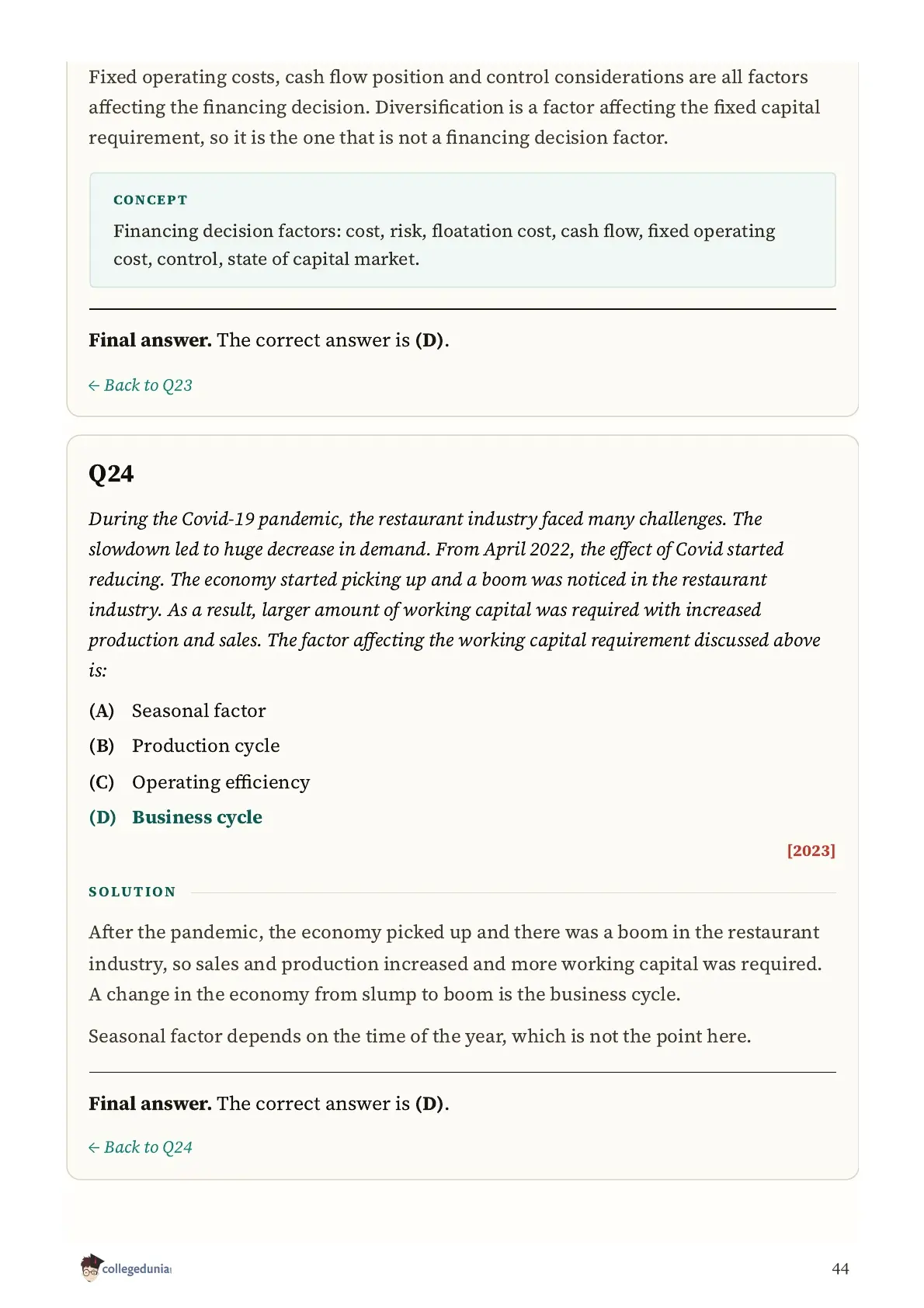
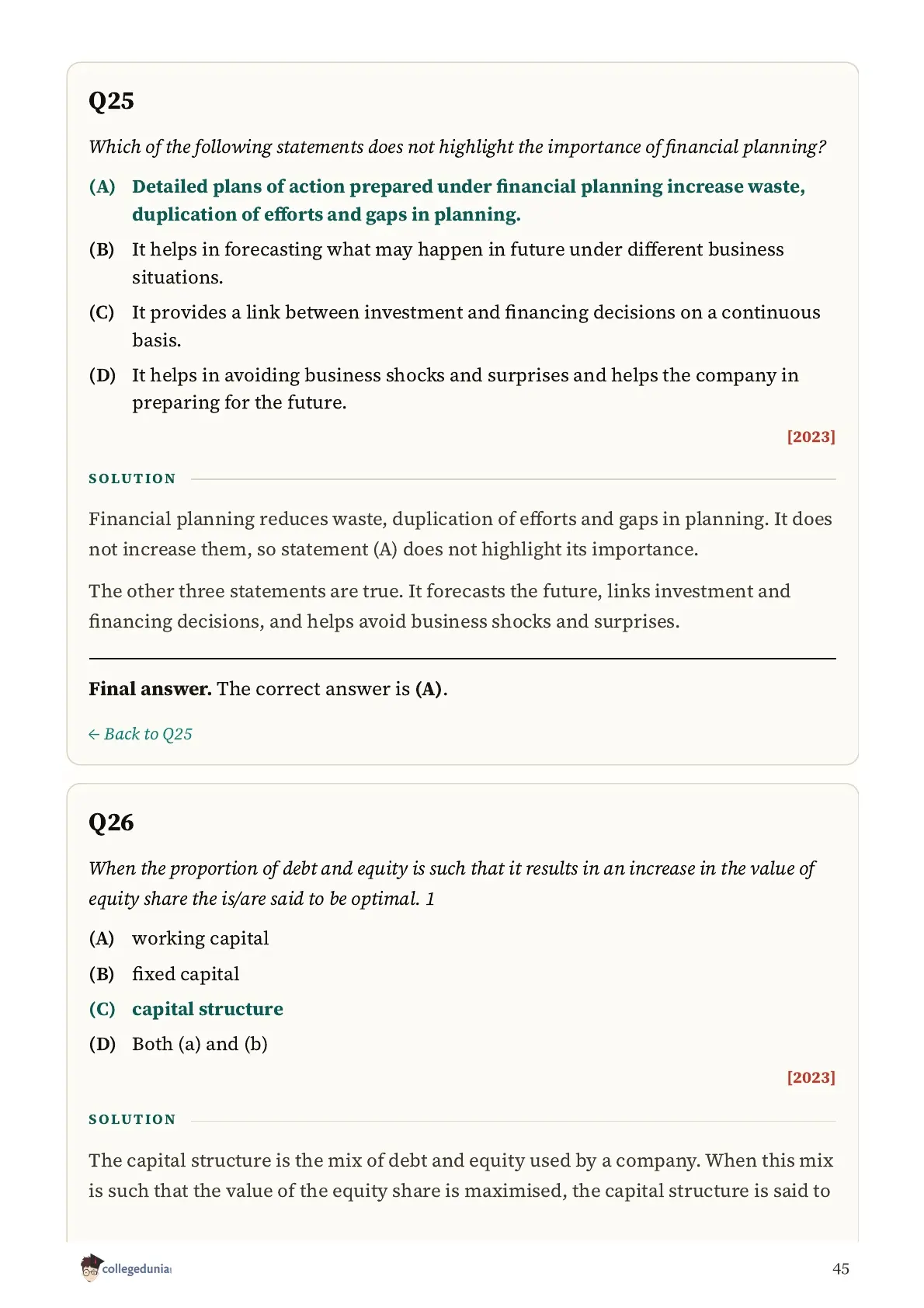
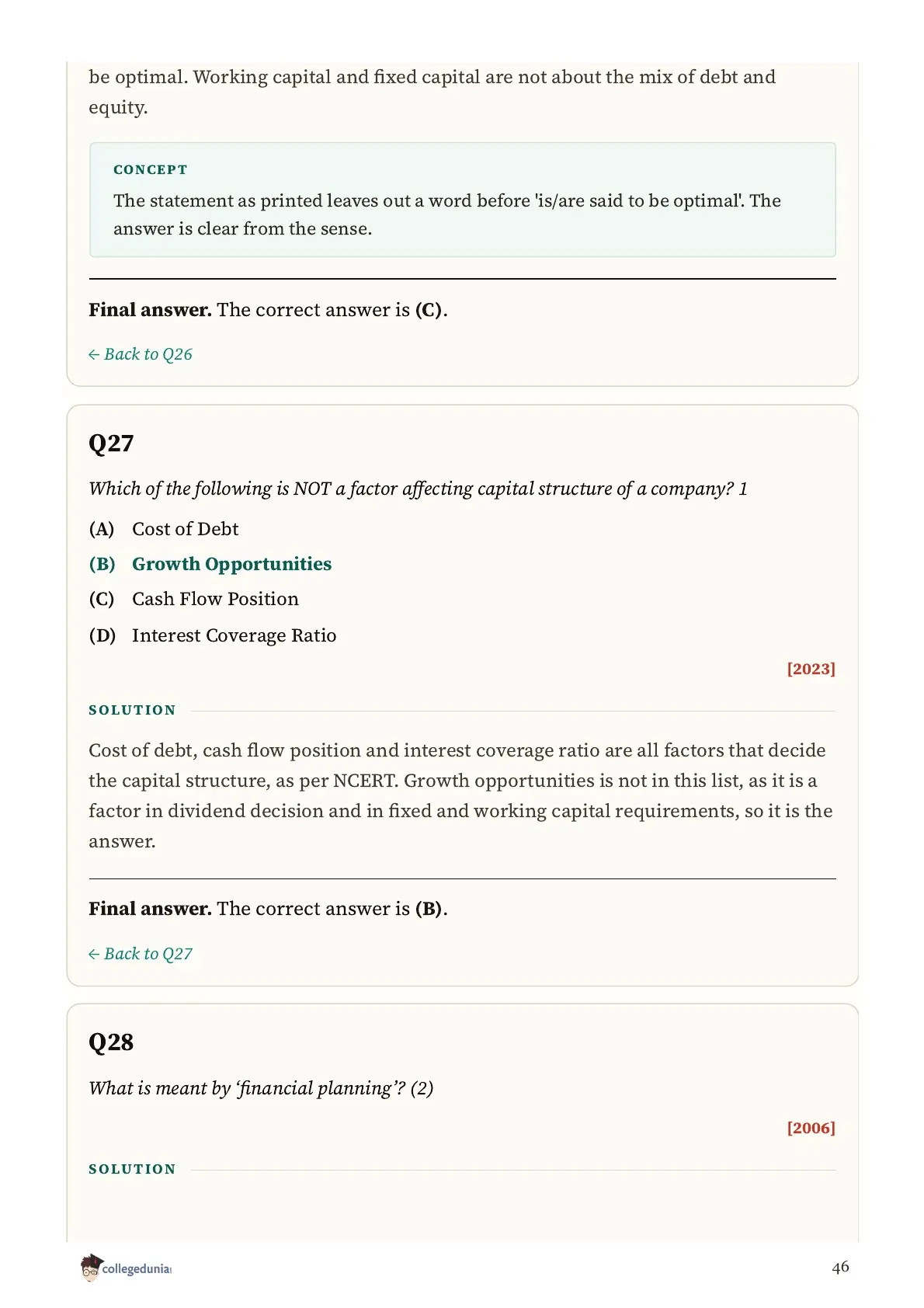
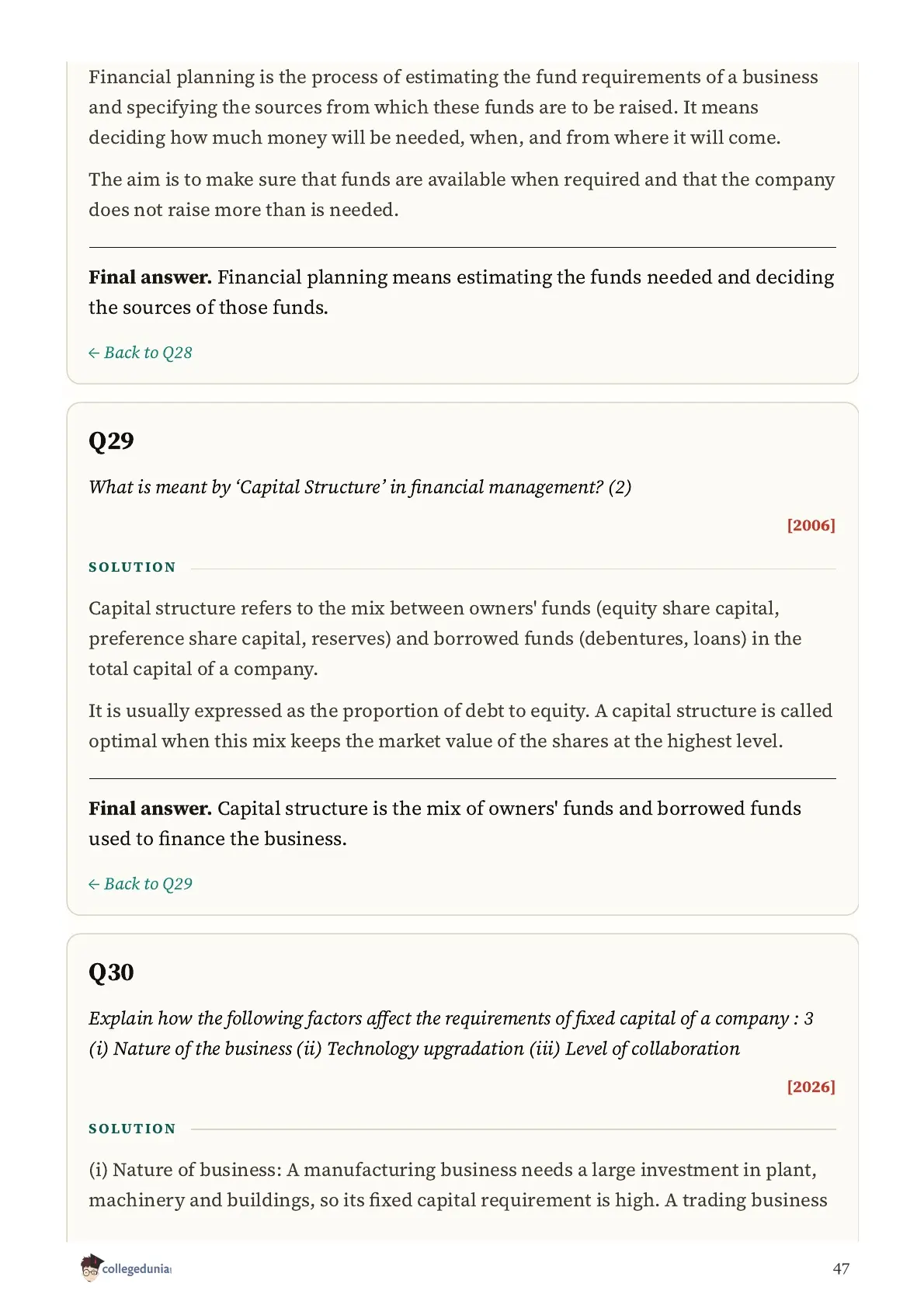

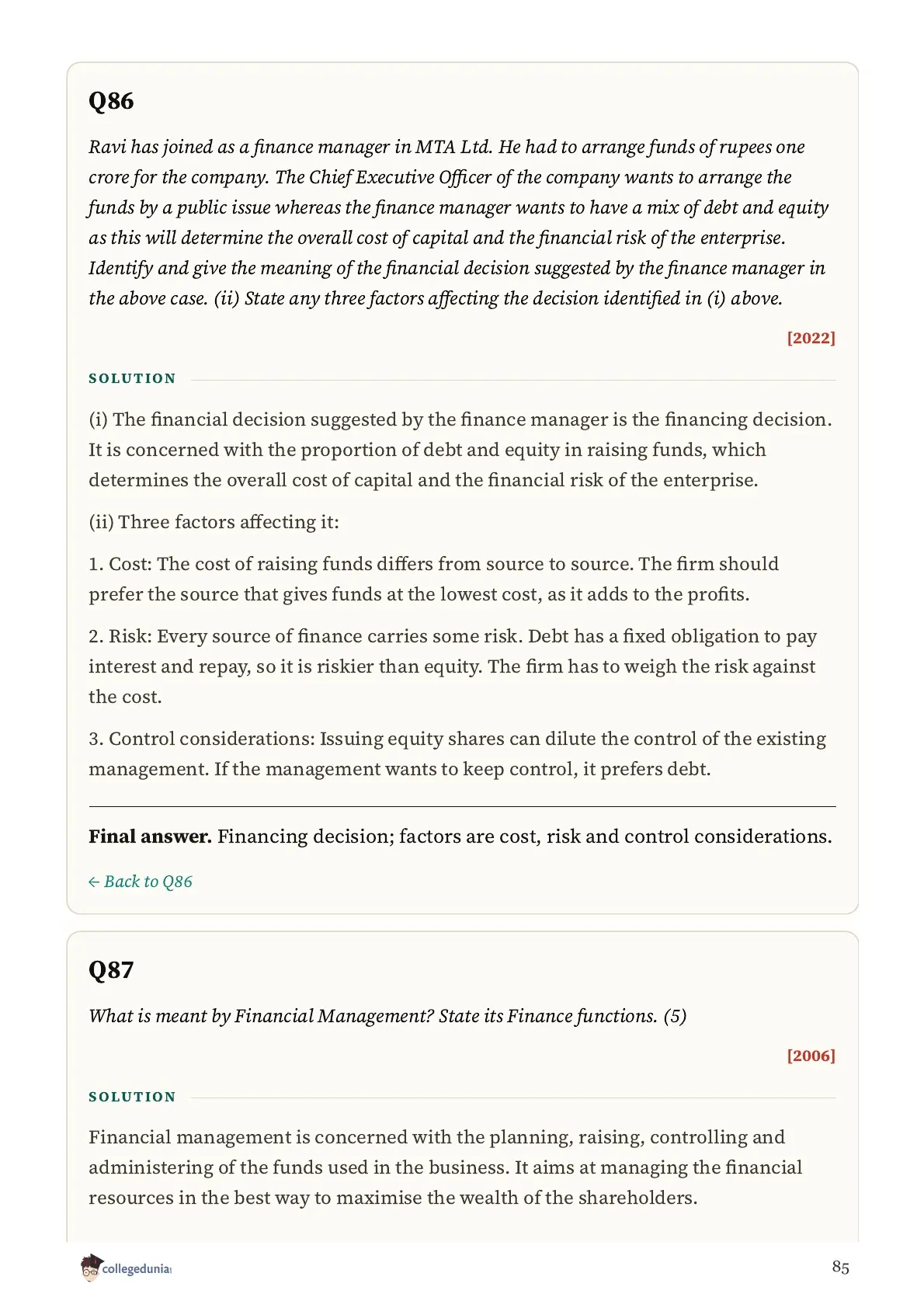
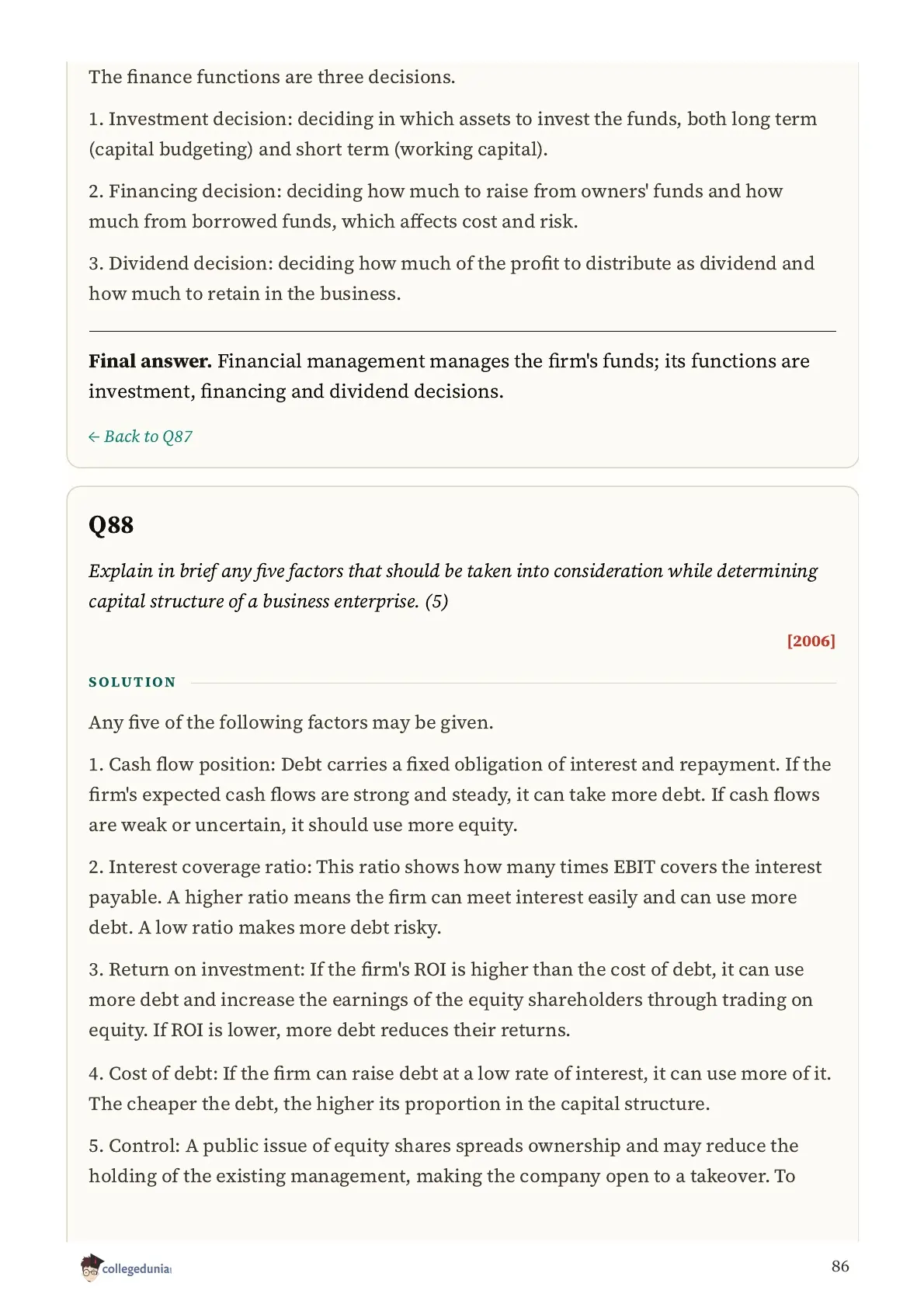
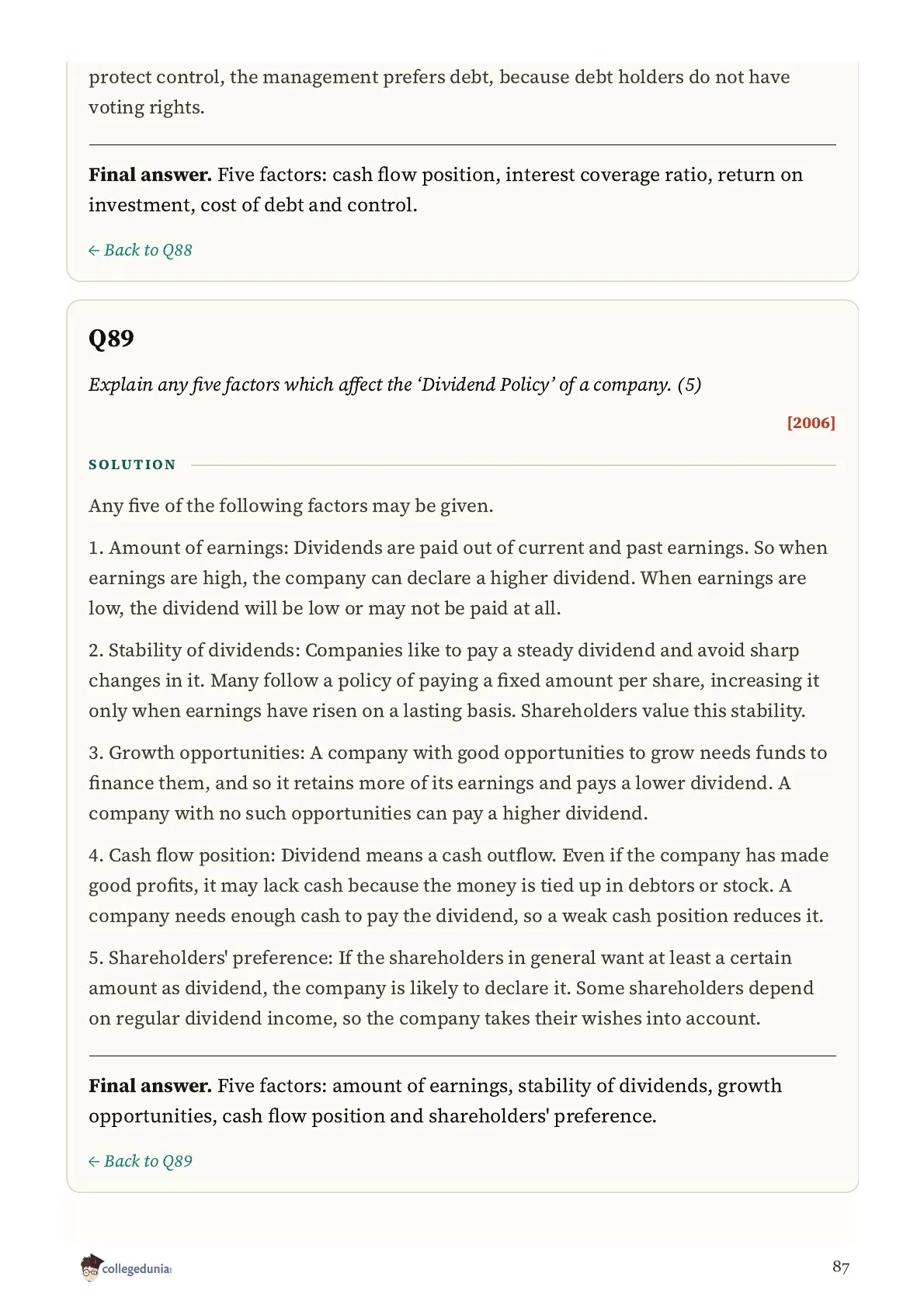
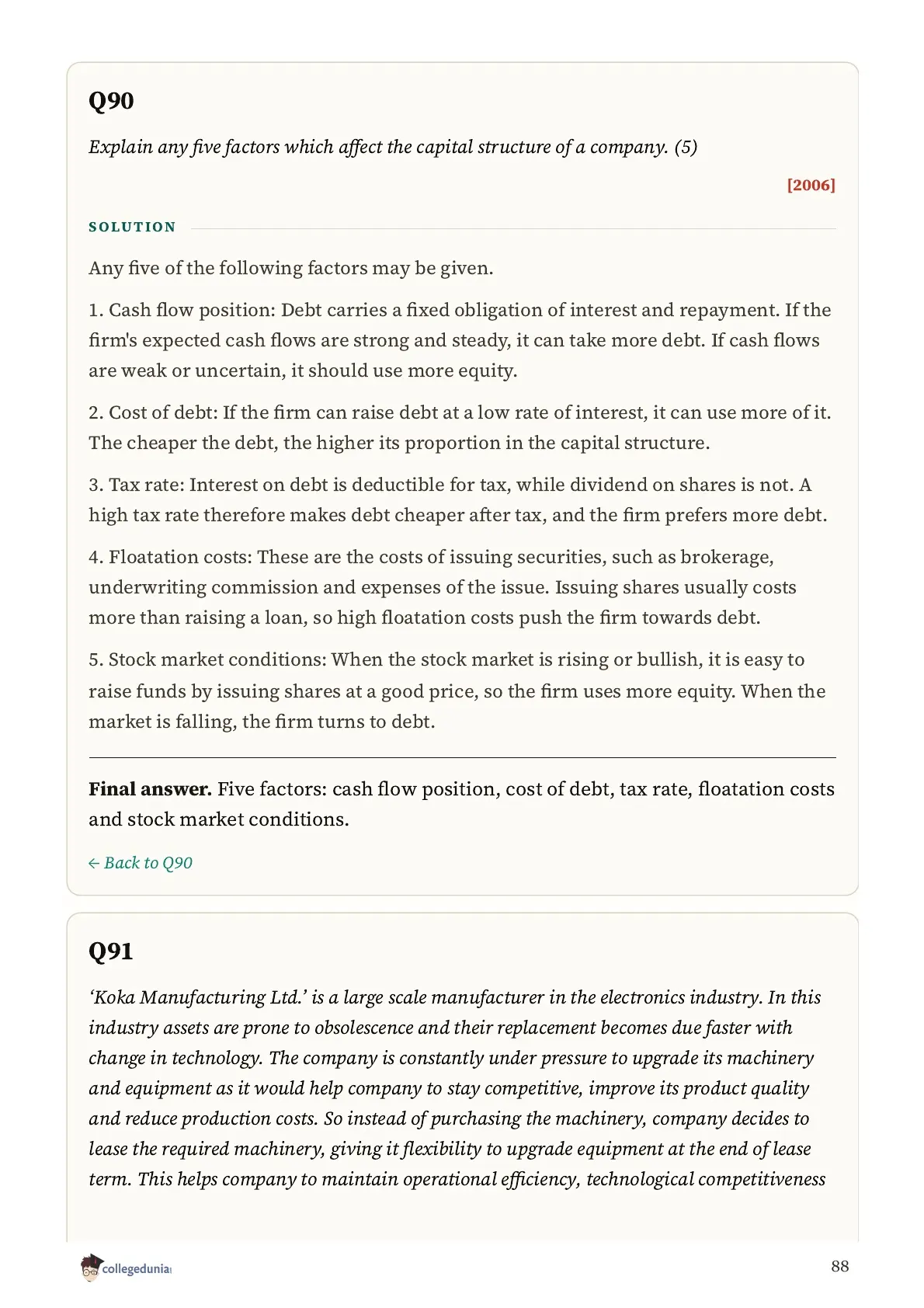
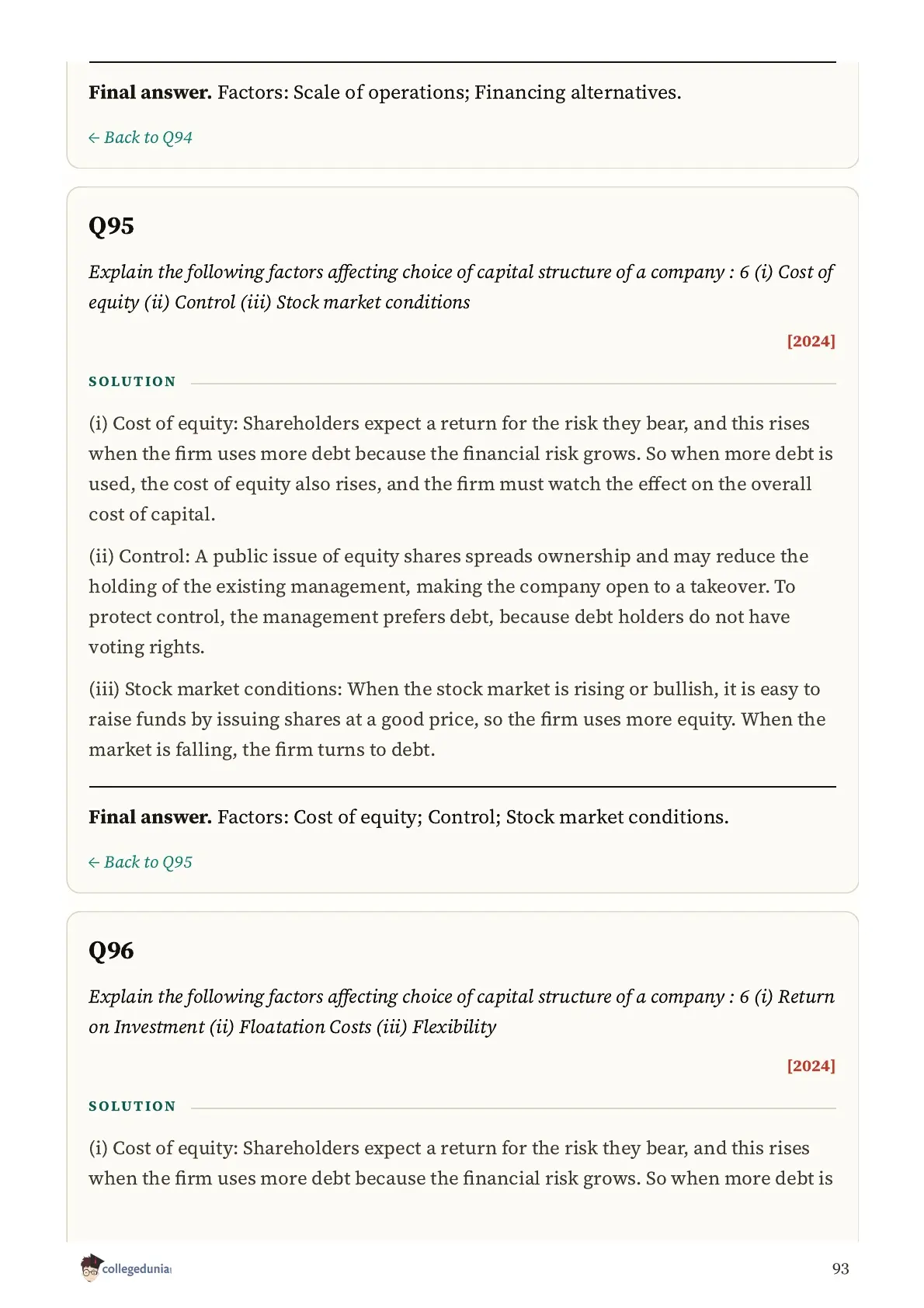
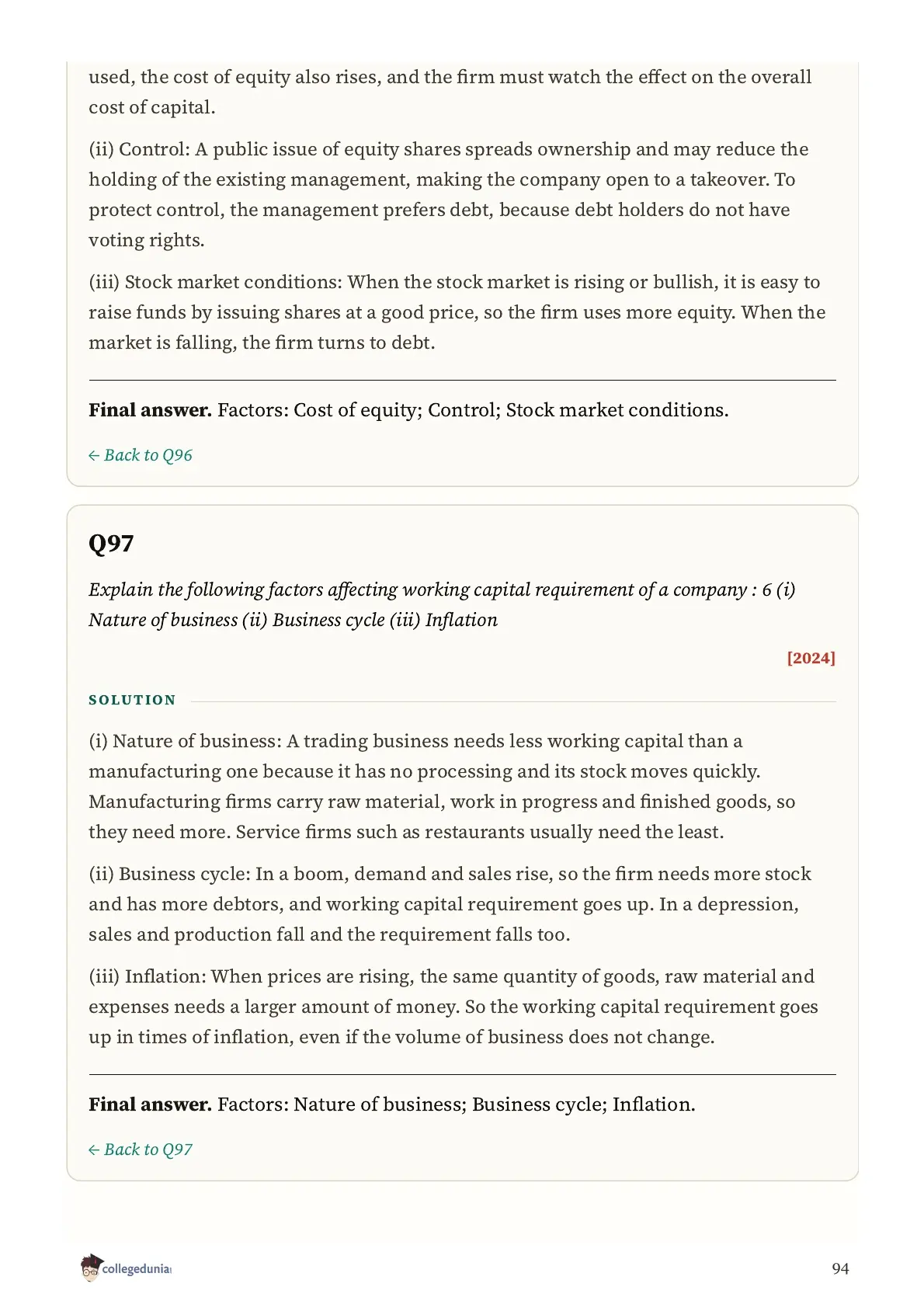
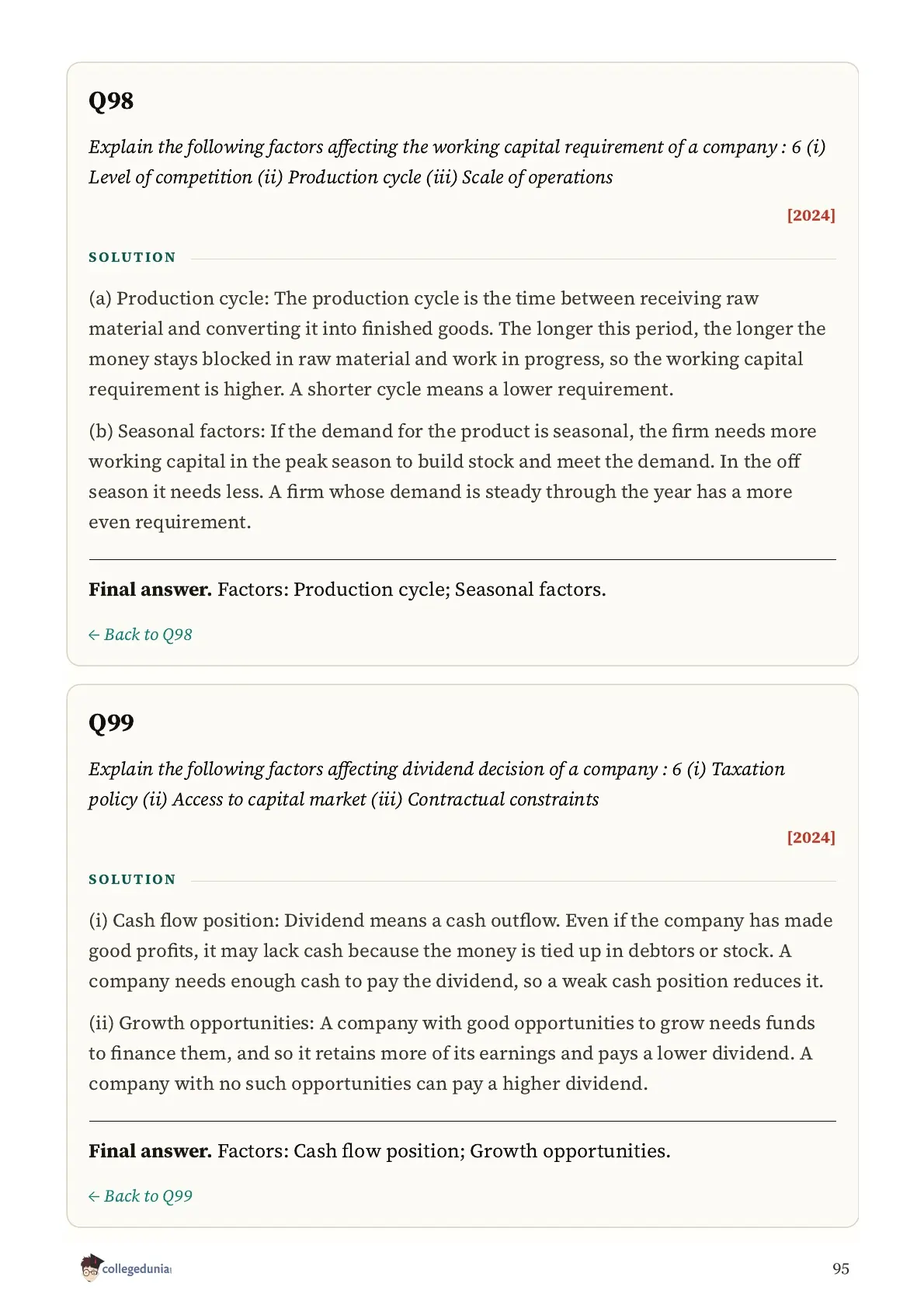
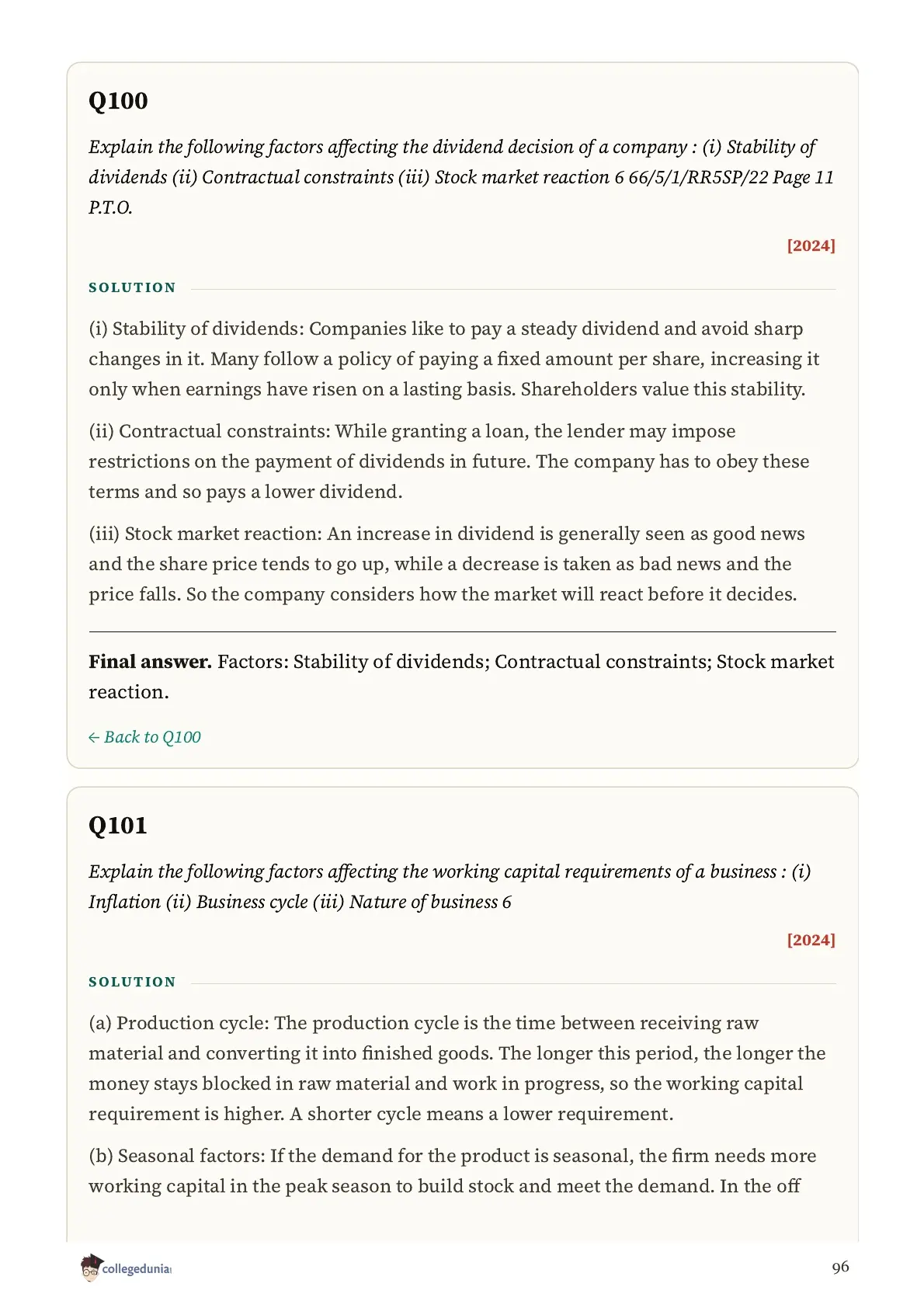
Financial Management Weightage in the Class 12 Board Paper
As per Business Studies Financial Management weightage from past years, students can expect about 8 marks from this chapter in the 80-mark board paper. Marks per chapter change from one paper to the next, so treat the figure as a guide and check the CBSE curriculum for the official unit marks.
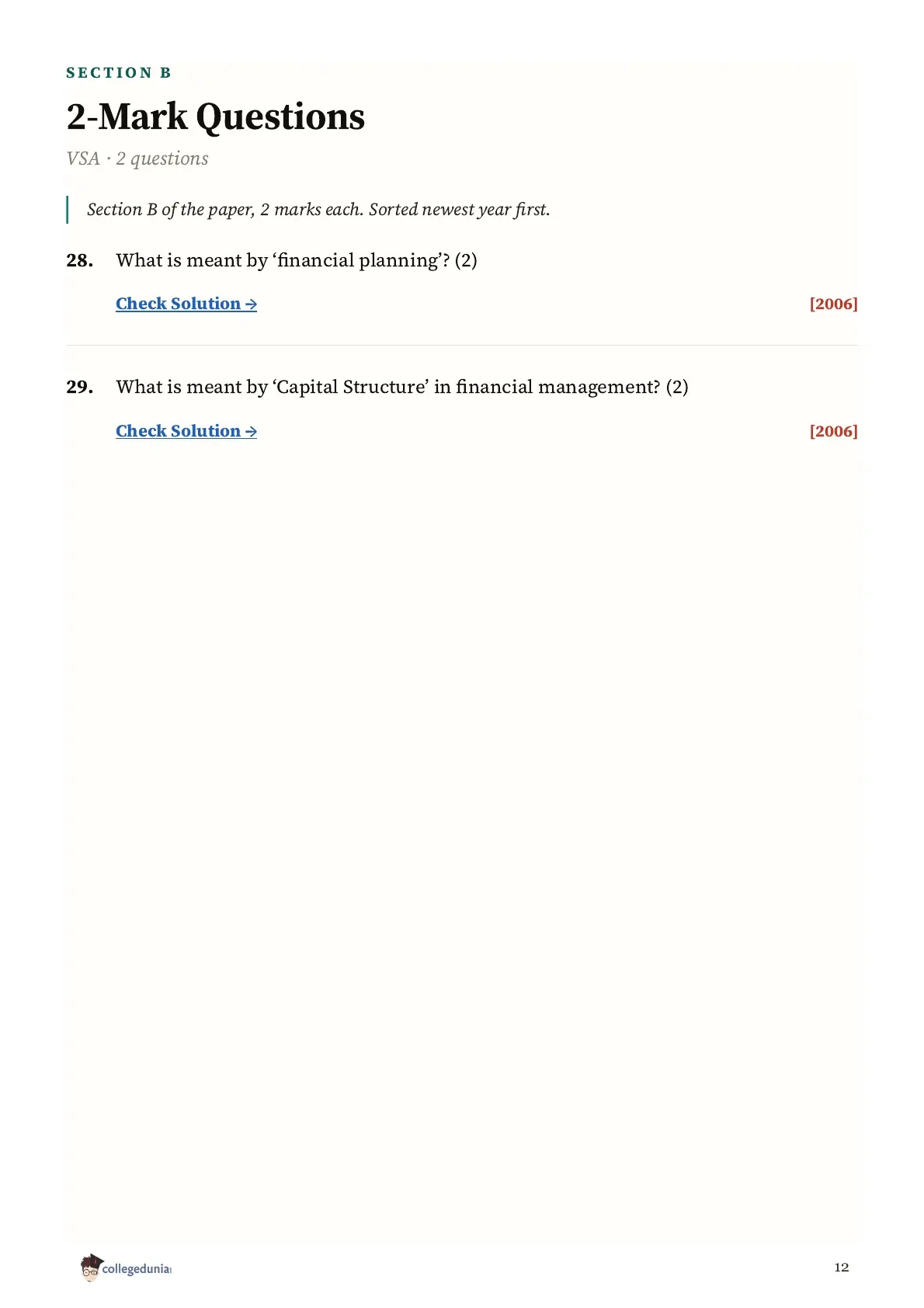
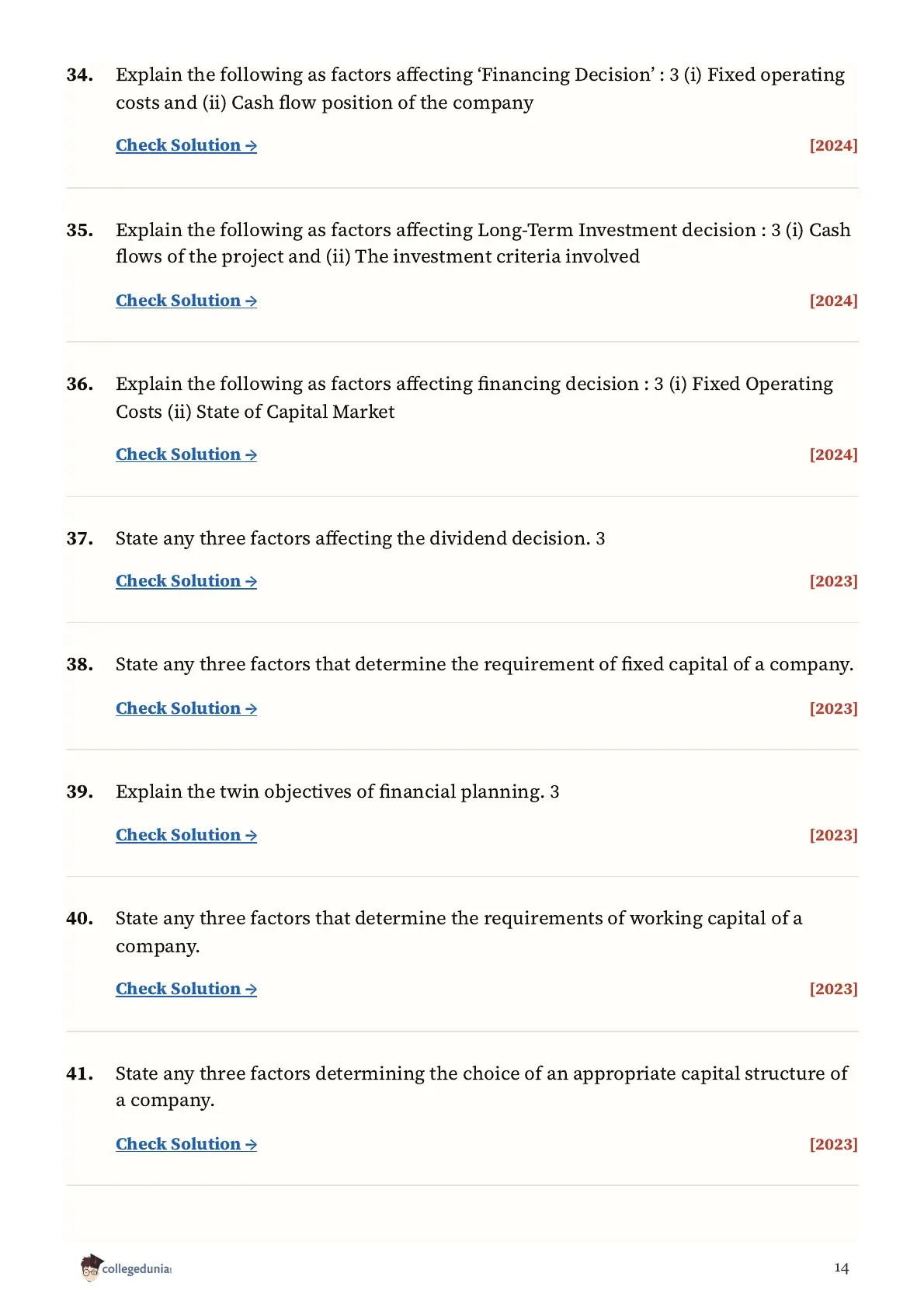
The 103 questions in this set fall in six mark bands. The 1-mark MCQs and the 4-mark answers tie as the largest groups with 27 questions each, followed by 21 questions of 3 marks. The rest are 13 questions of 5 marks, 13 of 6 marks and 2 of 2 marks, so 76 of the 103 need a written answer.
| Marks Each | Question Type | Questions in the Set |
|---|---|---|
| 1 mark | MCQ | 27 |
| 2 marks | Very Short Answer (VSA) | 2 |
| 3 marks | Short Answer (SA) | 21 |
| 4 marks | Long Answer | 27 |
| 5 marks | Long Answer | 13 |
| 6 marks | Long Answer | 13 |
Financial Management Questions by Topic
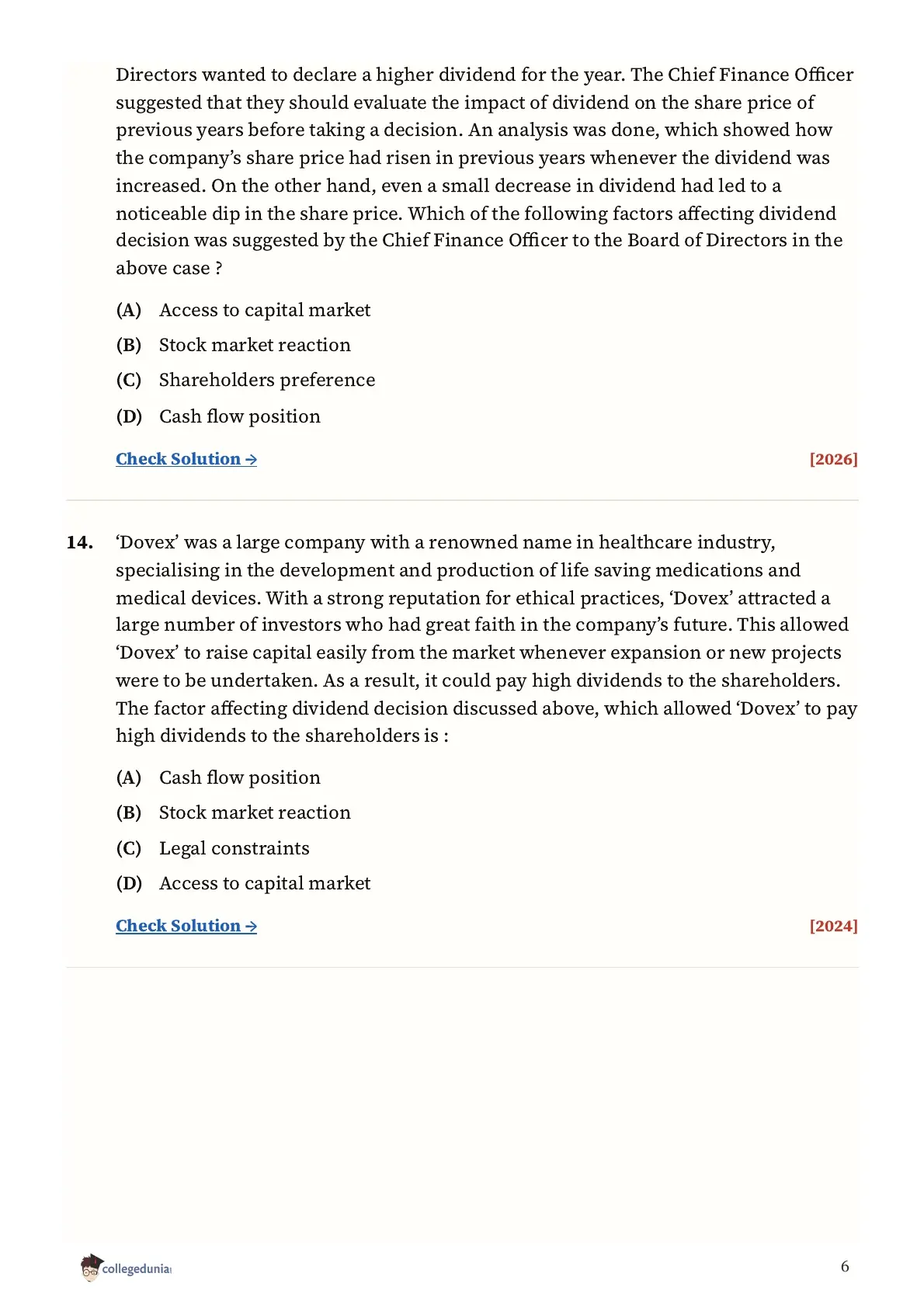
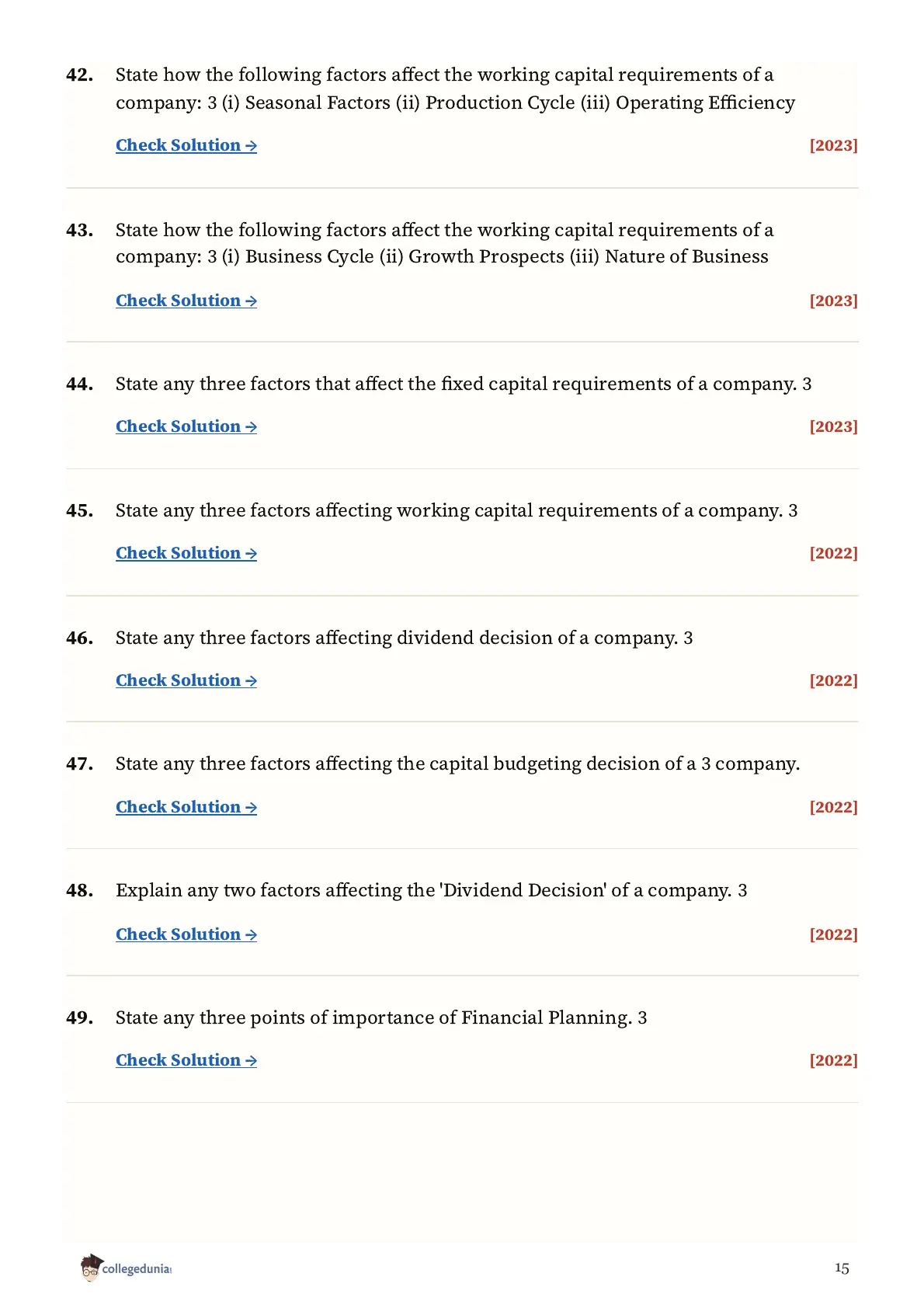
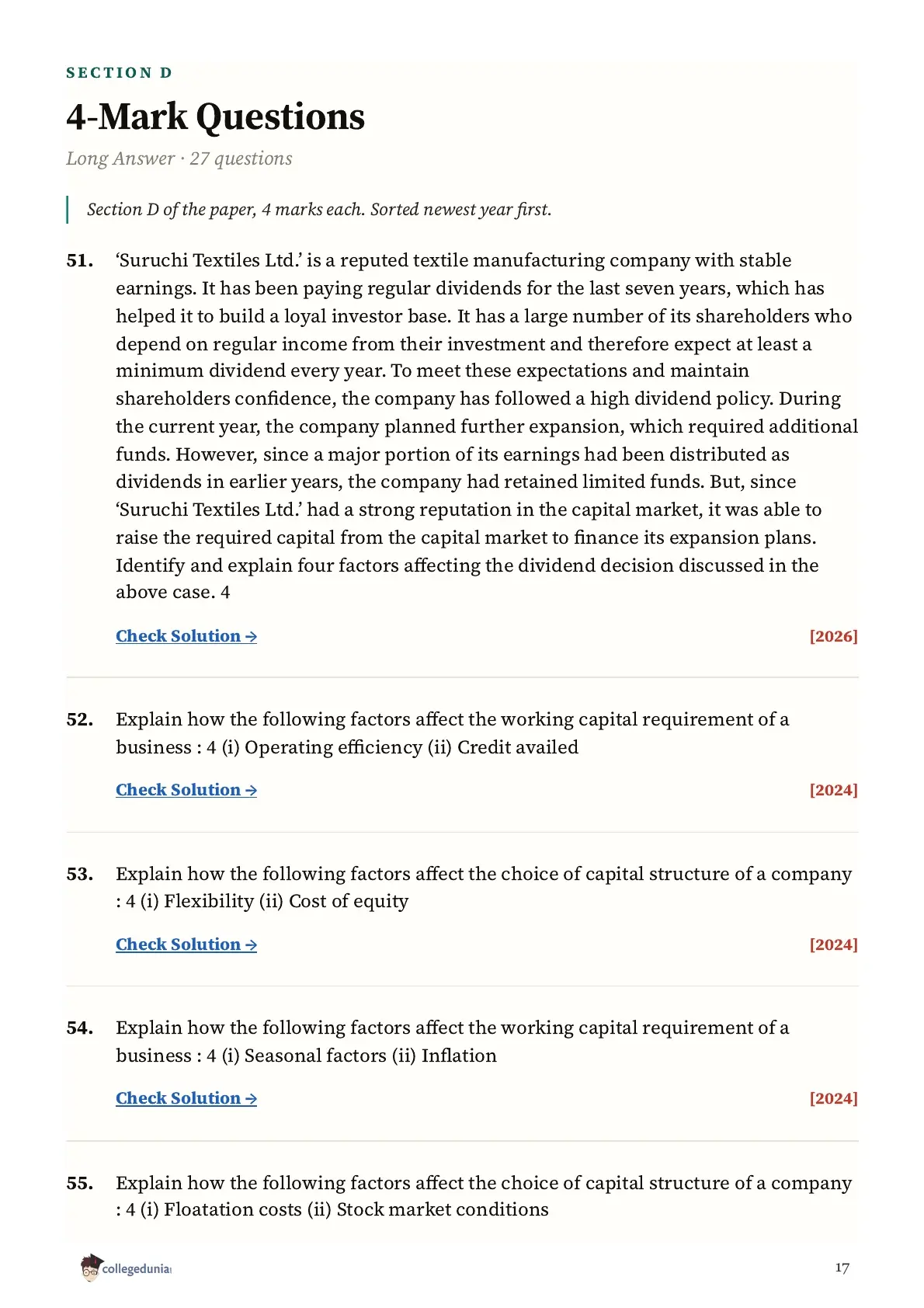
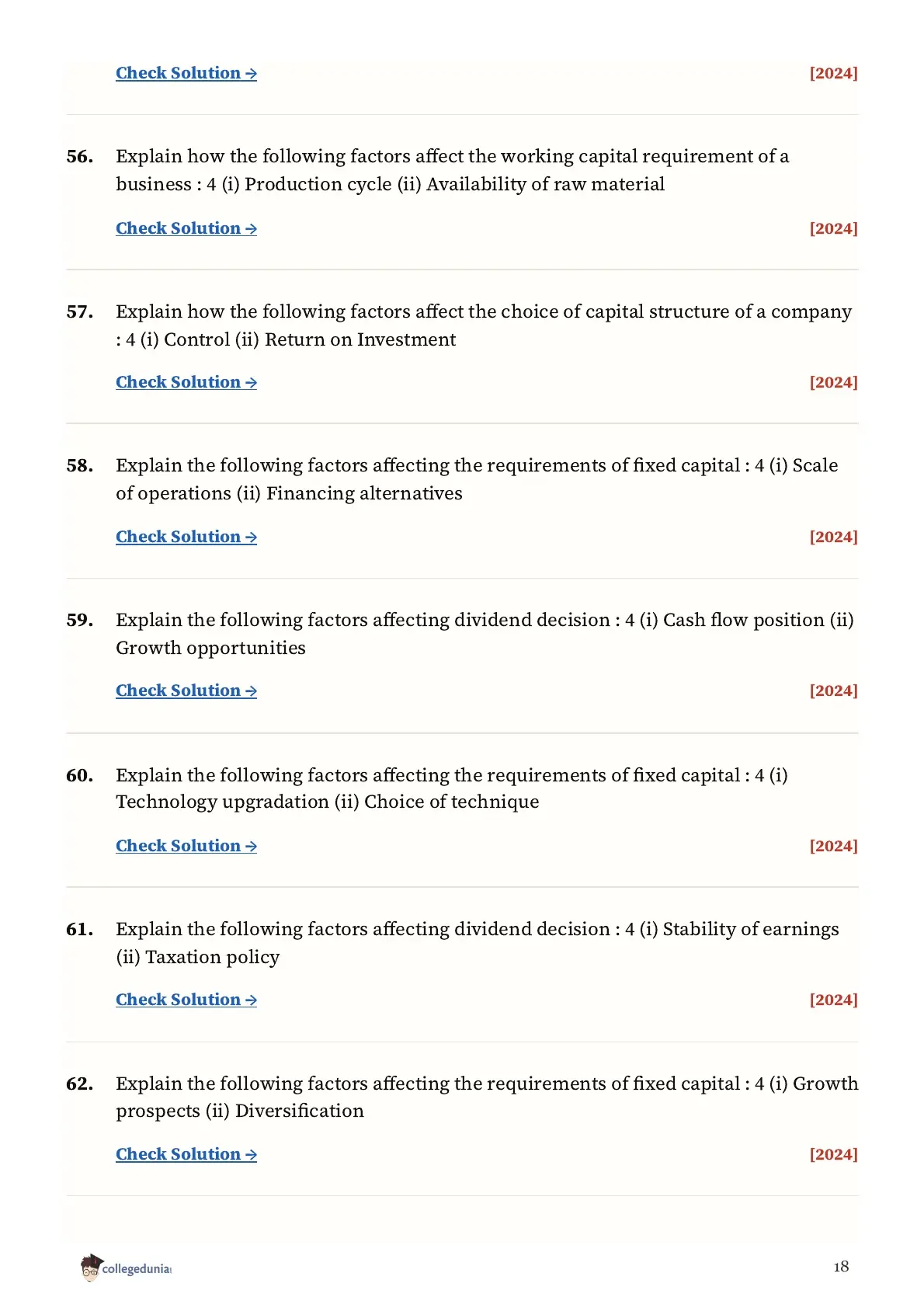
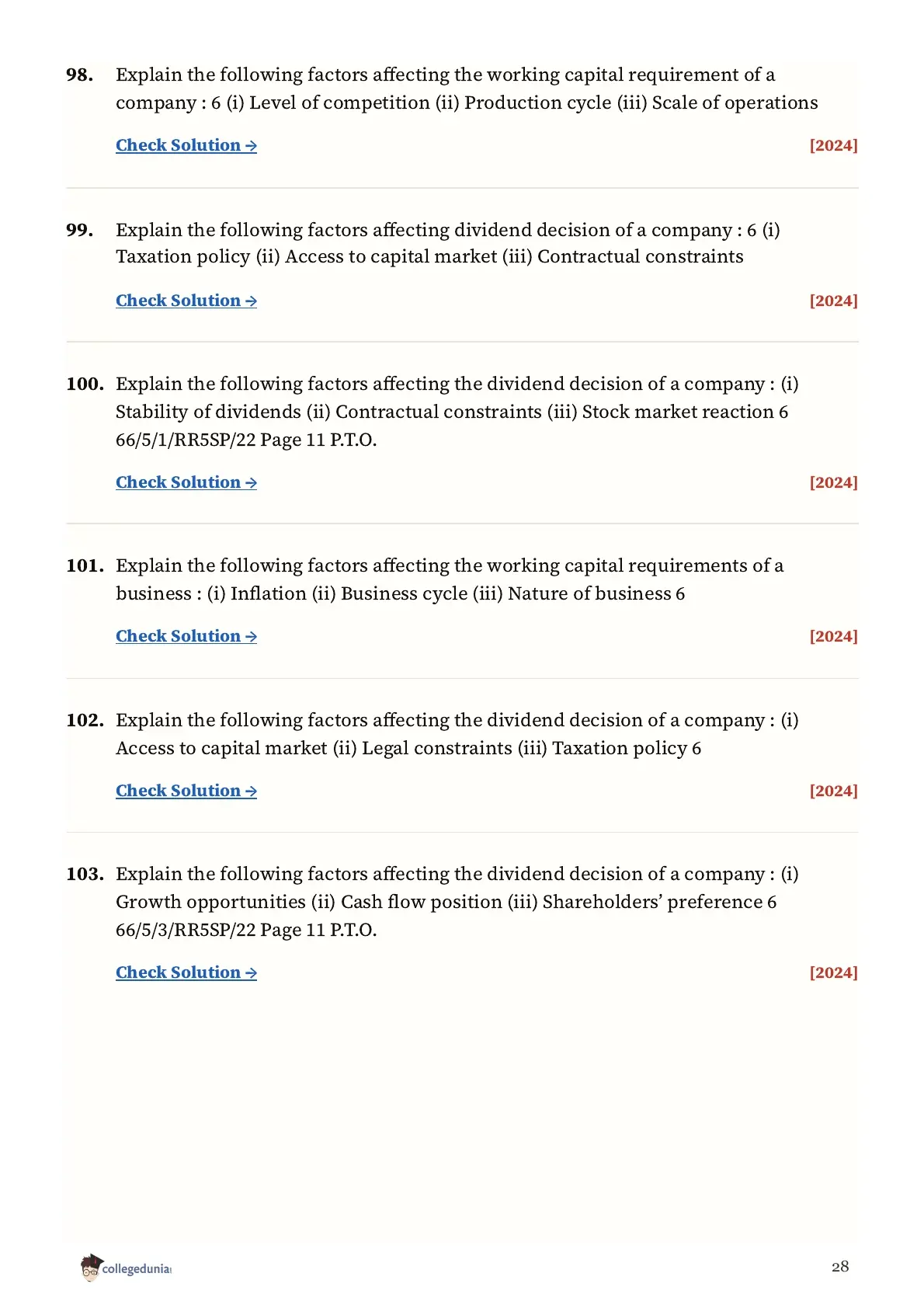
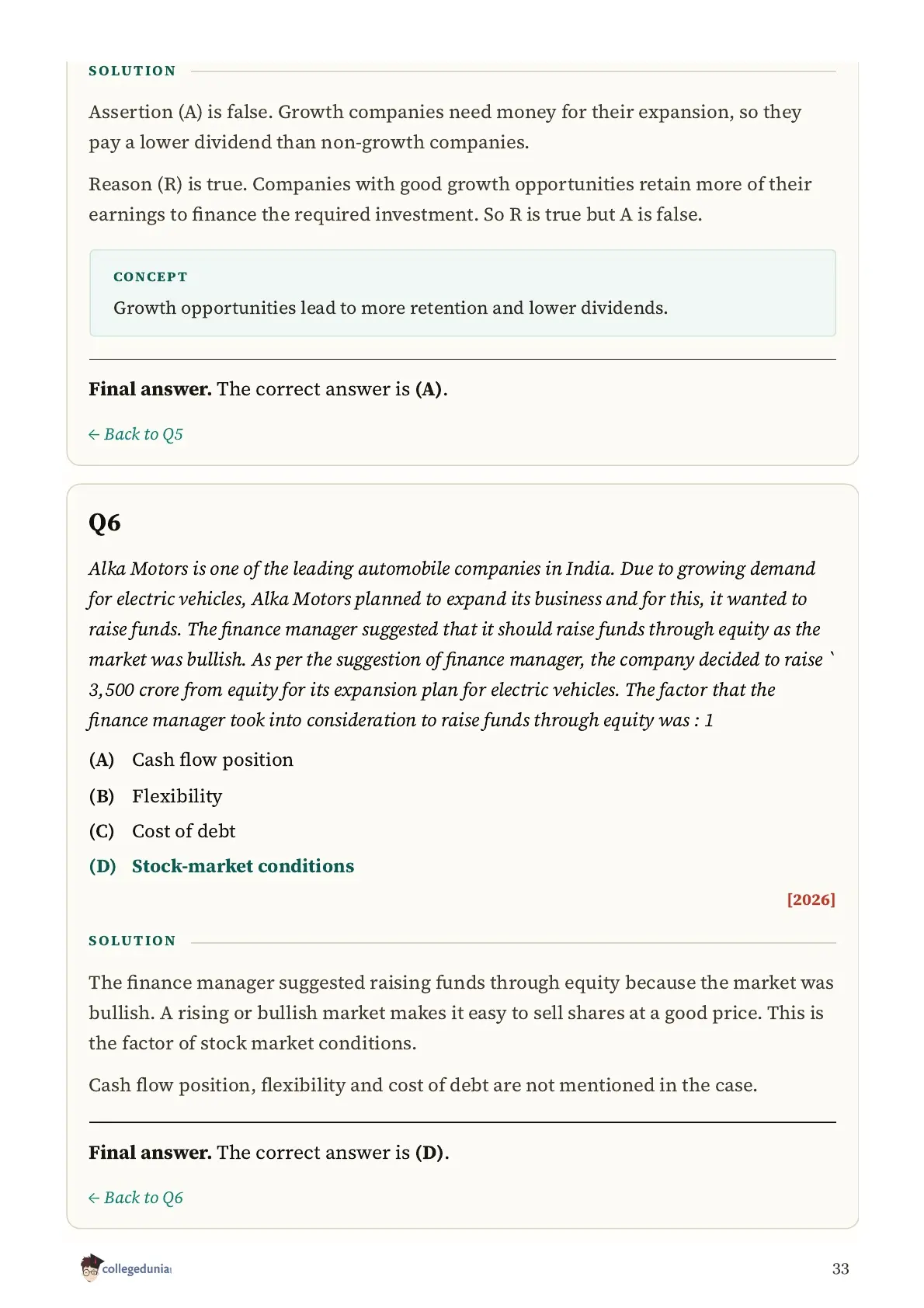
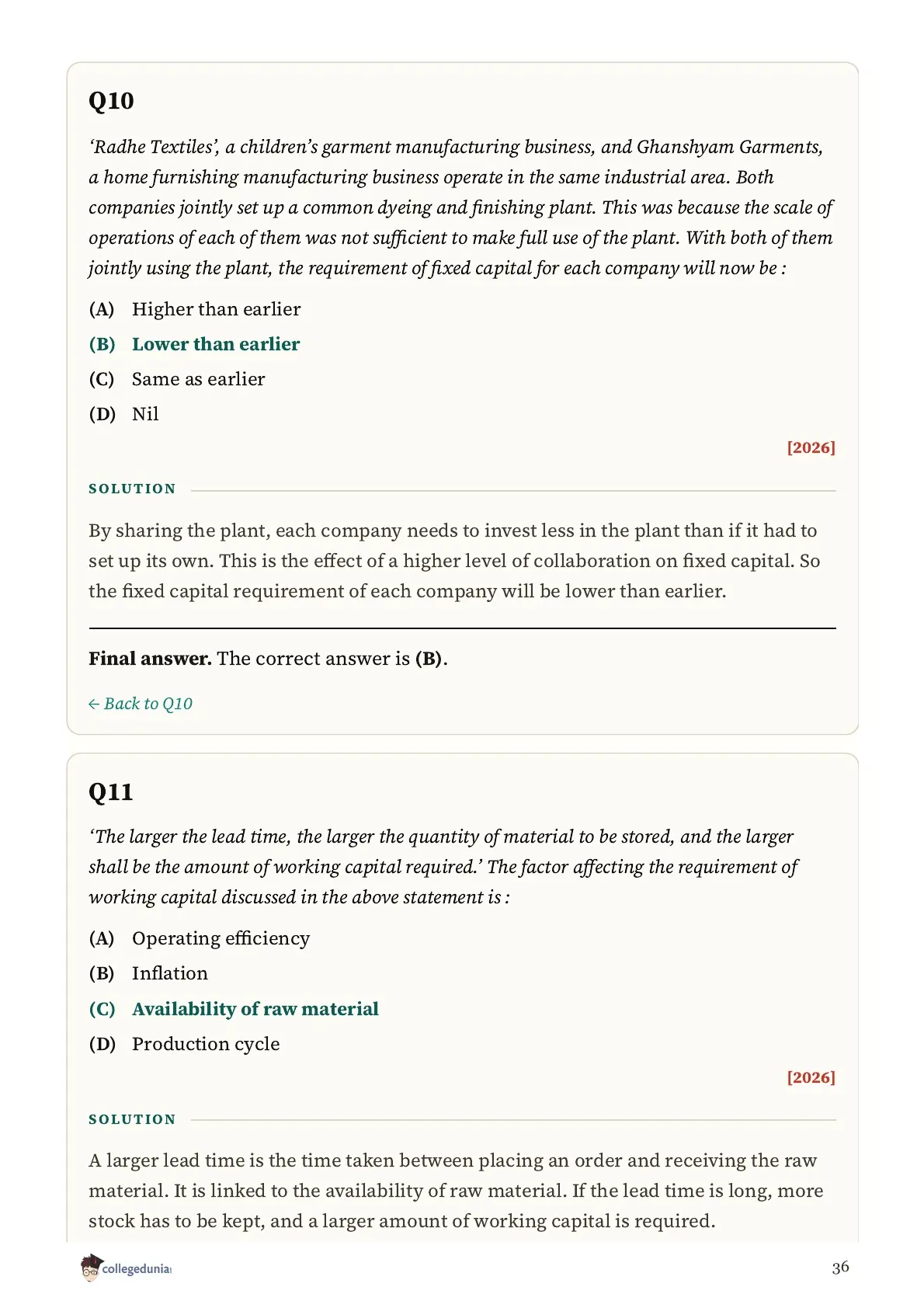
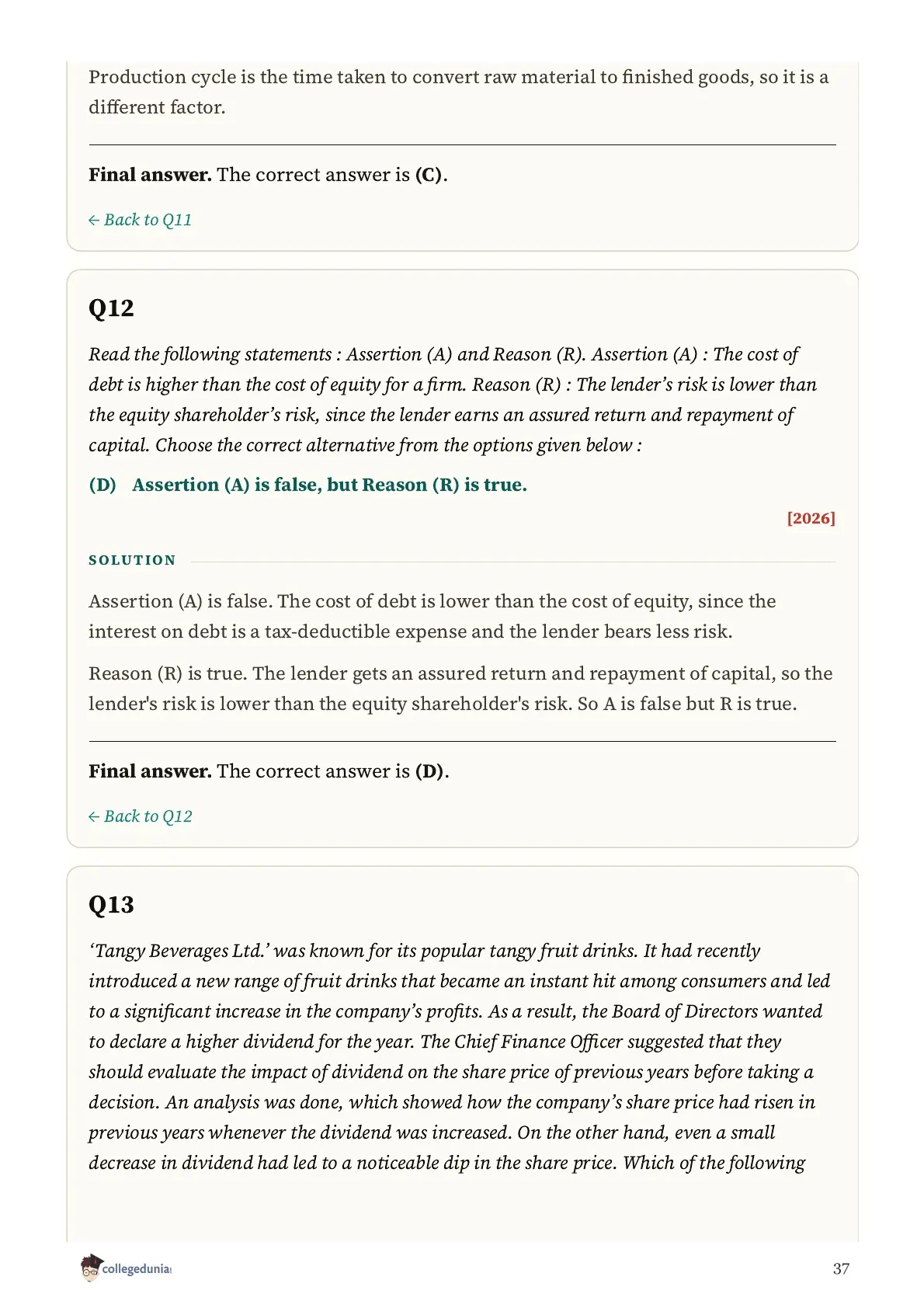
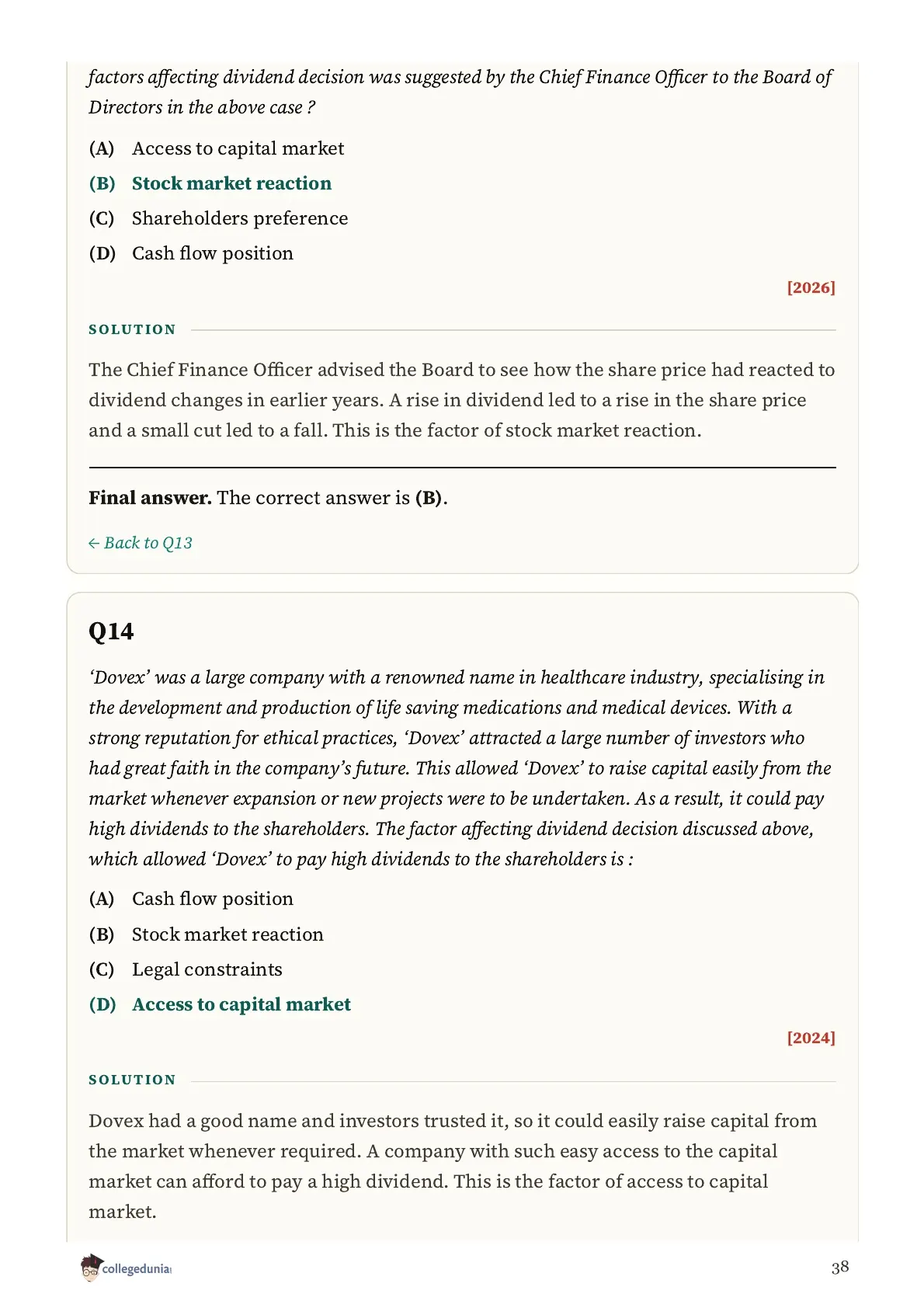
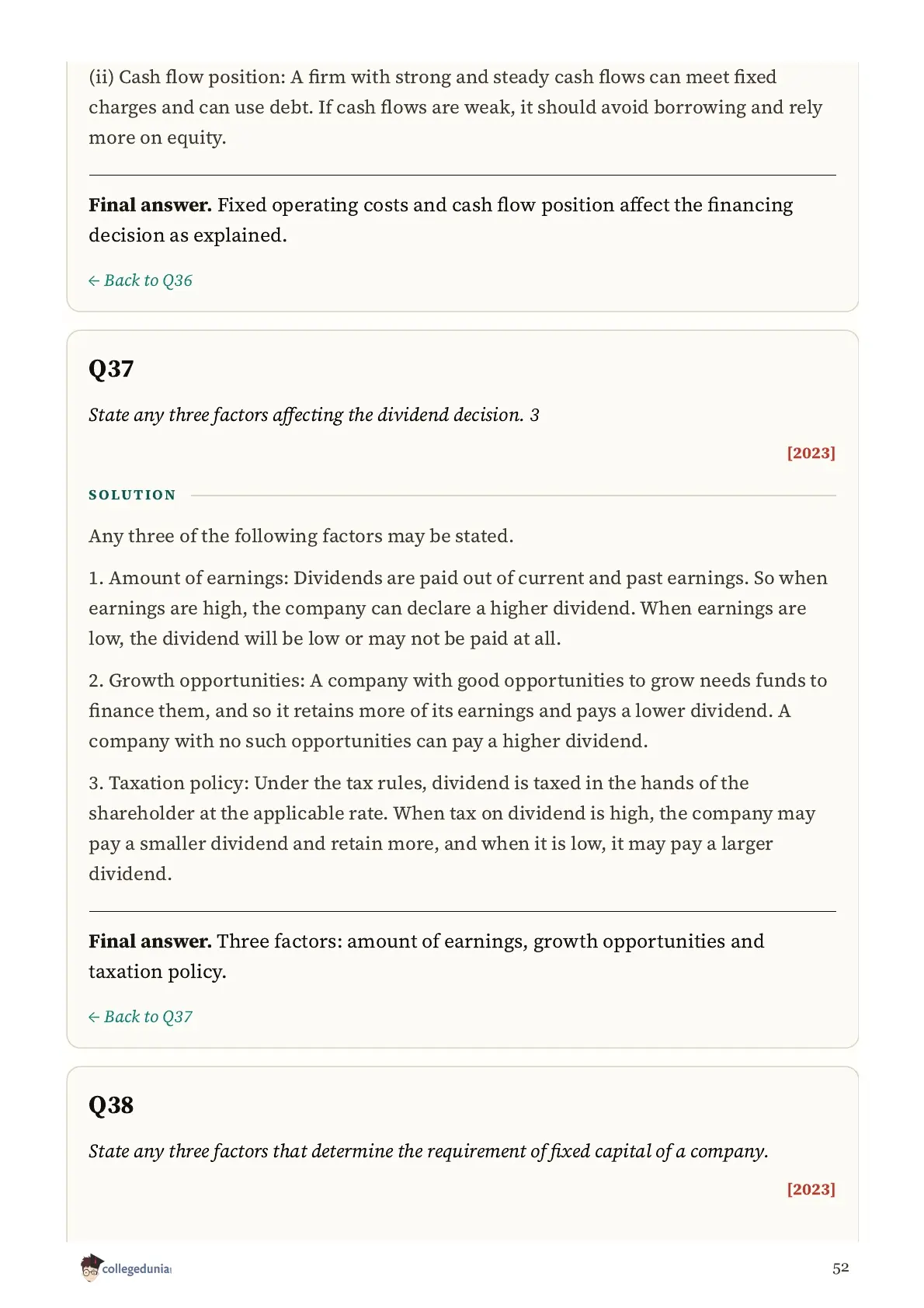
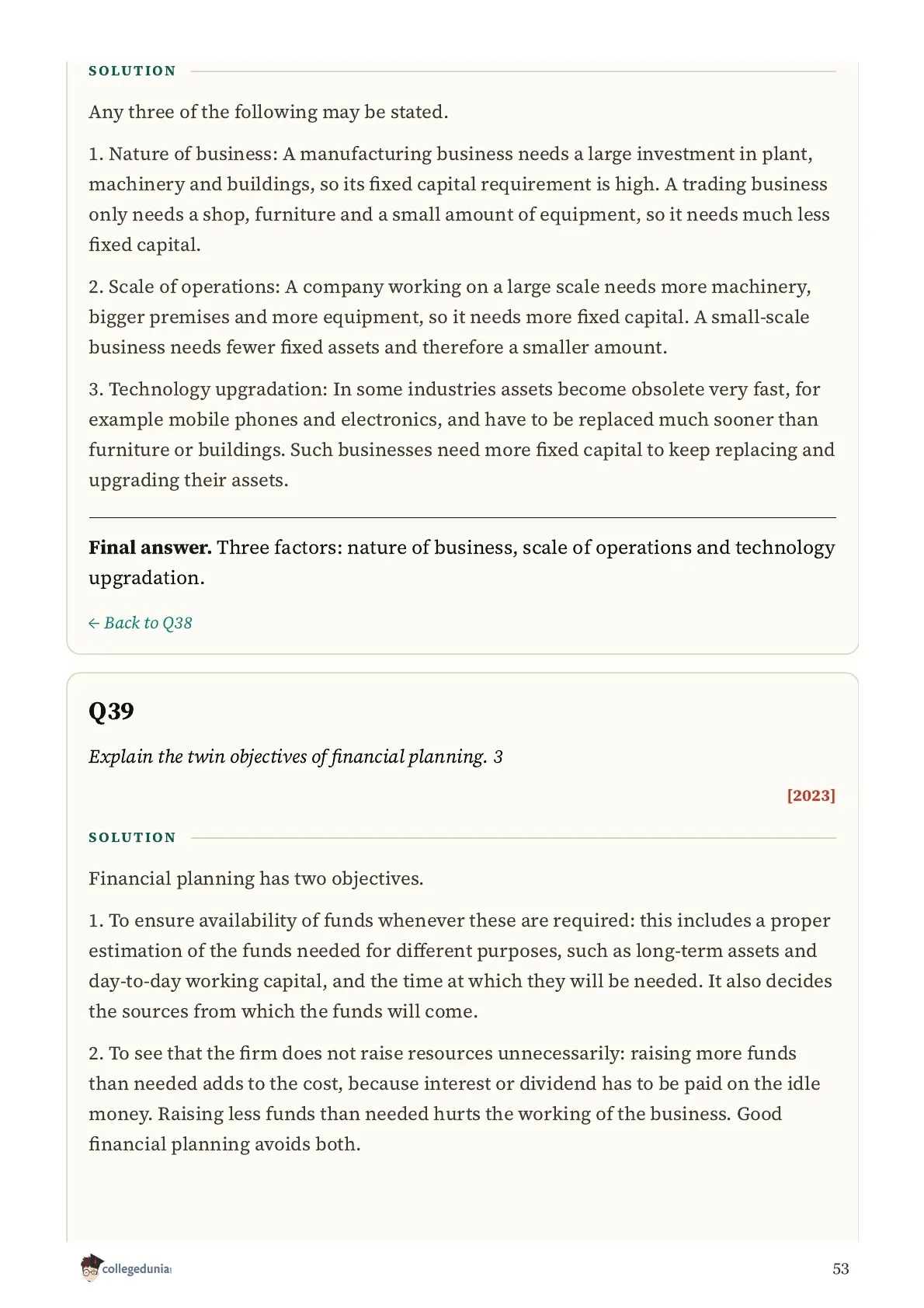
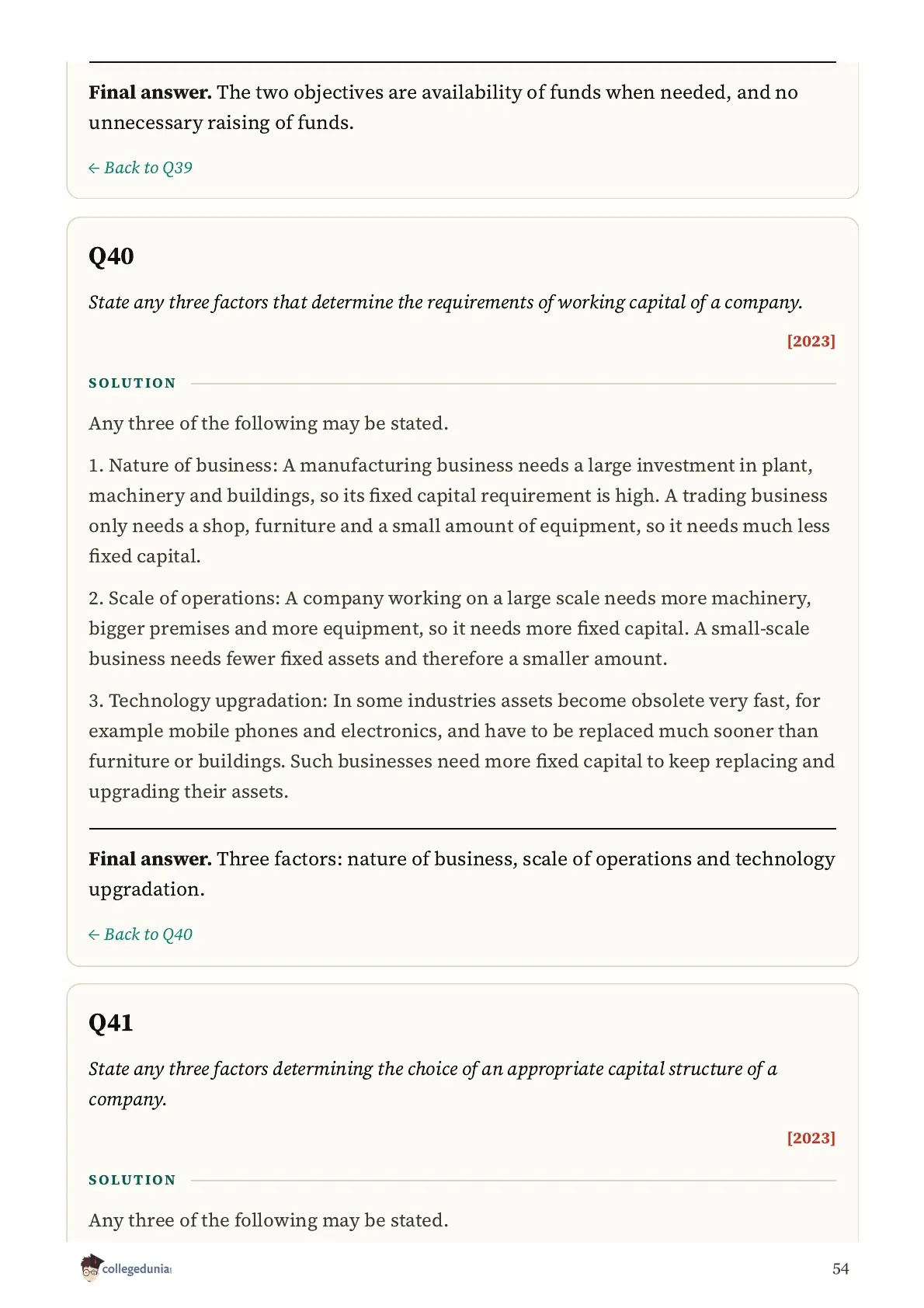
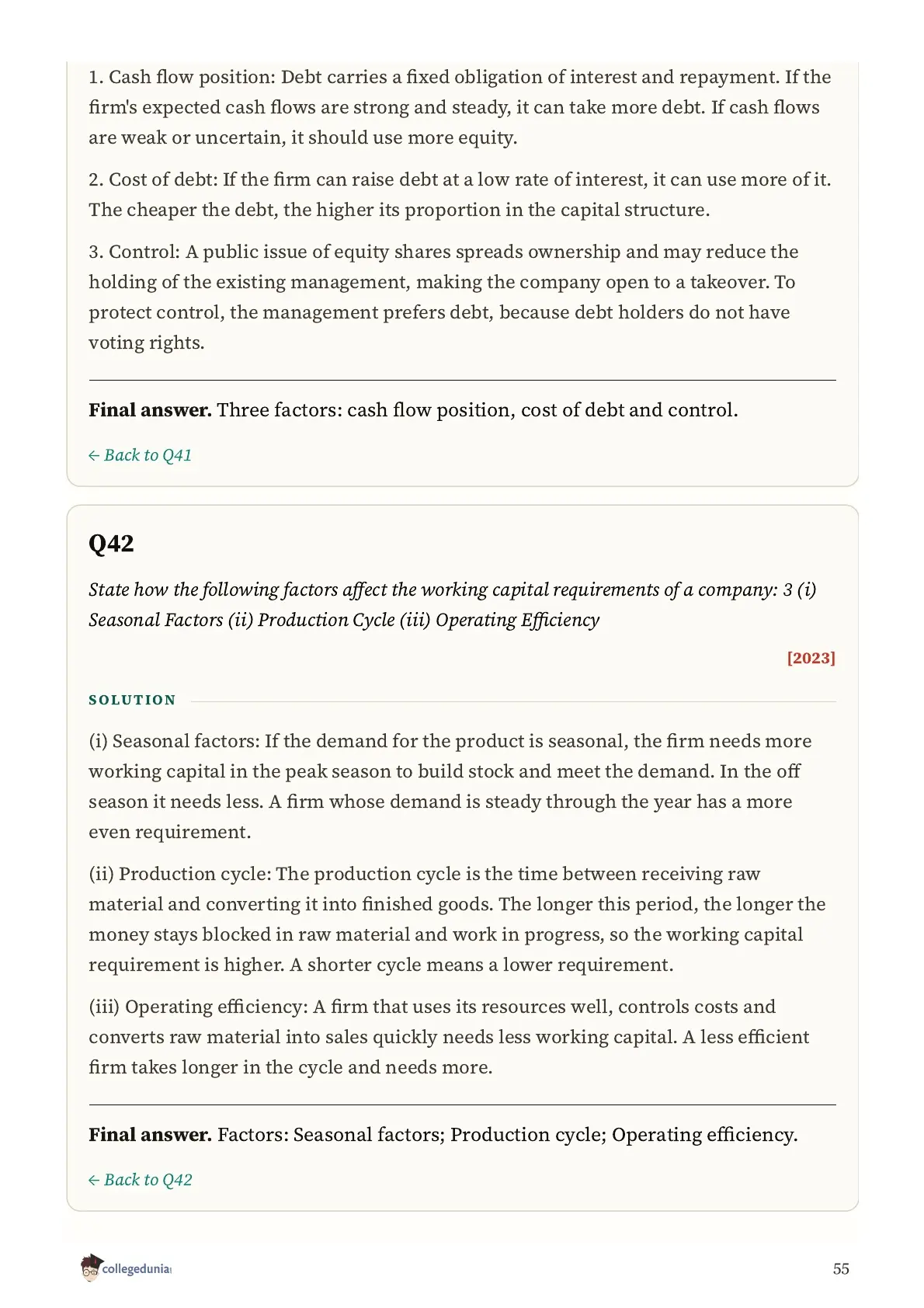
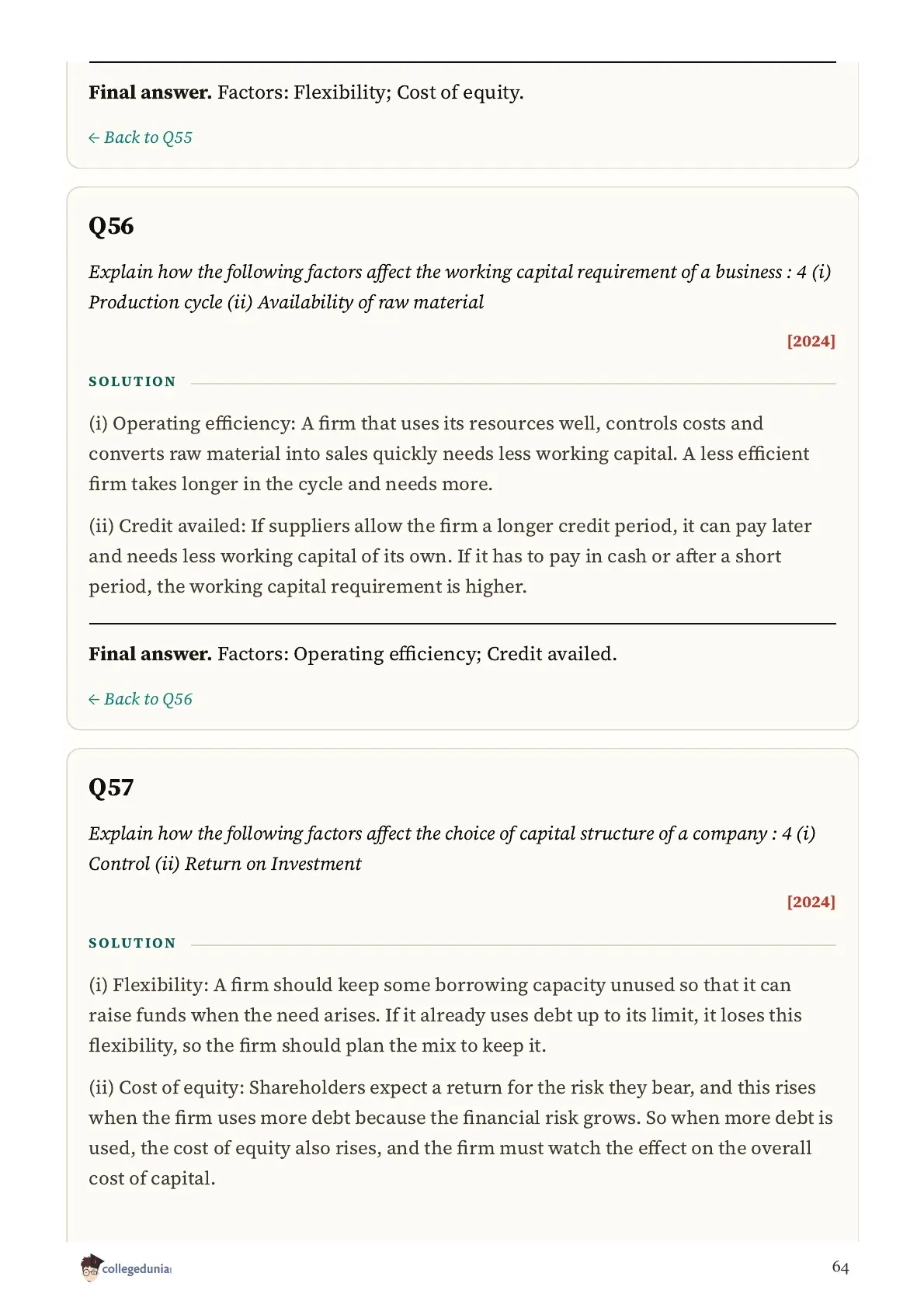
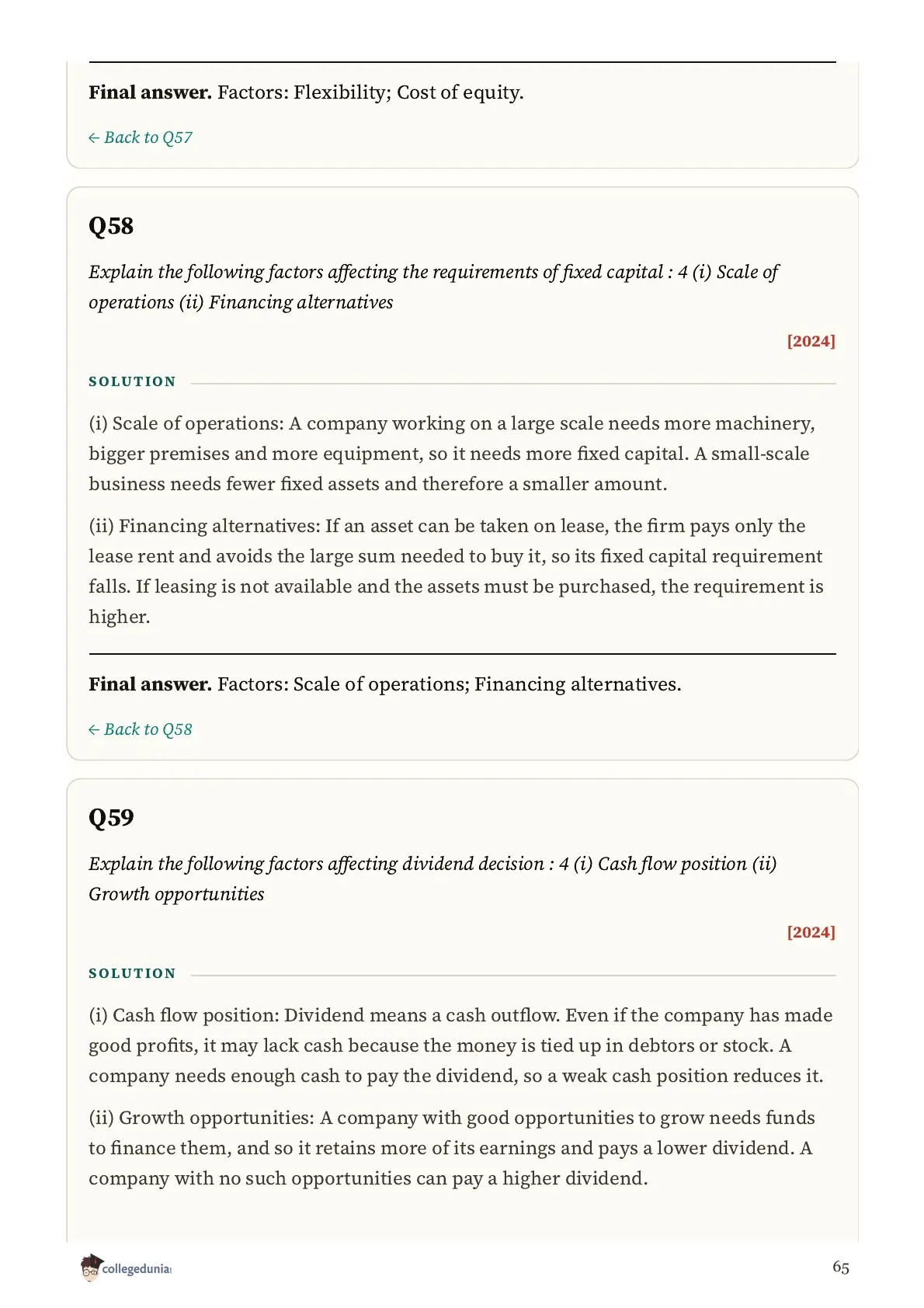
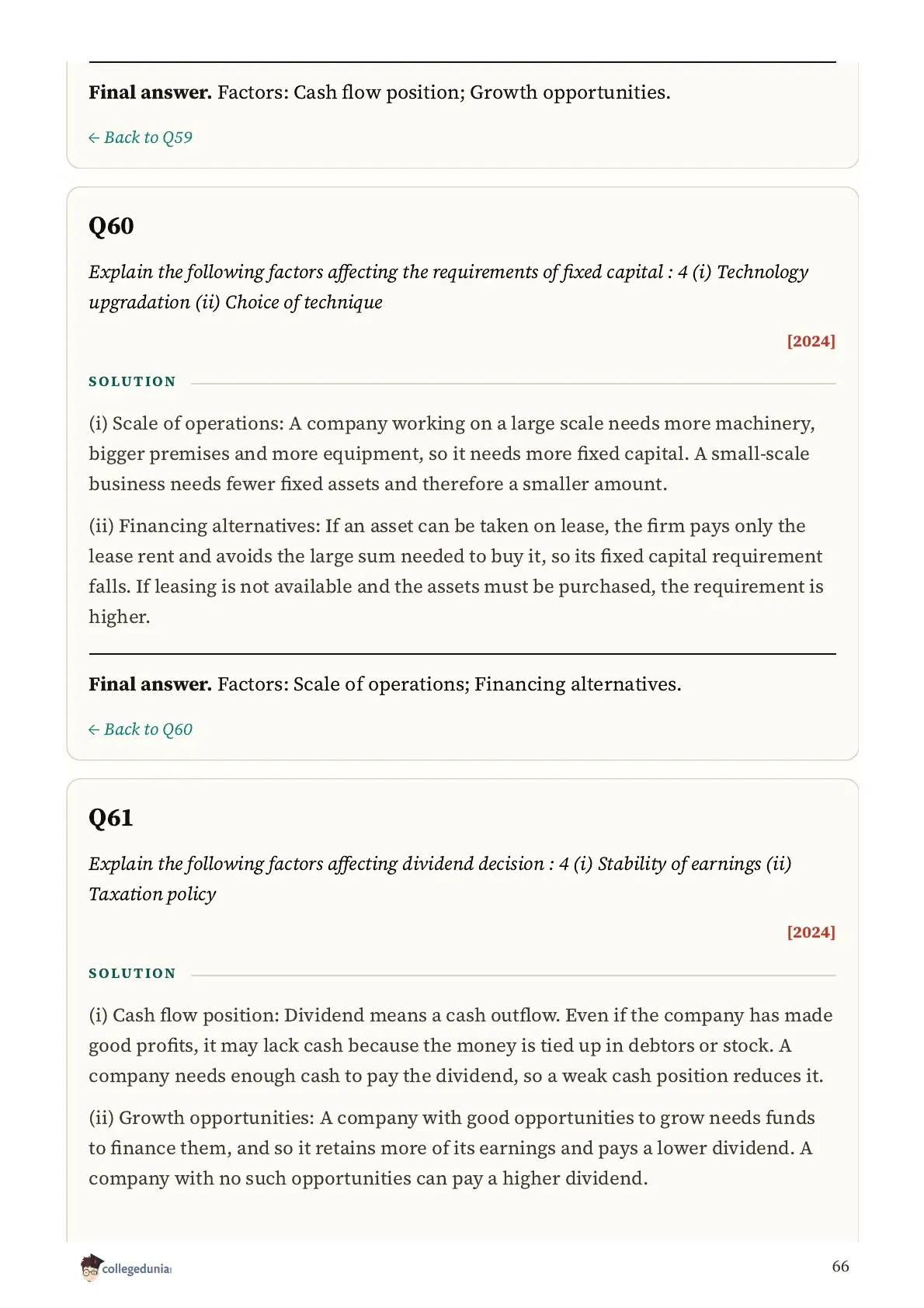
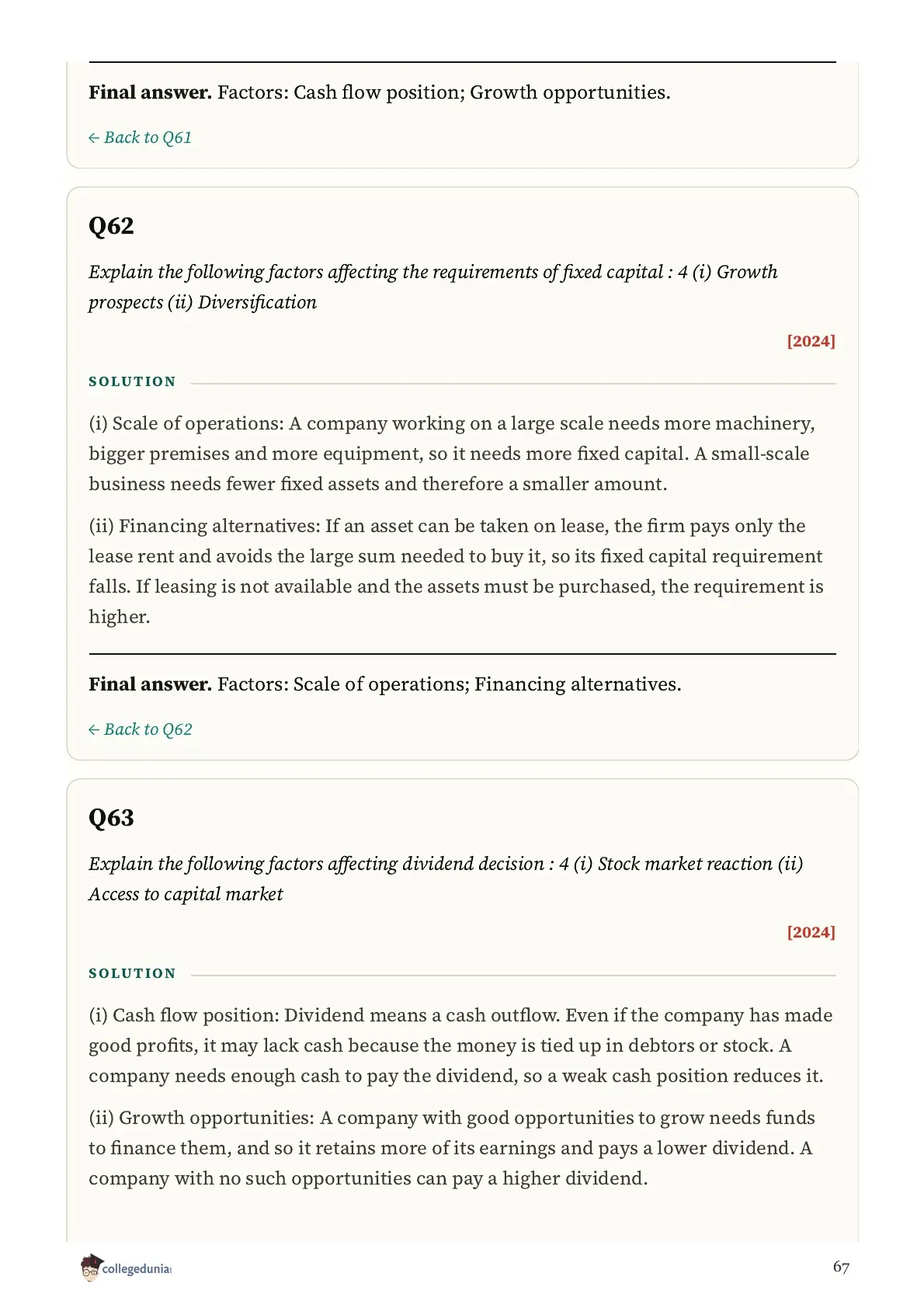
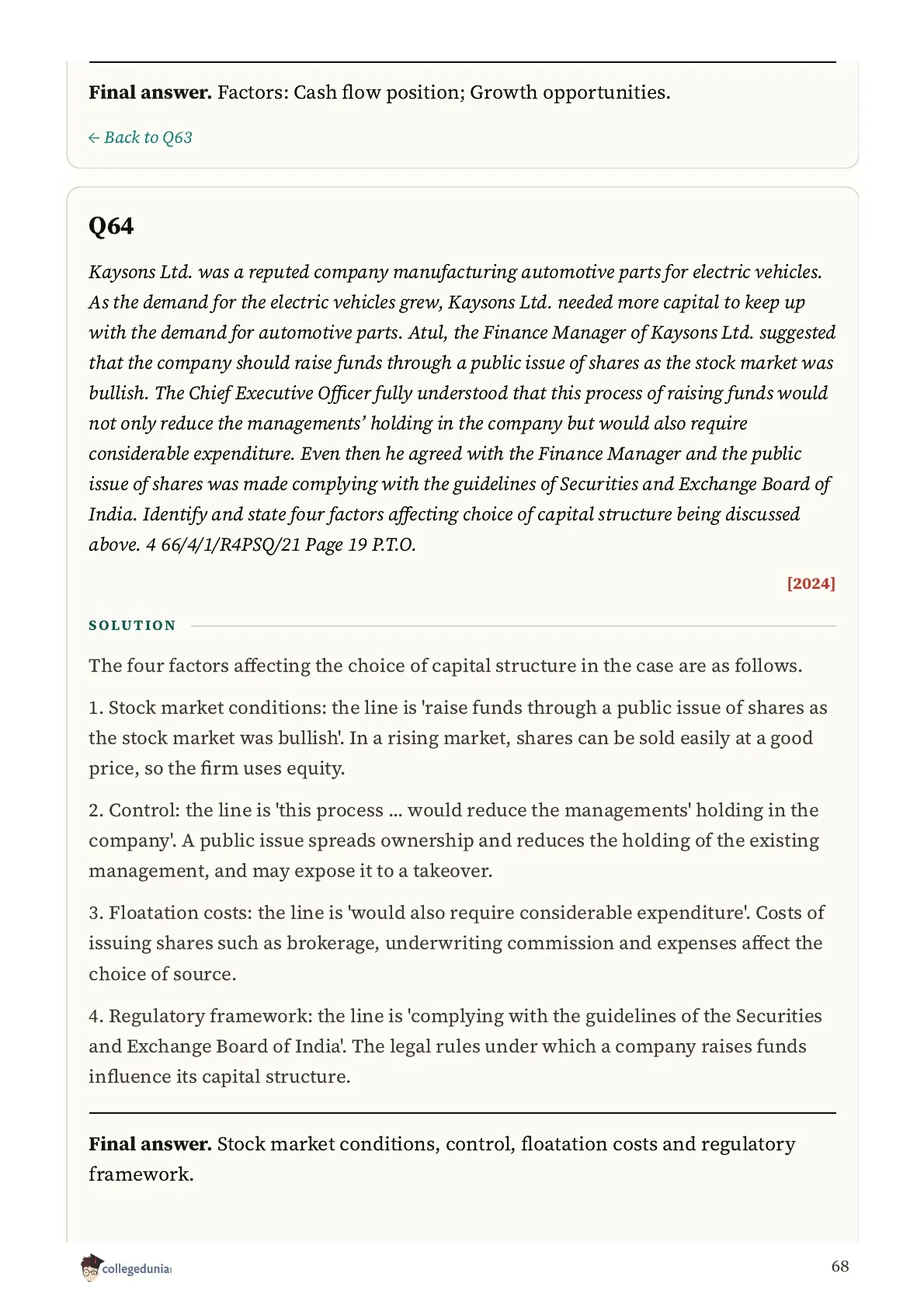
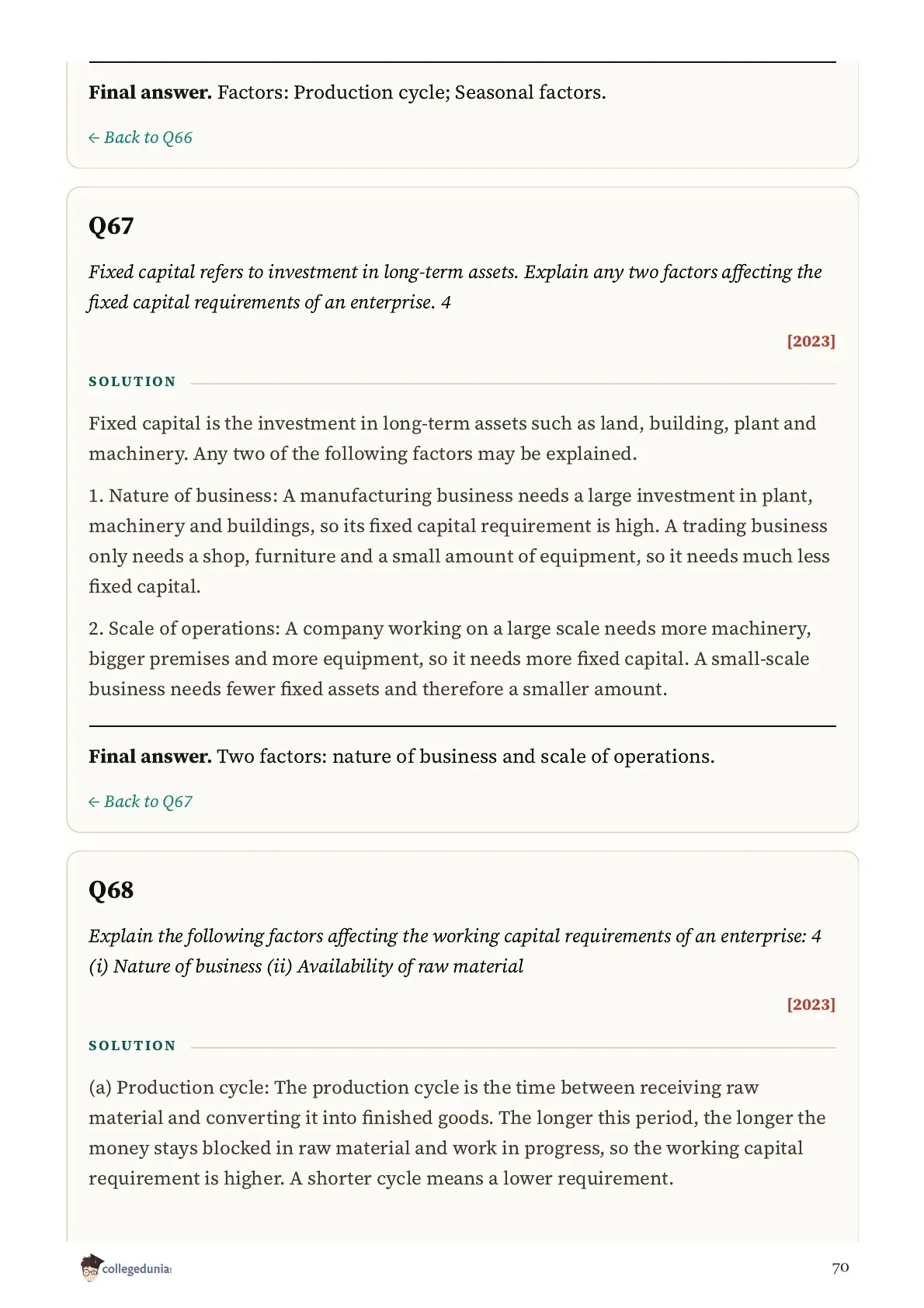
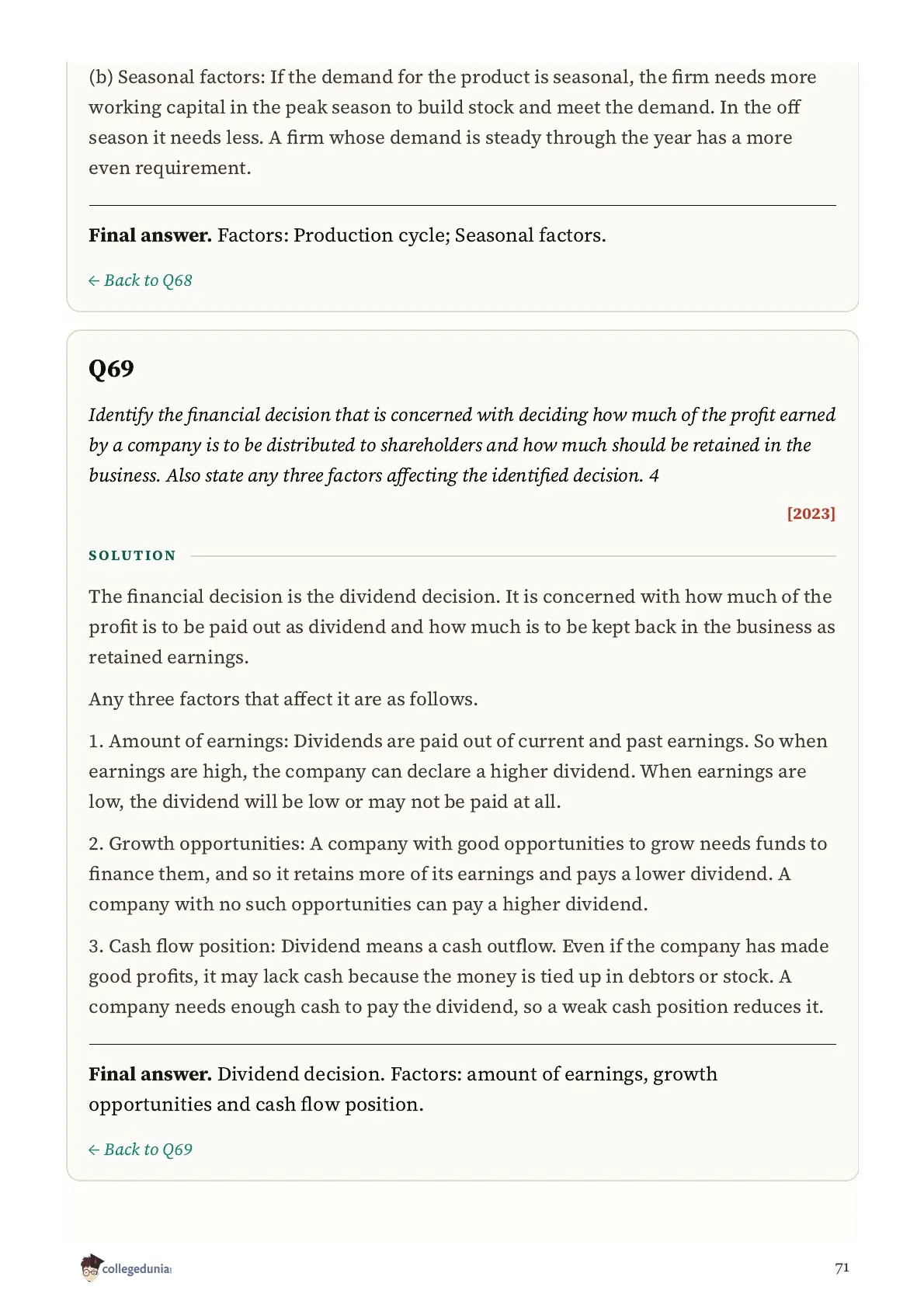
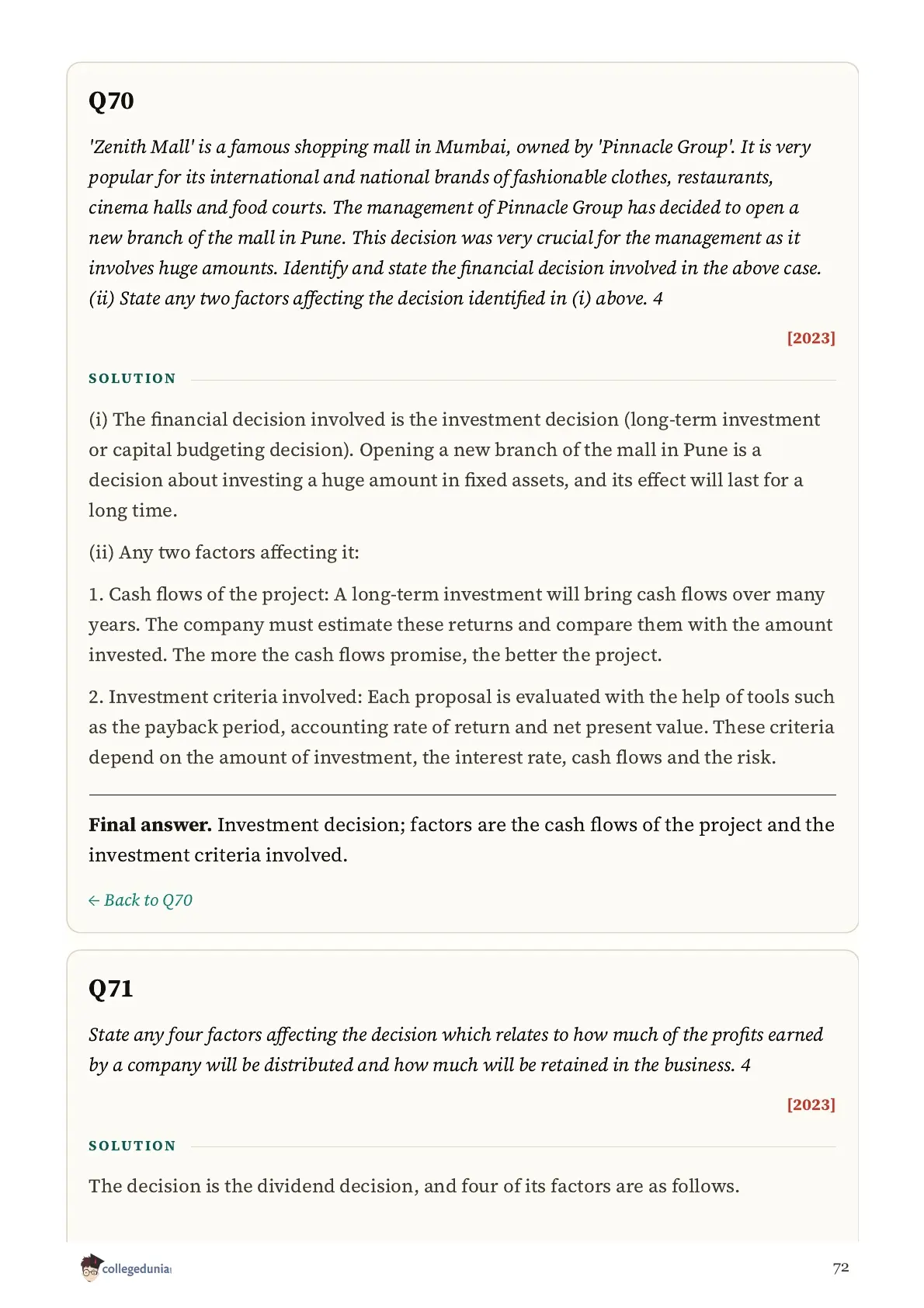
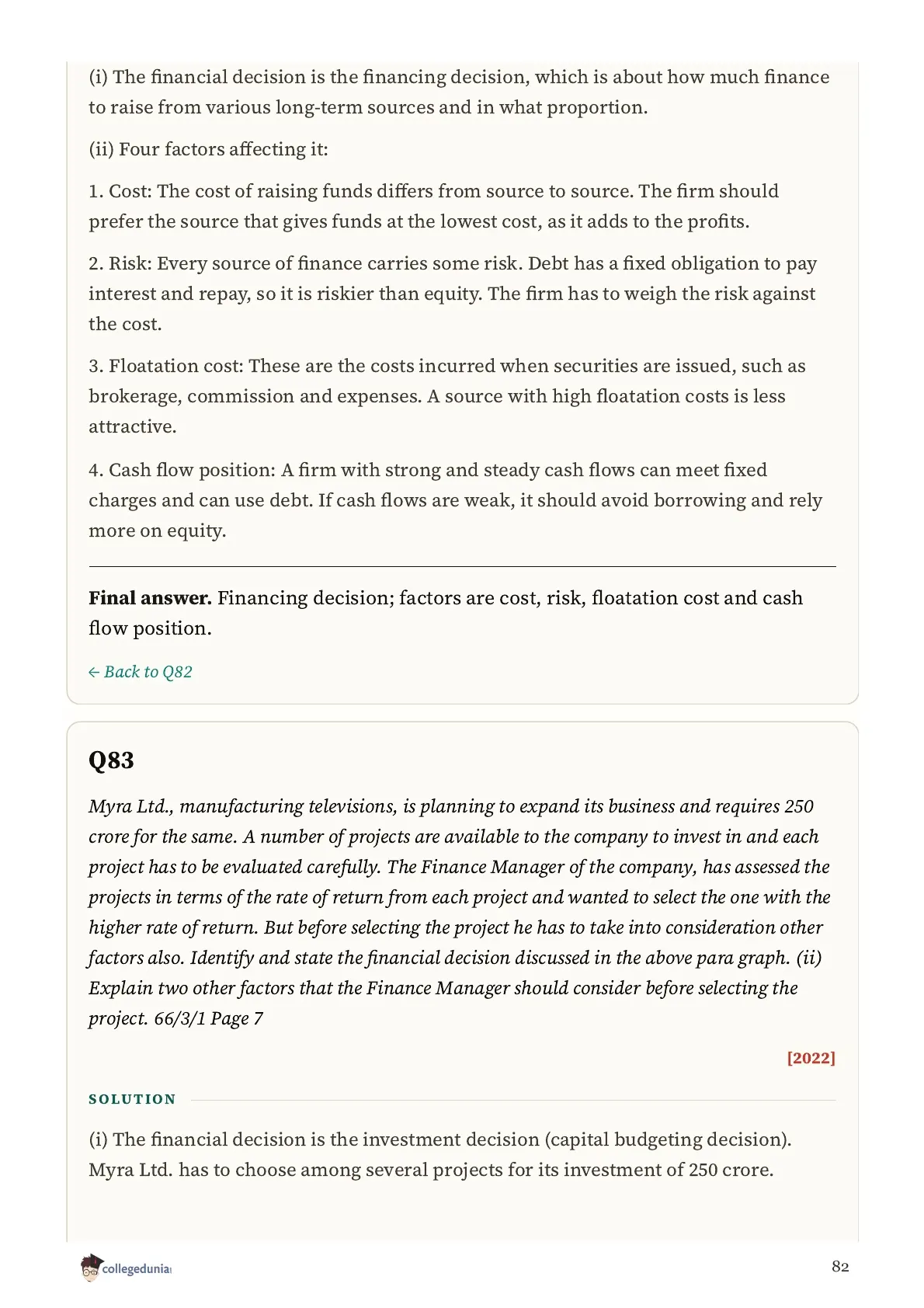
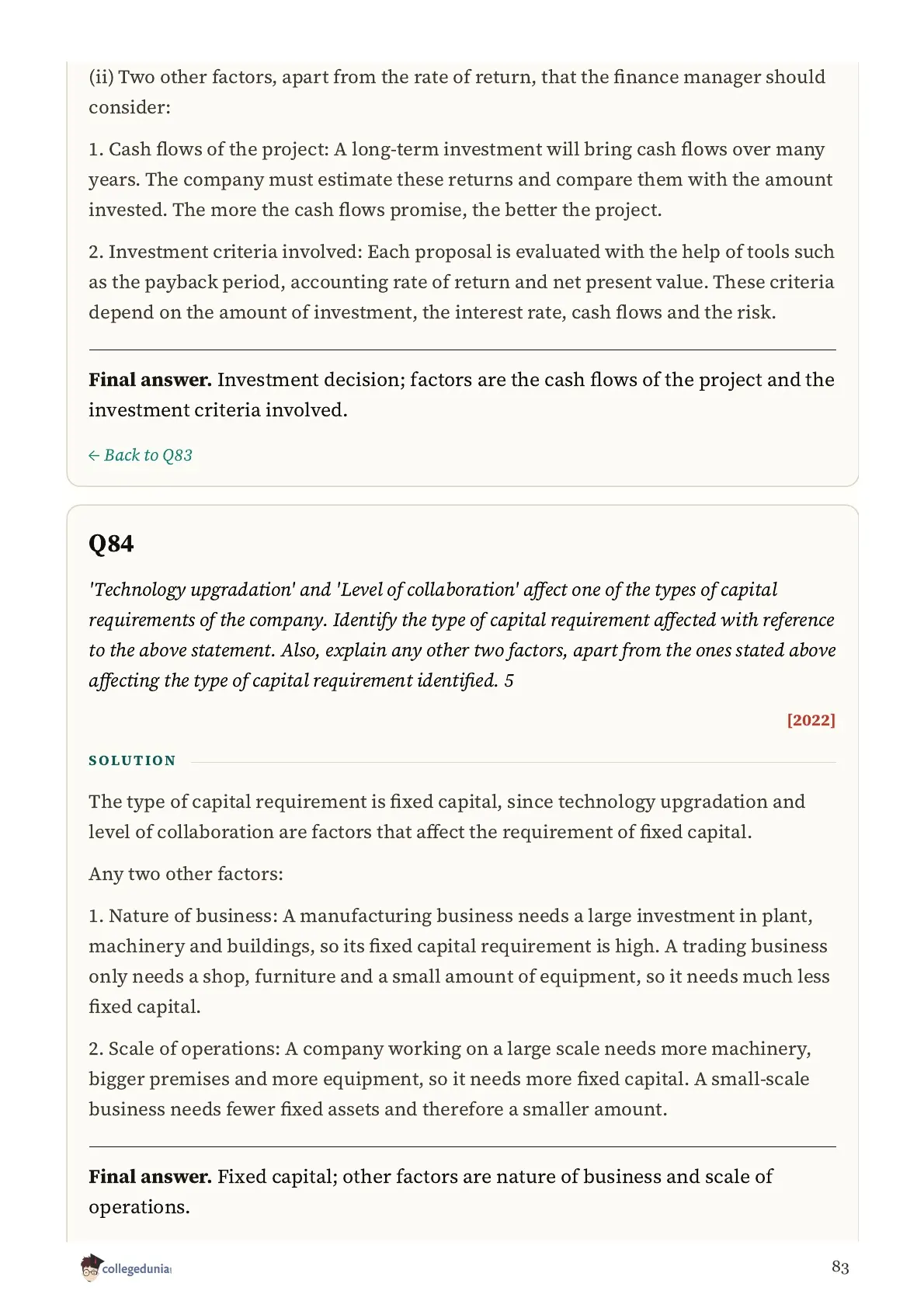
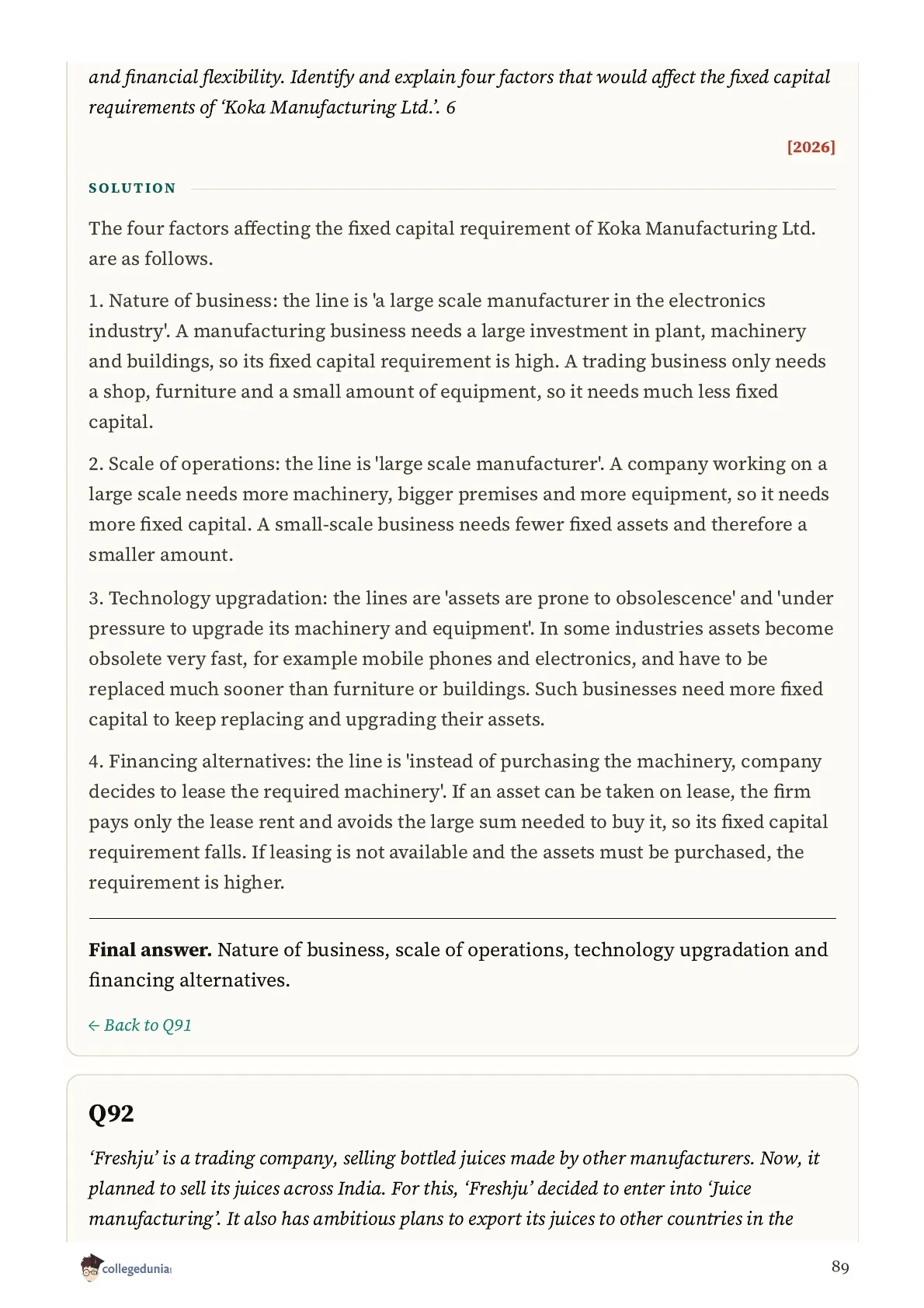
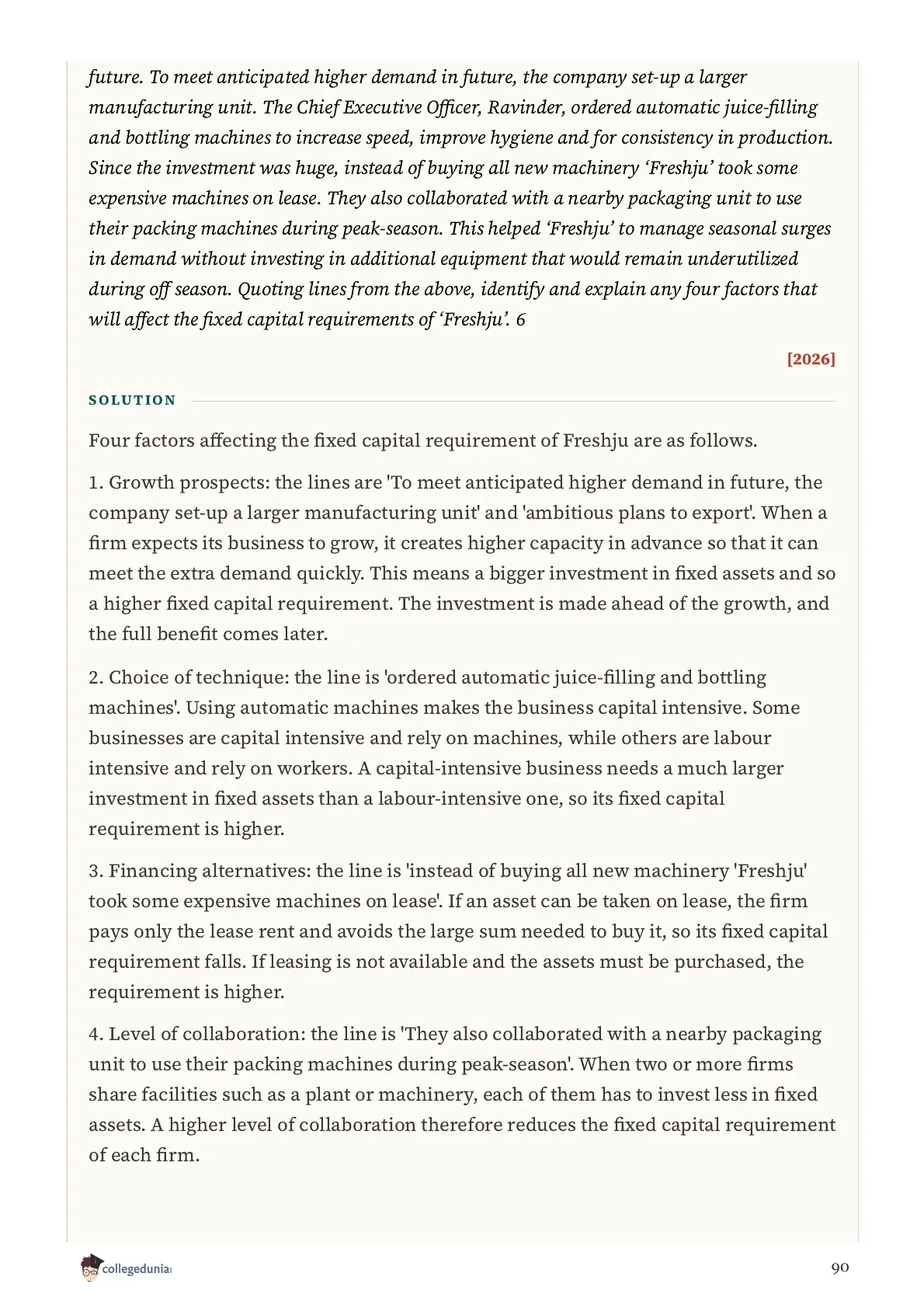
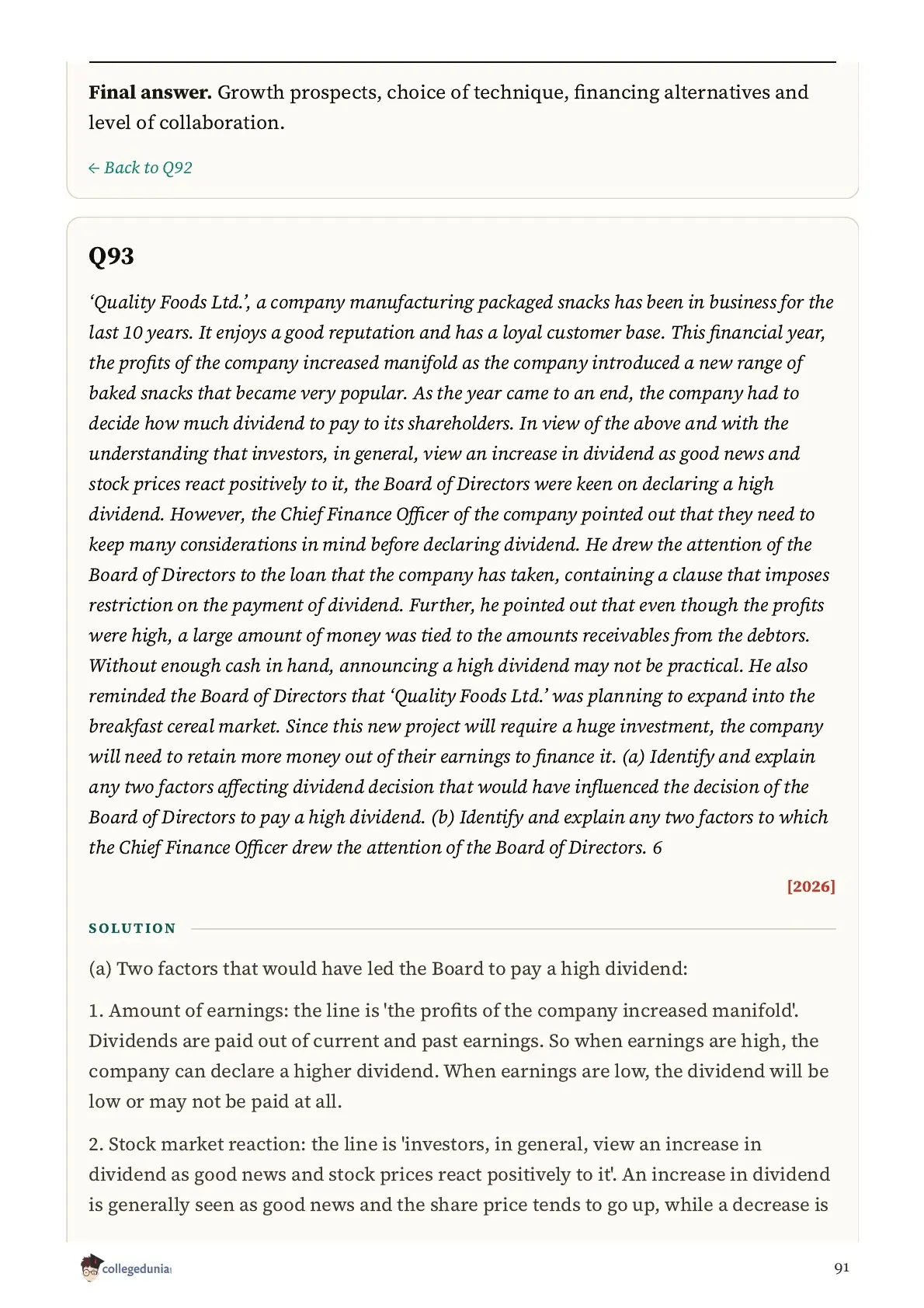
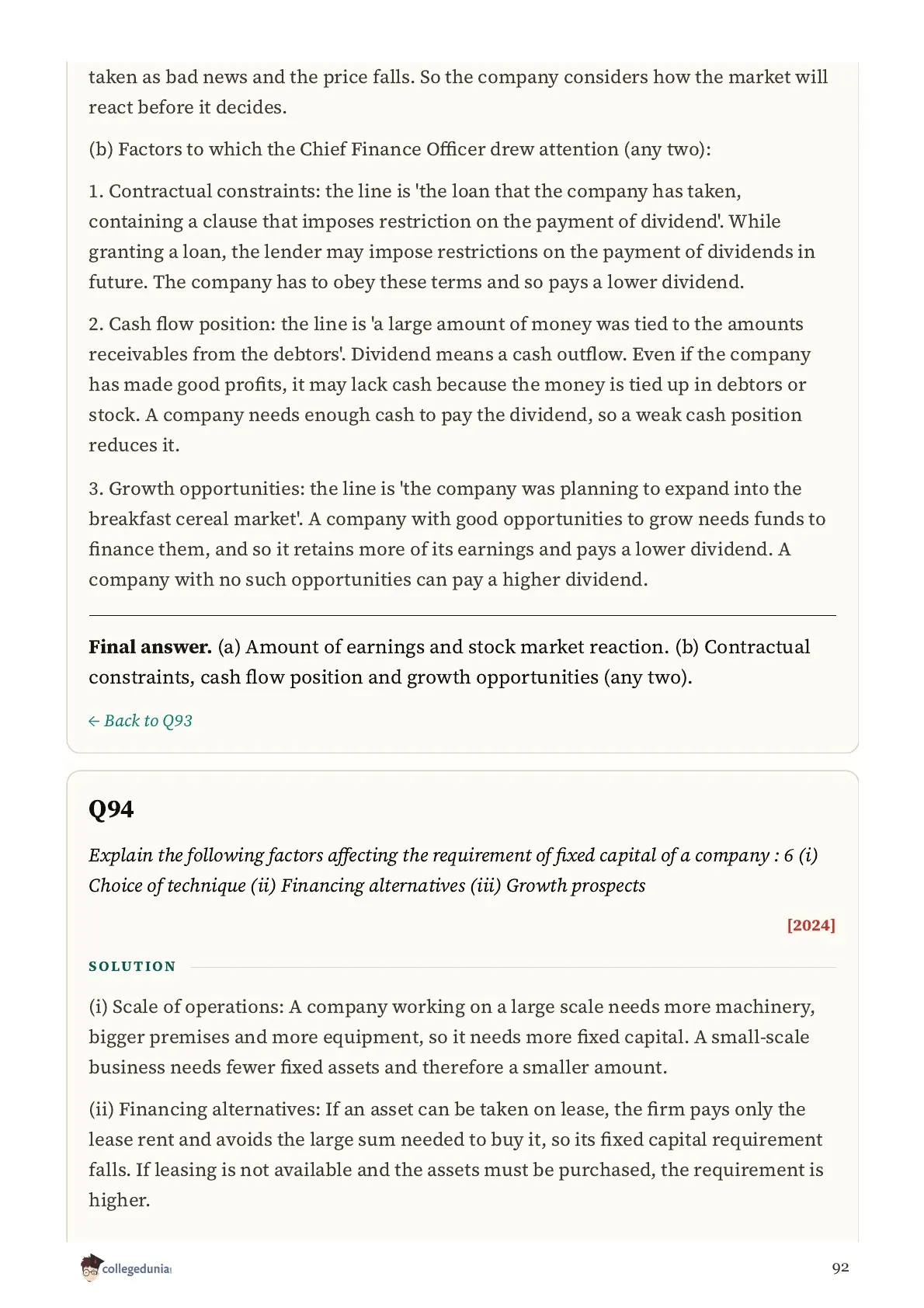
Four "factors affecting" topics carry the set. About 22 questions name the dividend decision, 19 working capital, 17 capital structure and 16 fixed capital. In most of them the stem gives a short company case and asks for the factors at work, so the job is to pick the right factor from the facts and name it in the answer.
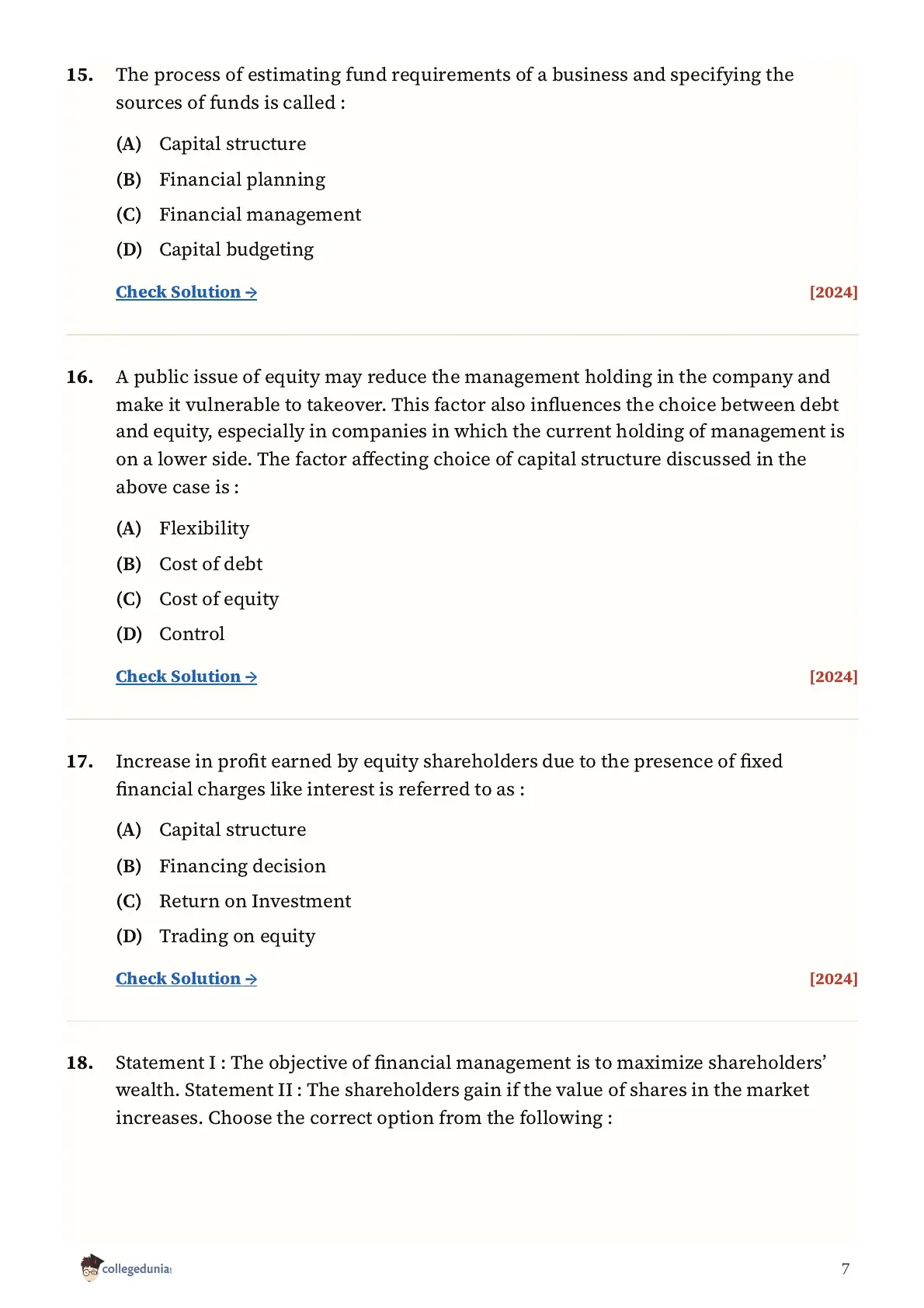
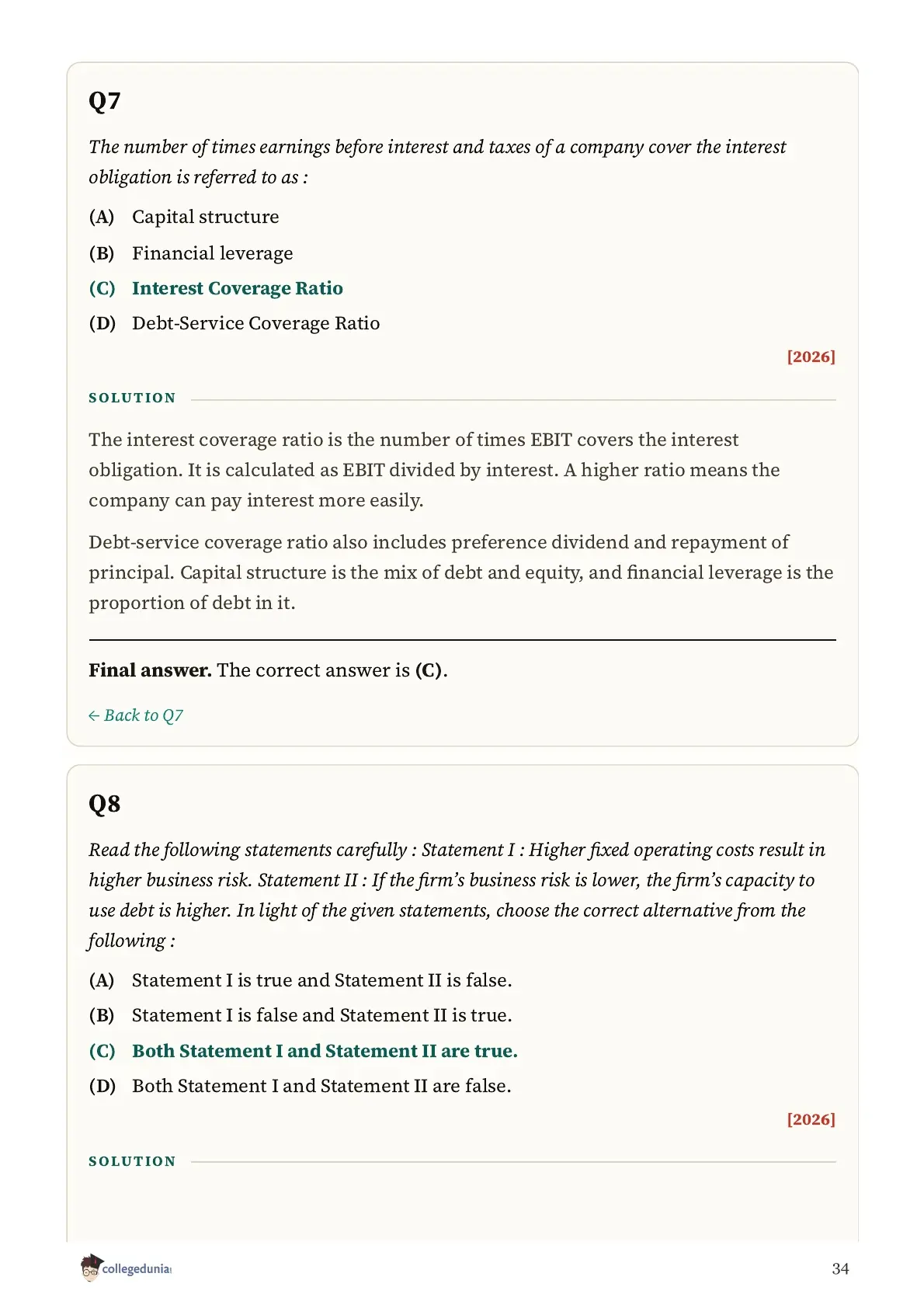
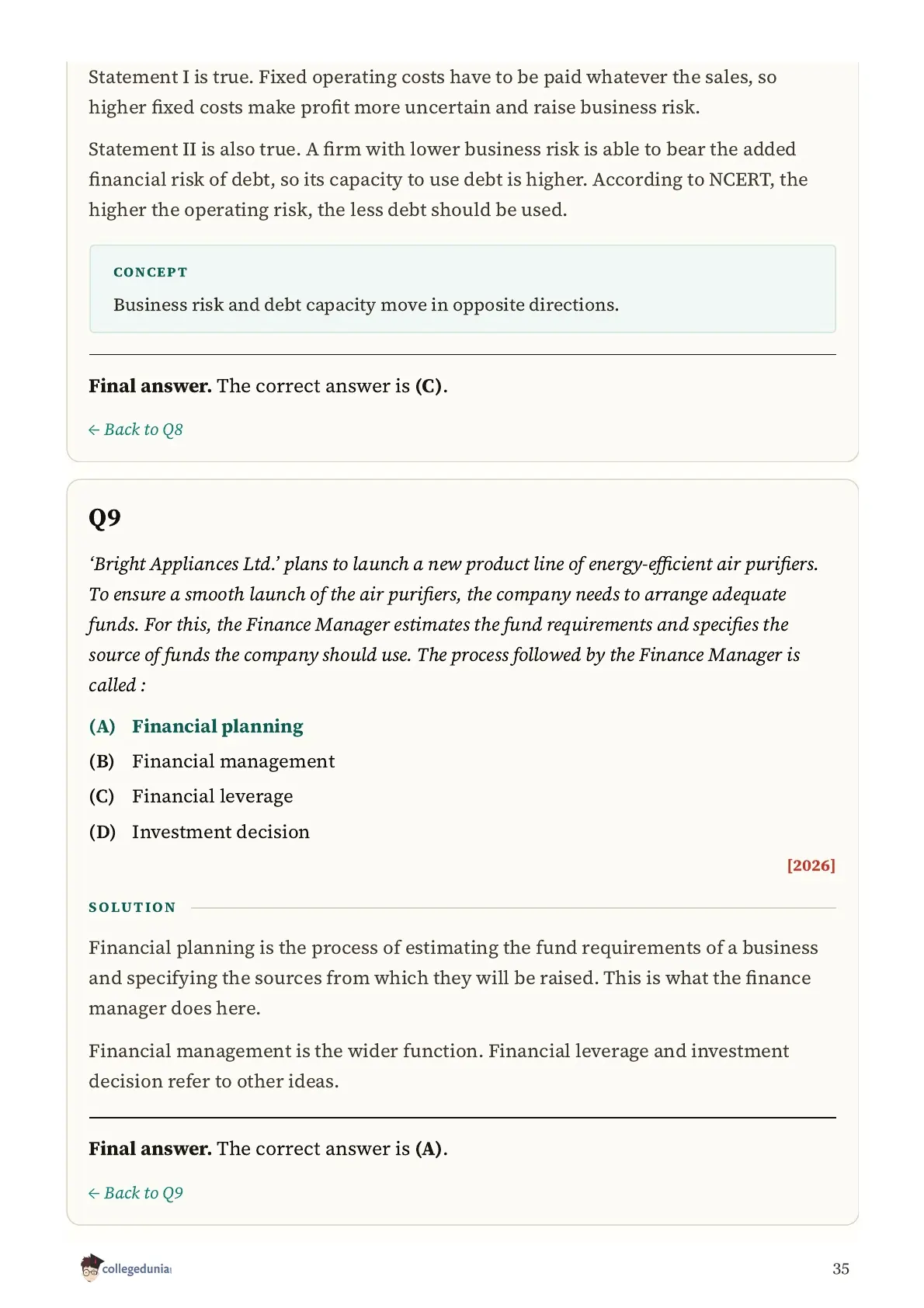
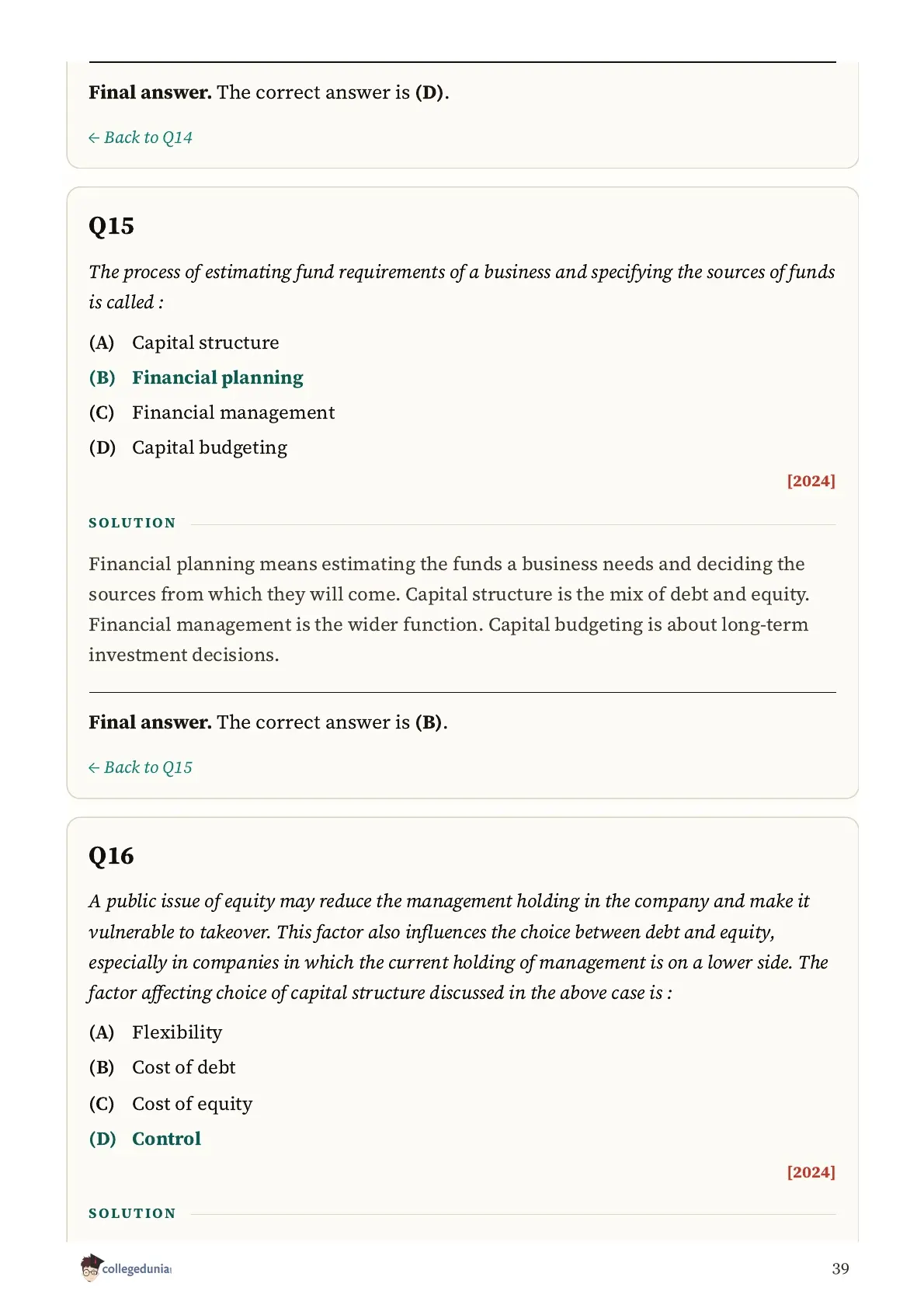
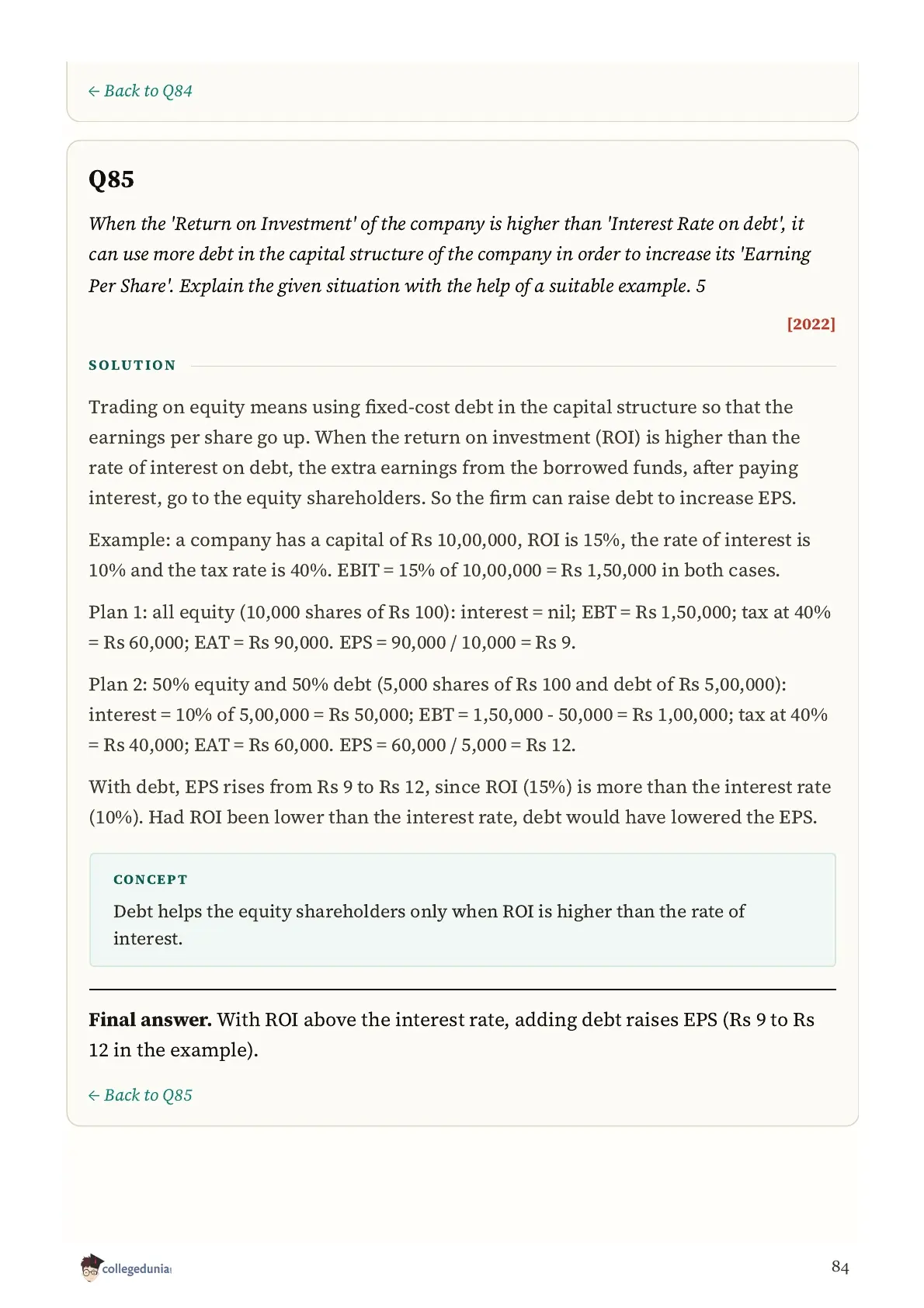
Financing and investment decisions are named in about 9 questions, and financial planning in 6, three of them MCQs. Trading on equity and financial leverage come up in 4 questions, all MCQs, which ask for the term from a one-line description such as the profit earned by equity shareholders because of fixed financial charges. The counts come from keyword matches, so a question on two topics is counted under both.
| Topic | Questions Naming It (approx.) |
|---|---|
| Factors affecting the dividend decision | 22 |
| Factors affecting working capital requirements | 19 |
| Factors affecting the choice of capital structure | 17 |
| Factors affecting fixed capital requirements | 16 |
| Financing and investment decisions | 9 |
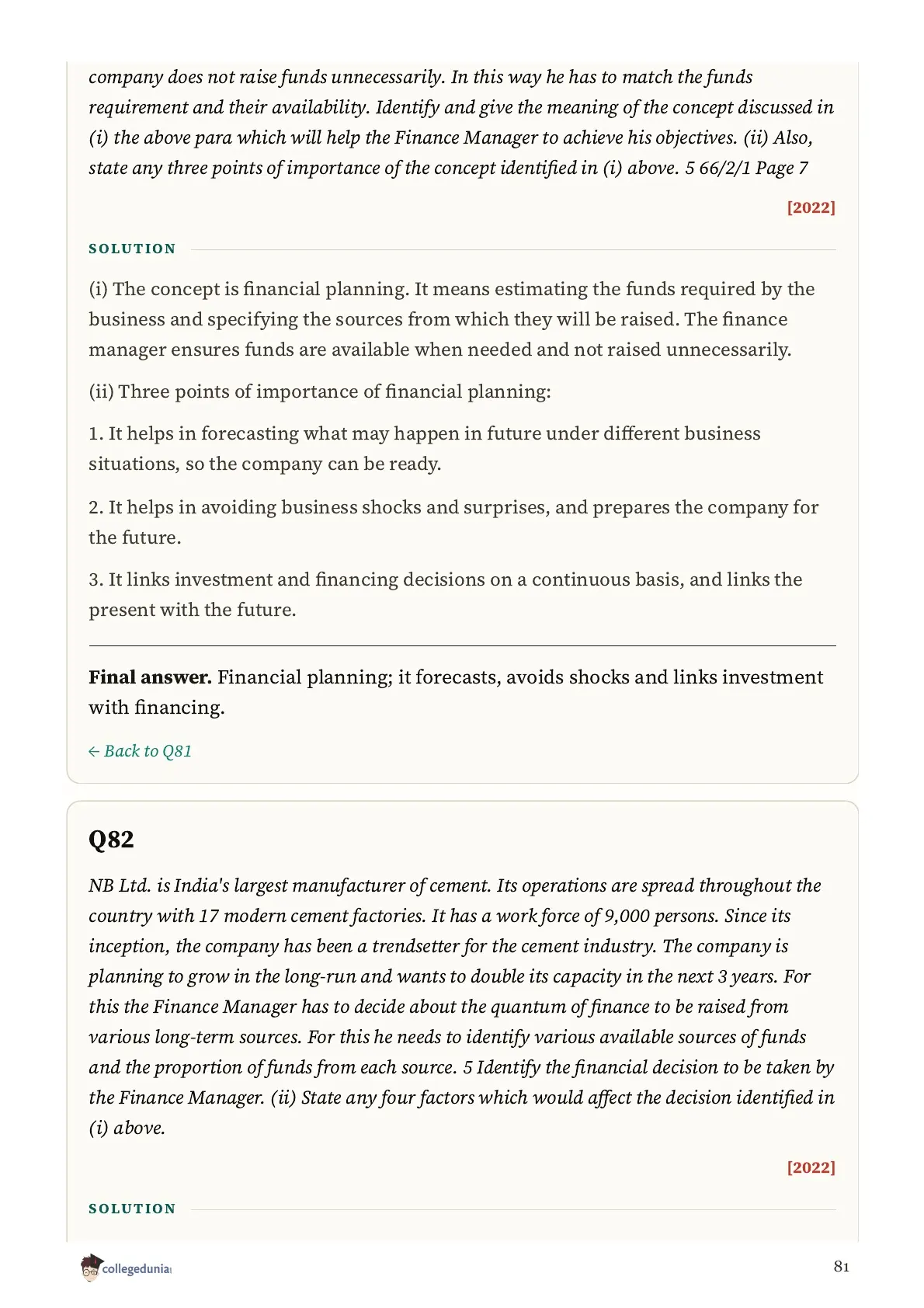
| Financial planning | 6 |
| Trading on equity and financial leverage | 4 |
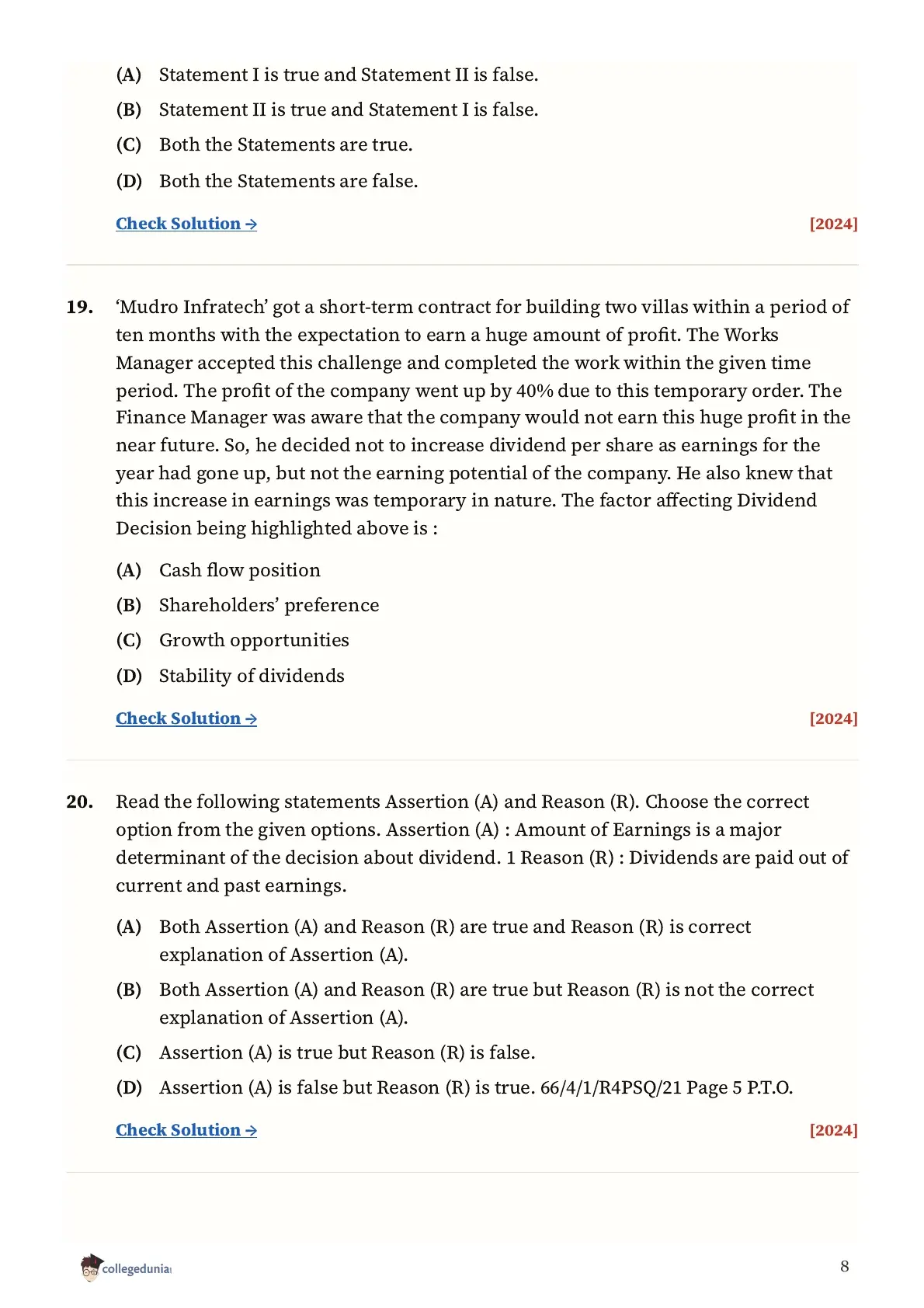
The format is predictable. 29 of the written questions ask for "any two", "any three" or "any four" points, and 4 of the MCQs are assertion-reason questions.
Financial Management Video Lesson
Source: Next Toppers - 12th Commerce on YouTube
How to Approach the Financial Management Set
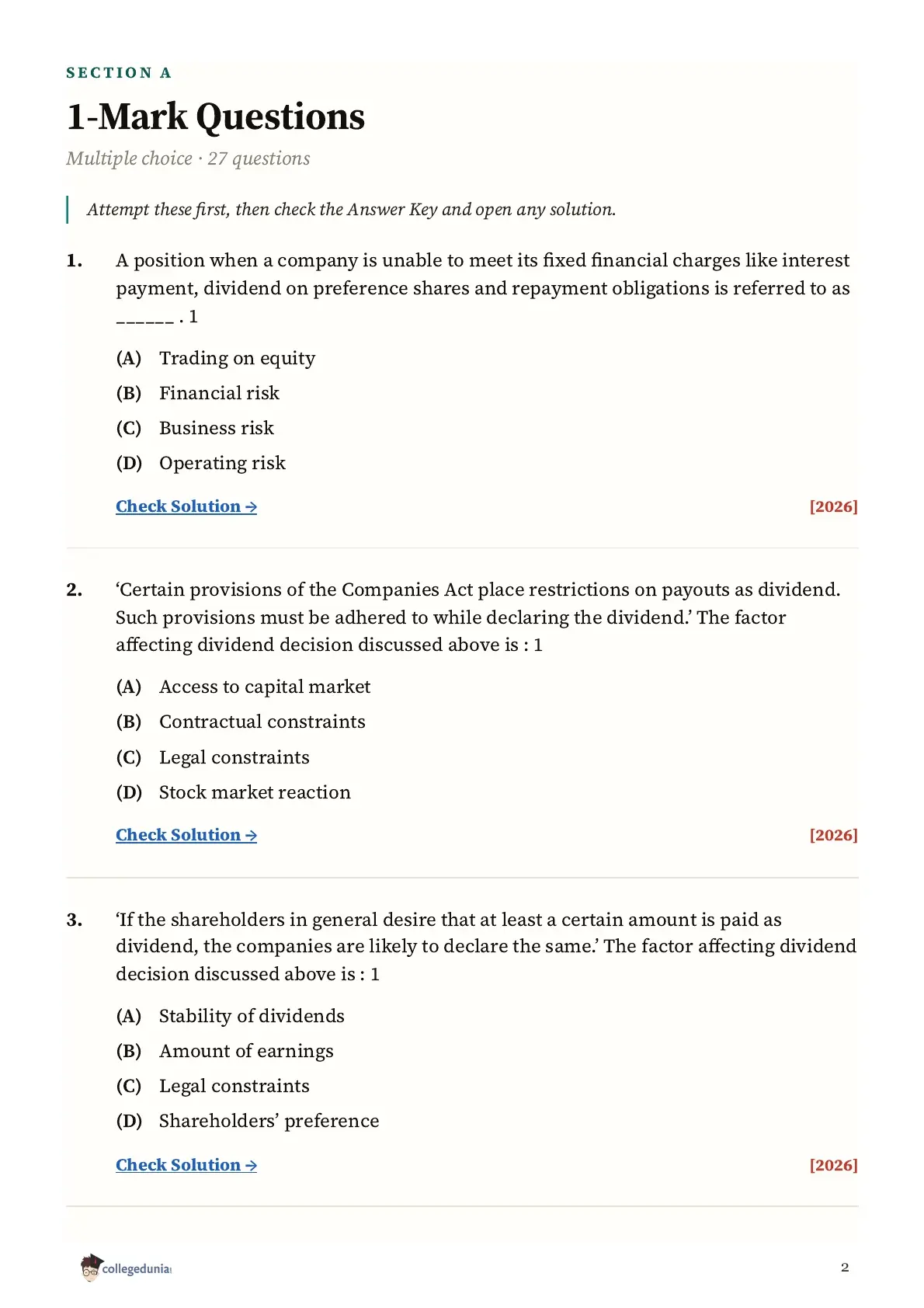
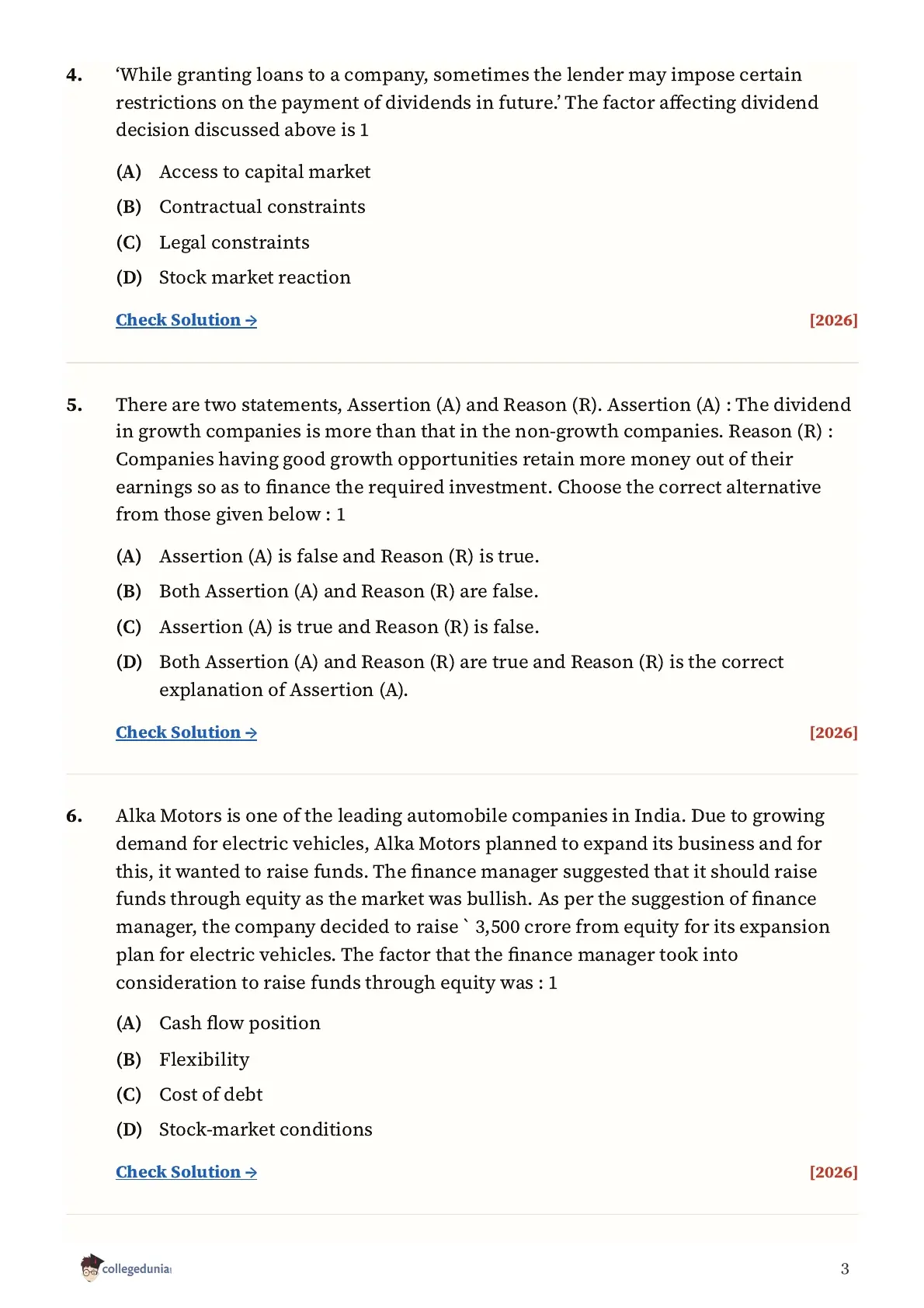
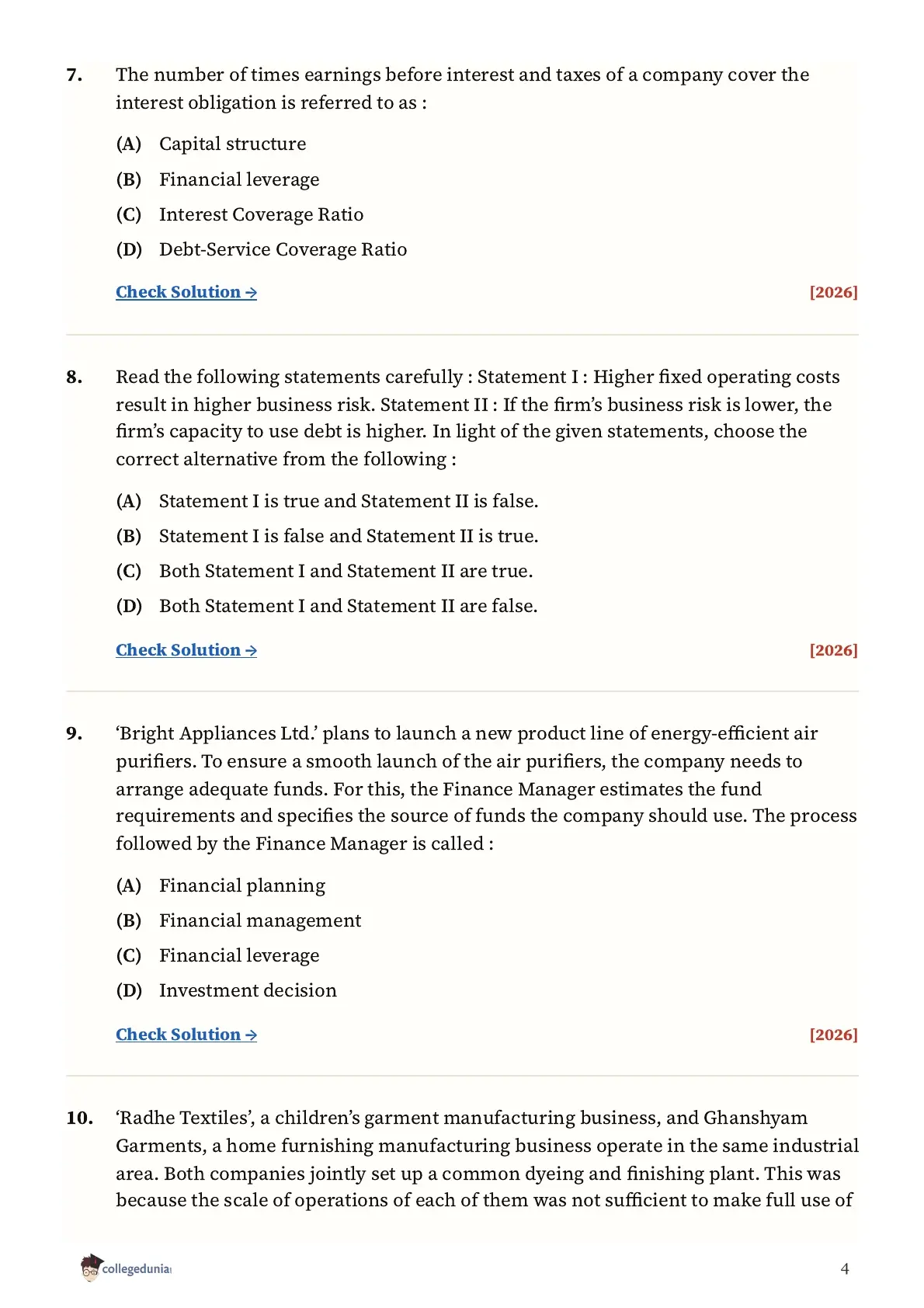
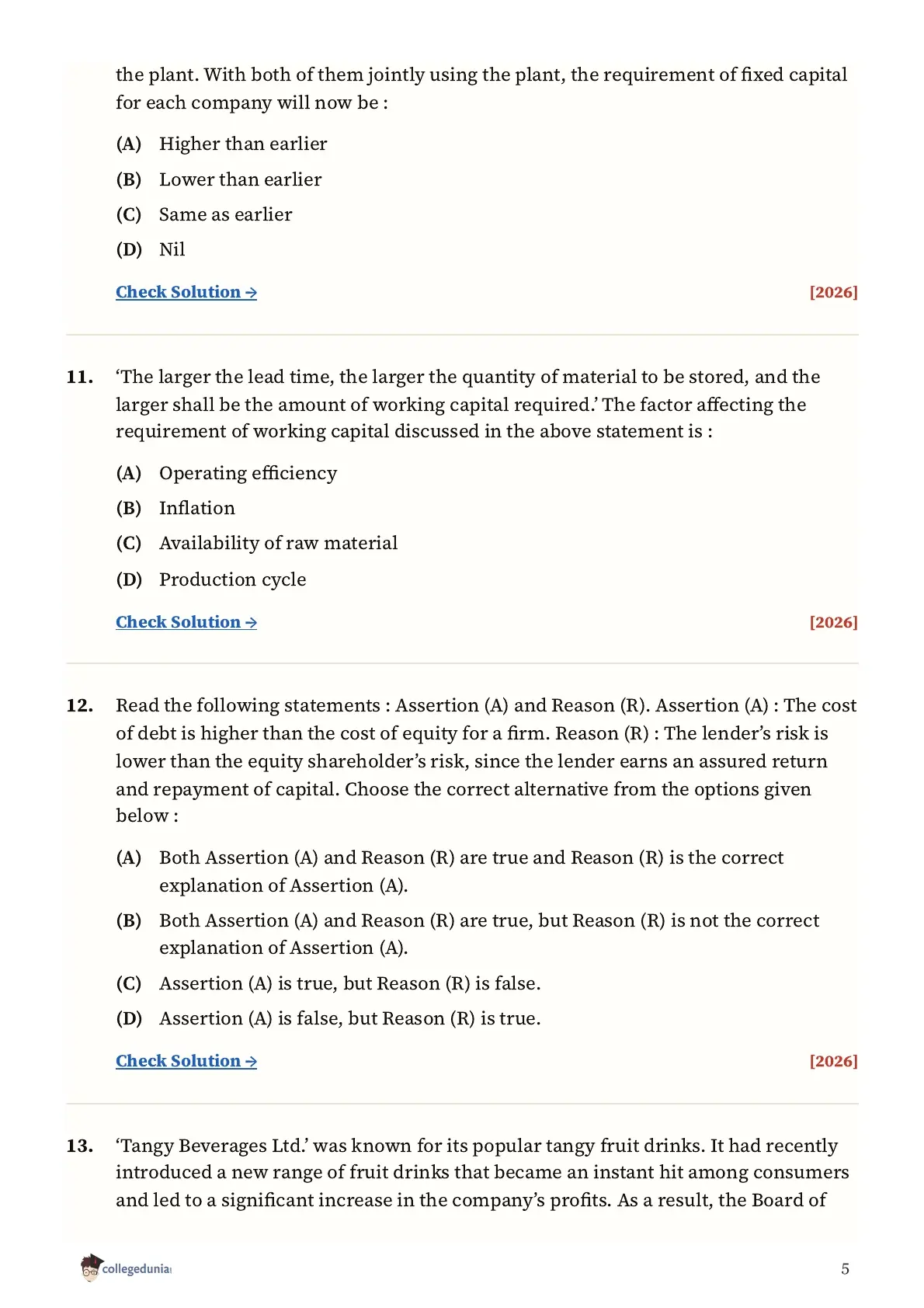
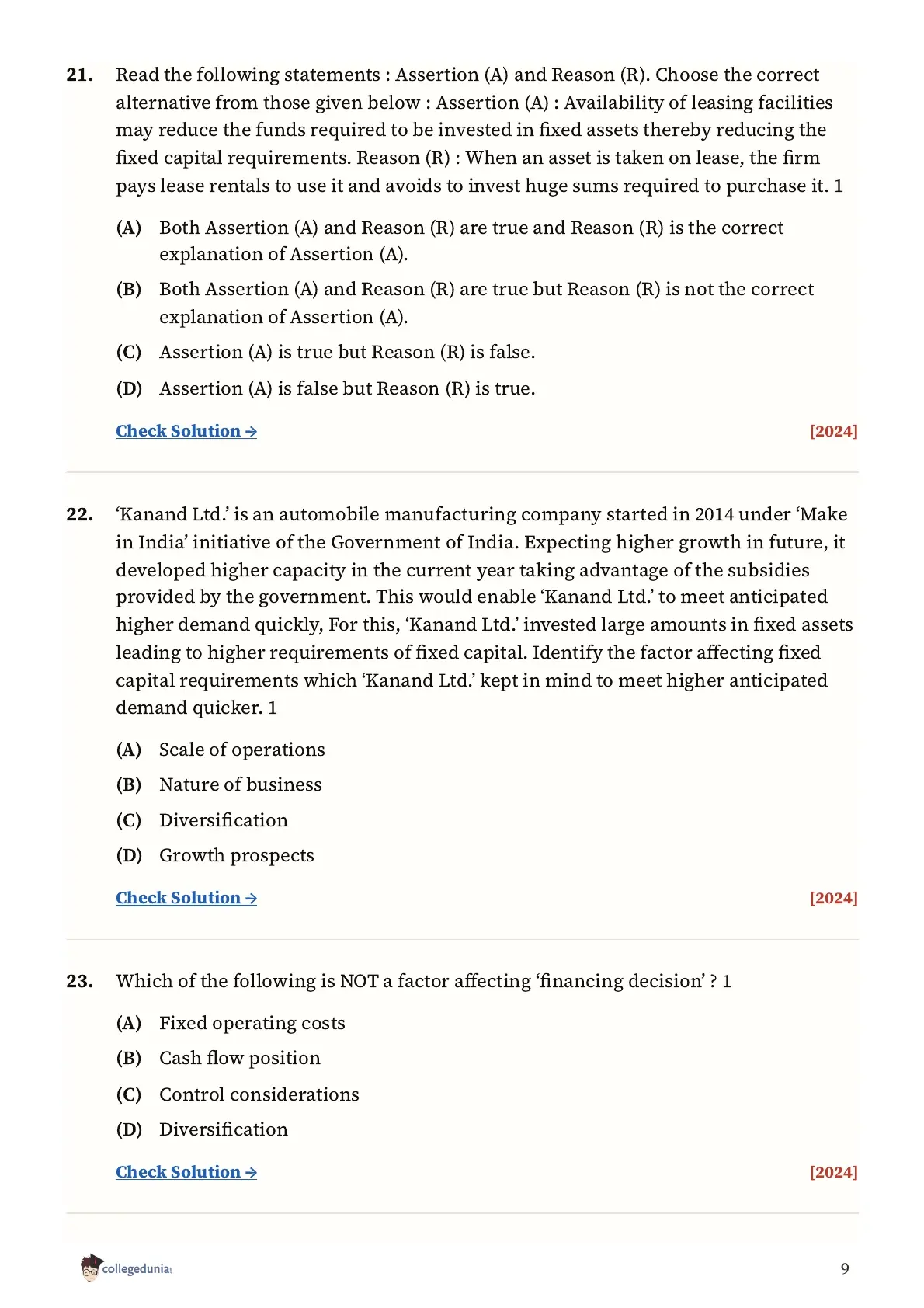
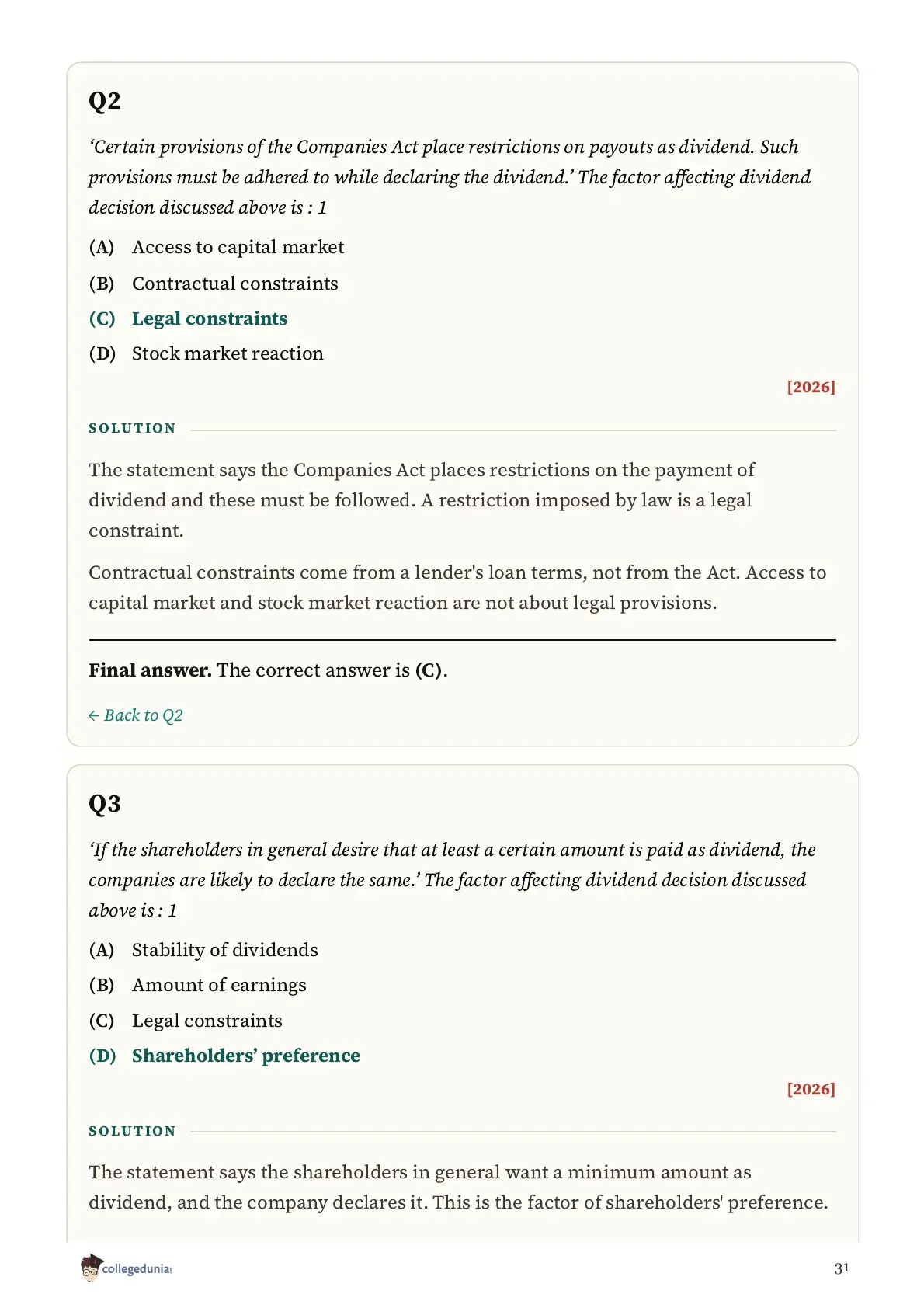
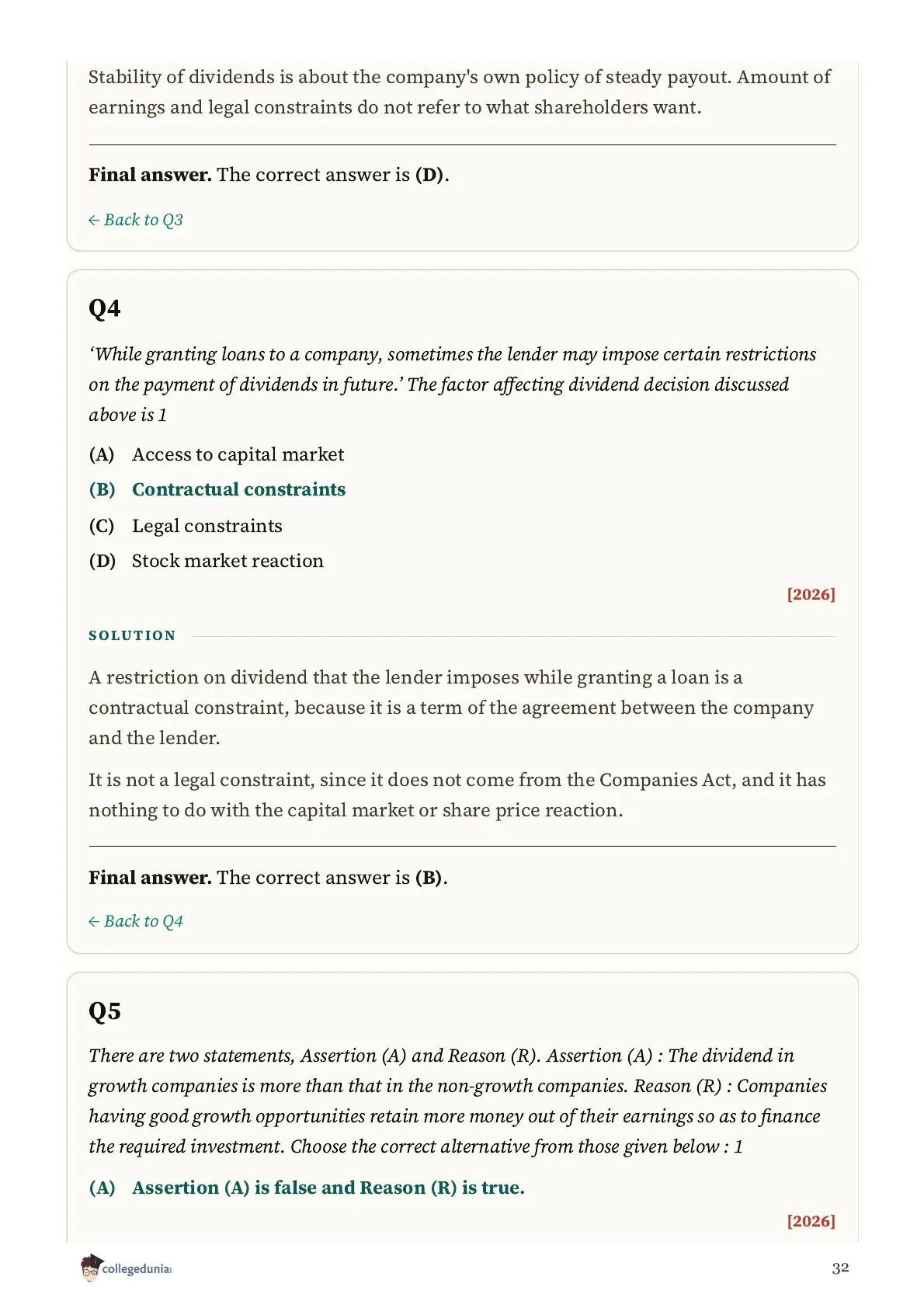
Do the 27 MCQs first, in about half an hour. Many give a line from a company's situation and ask which factor is meant, for example a provision of the Companies Act restricting payouts, where the answer is legal constraints under the dividend decision. Learn the factor names exactly, because the options differ by one word, such as contractual constraints against legal constraints.
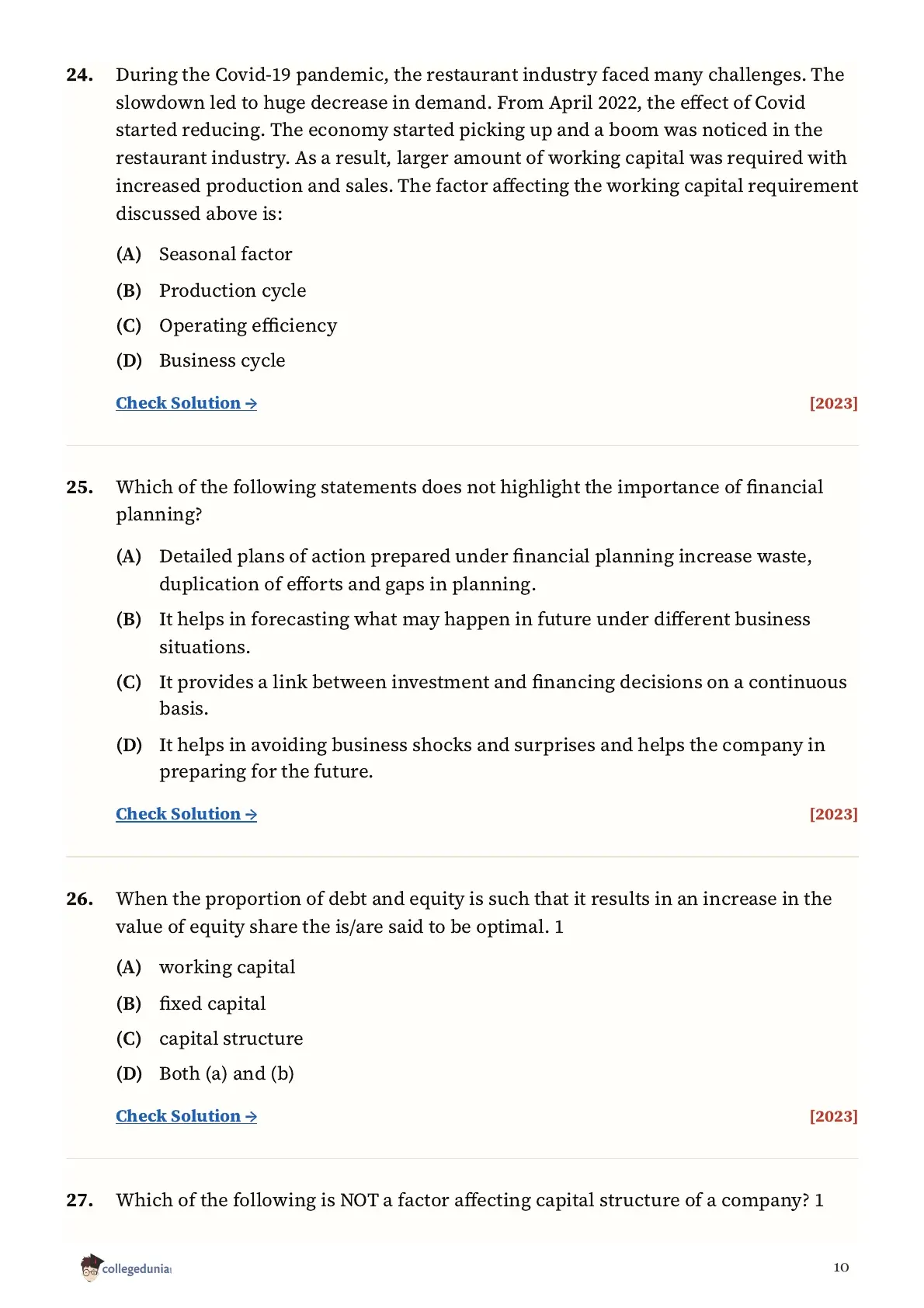
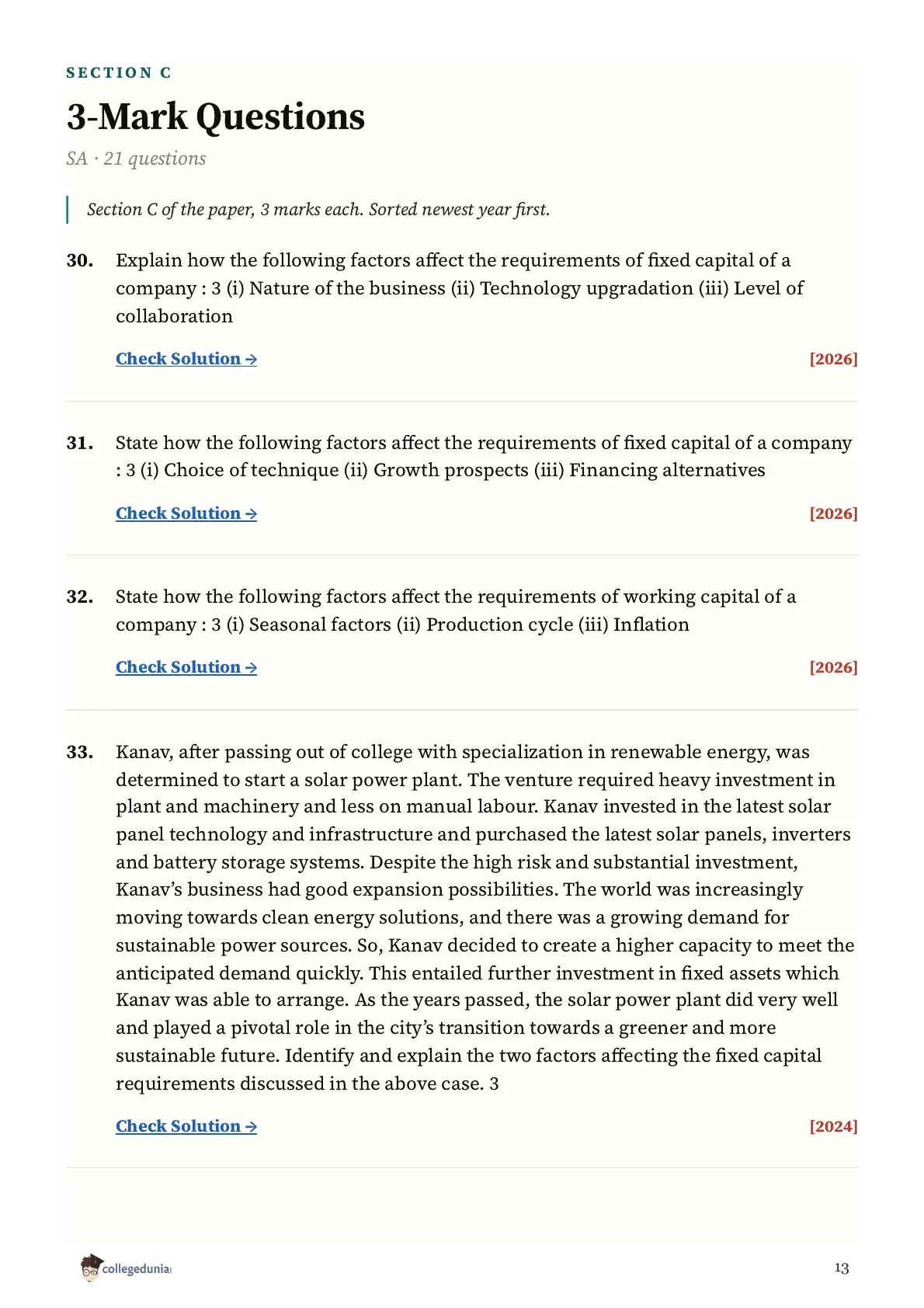
The 76 written answers are where the hours go, so take them one topic at a time. Do the 16 fixed capital questions together, then working capital, capital structure and dividend. Practising one factor list at a time lets you see which factors the board keeps repeating. In a case question, copy the phrase from the paragraph that points to the factor, then explain it in one or two lines.
Common Mistakes in Financial Management Questions
- Mixing up the three decisions: investment decides where funds go, financing decides where they come from, dividend decides what is paid out.
- Writing factors of working capital under fixed capital, or the reverse.
- Giving a definition when the stem asks for factors by name.
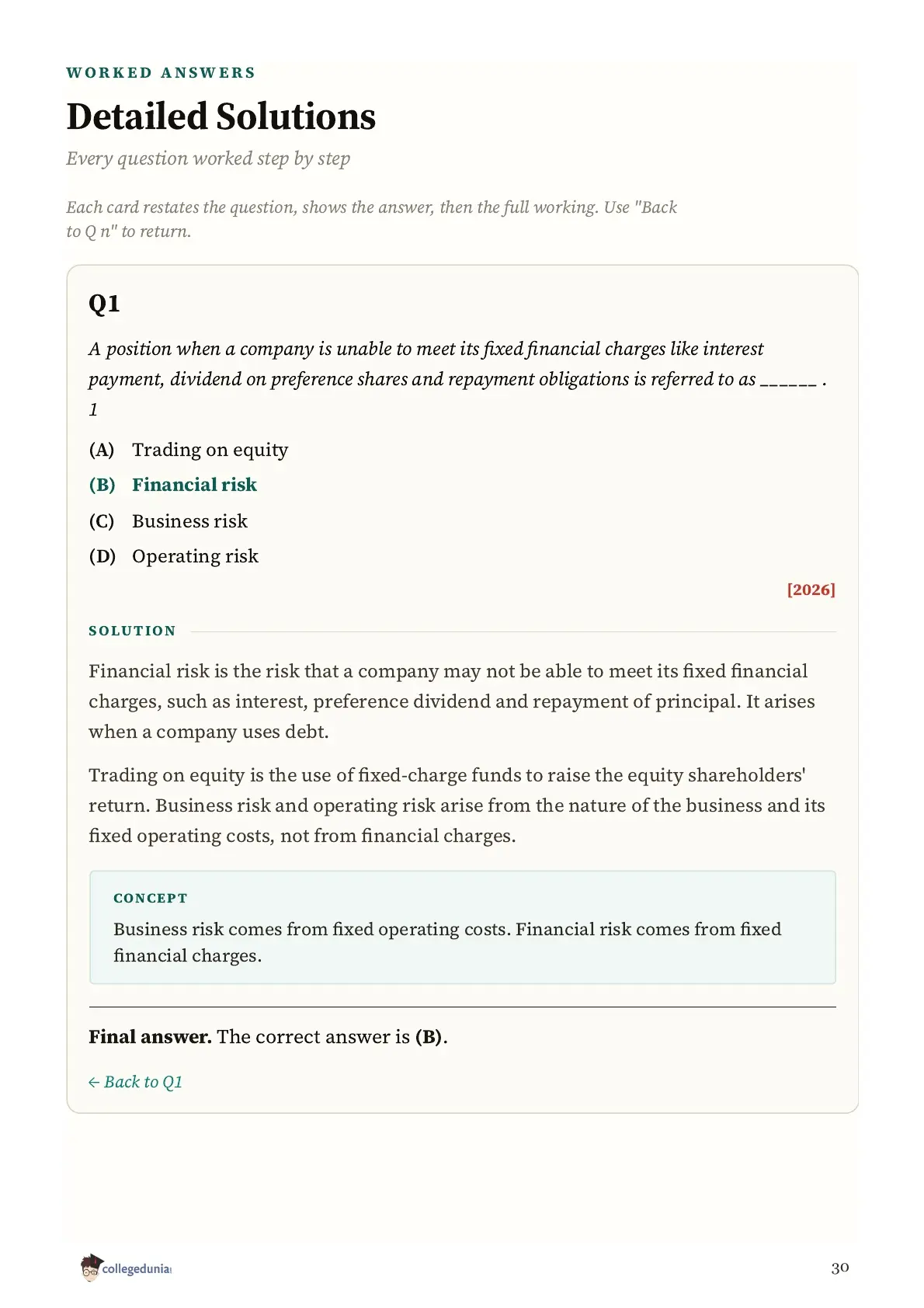
- Confusing financial risk (inability to meet fixed financial charges) with business risk.
- Stating trading on equity without the condition that the return on investment must be higher than the cost of debt.
- Listing more or fewer points than "any three" or "any four" asks for.
Using the Answer Key and Solutions
The PDF is 98 pages and free to download. Each section is sorted newest year first, the Answer Key lists every MCQ at a glance, and each question links to its worked solution and back. Attempt a section first, check the key, then read the solution and note the common mistake given with it. The solutions are written by Collegedunia's Business Studies experts and are not official CBSE marking schemes.
Class 12 Business Studies PYQs by Chapter
| Chapter | PYQ Page |
|---|---|
| Chapter 1 | Chapter 1: Nature and Significance of Management Class 12 PYQ |
| Chapter 2 | Chapter 2: Principles of Management Class 12 PYQ |
| Chapter 3 | Chapter 3: Business Environment Class 12 PYQ |
| Chapter 4 | Chapter 4: Planning Class 12 PYQ |
| Chapter 5 | Chapter 5: Organising Class 12 PYQ |
| Chapter 6 | Chapter 6: Staffing Class 12 PYQ |
| Chapter 7 | Chapter 7: Directing Class 12 PYQ |
| Chapter 8 | Chapter 8: Controlling Class 12 PYQ |
| Chapter 9 | Chapter 9: Financial Management Class 12 PYQ |
| Chapter 10 | Chapter 10: Marketing Class 12 PYQ |
| Chapter 11 | Chapter 11: Consumer Protection Class 12 PYQ |
Financial Management Class 12 Business Studies PYQ FAQs
Ques. How many questions are in the Financial Management Class 12 PYQ PDF?
Ans. The PDF has 103 questions from CBSE board papers between 2006 and 2026: 27 one-mark MCQs, 2 two-mark, 21 three-mark, 27 four-mark, 13 five-mark and 13 six-mark questions.
Ques. Does this PYQ PDF include solutions, or only the questions?
Ans. Yes. All 103 questions have a worked solution in the PDF, and the MCQs also have an Answer Key.
Ques. Are the solutions official?
Ans. No. They are written by Collegedunia's Business Studies experts and are not an official CBSE marking scheme.
Ques. How many marks does Financial Management carry in the Class 12 board paper?
Ans. About 8 of the 80 marks, going by past papers. It is an estimate and changes from year to year.
Ques. What are the three financial decisions?
Ans. The investment decision, the financing decision and the dividend decision. About 9 questions in this set are on financing and investment decisions, and about 22 on the dividend decision.
Ques. What factors affect working capital requirements?
Ans. The nature of the business, scale of operations, business cycle, seasonal factors, production cycle, credit allowed and credit availed, and the operating efficiency of the firm, among others. About 19 questions in this set are on working capital.
Ques. What factors affect the choice of capital structure?
Ans. Cash flow position, interest coverage ratio, debt service coverage ratio, return on investment, cost of debt, tax rate, cost of equity, floatation cost, risk consideration, flexibility, control, and the state of the capital market. About 17 questions in this set are on capital structure.
Ques. What is trading on equity?
Ans. It is the use of fixed-cost debt to raise the earnings of equity shareholders, which works when the return on investment is higher than the cost of debt. 4 questions in this set are on trading on equity and financial leverage.



Comments