



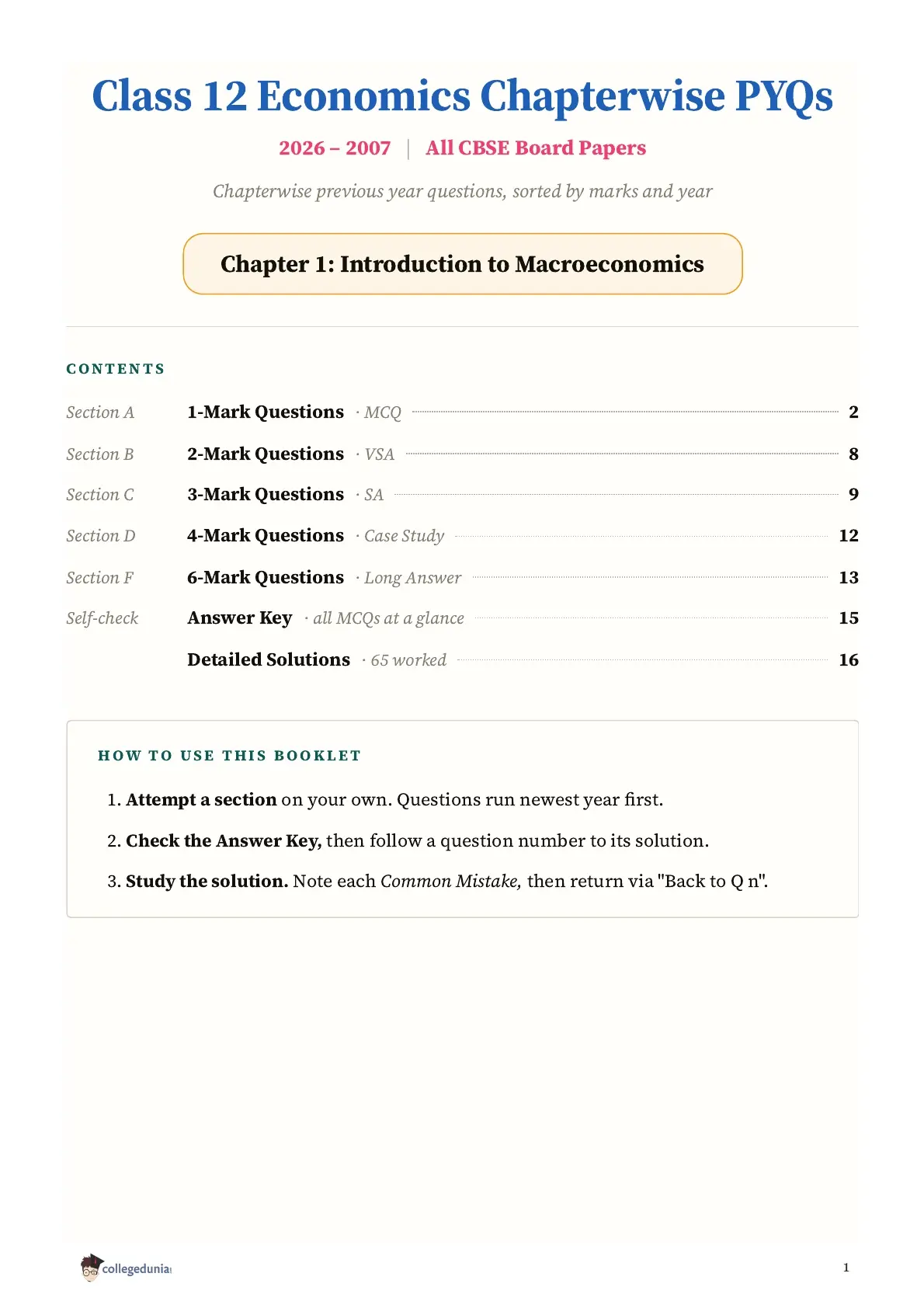
Class 12 Economics Introduction to Macroeconomics PYQ, free to download as a 53-page PDF. The unit this chapter sits in carries about 10 of the 80 marks in the board paper, and the set holds 65 solved questions from the 2006 to 2026 papers on the circular flow of income, final and intermediate goods, capital and consumer goods, stock and flow variables, externalities, public goods, depreciation and gross and net investment, and takes roughly four hours to work through, so do the MCQs in one sitting and the written answers in a second.
















Introduction to Macroeconomics Weightage in the Class 12 Board Paper
As per Economics Introduction to Macroeconomics weightage from past years, students can expect questions worth a part of the 10 marks that CBSE gives to the unit National Income and Related Aggregates in the 80-mark board paper. The 10 marks are for the whole unit, shared with National Income Accounting, and no chapter-wise split is published. The figure comes from prep-site tables of the curriculum and is unofficial, so check the CBSE curriculum for the official unit marks.
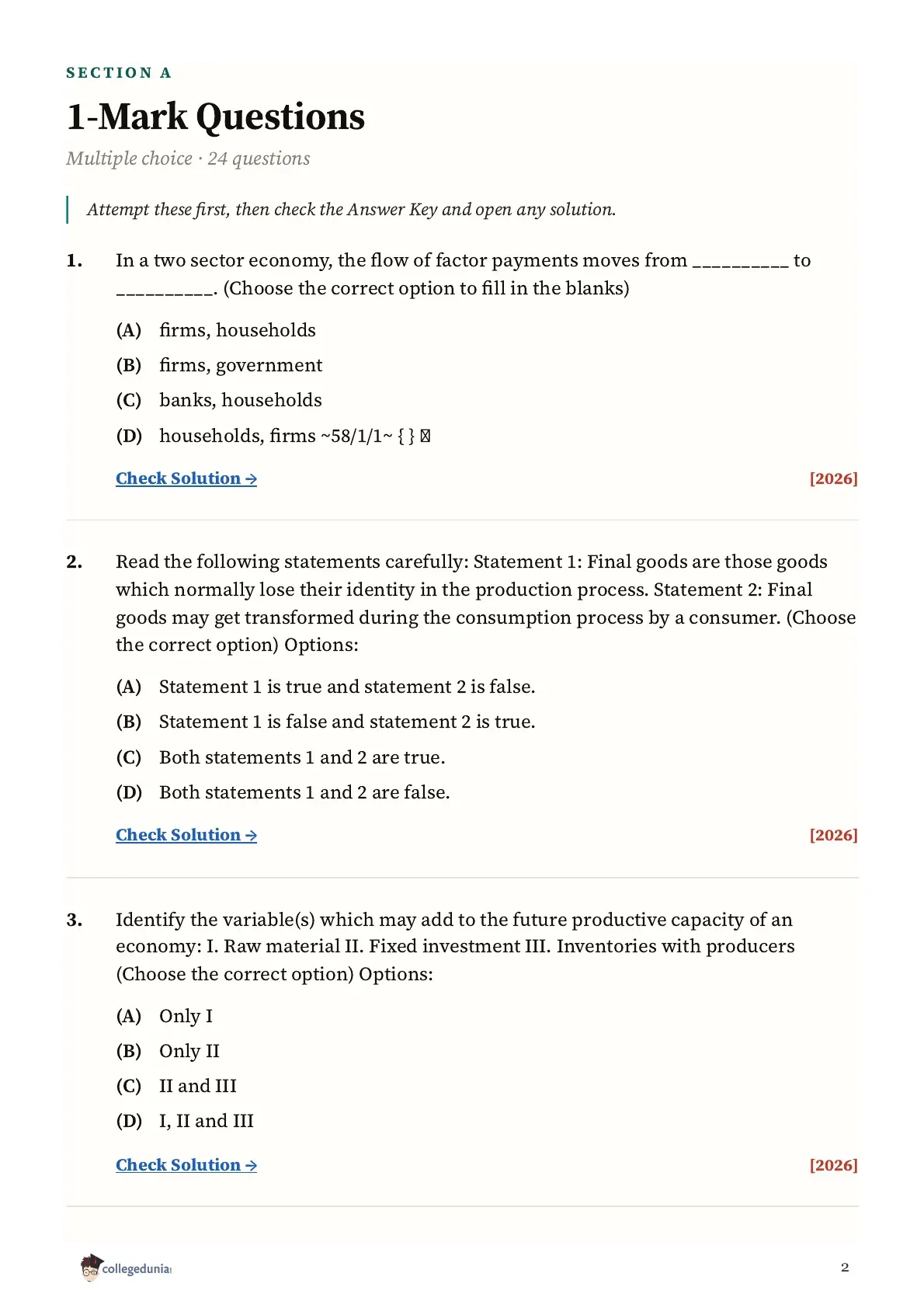
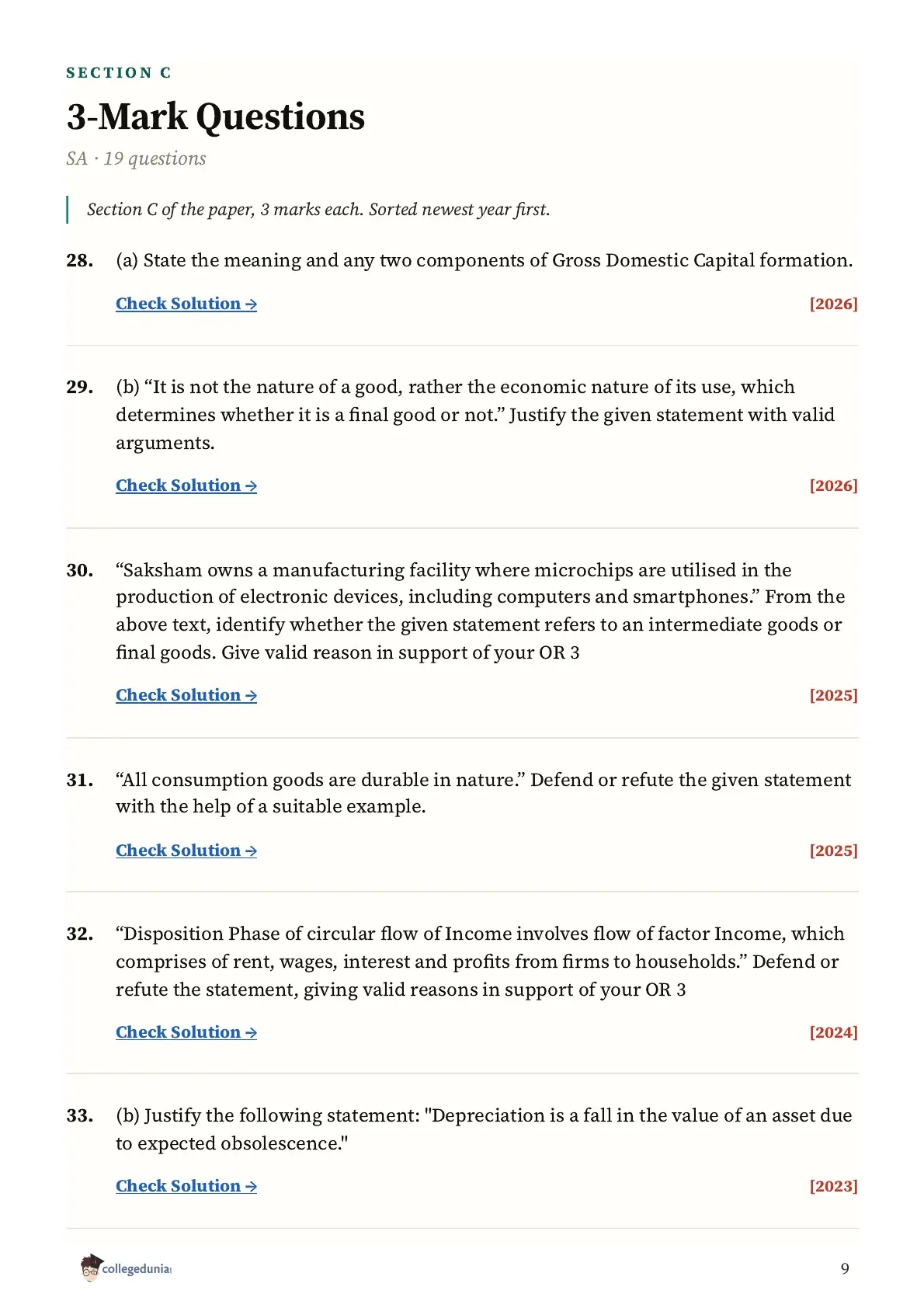
The 65 questions in this set fall in five mark bands. The 24 one-mark MCQs and the 19 three-mark questions are the two largest groups. The rest are 13 questions of 6 marks, 6 case questions of 4 marks and 3 of 2 marks, so 41 of the 65 need a written answer.
| Marks Each | Question Type | Questions in the Set |
|---|---|---|
| 1 mark | MCQ | 24 |
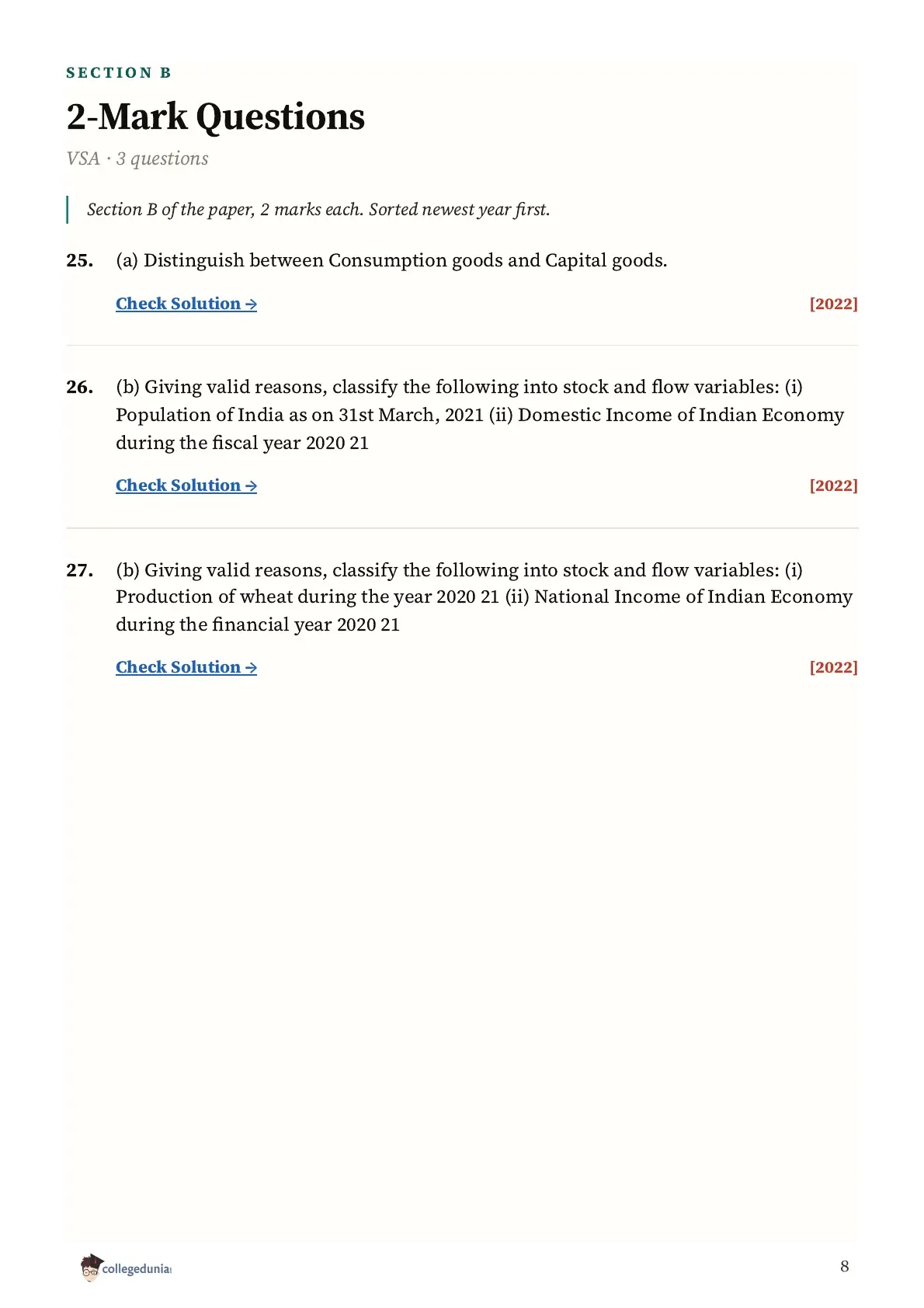
| 2 marks | Very Short Answer (VSA) | 3 |
| 3 marks | Short Answer (SA) | 19 |
| 4 marks | Case Study | 6 |
| 6 marks | Long Answer | 13 |
Introduction to Macroeconomics Questions by Topic
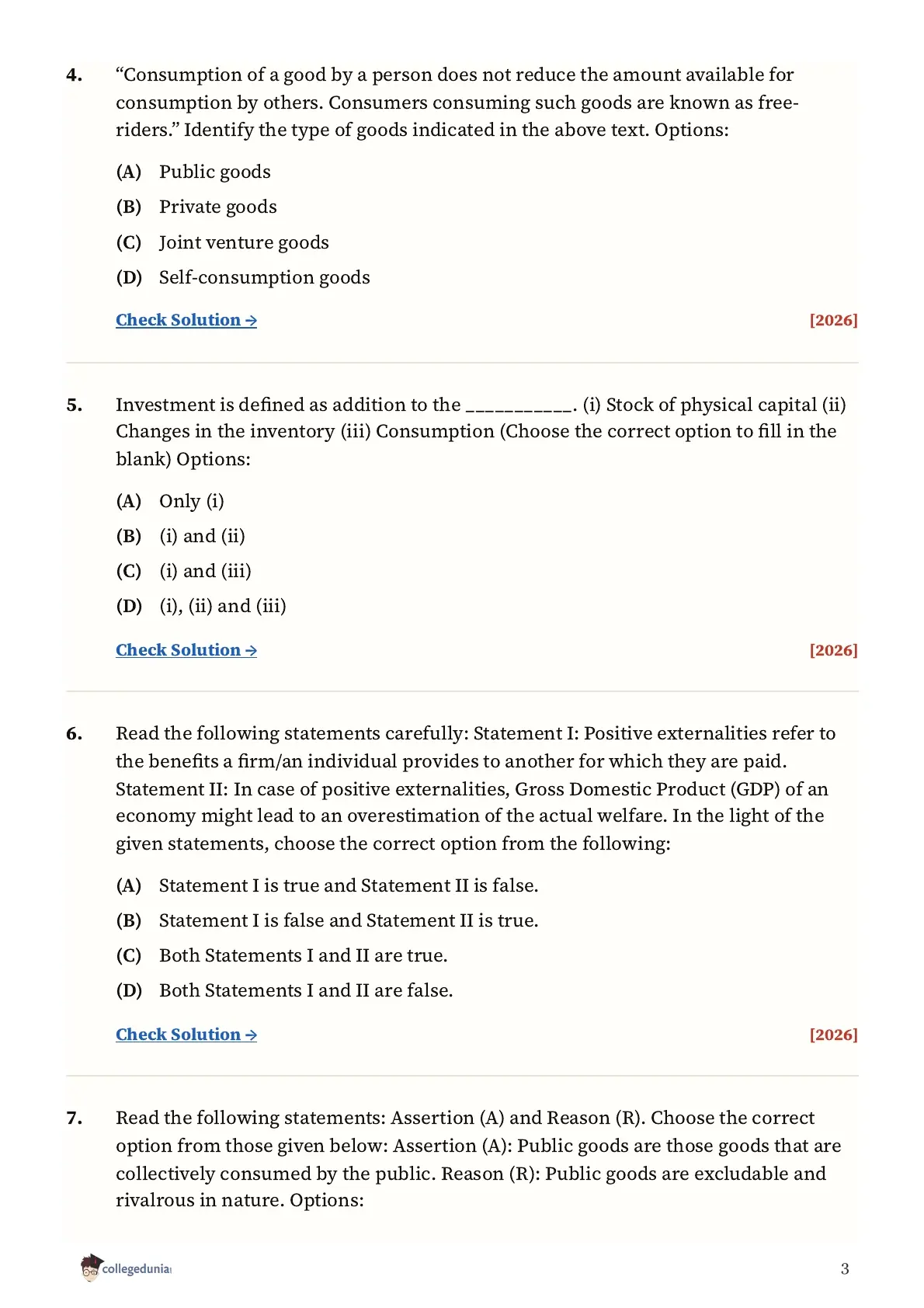
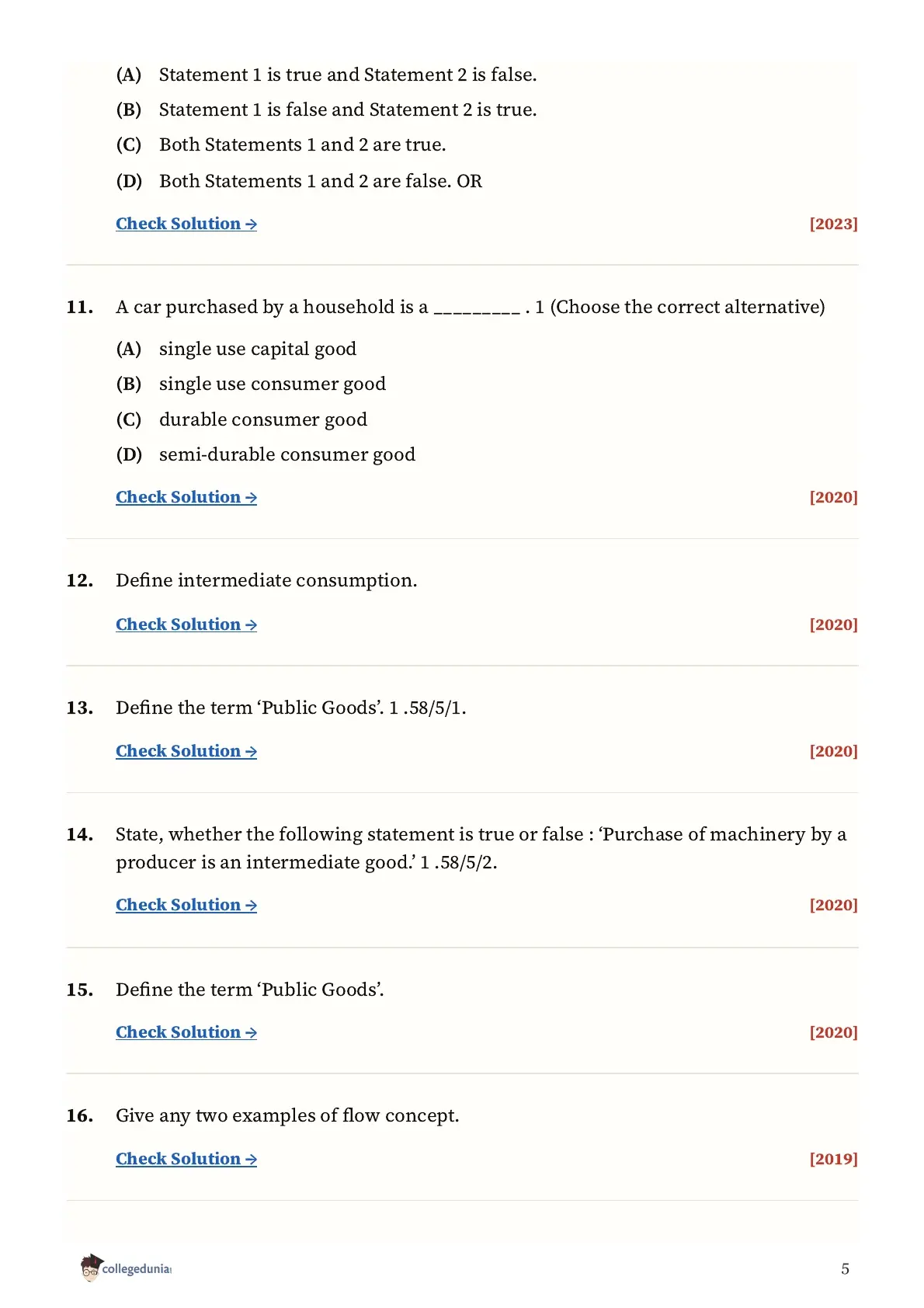
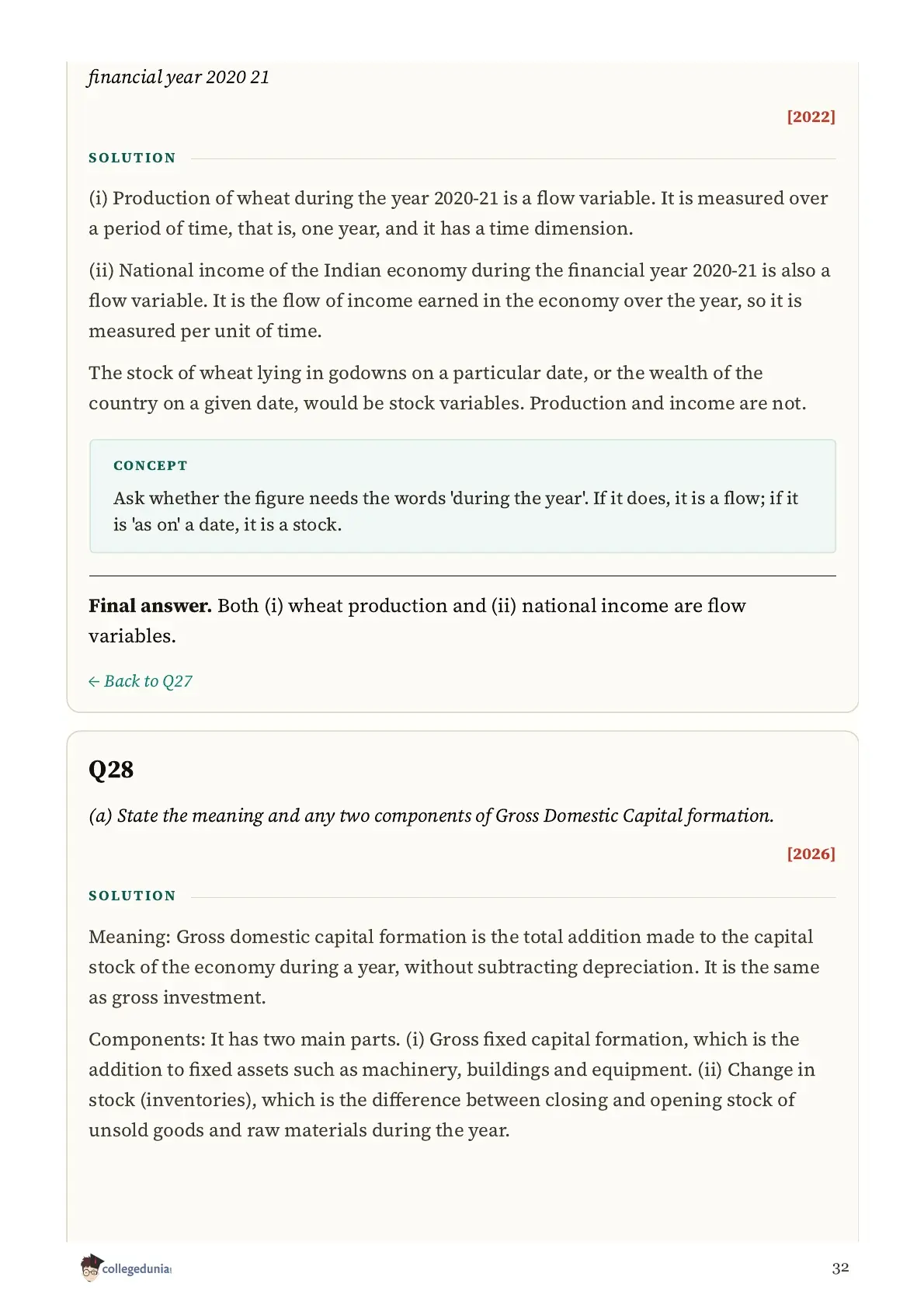
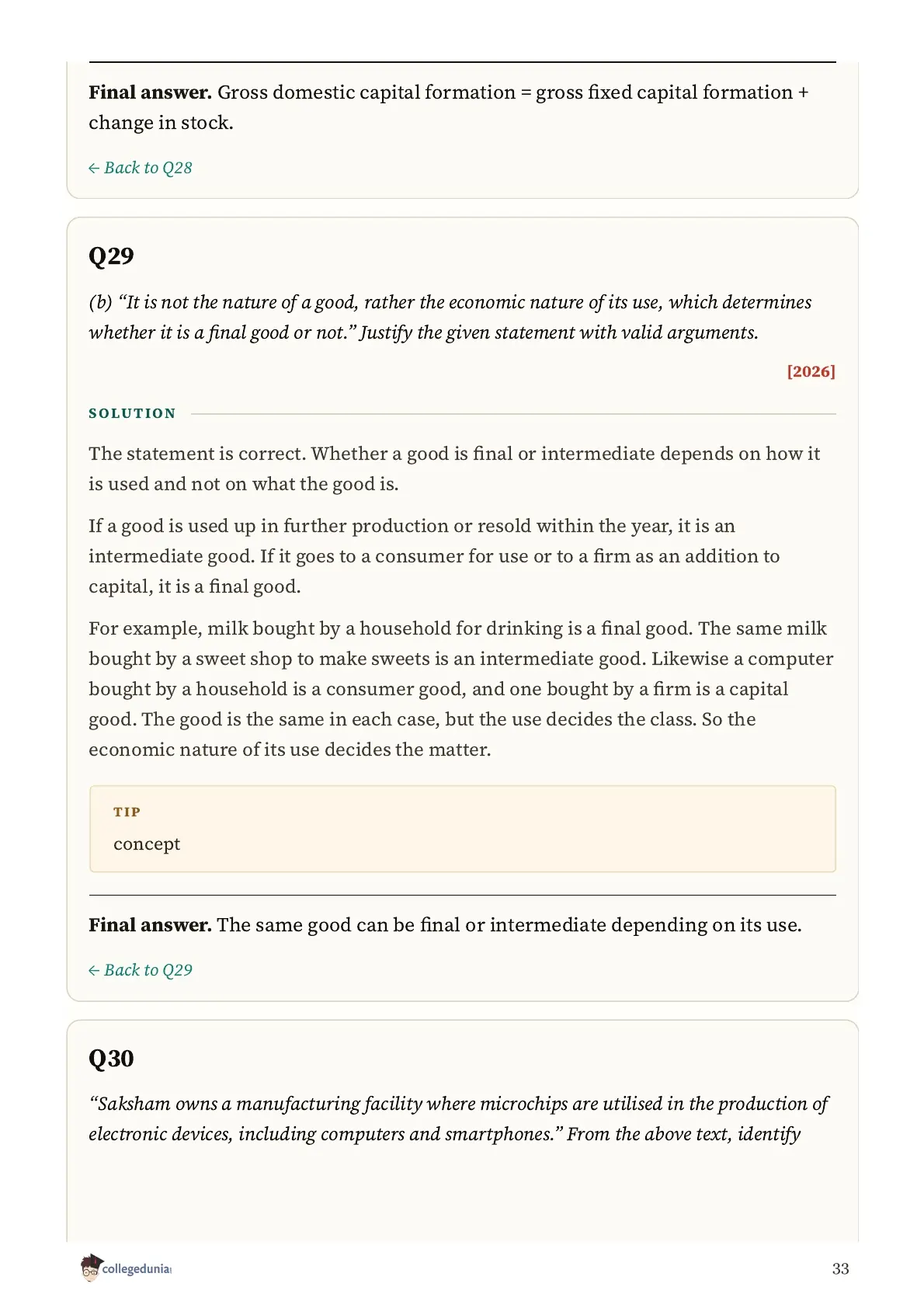
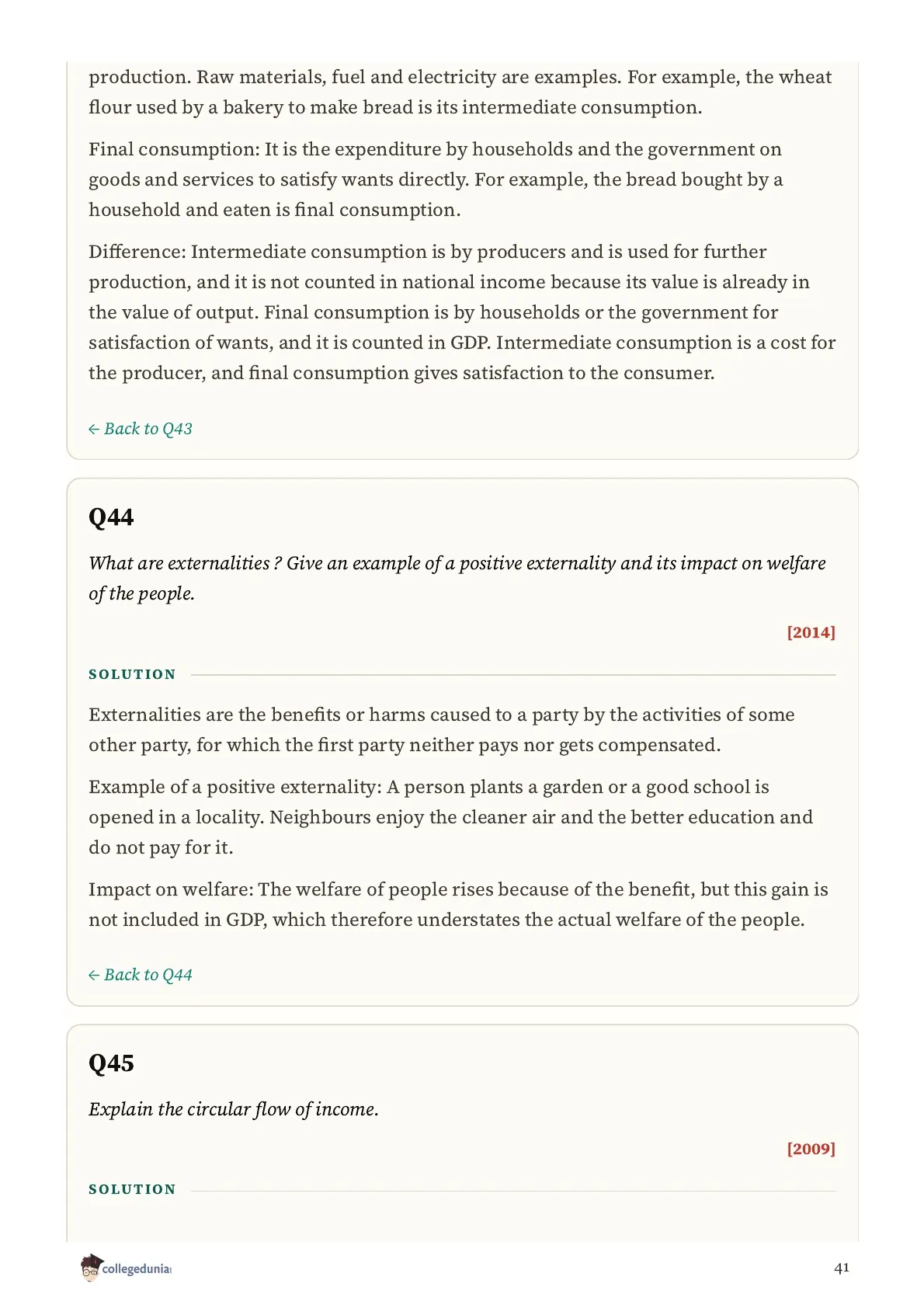
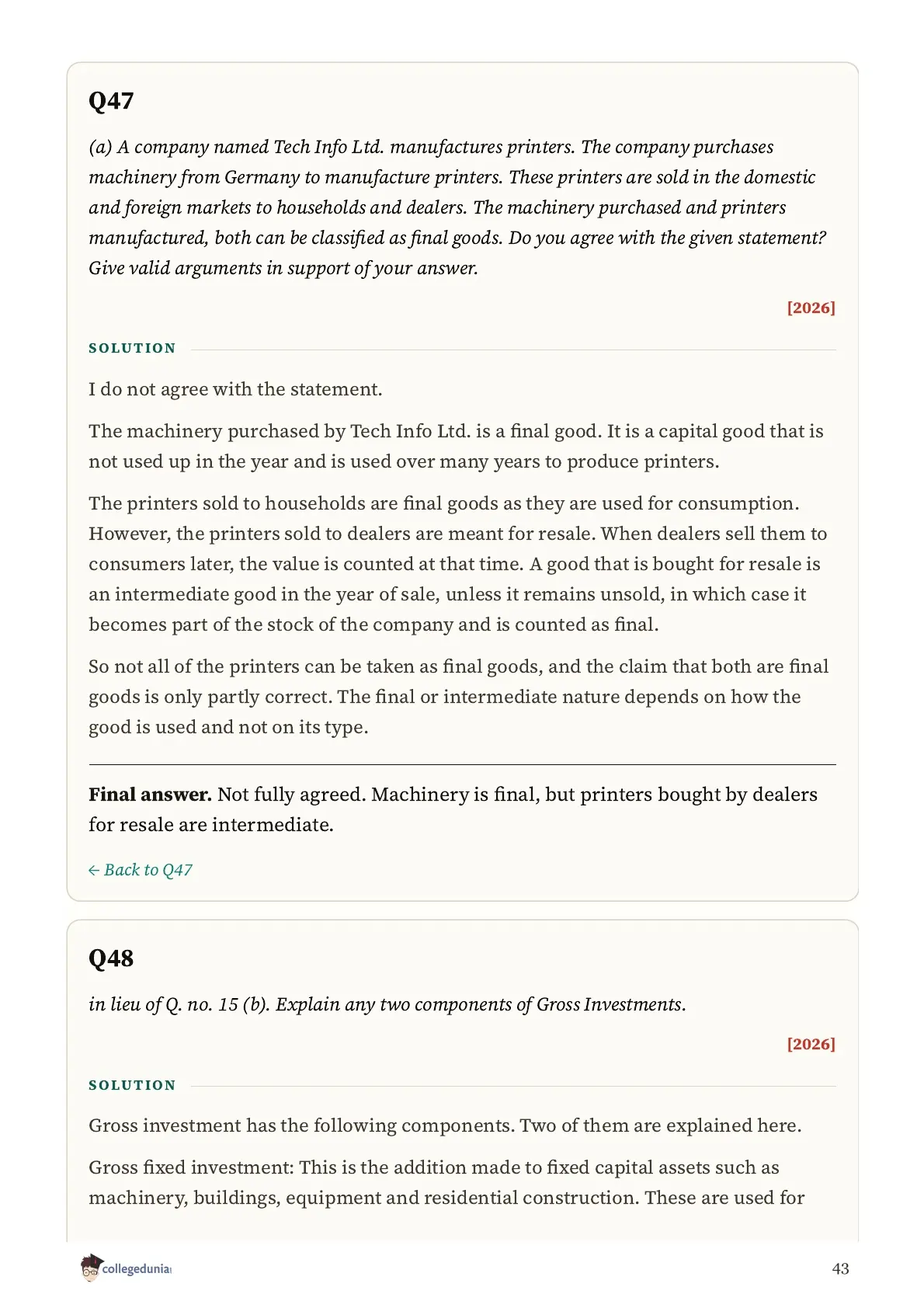
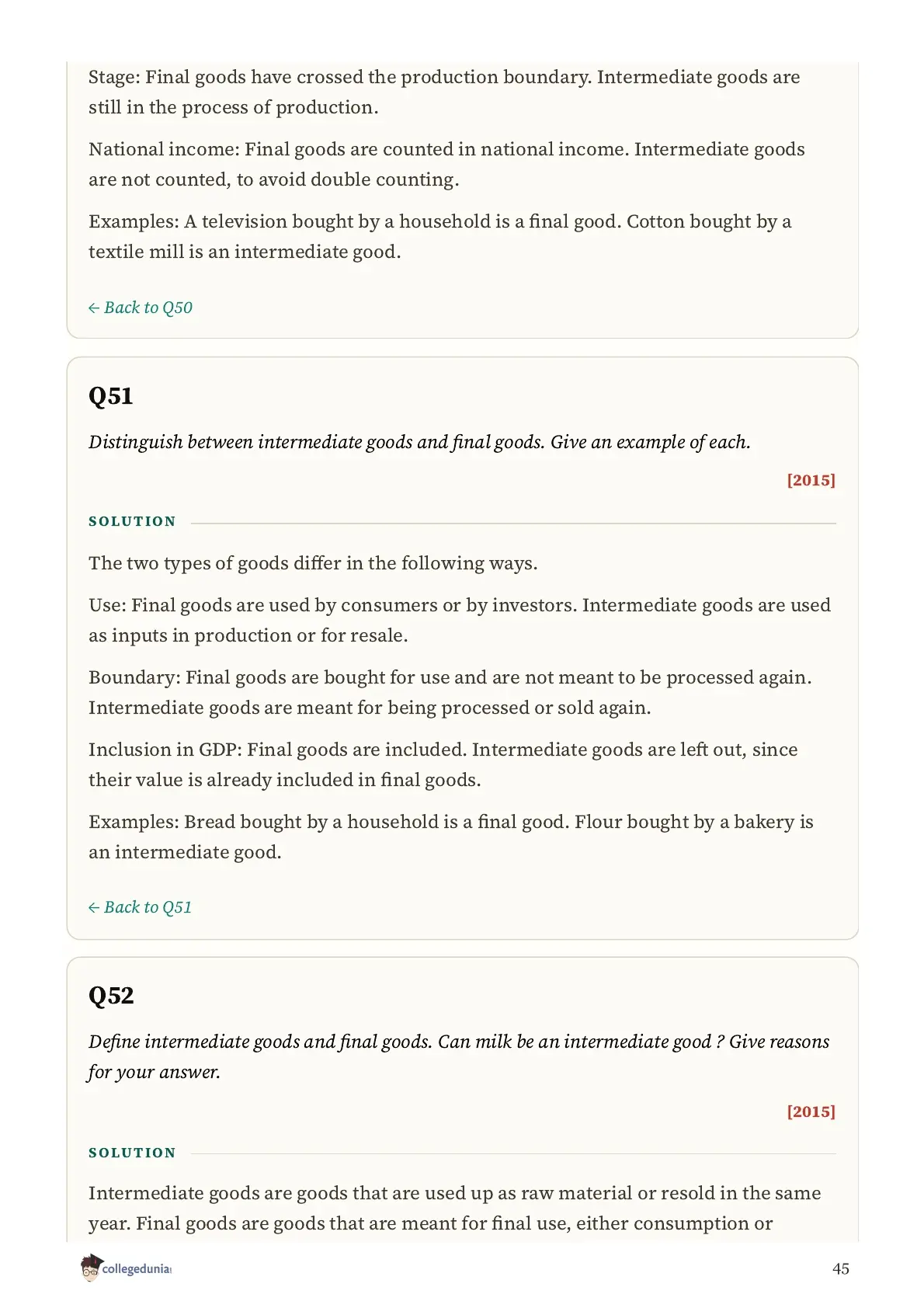
Final goods versus intermediate goods is the most repeated topic, with 14 questions. They ask for the basis of classifying a good, a distinction with an example of each, or whether milk can be an intermediate good. Capital goods and consumer goods come next with 10 questions, usually on cases such as a car used as a taxi or an air-conditioner in a house, where the use decides the class and not the object.
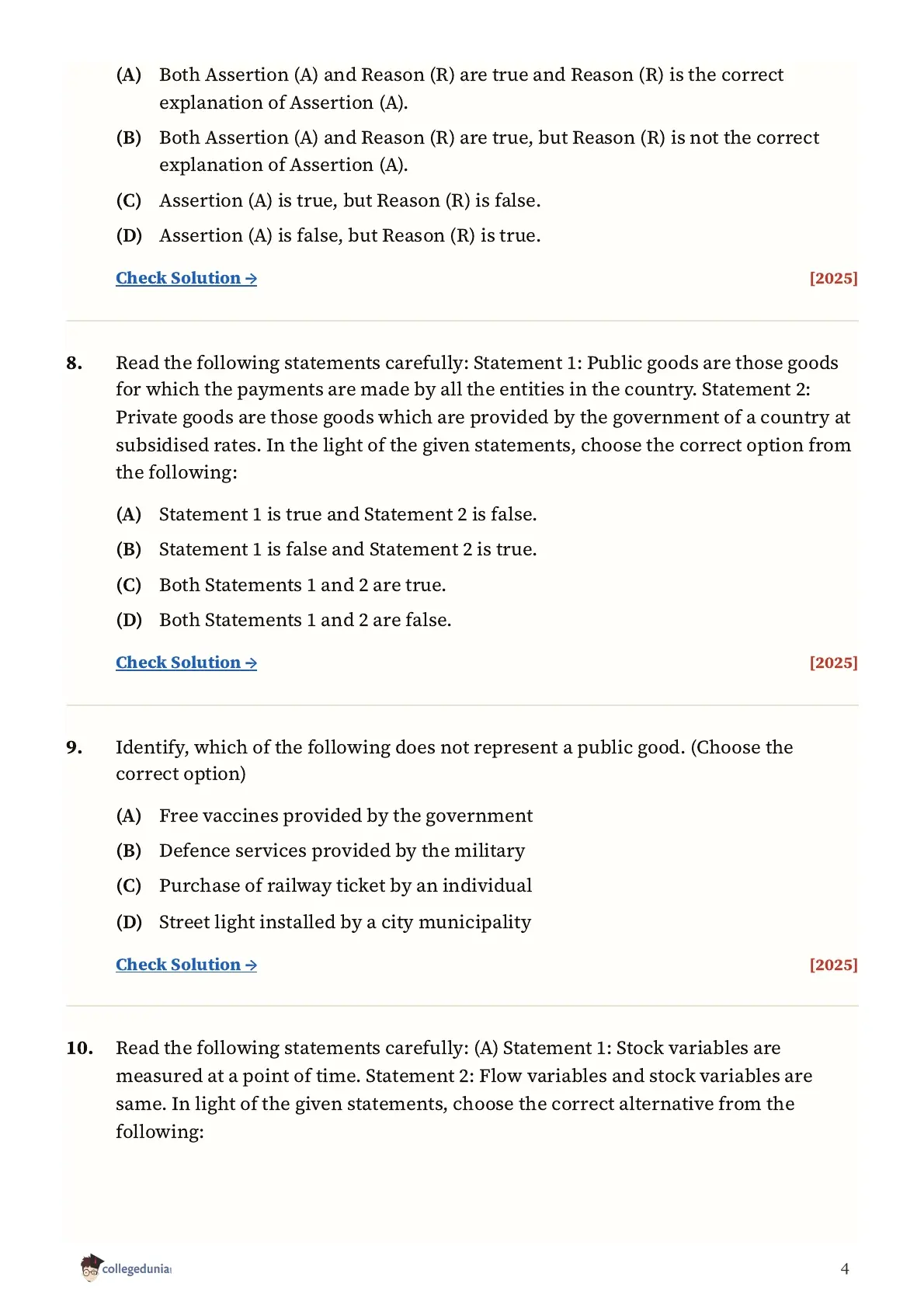
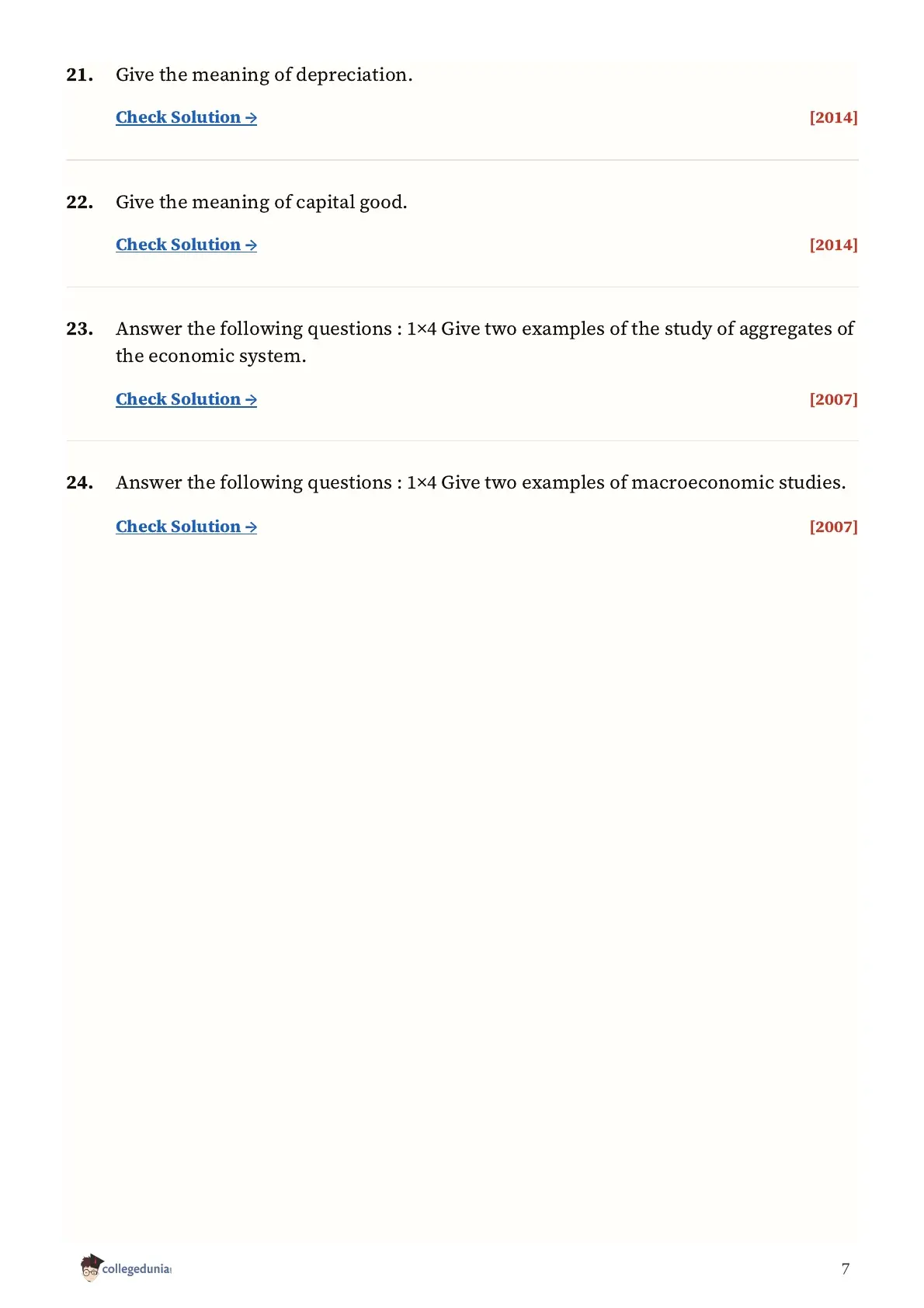
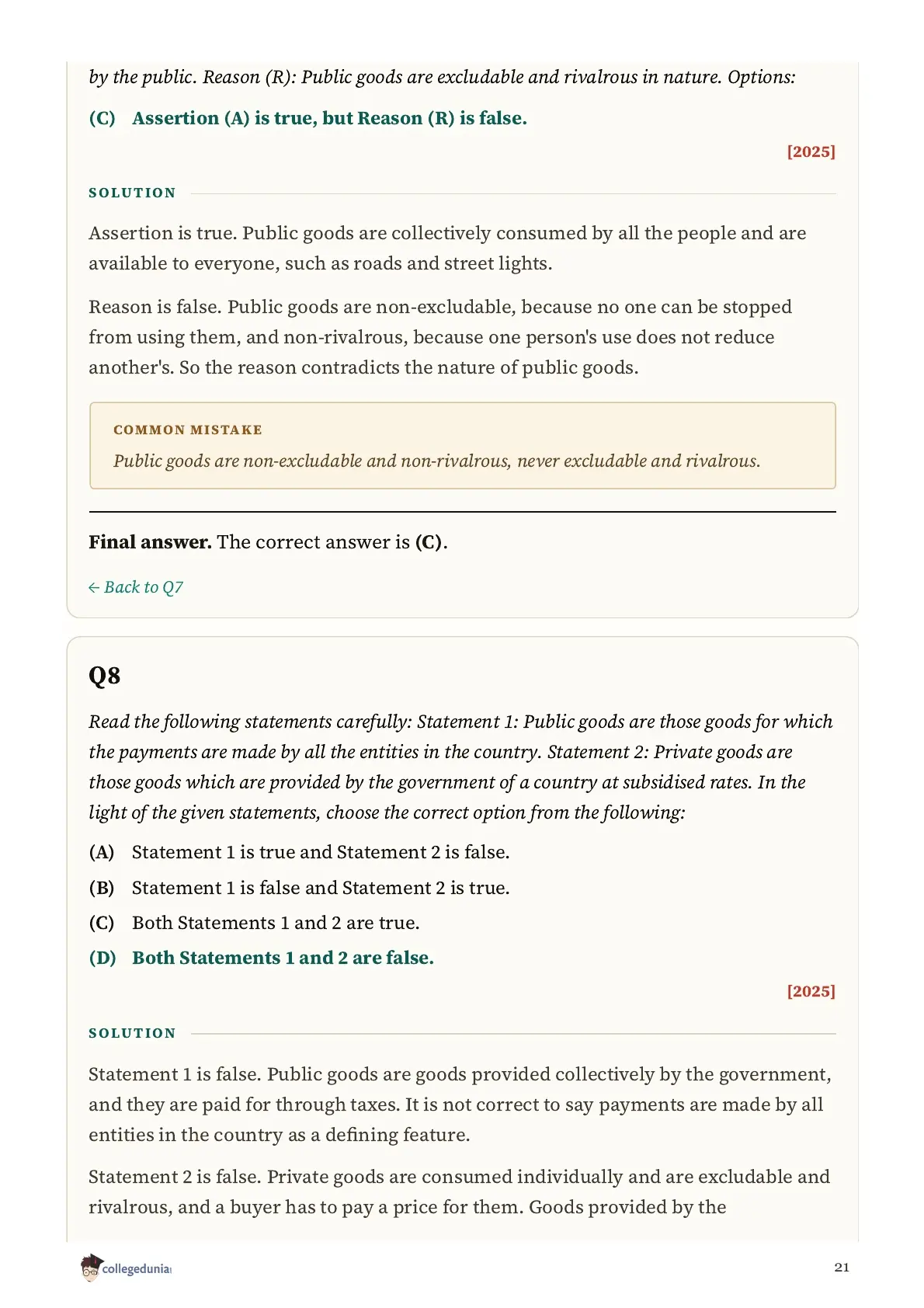
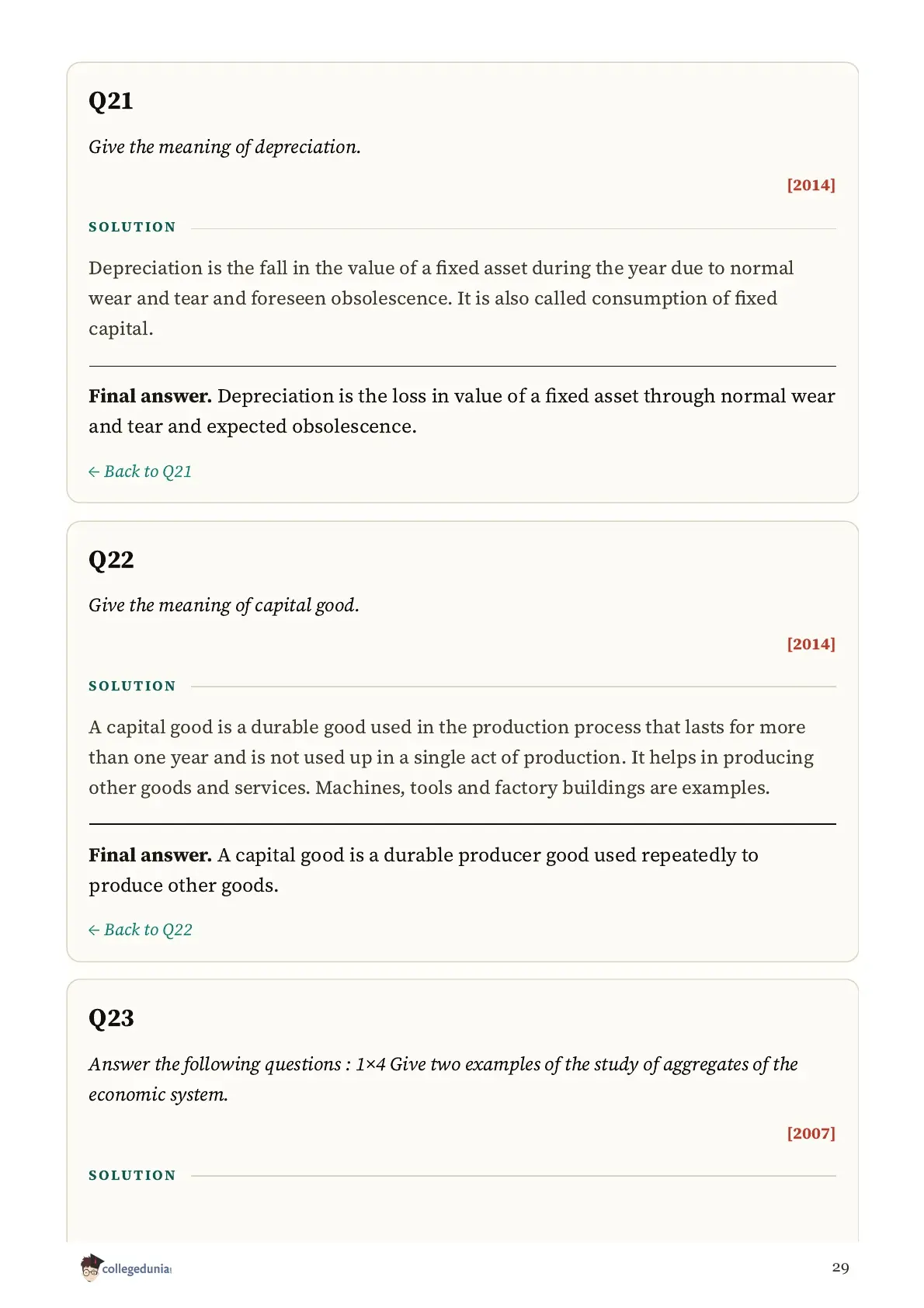
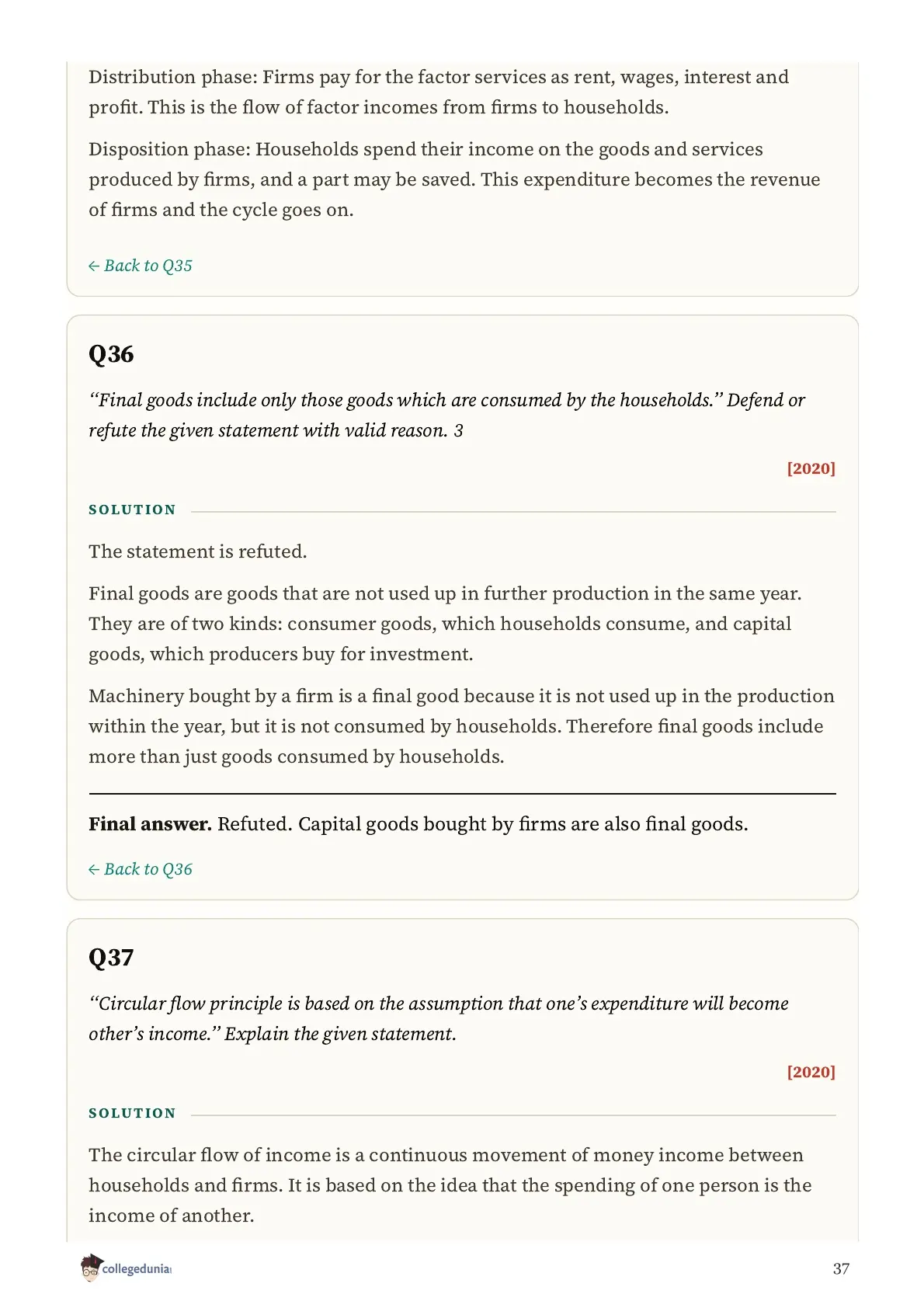
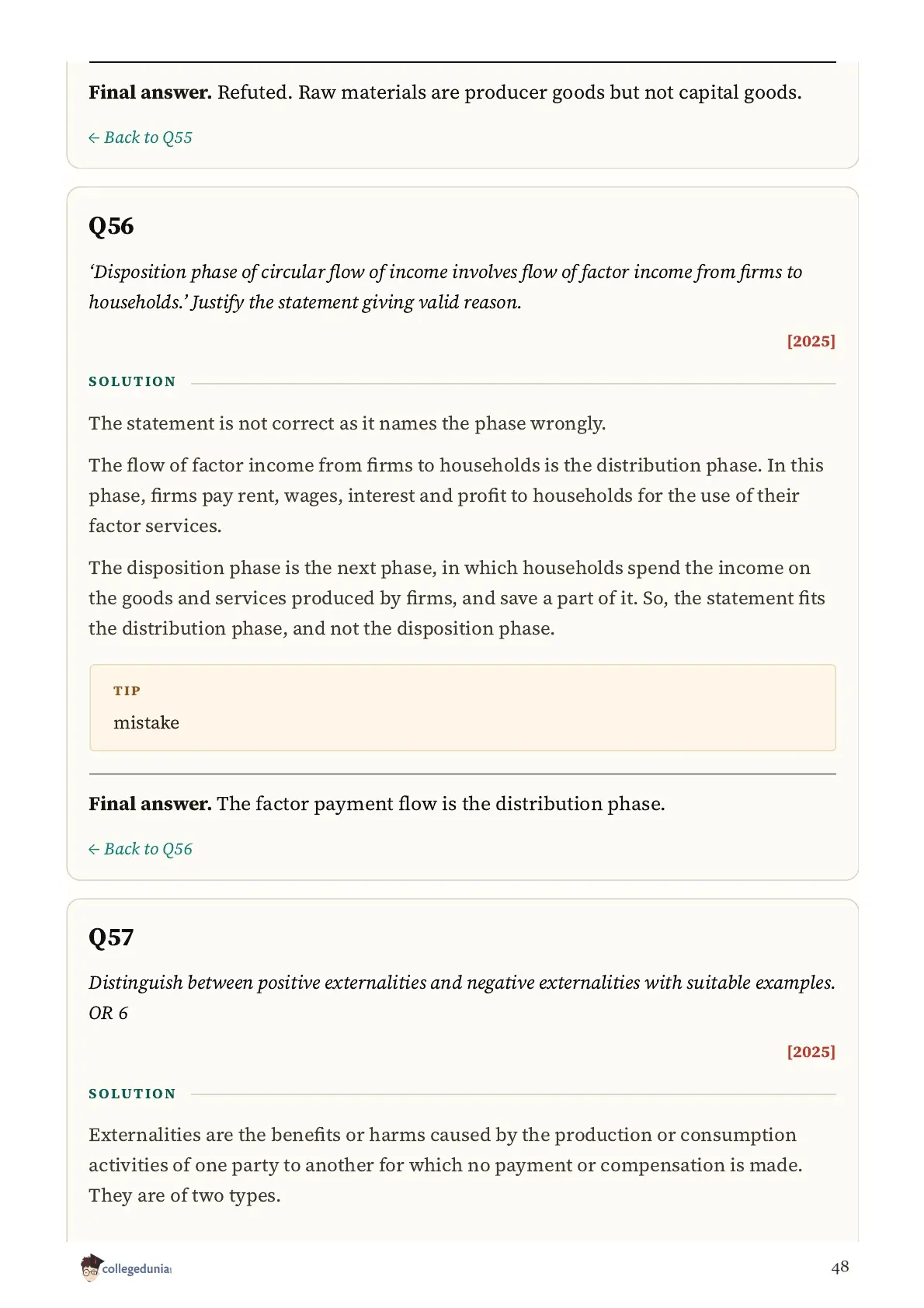
9 questions are on stock and flow variables and 9 on the circular flow of income, mostly in a two-sector economy and its disposition phase. 7 are on externalities, with the park built by a municipal corporation as the repeated example, and 6 are on public goods. 5 questions are on depreciation, unforeseen obsolescence and capital loss, and 6 are on gross and net investment or gross domestic capital formation. The counts come from keyword matches, so a question on two topics is counted under both.
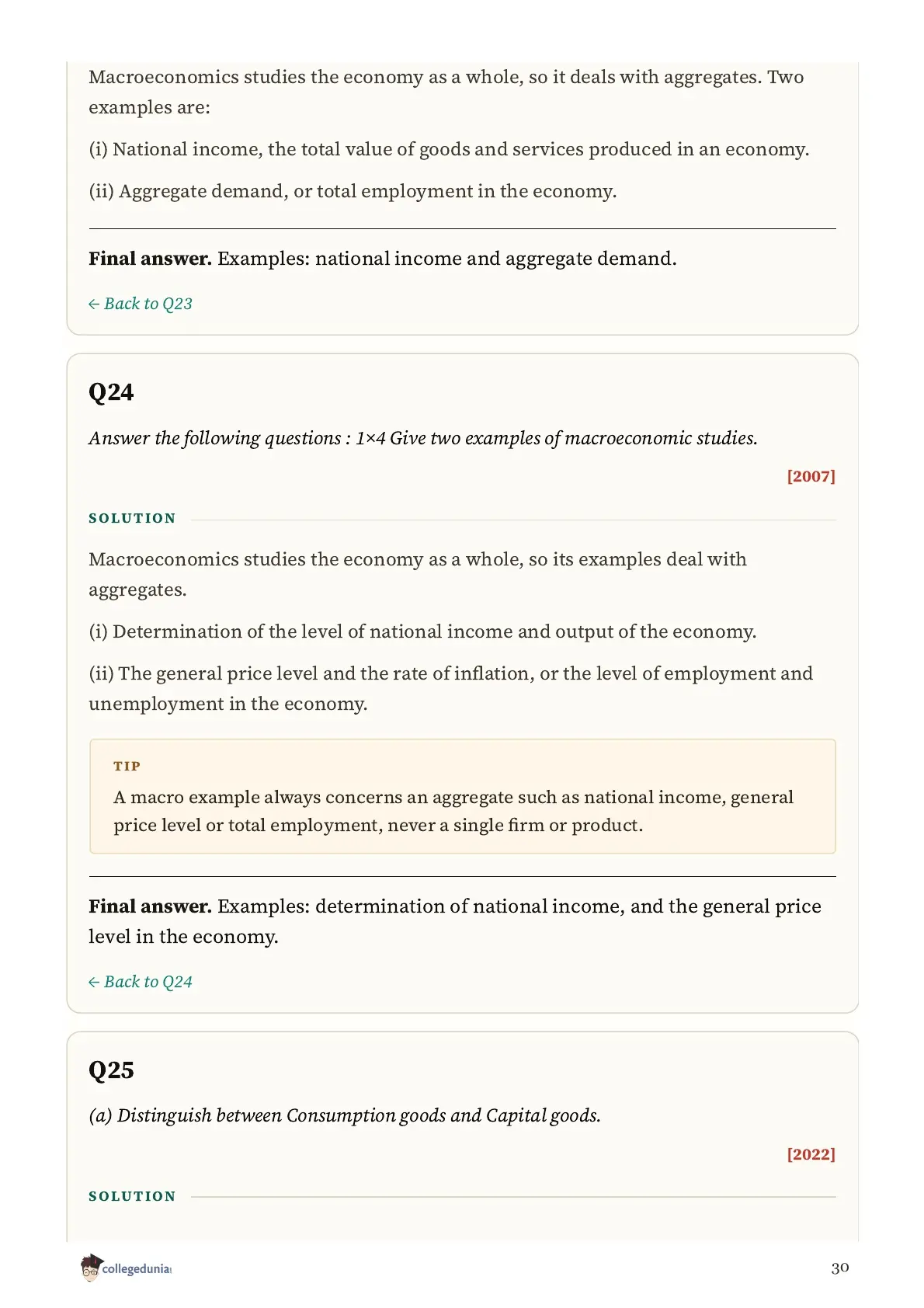
6 questions use the "defend or refute" form, and 5 of the MCQs are assertion-reason or two-statement items. None of the 65 asks for a numerical calculation or a diagram. Those start in the next chapter, National Income Accounting.
Introduction to Macroeconomics Video Lesson
Source: Next Toppers - 12th Commerce on YouTube
How to Approach the Introduction to Macroeconomics Set
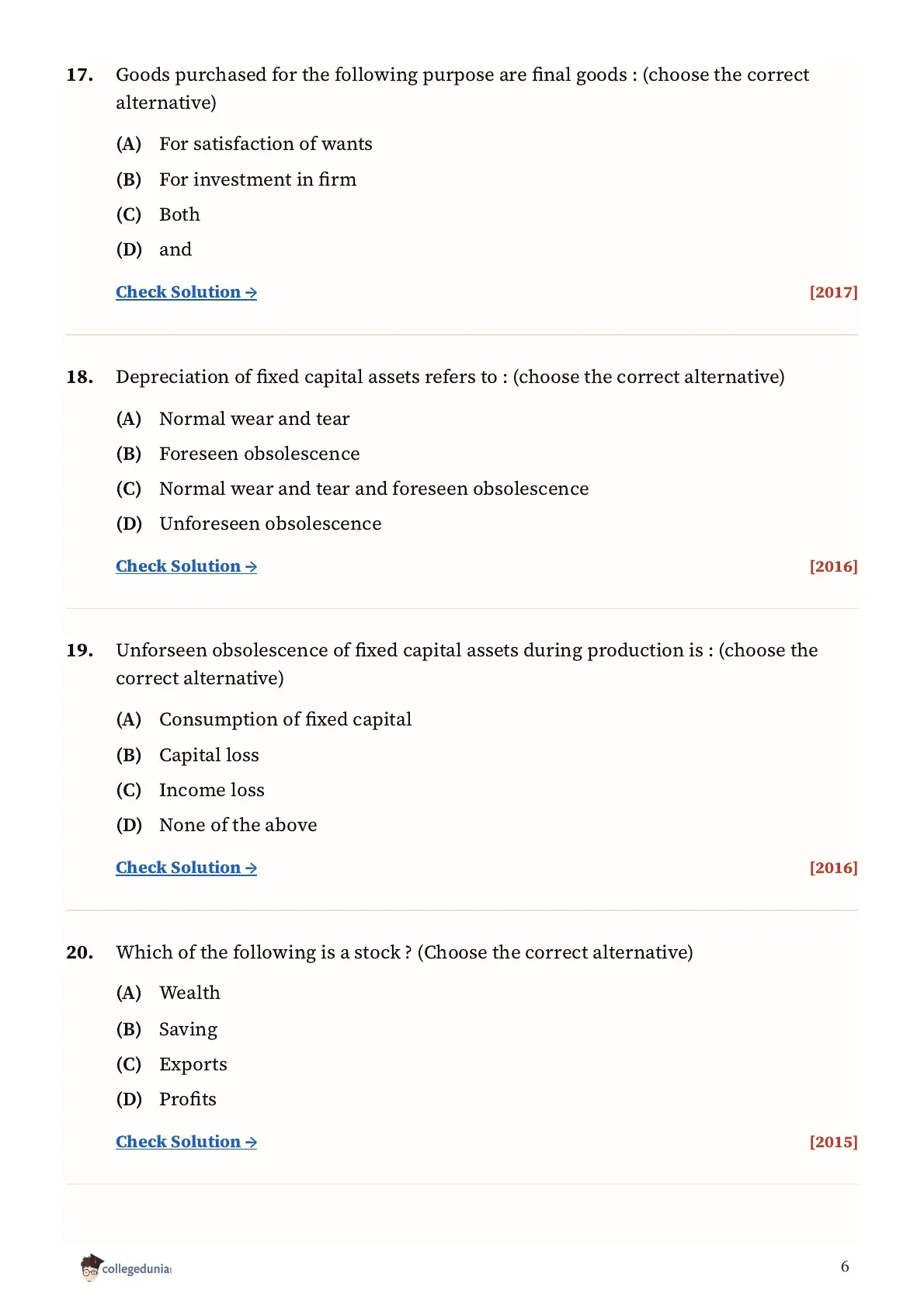
Do the 24 MCQs first, in about half an hour. Most are one-line applications of a definition: a car bought by a household is a durable consumer good, wealth is a stock, depreciation covers normal wear and tear and foreseen obsolescence. Read the statements in the two-statement items one at a time and mark each true or false before you look at the options.
The 41 written answers take the rest of the time. Start with final and intermediate goods and the circular flow, since they come back in 3-, 4- and 6-mark forms. For a defend or refute question, state your side in the first line, then give the reason and one example. For the case questions, point to the line in the stem that shows how the good is used.
Common Mistakes in Introduction to Macroeconomics Questions
- Classifying a good as final or intermediate from what it is, when the question wants the way it is used.
- Calling every producer good a capital good. Raw material used up in a year is not.
- Writing that factor payments flow from households to firms in the disposition phase.
- Giving examples of stocks that are really flows, such as saving or profits.
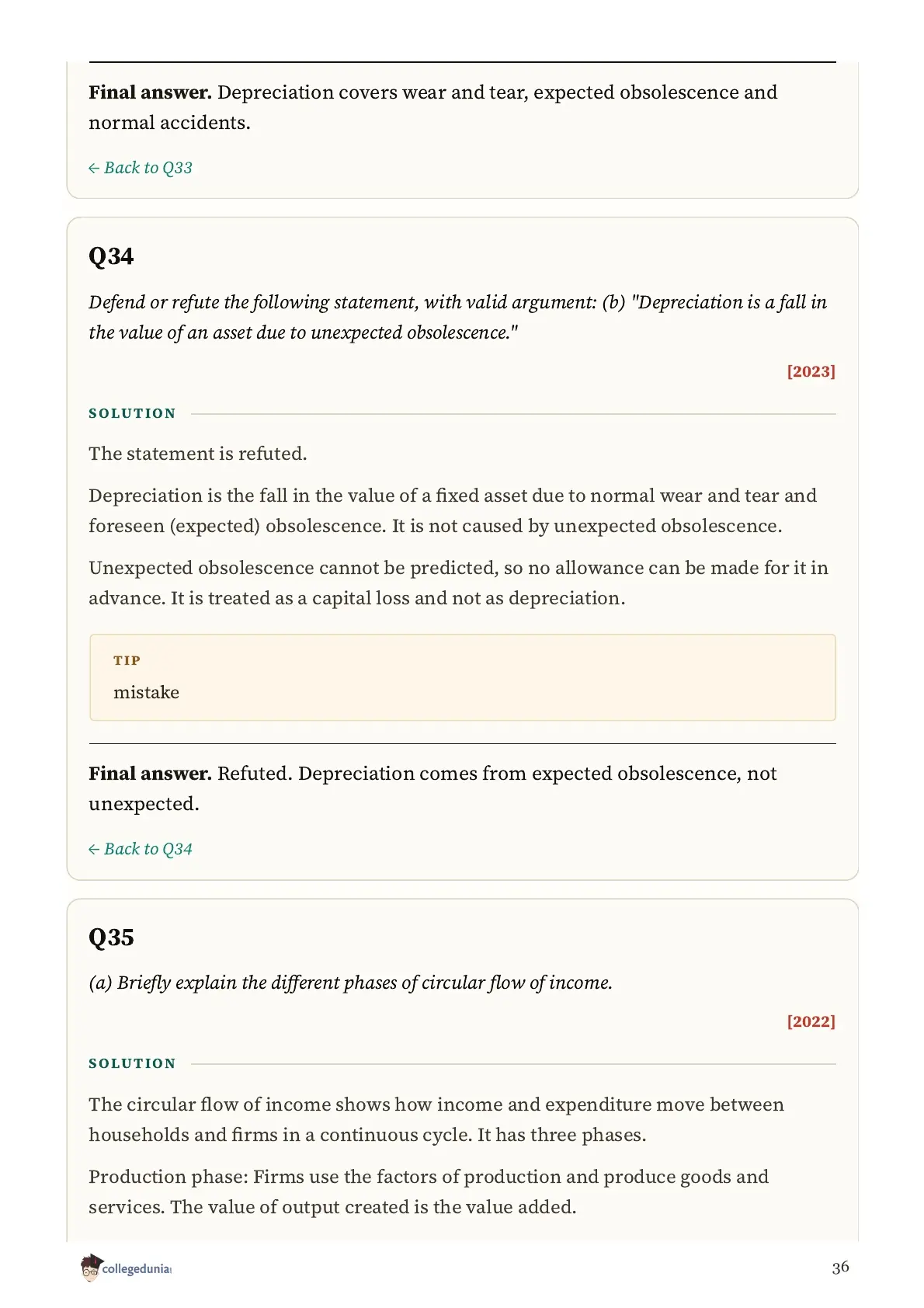
- Treating depreciation as a loss from any obsolescence; only foreseen obsolescence is included, and unforeseen obsolescence is a capital loss.
- Stating that gross investment is always greater than net investment, when the two are equal if depreciation is zero.
- Giving a positive and a negative externality example without saying who is affected.
Using the Answer Key and Solutions
The PDF is 53 pages and free to download. Each section is sorted newest year first, the Answer Key lists every MCQ at a glance, and each question links to its worked solution and back. Attempt a section first, check the key, then read the solution and note the common mistake given with it. The solutions are written by Collegedunia's Economics experts and are not official CBSE marking schemes.
Class 12 Economics PYQs by Chapter
| Chapter | PYQ Page |
|---|---|
| Macro Chapter 1 | Macro Chapter 1: Introduction to Macroeconomics Class 12 PYQ |
| Macro Chapter 2 | Macro Chapter 2: National Income Accounting Class 12 PYQ |
| Macro Chapter 3 | Macro Chapter 3: Money and Banking Class 12 PYQ |
| Macro Chapter 4 | Macro Chapter 4: Determination of Income and Employment Class 12 PYQ |
| Macro Chapter 5 | Macro Chapter 5: Government Budget and the Economy Class 12 PYQ |
| Macro Chapter 6 | Macro Chapter 6: Open Economy Macroeconomics Class 12 PYQ |
| Micro Chapter 1 | Micro Chapter 1: Introduction to Microeconomics Class 12 PYQ |
| Micro Chapter 2 | Micro Chapter 2: Theory of Consumer Behaviour Class 12 PYQ |
| Micro Chapter 3 | Micro Chapter 3: Production and Costs Class 12 PYQ |
| Micro Chapter 4 | Micro Chapter 4: The Theory of the Firm under Perfect Competition Class 12 PYQ |
| Micro Chapter 5 | Micro Chapter 5: Market Equilibrium Class 12 PYQ |
Introduction to Macroeconomics Class 12 Economics PYQ FAQs
Ques. How many questions are in the Introduction to Macroeconomics Class 12 PYQ PDF?
Ans. The PDF has 65 questions from CBSE board papers between 2006 and 2026: 24 one-mark MCQs, 3 two-mark, 19 three-mark, 6 four-mark case questions and 13 six-mark questions.
Ques. Does this PYQ PDF include solutions, or only the questions?
Ans. Yes. All 65 questions have a worked solution in the PDF, and the MCQs also have an Answer Key.
Ques. Are the solutions official?
Ans. No. They are written by Collegedunia's Economics experts and are not an official CBSE marking scheme.
Ques. How many marks does Introduction to Macroeconomics carry in the Class 12 board paper?
Ans. CBSE gives the unit National Income and Related Aggregates, which includes this chapter, 10 of the 80 marks. The figure is for the whole unit and comes from prep-site listings of the curriculum, so treat it as unofficial.
Ques. What is the difference between stock and flow variables?
Ans. A stock is measured at a point of time, such as wealth or the population on 31 March, and a flow is measured over a period, such as income, saving or exports in a year. 9 questions in this set are on stocks and flows.
Ques. What is the difference between final goods and intermediate goods?
Ans. Final goods are ready for consumption or investment and are not processed further, while intermediate goods are used up or transformed in production. 14 questions in this set are on this distinction, including whether milk can be an intermediate good.
Ques. What are externalities?
Ans. Externalities are benefits or costs that reach people who did not take part in the transaction, such as the effect of a new park in a locality. 7 questions in this set are on externalities and their effect on welfare.
Ques. What is the circular flow of income?
Ans. It is the movement of factor payments from firms to households and of spending from households to firms. 9 questions in this set are on the circular flow, mostly in a two-sector economy.
Ques. Are there defend or refute questions in this chapter?
Ans. Yes. 6 questions in this set use the form, usually on a statement about final goods, capital goods, consumption goods or the circular flow.



Comments