



The Class 12 English Supplementary Chandalika PYQ PDF is available for free download. This chapter-wise file gives students located previous year and sample-paper prompts for Rabindranath Tagore's Chandalika, with a focused answer-writing map for 2026-27 English Elective revision.
- Includes located prompts from HBSE English Elective papers and the CBSE English Elective sample paper.
- Covers Prakriti's human status, the spell, false religion, Ananda, mother and self-realisation.
- Useful for quick board-paper practice before writing compact drama answers.
Student Feedback: Students can use this PYQ PDF to practise answer frames on caste injustice, dignity, desire and Prakriti's final self-realisation.
Class 12 English Chandalika PYQ PDF
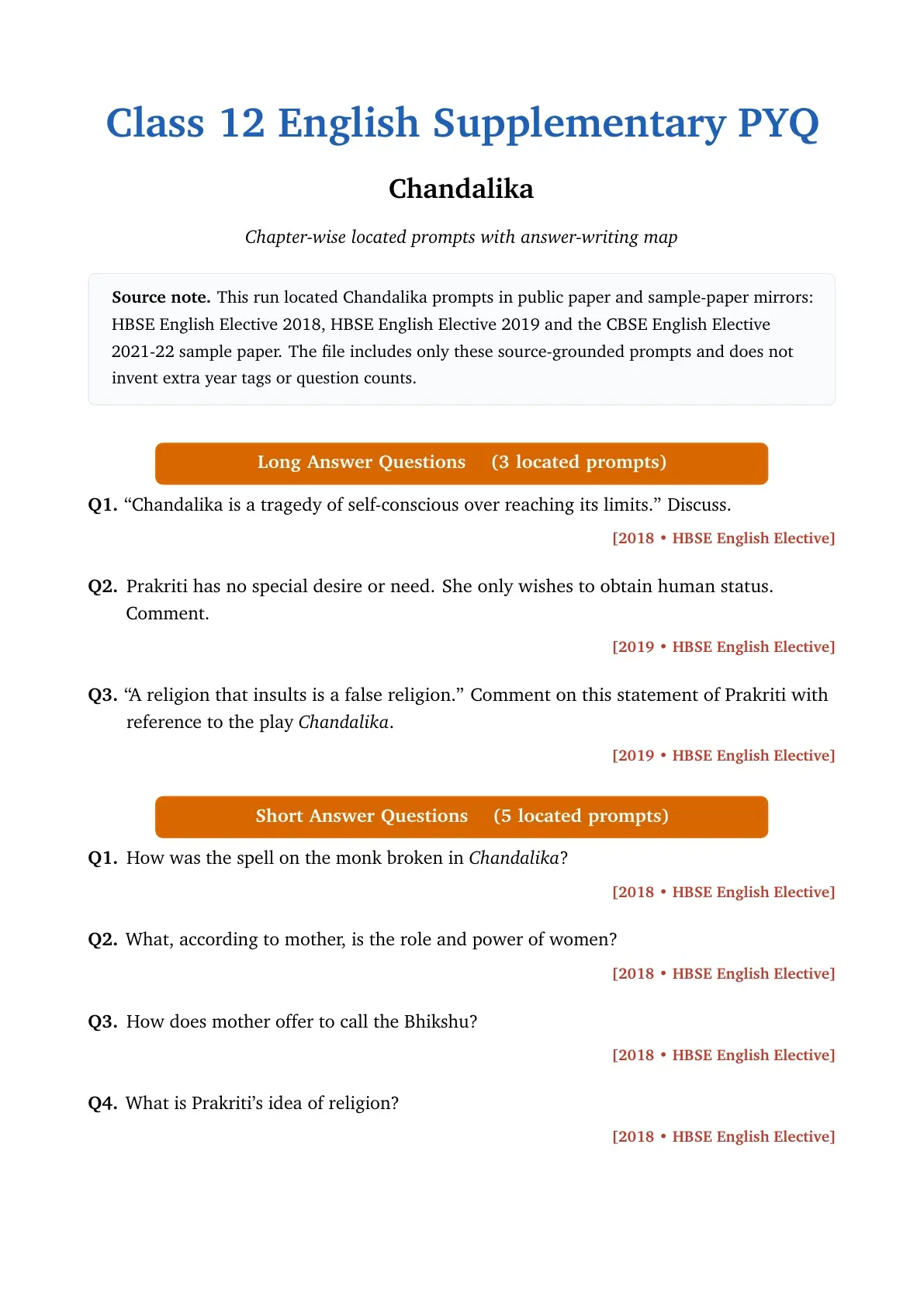
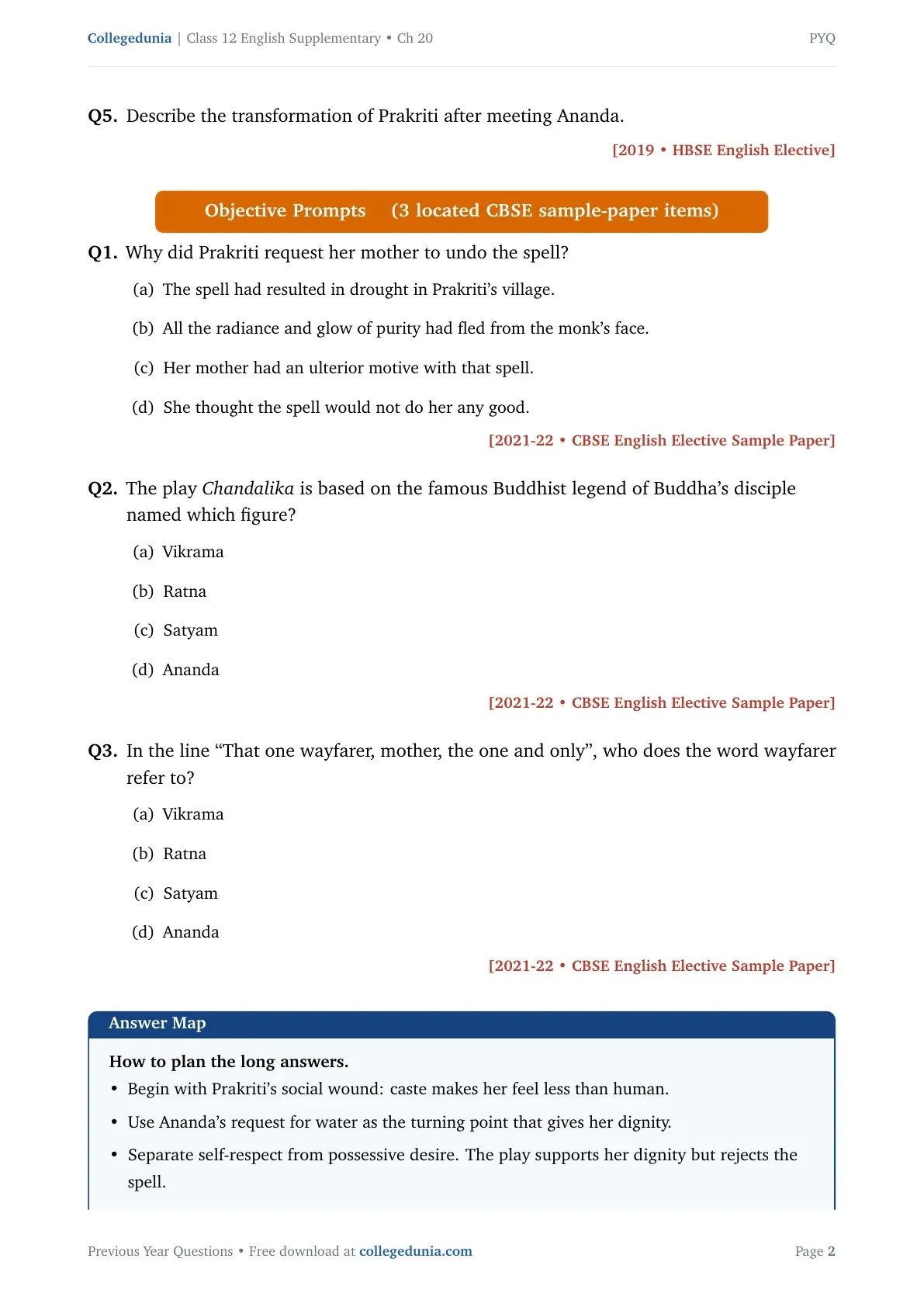
The PDF contains located prompts for Chandalika. The source mix is stated clearly inside the file because the available archive contains a small number of chapter-specific items rather than a full year-wise CBSE pack.
- Chapter: Chapter 20 Kaleidoscope: Chandalika
- Author: Rabindranath Tagore
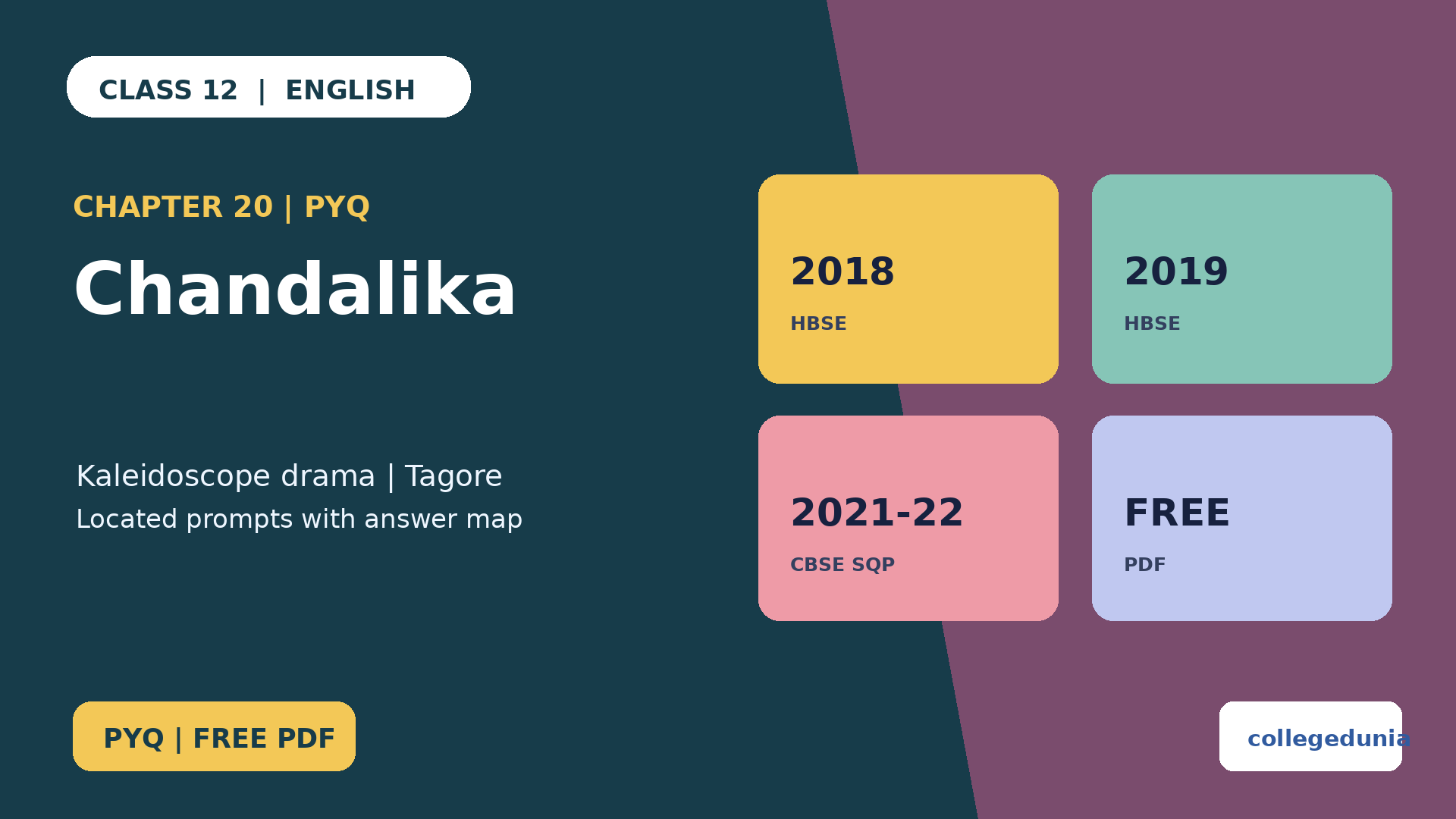
- Located sources: HBSE 2018, HBSE 2019 and CBSE English Elective 2021-22 sample paper
- Best use: revise human dignity, caste, spell, mother and Ananda before long-answer practice
Questions Covered in Chandalika PYQ PDF
The located questions ask students to connect the play's dramatic action with social meaning. A strong answer should name the scene or symbol first, then explain how it changes Prakriti's understanding of herself.
| Source | Question Focus | Answer Skill |
|---|---|---|
| HBSE 2018 | Tragedy, spell and short character prompts | Explain desire, remorse and release with play details |
| HBSE 2019 | Human status, false religion and transformation | Connect caste insult with Prakriti's awakened dignity |
| CBSE 2021-22 sample paper | Spell, Buddhist legend and wayfarer reference | Recall exact character and scene references |
Revision Focus for Chandalika PYQs
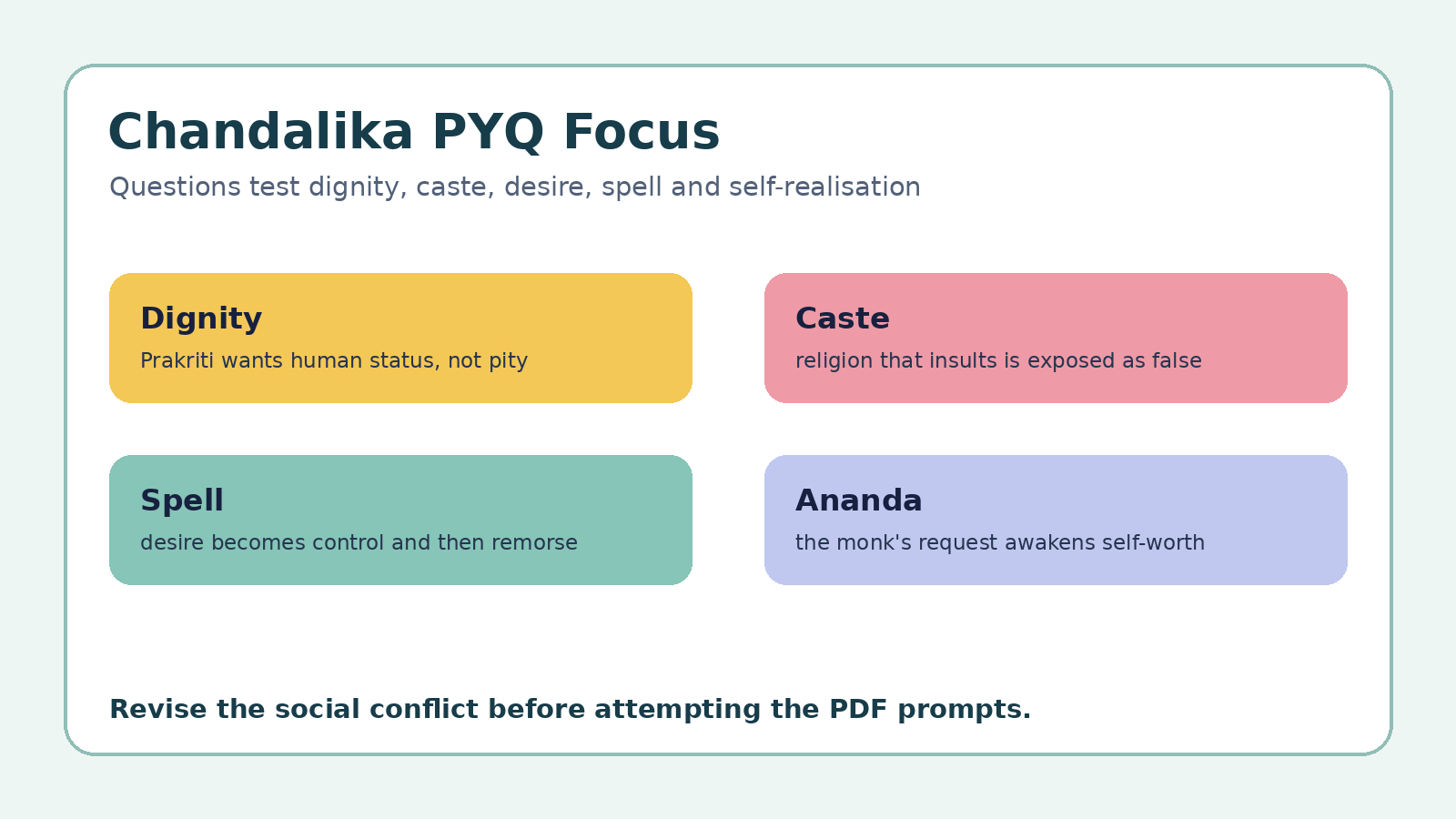
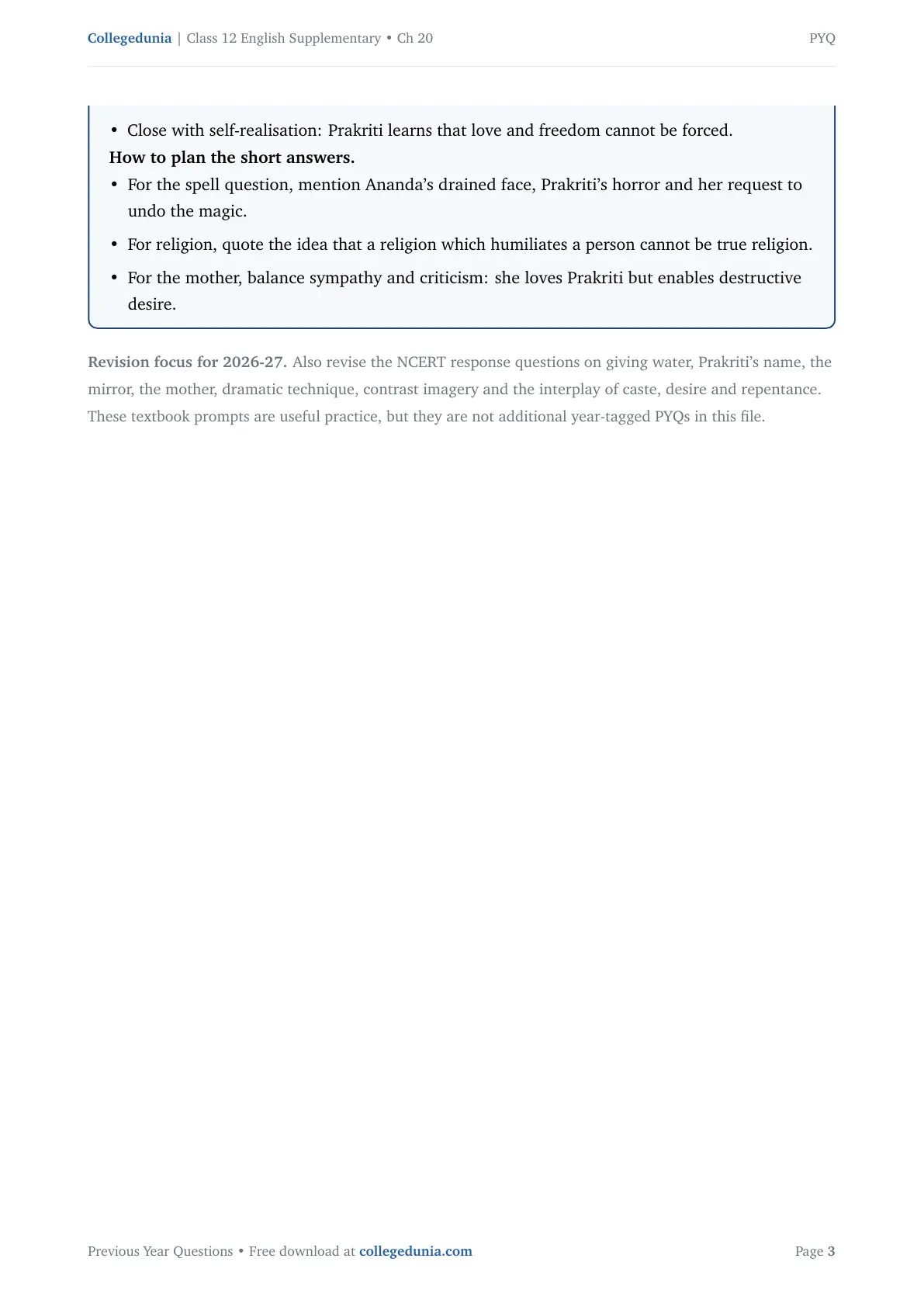
Before solving the PDF, revise how the ordinary request for water becomes a challenge to caste hierarchy. The answer should not become a loose plot summary; it should stay tied to Prakriti's changing self-awareness.
- Human status: Prakriti wants to be recognised as a person, not treated as pollution.
- Ananda: his request for water breaks the shame imposed by caste.
- Mother: she loves Prakriti but her magic makes desire destructive.
- Spell: Prakriti asks for release when she sees Ananda's radiance fade.
Answer Writing Map for Chandalika PYQs
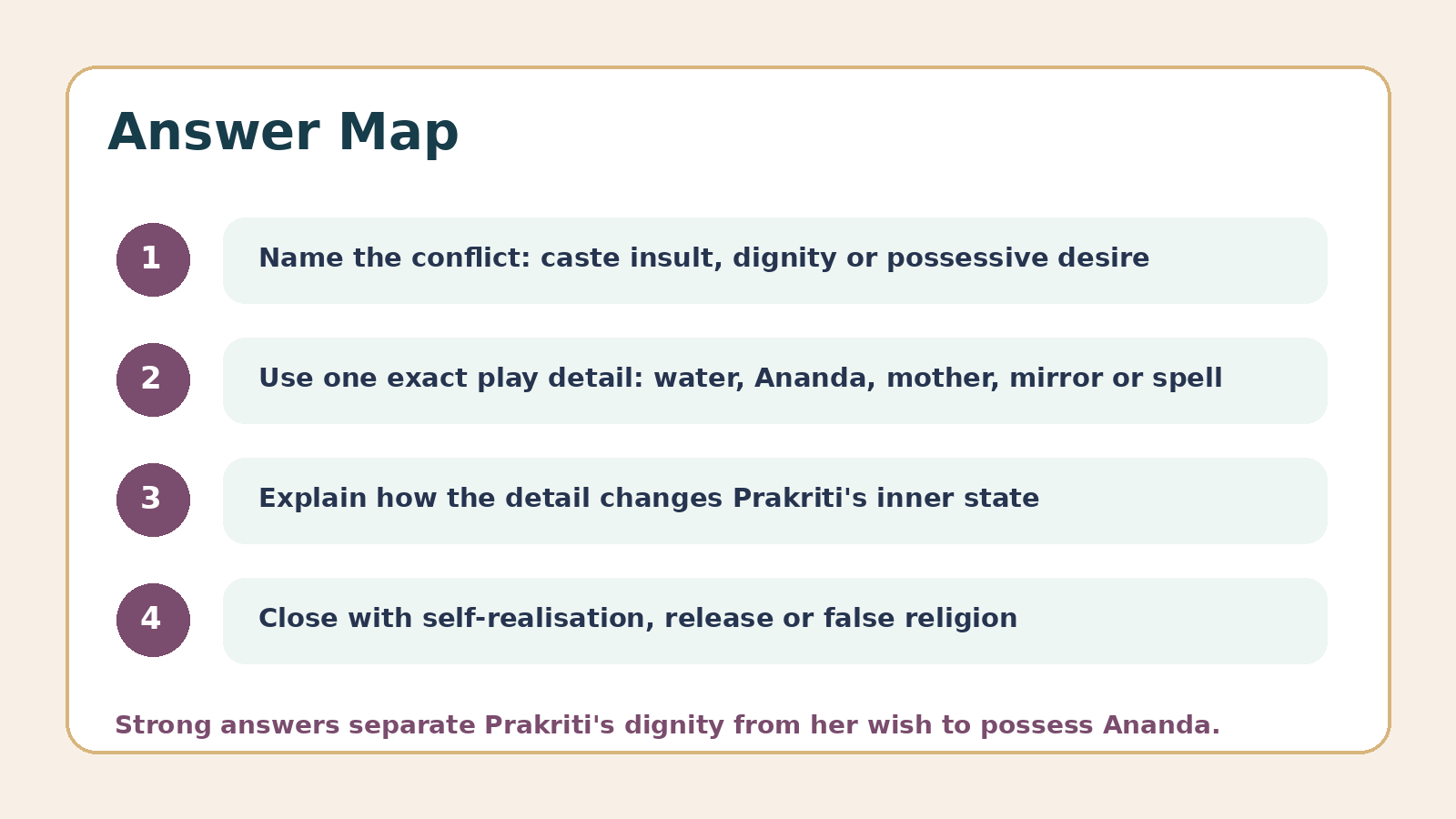
Write answers in four compact moves: identify the social or emotional conflict, use one exact detail from the play, explain Prakriti's inner change and close with self-realisation. Useful phrases include human status, false religion, request for water, possessive desire, undo the spell and moral release.
Class 12 English Chandalika Related Resources
| Resource | Link |
|---|---|
| Chandalika Notes | Chapter 20 Notes |
| Chandalika NCERT Solutions | Chapter 20 NCERT Solutions |
| Chandalika NCERT Book PDF | Chapter 20 Book PDF |
All Class 12 English Supplementary PYQ Chapters
| Resource | Link |
|---|---|
| The Argumentative Indian PYQ | Chapter 18 PYQ PDF |
| On Science Fiction PYQ | Chapter 19 PYQ PDF |
| Chandalika PYQ | Chapter 20 PYQ PDF |
| Broken Images PYQ | Chapter 21 PYQ PDF |
Class 12 English Chandalika PYQ FAQs
Ques. Where can I download Class 12 English Chandalika PYQ PDF?
Ans. You can download the chapter-wise PYQ PDF from the PDF viewer and resource table above. The file includes located questions for this chapter.
Ques. Which topics are important for Chandalika PYQs?
Ans. Focus on Prakriti's human status, Ananda's request for water, caste insult, false religion, the mother's spell and Prakriti's repentance.
Ques. Why does Prakriti ask her mother to undo the spell?
Ans. She sees that the spell has drained Ananda's spiritual radiance. This makes her realise that possessive desire has harmed another person.
Ques. How should students answer Chandalika long-answer PYQs?
Ans. Start with the social conflict, use one exact scene or symbol, explain Prakriti's inner change and close with self-realisation or moral release.



Comments